EP2818467A1 - Multi-target drug compounds for the treatment of neurodegenerative disorders - Google Patents
Multi-target drug compounds for the treatment of neurodegenerative disorders Download PDFInfo
- Publication number
- EP2818467A1 EP2818467A1 EP13173930.2A EP13173930A EP2818467A1 EP 2818467 A1 EP2818467 A1 EP 2818467A1 EP 13173930 A EP13173930 A EP 13173930A EP 2818467 A1 EP2818467 A1 EP 2818467A1
- Authority
- EP
- European Patent Office
- Prior art keywords
- compound
- formula
- integer
- stereoisomer
- salt
- Prior art date
- Legal status (The legal status is an assumption and is not a legal conclusion. Google has not performed a legal analysis and makes no representation as to the accuracy of the status listed.)
- Withdrawn
Links
- 150000001875 compounds Chemical class 0.000 title claims abstract description 182
- 208000015122 neurodegenerative disease Diseases 0.000 title claims abstract description 17
- 238000011282 treatment Methods 0.000 title claims abstract description 16
- 239000003814 drug Substances 0.000 title claims description 18
- 229940079593 drug Drugs 0.000 title description 11
- 150000003839 salts Chemical class 0.000 claims abstract description 52
- 239000000203 mixture Substances 0.000 claims abstract description 45
- 208000024827 Alzheimer disease Diseases 0.000 claims abstract description 42
- 229910052739 hydrogen Inorganic materials 0.000 claims abstract description 28
- 229910052801 chlorine Inorganic materials 0.000 claims abstract description 19
- 229910052731 fluorine Inorganic materials 0.000 claims abstract description 16
- 125000004178 (C1-C4) alkyl group Chemical group 0.000 claims abstract description 15
- 238000000034 method Methods 0.000 claims description 21
- 238000002360 preparation method Methods 0.000 claims description 18
- 230000008569 process Effects 0.000 claims description 15
- 125000002496 methyl group Chemical group [H]C([H])([H])* 0.000 claims description 12
- 239000002253 acid Substances 0.000 claims description 11
- 239000008194 pharmaceutical composition Substances 0.000 claims description 7
- 239000000546 pharmaceutical excipient Substances 0.000 claims description 6
- 239000003937 drug carrier Substances 0.000 claims description 5
- 229910052736 halogen Inorganic materials 0.000 claims description 4
- 238000006722 reduction reaction Methods 0.000 claims description 4
- PTNOSDSMMDSVPV-IWHLBADBSA-N (2S)-N-[7-[[(1R,13R)-7-chloro-15-methyl-10-azatetracyclo[11.3.1.02,11.04,9]heptadeca-2,4(9),5,7,10,14-hexaen-3-yl]amino]heptyl]-2-(2-oxopyrrolidin-1-yl)butanamide Chemical compound ClC1=CC=C2C(=C3C(=NC2=C1)C[C@@H]1C=C(C[C@H]3C1)C)NCCCCCCCNC([C@H](CC)N1C(CCC1)=O)=O PTNOSDSMMDSVPV-IWHLBADBSA-N 0.000 claims description 3
- PTNOSDSMMDSVPV-JWZKTCGFSA-N (2S)-N-[7-[[(1S,13S)-7-chloro-15-methyl-10-azatetracyclo[11.3.1.02,11.04,9]heptadeca-2,4(9),5,7,10,14-hexaen-3-yl]amino]heptyl]-2-(2-oxopyrrolidin-1-yl)butanamide Chemical compound N1([C@@H](CC)C(=O)NCCCCCCCNC=2C3=CC=C(Cl)C=C3N=C3C[C@@H]4C[C@@H](CC(C)=C4)C3=2)CCCC1=O PTNOSDSMMDSVPV-JWZKTCGFSA-N 0.000 claims description 3
- NZLWCLKNSGHDNL-UHFFFAOYSA-N 2-(2-oxopyrrolidin-1-yl)-n-[7-(1,2,3,4-tetrahydroacridin-9-ylamino)heptyl]butanamide Chemical compound C=12CCCCC2=NC2=CC=CC=C2C=1NCCCCCCCNC(=O)C(CC)N1CCCC1=O NZLWCLKNSGHDNL-UHFFFAOYSA-N 0.000 claims description 3
- DOWJVFPLNUYKTG-UHFFFAOYSA-N n-[7-[(6-chloro-1,2,3,4-tetrahydroacridin-9-yl)amino]heptyl]-2-(2-oxopyrrolidin-1-yl)butanamide Chemical compound C=12CCCCC2=NC2=CC(Cl)=CC=C2C=1NCCCCCCCNC(=O)C(CC)N1CCCC1=O DOWJVFPLNUYKTG-UHFFFAOYSA-N 0.000 claims description 3
- 125000005843 halogen group Chemical group 0.000 claims description 2
- 230000002265 prevention Effects 0.000 claims 1
- OKKJLVBELUTLKV-UHFFFAOYSA-N Methanol Chemical compound OC OKKJLVBELUTLKV-UHFFFAOYSA-N 0.000 description 132
- YMWUJEATGCHHMB-UHFFFAOYSA-N Dichloromethane Chemical compound ClCCl YMWUJEATGCHHMB-UHFFFAOYSA-N 0.000 description 90
- VHUUQVKOLVNVRT-UHFFFAOYSA-N Ammonium hydroxide Chemical compound [NH4+].[OH-] VHUUQVKOLVNVRT-UHFFFAOYSA-N 0.000 description 32
- 239000000243 solution Substances 0.000 description 21
- VEXZGXHMUGYJMC-UHFFFAOYSA-N Hydrochloric acid Chemical compound Cl VEXZGXHMUGYJMC-UHFFFAOYSA-N 0.000 description 20
- 238000010175 APPswe/PSEN1dE9 Methods 0.000 description 18
- IAZDPXIOMUYVGZ-UHFFFAOYSA-N Dimethylsulphoxide Chemical compound CS(C)=O IAZDPXIOMUYVGZ-UHFFFAOYSA-N 0.000 description 18
- 241001465754 Metazoa Species 0.000 description 17
- -1 compound tramiprosate Chemical class 0.000 description 17
- 208000037265 diseases, disorders, signs and symptoms Diseases 0.000 description 17
- 238000004440 column chromatography Methods 0.000 description 15
- 239000007787 solid Substances 0.000 description 15
- 239000003981 vehicle Substances 0.000 description 15
- XLYOFNOQVPJJNP-UHFFFAOYSA-N water Substances O XLYOFNOQVPJJNP-UHFFFAOYSA-N 0.000 description 15
- HEMHJVSKTPXQMS-UHFFFAOYSA-M sodium hydroxide Inorganic materials [OH-].[Na+] HEMHJVSKTPXQMS-UHFFFAOYSA-M 0.000 description 14
- VYPSYNLAJGMNEJ-UHFFFAOYSA-N Silicium dioxide Chemical compound O=[Si]=O VYPSYNLAJGMNEJ-UHFFFAOYSA-N 0.000 description 13
- 238000012512 characterization method Methods 0.000 description 13
- 201000010099 disease Diseases 0.000 description 13
- 239000000741 silica gel Substances 0.000 description 13
- 229910002027 silica gel Inorganic materials 0.000 description 13
- 229910052799 carbon Inorganic materials 0.000 description 12
- 230000000694 effects Effects 0.000 description 12
- 102000012440 Acetylcholinesterase Human genes 0.000 description 10
- 108010022752 Acetylcholinesterase Proteins 0.000 description 10
- 229940022698 acetylcholinesterase Drugs 0.000 description 10
- ZMANZCXQSJIPKH-UHFFFAOYSA-N Triethylamine Chemical compound CCN(CC)CC ZMANZCXQSJIPKH-UHFFFAOYSA-N 0.000 description 9
- 238000006243 chemical reaction Methods 0.000 description 9
- 238000010828 elution Methods 0.000 description 9
- 239000002904 solvent Substances 0.000 description 9
- HVVQSKCGHAPHMV-UHFFFAOYSA-N 7-bromoheptanenitrile Chemical compound BrCCCCCCC#N HVVQSKCGHAPHMV-UHFFFAOYSA-N 0.000 description 8
- 230000006933 amyloid-beta aggregation Effects 0.000 description 8
- 210000004556 brain Anatomy 0.000 description 8
- 238000000921 elemental analysis Methods 0.000 description 7
- RTZKZFJDLAIYFH-UHFFFAOYSA-N ether Substances CCOCC RTZKZFJDLAIYFH-UHFFFAOYSA-N 0.000 description 7
- 239000000543 intermediate Substances 0.000 description 7
- 206010027175 memory impairment Diseases 0.000 description 7
- 239000012071 phase Substances 0.000 description 7
- LFQSCWFLJHTTHZ-UHFFFAOYSA-N Ethanol Chemical compound CCO LFQSCWFLJHTTHZ-UHFFFAOYSA-N 0.000 description 6
- OFBQJSOFQDEBGM-UHFFFAOYSA-N Pentane Chemical compound CCCCC OFBQJSOFQDEBGM-UHFFFAOYSA-N 0.000 description 6
- 239000012458 free base Substances 0.000 description 6
- 238000012744 immunostaining Methods 0.000 description 6
- BDAGIHXWWSANSR-UHFFFAOYSA-N methanoic acid Natural products OC=O BDAGIHXWWSANSR-UHFFFAOYSA-N 0.000 description 6
- VLKZOEOYAKHREP-UHFFFAOYSA-N n-Hexane Chemical compound CCCCCC VLKZOEOYAKHREP-UHFFFAOYSA-N 0.000 description 6
- 230000002829 reductive effect Effects 0.000 description 6
- 230000001225 therapeutic effect Effects 0.000 description 6
- 238000011830 transgenic mouse model Methods 0.000 description 6
- XEKOWRVHYACXOJ-UHFFFAOYSA-N Ethyl acetate Chemical compound CCOC(C)=O XEKOWRVHYACXOJ-UHFFFAOYSA-N 0.000 description 5
- 101710193519 Glial fibrillary acidic protein Proteins 0.000 description 5
- 241000699660 Mus musculus Species 0.000 description 5
- 150000001412 amines Chemical class 0.000 description 5
- 238000011161 development Methods 0.000 description 5
- 230000018109 developmental process Effects 0.000 description 5
- 150000002148 esters Chemical class 0.000 description 5
- 210000005046 glial fibrillary acidic protein Anatomy 0.000 description 5
- 231100000189 neurotoxic Toxicity 0.000 description 5
- 230000002887 neurotoxic effect Effects 0.000 description 5
- 108090000623 proteins and genes Proteins 0.000 description 5
- HBAQYPYDRFILMT-UHFFFAOYSA-N 8-[3-(1-cyclopropylpyrazol-4-yl)-1H-pyrazolo[4,3-d]pyrimidin-5-yl]-3-methyl-3,8-diazabicyclo[3.2.1]octan-2-one Chemical class C1(CC1)N1N=CC(=C1)C1=NNC2=C1N=C(N=C2)N1C2C(N(CC1CC2)C)=O HBAQYPYDRFILMT-UHFFFAOYSA-N 0.000 description 4
- 101150053137 AIF1 gene Proteins 0.000 description 4
- 102100039289 Glial fibrillary acidic protein Human genes 0.000 description 4
- 241000699670 Mus sp. Species 0.000 description 4
- 230000001594 aberrant effect Effects 0.000 description 4
- DZHSAHHDTRWUTF-SIQRNXPUSA-N amyloid-beta polypeptide 42 Chemical compound C([C@@H](C(=O)N[C@@H](C)C(=O)N[C@@H](CCC(O)=O)C(=O)N[C@@H](CC(O)=O)C(=O)N[C@H](C(=O)NCC(=O)N[C@@H](CO)C(=O)N[C@@H](CC(N)=O)C(=O)N[C@@H](CCCCN)C(=O)NCC(=O)N[C@@H](C)C(=O)N[C@H](C(=O)N[C@@H]([C@@H](C)CC)C(=O)NCC(=O)N[C@@H](CC(C)C)C(=O)N[C@@H](CCSC)C(=O)N[C@@H](C(C)C)C(=O)NCC(=O)NCC(=O)N[C@@H](C(C)C)C(=O)N[C@@H](C(C)C)C(=O)N[C@@H]([C@@H](C)CC)C(=O)N[C@@H](C)C(O)=O)[C@@H](C)CC)C(C)C)NC(=O)[C@H](CC=1C=CC=CC=1)NC(=O)[C@@H](NC(=O)[C@H](CC(C)C)NC(=O)[C@H](CCCCN)NC(=O)[C@H](CCC(N)=O)NC(=O)[C@H](CC=1N=CNC=1)NC(=O)[C@H](CC=1N=CNC=1)NC(=O)[C@@H](NC(=O)[C@H](CCC(O)=O)NC(=O)[C@H](CC=1C=CC(O)=CC=1)NC(=O)CNC(=O)[C@H](CO)NC(=O)[C@H](CC(O)=O)NC(=O)[C@H](CC=1N=CNC=1)NC(=O)[C@H](CCCNC(N)=N)NC(=O)[C@H](CC=1C=CC=CC=1)NC(=O)[C@H](CCC(O)=O)NC(=O)[C@H](C)NC(=O)[C@@H](N)CC(O)=O)C(C)C)C(C)C)C1=CC=CC=C1 DZHSAHHDTRWUTF-SIQRNXPUSA-N 0.000 description 4
- 238000013459 approach Methods 0.000 description 4
- 230000003542 behavioural effect Effects 0.000 description 4
- 230000001684 chronic effect Effects 0.000 description 4
- 230000006999 cognitive decline Effects 0.000 description 4
- 208000010877 cognitive disease Diseases 0.000 description 4
- 239000012043 crude product Substances 0.000 description 4
- 230000034994 death Effects 0.000 description 4
- 231100000517 death Toxicity 0.000 description 4
- 208000035475 disorder Diseases 0.000 description 4
- ADEBPBSSDYVVLD-UHFFFAOYSA-N donepezil Chemical compound O=C1C=2C=C(OC)C(OC)=CC=2CC1CC(CC1)CCN1CC1=CC=CC=C1 ADEBPBSSDYVVLD-UHFFFAOYSA-N 0.000 description 4
- 230000002964 excitative effect Effects 0.000 description 4
- 230000002025 microglial effect Effects 0.000 description 4
- 230000004770 neurodegeneration Effects 0.000 description 4
- 150000002825 nitriles Chemical class 0.000 description 4
- 229910052760 oxygen Inorganic materials 0.000 description 4
- 230000001575 pathological effect Effects 0.000 description 4
- 102000004169 proteins and genes Human genes 0.000 description 4
- 238000000926 separation method Methods 0.000 description 4
- YLJREFDVOIBQDA-UHFFFAOYSA-N tacrine Chemical compound C1=CC=C2C(N)=C(CCCC3)C3=NC2=C1 YLJREFDVOIBQDA-UHFFFAOYSA-N 0.000 description 4
- 238000012360 testing method Methods 0.000 description 4
- 229940124596 AChE inhibitor Drugs 0.000 description 3
- QTBSBXVTEAMEQO-UHFFFAOYSA-N Acetic acid Natural products CC(O)=O QTBSBXVTEAMEQO-UHFFFAOYSA-N 0.000 description 3
- RYHLZCLFGKONQZ-UHFFFAOYSA-N Clc1ccc2c(NCCCCCCC#N)c3CCCCc3nc2c1 Chemical compound Clc1ccc2c(NCCCCCCC#N)c3CCCCc3nc2c1 RYHLZCLFGKONQZ-UHFFFAOYSA-N 0.000 description 3
- 201000011240 Frontotemporal dementia Diseases 0.000 description 3
- 101000823051 Homo sapiens Amyloid-beta precursor protein Proteins 0.000 description 3
- IODGAONBTQRGGG-LURJTMIESA-N Levetiracetam acid Chemical compound CC[C@@H](C(O)=O)N1CCCC1=O IODGAONBTQRGGG-LURJTMIESA-N 0.000 description 3
- 241000124008 Mammalia Species 0.000 description 3
- IXXXENXGUZOIDA-UHFFFAOYSA-N N#CCCCCCCNc1c2CCCCc2nc2ccccc12 Chemical compound N#CCCCCCCNc1c2CCCCc2nc2ccccc12 IXXXENXGUZOIDA-UHFFFAOYSA-N 0.000 description 3
- 239000007832 Na2SO4 Substances 0.000 description 3
- KWYUFKZDYYNOTN-UHFFFAOYSA-M Potassium hydroxide Chemical compound [OH-].[K+] KWYUFKZDYYNOTN-UHFFFAOYSA-M 0.000 description 3
- PMZURENOXWZQFD-UHFFFAOYSA-L Sodium Sulfate Chemical compound [Na+].[Na+].[O-]S([O-])(=O)=O PMZURENOXWZQFD-UHFFFAOYSA-L 0.000 description 3
- FEWJPZIEWOKRBE-UHFFFAOYSA-N Tartaric acid Natural products [H+].[H+].[O-]C(=O)C(O)C(O)C([O-])=O FEWJPZIEWOKRBE-UHFFFAOYSA-N 0.000 description 3
- 150000007513 acids Chemical class 0.000 description 3
- 239000000538 analytical sample Substances 0.000 description 3
- 150000008064 anhydrides Chemical class 0.000 description 3
- 230000015572 biosynthetic process Effects 0.000 description 3
- 125000003178 carboxy group Chemical group [H]OC(*)=O 0.000 description 3
- 239000003795 chemical substances by application Substances 0.000 description 3
- 230000001149 cognitive effect Effects 0.000 description 3
- 238000002425 crystallisation Methods 0.000 description 3
- 230000008025 crystallization Effects 0.000 description 3
- 229940000406 drug candidate Drugs 0.000 description 3
- 238000011156 evaluation Methods 0.000 description 3
- 239000000284 extract Substances 0.000 description 3
- 235000019253 formic acid Nutrition 0.000 description 3
- 230000002518 glial effect Effects 0.000 description 3
- 150000004677 hydrates Chemical class 0.000 description 3
- 230000002401 inhibitory effect Effects 0.000 description 3
- 239000012280 lithium aluminium hydride Substances 0.000 description 3
- 230000001537 neural effect Effects 0.000 description 3
- 230000002093 peripheral effect Effects 0.000 description 3
- 238000003752 polymerase chain reaction Methods 0.000 description 3
- 108090000765 processed proteins & peptides Proteins 0.000 description 3
- 239000000047 product Substances 0.000 description 3
- 230000000069 prophylactic effect Effects 0.000 description 3
- 238000011002 quantification Methods 0.000 description 3
- 239000011541 reaction mixture Substances 0.000 description 3
- CDBYLPFSWZWCQE-UHFFFAOYSA-L sodium carbonate Substances [Na+].[Na+].[O-]C([O-])=O CDBYLPFSWZWCQE-UHFFFAOYSA-L 0.000 description 3
- 229910052938 sodium sulfate Inorganic materials 0.000 description 3
- 208000024891 symptom Diseases 0.000 description 3
- 229960001685 tacrine Drugs 0.000 description 3
- 210000001519 tissue Anatomy 0.000 description 3
- 238000011144 upstream manufacturing Methods 0.000 description 3
- 238000005406 washing Methods 0.000 description 3
- IODGAONBTQRGGG-UHFFFAOYSA-N 2-(2-oxopyrrolidin-1-yl)butanoic acid Chemical compound CCC(C(O)=O)N1CCCC1=O IODGAONBTQRGGG-UHFFFAOYSA-N 0.000 description 2
- OSWFIVFLDKOXQC-UHFFFAOYSA-N 4-(3-methoxyphenyl)aniline Chemical compound COC1=CC=CC(C=2C=CC(N)=CC=2)=C1 OSWFIVFLDKOXQC-UHFFFAOYSA-N 0.000 description 2
- GQZMDBQRGRRPMS-UHFFFAOYSA-N 6-chloro-1,2,3,4-tetrahydroacridin-9-amine Chemical compound ClC1=CC=C2C(N)=C(CCCC3)C3=NC2=C1 GQZMDBQRGRRPMS-UHFFFAOYSA-N 0.000 description 2
- 229940124810 Alzheimer's drug Drugs 0.000 description 2
- 208000037259 Amyloid Plaque Diseases 0.000 description 2
- 102000002659 Amyloid Precursor Protein Secretases Human genes 0.000 description 2
- 108010043324 Amyloid Precursor Protein Secretases Proteins 0.000 description 2
- 101710137189 Amyloid-beta A4 protein Proteins 0.000 description 2
- 101710151993 Amyloid-beta precursor protein Proteins 0.000 description 2
- 102100022704 Amyloid-beta precursor protein Human genes 0.000 description 2
- 206010010904 Convulsion Diseases 0.000 description 2
- 206010012289 Dementia Diseases 0.000 description 2
- QOSSAOTZNIDXMA-UHFFFAOYSA-N Dicylcohexylcarbodiimide Chemical compound C1CCCCC1N=C=NC1CCCCC1 QOSSAOTZNIDXMA-UHFFFAOYSA-N 0.000 description 2
- 208000002339 Frontotemporal Lobar Degeneration Diseases 0.000 description 2
- 206010018341 Gliosis Diseases 0.000 description 2
- 241000282412 Homo Species 0.000 description 2
- 208000023105 Huntington disease Diseases 0.000 description 2
- DGAQECJNVWCQMB-PUAWFVPOSA-M Ilexoside XXIX Chemical compound C[C@@H]1CC[C@@]2(CC[C@@]3(C(=CC[C@H]4[C@]3(CC[C@@H]5[C@@]4(CC[C@@H](C5(C)C)OS(=O)(=O)[O-])C)C)[C@@H]2[C@]1(C)O)C)C(=O)O[C@H]6[C@@H]([C@H]([C@@H]([C@H](O6)CO)O)O)O.[Na+] DGAQECJNVWCQMB-PUAWFVPOSA-M 0.000 description 2
- JVTAAEKCZFNVCJ-UHFFFAOYSA-N Lactic Acid Natural products CC(O)C(O)=O JVTAAEKCZFNVCJ-UHFFFAOYSA-N 0.000 description 2
- 229910010084 LiAlH4 Inorganic materials 0.000 description 2
- 208000018737 Parkinson disease Diseases 0.000 description 2
- 102000003992 Peroxidases Human genes 0.000 description 2
- NBIIXXVUZAFLBC-UHFFFAOYSA-N Phosphoric acid Chemical compound OP(O)(O)=O NBIIXXVUZAFLBC-UHFFFAOYSA-N 0.000 description 2
- 102000012412 Presenilin-1 Human genes 0.000 description 2
- 108010036933 Presenilin-1 Proteins 0.000 description 2
- WYURNTSHIVDZCO-UHFFFAOYSA-N Tetrahydrofuran Chemical compound C1CCOC1 WYURNTSHIVDZCO-UHFFFAOYSA-N 0.000 description 2
- 238000010162 Tukey test Methods 0.000 description 2
- 230000002159 abnormal effect Effects 0.000 description 2
- 238000010521 absorption reaction Methods 0.000 description 2
- 230000009471 action Effects 0.000 description 2
- 150000001266 acyl halides Chemical class 0.000 description 2
- 239000003463 adsorbent Substances 0.000 description 2
- 230000002776 aggregation Effects 0.000 description 2
- 238000004220 aggregation Methods 0.000 description 2
- 230000032683 aging Effects 0.000 description 2
- 230000007131 anti Alzheimer effect Effects 0.000 description 2
- 230000003140 astrocytic effect Effects 0.000 description 2
- 239000002585 base Substances 0.000 description 2
- 230000008901 benefit Effects 0.000 description 2
- 150000001735 carboxylic acids Chemical class 0.000 description 2
- 230000003197 catalytic effect Effects 0.000 description 2
- 238000004587 chromatography analysis Methods 0.000 description 2
- 239000007979 citrate buffer Substances 0.000 description 2
- KRKNYBCHXYNGOX-UHFFFAOYSA-N citric acid Natural products OC(=O)CC(O)(C(O)=O)CC(O)=O KRKNYBCHXYNGOX-UHFFFAOYSA-N 0.000 description 2
- 230000006735 deficit Effects 0.000 description 2
- IJKVHSBPTUYDLN-UHFFFAOYSA-N dihydroxy(oxo)silane Chemical compound O[Si](O)=O IJKVHSBPTUYDLN-UHFFFAOYSA-N 0.000 description 2
- 239000003085 diluting agent Substances 0.000 description 2
- 229960003530 donepezil Drugs 0.000 description 2
- 238000001035 drying Methods 0.000 description 2
- 230000009977 dual effect Effects 0.000 description 2
- 239000012634 fragment Substances 0.000 description 2
- ASUTZQLVASHGKV-JDFRZJQESA-N galanthamine Chemical compound O1C(=C23)C(OC)=CC=C2CN(C)CC[C@]23[C@@H]1C[C@@H](O)C=C2 ASUTZQLVASHGKV-JDFRZJQESA-N 0.000 description 2
- 150000002367 halogens Chemical class 0.000 description 2
- 102000046783 human APP Human genes 0.000 description 2
- 150000003840 hydrochlorides Chemical class 0.000 description 2
- 238000010166 immunofluorescence Methods 0.000 description 2
- 238000003364 immunohistochemistry Methods 0.000 description 2
- 238000000338 in vitro Methods 0.000 description 2
- 238000001727 in vivo Methods 0.000 description 2
- 239000000463 material Substances 0.000 description 2
- 230000007246 mechanism Effects 0.000 description 2
- 230000008018 melting Effects 0.000 description 2
- 238000002844 melting Methods 0.000 description 2
- ZEYCLUAFGXAMIV-UHFFFAOYSA-N n'-(1,2,3,4-tetrahydroacridin-9-yl)heptane-1,7-diamine Chemical compound C1=CC=C2C(NCCCCCCCN)=C(CCCC3)C3=NC2=C1 ZEYCLUAFGXAMIV-UHFFFAOYSA-N 0.000 description 2
- XVZVHACWRQUMRH-UHFFFAOYSA-N n'-(6-chloro-1,2,3,4-tetrahydroacridin-9-yl)heptane-1,7-diamine Chemical compound ClC1=CC=C2C(NCCCCCCCN)=C(CCCC3)C3=NC2=C1 XVZVHACWRQUMRH-UHFFFAOYSA-N 0.000 description 2
- 210000000478 neocortex Anatomy 0.000 description 2
- 210000004498 neuroglial cell Anatomy 0.000 description 2
- 230000016273 neuron death Effects 0.000 description 2
- 239000002858 neurotransmitter agent Substances 0.000 description 2
- 230000003287 optical effect Effects 0.000 description 2
- 230000001717 pathogenic effect Effects 0.000 description 2
- 229940124531 pharmaceutical excipient Drugs 0.000 description 2
- 230000000144 pharmacologic effect Effects 0.000 description 2
- BWHMMNNQKKPAPP-UHFFFAOYSA-L potassium carbonate Chemical compound [K+].[K+].[O-]C([O-])=O BWHMMNNQKKPAPP-UHFFFAOYSA-L 0.000 description 2
- 102000004196 processed proteins & peptides Human genes 0.000 description 2
- 230000004044 response Effects 0.000 description 2
- 230000002441 reversible effect Effects 0.000 description 2
- 150000003384 small molecules Chemical class 0.000 description 2
- 229910000029 sodium carbonate Inorganic materials 0.000 description 2
- 239000012453 solvate Substances 0.000 description 2
- 239000000725 suspension Substances 0.000 description 2
- 230000008685 targeting Effects 0.000 description 2
- 239000011975 tartaric acid Substances 0.000 description 2
- 235000002906 tartaric acid Nutrition 0.000 description 2
- FYSNRJHAOHDILO-UHFFFAOYSA-N thionyl chloride Chemical compound ClS(Cl)=O FYSNRJHAOHDILO-UHFFFAOYSA-N 0.000 description 2
- 231100000419 toxicity Toxicity 0.000 description 2
- 230000001988 toxicity Effects 0.000 description 2
- VZCYOOQTPOCHFL-UHFFFAOYSA-N trans-butenedioic acid Natural products OC(=O)C=CC(O)=O VZCYOOQTPOCHFL-UHFFFAOYSA-N 0.000 description 2
- WZUVPPKBWHMQCE-XJKSGUPXSA-N (+)-haematoxylin Chemical compound C12=CC(O)=C(O)C=C2C[C@]2(O)[C@H]1C1=CC=C(O)C(O)=C1OC2 WZUVPPKBWHMQCE-XJKSGUPXSA-N 0.000 description 1
- PIFZZHUTNUAVBT-DHXVBOOMSA-N (+)-huprine y Chemical compound Cl.N1=C2C=C(Cl)C=CC2=C(N)C2=C1C[C@@H]1C=C(C)C[C@H]2C1 PIFZZHUTNUAVBT-DHXVBOOMSA-N 0.000 description 1
- PIFZZHUTNUAVBT-VZXYPILPSA-N (-)-huprine y Chemical compound Cl.N1=C2C=C(Cl)C=CC2=C(N)C2=C1C[C@H]1C=C(C)C[C@@H]2C1 PIFZZHUTNUAVBT-VZXYPILPSA-N 0.000 description 1
- HFVMEOPYDLEHBR-UHFFFAOYSA-N (2-fluorophenyl)-phenylmethanol Chemical compound C=1C=CC=C(F)C=1C(O)C1=CC=CC=C1 HFVMEOPYDLEHBR-UHFFFAOYSA-N 0.000 description 1
- 125000006701 (C1-C7) alkyl group Chemical group 0.000 description 1
- SYTBZMRGLBWNTM-SNVBAGLBSA-N (R)-flurbiprofen Chemical compound FC1=CC([C@H](C(O)=O)C)=CC=C1C1=CC=CC=C1 SYTBZMRGLBWNTM-SNVBAGLBSA-N 0.000 description 1
- MIOPJNTWMNEORI-GMSGAONNSA-N (S)-camphorsulfonic acid Chemical compound C1C[C@@]2(CS(O)(=O)=O)C(=O)C[C@@H]1C2(C)C MIOPJNTWMNEORI-GMSGAONNSA-N 0.000 description 1
- BJEPYKJPYRNKOW-REOHCLBHSA-N (S)-malic acid Chemical compound OC(=O)[C@@H](O)CC(O)=O BJEPYKJPYRNKOW-REOHCLBHSA-N 0.000 description 1
- VPXVPJQOPRBXPO-UHFFFAOYSA-N 2,5-bis[6-[ethyl-[(2-methoxyphenyl)methyl]amino]hexylamino]cyclohexa-2,5-diene-1,4-dione Chemical compound C=1C=CC=C(OC)C=1CN(CC)CCCCCCNC(C(C=1)=O)=CC(=O)C=1NCCCCCCN(CC)CC1=CC=CC=C1OC VPXVPJQOPRBXPO-UHFFFAOYSA-N 0.000 description 1
- DPZHKLJPVMYFCU-UHFFFAOYSA-N 2-(5-bromopyridin-2-yl)acetonitrile Chemical compound BrC1=CC=C(CC#N)N=C1 DPZHKLJPVMYFCU-UHFFFAOYSA-N 0.000 description 1
- NGNBDVOYPDDBFK-UHFFFAOYSA-N 2-[2,4-di(pentan-2-yl)phenoxy]acetyl chloride Chemical compound CCCC(C)C1=CC=C(OCC(Cl)=O)C(C(C)CCC)=C1 NGNBDVOYPDDBFK-UHFFFAOYSA-N 0.000 description 1
- BMYNFMYTOJXKLE-UHFFFAOYSA-N 3-azaniumyl-2-hydroxypropanoate Chemical compound NCC(O)C(O)=O BMYNFMYTOJXKLE-UHFFFAOYSA-N 0.000 description 1
- QCQCHGYLTSGIGX-GHXANHINSA-N 4-[[(3ar,5ar,5br,7ar,9s,11ar,11br,13as)-5a,5b,8,8,11a-pentamethyl-3a-[(5-methylpyridine-3-carbonyl)amino]-2-oxo-1-propan-2-yl-4,5,6,7,7a,9,10,11,11b,12,13,13a-dodecahydro-3h-cyclopenta[a]chrysen-9-yl]oxy]-2,2-dimethyl-4-oxobutanoic acid Chemical compound N([C@@]12CC[C@@]3(C)[C@]4(C)CC[C@H]5C(C)(C)[C@@H](OC(=O)CC(C)(C)C(O)=O)CC[C@]5(C)[C@H]4CC[C@@H]3C1=C(C(C2)=O)C(C)C)C(=O)C1=CN=CC(C)=C1 QCQCHGYLTSGIGX-GHXANHINSA-N 0.000 description 1
- QISOBCMNUJQOJU-UHFFFAOYSA-N 4-bromo-1h-pyrazole-5-carboxylic acid Chemical compound OC(=O)C=1NN=CC=1Br QISOBCMNUJQOJU-UHFFFAOYSA-N 0.000 description 1
- PXRKCOCTEMYUEG-UHFFFAOYSA-N 5-aminoisoindole-1,3-dione Chemical compound NC1=CC=C2C(=O)NC(=O)C2=C1 PXRKCOCTEMYUEG-UHFFFAOYSA-N 0.000 description 1
- 108091010877 Allograft inflammatory factor 1 Proteins 0.000 description 1
- 102100040121 Allograft inflammatory factor 1 Human genes 0.000 description 1
- QGZKDVFQNNGYKY-UHFFFAOYSA-O Ammonium Chemical compound [NH4+] QGZKDVFQNNGYKY-UHFFFAOYSA-O 0.000 description 1
- 208000000044 Amnesia Diseases 0.000 description 1
- 229940125759 BACE1 protease inhibitor Drugs 0.000 description 1
- 0 CC(CC(C1)I)c2c1nc(cc(*)cc1C)c1c2NCN Chemical compound CC(CC(C1)I)c2c1nc(cc(*)cc1C)c1c2NCN 0.000 description 1
- 208000017667 Chronic Disease Diseases 0.000 description 1
- DOLQGPQGSNIVMA-MSOLQXFVSA-N ClC1=CC=C2C(=C3C(=NC2=C1)C[C@@H]1C=C(C[C@H]3C1)C)NCCCCCCC#N Chemical compound ClC1=CC=C2C(=C3C(=NC2=C1)C[C@@H]1C=C(C[C@H]3C1)C)NCCCCCCC#N DOLQGPQGSNIVMA-MSOLQXFVSA-N 0.000 description 1
- FFAUOXPPEAMOFH-MSOLQXFVSA-N ClC1=CC=C2C(=C3C(=NC2=C1)C[C@@H]1C=C(C[C@H]3C1)C)NCCCCCCCN Chemical compound ClC1=CC=C2C(=C3C(=NC2=C1)C[C@@H]1C=C(C[C@H]3C1)C)NCCCCCCCN FFAUOXPPEAMOFH-MSOLQXFVSA-N 0.000 description 1
- DOLQGPQGSNIVMA-ZWKOTPCHSA-N ClC1=CC=C2C(=C3C(=NC2=C1)C[C@H]1C=C(C[C@@H]3C1)C)NCCCCCCC#N Chemical compound ClC1=CC=C2C(=C3C(=NC2=C1)C[C@H]1C=C(C[C@@H]3C1)C)NCCCCCCC#N DOLQGPQGSNIVMA-ZWKOTPCHSA-N 0.000 description 1
- FFAUOXPPEAMOFH-ZWKOTPCHSA-N ClC1=CC=C2C(=C3C(=NC2=C1)C[C@H]1C=C(C[C@@H]3C1)C)NCCCCCCCN Chemical compound ClC1=CC=C2C(=C3C(=NC2=C1)C[C@H]1C=C(C[C@@H]3C1)C)NCCCCCCCN FFAUOXPPEAMOFH-ZWKOTPCHSA-N 0.000 description 1
- 208000020406 Creutzfeldt Jacob disease Diseases 0.000 description 1
- 208000003407 Creutzfeldt-Jakob Syndrome Diseases 0.000 description 1
- 208000010859 Creutzfeldt-Jakob disease Diseases 0.000 description 1
- RGHNJXZEOKUKBD-UHFFFAOYSA-N D-gluconic acid Natural products OCC(O)C(O)C(O)C(O)C(O)=O RGHNJXZEOKUKBD-UHFFFAOYSA-N 0.000 description 1
- 206010067889 Dementia with Lewy bodies Diseases 0.000 description 1
- FEWJPZIEWOKRBE-JCYAYHJZSA-N Dextrotartaric acid Chemical compound OC(=O)[C@H](O)[C@@H](O)C(O)=O FEWJPZIEWOKRBE-JCYAYHJZSA-N 0.000 description 1
- VZCYOOQTPOCHFL-OWOJBTEDSA-N Fumaric acid Natural products OC(=O)\C=C\C(O)=O VZCYOOQTPOCHFL-OWOJBTEDSA-N 0.000 description 1
- 102000053171 Glial Fibrillary Acidic Human genes 0.000 description 1
- RGHNJXZEOKUKBD-SQOUGZDYSA-N Gluconic acid Natural products OC[C@@H](O)[C@@H](O)[C@H](O)[C@@H](O)C(O)=O RGHNJXZEOKUKBD-SQOUGZDYSA-N 0.000 description 1
- WZUVPPKBWHMQCE-UHFFFAOYSA-N Haematoxylin Natural products C12=CC(O)=C(O)C=C2CC2(O)C1C1=CC=C(O)C(O)=C1OC2 WZUVPPKBWHMQCE-UHFFFAOYSA-N 0.000 description 1
- 108010093096 Immobilized Enzymes Proteins 0.000 description 1
- 206010061218 Inflammation Diseases 0.000 description 1
- WHUUTDBJXJRKMK-VKHMYHEASA-N L-glutamic acid Chemical compound OC(=O)[C@@H](N)CCC(O)=O WHUUTDBJXJRKMK-VKHMYHEASA-N 0.000 description 1
- LHXOCOHMBFOVJS-OAHLLOKOSA-N Ladostigil Chemical compound CCN(C)C(=O)OC1=CC=C2CC[C@@H](NCC#C)C2=C1 LHXOCOHMBFOVJS-OAHLLOKOSA-N 0.000 description 1
- 201000002832 Lewy body dementia Diseases 0.000 description 1
- 208000026139 Memory disease Diseases 0.000 description 1
- 208000001089 Multiple system atrophy Diseases 0.000 description 1
- 229940099433 NMDA receptor antagonist Drugs 0.000 description 1
- 229930040373 Paraformaldehyde Natural products 0.000 description 1
- 108700020962 Peroxidase Proteins 0.000 description 1
- 201000004316 Perry syndrome Diseases 0.000 description 1
- 208000000609 Pick Disease of the Brain Diseases 0.000 description 1
- 102000029797 Prion Human genes 0.000 description 1
- 108091000054 Prion Proteins 0.000 description 1
- 208000024777 Prion disease Diseases 0.000 description 1
- OFOBLEOULBTSOW-UHFFFAOYSA-N Propanedioic acid Natural products OC(=O)CC(O)=O OFOBLEOULBTSOW-UHFFFAOYSA-N 0.000 description 1
- 238000013381 RNA quantification Methods 0.000 description 1
- 241000700159 Rattus Species 0.000 description 1
- XSVMFMHYUFZWBK-NSHDSACASA-N Rivastigmine Chemical compound CCN(C)C(=O)OC1=CC=CC([C@H](C)N(C)C)=C1 XSVMFMHYUFZWBK-NSHDSACASA-N 0.000 description 1
- FAPWRFPIFSIZLT-UHFFFAOYSA-M Sodium chloride Chemical compound [Na+].[Cl-] FAPWRFPIFSIZLT-UHFFFAOYSA-M 0.000 description 1
- KDYFGRWQOYBRFD-UHFFFAOYSA-N Succinic acid Natural products OC(=O)CCC(O)=O KDYFGRWQOYBRFD-UHFFFAOYSA-N 0.000 description 1
- QAOWNCQODCNURD-UHFFFAOYSA-N Sulfuric acid Chemical compound OS(O)(=O)=O QAOWNCQODCNURD-UHFFFAOYSA-N 0.000 description 1
- 208000032859 Synucleinopathies Diseases 0.000 description 1
- 208000036278 TDP-43 proteinopathy Diseases 0.000 description 1
- 208000034799 Tauopathies Diseases 0.000 description 1
- SXEHKFHPFVVDIR-UHFFFAOYSA-N [4-(4-hydrazinylphenyl)phenyl]hydrazine Chemical compound C1=CC(NN)=CC=C1C1=CC=C(NN)C=C1 SXEHKFHPFVVDIR-UHFFFAOYSA-N 0.000 description 1
- OIPILFWXSMYKGL-UHFFFAOYSA-N acetylcholine Chemical compound CC(=O)OCC[N+](C)(C)C OIPILFWXSMYKGL-UHFFFAOYSA-N 0.000 description 1
- 229960004373 acetylcholine Drugs 0.000 description 1
- 230000001154 acute effect Effects 0.000 description 1
- 239000000654 additive Substances 0.000 description 1
- 229910052783 alkali metal Inorganic materials 0.000 description 1
- 229910052784 alkaline earth metal Inorganic materials 0.000 description 1
- 229910001860 alkaline earth metal hydroxide Inorganic materials 0.000 description 1
- 208000026935 allergic disease Diseases 0.000 description 1
- BJEPYKJPYRNKOW-UHFFFAOYSA-N alpha-hydroxysuccinic acid Natural products OC(=O)C(O)CC(O)=O BJEPYKJPYRNKOW-UHFFFAOYSA-N 0.000 description 1
- 230000007792 alzheimer disease pathology Effects 0.000 description 1
- 206010002026 amyotrophic lateral sclerosis Diseases 0.000 description 1
- 238000004458 analytical method Methods 0.000 description 1
- 238000010171 animal model Methods 0.000 description 1
- 230000001430 anti-depressive effect Effects 0.000 description 1
- 230000003110 anti-inflammatory effect Effects 0.000 description 1
- 239000000935 antidepressant agent Substances 0.000 description 1
- 229940005513 antidepressants Drugs 0.000 description 1
- 239000008346 aqueous phase Substances 0.000 description 1
- 239000007864 aqueous solution Substances 0.000 description 1
- 238000013528 artificial neural network Methods 0.000 description 1
- 210000001130 astrocyte Anatomy 0.000 description 1
- 208000037875 astrocytosis Diseases 0.000 description 1
- 230000007341 astrogliosis Effects 0.000 description 1
- 230000037396 body weight Effects 0.000 description 1
- 229910052794 bromium Inorganic materials 0.000 description 1
- 239000000969 carrier Substances 0.000 description 1
- 210000004027 cell Anatomy 0.000 description 1
- 210000005056 cell body Anatomy 0.000 description 1
- 230000002490 cerebral effect Effects 0.000 description 1
- 239000003638 chemical reducing agent Substances 0.000 description 1
- 230000001713 cholinergic effect Effects 0.000 description 1
- 238000011097 chromatography purification Methods 0.000 description 1
- 238000003776 cleavage reaction Methods 0.000 description 1
- 208000035850 clinical syndrome Diseases 0.000 description 1
- 230000019771 cognition Effects 0.000 description 1
- 230000007278 cognition impairment Effects 0.000 description 1
- 230000003931 cognitive performance Effects 0.000 description 1
- 229940000425 combination drug Drugs 0.000 description 1
- 230000001447 compensatory effect Effects 0.000 description 1
- 230000001010 compromised effect Effects 0.000 description 1
- 230000001054 cortical effect Effects 0.000 description 1
- 230000003247 decreasing effect Effects 0.000 description 1
- 230000002939 deleterious effect Effects 0.000 description 1
- 230000008021 deposition Effects 0.000 description 1
- 239000012153 distilled water Substances 0.000 description 1
- 230000008406 drug-drug interaction Effects 0.000 description 1
- 238000005516 engineering process Methods 0.000 description 1
- 230000001787 epileptiform Effects 0.000 description 1
- RIFGWPKJUGCATF-UHFFFAOYSA-N ethyl chloroformate Chemical compound CCOC(Cl)=O RIFGWPKJUGCATF-UHFFFAOYSA-N 0.000 description 1
- 238000001704 evaporation Methods 0.000 description 1
- 230000008020 evaporation Effects 0.000 description 1
- 230000001747 exhibiting effect Effects 0.000 description 1
- 238000002474 experimental method Methods 0.000 description 1
- 238000000605 extraction Methods 0.000 description 1
- 201000006061 fatal familial insomnia Diseases 0.000 description 1
- 239000000945 filler Substances 0.000 description 1
- 238000009472 formulation Methods 0.000 description 1
- 238000001640 fractional crystallisation Methods 0.000 description 1
- 239000001530 fumaric acid Substances 0.000 description 1
- 230000006870 function Effects 0.000 description 1
- 229960003980 galantamine Drugs 0.000 description 1
- ASUTZQLVASHGKV-UHFFFAOYSA-N galanthamine hydrochloride Natural products O1C(=C23)C(OC)=CC=C2CN(C)CCC23C1CC(O)C=C2 ASUTZQLVASHGKV-UHFFFAOYSA-N 0.000 description 1
- 238000007429 general method Methods 0.000 description 1
- 230000007387 gliosis Effects 0.000 description 1
- 239000000174 gluconic acid Substances 0.000 description 1
- 229930195712 glutamate Natural products 0.000 description 1
- 239000008187 granular material Substances 0.000 description 1
- 230000036541 health Effects 0.000 description 1
- 230000003118 histopathologic effect Effects 0.000 description 1
- KRHYYFGTRYWZRS-UHFFFAOYSA-N hydrofluoric acid Substances F KRHYYFGTRYWZRS-UHFFFAOYSA-N 0.000 description 1
- 230000007062 hydrolysis Effects 0.000 description 1
- 238000006460 hydrolysis reaction Methods 0.000 description 1
- 230000005847 immunogenicity Effects 0.000 description 1
- 238000011534 incubation Methods 0.000 description 1
- 150000002468 indanes Chemical class 0.000 description 1
- 210000004969 inflammatory cell Anatomy 0.000 description 1
- 230000004054 inflammatory process Effects 0.000 description 1
- 238000002329 infrared spectrum Methods 0.000 description 1
- 239000004615 ingredient Substances 0.000 description 1
- 239000003112 inhibitor Substances 0.000 description 1
- 230000000977 initiatory effect Effects 0.000 description 1
- 230000002452 interceptive effect Effects 0.000 description 1
- 229910052740 iodine Inorganic materials 0.000 description 1
- 230000007794 irritation Effects 0.000 description 1
- 206010023497 kuru Diseases 0.000 description 1
- 239000004310 lactic acid Substances 0.000 description 1
- 229950008812 ladostigil Drugs 0.000 description 1
- 230000000670 limiting effect Effects 0.000 description 1
- 239000007788 liquid Substances 0.000 description 1
- 231100000863 loss of memory Toxicity 0.000 description 1
- VZCYOOQTPOCHFL-UPHRSURJSA-N maleic acid Chemical compound OC(=O)\C=C/C(O)=O VZCYOOQTPOCHFL-UPHRSURJSA-N 0.000 description 1
- 239000011976 maleic acid Substances 0.000 description 1
- 239000001630 malic acid Substances 0.000 description 1
- 235000011090 malic acid Nutrition 0.000 description 1
- 238000004519 manufacturing process Methods 0.000 description 1
- 238000001819 mass spectrum Methods 0.000 description 1
- BUGYDGFZZOZRHP-UHFFFAOYSA-N memantine Chemical compound C1C(C2)CC3(C)CC1(C)CC2(N)C3 BUGYDGFZZOZRHP-UHFFFAOYSA-N 0.000 description 1
- 229960004640 memantine Drugs 0.000 description 1
- 244000005700 microbiome Species 0.000 description 1
- 230000007388 microgliosis Effects 0.000 description 1
- 238000002156 mixing Methods 0.000 description 1
- 239000003068 molecular probe Substances 0.000 description 1
- 239000012120 mounting media Substances 0.000 description 1
- 239000003703 n methyl dextro aspartic acid receptor blocking agent Substances 0.000 description 1
- QPJSUIGXIBEQAC-UHFFFAOYSA-N n-(2,4-dichloro-5-propan-2-yloxyphenyl)acetamide Chemical compound CC(C)OC1=CC(NC(C)=O)=C(Cl)C=C1Cl QPJSUIGXIBEQAC-UHFFFAOYSA-N 0.000 description 1
- 210000000653 nervous system Anatomy 0.000 description 1
- 238000001543 one-way ANOVA Methods 0.000 description 1
- 210000000056 organ Anatomy 0.000 description 1
- 239000012188 paraffin wax Substances 0.000 description 1
- 229920002866 paraformaldehyde Polymers 0.000 description 1
- 108040007629 peroxidase activity proteins Proteins 0.000 description 1
- 125000004482 piperidin-4-yl group Chemical group N1CCC(CC1)* 0.000 description 1
- 108010040003 polyglutamine Proteins 0.000 description 1
- 229920000155 polyglutamine Polymers 0.000 description 1
- 229910000027 potassium carbonate Inorganic materials 0.000 description 1
- 239000012286 potassium permanganate Substances 0.000 description 1
- 230000003389 potentiating effect Effects 0.000 description 1
- 239000002244 precipitate Substances 0.000 description 1
- 238000012545 processing Methods 0.000 description 1
- 208000037821 progressive disease Diseases 0.000 description 1
- 230000000750 progressive effect Effects 0.000 description 1
- 201000002212 progressive supranuclear palsy Diseases 0.000 description 1
- 230000001902 propagating effect Effects 0.000 description 1
- 238000011321 prophylaxis Methods 0.000 description 1
- 238000001711 protein immunostaining Methods 0.000 description 1
- 230000017854 proteolysis Effects 0.000 description 1
- 238000001953 recrystallisation Methods 0.000 description 1
- 230000009467 reduction Effects 0.000 description 1
- 230000001105 regulatory effect Effects 0.000 description 1
- 238000011160 research Methods 0.000 description 1
- 230000000630 rising effect Effects 0.000 description 1
- 229960004136 rivastigmine Drugs 0.000 description 1
- 239000000523 sample Substances 0.000 description 1
- 239000012047 saturated solution Substances 0.000 description 1
- 230000007017 scission Effects 0.000 description 1
- 210000002966 serum Anatomy 0.000 description 1
- 230000019491 signal transduction Effects 0.000 description 1
- 239000011780 sodium chloride Substances 0.000 description 1
- 241000894007 species Species 0.000 description 1
- 238000001228 spectrum Methods 0.000 description 1
- 238000010186 staining Methods 0.000 description 1
- 239000007858 starting material Substances 0.000 description 1
- 238000007619 statistical method Methods 0.000 description 1
- 239000000126 substance Substances 0.000 description 1
- 125000001424 substituent group Chemical group 0.000 description 1
- 239000001384 succinic acid Substances 0.000 description 1
- YCUVUDODLRLVIC-VPHDGDOJSA-N sudan black b Chemical compound C1=CC(=C23)NC(C)(C)NC2=CC=CC3=C1\N=N\C(C1=CC=CC=C11)=CC=C1\N=N\C1=CC=CC=C1 YCUVUDODLRLVIC-VPHDGDOJSA-N 0.000 description 1
- 150000003460 sulfonic acids Chemical class 0.000 description 1
- 239000001117 sulphuric acid Substances 0.000 description 1
- 230000003949 synaptic integrity Effects 0.000 description 1
- 208000011580 syndromic disease Diseases 0.000 description 1
- 238000003786 synthesis reaction Methods 0.000 description 1
- 229950005628 tarenflurbil Drugs 0.000 description 1
- 238000002626 targeted therapy Methods 0.000 description 1
- 150000003512 tertiary amines Chemical class 0.000 description 1
- YLQBMQCUIZJEEH-UHFFFAOYSA-N tetrahydrofuran Natural products C=1C=COC=1 YLQBMQCUIZJEEH-UHFFFAOYSA-N 0.000 description 1
- 238000002560 therapeutic procedure Methods 0.000 description 1
- 238000004809 thin layer chromatography Methods 0.000 description 1
- 231100000331 toxic Toxicity 0.000 description 1
- 230000002588 toxic effect Effects 0.000 description 1
- 238000012549 training Methods 0.000 description 1
- 229960003570 tramiprosate Drugs 0.000 description 1
- 238000007492 two-way ANOVA Methods 0.000 description 1
- 229940124648 γ-Secretase Modulator Drugs 0.000 description 1
Images

Classifications
-
- C—CHEMISTRY; METALLURGY
- C07—ORGANIC CHEMISTRY
- C07D—HETEROCYCLIC COMPOUNDS
- C07D401/00—Heterocyclic compounds containing two or more hetero rings, having nitrogen atoms as the only ring hetero atoms, at least one ring being a six-membered ring with only one nitrogen atom
- C07D401/02—Heterocyclic compounds containing two or more hetero rings, having nitrogen atoms as the only ring hetero atoms, at least one ring being a six-membered ring with only one nitrogen atom containing two hetero rings
- C07D401/12—Heterocyclic compounds containing two or more hetero rings, having nitrogen atoms as the only ring hetero atoms, at least one ring being a six-membered ring with only one nitrogen atom containing two hetero rings linked by a chain containing hetero atoms as chain links
Definitions
- the invention refers to compounds that are able to modulate the initiating, propagating and final steps of the neurodegenerative process of Alzheimer's disease and to a process for their preparation. It also relates to pharmaceutical compositions comprising these compounds and to their use for the treatment of neurodegenerative disorders such as Alzheimer's disease.
- Neurodegenerative disorders can be defined as chronic and progressive disorders of the nervous system affecting neurologic and behavioral functions, which start with specific biochemical changes that ultimately lead to distinct histopathologic and clinical syndromes.
- disorders are Alzheimer's disease (AD), Huntington's disease and Parkinson's disease.
- AD is a slow, progressive, and ultimately fatal neurodegenerative disorder, clinically characterized by a noticeable cognitive decline defined by a loss of memory and learning ability, together with a reduced ability to perform basic activities of daily living and a diverse array of neuropsychiatric symptoms. It mainly affects older people. After 65, the likelihood of developing AD doubles every 5 years. Some 35 million people worldwide, i.e. about 0.5% of the world's total population, are suffering dementia, in most cases AD. AD is among the top ten leading causes of death in developed countries, but the only one among them that cannot be cured, prevented or even slowed down. As a consequence of its increasing prevalence and devastating effects, AD is currently affecting every health system in the world.
- AD worldwide estimated cost associated with AD accounts for approximately 1% of the world's gross domestic product. Worryingly, the figures associated to AD are rising both in terms of mortality and prevalence. Thus, death rates from other major diseases have dropped since 2000, whereas the number of deaths from AD has risen 66%. Also, it is estimated that the prevalence of AD will double every 20 years, reaching 66 million people worldwide by 2030 and 115 million by 2050.
- AD acetylcholinesterase
- AChE acetylcholinesterase
- AD diseases, in general, and complex diseases as AD, in particular, are not straighforward processes but rather complex networks of interconnected protein targets, with alternative, redundant, compensatory signaling pathways that render ineffective the modulation of a single target of the pathological network by compounds as those anti-Alzheimer drug candidates that are recently failing in clinical trials.
- a multi-target approach based on the simultaneous modulation of several targets involved in the pathological network should result in a more efficient therapeutic intervention.
- simultaneous blockade of several important nodes of the pathological network of AD is emerging as a promising therapeutic approach for efficiently interfering the underlying mechanisms of the disease.
- the multi-target approach to AD can be ideally accomplished by means of single compounds that are structurally suited to hit different biological targets, i.e. one medicine containing a single drug with the ability to hit two or more biological targets.
- Multi-target drugs can be rationally designed by combination of structural fragments or units of carefully selected compounds that are known to be active toward a particularly important target or pathogenic process.
- NP-61 Phase I, Noscira
- ladostigil Phase II, Avraham Pharmaceuticals Ltd.
- AD has been associated with increased cerebral levels of A ⁇ , cognitive decline, and also with an increased incidence of unprovoked seizures.
- High levels of A ⁇ have been shown to be responsible for eliciting epileptiform activity and seizures in transgenic mice expressing human APP (hAPP), even at early stages of the disease process, this aberrant excitatory neuronal activity contributing causally to learning and memory deficits in these transgenic mice.
- hAPP human APP
- a ⁇ peptides might account for the cognitive deficits in AD patients by eliciting a similar aberrant excitatory neuronal activity also in humans. Therefore both the increased levels of A ⁇ peptides and the immediately resulting aberrant excitatory neural network activity would constitute primary upstream events in the neurotoxic cascade of AD, that eventually would lead to cognitive decline.
- Inventors have provided with novel compounds that interfere primary upstream events of the neurotoxic cascade of AD by simultaneously reducing brain A ⁇ levels as well as A ⁇ -induced aberrant excitatory neuronal activity, and, therefore, with potential to protect the brain against the deleterious effects of A ⁇ first on synaptic integrity and eventually on cognition. Indeed, in preliminary in vivo studies inventors have found that these compounds reduce brain amyloid burden as well as A ⁇ -induced astrocytic and microglial response and rescue memory impairment of a transgenic mouse model of AD, namely the APP/PS1 mice.
- the therapy with a single multi-target drug is advantageous over other multi-target therapies that are based on the use of more than one compound, namely drug cocktails (two or more medicines each one containing one different drug) or fixed dose combinations (one medicine containing two or more different drugs), because it results in better patient compliance, no risk for drug-drug interactions, less side-effects, simpler and more predictable pharmacokinetics, clinical studies, regulatory approval and registration procedures, and easier manufacture and formulation as well.
- a second aspect of the present invention relates to a process for the preparation of a compound of formula (I) as defined above, or its pharmaceutically acceptable salts, or any stereoisomer or mixture of stereoisomers, either of the compound of formula (I) or of their salts, which comprises: (a) reacting a compound of formula (II), a salt or a reactive derivative thereof, or any stereoisomer or mixtures thereof, either of the compound of formula (II) or of their salts or derivatives, with a compound of formula (III) or a salt thereof, or any stereoisomer or mixtures thereof; wherein R 1 , R 1 ', R 2 , R 3 , R 4 , and n have the same meaning defined above for the compound of formula (I); and, (b) optionally, converting the compound thus obtained into a pharmaceutically acceptable salt by reacting it with the corresponding pharmaceutically acceptable acid.
- a third aspect of the present invention relates to some new intermediate compounds, in particular to some compounds of formula (III) and of formula (IV) disclosed below,
- a fourth aspect of the present invention relates to a pharmaceutical composition
- a pharmaceutical composition comprising a therapeutically effective amount of the compound of formula (I), or a pharmaceutically acceptable salt thereof, including any stereoisomer or mixture thereof, together with appropriate amounts of one or more pharmaceutical excipients or carriers.
- a fifth aspect of the invention relates to the compounds of formula (I) as defined above, for use as a medicament.
- a sixth aspect of the present invention relates to the compounds of formula (I) as defined above for the prophylactic and/or therapeutic treatment of a neurodegenerative disorder, in particular, Alzheimer's disease.
- the new compounds of formula (I) or their salts can exist in solvated, as well as unsolvated forms, including hydrated forms. Thus, they can contain in its structure stoichiometric amounts of solvent in the case of solvates, or of water in the case of hydrates. It is to be understood that the invention encompasses all such solvated, as well as unsolvated forms.
- the pharmaceutically acceptable salts of the compound of formula (I) include acid addition salts such as the hydrochloride, but also any other pharmaceutically acceptable salts of other acids such as hydrobromic, hydrofluoric, sulphuric, phosphoric, acetic, citric, fumaric, gluconic, lactic, maleic, succinic or tartaric acid.
- the pharmaceutically acceptable salt is the hydrochloride salt.
- compounds of formula (I) are those where R 2 is a radical selected from the group consisting of F, Cl, and methyl; and R 3 is a radical selected from the group consisting of H, F, Cl and methyl.
- R 4 is methyl.
- R 2 is Cl.
- R 3 is H,
- compounds of formula (I) are those where R 1 and R 1 ' are H.
- R 2 is Cl or H.
- R 3 is H.
- compounds of formula (I) are those where n is an integer from 2 to 12. In another more preferred embodiment, compounds of formula (I) are those where n is an integer from 6 to 8.
- Reactive derivatives of carboxylic acids of formula (II) include acyl halides, anhydrides, and esters.
- the carboxy group of compound (II) can be converted into an acyl halide, such as an acid chloride, for example, by treating the compound (II) with a thionyl halide, such as thionyl chloride.
- an acyl halide such as an acid chloride
- the carboxyl group of the compound of formula (II) can also be converted into an anhydride, including a mixed anhydride, for example, using a formic acid ester such as a (C 1 -C 7 )-alkyl formate.
- a formic acid ester such as a (C 1 -C 7 )-alkyl formate.
- it can be carried out for example by treating a salt of compound (II), such as an ammonium or alkali metal salt, with an haloformic acid ester, in particular a chloroformic acid ester, such as a (C 1 -C 7 )-alkyl formate.
- the carboxy group of compound (II) can also be converted into an activated ester, such as a cyanomethyl ester, a nitrophenyl ester such as a 4-nitrophenyl ester, or a polyhalophenyl ester such as a pentachlorophenyl ester. It can be made by treating the compound of formula (II) with an appropriate hydroxyl compound in the presence of a suitable condensing agent, such as N,N' -dicyclohexylcarbodiimide.
- a suitable condensing agent such as N,N' -dicyclohexylcarbodiimide.
- non-activated esters such as (C 1 -C 7 )-alkyl esters of compounds of formula (II), which contain, for example, (C 2 -C 8 )-alkoxycarbonyl as a substituent, can also be brought to reaction with the amines of formula (III).
- the reaction is carried out in the presence of a base, preferably the base is selected from an alkaline or alkaline earth metal hydroxide such as sodium or potassium hydroxide, an alkaline or alkaline earth metal carbonate such as sodium or potassium carbonate, and an organic amine, preferably a tertiary amine such as triethylamine.
- the pharmaceutically acceptable salts of the compounds of formula (I), in particular, the hydrochlorides, but also other pharmaceutically acceptable salts of other acids such as those mentioned above can be prepared conventionally, e.g. by mixing a solution of the free base compound and the corresponding acid in a suitable solvent, e.g. ethanol and recovering the acid addition salt either as precipitate, or by evaporation of the solution. Salts can also be converted into the free compounds in a customary manner, for example, by treating with a suitable basic agent.
- the compounds of formula (I) or their salts can also be obtained in the form of their hydrates or can include other solvents used for crystallization in their lattice.
- the obtention of solvates and hydrates depends on the solvent used and the crystallization conditions that can be determined by the skilled person.
- the new compounds herein described have the ability to retain molecules of water, which in some cases cannot be removed after drying the analytical samples at 65 °C/2 Torr for 7 days.
- the compounds of formula (I) can be present in the form of one of the possible isomers or as mixtures thereof, for example as pure optical isomers, or as isomer mixtures, such as racemates, or stereoisomer mixtures.
- Racemates and diastereomer mixtures obtained can be separated into the pure isomers or racemates in a known manner on the basis of the physicochemical differences of the components, for example by fractional crystallization. Racemates obtained may furthermore be resolved into the optical enantiomers by known methods, for example by recrystallization from an optically active solvent, chromatography on chiral adsorbents, with the aid of suitable microorganisms, by cleavage with specific immobilized enzymes, via the formation of inclusion compounds or by conversion into diastereomeric salts.
- a racemic compound of formula (I) can be separated into its enantiomers by reaction of the racemate with an optically active acid and separation of the diastereomer mixture obtained.
- optically active acids are carboxylic acids such as tartaric or malic acid; sulfonic acids such as camphorsulfonic acid.
- carboxylic acids such as tartaric or malic acid
- sulfonic acids such as camphorsulfonic acid.
- the separation is carried out over the compound of formula (V) below, for instance by chromatography on chiral adsorbents.
- the (C 1 -C 4 )-alkyl is methyl.
- the reduction reaction can be carried out using a reducing agent, for instance lithium aluminum hydride in the presence of a suitable solvent, for instance, a (C 2 -C 6 )-ether such as diethyl ether or tetrahydrofuran.
- a reducing agent for instance lithium aluminum hydride
- a suitable solvent for instance, a (C 2 -C 6 )-ether such as diethyl ether or tetrahydrofuran.
- Compounds of formula (IV) or or can bye Compounds of formula (IV) or their salts or their stereoisomers can be (V) prepared by a process which comprises reacting a compound of formula (V) or a salt thereof, or any stereoisomer or mixture thereof, either of the compound of formula (V) or of their salts, with a compound of formula (VI).
- R 1 , R 1 ', R 2 , and R 3 have the same meaning as for compound of formula (III)
- m is an integer from 1 to 14 and
- X is an halogen.
- the halogen is Cl, Br or I, more preferably, the halogen is Br.
- compounds of formula (III) or their salts or theirs stereoisomers can be prepared by a process which comprises reacting a compound of formula (VII) or any stereoisomer or mixture thereof, with a compound of formula (VIII).
- R 1 , R 1 ', R 2 , and R 3 have the same meaning as for compound of formula (III), and in compound of formula (VIII), n is an integer from 2 to 15. H 2 N-(CH 2 ) n -NH 2 (VIII)
- R 1, R 1 ', R 2, R 3 , for the compound of formula (I) are also preferred values for the compounds of formula (III), (IV), (V), and (VII) in the preparation process of the invention.
- the preferred values of n for the compound of formula (I) are also preferred values for the compound of formula (III).
- Preferred values of m in compound of formula (IV) are comprised from 1 to 11, more preferred are the ones comprised from 5 to 7.
- R 2 and R 3 are radicals independently selected from the group consisting of H, F, Cl and (C 1 -C 4 )-alkyl;
- R 4 is a (C 1 -C 2 )-alkyl radical; and
- n is an integer from 2 to 7.
- the (C 1 -C 4 )-alkyl is a methyl.
- the (C 1 -C 4 )-alkyl is a methyl.
- compounds of formula (III) or (IV) are those where R 2 is a radical selected from the group consisting of F, Cl and methyl; and R 3 is a radical selected from the group consisting of H, F, Cl and methyl.
- R 1, R 1 ', R 2 , R 3 and R 4 for the compound of formula (I) are also preferred embodiments for the compounds of formula (III) and (IV).
- the pharmaceutical composition comprising a therapeutically effective amount of the compound of formula (I), or a pharmaceutically acceptable salt thereof, including any stereoisomer or mixture thereof, together with appropriate amounts of one or more pharmaceutical excipients or carriers.
- terapéuticaally effective amount refers to the amount of a compound that, when administered, is sufficient to prevent development of, or alleviate to some extent, one or more of the symptoms of a neurodegenerative disorder, in particular, Alzheimer's disease.
- the particular dose of compound administered according to this invention will of course be determined by the particular circumstances surrounding the case, including the compound administered, the route of administration, the particular condition being treated, and the similar considerations.
- pharmaceutical composition refers to a mixture of a compound disclosed herein with other chemical components, such as diluents or carriers.
- the pharmaceutical composition facilitates administration of the compound to an organism.
- pharmaceutically acceptable excipients or carriers refer to pharmaceutically acceptable material, composition or vehicle, such as liquid or solid filler, diluent, excipient, solvent, or encapsulating material. Each component must be pharmaceutically acceptable in the sense of being compatible with the other ingredients of the pharmaceutical composition. It must also be suitable for use in contact with the tissue or organ of humans and animals without excessive toxicity, irritation, allergic response, immunogenicity or other problems or complications commensurate with a reasonable benefit/risk ratio.
- treatment meant to include alleviating or eradicating a disorder, disease, or condition, or one or more of the symptoms associated with the disorder, disease or condition, or alleviating or eradicating the cause(s) of the disorder, disease, or condition itself.
- Another aspect of the invention relates to the compounds of formula (I) as defined above, for use as a medicament.
- a further aspect of the present invention relates to the compounds of formula (I) as defined above for use in the prophylactic and/or therapeutic treatment of a neurodegenerative disorder, in particular, in a mammal, including a human.
- This aspect can also be formulated as the use of the compounds of formula (I) as defined above, for the preparation of a medicament for the prophylactic and/or therapeutic treatment of a neurodegenerative disorder, in particular in a mammal, including a human.
- the invention also relates to a method of treatment and/or prophylaxis of a mammal, including a human, suffering from or being susceptible to a neurodegenerative disorder, said method comprises the administration to said patient of a therapeutically effective amount of the compound of formula (I) as defined above, together with pharmaceutically acceptable excipients or carriers.
- the neurodegenerative disorder is a neurodegenerative disorder with abnormal protein aggregates.
- neurodegenerative disorders with abnormal protein aggregates include ⁇ -amyloidopathies (e.g. Alzheimer's disease), tauopathies (e.g. Alzheimer's disease, Pick's disease, progressive supranuclear palsy, argyrophilic grain disease, frontotemporal lobar degeneration), synucleinopathies (e.g. Parkinson's disease, dementia with Lewy bodies, multiple system atrophy), polyglutamine diseases (i.e. Huntington's disease), prion diseases (e.g. Creutzfeldt-Jakob disease, kuru, Gerstmann-St Hurssler-Scheinker syndrome, fatal familial insomnia) and TDP-43 proteinopathies (i.e. frontotemporal lobar degeneration, amyotrophic lateral sclerosis, Perry syndrome).
- ⁇ -amyloidopathies e.g. Alzheimer's disease
- tauopathies e.g. Alzheimer's disease, Pick's disease, progressive supranuclear palsy, argyrophil
- the neurodegenerative disorder is Alzheimer's disease.
- Melting points were determined in open capillary tubes with a MFB 595010M Gallenkamp melting point apparatus.
- Elemental analyses and high resolution mass spectra were carried out at the Mycroanalysis Service of the IIQAB (CSIC, Barcelona, Spain) with a Carlo Erba model 1106 analyzer, and at the Centres Cient ⁇ fics i Tecnol ⁇ gics of the University of Barcelona with a LC/MSD TOF Agilent Technologies spectrometer.
- IR spectra were run on a Perkin-Elmer Spectrum RX I spectrophotometer. Absorption values are expressed as wave-numbers (cm -1 ); only significant absorption bands are given.
- the new hybrids were transformed into the corresponding hydrochlorides, and recrystallized.
- the analytical samples of all of the new hybrids which were subjected to pharmacological evaluation possess a purity ⁇ 95% as evidenced by their elemental analyses.
- the new hybrids herein described have the ability to retain molecules of water, which cannot be removed after drying the analytical samples at 65 °C/2 Torr for 7 days.
- the elemental analyses of these compounds showed the presence of variable amounts of water, which have been indicated in the corresponding compound formulas.
- (+)-huprine Y (+)-(Va) (1.00 g, 3.52 mmol) and finely powdered NaOH (0.46 g, 11.6 mmol) in anhydrous DMSO (15 mL) was heated every 10 min approximately with a heat gun for 1 h and at room temperature for one additional hour, and then a solution of 7-bromoheptanenitrile (VIa) (90% purity, 0.61 mL, 0.77 g, 4.05 mmol) in DMSO (1 mL) was added dropwise for 30 min.
- VIa 7-bromoheptanenitrile
- the impure fraction was subjected to column chromatography [40-60 ⁇ m silica gel (28 g), CH 2 Cl 2 /MeOH/50% aq NH 4 OH mixtures], to provide the compound of the title (599 mg, 55% total yield) as a yellowish solid.
- the isolated compound of the title was transformed into the corresponding hydrochloride as follows: A solution of the free base (40 mg, 0.10 mmol) in CH 2 Cl 2 (3 mL) was filtered through a 0.2 ⁇ m NYL filter and treated with a 0.53 N methanolic solution of HCl (0.58 mL, 0.31 mmol).
- (+)-(IVa) (CH 2 Cl 2 /MeOH/50% aq NH 4 OH 9:1:0.05).
- Example 10 Preparation of (-)-( ⁇ S ,7 S ,11 S )- N - ⁇ 7-[(3-chloro-6,7,10,11-tetrahydro-9-methyl-7,11-methanocycloocta[ b ]quinolin-12-yl)amino]heptyl ⁇ -2-(2-oxopyrrolidin-1-yl)butanamide ( ⁇ S ,7 S ,11 S )-(Ia)
- mice which express the human mutated forms APPswe and PS1dE9, and wild-type (WT) littermates which were 5 month-old at the beginning of the study.
- identification of transgenic mice was carried out as follows: genomic DNA was isolated from 1-cm tail clips and genotyped by polymerase chain reaction (PCR) technique using the PCR conditions proposed by Jackson Laboratory. Animals were maintained under standard animal housing conditions in a normal 12-h dark-light cycle with free access to food and water. The sample size for experimentation was computed using the Power and Precision software (Biostat, Englewood, NJ, USA), assuming a power of 95% and no missing data.
- PCR polymerase chain reaction
- Animal procedures were conducted according to ethical guidelines (European Community Council Directive 86/609/EEC) and approved by the local ethical committee (UB-IDIBELL).
- the compounds (5 mg/kg) were dissolved in 1% DMSO and 99% saline, and were injected intraperitoneally (i.p.) in a volume of 10 mL/kg body weight.
- animals were subjected to behavioral evaluation.
- mice Behavioral evaluation of cognitive performance The two-object recognition test was performed. This paradigm was performed in a V-maze (Panlab, Barcelona, Spain) because it improves the exploration time of the animals with respect to a classical open field. On day 1, mice were habituated for 9 min, allowing them to freely explore the apparatus. On the second day, mice were placed for 9 min in the maze, where two identical objects were situated at the end of the arms, and the time that the mice spent exploring each object was recorded. Then, 24 h after the training session, animals were placed again in the V-maze where one of the two familiar objects was replaced by a novel object. The time that the animals spent exploring the two objects was recorded and an object recognition index was calculated as the difference between the time spent exploring the novel and the familiar object, divided by the total time spent exploring the two objects. Animals exhibiting memory impairments revealed a lower object recognition index.
- Tissue Collection At the end of the behavioral testing, the animals were sacrificed and their brains were removed. One brain hemisphere was dissected on ice, immediately frozen and stored at -80 °C until processing for protein or RNA quantification. The other brain hemisphere was fixed in 4% paraformaldehyde and processed for immunohistochemistry.
- a ⁇ immunohistochemistry Tissue samples were embedded in paraffin and coronal sections (4 ⁇ m) were cut with a microtome. De-waxed sections were incubated with 98% formic acid (3 min) and then treated with citrate buffer (20 min) to enhance antigenicity. Then, the endogenous peroxidases were blocked by incubation in 10% methanol-1 % H 2 O 2 solution (15 min). Sections were blocked with 3% normal horse serum solution and then incubated at 4 °C overnight with the primary antibodies against A ⁇ (1:50, Dako, Clone 6F/3D).
- Sections were subsequently rinsed and incubated with biotinylated secondary antibody (Dako), followed by EnVision+ system peroxidase (Dako) and finally with the chromogen diaminobenzidine and H 2 O 2 . Some sections were incubated without the primary antibody. No immunostaining was detected in these sections. Sections were lightly counterstained with haematoxylin. After staining, the sections were dehydrated and cover-slipped for microscopic observation. The A ⁇ burden in neocortex was calculated as the percentage of the A ⁇ deposition area with respect to the total area in 9 representative pictures, corresponding to the main regions where A ⁇ deposition is observed in APP/PS1 mice. Sections from all the APP/PS1 animals were evaluated by using the Analysis tool of the software Adobe ® Photoshop ® CS4.
- Glial and A ⁇ double-immunofluorescence De-waxed sections were stained with a saturated solution of Sudan black B (Merck) for 30 min to block the autofluorescence of lipofuscin granules present in cell bodies, then rinsed in 70% ethanol and washed in distilled water. The sections were treated with 98% formic acid (3 min) and with citrate buffer to enhance antigenicity, and then incubated at 4 °C overnight with combinations of primary antibodies against A ⁇ (1:50, Dako) and GFAP (1:250, Dako, Denmark) or Iba1 (1:250, Wako, USA).
- the sections were incubated with Alexa488 or Alexa546 (1:400, Molecular Probes) fluorescence secondary antibodies against the corresponding host species. After washing, the sections were mounted in Immuno-Fluore Mounting medium (ICN Biomedicals, USA), sealed, and dried overnight. Sections were examined with an Olympus BX51 microscope.
- Statistical analysis Data were analyzed by two-way ANOVA with genotype and treatment or age as between factors, followed by Tukey's post hoc test when required. A ⁇ and glia quantifications were analyzed by one-way ANOVA followed by Tukey's post hoc test when required.
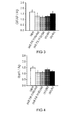
- APP/PS1 mice treated with compounds of formula ( ⁇ S ,7 S ,11 S )-(Ia) and ( ⁇ )-(Ic) did not exhibit memory impairment. Indeed, the chronic treatment with ( ⁇ )-(Ic) significantly increased the recognition index of APP/PS1 mice when compared to vehicle-treated animals.
- Chronic treatment with compounds ( ⁇ S ,7 S ,11 S )-(Ia), ( ⁇ S ,7 R ,11 R )-(I a ), ( ⁇ )-(Ib), and ( ⁇ )-(Ic) tends to reduce the A ⁇ burden in the cortex of APP/PS1 mice when compared to vehicle-treated animals, in particular with the compound ( ⁇ S ,7 S ,11 S )-(Ia) (5 mg/kg/day).
Landscapes
- Chemical & Material Sciences (AREA)
- Organic Chemistry (AREA)
- Pharmaceuticals Containing Other Organic And Inorganic Compounds (AREA)
Abstract
The compounds of formula (I), or its pharmaceutically acceptable salts, or any stereoisomer or mixture thereof, wherein: R1 and R1' are both H or R1 and R1' are taken together forming a biradical of formula -CH2-C(R4)=CH-, R2 and R3 are radical independently selected from the group consisting of H, F, Cl and (C1-C4)-alkyl; R4 is a (C1-C2)-alkyl radical; and n is an integer from 2 to 15, are useful for the treatment of a neurodegenerative disorder such as Alzheimer's disease.
Description
- The invention refers to compounds that are able to modulate the initiating, propagating and final steps of the neurodegenerative process of Alzheimer's disease and to a process for their preparation. It also relates to pharmaceutical compositions comprising these compounds and to their use for the treatment of neurodegenerative disorders such as Alzheimer's disease.
- Populations in developed countries are growing increasingly older along with medical and social advances. However, healthy ageing can be compromised by the increased susceptibility of elderly people to a number of important diseases that occur late in life, leading to a reduced quality of life, disability and death. Particularly important among these diseases of ageing are neurodegenerative diseases.
- Neurodegenerative disorders can be defined as chronic and progressive disorders of the nervous system affecting neurologic and behavioral functions, which start with specific biochemical changes that ultimately lead to distinct histopathologic and clinical syndromes. Among such disorders are Alzheimer's disease (AD), Huntington's disease and Parkinson's disease.
- AD is a slow, progressive, and ultimately fatal neurodegenerative disorder, clinically characterized by a noticeable cognitive decline defined by a loss of memory and learning ability, together with a reduced ability to perform basic activities of daily living and a diverse array of neuropsychiatric symptoms. It mainly affects older people. After 65, the likelihood of developing AD doubles every 5 years. Some 35 million people worldwide, i.e. about 0.5% of the world's total population, are suffering dementia, in most cases AD. AD is among the top ten leading causes of death in developed countries, but the only one among them that cannot be cured, prevented or even slowed down. As a consequence of its increasing prevalence and devastating effects, AD is currently affecting every health system in the world. The total worldwide estimated cost associated with AD accounts for approximately 1% of the world's gross domestic product. Worryingly, the figures associated to AD are rising both in terms of mortality and prevalence. Thus, death rates from other major diseases have dropped since 2000, whereas the number of deaths from AD has risen 66%. Also, it is estimated that the prevalence of AD will double every 20 years, reaching 66 million people worldwide by 2030 and 115 million by 2050.
- Therapeutic interventions currently available for AD, namely the acetylcholinesterase (AChE) inhibitors donepezil, galantamine and rivastigmine and the glutamate NMDA receptor antagonist memantine, are regarded as merely symptomatic. These drugs compensate for neurotransmitter deficits that arise at the end of the neurotoxic cascade of AD as a consequence of the neuronal death and are responsible for the cognitive decline of AD patients. In contrast, most drug candidates under clinical development have been designed to hit one of the biological targets involved in the early pathogenic events of the neurotoxic cascade of AD that are responsible for the neuronal death, mainly the formation of the beta-amyloid peptide (Aβ), which involves the proteolysis of the amyloid precursor protein by the sequential action of the enzymes β-secretase (BACE-1) and γ-secretase, and the subsequent aggregation of Aβ into toxic oligomers and fibrils. Disappointingly, the most advanced drug candidates in clinical trials hitting these biological targets have failed in the past years. The clinical development of the Aβ-antiaggregating compound tramiprosate and the γ-secretase modulator tarenflurbil, whose launching was expected by 2009/2010, was discontinued in advanced Phase III trials shortly before those dates due to efficacy issues. Analogously, clinical development of the promising BACE-1 inhibitor LY2811376 was discontinued in Phase I trials in 2011 due to toxicity findings observed in parallel longer-term preclinical studies in mice.
- It is becoming increasingly apparent that diseases, in general, and complex diseases as AD, in particular, are not straighforward processes but rather complex networks of interconnected protein targets, with alternative, redundant, compensatory signaling pathways that render ineffective the modulation of a single target of the pathological network by compounds as those anti-Alzheimer drug candidates that are recently failing in clinical trials. Conversely, a multi-target approach based on the simultaneous modulation of several targets involved in the pathological network should result in a more efficient therapeutic intervention. Thus, simultaneous blockade of several important nodes of the pathological network of AD is emerging as a promising therapeutic approach for efficiently interfering the underlying mechanisms of the disease.
- The multi-target approach to AD can be ideally accomplished by means of single compounds that are structurally suited to hit different biological targets, i.e. one medicine containing a single drug with the ability to hit two or more biological targets. Multi-target drugs can be rationally designed by combination of structural fragments or units of carefully selected compounds that are known to be active toward a particularly important target or pathogenic process.
- In vitro inhibitory activities of AChE and AChE-induced Aβ aggregation have been reported for different families of dual binding site AChEIs. The catalytic site of AChE is involved in the hydrolysis of the neurotransmitter acetylcholine, whereas the peripheral site is involved in a binding process with Aβ that accelerates the aggregation of this peptide. Thus, simultaneous blockade of the catalytic and peripheral sites of AChE by dual binding site AChE inhibitors (AChEIs) results in the simultaneous modulation of two important targets of AD pathology, namely Aβ aggregation and the cholinergic deficit. Among the compounds disclosed having in vitro inhibitory activities of AChE and AChE-induced Aβ aggregation are memoquin (cf. e.g. A. Cavalli et al., "A Small Molecule Targeting the Multifunctional Nature of Alzheimer's Disease" Angew. Chem. Int. Ed. 2007, vol. 46, pp. 3689-3692) or some hybrid compounds having the 5,6-dimethoxy-2-[(4-piperidinyl)methyl)]-1-indanone moiety of donepezil (or the indane derivative thereof) and a unit of tacrine or huprine as the peripheral to mid-gorge and active site interacting moieties (cf.
WO2007/122274 orWO2011/076969 , respectively). - Only very few examples of rationally designed multi-target drug candidates have entered clinical trials for AD, i.e. NP-61 (Phase I, Noscira), for which a potent AChE inhibitory activity and Aβ-antiaggregating effect have been reported, and ladostigil (Phase II, Avraham Pharmaceuticals Ltd.), which in preclinical studies exhibited a multipotent pharmacological profile, it being able to inhibit AChE, prevent the development of memory impairment in aged rats and rescue animal models of AD from memory impairment, afford antidepressant activity and reduce the number of activated inflammatory cells in brain.
- Notwithstanding the extensive research efforts invested in the past, no drug effective for preventing, halting or slowing down AD progression has reached the market so far. Therefore, there is currently a very important and acute need to find compounds for the effective treatment of AD. In this context, multi-target drugs hitting the underlying mechanisms of AD seem to be the more realistic approach.
- AD has been associated with increased cerebral levels of Aβ, cognitive decline, and also with an increased incidence of unprovoked seizures. High levels of Aβ have been shown to be responsible for eliciting epileptiform activity and seizures in transgenic mice expressing human APP (hAPP), even at early stages of the disease process, this aberrant excitatory neuronal activity contributing causally to learning and memory deficits in these transgenic mice. It has been suggested that Aβ peptides might account for the cognitive deficits in AD patients by eliciting a similar aberrant excitatory neuronal activity also in humans. Therefore both the increased levels of Aβ peptides and the immediately resulting aberrant excitatory neural network activity would constitute primary upstream events in the neurotoxic cascade of AD, that eventually would lead to cognitive decline.
- Inventors have provided with novel compounds that interfere primary upstream events of the neurotoxic cascade of AD by simultaneously reducing brain Aβ levels as well as Aβ-induced aberrant excitatory neuronal activity, and, therefore, with potential to protect the brain against the deleterious effects of Aβ first on synaptic integrity and eventually on cognition. Indeed, in preliminary in vivo studies inventors have found that these compounds reduce brain amyloid burden as well as Aβ-induced astrocytic and microglial response and rescue memory impairment of a transgenic mouse model of AD, namely the APP/PS1 mice.
- These effects are especially relevant since if administered in an early phase these compounds might halt the neurodegenerative process, i.e. they should be able to interfere upstream in the neurotoxic cascade of AD, and therefore, positively modify AD progression, which makes these compounds very promising disease modifying anti-Alzheimer drugs.
- In addition, the therapy with a single multi-target drug is advantageous over other multi-target therapies that are based on the use of more than one compound, namely drug cocktails (two or more medicines each one containing one different drug) or fixed dose combinations (one medicine containing two or more different drugs), because it results in better patient compliance, no risk for drug-drug interactions, less side-effects, simpler and more predictable pharmacokinetics, clinical studies, regulatory approval and registration procedures, and easier manufacture and formulation as well.
- Accordingly, a first aspect of the present invention relates to a compound of formula (I) or its pharmaceutically acceptable salts, or any stereoisomer or mixture of stereoisomers, either of the compound of formula (I) or of their salts,


- Thus, compounds of formula (I) may have one of the following general formulae:

- A second aspect of the present invention relates to a process for the preparation of a compound of formula (I) as defined above, or its pharmaceutically acceptable salts, or any stereoisomer or mixture of stereoisomers, either of the compound of formula (I) or of their salts, which comprises: (a) reacting a compound of formula (II), a salt or a reactive derivative thereof, or any stereoisomer or mixtures thereof, either of the compound of formula (II) or of their salts or derivatives, with a compound of formula (III) or a salt thereof, or any stereoisomer or mixtures thereof; wherein R1, R1', R2, R3, R4, and n have the same meaning defined above for the compound of formula (I); and, (b) optionally, converting the compound thus obtained into a pharmaceutically acceptable salt by reacting it with the corresponding pharmaceutically acceptable acid.

- A third aspect of the present invention relates to some new intermediate compounds, in particular to some compounds of formula (III) and of formula (IV) disclosed below,
- A fourth aspect of the present invention relates to a pharmaceutical composition comprising a therapeutically effective amount of the compound of formula (I), or a pharmaceutically acceptable salt thereof, including any stereoisomer or mixture thereof, together with appropriate amounts of one or more pharmaceutical excipients or carriers.
- A fifth aspect of the invention relates to the compounds of formula (I) as defined above, for use as a medicament.
- A sixth aspect of the present invention relates to the compounds of formula (I) as defined above for the prophylactic and/or therapeutic treatment of a neurodegenerative disorder, in particular, Alzheimer's disease.
-
-
FIG 1 illustrates the effects of compounds of formula (αS,7R,11R)-(Ia), (αS,7S,11S)-(Ia), (±)-(Ib), and (±)-(Ic) on the cognitive failure of APP/PS1 mice, using the two-object recognition test. RI = recognition index; VEH = vehicle; WT = wild-type; APP/PS1 = transgenic mice that express the mutated human amyloid precursor protein (APP) and presenilin 1 (PS1) genes. -
FIG 2 illustrates the brain amyloid burden present in APP/PS1 mice treated with compounds of (αS,7R,11R)-(Ia), (αS,7S,11S)-(Ia), (±)-(Ib), and (±)-(Ic), using Aβ immunostaining. Aβ = β-amyloid peptide burden in the cortex of APP/PS1 mice; VEH = vehicle. -
FIG 3 illustrates the level of astrogliosis around amyloid plaques in APP/PS1 mice treated with compounds of (αS,7R,11R)-(Ia), (αS,7S,11S)-(Ia), (±)-(Ib), and (±)-(Ic), using double glial and Aβ immunostaining. GFAP/Aβ = Glial fibrillary acidic protein immunostaining in reference to Aβ plaque area; VEH = vehicle. -
FIG 4 illustrates the level of microgliosis around amyloid plaques in APP/PS1 mice treated with compounds of (αS,7R,11R)-(Ia), (αS,7S,11S)-(Ia), (±)-(Ib), and (±)-(Ic), using double glial and Aβ immunostaining. Iba1/Aβ = ionized calcium-binding adapter molecule 1 immunostaining in reference to Aβ plaque area; VEH = vehicle. - As mentioned above, an aspect of the present invention relates to compounds of formula (I), their pharmaceutically acceptable salts, any of their stereoisomers or mixture of stereoisomers, either of the compound of formula (I) or of their salts, wherein: R1 and R1' are both H or, alternatively, R1 and R1' are taken together and are biradical of formula -CH2-C(R4)=CH-; R2 and R3 are radicals independently selected from the group consisting of H, F, Cl and (C1-C4)-alkyl, for instance, methyl; R4 is a (C1-C2) alkyl radical; and n is an integer from 2 to 15.
- Any range given in this document is intended to include the end values of the range.
- The new compounds of formula (I) or their salts can exist in solvated, as well as unsolvated forms, including hydrated forms. Thus, they can contain in its structure stoichiometric amounts of solvent in the case of solvates, or of water in the case of hydrates. It is to be understood that the invention encompasses all such solvated, as well as unsolvated forms.
- The pharmaceutically acceptable salts of the compound of formula (I) include acid addition salts such as the hydrochloride, but also any other pharmaceutically acceptable salts of other acids such as hydrobromic, hydrofluoric, sulphuric, phosphoric, acetic, citric, fumaric, gluconic, lactic, maleic, succinic or tartaric acid. In a preferred embodiment, the pharmaceutically acceptable salt is the hydrochloride salt.
- In a preferred embodiment, compounds of formula (I) are those where R2 is a radical selected from the group consisting of F, Cl, and methyl; and R3 is a radical selected from the group consisting of H, F, Cl and methyl.
- In another preferred embodiment, compounds of formula (I) are those where R1 and R1' are taken together forming a biradical of formula -CH2-C(R4)=CH-. In a more preferred embodiment R4 is methyl. In a still more preferred embodiment, R2 is Cl. In an even still more preferred embodiment, R3 is H, Thus, the last compounds of formula (I) have the following formula (I1a), i.e. compounds of formula (I) with the biradical -CH2-C(R4)=CH-, R2 = Cl, R3 = H, and R4 = methyl.

- In another preferred embodiment, compounds of formula (I) are those where R1 and R1' are H. In a more preferred embodiment, R2 is Cl or H. In a still more preferred embodiment, R3 is H. The last compounds may have the following formula (I2a), i.e. compounds of formula (I) with R1 = R1' = R3 = H and R2 = Cl ;


- In another preferred embodiment, in combination with one or more features of the various embodiments described above or below, compounds of formula (I) are those where n is an integer from 2 to 12. In another more preferred embodiment, compounds of formula (I) are those where n is an integer from 6 to 8.
- The most preferred compounds of formula (I) are those selected from the following list:
- (+)-(αS,7R,11R)-N-{7-[(3-chloro-6,7,10,11-tetrahydro-9-methyl-7,11-methanocycloocta[b]quinolin-12-yl)amino]heptyl}-2-(2-oxopyrrolidin-1-yl)butanamide (αS,7R,11R)-(Ia);
- (-)-(αS,7S,11S)-N-{7-[(3-chloro-6,7,10,11-tetrahydro-9-methyl-7,11-methanocycloocta[b]quinolin-12-yl)amino]heptyl}-2-(2-oxopyrrolidin-1-yl)butanamide (αS,7S,11S)-(Ia);
- (±)-N-{7-[(6-chloro-1,2,3,4-tetrahydroacridin-9-yl)amino]heptyl}-2-(2-oxopyrrolidin-1-yl)butanamide (±)-(Ib); and
- (±)-N-{7-[(1,2,3,4-tetrahydroacridin-9-yl)amino]heptyl}-2-(2-oxopyrrolidin-1-yl)butanamide (±)-(Ic).
- Compounds of formula (I) as defined above may be prepared by a process which comprises reacting a compound of formula (II), a salt or a reactive derivative thereof, or any stereoisomer or mixture thereof, either of the compound of formula (II) or of their salts or derivatives,


R4 is a (C1-C2) alkyl radical; and n is an integer from 2 to 15; and if desired, the compound thus obtained may be converted into a pharmaceutically acceptable salt by reacting it with the corresponding pharmaceutically acceptable acid. - Reactive derivatives of carboxylic acids of formula (II) include acyl halides, anhydrides, and esters.
- The carboxy group of compound (II) can be converted into an acyl halide, such as an acid chloride, for example, by treating the compound (II) with a thionyl halide, such as thionyl chloride.
- The carboxyl group of the compound of formula (II) can also be converted into an anhydride, including a mixed anhydride, for example, using a formic acid ester such as a (C1-C7)-alkyl formate. In particular, it can be carried out for example by treating a salt of compound (II), such as an ammonium or alkali metal salt, with an haloformic acid ester, in particular a chloroformic acid ester, such as a (C1-C7)-alkyl formate.
- The carboxy group of compound (II) can also be converted into an activated ester, such as a cyanomethyl ester, a nitrophenyl ester such as a 4-nitrophenyl ester, or a polyhalophenyl ester such as a pentachlorophenyl ester. It can be made by treating the compound of formula (II) with an appropriate hydroxyl compound in the presence of a suitable condensing agent, such as N,N'-dicyclohexylcarbodiimide.
- Either the compound of formula (II) or the reactive derivative of the types disclosed above can be reacted with an amine of formula (III) and in this way amide compounds of the formula (I) can be obtained directly or via the intermediate compounds describe above.
- Other non-activated esters, such as (C1-C7)-alkyl esters of compounds of formula (II), which contain, for example, (C2-C8)-alkoxycarbonyl as a substituent, can also be brought to reaction with the amines of formula (III). Generally, the reaction is carried out in the presence of a base, preferably the base is selected from an alkaline or alkaline earth metal hydroxide such as sodium or potassium hydroxide, an alkaline or alkaline earth metal carbonate such as sodium or potassium carbonate, and an organic amine, preferably a tertiary amine such as triethylamine.
- The pharmaceutically acceptable salts of the compounds of formula (I), in particular, the hydrochlorides, but also other pharmaceutically acceptable salts of other acids such as those mentioned above can be prepared conventionally, e.g. by mixing a solution of the free base compound and the corresponding acid in a suitable solvent, e.g. ethanol and recovering the acid addition salt either as precipitate, or by evaporation of the solution. Salts can also be converted into the free compounds in a customary manner, for example, by treating with a suitable basic agent.
- In view of the close relationship between the novel compounds in the free base form and in the form of their salts, in the preceding text and below when it is referred to the compounds (I) may be understood as meaning either the free base compounds or their salts.
- As mentioned above, the compounds of formula (I) or their salts can also be obtained in the form of their hydrates or can include other solvents used for crystallization in their lattice. The obtention of solvates and hydrates depends on the solvent used and the crystallization conditions that can be determined by the skilled person. The new compounds herein described have the ability to retain molecules of water, which in some cases cannot be removed after drying the analytical samples at 65 °C/2 Torr for 7 days.
- Depending on the choice of the starting materials and processes, the compounds of formula (I) can be present in the form of one of the possible isomers or as mixtures thereof, for example as pure optical isomers, or as isomer mixtures, such as racemates, or stereoisomer mixtures.
- Racemates and diastereomer mixtures obtained can be separated into the pure isomers or racemates in a known manner on the basis of the physicochemical differences of the components, for example by fractional crystallization. Racemates obtained may furthermore be resolved into the optical enantiomers by known methods, for example by recrystallization from an optically active solvent, chromatography on chiral adsorbents, with the aid of suitable microorganisms, by cleavage with specific immobilized enzymes, via the formation of inclusion compounds or by conversion into diastereomeric salts. Thus, for example a racemic compound of formula (I) can be separated into its enantiomers by reaction of the racemate with an optically active acid and separation of the diastereomer mixture obtained. Examples of appropriate optically active acids are carboxylic acids such as tartaric or malic acid; sulfonic acids such as camphorsulfonic acid. The separation of the diastereomer mixture obtained in this manner, can be done on the basis of its differing solubilities. Then, the desired enantiomer can be liberated by the action of suitable agents. The most active enantiomer is advantageously isolated.
- The separation of a racemic compound into its enantiomers can also be carried out over any of the intermediates used for the preparation of the compounds of formula (I) which contain the huprine fragment, i.e. any of the intermediate compounds (III), (IV), (V), or (VII), where R1 and R1' form the biradical -CH2-C(R4)=CH- . Preferably, the separation is carried out over the compound of formula (V) below, for instance by chromatography on chiral adsorbents.
- The enantiomers of the compound of formula (II) are commercially available.
- Compounds of formula (III) or their salts or their stereoisomers can be prepared by a process which comprises submitting a compound of formula (IV) or a salt thereof, or any stereoisomer or mixture thereof, either of the compound of formula (IV) or of their salts, to a reduction reaction,


- The reduction reaction can be carried out using a reducing agent, for instance lithium aluminum hydride in the presence of a suitable solvent, for instance, a (C2-C6)-ether such as diethyl ether or tetrahydrofuran.
- Compounds of formula (IV) or or can bye Compounds of formula (IV) or their salts or their stereoisomers can be (V) prepared by a process which comprises reacting a compound of formula (V) or a salt thereof, or any stereoisomer or mixture thereof, either of the compound of formula (V) or of their salts, with a compound of formula (VI). In compound of formula (V), R1, R1', R2, and R3 have the same meaning as for compound of formula (III), and in compound of formula (VI) m is an integer from 1 to 14 and X is an halogen. Preferably the halogen is Cl, Br or I, more preferably, the halogen is Br.

X-(CH2)m-CN (VI)
- Alternatively, compounds of formula (III) or their salts or theirs stereoisomers can be prepared by a process which comprises reacting a compound of formula (VII) or any stereoisomer or mixture thereof, with a compound of formula (VIII). In compound of formula (VII), R1, R1', R2, and R3 have the same meaning as for compound of formula (III), and in compound of formula (VIII), n is an integer from 2 to 15.

H2N-(CH2)n-NH2 (VIII)
- The preferred values of R1, R1', R2, R3, for the compound of formula (I) are also preferred values for the compounds of formula (III), (IV), (V), and (VII) in the preparation process of the invention. The preferred values of n for the compound of formula (I) are also preferred values for the compound of formula (III). Preferred values of m in compound of formula (IV) are comprised from 1 to 11, more preferred are the ones comprised from 5 to 7.
- Some intermediate compounds of formula (III) and of formula (IV) are new and also form part of the invention.
- Thus, it is part of the invention the provision of an intermediate compound of formula (III) or their salts, or any stereoisomer or mixture thereof,
wherein: R1 and R1' are taken together
R4 is a (C1-C2)-alkyl radical; and n is an integer from 2 to 7. Preferably, the (C1-C4)-alkyl is a methyl. - It is also part of the invention the provision of an intermediate compound of formula (IV) or their salts, or any stereoisomer or mixture thereof, where both R1 and R1' are H; n is an integer from 2 to 15; and R2 and R3 are radicals independently selected from the group consisting of H, F, Cl and (C1-C4)-alkyl; or alternatively, R1 and R1' are taken together

- In a preferred embodiment, compounds of formula (III) or (IV) are those where R2 is a radical selected from the group consisting of F, Cl and methyl; and R3 is a radical selected from the group consisting of H, F, Cl and methyl. The other preferred embodiments described above for the values of R1, R1', R2, R3 and R4 for the compound of formula (I) are also preferred embodiments for the compounds of formula (III) and (IV).
- As mentioned above it is also part of the invention the pharmaceutical composition comprising a therapeutically effective amount of the compound of formula (I), or a pharmaceutically acceptable salt thereof, including any stereoisomer or mixture thereof, together with appropriate amounts of one or more pharmaceutical excipients or carriers.
- The term "therapeutically effective amount" as used herein, refers to the amount of a compound that, when administered, is sufficient to prevent development of, or alleviate to some extent, one or more of the symptoms of a neurodegenerative disorder, in particular, Alzheimer's disease. The particular dose of compound administered according to this invention will of course be determined by the particular circumstances surrounding the case, including the compound administered, the route of administration, the particular condition being treated, and the similar considerations.
- The term "pharmaceutical composition" refers to a mixture of a compound disclosed herein with other chemical components, such as diluents or carriers. The pharmaceutical composition facilitates administration of the compound to an organism.
- The terms "pharmaceutically acceptable excipients or carriers" refer to pharmaceutically acceptable material, composition or vehicle, such as liquid or solid filler, diluent, excipient, solvent, or encapsulating material. Each component must be pharmaceutically acceptable in the sense of being compatible with the other ingredients of the pharmaceutical composition. It must also be suitable for use in contact with the tissue or organ of humans and animals without excessive toxicity, irritation, allergic response, immunogenicity or other problems or complications commensurate with a reasonable benefit/risk ratio.
- The term "treatment" meant to include alleviating or eradicating a disorder, disease, or condition, or one or more of the symptoms associated with the disorder, disease or condition, or alleviating or eradicating the cause(s) of the disorder, disease, or condition itself.
- Another aspect of the invention relates to the compounds of formula (I) as defined above, for use as a medicament.
- A further aspect of the present invention relates to the compounds of formula (I) as defined above for use in the prophylactic and/or therapeutic treatment of a neurodegenerative disorder, in particular, in a mammal, including a human. This aspect can also be formulated as the use of the compounds of formula (I) as defined above, for the preparation of a medicament for the prophylactic and/or therapeutic treatment of a neurodegenerative disorder, in particular in a mammal, including a human. The invention also relates to a method of treatment and/or prophylaxis of a mammal, including a human, suffering from or being susceptible to a neurodegenerative disorder, said method comprises the administration to said patient of a therapeutically effective amount of the compound of formula (I) as defined above, together with pharmaceutically acceptable excipients or carriers.
- Particularly, the neurodegenerative disorder is a neurodegenerative disorder with abnormal protein aggregates.
- Examples of neurodegenerative disorders with abnormal protein aggregates include β-amyloidopathies (e.g. Alzheimer's disease), tauopathies (e.g. Alzheimer's disease, Pick's disease, progressive supranuclear palsy, argyrophilic grain disease, frontotemporal lobar degeneration), synucleinopathies (e.g. Parkinson's disease, dementia with Lewy bodies, multiple system atrophy), polyglutamine diseases (i.e. Huntington's disease), prion diseases (e.g. Creutzfeldt-Jakob disease, kuru, Gerstmann-Sträussler-Scheinker syndrome, fatal familial insomnia) and TDP-43 proteinopathies (i.e. frontotemporal lobar degeneration, amyotrophic lateral sclerosis, Perry syndrome).
- In a preferred embodiment, the neurodegenerative disorder is Alzheimer's disease.
- Throughout the description and claims the word "comprise" and variations of the word, are not intended to exclude other technical features, additives, components, or steps. Furthermore, the word "comprise" encompasses the case of "consisting of". Additional objects, advantages and features of the invention will become apparent to those skilled in the art upon examination of the description or may be learned by practice of the invention. The following examples are provided by way of illustration, and they are not intended to be limiting of the present invention. Furthermore, the present invention covers all possible combinations of particular and preferred embodiments described herein.
- Melting points were determined in open capillary tubes with a MFB 595010M Gallenkamp melting point apparatus.
- Elemental analyses and high resolution mass spectra were carried out at the Mycroanalysis Service of the IIQAB (CSIC, Barcelona, Spain) with a Carlo Erba model 1106 analyzer, and at the Centres Científics i Tecnològics of the University of Barcelona with a LC/MSD TOF Agilent Technologies spectrometer.
- IR spectra were run on a Perkin-Elmer Spectrum RX I spectrophotometer. Absorption values are expressed as wave-numbers (cm-1); only significant absorption bands are given.
- Column chromatography was performed on silica gel 60 AC.C (40-60 mesh, SDS, ref 2000027). Thin-layer chromatography was performed with aluminum-backed sheets with silica gel 60 F254 (Merck, ref 1.05554), and spots were visualized with UV light and 1% aqueous solution of KMnO4.
- Analytical grade solvents were used for crystallization, while pure for synthesis solvents were used in the reactions, extractions and column chromatography.
- For characterization purposes, the new hybrids were transformed into the corresponding hydrochlorides, and recrystallized. The analytical samples of all of the new hybrids which were subjected to pharmacological evaluation possess a purity ≥95% as evidenced by their elemental analyses. Worthy of note, as previously reported for some tacrine-related dimeric compounds, the new hybrids herein described have the ability to retain molecules of water, which cannot be removed after drying the analytical samples at 65 °C/2 Torr for 7 days. Thus, the elemental analyses of these compounds showed the presence of variable amounts of water, which have been indicated in the corresponding compound formulas.
- A well stirred suspension of (+)-huprine Y (+)-(Va) (1.00 g, 3.52 mmol) and finely powdered NaOH (0.46 g, 11.6 mmol) in anhydrous DMSO (15 mL) was heated every 10 min approximately with a heat gun for 1 h and at room temperature for one additional hour, and then a solution of 7-bromoheptanenitrile (VIa) (90% purity, 0.61 mL, 0.77 g, 4.05 mmol) in DMSO (1 mL) was added dropwise for 30 min. The reaction mixture was stirred at room temperature overnight, diluted with aqueous 2 N NaOH (50 mL) and water (50 mL) and extracted with AcOEt (3 x 75 mL). The combined organic extracts were washed with water (3 x 100 mL) and with 5 N NaOH (6 x 100 mL), dried with anhyd. Na2SO4, filtered and evaporated under reduced pressure to give a yellow oil (780 mg), which was subjected to column chromatography [40-60 µm silica gel (23 g), CH2Cl2/50% aq NH4OH 100:0.2], to provide the compound of the title (156 mg) and an impure product. The impure fraction was subjected to column chromatography [40-60 µm silica gel (28 g), CH2Cl2/MeOH/50% aq NH4OH mixtures], to provide the compound of the title (599 mg, 55% total yield) as a yellowish solid. The isolated compound of the title was transformed into the corresponding hydrochloride as follows: A solution of the free base (40 mg, 0.10 mmol) in CH2Cl2 (3 mL) was filtered through a 0.2 µm NYL filter and treated with a 0.53 N methanolic solution of HCl (0.58 mL, 0.31 mmol). The solution was concentrated in vacuo to dryness and the solid residue was washed with pentane (3 x 2 mL) and dried at 65 °C/2 Torr for 7 days to give (+)-(IVa)•HCl (51 mg) as a yellowish solid. Characterization: (+)-(IVa): Rf = 0.80 (CH2Cl2/MeOH/50% aq NH4OH 9:1:0.05). (+)-(IVa)•HCl: mp 107-110 °C (CH2Cl2/MeOH 84:16); [α]20 D = +234 (c = 0.52, MeOH); IR (KBr) v: 3500-2500 (max at 3229, 3044, 2925, 2854, 2775, 2652, N-H,+N-H, and C-H st), 2242 (CN st), 1631, 1581, 1560, 1513 (ar-C-C and ar-C-N st) cm-1; HRMS (ESI) calcd for (C24H28 35ClN3 + H+) 394.2045, found 394.2046.
- It was prepared as described for the compound of Example 1. From (-)-huprine Y (- )-(Va) (1.00 g, 3.52 mmol) and a solution of 7-bromoheptanenitrile (VIa) (90% purity, 0.61 mL, 0.77 g, 4.05 mmol) in anhydrous DMSO (15 mL), a yellow oily residue (953 mg) was obtained and subjected to column chromatography [40-60 µm silica gel (30 g), CH2Cl2/MeOH/50% aq NH4OH mixtures]. On elution with CH2Cl2/MeOH/50% aq NH4OH 97.5:2.5:0.2, the compound of the title (514 mg, 52% yield) was isolated as a yellowish solid. Characterization: (-)-(IVa): Rf = 0.80 (CH2Cl2/MeOH/50% aq NH4OH 9:1:0.05). (-)-(IVa)•HCl: mp 98-102 °C (CH2Cl2/MeOH 84:16); [α]20 D = -203 (c = 1, MeOH); IR (KBr) v: 3500-2500 (max at 3229, 3044, 2928, 2905, 2865, 2759, 2649, N-H,+N-H, and C-H st), 2234 (CN st), 1630, 1582, 1567,1513 (ar-C-C and ar-C-N st) cm-1; HRMS (ESI) calcd for (C24H28 35ClN3 + H+) 394.2045, found 394.2049.
- It was prepared as described for the compound of Example 1. From 6-chlorotacrine (Vb) (2.00 g, 8.60 mmol) and a solution of 7-bromoheptanenitrile (VIa) (90% purity, 1.55 mL, 1.96 g, 10.3 mmol) in anhydrous DMSO (20 mL), a yellow oily residue (3.06 g) was obtained and subjected to column chromatography [40-60 µm silica gel (92 g), CH2Cl2/50% aq NH4OH 100:0.2], to provide the compound of the title (2.06 g, 70% yield) as a yellowish solid. Characterization: (IVb): Rf = 0.92 (CH2Cl2/MeOH/50% aq NH4OH 9:1:0.05). (IVb)•HCl: mp 86-87 °C (AcOEt/MeOH 71:29); IR (KBr) v: 3500-2500 (max at 3347, 3138, 3059, 2928, 2858, 2744, N-H,+N-H, and C-H st), 2245 (CN st), 1639, 1605, 1573, 1524 (ar-C-C and ar-C-N st) cm-1; HRMS (ESI) calcd for (C20H24 35ClN3 + H+) 342.1732, found 342.1737.
- It was prepared as described for the compound of Example 1. From tacrine (Vc) (1.70 g, 8.60 mmol) and a solution of 7-bromoheptanenitrile (VIa) (90% purity, 1.55 mL, 1.96 g, 10.3 mmol) in anhydrous DMSO (20 mL), a yellow oily residue (2.53 g) was obtained and subjected to column chromatography [40-60 µm silica gel (76 g), CH2Cl2/50% aq NH4OH 100:0.2], to provide the compound of the title (1.75 g, 67% yield) as a yellowish sticky solid. Characterization: (IVc): Rf = 0.77 (CH2Cl2/MeOH/50% aq NH4OH 9:1:0.05). (IVc)•HCl: IR (KBr) v: 3500-2500 (max at 3237, 3126, 3054,3023, 2932, 2860, 2770, 2713, N-H,+N-H, and C-H st), 2242 (CN st), 1633, 1586, 1573, 1523 (ar-C-C and ar-C-N st) cm-1; HRMS (ESI) calcd for (C20H25N3 + H+) 308.2121, found 308.2118.
- A suspension of nitrile (+)-(IVa) (599 mg, 1.52 mmol) in anhyd. Et2O (29 mL) was cooled to 0 °C with an ice bath and treated dropwise with a 4 M solution of LiAlH4 in Et2O (1.52 mL, 6.08 mmol). The reaction mixture was warmed to room temperature, stirred overnight, cooled to 0 °C and treated dropwise with a 4 M solution of LiAlH4 in Et2O (0.80 mL 3.20 mmol). The resulting mixture was warmed to room temperature, stirred for 20 h, and treated dropwise with water and aq 5 N NaOH, and extracted with AcOEt (3 x 100 mL). The combined organic extracts were washed with water (3 x 100 mL), dried with anhyd. Na2SO4, filtered, and evaporated under reduced pressure to give a crude product (445 mg), which was subjected to column chromatography [40-60 µm silica gel (10 g), CH2Cl2/MeOH/50% aq NH4OH mixtures]. On elution with CH2Cl2/MeOH/50% aq NH4OH 99:1:1, the compound of the title (270 mg, 45% yield) was isolated as a yellowish oil. The isolated compound of the title was transformed into the corresponding dihydrochloride as follows: A solution of the free base (40 mg, 0.10 mmol) in CH2Cl2 (10 mL) was filtered through a 0.2 µm NYL filter and treated with a 0.53 N methanolic solution of HCl (1.71 mL, 0.91 mmol). The solution was concentrated in vacuo to dryness and the solid residue was washed with pentane (3 x 2 mL) and dried at 65 °C/2 Torr for 7 days to give (+)-(IIIa)•2HCl (45 mg) as a yellowish solid. Characterization: (+)-(IIIa): Rf = 0.16 (CH2Cl2/MeOH/50% aq NH4OH 9:1:0.05). (+)-(IIIa)•2HCl: mp 179-183 °C (CH2Cl2/MeOH 85:15); [α]20 D = +176 (c = 1.08, MeOH); IR (KBr) v: 3500-2500 (max at 3240, 2923, 2849, 2802, N-H,+N-H, and C-H st), 1629, 1581, 1551, 1513 (ar-C-C and ar-C-N st) cm-1; HRMS (ESI) calcd for (C24H32 35ClN3 + H+) 398.2357, found 398.2356.
- It was prepared as described for the compound of Example 5. From nitrile (-)-(IVa) (474 mg, 1.2 mmol), the compound of the title (432 mg, 91 % yield) was directly obtained as a yellowish oil, without the need for a chromatographic purification. Characterization: (-)-(IIIa): Rf = 0.16 (CH2Cl2/MeOH/50% aq NH4OH 9:1:0.05). (-)-(IIIa)•2HCl: mp 176-180 °C (CH2Cl2/MeOH 85:15); [α]20 D = -197 (c = 1.14, MeOH); IR (KBr) v: 3500-2500 (max at 3250, 2891, 2870, 2638, N-H,+N-H, and C-H st), 1629, 1580, 1548, 1538, 1514 (ar-C-C and ar-C-N st) cm-1; HRMS (ESI) calcd for (C24H32 35ClN3 + H+) 398.2357, found 398.2356.
- It was prepared as described for the compound of Example 5. From nitrile (IVb) (2.06 g, 6.03 mmol), a crude product (1.69 g) was obtained and subjected to column chromatography [40-60 µm silica gel (20 g), CH2Cl2/MeOH/50% aq NH4OH mixtures]. On elution with CH2Cl2/MeOH/50% aq NH4OH 100:0.5:0.2 to 95:5:0.2, the compound of the title (602 mg, 30% yield) was isolated as a yellowish oil. Characterization: (IIIb): Rf = 0.12 (CH2Cl2/MeOH/50% aq NH4OH 9:1:0.05). (IIIb)•2HCl: IR (KBr) ν: 3500-2500 (max at 3379, 3252, 2928, 2852, 2795, 2661 N-H,+N-H, and C-H st), 1630, 1573, 1514 (ar-C-C and ar-C-N st) cm-1.
- It was prepared as described for the compound of Example 5. From nitrile (IVc) (1.75 g, 5.70 mmol), a crude product (1.69 g) was obtained and subjected to column chromatography [40-60 µm silica gel (40 g), CH2Cl2/MeOH/50% aq NH4OH mixtures]. On elution with CH2Cl2/MeOH/50% aq NH4OH 80:20:0.2, the compound of the title (810 mg, 46% yield) was isolated as a yellowish oil. Characterization: (IIIc): Rf = 0.10 (CH2Cl2/MeOH/50% aq NH4OH 9:1:0.05). (IIIc)•2HCl: IR (KBr) ν: 3500-2500 (max at 3374, 3264, 2930, 2857 N-H,+N-H, and C-H st), 1633, 1584, 1573, 1522 (ar-C-C and ar-C-N st) cm-1.
- A solution of (S)-2-(2-oxopyrrolidin-1-yl)butanoic acid (IIa) (99 mg, 0.58 mmol) in anhyd. CH2Cl2 (6 mL) was cooled to 0 °C with an ice bath, and treated dropwise with anhyd. Et3N (0.16 mL, 117 mg, 1.16 mmol) and ethyl chloroformate (0.05 mL, 62.8 mg, 0.58 mmol). The resulting mixture was stirred at 0 °C for 30 min and treated with a solution of amine (+)-(7R,11R)-(IIIa) (230 mg, 0.58 mmol) in anhyd. CH2Cl2 (5 mL). The reaction mixture was stirred at room temperature for 3 days and treated with 10% aq Na2CO3 (40 mL). The phases were separated and the aqueous phase was further extracted with CH2Cl2 (3 x 30 mL). The combined organic extracts were dried with anhyd. Na2SO4, filtered, and evaporated under reduced pressure to give a crude product (343 mg), which was subjected to column chromatography [40-60 µm silica gel (10 g), CH2Cl2/MeOH/50% aq NH4OH mixtures]. On elution with CH2Cl2/MeOH/50% aq NH4OH 99.95:0.05:0.2, the compound of the title (176 mg, 56% yield) was isolated as a yellowish solid. The isolated compound of the title was transformed into the corresponding hydrochloride as follows: A solution of the free base (176 mg, 0.32 mmol) in CH2Cl2 (15 mL) was filtered through a 0.2 µm NYL filter and treated with a 0.53 N methanolic solution of HCl (2.7 mL, 1.43 mmol). The solution was concentrated in vacuo to dryness and the solid residue was washed with pentane and dried at 65 °C/2 Torr for 7 days to give (αS,7R,11R)-(Ia)•HCl (168 mg) as a yellowish solid. Characterization: (αS,7R,11R)-(Ia): Rf = 0.70 (CH2Cl2/MeOH/50% aq NH4OH 9:1:0.05). (αS,7R,11R)-(Ia)•HCl: mp 102-105 °C (CH2Cl2/MeOH 85:15); [α]20 D = +152 (c = 0.48, MeOH); IR (KBr) ν: 3500-2500 (max at 3256, 3055, 2925, 2860, 2796, N-H,+N-H, and C-H st), 1657, 1649, 1630, 1581, 1565, 1514 (C=O, ar-C-C and ar-C-N st) cm-1; HRMS (ESI) calcd for (C32H43 35ClN4O2 + H+) 551.3147, found 551.3138. Elemental analysis, calcd for (C32H43ClN4O2•HCl•0.5H2O) C 64.42, H 7.60, N 9.39, Cl 11.88; found C 64.86, H 7.98, N 8.64, Cl 11.00.
- It was prepared as described for the compound of Example 9. From (S)-2-(2-oxopyrrolidin-1-yl)butanoic acid (S)-(IIa) (169 mg, 0.99 mmol) and amine (-)-(7R,11R)-(IIIa) (392 mg, 0.99 mmol), a reaction crude (681 mg) was obtained and subjected to column chromatography [40-60 µm silica gel (20 g), CH2Cl2/MeOH/50% aq NH4OH mixtures]. On elution with CH2Cl2/MeOH/50% aq NH4OH 99.95:0.05:0.2, the compound of the title (30 mg) and an impure fraction (271 mg) were isolated. The impure product was subjected to column chromatography [40-60 µm silica gel (10 g), hexane/AcOEt/Et3N mixtures]. On elution with hexane/AcOEt/Et3N 30:70:0.2 to 10:90:0.2, the compound of the title (131 mg, 34% total yield) was isolated as a yellowish solid. Characterization: (αS,7S,11S)-(Ia): Rf= 0.71 (CH2Cl2/MeOH/50% aq NH4OH 9:1:0.05). (αS,7S,11S)-(Ia)•HCl: mp 96-99 °C (H2Cl2/MeOH 83:17); [α]20 D = -195 (c = 0.80, MeOH); IR (KBr) ν: 3500-2500 (max at 3249, 3055, 2925, 2854, 2786, N-H,+N-H, and C-H st), 1656, 1649, 1633, 1581, 1565, 1518 (C=O, ar-C-C and ar-C-N st) cm-1; HRMS (ESI) calcd for (C32H43 35ClN4O2 + H+) 551.3147, found 551.3135. Elemental analysis, calcd for (C32H43ClN4O2•HCl•H2O) C 63.46, H 7.66, N 9.25, Cl 11.71; found C 63.95, H 7.61, N 8.45, Cl 11.21.
- It was prepared as described for the compound of Example 9. From (±)-2-(2-oxopyrrolidin-1-yl)butanoic acid (±)-(IIa) (298 mg, 1,74 mmol) and (IIIb) (602 mg, 1.74 mmol), a reaction crude (892 mg) was obtained and subjected to column chromatography [40-60 µm silica gel (27 g), CH2Cl2/MeOH/50% aq NH4OH mixtures]. On elution with CH2Cl2/MeOH/50% aq NH4OH 99.8:0.2:0.2 to 99:1:0.2, the compound of the title (677 mg, 78% yield) was isolated as a yellowish solid. Characterization: (±)-(Ib): Rf= 0.65 (CH2Cl2/MeOH/50% aq NH4OH 9:1:0.05). (±)-(Ib)•HCl: mp 65-68 °C (CH2Cl2/MeOH 86:14); IR (KBr) ν: 3500-2500 (max at 3251, 3071, 3050, 2928, 2854, 2802, N-H,+N-H, and C-H st), 1658, 1652, 1632, 1601, 1573, 1538, 1519 (C=O, ar-C-C and ar-C-N st) cm-1; HRMS (ESI) calcd for (C28H39 35ClN4O2 + H+) 499.2834, found 499.2827. Elemental analysis, calcd for (C28H39ClN4O2•HCl•H2O) C 60.75, H 7.65, N 10.12, Cl 12.81; found C 60.91, H 7.81, N 9.87, Cl 12.73.
- It was prepared as described for the compound of Example 9. From (±)-2-(2-oxopyrrolidin-1-yl)butanoic acid (±)-(IIa) (445 mg, 2.60 mmol) and (IIIc) (810 mg, 2,60 mmol), a reaction crude (125 g) was obtained and subjected to column chromatography [40-60 µm silica gel (30 g), CH2Cl2/MeOH/50% aq NH4OH mixtures]. On elution with CH2Cl2/MeOH/50% aq NH4OH 99.8:0.2:0.2 to 98:2:0.2, the compound of the title (1.12 g, 93% yield) was isolated as a yellowish solid. Characterization: (±)-(Ic): Rf= 0.52 (CH2Cl2/MeOH/50% aq NH4OH 9:1:0.05). (±)-(Ic)•HCl: mp 55-58 °C (CH2Cl2/MeOH 75:25); IR (KBr) ν: 3500-2500 (max at 3243, 3060, 2928, 2854, 2802 N-H,+N-H, and C-H st), 1654, 1650, 1633, 1580, 1572, 1522 (C=O, ar-C-C and ar-C-N st) cm-1; HRMS (ESI) calcd for (C28H40N4O2+ H+) 465.3224, found 465.3212. Elemental analysis, calcd for (C28H40N4O2•HCl•1.25H2O) C 64.10, H 8.55, N 10.68, Cl 6.76; found C 64.04, H 8.54, N 10.08, Cl 7.15.
- Animals and treatment: The experiments were carried out on male APP/PS1 mice, which express the human mutated forms APPswe and PS1dE9, and wild-type (WT) littermates which were 5 month-old at the beginning of the study. In the present work, identification of transgenic mice was carried out as follows: genomic DNA was isolated from 1-cm tail clips and genotyped by polymerase chain reaction (PCR) technique using the PCR conditions proposed by Jackson Laboratory. Animals were maintained under standard animal housing conditions in a normal 12-h dark-light cycle with free access to food and water. The sample size for experimentation was computed using the Power and Precision software (Biostat, Englewood, NJ, USA), assuming a power of 95% and no missing data. Animal procedures were conducted according to ethical guidelines (European Community Council Directive 86/609/EEC) and approved by the local ethical committee (UB-IDIBELL). The compounds (5 mg/kg) were dissolved in 1% DMSO and 99% saline, and were injected intraperitoneally (i.p.) in a volume of 10 mL/kg body weight. Animals were treated once daily for 4 weeks with (αS,7R,11R)-(Ia), (αS,7S,11S)-(Ia), (±)-(Ib), (±)-(Ic) or the corresponding vehicle (VEH) (wild-type, n = 6; APP/PS1, n = 6, each group). After 2 days of washing period, animals were subjected to behavioral evaluation.
- Behavioral evaluation of cognitive performance: The two-object recognition test was performed. This paradigm was performed in a V-maze (Panlab, Barcelona, Spain) because it improves the exploration time of the animals with respect to a classical open field. On day 1, mice were habituated for 9 min, allowing them to freely explore the apparatus. On the second day, mice were placed for 9 min in the maze, where two identical objects were situated at the end of the arms, and the time that the mice spent exploring each object was recorded. Then, 24 h after the training session, animals were placed again in the V-maze where one of the two familiar objects was replaced by a novel object. The time that the animals spent exploring the two objects was recorded and an object recognition index was calculated as the difference between the time spent exploring the novel and the familiar object, divided by the total time spent exploring the two objects. Animals exhibiting memory impairments revealed a lower object recognition index.
- Tissue Collection: At the end of the behavioral testing, the animals were sacrificed and their brains were removed. One brain hemisphere was dissected on ice, immediately frozen and stored at -80 °C until processing for protein or RNA quantification. The other brain hemisphere was fixed in 4% paraformaldehyde and processed for immunohistochemistry.
- Aβ immunohistochemistry: Tissue samples were embedded in paraffin and coronal sections (4 µm) were cut with a microtome. De-waxed sections were incubated with 98% formic acid (3 min) and then treated with citrate buffer (20 min) to enhance antigenicity. Then, the endogenous peroxidases were blocked by incubation in 10% methanol-1 % H2O2 solution (15 min). Sections were blocked with 3% normal horse serum solution and then incubated at 4 °C overnight with the primary antibodies against Aβ (1:50, Dako, Clone 6F/3D). Sections were subsequently rinsed and incubated with biotinylated secondary antibody (Dako), followed by EnVision+ system peroxidase (Dako) and finally with the chromogen diaminobenzidine and H2O2. Some sections were incubated without the primary antibody. No immunostaining was detected in these sections. Sections were lightly counterstained with haematoxylin. After staining, the sections were dehydrated and cover-slipped for microscopic observation. The Aβ burden in neocortex was calculated as the percentage of the Aβ deposition area with respect to the total area in 9 representative pictures, corresponding to the main regions where Aβ deposition is observed in APP/PS1 mice. Sections from all the APP/PS1 animals were evaluated by using the Analysis tool of the software Adobe® Photoshop® CS4.
- Glial and Aβ double-immunofluorescence: De-waxed sections were stained with a saturated solution of Sudan black B (Merck) for 30 min to block the autofluorescence of lipofuscin granules present in cell bodies, then rinsed in 70% ethanol and washed in distilled water. The sections were treated with 98% formic acid (3 min) and with citrate buffer to enhance antigenicity, and then incubated at 4 °C overnight with combinations of primary antibodies against Aβ (1:50, Dako) and GFAP (1:250, Dako, Denmark) or Iba1 (1:250, Wako, USA). After washing, the sections were incubated with Alexa488 or Alexa546 (1:400, Molecular Probes) fluorescence secondary antibodies against the corresponding host species. After washing, the sections were mounted in Immuno-Fluore Mounting medium (ICN Biomedicals, USA), sealed, and dried overnight. Sections were examined with an Olympus BX51 microscope.
- Densitometric quantification of glia around Aβ plaques: Astrocytic and microglial responses to Aβ deposition were evaluated by densitometric quantification of GFAP and Iba1 protein expression levels around Aβ plaques, respectively. The GFAP and Iba1 immunostaining in reference to the Aβ plaque area in 5 representative pictures was taken from the neocortex of each animal (n=5 per group) using the software Adobe® Photoshop® CS4. Statistical analysis: Data were analyzed by two-way ANOVA with genotype and treatment or age as between factors, followed by Tukey's post hoc test when required. Aβ and glia quantifications were analyzed by one-way ANOVA followed by Tukey's post hoc test when required.
- APP/PS1 mice treated daily for 4 weeks during early stages of the symptomatic phase (5 months of age) with vehicle, exhibited memory impairment in the two-object recognition test when compared to corresponding wild-type littermates (
FIG 1 ). APP/PS1 mice treated with compounds of formula (αS,7S,11S)-(Ia) and (±)-(Ic) did not exhibit memory impairment. Indeed, the chronic treatment with (±)-(Ic) significantly increased the recognition index of APP/PS1 mice when compared to vehicle-treated animals. - Chronic treatment with compounds (αS,7S,11S)-(Ia), (αS,7R,11R)-(Ia), (±)-(Ib), and (±)-(Ic) (
FIG 2 ) tends to reduce the Aβ burden in the cortex of APP/PS1 mice when compared to vehicle-treated animals, in particular with the compound (αS,7S,11S)-(Ia) (5 mg/kg/day). - Double-immunofluorescence revealed that chronic treatment with (αS,7S,11S)-(Ia), (αS,7R,11R)-(Ia), and (±)-(Ib) produced a tendency to reduce the number of astrocytes around Aβ plaques in APP/PS1 mice (
FIG 3 ).The number of microglial cells associated with Aβ plaques was reduced by (αS,7S,11S)-(Ia), (αS,7R,11R)-(Ia), and (±)-(Ic) in comparison to vehicle-treated APP/PS1 animals (FIG 4 ). - The present observations show that the administration of compounds of formula (αS,7S,11S)-(Ia) and (±)-(Ic) reverse the memory impairment in APP/PS1 transgenic mice when the treatment was started at early symptomatic stages. The positive cognitive effect of (αS,7S,11S)-(Ia) is associated with a reduction in the cortical Aβ plaques deposition and an antiinflammatory effect manifested as decreased microglial reaction in APP/PS1 mice. Both events, Aβ aggregation and inflammation, are early pathological hallmarks occurring in AD, thus suggesting that compounds such as (αS,7S,11S)-(Ia) are promising candidates to reverse or halt the neurodegenerative process leading to dementia.
-
- A. Cavalli et al., "A Small Molecule Targeting the Multifunctional Nature of Alzheimer's Disease" Angew. Chem. Int. Ed. 2007, vol. 46, pp. 3689-3692)
-
WO2007/122274 -
WO2011/076969
Claims (15)
- A compound of formula (I) or a pharmaceutically acceptable salt thereof, or any stereoisomer or mixture thereof,
 R1 and R1' are both H or R1 and R1' are taken togetherto form biradical of formula -CH2-C(R4)=CH-;
 R2 and R3 are radicals independently selected from the group consisting of H, F, Cl and (C1-C4)-alkyl;R4 is a (C1-C2)-alkyl radical; andn is an integer from 2 to 15.
 - The compound according to claim 1, wherein R1 and R1' are taken together forming a biradical of formula -CH2-C(R4)=CH-; wherein R4 is methyl.
- The compound according to claim 1, wherein R1 and R1' are H.
- The compound according to any of the claims 1-3, wherein R2 is Cl or H and R3 is H.
- The compound according to any of the claims 1-4, wherein n is an integer from 6 to 8.
- The compound according to claim 1, which is selected from the following list:(+)-(αS,7R,11R)-N-{7-[(3-chloro-6,7,10,11-tetrahydro-9-methyl-7,11-methanocycloocta[b]quinolin-12-yl)amino]heptyl}-2-(2-oxopyrrolidin-1-yl)butanamide;(-)-(αS,7S,11S)-N-{7-[(3-chloro-6,7,10,11-tetrahydro-9-methyl-7,11-methanocycloocta[b]quinolin-12-yl)amino]heptyl}-2-(2-oxopyrrolidin-1-yl)butanamide;(±)-N-{7-[(6-chloro-1,2,3,4-tetrahydroacridin-9-yl)amino]heptyl}-2-(2-oxopyrrolidin-1-yl)butanamide; and(±)-N-{7-[(1,2,3,4-tetrahydroacridin-9-yl)amino]heptyl}-2-(2-oxopyrrolidin-1-yl)butanamide.
- A process for the preparation of the compound of formula (I) as defined in any of the claims 1-6, which comprises:(a) reacting a compound of formula (II), a salt or a reactive derivative thereof, or any stereoisomer or mixtures thereof, either of the compound of formula (II) or their salts or derivatives,

 (b) optionally, converting the compound thus obtained into a pharmaceutically acceptable salt by reacting it with a pharmaceutically acceptable acid.
 - The process according to claim 7, further comprising a previous step of submitting a compound of formula (IV) or a salt thereof, or any stereoisomer or mixture thereof,

- The process according to claim 7, further comprising a previous step of:(a) reacting a compound of formula (V) or a salt thereof, or any stereoisomer or mixture thereof wherein R1, R1', R2, and R3 have the same meaning as in any of the claims 1-6,
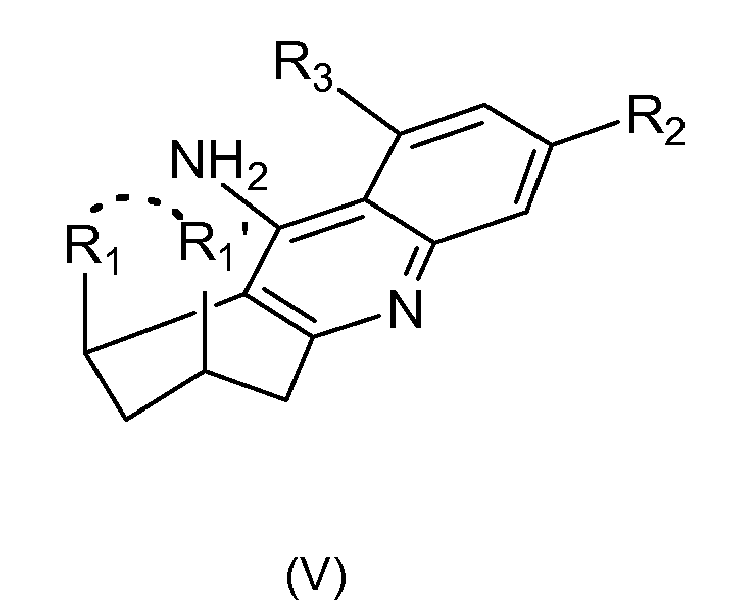
X-(CH2)m-CN (VI)
wherein m is an integer from 1 to 14 and X is an halogen,
to yield a compound of formula (IV) wherein m is an integer from 1 to 14. - The process according to claim 9, further comprising a previous step of:(a) reacting a compound of formula (VII) or a salt thereof, or any stereoisomer or mixture thereof wherein R1, R1', R2, and R3, have the same meaning as in any of the claims 1-6,

H2N-(CH2)n-NH2 (VIII)
wherein n is an integer from 2 to 15,
to yield a compound of formula (III) wherein n is an integer from 2 to 15. - Compound of formula (I) as defined in any of the claims 1-6, for use as a medicament.
- Compound of formula (I) as defined in any of the claims 1-6, for use in the prevention and/or treatment of a neurodegenerative disorder.
- Compound of formula (I) for use as in claim 12, wherein the neurodegenerative disorder is Alzheimer's disease.
- A pharmaceutical composition comprising a therapeutically effective amount of the compound as defined in any one of the claims 1-6, together with appropriate amounts of one or more pharmaceutically acceptable excipients or carriers.
- A compound selected from the group consisting of a compound of formula (III) or a salt thereof, or any stereoisomer or mixture thereof,
 R1 and R1' are taken together
 and are biradical of formula -CH2-C(R4)=CH-;R2 and R3 are radical independently selected from the group consisting of H, F, Cl and (C1-C4)-alkyl;R4 is a (C1-C2)-alkyl radical; andn is an integer from 2 to 7; anda compound of formula (IV) or a salt thereof, or any stereoisomer or mixture thereof,
 wherein,both R1 and R1' are H;m is an integer from 1 to 14;andR2 and R3 are radical independently selected from the group consisting of H, F, Cl and (C1-C4)-alkyl;or, alternatively,R1 and R1' are taken together
 forming a biradical of formula -CH2-C(R4)=CH-;R2 and R3 are radical independently selected from the group consisting of H, F, Cl, and (C1-C4)-alkyl;R4 is a (C1-C2)-alkyl radical; andm is an integer from 1 to 6.
Priority Applications (2)
| Application Number | Priority Date | Filing Date | Title |
|---|---|---|---|
| EP13173930.2A EP2818467A1 (en) | 2013-06-27 | 2013-06-27 | Multi-target drug compounds for the treatment of neurodegenerative disorders |
| PCT/EP2014/063012 WO2014206877A1 (en) | 2013-06-27 | 2014-06-20 | Multi-target drug compounds for the treatment of neurodegenerative disorders |
Applications Claiming Priority (1)
| Application Number | Priority Date | Filing Date | Title |
|---|---|---|---|
| EP13173930.2A EP2818467A1 (en) | 2013-06-27 | 2013-06-27 | Multi-target drug compounds for the treatment of neurodegenerative disorders |
Publications (1)
| Publication Number | Publication Date |
|---|---|
| EP2818467A1 true EP2818467A1 (en) | 2014-12-31 |
Family
ID=48692330
Family Applications (1)
| Application Number | Title | Priority Date | Filing Date |
|---|---|---|---|
| EP13173930.2A Withdrawn EP2818467A1 (en) | 2013-06-27 | 2013-06-27 | Multi-target drug compounds for the treatment of neurodegenerative disorders |
Country Status (2)
| Country | Link |
|---|---|
| EP (1) | EP2818467A1 (en) |
| WO (1) | WO2014206877A1 (en) |
Cited By (1)
| Publication number | Priority date | Publication date | Assignee | Title |
|---|---|---|---|---|
| WO2020193448A1 (en) * | 2019-03-28 | 2020-10-01 | Universitat De Barcelona | Multitarget compounds for the treatment of alzheimer's disease |
Citations (5)
| Publication number | Priority date | Publication date | Assignee | Title |
|---|---|---|---|---|
| JPH032166A (en) * | 1989-05-31 | 1991-01-08 | Mitsubishi Kasei Corp | 9-acylaminotetrahydroacridine derivatives and memory impairment improving agents containing the derivatives as active ingredients |
| WO2004032929A2 (en) * | 2002-10-09 | 2004-04-22 | Neuropharma, S.A. | Dual binding site acetylcholinesterase inhibitors for the treatment of alzheimer’s disease |
| WO2007122274A1 (en) | 2006-04-20 | 2007-11-01 | Universidad De Barcelona | Acetylcholinesterase-inhibiting compounds for treating alzheimer's disease |
| WO2011076969A1 (en) | 2009-12-23 | 2011-06-30 | Universidad De Barcelona | Multifunctional compounds modifying alzheimer's disease for the treatment of said disease |
| WO2013167711A1 (en) * | 2012-05-10 | 2013-11-14 | Universitat De Barcelona | Beta-amyloid-directed multitarget compounds for the treatment of alzheimer's disease |
-
2013
- 2013-06-27 EP EP13173930.2A patent/EP2818467A1/en not_active Withdrawn
-
2014
- 2014-06-20 WO PCT/EP2014/063012 patent/WO2014206877A1/en not_active Ceased
Patent Citations (5)
| Publication number | Priority date | Publication date | Assignee | Title |
|---|---|---|---|---|
| JPH032166A (en) * | 1989-05-31 | 1991-01-08 | Mitsubishi Kasei Corp | 9-acylaminotetrahydroacridine derivatives and memory impairment improving agents containing the derivatives as active ingredients |
| WO2004032929A2 (en) * | 2002-10-09 | 2004-04-22 | Neuropharma, S.A. | Dual binding site acetylcholinesterase inhibitors for the treatment of alzheimer’s disease |
| WO2007122274A1 (en) | 2006-04-20 | 2007-11-01 | Universidad De Barcelona | Acetylcholinesterase-inhibiting compounds for treating alzheimer's disease |
| WO2011076969A1 (en) | 2009-12-23 | 2011-06-30 | Universidad De Barcelona | Multifunctional compounds modifying alzheimer's disease for the treatment of said disease |
| WO2013167711A1 (en) * | 2012-05-10 | 2013-11-14 | Universitat De Barcelona | Beta-amyloid-directed multitarget compounds for the treatment of alzheimer's disease |
Non-Patent Citations (2)
| Title |
|---|
| A. CAVALLI ET AL.: "A Small Molecule Targeting the Multifunctional Nature of Alzheimer's Disease", ANGEW. CHEM. INT. ED., vol. 46, 2007, pages 3689 - 3692 |
| CARLES GALDEANO ET AL: "Huprine-Tacrine Heterodimers as Anti-Amyloidogenic Compounds of Potential Interest against Alzheimer's and Prion Diseases", JOURNAL OF MEDICINAL CHEMISTRY, vol. 55, no. 2, 26 January 2012 (2012-01-26), pages 661 - 669, XP055077717, ISSN: 0022-2623, DOI: 10.1021/jm200840c * |
Cited By (1)
| Publication number | Priority date | Publication date | Assignee | Title |
|---|---|---|---|---|
| WO2020193448A1 (en) * | 2019-03-28 | 2020-10-01 | Universitat De Barcelona | Multitarget compounds for the treatment of alzheimer's disease |
Also Published As
| Publication number | Publication date |
|---|---|
| WO2014206877A1 (en) | 2014-12-31 |
Similar Documents
| Publication | Publication Date | Title |
|---|---|---|
| US8946296B2 (en) | Substituted heteroaryl- and aryl-cyclopropylamine acetamides and their use | |
| JP5699152B2 (en) | Lysine-specific demethylase-1 inhibitors and uses thereof | |
| SK123898A3 (en) | Novel substituted cyclic amino acids as pharmaceutical agents | |
| JP2022530967A (en) | Polymorphic compounds and their use | |
| EP3596040A1 (en) | Polymorphic compounds and uses thereof | |
| CN102458435A (en) | Inhibitors of cognitive decline | |
| CN105209430A (en) | Phenyl carbamate compounds and neuroprotective compositions comprising them | |
| CN105646417A (en) | 4-Hydroxylaurone compound and preparation method and application thereof | |
| CN103458885B (en) | The compound be separated by turmeric oil and using method | |
| WO2019118657A1 (en) | Fluorinated 4-(substituted amino)phenyl carbamate derivatives | |
| CA3169300A1 (en) | Indole compounds for the treatment of neurodegenerative diseases | |
| WO2008071948A2 (en) | Aminoalcohol derivatives and their therapeutic use | |
| JP7734361B2 (en) | Compound or salt thereof and method for producing same, pharmaceutical composition containing compound or salt thereof and method for producing same | |
| WO2014206877A1 (en) | Multi-target drug compounds for the treatment of neurodegenerative disorders | |
| AU2021390182A1 (en) | Senotherapeutic compound | |
| CN113582911A (en) | Multi-target donepezil-hydroxamic acid type compound and preparation method and application thereof | |
| CN110272349B (en) | 2' -hydroxy-3-phenyl propiophenone compound and preparation method and application thereof | |
| CN104039753B (en) | The compositions of phenylcycloalkyl methylamine derivative, synthesis and using method | |
| EP3611157B1 (en) | Salicylic acid-based fumarate derivative and use in treatment of parkinson's disease and other neurodegenerative diseases | |
| CN107602518B (en) | Coumarin-dithiocarbamate derivative and synthesis method thereof | |
| CN104230770B (en) | The application of styryl sulfone compound, its preparation method as well as neuroprotective agent | |
| JP2012211086A (en) | Curative medicine or preventive medicine of articular rheumatism | |
| JP2022546958A (en) | MAGL inhibitors and methods of making and using the same | |
| US20150099776A1 (en) | Beta-Amyloid-Directed Multitarget Compounds For The Treatment Of Alzheimer's Disease | |
| US20170049723A1 (en) | Isolated compounds from turmeric oil and methods of use |
Legal Events
| Date | Code | Title | Description |
|---|---|---|---|
| PUAI | Public reference made under article 153(3) epc to a published international application that has entered the european phase |
Free format text: ORIGINAL CODE: 0009012 |
|
| 17P | Request for examination filed |
Effective date: 20130627 |
|
| AK | Designated contracting states |
Kind code of ref document: A1 Designated state(s): AL AT BE BG CH CY CZ DE DK EE ES FI FR GB GR HR HU IE IS IT LI LT LU LV MC MK MT NL NO PL PT RO RS SE SI SK SM TR |
|
| AX | Request for extension of the european patent |
Extension state: BA ME |
|
| STAA | Information on the status of an ep patent application or granted ep patent |
Free format text: STATUS: THE APPLICATION IS DEEMED TO BE WITHDRAWN |
|
| 18D | Application deemed to be withdrawn |
Effective date: 20150701 |