EP2816999B1 - Organogels and emulsions for biological and non-biological applications - Google Patents
Organogels and emulsions for biological and non-biological applications Download PDFInfo
- Publication number
- EP2816999B1 EP2816999B1 EP13752241.3A EP13752241A EP2816999B1 EP 2816999 B1 EP2816999 B1 EP 2816999B1 EP 13752241 A EP13752241 A EP 13752241A EP 2816999 B1 EP2816999 B1 EP 2816999B1
- Authority
- EP
- European Patent Office
- Prior art keywords
- seq
- group
- peptide
- organogel
- amino acids
- Prior art date
- Legal status (The legal status is an assumption and is not a legal conclusion. Google has not performed a legal analysis and makes no representation as to the accuracy of the status listed.)
- Not-in-force
Links
- 239000000839 emulsion Substances 0.000 title claims description 48
- 108090000765 processed proteins & peptides Proteins 0.000 claims description 165
- XEKOWRVHYACXOJ-UHFFFAOYSA-N Ethyl acetate Chemical compound CCOC(C)=O XEKOWRVHYACXOJ-UHFFFAOYSA-N 0.000 claims description 66
- 125000003178 carboxy group Chemical group [H]OC(*)=O 0.000 claims description 54
- 239000003960 organic solvent Substances 0.000 claims description 44
- 150000001413 amino acids Chemical class 0.000 claims description 40
- -1 aliphatic amino acids Chemical class 0.000 claims description 38
- 239000003921 oil Substances 0.000 claims description 36
- 235000019198 oils Nutrition 0.000 claims description 36
- 239000000203 mixture Substances 0.000 claims description 32
- CSCPPACGZOOCGX-UHFFFAOYSA-N Acetone Chemical compound CC(C)=O CSCPPACGZOOCGX-UHFFFAOYSA-N 0.000 claims description 27
- 102000004196 processed proteins & peptides Human genes 0.000 claims description 27
- WEVYAHXRMPXWCK-UHFFFAOYSA-N Acetonitrile Chemical compound CC#N WEVYAHXRMPXWCK-UHFFFAOYSA-N 0.000 claims description 21
- RTZKZFJDLAIYFH-UHFFFAOYSA-N Diethyl ether Chemical compound CCOCC RTZKZFJDLAIYFH-UHFFFAOYSA-N 0.000 claims description 21
- 239000002904 solvent Substances 0.000 claims description 21
- 239000008194 pharmaceutical composition Substances 0.000 claims description 19
- HEDRZPFGACZZDS-UHFFFAOYSA-N Chloroform Chemical compound ClC(Cl)Cl HEDRZPFGACZZDS-UHFFFAOYSA-N 0.000 claims description 18
- 125000006239 protecting group Chemical group 0.000 claims description 16
- 239000000126 substance Substances 0.000 claims description 16
- YXFVVABEGXRONW-UHFFFAOYSA-N Toluene Chemical compound CC1=CC=CC=C1 YXFVVABEGXRONW-UHFFFAOYSA-N 0.000 claims description 15
- VLKZOEOYAKHREP-UHFFFAOYSA-N n-Hexane Chemical compound CCCCCC VLKZOEOYAKHREP-UHFFFAOYSA-N 0.000 claims description 15
- 239000012867 bioactive agent Substances 0.000 claims description 13
- 238000000034 method Methods 0.000 claims description 13
- LFQSCWFLJHTTHZ-UHFFFAOYSA-N Ethanol Chemical compound CCO LFQSCWFLJHTTHZ-UHFFFAOYSA-N 0.000 claims description 12
- OKKJLVBELUTLKV-UHFFFAOYSA-N Methanol Chemical compound OC OKKJLVBELUTLKV-UHFFFAOYSA-N 0.000 claims description 12
- JUJWROOIHBZHMG-UHFFFAOYSA-N Pyridine Chemical compound C1=CC=NC=C1 JUJWROOIHBZHMG-UHFFFAOYSA-N 0.000 claims description 12
- 239000002096 quantum dot Substances 0.000 claims description 12
- 125000000217 alkyl group Chemical group 0.000 claims description 10
- 239000002537 cosmetic Substances 0.000 claims description 10
- ZWEHNKRNPOVVGH-UHFFFAOYSA-N 2-Butanone Chemical compound CCC(C)=O ZWEHNKRNPOVVGH-UHFFFAOYSA-N 0.000 claims description 9
- UHOVQNZJYSORNB-UHFFFAOYSA-N Benzene Chemical compound C1=CC=CC=C1 UHOVQNZJYSORNB-UHFFFAOYSA-N 0.000 claims description 9
- YMWUJEATGCHHMB-UHFFFAOYSA-N Dichloromethane Chemical compound ClCCl YMWUJEATGCHHMB-UHFFFAOYSA-N 0.000 claims description 9
- PEDCQBHIVMGVHV-UHFFFAOYSA-N Glycerine Chemical compound OCC(O)CO PEDCQBHIVMGVHV-UHFFFAOYSA-N 0.000 claims description 9
- ZMXDDKWLCZADIW-UHFFFAOYSA-N N,N-Dimethylformamide Chemical compound CN(C)C=O ZMXDDKWLCZADIW-UHFFFAOYSA-N 0.000 claims description 9
- 239000003495 polar organic solvent Substances 0.000 claims description 9
- 235000013305 food Nutrition 0.000 claims description 8
- 125000000547 substituted alkyl group Chemical group 0.000 claims description 8
- 239000003995 emulsifying agent Substances 0.000 claims description 7
- 239000002105 nanoparticle Substances 0.000 claims description 7
- RFFLAFLAYFXFSW-UHFFFAOYSA-N 1,2-dichlorobenzene Chemical compound ClC1=CC=CC=C1Cl RFFLAFLAYFXFSW-UHFFFAOYSA-N 0.000 claims description 6
- SYBYTAAJFKOIEJ-UHFFFAOYSA-N 3-Methylbutan-2-one Chemical compound CC(C)C(C)=O SYBYTAAJFKOIEJ-UHFFFAOYSA-N 0.000 claims description 6
- FFWSICBKRCICMR-UHFFFAOYSA-N 5-methyl-2-hexanone Chemical compound CC(C)CCC(C)=O FFWSICBKRCICMR-UHFFFAOYSA-N 0.000 claims description 6
- RGSFGYAAUTVSQA-UHFFFAOYSA-N Cyclopentane Chemical compound C1CCCC1 RGSFGYAAUTVSQA-UHFFFAOYSA-N 0.000 claims description 6
- IAZDPXIOMUYVGZ-UHFFFAOYSA-N Dimethylsulphoxide Chemical compound CS(C)=O IAZDPXIOMUYVGZ-UHFFFAOYSA-N 0.000 claims description 6
- KFZMGEQAYNKOFK-UHFFFAOYSA-N Isopropanol Chemical compound CC(C)O KFZMGEQAYNKOFK-UHFFFAOYSA-N 0.000 claims description 6
- IMNFDUFMRHMDMM-UHFFFAOYSA-N N-Heptane Chemical compound CCCCCCC IMNFDUFMRHMDMM-UHFFFAOYSA-N 0.000 claims description 6
- CTQNGGLPUBDAKN-UHFFFAOYSA-N O-Xylene Chemical group CC1=CC=CC=C1C CTQNGGLPUBDAKN-UHFFFAOYSA-N 0.000 claims description 6
- OFBQJSOFQDEBGM-UHFFFAOYSA-N Pentane Chemical compound CCCCC OFBQJSOFQDEBGM-UHFFFAOYSA-N 0.000 claims description 6
- WYURNTSHIVDZCO-UHFFFAOYSA-N Tetrahydrofuran Chemical compound C1CCOC1 WYURNTSHIVDZCO-UHFFFAOYSA-N 0.000 claims description 6
- DKPFZGUDAPQIHT-UHFFFAOYSA-N butyl acetate Chemical compound CCCCOC(C)=O DKPFZGUDAPQIHT-UHFFFAOYSA-N 0.000 claims description 6
- MVPPADPHJFYWMZ-UHFFFAOYSA-N chlorobenzene Chemical compound ClC1=CC=CC=C1 MVPPADPHJFYWMZ-UHFFFAOYSA-N 0.000 claims description 6
- 230000003247 decreasing effect Effects 0.000 claims description 6
- 235000014113 dietary fatty acids Nutrition 0.000 claims description 6
- 239000000975 dye Substances 0.000 claims description 6
- 150000002148 esters Chemical class 0.000 claims description 6
- 229930195729 fatty acid Natural products 0.000 claims description 6
- 239000000194 fatty acid Substances 0.000 claims description 6
- 229910052739 hydrogen Inorganic materials 0.000 claims description 6
- XNLICIUVMPYHGG-UHFFFAOYSA-N pentan-2-one Chemical compound CCCC(C)=O XNLICIUVMPYHGG-UHFFFAOYSA-N 0.000 claims description 6
- 239000000816 peptidomimetic Substances 0.000 claims description 6
- UMJSCPRVCHMLSP-UHFFFAOYSA-N pyridine Natural products COC1=CC=CN=C1 UMJSCPRVCHMLSP-UHFFFAOYSA-N 0.000 claims description 6
- VZGDMQKNWNREIO-UHFFFAOYSA-N tetrachloromethane Chemical compound ClC(Cl)(Cl)Cl VZGDMQKNWNREIO-UHFFFAOYSA-N 0.000 claims description 6
- 125000001433 C-terminal amino-acid group Chemical group 0.000 claims description 5
- 239000000427 antigen Substances 0.000 claims description 5
- 102000036639 antigens Human genes 0.000 claims description 5
- 108091007433 antigens Proteins 0.000 claims description 5
- 239000007864 aqueous solution Substances 0.000 claims description 5
- 125000000484 butyl group Chemical group [H]C([*])([H])C([H])([H])C([H])([H])C([H])([H])[H] 0.000 claims description 5
- 239000003814 drug Substances 0.000 claims description 5
- 125000001495 ethyl group Chemical group [H]C([H])([H])C([H])([H])* 0.000 claims description 5
- 125000000959 isobutyl group Chemical group [H]C([H])([H])C([H])(C([H])([H])[H])C([H])([H])* 0.000 claims description 5
- 125000001449 isopropyl group Chemical group [H]C([H])([H])C([H])(*)C([H])([H])[H] 0.000 claims description 5
- 125000002496 methyl group Chemical group [H]C([H])([H])* 0.000 claims description 5
- 239000000049 pigment Substances 0.000 claims description 5
- 239000002798 polar solvent Substances 0.000 claims description 5
- 125000001436 propyl group Chemical group [H]C([*])([H])C([H])([H])C([H])([H])[H] 0.000 claims description 5
- 210000004899 c-terminal region Anatomy 0.000 claims description 4
- 229940079593 drug Drugs 0.000 claims description 4
- 229940002612 prodrug Drugs 0.000 claims description 4
- 239000000651 prodrug Substances 0.000 claims description 4
- 235000015112 vegetable and seed oil Nutrition 0.000 claims description 4
- 239000008158 vegetable oil Substances 0.000 claims description 4
- 239000000341 volatile oil Substances 0.000 claims description 4
- AJDIZQLSFPQPEY-UHFFFAOYSA-N 1,1,2-Trichlorotrifluoroethane Chemical compound FC(F)(Cl)C(F)(Cl)Cl AJDIZQLSFPQPEY-UHFFFAOYSA-N 0.000 claims description 3
- RYHBNJHYFVUHQT-UHFFFAOYSA-N 1,4-Dioxane Chemical compound C1COCCO1 RYHBNJHYFVUHQT-UHFFFAOYSA-N 0.000 claims description 3
- ARXJGSRGQADJSQ-UHFFFAOYSA-N 1-methoxypropan-2-ol Chemical compound COCC(C)O ARXJGSRGQADJSQ-UHFFFAOYSA-N 0.000 claims description 3
- XNWFRZJHXBZDAG-UHFFFAOYSA-N 2-METHOXYETHANOL Chemical compound COCCO XNWFRZJHXBZDAG-UHFFFAOYSA-N 0.000 claims description 3
- POAOYUHQDCAZBD-UHFFFAOYSA-N 2-butoxyethanol Chemical compound CCCCOCCO POAOYUHQDCAZBD-UHFFFAOYSA-N 0.000 claims description 3
- XDTMQSROBMDMFD-UHFFFAOYSA-N Cyclohexane Chemical compound C1CCCCC1 XDTMQSROBMDMFD-UHFFFAOYSA-N 0.000 claims description 3
- NHTMVDHEPJAVLT-UHFFFAOYSA-N Isooctane Chemical compound CC(C)CC(C)(C)C NHTMVDHEPJAVLT-UHFFFAOYSA-N 0.000 claims description 3
- FXHOOIRPVKKKFG-UHFFFAOYSA-N N,N-Dimethylacetamide Chemical compound CN(C)C(C)=O FXHOOIRPVKKKFG-UHFFFAOYSA-N 0.000 claims description 3
- SECXISVLQFMRJM-UHFFFAOYSA-N N-Methylpyrrolidone Chemical compound CN1CCCC1=O SECXISVLQFMRJM-UHFFFAOYSA-N 0.000 claims description 3
- XBDQKXXYIPTUBI-UHFFFAOYSA-M Propionate Chemical compound CCC([O-])=O XBDQKXXYIPTUBI-UHFFFAOYSA-M 0.000 claims description 3
- 241000700605 Viruses Species 0.000 claims description 3
- KXKVLQRXCPHEJC-UHFFFAOYSA-N acetic acid trimethyl ester Natural products COC(C)=O KXKVLQRXCPHEJC-UHFFFAOYSA-N 0.000 claims description 3
- 125000002777 acetyl group Chemical group [H]C([H])([H])C(*)=O 0.000 claims description 3
- 150000001298 alcohols Chemical class 0.000 claims description 3
- 125000003368 amide group Chemical group 0.000 claims description 3
- 230000000975 bioactive effect Effects 0.000 claims description 3
- 150000001875 compounds Chemical class 0.000 claims description 3
- 238000013270 controlled release Methods 0.000 claims description 3
- 229960004132 diethyl ether Drugs 0.000 claims description 3
- JVSWJIKNEAIKJW-UHFFFAOYSA-N dimethyl-hexane Natural products CCCCCC(C)C JVSWJIKNEAIKJW-UHFFFAOYSA-N 0.000 claims description 3
- 229940113088 dimethylacetamide Drugs 0.000 claims description 3
- 150000002170 ethers Chemical class 0.000 claims description 3
- 229940052303 ethers for general anesthesia Drugs 0.000 claims description 3
- 150000004665 fatty acids Chemical class 0.000 claims description 3
- 125000002485 formyl group Chemical class [H]C(*)=O 0.000 claims description 3
- 150000004676 glycans Chemical class 0.000 claims description 3
- 125000002795 guanidino group Chemical group C(N)(=N)N* 0.000 claims description 3
- DMEGYFMYUHOHGS-UHFFFAOYSA-N heptamethylene Natural products C1CCCCCC1 DMEGYFMYUHOHGS-UHFFFAOYSA-N 0.000 claims description 3
- 125000002887 hydroxy group Chemical group [H]O* 0.000 claims description 3
- PHTQWCKDNZKARW-UHFFFAOYSA-N isoamylol Chemical compound CC(C)CCO PHTQWCKDNZKARW-UHFFFAOYSA-N 0.000 claims description 3
- 125000000468 ketone group Chemical group 0.000 claims description 3
- 150000002576 ketones Chemical class 0.000 claims description 3
- 239000000693 micelle Substances 0.000 claims description 3
- YKYONYBAUNKHLG-UHFFFAOYSA-N n-Propyl acetate Natural products CCCOC(C)=O YKYONYBAUNKHLG-UHFFFAOYSA-N 0.000 claims description 3
- 102000039446 nucleic acids Human genes 0.000 claims description 3
- 108020004707 nucleic acids Proteins 0.000 claims description 3
- 150000007523 nucleic acids Chemical class 0.000 claims description 3
- 229940078552 o-xylene Drugs 0.000 claims description 3
- 229920001542 oligosaccharide Polymers 0.000 claims description 3
- 150000002482 oligosaccharides Chemical class 0.000 claims description 3
- 239000002245 particle Substances 0.000 claims description 3
- 239000003208 petroleum Substances 0.000 claims description 3
- 229920001282 polysaccharide Polymers 0.000 claims description 3
- 239000005017 polysaccharide Substances 0.000 claims description 3
- 125000002924 primary amino group Chemical group [H]N([H])* 0.000 claims description 3
- BDERNNFJNOPAEC-UHFFFAOYSA-N propan-1-ol Chemical compound CCCO BDERNNFJNOPAEC-UHFFFAOYSA-N 0.000 claims description 3
- 229940090181 propyl acetate Drugs 0.000 claims description 3
- RUOJZAUFBMNUDX-UHFFFAOYSA-N propylene carbonate Chemical compound CC1COC(=O)O1 RUOJZAUFBMNUDX-UHFFFAOYSA-N 0.000 claims description 3
- 125000005629 sialic acid group Chemical group 0.000 claims description 3
- 125000000446 sulfanediyl group Chemical group *S* 0.000 claims description 3
- 238000013268 sustained release Methods 0.000 claims description 3
- 239000012730 sustained-release form Substances 0.000 claims description 3
- YLQBMQCUIZJEEH-UHFFFAOYSA-N tetrahydrofuran Natural products C=1C=COC=1 YLQBMQCUIZJEEH-UHFFFAOYSA-N 0.000 claims description 3
- 125000000101 thioether group Chemical group 0.000 claims description 3
- 229960005486 vaccine Drugs 0.000 claims description 3
- NQPDZGIKBAWPEJ-UHFFFAOYSA-N valeric acid Chemical compound CCCCC(O)=O NQPDZGIKBAWPEJ-UHFFFAOYSA-N 0.000 claims description 3
- 235000013343 vitamin Nutrition 0.000 claims description 3
- 239000011782 vitamin Substances 0.000 claims description 3
- 229940088594 vitamin Drugs 0.000 claims description 3
- 229930003231 vitamin Natural products 0.000 claims description 3
- 150000008574 D-amino acids Chemical class 0.000 claims description 2
- 150000008575 L-amino acids Chemical class 0.000 claims description 2
- 235000013871 bee wax Nutrition 0.000 claims description 2
- 239000012166 beeswax Substances 0.000 claims description 2
- 239000004203 carnauba wax Substances 0.000 claims description 2
- 235000013869 carnauba wax Nutrition 0.000 claims description 2
- 239000002184 metal Substances 0.000 claims description 2
- 229910052751 metal Inorganic materials 0.000 claims description 2
- 239000003605 opacifier Substances 0.000 claims description 2
- 239000004065 semiconductor Substances 0.000 claims description 2
- 239000001993 wax Substances 0.000 claims description 2
- 230000001419 dependent effect Effects 0.000 claims 5
- 235000001014 amino acid Nutrition 0.000 description 38
- 229940024606 amino acid Drugs 0.000 description 38
- PECYZEOJVXMISF-UHFFFAOYSA-N 3-aminoalanine Chemical compound [NH3+]CC(N)C([O-])=O PECYZEOJVXMISF-UHFFFAOYSA-N 0.000 description 12
- WHUUTDBJXJRKMK-UHFFFAOYSA-N Glutamic acid Natural products OC(=O)C(N)CCC(O)=O WHUUTDBJXJRKMK-UHFFFAOYSA-N 0.000 description 12
- DHMQDGOQFOQNFH-UHFFFAOYSA-N Glycine Chemical compound NCC(O)=O DHMQDGOQFOQNFH-UHFFFAOYSA-N 0.000 description 12
- OGNSCSPNOLGXSM-UHFFFAOYSA-N 2,4-diaminobutyric acid Chemical compound NCCC(N)C(O)=O OGNSCSPNOLGXSM-UHFFFAOYSA-N 0.000 description 10
- KDXKERNSBIXSRK-YFKPBYRVSA-N L-lysine Chemical compound NCCCC[C@H](N)C(O)=O KDXKERNSBIXSRK-YFKPBYRVSA-N 0.000 description 10
- KDXKERNSBIXSRK-UHFFFAOYSA-N Lysine Natural products NCCCCC(N)C(O)=O KDXKERNSBIXSRK-UHFFFAOYSA-N 0.000 description 10
- 238000005516 engineering process Methods 0.000 description 10
- 238000009472 formulation Methods 0.000 description 10
- 239000011877 solvent mixture Substances 0.000 description 10
- 239000013638 trimer Substances 0.000 description 9
- MTCFGRXMJLQNBG-REOHCLBHSA-N (2S)-2-Amino-3-hydroxypropansäure Chemical compound OC[C@H](N)C(O)=O MTCFGRXMJLQNBG-REOHCLBHSA-N 0.000 description 8
- AYFVYJQAPQTCCC-UHFFFAOYSA-N Threonine Natural products CC(O)C(N)C(O)=O AYFVYJQAPQTCCC-UHFFFAOYSA-N 0.000 description 8
- 239000000463 material Substances 0.000 description 8
- 239000000499 gel Substances 0.000 description 7
- XLYOFNOQVPJJNP-UHFFFAOYSA-N water Substances O XLYOFNOQVPJJNP-UHFFFAOYSA-N 0.000 description 7
- AHLPHDHHMVZTML-BYPYZUCNSA-N L-Ornithine Chemical compound NCCC[C@H](N)C(O)=O AHLPHDHHMVZTML-BYPYZUCNSA-N 0.000 description 6
- CKLJMWTZIZZHCS-REOHCLBHSA-N L-aspartic acid Chemical compound OC(=O)[C@@H](N)CC(O)=O CKLJMWTZIZZHCS-REOHCLBHSA-N 0.000 description 6
- 239000004472 Lysine Substances 0.000 description 6
- DATAGRPVKZEWHA-YFKPBYRVSA-N N(5)-ethyl-L-glutamine Chemical compound CCNC(=O)CC[C@H]([NH3+])C([O-])=O DATAGRPVKZEWHA-YFKPBYRVSA-N 0.000 description 6
- AHLPHDHHMVZTML-UHFFFAOYSA-N Orn-delta-NH2 Natural products NCCCC(N)C(O)=O AHLPHDHHMVZTML-UHFFFAOYSA-N 0.000 description 6
- UTJLXEIPEHZYQJ-UHFFFAOYSA-N Ornithine Natural products OC(=O)C(C)CCCN UTJLXEIPEHZYQJ-UHFFFAOYSA-N 0.000 description 6
- 125000003118 aryl group Chemical group 0.000 description 6
- 235000003704 aspartic acid Nutrition 0.000 description 6
- OQFSQFPPLPISGP-UHFFFAOYSA-N beta-carboxyaspartic acid Natural products OC(=O)C(N)C(C(O)=O)C(O)=O OQFSQFPPLPISGP-UHFFFAOYSA-N 0.000 description 6
- 239000000539 dimer Substances 0.000 description 6
- 235000013922 glutamic acid Nutrition 0.000 description 6
- 239000004220 glutamic acid Substances 0.000 description 6
- 230000002209 hydrophobic effect Effects 0.000 description 6
- 229960003104 ornithine Drugs 0.000 description 6
- 230000001225 therapeutic effect Effects 0.000 description 6
- 238000001879 gelation Methods 0.000 description 5
- 230000003993 interaction Effects 0.000 description 5
- 239000004471 Glycine Substances 0.000 description 4
- XUJNEKJLAYXESH-REOHCLBHSA-N L-Cysteine Chemical compound SC[C@H](N)C(O)=O XUJNEKJLAYXESH-REOHCLBHSA-N 0.000 description 4
- WTDRDQBEARUVNC-LURJTMIESA-N L-DOPA Chemical compound OC(=O)[C@@H](N)CC1=CC=C(O)C(O)=C1 WTDRDQBEARUVNC-LURJTMIESA-N 0.000 description 4
- WTDRDQBEARUVNC-UHFFFAOYSA-N L-Dopa Natural products OC(=O)C(N)CC1=CC=C(O)C(O)=C1 WTDRDQBEARUVNC-UHFFFAOYSA-N 0.000 description 4
- QNAYBMKLOCPYGJ-REOHCLBHSA-N L-alanine Chemical compound C[C@H](N)C(O)=O QNAYBMKLOCPYGJ-REOHCLBHSA-N 0.000 description 4
- DCXYFEDJOCDNAF-REOHCLBHSA-N L-asparagine Chemical compound OC(=O)[C@@H](N)CC(N)=O DCXYFEDJOCDNAF-REOHCLBHSA-N 0.000 description 4
- AGPKZVBTJJNPAG-WHFBIAKZSA-N L-isoleucine Chemical compound CC[C@H](C)[C@H](N)C(O)=O AGPKZVBTJJNPAG-WHFBIAKZSA-N 0.000 description 4
- ROHFNLRQFUQHCH-YFKPBYRVSA-N L-leucine Chemical compound CC(C)C[C@H](N)C(O)=O ROHFNLRQFUQHCH-YFKPBYRVSA-N 0.000 description 4
- QIVBCDIJIAJPQS-VIFPVBQESA-N L-tryptophane Chemical compound C1=CC=C2C(C[C@H](N)C(O)=O)=CNC2=C1 QIVBCDIJIAJPQS-VIFPVBQESA-N 0.000 description 4
- OUYCCCASQSFEME-QMMMGPOBSA-N L-tyrosine Chemical compound OC(=O)[C@@H](N)CC1=CC=C(O)C=C1 OUYCCCASQSFEME-QMMMGPOBSA-N 0.000 description 4
- KZSNJWFQEVHDMF-BYPYZUCNSA-N L-valine Chemical compound CC(C)[C@H](N)C(O)=O KZSNJWFQEVHDMF-BYPYZUCNSA-N 0.000 description 4
- ROHFNLRQFUQHCH-UHFFFAOYSA-N Leucine Natural products CC(C)CC(N)C(O)=O ROHFNLRQFUQHCH-UHFFFAOYSA-N 0.000 description 4
- MTCFGRXMJLQNBG-UHFFFAOYSA-N Serine Natural products OCC(N)C(O)=O MTCFGRXMJLQNBG-UHFFFAOYSA-N 0.000 description 4
- 239000004473 Threonine Substances 0.000 description 4
- QIVBCDIJIAJPQS-UHFFFAOYSA-N Tryptophan Natural products C1=CC=C2C(CC(N)C(O)=O)=CNC2=C1 QIVBCDIJIAJPQS-UHFFFAOYSA-N 0.000 description 4
- KZSNJWFQEVHDMF-UHFFFAOYSA-N Valine Natural products CC(C)C(N)C(O)=O KZSNJWFQEVHDMF-UHFFFAOYSA-N 0.000 description 4
- 235000004279 alanine Nutrition 0.000 description 4
- 230000015572 biosynthetic process Effects 0.000 description 4
- 238000000445 field-emission scanning electron microscopy Methods 0.000 description 4
- HNDVDQJCIGZPNO-UHFFFAOYSA-N histidine Natural products OC(=O)C(N)CC1=CN=CN1 HNDVDQJCIGZPNO-UHFFFAOYSA-N 0.000 description 4
- 229960000310 isoleucine Drugs 0.000 description 4
- AGPKZVBTJJNPAG-UHFFFAOYSA-N isoleucine Natural products CCC(C)C(N)C(O)=O AGPKZVBTJJNPAG-UHFFFAOYSA-N 0.000 description 4
- 239000012071 phase Substances 0.000 description 4
- OUYCCCASQSFEME-UHFFFAOYSA-N tyrosine Natural products OC(=O)C(N)CC1=CC=C(O)C=C1 OUYCCCASQSFEME-UHFFFAOYSA-N 0.000 description 4
- 239000004474 valine Substances 0.000 description 4
- 238000011161 development Methods 0.000 description 3
- 238000010438 heat treatment Methods 0.000 description 3
- 239000012074 organic phase Substances 0.000 description 3
- 239000000243 solution Substances 0.000 description 3
- UKAUYVFTDYCKQA-UHFFFAOYSA-N -2-Amino-4-hydroxybutanoic acid Natural products OC(=O)C(N)CCO UKAUYVFTDYCKQA-UHFFFAOYSA-N 0.000 description 2
- NPSWHDAHNWWMEG-UHFFFAOYSA-N 2-aminohex-5-enoic acid Chemical compound OC(=O)C(N)CCC=C NPSWHDAHNWWMEG-UHFFFAOYSA-N 0.000 description 2
- SCGJGNWMYSYORS-UHFFFAOYSA-N 2-azaniumylhex-5-ynoate Chemical compound OC(=O)C(N)CCC#C SCGJGNWMYSYORS-UHFFFAOYSA-N 0.000 description 2
- FWMNVWWHGCHHJJ-SKKKGAJSSA-N 4-amino-1-[(2r)-6-amino-2-[[(2r)-2-[[(2r)-2-[[(2r)-2-amino-3-phenylpropanoyl]amino]-3-phenylpropanoyl]amino]-4-methylpentanoyl]amino]hexanoyl]piperidine-4-carboxylic acid Chemical compound C([C@H](C(=O)N[C@H](CC(C)C)C(=O)N[C@H](CCCCN)C(=O)N1CCC(N)(CC1)C(O)=O)NC(=O)[C@H](N)CC=1C=CC=CC=1)C1=CC=CC=C1 FWMNVWWHGCHHJJ-SKKKGAJSSA-N 0.000 description 2
- 239000004475 Arginine Substances 0.000 description 2
- DCXYFEDJOCDNAF-UHFFFAOYSA-N Asparagine Natural products OC(=O)C(N)CC(N)=O DCXYFEDJOCDNAF-UHFFFAOYSA-N 0.000 description 2
- 229910003402 CdSe-ZnS Inorganic materials 0.000 description 2
- 102000004127 Cytokines Human genes 0.000 description 2
- 108090000695 Cytokines Proteins 0.000 description 2
- XUIIKFGFIJCVMT-GFCCVEGCSA-N D-thyroxine Chemical compound IC1=CC(C[C@@H](N)C(O)=O)=CC(I)=C1OC1=CC(I)=C(O)C(I)=C1 XUIIKFGFIJCVMT-GFCCVEGCSA-N 0.000 description 2
- QUOGESRFPZDMMT-UHFFFAOYSA-N L-Homoarginine Natural products OC(=O)C(N)CCCCNC(N)=N QUOGESRFPZDMMT-UHFFFAOYSA-N 0.000 description 2
- ODKSFYDXXFIFQN-BYPYZUCNSA-P L-argininium(2+) Chemical compound NC(=[NH2+])NCCC[C@H]([NH3+])C(O)=O ODKSFYDXXFIFQN-BYPYZUCNSA-P 0.000 description 2
- RHGKLRLOHDJJDR-BYPYZUCNSA-N L-citrulline Chemical compound NC(=O)NCCC[C@H]([NH3+])C([O-])=O RHGKLRLOHDJJDR-BYPYZUCNSA-N 0.000 description 2
- GGLZPLKKBSSKCX-YFKPBYRVSA-N L-ethionine Chemical compound CCSCC[C@H](N)C(O)=O GGLZPLKKBSSKCX-YFKPBYRVSA-N 0.000 description 2
- QUOGESRFPZDMMT-YFKPBYRVSA-N L-homoarginine Chemical compound OC(=O)[C@@H](N)CCCCNC(N)=N QUOGESRFPZDMMT-YFKPBYRVSA-N 0.000 description 2
- FFFHZYDWPBMWHY-VKHMYHEASA-N L-homocysteine Chemical compound OC(=O)[C@@H](N)CCS FFFHZYDWPBMWHY-VKHMYHEASA-N 0.000 description 2
- UKAUYVFTDYCKQA-VKHMYHEASA-N L-homoserine Chemical compound OC(=O)[C@@H](N)CCO UKAUYVFTDYCKQA-VKHMYHEASA-N 0.000 description 2
- FFEARJCKVFRZRR-BYPYZUCNSA-N L-methionine Chemical compound CSCC[C@H](N)C(O)=O FFEARJCKVFRZRR-BYPYZUCNSA-N 0.000 description 2
- LRQKBLKVPFOOQJ-YFKPBYRVSA-N L-norleucine Chemical compound CCCC[C@H]([NH3+])C([O-])=O LRQKBLKVPFOOQJ-YFKPBYRVSA-N 0.000 description 2
- COLNVLDHVKWLRT-QMMMGPOBSA-N L-phenylalanine Chemical compound OC(=O)[C@@H](N)CC1=CC=CC=C1 COLNVLDHVKWLRT-QMMMGPOBSA-N 0.000 description 2
- NUXSIDPKKIEIMI-LURJTMIESA-N N(6)-carboxymethyl-L-lysine Chemical compound OC(=O)[C@@H](N)CCCCNCC(O)=O NUXSIDPKKIEIMI-LURJTMIESA-N 0.000 description 2
- RHGKLRLOHDJJDR-UHFFFAOYSA-N Ndelta-carbamoyl-DL-ornithine Natural products OC(=O)C(N)CCCNC(N)=O RHGKLRLOHDJJDR-UHFFFAOYSA-N 0.000 description 2
- 235000019486 Sunflower oil Nutrition 0.000 description 2
- 229940035676 analgesics Drugs 0.000 description 2
- 238000004458 analytical method Methods 0.000 description 2
- 239000000730 antalgic agent Substances 0.000 description 2
- 239000003242 anti bacterial agent Substances 0.000 description 2
- 239000002260 anti-inflammatory agent Substances 0.000 description 2
- 229940121363 anti-inflammatory agent Drugs 0.000 description 2
- 229940088710 antibiotic agent Drugs 0.000 description 2
- 239000003146 anticoagulant agent Substances 0.000 description 2
- 229940127219 anticoagulant drug Drugs 0.000 description 2
- 239000003429 antifungal agent Substances 0.000 description 2
- 229940121375 antifungal agent Drugs 0.000 description 2
- 229940030225 antihemorrhagics Drugs 0.000 description 2
- 239000004599 antimicrobial Substances 0.000 description 2
- 239000008346 aqueous phase Substances 0.000 description 2
- ODKSFYDXXFIFQN-UHFFFAOYSA-N arginine Natural products OC(=O)C(N)CCCNC(N)=N ODKSFYDXXFIFQN-UHFFFAOYSA-N 0.000 description 2
- 235000009582 asparagine Nutrition 0.000 description 2
- 229960001230 asparagine Drugs 0.000 description 2
- 235000013477 citrulline Nutrition 0.000 description 2
- 229960002173 citrulline Drugs 0.000 description 2
- 230000021615 conjugation Effects 0.000 description 2
- 239000006184 cosolvent Substances 0.000 description 2
- 235000018417 cysteine Nutrition 0.000 description 2
- XUJNEKJLAYXESH-UHFFFAOYSA-N cysteine Natural products SCC(N)C(O)=O XUJNEKJLAYXESH-UHFFFAOYSA-N 0.000 description 2
- 238000013461 design Methods 0.000 description 2
- 239000003937 drug carrier Substances 0.000 description 2
- 230000000694 effects Effects 0.000 description 2
- 238000005538 encapsulation Methods 0.000 description 2
- 238000007519 figuring Methods 0.000 description 2
- ZDXPYRJPNDTMRX-UHFFFAOYSA-N glutamine Natural products OC(=O)C(N)CCC(N)=O ZDXPYRJPNDTMRX-UHFFFAOYSA-N 0.000 description 2
- 239000003102 growth factor Substances 0.000 description 2
- 239000011147 inorganic material Substances 0.000 description 2
- BKGWACHYAMTLAF-BYPYZUCNSA-N l-thiocitrulline Chemical compound OC(=O)[C@@H](N)CCC\N=C(/N)S BKGWACHYAMTLAF-BYPYZUCNSA-N 0.000 description 2
- 229930182817 methionine Natural products 0.000 description 2
- 239000011368 organic material Substances 0.000 description 2
- 230000010355 oscillation Effects 0.000 description 2
- 238000005191 phase separation Methods 0.000 description 2
- COLNVLDHVKWLRT-UHFFFAOYSA-N phenylalanine Natural products OC(=O)C(N)CC1=CC=CC=C1 COLNVLDHVKWLRT-UHFFFAOYSA-N 0.000 description 2
- 239000002600 sunflower oil Substances 0.000 description 2
- 229940026510 theanine Drugs 0.000 description 2
- 229940034208 thyroxine Drugs 0.000 description 2
- XUIIKFGFIJCVMT-UHFFFAOYSA-N thyroxine-binding globulin Natural products IC1=CC(CC([NH3+])C([O-])=O)=CC(I)=C1OC1=CC(I)=C(O)C(I)=C1 XUIIKFGFIJCVMT-UHFFFAOYSA-N 0.000 description 2
- SAUDSWFPPKSVMK-LBPRGKRZSA-N (2s)-2-(n-phenylanilino)propanoic acid Chemical compound C=1C=CC=CC=1N([C@@H](C)C(O)=O)C1=CC=CC=C1 SAUDSWFPPKSVMK-LBPRGKRZSA-N 0.000 description 1
- BYEAHWXPCBROCE-UHFFFAOYSA-N 1,1,1,3,3,3-hexafluoropropan-2-ol Chemical compound FC(F)(F)C(O)C(F)(F)F BYEAHWXPCBROCE-UHFFFAOYSA-N 0.000 description 1
- 108010053070 Glutathione Disulfide Proteins 0.000 description 1
- 239000008186 active pharmaceutical agent Substances 0.000 description 1
- 239000010516 ayurvedic herbal oil Substances 0.000 description 1
- 239000001045 blue dye Substances 0.000 description 1
- 238000012512 characterization method Methods 0.000 description 1
- 239000003795 chemical substances by application Substances 0.000 description 1
- 238000005354 coacervation Methods 0.000 description 1
- 239000000412 dendrimer Substances 0.000 description 1
- 229920000736 dendritic polymer Polymers 0.000 description 1
- 239000008157 edible vegetable oil Substances 0.000 description 1
- 230000001804 emulsifying effect Effects 0.000 description 1
- 230000005284 excitation Effects 0.000 description 1
- 230000002349 favourable effect Effects 0.000 description 1
- YPZRWBKMTBYPTK-BJDJZHNGSA-N glutathione disulfide Chemical compound OC(=O)[C@@H](N)CCC(=O)N[C@H](C(=O)NCC(O)=O)CSSC[C@@H](C(=O)NCC(O)=O)NC(=O)CC[C@H](N)C(O)=O YPZRWBKMTBYPTK-BJDJZHNGSA-N 0.000 description 1
- PCHJSUWPFVWCPO-UHFFFAOYSA-N gold Chemical compound [Au] PCHJSUWPFVWCPO-UHFFFAOYSA-N 0.000 description 1
- 239000010931 gold Substances 0.000 description 1
- 229910052737 gold Inorganic materials 0.000 description 1
- 239000001257 hydrogen Substances 0.000 description 1
- 239000007788 liquid Substances 0.000 description 1
- 238000005259 measurement Methods 0.000 description 1
- 239000002082 metal nanoparticle Substances 0.000 description 1
- 230000000877 morphologic effect Effects 0.000 description 1
- 150000002825 nitriles Chemical class 0.000 description 1
- 239000012454 non-polar solvent Substances 0.000 description 1
- 238000005457 optimization Methods 0.000 description 1
- YPZRWBKMTBYPTK-UHFFFAOYSA-N oxidized gamma-L-glutamyl-L-cysteinylglycine Natural products OC(=O)C(N)CCC(=O)NC(C(=O)NCC(O)=O)CSSCC(C(=O)NCC(O)=O)NC(=O)CCC(N)C(O)=O YPZRWBKMTBYPTK-UHFFFAOYSA-N 0.000 description 1
- 239000000546 pharmaceutical excipient Substances 0.000 description 1
- 125000001997 phenyl group Chemical group [H]C1=C([H])C([H])=C(*)C([H])=C1[H] 0.000 description 1
- 229920000642 polymer Polymers 0.000 description 1
- 238000001556 precipitation Methods 0.000 description 1
- 238000011160 research Methods 0.000 description 1
- 238000000518 rheometry Methods 0.000 description 1
- 238000012216 screening Methods 0.000 description 1
- 238000000527 sonication Methods 0.000 description 1
- 239000000758 substrate Substances 0.000 description 1
- 230000000699 topical effect Effects 0.000 description 1
Images






Classifications
-
- C—CHEMISTRY; METALLURGY
- C07—ORGANIC CHEMISTRY
- C07K—PEPTIDES
- C07K7/00—Peptides having 5 to 20 amino acids in a fully defined sequence; Derivatives thereof
- C07K7/04—Linear peptides containing only normal peptide links
- C07K7/06—Linear peptides containing only normal peptide links having 5 to 11 amino acids
-
- A—HUMAN NECESSITIES
- A61—MEDICAL OR VETERINARY SCIENCE; HYGIENE
- A61K—PREPARATIONS FOR MEDICAL, DENTAL OR TOILETRY PURPOSES
- A61K38/00—Medicinal preparations containing peptides
- A61K38/04—Peptides having up to 20 amino acids in a fully defined sequence; Derivatives thereof
- A61K38/06—Tripeptides
-
- A—HUMAN NECESSITIES
- A61—MEDICAL OR VETERINARY SCIENCE; HYGIENE
- A61K—PREPARATIONS FOR MEDICAL, DENTAL OR TOILETRY PURPOSES
- A61K38/00—Medicinal preparations containing peptides
- A61K38/04—Peptides having up to 20 amino acids in a fully defined sequence; Derivatives thereof
- A61K38/08—Peptides having 5 to 11 amino acids
-
- A—HUMAN NECESSITIES
- A61—MEDICAL OR VETERINARY SCIENCE; HYGIENE
- A61K—PREPARATIONS FOR MEDICAL, DENTAL OR TOILETRY PURPOSES
- A61K45/00—Medicinal preparations containing active ingredients not provided for in groups A61K31/00 - A61K41/00
- A61K45/06—Mixtures of active ingredients without chemical characterisation, e.g. antiphlogistics and cardiaca
-
- A—HUMAN NECESSITIES
- A61—MEDICAL OR VETERINARY SCIENCE; HYGIENE
- A61K—PREPARATIONS FOR MEDICAL, DENTAL OR TOILETRY PURPOSES
- A61K47/00—Medicinal preparations characterised by the non-active ingredients used, e.g. carriers or inert additives; Targeting or modifying agents chemically bound to the active ingredient
- A61K47/30—Macromolecular organic or inorganic compounds, e.g. inorganic polyphosphates
- A61K47/34—Macromolecular compounds obtained otherwise than by reactions only involving carbon-to-carbon unsaturated bonds, e.g. polyesters, polyamino acids, polysiloxanes, polyphosphazines, copolymers of polyalkylene glycol or poloxamers
-
- A—HUMAN NECESSITIES
- A61—MEDICAL OR VETERINARY SCIENCE; HYGIENE
- A61K—PREPARATIONS FOR MEDICAL, DENTAL OR TOILETRY PURPOSES
- A61K8/00—Cosmetics or similar toiletry preparations
- A61K8/02—Cosmetics or similar toiletry preparations characterised by special physical form
- A61K8/04—Dispersions; Emulsions
- A61K8/042—Gels
-
- A—HUMAN NECESSITIES
- A61—MEDICAL OR VETERINARY SCIENCE; HYGIENE
- A61K—PREPARATIONS FOR MEDICAL, DENTAL OR TOILETRY PURPOSES
- A61K8/00—Cosmetics or similar toiletry preparations
- A61K8/18—Cosmetics or similar toiletry preparations characterised by the composition
- A61K8/30—Cosmetics or similar toiletry preparations characterised by the composition containing organic compounds
- A61K8/64—Proteins; Peptides; Derivatives or degradation products thereof
-
- A—HUMAN NECESSITIES
- A61—MEDICAL OR VETERINARY SCIENCE; HYGIENE
- A61K—PREPARATIONS FOR MEDICAL, DENTAL OR TOILETRY PURPOSES
- A61K9/00—Medicinal preparations characterised by special physical form
- A61K9/06—Ointments; Bases therefor; Other semi-solid forms, e.g. creams, sticks, gels
-
- A—HUMAN NECESSITIES
- A61—MEDICAL OR VETERINARY SCIENCE; HYGIENE
- A61K—PREPARATIONS FOR MEDICAL, DENTAL OR TOILETRY PURPOSES
- A61K9/00—Medicinal preparations characterised by special physical form
- A61K9/10—Dispersions; Emulsions
- A61K9/107—Emulsions ; Emulsion preconcentrates; Micelles
-
- A—HUMAN NECESSITIES
- A61—MEDICAL OR VETERINARY SCIENCE; HYGIENE
- A61P—SPECIFIC THERAPEUTIC ACTIVITY OF CHEMICAL COMPOUNDS OR MEDICINAL PREPARATIONS
- A61P17/00—Drugs for dermatological disorders
-
- A—HUMAN NECESSITIES
- A61—MEDICAL OR VETERINARY SCIENCE; HYGIENE
- A61P—SPECIFIC THERAPEUTIC ACTIVITY OF CHEMICAL COMPOUNDS OR MEDICINAL PREPARATIONS
- A61P43/00—Drugs for specific purposes, not provided for in groups A61P1/00-A61P41/00
-
- A—HUMAN NECESSITIES
- A61—MEDICAL OR VETERINARY SCIENCE; HYGIENE
- A61Q—SPECIFIC USE OF COSMETICS OR SIMILAR TOILETRY PREPARATIONS
- A61Q19/00—Preparations for care of the skin
-
- C—CHEMISTRY; METALLURGY
- C07—ORGANIC CHEMISTRY
- C07K—PEPTIDES
- C07K5/00—Peptides containing up to four amino acids in a fully defined sequence; Derivatives thereof
- C07K5/04—Peptides containing up to four amino acids in a fully defined sequence; Derivatives thereof containing only normal peptide links
- C07K5/06—Dipeptides
- C07K5/06008—Dipeptides with the first amino acid being neutral
- C07K5/06017—Dipeptides with the first amino acid being neutral and aliphatic
- C07K5/06034—Dipeptides with the first amino acid being neutral and aliphatic the side chain containing 2 to 4 carbon atoms
-
- C—CHEMISTRY; METALLURGY
- C07—ORGANIC CHEMISTRY
- C07K—PEPTIDES
- C07K5/00—Peptides containing up to four amino acids in a fully defined sequence; Derivatives thereof
- C07K5/04—Peptides containing up to four amino acids in a fully defined sequence; Derivatives thereof containing only normal peptide links
- C07K5/08—Tripeptides
- C07K5/0802—Tripeptides with the first amino acid being neutral
- C07K5/0804—Tripeptides with the first amino acid being neutral and aliphatic
- C07K5/0808—Tripeptides with the first amino acid being neutral and aliphatic the side chain containing 2 to 4 carbon atoms, e.g. Val, Ile, Leu
-
- H—ELECTRICITY
- H10—SEMICONDUCTOR DEVICES; ELECTRIC SOLID-STATE DEVICES NOT OTHERWISE PROVIDED FOR
- H10K—ORGANIC ELECTRIC SOLID-STATE DEVICES
- H10K85/00—Organic materials used in the body or electrodes of devices covered by this subclass
- H10K85/761—Biomolecules or bio-macromolecules, e.g. proteins, chlorophyl, lipids or enzymes
-
- A—HUMAN NECESSITIES
- A61—MEDICAL OR VETERINARY SCIENCE; HYGIENE
- A61K—PREPARATIONS FOR MEDICAL, DENTAL OR TOILETRY PURPOSES
- A61K2800/00—Properties of cosmetic compositions or active ingredients thereof or formulation aids used therein and process related aspects
- A61K2800/10—General cosmetic use
-
- A—HUMAN NECESSITIES
- A61—MEDICAL OR VETERINARY SCIENCE; HYGIENE
- A61K—PREPARATIONS FOR MEDICAL, DENTAL OR TOILETRY PURPOSES
- A61K2800/00—Properties of cosmetic compositions or active ingredients thereof or formulation aids used therein and process related aspects
- A61K2800/40—Chemical, physico-chemical or functional or structural properties of particular ingredients
- A61K2800/48—Thickener, Thickening system
Definitions
- the present invention relates to organogels and emulsions based on ultrasmall self-assembling peptides. It further relates to methods for producing such organogels and emulsions as well as to the use of the organogels and emulsions in biological and non-biological applications.
- Organogels are composed of a liquid organic phase that is immobilized in a three-dimensional scaffold made from self-assembled or cross-linked gelators.
- the formation of reported peptide organogels requires complex methodologies to fabricate scaffolds, for example, use of oxidized glutathione and its derivatives for organogelation by heating ( Lyon RP and Atkins WM, J. Am. Chem. Soc. 2001; 123(19):4408-4413 ) or use of co-solvents such as 1,1,1,3,3,3-hexafluoro-2-propanol to formulate diphenylalanine-based organogels ( Yan X et al., Chem. Mat. 2008; 20(4):1522-1526 ).
- organogel and/or emulsion systems that have the above properties. Furthermore, the organogels and/or emulsions should exhibit high versatility, good material properties and, if necessary, biocompatibility so that they can be used both in biological and non-biological applications.
- an organogel comprising an organic solvent and a peptide having the general formula Z-(X) a -(Y) b -Z' c , wherein
- said organic solvent is selected from polar organic solvents, preferably selected from the group consisting of alcohols, such as methanol, ethanol, propanol, isopropanol, isopentanol and 2-methoxyethanol, ketones, such as acetone, methylethyl ketone, methyl n-propyl ketone, methyl isopropyl ketone and methyl isoamyl ketone, ethers, such as ethylene glycol monobutyl ether and propylene glycol monomethyl ether, methyl acetate, ethyl acetate, propyl acetate, n-butyl acetate, chloroform, acetonitrile, glycerol, dimethyl sulfoxide, N,N-dimethyl formamide, tetrahydrofuran, pyridine, 1,4-dioxane, dimethyl acetamide, N-methylpyrrolidone, propylene carbonate and mixture
- said organic solvent is selected from non-polar organic solvents, preferably selected from the group consisting of benzene, chlorobenzene, o-dichlorobenzene, toluene, o-xylene, dichloromethane, 1,1,2-trichlorotrifluoroethane, pentane, cyclopentane, hexane, cyclohexane, heptane, iso octane, diethylether, petroleum ether, pyridine, carbon tetrachloride, fatty acids, fatty acid esters and mixtures thereof.
- non-polar organic solvents preferably selected from the group consisting of benzene, chlorobenzene, o-dichlorobenzene, toluene, o-xylene, dichloromethane, 1,1,2-trichlorotrifluoroethane, pentane, cyclopentane, hexane, cyclohexane
- said organic solvent is selected from oils, preferably selected from the group consisting of vegetable oils, essential oils, petrochemical oils, synthetic oils and mixtures thereof. When oils are used, said organic solvent may also be referred to as lipophilic solvent.
- said organic solvent is a mixture of at least one polar or non-polar organic solvent as defined above and at least one oil as defined above.
- said organic solvent is a physiologically acceptable solvent.
- said aliphatic amino acids, said polar amino acids, and said aromatic amino acids are either D-amino acids or L-amino acids.
- said aliphatic amino acids are selected from the group consisting of alanine (Ala, A), homoallylglycine, homopropargylglycine, isoleucine (Ile, I), norleucine, leucine (Leu, L), valine (Val, V) and glycine (Gly, G), preferably from the group consisting of alanine (Ala, A), isoleucine (Ile, I), leucine (Leu, L), valine (Val, V) and glycine (Gly, G).
- said aliphatic amino acids arranged in an order of decreasing amino acid size have a sequence selected from LIVAG (SEQ ID NO: 1), ILVAG (SEQ ID NO: 2), LIVAA (SEQ ID NO: 3), LAVAG (SEQ ID NO: 4), IVAG (SEQ ID NO: 5), LIVA (SEQ ID NO: 6), LIVG (SEQ ID NO: 7), IVA (SEQ ID NO: 8) and IV (SEQ ID NO: 9), wherein, optionally, there is an A preceding such sequence at the N-terminus.
- LIVAG SEQ ID NO: 1
- ILVAG SEQ ID NO: 2
- LIVAA SEQ ID NO: 3
- LAVAG SEQ ID NO: 4
- IVAG SEQ ID NO: 5
- LIVA SEQ ID NO: 6
- LIVG SEQ ID NO: 7
- IVA SEQ ID NO: 8
- IV SEQ ID NO: 9
- said polar amino acids have a polar group which is independently selected from a hydroxyl, an ether, a carboxyl, an imido, an amido, an ester, an amino, a guanidino, a thio, and a thioether group.
- said polar amino acids are selected from the group consisting of aspartic acid (Asp, D), asparagine (Asn, N), glutamic acid (Glu, E), glutamine (Gln, Q), 5-N-ethyl-glutamine (theanine), citrulline, thio-citrulline, cysteine (Cys, C), homocysteine, methionine (Met, M), ethionine, serine (Ser, S), homoserine, arginine (Arg, R), homoarginine, ornithine (Orn), threonine (Thr, T), L-Dopa, tryptophan (Trp, W), thyroxine, allo-threonine, lysine (Lys, K), 2,4-diaminobutyric acid (Dab), 2,3-diaminopropionic acid (Dap), N(6)-carboxymethyllysine, tyrosine
- said polar amino acids are selected from the group consisting of aspartic acid (Asp, D), glutamic acid (Glu, E), serine (Ser, S), threonine (Thr, T), lysine (Lys, K), ornithine (Orn), 2,4-diaminobutyric acid (Dab) and 2,3-diaminopropionic acid (Dap).
- said polar amino acids are selected from the group consisting of aspartic acid (Asp, D) and glutamic acid (Glu, E).
- said aromatic amino acids are selected from the group consisting of phenylalanine (Phe, F), tryptophan (Trp, W), tyrosine (Tyr, Y), histidine (His, H) and L-Dopa.
- the C-terminal amino acid of the peptide is selected from the group consisting of a lysine (K), an ornithine (Orn), a 2,4-diaminobutyric acid (Dab) and a 2,3-diaminopropionic acid (Dap).
- said N-terminal protecting group has the general formula -C(O)-R, wherein R is selected from the group consisting of H, alkyl and substituted alkyl.
- R is selected from the group consisting of methyl, ethyl, propyl, isopropyl, butyl and isobutyl.
- said N-terminal protecting group is an acetyl group.
- the C-terminus of said peptide is amidated, wherein, preferably, the C-terminus has the formula -CONHR, with R being selected from the group consisting of H, alkyl and substituted alkyl.
- the C-terminus of said peptide is esterified, wherein, preferably, the C-terminus has the formula -CO 2 R, with R being selected from the group consisting of alkyls and substituted alkyls.
- R is selected from the group consisting of methyl, ethyl, propyl, isopropyl, butyl and isobutyl.
- the C-terminal amino acid of said peptide is a peptidomimetic amino acid, wherein, preferably, the C1 carboxyl group of said peptidomimetic amino acid is replaced with an alcohol, ester, aldehyde or ketone group.
- a is an integer selected from 1 to 5, preferably 2 to 5, and wherein, preferably, said aliphatic amino acids exhibit an overall decrease in hydrophobicity from the N-terminus to the C-terminus of said peptide.
- said peptide is present at a concentration in the range of from 0.1 % to 30 % (w/w), preferably 0.1 % to 20 % (w/w), more preferably 0.1 % to 10 % (w/w), more preferably 0.1 % to 5 % (w/w), even more preferably 0.1 % to 3 % (w/w), with respect to the total weight of said organogel.
- said organogel has a tan ⁇ of less than 1, preferably less than 0.5.
- said organogel further comprises at least one additional substance.
- said at least one additional substance is encapsulated by said organogel, immobilized in the bulk phase of said organogel or conjugated to said peptide.
- said at least one additional substance is a bioactive agent, wherein said bioactive agent is preferably selected from the group consisting of nucleic acids, (poly)peptides, virus particles, oligosaccharides, polysaccharides, vitamins, sialic acids, antigens, vaccines, drugs, prodrugs and other organic or inorganic bioactive compounds.
- said bioactive agent is preferably selected from the group consisting of nucleic acids, (poly)peptides, virus particles, oligosaccharides, polysaccharides, vitamins, sialic acids, antigens, vaccines, drugs, prodrugs and other organic or inorganic bioactive compounds.
- said bioactive agent is selected from the group comprising haemostatic agents, antibiotics, anti-microbial agents, anti-fungal agents, antiinflammatory agents, analgesics, anti-coagulants, antibodies, antigens, growth factors and cytokines.
- said at least one additional substance is selected from the group consisting of dyes, pigments, quantum dot nanoparticles and other nanoparticles, preferably metal or semiconductor nanoparticles.
- the objects of the present invention are also solved by a method of producing an organogel as defined above, said method comprising the step of dissolving a peptide as defined above in an organic solvent as defined above.
- said method further comprises at least one of the following steps:
- the objects of the present invention are also solved by the use of a peptide as defined above as gelator in an organogel.
- organogel as defined above in a pharmaceutical formulation, a cosmetic or personal care product, a food product or a device.
- a pharmaceutical formulation comprising an organogel as defined above.
- said pharmaceutical formulation is a controlled or sustained release pharmaceutical formulation.
- the pharmaceutical composition further comprises a bioactive agent as defined above.
- the pharmaceutical composition further comprises a pharmaceutically acceptable carrier.
- the pharmaceutical composition is applied topically.
- a cosmetic or personal care product comprising an organogel as defined above.
- the cosmetic product is applied topically.
- a food product comprising an organogel as defined above.
- a device comprising an organogel as defined above.
- said device is a sensor device.
- said device is an electronic device.
- an emulsion comprising an organic solvent, a polar solvent, preferably an aqueous solution, and a peptide having the general formula Z-(X) a -(Y) b -Z' c , wherein
- said organic solvent is selected from polar organic solvents, preferably selected from the group consisting of alcohols, such as methanol, ethanol, propanol, isopropanol, isopentanol and 2-methoxyethanol, ketones, such as acetone, methylethyl ketone, methyl n-propyl ketone, methyl isopropyl ketone and methyl isoamyl ketone, ethers, such as ethylene glycol monobutyl ether and propylene glycol monomethyl ether, methyl acetate, ethyl acetate, propyl acetate, n-butyl acetate, chloroform, acetonitrile, glycerol, dimethyl sulfoxide, N,N-dimethyl formamide, tetrahydrofuran, pyridine, 1,4-dioxane, dimethyl acetamide, N-methylpyrrolidone, propylene carbonate and mixture
- said organic solvent is selected from non-polar organic solvents, preferably selected from the group consisting of benzene, chlorobenzene, o-dichlorobenzene, toluene, o-xylene, dichloromethane, 1,1,2-trichlorotrifluoroethane, pentane, cyclopentane, hexane, cyclohexane, heptane, iso octane, diethylether, petroleum ether, pyridine, carbon tetrachloride, fatty acids, fatty acid esters and mixtures thereof.
- non-polar organic solvents preferably selected from the group consisting of benzene, chlorobenzene, o-dichlorobenzene, toluene, o-xylene, dichloromethane, 1,1,2-trichlorotrifluoroethane, pentane, cyclopentane, hexane, cyclohexane
- said organic solvent is selected from oils, preferably selected from the group consisting of vegetable oils, essential oils, petrochemical oils, synthetic oils and mixtures thereof. When oils are used, said organic solvent may also be referred to as lipophilic solvent.
- said organic solvent is a mixture of at least one polar or non-polar organic solvent as defined above and at least one oil as defined above.
- said organic solvent is a physiologically acceptable solvent.
- said aliphatic amino acids are selected from the group consisting of alanine (Ala, A), homoallylglycine, homopropargylglycine, isoleucine (Ile, I), norleucine, leucine (Leu, L), valine (Val, V) and glycine (Gly, G), preferably from the group consisting of alanine (Ala, A), isoleucine (Ile, I), leucine (Leu, L), valine (Val, V) and glycine (Gly, G).
- said aliphatic amino acids arranged in an order of decreasing amino acid size have a sequence selected from LIVAG (SEQ ID NO: 1), ILVAG (SEQ ID NO: 2), LIVAA (SEQ ID NO: 3), LAVAG (SEQ ID NO: 4), IVAG (SEQ ID NO: 5), LIVA (SEQ ID NO: 6), LIVG (SEQ ID NO: 7), IVA (SEQ ID NO: 8) and IV (SEQ ID NO: 9), wherein, optionally, there is an A preceding such sequence at the N-terminus.
- LIVAG SEQ ID NO: 1
- ILVAG SEQ ID NO: 2
- LIVAA SEQ ID NO: 3
- LAVAG SEQ ID NO: 4
- IVAG SEQ ID NO: 5
- LIVA SEQ ID NO: 6
- LIVG SEQ ID NO: 7
- IVA SEQ ID NO: 8
- IV SEQ ID NO: 9
- said polar amino acids have a polar group which is independently selected from a hydroxyl, an ether, a carboxyl, an imido, an amido, an ester, an amino, a guanidino, a thio, and a thioether group.
- said polar amino acids are selected from the group consisting of aspartic acid (Asp, D), asparagine (Asn, N), glutamic acid (Glu, E), glutamine (Gln, Q), 5-N-ethyl-glutamine (theanine), citrulline, thio-citrulline, cysteine (Cys, C), homocysteine, methionine (Met, M), ethionine, serine (Ser, S), homoserine, arginine (Arg, R), homoarginine, ornithine (Orn), threonine (Thr, T), L-Dopa, tryptophan (Trp, W), thyroxine, allo-threonine, lysine (Lys, K), 2,4-diaminobutyric acid (Dab), 2,3-diaminopropionic acid (Dap), N(6)-carboxymethyllysine, tyrosine
- said polar amino acids are selected from the group consisting of aspartic acid (Asp, D), glutamic acid (Glu, E), serine (Ser, S), threonine (Thr, T), lysine (Lys, K), ornithine (Orn), 2,4-diaminobutyric acid (Dab) and 2,3-diaminopropionic acid (Dap).
- said polar amino acids are selected from the group consisting of aspartic acid (Asp, D) and glutamic acid (Glu, E).
- said aromatic amino acids are selected from the group consisting of phenylalanine (Phe, F), tryptophan (Trp, W), tyrosine (Tyr, Y), histidine (His, H) and L-Dopa.
- the C-terminal amino acid of the peptide is selected from the group consisting of a lysine (K), an ornithine (Orn), a 2,4-diaminobutyric acid (Dab) and a 2,3-diaminopropionic acid (Dap).
- said N-terminal protecting group has the general formula -C(O)-R, wherein R is selected from the group consisting of H, alkyl and substituted alkyl.
- R is selected from the group consisting of methyl, ethyl, propyl, isopropyl, butyl and isobutyl.
- said N-terminal protecting group is an acetyl group.
- the C-terminus of said peptide is amidated, wherein, preferably, the C-terminus has the formula -CONHR, with R being selected from the group consisting of H, alkyl and substituted alkyl.
- the C-terminus of said peptide is esterified, wherein, preferably, the C-terminus has the formula -CO 2 R, with R being selected from the group consisting of alkyls and substituted alkyls.
- R is selected from the group consisting of methyl, ethyl, propyl, isopropyl, butyl and isobutyl.
- the C-terminal amino acid of said peptide is a peptidomimetic amino acid, wherein, preferably, the C1 carboxyl group of said peptidomimetic amino acid is replaced with an alcohol, ester, aldehyde or ketone group.
- a is an integer selected from 1 to 5, preferably 2 to 5, and wherein, preferably, said aliphatic amino acids exhibit an overall decrease in hydrophobicity from the N-terminus to the C-terminus of said peptide.
- said peptide is present at a concentration in the range of from 0.1 % to 30 % (w/v), preferably 0.1 % to 20 % (w/v), more preferably 0.1 % to 10 % (w/v), more preferably 0.1 % to 5 % (w/v), even more preferably 0.1 % to 3 % (w/v), with respect to the total volume of said emulsion.
- said emulsion further comprises at least one additional substance.
- said additional substance is a bioactive agent, wherein said bioactive agent is preferably selected from the group consisting of nucleic acids, (poly)peptides, virus particles, oligosaccharides, polysaccharides, vitamins, sialic acids, antigens, vaccines, drugs, prodrugs and other organic or inorganic bioactive compounds.
- said bioactive agent is preferably selected from the group consisting of nucleic acids, (poly)peptides, virus particles, oligosaccharides, polysaccharides, vitamins, sialic acids, antigens, vaccines, drugs, prodrugs and other organic or inorganic bioactive compounds.
- said bioactive agent is selected from the group comprising haemostatic agents, antibiotics, anti-microbial agents, anti-fungal agents, antiinflammatory agents, analgesics, anti-coagulants, antibodies, antigens, growth factors and cytokines.
- said additional substance is a dye, opacifier or pigment.
- said additional substance is a wax, such as beeswax and carnauba wax.
- the objects of the present invention are also solved by a method of producing an emulsion as defined above, said method comprising the step of dissolving a peptide as defined above in a mixture of a polar solvent, preferably an aqueous solution, and an organic solvent as defined above.
- said method further comprises at least one of the following steps:
- said aqueous solution is water.
- said organic solvent is an oil.
- a peptide as defined above as an emulsifier in one embodiment, forms micelles.
- said at least one additional substance as defined above is entrapped in micelles formed by said peptide.
- the objects of the present invention are also solved by the use of an emulsion as defined above in a pharmaceutical formulation, a cosmetic or personal care product or a food product.
- a pharmaceutical formulation comprising an emulsion as defined above.
- said pharmaceutical formulation is a controlled or sustained release pharmaceutical formulation.
- the pharmaceutical composition further comprises a bioactive agent as defined above.
- the pharmaceutical composition further comprises a pharmaceutically acceptable carrier.
- the pharmaceutical composition is applied topically.
- a cosmetic or personal care product comprising an emulsion as defined above.
- the cosmetic product is applied topically.
- a food product comprising an emulsion as defined above.
- the present invention provides a simple and low-cost technology to formulate organogels or emulsion.
- the technology involves simply dissolving the above defined ultrasmall self-assembling peptides (preferably dimers to hexamers) acting as low molecular weight (LMW) gelators/emulsifiers in organic solutions (up to 99.9% organic solvent or 98% oil).
- organic solutions include organic solvents, oils or solvent mixtures such as oil-organic solvent, oil-aqueous or oil-aqueous-organic solvents.
- the inventors screened different solvents from polar to non-polar solvents, such as methanol and hexane. Optimization of peptide organogels for various applications can be achieved by tuning the combinations and ratios of peptides and solvent systems, in particular by tuning the concentration of the peptides.
- the peptides used in accordance with the present invention not only self-assemble, but also can interact with complex macromolecular structures. Thus, they are able to facilitate the design and development of technologies involving synthetic and biological systems.
- the organogels formed from peptides are stabilized due to the weak interactions between the peptide aggregates and solvent systems. These include interactions such as hydrophobic, non-covalent bondings, van der Waals, electrostatic, hydrogen bonding and/or ⁇ - ⁇ interactions (in the case of peptides having an aromatic head group), etc..
- the properties of the peptide gelators such as polarity, size and thermo reversibility also play a key role in the formulation of organogels.
- the peptides are also biocompatible, which can be used for formulating the organogels for biological applications.
- the peptides can entrap up to 99.9% of organic solvents.
- the inventors also found that these peptide organogels could successfully immobilize quantum dots (QDs). Furthermore, fluorescent measurement studies on QD-loaded peptide organogels showed a complete overlap of emission peaks with that of QDs in solution. This indicates that the QDs were stable in the peptide organogels.
- the peptide organogels have a high organic solvent content and can immobilize all kinds of inorganic and organic materials. Thus, this technology can be further used, besides biomedical applications, for the development of devices, sensors or substrates in the electronic and chemical industries.
- the peptides disclosed herein also form organogels in lipophilic solvent systems (e.g. oil, up to 98%), indicating the versatility of these peptides as organogelators.
- Oil-based peptide organogels are stable and possess high mechanical strength and can be used for encapsulating hydrophobic therapeutic or non-therapeutic materials.
- the active pharmaceutical ingredients loaded in peptide organogels can be clinically used as topical, oral, implantable or parenteral delivery systems.
- peptide organogels based on herbal, edible and/or essential oils allow for the use of these systems in the fields of cosmetics, food and pharmaceutical technologies. Thus, depending on the material immobilized by the peptide organogels, they can be used for both biological and non-biological applications.
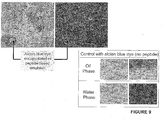
- peptides disclosed herein are amphiphilic, they emulsify the solvent mixture of aqueous and organic phases to form stable gel or emulsion systems. Therefore, addition of an aqueous and organic phase in the presence of ultrasmall peptides facilitates the formation of stable emulsions, microgels or particulate delivery systems. These delivery systems can be used for both hydrophilic and hydrophobic materials. For example, the inventors found that such peptide emulsion systems could encapsulate dyes. Hence, the peptide gelators/emulsifiers used in accordance with the present invention can be utilized to formulate particulate- and emulsion-based technologies for therapeutic and non-therapeutic applications.
- the present invention provides a straightforward and cost-efficient technology for formulating various types of organogels or emulsions in different solvent phase systems in the presence of specific ultrasmall peptide gelators/emulsifiers (preferably dimers to hexamers).
- these peptide organogels can be used for encapsulating both hydrophilic and hydrophobic materials for biological and non-biological applications.
- they can be used as delivery systems for bioactive agents immobilized therein.
- the tailored release of the bioactive agents from these delivery systems could be achieved by modulating the solvent systems and peptide properties.
- the peptide gelators/emulsifiers may also be conjugated to polymers, dendrimers, inorganic, organic, therapeutic and/or non-therapeutic materials for various applications.
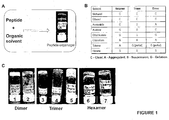
- Ultrasmall peptides with a polar head group such as Ac-LIVAGD-COOH (L) and Ac-IVD-COOH (L), or an aromatic head group, such as Ac-IVF-COOH (L) and Ac-IVW-COOH (L) formed organogels in organic solvents (see Figures 1 and 2 as well as Table 1).
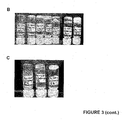
- the resulting organogels showed visible changes in their appearance when altering the peptide concentrations ( Figures 3A and 3B ) and the organic solvents.
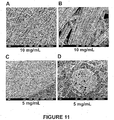
- the formulation of the peptide organogels depends on several factors, such as peptide concentration, polarity of the organic solvent, peptide sequence and type of solvent used (see Figure 3 as well as Figures 10A-G and 11 ). For example, increasing the peptide concentration reduced the gelation time for the formulation of peptide organogels. Based on the experimental data disclosed herein and his general knowledge, a person skilled in the art would have no problems in figuring out suitable gelation conditions (e.g. a suitable organic solvent) for a given peptide. For example, a skilled person knows about the nature of an organic solvent with respect to its polarity or non-polarity.
- peptide organogels can be incorporated in the peptide organogels by encapsulation, immobilization (in the bulk phase) or conjugation to the peptide gelators.
- the peptide organogels can be used in the design and development of sensors and (other) electronic devices.
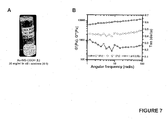
- Ultrasmall peptides formed organogels and emulsions in oil and oil-based solvent mixtures (see Figures 6 to 8 and 10H as well as Table 1).
- the formation of lipophilic solvent-based peptide organogels and emulsions depend on several factors, such as peptide concentration, type of oil, ratio of solvent and oil, peptide sequence, peptide size, and formulation technique such as heating, sonication or use of cosolvents.
- suitable gelation or emulsifying conditions e.g. a suitable solvent system
- Bioactive agents/therapeutics such as prodrugs and drugs, excipients, dyes (see Figure 9 ), pigments, inorganic and organic materials can be incorporated into the peptide based organogels, emulsions or particulate delivery systems for biological or non-biological applications. This can be achieved by encapsulation, immobilization (in the bulk phase) or conjugation to the peptide organogelators/emulsifiers. The gels and emulsions can be subsequently used in pharmaceutical, cosmetic and food technologies. Table 1. Exemplary peptides forming organogels and/or emulsions Peptides forming organogels in organic solvents SEQ ID NO.
- Peptide Sequence Description 44 Ac-ID-COOH (L) dimer / polar amino acid head group 30 Ac-IVD-COOH (L) trimer / polar amino acid head group 11 Ac-LIVAGD-COOH (L) hexamer / polar amino acid head group 32 Ac-IVW-COOH (L) trimer / aromatic amino acid head group 31 Ac-IVF-COOH (L) trimer / aromatic amino acid head group 12 Ac-LIVAGF-COOH (L) hexamer / aromatic amino acid head group Peptides forming organogels in mixtures of oils and other organic solvents SEQ ID NO.
- Peptide Sequence Description 30 Ac-IVD-COOH (L) trimer / polar amino acid head group Peptides forming emulsions in solvent mixtures (water:oil or org.solv.:water:oil) SEQ ID NO. Peptide Sequence Description 30 Ac-IVD-COOH (L) trimer / polar amino acid head group 11 Ac-LIVAGD-COOH (L) hexamer / polar amino acid head group
Landscapes
- Health & Medical Sciences (AREA)
- Chemical & Material Sciences (AREA)
- Life Sciences & Earth Sciences (AREA)
- General Health & Medical Sciences (AREA)
- Animal Behavior & Ethology (AREA)
- Veterinary Medicine (AREA)
- Public Health (AREA)
- Medicinal Chemistry (AREA)
- Epidemiology (AREA)
- Organic Chemistry (AREA)
- Pharmacology & Pharmacy (AREA)
- Proteomics, Peptides & Aminoacids (AREA)
- Engineering & Computer Science (AREA)
- Biophysics (AREA)
- Biochemistry (AREA)
- Molecular Biology (AREA)
- Bioinformatics & Cheminformatics (AREA)
- Genetics & Genomics (AREA)
- Immunology (AREA)
- Birds (AREA)
- Gastroenterology & Hepatology (AREA)
- Dispersion Chemistry (AREA)
- Dermatology (AREA)
- Inorganic Chemistry (AREA)
- Chemical Kinetics & Catalysis (AREA)
- General Chemical & Material Sciences (AREA)
- Nuclear Medicine, Radiotherapy & Molecular Imaging (AREA)
- Materials Engineering (AREA)
- Physics & Mathematics (AREA)
- Spectroscopy & Molecular Physics (AREA)
- Medicinal Preparation (AREA)
- Cosmetics (AREA)
- Peptides Or Proteins (AREA)
- Medicines That Contain Protein Lipid Enzymes And Other Medicines (AREA)
- Coloring Foods And Improving Nutritive Qualities (AREA)
- General Preparation And Processing Of Foods (AREA)
- Jellies, Jams, And Syrups (AREA)
Description
- The present invention relates to organogels and emulsions based on ultrasmall self-assembling peptides. It further relates to methods for producing such organogels and emulsions as well as to the use of the organogels and emulsions in biological and non-biological applications.
- Organogels are composed of a liquid organic phase that is immobilized in a three-dimensional scaffold made from self-assembled or cross-linked gelators. To date, the formation of reported peptide organogels requires complex methodologies to fabricate scaffolds, for example, use of oxidized glutathione and its derivatives for organogelation by heating (Lyon RP and Atkins WM, J. Am. Chem. Soc. 2001; 123(19):4408-4413) or use of co-solvents such as 1,1,1,3,3,3-hexafluoro-2-propanol to formulate diphenylalanine-based organogels (Yan X et al., Chem. Mat. 2008; 20(4):1522-1526). In
WO 2008/113992 a gel composition comprising a gelating agent and a solvent is described. Hence, a more facile to handle and cheap technology would be a clear advantage. There is also a demand for gelators that are of low-cost, easy to synthesize, stable and versatile to produce organogels in different solvent systems. - Accordingly, it was an object of the present invention to provide new types of organogel and/or emulsion systems that have the above properties. Furthermore, the organogels and/or emulsions should exhibit high versatility, good material properties and, if necessary, biocompatibility so that they can be used both in biological and non-biological applications.
- The objects of the present invention are solved by an organogel comprising an organic solvent and a peptide having the general formula
Z-(X)a-(Y)b-Z'c,
wherein - Z is an N-terminal protecting group,
- wherein said N-terminal protecting group has the general formula -C(O)-R, wherein R is selected from the group consisting of alkyl;
- X is, at each occurrence, independently selected from the group consisting of aliphatic amino acids,
- wherein all or a portion of said aliphatic amino acids are arranged in an order of decreasing amino acid size in the direction from N- to C-terminus, wherein the size of the aliphatic amino acids is defined as I = L>V > A > G;
- Y is selected from the group consisting of polar amino acids, and aromatic amino acids;
- Z' is a C-terminal protecting group;
- a is an integer selected from 1 to 6, preferably 1 to 5;
- b is 1 or 2, preferably 1; and
- c is 0 or 1,
- wherein (X)a-(Y)b has a sequence selected from the group consisting of LIVAGC (SEQ ID NO: 10), LIVAGD (SEQ ID NO: 11), LIVAGF (SEQ ID NO: 12), LIVAGW (SEQ ID NO: 13), ILVAGD (SEQ ID NO: 14), LIVAAD (SEQ ID NO: 15), LAVAGD (SEQ ID NO: 16), AIVAGD (SEQ ID NO: 17), LIVAGE (SEQ ID NO: 18), LIVAGK (SEQ ID NO: 19), LIVAGS (SEQ ID NO: 20), ILVAGS (SEQ ID NO: 21), AIVAGS (SEQ ID NO: 22), LIVAGT (SEQ ID NO: 23), AIVAGT (SEQ ID NO: 24), LIVAD (SEQ ID NO: 25), LIVGD (SEQ ID NO: 26), IVAD (SEQ ID NO: 27), IIID (SEQ ID NO: 28), IIIK (SEQ ID NO: 29), IVD (SEQ ID NO: 30), IVF (SEQ ID NO: 31), IVW (SEQ ID NO: 32), IID (SEQ ID NO: 33), LVE (SEQ ID NO: 34), IVE (SEQ ID NO: 35), LVD (SEQ ID NO: 36), VIE (SEQ ID NO: 37), VID (SEQ ID NO: 38), VLD (SEQ ID NO: 39), VLE (SEQ ID NO: 40), LLE (SEQ ID NO: 41), LLD (SEQ ID NO: 42), IIE (SEQ ID NO: 43), ID (SEQ ID NO: 44), IE (SEQ ID NO: 45), IW (SEQ ID NO: 46), IF (SEQ ID NO: 47) and IY (SEQ ID NO: 48).
- In one embodiment, said organic solvent is selected from polar organic solvents, preferably selected from the group consisting of alcohols, such as methanol, ethanol, propanol, isopropanol, isopentanol and 2-methoxyethanol, ketones, such as acetone, methylethyl ketone, methyl n-propyl ketone, methyl isopropyl ketone and methyl isoamyl ketone, ethers, such as ethylene glycol monobutyl ether and propylene glycol monomethyl ether, methyl acetate, ethyl acetate, propyl acetate, n-butyl acetate, chloroform, acetonitrile, glycerol, dimethyl sulfoxide, N,N-dimethyl formamide, tetrahydrofuran, pyridine, 1,4-dioxane, dimethyl acetamide, N-methylpyrrolidone, propylene carbonate and mixtures thereof.
- In one embodiment, said organic solvent is selected from non-polar organic solvents, preferably selected from the group consisting of benzene, chlorobenzene, o-dichlorobenzene, toluene, o-xylene, dichloromethane, 1,1,2-trichlorotrifluoroethane, pentane, cyclopentane, hexane, cyclohexane, heptane, iso octane, diethylether, petroleum ether, pyridine, carbon tetrachloride, fatty acids, fatty acid esters and mixtures thereof.
- In one embodiment, said organic solvent is selected from oils, preferably selected from the group consisting of vegetable oils, essential oils, petrochemical oils, synthetic oils and mixtures thereof. When oils are used, said organic solvent may also be referred to as lipophilic solvent.
- In one embodiment, said organic solvent is a mixture of at least one polar or non-polar organic solvent as defined above and at least one oil as defined above.
- In one embodiment, said organic solvent is a physiologically acceptable solvent.
- In one embodiment, said aliphatic amino acids, said polar amino acids, and said aromatic amino acids are either D-amino acids or L-amino acids.
- In one embodiment, said aliphatic amino acids are selected from the group consisting of alanine (Ala, A), homoallylglycine, homopropargylglycine, isoleucine (Ile, I), norleucine, leucine (Leu, L), valine (Val, V) and glycine (Gly, G), preferably from the group consisting of alanine (Ala, A), isoleucine (Ile, I), leucine (Leu, L), valine (Val, V) and glycine (Gly, G).
- In one embodiment, said aliphatic amino acids arranged in an order of decreasing amino acid size have a sequence selected from LIVAG (SEQ ID NO: 1), ILVAG (SEQ ID NO: 2), LIVAA (SEQ ID NO: 3), LAVAG (SEQ ID NO: 4), IVAG (SEQ ID NO: 5), LIVA (SEQ ID NO: 6), LIVG (SEQ ID NO: 7), IVA (SEQ ID NO: 8) and IV (SEQ ID NO: 9), wherein, optionally, there is an A preceding such sequence at the N-terminus.
- In one embodiment, said polar amino acids have a polar group which is independently selected from a hydroxyl, an ether, a carboxyl, an imido, an amido, an ester, an amino, a guanidino, a thio, and a thioether group.
- In one embodiment, said polar amino acids are selected from the group consisting of aspartic acid (Asp, D), asparagine (Asn, N), glutamic acid (Glu, E), glutamine (Gln, Q), 5-N-ethyl-glutamine (theanine), citrulline, thio-citrulline, cysteine (Cys, C), homocysteine, methionine (Met, M), ethionine, serine (Ser, S), homoserine, arginine (Arg, R), homoarginine, ornithine (Orn), threonine (Thr, T), L-Dopa, tryptophan (Trp, W), thyroxine, allo-threonine, lysine (Lys, K), 2,4-diaminobutyric acid (Dab), 2,3-diaminopropionic acid (Dap), N(6)-carboxymethyllysine, tyrosine (Tyr, Y) and histidine (His, H). In one embodiment, said polar amino acids are selected from the group consisting of aspartic acid (Asp, D), glutamic acid (Glu, E), serine (Ser, S), threonine (Thr, T), lysine (Lys, K), ornithine (Orn), 2,4-diaminobutyric acid (Dab) and 2,3-diaminopropionic acid (Dap). In one embodiment, said polar amino acids are selected from the group consisting of aspartic acid (Asp, D) and glutamic acid (Glu, E).
- In one embodiment, said aromatic amino acids are selected from the group consisting of phenylalanine (Phe, F), tryptophan (Trp, W), tyrosine (Tyr, Y), histidine (His, H) and L-Dopa.
- In one embodiment, the C-terminal amino acid of the peptide is selected from the group consisting of a lysine (K), an ornithine (Orn), a 2,4-diaminobutyric acid (Dab) and a 2,3-diaminopropionic acid (Dap).
- In one embodiment, said N-terminal protecting group has the general formula -C(O)-R, wherein R is selected from the group consisting of H, alkyl and substituted alkyl.
- In one embodiment, R is selected from the group consisting of methyl, ethyl, propyl, isopropyl, butyl and isobutyl.
- In one embodiment, said N-terminal protecting group is an acetyl group.
- In one embodiment, the C-terminus of said peptide is amidated, wherein, preferably, the C-terminus has the formula -CONHR, with R being selected from the group consisting of H, alkyl and substituted alkyl.
- In one embodiment, the C-terminus of said peptide is esterified, wherein, preferably, the C-terminus has the formula -CO2R, with R being selected from the group consisting of alkyls and substituted alkyls.
- In one embodiment, R is selected from the group consisting of methyl, ethyl, propyl, isopropyl, butyl and isobutyl.
- In one embodiment, the C-terminal amino acid of said peptide is a peptidomimetic amino acid, wherein, preferably, the C1 carboxyl group of said peptidomimetic amino acid is replaced with an alcohol, ester, aldehyde or ketone group.
- In one embodiment, a is an integer selected from 1 to 5, preferably 2 to 5, and wherein, preferably, said aliphatic amino acids exhibit an overall decrease in hydrophobicity from the N-terminus to the C-terminus of said peptide.
- In one embodiment, said peptide is present at a concentration in the range of from 0.1 % to 30 % (w/w), preferably 0.1 % to 20 % (w/w), more preferably 0.1 % to 10 % (w/w), more preferably 0.1 % to 5 % (w/w), even more preferably 0.1 % to 3 % (w/w), with respect to the total weight of said organogel.
- In one embodiment, said organogel has a tan δ of less than 1, preferably less than 0.5.
- In one embodiment, said organogel further comprises at least one additional substance.
- In one embodiment, said at least one additional substance is encapsulated by said organogel, immobilized in the bulk phase of said organogel or conjugated to said peptide.
- In one embodiment, said at least one additional substance is a bioactive agent, wherein said bioactive agent is preferably selected from the group consisting of nucleic acids, (poly)peptides, virus particles, oligosaccharides, polysaccharides, vitamins, sialic acids, antigens, vaccines, drugs, prodrugs and other organic or inorganic bioactive compounds.
- In one embodiment, said bioactive agent is selected from the group comprising haemostatic agents, antibiotics, anti-microbial agents, anti-fungal agents, antiinflammatory agents, analgesics, anti-coagulants, antibodies, antigens, growth factors and cytokines.
- In one embodiment, said at least one additional substance is selected from the group consisting of dyes, pigments, quantum dot nanoparticles and other nanoparticles, preferably metal or semiconductor nanoparticles.
- The objects of the present invention are also solved by a method of producing an organogel as defined above, said method comprising the step of dissolving a peptide as defined above in an organic solvent as defined above.
- In one embodiment, said method further comprises at least one of the following steps:
- heating said peptide in said organic solvent, preferably to a temperature in the range of from 30 to 50 °C;
- sonicating said peptide in said organic solvent.
- The objects of the present invention are also solved by the use of a peptide as defined above as gelator in an organogel.
- The objects of the present invention are also solved by the use of an organogel as defined above in a pharmaceutical formulation, a cosmetic or personal care product, a food product or a device.
- The objects of the present invention are also solved by a pharmaceutical formulation comprising an organogel as defined above. In one embodiment, said pharmaceutical formulation is a controlled or sustained release pharmaceutical formulation. In one embodiment, the pharmaceutical composition further comprises a bioactive agent as defined above. In one embodiment, the pharmaceutical composition further comprises a pharmaceutically acceptable carrier. In one embodiment, the pharmaceutical composition is applied topically.
- The objects of the present invention are also solved by a cosmetic or personal care product comprising an organogel as defined above. In one embodiment, the cosmetic product is applied topically.
- The objects of the present invention are also solved by a food product comprising an organogel as defined above.
- The objects of the present invention are also solved by a device comprising an organogel as defined above. In one embodiment, said device is a sensor device. In one embodiment, said device is an electronic device.
- The objects of the present invention are also solved by an emulsion comprising an organic solvent, a polar solvent, preferably an aqueous solution, and a peptide having the general formula
Z-(X)a-(Y)b-Z'c,
wherein - Z is an N-terminal protecting group;
- X is, at each occurrence, independently selected from the group consisting of aliphatic amino acids,
- wherein all or a portion of said aliphatic amino acids are arranged in an order of decreasing amino acid size in the direction from N- to C-terminus, wherein the size of the aliphatic amino acids is defined as I = L>V > A > G;
- Y is selected from the group consisting of polar amino acids, and aromatic amino acids, preferably polar amino acids;
- Z' is a C-terminal protecting group;
- a is an integer selected from 1 to 6, preferably 1 to 5;
- b is 1 or 2, preferably 1; and
- c is 0 or 1,
- wherein (X)a-(Y)b has a sequence selected from the group consisting of LIVAGC (SEQ ID NO: 10), LIVAGD (SEQ ID NO: 11), LIVAGF (SEQ ID NO: 12), LIVAGW (SEQ ID NO: 13), ILVAGD (SEQ ID NO: 14), LIVAAD (SEQ ID NO: 15), LAVAGD (SEQ ID NO: 16), AIVAGD (SEQ ID NO: 17), LIVAGE (SEQ ID NO: 18), LIVAGK (SEQ ID NO: 19), LIVAGS (SEQ ID NO: 20), ILVAGS (SEQ ID NO: 21), AIVAGS (SEQ ID NO: 22), LIVAGT (SEQ ID NO: 23), AIVAGT (SEQ ID NO: 24), LIVAD (SEQ ID NO: 25), LIVGD (SEQ ID NO: 26), IVAD (SEQ ID NO: 27), IIID (SEQ ID NO: 28), IIIK (SEQ ID NO: 29), IVD (SEQ ID NO: 30), IVF (SEQ ID NO: 31), IVW (SEQ ID NO: 32), IID (SEQ ID NO: 33), LVE (SEQ ID NO: 34), IVE (SEQ ID NO: 35), LVD (SEQ ID NO: 36), VIE (SEQ ID NO: 37), VID (SEQ ID NO: 38), VLD (SEQ ID NO: 39), VLE (SEQ ID NO: 40), LLE (SEQ ID NO: 41), LLD (SEQ ID NO: 42), IIE (SEQ ID NO: 43), ID (SEQ ID NO: 44), IE (SEQ ID NO: 45), IW (SEQ ID NO: 46), IF (SEQ ID NO: 47) and IY (SEQ ID NO: 48).
- In one embodiment, said organic solvent is selected from polar organic solvents, preferably selected from the group consisting of alcohols, such as methanol, ethanol, propanol, isopropanol, isopentanol and 2-methoxyethanol, ketones, such as acetone, methylethyl ketone, methyl n-propyl ketone, methyl isopropyl ketone and methyl isoamyl ketone, ethers, such as ethylene glycol monobutyl ether and propylene glycol monomethyl ether, methyl acetate, ethyl acetate, propyl acetate, n-butyl acetate, chloroform, acetonitrile, glycerol, dimethyl sulfoxide, N,N-dimethyl formamide, tetrahydrofuran, pyridine, 1,4-dioxane, dimethyl acetamide, N-methylpyrrolidone, propylene carbonate and mixtures thereof.
- In one embodiment, said organic solvent is selected from non-polar organic solvents, preferably selected from the group consisting of benzene, chlorobenzene, o-dichlorobenzene, toluene, o-xylene, dichloromethane, 1,1,2-trichlorotrifluoroethane, pentane, cyclopentane, hexane, cyclohexane, heptane, iso octane, diethylether, petroleum ether, pyridine, carbon tetrachloride, fatty acids, fatty acid esters and mixtures thereof.
- In one embodiment, said organic solvent is selected from oils, preferably selected from the group consisting of vegetable oils, essential oils, petrochemical oils, synthetic oils and mixtures thereof. When oils are used, said organic solvent may also be referred to as lipophilic solvent.
- In one embodiment, said organic solvent is a mixture of at least one polar or non-polar organic solvent as defined above and at least one oil as defined above.
- In one embodiment, said organic solvent is a physiologically acceptable solvent.
- In one embodiment, said aliphatic amino acids are selected from the group consisting of alanine (Ala, A), homoallylglycine, homopropargylglycine, isoleucine (Ile, I), norleucine, leucine (Leu, L), valine (Val, V) and glycine (Gly, G), preferably from the group consisting of alanine (Ala, A), isoleucine (Ile, I), leucine (Leu, L), valine (Val, V) and glycine (Gly, G).
- In one embodiment, said aliphatic amino acids arranged in an order of decreasing amino acid size have a sequence selected from LIVAG (SEQ ID NO: 1), ILVAG (SEQ ID NO: 2), LIVAA (SEQ ID NO: 3), LAVAG (SEQ ID NO: 4), IVAG (SEQ ID NO: 5), LIVA (SEQ ID NO: 6), LIVG (SEQ ID NO: 7), IVA (SEQ ID NO: 8) and IV (SEQ ID NO: 9), wherein, optionally, there is an A preceding such sequence at the N-terminus.
- In one embodiment, said polar amino acids have a polar group which is independently selected from a hydroxyl, an ether, a carboxyl, an imido, an amido, an ester, an amino, a guanidino, a thio, and a thioether group.
- In one embodiment, said polar amino acids are selected from the group consisting of aspartic acid (Asp, D), asparagine (Asn, N), glutamic acid (Glu, E), glutamine (Gln, Q), 5-N-ethyl-glutamine (theanine), citrulline, thio-citrulline, cysteine (Cys, C), homocysteine, methionine (Met, M), ethionine, serine (Ser, S), homoserine, arginine (Arg, R), homoarginine, ornithine (Orn), threonine (Thr, T), L-Dopa, tryptophan (Trp, W), thyroxine, allo-threonine, lysine (Lys, K), 2,4-diaminobutyric acid (Dab), 2,3-diaminopropionic acid (Dap), N(6)-carboxymethyllysine, tyrosine (Tyr, Y) and histidine (His, H). In one embodiment, said polar amino acids are selected from the group consisting of aspartic acid (Asp, D), glutamic acid (Glu, E), serine (Ser, S), threonine (Thr, T), lysine (Lys, K), ornithine (Orn), 2,4-diaminobutyric acid (Dab) and 2,3-diaminopropionic acid (Dap). In one embodiment, said polar amino acids are selected from the group consisting of aspartic acid (Asp, D) and glutamic acid (Glu, E).
- In one embodiment, said aromatic amino acids are selected from the group consisting of phenylalanine (Phe, F), tryptophan (Trp, W), tyrosine (Tyr, Y), histidine (His, H) and L-Dopa.
- In one embodiment, the C-terminal amino acid of the peptide is selected from the group consisting of a lysine (K), an ornithine (Orn), a 2,4-diaminobutyric acid (Dab) and a 2,3-diaminopropionic acid (Dap).
- In one embodiment, said N-terminal protecting group has the general formula -C(O)-R, wherein R is selected from the group consisting of H, alkyl and substituted alkyl.
- In one embodiment, R is selected from the group consisting of methyl, ethyl, propyl, isopropyl, butyl and isobutyl.
- In one embodiment, said N-terminal protecting group is an acetyl group.
- In one embodiment, the C-terminus of said peptide is amidated, wherein, preferably, the C-terminus has the formula -CONHR, with R being selected from the group consisting of H, alkyl and substituted alkyl.
- In one embodiment, the C-terminus of said peptide is esterified, wherein, preferably, the C-terminus has the formula -CO2R, with R being selected from the group consisting of alkyls and substituted alkyls.
- In one embodiment, R is selected from the group consisting of methyl, ethyl, propyl, isopropyl, butyl and isobutyl.
- In one embodiment, the C-terminal amino acid of said peptide is a peptidomimetic amino acid, wherein, preferably, the C1 carboxyl group of said peptidomimetic amino acid is replaced with an alcohol, ester, aldehyde or ketone group.
- In one embodiment, a is an integer selected from 1 to 5, preferably 2 to 5, and wherein, preferably, said aliphatic amino acids exhibit an overall decrease in hydrophobicity from the N-terminus to the C-terminus of said peptide.
- In one embodiment, said peptide is present at a concentration in the range of from 0.1 % to 30 % (w/v), preferably 0.1 % to 20 % (w/v), more preferably 0.1 % to 10 % (w/v), more preferably 0.1 % to 5 % (w/v), even more preferably 0.1 % to 3 % (w/v), with respect to the total volume of said emulsion.
- In one embodiment, said emulsion further comprises at least one additional substance.
- In one embodiment, said additional substance is a bioactive agent, wherein said bioactive agent is preferably selected from the group consisting of nucleic acids, (poly)peptides, virus particles, oligosaccharides, polysaccharides, vitamins, sialic acids, antigens, vaccines, drugs, prodrugs and other organic or inorganic bioactive compounds.
- In one embodiment, said bioactive agent is selected from the group comprising haemostatic agents, antibiotics, anti-microbial agents, anti-fungal agents, antiinflammatory agents, analgesics, anti-coagulants, antibodies, antigens, growth factors and cytokines.
- In one embodiment, said additional substance is a dye, opacifier or pigment.
- In one embodiment, said additional substance is a wax, such as beeswax and carnauba wax.
- The objects of the present invention are also solved by a method of producing an emulsion as defined above, said method comprising the step of dissolving a peptide as defined above in a mixture of a polar solvent, preferably an aqueous solution, and an organic solvent as defined above.
- In one embodiment, said method further comprises at least one of the following steps:
- sonicating said peptide in said mixture;
- homogenizing said peptide in said mixture;
- phase separation coacervation and/or precipitation and/or use of a co-solvent with said peptide in said mixture.
- In one embodiment, said aqueous solution is water. In one embodiment, said organic solvent is an oil.
- The objects of the present invention are also solved by the use of a peptide as defined above as an emulsifier. In one embodiment, said peptide forms micelles.
- In one embodiment of the emulsion as defined above, said at least one additional substance as defined above is entrapped in micelles formed by said peptide.
- The objects of the present invention are also solved by the use of an emulsion as defined above in a pharmaceutical formulation, a cosmetic or personal care product or a food product.
- The objects of the present invention are also solved by a pharmaceutical formulation comprising an emulsion as defined above. In one embodiment, said pharmaceutical formulation is a controlled or sustained release pharmaceutical formulation. In one embodiment, the pharmaceutical composition further comprises a bioactive agent as defined above. In one embodiment, the pharmaceutical composition further comprises a pharmaceutically acceptable carrier. In one embodiment, the pharmaceutical composition is applied topically.
- The objects of the present invention are also solved by a cosmetic or personal care product comprising an emulsion as defined above. In one embodiment, the cosmetic product is applied topically.
- The objects of the present invention are also solved by a food product comprising an emulsion as defined above.
- The present invention provides a simple and low-cost technology to formulate organogels or emulsion. The technology involves simply dissolving the above defined ultrasmall self-assembling peptides (preferably dimers to hexamers) acting as low molecular weight (LMW) gelators/emulsifiers in organic solutions (up to 99.9% organic solvent or 98% oil). These organic solutions include organic solvents, oils or solvent mixtures such as oil-organic solvent, oil-aqueous or oil-aqueous-organic solvents. The inventors screened different solvents from polar to non-polar solvents, such as methanol and hexane. Optimization of peptide organogels for various applications can be achieved by tuning the combinations and ratios of peptides and solvent systems, in particular by tuning the concentration of the peptides.
- The peptides used in accordance with the present invention not only self-assemble, but also can interact with complex macromolecular structures. Thus, they are able to facilitate the design and development of technologies involving synthetic and biological systems.
- The organogels formed from peptides are stabilized due to the weak interactions between the peptide aggregates and solvent systems. These include interactions such as hydrophobic, non-covalent bondings, van der Waals, electrostatic, hydrogen bonding and/or π-π interactions (in the case of peptides having an aromatic head group), etc.. The properties of the peptide gelators such as polarity, size and thermo reversibility also play a key role in the formulation of organogels. The peptides are also biocompatible, which can be used for formulating the organogels for biological applications.
- The peptides can entrap up to 99.9% of organic solvents. The inventors also found that these peptide organogels could successfully immobilize quantum dots (QDs). Furthermore, fluorescent measurement studies on QD-loaded peptide organogels showed a complete overlap of emission peaks with that of QDs in solution. This indicates that the QDs were stable in the peptide organogels. The peptide organogels have a high organic solvent content and can immobilize all kinds of inorganic and organic materials. Thus, this technology can be further used, besides biomedical applications, for the development of devices, sensors or substrates in the electronic and chemical industries.
- The peptides disclosed herein also form organogels in lipophilic solvent systems (e.g. oil, up to 98%), indicating the versatility of these peptides as organogelators. Oil-based peptide organogels are stable and possess high mechanical strength and can be used for encapsulating hydrophobic therapeutic or non-therapeutic materials. For example; the active pharmaceutical ingredients loaded in peptide organogels can be clinically used as topical, oral, implantable or parenteral delivery systems. Furthermore, peptide organogels based on herbal, edible and/or essential oils allow for the use of these systems in the fields of cosmetics, food and pharmaceutical technologies. Thus, depending on the material immobilized by the peptide organogels, they can be used for both biological and non-biological applications.
- Since some of the peptides disclosed herein are amphiphilic, they emulsify the solvent mixture of aqueous and organic phases to form stable gel or emulsion systems. Therefore, addition of an aqueous and organic phase in the presence of ultrasmall peptides facilitates the formation of stable emulsions, microgels or particulate delivery systems. These delivery systems can be used for both hydrophilic and hydrophobic materials. For example, the inventors found that such peptide emulsion systems could encapsulate dyes. Hence, the peptide gelators/emulsifiers used in accordance with the present invention can be utilized to formulate particulate- and emulsion-based technologies for therapeutic and non-therapeutic applications.
- In summary, the present invention provides a straightforward and cost-efficient technology for formulating various types of organogels or emulsions in different solvent phase systems in the presence of specific ultrasmall peptide gelators/emulsifiers (preferably dimers to hexamers). Furthermore, these peptide organogels can be used for encapsulating both hydrophilic and hydrophobic materials for biological and non-biological applications. For example, they can be used as delivery systems for bioactive agents immobilized therein. The tailored release of the bioactive agents from these delivery systems could be achieved by modulating the solvent systems and peptide properties. The peptide gelators/emulsifiers may also be conjugated to polymers, dendrimers, inorganic, organic, therapeutic and/or non-therapeutic materials for various applications.
- Reference is now made to the figures, wherein:
-
Figure 1 shows the formulation of organogels with peptides having a polar amino acid head group in different organic solvents (A/B). The exemplary peptides are Ac-ID-COOH (L) (dimer), Ac-IVD-COOH (L) (trimer) and Ac-LIVAGD-COOH (L) (hexamer). The organogels depicted in (C) are (1) Ac-ID-COOH (L) 10mg/ml in ethyl acetate, (2) Ac-ID-COOH (L) 10mg/ml in toluene, (3) Ac-IVD-COOH (L) 2mg/ml in acetonitrile, (4) Ac-IVD-COOH (L) 2mg/ml in ethyl acetate, (5) Ac-IVD-COOH (L) 5mg/ml in acetone, (6) Ac-LIVAGD-COOH (L) 5mg/ml in toluene, and (7) Ac-LIVAGD-COOH (L) 10mg/ml in ethyl acetate. -
Figure 2 shows the formulation of organogels with peptides having an aromatic amino acid head group in different organic solvents (peptide concentration 0,5% w/v). The organogels depicted in (B) are (1) Ac-IVF-COOH (L) 5 mg/ml in ethyl acetate, (2) Ac-IVF-COOH (L) 5 mg/ml in acetone, (3) Ac-IVF-COOH (L) 5 mg/ml in acetonitrile, (4) Ac-IVF-COOH (L) 5 mg/ml in chloroform, (5) Ac-IVW-COOH (L) 5 mg/ml in acetone, (6) Ac-IVW-COOH (L) 5 mg/ml in ethyl acetate, and (7) Ac-LIVAGF-COOH (L) 5 mg/ml in acetone. -
Figure 3A shows the effect of the peptide concentration on organogelation for the trimer Ac-IVD-COOH(L) in ethyl acetate. Gels with increasing concentration of Ac-IVD-COOH (L) were prepared in ethyl acetate. For concentrations above 10 mg/ml (1% w/v) only partial gelation was observed. Organogels of 2 mg/ml and 5 mg/ml Ac-IVD-COOH (L) in ethyl acetate were analyzed by field emission scanning electron microscopy (FESEM).Figures 3B and 3C show the effect of the peptide concentration on organogelation for the hexamer Ac-LIVAGD-COOH (L) in acetonitrile or ethyl acetate. Increasing the concentration of Ac-LIVAGD-COOH (L) in acetonitrile (1 mg/ml, 2 mg/ml, 3 mg/ml, 4 mg/ml, 5 mg/ml, 10 mg/ml, 20 mg/ml; from left to right) resulted in an increased size of the organogel (B). Increasing the concentration of Ac-LIVAGD-COOH (L) in ethyl acetate (5 mg/ml, 10 mg/ml, 20 mg/ml; from left to right) resulted in partial gelation (C). -
Figure 4 shows the screening for organogels that are suitable for loading with quantum dots. Since the CdS-CdSe-ZnS quantum dots used are soluble in chloroform, while Ac-IVD-COOH (L) gelled preferably in ethyl acetate, solvent mixtures of ethyl acetate : chloroform were screened. Gels of 5mg/ml Ac-IVD-COOH (L) in different mixtures of ethyl acetate: chloroform were prepared. Peptide organogels with an 8:2 mixture of ethyl acetate : chloroform were selected for quantum dot loading. -
Figures 5A and B shows the fluorescence of organogels loaded with four different-sized CdS-CdSe-ZnS quantum dots (Q.D.) upon 480 nm excitation. The organogels were based on 5 mg/ml Ac-IVD-COOH (L) in an 8:2 mixture of ethyl acetate: chloroform. The quantum dots were used at a concentration of 0.2 mg/ml. -
Figure 6 shows the formulation of organogels with peptides in oils. Different concentrations of the trimer Ac-IVD-COOH (L) were screened for organogelation in sunflower oil (A). The rheological properties of the resulting organogel were studied by oscillation frequency sweep analysis (geometry: 8mm serrated parallel plate; strain: 0.1%; transducer mode: FRT; N =1) (B). -
Figure 7 shows the formulation of peptide organogels in oil : solvent mixtures. An organogel of 20 mg/ml Ac-IVD-COOH (L) in sunflower oil : acetone (4:1) was prepared (A). The rheological properties of the resulting organogel were studied by oscillation frequency sweep analysis (geometry: 8mm serrated parallel plate; strain: 0.1%; transducer mode: FRT) (B). -
Figure 8 shows the formulation of stable peptide emulsions in solvent mixtures of oil (O) and water (W). 7.5 mg/ml Ac-IVD-COOH (L) were dissolved in solvent mixtures of oil : water (50:50, 80:20, 20:80). No phase separation was observed in the peptide-based formulations in comparison to controls. -
Figure 9 shows the loading of an Ac-IVD-COOH (L) emulsion (water : oil - 40:60) with Alcian blue dye. -
Figure 10 shows organogels from dimer and trimer peptides. (A-D) Ac-IVD-COOH (L) in ethyl acetate at a concentration of 1, 2, 5 and 10 mg/ml, respectively. (E) Ac-IVD-COOH (L) in acetone at 5 mg/ml concentration. (F-G) Ac-ID-COOH (L) in ethyl acetate at 5 and 10 mg/ml concentration. (H) Ac-ID-COOH (L) in vegetable oil at 20 mg/ml concentration. -
Figure 11 shows the morphological characterization of organogels formed by the dimer Ac-ID-COOH (L) by field emission scanning electron microscopy (FESEM). (A-B) 10 mg/ml in ethyl acetate at 1000x and 10,000x, respectively. (C) 5 mg/ml in ethyl acetate at 60,000x. (D) 5 mg/ml in water at 550x. - Reference is now made to the following examples, which are meant to illustrate the present invention and not to limit it:
- Ultrasmall peptides with a polar head group, such as Ac-LIVAGD-COOH (L) and Ac-IVD-COOH (L), or an aromatic head group, such as Ac-IVF-COOH (L) and Ac-IVW-COOH (L) formed organogels in organic solvents (see
Figures 1 and2 as well as Table 1). The resulting organogels showed visible changes in their appearance when altering the peptide concentrations (Figures 3A and3B ) and the organic solvents. - The formulation of the peptide organogels depends on several factors, such as peptide concentration, polarity of the organic solvent, peptide sequence and type of solvent used (see
Figure 3 as well asFigures 10A-G and 11 ). For example, increasing the peptide concentration reduced the gelation time for the formulation of peptide organogels. Based on the experimental data disclosed herein and his general knowledge, a person skilled in the art would have no problems in figuring out suitable gelation conditions (e.g. a suitable organic solvent) for a given peptide. For example, a skilled person knows about the nature of an organic solvent with respect to its polarity or non-polarity. As can be seen fromFigure 1B , in particular polar solvents with a carbonyl-, nitrile- or benzene-group that, preferably, are not too bulky in size will not interfere with organogelation. Obviously, there is interaction with the polar head group of the peptide. Interference of the solvent with the hydrophobic tail of the peptide would likely hinder or slow down gel formation, as can be seen with the hydrophobic solvent hexane. Also, it seems that planar configurations (benzene ring, C=O, nitrile) within the solvent helps to stabilize the gel. This might be explained with a more favourable interaction of p-, $sp2-, or sp-orbitals. - Materials, such as quantum dots (as seen in
Figures 4 and5 ), or metal nanoparticles (e.g. gold nanoparticles), can be incorporated in the peptide organogels by encapsulation, immobilization (in the bulk phase) or conjugation to the peptide gelators. Thus, the peptide organogels can be used in the design and development of sensors and (other) electronic devices. - Ultrasmall peptides formed organogels and emulsions in oil and oil-based solvent mixtures (see
Figures 6 to 8 and10H as well as Table 1). The formation of lipophilic solvent-based peptide organogels and emulsions depend on several factors, such as peptide concentration, type of oil, ratio of solvent and oil, peptide sequence, peptide size, and formulation technique such as heating, sonication or use of cosolvents. Based on the experimental data disclosed herein and his general knowledge, a person skilled in the art would have no problems in figuring out suitable gelation or emulsifying conditions (e.g. a suitable solvent system) for a given peptide. - Rheology studies showed that the organogels possess good mechanical properties, since the Tan (G"/G') is less than 1 (∼ 0.2-0.3), with a storage modulus (G') of 1100 Pa and 10050 Pa for organogels based on oil and oil/solvent mixtures, respectively, and a loss modulus (G") of 120 Pa and-1200 Pa for organogels based on oil and oil/solvent mixtures, respectively (
Figures 6 and7 ). - Bioactive agents/therapeutics, such as prodrugs and drugs, excipients, dyes (see
Figure 9 ), pigments, inorganic and organic materials can be incorporated into the peptide based organogels, emulsions or particulate delivery systems for biological or non-biological applications. This can be achieved by encapsulation, immobilization (in the bulk phase) or conjugation to the peptide organogelators/emulsifiers. The gels and emulsions can be subsequently used in pharmaceutical, cosmetic and food technologies.Table 1. Exemplary peptides forming organogels and/or emulsions Peptides forming organogels in organic solvents SEQ ID NO. Peptide Sequence Description 44 Ac-ID-COOH (L) dimer / polar amino acid head group 30 Ac-IVD-COOH (L) trimer / polar amino acid head group 11 Ac-LIVAGD-COOH (L) hexamer / polar amino acid head group 32 Ac-IVW-COOH (L) trimer / aromatic amino acid head group 31 Ac-IVF-COOH (L) trimer / aromatic amino acid head group 12 Ac-LIVAGF-COOH (L) hexamer / aromatic amino acid head group Peptides forming organogels in mixtures of oils and other organic solvents SEQ ID NO. Peptide Sequence Description 30 Ac-IVD-COOH (L) trimer / polar amino acid head group Peptides forming emulsions in solvent mixtures (water:oil or org.solv.:water:oil) SEQ ID NO. Peptide Sequence Description 30 Ac-IVD-COOH (L) trimer / polar amino acid head group 11 Ac-LIVAGD-COOH (L) hexamer / polar amino acid head group - The features of the present invention disclosed in the specification, the claims, and/or in the accompanying drawings may, both separately and in any combination thereof, be material for realizing the invention in various forms thereof.
-
- <110> Agency for Science, Technology and Research
- <120> Organogels and emulsions for biological and non-biological applications
- <130> EXPL30012
- <150>
SG 201201239-9
<151> 2012-02-12 - <160> 48
- <170> PatentIn version 3.5
- <210> 1
<211> 5
<212> PRT
<213> Artificial Sequence - <220>
<223> Synthetic Peptide - <400> 1

- <210> 2
<211> 5
<212> PRT
<213> Artificial Sequence - <220>
<223> Synthetic Peptide - <400> 2

- <210> 3
<211> 5
<212> PRT
<213> Artificial Sequence - <220>
<223> Synthetic Peptide - <400> 3

- <210> 4
<211> 5
<212> PRT
<213> Artificial Sequence - <220>
<223> Synthetic Peptide - <400> 4

- <210> 5
<211> 4
<212> PRT
<213> Artificial Sequence - <220>
<223> Synthetic Peptide - <400> 5

- <210> 6
<211> 4
<212> PRT
<213> Artificial Sequence - <220>
<223> Synthetic Peptide - <400> 6

- <210> 7
<211> 4
<212> PRT
<213> Artificial Sequence - <220>
<223> Synthetic Peptide - <400> 7

- <210> 8
<211> 3
<212> PRT
<213> Artificial Sequence - <220>
<223> Synthetic Peptide - <400> 8

- <210> 9
<211> 2
<212> PRT
<213> Artificial Sequence - <220>
<223> Synthetic Peptide - <400> 9

- <210> 10
<211> 6
<212> PRT
<213> Artificial Sequence - <220>
<223> Synthetic Peptide - <400> 10

- <210> 11
<211> 6
<212> PRT
<213> Artificial Sequence - <220>
<223> Synthetic Peptide - <400> 11

- <210> 12
<211> 6
<212> PRT
<213> Artificial Sequence - <220>
<223> Synthetic Peptide - <400> 12

- <210> 13
<211> 6
<212> PRT
<213> Artificial Sequence - <220>
<223> Synthetic Peptide - <400> 13

- <210> 14
<211> 6
<212> PRT
<213> Artificial Sequence - <220>
<223> Synthetic Peptide - <400> 14

- <210> 15
<211> 6
<212> PRT
<213> Artificial Sequence - <220>
<223> Synthetic Peptide - <400> 15

- <210> 16
<211> 6
<212> PRT
<213> Artificial Sequence - <220>
<223> Synthetic Peptide - <400> 16

- <210> 17
<211> 6
<212> PRT
<213> Artificial Sequence - <220>
<223> Synthetic Peptide - <400> 17

- <210> 18
<211> 6
<212> PRT
<213> Artificial Sequence - <220>
<223> Synthetic Peptide - <400> 18

- <210> 19
<211> 6
<212> PRT
<213> Artificial Sequence - <220>
<223> Synthetic Peptide - <400> 19

- <210> 20
<211> 6
<212> PRT
<213> Artificial Sequence - <220>
<223> Synthetic Peptide - <400> 20

- <210> 21
<211> 6
<212> PRT
<213> Artificial Sequence - <220>
<223> Synthetic Peptide - <400> 21

- <210> 22
<211> 6
<212> PRT
<213> Artificial Sequence - <220>
<223> Synthetic Peptide - <400> 22

- <210> 23
<211> 6
<212> PRT
<213> Artificial Sequence - <220>
<223> Synthetic Peptide - <400> 23

- <210> 24
<211> 6
<212> PRT
<213> Artificial Sequence - <220>
<223> Synthetic Peptide - <400> 24

- <210> 25
<211> 5
<212> PRT
<213> Artificial Sequence - <220>
<223> Synthetic Peptide - <400> 25

- <210> 26
<211> 5
<212> PRT
<213> Artificial Sequence - <220>
<223> Synthetic Peptide - <400> 26

- <210> 27
<211> 4
<212> PRT
<213> Artificial Sequence - <220>
<223> Synthetic Peptide - <400> 27

- <210> 28
<211> 4
<212> PRT
<213> Artificial Sequence - <220>
<223> Synthetic Peptide - <400> 28

- <210> 29
<211> 4
<212> PRT
<213> Artificial Sequence - <220>
<223> Synthetic Peptide - <400> 29

- <210> 30
<211> 3
<212> PRT
<213> Artificial Sequence - <220>
<223> Synthetic Peptide - <400> 30

- <210> 31
<211> 3
<212> PRT
<213> Artificial Sequence - <220>
<223> Synthetic Peptide - <400> 31

- <210> 32
<211> 3
<212> PRT
<213> Artificial Sequence - <220>
<223> Synthetic Peptide - <400> 32

- <210> 33
<211> 3
<212> PRT
<213> Artificial Sequence - <220>
<223> Synthetic Peptide - <400> 33

- <210> 34
<211> 3
<212> PRT
<213> Artificial Sequence - <220>
<223> Synthetic Peptide - <400> 34

- <210> 35
<211> 3
<212> PRT
<213> Artificial Sequence - <220>
<223> Synthetic Peptide - <400> 35

- <210> 36
<211> 3
<212> PRT
<213> Artificial Sequence - <220>
<223> Synthetic Peptide - <400> 36

- <210> 37
<211> 3
<212> PRT
<213> Artificial Sequence - <220>
<223> Synthetic Peptide - <400> 37

- <210> 38
<211> 3
<212> PRT
<213> Artificial Sequence - <220>
<223> Synthetic Peptide - <400> 38

- <210> 39
<211> 3
<212> PRT
<213> Artificial Sequence - <220>
<223> Synthetic Peptide - <400> 39

- <210> 40
<211> 3
<212> PRT
<213> Artificial Sequence - <220>
<223> Synthetic Peptide - <400> 40

- <210> 41
<211> 3
<212> PRT
<213> Artificial Sequence - <220>
<223> Synthetic Peptide - <400> 41

- <210> 42
<211> 3
<212> PRT
<213> Artificial Sequence - <220>
<223> Synthetic Peptide - <400> 42
- <210> 43
<211> 3
<212> PRT
<213> Artificial Sequence - <220>
<223> Synthetic Peptide - <400> 43

- <210> 44
<211> 2
<212> PRT
<213> Artificial Sequence - <220>
<223> Synthetic Peptide - <400> 44

- <210> 45
<211> 2
<212> PRT
<213> Artificial Sequence - <220>
<223> Synthetic Peptide - <400> 45

- <210> 46
<211> 2
<212> PRT
<213> Artificial Sequence - <220>
<223> Synthetic Peptide - <400> 46

- <210> 47
<211> 2
<212> PRT
<213> Artificial Sequence - <220>
<223> Synthetic Peptide - <400> 47

- <210> 48
<211> 2
<212> PRT
<213> Artificial Sequence - <220>
<223> Synthetic Peptide - <400> 48

Claims (24)
- Organogel comprising
an organic solvent and
a peptide having the general formula
Z-(X)a-(Y)b-Z'c,
whereinZ is an N-terminal protecting group,wherein said N-terminal protecting group has the general formula -C(O)-R,wherein R is selected from the group consisting of alkyl;X is, at each occurrence, independently selected from the group consisting of aliphatic amino acids,
wherein all or a portion of said aliphatic amino acids are arranged in an order of decreasing amino acid size in the direction from N- to C-terminus, wherein the size of the aliphatic amino acids is defined as I = L > V > A > G;Y is selected from the group consisting of polar amino acids, and aromatic amino acids;Z' is a C-terminal protecting group;a is an integer selected from 1 to 6, preferably 1 to 5;b is 1 or 2, preferably 1; andc is 0 or 1,wherein (X)a-(Y)b has a sequence selected from the group consisting of LIVAGC (SEQ ID NO: 10), LIVAGD (SEQ ID NO: 11), LIVAGF (SEQ ID NO: 12), LIVAGW (SEQ ID NO: 13), ILVAGD (SEQ ID NO: 14), LIVAAD (SEQ ID NO: 15), LAVAGD (SEQ ID NO: 16), AIVAGD (SEQ ID NO: 17), LIVAGE (SEQ ID NO: 18), LIVAGK (SEQ ID NO: 19), LIVAGS (SEQ ID NO: 20), ILVAGS (SEQ ID NO: 21), AIVAGS (SEQ ID NO: 22), LIVAGT (SEQ ID NO: 23), AIVAGT (SEQ ID NO: 24), LIVAD (SEQ ID NO: 25), LIVGD (SEQ ID NO: 26), IVAD (SEQ ID NO: 27), IIID (SEQ ID NO: 28), IIIK (SEQ ID NO: 29), IVD (SEQ ID NO: 30), IVF (SEQ ID NO: 31), IVW (SEQ ID NO: 32), IID (SEQ ID NO: 33), LVE (SEQ ID NO: 34), IVE (SEQ ID NO: 35), LVD (SEQ ID NO: 36), VIE (SEQ ID NO: 37), VID (SEQ ID NO: 38), VLD (SEQ ID NO: 39), VLE (SEQ ID NO: 40), LLE (SEQ ID NO: 41), LLD (SEQ ID NO: 42), IIE (SEQ ID NO: 43), ID (SEQ ID NO: 44), IE (SEQ ID NO: 45), IW (SEQ ID NO: 46), IF (SEQ ID NO: 47) and IY (SEQ ID NO: 48). - Emulsion comprising
an organic solvent,
a polar solvent, preferably an aqueous solution, and
a peptide having the general formula
Z-(X)a-(Y)b-Z'c,
whereinZ is an N-terminal protecting group;X is, at each occurrence, independently selected from the group consisting of aliphatic amino acids,
wherein all or a portion of said aliphatic amino acids are arranged in an order of decreasing amino acid size in the direction from N- to C-terminus, wherein the size of the aliphatic amino acids is defined as I = L > V > A > G;Y is selected from the group consisting of polar amino acids, and aromatic amino acids, preferably polar amino acids;Z' is a C-terminal protecting group;a is an integer selected from 1 to 6, preferably 1 to 5;b is 1 or 2, preferably 1; andc is 0 or 1,wherein (X)a-(Y)b has a sequence selected from the group consisting of LIVAGC (SEQ ID NO: 10), LIVAGD (SEQ ID NO: 11), LIVAGF (SEQ ID NO: 12), LIVAGW (SEQ ID NO: 13), ILVAGD (SEQ ID NO: 14), LIVAAD (SEQ ID NO: 15), LAVAGD (SEQ ID NO: 16), AIVAGD (SEQ ID NO: 17), LIVAGE (SEQ ID NO: 18), LIVAGK (SEQ ID NO: 19), LIVAGS (SEQ ID NO: 20), ILVAGS (SEQ ID NO: 21), AIVAGS (SEQ ID NO: 22), LIVAGT (SEQ ID NO: 23), AIVAGT (SEQ ID NO: 24), LIVAD (SEQ ID NO: 25), LIVGD (SEQ ID NO: 26), IVAD (SEQ ID NO: 27), IIID (SEQ ID NO: 28), IIIK (SEQ ID NO: 29), IVD (SEQ ID NO: 30), IVF (SEQ ID NO: 31), IVW (SEQ ID NO: 32), IID (SEQ ID NO: 33), LVE (SEQ ID NO: 34), IVE (SEQ ID NO: 35), LVD (SEQ ID NO: 36), VIE (SEQ ID NO: 37), VID (SEQ ID NO: 38), VLD (SEQ ID NO: 39), VLE (SEQ ID NO: 40), LLE (SEQ ID NO: 41), LLD (SEQ ID NO: 42), IIE (SEQ ID NO: 43), ID (SEQ ID NO: 44), IE (SEQ ID NO: 45), IW (SEQ ID NO: 46), IF (SEQ ID NO: 47) and IY (SEQ ID NO: 48) . - Organogel according to claim 1 or emulsion according to claim 2, wherein said organic solvent is a physiologically acceptable solvent.
- Organogel according to claim 1 or claim 3, wherein said aliphatic amino acids, said polar amino acids, and said aromatic amino acids are either D-amino acids or L-amino acids.
- Organogel or emulsion according to any one of claims 1 to 4, wherein said organic solvent is selected from polar organic solvents, preferably selected from the group consisting of alcohols, such as methanol, ethanol, propanol, isopropanol, isopentanol and 2-methoxyethanol, ketones, such as acetone, methylethyl ketone, methyl n-propyl ketone, methyl isopropyl ketone and methyl isoamyl ketone, ethers, such as ethylene glycol monobutyl ether and propylene glycol monomethyl ether, methyl acetate, ethyl acetate, propyl acetate, n-butyl acetate, chloroform, acetonitrile, glycerol, dimethyl sulfoxide, N,N-dimethyl formamide, tetrahydrofuran, pyridine, 1,4-dioxane, dimethyl acetamide, N-methylpyrrolidone, propylene carbonate and mixtures thereof; or wherein said organic solvent is selected from non-polar organic solvents, preferably selected from the group consisting of benzene, chlorobenzene, o-dichlorobenzene, toluene, o-xylene, dichloromethane, 1,1,2-trichlorotrifluoroethane, pentane, cyclopentane, hexane, cyclohexane, heptane, iso octane, diethylether, petroleum ether, pyridine, carbon tetrachloride, fatty acids, fatty acid esters and mixtures thereof; or wherein said organic solvent is selected from oils, preferably selected from the group consisting of vegetable oils, essential oils, petrochemical oils, synthetic oils and mixtures thereof.
- Organogel or emulsion according to any one of claims 1 to 4, wherein said organic solvent is a mixture of at least one polar or non-polar organic solvent as defined in claim 5 and at least one oil as defined in claim 5.
- Organogel or emulsion according to any one of claims 1 to 6, wherein said polar amino acids have a polar group which is independently selected from a hydroxyl, an ether, a carboxyl, an imido, an amido, an ester, an amino, a guanidino, a thio, and a thioether group.
- Organogel or emulsion according to any one of claims 1 to 7, wherein said N-terminal protecting group has the general formula -C(O)-R, wherein R is selected from the group consisting of methyl, ethyl, propyl, isopropyl, butyl and isobutyl.
wherein preferably said N-terminal protecting group is an acetyl group. - Organogel or emulsion according to any one of claims 1 to 8, wherein the C-terminus of said peptide is amidated, wherein preferably the C-terminus has the formula - CONHR, with R being selected from the group consisting of H, alkyl and substituted alkyl;
or wherein the C-terminus of said peptide is esterified, preferably wherein, the C-terminus has the formula -CO2R, with R being selected from the group consisting of alkyls and substituted alkyls;
or wherein the C-terminal amino acid of said peptide is a peptidomimetic amino acid, preferably wherein the C1 carboxyl group of said peptidomimetic amino acid is replaced with an alcohol, ester, aldehyde or ketone group. - Organogel or emulsion according to any one offoregoing claims, wherein a is an integer selected from 2 to 5, and
preferably wherein said aliphatic amino acids exhibit an overall decrease in hydrophobicity from the N-terminus to the C-terminus of said peptide. - Organogel according to claim 1 or any of the foregoing claims dependent on claim 1, wherein said peptide is present at a concentration in the range of from 0.1 % to 30 % (w/w), preferably 0.1 % to 20 % (w/w), preferably 0.1 % to 10 % (w/w), preferably 0.1 % to 5 % (w/w), preferably 0.1 % to 3 % (w/w), with respect to the total weight of said organogel
and/or wherein preferably said organogel has a tan δ of less than 1, preferably less than 0.5;
or emulsion according to claim 2 or any of the foregoing claims dependent on claim 2, wherein said peptide is present at a concentration in the range of from 0.1 % to 30 % (w/v), preferably 0.1 % to 20 % (w/v), preferably 0.1 % to 10 % (w/v), preferably 0.1 % to 5 % (w/v), preferably 0.1 % to 3 % (w/v), with respect to the total volume of said emulsion. - Organogel according to claim 1 or any of the foregoing claims dependent on claim 1 or emulsion according to claim 2 or any of the foregoing claims dependent on claim 2, further comprising at least one additional substance;
wherein preferably said at least one additional substance is a bioactive agent, wherein said bioactive agent is preferably selected from the group consisting of nucleic acids, (poly)peptides, virus particles, oligosaccharides, polysaccharides, vitamins, sialic acids, antigens, vaccines, drugs, prodrugs and other organic or inorganic bioactive compounds. - Organogel according to claim 12, wherein said at least one additional substance is selected from the group consisting of dyes, pigments, quantum dot nanoparticles and other nanoparticles, preferably metal or semiconductor nanoparticles;
and /or , wherein said at least one additional substance is encapsulated by said organogel, immobilized in the bulk phase of said organogel or conjugated to said peptide. - Emulsion according to claim 2 or any foregoing claim dependent on claim 2, wherein said additional substance is a dye, opacifier or pigment or
wherein said additional substance is a wax, such as beeswax and carnauba wax. - Method of producing an organogel according to any one of claims 1 and 3 to 13, said method comprising the step of dissolving a peptide as defined in any of claims 1, 4, and 7 to 10 in an organic solvent as defined in any one of claims 1, 3 and 5-6.
- Method of producing an emulsion according to any one of claims 2 to 14, said method comprising the step of dissolving a peptide as defined in any of claims 2, 4 and 7 to 10 in a mixture of a polar solvent, preferably an aqueous solution, and an organic solvent as defined in any one of claims 2, 3 and 5-6.
- Use of a peptide as defined in any of claims 1, 4, and 7 to 10 as gelator in an organogel.
- Use of a peptide as defined in any of claims 2, 4 and 7 to 10 as an emulsifier; wherein preferably said peptide forms micelles.
- Use of an organogel or an emulsion according to any one of claims 1 to 14 in a pharmaceutical formulation, a cosmetic or personal care product, a food product or a device.
- Pharmaceutical formulation comprising an organogel according to any one of claims 1 and 3 to 13; wherein preferably said pharmaceutical formulation is a controlled or sustained release pharmaceutical formulation.
- Pharmaceutical formulation comprising an emulsion according to any one of claims 2 to 14.
- Cosmetic or personal care product comprising an organogel according to any one of claims 1 and 3 to 13 or comprising an emulsion according to any one of claims 2 to 14.
- Food product comprising an organogel according to any one of claims 1 and 3 to 13 or comprising an emulsion according to any one of claims 2 to 14.
- Device comprising an organogel according to any one of claims 1 and 3 to 13; wherein preferably said device is a sensor device and /or
an electronic device.
Applications Claiming Priority (2)
| Application Number | Priority Date | Filing Date | Title |
|---|---|---|---|
| SG2012012399A SG193042A1 (en) | 2012-02-22 | 2012-02-22 | Organogels from ultrasmall peptides that can be used for biological and non-biological applications |
| PCT/SG2013/000069 WO2013126017A1 (en) | 2012-02-22 | 2013-02-22 | Organogels and emulsions for biological and non-biological applications |
Publications (3)
| Publication Number | Publication Date |
|---|---|
| EP2816999A1 EP2816999A1 (en) | 2014-12-31 |
| EP2816999A4 EP2816999A4 (en) | 2015-09-23 |
| EP2816999B1 true EP2816999B1 (en) | 2018-10-31 |
Family
ID=49006062
Family Applications (1)
| Application Number | Title | Priority Date | Filing Date |
|---|---|---|---|
| EP13752241.3A Not-in-force EP2816999B1 (en) | 2012-02-22 | 2013-02-22 | Organogels and emulsions for biological and non-biological applications |
Country Status (6)
| Country | Link |
|---|---|
| US (1) | US9988423B2 (en) |
| EP (1) | EP2816999B1 (en) |
| JP (1) | JP6209753B2 (en) |
| CN (1) | CN104271115A (en) |
| SG (2) | SG193042A1 (en) |
| WO (1) | WO2013126017A1 (en) |
Families Citing this family (18)
| Publication number | Priority date | Publication date | Assignee | Title |
|---|---|---|---|---|
| SG193042A1 (en) | 2012-02-22 | 2013-09-30 | Agency Science Tech & Res | Organogels from ultrasmall peptides that can be used for biological and non-biological applications |
| SG2012096699A (en) | 2012-12-31 | 2014-07-30 | Agency Science Tech & Res | Amphiphilic linear peptide/peptoid and hydrogel comprising the same |
| US20160271178A1 (en) * | 2013-10-18 | 2016-09-22 | Agency For Science, Technology And Research | Nanoparticle-containing hydrogels |
| CN106414477A (en) * | 2013-11-30 | 2017-02-15 | 新加坡科技研究局 | Novel Ultrashort Hydrophobic Peptides Self-Assembling into Nanofibrous Hydrogels and Their Uses |
| WO2015080671A1 (en) | 2013-11-30 | 2015-06-04 | Agency For Science, Technology And Research | Self-assembling peptides, peptidomimetics and peptidic conjugates as building blocks for biofabrication and printing |
| GB201409145D0 (en) * | 2014-05-22 | 2014-07-09 | Univ Strathclyde | Stable emulsions |
| WO2016007091A1 (en) * | 2014-07-08 | 2016-01-14 | Agency For Science, Technology And Research | Ultrashort peptides as exogenous second harmonic probes for bioimaging applications |
| US9987368B2 (en) | 2015-03-17 | 2018-06-05 | Santen Pharmaceutical Co., Ltd. | Pharmaceutical composition comprising polypeptide |
| WO2016193990A1 (en) * | 2015-05-29 | 2016-12-08 | Hindustan Petroleum Corporation Ltd. | Molecular gelators for containing oil spillage |
| FR3064194B1 (en) * | 2017-03-27 | 2021-11-26 | Innovchem | PROCESS FOR PREPARING A TRAPPING MATERIAL OF COMPOUNDS AND MATERIAL THUS OBTAINED |
| CN107033219B (en) * | 2017-04-07 | 2020-07-28 | 中国石油大学(华东) | A kind of self-assembled peptide and its application as DNA coagulation reagent |
| SG10202112428YA (en) | 2017-05-11 | 2021-12-30 | Univ King Abdullah Sci & Tech | Device and method for microfluidics-based 3d bioprinting |
| SG11201910191RA (en) | 2017-05-11 | 2019-11-28 | Univ King Abdullah Sci & Tech | A peptide capable of forming a gel for use in tissue engineering and bioprinting |
| JPWO2018221445A1 (en) * | 2017-06-01 | 2020-04-02 | 国立大学法人神戸大学 | Gelling agent |
| US11673324B2 (en) | 2020-08-20 | 2023-06-13 | King Abdullah University Of Science And Technology | Nozzle for 3D bioprinting |
| US12590121B2 (en) * | 2020-08-20 | 2026-03-31 | King Abdullah University Of Science And Technology | Peptide compound with repetitive sequences |
| US12109327B2 (en) | 2020-08-20 | 2024-10-08 | King Abdullah University Of Science And Technology | Scaffolds from self-assembling tetrapeptides support 3D spreading, osteogenic differentiation and angiogenesis of mesenchymal stem cells |
| US12116421B2 (en) | 2020-09-02 | 2024-10-15 | King Abdullah University Of Science And Technology | Peptide-based Dopa containing adhesive gels |
Citations (1)
| Publication number | Priority date | Publication date | Assignee | Title |
|---|---|---|---|---|
| WO2008113992A2 (en) * | 2007-03-20 | 2008-09-25 | Pliva Hrvatska D.O.O. | Gel compositions comprising urea derivatives |
Family Cites Families (7)
| Publication number | Priority date | Publication date | Assignee | Title |
|---|---|---|---|---|
| US5674642A (en) * | 1995-06-02 | 1997-10-07 | Regents Of The University Of Minnesota | High capacity high rate materials |
| CN107028792A (en) * | 2008-05-29 | 2017-08-11 | 唐纳德·欧文 | Oligomeric biosurfactants in skin cosmetic compositions |
| EP2319894B1 (en) | 2008-08-01 | 2016-10-26 | Nissan Chemical Industries, Ltd. | Novel lipid dipeptide and gel |
| WO2010147158A1 (en) * | 2009-06-19 | 2010-12-23 | 日産化学工業株式会社 | Gel enclosing a compound by means of low-molecular weight gelling agent |
| CN102596164B (en) * | 2009-10-26 | 2016-08-03 | 日产化学工业株式会社 | Cosmetics, skin external preparations, and medical devices |
| US9067084B2 (en) * | 2010-03-31 | 2015-06-30 | Agency For Science, Technology And Research | Amphiphilic linear peptide/peptoid and hydrogel comprising the same |
| SG193042A1 (en) | 2012-02-22 | 2013-09-30 | Agency Science Tech & Res | Organogels from ultrasmall peptides that can be used for biological and non-biological applications |
-
2012
- 2012-02-22 SG SG2012012399A patent/SG193042A1/en unknown
-
2013
- 2013-02-22 EP EP13752241.3A patent/EP2816999B1/en not_active Not-in-force
- 2013-02-22 CN CN201380021054.XA patent/CN104271115A/en active Pending
- 2013-02-22 SG SG11201405132VA patent/SG11201405132VA/en unknown
- 2013-02-22 WO PCT/SG2013/000069 patent/WO2013126017A1/en not_active Ceased
- 2013-02-22 JP JP2014558713A patent/JP6209753B2/en not_active Expired - Fee Related
- 2013-02-22 US US14/380,615 patent/US9988423B2/en not_active Expired - Fee Related
Patent Citations (1)
| Publication number | Priority date | Publication date | Assignee | Title |
|---|---|---|---|---|
| WO2008113992A2 (en) * | 2007-03-20 | 2008-09-25 | Pliva Hrvatska D.O.O. | Gel compositions comprising urea derivatives |
Also Published As
| Publication number | Publication date |
|---|---|
| JP6209753B2 (en) | 2017-10-11 |
| JP2015510518A (en) | 2015-04-09 |
| US20150038428A1 (en) | 2015-02-05 |
| SG11201405132VA (en) | 2014-10-30 |
| SG193042A1 (en) | 2013-09-30 |
| EP2816999A4 (en) | 2015-09-23 |
| CN104271115A (en) | 2015-01-07 |
| EP2816999A1 (en) | 2014-12-31 |
| US9988423B2 (en) | 2018-06-05 |
| WO2013126017A1 (en) | 2013-08-29 |
Similar Documents
| Publication | Publication Date | Title |
|---|---|---|
| US9988423B2 (en) | Organogels and emulsions for biological and non-biological applications | |
| Amidi et al. | Preparation and physicochemical characterization of supercritically dried insulin-loaded microparticles for pulmonary delivery | |
| Patidar et al. | A review on novel lipid based nanocarriers | |
| JP5864425B2 (en) | Peptides for use in the treatment and / or care of skin, mucous membranes and / or hair, and their use in cosmetic or pharmaceutical compositions | |
| CN102361951B (en) | Substrate for spraying containing low molecular weight gelling agent | |
| Dehsorkhi et al. | Self‐assembling amphiphilic peptides | |
| JP2015510518A5 (en) | ||
| US5981474A (en) | Solubilization of pharmaceutical substances in an organic solvent and preparation of pharmaceutical powders using the same | |
| KR101365765B1 (en) | Drug delivery system | |
| KR20040075856A (en) | Supercritical Fluids Processing: Preparation of Protein Microparticles and Their Stabilisation | |
| CN106821964A (en) | The short chain polypeptides hydrogel and its methods for making and using same of pH regulation and control | |
| EP3405429B1 (en) | Formation of functionalized nanoparticles by supramolecular co-assembly | |
| CN112739329A (en) | Methods of preparing oral dosage forms | |
| Sharma et al. | Cubosome: a potential liquid crystalline carrier system | |
| JP2002514215A (en) | Biodegradable microparticles for sustained release of therapeutics | |
| KR102038677B1 (en) | A sustained-release composition containing a melanocortin receptor ligand as the active ingredient | |
| Wang et al. | Amphiphilic zein hydrolysate as a delivery vehicle: The role of xanthophylls | |
| WO2012153576A1 (en) | Organic nanotube having hydrophobized inner surface, and encapsulated medicinal agent prepared using the nanotube | |
| Shi et al. | Synthesis and characterization of calcium-induced peanut protein isolate nanoparticles | |
| Al‐Jamal et al. | Dendrisomes: Vesicular structures derived from a cationic lipidic dendron | |
| KR101502797B1 (en) | Novel amphiphilic cyclic peptides, method for the preparation thereof and stable self-assembly nano-carrier comprising the same | |
| US20190382538A1 (en) | Hydrogel Composition and Method for Producing Same | |
| CN115073552B (en) | A kind of polypeptide, hydrogel and use thereof | |
| US20160168224A1 (en) | Process for preparing amphiphilic peptide derivatives | |
| CN110423266A (en) | A kind of polypeptide, polypeptide nano carry the preparation method of drug carrier and the two |
Legal Events
| Date | Code | Title | Description |
|---|---|---|---|
| PUAI | Public reference made under article 153(3) epc to a published international application that has entered the european phase |
Free format text: ORIGINAL CODE: 0009012 |
|
| 17P | Request for examination filed |
Effective date: 20140827 |
|
| AK | Designated contracting states |
Kind code of ref document: A1 Designated state(s): AL AT BE BG CH CY CZ DE DK EE ES FI FR GB GR HR HU IE IS IT LI LT LU LV MC MK MT NL NO PL PT RO RS SE SI SK SM TR |
|
| AX | Request for extension of the european patent |
Extension state: BA ME |
|
| DAX | Request for extension of the european patent (deleted) | ||
| RA4 | Supplementary search report drawn up and despatched (corrected) |
Effective date: 20150820 |
|
| RIC1 | Information provided on ipc code assigned before grant |
Ipc: C07K 5/10 20060101ALI20150814BHEP Ipc: A61K 38/07 20060101ALI20150814BHEP Ipc: C07K 5/06 20060101ALI20150814BHEP Ipc: A61K 9/107 20060101AFI20150814BHEP Ipc: A61K 38/08 20060101ALI20150814BHEP Ipc: A61K 38/05 20060101ALI20150814BHEP Ipc: A61P 43/00 20060101ALI20150814BHEP Ipc: A61K 8/64 20060101ALI20150814BHEP Ipc: C07K 7/06 20060101ALI20150814BHEP Ipc: A61K 38/06 20060101ALI20150814BHEP Ipc: C07K 5/08 20060101ALI20150814BHEP |
|
| STAA | Information on the status of an ep patent application or granted ep patent |
Free format text: STATUS: EXAMINATION IS IN PROGRESS |
|
| 17Q | First examination report despatched |
Effective date: 20170323 |
|
| RIC1 | Information provided on ipc code assigned before grant |
Ipc: A61K 8/04 20060101ALI20180405BHEP Ipc: A61P 43/00 20060101ALI20180405BHEP Ipc: C07K 5/10 20060101ALI20180405BHEP Ipc: A61K 38/07 20060101ALI20180405BHEP Ipc: A61K 47/34 20060101ALI20180405BHEP Ipc: A61K 9/107 20060101AFI20180405BHEP Ipc: A61K 38/08 20060101ALI20180405BHEP Ipc: A61K 38/06 20060101ALI20180405BHEP Ipc: A61K 8/64 20060101ALI20180405BHEP Ipc: A61K 38/05 20060101ALI20180405BHEP Ipc: C07K 5/08 20060101ALI20180405BHEP Ipc: A61K 45/06 20060101ALI20180405BHEP Ipc: C07K 7/06 20060101ALI20180405BHEP Ipc: A61Q 19/00 20060101ALI20180405BHEP Ipc: A61K 9/06 20060101ALI20180405BHEP Ipc: C07K 5/06 20060101ALI20180405BHEP |
|
| GRAP | Despatch of communication of intention to grant a patent |
Free format text: ORIGINAL CODE: EPIDOSNIGR1 |
|
| STAA | Information on the status of an ep patent application or granted ep patent |
Free format text: STATUS: GRANT OF PATENT IS INTENDED |
|
| INTG | Intention to grant announced |
Effective date: 20180516 |
|
| GRAS | Grant fee paid |
Free format text: ORIGINAL CODE: EPIDOSNIGR3 |
|
| GRAA | (expected) grant |
Free format text: ORIGINAL CODE: 0009210 |
|
| STAA | Information on the status of an ep patent application or granted ep patent |
Free format text: STATUS: THE PATENT HAS BEEN GRANTED |
|
| AK | Designated contracting states |
Kind code of ref document: B1 Designated state(s): AL AT BE BG CH CY CZ DE DK EE ES FI FR GB GR HR HU IE IS IT LI LT LU LV MC MK MT NL NO PL PT RO RS SE SI SK SM TR |
|
| REG | Reference to a national code |
Ref country code: CH Ref legal event code: EP Ref country code: GB Ref legal event code: FG4D |
|
| REG | Reference to a national code |
Ref country code: AT Ref legal event code: REF Ref document number: 1058531 Country of ref document: AT Kind code of ref document: T Effective date: 20181115 |
|
| REG | Reference to a national code |
Ref country code: IE Ref legal event code: FG4D |
|
| REG | Reference to a national code |
Ref country code: DE Ref legal event code: R096 Ref document number: 602013045976 Country of ref document: DE |
|
| REG | Reference to a national code |
Ref country code: NL Ref legal event code: MP Effective date: 20181031 |
|
| REG | Reference to a national code |
Ref country code: LT Ref legal event code: MG4D |
|
| REG | Reference to a national code |
Ref country code: AT Ref legal event code: MK05 Ref document number: 1058531 Country of ref document: AT Kind code of ref document: T Effective date: 20181031 |
|
| PG25 | Lapsed in a contracting state [announced via postgrant information from national office to epo] |
Ref country code: ES Free format text: LAPSE BECAUSE OF FAILURE TO SUBMIT A TRANSLATION OF THE DESCRIPTION OR TO PAY THE FEE WITHIN THE PRESCRIBED TIME-LIMIT Effective date: 20181031 Ref country code: IS Free format text: LAPSE BECAUSE OF FAILURE TO SUBMIT A TRANSLATION OF THE DESCRIPTION OR TO PAY THE FEE WITHIN THE PRESCRIBED TIME-LIMIT Effective date: 20190228 Ref country code: AT Free format text: LAPSE BECAUSE OF FAILURE TO SUBMIT A TRANSLATION OF THE DESCRIPTION OR TO PAY THE FEE WITHIN THE PRESCRIBED TIME-LIMIT Effective date: 20181031 Ref country code: BG Free format text: LAPSE BECAUSE OF FAILURE TO SUBMIT A TRANSLATION OF THE DESCRIPTION OR TO PAY THE FEE WITHIN THE PRESCRIBED TIME-LIMIT Effective date: 20190131 Ref country code: NO Free format text: LAPSE BECAUSE OF FAILURE TO SUBMIT A TRANSLATION OF THE DESCRIPTION OR TO PAY THE FEE WITHIN THE PRESCRIBED TIME-LIMIT Effective date: 20190131 Ref country code: LT Free format text: LAPSE BECAUSE OF FAILURE TO SUBMIT A TRANSLATION OF THE DESCRIPTION OR TO PAY THE FEE WITHIN THE PRESCRIBED TIME-LIMIT Effective date: 20181031 Ref country code: FI Free format text: LAPSE BECAUSE OF FAILURE TO SUBMIT A TRANSLATION OF THE DESCRIPTION OR TO PAY THE FEE WITHIN THE PRESCRIBED TIME-LIMIT Effective date: 20181031 Ref country code: LV Free format text: LAPSE BECAUSE OF FAILURE TO SUBMIT A TRANSLATION OF THE DESCRIPTION OR TO PAY THE FEE WITHIN THE PRESCRIBED TIME-LIMIT Effective date: 20181031 Ref country code: PL Free format text: LAPSE BECAUSE OF FAILURE TO SUBMIT A TRANSLATION OF THE DESCRIPTION OR TO PAY THE FEE WITHIN THE PRESCRIBED TIME-LIMIT Effective date: 20181031 Ref country code: HR Free format text: LAPSE BECAUSE OF FAILURE TO SUBMIT A TRANSLATION OF THE DESCRIPTION OR TO PAY THE FEE WITHIN THE PRESCRIBED TIME-LIMIT Effective date: 20181031 |
|
| PGFP | Annual fee paid to national office [announced via postgrant information from national office to epo] |
Ref country code: GB Payment date: 20190226 Year of fee payment: 7 Ref country code: DE Payment date: 20190228 Year of fee payment: 7 |
|
| PG25 | Lapsed in a contracting state [announced via postgrant information from national office to epo] |
Ref country code: GR Free format text: LAPSE BECAUSE OF FAILURE TO SUBMIT A TRANSLATION OF THE DESCRIPTION OR TO PAY THE FEE WITHIN THE PRESCRIBED TIME-LIMIT Effective date: 20190201 Ref country code: NL Free format text: LAPSE BECAUSE OF FAILURE TO SUBMIT A TRANSLATION OF THE DESCRIPTION OR TO PAY THE FEE WITHIN THE PRESCRIBED TIME-LIMIT Effective date: 20181031 Ref country code: SE Free format text: LAPSE BECAUSE OF FAILURE TO SUBMIT A TRANSLATION OF THE DESCRIPTION OR TO PAY THE FEE WITHIN THE PRESCRIBED TIME-LIMIT Effective date: 20181031 Ref country code: RS Free format text: LAPSE BECAUSE OF FAILURE TO SUBMIT A TRANSLATION OF THE DESCRIPTION OR TO PAY THE FEE WITHIN THE PRESCRIBED TIME-LIMIT Effective date: 20181031 Ref country code: AL Free format text: LAPSE BECAUSE OF FAILURE TO SUBMIT A TRANSLATION OF THE DESCRIPTION OR TO PAY THE FEE WITHIN THE PRESCRIBED TIME-LIMIT Effective date: 20181031 Ref country code: PT Free format text: LAPSE BECAUSE OF FAILURE TO SUBMIT A TRANSLATION OF THE DESCRIPTION OR TO PAY THE FEE WITHIN THE PRESCRIBED TIME-LIMIT Effective date: 20190301 |
|
| PG25 | Lapsed in a contracting state [announced via postgrant information from national office to epo] |
Ref country code: CZ Free format text: LAPSE BECAUSE OF FAILURE TO SUBMIT A TRANSLATION OF THE DESCRIPTION OR TO PAY THE FEE WITHIN THE PRESCRIBED TIME-LIMIT Effective date: 20181031 Ref country code: DK Free format text: LAPSE BECAUSE OF FAILURE TO SUBMIT A TRANSLATION OF THE DESCRIPTION OR TO PAY THE FEE WITHIN THE PRESCRIBED TIME-LIMIT Effective date: 20181031 Ref country code: IT Free format text: LAPSE BECAUSE OF FAILURE TO SUBMIT A TRANSLATION OF THE DESCRIPTION OR TO PAY THE FEE WITHIN THE PRESCRIBED TIME-LIMIT Effective date: 20181031 |
|
| REG | Reference to a national code |
Ref country code: DE Ref legal event code: R097 Ref document number: 602013045976 Country of ref document: DE |
|
| PG25 | Lapsed in a contracting state [announced via postgrant information from national office to epo] |
Ref country code: SK Free format text: LAPSE BECAUSE OF FAILURE TO SUBMIT A TRANSLATION OF THE DESCRIPTION OR TO PAY THE FEE WITHIN THE PRESCRIBED TIME-LIMIT Effective date: 20181031 Ref country code: RO Free format text: LAPSE BECAUSE OF FAILURE TO SUBMIT A TRANSLATION OF THE DESCRIPTION OR TO PAY THE FEE WITHIN THE PRESCRIBED TIME-LIMIT Effective date: 20181031 Ref country code: EE Free format text: LAPSE BECAUSE OF FAILURE TO SUBMIT A TRANSLATION OF THE DESCRIPTION OR TO PAY THE FEE WITHIN THE PRESCRIBED TIME-LIMIT Effective date: 20181031 Ref country code: SM Free format text: LAPSE BECAUSE OF FAILURE TO SUBMIT A TRANSLATION OF THE DESCRIPTION OR TO PAY THE FEE WITHIN THE PRESCRIBED TIME-LIMIT Effective date: 20181031 |
|
| PLBE | No opposition filed within time limit |
Free format text: ORIGINAL CODE: 0009261 |
|
| STAA | Information on the status of an ep patent application or granted ep patent |
Free format text: STATUS: NO OPPOSITION FILED WITHIN TIME LIMIT |
|
| REG | Reference to a national code |
Ref country code: CH Ref legal event code: PL |
|
| 26N | No opposition filed |
Effective date: 20190801 |
|
| PG25 | Lapsed in a contracting state [announced via postgrant information from national office to epo] |
Ref country code: LU Free format text: LAPSE BECAUSE OF NON-PAYMENT OF DUE FEES Effective date: 20190222 Ref country code: MC Free format text: LAPSE BECAUSE OF FAILURE TO SUBMIT A TRANSLATION OF THE DESCRIPTION OR TO PAY THE FEE WITHIN THE PRESCRIBED TIME-LIMIT Effective date: 20181031 Ref country code: SI Free format text: LAPSE BECAUSE OF FAILURE TO SUBMIT A TRANSLATION OF THE DESCRIPTION OR TO PAY THE FEE WITHIN THE PRESCRIBED TIME-LIMIT Effective date: 20181031 |
|
| REG | Reference to a national code |
Ref country code: BE Ref legal event code: MM Effective date: 20190228 |
|
| REG | Reference to a national code |
Ref country code: IE Ref legal event code: MM4A |
|
| PG25 | Lapsed in a contracting state [announced via postgrant information from national office to epo] |
Ref country code: LI Free format text: LAPSE BECAUSE OF NON-PAYMENT OF DUE FEES Effective date: 20190228 Ref country code: CH Free format text: LAPSE BECAUSE OF NON-PAYMENT OF DUE FEES Effective date: 20190228 |
|
| PG25 | Lapsed in a contracting state [announced via postgrant information from national office to epo] |
Ref country code: IE Free format text: LAPSE BECAUSE OF NON-PAYMENT OF DUE FEES Effective date: 20190222 |
|
| PG25 | Lapsed in a contracting state [announced via postgrant information from national office to epo] |
Ref country code: BE Free format text: LAPSE BECAUSE OF NON-PAYMENT OF DUE FEES Effective date: 20190228 Ref country code: FR Free format text: LAPSE BECAUSE OF NON-PAYMENT OF DUE FEES Effective date: 20190228 |
|
| PG25 | Lapsed in a contracting state [announced via postgrant information from national office to epo] |
Ref country code: TR Free format text: LAPSE BECAUSE OF FAILURE TO SUBMIT A TRANSLATION OF THE DESCRIPTION OR TO PAY THE FEE WITHIN THE PRESCRIBED TIME-LIMIT Effective date: 20181031 |
|
| PG25 | Lapsed in a contracting state [announced via postgrant information from national office to epo] |
Ref country code: MT Free format text: LAPSE BECAUSE OF NON-PAYMENT OF DUE FEES Effective date: 20190222 |
|
| REG | Reference to a national code |
Ref country code: DE Ref legal event code: R119 Ref document number: 602013045976 Country of ref document: DE |
|
| GBPC | Gb: european patent ceased through non-payment of renewal fee |
Effective date: 20200222 |
|
| PG25 | Lapsed in a contracting state [announced via postgrant information from national office to epo] |
Ref country code: DE Free format text: LAPSE BECAUSE OF NON-PAYMENT OF DUE FEES Effective date: 20200901 Ref country code: GB Free format text: LAPSE BECAUSE OF NON-PAYMENT OF DUE FEES Effective date: 20200222 |
|
| PG25 | Lapsed in a contracting state [announced via postgrant information from national office to epo] |
Ref country code: CY Free format text: LAPSE BECAUSE OF FAILURE TO SUBMIT A TRANSLATION OF THE DESCRIPTION OR TO PAY THE FEE WITHIN THE PRESCRIBED TIME-LIMIT Effective date: 20181031 |
|
| PG25 | Lapsed in a contracting state [announced via postgrant information from national office to epo] |
Ref country code: HU Free format text: LAPSE BECAUSE OF FAILURE TO SUBMIT A TRANSLATION OF THE DESCRIPTION OR TO PAY THE FEE WITHIN THE PRESCRIBED TIME-LIMIT; INVALID AB INITIO Effective date: 20130222 |
|
| PG25 | Lapsed in a contracting state [announced via postgrant information from national office to epo] |
Ref country code: MK Free format text: LAPSE BECAUSE OF FAILURE TO SUBMIT A TRANSLATION OF THE DESCRIPTION OR TO PAY THE FEE WITHIN THE PRESCRIBED TIME-LIMIT Effective date: 20181031 |