EP2816040B1 - Process for the production of CCR2 receptor antagonists and intermediates thereof - Google Patents
Process for the production of CCR2 receptor antagonists and intermediates thereof Download PDFInfo
- Publication number
- EP2816040B1 EP2816040B1 EP14177922.3A EP14177922A EP2816040B1 EP 2816040 B1 EP2816040 B1 EP 2816040B1 EP 14177922 A EP14177922 A EP 14177922A EP 2816040 B1 EP2816040 B1 EP 2816040B1
- Authority
- EP
- European Patent Office
- Prior art keywords
- amino
- alkyl
- mmol
- phenyl
- quinazoline
- Prior art date
- Legal status (The legal status is an assumption and is not a legal conclusion. Google has not performed a legal analysis and makes no representation as to the accuracy of the status listed.)
- Active
Links
- 0 CC[C@](CI*C(C[C@@](C)[C@](*[C@](C)*)N)=O)*1CCCCC1 Chemical compound CC[C@](CI*C(C[C@@](C)[C@](*[C@](C)*)N)=O)*1CCCCC1 0.000 description 15
- RWMXOKDSMCDRDI-GAZXOJBASA-N C/C=C(\C=C/C(C)=C)/N1CC(CN)CCC1 Chemical compound C/C=C(\C=C/C(C)=C)/N1CC(CN)CCC1 RWMXOKDSMCDRDI-GAZXOJBASA-N 0.000 description 1
- QNGHCFVWYKWWMU-RKDXNWHRSA-N CC(C)(C)OC(N(CC[C@H]1N)C[C@H]1OC)=O Chemical compound CC(C)(C)OC(N(CC[C@H]1N)C[C@H]1OC)=O QNGHCFVWYKWWMU-RKDXNWHRSA-N 0.000 description 1
- BRJKJPZDOMBRRK-UHFFFAOYSA-N CC(C)(C)c1ccc(CNc2c(C)c(C(N(CC3)CCC3N(CC3)CCC3C(NC)=O)=O)nc(C)n2)cc1 Chemical compound CC(C)(C)c1ccc(CNc2c(C)c(C(N(CC3)CCC3N(CC3)CCC3C(NC)=O)=O)nc(C)n2)cc1 BRJKJPZDOMBRRK-UHFFFAOYSA-N 0.000 description 1
- UPTXHHLPZSTBKQ-UHFFFAOYSA-N CC(N(C)C(COCC1)C1N(C)C)=O Chemical compound CC(N(C)C(COCC1)C1N(C)C)=O UPTXHHLPZSTBKQ-UHFFFAOYSA-N 0.000 description 1
- APOJIILNJVLCQE-UHFFFAOYSA-N CC1OC(C)CN(C)C1 Chemical compound CC1OC(C)CN(C)C1 APOJIILNJVLCQE-UHFFFAOYSA-N 0.000 description 1
- KTPUSZCJWNJXRG-CPNJWEJPSA-N CCCCN(CCCCN(C)S(C)=O)/C(/CCC)=C/CNC(c1nc(OC)nc(Cl)c1C)=O Chemical compound CCCCN(CCCCN(C)S(C)=O)/C(/CCC)=C/CNC(c1nc(OC)nc(Cl)c1C)=O KTPUSZCJWNJXRG-CPNJWEJPSA-N 0.000 description 1
- QFMSXDUXEHZAPU-FUHWJXTLSA-N CCOC(c(ncnc1NC[C@@H](CCC2)C[C@@H]2c2ccccc2)c1C#C)=O Chemical compound CCOC(c(ncnc1NC[C@@H](CCC2)C[C@@H]2c2ccccc2)c1C#C)=O QFMSXDUXEHZAPU-FUHWJXTLSA-N 0.000 description 1
- FHVRKQWDDAKADH-UHFFFAOYSA-N CCOC(c1nc(OC)nc(O)c1C)=O Chemical compound CCOC(c1nc(OC)nc(O)c1C)=O FHVRKQWDDAKADH-UHFFFAOYSA-N 0.000 description 1
- CRWGVNPMHWCPJG-UHFFFAOYSA-N CCOC(c1ncnc(Cl)c1C)=O Chemical compound CCOC(c1ncnc(Cl)c1C)=O CRWGVNPMHWCPJG-UHFFFAOYSA-N 0.000 description 1
- OGWSGPPQGOVETN-UHFFFAOYSA-N CCS(NC(CC1)CCN1C(CC1)CCN1C(c1ncnc(Cl)c1C)=O)(=O)=O Chemical compound CCS(NC(CC1)CCN1C(CC1)CCN1C(c1ncnc(Cl)c1C)=O)(=O)=O OGWSGPPQGOVETN-UHFFFAOYSA-N 0.000 description 1
- KKMDFWXDLPBQRV-UHFFFAOYSA-N CN(C(C1)CN1N)S(C)(=O)=O Chemical compound CN(C(C1)CN1N)S(C)(=O)=O KKMDFWXDLPBQRV-UHFFFAOYSA-N 0.000 description 1
- FSMJPKRSLODABQ-UHFFFAOYSA-N CN(C)C(CC1N(C)CCC1)=O Chemical compound CN(C)C(CC1N(C)CCC1)=O FSMJPKRSLODABQ-UHFFFAOYSA-N 0.000 description 1
- JOQJBCGQHGCCBH-UHFFFAOYSA-N CN(C)C(CCCC1)C1N(C)S(C)(=O)=O Chemical compound CN(C)C(CCCC1)C1N(C)S(C)(=O)=O JOQJBCGQHGCCBH-UHFFFAOYSA-N 0.000 description 1
- CJSOOYMFVSJXDC-UHFFFAOYSA-N CN(CC1)CCC1(CCN1)C1=C Chemical compound CN(CC1)CCC1(CCN1)C1=C CJSOOYMFVSJXDC-UHFFFAOYSA-N 0.000 description 1
- PDBKYXPVRLPNCU-UHFFFAOYSA-N CN(CC1)CCC1S(N)(=O)=O Chemical compound CN(CC1)CCC1S(N)(=O)=O PDBKYXPVRLPNCU-UHFFFAOYSA-N 0.000 description 1
- OYBNYIBCSPUMHM-UHFFFAOYSA-N CN(CCC1)[S]1(C)(=O)#[O] Chemical compound CN(CCC1)[S]1(C)(=O)#[O] OYBNYIBCSPUMHM-UHFFFAOYSA-N 0.000 description 1
- HKUJPYLIMSQQMQ-UHFFFAOYSA-N CNS(C1CCN(C)CC1)(=O)=O Chemical compound CNS(C1CCN(C)CC1)(=O)=O HKUJPYLIMSQQMQ-UHFFFAOYSA-N 0.000 description 1
- LEGLCGJGHWSXDJ-UHFFFAOYSA-N COC(CC1)CN1N Chemical compound COC(CC1)CN1N LEGLCGJGHWSXDJ-UHFFFAOYSA-N 0.000 description 1
- OHVYRLNUMZHWIK-RITPCOANSA-N CO[C@@H](COCC1)[C@@H]1N Chemical compound CO[C@@H](COCC1)[C@@H]1N OHVYRLNUMZHWIK-RITPCOANSA-N 0.000 description 1
- OLTBRQIRRDQOTO-WDSKDSINSA-N C[C@@H](CCN)[C@H](C)N Chemical compound C[C@@H](CCN)[C@H](C)N OLTBRQIRRDQOTO-WDSKDSINSA-N 0.000 description 1
- NTZBLDJGFIFJOB-UHFFFAOYSA-N Cc(c(C(N(CC1)CCC1N(CC1)CCC1N(C)S(C)(=O)=O)=O)nc(C)n1)c1Cl Chemical compound Cc(c(C(N(CC1)CCC1N(CC1)CCC1N(C)S(C)(=O)=O)=O)nc(C)n1)c1Cl NTZBLDJGFIFJOB-UHFFFAOYSA-N 0.000 description 1
- YRHBIFXZOGCHCO-UHFFFAOYSA-N Cc(c(C(O)=O)ccc1)c1NCc1cccc(-c2ccccc2)c1 Chemical compound Cc(c(C(O)=O)ccc1)c1NCc1cccc(-c2ccccc2)c1 YRHBIFXZOGCHCO-UHFFFAOYSA-N 0.000 description 1
- DGTRJEYJEQNJOB-UHFFFAOYSA-N Cc(ccc(CNc1c(C)c(C(N(CC2)CCC2N2CCCCC2)=O)ncn1)c1)c1F Chemical compound Cc(ccc(CNc1c(C)c(C(N(CC2)CCC2N2CCCCC2)=O)ncn1)c1)c1F DGTRJEYJEQNJOB-UHFFFAOYSA-N 0.000 description 1
- PQBZALDFZDYQOO-UHFFFAOYSA-N Cc1c(C(N(CC2)CCC2=O)=O)ncnc1NCc1cc(-c2ccccc2)ccc1 Chemical compound Cc1c(C(N(CC2)CCC2=O)=O)ncnc1NCc1cc(-c2ccccc2)ccc1 PQBZALDFZDYQOO-UHFFFAOYSA-N 0.000 description 1
- FANRNRODFIWQLS-UHFFFAOYSA-N Cc1c(NCCc(cc2)cc(Cl)c2Cl)ncnc1C(N(CC1)CCC1N1CCNCC1)=O Chemical compound Cc1c(NCCc(cc2)cc(Cl)c2Cl)ncnc1C(N(CC1)CCC1N1CCNCC1)=O FANRNRODFIWQLS-UHFFFAOYSA-N 0.000 description 1
- DXVCDFWPTVYGEI-UHFFFAOYSA-N Cc1c(NCc(cc2Cl)ccc2Cl)nccc1C(O)=O Chemical compound Cc1c(NCc(cc2Cl)ccc2Cl)nccc1C(O)=O DXVCDFWPTVYGEI-UHFFFAOYSA-N 0.000 description 1
- PCAMXRRVTMODIY-UHFFFAOYSA-N Cc1ccc(C(CC2)OC2C=N)cc1 Chemical compound Cc1ccc(C(CC2)OC2C=N)cc1 PCAMXRRVTMODIY-UHFFFAOYSA-N 0.000 description 1
- RIYMOCBNKGQNQK-UHFFFAOYSA-N Cc1ccc(C2OC(CN)CC2)cc1F Chemical compound Cc1ccc(C2OC(CN)CC2)cc1F RIYMOCBNKGQNQK-UHFFFAOYSA-N 0.000 description 1
- KIQFBOSKMHEMNQ-UHFFFAOYSA-N Cc1cccc(C2OC(CN)CC2)c1 Chemical compound Cc1cccc(C2OC(CN)CC2)c1 KIQFBOSKMHEMNQ-UHFFFAOYSA-N 0.000 description 1
- OOVFDBINYVETMH-SLHIUPAKSA-N NC([C@H](C1)C[C@H]1c(cc1)ccc1Cl)O Chemical compound NC([C@H](C1)C[C@H]1c(cc1)ccc1Cl)O OOVFDBINYVETMH-SLHIUPAKSA-N 0.000 description 1
- BVFACYWCLSRPFJ-UHFFFAOYSA-N NCC(CC1)OC1c1ccc(C(F)(F)F)cc1 Chemical compound NCC(CC1)OC1c1ccc(C(F)(F)F)cc1 BVFACYWCLSRPFJ-UHFFFAOYSA-N 0.000 description 1
- XVOZIEBVEQEFOM-UHFFFAOYSA-N NCC(CCC1)CC1c(cc1)ccc1F Chemical compound NCC(CCC1)CC1c(cc1)ccc1F XVOZIEBVEQEFOM-UHFFFAOYSA-N 0.000 description 1
Classifications
-
- C—CHEMISTRY; METALLURGY
- C07—ORGANIC CHEMISTRY
- C07D—HETEROCYCLIC COMPOUNDS
- C07D498/00—Heterocyclic compounds containing in the condensed system at least one hetero ring having nitrogen and oxygen atoms as the only ring hetero atoms
- C07D498/02—Heterocyclic compounds containing in the condensed system at least one hetero ring having nitrogen and oxygen atoms as the only ring hetero atoms in which the condensed system contains two hetero rings
- C07D498/10—Spiro-condensed systems
-
- A—HUMAN NECESSITIES
- A61—MEDICAL OR VETERINARY SCIENCE; HYGIENE
- A61K—PREPARATIONS FOR MEDICAL, DENTAL OR TOILETRY PURPOSES
- A61K31/00—Medicinal preparations containing organic active ingredients
- A61K31/33—Heterocyclic compounds
- A61K31/395—Heterocyclic compounds having nitrogen as a ring hetero atom, e.g. guanethidine or rifamycins
- A61K31/495—Heterocyclic compounds having nitrogen as a ring hetero atom, e.g. guanethidine or rifamycins having six-membered rings with two or more nitrogen atoms as the only ring heteroatoms, e.g. piperazine or tetrazines
- A61K31/505—Pyrimidines; Hydrogenated pyrimidines, e.g. trimethoprim
- A61K31/506—Pyrimidines; Hydrogenated pyrimidines, e.g. trimethoprim not condensed and containing further heterocyclic rings
-
- A—HUMAN NECESSITIES
- A61—MEDICAL OR VETERINARY SCIENCE; HYGIENE
- A61K—PREPARATIONS FOR MEDICAL, DENTAL OR TOILETRY PURPOSES
- A61K31/00—Medicinal preparations containing organic active ingredients
- A61K31/33—Heterocyclic compounds
- A61K31/395—Heterocyclic compounds having nitrogen as a ring hetero atom, e.g. guanethidine or rifamycins
- A61K31/535—Heterocyclic compounds having nitrogen as a ring hetero atom, e.g. guanethidine or rifamycins having six-membered rings with at least one nitrogen and one oxygen as the ring hetero atoms, e.g. 1,2-oxazines
- A61K31/5375—1,4-Oxazines, e.g. morpholine
- A61K31/5377—1,4-Oxazines, e.g. morpholine not condensed and containing further heterocyclic rings, e.g. timolol
-
- A—HUMAN NECESSITIES
- A61—MEDICAL OR VETERINARY SCIENCE; HYGIENE
- A61K—PREPARATIONS FOR MEDICAL, DENTAL OR TOILETRY PURPOSES
- A61K31/00—Medicinal preparations containing organic active ingredients
- A61K31/33—Heterocyclic compounds
- A61K31/395—Heterocyclic compounds having nitrogen as a ring hetero atom, e.g. guanethidine or rifamycins
- A61K31/55—Heterocyclic compounds having nitrogen as a ring hetero atom, e.g. guanethidine or rifamycins having seven-membered rings, e.g. azelastine, pentylenetetrazole
-
- A—HUMAN NECESSITIES
- A61—MEDICAL OR VETERINARY SCIENCE; HYGIENE
- A61K—PREPARATIONS FOR MEDICAL, DENTAL OR TOILETRY PURPOSES
- A61K31/00—Medicinal preparations containing organic active ingredients
- A61K31/33—Heterocyclic compounds
- A61K31/395—Heterocyclic compounds having nitrogen as a ring hetero atom, e.g. guanethidine or rifamycins
- A61K31/55—Heterocyclic compounds having nitrogen as a ring hetero atom, e.g. guanethidine or rifamycins having seven-membered rings, e.g. azelastine, pentylenetetrazole
- A61K31/551—Heterocyclic compounds having nitrogen as a ring hetero atom, e.g. guanethidine or rifamycins having seven-membered rings, e.g. azelastine, pentylenetetrazole having two nitrogen atoms, e.g. dilazep
-
- A—HUMAN NECESSITIES
- A61—MEDICAL OR VETERINARY SCIENCE; HYGIENE
- A61K—PREPARATIONS FOR MEDICAL, DENTAL OR TOILETRY PURPOSES
- A61K31/00—Medicinal preparations containing organic active ingredients
- A61K31/33—Heterocyclic compounds
- A61K31/395—Heterocyclic compounds having nitrogen as a ring hetero atom, e.g. guanethidine or rifamycins
- A61K31/55—Heterocyclic compounds having nitrogen as a ring hetero atom, e.g. guanethidine or rifamycins having seven-membered rings, e.g. azelastine, pentylenetetrazole
- A61K31/553—Heterocyclic compounds having nitrogen as a ring hetero atom, e.g. guanethidine or rifamycins having seven-membered rings, e.g. azelastine, pentylenetetrazole having at least one nitrogen and one oxygen as ring hetero atoms, e.g. loxapine, staurosporine
-
- A—HUMAN NECESSITIES
- A61—MEDICAL OR VETERINARY SCIENCE; HYGIENE
- A61P—SPECIFIC THERAPEUTIC ACTIVITY OF CHEMICAL COMPOUNDS OR MEDICINAL PREPARATIONS
- A61P11/00—Drugs for disorders of the respiratory system
-
- A—HUMAN NECESSITIES
- A61—MEDICAL OR VETERINARY SCIENCE; HYGIENE
- A61P—SPECIFIC THERAPEUTIC ACTIVITY OF CHEMICAL COMPOUNDS OR MEDICINAL PREPARATIONS
- A61P11/00—Drugs for disorders of the respiratory system
- A61P11/06—Antiasthmatics
-
- A—HUMAN NECESSITIES
- A61—MEDICAL OR VETERINARY SCIENCE; HYGIENE
- A61P—SPECIFIC THERAPEUTIC ACTIVITY OF CHEMICAL COMPOUNDS OR MEDICINAL PREPARATIONS
- A61P11/00—Drugs for disorders of the respiratory system
- A61P11/08—Bronchodilators
-
- A—HUMAN NECESSITIES
- A61—MEDICAL OR VETERINARY SCIENCE; HYGIENE
- A61P—SPECIFIC THERAPEUTIC ACTIVITY OF CHEMICAL COMPOUNDS OR MEDICINAL PREPARATIONS
- A61P13/00—Drugs for disorders of the urinary system
-
- A—HUMAN NECESSITIES
- A61—MEDICAL OR VETERINARY SCIENCE; HYGIENE
- A61P—SPECIFIC THERAPEUTIC ACTIVITY OF CHEMICAL COMPOUNDS OR MEDICINAL PREPARATIONS
- A61P13/00—Drugs for disorders of the urinary system
- A61P13/12—Drugs for disorders of the urinary system of the kidneys
-
- A—HUMAN NECESSITIES
- A61—MEDICAL OR VETERINARY SCIENCE; HYGIENE
- A61P—SPECIFIC THERAPEUTIC ACTIVITY OF CHEMICAL COMPOUNDS OR MEDICINAL PREPARATIONS
- A61P19/00—Drugs for skeletal disorders
- A61P19/08—Drugs for skeletal disorders for bone diseases, e.g. rachitism, Paget's disease
-
- A—HUMAN NECESSITIES
- A61—MEDICAL OR VETERINARY SCIENCE; HYGIENE
- A61P—SPECIFIC THERAPEUTIC ACTIVITY OF CHEMICAL COMPOUNDS OR MEDICINAL PREPARATIONS
- A61P21/00—Drugs for disorders of the muscular or neuromuscular system
-
- A—HUMAN NECESSITIES
- A61—MEDICAL OR VETERINARY SCIENCE; HYGIENE
- A61P—SPECIFIC THERAPEUTIC ACTIVITY OF CHEMICAL COMPOUNDS OR MEDICINAL PREPARATIONS
- A61P25/00—Drugs for disorders of the nervous system
-
- A—HUMAN NECESSITIES
- A61—MEDICAL OR VETERINARY SCIENCE; HYGIENE
- A61P—SPECIFIC THERAPEUTIC ACTIVITY OF CHEMICAL COMPOUNDS OR MEDICINAL PREPARATIONS
- A61P25/00—Drugs for disorders of the nervous system
- A61P25/02—Drugs for disorders of the nervous system for peripheral neuropathies
-
- A—HUMAN NECESSITIES
- A61—MEDICAL OR VETERINARY SCIENCE; HYGIENE
- A61P—SPECIFIC THERAPEUTIC ACTIVITY OF CHEMICAL COMPOUNDS OR MEDICINAL PREPARATIONS
- A61P25/00—Drugs for disorders of the nervous system
- A61P25/04—Centrally acting analgesics, e.g. opioids
-
- A—HUMAN NECESSITIES
- A61—MEDICAL OR VETERINARY SCIENCE; HYGIENE
- A61P—SPECIFIC THERAPEUTIC ACTIVITY OF CHEMICAL COMPOUNDS OR MEDICINAL PREPARATIONS
- A61P29/00—Non-central analgesic, antipyretic or antiinflammatory agents, e.g. antirheumatic agents; Non-steroidal antiinflammatory drugs [NSAID]
-
- A—HUMAN NECESSITIES
- A61—MEDICAL OR VETERINARY SCIENCE; HYGIENE
- A61P—SPECIFIC THERAPEUTIC ACTIVITY OF CHEMICAL COMPOUNDS OR MEDICINAL PREPARATIONS
- A61P3/00—Drugs for disorders of the metabolism
- A61P3/08—Drugs for disorders of the metabolism for glucose homeostasis
- A61P3/10—Drugs for disorders of the metabolism for glucose homeostasis for hyperglycaemia, e.g. antidiabetics
-
- A—HUMAN NECESSITIES
- A61—MEDICAL OR VETERINARY SCIENCE; HYGIENE
- A61P—SPECIFIC THERAPEUTIC ACTIVITY OF CHEMICAL COMPOUNDS OR MEDICINAL PREPARATIONS
- A61P37/00—Drugs for immunological or allergic disorders
-
- A—HUMAN NECESSITIES
- A61—MEDICAL OR VETERINARY SCIENCE; HYGIENE
- A61P—SPECIFIC THERAPEUTIC ACTIVITY OF CHEMICAL COMPOUNDS OR MEDICINAL PREPARATIONS
- A61P37/00—Drugs for immunological or allergic disorders
- A61P37/02—Immunomodulators
-
- A—HUMAN NECESSITIES
- A61—MEDICAL OR VETERINARY SCIENCE; HYGIENE
- A61P—SPECIFIC THERAPEUTIC ACTIVITY OF CHEMICAL COMPOUNDS OR MEDICINAL PREPARATIONS
- A61P43/00—Drugs for specific purposes, not provided for in groups A61P1/00-A61P41/00
-
- A—HUMAN NECESSITIES
- A61—MEDICAL OR VETERINARY SCIENCE; HYGIENE
- A61P—SPECIFIC THERAPEUTIC ACTIVITY OF CHEMICAL COMPOUNDS OR MEDICINAL PREPARATIONS
- A61P9/00—Drugs for disorders of the cardiovascular system
-
- A—HUMAN NECESSITIES
- A61—MEDICAL OR VETERINARY SCIENCE; HYGIENE
- A61P—SPECIFIC THERAPEUTIC ACTIVITY OF CHEMICAL COMPOUNDS OR MEDICINAL PREPARATIONS
- A61P9/00—Drugs for disorders of the cardiovascular system
- A61P9/10—Drugs for disorders of the cardiovascular system for treating ischaemic or atherosclerotic diseases, e.g. antianginal drugs, coronary vasodilators, drugs for myocardial infarction, retinopathy, cerebrovascula insufficiency, renal arteriosclerosis
-
- C—CHEMISTRY; METALLURGY
- C07—ORGANIC CHEMISTRY
- C07D—HETEROCYCLIC COMPOUNDS
- C07D401/00—Heterocyclic compounds containing two or more hetero rings, having nitrogen atoms as the only ring hetero atoms, at least one ring being a six-membered ring with only one nitrogen atom
- C07D401/02—Heterocyclic compounds containing two or more hetero rings, having nitrogen atoms as the only ring hetero atoms, at least one ring being a six-membered ring with only one nitrogen atom containing two hetero rings
- C07D401/06—Heterocyclic compounds containing two or more hetero rings, having nitrogen atoms as the only ring hetero atoms, at least one ring being a six-membered ring with only one nitrogen atom containing two hetero rings linked by a carbon chain containing only aliphatic carbon atoms
-
- C—CHEMISTRY; METALLURGY
- C07—ORGANIC CHEMISTRY
- C07D—HETEROCYCLIC COMPOUNDS
- C07D401/00—Heterocyclic compounds containing two or more hetero rings, having nitrogen atoms as the only ring hetero atoms, at least one ring being a six-membered ring with only one nitrogen atom
- C07D401/14—Heterocyclic compounds containing two or more hetero rings, having nitrogen atoms as the only ring hetero atoms, at least one ring being a six-membered ring with only one nitrogen atom containing three or more hetero rings
-
- C—CHEMISTRY; METALLURGY
- C07—ORGANIC CHEMISTRY
- C07D—HETEROCYCLIC COMPOUNDS
- C07D403/00—Heterocyclic compounds containing two or more hetero rings, having nitrogen atoms as the only ring hetero atoms, not provided for by group C07D401/00
- C07D403/02—Heterocyclic compounds containing two or more hetero rings, having nitrogen atoms as the only ring hetero atoms, not provided for by group C07D401/00 containing two hetero rings
- C07D403/06—Heterocyclic compounds containing two or more hetero rings, having nitrogen atoms as the only ring hetero atoms, not provided for by group C07D401/00 containing two hetero rings linked by a carbon chain containing only aliphatic carbon atoms
-
- C—CHEMISTRY; METALLURGY
- C07—ORGANIC CHEMISTRY
- C07D—HETEROCYCLIC COMPOUNDS
- C07D403/00—Heterocyclic compounds containing two or more hetero rings, having nitrogen atoms as the only ring hetero atoms, not provided for by group C07D401/00
- C07D403/14—Heterocyclic compounds containing two or more hetero rings, having nitrogen atoms as the only ring hetero atoms, not provided for by group C07D401/00 containing three or more hetero rings
-
- C—CHEMISTRY; METALLURGY
- C07—ORGANIC CHEMISTRY
- C07D—HETEROCYCLIC COMPOUNDS
- C07D405/00—Heterocyclic compounds containing both one or more hetero rings having oxygen atoms as the only ring hetero atoms, and one or more rings having nitrogen as the only ring hetero atom
- C07D405/14—Heterocyclic compounds containing both one or more hetero rings having oxygen atoms as the only ring hetero atoms, and one or more rings having nitrogen as the only ring hetero atom containing three or more hetero rings
-
- C—CHEMISTRY; METALLURGY
- C07—ORGANIC CHEMISTRY
- C07D—HETEROCYCLIC COMPOUNDS
- C07D407/00—Heterocyclic compounds containing two or more hetero rings, at least one ring having oxygen atoms as the only ring hetero atoms, not provided for by group C07D405/00
- C07D407/14—Heterocyclic compounds containing two or more hetero rings, at least one ring having oxygen atoms as the only ring hetero atoms, not provided for by group C07D405/00 containing three or more hetero rings
-
- C—CHEMISTRY; METALLURGY
- C07—ORGANIC CHEMISTRY
- C07D—HETEROCYCLIC COMPOUNDS
- C07D413/00—Heterocyclic compounds containing two or more hetero rings, at least one ring having nitrogen and oxygen atoms as the only ring hetero atoms
- C07D413/14—Heterocyclic compounds containing two or more hetero rings, at least one ring having nitrogen and oxygen atoms as the only ring hetero atoms containing three or more hetero rings
-
- C—CHEMISTRY; METALLURGY
- C07—ORGANIC CHEMISTRY
- C07D—HETEROCYCLIC COMPOUNDS
- C07D417/00—Heterocyclic compounds containing two or more hetero rings, at least one ring having nitrogen and sulfur atoms as the only ring hetero atoms, not provided for by group C07D415/00
- C07D417/14—Heterocyclic compounds containing two or more hetero rings, at least one ring having nitrogen and sulfur atoms as the only ring hetero atoms, not provided for by group C07D415/00 containing three or more hetero rings
-
- C—CHEMISTRY; METALLURGY
- C07—ORGANIC CHEMISTRY
- C07D—HETEROCYCLIC COMPOUNDS
- C07D451/00—Heterocyclic compounds containing 8-azabicyclo [3.2.1] octane, 9-azabicyclo [3.3.1] nonane, or 3-oxa-9-azatricyclo [3.3.1.0<2,4>] nonane ring systems, e.g. tropane or granatane alkaloids, scopolamine; Cyclic acetals thereof
- C07D451/02—Heterocyclic compounds containing 8-azabicyclo [3.2.1] octane, 9-azabicyclo [3.3.1] nonane, or 3-oxa-9-azatricyclo [3.3.1.0<2,4>] nonane ring systems, e.g. tropane or granatane alkaloids, scopolamine; Cyclic acetals thereof containing not further condensed 8-azabicyclo [3.2.1] octane or 3-oxa-9-azatricyclo [3.3.1.0<2,4>] nonane ring systems, e.g. tropane; Cyclic acetals thereof
-
- C—CHEMISTRY; METALLURGY
- C07—ORGANIC CHEMISTRY
- C07D—HETEROCYCLIC COMPOUNDS
- C07D471/00—Heterocyclic compounds containing nitrogen atoms as the only ring hetero atoms in the condensed system, at least one ring being a six-membered ring with one nitrogen atom, not provided for by groups C07D451/00 - C07D463/00
- C07D471/02—Heterocyclic compounds containing nitrogen atoms as the only ring hetero atoms in the condensed system, at least one ring being a six-membered ring with one nitrogen atom, not provided for by groups C07D451/00 - C07D463/00 in which the condensed system contains two hetero rings
- C07D471/04—Ortho-condensed systems
-
- C—CHEMISTRY; METALLURGY
- C07—ORGANIC CHEMISTRY
- C07D—HETEROCYCLIC COMPOUNDS
- C07D471/00—Heterocyclic compounds containing nitrogen atoms as the only ring hetero atoms in the condensed system, at least one ring being a six-membered ring with one nitrogen atom, not provided for by groups C07D451/00 - C07D463/00
- C07D471/02—Heterocyclic compounds containing nitrogen atoms as the only ring hetero atoms in the condensed system, at least one ring being a six-membered ring with one nitrogen atom, not provided for by groups C07D451/00 - C07D463/00 in which the condensed system contains two hetero rings
- C07D471/08—Bridged systems
-
- C—CHEMISTRY; METALLURGY
- C07—ORGANIC CHEMISTRY
- C07D—HETEROCYCLIC COMPOUNDS
- C07D471/00—Heterocyclic compounds containing nitrogen atoms as the only ring hetero atoms in the condensed system, at least one ring being a six-membered ring with one nitrogen atom, not provided for by groups C07D451/00 - C07D463/00
- C07D471/02—Heterocyclic compounds containing nitrogen atoms as the only ring hetero atoms in the condensed system, at least one ring being a six-membered ring with one nitrogen atom, not provided for by groups C07D451/00 - C07D463/00 in which the condensed system contains two hetero rings
- C07D471/10—Spiro-condensed systems
-
- C—CHEMISTRY; METALLURGY
- C07—ORGANIC CHEMISTRY
- C07D—HETEROCYCLIC COMPOUNDS
- C07D491/00—Heterocyclic compounds containing in the condensed ring system both one or more rings having oxygen atoms as the only ring hetero atoms and one or more rings having nitrogen atoms as the only ring hetero atoms, not provided for by groups C07D451/00 - C07D459/00, C07D463/00, C07D477/00 or C07D489/00
- C07D491/02—Heterocyclic compounds containing in the condensed ring system both one or more rings having oxygen atoms as the only ring hetero atoms and one or more rings having nitrogen atoms as the only ring hetero atoms, not provided for by groups C07D451/00 - C07D459/00, C07D463/00, C07D477/00 or C07D489/00 in which the condensed system contains two hetero rings
- C07D491/04—Ortho-condensed systems
- C07D491/044—Ortho-condensed systems with only one oxygen atom as ring hetero atom in the oxygen-containing ring
- C07D491/052—Ortho-condensed systems with only one oxygen atom as ring hetero atom in the oxygen-containing ring the oxygen-containing ring being six-membered
-
- Y—GENERAL TAGGING OF NEW TECHNOLOGICAL DEVELOPMENTS; GENERAL TAGGING OF CROSS-SECTIONAL TECHNOLOGIES SPANNING OVER SEVERAL SECTIONS OF THE IPC; TECHNICAL SUBJECTS COVERED BY FORMER USPC CROSS-REFERENCE ART COLLECTIONS [XRACs] AND DIGESTS
- Y02—TECHNOLOGIES OR APPLICATIONS FOR MITIGATION OR ADAPTATION AGAINST CLIMATE CHANGE
- Y02A—TECHNOLOGIES FOR ADAPTATION TO CLIMATE CHANGE
- Y02A50/00—TECHNOLOGIES FOR ADAPTATION TO CLIMATE CHANGE in human health protection, e.g. against extreme weather
- Y02A50/30—Against vector-borne diseases, e.g. mosquito-borne, fly-borne, tick-borne or waterborne diseases whose impact is exacerbated by climate change
Definitions
- the present invention relates to a process for the production of novel antagonists for CCR2 (CC chemokine receptor 2) and intermediates thereof.
- the chemokines are a family of small, proinflammatory cytokines, with potent chemotatctic activities. Chemokines are chemotactic cytokines that are released by a wide variety of cells to attract various cells, such as monocytes, macrophages, T cells, eosinophils, basophils and neutrophils to sites of inflammation. Chemokine receptors, such as CCR2 or CCR5 have been implicated as being important mediators of inflammatory and immunoregulatory disorders and diseases as well as autoimmune pathologies such as rheumatoid arthritis and atherosclerosis. Accordingly, agents which modulate chemokine receptors such as the CCR2 and CCR5 receptor would be useful in such disorders and diseases.
- monocytes are characterized by, e.g., a high expression of membrane-resident CCR2, whereas the CCR2 expression in macrophages is lower.
- CCR2 is a critical regulator of monocytes trafficking, which can be described as the movement of the monocytes towards an inflammation along a gradient of monocyte chemoattractant proteins (MCP-1, MCP-2, MCP-3, MCP-4).
- Preferred compounds of formula (I) are compounds with R 2 , R 3 , R 4 , R 5 , R 6 , R 8 , R 8' , R 9 , R 9' , R 10 , R 11 , R 11' R 12 , R 13 , R 13' , R 14 , R 15 , P 15' R 16 , R 17 , R 18 , A, L 2 , Z, Q, and n as herein before or below defined , wherein R 1 is -L 1 -R 7 , with L 1 being a linker selected from a bond or a group selected from among -C 1 -C 2 -alkylene, and -C 1 -C 2 -alkenylene optionally comprising one or more groups selected from among -O-,-C(O)-, and, -NH- in the chain and optionally being substituted by a group selected from among -OH, -NH 2 , -C 1 -C 3 -alkyl, O-C
- Preferred compounds of formula (I) are compounds with R 2 , R 3 , R 4 , R 5 , R 6 , R 8 , R 8' , R 9 , R 9' , R 10 , R 11 , R 11' R 12 , R 13 , R 13' , R 14 , R 15 , R 15' R 16 , R 17 , R 18 , A, L 2 , Z, Q, and n as herein before or below defined, wherein R 1 is -L 1 -R 7 , wherein L 1 is a linker selected from among a bond, methylene, ethylene, methenylene, and ethenylene, wherein L 1 , if different from a bond, is optionally substituted with one or more groups selected from among methyl, and ethyl, wherein R 7 is a ring selected from among cyclopropyl, cyclobutyl, cyclopentyl, cyclohexyl, cycloheptyl,
- Preferred compounds of formula (I) are compounds with R 2 , R 3 , R 4 , R 5 , R 6 , R 7 , R 8 , R 8' , R 9 , R 9' , R 10 , R 11 , R 11' R 12 , R 13 , R 13' , R 14 , R 15 , R 15' R 16 , R 17 , R 18 , A, L 2 , Z, Q, and n as herein before or below defined, wherein R 1 is -L 1 -R 7 , and wherein L 1 is a linker selected from among a bond, methylene, ethylene, methenylene, and ethenylene and wherein L 1 is optionally substituted with one or more of methyl or ethyl and wherein L 1 optionally comprises one or more -O- atoms.
- Preferred compounds of formula (I) are compounds with R 2 , R 3 , R 4 , R 5 , R 6 , R 7 , R 8 , R 8' , R 9 , R 9' , R 10 , R 11 , R 11' R 12 , R 13 , R 13' , R 14 , R 15 , R 15' R 16 , R 17 , R 18 , A, L 2 , Z, Q, and n as herein before or below defined, wherein R 1 is selected from among
- Preferred compounds of formula (I) are compounds with R 1 , R 3 , R 4 , R 5 , R 6 , R 7 , R 8 , R 8' , R 9 , R 9' , R 10 , R 11 , R 11' , R 12 , R 13 , R 13' , R 14 , R 15 , R 15' , R 16 , R 17 , R 18 , A, L 1 , L 2 , Z, Q, and n as herein before or below defined, wherein R 2 is selected from among -H, -Methyl, -Ethyl, -Br, and -OCH 3 .
- Preferred compounds of formula (I) are compounds with R 1 , R 2 , R 4 , R 5 , R 6 , R 7 , R 8 , R 8' , R 9 , R 9' , R 10 , R 11 , R 11' , R 12 , R 13 , R 13' , R 14 , R 15 , R 15' , R 16 , R 17 , R 18 , A, L 1 , L 2 , Z, Q, and n as herein before or below defined, wherein R 3 is selected from among -H, and -methyl.
- Preferred compounds of formula (I) are compounds with R 1 , R 2 , R 3 , R 6 , R 7 , R 9 , R 9' , R 10 , R 11 , R 11' , R 12 , R 13 , R 13' , R 14 , R 15 , R 15' , R 16 , R 17 , R 18 , A, L 1 , L 2 , Z, Q, and n as herein before or below defined, wherein R 4 and R 5 are independently selected from among an electron pair, -H, -i-propyl, -amino, -pyrrolidinyl, -piperidinyl, -morpholinyl, -azepanyl, -oxazepanyl, -piperazinyl, -azetidinyl, -tetrahydropyranyl, -cyclopentyl, -cyclohexyl, and -C(O)-N(R 8 ,R 8
- Preferred compounds of formula (I) are compounds with R 1 , R 2 , R 3 , R 6 , R 7 , R 8 , R 8' , R 9 , R 9' , R 10 , R 11 , R 11' , R 12 , R 13 , R 13' , R 14 , P 15 , R 15' , R 16 , R 17 , R 18 , A, L 1 , L 2 , Z, Q, and n as herein before or below defined, wherein R 4 and R 5 are independently selected from among an electron pair, -H, -amino, -piperidinyl, -tetrahydropyranyl, and -pyrrolidinyl, wherein R 4 and R 5 are optionally independently substituted with one or more groups selected from among -fluoro, -CF 3 , -hydroxy, -O-CH 3 , -OCF 3 , -CN, -NH-SO 2 -CH 3 , -N(CH 3
- Preferred compounds of formula (I) are compounds with R 1 , R 2 , R 3 , R 6 , R 7 , R 8 , R 8' , R 9 , R 9' , R 10 , R 11 , R 11' , R 12 , R 13 , R 13' , R 14 , R 15 , R 15' , R 16 , R 17 , A, L 1 , Z, Q, and n as herein before or below defined, wherein R 4 and R 5 are independently a group of the structure -L 2 -R 18 , wherein L 2 is selected from among -NH-, -N(CH 3 )- and -N(C 2 H 5 )-, wherein R 18 is selected from among -tetrahydropyranyl, -cyclopropyl, -cyclobutyl, -cyclopentyl, -cyclohexyl, -cycloheptyl, -cyclooctyl, -pyrrolidin
- Preferred compounds of formula (I) are compounds with R 1 , R 2 , R 3 , R 4 , R 5 , R 6 , R 7 , R 8 , R 8' , R 9 , R 9' , R 10 , R 11 , R 11' , R 12 , R 13 , R 13' , R 14 , R 15 , R 15' , R 16 , R 17 , R 18 , A, L 1 , L 2 , Z, Q, and n as herein before or below defined, wherein R 4 , R 5 and R 18 are optionally further bi-valently substituted by one or more groups selected from among on one ring atom or on two neighboring ring atoms, such that spirocyclic or annellated rings are formed.
- Preferred compounds of formula (I) are compounds with R 1 , R 2 , R 3 , R 5 , R 6 , R 7 , R 8 , R 8' , R 9 , R 9' , R 10 , R 11 , R 11' , R 12 , R 13 , R 13' , R 14 , R 15 , R 15' , R 16 , R 17 , R 18 , A, L 1 , L 2 , Z, Q, and n as herein before or below defined, wherein R 4 is selected from among
- Preferred compounds of formula (I) are compounds with R 1 , R 2 , R 3 , R 4 , R 6 , R 7 , R 8 , R 8' , R 9 , R 9' , R 10 , R 11 , R 11' , R 12 , R 13 , R 13' , R 14 , R 15 , R 15' , R 16 , R 17 , R 18 , A, L 1 , L 2 , Z, Q, and n as herein before or below defined, wherein R 5 is selected from among an electron pair, -H, and -C(O)-NH 2 .
- Preferred compounds of formula (I) are compounds with R 1 , R 2 , R 3 , R 4 , R 5 , R 7 , R 8 , R 8' , R 9 , R 9' , R 10 , R 11 , R 11' , R 12 , R 13 , R 13' , R 14 , R 15 , R 15' , R 16 , R 17 , R 18 , A, L 1 , L 2 , Z, Q, and n as herein before or below defined, wherein R 6 is selected from among -H,-CH 3 , -C 2 H 5 , -O-CH 3 , -O-C 2 H 5 , -F, -CF 3 , and -OCF 3 , and more preferred wherein R 6 is selected from among H, and -O-CH 3 , and most preferred wherein R 6 is -H.
- Preferred compounds of formula (I) are compounds with R 1 , R 2 , R 3 , R 4 , R 5 , R 6 , R 7 , R 8 , R 8' , R 9 , R 9' , R 10 , R 11 , R 11' , R 12 , R 13 , R 13' , R 14 , R 15 , R 15' , R 16 , R 17 , R 18 , A, L 1 , L 2 , Q, and n as herein before or below defined, wherein Z is selected from among C, and N, and more preferred wherein Z is C.
- substituents are independent of one another. If for example there might be a plurality of C 1 -C 6 -alkyl groups as substituents in one group, in the case of three substituents C 1 -C 6 -alkyl, one may represent methyl, one n -propyl and one tert -butyl.
- substituents may also be represented in the form of a structural formula.
- An asterisk (*) in the structural formula of the substituent is to be understood as being the linking point to the rest of the molecule.
- the atom of the substituent which follows the linking point is referred to as the atom in position number 1.
- the groups N -piperidinyl (Piperidin-A), 4-piperidinyl (Piperidin-B), 2-tolyl (Tolyl-C), 3-tolyl (Tolyl-D), and 4-tolyl (Tolyl-E) are shown as follows:
- each hydrogen atom may be removed from the substituent and the valency thus freed may act as a binding site to the rest of a molecule.
- (Tolyl-F) may represent 2-tolyl, 3-tolyl, 4-tolyl, and benzyl
- branched or unbranched, saturated or unsaturated C 1 -C 6 -carbon chain it is meant a chain of carbon atoms, which is constituted by six carbon atoms arranged in a row.
- C 1 -C 6 -alkyl (including those which are part of other groups) are meant branched and unbranched alkyl groups with 1 to 6 carbon atoms and by the term “C 1 -C 4 -alkyl” are meant branched and unbranched alkyl groups with 1 to 4 carbon atoms. Alkyl groups with 1 to 4 carbon atoms are preferred.
- alkyl groups with 1-6 carbon atoms examples include: methyl, ethyl, n -propyl, iso -propyl, n -butyl, iso -butyl, sec -butyl, tert- butyl, n -pentyl, iso- pentyl, neo -pentyl or hexyl.
- the abbreviations Me, Et, n -Pr, i- Pr, n -Bu, i -Bu, t -Bu, etc. may also be used for the above-mentioned groups.
- propyl, butyl, pentyl and hexyl include all the possible isomeric forms of the groups in question.
- propyl includes n -propyl and iso -propyl
- butyl includes iso -butyl, sec- butyl and tert -butyl etc.
- C 1 -C 8 -alkylene (including those which are part of other groups) are meant branched and unbranched alkylene groups with 1 to 8 carbon atoms.
- C 2 -C 8 -alkylene are meant branched and unbranched alkylene groups with 2 to 8 carbon atoms.
- C 2 -C 6 -alkylene are meant branched and unbranched alkylene groups with 2 to 6 carbon atoms.
- C 1 -C 4 -alkylene are meant branched and unbranched alkylene groups with 1 to 4 carbon atoms.
- C 1 -C 2 -alkylene are meant branched and unbranched alkylene groups with 1 to 2 carbon atoms.
- C 0 -C 4 -alkylene are meant branched and unbranched alkylene groups with 0 to 4 carbon atoms, thus also a single bond is encompassed.
- C 1 -C 3 -alkylene are meant branched and unbranched alkylene groups with 1 to 3 carbon atoms.
- C 1 -C 8 -alkylene examples include: methylene, ethylene, propylene, 1-methylethylene, butylene, 1-methylpropylene, 1,1-dimethylethylene, 1,2-dimethylethylene, pentylene, 1,1-dimethylpropylene, 2,2-dimethylpropylene, 1,2-dimethylpropylene, 1,3-dimethylpropylene, hexylene, heptylene or octylene.
- the definitions propylene, butylene, pentylene, hexylene, heptylene and octylene include all the possible isomeric forms of the groups in question with the same number of carbons.
- propyl also includes 1-methylethylene and butylene includes 1-methylpropylene, 1,1-dimethylethylene, 1,2-dimethylethylene.
- carbon chain is to be substituted by a group which together with one or two carbon atoms of the alkylene chain forms a carbocyclic ring with 3, 5 or 6 carbon atoms, this includes the following examples of the rings:
- C 2 -C 6 -alkenyl (including those which are part of other groups) are meant branched and unbranched alkenyl groups with 2 to 6 carbon atoms and by the term “C 2 -C 4 -alkenyl” are meant branched and unbranched alkenyl groups with 2 to 4 carbon atoms, provided that they have at least one double bond. Alkenyl groups with 2 to 4 carbon atoms are preferred. Examples for C 2 -C 6 -alkenyls include: ethenyl or vinyl, propenyl, butenyl, pentenyl, or hexenyl.
- propenyl, butenyl, pentenyl and hexenyl include all the possible isomeric forms of the groups in question.
- propenyl includes 1-propenyl and 2-propenyl
- butenyl includes 1-, 2- and 3-butenyl, 1-methyl-1-propenyl, 1-methyl-2-propenyl etc.
- metal is meant a group with 1 carbon atom, provided that it is linked by a single bond as well as on the other side by a double bond:
- C 2 -C 8 -alkenylene (including those which are part of other groups) are meant branched and unbranched alkenylene groups with 2 to 8 carbon atoms and by the term “C 2 -C 6 -alkenylene” are meant branched and unbranched alkylene groups with 2 to 6 carbon atoms.
- C 1 -C 2 -alkenylene are meant alkenylene groups with 1 to 2 carbon atoms, provided that they have at least one double bond, whereas by the term “C 1 -alkenylene” is meant "methenylene".
- C 2 -C 8 -alkenylenes include: ethenylene, propenylene, 1-methylethenylene, butenylene, 1-methylpropenylene, 1,1-dimethylethenylene, 1,2-dimethylethenylene, pentenylene, 1,1-dimethylpropenylene, 2,2-dimethylpropenylene, 1,2-dimethylpropenylene, 1,3-dimethylpropenylene, hexenylene, heptenylene or octenylene.
- propenylene, butenylene, pentenylene and hexenylene include all the possible isomeric forms of the groups in question with the same number of carbons.
- propenyl also includes 1-methylethenylene and butenylene includes 1-methylpropenylene, 1,1-dimethylethenylene, 1,2-dimethylethenylene.
- C 2 -C 6 -alkynyl (including those which are part of other groups) are meant branched and unbranched alkynyl groups with 2 to 6 carbon atoms and by the term “C 2 -C 4 -alkynyl” are meant branched and unbranched alkynyl groups with 2 to 4 carbon atoms, provided that they have at least one triple bond.
- Examples for C 2 -C 6 -alkynyls include: ethynyl, propynyl, butynyl, pentynyl or hexynyl.
- propynyl, butynyl, pentynyl and hexynyl include all the possible isomeric forms of the groups in question.
- propynyl includes 1-propynyl and 2-propynyl
- butynyl includes 1-, 2-, and 3-butynyl, 1-methyl-1-propynyl, 1-methyl-2-propynyl etc.
- C 2 -C 8 -alkynylene (including those which are part of other groups) are meant branched and unbranched alkynylene groups with 2 to 8 carbon atoms and by the term “C 2 -C 6 -alkynylene” are meant branched and unbranched alkylene groups with 2 to 6 carbon atoms.
- C 2 -C 8 -alkynylenes include: ethynylene, propynylene, 1-methylethynylene, butynylene, 1-methylpropynylene, 1,1-dimethylethynylene, 1,2-dimethylethynylene, pentynylene, 1,1-dimethylpropynylene, 2,2 -dimethylpropynylene, 1,2-dimethylpropynylene, 1,3-dimethylpropynylene, hexynylene, heptynylene or octynylene.
- propynylene, butynylene, pentynylene and hexynylene include all the possible isomeric forms of the groups in question with the same number of carbons.
- propynyl also includes 1-methylethynylene and butynylene includes 1-methylpropynylene, 1, 1-dimethylethynylene, 1, 2-dimethylethynylene.
- ring carbocycles, which can be saturated, unsaturated or aromatic and which optionally can comprise one or more hetero atoms selected from N, O or S.
- -C 3 -C 8 -heterocyclyl are meant three-, four-, five-, six-, or seven-membered, saturated or unsaturated heterocyclic rings which may contain one, two, or three heteroatoms, selected from among oxygen, sulfur, and nitrogen, while the ring may be linked to the molecule through a carbon atom or through a nitrogen atom, if there is one.
- -C 5 -C 8 -heterocyclyl are meant five-, six-, or seven-membered, saturated or unsaturated heterocyclic rings which may contain one, two, or three heteroatoms, selected from among oxygen, sulfur, and nitrogen, while the ring may be linked to the molecule through a carbon atom or through a nitrogen atom, if there is one. Examples include:
- heterocyclic ring may be provided with a keto group.
- heterocycle may be provided with a keto group. Examples include:
- C 3 -C 8 -cycloalkyl (including those which are part of other groups) are meant cyclic alkyl groups with 3 to 8 carbon atoms.
- C 3 -C 6 -cycloalkyl are meant cyclic alkyl groups with 3 to 6 carbon atoms.
- Examples of C 3 -C 8 -cycloalkyls include: cyclopropyl, cyclobutyl, cyclopentyl, cyclohexyl, cycloheptyl or cyclooctyl.
- the cyclic alkyl groups may be substituted by one or more groups selected from among methyl, ethyl, isopropyl, tert -butyl, hydroxy, fluorine, chlorine, bromine, and iodine.
- aryl including those which are part of other groups
- C 5 -C 10 -aryl aromatic ring systems with 5 to 10 carbon atoms.
- Preferred are “C 6 -C 10 -aryl” groups whereas aromatic rings are meant with 6 to 10 carbon atoms. Examples include: phenyl or naphthyl.
- C 5 -C 6 -aryl whereas aromatic rings are meant with 5 to 6 carbon atoms Unless otherwise stated, the aromatic ring systems may be substituted by one or more groups selected from among methyl, ethyl, iso -propyl, tert -butyl, hydroxy, fluorine, chlorine, bromine and iodine.
- C 5 -C 10 -heteroaryl (including those which are part of other groups) are meant five- or six-membered heterocyclic aromatic groups or 5-10-membered, bicyclic heteroaryl rings which may contain one, two, or three heteroatoms selected from among oxygen, sulfur, and nitrogen, and contain so many conjugated double bonds that an aromatic system is formed.
- C 5 -C 6 -heteroaryl groups whereas aromatic rings are meant five- or six-membered heterocyclic aromatic groups. Unless otherwise stated, these heteroaryls may be substituted by one or more groups selected from among methyl, ethyl, isopropyl, tert -butyl, hydroxy, fluorine, chlorine, bromine, and iodine.
- the functional group X can be located at either of the ends of the -C 1 -C 4 -alkyl chain.
- spiro-C 3 -C 8 -cycloalkyl are meant 3-8 membered, spirocyclic rings while the ring is linked to the molecule through a carbon atom.
- spiro-C 3 -C 8 -heterocyclyl are meant 3-8 membered, spirocyclic rings which may contain one, two, or three heteroatoms selected from among oxygen, sulfur, and nitrogen, while the ring may be linked to the molecule through a carbon atom or through a nitrogen atom, if there is one.
- a spirocyclic ring may be provided with an oxo, methyl, or ethyl group. Examples include:
- Halogen within the scope of the present invention denotes fluorine, chlorine, bromine or iodine. Unless stated to the contrary, fluorine, chlorine and bromine are regarded as preferred halogens.
- Linker within the scope of the present invention denominates a bivalent group or a bond.
- Compounds of general formula (I) may have acid groups, chiefly carboxyl groups, and/or basic groups such as e.g. amino functions. Compounds of general formula (I) may therefore occur as internal salts, as salts with pharmaceutically useable inorganic acids such as hydrochloric acid, sulphuric acid, phosphoric acid, sulphonic acid or organic acids (such as for example maleic acid, fumaric acid, citric acid, tartaric acid or acetic acid) or as salts with pharmaceutically useable bases such as alkali or alklaline earth metal hydroxides or carbonates, zinc or ammonium hydroxides or organic amines such as e.g. diethylamine, triethylamine, triethanolamine inter alia.
- pharmaceutically useable inorganic acids such as hydrochloric acid, sulphuric acid, phosphoric acid, sulphonic acid or organic acids (such as for example maleic acid, fumaric acid, citric acid, tartaric acid or acetic acid
- the compounds of formula (I) may be converted into the salts thereof, particularly for pharmaceutical use, into the physiologically and pharmacologically acceptable salts thereof.
- These salts may on the one hand be in the form of the physiologically and pharmacologically acceptable acid addition salts of the compounds of formula (I) with inorganic or organic acids.
- R is hydrogen
- the compound of formula (I) may also be converted by reaction with inorganic bases into physiologically and pharmacologically acceptable salts with alkali or alkaline earth metal cations as counter ion.
- the acid addition salts may be prepared for example using hydrochloric acid, hydrobromic acid, sulphuric acid, phosphoric acid, methanesulphonic acid, acetic acid, fumaric acid, succinic acid, lactic acid, citric acid, tartaric acid or maleic acid. It is also possible to use mixtures of the above-mentioned acids.
- the alkali and alkaline earth metal salts of the compound of formula (I) are preferably prepared using the alkali and alkaline earth metal hydroxides and hydrides thereof, of which the hydroxides and hydrides of the alkaline earth metals, particularly of sodium and potassium, are preferred and sodium and potassium hydroxide are particularly preferred.
- the compounds of general formula (I) may be converted into the salts thereof, particularly, for pharmaceutical use, into the pharmacologically acceptable acid addition salts with an inorganic or organic acid.
- Suitable acids include for example succinic acid, hydrobromic acid, acetic acid, fumaric acid, maleic acid, methanesulphonic acid, lactic acid, phosphoric acid, hydrochloric acid, sulphuric acid, tartaric acid or citric acid. It is also possible to use mixtures of the above-mentioned acids.
- the compounds in question optionally in the form of the individual optical isomers, mixtures of the individual enantiomers or racemates, in the form of the tautomers as well as in the form of the free bases or the corresponding acid addition salts with pharmacologically acceptable acids - such as for example acid addition salts with hydrohalic acids - for example hydrochloric or hydrobromic acid or organic acids - such as for example oxalic, fumaric, diglycolic or methanesulphonic acid.
- pharmacologically acceptable acids - such as for example acid addition salts with hydrohalic acids - for example hydrochloric or hydrobromic acid or organic acids - such as for example oxalic, fumaric, diglycolic or methanesulphonic acid.
- the compounds may optionally occur as racemates, but they may also be obtained as pure enantiomers / diastereomers.
- the compounds in question optionally in the form of the individual optical isomers, mixtures of the individual enantiomers or racemates, in the form of the tautomers as well as in the form of the free bases or the corresponding acid addition salts with pharmacologically acceptable acids - such as for example acid addition salts with hydrohalic acids - for example hydrochloric or hydrobromic acid or organic acids - such as for example oxalic, fumaric, diglycolic or methanesulphonic acid.
- pharmacologically acceptable acids - such as for example acid addition salts with hydrohalic acids - for example hydrochloric or hydrobromic acid or organic acids - such as for example oxalic, fumaric, diglycolic or methanesulphonic acid.
- the compounds according to formula (I) have the meanings hereinbefore whereas in particular the preferred embodiments defined by R 1 , R 2 , R 3 , R 4 , R 5 , R 6 , R 7 , R 8 , R 9 , R 9' , R 10 , R 11 , R 11' R 12 , R 13 , R 13' , R 14 , R 15 , R 15' R 16 , R 17 , R 18 , A, L 1 , L 2 , Z, Q, and n in each case are independently selected of one another.
- THP-1 cells human acute monocytic leukaemia cells
- RPMI 1640 medium Gibco 21875
- MEM-NEAA Gibco 11140
- FCS Gibco 10500-064 10 % fetal calf serum
- Membranes were prepared from THP-1 cells. THP-1 cells were centrifuged at 300xg at 4°C for 10 min. The cell pellet was resuspendet in Phosphate Buffer Saline (PBS, including 10 ⁇ M Pefabloc and a protease inhibitor mix 'complete', Boehringer Mannheim (1 tablet/ 50 ml)), to a concentration of 80 cells/ ml. The membrane preparation was performed by disrupting the cells by nitrogen decomposition (at 50 bar, for 1h) in a "Nitrogen Bombe" (Parr Instrument). Cell debris was removed by centrifugation (800xg at 4°C, 1 min).
- PBS Phosphate Buffer Saline
- the supernatant was centrifuged at 80000xg, 4°C for 30 min to sediment the cell membranes .
- 50 mg of protein (Bradford assay) were yielded from 1x10E9 cells.
- the membranes were resuspendet in 25 mM HEPES, 25 mM MgCl2, 1 mM CaCl2, 10 % Glycerine for storage in aliquots at -80 °C in 25 mM HEPES, 25 mM MgCl2, 1 mM CaCl2, 10 % Glycerine and stored at -80°C.
- THP-1 membrane were adjusted with 25 mM HEPES, pH 7.2; 5 mM MgCl2; 0.5 mM CaCl2; 0.2 % BSA assay buffer to a concentration of 2.5 ⁇ g/15 ⁇ l.
- Amersham Biosciences PVT-WGA Beads (RPNQ0001) were adjusted with assay buffer to a concentration of 0.24 mg/30 ⁇ l.
- For preparation of the membrane-bead-suspension membranes and beads were incubated for 30 min at RT under rotation (60 rpm) with a ratio of 1:2.
- the present invention provides a method for modulating or treating at least one MCP-1 related disease, in a cell, tissue, organ, animal, or patient, as known in the art or as described herein, using at least one CCR2 antagonist of the present invention.
- a method for modulating or treating at least one MCP-1 related disease, in a cell, tissue, organ, animal, or patient including, but not limited to, at least one of malignant disease, metabolic disease, an immune or inflammatory related disease, a cardiovascular disease, an infectious disease, or a neurologic disease.
- Such conditions are selected from, but not limited to, diseases or conditions mediated by cell adhesion and/or angiogenesis.
- diseases or conditions include an immune disorder or disease, a cardiovascular disorder or disease, an infectious, malignant, and/or neurologic disorder or disease, or other known or specified MCP-1 related conditions.
- the CCR2 antagonists are useful for the treatment of diseases that involve inflammation such as COPD, angiogenesis such as disease of the eye and neoplastic disease, tissue remodeling such as restenosis, and proliferation of certain cells types particularly epithelial and squamous cell carcinomas.
- diseases include use in the treatment of atherosclerosis, restenosis, cancer metastasis, rheumatoid arthritis, diabetic retinopathy and macular degeneration.
- the antagonists may also be useful in the treatment of various fibrotic diseases such as idiopathic pulmonary fibrosis, diabetic nephropathy, hepatitis, and cirrhosis.
- a method for modulating or treating at least one malignant disease in a cell, tissue, organ, animal or patient including, but not limited to, at least one of: pneumonia; lung abscess; occupational lung diseases caused be agents in the form or dusts, gases, or mists; asthma, bronchiolitis fibrosa obliterans, respiratory failure, hypersensitivity diseases of the lungs iricludeing hypersensitivity pneumonitis (extrinsic allergic alveolitis), allergic bronchopulmonary aspergillosis, and drug reactions; adult respiratory distress syndrome (ARDS), Goodpasture's Syndrome, chronic obstructive airway disorders (COPD), idiopathic interstitial lung diseases such as idiopathic pulmonary fibrosis and sarcoidosis, desquamative interstitial pneumonia, acute interstitial pneumonia, respiratory bronchiolitis-associated interstitial lung disease, idiopathic bronchiolitis obliterans with organizing pneumonia, lymphocytic interstitial pneumonitis
- a method for modulating or treating at least one malignant disease in a cell, tissue, organ, animal or patient including, but not limited to, at least one of: leukemia, acute leukemia, acute lymphoblastic leukemia (ALL), B-cell, T-cell or FAB ALL, acute myeloid leukemia (AML), chromic myelocytic leukemia (CML), chronic lymphocytic leukemia (CLL), hairy cell leukemia, myelodyplastic syndrome (MDS), a lymphoma, Hodgkin's disease, a malignant lymphoma, non-hodgkin's lymphoma, Burkitt's lymphoma, multiple myeloma, Kaposi's sarcoma, colorectal carcinoma, pancreatic carcinoma, renal cell carcinoma, breast cancer, nasopharyngeal carcinoma, malignant histiocytosis, paraneoplastic syndrome/hypercalcemia of malignancy, solid tumors,
- a method for modulating or treating at least one immune related disease, in a cell, tissue, organ, animal, or patient including, but not limited to, at least one of rheumatoid arthritis, juvenile rheumatoid arthritis, systemic onset juvenile rheumatoid arthritis, psoriatic arthritis, ankylosing spondilitis, gastric ulcer, seronegative arthropathies, osteoarthritis, inflammatory bowel disease, ulcerative colitis, systemic lupus erythematosis, antiphospholipid syndrome, iridocyclitisluveitisloptic neuritis, idiopathic pulmonary fibrosis, systemic vasculitis/ admireer's granulomatosis, sarcoidosis, orchitislvasectomy reversal procedures, allergiclatopic diseases, asthma, allergic rhinitis, eczema, allergic contact dermatitis, allergic conjunctivitis, hypersensitivity pneumonitis, transplant
- a method for modulating or treating at least one cardiovascular disease in a cell, tissue, organ, animal, or patient including, but not limited to, at least one of cardiac 25 stun syndrome, myocardial infarction, congestive heart failure, stroke, ischemic stroke, hemorrhage, arteriosclerosis, atherosclerosis, restenosis, diabetic ateriosclerotic disease, hypertension, arterial hypertension, renovascular hypertension, syncope, shock, syphilis of the cardiovascular system, heart failure, cor pulmonale, primary pulmonary hypertension, cardiac arrhythmias, atrial ectopic beats, atrial flutter, atrial fibrillation (sustained or paroxysmal), post perfusion syndrome, cardiopulmonary bypass inflammation response, chaotic or multifocal atrial tachycardia, regular narrow QRS tachycardia, specific arrythrnias, ventricular fibrillation, His bundle arrythmias, atrioventricular block, bundle branch block
- a method for modulating or treating at least one neurologic disease in a cell, tissue, organ, animal or patient including, but not limited to, at least one of: Neuropathic pain such as low back pain, hip pain, leg pain, non-herpetic neuralgia, post herpetic neuralgia, diabetic neuropathy, nerve injury-induced pain, acquired immune deficiency syndrome (AIDS) related neuropathic pain, head trauma, toxin and chemotherapy caused nerve injuries, phantom limb pain, multiple sclerosis, root avulsions, painful traumatic mononeuropathy, painful polyneuropathy, thalamic pain syndrome, post-stroke pain, central nervous system injury, post surgical pain, carpal tunnel syndrome, trigeminal neuralgia, post mastectomy syndrome, postthoracotomy syndrome, stump pain, repetitive motion pain, neuropathic pain associated hyperalgesia and allodynia, alcoholism and other drug-induced pain; neurodegenerative diseases, multiple sclerosis, migraine headache, AIDS dementia complex, demye
- liver fibrosis including but not limited to alcohol-induced cirrhosis, viral-induced cirrhosis, autoirnrnune- induced hepatitis
- lung fibrosis including but not limited to scleroderma, idiopathic pulmonary fibrosis
- kidney fibrosis including but not limited to scleroderma, diabetic nephritis, glomerular pehpritis, lupus nephritis
- dermal fibrosis including but not limited to scleroderma, hypertrophic and keloid scarring, burns
- myelofibrosis including but not limited to scleroderma, hypertrophic and keloid scarring, burns
- myelofibrosis Neurofibromatosis
- fibroma including intestinal fibrosis
- fibrotic adhesions resulting from surgical procedures such as liver fibrosis (including but not limited to alcohol-induced cirrhosis, viral-induced
- a method for modulating or treating at least one wound, trauma or tissue injury or chronic condition resulting from or related thereto, in a cell, tissue, organ, animal or patient including, but not limited to, at least one of: bodily injury or a trauma associated with surgery including thoracic, abdominal, cranial, or oral surgery; or wherein the wound is selected from the group consisting of aseptic wounds, contused wounds, incised wounds, lacerated wounds, non-penetrating wounds, open wounds, penetrating wounds, perforating wounds, puncture wounds, septic wounds, infarctions and subcutaneous wounds; or wherein the wound is selected from the group consisting of ischemic ulcers, pressure sores, fistulae, severe bites, thermal burns and donor site wounds; or wherein the wound is an aphthous wound, a traumatic wound or a herpes associated wound.
- Donor site wounds are wounds which e.g. occur in connection with removal of hard tissue from one part of the body to another part of the body e.g. in connection with transplantation.
- the wounds resulting from such operations are very painful and an improved healing is therefore most valuable.
- Wound fibrosis is also amenable to CCR2 antagonist therapy as the first cells to invade the wound area are neutrophils followed by monocytes which are activated by macrophages.
- Macrophages are believed to be essential for efficient wound healing in that they also are responsible for phagocytosis of pathogenic organisms and a clearing up of tissue debris. Furthermore, they release numerous factors involved in subsequent events of the healing process.
- the macrophages attract fibroblasts which start the production of collagen.
- the CCR2 antagonist of the invention can be used in methods for modulating, treating or preventing such sequelae of wound healing.
- a method for modulating or treating at least one infectious disease in a cell, tissue, organ, animal or patient including, but not limited to, at least one of: acute or chronic bacterial infection, acute and chronic parasitic or infectious processes, including bacterial, viral and fungal infections, HIV infection, HIV neuropathy, meningitis, hepatitis (A,B or C, or the like), septic arthritis, peritonitis, pneumonia, epiglottitis, e.
- coli 0157:h7 hemolytic uremic syndrome/thrombolytic thrombocytopenic purpura, malaria, dengue hemorrhagic fever, leishmaniasis, leprosy, toxic shock syndrome, streptococcal myositis, gas gangrene, mycobacterium tuberculosis, mycobacterium avium intracellulare, pneumocystis carinii pneumonia, pelvic inflammatory disease, orchitislepidydimitis, legionella, lyme disease, influenza a, epstein-barr virus, vital-associated hemaphagocytic syndrome, vital encephalitisiaseptic meningitis, and the like.
- Any method can comprise administering an effective amount of a composition or pharmaceutical composition comprising at least one CCR2 antagonist to a cell, tissue, organ, animal or patient in need of such modulation, treatment or therapy.
- these compounds are also useful for veterinary treatment of companion animals, exotic animals and farm animals, including mammals, rodents, and the like.
- the compounds of formula I may be used on their own or in conjunction with other active substances of formula I. If desired the compounds of formula I may also be used in combination with other pharmacologically active substances. It is preferable to use for this purpose active substances selected for example from among betamimetics, anticholinergics, corticosteroids, other PDE4-inhibitors, LTD4-antagonists, EGFR-inhibitors, MRP4-inhibitors, dopamine agonists, HI-antihistamines, PAF-antagonists and PI3-kinase inhibitors or double or triple combinations thereof, such as for example combinations of compounds of formula I with one or two compounds selected from among
- the betamimetics used are preferably compounds selected from among albuterol, bambuterol, bitolterol, broxaterol, carbuterol, clenbuterol, fenoterol, formoterol, arformoterol, zinterol, hexoprenaline, ibuterol, isoetharine, isoprenaline, levosalbutamol, mabuterol, meluadrine, metaproterenol, orciprenaline, pirbuterol, procaterol, reproterol, rimiterol, ritodrine, salmeterol, salmefamol, soterenol, sulphonterol, tiaramide, terbutaline, tolubuterol, CHF-1035, HOKU-81, KUL-1248, 3-(4- ⁇ 6-[2-hydroxy-2-(4-hydroxy-3-hydroxymethyl-phenyl)-ethylamino]-hexyl
- the beta mimetics are selected from among bambuterol, bitolterol, carbuterol, clenbuterol, fenoterol, formoterol, hexoprenaline, ibuterol, pirbuterol, procaterol, reproterol, salmeterol, sulphonterol, terbutaline, tolubuterol, 3-(4- ⁇ 6-[2-hydroxy-2-(4-hydroxy-3-hydroxymethyl-phenyl)-ethylamino]-hexyloxy ⁇ -butyl)-benzenesulphonamide, 5-[2-(5,6-diethyl-indan-2-ylamino)-1-hydroxy-ethyl]-8-hydroxy-1H-quinolin-2-one, 4-hydroxy-7-[2- ⁇ [2- ⁇ [3-(2-phenylethoxy)propyl]sulphonyl ⁇ ethyl]-amino ⁇ ethyl]-2(3H)-benzothiazolone
- betamimetics are selected from among fenoterol, formoterol, salmeterol, 3-(4- ⁇ 6-[2-hydroxy-2-(4-hydroxy-3-hydroxymethyl-phenyl)-ethylamino]-hexyloxy ⁇ -butyl)-benzenesulphonamide, 5-[2-(5,6-diethyl-indan-2-ylamino)-1-hydroxy-ethyl]-8-hydroxy-1H-quinolin-2-one, 1-[3-(4-methoxybenzyl-amino)-4-hydroxyphenyl]-2-[4-(1-benzimidazolyl)-2-methyl-2-butylamino]ethanol, 1-[2H-5-hydroxy-3-oxo-4H-1,4-benzoxazin-8-yl]-2-[3-(4-N,N-dimethylaminophenyl)-2-methyl-2-propylamino]ethanol, 1-[2H-5-hydroxy-3-oxo-4H-1
- betamimetics those which are particularly preferred according to the invention are formoterol, salmeterol, 3-(4- ⁇ 6-[2-hydroxy-2-(4-hydroxy-3-hydroxymethyl-phenyl)-ethylamino]-hexyloxy ⁇ -butyl)-benzenesulphonamide, 6-hydroxy-8- ⁇ 1-hydroxy-2-[2-(4-methoxy-phenyl)-1,1-dimethyl-ethylamino]-ethyl ⁇ -4H-benzo[1,4]oxazin-3-one, 6-hydroxy-8- ⁇ 1-hydroxy-2-[2-(ethyl 4-phenoxy-acetate)-1,1-dimethyl-ethylamino]-ethyl ⁇ -4H-benzo[1,4]oxazin-3-one, 6-hydroxy-8- ⁇ 1-hydroxy-2-[2-(4-phenoxy-acetic acid)-1,1-dimethyl-ethylamino]-ethyl ⁇ -4H-benzo[1,4]
- the acid addition salts of the betamimetics are preferably selected from among hydrochloride, hydrobromide, hydriodide, hydrosulphate, hydrophosphate, hydromethanesulphonate, hydronitrate, hydromaleate, hydroacetate, hydrobenzoate, hydrocitrate, hydrofumarate, hydrotartrate, hydroxalate, hydrosuccinate, hydrobenzoate and hydro-p-toluenesulphonat, preferably hydrochloride, hydrobromide, hydrosulphate, hydrophosphate, hydrofumarate and hydromethanesulphonate.
- the salts of hydrochloric acid, methanesulphonic acid, benzoic acid and acetic acid are particularly preferred.
- the anticholinergics used are preferably compounds selected from among the tiotropium salts, oxitropium salts, flutropium salts, ipratropium salts, glycopyrronium salts, trospium salts, tropenol 2,2-diphenylpropionate methobromide, scopine 2,2-diphenylpropionate methobromide, scopine 2-fluoro-2,2-diphenylacetate methobromide, tropenol 2-fluoro-2,2-diphenylacetate methobromide, tropenol 3,3',4,4'-tetrafluorobenzilate methobromide, scopine 3,3',4,4'-tetrafluorobenzilate methobromide, tropenol 4,4'-difluorobenzilate methobromide, scopine 4,4'-difluorobenzilate methobromide, tropenol 3,3'-difluorobenzilate
- the cations tiotropium, oxitropium, flutropium, ipratropium, glycopyrronium and trospium are the pharmacologically active ingredients.
- the above-mentioned salts may preferably contain chloride, bromide, iodide, sulphate, phosphate, methanesulphonate, nitrate, maleate, acetate, citrate, fumarate, tartrate, oxalate, succinate, benzoate or p-toluenesulphonate, while chloride, bromide, iodide, sulphate, methanesulphonate or p-toluenesulphonate are preferred as counter-ions.
- the chlorides, bromides, iodides and methanesulphonate are particularly preferred.
- tiotropium bromide Of particular importance is tiotropium bromide.
- the pharmaceutical combinations according to the invention preferably contain it in the form of the crystalline tiotropium bromide monohydrate, which is known from WO 02/30928 . If the tiotropium bromide is used in anhydrous form in the pharmaceutical combinations it is preferable to use anhydrous crystalline tiotropium bromide, which is known from WO 03/000265 .
- Corticosteroids used here are preferably compounds selected from among prednisolone, prednisone, butixocortpropionate, flunisolide, beclomethasone, triamcinolone, budesonide, fluticasone, mometasone, ciclesonide, rofleponide, dexamethasone, betamethasone, deflazacort, RPR-106541, NS-126, (S)-fluoromethyl 6,9-difluoro-17-[(2-furanylcarbonyl)oxy]-11-hydroxy-16-methyl-3-oxo-androsta-1,4-diene-17-carbothionate and (S)-(2-oxo-tetrahydro-furan-3S-yl) 6,9-difluoro-11-hydroxy-16-methyl-3-oxo-17-propionyloxy-androsta-1,4-diene-17-carbothionate, optionally in the form of the racemates, enantiomers
- the steroid selected from among flunisolide, beclomethasone, triamcinolone, budesonide, fluticasone, mometasone, ciclesonide, rofleponide, dexamethasone, NS-126, (S)-fluoromethyl 6,9-difluoro-17-[(2-furanylcarbonyl)oxy]-11-hydroxy-16-methyl-3-oxo-androsta-1,4-diene-17-carbothionate and (S)-(2-oxo-tetrahydro-furan-3S-yl) 6,9-difluoro-11-hydroxy-16-methyl-3-oxo-17-propionyloxy-androsta-1,4-diene-17-carbothionate, optionally in the form of the racemates, enantiomers or diastereomers thereof and optionally in the form of the salts and derivatives, solvates and/or hydrates thereof.
- the steroid selected from among budesonide, fluticasone, mometasone, ciclesonide and (S)-fluoromethyl 6,9-difluoro-17-[(2-furanylcarbonyl)oxy]-11-hydroxy-16-methyl-3-oxo-androsta-1,4-diene-17-carbothionate, optionally in the form of the racemates, enantiomers or diastereomers thereof and optionally in the form of the salts and derivatives, solvates and/or hydrates thereof.
- any reference to steroids includes a reference to any salts or derivatives, hydrates or solvates thereof which may exist.
- Examples of possible salts and derivatives of the steroids may be: alkali metal salts, such as for example sodium or potassium salts, sulphobenzoates, phosphates, isonicotinates, acetates, propionates, dihydrogen phosphates, palmitates, pivalates or furoates thereof.
- PDE4 inhibitors which may be used are preferably compounds selected from among enprofyllin, theophyllin, roflumilast, ariflo (cilomilast), tofimilast, pumafentrin, lirimilast, arofyllin, atizoram, D-4396 (Sch-351591), AWD-12-281 (GW-842470), NCS-613, CDP-840, D-4418, PD-168787, T-440, T-2585, V-1 1294A, C1-1018, CDC-801, CDC-3052, D-22888, YM-58997, Z-15370, N-(3,5-dichloro-1-oxo-pyridin-4-yl)-4-difluoromethoxy-3-cyclopropylmethoxybenzamide, (-)p-[(4aR*,10bS*)-9-ethoxy-1,2,3,4,4a,10b-hexahydro-8-methoxy-2
- the PDE4-inhibitor is selected from among enprofyllin, roflumilast, ariflo (cilomilast), arofyllin, atizoram, AWD-12-281 (GW-842470), T-440, T-2585, PD-168787, V-11294A, Cl-1018, CDC-801, D-22888, YM-58997, Z-15370, N-(3,5-dichloro-1-oxo-pyridin-4-yl)-4-difluoromethoxy-3-cyclopropylmethoxybenzamide, cis[4-cyano-4-(3-cyclopentyloxy-4-methoxyphenyl)cyclohexane-1-carboxylic acid], 2-carbomethoxy-4-cyano-4-(3-cyclopropylmethoxy-4-difluoromethoxyphenyl)cyclohexan-1-one, cis[4-cyano-4-(3-cyclo
- acid addition salts with pharmacologically acceptable acids which the above-mentioned PDE4-inhibitors might be in a position to form are meant, for example, salts selected from among the hydrochloride, hydrobromide, hydroiodide, hydrosulphate, hydrophosphate, hydromethanesulphonate, hydronitrate, hydromaleate, hydroacetate, hydrobenzoate, hydrocitrate, hydrofumarate, hydrotartrate, hydrooxalate, hydrosuccinate, hydrobenzoate and hydro-p-toluenesulphonate, preferably hydrochloride, hydrobromide, hydrosulphate, hydrophosphate, hydrofumarate and hydromethanesulphonate.
- LTD4-antagonists which may be used are preferably compounds selected from among montelukast, pranlukast, zafirlukast, MCC-847 (ZD-3523), MN-001, MEN-91507 (LM-1507), VUF-5078, VUF-K-8707, L-733321, 1-(((R)-(3-(2-(6,7-difluoro-2-quinolinyl)ethenyl)phenyl)-3-(2-(2-hydroxy-2-propyl)phenyl)thio)methylcyclopropane-acetic acid, 1-(((1(R)-3(3-(2-(2.3-dichlorothieno[3,2-b]pyridin-5-yI)-(E)-ethenyl)phenyl)-3-(2-(1-hydroxy-1-methylethyl)phenyl)propyl)thio)methyl)cyclopropane-acetic acid and [2-[[2-(4-
- the LTD4-antagonist is selected from among montelukast, pranlukast, zafirlukast, MCC-847 (ZD-3523), MN-001, MEN-91507 (LM-1507), VUF-5078, VUF-K-8707 and L-733321, optionally in the form of the racemates, enantiomers or diastereomers, optionally in the form of the pharmacologically acceptable acid addition salts and optionally in the form of the salts and derivatives, solvates and/or hydrates thereof.
- the LTD4-antagonist is selected from among montelukast, pranlukast, zafirlukast, MCC-847 (ZD-3523), MN-001 and MEN-91507 (LM-1507), optionally in the form of the racemates, enantiomers or diastereomers, optionally in the form of the pharmacologically acceptable acid addition salts and optionally in the form of the salts and derivatives, solvates and/or hydrates thereof.
- acid addition salts with pharmacologically acceptable acids which the LTD4-antagonists may be capable of forming are meant, for example, salts selected from among the hydrochloride, hydrobromide, hydroiodide, hydrosulphate, hydrophosphate, hydromethanesulphonate, hydronitrate, hydromaleate, hydroacetate, hydrobenzoate, hydrocitrate, hydrofumarate, hydrotartrate, hydrooxalate, hydrosuccinate, hydrobenzoate and hydro-p-toluenesulphonate, preferably hydrochloride, hydrobromide, hydrosulphate, hydrophosphate, hydrofumarate and hydromethanesulphonate.
- salts or derivatives which the LTD4-antagonists may be capable of forming are meant, for example: alkali metal salts, such as, for example, sodium or potassium salts, alkaline earth metal salts, sulphobenzoates, phosphates, isonicotinates, acetates, propionates, dihydrogen phosphates, palmitates, pivalates or furoates.
- alkali metal salts such as, for example, sodium or potassium salts, alkaline earth metal salts, sulphobenzoates, phosphates, isonicotinates, acetates, propionates, dihydrogen phosphates, palmitates, pivalates or furoates.
- the EGFR-inhibitors used are preferably compounds selected from among 4-[(3-chloro-4-fluorophenyl)amino]-6- ⁇ [4-(morpholin-4-yl)-1-oxo-2-buten-1-yl]amino ⁇ -7-cyclopropylmethoxy-quinazoline, 4-[(3-chloro-4-fluorophenyl)amino]-6- ⁇ [4-(N,N-diethylamino)-1-oxo-2-buten-1-yl]amino ⁇ -7-cyclopropylmethoxy-quinazoline, 4-[(3-chloro-4-fluorophenyl)amino]-6- ⁇ [4-(N,N-dimethylamino)-1-oxo-2-buten-1-yl]amino ⁇ -7-cyclopropylmethoxy-quinazoline, 4-[(R)-(1-phenyl-ethyl)amino]-6
- Preferred EGFR inhibitors are selected from among 4-[(3-chloro-4-fluorophenyl)amino]-6- ⁇ [4-(morpholin-4-yl)-1-oxo-2-buten-1-yl]amino ⁇ -7-cyclopropylmethoxy-quinazoline, 4-[(3-chloro-4-fluorophenyl)amino]-6- ⁇ [4-(N,N-diethylamino)-1-oxo-2-buten-1-yl]amino ⁇ -7-cyclopropylmethoxy-quinazoline, 4-[(3-chloro-4-fluorophenyl)amino]-6- ⁇ [4-(N,N-dimethylamino)-1-oxo-2-buten-1-yl]amino ⁇ -7-cyclopropylmethoxy-quinazoline, 4-[(R)-(1-phenyl-ethyl)amino]-6- ⁇ [4-
- EGFR-inhibitors which are selected from among 4-[(3-chloro-4-fluorophenyl)amino]-6- ⁇ [4-(morpholin-4-yl)-1-oxo-2-buten-1-yl]amino ⁇ -7-cyclopropylmethoxy-quinazoline, 4-[(R)-(1-phenyl-ethyl)amino]-6- ⁇ [4-(morpholin-4-yl)-1-oxo-2-buten-1-yl]amino ⁇ -7-cyclopentyloxy-quinazoline, 4-[(3-chloro-4-fluoro-phenyl)amino]-6- ⁇ [4-((R)-6-methyl-2-oxo-morpholin-4-yl)-1-oxo-2-buten-1-yl]amino ⁇ -7-[(S)-(tetrahydrofuran-3-yl)oxy]-quin
- Particularly preferred EGFR-inhibitors according to the invention are the compounds selected from among 4-[(3-chloro-4-fluorophenyl)amino]-6- ⁇ [4-(morpholin-4-yl)-1-oxo-2-buten-1-yl]amino ⁇ -7-cyclopropylmethoxy-quinazoline, 4-[(3-chloro-4-fluoro-phenyl)amino]-6- ⁇ [4-((R)-6-methyl-2-oxo-morpholin-4-yl)-1-oxo-2-buten-1-yl]amino ⁇ -7-[(S)-(tetrahydrofuran-3-yl)oxy]-quinazoline, 4-[(3-chloro-4-fluoro-phenyl)amino]-6-[2-((S)-6-methyl-2-oxo-morpholin-4-yl)-ethoxy]-7-methoxy-quinazoline, 4-[(3-chloro-4
- acid addition salts with pharmacologically acceptable acids which the EGFR-inhibitors may be capable of forming are meant, for example, salts selected from among the hydrochloride, hydrobromide, hydroiodide, hydrosulphate, hydrophosphate, hydromethanesulphonate, hydronitrate, hydromaleate, hydroacetate, hydrobenzoate, hydrocitrate, hydrofumarate, hydrotartrate, hydrooxalate, hydrosuccinate, hydrobenzoate and hydro-p-toluenesulphonate, preferably hydrochloride, hydrobromide, hydrosulphate, hydrophosphate, hydrofumarate and hydromethanesulphonate.
- dopamine agonists which may be used preferably include compounds selected from among bromocriptine, cabergoline, alpha-dihydroergocryptine, lisuride, pergolide, pramipexol, roxindol, ropinirol, talipexol, terguride and viozan.
- Any reference to the above-mentioned dopamine agonists within the scope of the present invention includes a reference to any pharmacologically acceptable acid addition salts and optionally hydrates thereof which may exist.
- physiologically acceptable acid addition salts which may be formed by the above-mentioned dopamine agonists are meant, for example, pharmaceutically acceptable salts which are selected from the salts of hydrochloric acid, hydrobromic acid, sulphuric acid, phosphoric acid, methanesulphonic acid, acetic acid, fumaric acid, succinic acid, lactic acid, citric acid, tartaric acid and maleic acid.
- H1-antihistamines preferably include compounds selected from among epinastine, cetirizine, azelastine, fexofenadine, levocabastine, loratadine, mizolastine, ketotifen, emedastine, dimetinden, clemastine, bamipin, cexchlorpheniramine, pheniramine, doxylamine, chlorophenoxamine, dimenhydrinate, diphenhydramine, promethazine, ebastine, desloratidine and meclozine.
- Any reference to the above-mentioned HI-antihistamines within the scope of the present invention includes a reference to any pharmacologically acceptable acid addition salts which may exist.
- PAF-antagonists preferably include compounds selected from among 4-(2-chlorophenyl)-9-methyl-2-[3(4-morpholinyl)-3-propanon-1-yl]-6H-thieno-[3,2-f]-[1,2,4]triazolo[4,3-a][1,4]diazepines, 6-(2-chlorophenyl)-8,9-dihydro-1-methyl-8-[(4-morpholinyl)carbonyl]-4H,7H-cyclo-penta-[4,5]thieno-[3,2-f][1,2,4]triazolo[4,3-a][1,4]diazepines.
- MRP4-inhibitors used are preferably compounds selected from among N-acetyl-dinitrophenyl-cysteine, cGMP, cholate, diclofenac, dehydroepiandrosterone 3-glucuronide, dehydroepiandrosterone 3-sulphate, dilazep, dinitrophenyl-s-glutathione, estradiol 17- ⁇ -glucuronide, estradiol 3,17-disulphate, estradiol 3-glucuronide, estradiol 3-sulphate, estrone 3-sulphate, flurbiprofen, folate, N5-formyl-tetrahydrofolate, glycocholate, clycolithocholic acid sulphate, ibuprofen, indomethacin, indoprofen, ketoprofen, lithocholic acid sulphate, methotrexate, MK571 ((E)-3-[[[3-[2-(7-ch
- the invention relates to the use of MRP4-inhibitors for preparing a pharmaceutical composition for the treatment of respiratory complaints, containing the PDE4B-inhibitors and MRP4-inhibitors, the MRP4-inhibitors preferably being selected from among N -acetyl-dinitrophenyl-cysteine, dehydroepiandrosterone 3-sulphate, dilazep, dinitrophenyl- S- glutathione, estradiol 3,17-disulphate, flurbiprofen, glycocholate, glycolithocholic acid sulphate, ibuprofen, indomethacin, indoprofen, lithocholic acid sulphate, MK571, PSC833, sildenafil, taurochenodeoxycholate, taurocholate, taurolithocholate, taurolithocholic acid sulphate, trequinsin and zaprinast, dipyridamole, optionally in the form
- the invention relates more preferably to the use of MRP4-inhibitors for preparing a pharmaceutical composition for treating respiratory complaints, containing the PDE4B-inhibitors and MRP4-inhibitors according to the invention, the MRP4-inhibitors preferably being selected from among dehydroepiandrosterone 3-sulphate, estradiol 3,17-disulphate, flurbiprofen, indomethacin, indoprofen, MK571, taurocholate, optionally in the form of the racemates, enantiomers, diastereomers and the pharmacologically acceptable acid addition salts and hydrates thereof.
- the separation of enantiomers from the racemates can be carried out using methods known from the art (e.g. chromatography on chiral phases, etc.) .
- acid addition salts with pharmacologically acceptable acids are meant, for example, salts selected from among the hydrochlorides, hydrobromides, hydroiodides, hydrosulphates, hydrophosphates, hydromethanesulphonates, hydronitrates, hydromaleates, hydroacetates, hydrobenzoates, hydrocitrates, hydrofumarates, hydrotartrates, hydrooxalates, hydrosuccinates, hydrobenzoates and hydro- p -toluenesulphonates, preferably the hydrochlorides, hydrobromides, hydrosulphates, hydrophosphates, hydrofumarates and hydromethanesulphonates.
- the invention further relates to pharmaceutical preparations which contain a triple combination of the PDE4B-inhibitors, MRP4-inhibitors and another active substance according to the invention, such as, for example, an anticholinergic, a steroid, an LTD4-antagonist or a betamimetic, and the preparation thereof and the use thereof for treating respiratory complaints.
- a triple combination of the PDE4B-inhibitors, MRP4-inhibitors and another active substance according to the invention such as, for example, an anticholinergic, a steroid, an LTD4-antagonist or a betamimetic, and the preparation thereof and the use thereof for treating respiratory complaints.
- the iNOS-inhibitors used are preferably compounds selected from among: S-(2-aminoethyl)isothiourea, aminoguanidine, 2-aminomethylpyridine, AMT, L-canavanine, 2-iminopiperidine, S-isopropylisothiourea, S-methylisothiourea, S-ethylisothiourea, S-methyltiocitrulline, S-ethylthiocitrulline, L-NA (N ⁇ -nitro-L-arginine), L-NAME (N ⁇ )-nitro-L-arginine methylester), L-NMMA (N G -monomethyl-L-arginine), L-NIO (N ⁇ -iminoethyl-L-ornithine), L-NIL (N ⁇ -iminoethyl-lysine), (S)-6-acetimidoylamino-2-amino
- AR-C102222 J. Med. Chem. 2003, 46, 913-916
- (4R.5R)-5-ethyl-4-methyl-thiazolidin-2-ylideneamine Bioorg. Med. Chem. 2004, 12, 4101
- (4R.5R)-5-ethyl-4-methyl-selenazolidin-2-ylideneamine Bioorg. Med. Chem. Lett.
- iNOS-inhibitors which may be used within the scope of the present invention are antisense oligonucleotides, particularly antisense oligonucleotides that bind iNOS-coding nucleic acids.
- WO 01/52902 describes antisense oligonucleotides, particularly antisense-oligonucleotides, which bind iNOS-coding nucleic acids, for modulating the expression of iNOS.
- Those iNOS-antisense-oligonucleotides as described particularly in WO 01/52902 may therefore also be combined with the PDE4-inhibitors of the present invention on the basis of their similar activity to the iNOS inhibitors.
- Compounds which may be used as SYK-inhibitors are preferably compounds selected from among: R343 or R788.
- Suitable forms for administration are for example tablets, capsules, solutions, syrups, emulsions or inhalable powders or aerosols.
- the content of the pharmaceutically effective compound(s) in each case should be in the range from 0.1 to 90 wt.%, preferably 0.5 to 50 wt.% of the total composition, i.e. in amounts which are sufficient to achieve the dosage range specified hereinafter.
- the preparations may be administered orally in the form of a tablet, as a powder, as a powder in a capsule (e.g. a hard gelatine capsule), as a solution or suspension.
- a tablet e.g. a powder
- a capsule e.g. a hard gelatine capsule
- the active substance combination may be given as a powder, as an aqueous or aqueous-ethanolic solution or using a propellant gas formulation.
- pharmaceutical formulations are characterised in that they contain one or more compounds of formula I according to the preferred embodiments above.
- Suitable tablets may be obtained, for example, by mixing the active substance(s) with known excipients, for example inert diluents such as calcium carbonate, calcium phosphate or lactose, disintegrants such as corn starch or alginic acid, binders such as starch or gelatine, lubricants such as magnesium stearate or talc and/or agents for delaying release, such as carboxymethyl cellulose, cellulose acetate phthalate, or polyvinyl acetate.
- excipients for example inert diluents such as calcium carbonate, calcium phosphate or lactose, disintegrants such as corn starch or alginic acid, binders such as starch or gelatine, lubricants such as magnesium stearate or talc and/or agents for delaying release, such as carboxymethyl cellulose, cellulose acetate phthalate, or polyvinyl acetate.
- the tablets may also comprise several layers.
- Coated tablets may be prepared accordingly by coating cores produced analogously to the tablets with substances normally used for tablet coatings, for example collidone or shellac, gum arabic, talc, titanium dioxide or sugar.
- the core may also consist of a number of layers.
- the tablet coating may consist of a number of layers to achieve delayed release, possibly using the excipients mentioned above for the tablets.
- Syrups containing the active substances or combinations thereof according to the invention may additionally contain a sweetener such as saccharine, cyclamate, glycerol or sugar and a flavour enhancer, e.g. a flavouring such as vanillin or orange extract. They may also contain suspension adjuvants or thickeners such as sodium carboxymethyl cellulose, wetting agents such as, for example, condensation products of fatty alcohols with ethylene oxide, or preservatives such as p -hydroxybenzoates.
- a sweetener such as saccharine, cyclamate, glycerol or sugar
- a flavour enhancer e.g. a flavouring such as vanillin or orange extract.
- suspension adjuvants or thickeners such as sodium carboxymethyl cellulose, wetting agents such as, for example, condensation products of fatty alcohols with ethylene oxide, or preservatives such as p -hydroxybenzoates.
- Capsules containing one or more active substances or combinations of active substances may for example be prepared by mixing the active substances with inert carriers such as lactose or sorbitol and packing them into gelatine capsules.
- Suitable suppositories may be made for example by mixing with carriers provided for this purpose, such as neutral fats or polyethyleneglycol or the derivatives thereof.
- Excipients which may be used include, for example, water, pharmaceutically acceptable organic solvents such as paraffins (e.g. petroleum fractions), vegetable oils (e.g. groundnut or sesame oil), mono- or polyfunctional alcohols (e.g. ethanol or glycerol), carriers such as e.g. natural mineral powders (e.g. kaolins, clays, talc, chalk), synthetic mineral powders (e.g. highly dispersed silicic acid and silicates), sugars (e.g. cane sugar, lactose and glucose), emulsifiers (e.g.
- pharmaceutically acceptable organic solvents such as paraffins (e.g. petroleum fractions), vegetable oils (e.g. groundnut or sesame oil), mono- or polyfunctional alcohols (e.g. ethanol or glycerol), carriers such as e.g. natural mineral powders (e.g. kaolins, clays, talc, chalk), synthetic mineral powders (e.g. highly disper
- lignin e.g. lignin, spent sulphite liquors, methylcellulose, starch and polyvinylpyrrolidone
- lubricants e.g. magnesium stearate, talc, stearic acid and sodium lauryl sulphate.
- the tablets may, of course, contain, apart from the abovementioned carriers, additives such as sodium citrate, calcium carbonate and dicalcium phosphate together with various additives such as starch, preferably potato starch, gelatine and the like.
- additives such as sodium citrate, calcium carbonate and dicalcium phosphate together with various additives such as starch, preferably potato starch, gelatine and the like.
- lubricants such as magnesium stearate, sodium lauryl sulphate and talc may be used at the same time for the tabletting process.
- the active substances may be combined with various flavour enhancers or colourings in addition to the excipients mentioned above.
- the compounds of formula I are administered by inhalation, particularly preferably if they are administered once or twice a day.
- the compounds of formula I have to be made available in forms suitable for inhalation.
- Inhalable preparations include inhalable powders, propellant-containing metered-dose aerosols or propellant-free inhalable solutions, which are optionally present in admixture with conventional physiologically acceptable excipients.
- propellant-free inhalable solutions also includes concentrates or sterile ready-to-use inhalable solutions.
- the preparations which may be used according to the invention are described in more detail in the next part of the specification.
- physiologically acceptable excipients may be used to prepare the inhalable powders: monosaccharides (e.g. glucose or arabinose), disaccharides (e.g. lactose, saccharose, maltose), oligo- and polysaccharides (e.g. dextran), polyalcohols (e.g. sorbitol, mannitol, xylitol), salts (e.g. sodium chloride, calcium carbonate) or mixtures of these excipients with one another.
- monosaccharides e.g. glucose or arabinose
- disaccharides e.g. lactose, saccharose, maltose
- oligo- and polysaccharides e.g. dextran
- polyalcohols e.g. sorbitol, mannitol, xylitol
- salts e.g. sodium chloride, calcium carbonate
- lactose or glucose is preferred, particularly, but not exclusively, in the form of their hydrates.
- Lactose is the particularly preferred excipient, while lactose monohydrate is most particularly preferred.
- the propellant-containing inhalable aerosols which may be used may contain 1 dissolved in the propellant gas or in dispersed form.
- the propellant gases which may be used to prepare the inhalation aerosols according to the invention are known from the prior art. Suitable propellant gases are selected from among hydrocarbons such as n-propane, n-butane or isobutane and halohydrocarbons such as preferably fluorinated derivatives of methane, ethane, propane, butane, cyclopropane or cyclobutane.
- the propellant gases mentioned above may be used on their own or in mixtures thereof.
- propellant gases are fluorinated alkane derivatives selected from TG134a (1,1,1,2-tetrafluoroethane), TG227 (1,1,1,2,3,3,3-heptafluoropropane) and mixtures thereof.
- the propellant-driven inhalation aerosols used within the scope of the use according to the invention may also contain other ingredients such as co-solvents, stabilisers, surfactants, antioxidants, lubricants and pH adjusters. All these ingredients are known in the art.
- the compounds of formula I are preferably used to prepare propellant-free inhalable solutions and inhalable suspensions.
- Solvents used for this purpose include aqueous or alcoholic, preferably ethanolic solutions.
- the solvent may be water on its own or a mixture of water and ethanol.
- the solutions or suspensions are adjusted to a pH of 2 to 7, preferably 2 to 5, using suitable acids.
- the pH may be adjusted using acids selected from inorganic or organic acids. Examples of particularly suitable inorganic acids include hydrochloric acid, hydrobromic acid, nitric acid, sulphuric acid and/or phosphoric acid.
- organic acids examples include ascorbic acid, citric acid, malic acid, tartaric acid, maleic acid, succinic acid, fumaric acid, acetic acid, formic acid and/or propionic acid etc.
- Preferred inorganic acids are hydrochloric and sulphuric acids. It is also possible to use the acids which have already formed an acid addition salt with one of the active substances.
- ascorbic acid, fumaric acid and citric acid are preferred.
- mixtures of the above acids may also be used, particularly in the case of acids which have other properties in addition to their acidifying qualities, e.g. as flavourings, antioxidants or complexing agents, such as citric acid or ascorbic acid, for example.
- co-solvents and/or other excipients may be added to the propellant-free inhalable solutions used for the purpose according to the invention.
- Preferred co-solvents are those which contain hydroxyl groups or other polar groups, e.g. alcohols - particularly isopropyl alcohol, glycols - particularly propyleneglycol, polyethyleneglycol, polypropyleneglycol, glycolether, glycerol, polyoxyethylene alcohols and polyoxyethylene fatty acid esters.
- excipients and additives in this context denote any pharmacologically acceptable substance which is not an active substance but which can be formulated with the active substance or substances in the pharmacologically suitable solvent in order to improve the qualitative properties of the active substance formulation.
- these substances Preferably, these substances have no pharmacological effect or, in connection with the desired therapy, no appreciable or at least no undesirable pharmacological effect.
- the excipients and additives include, for example, surfactants such as soya lecithin, oleic acid, sorbitan esters, such as polysorbates, polyvinylpyrrolidone, other stabilisers, complexing agents, antioxidants and/or preservatives which guarantee or prolong the shelf life of the finished pharmaceutical formulation, flavourings, vitamins and/or other additives known in the art.
- the additives also include pharmacologically acceptable salts such as sodium chloride as isotonic agents.
- the preferred excipients include antioxidants such as ascorbic acid, for example, provided that it has not already been used to adjust the pH, vitamin A, vitamin E, tocopherols and similar vitamins or provitamins occurring in the human body.
- Preservatives may be used to protect the formulation from contamination with pathogens. Suitable preservatives are those which are known in the art, particularly cetyl pyridinium chloride, benzalkonium chloride or benzoic acid or benzoates such as sodium benzoate in the concentration known from the prior art.
- ready-to-use packs of a medicament for the treatment of respiratory complaints are provided, containing an enclosed description including for example the words respiratory disease, COPD or asthma, a pteridine and one or more combination partners selected from those described above.
- 5-Bromo-6-hydroxy-pyrimidine-4-carboxylic acid ethyl ester (63 g, 0.26 mol) was suspended in 140 ml of phosphoroxychloride. Phosphorpentachloride (54 g, 0.26 mmol) was added and the reaction mixture was refluxed 72h. The reaction mixture was concentrated in vacuum and the crude product was suspended and stirred in warmed-up hexane (50°C); a precipitate was formed and filtered off. The filtrate was concentrated under vacuum to obtain 64 g (243 mmol) of the desired product which was used in the next steps without further purification.
- Intermediate 6f was synthesized in analogy to intermediate 6a, starting from trans 3-(4-chlorophenyl)-cyclobutan carboxylic acid (prepared as described in literature for the preparation of trans 3-phenyl-cyclobutan-carboxylic acid: Wiberg, K.B.; Dailey, W.P.; Walker, F.H.; Waddell, S.T.; Crocker, L.S.; Newton, M. Journal of the American Chemical Society; 1985, 107, 7247 - 7257 ).
- trans 3-(4-chlorophenyl)-cyclobutan carboxylic acid prepared as described in literature for the preparation of trans 3-phenyl-cyclobutan-carboxylic acid: Wiberg, K.B.; Dailey, W.P.; Walker, F.H.; Waddell, S.T.; Crocker, L.S.; Newton, M. Journal of the American Chemical Society; 1985, 107, 7247 - 7257 ).
- Intermediate 6g was synthesized in analogy to Intermediate 6a, starting from cis 3-(4-chlorophenyl)-cyclobutan carboxylic acid (prepared as described in literature for the preparation of cis 3-phenyl-cyclobutan-carboxylic acid: Wiberg, K.B.; Dailey, W.P.; Walker, F.H.; Waddell, S.T.; Crocker, L.S.; Newton, M. Journal of the American Chemical Society; 1985, 107, 7247 - 7257 ).
- Tris(dibenzylideneacetone)dipalladium (1.71g, 1.87 mmol) and 2,2'-bis(diphenylphosphino)-1,1 '-binaphtyl (2.32g, 3.72 mmol) were stirred in 30 ml of toluene for 10 min under argon athmosphere.
- Piperidine-3-yl-methyl-carbamic acid tert-butyl ester (100 mg, 0.47 mmol), 2-chloro-4-fluoro-benzonitrile (72.5 mg, 0.47 mmol) and N,N-diisopropylethylamine (0.160 ml, 1.23 mmol) were dissolved in 10 ml of DMF and the reaction mixture was stirred at 125 °C overnight. The reaction mixture was concentrated under vacuum and the crude product was purified by flash chromatography (Isolute silica gel cartride: 5g; eluent: ethyl acetate). 125 mg (0.36 mmol) of the desired compound were obtained.
- reaction mixture was concentrated under vacuum; the residue was dissolved in ethyl acetate and washed with an aqueous saturated sodium bicarbonate solution and then with water.
- N-methyl-N-piperidin-4-yl-methanesulfonamide hydrochloride (11 g, 47.91 mmol) was suspended in 200 ml of 1,2-dichloroethane, N,N-diisopropylethylamine (17,12 ml, 96.17 mmol) and 1-(tert-butoxycarbonyl)-piperidin-4-one (9.58 g, 48.08 mmol) were added and the reaction mixture was stirred at room temperature for 30 min.
- Sodium triacetoxyborohydride (12.23 g, 57.50 mmol) was added and the reaction mixture was stirred at room temperature for 72h. The reaction mixture was diluted with dichloromethane and washed with an aqueous saturated sodium bicarbonate solution.
- the organic phase was dried over sodium sulfate and concentrated under vacuum.
- N-methyl-N-piperidin-4-yl-methanesulfonamide hydrochloride (1.13 g, 4.95 mmol) was suspended in 10 ml of 1,2-dichloroethane, N,N-diisopropylethylamine (2.6 ml, 14.9 mmol) and N-carbethoxy-3-methoxy-piperidin-4-one (1 g, 4.95 mmol) were added and the reaction mixture was stirred at room temperature for 30 min.
- Sodium triacetoxyborohydride (3.16 g, 14.85 mol) was added and the reaction mixture was stirred at room temperature for 72h.
- the reaction mixture was diluted with dichloromethane and washed with an aqueous saturated sodium bicarbonate solution.
- reaction mixture was concentrated under vacuum and the crude product was loaded on a SCX cartridge (25g) and eluted with a 2M solution of ammonia in methanol. 1.2 g (3.97 mmol) of the desired compound were obtained.
- Piperidin-4-yl-carbamic acid tert-butyl ester (6 g, 30 mmol) and 1-(benzyloxycarbonyl)-4-oxopiperidine (9.6 g, 48 mmol) were dissolved in 50 ml of dichloromethane and the reaction mixture was stirred at room temperature for 30 min; sodium triacetoxyborohydride (12.23 g, 57.5 mmol) was added and the reaction mixture was stirred at room temperature overnight. The reaction mixture was diluted with dichloromethane and washed with an aqueous saturated sodium bicarbonate solution. The organic phase was dried over sodium sulfate and concentrated under vacuum. The crude product was treated with acetone/isopropyl ether and the precipitate obtained was filtered off. 8.4g (20 mmol) of the desired product were obtained.
- the organic phase was washed with a saturated aqueous solution of sodium bicarbonate, with a 1M aqueous solution of sodium hydroxide, with brine, then dried over sodium sulfate, filtered and concentrated under vacuum.
- the solvent was concentrated under vacuum and the crude product was loaded on a SCX cartridge (10g) and eluted with a 2M solution of ammonia in methanol.
- the solvent was concentrated under vacuum and the crude product obtained was purified by flash chromatography (Biotage column 25M+; eluent: ethyl acetate). 250 mg (0.73 mmol) of the desired compound were obtained.
- 3-(trifluoromethyl)benzaldheyde (6.46 ml, 48.24 mmol) was dissolved in 80 ml of dry tetrahydrofurane, the reaction mixture was cooled to -78°C and a 0.5M solution of 3-butenylmagnesiumbromide in tetrahydrofurane (106.13 ml, 53.06 mmol) was added dropwise over 30 minutes. The reaction mixture was stirred at -78°C for 30 minutes. Then, the reaction mixture was allowed to reach room temperature and stirred 18h. Then, 100 ml of a saturated aqueous solution of ammonium chloride and 200 ml of ethyl acetate were added. the organic layer was separated, dried over sodium sulfate and concentrated under vacuum. 7.75 g (33.69 mmol) of the desired product were obtained.
- the phtalimido intermediate (1.2g, 3.2 mmol) was dissolved in 15 ml of methanol. Hydrazine hydrate (1.24 ml, 25.60 mmol) was added and the reaction mixture was stirred at room temperature for 48h. The reaction mixture was concentrated under vacuum.
- the crude product was dissolved in 10 ml of dichlorometane, the organic layer was washed with water, separated, dried on sodium sulfate and concentrate under vacuum. 474 mg (1.93 mmol) of the desired product were obtained.
- E and G within the scope of this invention denotes C or N, prefered nitrogen.
- Example 104 The following examples were synthesized in analogy to the preparation of Example 104.
- Example 228b (22 mg, 0.032 mmol), formaldehyde (0.003 ml, 0.096 mmol), N,N-diisopropyl-ethylamine (0.008 ml, 0.048 mmol) and trifluoroacetic acid (0.005 ml) in 1.5 ml of methanol were stirred at room temperature for 5 min.
- Sodium cyanoborohydride (10 mg, 0.160 mmol) was added and the reaction mixture was stirred at room temperature overnight. The organic phase was concentrated under vacuum.
- Example 290 The following example was synthesized in analogy to the preparation of Example 290.
Landscapes
- Chemical & Material Sciences (AREA)
- Organic Chemistry (AREA)
- Health & Medical Sciences (AREA)
- Animal Behavior & Ethology (AREA)
- Pharmacology & Pharmacy (AREA)
- Veterinary Medicine (AREA)
- Public Health (AREA)
- Medicinal Chemistry (AREA)
- General Health & Medical Sciences (AREA)
- Life Sciences & Earth Sciences (AREA)
- Bioinformatics & Cheminformatics (AREA)
- Engineering & Computer Science (AREA)
- Nuclear Medicine, Radiotherapy & Molecular Imaging (AREA)
- General Chemical & Material Sciences (AREA)
- Chemical Kinetics & Catalysis (AREA)
- Epidemiology (AREA)
- Pulmonology (AREA)
- Neurology (AREA)
- Biomedical Technology (AREA)
- Neurosurgery (AREA)
- Immunology (AREA)
- Urology & Nephrology (AREA)
- Physical Education & Sports Medicine (AREA)
- Diabetes (AREA)
- Cardiology (AREA)
- Heart & Thoracic Surgery (AREA)
- Pain & Pain Management (AREA)
- Rheumatology (AREA)
- Orthopedic Medicine & Surgery (AREA)
- Vascular Medicine (AREA)
- Emergency Medicine (AREA)
- Endocrinology (AREA)
- Hematology (AREA)
- Obesity (AREA)
- Pharmaceuticals Containing Other Organic And Inorganic Compounds (AREA)
- Plural Heterocyclic Compounds (AREA)
- Nitrogen Condensed Heterocyclic Rings (AREA)
- Medicines That Contain Protein Lipid Enzymes And Other Medicines (AREA)
- Nitrogen And Oxygen Or Sulfur-Condensed Heterocyclic Ring Systems (AREA)
Description
- The present invention relates to a process for the production of novel antagonists for CCR2 (CC chemokine receptor 2) and intermediates thereof.
- The chemokines are a family of small, proinflammatory cytokines, with potent chemotatctic activities. Chemokines are chemotactic cytokines that are released by a wide variety of cells to attract various cells, such as monocytes, macrophages, T cells, eosinophils, basophils and neutrophils to sites of inflammation.
Chemokine receptors, such as CCR2 or CCR5 have been implicated as being important mediators of inflammatory and immunoregulatory disorders and diseases as well as autoimmune pathologies such as rheumatoid arthritis and atherosclerosis. Accordingly, agents which modulate chemokine receptors such as the CCR2 and CCR5 receptor would be useful in such disorders and diseases. - In particular it is widely accepted that numerous conditions and diseases involve inflammatory processes. Such inflammations are critically triggered and / or promoted by the activity of macrophages, which are formed by differentiation out of monocytes. It has further been found that monocytes are characterized by, e.g., a high expression of membrane-resident CCR2, whereas the CCR2 expression in macrophages is lower. CCR2 is a critical regulator of monocytes trafficking, which can be described as the movement of the monocytes towards an inflammation along a gradient of monocyte chemoattractant proteins (MCP-1, MCP-2, MCP-3, MCP-4).
- Therefore, in order to reduce macrophage-induced inflammation, it would be desirable to block the monocyte CCR2 by an antagonist, so that the monocytes can be less triggered to move towards an inflammation area for conversion into macrophages.
- Based on the aforesaid there is a need for providing effective antagonists for CCR2, which are pharmacologically acceptable.
- According to a first aspect of the present invention, there is provided a process for the production of a compound according to claim 1 or claim 2. According to a second aspect of the present invention there is provided an intermediate compound according to claim 3.
- It has now been found that such effective CCR2 inhibitors can be provided by compounds according to general formula (I),

- wherein R1 is -L1-R7,
- wherein L1 is a linker selected from a bond or a group selected from -C1-C2-alkylene, and -C1-C2-alkenylene which optionally comprises one or more groups selected from -O-, -C(O)-, and -NH- in the chain and which is optionally substituted by a group selected from among -OH,-NH2, -C1-C3-alkyl, O-C1-C6-alkyl, and -CN,
- wherein R7 is a ring selected from among -C3-C8-cycloalkyl, -C3-C8-heterocyclyl, -C5-C10-aryl, and -C5-C10-heteroaryl,
- wherein the ring R7 is optionally substituted with one or more groups selected from among-CF3, -O-CF3, -CN, and -halogen,
- or wherein the ring R7 is optionally substituted with one or more groups selected from among -C1-C6-alkyl, -O-C1-C6-alkyl, -C5-C10-aryl, -C5-C10-heteroaryl, -C3-C8-cycloalkyl, -C3-C8-heterocyclyl, -C1-C6-alkenyl, and -C1-C6-alkynyl, optionally being further substituted by one or more groups selected from -OH, -NH2, -C1-C3-alkyl, -O-C1-C6-alkyl, -CN, -CF3, -OCF3, halogen, and =O,
- or wherein the ring R7 is optionally further bi-valently substituted on two neighbouring ring atoms, such that an annellated ring is formed by one or more groups selected from among-C1-C6-alkylene, -C2-C6-alkenylene and -C4-C6-alkynylene, in which one or two carbon centers may optionally by replaced by 1 or 2 hetero atoms selected from N, O and S, the bivalent group being optionally substituted by one or more groups selected from -OH, -NH2, -C1-C3-alkyl, -O-C1-C6-alkyl, -CN, -CF3, -OCF3, halogen, and =O;
- R2 is selected from among -H, -halogen, -CN, -O-C1-C4-alkyl, -C1-C4-alkyl, -CH=CH2,-C≡CH, -CF3, -OCF3, -OCF2H, and -OCFH2;
- R3 is selected from among -H, -methyl, -ethyl, -propyl, -i-propyl, -cyclopropyl, -OCH3, and -CN;
- R4 and R5 are independently selected from among an electron pair, -H, -C1-C6-alkyl, -NH2,-C3-C8-cycloalkyl, -C3-C8-heterocyclyl, -C5-C10-aryl, -C5-C10-heteroaryl, and -C(O)-N(R8,R8'), with R8 and R8' independently being selected from among -H and -C1-C6-alkyl,
- wherein R4 and R5 if different from an electron pair or -H are optionally independently substituted with one or more groups selected from among -halogen, -OH, -CF3, -CN, -C1-C6-alkyl, -O-C1-C6-alkyl, -O-C3-C8-cycloalkyl, -O-C3-C8-heterocyclyl, -O-C5-C10-aryl, -O-C5-C10-heteroaryl, -C0-C6-alkylene-CN, -C0-C4-alkylene-O-C1-C4-alkyl, -C0-C4-alkylene-O-C3-C8-cycloalkyl, -C0-C4-alkylene-O-C3-C8-heterocyclyl, -C0-C4-alkylene-O-C5-C10-aryl, -C0-C4-alkylene-O-C5-C10-heteroaryl, -C0-C4-alkylene-Q-C0-C4-alkyl-N(R9,R9'),-C0-C4-alkylene-N(R10)-Q-C1-C4-alkyl, -C0-C4-alkylene-N(R10)-Q-C3-C8-cycloalkyl, -C0-C4-alkylene-N(R10)-Q-C3-C8-heterocyclyl, -C0-C4-alkylene-N(R10)-Q-C5-C10-aryl, -C0-C4-alkylene-N(R10)-Q-C5-C10-heteroaryl, -C0-C4-alkylene-Q-N(R11,R11'), -C0-C4-alkylen-N(R12)-Q-N(R13,R13'), -C0-C4-alkylen-R14, -C0-C4-alkylene-Q-C1-C6-alkyl, -C0-C4-alkylene-Q-C3-C8-cycloalkyl, -C0-C4-alkylene-Q-C3-C8-heterocyclyl, -C0-C4-alkylene-Q-C5-C10-aryl, -C0-C4-alkylene-Q-C5-C10-heteroaryl, -C0-C4-alkylene-O-Q-N(R15,R15'), and -C0-C4-alkylene-N(R16)-Q-O-(R17)
- wherein Q is selected from among -C(O)- and -SO2-
- wherein R12, R16, are independently selected from among -H, -C1-C6-alkyl, and -C3-C6-cycloalkyl,
- wherein R9, R9', R10, R11, R11', R13, R13', R15, R15' are independently selected from among -H and -C1-C6-alkyl, and -C3-C6-cycloalkyl,
- or wherein R9 and R9', R11 and R11', R13 and R13', R15 and R15', together form a -C2-C6-alkylene group, preferably a -C5-C6-alkylene group,
- wherein R14 and R17 are independently selected from among -H, -C1-C6-alkyl, -C5-C10-aryl, -C5-C10-heteroaryl, -C3-C8-cycloalkyl, and -C3-C8-heterocyclyl, wherein said -C3-C8-heterocyclyl optionally comprises nitrogen and/or -SO2- in the ring, and wherein R14 and R17 are optionally substituted with one or more groups selected from among -OH, -OCH3, -CF3, -OCF3, -CN, -halogen, -C1-C4-alkyl, =O, and -SO2-C1-C4-alkyl,
- or wherein R4 and / or R5 are independently a group of the structure -L2-R18,
- wherein L2 is selected from among -NH-, and -N(C1-C4-alkyl)-,
- wherein R18 is selected from among -C5-C10-aryl, -C5-C10-heteroaryl, -C3-C8-cycloalkyl, and -C3-C8-heterocyclyl,
- wherein R18 is optionally substituted by one or more groups selected from among halogen, -CF3, -OCF3, -CN, -OH, -O-C1-C4-alkyl, -C1-C6-alkyl, -NH-C(O)-C1-C6-alkyl, -N(C1-C4-alkyl)-C(O)-C1-C6-alkyl, -C(O)-C1-C6-alkyl, -S(O)2-C1-C6-alkyl, -NH-S(O)2-C1-C6-alkyl, -N(C1-C4-alkyl)-S(O)2-C1-C6-alkyl, and -C(O)-O-C1-C6-alkyl,
- and wherein R4, R5 and R18 are optionally further substituted by spiro-C3-C8-cycloalkyl or spiro-C3-C8-heterocyclyl such that together with R4, R5 and/or R18 a spirocycle is formed, wherein said spiro-C3-C8-heterocyclyl optionally comprises one or more groups selected from among nitrogen, -C(O)-, -SO2-, and -N(SO2-C1-C4-alkyl)- in the ring,
- or wherein R4, R5 and R18 are optionally further bi-valently substituted by one or more spirocyclic or annellated ring forming groups selected from among -C1-C6-alkylene, -C2-C6-alkenylene, and -C4-C6-alkynylene, in which one ore two carbon centers may optionally be replaced by one or two hetero atoms selected from among N, O and S and which may optionally be substituted by one or more groups on one ring atom or on two neighbouring ring atoms selected from among -OH, -NH2, -C1-C3-alkyl, O-C1-C6-alkyl, -CN, -CF3, -OCF3, and halogen;
- R6 is selected from among -H, -C1-C4-alkyl, -OH, -O-C1-C4-alkyl, -halogen, -CN, -CF3, and -OCF3;
- A is selected from among a single bond, =CH-, -CH2-, -O-, -S-, and -NH-;
- n is 1, 2 or 3;
- Z is C or N,
- as well as in form of their acid addition salts with pharmacologically acceptable acids, as well as in form of their solvates and/or hydrates.
- Preferred compounds of formula (I) are compounds with R2, R3, R4, R5, R6, R8, R8', R9, R9', R10, R11, R11' R12, R13, R13', R14, R15, P15' R16, R17, R18, A, L2, Z, Q, and n as herein before or below defined , wherein R1 is -L1-R7,
with L1 being a linker selected from a bond or a group selected from among -C1-C2-alkylene, and -C1-C2-alkenylene optionally comprising one or more groups selected from among -O-,-C(O)-, and, -NH- in the chain and optionally being substituted by a group selected from among -OH, -NH2, -C1-C3-alkyl, O-C1-C6-alkyl, and -CN,
wherein R7 is a ring selected from among -C3-C8-cycloalkyl, -C5-C10-aryl, -C3-C8-heterocyclyl comprising 1 or 2 hetero atoms selected from among N, and O, and -C5-C10-heteroaryl comprising 1 or 2 hetero atoms selected from among N, and O,
wherein the ring R7 is optionally substituted with one or more groups selected from among-CF3, -O-CF3, -CN, and -halogen,
or wherein the ring R7 is optionally substituted with one or more groups selected from among -C1-C6-alkyl, -O-C1-C6-alkyl, -C5-C10-aryl, -C3-C8-cycloalkyl, -C3-C8-heterocyclyl, -C1-C6-alkenyl, and -C1-C6-alkynyl, optionally being substituted by one or more groups selected from -OH, -NH2, -C1-C3-alkyl, -O-C1-C6-alkyl, -CN, -CF3, -OCF3, halogen, and =O,
or wherein the ring R7 is optionally further bi-valently substituted by one or more annellated ring forming groups selected from among -C1-C6-alkylene, -C2-C6-alkenylene and -C4-C6-alkynylene, in which one or two carbon centers may optionally by replaced by 1 or 2 hetero atoms selected from N, and O, wherein the bivalent group is optionally substituted by one or more groups selected from -OH, -NH2, -C1-C3-alkyl, -O-C1-C6-alkyl, -CN, -CF3, -OCF3, halogen, and =O; - Preferred compounds of formula (I) are compounds with R2, R3, R4, R5, R6, R8, R8', R9, R9', R10, R11, R11' R12, R13, R13', R14, R15, R15' R16, R17, R18, A, L2, Z, Q, and n as herein before or below defined, wherein R1 is -L1-R7,
wherein L1 is a linker selected from among a bond, methylene, ethylene, methenylene, and ethenylene,
wherein L1, if different from a bond, is optionally substituted with one or more groups selected from among methyl, and ethyl,
wherein R7 is a ring selected from among cyclopropyl, cyclobutyl, cyclopentyl, cyclohexyl, cycloheptyl, pyrrolidinyl, piperidinyl, azepanyl, tetrahydrofuranyl, tetrahydropyranyl, oxepanyl, phenyl, pyridyl, and furanyl,
wherein the ring R7 is optionally substituted with one or more groups selected from among -F, -Cl, -methyl, -ethyl, -propyl, -i-propyl, -cyclopropyl, -t-butyl, -CF3, -O-CF3, -CN, -O-methyl, -furanyl and -phenyl, wherein said furanyl and said phenyl are optionally independently substituted by one or more groups selected from among -C1-C6-alkyl, or halogen, -OCH3,-CF3, and -OCF3.
or wherein R7 is bi-valently substituted by one or more groups selected from among


- Preferred compounds of formula (I) are compounds with R2, R3, R4, R5, R6, R7, R8, R8', R9, R9', R10, R11, R11' R12, R13, R13', R14, R15, R15' R16, R17, R18, A, L2, Z, Q, and n as herein before or below defined, wherein R1 is -L1-R7,
and wherein L1 is a linker selected from among a bond, methylene, ethylene, methenylene, and ethenylene and wherein L1 is optionally substituted with one or more of methyl or ethyl and wherein L1 optionally comprises one or more -O- atoms. - Preferred compounds of formula (I) are compounds with R2, R3, R4, R5, R6, R7, R8, R8', R9, R9', R10, R11, R11' R12, R13, R13', R14, R15, R15' R16, R17, R18, A, L2, Z, Q, and n as herein before or below defined, wherein R1 is selected from among





- Preferred compounds of formula (I) are compounds with R1, R3, R4, R5, R6, R7, R8, R8', R9, R9', R10, R11, R11', R12, R13, R13', R14, R15, R15', R16, R17, R18, A, L1, L2, Z, Q, and n as herein before or below defined, wherein R2 is selected from among -H,-methyl, -ethyl, -propyl, -i-propyl, -cyclopropyl, -butyl, -i-butyl, -t-butyl, -F, -Cl, -Br, -I, -CN, -CH=CH2, -C≡CH, and -OCH3, more preferred from among H, -methyl, -ethyl, -propyl, -i-propyl, -cyclopropyl, and -OCH3.
- Preferred compounds of formula (I) are compounds with R1, R3, R4, R5, R6, R7, R8, R8', R9, R9', R10, R11, R11', R12, R13, R13', R14, R15, R15', R16, R17, R18, A, L1, L2, Z, Q, and n as herein before or below defined, wherein R2 is selected from among -H, -Methyl, -Ethyl, -Br, and -OCH3.
- Preferred compounds of formula (I) are compounds with R1, R2, R4, R5, R6, R7, R8, R8', R9, R9', R10, R11, R11', R12, R13, R13', R14, R15, R15', R16, R17, R18, A, L1, L2, Z, Q, and n as herein before or below defined, wherein R3 is selected from among -H, and -methyl.
- Preferred compounds of formula (I) are compounds with R1, R2, R3, R6, R7, R9, R9', R10, R11, R11', R12, R13, R13', R14, R15, R15', R16, R17, R18, A, L1, L2, Z, Q, and n as herein before or below defined, wherein R4 and R5 are independently selected from among an electron pair, -H, -i-propyl, -amino, -pyrrolidinyl, -piperidinyl, -morpholinyl, -azepanyl, -oxazepanyl, -piperazinyl, -azetidinyl, -tetrahydropyranyl, -cyclopentyl, -cyclohexyl, and -C(O)-N(R8,R8'), with R8 and R8' independently being selected from among -H and -C1-C6-alkyl,
wherein R4 and R5 are optionally independently substituted with one or more groups selected from among -fluoro, -methyl, -ethyl, propyl, -i-propyl, -butyl, -i-butyl, -t-butyl, -hydroxy, -CF3, -OCF3, -CN, -O-CH3, -O-C2H5, -O-C3H7, -CH2-CN, -CH2-O-CH3, -(CH2)2-O-CH3, -C(O)-CH3, -C(O)-C2H5, -C(O)-C3H7, -COOH, -C(O)-NH2, -C(O)-NH-CH3, -C(O)-N(CH3)2, -NH-C(O)-CH3, -N(CH3)C(O)-CH3, -NH-C(O)-C2H5, -N(CH3)-C(O)-C2H5, -NH-C(O)-C3H7, -N(CH3)-C(O)-C3H7, -NH-SO2-CH3, -N(CH3)-SO2-CH3, -N(C2H5)-SO2-CH3, -N(C3H7)-SO2-CH3, -NH-SO2-C2H5, -N(CH3)-SO2-C2H5, -N(C2H5)-SO2-C2H5, -N(C3H7)-SO2-C2H5, -NH-SO2-C3H7, -N(CH3)-SO2-C3H7, -N(C2H5)-SO2-C3H7, -N(C3H7)-SO2-C3H7, -NH-SO2-C3H5, -N(CH3)-SO2-C3H5, -N(C2H5)-SO2-C3H5, -N(C3H7)-SO2-C2H5, -CH2-NH-SO2-CH3, -CH2-N(CH3)-SO2-CH3, -CH2-NH-SO2-C2H5, -CH2-N(CH3)-SO2-C2H5, -CH2-NH-SO2-C3H7, -CH2-N(CH3)-SO2-C3H7, -CH2-NH-SO2-C3H5, -CH2-N(CH3)-SO2-C3H5, -NH-C(O)-NH2, -N(CH3)-C(O)-NH2, -NH-C(O)-NH-CH3, -N(CH3)-C(O)-NH-CH3, -NH-C(O)-N(CH3)2, -N(CH3)-C(O)-N(CH3)2, -SO2-NH2, -SO2-NH(CH3), -SO2-N(CH3)2, -C(O)-NH-C2H5, -C(O)-N(CH3)-C2H5, -C(O)-N(CH3)-C3H7, -C(O)-N(CH3)-C4H9, -C(O)-NH-CH(CH3)-C2H5, -C(O)-N(CH3)-CH(CH3)-C2H5, -CH2-C(O)-NH2, -CH2-C(O)-NH-CH3, -CH2-C(O)-N(CH3)2, -N(CH3)-SO2-N(CH3)2, -phenyl, -pyridin-4-yl, -CH2-3-methyl-oxetan-3-yl, -O-1,2-difluoro-phen-5-yl, -O-pyridin-2-yl, -pyrrolidine-2-one-1-yl, -3,5-dimethyl-[1,2,4]triazol-4-yl, -3-methyl-[1,2,4]oxadiazol-5-yl,
- Preferred compounds of formula (I) are compounds with R1, R2, R3, R6, R7, R8, R8', R9, R9', R10, R11, R11', R12, R13, R13', R14, P15, R15', R16, R17, R18, A, L1, L2, Z, Q, and n as herein before or below defined, wherein R4 and R5 are independently selected from among an electron pair, -H, -amino, -piperidinyl, -tetrahydropyranyl, and -pyrrolidinyl, wherein R4 and R5 are optionally independently substituted with one or more groups selected from among -fluoro, -CF3, -hydroxy, -O-CH3, -OCF3, -CN, -NH-SO2-CH3, -N(CH3)-SO2-CH3, -N(C2H5)-SO2-CH3, -N(C3H7)-SO2-CH3, -NH-SO2-C2H5, -N(CH3)-SO2-C2H5, -N(C2H5)-SO2-C2H5, -N(C3H7)-SO2-C2H5, -NH-SO2-C3H7, -N(CH3)-SO2-C3H7, -N(C2H5)-SO2-C3H7, -N(C3H7)-SO2-C3H7, -NH-SO2-C3H5, -N(CH3)-SO2-C3H5, -N(C2H5)-SO2-C3H5, -N(C3H7)-SO2-C2H5, -CH2-NH-SO2-CH3, -CH2-N(CH3)-SO2-CH3, -CH2-NH-SO2-C2H5, -CH2-N(CH3)-SO2-C2H5, -CH2-NH-SO2-C3H7, -CH2-N(CH3)-SO2-C3H7, -CH2-NH-SO2-C3H5, -CH2-N(CH3)-SO2-C3H5, -NH-C(O)-NH2, -N(CH3)-C(O)-NH2, -NH-C(O)-NH-CH3, -N(CH3)-C(O)-NH-CH3, -NH-C(O)-N(CH3)2, -N(CH3)-C(O)-N(CH3)2, -SO2-NH2, -SO2-NH(CH3), -SO2-N(CH3)2, -C(O)-NH-C2H5, -C(O)-N(CH3)-C2H5, -C(O)-N(CH3)-C3H7, -C(O)-N(CH3)-C4H9, -C(O)-NH-CH(CH3)-C2H5, -C(O)-N(CH3)-CH(CH3)-C2H5, -CH2-C(O)-NH2, -CH2-C(O)-NH-CH3, -CH2-C(O)-N(CH3)2, -N(CH3)-SO2-N(CH3)2, -pyridin-4-yl, -CH2-3-methyl-oxetan-3-yl, -O-1,2-difluoro-phen-5-yl, -O-pyridin-2-yl, -pyrrolidine-2-one-1-yl, -3,5-dimethyl-[1,2,4]triazol-4-yl, -3-methyl-[1,2,4]oxadiazol-5-yl,

- Preferred compounds of formula (I) are compounds with R1, R2, R3, R6, R7, R8, R8', R9, R9', R10, R11, R11', R12, R13, R13', R14, R15, R15', R16, R17, A, L1, Z, Q, and n as herein before or below defined, wherein R4 and R5 are independently a group of the structure -L2-R18, wherein L2 is selected from among -NH-, -N(CH3)- and -N(C2H5)-, wherein R18 is selected from among -tetrahydropyranyl, -cyclopropyl, -cyclobutyl, -cyclopentyl, -cyclohexyl, -cycloheptyl, -cyclooctyl, -pyrrolidinyl, -piperidinyl, -piperazinyl, -morpholinyl, -chromanyl, -octahydro-pyrano-pyrrolyl, -octahydro-pyrano-pyridinyl, -octahydro-pyrano-oxazinyl, -oxaspirodecanyl, and -tetrahydro-naphthyridinyl, wherein R18 is optionally substituted by one or more groups selected from among -F, -CF3, -OCF3, -CN, -OH, -O-CH3, -CH3, -NH-C(O)-CH3, -N(CH3)-C(O)-CH3, -C(O)-CH3, -S(O)2-CH3, -NH-S(O)2-CH3, -N(CH3)-S(O)2-CH3, and -C(O)-O-C2H5.
- Preferred compounds of formula (I) are compounds with R1, R2, R3, R4, R5, R6, R7, R8, R8', R9, R9', R10, R11, R11', R12, R13, R13', R14, R15, R15', R16, R17, R18, A, L1, L2, Z, Q, and n as herein before or below defined, wherein R4, R5 and R18 are optionally further bi-valently substituted by one or more groups selected from among


- Preferred compounds of formula (I) are compounds with R1, R2, R3, R5, R6, R7, R8, R8', R9, R9', R10, R11, R11', R12, R13, R13', R14, R15, R15', R16, R17, R18, A, L1, L2, Z, Q, and n as herein before or below defined, wherein R4 is selected from among





- Preferred compounds of formula (I) are compounds with R1, R2, R3, R4, R6, R7, R8, R8', R9, R9', R10, R11, R11', R12, R13, R13', R14, R15, R15', R16, R17, R18, A, L1, L2, Z, Q, and n as herein before or below defined, wherein R5 is selected from among an electron pair, -H, and -C(O)-NH2.
- Preferred compounds of formula (I) are compounds with R1, R2, R3, R4, R5, R7, R8, R8', R9, R9', R10, R11, R11', R12, R13, R13', R14, R15, R15', R16, R17, R18, A, L1, L2, Z, Q, and n as herein before or below defined, wherein R6 is selected from among -H,-CH3, -C2H5, -O-CH3, -O-C2H5, -F, -CF3, and -OCF3, and more preferred wherein R6 is selected from among H, and -O-CH3, and most preferred wherein R6 is -H.
- Preferred compounds of formula (I) are compounds with R1, R2, R3, R4, R5, R6, R7, R8, R8', R9, R9', R10, R11, R11', R12, R13, R13', R14, R15, R15', R16, R17, R18, L1, L2, Z, Q, and n as herein before or below defined, wherein A is selected from among a single bond, =CH-, -CH2, -O-, and -NH-, and more preferred wherein A is selected from among -O- and -NH-, and most preferred wherein A is -NH-.
- Preferred compounds of formula (I) are compounds with R1, R2, R3, R4, R5, R6, R7, R8, R8', R9, R9', R10, R11, R11', R12, R13, R13', R14, R15, R15', R16, R17, R18, A, L1, L2, Q, and n as herein before or below defined, wherein Z is selected from among C, and N, and more preferred wherein Z is C.
- All of the above embodiments under formula (I) have to be understood to optionally be present in form of their individual optical isomers, mixtures of their individual optical isomers, or racemates, as well as in form of their acid addition salts with pharmacologically acceptable acids, as well as in form of their solvates and/or hydrates.
- Unless otherwise stated, all the substituents are independent of one another. If for example there might be a plurality of C1-C6-alkyl groups as substituents in one group, in the case of three substituents C1-C6-alkyl, one may represent methyl, one n-propyl and one tert-butyl.
- Within the scope of this application, in the definition of possible substituents, these may also be represented in the form of a structural formula. An asterisk (*) in the structural formula of the substituent is to be understood as being the linking point to the rest of the molecule. Moreover, the atom of the substituent which follows the linking point is referred to as the atom in position number 1. Thus, for example, the groups N-piperidinyl (Piperidin-A), 4-piperidinyl (Piperidin-B), 2-tolyl (Tolyl-C), 3-tolyl (Tolyl-D), and 4-tolyl (Tolyl-E) are shown as follows:


- If there is no asterisk (*) in the structural formula of the substituent, each hydrogen atom may be removed from the substituent and the valency thus freed may act as a binding site to the rest of a molecule. Thus, for example, (Tolyl-F) may represent 2-tolyl, 3-tolyl, 4-tolyl, and benzyl

- By the term "branched or unbranched, saturated or unsaturated C1-C6-carbon chain" it is meant a chain of carbon atoms, which is constituted by six carbon atoms arranged in a row.
- By the term "C1-C6-alkyl" (including those which are part of other groups) are meant branched and unbranched alkyl groups with 1 to 6 carbon atoms and by the term "C1-C4-alkyl" are meant branched and unbranched alkyl groups with 1 to 4 carbon atoms. Alkyl groups with 1 to 4 carbon atoms are preferred. Examples for alkyl groups with 1-6 carbon atoms include: methyl, ethyl, n-propyl, iso-propyl, n-butyl, iso-butyl, sec-butyl, tert-butyl, n-pentyl, iso-pentyl, neo-pentyl or hexyl. Optionally the abbreviations Me, Et, n-Pr, i-Pr, n-Bu, i-Bu, t-Bu, etc. may also be used for the above-mentioned groups. Unless stated otherwise, the definitions propyl, butyl, pentyl and hexyl include all the possible isomeric forms of the groups in question. Thus, for example, propyl includes n-propyl and iso-propyl, butyl includes iso-butyl, sec-butyl and tert-butyl etc.
- By the term "C1-C8-alkylene" (including those which are part of other groups) are meant branched and unbranched alkylene groups with 1 to 8 carbon atoms. By the term "C2-C8-alkylene" are meant branched and unbranched alkylene groups with 2 to 8 carbon atoms. By the term "C2-C6-alkylene" are meant branched and unbranched alkylene groups with 2 to 6 carbon atoms. By the term "C1-C4-alkylene" are meant branched and unbranched alkylene groups with 1 to 4 carbon atoms. By the term "C1-C2-alkylene" are meant branched and unbranched alkylene groups with 1 to 2 carbon atoms. By the term "C0-C4-alkylene" are meant branched and unbranched alkylene groups with 0 to 4 carbon atoms, thus also a single bond is encompassed. By the term "C1-C3-alkylene" are meant branched and unbranched alkylene groups with 1 to 3 carbon atoms. Examples for C1-C8-alkylene include: methylene, ethylene, propylene, 1-methylethylene, butylene, 1-methylpropylene, 1,1-dimethylethylene, 1,2-dimethylethylene, pentylene, 1,1-dimethylpropylene, 2,2-dimethylpropylene, 1,2-dimethylpropylene, 1,3-dimethylpropylene, hexylene, heptylene or octylene. Unless stated otherwise, the definitions propylene, butylene, pentylene, hexylene, heptylene and octylene include all the possible isomeric forms of the groups in question with the same number of carbons. Thus, for example, propyl also includes 1-methylethylene and butylene includes 1-methylpropylene, 1,1-dimethylethylene, 1,2-dimethylethylene.
- If the carbon chain is to be substituted by a group which together with one or two carbon atoms of the alkylene chain forms a carbocyclic ring with 3, 5 or 6 carbon atoms, this includes the following examples of the rings:

- By the term "C2-C6-alkenyl" (including those which are part of other groups) are meant branched and unbranched alkenyl groups with 2 to 6 carbon atoms and by the term "C2-C4-alkenyl" are meant branched and unbranched alkenyl groups with 2 to 4 carbon atoms, provided that they have at least one double bond. Alkenyl groups with 2 to 4 carbon atoms are preferred. Examples for C2-C6-alkenyls include: ethenyl or vinyl, propenyl, butenyl, pentenyl, or hexenyl. Unless stated otherwise, the definitions propenyl, butenyl, pentenyl and hexenyl include all the possible isomeric forms of the groups in question. Thus, for example, propenyl includes 1-propenyl and 2-propenyl, butenyl includes 1-, 2- and 3-butenyl, 1-methyl-1-propenyl, 1-methyl-2-propenyl etc.
- By the term "methenylene" is meant a group with 1 carbon atom, provided that it is linked by a single bond as well as on the other side by a double bond:

- By the term "C2-C8-alkenylene" (including those which are part of other groups) are meant branched and unbranched alkenylene groups with 2 to 8 carbon atoms and by the term "C2-C6-alkenylene" are meant branched and unbranched alkylene groups with 2 to 6 carbon atoms. By the term "C1-C2-alkenylene" are meant alkenylene groups with 1 to 2 carbon atoms, provided that they have at least one double bond, whereas by the term "C1-alkenylene" is meant "methenylene". Examples for C2-C8-alkenylenes include: ethenylene, propenylene, 1-methylethenylene, butenylene, 1-methylpropenylene, 1,1-dimethylethenylene, 1,2-dimethylethenylene, pentenylene, 1,1-dimethylpropenylene, 2,2-dimethylpropenylene, 1,2-dimethylpropenylene, 1,3-dimethylpropenylene, hexenylene, heptenylene or octenylene. Unless stated otherwise, the definitions propenylene, butenylene, pentenylene and hexenylene include all the possible isomeric forms of the groups in question with the same number of carbons. Thus, for example, propenyl also includes 1-methylethenylene and butenylene includes 1-methylpropenylene, 1,1-dimethylethenylene, 1,2-dimethylethenylene.
- By the term "C2-C6-alkynyl" (including those which are part of other groups) are meant branched and unbranched alkynyl groups with 2 to 6 carbon atoms and by the term "C2-C4-alkynyl" are meant branched and unbranched alkynyl groups with 2 to 4 carbon atoms, provided that they have at least one triple bond. Examples for C2-C6-alkynyls include: ethynyl, propynyl, butynyl, pentynyl or hexynyl. Unless stated otherwise, the definitions propynyl, butynyl, pentynyl and hexynyl include all the possible isomeric forms of the groups in question. Thus for example propynyl includes 1-propynyl and 2-propynyl, butynyl includes 1-, 2-, and 3-butynyl, 1-methyl-1-propynyl, 1-methyl-2-propynyl etc.
- By the term "C2-C8-alkynylene" (including those which are part of other groups) are meant branched and unbranched alkynylene groups with 2 to 8 carbon atoms and by the term "C2-C6-alkynylene" are meant branched and unbranched alkylene groups with 2 to 6 carbon atoms. Examples of C2-C8-alkynylenes include: ethynylene, propynylene, 1-methylethynylene, butynylene, 1-methylpropynylene, 1,1-dimethylethynylene, 1,2-dimethylethynylene, pentynylene, 1,1-dimethylpropynylene, 2,2 -dimethylpropynylene, 1,2-dimethylpropynylene, 1,3-dimethylpropynylene, hexynylene, heptynylene or octynylene. Unless stated otherwise, the definitions propynylene, butynylene, pentynylene and hexynylene include all the possible isomeric forms of the groups in question with the same number of carbons. Thus for example propynyl also includes 1-methylethynylene and butynylene includes 1-methylpropynylene, 1, 1-dimethylethynylene, 1, 2-dimethylethynylene.
- By the term "ring" are meant carbocycles, which can be saturated, unsaturated or aromatic and which optionally can comprise one or more hetero atoms selected from N, O or S.
- By the term "-C3-C8-heterocyclyl" are meant three-, four-, five-, six-, or seven-membered, saturated or unsaturated heterocyclic rings which may contain one, two, or three heteroatoms, selected from among oxygen, sulfur, and nitrogen, while the ring may be linked to the molecule through a carbon atom or through a nitrogen atom, if there is one. By the term "-C5-C8-heterocyclyl" are meant five-, six-, or seven-membered, saturated or unsaturated heterocyclic rings which may contain one, two, or three heteroatoms, selected from among oxygen, sulfur, and nitrogen, while the ring may be linked to the molecule through a carbon atom or through a nitrogen atom, if there is one. Examples include:


- Unless otherwise mentioned, a heterocyclic ring (or "heterocycle") may be provided with a keto group. Examples include:

- By the term "C3-C8-cycloalkyl" (including those which are part of other groups) are meant cyclic alkyl groups with 3 to 8 carbon atoms. Likewise, by the term "C3-C6-cycloalkyl" are meant cyclic alkyl groups with 3 to 6 carbon atoms. Examples of C3-C8-cycloalkyls include: cyclopropyl, cyclobutyl, cyclopentyl, cyclohexyl, cycloheptyl or cyclooctyl. Unless otherwise stated, the cyclic alkyl groups may be substituted by one or more groups selected from among methyl, ethyl, isopropyl, tert-butyl, hydroxy, fluorine, chlorine, bromine, and iodine.
- By the term "aryl" (including those which are part of other groups) are meant aromatic ring systems. By the term "C5-C10-aryl" (including those which are part of other groups) are meant aromatic ring systems with 5 to 10 carbon atoms. Preferred are "C6-C10-aryl" groups whereas aromatic rings are meant with 6 to 10 carbon atoms. Examples include: phenyl or naphthyl. Also preferred are "C5-C6-aryl" groups whereas aromatic rings are meant with 5 to 6 carbon atoms Unless otherwise stated, the aromatic ring systems may be substituted by one or more groups selected from among methyl, ethyl, iso-propyl, tert-butyl, hydroxy, fluorine, chlorine, bromine and iodine.
- By the term "C5-C10-heteroaryl" (including those which are part of other groups) are meant five- or six-membered heterocyclic aromatic groups or 5-10-membered, bicyclic heteroaryl rings which may contain one, two, or three heteroatoms selected from among oxygen, sulfur, and nitrogen, and contain so many conjugated double bonds that an aromatic system is formed. The following are examples of five- or six- or nine-membered heterocyclic aromatic groups:


- Preferred are "C5-C6-heteroaryl" groups whereas aromatic rings are meant five- or six-membered heterocyclic aromatic groups. Unless otherwise stated, these heteroaryls may be substituted by one or more groups selected from among methyl, ethyl, isopropyl, tert-butyl, hydroxy, fluorine, chlorine, bromine, and iodine.
- When a generic combined groups are used, for example -X-C1-C4-alkyl- with X being a functional group such as -CO-, -NH-, -C(OH)- and the like, the functional group X can be located at either of the ends of the -C1-C4-alkyl chain.
- By the term "spiro-C3-C8-cycloalkyl" (spiro) are meant 3-8 membered, spirocyclic rings while the ring is linked to the molecule through a carbon atom. By the term "spiro-C3-C8-heterocyclyl" (spiro) are meant 3-8 membered, spirocyclic rings which may contain one, two, or three heteroatoms selected from among oxygen, sulfur, and nitrogen, while the ring may be linked to the molecule through a carbon atom or through a nitrogen atom, if there is one.
Unless otherwise mentioned, a spirocyclic ring may be provided with an oxo, methyl, or ethyl group. Examples include:
- "Halogen" within the scope of the present invention denotes fluorine, chlorine, bromine or iodine. Unless stated to the contrary, fluorine, chlorine and bromine are regarded as preferred halogens.
- "Linker" within the scope of the present invention denominates a bivalent group or a bond.
- The above listed groups and residues can be combined to form more complex structures composed from carbon chains and rings or the like.
- Compounds of general formula (I) may have acid groups, chiefly carboxyl groups, and/or basic groups such as e.g. amino functions. Compounds of general formula (I) may therefore occur as internal salts, as salts with pharmaceutically useable inorganic acids such as hydrochloric acid, sulphuric acid, phosphoric acid, sulphonic acid or organic acids (such as for example maleic acid, fumaric acid, citric acid, tartaric acid or acetic acid) or as salts with pharmaceutically useable bases such as alkali or alklaline earth metal hydroxides or carbonates, zinc or ammonium hydroxides or organic amines such as e.g. diethylamine, triethylamine, triethanolamine inter alia.
- As mentioned hereinbefore, the compounds of formula (I) may be converted into the salts thereof, particularly for pharmaceutical use, into the physiologically and pharmacologically acceptable salts thereof. These salts may on the one hand be in the form of the physiologically and pharmacologically acceptable acid addition salts of the compounds of formula (I) with inorganic or organic acids. On the other hand, if R is hydrogen, the compound of formula (I) may also be converted by reaction with inorganic bases into physiologically and pharmacologically acceptable salts with alkali or alkaline earth metal cations as counter ion. The acid addition salts may be prepared for example using hydrochloric acid, hydrobromic acid, sulphuric acid, phosphoric acid, methanesulphonic acid, acetic acid, fumaric acid, succinic acid, lactic acid, citric acid, tartaric acid or maleic acid. It is also possible to use mixtures of the above-mentioned acids. The alkali and alkaline earth metal salts of the compound of formula (I) are preferably prepared using the alkali and alkaline earth metal hydroxides and hydrides thereof, of which the hydroxides and hydrides of the alkaline earth metals, particularly of sodium and potassium, are preferred and sodium and potassium hydroxide are particularly preferred.
- If desired, the compounds of general formula (I) may be converted into the salts thereof, particularly, for pharmaceutical use, into the pharmacologically acceptable acid addition salts with an inorganic or organic acid. Suitable acids include for example succinic acid, hydrobromic acid, acetic acid, fumaric acid, maleic acid, methanesulphonic acid, lactic acid, phosphoric acid, hydrochloric acid, sulphuric acid, tartaric acid or citric acid. It is also possible to use mixtures of the above-mentioned acids.
- The compounds in question, optionally in the form of the individual optical isomers, mixtures of the individual enantiomers or racemates, in the form of the tautomers as well as in the form of the free bases or the corresponding acid addition salts with pharmacologically acceptable acids - such as for example acid addition salts with hydrohalic acids - for example hydrochloric or hydrobromic acid or organic acids - such as for example oxalic, fumaric, diglycolic or methanesulphonic acid.
- The compounds may optionally occur as racemates, but they may also be obtained as pure enantiomers / diastereomers.
- The compounds in question, optionally in the form of the individual optical isomers, mixtures of the individual enantiomers or racemates, in the form of the tautomers as well as in the form of the free bases or the corresponding acid addition salts with pharmacologically acceptable acids - such as for example acid addition salts with hydrohalic acids - for example hydrochloric or hydrobromic acid or organic acids - such as for example oxalic, fumaric, diglycolic or methanesulphonic acid.
- The compounds according to formula (I) have the meanings hereinbefore whereas in particular the preferred embodiments defined by R1, R2, R3, R4, R5, R6, R7, R8, R9, R9', R10, R11, R11' R12, R13, R13', R14, R15, R15' R16, R17, R18, A, L1, L2, Z, Q, and n in each case are independently selected of one another.
- The above exemplary substances have been tested for binding to CCR2 using a binding assay as outlined herein below:
- THP-1 cells (human acute monocytic leukaemia cells) were cultured under standardized conditions at 37 °C and 5 % CO2 in a humidified incubator. THP-1 cells were cultivated in RPMI 1640 medium (Gibco 21875) containing 1 % MEM-NEAA (Gibso 11140) 2 mM L-glutamine, 1.5 g/L sodium bicarbonate, 4.5 g/L glucose, 10 mM HEPES and 1.0 mM sodium pyruvate, 90 %; 10 % fetal calf serum (FCS Gibco 10500-064).
- Membranes were prepared from THP-1 cells. THP-1 cells were centrifuged at 300xg at 4°C for 10 min. The cell pellet was resuspendet in Phosphate Buffer Saline (PBS, including 10 µM Pefabloc and a protease inhibitor mix 'complete', Boehringer Mannheim (1 tablet/ 50 ml)), to a concentration of 80 cells/ ml. The membrane preparation was performed by disrupting the cells by nitrogen decomposition (at 50 bar, for 1h) in a "Nitrogen Bombe" (Parr Instrument). Cell debris was removed by centrifugation (800xg at 4°C, 1 min). The supernatant was centrifuged at 80000xg, 4°C for 30 min to sediment the cell membranes . Usually 50 mg of protein (Bradford assay) were yielded from 1x10E9 cells. The membranes were resuspendet in 25 mM HEPES, 25 mM MgCl2, 1 mM CaCl2, 10 % Glycerine for storage in aliquots at -80 °C in 25 mM HEPES, 25 mM MgCl2, 1 mM CaCl2, 10 % Glycerine and stored at -80°C.
- Perkin Elmer NEX 332 Jod 125 MCP-1, Stock: 2200 Ci/mmol solved in 2000 µl assay buffer, stored at - 20°C. THP-1 membrane were adjusted with 25 mM HEPES, pH 7.2; 5 mM MgCl2; 0.5 mM CaCl2; 0.2 % BSA assay buffer to a concentration of 2.5 µg/15 µl. Amersham Biosciences PVT-WGA Beads (RPNQ0001) were adjusted with assay buffer to a concentration of 0.24 mg/30 µl. For preparation of the membrane-bead-suspension membranes and beads were incubated for 30 min at RT under rotation (60 rpm) with a ratio of 1:2. Test compounds dissolved in 100 % DMSO to a concentration of 10 mM and are further diluted with 100 % DMSO to 1 mM. All additional compound dilutions were obtained with assay buffer, final 1% DMSO. Compounds, membrane-bead-suspension and [125I]MCP-1 (ca. 25000 cpm/10 µl) were incubated. Bound radioactivity was determined by scintillation counter after 8h. Determination of affinity of test compounds (dissociation constant hKi) is calculated by iterative fitting of experimental data using the" easy sys" program, which is based on law of mass action (Schittkowski K. (1994), Numerische Mathematik, Vol. 68, 129-142).
- All of the above-referenced examples have been found to have an activity in this assay of 10 µM or less.


- Based on the ability of the substances described by formula (I) to effectively bind to CCR2 a range of therapeutic applications can be envisaged. The present invention provides a method for modulating or treating at least one MCP-1 related disease, in a cell, tissue, organ, animal, or patient, as known in the art or as described herein, using at least one CCR2 antagonist of the present invention. There is described a method for modulating or treating at least one MCP-1 related disease, in a cell, tissue, organ, animal, or patient including, but not limited to, at least one of malignant disease, metabolic disease, an immune or inflammatory related disease, a cardiovascular disease, an infectious disease, or a neurologic disease. Such conditions are selected from, but not limited to, diseases or conditions mediated by cell adhesion and/or angiogenesis. Such diseases or conditions include an immune disorder or disease, a cardiovascular disorder or disease, an infectious, malignant, and/or neurologic disorder or disease, or other known or specified MCP-1 related conditions. In particular, the CCR2 antagonists are useful for the treatment of diseases that involve inflammation such as COPD, angiogenesis such as disease of the eye and neoplastic disease, tissue remodeling such as restenosis, and proliferation of certain cells types particularly epithelial and squamous cell carcinomas. Particular indications include use in the treatment of atherosclerosis, restenosis, cancer metastasis, rheumatoid arthritis, diabetic retinopathy and macular degeneration. The antagonists may also be useful in the treatment of various fibrotic diseases such as idiopathic pulmonary fibrosis, diabetic nephropathy, hepatitis, and cirrhosis.
- Thus, a method for modulating or treating at least one CCR2 related disease, in a cell, tissue, organ, animal, or patient, as known in the art or as described herein, using at least one CCR2 antagonist is described. Particular indications are discussed below:
- There is described a method for modulating or treating at least one malignant disease in a cell, tissue, organ, animal or patient, including, but not limited to, at least one of: pneumonia; lung abscess; occupational lung diseases caused be agents in the form or dusts, gases, or mists; asthma, bronchiolitis fibrosa obliterans, respiratory failure, hypersensitivity diseases of the lungs iricludeing hypersensitivity pneumonitis (extrinsic allergic alveolitis), allergic bronchopulmonary aspergillosis, and drug reactions; adult respiratory distress syndrome (ARDS), Goodpasture's Syndrome, chronic obstructive airway disorders (COPD), idiopathic interstitial lung diseases such as idiopathic pulmonary fibrosis and sarcoidosis, desquamative interstitial pneumonia, acute interstitial pneumonia, respiratory bronchiolitis-associated interstitial lung disease, idiopathic bronchiolitis obliterans with organizing pneumonia, lymphocytic interstitial pneumonitis, Langerhans' cell granulomatosis, idiopathic pulmonary hemosiderosis; acute bronchitis, pulmonary alveolar, proteinosis, bronchiectasis, pleural disorders, atelectasis, cystic fibrosis, and tumors of the lung, and pulmonary embolism.
- There is described a method for modulating or treating at least one malignant disease in a cell, tissue, organ, animal or patient, including, but not limited to, at least one of: leukemia, acute leukemia, acute lymphoblastic leukemia (ALL), B-cell, T-cell or FAB ALL, acute myeloid leukemia (AML), chromic myelocytic leukemia (CML), chronic lymphocytic leukemia (CLL), hairy cell leukemia, myelodyplastic syndrome (MDS), a lymphoma, Hodgkin's disease, a malignant lymphoma, non-hodgkin's lymphoma, Burkitt's lymphoma, multiple myeloma, Kaposi's sarcoma, colorectal carcinoma, pancreatic carcinoma, renal cell carcinoma, breast cancer, nasopharyngeal carcinoma, malignant histiocytosis, paraneoplastic syndrome/hypercalcemia of malignancy, solid tumors, adenocarcinomas, squamous cell carcinomas, sarcomas, malignant melanoma, particularly metastatic melanoma, hemangioma, metastatic disease, cancer related bone resorption, cancer related bone pain, and the like.
- There is described a method for modulating or treating at least one immune related disease, in a cell, tissue, organ, animal, or patient including, but not limited to, at least one of rheumatoid arthritis, juvenile rheumatoid arthritis, systemic onset juvenile rheumatoid arthritis, psoriatic arthritis, ankylosing spondilitis, gastric ulcer, seronegative arthropathies, osteoarthritis, inflammatory bowel disease, ulcerative colitis, systemic lupus erythematosis, antiphospholipid syndrome, iridocyclitisluveitisloptic neuritis, idiopathic pulmonary fibrosis, systemic vasculitis/wegener's granulomatosis, sarcoidosis, orchitislvasectomy reversal procedures, allergiclatopic diseases, asthma, allergic rhinitis, eczema, allergic contact dermatitis, allergic conjunctivitis, hypersensitivity pneumonitis, transplants, organ transplant rejection, graft-versus-host disease, systemic inflammatory response syndrome, sepsis syndrome, gram positive sepsis, gram negative sepsis, culture negative sepsis, fungal sepsis, neutropenic fever, urosepsis, meningococcemia, traumalhemo∼∼hage, burns, ionizing radiation exposure, acute pancreatitis, adult respiratory distress syndrome, rheumatoid arthritis, alcohol-induced hepatitis, chronic inflammatory pathologies, sarcoidosis, Crohn's pathology, sickle cell anemia, diabetes, nephrosis, atopic diseases, hypersensitity reactions, allergic rhinitis, hay fever, perennial rhinitis, conjunctivitis, endometriosis, asthma, urticaria, systemic anaphalaxis, dermatitis, pernicious anemia, hemolytic diseases, thrombocytopenia, graft rejection of any organ or tissue, kidney transplant rejection, heart transplant rejection, liver transplant rejection, pancreas transplant rejection, lung transplant rejection, bone marrow transplant (BMT) rejection, skin allograft rejection, cartilage transplant rejection, bone graft rejection, small bowel transplant rejection, fetal thymus implant rejection, parathyroid transplant rejection, xenograft rejection of any organ or tissue, allograft rejection, anti-receptor hypersensitivity reactions, Graves disease, Raynoud's disease, type B insulin-resistant diabetes, asthma, myasthenia gravis, antibody-meditated cytotoxicity, type IU hypersensitivity reactions, systemic lupus erythematosus, POEMS syndrome (polyneuropathy, organomegaly, endocrinopathy, monoclonal gammopathy, and skin changes syndrome), polyneuropathy, organomegaly, endocrinopathy, monoclonal garnrnopathy, skin changes syndrome, antiphospholipid syndrome, pemphigus, scleroderma, mixed connective tissue disease, idiopathic Addison's disease, diabetes mellitus, chronic active hepatitis, primary billiary cirrhosis, vitiligo, vasculitis, post-MI cardiotomy syndrome, type IV hypersensitivity , contact dermatitis, hypersensitivity pneumonitis, allograft rejection, granulomas due to intracellular organisms, drug sensitivity, metabolic/idiopathic, Wilson's disease, hemachromatosis, alpha-1-antitrypsin deficiency, diabetic retinopathy, hashimoto's thyroiditis, osteoporosis, hypothalamic-pituitary-adrenal axis evaluation, primary biliary cirrhosis, thyroiditis, encephalomyelitis, cachexia, cystic fibrosis, neonatal chronic lung disease, chronic obstructive pulmonary disease (COPD), familial hematophagocytic lymphohistiocytosis, dermatologic conditions, psoriasis, alopecia, nephrotic syndrome, nephritis, glomerular nephritis, acute renal failure, hemodialysis, uremia, toxicity, preeclampsia, OKT3 therapy, anti-CD3 therapy, cytokine therapy, chemotherapy, radiation therapy (e.g., including but not limited toasthenia, anemia, cachexia, and the like), chronic salicylate intoxication, and the like.
- There is described a method for modulating or treating at least one cardiovascular disease in a cell, tissue, organ, animal, or patient, including, but not limited to, at least one of cardiac 25 stun syndrome, myocardial infarction, congestive heart failure, stroke, ischemic stroke, hemorrhage, arteriosclerosis, atherosclerosis, restenosis, diabetic ateriosclerotic disease, hypertension, arterial hypertension, renovascular hypertension, syncope, shock, syphilis of the cardiovascular system, heart failure, cor pulmonale, primary pulmonary hypertension, cardiac arrhythmias, atrial ectopic beats, atrial flutter, atrial fibrillation (sustained or paroxysmal), post perfusion syndrome, cardiopulmonary bypass inflammation response, chaotic or multifocal atrial tachycardia, regular narrow QRS tachycardia, specific arrythrnias, ventricular fibrillation, His bundle arrythmias, atrioventricular block, bundle branch block, myocardial ischemic disorders, coronary artery disease, angina pectoris, myocardial infarction, cardiomyopathy, dilated congestive cardiomyopathy, restrictive cardiomyopathy, valvular heart diseases, endocarditis, pericardial disease, cardiac tumors, aordic and peripheral aneuryisms, aortic dissection, inflammation of the aorta, occulsion of the abdominal aorta and its branches, peripheral vascular disorders, occulsive arterial disorders, peripheral atherlosclerotic disease, thromboangitis obliterans, functional peripheral arterial disorders, Raynaud's phenomenon and disease, acrocyanosis, erythromelalgia, venous diseases, venous thrombosis, varicose veins, arteriovenous fistula, lymphederma, lipedema, unstable angina, reperfusion injury, post pump syndrome, ischemia-reperfusion injury, and the like. Such a method can optionally comprise administering an effective amount of a composition or pharmaceutical composition comprising at least one CCR2 antagonist to a cell, tissue, organ, animal or patient in need of such modulation, treatment or therapy.
- There is described a method for modulating or treating at least one neurologic disease in a cell, tissue, organ, animal or patient, including, but not limited to, at least one of: Neuropathic pain such as low back pain, hip pain, leg pain, non-herpetic neuralgia, post herpetic neuralgia, diabetic neuropathy, nerve injury-induced pain, acquired immune deficiency syndrome (AIDS) related neuropathic pain, head trauma, toxin and chemotherapy caused nerve injuries, phantom limb pain, multiple sclerosis, root avulsions, painful traumatic mononeuropathy, painful polyneuropathy, thalamic pain syndrome, post-stroke pain, central nervous system injury, post surgical pain, carpal tunnel syndrome, trigeminal neuralgia, post mastectomy syndrome, postthoracotomy syndrome, stump pain, repetitive motion pain, neuropathic pain associated hyperalgesia and allodynia, alcoholism and other drug-induced pain; neurodegenerative diseases, multiple sclerosis, migraine headache, AIDS dementia complex, demyelinating diseases, such as multiple sclerosis and acute transverse myelitis; extrapyramidal and cerebellar disorders' such as lesions of the corticospinal system; disorders of the basal ganglia or cerebellar disorders; hyperkinetic movement disorders such as Huntington's Chorea and senile chorea; drug-induced movement disorders, such as those induced by drugs which block CNS dopamine receptors; hypokinetic movement disorders, such as Parkinson's disease; Progressive supra- nucleo Palsy; structural lesions of the cerebellum; spinocerebellar degenerations, such as spinal ataxia, Friedreich's ataxia, cerebellar cortical degenerations, multiple systems degenerations (Mencel, Dejerine-Thomas, Shi-Drager, and Machado-Joseph); systemic disorders (Refsum's disease, abetalipoprotemia, ataxia, telangiectasia, and mitochondrial multi.system disorder); demyelinating core disorders, such as multiple sclerosis, acute transverse myelitis; and disorders of the motor unit' such as neurogenic muscular atrophies (anterior horn cell degeneration, such as amyotrophic lateral sclerosis, infantile spinal muscular atrophy and juvenile spinal muscular atrophy); Alzheimer's disease; Down's Syndrome in middle age; Diffuse Lewy body disease; Senile Dementia of Lewy body type; Wernicke-Korsakoff syndrome; chronic alcoholism; Creutzfeldt-Jakob disease; Subacute sclerosing panencephalitis, Hallerrorden-Spatz disease; and Dementia pugilistica, and the like.
- In addition to the above described conditions and diseases, there is described
a method for modulating or treating fibrotic conditions of various etiologies such as liver fibrosis (including but not limited to alcohol-induced cirrhosis, viral-induced cirrhosis, autoirnrnune- induced hepatitis); lung fibrosis (including but not limited to scleroderma, idiopathic pulmonary fibrosis); kidney fibrosis (including but not limited to scleroderma, diabetic nephritis, glomerular pehpritis, lupus nephritis); dermal fibrosis (including but not limited to scleroderma, hypertrophic and keloid scarring, burns); myelofibrosis; Neurofibromatosis; fibroma; intestinal fibrosis; and fibrotic adhesions resulting from surgical procedures. - There is described a method for modulating or treating at least one wound, trauma or tissue injury or chronic condition resulting from or related thereto, in a cell, tissue, organ, animal or patient, including, but not limited to, at least one of: bodily injury or a trauma associated with surgery including thoracic, abdominal, cranial, or oral surgery; or wherein the wound is selected from the group consisting of aseptic wounds, contused wounds, incised wounds, lacerated wounds, non-penetrating wounds, open wounds, penetrating wounds, perforating wounds, puncture wounds, septic wounds, infarctions and subcutaneous wounds; or wherein the wound is selected from the group consisting of ischemic ulcers, pressure sores, fistulae, severe bites, thermal burns and donor site wounds; or wherein the wound is an aphthous wound, a traumatic wound or a herpes associated wound. Donor site wounds are wounds which e.g. occur in connection with removal of hard tissue from one part of the body to another part of the body e.g. in connection with transplantation. The wounds resulting from such operations are very painful and an improved healing is therefore most valuable. Wound fibrosis is also amenable to CCR2 antagonist therapy as the first cells to invade the wound area are neutrophils followed by monocytes which are activated by macrophages. Macrophages are believed to be essential for efficient wound healing in that they also are responsible for phagocytosis of pathogenic organisms and a clearing up of tissue debris. Furthermore, they release numerous factors involved in subsequent events of the healing process. The macrophages attract fibroblasts which start the production of collagen. Almost all tissue repair processes include the early connective tissue formation, a stimulation of this and the subsequent processes improve tissue healing, however, overproduction of connective tissue and collegen can lead to a fibrotic tissue characterized as inelastic and hypoxic. The CCR2 antagonist of the invention can be used in methods for modulating, treating or preventing such sequelae of wound healing.
- There is described a method for modulating or treating at least one infectious disease in a cell, tissue, organ, animal or patient, including, but not limited to, at least one of: acute or chronic bacterial infection, acute and chronic parasitic or infectious processes, including bacterial, viral and fungal infections, HIV infection, HIV neuropathy, meningitis, hepatitis (A,B or C, or the like), septic arthritis, peritonitis, pneumonia, epiglottitis, e. coli 0157:h7, hemolytic uremic syndrome/thrombolytic thrombocytopenic purpura, malaria, dengue hemorrhagic fever, leishmaniasis, leprosy, toxic shock syndrome, streptococcal myositis, gas gangrene, mycobacterium tuberculosis, mycobacterium avium intracellulare, pneumocystis carinii pneumonia, pelvic inflammatory disease, orchitislepidydimitis, legionella, lyme disease, influenza a, epstein-barr virus, vital-associated hemaphagocytic syndrome, vital encephalitisiaseptic meningitis, and the like.
- Any method can comprise administering an effective amount of a composition or pharmaceutical composition comprising at least one CCR2 antagonist to a cell, tissue, organ, animal or patient in need of such modulation, treatment or therapy.
- Besides being useful for human treatment, these compounds are also useful for veterinary treatment of companion animals, exotic animals and farm animals, including mammals, rodents, and the like.
- The compounds of formula I may be used on their own or in conjunction with other active substances of formula I. If desired the compounds of formula I may also be used in combination with other pharmacologically active substances. It is preferable to use for this purpose active substances selected for example from among betamimetics, anticholinergics, corticosteroids, other PDE4-inhibitors, LTD4-antagonists, EGFR-inhibitors, MRP4-inhibitors, dopamine agonists, HI-antihistamines, PAF-antagonists and PI3-kinase inhibitors or double or triple combinations thereof, such as for example combinations of compounds of formula I with one or two compounds selected from among
- betamimetics, corticosteroids, PDE4-inhibitors, EGFR-inhibitors and LTD4-antagonists,
- anticholinergics, betamimetics, corticosteroids, PDE4-inhibitors, EGFR-inhibitors and LTD4-antagonists,
- PDE4-inhibitors, corticosteroids, EGFR-inhibitors and LTD4-antagonists
- EGFR-inhibitors, PDE4-inhibitors and LTD4-antagonists
- EGFR-inhibitors and LTD4-antagonists
- CCR3-inhibitors, iNOS-inhibitors (inducible nitric oxide synthase-inhibitors), (6R)-L-erythro-5,6,7,8-tetrahydrobiopterin (hereinafter referred to as "BH4") and the derivatives thereof as mentioned in
WO 2006/120176 and SYK-inhibitors (spleen tyrosine kinase-inhibitors) - anticholinergics, betamimetics, corticosteroids, PDE4-inhibitors and MRP4-inhibitors.
The disclosure encompasses combinations of three active substances, each selected from one of the above-mentioned categories of compounds. - The betamimetics used are preferably compounds selected from among albuterol, bambuterol, bitolterol, broxaterol, carbuterol, clenbuterol, fenoterol, formoterol, arformoterol, zinterol, hexoprenaline, ibuterol, isoetharine, isoprenaline, levosalbutamol, mabuterol, meluadrine, metaproterenol, orciprenaline, pirbuterol, procaterol, reproterol, rimiterol, ritodrine, salmeterol, salmefamol, soterenol, sulphonterol, tiaramide, terbutaline, tolubuterol, CHF-1035, HOKU-81, KUL-1248, 3-(4-{6-[2-hydroxy-2-(4-hydroxy-3-hydroxymethyl-phenyl)-ethylamino]-hexyloxy}-butyl)-benzyl-sulphonamide, 5-[2-(5,6-diethyl-indan-2-ylamino)-1-hydroxy-ethyl]-8-hydroxy-1H-quinolin-2-one, 4-hydroxy-7-[2-{[2-{[3-(2-phenylethoxy)propyl]sulphonyl}ethyl]-amino}ethyl]-2(3H)-benzothiazolone, 1-(2-fluoro-4-hydroxyphenyl)-2-[4-(1-benzimidazolyl)-2-methyl-2-butylamino]ethanol, 1-[3-(4-methoxybenzyl-amino)-4-hydroxyphenyl]-2-[4-(1-benzimidazolyl)-2-methyl-2-butylamino]ethanol, 1-[2H-5-hydroxy-3-oxo-4H-1,4-benzoxazin-8-yl]-2-[3-(4-N,N-dimethylaminophenyl)-2-methyl-2-propylamino]ethanol, 1-[2H-5-hydroxy-3-oxo-4H-1,4-benzoxazin-8-yl]-2-[3-(4-methoxyphenyl)-2-methyl-2-propylamino]ethanol, 1-[2H-5-hydroxy-3-oxo-4H-1,4-benzoxazin-8-yl]-2-[3-(4-n-butyloxyphenyl)-2-methyl-2-propylamino]ethanol, 1-[2H-5-hydroxy-3-oxo-4H-1,4-benzoxazin-8-yl]-2-{4-[3-(4-methoxyphenyl)-1,2,4-triazol-3-yl]-2-methyl-2-butylamino}ethanol, 5-hydroxy-8-(1-hydroxy-2-isopropylaminobutyl)-2H-1,4-benzoxazin-3-(4H)-one, 1-(4-amino-3-chloro-5-trifluoromethylphenyl)-2-tert.-butylamino)ethanol, 6-hydroxy-8-{1-hydroxy-2-[2-(4-methoxy-phenyl)-1,1-dimethyl-ethylamino]-ethyl}-4H-benzo[1,4]oxazin-3-one, 6-hydroxy-8-{1-hydroxy-2-[2-(4-phenoxy-acetate ethyl)-1,1-dimethyl-ethylamino]-ethyl}-4H-benzo[1,4]oxazin-3-one, 6-hydroxy-8-{1-hydroxy-2-[2-(4-phenoxy-aceticacid)-1,1-dimethyl-ethylamino]-ethyl}-4H-benzo[1,4]oxazin-3-one, 8-{2-[1,1-dimethyl-2-(2,4,6-trimethylphenyl)-ethylamino]-1-hydroxy-ethyl}-6-hydroxy-4H-benzo[1,4]oxazin-3-one, 6-hydroxy-8-{1-hydroxy-2-[2-(4-hydroxy-phenyl)-1,1-dimethyl-ethylamino]-ethyl}-4H-benzo[1,4]oxazin-3-one, 6-hydroxy-8-{1-hydroxy-2-[2-(4-isopropyl-phenyl)-1,1-dimethyl-ethylamino]-ethyl}-4H-benzo[1,4]oxazin-3-one, 8-{2-[2-(4-ethyl-phenyl)-1,1-dimethyl-ethylamino]-1-hydroxy-ethyl}-6-hydroxy-4H-benzo[1,4]oxazin-3-one,8-{2-[2-(4-ethoxy-phenyl)-1,1-dimethyl-ethylamino]-1-hydroxy-ethyl}-6-hydroxy-4H-benzo[1,4]oxazin-3-one, 4-(4-{2-[2-hydroxy-2-(6-hydroxy-3-oxo-3,4-dihydro-2H-benzo[1,4]oxazin-8-yl)-ethylamino]-2-methyl-propyl}-phenoxy)-butyric acid, 8-{2-[2-(3,4-difluoro-phenyl)-1,1-dimethyl-ethylamino]-1-hydroxy-ethyl}-6-hydroxy-4H-benzo[1,4]oxazin-3-one and 1-(4-ethoxy-carbonylamino-3-cyano-5-fluorophenyl)-2-(tert.-butylamino)ethanol, optionally in the form of the racemates, enantiomers, diastereomers thereof and optionally in the form of the pharmacologically acceptable acid addition salts, solvates or hydrates thereof.
- Preferably the beta mimetics are selected from among bambuterol, bitolterol, carbuterol, clenbuterol, fenoterol, formoterol, hexoprenaline, ibuterol, pirbuterol, procaterol, reproterol, salmeterol, sulphonterol, terbutaline, tolubuterol, 3-(4-{6-[2-hydroxy-2-(4-hydroxy-3-hydroxymethyl-phenyl)-ethylamino]-hexyloxy}-butyl)-benzenesulphonamide, 5-[2-(5,6-diethyl-indan-2-ylamino)-1-hydroxy-ethyl]-8-hydroxy-1H-quinolin-2-one, 4-hydroxy-7-[2-{[2-{[3-(2-phenylethoxy)propyl]sulphonyl}ethyl]-amino}ethyl]-2(3H)-benzothiazolone, 1-(2-fluoro-4-hydroxyphenyl)-2-[4-(1-benzimidazolyl)-2-methyl-2-butylamino]ethanol, 1-[3-(4-methoxybenzyl-amino)-4-hydroxyphenyl]-2-[4-(1-benzimidazolyl)-2-methyl-2-butylamino]ethanol, 1-[2H-5-hydroxy-3-oxo-4H-1,4-benzoxazin-8-yl]-2-[3-(4-N,N-dimethylaminophenyl)-2-methyl-2-propylamino]ethanol, 1-[2H-5-hydroxy-3-oxo-4H-1,4-benzoxazin-8-yl]-2-[3-(4-methoxyphenyl)-2-methyl-2-propylamino]ethanol, 1-[2H-5-hydroxy-3-oxo-4H-1,4-benzoxazin-8-yl]-2-[3-(4-n-butyloxyphenyl)-2-methyl-2-propylamino]ethanol, 1-[2H-5-hydroxy-3-oxo-4H-1,4-benzoxazin-8-yl]-2-{4-[3-(4-methoxyphenyl)-1,2,4-triazol-3-yl]-2-methyl-2-butylamino}ethanol, 5-hydroxy-8-(1-hydroxy-2-isopropylaminobutyl)-2H-1,4-benzoxazin-3-(4H)-one, 1-(4-amino-3-chloro-5-trifluoromethylphenyl)-2-tert.-butylamino)ethanol, 6-hydroxy-8-{1-hydroxy-2-[2-(4-methoxy-phenyl)-1,1-dimethyl-ethylamino]-ethyl}-4H-benzo[1,4]oxazin-3-one, 6-hydroxy-8-{1-hydroxy-2-[2-(4-phenoxy-acetate ethyl)-1,1-dimethyl-ethylamino]-ethyl}-4H-benzo[1,4]oxazin-3-one, 6-hydroxy-8-{1-hydroxy-2-[2-(4-phenoxy-acetic acid)-1,1-dimethyl-ethylamino]-ethyl}-4H-benzo[1,4]oxazin-3-one, 8-{2-[1,1-dimethyl-2-(2,4,6-trimethylphenyl)-ethylamino]-1-hydroxy-ethyl}-6-hydroxy-4H-benzo[1,4]oxazin-3-one, 6-hydroxy-8-{1-hydroxy-2-[2-(4-hydroxy-phenyl)-1,1-dimethyl-ethylamino]-ethyl}-4H-benzo[1,4]oxazin-3-one, 6-hydroxy-8-{1-hydroxy-2-[2-(4-isopropyl-phenyl)-1.1dimethyl-ethylamino]-ethyl}-4H-benzo[1,4]oxazin-3-one, 8-{2-[2-(4-ethyl-phenyl)-1,1-dimethyl-ethylamino]-1-hydroxy-ethyl}-6-hydroxy-4H-benzo[1,4]oxazin-3-one, 8-{2-[2-(4-ethoxy-phenyl)-1,1-dimethyl-ethylamino]-1-hydroxy-ethyl}-6-hydroxy-4H-benzo[1,4]oxazin-3-one, 4-(4-{2-[2-hydroxy-2-(6-hydroxy-3-oxo-3,4-dihydro-2H-benzo[1,4]oxazin-8-yl)-ethylamino]-2-methyl-propyl}-phenoxy)-butyric acid, 8-{2-[2-(3,4-difluoro-phenyl)-1,1-dimethyl-ethylamino]-1-hydroxy-ethyl}-6-hydroxy-4H-benzo[1,4]oxazin-3-one and 1-(4-ethoxycarbonylamino-3-cyano-5-fluorophenyl)-2-(tert.-butylamino)ethanol, optionally in the form of the racemates, enantiomers, diastereomers thereof and optionally in the form of the pharmacologically acceptable acid addition salts, solvates or hydrates thereof.
- Particularly preferred betamimetics are selected from among fenoterol, formoterol, salmeterol, 3-(4-{6-[2-hydroxy-2-(4-hydroxy-3-hydroxymethyl-phenyl)-ethylamino]-hexyloxy}-butyl)-benzenesulphonamide, 5-[2-(5,6-diethyl-indan-2-ylamino)-1-hydroxy-ethyl]-8-hydroxy-1H-quinolin-2-one, 1-[3-(4-methoxybenzyl-amino)-4-hydroxyphenyl]-2-[4-(1-benzimidazolyl)-2-methyl-2-butylamino]ethanol, 1-[2H-5-hydroxy-3-oxo-4H-1,4-benzoxazin-8-yl]-2-[3-(4-N,N-dimethylaminophenyl)-2-methyl-2-propylamino]ethanol, 1-[2H-5-hydroxy-3-oxo-4H-1,4-benzoxazin-8-yl]-2-[3-(4-methoxyphenyl)-2-methyl-2-propylamino]ethanol, 1-[2H-5-hydroxy-3-oxo-4H-1,4-benzoxazin-8-yl]-2-[3-(4-n-butyloxyphenyl)-2-methyl-2-propylamino]ethanol, 6-hydroxy-8-{1-hydroxy-2-[2-(4-methoxy-phenyl)-1,1-dimethyl-ethylamino]-ethyl}-4H-benzo[1,4]oxazin-3-one, 6-hydroxy-8-{1-hydroxy-2-[2-(4-phenoxy-acetate ethyl)-1,1-dimethyl-ethylamino]-ethyl}-4H-benzo[1,4]oxazin-3-one, 6-hydroxy-8-{1-hydroxy-2-[2-(4-phenoxy-aceticacid)-1,1-dimethyl-ethylamino]-ethyl}-4H-benzo[1,4]oxazin-3-one, 8-{2-[1,1-dimethyl-2-(2,4,6-trimethylphenyl)-ethylamino]-1-hydroxy-ethyl}-6-hydroxy-4H-benzo[1,4]oxazin-3-one, 6-hydroxy-8-{1-hydroxy-2-[2-(4-hydroxy-phenyl)-1,1-dimethyl-ethylamino]-ethyl}-4H-benzo[1,4]oxazin-3-one, 6-hydroxy-8-{1-hydroxy-2-[2-(4-isopropyl-phenyl)-1.1dimethyl-ethylamino]-ethyl}-4H-benzo[1,4]oxazin-3-one, 8-(2-[2-(4-ethyl-phenyl)-1,1-dimethyl-ethylamino]-1-hydroxy-ethyl}-6-hydroxy-4H-benzo[1,4]oxazin-3-one, 8-{2-[2-(4-ethoxy-phenyl)-1,1-dimethyl-ethylamino]-1-hydroxy-ethyl}-6-hydroxy-4H-benzo[1,4]oxazin-3-one, 4-(4-{2-[2-hydroxy-2-(6-hydroxy-3-oxo-3,4-dihydro-2H-benzo[1,4]oxazin-8-yl)-ethylamino]-2-methyl-propyl}-phenoxy)-butyric acid, 8-{2-[2-(3,4-difluoro-phenyl)-1,1-dimethyl-ethylamino]-1-hydroxy-ethyl}-6-hydroxy-4H-benzo[1,4]oxazin-3-one and 1-[2H-5-hydroxy-3-oxo-4H-1,4-benzoxazin-8-yl]-2-{4-[3-(4-methoxyphenyl)-1,2,4-triazol-3-yl]-2-methyl-2-butylamino}ethanol, optionally in the form of the racemates, enantiomers, diastereomers thereof and optionally in the form of the pharmacologically acceptable acid addition salts, solvates or hydrates thereof.
- Of these betamimetics those which are particularly preferred according to the invention are formoterol, salmeterol, 3-(4-{6-[2-hydroxy-2-(4-hydroxy-3-hydroxymethyl-phenyl)-ethylamino]-hexyloxy}-butyl)-benzenesulphonamide, 6-hydroxy-8-{1-hydroxy-2-[2-(4-methoxy-phenyl)-1,1-dimethyl-ethylamino]-ethyl}-4H-benzo[1,4]oxazin-3-one, 6-hydroxy-8-{1-hydroxy-2-[2-(ethyl 4-phenoxy-acetate)-1,1-dimethyl-ethylamino]-ethyl}-4H-benzo[1,4]oxazin-3-one, 6-hydroxy-8-{1-hydroxy-2-[2-(4-phenoxy-acetic acid)-1,1-dimethyl-ethylamino]-ethyl}-4H-benzo[1,4]oxazin-3-one, 8-{2-[1,1-dimethyl-2-(2,4,6-trimethylphenyl)-ethylamino]-1-hydroxy-ethyl}-6-hydroxy-4H-benzo[1,4]oxazin-3-one, 6-hydroxy-8-{1-hydroxy-2-[2-(4-hydroxy-phenyl)-1,1-dimethyl-ethylamino]-ethyl}-4H-benzo[1,4]oxazin-3-one,6-hydroxy-8-{1-hydroxy-2-[2-(4-isopropyl-phenyl)-1.1dimethyl-ethylamino]-ethyl}-4H-benzo[1,4]oxazin-3-one, 8-{2-[2-(4-ethyl-phenyl)-1,1-dimethyl-ethylamino]-1-hydroxy-ethyl}-6-hydroxy-4H-benzo[1,4]oxazin-3-one, 8-{2-[2-(4-ethoxy-phenyl)-1,1-dimethyl-ethylamino]-1-hydroxy-ethyl}-6-hydroxy-4H-benzo[1,4]oxazin-3-one, 4-(4-{2-[2-hydroxy-2-(6-hydroxy-3-oxo-3,4-dihydro-2H-benzo[1,4]oxazin-8-yl)-ethylamino]-2-methyl-propyl}-phenoxy)-butyric acid, 8-{2-[2-(3,4-difluoro-phenyl)-1,1-dimethyl-ethylamino]-1-hydroxy-ethyl}-6-hydroxy-4H-benzo[1,4]oxazin-3-one and 5-[2-(5,6-diethyl-indan-2-ylamino)-1-hydroxy-ethyl]-8-hydroxy-1H-quinolin-2-one, optionally in the form of the racemates, enantiomers, diastereomers thereof and optionally in the form of the pharmacologically acceptable acid addition salts, solvates or hydrates thereof.
The acid addition salts of the betamimetics are preferably selected from among hydrochloride, hydrobromide, hydriodide, hydrosulphate, hydrophosphate, hydromethanesulphonate, hydronitrate, hydromaleate, hydroacetate, hydrobenzoate, hydrocitrate, hydrofumarate, hydrotartrate, hydroxalate, hydrosuccinate, hydrobenzoate and hydro-p-toluenesulphonat, preferably hydrochloride, hydrobromide, hydrosulphate, hydrophosphate, hydrofumarate and hydromethanesulphonate. Of the above-mentioned acid addition salts the salts of hydrochloric acid, methanesulphonic acid, benzoic acid and acetic acid are particularly preferred. - The anticholinergics used are preferably compounds selected from among the tiotropium salts, oxitropium salts, flutropium salts, ipratropium salts, glycopyrronium salts, trospium salts, tropenol 2,2-diphenylpropionate methobromide, scopine 2,2-diphenylpropionate methobromide, scopine 2-fluoro-2,2-diphenylacetate methobromide, tropenol 2-fluoro-2,2-diphenylacetate methobromide, tropenol 3,3',4,4'-tetrafluorobenzilate methobromide, scopine 3,3',4,4'-tetrafluorobenzilate methobromide, tropenol 4,4'-difluorobenzilate methobromide, scopine 4,4'-difluorobenzilate methobromide, tropenol 3,3'-difluorobenzilate methobromide,-scopine 3,3'-difluorobenzilate methobromide, tropenol 9-hydroxy-fluorene-9-carboxylate-methobromide, tropenol 9-fluoro-fluorene-9-carboxylate -methobromide, scopine 9-hydroxy-fluoren-9-carboxylate methobromide, scopine 9-fluoro-fluorene-9-carboxylate methobromide, tropenol 9-methyl-fluorene-9-carboxylate methobromide, scopine 9-methyl-fluorene-9-carboxylate methobromide, cyclopropyltropine benzilate methobromide, cyclopropyltropine 2,2-diphenylpropionate methobromide, cyclopropyltropine 9-hydroxy-xanthene-9-carboxylate methobromide, cyclopropyltropine 9-methyl-fluorene-9-carboxylate methobromide, cyclopropyltropine 9-methyl-xanthene-9-carboxylate methobromide, cyclopropyltropine 9-hydroxy-fluorene-9-carboxylate methobromide, methyl-cyclopropyltropine 4,4'-difluorobenzilate methobromide, tropenol 9-hydroxy-xanthene-9-carboxylate -methobromide, scopine 9-hydroxy-xanthene-9-carboxylate methobromide, tropenol 9-methyl-xanthene-9-carboxylate methobromide, scopine 9-methyl-xanthene-9-carboxylate methobromide, tropenol 9-ethyl-xanthene-9-carboxylate methobromide, tropenol 9-difluoromethyl-xanthene-9-carboxylate methobromide, scopine 9-hydroxymethyl-xanthene-9-carboxylate methobromide, optionally in the form of the solvates or hydrates thereof.
- In the above-mentioned salts the cations tiotropium, oxitropium, flutropium, ipratropium, glycopyrronium and trospium are the pharmacologically active ingredients. As anions, the above-mentioned salts may preferably contain chloride, bromide, iodide, sulphate, phosphate, methanesulphonate, nitrate, maleate, acetate, citrate, fumarate, tartrate, oxalate, succinate, benzoate or p-toluenesulphonate, while chloride, bromide, iodide, sulphate, methanesulphonate or p-toluenesulphonate are preferred as counter-ions. Of all the salts, the chlorides, bromides, iodides and methanesulphonate are particularly preferred.
- Of particular importance is tiotropium bromide. In the case of tiotropium bromide the pharmaceutical combinations according to the invention preferably contain it in the form of the crystalline tiotropium bromide monohydrate, which is known from
WO 02/30928
it is preferable to use anhydrous crystalline tiotropium bromide, which is known fromWO 03/000265 - Corticosteroids used here are preferably compounds selected from among prednisolone, prednisone, butixocortpropionate, flunisolide, beclomethasone, triamcinolone, budesonide, fluticasone, mometasone, ciclesonide, rofleponide, dexamethasone, betamethasone, deflazacort, RPR-106541, NS-126, (S)-fluoromethyl 6,9-difluoro-17-[(2-furanylcarbonyl)oxy]-11-hydroxy-16-methyl-3-oxo-androsta-1,4-diene-17-carbothionate and (S)-(2-oxo-tetrahydro-furan-3S-yl) 6,9-difluoro-11-hydroxy-16-methyl-3-oxo-17-propionyloxy-androsta-1,4-diene-17-carbothionate, optionally in the form of the racemates, enantiomers or diastereomers thereof and optionally in the form of the salts and derivatives, solvates and/or hydrates thereof.
- Particularly preferred is the steroid selected from among flunisolide, beclomethasone, triamcinolone, budesonide, fluticasone, mometasone, ciclesonide, rofleponide, dexamethasone, NS-126, (S)-fluoromethyl 6,9-difluoro-17-[(2-furanylcarbonyl)oxy]-11-hydroxy-16-methyl-3-oxo-androsta-1,4-diene-17-carbothionate and (S)-(2-oxo-tetrahydro-furan-3S-yl) 6,9-difluoro-11-hydroxy-16-methyl-3-oxo-17-propionyloxy-androsta-1,4-diene-17-carbothionate, optionally in the form of the racemates, enantiomers or diastereomers thereof and optionally in the form of the salts and derivatives, solvates and/or hydrates thereof.
- Particularly preferred is the steroid selected from among budesonide, fluticasone, mometasone, ciclesonide and (S)-fluoromethyl 6,9-difluoro-17-[(2-furanylcarbonyl)oxy]-11-hydroxy-16-methyl-3-oxo-androsta-1,4-diene-17-carbothionate, optionally in the form of the racemates, enantiomers or diastereomers thereof and optionally in the form of the salts and derivatives, solvates and/or hydrates thereof.
- Any reference to steroids includes a reference to any salts or derivatives, hydrates or solvates thereof which may exist. Examples of possible salts and derivatives of the steroids may be: alkali metal salts, such as for example sodium or potassium salts, sulphobenzoates, phosphates, isonicotinates, acetates, propionates, dihydrogen phosphates, palmitates, pivalates or furoates thereof.
- Other PDE4 inhibitors which may be used are preferably compounds selected from among enprofyllin, theophyllin, roflumilast, ariflo (cilomilast), tofimilast, pumafentrin, lirimilast, arofyllin, atizoram, D-4396 (Sch-351591), AWD-12-281 (GW-842470), NCS-613, CDP-840, D-4418, PD-168787, T-440, T-2585, V-1 1294A, C1-1018, CDC-801, CDC-3052, D-22888, YM-58997, Z-15370, N-(3,5-dichloro-1-oxo-pyridin-4-yl)-4-difluoromethoxy-3-cyclopropylmethoxybenzamide, (-)p-[(4aR*,10bS*)-9-ethoxy-1,2,3,4,4a,10b-hexahydro-8-methoxy-2-methylbenzo[s][1,6]naphthyridin-6-yl]-N,N-diisopropylbenzamide, (R)-(+)-1-(4-bromobenzyl)-4-[(3-cyclopentyloxy)-4-methoxyphenyl]-2-pyrrolidone, 3-(cyclopentyloxy-4-methoxyphenyl)-1-(4-N'-[N-2-cyano-S-methyl-isothioureido]benzyl)-2-pyrrolidone, cis[4-cyano-4-(3-cyclopentyloxy-4-methoxyphenyl)cyclohexane-1-carboxylic acid], 2-carbomethoxy-4-cyano-4-(3-cyclopropylmethoxy-4-difluoromethoxyphenyl)cyclohexane-1-one, cis[4-cyano-4-(3-cyclopropylmethoxy-4-difluoromethoxyphenyl)cyclohexan-1-ol], (R)-(+)-ethyl[4-(3-cyclopentyloxy-4-methoxyphenyl)pyrrolidin-2-ylidene]acetate, (S)-(-)-ethyl[4-(3-cyclopentyloxy-4-methoxyphenyl)pyrrolidin-2-ylidene]acetate, 9-cyclopentyl-5,6-dihydro-7-ethyl-3-(2-thienyl)-9H-pyrazolo[3,4-c]-1,2,4-triazolo[4,3-a]pyridine and 9-cyclopentyl-5,6-dihydro-7-ethyl-3-(tert-butyl)-9H-pyrazolo[3,4-c]-1,2,4-triazolo[4,3-a]pyridine, optionally in the form of the racemates, enantiomers or diastereomers and optionally in the form of the pharmacologically acceptable acid addition salts, solvates and/or hydrates thereof.
- Particularly preferably the PDE4-inhibitor is selected from among enprofyllin, roflumilast, ariflo (cilomilast), arofyllin, atizoram, AWD-12-281 (GW-842470), T-440, T-2585, PD-168787, V-11294A, Cl-1018, CDC-801, D-22888, YM-58997, Z-15370, N-(3,5-dichloro-1-oxo-pyridin-4-yl)-4-difluoromethoxy-3-cyclopropylmethoxybenzamide, cis[4-cyano-4-(3-cyclopentyloxy-4-methoxyphenyl)cyclohexane-1-carboxylic acid], 2-carbomethoxy-4-cyano-4-(3-cyclopropylmethoxy-4-difluoromethoxyphenyl)cyclohexan-1-one, cis[4-cyano-4-(3-cyclopropylmethoxy-4-difluoromethoxyphenyl)cyclohexan-1-ol], 9-cyclopentyl-5,6-dihydro-7-ethyl-3-(2-thienyl)-9H-pyrazolo[3,4-c]-1,2,4-triazolo[4,3-a]pyridine and 9-cyclopentyl-5,6-dihydro-7-ethyl-3-(tert-butyl)-9H-pyrazolo[3,4-c]-1,2,4-triazolo[4,3-a]pyridine, optionally in the form of the racemates, enantiomers or diastereomers and optionally in the form of the pharmacologically acceptable acid addition salts, solvates and/or hydrates thereof.
- By acid addition salts with pharmacologically acceptable acids which the above-mentioned PDE4-inhibitors might be in a position to form are meant, for example, salts selected from among the hydrochloride, hydrobromide, hydroiodide, hydrosulphate, hydrophosphate, hydromethanesulphonate, hydronitrate, hydromaleate, hydroacetate, hydrobenzoate, hydrocitrate, hydrofumarate, hydrotartrate, hydrooxalate, hydrosuccinate, hydrobenzoate and hydro-p-toluenesulphonate, preferably hydrochloride, hydrobromide, hydrosulphate, hydrophosphate, hydrofumarate and hydromethanesulphonate.
- LTD4-antagonists which may be used are preferably compounds selected from among montelukast, pranlukast, zafirlukast, MCC-847 (ZD-3523), MN-001, MEN-91507 (LM-1507), VUF-5078, VUF-K-8707, L-733321, 1-(((R)-(3-(2-(6,7-difluoro-2-quinolinyl)ethenyl)phenyl)-3-(2-(2-hydroxy-2-propyl)phenyl)thio)methylcyclopropane-acetic acid, 1-(((1(R)-3(3-(2-(2.3-dichlorothieno[3,2-b]pyridin-5-yI)-(E)-ethenyl)phenyl)-3-(2-(1-hydroxy-1-methylethyl)phenyl)propyl)thio)methyl)cyclopropane-acetic acid and [2-[[2-(4-tert-butyl-2-thiazolyl)-5-benzofuranyl]oxymethyl]phenyl]acetic acid, optionally in the form of the racemates, enantiomers or diastereomers, optionally in the form of the pharmacologically acceptable acid addition salts and optionally in the form of the salts and derivatives, solvates and/or hydrates thereof.
- Preferably the LTD4-antagonist is selected from among montelukast, pranlukast, zafirlukast, MCC-847 (ZD-3523), MN-001, MEN-91507 (LM-1507), VUF-5078, VUF-K-8707 and L-733321, optionally in the form of the racemates, enantiomers or diastereomers, optionally in the form of the pharmacologically acceptable acid addition salts and optionally in the form of the salts and derivatives, solvates and/or hydrates thereof.
- Particularly preferably the LTD4-antagonist is selected from among montelukast, pranlukast, zafirlukast, MCC-847 (ZD-3523), MN-001 and MEN-91507 (LM-1507), optionally in the form of the racemates, enantiomers or diastereomers, optionally in the form of the pharmacologically acceptable acid addition salts and optionally in the form of the salts and derivatives, solvates and/or hydrates thereof.
- By acid addition salts with pharmacologically acceptable acids which the LTD4-antagonists may be capable of forming are meant, for example, salts selected from among the hydrochloride, hydrobromide, hydroiodide, hydrosulphate, hydrophosphate, hydromethanesulphonate, hydronitrate, hydromaleate, hydroacetate, hydrobenzoate, hydrocitrate, hydrofumarate, hydrotartrate, hydrooxalate, hydrosuccinate, hydrobenzoate and hydro-p-toluenesulphonate, preferably hydrochloride, hydrobromide, hydrosulphate, hydrophosphate, hydrofumarate and hydromethanesulphonate. By salts or derivatives which the LTD4-antagonists may be capable of forming are meant, for example: alkali metal salts, such as, for example, sodium or potassium salts, alkaline earth metal salts, sulphobenzoates, phosphates, isonicotinates, acetates, propionates, dihydrogen phosphates, palmitates, pivalates or furoates.
- The EGFR-inhibitors used are preferably compounds selected from among 4-[(3-chloro-4-fluorophenyl)amino]-6-{[4-(morpholin-4-yl)-1-oxo-2-buten-1-yl]amino}-7-cyclopropylmethoxy-quinazoline, 4-[(3-chloro-4-fluorophenyl)amino]-6-{[4-(N,N-diethylamino)-1-oxo-2-buten-1-yl]amino}-7-cyclopropylmethoxy-quinazoline, 4-[(3-chloro-4-fluorophenyl)amino]-6-{[4-(N,N-dimethylamino)-1-oxo-2-buten-1-yl]amino}-7-cyclopropylmethoxy-quinazoline, 4-[(R)-(1-phenyl-ethyl)amino]-6-{[4-(morpholin-4-yl)-1-oxo-2-buten-1-yl]amino}-7-cyclopentyloxy-quinazoline, 4-[(3-chloro-4-fluoro-phenyl)amino]-6-{[4-((R)-6-methyl-2-oxo-morpholin-4-yl)-1-oxo-2-buten-1-yl]amino}-7-cyclopropylmethoxy-quinazoline, 4-[(3-chloro-4-fluoro-phenyl)amino]-6-{[4-((R)-6-methyl-2-oxo-morpholin-4-yl)-1-oxo-2-buten-1-yl]amino}-7-[(S)-(tetrahydrofuran-3-yl)oxy]-quinazoline, 4-[(3-chloro-4-fluoro-phenyl)amino]-6-{[4-((R)-2-methoxymethyl-6-oxo-morpholin-4-yl)-1-oxo-2-buten-1-yl]amino}-7-cyclopropylmethoxy-quinazoline, 4-[(3-chloro-4-fluoro-phenyl)amino]-6-[2-((S)-6-methyl-2-oxo-morpholin-4-yl)-ethoxy]-7-methoxy-quinazoline, 4-[(3-chloro-4-fluorophenyl)amino]-6-({4-[N-(2-methoxy-ethyl)-N-methyl-amino]-1-oxo-2-buten-1-yl}amino)-7-cyclopropylmethoxy-quinazoline, 4-[(3-chloro-4-fluorophenyl)amino]-6-{[4-(N,N-dimethylamino)-1-oxo-2-buten-1-yl]amino}-7-cyclopentyloxy-quinazoline, 4-[(R)-(1-phenyl-ethyl)amino]-6-{[4-(N,N-bis-(2-methoxy-ethyl)-amino)-1-oxo-2-buten-1-yl]amino}-7-cyclopropylmethoxy-quinazoline, 4-[(R)-(1-phenyl-ethyl)amino]-6-({4-[N-(2-methoxy-ethyl)-N-ethyl-amino]-1-oxo-2-buten-1-yl}amino)-7-cyclopropylmethoxy-quinazoline, 4-[(R)-(1-phenyl-ethyl)amino]-6-({4-[N-(2-methoxy-ethyl)-N-methyl-amino]-1-oxo-2-buten-1-yl}amino)-7-cyclopropylmethoxy-quinazoline, 4-[(R)-(1-phenyl-ethyl)amino]-6-({4-[N-(tetrahydropyran-4-yl)-N-methyl-amino]-1-oxo-2-buten-1-yl}amino)-7-cyclopropylmethoxy-quinazoline, 4-[(3-chloro-4-fluorophenyl)amino]-6-{[4-(N,N-dimethylamino)-1-oxo-2-buten-1-yl]amino}-7-((R)-tetrahydrofuran-3-yloxy)-quinazoline, 4-[(3-chloro-4-fluorophenyl)amino]-6-{[4-(N,N-dimethylamino)-1-oxo-2-buten-1-yl]amino}-7-((S)-tetrahydrofuran-3-yloxy)-quinazoline, 4-[(3-chloro-4-fluorophenyl)amino]-6-({4-[N-(2-methoxy-ethyl)-N-methyl-amino]-1-oxo-2-buten-1-yl}amino)-7-cyclopentyloxy-quinazoline, 4-[(3-chloro-4-fluorophenyl)amino]-6-{[4-(N-cyclopropyl-N-methyl-amino)-1-oxo-2-buten-1-yl]amino}-7-cyclopentyloxy-quinazoline, 4-[(3-chloro-4-fluorophenyl)amino]-6-{[4-(N,N-dimethylamino)-1-oxo-2-buten-1-yl]amino}-7-[(R)-(tetrahydrofuran-2-yl)methoxy]-quinazoline,4-[(3-chloro-4-fluorophenyl)amino]-6-{[4-(N,N-dimethylamino)-1-oxo-2-buten-1-yl]amino}-7-[(S)-(tetrahydrofuran-2-yl)methoxy]-quinazoline, 4-[(3-ethynyl-phenyl)amino]-6,7-bis-(2-methoxy-ethoxy)-quinazoline, 4-[(3-chloro-4-fluorophenyl)amino]-7-[3-(morpholin-4-yl)-propyloxy]-6-[(vinylcarbonyl)amino]-quinazoline, 4-[(R)-(1-phenyl-ethyl)amino]-6-(4-hydroxy-phenyl)-7H-pyrrolo[2,3-d]pyrimidin, 3-cyano-4-[(3-chloro-4-fluorophenyl)amino]-6-{[4-(N,N-dimethylamino)-1-oxo-2-buten-1-yl]amino}-7-ethoxy-quinoline, 4-{[3-chloro-4-(3-fluoro-benzyloxy)-phenyl]amino}-6-(5-{[(2-methanesulphonyl-ethyl)amino]methyl}-furan-2-yl)quinazoline, 4-[(R)-(1-phenyl-ethyl)amino]-6-{[4-((R)-6-methyl-2-oxo-morpholin-4-yl)-1-oxo-2-buten-1-yl]amino}-7-methoxy-quinazoline, 4-[(3-chloro-4-fluorophenyl)amino]-6-{[4-(morpholin-4-yl)-1-oxo-2-buten-1-yl]amino}-7-[(tetrahydrofuran-2-yl)methoxy]-quinazoline, 4-[(3-chloro-4-fluorophenyl)amino]-6-({4-[N,N-bis-(2-methoxy-ethyl)-amino]-1-oxo-2-buten-1-yl}amino)-7-[(tetrahydrofuran-2-yl)methoxy]-quinazoline, 4-[(3-ethynyl-phenyl)amino]-6-{[4-(5.5-dimethyl-2-oxo-morpholin-4-yl)-1-oxo-2-buten-1-yl]amino}-quinazoline, 4-[(3-chloro-4-fluoro-phenyl)amino]-6-[2-(2,2-dimethyl-6-oxo-morpholin-4-yl)-ethoxy]-7-methoxy-quinazoline, 4-[(3-chloro-4-fluoro-phenyl)amino]-6-[2-(2,2-dimethyl-6-oxo-morpholin-4-yl)-ethoxy]-7-[(R)-(tetrahydrofuran-2-yl)methoxy]-quinazoline, 4-[(3-chloro-4-fluoro-phenyl)amino]-7-[2-(2,2-dimethyl-6-oxo-morpholin-4-yl)-ethoxy]-6-[(S)-(tetrahydrofuran-2-yl)methoxy]-quinazoline, 4-[(3-chloro-4-fluoro-phenyl)amino]-6-{2-[4-(2-oxo-morpholin-4-yl)-piperidin-1-yl]-ethoxy}-7-methoxy-quinazoline, 4-[(3-chloro-4-fluoro-phenyl)amino]-6-[1-(tert.-butyloxycarbonyl)-piperidin-4-yloxy]-7-methoxy-quinazoline, 4-[(3-chloro-4-fluoro-phenyl)amino]-6-(trans-4-amino-cyclohexan-1-yloxy)-7-methoxy-quinazoline, 4-[(3-chloro-4-fluoro-phenyl)amino]-6-(trans-4-methanesulphonylamino-cyclohexan-1-yloxy)-7-methoxy-quinazoline, 4-[(3-chloro-4-fluoro-phenyl)amino]-6-(tetrahydropyran-3-yloxy)-7-methoxy-quinazoline, 4-[(3-chloro-4-fluoro-phenyl)amino]-6-(1-methyl-piperidin-4-yloxy)-7-methoxy-quinazo line, 4-[(3-chloro-4-fluoro-phenyl)amino]-6-{1-[(morpholin-4-yl)carbonyl]-piperidin-4-yloxy}-7-methoxy-quinazoline, 4-[(3-chloro-4-fluoro-phenyl)amino]-6-{1-[(methoxymethyl)carbonyl]-piperidin-4-yloxy}-7-methoxy-quinazoline, 4-[(3-chloro-4-fluoro-phenyl)amino]-6-(piperidin-3-yloxy)-7-methoxy-quinazoline, 4-[(3-chloro-4-fluoro-phenyl)amino]-6-[1-(2-acetylamino-ethyl)-piperidin-4-yloxy]-7-methoxy-quinazoline, 4-[(3-chloro-4-fluoro-phenyl)amino]-6-(tetrahydropyran-4-yloxy)-7-ethoxy-quinazoline, 4-[(3-chloro-4-fluoro-phenyl)amino]-6-((S)-tetrahydrofuran-3-yloxy)-7-hydroxy-quinazoline, 4-[(3-chloro-4-fluoro-phenyl)amino]-6-(tetrahydropyran-4-yloxy)-7-(2-methoxy-ethoxy)-quinazoline, 4-[(3-chloro-4-fluoro-phenyl)amino]-6-{trans-4-[(dimethylamino)sulphonylamino]-cyclohexan-1-yloxy}-7-methoxy-quinazoline, 4-[(3-chloro-4-fluoro-phenyl)amino]-6-{trans-4-[(morpholin-4-yl)carbonylamino]-cyclohexan-1-yloxy}-7-methoxy-quinazoline, 4-[(3-chloro-4-fluoro-phenyl)amino]-6-{trans-4-[(morpholin-4-yl)sulphonylamino]-cyclohexan-1-yloxy}-7-methoxy-quinazoline, 4-[(3-chloro-4-fluoro-phenyl)amino]-6-(tetrahydropyran-4-yloxy)-7-(2-acetylamino-ethoxy)-quinazoline, 4-[(3-chloro-4-fluoro-phenyl)amino]-6-(tetrahydropyran-4-yloxy)-7-(2-methanesulphonylamino-ethoxy)-quinazoline, 4-[(3-chloro-4-fluoro-phenyl)amino]-6-{1-[(piperidin-1-yl)carbonyl]-piperidin-4-yloxy}-7-methoxy-quinazoline, 4-[(3-chloro-4-fluoro-phenyl)amino]-6-(1-aminocarbonylmethyl-piperidin-4-yloxy)-7-methoxy-quinazoline, 4-[(3-chloro-4-fluoro-phenyl)amino]-6-(cis-4-{N-[(tetrahydropyran-4-yl)carbonyl]-N-methyl-amino}-cyclohexan-1-yloxy)-7-methoxy-quinazoline, 4-[(3-chloro-4-fluoro-phenyl)amino]-6-(cis-4-{N-[(morpholin-4-yl)carbonyl]-N-methyl-amino}-cyclohexan-1-yloxy)-7-methoxy-quinazoline, 4-[(3-chloro-4-fluoro-phenyl)amino]-6-(cis-4-{N-[(morpholin-4-yl)sulphonyl]-N-methyl-amino}-cyclohexan-1-yloxy)-7-methoxy-quinazoline, 4-[(3-chloro-4-fluoro-phenyl)amino]-6-(trans-4-ethanesulphonylamino-cyclohexan-1-yloxy)-7-methoxy-quinazoline, 4-[(3-chloro-4-fluoro-phenyl)amino]-6-(1-methanesulphonyl-piperidin-4-yloxy)-7-ethoxy-quinazoline, 4-[(3-chloro-4-fluoro-phenyl)amino]-6-(1-methanesulphonyl-piperidin-4-yloxy)-7-(2-methoxy-ethoxy)-quinazoline, 4-[(3-chloro-4-fluoro-phenyl)amino]-6-[1-(2-methoxy-acetyl)-piperidin-4-yloxy]-7-(2-methoxy-ethoxy)-quinazoline, 4-[(3-chloro-4-fluoro-phenyl)amino]-6-(cis-4-acetylamino-cyclohexan-1 -yloxy)-7-methoxy-quinazoline, 4-[(3-ethynyl-phenyl)amino]-6-[1-(tert.-butyloxycarbonyl)-piperidin-4-yloxy]-7-methoxy-quinazoline, 4-[(3-ethynyl-phenyl)amino]-6-(tetrahydropyran-4-yloxy]-7-methoxy-quinazoline, 4-[(3-chloro-4-fluoro-phenyl)amino]-6-(cis-4-{N-[(piperidin-1-yl)carbonyl]-N-methyl-amino}-cyclohexan-1-yloxy)-7-methoxy-quinazoline, 4-[(3-chloro-4-fluoro-phenyl)amino]-6-(cis-4-{N-[(4-methyl-piperazin-1 -yl)carbonyl]-N-methyl-amino} -cyclohexan-1 -yloxy)-7-methoxy-quinazoline, 4-[(3-chloro-4-fluoro-phenyl)amino]-6-{cis-4-[(morpholin-4-yl)carbonylamino]-cyclohexan-1-yloxy}-7-methoxy-quinazoline, 4-[(3-chloro-4-fluoro-phenyl)amino]-6-{1-[2-(2-oxopyrrolidin-1-yl)ethyl]-piperidin-4-yloxy}-7-methoxy-quinazoline, 4-[(3-chloro-4-fluoro-phenyl)amino]-6-{1-[(morpholin-4-yl)carbonyl]-piperidin-4-yloxy}-7-(2-methoxy-ethoxy)-quinazoline, 4-[(3-ethynyl-phenyl)amino]-6-(1-acetyl-piperidin-4-yloxy)-7-methoxy-quinazoline, 4-[(3-ethynyl-phenyl)amino]-6-(1-methyl-piperidin-4-yloxy)-7-methoxy-quinazoline, 4-[(3-ethynyl-phenyl)amino]-6-(1-methanesulphonyl-piperidin-4-yloxy)-7-methoxy-quinazoline, 4-[(3-chloro-4-fluoro-phenyl)amino]-6-(1-methyl-piperidin-4-yloxy)-7(2-methoxy-ethoxy)-quinazoline, 4-[(3-chloro-4-fluoro-phenyl)amino]-6-(1-isopropyloxycarbonyl-piperidin-4-yloxy)-7-methoxy-quinazoline, 4-[(3-chloro-4-fluoro-phenyl)amino]-6-(cis-4-methylamino-cyclohexan-1-yloxy)-7-methoxy-quinazoline, 4-[(3-chloro-4-fluoro-phenyl)amino]-6-{cis-4-[N-(2-methoxy-acetyl)-N-methyl-amino]-cyclohexan-1-yloxy}-7-methoxy-quinazoline, 4-[(3-ethynyl-phenyl)amino]-6-(piperidin-4-yloxy)-7-methoxy-quinazoline, 4-[(3-ethynyl-phenyl)amino]-6-[1-(2-methoxy-acetyl)-piperidin-4-yloxy]-7-methoxy-quinazoline, 4-[(3-ethynyl-phenyl)amino]-6-{1-[(morpholin-4-yl)carbonyl]-piperidin-4-yloxy}-7-methoxy-quinazoline, 4-[(3-chloro-4-fluoro-phenyl)amino]-6-{1-[(cis-2.6-dimethyl-morpholin-4-yl)carbonyl]-piperidin-4-yloxy}-7-methoxy-quinazoline, 4-[(3-chloro-4-fluoro-phenyl)amino]-6-{1-[(2-methyl-morpholin-4-yl)carbonyl]-piperidin-4-yloxy}-7-methoxy-quinazoline, 4-[(3-chloro-4-fluoro-phenyl)amino]-6-{1-[(S,S)-(2-oxa-5-aza-bicyclo[2,2,1]hept-5-yl)carbonyl]-piperidin-4-yloxy}-7-methoxy-quinazoline, 4-[(3-chloro-4-fluoro-phenyl)amino]-6-{1-[(N-methyl-N-2-methoxyethyl-amino)carbonyl]-piperidin-4-yloxy}-7-methoxy-quinazoline, 4-[(3-chloro-4-fluoro-phenyl)amino]-6-(l-ethyl-piperidin-4-yloxy)-7-methoxy-quinazoline, 4-[(3-chloro-4-fluoro-phenyl)amino]-6-{1-[(2-methoxyethyl)carbonyl]-piperidin-4-yloxy}-7-methoxy-quinazoline, 4-[(3-chloro-4-fluoro-phenyl)amino]-6-{1-[(3-methoxypropyl-amino)-carbonyl]-piperidin-4-yloxy}-7-methoxy-quinazoline, 4-[(3-chloro-4-fluoro-phenyl)amino]-6-[cis-4-(N-methanesulphonyl-N-methyl-amino)-cyclohexan-1-yloxy]-7-methoxy-quinazoline, 4-[(3-chloro-4-fluoro-phenyl)amino]-6-[cis-4-(N-acetyl-N-methyl-amino)-cyclohexan-1-yloxy]-7-methoxy-quinazoline, 4-[(3-chloro-4-fluoro-phenyl)amino]-6-(trans-4-methylamino-cyclohexan-1-yloxy)-7-methoxy-quinazoline, 4-[(3-chloro-4-fluoro-phenyl)amino]-6-[trans-4-(N-methanesulphonyl-N-methyl-amino)-cyclohexan-1-yloxy]-7-methoxy-quinazoline, 4-[(3-chloro-4-fluoro-phenyl)amino]-6-(trans-4-dimethylamino-cyclohexan-1-yloxy)-7-methoxy-quinazoline, 4-[(3-chloro-4-fluoro-phenyl)amino]-6-(trans-4-{N-[(morpholin-4-yl)carbonyl]-N-methyl-amino} -cyclohexan-1 -yloxy)-7-methoxy-quinazoline, 4-[(3-chloro-4-fluoro-phenyl)amino]-6-[2-(2,2-dimethyl-6-oxo-morpholin-4-yl)-ethoxy]-7-[(S)-(tetrahydrofuran-2-yl)methoxy]-quinazoline, 4-[(3-chloro-4-fluoro-phenyl)amino]-6-(1-methanesulphonyl-piperidin-4-yloxy)-7-methoxy-quinazoline, 4-[(3-chloro-4-fluoro-phenyl)amino]-6-(1-cyano-piperidin-4-yloxy)-7-methoxy-quinazoline, Cetuximab, Trastuzumab, ABX-EGF and Mab ICR-62, optionally in the form of the racemates, enantiomers or diastereomers thereof, optionally in the form of the pharmacologically acceptable acid addition salts, the solvates and/or hydrates thereof.
- Preferred EGFR inhibitors are selected from among 4-[(3-chloro-4-fluorophenyl)amino]-6-{[4-(morpholin-4-yl)-1-oxo-2-buten-1-yl]amino}-7-cyclopropylmethoxy-quinazoline, 4-[(3-chloro-4-fluorophenyl)amino]-6-{[4-(N,N-diethylamino)-1-oxo-2-buten-1-yl]amino}-7-cyclopropylmethoxy-quinazoline, 4-[(3-chloro-4-fluorophenyl)amino]-6-{[4-(N,N-dimethylamino)-1-oxo-2-buten-1-yl]amino}-7-cyclopropylmethoxy-quinazoline, 4-[(R)-(1-phenyl-ethyl)amino]-6-{[4-(morpholin-4-yl)-1-oxo-2-buten-1-yl]amino}-7-cyclopentyloxy-quinazoline, 4-[(3-chloro-4-fluoro-phenyl)amino]-6-{[4-((R)-6-methyl-2-oxo-morpholin-4-yl)-1-oxo-2-buten-1-yl]amino}-7-cyclopropylmethoxy-quinazoline, 4-[(3-chloro-4-fluoro-phenyl)amino]-6-{[4-((R)-6-methyl-2-oxo-morpholin-4-yl)-1-oxo-2-buten-1-yl]amino}-7-[(S)-(tetrahydrofuran-3-yl)oxy]-quinazoline, 4-[(3-chloro-4-fluoro-phenyl)amino]-6-{[4-((R)-2-methoxymethyl-6-oxo-morpholin-4-yl)-1-oxo-2-buten-1-yl]amino}-7-cyclopropylmethoxy-quinazoline, 4-[(3-chloro-4-fluoro-phenyl)amino]-6-[2-((S)-6-methyl-2-oxo-morpholin-4-yl)-ethoxy]-7-methoxy-quinazoline, 4-[(3-chloro-4-fluorophenyl)amino]-6-({4-[N-(2-methoxy-ethyl)-N-methyl-amino]-1-oxo-2-buten-1-yl}amino)-7-cyclopropylmethoxy-quinazoline, 4-[(3-chloro-4-fluorophenyl)amino]-6-{[4-(N,N-dimethylamino)-1-oxo-2-buten-1-yl]amino}-7-cyclopentyloxy-quinazoline, 4-[(R)-(1-phenyl-ethyl)amino]-6-{[4-(N,N-bis-(2-methoxy-ethyl)-amino)-1-oxo-2-buten-1-yl]amino}-7-cyclopropylmethoxy-quinazoline, 4-[(R)-(1-phenyl-ethyl)amino]-6-({4-[N-(2-methoxy-ethyl)-N-ethyl-amino]-1-oxo-2-buten-1-yl}amino)-7-cyclopropylmethoxy-quinazoline, 4-[(R)-(1-phenyl-ethyl)amino]-6-({4-[N-(2-methoxy-ethyl)-N-methyl-amino]-1-oxo-2-buten-1-yl}amino)-7-cyclopropylmethoxy-quinazoline, 4-[(R)-(1-phenyl-ethyl)amino]-6-({4-[N-(tetrahydropyran-4-yl)-N-methyl-amino]-1-oxo-2-buten-1-yl}amino)-7-cyclopropylmethoxy-quinazoline, 4-[(3-chloro-4-fluorophenyl)amino]-6-{[4-(N,N-dimethylamino)-1-oxo-2-buten-1-yl]amino}-7-((R)-tetrahydrofuran-3-yloxy)-quinazoline, 4-[(3-chloro-4-fluorophenyl)amino]-6-{[4-(N,N-dimethylamino)-1-oxo-2-buten-1-yl]amino}-7-((S)-tetrahydrofuran-3-yloxy)-quinazoline, 4-[(3-chloro-4-fluorophenyl)amino]-6-({4-[N-(2-methoxy-ethyl)-N-methyl-amino]-1-oxo-2-buten-1-yl}amino)-7-cyclopentyloxy-quinazoline, 4-[(3-chloro-4-fluorophenyl)amino]-6-{[4-(N-cyclopropyl-N-methyl-amino)-1-oxo-2-buten-1-yl]amino}-7-cyclopentyloxy-quinazoline, 4-[(3-chloro-4-fluorophenyl)amino]-6-{[4-(N,N-dimethylamino)-1-oxo-2-buten-1-yl]amino}-7-[(R)-(tetrahydrofuran-2-yl)methoxy]-quinazoline, 4-[(3-chloro-4-fluorophenyl)amino]-6-{[4-(N,N-dimethylamino)-1-oxo-2-buten-1-yl]amino}-7-[(S)-(tetrahydrofuran-2-yl)methoxy]-quinazoline, 4-[(3-ethynyl-phenyl)amino]-6,7-bis-(2-methoxy-ethoxy)-quinazoline, 4-[(3-chloro-4-fluorophenyl)amino]-7-[3-(morpholin-4-yl)-propyloxy]-6-[(vinylcarbonyl)amino]-quinazoline, 4-[(R)-(1-phenyl-ethyl)amino]-6-(4-hydroxy-phenyl)-7H-pyrrolo[2,3-d]pyrimidine, 3-cyano-4-[(3-chloro-4-fluorophenyl)amino]-6-{[4-(N,N-dimethylamino)-1-oxo-2-buten-1-yl]amino}-7-ethoxy-quinoline, 4-{[3-chloro-4-(3-fluoro-benzyloxy)-phenyl]amino}-6-(5-{[(2-methanesulphonyl-ethyl)amino]methyl}-furan-2-yl)quinazoline, 4-[(R)-(1-phenyl-ethyl)amino]-6-{[4-((R)-6-methyl-2-oxo-morpholin-4-yl)-1-oxo-2-buten-1-yl]amino}-7-methoxy-quinazoline, 4-[(3-chloro-4-fluorophenyl)amino]-6-{[4-(morpholin-4-yl)-1-oxo-2-buten-1-yl]amino}-7-[(tetrahydrofuran-2-yl)methoxy]-quinazoline, 4-[(3-chloro-4-fluorophenyl)amino]-6-({4-[N,N-bis-(2-methoxy-ethyl)-amino]-1-oxo-2-buten-1-yl}amino)-7-[(tetrahydrofuran-2-yl)methoxy]-quinazoline, 4-[(3-ethynyl-phenyl)amino] -6-{[4-(5.5-dimethyl-2-oxo-morpholin-4-yl)-1-oxo-2-buten-1-yl]amino}-quinazoline, 4-[(3-chloro-4-fluoro-phenyl)amino]-6-[2-(2,2-dimethyl-6-oxo-morpholin-4-yl)-ethoxy]-7-methoxy-quinazoline, 4-[(3-chloro-4-fluoro-phenyl)amino]-6-[2-(2,2-dimethyl-6-oxo-morpholin-4-yl)-ethoxy]-7-[(R)-(tetrahydrofuran-2-yl)methoxy]-quinazoline, 4-[(3-chloro-4-fluoro-phenyl)amino]-7-[2-(2,2-dimethyl-6-oxo-morpholin-4-yl)-ethoxy]-6-[(S)-(tetrahydrofuran-2-yl)methoxy]-quinazoline, 4-[(3-chloro-4-fluoro-phenyl)amino]-6-{2-[4-(2-oxo-morpholin-4-yl)-piperidin-1-yl]-ethoxy}-7-methoxy-quinazoline, 4-[(3-chloro-4-fluoro-phenyl)amino]-6-[1-(tert.-butyloxycarbonyl)-piperidin-4-yloxy]-7-methoxy-quinazoline, 4-[(3-chloro-4-fluoro-phenyl)amino]-6-(trans-4-amino-cyclohexan-1-yloxy)-7-methoxy-quinazoline, 4-[(3-chloro-4-fluoro-phenyl)amino]-6-(trans-4-methanesulphonylamino-cyclohexan-1-yloxy)-7-methoxy-quinazoline, 4-[(3-chloro-4-fluoro-phenyl)amino]-6-(tetrahydropyran-3-yloxy)-7-methoxy-quinazoline, 4-[(3-chloro-4-fluoro-phenyl)amino]-6-(1-methyl-piperidin-4-yloxy)-7-methoxy-quinazo line, 4-[(3-chloro-4-fluoro-phenyl)amino]-6-{1-[(morpholin-4-yl)carbonyl]-piperidin-4-yloxy}-7-methoxy-quinazoline, 4-[(3-chloro-4-fluoro-phenyl)amino]-6-{1-[(methoxymethyl)carbonyl]-piperidin-4-yloxy}-7-methoxy-quinazoline, 4-[(3-chloro-4-fluoro-phenyl)amino]-6-(piperidin-3-yloxy)-7-methoxy-quinazoline, 4-[(3-chloro-4-fluoro-phenyl)amino]-6-[1-(2-acetylamino-ethyl)-piperidin-4-yloxy]-7-methoxy-quinazoline, 4-[(3-chloro-4-fluoro-phenyl)amino]-6-(tetrahydropyran-4-yloxy)-7-ethoxy-quinazoline, 4-[(3-chloro-4-fluoro-phenyl)amino]-6-((S)-tetrahydrofuran-3-yloxy)-7-hydroxy-quinazo line, 4-[(3-chloro-4-fluoro-phenyl)amino]-6-(tetrahydropyran-4-yloxy)-7-(2-methoxy-ethoxy)-quinazoline, 4-[(3-chloro-4-fluoro-phenyl)amino]-6-{trans-4-[(dimethylamino)sulphonylamino]-cyclohexan-1-yloxy}-7-methoxy-quinazoline, 4-[(3-chloro-4-fluoro-phenyl)amino]-6-{trans-4-[(morpholin-4-yl)carbonylamino]-cyclohexan-1-yloxy}-7-methoxy-quinazoline, 4-[(3-chloro-4-fluoro-phenyl)amino]-6-{trans-4-[(morpholin-4-yl)sulphonylamino]-cyclohexan-1-yloxy}-7-methoxy-quinazoline, 4-[(3-chloro-4-fluoro-phenyl)amino]-6-(tetrahydropyran-4-yloxy)-7-(2-acetylamino-ethoxy)-quinazoline, 4-[(3-chloro-4-fluoro-phenyl)amino]-6-(tetrahydropyran-4-yloxy)-7-(2-methanesulphonylamino-ethoxy)-quinazoline, 4-[(3-chloro-4-fluoro-phenyl)amino]-6-{1-[(piperidin-1-yl)carbonyl]-piperidin-4-yloxy}-7-methoxy-quinazoline, 4-[(3-chloro-4-fluoro-phenyl)amino]-6-(1-aminocarbonylmethyl-piperidin-4-yloxy)-7-methoxy-quinazoline, 4-[(3-chloro-4-fluoro-phenyl)amino]-6-(cis-4-{N-[(tetrahydropyran-4-yl)carbonyl]-N-methyl-amino}-cyclohexan-1-yloxy)-7-methoxy-quinazoline, 4-[(3-chloro-4-fluoro-phenyl)amino]-6-(cis-4-{N-[(morpholin-4-yl)carbonyl]-N-methyl-amino}-cyclohexan-1-yloxy)-7-methoxy-quinazoline, 4-[(3-chloro-4-fluoro-phenyl)amino]-6-(cis-4-{N-[(morpholin-4-yl)sulphonyl]-N-methyl-amino}-cyclohexan-1-yloxy)-7-methoxy-quinazoline, 4-[(3-chloro-4-fluoro-phenyl)amino]-6-(trans-4-ethanesulphonylamino-cyclohexan-1-yloxy)-7-methoxy-quinazoline, 4-[(3-chloro-4-fluoro-phenyl)amino]-6-(1-methanesulphonyl-piperidin-4-yloxy)-7-ethoxy-quinazoline, 4-[(3-chloro-4-fluoro-phenyl)amino]-6-(1-methanesulphonyl-piperidin-4-yloxy)-7-(2-methoxy-ethoxy)-quinazoline, 4-[(3-chloro-4-fluoro-phenyl)amino]-6-[1-(2-methoxy-acetyl)-piperidin-4-yloxy]-7-(2-methoxy-ethoxy)-quinazoline, 4-[(3-chloro-4-fluoro-phenyl)amino]-6-(cis-4-acetylamino-cyclohexan-1-yloxy)-7-methoxy-quinazoline, 4-[(3-ethynyl-phenyl)amino]-6-[1-(tert.-butyloxycarbonyl)-piperidin-4-yloxy]-7-methoxy-quinazoline, 4-[(3-ethynyl-phenyl)amino]-6-(tetrahydropyran-4-yloxy]-7-methoxy-quinazoline, 4-[(3-chloro-4-fluoro-phenyl)amino]-6-(cis-4-{N-[(piperidm-1-yl)carbonyl]-N-methyl-amino}-cyclehexan-1-yloxy)-7-methoxy-quinazoline, 4-[(3-chloro-4-fluoro-phenyl)amino]-6-(cis-4-{N-[(4-methyl-piperazin-1-yl)carbonyl]-N-methyl-amino}-cyclohexan-1-yloxy)-7-methoxy-quinazoline, 4-[(3-chloro-4-fluoro-phenyl)amino]-6-{cis-4-[(morpholin-4-yl)carbonylamino]-cyclohexan-1-yloxy}-7-methoxy-quinazoline, 4-[(3-chloro-4-fluoro-phenyl)amino]-6-{1-[2-(2-oxopyrrolidin-1 -yl)ethyl]-piperidin-4-yloxy}-7-methoxy-quinazoline, 4-[(3-chloro-4-fluoro-phenyl)amino]-6-{1-[(morpholin-4-yl)carbonyl]-piperidin-4-yloxy}-7-(2-methoxy-ethoxy)-quinazoline, 4-[(3-ethynyl-phenyl)amino]-6-(1-acetyl-piperidin-4-yloxy)-7-methoxy-quinazoline, 4-[(3-ethynyl-phenyl)amino]-6-(1-methyl-piperidin-4-yloxy)-7-methoxy-quinazoline, 4-[(3-ethynyl-phenyl)amino]-6-(1-methanesulphonyl-piperidin-4-yloxy)-7-methoxy-quinazoline, 4-[(3-chloro-4-fluoro-phenyl)amino]-6-(1-methyl-piperidin-4-yloxy)-7(2-methoxy-ethoxy)-quinazoline, 4-[(3-chloro-4-fluoro-phenyl)amino]-6-(1-isopropyloxycarbonyl-piperidin-4-yloxy)-7-methoxy-quinazoline, 4-[(3-chloro-4-fluoro-phenyl)amino]-6-(cis-4-methylamino-cyclohexan-1-yloxy)-7-methoxy-quinazoline, 4-[(3-chloro-4-fluoro-phenyl)amino]-6-{cis-4-[N-(2-methoxy-acetyl)-N-methyl-amino]-cyclohexan-1-yloxy}-7-methoxy-quinazoline, 4-[(3-ethynyl-phenyl)amino]-6-(piperidin-4-yloxy)-7-methoxy-quinazoline, 4-[(3-ethynyl-phenyl)amino]-6-[1 -(2-methoxy-acetyl)-piperidin-4-yloxy]-7-methoxy-quinazoline, 4-[(3-ethynyl-phenyl)amino]-6-{1-[(morpholin-4-yl)carbonyl]-piperidin-4-yloxy}-7-methoxy-quinazoline, 4-[(3-chloro-4-fluoro-phenyl)amino]-6-{1-[(cis-2.6-dimethyl-morpholin-4-yl)carbonyl]-piperidin-4-yloxy} -7-methoxy-quinazoline, 4-[(3-chloro-4-fluoro-phenyl)amino]-6-{1-[(2-methyl-morpholin-4-yl)carbonyl]-piperidin-4-yloxy}-7-methoxy-quinazoline, 4-[(3-chloro-4-fluoro-phenyl)amino]-6-{1-[(S,S)-(2-oxa-5-aza-bicyclo[2,2,1]hept-5-yl)carbonyl]-piperidin-4-yloxy}-7-methoxy-quinazoline, 4-[(3-chloro-4-fluoro-phenyl)amino]-6-{1-[(N-methyl-N-2-methoxyethyl-amino)carbonyl]-piperidin-4-yloxy}-7-methoxy-quinazoline, 4-[(3-chloro-4-fluoro-phenyl)amino]-6-(l-ethyl-piperidin-4-yloxy)-7-methoxy-quinazoline, 4-[(3-chloro-4-fluoro-phenyl)amino]-6-{1-[(2-methoxyethyl)carbonyl]-piperidin-4-yloxy}-7-methoxy-quinazoline, 4-[(3-chloro-4-fluoro-phenyl)amino]-6-{1-[(3-methoxypropyl-amino)-carbonyl]-piperidin-4-yloxy}-7-methoxy-quinazoline, 4-[(3-chloro-4-fluoro-phenyl)amino]-6-[cis-4-(N-methanesulphonyl-N-methyl-amino)-cyclohexan-1-yloxy]-7-methoxy-quinazoline, 4-[(3-chloro-4-fluoro-phenyl)amino]-6-[cis-4-(N-acetyl-N-methyl-amino)-cyclohexan-1-yloxy]-7-methoxy-quinazoline, 4-[(3-chloro-4-fluoro-phenyl)amino]-6-(trans-4-methylamino-cyclohexan-1-yloxy)-7-methoxy-quinazoline, 4-[(3-chloro-4-fluoro-phenyl)amino]-6-[trans-4-(N-methanesulphonyl-N-methyl-amino)-cyclohexan-1-yloxy]-7-methoxy-quinazoline, 4-[(3-chloro-4-fluoro-phenyl)amino]-6-(trans-4-dimethylamino-cyclohexan-1-yloxy)-7-methoxy-quinazoline, 4-[(3-chloro-4-fluoro-phenyl)amino]-6-(trans-4-{N-[(morpholin-4-yl)carbonyl]-N-methyl-amino}-cyclohexan-1-yloxy)-7-methoxy-quinazoline, 4-[(3-chloro-4-fluoro-phenyl)amino]-6-[2-(2,2-dimethyl-6-oxo-morpholin-4-yl)-ethoxy]-7-[(S)-(tetrahydrofuran-2-yl)methoxy]-quinazoline, 4-[(3-chloro-4-fluoro-phenyl)amino]-6-(1-methanesulphonyl-piperidin-4-yloxy)-7-methoxy-quinazoline, 4-[(3-chloro-4-fluoro-phenyl)amino]-6-(1-cyano-piperidin-4-yloxy)-7-methoxy-quinazoline, and Cetuximab, optionally in the form of the racemates, enantiomers or diastereomers thereof, optionally in the form of the pharmacologically acceptable acid addition salts, the solvates and/or hydrates thereof.
- It is particularly preferable within the scope of the present invention to use those EGFR-inhibitors which are selected from among 4-[(3-chloro-4-fluorophenyl)amino]-6-{[4-(morpholin-4-yl)-1-oxo-2-buten-1-yl]amino}-7-cyclopropylmethoxy-quinazoline, 4-[(R)-(1-phenyl-ethyl)amino]-6-{[4-(morpholin-4-yl)-1-oxo-2-buten-1-yl]amino}-7-cyclopentyloxy-quinazoline, 4-[(3-chloro-4-fluoro-phenyl)amino]-6-{[4-((R)-6-methyl-2-oxo-morpholin-4-yl)-1-oxo-2-buten-1-yl]amino}-7-[(S)-(tetrahydrofuran-3-yl)oxy]-quinazoline, 4-[(3-chloro-4-fluoro-phenyl)amino]-6-[2-((S)-6-methyl-2-oxo-morpholin-4-yl)-ethoxy]-7-methoxy-quinazoline, 4-[(3-chloro-4-fluorophenyl)amino]-6-({4-[N-(2-methoxy-ethyl)-N-methyl-amino]-1-oxo-2-buten-1-yl}amino)-7-cyclopropylmethoxy-quinazoline, 4-[(R)-(1-phenyl-ethyl)amino]-6-({4-[N-(tetrahydropyran-4-yl)-N-methyl-amino]-1-oxo-2-buten-1-yl}amino)-7-cyclopropylmethoxy-quinazoline, 4-[(3-chloro-4-fluorophenyl)amino]-6-({4-[N-(2-methoxy-ethyl)-N-methyl-amino]-1-oxo-2-buten-1-yl}amino)-7-cyclopentyloxy-quinazoline, 4-[(3-chloro-4-fluorophenyl)amino]-6-{[4-(N,N-dimethylamino)-1-oxo-2-buten-1-yl]amino}-7-[(R)-(tetrahydrofuran-2-yl)methoxy]-quinazoline, 4-[(3-ethynyl-phenyl)amino]-6,7-bis-(2-methoxy-ethoxy)-quinazoline, 4-[(R)-(1-phenyl-ethyl)amino]-6-(4-hydroxy-phenyl)-7H-pyrrolo[2,3-d]pyrimidine, 3-cyano-4-[(3-chloro-4-fluorophenyl)amino]-6-{[4-(N,N-dimethylamino)-1-oxo-2-buten-1-yl]amino}-7-ethoxy-quinoline, 4-[(R)-(1-phenyl-ethyl)amino]-6-{[4-((R)-6-methyl-2-oxo-morpholin-4-yl)-1-oxo-2-buten-1-yl]amino}-7-methoxy-quinazoline, 4-[(3-chloro-4-fluorophenyl)amino]-6-{[4-(morpholin-4-yl)-1-oxo-2-buten-1-yl]amino}-7-[(tetrahydrofuran-2-yl)methoxy]-quinazoline, 4-[(3-ethynyl-phenyl)amino]-6-{[4-(5.5-dimethyl-2-oxo-morpholin-4-yl)-1-oxo-2-buten-1-yl]amino}-quinazoline, 4-[(3-chloro-4-fluoro-phenyl)amino]-6-{2-[4-(2-oxo-morpholin-4-yl)-piperidin-1-yl]-ethoxy}-7-methoxy-quinazoline, 4-[(3-chloro-4-fluoro-phenyl)amino]-6-(trans-4-amino-cyclo hexan-1 -yloxy)-7-methoxy-quinazoline, 4-[(3-chloro-4-fluoro-phenyl)amino]-6-(trans-4-methanesulphonylamino-cyclohexan-1-yloxy)-7-methoxy-quinazoline, 4-[(3-chloro-4-fluoro-phenyl)amino]-6-(tetrahydropyran-3-yloxy)-7-methoxy-quinazoline, 4-[(3-chloro-4-fluoro-phenyl)amino]-6-{1-[(morpholin-4-yl)carbonyl]-piperidin-4-yloxy}-7-methoxy-quinazoline, 4-[(3-chloro-4-fluoro-phenyl)amino]-6-(piperidin-3-yloxy)-7-methoxy-quinazoline, 4-[(3-chloro-4-fluoro-phenyl)amino]-6-[1-(2-acetylamino-ethyl)-piperidin-4-yloxy]-7-methoxy-quinazoline, 4-[(3-chloro-4-fluoro-phenyl)amino]-6-(tetrahydropyran-4-yloxy)-7-ethoxy-quinazoline, 4-[(3-chloro-4-fluoro-phenyl)amino]-6-{trans-4-[(morpholin-4-yl)carbonylamino]-cyclohexan-1-yloxy}-7-methoxy-quinazoline, 4-[(3-chloro-4-fluoro-phenyl)amino]-6-{1-[(piperidm-1-yl)carbonyl]-piperidm-4-yloxy}-7-methoxy-quinazoline, 4-[(3-chloro-4-fluoro-phenyl)amino]-6-(cis-4-{N-[(morpholin-4-yl)carbonyl]-N-methyl-amino}-cyclohexan-1-yloxy)-7-methoxy-quinazoline, 4-[(3-chloro-4-fluoro-phenyl)amino]-6-(trans-4-ethanesulphonylamino-cyclohexan-1-yloxy)-7-methoxy-quinazoline, 4-[(3-chloro-4-fluoro-phenyl)amino]-6-(1-methanesulphonyl-piperidin-4-yloxy)-7-(2-methoxy-ethoxy)-quinazoline, 4-[(3-chloro-4-fluoro-phenyl)amino]-6-[1-(2-methoxy-acetyl)-piperidin-4-yloxy]-7-(2-methoxy-ethoxy)-quinazoline, 4-[(3-ethynyl-phenyl)amino]-6-(tetrahydropyran-4-yloxy]-7-methoxy-quinazoline, 4-[(3-chloro-4-fluoro-phenyl)amino]-6-(cis-4-{N-[(piperidin-1-yl)carbonyl]-N-methyl-amino}-cyclohexan-1-yloxy)-7-methoxy-quinazoline, 4-[(3-chloro-4-fluoro-phenyl)amino]-6-{cis-4-[(morpholin-4-yl)carbonylamino]-cyclohexan-1-yloxy}-7-methoxy-quinazoline, 4-[(3-chloro-4-fluoro-phenyl)amino]-6-{1-[2-(2-oxopyrrolidin-1-yl)ethyl]-piperidin-4-yloxy}-7-methoxy-quinazoline, 4-[(3-ethynyl-phenyl)amino]-6-(1-acetyl-piperidin-4-yloxy)-7-methoxy-quinazoline, 4-[(3-ethynyl-phenyl)amino]-6-(1-methyl-piperidin-4-yloxy)-7-methoxy-quinazoline, 4-[(3-ethynyl-phenyl)amino]-6-(1-methanesulphonyl-piperidin-4-yloxy)-7-methoxy-quinazoline, 4-[(3-chloro-4-fluoro-phenyl)amino]-6-(1-methyl-piperidin-4-yloxy)-7(2-methoxy-ethoxy)-quinazoline, 4-[(3-ethynyl-phenyl)amino]-6-{1-[(morpholin-4-yl)carbonyl]-piperidin-4-yloxy}-7-methoxy-quinazoline, 4-[(3-chloro-4-fluoro-phenyl)amino]-6-{1-[(N-methyl-N-2-methoxyethyl-amino)carbonyl]-piperidin-4-yloxy}-7-methoxy-quinazoline, 4-[(3-chloro-4-fluoro-phenyl)amino]-6-(1-ethyl-piperidin-4-yloxy)-7-methoxy-quinazoline, 4-[(3-chloro-4-fluoro-phenyl)amino]-6-[cis-4-(N-methanesulphonyl-N-methyl-amino)-cyclohexan-1-yloxy]-7-methoxy-quinazoline, 4-[(3-chloro-4-fluoro-phenyl)amino]-6-[cis-4-(N-acetyl-N-methyl-amino)-cyclohexan-1-yloxy]-7-methoxy-quinazoline, 4-[(3-chloro-4-fluoro-phenyl)amino]-6-(trans-4-methylamino-cyclohexan-1-yloxy)-7-methoxy-quinazoline, 4-[(3-chloro-4-fluoro-phenyl)amino]-6-[trans-4-(N-methanesulphonyl-N-methyl-amino)-cyclohexan-1-yloxy]-7-methoxy-quinazoline, 4-[(3-chloro-4-fluoro-phenyl)amino]-6-(trans-4-dimethylamino-cyclohexan-1-yloxy)-7-methoxy-quinazoline, 4-[(3-chloro-4-fluoro-phenyl)amino]-6-(trans-4-{N-[(morpholin-4-yl)carbonyl]-N-methyl-amino}-cyclohexan-1-yloxy)-7-methoxy-quinazoline, 4-[(3-chloro-4-fluoro-phenyl)amino]-6-[2-(2,2-dimethyl-6-oxo-morpholin-4-yl)-ethoxy]-7-[(S)-(tetrahydrofuran-2-yl)methoxy]-quinazoline, 4-[(3-chloro-4-fluoro-phenyl)amino]-6-(1-methanesulphonyl-piperidin-4-yloxy)-7-methoxy-quinazoline, 4-[(3-chloro-4-fluoro-phenyl)amino]-6-(1-cyano-piperidin-4-yloxy)-7-methoxy-quinazoline, and 4-[(3-chloro-4-fluoro-phenyl)amino]-6-{1-[(2-methoxyethyl)carbonyl]-piperidin-4-yloxy}-7-methoxy-quinazoline, optionally in the form of the racemates, enantiomers or diastereomers thereof, optionally in the form of the pharmacologically acceptable acid addition salts, the solvates and/or hydrates thereof.
- Particularly preferred EGFR-inhibitors according to the invention are the compounds selected from among 4-[(3-chloro-4-fluorophenyl)amino]-6-{[4-(morpholin-4-yl)-1-oxo-2-buten-1-yl]amino}-7-cyclopropylmethoxy-quinazoline, 4-[(3-chloro-4-fluoro-phenyl)amino]-6-{[4-((R)-6-methyl-2-oxo-morpholin-4-yl)-1-oxo-2-buten-1-yl]amino}-7-[(S)-(tetrahydrofuran-3-yl)oxy]-quinazoline, 4-[(3-chloro-4-fluoro-phenyl)amino]-6-[2-((S)-6-methyl-2-oxo-morpholin-4-yl)-ethoxy]-7-methoxy-quinazoline, 4-[(3-chloro-4-fluorophenyl)amino]-6-({4-[N-(2-methoxy-ethyl)-N-methyl-amino]-1-oxo-2-buten-1-yl}amino)-7-cyclopropylmethoxy-quinazoline, 4-[(3-ethynyl-phenyl)amino]-6,7-bis-(2-methoxy-ethoxy)-quinazoline, 4-[(3-chloro-4-fluorophenyl)amino]-6-{[4-(morpholin-4-yl)-1-oxo-2-buten-1-yl]amino}-7-[(tetrahydrofuran-2-yl)methoxy]-quinazoline, 4-[(3-ethynyl-phenyl)amino]-6-{[4-(5.5-dimethyl-2-oxo-morpholin-4-yl)-1-oxo-2-buten-1-yl]amino}-quinazoline, 4-[(3-chloro-4-fluoro-phenyl)amino]-6-(trans-4-methanesulphonylamino-cyclohexan-1-yloxy)-7-methoxy-quinazoline, 4-[(3-chloro-4-fluoro-phenyl)amino]-6-(tetrahydropyran-3-yloxy)-7-methoxy-quinazoline, 4-[(3-chloro-4-fluoro-phenyl)amino]-6-{1-[(morpholin-4-yl)carbonyl]-piperidin-4-yloxy}-7-methoxy-quinazoline, 4-[(3-chloro-4-fluoro-phenyl)amino]-6-{1-[2-(2-oxopyrrolidin-1-yl)ethyl]-piperidin-4-yloxy}-7-methoxy-quinazoline, 4-[(3-ethynyl-phenyl)amino]-6-(1-acetyl-piperidin-4-yloxy)-7-methoxy-quinazoline, 4-[(3-ethynyl-phenyl)amino]-6-(1-methyl-piperidin-4-yloxy)-7-methoxy-quinazoline, 4-[(3-ethynyl-phenyl)amino]-6-(1-methanesulphonyl-piperidin-4-yloxy)-7-methoxy-quinazoline, 4-[(3-ethynyl-phenyl)amino]-6-{1-[(morpholin-4-yl)carbonyl]-piperidin-4-yloxy}-7-methoxy-quinazoline, 4-[(3-chloro-4-fluoro-phenyl)amino]-6-{1-[(2-methoxyethyl)carbonyl]-piperidin-4-yloxy}-7-methoxy-quinazoline, 4-[(3-chloro-4-fluoro-phenyl)amino]-6-[cis-4-(N-methanesulphonyl-N-methyl-amino)-cyclohexan-1-yloxy]-7-methoxy-quinazoline, 4-[(3-chloro-4-fluoro-phenyl)amino]-6-[cis-4-(N-acetyl-N-methyl-amino)-cyclohexan-1-yloxy]-7-methoxy-quinazoline, 4-[(3-chloro-4-fluoro-phenyl)amino]-6-(trans-4-methylamino-cyclohexan-1-yloxy)-7-methoxy-quinazoline, 4-[(3-chloro-4-fluoro-phenyl)amino]-6-[trans-4-(N-methanesulphonyl-N-methyl-amino)-cyclohexan-1-yloxy]-7-methoxy-quinazoline, 4-[(3-chloro-4-fluoro-phenyl)amino]-6-(trans-4-dimethylamino-cyclohexan-1-yloxy)-7-methoxy-quinazoline, 4-[(3-chloro-4-fluoro-phenyl)amino]-6-(trans-4-{N-[(morpholin-4-yl)carbonyl]-N-methyl-amino}-cyclohexan-1-yloxy)-7-methoxy-quinazoline, 4-[(3-chloro-4-fluoro-phenyl)amino]-6-[2-(2,2-dimethyl-6-oxo-morpholin-4-yl)-ethoxy]-7-[(S)-(tetrahydrofuran-2-yl)methoxy]-quinazoline, 4-[(3-chloro-4-fluoro-phenyl)amino]-6-(1-methanesulphonyl-piperidin-4-yloxy)-7-methoxy-quinazoline and 4-[(3-chloro-4-fluoro-phenyl)amino]-6-(1-cyano-piperidin-4-yloxy)-7-methoxy-quinazoline optionally in the form of the racemates, enantiomers or diastereomers thereof, optionally in the form of the pharmacologically acceptable acid addition salts, the solvates and/or hydrates thereof.
- By acid addition salts with pharmacologically acceptable acids which the EGFR-inhibitors may be capable of forming are meant, for example, salts selected from among the hydrochloride, hydrobromide, hydroiodide, hydrosulphate, hydrophosphate, hydromethanesulphonate, hydronitrate, hydromaleate, hydroacetate, hydrobenzoate, hydrocitrate, hydrofumarate, hydrotartrate, hydrooxalate, hydrosuccinate, hydrobenzoate and hydro-p-toluenesulphonate, preferably hydrochloride, hydrobromide, hydrosulphate, hydrophosphate, hydrofumarate and hydromethanesulphonate.
- Examples of dopamine agonists which may be used preferably include compounds selected from among bromocriptine, cabergoline, alpha-dihydroergocryptine, lisuride, pergolide, pramipexol, roxindol, ropinirol, talipexol, terguride and viozan. Any reference to the above-mentioned dopamine agonists within the scope of the present invention includes a reference to any pharmacologically acceptable acid addition salts and optionally hydrates thereof which may exist. By the physiologically acceptable acid addition salts which may be formed by the above-mentioned dopamine agonists are meant, for example, pharmaceutically acceptable salts which are selected from the salts of hydrochloric acid, hydrobromic acid, sulphuric acid, phosphoric acid, methanesulphonic acid, acetic acid, fumaric acid, succinic acid, lactic acid, citric acid, tartaric acid and maleic acid.
- Examples of H1-antihistamines preferably include compounds selected from among epinastine, cetirizine, azelastine, fexofenadine, levocabastine, loratadine, mizolastine, ketotifen, emedastine, dimetinden, clemastine, bamipin, cexchlorpheniramine, pheniramine, doxylamine, chlorophenoxamine, dimenhydrinate, diphenhydramine, promethazine, ebastine, desloratidine and meclozine. Any reference to the above-mentioned HI-antihistamines within the scope of the present invention includes a reference to any pharmacologically acceptable acid addition salts which may exist.
- Examples of PAF-antagonists preferably include compounds selected from among 4-(2-chlorophenyl)-9-methyl-2-[3(4-morpholinyl)-3-propanon-1-yl]-6H-thieno-[3,2-f]-[1,2,4]triazolo[4,3-a][1,4]diazepines, 6-(2-chlorophenyl)-8,9-dihydro-1-methyl-8-[(4-morpholinyl)carbonyl]-4H,7H-cyclo-penta-[4,5]thieno-[3,2-f][1,2,4]triazolo[4,3-a][1,4]diazepines.
- MRP4-inhibitors used are preferably compounds selected from among N-acetyl-dinitrophenyl-cysteine, cGMP, cholate, diclofenac, dehydroepiandrosterone 3-glucuronide, dehydroepiandrosterone 3-sulphate, dilazep, dinitrophenyl-s-glutathione, estradiol 17-β-glucuronide, estradiol 3,17-disulphate, estradiol 3-glucuronide, estradiol 3-sulphate, estrone 3-sulphate, flurbiprofen, folate, N5-formyl-tetrahydrofolate, glycocholate, clycolithocholic acid sulphate, ibuprofen, indomethacin, indoprofen, ketoprofen, lithocholic acid sulphate, methotrexate, MK571 ((E)-3-[[[3-[2-(7-chloro-2-quinolinyl)ethenyl]phenyl]-[[3-dimethylamino)-3-oxopropyl]thio]methyl]thio]-propanoic acid), α-naphthyl-β-D-glucuronide, nitrobenzyl mercaptopurine riboside, probenecid, PSC833, sildenafil, sulfinpyrazone, taurochenodeoxycholate, taurocholate, taurodeoxycholate, taurolithocholate, taurolithocholic acid sulphate, topotecan,
trequinsin and zaprinast, dipyridamole, optionally in the form of the racemates, enantiomers, diastereomers and the pharmacologically acceptable acid addition salts and hydrates thereof. - Preferably the invention relates to the use of MRP4-inhibitors for preparing a pharmaceutical composition for the treatment of respiratory complaints, containing the PDE4B-inhibitors and MRP4-inhibitors, the MRP4-inhibitors preferably being selected from among N-acetyl-dinitrophenyl-cysteine, dehydroepiandrosterone 3-sulphate, dilazep, dinitrophenyl-S-glutathione, estradiol 3,17-disulphate, flurbiprofen, glycocholate, glycolithocholic acid sulphate, ibuprofen, indomethacin, indoprofen, lithocholic acid sulphate, MK571, PSC833, sildenafil, taurochenodeoxycholate, taurocholate, taurolithocholate, taurolithocholic acid sulphate, trequinsin and zaprinast, dipyridamole, optionally in the form of the racemates, enantiomers, diastereomers and the pharmacologically acceptable acid addition salts and hydrates thereof.
- The invention relates more preferably to the use of MRP4-inhibitors for preparing a pharmaceutical composition for treating respiratory complaints, containing the PDE4B-inhibitors and MRP4-inhibitors according to the invention, the MRP4-inhibitors preferably being selected from among dehydroepiandrosterone 3-sulphate, estradiol 3,17-disulphate, flurbiprofen, indomethacin, indoprofen, MK571, taurocholate, optionally in the form of the racemates, enantiomers, diastereomers and the pharmacologically acceptable acid addition salts and hydrates thereof. The separation of enantiomers from the racemates can be carried out using methods known from the art (e.g. chromatography on chiral phases, etc.) .
- By acid addition salts with pharmacologically acceptable acids are meant, for example, salts selected from among the hydrochlorides, hydrobromides, hydroiodides, hydrosulphates, hydrophosphates, hydromethanesulphonates, hydronitrates, hydromaleates, hydroacetates, hydrobenzoates, hydrocitrates, hydrofumarates, hydrotartrates, hydrooxalates, hydrosuccinates, hydrobenzoates and hydro-p-toluenesulphonates, preferably the hydrochlorides, hydrobromides, hydrosulphates, hydrophosphates, hydrofumarates and hydromethanesulphonates.
- The invention further relates to pharmaceutical preparations which contain a triple combination of the PDE4B-inhibitors, MRP4-inhibitors and another active substance according to the invention, such as, for example, an anticholinergic, a steroid, an LTD4-antagonist or a betamimetic, and the preparation thereof and the use thereof for treating respiratory complaints.
- The iNOS-inhibitors used are preferably compounds selected from among: S-(2-aminoethyl)isothiourea, aminoguanidine, 2-aminomethylpyridine, AMT, L-canavanine, 2-iminopiperidine, S-isopropylisothiourea, S-methylisothiourea, S-ethylisothiourea, S-methyltiocitrulline, S-ethylthiocitrulline, L-NA (Nω-nitro-L-arginine), L-NAME (Nω)-nitro-L-arginine methylester), L-NMMA (NG-monomethyl-L-arginine), L-NIO (Nω-iminoethyl-L-ornithine), L-NIL (Nω-iminoethyl-lysine), (S)-6-acetimidoylamino-2-amino-hexanoic acid (1H-tetrazol-5-yl)-amide (SC-51) (J. Med. Chem. 2002, 45, 1686-1689), 1400W, (S)-4-(2-acetimidoylamino-ethylsulphanyl)-2-amino-butyric acid (GW274150) (Bioorg. Med. Chem. Lett. 2000, 10, 597-600), 2-[2-(4-methoxy-pyridin-2-yl)-ethyl]-3H-imidazo[4,5-b]pyridine (BYK191023) (Mol. Pharmacol. 2006, 69, 328-337), 2-((R)-3-amino-1-phenyl-propoxy)-4-chloro-5-fluorobenzonitrile (
WO 01/62704 WO 2004/041794 ), 2-((1R.3S)-3-amino-4-hydroxy-1-thiazol-5-yl-butylsulphanyl)-4-chloro-benzonitrile (WO 2004/041794 ), 2-((1R.3S)-3-amino-4-hydroxy-1-thiazo1-5-yl-butylsulphanyl)-5-chloro-benzonitrile (WO 2004/041794 ), (2S,4R)-2-amino-4-(2-chloro-5-trifluoromethyl-phenylsulphanyl)-4-thiazol-5-yl-butan-1-ol (WO 2004/041794 ), 2-((1R.3S)-3-amino-4-hydroxy-1-thiazol-5-yl-butylsulphanyl)-5-chloro-nicotinonitrile (WO 2004/041794 ), 4-((S)-3-amino-4-hydroxy-1-phenyl-butylsulphanyl)-6-methoxy-nicotinonitrile (WO 02/090332 FR260330 - Other iNOS-inhibitors which may be used within the scope of the present invention are antisense oligonucleotides, particularly antisense oligonucleotides that bind iNOS-coding nucleic acids. For example,
WO 01/52902 WO 01/52902 - Compounds which may be used as SYK-inhibitors are preferably compounds selected from among: R343 or R788.
- Suitable forms for administration are for example tablets, capsules, solutions, syrups, emulsions or inhalable powders or aerosols. The content of the pharmaceutically effective compound(s) in each case should be in the range from 0.1 to 90 wt.%, preferably 0.5 to 50 wt.% of the total composition, i.e. in amounts which are sufficient to achieve the dosage range specified hereinafter.
- The preparations may be administered orally in the form of a tablet, as a powder, as a powder in a capsule (e.g. a hard gelatine capsule), as a solution or suspension. When administered by inhalation the active substance combination may be given as a powder, as an aqueous or aqueous-ethanolic solution or using a propellant gas formulation.
- Preferably, therefore, pharmaceutical formulations are characterised in that they contain one or more compounds of formula I according to the preferred embodiments above.
- It is particularly preferable if the compounds of formula I are administered orally, and it is also particularly preferable if they are administered once or twice a day. Suitable tablets may be obtained, for example, by mixing the active substance(s) with known excipients, for example inert diluents such as calcium carbonate, calcium phosphate or lactose, disintegrants such as corn starch or alginic acid, binders such as starch or gelatine, lubricants such as magnesium stearate or talc and/or agents for delaying release, such as carboxymethyl cellulose, cellulose acetate phthalate, or polyvinyl acetate. The tablets may also comprise several layers.
- Coated tablets may be prepared accordingly by coating cores produced analogously to the tablets with substances normally used for tablet coatings, for example collidone or shellac, gum arabic, talc, titanium dioxide or sugar. To achieve delayed release or prevent incompatibilities the core may also consist of a number of layers. Similarly the tablet coating may consist of a number of layers to achieve delayed release, possibly using the excipients mentioned above for the tablets.
- Syrups containing the active substances or combinations thereof according to the invention may additionally contain a sweetener such as saccharine, cyclamate, glycerol or sugar and a flavour enhancer, e.g. a flavouring such as vanillin or orange extract. They may also contain suspension adjuvants or thickeners such as sodium carboxymethyl cellulose, wetting agents such as, for example, condensation products of fatty alcohols with ethylene oxide, or preservatives such as p-hydroxybenzoates.
- Capsules containing one or more active substances or combinations of active substances may for example be prepared by mixing the active substances with inert carriers such as lactose or sorbitol and packing them into gelatine capsules.
Suitable suppositories may be made for example by mixing with carriers provided for this purpose, such as neutral fats or polyethyleneglycol or the derivatives thereof. - Excipients which may be used include, for example, water, pharmaceutically acceptable organic solvents such as paraffins (e.g. petroleum fractions), vegetable oils (e.g. groundnut or sesame oil), mono- or polyfunctional alcohols (e.g. ethanol or glycerol), carriers such as e.g. natural mineral powders (e.g. kaolins, clays, talc, chalk), synthetic mineral powders (e.g. highly dispersed silicic acid and silicates), sugars (e.g. cane sugar, lactose and glucose), emulsifiers (e.g. lignin, spent sulphite liquors, methylcellulose, starch and polyvinylpyrrolidone) and lubricants (e.g. magnesium stearate, talc, stearic acid and sodium lauryl sulphate).
- For oral administration the tablets may, of course, contain, apart from the abovementioned carriers, additives such as sodium citrate, calcium carbonate and dicalcium phosphate together with various additives such as starch, preferably potato starch, gelatine and the like. Moreover, lubricants such as magnesium stearate, sodium lauryl sulphate and talc may be used at the same time for the tabletting process. In the case of aqueous suspensions the active substances may be combined with various flavour enhancers or colourings in addition to the excipients mentioned above.
- It is also preferred if the compounds of formula I are administered by inhalation, particularly preferably if they are administered once or twice a day. For this purpose, the compounds of formula I have to be made available in forms suitable for inhalation. Inhalable preparations include inhalable powders, propellant-containing metered-dose aerosols or propellant-free inhalable solutions, which are optionally present in admixture with conventional physiologically acceptable excipients.
- The term propellant-free inhalable solutions also includes concentrates or sterile ready-to-use inhalable solutions. The preparations which may be used according to the invention are described in more detail in the next part of the specification.
- If the active substances of formula I are present in admixture with physiologically acceptable excipients, the following physiologically acceptable excipients may be used to prepare the inhalable powders: monosaccharides (e.g. glucose or arabinose), disaccharides (e.g. lactose, saccharose, maltose), oligo- and polysaccharides (e.g. dextran), polyalcohols (e.g. sorbitol, mannitol, xylitol), salts (e.g. sodium chloride, calcium carbonate) or mixtures of these excipients with one another. Preferably, mono- or disaccharides are used, while the use of lactose or glucose is preferred, particularly, but not exclusively, in the form of their hydrates. Lactose is the particularly preferred excipient, while lactose monohydrate is most particularly preferred. Methods of preparing the inhalable powders according to the invention by grinding and micronising and by finally mixing the components together are known from the prior art.
- The propellant-containing inhalable aerosols which may be used
may contain 1 dissolved in the propellant gas or in dispersed form. The propellant gases which may be used to prepare the inhalation aerosols according to the invention are known from the prior art. Suitable propellant gases are selected from among hydrocarbons such as n-propane, n-butane or isobutane and halohydrocarbons such as preferably fluorinated derivatives of methane, ethane, propane, butane, cyclopropane or cyclobutane. The propellant gases mentioned above may be used on their own or in mixtures thereof. Particularly preferred propellant gases are fluorinated alkane derivatives selected from TG134a (1,1,1,2-tetrafluoroethane), TG227 (1,1,1,2,3,3,3-heptafluoropropane) and mixtures thereof. The propellant-driven inhalation aerosols used within the scope of the use according to the invention may also contain other ingredients such as co-solvents, stabilisers, surfactants, antioxidants, lubricants and pH adjusters. All these ingredients are known in the art. - The compounds of formula I are preferably used to prepare propellant-free inhalable solutions and inhalable suspensions. Solvents used for this purpose include aqueous or alcoholic, preferably ethanolic solutions. The solvent may be water on its own or a mixture of water and ethanol. The solutions or suspensions are adjusted to a pH of 2 to 7, preferably 2 to 5, using suitable acids. The pH may be adjusted using acids selected from inorganic or organic acids. Examples of particularly suitable inorganic acids include hydrochloric acid, hydrobromic acid, nitric acid, sulphuric acid and/or phosphoric acid. Examples of particularly suitable organic acids include ascorbic acid, citric acid, malic acid, tartaric acid, maleic acid, succinic acid, fumaric acid, acetic acid, formic acid and/or propionic acid etc. Preferred inorganic acids are hydrochloric and sulphuric acids. It is also possible to use the acids which have already formed an acid addition salt with one of the active substances. Of the organic acids, ascorbic acid, fumaric acid and citric acid are preferred. If desired, mixtures of the above acids may also be used, particularly in the case of acids which have other properties in addition to their acidifying qualities, e.g. as flavourings, antioxidants or complexing agents, such as citric acid or ascorbic acid, for example. According to the invention, it is particularly preferred to use hydrochloric acid to adjust the pH. Co-solvents and/or other excipients may be added to the propellant-free inhalable solutions used for the purpose according to the invention. Preferred co-solvents are those which contain hydroxyl groups or other polar groups, e.g. alcohols - particularly isopropyl alcohol, glycols - particularly propyleneglycol, polyethyleneglycol, polypropyleneglycol, glycolether, glycerol, polyoxyethylene alcohols and polyoxyethylene fatty acid esters. The terms excipients and additives in this context denote any pharmacologically acceptable substance which is not an active substance but which can be formulated with the active substance or substances in the pharmacologically suitable solvent in order to improve the qualitative properties of the active substance formulation. Preferably, these substances have no pharmacological effect or, in connection with the desired therapy, no appreciable or at least no undesirable pharmacological effect. The excipients and additives include, for example, surfactants such as soya lecithin, oleic acid, sorbitan esters, such as polysorbates, polyvinylpyrrolidone, other stabilisers, complexing agents, antioxidants and/or preservatives which guarantee or prolong the shelf life of the finished pharmaceutical formulation, flavourings, vitamins and/or other additives known in the art. The additives also include pharmacologically acceptable salts such as sodium chloride as isotonic agents. The preferred excipients include antioxidants such as ascorbic acid, for example, provided that it has not already been used to adjust the pH, vitamin A, vitamin E, tocopherols and similar vitamins or provitamins occurring in the human body. Preservatives may be used to protect the formulation from contamination with pathogens. Suitable preservatives are those which are known in the art, particularly cetyl pyridinium chloride, benzalkonium chloride or benzoic acid or benzoates such as sodium benzoate in the concentration known from the prior art.
For the treatment forms described above, ready-to-use packs of a medicament for the treatment of respiratory complaints are provided, containing an enclosed description including for example the words respiratory disease, COPD or asthma, a pteridine and one or more combination partners selected from those described above. -
- ACN
- acetonitrile
- APCI
- atmospheric pressure chemical ionization (in MS)
- Ctrl
- control
- DAD
- diode array detector
- DMA
- N,N-dimethylacetamide'
- DMF
- N,N-dimethylformamide
- DMSO
- dimethyl sulfoxide
- EI
- electron impact (in MS)
- ESI
- electrospray ionization (in MS)
- ex
- example
- GC/MS
- gas chromatography with mass spectrometric detection
- h
- hour(s)
- HATU
- O-(7-azabenzotriazol-1-yl)-N,N,N',N'-tetramethyluronium hexafluorophosphate
- HPLC
- high performance liquid chromatography
- HPLC/MS
- coupled high performance liquid chromatography-mass spectrometry
- min
- minutes
- MS
- mass spectrometry
- NMR
- nuclear magnetic resonance
- Rt
- retention time (in HPLC)
- sec
- secondary
- TBTU
- O-(1H-benzo-1,2,3-triazol-1-yl)-N,N,N',N'-tetramethyluronium tetrafluoroborate
- tert
- tertiary
- TFA
- trifluoroacetic acid
- TLC
- thin-layer chromatography
- UV
- ultraviolet absorption
-
• 1AColumn: Sunfire MS-C8, 5 µm, 4.6 x 100 mm Mobile phase: A = (10 nM aqueous solution of NH4COOH) + 10% ACN; B = ACN + 10% (10 nM aqueous solution of NH4COOH). Flow rate: 1500 µL/min Gradient: A/B (95/5%) for 1 min then to A/B (5/95%) in 10 min for 2 min
• 1EColumn: Symmetry C8, 5 µm, 3 x 150 mm Mobile phase: A = (10 nM aqueous solution of NH4COOH) + 10% ACN; B = ACN + 10% (10 nM aqueous solution of NH4COOH). Flow rate: 1200 µL/min Gradient: A (100%) for 1.5 min then to B (100%) in 10 min for 3 min
• 1E (Fusion)Column: Synergy Fusion RP80A, 4 µm, 4.6 x 100 mm Mobile phase: A = (10 nM aqueous solution of NH4COOH) + 10% ACN; B = ACN + 10% (10 nM aqueous solution of NH4COOH). Flow rate: 1200 µL/min Gradient: A (100 %) for 1.5 min then to B (100 %) in 10 min for 3 min
• 1E (Hydro)Column: Synergy Hydro RP80A, 4 µm, 4.6 x 100 mm Mobile phase: A = (10 nM aqueous solution of NH4COOH) + 10% ACN; B = ACN + 10% (10 nM aqueous solution of NH4COOH). Flow rate: 1200 µL/min Gradient: A (100 %) for 1.5 min then to B (100 %) in 10 min for 3 min -
Instrument: HPLC/MS ThermoFinnigan HPLC Surveyor DAD, Detection: UV @ 254nm Detection: Finnigan MSQ, quadrupole Ion source: APCI -
• 1FColumn: Xterra MS-C8, 3.5 µm, 4.6x50 mm Mobile phase: A= (H2O+ 0.1% TFA) + 10% ACN; B=ACN Flow rate: 1300 µL/min Gradient: A (100%) then to A/B (10/90%) in 3.25 min for 0.75 min
• 1FaColumn: Xterra MS-C18, 5 µm, 4.6x50 mm Mobile phase: A= (H2O+ 0.1% NH4COOH) + 10% ACN; B=ACN Flow rate: 1300 µL/min Gradient: A (100%) then to A/B (10/90%) in 3.25 min for 0.75 min -
Instrument: HPLC/MS Waters. Hplc Alliance 2695 DAD, ZQ Quadrupole Detection: UV @ 254nm Detection: Waters ZQ, Quadrupole; Ion source: ESI -
• 2AColumn: X-Terra MS C18 4.6x50mm, 3.5µm; Column Temperature: 40.0°C Mobile phase: A = H2O + 0.1% TFA; B= ACN + 0.1% TFA Flow rate: 1500 µL/min Gradient: Time A% B% 0.00 95.00 5.00 2.00 0.00 100.00 2.49 0.00 100.00 2.50 95.00 5.00
• 2BColumn: X-Terra MS C18 4.6x50mm, 3.5µm; Column Temperature: 40.0°C Mobile phase: A = H2O + 0.1% TFA; B= ACN + 0.1% TFA Flow rate: 1000 µL/min Gradient: Time A% B% 0.00 95.00 5.00 0.40 95.00 5.00 4.00 2.00 98.00 4.35 2.00 98.00 4.50 95.00 5.00
• 2CColumn: Sunfire C18 4.6x50mm, 3.5µm; Column Temperature: 40.0°C Mobile phase: A = H2O + 0.1% TFA; B= ACN + 0.1% TFA Flow rate: 1500 µL/min Gradient: Time: A% B% 0.00 95.00 5.00 2.00 0.00 100.00 2.49 0.00 100.00 2.50 95.00 5.00 -
Instrument: Waters ZQ2000 mass spectrometer Detection: HP1100 HPLC + DAD (Wavelength range: 210 to 500 nM) + Gilson 215 Autosampler Ion source: ESI + -
• 2CaColumn: MERCK; Chromolith Flash; RP18e; 25x4.6 mm Mobile phase: A = water + 0,1% HCOOH; B = ACN + 0,1% HCOOH Flow rate: 1.6 ml/min Gradient: A % B % Time [min] 90 10 0.00 10 90 2.70 10 90 3.00 90 10 3.30
• 2CbColumn: MERCK; Chromolith Flash; RP18e; 25x4.6 mm Mobile: A = water + 0,1% HCOOH; B = MeOH Flow rate: 1.6 ml/min Gradient: A % B % Time [min] 90 10 0.00 0 100 2.50 0 100 3.50 -
Instrument: Agilent Technology; HP 1200 Series , DAD SL Detection: UV 240 - 254 nm Detection: Waters ZQ Single Quad Ion source: ESI + -
• 2FColumn: Symmetry Shield RP8, 5µm, 4.6 x 150 mm Mobile phase: A = (H2O + HCOOH 0.1%) + 10% ACN B = ACN + 10% (H2O + 0.1% HCOOH) Flow rate: 1000 µL/min Gradient: A/B (95/5 %) for 1.5 min then to A/B (5/95 %) in 10 min for 1.5 min
• 2MColumn: Symmetry Shield RP8, 5µm, 4.6 x 150 mm Mobile phase: A = (H2O + HCOOH 0.1%) + 10% ACN B = ACN + 10% (H2O + 0.1% HCOOH) Flow rate: 1200 µL/min Gradient: A/B (90/10 %) for 1.5 min then to A/B (5/95 %) in 10 min for 2 min -
Instrument: HPLC/MS ThermoFinnigan HPLC Surveyor DAD, LCQDuo Ion Trap Detection: UV λ 254 nm Detection: Finnigan LCQDuo Ion Trap Ion source: ESI -
• 2GEluent: A = H2O+ 0.05% TFA; B= ACN Column: Waters SunFire C18 30x100mm 5µm Gradient: slope 5 %/min Initial: Flow= 40 mL/min %A= 80 %B= 20 8 min Flow= 40 mL/min %A= 40 %B= 60 9 min Flow= 40 mL/min %A= 40 %B= 60 10 min Flow= 40 mL/min %A= 5 %B= 95 11 min Flow= 40 mL/min %A= 5 %B= 95 11.5 min Flow= 40 mL/min %A= 80 %B= 20 Stop run after 12 min Pre-run method: Initial condition for 3 min -
Detector MS Waters ZQ: Detector DAD Waters 996: File: APrep_ESI.ipr Start Wavelength: 210 nm Polarity: ESI+ End Wavelength: 600 nm Mass range: 130 to 900 amu Resolution: 1.2 nm Sampling rate: 1 spectra/sec Sample Manager mod Waters 2767: Make up pump mod Waters 515: Injection type: partial loop Flow = 1000 µL/min Injection Volume: set to Open Solvent = ACN/Water/Formic acid Access Login mask (90/10/0.1) Syringe size: 5000 uL Splitter: 1:1000 Trigger: mixed Total scan UV plus MS A Loop Volume: 5000 uL -
• 2G aColumn: BEH C18, 1.8 um, 2.1 x 100 mm Mobile phase: A = (H2O + NH4COOH 0.1%) B = ACN + 10% H2O Flow rate: 450 µL/min Gradient: 100% A for 1.5 min then to 100% B in 2.2 min
• 2GbColumn: BEH C18, 1.7 um, 2.1 x 50 mm Mobile phase: A = H2O 90%+0.1% TFA + 10% ACN B = ACN + 10% H2O Flow rate: 480 µL/min Gradient: A/B(90:10), then to A/B (10:90) in 1.2 minutes for 0.46 minute -
Instrument: UPLC/MS AcquityWaters Detection: UV λ 254 nm Detection: Waters SQD, Quadrupole Ion source: ESI -
• 2H (isocratic)Column: DAICEL (IC) 5 µm, 4.6x250 mm Mobile phase: A = (hexane + 0,2% diethylamine); B = (MeOH/EtOH 50/50%) A/B = 50/50% Flow rate: 1 ml/min
• 2I (isocratic)Column: DAICEL AS-H 5 µm, 4.6x250 mm Mobile phase: A = Hexane ; B = EtOH (con AS-H), IPA (con AD-H) A/B = 98/2% Flow rate: 1 ml/min -
Instrument: LC Agilent Technologies. HPLC 1100 Serie, DAD Version A Detection: UV 220 - 300nm -
• 3AColumn: Agilent DB-5MS, 25m x 0.25mm x 0.25 µm Carrier gas: Helium, 1 ml/min costant flow Oven Program: 50°C (hold 1 min.), to 100°C in 10°C / min, to 200°C in 20°C / min, to 300°C in 30°C / min -
Instrument: GC/MS Finnigan TRACE GC, TRACE MS quadrupole Detection: TRACE MS quadrupole Ion source: EI -
- Discover® CEM instruments, equipped with 10 and 35 mL vessels.
-

- Potassium hydroxide (37.9 g, 0.67 mol) was suspended in 200 ml of dry ethanol, formamidine acetate (28.1 g, 0.27 mol) and diethyl oxalpropionate (50 ml, 0.27 mol) were added and the reaction mixture was stirred under reflux overnight. The reaction mixture was cooled to room temperature and the precipitate formed was filtered, washed with ethanol and diethyl ether, dissolved in 200 ml of water and the solution obtained acidified by a 37% aqueous solution of hydrochloric acid until pH=2. The acidic aqueous solution was concentrated under vacuum and the residue obtained was suspended and stirred in 100 ml of methanol. The insoluble inorganic salts were filtered off. The solution was concentrated. 15 g (97.4 mmol) of the desired compound were obtained.
-

-

- Potassium-tert-butylate (185.4 g, 1.65 mol) was dissolved in 650 ml of dry ethanol and added slowly at -10°C to a suspension of 2-ethyl-3-oxo-succinic-acid diethyl ester (274.3 g, 1.27 mol) and formamidine acetate (171.4 g, 1.65 mol). The reaction mixture was stirred at room temperature overnight, concentrated in vacuum and ice water was added. The mixture was acidified by a 37% aqueous solution of hydrochloric acid until pH=5 and extracted with chloroform. After drying the organic layer, evaporation of the solvent in vacuum and crystallization from ethyl acetate/ hexane (2:3) gave 38 g (0.19 mol) of the desired compound.
-

- A suspension of sodium tert-butoxide (3.9 g, 40.5 mmol) in 25 ml dry ethanol was added to a solution of diethyl oxalpropionate (3.0 ml, 16.2 mmol) and O-methylisourea hydrochloride (2.15 g, 19.5 mmol) in 25 ml dry ethanol and the reaction mixture was refluxed for 18h. The reaction mixture was allowed to cool to room temperature and the precipitate removed by filtration. The filtrate was concentrated in vacuum, and the residue was purified by reversed phase HPLC to give the desired product (752 mg, 3.5 mmol).
-

- Intermediate 1d (550 mg, 2.6 mmol) was dissolved in a 4 M aqueous solution of sodium hydroxide (3.0 ml, 12.0 mmol) and stirred for 3 h at room temperature. The reaction mixture was acidified with concentrated hydrochloric acid to yield the desired product as precipitate (443 mg, 2.4 mmol).
-

- Intermediate 1a (7.0 g, 45.4 mmol) was suspended in 35 ml of thionyl chloride (0.45 mol), 0.10 ml of DMF was added and the reaction mixture was refluxed for 1h. The reaction mixture was concentrated in vacuum. 8.6 g (45 mmol) of the desired product were obtained and used in the next steps without further purification.
-

-

-
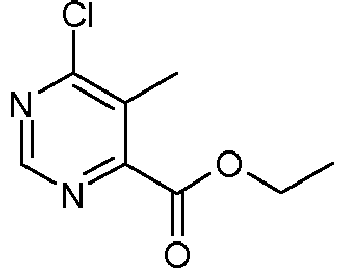
- Potassium carbonate (43.34 g, 0.31 mol) was suspended in 350 ml of dry ethanol. A solution of Intermediate 2a (20 g, 0.10 mol) in 10 ml of dichloromethane was added slowly at 0°C. The reaction mixture was allowed to reach room temperature and stirred for 1h. Potassium carbonate was filtered off and the solvent was removed under vacuum. The crude product was purified by flash chromathography (BIOTAGE SP1; silica gel cartridge: 65i; eluent: dichloromethane/ethyl acetate=95/5%). 5.3 g (26 mmol) of the desired compound were obtained.
-

-

- Intermediate 1c (38 g, 0.19 mol) was added to a mixture of phosphorpentachloride (40.3 g, 0.19 mol) in 240 ml of phosphoroxychloride. The reaction mixture was refluxed until a clear solution was observed. The reaction mixture was concentrated in vacuum. The crude product obtained was purified by destillation in vacuum. 12 g (94.5 mmol) of the desired compound were obtained and used in the next steps without further purification.
-

- 5-Bromo-6-hydroxy-pyrimidine-4-carboxylic acid ethyl ester (63 g, 0.26 mol) was suspended in 140 ml of phosphoroxychloride. Phosphorpentachloride (54 g, 0.26 mmol) was added and the reaction mixture was refluxed 72h. The reaction mixture was concentrated in vacuum and the crude product was suspended and stirred in warmed-up hexane (50°C); a precipitate was formed and filtered off. The filtrate was concentrated under vacuum to obtain 64 g (243 mmol) of the desired product which was used in the next steps without further purification.
-

- 3-Phenylcyclohexanone (500 mg, 2.87 mmol) and 1-isocyanomethanesulfonyl-4-methylbenzene (750 mg, 3.84 mmol) in 10 ml of 1,2-dimethoxyethane were stirred at 0°C. A solution of potassium tert-butoxide (650 mg, 5.79 mmol) in 10 ml of 1,2-dimethoxyethane and 20 ml of tert-butanol was added dropwise and the reaction mixture was allowed to reach room temperature and stirred overnight. The reaction mixture was diluted with diethyl ether and washed with ice water. The organic phase was separated, washed with brine, dried over sodium sulfate and concentrated under vacuum. 439 mg (2.3 mmol) of the desired product were obtained.
-

GC/MS (method 3A) Rt = 11.52 min and 11.68 min (diastereoisomeric mixture)
[M]+= 185 -
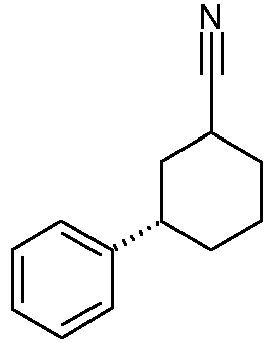
GC/MS (method 3A) Rt = 11.50 min and 11.65 min (diastereoisomeric mixture)
[M]+=185 - The following intermediates were synthesized in analogy to Intermediates 4a.
Starting ketone Intermediate STRUCTURE 3-(4-Chloro-phenyl)-cyclohexanone 4d 
3-(4-Fluoro-phenyl)-cyclohexanone 4e 
3-(4-Methoxy-phenyl)-cyclohexanone 4f 
3-(4-Methyl-phenyl)-cyclohexanone 4g 
3-(3-Fluoro-phenyl)-cyclohexanone 4h 
3-isopropyl-cyclohexanone 4i 
3-(5-Methyl-furan-2-yl)-cyclohexanone 4j 
3-Phenylcyclopentanone 4k 
3-(4-Chloro-phenyl)-cyclopentanone 4l 
3-(4-Fluoro-phenyl)-cyclopentanone 4m 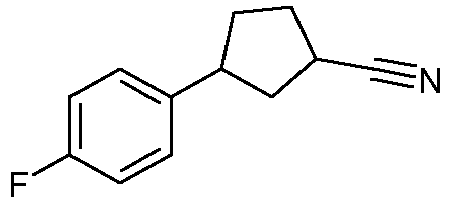
-

- Intermediate 4j (400 mg, 2.11 mmol) was purified by flash chromatography (Biotage SP1 cartridge 25g; eluent: cyclohexane/ethyl acetate = 99/1%). 60 mg (0.22 mmol) of diastereoisomerically pure cis-intermediate was eluted as second fraction (relative stereochemistry assigned by NMR).
GC/MS (method 3A) Rt = 9.62 min
[M]+=189 -

- Intermediate 4n (120 mg, 4.22 mmol) was separated by chiral semipreparative HPLC. 20 mg of enantiomerically pure intermediate 4o were obtained (absolute stereochemistry unknown). Chiral HPLC (method 2I (isocratic)) Rt = 6.94 min
-

- Further elution of the column gave 20 mg of enantiomerically pure intermediate 4p (absolute stereochemistry unknown).
Chiral HPLC (method 21 (isocratic)) Rt = 7.27 -

- Intermediate 4b (2.1 g, 11.28 mmol) was stirred under reflux in 20 ml of 96% sulfuric acid and 20 ml of water overnight. The reaction mixture was cooled, treated with a 30% aqueous solution of sodium hydroxide and ice and washed with dichloromethane. The basic water phase was treated with 37% aqueous solution of hydrochloric acid. The acidic aqueous solution was extracted with dichloromethane. The organic phase was washed with brine, dried over sodium sulfate and concentrated under vacuum. 1.85 g (9.1 mmol) of the desired compound were obtained as a diastereoisomeric mixture and used in the next steps without further purification.
-

- Intermediate 5 (1.85 g, 9.06 mmol, mixture of 2 diastereomers) and triethylamine (2.02 ml, 14 mmol) were stirred at 0°C in 10 ml of tetrahydrofuran. A solution of ethylchloroformate (1.29 ml, 13.58 mmol) in 5 ml of tetrahydrofuran was added dropwise and the reaction mixture was stirred at 0°C for 1h. Then, 10 ml of a 30% aqueous solution of ammonium hydroxide were added dropwise and the reaction mixture was allowed to reach room temperature and stirred overnight. The reaction mixture was concentrated under vacuum, dissolved with dichloromethane, washed with a 1M aqueous solution of sodium hydroxide, washed with brine, dried over sodium sulfate and concentrated under vacuum. The crude product was purified by flash chromatography (Isolute silica cartridge 70g; eluent: dichloromethane/methanol=99/1%). 145 mg (0.71 mmol) of diastereoisomerically pure (1R,3R)-3-phenyl-cyclohexanecarboxylic acid amide (relative stereochemistry assigned by NMR) were obtained.
GC/MS (method 3A) Rt = 12.88 min
[M]+=203 -

- Further elution of the column gave 230 mg (1.13 mmol) of the diastereoisomerically pure (1S,3R)-3-phenyl-cyclohexanecarboxylic acid amide (relative stereochemistry assigned by NMR).
GC/MS (method 3A) Rt = 13.03 min
[M]+=203 -

- Intermediate 4c (300 mg, 1.61 mmol) was stirred under reflux in 2 ml of 96% sulfuric acid and 2 ml of water for 3h. The reaction mixture was cooled, treated with a 30% aqueous solution of sodium hydroxide and ice and washed with ethyl acetate. The organic phase was washed with brine, dried over sodium sulfate and concentrated under vacuum. The crude product was purified by flash chromatography (Isolute silica cartridge 20g; eluent: dichloromethane/methanol=99/1%). 37 mg (0.18 mmol) of the diastereomerically pure (1S,3S)-3-phenyl-cyclohexanecarboxylic acid amide were obtained (relative stereochemistry assigned by NMR).
GC/MS (method 3A) Rt = 12.88 min
[M]+=203 -

- Further elution of the column gave 40 mg of the diastereomerically pure (1R,3S)-3-phenyl-cyclohexanecarboxylic acid amide (0.2 mmol) (relative stereochemistry assigned by NMR).
GC/MS (method 3A) Rt = 13.03 min
[M]+=203 -

- 5-Bromo-3-furan carboxylic acid (1,0 g, 5.23 mmol), phenylboronic acid (0.77 g, 6.28 mmol), tetrakis(triphenylphosphine)palladium(0) (1.21 g, 1.04 mmol) and a 2M solution of sodium carbonate (6.28 ml, 12.57 mmol) were dissolved in 12 ml of 1,2-dimethoxy-ethane and the reaction mixture was stirred under nitrogen atmosphere at 80°C for 18h. The reaction mixture was cooled to room temperature, diluted with dichloromethane and treated with a 1M aqueous solution of hydrochloric acid until pH 1. The organic phase was separated, dried over sodium sulphate and concentrated under vacuum. The carboxylic acid was obtained and used without further purification for the synthesis of intermediate 6e in analogy to intermediate 6a.
-

- Intermediate 6f was synthesized in analogy to intermediate 6a, starting from trans 3-(4-chlorophenyl)-cyclobutan carboxylic acid (prepared as described in literature for the preparation of trans 3-phenyl-cyclobutan-carboxylic acid: Wiberg, K.B.; Dailey, W.P.; Walker, F.H.; Waddell, S.T.; Crocker, L.S.; Newton, M. Journal of the American Chemical Society; 1985, 107, 7247 - 7257).
-

- Intermediate 6g was synthesized in analogy to Intermediate 6a, starting from cis 3-(4-chlorophenyl)-cyclobutan carboxylic acid (prepared as described in literature for the preparation of cis 3-phenyl-cyclobutan-carboxylic acid: Wiberg, K.B.; Dailey, W.P.; Walker, F.H.; Waddell, S.T.; Crocker, L.S.; Newton, M. Journal of the American Chemical Society; 1985, 107, 7247 - 7257).
-

- Intermediate 4a (390 mg, 2.10 mmol) and Raney-Nickel (10 mg) in 10 ml of 1M solution of ammonia in ethanol was stirred under a hydrogen atmosphere (4 bar) overnight. The reaction mixture was filtered on a celite pad and concentrated under vacuum. The crude product was purified by flash chromatography (dichloromethane/methanol/NH3(30% aqueous solution)= 95/5/0.1%) to obtain 217 mg (1.15 mmol) of the desired product.
-

- 2.85 ml of a 1M solution of lithium aluminium hydride (2.85 mmol) in tetrahydrofuran was dissolved in 10 ml of tetrahydrofuran and stirred at 0°C under nitrogen atmosphere. Intermediate 6a (145 mg, 0.71 mmol) in 10 ml of tetrahydrofuran was added dropwise. The reaction mixture was stirred at 0°C for 2h and then quenched with water and ice. The reaction mixture was extracted with dichlorometane. The organic phase was washed with a 1M aqueous solution of sodium hydroxide, brine, dried over sodium sulfate and concentrated under vacuum. 100 mg (0.55 mmol) of the desired product were obtained.
GC/MS (method 3A) Rt = 11.53 min
[M]+=189 -

GC/MS (method 3A) Rt = 11.47 min
[M]+=189 -

GC/MS (method 3A) Rt = 11.53 min
[M]+=189 -

GC/MS (method 3A) Rt = 13.03 min
[M]+=189 - The following intermediates were synthesised in atalogy to Intermediate 7a.
Starting Intermediate Intermediate STRUCTURE 4d 7f 
4e 7g 
4f 7h 
4g 7i 
4h 7j 
4i 7k 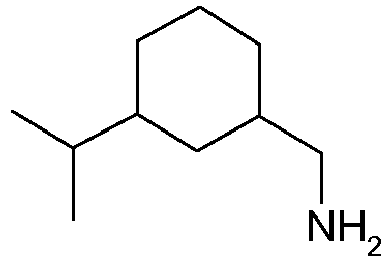
4k 7l 
4l 7m 
4m 7n 
4n 7o 
4o 7p 
4p 7q 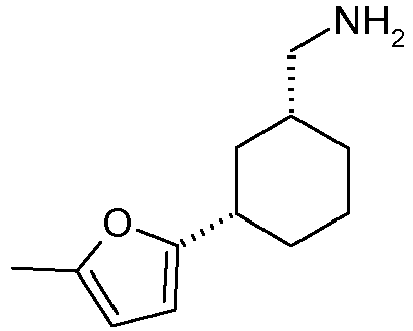
-

-

-

-

-

-
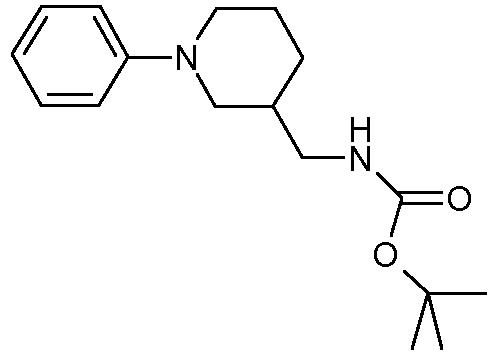
- Tris(dibenzylideneacetone)dipalladium (1.71g, 1.87 mmol) and 2,2'-bis(diphenylphosphino)-1,1 '-binaphtyl (2.32g, 3.72 mmol) were stirred in 30 ml of toluene for 10 min under argon athmosphere.
- Piperidine-3-yl-methyl-carbamic acid tert-butyl ester (2 g, 9.33 mmol), bromobenzene (1.27 ml, 0.01 mol) and sodium tert-butoxide (1.43 g, 14.93 mmol) were added and the reaction mixture was stirred under reflux overnight. The reaction mixture was concentrated under vacuum, the crude product was dissolved in dichlorometane and the organic phase was filtered on a celite pad. The organic phase was washed with an aqueous saturated sodium carbonate solution, with brine, dried over sodium sulfate, concentrated under vacuum. The crude product obtained was dissolved in methanol and loaded onto a SCX cartridge (25 g). After washing with methanol the product was eluted with a 2M solution of ammonia in methanol. 1.17 g (4.03 mmol) of the desired product were obtained and used in next steps without any other purification.
-

- To a solution of Intermediate 8a (1.1 g, 3.79 mmol) in 10 ml of 1,4-dioxane, a 4M solution of hydrochloric acid in 1,4-dioxane (15 ml, 60 mmol) was added dropwise; the reaction mixture was stirred at room temperature overnight before being concentrated under vacuum. The crude product was purified by flash chromatography (Isolute silica gel cartride: 50g; eluent: dichloromethane/ methanol=95/5%). 250 mg (1.31 mmol) of the desired compound were obtained.
- The following intermediates were synthesized in analogy to Intermediates 8a and 9a.
Starting amine Starting bromide Intermediate STRUCTURE Intermediate STRUCTURE (S)-1-Pyrrolidin-3-ylmethyl-carbamic acid tert-butyl ester bromo-benzene 8b 
9b 
(R)-1-Pyrrolidin-3-ylmethyl-carbamic acid tert-butyl ester bromo-benzene 8c 
9c 
Piperidine-3-yl-methyl-carbamic acid tert-butyl ester 1-bromo-4-trifluoro methyl-benzene 8d 
9d 
-

- Piperidine-3-yl-methyl-carbamic acid tert-butyl ester (100 mg, 0.47 mmol), 2-chloro-4-fluoro-benzonitrile (72.5 mg, 0.47 mmol) and N,N-diisopropylethylamine (0.160 ml, 1.23 mmol) were dissolved in 10 ml of DMF and the reaction mixture was stirred at 125 °C overnight. The reaction mixture was concentrated under vacuum and the crude product was purified by flash chromatography (Isolute silica gel cartride: 5g; eluent: ethyl acetate). 125 mg (0.36 mmol) of the desired compound were obtained.
-

- To a solution of Intermediate 10 (125 mg, 0.36 mmol) in 5 ml of 1,4-dioxane, a 4M solution of hydrochloric acid in 1,4-dioxane (0.12 ml, 480 mmol) was added dropwise; the reaction mixture was stirred at room temperature overnight before being concentrated under vacuum. 102 mg (0.36 mmol) of the desired compound were obtained.
-

- A solution of 4-methanesulfonylamino-piperidine-1-carboxylic acid tert-butyl ester (500 mg; 1.79 mmol) in 5 ml of acetonitrile was cooled to -5°C, iodoethane (308 mg, 1.79 mmol) and sodium hydride (96 mg, 3.59 mmol) were added; the reaction mixture was allowed to warm to room temperature and stirred for 72h.
- The reaction mixture was concentrated under vacuum; the residue was dissolved in ethyl acetate and washed with an aqueous saturated sodium bicarbonate solution and then with water.
- The organic phase was dried over sodium sulfate, filtered and concentrated under vacuum. The crude product was purified by flash chromatography (Isolute silica gel cartridge: 10 g, eluent: dichloromethane) to obtain 332 mg (1.1 mmol) of the desired compound.
-

- To a solution of intermediate 12 (330 mg, 1.1 mmol) in 20 ml of 1,4-dioxane, a 4M solution of hydrochloric acid in 1,4-dioxane (4.06 ml, 16 mmol) was added dropwise; the reaction mixture was stirred at room temperature overnight. The reaction mixture was concentrated under vacuum to obtain 262 mg (1.1 mmol) of the desired compound.
-

-

- Intermediate 14 (900 mg, 3.91 mmol) and N,N-diisopropylethylamine (0.86 ml, 5 mmol) were dissolved in 25 ml of dichloromethane. The reaction mixture was cooled to 0°C and methanesulfonylchloride (0.33 ml, 4.30 mmol) was added. The reaction mixture was stirred at 0°C for 20 min, then, water was added. The organic phase was separated, washed with an aqueous saturated sodium bicarbonate solution, dried over sodium sulfate and concentrated under vacuum. The crude product was purified by flash chromatography (Isolute silica cartridge: 10g, eluent: hexane/ethyl acetate=50/50%). 170 mg (0.55 mol) of the desired compound were obtained.
-

- Intermediate 15a (350 mg, 1.13 mmol) and potassium carbonate (157 mg, 1.13 mmol) were dissolved and stirred in 15 ml of acetonitrile. A solution of iodomethane (0.071 ml, 1.13 mmol) in 5 ml of acetonitrile was added dropwise and the reaction mixture was warmed to 60°C overnight. The reaction mixture was concentrated under vacuum and the crude product was dissolved in ethyl acetate. The organic phase was washed with an aqueous saturated sodium bicarbonate solution, separated, dried over sodium sulfate and concentrated under vacuum. 300 mg (0.93 mmol) of the desired compound were obtained and used in the next steps without further purification.
-

- Intermediate 15a (170 mg, 0.55 mmol) in 2 ml of 1,4-dioxane was stirred at 10°C. A 4M solution of hydrochloric acid in 1,4-dioxane (8 ml, 32 mmol) was added dropwise and the reaction mixture was stirred at room temperature for 5h. The reaction mixture was concentrated under vacuum to obtain 115 mg (0.55 mmol) of the desired compound.
-

-

-

- Intermediate 17 (660 mg, 2.14 mmol) in 10 ml of 1,4-dioxane was stirred at 10°C. Trifluoroacetic acid (2 ml, 26 mmol) was added dropwise and the reaction mixture was stirred at room temperature 18h. The reaction mixture was concentrated under vacuum to obtain 600 mg (1.86 mmol) of the desired compound, used in the next step without further purification.
-

- N-methyl-N-piperidin-4-yl-methanesulfonamide hydrochloride (11 g, 47.91 mmol) was suspended in 200 ml of 1,2-dichloroethane, N,N-diisopropylethylamine (17,12 ml, 96.17 mmol) and 1-(tert-butoxycarbonyl)-piperidin-4-one (9.58 g, 48.08 mmol) were added and the reaction mixture was stirred at room temperature for 30 min. Sodium triacetoxyborohydride (12.23 g, 57.50 mmol) was added and the reaction mixture was stirred at room temperature for 72h. The reaction mixture was diluted with dichloromethane and washed with an aqueous saturated sodium bicarbonate solution.
- The organic phase was dried over sodium sulfate and concentrated under vacuum. The crude product was purified by flash chromatography (Biotage SP1; silica gel cartridge: 65i; eluent: ethyl acetate/methanol=50/50%) to obtain 7.2 g (19.2 mmol) of the desired compound.
-

- Intermediate 19a (7.2 g, 19.2 mmol) was suspended in 20 ml of 1,4-dioxane, a 4M solution of hydrochloric acid (48 ml, 192 mmol) in 1,4-dioxane was added dropwise. The reaction mixture was stirred at room temperature overnight. The reaction mixture was concentrated under vacuum. 6.3 g (18 mmol) of the desired compound were obtained.
- The following intermediates were synthesized in analogy to Intermediates 19a and 20a.


-

- 4-Methylamino-piperidine-1-carboxylic acid tert-butyl ester (500 mg, 1.87 mmol) was suspended in 10 ml of 1,2-dichloroethane. Tetrahydro-pyran-4-one (0.17 ml, 1.87 mmol) was added and the reaction mixture was stirred at room temperature for 30 min. Sodium triacetoxyborohydride (593 mg, 2.80 mol) was added and the reaction mixture was stirred for 18 h. The reaction mixture was diluted with dichloromethane and washed with an aqueous saturated sodium bicarbonate solution.
- The organic phase was dried over sodium sulfate and concentrated under vacuum. The crude product was purified by flash chromatography (Isolute silica gel cartridge 10g; eluent: dichloromethane/methanol=94/6%). 240 mg (0.80 mmol) of the desired compound were obtained.
-

- Intermediate 191a (240 mg, 0.80 mmol) was suspended in 10 ml of 1,4-dioxane, a 4M solution of hydrochloric acid (2.0 ml, 8.0 mmol) in 1,4-dioxane was added dropwise. The reaction mixture was stirred at room temperature for 18 h. The reaction mixture was concentrated under vacuum. 200 mg (0.74 mmol) of the desired compound were obtained.
- The following intermediates were synthesized in analogy to Intermediates 191a and 201a


-

- N-methyl-N-piperidin-4-yl-methanesulfonamide hydrochloride (1.13 g, 4.95 mmol) was suspended in 10 ml of 1,2-dichloroethane, N,N-diisopropylethylamine (2.6 ml, 14.9 mmol) and N-carbethoxy-3-methoxy-piperidin-4-one (1 g, 4.95 mmol) were added and the reaction mixture was stirred at room temperature for 30 min. Sodium triacetoxyborohydride (3.16 g, 14.85 mol) was added and the reaction mixture was stirred at room temperature for 72h. The reaction mixture was diluted with dichloromethane and washed with an aqueous saturated sodium bicarbonate solution.
- The organic phase was dried over sodium sulfate and concentrated under vacuum. 1.5 g (3.97 mmol) of the desired compound were obtained and used without further purification.
-

- Intermediate 19m (1.5g, 3.97 mmol) and potassion hydroxide (4.46 g, 7.94 mmol) were suspended in 25 ml of ethanol and the reaction mixture was stirred under reflux overnight.
- The reaction mixture was concentrated under vacuum and the crude product was loaded on a SCX cartridge (25g) and eluted with a 2M solution of ammonia in methanol. 1.2 g (3.97 mmol) of the desired compound were obtained.
-

- Piperidin-4-yl-carbamic acid tert-butyl ester (6 g, 30 mmol) and 1-(benzyloxycarbonyl)-4-oxopiperidine (9.6 g, 48 mmol) were dissolved in 50 ml of dichloromethane and the reaction mixture was stirred at room temperature for 30 min; sodium triacetoxyborohydride (12.23 g, 57.5 mmol) was added and the reaction mixture was stirred at room temperature overnight. The reaction mixture was diluted with dichloromethane and washed with an aqueous saturated sodium bicarbonate solution. The organic phase was dried over sodium sulfate and concentrated under vacuum. The crude product was treated with acetone/isopropyl ether and the precipitate obtained was filtered off. 8.4g (20 mmol) of the desired product were obtained.
-

- To a solution of intermediate 21 (8.4 g, 20 mmol) in 150 ml of 1,4-dioxane previously cooled to 0°C, 12.6 ml (50 mmol) of a 4M solution of hydrochloric acid in 1,4-dioxane were added dropwise; the reaction mixture was allowed to warm to room temperature and was stirred at that temperature overnight. The solid precipitated from the reaction mixture was filtered off and dried at 50°C under vacuum to obtain 6g (15 mmol) of the desired compound.
-

- Intermediate 22 (6.0 g, 15 mmol) was suspended in 55 ml of dichloromethane; triethylamine (6.43 ml, 46 mmol) was added and the reaction mixture was cooled to 0°C and stirred at that temperature for 30 min. Methanesulfonyl chloride (1.43 ml, 18 mmol) in 5 ml of dichloromethane was added dropwise. The reaction mixture was stirred at 0°C for 1h; then water was added and the reaction mixture was extracted with dichloromethane. The organic phase was washed with an aqueous saturated sodium bicarbonate solution, with brine, dried over sodium sulfate and concentrated under vacuum. The crude product was treated with diisopropyl ether, the precipitate was filtered off and dried. 5 g (13 mmol) of the desired product were obtained.
-

- Intermediate 23 (5 g, 13 mmol) was dissolved in 50 ml of methanol; acetic acid (1.5 ml, 25.3 mmol) and Pd/C 10% (500 mg) were added in sequence and the reaction mixture was stirred under a hydrogen atmoshere (3 bar) at room temperature for 5 days. The reaction mixture was filtered on a celite pad and the organic phase was loaded on a SCX cartridge (10g). After washing with methanol, the desired compound was eluted with a 2M solution of ammonia in methanol. 3.7 g (4.6 mmol) of the title compound were obtained.
-

- Intermediate 24 (1.1 g, 4.21 mmol) was suspended in 20 ml of dry dichloromethane, N,N-diisopropylethylamine (1.47 ml, 8.42 mmol) and DMF (137 µl, 1.67 mmol) were added and the reaction mixture was stirred under nitrogen atmosphere and cooled to 0°C. Intermediate 2a (812 mg, 4.21 mmol) in 5 ml of dichloromethane was added dropwise and the reaction mixture was allowed to warm up to room temperature and stirred for 1.5h; the reaction mixture was diluted with dichloromethane and washed with an aqueous saturated sodium bicarbonate solution. The organic phase was separated, dried over sodium sulfate and concentrated under vacuum. The crude product was purified by flash chromatography (isolute silica gel cartridge: 10g; eluent: dichloromethane/methanol=95/5%). 1.0 g (2.41 mmol) of the title compound were obtained.
- The following intermediates were synthesized in analogy to Intermediate 25a.
Core Intermediate Piperidine Intermediate Chloro-pyrimidine Intermediate STRUCTURE 2a 20a 25b 
2a 20b 25c 
2a 20f 25d 
2a 20h 25e 
2a [1,4']-Bi-piperidinyl-4-ol 25f 
2a 4-Methoxy-[1,4']bi-piperidinyl 25g 
2a 4-Piperidin-4-yl-morpho-line 25h 
2a [1,4']Bi-piperidinyl 25i 
2a [1,4']-Bi-piperidinyl-3-ol 25j 
2b 24 25k 
2b 20a 25l 
2b [1,4']-Bi-piperidinyl-4-ol 25m 
2c 20a 25n 
2a 20le 25o 
-

- Intermediate 3a (10 g, 49.35 mmol) and N,N-diisopropylethylamine (17 ml, 99 mmol) were dissolved in 20 ml of dry DMF; 2-(3,4-dichloro-phenyl)-ethylamine (9.57 g, 49.35 mmol) in 10 ml of dry DMF was added and the reaction mixture was stirred at 90°C for 2h. The reaction mixture was cooled to room temperature, water was added and the reaction mixture was extracted with dichloromethane; the organic phase was concentrated under vacuum, the crude product was suspended and stirred in diethyl ether and the precipitate was filtered off and dried. 10.2 g (28.8 mmol) of the desired compound were obtained.
-

- Intermediate 26a (10.0 g, 28.25 mmol) was dissolved in 70 ml of ethanol and a solution of LiOH (3.52 g, 83.88 mmol) in 70 ml of water was added. The reaction mixture was stirred at 70°C for 1 hour, concentrated under vacuum and the remaining aqueous solution was acidified by 20 ml of 4M solution of hydrochloric acid in 1,4-dioxane; the precipitate formed was filtered off and dried. 8.6 g (26.37 mmol) of the desired product were obtained.
- The following intermediates were synthesized in analogy to Intermediates 26a and 27a.


-

- Intermediate 3d (2 g, 7.53 mmol) and N,N-diisopropylethylamine (1.97 ml, 11.3 mmol) were dissolved in 15 ml of dry DMF; 4-tertbutyl-benzylamine (1.6 ml, 9.04 mmol) was added and the reaction mixture was stirred at 60°C for 18h. The reaction mixture was cooled to room temperature, water was added and the reaction mixture was extracted with dichloromethane; the organic phase was concentrated under vacuum and the crude product was purified by flash chromatography (BIOTAGE SP1; silica gel cartridge: 65i; eluent: hexane/ethyl acetate = 70/30%). 1.5 g (3.82 mmol) of the desired compound were obtained.
-

- Intermediate 26hb (75 mg, 179 µmol), tributyl(vinyl)tin (200 µl, 685 µmol) and bis(triphenylphosphine)palladium chloride (13 mg, 18µmol) were added to 3 ml 1,2-dichloroethane. The reaction mixture was heated in the microwave for 4 h at 120°C. Then, the solvent was removed in vacuum and the residue was purified by reversed phase HPLC to give the desired product (56 mg, 117 mmol).
-

-

- Intermediate 26i (500 mg, 1.27 mmol) and CuCN (114 mg, 1.27 mmol) were dissolved in 5 ml of DMA and the reaction mixture was stirred at 100°C overnight. The reaction mixture was cooled, diluted with dichloromethane and the organic phase was washed with water, dried over sodium sulfate and concentrated under vacuum. 30 mg (0.1 mmol) of the crude product were obtained and used in the next step without purification.
-

-

-

- Intermediate 27a (4 g, 12.14 mmol), TBTU (3.9 g, 12.14 mmol) and N,N-diisopropylethylamine (5.34 ml, 30.35 mmol) were dissolved in 25 ml of DMF. The reaction mixture was stirred under nitrogen atmosphere at room temperature for 30 min; then piperidin-4-one hydrochloride (1.66 g, 12.14 mmol) was added and the reaction mixture was stirred at room temperature overnight. The reaction mixture was concentrated under vacuum and the crude product was dissolved in dichloromethane. The organic phase was washed with a saturated aqueous solution of sodium bicarbonate, with a 1M aqueous solution of sodium hydroxide, with brine, then dried over sodium sulfate, filtered and concentrated under vacuum. The crude product was purified by flash chromatography (BIOTAGE SP1; silica gel cartridge: 65i; eluent: dichloromethane/methanol= 95/5%). 2.2 g (5.4 mmol) of the desired compound were obtained.
- The following intermediates were synthesized in analogy to intermediate 28a.
Acid Intermediate Amine Intermediate STRUCTURE 27b Piperidin-4-one 28b 
27c Piperidin-4-one 28c 
27d Piperidin-4-one 28d 
27g Piperidin-4-one 28e 
27c Azepan-4-one 28f 
27e Piperidin-4-one 28g 
-

- Intermediate 28a (500 mg, 1.22 mmol), piperazine-1-carboxylic acid tert-butyl ester (228 mg, 1.23 mmol) and 2-picoline borane complex (131.3 mg, 1.22 mmol) in 15 ml of methanol were stirred at room temperature for 72h; the reaction mixture was concentrated under vacuum and the crude product was dissolved in dichloromethane. The organic phase was washed with water, dried over sodium sulfate, filtered and concentrated under vacuum. The crude product was purified by flash chromatography (Isolute silica gel cartridge: 20g; eluent: dichloromethane/methanol=98/2%). 280 mg (0.48 mmol) of the desired compound were obtained.
-

- Intermediate 29 (280 mg, 0.48 mmol) was dissolved in 6 ml of 1,4-dioxane; 4 ml (16 mmol) of a 4M solution of hydrochloric acid in 1,4-dioxane were added dropwise and the reaction mixture was stirred at room temperature overnight. The solvent was concentrated under vacuum. 240 mg (0.46 mmol) of the desired compound were obtained.
-

- Intermediate 27c (500 mg, 1.67 mmol), TBTU (643 mg, 2 mmol) and N,N-diisopropylethylamine (0.29 ml, 1.67 mmol) were dissolved in 5 ml of DMF. The reaction mixture was stirred under nitrogen atmosphere at room temperature for 10 min; then [1,4]diazepan-1-carboxylic acid tert-butyl ester (334 mg, 1.67 mmol) was added and the reaction mixture was stirred at room temperature overnight. The reaction mixture was diluted with dichloromethane and washed with an aqueous saturated solution of sodium bicarbonate. The organic phase was sepatated, dried over sodium sulfate and concentrated under vacuum. The crude product was suspended in diisopropyl ether and stirred, the solid obtained was filtered and dried. 700 mg (1.45 mmol) of the desired compound were obtained.
-

- Intermediate 31 (600 mg; 1.24 mmol) was suspended in 5 ml of diethyl ether, 5 ml of a 1M solution of hydrochloric acid in diethyl ether was added dropwise and the reaction mixture was stirred at room temperature overnight. The solvent was concentrated under vacuum and the crude product was loaded on a SCX cartridge (10g) and eluted with a 2M solution of ammonia in methanol. 470 mg (1.23 mmol) of the title compound were obtained.
-

- Intermediate 3a (1.5 g, 7.47 mmol) and tetrakis(triphenylphosphine)palladium (143.9 mg, 0.12 mmol) were suspended in 40 ml of toluene under nitrogen atmosphere; 4-tert-butyl-benzylzinc bromide (29.9 ml, 15 mmol) was added dropwise and then the reaction mixture was stirred at 20 °C for 8h. 5 ml of methanol, 40 ml of water and 100 ml of dichloromethane were added. The organic phase was separated, dried over sodium sulfate and concentrated under vacuum. The crude product obtained was purified by flash chromatography (Biotage column 40M+; eluent: dichloromethane/ethyl acetate=95/5%). 230 mg (0.74 mmol) of the desired compound were obtained.
-

- To a solution of 4-tert-butylphenylacetylene (5 ml, 28 mmol) in 20 ml of dry tetrahydrofuran under nitrogen atmosphere, a solution of catecholborane (3.41 ml, 31 mmol) in 20 ml of dry tetrahydrofuran was added dropwise. The reaction mixture was refluxed for 2h and then concentrated under vacuum; the crude product obtained was dissolved in ethyl acetate and the organic phase was washed with a 2 M aqueous solution of hydrochloric acid. The organic phase was separated, washed with brine, dried over sodium sulfate and concentrated under vacuum. The crude product obtained was purified by flash chromatography (Biotage column 40M+; eluent: dichloromethane/ethyl acetate=95/5%). 230 mg (0.82 mmol) of the desired compound were obtained.
-

- Intermediate 3a (600 mg, 3 mmol), intermediate 34 and tetrakis(triphenylphosphine)palladium (347 mg, 0.3 mmol) were dissolved in 3.6 ml of a 2 M aqueous solution of sodium carbonate and 40 ml of 1,2 dimethoxyethane. The reaction mixture was stirred at 80°C overnight. Water was added and the reaction mixture was extracted with dichloromethane. The organic phase was separated, dried over sodium sulfate and concentrated under vacuum. The crude product obtained was purified by flash chromatography (Biotage column 40M+; eluent: dichloromethane/ethyl acetate=95/5%). 550 mg (1.60 mmol) of the desired compound were obtained.
-

- Intermediate 35 (250 mg, 0.77 mmol) was dissolved in 5 ml of ethanol and 5 ml of tetrahydrofuran. Pd/C (35 mg) was added and the reaction mixture was stirred under hydrogen atmosphere (1 atm) at room temperature overnight. The reaction mixture was filtered on a celite pad and concentrated under vacuum. 170 mg (0.52 mmol) of the desired compound were obtained.
-

- Palladium acetate (170 mg, 0.75 mmol) and 2,2'-bis(diphenylphosphino)-1,1'-binaphtyl (936 mg, 1.5 mmol) were dissolved in 25 ml of 1,4-dioxane and stirred at 40°C for 30 minutes. 2-chloro-3-methylpyridine-4-carboxylic acid ethyl ester (500 mg, 2.5 mmol), 3,4-dichlorobenzylamine (680 mg, 5 mmol) and cesium carbonate (715.5 mg, 3.76 mmol) were added and the reaction mixture was refluxed for 48h. The solvent was concentrated under vacuum and the crude product was loaded on a SCX cartridge (10g) and eluted with a 2M solution of ammonia in methanol. The solvent was concentrated under vacuum and the crude product obtained was purified by flash chromatography (Biotage column 25M+; eluent: ethyl acetate). 250 mg (0.73 mmol) of the desired compound were obtained.
-

- 3-(Bromomethyl)biphenyl (150 mg, 0.58 mmol), sodium carbonate (188 mg, 1.75 mmol) and 3-amino-2-methyl-benzoic acid ethyl ester (0.1 ml, 0.58 mmol) were mixed in 2 ml of DMF and stirred at 100°C for 2 hours. The solvent was then concentrated under vacuum and the crude product was purified by reverse phase preparative HPLC. 131 mg (0.37 mmol) of the desired compound were obtained.
-

- Intermediate 35 (300 mg, 0.92 mmol) was dissolved in 4 ml of ethanol and 4 ml of water. Lithium hydroxide (194 mg, 4.7 mmol) was added and the reaction mixture was stirred at 70°C for 2h, concentrated under vacuum and the remaining aqueous solution was acidified by 10 ml of a 4M solution of hydrochloric acid in 1,4-dioxane and extracted with dichloromethane; the organic phase was separated, washed with brine, dried over sodium sulfate and concentrated under vacuum. 250 mg (0.84 mmol) of the desired product were obtained.
- The following intermediates were synthesized in analogy to intermediate 39a
Ester Intermediate Acid Intermediate STRUCTURE 33 39b 
36 39c 
37 39d 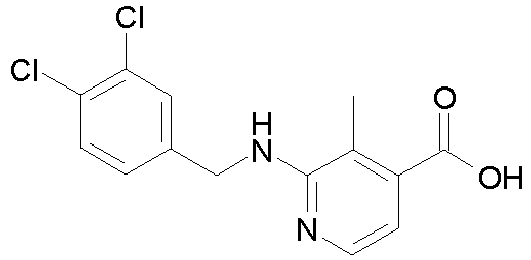
38 39e 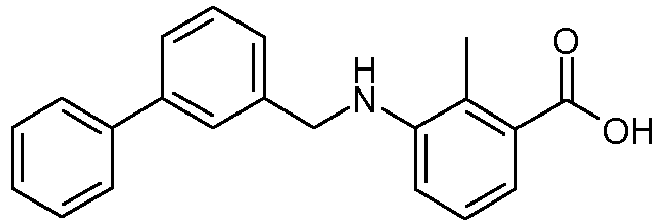
-

- Intermediate 27c (660 mg, 2.20 mmol), TBTU (849 mg, 2.65 mmol) and N,N-diisopropylethylamine (0.57 ml, 3.31 mmol) were dissolved in 25 ml DMF. The reaction mixture was stirred under nitrogen atmosphere at room temperature for 10 min; then piperidin 4-yl carbamic acid tert-butyl ester (441 mg, 2.20 mmol) was added and the reaction mixture was stirred at room temperature for 18 h. The reaction mixture was diluted with dichloromethane and washed with an aqueous saturated solution of sodium bicarbonate. The organic phase was separated, dried over sodium sulfate and concentrated under vacuum. The crude product was purified by flash chromatography (Biotage SNAP column 50g; eluent: dichloromethane/methanol=90/10%). 990 mg (2.05 mmol) of the desired compound were obtained.
-

- Intermediate 40a (990 mg, 2.05 mmol) was suspended in 50 ml of 1,4-dioxane, a 4M solution of hydrochloric acid (8.5 ml, 34 mmol) in 1,4-dioxane was added dropwise. The reaction mixture was stirred at room temperature for 18 h. The reaction mixture was concentrated under vacuum. 780 mg (18 mmol) of the desired compound were obtained.
- The following intermediates were synthesized in analogy to Intermediates 40a and 41a.

-

- 4,4-Difluorocyclohexanone (500 mg, 3.73 mmol) and potassium hydroxide (502 mg, 8.95 mmol) were disoolved in 10 ml of methanol. The reaction mixture was cooled to 0°C and a solution of iodine (1.04 g, 4.10 mmol) in 20 ml of methanol was added dropwise within 1 h. The reaction mixture was stirred at room temperature for 18 h, and then concentrated under vacuum. The crude product was stirred in 10 ml of dichlorometane and the precipitate was filtered off. The filtrate was concentrated under vacuum and 480 mg of the desired product (2.45 mmol) were obtained as an oil.
-

- Sodium hydride (196 mg, 4.89 mmol) was suspended in 10 ml of tetrahydrofurane. The reaction mixture was cooled to 0°C and a solution of Intermediate 42 (480 mg, 4.45 mmol) in 5 ml of tetrahydrofurane was added dropwise. The reaction mixture was stirred at 0°C for 1 h, then iodomethane (0.305 ml, 4.89 mmol) was added. The reaction mixture was stirred at room temperature for 4 h. 0.1 ml of a 37% aqueous solution of hydrochloric acid and 0.1 ml of water were added, then additional 0.3 ml of a 37% acqueous solution of hydrochloric acid were added. The reaction mixture was stirred at room temperature for 18 h. The reaction mixture was concentrated under vacuum and 400 mg (2.44 mmol) of the desired product were obtained as an oil.
-

- Iodomethane (3.48 ml, 55.88 mmol) was dissolved in 250 ml of tetrahydrofurane, the reaction mixture was stirred at 0°C under nitrogen atmosphere and sodium hydride (60% on mineral oil, 2.23 mg, 5.88 mmol) was added. After 15 minutes, trans 4-azido-tetrahydropyran-3-ol (4.0 g, 27.94 mmol) was added and the reaction mixture was allowed to reach room temperature and stirred for 18h. 50 ml of water were added, the organic phase was separated, dried over sodium sulphate and concentrated under vacuum. The crude oil obtained was purified by flash chromatography (Biotage SNAP column 100g; eluent: dichloromethane/ethyl acetate=80/20%). 200 mg (1.27 mmol) of the desired regioisomer were obtained as trans racemate (relative configuration assigned by NMR).
-

- Intermediate 44 (200 mg, 1.27 mmol) was dissolved in 250 ml of methanol, Pd/C (50 mg) was added and the reaction mixture was stirred under hydrogen atmosphere (4 bar) for 18h. The reaction mixture was filtered on a celite pad and the organic phase was concentrated under vacuum. 110 mg (0.84 mmol) of the desired product were obtained as trans racemate.
-
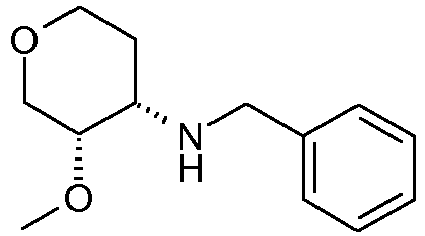
- 3-Methoxy-tetrahydro-pyran-4-one (500 mg, 3.84 mmol), benzylamine (0.42 ml, 3.84 mmol) and Raney-Nickel (100 mg) were suspended in 20 ml of dry ethanol and the reaction mixture was stirred under hydrogen atmosphere (4.5 bar) for 3 days. The reaction mixture was filtered on a celite pad and the organic phase was concentrated under vacuum.The crude product obtained was dissolved in 10 ml of methanol, loaded on a SCX cartridge (10g) and eluted with a 2M solution of ammonia in methanol. The solvent was concentrated under vacuum and the crude product obtained was purified by flash chromatography (Isolute cartridge 10g; eluent: dichloromethane/methanol=96/4%). 163 mg (0.73 mmol) of the desired product were obtained as cis racemate (relative configuration assigned by NMR).
-

- 3-Methoxy-tetrahydro-pyran-4-one (1 g, 7.68 mmol), (R)-(+)-1-phenylethylamine (0.99 ml, 7.68 mmol) and Raney-Nickel (200 mg) in 10 ml dry ethanol were stirred under a hydrogen atmosphere (5 bar) for 15 days. The reaction mixture was diluted with 20 ml of methanol and 20 ml of tetrahydrofurane, stirred for 15 minutes, filtered on a celite pad and concentrated under vacuum. The crude product was loaded on a SCX cartridge (50g). The cartridge was washed with methanol and the desired product was eluted with a 7 M solution of ammonia in methanol. The basic organic phase was concentrated under vacuum and the crude product obtained was purified by flash chromatography (dichloromethane/methanol= 98/2%) to obtain 710 mg (3.02 mmol) of the desired product as single stereoisomer (diastereoisomeric purity confirmed and relative cis stereochemistry assigned by NMR).
-

-

- Intermediate 46a (163 mg, 0.73 mmol) was dissolved in 10 ml of methanol, Pd/C (50 mg) was added and the reaction mixture was stirred under hydrogen atmosphere (4.5 bar) for 18h. The reaction mixture was filtered on a celite pad and the organic phase was concentrated under vacuum. 80 mg (0.61 mmol) of the desired product were obtained as cis racemate.
-

- Intermediate 46b (1.18 g, 5.01 mmol), Pd/C 10% (200 mg) and acetic acid (0.3 ml, 5.01 mmol) in 20 ml of methanol were stirred under a hydrogen atmosphere (5 bar) for 18h. The reaction mixture was diluted with 20 ml of methanol, stirred for 15 minutes, filtered on a celite pad and concentrated under vacuum. The crude product was loaded on a SCX cartridge (50g). The cartridge was washed with methanol and the desired product was eluted with a 7 M solution of ammonia in methanol. The basic organic phase was concentrated under vacuum and 513 mg (3.91 mmol) of the desired product were obtained as single stereoisomer.
-

-

- Intermediate 47b was stirred in diethyl ether and a 2M solution of hydrochloric acid in diethyl ether was added drop-wise until a white solid was formed. The reaction mixture was concentrated under vacuum, the crude product was suspended in methanol and the reaction mixture was concentrated under vacuum to give the desired hydrochloride.
-

-

- 3-(trifluoromethyl)benzaldheyde (6.46 ml, 48.24 mmol) was dissolved in 80 ml of dry tetrahydrofurane, the reaction mixture was cooled to -78°C and a 0.5M solution of 3-butenylmagnesiumbromide in tetrahydrofurane (106.13 ml, 53.06 mmol) was added dropwise over 30 minutes. The reaction mixture was stirred at -78°C for 30 minutes. Then, the reaction mixture was allowed to reach room temperature and stirred 18h. Then, 100 ml of a saturated aqueous solution of ammonium chloride and 200 ml of ethyl acetate were added. the organic layer was separated, dried over sodium sulfate and concentrated under vacuum. 7.75 g (33.69 mmol) of the desired product were obtained.
-

- Intermediate 49a was dissolved in 70 ml of dry dichloromethane, the reaction mixture was stirred under nitrogen atmosphere at 0°C and N-bromosuccinimmide was added. The reaction mixture was allowed to reach room temperature and stirred for 48h. The reaction mixture was concentrated under vacuum. The crude product was purified by flash chromatography (Isolera cartridge eluent: hexane/ethyl acetate= 90/10%) to obtain the desired product as diastereoisomeric mixture.
-

- Intermediate 50a was purified by flash chromatography (Isolera cartridge; eluent: hexane/ethyl acetate= 98/2%). 2.3 g (7.44 mmol) of the trans diastereoisomer were obtained as racemic mixture (relative stereochemistry assigned by NMR).
-

- Further elution of the column gave 1.05 g (3.39 mmol) of the cis diastereoisomer as racemic mixture (relative stereochemistry assigned by NMR).
- The following intermediates were synthesized in analogy to Intermediates 49a, 50a, 51a and 52a


-

- Intermediate 50a (1.7 g, 5.49 mmol) was dissolved in 5 ml of DMSO and the reaction mixture was stirred under nitrogen atmosphere at room temperature. Phtalimide potassium salt (2.54 g, 13.75 mmol) and sodium iodide (240 mg, 1.60 mmol) were added and the reaction mixture was stirred at 70°C for 18h. The reaction mixture was cooled to room temperature and diluted with 40 ml of a saturated aqueous sodium bicarbonate solution and with 100 ml of ethyl acetate. The organic layer was separated, dried on sodium sulfate and concentrated under vacuum. The crude product was purified by flash chromatography (Isolera cartridge; eluent: hexane/ethyl acetate= 85/15%) to yield 1.2 g (3.2 mmol) of the phtalimido intermediate. The phtalimido intermediate (1.2g, 3.2 mmol) was dissolved in 15 ml of methanol. Hydrazine hydrate (1.24 ml, 25.60 mmol) was added and the reaction mixture was stirred at room temperature for 48h. The reaction mixture was concentrated under vacuum. The crude product was dissolved in 10 ml of dichlorometane, the organic layer was washed with water, separated, dried on sodium sulfate and concentrate under vacuum. 474 mg (1.93 mmol) of the desired product were obtained.
-

-

- The following intermediates were synthesized in analogy to Intermediates 53a, 54a and 55a.


-

- 2,3-Dihydro-pyrano[3,2-b]pyridine-4one (250 mg, 1.7 mmol) and Raney-Nickel (25 mg) were added to a solution of ammonia in ethanol (10 ml) and the reaction mixture was stirred under hydrogen atmosphere (3 bar) for 18h at room temperature. Then, the catalyst was removed by filtration on a celite pad and the mixture was concentrated under vacuum. The residue was purified by reversed phase HPLC to give the desired product (129 mg, 600 µmol).
- E and G within the scope of this invention denotes C or N, prefered nitrogen.
- The examples of this invention are synthesized according to the following general synthetic procedures:
-
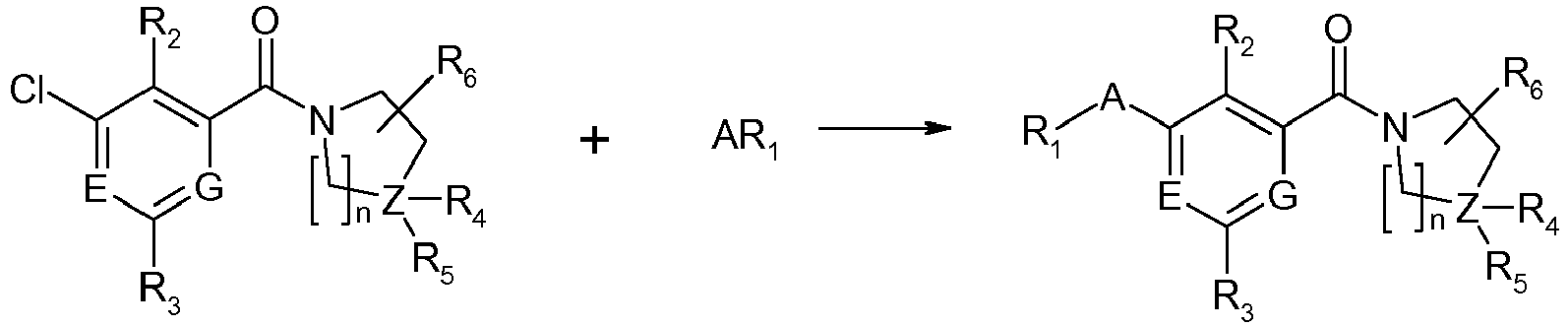
-

-

-

-

-

- Intermediate 25b (70 mg, 0.16 mmol), 4-tert-butyl-benzylamine (32 mg, 0.19 mmol) and N,N-diisopropyl-ethyl amine (0.042 ml, 0.24 mmol) in 2 ml of dry 1,4-dioxane were stirred at 70°C overnight. The reaction mixture was concentrated under vacuum and the crude product was dissolved in dichloromethane. The organic phase was washed with a saturated aqueous sodium bicarbonate solution, dried over sodium sulfate and concentrated under vacuum. The crude product was purified by flash chromatography (Silica Isolute cartridge 5g; eluent: ethyl acetate/methanol=90/10%). 16 mg (0.027 mmol) of the desired product were obtained. HPLC (Method 2F): Rt. (min) = 7.59
[M+H]+= 557 - The following examples were synthesized in analogy to the preparation of Example 1.


-

- Intermediate 2a (200 mg, 1.047 mmol) was dissolved in 30ml of dichlorometane. [1,4']Bipiperidinyl-4-ol (192 mg, 1.047 mmol) was added and the reaction mixture was stirred at room temperature for 2h. The reaction mixture was concentrated under vacuum and the crude product was dissolved in 1 ml of DMSO. Phenethylamine (0.6 ml, 4.73 mmol) and N,N-diisopropyl-ethyl amine (0.013 ml, 0.075 mmol) were added and the reaction mixture was stirred at 80°C overnight. The reaction mixture was concentrated under vacuum. The crude product was purified by reverse phase preparative HPLC. 331 mg (0.616 mmol) of the desired product were obtained.
HPLC (Method C): Rt. (min) = 1.34
[M+H]+= 424 - The following examples were synthesized in analogy to the preparation of Example 99.


-

- Intermediate 25i (17 mg, 0.05 mmol), 3-fluoro-4-methyl-benzylamine (10 mg, 0.075 mmol) and diisopropyl-ethyl amine (0.013 ml, 0.075 mmol) in 1 ml of dry DMSO were stirred at 80°C overnight. The reaction mixture was concentrated under vacuum. The crude product was purified by reverse phase preparative HPLC. 20 mg (0.047 mmol) of the desired product were obtained.
HPLC (Method C): Rt. (min) = 1.45
[M+H]+= 426 - The following examples were synthesized in analogy to the preparation of Example 104.


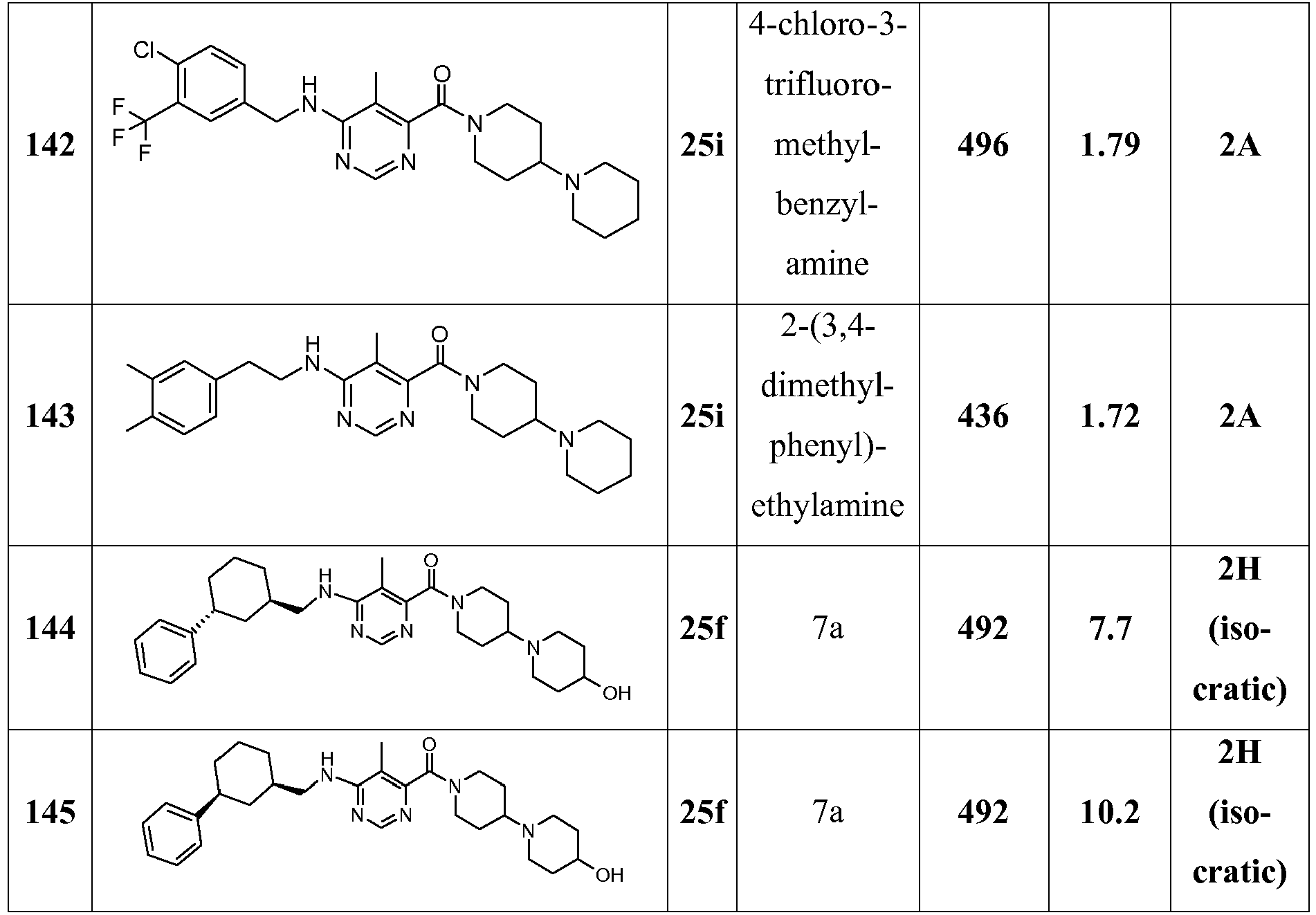
-

- Intermediate 25b (80 mg, 0.18 mmol), Intermediate 7c (40 mg, 0.21 mmol) and N,N-diisopropyl-ethyl amine (0.046 ml, 0.26 mmol) in 0.2 ml of dry 1,4-dioxane were mixed in a microwave vial and reacted in the following conditions: Power 100, Ramp 5 min, Hold 2h, Temperature 150°C, Pression 150°C, Stirring. The reaction mixture was concentrated under vacuum and diluted with dichloromethane. The organic phase was washed with an aqueous saturated sodium bicarbonate solution, dried over sodium sulfate and concentrated under vacuum. The crude product was purified by reverse phase preparative HPLC. 36 mg (0.06 mmol) of the desired product were obtained.
HPLC (Method IE Hydro): Rt. (min) = 9.52
[M+H]+= 583 - The following examples were synthesized in analogy to the preparation of Example 146
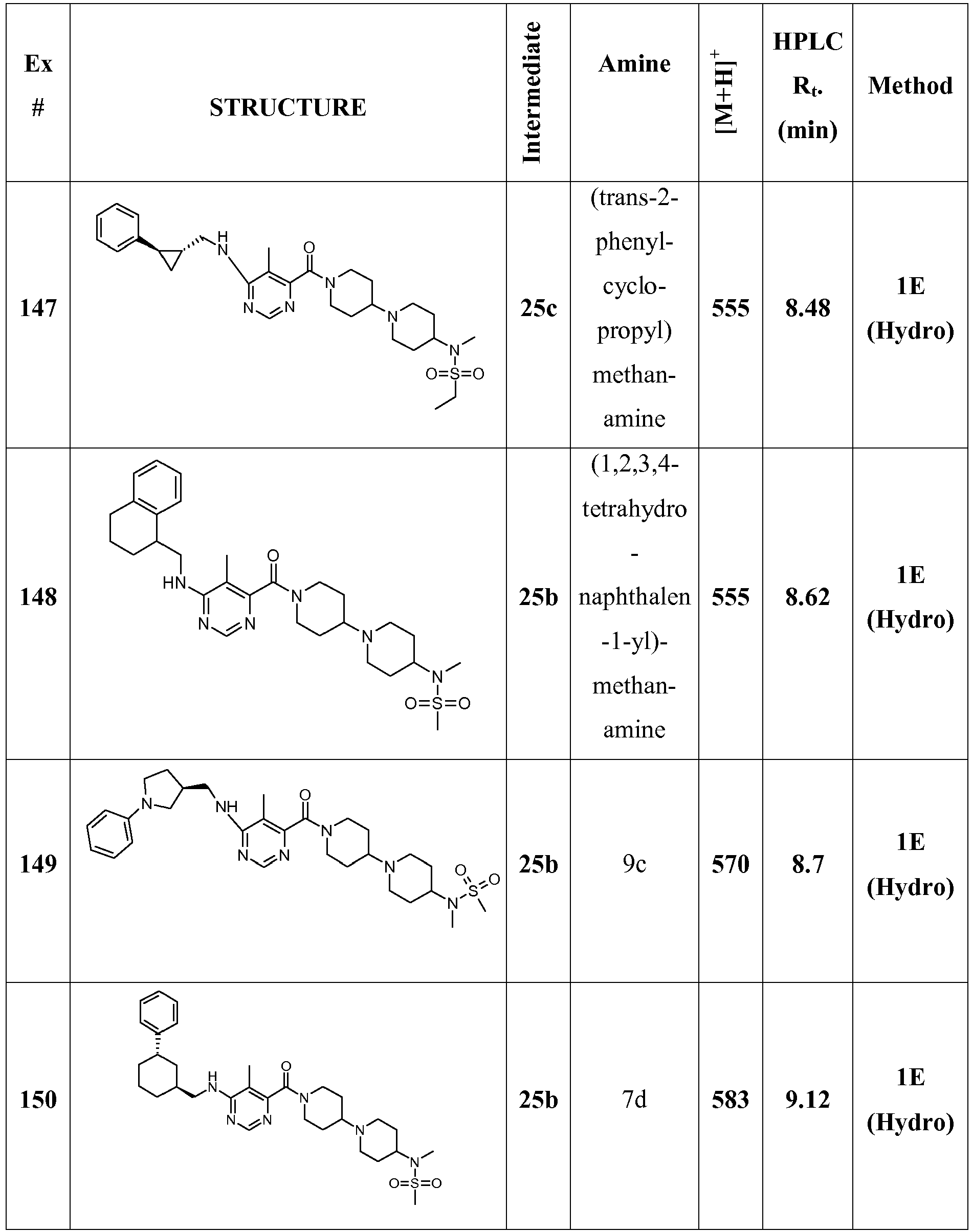


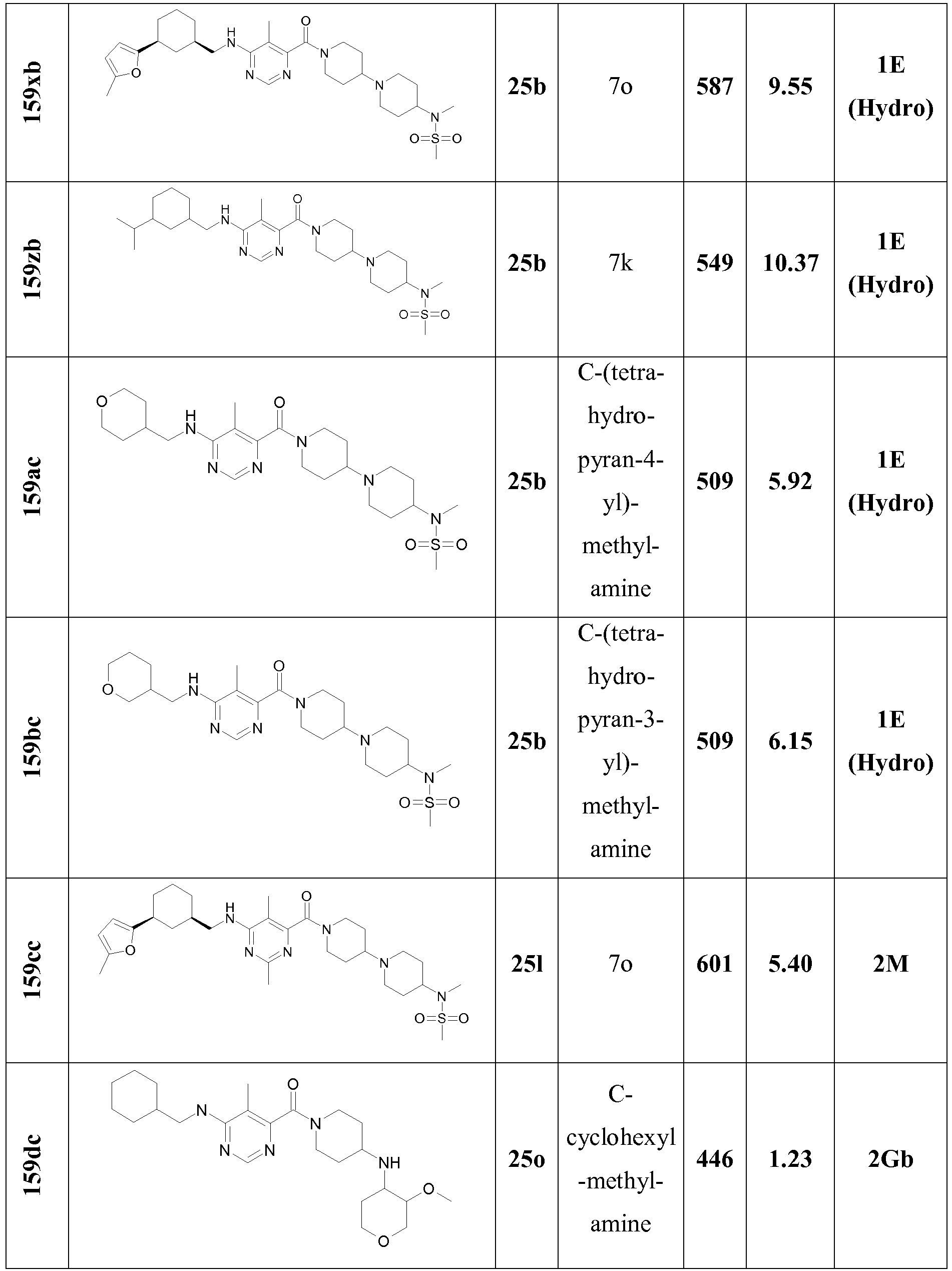

-

- Intermediate 28b (80 mg, 0.20 mmol), Intermediate 13 (74 mg, 0.30 mmol) and N,N-diisopropyl-ethylamine (0.087 ml, 0.51 mmol) in 2 ml of dichloromethane were stirred at room temperature for 10 min. Sodium triacetoxyborohydride (129 mg, 0.61 mmol) was added and the reaction mixture was stirred at room temperature overnight. The organic phase was washed with an aqueous saturated sodium bicarbonate solution, dried over sodium sulfate and concentrated under vacuum. The crude product was purified by reverse phase preparative HPLC. 39 mg (0.06 mmol) of the desired product were obtained.
HPLC (Method 2F): Rt. (min) = 7.25
[M+H]+= 583 - The following examples were synthesized in analogy to the preparation of Example 160.


-

- Example 228b (22 mg, 0.032 mmol), formaldehyde (0.003 ml, 0.096 mmol), N,N-diisopropyl-ethylamine (0.008 ml, 0.048 mmol) and trifluoroacetic acid (0.005 ml) in 1.5 ml of methanol were stirred at room temperature for 5 min. Sodium cyanoborohydride (10 mg, 0.160 mmol) was added and the reaction mixture was stirred at room temperature overnight. The organic phase was concentrated under vacuum. The crude product was purified by flash chromatography (Isolute silica gel cartridge 5g, eluent: ethyl acetate/methanol=7:3%). 8.4 mg (0.016 mmol) of the desired product were obtained.
- The following examples were synthesized in analogy to the preparation of Example 228h.

-

- Intermediate 28a (100 mg, 0.25 mmol), (S)-3-hydroxypiperidine (67 mg, 0.49 mmol) and trimethylorthoformate (1.07 ml, 9.82 mmol) in 5 ml of methanol were stirred at 60°C for 1h. 2-picoline borane complex (26 mg, 0.25 mmol) was added and the reaction mixture was stirred at 60°C overnight. The reaction mixture was concentrated under vacuum. The crude product was purified by reverse phase preparative HPLC. 64 mg (0.13 mmol) of the desired product were obtained.
HPLC (Method IE): Rt. (min) = 7.18
[M+H]+= 492 - The following examples were synthesized in analogy to the preparation of Example 229.


-

- Intermediate 28d (20 mg, 0.05 mmol), 2-methyl-morpholine (0.012 ml, 0.10 mmol), sodium triacetoxyborohydride (43 mg, 0.20 mmol), acetic acid (0.05 ml) and trimethylorthoformate (0.05 ml) in 0.9 ml of DMA were stirred at room temperature for 3h. The reaction mixture was concentrated under vacuum. The crude product was purified by reverse phase preparative HPLC. 3 mg (0.006 mmol) of the desired product were obtained.
HPLC (Method A): Rt. (min) = 1.74
[M+H]+= 486 - The following examples were synthesized in analogy to the preparation of Example 234.

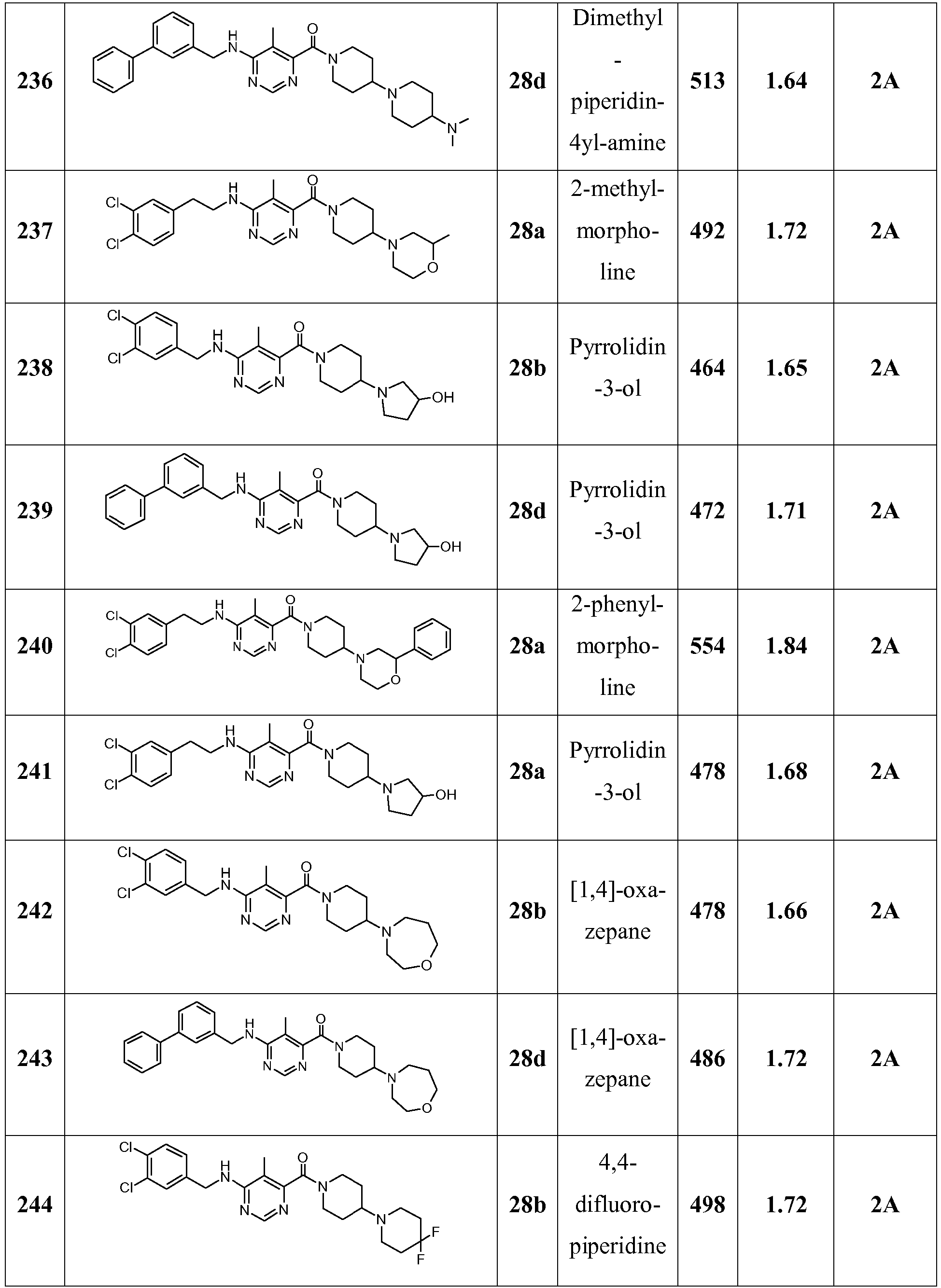

-

- Intermediate 27e (105 mg, 0.33 mmol), TBTU (215 mg, 0.67 mmol) and N,N-diisopropylethylamine (0.12 ml, 0.67 mmol) in 2 ml DMF were stirred at room temperature for 5 min. Intermediate 20f (100 mg, 0.33 mmol) was added and the reaction mixture was stirred at room temperature overnight. The reaction mixture was concentrated under vacuum and the crude product was dissolved in dichloromethane. The organic phase was washed with an aqueous saturated sodium bicarbonate solution, dried over sodium sulfate and concentrated under vacuum. The crude product was purified by flash chromatography (Si Isolute cartridge (5g); eluent: ethyl acetate/methanol=90/10%). 30 mg (0.057 mmol) of the desired product were obtained.
HPLC (Method IE Hydro): Rt. (min) = 9.2
[M+H]+= 521 - The following examples were synthesized in analogy to the preparation of Example 248.


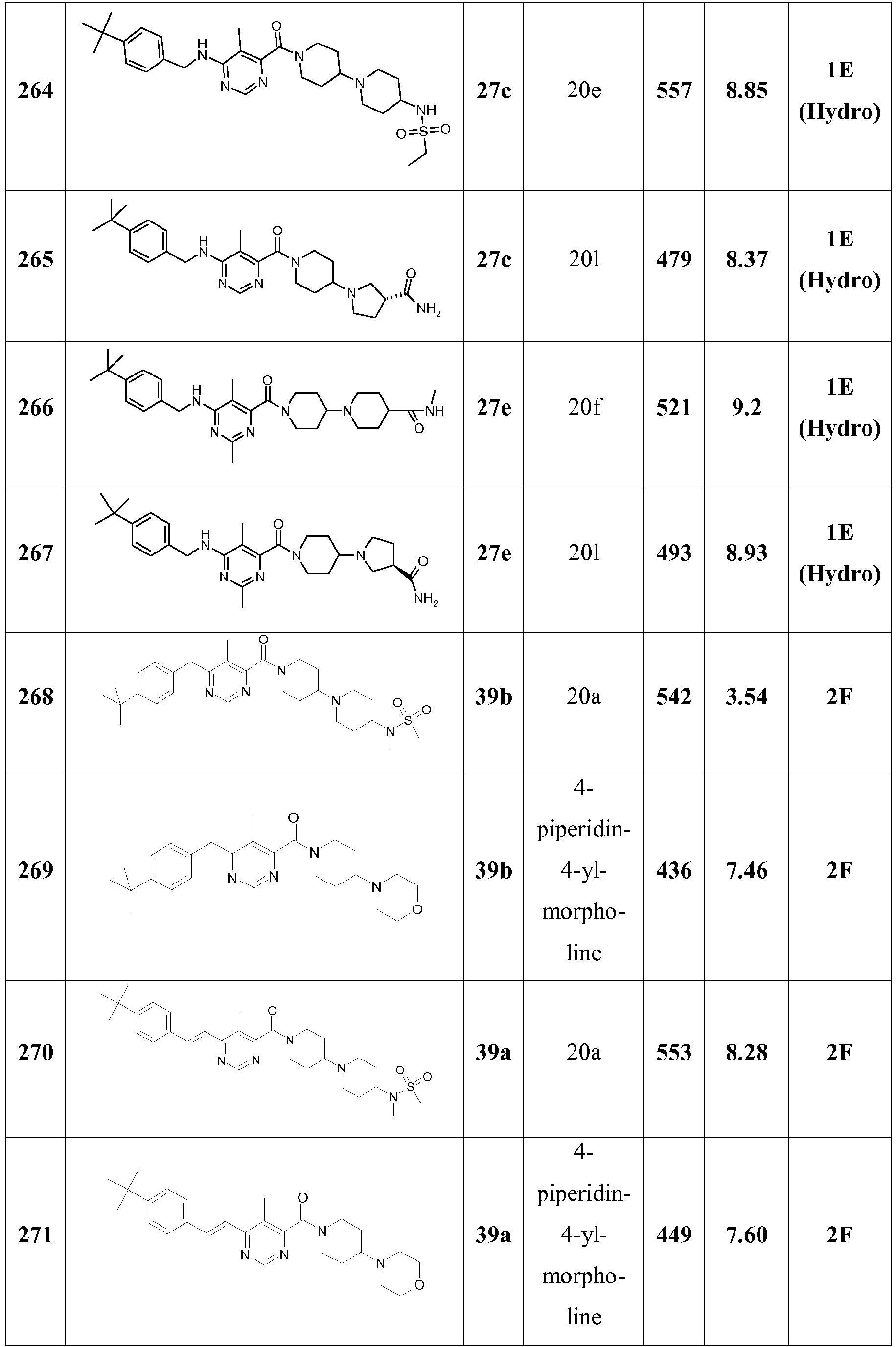


-

- Intermediate 27g (50 mg, 0.14 mmol), HATU (55 mg, 0.14 mmol) and N,N-diisopropylethylamine (0.05 ml, 0.28 mmol) in 2 ml DMF were stirred at room temperature for 5 min. 4-piperidin-4-yl-morpholine (24 mg, 0.14 mmol) was added and the reaction mixture was stirred at room temperature 3h. The reaction mixture was concentrated under vacuum and the crude product was dissolved in dichloromethane. The organic phase was washed with an aqueous saturated sodium bicarbonate solution, dried over sodium sulfate and concentrated under vacuum. The crude product was purified by reverse phase preparative HPLC. 80 mg (0.13 mmol) of the desired product were obtained.
HPLC (Method C): Rt. (min) = 1.57
[M+H]+= 486 - The following examples were synthesized in analogy to the preparation of Example 276.


-

- Intermediate 30 (45 mg, 0.088 mmol) and N,N-diisopropylethylamine (0.05 ml, 0.27 mmol) were dissolved in 5 ml of dichloromethane. The reaction mixture was stirred at 0°C and isobutyrylchloride (0.01 ml, 0.09 mmol) was added. The reaction mixture was stirred at 0°C for 20 min, then it was washed with an aqueous saturated sodium bicarbonate solution, dried over sodium sulfate and concentrated under vacuum. The crude product was suspended and stirred in diisopropyl ether, the solid filtered off to obtaine 30 mg (0.05 mmol) of the desired compound.
HPLC (Method IE): Rt. (min) = 7.02
[M+H]+= 547 - The following examples were synthesized in analogy to the preparation of Example 284.

-

- Intermediate 32 (100 mg, 0.26 mmol) and cyclopentanone (0.02 ml, 0.26 mmol) in 2 ml of dichloromethane were stirred at room temperature for 10 min. Sodium triacetoxyborohydride (132 mg, 0.62 mmol) was added and the reaction mixture was stirred at room temperature overnight. The reaction mixture was washed with an aqueous saturated sodium bicarbonate solution, dried over sodium sulfate and concentrated under vacuum. The crude product was purified by reverse phase preparative HPLC. 31 mg (0.07 mmol) of the desired product were obtained.
HPLC (Method 2F): Rt. (min) = 7.52
[M+H]+= 450 - The following examples were synthesized in analogy to the preparation of Example 286.

-

- Intermediate 25b (200 mg, 0.46 mmol) 4-tert-butylphenylboronic acid (99 mg, 0.56 mmol), tetrakis(triphenylphosphine)palladium (53 mg, 0.05 mmol) and 0.56 ml of a 2M aqueous solution of sodium carbonate in 2 ml of 1,2-dimethoxyethane were stirred at 80°C overnight. After cooling to room temperature, water was added and the reaction mixture was extracted with dichloromethane. The organic phase was washed with an aqueous saturated sodium bicarbonate solution, dried over sodium sulfate and concentrated under vacuum. The crude product was purified by flash chromatography (Si Isolute cartridge (5g); eluent: ethyl acetate/methanol=95/5%). 41 mg (0.08 mmol) of the desired product were obtained.
HPLC (Method IE Hydro): Rt. (min) = 9.93
[M+H]+ =528 -

- Intermediate 25b (60 mg, 0.14 mmol) and 4-chlorophenol (0.014 ml, 0.14 mmol) were dissolved in 2 ml of DMF. Cesium carbonate (45 mg, 0.14 mmol) was added and the reaction mixture was stirred at room temperature overnight. The solvent was concentrated under vacuum, the crude product was dissolved in dichloromethane and the organic phase was washed with water, dried over sodium sulfate and concentrated under vacuum. The crude product was purified by flash chromatography (Si Isolute cartridge (5g); eluent: dichlorometane/ethyl acetate=90/1%). 50 mg (0.09 mmol) of the desired product were obtained.
HPLC (Method IE Hydro): Rt. (min) =8.9
[M+H]+ =522 - The following example was synthesized in analogy to the preparation of Example 290.

-

- Sodium hydride (19 mg, 0.46 mmol) and 4-chloro-3-methylbenzylalcohol (44mg, 0.28 mmol) were suspended in 5 ml of dry tetrahydrofuran. The reaction mixture was stirred at room temperature for 10 min, then Intermediate 25b (100 mg, 0.23 mmol) was added. The reaction mixture was stirred at 50°C overnight. The solvent was concentrated under vacuum, the crude product was dissolved in dichloromethane and the organic phase was washed with water, dried over sodium sulfate and concentrated under vacuum. The crude product was purified by flash chromatography (Si Isolute cartridge (5g); eluent: dichlorometane/methanol =95/5%). 40 mg (0.07 mmol) of the desired product were obtained.
HPLC (Method IE Hydro): Rt. (min) = 9.95
[M+H]+ =550 - The following examples were synthesized in analogy to the preparation of Example 292.


Claims (3)
- A process for the production of a compound of formula I
 R1 is selected from among





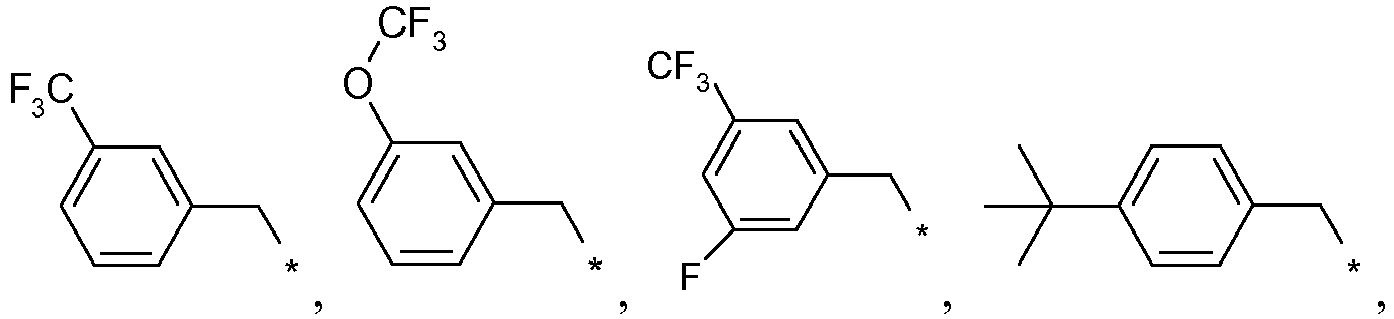


 R2 is selected from among -H, -halogen, -CN, -O-C1-C4-alkyl, -C1-C4-alkyl, -CH=CH2, -C≡CH, -CF3, -OCF3, -OCF2H, and -OCFH2;R3 is selected from among -H, -methyl, -ethyl, -propyl, -i-propyl, -cyclopropyl, -OCH3, and -CN;R4 and R5 are independently selected from among an electron pair, -H, and a group selected from among -C1-C6-alkyl, -NH2, -C3-C8-cycloalkyl, -C3-C8-heterocyclyl, -C5-C10-aryl, -C5-C10-heteroatyl, and -C(O)-N(R8,R8'), with R8 and R8' independently being selected from among -H, and -C1-C6-alkyl,and wherein R4 and R5 if different from an electron pair or -H are optionally independently substituted with one or more groups selected from among -halogen, -OH, -CF3, -CN, -C1-C6-alkyl, -O-C1-C6-alkyl, -O-C3-C8-cycloalkyl, -O-C3-C8-heterocyclyl, -O-C5-C10-aryl, -O-C5-C10-heteroaryl, -C0-C6-alkylene-CN, -C0-C4-alkylenc-O-C1-C4-alkyl, -C0-C4-alkylene-O-C3-C8-cycloalkyl, -C0-C4-alkylene-O-C3-C8-heterocyclyl, -C0-C4-alkylene-O-C5-C10-aryl, -C0-C4-alkylene-O-C5-C10-heteroaryl, -C0-C4-alkylene-Q-C0-C4-alkyl-N(R9,R9'), -C0-C4-alkylene-N(R10)-Q-C1-C4-alkyl, -C0-C4-alkylene-N(R10)-Q-C3-C8-cycloalkyl, -C0-C4-alkylene-N(R10)-Q-C3-C8-heterocyclyl,-C0-C4-alkylene-N(R10)-Q-C5-C10-aryl, -C0-C4-alkylenc-N(R10)-Q-C5-Cl0-heteroaryl, -C0-C4-alkylene-Q-N(R11,R11'), -C0-C4-alkylene-N(R12)-Q-N(R13,R13'), -C0-C4-alkylene-R14, -C0-C4-alkylene-Q-C1-C6-alkyl, -C0-C4-alkylene-Q-C3-C8-cycloalkyl, -C0-C4-alkylene-Q-C3-C8-heterocyclyl, -C0-C4-alkylene-Q-C5-C10-aryl, -C0-C4-alkylene-Q-C5-C10-heteroaryl, -C0-C4-alkylene-O-Q-N(R15,R15'), and -C0-C4-alkylene-N(R16)-Q-O-(R17),wherein Q is selected from among -C(O)-, and -SO2-,wherein R12, R16, are independently selected from among -H, -C1-C6-alkyl, and -C3-C6-cycloalkyl,wherein R9, F9', R10, R11, R11', R13, R13', R15, R15', are independently selected from among -H, -C1-C6-alkyl, and -C3-C6-cycloalkyl, or wherein R9 and R9', R11 and R11', R13 and R13', R15 and R15' together form a -C2-C6-alkylene group,wherein R14 and R17 are independently selected from among -H, -C1-C6-alkyl, -C5-C10-aryl, -C5-C10-heteroaryl, -C3-C8-cycloalkyl, and -C3-C8-heterocyclyl, wherein said -C3-C8-heterocyclyl optionally comprises nitrogen and/or -SO2- in the ring,and wherein R14 and R17 are optionally substituted with one or more groups selected from among -OH, -OCH3, -CF3, -OCF3, -CN, -halogen, -C1-C4-alkyl, =O, and -SO2-C1-C4-alkyl,or R4 and / or R5 are independently a group of the structure -L2-R18,wherein L2 is selected from among -NH- and -N(C1-C4-alkyl)-,wherein R18 is selected from among -C5-C10-aryl, -C5-C10-heteroaryl, -C3-C8-cycloalkyl, and -C3-C8-heterocyclyl,wherein R18 is optionally substituted by one or more groups selected from among halogen, -CF3, -OCF3, -CN, -OH, -O-C1-C4-alkyl, -C1-C6-alkyl, -NH-C(O)-C1-C6-alkyl, -N(C1-C4-alkyl)-C(O)-C1-C6-alkyl, -C(O)-C1-C6-alkyl, -S(O)2-C1-C6-alkyl, -NH-S(O)2-C1-C6-alkyl, -N(C1-C4-alkyl)-S(O)2-C1-C6-alkyl, and -C(O)-O-C1-C6-alkyl,and wherein R4, R5 and R18 are optionally further substituted by spiro-C3-C8-cycloalkyl or spiro-C3-C8-heterocyclyl such that together with R4, R5 and/or R18 a spirocycle is formed, wherein said spiro-C3-C8-heterocyclyl optionally comprises one or more groups selected from among nitrogen, -C(O)-, -SO2-, and -N(SO2-C1-C4-alkyl)- in the ring,or wherein R4, R5 and R18 are optionally further bi-valently substituted by one or more spirocyclic or annellated ring forming groups selected from among -C1-C6-alkylene, -C2-C6-alkenylene, and -C4-C6-alkynylene, in which one or two carbon centers may optionally be replaced by one or two hetero atoms selected from among N, O and S and which may optionally be substituted by one or more groups on one ring atom or on two neighbouring ring atoms selected from among -OH, -NH2, -C1-C3-alkyl, O-C1-C6-alkyl, -CN, -CF3, -OCF3, and halogen;R6 is selected from among -H, -C1-C4-alkyl, -OH, -O-C1-C4-alkyl, -halogen, -CN, -CF3, and -OCF3;A is -NH-;n is 1, 2 or 3;Z is C or N,characterized in that a compound of formula II
is coupled with a primary amine selected from the list consisting of
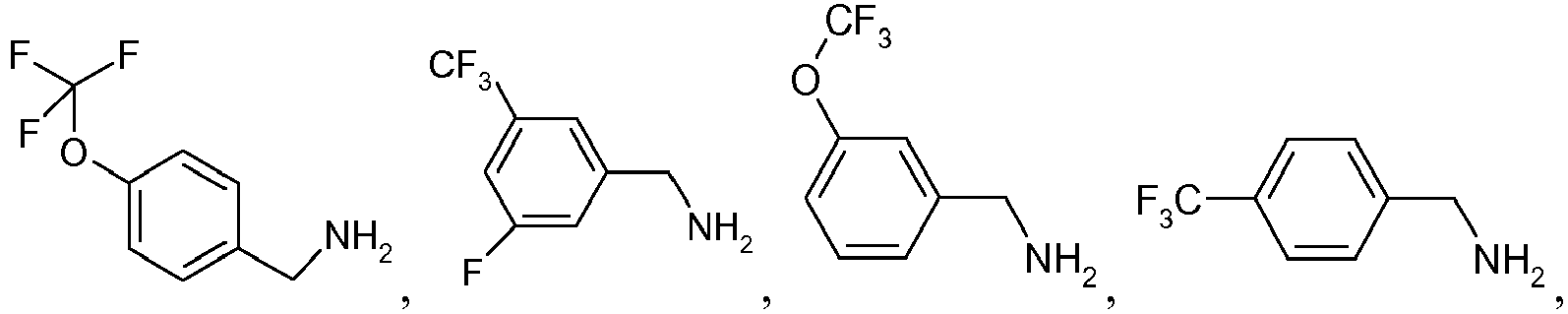





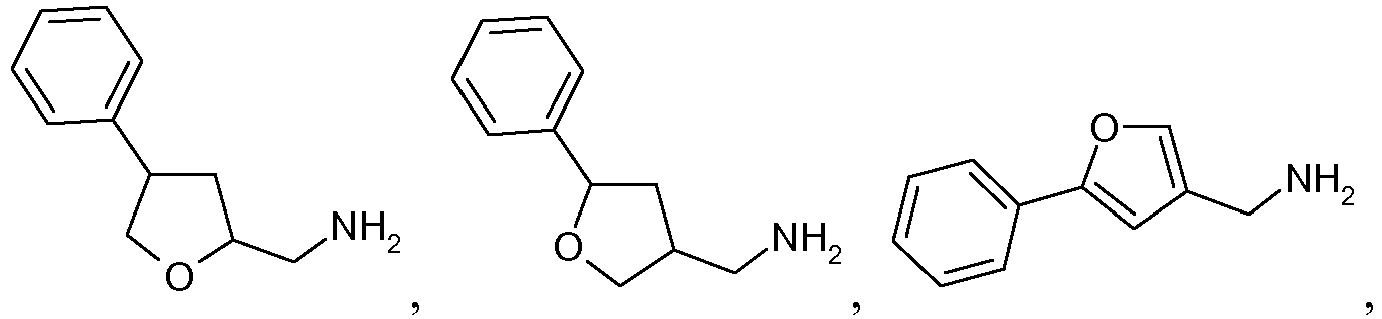


- The process for the production of the compound according to claim 1
in which
R2 is selected from among -H, -methyl, -ethyl, -propyl, -i-propyl, -cyclopropyl, -butyl, -i-butyl, -t-butyl, -F, -Cl, -Br, -I, -CN, -CH=CH2, -C≡CH, and -OCH3;
R3 is selected from among -H, -methyl, and -OCH3;
R4 is selected from among



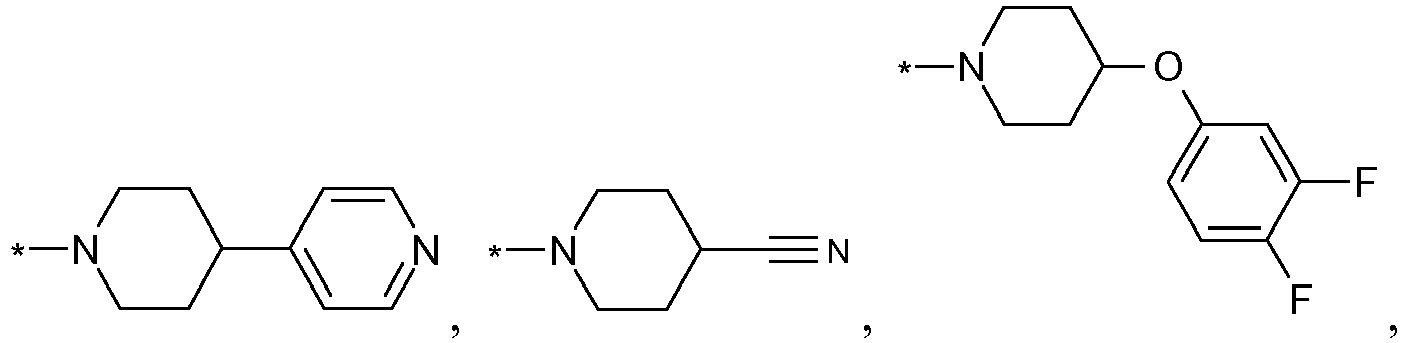





R6 is selected from among -H, -CH3, -C2H5, -O-CH3, -O-C2H5, -F, -CF3, and -OCF3;
Z is C. - An intermediate compound selected from the list consisting of


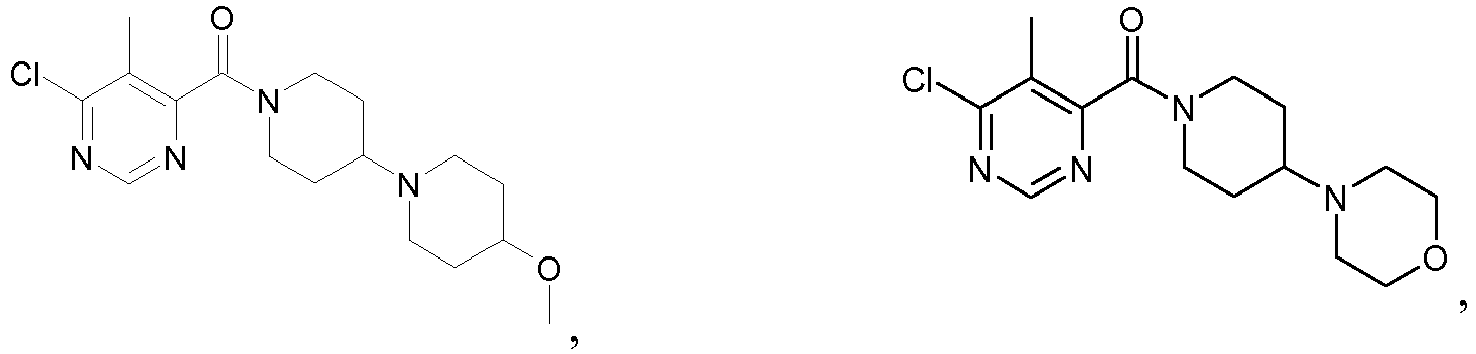


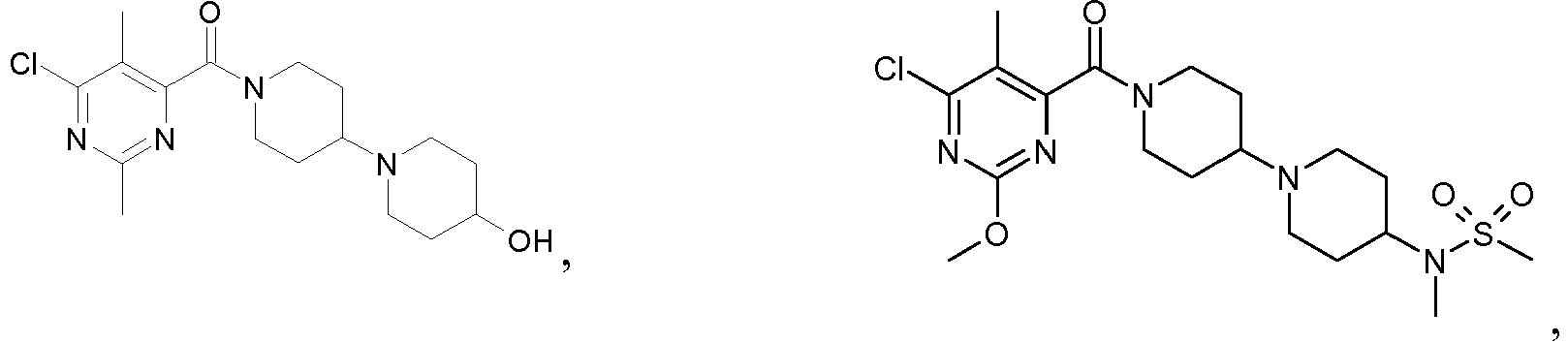

Applications Claiming Priority (4)
| Application Number | Priority Date | Filing Date | Title |
|---|---|---|---|
| EP08172336 | 2008-12-19 | ||
| EP09160416 | 2009-05-15 | ||
| PCT/EP2009/067378 WO2010070032A1 (en) | 2008-12-19 | 2009-12-17 | Cyclic pyrimidin-4-carboxamides as ccr2 receptor antagonists for treatment of inflammation, asthma and copd |
| EP09775212.5A EP2379525B1 (en) | 2008-12-19 | 2009-12-17 | Cyclic pyrimidin-4-carboxamides as ccr2 receptor antagonists for treatment of inflammation, asthma and copd |
Related Parent Applications (2)
| Application Number | Title | Priority Date | Filing Date |
|---|---|---|---|
| EP09775212.5A Division EP2379525B1 (en) | 2008-12-19 | 2009-12-17 | Cyclic pyrimidin-4-carboxamides as ccr2 receptor antagonists for treatment of inflammation, asthma and copd |
| EP09775212.5A Division-Into EP2379525B1 (en) | 2008-12-19 | 2009-12-17 | Cyclic pyrimidin-4-carboxamides as ccr2 receptor antagonists for treatment of inflammation, asthma and copd |
Publications (2)
| Publication Number | Publication Date |
|---|---|
| EP2816040A1 EP2816040A1 (en) | 2014-12-24 |
| EP2816040B1 true EP2816040B1 (en) | 2018-10-17 |
Family
ID=42049604
Family Applications (2)
| Application Number | Title | Priority Date | Filing Date |
|---|---|---|---|
| EP09775212.5A Active EP2379525B1 (en) | 2008-12-19 | 2009-12-17 | Cyclic pyrimidin-4-carboxamides as ccr2 receptor antagonists for treatment of inflammation, asthma and copd |
| EP14177922.3A Active EP2816040B1 (en) | 2008-12-19 | 2009-12-17 | Process for the production of CCR2 receptor antagonists and intermediates thereof |
Family Applications Before (1)
| Application Number | Title | Priority Date | Filing Date |
|---|---|---|---|
| EP09775212.5A Active EP2379525B1 (en) | 2008-12-19 | 2009-12-17 | Cyclic pyrimidin-4-carboxamides as ccr2 receptor antagonists for treatment of inflammation, asthma and copd |
Country Status (27)
| Country | Link |
|---|---|
| US (3) | US20120053164A1 (en) |
| EP (2) | EP2379525B1 (en) |
| JP (2) | JP2012512834A (en) |
| KR (1) | KR101754698B1 (en) |
| CN (2) | CN103724328B (en) |
| AR (1) | AR074814A1 (en) |
| AU (1) | AU2009327127C1 (en) |
| BR (1) | BRPI0923051B1 (en) |
| CA (1) | CA2747677C (en) |
| CL (1) | CL2011001322A1 (en) |
| CO (1) | CO6382124A2 (en) |
| DK (1) | DK2379525T3 (en) |
| EA (1) | EA020548B1 (en) |
| EC (1) | ECSP11011163A (en) |
| ES (1) | ES2551557T3 (en) |
| HU (1) | HUE025547T2 (en) |
| IL (1) | IL212605A (en) |
| MA (1) | MA33085B1 (en) |
| MX (1) | MX2011005150A (en) |
| NZ (1) | NZ592723A (en) |
| PE (1) | PE20120061A1 (en) |
| PL (1) | PL2379525T3 (en) |
| SG (1) | SG172289A1 (en) |
| TN (1) | TN2011000310A1 (en) |
| TW (1) | TWI478913B (en) |
| WO (1) | WO2010070032A1 (en) |
| ZA (1) | ZA201103158B (en) |
Families Citing this family (59)
| Publication number | Priority date | Publication date | Assignee | Title |
|---|---|---|---|---|
| WO2008145681A2 (en) | 2007-05-31 | 2008-12-04 | Boehringer Ingelheim International Gmbh | Ccr2 receptor antagonists and uses thereof |
| CA2711558C (en) | 2008-01-04 | 2016-12-13 | Intellikine, Inc. | Phosphatidyl inositol-3 kinase inhibiting compounds |
| US8193182B2 (en) | 2008-01-04 | 2012-06-05 | Intellikine, Inc. | Substituted isoquinolin-1(2H)-ones, and methods of use thereof |
| JP5731978B2 (en) | 2008-09-26 | 2015-06-10 | インテリカイン, エルエルシー | Heterocyclic kinase inhibitor |
| DK2379525T3 (en) | 2008-12-19 | 2015-10-19 | Boehringer Ingelheim Int | Cyclic pyrimidin-4-carboxamides, as CCR2 receptor antagonists for the treatment of inflammation, asthma and COPD |
| RU2011143740A (en) * | 2009-03-30 | 2013-05-10 | Астеллас Фарма Инк. | Compound pyrimidine |
| EP2427195B1 (en) | 2009-05-07 | 2019-05-01 | Intellikine, LLC | Heterocyclic compounds and uses thereof |
| US8338441B2 (en) | 2009-05-15 | 2012-12-25 | Gilead Sciences, Inc. | Inhibitors of human immunodeficiency virus replication |
| WO2011073154A1 (en) * | 2009-12-17 | 2011-06-23 | Boehringer Ingelheim International Gmbh | New ccr2 receptor antagonists and uses thereof |
| WO2011073155A1 (en) * | 2009-12-17 | 2011-06-23 | Boehringer Ingelheim International Gmbh | Novel antagonists for ccr2 and uses thereof |
| EP2569295B1 (en) | 2010-05-12 | 2014-11-19 | Boehringer Ingelheim International GmbH | New ccr2 receptor antagonists, method for producing the same, and use thereof as medicaments |
| US8877745B2 (en) | 2010-05-12 | 2014-11-04 | Boehringer Ingelheim International Gmbh | CCR2 receptor antagonists, method for producing the same, and use thereof as medicaments |
| US8841313B2 (en) | 2010-05-17 | 2014-09-23 | Boehringer Ingelheim International Gmbh | CCR2 antagonists and uses thereof |
| AU2011255218B2 (en) | 2010-05-21 | 2015-03-12 | Infinity Pharmaceuticals, Inc. | Chemical compounds, compositions and methods for kinase modulation |
| US9018212B2 (en) | 2010-05-25 | 2015-04-28 | Boehringer Ingelheim International Gmbh | Pyridazine carboxamides as CCR2 receptor antagonists |
| EP2576538B1 (en) | 2010-06-01 | 2015-10-28 | Boehringer Ingelheim International GmbH | New CCR2 antagonists |
| JP2013545749A (en) | 2010-11-10 | 2013-12-26 | インフィニティー ファーマシューティカルズ, インコーポレイテッド | Heterocyclic compounds and uses thereof |
| AU2012205669B2 (en) | 2011-01-10 | 2015-08-20 | Infinity Pharmaceuticals Inc. | Processes for preparing isoquinolinones and solid forms of isoquinolinones |
| WO2012171863A1 (en) | 2011-06-16 | 2012-12-20 | Boehringer Ingelheim International Gmbh | New selective ccr2 antagonists |
| JP5786258B2 (en) * | 2011-07-15 | 2015-09-30 | ベーリンガー インゲルハイム インターナショナル ゲゼルシャフト ミット ベシュレンクテル ハフツング | Novel and selective CCR2 antagonist |
| US9056877B2 (en) | 2011-07-19 | 2015-06-16 | Infinity Pharmaceuticals, Inc. | Heterocyclic compounds and uses thereof |
| JP6027610B2 (en) | 2011-07-19 | 2016-11-16 | インフィニティー ファーマシューティカルズ, インコーポレイテッド | Heterocyclic compounds and uses thereof |
| EP2751093A1 (en) | 2011-08-29 | 2014-07-09 | Infinity Pharmaceuticals, Inc. | Heterocyclic compounds and uses thereof |
| EP2771484A1 (en) | 2011-10-28 | 2014-09-03 | Galderma Research & Development | New leukocyte infiltrate markers for rosacea and uses thereof |
| CN104039321B (en) | 2011-11-18 | 2017-02-22 | 赫普泰雅治疗有限公司 | Pharmaceutical compounds |
| US8940742B2 (en) | 2012-04-10 | 2015-01-27 | Infinity Pharmaceuticals, Inc. | Heterocyclic compounds and uses thereof |
| US8828998B2 (en) | 2012-06-25 | 2014-09-09 | Infinity Pharmaceuticals, Inc. | Treatment of lupus, fibrotic conditions, and inflammatory myopathies and other disorders using PI3 kinase inhibitors |
| RU2015106915A (en) * | 2012-08-01 | 2016-09-20 | Мерк Шарп И Доум Корп. | Α7 NICOTINE ACETYLCHOLINE RECEPTOR MODULATORS AND THEIR APPLICATION |
| UA110688C2 (en) | 2012-09-21 | 2016-01-25 | Пфайзер Інк. | Bicyclic pirydynony |
| KR102229478B1 (en) | 2012-11-01 | 2021-03-18 | 인피니티 파마슈티칼스, 인코포레이티드 | Treatment of cancers using pi3 kinase isoform modulators |
| US10077426B2 (en) | 2012-12-06 | 2018-09-18 | Enlivex Therapeutics Ltd | Therapeutic apoptotic cell preparations, method for producing same and uses thereof |
| CN103102261A (en) * | 2013-02-06 | 2013-05-15 | 上海药明康德新药开发有限公司 | Synthesis method of spiro[2.5]octane-5-carboxylic acid |
| US9481667B2 (en) | 2013-03-15 | 2016-11-01 | Infinity Pharmaceuticals, Inc. | Salts and solid forms of isoquinolinones and composition comprising and methods of using the same |
| US9751888B2 (en) | 2013-10-04 | 2017-09-05 | Infinity Pharmaceuticals, Inc. | Heterocyclic compounds and uses thereof |
| PE20160685A1 (en) | 2013-10-04 | 2016-07-23 | Infinity Pharmaceuticals Inc | HETEROCYCLIC COMPOUNDS AND USES OF THEM |
| WO2015091414A2 (en) * | 2013-12-19 | 2015-06-25 | Bayer Pharma Aktiengesellschaft | Substituted piperidinyl-tetrahydroquinolines |
| GB201404922D0 (en) | 2014-03-19 | 2014-04-30 | Heptares Therapeutics Ltd | Pharmaceutical compounds |
| SG10201808053XA (en) | 2014-03-19 | 2018-10-30 | Infinity Pharmaceuticals Inc | Heterocyclic compounds for use in the treatment of pi3k-gamma mediated disorders |
| US20150320755A1 (en) | 2014-04-16 | 2015-11-12 | Infinity Pharmaceuticals, Inc. | Combination therapies |
| US9708348B2 (en) | 2014-10-03 | 2017-07-18 | Infinity Pharmaceuticals, Inc. | Trisubstituted bicyclic heterocyclic compounds with kinase activities and uses thereof |
| DK3050574T3 (en) | 2015-01-28 | 2020-01-20 | Univ Bordeaux | Use of plerixafor for the treatment and / or prevention of acute exacerbations of chronic obstructive pulmonary disease |
| WO2017004537A1 (en) | 2015-07-02 | 2017-01-05 | Centrexion Therapeutics Corporation | (4-((3r,4r)-3-methoxytetrahydro-pyran-4-ylamino)piperidin-1-yl)(5-methyl-6-(((2r,6s)-6-(p-tolyl)tetrahydro-2h-pyran-2-yl)methylamino)pyrimidin-4yl)methanone citrate |
| GB201513743D0 (en) | 2015-08-03 | 2015-09-16 | Heptares Therapeutics Ltd | Muscarinic agonists |
| US10160761B2 (en) | 2015-09-14 | 2018-12-25 | Infinity Pharmaceuticals, Inc. | Solid forms of isoquinolinones, and process of making, composition comprising, and methods of using the same |
| GB201519194D0 (en) * | 2015-10-30 | 2015-12-16 | Heptares Therapeutics Ltd | CGRP receptor antagonists |
| GB201519352D0 (en) | 2015-11-02 | 2015-12-16 | Heptares Therapeutics Ltd | Pharmaceutical compounds |
| WO2017161116A1 (en) | 2016-03-17 | 2017-09-21 | Infinity Pharmaceuticals, Inc. | Isotopologues of isoquinolinone and quinazolinone compounds and uses thereof as pi3k kinase inhibitors |
| GEAP202014908A (en) | 2016-03-22 | 2020-03-10 | Merck Sharp & Dohme | Allosteric modulators of nicotinic acetylcholine receptors |
| US10919914B2 (en) | 2016-06-08 | 2021-02-16 | Infinity Pharmaceuticals, Inc. | Heterocyclic compounds and uses thereof |
| MX391135B (en) | 2016-06-24 | 2025-03-21 | Infinity Pharmaceuticals Inc | COMBINATION THERAPIES. |
| GB201617454D0 (en) | 2016-10-14 | 2016-11-30 | Heptares Therapeutics Limited | Pharmaceutical compounds |
| CN108017599B (en) * | 2016-11-04 | 2020-03-03 | 上海爱科百发生物医药技术有限公司 | Synthesis method of [3- (aminomethyl) -oxetane-3-yl ] carbamic acid p-methoxybenzyl ester p-chlorobenzoate |
| GB201810239D0 (en) | 2018-06-22 | 2018-08-08 | Heptares Therapeutics Ltd | Pharmaceutical compounds |
| GB201819961D0 (en) | 2018-12-07 | 2019-01-23 | Heptares Therapeutics Ltd | Pharmaceutical compounds |
| GB201819960D0 (en) | 2018-12-07 | 2019-01-23 | Heptares Therapeutics Ltd | Pharmaceutical compounds |
| GB202020191D0 (en) | 2020-12-18 | 2021-02-03 | Heptares Therapeutics Ltd | Pharmaceutical compounds |
| CN114349728A (en) * | 2020-10-12 | 2022-04-15 | 南京药石科技股份有限公司 | Preparation method of (3R, 4R) -4-aminotetrahydropyran-3-ol and salt thereof |
| WO2022271982A1 (en) * | 2021-06-23 | 2022-12-29 | Synaptive Therapeutics, Llc | Substituted phenethylamine for treating inflammation and psychological disorders |
| EP4725942A1 (en) * | 2024-10-09 | 2026-04-15 | Sibylla Biotech S.p.A. | Compounds active on cyclin d1 pathway and their use |
Family Cites Families (122)
| Publication number | Priority date | Publication date | Assignee | Title |
|---|---|---|---|---|
| US4032526A (en) | 1975-10-02 | 1977-06-28 | American Cyanamid Company | 1,2-dimethyl-3 or 5-piperazinyl-pyrazolium salts |
| GB2068961B (en) | 1980-02-13 | 1983-11-30 | Sankyo Co | Quinazoline derivatives |
| US4621305A (en) | 1984-08-22 | 1986-11-04 | General Motors Corporation | Header connector and attachment |
| DE3517617A1 (en) | 1985-05-15 | 1986-11-20 | Lentia GmbH Chem. u. pharm. Erzeugnisse - Industriebedarf, 8000 München | NEW PYRIDAZINIUM COMPOUNDS, METHOD FOR THE PRODUCTION THEREOF AND THEIR FUNGICIDES AND ALGICIDES CONTAINING THEM |
| DE3931432A1 (en) * | 1989-09-21 | 1991-04-04 | Hoechst Ag | PYRIMIDIN-4,6-DICARBONSAEUREDIAMIDE, METHOD FOR THE PRODUCTION AND USE THEREOF AND MEDICINAL PRODUCTS BASED ON THESE COMPOUNDS |
| US5096916A (en) * | 1990-05-07 | 1992-03-17 | Aegis Technology, Inc. | Treatment of chronic obstructive pulmonary disease (copd) by inhalation of an imidazoline |
| JPH08502508A (en) | 1992-10-23 | 1996-03-19 | メルク シヤープ エンド ドーム リミテツド | Dopamine receptor subtype ligand |
| JP3166376B2 (en) | 1993-02-03 | 2001-05-14 | 松下電器産業株式会社 | Heat utilization equipment |
| TW531537B (en) * | 1995-12-27 | 2003-05-11 | Janssen Pharmaceutica Nv | 1-(1,2-disubstituted piperidinyl)-4-substituted piperidine derivatives |
| US6437138B1 (en) | 1996-06-06 | 2002-08-20 | Abbott Laboratories | 3-pyridyloxymethyl heterocyclic ether compounds useful in controlling chemical synaptic transmission |
| US5629325A (en) | 1996-06-06 | 1997-05-13 | Abbott Laboratories | 3-pyridyloxymethyl heterocyclic ether compounds useful in controlling chemical synaptic transmission |
| US6979686B1 (en) | 2001-12-07 | 2005-12-27 | Pharmacia Corporation | Substituted pyrazoles as p38 kinase inhibitors |
| US6514977B1 (en) | 1997-05-22 | 2003-02-04 | G.D. Searle & Company | Substituted pyrazoles as p38 kinase inhibitors |
| AU744539B2 (en) | 1997-10-27 | 2002-02-28 | Neurosearch A/S | Heteroaryl diazacycloalkanes as cholinergic ligands at nicotinic acetylcholine receptors |
| CA2350081A1 (en) | 1998-11-20 | 2000-06-02 | G.D. Searle & Co. | Process for making 5-substituted pyrazoles using dithietanes |
| US6248755B1 (en) | 1999-04-06 | 2001-06-19 | Merck & Co., Inc. | Pyrrolidine modulators of chemokine receptor activity |
| TR200103214T2 (en) | 1999-05-04 | 2002-03-21 | Schering Corporation | Useful piperazine transitions as useful CCR5 antagonists. |
| AU2001229501A1 (en) | 2000-01-24 | 2001-07-31 | Isis Pharmaceuticals, Inc. | Antisense modulation of inducible nitric oxide synthase expression |
| GB0004153D0 (en) | 2000-02-23 | 2000-04-12 | Astrazeneca Uk Ltd | Novel use |
| US20020045613A1 (en) | 2000-04-27 | 2002-04-18 | Heinz Pauls | 1-aroyl-piperidinyl benzamidines |
| OA12274A (en) | 2000-05-22 | 2006-05-09 | Aventis Pharma Inc | Arylmethylamine derivatives for use as tryptase inhibitors. |
| DE50103666D1 (en) | 2000-10-12 | 2004-10-21 | Boehringer Ingelheim Pharma | CRYSTALLINE MONOHYDRATE OF TIOTROPIUM BROMIDE, METHOD FOR THE PRODUCTION THEREOF AND ITS USE IN THE PRODUCTION OF A MEDICAMENT |
| AR035700A1 (en) | 2001-05-08 | 2004-06-23 | Astrazeneca Ab | DERIVATIVES OF ARILHETEROALQUILAMINA, PHARMACEUTICAL COMPOSITION, USES OF THESE DERIVATIVES FOR THE MANUFACTURE OF MEDICINES, TREATMENT METHODS, AND PROCESS FOR THE PREPARATION OF THESE DERIVATIVES |
| PL208137B1 (en) | 2001-06-22 | 2011-03-31 | Boehringer Ingelheim Pharma | Crystalline anticholinergic, method for its production, and use thereof in the production of a drug |
| AU2002363236A1 (en) | 2001-10-30 | 2003-05-12 | Millennium Pharmaceuticals, Inc. | Compounds, pharmaceutical compositions and methods of use therefor |
| US6806279B2 (en) | 2001-12-17 | 2004-10-19 | Sunesis Pharmaceuticals, Inc. | Small-molecule inhibitors of interleukin-2 |
| AU2003203148A1 (en) | 2002-02-05 | 2003-09-02 | High Point Pharmaceuticals, Llc | Novel aryl- and heteroarylpiperazines |
| HUP0200849A2 (en) | 2002-03-06 | 2004-08-30 | Sanofi-Synthelabo | N-aminoacetyl-pyrrolidine-2-carbonitrile derivatives, pharmaceutical compositions containing them and process for producing them |
| US20030195192A1 (en) | 2002-04-05 | 2003-10-16 | Fortuna Haviv | Nicotinamides having antiangiogenic activity |
| ATE395343T1 (en) | 2002-03-13 | 2008-05-15 | Janssen Pharmaceutica Nv | SULFONYL DERIVATIVES AS HISTONE DEACETYLASE INHIBITORS |
| US20040014744A1 (en) | 2002-04-05 | 2004-01-22 | Fortuna Haviv | Substituted pyridines having antiangiogenic activity |
| CA2483253A1 (en) | 2002-04-24 | 2003-11-06 | Takeda Pharmaceutical Company Limited | Use of compounds having ccr antagonism |
| CA2483752C (en) | 2002-04-29 | 2011-03-29 | Merck & Co., Inc. | Tetrahydropyranyl cyclopentyl tetrahydropyridopyridine modulators of chemokine receptor activity |
| WO2003104223A1 (en) | 2002-06-05 | 2003-12-18 | Pharmacia Corporation | Pyrazole-derivatives as p38 kinase inhibitors |
| AU2003270199A1 (en) | 2002-09-13 | 2004-04-30 | Glaxo Group Limited | Urea compounds active as vanilloid receptor antagonists for the treatment of pain |
| SE0203304D0 (en) | 2002-11-07 | 2002-11-07 | Astrazeneca Ab | Novel Coumpounds |
| GB0229618D0 (en) | 2002-12-19 | 2003-01-22 | Cancer Rec Tech Ltd | Pyrazole compounds |
| US20040147561A1 (en) | 2002-12-27 | 2004-07-29 | Wenge Zhong | Pyrid-2-one derivatives and methods of use |
| WO2004074438A2 (en) | 2003-02-14 | 2004-09-02 | Smithkline Beecham Corporation | Ccr8 antagonists |
| AU2004220321B2 (en) | 2003-03-12 | 2010-02-25 | Kudos Pharmaceuticals Ltd | Phthalazinone derivatives |
| MXPA05011352A (en) | 2003-04-23 | 2005-11-28 | Glaxo Group Ltd | Piperazine derivatives and their use for the treatment of neurological and psychiatric diseases. |
| FR2854158B1 (en) | 2003-04-25 | 2006-11-17 | Sanofi Synthelabo | 2-ACYLAMINO-4-PHENYLETHIAZOLE DERIVATIVES, THEIR PREPARATION AND THEIR THERAPEUTIC USE |
| WO2005014571A1 (en) | 2003-07-18 | 2005-02-17 | Glaxo Group Limited | Substituted piperidines as histamine h3 receptor ligands |
| CA2532236C (en) | 2003-07-29 | 2011-08-23 | Novo Nordisk A/S | Pyridazinyl- piperazines and their use as histamine h3 receptor ligands |
| BRPI0417605B8 (en) | 2003-12-18 | 2021-05-25 | Incyte Corp | “n-[2-((3s)-3-{[4-hydroxy-4-(5-pyrimidin-2-ylpyridin-2-yl)cyclohexyl]amino}-pyrrolidin-1-yl)-2-oxoethyl] -3-(trifluoromethyl)benzamide, or a pharmaceutically acceptable salt thereof and composition comprising it". |
| GB0403155D0 (en) * | 2004-02-12 | 2004-03-17 | Vernalis Res Ltd | Chemical compounds |
| CN1950082B (en) | 2004-03-03 | 2013-02-06 | 凯莫森特里克斯股份有限公司 | Bicyclic and bridged nitrogen heterocycles |
| PE20060285A1 (en) | 2004-03-30 | 2006-05-08 | Aventis Pharma Inc | PYRIDONES SUBSTITUTE AS POL (ADP-RIBOSA) -POLYMERASE (PARP) INHIBITORS |
| CN1972914A (en) | 2004-03-31 | 2007-05-30 | 詹森药业有限公司 | Non-imidazole heterocyclic compounds as histamine H3 receptor ligands |
| WO2005117909A2 (en) | 2004-04-23 | 2005-12-15 | Exelixis, Inc. | Kinase modulators and methods of use |
| US20100234409A1 (en) | 2004-05-21 | 2010-09-16 | Lihu Yang | Amino cyclopentyl heterocyclic and carbocyclic modulators of chemokine receptor activity |
| WO2005118588A1 (en) | 2004-06-02 | 2005-12-15 | Takeda Pharmaceutical Company Limited | Fused heterocyclic compound |
| FR2871157A1 (en) | 2004-06-04 | 2005-12-09 | Aventis Pharma Sa | BIARYL AROMATIC PRODUCTS, COMPOSITIONS CONTAINING SAME AND USE THEREOF |
| EA200700117A1 (en) | 2004-06-24 | 2007-06-29 | Инсайт Корпорейшн | N-SUBSTITUTED PIPERIDINES AND THEIR APPLICATION AS PHARMACEUTICAL PREPARATIONS |
| AU2005267385B2 (en) | 2004-06-25 | 2011-11-10 | Janssen Pharmaceutica N.V. | Quaternary salt CCR2 antagonists |
| EP1763347A4 (en) | 2004-06-28 | 2009-05-20 | Incyte Corp | 3-aminocyclopentanecarboxamides as modulators of chemokine receptors |
| EP1791827A1 (en) * | 2004-08-26 | 2007-06-06 | Kudos Pharmaceuticals Limited | 4-heteroarylmethyl substituted phthalazinone derivatives |
| GB0419072D0 (en) * | 2004-08-26 | 2004-09-29 | Kudos Pharm Ltd | Phthalazinone derivatives |
| GB0420831D0 (en) | 2004-09-17 | 2004-10-20 | Glaxo Group Ltd | Novel compounds |
| JP4958786B2 (en) | 2004-09-20 | 2012-06-20 | ゼノン・ファーマシューティカルズ・インコーポレイテッド | Heterocyclic derivatives and their use as therapeutic agents |
| GB0421525D0 (en) * | 2004-09-28 | 2004-10-27 | Novartis Ag | Inhibitors of protein kineses |
| WO2006038734A1 (en) | 2004-10-08 | 2006-04-13 | Astellas Pharma Inc. | Pyridazinone derivatives cytokines inhibitors |
| EP1812408B1 (en) | 2004-11-02 | 2013-10-09 | Northwestern University | Pyridazine compounds, compositions and methods |
| PA8653301A1 (en) | 2004-11-22 | 2006-11-09 | Incyte Corp Incyte Corp | SALTS OF THE N- [2 - ({(3R) -1- [TRANS-4-HIDROXI-4- (6-METOXIPIRIDIN-3-IL) CICLOHEXIL) PIRROLIDIN |
| DE102004061751A1 (en) | 2004-12-22 | 2006-07-06 | Bayer Healthcare Ag | Cyanoguanidine-substituted pyrazolines |
| MX2007010076A (en) | 2005-02-17 | 2007-10-16 | Astellas Pharma Inc | Pyridyl non-aromatic nitrogenated heterocyclic-1-carboxylate ester derivative. |
| EP2527337A1 (en) | 2005-04-14 | 2012-11-28 | Bristol-Myers Squibb Company | Inhibitors of 11-beta hydroxysteroid dehydrogenase type I |
| JP2008537953A (en) | 2005-04-15 | 2008-10-02 | エラン ファーマシューティカルズ,インコーポレイテッド | Novel compounds useful for bradykinin B1 receptor antagonism |
| AR053712A1 (en) | 2005-04-18 | 2007-05-16 | Neurogen Corp | HETEROARILOS SUBSTITUTED, ANTAGONISTS OF CB1 (RECEIVER 1 CANABINOID) |
| EP1940392A2 (en) | 2005-05-11 | 2008-07-09 | Nycomed GmbH | Combination of the pde4 inhibitor and a tetrahydrobiopterin derivative |
| KR20080016659A (en) | 2005-05-20 | 2008-02-21 | 버텍스 파마슈티칼스 인코포레이티드 | Pyrrolopyridines useful as inhibitors of protein kinase |
| EP2386554A1 (en) | 2005-07-04 | 2011-11-16 | High Point Pharmaceuticals, LLC | Compounds active at the histamine H3 receptor |
| AU2006275568A1 (en) | 2005-08-02 | 2007-02-08 | Neurogen Corporation | Dipiperazinyl ketones and related analogues |
| GB0517184D0 (en) | 2005-08-22 | 2005-09-28 | Glaxo Group Ltd | Compounds |
| AR055203A1 (en) * | 2005-08-31 | 2007-08-08 | Otsuka Pharma Co Ltd | BENZOTIOPHENE DERIVATIVES WITH ANTIPSYTICAL PROPERTIES |
| TW200800999A (en) | 2005-09-06 | 2008-01-01 | Astrazeneca Ab | Novel compounds |
| JP5335426B2 (en) | 2005-09-27 | 2013-11-06 | アイアールエム・リミテッド・ライアビリティ・カンパニー | Diarylamine-containing compounds and compositions and their use as modulators of C-KIT receptors |
| JO2769B1 (en) | 2005-10-26 | 2014-03-15 | جانسين فارماسوتيكا ان. في | Fast Dissociting Dopamine 2 Receptor Antagonists |
| US8067457B2 (en) | 2005-11-01 | 2011-11-29 | Millennium Pharmaceuticals, Inc. | Compounds useful as antagonists of CCR2 |
| WO2007053495A2 (en) | 2005-11-01 | 2007-05-10 | Millennium Pharmaceuticals, Inc. | Compounds useful as antagonists of ccr2 |
| WO2007092065A2 (en) | 2005-11-14 | 2007-08-16 | Irm Llc | Compounds and compositions as lxr modulators |
| AR058554A1 (en) * | 2005-12-20 | 2008-02-13 | Novartis Ag | HITEROCICLIC COMPOUNDS NITROGENATED OF 6 SUBSTITUTED MEMBERS, METHODS FOR THEIR PREPARATION, PHARMACEUTICAL COMPOSITIONS CONTAINING THEM AND THEIR USE IN THE TREATMENT OF DISEASES MEDIATED BY MGLUR5. |
| WO2007084868A2 (en) | 2006-01-17 | 2007-07-26 | Kalypsys, Inc. | Treatment of disorders by activation of the unfolded protein response |
| JO2660B1 (en) | 2006-01-20 | 2012-06-17 | نوفارتيس ايه جي | PI-3 Kinase inhibitors and methods of their use |
| JP5503874B2 (en) | 2006-02-28 | 2014-05-28 | ダート ニューロサイエンス (ケイマン) エルティーディー | Therapeutic compound |
| CA2643066A1 (en) | 2006-03-16 | 2007-09-20 | Pfizer Products Inc. | Pyrazole compounds |
| EP2013174B1 (en) | 2006-04-11 | 2013-05-08 | Merck Sharp & Dohme Corp. | Diaryl substituted alkanes |
| US7807671B2 (en) | 2006-04-25 | 2010-10-05 | Bristol-Myers Squibb Company | Diketo-piperazine and piperidine derivatives as antiviral agents |
| WO2007127448A2 (en) | 2006-04-28 | 2007-11-08 | Northwestern University | Salts of pyridazine compounds |
| US20080039450A1 (en) | 2006-06-22 | 2008-02-14 | Jensen Annika J | Compounds |
| GB0617575D0 (en) * | 2006-09-06 | 2006-10-18 | Syngenta Ltd | Herbicidal compounds and compositions |
| CN101534824A (en) * | 2006-11-17 | 2009-09-16 | 艾博特公司 | Aminopyrrolidines as chemokine receptor antagonists |
| PT2698062E (en) | 2006-12-28 | 2015-10-19 | Abbvie Inc | Inhibitors of poly(adp-ribose)polymerase |
| EP2121633A2 (en) | 2007-02-12 | 2009-11-25 | Merck & Co., Inc. | Piperazine derivatives for treatment of ad and related conditions |
| JP4785881B2 (en) * | 2007-02-27 | 2011-10-05 | 大塚製薬株式会社 | Medicine |
| FR2915552B1 (en) | 2007-04-27 | 2009-11-06 | Technip France | FLEXIBLE TUBULAR DRIVING FOR THE TRANSPORT OF GASEOUS HYDROCARBONS. |
| WO2008145681A2 (en) | 2007-05-31 | 2008-12-04 | Boehringer Ingelheim International Gmbh | Ccr2 receptor antagonists and uses thereof |
| CA2691662A1 (en) | 2007-07-02 | 2009-01-08 | F. Hoffmann-La Roche Ag | Imidazole derivatives as ccr2 receptor antagonists |
| US7977358B2 (en) | 2007-07-26 | 2011-07-12 | Hoffmann-La Roche Inc. | Pyrazol derivatives |
| EP2042516A1 (en) | 2007-09-27 | 2009-04-01 | Protaffin Biotechnologie AG | Glycosaminoglycan-antagonising MCP-1 mutants and methods of using same |
| WO2009026204A1 (en) | 2007-08-22 | 2009-02-26 | Irm Llc | 2-heteroarylamino-pyrimidine derivatives as kinase inhibitors |
| MX2010003621A (en) | 2007-10-01 | 2010-04-14 | Hoffmann La Roche | New biaryl derivatives. |
| US20100218349A1 (en) | 2007-10-12 | 2010-09-02 | Whang Jong O | Tying tool for shoelace |
| US20090131417A1 (en) | 2007-11-20 | 2009-05-21 | Letavic Michael A | Substituted pyridyl amide compounds as modulators of the histamine h3 receptor |
| WO2009066084A1 (en) * | 2007-11-21 | 2009-05-28 | F. Hoffmann-La Roche Ag | 2 -morpholinopyrimidines and their use as pi3 kinase inhibitors |
| EP2062889A1 (en) | 2007-11-22 | 2009-05-27 | Boehringer Ingelheim Pharma GmbH & Co. KG | Compounds |
| CA2705405A1 (en) | 2007-11-22 | 2009-05-28 | Boehringer Ingelheim International Gmbh | New compounds |
| AU2009259496A1 (en) | 2008-06-18 | 2009-12-23 | F. Hoffmann-La Roche Ag | Novel heteroaryl carboxamide derivatives |
| NZ601483A (en) * | 2008-08-04 | 2013-10-25 | Chdi Foundation Inc | Certain kynurenine-3-monooxygenase inhibitors, pharmaceutical compositions, and methods of use thereof |
| GB0815369D0 (en) * | 2008-08-22 | 2008-10-01 | Summit Corp Plc | Compounds for treatment of duchenne muscular dystrophy |
| EP2331506B1 (en) * | 2008-09-02 | 2013-07-03 | Boehringer Ingelheim International GmbH | Novel benzamides, production thereof, and use thereof as medicaments |
| DK2379525T3 (en) | 2008-12-19 | 2015-10-19 | Boehringer Ingelheim Int | Cyclic pyrimidin-4-carboxamides, as CCR2 receptor antagonists for the treatment of inflammation, asthma and COPD |
| JP2012518603A (en) | 2009-02-23 | 2012-08-16 | メルク カナダ インコーポレイテッド | Heterocyclic derivatives as inhibitors of stearoyl-coenzyme A delta-9 desaturase |
| WO2011073155A1 (en) | 2009-12-17 | 2011-06-23 | Boehringer Ingelheim International Gmbh | Novel antagonists for ccr2 and uses thereof |
| WO2011073154A1 (en) * | 2009-12-17 | 2011-06-23 | Boehringer Ingelheim International Gmbh | New ccr2 receptor antagonists and uses thereof |
| EP2569295B1 (en) | 2010-05-12 | 2014-11-19 | Boehringer Ingelheim International GmbH | New ccr2 receptor antagonists, method for producing the same, and use thereof as medicaments |
| US8877745B2 (en) | 2010-05-12 | 2014-11-04 | Boehringer Ingelheim International Gmbh | CCR2 receptor antagonists, method for producing the same, and use thereof as medicaments |
| US8841313B2 (en) | 2010-05-17 | 2014-09-23 | Boehringer Ingelheim International Gmbh | CCR2 antagonists and uses thereof |
| US9018212B2 (en) | 2010-05-25 | 2015-04-28 | Boehringer Ingelheim International Gmbh | Pyridazine carboxamides as CCR2 receptor antagonists |
| EP2576538B1 (en) | 2010-06-01 | 2015-10-28 | Boehringer Ingelheim International GmbH | New CCR2 antagonists |
| WO2012171863A1 (en) | 2011-06-16 | 2012-12-20 | Boehringer Ingelheim International Gmbh | New selective ccr2 antagonists |
| JP5786258B2 (en) * | 2011-07-15 | 2015-09-30 | ベーリンガー インゲルハイム インターナショナル ゲゼルシャフト ミット ベシュレンクテル ハフツング | Novel and selective CCR2 antagonist |
-
2009
- 2009-12-17 DK DK09775212.5T patent/DK2379525T3/en active
- 2009-12-17 CN CN201310682370.3A patent/CN103724328B/en not_active Expired - Fee Related
- 2009-12-17 PE PE2011001236A patent/PE20120061A1/en not_active Application Discontinuation
- 2009-12-17 CA CA2747677A patent/CA2747677C/en active Active
- 2009-12-17 SG SG2011045242A patent/SG172289A1/en unknown
- 2009-12-17 AU AU2009327127A patent/AU2009327127C1/en not_active Ceased
- 2009-12-17 PL PL09775212T patent/PL2379525T3/en unknown
- 2009-12-17 KR KR1020117014060A patent/KR101754698B1/en not_active Expired - Fee Related
- 2009-12-17 WO PCT/EP2009/067378 patent/WO2010070032A1/en not_active Ceased
- 2009-12-17 HU HUE09775212A patent/HUE025547T2/en unknown
- 2009-12-17 EP EP09775212.5A patent/EP2379525B1/en active Active
- 2009-12-17 ES ES09775212T patent/ES2551557T3/en active Active
- 2009-12-17 CN CN200980150778.8A patent/CN102256963B/en not_active Expired - Fee Related
- 2009-12-17 MX MX2011005150A patent/MX2011005150A/en active IP Right Grant
- 2009-12-17 JP JP2011541435A patent/JP2012512834A/en not_active Withdrawn
- 2009-12-17 MA MA33952A patent/MA33085B1/en unknown
- 2009-12-17 NZ NZ592723A patent/NZ592723A/en not_active IP Right Cessation
- 2009-12-17 US US13/140,591 patent/US20120053164A1/en not_active Abandoned
- 2009-12-17 EA EA201100942A patent/EA020548B1/en not_active IP Right Cessation
- 2009-12-17 BR BRPI0923051-3A patent/BRPI0923051B1/en not_active IP Right Cessation
- 2009-12-17 EP EP14177922.3A patent/EP2816040B1/en active Active
- 2009-12-18 TW TW098143774A patent/TWI478913B/en not_active IP Right Cessation
- 2009-12-18 AR ARP090104997A patent/AR074814A1/en unknown
-
2011
- 2011-04-29 ZA ZA2011/03158A patent/ZA201103158B/en unknown
- 2011-05-01 IL IL212605A patent/IL212605A/en active IP Right Grant
- 2011-06-02 CL CL2011001322A patent/CL2011001322A1/en unknown
- 2011-06-17 TN TN2011000310A patent/TN2011000310A1/en unknown
- 2011-06-23 CO CO11079269A patent/CO6382124A2/en active IP Right Grant
- 2011-06-24 EC EC2011011163A patent/ECSP11011163A/en unknown
-
2013
- 2013-07-24 US US13/949,696 patent/US8835440B2/en active Active
-
2014
- 2014-04-09 JP JP2014080374A patent/JP5686916B2/en not_active Expired - Fee Related
- 2014-07-29 US US14/445,137 patent/US9067951B2/en active Active
Non-Patent Citations (1)
| Title |
|---|
| None * |
Also Published As
Similar Documents
| Publication | Publication Date | Title |
|---|---|---|
| EP2379525B1 (en) | Cyclic pyrimidin-4-carboxamides as ccr2 receptor antagonists for treatment of inflammation, asthma and copd | |
| US12209094B2 (en) | CCR2 receptor antagonists and uses thereof | |
| EP2155689B1 (en) | Ccr2 receptor antagonists and uses thereof | |
| EP2569298B1 (en) | Novel ccr2 receptor antagonists, method for producing the same, and use thereof as medicaments | |
| EP2721025B1 (en) | New selective ccr2 antagonists | |
| EP2513086B1 (en) | Novel antagonists for ccr2 and uses thereof | |
| EP2731941B1 (en) | Novel and selective ccr2 antagonists | |
| US8946218B2 (en) | CCR2 receptor antagonists, method for producing the same, and use thereof as medicaments | |
| US8841313B2 (en) | CCR2 antagonists and uses thereof | |
| EP2576542B1 (en) | Cyclic amide derivatives of pyridazine-3-carboxylic acids and their use in the treatment of pulmonary, pain, immune related and cardiovascular diseases | |
| US8962656B2 (en) | CCR2 antagonists |
Legal Events
| Date | Code | Title | Description |
|---|---|---|---|
| PUAI | Public reference made under article 153(3) epc to a published international application that has entered the european phase |
Free format text: ORIGINAL CODE: 0009012 |
|
| 17P | Request for examination filed |
Effective date: 20140722 |
|
| AC | Divisional application: reference to earlier application |
Ref document number: 2379525 Country of ref document: EP Kind code of ref document: P |
|
| AK | Designated contracting states |
Kind code of ref document: A1 Designated state(s): AT BE BG CH CY CZ DE DK EE ES FI FR GB GR HR HU IE IS IT LI LT LU LV MC MK MT NL NO PL PT RO SE SI SK SM TR |
|
| AX | Request for extension of the european patent |
Extension state: BA RS |
|
| R17P | Request for examination filed (corrected) |
Effective date: 20150624 |
|
| RAX | Requested extension states of the european patent have changed |
Extension state: BA Payment date: 20150624 Extension state: RS Payment date: 20150624 |
|
| RBV | Designated contracting states (corrected) |
Designated state(s): AT BE BG CH CY CZ DE DK EE ES FI FR GB GR HR HU IE IS IT LI LT LU LV MC MK MT NL NO PL PT RO SE SI SK SM TR |
|
| RAP1 | Party data changed (applicant data changed or rights of an application transferred) |
Owner name: CENTREXION THERAPEUTICS CORPORATION |
|
| 17Q | First examination report despatched |
Effective date: 20170830 |
|
| GRAP | Despatch of communication of intention to grant a patent |
Free format text: ORIGINAL CODE: EPIDOSNIGR1 |
|
| INTG | Intention to grant announced |
Effective date: 20180502 |
|
| GRAS | Grant fee paid |
Free format text: ORIGINAL CODE: EPIDOSNIGR3 |
|
| GRAA | (expected) grant |
Free format text: ORIGINAL CODE: 0009210 |
|
| AC | Divisional application: reference to earlier application |
Ref document number: 2379525 Country of ref document: EP Kind code of ref document: P |
|
| AK | Designated contracting states |
Kind code of ref document: B1 Designated state(s): AT BE BG CH CY CZ DE DK EE ES FI FR GB GR HR HU IE IS IT LI LT LU LV MC MK MT NL NO PL PT RO SE SI SK SM TR |
|
| AX | Request for extension of the european patent |
Extension state: BA RS |
|
| REG | Reference to a national code |
Ref country code: GB Ref legal event code: FG4D |
|
| REG | Reference to a national code |
Ref country code: CH Ref legal event code: EP |
|
| REG | Reference to a national code |
Ref country code: IE Ref legal event code: FG4D |
|
| REG | Reference to a national code |
Ref country code: DE Ref legal event code: R096 Ref document number: 602009055188 Country of ref document: DE Ref country code: AT Ref legal event code: REF Ref document number: 1053862 Country of ref document: AT Kind code of ref document: T Effective date: 20181115 |
|
| RAP2 | Party data changed (patent owner data changed or rights of a patent transferred) |
Owner name: CENTREXION THERAPEUTICS CORPORATION |
|
| REG | Reference to a national code |
Ref country code: DE Ref legal event code: R081 Ref document number: 602009055188 Country of ref document: DE Owner name: CENTREXION THERAPEUTICS CORPORATION, BOSTON, US Free format text: FORMER OWNER: CENTREXION THERAPEUTICS CORP., BALTIMORE, MD., US Ref country code: CH Ref legal event code: NV Representative=s name: RENTSCH PARTNER AG, CH Ref country code: DE Ref legal event code: R082 Ref document number: 602009055188 Country of ref document: DE Representative=s name: MUELLER SCHUPFNER & PARTNER PATENT- UND RECHTS, DE |
|
| REG | Reference to a national code |
Ref country code: NL Ref legal event code: MP Effective date: 20181017 |
|
| REG | Reference to a national code |
Ref country code: LT Ref legal event code: MG4D |
|
| REG | Reference to a national code |
Ref country code: AT Ref legal event code: MK05 Ref document number: 1053862 Country of ref document: AT Kind code of ref document: T Effective date: 20181017 |
|
| PG25 | Lapsed in a contracting state [announced via postgrant information from national office to epo] |
Ref country code: NL Free format text: LAPSE BECAUSE OF FAILURE TO SUBMIT A TRANSLATION OF THE DESCRIPTION OR TO PAY THE FEE WITHIN THE PRESCRIBED TIME-LIMIT Effective date: 20181017 |
|
| PG25 | Lapsed in a contracting state [announced via postgrant information from national office to epo] |
Ref country code: ES Free format text: LAPSE BECAUSE OF FAILURE TO SUBMIT A TRANSLATION OF THE DESCRIPTION OR TO PAY THE FEE WITHIN THE PRESCRIBED TIME-LIMIT Effective date: 20181017 Ref country code: LV Free format text: LAPSE BECAUSE OF FAILURE TO SUBMIT A TRANSLATION OF THE DESCRIPTION OR TO PAY THE FEE WITHIN THE PRESCRIBED TIME-LIMIT Effective date: 20181017 Ref country code: AT Free format text: LAPSE BECAUSE OF FAILURE TO SUBMIT A TRANSLATION OF THE DESCRIPTION OR TO PAY THE FEE WITHIN THE PRESCRIBED TIME-LIMIT Effective date: 20181017 Ref country code: FI Free format text: LAPSE BECAUSE OF FAILURE TO SUBMIT A TRANSLATION OF THE DESCRIPTION OR TO PAY THE FEE WITHIN THE PRESCRIBED TIME-LIMIT Effective date: 20181017 Ref country code: NO Free format text: LAPSE BECAUSE OF FAILURE TO SUBMIT A TRANSLATION OF THE DESCRIPTION OR TO PAY THE FEE WITHIN THE PRESCRIBED TIME-LIMIT Effective date: 20190117 Ref country code: IS Free format text: LAPSE BECAUSE OF FAILURE TO SUBMIT A TRANSLATION OF THE DESCRIPTION OR TO PAY THE FEE WITHIN THE PRESCRIBED TIME-LIMIT Effective date: 20190217 Ref country code: LT Free format text: LAPSE BECAUSE OF FAILURE TO SUBMIT A TRANSLATION OF THE DESCRIPTION OR TO PAY THE FEE WITHIN THE PRESCRIBED TIME-LIMIT Effective date: 20181017 Ref country code: PL Free format text: LAPSE BECAUSE OF FAILURE TO SUBMIT A TRANSLATION OF THE DESCRIPTION OR TO PAY THE FEE WITHIN THE PRESCRIBED TIME-LIMIT Effective date: 20181017 Ref country code: HR Free format text: LAPSE BECAUSE OF FAILURE TO SUBMIT A TRANSLATION OF THE DESCRIPTION OR TO PAY THE FEE WITHIN THE PRESCRIBED TIME-LIMIT Effective date: 20181017 Ref country code: BG Free format text: LAPSE BECAUSE OF FAILURE TO SUBMIT A TRANSLATION OF THE DESCRIPTION OR TO PAY THE FEE WITHIN THE PRESCRIBED TIME-LIMIT Effective date: 20190117 |
|
| PG25 | Lapsed in a contracting state [announced via postgrant information from national office to epo] |
Ref country code: GR Free format text: LAPSE BECAUSE OF FAILURE TO SUBMIT A TRANSLATION OF THE DESCRIPTION OR TO PAY THE FEE WITHIN THE PRESCRIBED TIME-LIMIT Effective date: 20190118 Ref country code: SE Free format text: LAPSE BECAUSE OF FAILURE TO SUBMIT A TRANSLATION OF THE DESCRIPTION OR TO PAY THE FEE WITHIN THE PRESCRIBED TIME-LIMIT Effective date: 20181017 Ref country code: PT Free format text: LAPSE BECAUSE OF FAILURE TO SUBMIT A TRANSLATION OF THE DESCRIPTION OR TO PAY THE FEE WITHIN THE PRESCRIBED TIME-LIMIT Effective date: 20190217 |
|
| REG | Reference to a national code |
Ref country code: DE Ref legal event code: R097 Ref document number: 602009055188 Country of ref document: DE |
|
| PG25 | Lapsed in a contracting state [announced via postgrant information from national office to epo] |
Ref country code: CZ Free format text: LAPSE BECAUSE OF FAILURE TO SUBMIT A TRANSLATION OF THE DESCRIPTION OR TO PAY THE FEE WITHIN THE PRESCRIBED TIME-LIMIT Effective date: 20181017 Ref country code: DK Free format text: LAPSE BECAUSE OF FAILURE TO SUBMIT A TRANSLATION OF THE DESCRIPTION OR TO PAY THE FEE WITHIN THE PRESCRIBED TIME-LIMIT Effective date: 20181017 Ref country code: IT Free format text: LAPSE BECAUSE OF FAILURE TO SUBMIT A TRANSLATION OF THE DESCRIPTION OR TO PAY THE FEE WITHIN THE PRESCRIBED TIME-LIMIT Effective date: 20181017 |
|
| PLBE | No opposition filed within time limit |
Free format text: ORIGINAL CODE: 0009261 |
|
| STAA | Information on the status of an ep patent application or granted ep patent |
Free format text: STATUS: NO OPPOSITION FILED WITHIN TIME LIMIT |
|
| PG25 | Lapsed in a contracting state [announced via postgrant information from national office to epo] |
Ref country code: SK Free format text: LAPSE BECAUSE OF FAILURE TO SUBMIT A TRANSLATION OF THE DESCRIPTION OR TO PAY THE FEE WITHIN THE PRESCRIBED TIME-LIMIT Effective date: 20181017 Ref country code: RO Free format text: LAPSE BECAUSE OF FAILURE TO SUBMIT A TRANSLATION OF THE DESCRIPTION OR TO PAY THE FEE WITHIN THE PRESCRIBED TIME-LIMIT Effective date: 20181017 Ref country code: EE Free format text: LAPSE BECAUSE OF FAILURE TO SUBMIT A TRANSLATION OF THE DESCRIPTION OR TO PAY THE FEE WITHIN THE PRESCRIBED TIME-LIMIT Effective date: 20181017 Ref country code: SM Free format text: LAPSE BECAUSE OF FAILURE TO SUBMIT A TRANSLATION OF THE DESCRIPTION OR TO PAY THE FEE WITHIN THE PRESCRIBED TIME-LIMIT Effective date: 20181017 Ref country code: MC Free format text: LAPSE BECAUSE OF FAILURE TO SUBMIT A TRANSLATION OF THE DESCRIPTION OR TO PAY THE FEE WITHIN THE PRESCRIBED TIME-LIMIT Effective date: 20181017 Ref country code: LU Free format text: LAPSE BECAUSE OF NON-PAYMENT OF DUE FEES Effective date: 20181217 |
|
| 26N | No opposition filed |
Effective date: 20190718 |
|
| REG | Reference to a national code |
Ref country code: BE Ref legal event code: MM Effective date: 20181231 |
|
| PG25 | Lapsed in a contracting state [announced via postgrant information from national office to epo] |
Ref country code: SI Free format text: LAPSE BECAUSE OF FAILURE TO SUBMIT A TRANSLATION OF THE DESCRIPTION OR TO PAY THE FEE WITHIN THE PRESCRIBED TIME-LIMIT Effective date: 20181017 |
|
| PG25 | Lapsed in a contracting state [announced via postgrant information from national office to epo] |
Ref country code: BE Free format text: LAPSE BECAUSE OF NON-PAYMENT OF DUE FEES Effective date: 20181231 |
|
| PG25 | Lapsed in a contracting state [announced via postgrant information from national office to epo] |
Ref country code: MT Free format text: LAPSE BECAUSE OF NON-PAYMENT OF DUE FEES Effective date: 20181217 |
|
| PG25 | Lapsed in a contracting state [announced via postgrant information from national office to epo] |
Ref country code: TR Free format text: LAPSE BECAUSE OF FAILURE TO SUBMIT A TRANSLATION OF THE DESCRIPTION OR TO PAY THE FEE WITHIN THE PRESCRIBED TIME-LIMIT Effective date: 20181017 |
|
| PG25 | Lapsed in a contracting state [announced via postgrant information from national office to epo] |
Ref country code: MK Free format text: LAPSE BECAUSE OF NON-PAYMENT OF DUE FEES Effective date: 20181017 Ref country code: CY Free format text: LAPSE BECAUSE OF FAILURE TO SUBMIT A TRANSLATION OF THE DESCRIPTION OR TO PAY THE FEE WITHIN THE PRESCRIBED TIME-LIMIT Effective date: 20181017 Ref country code: HU Free format text: LAPSE BECAUSE OF FAILURE TO SUBMIT A TRANSLATION OF THE DESCRIPTION OR TO PAY THE FEE WITHIN THE PRESCRIBED TIME-LIMIT; INVALID AB INITIO Effective date: 20091217 |
|
| PGFP | Annual fee paid to national office [announced via postgrant information from national office to epo] |
Ref country code: FR Payment date: 20211227 Year of fee payment: 13 Ref country code: IE Payment date: 20211227 Year of fee payment: 13 Ref country code: DE Payment date: 20211227 Year of fee payment: 13 Ref country code: GB Payment date: 20211227 Year of fee payment: 13 |
|
| PGFP | Annual fee paid to national office [announced via postgrant information from national office to epo] |
Ref country code: CH Payment date: 20220104 Year of fee payment: 13 |
|
| REG | Reference to a national code |
Ref country code: DE Ref legal event code: R119 Ref document number: 602009055188 Country of ref document: DE |
|
| P01 | Opt-out of the competence of the unified patent court (upc) registered |
Effective date: 20230526 |
|
| REG | Reference to a national code |
Ref country code: CH Ref legal event code: PL |
|
| GBPC | Gb: european patent ceased through non-payment of renewal fee |
Effective date: 20221217 |
|
| PG25 | Lapsed in a contracting state [announced via postgrant information from national office to epo] |
Ref country code: LI Free format text: LAPSE BECAUSE OF NON-PAYMENT OF DUE FEES Effective date: 20221231 Ref country code: IE Free format text: LAPSE BECAUSE OF NON-PAYMENT OF DUE FEES Effective date: 20221217 Ref country code: GB Free format text: LAPSE BECAUSE OF NON-PAYMENT OF DUE FEES Effective date: 20221217 Ref country code: DE Free format text: LAPSE BECAUSE OF NON-PAYMENT OF DUE FEES Effective date: 20230701 Ref country code: CH Free format text: LAPSE BECAUSE OF NON-PAYMENT OF DUE FEES Effective date: 20221231 |
|
| PG25 | Lapsed in a contracting state [announced via postgrant information from national office to epo] |
Ref country code: FR Free format text: LAPSE BECAUSE OF NON-PAYMENT OF DUE FEES Effective date: 20221231 |