EP2814569B1 - Transcranial magnetic stimulation to modulate permeability of the blood-brain barrier - Google Patents
Transcranial magnetic stimulation to modulate permeability of the blood-brain barrier Download PDFInfo
- Publication number
- EP2814569B1 EP2814569B1 EP13748474.7A EP13748474A EP2814569B1 EP 2814569 B1 EP2814569 B1 EP 2814569B1 EP 13748474 A EP13748474 A EP 13748474A EP 2814569 B1 EP2814569 B1 EP 2814569B1
- Authority
- EP
- European Patent Office
- Prior art keywords
- stimulation
- bbb
- pulses
- permeability
- tms
- Prior art date
- Legal status (The legal status is an assumption and is not a legal conclusion. Google has not performed a legal analysis and makes no representation as to the accuracy of the status listed.)
- Active
Links
Images



Classifications
-
- A—HUMAN NECESSITIES
- A61—MEDICAL OR VETERINARY SCIENCE; HYGIENE
- A61N—ELECTROTHERAPY; MAGNETOTHERAPY; RADIATION THERAPY; ULTRASOUND THERAPY
- A61N2/00—Magnetotherapy
- A61N2/004—Magnetotherapy specially adapted for a specific therapy
-
- A—HUMAN NECESSITIES
- A61—MEDICAL OR VETERINARY SCIENCE; HYGIENE
- A61N—ELECTROTHERAPY; MAGNETOTHERAPY; RADIATION THERAPY; ULTRASOUND THERAPY
- A61N2/00—Magnetotherapy
- A61N2/02—Magnetotherapy using magnetic fields produced by coils, including single turn loops or electromagnets
Definitions
- the present invention is directed to a system for modulating the permeability of the blood brain barrier using transcranial magnetic stimulation (TMS).
- TMS transcranial magnetic stimulation
- the blood-brain barrier is a separation of circulating blood from the brain extracellular fluid in the central nervous system (CNS). It occurs along all capillaries and consists of tight junctions around the capillaries that do not exist in normal circulation.
- the BBB prevents the entry of substances that are hydrophilic or possess a high molecular weight. Its purpose is mainly to protect the brain from the entry of toxins and bacteria. However, it also acts as an impermeable barrier to the entry of more than 95% of the most clinically useful neurotherapeutic agents.
- BBBD blood brain barrier disruption
- CNS central nervous system
- a transient opening of the BBB could permit the delivery of chemotherapeutic agents to the brain during the window of BBB disruption with a potentially huge impact on the treatment of cancerous tumors of the CNS.
- a number of diseases such as epilepsy and auto-immune diseases such as multiple sclerosis are characterized by unwanted breaches in BBB patency which would benefit from a means to reduce the permeability of the BBB.
- a goal of controlled BBB disruption therefore includes both a means to increase and decrease the permeability of the BBB.
- US 8'010'189 B2 describes an implantable antenna for stimulating the blood brain barrier.
- the insertion of the implantable antenna is an invasive procedure.
- US 2010/087698 describes a system suitable for stimulating the blood brain barrier by a transcranial magnetic stimulation coil providing at least 100 stimulation pulses with at least 0.2 Hz stimulation frequency to the brain.
- a transcranial magnetic stimulation (TMS) coil used for modulating permeability of the blood brain barrier (BBB).
- the coil may be a conventional TMS coil or a deep TMS coil.
- a system for modulating permeability of the blood brain barrier includes providing a system for TMS, placing the system on the scalp, and providing a series of magnetic pulses to the brain via the system. The magnetic pulses are applied with a range of stimulation parameters designed for optimal modulation of the BBB.
- the providing of magnetic pulses may be done in ranges of frequency, amplitudes and numbers of pulses and combinations thereof.
- the stimulation frequency may be in a range of 0.2-2 Hz.
- the combination of stimulation amplitude taken with the number of stimulation pulses may vary.
- the stimulation amplitude may be at least 120% together with at least 100 stimulation pulses.
- the stimulation amplitude may be in a range of at least 110-120% together with at least 300 stimulation pulses.
- the stimulation frequency may be greater than 2 Hz.
- the stimulation amplitude taken with the number of stimulation pulses may vary.
- the stimulation amplitude may be at least 130%, with at least 200 stimulation pulses.
- the stimulation amplitude may be between 120-130%, with at least 400 stimulation pulses.
- the stimulation amplitude may be between 110-120%, with at least 600 stimulation pulses.
- the series of magnetic pulses may be configured to result in a temporary increase in a permeability of the blood brain barrier for a period of time, such as approximately 45-60 minutes.
- the series of magnetic pulses may be configured to result in a temporary decrease in a permeability of the blood brain barrier for a period of time, such as approximately 45-60 minutes.
- a subject with an intracranial tumor may be treated. Placement of the coil may be done at the periphery of the intracranial tumor or on a side of the scalp which is contralateral to the tumor.
- a method may include administering a pharmaceutical substance to the subject. This administering may be done within a time frame of providing the magnetic pulses.
- the BBB may be modulated for other purposes - for example, to reduce unwanted inflammation or immunomodulatory effects in conditions such as multiple sclerosis, or to treat the growing number of conditions whose etiology is being linked to pathological changes in BBB permeability such as schizophrenia, epilepsy and Alzheimer's Disease.
- the present invention relates to a system for modulating permeability of the BBB using a TMS coil. Further advantages of the design of the catheter of the present invention will be described hereinbelow.
- the present invention is directed to a system for modulating permeability of the blood brain barrier using transcranial magnetic stimulation (TMS).
- TMS transcranial magnetic stimulation
- the vascular tone of the brain capillaries is largely under neurogenic and muscular control.
- the stimulation of the vascular neurons and smooth muscle by TMS may therefore be able to influence the permeability of the BBB via either a direct or indirect mechanism.
- a system for transcranial magnetic stimulation is provided (step 102).
- the TMS system is a system for deep TMS, such as the H1 coil (Brainsway, Inc.).
- a standard figure 8 coil or any other coil suitable for TMS is provided.
- the TMS system is positioned (step 104) on the skull, on or adjacent to the area of the brain to be treated, and magnetic pulses are provided (step 106) via the TMS system.
- Placement of the coil may be done at the periphery of an intracranial tumor or on a side of the scalp which is contralateral to a tumor.
- a series of pulses is provided using a prescribed TMS coil configuration in conjunction with a prescribed range of frequencies and stimulation amplitudes.
- low frequency repetitive deep TMS (0.5-2 Hz) applied in very supra-threshold amplitudes (> 120% of resting motor threshold (rMT) may be used.
- This administration of magnetic pulses in this configuration has been found in the present invention to lead to a transient increase of the permeability of the BBB. It should be readily apparent that other frequencies and amplitudes are possible and are included within the scope of the invention.
- the magnetic pulses are provided in a range of at least 0.2 Hz stimulation frequency, at least 80% of resting motor threshold stimulation amplitude, and at least 100 stimulation pulses.
- the stimulation frequency may be in a range of 0.2-2 Hz.
- the stimulation amplitude may be at least 120% together with at least 100 stimulation pulses.
- the stimulation amplitude may be in a range of at least 110-120% together with at least 300 stimulation pulses.
- the stimulation frequency may be greater than 2 Hz.
- the stimulation amplitude may be at least 80%, with at least 200 stimulation pulses.
- the stimulation amplitude may be between 120-130%, with at least 400 stimulation pulses.
- the stimulation amplitude may be between 110-120%, with at least 600 stimulation pulses.
- the series of magnetic pulses may be configured to result in a temporary increase in a permeability of the blood brain barrier for a period of time, such as approximately 45-60 minutes.
- the series of magnetic pulses may also be configured to result in a temporary decrease in a permeability of the blood brain barrier for a period of time, such as approximately 45-60 minutes.
- a range of 30-90 minutes may be used. In some embodiments a range of less than 30 minutes or greater than 90 minutes may be used.
- an intervention such as introducing a chemotherapeutic agent in order to treat a tumor of the CNS.
- BBB blood pressure
- BBB permeability for administering medications for brain disorders
- BBB permeability in patients with neurological or psychiatric disorders where the BBB has abnormally increased permeability
- the described study used a combined approach of pre-clinical experiments in animals to demonstrate effectiveness and define TMS parameters, followed by a pilot study in patients with brain tumors using magnetic resonance imaging (MRI) to investigate the BBB patency in a non-invasive and potentially quantitative manner.
- MRI magnetic resonance imaging
- the cortex was exposed, and TMS stimulation was carried out using a small circular coil.
- Results were measured by optical imaging using Evans Blue and Sodium Fluorescein (fluorescent dye), both dyes with high-molecular weight that normally remain within the vasculature. Quantification was carried out with K trans .
- FIGS. 2A-2F are illustrations of the results of animal experiments showing BBB disruption using transcranial magnetic stimulation. Fluorescent images of surface vessels are shown before (SHAM) and after (REAL) TMS, using a particular stimulation protocol (raw data in FIGS.
- FIGS. 2A and 2B permeability data using K trans in FIGS. 2D and 2E .
- Vasodilation of the blood vessels ( FIGS. 2A vs 2B) and the presence of the injected tracer around the vessels as indicated by increased value of the permeability measure, K trans , in the extravascular region ( FIGS. 2D vs 2E) clearly indicate a process resulting in BBB opening.
- FIG. 2C where staining of the stimulated hemisphere following Evans-blue injection confirms BBB disruption, as indicated by presence of the blue dye within the parenchyma.
- FIG. 2F is a graphical illustration of the permeability (i.e, K trans ) measurement, showing the time frame of the opening of the BBB.
- the animal experiments showed consistent opening of the BBB.
- Modulation of the BBB was dependent on the stimulation protocol, and in one example, a protocol utilizing a combination of low frequency and high amplitude was found to be successful.
- Permeability quantification with K trans results show the dynamics of the opening. BBB appears to open immediately, and close within approximately 45-60 minutes.
- FIG. 3 is a flow chart illustration showing the method of the clinical experiments.
- the subject was placed in the magnetic resonance imaging (MRI) scanner for the acquisition of pre-stimulation MRI images, including baseline anatomical scans.
- the subject was then removed from the MRI scanner in order to receive the TMS stimulation.
- the contrast agent was injected into a vein and the subject immediately returned to the scanner for the acquisition of a series of post-stimulation scans.
- Two sessions of stimulation were carried out, in each case preceded and followed by MR imaging (pre-TMS MRI and post-TMS MRI respectively).
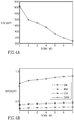
- FIGS. 4A and 4B are graphical illustrations showing representative longitudinal time-series data.
- the slope of this signal change was calculated and reflects the kinetics of the contrast agent between the parenchymal and vascular compartments.
- the degree of BBB permeability is indicated by the amplitude and sign of the fitted slope parameter.
- Different signal decay profiles are expected in different tissue types following injection of Gadolinium (Gd) using longitudinal contrast-enhanced MR imaging.
- the vascular signal shown in FIG. 4A , normally shows a rapid decline of intensity over time as the tracer washes out of the vascular bed, while tissue signal, shown in FIG. 4B , displays a gradual rise in intensity if the BBB permeability is increased.
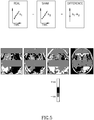
- FIG. 5 is a representative illustration from the brain of one of the patients in the pilot human study following REAL and SHAM stimulation.
- the standard anatomical scan is also shown on the right showing the resected tumor zone.
- Parameteric images of the fitted slope calculated at each voxel are shown for REAL and SHAM stimulation.
- the slope is a direct measure of BBB modulation.
- a zone of increased slope is clearly observed in the REAL case that is highlighted by subtracting the images (REAL-SHAM).
- RRL-SHAM subtracting the images
- a similar pattern was observed in the imaging data with a clearly depicted a zone of increased contrast agent intravascular-to-parenchyma washout following the REAL stimulation in contrast to the SHAM stimulation.
- the accelerated contrast agent kinetics are a strong indication of BBB disruption following the TMS stimulation. Changes were mainly observed in the tumor zone where the BBB is known to be abnormally permeable following rapid neovascularization as a consequence of tumor growth. This property of the BBB in the tumor zone is known as the enhanced permeability and retention (EPR) effect. However, there was also observed a tendency of increased stimulation-induced BBB permeability in extra-tumoral tissue, whether ipsilateral or contralateral to the tumor zone, which indicates an opening of the BBB. This is significant since these areas are normally largely impermeable to chemotherapeutic agents due to their intact BBB but are the key sites for the spread of the tumor via microgliomal infiltration and proliferation. The technique therefore offers the potential of improved treatment outcome by accompanying drug delivery with the controlled reversible BBB disruption.
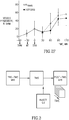
- FIG. 6 is a graphical illustration of summary BBB permeability measures over different areas of tissue obtained in REAL and SHAM stimulation states averaged over all the human patients in the study. Changes of stimulation-induced BBB permeability are shown over tissue regions that included the resected tumor zone itself, the hemisphere ipsilateral to the tumor (excluding the tumor zone), the contralateral hemisphere, and the whole brain (excluding the tumor zone). A significant finding of significantly enhanced permeabilily was consistently found following the REAL stimulation, in comparison to the SHAM stimulation session (p ⁇ 0.05, 1-tailed, Wilcoxon signed-rank test).
- Deep TMS represents the first known technique that has been shown to successfully increase the permeability of the BBB in a group of human subjects in a safe, non-invasive and controlled manner.
Landscapes
- Health & Medical Sciences (AREA)
- Engineering & Computer Science (AREA)
- Biomedical Technology (AREA)
- Nuclear Medicine, Radiotherapy & Molecular Imaging (AREA)
- Radiology & Medical Imaging (AREA)
- Life Sciences & Earth Sciences (AREA)
- Animal Behavior & Ethology (AREA)
- General Health & Medical Sciences (AREA)
- Public Health (AREA)
- Veterinary Medicine (AREA)
- Magnetic Treatment Devices (AREA)
Description
- The present invention is directed to a system for modulating the permeability of the blood brain barrier using transcranial magnetic stimulation (TMS).
- The blood-brain barrier (BBB) is a separation of circulating blood from the brain extracellular fluid in the central nervous system (CNS). It occurs along all capillaries and consists of tight junctions around the capillaries that do not exist in normal circulation. The BBB prevents the entry of substances that are hydrophilic or possess a high molecular weight. Its purpose is mainly to protect the brain from the entry of toxins and bacteria. However, it also acts as an impermeable barrier to the entry of more than 95% of the most clinically useful neurotherapeutic agents.
- A number of experimental approaches have been proposed to open the BBB. These include high-intensity focused ultrasound, magnetic nanoparticles, peptide carriers, photodynamic therapy and electrochemotherapy. However, many of these techniques are highly speculative and are still in the experimental stages of development. Similarly, a number of techniques exist for the local administration of drugs to brain tumors. These include inter-cerebral implantation (for example, gliadel wafers), intra-arterial drug administration and hyper-osmotic disruption. However, the efficiency of these techniques is doubtful, and the implementation is often non-localized and invasive.
- There are a number of important circumstances in which a means of safe and controlled blood brain barrier disruption (BBBD) would be of great clinical significance. These include the treatment of tumors of the central nervous system (CNS) in which a transient opening of the BBB could permit the delivery of chemotherapeutic agents to the brain during the window of BBB disruption with a potentially huge impact on the treatment of cancerous tumors of the CNS. Similarly, a number of diseases such as epilepsy and auto-immune diseases such as multiple sclerosis are characterized by unwanted breaches in BBB patency which would benefit from a means to reduce the permeability of the BBB. A goal of controlled BBB disruption therefore includes both a means to increase and decrease the permeability of the BBB.
US 8'010'189 B2 describes an implantable antenna for stimulating the blood brain barrier. The insertion of the implantable antenna is an invasive procedure.US 2010/087698 describes a system suitable for stimulating the blood brain barrier by a transcranial magnetic stimulation coil providing at least 100 stimulation pulses with at least 0.2 Hz stimulation frequency to the brain. - Thus, it would be highly advantageous to have a system for controlling the permeability of the blood brain barrier, which is safe, non-invasive, focused and reversible.
- The aforementioned problems are solved by a system for modulating the blood brain barrier according to
claim 1. Preferred embodiments are illustrated in the dependent claims.
There is provided, in accordance with embodiments of the present invention, a transcranial magnetic stimulation (TMS) coil used for modulating permeability of the blood brain barrier (BBB). The coil may be a conventional TMS coil or a deep TMS coil. A system for modulating permeability of the blood brain barrier includes providing a system for TMS, placing the system on the scalp, and providing a series of magnetic pulses to the brain via the system. The magnetic pulses are applied with a range of stimulation parameters designed for optimal modulation of the BBB. - The providing of magnetic pulses may be done in ranges of frequency, amplitudes and numbers of pulses and combinations thereof. In some embodiments of the invention, the stimulation frequency may be in a range of 0.2-2 Hz. At this stimulation frequency, the combination of stimulation amplitude taken with the number of stimulation pulses may vary. For example, the stimulation amplitude may be at least 120% together with at least 100 stimulation pulses. The stimulation amplitude may be in a range of at least 110-120% together with at least 300 stimulation pulses. In other embodiments, the stimulation frequency may be greater than 2 Hz. At this stimulation frequency, the stimulation amplitude taken with the number of stimulation pulses may vary. For example, the stimulation amplitude may be at least 130%, with at least 200 stimulation pulses. The stimulation amplitude may be between 120-130%, with at least 400 stimulation pulses. The stimulation amplitude may be between 110-120%, with at least 600 stimulation pulses.
- The series of magnetic pulses may be configured to result in a temporary increase in a permeability of the blood brain barrier for a period of time, such as approximately 45-60 minutes. The series of magnetic pulses may be configured to result in a temporary decrease in a permeability of the blood brain barrier for a period of time, such as approximately 45-60 minutes.
- In an example, not according to the present invention, a subject with an intracranial tumor may be treated. Placement of the coil may be done at the periphery of the intracranial tumor or on a side of the scalp which is contralateral to the tumor. In examples, not according to the present invention, a method may include administering a pharmaceutical substance to the subject. This administering may be done within a time frame of providing the magnetic pulses. In other embodiments, the BBB may be modulated for other purposes - for example, to reduce unwanted inflammation or immunomodulatory effects in conditions such as multiple sclerosis, or to treat the growing number of conditions whose etiology is being linked to pathological changes in BBB permeability such as schizophrenia, epilepsy and Alzheimer's Disease.
- Unless otherwise defined, all technical and scientific terms used herein have the same meaning as commonly understood by one of ordinary skill in the art to which this invention belongs. Although methods and materials similar or equivalent to those described herein can be used in the practice or testing of the embodiments of the present invention, suitable methods and materials are described below. In case of conflict, the patent specification, including definitions, will control. In addition, the materials, methods, and examples are illustrative only and not intended to be limiting.
- The invention is herein described, by way of example only, with reference to the accompanying drawings. With specific reference now to the drawings in detail, it is stressed that the particulars shown are by way of example and for purposes of illustrative discussion of various embodiments of the present invention only, and are presented in the cause of providing what is believed to be the most useful and readily understood description of the principles and conceptual aspects of the invention. In this regard, no attempt is made to show structural details of the invention in more detail than is necessary for a fundamental understanding of the invention, the description taken with the drawings making apparent to those skilled in the art how the several embodiments of the invention may be embodied in practice.
- In the drawings:
-
Fig. 1 is an illustrative flowchart of a method of BBB disruption for treatment of CNS tumors. -
Figs. 2A-2F are illustrations of the results of animal experiments showing BBB disruption using transcranial magnetic stimulation; -
Fig. 3 is a schematic view of a procedure used in human experiments showing BBB disruption using transcranial magnetic stimulation; -
Figs. 4A and 4B are graphical illustrations of signal decay profiles expected in different tissue types following injection of Gadolinium (Gd) using longitudinal contrast-enhanced MR imaging; -
Fig. 5 is an illustration of images of the brain of a subject from human experiments; and -
Fig. 6 is a graphical view of summary BBB permeabililty measures over different areas of tissue obtained in REAL and SHAM stimulation states in human experiments. - It will be appreciated that for simplicity and clarity of illustration, elements shown in the drawings have not necessarily been drawn accurately or to scale. For example, the dimensions of some of the elements may be exaggerated relative to other elements for clarity or several physical components may be included in one functional block or element. Further, where considered appropriate, reference numerals may be repeated among the drawings to indicate corresponding or analogous elements. Moreover, some of the blocks depicted in the drawings may be combined into a single function.
- In the following detailed description, numerous specific details are set forth in order to provide a thorough understanding of the present invention. It will be understood by those of ordinary skill in the art that embodiments of the present invention may be practiced without these specific details. In other instances, well-known methods, procedures, components and structures may not have been described in detail so as not to obscure the present invention.
- The present invention relates to a system for modulating permeability of the BBB using a TMS coil. Further advantages of the design of the catheter of the present invention will be described hereinbelow.
- Before explaining at least one embodiment of the invention in detail, it is to be understood that the invention is not limited in its application to the details of construction and the arrangement of the components set forth in the following description or illustrated in the drawings. The invention is capable of other embodiments or of being practiced or carried out in various ways. Also, it is to be understood that the phraseology and terminology employed herein are for the purpose of description and should not be regarded as limiting.
- The present invention is directed to a system for modulating permeability of the blood brain barrier using transcranial magnetic stimulation (TMS). TMS is a proven and safe technique for the non-invasive stimulation of neurons and has been shown to be beneficial in the treatment of a variety of neurological disorders such as depression. The vascular tone of the brain capillaries is largely under neurogenic and muscular control. The stimulation of the vascular neurons and smooth muscle by TMS may therefore be able to influence the permeability of the BBB via either a direct or indirect mechanism.
- Early studies of TMS using standard stimulation parameters and coils showed no disruptive effect on the BBB. In the present invention, it has been found that the application of TMS with a specific set of stimulation parameters may indeed have an effect on the temporary disruption of the BBB under certain conditions.
- Reference is now made to
FIG.1 , which is a flow-chart diagram of amethod 100 of modulating permeability of the blood brain barrier. First, a system for transcranial magnetic stimulation (TMS) is provided (step 102). In some embodiments, the TMS system is a system for deep TMS, such as the H1 coil (Brainsway, Inc.). In other embodiments, a standard figure 8 coil or any other coil suitable for TMS is provided. The TMS system is positioned (step 104) on the skull, on or adjacent to the area of the brain to be treated, and magnetic pulses are provided (step 106) via the TMS system. Placement of the coil may be done at the periphery of an intracranial tumor or on a side of the scalp which is contralateral to a tumor. In some embodiments, a series of pulses is provided using a prescribed TMS coil configuration in conjunction with a prescribed range of frequencies and stimulation amplitudes. In some embodiments, low frequency repetitive deep TMS (0.5-2 Hz) applied in very supra-threshold amplitudes (> 120% of resting motor threshold (rMT) may be used. This administration of magnetic pulses in this configuration has been found in the present invention to lead to a transient increase of the permeability of the BBB. It should be readily apparent that other frequencies and amplitudes are possible and are included within the scope of the invention. - In some embodiments, the magnetic pulses are provided in a range of at least 0.2 Hz stimulation frequency, at least 80% of resting motor threshold stimulation amplitude, and at least 100 stimulation pulses.
- Different ranges of frequency, amplitudes and numbers of pulses and combinations thereof may be used. In embodiments of the invention, the stimulation frequency may be in a range of 0.2-2 Hz. At this stimulation frequency, the stimulation amplitude may be at least 120% together with at least 100 stimulation pulses. The stimulation amplitude may be in a range of at least 110-120% together with at least 300 stimulation pulses.
- In other embodiments, the stimulation frequency may be greater than 2 Hz. At this stimulation frequency, the stimulation amplitude may be at least 80%, with at least 200 stimulation pulses. The stimulation amplitude may be between 120-130%, with at least 400 stimulation pulses. The stimulation amplitude may be between 110-120%, with at least 600 stimulation pulses.
- The series of magnetic pulses may be configured to result in a temporary increase in a permeability of the blood brain barrier for a period of time, such as approximately 45-60 minutes. The series of magnetic pulses may also be configured to result in a temporary decrease in a permeability of the blood brain barrier for a period of time, such as approximately 45-60 minutes.
- In other embodiments, other periods of time may be used. For example, in some embodiments a range of 30-90 minutes may be used. In some embodiments a range of less than 30 minutes or greater than 90 minutes may be used. During this time window, the increased permeability of the BBB can be exploited, for example to administer (step 108) an intervention, such as introducing a chemotherapeutic agent in order to treat a tumor of the CNS.
- Other uses for modulating the BBB, include increasing BBB permeability for administering medications for brain disorders, and decreasing BBB permeability in patients with neurological or psychiatric disorders where the BBB has abnormally increased permeability.
- A study was conducted to investigate the use of a deep TMS system to disrupt the BBB in a temporary and controlled manner.
- The described study used a combined approach of pre-clinical experiments in animals to demonstrate effectiveness and define TMS parameters, followed by a pilot study in patients with brain tumors using magnetic resonance imaging (MRI) to investigate the BBB patency in a non-invasive and potentially quantitative manner.
- Pre-clinical experiments: Pre-clinical experiments were carried out at Soroka Hospital in Beer Sheva, Israel, using rats (REAL (i.e. active) coil, n=10; SHAM (i.e. placebo) coil, n=5). The cortex was exposed, and TMS stimulation was carried out using a small circular coil. Results were measured by optical imaging using Evans Blue and Sodium Fluorescein (fluorescent dye), both dyes with high-molecular weight that normally remain within the vasculature. Quantification was carried out with Ktrans.
- These dyes were clearly observed in the parenchyma (tissue space) after exposure to a stimulation protocol using high-intensity, low frequency rTMS (stimulation protocol: 1 Hz, 130% of resting motor threshold, 250 pulses). The BBB appeared to open immediately, and then to close after approximately 60 minutes. No such BBB disruption was observed following SHAM stimulation. Other stimulation protocols were found to modulate the BBB permeability to greater or lesser extents.Reference is now made to
FIGS. 2A-2F , which are illustrations of the results of animal experiments showing BBB disruption using transcranial magnetic stimulation. Fluorescent images of surface vessels are shown before (SHAM) and after (REAL) TMS, using a particular stimulation protocol (raw data inFIGS. 2A and 2B ; permeability data using Ktrans inFIGS. 2D and 2E ). Vasodilation of the blood vessels (FIGS. 2A vs 2B) and the presence of the injected tracer around the vessels as indicated by increased value of the permeability measure, Ktrans, in the extravascular region (FIGS. 2D vs 2E) clearly indicate a process resulting in BBB opening. Reference is made toFIG. 2C , where staining of the stimulated hemisphere following Evans-blue injection confirms BBB disruption, as indicated by presence of the blue dye within the parenchyma. One hemisphere, which was subject to TMS, shows extravasation of the dye from the intravascular to extravascular compartment (indicated by a brightening of the area surrounding the blood vessels), whereas the other hemisphere, which was not subject to TMS, does not.FIG. 2F is a graphical illustration of the permeability (i.e, Ktrans) measurement, showing the time frame of the opening of the BBB. - In conclusion, the animal experiments showed consistent opening of the BBB. Modulation of the BBB was dependent on the stimulation protocol, and in one example, a protocol utilizing a combination of low frequency and high amplitude was found to be successful. Permeability quantification with Ktrans results show the dynamics of the opening. BBB appears to open immediately, and close within approximately 45-60 minutes.
- Clinical experiments: 19 patients with glioblastoma multiforme were admitted to the feasibility study (carried out in La Sapienza Hospital, Rome). Stimulation with the deep TMS system on an area of the cortex in the periphery of the tumor core was followed by the injection of a MRI-visible contrast agent (Gadolinium-DTPA) and a series of dynamic MRI scans. Stimulation with REAL and SHAM TMS coils were carried out on different days with their order counterbalanced. TMS stimulation was carried out using a deep TMS coil designed and assembled by Brainsway Inc, at a frequency of 1Hz and with an amplitude of 130% of resting motor threshold in a series of stimulation trains comprising 250 pulses in total. The train duration was 50 sec, with inter-train intervals of 60 sec and the total number of trains was 5. A smaller subset of 4 control, healthy subjects were also examined in this way.
- Reference is now made to
FIG. 3 , which is a flow chart illustration showing the method of the clinical experiments. The subject was placed in the magnetic resonance imaging (MRI) scanner for the acquisition of pre-stimulation MRI images, including baseline anatomical scans. The subject was then removed from the MRI scanner in order to receive the TMS stimulation. Following the stimulation, the contrast agent was injected into a vein and the subject immediately returned to the scanner for the acquisition of a series of post-stimulation scans. Two sessions of stimulation were carried out, in each case preceded and followed by MR imaging (pre-TMS MRI and post-TMS MRI respectively). - Analysis was carried out by a series of processing steps. Reference is now made to
FIGS. 4A and 4B , which are graphical illustrations showing representative longitudinal time-series data. The slope of this signal change was calculated and reflects the kinetics of the contrast agent between the parenchymal and vascular compartments. The degree of BBB permeability is indicated by the amplitude and sign of the fitted slope parameter. Different signal decay profiles are expected in different tissue types following injection of Gadolinium (Gd) using longitudinal contrast-enhanced MR imaging. The vascular signal, shown inFIG. 4A , normally shows a rapid decline of intensity over time as the tracer washes out of the vascular bed, while tissue signal, shown inFIG. 4B , displays a gradual rise in intensity if the BBB permeability is increased. - Reference is now made to
FIG. 5 , which is a representative illustration from the brain of one of the patients in the pilot human study following REAL and SHAM stimulation. The standard anatomical scan is also shown on the right showing the resected tumor zone. Parameteric images of the fitted slope calculated at each voxel are shown for REAL and SHAM stimulation. The slope is a direct measure of BBB modulation. A zone of increased slope is clearly observed in the REAL case that is highlighted by subtracting the images (REAL-SHAM). In more than 60% of the patients with a contrast-enhancing tumor, a similar pattern was observed in the imaging data with a clearly depicted a zone of increased contrast agent intravascular-to-parenchyma washout following the REAL stimulation in contrast to the SHAM stimulation. The accelerated contrast agent kinetics are a strong indication of BBB disruption following the TMS stimulation. Changes were mainly observed in the tumor zone where the BBB is known to be abnormally permeable following rapid neovascularization as a consequence of tumor growth. This property of the BBB in the tumor zone is known as the enhanced permeability and retention (EPR) effect. However, there was also observed a tendency of increased stimulation-induced BBB permeability in extra-tumoral tissue, whether ipsilateral or contralateral to the tumor zone, which indicates an opening of the BBB. This is significant since these areas are normally largely impermeable to chemotherapeutic agents due to their intact BBB but are the key sites for the spread of the tumor via microgliomal infiltration and proliferation. The technique therefore offers the potential of improved treatment outcome by accompanying drug delivery with the controlled reversible BBB disruption. - Reference is now made to
FIG. 6 , which is a graphical illustration of summary BBB permeability measures over different areas of tissue obtained in REAL and SHAM stimulation states averaged over all the human patients in the study. Changes of stimulation-induced BBB permeability are shown over tissue regions that included the resected tumor zone itself, the hemisphere ipsilateral to the tumor (excluding the tumor zone), the contralateral hemisphere, and the whole brain (excluding the tumor zone). A significant finding of significantly enhanced permeabilily was consistently found following the REAL stimulation, in comparison to the SHAM stimulation session (p<0.05, 1-tailed, Wilcoxon signed-rank test). - Conclusions: The pre-clinical and clinical studies clearly demonstrated the ability of tailored TMS hardware and stimulation parameters to transiently disrupt the BBB. Both in an invasive animal model and in a pilot series of human subjects with CNS tumors, the ability to transiently increase BBB permeability was demonstrated.
- Deep TMS represents the first known technique that has been shown to successfully increase the permeability of the BBB in a group of human subjects in a safe, non-invasive and controlled manner.
- It is appreciated that certain features of the invention, which are, for clarity, described in the context of separate embodiments, may also be provided in combination in a single embodiment. Conversely, various features of the invention, which are, for brevity, described in the context of a single embodiment, may also be provided separately or in any suitable subcombination.
- Although the invention has been described in conjunction with specific embodiments thereof, it is evident that many alternatives, modifications and variations will be apparent to those skilled in the art. Accordingly, it is intended to embrace all such alternatives, modifications and variations that fall within the scope of the appended claims. In addition, citation or identification of any reference in this application shall not be construed as an admission that such reference is available as prior art to the present invention.
Claims (6)
- A system for modulating permeability of the blood brain barrier, the system comprising:a transcranial magnetic stimulation coil for transcranial magnetic stimulation configured to be placed on a scalp and to provide a series of magnetic pulses to the brainwherein the system is configured to provide said pulses in a range of at least 0.2 Hz stimulation frequency, and at least 100 stimulation pulses, and the system is
characterized in that
said system is configured to provide said pulses at an amplitude of at least 120% of the resting motor threshold stimulation amplitude. - The system claim 1, wherein said providing is done in a range of 0.2-2 Hz stimulation frequency.
- The system of claim 2, wherein said providing is done in accordance with at least one of: at least 300 stimulation pulses, at least 400 stimulation pulses.
- The system of claim 1, wherein said providing is done with a stimulation frequency of greater than 2 Hz.
- The system of claim 4, wherein said providing is done in accordance with at least one of: with a stimulation amplitude of at least 130% and with at least 200 stimulation pulses, with a stimulation amplitude of between 120-130% and with at least 400 stimulation pulses.
- The system of claim 1, wherein the transcranial magnetic stimulation coil comprises at least one of: a conventional TMS coil, or a deep TMS coil.
Applications Claiming Priority (2)
| Application Number | Priority Date | Filing Date | Title |
|---|---|---|---|
| US201261597850P | 2012-02-13 | 2012-02-13 | |
| PCT/IB2013/051171 WO2013121359A2 (en) | 2012-02-13 | 2013-02-13 | Use of transcranial magnetic stimulation to modulate permeability of the blood-brain barrier |
Publications (3)
| Publication Number | Publication Date |
|---|---|
| EP2814569A2 EP2814569A2 (en) | 2014-12-24 |
| EP2814569A4 EP2814569A4 (en) | 2015-12-09 |
| EP2814569B1 true EP2814569B1 (en) | 2018-10-24 |
Family
ID=48984857
Family Applications (1)
| Application Number | Title | Priority Date | Filing Date |
|---|---|---|---|
| EP13748474.7A Active EP2814569B1 (en) | 2012-02-13 | 2013-02-13 | Transcranial magnetic stimulation to modulate permeability of the blood-brain barrier |
Country Status (7)
| Country | Link |
|---|---|
| US (1) | US9636517B2 (en) |
| EP (1) | EP2814569B1 (en) |
| JP (1) | JP2015507961A (en) |
| AU (1) | AU2013220050B2 (en) |
| CA (1) | CA2864468C (en) |
| IL (1) | IL234128B (en) |
| WO (1) | WO2013121359A2 (en) |
Families Citing this family (28)
| Publication number | Priority date | Publication date | Assignee | Title |
|---|---|---|---|---|
| US10275680B2 (en) | 2011-10-19 | 2019-04-30 | Tel Hashomer Medical Research Infrastructure And Services Ltd. | Magnetic resonance maps for analyzing tissue |
| JP2015515326A (en) | 2012-04-06 | 2015-05-28 | ニューポート ブレイン リサーチ ラボラトリー インコーポレイテッド | rTMS equipment |
| US10521819B2 (en) * | 2012-08-09 | 2019-12-31 | American Express Travel Related Services Company, Inc. | Systems and methods for analytics in a cooperative data exchange |
| EP2988668B1 (en) * | 2013-04-24 | 2019-07-24 | Tel HaShomer Medical Research Infrastructure and Services Ltd. | Magnetic resonance maps for analyzing tissue |
| US10695575B1 (en) | 2016-05-10 | 2020-06-30 | Btl Medical Technologies S.R.O. | Aesthetic method of biological structure treatment by magnetic field |
| US11266850B2 (en) | 2015-07-01 | 2022-03-08 | Btl Healthcare Technologies A.S. | High power time varying magnetic field therapy |
| US20180001107A1 (en) | 2016-07-01 | 2018-01-04 | Btl Holdings Limited | Aesthetic method of biological structure treatment by magnetic field |
| US10285934B1 (en) | 2015-11-01 | 2019-05-14 | Battelle Memorial Institute | Administration of a drug through the blood brain barrier using stimuli-responsive nanoparticles |
| US11464993B2 (en) | 2016-05-03 | 2022-10-11 | Btl Healthcare Technologies A.S. | Device including RF source of energy and vacuum system |
| US11247039B2 (en) | 2016-05-03 | 2022-02-15 | Btl Healthcare Technologies A.S. | Device including RF source of energy and vacuum system |
| US11534619B2 (en) | 2016-05-10 | 2022-12-27 | Btl Medical Solutions A.S. | Aesthetic method of biological structure treatment by magnetic field |
| US12654023B2 (en) | 2016-05-10 | 2026-06-16 | Btl Medical Solutions A.S. | Aesthetic method of biological structure treatment by magnetic field |
| US10583287B2 (en) | 2016-05-23 | 2020-03-10 | Btl Medical Technologies S.R.O. | Systems and methods for tissue treatment |
| US10556122B1 (en) | 2016-07-01 | 2020-02-11 | Btl Medical Technologies S.R.O. | Aesthetic method of biological structure treatment by magnetic field |
| US11141219B1 (en) | 2016-08-16 | 2021-10-12 | BTL Healthcare Technologies, a.s. | Self-operating belt |
| WO2018078619A1 (en) | 2016-10-25 | 2018-05-03 | Brainsway Ltd | Apparatus and methods for predicting therapy outcome |
| CN110234389B (en) | 2017-02-02 | 2023-11-03 | 福禄神经学公司 | Headset for transcranial direct current stimulation of TDCS and system including the same |
| WO2020072589A1 (en) * | 2018-10-05 | 2020-04-09 | Synaptec Network, Inc. | Systems and methods for delivering therapeutic agents to the brain using tms |
| US12558146B2 (en) | 2019-04-11 | 2026-02-24 | Btl Medical Solutions A.S. | Methods and devices for aesthetic treatment of biological structures by radiofrequency and magnetic energy |
| US12156689B2 (en) | 2019-04-11 | 2024-12-03 | Btl Medical Solutions A.S. | Methods and devices for aesthetic treatment of biological structures by radiofrequency and magnetic energy |
| EP4691400A3 (en) | 2019-04-11 | 2026-04-22 | BTL Medical Solutions a.s. | Methods and devices for treatment of biological structure by radiofrequency energy |
| US11878167B2 (en) | 2020-05-04 | 2024-01-23 | Btl Healthcare Technologies A.S. | Device and method for unattended treatment of a patient |
| HRP20250160T1 (en) | 2020-05-04 | 2025-03-28 | Btl Healthcare Technologies A.S. | DEVICE FOR TREATING PATIENTS WITHOUT THE PRESENCE OF A DOCTOR |
| US12611545B2 (en) | 2020-05-04 | 2026-04-28 | Btl Healthcare Technologies A.S. | Device and method for unattended treatment of a patient |
| WO2022211873A1 (en) * | 2021-01-04 | 2022-10-06 | Weinberg Medical Physics, Inc | Method and apparatus for selective modulation of neuronal function and of and tissue permeability with mri correlation |
| CA3260012A1 (en) | 2021-10-13 | 2023-04-20 | Btl Medical Solutions A.S. | Devices for aesthetic treatment of biological structures by radiofrequency and magnetic energy |
| US11896816B2 (en) | 2021-11-03 | 2024-02-13 | Btl Healthcare Technologies A.S. | Device and method for unattended treatment of a patient |
| US20260097226A1 (en) | 2024-10-08 | 2026-04-09 | Btl Medical Solutions A.S. | Devices and methods for application of a magnetic field to the nervous system |
Citations (1)
| Publication number | Priority date | Publication date | Assignee | Title |
|---|---|---|---|---|
| US20100087698A1 (en) * | 2006-09-11 | 2010-04-08 | Neuroquest Therapeutics | Repetitive transcranial magnetic stimulation for movement disorders |
Family Cites Families (5)
| Publication number | Priority date | Publication date | Assignee | Title |
|---|---|---|---|---|
| US6366808B1 (en) * | 2000-03-13 | 2002-04-02 | Edward A. Schroeppel | Implantable device and method for the electrical treatment of cancer |
| US7146210B2 (en) * | 2000-02-17 | 2006-12-05 | Standen Ltd. | Apparatus and method for optimizing tumor treatment efficiency by electric fields |
| US8010189B2 (en) * | 2004-02-20 | 2011-08-30 | Brainsgate Ltd. | SPG stimulation for treating complications of subarachnoid hemorrhage |
| WO2008139480A2 (en) * | 2007-05-16 | 2008-11-20 | Yeda Research And Development Co. Ltd. | Assessment of blood-brain barrier disruption |
| WO2011146777A2 (en) * | 2010-05-19 | 2011-11-24 | Photothera, Inc. | Device and method for providing a synergistic combination of phototherapy and a non-light energy modality to the brain |
-
2013
- 2013-02-13 WO PCT/IB2013/051171 patent/WO2013121359A2/en not_active Ceased
- 2013-02-13 JP JP2014556191A patent/JP2015507961A/en active Pending
- 2013-02-13 US US14/378,427 patent/US9636517B2/en active Active
- 2013-02-13 AU AU2013220050A patent/AU2013220050B2/en active Active
- 2013-02-13 EP EP13748474.7A patent/EP2814569B1/en active Active
- 2013-02-13 CA CA2864468A patent/CA2864468C/en active Active
-
2014
- 2014-08-14 IL IL234128A patent/IL234128B/en active IP Right Grant
Patent Citations (1)
| Publication number | Priority date | Publication date | Assignee | Title |
|---|---|---|---|---|
| US20100087698A1 (en) * | 2006-09-11 | 2010-04-08 | Neuroquest Therapeutics | Repetitive transcranial magnetic stimulation for movement disorders |
Also Published As
| Publication number | Publication date |
|---|---|
| CA2864468A1 (en) | 2013-08-22 |
| WO2013121359A3 (en) | 2013-10-31 |
| IL234128B (en) | 2020-04-30 |
| EP2814569A4 (en) | 2015-12-09 |
| US9636517B2 (en) | 2017-05-02 |
| CA2864468C (en) | 2021-06-22 |
| AU2013220050A1 (en) | 2014-08-28 |
| JP2015507961A (en) | 2015-03-16 |
| WO2013121359A2 (en) | 2013-08-22 |
| AU2013220050B2 (en) | 2017-07-20 |
| EP2814569A2 (en) | 2014-12-24 |
| US20160008619A1 (en) | 2016-01-14 |
Similar Documents
| Publication | Publication Date | Title |
|---|---|---|
| US11241584B2 (en) | Use of transcranial magnetic stimulation to modulate permeability of the blood-brain barrier | |
| US9636517B2 (en) | Use of transcranial magnetic stimulation to modulate permeability of the blood-brain barrier | |
| US12178546B2 (en) | Methods and systems for modifying electrical currents in neuronal circuits | |
| Stamp et al. | Breaking barriers: exploring mechanisms behind opening the blood–brain barrier | |
| Todd et al. | Modulation of brain function by targeted delivery of GABA through the disrupted blood-brain barrier | |
| Beccaria et al. | Opening of the blood-brain barrier with an unfocused ultrasound device in rabbits | |
| Chu et al. | Neuromodulation accompanying focused ultrasound-induced blood-brain barrier opening | |
| Kobus et al. | Safety validation of repeated blood–brain barrier disruption using focused ultrasound | |
| Régis et al. | First selective amygdalohippocampal radiosurgery for ‘mesial temporal lobe epilepsy’ | |
| Todd et al. | Focused ultrasound induced opening of the blood-brain barrier disrupts inter-hemispheric resting state functional connectivity in the rat brain | |
| US20220233853A1 (en) | Systems and methods for treating tumors using targeted neurostimulation | |
| Cardenas et al. | Functional MRI during hyperbaric oxygen: Effects of oxygen on neurovascular coupling and BOLD fMRI signals | |
| Jung et al. | An advanced focused ultrasound protocol improves the blood-brain barrier permeability and doxorubicin delivery into the rat brain | |
| Yuan et al. | Subcutaneous nerve stimulation for rate control in ambulatory dogs with persistent atrial fibrillation | |
| Zhou et al. | MR-guided blood-brain barrier opening induced by rapid short-pulse ultrasound in non-human primates | |
| Bär et al. | Thermal threshold for localized Blood-Brain Barrier disruption | |
| Algin et al. | Evaluation of the Glymphatic System in Rabbits Using Gadobutrol‐Enhanced MR Cisternography With T1 and T2 Mapping | |
| Alam et al. | Neuromodulation via brain stimulation: A promising therapeutic perspective for Alzheimer's disease | |
| Umansky et al. | Utilization of focused ultrasound for opening of the blood-nerve barrier | |
| Yang et al. | Evaluation of dose distribution of molecular delivery after blood-brain barrier disruption by focused ultrasound with treatment planning | |
| RU2800078C1 (en) | Method of activating increased lymph flow in the central nervous system | |
| Bär et al. | Thermal threshold for localized Blood-Brain-Barrier disruption | |
| Chen et al. | The effect of combined ultrasound stimulation and gastrodin on seizures in mice | |
| MISCHKULNIG | NEUROSURGERY AND “BRAIN TOXICITY” INCLUDING NOVO TTF GEORG WIDHALM, PETRA A. MERCEA, MARIO MISCHKULNIG, LISA I. WADIURA, KARL RÖSSLER | |
| WIDHALM et al. | NEUROSURGERY AND “BRAIN TOXICITY” |
Legal Events
| Date | Code | Title | Description |
|---|---|---|---|
| PUAI | Public reference made under article 153(3) epc to a published international application that has entered the european phase |
Free format text: ORIGINAL CODE: 0009012 |
|
| 17P | Request for examination filed |
Effective date: 20140821 |
|
| AK | Designated contracting states |
Kind code of ref document: A2 Designated state(s): AL AT BE BG CH CY CZ DE DK EE ES FI FR GB GR HR HU IE IS IT LI LT LU LV MC MK MT NL NO PL PT RO RS SE SI SK SM TR |
|
| AX | Request for extension of the european patent |
Extension state: BA ME |
|
| DAX | Request for extension of the european patent (deleted) | ||
| A4 | Supplementary search report drawn up and despatched |
Effective date: 20151106 |
|
| RIC1 | Information provided on ipc code assigned before grant |
Ipc: A61N 2/02 20060101AFI20151102BHEP Ipc: A61N 2/00 20060101ALI20151102BHEP |
|
| STAA | Information on the status of an ep patent application or granted ep patent |
Free format text: STATUS: EXAMINATION IS IN PROGRESS |
|
| 17Q | First examination report despatched |
Effective date: 20170523 |
|
| GRAP | Despatch of communication of intention to grant a patent |
Free format text: ORIGINAL CODE: EPIDOSNIGR1 |
|
| STAA | Information on the status of an ep patent application or granted ep patent |
Free format text: STATUS: GRANT OF PATENT IS INTENDED |
|
| INTG | Intention to grant announced |
Effective date: 20180423 |
|
| GRAS | Grant fee paid |
Free format text: ORIGINAL CODE: EPIDOSNIGR3 |
|
| GRAA | (expected) grant |
Free format text: ORIGINAL CODE: 0009210 |
|
| STAA | Information on the status of an ep patent application or granted ep patent |
Free format text: STATUS: THE PATENT HAS BEEN GRANTED |
|
| AK | Designated contracting states |
Kind code of ref document: B1 Designated state(s): AL AT BE BG CH CY CZ DE DK EE ES FI FR GB GR HR HU IE IS IT LI LT LU LV MC MK MT NL NO PL PT RO RS SE SI SK SM TR |
|
| REG | Reference to a national code |
Ref country code: CH Ref legal event code: EP |
|
| REG | Reference to a national code |
Ref country code: IE Ref legal event code: FG4D |
|
| REG | Reference to a national code |
Ref country code: AT Ref legal event code: REF Ref document number: 1055986 Country of ref document: AT Kind code of ref document: T Effective date: 20181115 |
|
| REG | Reference to a national code |
Ref country code: DE Ref legal event code: R096 Ref document number: 602013045571 Country of ref document: DE |
|
| REG | Reference to a national code |
Ref country code: NL Ref legal event code: MP Effective date: 20181024 |
|
| REG | Reference to a national code |
Ref country code: SE Ref legal event code: TRGR |
|
| REG | Reference to a national code |
Ref country code: LT Ref legal event code: MG4D |
|
| REG | Reference to a national code |
Ref country code: AT Ref legal event code: MK05 Ref document number: 1055986 Country of ref document: AT Kind code of ref document: T Effective date: 20181024 |
|
| PG25 | Lapsed in a contracting state [announced via postgrant information from national office to epo] |
Ref country code: NL Free format text: LAPSE BECAUSE OF FAILURE TO SUBMIT A TRANSLATION OF THE DESCRIPTION OR TO PAY THE FEE WITHIN THE PRESCRIBED TIME-LIMIT Effective date: 20181024 |
|
| PG25 | Lapsed in a contracting state [announced via postgrant information from national office to epo] |
Ref country code: FI Free format text: LAPSE BECAUSE OF FAILURE TO SUBMIT A TRANSLATION OF THE DESCRIPTION OR TO PAY THE FEE WITHIN THE PRESCRIBED TIME-LIMIT Effective date: 20181024 Ref country code: LV Free format text: LAPSE BECAUSE OF FAILURE TO SUBMIT A TRANSLATION OF THE DESCRIPTION OR TO PAY THE FEE WITHIN THE PRESCRIBED TIME-LIMIT Effective date: 20181024 Ref country code: AT Free format text: LAPSE BECAUSE OF FAILURE TO SUBMIT A TRANSLATION OF THE DESCRIPTION OR TO PAY THE FEE WITHIN THE PRESCRIBED TIME-LIMIT Effective date: 20181024 Ref country code: LT Free format text: LAPSE BECAUSE OF FAILURE TO SUBMIT A TRANSLATION OF THE DESCRIPTION OR TO PAY THE FEE WITHIN THE PRESCRIBED TIME-LIMIT Effective date: 20181024 Ref country code: HR Free format text: LAPSE BECAUSE OF FAILURE TO SUBMIT A TRANSLATION OF THE DESCRIPTION OR TO PAY THE FEE WITHIN THE PRESCRIBED TIME-LIMIT Effective date: 20181024 Ref country code: BG Free format text: LAPSE BECAUSE OF FAILURE TO SUBMIT A TRANSLATION OF THE DESCRIPTION OR TO PAY THE FEE WITHIN THE PRESCRIBED TIME-LIMIT Effective date: 20190124 Ref country code: PL Free format text: LAPSE BECAUSE OF FAILURE TO SUBMIT A TRANSLATION OF THE DESCRIPTION OR TO PAY THE FEE WITHIN THE PRESCRIBED TIME-LIMIT Effective date: 20181024 Ref country code: ES Free format text: LAPSE BECAUSE OF FAILURE TO SUBMIT A TRANSLATION OF THE DESCRIPTION OR TO PAY THE FEE WITHIN THE PRESCRIBED TIME-LIMIT Effective date: 20181024 Ref country code: NO Free format text: LAPSE BECAUSE OF FAILURE TO SUBMIT A TRANSLATION OF THE DESCRIPTION OR TO PAY THE FEE WITHIN THE PRESCRIBED TIME-LIMIT Effective date: 20190124 Ref country code: IS Free format text: LAPSE BECAUSE OF FAILURE TO SUBMIT A TRANSLATION OF THE DESCRIPTION OR TO PAY THE FEE WITHIN THE PRESCRIBED TIME-LIMIT Effective date: 20190224 |
|
| PG25 | Lapsed in a contracting state [announced via postgrant information from national office to epo] |
Ref country code: AL Free format text: LAPSE BECAUSE OF FAILURE TO SUBMIT A TRANSLATION OF THE DESCRIPTION OR TO PAY THE FEE WITHIN THE PRESCRIBED TIME-LIMIT Effective date: 20181024 Ref country code: GR Free format text: LAPSE BECAUSE OF FAILURE TO SUBMIT A TRANSLATION OF THE DESCRIPTION OR TO PAY THE FEE WITHIN THE PRESCRIBED TIME-LIMIT Effective date: 20190125 Ref country code: PT Free format text: LAPSE BECAUSE OF FAILURE TO SUBMIT A TRANSLATION OF THE DESCRIPTION OR TO PAY THE FEE WITHIN THE PRESCRIBED TIME-LIMIT Effective date: 20190224 Ref country code: RS Free format text: LAPSE BECAUSE OF FAILURE TO SUBMIT A TRANSLATION OF THE DESCRIPTION OR TO PAY THE FEE WITHIN THE PRESCRIBED TIME-LIMIT Effective date: 20181024 |
|
| REG | Reference to a national code |
Ref country code: DE Ref legal event code: R097 Ref document number: 602013045571 Country of ref document: DE |
|
| PG25 | Lapsed in a contracting state [announced via postgrant information from national office to epo] |
Ref country code: CZ Free format text: LAPSE BECAUSE OF FAILURE TO SUBMIT A TRANSLATION OF THE DESCRIPTION OR TO PAY THE FEE WITHIN THE PRESCRIBED TIME-LIMIT Effective date: 20181024 Ref country code: DK Free format text: LAPSE BECAUSE OF FAILURE TO SUBMIT A TRANSLATION OF THE DESCRIPTION OR TO PAY THE FEE WITHIN THE PRESCRIBED TIME-LIMIT Effective date: 20181024 |
|
| PG25 | Lapsed in a contracting state [announced via postgrant information from national office to epo] |
Ref country code: EE Free format text: LAPSE BECAUSE OF FAILURE TO SUBMIT A TRANSLATION OF THE DESCRIPTION OR TO PAY THE FEE WITHIN THE PRESCRIBED TIME-LIMIT Effective date: 20181024 Ref country code: SM Free format text: LAPSE BECAUSE OF FAILURE TO SUBMIT A TRANSLATION OF THE DESCRIPTION OR TO PAY THE FEE WITHIN THE PRESCRIBED TIME-LIMIT Effective date: 20181024 Ref country code: SK Free format text: LAPSE BECAUSE OF FAILURE TO SUBMIT A TRANSLATION OF THE DESCRIPTION OR TO PAY THE FEE WITHIN THE PRESCRIBED TIME-LIMIT Effective date: 20181024 Ref country code: RO Free format text: LAPSE BECAUSE OF FAILURE TO SUBMIT A TRANSLATION OF THE DESCRIPTION OR TO PAY THE FEE WITHIN THE PRESCRIBED TIME-LIMIT Effective date: 20181024 |
|
| PLBE | No opposition filed within time limit |
Free format text: ORIGINAL CODE: 0009261 |
|
| STAA | Information on the status of an ep patent application or granted ep patent |
Free format text: STATUS: NO OPPOSITION FILED WITHIN TIME LIMIT |
|
| REG | Reference to a national code |
Ref country code: CH Ref legal event code: PL |
|
| 26N | No opposition filed |
Effective date: 20190725 |
|
| PG25 | Lapsed in a contracting state [announced via postgrant information from national office to epo] |
Ref country code: SI Free format text: LAPSE BECAUSE OF FAILURE TO SUBMIT A TRANSLATION OF THE DESCRIPTION OR TO PAY THE FEE WITHIN THE PRESCRIBED TIME-LIMIT Effective date: 20181024 Ref country code: MC Free format text: LAPSE BECAUSE OF FAILURE TO SUBMIT A TRANSLATION OF THE DESCRIPTION OR TO PAY THE FEE WITHIN THE PRESCRIBED TIME-LIMIT Effective date: 20181024 Ref country code: LU Free format text: LAPSE BECAUSE OF NON-PAYMENT OF DUE FEES Effective date: 20190213 |
|
| REG | Reference to a national code |
Ref country code: BE Ref legal event code: MM Effective date: 20190228 |
|
| REG | Reference to a national code |
Ref country code: IE Ref legal event code: MM4A |
|
| PG25 | Lapsed in a contracting state [announced via postgrant information from national office to epo] |
Ref country code: CH Free format text: LAPSE BECAUSE OF NON-PAYMENT OF DUE FEES Effective date: 20190228 Ref country code: LI Free format text: LAPSE BECAUSE OF NON-PAYMENT OF DUE FEES Effective date: 20190228 |
|
| PG25 | Lapsed in a contracting state [announced via postgrant information from national office to epo] |
Ref country code: IE Free format text: LAPSE BECAUSE OF NON-PAYMENT OF DUE FEES Effective date: 20190213 |
|
| PG25 | Lapsed in a contracting state [announced via postgrant information from national office to epo] |
Ref country code: BE Free format text: LAPSE BECAUSE OF NON-PAYMENT OF DUE FEES Effective date: 20190228 |
|
| PG25 | Lapsed in a contracting state [announced via postgrant information from national office to epo] |
Ref country code: TR Free format text: LAPSE BECAUSE OF FAILURE TO SUBMIT A TRANSLATION OF THE DESCRIPTION OR TO PAY THE FEE WITHIN THE PRESCRIBED TIME-LIMIT Effective date: 20181024 |
|
| PG25 | Lapsed in a contracting state [announced via postgrant information from national office to epo] |
Ref country code: MT Free format text: LAPSE BECAUSE OF NON-PAYMENT OF DUE FEES Effective date: 20190213 |
|
| PG25 | Lapsed in a contracting state [announced via postgrant information from national office to epo] |
Ref country code: CY Free format text: LAPSE BECAUSE OF FAILURE TO SUBMIT A TRANSLATION OF THE DESCRIPTION OR TO PAY THE FEE WITHIN THE PRESCRIBED TIME-LIMIT Effective date: 20181024 |
|
| PG25 | Lapsed in a contracting state [announced via postgrant information from national office to epo] |
Ref country code: HU Free format text: LAPSE BECAUSE OF FAILURE TO SUBMIT A TRANSLATION OF THE DESCRIPTION OR TO PAY THE FEE WITHIN THE PRESCRIBED TIME-LIMIT; INVALID AB INITIO Effective date: 20130213 |
|
| PG25 | Lapsed in a contracting state [announced via postgrant information from national office to epo] |
Ref country code: MK Free format text: LAPSE BECAUSE OF FAILURE TO SUBMIT A TRANSLATION OF THE DESCRIPTION OR TO PAY THE FEE WITHIN THE PRESCRIBED TIME-LIMIT Effective date: 20181024 |
|
| PGFP | Annual fee paid to national office [announced via postgrant information from national office to epo] |
Ref country code: SE Payment date: 20260128 Year of fee payment: 14 |
|
| PGFP | Annual fee paid to national office [announced via postgrant information from national office to epo] |
Ref country code: GB Payment date: 20260128 Year of fee payment: 14 |
|
| PGFP | Annual fee paid to national office [announced via postgrant information from national office to epo] |
Ref country code: DE Payment date: 20260121 Year of fee payment: 14 |
|
| PGFP | Annual fee paid to national office [announced via postgrant information from national office to epo] |
Ref country code: IT Payment date: 20260128 Year of fee payment: 14 |
|
| PGFP | Annual fee paid to national office [announced via postgrant information from national office to epo] |
Ref country code: FR Payment date: 20260121 Year of fee payment: 14 |