EP2810936A1 - Novel acetic acid ester compound or salt thereof - Google Patents
Novel acetic acid ester compound or salt thereof Download PDFInfo
- Publication number
- EP2810936A1 EP2810936A1 EP13743714.1A EP13743714A EP2810936A1 EP 2810936 A1 EP2810936 A1 EP 2810936A1 EP 13743714 A EP13743714 A EP 13743714A EP 2810936 A1 EP2810936 A1 EP 2810936A1
- Authority
- EP
- European Patent Office
- Prior art keywords
- salt
- acetic acid
- acid ester
- ester compound
- diphenyl
- Prior art date
- Legal status (The legal status is an assumption and is not a legal conclusion. Google has not performed a legal analysis and makes no representation as to the accuracy of the status listed.)
- Granted
Links
Images
Classifications
-
- C—CHEMISTRY; METALLURGY
- C07—ORGANIC CHEMISTRY
- C07D—HETEROCYCLIC COMPOUNDS
- C07D211/00—Heterocyclic compounds containing hydrogenated pyridine rings, not condensed with other rings
- C07D211/04—Heterocyclic compounds containing hydrogenated pyridine rings, not condensed with other rings with only hydrogen or carbon atoms directly attached to the ring nitrogen atom
- C07D211/06—Heterocyclic compounds containing hydrogenated pyridine rings, not condensed with other rings with only hydrogen or carbon atoms directly attached to the ring nitrogen atom having no double bonds between ring members or between ring members and non-ring members
- C07D211/36—Heterocyclic compounds containing hydrogenated pyridine rings, not condensed with other rings with only hydrogen or carbon atoms directly attached to the ring nitrogen atom having no double bonds between ring members or between ring members and non-ring members with hetero atoms or with carbon atoms having three bonds to hetero atoms with at the most one bond to halogen, e.g. ester or nitrile radicals, directly attached to ring carbon atoms
- C07D211/40—Oxygen atoms
- C07D211/44—Oxygen atoms attached in position 4
- C07D211/46—Oxygen atoms attached in position 4 having a hydrogen atom as the second substituent in position 4
-
- A—HUMAN NECESSITIES
- A61—MEDICAL OR VETERINARY SCIENCE; HYGIENE
- A61K—PREPARATIONS FOR MEDICAL, DENTAL OR TOILETRY PURPOSES
- A61K31/00—Medicinal preparations containing organic active ingredients
- A61K31/33—Heterocyclic compounds
- A61K31/395—Heterocyclic compounds having nitrogen as a ring hetero atom, e.g. guanethidine or rifamycins
- A61K31/435—Heterocyclic compounds having nitrogen as a ring hetero atom, e.g. guanethidine or rifamycins having six-membered rings with one nitrogen as the only ring hetero atom
- A61K31/44—Non condensed pyridines; Hydrogenated derivatives thereof
- A61K31/445—Non condensed piperidines, e.g. piperocaine
- A61K31/4465—Non condensed piperidines, e.g. piperocaine only substituted in position 4
-
- A—HUMAN NECESSITIES
- A61—MEDICAL OR VETERINARY SCIENCE; HYGIENE
- A61P—SPECIFIC THERAPEUTIC ACTIVITY OF CHEMICAL COMPOUNDS OR MEDICINAL PREPARATIONS
- A61P13/00—Drugs for disorders of the urinary system
- A61P13/02—Drugs for disorders of the urinary system of urine or of the urinary tract, e.g. urine acidifiers
-
- C—CHEMISTRY; METALLURGY
- C07—ORGANIC CHEMISTRY
- C07B—GENERAL METHODS OF ORGANIC CHEMISTRY; APPARATUS THEREFOR
- C07B59/00—Introduction of isotopes of elements into organic compounds ; Labelled organic compounds per se
- C07B59/002—Heterocyclic compounds
-
- C—CHEMISTRY; METALLURGY
- C07—ORGANIC CHEMISTRY
- C07D—HETEROCYCLIC COMPOUNDS
- C07D213/00—Heterocyclic compounds containing six-membered rings, not condensed with other rings, with one nitrogen atom as the only ring hetero atom and three or more double bonds between ring members or between ring members and non-ring members
- C07D213/02—Heterocyclic compounds containing six-membered rings, not condensed with other rings, with one nitrogen atom as the only ring hetero atom and three or more double bonds between ring members or between ring members and non-ring members having three double bonds between ring members or between ring members and non-ring members
- C07D213/04—Heterocyclic compounds containing six-membered rings, not condensed with other rings, with one nitrogen atom as the only ring hetero atom and three or more double bonds between ring members or between ring members and non-ring members having three double bonds between ring members or between ring members and non-ring members having no bond between the ring nitrogen atom and a non-ring member or having only hydrogen or carbon atoms directly attached to the ring nitrogen atom
- C07D213/60—Heterocyclic compounds containing six-membered rings, not condensed with other rings, with one nitrogen atom as the only ring hetero atom and three or more double bonds between ring members or between ring members and non-ring members having three double bonds between ring members or between ring members and non-ring members having no bond between the ring nitrogen atom and a non-ring member or having only hydrogen or carbon atoms directly attached to the ring nitrogen atom with hetero atoms or with carbon atoms having three bonds to hetero atoms with at the most one bond to halogen, e.g. ester or nitrile radicals, directly attached to ring carbon atoms
- C07D213/72—Nitrogen atoms
- C07D213/74—Amino or imino radicals substituted by hydrocarbon or substituted hydrocarbon radicals
-
- C—CHEMISTRY; METALLURGY
- C07—ORGANIC CHEMISTRY
- C07D—HETEROCYCLIC COMPOUNDS
- C07D401/00—Heterocyclic compounds containing two or more hetero rings, having nitrogen atoms as the only ring hetero atoms, at least one ring being a six-membered ring with only one nitrogen atom
- C07D401/02—Heterocyclic compounds containing two or more hetero rings, having nitrogen atoms as the only ring hetero atoms, at least one ring being a six-membered ring with only one nitrogen atom containing two hetero rings
- C07D401/06—Heterocyclic compounds containing two or more hetero rings, having nitrogen atoms as the only ring hetero atoms, at least one ring being a six-membered ring with only one nitrogen atom containing two hetero rings linked by a carbon chain containing only aliphatic carbon atoms
-
- C—CHEMISTRY; METALLURGY
- C07—ORGANIC CHEMISTRY
- C07D—HETEROCYCLIC COMPOUNDS
- C07D401/00—Heterocyclic compounds containing two or more hetero rings, having nitrogen atoms as the only ring hetero atoms, at least one ring being a six-membered ring with only one nitrogen atom
- C07D401/02—Heterocyclic compounds containing two or more hetero rings, having nitrogen atoms as the only ring hetero atoms, at least one ring being a six-membered ring with only one nitrogen atom containing two hetero rings
- C07D401/12—Heterocyclic compounds containing two or more hetero rings, having nitrogen atoms as the only ring hetero atoms, at least one ring being a six-membered ring with only one nitrogen atom containing two hetero rings linked by a chain containing hetero atoms as chain links
-
- C—CHEMISTRY; METALLURGY
- C07—ORGANIC CHEMISTRY
- C07D—HETEROCYCLIC COMPOUNDS
- C07D401/00—Heterocyclic compounds containing two or more hetero rings, having nitrogen atoms as the only ring hetero atoms, at least one ring being a six-membered ring with only one nitrogen atom
- C07D401/14—Heterocyclic compounds containing two or more hetero rings, having nitrogen atoms as the only ring hetero atoms, at least one ring being a six-membered ring with only one nitrogen atom containing three or more hetero rings
-
- C—CHEMISTRY; METALLURGY
- C07—ORGANIC CHEMISTRY
- C07D—HETEROCYCLIC COMPOUNDS
- C07D403/00—Heterocyclic compounds containing two or more hetero rings, having nitrogen atoms as the only ring hetero atoms, not provided for by group C07D401/00
- C07D403/02—Heterocyclic compounds containing two or more hetero rings, having nitrogen atoms as the only ring hetero atoms, not provided for by group C07D401/00 containing two hetero rings
- C07D403/04—Heterocyclic compounds containing two or more hetero rings, having nitrogen atoms as the only ring hetero atoms, not provided for by group C07D401/00 containing two hetero rings directly linked by a ring-member-to-ring-member bond
-
- C—CHEMISTRY; METALLURGY
- C07—ORGANIC CHEMISTRY
- C07D—HETEROCYCLIC COMPOUNDS
- C07D403/00—Heterocyclic compounds containing two or more hetero rings, having nitrogen atoms as the only ring hetero atoms, not provided for by group C07D401/00
- C07D403/02—Heterocyclic compounds containing two or more hetero rings, having nitrogen atoms as the only ring hetero atoms, not provided for by group C07D401/00 containing two hetero rings
- C07D403/12—Heterocyclic compounds containing two or more hetero rings, having nitrogen atoms as the only ring hetero atoms, not provided for by group C07D401/00 containing two hetero rings linked by a chain containing hetero atoms as chain links
-
- C—CHEMISTRY; METALLURGY
- C07—ORGANIC CHEMISTRY
- C07D—HETEROCYCLIC COMPOUNDS
- C07D413/00—Heterocyclic compounds containing two or more hetero rings, at least one ring having nitrogen and oxygen atoms as the only ring hetero atoms
- C07D413/14—Heterocyclic compounds containing two or more hetero rings, at least one ring having nitrogen and oxygen atoms as the only ring hetero atoms containing three or more hetero rings
Definitions
- the present invention relates to an acetic acid ester compound or a salt thereof that is useful for a prophylactic and/or therapeutic agent for a disease that is expected to be ameliorated by an increase in intraurethral pressure, such as stress urinary incontinence.
- Urinary incontinence is involuntary leakage of urine, and pathological urinary incontinence is a condition in which objective leakage, which is a social or hygienic problem, is observed.
- Stress urinary incontinence is leakage of urine upon a rise in abdominal pressure, such as during coughing, sneezing, laughing, or exercising, despite the absence of bladder contraction. Stress urinary incontinence has two main causes. One is hypermobility of the bladder neck and urethra. Descent of the bladder neck due to pelvic floor relaxation causes poor transmission of abdominal pressure to the urethra. Thus, upon a rise in abdominal pressure, only intravesical pressure is increased, resulting in leakage of urine.
- the other is intrinsic sphincter deficiency, leakage of urine upon a rise in abdominal pressure due to reduced sphincter function.
- Examples of the causes thereof include childbirth, obesity, aging, menopause, and pudendal nerve injury.
- Stress urinary incontinence is the most common type of urinary incontinence, and is reportedly observed in about 50% of female patients with urinary incontinence (Non-patent Literature 1). Urinary incontinence has significant adverse effects on women physically, mentally, and socially; inhibits participation in sports or social activities; and becomes a factor that decreases the quality of daily life (QOL). As a result, patients with stress urinary incontinence are made to suffer in their daily lives.
- duloxetine a serotonin-noradrenaline reuptake inhibitor (SNRI)
- SNRI serotonin-noradrenaline reuptake inhibitor
- duloxetine has not been approved as a therapeutic agent for stress urinary incontinence in other countries, including the U.S. and Japan. Therefore, there is a demand for the development of drugs that are useful for stress urinary incontinence.
- Patent Literature 1 to 3 describe acetic acid ester compounds.
- An object of the present invention is to provide a drug that is useful for a disease that is expected to be ameliorated by an increase in intraurethral pressure, such as stress urinary incontinence.
- the present inventors conducted extensive research on compounds having an effect of ameliorating stress urinary incontinence, and found that an acetic acid ester compound represented by the following formula (I) has an intraurethral pressure-increasing action. The inventors conducted further research, and accomplished the present invention.
- the present invention provides the following acetic acid ester compound or a salt thereof and a prophylactic and/or therapeutic agent for a disease that is expected to be ameliorated by an increase in intraurethral pressure, such as stress urinary incontinence, the agent comprising the acetic acid ester compound or a salt thereof as an active ingredient.
- the present invention provides an acetic acid ester compound represented by formula (I) above or a salt thereof, which is useful as a therapeutic agent for stress urinary incontinence.
- the acetic acid ester compound or a salt thereof of the present invention exhibits an excellent intraurethral pressure-increasing action in vivo. Accordingly, the acetic acid ester compound or a salt thereof of the present invention can be expected to have efficacy that is effective as a prophylactic and/or therapeutic agent for a disease that is expected to be ameliorated by an increase in intraurethral pressure, such as stress urinary incontinence.
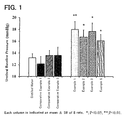
- Fig. 1 shows changes in urethral baseline pressure 8 hours after administration of test substances.
- the acetic acid ester compound of the present invention is an acetic acid ester compound represented by the following formula (I) or a salt thereof, wherein R represents optionally substituted deuterated lower alkyl.
- the acetic acid ester compound of the present invention which is represented by formula (I) above, is a novel compound that is not specifically disclosed in, for example, the aforementioned literature.
- Patent Literature 1 JPS62-051242B discloses an ⁇ , ⁇ -diphenyl- ⁇ -alkoxyacetic acid-1-methyl-4-piperidyl ester derivative as a compound that can effectively treat hypertonic functional states in the region of the bladder; however, this compound differs from the compound of the present invention in that it has methyl at the 1-position of piperidine and is not deuterated, and did not have a significant effect on urethral baseline pressure, as shown in the Test Example (Comparative Example 1) described later.
- Patent Literature 2 JP2004-534802A discloses deuterated N- and ⁇ -substituted diphenyl alkoxy acetic acid aminoalkyl esters that are useful as pharmaceutical preparations for treating hypertonic functional states; however, they differ from the compound of the present invention in that they have methyl at the 1-position of piperidine, and did not have a significant effect on urethral baseline pressure, as shown in the Test Example (Comparative Example 2) described later.
- Patent Literature 3 JPS62-039567A discloses a benzilic acid 4 piperidyl ester derivative having a bladder capacity-increasing action.
- this compound differs from the compound of the present invention in that it is not deuterated, and did not have a significant effect on urethral baseline pressure, as shown in the Test Example (Comparative Example 3) described later.
- the lower alkyl of "optionally substituted deuterated lower alkyl” represented by R is straight or branched C 1-6 alkyl.
- Examples thereof include methyl, ethyl, n- propyl, isopropyl, n -butyl, isobutyl, sec-butyl, tert -butyl, n- pentyl, n -hexyl, and the like.
- Straight C 1-6 alkyl is preferable, and n -propyl is more preferable.
- substituents of "optionally substituted deuterated lower alkyl" represented by R include halogen atoms (fluorine atom, chlorine atom, bromine atom, iodine atom), hydroxyl, cyano, amino, nitro, oxo, carboxyl, carbamoyl, cycloalkyl (such as cyclopropyl, cyclobutyl, cyclopentyl, and cyclohexyl), alkenyl (such as vinyl, 1- or 2-propenyl, and 1-butenyl), alkynyl (such as ethynyl, 1- or 2-propynyl, 1-, 2-, or 3-butynyl, and 1-methyl-2-propynyl), alkoxy (such as methoxy, ethoxy, propoxy, isopropoxy, butoxy, isobutoxy, tert -butoxy, pentyloxy, isopentyloxy, and hexyloxy), acyl
- deuterated indicates that one to all of the hydrogen atoms of R are replaced by deuterium, and preferably indicates that two to seven of the hydrogen atoms of R are replaced by deuterium.
- the optionally substituted deuterated lower alkyl is particularly preferably propyl-2,2,3,3,3-d5, propyl-1,1,2,2,3,3,3-d7, propyl-1,1-d2, propyl-2,2-d2, propyl-3,3,3-d3, or propyl-1,1,2,2-d4.
- the acetic acid ester compound of the present invention can be produced according to reaction scheme 1 below. (R is the same as above.)
- the compound represented by formula (I) can be obtained by reacting the compound represented by formula (1a) with the compound represented by formula (1b) in a suitable solvent.
- the compound represented by formula (1a) can be produced, for example, by the method disclosed in Pharmazie (1988), 43 (2), 86-90 and may be an acid addition salt with an inorganic acid, such as hydrochloric acid, hydrobromic acid, hydroiodic acid, sulfuric acid, nitric acid, and phosphoric acid, or an acid addition salt with an organic acid, such as formic acid, acetic acid, propionic acid, oxalic acid, malonic acid, succinic acid, fumaric acid, maleic acid, lactic acid, malic acid, citric acid, tartaric acid, carbonic acid, picric acid, methanesulfonic acid, paratoluenesulfonic acid, and glutamic acid.
- the compound represented by formula (1b) may be a commercially available product or may be obtained by producing it according to a known method
- the solvent used in reaction scheme 1 is not particularly limited as long as it is inert to the reaction, and examples of the solvent include ethers, such as diethyl ether and tetrahydrofuran; esters, such as ethyl acetate and butyl acetate; halogenated hydrocarbons, such as methylene chloride and chloroform; aromatic hydrocarbons, such as benzene, toluene, and chlorobenzene; aprotic polar solvents, such as N,N- dimethylformamide, N , N -dimethylacetamide, dimethyl sulfoxide, and acetonitrile; and alkylketones, such as acetone and methyl ethyl ketone.
- ethers such as diethyl ether and tetrahydrofuran
- esters such as ethyl acetate and butyl acetate
- halogenated hydrocarbons such as methylene chloride and chloroform
- the acid is preferably hydrochloric acid, sulfuric acid, methanesulfonic acid, or paratoluenesulfonic acid, and may be preferably used in an amount of about 1- to about 2-fold molar amount based on the compound represented by formula (1a)
- the compound represented by formula (1b) is used in an amount of about 1- to about 20-fold molar amount, and preferably about 1- to about 5-fold molar amount, based on the compound represented by formula (1a).
- the compound represented by formula (1b) may be used as the solvent.
- the reaction temperature is about 50 to about 200°C, and preferably about 80 to about 120°C.
- the reaction proceeds advantageously in a reaction time of about 1 to about 240 hours.
- asymmetric carbons are present in the compound (I), which is useful as an active ingredient of the medicine of the present invention, optical isomers due to asymmetric carbon atoms (enantiomers and diastereomers) and other isomers may be present.
- the present invention encompasses isomers that have been isolated, and mixtures thereof.
- the compound (I), which is useful as an active ingredient of the medicine of the present invention encompasses pharmaceutically acceptable prodrugs.
- Pharmaceutically acceptable prodrugs are compounds having functional groups that can be converted, under chemical conditions, such as solvolysis, or under physiological conditions, into amino, hydroxyl, carboxyl, carbonyl, or like functional groups of the compound (I), which is an active ingredient of the medicine of the present invention.
- Representative functional groups of prodrugs include the groups mentioned in " Iyakuhin no Kaihatsu [Development of Pharmaceuticals]," Vol. 7, pp. 163-198, Hirokawa Publishing (1990 ).
- the compound (I), which is useful as an active ingredient of the medicine of the present invention, may form an acid addition salt.
- a salt is included in the present invention insofar as it is pharmaceutically acceptable.
- Specific examples thereof include acid addition salts with inorganic acids, such as hydrochloric acid, hydrobromic acid, hydroiodic acid, sulfuric acid, nitric acid, and phosphoric acid, or organic acids, such as formic acid, acetic acid, propionic acid, oxalic acid, malonic acid, succinic acid, fumaric acid, maleic acid, lactic acid, malic acid, citric acid, tartaric acid, carbonic acid, picric acid, methanesulfonic acid, paratoluenesulfonic acid, and glutamic acid.
- inorganic acids such as hydrochloric acid, hydrobromic acid, hydroiodic acid, sulfuric acid, nitric acid, and phosphoric acid
- organic acids such as formic acid, acetic acid, propi
- the present invention further encompasses the hydrates, solvates, and crystal polymorphs of the compound (I), which is useful as an active ingredient of the medicine of the present invention, and pharmaceutically acceptable salts thereof.
- a pharmaceutical carrier can be added, if required, thereby forming a suitable dosage form according to prevention or treatment purposes.
- the dosage form include oral preparations, injections, suppositories, ointments, patches, and the like. Of these, oral preparations are preferable.
- Such dosage forms can be formed by common preparation methods known to persons skilled in the art.
- various organic or inorganic carrier materials commonly used as preparation materials may be blended as an excipient, binder, disintegrant, lubricant, or colorant in solid preparations; or as a solvent, solubilizing agent, suspending agent, isotonizing agent, buffer, or soothing agent in liquid preparations.
- a pharmaceutical preparation additive such as an antiseptic, antioxidant, colorant, sweetener, and stabilizer, may also be used, if required.
- Oral solid preparations can be prepared as follows. An excipient, optionally together with a binder, disintegrant, lubricant, colorant, sweetening/flavoring agent, or the like, is added to the compound of the present invention to produce tablets, coated tablets, granules, powders, capsules, or the like, using an ordinary method.
- excipients include lactose, sucrose, D-mannitol, glucose, starch, calcium carbonate, kaolin, microcrystalline cellulose, silicic acid anhydride, and the like.
- binders include water, ethanol, 1-propanol, 2-propanol, simple syrup, liquid glucose, liquid ⁇ -starch, liquid gelatin, D-mannitol, carboxymethyl cellulose, hydroxypropyl cellulose, hydroxypropyl starch, methyl cellulose, ethyl cellulose, shellac, calcium phosphate, polyvinylpyrrolidone, and the like.
- disintegrants include dry starch, sodium alginate, agar powder, sodium hydrogen carbonate, calcium carbonate, sodium lauryl sulfate, stearic acid monoglyceride, lactose, and the like.
- lubricants examples include purified talc, sodium stearate, magnesium stearate, borax, polyethylene glycol, and the like.
- colorants examples include titanium oxide, iron oxide, and the like.
- sweetening/flavoring agents examples include sucrose, wild orange peel, citric acid, tartaric acid, and the like.
- Oral liquid preparations can be produced as follows.
- a sweetening/flavoring agent, buffer, stabilizer, or the like is added to the compound of the present invention to produce an internal liquid medicine, a syrup, an elixir, or the like, using an ordinary method.
- sweetening/flavoring agents as described above are usable.
- buffers include sodium citrate and the like
- stabilizers include tragacanth, gum arabic, gelatin, and the like.
- an enteric coating or a coating to increase the persistence of effects can be provided by methods known for oral preparations.
- coating agents include hydroxypropyl methylcellulose, ethyl cellulose, hydroxymethyl cellulose, hydroxypropyl cellulose, polyoxy ethylene glycol, Tween 80 (registered trademark), and the like.
- Injections can be prepared as follows.
- pH adjusters and buffers usable in this case include sodium citrate, sodium acetate, sodium phosphate, and the like.
- stabilizers include sodium pyrosulfite, EDTA, thioglycolic acid, thiolactic acid, and the like.
- topical anesthetics include procaine hydrochloride, lidocaine hydrochloride, and the like.
- isotonizing agents include sodium chloride, glucose, D-mannitol, glycerin, and the like.
- Suppositories can be prepared as follows.
- a pharmaceutical carrier known in the art such as polyethylene glycol, lanolin, cacao butter, or fatty acid triglyceride, is added to the compound of the present invention, optionally together with a like surfactant such as Tween 80 (registered trademark), followed by production using an ordinary method.
- Ointments can be prepared as follows.
- An ordinary base, stabilizer, wetting agent, preservative, or the like is added as required to the compound of the present invention, and mixed and formulated using an ordinary method.
- bases include liquid paraffin, white petrolatum, white beeswax, octyldodecyl alcohol, paraffin, and the like.
- preservatives include methyl parahydroxybenzoate, ethyl parahydroxybenzoate, propyl parahydroxybenzoate, and the like.
- Patches can be prepared by coating a general support with the above ointment, cream, gel, paste, or the like, using an ordinary method.
- supports include woven or nonwoven fabrics made from cotton, staple fibers, and chemical fibers; and films and foam sheets of soft vinyl chloride, polyethylene, and polyurethane.
- the amount of the compound of the present invention to be contained in such a dosage unit form varies depending on the condition of the patient or on the dosage form.
- the desirable amount in one dosage unit form is typically about 0.05 to about 1,000 mg in the case of an oral preparation, about 0.01 to about 500 mg in the case of an injection, and about 1 to about 1,000 mg in the case of a suppository.
- the daily dose of a medicine in such a dosage form depends on the condition, body weight, age, gender, or the like, of the patient.
- the daily dose for an adult (body weight: 50 kg) may be generally about 0.05 to about 5,000 mg, and preferably 0.1 to 1,000 mg, and is preferably administered in one dose or in two to three divided doses per day.
- Administration of a medicine containing the compound of the present invention is useful, for example, in mammals, and in particular humans, for preventing or treating a disease that is expected to be ameliorated by an increase in intraurethral pressure.
- diseases that can be treated, prevented, or ameliorated with a medicine containing the compound of the present invention include stress urinary incontinence, urge urinary incontinence, mixed urinary incontinence, and urinary incontinence after an operation to remove the entire prostate gland.
- a medicine containing the compound of the present invention is also useful for frequent urination and urinary incontinence in neurogenic bladder, nervous bladder, unstable bladder, bladder irritation (chronic cystitis and chronic prostatitis), or the like; urinary urgency and frequent urination in overactive bladder; cardiovascular disease; irritable bowel syndrome; and climacteric disorder.
- n -propanol-1,1,2,2,3,3,3-d7 was used instead of n -propanol-2,2,3,3,3-d5, thereby obtaining 4-piperidinyl 2,2-diphenyl-2-(propoxy-1,1,2,2,3,3,3-d7)acetate hydrochloride as a white solid.
- n -propanol-1,1-d2 was used instead of n -propanol-2,2,3,3,3-d5, thereby obtaining 4-piperidinyl 2,2-diphenyl-2-(propoxy-1,1-d2)acetate hydrochloride as a white solid.
- n-propanol-2,2-d2 was used instead of n -propanol-2,2,3,3,3-d5, thereby obtaining 4-piperidinyl 2,2-diphenyl-2-(propoxy-2,2-d2)acetate hydrochloride as a white solid.
- n -propanol-3,3,3-d3 was used instead of n -propanol-2,2,3,3,3-d5, thereby obtaining 4-piperidinyl 2,2-diphenyl-2-(propoxy-3,3,3-d3)acetate hydrochloride as a white solid.
- Comparative Example 1 4-(1-methylpiperidyl) 2,2-diphenyl-2-propoxyacetate (Comparative Example 1), 4-(1-methylpiperidyl) 2,2-diphenyl-2-(propoxy-1,1,2,2,3,3,3-d7)acetate (Comparative Example 2), which is a deuterated compound of Comparative Example 1, and 4-piperidyl 2,2-diphenyl-2-propoxyacetate (Comparative Example 3), synthesized according to Patent Literatures 1 to 3, respectively, were used.
- each rat was anesthetized by intraperitoneal administration of 1.2 g/kg of urethane. Thereafter, the ureters and the area between the urethra and the bladder were ligated, and a vesical fistula catheter and a catheter for measuring intraurethral pressure were inserted and indwelled in the bladder and the urethra. The catheter for measuring intraurethral pressure was inserted from the external urethral orifice.
- each catheter was connected to a corresponding pressure transducer branched into two directions via a corresponding three-way stopcock, and the remaining connecting portion of each three-way stopcock was connected to a corresponding syringe set in a continuous injection device.
- Intravesical pressure and intraurethral pressure were recorded via a polygraph connected with the pressure transducers.
- physiological saline is injected into the bladder using the micro syringe pump connected to the bladder, and the injection was stopped when rhythmic bladder contraction was observed.
- Physiological saline was injected into the urethra using the micro syringe pump connected to the urethra at 3 mL/hr, and the changes in intraurethral pressure associated with the rhythmic contraction were recorded.
- urethral baseline pressure for each rat i.e., intraurethral pressure in a state in which the bladder does not contract, for 30 minutes after 8 hours from the administration.
- the mean values of the urethral baseline pressure for the solvent administration group and the test substance-administration groups were calculated, and the results were indicated as mean ⁇ SE.
- a Student's t-test was used for the comparison between the solvent administration group and the test substance-administration groups.
- Fig. 1 shows the urethral baseline pressure of the solvent administration group and test substance-administration groups.
- the comparative compounds did not have a significant effect on the urethral baseline pressure, whereas the compounds of the present invention showed significantly high urethral baseline pressure. Since decrease in urethral baseline pressure is believed to be a cause of stress urinary incontinence, the compounds of the present invention are useful as a prophylactic or therapeutic agent for a disease that is expected to be ameliorated by an increase in intraurethral pressure, such as stress urinary incontinence.
Landscapes
- Chemical & Material Sciences (AREA)
- Organic Chemistry (AREA)
- Health & Medical Sciences (AREA)
- Veterinary Medicine (AREA)
- Medicinal Chemistry (AREA)
- Pharmacology & Pharmacy (AREA)
- Life Sciences & Earth Sciences (AREA)
- Animal Behavior & Ethology (AREA)
- General Health & Medical Sciences (AREA)
- Public Health (AREA)
- Epidemiology (AREA)
- Engineering & Computer Science (AREA)
- Bioinformatics & Cheminformatics (AREA)
- Urology & Nephrology (AREA)
- Chemical Kinetics & Catalysis (AREA)
- General Chemical & Material Sciences (AREA)
- Nuclear Medicine, Radiotherapy & Molecular Imaging (AREA)
- Pharmaceuticals Containing Other Organic And Inorganic Compounds (AREA)
- Organic Low-Molecular-Weight Compounds And Preparation Thereof (AREA)
- Hydrogenated Pyridines (AREA)
- Acyclic And Carbocyclic Compounds In Medicinal Compositions (AREA)
Abstract

Description
- This application claims priority to Japanese Patent Application No.
2012-016685, filed on January 30, 2012 - The present invention relates to an acetic acid ester compound or a salt thereof that is useful for a prophylactic and/or therapeutic agent for a disease that is expected to be ameliorated by an increase in intraurethral pressure, such as stress urinary incontinence.
- Urinary incontinence is involuntary leakage of urine, and pathological urinary incontinence is a condition in which objective leakage, which is a social or hygienic problem, is observed. Stress urinary incontinence is leakage of urine upon a rise in abdominal pressure, such as during coughing, sneezing, laughing, or exercising, despite the absence of bladder contraction. Stress urinary incontinence has two main causes. One is hypermobility of the bladder neck and urethra. Descent of the bladder neck due to pelvic floor relaxation causes poor transmission of abdominal pressure to the urethra. Thus, upon a rise in abdominal pressure, only intravesical pressure is increased, resulting in leakage of urine. The other is intrinsic sphincter deficiency, leakage of urine upon a rise in abdominal pressure due to reduced sphincter function. Examples of the causes thereof include childbirth, obesity, aging, menopause, and pudendal nerve injury. Stress urinary incontinence is the most common type of urinary incontinence, and is reportedly observed in about 50% of female patients with urinary incontinence (Non-patent Literature 1). Urinary incontinence has significant adverse effects on women physically, mentally, and socially; inhibits participation in sports or social activities; and becomes a factor that decreases the quality of daily life (QOL). As a result, patients with stress urinary incontinence are made to suffer in their daily lives.
- In recent years, duloxetine, a serotonin-noradrenaline reuptake inhibitor (SNRI), has been developed and used as a new therapeutic agent for stress urinary incontinence in Europe. However, since duloxetine also has an antidepressant action, and there are concerns about side effects such as suicide (Non-patent Literature 2), duloxetine has not been approved as a therapeutic agent for stress urinary incontinence in other countries, including the U.S. and Japan. Therefore, there is a demand for the development of drugs that are useful for stress urinary incontinence.
-
Patent Literature 1 to 3 describe acetic acid ester compounds. -
- PTL 1:
JPS62-051242B - PTL 2:
JP2004-534802A - PTL 3:
JPS62-039567A -
- NPL 1: Int Urogynecol J Pelvic Floor Dysfunct (2000), 11 (5), 301-319
- NPL 2: Bmj (2005), 330 (7488), 396
- An object of the present invention is to provide a drug that is useful for a disease that is expected to be ameliorated by an increase in intraurethral pressure, such as stress urinary incontinence.
- The present inventors conducted extensive research on compounds having an effect of ameliorating stress urinary incontinence, and found that an acetic acid ester compound represented by the following formula (I) has an intraurethral pressure-increasing action. The inventors conducted further research, and accomplished the present invention.
- The present invention provides the following acetic acid ester compound or a salt thereof and a prophylactic and/or therapeutic agent for a disease that is expected to be ameliorated by an increase in intraurethral pressure, such as stress urinary incontinence, the agent comprising the acetic acid ester compound or a salt thereof as an active ingredient.
-
Item 1. An acetic acid ester compound represented by the following formula (I) or a salt thereof,
-
Item 2. The acetic acid ester compound according toitem 1 or a salt thereof, wherein R represents deuterated straight C1-6 alkyl. -
Item 3. The acetic acid ester compound according toitem - Item 4. The acetic acid ester compound according to any of
items 1 to 3 or a salt thereof, wherein R represents propyl-2,2,3,3,3-d5, propyl-1,1,2,2,3,3,3-d7, propyl-1,1-d2, propyl-2,2-d2, propyl-3,3,3-d3, or propyl-1,1,2,2-d4. - Item 5. An acetic acid ester compound of any of the following (a) to (f), or a salt thereof:
- (a) 4-
piperidinyl 2,2-diphenyl-2-(propoxy-2,2,3,3,3-d5)acetate, - (b) 4-
piperidinyl 2,2-diphenyl-2-(propoxy-1,1,2,2,3,3,3-d7)acetate, - (c) 4-
piperidinyl 2,2-diphenyl-2-(propoxy-1,1-d2)acetate, - (d) 4-
piperidinyl 2,2-diphenyl-2-(propoxy-2,2-d2)acetate, - (e) 4-
piperidinyl 2,2-diphenyl-2-(propoxy-3,3,3-d3)acetate, and - (f) 4-
piperidinyl 2,2-diphenyl-2-(propoxy-1,1,2,2-d4)acetate.
- (a) 4-
-
Item 6. A pharmaceutical composition comprising an effective amount of the acetic acid ester compound according to any ofitems 1 to 5 or a salt thereof, and a pharmaceutical carrier. - Item 7. A prophylactic and/or therapeutic agent for a disease that is expected to be ameliorated by an increase in intraurethral pressure, the agent comprising an effective amount of the acetic acid ester compound according to any of
items 1 to 5 or a salt thereof, and a pharmaceutical carrier. - Item 8. A prophylactic and/or therapeutic agent for stress urinary incontinence, the agent comprising an effective amount of the acetic acid ester compound according to any of
items 1 to 5 or a salt thereof, and a pharmaceutical carrier. - Item 9. A method for preventing and/or treating a disease that is expected to be ameliorated by an increase in intraurethral pressure, the method comprising administering an effective amount of the acetic acid ester compound according to any of
items 1 to 5 or a salt thereof. -
Item 10. The method according to item 9, wherein the disease that is expected to be ameliorated by an increase in intraurethral pressure is stress urinary incontinence. - Item 11. The acetic acid ester compound according to any of
items 1 to 5 or a salt thereof for preventing and/or treating a disease that is expected to be ameliorated by an increase in intraurethral pressure. -
Item 12. Use of the acetic acid ester compound according to any ofitems 1 to 5 or a salt thereof for preventing and/or treating a disease that is expected to be ameliorated by an increase in intraurethral pressure. - Item 13. Use of the acetic acid ester compound according to any of
items 1 to 5 or a salt thereof for the production of a prophylactic and/or therapeutic agent for a disease that is expected to be ameliorated by an increase in intraurethral pressure. - The present invention provides an acetic acid ester compound represented by formula (I) above or a salt thereof, which is useful as a therapeutic agent for stress urinary incontinence.
- It has been revealed that the acetic acid ester compound or a salt thereof of the present invention exhibits an excellent intraurethral pressure-increasing action in vivo. Accordingly, the acetic acid ester compound or a salt thereof of the present invention can be expected to have efficacy that is effective as a prophylactic and/or therapeutic agent for a disease that is expected to be ameliorated by an increase in intraurethral pressure, such as stress urinary incontinence.
-
Fig. 1 shows changes in urethral baseline pressure 8 hours after administration of test substances. - The acetic acid ester compound of the present invention is an acetic acid ester compound represented by the following formula (I) or a salt thereof,

- The acetic acid ester compound of the present invention, which is represented by formula (I) above, is a novel compound that is not specifically disclosed in, for example, the aforementioned literature.
- For example, Patent Literature 1 (JPS62-051242B) discloses an α,α-diphenyl-α-alkoxyacetic acid-1-methyl-4-piperidyl ester derivative as a compound that can effectively treat hypertonic functional states in the region of the bladder; however, this compound differs from the compound of the present invention in that it has methyl at the 1-position of piperidine and is not deuterated, and did not have a significant effect on urethral baseline pressure, as shown in the Test Example (Comparative Example 1) described later.
- Patent Literature 2 (
JP2004-534802A - Further, Patent Literature 3 (JPS62-039567A) discloses a benzilic acid 4 piperidyl ester derivative having a bladder capacity-increasing action. However, this compound differs from the compound of the present invention in that it is not deuterated, and did not have a significant effect on urethral baseline pressure, as shown in the Test Example (Comparative Example 3) described later.
- In the present specification, the lower alkyl of "optionally substituted deuterated lower alkyl" represented by R is straight or branched C1-6 alkyl. Examples thereof include methyl, ethyl, n-propyl, isopropyl, n-butyl, isobutyl, sec-butyl, tert-butyl, n-pentyl, n-hexyl, and the like. Straight C1-6 alkyl is preferable, and n-propyl is more preferable.
- Examples of substituents of "optionally substituted deuterated lower alkyl" represented by R include halogen atoms (fluorine atom, chlorine atom, bromine atom, iodine atom), hydroxyl, cyano, amino, nitro, oxo, carboxyl, carbamoyl, cycloalkyl (such as cyclopropyl, cyclobutyl, cyclopentyl, and cyclohexyl), alkenyl (such as vinyl, 1- or 2-propenyl, and 1-butenyl), alkynyl (such as ethynyl, 1- or 2-propynyl, 1-, 2-, or 3-butynyl, and 1-methyl-2-propynyl), alkoxy (such as methoxy, ethoxy, propoxy, isopropoxy, butoxy, isobutoxy, tert-butoxy, pentyloxy, isopentyloxy, and hexyloxy), acyl (such as formyl, acetyl, propionyl, butynyl, isobutynyl, and benzoyl), acyloxy (such as formyloxy, acetyloxy, propionyloxy, butynyloxy, isobutynyloxy, and benzoyloxy), alkoxycarbonyl (such as methoxycarbonyl, ethoxycarbonyl, propoxycarbonyl, isopropoxycarbonyl, butoxycarbonyl, isobutoxycarbonyl, tert-butoxycarbonyl, pentyloxycarbonyl, isopentyloxycarbonyl, and hexyloxycarbonyl), saturated heterocyclic groups (such as azetidino, pyrrolidino, imidazolidino, oxazolidino, thiazolidino, piperazino, piperidino, morpholino, and thiomorpholino), unsaturated heterocyclic groups (such as furyl, thienyl, pyrrolyl, imidazolyl, pyrazolyl, oxazolyl, thiazolyl, isoxazolyl, isothiazolyl, pyridyl, pyrazinyl, pyrimidinyl, pyridazinyl, indolyl, quinolyl, isoquinolyl, benzo[b]thienyl, and benzimidazolyl), aromatic hydrocarbon groups (such as phenyl, naphthyl, tolyl, xylyl, anthracenyl, phenanthrenyl, and biphenylyl), alkylamino (such as methylamino, ethylamino, n-propylamino, isopropylamino, n-butylamino, isobutylamino, sec-butylamino, tert-butylamino, n-pentylamino, and n-hexylamino), acylamino (such as formylamino, acetylamino, propionylamino, butynylamino, isobutynylamino, and benzoylamino), aralkyloxy (such as benzyloxy, phenethyloxy, phenylpropyloxy, and naphthylmethyloxy), and the like. Hydroxyl is preferable. When such substituents are present, the number thereof is typically one to three.
- In the present specification, the term "deuterated" indicates that one to all of the hydrogen atoms of R are replaced by deuterium, and preferably indicates that two to seven of the hydrogen atoms of R are replaced by deuterium.
- The optionally substituted deuterated lower alkyl is particularly preferably propyl-2,2,3,3,3-d5, propyl-1,1,2,2,3,3,3-d7, propyl-1,1-d2, propyl-2,2-d2, propyl-3,3,3-d3, or propyl-1,1,2,2-d4.
- The acetic acid ester compound of the present invention can be produced according to
reaction scheme 1 below.
- The compound represented by formula (I) can be obtained by reacting the compound represented by formula (1a) with the compound represented by formula (1b) in a suitable solvent. The compound represented by formula (1a) can be produced, for example, by the method disclosed in Pharmazie (1988), 43 (2), 86-90 and may be an acid addition salt with an inorganic acid, such as hydrochloric acid, hydrobromic acid, hydroiodic acid, sulfuric acid, nitric acid, and phosphoric acid, or an acid addition salt with an organic acid, such as formic acid, acetic acid, propionic acid, oxalic acid, malonic acid, succinic acid, fumaric acid, maleic acid, lactic acid, malic acid, citric acid, tartaric acid, carbonic acid, picric acid, methanesulfonic acid, paratoluenesulfonic acid, and glutamic acid. The compound represented by formula (1b) may be a commercially available product or may be obtained by producing it according to a known method, for example, the method disclosed in Angewandte Chemie, International Edition (2001), 40 (14), 2708-2710.
- The solvent used in
reaction scheme 1 is not particularly limited as long as it is inert to the reaction, and examples of the solvent include ethers, such as diethyl ether and tetrahydrofuran; esters, such as ethyl acetate and butyl acetate; halogenated hydrocarbons, such as methylene chloride and chloroform; aromatic hydrocarbons, such as benzene, toluene, and chlorobenzene; aprotic polar solvents, such as N,N-dimethylformamide, N,N-dimethylacetamide, dimethyl sulfoxide, and acetonitrile; and alkylketones, such as acetone and methyl ethyl ketone. These may be used alone or in a combination of two or more. In this reaction, an acid may be added. The acid is preferably hydrochloric acid, sulfuric acid, methanesulfonic acid, or paratoluenesulfonic acid, and may be preferably used in an amount of about 1- to about 2-fold molar amount based on the compound represented by formula (1a) - In this reaction, the compound represented by formula (1b) is used in an amount of about 1- to about 20-fold molar amount, and preferably about 1- to about 5-fold molar amount, based on the compound represented by formula (1a). As the solvent, the compound represented by formula (1b) may be used. The reaction temperature is about 50 to about 200°C, and preferably about 80 to about 120°C. The reaction proceeds advantageously in a reaction time of about 1 to about 240 hours.
- If one or more asymmetric carbons are present in the compound (I), which is useful as an active ingredient of the medicine of the present invention, optical isomers due to asymmetric carbon atoms (enantiomers and diastereomers) and other isomers may be present. The present invention encompasses isomers that have been isolated, and mixtures thereof.
- The compound (I), which is useful as an active ingredient of the medicine of the present invention, encompasses pharmaceutically acceptable prodrugs. Pharmaceutically acceptable prodrugs are compounds having functional groups that can be converted, under chemical conditions, such as solvolysis, or under physiological conditions, into amino, hydroxyl, carboxyl, carbonyl, or like functional groups of the compound (I), which is an active ingredient of the medicine of the present invention. Representative functional groups of prodrugs include the groups mentioned in " Iyakuhin no Kaihatsu [Development of Pharmaceuticals]," Vol. 7, pp. 163-198, Hirokawa Publishing (1990).
- The compound (I), which is useful as an active ingredient of the medicine of the present invention, may form an acid addition salt. Such a salt is included in the present invention insofar as it is pharmaceutically acceptable. Specific examples thereof include acid addition salts with inorganic acids, such as hydrochloric acid, hydrobromic acid, hydroiodic acid, sulfuric acid, nitric acid, and phosphoric acid, or organic acids, such as formic acid, acetic acid, propionic acid, oxalic acid, malonic acid, succinic acid, fumaric acid, maleic acid, lactic acid, malic acid, citric acid, tartaric acid, carbonic acid, picric acid, methanesulfonic acid, paratoluenesulfonic acid, and glutamic acid.
- The present invention further encompasses the hydrates, solvates, and crystal polymorphs of the compound (I), which is useful as an active ingredient of the medicine of the present invention, and pharmaceutically acceptable salts thereof.
- When a pharmaceutical composition contains the acetic acid ester compound or a salt thereof of the present invention, a pharmaceutical carrier can be added, if required, thereby forming a suitable dosage form according to prevention or treatment purposes. Examples of the dosage form include oral preparations, injections, suppositories, ointments, patches, and the like. Of these, oral preparations are preferable. Such dosage forms can be formed by common preparation methods known to persons skilled in the art.
- As the pharmaceutical carrier, various organic or inorganic carrier materials commonly used as preparation materials may be blended as an excipient, binder, disintegrant, lubricant, or colorant in solid preparations; or as a solvent, solubilizing agent, suspending agent, isotonizing agent, buffer, or soothing agent in liquid preparations. Moreover, a pharmaceutical preparation additive, such as an antiseptic, antioxidant, colorant, sweetener, and stabilizer, may also be used, if required.
- Oral solid preparations can be prepared as follows. An excipient, optionally together with a binder, disintegrant, lubricant, colorant, sweetening/flavoring agent, or the like, is added to the compound of the present invention to produce tablets, coated tablets, granules, powders, capsules, or the like, using an ordinary method.
- Examples of excipients include lactose, sucrose, D-mannitol, glucose, starch, calcium carbonate, kaolin, microcrystalline cellulose, silicic acid anhydride, and the like.
- Examples of binders include water, ethanol, 1-propanol, 2-propanol, simple syrup, liquid glucose, liquid α-starch, liquid gelatin, D-mannitol, carboxymethyl cellulose, hydroxypropyl cellulose, hydroxypropyl starch, methyl cellulose, ethyl cellulose, shellac, calcium phosphate, polyvinylpyrrolidone, and the like.
- Examples of disintegrants include dry starch, sodium alginate, agar powder, sodium hydrogen carbonate, calcium carbonate, sodium lauryl sulfate, stearic acid monoglyceride, lactose, and the like.
- Examples of lubricants include purified talc, sodium stearate, magnesium stearate, borax, polyethylene glycol, and the like.
- Examples of colorants include titanium oxide, iron oxide, and the like.
- Examples of sweetening/flavoring agents include sucrose, wild orange peel, citric acid, tartaric acid, and the like.
- Oral liquid preparations can be produced as follows. A sweetening/flavoring agent, buffer, stabilizer, or the like, is added to the compound of the present invention to produce an internal liquid medicine, a syrup, an elixir, or the like, using an ordinary method. In this case, sweetening/flavoring agents as described above are usable. Examples of buffers include sodium citrate and the like, and examples of stabilizers include tragacanth, gum arabic, gelatin, and the like. If necessary, an enteric coating or a coating to increase the persistence of effects can be provided by methods known for oral preparations. Examples of coating agents include hydroxypropyl methylcellulose, ethyl cellulose, hydroxymethyl cellulose, hydroxypropyl cellulose, polyoxy ethylene glycol, Tween 80 (registered trademark), and the like.
- Injections can be prepared as follows. A pH adjuster, buffer, stabilizer, isotonizing agent, topical anesthetic, or the like, is added to the compound of the present invention to produce a subcutaneous injection, an intramuscular injection, or an intravenous injection using an ordinary method. Examples of pH adjusters and buffers usable in this case include sodium citrate, sodium acetate, sodium phosphate, and the like. Examples of stabilizers include sodium pyrosulfite, EDTA, thioglycolic acid, thiolactic acid, and the like. Examples of topical anesthetics include procaine hydrochloride, lidocaine hydrochloride, and the like. Examples of isotonizing agents include sodium chloride, glucose, D-mannitol, glycerin, and the like.
- Suppositories can be prepared as follows. A pharmaceutical carrier known in the art, such as polyethylene glycol, lanolin, cacao butter, or fatty acid triglyceride, is added to the compound of the present invention, optionally together with a like surfactant such as Tween 80 (registered trademark), followed by production using an ordinary method.
- Ointments can be prepared as follows. An ordinary base, stabilizer, wetting agent, preservative, or the like, is added as required to the compound of the present invention, and mixed and formulated using an ordinary method. Examples of bases include liquid paraffin, white petrolatum, white beeswax, octyldodecyl alcohol, paraffin, and the like. Examples of preservatives include methyl parahydroxybenzoate, ethyl parahydroxybenzoate, propyl parahydroxybenzoate, and the like.
- Patches can be prepared by coating a general support with the above ointment, cream, gel, paste, or the like, using an ordinary method. Examples of supports include woven or nonwoven fabrics made from cotton, staple fibers, and chemical fibers; and films and foam sheets of soft vinyl chloride, polyethylene, and polyurethane.
- The amount of the compound of the present invention to be contained in such a dosage unit form varies depending on the condition of the patient or on the dosage form. The desirable amount in one dosage unit form is typically about 0.05 to about 1,000 mg in the case of an oral preparation, about 0.01 to about 500 mg in the case of an injection, and about 1 to about 1,000 mg in the case of a suppository.
- The daily dose of a medicine in such a dosage form depends on the condition, body weight, age, gender, or the like, of the patient. For example, the daily dose for an adult (body weight: 50 kg) may be generally about 0.05 to about 5,000 mg, and preferably 0.1 to 1,000 mg, and is preferably administered in one dose or in two to three divided doses per day.
- Administration of a medicine containing the compound of the present invention is useful, for example, in mammals, and in particular humans, for preventing or treating a disease that is expected to be ameliorated by an increase in intraurethral pressure. Examples of diseases that can be treated, prevented, or ameliorated with a medicine containing the compound of the present invention include stress urinary incontinence, urge urinary incontinence, mixed urinary incontinence, and urinary incontinence after an operation to remove the entire prostate gland. Further, a medicine containing the compound of the present invention is also useful for frequent urination and urinary incontinence in neurogenic bladder, nervous bladder, unstable bladder, bladder irritation (chronic cystitis and chronic prostatitis), or the like; urinary urgency and frequent urination in overactive bladder; cardiovascular disease; irritable bowel syndrome; and climacteric disorder.
- Examples and a Test Example are given below to illustrate the present invention in more detail; however, the present invention is not limited to these Examples.
- Thionyl chloride (3.1 ml, 42.1 mmol) and several drops of dimethylformamide were added to 4-piperidinyl 2-hydroxy-2,2-diphenylacetate hydrochloride (3.00 g, 8.62 mmol) obtained according to the method disclosed in the document Pharmazie (1988), 43 (2), 86-90, and the mixture was stirred for 2 hours at 80°C. The reaction mixture was allowed to cool, and then concentrated under reduced pressure to give 4-piperidinyl 2-chloro-2,2-diphenylacetate hydrochloride. This compound was used for the next reaction without purification.
- To 4-piperidinyl 2-chloro-2,2-diphenylacetate hydrochloride obtained in Reference Example 1, n-propanol-2,2,3,3,3-d5 (2.0 g, 34.5 mmol) was added, and the mixture was stirred while heating under reflux for 100 hours. The reaction mixture was allowed to cool, and then concentrated under reduced pressure. The precipitated solid was collected by filtration, thereby obtaining crude crystals. Subsequently, the obtained crude crystals were recrystallized using ethyl acetate and methyl ethyl ketone to give 4-
piperidinyl 2,2-diphenyl-2-(propoxy-2,2,3,3,3-d5)acetate hydrochloride (2.27 g, 66%) as a white solid. - Following the procedure of Example 1, n-propanol-1,1,2,2,3,3,3-d7 was used instead of n-propanol-2,2,3,3,3-d5, thereby obtaining 4-
piperidinyl 2,2-diphenyl-2-(propoxy-1,1,2,2,3,3,3-d7)acetate hydrochloride as a white solid. - Following the procedure of Example 1, n-propanol-1,1-d2 was used instead of n-propanol-2,2,3,3,3-d5, thereby obtaining 4-
piperidinyl 2,2-diphenyl-2-(propoxy-1,1-d2)acetate hydrochloride as a white solid. - Following the procedure of Example 1, n-propanol-2,2-d2 was used instead of n-propanol-2,2,3,3,3-d5, thereby obtaining 4-
piperidinyl 2,2-diphenyl-2-(propoxy-2,2-d2)acetate hydrochloride as a white solid. - Following the procedure of Example 1, n-propanol-3,3,3-d3 was used instead of n-propanol-2,2,3,3,3-d5, thereby obtaining 4-
piperidinyl 2,2-diphenyl-2-(propoxy-3,3,3-d3)acetate hydrochloride as a white solid. - Following the procedure of Example 1, n-propanol-1,1,2,2-d4 was used instead of n-propanol-2,2,3,3,3-d5, thereby obtaining 4-
piperidinyl 2,2-diphenyl-2-(propoxy-1,1,2,2-d4)acetate hydrochloride as a white solid.Table 1 Example R 1H-NMR (DMSO-d6) δ (ppm) m. p. (°C) 1 -CH2-CD2-CD3 1.63-1.68 (m, 2H), 1.91-1.98 (m, 2H), 2.78-2.86 (m, 2H), 2.95-3.04 (m, 2H), 3.11 (s, 2H) 5.02-5.08 (m, 1H), 7.30-7.40 (m, 10H), 8.65 (brs, 1H) 139-140 2 -CD2-CD2- CD 31. 62-1. 71 (m, 2H), 1. 90-1. 98 (m, 2H), 2.78-2.85 (m, 2H), 2.95-3.04 (m, 2H), 5.01-5.08 (m, 1H), 7.30-7.40 (m, 10H), 8.72 (brs, 1H) 137-139 3 -CD2-CH2-CH3 0.86 (t, 3H, J = 7.6 Hz), 1.50 (q, 2H, J = 7.6 Hz), 1. 60-1. 70 (m, 2H), 1.89-1.98 (m, 2H), 2.77-2.87 (m, 2H), 2.95-3.06 (m, 2H), 5.02-5.08 (m, 1H), 7.30-7.40 (m, 10H), 8.65 (brs, 1H) 139-141 4 -CH2-CD2-CH3 0.84 (s, 3H), 1.60-1.71 (m, 2H), 1.89-2.00 (m, 2H), 2.76-2.86 (m, 2H), 2.95-3.04 (m, 2H), 3.11 (s, 2H) 5.02-5.08 (m, 1H), 7.30-7.40 (m, 10H), 8.80 (brs, 1H) 138-140 5 -CH2-CH2-CD3 1.47-1.52 (m, 2H), 1.60-1. 70 (m, 2H), 1.89-1.98 (m, 2H), 2.78-2.86 (m, 2H), 2.95-3.10 (m, 2H), 3.10-3.15 (m, 2H) 5.02-5.08 (m, 1H), 7.30-7.40 (m, 10H), 8.67 (brs, 1H) 138-140 6 -CD2-CD2-CH3 0.84 (s, 3H), 1.60-1.71 (m, 2H), 1.89-2.00 (m, 2H), 2. 76-2. 86 (m, 2H), 2. 95-3. 04 (m, 2H), 3. 11 (s, 2H) 5.02-5.08 (m, 1H), 7.30-7.40 (m, 10H), 8.80 (brs, 1H) 137-139 - The compounds of the present invention and comparative compounds were individually orally administered in an amount of 3 mg/kg to 11-week-old female SD rats (test substance-administration groups, n=8 for each group), and distilled water was orally administered as the control to 11-week-old female SD rats (solvent administration group, n=8). As the comparative compounds, 4-(1-methylpiperidyl) 2,2-diphenyl-2-propoxyacetate (Comparative Example 1), 4-(1-methylpiperidyl) 2,2-diphenyl-2-(propoxy-1,1,2,2,3,3,3-d7)acetate (Comparative Example 2), which is a deuterated compound of Comparative Example 1, and 4-
piperidyl 2,2-diphenyl-2-propoxyacetate (Comparative Example 3), synthesized according toPatent Literatures 1 to 3, respectively, were used. - Seven and a half hours after administration, each rat was anesthetized by intraperitoneal administration of 1.2 g/kg of urethane. Thereafter, the ureters and the area between the urethra and the bladder were ligated, and a vesical fistula catheter and a catheter for measuring intraurethral pressure were inserted and indwelled in the bladder and the urethra. The catheter for measuring intraurethral pressure was inserted from the external urethral orifice. The other end of each catheter was connected to a corresponding pressure transducer branched into two directions via a corresponding three-way stopcock, and the remaining connecting portion of each three-way stopcock was connected to a corresponding syringe set in a continuous injection device. Intravesical pressure and intraurethral pressure were recorded via a polygraph connected with the pressure transducers. After the operation, physiological saline is injected into the bladder using the micro syringe pump connected to the bladder, and the injection was stopped when rhythmic bladder contraction was observed. Physiological saline was injected into the urethra using the micro syringe pump connected to the urethra at 3 mL/hr, and the changes in intraurethral pressure associated with the rhythmic contraction were recorded.
- The mean value of urethral baseline pressure for each rat, i.e., intraurethral pressure in a state in which the bladder does not contract, for 30 minutes after 8 hours from the administration, was calculated. The mean values of the urethral baseline pressure for the solvent administration group and the test substance-administration groups were calculated, and the results were indicated as mean ± SE. A Student's t-test was used for the comparison between the solvent administration group and the test substance-administration groups.
-
Fig. 1 shows the urethral baseline pressure of the solvent administration group and test substance-administration groups. The comparative compounds did not have a significant effect on the urethral baseline pressure, whereas the compounds of the present invention showed significantly high urethral baseline pressure. Since decrease in urethral baseline pressure is believed to be a cause of stress urinary incontinence, the compounds of the present invention are useful as a prophylactic or therapeutic agent for a disease that is expected to be ameliorated by an increase in intraurethral pressure, such as stress urinary incontinence.
Claims (13)
- An acetic acid ester compound represented by the following formula or a salt thereof,

- The acetic acid ester compound according to claim 1 or a salt thereof, wherein R represents deuterated straight C1-6 alkyl.
- The acetic acid ester compound according to claim 1 or 2 or a salt thereof, wherein R represents n-propyl in which 2 to 7 of the hydrogen atoms are replaced by deuterium.
- The acetic acid ester compound according to any of claims 1 to 3 or a salt thereof, wherein R represents propyl-2,2,3,3,3-d5, propyl-1,1,2,2,3,3,3-d7, propyl-1,1-d2, propyl-2,2-d2, propyl-3,3,3-d3, or propyl-1,1,2,2-d4.
- An acetic acid ester compound of any of the following (a) to (f), or a salt thereof:(a) 4-piperidinyl 2,2-diphenyl-2-(propoxy-2,2,3,3,3-d5)acetate,(b) 4-piperidinyl 2,2-diphenyl-2-(propoxy-1,1,2,2,3,3,3-d7)acetate,(c) 4-piperidinyl 2,2-diphenyl-2-(propoxy-1,1-d2)acetate,(d) 4-piperidinyl 2,2-diphenyl-2-(propoxy-2,2-d2)acetate,(e) 4-piperidinyl 2,2-diphenyl-2-(propoxy-3,3,3-d3)acetate, and(f) 4-piperidinyl 2,2-diphenyl-2-(propoxy-1,1,2,2-d4)acetate.
- A pharmaceutical composition comprising an effective amount of the acetic acid ester compound according to any of claims 1 to 5 or a salt thereof, and a pharmaceutical carrier.
- A and/or therapeutic agent for a disease that is expected to be ameliorated by an increase in intraurethral pressure, the agent comprising an effective amount of the acetic acid ester compound according to any of claims 1 to 5 or a salt thereof, and a pharmaceutical carrier.
- A prophylactic and/or therapeutic agent for stress urinary incontinence, the agent comprising an effective amount of the acetic acid ester compound according to any of claims 1 to 5 or a salt thereof, and a pharmaceutical carrier.
- A method for preventing and/or treating a disease that is expected to be ameliorated by an increase in intraurethral pressure, the method comprising administering an effective amount of the acetic acid ester compound according to any of claims 1 to 5 or a salt thereof.
- The method according to claim 9, wherein the disease that is expected to be ameliorated by an increase in intraurethral pressure is stress urinary incontinence.
- The acetic acid ester compound according to any of claims 1 to 5 or a salt thereof for preventing and/or treating a disease that is expected to be ameliorated by an increase in intraurethral pressure.
- Use of the acetic acid ester compound according to any of claims 1 to 5 or a salt thereof for preventing and/or treating a disease that is expected to be ameliorated by an increase in intraurethral pressure.
- Use of the acetic acid ester compound according to any of claims 1 to 5 or a salt thereof for the production of a prophylactic and/or therapeutic agent for a disease that is expected to be ameliorated by an increase in intraurethral pressure.
Priority Applications (1)
| Application Number | Priority Date | Filing Date | Title |
|---|---|---|---|
| PL13743714T PL2810936T3 (en) | 2012-01-30 | 2013-01-25 | Novel acetic acid ester compound or salt thereof |
Applications Claiming Priority (2)
| Application Number | Priority Date | Filing Date | Title |
|---|---|---|---|
| JP2012016685 | 2012-01-30 | ||
| PCT/JP2013/051533 WO2013115077A1 (en) | 2012-01-30 | 2013-01-25 | Novel acetic acid ester compound or salt thereof |
Publications (3)
| Publication Number | Publication Date |
|---|---|
| EP2810936A1 true EP2810936A1 (en) | 2014-12-10 |
| EP2810936A4 EP2810936A4 (en) | 2015-05-13 |
| EP2810936B1 EP2810936B1 (en) | 2017-11-22 |
Family
ID=48905117
Family Applications (1)
| Application Number | Title | Priority Date | Filing Date |
|---|---|---|---|
| EP13743714.1A Active EP2810936B1 (en) | 2012-01-30 | 2013-01-25 | Novel acetic acid ester compound or salt thereof |
Country Status (21)
| Country | Link |
|---|---|
| US (2) | US9505717B2 (en) |
| EP (1) | EP2810936B1 (en) |
| JP (1) | JP5557965B2 (en) |
| KR (1) | KR101696528B1 (en) |
| CN (1) | CN104093707B (en) |
| AU (1) | AU2013216198B2 (en) |
| BR (1) | BR112014017272B1 (en) |
| CA (1) | CA2862990C (en) |
| DK (1) | DK2810936T3 (en) |
| ES (1) | ES2659269T3 (en) |
| HU (1) | HUE036534T2 (en) |
| MX (1) | MX355337B (en) |
| MY (1) | MY168434A (en) |
| NO (1) | NO2810936T3 (en) |
| PL (1) | PL2810936T3 (en) |
| PT (1) | PT2810936T (en) |
| RU (1) | RU2585759C2 (en) |
| SG (1) | SG11201403142PA (en) |
| TR (1) | TR201802133T4 (en) |
| TW (1) | TWI488626B (en) |
| WO (1) | WO2013115077A1 (en) |
Families Citing this family (2)
| Publication number | Priority date | Publication date | Assignee | Title |
|---|---|---|---|---|
| CN104876854B (en) * | 2015-04-16 | 2017-03-01 | 御盛隆堂药业有限责任公司 | Hydroxy acetate derivative and application thereof |
| WO2024143236A1 (en) * | 2022-12-26 | 2024-07-04 | 大鵬薬品工業株式会社 | Crystals of acetate hydrochloride |
Family Cites Families (5)
| Publication number | Priority date | Publication date | Assignee | Title |
|---|---|---|---|---|
| DD106642A1 (en) * | 1973-03-02 | 1974-06-20 | ||
| DD139212A1 (en) | 1978-10-09 | 1979-12-19 | Christian Starke | PROCESS FOR THE PREPARATION OF A NEW MEDICAMENT FROM ALPHA, ALPHA-DIPHENYL-ALPHA-ALKOXY ACETIC ACID 1-METHYLPIPERIDYL-4-ESTER DERIVATIVES |
| JPH0611758B2 (en) | 1985-08-14 | 1994-02-16 | 大鵬薬品工業株式会社 | Benzyl acid-4-piperidyl ester derivative |
| JPH0669068B2 (en) | 1985-08-30 | 1994-08-31 | 株式会社東芝 | Manufacturing method of multilayer wiring |
| DE10129832A1 (en) * | 2001-06-17 | 2003-07-10 | Berolina Drug Dev Ab Svedala | Deuterated N- and alpha-substituted diphenylalkoxyacetic acid amino alkyl esters and medicaments containing these compounds |
-
2013
- 2013-01-25 CN CN201380006164.9A patent/CN104093707B/en active Active
- 2013-01-25 KR KR1020147023972A patent/KR101696528B1/en active Active
- 2013-01-25 AU AU2013216198A patent/AU2013216198B2/en active Active
- 2013-01-25 MX MX2014008995A patent/MX355337B/en active IP Right Grant
- 2013-01-25 BR BR112014017272-2A patent/BR112014017272B1/en active IP Right Grant
- 2013-01-25 ES ES13743714.1T patent/ES2659269T3/en active Active
- 2013-01-25 EP EP13743714.1A patent/EP2810936B1/en active Active
- 2013-01-25 CA CA2862990A patent/CA2862990C/en active Active
- 2013-01-25 JP JP2013556363A patent/JP5557965B2/en active Active
- 2013-01-25 RU RU2014135417/04A patent/RU2585759C2/en active
- 2013-01-25 PL PL13743714T patent/PL2810936T3/en unknown
- 2013-01-25 DK DK13743714.1T patent/DK2810936T3/en active
- 2013-01-25 MY MYPI2014701650A patent/MY168434A/en unknown
- 2013-01-25 PT PT137437141T patent/PT2810936T/en unknown
- 2013-01-25 US US14/370,544 patent/US9505717B2/en active Active
- 2013-01-25 TR TR2018/02133T patent/TR201802133T4/en unknown
- 2013-01-25 HU HUE13743714A patent/HUE036534T2/en unknown
- 2013-01-25 SG SG11201403142PA patent/SG11201403142PA/en unknown
- 2013-01-25 WO PCT/JP2013/051533 patent/WO2013115077A1/en not_active Ceased
- 2013-01-25 NO NO13743714A patent/NO2810936T3/no unknown
- 2013-01-28 TW TW102103096A patent/TWI488626B/en active
-
2016
- 2016-10-18 US US15/296,517 patent/US9907792B2/en active Active
Also Published As
Similar Documents
| Publication | Publication Date | Title |
|---|---|---|
| CN111712503A (en) | Substituted tetrahydropyrandihydrothienopyrimidines and their use as phosphodiesterase inhibitors | |
| US9907792B2 (en) | Acetic acid ester compound or salt thereof | |
| EP3006427B1 (en) | Fluorinated benzilic acid ester compound and salt thereof | |
| HK1201522B (en) | Acetic acid ester compound or salt thereof | |
| HK1217332B (en) | Fluorinated benzilic acid ester compound and salt thereof | |
| BR112015029251B1 (en) | FLUORINATED BENZYL ACID ESTER COMPOUNDS, PHARMACEUTICAL COMPOSITION, PROPHYLACTIC AGENT AND THEIR USES |
Legal Events
| Date | Code | Title | Description |
|---|---|---|---|
| PUAI | Public reference made under article 153(3) epc to a published international application that has entered the european phase |
Free format text: ORIGINAL CODE: 0009012 |
|
| 17P | Request for examination filed |
Effective date: 20140722 |
|
| AK | Designated contracting states |
Kind code of ref document: A1 Designated state(s): AL AT BE BG CH CY CZ DE DK EE ES FI FR GB GR HR HU IE IS IT LI LT LU LV MC MK MT NL NO PL PT RO RS SE SI SK SM TR |
|
| AX | Request for extension of the european patent |
Extension state: BA ME |
|
| DAX | Request for extension of the european patent (deleted) | ||
| RA4 | Supplementary search report drawn up and despatched (corrected) |
Effective date: 20150415 |
|
| RIC1 | Information provided on ipc code assigned before grant |
Ipc: A61P 13/02 20060101ALI20150409BHEP Ipc: C07D 211/46 20060101AFI20150409BHEP Ipc: C07B 59/00 20060101ALI20150409BHEP Ipc: A61K 31/4465 20060101ALI20150409BHEP |
|
| 17Q | First examination report despatched |
Effective date: 20160530 |
|
| GRAP | Despatch of communication of intention to grant a patent |
Free format text: ORIGINAL CODE: EPIDOSNIGR1 |
|
| INTG | Intention to grant announced |
Effective date: 20170410 |
|
| GRAJ | Information related to disapproval of communication of intention to grant by the applicant or resumption of examination proceedings by the epo deleted |
Free format text: ORIGINAL CODE: EPIDOSDIGR1 |
|
| GRAP | Despatch of communication of intention to grant a patent |
Free format text: ORIGINAL CODE: EPIDOSNIGR1 |
|
| INTC | Intention to grant announced (deleted) | ||
| INTG | Intention to grant announced |
Effective date: 20170802 |
|
| GRAS | Grant fee paid |
Free format text: ORIGINAL CODE: EPIDOSNIGR3 |
|
| GRAA | (expected) grant |
Free format text: ORIGINAL CODE: 0009210 |
|
| AK | Designated contracting states |
Kind code of ref document: B1 Designated state(s): AL AT BE BG CH CY CZ DE DK EE ES FI FR GB GR HR HU IE IS IT LI LT LU LV MC MK MT NL NO PL PT RO RS SE SI SK SM TR |
|
| REG | Reference to a national code |
Ref country code: GB Ref legal event code: FG4D |
|
| REG | Reference to a national code |
Ref country code: CH Ref legal event code: EP |
|
| REG | Reference to a national code |
Ref country code: FR Ref legal event code: PLFP Year of fee payment: 6 |
|
| REG | Reference to a national code |
Ref country code: IE Ref legal event code: FG4D |
|
| REG | Reference to a national code |
Ref country code: AT Ref legal event code: REF Ref document number: 948226 Country of ref document: AT Kind code of ref document: T Effective date: 20171215 |
|
| REG | Reference to a national code |
Ref country code: DE Ref legal event code: R096 Ref document number: 602013029783 Country of ref document: DE |
|
| REG | Reference to a national code |
Ref country code: RO Ref legal event code: EPE |
|
| REG | Reference to a national code |
Ref country code: DK Ref legal event code: T3 Effective date: 20180207 |
|
| REG | Reference to a national code |
Ref country code: PT Ref legal event code: SC4A Ref document number: 2810936 Country of ref document: PT Date of ref document: 20180216 Kind code of ref document: T Free format text: AVAILABILITY OF NATIONAL TRANSLATION Effective date: 20180207 |
|
| REG | Reference to a national code |
Ref country code: NL Ref legal event code: FP |
|
| REG | Reference to a national code |
Ref country code: SE Ref legal event code: TRGR |
|
| REG | Reference to a national code |
Ref country code: ES Ref legal event code: FG2A Ref document number: 2659269 Country of ref document: ES Kind code of ref document: T3 Effective date: 20180314 |
|
| REG | Reference to a national code |
Ref country code: LT Ref legal event code: MG4D |
|
| PG25 | Lapsed in a contracting state [announced via postgrant information from national office to epo] |
Ref country code: LT Free format text: LAPSE BECAUSE OF FAILURE TO SUBMIT A TRANSLATION OF THE DESCRIPTION OR TO PAY THE FEE WITHIN THE PRESCRIBED TIME-LIMIT Effective date: 20171122 |
|
| REG | Reference to a national code |
Ref country code: NO Ref legal event code: T2 Effective date: 20171122 |
|
| PG25 | Lapsed in a contracting state [announced via postgrant information from national office to epo] |
Ref country code: RS Free format text: LAPSE BECAUSE OF FAILURE TO SUBMIT A TRANSLATION OF THE DESCRIPTION OR TO PAY THE FEE WITHIN THE PRESCRIBED TIME-LIMIT Effective date: 20171122 Ref country code: HR Free format text: LAPSE BECAUSE OF FAILURE TO SUBMIT A TRANSLATION OF THE DESCRIPTION OR TO PAY THE FEE WITHIN THE PRESCRIBED TIME-LIMIT Effective date: 20171122 Ref country code: LV Free format text: LAPSE BECAUSE OF FAILURE TO SUBMIT A TRANSLATION OF THE DESCRIPTION OR TO PAY THE FEE WITHIN THE PRESCRIBED TIME-LIMIT Effective date: 20171122 Ref country code: BG Free format text: LAPSE BECAUSE OF FAILURE TO SUBMIT A TRANSLATION OF THE DESCRIPTION OR TO PAY THE FEE WITHIN THE PRESCRIBED TIME-LIMIT Effective date: 20180222 |
|
| REG | Reference to a national code |
Ref country code: GR Ref legal event code: EP Ref document number: 20180400460 Country of ref document: GR Effective date: 20180627 |
|
| REG | Reference to a national code |
Ref country code: HU Ref legal event code: AG4A Ref document number: E036534 Country of ref document: HU |
|
| PG25 | Lapsed in a contracting state [announced via postgrant information from national office to epo] |
Ref country code: SK Free format text: LAPSE BECAUSE OF FAILURE TO SUBMIT A TRANSLATION OF THE DESCRIPTION OR TO PAY THE FEE WITHIN THE PRESCRIBED TIME-LIMIT Effective date: 20171122 Ref country code: EE Free format text: LAPSE BECAUSE OF FAILURE TO SUBMIT A TRANSLATION OF THE DESCRIPTION OR TO PAY THE FEE WITHIN THE PRESCRIBED TIME-LIMIT Effective date: 20171122 Ref country code: CY Free format text: LAPSE BECAUSE OF FAILURE TO SUBMIT A TRANSLATION OF THE DESCRIPTION OR TO PAY THE FEE WITHIN THE PRESCRIBED TIME-LIMIT Effective date: 20171122 |
|
| REG | Reference to a national code |
Ref country code: DE Ref legal event code: R097 Ref document number: 602013029783 Country of ref document: DE |
|
| PG25 | Lapsed in a contracting state [announced via postgrant information from national office to epo] |
Ref country code: SM Free format text: LAPSE BECAUSE OF FAILURE TO SUBMIT A TRANSLATION OF THE DESCRIPTION OR TO PAY THE FEE WITHIN THE PRESCRIBED TIME-LIMIT Effective date: 20171122 |
|
| PLBE | No opposition filed within time limit |
Free format text: ORIGINAL CODE: 0009261 |
|
| STAA | Information on the status of an ep patent application or granted ep patent |
Free format text: STATUS: NO OPPOSITION FILED WITHIN TIME LIMIT |
|
| 26N | No opposition filed |
Effective date: 20180823 |
|
| PG25 | Lapsed in a contracting state [announced via postgrant information from national office to epo] |
Ref country code: LU Free format text: LAPSE BECAUSE OF NON-PAYMENT OF DUE FEES Effective date: 20180125 |
|
| PG25 | Lapsed in a contracting state [announced via postgrant information from national office to epo] |
Ref country code: SI Free format text: LAPSE BECAUSE OF FAILURE TO SUBMIT A TRANSLATION OF THE DESCRIPTION OR TO PAY THE FEE WITHIN THE PRESCRIBED TIME-LIMIT Effective date: 20171122 |
|
| PG25 | Lapsed in a contracting state [announced via postgrant information from national office to epo] |
Ref country code: MC Free format text: LAPSE BECAUSE OF FAILURE TO SUBMIT A TRANSLATION OF THE DESCRIPTION OR TO PAY THE FEE WITHIN THE PRESCRIBED TIME-LIMIT Effective date: 20171122 |
|
| REG | Reference to a national code |
Ref country code: AT Ref legal event code: UEP Ref document number: 948226 Country of ref document: AT Kind code of ref document: T Effective date: 20171122 |
|
| PG25 | Lapsed in a contracting state [announced via postgrant information from national office to epo] |
Ref country code: MT Free format text: LAPSE BECAUSE OF NON-PAYMENT OF DUE FEES Effective date: 20180125 |
|
| PG25 | Lapsed in a contracting state [announced via postgrant information from national office to epo] |
Ref country code: MK Free format text: LAPSE BECAUSE OF NON-PAYMENT OF DUE FEES Effective date: 20171122 |
|
| PG25 | Lapsed in a contracting state [announced via postgrant information from national office to epo] |
Ref country code: AL Free format text: LAPSE BECAUSE OF FAILURE TO SUBMIT A TRANSLATION OF THE DESCRIPTION OR TO PAY THE FEE WITHIN THE PRESCRIBED TIME-LIMIT Effective date: 20171122 Ref country code: IS Free format text: LAPSE BECAUSE OF FAILURE TO SUBMIT A TRANSLATION OF THE DESCRIPTION OR TO PAY THE FEE WITHIN THE PRESCRIBED TIME-LIMIT Effective date: 20180322 |
|
| P01 | Opt-out of the competence of the unified patent court (upc) registered |
Effective date: 20230522 |
|
| PGFP | Annual fee paid to national office [announced via postgrant information from national office to epo] |
Ref country code: GB Payment date: 20251204 Year of fee payment: 14 |
|
| PGFP | Annual fee paid to national office [announced via postgrant information from national office to epo] |
Ref country code: FI Payment date: 20251230 Year of fee payment: 14 |
|
| PGFP | Annual fee paid to national office [announced via postgrant information from national office to epo] |
Ref country code: FR Payment date: 20251128 Year of fee payment: 14 Ref country code: NL Payment date: 20251215 Year of fee payment: 14 |
|
| PGFP | Annual fee paid to national office [announced via postgrant information from national office to epo] |
Ref country code: GR Payment date: 20251210 Year of fee payment: 14 Ref country code: BE Payment date: 20251223 Year of fee payment: 14 |
|
| PGFP | Annual fee paid to national office [announced via postgrant information from national office to epo] |
Ref country code: SE Payment date: 20251210 Year of fee payment: 14 |
|
| PGFP | Annual fee paid to national office [announced via postgrant information from national office to epo] |
Ref country code: IE Payment date: 20251209 Year of fee payment: 14 |
|
| PGFP | Annual fee paid to national office [announced via postgrant information from national office to epo] |
Ref country code: PL Payment date: 20251212 Year of fee payment: 14 |
|
| PGFP | Annual fee paid to national office [announced via postgrant information from national office to epo] |
Ref country code: RO Payment date: 20251215 Year of fee payment: 14 |
|
| REG | Reference to a national code |
Ref country code: CH Ref legal event code: U11 Free format text: ST27 STATUS EVENT CODE: U-0-0-U10-U11 (AS PROVIDED BY THE NATIONAL OFFICE) Effective date: 20260201 |
|
| PGFP | Annual fee paid to national office [announced via postgrant information from national office to epo] |
Ref country code: HU Payment date: 20260112 Year of fee payment: 14 |
|
| PGFP | Annual fee paid to national office [announced via postgrant information from national office to epo] |
Ref country code: ES Payment date: 20260203 Year of fee payment: 14 |
|
| PGFP | Annual fee paid to national office [announced via postgrant information from national office to epo] |
Ref country code: NO Payment date: 20260109 Year of fee payment: 14 Ref country code: DK Payment date: 20260113 Year of fee payment: 14 Ref country code: DE Payment date: 20251203 Year of fee payment: 14 |
|
| PGFP | Annual fee paid to national office [announced via postgrant information from national office to epo] |
Ref country code: AT Payment date: 20251230 Year of fee payment: 14 |
|
| PGFP | Annual fee paid to national office [announced via postgrant information from national office to epo] |
Ref country code: IT Payment date: 20251219 Year of fee payment: 14 |
|
| PGFP | Annual fee paid to national office [announced via postgrant information from national office to epo] |
Ref country code: TR Payment date: 20260121 Year of fee payment: 14 |
|
| PGFP | Annual fee paid to national office [announced via postgrant information from national office to epo] |
Ref country code: PT Payment date: 20260123 Year of fee payment: 14 Ref country code: CH Payment date: 20260201 Year of fee payment: 14 Ref country code: CZ Payment date: 20260116 Year of fee payment: 14 |