EP2809654B1 - Substituted 4,5-dihydro-2h-benzo[e]indazole-9-carboxylates for the treatment of diabetes and related disorders - Google Patents
Substituted 4,5-dihydro-2h-benzo[e]indazole-9-carboxylates for the treatment of diabetes and related disorders Download PDFInfo
- Publication number
- EP2809654B1 EP2809654B1 EP13708242.6A EP13708242A EP2809654B1 EP 2809654 B1 EP2809654 B1 EP 2809654B1 EP 13708242 A EP13708242 A EP 13708242A EP 2809654 B1 EP2809654 B1 EP 2809654B1
- Authority
- EP
- European Patent Office
- Prior art keywords
- dihydro
- benzo
- indazole
- carboxylate
- methyl
- Prior art date
- Legal status (The legal status is an assumption and is not a legal conclusion. Google has not performed a legal analysis and makes no representation as to the accuracy of the status listed.)
- Not-in-force
Links
- 206010012601 diabetes mellitus Diseases 0.000 title claims description 39
- 208000037265 diseases, disorders, signs and symptoms Diseases 0.000 title claims description 8
- CQFIVHWLXKDPDX-UHFFFAOYSA-N 4,5-dihydro-3H-benzo[e]indazole-9-carboxylic acid Chemical class C1=2C(C(=O)O)=CC=CC=2CCC2=C1C=NN2 CQFIVHWLXKDPDX-UHFFFAOYSA-N 0.000 title description 8
- 150000001875 compounds Chemical class 0.000 claims description 81
- ZMXDDKWLCZADIW-UHFFFAOYSA-N N,N-Dimethylformamide Chemical compound CN(C)C=O ZMXDDKWLCZADIW-UHFFFAOYSA-N 0.000 claims description 37
- YMWUJEATGCHHMB-UHFFFAOYSA-N Dichloromethane Chemical compound ClCCl YMWUJEATGCHHMB-UHFFFAOYSA-N 0.000 claims description 24
- 125000001570 methylene group Chemical group [H]C([H])([*:1])[*:2] 0.000 claims description 22
- 239000011541 reaction mixture Substances 0.000 claims description 20
- 230000015572 biosynthetic process Effects 0.000 claims description 18
- KWYUFKZDYYNOTN-UHFFFAOYSA-M potassium hydroxide Substances [OH-].[K+] KWYUFKZDYYNOTN-UHFFFAOYSA-M 0.000 claims description 18
- 238000003786 synthesis reaction Methods 0.000 claims description 18
- 238000000034 method Methods 0.000 claims description 16
- ZAZJTHGTKGTMAF-UHFFFAOYSA-N methyl 8-methylsulfanyl-6-naphthalen-1-yl-2-phenyl-4,5-dihydrobenzo[e]indazole-9-carboxylate Chemical compound C1=C2C=3C(C(=O)OC)=C(SC)C=C(C=4C5=CC=CC=C5C=CC=4)C=3CCC2=NN1C1=CC=CC=C1 ZAZJTHGTKGTMAF-UHFFFAOYSA-N 0.000 claims description 15
- IAZDPXIOMUYVGZ-UHFFFAOYSA-N Dimethylsulphoxide Chemical compound CS(C)=O IAZDPXIOMUYVGZ-UHFFFAOYSA-N 0.000 claims description 14
- 230000002058 anti-hyperglycaemic effect Effects 0.000 claims description 13
- ULXFYCXXERDSNV-UHFFFAOYSA-N 2-phenyl-6,7-dihydro-5h-indazol-4-one Chemical compound C1=C2C(=O)CCCC2=NN1C1=CC=CC=C1 ULXFYCXXERDSNV-UHFFFAOYSA-N 0.000 claims description 12
- VEXZGXHMUGYJMC-UHFFFAOYSA-N Hydrochloric acid Chemical compound Cl VEXZGXHMUGYJMC-UHFFFAOYSA-N 0.000 claims description 12
- UIIMBOGNXHQVGW-UHFFFAOYSA-M Sodium bicarbonate Chemical compound [Na+].OC([O-])=O UIIMBOGNXHQVGW-UHFFFAOYSA-M 0.000 claims description 10
- WYURNTSHIVDZCO-UHFFFAOYSA-N Tetrahydrofuran Chemical compound C1CCOC1 WYURNTSHIVDZCO-UHFFFAOYSA-N 0.000 claims description 10
- ZBGSFYVVTWRICA-UHFFFAOYSA-N methyl 6-(4-fluorophenyl)-8-methylsulfanyl-2-phenyl-4,5-dihydrobenzo[e]indazole-9-carboxylate Chemical compound C1=2CCC3=NN(C=4C=CC=CC=4)C=C3C=2C(C(=O)OC)=C(SC)C=C1C1=CC=C(F)C=C1 ZBGSFYVVTWRICA-UHFFFAOYSA-N 0.000 claims description 10
- GXJFBQGLXUVDCV-UHFFFAOYSA-N methyl 6-(4-fluorophenyl)-8-methylsulfonyl-2-phenyl-4,5-dihydrobenzo[e]indazole-9-carboxylate Chemical compound C1=2CCC3=NN(C=4C=CC=CC=4)C=C3C=2C(C(=O)OC)=C(S(C)(=O)=O)C=C1C1=CC=C(F)C=C1 GXJFBQGLXUVDCV-UHFFFAOYSA-N 0.000 claims description 9
- PMZGIYFMXSEHPS-UHFFFAOYSA-N methyl 6-(4-methylphenyl)-8-methylsulfanyl-2-phenyl-4,5-dihydrobenzo[e]indazole-9-carboxylate Chemical compound C1=C2C=3C(C(=O)OC)=C(SC)C=C(C=4C=CC(C)=CC=4)C=3CCC2=NN1C1=CC=CC=C1 PMZGIYFMXSEHPS-UHFFFAOYSA-N 0.000 claims description 9
- NVDJIDNPBSNFBV-UHFFFAOYSA-N methyl 6-(4-methylphenyl)-8-methylsulfonyl-2-phenyl-4,5-dihydrobenzo[e]indazole-9-carboxylate Chemical compound C1=2CCC3=NN(C=4C=CC=CC=4)C=C3C=2C(C(=O)OC)=C(S(C)(=O)=O)C=C1C1=CC=C(C)C=C1 NVDJIDNPBSNFBV-UHFFFAOYSA-N 0.000 claims description 9
- ACHMYHBMEZVXLI-UHFFFAOYSA-N methyl 8-methylsulfonyl-6-naphthalen-1-yl-2-phenyl-4,5-dihydrobenzo[e]indazole-9-carboxylate Chemical compound C1=C2C=3C(C(=O)OC)=C(S(C)(=O)=O)C=C(C=4C5=CC=CC=C5C=CC=4)C=3CCC2=NN1C1=CC=CC=C1 ACHMYHBMEZVXLI-UHFFFAOYSA-N 0.000 claims description 9
- 230000008569 process Effects 0.000 claims description 9
- 125000003107 substituted aryl group Chemical group 0.000 claims description 9
- CSCPPACGZOOCGX-UHFFFAOYSA-N Acetone Chemical compound CC(C)=O CSCPPACGZOOCGX-UHFFFAOYSA-N 0.000 claims description 8
- 239000002585 base Substances 0.000 claims description 8
- KNUDJUPJSHSVGY-UHFFFAOYSA-N methyl 6-(4-chlorophenyl)-8-methylsulfanyl-2-phenyl-4,5-dihydrobenzo[e]indazole-9-carboxylate Chemical compound C1=2CCC3=NN(C=4C=CC=CC=4)C=C3C=2C(C(=O)OC)=C(SC)C=C1C1=CC=C(Cl)C=C1 KNUDJUPJSHSVGY-UHFFFAOYSA-N 0.000 claims description 8
- COZXCYHTJGBPQU-UHFFFAOYSA-N methyl 6-(4-methoxyphenyl)-8-methylsulfanyl-2-phenyl-4,5-dihydrobenzo[e]indazole-9-carboxylate Chemical compound C1=C2C=3C(C(=O)OC)=C(SC)C=C(C=4C=CC(OC)=CC=4)C=3CCC2=NN1C1=CC=CC=C1 COZXCYHTJGBPQU-UHFFFAOYSA-N 0.000 claims description 8
- KUFPMZCRXYAFBO-UHFFFAOYSA-N methyl 8-methylsulfanyl-2-phenyl-6-thiophen-2-yl-4,5-dihydrobenzo[e]indazole-9-carboxylate Chemical compound C1=2CCC3=NN(C=4C=CC=CC=4)C=C3C=2C(C(=O)OC)=C(SC)C=C1C1=CC=CS1 KUFPMZCRXYAFBO-UHFFFAOYSA-N 0.000 claims description 8
- HNPDSEJYBZLFRT-UHFFFAOYSA-N methyl 8-methylsulfanyl-2,6-diphenyl-4,5-dihydrobenzo[e]indazole-9-carboxylate Chemical compound C1=C2C=3C(C(=O)OC)=C(SC)C=C(C=4C=CC=CC=4)C=3CCC2=NN1C1=CC=CC=C1 HNPDSEJYBZLFRT-UHFFFAOYSA-N 0.000 claims description 7
- NFOZTUOMTGMMTI-UHFFFAOYSA-N methyl 8-methylsulfanyl-2-phenyl-6-pyren-1-yl-4,5-dihydrobenzo[e]indazole-9-carboxylate Chemical compound C1=C2C=3C(C(=O)OC)=C(SC)C=C(C=4C5=CC=C6C=CC=C7C=CC(C5=C76)=CC=4)C=3CCC2=NN1C1=CC=CC=C1 NFOZTUOMTGMMTI-UHFFFAOYSA-N 0.000 claims description 7
- QTBSBXVTEAMEQO-UHFFFAOYSA-N Acetic acid Chemical compound CC(O)=O QTBSBXVTEAMEQO-UHFFFAOYSA-N 0.000 claims description 6
- UHOVQNZJYSORNB-UHFFFAOYSA-N Benzene Chemical compound C1=CC=CC=C1 UHOVQNZJYSORNB-UHFFFAOYSA-N 0.000 claims description 6
- HEMHJVSKTPXQMS-UHFFFAOYSA-M Sodium hydroxide Chemical compound [OH-].[Na+] HEMHJVSKTPXQMS-UHFFFAOYSA-M 0.000 claims description 6
- YXFVVABEGXRONW-UHFFFAOYSA-N Toluene Chemical compound CC1=CC=CC=C1 YXFVVABEGXRONW-UHFFFAOYSA-N 0.000 claims description 6
- 150000003997 cyclic ketones Chemical class 0.000 claims description 6
- 125000001072 heteroaryl group Chemical group 0.000 claims description 6
- 229910052739 hydrogen Inorganic materials 0.000 claims description 6
- 239000001257 hydrogen Substances 0.000 claims description 6
- 125000004435 hydrogen atom Chemical class [H]* 0.000 claims description 6
- 201000001421 hyperglycemia Diseases 0.000 claims description 6
- SQJDDJMWLAJFMZ-UHFFFAOYSA-N methyl 6-(4-bromophenyl)-8-methylsulfanyl-2-phenyl-4,5-dihydrobenzo[e]indazole-9-carboxylate Chemical compound C1=2CCC3=NN(C=4C=CC=CC=4)C=C3C=2C(C(=O)OC)=C(SC)C=C1C1=CC=C(Br)C=C1 SQJDDJMWLAJFMZ-UHFFFAOYSA-N 0.000 claims description 6
- VMLSRTVQWXFVLK-UHFFFAOYSA-N methyl 7-methylsulfanyl-5-naphthalen-2-yl-2-phenyl-4h-indeno[2,1-c]pyrazole-8-carboxylate Chemical compound C=1C=C2C=CC=CC2=CC=1C=1C=C(SC)C(C(=O)OC)=C(C2=C3)C=1CC2=NN3C1=CC=CC=C1 VMLSRTVQWXFVLK-UHFFFAOYSA-N 0.000 claims description 6
- BWHMMNNQKKPAPP-UHFFFAOYSA-L potassium carbonate Chemical compound [K+].[K+].[O-]C([O-])=O BWHMMNNQKKPAPP-UHFFFAOYSA-L 0.000 claims description 6
- 125000000547 substituted alkyl group Chemical group 0.000 claims description 6
- 150000000464 2H-pyran-2-ones Chemical class 0.000 claims description 5
- NHQDETIJWKXCTC-UHFFFAOYSA-N 3-chloroperbenzoic acid Chemical compound OOC(=O)C1=CC=CC(Cl)=C1 NHQDETIJWKXCTC-UHFFFAOYSA-N 0.000 claims description 5
- -1 carrier/s Substances 0.000 claims description 5
- 229910000030 sodium bicarbonate Inorganic materials 0.000 claims description 5
- 235000017557 sodium bicarbonate Nutrition 0.000 claims description 5
- XLYOFNOQVPJJNP-UHFFFAOYSA-N water Substances O XLYOFNOQVPJJNP-UHFFFAOYSA-N 0.000 claims description 5
- QAOWNCQODCNURD-UHFFFAOYSA-N Sulfuric acid Chemical compound OS(O)(=O)=O QAOWNCQODCNURD-UHFFFAOYSA-N 0.000 claims description 4
- MVPPADPHJFYWMZ-UHFFFAOYSA-N chlorobenzene Chemical compound ClC1=CC=CC=C1 MVPPADPHJFYWMZ-UHFFFAOYSA-N 0.000 claims description 4
- 239000003085 diluting agent Substances 0.000 claims description 4
- 239000000314 lubricant Substances 0.000 claims description 4
- 239000008194 pharmaceutical composition Substances 0.000 claims description 4
- 239000000546 pharmaceutical excipient Substances 0.000 claims description 4
- LPNYRYFBWFDTMA-UHFFFAOYSA-N potassium tert-butoxide Chemical compound [K+].CC(C)(C)[O-] LPNYRYFBWFDTMA-UHFFFAOYSA-N 0.000 claims description 4
- FXHOOIRPVKKKFG-UHFFFAOYSA-N N,N-Dimethylacetamide Chemical compound CN(C)C(C)=O FXHOOIRPVKKKFG-UHFFFAOYSA-N 0.000 claims description 3
- 239000003513 alkali Substances 0.000 claims description 3
- 125000004390 alkyl sulfonyl group Chemical group 0.000 claims description 3
- 125000004414 alkyl thio group Chemical group 0.000 claims description 3
- 150000001412 amines Chemical class 0.000 claims description 3
- 238000004587 chromatography analysis Methods 0.000 claims description 3
- 125000000392 cycloalkenyl group Chemical group 0.000 claims description 3
- 229910000027 potassium carbonate Inorganic materials 0.000 claims description 3
- 125000005017 substituted alkenyl group Chemical group 0.000 claims description 3
- CTQNGGLPUBDAKN-UHFFFAOYSA-N O-Xylene Chemical compound CC1=CC=CC=C1C CTQNGGLPUBDAKN-UHFFFAOYSA-N 0.000 claims description 2
- 239000002253 acid Substances 0.000 claims description 2
- 238000006386 neutralization reaction Methods 0.000 claims description 2
- 239000003960 organic solvent Substances 0.000 claims description 2
- 150000003839 salts Chemical class 0.000 claims description 2
- QDRKDTQENPPHOJ-UHFFFAOYSA-N sodium ethoxide Chemical compound [Na+].CC[O-] QDRKDTQENPPHOJ-UHFFFAOYSA-N 0.000 claims description 2
- YLQBMQCUIZJEEH-UHFFFAOYSA-N tetrahydrofuran Natural products C=1C=COC=1 YLQBMQCUIZJEEH-UHFFFAOYSA-N 0.000 claims description 2
- 239000008096 xylene Substances 0.000 claims description 2
- 230000003472 neutralizing effect Effects 0.000 claims 1
- VLKZOEOYAKHREP-UHFFFAOYSA-N n-Hexane Chemical compound CCCCCC VLKZOEOYAKHREP-UHFFFAOYSA-N 0.000 description 41
- WQZGKKKJIJFFOK-GASJEMHNSA-N Glucose Natural products OC[C@H]1OC(O)[C@H](O)[C@@H](O)[C@@H]1O WQZGKKKJIJFFOK-GASJEMHNSA-N 0.000 description 35
- 239000008103 glucose Substances 0.000 description 35
- 239000008280 blood Substances 0.000 description 32
- 210000004369 blood Anatomy 0.000 description 32
- 241000700159 Rattus Species 0.000 description 30
- 241001465754 Metazoa Species 0.000 description 29
- 229940090473 januvia Drugs 0.000 description 28
- MFFMDFFZMYYVKS-SECBINFHSA-N sitagliptin Chemical compound C([C@H](CC(=O)N1CC=2N(C(=NN=2)C(F)(F)F)CC1)N)C1=CC(F)=C(F)C=C1F MFFMDFFZMYYVKS-SECBINFHSA-N 0.000 description 28
- HEDRZPFGACZZDS-MICDWDOJSA-N Trichloro(2H)methane Chemical compound [2H]C(Cl)(Cl)Cl HEDRZPFGACZZDS-MICDWDOJSA-N 0.000 description 26
- 238000012360 testing method Methods 0.000 description 25
- HEDRZPFGACZZDS-UHFFFAOYSA-N Chloroform Chemical compound ClC(Cl)Cl HEDRZPFGACZZDS-UHFFFAOYSA-N 0.000 description 24
- 239000003814 drug Substances 0.000 description 22
- 239000000203 mixture Substances 0.000 description 22
- 239000007787 solid Substances 0.000 description 21
- 229940079593 drug Drugs 0.000 description 20
- 230000000694 effects Effects 0.000 description 20
- ZSJLQEPLLKMAKR-GKHCUFPYSA-N streptozocin Chemical compound O=NN(C)C(=O)N[C@H]1[C@@H](O)O[C@H](CO)[C@@H](O)[C@@H]1O ZSJLQEPLLKMAKR-GKHCUFPYSA-N 0.000 description 17
- 229930006000 Sucrose Natural products 0.000 description 16
- CZMRCDWAGMRECN-UGDNZRGBSA-N Sucrose Chemical compound O[C@H]1[C@H](O)[C@@H](CO)O[C@@]1(CO)O[C@@H]1[C@H](O)[C@@H](O)[C@H](O)[C@@H](CO)O1 CZMRCDWAGMRECN-UGDNZRGBSA-N 0.000 description 16
- 229940125898 compound 5 Drugs 0.000 description 16
- 239000005720 sucrose Substances 0.000 description 16
- 238000006243 chemical reaction Methods 0.000 description 15
- 125000000956 methoxy group Chemical group [H]C([H])([H])O* 0.000 description 14
- 238000005160 1H NMR spectroscopy Methods 0.000 description 13
- 239000003480 eluent Substances 0.000 description 13
- 102100033001 Tyrosine-protein phosphatase non-receptor type 1 Human genes 0.000 description 12
- 125000002496 methyl group Chemical group [H]C([H])([H])* 0.000 description 12
- 244000215068 Acacia senegal Species 0.000 description 10
- 235000006491 Acacia senegal Nutrition 0.000 description 10
- 229920000084 Gum arabic Polymers 0.000 description 10
- ZSJLQEPLLKMAKR-UHFFFAOYSA-N Streptozotocin Natural products O=NN(C)C(=O)NC1C(O)OC(CO)C(O)C1O ZSJLQEPLLKMAKR-UHFFFAOYSA-N 0.000 description 10
- 235000010489 acacia gum Nutrition 0.000 description 10
- 238000003756 stirring Methods 0.000 description 10
- 229960001052 streptozocin Drugs 0.000 description 10
- PNEYBMLMFCGWSK-UHFFFAOYSA-N aluminium oxide Inorganic materials [O-2].[O-2].[O-2].[Al+3].[Al+3] PNEYBMLMFCGWSK-UHFFFAOYSA-N 0.000 description 9
- 230000037396 body weight Effects 0.000 description 9
- 239000005457 ice water Substances 0.000 description 9
- 230000007935 neutral effect Effects 0.000 description 9
- 101001087394 Homo sapiens Tyrosine-protein phosphatase non-receptor type 1 Proteins 0.000 description 8
- 230000005764 inhibitory process Effects 0.000 description 8
- 238000001644 13C nuclear magnetic resonance spectroscopy Methods 0.000 description 6
- XEKOWRVHYACXOJ-UHFFFAOYSA-N Ethyl acetate Chemical compound CCOC(C)=O XEKOWRVHYACXOJ-UHFFFAOYSA-N 0.000 description 6
- 230000007423 decrease Effects 0.000 description 6
- VYPSYNLAJGMNEJ-UHFFFAOYSA-N Silicium dioxide Chemical compound O=[Si]=O VYPSYNLAJGMNEJ-UHFFFAOYSA-N 0.000 description 4
- 229940127003 anti-diabetic drug Drugs 0.000 description 4
- 239000003472 antidiabetic agent Substances 0.000 description 4
- 239000003153 chemical reaction reagent Substances 0.000 description 4
- 208000030159 metabolic disease Diseases 0.000 description 4
- 239000000741 silica gel Substances 0.000 description 4
- 229910002027 silica gel Inorganic materials 0.000 description 4
- 229960001866 silicon dioxide Drugs 0.000 description 4
- 239000000243 solution Substances 0.000 description 4
- 239000002904 solvent Substances 0.000 description 4
- 208000001072 type 2 diabetes mellitus Diseases 0.000 description 4
- PMZFMFVUBLVADX-UHFFFAOYSA-N 4,5-dihydro-3h-benzo[e]indazole Chemical class C1CC2=CC=CC=C2C2=C1NN=C2 PMZFMFVUBLVADX-UHFFFAOYSA-N 0.000 description 3
- OUYCCCASQSFEME-QMMMGPOBSA-N L-tyrosine Chemical compound OC(=O)[C@@H](N)CC1=CC=C(O)C=C1 OUYCCCASQSFEME-QMMMGPOBSA-N 0.000 description 3
- 229910019142 PO4 Inorganic materials 0.000 description 3
- 102000004160 Phosphoric Monoester Hydrolases Human genes 0.000 description 3
- 108090000608 Phosphoric Monoester Hydrolases Proteins 0.000 description 3
- 206010067584 Type 1 diabetes mellitus Diseases 0.000 description 3
- 201000010099 disease Diseases 0.000 description 3
- 208000035475 disorder Diseases 0.000 description 3
- 238000007876 drug discovery Methods 0.000 description 3
- 238000002474 experimental method Methods 0.000 description 3
- 235000013305 food Nutrition 0.000 description 3
- 239000003112 inhibitor Substances 0.000 description 3
- 239000012044 organic layer Substances 0.000 description 3
- NBIIXXVUZAFLBC-UHFFFAOYSA-K phosphate Chemical compound [O-]P([O-])([O-])=O NBIIXXVUZAFLBC-UHFFFAOYSA-K 0.000 description 3
- 239000010452 phosphate Substances 0.000 description 3
- 239000003801 protein tyrosine phosphatase 1B inhibitor Substances 0.000 description 3
- 239000012047 saturated solution Substances 0.000 description 3
- 238000012453 sprague-dawley rat model Methods 0.000 description 3
- 239000000758 substrate Substances 0.000 description 3
- OUYCCCASQSFEME-UHFFFAOYSA-N tyrosine Natural products OC(=O)C(N)CC1=CC=C(O)C=C1 OUYCCCASQSFEME-UHFFFAOYSA-N 0.000 description 3
- 0 C*=C(CCc1c2c(*=C)c(C=O)c(*=C)c1*)C2=C** Chemical compound C*=C(CCc1c2c(*=C)c(C=O)c(*=C)c1*)C2=C** 0.000 description 2
- GUBGYTABKSRVRQ-QKKXKWKRSA-N Lactose Natural products OC[C@H]1O[C@@H](O[C@H]2[C@H](O)[C@@H](O)C(O)O[C@@H]2CO)[C@H](O)[C@@H](O)[C@H]1O GUBGYTABKSRVRQ-QKKXKWKRSA-N 0.000 description 2
- 108010015847 Non-Receptor Type 1 Protein Tyrosine Phosphatase Proteins 0.000 description 2
- 229920002472 Starch Polymers 0.000 description 2
- 101710128896 Tyrosine-protein phosphatase non-receptor type 1 Proteins 0.000 description 2
- 230000003178 anti-diabetic effect Effects 0.000 description 2
- 238000003556 assay Methods 0.000 description 2
- 239000012131 assay buffer Substances 0.000 description 2
- 239000007979 citrate buffer Substances 0.000 description 2
- 238000011156 evaluation Methods 0.000 description 2
- 230000010030 glucose lowering effect Effects 0.000 description 2
- 230000003345 hyperglycaemic effect Effects 0.000 description 2
- 238000000338 in vitro Methods 0.000 description 2
- 238000001727 in vivo Methods 0.000 description 2
- 238000011534 incubation Methods 0.000 description 2
- 230000006698 induction Effects 0.000 description 2
- 230000002401 inhibitory effect Effects 0.000 description 2
- 230000003914 insulin secretion Effects 0.000 description 2
- 239000007928 intraperitoneal injection Substances 0.000 description 2
- 239000008101 lactose Substances 0.000 description 2
- HQKMJHAJHXVSDF-UHFFFAOYSA-L magnesium stearate Chemical compound [Mg+2].CCCCCCCCCCCCCCCCCC([O-])=O.CCCCCCCCCCCCCCCCCC([O-])=O HQKMJHAJHXVSDF-UHFFFAOYSA-L 0.000 description 2
- XDTXLUQBAWHEIK-UHFFFAOYSA-N methyl 6-(4-bromophenyl)-4-methylsulfanyl-2-oxopyran-3-carboxylate Chemical compound O1C(=O)C(C(=O)OC)=C(SC)C=C1C1=CC=C(Br)C=C1 XDTXLUQBAWHEIK-UHFFFAOYSA-N 0.000 description 2
- 230000001019 normoglycemic effect Effects 0.000 description 2
- 238000002360 preparation method Methods 0.000 description 2
- 238000002203 pretreatment Methods 0.000 description 2
- 230000002265 prevention Effects 0.000 description 2
- 230000002285 radioactive effect Effects 0.000 description 2
- 239000008107 starch Substances 0.000 description 2
- 235000019698 starch Nutrition 0.000 description 2
- 239000000126 substance Substances 0.000 description 2
- FIAFUQMPZJWCLV-UHFFFAOYSA-N suramin Chemical compound OS(=O)(=O)C1=CC(S(O)(=O)=O)=C2C(NC(=O)C3=CC=C(C(=C3)NC(=O)C=3C=C(NC(=O)NC=4C=C(C=CC=4)C(=O)NC=4C(=CC=C(C=4)C(=O)NC=4C5=C(C=C(C=C5C(=CC=4)S(O)(=O)=O)S(O)(=O)=O)S(O)(=O)=O)C)C=CC=3)C)=CC=C(S(O)(=O)=O)C2=C1 FIAFUQMPZJWCLV-UHFFFAOYSA-N 0.000 description 2
- 229960005314 suramin Drugs 0.000 description 2
- 239000000725 suspension Substances 0.000 description 2
- XUFXOAAUWZOOIT-SXARVLRPSA-N (2R,3R,4R,5S,6R)-5-[[(2R,3R,4R,5S,6R)-5-[[(2R,3R,4S,5S,6R)-3,4-dihydroxy-6-methyl-5-[[(1S,4R,5S,6S)-4,5,6-trihydroxy-3-(hydroxymethyl)-1-cyclohex-2-enyl]amino]-2-oxanyl]oxy]-3,4-dihydroxy-6-(hydroxymethyl)-2-oxanyl]oxy]-6-(hydroxymethyl)oxane-2,3,4-triol Chemical compound O([C@H]1O[C@H](CO)[C@H]([C@@H]([C@H]1O)O)O[C@H]1O[C@@H]([C@H]([C@H](O)[C@H]1O)N[C@@H]1[C@@H]([C@@H](O)[C@H](O)C(CO)=C1)O)C)[C@@H]1[C@@H](CO)O[C@@H](O)[C@H](O)[C@H]1O XUFXOAAUWZOOIT-SXARVLRPSA-N 0.000 description 1
- ZOBPZXTWZATXDG-UHFFFAOYSA-N 1,3-thiazolidine-2,4-dione Chemical compound O=C1CSC(=O)N1 ZOBPZXTWZATXDG-UHFFFAOYSA-N 0.000 description 1
- DGTCFNNDYVPAEX-UHFFFAOYSA-N 2-phenyl-5,6-dihydrocyclopenta[c]pyrazol-4-one Chemical compound C1=C2C(=O)CCC2=NN1C1=CC=CC=C1 DGTCFNNDYVPAEX-UHFFFAOYSA-N 0.000 description 1
- CPMOMGNISAXGQK-UHFFFAOYSA-N 3,4-dihydroindeno[2,1-c]pyrazole Chemical class C1C2=CC=CC=C2C2=C1NN=C2 CPMOMGNISAXGQK-UHFFFAOYSA-N 0.000 description 1
- NIXOWILDQLNWCW-UHFFFAOYSA-M Acrylate Chemical compound [O-]C(=O)C=C NIXOWILDQLNWCW-UHFFFAOYSA-M 0.000 description 1
- GUBGYTABKSRVRQ-XLOQQCSPSA-N Alpha-Lactose Chemical compound O[C@@H]1[C@@H](O)[C@@H](O)[C@@H](CO)O[C@H]1O[C@@H]1[C@@H](CO)O[C@H](O)[C@H](O)[C@H]1O GUBGYTABKSRVRQ-XLOQQCSPSA-N 0.000 description 1
- 200000000007 Arterial disease Diseases 0.000 description 1
- 235000019739 Dicalciumphosphate Nutrition 0.000 description 1
- 206010061818 Disease progression Diseases 0.000 description 1
- 238000001061 Dunnett's test Methods 0.000 description 1
- 208000032928 Dyslipidaemia Diseases 0.000 description 1
- 208000017701 Endocrine disease Diseases 0.000 description 1
- 102000004190 Enzymes Human genes 0.000 description 1
- 108090000790 Enzymes Proteins 0.000 description 1
- 206010019851 Hepatotoxicity Diseases 0.000 description 1
- 206010020772 Hypertension Diseases 0.000 description 1
- 102000003746 Insulin Receptor Human genes 0.000 description 1
- 108010001127 Insulin Receptor Proteins 0.000 description 1
- 206010022489 Insulin Resistance Diseases 0.000 description 1
- 208000017170 Lipid metabolism disease Diseases 0.000 description 1
- 208000008589 Obesity Diseases 0.000 description 1
- 206010030113 Oedema Diseases 0.000 description 1
- 108010001441 Phosphopeptides Proteins 0.000 description 1
- 239000004743 Polypropylene Substances 0.000 description 1
- 229940100389 Sulfonylurea Drugs 0.000 description 1
- 229940123464 Thiazolidinedione Drugs 0.000 description 1
- 208000021017 Weight Gain Diseases 0.000 description 1
- SAHIZENKTPRYSN-UHFFFAOYSA-N [2-[3-(phenoxymethyl)phenoxy]-6-(trifluoromethyl)pyridin-4-yl]methanamine Chemical compound O(C1=CC=CC=C1)CC=1C=C(OC2=NC(=CC(=C2)CN)C(F)(F)F)C=CC=1 SAHIZENKTPRYSN-UHFFFAOYSA-N 0.000 description 1
- 230000002159 abnormal effect Effects 0.000 description 1
- 238000002835 absorbance Methods 0.000 description 1
- 238000010521 absorption reaction Methods 0.000 description 1
- 229960002632 acarbose Drugs 0.000 description 1
- XUFXOAAUWZOOIT-UHFFFAOYSA-N acarviostatin I01 Natural products OC1C(O)C(NC2C(C(O)C(O)C(CO)=C2)O)C(C)OC1OC(C(C1O)O)C(CO)OC1OC1C(CO)OC(O)C(O)C1O XUFXOAAUWZOOIT-UHFFFAOYSA-N 0.000 description 1
- 150000008062 acetophenones Chemical class 0.000 description 1
- 230000002411 adverse Effects 0.000 description 1
- 239000000443 aerosol Substances 0.000 description 1
- 238000000540 analysis of variance Methods 0.000 description 1
- 238000004458 analytical method Methods 0.000 description 1
- 238000010171 animal model Methods 0.000 description 1
- 208000028922 artery disease Diseases 0.000 description 1
- 235000014590 basal diet Nutrition 0.000 description 1
- 239000011324 bead Substances 0.000 description 1
- 238000009835 boiling Methods 0.000 description 1
- 239000001506 calcium phosphate Substances 0.000 description 1
- 238000004364 calculation method Methods 0.000 description 1
- 239000002775 capsule Substances 0.000 description 1
- 150000001720 carbohydrates Chemical class 0.000 description 1
- 235000014633 carbohydrates Nutrition 0.000 description 1
- 239000001913 cellulose Substances 0.000 description 1
- 229920002678 cellulose Polymers 0.000 description 1
- 230000001684 chronic effect Effects 0.000 description 1
- 238000011461 current therapy Methods 0.000 description 1
- 238000001514 detection method Methods 0.000 description 1
- 238000011161 development Methods 0.000 description 1
- NEFBYIFKOOEVPA-UHFFFAOYSA-K dicalcium phosphate Chemical compound [Ca+2].[Ca+2].[O-]P([O-])([O-])=O NEFBYIFKOOEVPA-UHFFFAOYSA-K 0.000 description 1
- 229940038472 dicalcium phosphate Drugs 0.000 description 1
- 229910000390 dicalcium phosphate Inorganic materials 0.000 description 1
- 235000005911 diet Nutrition 0.000 description 1
- 230000000378 dietary effect Effects 0.000 description 1
- 238000010790 dilution Methods 0.000 description 1
- 239000012895 dilution Substances 0.000 description 1
- 229940113088 dimethylacetamide Drugs 0.000 description 1
- 230000005750 disease progression Effects 0.000 description 1
- 231100000673 dose–response relationship Toxicity 0.000 description 1
- 230000000081 effect on glucose Effects 0.000 description 1
- 238000006911 enzymatic reaction Methods 0.000 description 1
- 239000012467 final product Substances 0.000 description 1
- 238000009472 formulation Methods 0.000 description 1
- 230000036541 health Effects 0.000 description 1
- 230000002440 hepatic effect Effects 0.000 description 1
- 230000007686 hepatotoxicity Effects 0.000 description 1
- 231100000304 hepatotoxicity Toxicity 0.000 description 1
- 235000003642 hunger Nutrition 0.000 description 1
- 230000006872 improvement Effects 0.000 description 1
- 150000002473 indoazoles Chemical class 0.000 description 1
- 230000000977 initiatory effect Effects 0.000 description 1
- 150000002632 lipids Chemical class 0.000 description 1
- 235000019359 magnesium stearate Nutrition 0.000 description 1
- FDZZZRQASAIRJF-UHFFFAOYSA-M malachite green Chemical compound [Cl-].C1=CC(N(C)C)=CC=C1C(C=1C=CC=CC=1)=C1C=CC(=[N+](C)C)C=C1 FDZZZRQASAIRJF-UHFFFAOYSA-M 0.000 description 1
- 229940107698 malachite green Drugs 0.000 description 1
- 238000007726 management method Methods 0.000 description 1
- 239000000463 material Substances 0.000 description 1
- 230000004060 metabolic process Effects 0.000 description 1
- XZWYZXLIPXDOLR-UHFFFAOYSA-N metformin Chemical compound CN(C)C(=N)NC(N)=N XZWYZXLIPXDOLR-UHFFFAOYSA-N 0.000 description 1
- 229960003105 metformin Drugs 0.000 description 1
- ZIWJFEYENPQMOD-UHFFFAOYSA-N methyl 4-methylsulfanyl-2-oxo-6-phenylpyran-3-carboxylate Chemical compound O1C(=O)C(C(=O)OC)=C(SC)C=C1C1=CC=CC=C1 ZIWJFEYENPQMOD-UHFFFAOYSA-N 0.000 description 1
- BBBCMDLJIYWPPH-UHFFFAOYSA-N methyl 4-methylsulfanyl-2-oxo-6-pyren-1-ylpyran-3-carboxylate Chemical compound O1C(=O)C(C(=O)OC)=C(SC)C=C1C1=CC=C(C=C2)C3=C4C2=CC=CC4=CC=C13 BBBCMDLJIYWPPH-UHFFFAOYSA-N 0.000 description 1
- NQTRQZCLVZYMTI-UHFFFAOYSA-N methyl 4-methylsulfanyl-2-oxo-6-thiophen-2-ylpyran-3-carboxylate Chemical compound O1C(=O)C(C(=O)OC)=C(SC)C=C1C1=CC=CS1 NQTRQZCLVZYMTI-UHFFFAOYSA-N 0.000 description 1
- GOUAHQKOPYWEMP-UHFFFAOYSA-N methyl 4-methylsulfanyl-6-naphthalen-1-yl-2-oxopyran-3-carboxylate Chemical compound O1C(=O)C(C(=O)OC)=C(SC)C=C1C1=CC=CC2=CC=CC=C12 GOUAHQKOPYWEMP-UHFFFAOYSA-N 0.000 description 1
- RARFJBXPKCKQNS-UHFFFAOYSA-N methyl 4-methylsulfanyl-6-naphthalen-2-yl-2-oxopyran-3-carboxylate Chemical compound O1C(=O)C(C(=O)OC)=C(SC)C=C1C1=CC=C(C=CC=C2)C2=C1 RARFJBXPKCKQNS-UHFFFAOYSA-N 0.000 description 1
- RDMHPZWHOKIQDK-UHFFFAOYSA-N methyl 6-(4-chlorophenyl)-4-methylsulfanyl-2-oxopyran-3-carboxylate Chemical compound O1C(=O)C(C(=O)OC)=C(SC)C=C1C1=CC=C(Cl)C=C1 RDMHPZWHOKIQDK-UHFFFAOYSA-N 0.000 description 1
- RWVRLTAEQGPIQT-UHFFFAOYSA-N methyl 6-(4-fluorophenyl)-4-methylsulfanyl-2-oxopyran-3-carboxylate Chemical compound O1C(=O)C(C(=O)OC)=C(SC)C=C1C1=CC=C(F)C=C1 RWVRLTAEQGPIQT-UHFFFAOYSA-N 0.000 description 1
- UJPCPWFTFXWVQG-UHFFFAOYSA-N methyl 6-(4-methoxyphenyl)-4-methylsulfanyl-2-oxopyran-3-carboxylate Chemical compound O1C(=O)C(C(=O)OC)=C(SC)C=C1C1=CC=C(OC)C=C1 UJPCPWFTFXWVQG-UHFFFAOYSA-N 0.000 description 1
- DIZHGFUAWAWHKH-UHFFFAOYSA-N methyl 6-(4-methylphenyl)-4-methylsulfanyl-2-oxopyran-3-carboxylate Chemical compound O1C(=O)C(C(=O)OC)=C(SC)C=C1C1=CC=C(C)C=C1 DIZHGFUAWAWHKH-UHFFFAOYSA-N 0.000 description 1
- 208000010125 myocardial infarction Diseases 0.000 description 1
- 235000020824 obesity Nutrition 0.000 description 1
- 238000001543 one-way ANOVA Methods 0.000 description 1
- 239000008188 pellet Substances 0.000 description 1
- 235000021401 pellet diet Nutrition 0.000 description 1
- 230000002093 peripheral effect Effects 0.000 description 1
- 229920001155 polypropylene Polymers 0.000 description 1
- 239000002244 precipitate Substances 0.000 description 1
- 239000002243 precursor Substances 0.000 description 1
- 239000000047 product Substances 0.000 description 1
- 102000004169 proteins and genes Human genes 0.000 description 1
- 108090000623 proteins and genes Proteins 0.000 description 1
- 230000005180 public health Effects 0.000 description 1
- 238000011160 research Methods 0.000 description 1
- 239000007858 starting material Substances 0.000 description 1
- 230000037351 starvation Effects 0.000 description 1
- 238000007619 statistical method Methods 0.000 description 1
- YROXIXLRRCOBKF-UHFFFAOYSA-N sulfonylurea Chemical class OC(=N)N=S(=O)=O YROXIXLRRCOBKF-UHFFFAOYSA-N 0.000 description 1
- 239000000829 suppository Substances 0.000 description 1
- 239000003826 tablet Substances 0.000 description 1
- 239000000454 talc Substances 0.000 description 1
- 229910052623 talc Inorganic materials 0.000 description 1
- 239000008399 tap water Substances 0.000 description 1
- 235000020679 tap water Nutrition 0.000 description 1
- 229940124597 therapeutic agent Drugs 0.000 description 1
- 230000001225 therapeutic effect Effects 0.000 description 1
- 150000001467 thiazolidinediones Chemical class 0.000 description 1
- 208000035408 type 1 diabetes mellitus 1 Diseases 0.000 description 1
- 238000009423 ventilation Methods 0.000 description 1
- 230000004584 weight gain Effects 0.000 description 1
- 235000019786 weight gain Nutrition 0.000 description 1
Images

Classifications
-
- C—CHEMISTRY; METALLURGY
- C07—ORGANIC CHEMISTRY
- C07D—HETEROCYCLIC COMPOUNDS
- C07D231/00—Heterocyclic compounds containing 1,2-diazole or hydrogenated 1,2-diazole rings
- C07D231/54—Heterocyclic compounds containing 1,2-diazole or hydrogenated 1,2-diazole rings condensed with carbocyclic rings or ring systems
-
- A—HUMAN NECESSITIES
- A61—MEDICAL OR VETERINARY SCIENCE; HYGIENE
- A61K—PREPARATIONS FOR MEDICAL, DENTAL OR TOILETRY PURPOSES
- A61K31/00—Medicinal preparations containing organic active ingredients
- A61K31/33—Heterocyclic compounds
- A61K31/395—Heterocyclic compounds having nitrogen as a ring hetero atom, e.g. guanethidine or rifamycins
- A61K31/41—Heterocyclic compounds having nitrogen as a ring hetero atom, e.g. guanethidine or rifamycins having five-membered rings with two or more ring hetero atoms, at least one of which being nitrogen, e.g. tetrazole
- A61K31/415—1,2-Diazoles
- A61K31/416—1,2-Diazoles condensed with carbocyclic ring systems, e.g. indazole
-
- A—HUMAN NECESSITIES
- A61—MEDICAL OR VETERINARY SCIENCE; HYGIENE
- A61P—SPECIFIC THERAPEUTIC ACTIVITY OF CHEMICAL COMPOUNDS OR MEDICINAL PREPARATIONS
- A61P3/00—Drugs for disorders of the metabolism
- A61P3/08—Drugs for disorders of the metabolism for glucose homeostasis
- A61P3/10—Drugs for disorders of the metabolism for glucose homeostasis for hyperglycaemia, e.g. antidiabetics
-
- C—CHEMISTRY; METALLURGY
- C07—ORGANIC CHEMISTRY
- C07D—HETEROCYCLIC COMPOUNDS
- C07D409/00—Heterocyclic compounds containing two or more hetero rings, at least one ring having sulfur atoms as the only ring hetero atoms
- C07D409/02—Heterocyclic compounds containing two or more hetero rings, at least one ring having sulfur atoms as the only ring hetero atoms containing two hetero rings
- C07D409/04—Heterocyclic compounds containing two or more hetero rings, at least one ring having sulfur atoms as the only ring hetero atoms containing two hetero rings directly linked by a ring-member-to-ring-member bond
Definitions
- the present invention relates to the development of novel substituted 4,5-dihydro-2H-benzo[e]indazole-9-carboxylates, which can be used as therapeutic agents for the treatment and prevention of metabolic disorders, and a process of preparing said novel compounds. More particularly, the present invention relates to substituted 4,5-dihydro- 2H-benzo[e]indazole-9-carboxylates and their related compounds, processes for preparing the said compounds and to their use in the treatment of diabetes and related metabolic disorders.
- Diabetes mellitus A disease of all age group practically in all parts of the world, the Diabetes mellitus (Madhumeha). Diabetes mellitus is a chronic, incurable disease which altered the metabolism of lipids, carbohydrates and proteins, it is one of the common endocrine disorders with increased risk of complications from artery diseases, myocardial infarction, hypertension, and dyslipidemia, and clinically characterized by peripheral hyperglycemia. Diabetes can be classified clinically as insulin-dependent diabetes mellitus (IDDM, or type-1 diabetes) and non-insulin-dependent diabetes mellitus (NIDDM, or type-2 diabetes). Type-2 diabetes is common and found in >90% patient characterized by either normal/abnormal insulin secretion or function.
- IDDM insulin-dependent diabetes mellitus
- NIDDM non-insulin-dependent diabetes mellitus
- CN101076332 teaches the use of inter alia 4,5-dihydro-2H-benzo[e]indoazoles and 2,8-dihydroindeno[2,1-c]pyrazoles for the treatment of inter alia diabetes.
- the main object of the present invention is to provide substituted 4,5-dihydro-2H-benzo[e]indazole-9-carboxylates and related compounds for the treatment of diabetes and related disorders.
- Another object of the present invention is to obtain/prepare therapeutically effective compound pharmaceutically acceptable formulations/delivery systems such as tablets, capsules, suppository, beads, aerosols, etc. for the treatment and prevention of diabetes and other related metabolic disorders.
- Still another object of the present invention relates to the synthesis of the compounds which requires easily accessible precursors and mild reaction conditions in a single step at room temperature.
- the compounds are useful for the treatment of diabetes and related disorders.
- anoher embodiment of the present invention also provides a process for the synthesis of 4,5-dihydro-2H-benzo[e]indazole-9-carboxylates having the general formula I, which comprises;
- substituted 2H-pyran-2-ones is used to react with substituted or unsubstituted cyclic ketones such as 2-phenyl-6,7-dihydro-2H-indazol-4(5H)-one as described in examples 1-13.
- the organic solvent used is selected from the group consisting of acetone, N,N-dimethyl formamide, N,N-dimethyl acetamide, dimethyl sulfoxide, benzene, toluene, xylene, chlorobenzene, tetrahydrofuran.
- base used is selected from a group consisting of NaOH, KOH, NaH, t-BuOK, K 2 CO 3 , and NaOEt,
- a pharmaceutical composition comprising an effective amount of compound of formula I optionally along with pharmaceutically acceptable, excipients, carrier/s, lubricants, and diluents.
- the effective amount of the compound in the composition is ranging 10mg to 500mg.
- the pharmaceutically acceptable excipient may be selected from the group consisting of starch, lactose, cellulose.
- the diluents used may be selected from the group consisting of starch, lactose, dicalcium phosphate.
- the lubricant may be selected from the group comprising of talc, magnesium stearate.
- a method of treating diabetes in a subject comprising the step of administering to the subject suffering from diabeties, a pharmaceutical composition an effective amount of compound of formula I optionally along with pharmaceutically acceptable, excipients, carrier/s, lubricants, diluents.
- the starting material 2 H -pyran-2-ones are known and has been prepared by the reaction of methyl 2-cyano/methoxycarbonyl-3,3-di(methylsulfanyl)acrylate with substituted acetophenones under alkaline conditions in dry DMSO in high yields.
- the 2H-pyran-2-ones is treated with cyclic ketone preferably dissolved either in a volatile solvents such as acetone, THF or in a high boiling solvents such as dimethyl formamide, dimethyl acetamide, dimethyl sulfoxide in presence of an alkali such as K 2 CO 3 , KOH, t-BuOK, NaH.
- a volatile solvents such as acetone, THF
- a high boiling solvents such as dimethyl formamide, dimethyl acetamide, dimethyl sulfoxide
- an alkali such as K 2 CO 3 , KOH, t-BuOK, NaH.
- Streptozotocin a most widely used chemical diabetogen was procured from Sigma-Aldrich chemicals Co., St Louis, MO, USA. All the chemicals and reagents used were obtained from local sources and were of analytical grade.
- the crude mixture was purified on a silicagel column using 40% chloroform in hexane as eluent to yield 80% of methyl 8-(methylsulfonyl)-6-(naphthalen-1-yl)-2-phenyl-4,5-dihydro-2 H- benzo[e]indazole-9-carboxylate.
- the crude mixture was purified on a silicagel column using 40% chloroform in hexane as eluent to yield 80% of methyl 8-(methylsulfonyl)-2-phenyl-6-(p-tolyl)-4,5-dihydro-2 H -benzo[ e ]indazole-9-carboxylate.
- mice Male albino rats of Sprague Dawley strain of 8 to 10 weeks of age and 160 ⁇ 20 g of body weight were procured from the animal colony of the Institute. The work with these animals was cleared by institutional ethics committee for animal study and was conducted in accordance with the guidelines of the Committee for the purpose of Control and Supervision of Experiments on Animals (CPCSEA) formed by the Government of India in 1964. The institute has taken permission from the animal ethical committee for the work (No. 129/07/Biocmem/IAEC). The animals were housed four or five in a polypropylene cage in the animal house.
- test compounds and standard antidiabetic drug Januvia were prepared in 1.0 % freshly prepared Gum acacia.
- the diabetic animals were divided into four groups (Group 1 to 4) each consisting 6 rats.
- Group 1 received 0.4 ml vehicle (1% gum acacia).
- Group 2 received the test compound 5 at an oral dose of 100 mg/kg/body weight.
- Group 3 was given compound 6 at an oral dose of 100 mg/kg/body weight.
- the standard antidiabetic drug Januvia was given to the animals of Group 4 at an oral dose of 50 mg/kg body weight.
- the blood glucose levels of each animal were again measured by glucostrips at 1 h, 2 h, 3 h, 4 h, 5 h and 24 h post treatment with the test sample/standard drug by glucometer. Food but not water was withheld from the cages during the course of experimentation. Percent hyperglycemic activity was determined by comparing the AUC (area under curve) of experimental groups with that of the vehicle treated control group.
- the diabetic rats with fasting blood glucose values (baseline at 0 min) from 140 to 270 mg/dl were included in this study. All the diabetic animals were again divided into groups with five animals in each group. Animals of one group were regarded as the control group (orally administered 1% gum acacia) and the others were treated as the experimental groups. Rats in the experimental groups were orally administered suspension of the test compounds (100mg/kg) prepared in 1.0% gum acacia. Animals of the control group were given an equal amount of 1.0% gum acacia. The standard antidiabetic drug Januvia was given to the animals at an oral dose of 50 mg/kg body weight.
- sucrose load (2.5 g/kg) was given to each animal orally exactly after 30 min post administration of the test sample/ vehicle. Blood glucose levels were checked at 1h, 2h, 3h, 4h, 5h and 24h post-administration of sucrose by glucometer. Food but not water was withheld from the cages during the course of experimentation. Percent hyperglycemic activity was determined by comparing the AUC (area under curve) of experimental groups with that of the vehicle treated control group.
- Protein tyrosine phosphatase-1B inhibitory activity of the compounds were evaluated at 10 ⁇ M concentration using colorimetric, non-radioactive PTP1B tyrosine phosphatase drug discovery kit BML-AK 822 from Enzo Life Sciences, USA.
- Components of the kit include human recombinant PTP1B enzyme, substrate (IR5 insulin receptor residues), biomol red (phosphate determining reagent), assay buffer, suramin (PTP1B inhibitor) and calibration standards. Assay was done according to the Kit manufacturers protocol, in brief the reaction was carried out in 96 well flat bottomed microtiter plate by the addition of assay buffer, solution of test compounds and diluted PTP1B enzyme.
- Enzyme reaction was initiated by addition of 50 ⁇ l of warmed 2x substrate then incubated the plate at 30°c for 30min. After incubation for 30 min. Reaction was terminated by addition of 25 ⁇ l of biomol red reagent and mixed thoroughly by repeated pipetting. Test compounds were dissolved in dimethyl sulfoxide (DMSO) and solution of 100 ⁇ M concentration was prepared of which 10 ⁇ l solution was added in each reaction well to achieve final concentration of 10 ⁇ M in reaction mixture. Volumes and dilution of other component were accordingly as instructed in the manual provided in the kit. PTP1B phosphatase acting on the phosphopeptide substrate and release phosphate. The detection of free phosphate released is based on classic Malachite green assay.
- DMSO dimethyl sulfoxide
- IC 50 value a series of dose response data ie. % inhibition of PTP 1B at different concentration of inhibitor is required.
- compound 6 % inhibition of at 5 different concentrations was evaluated using PTP1B tyrosine phosphatase drug discovery kit by the method as described above.
- Five different compound concentrations selected for ICso calculation were 0.3 ⁇ M, 1.0 ⁇ M, 3.0 ⁇ M, 5.0 ⁇ M, 10.0 ⁇ M and accordingly calculated the IC 50 value.
- Quantitative glucose tolerance of each animal was calculated by the area under the curve (AUC) method using Prism Software. The area under the curve of the control group and the experimental group was compared to determine the percent antihyperglycaemic activity. Statistical comparisons were performed by one-way analysis of variance (ANOVA), followed by Dunnett's multiple range test (DMRT). The results were considered statistically significant if the 'p' values were 0.05 or less. Results were expressed as mean ⁇ SEM.
- Table 1 Effect of synthetic compounds (100 mg/kg) and standard drug Januvia (50 mg/kg) on the blood glucose levels at various time intervals.
- SLM STZ-S STZ 0-5 h AUC 0-24 h AUC 0-5 h AUC 0-24 h AUC 1 compound 5 100 35.8** * 20.4** 23.6*** 23.1** 18.2** 2 compound 6 100 23.5** 29.7*** 25.7*** 18.9* 20.1** 3 Januvia 50 35.0** * 21.8** 23.8** 28.2*** 27.4*** Values are mean ⁇ SEM, n 5, *p ⁇ 0.05, **p ⁇ 0.01 and ***p ⁇ 0.001 Table-2 Effect of the synthetic compounds (at 100 mg/kg) and standard drug Januvia (at 50 mg/kg) on the blood glucose levels of the sucrose loaded normoglycaemic rats at various time intervals Groups Blood Glucose Profile (mg
- Table 1 ,2 and Figure 1 shows the effect of compound 5 and 6 (100 mg/kg b.w.) and Januvia (50 mg/kg b.w.) on sucrose loaded normoglycemic rats. It is evident from the results that compound 5 and 6 show significant improvement in glucose tolerance.
- the fasting blood glucose levels (mean ⁇ SEM) of the test compounds, standard drug Januvia and control groups were 66.2 ⁇ 3.05, 66.2 ⁇ 2.63, 66.3 ⁇ 3.12 and 66.0 ⁇ 0.78 mg/dl (Table 2) respectively.
- the decrease in the blood glucose level at 2 hrs in the test group compared with that of the control was 35.8% and 23.5% whereas the decrease in the Januvia treated group was 35.0%.
- Table 1,3 and Figure 2 represent the average antihyperglycaemic activity profile of compound 5 and 6 and standard drug Januvia in the sucrose challenged streptozotocin-induced diabetic rats.
- the fasting blood glucose levels (mean ⁇ SEM) of the test compounds, standard drug and control groups were 222.3 ⁇ 9.39,222.6 ⁇ 6.55, 222.3 ⁇ 16.2 and 222.6 ⁇ 14.1 mg/dl (Table 3) respectively.
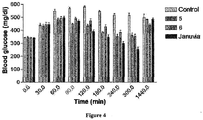
- Tables 1, 4 and figure 3 depict the antihyperglycaemic activity profile of experimental groups.
- Table 4 and Figure 3 represent the average antihyperglycaemic activity profile of compound 5 and 6 and standard drug Januvia in the low dosed streptozotocin-induced diabetic rats .
- the fasting blood glucose levels (mean ⁇ SEM) of the test, standard drug and control groups were 346.6 ⁇ 6.19,344.0 ⁇ 3.91, 341.4 ⁇ 3.53 and 343.4 ⁇ 3.15 mg/dl (Table 4) respectively.
- Advantages of the present invention are the synthesis and identification of a novel series of 4,5-dihydro-2H-benzo[e]indazole compounds prepared through innovative route under mild reaction conditions and their useful anti-hyperglycemic activity in both in vitro (PTP-1B inhibitors) and in vivo (SLM, STZ, STZ-S animal models). These compounds hold therapeutic potential for the treatment of diabetes and related metabolic disorders.
Landscapes
- Chemical & Material Sciences (AREA)
- Organic Chemistry (AREA)
- Health & Medical Sciences (AREA)
- Medicinal Chemistry (AREA)
- Veterinary Medicine (AREA)
- Public Health (AREA)
- General Health & Medical Sciences (AREA)
- Animal Behavior & Ethology (AREA)
- Life Sciences & Earth Sciences (AREA)
- Pharmacology & Pharmacy (AREA)
- Diabetes (AREA)
- Epidemiology (AREA)
- Endocrinology (AREA)
- Nuclear Medicine, Radiotherapy & Molecular Imaging (AREA)
- General Chemical & Material Sciences (AREA)
- Chemical Kinetics & Catalysis (AREA)
- Obesity (AREA)
- Hematology (AREA)
- Bioinformatics & Cheminformatics (AREA)
- Engineering & Computer Science (AREA)
- Emergency Medicine (AREA)
- Plural Heterocyclic Compounds (AREA)
- Pharmaceuticals Containing Other Organic And Inorganic Compounds (AREA)
Description
- The present invention relates to the development of novel substituted 4,5-dihydro-2H-benzo[e]indazole-9-carboxylates, which can be used as therapeutic agents for the treatment and prevention of metabolic disorders, and a process of preparing said novel compounds. More particularly, the present invention relates to substituted 4,5-dihydro- 2H-benzo[e]indazole-9-carboxylates and their related compounds, processes for preparing the said compounds and to their use in the treatment of diabetes and related metabolic disorders.
- Health and disease are coeval with life. A disease of all age group practically in all parts of the world, the Diabetes mellitus (Madhumeha). Diabetes mellitus is a chronic, incurable disease which altered the metabolism of lipids, carbohydrates and proteins, it is one of the common endocrine disorders with increased risk of complications from artery diseases, myocardial infarction, hypertension, and dyslipidemia, and clinically characterized by peripheral hyperglycemia. Diabetes can be classified clinically as insulin-dependent diabetes mellitus (IDDM, or type-1 diabetes) and non-insulin-dependent diabetes mellitus (NIDDM, or type-2 diabetes). Type-2 diabetes is common and found in >90% patient characterized by either normal/abnormal insulin secretion or function. It is considered a "modern day epidemic" and is rightly recognized as a global public health issue. The remedies available in modem system of medicine for the treatment of diabetic patients have been focused on dietary management of obesity and to improve insulin sensitivity, Sulfonylurea to enhance insulin secretion, metformin to inhibit hepatic glucose output, and acarbose to inhibit or reduce the rate of glucose absorption from the gut. Although treatment with highly active thiazolidinedione (TZD) class of drugs has significantly improved the clinical situation, but suffers with adverse side effects of hepatotoxicity, weight gain , edema and high rates of secondary failure. Current therapies to prevent diabetes mellitus (T2DM) have not kept pace with the disease's progression. The alarming situation emphasized the need to explore, evaluate and identify some new synthetic molecules with antidiabetic property have become one of the major objectives of present day diabetic research.
-
CN101076332 teaches the use of inter alia 4,5-dihydro-2H-benzo[e]indoazoles and 2,8-dihydroindeno[2,1-c]pyrazoles for the treatment of inter alia diabetes. - The main object of the present invention is to provide substituted 4,5-dihydro-2H-benzo[e]indazole-9-carboxylates and related compounds for the treatment of diabetes and related disorders.
- Another object of the present invention is to obtain/prepare therapeutically effective compound pharmaceutically acceptable formulations/delivery systems such as tablets, capsules, suppository, beads, aerosols, etc. for the treatment and prevention of diabetes and other related metabolic disorders.
- Still another object of the present invention relates to the synthesis of the compounds which requires easily accessible precursors and mild reaction conditions in a single step at room temperature.
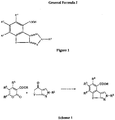
- Accordingly the present invention provides Substituted 4,5-dihydro-2H-benzo[e]indazole-9-carboxylates having the general formula I, pharmaceutically acceptable salts and derivatives thereof


- (a) wherein R1 is independently selected from the groups consisting of optionally substituted aryl, optionally substituted heteroaryl;
- (b) wherein R2, R3 are independently selected from the groups consisting of hydrogen, optionally substituted alkyl, optionally substituted aryl, optionally substituted heteroaryl, optionally substituted cycloalkenyl;
- (c) wherein R4 is independently selected from the groups consisting of optionally substituted alkylthio, optionally substituted alkylsulfonyl, optionally substituted amines;
- (d) wherein R is independently selected from the groups consisting of hydrogen, optionally substituted alkyl, optionally substituted alkenyl, optionally substituted aryl groups;
- (e) wherein Y is selected from the groups consisting of one methylene group, two methylene groups, or optionally substituted methylene group;
- In an embodiment of the invention wherein the representative compounds of the general formula I are;
- i. Methyl 6-(4-bromophenyl)-8-(methylthio)-2-phenyl-4,5-dihydro-2H-benzo[e]indazole-9-carboxylate (1)
- ii. Methyl 6-(4-chlorophenyl)-8-(methylthio)-2-phenyl-4,5-dihydro-2H-benzo[e]indazole-9-carboxylate (2)
- iii. Methyl 6-(4-methoxyphenyl)-8-(methylthio)-2-phenyl-4,5-dihydro-2H-benzo[e]indazole-9-carboxylate (3)
- iv. Methyl 8-(methylthio)-2,6-diphenyl-4,5-dihydro-2H-benzo[e]indazole-9-carboxylate (4)
- v. Methyl 8-(methylthio)-2-phenyl-6-p-tolyl-4,5-dihydro-2H-benzo[e]indazole-9-carboxylate (5)
- vi. Methyl 8-(methylthio)-6-(naphthalen-1-yl)-2-phenyl-4,5-dihydro-2H-benzo[e]indazole-9-carboxylate (6)
- vii. Methyl 8-(methylthio)-2-phenyl-6-(thiophen-2-yl)-4,5-dihydro-2H-benzo[e]indazole-9-carboxylate (7)
- viii. methyl 6-(4-fluorophenyl)-8-(methylthio)-2-phenyl-4,5-dihydro-2H-benzo[e]indazole-9-carboxylate (8)
- ix. methyl 8-(methylthio)-2-phenyl-6-(pyren-1-yl)-4,5-dihydro-2H-benzo[e]indazole-9-carboxylate (9)
- x. methyl 6-(4-fluorophenyl)-8-(methylsulfonyl)-2-phenyl-4,5-dihydro-2H-benzo[e]indazole-9-carboxylate (10)
- xi. methyl 8-(methylsulfonyl)-6-(naphthalen-1-yl)-2-phenyl-4,5-dihydro-2H-benzo[e]indazole-9-carboxylate (11)
- xii. methyl 8-(methylsulfonyl)-2-phenyl-6-(p-tolyl)-4,5-dihydro-2H-benzo[e]indazole-9-carboxylate (12)
- xiii. Methyl 5-(methylthio)-7-(naphthalen-2-yl)-2-phenyl-2,8-dihydroindeno[2,1-c]pyrazole-4-carboxylate (13)
- In an embodiment of the invention wherein the compounds are useful for the treatment of diabetes and related disorders.
- In another embodiment of the invention wherein the compounds showed PTB-1B inhibition with 1C50 of 7-8 µM.
- In still another embodiment of the invention wherein the compounds showed decrease in the blood glucose level at 2 hrs in the test group compared with that of the control was 35.8% and 23.5% whereas the decrease in the Januvia treated group was 35.0%.
- In still anoher embodiment of the present invention also provides a process for the synthesis of 4,5-dihydro-2H-benzo[e]indazole-9-carboxylates having the general formula I, which comprises;
- step (a) reacting 2H-pyran-2-ones with a cyclic ketone in presence of an alkali base for a period upto 24 hours at a temperature ranging between 0 to 50 degree centigrade;
- step (b) pouring the reaction mixture to an ice cold water and neutralized with an acid;
- step(c) purifying the product by chromatographic method,
- step (d) reacting the compound obtained in above step with m-chloroperbenzoic acid in dichloromethane at a temperature ranging between 25 to 28 degree C for a period ranging between 1-2 hrs, treating the reaction mixture with sodium bicarbonate solution to obtain the desired compound.
- In an embodiment of the invention wherein substituted 2H-pyran-2-ones is used to react with substituted or unsubstituted cyclic ketones such as 2-phenyl-6,7-dihydro-2H-indazol-4(5H)-one as described in examples 1-13.
- In another embodiment of the invention wherein the organic solvent used is selected from the group consisting of acetone, N,N-dimethyl formamide, N,N-dimethyl acetamide, dimethyl sulfoxide, benzene, toluene, xylene, chlorobenzene, tetrahydrofuran.
- In one more embodiment of the invention base used is selected from a group consisting of NaOH, KOH, NaH, t-BuOK, K2CO3, and NaOEt,
- In still another embodiment of the invention wherein the neutralization of the resultant compounds is effected by acidifying the reaction mixture with dilute hydrochloric acid, sulfuric acid, acetic acid
- A pharmaceutical composition comprising an effective amount of compound of formula I optionally along with pharmaceutically acceptable, excipients, carrier/s, lubricants, and diluents.
- The effective amount of the compound in the composition is ranging 10mg to 500mg.
- The pharmaceutically acceptable excipient may be selected from the group consisting of starch, lactose, cellulose.
- The diluents used may be selected from the group consisting of starch, lactose, dicalcium phosphate.
- The lubricant may be selected from the group comprising of talc, magnesium stearate.
- A method of treating diabetes in a subject, wherein the said method comprising the step of administering to the subject suffering from diabeties, a pharmaceutical composition an effective amount of compound of formula I optionally along with pharmaceutically acceptable, excipients, carrier/s, lubricants, diluents.
- The present invention may be more clearly understood by reference to the following Sheets:
-
Sheet 1 illustrates the general formula I for the novel 4,5-dihydro-2H-benzo[e]indazole-9-carboxylates compounds of the invention and illustrates the reaction sequence (Scheme 1) resulting in the preparation of various 4,5-dihydro-2H-benzo[e]indazole derivatives and related compounds. - Sheet 2 illustrates Effect of the synthetic compounds (
Figure 2 ) and standard drug Januvia (at 50 mg/kg) on the blood glucose levels of the sucrose loaded normoglycaemic rats at various time intervals and Effect of the synthetic compounds (Figure 3 ) and standard drug Januvia (at 50 mg/kg) on the blood glucose levels of the sucrose challenged STZ induced diabetic rats at various time intervals. - Sheet 3 illustrates Effect of the synthetic compounds (
Figure 4 ) and standard drug Januvia (at 50 mg/kg) on the blood glucose levels of the Low dosed STZ induced diabetic rats at various time intervals. - Accordingly, the present invention provides a compound of formula I:

- Wherein R1 is independently selected from the groups consisting of optionally substituted aryl, optionally substituted heteroaryl;
- Wherein R2, R3 are independently selected from the groups consisting of hydrogen, optionally substituted alkyl, optionally substituted aryl, optionally substituted heteroaryl, optionally substituted cycloalkenyl,
- Wherein R4 is independently selected from the groups consisting of optionally substituted alkylthio, optionally substituted alkylsulfonyl, optionally substituted amines etc, Wherein R is independently selected from the groups consisting of hydrogen, optionally substituted alkyl, optionally substituted alkenyl, optionally substituted aryl groups Wherein Y is selected from the groups consisting of one methylene group, two methylene groups, or optionally substituted methylene group.
- Among a large number of the molecules having the formula (I) incorporating substituted 4,5-dihydro-2H-benzo[e]indazole-9-carboxylates and their related compounds and their use in the treatment of diabetes and related disorders and related compounds shown in examples 1 to 13 and in the drawing accompanying the specification.
- The
Scheme 1 shown in the drawing accompanying the specification represents a preferred embodiment of this process for the compounds having the formula (I) - The starting material 2H-pyran-2-ones are known and has been prepared by the reaction of methyl 2-cyano/methoxycarbonyl-3,3-di(methylsulfanyl)acrylate with substituted acetophenones under alkaline conditions in dry DMSO in high yields. The 2H-pyran-2-ones is treated with cyclic ketone preferably dissolved either in a volatile solvents such as acetone, THF or in a high boiling solvents such as dimethyl formamide, dimethyl acetamide, dimethyl sulfoxide in presence of an alkali such as K2CO3, KOH, t-BuOK, NaH. Preferably equimolar amounts of the reagents are used and the reaction takes place within a period of 24 hours at the reaction temperature between 25-50 °C and purifying the final product by chromatographic method.
- Streptozotocin a most widely used chemical diabetogen was procured from Sigma-Aldrich chemicals Co., St Louis, MO, USA. All the chemicals and reagents used were obtained from local sources and were of analytical grade.
- The synthesis of the compounds of the invention was achieved as shown in drawing accompanying the specification (Sheet 2, Scheme 1). The reaction conditions were optimized for EXAMPLE 1 by reacting a mixture of methyl 6-(4-bromophenyl)-4-(methylthio)-2-oxo-2H-pyran-3-carboxylate (353 mg, 1 mmol) and 2-phenyl-6,7-dihydro-2H-indazol-4(5H)-one (212 mg, 1mmol) in the presence of different bases and solvents as mentioned in Table below:
Table. Entry Base Solvent Temp Duration Yieldc (%) 1 KOHa DMF 25°C 6h 63 2 KOHa DMF 60°C 24h 35 3 KOHa DMF 100°C 24h 15 3 KOHa DMSO 25°C 10h 18 4 NaHb THF 25°C 5h traces 5 NaHb DMF 25°C 3h 20 6 t-BuOKb THF 25°C 15h traces a1.2 Equivalent of base was used in the reactions. b2 Equivalent of base was used in the reactions. cIsolated yield. - Following examples are given by way of illustration and should not construed the scope of the present inventions.
- A mixture of methyl 6-(4-bromophenyl)-4-(methylthio)-2-oxo-2H-pyran-3-carboxylate (353 mg, 1 mmol), 2-phenyl-6,7-dihydro-2H-indazol-4(5H)-one (212 mg, 1mmol) and powdered KOH (84 mg, 1.5 mmol) in dry DMF (5 mL) was stirred at 25 °C for 6 hr. At the end the reaction mixture was poured into ice water with vigorous stirring and finally neutralized with dilute HCl. The solid thus obtained was filtered and purified on a neutral alumina column using 15% chloroform in hexane as eluent to yield 317 mg (63%) of methyl 6-(4-bromophenyl)-8-(methylthio)-2-phenyl-4,5-dihydro-2H-benzo[e]indazole-9-carboxylate.

- White solid; mp-164-166 °C; 1H NMR (300 MHz, CDCl3) d 2.48 (s, 3H, CH3), 2.85 (s, 4H, 2CH2), 4.01 (s, 3H, OCH3), 7.10-7.34 (m, 4H, ArH), 7.40-7.53 (m , 2H, ArH), 7.54-7.72 (m, 4H, ArH), 7.98 (s, 1H, ArH), ; 13C NMR (75.5 MHz); d 18.83, 22.11, 27.75, 53.29, 117.11, 119.40, 122.23, 123.51, 126.88, 128.29, 129.07, 129.90, 131.18, 132.00, 132.38, 133.47, 140.12, 140.41, 142.68, 153.14, 170.42, ; IR (KBr) 1725.9 cm-1 (CO); MS (ESI) m/z 506 (M++1);
- A mixture of methyl 6-(4-chlorophenyl)-4-(methylthio)-2-oxo-2H-pyran-3-carboxylate (330 mg, 1 mmol), 2-phenyl-6,7-dihydro-2H-indazol-4(5H)-one (212 mg, 1mmol) and powdered KOH (84 mg, 1.5 mmol) in dry DMF (5 mL) was stirred at 25 °C for 6 hr. At the end the reaction mixture was poured into ice water with vigorous stirring and finally neutralized with dilute HCl. The solid thus obtained was filtered and purified on a neutral alumina column using 15% chloroform in hexane as eluent to yield 267 mg (58%) of methyl 6-(4-chlorophenyl)-8-(methylthio)-2-phenyl-4,5-dihydro-2H-benzo[e]indazole-9-carboxylate.

- White solid; mp-159-162 °C; 1H NMR (300 MHz, CDCl3) δ 2.50 (s, 3H, SCH3), 2.87 (s, 4H, 2CH2), 4.02 (s, 3H, OCH3), 7.12-7.39 (m, 4H, ArH), 7.39-7.59 (m , 4H, ArH), 7.63-7.79 (m, 2H, ArH, J=9.0 Hz), 8.00 (s, 1H, ArH); 13C NMR (200 MHz); δ 18.81, 22.10, 27.78, 53.27, 114.48, 117.14, 119.48, 123.50, 126.89, 128.24, 129.07, 129.08, 130.01, 130.90, 132.46, 133.45, 134.13, 139.66, 140.39, 142.73, 153.16, 170.75 ; IR (KBr) 1723.3 cm-1 (CO); MS (ESI) m/z 461 (M++1).
- A mixture of methyl 6-(4-methoxyphenyl)-4-(methylthio)-2-oxo-2H-pyran-3-carboxylate (306 mg, 1 mmol), 2-phenyl-6,7-dihydro-2H-indazol-4(5H)-one (212 mg, 1mmol) and powdered KOH (84 mg, 1.5 mmol) in dry DMF (5 mL) was stirred at 25 °C for 8 hr. At the end the reaction mixture was poured into ice water with vigorous stirring and finally neutralized with dilute HCl. The solid thus obtained was filtered and purified on a neutral alumina column using 15% chloroform in hexane as eluent to yield 269 mg(59%) of methyl 6-(4-methoxyphenyl)-8-(methylthio)-2-phenyl-4,5-dihydro-2H-benzo[e]indazole-9-carboxylate.

- White solid; mp-172-174 °C; 1H NMR (300 MHz, CDCl3) d 2.49 (s, 3H, CH3), 2.72-2.96 (m, 4H, 2CH2), 3.88 (s, 3H, OCH3), 4.01 (s, 3H, OCH3), 6.94.-7.05 (m, 2H, ArH), 7.16-7.36 (m , 4H, ArH), 7.40-7.53 (m, 2H, ArH), 7.62-7.73 (m, 2H, ArH), 7.98 (s, 1H, ArH); IR (KBr) 1722.2 cm-1 (CO); MS (ESI) m/z 457 (M++1).
- A mixture of methyl 4-(methylthio)-2-oxo-6-phenyl-2H-pyran-3-carboxylate (276 mg, 1 mmol), 2-phenyl-6,7-dihydro-2H-indazol-4(5H)-one (212 mg, 1mmol) and powdered KOH (84 mg, 1.5 mmol) in dry DMF (5 mL) was stirred at 25 °C for 7 hr. At the end the reaction mixture was poured into ice water with vigorous stirring and finally neutralized with dilute HCl. The solid thus obtained was filtered and purified on a neutral alumina column using 15% chloroform in hexane as eluent to yield 234 mg(55%) of methyl 8-(methyltlio)-2,6-diphenyl-4,5-dihydro-2H-benzo[e]indazole-9-carboxylate.

- White solid; mp-173-175 °C 1H NMR (300 MHz, CDCl3) d 2.48 (s, 3H, CH3), 2.80-2.86 (m, 2H, CH2), 2.86-2.95 (m, 2H, CH2), 4.01 (s, 3H, OCH3), 7.19 (m, 1H, ArH), 7.24-7.35 (m, 3H, ArH), 7.36-7.50 (m, 5H, ArH), 7.64-7.69 (m, 2H, ArH), 7.98 (s, 1H, ArH), ; 13C NMR (75.5 MHz); d 18.79, 22.16, 27.75, 53.37, 117.24, 119.37, 123.45, 126.82, 127.97, 128.03, 128.77, 129.26, 129.48, 129.97, 132.49, 133.20, 140.38, 141.31, 143.93, 153.37, 170.66, ; IR (KBr) 1726 cm-1 (CO); MS (ESI) m/z 427 (M++1);
- A mixture of methyl 4-(methylthio)-2-oxo-6-p-tolyl-2H-pyran-3-carboxylate (290 mg, 1 mmol), 2-phenyl-6,7-dihydro-2H-indazol-4(5H)-one (212 mg, 1mmol) and powdered KOH (84 mg, 1.5 mmol) in dry DMF (5 mL) was stirred at 25 °C for 7 hr. At the end the reaction mixture was poured into ice water with vigorous stirring and finally neutralized with dilute HCl. The solid thus obtained was filtered and purified on a neutral alumina column using 15% chloroform in hexane as eluent to yield 334 mg(74%) of methyl 8-(methylthio)-2-phenyl-6-p-tolyl-4,5-dihydro-2H-benzo[e]indazole-9-carboxylate.

- White solid; mp-178-180 °C; 1H NMR (300 MHz, CDCl3) d 2.43 (s, 3H, CH3), 2.48 (s, 3H, CH3), 2.78-3.00 (m, 4H, 2CH2), 4.01 (s, 3H, OCH3), 7.18 (m, 1H, ArH), 7.24-7.35 (m, 5H, ArH), 7.40-7.53 (m, 2H, ArH), 7.63-7.72 (m, 2H, ArH), 7.98 (s, 1H, ArH), ; 13C NMR (75.5 MHz); d 18.79, 21.62, 22.14, 27.75, 53.24, 117.29, 119.38, 123.38, 126.76, 128.00, 129.36, 129.44, 129.88, 130.75, 132.56, 133.08, 137.74, 138.33, 140.43, 143.92, 153.32, 170.61; IR (KBr) 1718.1 cm-1 (CO); MS (ESI) m/z 441 (M++1); HRMS (EI) calculated mass for C27H24N2O2S: 440.1559. found 440.1547.
- A mixture of methyl 4-(methylthio)-6-(naphthalen-1-yl)-2-oxo-2H-pyran-3-carboxylate (326 mg, 1 mmol), 2-phenyl-6,7-dihydro-2H-indazol-4(5H)-one (212 mg, 1mmol) and powdered KOH (84 mg, 1.5 mmol) in dry DMF (5 mL) was stirred at 25 °C for 8 hr. At the end the reaction mixture was poured into ice water with vigorous stirring and finally neutralized with dilute HCl. The solid thus obtained was filtered and purified on a neutral alumina column using 15% chloroform in hexane as eluent to yield 228 mg(48%) of methyl 8-(methylthio)-6-(naphthalen-1-yl)-2-phenyl-4,5-dihydro-2H-benzo[e]indazole-9-carboxylate.

- White solid; mp-182-184 °C; 1H NMR (300 MHz, CDCl3) d 2.46 (s, 3H, CH3), 2.53-2.65 (m, 2H, CH2), 2.69-2.81 (m, 2H, CH2), 4.06 (s, 3H, OCH3), 7.21 (s, 1H, ArH), 7.26 (s, 1H, ArH), 7.28-7.58 (m, 7H, ArH), 7.64-7.69 (m, 1H, ArH), 7.69-7.71 (m, 1H, ArH), 7.89-7.98 (m, 2H, ArH), 8.01 (s, 1H, ArH); 13C NMR (75.5 MHz); d 18.48, 22.06, 27.61, 53.39, 119.46, 123.43, 125.82, 126.22, 126.52, 126.88, 126.99, 128.54, 128.80, 129.22, 129.93, 133.67, 133.88, 138.90, 153.32, 170.69; IR (KBr) 1726.1 cm-1 (CO); MS (ESI) m/z 477 (M++1).
- A mixture of methyl 4-(methylthio)-2-oxo-6-(thiophen-2-yl)-2H-pyran-3-carboxylate (282 mg, 1 mmol), 2-phenyl-6,7-dihydro-2H-indazol-4(5H)-one (212 mg, 1mmol) and powdered KOH (84 mg, 1.5 mmol) in dry DMF (5 mL) was stirred at 25 °C for 6 hr. At the end the reaction mixture was poured into ice water with vigorous stirring and finally neutralized with dilute HCl. The solid thus obtained was filtered and purified on a neutral alumina column using 15% chloroform in hexane as eluent to yield 211 mg of (49%) of methyl 8-(methylthio)-2-phenyl-6-(thiophen-2-yl)-4,5-dihydro-2H-benzo[e]indazole-9-carboxylate.

- White solid; mp-174-176 °C; 1H NMR (300 MHz, CDCl3) d 2.49 (s, 3H, CH3), 2.82-2.96 (s, 2H, CH2), 3.02-3.16 (m, 2H, CH2), 4.00 (s, 3H, OCH3), 7.02-7.18 (m, 2H, ArH), 7.28-7.53 (m, 5H, ArH), 7.62-7.73 (m, 2H, ArH), 7.97 (s, 1H, ArH), ;13C NMR (75.5 MHz); d 18.82, 22.08, 27.75, 53.28, 117.11, 119.43, 123.50, 126.37, 126.83, 127.64, 127.87, 128.33, 129.90, 130.26, 131.48, 133.34, 133.55, 136.34, 140.39, 141.90, 153.16, 170.36; IR (KBr) 1716.8 cm-1 (CO); MS (ESI) m/z 433 (M++1); HRMS (EI) calculated mass for C24H20N2O2S2: 432.0966, found. 432.0970.
-

- A mixture of methyl 4-(methylthio)-2-oxo-6-(4-fluorophenyl)-2H-pyran-3-carboxylate (294 mg, 1 mmol), 2-phenyl-6,7-dihydro-2H-indazol-4(5H)-one (212 mg, 1mmol) and powdered KOH (84 mg, 1.5 mmol) in dry DMF (5 mL) was stirred at 25 °C for 7 hr. At the end the reaction mixture was poured into ice water with vigorous stirring and finally neutralized with dilute HCl. The solid thus obtained was filtered and purified on a neutral alumina column using 15% chloroform in hexane as eluent to yield 52% of methyl 6-(4-fluorophenyl)-8-(methylthio)-2-phenyl-4,5-dihydro-2H-benzo[e]indazole-9-carboxylate. White solid; mp-182-184°C; 1H NMR (300 MHz, CDCl3) δ 2.48 (s, 3H, CH3), 2.82-2.90 (m, 4H, 2CH2), 4.01 (s, 3H, OCH3), 7.10-7.19 (m,3H, ArH), 7.27-7.36 (m, 3H, ArH), 7.42-7.51 (m, 2H, ArH), 7.67 (d, J=7.62 Hz, 2H, ArH), 7.98 (s, 1H, ArH) ;MS (ESI) m/z 445 (M++1).
-

- A mixture of methyl 4-(methylthio)-2-oxo-6-(pyren-1-yl)-2H-pyran-3-carboxylate (400 mg, 1 mmol), 2-phenyl-6,7-dihydro-2H-indazol-4(5H)-one (212 mg, 1mmol) and powdered KOH (84 mg, 1.5 mmol) in dry DMF (5 mL) was stirred at 25 °C for 8 hr. At the end the reaction mixture was poured into ice water with vigorous stirring and finally neutralized with dilute HCl. The solid thus obtained was filtered and purified on a neutral alumina column using 15% chloroform in hexane as eluent to yield 58% of methyl 8-(methylthio)-2-phenyl-6-(pyren-1-yl)-4,5-dihydro-2H-benzo[e]indazole-9-carboxylate. Yellow solid; mp-174-176 °C; 1H NMR (300 MHz, CDCl3) δ 2.49 (s, 3H, CH3), 2.60-2.67 (m, 2H, CH2), 2.71-2.77 (m, 2H, CH2), 4.08 (s, 3H, OCH3), 7.27-7.36 (m,2H, ArH), 7.47 (t, J1 =8.28 Hz, J2 =7.50 Hz, 2H, ArH), 7.65-7.72 (m, 2H, ArH), 7.73-7,81 (m, 1H, ArH), 7.90 (d, J= 7.77 Hz, 1H, ArH), 7.99-8.09 (m, 3H, ArH), 8.14 (s, 2H, ArH), 8.18-8.29 (m, 3H, ArH); MS (ESI) m/z551 (M++1).
-

- A mixture of methyl 6-(4-fluorophenyl)-8-(methylthio)-2-phenyl-4,5-dihydro-2H-benzo[e]indazole-9-carboxylate (44.4 mg, 0.1 mmol), m-chloroperbenzoic acid (85.5 mg, 0.5mmol) in dichloromethane (5 mL) was stirred at 25 °C for 1 hr. At the end the reaction mixture was treated with saturated solution of sodium bicarbonate. The mixture was extracted with dichloromethane and organic layer was reduced under vacuum. The crude mixture was purified on a silicagel column using 40% chloroform in hexane as eluent to yield 78% of methyl 6-(4-fluorophenyl)-8-(methylsulfonyl)-2-phenyl-4,5-dihydro-2H-benzo[e]indazole-9-carboxylate.
- White solid; mp-245-247 °C; 1H NMR (300 MHz, CDCl3) δ 2.84-2.94 (m, 2H, CH2), 2.95-3.06 (m, 2H, CH2), 3.20 (s, 3H, SO2CH3), 4.03 (s, 3H, OCH3), 7.12-7.22 (m, 2H, ArH), 7.27-7.35 (m, 3H, ArH), 7.44-7.52 (m, 2H, ArH), 7.64-7.70 (m, 2H, ArH), 7.78 (s, 1H, ArH), 8.02 (s, 1H, ArH) ; MS (ESI) m/z477 (M++1).
-
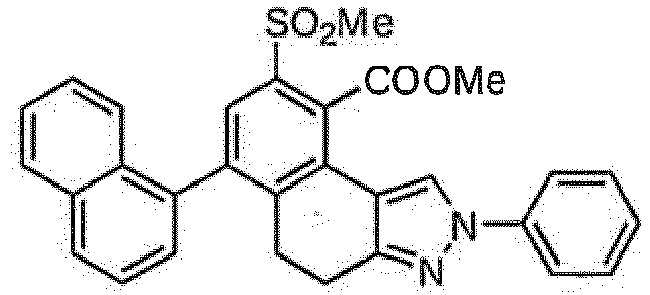
- A mixture of methyl 8-(methylthio)-6-(naphthalen-1-yl)-2-phenyl-4,5-dihydro-2H-benzo[e]indazole-9-carboxylate (47.6 mg, 0.1 mmol), m-chloroperbenzoic acid (85.5 mg, 0.5mmol) in dichloromethane (5 mL) was stirred at 28 °C for 1.5 hr. At the end the reaction mixture was treated with saturated solution of sodium bicarbonate. The mixture was extracted with dichloromethane and organic layer was reduced under vacuum. The crude mixture was purified on a silicagel column using 40% chloroform in hexane as eluent to yield 80% of methyl 8-(methylsulfonyl)-6-(naphthalen-1-yl)-2-phenyl-4,5-dihydro-2H-benzo[e]indazole-9-carboxylate.
- White solid; mp-204-206 °C; 1H NMR (300 MHz, CDCl3) δ 2.70-2.98 (m, 3H), 3.05-3.18 (m, 1H), 3.24 (s, 3H, SO2CH3), 4.06 (s, 3H, OCH3), 7.33-7.65 (m,7H, ArH), 7.67-7.78 (m, 2H, ArH), 7.82-8.04 (m, 4H, ArH), 8.05-8.14 (m, 1H, ArH).MS (ESI) m/z 509 (M++1).
-

- A mixture of methyl 8-(methylthio)-2-phenyl-6-p-tolyl-4,5-dihydro-2H-benzo[e]indazole-9-carboxylate (44.0 mg, 0.1 mmol), m-chloroperbenzoic acid (85.5 mg, 0.5mmol) in dichloromethane (5 mL) was stirred at 28 °C for 2 hr. At the end the reaction mixture was treated with saturated solution of sodium bicarbonate. The mixture was extracted with dichloromethane and organic layer was reduced under vacuum. The crude mixture was purified on a silicagel column using 40% chloroform in hexane as eluent to yield 80% of methyl 8-(methylsulfonyl)-2-phenyl-6-(p-tolyl)-4,5-dihydro-2H-benzo[e]indazole-9-carboxylate.
- White solid; mp-228-230 °C; 1H NMR (300 MHz, CDCl3) δ 2.43 (s, 3H, CH3),2.85-2.90 (m, 2H, CH2), 3.00-3.08 (m, 2H, CH2), 3.20 (s, 3H, SO2CH3), 4.03 (s, 3H, OCH3), 7.19-7.38 (m,5H, ArH), 7.44-7.54 (m, 2H, ArH), 7.64-7.74 (m, 2H, ArH), 7.77-7.86 (m, 1H, ArH), 7.79-8.07 (m, 1H, ArH), MS (ESI) m/z 473 (M++1).
-

- A mixture of methyl 4-(methylthio)-6-(naphthalen-2-yl)-2-oxo-2H-pyran-3-carboxylate (163 mg, 0.5 mmol, 1 equiv), 2-phenyl-5,6-dihydrocyclopenta[c]pyrazol-4(2H)-one (100 mg, 0.5 mmol, 1 equiv) and KOH (42 mg, 0.75 mmol, 1.5 equiv) in dry DMF (5 ml) was stirred at room temperature for 45 min. The progress of reaction was monitored by TLC, and on completion the reaction mixture was poured onto crushed ice with vigorous stirring and finally neutralized with 10% HCl. The precipitate obtained was filtered and purified on a silica gel column using 10% ethyl acetate in hexane as the eluent to afford the compound in 25% (58 mg) yield.
- mp (n-hexane/ ethyl acetate) = 235-237 °C; MS (ESI) 463 [M + H+]; IR (KBr) λ = 1729 (CO) cm-1; 1H NMR (300 MHz, CDCl3) δ= 2.55 (s, 3H, SCH3), 3.01-3.19 (m, 2H, CH2), 4.13 (s, 3H, OCH3), 7.05-7.45 (m, 3H, ArH), 7.45-7.81 (m, 8H, ArH), 7.93-8.10 (m, 2H, ArH), 8.13-8.23 (m, 1H, ArH) ppm;
- Male albino rats of Sprague Dawley strain of 8 to 10 weeks of age and 160 ± 20 g of body weight were procured from the animal colony of the Institute. The work with these animals was cleared by institutional ethics committee for animal study and was conducted in accordance with the guidelines of the Committee for the purpose of Control and Supervision of Experiments on Animals (CPCSEA) formed by the Government of India in 1964. The institute has taken permission from the animal ethical committee for the work (No. 129/07/Biocmem/IAEC). The animals were housed four or five in a polypropylene cage in the animal house. The following norms were always followed for animal room environment: temperature 23 ± 2°C;humidity 50-60%; light 300 lux at floor level with regular 12 hr light cycle;
noise level 50 decibel; ventilation 10-15 air changes per hour. After randomization into various groups, the rats were acclimatized for 2 to 3 days in the new environment before initiation of experiment. Standard pellets were used as a basal diet during the experimental period. The animals had free access to pellet diet and tap water unless stated otherwise. - The test compounds and standard antidiabetic drug Januvia were prepared in 1.0 % freshly prepared Gum acacia.
- In order to search towards the antidiabetic activity, synthetic compounds were preliminary evaluated for their effect on glucose tolerance in normal rats. It is an indirect effect of measuring antihyperglycaemic activity. Male albino rats of Wistar strain of body weight 160 ± 20 g were selected for this study. The blood glucose of each animal was checked by glucometer using glucostrips (Accu-check) after 16 hours starvation. Animals showing blood glucose between 60 to 80 mg/dl (3.33 to 4.44 mM) were divided into groups of five to six animals in each. Rats of experimental group were administered suspension of the desired test compound orally (made in 1.0% gum acacia). The standard dose decided for Synthetic compounds is 100 mg/kg body weight. Animals of control group were given an equal amount of 1.0% gum acacia. A sucrose load (10.0 g/kg) was given to each animal orally exactly after 30 min post administration of the test sample/ vehicle. Blood glucose profile of each rat was again determined at 30, 60, 90 and 120 min post administration of sucrose by glucometer. Food but not water was withheld from the cages during the course of experimentation. Quantitative glucose tolerance of each animal was calculated by area under curve (AUC) method using Prism Software. Comparing the AUC of experimental and control groups determined the percentage antihyperglycaemic activity. Statistical comparison was made by Dunnett's test. Samples showing significant inhibition (p<0.05, p<0.01, p<0.001) on postprandial hyperglycemia (AUC) were considered as active samples.
- Overnight starved male albino rats of Sprague Dawley strain were used and Diabetes was induced in the animals by single intraperitoneal injection of Streptozotocin at 60 mg/kg body weight dose prepared in 0.1M citrate buffer (pH 4.5). Fasting blood glucose level was measured by using a Glucometer (ACCU-CHEK II; Roche Diagnostics, USA) after 48 hours and animals showing blood glucose level above 300 mg/dl were considered as diabetic.
- The diabetic animals were divided into four groups (
Group 1 to 4) each consisting 6 rats.Group 1 received 0.4 ml vehicle (1% gum acacia). Group 2 received thetest compound 5 at an oral dose of 100 mg/kg/body weight. Group 3 was givencompound 6 at an oral dose of 100 mg/kg/body weight. The standard antidiabetic drug Januvia was given to the animals of Group 4 at an oral dose of 50 mg/kg body weight. The blood glucose levels of each animal were again measured by glucostrips at 1 h, 2 h, 3 h, 4 h, 5 h and 24 h post treatment with the test sample/standard drug by glucometer. Food but not water was withheld from the cages during the course of experimentation. Percent hyperglycemic activity was determined by comparing the AUC (area under curve) of experimental groups with that of the vehicle treated control group. - Overnight starved male albino rats of Sprague Dawley strain were used and Diabetes was induced in the animals by single intraperitoneal injection of Streptozotocin at 60 mg/kg body weight dose prepared in 0.1M citrate buffer (pH 4.5). Fasting blood glucose level was measured by using a Glucometer (ACCU-CHEK II; Roche Diagnostics, USA) after 48 hours and animals showing blood glucose level above 140 mg/dl were considered as diabetic.
- The diabetic rats with fasting blood glucose values (baseline at 0 min) from 140 to 270 mg/dl were included in this study. All the diabetic animals were again divided into groups with five animals in each group. Animals of one group were regarded as the control group (orally administered 1% gum acacia) and the others were treated as the experimental groups. Rats in the experimental groups were orally administered suspension of the test compounds (100mg/kg) prepared in 1.0% gum acacia. Animals of the control group were given an equal amount of 1.0% gum acacia. The standard antidiabetic drug Januvia was given to the animals at an oral dose of 50 mg/kg body weight. A sucrose load (2.5 g/kg) was given to each animal orally exactly after 30 min post administration of the test sample/ vehicle. Blood glucose levels were checked at 1h, 2h, 3h, 4h, 5h and 24h post-administration of sucrose by glucometer. Food but not water was withheld from the cages during the course of experimentation. Percent hyperglycemic activity was determined by comparing the AUC (area under curve) of experimental groups with that of the vehicle treated control group.
- Protein tyrosine phosphatase-1B inhibitory activity of the compounds were evaluated at 10 µM concentration using colorimetric, non-radioactive PTP1B tyrosine phosphatase drug discovery kit BML-AK 822 from Enzo Life Sciences, USA. Components of the kit include human recombinant PTP1B enzyme, substrate (IR5 insulin receptor residues), biomol red (phosphate determining reagent), assay buffer, suramin (PTP1B inhibitor) and calibration standards. Assay was done according to the Kit manufacturers protocol, in brief the reaction was carried out in 96 well flat bottomed microtiter plate by the addition of assay buffer, solution of test compounds and diluted PTP1B enzyme. Enzyme reaction was initiated by addition of 50µl of warmed 2x substrate then incubated the plate at 30°c for 30min. After incubation for 30 min. Reaction was terminated by addition of 25 µl of biomol red reagent and mixed thoroughly by repeated pipetting. Test compounds were dissolved in dimethyl sulfoxide (DMSO) and solution of 100µM concentration was prepared of which 10 µl solution was added in each reaction well to achieve final concentration of 10 µM in reaction mixture. Volumes and dilution of other component were accordingly as instructed in the manual provided in the kit. PTP1B phosphatase acting on the phosphopeptide substrate and release phosphate. The detection of free phosphate released is based on classic Malachite green assay. After adding biomol red to reaction wells after 30 minutes of incubation as described earlier the plate was incubated for another 20 min to develop the colour. Absorbance was recorded at 620 nm. on a microplate reader. The percentage inhibition of PTPlb enzyme by test compounds was calculated based on activity in the control tube (without inhibitor) taking as 100 % from three independent set of experiments.
- To calculate the IC50 value a series of dose response data ie. % inhibition of PTP 1B at different concentration of inhibitor is required. For the IC50 value of
compounds compound 5,compound 6 % inhibition of at 5 different concentrations was evaluated using PTP1B tyrosine phosphatase drug discovery kit by the method as described above. Five different compound concentrations selected for ICso calculation were 0.3µM, 1.0µM, 3.0µM, 5.0µM, 10.0µM and accordingly calculated the IC50 value. - Quantitative glucose tolerance of each animal was calculated by the area under the curve (AUC) method using Prism Software. The area under the curve of the control group and the experimental group was compared to determine the percent antihyperglycaemic activity. Statistical comparisons were performed by one-way analysis of variance (ANOVA), followed by Dunnett's multiple range test (DMRT). The results were considered statistically significant if the 'p' values were 0.05 or less. Results were expressed as mean ± SEM.
-
Table 1: Effect of synthetic compounds (100 mg/kg) and standard drug Januvia (50 mg/kg) on the blood glucose levels at various time intervals. S. No Compound Code Dose (mg/kg) % Antihyperglycaemic activity SLM STZ-S STZ 0-5 h AUC 0-24 h AUC 0-5 h AUC 0-24 h AUC 1 compound 5100 35.8** * 20.4** 23.6*** 23.1** 18.2** 2 compound 6100 23.5** 29.7*** 25.7*** 18.9* 20.1** 3 Januvia 50 35.0** * 21.8** 23.8** 28.2*** 27.4*** Values are mean ± SEM,
n=5,
*p<0.05,
**p<0.01 and
***p<0.001Table-2 Effect of the synthetic compounds (at 100 mg/kg) and standard drug Januvia (at 50 mg/kg) on the blood glucose levels of the sucrose loaded normoglycaemic rats at various time intervals Groups Blood Glucose Profile (mg/dl) 0 30 60 90 120 min min min min min Sham Control 66.2±3.12 119.6±5.3 120.8±5.2 125.6±9.22 126.6±4.7 compound 566.2±3.05 107.4±7.76 104.8±5.12 108.3±3.59 109.8±7.86 compound 666.2±2.63 120.0±7.30 111,2±7.30 110.4±4.73 107.4±4.95 januvia 66.2±0.73 114.0±8.21 104.8±5.70 112.0±7.30 115.0±7.67 - Values are mean ±S.E. of five rats in each group
Table. 3. Effect of the synthetic compounds (at 100 mg/kg) and standard drug Januvia (at 50 mg/kg) on the blood glucose levels of the Sucrose challenged STZ induced diabetic rats at various time intervals. Groups Blood Glucose Profile (mg/dl) Pre treatment Post treatment 0 30 60 90 120 180 240 300 1440 min min min min min min min min min Sham Control 222.6±14.1 501.3±12.3 598.1±1.83 592.8±4.23 556.5±12.4 524.1±14.9 498.8±15.2 469.8±16.4 444.0±11.3 compound 5222.3±9.39 515.6±15.5 528.6±14.4 506.5±14.0 459.6±11.2 402.1±5.58 332.5±15.6 284.3±16.9 411.1±13.6 compound 6222.6±6.55 442.1±18.2 520.0±10.3 464.0±14.4 399.3±14,0 334.0±13.4 301.6±18.8 277.0±10.1 405.0±17.6 Januvia 222.3±16.2 455.0±14.2 519.8±16.0 469.3±9.40 439.3±14,2 377.6±10.1 359.5±10.1 337.6±8.18 394.6±8.34 Table-4: Effect of the synthetic compounds (at 100 mg/kg) and standard drug Januvia (at 50 mg/kg) on the blood glucose levels of the low dosed STZ induced diabetic rats at various time intervals. Groups Blood Glucose Profile (mg/dl) Pre treatment Post treatment 0 30 60 90 120 180 240 300 1440 min min min min min min min min min Sham Control 343.4±3.15 440.2±12.9 547.4±14.4 567.8±10.4 580.0±9.25 545.2±8.35 517.0±12.6 515.8±16.2 498.6±26.2 compound 5346.6±6.19 434.2±12.4 481.2±11.8 447.0±8.16 434.8±11.7 385.6±5.8 353.6±16.4 362.4±17.6 483.0±3.95 compound 6344.0±3.91 444.6±16.6 492.0±13.6 490.2±11.2 474.8±15.0 426.0±16.0 385.8±15.6 355±14.3 442.4±9.64 Januvia 341.4±3.53 445.8±13.0 497.4±11.2 473.4±11.2 392.0±11.8 348.2±16.7 300.4±14.7 255.0±16.9 484.4±10.7 Table-5: Effect of the synthetic compounds as PTP-1B inhibitor. Compound number % Inhibition 1 9.20 2 8.00 3 8.43 4 16.4 5 83.8 6 76.9 7 12.7 8 14.6 9 10.7 10 1.52 11 18.8 12 26.4 Standard Suramin 60.2 (IC50 9.5 µM) Table-6 Inhibitory activity of compounds S. No. Compd Code % Inhibition at different Inhibitor concentration IC50 (µM) 10µM 5µM 3pM 1µM 0.3µM 1 compound 567.8 36.67 24.10 13.23 3.89 7.12 2 compound 662.28 28.76 16.25 11.23 0.50 8.12 - The effect exerted by
compound - Table 1 ,2 and
Figure 1 shows the effect ofcompound 5 and 6 (100 mg/kg b.w.) and Januvia (50 mg/kg b.w.) on sucrose loaded normoglycemic rats. It is evident from the results that compound 5 and 6 show significant improvement in glucose tolerance. The fasting blood glucose levels (mean± SEM) of the test compounds, standard drug Januvia and control groups were 66.2 ± 3.05, 66.2 ±2.63, 66.3 ± 3.12 and 66.0 ± 0.78 mg/dl (Table 2) respectively. Two hours after administration of sucrose, the mean blood glucose concentrations of the test compound treated group (109.8 ±7.86 and 107.4 ± 4.95 mg/dl) and the Januvia treated group (115.0± 7.67 mg/dl), were significantly lower (p<0.05, p<0.01 and p <0.001) than that of the control group treated with 1% gum acacia (126.6 ± 4.7 mg/dl). The decrease in the blood glucose level at 2 hrs in the test group compared with that of the control was 35.8% and 23.5% whereas the decrease in the Januvia treated group was 35.0%. - Table 1,3 and
Figure 2 represent the average antihyperglycaemic activity profile ofcompound compound - The results obtained from the variance analysis showed in Tables 1, 4 and
figure 3 , depict the antihyperglycaemic activity profile of experimental groups. When thesecompound Figure 3 represent the average antihyperglycaemic activity profile ofcompound compound - Effect of synthetic compounds on PTP-1B inhibition- A series of synthetic 4,5-dihydro-2H-benzo[e]indazole compounds were evaluated against PTP1B using colorimetric, non-radioactive PTP1B tyrosine phosphatase drug discovery kit BML-AK 822. The study showed that compound 1-4 and compound 7-12 did not show any significant activity. It is evident from the activity profile (Table 5) that
compound - Advantages of the present invention are the synthesis and identification of a novel series of 4,5-dihydro-2H-benzo[e]indazole compounds prepared through innovative route under mild reaction conditions and their useful anti-hyperglycemic activity in both in vitro (PTP-1B inhibitors) and in vivo (SLM, STZ, STZ-S animal models). These compounds hold therapeutic potential for the treatment of diabetes and related metabolic disorders.
Claims (11)
- A compound of formula I, pharmaceutically acceptable salts and derivatives thereof having antihyperglycemic activity
 (a) wherein R1 is independently selected from the groups consisting of optionally substituted aryl, optionally substituted heteroaryl;(b) wherein R2, R3 are independently selected from the groups consisting of hydrogen, optionally substituted alkyl, optionally substituted aryl, optionally substituted heteroaryl, optionally substituted cycloalkenyl;(c) wherein R4 is independently selected from the groups consisting of optionally substituted alkylthio, optionally substituted alkylsulfonyl, optionally substituted amines;(d) wherein R is independently selected from the groups consisting of hydrogen, optionally substituted alkyl, optionally substituted alkenyl, optionally substituted aryl groups;(e) wherein Y is selected from the groups consisting of one methylene group, two methylene groups, or optionally substituted methylene group.
 - The compound as claimed in claim 1 wherein the representative compounds of the formula I are;i. Methyl 6-(4-bromophenyl)-8-(methylthio)-2-phenyl-4,5-dihydro-2H- benzo[e]indazole-9-carboxylate (1)ii. Methyl 6-(4-chlorophenyl)-8-(methylthio)-2-phenyl-4,5-dihydro-2H- benzo[e]indazole-9-carboxylate (2)iii. Methyl 6-(4-methoxyphenyl)-8-(methylthio)-2-phenyl-4,5-dihydro-2H- benzo[e]indazole-9-carboxylate (3)iv. Methyl 8-(methylthio)-2,6-diphenyl-4,5-dihydro-2H-benzo[e]indazole-9- carboxylate (4)v. Methyl 8-(methylthio)-2-phenyl-6-p-tolyl-4, 5-dihydro-2H-benzo[e]indazole- 9-carboxylate (5)vi. Methyl 8-(methylthio)-6-(naphthalen-1-yl)-2-phenyl-4,5-dihydro-2H-benzo[e]indazole-9-carboxylate (6)vii. Methyl 8-(methylthio)-2-phenyl-6-(thiophen-2-yl)-4,5-dihydro-2H-benzo[e]indazole-9-carboxylate (7)viii. Methyl 6-(4-fluorophenyl)-8-(methylthio)-2-phenyl-4,5-dihydro-2H-benzo[e]indazole-9-carboxylate (8)ix. Methyl 8-(methylthio)-2-phenyl-6-(pyren-1-yl)-4,5-dihydro-2H-benzo[e]indazole-9-carboxylate (9)x. Methyl 6-(4-fluorophenyl)-8-(methylsulfonyl)-2-phenyl-4,5-dihydro-2H-benzo[e]indazole-9-carboxylate (10)xi. Methyl 8-(methylsulfonyl)-6-(naphthalen-1-yl)-2-phenyl-4,5-dihydro-2H- benzo[e]indazole-9-carboxylate (11)xii. Methyl 8-(methylsulfonyl)-2-phenyl-6-(p-tolyl)-4,5-dihydro-2H- benzo[e]indazole-9-carboxylate (12)xiii. Methyl 5-(methylthio)-7-(naphthalen-2-yl)-2-phenyl-2,8-dihydroindeno[2,1- c]pyrazole-4-carboxylate (13).
- The compound as claimed in claim 1, for use in a method of treating diabetes and related disorders.
- A process for synthesis of the compound of formula 1, which comprises;(a) reacting 2H-pyran-2-ones with a cyclic ketone in presence of an alkali base for a period upto 24 hours at a temperature ranging between 0 to 50 degree centigrade;(b) pouring the reaction mixture to an ice cold water and neutralizing with an acid;(c) purifying the product by chromatographic method,(d) optionally, reacting the compound obtained in above step with m-chloroperbenzoic acid in dichloromethane at a temperature ranging between 25 to 28 degree C for a period ranging between 1-2 hrs, treating the reaction mixture with sodium bicarbonate solution to obtain the desired compound.
- The process as claimed in claim 4, wherein the cyclic ketone is a substituted or unsubstituted cyclic ketone, including 2-phenyl-6,7-dihydro-2H-indazol-4(5H)-one.
- The process as claimed in claim 4, wherein the organic solvent is selected from the group consisting of acetone, N,N-dimethyl formamide, N,N-dimethyl acetamide, dimethyl sulfoxide, benzene, toluene, xylene, chlorobenzene and tetrahydrofuran.
- The process as claimed in claim 4, wherein the base is selected from a group consisting of NaOH, KOH, NaH, t-BuOK, K2CO3, and NaOEt.
- The process as claimed 4, wherein the neutralization of the resultant compounds is effected by acidifying the reaction mixture with dilute hydrochloric acid, sulfuric acid and acetic acid.
- A pharmaceutical composition comprising an effective amount of compound of formula I as claimed in claim 1 optionally along with pharmaceutically acceptable, excipients, carrier/s, lubricants, and diluents.
- The pharmaceutical composition as claimed in claim 9, wherein the effective amount of the compound is ranging from 10mg to 500mg.
- A compound as claimed in claim 1, for use in a method of treating hyperglycemia.
Applications Claiming Priority (2)
| Application Number | Priority Date | Filing Date | Title |
|---|---|---|---|
| IN262DE2012 IN2012DE00262A (en) | 2012-01-31 | 2013-01-29 | |
| PCT/IN2013/000056 WO2013114403A1 (en) | 2012-01-31 | 2013-01-29 | Substituted 4,5-dihydro-2h-benzo[e]indazole-9-carboxylates for the treatment of diabetes and related disorders |
Publications (2)
| Publication Number | Publication Date |
|---|---|
| EP2809654A1 EP2809654A1 (en) | 2014-12-10 |
| EP2809654B1 true EP2809654B1 (en) | 2017-04-12 |
Family
ID=47843357
Family Applications (1)
| Application Number | Title | Priority Date | Filing Date |
|---|---|---|---|
| EP13708242.6A Not-in-force EP2809654B1 (en) | 2012-01-31 | 2013-01-29 | Substituted 4,5-dihydro-2h-benzo[e]indazole-9-carboxylates for the treatment of diabetes and related disorders |
Country Status (4)
| Country | Link |
|---|---|
| US (1) | US9096539B2 (en) |
| EP (1) | EP2809654B1 (en) |
| IN (1) | IN2012DE00262A (en) |
| WO (1) | WO2013114403A1 (en) |
Family Cites Families (3)
| Publication number | Priority date | Publication date | Assignee | Title |
|---|---|---|---|---|
| CN101076332A (en) * | 2004-10-13 | 2007-11-21 | Ptc医疗公司 | Pyrazole or triazole compounds and their use for the manufacture of a medicament for treating somatic mutation-related diseases |
| WO2006080406A1 (en) | 2005-01-28 | 2006-08-03 | Taisho Pharmaceutical Co., Ltd. | Tricyclic compounds |
| CL2008000793A1 (en) | 2007-03-23 | 2008-05-30 | Xenon Pharmaceuticals Inc | COMPOUNDS DERIVED FROM DIHYDROINDAZOL; PHARMACEUTICAL COMPOSITION THAT INCLUDES SUCH COMPOUNDS; AND ITS USE TO TREAT AN IRON DISORDER. |
-
2013
- 2013-01-29 WO PCT/IN2013/000056 patent/WO2013114403A1/en not_active Ceased
- 2013-01-29 US US14/376,097 patent/US9096539B2/en not_active Expired - Fee Related
- 2013-01-29 EP EP13708242.6A patent/EP2809654B1/en not_active Not-in-force
- 2013-01-29 IN IN262DE2012 patent/IN2012DE00262A/en unknown
Non-Patent Citations (1)
| Title |
|---|
| None * |
Also Published As
| Publication number | Publication date |
|---|---|
| US20150005357A1 (en) | 2015-01-01 |
| IN2012DE00262A (en) | 2015-07-10 |
| WO2013114403A1 (en) | 2013-08-08 |
| WO2013114403A8 (en) | 2013-10-03 |
| US9096539B2 (en) | 2015-08-04 |
| EP2809654A1 (en) | 2014-12-10 |
Similar Documents
| Publication | Publication Date | Title |
|---|---|---|
| Sokolova et al. | Synthesis and antiviral activity of camphor-based 1, 3-thiazolidin-4-one and thiazole derivatives as Orthopoxvirus-reproduction inhibitors | |
| EP2812324B1 (en) | Heteroaryl compounds and methods of use thereof | |
| CN108997282B (en) | Arylbenzofuran derivatives having alpha-glucosidase inhibitory activity | |
| KR20100087300A (en) | Glycogen phosphorylase inhibitor compound and pharmaceutical composition thereof | |
| TW202214576A (en) | Small molecule compound used as jak inhibitor and application thereof | |
| TW201000487A (en) | Hydroxy substituted thieno pyrimidinones as melanin concentrating hormone receptor-1 antagonists | |
| US4359474A (en) | 1-Phenyl-pyrazole derivatives as glucagon inhibitors | |
| CA3181902A1 (en) | Methods for treating or preventing chronic kidney disease | |
| AU2008309004A1 (en) | Glycogen phosphorylase inhibitor compound and pharmaceutical composition thereof | |
| Toan et al. | Design, synthesis, inhibitory activity, and molecular simulations study for d-glucose-conjugated thioureas containing pyrimidine ring as multitarget inhibitors against α-amylase, α-glucosidase, DDP-4, and PTP1B in type 2 diabetes mellitus | |
| CN101166742A (en) | Novel Lactam Compounds | |
| Shutske et al. | Heterocyclic oxyacetic acid diuretics: indazole, benzisothiazole, and benzisothiazole 1, 1-dioxide analogs of [[7-chloro-3-(2-fluorophenyl)-1, 2-benzisoxazol-6-yl] oxy] acetic acid | |
| CN100497337C (en) | Folacin dimethylbiguanide and process for production thereof | |
| US9096539B2 (en) | Substituted 4,5-dihydro-2H-benzo[e]indazole-9-carboxylates for the treatment of diabetes and related disorders | |
| US12428377B2 (en) | Sodium-hydrogen exchanger 3 inhibitor compounds | |
| CN116693521A (en) | A thiazolidinedione ethyl ester compound containing chromone structure and its preparation method, pharmaceutical composition and application | |
| CN108358925B (en) | A kind of 7,8-substituted-3-methylxanthine compound and its preparation method and application | |
| CN114920663B (en) | A biphenyl oseltamivir derivative and its preparation method and application | |
| CA2557942C (en) | 2h or 3h-benzo[e]indazol-1-yle carbamate derivatives, the preparation and therapeutic use thereof | |
| CN104016927A (en) | Pyrimidine thiol acetamide ramification as well as preparation method and application thereof | |
| CN110423213B (en) | Apremilast derivative and preparation method and application thereof | |
| HK40064283A (en) | Sodium-hydrogen exchanger 3 inhibitor compounds | |
| HK40064283B (en) | Sodium-hydrogen exchanger 3 inhibitor compounds | |
| Pokhvisneva et al. | Reaction of arylsulfonyl chlorides with 1-methoxy-3-methyltriaz-1-ene 2-oxide sodium salt | |
| CN106749033A (en) | Hydantoin compounds and its purposes as beta-secretase inhibitor |
Legal Events
| Date | Code | Title | Description |
|---|---|---|---|
| PUAI | Public reference made under article 153(3) epc to a published international application that has entered the european phase |
Free format text: ORIGINAL CODE: 0009012 |
|
| 17P | Request for examination filed |
Effective date: 20140731 |
|
| AK | Designated contracting states |
Kind code of ref document: A1 Designated state(s): AL AT BE BG CH CY CZ DE DK EE ES FI FR GB GR HR HU IE IS IT LI LT LU LV MC MK MT NL NO PL PT RO RS SE SI SK SM TR |
|
| AX | Request for extension of the european patent |
Extension state: BA ME |
|
| DAX | Request for extension of the european patent (deleted) | ||
| GRAP | Despatch of communication of intention to grant a patent |
Free format text: ORIGINAL CODE: EPIDOSNIGR1 |
|
| INTG | Intention to grant announced |
Effective date: 20160630 |
|
| GRAJ | Information related to disapproval of communication of intention to grant by the applicant or resumption of examination proceedings by the epo deleted |
Free format text: ORIGINAL CODE: EPIDOSDIGR1 |
|
| GRAS | Grant fee paid |
Free format text: ORIGINAL CODE: EPIDOSNIGR3 |
|
| GRAP | Despatch of communication of intention to grant a patent |
Free format text: ORIGINAL CODE: EPIDOSNIGR1 |
|
| STAA | Information on the status of an ep patent application or granted ep patent |
Free format text: STATUS: GRANT OF PATENT IS INTENDED |
|
| INTC | Intention to grant announced (deleted) | ||
| INTG | Intention to grant announced |
Effective date: 20161107 |
|
| GRAA | (expected) grant |
Free format text: ORIGINAL CODE: 0009210 |
|
| STAA | Information on the status of an ep patent application or granted ep patent |
Free format text: STATUS: THE PATENT HAS BEEN GRANTED |
|
| AK | Designated contracting states |
Kind code of ref document: B1 Designated state(s): AL AT BE BG CH CY CZ DE DK EE ES FI FR GB GR HR HU IE IS IT LI LT LU LV MC MK MT NL NO PL PT RO RS SE SI SK SM TR |
|
| REG | Reference to a national code |
Ref country code: GB Ref legal event code: FG4D |
|
| REG | Reference to a national code |
Ref country code: CH Ref legal event code: EP |
|
| REG | Reference to a national code |
Ref country code: IE Ref legal event code: FG4D |
|
| REG | Reference to a national code |
Ref country code: AT Ref legal event code: REF Ref document number: 883718 Country of ref document: AT Kind code of ref document: T Effective date: 20170515 |
|
| REG | Reference to a national code |
Ref country code: DE Ref legal event code: R096 Ref document number: 602013019719 Country of ref document: DE |
|
| REG | Reference to a national code |
Ref country code: NL Ref legal event code: MP Effective date: 20170412 |
|
| REG | Reference to a national code |
Ref country code: LT Ref legal event code: MG4D |
|
| REG | Reference to a national code |
Ref country code: AT Ref legal event code: MK05 Ref document number: 883718 Country of ref document: AT Kind code of ref document: T Effective date: 20170412 |
|
| PG25 | Lapsed in a contracting state [announced via postgrant information from national office to epo] |
Ref country code: NL Free format text: LAPSE BECAUSE OF FAILURE TO SUBMIT A TRANSLATION OF THE DESCRIPTION OR TO PAY THE FEE WITHIN THE PRESCRIBED TIME-LIMIT Effective date: 20170412 |
|
| PG25 | Lapsed in a contracting state [announced via postgrant information from national office to epo] |
Ref country code: ES Free format text: LAPSE BECAUSE OF FAILURE TO SUBMIT A TRANSLATION OF THE DESCRIPTION OR TO PAY THE FEE WITHIN THE PRESCRIBED TIME-LIMIT Effective date: 20170412 Ref country code: HR Free format text: LAPSE BECAUSE OF FAILURE TO SUBMIT A TRANSLATION OF THE DESCRIPTION OR TO PAY THE FEE WITHIN THE PRESCRIBED TIME-LIMIT Effective date: 20170412 Ref country code: GR Free format text: LAPSE BECAUSE OF FAILURE TO SUBMIT A TRANSLATION OF THE DESCRIPTION OR TO PAY THE FEE WITHIN THE PRESCRIBED TIME-LIMIT Effective date: 20170713 Ref country code: LT Free format text: LAPSE BECAUSE OF FAILURE TO SUBMIT A TRANSLATION OF THE DESCRIPTION OR TO PAY THE FEE WITHIN THE PRESCRIBED TIME-LIMIT Effective date: 20170412 Ref country code: FI Free format text: LAPSE BECAUSE OF FAILURE TO SUBMIT A TRANSLATION OF THE DESCRIPTION OR TO PAY THE FEE WITHIN THE PRESCRIBED TIME-LIMIT Effective date: 20170412 Ref country code: AT Free format text: LAPSE BECAUSE OF FAILURE TO SUBMIT A TRANSLATION OF THE DESCRIPTION OR TO PAY THE FEE WITHIN THE PRESCRIBED TIME-LIMIT Effective date: 20170412 Ref country code: NO Free format text: LAPSE BECAUSE OF FAILURE TO SUBMIT A TRANSLATION OF THE DESCRIPTION OR TO PAY THE FEE WITHIN THE PRESCRIBED TIME-LIMIT Effective date: 20170712 |
|
| PG25 | Lapsed in a contracting state [announced via postgrant information from national office to epo] |
Ref country code: IS Free format text: LAPSE BECAUSE OF FAILURE TO SUBMIT A TRANSLATION OF THE DESCRIPTION OR TO PAY THE FEE WITHIN THE PRESCRIBED TIME-LIMIT Effective date: 20170812 Ref country code: SE Free format text: LAPSE BECAUSE OF FAILURE TO SUBMIT A TRANSLATION OF THE DESCRIPTION OR TO PAY THE FEE WITHIN THE PRESCRIBED TIME-LIMIT Effective date: 20170412 Ref country code: BG Free format text: LAPSE BECAUSE OF FAILURE TO SUBMIT A TRANSLATION OF THE DESCRIPTION OR TO PAY THE FEE WITHIN THE PRESCRIBED TIME-LIMIT Effective date: 20170712 Ref country code: RS Free format text: LAPSE BECAUSE OF FAILURE TO SUBMIT A TRANSLATION OF THE DESCRIPTION OR TO PAY THE FEE WITHIN THE PRESCRIBED TIME-LIMIT Effective date: 20170412 Ref country code: PL Free format text: LAPSE BECAUSE OF FAILURE TO SUBMIT A TRANSLATION OF THE DESCRIPTION OR TO PAY THE FEE WITHIN THE PRESCRIBED TIME-LIMIT Effective date: 20170412 Ref country code: LV Free format text: LAPSE BECAUSE OF FAILURE TO SUBMIT A TRANSLATION OF THE DESCRIPTION OR TO PAY THE FEE WITHIN THE PRESCRIBED TIME-LIMIT Effective date: 20170412 |
|
| REG | Reference to a national code |
Ref country code: DE Ref legal event code: R097 Ref document number: 602013019719 Country of ref document: DE |
|
| PG25 | Lapsed in a contracting state [announced via postgrant information from national office to epo] |
Ref country code: RO Free format text: LAPSE BECAUSE OF FAILURE TO SUBMIT A TRANSLATION OF THE DESCRIPTION OR TO PAY THE FEE WITHIN THE PRESCRIBED TIME-LIMIT Effective date: 20170412 Ref country code: CZ Free format text: LAPSE BECAUSE OF FAILURE TO SUBMIT A TRANSLATION OF THE DESCRIPTION OR TO PAY THE FEE WITHIN THE PRESCRIBED TIME-LIMIT Effective date: 20170412 Ref country code: SK Free format text: LAPSE BECAUSE OF FAILURE TO SUBMIT A TRANSLATION OF THE DESCRIPTION OR TO PAY THE FEE WITHIN THE PRESCRIBED TIME-LIMIT Effective date: 20170412 Ref country code: DK Free format text: LAPSE BECAUSE OF FAILURE TO SUBMIT A TRANSLATION OF THE DESCRIPTION OR TO PAY THE FEE WITHIN THE PRESCRIBED TIME-LIMIT Effective date: 20170412 Ref country code: EE Free format text: LAPSE BECAUSE OF FAILURE TO SUBMIT A TRANSLATION OF THE DESCRIPTION OR TO PAY THE FEE WITHIN THE PRESCRIBED TIME-LIMIT Effective date: 20170412 |
|
| PLBE | No opposition filed within time limit |
Free format text: ORIGINAL CODE: 0009261 |
|
| STAA | Information on the status of an ep patent application or granted ep patent |
Free format text: STATUS: NO OPPOSITION FILED WITHIN TIME LIMIT |
|
| PG25 | Lapsed in a contracting state [announced via postgrant information from national office to epo] |
Ref country code: SM Free format text: LAPSE BECAUSE OF FAILURE TO SUBMIT A TRANSLATION OF THE DESCRIPTION OR TO PAY THE FEE WITHIN THE PRESCRIBED TIME-LIMIT Effective date: 20170412 Ref country code: IT Free format text: LAPSE BECAUSE OF FAILURE TO SUBMIT A TRANSLATION OF THE DESCRIPTION OR TO PAY THE FEE WITHIN THE PRESCRIBED TIME-LIMIT Effective date: 20170412 |
|
| 26N | No opposition filed |
Effective date: 20180115 |
|
| PG25 | Lapsed in a contracting state [announced via postgrant information from national office to epo] |
Ref country code: SI Free format text: LAPSE BECAUSE OF FAILURE TO SUBMIT A TRANSLATION OF THE DESCRIPTION OR TO PAY THE FEE WITHIN THE PRESCRIBED TIME-LIMIT Effective date: 20170412 |
|
| REG | Reference to a national code |
Ref country code: DE Ref legal event code: R119 Ref document number: 602013019719 Country of ref document: DE |
|
| REG | Reference to a national code |
Ref country code: CH Ref legal event code: PL |
|
| GBPC | Gb: european patent ceased through non-payment of renewal fee |
Effective date: 20180129 |
|
| PG25 | Lapsed in a contracting state [announced via postgrant information from national office to epo] |
Ref country code: LU Free format text: LAPSE BECAUSE OF NON-PAYMENT OF DUE FEES Effective date: 20180129 Ref country code: FR Free format text: LAPSE BECAUSE OF NON-PAYMENT OF DUE FEES Effective date: 20180131 Ref country code: DE Free format text: LAPSE BECAUSE OF NON-PAYMENT OF DUE FEES Effective date: 20180801 |
|
| REG | Reference to a national code |
Ref country code: IE Ref legal event code: MM4A |
|
| REG | Reference to a national code |
Ref country code: FR Ref legal event code: ST Effective date: 20180928 |
|
| REG | Reference to a national code |
Ref country code: BE Ref legal event code: MM Effective date: 20180131 |
|
| PG25 | Lapsed in a contracting state [announced via postgrant information from national office to epo] |
Ref country code: GB Free format text: LAPSE BECAUSE OF NON-PAYMENT OF DUE FEES Effective date: 20180129 Ref country code: CH Free format text: LAPSE BECAUSE OF NON-PAYMENT OF DUE FEES Effective date: 20180131 Ref country code: BE Free format text: LAPSE BECAUSE OF NON-PAYMENT OF DUE FEES Effective date: 20180131 Ref country code: LI Free format text: LAPSE BECAUSE OF NON-PAYMENT OF DUE FEES Effective date: 20180131 |
|
| PG25 | Lapsed in a contracting state [announced via postgrant information from national office to epo] |
Ref country code: IE Free format text: LAPSE BECAUSE OF NON-PAYMENT OF DUE FEES Effective date: 20180129 |
|
| PG25 | Lapsed in a contracting state [announced via postgrant information from national office to epo] |
Ref country code: MC Free format text: LAPSE BECAUSE OF FAILURE TO SUBMIT A TRANSLATION OF THE DESCRIPTION OR TO PAY THE FEE WITHIN THE PRESCRIBED TIME-LIMIT Effective date: 20170412 |
|
| PG25 | Lapsed in a contracting state [announced via postgrant information from national office to epo] |
Ref country code: MT Free format text: LAPSE BECAUSE OF NON-PAYMENT OF DUE FEES Effective date: 20180129 |
|
| PG25 | Lapsed in a contracting state [announced via postgrant information from national office to epo] |
Ref country code: TR Free format text: LAPSE BECAUSE OF FAILURE TO SUBMIT A TRANSLATION OF THE DESCRIPTION OR TO PAY THE FEE WITHIN THE PRESCRIBED TIME-LIMIT Effective date: 20170412 |
|
| PG25 | Lapsed in a contracting state [announced via postgrant information from national office to epo] |
Ref country code: PT Free format text: LAPSE BECAUSE OF FAILURE TO SUBMIT A TRANSLATION OF THE DESCRIPTION OR TO PAY THE FEE WITHIN THE PRESCRIBED TIME-LIMIT Effective date: 20170412 Ref country code: HU Free format text: LAPSE BECAUSE OF FAILURE TO SUBMIT A TRANSLATION OF THE DESCRIPTION OR TO PAY THE FEE WITHIN THE PRESCRIBED TIME-LIMIT; INVALID AB INITIO Effective date: 20130129 |
|
| PG25 | Lapsed in a contracting state [announced via postgrant information from national office to epo] |
Ref country code: MK Free format text: LAPSE BECAUSE OF NON-PAYMENT OF DUE FEES Effective date: 20170412 Ref country code: CY Free format text: LAPSE BECAUSE OF FAILURE TO SUBMIT A TRANSLATION OF THE DESCRIPTION OR TO PAY THE FEE WITHIN THE PRESCRIBED TIME-LIMIT Effective date: 20170412 |
|
| PG25 | Lapsed in a contracting state [announced via postgrant information from national office to epo] |
Ref country code: AL Free format text: LAPSE BECAUSE OF FAILURE TO SUBMIT A TRANSLATION OF THE DESCRIPTION OR TO PAY THE FEE WITHIN THE PRESCRIBED TIME-LIMIT Effective date: 20170412 |