EP2809395B1 - Language placard for an automated external defibrillator - Google Patents
Language placard for an automated external defibrillator Download PDFInfo
- Publication number
- EP2809395B1 EP2809395B1 EP13713501.8A EP13713501A EP2809395B1 EP 2809395 B1 EP2809395 B1 EP 2809395B1 EP 13713501 A EP13713501 A EP 13713501A EP 2809395 B1 EP2809395 B1 EP 2809395B1
- Authority
- EP
- European Patent Office
- Prior art keywords
- placard
- language
- medical device
- disposed
- mount
- Prior art date
- Legal status (The legal status is an assumption and is not a legal conclusion. Google has not performed a legal analysis and makes no representation as to the accuracy of the status listed.)
- Active
Links
Images



Classifications
-
- A—HUMAN NECESSITIES
- A61—MEDICAL OR VETERINARY SCIENCE; HYGIENE
- A61N—ELECTROTHERAPY; MAGNETOTHERAPY; RADIATION THERAPY; ULTRASOUND THERAPY
- A61N1/00—Electrotherapy; Circuits therefor
- A61N1/18—Applying electric currents by contact electrodes
- A61N1/32—Applying electric currents by contact electrodes alternating or intermittent currents
- A61N1/38—Applying electric currents by contact electrodes alternating or intermittent currents for producing shock effects
- A61N1/39—Heart defibrillators
- A61N1/3993—User interfaces for automatic external defibrillators
-
- A—HUMAN NECESSITIES
- A61—MEDICAL OR VETERINARY SCIENCE; HYGIENE
- A61N—ELECTROTHERAPY; MAGNETOTHERAPY; RADIATION THERAPY; ULTRASOUND THERAPY
- A61N1/00—Electrotherapy; Circuits therefor
- A61N1/18—Applying electric currents by contact electrodes
- A61N1/32—Applying electric currents by contact electrodes alternating or intermittent currents
- A61N1/36—Applying electric currents by contact electrodes alternating or intermittent currents for stimulation
- A61N1/372—Arrangements in connection with the implantation of stimulators
- A61N1/37211—Means for communicating with stimulators
- A61N1/37235—Aspects of the external programmer
- A61N1/37247—User interfaces, e.g. input or presentation means
-
- G—PHYSICS
- G06—COMPUTING OR CALCULATING; COUNTING
- G06F—ELECTRIC DIGITAL DATA PROCESSING
- G06F40/00—Handling natural language data
- G06F40/40—Processing or translation of natural language
- G06F40/58—Use of machine translation, e.g. for multi-lingual retrieval, for server-side translation for client devices or for real-time translation
-
- G—PHYSICS
- G06—COMPUTING OR CALCULATING; COUNTING
- G06F—ELECTRIC DIGITAL DATA PROCESSING
- G06F9/00—Arrangements for program control, e.g. control units
- G06F9/06—Arrangements for program control, e.g. control units using stored programs, i.e. using an internal store of processing equipment to receive or retain programs
- G06F9/44—Arrangements for executing specific programs
- G06F9/451—Execution arrangements for user interfaces
- G06F9/454—Multi-language systems; Localisation; Internationalisation
-
- F—MECHANICAL ENGINEERING; LIGHTING; HEATING; WEAPONS; BLASTING
- F04—POSITIVE - DISPLACEMENT MACHINES FOR LIQUIDS; PUMPS FOR LIQUIDS OR ELASTIC FLUIDS
- F04C—ROTARY-PISTON, OR OSCILLATING-PISTON, POSITIVE-DISPLACEMENT MACHINES FOR LIQUIDS; ROTARY-PISTON, OR OSCILLATING-PISTON, POSITIVE-DISPLACEMENT PUMPS
- F04C2270/00—Control; Monitoring or safety arrangements
- F04C2270/04—Force
- F04C2270/042—Force radial
- F04C2270/0421—Controlled or regulated
Definitions
- a portable medical device which includes a memory having stored therein data files representative of audible prompts in a plurality of languages, a controller coupled to the memory and configured to operate the portable medical device in one of the languages, a sensing element for selecting one of the languages and a portable medical device case housing which includes the sensing element and a mount for a removable language placard.
- the invention further includes a language placard which can be mounted on the portable medical device mount and which comprises visual instructions for use.
- the placard also includes a controlling element which identifies the placard language and conveys the identification to the portable medical device via the sensing element. The features operate together to cause the portable medical device to immediately configure itself to generate user prompts in the identified language.
- AED 10 further includes a sensing element 130 which is disposed to sense the controlling element 120 signal when the language placard 20 is mounted on AED 10.
- a second sensing element 132 may be disposed alongside sensing element 130 to sense controlling element 122 when the second language placard 21 is mounted on AED 10.
- Controller 108 responds to the signal by accessing the corresponding language data from memory 114, and thereafter using that data to issue audible and verbal instructions to the user via speaker 150.
- FIGURE 1 also illustrates an optional backlight 140, which may be disposed to illuminate the visible instructions on the language placard 20 or 21.
- Controller 108 may activate backlight 140 when the AED 10 is itself activated.
- each language placard comprises several instructions, each pertaining to a step of the rescue procedure, and AED 10 comprises a separate backlight panel for each instruction.
- controller 108 sequentially illuminates each panel of backlight 140 according to a sensed step of the rescue procedure.
- each language placard has translucent areas through which the backlight 140 shines. The controller 108 further synchronizes the backlight 140 activation with the user prompts issued at speaker 150 in the desired language.
- FIGURE 7 illustrates in the top view an AED with the FIGURE 6 language placard assembly 600 as installed in an AED 710.
- the AED initially senses the first language placard 601 in visible position and begins operation in the first language upon activation.
- the initial configuration may be accomplished either at activation or at an earlier time when the language placard assembly 600 was mounted in the AED 710.
- the operation of the AED 710 continues as previously described.
Landscapes
- Engineering & Computer Science (AREA)
- Health & Medical Sciences (AREA)
- Human Computer Interaction (AREA)
- Software Systems (AREA)
- Theoretical Computer Science (AREA)
- General Health & Medical Sciences (AREA)
- Biomedical Technology (AREA)
- Radiology & Medical Imaging (AREA)
- Life Sciences & Earth Sciences (AREA)
- Animal Behavior & Ethology (AREA)
- Nuclear Medicine, Radiotherapy & Molecular Imaging (AREA)
- Public Health (AREA)
- Veterinary Medicine (AREA)
- Physics & Mathematics (AREA)
- General Engineering & Computer Science (AREA)
- General Physics & Mathematics (AREA)
- Heart & Thoracic Surgery (AREA)
- Cardiology (AREA)
- Audiology, Speech & Language Pathology (AREA)
- Computational Linguistics (AREA)
- Artificial Intelligence (AREA)
- Electrotherapy Devices (AREA)
Description
- This invention relates to an improved user interface for an automated external defibrillator (AED), and, in particular, to an AED which can be quickly configured to provide visual and aural instruction to the user in multiple languages. The invention also relates to a method for preparing the AED for operation in a desired language.
- Sudden cardiac arrest ("SCA") most often occurs without warning, striking people with no history ofheart problems. It is estimated that more than 1000 people per day are victims of sudden cardiac arrest in the United States alone. SCA results when the electrical component of the heart no longer functions properly, causing an abnormal sinus rhythm. One such abnormal sinus rhythm known as ventricular fibrillation ("VF") is caused by abnormal and very fast electrical activity in the heart. As a result, the heart fails to adequately pump blood through the body. VF may be treated by applying an electric shock to a patient's heart through the use of a defibrillator. Defibrillators include manual defibrillators, automatic or semi-automatic external defibrillators ("AEDs"), defibrillator/monitor combinations, advisory defibrillators and defibrillator trainers. The shock from the defibrillator clears the heart of abnormal electrical activity (in a process called "defibrillation") by producing a momentary asystole and an opportunity for the heart's natural pacemaker areas to restore normal rhythmic function. However, quick response after the onset of VF is critical because there is an increased likelihood that a patient will not be resuscitated or will suffer irreversible brain damage when the heart has not been pumping blood for more than 5 minutes.
- Over the last several years defibrillators have become more portable and have begun moving into the hands of individuals who initially make contact with a person suffering from VF but have little or no formal medical training. As a result, equipment that was once available only in the hospital environment and operated by medically trained personnel is now being used in non-hospital environments by police officers, flight attendants and security guards, to name a few, as part of a first-line action in the administration of first aid. The benefit of making this equipment available is that it is more likely that a victim of SCA will receive the life-saving shock within the first few critical minutes of VF. Of course, with little or no medical training, the individuals who first make contact with a patient need to be instructed on the use of the defibrillator to deliver shock therapy. These defibrillators are often designed to operate nearly automatically and with little user intervention, often providing voice and text prompts to a medically untrained user on the operation of the defibrillator. Providing voice and text prompts for a user on the operation of a defibrillator reduces the amount of time necessary for the user to review protocols prior to deploying the defibrillator. Thus, a medically untrained individual first on the scene can nevertheless administer therapeutic shock to a patient in a short time.
- As previously discussed, currently available external defibrillators often display instructions, status information or other information to assist the defibrillator operator on the operation of the defibrillator. Some external defibrillators announce such information audibly through a speaker, either in addition to displaying information or instead of displaying information. In areas where more than one language is commonly spoken, not necessarily with equal proficiency, there is a need to have a defibrillator that adapts the language of the prompts in response to the user's indication of language proficiency. This need is especially acute for defibrillators which are deployed in public areas, where there is no prior knowledge of which language a rescuer might speak. There are a number of locales where the need for a multilingual defibrillator is especially acute. The southern United States, for example, has a large number of people who speak exclusively English or exclusively Spanish. French Canada also has a population which may speak exclusively English or exclusively French. In Europe, many European languages coexist in a small area, increasing the likelihood of a rescuer who speaks a different language than the language set up on the defibrillator.
- As a result, external defibrillators have been developed that can provide audible instructions and information on the operation of the defibrillator in different languages. These defibrillators are pre-programmed with audible instructions for more than one language from which audible instructions for one language are selected. Selection of the language in which the audible instructions and information are provided is typically made through button controls on the front panel of the defibrillator or through user responses to defibrillator prompts that are made during the operation of the defibrillator.
- Although audible instructions on the operation of a defibrillator are available for different languages, the selection process for choosing which one of the languages to receive audible instructions can be distracting to a user, and also takes time to do. During a high stress rescue, any additional time or attention away from the task of applying rapid defibrillation to a patient only reduces the chance of success. Moreover, since the audible instructions are provided in only one language by the defibrillator, several rescuers having fluency in different languages will not be able to both benefit from the audible instructions provided by the defibrillator during administration of the therapy, thus precluding receipt of assistance from one or the other individual. Therefore, there is a need for a multilingual defibrillator providing audible instructions in more than one language during its operation.
- In addition, the manufacture of AEDs must serve the needs of customers in a large number of countries. The current practice for manufacturing AEDs is to create a baseline AED using a default language stored in internal read-only memory. If a non-default language is needed by the customer, the baseline AED must be loaded with that language at the factory. No opportunity for changing languages in the field is possible. There is therefore a need for a more efficient method of providing a defibrillator which can be configured into different languages by, for example, the distributor or the end user.
- The present invention is directed to a portable medical device, as exemplified by an AED, which can be configured by the user to provide operating instructions in one of several languages. The configuration is enabled by a language placard which can be removably installed on the AED and which provides visual instructions about using the AED during an emergency. The language placard also includes an encoded controlling element which uniquely identifies an audible language to be used by the AED. When the placard is joined to the AED, the AED senses the controlling element and automatically configures itself to provide audible instructions in the identified language.
- It is thus one object of the present invention to provide a portable medical device which includes a memory having stored therein data files representative of audible prompts in a plurality of languages, a controller coupled to the memory and configured to operate the portable medical device in one of the languages, a sensing element for selecting one of the languages and a portable medical device case housing which includes the sensing element and a mount for a removable language placard. The invention further includes a language placard which can be mounted on the portable medical device mount and which comprises visual instructions for use. The placard also includes a controlling element which identifies the placard language and conveys the identification to the portable medical device via the sensing element. The features operate together to cause the portable medical device to immediately configure itself to generate user prompts in the identified language.
- It is another object of the invention to provide a language placard for an AED. The language placard includes a panel or set of panels having written instructions in a first language, a controlling element to identify the language to an AED, and a securing element to mount the placard onto the AED.
- It is a further object of the invention to provide a method for configuring the operating language of an AED during use. The method includes the steps of providing an AED and a language placard with written instructions in a particular language, mounting the placard onto the AED, sensing at the AED the placard language, and automatically operating the AED with user prompts in that language.
- Documents
WO-A-2008/059397 andUS6154673 disclose a multilingual external defibrillator adapted to issue user prompts in several languages for prompting.US2006/178865 discloses an external defibrillator including an audible medium giving user instructions in a first language and a visual medium giving instructions in a second language. - The present invention is defined by the independent claims 1, 12 and 18.
- In the drawings:
-
FIGURE 1 is a functional block diagram of a defibrillator in which embodiments of the present invention can be implemented.. -
FIGURE 2a is a top view of a full-panel language placard according to an embodiment of the present invention.FIGURE 2b is a top view of a half-panel language placard according to an embodiment of the present invention. -
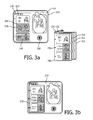
FIGURE 3a and FIGURE 3b illustrate an AED and a full-panel language placard according to one embodiment of the present invention, showing the components both separated and assembled. -
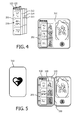
FIGURE 4 illustrates an AED and a half-panel language placard according to an alternative preferred embodiment of the present invention, showing the components separate and assembled. -
FIGURE 5 illustrates a hinged-to-open AED with a language placard installed inside according to an alternative embodiment of the present invention. -
FIGURES 6a and 6b are top views of a multi-panel language placard according to an embodiment of the present invention, showing the panel both closed and flipped open respectively. -
FIGURE 7 illustrates two views of an AED with a multi-panel language placard installed inside according to an alternative embodiment of the present invention, one view with the placard closed and another with the placard flipped open. -
FIGURE 1 is a block diagram of a multiple language portable medical device, in this example anAED 10, connected with a language placard 20 according to an embodiment of the present invention.FIGURE 1 illustrates some conventional features ofAED 10, including anenergy source 138 which provides therapeutic voltage or current pulses to a pair ofelectrodes 170.Electrodes 170, disposed to be electrically attached to a patient (not shown), may also detect and monitor the patient's electrical heart rhythm for use in determining whether therapy is necessary. Abattery 134 provides power to theAED 10.Status interface 128 provides a visual or aural indication of the readiness of theAED 10, such as with a blinking light, graphical indicator, or beeper. - The
AED 10 is activated by the user, such as with on/offswitch 136 or by sensing the opening of the AED housing withcase opening sensor 110. Aspeaker 150 provides aural instructions, for example during a cardiac rescue, which guide the user through the appropriate steps of defibrillation and/or cardiopulmonary resuscitation. If a defibrillating shock is necessary, the user is guided to deliver the shock by pressing theshock button 160. - Control functions of the
AED 10 may be divided among a main processing unit (MPU) 102 and agate array 104. For example,MPU 102 may control the functions of theshock button 160, while gate array 304controls speaker 150. Many variations of the controlling architecture withinAED 10 are possible, and fall within the scope of the contemplated invention. All components which serve to manage the conventional functions of theAED 10 will be referred to ascontroller 108. -
FIGURE 1 also shows the features inAED 10 which enable use in a multiplicity of languages.Controller 108 accesses a read-only memory 114, which stores data relating to a plurality of languages. The appropriate language data may be used bycontroller 108 to generate audible prompts to the user viaspeaker 150.Controller 108 is preferably disposed to sense the progress of the procedure, and issue audible and/or visual prompts appropriate to that portion of the procedure. - Still referring to
FIGURE 1 , language placard 20 is shown in connection withAED 10. As will be further described, language placard 20 includes user instructions printed in a first language. Language placard 20, mounted to theAED 10, thus provides visual guidance to the user. In alternate embodiments, asecond language placard 21 having user instructions in a second language may be concurrently mounted on theAED 10 in a manner that only one placard is visible to the user at a time. - Each
language placard 20, 21 includes an integrated controlling element, designated aselement numbers element 120 is encoded to identify the placard as German. -
AED 10 further includes asensing element 130 which is disposed to sense the controllingelement 120 signal when the language placard 20 is mounted onAED 10. Asecond sensing element 132 may be disposed alongsidesensing element 130 to sense controllingelement 122 when thesecond language placard 21 is mounted onAED 10. When sensingelement 130 senses the encoded identifier signal from controllingelement 120, the signal is passed tocontroller 108.Controller 108 responds to the signal by accessing the corresponding language data frommemory 114, and thereafter using that data to issue audible and verbal instructions to the user viaspeaker 150. - The particular means of communicating between
controlling elements corresponding sensing elements -
FIGURE 1 also illustrates anoptional backlight 140, which may be disposed to illuminate the visible instructions on thelanguage placard 20 or 21.Controller 108 may activatebacklight 140 when theAED 10 is itself activated. Preferably, each language placard comprises several instructions, each pertaining to a step of the rescue procedure, andAED 10 comprises a separate backlight panel for each instruction. In the preferred embodiment,controller 108 sequentially illuminates each panel ofbacklight 140 according to a sensed step of the rescue procedure. Also in the preferred embodiment, each language placard has translucent areas through which thebacklight 140 shines. Thecontroller 108 further synchronizes thebacklight 140 activation with the user prompts issued atspeaker 150 in the desired language. - The portable medical device which interoperates with a language placard may be other than an
AED 10. One example is a manual defibrillator. Another example is a defibrillator trainer that simulates the behavior of a manual or automatic/semi-automatic defibrillator in use, in which case theenergy source 138 may be omitted. The invention may also be disposed on non-defibrillating portable medical devices, such as handheld diagnostic ultrasound machines, blood pressure monitors and the like. -
FIGURE 2a is a top view of a full-panel language placard 200. According to this embodiment of the present invention, full-panel language placard 200 includes both agraphic instruction 224 set and a writteninstruction 226 set affixed or printed to the front of theplacard 200. Preferably, each major stage of the underlying procedure is grouped into aseparate instruction panel 228. In an even more preferred embodiment, eachpanel 228 is of a translucent material, such as a thin polymeric material, which allows theunderlying backlight 170 on the AED to selectively illuminate and direct the user's attention to that particular stage. In theFIGURE 2a illustration, the writteninstruction 226 set is in English, and includes each major step of a cardiac rescue. - Also affixed to the full-
panel language placard 200 is acontrolling element 220 of a technology as previously described.Controlling element 220 is preferably integrated into theplacard 200 at a periphery of the placard such that it does not interfere with thevisual instruction set controlling element 220. -
FIGURE 2b is a top view of a half-panel language placard 201 according to another embodiment of the present invention. Half-panel placard 201 is constructed similarly to the full-panel language placard 200 except for lacking the portion which comprises a graphic instruction. According to this embodiment, half-panel language placard 201 includes only a writteninstruction 226 set affixed or printed to the front of theplacard 201. Preferably, each major stage of the underlying procedure is grouped into a writteninstruction panel 229 similar to the left side ofinstruction panel 228. In an even more preferred embodiment, eachpanel 229 is of a translucent material, such as a thin polymeric material, which allows theunderlying backlight 170 on the AED to selectively illuminate and direct the user's attention to that particular stage. In theFIGURE 2b illustration, the writteninstruction 226 set is in English, and includes each major step of a cardiac rescue. - Affixed to the half-
panel language placard 201 is acontrolling element 222 of a technology as previously described.Controlling element 222 is preferably integrated into theplacard 201 at a periphery of the placard such that it does not interfere with thevisual instruction set 226. Small indicia of language may be placed near thecontrolling element 220. - The preferred material of construction for
language placards placards element - Both
language placards securing mechanism 230 for removably securing thelanguage placard underlying AED 10. Preferred securing mechanisms are clips, snaps, or slots. Hook and loop material or even a removable adhesive may alternatively be used. - The
particular securing mechanism 230 shown inFIGURES 2a and 2b are holes for receiving a ring binding clip affixed to theAED 10. As will be described below, this embodiment allows the language placard to be flipped away from the AED to remove the placard's controlling element from its corresponding sensing element and also to uncover a second language placard with a second controlling element still in correspondence with a second sensing element. The flipped away configuration in turn enables the AED controller to switch to the second language operation. -
FIGURE 3a illustrates, a portable medical device, shown as anAED 310, with alanguage placard 200.AED 310 includes acase 320 which houses the internal components.Electrodes 170 are shown as stored with theAED 310 to allow rapid deployment during use. - A
placard mount 330 onAED case 320 includes at least a highly visible region on the face ofcase 320 for user viewing of rescue-related instructions.Mount 330 also includes one or more sensing elements, such as 130 and 132, which is in electrical communication with the internal controller circuitry.Mount 330 is shaped to receive one or more language placards. - Optionally,
case 320 includes aplacard retainer 340 for holding a language placard securely inmount 330. Also, mount 330 may include one ormore backlight panels 140, which the internal AED controller illuminate(s) based on a detected rescue stage or device activation. Optionally, graphic instructions may be placed directly on themount 330. If theAED 310 is configured with a default language, written instructions in the default language may be placed directly onmount 330 as well. This option allows theAED 310 to be used even if no language placard at all is present. -
FIGURE 3a showsadditional language placards 210, 211, 212 stacked withlanguage placard 200, each having a controlling element tab such as secondcontrolling element 122. Each placard may also have translucent regions underlying the respective graphic and written instructions and disposed to overliebacklight 140. Each controlling element tab is disposed to overlie a corresponding sensing element area onAED 310 when installed. Asecuring mechanism 230 is shown onplacard 200 for securing the placard to theplacard retainer 340. -
FIGURE 3b illustrates theAED 310 andlanguage placards AED 310 is configured to provide user instruction prompts in the language of thetop language placard 200. Although shown with multiple placards, it is within the scope of the invention to mount only a single language placard onAED 310. As is shown, the mounted and visible language placard is disposed to obscure any underlying placards and any instructions placed on the mount. - In use, the
AED 310 ofFIGURE 3b is activated by an on/off button or similar means, not shown, whereuponAED 310 begins to guide the user with aural prompts in the first language of thevisible language placard 200.AED 310 is configured, either at activation or when thelanguage placard 200 was installed, to operate in the first language based upon the sensed presence of one or more controlling elements on the installed language placard(s). In this instance, the controllingelement 120 ofEnglish language placard 200 is sensed by correspondingsensing element 130 onAED 310, so that any other sensed controlling elements are ignored. Variations of the sensed presence are of course within the scope of the invention, and extend to coded controlling element signals, combinations of controlling elements as present, or permutations of controlling elements. If no language placard is detected by theAED 310,AED 310 will begin operation in a default language. - If, during operation, the user desires to switch languages, she may do so simply by removing the language placard that is in use, and replacing it with another placard having a different language. The
AED 310 will then continue the operation from that time in the different language. Thus, the invention avoids undue delay or confusion which would otherwise arise by re-starting the operation in the different language. - Now turning to
FIGURE 4 , a variation of the invention as shown inFIGURE 3 substitutes a half-panel language placard 201 for the full-panel language placard 200. In theFIGURE 4 embodiment, universal graphic instructions are placed directly on theAED 310 mount. If theAED 310 is configured with a default language, written instructions in the default language may be placed directly onmount 330 as well. This option allows theAED 310 to be used even if no language placard at all is present. -
FIGURE 4 also shows additional half-panel language placards panel language placard 210, each having a controlling element tab such as secondcontrolling element 122. Each placard may also have translucent regions underlying the respective written instructions and disposed to overliebacklight 140. Each controlling element tab is disposed to overlie a corresponding sensing element area onAED 310 when installed. Asecuring mechanism 230 is shown onplacard 201 for securing the placard to theplacard retainer 340. -
FIGURE 4 also illustrates theAED 310 andlanguage placards AED 310 is configured to provide user instruction prompts in the language of the visibletop language placard 201. Although shown with multiple placards, it is within the scope of the invention to mount only a single language placard onAED 310. TheFIGURE 4 embodiment shows how the universal graphic user instruction which is disposed directly on theAED 310 is displayed adjacent to the corresponding written instructions appearing on the half-panel language placard 201. In all other aspects, use of theAED 310 in theFIGURE 4 embodiment is the same as described in theFIGURE 3 embodiment. -
FIGURE 5 illustrates another embodiment of the invention, comprising a hinged-to-open AED 510 having a mount with alanguage placard 201 installed inside a hingedlid 520. According to this alternative embodiment of the present invention,AED 520 comprises a base unit which is joined to the hingedlid 520 by anAED case hinge 530. Power and communications are shared between the base unit and the hingedlid 520 via paths not shown. -
FIGURE 5 further illustrates the disposition of thecase opening sensor 110, which in this embodiment is a Hall Effect sensor which generates a signal to thecontroller 108 when thelid 520 is opened. In use, theAED 510 may be activated by the controller when the lid is sensed open. If thecontroller 108 has not already configured the language according to the installedlanguage placard 201, it does so at activation. Then, theAED 510 issues audible user prompts according to the language of the installed placard. In addition,AED 510 may further energize thebacklight 140 upon activation. If thebacklight 140 panel consists of several sub-panels,AED 510 may selectively energize the sub-panels ofbacklight 140 according to a sensed stage of the rescue. In other aspects, operation ofAED 510 is similar to that described in other embodiments. -
FIGURES 6a and 6b are top views of alanguage placard assembly 600 according to another embodiment of the present invention, wherein afirst language placard 601 is hingeably attached to asecond language placard 602 in a notebook-type fashion. The illustrated embodiment shows half-panel language placards placard 201. In this embodiment, two or more half-language placards identifying different languages are assembled at one edge with a languageplacard assembly hinge 630.Assembly hinge 630 may optionally be integrated into a securing mechanism such assecuring mechanism 230 to mount the assembly of language cards onto the AED placard mount. - As can be seen in
FIGURE 6b , theassembly 600 can be flipped open until the desired language placard is in view. In addition, the flipping away of the language placard, such asplacard 601, displaces its controlling element away from its normal position. The utility of this feature is shown in the followingFIGURE 7 . -
FIGURE 7 illustrates in the top view an AED with theFIGURE 6 language placard assembly 600 as installed in anAED 710. In this disposition, the AED initially senses thefirst language placard 601 in visible position and begins operation in the first language upon activation. As previously described, the initial configuration may be accomplished either at activation or at an earlier time when thelanguage placard assembly 600 was mounted in theAED 710. The operation of theAED 710 continues as previously described. - If, during operation, the user desires to switch languages, she may do so using the
AED 710 andlanguage placard assembly 600. The bottom view ofFIGURE 7 illustrates theFIGURE 7 embodiment after the user has flipped open thelanguage placard assembly 600 to view the instructions in a second language. In this position,AED 710 senses thatsecond language placard 602 is visible by the removal of controllingelement 620 from sensingelement 730.AED 710 accordingly switches language operation to the second language and continues the operation from the switched time. Thus, the invention avoids undue delay or confusion which would otherwise arise by re-starting the operation in the different language. - Variations to the aforedescribed apparatus and method are considered to fall within the scope of the claimed invention. For example, the particular arrangement of the placard with respect to the portable medical device, the content of the visual instructions, and the relative placement of the controlling elements and sensing elements may be modified within the scope of the invention, as defined by the appended claims.
Table of Elements Element Name 10 Automated external defibrillator (AED) 20 Language placard 21 Second language placard 102 Main Processing Unit 104 Gate Array 108 Controller 110 Case opening sensor 114 Memory 120 Controlling element 122 Second controlling element 128 status interface 130 Sensing element 132 Second sensing element 136 on/off switch 134 battery 138 Energy source 140 Backlight panel 150 Speaker 160 shock button 170 electrodes 200 full- panel language placard 201 half- panel language placard 220 Controlling element 222 Second controlling element 224 Graphic instruction 226 Written instruction 228 Instruction panel 229 Written instruction panel 230 Securing mechanism 310 AED 320 AED case 330 Placard mount 340 Placard retainer 210 Second language placard 211 Third language placard 212 Fourth language placard 213 Second half- panel language placard 214 Third half- panel language placard 215 Fourth half- panel language placard 510 Hinged-to- open AED 520 Hinged lid 530 AED case hinge 630 Language placard assembly hinge 600 Language placard assembly 620 Controlling element 601 first language placard 602 second language placard 710 Hinged-to- open AED 730 Sensing element
Claims (20)
- A portable medical device configurable to operate in multiple languages comprising:a controller (108);a memory (114) disposed in electrical communication with the controller, the memory comprising data relating to user instructions in a plurality of languages;a case (320) which houses the controller and memory and comprises a mount (330) for a placard;a sensing element (130) disposed adjacent the mount and in electrical communication with the controller;a placard (20) having a visible user instruction in a first language and disposed to be removably secured in the mount;a controlling element (120) disposed on the placard such that the sensing element senses the controlling element when the placard is secured in the mount,wherein the controller configures the portable medical device to operate in one of the plurality of languages based on the sensed controlling element.
- The portable medical device of Claim 1, wherein the portable medical device comprises an automated external defibrillator.
- The portable medical device of Claim 1, wherein the placard is translucent, and further comprising:a backlight panel disposed under the mount, wherein the controller illuminates the user instruction through the placard during use.
- The portable medical device of Claim 3 wherein the placard comprises a plurality of panels each of which illustrate a step in the use, and further wherein the backlight panel comprises a plurality of backlights each of which underlies one of the plurality of panels, and further wherein the controller illuminates one of the plurality of backlights in accordance with a sensed progress of the use.
- The portable medical device of Claim 1 further comprising a default language user instruction disposed on the mount such that the default language user instruction is obscured when the placard is removably secured in the mount.
- The portable medical device of Claim 1, further comprising a universal graphic user instruction disposed to be visible to the user at all times during use.
- The portable medical device of Claim 1, wherein the case further comprises a hinged lid in which the placard and mount are disposed on an inner surface of the lid.
- The portable medical device of Claim 7, wherein the placard is translucent, and further comprising:a backlight panel disposed under the mount,wherein the controller is further disposed to sense the opening of the lid and illuminates the user instruction through the placard based on the sensed opening.
- The portable medical device of Claim 1, wherein the sensing element and controlling element are selected from one of the group of optical, radio frequency identification (RFID), electrical, hall effect or mechanical contact elements.
- The portable medical device of Claim 1, wherein the controller is disposed to switch from one language to a second language in the plurality of languages based on a placement or removal of the placard during use, and continue the use in the second language.
- The portable medical device of Claim 1 further comprising:a second sensing element in electrical communication with the controller;a second placard having a visible user instruction in a second language and disposed to be removably secured in the mount;a second controlling element disposed on the second placard such that the second sensing element senses the second controlling element when the second placard is secured in the mount,wherein the controller configures the portable medical device to operate in the second language based on the second sensed controlling element.
- A placard (200, 201) for an automated external defibrillator, comprising:a panel (228, 229) having a written instruction in a first language;a controlling element (220) having a unique identifier of the first language; anda securing element (230) for mounting the placard onto the automated external defibrillator.
- The placard of Claim 12, further comprising:a second panel having a written instruction in a second language;a second controlling element having a unique identifier of the second language; anda hinge for hingably attaching the second panel to the panel.
- The placard of Claim 13, wherein the hinge is integral with the securing element.
- The placard of Claim 12, wherein the panel is translucent.
- The placard of Claim 12, wherein the written instructions are disposed on the panel such that when the placard is mounted, the written instructions lie adjacent to universal graphic instructions disposed on the automated external defibrillator.
- The placard of Claim 12, wherein the controlling element is selected from one of the group comprising an optical element, electrical contact, radio frequency identification element, hall effect or mechanical operator.
- A method for operating an automated external defibrillator in a plurality of languages, the method comprising the steps of
providing an automated external defibrillator (10) having a plurality of languages for audible user instructions stored in memory and a sensing element for selecting one of the plurality of languages;
mounting a placard (20) having written instructions in a first language and a controlling element onto the automated external defibrillator; and
automatically selecting the first language for the automated external defibrillator based on the mounting step. - The method of Claim 18, wherein the step of mounting further comprises hingably mounting the placard onto the automated external defibrillator, and further comprising the steps of:operating the automated external defibrillator in the first language;flipping the placard away from the automated external defibrillator about the hingeable mount; andautomatically switching to a second language in the plurality of languages based on the flipping step.
- The method of Claim 19, wherein the step of automatically switching occurs during use, and wherein the audible user instructions continue in the second language.
Applications Claiming Priority (2)
| Application Number | Priority Date | Filing Date | Title |
|---|---|---|---|
| US201261593965P | 2012-02-02 | 2012-02-02 | |
| PCT/IB2013/050651 WO2013114256A1 (en) | 2012-02-02 | 2013-01-25 | Language placard for an automated external defibrillator |
Publications (2)
| Publication Number | Publication Date |
|---|---|
| EP2809395A1 EP2809395A1 (en) | 2014-12-10 |
| EP2809395B1 true EP2809395B1 (en) | 2016-01-13 |
Family
ID=48044949
Family Applications (1)
| Application Number | Title | Priority Date | Filing Date |
|---|---|---|---|
| EP13713501.8A Active EP2809395B1 (en) | 2012-02-02 | 2013-01-25 | Language placard for an automated external defibrillator |
Country Status (5)
| Country | Link |
|---|---|
| US (1) | US9403026B2 (en) |
| EP (1) | EP2809395B1 (en) |
| JP (1) | JP6034407B2 (en) |
| CN (1) | CN104080512B (en) |
| WO (1) | WO2013114256A1 (en) |
Families Citing this family (3)
| Publication number | Priority date | Publication date | Assignee | Title |
|---|---|---|---|---|
| CN104136073B (en) * | 2012-02-02 | 2016-06-22 | 皇家飞利浦有限公司 | Bilingual language controller for automated external defibrillators |
| CN110647376A (en) * | 2019-09-25 | 2020-01-03 | 苏州维伟思医疗科技有限公司 | AED language localization method and system |
| JP2023104241A (en) * | 2022-01-17 | 2023-07-28 | 日本光電工業株式会社 | automated external defibrillator |
Family Cites Families (9)
| Publication number | Priority date | Publication date | Assignee | Title |
|---|---|---|---|---|
| WO1999024114A1 (en) * | 1997-11-06 | 1999-05-20 | Heartstream, Inc. | External defibrillator with cpr prompts and acls prompts and method of use |
| US6154673A (en) * | 1997-12-30 | 2000-11-28 | Agilent Technologies, Inc. | Multilingual defibrillator |
| US7164945B2 (en) * | 2001-09-14 | 2007-01-16 | Zoll Medical Corporation | Defibrillators |
| EP1778348A1 (en) * | 2004-08-03 | 2007-05-02 | Koninklijke Philips Electronics N.V. | External defibrillator with multiple language prompting |
| US20060178865A1 (en) | 2004-10-29 | 2006-08-10 | Edwards D Craig | Multilingual user interface for a medical device |
| JP2010508941A (en) * | 2006-11-13 | 2010-03-25 | コーニンクレッカ フィリップス エレクトロニクス エヌ ヴィ | Multilingual external defibrillator |
| JP2008237458A (en) * | 2007-03-27 | 2008-10-09 | Showa Denki Sangyo Kk | Controller of electric treatment instrument |
| JP6087501B2 (en) * | 2011-12-26 | 2017-03-01 | フクダ電子株式会社 | Defibrillator operation support system and defibrillator equipped with the same |
| CN104136073B (en) * | 2012-02-02 | 2016-06-22 | 皇家飞利浦有限公司 | Bilingual language controller for automated external defibrillators |
-
2013
- 2013-01-25 JP JP2014555357A patent/JP6034407B2/en active Active
- 2013-01-25 WO PCT/IB2013/050651 patent/WO2013114256A1/en not_active Ceased
- 2013-01-25 EP EP13713501.8A patent/EP2809395B1/en active Active
- 2013-01-25 CN CN201380007476.1A patent/CN104080512B/en active Active
- 2013-01-25 US US14/376,046 patent/US9403026B2/en active Active
Also Published As
| Publication number | Publication date |
|---|---|
| JP6034407B2 (en) | 2016-11-30 |
| CN104080512A (en) | 2014-10-01 |
| WO2013114256A1 (en) | 2013-08-08 |
| US20150005836A1 (en) | 2015-01-01 |
| JP2015509024A (en) | 2015-03-26 |
| CN104080512B (en) | 2016-04-27 |
| US9403026B2 (en) | 2016-08-02 |
| EP2809395A1 (en) | 2014-12-10 |
Similar Documents
| Publication | Publication Date | Title |
|---|---|---|
| US6021349A (en) | Defibrillator with automatic and manual modes | |
| US10058469B2 (en) | Automated caregiving device with prompting based on caregiver progress | |
| EP1425066B1 (en) | Defibrillators | |
| EP2809396B1 (en) | Bilingual language controller for an automated external defibrillator | |
| CN101084040B (en) | Automatic external defibrillator for adult and pediatric patients | |
| US20060178865A1 (en) | Multilingual user interface for a medical device | |
| US20080288011A1 (en) | Method and Article for Storing an Automatic External Defibrillator for Use Without a Prescription | |
| CN102895735A (en) | Otc automatic external defibrillator with quick install battery | |
| US9403026B2 (en) | Language placard for an automated external defibrillator | |
| WO2008059397A1 (en) | Multilingual external defibrillator | |
| US20080097533A1 (en) | External Defibrillator with Multiple Language Prompting | |
| WO2018109145A1 (en) | Context sensitive help function for medical device monitor/defibrillators | |
| KR102211140B1 (en) | Monitor type defibrillator | |
| US20060142805A1 (en) | Method and article for packaging an automatic external defibrillator for use without a prescription | |
| US20060142807A1 (en) | Method and article for packaging an automatic external defibrillator for use without a prescription |
Legal Events
| Date | Code | Title | Description |
|---|---|---|---|
| PUAI | Public reference made under article 153(3) epc to a published international application that has entered the european phase |
Free format text: ORIGINAL CODE: 0009012 |
|
| 17P | Request for examination filed |
Effective date: 20140902 |
|
| AK | Designated contracting states |
Kind code of ref document: A1 Designated state(s): AL AT BE BG CH CY CZ DE DK EE ES FI FR GB GR HR HU IE IS IT LI LT LU LV MC MK MT NL NO PL PT RO RS SE SI SK SM TR |
|
| AX | Request for extension of the european patent |
Extension state: BA ME |
|
| DAX | Request for extension of the european patent (deleted) | ||
| GRAP | Despatch of communication of intention to grant a patent |
Free format text: ORIGINAL CODE: EPIDOSNIGR1 |
|
| INTG | Intention to grant announced |
Effective date: 20150722 |
|
| GRAS | Grant fee paid |
Free format text: ORIGINAL CODE: EPIDOSNIGR3 |
|
| GRAA | (expected) grant |
Free format text: ORIGINAL CODE: 0009210 |
|
| AK | Designated contracting states |
Kind code of ref document: B1 Designated state(s): AL AT BE BG CH CY CZ DE DK EE ES FI FR GB GR HR HU IE IS IT LI LT LU LV MC MK MT NL NO PL PT RO RS SE SI SK SM TR |
|
| REG | Reference to a national code |
Ref country code: GB Ref legal event code: FG4D |
|
| REG | Reference to a national code |
Ref country code: CH Ref legal event code: EP |
|
| REG | Reference to a national code |
Ref country code: FR Ref legal event code: PLFP Year of fee payment: 4 |
|
| REG | Reference to a national code |
Ref country code: IE Ref legal event code: FG4D |
|
| REG | Reference to a national code |
Ref country code: AT Ref legal event code: REF Ref document number: 770103 Country of ref document: AT Kind code of ref document: T Effective date: 20160215 |
|
| REG | Reference to a national code |
Ref country code: DE Ref legal event code: R096 Ref document number: 602013004644 Country of ref document: DE |
|
| REG | Reference to a national code |
Ref country code: LT Ref legal event code: MG4D |
|
| REG | Reference to a national code |
Ref country code: NL Ref legal event code: MP Effective date: 20160113 |
|
| PG25 | Lapsed in a contracting state [announced via postgrant information from national office to epo] |
Ref country code: BE Free format text: LAPSE BECAUSE OF NON-PAYMENT OF DUE FEES Effective date: 20160131 |
|
| REG | Reference to a national code |
Ref country code: AT Ref legal event code: MK05 Ref document number: 770103 Country of ref document: AT Kind code of ref document: T Effective date: 20160113 |
|
| PG25 | Lapsed in a contracting state [announced via postgrant information from national office to epo] |
Ref country code: NL Free format text: LAPSE BECAUSE OF FAILURE TO SUBMIT A TRANSLATION OF THE DESCRIPTION OR TO PAY THE FEE WITHIN THE PRESCRIBED TIME-LIMIT Effective date: 20160113 |
|
| PG25 | Lapsed in a contracting state [announced via postgrant information from national office to epo] |
Ref country code: GR Free format text: LAPSE BECAUSE OF FAILURE TO SUBMIT A TRANSLATION OF THE DESCRIPTION OR TO PAY THE FEE WITHIN THE PRESCRIBED TIME-LIMIT Effective date: 20160414 Ref country code: HR Free format text: LAPSE BECAUSE OF FAILURE TO SUBMIT A TRANSLATION OF THE DESCRIPTION OR TO PAY THE FEE WITHIN THE PRESCRIBED TIME-LIMIT Effective date: 20160113 Ref country code: NO Free format text: LAPSE BECAUSE OF FAILURE TO SUBMIT A TRANSLATION OF THE DESCRIPTION OR TO PAY THE FEE WITHIN THE PRESCRIBED TIME-LIMIT Effective date: 20160413 Ref country code: ES Free format text: LAPSE BECAUSE OF FAILURE TO SUBMIT A TRANSLATION OF THE DESCRIPTION OR TO PAY THE FEE WITHIN THE PRESCRIBED TIME-LIMIT Effective date: 20160113 Ref country code: IT Free format text: LAPSE BECAUSE OF FAILURE TO SUBMIT A TRANSLATION OF THE DESCRIPTION OR TO PAY THE FEE WITHIN THE PRESCRIBED TIME-LIMIT Effective date: 20160113 Ref country code: FI Free format text: LAPSE BECAUSE OF FAILURE TO SUBMIT A TRANSLATION OF THE DESCRIPTION OR TO PAY THE FEE WITHIN THE PRESCRIBED TIME-LIMIT Effective date: 20160113 |
|
| PG25 | Lapsed in a contracting state [announced via postgrant information from national office to epo] |
Ref country code: SE Free format text: LAPSE BECAUSE OF FAILURE TO SUBMIT A TRANSLATION OF THE DESCRIPTION OR TO PAY THE FEE WITHIN THE PRESCRIBED TIME-LIMIT Effective date: 20160113 Ref country code: LV Free format text: LAPSE BECAUSE OF FAILURE TO SUBMIT A TRANSLATION OF THE DESCRIPTION OR TO PAY THE FEE WITHIN THE PRESCRIBED TIME-LIMIT Effective date: 20160113 Ref country code: RS Free format text: LAPSE BECAUSE OF FAILURE TO SUBMIT A TRANSLATION OF THE DESCRIPTION OR TO PAY THE FEE WITHIN THE PRESCRIBED TIME-LIMIT Effective date: 20160113 Ref country code: IS Free format text: LAPSE BECAUSE OF FAILURE TO SUBMIT A TRANSLATION OF THE DESCRIPTION OR TO PAY THE FEE WITHIN THE PRESCRIBED TIME-LIMIT Effective date: 20160513 Ref country code: AT Free format text: LAPSE BECAUSE OF FAILURE TO SUBMIT A TRANSLATION OF THE DESCRIPTION OR TO PAY THE FEE WITHIN THE PRESCRIBED TIME-LIMIT Effective date: 20160113 Ref country code: LT Free format text: LAPSE BECAUSE OF FAILURE TO SUBMIT A TRANSLATION OF THE DESCRIPTION OR TO PAY THE FEE WITHIN THE PRESCRIBED TIME-LIMIT Effective date: 20160113 Ref country code: PL Free format text: LAPSE BECAUSE OF FAILURE TO SUBMIT A TRANSLATION OF THE DESCRIPTION OR TO PAY THE FEE WITHIN THE PRESCRIBED TIME-LIMIT Effective date: 20160113 Ref country code: PT Free format text: LAPSE BECAUSE OF FAILURE TO SUBMIT A TRANSLATION OF THE DESCRIPTION OR TO PAY THE FEE WITHIN THE PRESCRIBED TIME-LIMIT Effective date: 20160513 |
|
| REG | Reference to a national code |
Ref country code: CH Ref legal event code: PL |
|
| REG | Reference to a national code |
Ref country code: DE Ref legal event code: R097 Ref document number: 602013004644 Country of ref document: DE |
|
| PG25 | Lapsed in a contracting state [announced via postgrant information from national office to epo] |
Ref country code: LI Free format text: LAPSE BECAUSE OF NON-PAYMENT OF DUE FEES Effective date: 20160131 Ref country code: MC Free format text: LAPSE BECAUSE OF FAILURE TO SUBMIT A TRANSLATION OF THE DESCRIPTION OR TO PAY THE FEE WITHIN THE PRESCRIBED TIME-LIMIT Effective date: 20160113 Ref country code: DK Free format text: LAPSE BECAUSE OF FAILURE TO SUBMIT A TRANSLATION OF THE DESCRIPTION OR TO PAY THE FEE WITHIN THE PRESCRIBED TIME-LIMIT Effective date: 20160113 Ref country code: EE Free format text: LAPSE BECAUSE OF FAILURE TO SUBMIT A TRANSLATION OF THE DESCRIPTION OR TO PAY THE FEE WITHIN THE PRESCRIBED TIME-LIMIT Effective date: 20160113 Ref country code: CH Free format text: LAPSE BECAUSE OF NON-PAYMENT OF DUE FEES Effective date: 20160131 |
|
| REG | Reference to a national code |
Ref country code: IE Ref legal event code: MM4A |
|
| PLBE | No opposition filed within time limit |
Free format text: ORIGINAL CODE: 0009261 |
|
| STAA | Information on the status of an ep patent application or granted ep patent |
Free format text: STATUS: NO OPPOSITION FILED WITHIN TIME LIMIT |
|
| PG25 | Lapsed in a contracting state [announced via postgrant information from national office to epo] |
Ref country code: RO Free format text: LAPSE BECAUSE OF FAILURE TO SUBMIT A TRANSLATION OF THE DESCRIPTION OR TO PAY THE FEE WITHIN THE PRESCRIBED TIME-LIMIT Effective date: 20160113 Ref country code: CZ Free format text: LAPSE BECAUSE OF FAILURE TO SUBMIT A TRANSLATION OF THE DESCRIPTION OR TO PAY THE FEE WITHIN THE PRESCRIBED TIME-LIMIT Effective date: 20160113 Ref country code: SM Free format text: LAPSE BECAUSE OF FAILURE TO SUBMIT A TRANSLATION OF THE DESCRIPTION OR TO PAY THE FEE WITHIN THE PRESCRIBED TIME-LIMIT Effective date: 20160113 Ref country code: SK Free format text: LAPSE BECAUSE OF FAILURE TO SUBMIT A TRANSLATION OF THE DESCRIPTION OR TO PAY THE FEE WITHIN THE PRESCRIBED TIME-LIMIT Effective date: 20160113 |
|
| 26N | No opposition filed |
Effective date: 20161014 |
|
| PG25 | Lapsed in a contracting state [announced via postgrant information from national office to epo] |
Ref country code: BE Free format text: LAPSE BECAUSE OF FAILURE TO SUBMIT A TRANSLATION OF THE DESCRIPTION OR TO PAY THE FEE WITHIN THE PRESCRIBED TIME-LIMIT Effective date: 20160113 |
|
| REG | Reference to a national code |
Ref country code: FR Ref legal event code: PLFP Year of fee payment: 5 |
|
| PG25 | Lapsed in a contracting state [announced via postgrant information from national office to epo] |
Ref country code: IE Free format text: LAPSE BECAUSE OF NON-PAYMENT OF DUE FEES Effective date: 20160125 |
|
| PG25 | Lapsed in a contracting state [announced via postgrant information from national office to epo] |
Ref country code: SI Free format text: LAPSE BECAUSE OF FAILURE TO SUBMIT A TRANSLATION OF THE DESCRIPTION OR TO PAY THE FEE WITHIN THE PRESCRIBED TIME-LIMIT Effective date: 20160113 Ref country code: BG Free format text: LAPSE BECAUSE OF FAILURE TO SUBMIT A TRANSLATION OF THE DESCRIPTION OR TO PAY THE FEE WITHIN THE PRESCRIBED TIME-LIMIT Effective date: 20160413 |
|
| PG25 | Lapsed in a contracting state [announced via postgrant information from national office to epo] |
Ref country code: MT Free format text: LAPSE BECAUSE OF FAILURE TO SUBMIT A TRANSLATION OF THE DESCRIPTION OR TO PAY THE FEE WITHIN THE PRESCRIBED TIME-LIMIT Effective date: 20160113 |
|
| REG | Reference to a national code |
Ref country code: FR Ref legal event code: PLFP Year of fee payment: 6 |
|
| PG25 | Lapsed in a contracting state [announced via postgrant information from national office to epo] |
Ref country code: HU Free format text: LAPSE BECAUSE OF FAILURE TO SUBMIT A TRANSLATION OF THE DESCRIPTION OR TO PAY THE FEE WITHIN THE PRESCRIBED TIME-LIMIT; INVALID AB INITIO Effective date: 20130125 |
|
| PG25 | Lapsed in a contracting state [announced via postgrant information from national office to epo] |
Ref country code: MK Free format text: LAPSE BECAUSE OF FAILURE TO SUBMIT A TRANSLATION OF THE DESCRIPTION OR TO PAY THE FEE WITHIN THE PRESCRIBED TIME-LIMIT Effective date: 20160113 Ref country code: CY Free format text: LAPSE BECAUSE OF FAILURE TO SUBMIT A TRANSLATION OF THE DESCRIPTION OR TO PAY THE FEE WITHIN THE PRESCRIBED TIME-LIMIT Effective date: 20160113 Ref country code: LU Free format text: LAPSE BECAUSE OF NON-PAYMENT OF DUE FEES Effective date: 20160125 Ref country code: MT Free format text: LAPSE BECAUSE OF FAILURE TO SUBMIT A TRANSLATION OF THE DESCRIPTION OR TO PAY THE FEE WITHIN THE PRESCRIBED TIME-LIMIT Effective date: 20160131 |
|
| PG25 | Lapsed in a contracting state [announced via postgrant information from national office to epo] |
Ref country code: TR Free format text: LAPSE BECAUSE OF FAILURE TO SUBMIT A TRANSLATION OF THE DESCRIPTION OR TO PAY THE FEE WITHIN THE PRESCRIBED TIME-LIMIT Effective date: 20160113 Ref country code: AL Free format text: LAPSE BECAUSE OF FAILURE TO SUBMIT A TRANSLATION OF THE DESCRIPTION OR TO PAY THE FEE WITHIN THE PRESCRIBED TIME-LIMIT Effective date: 20160113 |
|
| PGFP | Annual fee paid to national office [announced via postgrant information from national office to epo] |
Ref country code: GB Payment date: 20200129 Year of fee payment: 8 |
|
| GBPC | Gb: european patent ceased through non-payment of renewal fee |
Effective date: 20210125 |
|
| PG25 | Lapsed in a contracting state [announced via postgrant information from national office to epo] |
Ref country code: GB Free format text: LAPSE BECAUSE OF NON-PAYMENT OF DUE FEES Effective date: 20210125 |
|
| REG | Reference to a national code |
Ref country code: DE Ref legal event code: R084 Ref document number: 602013004644 Country of ref document: DE |
|
| PGFP | Annual fee paid to national office [announced via postgrant information from national office to epo] |
Ref country code: DE Payment date: 20260127 Year of fee payment: 14 |
|
| PGFP | Annual fee paid to national office [announced via postgrant information from national office to epo] |
Ref country code: FR Payment date: 20260126 Year of fee payment: 14 |