EP2808328A1 - Pentaphyrins useful in the biomedical field - Google Patents
Pentaphyrins useful in the biomedical field Download PDFInfo
- Publication number
- EP2808328A1 EP2808328A1 EP14169956.1A EP14169956A EP2808328A1 EP 2808328 A1 EP2808328 A1 EP 2808328A1 EP 14169956 A EP14169956 A EP 14169956A EP 2808328 A1 EP2808328 A1 EP 2808328A1
- Authority
- EP
- European Patent Office
- Prior art keywords
- meso
- derivatives
- pyridyl
- pentaphyrins
- substituted
- Prior art date
- Legal status (The legal status is an assumption and is not a legal conclusion. Google has not performed a legal analysis and makes no representation as to the accuracy of the status listed.)
- Granted
Links
- 239000000463 material Substances 0.000 claims abstract description 12
- 238000004519 manufacturing process Methods 0.000 claims abstract description 7
- 150000001450 anions Chemical class 0.000 claims abstract description 6
- 150000001768 cations Chemical class 0.000 claims abstract description 6
- PBTPREHATAFBEN-UHFFFAOYSA-N dipyrromethane Chemical class C=1C=CNC=1CC1=CC=CN1 PBTPREHATAFBEN-UHFFFAOYSA-N 0.000 claims description 31
- HZNVUJQVZSTENZ-UHFFFAOYSA-N 2,3-dichloro-5,6-dicyano-1,4-benzoquinone Chemical group ClC1=C(Cl)C(=O)C(C#N)=C(C#N)C1=O HZNVUJQVZSTENZ-UHFFFAOYSA-N 0.000 claims description 28
- 125000003118 aryl group Chemical group 0.000 claims description 28
- 239000003054 catalyst Substances 0.000 claims description 23
- DTQVDTLACAAQTR-UHFFFAOYSA-N Trifluoroacetic acid Chemical group OC(=O)C(F)(F)F DTQVDTLACAAQTR-UHFFFAOYSA-N 0.000 claims description 20
- 125000000339 4-pyridyl group Chemical group N1=C([H])C([H])=C([*])C([H])=C1[H] 0.000 claims description 18
- 238000000034 method Methods 0.000 claims description 16
- 239000007800 oxidant agent Substances 0.000 claims description 13
- 230000001590 oxidative effect Effects 0.000 claims description 13
- 125000001424 substituent group Chemical group 0.000 claims description 13
- 238000003756 stirring Methods 0.000 claims description 11
- 238000006243 chemical reaction Methods 0.000 claims description 10
- BGUWFUQJCDRPTL-UHFFFAOYSA-N pyridine-4-carbaldehyde Chemical compound O=CC1=CC=NC=C1 BGUWFUQJCDRPTL-UHFFFAOYSA-N 0.000 claims description 8
- 239000000203 mixture Substances 0.000 claims description 7
- 125000001997 phenyl group Chemical group [H]C1=C([H])C([H])=C(*)C([H])=C1[H] 0.000 claims description 7
- 239000003504 photosensitizing agent Substances 0.000 claims description 7
- FLCWYEUDIOQXEB-UHFFFAOYSA-N morpholin-4-yl(phenyl)methanone Chemical compound C=1C=CC=CC=1C(=O)N1CCOCC1 FLCWYEUDIOQXEB-UHFFFAOYSA-N 0.000 claims description 6
- XHXFXVLFKHQFAL-UHFFFAOYSA-N phosphoryl trichloride Chemical compound ClP(Cl)(Cl)=O XHXFXVLFKHQFAL-UHFFFAOYSA-N 0.000 claims description 6
- 238000002428 photodynamic therapy Methods 0.000 claims description 6
- 238000001704 evaporation Methods 0.000 claims description 5
- 239000007787 solid Substances 0.000 claims description 5
- 239000002904 solvent Substances 0.000 claims description 5
- WROMPOXWARCANT-UHFFFAOYSA-N tfa trifluoroacetic acid Chemical compound OC(=O)C(F)(F)F.OC(=O)C(F)(F)F WROMPOXWARCANT-UHFFFAOYSA-N 0.000 claims description 5
- CSDSSGBPEUDDEE-UHFFFAOYSA-N 2-formylpyridine Chemical compound O=CC1=CC=CC=N1 CSDSSGBPEUDDEE-UHFFFAOYSA-N 0.000 claims description 4
- 229910052736 halogen Inorganic materials 0.000 claims description 4
- 150000002367 halogens Chemical class 0.000 claims description 4
- INQOMBQAUSQDDS-UHFFFAOYSA-N iodomethane Chemical compound IC INQOMBQAUSQDDS-UHFFFAOYSA-N 0.000 claims description 4
- 239000012279 sodium borohydride Substances 0.000 claims description 4
- 229910000033 sodium borohydride Inorganic materials 0.000 claims description 4
- 238000005406 washing Methods 0.000 claims description 4
- 229910019213 POCl3 Inorganic materials 0.000 claims description 3
- 125000003277 amino group Chemical group 0.000 claims description 3
- 125000004093 cyano group Chemical group *C#N 0.000 claims description 3
- 125000002887 hydroxy group Chemical group [H]O* 0.000 claims description 3
- 239000002243 precursor Substances 0.000 claims description 3
- 239000000376 reactant Substances 0.000 claims description 3
- 230000003595 spectral effect Effects 0.000 claims description 3
- 239000003519 biomedical and dental material Substances 0.000 claims description 2
- 230000007935 neutral effect Effects 0.000 claims description 2
- KAESVJOAVNADME-UHFFFAOYSA-N Pyrrole Chemical compound C=1C=CNC=1 KAESVJOAVNADME-UHFFFAOYSA-N 0.000 description 24
- YMWUJEATGCHHMB-UHFFFAOYSA-N Dichloromethane Chemical compound ClCCl YMWUJEATGCHHMB-UHFFFAOYSA-N 0.000 description 18
- XEKOWRVHYACXOJ-UHFFFAOYSA-N Ethyl acetate Chemical compound CCOC(C)=O XEKOWRVHYACXOJ-UHFFFAOYSA-N 0.000 description 16
- OKKJLVBELUTLKV-UHFFFAOYSA-N Methanol Chemical compound OC OKKJLVBELUTLKV-UHFFFAOYSA-N 0.000 description 11
- 230000015572 biosynthetic process Effects 0.000 description 11
- HEDRZPFGACZZDS-MICDWDOJSA-N Trichloro(2H)methane Chemical compound [2H]C(Cl)(Cl)Cl HEDRZPFGACZZDS-MICDWDOJSA-N 0.000 description 10
- 238000002330 electrospray ionisation mass spectrometry Methods 0.000 description 10
- 238000003786 synthesis reaction Methods 0.000 description 9
- 238000005160 1H NMR spectroscopy Methods 0.000 description 8
- 150000001875 compounds Chemical class 0.000 description 7
- XLYOFNOQVPJJNP-UHFFFAOYSA-N water Substances O XLYOFNOQVPJJNP-UHFFFAOYSA-N 0.000 description 7
- YXFVVABEGXRONW-UHFFFAOYSA-N Toluene Chemical compound CC1=CC=CC=C1 YXFVVABEGXRONW-UHFFFAOYSA-N 0.000 description 6
- 235000019439 ethyl acetate Nutrition 0.000 description 6
- 150000002678 macrocyclic compounds Chemical class 0.000 description 6
- 238000005481 NMR spectroscopy Methods 0.000 description 5
- ZMANZCXQSJIPKH-UHFFFAOYSA-N Triethylamine Chemical compound CCN(CC)CC ZMANZCXQSJIPKH-UHFFFAOYSA-N 0.000 description 5
- -1 diformyl tripyrrane Chemical compound 0.000 description 5
- 238000001644 13C nuclear magnetic resonance spectroscopy Methods 0.000 description 4
- OKKJLVBELUTLKV-MZCSYVLQSA-N Deuterated methanol Chemical compound [2H]OC([2H])([2H])[2H] OKKJLVBELUTLKV-MZCSYVLQSA-N 0.000 description 4
- VYPSYNLAJGMNEJ-UHFFFAOYSA-N Silicium dioxide Chemical compound O=[Si]=O VYPSYNLAJGMNEJ-UHFFFAOYSA-N 0.000 description 4
- PNEYBMLMFCGWSK-UHFFFAOYSA-N aluminium oxide Inorganic materials [O-2].[O-2].[O-2].[Al+3].[Al+3] PNEYBMLMFCGWSK-UHFFFAOYSA-N 0.000 description 4
- 238000004458 analytical method Methods 0.000 description 4
- 239000012298 atmosphere Substances 0.000 description 4
- 239000000460 chlorine Substances 0.000 description 4
- 239000013078 crystal Substances 0.000 description 4
- 229940093499 ethyl acetate Drugs 0.000 description 4
- 150000004032 porphyrins Chemical class 0.000 description 4
- WEVYAHXRMPXWCK-UHFFFAOYSA-N Acetonitrile Chemical compound CC#N WEVYAHXRMPXWCK-UHFFFAOYSA-N 0.000 description 3
- 238000012512 characterization method Methods 0.000 description 3
- 125000004122 cyclic group Chemical group 0.000 description 3
- VLKZOEOYAKHREP-UHFFFAOYSA-N n-Hexane Chemical compound CCCCCC VLKZOEOYAKHREP-UHFFFAOYSA-N 0.000 description 3
- 230000003647 oxidation Effects 0.000 description 3
- 238000007254 oxidation reaction Methods 0.000 description 3
- 238000000746 purification Methods 0.000 description 3
- 239000003642 reactive oxygen metabolite Substances 0.000 description 3
- 238000001953 recrystallisation Methods 0.000 description 3
- HIXDQWDOVZUNNA-UHFFFAOYSA-N 2-(3,4-dimethoxyphenyl)-5-hydroxy-7-methoxychromen-4-one Chemical compound C=1C(OC)=CC(O)=C(C(C=2)=O)C=1OC=2C1=CC=C(OC)C(OC)=C1 HIXDQWDOVZUNNA-UHFFFAOYSA-N 0.000 description 2
- IJGRMHOSHXDMSA-UHFFFAOYSA-N Atomic nitrogen Chemical compound N#N IJGRMHOSHXDMSA-UHFFFAOYSA-N 0.000 description 2
- 241000023586 Chetone Species 0.000 description 2
- 150000001298 alcohols Chemical class 0.000 description 2
- 125000000217 alkyl group Chemical group 0.000 description 2
- 150000001412 amines Chemical class 0.000 description 2
- HUMNYLRZRPPJDN-UHFFFAOYSA-N benzaldehyde Chemical compound O=CC1=CC=CC=C1 HUMNYLRZRPPJDN-UHFFFAOYSA-N 0.000 description 2
- 229910052681 coesite Inorganic materials 0.000 description 2
- 229940125773 compound 10 Drugs 0.000 description 2
- 229910052906 cristobalite Inorganic materials 0.000 description 2
- 238000001035 drying Methods 0.000 description 2
- 239000003480 eluent Substances 0.000 description 2
- RTZKZFJDLAIYFH-UHFFFAOYSA-N ether Substances CCOCC RTZKZFJDLAIYFH-UHFFFAOYSA-N 0.000 description 2
- 238000003818 flash chromatography Methods 0.000 description 2
- 239000011261 inert gas Substances 0.000 description 2
- ZLVXBBHTMQJRSX-VMGNSXQWSA-N jdtic Chemical compound C1([C@]2(C)CCN(C[C@@H]2C)C[C@H](C(C)C)NC(=O)[C@@H]2NCC3=CC(O)=CC=C3C2)=CC=CC(O)=C1 ZLVXBBHTMQJRSX-VMGNSXQWSA-N 0.000 description 2
- VNWKTOKETHGBQD-UHFFFAOYSA-N methane Natural products C VNWKTOKETHGBQD-UHFFFAOYSA-N 0.000 description 2
- 239000012299 nitrogen atmosphere Substances 0.000 description 2
- 150000003233 pyrroles Chemical class 0.000 description 2
- 239000000377 silicon dioxide Substances 0.000 description 2
- 241000894007 species Species 0.000 description 2
- 238000004659 sterilization and disinfection Methods 0.000 description 2
- 229910052682 stishovite Inorganic materials 0.000 description 2
- 229910052905 tridymite Inorganic materials 0.000 description 2
- XGCDBGRZEKYHNV-UHFFFAOYSA-N 1,1-bis(diphenylphosphino)methane Chemical compound C=1C=CC=CC=1P(C=1C=CC=CC=1)CP(C=1C=CC=CC=1)C1=CC=CC=C1 XGCDBGRZEKYHNV-UHFFFAOYSA-N 0.000 description 1
- NLXLAEXVIDQMFP-UHFFFAOYSA-N Ammonia chloride Chemical class [NH4+].[Cl-] NLXLAEXVIDQMFP-UHFFFAOYSA-N 0.000 description 1
- 241000894006 Bacteria Species 0.000 description 1
- WKBOTKDWSSQWDR-UHFFFAOYSA-N Bromine atom Chemical compound [Br] WKBOTKDWSSQWDR-UHFFFAOYSA-N 0.000 description 1
- ZAMOUSCENKQFHK-UHFFFAOYSA-N Chlorine atom Chemical compound [Cl] ZAMOUSCENKQFHK-UHFFFAOYSA-N 0.000 description 1
- LFQSCWFLJHTTHZ-UHFFFAOYSA-N Ethanol Chemical compound CCO LFQSCWFLJHTTHZ-UHFFFAOYSA-N 0.000 description 1
- 241000192125 Firmicutes Species 0.000 description 1
- 238000006968 MacDonald synthesis reaction Methods 0.000 description 1
- 239000007832 Na2SO4 Substances 0.000 description 1
- 206010028980 Neoplasm Diseases 0.000 description 1
- PMZURENOXWZQFD-UHFFFAOYSA-L Sodium Sulfate Chemical compound [Na+].[Na+].[O-]S([O-])(=O)=O PMZURENOXWZQFD-UHFFFAOYSA-L 0.000 description 1
- 229910052770 Uranium Inorganic materials 0.000 description 1
- PTFCDOFLOPIGGS-UHFFFAOYSA-N Zinc dication Chemical compound [Zn+2] PTFCDOFLOPIGGS-UHFFFAOYSA-N 0.000 description 1
- 238000010521 absorption reaction Methods 0.000 description 1
- DHKHKXVYLBGOIT-UHFFFAOYSA-N acetaldehyde Diethyl Acetal Natural products CCOC(C)OCC DHKHKXVYLBGOIT-UHFFFAOYSA-N 0.000 description 1
- PBCJIPOGFJYBJE-UHFFFAOYSA-N acetonitrile;hydrate Chemical compound O.CC#N PBCJIPOGFJYBJE-UHFFFAOYSA-N 0.000 description 1
- 125000002777 acetyl group Chemical class [H]C([H])([H])C(*)=O 0.000 description 1
- 150000001299 aldehydes Chemical class 0.000 description 1
- 150000001336 alkenes Chemical class 0.000 description 1
- 150000001345 alkine derivatives Chemical class 0.000 description 1
- 239000005030 aluminium foil Substances 0.000 description 1
- 150000001408 amides Chemical class 0.000 description 1
- 230000000844 anti-bacterial effect Effects 0.000 description 1
- 230000001046 anti-mould Effects 0.000 description 1
- 239000002546 antimould Substances 0.000 description 1
- 230000006907 apoptotic process Effects 0.000 description 1
- 238000013459 approach Methods 0.000 description 1
- 238000005899 aromatization reaction Methods 0.000 description 1
- 150000005347 biaryls Chemical group 0.000 description 1
- 230000003115 biocidal effect Effects 0.000 description 1
- 239000003139 biocide Substances 0.000 description 1
- GDTBXPJZTBHREO-UHFFFAOYSA-N bromine Substances BrBr GDTBXPJZTBHREO-UHFFFAOYSA-N 0.000 description 1
- 229910052794 bromium Inorganic materials 0.000 description 1
- 201000011510 cancer Diseases 0.000 description 1
- 150000001732 carboxylic acid derivatives Chemical class 0.000 description 1
- 230000015556 catabolic process Effects 0.000 description 1
- DNZSHSJERXNJGX-UHFFFAOYSA-N chembl3040240 Chemical compound C1=CC(C(=C2C=CC(N2)=C(C=2C=CN=CC=2)C=2C=CC(N=2)=C(C=2C=CN=CC=2)C2=CC=C3N2)C=2C=CN=CC=2)=NC1=C3C1=CC=NC=C1 DNZSHSJERXNJGX-UHFFFAOYSA-N 0.000 description 1
- 229910052801 chlorine Inorganic materials 0.000 description 1
- 238000004440 column chromatography Methods 0.000 description 1
- 238000004891 communication Methods 0.000 description 1
- 238000000205 computational method Methods 0.000 description 1
- 238000009833 condensation Methods 0.000 description 1
- 230000005494 condensation Effects 0.000 description 1
- 230000021615 conjugation Effects 0.000 description 1
- 238000010276 construction Methods 0.000 description 1
- 229910052593 corundum Inorganic materials 0.000 description 1
- 239000012043 crude product Substances 0.000 description 1
- 238000007872 degassing Methods 0.000 description 1
- 238000006731 degradation reaction Methods 0.000 description 1
- 230000001419 dependent effect Effects 0.000 description 1
- 230000000694 effects Effects 0.000 description 1
- 230000007613 environmental effect Effects 0.000 description 1
- 239000003344 environmental pollutant Substances 0.000 description 1
- 230000008020 evaporation Effects 0.000 description 1
- 230000005284 excitation Effects 0.000 description 1
- 230000004907 flux Effects 0.000 description 1
- 229910001385 heavy metal Inorganic materials 0.000 description 1
- 238000003384 imaging method Methods 0.000 description 1
- 150000002466 imines Chemical class 0.000 description 1
- 238000003780 insertion Methods 0.000 description 1
- 230000037431 insertion Effects 0.000 description 1
- PNDPGZBMCMUPRI-UHFFFAOYSA-N iodine Chemical compound II PNDPGZBMCMUPRI-UHFFFAOYSA-N 0.000 description 1
- 229910052751 metal Inorganic materials 0.000 description 1
- 239000002184 metal Substances 0.000 description 1
- 229910021645 metal ion Inorganic materials 0.000 description 1
- 150000002739 metals Chemical class 0.000 description 1
- 238000012986 modification Methods 0.000 description 1
- 230000004048 modification Effects 0.000 description 1
- 229910052757 nitrogen Inorganic materials 0.000 description 1
- 231100000252 nontoxic Toxicity 0.000 description 1
- 230000003000 nontoxic effect Effects 0.000 description 1
- 238000005580 one pot reaction Methods 0.000 description 1
- 230000003287 optical effect Effects 0.000 description 1
- 230000005693 optoelectronics Effects 0.000 description 1
- 239000012074 organic phase Substances 0.000 description 1
- 239000003973 paint Substances 0.000 description 1
- QNGNSVIICDLXHT-UHFFFAOYSA-N para-ethylbenzaldehyde Natural products CCC1=CC=C(C=O)C=C1 QNGNSVIICDLXHT-UHFFFAOYSA-N 0.000 description 1
- 231100000719 pollutant Toxicity 0.000 description 1
- 230000002971 porphyrogenic effect Effects 0.000 description 1
- 230000008569 process Effects 0.000 description 1
- 230000001737 promoting effect Effects 0.000 description 1
- 125000006239 protecting group Chemical group 0.000 description 1
- 239000012264 purified product Substances 0.000 description 1
- JUJWROOIHBZHMG-UHFFFAOYSA-N pyridine Substances C1=CC=NC=C1 JUJWROOIHBZHMG-UHFFFAOYSA-N 0.000 description 1
- UMJSCPRVCHMLSP-UHFFFAOYSA-N pyridine Natural products COC1=CC=CN=C1 UMJSCPRVCHMLSP-UHFFFAOYSA-N 0.000 description 1
- 150000003222 pyridines Chemical class 0.000 description 1
- 125000000168 pyrrolyl group Chemical group 0.000 description 1
- 239000011541 reaction mixture Substances 0.000 description 1
- 238000011160 research Methods 0.000 description 1
- 229910052938 sodium sulfate Inorganic materials 0.000 description 1
- 238000004611 spectroscopical analysis Methods 0.000 description 1
- 238000001228 spectrum Methods 0.000 description 1
- 230000002269 spontaneous effect Effects 0.000 description 1
- 239000012258 stirred mixture Substances 0.000 description 1
- 239000000126 substance Substances 0.000 description 1
- 238000006467 substitution reaction Methods 0.000 description 1
- 238000011277 treatment modality Methods 0.000 description 1
- 238000000870 ultraviolet spectroscopy Methods 0.000 description 1
- JFALSRSLKYAFGM-UHFFFAOYSA-N uranium(0) Chemical compound [U] JFALSRSLKYAFGM-UHFFFAOYSA-N 0.000 description 1
- 229910001845 yogo sapphire Inorganic materials 0.000 description 1
Images


Classifications
-
- C—CHEMISTRY; METALLURGY
- C07—ORGANIC CHEMISTRY
- C07D—HETEROCYCLIC COMPOUNDS
- C07D487/00—Heterocyclic compounds containing nitrogen atoms as the only ring hetero atoms in the condensed system, not provided for by groups C07D451/00 - C07D477/00
- C07D487/22—Heterocyclic compounds containing nitrogen atoms as the only ring hetero atoms in the condensed system, not provided for by groups C07D451/00 - C07D477/00 in which the condensed system contains four or more hetero rings
Definitions
- Embodiments of the present disclosure relate to novel pentaphyrins, which can be used for instance in the biomedical field, or in cation or anion binding applications or for manufacturing near infrared materials.
- embodiments described herein can be used for acting as photosensitizers for photodynamic therapy (PDT).
- PDT photodynamic therapy
- Embodiments described herein also relate to methods for producing novel pentaphyrins.
- many macrocycles have been synthesized and characterized allowing the better understanding of fundamental concepts as aromaticity, ⁇ conjugation structural dependence and discovering new physical and chemical features expanding the application potential of these molecules [1].
- the plethora of fields in which they can be applied spans from biomedical, to cation or anion binding application and lately near infrared materials [2].
- Near infrared materials are now attracting a lot of attention as a consequence of their application in sectors such as energy, communication, bio-imaging, sensing and advanced optoelectronics.
- Near infrared materials can be divided in materials able to absorb light in the NIR region of the electromagnetic spectrum or materials able to emit light in the NIR region. Data concerning NIR features of expanded porphyrin start to be collected showing their enormous potential in this field [3].
- [1.1.1.1.1] pentaphyrins a class of expanded porphyrins made of five pyrrolic rings linked by means of meso -like bridges.
- Our data demonstrated that [1.1.1.1.1] pentaphyrins exist in two different oxidation states, the non aromatic (reduced form) 24 ⁇ -electrons iso-pentaphyrins ( 1 and 3 ) and the aromatic (oxidized form) 22 ⁇ -electrons pentaphyrin ( 2 ) ( Figure 1 ) [4].
- the stability, accessibility, and also spectroscopic features of the reduced and oxidized forms depend on structural features of the macrocycle framework.
- Photodynamic therapy is an emerging cancer treatment modality based on the excitation of a nontoxic photosensitizer with harmless visible light to produce reactive-oxygen species (ROS)[5].
- ROS reactive-oxygen species
- meso-aryl substituted N-fused pentaphyrin containing a tripentacyclic ring can be obtained as demonstrated by Furuta et al. [14].
- meso -Aryl ⁇ -free macrocycles display interesting structural diversities not observed for the ⁇ -substituted pentaphyrins, and show unexpected optical properties. N-fusion and N-cofusion phenomena are observable, when meso-aryl /3-free substituted pentaphyrins are present. [14, 15].
- Alonso et al. discloses conformational control in [22]- and [24]Pentaphyrins (1.1.1.1.1) by meso substituents and their N-fusion reaction obtained by computational methods. No synthesis is disclosed in [16]. According to Alonso et al., the triangular conformation with two stacked pyrrole rings is preferred for fully meso -aryl-substituted pentaphyrins irrespective of the oxidation state. This conformation is very prone to undergo a N-fusion reaction. The formation of the N-fused structures from this doubly inverted conformation is thermodynamically spontaneous in both [22] Pentaphyrins and [24] Pentaphyrins.
- nonfused [24]PP are unstable regardless of the substituents.
- the computational results provided in Alonso et al. support experimental evidence available for meso-pentaphyrins(1.1.1.1.1).
- the results of Alonso et al. teach the fully meso -aryl-substituted pentaphyrins can exist only as N-fused forms, i.e. according to Alonso et al. fully meso -aryl-substituted pentaphyrins are not available in stable form.
- the removal of one aryl group prevents the N-fusion reaction, providing stable aromatic nonfused [22]pentaphyrins.
- novel fully meso -substituted (5, 10, 15, 20, 25) R-[1.1.1.1.1] [22] pentaphyrins or fully meso -substituted (5, 10, 15, 20, 25) R-[1.1.1.1.1] [24] pentaphyrins or their coordination complexes are provided, wherein R is a substituent group selected in the group of consisting of aryl and aryl derivatives, wherein aryl derivatives consist of aryl substituted with one or more substituents selected in the group consisting of halogens, hydroxyl groups and their derivatives, carbonylic groups and their derivatives, carboxylic groups and their derivatives, amino groups and their derivatives, sulfonic groups and their derivatives, cyano groups, tio groups and their derivatives, alkylc chains and their derivatives, alkenic chains and their derivatives, alkynic chains and their derivatives.
- the aryl and aryl derivatives do not comprise C 6 F 5 or 2,6-Cl 2 -phenyl.
- the use of fully meso -substituted (5, 10, 15, 20, 25) R-[1.1.1.1.1] [22] pentaphyrins and fully meso -substituted (5, 10, 15, 20, 25) R-[1.1.1.1.1] [24] pentaphyrins as biomedical material can be provided.
- the use of fully meso -substituted (5, 10, 15, 20, 25) R-[1.1.1.1.1] [22] pentaphyrins and fully meso -substituted (5, 10, 15, 20, 25) R-[1.1.1.1.1] [24] pentaphyrins in cation or anion binding applications or protic or neutral, such as water or alcohol, molecules binding applications, can be provided.
- the band at 470 nm corresponding to the pentaphyrins is in the visible light field
- use of the fully meso -substituted pentaphyrins or their coordination complexes according to the present disclosure as visible field materials can also be envisaged.
- the use of fully meso -substituted (5, 10, 15, 20, 25) R-[1.1.1.1.1] [22] pentaphyrins and fully meso -substituted (5, 10, 15, 20, 25) R-[1.1.1.1.1] [24] pentaphyrins as near infrared materials can be provided.
- the use of fully meso -substituted (5, 10, 15, 20, 25) R-[1.1.1.1.1] [22] pentaphyrins and fully meso -substituted (5, 10, 15, 20, 25) R-[1.1.1.1.1] [24] pentaphyrins as photosensitizers for photodynamic therapy (PDT) can be provided.
- R is an aryl group selected from a group consisting of a substituted pyridine or a phenyl.
- R can be an aryl group selected from a group consisting of: penta(4-pyridyl), penta(N-methyl-pyridium-4yl) and penta(phenyl).
- a method for the production of fully meso- substituted pentaphyrins comprises reacting precursors comprising meso -substituted dipyrromethane and meso -substituted tripyrromethane and adding a suitable catalyst component and an oxidant component.
- Embodiments described herein provide novel fully meso -substituted (5, 10, 15, 20, 25) R-[1.1.1.1.1] [22] pentaphyrins or their coordination complexes.
- Embodiments described herein provide novel fully meso -substituted (5, 10, 15, 20, 25) R-[1.1.1.1.1] [24] pentaphyrins or their coordination complexes.
- Coordination complexes can be, for instance, metals complexes, such as Ln(III) or Zn(II) or Fe(II/III) complexes.
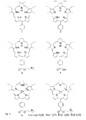
- Figure 2 is used to describe embodiments, combinable with all embodiments described herein, of fully meso -substituted (5, 10, 15, 20, 25) R-[1.1.1.1.1] [22] pentaphyrins.
- FIG. 3 is used to describe embodiments according to the present disclosure, in which for example two R1 and three R2 are provided as substituents and R1 ⁇ R2. It is clear that all possible combinations of substituents are included in the present invention.
- R can be a substituent group selected in the group of aryl and aryl derivatives, wherein aryl derivatives according to embodiments described herein consist of aryl substituted with one or more substituents selected in the group consisting of halogens, hydroxyl groups and their derivatives, carbonylic groups and their derivatives, carboxylic groups and their derivatives, amino groups and their derivatives, sulfonic groups and their derivatives, cyano groups, tio groups and their derivatives, alkylc chains and their derivatives, alkenic chains and their derivatives, alkynic chains and their derivatives.
- the aryl and aryl derivatives do not comprise C 6 F 5 or 2,6-Cl 2 -phenyl.
- R can be a substituent group selected in a group comprising: alkyl linear or cyclic and their derivatives, alkenes linear or cyclic and their derivatives, alkynes linear or cyclic and their derivatives, aryl and their derivatives, etherocycle and their derivatives, PEG and its derivatives, amide and their derivatives, aldehyde and their derivatives, carboxylic acid and their derivatives, ester nitrile and their derivatives, ether and their derivatives, halogens, such as chlorine, bromine, iodine, and their derivatives, TMS-ethyne and their derivatives, TIPS-ethyne and their derivatives, chetones and their derivatives, alcohols and their derivatives, amines and their derivatives, imines and their derivatives and tioderivatives.
- alkyl linear or cyclic and their derivatives alkenes linear or cyclic and their derivatives, alkynes linear or cyclic and their derivatives,
- derivative can include for instance derivatives such as alcohols, chetones or amines.
- the substituent group(s) can be selected to be an effective linker, such as for instance PEG, to link desired target molecules to be carried out by the fully meso -substituted pentaphyrins according to the present disclosure.
- an effective linker such as for instance PEG
- R can be an aryl- group and the synthesis and NMR, UV-Vis and mass characterization of fully meso -substituted (5, 10, 15, 20, 25) aryl-[1.1.1.1.1] [22] pentaphyrins are hereby described by way of example.
- 5,10,15,20,25-penta(N-methyl-pyridium-4yl)-pentaphyrin (1.1.1.1.1) 11 is believed to be a compound useful in the field of biomedical materials, in particular a compound with a high anti-bacterial activity, i.e. a biocide. By way of example, such property can be used to produce an anti-mould paint.
- embodiments described herein provide that the substituent R is not one of C 6 F 5 or 2,6-Cl 2 -phenyl.
- Figure 4 is used to describe embodiments of novel pentaphyrins according to the present disclosure: 5,10,15,20,25-penta(4-pyridyl))-pentaphyrin (1.1.1.1.1) P5Py ( 10 ), 5,10,15,20,25-penta(N-methyl-pyridium-4yl)-pentaphyrin (1.1.1.1.1) (5MP5Py) ( 11 ) and 5,10,15,20,25-penta(phenyl)-pentaphyrin (1.1.1.1.1) (P5Ph) ( 12 ).
- novel pentaphyrins described herein may be obtained by reacting precursors including meso-aryl substituted dipyrromethane and meso- aryl substituted tripyrromethane, such as meso -(4-pyridyl)dipyrromethane ( 13 ) and meso -(4-pyridyl)tripyrromethane ( 14 ) or their corresponding phenyl-substituted meso -(phenyl)dipyrromethane ( 15 ) and meso -(phenyl) tripyrromethane ( 16 ) and by addition of a suitable catalyst, for instance trifluoroacetic acid (TFA) catalyst and an oxidant component, for instance 2,3-dichloro-5,6-dicyano-1,4-benzoquinone (DDQ).
- a suitable catalyst for instance trifluoroacetic acid (TFA) catalyst
- DDQ 2,3-dichloro-5,6-dicyan
- the catalyst component is trifluoroacetic acid (TFA).
- the oxidant component is 2,3-dichloro-5,6-dicyano-1,4-benzoquinone (DDQ).
- meso -(4-pyridyl)dipyrromethane and meso -(4-pyridyl)tripyrromethane are reacted with pyridinecarboxaldehyde in the presence of the suitable catalyst and with subsequent addition of the oxidant component to obtain 5,10,15,20,25-penta(4-pyridyl)-pentaphyrin (1.1.1.1.1).
- reacting meso -(4-pyridyl)dipyrromethane, meso -(4-pyridyl)tripyrromethane and pyridinecarboxaldehyde comprises dissolving meso -(4-pyridyl)dipyrromethane, meso -(4-pyridyl)tripyrromethane and 4-pyridinecarboxaldehyde, adding trifluoroacetic acid (TFA) catalyst to the solution, observing increasingly intense Soret band at 470 nm corresponding to the pentaphyrin and letting the reaction progress until no further gain in Soret band spectral intensity is observed, adding 2,3-dichloro-5,6-dicyano-1,4-benzoquinone (DDQ) oxidant, washing, evaporating and purifying the solution to obtain 5,10,15,20,25-penta(4-pyridyl)-pentaphyrin (1.1.
- TFA tri
- the method further comprises dissolving obtained 5,10,15,20,25-penta(4-pyridyl)-pentaphyrin (1.1.1.1.1), adding excess of methyl iodide, stirring the reactant mixture, evaporating the solvent, washing the solid residue to obtain 5,10,15,20,25-penta(N-methyl-pyridium-4yl)-pentaphyrin (1.1.1.1.1).
- the meso -(phenyl)dipyrromethane ( 15 ) is converted, in the presence of N-benzoylmorpholine and POCl 3 , to 1,9-bis(benzoyl)-5-phenyldipyrromethane, then obtained 1,9-bis(benzoyl)-5-phenyldipyrromethane ( 17 ) is reacted with NaBH 4 to yield the corresponding dicarbinol derivative, i.e.
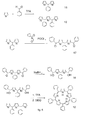
- Figure 5 is used to describe exemplifying embodiments of synthetic routes for obtaining novel 5,10,15,20,25-penta(4-pyridyl)-pentaphyrin (1.1.1.1.1) 10 and novel 5,10,15,20,25-penta(N-methyl-pyridium-4yl)-pentaphyrin (1.1.1.1.1) 11 .
- 5,10,15,20,25-penta(4-pyridyl)-pentaphyrin (1.1.1.1.1) 10 can be obtained by meso -(4-pyridyl)dipyrromethane ( 13 ) and meso -(4-pyridyl)tripyrromethane ( 14 ) reacted with pyridinecarboxylaldheyde, in the presence of a suitable catalyst, such as trifluoroacetic acid (TFA) catalyst.
- TFA trifluoroacetic acid
- An amount of 4-pyridinecarboxaldehyde was provided, for example from 0,8 to 1 mL, e.g. 0.9 mL, at a molar concentration of between 8 to 1 mmol, e.g . 9 mmol.
- An amount of pyrrole (C 4 H 4 NH) was provided, for example from 9.0 mL to 9.2 mL, e.g. 9.1 mL, at a molar concentration of between 130 mmol to 132 mmol, e.g. 131 mmol.
- 4-pyridinecarboxaldehyde was then stirred with pyrrole.
- a suitable catalyst such as trifluoroacetic acid (TFA) catalyst, was added.
- Stirring can be performed for a defined stirring time, for instance of about 17 hr to 19 hr, e.g. 18 hr, at a defined stirring temperature, for example of about 83°C to 87 °C, e.g. 85°C, under an inert gas atmosphere, e.g. nitrogen atmosphere.
- the stirred mixture was then subjected to drying, purification and recrystallization.
- drying can be performed by evaporation to dryness
- purification can be performed by alumina flash-chromatography and then recrystallization can be performed (ethyl acetate: hexane) to afford 1.2 g (yield 58%) of the compound ( 13 ) as yellow pale solid.
- An amount of 4-pyridinecarboxaldehyde was provided, for example from 1,2 to 1,4 mL, e.g. 1.3 mL, at a molar concentration of between 13 to 15 mmol, e.g. 14 mmol.
- An amount of pyrrole was provided, for example from 4.7 mL to 4.9 mL, e.g. 4.8 mL, at a molar concentration of between 69 mmol to 71 mmol, e.g. 70 mmol.
- 4-pyridinecarboxaldehyde was then stirred with pyrrole.
- a suitable catalyst such as TFA catalyst, was added. Stirring can be performed for a defined stirring time, for instance of about 17 hr to 19 hr, e.g. 18 hr, at a defined stirring temperature, for example of about 83°C to 87 °C, e.g. 85°C, under an inert gas atmosphere, e.g . nitrogen atmosphere.
- meso -(4-pyridyl)dipyrromethane 13 , meso -(4-pyridyl)tripyrromethane 14 as obtainable according to embodiments described herein and 4-pyridinecarboxaldehyde were dissolved in a suitable solvent. Then a suitable catalyst, e.g . TFA catalyst, was added.
- meso -(4-pyridyl)dipyrromethane 13 e.g. 0.016 g, 0.072 mmol
- meso -(4-pyridyl)tripyrromethane 14 e.g. 0.027 g, 0.072 mmol
- 4-pyridinecarboxaldehyde e.g. 0.014 mL, 0.143 mmol
- the mixture was kept under protected atmosphere, e.g. under a nitrogen blanket, and shielded from ambient light, e.g . with aluminium foil.
- the mixture Upon addition of the TFA catalyst (e.g. 0.033 mL, 0.430 mmol) the mixture immediately adopted a dark brown hue.
- the TFA catalyst e.g. 0.033 mL, 0.430 mmol
- DDQ 2,3-dichloro-5,6-dicyano-1,4-benzoquinone
- reaction solution was then left stirring at room temperature for additional time, for example of between 17 hr and 19 hr, e.g. 18 hr.
- the organic solution was then washed, e.g . with hot water, and evaporated to give a deep brown/green metallic film.
- This residue was subjected to purification, e.g . by column chromatography on alumina. The column was first eluted with ethylacetate in order to remove tetra(4-pyridyl)porphyrin, followed by ethylacetate containing gradually increasing percentages of methanol ( e.g . 1 ⁇ 10%).
- UV-Vis (CH2Cl2): ⁇ max (log ⁇ ) [nm] 352 (4.54), 423 (4.39), 473 (4.52), 562 (4.26) (sh), 702 (402) (br).
- the 5,10,15,20,25-penta(4-pyridyl)-pentaphyrin (1.1.1.1.1), i.e. compound 10 , obtained ( e.g . 0.007 g, 0.009 mmol) was dissolved in a suitable solvent, for instance in 15 mL of anhydrous methanol, and a large excess of methyl iodide CH 3 I (10 eq) was added. The reactant mixture was stirred, for instance at T 40°C for 4hr, and monitored with 1H-NMR and ESI-MS. The solvent was then evaporated and the solid (e.g. 6.3 mg, yield 80 %) washed with ether. 5,10,15,20,25-penta(N-methyl-pyridium-4yl)-pentaphyrin (1.1.1.1.1) ( 11 ) was obtained as a deep green solid.
- UV-Vis (CH3OH): ⁇ max (log ⁇ ) [nm] 348 (3.89), 392 (3.95), 462 (3.63), 522 (3.56), 574 (3.42) (sh), 716 (3.04) (freshly made 10 -4 M solution).
- Figure 6 is used to describe embodiments of the synthetic routes for novel 5,10,15,20,25-pentaphenyl-pentaphyrin (1.1.1.1.1) ( 12 ).
- Novel 5,10,15,20,25-pentaphenyl-pentaphyrin (1.1.1.1.1) 12 was obtained starting from meso -(phenyl)dipyrromethane ( 15 ) and meso- (phenyl)tripyrromethane ( 16 ).
- meso -(phenyl)dipyrromethane 15 was converted, in the presence of N-benzoylmorpholine and POCl 3 , to 1,9-bis(benzoyl)-5-phenyldipyrromethane ( 17 ) according to literature [17]. 1,9-bis(benzoyl)-5-phenyldipyrromethane ( 17 ) was reacted with NaBH 4 to yield phenyldipyrromethane-dicarbinol, i.e. component 18 .
- meso -(phenyl)tripyrromethane 16 and phenyldipyrromethane-dicarbinol 18 were reacted with catalyst(s) to give 5,10,15,20,25-pentaphenyl-pentaphyrin (1.1.1.1.1) 12 .
- phenyldipyrromethane-dicarbinol 18 was dissolved in 20 ml of dry CH 3 CN and added with 20 mg of meso -(phenyl)tripyrromethane 16 under protected atmosphere, e.g . under N 2 .
- the solution was protected by light before injecting 50 ⁇ l TFA.
- 20mg DDQ were poured into the solution and stirred for 1h, neutralized with TEA, passed through an Al 2 O 3 pad (eluent CH 2 Cl 2 ) and then through a SiO 2 pad (eluent CH 2 Cl 2 ).
- the residue was dissolved in CH 2 Cl 2 containing 50% suitable catalyst, e.g . TFA and exposed to air for 2h.
- the dark mixture was evaporated to dryness dissolved in the minimum amount of CH 3 CN and precipitated with water.
- the precipitated was purified on SiO 2 using toluene containing gradually increasing percentages of Ethylacetate (1 ⁇ 10%).
- the purple fraction of pure 5,10,15,20,25-pentaphenyl-pentaphyrin (1.1.1.1.1) 12 P5Ph was collected when toluene containing 10% of EtOAc was used.
- UV-Vis (CH2Cl2) 418nm, 489nm, 527nm, 735nm.
- pentaphyrins can be obtained for instance according to method(s) of synthesis analogous to what above described.
Landscapes
- Chemical & Material Sciences (AREA)
- Organic Chemistry (AREA)
- Nitrogen Condensed Heterocyclic Rings (AREA)
- Pharmaceuticals Containing Other Organic And Inorganic Compounds (AREA)
- Compositions Of Macromolecular Compounds (AREA)
Abstract
Description
- Embodiments of the present disclosure relate to novel pentaphyrins, which can be used for instance in the biomedical field, or in cation or anion binding applications or for manufacturing near infrared materials.
- In particular, embodiments described herein can be used for acting as photosensitizers for photodynamic therapy (PDT).
- Embodiments described herein also relate to methods for producing novel pentaphyrins.
- Expanded porphyrins are porphyrogenic macrocycles where five or more pyrroles are linked together mainly through direct α, α connections or CH= bridges. In the past decades many macrocycles have been synthesized and characterized allowing the better understanding of fundamental concepts as aromaticity, π conjugation structural dependence and discovering new physical and chemical features expanding the application potential of these molecules [1]. The plethora of fields in which they can be applied spans from biomedical, to cation or anion binding application and lately near infrared materials [2]. Near infrared materials are now attracting a lot of attention as a consequence of their application in sectors such as energy, communication, bio-imaging, sensing and advanced optoelectronics. Near infrared materials can be divided in materials able to absorb light in the NIR region of the electromagnetic spectrum or materials able to emit light in the NIR region. Data concerning NIR features of expanded porphyrin start to be collected showing their enormous potential in this field [3].
- Recently we dedicated part of our research to the synthesis and characterization of [1.1.1.1.1] pentaphyrins, a class of expanded porphyrins made of five pyrrolic rings linked by means of meso-like bridges. Our data demonstrated that [1.1.1.1.1] pentaphyrins exist in two different oxidation states, the non aromatic (reduced form) 24 π-electrons iso-pentaphyrins (1 and 3) and the aromatic (oxidized form) 22 π-electrons pentaphyrin (2) (
Figure 1 ) [4]. The stability, accessibility, and also spectroscopic features of the reduced and oxidized forms depend on structural features of the macrocycle framework. For example our recent results show that the oxidation from a 24 π to a 22 π form can be achieved only in conditions, which favour specific conformations of the macrocycle that, in turn, depend on the framework substitution [4b]. In the past years we tested the ability of pentaphyrins to act as photosensitizers for photodynamic therapy (PDT). Photodynamic therapy (PDT) is an emerging cancer treatment modality based on the excitation of a nontoxic photosensitizer with harmless visible light to produce reactive-oxygen species (ROS)[5]. The oxidant conditions realized by the irradiation of the photosensitizer can be exploited also in environmental application to catalyse pollutant degradation and water disinfection [6]. Recently the photoinactivation properties of a novel, expanded porphyrin, namely 20-(4'-carboxyphenyl)-2,13-dimethyl-3,12-diethyl-[22]pentaphyrin (PCox, 4), were tested in water disinfection, using S. Aureus as a Gram-positive bacteria model. Data showed that PCox was effective against S. Aureus bacteria at nanomolar concentration [7]. We also demonstrated that the iso-pentaphyrins and pentaphyrins are promoting different types of light activated reactions and that metal ions insertion into iso-pentaphyrins increases dramatically the ROS species production (heavy metal effect) [4c]. Currently, only few attempts to obtain pentaphyrins have been accomplished, and the few examples of [1.1.1.1.1] pentaphyrins isolated and characterized are mostly alkyl substituted compounds at the β position of pyrroles.[8, 9] Some of them are water soluble, [10] but actually a very small number of pentaphyrins with meso-substituents are known.[11, 4b, 12] - Giving an excursus of the synthetic approaches present in literature, we found that the first [22] pentaphyrinic macrocycle was obtained by Gossauer et al., through a [3 + 2] Mac-Donald type condensation between a diformyl tripyrrane and αα'-free dipyrromethane.[13] Later, Sessler and co-workers improved the conditions, isolating a meso-free α-alkyl-substituted pentaphyrin and reporting the crystal structure of the corresponding uranium complex. [8] If, on the other hand, a modified Rothemund method consisting of a one-pot reaction between pyrrole and corresponding benzaldehyde is applied, meso-aryl substituted N-fused pentaphyrin containing a tripentacyclic ring can be obtained as demonstrated by Furuta et al.[14]. meso-Aryl β-free macrocycles display interesting structural diversities not observed for the β-substituted pentaphyrins, and show unexpected optical properties. N-fusion and N-cofusion phenomena are observable, when meso-aryl /3-free substituted pentaphyrins are present. [14, 15].
- Scientific publication Alonso et al. [16] discloses conformational control in [22]- and [24]Pentaphyrins (1.1.1.1.1) by meso substituents and their N-fusion reaction obtained by computational methods. No synthesis is disclosed in [16]. According to Alonso et al., the triangular conformation with two stacked pyrrole rings is preferred for fully meso-aryl-substituted pentaphyrins irrespective of the oxidation state. This conformation is very prone to undergo a N-fusion reaction. The formation of the N-fused structures from this doubly inverted conformation is thermodynamically spontaneous in both [22] Pentaphyrins and [24] Pentaphyrins. According to Alonso et al., nonfused [24]PP are unstable regardless of the substituents. The computational results provided in Alonso et al. support experimental evidence available for meso-pentaphyrins(1.1.1.1.1). The results of Alonso et al. teach the fully meso-aryl-substituted pentaphyrins can exist only as N-fused forms, i.e. according to Alonso et al. fully meso-aryl-substituted pentaphyrins are not available in stable form. According to Alonso et al., the removal of one aryl group prevents the N-fusion reaction, providing stable aromatic nonfused [22]pentaphyrins.
- There is therefore a need to improve pentaphyrins, to provide fully meso-substituted pentaphyrins, and to provide a method for the production of novel fully meso-substituted pentaphyrins, in particular for, but not limited to, use in the biomedical field, or in cation or anion binding applications or for manufacturing near infrared materials, more particularly for acting as photosensitizers for photodynamic therapy (PDT), which overcomes at least one of the drawbacks of the prior art.
- According to embodiments, novel fully meso-substituted (5, 10, 15, 20, 25) R-[1.1.1.1.1] [22] pentaphyrins or fully meso-substituted (5, 10, 15, 20, 25) R-[1.1.1.1.1] [24] pentaphyrins or their coordination complexes are provided, wherein R is a substituent group selected in the group of consisting of aryl and aryl derivatives, wherein aryl derivatives consist of aryl substituted with one or more substituents selected in the group consisting of halogens, hydroxyl groups and their derivatives, carbonylic groups and their derivatives, carboxylic groups and their derivatives, amino groups and their derivatives, sulfonic groups and their derivatives, cyano groups, tio groups and their derivatives, alkylc chains and their derivatives, alkenic chains and their derivatives, alkynic chains and their derivatives.
- According to embodiments, the aryl and aryl derivatives do not comprise C6F5 or 2,6-Cl2-phenyl.
- According to embodiments, the use of fully meso-substituted (5, 10, 15, 20, 25) R-[1.1.1.1.1] [22] pentaphyrins and fully meso-substituted (5, 10, 15, 20, 25) R-[1.1.1.1.1] [24] pentaphyrins as biomedical material can be provided.
- According to embodiments, the use of fully meso-substituted (5, 10, 15, 20, 25) R-[1.1.1.1.1] [22] pentaphyrins and fully meso-substituted (5, 10, 15, 20, 25) R-[1.1.1.1.1] [24] pentaphyrins in cation or anion binding applications or protic or neutral, such as water or alcohol, molecules binding applications, can be provided. In possible embodiments, since the band at 470 nm corresponding to the pentaphyrins is in the visible light field, use of the fully meso-substituted pentaphyrins or their coordination complexes according to the present disclosure as visible field materials can also be envisaged.
- According to embodiments, the use of fully meso-substituted (5, 10, 15, 20, 25) R-[1.1.1.1.1] [22] pentaphyrins and fully meso-substituted (5, 10, 15, 20, 25) R-[1.1.1.1.1] [24] pentaphyrins as near infrared materials can be provided.
- According to embodiments, the use of fully meso-substituted (5, 10, 15, 20, 25) R-[1.1.1.1.1] [22] pentaphyrins and fully meso-substituted (5, 10, 15, 20, 25) R-[1.1.1.1.1] [24] pentaphyrins as photosensitizers for photodynamic therapy (PDT) can be provided.
- According to embodiments, R is an aryl group selected from a group consisting of a substituted pyridine or a phenyl. According to possible implementations, R can be an aryl group selected from a group consisting of: penta(4-pyridyl), penta(N-methyl-pyridium-4yl) and penta(phenyl).
- According to embodiments, a method for the production of fully meso-substituted pentaphyrins is provided. The method comprises reacting precursors comprising meso-substituted dipyrromethane and meso-substituted tripyrromethane and adding a suitable catalyst component and an oxidant component.
- These and other features, aspects and advantages of the present disclosure will become better understood with reference to the following description, the drawings and appended claims. The drawings, which are incorporated in and constitute a part of this specification, illustrate embodiments of the present subject matter and, together with the description, serve to explain the principles of the disclosure.
- The various aspects and features described in the present disclosure can be applied, individually, wherever possible. These individual aspects, for instance the aspects and features described in the attached dependent claims, can be made subject of divisional patent applications.
- It is noted that anything found to be already known during the patenting process is understood not to be claimed and to be the subject of a disclaimer.
- So that the manner in which the above recited features of the present invention can be understood in detail, a more particular description of the invention, briefly summarized above, may be had by reference to embodiments. The accompanying drawings relate to embodiments of the disclosure and are described in the following:
-
Figure 1 shows the structure of the known pentaphyrins already described in [4] and [7]; -
Figure 2 shows the general structure of fully meso-substituted pentaphyrins according to the present invention; -
Figure 3 shows the structure of possible embodiments of fully meso-substituted pentaphyrins according to the present invention; -
Figure 4 shows the structure of the novel fully meso-substituted pentaphyrins according to embodiments described herein: 5,10,15,20,25-penta(4-pyridyl)-pentaphyrin (1.1.1.1.1) P5Py (10), 5,10,15,20,25-penta(N-methyl-pyridium-4yl)-pentaphyrin (1.1.1.1.1) (5MP5Py) (11) and 5,10,15,20,25-penta(phenyl)-pentaphyrin (1.1.1.1.1) (P5Ph) (12); -
Figure 5 shows the synthetic routes fornovel novel -
Figure 6 shows the synthetic routes fornovel - Reference will now be made in detail to the various embodiments of the invention, one or more examples of which are described herein. Each example is provided by way of explanation of the invention and is not meant as a limitation of the invention. For example, features illustrated or described as part of one embodiment can be used on or in conjunction with other embodiments to yield yet a further embodiment. It is intended that the present invention includes such modifications and variations.
- Embodiments described herein provide novel fully meso-substituted (5, 10, 15, 20, 25) R-[1.1.1.1.1] [22] pentaphyrins or their coordination complexes.
- Embodiments described herein provide novel fully meso-substituted (5, 10, 15, 20, 25) R-[1.1.1.1.1] [24] pentaphyrins or their coordination complexes.
- Coordination complexes can be, for instance, metals complexes, such as Ln(III) or Zn(II) or Fe(II/III) complexes.
- According to embodiments, R=R1,R2,...Rn, in which R1, R2,...Rn can be the same or different, for instance R1=R2=...=Rn, or R1≠R2≠...≠Rn or a combination thereof.
-
Figure 2 is used to describe embodiments, combinable with all embodiments described herein, of fully meso-substituted (5, 10, 15, 20, 25) R-[1.1.1.1.1] [22] pentaphyrins. -
Figure 3 is used to describe embodiments according to the present disclosure, in which for example two R1 and three R2 are provided as substituents and R1≠R2. It is clear that all possible combinations of substituents are included in the present invention. - According to embodiments described herein, R can be a substituent group selected in the group of aryl and aryl derivatives, wherein aryl derivatives according to embodiments described herein consist of aryl substituted with one or more substituents selected in the group consisting of halogens, hydroxyl groups and their derivatives, carbonylic groups and their derivatives, carboxylic groups and their derivatives, amino groups and their derivatives, sulfonic groups and their derivatives, cyano groups, tio groups and their derivatives, alkylc chains and their derivatives, alkenic chains and their derivatives, alkynic chains and their derivatives.
- According to embodiments, the aryl and aryl derivatives do not comprise C6F5 or 2,6-Cl2-phenyl.
- In other possible embodiments, R can be a substituent group selected in a group comprising: alkyl linear or cyclic and their derivatives, alkenes linear or cyclic and their derivatives, alkynes linear or cyclic and their derivatives, aryl and their derivatives, etherocycle and their derivatives, PEG and its derivatives, amide and their derivatives, aldehyde and their derivatives, carboxylic acid and their derivatives, ester nitrile and their derivatives, ether and their derivatives, halogens, such as chlorine, bromine, iodine, and their derivatives, TMS-ethyne and their derivatives, TIPS-ethyne and their derivatives, chetones and their derivatives, alcohols and their derivatives, amines and their derivatives, imines and their derivatives and tioderivatives.
- According to the present disclosure, the term "derivative" can include for instance derivatives such as alcohols, chetones or amines.
- According to embodiments, the substituent group(s) can be selected to be an effective linker, such as for instance PEG, to link desired target molecules to be carried out by the fully meso-substituted pentaphyrins according to the present disclosure.
- In possible embodiments, R can be an aryl- group and the synthesis and NMR, UV-Vis and mass characterization of fully meso-substituted (5, 10, 15, 20, 25) aryl-[1.1.1.1.1] [22] pentaphyrins are hereby described by way of example.
- In particular, the synthesis and NMR, UV-Vis and mass characterization of novel pentaphyrins aryl substituted in 5, 10, 15, 20, 25 positions are provided, for
instance - 5,10,15,20,25-penta(N-methyl-pyridium-4yl)-pentaphyrin (1.1.1.1.1) 11 is believed to be a compound useful in the field of biomedical materials, in particular a compound with a high anti-bacterial activity, i.e. a biocide. By way of example, such property can be used to produce an anti-mould paint.
- In possible examples, embodiments described herein provide that the substituent R is not one of C6F5 or 2,6-Cl2-phenyl.
-
Figure 4 is used to describe embodiments of novel pentaphyrins according to the present disclosure: 5,10,15,20,25-penta(4-pyridyl))-pentaphyrin (1.1.1.1.1) P5Py (10), 5,10,15,20,25-penta(N-methyl-pyridium-4yl)-pentaphyrin (1.1.1.1.1) (5MP5Py) (11) and 5,10,15,20,25-penta(phenyl)-pentaphyrin (1.1.1.1.1) (P5Ph) (12). - According to aspects, novel pentaphyrins described herein may be obtained by reacting precursors including meso-aryl substituted dipyrromethane and meso-aryl substituted tripyrromethane, such as meso-(4-pyridyl)dipyrromethane (13) and meso-(4-pyridyl)tripyrromethane (14) or their corresponding phenyl-substituted meso-(phenyl)dipyrromethane (15) and meso-(phenyl) tripyrromethane (16) and by addition of a suitable catalyst, for instance trifluoroacetic acid (TFA) catalyst and an oxidant component, for
instance 2,3-dichloro-5,6-dicyano-1,4-benzoquinone (DDQ). - In some embodiments, the catalyst component is trifluoroacetic acid (TFA).
- In some embodiments, combinable with all embodiments described herein, the oxidant component is 2,3-dichloro-5,6-dicyano-1,4-benzoquinone (DDQ).
- According to embodiments, meso-(4-pyridyl)dipyrromethane and meso-(4-pyridyl)tripyrromethane are reacted with pyridinecarboxaldehyde in the presence of the suitable catalyst and with subsequent addition of the oxidant component to obtain 5,10,15,20,25-penta(4-pyridyl)-pentaphyrin (1.1.1.1.1).
- In some possible implementations, reacting meso-(4-pyridyl)dipyrromethane, meso-(4-pyridyl)tripyrromethane and pyridinecarboxaldehyde comprises dissolving meso-(4-pyridyl)dipyrromethane, meso-(4-pyridyl)tripyrromethane and 4-pyridinecarboxaldehyde, adding trifluoroacetic acid (TFA) catalyst to the solution, observing increasingly intense Soret band at 470 nm corresponding to the pentaphyrin and letting the reaction progress until no further gain in Soret band spectral intensity is observed, adding 2,3-dichloro-5,6-dicyano-1,4-benzoquinone (DDQ) oxidant, washing, evaporating and purifying the solution to obtain 5,10,15,20,25-penta(4-pyridyl)-pentaphyrin (1.1.1.1.1).
- According to embodiments, the method further comprises dissolving obtained 5,10,15,20,25-penta(4-pyridyl)-pentaphyrin (1.1.1.1.1), adding excess of methyl iodide, stirring the reactant mixture, evaporating the solvent, washing the solid residue to obtain 5,10,15,20,25-penta(N-methyl-pyridium-4yl)-pentaphyrin (1.1.1.1.1).
- According to further embodiments, the meso-(phenyl)dipyrromethane (15) is converted, in the presence of N-benzoylmorpholine and POCl3, to 1,9-bis(benzoyl)-5-phenyldipyrromethane, then obtained 1,9-bis(benzoyl)-5-phenyldipyrromethane (17) is reacted with NaBH4 to yield the corresponding dicarbinol derivative, i.e. phenyldipyrromethane-dicarbinol (18) and then meso-(phenyl)tripyrromethane (16) and phenyldipyrromethane-dicarbinol (18) are reacted with the catalyst component and addition of the oxidant component to give 5,10,15,20,25-pentaphenyl-pentaphyrin (1.1.1.1.1).
-
Figure 5 is used to describe exemplifying embodiments of synthetic routes for obtainingnovel novel - Referring to
Figure 5 , synthesis of meso-(4-pyridyl)dipyrromethane (13) will now be described hereafter according to embodiments described herein. - An amount of 4-pyridinecarboxaldehyde was provided, for example from 0,8 to 1 mL, e.g. 0.9 mL, at a molar concentration of between 8 to 1 mmol, e.g. 9 mmol.
- An amount of pyrrole (C4H4NH) was provided, for example from 9.0 mL to 9.2 mL, e.g. 9.1 mL, at a molar concentration of between 130 mmol to 132 mmol, e.g. 131 mmol.
- 4-pyridinecarboxaldehyde was then stirred with pyrrole. A suitable catalyst, such as trifluoroacetic acid (TFA) catalyst, was added. Stirring can be performed for a defined stirring time, for instance of about 17 hr to 19 hr, e.g. 18 hr, at a defined stirring temperature, for example of about 83°C to 87 °C, e.g. 85°C, under an inert gas atmosphere, e.g. nitrogen atmosphere. The stirred mixture was then subjected to drying, purification and recrystallization. For instance, drying can be performed by evaporation to dryness, purification can be performed by alumina flash-chromatography and then recrystallization can be performed (ethyl acetate: hexane) to afford 1.2 g (yield 58%) of the compound (13) as yellow pale solid.
- meso-(4-pyridyl)dipyrromethane (13) was thus obtained and then characterized by UV-Vis, 1H NMR, 13C NMR and ESI-MS analysis, with the following results.
- UV/vis (CH2Cl2): λmax (log ε) [nm] = 308 (2.96), 439 (2.25).
- 1H NMR (200 MHz, CDCl3) δ ppm 8.50 (dd, J=4.7, 1.2 Hz, 2 H, 2,6-py), 8.13 (bs, 2 H, NH), 7.13 (dd, J=4.5, 1.4 Hz, 2 H, 3,5-py), 6.74 (d, J=1.38 Hz, 2 H, pyrrole), 6.18 (dd, J=2.82, 5.70 Hz, 2 H, pyrrole), 5.90 (m, 2 H), 5.46 (s, 1 H, CH-meso).
- 13C NMR (50 MHz, CDCl3) d ppm 151.2, 149.9, 130.6, 123.6, 117.9, 108.6, 107.7, 43.4.
- ESI-MS, C14H14N3 calculated exact mass 224.12 [M+H]+, observed 224.19 [M+H]+.
- Crystal Structure of thus obtained dipyrromethane (13) was as follows. C14N3H13, Mw = 223.27. Crystal size: 0.1 x 0.02 x 0.01 mm, Crystal system: Orthorhombic, space group Pna21 (#33), a = 5.9611(10), b = 12.289(2), c = 15.6145(10) Å, V = 1143.9(3) Å3, Z= 4, calculated = 1.29 g/cm3.
- Referring to
Figure 5 , synthesis of meso-(4-pyridyl)tripyrromethane (14) will now be described hereafter according to embodiments described herein. - An amount of 4-pyridinecarboxaldehyde was provided, for example from 1,2 to 1,4 mL, e.g. 1.3 mL, at a molar concentration of between 13 to 15 mmol, e.g. 14 mmol.
- An amount of pyrrole was provided, for example from 4.7 mL to 4.9 mL, e.g. 4.8 mL, at a molar concentration of between 69 mmol to 71 mmol, e.g. 70 mmol.
- 4-pyridinecarboxaldehyde was then stirred with pyrrole. A suitable catalyst, such as TFA catalyst, was added. Stirring can be performed for a defined stirring time, for instance of about 17 hr to 19 hr, e.g. 18 hr, at a defined stirring temperature, for example of about 83°C to 87 °C, e.g. 85°C, under an inert gas atmosphere, e.g. nitrogen atmosphere.
- After stirring, pyrrole was removed at reduced pressure. The crude product, obtained after the removal of pyrrole at reduced pressure, was purified, for instance by alumina flash-chromatography. The purified product was recrystallized. From the recrystallization of the fractions recovered, the following species were isolated: meso-(4-pyridyl)tripyrromethane, i.e. compound (14), 2.3 g (yield 43%).
- meso-(4-pyridyl)tripyrromethane, i.e. compound (14), was thus obtained and then characterized by UV-Vis, 1H -NMR, 13C NMR and ESI-MS analysis, with the following results.
- UV-Vis (CH2Cl2): λmax (log ε) [nm] = 320 (2.97), 430 (2.43), 524 (2.25) (sh), 684 (1.53).
- 1H NMR (200 MHz, CDCl3) δ ppm 8.42 (dd, J=5.8, 1.1 Hz, 4 H, 2,6-py), 8.28 (bs, 3 H, NH), 7.08 (d, J=5.8 Hz, 4 H, 3,5-py), 6.73 (td, J=2.1, 2.1, 4.0 Hz, 2 H, pyrrole), 6.15 (dd, J=2.8, 5.8 Hz, 2 H), 5.86 (m, 2 H, pyrrole), 5.77 (m, 2 H, pyrrole), 5.37 (s, 2 H, CH-meso).
- 13C NMR (50 MHz, CDCl3) δ ppm 146.6, 143.9, 132.6, 129.7, 125.8, 119.9, 110.4, 108.3, 42.2.
- ESI-MS, C14H14N3 calculated exact mass 380.19 [M+H]+, observed 380.28 [M+H]+.
- Referring to
Figure 5 , synthesis of 5,10,15,20,25-penta(4-pyridyl)-pentaphyrin (1.1.1.1.1) (10) will now be described hereafter according to embodiments described herein. - meso-(4-pyridyl)
dipyrromethane 13, meso-(4-pyridyl)tripyrromethane 14 as obtainable according to embodiments described herein and 4-pyridinecarboxaldehyde were dissolved in a suitable solvent. Then a suitable catalyst, e.g. TFA catalyst, was added. - For instance, in a 50-mL round bottom flask meso-(4-pyridyl)dipyrromethane 13 (e.g. 0.016 g, 0.072 mmol), meso-(4-pyridyl)tripyrromethane 14 (e.g. 0.027 g, 0.072 mmol) and 4-pyridinecarboxaldehyde (e.g. 0.014 mL, 0.143 mmol) were dissolved in 20 mL of anhydrous CH3CN.
- After degassing, the mixture was kept under protected atmosphere, e.g. under a nitrogen blanket, and shielded from ambient light, e.g. with aluminium foil.
- Upon addition of the TFA catalyst (e.g. 0.033 mL, 0.430 mmol) the mixture immediately adopted a dark brown hue.
- Reaction progress was followed by UV-Vis spectroscopy and ESI-MS spectrometry. The observation of increasingly intense Soret band at 470 nm corresponding to the pentaphyrin was noted.
- At the point where (ca. 18 h) no further gain in Soret band spectral intensity was observed, the solution was neutralized, e.g. with triethylamine.
- Then 2,3-dichloro-5,6-dicyano-1,4-benzoquinone (DDQ) (e.g. 0.024 g, 0.108 mmol) was added. DDQ is a highly effective oxidant which can be typically used for instance in a number of chemical transformations, including protecting group removal, aromatization, acetal formation and biaryl construction.
- The reaction solution was then left stirring at room temperature for additional time, for example of between 17 hr and 19 hr, e.g. 18 hr. The organic solution was then washed, e.g. with hot water, and evaporated to give a deep brown/green metallic film. This residue was subjected to purification, e.g. by column chromatography on alumina. The column was first eluted with ethylacetate in order to remove tetra(4-pyridyl)porphyrin, followed by ethylacetate containing gradually increasing percentages of methanol (e.g. 1 ÷ 10%). The brown-green, pentaphyrin-containing fractions with a characteristic absorption at 473 nm were collected and concentrated under reduced pressure giving for
instance - 5,10,15,20,25-penta(4-pyridyl)-pentaphyrin (1.1.1.1.1), i.e.
compound 10, was thus obtained and then characterized by UV-Vis, 1H NMR and ESI-MS analysis, with the following results. - UV-Vis (CH2Cl2): λmax (log ε) [nm] = 352 (4.54), 423 (4.39), 473 (4.52), 562 (4.26) (sh), 702 (402) (br).
- 1H NMR (200 MHz, CD3OD) dppm 8.70 ÷ 8.10 (overlapped signals, 8 H), 7.80 ÷ 7.00 (overlapped signals, 18 H), 6.72 (m, 4H).
- ESI-MS, C50H32N10 calculated exact mass 773.30 [M+H]+, observed 773.46 [M+H]+, 791.43 [M·H2O + H]+, 805.44 [M·CH3OH + H]+.
- Referring to
Figure 5 , synthesis of 5,10,15,20,25-penta(N-methyl-pyridium-4yl)-pentaphyrin (1.1.1.1.1) (11) will now be described hereafter according to embodiments described herein. - The 5,10,15,20,25-penta(4-pyridyl)-pentaphyrin (1.1.1.1.1), i.e.
compound 10, obtained (e.g. 0.007 g, 0.009 mmol) was dissolved in a suitable solvent, for instance in 15 mL of anhydrous methanol, and a large excess of methyl iodide CH3I (10 eq) was added. The reactant mixture was stirred, for instance at T = 40°C for 4hr, and monitored with 1H-NMR and ESI-MS. The solvent was then evaporated and the solid (e.g. 6.3 mg, yield 80 %) washed with ether. 5,10,15,20,25-penta(N-methyl-pyridium-4yl)-pentaphyrin (1.1.1.1.1) (11) was obtained as a deep green solid. - 5,10,15,20,25-penta(N-methyl-pyridium-4yl)-pentaphyrin (1.1.1.1.1) (11) thus obtained was then characterized by UV-Vis, 1H -NMR and ESI-MS analysis, with the following results.
- UV-Vis (CH3OH): λmax (log ε) [nm] = 348 (3.89), 392 (3.95), 462 (3.63), 522 (3.56), 574 (3.42) (sh), 716 (3.04) (freshly made 10-4M solution).
- 1H NMR (200 MHz, CD3OD, T= 60°C) δ ppm 9.17 (d, J=6.6 Hz, 6 H), 9.11 (m, 2 H), 8.95 (d, J=6.4 Hz, 4 H), 8.84 (s, 4 H), 8.45 (d, J=6.7 Hz, 4 H), 8.38 (d, J=6.3 Hz, 6 H), 7.55 (s, 4H), 4.56 (s, 6 H), 3.69 (s, 9 H).
- ESI-MS, C55H47N10 5+ calculated exact mass 169.48 [M5+/5], observed 169.65 [M5+/5].
-
Figure 6 is used to describe embodiments of the synthetic routes fornovel -
Novel - The compounds meso-(phenyl)dipyrromethane 15 and meso-(phenyl)
tripyrromethane 16 were obtained and purified as described in literature [4 (a), (b)]. - meso-(phenyl)
dipyrromethane 15 was converted, in the presence of N-benzoylmorpholine and POCl3, to 1,9-bis(benzoyl)-5-phenyldipyrromethane (17) according to literature [17]. 1,9-bis(benzoyl)-5-phenyldipyrromethane (17) was reacted with NaBH4 to yield phenyldipyrromethane-dicarbinol, i.e.component 18. Then meso-(phenyl)tripyrromethane 16 and phenyldipyrromethane-dicarbinol 18 were reacted with catalyst(s) to give 5,10,15,20,25-pentaphenyl-pentaphyrin (1.1.1.1.1) 12. - For instance, 22.2 mg of 1,9-bis(benzoyl)-5-
phenyldipyrromethane 17 were dissolved in 2.2 ml of a dry mixture of THF and MeOH (10:1) and placed in a 10 ml round bottom flask under N2 flux. 0.03783g NaBH4 were added slowly to give phenyldipyrromethane-dicarbinol 18. The reaction was followed by TLC (CH2Cl2: EtOAc 3:2). The reaction mixture was first poured into a 3 ml of saturated NH4Cl solution and then 6 ml CH2Cl2 were added. The organic phase was separated, washed twice with water, dried over Na2SO4 and evaporated. The residue of phenyldipyrromethane-dicarbinol 18 was dissolved in 20 ml of dry CH3CN and added with 20 mg of meso-(phenyl)tripyrromethane 16 under protected atmosphere, e.g. under N2. The solution was protected by light before injecting 50µl TFA. After 3h stirring at room temperature, 20mg DDQ were poured into the solution and stirred for 1h, neutralized with TEA, passed through an Al2O3 pad (eluent CH2Cl2) and then through a SiO2 pad (eluent CH2Cl2). The residue was dissolved in CH2Cl2 containing 50% suitable catalyst, e.g. TFA and exposed to air for 2h. The dark mixture was evaporated to dryness dissolved in the minimum amount of CH3CN and precipitated with water. The precipitated was purified on SiO2 using toluene containing gradually increasing percentages of Ethylacetate (1 ÷ 10%). The purple fraction of pure 5,10,15,20,25-pentaphenyl-pentaphyrin (1.1.1.1.1) 12 P5Ph was collected when toluene containing 10% of EtOAc was used. - 5,10,15,20,25-pentaphenyl-pentaphyrin (1.1.1.1.1) 12 thus obtained was then characterized by 1H -NMR and UV-Vis, with the following results.
- 1H NMR (200 MHz, CDCl3, TFA) δ ppm 10.03-9.97 (dd, 6H, py), 8.73 (dd, 4H, py), 8.12-7.92 (m, 25H, ph), -3.80 (s, 2H, NH), -4.00 (s, 1H, NH), -5.96 (s, 2H, NH). HPLC-ESI (CH3CN-H2O): C55H37N5 calculated exact mass 767, tR =24.5 min (MH+H2O) = 786, (MH2 2+H2O)/2 = 393.5, MH2 2+/2 = 384.5.
- UV-Vis (CH2Cl2)= 418nm, 489nm, 527nm, 735nm.
- Fully meso-substituted (5, 10, 15, 20, 25) R-[1.1.1.1.1] [24] pentaphyrins can be obtained for instance according to method(s) of synthesis analogous to what above described.
- While the foregoing is directed to embodiments of the invention, other and further embodiments of the invention may be devised without departing from the basic scope thereof, and the scope thereof is determined by the claims that follow.
-
- [1] Stepien, M.; Sprutta, N.; Latos-Grazynski, L. Angew.Chem. Int. Ed. Engl. 2011, 50(19), 4288-4340.
- [2] (a) Qian, G.; Wang, Z. Y. Chem. Asian J. 2010, 5, 1006-1029; (b) Sessler, J. L.; Davis, J. M. Acc. Chem. Res. 2001, 34, 989-997.
- [3] (a) Ikawa, Y.; Takeda, M.; Suzuki, M.; Osuka, A.; Furuta, H. Chem. Comm., 2010, 46, 5689-5691; (b) Tanaka, T.; Aratani, N.; Lim, J. M.; Kim, K. S.; Kim, D.; A. Osuka Chem. Sci., 2011, 2, 1414-1418; (c) Sarma, T.; Panda, P. K. Chem. Eur. J., 2011, 17, 13987-13991.
- [4] (a) Comuzzi, C.; Cogoi, S.; Overhand, M.; Van der Marel, G. A.; Overkleeft, H. S.; Xodo, L. E. J. Med. Chem. 2006, 49, 196-204; (b) Comuzzi, C.; Cogoi, S.; Xodo, L. E. Tetrahedron 2006, 62, 8147-8151.; (c) Ballico, M.; Rapozzi, V.; Xodo, L. E.; Comuzzi, C. Eur. J. Med. Chem. 2011, 46, 712-720.
- [5] (a) Allison, R. R.; Bagnato, V. S.; Sibata, C. H. Future Oncol. 2010, 6, 929-940; (b) Nagy, E. M.; Dalla Via, L.; Ronconi, L.; Fregona, D. Curr. Pharm. Des. 2010, 16, 1863-1976; (c) Garg, A. D.; Nowis, D.; Golab, J.; Agostinis, ; (d) Almeida Issa, M. C.; Manela-Azulay, M. Bras. Dermatol. 2010, 85, 501-511; (e) Gollnick, S. O.; Brackett, C. M. Immunol. Res. 2010, 46, 216-226; (f) Ortel, B.; Shea, C. R.; Calzavara-Pinton, P. Front. Biosci. 2009, 14, 4157-4172; (g) Dolmans, D. E.; Fukumura, D.; Jain, R. K.; ; (h) Sibata, C. H.; Colussi, V. C.; Oleinick, N. L.; Kinsella, T. J. Expert Opin. ; (i) Dougherty, T. J. J. Clin. Laser Med. Surg. 2002, 20, 3-7; (j) Rapozzi, V.; Lombardo, C.; Cogoi, S.; Comuzzi, C; Xodo, L. E. ChemMedChem.2008, 3(4), 565-568.
- [6] (a) Hijnen, W. A. M.; Beerendonk, E. F.; Medema, G. J. Water Res. 2006, 40, 3-22; (b) Chong, M. N.; Jin, B.; Chow, C. W. K.; Saint, C. Water Res. 2010, 44, 2997-3027; (c) Sunnotel, O.; Verdoold, R.; Dunlop, P. S. M.; Snelling, W. J.; Lowery, C. J.; Dooley, J. S. G.; Moore, J. E.; Byrne, J. A. J. .
- [7] Rossi, G.; Comuzzi, C.; Goi D. J. Water Health, 2012, 10, 390-399.
- [8] Burrell, A. K.; Hemmi, G.; Lynch, V.; Sessler, J. L. J. Am. Chem. Soc. 1991, 113, 4690-4692.
- [9] Danso-Danquah, R. E.; Xie, L. Y.; Dolphin, D. Heterocycles 1995, 41, 2553-2564.
- [10] Král, V.; Brucker, E. A.; Hemmi, G.; Sessler, J. L.; Králová, J.; Bose, H. Bioorg. Med. Chem. 1995, 3, 573-578.
- [11] Brückner, C.; Sternberg, E. D.; Boyle, R. W.; Dolphin, D. Chem. Commun. 1997, 1689-1690.
- [12] Maes, W.; Vanderhaeghen, J.; Dehaen, W. Chem. Commun. 2005, 2612-2614.
- [13] Rexhausen, H.; Gossauer, A. J. Chem. Soc., Chem. Commun. 1983, 275
- [14] Shin, J. Y.; Furuta, H.; Yoza, K.; Igarashi, S.; Osuka, A. J. Am. Chem. Soc. 2001, 123, 7190-7191.
- [15] Shin, J. Y.; Furuta, H.; Osuka, A. Angew. Chem., Int. Ed. 2001, 40, 619-621.
- [16] Alonso M.; Geerlings P.; De Proft F. The Journal of Organic Chemistry 2013 4419 - 4431
- [17] D.T. Gryko, M. Tosior and B. Koszarna J. Porphyrins Phtal. 2003, 7, 239-248.
Claims (11)
- Fully meso-substituted (5, 10, 15, 20, 25) R-[1.1.1.1.1] [22] pentaphyrins or fully meso-substituted (5, 10, 15, 20, 25) R-[1.1.1.1.1] [24] pentaphyrins or their coordination complexes, having structure:

- The pentaphyrins according to claim 1, wherein the aryl and aryl derivatives do not comprise C6F5 or 2,6-Cl2-phenyl.
- The pentaphyrins according to claim 1 or 2, wherein R is an aryl group selected from a group consisting of: penta(4-pyridyl), penta(N-methyl-pyridium-4yl) and penta(phenyl).
- The use of the pentaphyrins according to any claims hereinbefore as biomedical material, or in cation or anion binding applications or protic or neutral molecules binding applications, or as near infrared materials, or as photosensitizers for photodynamic therapy (PDT).
- A method for the production of fully meso-substituted pentaphyrins according to any one of claims 1 to 3, the method comprising reacting precursors comprising meso-substituted dipyrromethane and meso-substituted tripyrromethane or their corresponding phenyl-substituted and adding a suitable catalyst component and an oxidant component.
- The method of claim 5, wherein the catalyst component is trifluoroacetic acid (TFA).
- The method of claim 5 or 6, wherein the oxidant component is 2,3-dichloro-5,6-dicyano-1,4-benzoquinone (DDQ).
- The method of claims 5, 6 or 7, wherein meso-(4-pyridyl)dipyrromethane (13) having structure:


- The method of claim 8, wherein reacting meso-(4-pyridyl)dipyrromethane (13), meso-(4-pyridyl)tripyrromethane (14) and pyridinecarboxaldehyde comprises dissolving meso-(4-pyridyl)dipyrromethane (13), meso-(4-pyridyl)tripyrromethane (14) and 4-pyridinecarboxaldehyde, adding trifluoroacetic acid (TFA) catalyst to the solution, observing increasingly intense Soret band at 470 nm corresponding to the pentaphyrin and letting the reaction progress until no further gain in Soret band spectral intensity is observed, adding 2,3-dichloro-5,6-dicyano-1,4-benzoquinone (DDQ) oxidant, washing, evaporating and purifying the solution to obtain 5,10,15,20,25-penta(4-pyridyl)-pentaphyrin (1.1.1.1.1).
- The method of claim 9, further comprising dissolving obtained 5,10,15,20,25-penta(4-pyridyl)-pentaphyrin (1.1.1.1.1), adding excess of methyl iodide, stirring the reactant mixture, evaporating the solvent, washing the solid residue to obtain 5,10,15,20,25-penta(N-methyl-pyridium-4yl)-pentaphyrin (1.1.1.1.1).
- The method of claims 5, 6 or 7, wherein meso-(phenyl)dipyrromethane (15) having structure:


Applications Claiming Priority (1)
| Application Number | Priority Date | Filing Date | Title |
|---|---|---|---|
| IT000075A ITUD20130075A1 (en) | 2013-05-27 | 2013-05-27 | NEW PENTAFIRINE |
Publications (2)
| Publication Number | Publication Date |
|---|---|
| EP2808328A1 true EP2808328A1 (en) | 2014-12-03 |
| EP2808328B1 EP2808328B1 (en) | 2016-04-20 |
Family
ID=49035886
Family Applications (1)
| Application Number | Title | Priority Date | Filing Date |
|---|---|---|---|
| EP14169956.1A Not-in-force EP2808328B1 (en) | 2013-05-27 | 2014-05-27 | Pentaphyrins useful in the biomedical field |
Country Status (2)
| Country | Link |
|---|---|
| EP (1) | EP2808328B1 (en) |
| IT (1) | ITUD20130075A1 (en) |
Cited By (1)
| Publication number | Priority date | Publication date | Assignee | Title |
|---|---|---|---|---|
| CN121673584A (en) * | 2026-02-06 | 2026-03-17 | 内蒙古工业大学 | Eu-TCPP-SO4Crystal, preparation method and application thereof |
Citations (1)
| Publication number | Priority date | Publication date | Assignee | Title |
|---|---|---|---|---|
| EP1316436A1 (en) * | 2000-08-23 | 2003-06-04 | Mitsui Chemicals, Inc. | Optical information recording medium |
-
2013
- 2013-05-27 IT IT000075A patent/ITUD20130075A1/en unknown
-
2014
- 2014-05-27 EP EP14169956.1A patent/EP2808328B1/en not_active Not-in-force
Patent Citations (1)
| Publication number | Priority date | Publication date | Assignee | Title |
|---|---|---|---|---|
| EP1316436A1 (en) * | 2000-08-23 | 2003-06-04 | Mitsui Chemicals, Inc. | Optical information recording medium |
Non-Patent Citations (37)
| Title |
|---|
| ALLISON, R. R.; BAGNATO, V. S.; SIBATA, C. H., FUTURE ONCOL., vol. 6, 2010, pages 929 - 940 |
| ALMEIDA ISSA, M. C.; MANELA-AZULAY, M., BRAS. DERMATOL., vol. 85, 2010, pages 501 - 511 |
| ALONSO ET AL.: "Conformational Control in [22]- and [24]Pentaphyrins(1.1.1.1.1) by Meso Substituents and their N-Fusion Reaction", J. ORG. CHEM., vol. 78, 3 April 2013 (2013-04-03), pages 4419 - 4431, XP002715236 * |
| ALONSO M.; GEERLINGS P.; DE PROFT F., THE JOURNAL OF ORGANIC CHEMISTRY, 2013, pages 4419 - 4431 |
| BALLICO, M.; RAPOZZI, V.; XODO, L. E.; COMUZZI, C., EUR. J. MED. CHEM., vol. 46, 2011, pages 712 - 720 |
| BRÜCKNER, C.; STERNBERG, E. D.; BOYLE, R. W.; DOLPHIN, D., CHEM. COMMUN., 1997, pages 1689 - 1690 |
| BURRELL, A. K.; HEMMI, G.; LYNCH, V.; SESSLER, J. L., J. AM. CHEM. SOC., vol. 113, 1991, pages 4690 - 4692 |
| CHONG, M. N.; JIN, B.; CHOW, C. W. K.; SAINT, C., WATER RES., vol. 44, 2010, pages 2997 - 3027 |
| COMUZZI, C.; COGOI, S.; OVERHAND, M.; VAN DER MAREL, G. A.; OVERKLEEFT, H. S.; XODO, L. E., J. MED. CHEM., vol. 49, 2006, pages 196 - 204 |
| COMUZZI, C.; COGOI, S.; XODO, L. E., TETRAHEDRON, vol. 62, 2006, pages 8147 - 8151 |
| D.T. GRYKO; M. TOSIOR; B. KOSZARNA, J. PORPHYRINS PHTAL., vol. 7, 2003, pages 239 - 248 |
| DANSO-DANQUAH, R. E.; XIE, L. Y.; DOLPHIN, D., HETEROCYCLES, vol. 41, 1995, pages 2553 - 2564 |
| DOLMANS, D. E.; FUKUMURA, D.; JAIN, R. K., NAT. REV. CANCER, vol. 3, 2003, pages 380 - 387 |
| DOUGHERTY, T. J., J. CLIN. LASER MED. SURG., vol. 20, 2002, pages 3 - 7 |
| GARG, A. D.; NOWIS, D.; GOLAB, J.; AGOSTINIS, P., APOPTOSIS, vol. 15, 2010, pages 1050 - 1071 |
| GOLLNICK, S. 0.; BRACKETT, C. M., IMMUNOL. RES., vol. 46, 2010, pages 216 - 226 |
| HIJNEN, W. A. M.; BEERENDONK, E. F.; MEDEMA, G., J. WATER RES., vol. 40, 2006, pages 3 - 22 |
| IKAWA, Y.; TAKEDA, M.; SUZUKI, M.; OSUKA, A.; FURUTA, H., CHEM. COMM., vol. 46, 2010, pages 5689 - 5691 |
| JI-YOUNG SHIN ET AL.: "Meso-Aryl-Substituted Expanded Porphyrins", J. AM. CHEM. SOC., vol. 123, 2001, pages 7190 - 7191, XP002715239 * |
| JI-YOUNG SHIN ET AL.: "N-Fused Pentaphyrin", ANGEW. CHEM. INT. ED., vol. 40, no. 3, 2001, pages 619 - 621, XP002715238 * |
| KRDL, V.; BRUCKER, E. A.; HEMMI, G.; SESSLER, J. L.; KRALOVA, J.; BOSE, H., BIOORG. MED. CHEM., vol. 3, 1995, pages 573 - 578 |
| KRIVOKAPIC ET AL.: "Contracted and Expanded meso-Alkynyl Porphyrinoids: from Triphyrin to Hexaphyrin", J. ORG. CHEM., vol. 68, 2003, pages 1089 - 1096, XP002715237 * |
| MAES, W.; VANDERHAEGHEN, J.; DEHAEN, W., CHEM. COMMUN., 2005, pages 2612 - 2614 |
| NAGY, E. M.; DALLA VIA, L.; RONCONI, L.; FREGONA, D., CURR. PHARM. DES., vol. 16, 2010, pages 1863 - 1976 |
| ORTEL, B.; SHEA, C. R.; CALZAVARA-PINTON, P., FRONT. BIOSCI., vol. 14, 2009, pages 4157 - 4172 |
| QIAN, G.; WANG, Z. Y., CHEM. ASIAN J., vol. 5, 2010, pages 1006 - 1029 |
| RAPOZZI, V.; LOMBARDO, C.; COGOI, S.; COMUZZI, C; XODO, L. E., CHEMMEDCHEM, vol. 3, no. 4, 2008, pages 565 - 568 |
| REXHAUSEN, H.; GOSSAUER, A., J. CHEM. SOC., CHEM. COMMUN., 1983, pages 275 |
| ROSSI, G.; COMUZZI, C.; GOI D. J., WATER HEALTH, vol. 10, 2012, pages 390 - 399 |
| SARMA, T.; PANDA, P. K., CHEM. EUR. J., vol. 17, 2011, pages 13987 - 13991 |
| SESSLER, J. L.; DAVIS, J. M., ACC. CHEM. RES., vol. 34, 2001, pages 989 - 997 |
| SHIN, J. Y.; FURUTA, H.; OSUKA, A, ANGEW. CHEM., INT. ED., vol. 40, 2001, pages 619 - 621 |
| SHIN, J. Y.; FURUTA, H.; YOZA, K.; IGARASHI, S.; OSUKA, A., J. AM. CHEM. SOC., vol. 123, 2001, pages 7190 - 7191 |
| SIBATA, C. H.; COLUSSI, V. C.; OLEINICK, N. L.; KINSELLA, T. J., EXPERT OPIN. PHARMACOTHER, vol. 2, 2001, pages 917 - 927 |
| STEPIEN, M.; SPRUTTA, N.; LATOS-GRAZYNSKI, L., ANGEW.CHEM. INT. ED. ENGL., vol. 50, no. 19, 2011, pages 4288 - 4340 |
| SUNNOTEL, 0.; VERDOOLD, R.; DUNLOP, P. S. M.; SNELLING, W. J.; LOWERY, C. J.; DOOLEY, J. S. G.; MOORE, J. E.; BYRNE, J. A., J. WATER HEALTH, vol. 8, 2010, pages 83 - 91 |
| TANAKA, T.; ARATANI, N.; LIM, J. M.; KIM, K. S.; KIM, D.; A. OSUKA, CHEM. SCI., vol. 2, 2011, pages 1414 - 1418 |
Cited By (1)
| Publication number | Priority date | Publication date | Assignee | Title |
|---|---|---|---|---|
| CN121673584A (en) * | 2026-02-06 | 2026-03-17 | 内蒙古工业大学 | Eu-TCPP-SO4Crystal, preparation method and application thereof |
Also Published As
| Publication number | Publication date |
|---|---|
| ITUD20130075A1 (en) | 2014-11-28 |
| EP2808328B1 (en) | 2016-04-20 |
Similar Documents
| Publication | Publication Date | Title |
|---|---|---|
| Srinath et al. | Reusable, homogeneous water soluble photoredox catalyzed oxidative dehydrogenation of N-heterocycles in a biphasic system: application to the synthesis of biologically active natural products | |
| Samankumara et al. | Syntheses, structures, modification, and optical properties of meso-tetraaryl-2, 3-dimethoxychlorin, and two isomeric meso-tetraaryl-2, 3, 12, 13-tetrahydroxybacteriochlorins | |
| Wu et al. | Synthesis, photochemical isomerization and photophysical properties of hydrazide–hydrazone derivatives | |
| Magyar et al. | An efficient one-pot four-component synthesis of 9-aryl-hexahydroacridine-1, 8-dione derivatives in the presence of a molecular sieves supported iron catalyst | |
| Wickramasinghe et al. | Investigations on the directive effects of a single meso-substituent via nitration of 5, 12, 13, 17, 18-pentasubstituted porphyrins: Syntheses of conjugated β-nitroporphyrins | |
| Esenpınar et al. | Synthesis and characterization of metal-free and metallo-phthalocyanines with four pendant coumarinthio/oxy-substituents | |
| Yang et al. | β-Nitro-substituted free-base, iron (III) and manganese (III) tetraarylporphyrins: synthesis, electrochemistry and effect of the NO 2 substituent on spectra and redox potentials in non-aqueous media | |
| Ahmad et al. | Synthesis, properties and singlet oxygen generation of thiazolidinone double bond linked porphyrin at meso and β-position | |
| Yılmaz et al. | 3, 3, 5 and 2, 6 expanded aza-BODIPYs via palladium-catalyzed Suzuki-Miyaura cross-coupling reactions: synthesis and photophysical properties | |
| Gong et al. | A novel amidepyridinium-based tripodal fluorescent chemosensor for phosphate ion via binding-induced excimer formation | |
| Çakır et al. | Water soluble {2-[3-(diethylamino) phenoxy] ethoxy} substituted zinc (II) phthalocyanine photosensitizers | |
| Yamamoto et al. | Synthesis, optical properties and protonation of chlorophyll derivatives appending a pyridyl group in the C3-substituent | |
| EP2808328B1 (en) | Pentaphyrins useful in the biomedical field | |
| Ito et al. | Synthesis and redox behavior of 1, 2-dihydro-1-oxabenz [a] azulen-2-ones | |
| Janardhanan et al. | Synthesis of hybrid polycycles containing fused hydroxy benzofuran and 1 H-indazoles via a domino cyclization reaction | |
| Ostrowski et al. | On Selective Functionalization of meso-Tetraphonylporphyrin Derivatives by Vicarious Nucleophilic Substitution of Hydrogen | |
| Li et al. | Functionalization of 10-azacorroles: nitration, bromination and acylation | |
| Datta-Gupta et al. | Synthetic porphyrins II: preparation and spectra of some metal chelates of para-substituted-meso-tetraphenylporphines | |
| Ballico et al. | Metallation of pentaphyrin with Lu (III) dramatically increases reactive-oxygen species production and cell phototoxicity | |
| Yadav et al. | Manganese (III) mediated synthesis of A2B Mn (III) corroles: A new general and green synthetic approach and characterization | |
| Kuvshinova et al. | Synthesis, physicochemical and coordination properties of 5, 15-diphenyltetramethyltetraethylporphyn nitro derivatives | |
| US6794505B1 (en) | Chlorins possessing fused ring systems useful as photoselective compounds for photodynamic therapy | |
| Pişkin et al. | Spectroscopic and electrochemical behavior of the novel tetra-2-methyl-pyrazinoporphyrazines | |
| Bardasov et al. | Synthesis and optical properties of new coumarin derivatives based on 2-(2-chlorobenzylidene) malononitrile | |
| Bosca et al. | Extensive methodology screening of meso-tetrakys-(furan-2-yl)-porphyrin microwave-assisted synthesis |
Legal Events
| Date | Code | Title | Description |
|---|---|---|---|
| PUAI | Public reference made under article 153(3) epc to a published international application that has entered the european phase |
Free format text: ORIGINAL CODE: 0009012 |
|
| 17P | Request for examination filed |
Effective date: 20140527 |
|
| AK | Designated contracting states |
Kind code of ref document: A1 Designated state(s): AL AT BE BG CH CY CZ DE DK EE ES FI FR GB GR HR HU IE IS IT LI LT LU LV MC MK MT NL NO PL PT RO RS SE SI SK SM TR |
|
| AX | Request for extension of the european patent |
Extension state: BA ME |
|
| R17P | Request for examination filed (corrected) |
Effective date: 20150529 |
|
| RBV | Designated contracting states (corrected) |
Designated state(s): AL AT BE BG CH CY CZ DE DK EE ES FI FR GB GR HR HU IE IS IT LI LT LU LV MC MK MT NL NO PL PT RO RS SE SI SK SM TR |
|
| GRAP | Despatch of communication of intention to grant a patent |
Free format text: ORIGINAL CODE: EPIDOSNIGR1 |
|
| INTG | Intention to grant announced |
Effective date: 20151028 |
|
| GRAS | Grant fee paid |
Free format text: ORIGINAL CODE: EPIDOSNIGR3 |
|
| GRAA | (expected) grant |
Free format text: ORIGINAL CODE: 0009210 |
|
| AK | Designated contracting states |
Kind code of ref document: B1 Designated state(s): AL AT BE BG CH CY CZ DE DK EE ES FI FR GB GR HR HU IE IS IT LI LT LU LV MC MK MT NL NO PL PT RO RS SE SI SK SM TR |
|
| REG | Reference to a national code |
Ref country code: GB Ref legal event code: FG4D |
|
| REG | Reference to a national code |
Ref country code: CH Ref legal event code: EP |
|
| REG | Reference to a national code |
Ref country code: AT Ref legal event code: REF Ref document number: 792342 Country of ref document: AT Kind code of ref document: T Effective date: 20160515 |
|
| REG | Reference to a national code |
Ref country code: IE Ref legal event code: FG4D |
|
| REG | Reference to a national code |
Ref country code: DE Ref legal event code: R096 Ref document number: 602014001549 Country of ref document: DE |
|
| REG | Reference to a national code |
Ref country code: LT Ref legal event code: MG4D |
|
| PG25 | Lapsed in a contracting state [announced via postgrant information from national office to epo] |
Ref country code: BE Free format text: LAPSE BECAUSE OF NON-PAYMENT OF DUE FEES Effective date: 20160531 |
|
| REG | Reference to a national code |
Ref country code: AT Ref legal event code: MK05 Ref document number: 792342 Country of ref document: AT Kind code of ref document: T Effective date: 20160420 |
|
| REG | Reference to a national code |
Ref country code: NL Ref legal event code: MP Effective date: 20160420 |
|
| PG25 | Lapsed in a contracting state [announced via postgrant information from national office to epo] |
Ref country code: FI Free format text: LAPSE BECAUSE OF FAILURE TO SUBMIT A TRANSLATION OF THE DESCRIPTION OR TO PAY THE FEE WITHIN THE PRESCRIBED TIME-LIMIT Effective date: 20160420 Ref country code: NL Free format text: LAPSE BECAUSE OF FAILURE TO SUBMIT A TRANSLATION OF THE DESCRIPTION OR TO PAY THE FEE WITHIN THE PRESCRIBED TIME-LIMIT Effective date: 20160420 Ref country code: LT Free format text: LAPSE BECAUSE OF FAILURE TO SUBMIT A TRANSLATION OF THE DESCRIPTION OR TO PAY THE FEE WITHIN THE PRESCRIBED TIME-LIMIT Effective date: 20160420 Ref country code: PL Free format text: LAPSE BECAUSE OF FAILURE TO SUBMIT A TRANSLATION OF THE DESCRIPTION OR TO PAY THE FEE WITHIN THE PRESCRIBED TIME-LIMIT Effective date: 20160420 Ref country code: NO Free format text: LAPSE BECAUSE OF FAILURE TO SUBMIT A TRANSLATION OF THE DESCRIPTION OR TO PAY THE FEE WITHIN THE PRESCRIBED TIME-LIMIT Effective date: 20160720 |
|
| PG25 | Lapsed in a contracting state [announced via postgrant information from national office to epo] |
Ref country code: RS Free format text: LAPSE BECAUSE OF FAILURE TO SUBMIT A TRANSLATION OF THE DESCRIPTION OR TO PAY THE FEE WITHIN THE PRESCRIBED TIME-LIMIT Effective date: 20160420 Ref country code: ES Free format text: LAPSE BECAUSE OF FAILURE TO SUBMIT A TRANSLATION OF THE DESCRIPTION OR TO PAY THE FEE WITHIN THE PRESCRIBED TIME-LIMIT Effective date: 20160420 Ref country code: SE Free format text: LAPSE BECAUSE OF FAILURE TO SUBMIT A TRANSLATION OF THE DESCRIPTION OR TO PAY THE FEE WITHIN THE PRESCRIBED TIME-LIMIT Effective date: 20160420 Ref country code: GR Free format text: LAPSE BECAUSE OF FAILURE TO SUBMIT A TRANSLATION OF THE DESCRIPTION OR TO PAY THE FEE WITHIN THE PRESCRIBED TIME-LIMIT Effective date: 20160721 Ref country code: LV Free format text: LAPSE BECAUSE OF FAILURE TO SUBMIT A TRANSLATION OF THE DESCRIPTION OR TO PAY THE FEE WITHIN THE PRESCRIBED TIME-LIMIT Effective date: 20160420 Ref country code: HR Free format text: LAPSE BECAUSE OF FAILURE TO SUBMIT A TRANSLATION OF THE DESCRIPTION OR TO PAY THE FEE WITHIN THE PRESCRIBED TIME-LIMIT Effective date: 20160420 Ref country code: PT Free format text: LAPSE BECAUSE OF FAILURE TO SUBMIT A TRANSLATION OF THE DESCRIPTION OR TO PAY THE FEE WITHIN THE PRESCRIBED TIME-LIMIT Effective date: 20160822 Ref country code: AT Free format text: LAPSE BECAUSE OF FAILURE TO SUBMIT A TRANSLATION OF THE DESCRIPTION OR TO PAY THE FEE WITHIN THE PRESCRIBED TIME-LIMIT Effective date: 20160420 |
|
| REG | Reference to a national code |
Ref country code: DE Ref legal event code: R119 Ref document number: 602014001549 Country of ref document: DE |
|
| PG25 | Lapsed in a contracting state [announced via postgrant information from national office to epo] |
Ref country code: BE Free format text: LAPSE BECAUSE OF FAILURE TO SUBMIT A TRANSLATION OF THE DESCRIPTION OR TO PAY THE FEE WITHIN THE PRESCRIBED TIME-LIMIT Effective date: 20160420 Ref country code: IT Free format text: LAPSE BECAUSE OF FAILURE TO SUBMIT A TRANSLATION OF THE DESCRIPTION OR TO PAY THE FEE WITHIN THE PRESCRIBED TIME-LIMIT Effective date: 20160420 |
|
| PG25 | Lapsed in a contracting state [announced via postgrant information from national office to epo] |
Ref country code: CZ Free format text: LAPSE BECAUSE OF FAILURE TO SUBMIT A TRANSLATION OF THE DESCRIPTION OR TO PAY THE FEE WITHIN THE PRESCRIBED TIME-LIMIT Effective date: 20160420 Ref country code: DK Free format text: LAPSE BECAUSE OF FAILURE TO SUBMIT A TRANSLATION OF THE DESCRIPTION OR TO PAY THE FEE WITHIN THE PRESCRIBED TIME-LIMIT Effective date: 20160420 Ref country code: EE Free format text: LAPSE BECAUSE OF FAILURE TO SUBMIT A TRANSLATION OF THE DESCRIPTION OR TO PAY THE FEE WITHIN THE PRESCRIBED TIME-LIMIT Effective date: 20160420 Ref country code: RO Free format text: LAPSE BECAUSE OF FAILURE TO SUBMIT A TRANSLATION OF THE DESCRIPTION OR TO PAY THE FEE WITHIN THE PRESCRIBED TIME-LIMIT Effective date: 20160420 Ref country code: MC Free format text: LAPSE BECAUSE OF FAILURE TO SUBMIT A TRANSLATION OF THE DESCRIPTION OR TO PAY THE FEE WITHIN THE PRESCRIBED TIME-LIMIT Effective date: 20160420 Ref country code: SK Free format text: LAPSE BECAUSE OF FAILURE TO SUBMIT A TRANSLATION OF THE DESCRIPTION OR TO PAY THE FEE WITHIN THE PRESCRIBED TIME-LIMIT Effective date: 20160420 |
|
| REG | Reference to a national code |
Ref country code: IE Ref legal event code: MM4A |
|
| PLBE | No opposition filed within time limit |
Free format text: ORIGINAL CODE: 0009261 |
|
| STAA | Information on the status of an ep patent application or granted ep patent |
Free format text: STATUS: NO OPPOSITION FILED WITHIN TIME LIMIT |
|
| PG25 | Lapsed in a contracting state [announced via postgrant information from national office to epo] |
Ref country code: SM Free format text: LAPSE BECAUSE OF FAILURE TO SUBMIT A TRANSLATION OF THE DESCRIPTION OR TO PAY THE FEE WITHIN THE PRESCRIBED TIME-LIMIT Effective date: 20160420 |
|
| REG | Reference to a national code |
Ref country code: FR Ref legal event code: ST Effective date: 20170131 |
|
| 26N | No opposition filed |
Effective date: 20170123 |
|
| PG25 | Lapsed in a contracting state [announced via postgrant information from national office to epo] |
Ref country code: DE Free format text: LAPSE BECAUSE OF NON-PAYMENT OF DUE FEES Effective date: 20161201 Ref country code: FR Free format text: LAPSE BECAUSE OF NON-PAYMENT OF DUE FEES Effective date: 20160620 |
|
| PG25 | Lapsed in a contracting state [announced via postgrant information from national office to epo] |
Ref country code: SI Free format text: LAPSE BECAUSE OF FAILURE TO SUBMIT A TRANSLATION OF THE DESCRIPTION OR TO PAY THE FEE WITHIN THE PRESCRIBED TIME-LIMIT Effective date: 20160420 Ref country code: IE Free format text: LAPSE BECAUSE OF NON-PAYMENT OF DUE FEES Effective date: 20160527 |
|
| REG | Reference to a national code |
Ref country code: CH Ref legal event code: PL |
|
| PG25 | Lapsed in a contracting state [announced via postgrant information from national office to epo] |
Ref country code: CH Free format text: LAPSE BECAUSE OF NON-PAYMENT OF DUE FEES Effective date: 20170531 Ref country code: LI Free format text: LAPSE BECAUSE OF NON-PAYMENT OF DUE FEES Effective date: 20170531 |
|
| PG25 | Lapsed in a contracting state [announced via postgrant information from national office to epo] |
Ref country code: HU Free format text: LAPSE BECAUSE OF FAILURE TO SUBMIT A TRANSLATION OF THE DESCRIPTION OR TO PAY THE FEE WITHIN THE PRESCRIBED TIME-LIMIT; INVALID AB INITIO Effective date: 20140527 |
|
| PG25 | Lapsed in a contracting state [announced via postgrant information from national office to epo] |
Ref country code: MT Free format text: LAPSE BECAUSE OF NON-PAYMENT OF DUE FEES Effective date: 20160531 Ref country code: IS Free format text: LAPSE BECAUSE OF FAILURE TO SUBMIT A TRANSLATION OF THE DESCRIPTION OR TO PAY THE FEE WITHIN THE PRESCRIBED TIME-LIMIT Effective date: 20160420 Ref country code: MK Free format text: LAPSE BECAUSE OF FAILURE TO SUBMIT A TRANSLATION OF THE DESCRIPTION OR TO PAY THE FEE WITHIN THE PRESCRIBED TIME-LIMIT Effective date: 20160420 Ref country code: CY Free format text: LAPSE BECAUSE OF FAILURE TO SUBMIT A TRANSLATION OF THE DESCRIPTION OR TO PAY THE FEE WITHIN THE PRESCRIBED TIME-LIMIT Effective date: 20160420 Ref country code: LU Free format text: LAPSE BECAUSE OF NON-PAYMENT OF DUE FEES Effective date: 20160527 |
|
| PG25 | Lapsed in a contracting state [announced via postgrant information from national office to epo] |
Ref country code: BG Free format text: LAPSE BECAUSE OF FAILURE TO SUBMIT A TRANSLATION OF THE DESCRIPTION OR TO PAY THE FEE WITHIN THE PRESCRIBED TIME-LIMIT Effective date: 20160420 |
|
| PG25 | Lapsed in a contracting state [announced via postgrant information from national office to epo] |
Ref country code: TR Free format text: LAPSE BECAUSE OF FAILURE TO SUBMIT A TRANSLATION OF THE DESCRIPTION OR TO PAY THE FEE WITHIN THE PRESCRIBED TIME-LIMIT Effective date: 20160420 Ref country code: AL Free format text: LAPSE BECAUSE OF FAILURE TO SUBMIT A TRANSLATION OF THE DESCRIPTION OR TO PAY THE FEE WITHIN THE PRESCRIBED TIME-LIMIT Effective date: 20160420 |
|
| GBPC | Gb: european patent ceased through non-payment of renewal fee |
Effective date: 20180527 |
|
| PG25 | Lapsed in a contracting state [announced via postgrant information from national office to epo] |
Ref country code: GB Free format text: LAPSE BECAUSE OF NON-PAYMENT OF DUE FEES Effective date: 20180527 |