EP2808206A1 - Method and system of a vehicle for reversible seat belt retraction - Google Patents
Method and system of a vehicle for reversible seat belt retraction Download PDFInfo
- Publication number
- EP2808206A1 EP2808206A1 EP13169356.6A EP13169356A EP2808206A1 EP 2808206 A1 EP2808206 A1 EP 2808206A1 EP 13169356 A EP13169356 A EP 13169356A EP 2808206 A1 EP2808206 A1 EP 2808206A1
- Authority
- EP
- European Patent Office
- Prior art keywords
- vehicle
- seat belt
- time period
- situation
- fulfillment
- Prior art date
- Legal status (The legal status is an assumption and is not a legal conclusion. Google has not performed a legal analysis and makes no representation as to the accuracy of the status listed.)
- Granted
Links
Images



Classifications
-
- B—PERFORMING OPERATIONS; TRANSPORTING
- B60—VEHICLES IN GENERAL
- B60R—VEHICLES, VEHICLE FITTINGS, OR VEHICLE PARTS, NOT OTHERWISE PROVIDED FOR
- B60R21/00—Arrangements or fittings on vehicles for protecting or preventing injuries to occupants or pedestrians in case of accidents or other traffic risks
- B60R21/01—Electrical circuits for triggering passive safety arrangements, e.g. airbags, safety belt tighteners, in case of vehicle accidents or impending vehicle accidents
- B60R21/013—Electrical circuits for triggering passive safety arrangements, e.g. airbags, safety belt tighteners, in case of vehicle accidents or impending vehicle accidents including means for detecting collisions, impending collisions or roll-over
-
- B—PERFORMING OPERATIONS; TRANSPORTING
- B60—VEHICLES IN GENERAL
- B60R—VEHICLES, VEHICLE FITTINGS, OR VEHICLE PARTS, NOT OTHERWISE PROVIDED FOR
- B60R21/00—Arrangements or fittings on vehicles for protecting or preventing injuries to occupants or pedestrians in case of accidents or other traffic risks
- B60R21/01—Electrical circuits for triggering passive safety arrangements, e.g. airbags, safety belt tighteners, in case of vehicle accidents or impending vehicle accidents
- B60R21/013—Electrical circuits for triggering passive safety arrangements, e.g. airbags, safety belt tighteners, in case of vehicle accidents or impending vehicle accidents including means for detecting collisions, impending collisions or roll-over
- B60R21/0132—Electrical circuits for triggering passive safety arrangements, e.g. airbags, safety belt tighteners, in case of vehicle accidents or impending vehicle accidents including means for detecting collisions, impending collisions or roll-over responsive to vehicle motion parameters, e.g. to vehicle longitudinal or transversal deceleration or speed value
-
- B—PERFORMING OPERATIONS; TRANSPORTING
- B60—VEHICLES IN GENERAL
- B60R—VEHICLES, VEHICLE FITTINGS, OR VEHICLE PARTS, NOT OTHERWISE PROVIDED FOR
- B60R21/00—Arrangements or fittings on vehicles for protecting or preventing injuries to occupants or pedestrians in case of accidents or other traffic risks
- B60R21/01—Electrical circuits for triggering passive safety arrangements, e.g. airbags, safety belt tighteners, in case of vehicle accidents or impending vehicle accidents
- B60R21/013—Electrical circuits for triggering passive safety arrangements, e.g. airbags, safety belt tighteners, in case of vehicle accidents or impending vehicle accidents including means for detecting collisions, impending collisions or roll-over
- B60R21/0134—Electrical circuits for triggering passive safety arrangements, e.g. airbags, safety belt tighteners, in case of vehicle accidents or impending vehicle accidents including means for detecting collisions, impending collisions or roll-over responsive to imminent contact with an obstacle, e.g. using radar systems
-
- B—PERFORMING OPERATIONS; TRANSPORTING
- B60—VEHICLES IN GENERAL
- B60R—VEHICLES, VEHICLE FITTINGS, OR VEHICLE PARTS, NOT OTHERWISE PROVIDED FOR
- B60R21/00—Arrangements or fittings on vehicles for protecting or preventing injuries to occupants or pedestrians in case of accidents or other traffic risks
- B60R21/02—Occupant safety arrangements or fittings, e.g. crash pads
- B60R21/16—Inflatable occupant restraints or confinements designed to inflate upon impact or impending impact, e.g. air bags
-
- B—PERFORMING OPERATIONS; TRANSPORTING
- B60—VEHICLES IN GENERAL
- B60R—VEHICLES, VEHICLE FITTINGS, OR VEHICLE PARTS, NOT OTHERWISE PROVIDED FOR
- B60R22/00—Safety belts or body harnesses in vehicles
- B60R22/34—Belt retractors, e.g. reels
-
- B—PERFORMING OPERATIONS; TRANSPORTING
- B60—VEHICLES IN GENERAL
- B60R—VEHICLES, VEHICLE FITTINGS, OR VEHICLE PARTS, NOT OTHERWISE PROVIDED FOR
- B60R21/00—Arrangements or fittings on vehicles for protecting or preventing injuries to occupants or pedestrians in case of accidents or other traffic risks
- B60R2021/0002—Type of accident
- B60R2021/0018—Roll-over
-
- B—PERFORMING OPERATIONS; TRANSPORTING
- B60—VEHICLES IN GENERAL
- B60R—VEHICLES, VEHICLE FITTINGS, OR VEHICLE PARTS, NOT OTHERWISE PROVIDED FOR
- B60R21/00—Arrangements or fittings on vehicles for protecting or preventing injuries to occupants or pedestrians in case of accidents or other traffic risks
- B60R21/01—Electrical circuits for triggering passive safety arrangements, e.g. airbags, safety belt tighteners, in case of vehicle accidents or impending vehicle accidents
- B60R2021/01204—Actuation parameters of safety arrangents
- B60R2021/01252—Devices other than bags
- B60R2021/01265—Seat belts
- B60R2021/01272—Belt tensioners
-
- B—PERFORMING OPERATIONS; TRANSPORTING
- B60—VEHICLES IN GENERAL
- B60R—VEHICLES, VEHICLE FITTINGS, OR VEHICLE PARTS, NOT OTHERWISE PROVIDED FOR
- B60R21/00—Arrangements or fittings on vehicles for protecting or preventing injuries to occupants or pedestrians in case of accidents or other traffic risks
- B60R21/01—Electrical circuits for triggering passive safety arrangements, e.g. airbags, safety belt tighteners, in case of vehicle accidents or impending vehicle accidents
- B60R21/013—Electrical circuits for triggering passive safety arrangements, e.g. airbags, safety belt tighteners, in case of vehicle accidents or impending vehicle accidents including means for detecting collisions, impending collisions or roll-over
- B60R2021/01304—Electrical circuits for triggering passive safety arrangements, e.g. airbags, safety belt tighteners, in case of vehicle accidents or impending vehicle accidents including means for detecting collisions, impending collisions or roll-over monitoring rough road condition
-
- B—PERFORMING OPERATIONS; TRANSPORTING
- B60—VEHICLES IN GENERAL
- B60R—VEHICLES, VEHICLE FITTINGS, OR VEHICLE PARTS, NOT OTHERWISE PROVIDED FOR
- B60R21/00—Arrangements or fittings on vehicles for protecting or preventing injuries to occupants or pedestrians in case of accidents or other traffic risks
- B60R21/01—Electrical circuits for triggering passive safety arrangements, e.g. airbags, safety belt tighteners, in case of vehicle accidents or impending vehicle accidents
- B60R21/013—Electrical circuits for triggering passive safety arrangements, e.g. airbags, safety belt tighteners, in case of vehicle accidents or impending vehicle accidents including means for detecting collisions, impending collisions or roll-over
- B60R2021/01317—Electrical circuits for triggering passive safety arrangements, e.g. airbags, safety belt tighteners, in case of vehicle accidents or impending vehicle accidents including means for detecting collisions, impending collisions or roll-over monitoring seat belt tensiont
Definitions
- the present disclosure relates to a retraction control system of a vehicle and a method performed by said system for controlling retraction of a seat belt of a reversible seat belt retractor arrangement for a vehicle occupant.
- safety devices such as airbags may be activated in order to protect the vehicle occupant from the consequences thereof.
- Current vehicles typically employ accelerometers that measure decelerations acting on the vehicle body in the event of a collision. Radar, lidar, and/or vision-based pre-crash sensing systems are furthermore commonly utilized to deploy safety devices at an early stage in a collision situation, or even before the actual impact. It is also known to activate safety devices in response to detected uncomfortable and/or hazardous vehicle dynamics situations, such as under-steer, over-steer, skidding, emergency braking or evasive maneuvering.
- safety devices may be represented by reversible restraint systems such as motorized seatbelt retractors and movable support surfaces, e.g. knee padding and movable headrests.
- the reversible restraint systems are commonly designed to apply a restraining force to the vehicle occupant in a critical situation, and to remove the restraining force when and if the critical situation is over.
- such restraint systems may be intended to provide additional support for bracing a vehicle occupant during uncomfortable vehicle dynamic situations. In most of such cases, there is also an increased risk of an accident occurring even if a collision is not likely.
- WO 2008/041904 discloses a control system for controlling a reversible restraint arrangement for a vehicle occupant.
- the control system is operable to generate an output signal to control the reversible restraint arrangement if it is determined from the character of the road ahead of the vehicle that activation of the reversible restraint arrangement is required.
- the output signal is generated if it appears that the vehicle is likely to be involved in a hazardous situation or an uncomfortable dynamic situation. Accordingly, situations in which a reversible restraint system is to be deployed may be detected at an early stage, and hence the reversible restraint system may be applied gradually.
- control system of WO 2008/041904 enables less discomfort or alarm to vehicle occupants by avoiding reversible restraint systems being applied quickly and without warning, the vehicle occupants may still experience discomfort from the reversible restraint systems.
- the object is achieved by a method performed by a retraction control system of a vehicle for controlling retraction of a seat belt of a reversible seat belt retractor arrangement for a vehicle occupant.
- the retraction control system determines fulfillment of an activation condition based on an initiating input derived from a vehicle situation sensing system, which initiating input indicates that the vehicle, at an initiating time instant, is considered likely to be, or is about to become, involved in a hazardous situation and/or uncomfortable dynamic situation.
- the retraction control system generates an activation signal utilizable for initiation of retraction of the seat belt.
- the retraction control system determines absence of fulfillment of a confirming condition within a predetermined confirming time period, and/or if the retraction control system determines fulfillment of an abort condition within a predetermined abort time period, the retraction control system generates a deactivation signal utilizable for aborting the initiation.
- the confirming time period and the abort time period respectively fall within a predetermined non-restraining time period characterizing the reversible seat belt retractor arrangement, during which non-restraining time period the reversible seat belt retractor arrangement is unable to apply a noticeable restraining force, by means of the seat belt, to the vehicle occupant.
- the initiation of retraction of the seat belt may, if absence of fulfillment of the confirming condition within the confirming time period is determined and/or if fulfillment of the abort condition within the abort time period is determined, be aborted before the vehicle occupant even notices the initiated retraction. That is, by making use of the inability of the reversible seat belt retractor arrangement to momentarily apply a noticeable restraining force of the seat belt to the vehicle occupant, i.e.
- the retraction control system is given time to reconsider whether or not to abort the initiated retraction before the vehicle occupant is affected by a noticeable restraining force. Accordingly, the introduced retraction control system quickly reacts to an imminent hazardous situation and/or uncomfortable dynamic situation by initiating retraction at an early stage.
- the imminent hazardous situation and/or uncomfortable dynamic situation may be re-evaluated and the initiated retraction potentially aborted prior to the vehicle occupant experiencing discomfort by a restraining force of the seat belt.
- controlling retraction of a seat belt of a reversible seat belt retractor arrangement for a vehicle occupant of a vehicle, which vehicle is considered likely to be, or is about to become, involved in a hazardous situation and/or uncomfortable dynamic situation has been improved.
- vehicle may be any arbitrary vehicle, for instance an engine-propelled vehicle, such as e.g. a car, truck, lorry, van, bus, tractor, military vehicle, air plane, vessel such as e.g. a ship, a golf cart, a rail-bound vehicle, such as e.g. a train or tram.
- engine-propelled vehicle such as e.g. a car, truck, lorry, van, bus, tractor, military vehicle, air plane, vessel such as e.g. a ship, a golf cart, a rail-bound vehicle, such as e.g. a train or tram.
- the vehicle occupant may refer to any arbitrary potential driver or passenger of the vehicle.
- the reversible seat belt retractor arrangement may refer to any arbitrary seat belt retractor arrangement capable of applying a restraining force to a vehicle occupant being subjected to an imminent hazardous situation and/or uncomfortable dynamic situation, which restraining force may be removed when and/or if said situation is over. Accordingly, rather than referring to a seat belt retractor arrangement comprising e.g. a cartridge activated retractor that may retract the seatbelt quickly by force of explosive, hence not being considered reversible, a seat belt retractor arrangement of the present disclosure may accomplish e.g. a motor driven retraction of the seat belt electrically and/or pneumatically, thus providing a reversible solution. Furthermore, the retraction control system may be represented by e.g.
- a retraction unit comprised in one or several suitable electronic devices, such as e.g. one or several integrated arbitrary electronic control unit (ECU) nodes, e.g. an airbag node or main central node, or a control unit associated with the reversible seat belt retractor arrangement.
- ECU electronice control unit
- the retraction control system determines fulfillment of an activation condition based on an initiating input derived from a vehicle situation sensing system, which initiating input indicates that the vehicle, at an initiating time instant, is considered likely to be, or is about to become, involved in a hazardous situation and/or uncomfortable dynamic situation
- the retraction control system is provided with relevant input data regarding an imminent critical situation which is utilizable for determining fulfillment of the activation condition.
- the vehicle situation sensing system may for instance refer to one or a combination of sensors of the vehicle, known in the art, adapted to monitor whether the vehicle is considered likely to be, or is about to become, involved in a hazardous situation and/or uncomfortable dynamic situation.
- data from various sensors may be fused together to provide input from multiple sensors.
- the initiating input may for instance comprise one or a combination of signals, parameters, settings in a table of a control unit memory, flags etc. as known in the art, derivable e.g. from functionality, communication buses and/or e.g. ECUs already available in the vehicle. Accordingly, determining fulfillment of the activation condition may for instance be implemented by receiving said signals, and/or reading said parameters, settings or flags.
- the initiating time instant may be considered the point in time, when the initiating input starts to indicate that the vehicle is considered likely to be, or is about to become, involved in a hazardous situation and/or uncomfortable dynamic situation.
- the hazardous situation may for instance refer to an imminent vehicle collision situation, and the uncomfortable dynamic situation for instance to a vehicle dynamics situation such as under-steer, over-steer, skidding, emergency braking, evasive maneuvering or a situation in which vehicle kinematics increases the risk of the occupant being less than optimally positioned relative the vehicle restraint systems.
- vehicle dynamics situation such as under-steer, over-steer, skidding, emergency braking, evasive maneuvering or a situation in which vehicle kinematics increases the risk of the occupant being less than optimally positioned relative the vehicle restraint systems.
- retraction of the seat belt may be initiated once fulfillment of the activation condition has been determined. Thereby, retraction may be initiated at an early stage, without waiting for re-evaluation and/or reconsideration of whether the vehicle is considered likely to be, or is about to become, involved in a hazardous situation and/or uncomfortable dynamic situation. Initiation of retraction may refer to start of retraction of the seat belt, although due to the reversible seat belt arrangement being unable to, when receiving the activation signal, momentarily apply a restraining force noticeable to the vehicle occupant, the vehicle occupant will initially not experience discomfort from the seat belt.
- the activation signal may for instance be provided to the reversible seat belt retractor arrangement by the retraction control system being directly connected thereto, or by being provided via a communication bus, and/or the activation signal may be represented by e.g. a parameter, a setting in a table in a control unit memory or by a flag etc.
- the retraction control system determining if there is absence of fulfillment of a confirming condition within a predetermined confirming time period, it is judged whether there is absence of fulfillment of a confirming condition before the confirming time period lapses. That is, the retraction control system gives the opportunity, within a set time frame, of taking into account input from reconsideration, of whether the vehicle is considered likely to be, or is about to become, involved in a hazardous situation and/or uncomfortable dynamic situation. Data from various sensors may be fused together to provide input from multiple sensors. Determining fulfillment of the confirming condition may for instance be implemented by receiving signals, and/or reading parameters, settings in a table of a memory or flags etc.
- the confirming time period may be arbitrarily selected as considered suitable for the implementation at hand, ranging from e.g. a few milliseconds to several hundreds of milliseconds.
- the retraction control system determining if there is fulfillment of an abort condition within a predetermined abort time period, it is judged whether there is fulfillment of an abort condition before the abort time period lapses. That is, the retraction control system gives the opportunity, within a set time frame, of taking into account input related to the vehicle no longer being considered likely to be, or about to become, involved in a hazardous situation and/or uncomfortable dynamic situation.
- data from various sensors may be fused together to provide input from multiple sensors. Determining fulfillment of the abort condition may for instance be implemented by receiving signals, and/or reading parameters, settings in a table of a memory or flags etc.
- the abort time period may be arbitrarily selected as considered suitable for the implementation at hand, ranging from e.g. a few milliseconds to several hundreds of milliseconds.
- the abort time period may be essentially equal to, or greater than, the confirming time period.
- the retraction control system generating a deactivation signal utilizable for aborting the initiation if either absence of the confirming condition is fulfilled within the confirming time period and/or the abort condition is fulfilled within the abort time period, the opportunity is provided to by means of the deactivation signal abort the retraction initiation.
- the deactivation signal may be provided to the reversible seat belt retractor arrangement in a similar manner as the previously discussed activation signal.
- the initiated seat belt retraction may be aborted before the vehicle occupant even notices that retraction has been initiated. That is, since the reversible seat belt arrangement is unable to apply a restraining force noticeable to the vehicle occupant during the non-restraining time period characterizing the reversible seat belt retractor arrangement as a result of the delay associated with e.g. the reaction time of e.g.
- the retraction control system quickly reacts to an imminent hazardous situation and/or uncomfortable dynamic situation by initiating retraction at an early stage, while enabling for the seat belt retraction to be aborted before the vehicle occupant is subjected to a noticeable restraining force applied by the seat belt.
- the initiated retraction may continue, and hence an applied restraining force of the seat belt may be noticeable to the vehicle occupant as the non-restraining time period lapses.
- the restraining force may be a force to the seat belt which is higher than a restraining force level applied to the seat belt during normal vehicle driving.
- “Noticeable restraining force” is throughout this disclosure intended to refer to a restraining force noticeable by the vehicle occupant, and is further intended to be interpreted to likewise refer to "essentially noticeable”. Furthermore, “noticeable” may imply “uncomfortable”.
- the non-restraining time period may for instance range from tenths of milliseconds to several hundreds of milliseconds. According to one embodiment, the non-restraining time period may last for up to 200 milliseconds, preferably up to 100 milliseconds, and most preferably up to 50 milliseconds, where start of the non-restraining time period is counted from start of the retraction initiation. As previously discussed, the non-restraining time period is associated with the characteristics of the reversible seat belt retractor arrangement, and the shorter the non-restraining time period, the quicker may the reversible seat belt retractor arrangement apply a restraining force noticeable by the vehicle occupant.
- the non-restraining time period may include additional time, e.g. ranging from a few tenths of milliseconds to hundreds of milliseconds, in addition to time related the delay occurring after generation of the activation signal until application of the restraining force is possible.
- the confirming time period and/or the abort time period respectively is equal to the non-restraining time period.
- the entire non-restraining time period may be utilized for re-evaluating received input or the lack thereof, to reconsider whether the vehicle still is, or no longer is, considered likely to be, or about to become, involved in a hazardous situation and/or uncomfortable dynamic situation.
- "Equal" is throughout this disclosure intended to be interpreted to likewise refer to "essentially equal” and "close to equal”.
- the hazardous situation and/or uncomfortable dynamic situation may refer to a road departure situation, such as e.g. the vehicle being airborne; and/or the vehicle approaching, or being subjected to, a ditch and/or rough terrain.
- a road departure situation such as e.g. the vehicle being airborne; and/or the vehicle approaching, or being subjected to, a ditch and/or rough terrain.
- the retraction control takes measures even in situations not necessarily involving a vehicle collision, but involving situations potentially dangerous and/or alarming for the vehicle occupant.
- data from various sensors may, similarly to previous discussions, be fused together to provide input from multiple sensors.
- fulfillment of the confirming condition may be based on a confirming input derived from the vehicle situation sensing system, which confirming input indicates that the vehicle, at a confirming time instant occurring later than the initiating time instant, still is considered likely to be, or about to become, involved in a hazardous situation and/or uncomfortable dynamic situation.
- input provided from the vehicle situation sensing system may be utilized, either from the same e.g. sensors utilized for determining fulfillment of the activation condition, or partly the same sensors and/or other e.g. sensors, for determining fulfillment of the confirming condition.
- the confirming input may be provided and/or available in a similar manner as the initiating input.
- determining fulfillment of the confirming condition may for instance be implemented by receiving signals, and/or reading parameters, settings or flags etc.
- the confirming time instant may be represented by any arbitrary point in time occurring after the initiating time instant, at which arbitrary point in time the confirming input indicates that the vehicle still is considered likely to be, or is about to become, involved in a hazardous situation and/or uncomfortable dynamic situation.
- fulfillment of the abort condition may be based on an aborting input derived from the vehicle situation sensing system, which aborting input indicates that the vehicle, at an aborting time instant occurring later than the initiating time instant, is considered unlikely to be, or about to become, involved in a hazardous situation and/or uncomfortable dynamic situation.
- input provided from the vehicle situation sensing system may be utilized, either from the same e.g. sensors utilized for determining fulfillment of the activation condition and/or the confirming condition, or partly the same sensors and/or other e.g. sensors, for determining fulfillment of the abort condition.
- the aborting input may be provided and/or available in a similar manner as the initiating input and/or the confirming input.
- determining fulfillment of the abort condition may for instance be implemented by receiving signals, and/or reading parameters, settings or flags etc.
- the aborting time instant may be represented by any arbitrary point in time occurring after the initiating time instant, at which arbitrary point in time the aborting input indicates that the vehicle no longer is considered likely to be, or is about to become, involved in a hazardous situation and/or uncomfortable dynamic situation.
- the retraction control system may determine fulfillment of an activation condition based on an initiating input derived from a vehicle situation sensing system comprising one or a combination of collision avoidance sensors, such as e.g. radar, IR, ultrasonic, vision based and/or lidar sensors; vehicle dynamics sensors, such as e.g. accelerometers and/or angular rate sensors; and/or further sensors associated with one or several airbags of the vehicle.
- a vehicle situation sensing system comprising one or a combination of collision avoidance sensors, such as e.g. radar, IR, ultrasonic, vision based and/or lidar sensors; vehicle dynamics sensors, such as e.g. accelerometers and/or angular rate sensors; and/or further sensors associated with one or several airbags of the vehicle.
- collision avoidance sensors such as e.g. radar, IR, ultrasonic, vision based and/or lidar sensors
- vehicle dynamics sensors such as e.g. accelerometers and/or angular rate sensors
- the retraction control system further generates the deactivation signal utilizable for aborting the retraction initiation if the retraction control system determines fulfillment of a reset condition.
- the retraction control system determines fulfillment of a reset condition.
- fulfillment of the reset condition may occur even after an applied restraining force of the seat belt is noticeable by the vehicle occupant, and may hence be utilized as a release function of the retraction (restraining) should the vehicle no longer be considered likely to be, or about to become, involved in a hazardous situation and/or uncomfortable dynamic situation, or after a collision situation.
- data from various sensors may be fused together to provide input from multiple sensors.
- determining fulfillment of the abort condition may for instance be implemented by receiving signals, and/or reading parameters, settings in a table of a memory or flags etc.
- the reset condition may be associated with a global release criterion, commonly known within the automotive sector.
- fulfillment of the reset condition may be based on a reset input derived from the vehicle situation sensing system, which reset condition indicates that the vehicle, at a reset time instant occurring later than the initiating time instant, no longer is considered to be involved in a hazardous situation and/or uncomfortable dynamic situation.
- input provided from the vehicle situation sensing system may be utilized, either from the same e.g. sensors utilized for determining fulfillment of the activation condition, confirming and/or the abort condition, or partly the same sensors and/or other e.g. sensors, for determining fulfillment of the reset condition.
- the reset input may be provided and/or available in a similar manner as the initiating input, confirming input and/or the aborting input.
- determining fulfillment of the reset condition may for instance be implemented by receiving signals, and/or reading parameters, settings or flags.
- the reset time instant may be considered any arbitrary point in time occurring after the initiating time instant, at which arbitrary point in time reset input indicates that the vehicle no longer is considered to be involved in a hazardous situation and/or uncomfortable dynamic situation.
- the activation signal and the deactivation signal may be represented by a common signal, which common signal is toggled to indicate respectively the activation signal and the deactivation signal.
- the object is achieved by a retraction control system of a vehicle for controlling retraction of a seat belt of a reversible seat belt retractor arrangement for a vehicle occupant.
- the retraction control system comprises a determining unit adapted for determining fulfillment of an activation condition based on an initiating input derived from a vehicle situation sensing system, which initiating input indicates that the vehicle, at an initiating time instant, is considered likely to be, or is about to become, involved in a hazardous situation and/or uncomfortable dynamic situation.
- the retraction control system further comprises a generating unit adapted for generating an activation signal utilizable for initiation of retraction of the seat belt.
- the generating unit is further adapted for generating a deactivation signal utilizable for aborting the initiation if determining, by the determining unit, absence of fulfillment of a confirming condition within a predetermined confirming time period, and/or if determining, by the determining unit, fulfillment of an abort condition within a predetermined abort time period.
- the confirming time period and the abort time period respectively fall within a predetermined non-restraining time period characterizing the reversible seat belt retractor arrangement, during which non-restraining time period the reversible seat belt retractor arrangement is unable to apply a noticeable restraining force, by means of the seat belt, to the vehicle occupant. Similar advantages as those mentioned in the foregoing correspondingly apply, why these are not further discussed.
- the object is achieved by a reversible seat belt retractor system of a vehicle for a vehicle occupant, which reversible seat belt retractor system comprises a reversible seat belt retractor arrangement, and the previously discussed retraction control system, for controlling retraction of a seat belt of the reversible seat belt retractor arrangement for the vehicle occupant.
- the object is achieved by a vehicle comprising the previously discussed reversible seat belt retractor system; a vehicle situation sensing system adapted to provide input to the reversible seat belt retractor system; and a vehicle seat for a vehicle occupant, at which vehicle seat the reversible seat belt retractor arrangement of the reversible seat belt retractor system is arranged.
- the activation condition, the confirming condition, the abort condition and/or the optional reset condition when no longer applicable and/or when situations to which they respectively are associated have ceased, may be reset in a commonly known fashion.
- an electrical motor adapted to apply the restraining force of the seat belt and/or utilizing the delay associated with the "slack" of the seat belt on a reel of the reversible seat belt retractor arrangement resulting from the seat belt being relatively loosely reeled and/or not being fully stretched on the reel, the retraction control system is given time to reconsider whether or not to abort the initiated retraction before the vehicle occupant is affected by a restraining force.
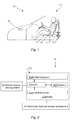
- the vehicle 10 of Figure 1 is a passenger car, although according to other embodiments, other suitable vehicles are likewise feasible.
- the vehicle 10 further comprises a vehicle situation sensing system 14 adapted to provide input to the reversible seat belt retractor system 12.
- the vehicle situation sensing system 14 is here depicted as a single entity, although in reality, the vehicle situation sensing system 14 may be comprised of several devices distributed at a plurality of positions throughout the vehicle 10.
- the vehicle sensing system 14 of Figure 1 comprises one or a combination of collision avoidance sensors, such as e.g. radar, IR, ultrasonic, vision based and/or lidar sensors; vehicle dynamics sensors, such as e.g. accelerometers and/or angular rate sensors; and/or further sensors associated with one or several airbags of the vehicle 10.
- the vehicle 10 further comprises a vehicle seat 16 for a vehicle occupant 18, at which vehicle seat 16 a reversible seat belt retractor arrangement 121 of the reversible seat belt retractor system 12 is arranged.
- the reversible seat belt retractor arrangement 121 comprises a seat belt 1211.
- the seat belt 1211 may be utilized for restraining the vehicle occupant 18 to the vehicle seat 16.
- the reversible seat belt retractor system 12 additionally comprises a retraction control system 122, for controlling retraction of the seat belt 1211 of the reversible seat belt retractor arrangement 121 for the vehicle occupant 18.
- the retraction control system 122 comprises a determining unit 1220 and a generating unit 1222.
- the embodiments herein for controlling retraction of the seat belt 1211 of the reversible seat belt retractor arrangement 121 for the vehicle occupant 18 may be implemented through one or more processors, such as a processor 1224, here denoted CPU (Central Processing Unit), together with computer program code for performing the functions and actions of the embodiments herein.
- Said program code may also be provided as a computer program product, for instance in the form of a data carrier carrying computer program code for performing the embodiments herein when being loaded into the retraction control system 122.
- a data carrier carrying computer program code for performing the embodiments herein when being loaded into the retraction control system 122.
- One such carrier may be in the form of a CD ROM disc. It is however feasible with other data carriers such as a memory stick.
- the computer program code may furthermore be provided as pure program code on a server and downloaded to the retraction control system 122, for instance in an assembly plant, workshop or at a facility of the supplier.
- the retraction control system 122 may further comprise a memory 1226 comprising one or more memory units.
- the memory 1226 may be arranged to be used to store e.g. information, and further to store data; initiating, confirming, aborting and/or reset input; and/or activation, confirming, abort and/or reset conditions; and applications, to perform the methods herein when being executed in the retraction control system 122.
- the processor 1224, the memory 1226, the determining unit 1220 and the generating unit 1222 may for instance be implemented in one or several arbitrary nodes 1228, preferably although not necessarily, arranged locally on-board the vehicle.
- Said node 1228 may be an electronic control unit (ECU) or any suitable generic electronic device, and may involve one or a combination of for instance an airbag node or main central node, or a control unit associated with the reversible seat belt retractor arrangement 121.
- ECU electronice control unit
- the determining unit 1220 and the generating unit 1222 described above may refer to a combination of analog and digital circuits, and/or one or more processors configured with software and/or firmware, e.g.
- processors such as the processor 1224 perform as will be described in more detail later on in this description.
- processors may be included in a single ASIC (Application-Specific Integrated Circuitry), or several processors and various digital hardware may be distributed among several separate components, whether individually packaged or assembled into a SoC (System-on-a-Chip).
- SoC System-on-a-Chip
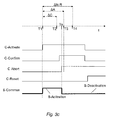
- FIG. 3 shows exemplifying scenarios of varying fulfillment of different conditions according to embodiments of the disclosure.
- An activation condition C-Activate, a confirming condition C-Confirm, an abort condition C-Abort, and a reset condition C-Reset and their respective varying fulfillment - shown as going from a lower to a higher level - is visualized as varying along a time line t. Further visualized are an activation signal S-Activation and a deactivation signal S-Deactivation, which combined are represented by a common signal S-Common.
- Figure 3 further illustrates exemplifying time instances; a first time instant T1 at which the activation condition C-activate is fulfilled, a second time instant T2 up to which - from the first time instant T1 - a confirming time period ⁇ C ranges, a third time instant T3 up to which - from the first time instant T1 - an abort time period ⁇ A ranges, and a fourth time instant T4 up to which - from the first time instant T1 - a non-restraining time period ⁇ N-R ranges.
- Figure 3a specifically, illustrates an exemplifying situation where the vehicle 10 is confirmed to be considered likely to be, or about to become, involved in a hazardous situation and/or uncomfortable dynamic situation. This is represented by fulfillment of the confirming condition C-Confirm at a confirming fulfillment time instant Tc1, which is illustrated to occur prior to the second time instant T2, i.e. prior to the confirming time period ⁇ C lapses.
- the confirming fulfillment time instant Tc1 occurring at fulfillment of the confirming condition C-Confirm may coincide, or essentially coincide, with a confirming time instant, at which confirming time instant a confirming input indicates that the vehicle 10 still is considered likely to be, or about to become, involved in a hazardous situation and/or uncomfortable dynamic situation. Since the confirming fulfillment time instant Tc1 falls within the confirming time period ⁇ C, an initiated seat belt retraction may continue. Subsequently, an applied restraining force of the seat belt 1211 may be noticeable to the vehicle occupant 18 as the non-restraining time period ⁇ N-R lapses. Additionally, a deactivating time instant Td indicates fulfillment of the reset condition C-Reset.
- the reset fulfillment time instant Td occurring at fulfillment of the reset condition C-Reset may coincide, or essentially coincide, with a reset time instant, at which reset time instant a reset input indicates that the vehicle 10 no longer is considered to be involved in a hazardous situation and/or uncomfortable dynamic situation.
- Figure 3b illustrates, as opposed to Figure 3a , an exemplifying situation where the vehicle 10 not is confirmed to be considered likely to be, or about to become, involved in a hazardous situation and/or uncomfortable dynamic situation. This is represented by absence of fulfillment of the confirming condition C-Confirm within the confirming time period ⁇ C, i.e. prior to the second time instant T2.
- a fulfilment of the confirming condition C-Confirm takes place at a late confirming fulfillment time instant Tc2 which occurs after the confirming time period ⁇ C has lapsed, i.e. after the second time instant T2.
- the late confirming fulfillment time instant Tc2 occurring at fulfillment of the confirming condition C-Confirm may coincide, or essentially coincide, with the confirming time instant, at which confirming time instant the confirming input indicates that the vehicle 10 still is considered likely to be, or about to become, involved in a hazardous situation and/or uncomfortable dynamic situation. Since the late confirming fulfillment time instant Tc2 occurs after the confirming time period ⁇ C has lapsed rather than prior thereto, an initiated seat belt retraction may be aborted before an applied restraining force of the seat belt 1211 may be noticeable to the vehicle occupant 18. As an alternative, un-fulfillment of the confirming condition C-Confirm is a likely scenario.
- Figure 3c illustrates, as opposed to Figures 3a and 3b , an exemplifying situation where the vehicle 10 is confirmed to be considered un likely to be, or about to become, involved in a hazardous situation and/or uncomfortable dynamic situation. This is represented by fulfillment of the abort condition C-Abort within the confirming time period ⁇ A, i.e. prior to the third time instant T3.
- fulfilment of the abort condition C-Abort takes place at an abort fulfillment time instant Ta which is illustrated to occur prior to the third time instant T3, i.e. prior to the abort time period ⁇ A lapses.
- the abort fulfillment time instant Ta occurring at fulfillment of the abort condition C-Abort may coincide, or essentially coincide, with an aborting time instant, at which aborting time instant an aborting input indicates that the vehicle 10 is considered un likely to be, or about to become, involved in a hazardous situation and/or uncomfortable dynamic situation. Since the abort fulfillment time instant Ta falls within the abort time period ⁇ A, an initiated seat belt retraction may be aborted before an applied restraining force of the seat belt 1211 may be noticeable to the vehicle occupant 18.
- Figure 4 is a flowchart depicting an exemplifying method performed by the retraction control system 122 of the vehicle 10 for controlling retraction of the seat belt 1211 of the reversible seat belt retractor arrangement 121 for the vehicle occupant 18 according to embodiments of the disclosure.
- the exemplifying method which may be continuously or intermittently repeated, comprises the following actions discussed with support from Figures 1-3 . The actions may be taken in any suitable order and, where suitable, in parallel.
- the retraction control system 122 determines fulfillment of the activation condition C-Activate based on an initiating input derived from the vehicle situation sensing system 14.
- the initiating input indicates that the vehicle 10, at an initiating time instant, is considered likely to be, or is about to become, involved in a hazardous situation and/or uncomfortable dynamic situation.
- fulfillment of the activation condition C-Activate is illustrated to occur at the first time instant T1.
- the first time instant T1 occurring at fulfillment of the activation condition C-Activate may coincide, or essentially coincide, with the initiating time instant, at which initiating time instant the initiating input indicates that the vehicle 10, is considered likely to be, or is about to become, involved in a hazardous situation and/or uncomfortable dynamic situation.
- the hazardous situation and/or uncomfortable dynamic situation may refer to a road departure situation, such as e.g. the vehicle 10 being airborne; and/or the vehicle 10 approaching, or being subjected to, a ditch and/or rough terrain.
- the retraction control system 122 generates the activation signal S-Activation utilizable for initiation of retraction of the seat belt 1211.
- generation of the activation signal S-Activation is illustrated to occur essentially at the first time instant T1, that is essentially simultaneously with, or slightly after, determination of fulfillment of the activation condition C-Activate (Action 402).
- the retraction control system 122 determines if there is absence of fulfillment of the confirming condition C-Confirm within the predetermined confirming time period ⁇ C.
- Fulfillment of the confirming condition C-Confirm may be based on the confirming input derived from the vehicle situation sensing system 14.
- the confirming input indicates that the vehicle 10, at the confirming time instant occurring later than the initiating time instant, still is considered likely to be, or about to become, involved in a hazardous situation and/or uncomfortable dynamic situation.
- the retraction control system 122 determines if there is fulfillment of the abort condition C-Abort within the predetermined abort time period ⁇ A.
- the confirming time period ⁇ C and the abort time period ⁇ A respectively fall within a predetermined non-restraining time period ⁇ N-R characterizing the reversible seat belt retractor arrangement 121.
- the reversible seat belt retractor arrangement 121 is unable to apply a noticeable restraining force, by means of the seat belt 1211, to the vehicle occupant 18.
- Fulfillment of the abort condition C-Abort may be based on the aborting input derived from the vehicle situation sensing system 14.
- the aborting input indicates that the vehicle 10, at the aborting time instant occurring later than the initiating time instant, is considered unlikely to be, or about to become, involved in a hazardous situation and/or uncomfortable dynamic situation.
- the non-restraining time period ⁇ N-R may last for up to 200 milliseconds, preferably up to 100 milliseconds, and most preferably up to 50 milliseconds. Start of the non-restraining time period ⁇ N-R may be counted from start of the retraction initiation, which may coincide with the first time instant T1.
- the confirming time period ⁇ C and/or the abort time period ⁇ A may respectively be equal to the non-restraining time period ⁇ N-R.
- the retraction control system 122 determines if there is fulfillment of the reset condition C-Reset.
- Fulfillment of the reset condition C-Reset may be based on the reset input derived from the vehicle situation sensing system 14.
- the reset condition C-Reset indicates that the vehicle 10, at the reset time instant occurring later than the initiating time instant, no longer is considered to be involved in a hazardous situation and/or uncomfortable dynamic situation.
- the retraction control system 122 generates a deactivation signal S-Deactivation utilizable for aborting the initiation.
- the deactivation signal S-Deactivation is illustrated to occur at, or slightly after, the reset fulfillment time instant Td, the second time instant T2, i.e. when the confirming time period ⁇ C has lapsed, and at the abort fulfillment time instant Ta, respectively; here denoted by the common signal S-Common going from a higher level to a lower.
- the activation signal S-Activation and the deactivation signal S-Deactivation may be represented by the common signal S-Common.
- the common signal S-Common may be toggled to indicate respectively the activation signal S-Activation and the deactivation signal S-Deactivation, as illustrated in Figure 3 .
- the provision of the retraction control system 122 for controlling retraction of the seat belt 1211 of the reversible seat belt retractor arrangement 121 for the vehicle occupant 18 thus enables the retraction control system 122 to quickly react to an imminent hazardous situation and/or uncomfortable dynamic situation by initiating retraction at an early stage.
- the imminent hazardous situation and/or uncomfortable dynamic situation may be re-evaluated and the initiated retraction potentially aborted prior to the vehicle occupant 18 experiencing discomfort by a restraining force of the seat belt 1211.
- the initiation of retraction of the seat belt 1211 may, if absence of fulfillment of the confirming condition C-Confirm within the confirming time period ⁇ C is determined and/or if fulfillment of the abort condition C-Abort within the abort time period ⁇ A is determined, be aborted before the vehicle occupant 18 is subjected to a noticeable restraining force.
Landscapes
- Engineering & Computer Science (AREA)
- Mechanical Engineering (AREA)
- Radar, Positioning & Navigation (AREA)
- Remote Sensing (AREA)
- Automotive Seat Belt Assembly (AREA)
Abstract
Description
- The present disclosure relates to a retraction control system of a vehicle and a method performed by said system for controlling retraction of a seat belt of a reversible seat belt retractor arrangement for a vehicle occupant.
- Vehicle manufacturers of today increasingly focus on improved safety of vehicle occupants. If it appears likely or unavoidable that a vehicle will be involved in a collision situation, safety devices such as airbags may be activated in order to protect the vehicle occupant from the consequences thereof. Current vehicles typically employ accelerometers that measure decelerations acting on the vehicle body in the event of a collision. Radar, lidar, and/or vision-based pre-crash sensing systems are furthermore commonly utilized to deploy safety devices at an early stage in a collision situation, or even before the actual impact. It is also known to activate safety devices in response to detected uncomfortable and/or hazardous vehicle dynamics situations, such as under-steer, over-steer, skidding, emergency braking or evasive maneuvering.
- In addition to airbags, safety devices may be represented by reversible restraint systems such as motorized seatbelt retractors and movable support surfaces, e.g. knee padding and movable headrests. The reversible restraint systems are commonly designed to apply a restraining force to the vehicle occupant in a critical situation, and to remove the restraining force when and if the critical situation is over. Additionally, such restraint systems may be intended to provide additional support for bracing a vehicle occupant during uncomfortable vehicle dynamic situations. In most of such cases, there is also an increased risk of an accident occurring even if a collision is not likely.
-
WO 2008/041904 , for instance, discloses a control system for controlling a reversible restraint arrangement for a vehicle occupant. The control system is operable to generate an output signal to control the reversible restraint arrangement if it is determined from the character of the road ahead of the vehicle that activation of the reversible restraint arrangement is required. The output signal is generated if it appears that the vehicle is likely to be involved in a hazardous situation or an uncomfortable dynamic situation. Accordingly, situations in which a reversible restraint system is to be deployed may be detected at an early stage, and hence the reversible restraint system may be applied gradually. - However, although the control system of
WO 2008/041904 enables less discomfort or alarm to vehicle occupants by avoiding reversible restraint systems being applied quickly and without warning, the vehicle occupants may still experience discomfort from the reversible restraint systems. - It is therefore an object of embodiments herein to provide an improved way of controlling retraction of a seat belt of a reversible seat belt retractor arrangement for a vehicle occupant of a vehicle, which vehicle is considered likely to be, or is about to become, involved in a hazardous situation and/or uncomfortable dynamic situation.
- According to a first aspect of embodiments herein, the object is achieved by a method performed by a retraction control system of a vehicle for controlling retraction of a seat belt of a reversible seat belt retractor arrangement for a vehicle occupant. The retraction control system determines fulfillment of an activation condition based on an initiating input derived from a vehicle situation sensing system, which initiating input indicates that the vehicle, at an initiating time instant, is considered likely to be, or is about to become, involved in a hazardous situation and/or uncomfortable dynamic situation. The retraction control system generates an activation signal utilizable for initiation of retraction of the seat belt. If the retraction control system determines absence of fulfillment of a confirming condition within a predetermined confirming time period, and/or if the retraction control system determines fulfillment of an abort condition within a predetermined abort time period, the retraction control system generates a deactivation signal utilizable for aborting the initiation. The confirming time period and the abort time period respectively fall within a predetermined non-restraining time period characterizing the reversible seat belt retractor arrangement, during which non-restraining time period the reversible seat belt retractor arrangement is unable to apply a noticeable restraining force, by means of the seat belt, to the vehicle occupant.
- Thereby, since the confirming time period and the abort time period respectively do not extend beyond the non-restraining time period during which the reversible seat belt retractor arrangement is unable to apply a noticeable restraining force to the vehicle occupant, the initiation of retraction of the seat belt may, if absence of fulfillment of the confirming condition within the confirming time period is determined and/or if fulfillment of the abort condition within the abort time period is determined, be aborted before the vehicle occupant even notices the initiated retraction. That is, by making use of the inability of the reversible seat belt retractor arrangement to momentarily apply a noticeable restraining force of the seat belt to the vehicle occupant, i.e. making use of the delay occurring after generation of the activation signal until application of the restraining force is possible, thus utilizing the reaction time of e.g. an electrical motor adapted to apply the restraining force of the seat belt and/or utilizing the delay associated with the "slack" of the seat belt on a reel of the reversible seat belt retractor arrangement resulting from the seat belt being relatively loosely reeled and/or not being fully stretched on the reel, the retraction control system is given time to reconsider whether or not to abort the initiated retraction before the vehicle occupant is affected by a noticeable restraining force. Accordingly, the introduced retraction control system quickly reacts to an imminent hazardous situation and/or uncomfortable dynamic situation by initiating retraction at an early stage. At the same time, the imminent hazardous situation and/or uncomfortable dynamic situation may be re-evaluated and the initiated retraction potentially aborted prior to the vehicle occupant experiencing discomfort by a restraining force of the seat belt. For that reason, controlling retraction of a seat belt of a reversible seat belt retractor arrangement for a vehicle occupant of a vehicle, which vehicle is considered likely to be, or is about to become, involved in a hazardous situation and/or uncomfortable dynamic situation, has been improved.
- The technical features and corresponding advantages of the above mentioned method will be discussed in further detail in the following.
- By introducing a method performed by a retraction control system of a vehicle for controlling retraction of a seat belt of a reversible seat belt retractor arrangement for a vehicle occupant, a vehicle occupant safety approach applicable during an imminent critical vehicle situation, is provided. The referred to vehicle may be any arbitrary vehicle, for instance an engine-propelled vehicle, such as e.g. a car, truck, lorry, van, bus, tractor, military vehicle, air plane, vessel such as e.g. a ship, a golf cart, a rail-bound vehicle, such as e.g. a train or tram. Furthermore, the vehicle occupant may refer to any arbitrary potential driver or passenger of the vehicle. The reversible seat belt retractor arrangement may refer to any arbitrary seat belt retractor arrangement capable of applying a restraining force to a vehicle occupant being subjected to an imminent hazardous situation and/or uncomfortable dynamic situation, which restraining force may be removed when and/or if said situation is over. Accordingly, rather than referring to a seat belt retractor arrangement comprising e.g. a cartridge activated retractor that may retract the seatbelt quickly by force of explosive, hence not being considered reversible, a seat belt retractor arrangement of the present disclosure may accomplish e.g. a motor driven retraction of the seat belt electrically and/or pneumatically, thus providing a reversible solution. Furthermore, the retraction control system may be represented by e.g. a retraction unit comprised in one or several suitable electronic devices, such as e.g. one or several integrated arbitrary electronic control unit (ECU) nodes, e.g. an airbag node or main central node, or a control unit associated with the reversible seat belt retractor arrangement.
- By the retraction control system determining fulfillment of an activation condition based on an initiating input derived from a vehicle situation sensing system, which initiating input indicates that the vehicle, at an initiating time instant, is considered likely to be, or is about to become, involved in a hazardous situation and/or uncomfortable dynamic situation, the retraction control system is provided with relevant input data regarding an imminent critical situation which is utilizable for determining fulfillment of the activation condition. The vehicle situation sensing system may for instance refer to one or a combination of sensors of the vehicle, known in the art, adapted to monitor whether the vehicle is considered likely to be, or is about to become, involved in a hazardous situation and/or uncomfortable dynamic situation. Furthermore, data from various sensors may be fused together to provide input from multiple sensors. The initiating input may for instance comprise one or a combination of signals, parameters, settings in a table of a control unit memory, flags etc. as known in the art, derivable e.g. from functionality, communication buses and/or e.g. ECUs already available in the vehicle. Accordingly, determining fulfillment of the activation condition may for instance be implemented by receiving said signals, and/or reading said parameters, settings or flags. The initiating time instant may be considered the point in time, when the initiating input starts to indicate that the vehicle is considered likely to be, or is about to become, involved in a hazardous situation and/or uncomfortable dynamic situation. The hazardous situation may for instance refer to an imminent vehicle collision situation, and the uncomfortable dynamic situation for instance to a vehicle dynamics situation such as under-steer, over-steer, skidding, emergency braking, evasive maneuvering or a situation in which vehicle kinematics increases the risk of the occupant being less than optimally positioned relative the vehicle restraint systems. Furthermore, "based on" is throughout this disclosure intended to be interpreted to likewise include at least "utilizing", "considering" and "taking into account".
- By the retraction control system generating an activation signal utilizable for initiation of retraction of the seat belt, retraction of the seat belt may be initiated once fulfillment of the activation condition has been determined. Thereby, retraction may be initiated at an early stage, without waiting for re-evaluation and/or reconsideration of whether the vehicle is considered likely to be, or is about to become, involved in a hazardous situation and/or uncomfortable dynamic situation. Initiation of retraction may refer to start of retraction of the seat belt, although due to the reversible seat belt arrangement being unable to, when receiving the activation signal, momentarily apply a restraining force noticeable to the vehicle occupant, the vehicle occupant will initially not experience discomfort from the seat belt. The activation signal may for instance be provided to the reversible seat belt retractor arrangement by the retraction control system being directly connected thereto, or by being provided via a communication bus, and/or the activation signal may be represented by e.g. a parameter, a setting in a table in a control unit memory or by a flag etc.
- By the retraction control system determining if there is absence of fulfillment of a confirming condition within a predetermined confirming time period, it is judged whether there is absence of fulfillment of a confirming condition before the confirming time period lapses. That is, the retraction control system gives the opportunity, within a set time frame, of taking into account input from reconsideration, of whether the vehicle is considered likely to be, or is about to become, involved in a hazardous situation and/or uncomfortable dynamic situation. Data from various sensors may be fused together to provide input from multiple sensors. Determining fulfillment of the confirming condition may for instance be implemented by receiving signals, and/or reading parameters, settings in a table of a memory or flags etc. The confirming time period may be arbitrarily selected as considered suitable for the implementation at hand, ranging from e.g. a few milliseconds to several hundreds of milliseconds.
- Furthermore, by the retraction control system determining if there is fulfillment of an abort condition within a predetermined abort time period, it is judged whether there is fulfillment of an abort condition before the abort time period lapses. That is, the retraction control system gives the opportunity, within a set time frame, of taking into account input related to the vehicle no longer being considered likely to be, or about to become, involved in a hazardous situation and/or uncomfortable dynamic situation. Similarly to previous discussion, data from various sensors may be fused together to provide input from multiple sensors. Determining fulfillment of the abort condition may for instance be implemented by receiving signals, and/or reading parameters, settings in a table of a memory or flags etc. The abort time period may be arbitrarily selected as considered suitable for the implementation at hand, ranging from e.g. a few milliseconds to several hundreds of milliseconds. For instance, the abort time period may be essentially equal to, or greater than, the confirming time period.
- By the retraction control system generating a deactivation signal utilizable for aborting the initiation if either absence of the confirming condition is fulfilled within the confirming time period and/or the abort condition is fulfilled within the abort time period, the opportunity is provided to by means of the deactivation signal abort the retraction initiation. Thereby, the retraction of the seat belt may be aborted should the vehicle no longer be considered likely to be, or about to become, involved in a hazardous situation and/or uncomfortable dynamic situation. The deactivation signal may be provided to the reversible seat belt retractor arrangement in a similar manner as the previously discussed activation signal.
- By the confirming time period and the abort time period respectively falling within a predetermined non-restraining time period characterizing the reversible seat belt retractor arrangement, during which non-restraining time period the reversible seat belt retractor arrangement is unable to apply a noticeable restraining force, by means of the seat belt, to the vehicle occupant, the initiated seat belt retraction may be aborted before the vehicle occupant even notices that retraction has been initiated. That is, since the reversible seat belt arrangement is unable to apply a restraining force noticeable to the vehicle occupant during the non-restraining time period characterizing the reversible seat belt retractor arrangement as a result of the delay associated with e.g. the reaction time of e.g. an electrical motor adapted to apply the restraining force of the seat belt and/or the delay associated with the seat belt being relatively loosely reeled and/or not being fully stretched on the reel, and since the deactivation signal is generated and subsequently received by the reversible seat belt arrangement prior to said non-restraining time period lapses, the vehicle occupant will be saved from experiencing discomfort by a restraining force of the seat belt. Accordingly, the retraction control system quickly reacts to an imminent hazardous situation and/or uncomfortable dynamic situation by initiating retraction at an early stage, while enabling for the seat belt retraction to be aborted before the vehicle occupant is subjected to a noticeable restraining force applied by the seat belt. Should neither absence of the confirming condition be fulfilled within the confirming time period and/or the abort condition be fulfilled within the abort time period, there is no generation of a deactivation signal. Accordingly, the initiated retraction may continue, and hence an applied restraining force of the seat belt may be noticeable to the vehicle occupant as the non-restraining time period lapses. The restraining force may be a force to the seat belt which is higher than a restraining force level applied to the seat belt during normal vehicle driving. "Noticeable restraining force" is throughout this disclosure intended to refer to a restraining force noticeable by the vehicle occupant, and is further intended to be interpreted to likewise refer to "essentially noticeable". Furthermore, "noticeable" may imply "uncomfortable".
- The non-restraining time period may for instance range from tenths of milliseconds to several hundreds of milliseconds. According to one embodiment, the non-restraining time period may last for up to 200 milliseconds, preferably up to 100 milliseconds, and most preferably up to 50 milliseconds, where start of the non-restraining time period is counted from start of the retraction initiation. As previously discussed, the non-restraining time period is associated with the characteristics of the reversible seat belt retractor arrangement, and the shorter the non-restraining time period, the quicker may the reversible seat belt retractor arrangement apply a restraining force noticeable by the vehicle occupant. According to one example, the non-restraining time period may include additional time, e.g. ranging from a few tenths of milliseconds to hundreds of milliseconds, in addition to time related the delay occurring after generation of the activation signal until application of the restraining force is possible.
- According to another embodiment, the confirming time period and/or the abort time period respectively is equal to the non-restraining time period. Thereby, the entire non-restraining time period may be utilized for re-evaluating received input or the lack thereof, to reconsider whether the vehicle still is, or no longer is, considered likely to be, or about to become, involved in a hazardous situation and/or uncomfortable dynamic situation. "Equal" is throughout this disclosure intended to be interpreted to likewise refer to "essentially equal" and "close to equal".
- According to yet another embodiment, the hazardous situation and/or uncomfortable dynamic situation may refer to a road departure situation, such as e.g. the vehicle being airborne; and/or the vehicle approaching, or being subjected to, a ditch and/or rough terrain. Thereby, it is suggested that the retraction control takes measures even in situations not necessarily involving a vehicle collision, but involving situations potentially dangerous and/or alarming for the vehicle occupant. In order to determine such an imminent road departure situation, data from various sensors may, similarly to previous discussions, be fused together to provide input from multiple sensors.
- According to one embodiment, fulfillment of the confirming condition may be based on a confirming input derived from the vehicle situation sensing system, which confirming input indicates that the vehicle, at a confirming time instant occurring later than the initiating time instant, still is considered likely to be, or about to become, involved in a hazardous situation and/or uncomfortable dynamic situation. Thereby, input provided from the vehicle situation sensing system may be utilized, either from the same e.g. sensors utilized for determining fulfillment of the activation condition, or partly the same sensors and/or other e.g. sensors, for determining fulfillment of the confirming condition. The confirming input may be provided and/or available in a similar manner as the initiating input. Accordingly, determining fulfillment of the confirming condition may for instance be implemented by receiving signals, and/or reading parameters, settings or flags etc. The confirming time instant may be represented by any arbitrary point in time occurring after the initiating time instant, at which arbitrary point in time the confirming input indicates that the vehicle still is considered likely to be, or is about to become, involved in a hazardous situation and/or uncomfortable dynamic situation.
- According to another embodiment, fulfillment of the abort condition may be based on an aborting input derived from the vehicle situation sensing system, which aborting input indicates that the vehicle, at an aborting time instant occurring later than the initiating time instant, is considered unlikely to be, or about to become, involved in a hazardous situation and/or uncomfortable dynamic situation. Thereby, input provided from the vehicle situation sensing system may be utilized, either from the same e.g. sensors utilized for determining fulfillment of the activation condition and/or the confirming condition, or partly the same sensors and/or other e.g. sensors, for determining fulfillment of the abort condition. The aborting input may be provided and/or available in a similar manner as the initiating input and/or the confirming input. Accordingly, determining fulfillment of the abort condition may for instance be implemented by receiving signals, and/or reading parameters, settings or flags etc. The aborting time instant may be represented by any arbitrary point in time occurring after the initiating time instant, at which arbitrary point in time the aborting input indicates that the vehicle no longer is considered likely to be, or is about to become, involved in a hazardous situation and/or uncomfortable dynamic situation.
- According to yet another embodiment, the retraction control system may determine fulfillment of an activation condition based on an initiating input derived from a vehicle situation sensing system comprising one or a combination of collision avoidance sensors, such as e.g. radar, IR, ultrasonic, vision based and/or lidar sensors; vehicle dynamics sensors, such as e.g. accelerometers and/or angular rate sensors; and/or further sensors associated with one or several airbags of the vehicle. Thereby, the retraction control system may utilize relevant input from commonly known sensors already implemented and utilized for other functionality beyond the scope of this disclosure.
- According to one embodiment, the retraction control system further generates the deactivation signal utilizable for aborting the retraction initiation if the retraction control system determines fulfillment of a reset condition. Thereby, it is judged whether there is fulfillment of a reset condition, which reset condition, unlike the confirming condition and abort condition, not is restricted to occur within a set period of time in order to enable interruption of the initiated retraction. That is, the retraction control system gives the opportunity of taking into account input related to the vehicle no longer being considered likely to be, or about to become, involved in a hazardous situation and/or uncomfortable dynamic situation, without taking into account timing restrictions. Accordingly, fulfillment of the reset condition may occur even after an applied restraining force of the seat belt is noticeable by the vehicle occupant, and may hence be utilized as a release function of the retraction (restraining) should the vehicle no longer be considered likely to be, or about to become, involved in a hazardous situation and/or uncomfortable dynamic situation, or after a collision situation. Similarly to previous discussion, data from various sensors may be fused together to provide input from multiple sensors. Furthermore, determining fulfillment of the abort condition may for instance be implemented by receiving signals, and/or reading parameters, settings in a table of a memory or flags etc. Alternatively and/or additionally, the reset condition may be associated with a global release criterion, commonly known within the automotive sector.
- According to a further embodiment, fulfillment of the reset condition may be based on a reset input derived from the vehicle situation sensing system, which reset condition indicates that the vehicle, at a reset time instant occurring later than the initiating time instant, no longer is considered to be involved in a hazardous situation and/or uncomfortable dynamic situation. Thereby, input provided from the vehicle situation sensing system may be utilized, either from the same e.g. sensors utilized for determining fulfillment of the activation condition, confirming and/or the abort condition, or partly the same sensors and/or other e.g. sensors, for determining fulfillment of the reset condition. The reset input may be provided and/or available in a similar manner as the initiating input, confirming input and/or the aborting input. Accordingly, determining fulfillment of the reset condition may for instance be implemented by receiving signals, and/or reading parameters, settings or flags. The reset time instant may be considered any arbitrary point in time occurring after the initiating time instant, at which arbitrary point in time reset input indicates that the vehicle no longer is considered to be involved in a hazardous situation and/or uncomfortable dynamic situation.
- According to one embodiment, the activation signal and the deactivation signal may be represented by a common signal, which common signal is toggled to indicate respectively the activation signal and the deactivation signal. Thereby, a convenient and feasible implementation of the activation signal and the deactivation signal is provided.
- According to a second aspect of embodiments herein, the object is achieved by a retraction control system of a vehicle for controlling retraction of a seat belt of a reversible seat belt retractor arrangement for a vehicle occupant. The retraction control system comprises a determining unit adapted for determining fulfillment of an activation condition based on an initiating input derived from a vehicle situation sensing system, which initiating input indicates that the vehicle, at an initiating time instant, is considered likely to be, or is about to become, involved in a hazardous situation and/or uncomfortable dynamic situation. The retraction control system further comprises a generating unit adapted for generating an activation signal utilizable for initiation of retraction of the seat belt. The generating unit is further adapted for generating a deactivation signal utilizable for aborting the initiation if determining, by the determining unit, absence of fulfillment of a confirming condition within a predetermined confirming time period, and/or if determining, by the determining unit, fulfillment of an abort condition within a predetermined abort time period. The confirming time period and the abort time period respectively fall within a predetermined non-restraining time period characterizing the reversible seat belt retractor arrangement, during which non-restraining time period the reversible seat belt retractor arrangement is unable to apply a noticeable restraining force, by means of the seat belt, to the vehicle occupant. Similar advantages as those mentioned in the foregoing correspondingly apply, why these are not further discussed.
- According to a third aspect of embodiments herein, the object is achieved by a reversible seat belt retractor system of a vehicle for a vehicle occupant, which reversible seat belt retractor system comprises a reversible seat belt retractor arrangement, and the previously discussed retraction control system, for controlling retraction of a seat belt of the reversible seat belt retractor arrangement for the vehicle occupant. Yet again, similar advantages as those mentioned in the foregoing correspondingly apply, why these are not further discussed.
- According to a fourth aspect of embodiments herein, the object is achieved by a vehicle comprising the previously discussed reversible seat belt retractor system; a vehicle situation sensing system adapted to provide input to the reversible seat belt retractor system; and a vehicle seat for a vehicle occupant, at which vehicle seat the reversible seat belt retractor arrangement of the reversible seat belt retractor system is arranged. Yet again, similar advantages as those mentioned in the foregoing correspondingly apply, why these are not further discussed.
- It should be understood that the activation condition, the confirming condition, the abort condition and/or the optional reset condition, when no longer applicable and/or when situations to which they respectively are associated have ceased, may be reset in a commonly known fashion.
- The various aspects of the non-limiting embodiments of the invention, including particular features and advantages, will be readily understood from the following detailed description and the accompanying drawings, in which:
-
Figure 1 illustrates an exemplifying vehicle comprising a reversible seat belt retractor system according to embodiments of the disclosure; -
Figure 2 is a schematic block diagram illustrating an exemplifying reversible seat belt retractor system according to embodiments of the disclosure; -
Figure 3 shows exemplifying scenarios of varying fulfillment of different conditions according to embodiments of the disclosure; and -
Figure 4 is a flowchart depicting an exemplifying method performed by a retraction control system of a vehicle for controlling retraction of a seat belt of a reversible seat belt retractor arrangement for a vehicle occupant according to embodiments of the disclosure. - The non-limiting embodiments of the present disclosure will now be described more fully hereinafter with reference to the accompanying drawings, in which currently preferred embodiments of the disclosure are shown. This disclosure may, however, be embodied in many different forms and should not be construed as limited to the embodiments set forth herein. Like reference characters refer to like elements throughout. Dashed lines of some boxes in the figures indicate that these units or actions are optional and not mandatory.
- In the following, according to embodiments herein which relate to controlling retraction of a seat belt of a reversible seat belt retractor arrangement for a vehicle occupant, there will be disclosed how, by making use of the inability of the reversible seat belt retractor arrangement to momentarily apply a noticeable restraining force of the seat belt to the vehicle occupant, i.e. making use of the delay occurring after generation of the activation signal until application of the restraining force is possible, thus utilizing the reaction time of e.g. an electrical motor adapted to apply the restraining force of the seat belt and/or utilizing the delay associated with the "slack" of the seat belt on a reel of the reversible seat belt retractor arrangement resulting from the seat belt being relatively loosely reeled and/or not being fully stretched on the reel, the retraction control system is given time to reconsider whether or not to abort the initiated retraction before the vehicle occupant is affected by a restraining force.
- Referring now to the figures and
Figure 1 in particular, there is depicted an exemplifyingvehicle 10 comprising a reversible seatbelt retractor system 12 according to embodiments of the disclosure. Thevehicle 10 ofFigure 1 is a passenger car, although according to other embodiments, other suitable vehicles are likewise feasible. Thevehicle 10 further comprises a vehiclesituation sensing system 14 adapted to provide input to the reversible seatbelt retractor system 12. The vehiclesituation sensing system 14 is here depicted as a single entity, although in reality, the vehiclesituation sensing system 14 may be comprised of several devices distributed at a plurality of positions throughout thevehicle 10. Thevehicle sensing system 14 ofFigure 1 comprises one or a combination of collision avoidance sensors, such as e.g. radar, IR, ultrasonic, vision based and/or lidar sensors; vehicle dynamics sensors, such as e.g. accelerometers and/or angular rate sensors; and/or further sensors associated with one or several airbags of thevehicle 10. - The
vehicle 10 further comprises avehicle seat 16 for avehicle occupant 18, at which vehicle seat 16 a reversible seatbelt retractor arrangement 121 of the reversible seatbelt retractor system 12 is arranged. The reversible seatbelt retractor arrangement 121 comprises aseat belt 1211. Theseat belt 1211 may be utilized for restraining thevehicle occupant 18 to thevehicle seat 16. - As further shown in
Figure 2 , which depicts a schematic block diagram illustrating an exemplifying reversible seatbelt retractor system 12 according to embodiments of the disclosure, the reversible seatbelt retractor system 12 additionally comprises aretraction control system 122, for controlling retraction of theseat belt 1211 of the reversible seatbelt retractor arrangement 121 for thevehicle occupant 18. Theretraction control system 122 comprises a determiningunit 1220 and agenerating unit 1222. Furthermore, the embodiments herein for controlling retraction of theseat belt 1211 of the reversible seatbelt retractor arrangement 121 for thevehicle occupant 18 may be implemented through one or more processors, such as aprocessor 1224, here denoted CPU (Central Processing Unit), together with computer program code for performing the functions and actions of the embodiments herein. Said program code may also be provided as a computer program product, for instance in the form of a data carrier carrying computer program code for performing the embodiments herein when being loaded into theretraction control system 122. One such carrier may be in the form of a CD ROM disc. It is however feasible with other data carriers such as a memory stick. The computer program code may furthermore be provided as pure program code on a server and downloaded to theretraction control system 122, for instance in an assembly plant, workshop or at a facility of the supplier. Theretraction control system 122 may further comprise amemory 1226 comprising one or more memory units. Thememory 1226 may be arranged to be used to store e.g. information, and further to store data; initiating, confirming, aborting and/or reset input; and/or activation, confirming, abort and/or reset conditions; and applications, to perform the methods herein when being executed in theretraction control system 122. Theprocessor 1224, thememory 1226, the determiningunit 1220 and thegenerating unit 1222 may for instance be implemented in one or severalarbitrary nodes 1228, preferably although not necessarily, arranged locally on-board the vehicle. Saidnode 1228 may be an electronic control unit (ECU) or any suitable generic electronic device, and may involve one or a combination of for instance an airbag node or main central node, or a control unit associated with the reversible seatbelt retractor arrangement 121. Those skilled in the art will also appreciate that the determiningunit 1220 and thegenerating unit 1222 described above may refer to a combination of analog and digital circuits, and/or one or more processors configured with software and/or firmware, e.g. stored in a memory such as thememory 1226, that when executed by the one or more processors such as theprocessor 1224 perform as will be described in more detail later on in this description. One or more of these processors, as well as the other digital hardware, may be included in a single ASIC (Application-Specific Integrated Circuitry), or several processors and various digital hardware may be distributed among several separate components, whether individually packaged or assembled into a SoC (System-on-a-Chip). -
Figure 3 shows exemplifying scenarios of varying fulfillment of different conditions according to embodiments of the disclosure. An activation condition C-Activate, a confirming condition C-Confirm, an abort condition C-Abort, and a reset condition C-Reset and their respective varying fulfillment - shown as going from a lower to a higher level - is visualized as varying along a time line t. Further visualized are an activation signal S-Activation and a deactivation signal S-Deactivation, which combined are represented by a common signal S-Common. Generation of the activation signal S-Activation, which occurs simultaneously or slightly after fulfillment of the activation condition C-Activate, is shown as the common signal S-Common going from a lower to a higher level, and generation of the deactivation signal S-Deactivation is shown as the common signal S-Common going from the higher level to the lower.Figure 3 further illustrates exemplifying time instances; a first time instant T1 at which the activation condition C-activate is fulfilled, a second time instant T2 up to which - from the first time instant T1 - a confirming time period ΔC ranges, a third time instant T3 up to which - from the first time instant T1 - an abort time period ΔA ranges, and a fourth time instant T4 up to which - from the first time instant T1 - a non-restraining time period ΔN-R ranges. -
Figure 3a , specifically, illustrates an exemplifying situation where thevehicle 10 is confirmed to be considered likely to be, or about to become, involved in a hazardous situation and/or uncomfortable dynamic situation. This is represented by fulfillment of the confirming condition C-Confirm at a confirming fulfillment time instant Tc1, which is illustrated to occur prior to the second time instant T2, i.e. prior to the confirming time period ΔC lapses. Furthermore, as visualized inFigures 3a , the confirming fulfillment time instant Tc1 occurring at fulfillment of the confirming condition C-Confirm, may coincide, or essentially coincide, with a confirming time instant, at which confirming time instant a confirming input indicates that thevehicle 10 still is considered likely to be, or about to become, involved in a hazardous situation and/or uncomfortable dynamic situation. Since the confirming fulfillment time instant Tc1 falls within the confirming time period ΔC, an initiated seat belt retraction may continue. Subsequently, an applied restraining force of theseat belt 1211 may be noticeable to thevehicle occupant 18 as the non-restraining time period ΔN-R lapses. Additionally, a deactivating time instant Td indicates fulfillment of the reset condition C-Reset. As visualized inFigure 3a , the reset fulfillment time instant Td occurring at fulfillment of the reset condition C-Reset, may coincide, or essentially coincide, with a reset time instant, at which reset time instant a reset input indicates that thevehicle 10 no longer is considered to be involved in a hazardous situation and/or uncomfortable dynamic situation. -
Figure 3b illustrates, as opposed toFigure 3a , an exemplifying situation where thevehicle 10 not is confirmed to be considered likely to be, or about to become, involved in a hazardous situation and/or uncomfortable dynamic situation. This is represented by absence of fulfillment of the confirming condition C-Confirm within the confirming time period ΔC, i.e. prior to the second time instant T2. In the illustrated example ofFigure 3b , a fulfilment of the confirming condition C-Confirm takes place at a late confirming fulfillment time instant Tc2 which occurs after the confirming time period ΔC has lapsed, i.e. after the second time instant T2. Furthermore, as visualized inFigures 3b , the late confirming fulfillment time instant Tc2 occurring at fulfillment of the confirming condition C-Confirm, may coincide, or essentially coincide, with the confirming time instant, at which confirming time instant the confirming input indicates that thevehicle 10 still is considered likely to be, or about to become, involved in a hazardous situation and/or uncomfortable dynamic situation. Since the late confirming fulfillment time instant Tc2 occurs after the confirming time period ΔC has lapsed rather than prior thereto, an initiated seat belt retraction may be aborted before an applied restraining force of theseat belt 1211 may be noticeable to thevehicle occupant 18. As an alternative, un-fulfillment of the confirming condition C-Confirm is a likely scenario. -
Figure 3c illustrates, as opposed toFigures 3a and3b , an exemplifying situation where thevehicle 10 is confirmed to be considered unlikely to be, or about to become, involved in a hazardous situation and/or uncomfortable dynamic situation. This is represented by fulfillment of the abort condition C-Abort within the confirming time period ΔA, i.e. prior to the third time instant T3. In the illustrated example ofFigure 3c , fulfilment of the abort condition C-Abort takes place at an abort fulfillment time instant Ta which is illustrated to occur prior to the third time instant T3, i.e. prior to the abort time period ΔA lapses. As visualized inFigure 3c , the abort fulfillment time instant Ta occurring at fulfillment of the abort condition C-Abort, may coincide, or essentially coincide, with an aborting time instant, at which aborting time instant an aborting input indicates that thevehicle 10 is considered unlikely to be, or about to become, involved in a hazardous situation and/or uncomfortable dynamic situation. Since the abort fulfillment time instant Ta falls within the abort time period ΔA, an initiated seat belt retraction may be aborted before an applied restraining force of theseat belt 1211 may be noticeable to thevehicle occupant 18. -
Figure 4 is a flowchart depicting an exemplifying method performed by theretraction control system 122 of thevehicle 10 for controlling retraction of theseat belt 1211 of the reversible seatbelt retractor arrangement 121 for thevehicle occupant 18 according to embodiments of the disclosure. The exemplifying method, which may be continuously or intermittently repeated, comprises the following actions discussed with support fromFigures 1-3 . The actions may be taken in any suitable order and, where suitable, in parallel. - In
Action 402, theretraction control system 122 determines fulfillment of the activation condition C-Activate based on an initiating input derived from the vehiclesituation sensing system 14. The initiating input indicates that thevehicle 10, at an initiating time instant, is considered likely to be, or is about to become, involved in a hazardous situation and/or uncomfortable dynamic situation. - As visualized in
Figure 3 , fulfillment of the activation condition C-Activate is illustrated to occur at the first time instant T1. Furthermore, the first time instant T1 occurring at fulfillment of the activation condition C-Activate, may coincide, or essentially coincide, with the initiating time instant, at which initiating time instant the initiating input indicates that thevehicle 10, is considered likely to be, or is about to become, involved in a hazardous situation and/or uncomfortable dynamic situation. - The hazardous situation and/or uncomfortable dynamic situation may refer to a road departure situation, such as e.g. the
vehicle 10 being airborne; and/or thevehicle 10 approaching, or being subjected to, a ditch and/or rough terrain. - In
Action 404, theretraction control system 122 generates the activation signal S-Activation utilizable for initiation of retraction of theseat belt 1211. As visualized inFigure 3 , generation of the activation signal S-Activation is illustrated to occur essentially at the first time instant T1, that is essentially simultaneously with, or slightly after, determination of fulfillment of the activation condition C-Activate (Action 402). - In
Action 406, theretraction control system 122 determines if there is absence of fulfillment of the confirming condition C-Confirm within the predetermined confirming time period ΔC. - If there is no absence of fulfillment of the confirming condition C-Confirm within the confirming time period ΔC, i.e. "NO" is the result of the determining step of
Action 406 as presence of fulfillment of the confirming condition C-Confirm has been detected, the method is ended. This implies, as visualized inFigure 3a , that fulfillment of the confirming condition C-Confirm has occurred within the confirming time period ΔC, at the confirming fulfillment time instant Tc1. - On the other hand, if absence of the confirming condition C-Confirm is fulfilled within the confirming time period ΔC, i.e. "YES" is the result of the determining step of
Action 406 as no presence of fulfillment of the confirming condition C-Confirm has been detected, the method continues withAction 412. This implies, as visualized inFigure 3b , that a fulfillment of the confirming condition C-Confirm may, or may not have, occurred after the confirming time period ΔC has lapsed, i.e. after the second time instant T2, potentially at the late confirming fulfillment time instant Tc2. - Fulfillment of the confirming condition C-Confirm may be based on the confirming input derived from the vehicle
situation sensing system 14. The confirming input indicates that thevehicle 10, at the confirming time instant occurring later than the initiating time instant, still is considered likely to be, or about to become, involved in a hazardous situation and/or uncomfortable dynamic situation. - In
Action 408, theretraction control system 122 determines if there is fulfillment of the abort condition C-Abort within the predetermined abort time period ΔA. - If there is no abort condition C-Abort fulfilled within the abort time period ΔA, i.e. "NO" is the result of the determining step of
Action 408, the method is ended. - On the other hand, if the abort condition C-Abort is fulfilled within the abort time period ΔA, i.e. "YES" is the result of the determining step of
Action 408, the method continues withAction 412. This implies, as visualized inFigure 3c , that fulfillment of the abort condition C-Abort has occurred within the abort time period ΔA, at the abort fulfillment time instant Ta. - The confirming time period ΔC and the abort time period ΔA respectively fall within a predetermined non-restraining time period ΔN-R characterizing the reversible seat
belt retractor arrangement 121. During the non-restraining time period ΔN-R, the reversible seatbelt retractor arrangement 121 is unable to apply a noticeable restraining force, by means of theseat belt 1211, to thevehicle occupant 18. - Fulfillment of the abort condition C-Abort may be based on the aborting input derived from the vehicle
situation sensing system 14. The aborting input indicates that thevehicle 10, at the aborting time instant occurring later than the initiating time instant, is considered unlikely to be, or about to become, involved in a hazardous situation and/or uncomfortable dynamic situation. - The non-restraining time period ΔN-R may last for up to 200 milliseconds, preferably up to 100 milliseconds, and most preferably up to 50 milliseconds. Start of the non-restraining time period ΔN-R may be counted from start of the retraction initiation, which may coincide with the first time instant T1.
- Furthermore, the confirming time period ΔC and/or the abort time period ΔA may respectively be equal to the non-restraining time period ΔN-R.
- In
optional Action 410, theretraction control system 122 determines if there is fulfillment of the reset condition C-Reset. - If there is no reset condition C-Reset fulfilled, i.e. "NO" is the result of the determining step of
Action 410, the method is ended. - On the other hand, if the reset condition C-Reset is fulfilled, i.e. "YES" is the result of the determining step of
Action 410, the method continues withAction 412. This implies, as visualized inFigure 3a , that a fulfillment of the reset condition C-Reset has occurred at the deactivating time instant Td. - Fulfillment of the reset condition C-Reset may be based on the reset input derived from the vehicle
situation sensing system 14. The reset condition C-Reset indicates that thevehicle 10, at the reset time instant occurring later than the initiating time instant, no longer is considered to be involved in a hazardous situation and/or uncomfortable dynamic situation. - In
Action 412, theretraction control system 122 generates a deactivation signal S-Deactivation utilizable for aborting the initiation. As visualized inFigure 3 , the deactivation signal S-Deactivation is illustrated to occur at, or slightly after, the reset fulfillment time instant Td, the second time instant T2, i.e. when the confirming time period ΔC has lapsed, and at the abort fulfillment time instant Ta, respectively; here denoted by the common signal S-Common going from a higher level to a lower. - The activation signal S-Activation and the deactivation signal S-Deactivation may be represented by the common signal S-Common. The common signal S-Common may be toggled to indicate respectively the activation signal S-Activation and the deactivation signal S-Deactivation, as illustrated in
Figure 3 . - Consequently, the provision of the
retraction control system 122 for controlling retraction of theseat belt 1211 of the reversible seatbelt retractor arrangement 121 for thevehicle occupant 18 thus enables theretraction control system 122 to quickly react to an imminent hazardous situation and/or uncomfortable dynamic situation by initiating retraction at an early stage. At the same time, the imminent hazardous situation and/or uncomfortable dynamic situation may be re-evaluated and the initiated retraction potentially aborted prior to thevehicle occupant 18 experiencing discomfort by a restraining force of theseat belt 1211. That is, since the confirming time period ΔC and the abort time period ΔA respectively do not extend beyond the non-restraining time period ΔN-R during which the reversible seatbelt retractor arrangement 121 is unable to apply a noticeable restraining force to thevehicle occupant 18, the initiation of retraction of theseat belt 1211 may, if absence of fulfillment of the confirming condition C-Confirm within the confirming time period ΔC is determined and/or if fulfillment of the abort condition C-Abort within the abort time period ΔA is determined, be aborted before thevehicle occupant 18 is subjected to a noticeable restraining force. - The person skilled in the art realizes that the present disclosure by no means is limited to the preferred embodiments described above. On the contrary, many modifications and variations are possible within the scope of the appended claims. It should furthermore be noted that the drawings not necessarily are to scale and the dimensions of certain features may have been exaggerated for the sake of clarity. Emphasis is instead placed upon illustrating the principle of the embodiments herein. Additionally, in the claims, the word "comprising" does not exclude other elements or steps, and the indefinite article "a" or "an" does not exclude a plurality.
Claims (13)
- A method performed by a retraction control system (122) of a vehicle (10) for controlling retraction of a seat belt (1211) of a reversible seat belt retractor arrangement (121) for a vehicle occupant (18), said method comprising:determining (402) fulfillment of an activation condition (C-Activate) based on an initiating input derived from a vehicle situation sensing system (14), said initiating input indicating that said vehicle (10), at an initiating time instant, is considered likely to be, or is about to become, involved in a hazardous situation and/or uncomfortable dynamic situation;generating (404) an activation signal (S-Activation) utilizable for initiation of retraction of said seat belt (1211); andif determining (406) absence of fulfillment of a confirming condition (C-confirm) within a predetermined confirming time period (ΔC), and/orif determining (408) fulfillment of an abort condition (C-Abort) within a predetermined abort time period (ΔA),
generating (412) a deactivation signal (S-Deactivation) utilizable for aborting said initiation;wherein said confirming time period (ΔC) and said abort time period (ΔA) respectively fall within a predetermined non-restraining time period (ΔN-R) characterizing said reversible seat belt retractor arrangement (121), during which non-restraining time period (ΔN-R) said reversible seat belt retractor arrangement (121) is unable to apply a noticeable restraining force by means of said seat belt (1211) to said vehicle occupant (18). - The method in accordance with claim 1, wherein said non-restraining time period (ΔN-R) lasts for up to 200 milliseconds, preferably up to 100 milliseconds, and most preferably up to 50 milliseconds, where start of said non-restraining time period (ΔN-R) is counted from start of said initiation.
- The method in accordance with claim 1 or 2, wherein said confirming time period (ΔC) and/or said abort time period (ΔA) respectively is equal to said non-restraining time period (ΔN-R).
- The method in accordance with any one of the preceding claims, wherein said hazardous situation and/or uncomfortable dynamic situation refers to a road departure situation, such as e.g. said vehicle (10) being airborne; and/or said vehicle (10) approaching, or being subjected to, a ditch and/or rough terrain.
- The method in accordance with any one of the preceding claims, wherein fulfillment of said confirming condition (C-Confirm) is based on a confirming input derived from said vehicle situation sensing system (14), said confirming input indicating that said vehicle (10), at a confirming time instant occurring later than said initiating time instant, still is considered likely to be, or about to become, involved in a hazardous situation and/or uncomfortable dynamic situation.
- The method in accordance with any one of the preceding, wherein fulfillment of said abort condition (C-Abort) is based on an aborting input derived from said vehicle situation sensing system (14), said aborting input indicating that said vehicle (10), at an aborting time instant occurring later than said initiating time instant, is considered unlikely to be, or about to become, involved in a hazardous situation and/or uncomfortable dynamic situation.
- The method in accordance with any one of the preceding claims, wherein said determining (402) fulfillment of the activation condition (C-Activate) comprises determining (402) fulfillment of an activation condition (C-Activate) based on an initiating input derived from a vehicle situation sensing system (14) comprising one or a combination of collision avoidance sensors, such as e.g. radar, IR, ultrasonic, vision based and/or lidar sensors; vehicle dynamics sensors, such as e.g. accelerometers and/or angular rate sensors; and/or further sensors associated with one or several airbags of said vehicle (10).
- The method in accordance with any one of the preceding claims, further comprising:if determining (410) fulfillment of a reset condition (C-Reset);
generating (412) said deactivation signal (S-Deactivation) utilizable for aborting said initiation. - The method in accordance with claim 8, wherein fulfillment of said reset condition (C-Reset) is based on a reset input derived from said vehicle situation sensing system (14), said reset condition (C-Reset) indicating that said vehicle (10), at a reset time instant occurring later than said initiating time instant, no longer is considered to be involved in a hazardous situation and/or uncomfortable dynamic situation.
- The method in accordance with any one of the preceding claims, wherein said activation signal (S-Activation) and said deactivation signal (S-Deactivation) are represented by a common signal (S-Common), which common signal (S-Common) is toggled to indicate respectively said activation signal (S-Activation) and said deactivation signal (S-Deactivation).
- A retraction control system (122) of a vehicle (10) for controlling retraction of a seat belt (1211) of a reversible seat belt retractor arrangement (121) for a vehicle occupant (18), said retraction control system (122) comprising:a determining unit (1220) adapted for determining (402) fulfillment of an activation condition (C-Activate) based on an initiating input derived from a vehicle situation sensing system (14), said initiating input indicating that said vehicle (10), at an initiating time instant, is considered likely to be, or is about to become, involved in a hazardous situation and/or uncomfortable dynamic situation; anda generating unit (1222) adapted for generating (404) an activation signal (S-Activation) utilizable for initiation of retraction of said seat belt (1211);wherein said generating unit further (1222) is adapted for generating (412) a deactivation signal (S-Deactivation) utilizable for aborting said initiation if determining (406), by said determining unit (1220), absence of fulfillment of a confirming condition (C-Confirm) within a predetermined confirming time period (ΔC), and/or if determining (408), by said determining unit (1220), fulfillment of an abort condition (C-Abort) within a predetermined abort time period (ΔA), andwherein said confirming time period (ΔC) and said abort time period (ΔA) respectively fall within a predetermined non-restraining time period (ΔN-R) characterizing said reversible seat belt retractor arrangement (121), during which non-restraining time period (ΔN-R) said reversible seat belt retractor arrangement (121) is unable to apply a noticeable restraining force by means of said seat belt (1211) to said vehicle occupant (18).
- A reversible seat belt retractor system (12) of a vehicle (10) for a vehicle occupant (18), said reversible seat belt retractor system (12) comprising:a reversible seat belt retractor arrangement (121); andsaid retraction control system (122) in accordance with claim 11, for controlling retraction of a seat belt (1211) of said reversible seat belt retractor arrangement (121) for said vehicle occupant (18).
- A vehicle (10) comprising:said reversible seat belt retractor system (12) in accordance with claim 12;a vehicle situation sensing system (14) adapted to provide input to said reversible seat belt retractor system (12); anda vehicle seat (16) for a vehicle occupant (18), at which vehicle seat (18) the reversible seat belt retractor arrangement (121) of said reversible seat belt retractor system (12) is arranged.
Priority Applications (3)
| Application Number | Priority Date | Filing Date | Title |
|---|---|---|---|
| EP13169356.6A EP2808206B1 (en) | 2013-05-27 | 2013-05-27 | Method and system of a vehicle for reversible seat belt retraction |
| US14/282,455 US9457750B2 (en) | 2013-05-27 | 2014-05-20 | Method and system of a vehicle for reversible seat belt retraction |
| CN201410213448.1A CN104176000B (en) | 2013-05-27 | 2014-05-20 | Method and system for reversible seat belt retraction of a vehicle |
Applications Claiming Priority (1)
| Application Number | Priority Date | Filing Date | Title |
|---|---|---|---|
| EP13169356.6A EP2808206B1 (en) | 2013-05-27 | 2013-05-27 | Method and system of a vehicle for reversible seat belt retraction |
Publications (2)
| Publication Number | Publication Date |
|---|---|
| EP2808206A1 true EP2808206A1 (en) | 2014-12-03 |
| EP2808206B1 EP2808206B1 (en) | 2017-07-12 |
Family
ID=48470838
Family Applications (1)
| Application Number | Title | Priority Date | Filing Date |
|---|---|---|---|
| EP13169356.6A Active EP2808206B1 (en) | 2013-05-27 | 2013-05-27 | Method and system of a vehicle for reversible seat belt retraction |
Country Status (3)
| Country | Link |
|---|---|
| US (1) | US9457750B2 (en) |
| EP (1) | EP2808206B1 (en) |
| CN (1) | CN104176000B (en) |
Cited By (1)
| Publication number | Priority date | Publication date | Assignee | Title |
|---|---|---|---|---|
| CN117864043A (en) * | 2024-02-26 | 2024-04-12 | 广州小鹏汽车科技有限公司 | Functional component state setting method and passenger airbag state setting device |
Families Citing this family (1)
| Publication number | Priority date | Publication date | Assignee | Title |
|---|---|---|---|---|
| US20200114842A1 (en) * | 2018-10-15 | 2020-04-16 | GM Global Technology Operations LLC | Vehicle closure open warning system and method |
Citations (4)
| Publication number | Priority date | Publication date | Assignee | Title |
|---|---|---|---|---|
| US20070017726A1 (en) * | 2005-07-25 | 2007-01-25 | Honda Motor Co., Ltd. | Occupant restraint system and method for restraining occupant in seat of vehicle |
| WO2008041904A1 (en) | 2006-10-05 | 2008-04-10 | Autoliv Development Ab | A control system for a vehicle |
| US20090125237A1 (en) * | 2007-10-29 | 2009-05-14 | Tetsuya Kitagawa | Monitoring target detecting apparatus associated with collision damage reducing apparatus |
| EP2520472A2 (en) * | 2011-05-04 | 2012-11-07 | Scania CV AB (publ) | Device and method for belt tightener activation |
Family Cites Families (17)
| Publication number | Priority date | Publication date | Assignee | Title |
|---|---|---|---|---|
| WO2000040438A2 (en) * | 1999-01-07 | 2000-07-13 | Siemens Automotive Corporation | Airbag actuation event discrimination system and method |
| JP4667549B2 (en) * | 1999-09-10 | 2011-04-13 | オートリブ株式会社 | Seat belt device |
| US6520536B2 (en) * | 2001-05-04 | 2003-02-18 | Trw Inc. | Method and apparatus for controlling an occupant side restraining device with enhanced side safing function |
| DE10160071B4 (en) * | 2001-12-06 | 2007-01-18 | Daimlerchrysler Ag | Method for controlling a reversible belt tensioner |
| US20030114971A1 (en) * | 2001-12-14 | 2003-06-19 | Caruso Christopher Michael | Vehicle occupant restraint deployment control with lateral velocity responsive upgrade |
| JP4244213B2 (en) * | 2002-12-26 | 2009-03-25 | 株式会社デンソー | Vehicle safety device |
| JP3951937B2 (en) * | 2003-02-25 | 2007-08-01 | 日産自動車株式会社 | Crew restraint system |
| DE10332024A1 (en) * | 2003-07-15 | 2005-02-17 | Daimlerchrysler Ag | Method for controlling a reversible belt tensioner in a motor vehicle |
| GB2424982A (en) * | 2005-04-07 | 2006-10-11 | Autoliv Dev | Seatbelt pretensioner dependent on steering rate |
| GB2424983A (en) * | 2005-04-07 | 2006-10-11 | Autoliv Dev | Seatbelt pretensioner control system |
| CN102700500B (en) * | 2006-02-03 | 2014-12-10 | Tk控股公司 | System and method for seat belt control |
| JP4285569B2 (en) * | 2007-08-13 | 2009-06-24 | トヨタ自動車株式会社 | Crew protection device |
| EP2394864B1 (en) * | 2010-06-09 | 2017-11-08 | Robert Bosch GmbH | Method and control device for the activation of passenger safety means of a vehicle |
| US8820462B2 (en) * | 2011-05-11 | 2014-09-02 | Nissan Motor Co., Ltd. | Occupant restraint system and occupant restraint method |
| DE102013206508A1 (en) * | 2013-04-12 | 2014-10-16 | Robert Bosch Gmbh | Control device for an object coupling device of a vehicle, object coupling device for a vehicle and method for damping an impact of an inertia-accelerated object |
| EP3018010B1 (en) * | 2014-11-06 | 2018-01-10 | Volvo Car Corporation | Method for controlling a time of activation of a reversible restraint system in a vehicle |
| EP3018011B1 (en) * | 2014-11-06 | 2017-11-29 | Volvo Car Corporation | Method for operation of a safety arrangement in a vehicle |
-
2013
- 2013-05-27 EP EP13169356.6A patent/EP2808206B1/en active Active
-
2014
- 2014-05-20 US US14/282,455 patent/US9457750B2/en active Active
- 2014-05-20 CN CN201410213448.1A patent/CN104176000B/en active Active
Patent Citations (4)
| Publication number | Priority date | Publication date | Assignee | Title |
|---|---|---|---|---|
| US20070017726A1 (en) * | 2005-07-25 | 2007-01-25 | Honda Motor Co., Ltd. | Occupant restraint system and method for restraining occupant in seat of vehicle |
| WO2008041904A1 (en) | 2006-10-05 | 2008-04-10 | Autoliv Development Ab | A control system for a vehicle |
| US20090125237A1 (en) * | 2007-10-29 | 2009-05-14 | Tetsuya Kitagawa | Monitoring target detecting apparatus associated with collision damage reducing apparatus |
| EP2520472A2 (en) * | 2011-05-04 | 2012-11-07 | Scania CV AB (publ) | Device and method for belt tightener activation |
Cited By (1)
| Publication number | Priority date | Publication date | Assignee | Title |
|---|---|---|---|---|
| CN117864043A (en) * | 2024-02-26 | 2024-04-12 | 广州小鹏汽车科技有限公司 | Functional component state setting method and passenger airbag state setting device |
Also Published As
| Publication number | Publication date |
|---|---|
| US9457750B2 (en) | 2016-10-04 |
| CN104176000A (en) | 2014-12-03 |
| CN104176000B (en) | 2019-04-09 |
| US20140350796A1 (en) | 2014-11-27 |
| EP2808206B1 (en) | 2017-07-12 |
Similar Documents
| Publication | Publication Date | Title |
|---|---|---|
| KR102013726B1 (en) | System and method for determining when to deploy vehicle safety system | |
| CN103619677B (en) | Motor vehicle with driver assistance unit | |
| CN107521448B (en) | Method for controlling operation of safety device of vehicle and control device | |
| US8146703B2 (en) | Method for a safety system in a vehicle | |
| US10843687B2 (en) | Arrangement and method for mitigating a forward collision between road vehicles | |
| JP2024036650A (en) | Seat belt system including occupant detector | |
| US10759369B2 (en) | Apparatus and method for controlling vehicular active seatbelt | |
| JP2020526441A5 (en) | ||
| US8244437B2 (en) | Method and system for restraint deployment using lateral kinetic energy | |
| US20160236678A1 (en) | Method for controlling at least one safety function for a motor vehicle | |
| US11214212B2 (en) | Method for triggering safety functions | |
| CN103764451B (en) | Method for controlling a safety actuator of a motor vehicle | |
| CN103935319A (en) | Motor vehicle safety arrangement and method | |
| US9457750B2 (en) | Method and system of a vehicle for reversible seat belt retraction | |
| US7320478B2 (en) | Smart airbag for vehicular applications | |
| CN101171159A (en) | Seat belt pretensioner device | |
| US11220260B2 (en) | Apparatus and method for controlling safety equipment of vehicle | |
| Chan | Trends in crash detection and occupant restraint technology | |
| US11332129B2 (en) | Method and control unit for activating an emergency braking function of a vehicle | |
| US20190100177A1 (en) | Method for changing a forward displacement of an occupant of a vehicle during braking of the vehicle and control unit | |
| CN113428162A (en) | All-round car anticollision early warning system | |
| KR102692326B1 (en) | Apparatus and method for predicting movement of user of vehicle | |
| CN108128276A (en) | For triggering the method and trigger circuit that are arranged in the air bag in steering wheel for motor vehicle | |
| US20070124048A1 (en) | Method and apparatus for reconstructing an accident using side satellite lateral acceleration sensors | |
| JP7576660B1 (en) | Airbag control device |
Legal Events
| Date | Code | Title | Description |
|---|---|---|---|
| PUAI | Public reference made under article 153(3) epc to a published international application that has entered the european phase |
Free format text: ORIGINAL CODE: 0009012 |
|
| 17P | Request for examination filed |
Effective date: 20130527 |
|
| AK | Designated contracting states |
Kind code of ref document: A1 Designated state(s): AL AT BE BG CH CY CZ DE DK EE ES FI FR GB GR HR HU IE IS IT LI LT LU LV MC MK MT NL NO PL PT RO RS SE SI SK SM TR |
|
| AX | Request for extension of the european patent |
Extension state: BA ME |
|
| R17P | Request for examination filed (corrected) |
Effective date: 20150603 |
|
| RBV | Designated contracting states (corrected) |
Designated state(s): AL AT BE BG CH CY CZ DE DK EE ES FI FR GB GR HR HU IE IS IT LI LT LU LV MC MK MT NL NO PL PT RO RS SE SI SK SM TR |
|
| GRAP | Despatch of communication of intention to grant a patent |
Free format text: ORIGINAL CODE: EPIDOSNIGR1 |
|
| INTG | Intention to grant announced |
Effective date: 20170403 |
|
| GRAS | Grant fee paid |
Free format text: ORIGINAL CODE: EPIDOSNIGR3 |
|
| GRAA | (expected) grant |
Free format text: ORIGINAL CODE: 0009210 |
|
| AK | Designated contracting states |
Kind code of ref document: B1 Designated state(s): AL AT BE BG CH CY CZ DE DK EE ES FI FR GB GR HR HU IE IS IT LI LT LU LV MC MK MT NL NO PL PT RO RS SE SI SK SM TR |
|
| REG | Reference to a national code |
Ref country code: GB Ref legal event code: FG4D |
|
| REG | Reference to a national code |
Ref country code: CH Ref legal event code: EP |
|
| REG | Reference to a national code |
Ref country code: AT Ref legal event code: REF Ref document number: 908015 Country of ref document: AT Kind code of ref document: T Effective date: 20170715 |
|
| REG | Reference to a national code |
Ref country code: IE Ref legal event code: FG4D |
|
| REG | Reference to a national code |
Ref country code: DE Ref legal event code: R096 Ref document number: 602013023307 Country of ref document: DE |
|
| REG | Reference to a national code |
Ref country code: SE Ref legal event code: TRGR |
|
| REG | Reference to a national code |
Ref country code: NL Ref legal event code: MP Effective date: 20170712 |
|
| REG | Reference to a national code |
Ref country code: LT Ref legal event code: MG4D |
|
| REG | Reference to a national code |
Ref country code: AT Ref legal event code: MK05 Ref document number: 908015 Country of ref document: AT Kind code of ref document: T Effective date: 20170712 |
|
| PG25 | Lapsed in a contracting state [announced via postgrant information from national office to epo] |
Ref country code: AT Free format text: LAPSE BECAUSE OF FAILURE TO SUBMIT A TRANSLATION OF THE DESCRIPTION OR TO PAY THE FEE WITHIN THE PRESCRIBED TIME-LIMIT Effective date: 20170712 Ref country code: HR Free format text: LAPSE BECAUSE OF FAILURE TO SUBMIT A TRANSLATION OF THE DESCRIPTION OR TO PAY THE FEE WITHIN THE PRESCRIBED TIME-LIMIT Effective date: 20170712 Ref country code: NL Free format text: LAPSE BECAUSE OF FAILURE TO SUBMIT A TRANSLATION OF THE DESCRIPTION OR TO PAY THE FEE WITHIN THE PRESCRIBED TIME-LIMIT Effective date: 20170712 Ref country code: LT Free format text: LAPSE BECAUSE OF FAILURE TO SUBMIT A TRANSLATION OF THE DESCRIPTION OR TO PAY THE FEE WITHIN THE PRESCRIBED TIME-LIMIT Effective date: 20170712 Ref country code: FI Free format text: LAPSE BECAUSE OF FAILURE TO SUBMIT A TRANSLATION OF THE DESCRIPTION OR TO PAY THE FEE WITHIN THE PRESCRIBED TIME-LIMIT Effective date: 20170712 Ref country code: NO Free format text: LAPSE BECAUSE OF FAILURE TO SUBMIT A TRANSLATION OF THE DESCRIPTION OR TO PAY THE FEE WITHIN THE PRESCRIBED TIME-LIMIT Effective date: 20171012 |
|
| PG25 | Lapsed in a contracting state [announced via postgrant information from national office to epo] |
Ref country code: RS Free format text: LAPSE BECAUSE OF FAILURE TO SUBMIT A TRANSLATION OF THE DESCRIPTION OR TO PAY THE FEE WITHIN THE PRESCRIBED TIME-LIMIT Effective date: 20170712 Ref country code: GR Free format text: LAPSE BECAUSE OF FAILURE TO SUBMIT A TRANSLATION OF THE DESCRIPTION OR TO PAY THE FEE WITHIN THE PRESCRIBED TIME-LIMIT Effective date: 20171013 Ref country code: BG Free format text: LAPSE BECAUSE OF FAILURE TO SUBMIT A TRANSLATION OF THE DESCRIPTION OR TO PAY THE FEE WITHIN THE PRESCRIBED TIME-LIMIT Effective date: 20171012 Ref country code: ES Free format text: LAPSE BECAUSE OF FAILURE TO SUBMIT A TRANSLATION OF THE DESCRIPTION OR TO PAY THE FEE WITHIN THE PRESCRIBED TIME-LIMIT Effective date: 20170712 Ref country code: PL Free format text: LAPSE BECAUSE OF FAILURE TO SUBMIT A TRANSLATION OF THE DESCRIPTION OR TO PAY THE FEE WITHIN THE PRESCRIBED TIME-LIMIT Effective date: 20170712 Ref country code: IS Free format text: LAPSE BECAUSE OF FAILURE TO SUBMIT A TRANSLATION OF THE DESCRIPTION OR TO PAY THE FEE WITHIN THE PRESCRIBED TIME-LIMIT Effective date: 20171112 Ref country code: LV Free format text: LAPSE BECAUSE OF FAILURE TO SUBMIT A TRANSLATION OF THE DESCRIPTION OR TO PAY THE FEE WITHIN THE PRESCRIBED TIME-LIMIT Effective date: 20170712 |
|
| REG | Reference to a national code |
Ref country code: DE Ref legal event code: R097 Ref document number: 602013023307 Country of ref document: DE |
|
| PG25 | Lapsed in a contracting state [announced via postgrant information from national office to epo] |
Ref country code: DK Free format text: LAPSE BECAUSE OF FAILURE TO SUBMIT A TRANSLATION OF THE DESCRIPTION OR TO PAY THE FEE WITHIN THE PRESCRIBED TIME-LIMIT Effective date: 20170712 Ref country code: RO Free format text: LAPSE BECAUSE OF FAILURE TO SUBMIT A TRANSLATION OF THE DESCRIPTION OR TO PAY THE FEE WITHIN THE PRESCRIBED TIME-LIMIT Effective date: 20170712 Ref country code: CZ Free format text: LAPSE BECAUSE OF FAILURE TO SUBMIT A TRANSLATION OF THE DESCRIPTION OR TO PAY THE FEE WITHIN THE PRESCRIBED TIME-LIMIT Effective date: 20170712 |
|
| PLBE | No opposition filed within time limit |
Free format text: ORIGINAL CODE: 0009261 |
|
| STAA | Information on the status of an ep patent application or granted ep patent |
Free format text: STATUS: NO OPPOSITION FILED WITHIN TIME LIMIT |
|
| PG25 | Lapsed in a contracting state [announced via postgrant information from national office to epo] |
Ref country code: SM Free format text: LAPSE BECAUSE OF FAILURE TO SUBMIT A TRANSLATION OF THE DESCRIPTION OR TO PAY THE FEE WITHIN THE PRESCRIBED TIME-LIMIT Effective date: 20170712 Ref country code: SK Free format text: LAPSE BECAUSE OF FAILURE TO SUBMIT A TRANSLATION OF THE DESCRIPTION OR TO PAY THE FEE WITHIN THE PRESCRIBED TIME-LIMIT Effective date: 20170712 Ref country code: EE Free format text: LAPSE BECAUSE OF FAILURE TO SUBMIT A TRANSLATION OF THE DESCRIPTION OR TO PAY THE FEE WITHIN THE PRESCRIBED TIME-LIMIT Effective date: 20170712 Ref country code: IT Free format text: LAPSE BECAUSE OF FAILURE TO SUBMIT A TRANSLATION OF THE DESCRIPTION OR TO PAY THE FEE WITHIN THE PRESCRIBED TIME-LIMIT Effective date: 20170712 |
|
| 26N | No opposition filed |
Effective date: 20180413 |
|
| PG25 | Lapsed in a contracting state [announced via postgrant information from national office to epo] |
Ref country code: SI Free format text: LAPSE BECAUSE OF FAILURE TO SUBMIT A TRANSLATION OF THE DESCRIPTION OR TO PAY THE FEE WITHIN THE PRESCRIBED TIME-LIMIT Effective date: 20170712 |
|
| REG | Reference to a national code |
Ref country code: CH Ref legal event code: PL |
|
| REG | Reference to a national code |
Ref country code: BE Ref legal event code: MM Effective date: 20180531 |
|
| PG25 | Lapsed in a contracting state [announced via postgrant information from national office to epo] |
Ref country code: MC Free format text: LAPSE BECAUSE OF FAILURE TO SUBMIT A TRANSLATION OF THE DESCRIPTION OR TO PAY THE FEE WITHIN THE PRESCRIBED TIME-LIMIT Effective date: 20170712 |
|
| REG | Reference to a national code |
Ref country code: IE Ref legal event code: MM4A |
|
| PG25 | Lapsed in a contracting state [announced via postgrant information from national office to epo] |
Ref country code: CH Free format text: LAPSE BECAUSE OF NON-PAYMENT OF DUE FEES Effective date: 20180531 Ref country code: LI Free format text: LAPSE BECAUSE OF NON-PAYMENT OF DUE FEES Effective date: 20180531 |
|
| PG25 | Lapsed in a contracting state [announced via postgrant information from national office to epo] |
Ref country code: LU Free format text: LAPSE BECAUSE OF NON-PAYMENT OF DUE FEES Effective date: 20180527 |
|
| PG25 | Lapsed in a contracting state [announced via postgrant information from national office to epo] |
Ref country code: FR Free format text: LAPSE BECAUSE OF NON-PAYMENT OF DUE FEES Effective date: 20180531 Ref country code: IE Free format text: LAPSE BECAUSE OF NON-PAYMENT OF DUE FEES Effective date: 20180527 |
|
| PG25 | Lapsed in a contracting state [announced via postgrant information from national office to epo] |
Ref country code: BE Free format text: LAPSE BECAUSE OF NON-PAYMENT OF DUE FEES Effective date: 20180531 |
|
| PGFP | Annual fee paid to national office [announced via postgrant information from national office to epo] |
Ref country code: SE Payment date: 20190515 Year of fee payment: 7 |
|
| PGFP | Annual fee paid to national office [announced via postgrant information from national office to epo] |
Ref country code: GB Payment date: 20190508 Year of fee payment: 7 |
|
| PG25 | Lapsed in a contracting state [announced via postgrant information from national office to epo] |
Ref country code: MT Free format text: LAPSE BECAUSE OF NON-PAYMENT OF DUE FEES Effective date: 20180527 |
|
| PG25 | Lapsed in a contracting state [announced via postgrant information from national office to epo] |
Ref country code: TR Free format text: LAPSE BECAUSE OF FAILURE TO SUBMIT A TRANSLATION OF THE DESCRIPTION OR TO PAY THE FEE WITHIN THE PRESCRIBED TIME-LIMIT Effective date: 20170712 |
|
| PG25 | Lapsed in a contracting state [announced via postgrant information from national office to epo] |
Ref country code: PT Free format text: LAPSE BECAUSE OF FAILURE TO SUBMIT A TRANSLATION OF THE DESCRIPTION OR TO PAY THE FEE WITHIN THE PRESCRIBED TIME-LIMIT Effective date: 20170712 Ref country code: HU Free format text: LAPSE BECAUSE OF FAILURE TO SUBMIT A TRANSLATION OF THE DESCRIPTION OR TO PAY THE FEE WITHIN THE PRESCRIBED TIME-LIMIT; INVALID AB INITIO Effective date: 20130527 |
|
| PG25 | Lapsed in a contracting state [announced via postgrant information from national office to epo] |
Ref country code: CY Free format text: LAPSE BECAUSE OF FAILURE TO SUBMIT A TRANSLATION OF THE DESCRIPTION OR TO PAY THE FEE WITHIN THE PRESCRIBED TIME-LIMIT Effective date: 20170712 Ref country code: MK Free format text: LAPSE BECAUSE OF NON-PAYMENT OF DUE FEES Effective date: 20170712 |
|
| PG25 | Lapsed in a contracting state [announced via postgrant information from national office to epo] |
Ref country code: AL Free format text: LAPSE BECAUSE OF FAILURE TO SUBMIT A TRANSLATION OF THE DESCRIPTION OR TO PAY THE FEE WITHIN THE PRESCRIBED TIME-LIMIT Effective date: 20170712 |
|
| PG25 | Lapsed in a contracting state [announced via postgrant information from national office to epo] |
Ref country code: SE Free format text: LAPSE BECAUSE OF NON-PAYMENT OF DUE FEES Effective date: 20200528 |
|
| GBPC | Gb: european patent ceased through non-payment of renewal fee |
Effective date: 20200527 |
|
| PG25 | Lapsed in a contracting state [announced via postgrant information from national office to epo] |
Ref country code: GB Free format text: LAPSE BECAUSE OF NON-PAYMENT OF DUE FEES Effective date: 20200527 |
|
| P01 | Opt-out of the competence of the unified patent court (upc) registered |
Effective date: 20231212 |
|
| PGFP | Annual fee paid to national office [announced via postgrant information from national office to epo] |
Ref country code: DE Payment date: 20250423 Year of fee payment: 13 |