EP2807631B1 - Device and method for detecting a plant against a background - Google Patents
Device and method for detecting a plant against a background Download PDFInfo
- Publication number
- EP2807631B1 EP2807631B1 EP13701739.8A EP13701739A EP2807631B1 EP 2807631 B1 EP2807631 B1 EP 2807631B1 EP 13701739 A EP13701739 A EP 13701739A EP 2807631 B1 EP2807631 B1 EP 2807631B1
- Authority
- EP
- European Patent Office
- Prior art keywords
- photographs
- brightness
- different
- plant
- image
- Prior art date
- Legal status (The legal status is an assumption and is not a legal conclusion. Google has not performed a legal analysis and makes no representation as to the accuracy of the status listed.)
- Not-in-force
Links
Images








Classifications
-
- G—PHYSICS
- G06—COMPUTING OR CALCULATING; COUNTING
- G06V—IMAGE OR VIDEO RECOGNITION OR UNDERSTANDING
- G06V10/00—Arrangements for image or video recognition or understanding
- G06V10/10—Image acquisition
- G06V10/12—Details of acquisition arrangements; Constructional details thereof
- G06V10/14—Optical characteristics of the device performing the acquisition or on the illumination arrangements
- G06V10/141—Control of illumination
-
- G—PHYSICS
- G06—COMPUTING OR CALCULATING; COUNTING
- G06T—IMAGE DATA PROCESSING OR GENERATION, IN GENERAL
- G06T5/00—Image enhancement or restoration
- G06T5/50—Image enhancement or restoration using two or more images, e.g. averaging or subtraction
-
- G—PHYSICS
- G06—COMPUTING OR CALCULATING; COUNTING
- G06T—IMAGE DATA PROCESSING OR GENERATION, IN GENERAL
- G06T7/00—Image analysis
- G06T7/10—Segmentation; Edge detection
- G06T7/11—Region-based segmentation
-
- G—PHYSICS
- G06—COMPUTING OR CALCULATING; COUNTING
- G06T—IMAGE DATA PROCESSING OR GENERATION, IN GENERAL
- G06T7/00—Image analysis
- G06T7/10—Segmentation; Edge detection
- G06T7/174—Segmentation; Edge detection involving the use of two or more images
-
- G—PHYSICS
- G06—COMPUTING OR CALCULATING; COUNTING
- G06T—IMAGE DATA PROCESSING OR GENERATION, IN GENERAL
- G06T7/00—Image analysis
- G06T7/10—Segmentation; Edge detection
- G06T7/194—Segmentation; Edge detection involving foreground-background segmentation
-
- H—ELECTRICITY
- H04—ELECTRIC COMMUNICATION TECHNIQUE
- H04N—PICTORIAL COMMUNICATION, e.g. TELEVISION
- H04N1/00—Scanning, transmission or reproduction of documents or the like, e.g. facsimile transmission; Details thereof
- H04N1/46—Colour picture communication systems
- H04N1/56—Processing of colour picture signals
- H04N1/60—Colour correction or control
-
- G—PHYSICS
- G06—COMPUTING OR CALCULATING; COUNTING
- G06T—IMAGE DATA PROCESSING OR GENERATION, IN GENERAL
- G06T2207/00—Indexing scheme for image analysis or image enhancement
- G06T2207/10—Image acquisition modality
- G06T2207/10004—Still image; Photographic image
-
- G—PHYSICS
- G06—COMPUTING OR CALCULATING; COUNTING
- G06T—IMAGE DATA PROCESSING OR GENERATION, IN GENERAL
- G06T2207/00—Indexing scheme for image analysis or image enhancement
- G06T2207/10—Image acquisition modality
- G06T2207/10024—Color image
-
- G—PHYSICS
- G06—COMPUTING OR CALCULATING; COUNTING
- G06T—IMAGE DATA PROCESSING OR GENERATION, IN GENERAL
- G06T2207/00—Indexing scheme for image analysis or image enhancement
- G06T2207/20—Special algorithmic details
- G06T2207/20172—Image enhancement details
- G06T2207/20208—High dynamic range [HDR] image processing
-
- G—PHYSICS
- G06—COMPUTING OR CALCULATING; COUNTING
- G06T—IMAGE DATA PROCESSING OR GENERATION, IN GENERAL
- G06T2207/00—Indexing scheme for image analysis or image enhancement
- G06T2207/20—Special algorithmic details
- G06T2207/20212—Image combination
- G06T2207/20221—Image fusion; Image merging
-
- G—PHYSICS
- G06—COMPUTING OR CALCULATING; COUNTING
- G06T—IMAGE DATA PROCESSING OR GENERATION, IN GENERAL
- G06T2207/00—Indexing scheme for image analysis or image enhancement
- G06T2207/30—Subject of image; Context of image processing
- G06T2207/30181—Earth observation
- G06T2207/30188—Vegetation; Agriculture
Definitions
- the present invention relates to detection of plants and, in particular, to optical detection of plants which are planted in a field, in a greenhouse or on farmland, or which exist in any other way.
- Detection of plants is important in agricultural engineering, so called phenotyping of plants having to be mentioned here.
- a further example of detection consists in identifying plants in order to enable, e.g., automatic pulling out of unwanted plants, i.e. weeds.
- a tent which keeps the ambient light from the area to be detected. Subsequently, a defined ambient condition may be produced within said lightproof tent so as to employ the light section method or the stripe-light method. Once a specific area located within the tent has been dealt with, the tent must be taken down and be set up again at another location before the light section method and/or the stripe-light method may again be employed at said other location.
- test fields fields are to be employed which have a minimum size in order to have reasonably realistic growth conditions. Therefore, relatively large test areas will be required if large cultivation areas for a type of seed are intended.
- the RGB color channels of each individual pixel are suitably transformed, and subsequently, a decision is made by means of a decision criterion as to whether the pixel is classified as a plant image point or non-plant image point (background). For example, the proportion of the green channel in the overall color may be determined for each pixel and may be classified as a plant pixel if said proportion exceeds a threshold value.
- a device for detecting a plant, e.g. a plant leaf, against a background includes a means for providing a plurality of different photographs of the plant leaf against the background, the photographs differing in that image points of the different photographs which relate to the same location of the plant leaf have different levels of brightness.
- a means is provided for selecting such image points, from the different photographs, whose levels of brightness are within a predetermined range, an image point of a first photograph being selected for a first location of the plant leaf, and an image point of a second, different photograph being selected for a different location of the plant leaf so as to obtain a composite representation, or merged representation of the plant leaf against the background, said representation being composed of and/or merged from different photographs.
- a means is provided for segmenting the composite photograph so as to obtain a segment representation comprising the plant leaf without the background or the background without the plant leaf.
- the present invention is based on the finding that more stable and reliable segmentation of plants in color photographs may be achieved in that several photographs of the same plant, such as of a plant leaf or, generally, of part of a plant or of several plants, are created which have different levels of brightness so as to then perform a dynamic range compression (volume compression).
- volume compression volume compression
- overexposed portions of a photograph are replaced by the same portions of a different photograph having a lower level of exposure.
- the photograph having the lower level of exposure results in that the areas which are overexposed in the first photograph are normally exposed.
- normally exposed areas of the first photograph are probably underexposed in the underexposed second photograph, which is uncritical, however, since the normally exposed areas of the first photograph for the corresponding image area may be used for the corresponding image area.
- areas which are underexposed in the first photograph may be taken from a further photograph which is highly exposed. This high level of exposure results in that those areas which are actually underexposed in the first photograph are normally exposed, whereas, obviously, areas of the first photograph which are already overexposed there, are even more overexposed. However, this is uncritical since the overexposed areas of the first photograph need not be used, but use may be made instead of the corresponding areas of the second photograph, which has been exposed to a lesser degree than the first photograph.
- a composite representation of the plant leaf is thus produced which has a clearly lower dynamic than may be found in the original photographs. If the composite representation was visually displayed, e.g. on a monitor or on a photo, it would have no particularly high quality. On the other hand, due to the dynamic range compression performed, said composite representation is particularly well suited for subsequent segmentation since overexposure and/or underexposure issues have been eliminated there.
- Fig. 1 shows a device for detecting a plant leaf against a background.
- the device includes a means 10 for providing a plurality of different photographs of the plant leaf against the background, the photographs differing in that image points of the different photographs which relate to the same location of the plant leaf are illuminated with different levels of brightness.
- the means 10 for providing is coupled to a means 12 for selecting image points from the different photographs, the levels of brightness of the different photographs being within a predetermined range.
- the means for selecting is configured such that for a first location of the plant leaf, an image point of a photograph is selected, and for a different location of the plant leaf, an image point of a second, different photograph is selected so as obtain a composite representation of the plant leaf against the background composed of different photographs.
- the means 12 for selecting is coupled to a means 14 for segmenting the composite photograph so as to obtain a segment representation comprising only the plant leaf without the background or the background without the plant leaf.
- the means 10 for providing different photographs is configured, for example, as a color camera which photographs the same plant leaf against the background with different exposure times so as to produce the different photographs. Therefore, a series of photographs are taken for each image point instead of one single photograph of the image, the individual image points being illuminated differently. Depending of the implementation, this may be achieved in various manners. For example, the exposure time, the illumination intensity, the illumination direction or the camera sensitivity may be varied. Depending on the implementation, the positions of the color camera and the plant leaf are kept stationary, for example, so that in the individual photographs, a perfect match of the individual pixels results. Alternatively, in between the various photographs, the relative location of the illumination, of the plant or of the camera may also be changed.
- the means 10 for providing is configured to extract common features from the different photographs and to create, on account of the change in such a common feature from one photograph to the next, a motion vector describing the relative motion between the camera and the plant leaf.
- Said motion vector may be a two-dimensional vector if the distance from the plant leaf has not changed. However, if the plant leaf and the camera should change in terms of their mutual distance, the motion vector will be a three-dimensional vector.
- the third dimension i.e. the distance between the camera and the plant leaf
- the third dimension may also be determined from the images on the basis of common extracted features. For example, if the common feature of a second photograph is smaller than the corresponding feature in the first photograph, the distance between the camera and the plant leaf was larger in the second photograph. The distance will then be calculated on the basis of the ratio of the sizes of the common features in the different photographs.
- a commercially available camera typically has a depth of color, or a dynamic range, of 8 bits. This corresponds to 256 gradations of colors, or levels of brightness, per color channel. Preferably, this entire dynamic range is split up into a number N of different dynamic subranges. If, for example, a subdivision of the entire maximum dynamic range into five subranges is performed, each subrange will have a set of 51 gradations of colors, or levels of brightness, per color channel. In this case, a total of five photographs of the plant leaf would be taken, the exposure levels being adjusted for each photograph in such a manner that the dynamic range falls in the corresponding subrange. Depending on the implementation, subdivision into more dynamic subranges is performed, which directly results in more individual photographs.
- each dynamic range would have about 85 gradations of brightness and/or color per color channel.
- the means 12 for selecting is configured, depending on the implementation, such that from the photographs made, a number of levels of image brightness is composed for corresponding points while taking into account the picture-taking parameters, in particular the positions of the camera and of the object.
- the means 12 for selecting uses the results of the means 10 for providing, and in particular a two-dimensional or three-dimensional motion vector with a permitted relative motion between the camera and the leaf.
- the individual pixels will perfectly match one another.
- a pixel having a specific coordinate within a photograph thus reproduces the same location of the plant leaf as does the pixel having the same coordinate in a different photograph.
- Fig. 2a shows a schematic representation of a first image, or of a first photograph, which has been subjected to medium exposure.
- the "G" in the individual pixels - an image 8 x 8 64 pixels being shown by way of example - depicts the brightness of the green channel.
- the levels of brightness of the green channel vary between 1 (on the left in Fig. 2a ) and 20 (on the right in Fig. 2a ), a maximum dynamic range of 1 to 20 being assumed for this example.
- Medium exposure has been determined, for example, by a digital camera having automatic exposure control - however, one may see that the left-hand area of the plant leaf is underexposed, whereas the right-hand area of the plant leaf is overexposed.
- Fig. 2a shows those pixels of the leaf which have already been considered as the result of the segmentation, which adopts an approximately triangular shape in Fig. 2a .
- segmentation is not yet known at the time the photograph of Fig. 2a is taken, but will then be calculated on the basis of the composite representation as is shown in Fig. 2d , for example.
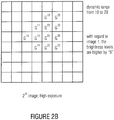
- Fig. 2b shows a further photograph, or a second image, of the plant leaf against the background, but now with high exposure. This results in that the highly exposed areas on right in Fig. 2b are becoming saturated due to the even higher exposure, and that all of them appear with the maximum brightness 20. The central areas are also recorded with the maximum or near-maximum brightness. The underexposed area on the left in Fig. 2b and Fig. 2a , respectively, are now normally exposed, however. For the example shown in Fig. 2b , the level of exposure was increased to such an extent that levels of brightness result which are higher by "nine" with regard to image 1.
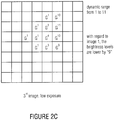
- Fig. 2c shows a further photograph of the plurality of photographs produced by the means 10 of Fig. 1 .
- a low level of exposure has been used, which results in that the areas on the left in Fig. 2c , which are already subjected to low exposure anyhow are at the lower saturation level, i.e. remain at the same low level of exposure.
- the photograph having low exposure results in that those areas which are overexposed in Figs. 2a and 2b are now located within a medium dynamic range.
- the level of brightness was selected to be lower by a value of "9".
- Fig. 2d now shows a composite, or merged, image which has formed once a selection range of brightness levels has been assumed which includes levels of brightness between 9 and 14. This shows that the central area has been selected from the first image of Fig. 2a , that the left-hand area has been selected from the second, highly exposed image of Fig. 2b , and that the right-hand area has been selected from the third, low-exposure image of Fig. 2d .
- a medium range of 9 to 14 has been provided in the example shown in Fig. 2d for selecting the individual pixels from the different images.
- selection may also be effected such that one determines, for each pixel, the photograph wherein a pixel exists which is closest to half the maximum dynamic range, i.e. which is closest to 10.
- the result would lead to the same composite representation of Fig. 2d in the example depicted in Figs. 2a to 2d .
- this implementation - i.e. the fact that for each pixel, that image is selected whose pixel is closest to the target value - ensures that a piece of information is automatically found for each pixel from any of the plurality of images.
- the composite image shown in Fig. 2d may actually be produced in such a manner that it appears to be one single photograph. Visual representation of this composite image is also possible, however, it is of low quality for any viewer and is not nice to look at. The reason for this is that the image exhibits compressed dynamics which is only between 9 and 14, whereas all of the dynamic ranges of the underlying photographs are larger, the dynamic range of the first photograph, in particular, being the maximum dynamic range between 1 and 20.
- it is not required to produce the composite representation as a composite image. This merely depends on the form in which the segmentation algorithm performed in the means 14 for segmenting requires the input data to be.
- a list comprising references may also be produced as a composite representation, which is characterized in that there exists, for each pixel, a reference to one of the plurality of photographs.
- Fig. 3a shows the image, however now with the pixel coordinates for the pixels discussed in Figs. 2a to 2d .
- the table in Fig. 3b shows the brightness value of the corresponding image for each pixel coordinate, respectively.
- the last column of the table in Fig. 3b indicates the selection, a reference to image 1, image 2 or image 3 being now associated with each pixel.
- the composite representation would thus be a list of the pixel coordinates 1 to 64 and, associated with each pixel coordinate, selection information as to which of the individual photographs the pixel having this coordinate is taken from so as to appear in the composite representation. If this list of Fig. 3b is transformed into one single composite pixel photograph and/or into a pixel array, what will result is precisely the representation in Fig. 2d .
- the means 12 for selecting may further be implemented such that for each image point, a series of image brightness levels and/or brightness data are evaluated and used for segmentation.
- An algorithm would consist in that, for example, those values - from the obtained series - are used wherein the brightness of a color channel and/or the average brightness of all of the color channels is within the average dynamic range of the camera, if possible. In this manner, the occurrence of over- or underexposed pixels is avoided, and it is avoided that reliable segmentation cannot take place there.
- a color image, or a composite representation, thus generated may then be segmented by means of a standard algorithm, depending on the implementation.
- a more complex segmentation algorithm would take into account the curve of the brightness for all of the three color channels while considering the picture-taking situation, and would use this for segmentation.
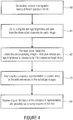
- a step 40 several photographs having different levels of exposure are generated by the means 10 for providing of Fig. 1 . Said generation may be effected, for example, on the part of a commercially available digital color camera. Alternatively, it is also possible to read in any pictures - which have been previously taken - on the part of the means for providing different photographs.
- step 41 calculation of the average brightness is performed, by the means 12 for selecting, per pixel from the three color channels for each image, so that thus, a representation of each photograph is generated which only has an average brightness value per pixel. Subsequently, a selection is performed for each pixel in a step 42.
- pixel whose average brightness level is closest to half the maximum brightness is selected from the corresponding image. If the maximum brightness is a value of 256, for example, half the maximum brightness would be 128. This average value is preferred. However, one has found that similarly good results will be obtained if half the maximum brightness is varied by + or - 50% of half the maximum brightness, i.e. if a value of 192 is used instead of 128, or if a value of 64 is used instead of 128.
- a step 43 comprises generating a composite representation either as a pixel array in accordance with Fig. 2d or as a list of references to the individual images in accordance with Fig. 3b or in a different commonly used form.
- a step 44 comprises performing segmentation on the part of the means 14 of Fig. 1 on the basis of the composite representation, and possibly calculation of leaf features.
- Said leaf features relate to a number of leaves, to the sizes of the individual leaves, to surface areas and/or surface shapes and, also, to the orientation of the leaf and/or an angle of inclination of the leaf, e.g. in relation to the sun, to a different source of illumination or to a reference direction.
- Segmentation in step 4 is preferably performed as is set forth in the document mentioned above.
- a discriminant analysis is performed which consists of two parts. Initially, color space transformation is performed, which is followed by binarization. Binarization relates to the difference between the plant and the soil and/or the background. No extra threshold formation is required for this purpose.
- the probability that each pixel of the test images belongs to a corresponding group (plant or background) is calculated. Subsequently, each pixel is allocated to a group on the basis of the calculated probability.
- the trainee data set is required. It defines the different groups and their characteristics. Therefore, different pictures are taken under different ambient conditions. For example, 20 plant regions and 20 background, or soil, regions may be manually marked on each image. For each region, the average gray intensity of each channel is calculated and stored as the trainee data set.
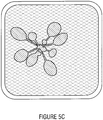
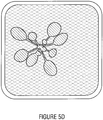
- Figs. 5a to 5g show different pictures having increasing exposure times of the same plant. In particular, seven pictures are shown, wherein Fig. 5a is very dark, i.e. relatively underexposed in total, and Fig. 5g is very light, i.e. relatively overexposed in total.
- Fig. 5i shows an optical, or visual, representation of the composite, or merged, representation as is generated by the selection means e.g. of Fig. 4 .
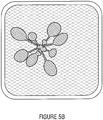
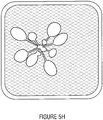
- Fig. 5h shows a representation of the result of the separation algorithm with a clear result of the plant.
- the inventive method of analyzing an information signal may be implemented in hardware or in software. Implementation may be performed on a non-transitory storage medium or a digital storage medium, in particular a disk or a CD having electronically readable control signals which may cooperate with a programmable computer system such that the method is performed.
- the invention thus also consists in a computer program product having a program code, stored on a machine-readable carrier, for performing the method when the computer program product runs on a computer.
- the invention may thus be realized as a computer program having a program code for performing the method when the computer program runs on a computer.
Landscapes
- Engineering & Computer Science (AREA)
- Physics & Mathematics (AREA)
- General Physics & Mathematics (AREA)
- Theoretical Computer Science (AREA)
- Computer Vision & Pattern Recognition (AREA)
- Multimedia (AREA)
- Signal Processing (AREA)
- Image Analysis (AREA)
- Image Processing (AREA)
- User Interface Of Digital Computer (AREA)
Description
- The present invention relates to detection of plants and, in particular, to optical detection of plants which are planted in a field, in a greenhouse or on farmland, or which exist in any other way.
- Detection of plants is important in agricultural engineering, so called phenotyping of plants having to be mentioned here. A further example of detection consists in identifying plants in order to enable, e.g., automatic pulling out of unwanted plants, i.e. weeds.
- For three-dimensional detection of objects, various methods are commonly used, such as stripe-light methods or light section methods. Said methods offer high spatial three-dimensional resolution. However, with regard to illumination, they depend on defined ambient conditions. A further disadvantage is that three-dimensional detection cannot be effected within a very short time period.
- With stripe-light methods, different light patterns must be successively projected onto the object, whereas with light section methods, only one contour line is detected at a given point in time. Thus, for three-dimensional detection, the object must be scanned.
- In order to produce the defined light conditions on farmland and/or in a field, one may set up a tent which keeps the ambient light from the area to be detected. Subsequently, a defined ambient condition may be produced within said lightproof tent so as to employ the light section method or the stripe-light method. Once a specific area located within the tent has been dealt with, the tent must be taken down and be set up again at another location before the light section method and/or the stripe-light method may again be employed at said other location.
- This approach is time-consuming and therefore expensive. In addition, it is not suited for three-dimensional detection of relatively large areas since this procedure is too slow. To achieve sufficient throughput, a large number of teams would have to work in parallel, which requires many tents, many light section cameras and, thus, also a large requirement in terms of trained specialists, all of which leads to an increase in cost.
- On the other hand, particularly in the development of plant seeds it is very important to obtain an objective evaluation of the seedlings produced from a certain type of seed at regular intervals, such as every week to every two weeks, without said seedlings being destroyed. It shall be noted that as test fields, fields are to be employed which have a minimum size in order to have reasonably realistic growth conditions. Therefore, relatively large test areas will be required if large cultivation areas for a type of seed are intended.
- In addition to sizable test areas, accurate data on spatial orientation of plant leaves, on the size of the plant leaves, on the structure of the plant leaves, etc. are required in order to obtain accurate information about a specific type of seed. In order to reliably obtain said information when the plants must not be pulled out, three-dimensional detection is required since in the event of two-dimensional detection only projections and/or silhouettes of leaves are detected, their orientations cannot be determined, and their true surface areas also cannot be determined since one cannot draw any conclusions as to the area itself from a mere projection without knowledge of the orientation of the projected area.
- Extraction of plant features from measurement data of imaging methods is required, therefore, in various applications of modern agricultural engineering and agriculture sciences. In this context it is necessary to identify the plant in the captured data and to distinguish between image regions which are part of the plant and image regions which are not part of the plant. For segmentation, color pictures of a plant are typically used for segmentation since in said color pictures, the green plant may be clearly distinguished from, e.g. brown soil.
- A standard method of separating plant and background areas with the aid of preliminary data is described in the specialist publication "Improving Plant Discrimination in image processing by use of different colour space transformation", I. Philipp, T. Rath, Computers and Electronics in Agriculture 35 (2002) 1-15 (Elsevier).
- Here, the RGB color channels of each individual pixel are suitably transformed, and subsequently, a decision is made by means of a decision criterion as to whether the pixel is classified as a plant image point or non-plant image point (background). For example, the proportion of the green channel in the overall color may be determined for each pixel and may be classified as a plant pixel if said proportion exceeds a threshold value.
- What is problematic in said methods is the small amount of information of a color picture. There are only three values available for each image point: the levels of brightness of the green channel, of the red channel and of the blue channel. However, especially in the detection of plants, there may be large differences in brightness, for example. Reasons for this are, e.g., different angles of the plant leaves in relation to the light source and shadows cast by parts of plants. In addition, the levels of brightness within a leaf or between several leaves are not mutually homogenous. Leaves frequently have a light primary vein or lighter stalks.
- Due to the large variability that is possible and to the limited dynamics of color cameras it happens that light plant regions are overexposed, and that dark plant regions are underexposed. For example, light leaf stalks are overexposed, whereas some regions at the leaf edges are too dark for reliable segmentation due to their downward curvature.
- The technical publication Chin-Hung Teng et al. "Leaf Segmentation, Its 3D Position Estimation and Leaf Classification from a Few Images with Very Close Viewpoints" July 6 2009, Image Analysis and Recognition, Springer Berlin Heidelberg, Berlin, Heidelberg, pages 937-946, ISBN: 978-3-642-02610-2 discloses a complete system to extract leaves, recover their 3D positions and finally classify them based on leaf shape. A few images with slightly different viewpoints are used to achieve the task. The images are captured by a general hand-held digital camera and no camera pre-calibration is required. Because only a few images with close viewpoints are sufficient to segment the leaves and recover their 3D positions, this system is set to be flexible and easy to use in image acquisition. For leaf classification, the normalized centroid-contour distance is used as the classification feature and a circular-shift comparing scheme is used to measure the similarity. Thus, this system is invariant to leaf translation, rotation and scaling.
- It is the object of the present invention to provide an improved concept for detecting a plant against a background.
- This object is achieved by a device for detecting a plant as claimed in
claim 1, by a method of detecting a plant as claimed inclaim 12, or by a computer program as claimed inclaim 13. - A device for detecting a plant, e.g. a plant leaf, against a background includes a means for providing a plurality of different photographs of the plant leaf against the background, the photographs differing in that image points of the different photographs which relate to the same location of the plant leaf have different levels of brightness. In addition, a means is provided for selecting such image points, from the different photographs, whose levels of brightness are within a predetermined range, an image point of a first photograph being selected for a first location of the plant leaf, and an image point of a second, different photograph being selected for a different location of the plant leaf so as to obtain a composite representation, or merged representation of the plant leaf against the background, said representation being composed of and/or merged from different photographs. In addition, a means is provided for segmenting the composite photograph so as to obtain a segment representation comprising the plant leaf without the background or the background without the plant leaf.
- The present invention is based on the finding that more stable and reliable segmentation of plants in color photographs may be achieved in that several photographs of the same plant, such as of a plant leaf or, generally, of part of a plant or of several plants, are created which have different levels of brightness so as to then perform a dynamic range compression (volume compression). In this manner, overexposed portions of a photograph are replaced by the same portions of a different photograph having a lower level of exposure. The photograph having the lower level of exposure results in that the areas which are overexposed in the first photograph are normally exposed. On the other hand, normally exposed areas of the first photograph are probably underexposed in the underexposed second photograph, which is uncritical, however, since the normally exposed areas of the first photograph for the corresponding image area may be used for the corresponding image area. Likewise, areas which are underexposed in the first photograph may be taken from a further photograph which is highly exposed. This high level of exposure results in that those areas which are actually underexposed in the first photograph are normally exposed, whereas, obviously, areas of the first photograph which are already overexposed there, are even more overexposed. However, this is uncritical since the overexposed areas of the first photograph need not be used, but use may be made instead of the corresponding areas of the second photograph, which has been exposed to a lesser degree than the first photograph.
- In accordance with the invention, a composite representation of the plant leaf is thus produced which has a clearly lower dynamic than may be found in the original photographs. If the composite representation was visually displayed, e.g. on a monitor or on a photo, it would have no particularly high quality. On the other hand, due to the dynamic range compression performed, said composite representation is particularly well suited for subsequent segmentation since overexposure and/or underexposure issues have been eliminated there.
- Preferred embodiments of the present invention will be explained in detail below with reference to the accompanying figures, wherein:
- Fig. 1
- shows a block diagram of an inventive device for detecting a plant leaf and/or a representation of a method of detecting a plant leaf;
- Fig. 2a
- shows a schematic representation of a first image of medium exposure;
- Fig. 2b
- shows a schematic representation of a second image of high exposure;
- Fig. 2c
- shows a schematic representation of a third image of low exposure;
- Fig. 2d
- shows a schematic representation comprising the composite representation;
- Fig. 3a
- shows a schematic representation of the image with pixel numbering;
- Fig. 3b
- shows a composite representation presented as a list;
- Fig. 4
- shows a flowchart of a preferred method of detecting a plant leaf;
- Figs. 5a to 5g
- show different photographs with increasing exposure times of the same plant;
- Fig. 5h
- shows a representation of the result of the separation algorithm; and
- Fig. 5i
- shows an optical representation of the composite representation with which the segmentation algorithm has been performed in order to obtain
Fig. 5h . -
Fig. 1 shows a device for detecting a plant leaf against a background. The device includes ameans 10 for providing a plurality of different photographs of the plant leaf against the background, the photographs differing in that image points of the different photographs which relate to the same location of the plant leaf are illuminated with different levels of brightness. - The means 10 for providing is coupled to a
means 12 for selecting image points from the different photographs, the levels of brightness of the different photographs being within a predetermined range. In particular, the means for selecting is configured such that for a first location of the plant leaf, an image point of a photograph is selected, and for a different location of the plant leaf, an image point of a second, different photograph is selected so as obtain a composite representation of the plant leaf against the background composed of different photographs. The means 12 for selecting is coupled to ameans 14 for segmenting the composite photograph so as to obtain a segment representation comprising only the plant leaf without the background or the background without the plant leaf. - The means 10 for providing different photographs is configured, for example, as a color camera which photographs the same plant leaf against the background with different exposure times so as to produce the different photographs. Therefore, a series of photographs are taken for each image point instead of one single photograph of the image, the individual image points being illuminated differently. Depending of the implementation, this may be achieved in various manners. For example, the exposure time, the illumination intensity, the illumination direction or the camera sensitivity may be varied. Depending on the implementation, the positions of the color camera and the plant leaf are kept stationary, for example, so that in the individual photographs, a perfect match of the individual pixels results. Alternatively, in between the various photographs, the relative location of the illumination, of the plant or of the camera may also be changed. However, in this case it will then be required for corresponding image points to be associated with one another. This may be achieved, e.g., in that position sensors are employed, e.g. within the camera. Such position sensors are position generators or acceleration sensors, for example. Alternatively, one may also operate without any acceleration sensors. In this case, the
means 10 for providing is configured to extract common features from the different photographs and to create, on account of the change in such a common feature from one photograph to the next, a motion vector describing the relative motion between the camera and the plant leaf. Said motion vector may be a two-dimensional vector if the distance from the plant leaf has not changed. However, if the plant leaf and the camera should change in terms of their mutual distance, the motion vector will be a three-dimensional vector. The third dimension, i.e. the distance between the camera and the plant leaf, may also be determined from the images on the basis of common extracted features. For example, if the common feature of a second photograph is smaller than the corresponding feature in the first photograph, the distance between the camera and the plant leaf was larger in the second photograph. The distance will then be calculated on the basis of the ratio of the sizes of the common features in the different photographs. - A commercially available camera typically has a depth of color, or a dynamic range, of 8 bits. This corresponds to 256 gradations of colors, or levels of brightness, per color channel. Preferably, this entire dynamic range is split up into a number N of different dynamic subranges. If, for example, a subdivision of the entire maximum dynamic range into five subranges is performed, each subrange will have a set of 51 gradations of colors, or levels of brightness, per color channel. In this case, a total of five photographs of the plant leaf would be taken, the exposure levels being adjusted for each photograph in such a manner that the dynamic range falls in the corresponding subrange. Depending on the implementation, subdivision into more dynamic subranges is performed, which directly results in more individual photographs. Alternatively, it is also possible to take fewer photographs, such as only three photographs for example, in which case the exposure is adjusted such that there are predominantly exposed pixels in three different dynamic ranges. For example, with subdivision into three dynamic ranges, each dynamic range would have about 85 gradations of brightness and/or color per color channel.
- The means 12 for selecting is configured, depending on the implementation, such that from the photographs made, a number of levels of image brightness is composed for corresponding points while taking into account the picture-taking parameters, in particular the positions of the camera and of the object. Thus, the
means 12 for selecting uses the results of themeans 10 for providing, and in particular a two-dimensional or three-dimensional motion vector with a permitted relative motion between the camera and the leaf. However, if there is no relative motion between the camera and the leaf, this will result in that the different photographs will reproduce the same portion of the plant leaf against the background, and that, therefore, the individual pixels will perfectly match one another. A pixel having a specific coordinate within a photograph thus reproduces the same location of the plant leaf as does the pixel having the same coordinate in a different photograph. - Different implementations of the
means 12 for selecting will be represented below by means ofFigs. 2a to 3b . -
Fig. 2a shows a schematic representation of a first image, or of a first photograph, which has been subjected to medium exposure. The "G" in the individual pixels - an image 8 x 8 = 64 pixels being shown by way of example - depicts the brightness of the green channel. One may see, for example, that the levels of brightness of the green channel vary between 1 (on the left inFig. 2a ) and 20 (on the right inFig. 2a ), a maximum dynamic range of 1 to 20 being assumed for this example. Medium exposure has been determined, for example, by a digital camera having automatic exposure control - however, one may see that the left-hand area of the plant leaf is underexposed, whereas the right-hand area of the plant leaf is overexposed. Merely for clarity's sake, the other pixels, which have not been specifically designated inFig. 2a , have been left blank. Of course, they, too, contain information in the three color channels. Additionally,Fig. 2a shows those pixels of the leaf which have already been considered as the result of the segmentation, which adopts an approximately triangular shape inFig. 2a . Naturally, however, segmentation is not yet known at the time the photograph ofFig. 2a is taken, but will then be calculated on the basis of the composite representation as is shown inFig. 2d , for example. - However, typical segmentation, if directly applied to the first image in
Fig. 2a , will exhibit reduced reliability since the overexposed areas on the right inFig. 2a and the underexposed areas on the left inFig. 2a cannot be detected reliably. -
Fig. 2b shows a further photograph, or a second image, of the plant leaf against the background, but now with high exposure. This results in that the highly exposed areas on right inFig. 2b are becoming saturated due to the even higher exposure, and that all of them appear with themaximum brightness 20. The central areas are also recorded with the maximum or near-maximum brightness. The underexposed area on the left inFig. 2b andFig. 2a , respectively, are now normally exposed, however. For the example shown inFig. 2b , the level of exposure was increased to such an extent that levels of brightness result which are higher by "nine" with regard toimage 1. -
Fig. 2c shows a further photograph of the plurality of photographs produced by themeans 10 ofFig. 1 . Here, a low level of exposure has been used, which results in that the areas on the left inFig. 2c , which are already subjected to low exposure anyhow are at the lower saturation level, i.e. remain at the same low level of exposure. However, the photograph having low exposure results in that those areas which are overexposed inFigs. 2a and2b are now located within a medium dynamic range. With regard toimage 1, inFig. 2c the level of brightness was selected to be lower by a value of "9". - It shall be noted that typical color cameras have dynamic ranges of 256, as was already set forth above. Only by way of example, maximum dynamics of 20 were assumed in
Figs. 2a to 2c . -
Fig. 2d now shows a composite, or merged, image which has formed once a selection range of brightness levels has been assumed which includes levels of brightness between 9 and 14. This shows that the central area has been selected from the first image ofFig. 2a , that the left-hand area has been selected from the second, highly exposed image ofFig. 2b , and that the right-hand area has been selected from the third, low-exposure image ofFig. 2d . - A medium range of 9 to 14 has been provided in the example shown in
Fig. 2d for selecting the individual pixels from the different images. Alternatively, selection may also be effected such that one determines, for each pixel, the photograph wherein a pixel exists which is closest to half the maximum dynamic range, i.e. which is closest to 10. The result would lead to the same composite representation ofFig. 2d in the example depicted inFigs. 2a to 2d . However, this implementation - i.e. the fact that for each pixel, that image is selected whose pixel is closest to the target value - ensures that a piece of information is automatically found for each pixel from any of the plurality of images. - The composite image shown in
Fig. 2d may actually be produced in such a manner that it appears to be one single photograph. Visual representation of this composite image is also possible, however, it is of low quality for any viewer and is not nice to look at. The reason for this is that the image exhibits compressed dynamics which is only between 9 and 14, whereas all of the dynamic ranges of the underlying photographs are larger, the dynamic range of the first photograph, in particular, being the maximum dynamic range between 1 and 20. In order to perform segmentation, however, it is not required to produce the composite representation as a composite image. This merely depends on the form in which the segmentation algorithm performed in themeans 14 for segmenting requires the input data to be. Alternatively, a list comprising references may also be produced as a composite representation, which is characterized in that there exists, for each pixel, a reference to one of the plurality of photographs. - In this context, alternative generation of the composite representation will be given below with reference to
Figs. 3a and3b .Fig. 3a , again, shows the image, however now with the pixel coordinates for the pixels discussed inFigs. 2a to 2d . In addition, the table inFig. 3b shows the brightness value of the corresponding image for each pixel coordinate, respectively. The last column of the table inFig. 3b indicates the selection, a reference toimage 1,image 2 orimage 3 being now associated with each pixel. The composite representation would thus be a list of the pixel coordinates 1 to 64 and, associated with each pixel coordinate, selection information as to which of the individual photographs the pixel having this coordinate is taken from so as to appear in the composite representation. If this list ofFig. 3b is transformed into one single composite pixel photograph and/or into a pixel array, what will result is precisely the representation inFig. 2d . - The means 12 for selecting may further be implemented such that for each image point, a series of image brightness levels and/or brightness data are evaluated and used for segmentation. An algorithm would consist in that, for example, those values - from the obtained series - are used wherein the brightness of a color channel and/or the average brightness of all of the color channels is within the average dynamic range of the camera, if possible. In this manner, the occurrence of over- or underexposed pixels is avoided, and it is avoided that reliable segmentation cannot take place there. A color image, or a composite representation, thus generated may then be segmented by means of a standard algorithm, depending on the implementation. In addition, a more complex segmentation algorithm would take into account the curve of the brightness for all of the three color channels while considering the picture-taking situation, and would use this for segmentation.
- Even though in
Figs. 2a to 3b , only the brightness values of green of the individual image points from the individual photographs have been considered, which here intuitively seems reasonable for detecting a green plant, one has found that better results in segmentation are achieved by not selecting the levels of brightness of one color channel and discarding the levels of brightness of the other color channels. Rather, it is preferred to calculate, for each image point, an average brightness level on any color channels for said image point and to then perform selection in accordance withFig. 2d orFig. 3b on the basis of this average value. - A preferred implementation of the method of detecting an image will be presented below with reference to
Fig. 4 . In astep 40, several photographs having different levels of exposure are generated by themeans 10 for providing ofFig. 1 . Said generation may be effected, for example, on the part of a commercially available digital color camera. Alternatively, it is also possible to read in any pictures - which have been previously taken - on the part of the means for providing different photographs. In astep 41, calculation of the average brightness is performed, by themeans 12 for selecting, per pixel from the three color channels for each image, so that thus, a representation of each photograph is generated which only has an average brightness value per pixel. Subsequently, a selection is performed for each pixel in astep 42. In particular, that pixel whose average brightness level is closest to half the maximum brightness is selected from the corresponding image. If the maximum brightness is a value of 256, for example, half the maximum brightness would be 128. This average value is preferred. However, one has found that similarly good results will be obtained if half the maximum brightness is varied by + or - 50% of half the maximum brightness, i.e. if a value of 192 is used instead of 128, or if a value of 64 is used instead of 128. - On the basis of the result of
step 42, astep 43 comprises generating a composite representation either as a pixel array in accordance withFig. 2d or as a list of references to the individual images in accordance withFig. 3b or in a different commonly used form. Subsequently, astep 44 comprises performing segmentation on the part of themeans 14 ofFig. 1 on the basis of the composite representation, and possibly calculation of leaf features. Said leaf features relate to a number of leaves, to the sizes of the individual leaves, to surface areas and/or surface shapes and, also, to the orientation of the leaf and/or an angle of inclination of the leaf, e.g. in relation to the sun, to a different source of illumination or to a reference direction. - Segmentation in
step 4 is preferably performed as is set forth in the document mentioned above. In particular, a discriminant analysis is performed which consists of two parts. Initially, color space transformation is performed, which is followed by binarization. Binarization relates to the difference between the plant and the soil and/or the background. No extra threshold formation is required for this purpose. By using specifically produced trainee data and the following discriminant function, which may be linear or logarithmic, the probability that each pixel of the test images belongs to a corresponding group (plant or background) is calculated. Subsequently, each pixel is allocated to a group on the basis of the calculated probability. In order to analyze an unknown data set while using discriminant analysis or canonical transformation, the trainee data set is required. It defines the different groups and their characteristics. Therefore, different pictures are taken under different ambient conditions. For example, 20 plant regions and 20 background, or soil, regions may be manually marked on each image. For each region, the average gray intensity of each channel is calculated and stored as the trainee data set. -
Figs. 5a to 5g show different pictures having increasing exposure times of the same plant. In particular, seven pictures are shown, whereinFig. 5a is very dark, i.e. relatively underexposed in total, andFig. 5g is very light, i.e. relatively overexposed in total.Fig. 5i shows an optical, or visual, representation of the composite, or merged, representation as is generated by the selection means e.g. ofFig. 4 . One may recognize poor optical quality on the basis of the reduced and/or compressed dynamics. However, said poor optical quality is irrelevant since the merged representation need not be optically displayed, but merely is to be fed into the segmentation algorithm.Fig. 5h shows a representation of the result of the separation algorithm with a clear result of the plant. In addition, on the right one may also see two artifacts which, however, are clearly demarcated and may be readily filtered out. On the basis of the representation ofFig. 5h , which also need not necessarily exist in the illustrated optical form, further calculations and/or determinations of plant features may then be performed. - Even though certain features of the present invention were described above in connection with a device or a method, it shall be noted that the description of device features simultaneously is a description of the functionality in the form of a method and/or as a method step, and that in addition, the description of method steps simultaneously is a description of a device feature, i.e. of a device or a means configured to perform this method step.
- Depending on the conditions, the inventive method of analyzing an information signal may be implemented in hardware or in software. Implementation may be performed on a non-transitory storage medium or a digital storage medium, in particular a disk or a CD having electronically readable control signals which may cooperate with a programmable computer system such that the method is performed. Generally, the invention thus also consists in a computer program product having a program code, stored on a machine-readable carrier, for performing the method when the computer program product runs on a computer. In other words, the invention may thus be realized as a computer program having a program code for performing the method when the computer program runs on a computer.
Claims (13)
- A device for detecting a plant against a background, comprising:a means (10) for providing a plurality of different photographs of the plant leaf against the background, the photographs differing in that image points of the different photographs which relate to the same location of the plant leaf have different levels of brightness;a means (12) for selecting such image points, from the different photographs, whose levels of brightness are within a predetermined range, an image point of a first photograph being selected for a first location of the plant leaf, and an image point of a second, different photograph being selected for a different location of the plant leaf so as to obtain a representation of the plant leaf against the background, said representation being composed of and/or merged from different photographs,wherein the means (12) for selecting is configured to select (42), for a location of the image, that image point from the plurality of different photographs, whose brightness is closest to a predetermined brightness, wherein the predetermined brightness is a brightness value which equals half the maximum brightness or which deviates from half the maximum brightness by less than 50% of half the maximum brightness; anda means (14) for segmenting (44) the composite photograph so as to obtain a segment representation comprising the plant leaf without the background or the background without the plant leaf.
- Device as claimed in claim 1, wherein the means (12) for selecting is configured to select, for each location of the image, a corresponding image point only from one image and to discard the corresponding image points of the other images for the location of the image.
- Device as claimed in any of the previous claims, wherein the photographs are color photographs, each image point having three color channels,
the means (12) for selecting being configured to calculate (41) an average value from the levels of brightness of the three color channels for each image point and to perform said selection on the basis of the average value. - Device as claimed in any of claims 1 to 2,
wherein the pictures are color pictures, each image point having three color channels,
the means (12) for selecting being configured to select the green color channel and to perform said selection only on the basis of the green color channel and to ignore the other color channels. - Device as claimed in any of the previous claims,
wherein the means (12) for selecting is configured to generate the composite representation as an array of image points originating from the different photographs, or as a list of references to image points in the individual photographs, the list comprising, for each image point, a reference to a photograph of the plurality of photographs, and not comprising any reference to a different photograph of the plurality of photographs. - Device as claimed in any of the previous claims,
wherein the means (14) for segmenting is configured to perform a discriminant analysis so as to segment the plant leaf from the background. - Device as claimed in claim 6, wherein the means (14) for segmenting is configured to perform color space transformation and binarization while using trainee data sets.
- Device as claimed in any of the previous claims, further comprising:
a means for calculating (44) plant features from the segmented plant leaf. - Device as claimed in claim 8, wherein the means for calculating is configured to calculate a number of plant leaves, a size of one or more plant leaves, a surface area of one or more plant leaves, a shape of one or more plant leaves, an orientation or an angle of inclination of one or more plant leaves.
- Device as claimed in any of the previous claims,
wherein the means (10) for providing is configured to provide a number of photographs, a dynamic range based on a photograph being equal to a maximum dynamic range divided by the number of photographs, so that N photographs are provided for subdividing the maximum dynamic range into N ranges, each range having provided to it a photograph of its own. - Device as claimed in any of claims 1 to 10, wherein the means (10) for calculating comprises a color camera with a controllable exposure time.
- Method of detecting a plant against a background, comprising:providing (10) a plurality of different photographs of the plant leaf against the background, the photographs differing in that image points of the different photographs which relate to the same location of the plant leaf have different levels of brightness;selecting (12) such image points, from the different photographs, whose levels of brightness are within a predetermined range, an image point of a first photograph being selected for a first location of the plant leaf, and an image point of a second, different photograph being selected for a different location of the plant leaf so as to obtain a representation of the plant leaf against the background, said representation being composed of and/or merged from different photographs,wherein selecting (12) comprises selecting (42), for a location of the image, that image point from the plurality of different photographs, whose brightness is closest to a predetermined brightness, wherein the predetermined brightness is a brightness value which equals half the maximum brightness or which deviates from half the maximum brightness by less than 50% of half the maximum brightness; andsegmenting (14) the composite photograph so as to obtain a segment representation comprising the plant leaf without the background or the background without the plant leaf.
- Computer program comprising a program code for performing the method of detecting a plant leaf as claimed in claim 12, when the computer program runs on a computer or a processor.
Applications Claiming Priority (3)
| Application Number | Priority Date | Filing Date | Title |
|---|---|---|---|
| US201261589474P | 2012-01-23 | 2012-01-23 | |
| DE102012200930.2A DE102012200930A1 (en) | 2012-01-23 | 2012-01-23 | Apparatus and method for detecting a plant against a background |
| PCT/EP2013/050947 WO2013110556A1 (en) | 2012-01-23 | 2013-01-18 | Device and method for detecting a plant against a background |
Publications (2)
| Publication Number | Publication Date |
|---|---|
| EP2807631A1 EP2807631A1 (en) | 2014-12-03 |
| EP2807631B1 true EP2807631B1 (en) | 2018-12-26 |
Family
ID=48872893
Family Applications (1)
| Application Number | Title | Priority Date | Filing Date |
|---|---|---|---|
| EP13701739.8A Not-in-force EP2807631B1 (en) | 2012-01-23 | 2013-01-18 | Device and method for detecting a plant against a background |
Country Status (8)
| Country | Link |
|---|---|
| US (1) | US9342895B2 (en) |
| EP (1) | EP2807631B1 (en) |
| AU (1) | AU2013211673B2 (en) |
| CA (1) | CA2862331C (en) |
| DE (1) | DE102012200930A1 (en) |
| DK (1) | DK2807631T3 (en) |
| ES (1) | ES2709601T3 (en) |
| WO (1) | WO2013110556A1 (en) |
Families Citing this family (5)
| Publication number | Priority date | Publication date | Assignee | Title |
|---|---|---|---|---|
| DE102012200930A1 (en) * | 2012-01-23 | 2015-08-20 | Fraunhofer-Gesellschaft zur Förderung der angewandten Forschung e.V. | Apparatus and method for detecting a plant against a background |
| US9977961B2 (en) * | 2014-10-21 | 2018-05-22 | Bae Systems Information And Electronic Systems Integration Inc. | Method for maintaining detection capability when a frame in a multispectral image is corrupted |
| CN105184790A (en) * | 2015-08-31 | 2015-12-23 | 中国烟草总公司广东省公司 | Tobacco field image segmentation method |
| WO2019059120A1 (en) * | 2017-09-22 | 2019-03-28 | 日本電気株式会社 | Information processing device, information processing system, information processing method and recording medium |
| CN110443811B (en) * | 2019-07-26 | 2020-06-26 | 广州中医药大学(广州中医药研究院) | Full-automatic segmentation method for complex background leaf image |
Family Cites Families (7)
| Publication number | Priority date | Publication date | Assignee | Title |
|---|---|---|---|---|
| US5253302A (en) * | 1989-02-28 | 1993-10-12 | Robert Massen | Method and arrangement for automatic optical classification of plants |
| US6912313B2 (en) | 2001-05-31 | 2005-06-28 | Sharp Laboratories Of America, Inc. | Image background replacement method |
| US8436909B2 (en) * | 2008-10-21 | 2013-05-07 | Stmicroelectronics S.R.L. | Compound camera sensor and related method of processing digital images |
| DE102009023896B4 (en) * | 2009-06-04 | 2015-06-18 | Fraunhofer-Gesellschaft zur Förderung der angewandten Forschung e.V. | Apparatus and method for detecting a plant |
| US9527115B2 (en) * | 2010-03-13 | 2016-12-27 | Carnegie Mellon University | Computer vision and machine learning software for grading and sorting plants |
| US8437498B2 (en) * | 2010-08-31 | 2013-05-07 | Valmont Industries Inc. | Self propelled mechanized irrigation system with a remote visual monitoring system |
| DE102012200930A1 (en) * | 2012-01-23 | 2015-08-20 | Fraunhofer-Gesellschaft zur Förderung der angewandten Forschung e.V. | Apparatus and method for detecting a plant against a background |
-
2012
- 2012-01-23 DE DE102012200930.2A patent/DE102012200930A1/en not_active Withdrawn
-
2013
- 2013-01-18 AU AU2013211673A patent/AU2013211673B2/en not_active Ceased
- 2013-01-18 ES ES13701739T patent/ES2709601T3/en active Active
- 2013-01-18 WO PCT/EP2013/050947 patent/WO2013110556A1/en not_active Ceased
- 2013-01-18 DK DK13701739.8T patent/DK2807631T3/en active
- 2013-01-18 CA CA2862331A patent/CA2862331C/en active Active
- 2013-01-18 EP EP13701739.8A patent/EP2807631B1/en not_active Not-in-force
-
2014
- 2014-07-22 US US14/337,347 patent/US9342895B2/en active Active
Non-Patent Citations (1)
| Title |
|---|
| None * |
Also Published As
| Publication number | Publication date |
|---|---|
| US20140334692A1 (en) | 2014-11-13 |
| CA2862331C (en) | 2017-03-28 |
| DE102012200930A1 (en) | 2015-08-20 |
| CA2862331A1 (en) | 2013-08-01 |
| WO2013110556A1 (en) | 2013-08-01 |
| AU2013211673A1 (en) | 2014-08-28 |
| DK2807631T3 (en) | 2019-04-08 |
| US9342895B2 (en) | 2016-05-17 |
| EP2807631A1 (en) | 2014-12-03 |
| ES2709601T3 (en) | 2019-04-16 |
| AU2013211673B2 (en) | 2015-08-20 |
Similar Documents
| Publication | Publication Date | Title |
|---|---|---|
| Dorj et al. | An yield estimation in citrus orchards via fruit detection and counting using image processing | |
| Kuznichov et al. | Data augmentation for leaf segmentation and counting tasks in rosette plants | |
| Pape et al. | 3-D histogram-based segmentation and leaf detection for rosette plants | |
| US7936377B2 (en) | Method and system for optimizing an image for improved analysis of material and illumination image features | |
| US10452922B2 (en) | IR or thermal image enhancement method based on background information for video analysis | |
| JP6497579B2 (en) | Image composition system, image composition method, image composition program | |
| Culvenor | Extracting individual tree information: A survey of techniques for high spatial resolution imagery | |
| JP2010220197A (en) | Device and method for detecting shadow in image | |
| Wspanialy et al. | Early powdery mildew detection system for application in greenhouse automation | |
| US9342895B2 (en) | Device and method for detecting a plant against a background using photographs with different levels of brightness | |
| JP7144678B2 (en) | Image processing device, image processing method, and image processing program | |
| Sunoj et al. | Sunflower floral dimension measurements using digital image processing | |
| KR20150112535A (en) | Representative image managing apparatus and method | |
| Parr et al. | Grape yield estimation with a smartphone’s colour and depth cameras using machine learning and computer vision techniques | |
| CN102663397A (en) | Automatic detection method of wheat seedling emergence | |
| Mao et al. | Apple location method for the apple harvesting robot | |
| JP2018067149A (en) | Attribute determination device, attribute determination method, computer program, and recording medium | |
| Abdusalomov et al. | Robust shadow removal technique for improving image enhancement based on segmentation method | |
| TWI768231B (en) | Information processing device, recording medium, program product, and information processing method | |
| Daiaeddine et al. | UAV imagery, advanced deep learning, and YOLOv7 object detection model in enhancing citrus yield estimation | |
| CN114582017A (en) | Generation method and generation system of gesture data set and storage medium | |
| Sheng et al. | Dark channel prior-based altitude extraction method for a single mountain remote sensing image | |
| Mahmoudabadi et al. | Detecting sudden moving objects in a series of digital images with different exposure times | |
| WO2012169217A1 (en) | Image generation device, image display device, television reception device, image generation method, and computer program | |
| Gumiran et al. | Enhancing Threshold-based Phenotyping by Normalizing Image Luminosity |
Legal Events
| Date | Code | Title | Description |
|---|---|---|---|
| PUAI | Public reference made under article 153(3) epc to a published international application that has entered the european phase |
Free format text: ORIGINAL CODE: 0009012 |
|
| 17P | Request for examination filed |
Effective date: 20140716 |
|
| AK | Designated contracting states |
Kind code of ref document: A1 Designated state(s): AL AT BE BG CH CY CZ DE DK EE ES FI FR GB GR HR HU IE IS IT LI LT LU LV MC MK MT NL NO PL PT RO RS SE SI SK SM TR |
|
| RIN1 | Information on inventor provided before grant (corrected) |
Inventor name: KOSTKA, GUENTHER Inventor name: SEIFERT, LARS Inventor name: UHRMANN, FRANZ Inventor name: SCHOLZ, OLIVER |
|
| DAX | Request for extension of the european patent (deleted) | ||
| RIC1 | Information provided on ipc code assigned before grant |
Ipc: G06T 7/00 20060101ALN20150730BHEP Ipc: G06K 9/20 20060101AFI20150730BHEP Ipc: H04N 1/60 20060101ALI20150730BHEP |
|
| RIC1 | Information provided on ipc code assigned before grant |
Ipc: H04N 1/60 20060101ALI20150803BHEP Ipc: G06T 7/00 20060101ALN20150803BHEP Ipc: G06K 9/20 20060101AFI20150803BHEP |
|
| 17Q | First examination report despatched |
Effective date: 20150908 |
|
| REG | Reference to a national code |
Ref country code: DE Ref legal event code: R079 Ref document number: 602013048714 Country of ref document: DE Free format text: PREVIOUS MAIN CLASS: G06T0007000000 Ipc: G06K0009200000 |
|
| GRAP | Despatch of communication of intention to grant a patent |
Free format text: ORIGINAL CODE: EPIDOSNIGR1 |
|
| STAA | Information on the status of an ep patent application or granted ep patent |
Free format text: STATUS: GRANT OF PATENT IS INTENDED |
|
| RIC1 | Information provided on ipc code assigned before grant |
Ipc: G06T 7/00 20170101ALN20180608BHEP Ipc: G06T 7/174 20170101ALI20180608BHEP Ipc: G06K 9/20 20060101AFI20180608BHEP Ipc: G06T 7/194 20170101ALI20180608BHEP Ipc: H04N 1/60 20060101ALI20180608BHEP Ipc: G06T 7/11 20170101ALI20180608BHEP |
|
| INTG | Intention to grant announced |
Effective date: 20180713 |
|
| GRAS | Grant fee paid |
Free format text: ORIGINAL CODE: EPIDOSNIGR3 |
|
| GRAA | (expected) grant |
Free format text: ORIGINAL CODE: 0009210 |
|
| STAA | Information on the status of an ep patent application or granted ep patent |
Free format text: STATUS: THE PATENT HAS BEEN GRANTED |
|
| AK | Designated contracting states |
Kind code of ref document: B1 Designated state(s): AL AT BE BG CH CY CZ DE DK EE ES FI FR GB GR HR HU IE IS IT LI LT LU LV MC MK MT NL NO PL PT RO RS SE SI SK SM TR |
|
| REG | Reference to a national code |
Ref country code: GB Ref legal event code: FG4D |
|
| REG | Reference to a national code |
Ref country code: CH Ref legal event code: EP |
|
| REG | Reference to a national code |
Ref country code: AT Ref legal event code: REF Ref document number: 1082437 Country of ref document: AT Kind code of ref document: T Effective date: 20190115 |
|
| REG | Reference to a national code |
Ref country code: DE Ref legal event code: R096 Ref document number: 602013048714 Country of ref document: DE |
|
| REG | Reference to a national code |
Ref country code: IE Ref legal event code: FG4D |
|
| REG | Reference to a national code |
Ref country code: DK Ref legal event code: T3 Effective date: 20190401 |
|
| REG | Reference to a national code |
Ref country code: ES Ref legal event code: FG2A Ref document number: 2709601 Country of ref document: ES Kind code of ref document: T3 Effective date: 20190416 |
|
| REG | Reference to a national code |
Ref country code: NL Ref legal event code: FP |
|
| PG25 | Lapsed in a contracting state [announced via postgrant information from national office to epo] |
Ref country code: NO Free format text: LAPSE BECAUSE OF FAILURE TO SUBMIT A TRANSLATION OF THE DESCRIPTION OR TO PAY THE FEE WITHIN THE PRESCRIBED TIME-LIMIT Effective date: 20190326 Ref country code: LT Free format text: LAPSE BECAUSE OF FAILURE TO SUBMIT A TRANSLATION OF THE DESCRIPTION OR TO PAY THE FEE WITHIN THE PRESCRIBED TIME-LIMIT Effective date: 20181226 Ref country code: BG Free format text: LAPSE BECAUSE OF FAILURE TO SUBMIT A TRANSLATION OF THE DESCRIPTION OR TO PAY THE FEE WITHIN THE PRESCRIBED TIME-LIMIT Effective date: 20190326 Ref country code: HR Free format text: LAPSE BECAUSE OF FAILURE TO SUBMIT A TRANSLATION OF THE DESCRIPTION OR TO PAY THE FEE WITHIN THE PRESCRIBED TIME-LIMIT Effective date: 20181226 Ref country code: LV Free format text: LAPSE BECAUSE OF FAILURE TO SUBMIT A TRANSLATION OF THE DESCRIPTION OR TO PAY THE FEE WITHIN THE PRESCRIBED TIME-LIMIT Effective date: 20181226 Ref country code: FI Free format text: LAPSE BECAUSE OF FAILURE TO SUBMIT A TRANSLATION OF THE DESCRIPTION OR TO PAY THE FEE WITHIN THE PRESCRIBED TIME-LIMIT Effective date: 20181226 |
|
| REG | Reference to a national code |
Ref country code: LT Ref legal event code: MG4D |
|
| PG25 | Lapsed in a contracting state [announced via postgrant information from national office to epo] |
Ref country code: AL Free format text: LAPSE BECAUSE OF FAILURE TO SUBMIT A TRANSLATION OF THE DESCRIPTION OR TO PAY THE FEE WITHIN THE PRESCRIBED TIME-LIMIT Effective date: 20181226 Ref country code: SE Free format text: LAPSE BECAUSE OF FAILURE TO SUBMIT A TRANSLATION OF THE DESCRIPTION OR TO PAY THE FEE WITHIN THE PRESCRIBED TIME-LIMIT Effective date: 20181226 Ref country code: RS Free format text: LAPSE BECAUSE OF FAILURE TO SUBMIT A TRANSLATION OF THE DESCRIPTION OR TO PAY THE FEE WITHIN THE PRESCRIBED TIME-LIMIT Effective date: 20181226 Ref country code: GR Free format text: LAPSE BECAUSE OF FAILURE TO SUBMIT A TRANSLATION OF THE DESCRIPTION OR TO PAY THE FEE WITHIN THE PRESCRIBED TIME-LIMIT Effective date: 20190327 |
|
| REG | Reference to a national code |
Ref country code: AT Ref legal event code: MK05 Ref document number: 1082437 Country of ref document: AT Kind code of ref document: T Effective date: 20181226 |
|
| PG25 | Lapsed in a contracting state [announced via postgrant information from national office to epo] |
Ref country code: CZ Free format text: LAPSE BECAUSE OF FAILURE TO SUBMIT A TRANSLATION OF THE DESCRIPTION OR TO PAY THE FEE WITHIN THE PRESCRIBED TIME-LIMIT Effective date: 20181226 Ref country code: PT Free format text: LAPSE BECAUSE OF FAILURE TO SUBMIT A TRANSLATION OF THE DESCRIPTION OR TO PAY THE FEE WITHIN THE PRESCRIBED TIME-LIMIT Effective date: 20190426 Ref country code: PL Free format text: LAPSE BECAUSE OF FAILURE TO SUBMIT A TRANSLATION OF THE DESCRIPTION OR TO PAY THE FEE WITHIN THE PRESCRIBED TIME-LIMIT Effective date: 20181226 |
|
| PG25 | Lapsed in a contracting state [announced via postgrant information from national office to epo] |
Ref country code: SK Free format text: LAPSE BECAUSE OF FAILURE TO SUBMIT A TRANSLATION OF THE DESCRIPTION OR TO PAY THE FEE WITHIN THE PRESCRIBED TIME-LIMIT Effective date: 20181226 Ref country code: IS Free format text: LAPSE BECAUSE OF FAILURE TO SUBMIT A TRANSLATION OF THE DESCRIPTION OR TO PAY THE FEE WITHIN THE PRESCRIBED TIME-LIMIT Effective date: 20190426 Ref country code: RO Free format text: LAPSE BECAUSE OF FAILURE TO SUBMIT A TRANSLATION OF THE DESCRIPTION OR TO PAY THE FEE WITHIN THE PRESCRIBED TIME-LIMIT Effective date: 20181226 Ref country code: SM Free format text: LAPSE BECAUSE OF FAILURE TO SUBMIT A TRANSLATION OF THE DESCRIPTION OR TO PAY THE FEE WITHIN THE PRESCRIBED TIME-LIMIT Effective date: 20181226 Ref country code: EE Free format text: LAPSE BECAUSE OF FAILURE TO SUBMIT A TRANSLATION OF THE DESCRIPTION OR TO PAY THE FEE WITHIN THE PRESCRIBED TIME-LIMIT Effective date: 20181226 |
|
| REG | Reference to a national code |
Ref country code: CH Ref legal event code: PL |
|
| REG | Reference to a national code |
Ref country code: DE Ref legal event code: R097 Ref document number: 602013048714 Country of ref document: DE |
|
| PG25 | Lapsed in a contracting state [announced via postgrant information from national office to epo] |
Ref country code: LU Free format text: LAPSE BECAUSE OF NON-PAYMENT OF DUE FEES Effective date: 20190118 |
|
| REG | Reference to a national code |
Ref country code: IE Ref legal event code: MM4A |
|
| PG25 | Lapsed in a contracting state [announced via postgrant information from national office to epo] |
Ref country code: AT Free format text: LAPSE BECAUSE OF FAILURE TO SUBMIT A TRANSLATION OF THE DESCRIPTION OR TO PAY THE FEE WITHIN THE PRESCRIBED TIME-LIMIT Effective date: 20181226 Ref country code: MC Free format text: LAPSE BECAUSE OF FAILURE TO SUBMIT A TRANSLATION OF THE DESCRIPTION OR TO PAY THE FEE WITHIN THE PRESCRIBED TIME-LIMIT Effective date: 20181226 |
|
| PLBE | No opposition filed within time limit |
Free format text: ORIGINAL CODE: 0009261 |
|
| STAA | Information on the status of an ep patent application or granted ep patent |
Free format text: STATUS: NO OPPOSITION FILED WITHIN TIME LIMIT |
|
| 26N | No opposition filed |
Effective date: 20190927 |
|
| PG25 | Lapsed in a contracting state [announced via postgrant information from national office to epo] |
Ref country code: CH Free format text: LAPSE BECAUSE OF NON-PAYMENT OF DUE FEES Effective date: 20190131 Ref country code: LI Free format text: LAPSE BECAUSE OF NON-PAYMENT OF DUE FEES Effective date: 20190131 |
|
| PG25 | Lapsed in a contracting state [announced via postgrant information from national office to epo] |
Ref country code: IE Free format text: LAPSE BECAUSE OF NON-PAYMENT OF DUE FEES Effective date: 20190118 |
|
| PG25 | Lapsed in a contracting state [announced via postgrant information from national office to epo] |
Ref country code: SI Free format text: LAPSE BECAUSE OF FAILURE TO SUBMIT A TRANSLATION OF THE DESCRIPTION OR TO PAY THE FEE WITHIN THE PRESCRIBED TIME-LIMIT Effective date: 20181226 |
|
| PG25 | Lapsed in a contracting state [announced via postgrant information from national office to epo] |
Ref country code: TR Free format text: LAPSE BECAUSE OF FAILURE TO SUBMIT A TRANSLATION OF THE DESCRIPTION OR TO PAY THE FEE WITHIN THE PRESCRIBED TIME-LIMIT Effective date: 20181226 |
|
| PG25 | Lapsed in a contracting state [announced via postgrant information from national office to epo] |
Ref country code: MT Free format text: LAPSE BECAUSE OF NON-PAYMENT OF DUE FEES Effective date: 20190118 |
|
| PG25 | Lapsed in a contracting state [announced via postgrant information from national office to epo] |
Ref country code: CY Free format text: LAPSE BECAUSE OF FAILURE TO SUBMIT A TRANSLATION OF THE DESCRIPTION OR TO PAY THE FEE WITHIN THE PRESCRIBED TIME-LIMIT Effective date: 20181226 |
|
| PG25 | Lapsed in a contracting state [announced via postgrant information from national office to epo] |
Ref country code: HU Free format text: LAPSE BECAUSE OF FAILURE TO SUBMIT A TRANSLATION OF THE DESCRIPTION OR TO PAY THE FEE WITHIN THE PRESCRIBED TIME-LIMIT; INVALID AB INITIO Effective date: 20130118 |
|
| REG | Reference to a national code |
Ref country code: DE Ref legal event code: R079 Ref document number: 602013048714 Country of ref document: DE Free format text: PREVIOUS MAIN CLASS: G06K0009200000 Ipc: G06V0030140000 |
|
| PG25 | Lapsed in a contracting state [announced via postgrant information from national office to epo] |
Ref country code: MK Free format text: LAPSE BECAUSE OF FAILURE TO SUBMIT A TRANSLATION OF THE DESCRIPTION OR TO PAY THE FEE WITHIN THE PRESCRIBED TIME-LIMIT Effective date: 20181226 |
|
| PGFP | Annual fee paid to national office [announced via postgrant information from national office to epo] |
Ref country code: FR Payment date: 20230123 Year of fee payment: 11 Ref country code: ES Payment date: 20230216 Year of fee payment: 11 Ref country code: DK Payment date: 20230123 Year of fee payment: 11 |
|
| PGFP | Annual fee paid to national office [announced via postgrant information from national office to epo] |
Ref country code: IT Payment date: 20230131 Year of fee payment: 11 Ref country code: GB Payment date: 20230124 Year of fee payment: 11 Ref country code: DE Payment date: 20230119 Year of fee payment: 11 Ref country code: BE Payment date: 20230123 Year of fee payment: 11 |
|
| P01 | Opt-out of the competence of the unified patent court (upc) registered |
Effective date: 20230524 |
|
| PGFP | Annual fee paid to national office [announced via postgrant information from national office to epo] |
Ref country code: NL Payment date: 20230124 Year of fee payment: 11 |
|
| REG | Reference to a national code |
Ref country code: DE Ref legal event code: R119 Ref document number: 602013048714 Country of ref document: DE |
|
| REG | Reference to a national code |
Ref country code: DK Ref legal event code: EBP Effective date: 20240131 |
|
| REG | Reference to a national code |
Ref country code: NL Ref legal event code: MM Effective date: 20240201 |
|
| GBPC | Gb: european patent ceased through non-payment of renewal fee |
Effective date: 20240118 |
|
| PG25 | Lapsed in a contracting state [announced via postgrant information from national office to epo] |
Ref country code: DE Free format text: LAPSE BECAUSE OF NON-PAYMENT OF DUE FEES Effective date: 20240801 |
|
| PG25 | Lapsed in a contracting state [announced via postgrant information from national office to epo] |
Ref country code: GB Free format text: LAPSE BECAUSE OF NON-PAYMENT OF DUE FEES Effective date: 20240118 |
|
| PG25 | Lapsed in a contracting state [announced via postgrant information from national office to epo] |
Ref country code: BE Free format text: LAPSE BECAUSE OF NON-PAYMENT OF DUE FEES Effective date: 20240131 |
|
| PG25 | Lapsed in a contracting state [announced via postgrant information from national office to epo] |
Ref country code: FR Free format text: LAPSE BECAUSE OF NON-PAYMENT OF DUE FEES Effective date: 20240131 |
|
| PG25 | Lapsed in a contracting state [announced via postgrant information from national office to epo] |
Ref country code: NL Free format text: LAPSE BECAUSE OF NON-PAYMENT OF DUE FEES Effective date: 20240201 |
|
| PG25 | Lapsed in a contracting state [announced via postgrant information from national office to epo] |
Ref country code: NL Free format text: LAPSE BECAUSE OF NON-PAYMENT OF DUE FEES Effective date: 20240201 Ref country code: GB Free format text: LAPSE BECAUSE OF NON-PAYMENT OF DUE FEES Effective date: 20240118 Ref country code: FR Free format text: LAPSE BECAUSE OF NON-PAYMENT OF DUE FEES Effective date: 20240131 Ref country code: DE Free format text: LAPSE BECAUSE OF NON-PAYMENT OF DUE FEES Effective date: 20240801 Ref country code: BE Free format text: LAPSE BECAUSE OF NON-PAYMENT OF DUE FEES Effective date: 20240131 |
|
| REG | Reference to a national code |
Ref country code: BE Ref legal event code: MM Effective date: 20240131 |
|
| PG25 | Lapsed in a contracting state [announced via postgrant information from national office to epo] |
Ref country code: DK Free format text: LAPSE BECAUSE OF NON-PAYMENT OF DUE FEES Effective date: 20240131 |
|
| PG25 | Lapsed in a contracting state [announced via postgrant information from national office to epo] |
Ref country code: DK Free format text: LAPSE BECAUSE OF NON-PAYMENT OF DUE FEES Effective date: 20240131 |
|
| PG25 | Lapsed in a contracting state [announced via postgrant information from national office to epo] |
Ref country code: IT Free format text: LAPSE BECAUSE OF NON-PAYMENT OF DUE FEES Effective date: 20240118 |
|
| REG | Reference to a national code |
Ref country code: ES Ref legal event code: FD2A Effective date: 20250228 |
|
| PG25 | Lapsed in a contracting state [announced via postgrant information from national office to epo] |
Ref country code: ES Free format text: LAPSE BECAUSE OF NON-PAYMENT OF DUE FEES Effective date: 20240119 |