EP2806705A1 - Cluster user based message transmission method and device - Google Patents
Cluster user based message transmission method and device Download PDFInfo
- Publication number
- EP2806705A1 EP2806705A1 EP12866253.3A EP12866253A EP2806705A1 EP 2806705 A1 EP2806705 A1 EP 2806705A1 EP 12866253 A EP12866253 A EP 12866253A EP 2806705 A1 EP2806705 A1 EP 2806705A1
- Authority
- EP
- European Patent Office
- Prior art keywords
- user
- user equipment
- cluster
- request message
- access device
- Prior art date
- Legal status (The legal status is an assumption and is not a legal conclusion. Google has not performed a legal analysis and makes no representation as to the accuracy of the status listed.)
- Granted
Links
Images


Classifications
-
- H—ELECTRICITY
- H04—ELECTRIC COMMUNICATION TECHNIQUE
- H04W—WIRELESS COMMUNICATION NETWORKS
- H04W76/00—Connection management
- H04W76/40—Connection management for selective distribution or broadcast
-
- H—ELECTRICITY
- H04—ELECTRIC COMMUNICATION TECHNIQUE
- H04W—WIRELESS COMMUNICATION NETWORKS
- H04W76/00—Connection management
- H04W76/10—Connection setup
-
- H—ELECTRICITY
- H04—ELECTRIC COMMUNICATION TECHNIQUE
- H04W—WIRELESS COMMUNICATION NETWORKS
- H04W72/00—Local resource management
- H04W72/20—Control channels or signalling for resource management
- H04W72/21—Control channels or signalling for resource management in the uplink direction of a wireless link, i.e. towards the network
-
- H—ELECTRICITY
- H04—ELECTRIC COMMUNICATION TECHNIQUE
- H04W—WIRELESS COMMUNICATION NETWORKS
- H04W76/00—Connection management
- H04W76/20—Manipulation of established connections
- H04W76/27—Transitions between radio resource control [RRC] states
-
- H—ELECTRICITY
- H04—ELECTRIC COMMUNICATION TECHNIQUE
- H04W—WIRELESS COMMUNICATION NETWORKS
- H04W76/00—Connection management
- H04W76/30—Connection release
- H04W76/38—Connection release triggered by timers
-
- H—ELECTRICITY
- H04—ELECTRIC COMMUNICATION TECHNIQUE
- H04W—WIRELESS COMMUNICATION NETWORKS
- H04W72/00—Local resource management
- H04W72/04—Wireless resource allocation
Definitions
- the present invention relates to a communication technology field, and in particular to a cluster user based message transmission method and device.
- a user equipment When initiating a registration and paging, a user equipment (UE) first establishes a Radio Resource Control (RRC) connection with a network side and then establishes a Radio Access Bear (RAB). Further, after the UE establishes the RRC connection, cell updating may occur, based on which, the UE needs to finish a cell updating process with the network side.
- RRC Radio Resource Control
- RAB Radio Access Bear
- the embodiments of the present invention are to provide a cluster user based message transmission method and device, such that a wireless access device is able to learn whether the UE is a cluster user.
- an embodiment of the present application provides a cluster user based message transmission method, comprising:
- An embodiment of the present application provides a cluster user based message transmission method, comprising:
- An embodiment of the present application provides a wireless access device, comprising:
- An embodiment of the present application provides a user equipment, comprising:
- the wireless access device can identify the cluster identity of the user equipment (that is, learn whether the user equipment is a cluster user), so as to allocate wireless resources and schedule a user management policy according to the cluster identity of the user equipment.
- a cluster communication system Compared with a public communication system, a cluster communication system has some special requirements (such as, a shorter call delay, multiple-receiving-per-sending, etc.), and adaptive modification may be made to the communication system, directing to features of the cluster communication system; the precondition of realizing the above process is in that a network side device (for example, a wireless access device) can identify whether a UE is a cluster user.
- a network side device for example, a wireless access device
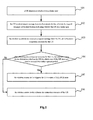
- the embodiments of the present application provide a cluster user based message transmission method so as to identify whether the UE is a cluster user, then wireless resources are allocated and a user management policy is scheduled based on the cluster identity of the UE; as shown in Figure 1 , the method may comprise the following steps:
- the request message may comprise but not be limited to: a RRC connection establishment request message and a cell updating request message.
- an RRC connection establishment request message sent from the UE to the wireless access device may carry information such as an establishment reason.
- the information such as the establishment reason may indicate a service type established by the UE (information such as calling party or called party, a voice service, a data service, a short message, registration and power off) to the wireless access device, such that the wireless access device may allocate appropriate wireless resources for the UE according to the establishment reason.
- the RRC connection establishment request message sent from the UE to the wireless access device may also carry the information indicating whether the UE itself is a cluster user.
- cell updating may occur due to a factor such as a change in wireless environment (for example, a wireless link failure, or a cell reselection).
- a cell updating request message sent from the UE to the wireless access device may carry information such as a cell updating reason.
- the wireless access device reallocates appropriate wireless resources for the UE according to the information such as the cell updating reason.
- the cell updating request message sent from the UE to the wireless access device may also carry information indicating whether the UE itself is a cluster user.
- the information indicating whether the UE is a cluster user may be embodied as an identifier. Specifically, when the information of the cluster user is a first identifier (for example, 0), it is indicated that the UE is a cluster user; and when the information of the cluster user is a second identifier (for example, 1), it is indicated that the UE is not a cluster user.
- a first identifier for example, 0
- a second identifier for example, 1
- Step 103 the wireless access device receives a request message from the UE, and allocates a connection resource for the UE, wherein, following the receipt of the RRC connection request message or the cell updating request message from the UE, the wireless access device needs to allocate the connection resource for the UE.
- the wireless access device and the UE may also perform related steps of a RRC connection process after receiving the RRC connection establishment request message from the UE, the description of which will be omitted in the embodiments of the present application; and the wireless access device and the UE may also perform related steps of a cell updating process after receiving the cell updating request message from the UE, the description of which will be omitted in the embodiments of the present application.
- Step 104 after allocating the connection resource for the UE, the wireless access device determines whether the UE is a cluster user if the UE does not receive or send data within a preset period; when the UE is a cluster user, perform step 105; when the UE is not a cluster user, perform step 106.
- the wireless access device may determine that the UE is a cluster user, then perform step 105; when the information of the cluster user is a second identifier, the wireless access device may determine that the UE is not a cluster user, then perform step 106.
- the wireless access device may monitor information such as signaling and data stream of the UE in real time.
- information such as signaling and data stream of the UE in real time.
- both signaling and data stream of the UE are 0 within a preset period (which can be selected experientially), it is indicated that the UE does not receive or send data within the preset period.
- Step 105 the wireless access device triggers the UE to enter a CELL-PCH (CELL-Paging Channel) state.
- CELL-PCH CELL-Paging Channel
- the UE may be kept on line continuously when the UE is in the CELL-PCH state. This means, it is possible for the UE to quickly establish a wireless connection and recover data communication when the UE transmits data again.
- the basic features of the CELL-PCH state are as follows: since there is no dedicated physical channel connection between the UE and the network side, in this state, for the purpose of saving power consumption, the UE may use a DRX (Discontinuous Reception) mode to monitor a PCH (Paging Channel) indicated by a PICH (Paging Indicator Channel); the network side may learn a cell where the UE is currently located according to the last cell updating process executed by the UE under the CELL_FACH state; if the UE needs to send an uplink data (responding to a paging or initiating a calling), the CELL-PCH state is first transferred to a CELL-FACH state.
- DRX Discontinuous Reception
- Step 106 the wireless access device releases the connection resource of the UE.
- the UE following the release of the connection resource of the UE, the UE is required to reestablish a RRC connection when it transmits data again.
- the wireless access device can identify the cluster identity of the UE (that is, learn whether the UE is a cluster user) by the RRC connection establishment request message or the cell updating request message, so as to allocate wireless resources and schedule a user management policy according to the cluster identity of the UE.
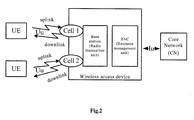
- the wireless access device consists of a base station and a RNC (Radio Network Controller), wherein the base station is a radio transceiver unit of the wireless access device, and the RNC is a resource management unit of the wireless access device; the wireless access device can control a plurality of cells, and the UE may establish a connection with the network side through the radio resources in the cell.
- RNC Radio Network Controller
- the resource management unit may be configured to control the radio resources in the cell, including allocating resources for the UE, informing the UE to release the connection by an air interface message if the UE is rejected, etc.; and the radio transceiver unit is configured to receive data of the resource management unit and forward it to the UE after processing the data, meanwhile to receive data from the UE and forward it to the resource management unit after processing the data.
- the resource management unit may also receive data from a CN (Core Network) by an lu interface and send data of the UE to the CN.
- CN Core Network
- the second embodiment of the present application provides a cluster user based message transmission method. As shown in Figure 3 , the method may comprise the following steps:
- the wireless access device (the resource management unit and the radio transceiver unit) and the UE may also perform related steps of a RRC connection process, the description of which will be omitted in the embodiments of the present application.
- Step 304 the resource management unit of the wireless access device allocates a connection resource for the UE and monitors the signaling and data stream of the UE in real time; when both signaling and data stream of the UE are 0 within a preset period, triggers the UE to enter a CELL_PCH state, such that the UE is kept on line continuously; and when the UE transmits data again, it is possible for the UE to quickly establish a wireless connection and recover data communication.
- Step 305 the resource management unit of the wireless access device allocates a connection resource for the UE and monitors the signaling and data stream of the UE in real time; when both signaling and data stream of the UE are 0 within a preset period, releases the connection resource of the UE; and when the UE transmits data again, the UE is required to reestablish a RRC connection.
- the wireless access device can identify the cluster identity of the UE (that is, learn whether the UE is a cluster user) by the RRC connection establishment request message, so as to allocate wireless resources and schedule a user management policy according to the cluster identity of the UE.
- the third embodiment of the present application provides a cluster user based message transmission method. As shown in Figure 4 , the method may comprise the following steps:
- the UE may initiate a cell updating process due to a factor such as wireless environment, that is, the UE sends the cell updating request message to the wireless access device.
- Step 402 after receiving the cell updating request message, the radio transceiver unit of the wireless access device forwards the cell updating request message to the resource management unit of the wireless access device.
- Step 403 after receiving the cell updating request message, the resource management unit of the wireless access device determines whether the UE is a cluster user. If the UE is a cluster user, perform step 404; and if the UE is not a cluster user, perform 405.
- the wireless access device (the resource management unit and the radio transceiver unit) and the UE may also perform related steps of the cell updating process, the description of which will be omitted in the embodiments of the present application.
- Step 404 the resource management unit of the wireless access device allocates a connection resource for the UE and monitors the signaling and data stream of the UE in real time; when both the signaling and data stream of the UE are 0 within a preset period, triggers the UE to enter a CELL_PCH state, such that the UE is kept on line continuously; and when the UE transmits data again, it is possible for the UE to quickly establish wireless connection and recover data communication.
- Step 405 the resource management unit of the wireless access device allocates connection resource for the UE and monitors the signaling and data stream of the UE in real time; when both the signaling and data stream of the UE are 0 within a preset period, releases the connection resource of the UE; and when the UE transmits data again, the UE is required to reestablish a RRC connection.
- the wireless access device can identify the cluster identity of the UE (that is, learn whether the UE is a cluster user) by the cell updating request message, so as to allocate wireless resources and schedule a user management policy according to the cluster identity of the UE.
- the fourth embodiment of the present application also provides a wireless access device.
- the wireless access device may comprise:
- the processing module 13 may also be configured to, when the information of the cluster user is a first identifier, determine that the UE is a cluster user; and when the information of the cluster user is a second identifier, determine that the UE is not a cluster user.
- the request message may comprise: a RRC connection establishment request message and a cell updating request message.
- the wireless access device can identify the cluster identity of the UE (that is, learn whether the UE is a cluster user) by the RRC connection establishment request message or the cell updating request message, so as to allocate wireless resources and schedule a user management policy according to the cluster identity of the UE.
- modules in the device according to the present application may be integrally formed or separately deployed. Above discussed modules can be combined into a single module or further divided into a plurality of sub-modules.
- the fifth embodiment of the present application provides a UE (user equipment).
- the user equipment may comprise:
- the request message may comprise: a RRC connection establishment request message and a cell updating request message.
- the wireless access device can identify the cluster identity of the UE (that is, learn whether the UE is a cluster user) by the RRC connection establishment request message or the cell updating request message, so as to allocate wireless resources and schedule a user management policy according to the cluster identity of the UE.
- modules in the device according to the present application may be integrally formed or separately deployed. Above discussed modules can be combined into a single module or further divided into a plurality of sub-modules.
- the present application may be implemented by means of software in connection with the required universal hardware platform, and of course, can also be implemented by hardware, but in many cases the former is a more preferred implementation.
- the essential part or the part contributing to the prior art of the technical solution of the invention may be embodied as a form of software product.
- the computer software product may be stored in the storage medium, and comprise a plurality of instructions which could used to execute the method as described in various embodiments of the invention by a computer system (that could be a personal computer, a server or network device).
- modules of the device in the embodiment may be disposed in the device of the embodiment as described herein, or may be changed accordingly to be positioned in one or more different devices from that in the embodiment.
- the modules in above embodiment can be combined in a single module or can be further divided into multiple sub-modules.
Landscapes
- Engineering & Computer Science (AREA)
- Computer Networks & Wireless Communication (AREA)
- Signal Processing (AREA)
- Mobile Radio Communication Systems (AREA)
- Communication Control (AREA)
Abstract
Description
- This application claims priority from Chinese Patent Application No.
201210017360.3 - The present invention relates to a communication technology field, and in particular to a cluster user based message transmission method and device.
- When initiating a registration and paging, a user equipment (UE) first establishes a Radio Resource Control (RRC) connection with a network side and then establishes a Radio Access Bear (RAB). Further, after the UE establishes the RRC connection, cell updating may occur, based on which, the UE needs to finish a cell updating process with the network side.
- During carrying out the present application, the inventor has found that at least the following problems exist in the prior art:
- During the RRC connection and the cell updating, the network side cannot learn whether the UE is a cluster user, then cannot perform related processing.
- The embodiments of the present invention are to provide a cluster user based message transmission method and device, such that a wireless access device is able to learn whether the UE is a cluster user.
- In order to achieve the above objects, an embodiment of the present application provides a cluster user based message transmission method, comprising:
- receiving a request message from a user equipment by a wireless access device, and allocating a connection resource for the user equipment by the wireless access device, wherein the request message carries information indicating whether the user equipment is a cluster user;
- when the user equipment is a cluster user, and if the user equipment does not receive or send data within a preset period, triggering the user equipment to enter a CELL-PCH state by the wireless access device; and
- when the user equipment is not a cluster user, and if the user equipment does not receive or send data within a preset period, releasing the connection resource of the user equipment by the wireless access device.
- An embodiment of the present application provides a cluster user based message transmission method, comprising:
- determining whether a user equipment is a cluster user by the user equipment; and
- sending a request message to a wireless access device by the user equipment, wherein the request message carries information indicating whether the user equipment is a cluster user.
- An embodiment of the present application provides a wireless access device, comprising:
- a receiving module, configured to receive a request message from a user equipment, wherein the request message carries information indicating whether the user equipment is a cluster user;
- an allocating module, configured to allocate a connection resource for the user equipment; and
- a processing module, configured to, when the user equipment is a cluster user, and if the user equipment does not receive or send data within a preset period, trigger the user equipment to enter a CELL-PCH state; and when the user equipment is not a cluster user, and if the user equipment does not receive or send data within a preset period, release the connection resource of the user equipment.
- An embodiment of the present application provides a user equipment, comprising:
- a determining module, configured to determine whether the user equipment is a cluster user; and
- a sending module, configured to send a request message to a wireless access device, wherein the request message carries information indicating whether the user equipment is a cluster user.
- Compared to the prior art, the embodiments of the present application have at least the following advantages: in the embodiments according to the present application, the wireless access device can identify the cluster identity of the user equipment (that is, learn whether the user equipment is a cluster user), so as to allocate wireless resources and schedule a user management policy according to the cluster identity of the user equipment.
- In order to more clearly explain the technical solutions of the present application, the accompanying drawings needed in the description of the embodiments will be simply introduced hereafter. Obviously, the accompanying drawings described below are merely some embodiments of the present invention and it should be noted by an ordinary person skilled in the art that other drawings may be obtained on the basis of the these drawings without paying creative efforts.
-
Figure 1 is a flow chart of a cluster user based message transmission method provided by a first embodiment of the present application; -
Figure 2 is a schematic view of a circumstance according to the embodiment of the present application; -
Figure 3 is a flow chart of a cluster user based message transmission method provided by a second embodiment of the present application; -
Figure 4 is a flow chart of a cluster user based message transmission method provided by a third embodiment of the present application; -
Figure 5 is a block diagram of a wireless access device provided by a fourth embodiment of the invention; and -
Figure 6 is a block diagram of a user equipment provided by a fifth embodiment of the invention. - Hereafter, technical solutions of the present application will be clearly and fully described in conjunction with the accompanying drawings. Obviously, the described embodiments are only part but not all of the embodiments of the present application. Based on the embodiments of the present application, all other embodiments obtained by an ordinary person skilled in the art without paying creative efforts will fall into the protection scope of the present application.
- Compared with a public communication system, a cluster communication system has some special requirements (such as, a shorter call delay, multiple-receiving-per-sending, etc.), and adaptive modification may be made to the communication system, directing to features of the cluster communication system; the precondition of realizing the above process is in that a network side device (for example, a wireless access device) can identify whether a UE is a cluster user. Directing to the problem in the prior art that whether the UE is a cluster user can not be learned, the embodiments of the present application provide a cluster user based message transmission method so as to identify whether the UE is a cluster user, then wireless resources are allocated and a user management policy is scheduled based on the cluster identity of the UE; as shown in
Figure 1 , the method may comprise the following steps: -
Step 101, a UE determines whether it is a cluster user. -
Step 102, the UE sends a request message to a wireless access device, wherein the request message carries information indicating whether the UE is a cluster user. - In the embodiment of the present application, the request message may comprise but not be limited to: a RRC connection establishment request message and a cell updating request message.
- Specifically, during a RRC connection process, an RRC connection establishment request message sent from the UE to the wireless access device may carry information such as an establishment reason. The information such as the establishment reason may indicate a service type established by the UE (information such as calling party or called party, a voice service, a data service, a short message, registration and power off) to the wireless access device, such that the wireless access device may allocate appropriate wireless resources for the UE according to the establishment reason. On the basis of the above, in the embodiments of the present application, the RRC connection establishment request message sent from the UE to the wireless access device may also carry the information indicating whether the UE itself is a cluster user.
- After the UE establishes the RRC connection, cell updating may occur due to a factor such as a change in wireless environment (for example, a wireless link failure, or a cell reselection). During the cell updating, a cell updating request message sent from the UE to the wireless access device may carry information such as a cell updating reason. The wireless access device reallocates appropriate wireless resources for the UE according to the information such as the cell updating reason. On the basis of the above, in the embodiments of the present application, the cell updating request message sent from the UE to the wireless access device may also carry information indicating whether the UE itself is a cluster user.
- In the embodiments of the present application, the information indicating whether the UE is a cluster user may be embodied as an identifier. Specifically, when the information of the cluster user is a first identifier (for example, 0), it is indicated that the UE is a cluster user; and when the information of the cluster user is a second identifier (for example, 1), it is indicated that the UE is not a cluster user.
-
Step 103, the wireless access device receives a request message from the UE, and allocates a connection resource for the UE, wherein, following the receipt of the RRC connection request message or the cell updating request message from the UE, the wireless access device needs to allocate the connection resource for the UE. - It should be noted that, the wireless access device and the UE may also perform related steps of a RRC connection process after receiving the RRC connection establishment request message from the UE, the description of which will be omitted in the embodiments of the present application; and the wireless access device and the UE may also perform related steps of a cell updating process after receiving the cell updating request message from the UE, the description of which will be omitted in the embodiments of the present application.
-
Step 104, after allocating the connection resource for the UE, the wireless access device determines whether the UE is a cluster user if the UE does not receive or send data within a preset period; when the UE is a cluster user, performstep 105; when the UE is not a cluster user, performstep 106. - Specifically, since the request message carries the information indicating whether the UE is a cluster user, when the information of the cluster user is a first identifier, the wireless access device may determine that the UE is a cluster user, then perform
step 105; when the information of the cluster user is a second identifier, the wireless access device may determine that the UE is not a cluster user, then performstep 106. - In the embodiments of the present application, after allocating the connection resource for the UE, the wireless access device may monitor information such as signaling and data stream of the UE in real time. When both signaling and data stream of the UE are 0 within a preset period (which can be selected experientially), it is indicated that the UE does not receive or send data within the preset period.
-
Step 105, the wireless access device triggers the UE to enter a CELL-PCH (CELL-Paging Channel) state. - It should be noted that the UE may be kept on line continuously when the UE is in the CELL-PCH state. This means, it is possible for the UE to quickly establish a wireless connection and recover data communication when the UE transmits data again.
- Specifically, the basic features of the CELL-PCH state are as follows: since there is no dedicated physical channel connection between the UE and the network side, in this state, for the purpose of saving power consumption, the UE may use a DRX (Discontinuous Reception) mode to monitor a PCH (Paging Channel) indicated by a PICH (Paging Indicator Channel); the network side may learn a cell where the UE is currently located according to the last cell updating process executed by the UE under the CELL_FACH state; if the UE needs to send an uplink data (responding to a paging or initiating a calling), the CELL-PCH state is first transferred to a CELL-FACH state.
-
Step 106, the wireless access device releases the connection resource of the UE. - It should be noted that, following the release of the connection resource of the UE, the UE is required to reestablish a RRC connection when it transmits data again.
- In summary, in the embodiments of the present application, the wireless access device can identify the cluster identity of the UE (that is, learn whether the UE is a cluster user) by the RRC connection establishment request message or the cell updating request message, so as to allocate wireless resources and schedule a user management policy according to the cluster identity of the UE.
- Hereafter, the embodiment of the present application will be further described in connection with the circumstance as shown in
Figure 2 . - As shown in
Figure 2 , the wireless access device consists of a base station and a RNC (Radio Network Controller), wherein the base station is a radio transceiver unit of the wireless access device, and the RNC is a resource management unit of the wireless access device; the wireless access device can control a plurality of cells, and the UE may establish a connection with the network side through the radio resources in the cell. In the wireless access device, the resource management unit may be configured to control the radio resources in the cell, including allocating resources for the UE, informing the UE to release the connection by an air interface message if the UE is rejected, etc.; and the radio transceiver unit is configured to receive data of the resource management unit and forward it to the UE after processing the data, meanwhile to receive data from the UE and forward it to the resource management unit after processing the data. In addition, the resource management unit may also receive data from a CN (Core Network) by an lu interface and send data of the UE to the CN. - Based on the above circumstance and taking a RRC connection process as an example, the second embodiment of the present application provides a cluster user based message transmission method. As shown in
Figure 3 , the method may comprise the following steps: -
Step 301, a UE transmits an RRC connection establishment request message to a wireless access device, wherein the RRC connection establishment request message carries the cluster identity of the UE (which is used to identify whether the UE is a cluster user). -
Step 302, after receiving the RRC connection establishment request message, the radio transceiver unit of the wireless access device forwards the RRC connection establishment request message to the resource management unit of the wireless access device. -
Step 303, after receiving the RRC connection establishment request message, the resource management unit of the wireless access device determines whether the UE is a cluster user. If the UE is a cluster user, performstep 304; if the UE is not a cluster user, performstep 305. - It should be noted that after receiving the RRC connection establishment request message from the UE, the wireless access device (the resource management unit and the radio transceiver unit) and the UE may also perform related steps of a RRC connection process, the description of which will be omitted in the embodiments of the present application.
-
Step 304, the resource management unit of the wireless access device allocates a connection resource for the UE and monitors the signaling and data stream of the UE in real time; when both signaling and data stream of the UE are 0 within a preset period, triggers the UE to enter a CELL_PCH state, such that the UE is kept on line continuously; and when the UE transmits data again, it is possible for the UE to quickly establish a wireless connection and recover data communication. -
Step 305, the resource management unit of the wireless access device allocates a connection resource for the UE and monitors the signaling and data stream of the UE in real time; when both signaling and data stream of the UE are 0 within a preset period, releases the connection resource of the UE; and when the UE transmits data again, the UE is required to reestablish a RRC connection. - In summary, in the embodiments of the present application, the wireless access device can identify the cluster identity of the UE (that is, learn whether the UE is a cluster user) by the RRC connection establishment request message, so as to allocate wireless resources and schedule a user management policy according to the cluster identity of the UE.
- Based on the above circumstance and taking a cell updating process as an example, the third embodiment of the present application provides a cluster user based message transmission method. As shown in
Figure 4 , the method may comprise the following steps: -
Step 401, a UE transmits a cell updating request message to a wireless access device, wherein the cell updating request message carries the cluster identity of the UE (which is used to identify whether the UE is a cluster user). - Specifically, the UE may initiate a cell updating process due to a factor such as wireless environment, that is, the UE sends the cell updating request message to the wireless access device.
-
Step 402, after receiving the cell updating request message, the radio transceiver unit of the wireless access device forwards the cell updating request message to the resource management unit of the wireless access device. -
Step 403, after receiving the cell updating request message, the resource management unit of the wireless access device determines whether the UE is a cluster user. If the UE is a cluster user, performstep 404; and if the UE is not a cluster user, perform 405. - It should be noted that after receiving the cell updating request message from the UE, the wireless access device (the resource management unit and the radio transceiver unit) and the UE may also perform related steps of the cell updating process, the description of which will be omitted in the embodiments of the present application.
-
Step 404, the resource management unit of the wireless access device allocates a connection resource for the UE and monitors the signaling and data stream of the UE in real time; when both the signaling and data stream of the UE are 0 within a preset period, triggers the UE to enter a CELL_PCH state, such that the UE is kept on line continuously; and when the UE transmits data again, it is possible for the UE to quickly establish wireless connection and recover data communication. -
Step 405, the resource management unit of the wireless access device allocates connection resource for the UE and monitors the signaling and data stream of the UE in real time; when both the signaling and data stream of the UE are 0 within a preset period, releases the connection resource of the UE; and when the UE transmits data again, the UE is required to reestablish a RRC connection. - In summary, in the embodiments of the present application, the wireless access device can identify the cluster identity of the UE (that is, learn whether the UE is a cluster user) by the cell updating request message, so as to allocate wireless resources and schedule a user management policy according to the cluster identity of the UE.
- Based on the same inventive concept as the above method, the fourth embodiment of the present application also provides a wireless access device. As shown in
Figure 5 , the wireless access device may comprise: - a receiving
module 11, configured to receive a request message from a user equipment, wherein the request message carries information indicating whether the user equipment is a cluster user; - an allocating
module 12, configured to allocate a connection resource for the user equipment; and - a
processing module 13, configured to, when the user equipment is a cluster user, and if the user equipment does not receive or send data within a preset period, trigger the user equipment to enter a CELL-PCH state; when the user equipment is not a cluster user, and if the user equipment does not receive or send data within a preset period, release the connection resource of the user equipment. - Preferably, the
processing module 13 may also be configured to, when the information of the cluster user is a first identifier, determine that the UE is a cluster user; and when the information of the cluster user is a second identifier, determine that the UE is not a cluster user. - Preferably, in the embodiments of the present application, the request message may comprise: a RRC connection establishment request message and a cell updating request message.
- In summary, in the embodiments of the present application, the wireless access device can identify the cluster identity of the UE (that is, learn whether the UE is a cluster user) by the RRC connection establishment request message or the cell updating request message, so as to allocate wireless resources and schedule a user management policy according to the cluster identity of the UE.
- Herein, various modules in the device according to the present application may be integrally formed or separately deployed. Above discussed modules can be combined into a single module or further divided into a plurality of sub-modules.
- Based on the same inventive concept as the above method, the fifth embodiment of the present application provides a UE (user equipment). As shown in
Figure 6 , the user equipment may comprise: - a determining
module 21, configured to determine whether the user equipment is a cluster user; and - a sending module 22, configured to send a request message to a wireless access device, wherein the request message carries information indicating whether the user equipment is a cluster user.
- Preferably, in the embodiments of the present application, when the information of the cluster user is a first identifier, it is indicated that the UE is a cluster user; when the information of the cluster user is a second identifier, it is indicated that the UE is not a cluster user. Preferably, in the embodiments of the present application, the request message may comprise: a RRC connection establishment request message and a cell updating request message.
- In summary, in the embodiments of the present application, the wireless access device can identify the cluster identity of the UE (that is, learn whether the UE is a cluster user) by the RRC connection establishment request message or the cell updating request message, so as to allocate wireless resources and schedule a user management policy according to the cluster identity of the UE.
- Herein, various modules in the device according to the present application may be integrally formed or separately deployed. Above discussed modules can be combined into a single module or further divided into a plurality of sub-modules.
- Through the above description of the embodiments, it should be clearly appreciated by the person skilled in the art that the present application may be implemented by means of software in connection with the required universal hardware platform, and of course, can also be implemented by hardware, but in many cases the former is a more preferred implementation. Based on this understanding, the essential part or the part contributing to the prior art of the technical solution of the invention may be embodied as a form of software product. The computer software product may be stored in the storage medium, and comprise a plurality of instructions which could used to execute the method as described in various embodiments of the invention by a computer system (that could be a personal computer, a server or network device).
- It should be appreciated by the person skilled in the art that the accompanying drawings are only schematic views of the preferred embodiments, and the modules or processes in the accompanying drawings are not necessarily required to implement the invention.
- It should be appreciated by the person skilled in the art that the modules of the device in the embodiment may be disposed in the device of the embodiment as described herein, or may be changed accordingly to be positioned in one or more different devices from that in the embodiment. The modules in above embodiment can be combined in a single module or can be further divided into multiple sub-modules.
- The sequence numbers of the embodiments of the invention are only for the descriptive purpose rather than represent the relative merits of the embodiments.
- Disclosed above are merely specific embodiments of the invention. However, the present invention is not limited thereto. Any modifications which could be contemplated by the person skilled in the art will be fallen into protection scope of the present invention.
Claims (12)
- A cluster user based message transmission method, characterized by, comprising:receiving a request message from a user equipment by a wireless access device, and allocating a connection resource for the user equipment by the wireless access device, wherein the request message carries information indicating whether the user equipment is a cluster user;when the user equipment is a cluster user, and if the user equipment does not receive or send data within a preset period, triggering the user equipment to enter a CELL-PCH state by the wireless access device; andwhen the user equipment is not a cluster user, and if the user equipment does not receive or send data within a preset period, releasing the connection resource of the user equipment by the wireless access device.
- The method according to claim 1, characterized in that, the method further comprises:when the information of the cluster user is a first identifier, determining that the user equipment is a cluster user by the wireless access device; andwhen the information of the cluster user is a second identifier, determining that the user equipment is not a cluster user by the wireless access device.
- The method according to claim 1, characterized in that, the request message comprises: a RRC connection establishment request message and a cell updating request message.
- A cluster user based message transmission method, characterized by, comprising:determining whether a user equipment is a cluster user, by the user equipment; andsending a request message to a wireless access device by the user equipment, wherein the request message carries information indicating whether the user equipment is a cluster user.
- The method according to claim 4, characterized in that,
when the information of the cluster user is a first identifier, it is indicated that the user equipment is a cluster user; and
when the information of the cluster user is a second identifier, it is indicated that the user equipment is not a cluster user. - The method according to claim 4, characterized in that, the request message comprises: a RRC connection establishment request message and a cell updating request message.
- A wireless access device, characterized by, comprising:a receiving module, configured to receive a request message from a user equipment, wherein the request message carries information indicating whether the user equipment is a cluster user;an allocating module, configured to allocate a connection resource for the user equipment; anda processing module, configured to, when the user equipment is a cluster user, and if the user equipment does not receive or send data within a preset period, trigger the user equipment to enter a CELL-PCH state; when the user equipment is not a cluster user, and if the user equipment does not receive or send data within a preset period, release the connection resource of the user equipment.
- The wireless access device according to claim 7, characterized in that,
the processing module is further configured to, when the information of the cluster user is a first identifier, determine that the user equipment is a cluster user; and when the information of the cluster user is a second identifier, determine that the user equipment is not a cluster user. - The wireless access device according to claim 7, characterized in that, the request message comprises: a RRC connection establishment request message and a cell updating request message.
- A user equipment, characterized by, comprising:a determining module, configured to determine whether the user equipment is a cluster user; anda sending module, configured to send a request message to a wireless access device, wherein the request message carries information indicating whether the user equipment is a cluster user.
- The user equipment according to claim 10, characterized in that,
when the information of the cluster user is a first identifier, it is indicated that the user equipment is a cluster user; and
when the information of the cluster user is a second identifier, it is indicated that the user equipment is not a cluster user. - The user equipment according to claim 10, characterized in that, the request message comprises: a RRC connection establishment 21 request message and a cell updating request message.
Applications Claiming Priority (2)
| Application Number | Priority Date | Filing Date | Title |
|---|---|---|---|
| CN201210017360.3A CN102572722B (en) | 2012-01-19 | 2012-01-19 | Message transmission method and equipment based on cluster users |
| PCT/CN2012/085135 WO2013107217A1 (en) | 2012-01-19 | 2012-11-23 | Cluster user based message transmission method and device |
Publications (4)
| Publication Number | Publication Date |
|---|---|
| EP2806705A1 true EP2806705A1 (en) | 2014-11-26 |
| EP2806705A4 EP2806705A4 (en) | 2016-03-30 |
| EP2806705B1 EP2806705B1 (en) | 2024-04-10 |
| EP2806705B8 EP2806705B8 (en) | 2024-06-19 |
Family
ID=46416951
Family Applications (1)
| Application Number | Title | Priority Date | Filing Date |
|---|---|---|---|
| EP12866253.3A Active EP2806705B8 (en) | 2012-01-19 | 2012-11-23 | Trunker user based message transmission method and device |
Country Status (6)
| Country | Link |
|---|---|
| US (1) | US9860922B2 (en) |
| EP (1) | EP2806705B8 (en) |
| JP (1) | JP5855767B2 (en) |
| KR (1) | KR101536884B1 (en) |
| CN (1) | CN102572722B (en) |
| WO (1) | WO2013107217A1 (en) |
Families Citing this family (4)
| Publication number | Priority date | Publication date | Assignee | Title |
|---|---|---|---|---|
| CN102572722B (en) | 2012-01-19 | 2015-07-15 | 大唐移动通信设备有限公司 | Message transmission method and equipment based on cluster users |
| CN103687043B (en) * | 2012-09-11 | 2016-12-21 | 普天信息技术研究院有限公司 | A kind of method setting up radio resource control connection |
| CN103037472A (en) * | 2013-01-05 | 2013-04-10 | 中兴通讯股份有限公司 | Cluster registration method and device |
| CN106211332B (en) * | 2015-05-05 | 2021-08-17 | 中兴通讯股份有限公司 | Method and apparatus for resource allocation |
Family Cites Families (20)
| Publication number | Priority date | Publication date | Assignee | Title |
|---|---|---|---|---|
| GB2398968B (en) * | 2003-02-27 | 2005-07-27 | Motorola Inc | Reduction in signalling load in a wireless communication system |
| JP3913721B2 (en) * | 2003-07-31 | 2007-05-09 | 三洋電機株式会社 | Mobile station, mobile communication system and program |
| ES2298476T3 (en) * | 2003-09-29 | 2008-05-16 | Research In Motion Limited | METHOD FOR MANAGING THE UPDATE OF CELLS DURING RECONFIGURATION IN A USER TEAM OF A NETWORK OF A UNIVERSAL MOBILE TELECOMMUNICATIONS SYSTEM (UMTS) AND A CORRESPONDING USER EQUIPMENT. |
| US7366532B2 (en) * | 2003-10-09 | 2008-04-29 | Motorola, Inc. | Group call management through receive/transmit synchronization |
| CA2563696A1 (en) * | 2004-04-19 | 2005-10-27 | Zteit Usa, Inc. | Trunking and push-to-talk mechanisms for wcdma wireless communications |
| US7444538B2 (en) * | 2004-09-21 | 2008-10-28 | International Business Machines Corporation | Fail-over cluster with load-balancing capability |
| US7925290B2 (en) * | 2005-03-31 | 2011-04-12 | Qualcomm Incorporated | System and method for efficiently providing high-performance dispatch services in a wireless system |
| CN100426893C (en) * | 2005-10-14 | 2008-10-15 | 华为技术有限公司 | Method for realizing non-continuous receiving under digital cluster group receiving mode |
| CN1866947A (en) * | 2005-11-02 | 2006-11-22 | 华为技术有限公司 | Realization method and system for recognizing special service in service building process |
| ES2396309T3 (en) * | 2005-12-14 | 2013-02-20 | Research In Motion Limited | Method and apparatus for radio resource control aimed at a user equipment |
| ATE553628T1 (en) * | 2007-11-13 | 2012-04-15 | Research In Motion Ltd | METHOD AND APPARATUS FOR STATUS/MODE TRANSITIONS |
| CN101959281A (en) * | 2009-07-15 | 2011-01-26 | 华为技术有限公司 | Network access control method, access control equipment and network access system |
| CN102014376B (en) * | 2009-09-07 | 2015-03-11 | 华为技术有限公司 | Attaching method, paging method, detaching method and relevant equipment |
| CN102075872A (en) | 2009-11-19 | 2011-05-25 | 华为技术有限公司 | Public bearer processing method, network node and communication system |
| BR112012012353A2 (en) * | 2010-02-10 | 2016-03-22 | Research In Motion Ltd | method and apparatus for mode / state transition |
| KR101807732B1 (en) | 2010-03-09 | 2018-01-18 | 삼성전자주식회사 | Multi-user wireless network for power saving, and communication method of terminal and access point in the multi-user wireless network |
| US8744534B2 (en) * | 2010-04-30 | 2014-06-03 | Apple Inc. | Methods and apparatus for preserving battery resources in a mobile communication device |
| CN102118855B (en) * | 2011-01-17 | 2013-10-02 | 华为技术有限公司 | Method and system for distributing service, and base station equipment |
| CN102572722B (en) * | 2012-01-19 | 2015-07-15 | 大唐移动通信设备有限公司 | Message transmission method and equipment based on cluster users |
| WO2013170482A1 (en) * | 2012-05-18 | 2013-11-21 | Nokia Corporation | Method and apparatus for switch |
-
2012
- 2012-01-19 CN CN201210017360.3A patent/CN102572722B/en active Active
- 2012-11-23 KR KR1020147022164A patent/KR101536884B1/en not_active Expired - Fee Related
- 2012-11-23 US US14/373,037 patent/US9860922B2/en not_active Expired - Fee Related
- 2012-11-23 WO PCT/CN2012/085135 patent/WO2013107217A1/en not_active Ceased
- 2012-11-23 EP EP12866253.3A patent/EP2806705B8/en active Active
- 2012-11-23 JP JP2014552481A patent/JP5855767B2/en active Active
Also Published As
| Publication number | Publication date |
|---|---|
| EP2806705B1 (en) | 2024-04-10 |
| CN102572722B (en) | 2015-07-15 |
| WO2013107217A1 (en) | 2013-07-25 |
| US9860922B2 (en) | 2018-01-02 |
| CN102572722A (en) | 2012-07-11 |
| JP2015511422A (en) | 2015-04-16 |
| KR20140117510A (en) | 2014-10-07 |
| EP2806705A4 (en) | 2016-03-30 |
| EP2806705B8 (en) | 2024-06-19 |
| JP5855767B2 (en) | 2016-02-09 |
| US20150230273A1 (en) | 2015-08-13 |
| KR101536884B1 (en) | 2015-07-14 |
Similar Documents
| Publication | Publication Date | Title |
|---|---|---|
| EP3113573B1 (en) | Semi-persistent scheduling (sps) method and apparatus | |
| CN113316198B (en) | QoS generation method, device and system | |
| US10736038B2 (en) | Channel monitoring method and device | |
| CN101459936B (en) | A method, device and system for triggering resource allocation | |
| KR101975195B1 (en) | Base station and method connecting user equipment thereof | |
| WO2016019691A1 (en) | Method, apparatus, and system for configuring device-to-device resource pool | |
| KR20130121982A (en) | Method for reduced-overhead short message transmission | |
| CN105228218A (en) | The admittance control method of distance terminal and relevant apparatus in D2D communication | |
| KR20100106097A (en) | Apparatus and method for allocating radio network temporary identifier efficiently of random access processure in a wireless system | |
| WO2022189108A1 (en) | Energy efficient, rrc state aware uplink radio resource allocation | |
| US9100812B2 (en) | Method and apparatus for enabling privileged access in a cellular network | |
| CN103906153A (en) | Base station dormancy method based on energy saving and equipment | |
| KR20120092943A (en) | Method and apparatus for managing radio resource based on traffic pattern of terminal | |
| CN101483881A (en) | Method and apparatus for controlling uplink resource release by user equipment | |
| EP2816842B1 (en) | Access control method and device | |
| US9860922B2 (en) | Trunking user based message transmission method and device | |
| CN101080046B (en) | A method for fast call establishment in TD-SCDMA trunking communication system | |
| EP2942990A1 (en) | Method, system and equipment for realizing cluster group call session in long term evolution | |
| CN105338628A (en) | User state processing method and device | |
| CN105025593B (en) | Method and equipment for releasing entity | |
| CN102118768A (en) | Method for controlling carrier communication state in carrier aggregation system and device | |
| CN113950042A (en) | Identification method, sending method and related equipment | |
| CN103139710A (en) | Emergency call achieving method and enhanced node B and user equipment | |
| CN104469953B (en) | A kind of method and apparatus that user data is transmitted by secondary carrier | |
| EP3007472B1 (en) | Service scheduling method, system, terminal and storage medium based on clustering system |
Legal Events
| Date | Code | Title | Description |
|---|---|---|---|
| PUAI | Public reference made under article 153(3) epc to a published international application that has entered the european phase |
Free format text: ORIGINAL CODE: 0009012 |
|
| 17P | Request for examination filed |
Effective date: 20140718 |
|
| AK | Designated contracting states |
Kind code of ref document: A1 Designated state(s): AL AT BE BG CH CY CZ DE DK EE ES FI FR GB GR HR HU IE IS IT LI LT LU LV MC MK MT NL NO PL PT RO RS SE SI SK SM TR |
|
| DAX | Request for extension of the european patent (deleted) | ||
| RA4 | Supplementary search report drawn up and despatched (corrected) |
Effective date: 20160225 |
|
| RIC1 | Information provided on ipc code assigned before grant |
Ipc: H04W 72/04 20090101AFI20160219BHEP Ipc: H04W 76/00 20090101ALI20160219BHEP |
|
| STAA | Information on the status of an ep patent application or granted ep patent |
Free format text: STATUS: EXAMINATION IS IN PROGRESS |
|
| 17Q | First examination report despatched |
Effective date: 20180725 |
|
| REG | Reference to a national code |
Ref country code: DE Ref legal event code: R079 Ref document number: 602012080688 Country of ref document: DE Free format text: PREVIOUS MAIN CLASS: H04W0084080000 Ipc: H04W0076400000 Ref country code: DE Ref legal event code: R079 Free format text: PREVIOUS MAIN CLASS: H04W0084080000 Ipc: H04W0076400000 |
|
| RIC1 | Information provided on ipc code assigned before grant |
Ipc: H04W 76/38 20180101ALN20230614BHEP Ipc: H04W 76/10 20180101ALN20230614BHEP Ipc: H04W 76/27 20180101ALN20230614BHEP Ipc: H04W 72/04 20090101ALN20230614BHEP Ipc: H04W 72/21 20230101ALI20230614BHEP Ipc: H04W 76/40 20180101AFI20230614BHEP |
|
| GRAP | Despatch of communication of intention to grant a patent |
Free format text: ORIGINAL CODE: EPIDOSNIGR1 |
|
| STAA | Information on the status of an ep patent application or granted ep patent |
Free format text: STATUS: GRANT OF PATENT IS INTENDED |
|
| RIC1 | Information provided on ipc code assigned before grant |
Ipc: H04W 76/38 20180101ALN20231211BHEP Ipc: H04W 76/10 20180101ALN20231211BHEP Ipc: H04W 76/27 20180101ALN20231211BHEP Ipc: H04W 72/04 20090101ALN20231211BHEP Ipc: H04W 72/21 20230101ALI20231211BHEP Ipc: H04W 76/40 20180101AFI20231211BHEP |
|
| INTG | Intention to grant announced |
Effective date: 20240105 |
|
| GRAS | Grant fee paid |
Free format text: ORIGINAL CODE: EPIDOSNIGR3 |
|
| GRAA | (expected) grant |
Free format text: ORIGINAL CODE: 0009210 |
|
| STAA | Information on the status of an ep patent application or granted ep patent |
Free format text: STATUS: THE PATENT HAS BEEN GRANTED |
|
| AK | Designated contracting states |
Kind code of ref document: B1 Designated state(s): AL AT BE BG CH CY CZ DE DK EE ES FI FR GB GR HR HU IE IS IT LI LT LU LV MC MK MT NL NO PL PT RO RS SE SI SK SM TR |
|
| REG | Reference to a national code |
Ref country code: GB Ref legal event code: FG4D |
|
| REG | Reference to a national code |
Ref country code: CH Ref legal event code: EP |
|
| REG | Reference to a national code |
Ref country code: DE Ref legal event code: R096 Ref document number: 602012080688 Country of ref document: DE |
|
| GRAT | Correction requested after decision to grant or after decision to maintain patent in amended form |
Free format text: ORIGINAL CODE: EPIDOSNCDEC |
|
| REG | Reference to a national code |
Ref country code: IE Ref legal event code: FG4D |
|
| REG | Reference to a national code |
Ref country code: CH Ref legal event code: PK Free format text: BERICHTIGUNGEN |
|
| REG | Reference to a national code |
Ref country code: CH Ref legal event code: PK Free format text: BERICHTIGUNG B8 |
|
| RIN2 | Information on inventor provided after grant (corrected) |
Inventor name: SU, XIAOBO Inventor name: GUO, JUNLI |
|
| REG | Reference to a national code |
Ref country code: LT Ref legal event code: MG9D |
|
| REG | Reference to a national code |
Ref country code: NL Ref legal event code: MP Effective date: 20240410 |
|
| REG | Reference to a national code |
Ref country code: AT Ref legal event code: MK05 Ref document number: 1676200 Country of ref document: AT Kind code of ref document: T Effective date: 20240410 |
|
| PG25 | Lapsed in a contracting state [announced via postgrant information from national office to epo] |
Ref country code: NL Free format text: LAPSE BECAUSE OF FAILURE TO SUBMIT A TRANSLATION OF THE DESCRIPTION OR TO PAY THE FEE WITHIN THE PRESCRIBED TIME-LIMIT Effective date: 20240410 |
|
| PG25 | Lapsed in a contracting state [announced via postgrant information from national office to epo] |
Ref country code: NL Free format text: LAPSE BECAUSE OF FAILURE TO SUBMIT A TRANSLATION OF THE DESCRIPTION OR TO PAY THE FEE WITHIN THE PRESCRIBED TIME-LIMIT Effective date: 20240410 |
|
| PG25 | Lapsed in a contracting state [announced via postgrant information from national office to epo] |
Ref country code: IS Free format text: LAPSE BECAUSE OF FAILURE TO SUBMIT A TRANSLATION OF THE DESCRIPTION OR TO PAY THE FEE WITHIN THE PRESCRIBED TIME-LIMIT Effective date: 20240810 |
|
| PG25 | Lapsed in a contracting state [announced via postgrant information from national office to epo] |
Ref country code: BG Free format text: LAPSE BECAUSE OF FAILURE TO SUBMIT A TRANSLATION OF THE DESCRIPTION OR TO PAY THE FEE WITHIN THE PRESCRIBED TIME-LIMIT Effective date: 20240410 |
|
| PG25 | Lapsed in a contracting state [announced via postgrant information from national office to epo] |
Ref country code: HR Free format text: LAPSE BECAUSE OF FAILURE TO SUBMIT A TRANSLATION OF THE DESCRIPTION OR TO PAY THE FEE WITHIN THE PRESCRIBED TIME-LIMIT Effective date: 20240410 Ref country code: FI Free format text: LAPSE BECAUSE OF FAILURE TO SUBMIT A TRANSLATION OF THE DESCRIPTION OR TO PAY THE FEE WITHIN THE PRESCRIBED TIME-LIMIT Effective date: 20240410 |
|
| PG25 | Lapsed in a contracting state [announced via postgrant information from national office to epo] |
Ref country code: GR Free format text: LAPSE BECAUSE OF FAILURE TO SUBMIT A TRANSLATION OF THE DESCRIPTION OR TO PAY THE FEE WITHIN THE PRESCRIBED TIME-LIMIT Effective date: 20240711 |
|
| PG25 | Lapsed in a contracting state [announced via postgrant information from national office to epo] |
Ref country code: PT Free format text: LAPSE BECAUSE OF FAILURE TO SUBMIT A TRANSLATION OF THE DESCRIPTION OR TO PAY THE FEE WITHIN THE PRESCRIBED TIME-LIMIT Effective date: 20240812 |
|
| PG25 | Lapsed in a contracting state [announced via postgrant information from national office to epo] |
Ref country code: ES Free format text: LAPSE BECAUSE OF FAILURE TO SUBMIT A TRANSLATION OF THE DESCRIPTION OR TO PAY THE FEE WITHIN THE PRESCRIBED TIME-LIMIT Effective date: 20240410 |
|
| PG25 | Lapsed in a contracting state [announced via postgrant information from national office to epo] |
Ref country code: AT Free format text: LAPSE BECAUSE OF FAILURE TO SUBMIT A TRANSLATION OF THE DESCRIPTION OR TO PAY THE FEE WITHIN THE PRESCRIBED TIME-LIMIT Effective date: 20240410 |
|
| PG25 | Lapsed in a contracting state [announced via postgrant information from national office to epo] |
Ref country code: PL Free format text: LAPSE BECAUSE OF FAILURE TO SUBMIT A TRANSLATION OF THE DESCRIPTION OR TO PAY THE FEE WITHIN THE PRESCRIBED TIME-LIMIT Effective date: 20240410 |
|
| PG25 | Lapsed in a contracting state [announced via postgrant information from national office to epo] |
Ref country code: LV Free format text: LAPSE BECAUSE OF FAILURE TO SUBMIT A TRANSLATION OF THE DESCRIPTION OR TO PAY THE FEE WITHIN THE PRESCRIBED TIME-LIMIT Effective date: 20240410 |
|
| PG25 | Lapsed in a contracting state [announced via postgrant information from national office to epo] |
Ref country code: PT Free format text: LAPSE BECAUSE OF FAILURE TO SUBMIT A TRANSLATION OF THE DESCRIPTION OR TO PAY THE FEE WITHIN THE PRESCRIBED TIME-LIMIT Effective date: 20240812 Ref country code: PL Free format text: LAPSE BECAUSE OF FAILURE TO SUBMIT A TRANSLATION OF THE DESCRIPTION OR TO PAY THE FEE WITHIN THE PRESCRIBED TIME-LIMIT Effective date: 20240410 Ref country code: NO Free format text: LAPSE BECAUSE OF FAILURE TO SUBMIT A TRANSLATION OF THE DESCRIPTION OR TO PAY THE FEE WITHIN THE PRESCRIBED TIME-LIMIT Effective date: 20240710 Ref country code: LV Free format text: LAPSE BECAUSE OF FAILURE TO SUBMIT A TRANSLATION OF THE DESCRIPTION OR TO PAY THE FEE WITHIN THE PRESCRIBED TIME-LIMIT Effective date: 20240410 Ref country code: IS Free format text: LAPSE BECAUSE OF FAILURE TO SUBMIT A TRANSLATION OF THE DESCRIPTION OR TO PAY THE FEE WITHIN THE PRESCRIBED TIME-LIMIT Effective date: 20240810 Ref country code: HR Free format text: LAPSE BECAUSE OF FAILURE TO SUBMIT A TRANSLATION OF THE DESCRIPTION OR TO PAY THE FEE WITHIN THE PRESCRIBED TIME-LIMIT Effective date: 20240410 Ref country code: GR Free format text: LAPSE BECAUSE OF FAILURE TO SUBMIT A TRANSLATION OF THE DESCRIPTION OR TO PAY THE FEE WITHIN THE PRESCRIBED TIME-LIMIT Effective date: 20240711 Ref country code: FI Free format text: LAPSE BECAUSE OF FAILURE TO SUBMIT A TRANSLATION OF THE DESCRIPTION OR TO PAY THE FEE WITHIN THE PRESCRIBED TIME-LIMIT Effective date: 20240410 Ref country code: ES Free format text: LAPSE BECAUSE OF FAILURE TO SUBMIT A TRANSLATION OF THE DESCRIPTION OR TO PAY THE FEE WITHIN THE PRESCRIBED TIME-LIMIT Effective date: 20240410 Ref country code: BG Free format text: LAPSE BECAUSE OF FAILURE TO SUBMIT A TRANSLATION OF THE DESCRIPTION OR TO PAY THE FEE WITHIN THE PRESCRIBED TIME-LIMIT Effective date: 20240410 Ref country code: AT Free format text: LAPSE BECAUSE OF FAILURE TO SUBMIT A TRANSLATION OF THE DESCRIPTION OR TO PAY THE FEE WITHIN THE PRESCRIBED TIME-LIMIT Effective date: 20240410 Ref country code: RS Free format text: LAPSE BECAUSE OF FAILURE TO SUBMIT A TRANSLATION OF THE DESCRIPTION OR TO PAY THE FEE WITHIN THE PRESCRIBED TIME-LIMIT Effective date: 20240710 |
|
| PGFP | Annual fee paid to national office [announced via postgrant information from national office to epo] |
Ref country code: DE Payment date: 20241121 Year of fee payment: 13 |
|
| REG | Reference to a national code |
Ref country code: DE Ref legal event code: R097 Ref document number: 602012080688 Country of ref document: DE |
|
| PG25 | Lapsed in a contracting state [announced via postgrant information from national office to epo] |
Ref country code: DK Free format text: LAPSE BECAUSE OF FAILURE TO SUBMIT A TRANSLATION OF THE DESCRIPTION OR TO PAY THE FEE WITHIN THE PRESCRIBED TIME-LIMIT Effective date: 20240410 |
|
| PGFP | Annual fee paid to national office [announced via postgrant information from national office to epo] |
Ref country code: GB Payment date: 20241120 Year of fee payment: 13 |
|
| PGFP | Annual fee paid to national office [announced via postgrant information from national office to epo] |
Ref country code: FR Payment date: 20241128 Year of fee payment: 13 |
|
| PG25 | Lapsed in a contracting state [announced via postgrant information from national office to epo] |
Ref country code: EE Free format text: LAPSE BECAUSE OF FAILURE TO SUBMIT A TRANSLATION OF THE DESCRIPTION OR TO PAY THE FEE WITHIN THE PRESCRIBED TIME-LIMIT Effective date: 20240410 |
|
| PG25 | Lapsed in a contracting state [announced via postgrant information from national office to epo] |
Ref country code: CZ Free format text: LAPSE BECAUSE OF FAILURE TO SUBMIT A TRANSLATION OF THE DESCRIPTION OR TO PAY THE FEE WITHIN THE PRESCRIBED TIME-LIMIT Effective date: 20240410 |
|
| PG25 | Lapsed in a contracting state [announced via postgrant information from national office to epo] |
Ref country code: SK Free format text: LAPSE BECAUSE OF FAILURE TO SUBMIT A TRANSLATION OF THE DESCRIPTION OR TO PAY THE FEE WITHIN THE PRESCRIBED TIME-LIMIT Effective date: 20240410 Ref country code: RO Free format text: LAPSE BECAUSE OF FAILURE TO SUBMIT A TRANSLATION OF THE DESCRIPTION OR TO PAY THE FEE WITHIN THE PRESCRIBED TIME-LIMIT Effective date: 20240410 |
|
| PG25 | Lapsed in a contracting state [announced via postgrant information from national office to epo] |
Ref country code: SM Free format text: LAPSE BECAUSE OF FAILURE TO SUBMIT A TRANSLATION OF THE DESCRIPTION OR TO PAY THE FEE WITHIN THE PRESCRIBED TIME-LIMIT Effective date: 20240410 |
|
| PG25 | Lapsed in a contracting state [announced via postgrant information from national office to epo] |
Ref country code: SM Free format text: LAPSE BECAUSE OF FAILURE TO SUBMIT A TRANSLATION OF THE DESCRIPTION OR TO PAY THE FEE WITHIN THE PRESCRIBED TIME-LIMIT Effective date: 20240410 Ref country code: SK Free format text: LAPSE BECAUSE OF FAILURE TO SUBMIT A TRANSLATION OF THE DESCRIPTION OR TO PAY THE FEE WITHIN THE PRESCRIBED TIME-LIMIT Effective date: 20240410 Ref country code: RO Free format text: LAPSE BECAUSE OF FAILURE TO SUBMIT A TRANSLATION OF THE DESCRIPTION OR TO PAY THE FEE WITHIN THE PRESCRIBED TIME-LIMIT Effective date: 20240410 Ref country code: EE Free format text: LAPSE BECAUSE OF FAILURE TO SUBMIT A TRANSLATION OF THE DESCRIPTION OR TO PAY THE FEE WITHIN THE PRESCRIBED TIME-LIMIT Effective date: 20240410 Ref country code: DK Free format text: LAPSE BECAUSE OF FAILURE TO SUBMIT A TRANSLATION OF THE DESCRIPTION OR TO PAY THE FEE WITHIN THE PRESCRIBED TIME-LIMIT Effective date: 20240410 Ref country code: CZ Free format text: LAPSE BECAUSE OF FAILURE TO SUBMIT A TRANSLATION OF THE DESCRIPTION OR TO PAY THE FEE WITHIN THE PRESCRIBED TIME-LIMIT Effective date: 20240410 |
|
| PG25 | Lapsed in a contracting state [announced via postgrant information from national office to epo] |
Ref country code: IT Free format text: LAPSE BECAUSE OF FAILURE TO SUBMIT A TRANSLATION OF THE DESCRIPTION OR TO PAY THE FEE WITHIN THE PRESCRIBED TIME-LIMIT Effective date: 20240410 |
|
| PLBE | No opposition filed within time limit |
Free format text: ORIGINAL CODE: 0009261 |
|
| STAA | Information on the status of an ep patent application or granted ep patent |
Free format text: STATUS: NO OPPOSITION FILED WITHIN TIME LIMIT |
|
| 26N | No opposition filed |
Effective date: 20250113 |
|
| PG25 | Lapsed in a contracting state [announced via postgrant information from national office to epo] |
Ref country code: SI Free format text: LAPSE BECAUSE OF FAILURE TO SUBMIT A TRANSLATION OF THE DESCRIPTION OR TO PAY THE FEE WITHIN THE PRESCRIBED TIME-LIMIT Effective date: 20240410 |
|
| REG | Reference to a national code |
Ref country code: CH Ref legal event code: PL |
|
| PG25 | Lapsed in a contracting state [announced via postgrant information from national office to epo] |
Ref country code: MC Free format text: LAPSE BECAUSE OF FAILURE TO SUBMIT A TRANSLATION OF THE DESCRIPTION OR TO PAY THE FEE WITHIN THE PRESCRIBED TIME-LIMIT Effective date: 20240410 |
|
| PG25 | Lapsed in a contracting state [announced via postgrant information from national office to epo] |
Ref country code: LU Free format text: LAPSE BECAUSE OF NON-PAYMENT OF DUE FEES Effective date: 20241123 |
|
| REG | Reference to a national code |
Ref country code: CH Ref legal event code: PL |
|
| PG25 | Lapsed in a contracting state [announced via postgrant information from national office to epo] |
Ref country code: CH Free format text: LAPSE BECAUSE OF NON-PAYMENT OF DUE FEES Effective date: 20241130 |
|
| REG | Reference to a national code |
Ref country code: BE Ref legal event code: MM Effective date: 20241130 |
|
| PG25 | Lapsed in a contracting state [announced via postgrant information from national office to epo] |
Ref country code: SE Free format text: LAPSE BECAUSE OF FAILURE TO SUBMIT A TRANSLATION OF THE DESCRIPTION OR TO PAY THE FEE WITHIN THE PRESCRIBED TIME-LIMIT Effective date: 20240410 |
|
| PG25 | Lapsed in a contracting state [announced via postgrant information from national office to epo] |
Ref country code: BE Free format text: LAPSE BECAUSE OF NON-PAYMENT OF DUE FEES Effective date: 20241130 |
|
| PG25 | Lapsed in a contracting state [announced via postgrant information from national office to epo] |
Ref country code: IE Free format text: LAPSE BECAUSE OF NON-PAYMENT OF DUE FEES Effective date: 20241123 |
|
| PG25 | Lapsed in a contracting state [announced via postgrant information from national office to epo] |
Ref country code: HU Free format text: LAPSE BECAUSE OF FAILURE TO SUBMIT A TRANSLATION OF THE DESCRIPTION OR TO PAY THE FEE WITHIN THE PRESCRIBED TIME-LIMIT; INVALID AB INITIO Effective date: 20121123 |
|
| PG25 | Lapsed in a contracting state [announced via postgrant information from national office to epo] |
Ref country code: CY Free format text: LAPSE BECAUSE OF FAILURE TO SUBMIT A TRANSLATION OF THE DESCRIPTION OR TO PAY THE FEE WITHIN THE PRESCRIBED TIME-LIMIT; INVALID AB INITIO Effective date: 20121123 |