EP2806423A1 - Speech decoding device and speech decoding method - Google Patents
Speech decoding device and speech decoding method Download PDFInfo
- Publication number
- EP2806423A1 EP2806423A1 EP12865640.2A EP12865640A EP2806423A1 EP 2806423 A1 EP2806423 A1 EP 2806423A1 EP 12865640 A EP12865640 A EP 12865640A EP 2806423 A1 EP2806423 A1 EP 2806423A1
- Authority
- EP
- European Patent Office
- Prior art keywords
- band
- decoded signal
- filter
- extension layer
- section
- Prior art date
- Legal status (The legal status is an assumption and is not a legal conclusion. Google has not performed a legal analysis and makes no representation as to the accuracy of the status listed.)
- Granted
Links
- 238000000034 method Methods 0.000 title claims description 18
- 230000008859 change Effects 0.000 claims abstract description 10
- 230000015556 catabolic process Effects 0.000 abstract description 6
- 238000006731 degradation reaction Methods 0.000 abstract description 6
- 238000001914 filtration Methods 0.000 abstract description 4
- 238000001228 spectrum Methods 0.000 abstract description 3
- 230000035945 sensitivity Effects 0.000 abstract 1
- 238000004364 calculation method Methods 0.000 description 15
- 238000010586 diagram Methods 0.000 description 12
- 230000002159 abnormal effect Effects 0.000 description 11
- 238000009499 grossing Methods 0.000 description 11
- 230000003595 spectral effect Effects 0.000 description 7
- 238000004891 communication Methods 0.000 description 6
- 230000005540 biological transmission Effects 0.000 description 5
- 238000005516 engineering process Methods 0.000 description 5
- 230000007423 decrease Effects 0.000 description 3
- 230000010354 integration Effects 0.000 description 3
- 230000000630 rising effect Effects 0.000 description 3
- 230000003247 decreasing effect Effects 0.000 description 2
- 230000000694 effects Effects 0.000 description 2
- 230000006872 improvement Effects 0.000 description 2
- 238000010295 mobile communication Methods 0.000 description 2
- NRNCYVBFPDDJNE-UHFFFAOYSA-N pemoline Chemical compound O1C(N)=NC(=O)C1C1=CC=CC=C1 NRNCYVBFPDDJNE-UHFFFAOYSA-N 0.000 description 2
- 230000004044 response Effects 0.000 description 2
- 102100027715 4-hydroxy-2-oxoglutarate aldolase, mitochondrial Human genes 0.000 description 1
- 101001081225 Homo sapiens 4-hydroxy-2-oxoglutarate aldolase, mitochondrial Proteins 0.000 description 1
- 230000008901 benefit Effects 0.000 description 1
- 230000008094 contradictory effect Effects 0.000 description 1
- 238000004519 manufacturing process Methods 0.000 description 1
- 230000009467 reduction Effects 0.000 description 1
- 239000004065 semiconductor Substances 0.000 description 1
Images



Classifications
-
- G—PHYSICS
- G10—MUSICAL INSTRUMENTS; ACOUSTICS
- G10L—SPEECH ANALYSIS TECHNIQUES OR SPEECH SYNTHESIS; SPEECH RECOGNITION; SPEECH OR VOICE PROCESSING TECHNIQUES; SPEECH OR AUDIO CODING OR DECODING
- G10L19/00—Speech or audio signals analysis-synthesis techniques for redundancy reduction, e.g. in vocoders; Coding or decoding of speech or audio signals, using source filter models or psychoacoustic analysis
- G10L19/04—Speech or audio signals analysis-synthesis techniques for redundancy reduction, e.g. in vocoders; Coding or decoding of speech or audio signals, using source filter models or psychoacoustic analysis using predictive techniques
- G10L19/26—Pre-filtering or post-filtering
-
- G—PHYSICS
- G10—MUSICAL INSTRUMENTS; ACOUSTICS
- G10L—SPEECH ANALYSIS TECHNIQUES OR SPEECH SYNTHESIS; SPEECH RECOGNITION; SPEECH OR VOICE PROCESSING TECHNIQUES; SPEECH OR AUDIO CODING OR DECODING
- G10L19/00—Speech or audio signals analysis-synthesis techniques for redundancy reduction, e.g. in vocoders; Coding or decoding of speech or audio signals, using source filter models or psychoacoustic analysis
- G10L19/002—Dynamic bit allocation
-
- G—PHYSICS
- G10—MUSICAL INSTRUMENTS; ACOUSTICS
- G10L—SPEECH ANALYSIS TECHNIQUES OR SPEECH SYNTHESIS; SPEECH RECOGNITION; SPEECH OR VOICE PROCESSING TECHNIQUES; SPEECH OR AUDIO CODING OR DECODING
- G10L21/00—Speech or voice signal processing techniques to produce another audible or non-audible signal, e.g. visual or tactile, in order to modify its quality or its intelligibility
- G10L21/02—Speech enhancement, e.g. noise reduction or echo cancellation
- G10L21/038—Speech enhancement, e.g. noise reduction or echo cancellation using band spreading techniques
-
- G—PHYSICS
- G10—MUSICAL INSTRUMENTS; ACOUSTICS
- G10L—SPEECH ANALYSIS TECHNIQUES OR SPEECH SYNTHESIS; SPEECH RECOGNITION; SPEECH OR VOICE PROCESSING TECHNIQUES; SPEECH OR AUDIO CODING OR DECODING
- G10L19/00—Speech or audio signals analysis-synthesis techniques for redundancy reduction, e.g. in vocoders; Coding or decoding of speech or audio signals, using source filter models or psychoacoustic analysis
- G10L19/04—Speech or audio signals analysis-synthesis techniques for redundancy reduction, e.g. in vocoders; Coding or decoding of speech or audio signals, using source filter models or psychoacoustic analysis using predictive techniques
- G10L19/16—Vocoder architecture
- G10L19/18—Vocoders using multiple modes
- G10L19/24—Variable rate codecs, e.g. for generating different qualities using a scalable representation such as hierarchical encoding or layered encoding
Definitions
- the present invention relates to a speech decoding apparatus and a speech decoding method that have a scalable configuration, for example.
- Mobile communication systems are required to transmit speech signals compressed at a low bit rate for effective utilization of radio wave resources or the like. Meanwhile, mobile communication systems are also required to realize quality improvement of call speech or call services with a high level of realism. In order to realize the quality improvement and call services, it is preferable to encode wider band speech signals or music signals or the like with high quality.
- This technique hierarchically combines a first layer that encodes an input signal up to a wideband (0 to 7 kHz) with a band extension layer that uses the input signal and a decoded signal of the first layer to perform encoding up to ultra-wideband (0 to 14 kHz).
- a signal band (0 to 7 kHz) encoded in the first layer is called a "wideband region” and a signal band (7 kHz to 14 kHz) encoded in a band extension layer is called an "extension band region.”
- FIG. 1 illustrates the wideband region and the extension band region in an input signal spectrum.
- the scalable coding scheme can flexibly respond to communication between networks of different bit rates based on its own nature, the scalable coding scheme can be said to be suitable for future network environments in which a variety of networks are integrated using IP protocols.
- NPL 1 There is a technique disclosed in NPL 1 as an example of realizing scalable encoding using a technique standardized in ITU-T (International Telecommunication Union Telecommunication Standardization Sector). This technique encodes signals of the wideband region in the first layer and performs encoding in the band extension layer by extending signals of the extension band region using the signals of the wideband region.
- ITU-T International Telecommunication Union Telecommunication Standardization Sector
- the output signal (decoded signal) produces a sound quality quite offensive to the ear (a feeling of abnormal sound).
- a scheme may be adopted whereby abnormal sounds are reduced by limiting the frequency band of the output signal in accordance with the bit rate and intensively assigning bits to the remaining band (NPL 2).
- the band limitation impairs a feeling of clarity (a feeling of bandwidth) and degrades subjective quality. That is, when the above-described band limiting scheme is adopted, a feeling of abnormal sound and a feeling of bandwidth are in a trade-off relationship.
- a scheme may be considered which applies a low-pass filter having a moderate characteristic for an output signal instead of completely limiting the bandwidth of the above-described output signal and causes the high-band energy to attenuate so as to reduce abnormal sounds while maintaining a feeling of bandwidth.
- PTL 1 is an example of the scheme for adaptively switching filter coefficients. This is a scheme that adjusts coefficients of a high band emphasis filter in accordance with the ratio of high-band energy in high band emphasis processing of a post filter and weakens the high band emphasis when the energy ratio is high. This makes it possible to design a filter with appropriate intensity in accordance with characteristics of a signal (decoded signal) inputted to the filter and limit a feeling of abnormal sound while maintaining a feeling of bandwidth to a certain degree.
- a spectral tilt of a signal in the low-frequency region is changed to adjust an overall spectral tilt of the output signal. That is, when this configuration is applied to the scalable coding scheme, spectral tilts of both the wideband region and the extension band region are changed.
- the scalable coding scheme generally assigns more bits to the wideband region which is perceptually important to thereby improve encoding quality of the wideband region, so that adjusting the spectral tilt of the wideband region may cause degradation of sound quality.
- filter coefficients are adjusted based on the ratio of the high-band energy and filter processing is performed in all frames, and therefore if a signal whose overall high-band energy is high is inputted, a state with weak high band emphasis continues for a long time.
- a loss of feeling of bandwidth associated with the attenuation of the high-band region is more likely to be perceived, resulting in a problem in that the sound is heard like a muffled sound.
- female voices contain a relatively high ratio of high-band region energy and degradation of sound quality is noticeable.
- An object of the present invention is to provide a speech decoding apparatus and a speech decoding method capable of preventing degradation of sound quality associated with an adjustment of the spectral tilt of an output signal (decoded signal) and making less perceptible a loss of feeling of bandwidth due to attenuation of the high-band region.
- a speech decoding apparatus includes: an acquiring section that acquires first layer coded data obtained by encoding a speech signal of a wideband region and band extension layer coded data obtained by encoding a speech signal of an extension band region that is a higher band than the wideband region; a decoding section that decodes the first layer coded data acquired by the acquiring section to generate a first layer decoded signal and decodes the band extension layer coded data acquired by the acquiring section to generate a band extension layer decoded signal; a determining section that determines for each predetermined period of the band extension layer decoded signal whether or not to apply a low-pass filter to the band extension layer decoded signal based on an energy change of the band extension layer decoded signal; and a filter processing section that performs filter processing on the band extension layer decoded signal of the predetermined period to which the low-pass filter is determined by the determining section to be applied.
- a speech decoding method includes: acquiring first layer coded data obtained by encoding a speech signal in a wideband region and band extension layer coded data obtained by encoding a speech signal in an extension band region which is higher band than the wideband region; decoding the acquired first layer coded data to generate a first layer decoded signal and decoding the acquired band extension layer coded data to generate a band extension layer decoded signal; determining for each predetermined period of the band extension layer decoded signal whether or not to apply a low-pass filter to the band extension layer decoded signal based on an energy change of the band extension layer decoded signal; and performing filter processing on the band extension layer decoded signal of the predetermined period to which the low-pass filter is determined to be applied.
- the present invention it is possible to prevent degradation of sound quality associated with an adjustment of the spectral tilt of an output signal (decoded signal) and make less perceptible a loss of feeling of bandwidth due to attenuation of the high-band region.
- the present invention relates to a method of determining whether or not low-pass filter processing is necessary and a method of adaptively adjusting the amount of attenuation of an extension band region in a decoding scheme corresponding to a low bit rate scalable coding scheme.
- the scalable coding scheme it is a general practice to perform encoding with more bits assigned to the wideband region which is perceptually important, and it is therefore not preferable to apply a low-pass filter to signals of the wideband region which already has high quality.
- the present invention applies a low-pass filter only to the decoded signal of the extension band region where abnormal sounds are likely to occur.
- the amount of attenuation of the low-pass filter is determined using the ratio of energy of the extension band region in the energy of the entire band of the decoded signal (hereinafter, referred to as "extension band energy ratio"). It is assumed that the higher the extension band energy ratio, the more likely abnormal sounds are to be heard, and therefore a filter coefficient of the low-pass filter is adaptively adjusted for each frame using the extension band energy ratio of the decoded signal in the current frame.
- FIG. 2 is a block diagram illustrating a configuration of communication system 100 according to an embodiment of the present invention.
- communication system 100 is provided with speech coding apparatus 101 and speech decoding apparatus 103.
- Speech coding apparatus 101 and speech decoding apparatus 103 are communicable with each other via transmission path 102.
- Speech coding apparatus 101 generates a bit stream by encoding an input signal and transmits the generated bit stream to speech decoding apparatus 103 via transmission path 102.
- Speech decoding apparatus 103 receives the bit stream transmitted from speech coding apparatus 101 via transmission path 102, decodes the received bit stream and outputs the decoded bit stream as an output signal.
- Both speech coding apparatus 101 and speech decoding apparatus 103 are normally mounted on a base station apparatus or a communication terminal apparatus or the like and used.
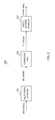
- FIG. 3 is a block diagram illustrating a configuration of speech coding apparatus 101 according to the embodiment of the present invention.
- First layer coding section 201 performs coding processing on an input signal and generates first layer coded data. First layer coding section 201 outputs the generated first layer coded data to band extension layer coding processing 202 and multiplexing section 203.
- Band extension layer coding processing 202 performs coding processing on an extension band region using the input signal and the first layer coded data received from first layer coding section 201 and generates band extension layer coded data. Band extension layer coding processing 202 outputs the band extension layer coded data to multiplexing section 203.
- Multiplexing section 203 multiplexes the first layer coded data received from first layer coding section 201 with the band extension layer coded data received from band extension layer coding processing 202, generates a bit stream and outputs the generated bit stream to transmission path 102.
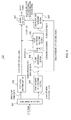
- FIG. 4 is a block diagram illustrating a configuration of speech decoding apparatus 103 according to the embodiment of the present invention.
- Demultiplexing section 301 demultiplexes the first layer coded data and the band extension layer coded data from the bit stream received from transmission path 102 (that is, coded data received from speech coding apparatus 101). Demultiplexing section 301 outputs the first layer coded data to first layer decoding section 302 and outputs the band extension layer coded data to band extension layer decoding section 303.
- First layer decoding section 302 decodes the first layer coded data received from demultiplexing section 301, generates a first layer decoded signal and outputs the generated first layer decoded signal to filter coefficient adjusting section 305 and adding section 307.
- Band extension layer decoding section 303 decodes the band extension layer coded data received from demultiplexing section 301, generates a band extension layer decoded signal and outputs the generated band extension layer decoded signal to filter determining section 304 and low-pass filter processing section 306.
- Filter determining section 304 calculates energy of the band extension layer decoded signal received from band extension layer decoding section 303 (extension band energy). Filter determining section 304 determines the necessity of filter processing in the current frame based on an energy change in the band extension layer decoded signal received from band extension layer decoding section 303. Filter determining section 304 outputs a filter flag indicating the result of determination of the necessity of filter processing to filter coefficient adjusting section 305 and low-pass filter processing section 306 and outputs the calculated extension band energy to filter coefficient adjusting section 305.
- the filter flag is information indicating whether or not to perform filter processing in the current frame, and, for example, sets "1" upon determining that filter processing is performed and "0" upon determining that filter processing is not performed. Details of filter determining section 304 will be described later.
- Filter coefficient adjusting section 305 adjusts a filter coefficient using the first layer decoded signal received from first layer decoding section 302, and the filter flag and extension band energy received from filter determining section 304.
- Filter coefficient adjusting section 305 outputs a filter coefficient to low-pass filter processing section 306 when the filter flag inputted from filter determining section 304 is "1," and outputs nothing when the filter flag inputted from filter determining section 304 is "0.” Details of filter coefficient adjusting section 305 will be described later.
- Low-pass filter processing section 306 performs filter processing on the band extension layer decoded signal using the band extension layer decoded signal received from band extension layer decoding section 303, the filter flag received from filter determining section 304 and the filter coefficient received from filter coefficient adjusting section 305. Low-pass filter processing section 306 performs, when the filter flag received from filter determining section 304 is "1," filter processing on the band extension layer decoded signal, generates a band extension layer attenuation signal and outputs the generated band extension layer attenuation signal to adding section 307.
- low-pass filter processing section 306 does not perform filter processing when the filter flag received from filter determining section 304 is "0," and outputs the band extension layer decoded signal received from band extension layer decoding section 303 to adding section 307 without processing. Details of low-pass filter processing section 306 will be described later.
- Adding section 307 adds up the first layer decoded signal received from first layer decoding section 302 and the band extension layer attenuation signal or band extension layer decoded signal received from low-pass filter processing section 306, generates and outputs an output signal.
- FIG. 5 is a block diagram illustrating a configuration of filter determining section 304 according to the embodiment of the present invention.
- Extension band energy calculation section 401 calculates energy of the band extension layer decoded signal received from band extension layer decoding section 303 and outputs the calculated energy as extension band energy Ehb to extension band average energy calculation section 402, energy comparing section 403 and filter coefficient adjusting section 305.
- Extension band average energy calculation section 402 recursively calculates extension band average energy Ehb_ave(n) of the current frame using extension band energy Ehb received from extension band energy calculation section 401, extension band average energy Ehb_ave(n-1) calculated in a frame preceding the current frame (n is a frame index indicating the current frame, that is, extension band average energy corresponding to the preceding frame in this case) and outputs the calculated extension band average energy Ehb_ave(n) in the current frame to energy comparing section 403.
- extension band average energy calculation section 402 calculates extension band average energy Ehb_ave(n) in the current frame according to equation 1.
- E hb_ave n ⁇ ⁇ ⁇ E hb + 1 - ⁇ ⁇ E hb_ave ⁇ n - 1 if voiced section E hb_ave ⁇ n - 1 otherwise
- ⁇ is a smoothing coefficient for determining the degree of smoothing of the extension band average energy and takes a value from 0 to 1.
- a smoothing coefficient on the order of ⁇ 0.15, having low time following performance.
- Energy comparing section 403 compares extension band energy Ehb received from extension band energy calculation section 401 with extension band average energy Ehb_ave(n) received from extension band average energy calculation section 402.
- extension band energy Ehb received from extension band energy calculation section 401
- extension band average energy Ehb_ave(n) received from extension band average energy calculation section 402.
- energy comparing section 403 sets filter flag FF to "1" when the value obtained by subtracting the extension band average energy from the extension band energy is equal to or above threshold TH, and sets filter flag FF to "0" when the value is smaller than threshold TH.
- Energy comparing section 403 outputs the set filter flag to filter coefficient adjusting section 305 and low-pass filter processing section 306.
- FIG. 6 is a block diagram illustrating a configuration of filter coefficient adjusting section 305 according to the embodiment of the present invention.
- First layer energy calculation section 501 calculates energy of the first layer decoded signal received from first layer decoding section 302 and outputs the calculated energy as first layer energy LB energy to filter coefficient calculation section 502.
- HBR / LB energy + HB energy HB energy
- HBR calculated according to equation 3 takes a value on the order of 0.37 to 0.43 in a vowel period. In an inactive period, HBR may take a value smaller than 0.37 and in a consonant period, HBR may take a value higher than 0.43.
- Filter coefficient calculation section 502 outputs the adjusted filter coefficient to switch section 503. The method of adjusting the filter coefficient will be described later.
- switch section 503 Only when the filter flag received from filter determining section 304 is "1," switch section 503 is switched on and outputs the filter coefficient received from filter coefficient calculation section 502 to low-pass filter processing section 306. On the other hand, when the filter flag received from filter determining section 304 is "0,” switch section 503 is switched off and outputs nothing.
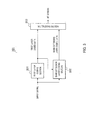
- FIG. 7 is a block diagram illustrating a configuration of low-pass filter processing section 306 according to the embodiment of the present invention.
- Filtering section 601 performs low-pass filter processing on the band extension layer decoded signal received from band extension layer decoding section 303 using the filter coefficient received from filter coefficient adjusting section 305.
- filtering section 601 performs low-pass filter processing, generates a band extension layer attenuation signal and outputs the generated extension band layer attenuation signal to adding section 307.
- filtering section 601 does not perform low-pass filter processing and outputs the band extension layer decoded signal received from band extension layer decoding section 303 to adding section 307 without processing.
- filter coefficient ⁇ in the vowel period takes a value of 0.55 to 1 and filter coefficient ⁇ takes a value on the order of 0 to 0.46.
- the filter expressed by equation 4 is a low-pass filter.
- filter coefficient ⁇ is adjusted so as to take a smaller value as HBR increases and filter coefficient ⁇ is adjusted so as to take a greater value as HBR increases.
- HBR the gain of the designed low-pass filter decreases and the amount of attenuation increases. That is, this means that as HBR takes a greater value, extension band energy attenuates to a greater extent.
- filter coefficients ⁇ and ⁇ are combined to adjust the filter characteristics of the low-pass filter in order to obtain a desired amount of attenuation even when a low-order filter is used.
- the low-pass filter processing using a primary FIR filter is low calculation processing, since it is low-order, the amount of attenuation attained by adjustment of filter coefficient ⁇ alone is insufficient.
- filter coefficient is introduced and filter coefficient is adjusted so as to become smaller as HBR increases.
- the gradient (attenuation characteristic) of the filter can be adjusted by filter coefficient ⁇ and further the overall gain can be reduced by filter coefficient ⁇ , and a desired amount of attenuation can thereby be obtained.
- the present embodiment it is possible to prevent degradation of sound quality associated with an adjustment of the spectral tilt of the output signal (decoded signal) and make less perceptible a loss of feeling of bandwidth associated with attenuation of the high-band region.
- low-pass filter processing is applied to only the decoded signal of the extension band region, and it is thereby possible to maintain the quality of the decoded signal of the wideband region.
- low-pass filter processing is performed only in selected frames, and a loss of feeling of bandwidth by low-pass filter processing can be limited to the selected frames.
- the characteristics of the low-pass filter are adaptively adjusted according to the extension band energy ratio per frame, and it is thereby possible to minimize a loss of feeling of bandwidth in frames to which low-pass filter processing is applied.
- the filter coefficient is adjusted so that signals attenuate to a greater extent as HBR increases, the present invention is not limited to this, and upper limit value TH HIGH may be set for the HBR value and the filter coefficient may be calculated only when HBR takes a value of TH LOW to TH HIGH .
- HBR When a consonant is voiced, HBR generally increases and so when HBR exceeds TH HIGH , the period is determined as a consonant period. When the period is determined as a consonant period, the feeling of clarity of an output speech (decoded signal) can be maintained by preventing the low-pass filter from operating.
- the smoothing coefficient in equation 1 is assumed to be a constant, but the present invention is not limited to this and the smoothing coefficient in equation 1 may be changed depending on whether a period is a rising period (onset period), falling period (offset period), stationary period or inactive period of a speech or the like. More specifically, for a period such as a rising period or falling period during which the energy of a speech drastically changes, a high smoothing coefficient is set to increase the time following performance of the extension band average energy and for a stationary period, a low smoothing coefficient is set. For an inactive period, when the extension band average energy is updated, the extension band average energy decreases and filter processing is always performed for the rising period that follows. In order to prevent this, the smoothing coefficient is set to "0" and the extension band average energy is not updated.
- the smoothing coefficient may also be switched depending on whether a period is a vowel period or consonant period of a speech. More specifically, the smoothing coefficient is set to a certain value during a vowel period, and the smoothing coefficient is set to "0" during a consonant period, and the extension band average energy is not updated. In this way, a temporary increase of the extension band energy in the consonant period can be excluded from calculations of the extension band average energy.
- threshold TH in equation 2 is assumed to be a constant, but the present invention is not limited to this, and threshold TH in equation 2 may also be adaptively changed in accordance with, for example, HBR. More specifically, threshold TH is set so that threshold TH is decreased as HBR increases and threshold TH is increased as HBR decreases.
- the filter coefficient is calculated according to equation 5 and equation 6, but the present invention is not limited to this, and the filter coefficient may also be calculated using a table corresponding to HBR.
- the table is set so that filter coefficient ⁇ is increased and filter coefficient ⁇ is decreased as the HBR value increases.
- the filter designed in filter adjusting section 305 is assumed to be a primary filter, but the present invention is not limited to this, and a filter whose order is higher than the primary may also be used.
- the type of filter is not limited to FIR, and an IIR (infinite impulse response) filter may also be used.
- the present invention is applied to a decoding scheme corresponding to the scalable coding scheme, but the present invention is not limited to this, and the present invention is also applicable to a decoding scheme corresponding to a coding scheme which is not the scalable configuration.
- the present invention is also applicable to a scalable configuration with three or more layers.
- both a speech signal and a music signal are included as input signals but the present invention is suitable for a speech signal in particular.
- the present invention is configured using hardware by way of example, but the invention may also be provided by software in concert with hardware.
- the functional blocks used in the description of the embodiment are typically implemented as LSI devices, which are integrated circuits.
- the functional blocks may be formed as individual chips, or a part or all of the functional blocks may be integrated into a single chip.
- LSI is used herein, but the terms "IC,” “system LSI,” “super LSI” or “ultra LSI” may be used as well depending on the level of integration.
- circuit integration is not limited to LSI and may be achieved by dedicated circuitry or a general-purpose processor other than an LSI.
- a field programmable gate array FPGA
- reconfigurable processor which allows reconfiguration of connections and settings of circuit cells in LSI may be used.
- the present invention is suitable for a speech decoding apparatus and a speech decoding method that have a scalable configuration, for example.
Landscapes
- Engineering & Computer Science (AREA)
- Computational Linguistics (AREA)
- Signal Processing (AREA)
- Health & Medical Sciences (AREA)
- Audiology, Speech & Language Pathology (AREA)
- Human Computer Interaction (AREA)
- Physics & Mathematics (AREA)
- Acoustics & Sound (AREA)
- Multimedia (AREA)
- Quality & Reliability (AREA)
- Compression, Expansion, Code Conversion, And Decoders (AREA)
Abstract
Description
- The present invention relates to a speech decoding apparatus and a speech decoding method that have a scalable configuration, for example.
- Mobile communication systems are required to transmit speech signals compressed at a low bit rate for effective utilization of radio wave resources or the like. Meanwhile, mobile communication systems are also required to realize quality improvement of call speech or call services with a high level of realism. In order to realize the quality improvement and call services, it is preferable to encode wider band speech signals or music signals or the like with high quality.
- To respond to these two mutually contradictory demands, a technique that integrates a plurality of encoding techniques hierarchically is regarded as promising. This technique hierarchically combines a first layer that encodes an input signal up to a wideband (0 to 7 kHz) with a band extension layer that uses the input signal and a decoded signal of the first layer to perform encoding up to ultra-wideband (0 to 14 kHz).
- In the following description, a signal band (0 to 7 kHz) encoded in the first layer is called a "wideband region" and a signal band (7 kHz to 14 kHz) encoded in a band extension layer is called an "extension band region."
FIG. 1 illustrates the wideband region and the extension band region in an input signal spectrum. Thus, in the technique that hierarchically performs encoding, a bit stream obtained from an coding apparatus has scalability, that is, the nature that a decoded signal can be acquired even from information of parts of a bit stream, and therefore the technique is generally called "scalable encoding (hierarchic encoding)." - Since the scalable coding scheme can flexibly respond to communication between networks of different bit rates based on its own nature, the scalable coding scheme can be said to be suitable for future network environments in which a variety of networks are integrated using IP protocols.
- There is a technique disclosed in NPL 1 as an example of realizing scalable encoding using a technique standardized in ITU-T (International Telecommunication Union Telecommunication Standardization Sector). This technique encodes signals of the wideband region in the first layer and performs encoding in the band extension layer by extending signals of the extension band region using the signals of the wideband region.
- Using such a scalable configuration makes it possible to achieve speech signals and music signals having a wider band than speech signals of high quality.
- However, when encoding is performed at a low bit rate, since fewer bits are assigned to the band extension layer, the output signal (decoded signal) produces a sound quality quite offensive to the ear (a feeling of abnormal sound). In such a case where only fewer bits are assigned to a certain frequency band, a scheme may be adopted whereby abnormal sounds are reduced by limiting the frequency band of the output signal in accordance with the bit rate and intensively assigning bits to the remaining band (NPL 2). However, at the same time, there is also a drawback in that the band limitation impairs a feeling of clarity (a feeling of bandwidth) and degrades subjective quality. That is, when the above-described band limiting scheme is adopted, a feeling of abnormal sound and a feeling of bandwidth are in a trade-off relationship.
- In order to avoid the above-described problems, a scheme may be considered which applies a low-pass filter having a moderate characteristic for an output signal instead of completely limiting the bandwidth of the above-described output signal and causes the high-band energy to attenuate so as to reduce abnormal sounds while maintaining a feeling of bandwidth. In that case, it is preferable to adaptively switch filter coefficients in accordance with characteristics of the (output) signal. PTL 1 is an example of the scheme for adaptively switching filter coefficients. This is a scheme that adjusts coefficients of a high band emphasis filter in accordance with the ratio of high-band energy in high band emphasis processing of a post filter and weakens the high band emphasis when the energy ratio is high. This makes it possible to design a filter with appropriate intensity in accordance with characteristics of a signal (decoded signal) inputted to the filter and limit a feeling of abnormal sound while maintaining a feeling of bandwidth to a certain degree.
- PTL 1
Japanese Patent Application Laid-Open No.HEI 8-202399 -
- NPL 1
Recommendation ITU-T G.718 AnnexB, March, 2010 - NPL2
3GPP TS 26.290 (June, 2005) (AMR-WB + Specification) - However, in PTL 1, a spectral tilt of a signal in the low-frequency region is changed to adjust an overall spectral tilt of the output signal. That is, when this configuration is applied to the scalable coding scheme, spectral tilts of both the wideband region and the extension band region are changed. The scalable coding scheme generally assigns more bits to the wideband region which is perceptually important to thereby improve encoding quality of the wideband region, so that adjusting the spectral tilt of the wideband region may cause degradation of sound quality.
- In PTL 1, filter coefficients are adjusted based on the ratio of the high-band energy and filter processing is performed in all frames, and therefore if a signal whose overall high-band energy is high is inputted, a state with weak high band emphasis continues for a long time. Thus, a loss of feeling of bandwidth associated with the attenuation of the high-band region is more likely to be perceived, resulting in a problem in that the sound is heard like a muffled sound. Especially, female voices contain a relatively high ratio of high-band region energy and degradation of sound quality is noticeable.
- An object of the present invention is to provide a speech decoding apparatus and a speech decoding method capable of preventing degradation of sound quality associated with an adjustment of the spectral tilt of an output signal (decoded signal) and making less perceptible a loss of feeling of bandwidth due to attenuation of the high-band region.
- A speech decoding apparatus according to an aspect of the present invention includes: an acquiring section that acquires first layer coded data obtained by encoding a speech signal of a wideband region and band extension layer coded data obtained by encoding a speech signal of an extension band region that is a higher band than the wideband region; a decoding section that decodes the first layer coded data acquired by the acquiring section to generate a first layer decoded signal and decodes the band extension layer coded data acquired by the acquiring section to generate a band extension layer decoded signal; a determining section that determines for each predetermined period of the band extension layer decoded signal whether or not to apply a low-pass filter to the band extension layer decoded signal based on an energy change of the band extension layer decoded signal; and a filter processing section that performs filter processing on the band extension layer decoded signal of the predetermined period to which the low-pass filter is determined by the determining section to be applied.
- A speech decoding method according to an aspect of the present invention includes: acquiring first layer coded data obtained by encoding a speech signal in a wideband region and band extension layer coded data obtained by encoding a speech signal in an extension band region which is higher band than the wideband region; decoding the acquired first layer coded data to generate a first layer decoded signal and decoding the acquired band extension layer coded data to generate a band extension layer decoded signal; determining for each predetermined period of the band extension layer decoded signal whether or not to apply a low-pass filter to the band extension layer decoded signal based on an energy change of the band extension layer decoded signal; and performing filter processing on the band extension layer decoded signal of the predetermined period to which the low-pass filter is determined to be applied.
- According to the present invention, it is possible to prevent degradation of sound quality associated with an adjustment of the spectral tilt of an output signal (decoded signal) and make less perceptible a loss of feeling of bandwidth due to attenuation of the high-band region.
-
-
FIG. 1 illustrates a wideband region and an extension band region of an input signal spectrum; -
FIG. 2 is a block diagram illustrating a configuration of a communication system according to an embodiment of the present invention; -
FIG. 3 is a block diagram illustrating a configuration of a speech coding apparatus according to the embodiment of the present invention; -
FIG. 4 is a block diagram illustrating a configuration of a speech decoding apparatus according to the embodiment of the present invention; -
FIG. 5 is a block diagram illustrating a configuration of a filter determining section according to the embodiment of the present invention; -
FIG. 6 is a block diagram illustrating a configuration of a filter coefficient adjusting section according to the embodiment of the present invention; and -
FIG. 7 is a block diagram illustrating a configuration of a low-pass filter processing section according to the embodiment of the present invention. - Hereinafter, an embodiment of the present invention will be described in detail with reference to the accompanying drawings.
- The present invention relates to a method of determining whether or not low-pass filter processing is necessary and a method of adaptively adjusting the amount of attenuation of an extension band region in a decoding scheme corresponding to a low bit rate scalable coding scheme. In the scalable coding scheme, it is a general practice to perform encoding with more bits assigned to the wideband region which is perceptually important, and it is therefore not preferable to apply a low-pass filter to signals of the wideband region which already has high quality. Therefore, taking advantage of the fact that a decoding scheme corresponding to a scalable coding scheme generates a decoded signal of the wideband region and a decoded signal of the extension band region independently of each other, the present invention applies a low-pass filter only to the decoded signal of the extension band region where abnormal sounds are likely to occur.
- In this case, instead of applying the low-pass filter to all frames, filter processing is performed only on frames where an abnormal sound is more likely to occur. Knowledge that a drastic change of the energy of the extension band region leads to an abnormal sound feeling is used for a method of selecting a frame subject to filter processing. More specifically, by calculating average energy of the extension band region where time following performance is moderate, and comparing the energy of the extension band region with the calculated average energy for each frame, a drastic change of the energy of the extension band region is detected. A loss of feeling of bandwidth can be minimized by detecting a drastic change of the energy and applying a low-pass filter only to frames determined to have a high possibility of generating abnormal sounds.
- The amount of attenuation of the low-pass filter is determined using the ratio of energy of the extension band region in the energy of the entire band of the decoded signal (hereinafter, referred to as "extension band energy ratio"). It is assumed that the higher the extension band energy ratio, the more likely abnormal sounds are to be heard, and therefore a filter coefficient of the low-pass filter is adaptively adjusted for each frame using the extension band energy ratio of the decoded signal in the current frame.
- Thus, it is possible to improve sound quality by making a reduction of abnormal sounds in the extension band region compatible with continuation of a feeling of bandwidth without affecting the quality of a wideband signal in the scalable coding scheme.
-
FIG. 2 is a block diagram illustrating a configuration ofcommunication system 100 according to an embodiment of the present invention. - According to
FIG. 2 ,communication system 100 is provided withspeech coding apparatus 101 andspeech decoding apparatus 103.Speech coding apparatus 101 andspeech decoding apparatus 103 are communicable with each other viatransmission path 102. -
Speech coding apparatus 101 generates a bit stream by encoding an input signal and transmits the generated bit stream tospeech decoding apparatus 103 viatransmission path 102. -
Speech decoding apparatus 103 receives the bit stream transmitted fromspeech coding apparatus 101 viatransmission path 102, decodes the received bit stream and outputs the decoded bit stream as an output signal. - Both
speech coding apparatus 101 andspeech decoding apparatus 103 are normally mounted on a base station apparatus or a communication terminal apparatus or the like and used. -
FIG. 3 is a block diagram illustrating a configuration ofspeech coding apparatus 101 according to the embodiment of the present invention. - First
layer coding section 201 performs coding processing on an input signal and generates first layer coded data. Firstlayer coding section 201 outputs the generated first layer coded data to band extensionlayer coding processing 202 andmultiplexing section 203. - Band extension
layer coding processing 202 performs coding processing on an extension band region using the input signal and the first layer coded data received from firstlayer coding section 201 and generates band extension layer coded data. Band extensionlayer coding processing 202 outputs the band extension layer coded data to multiplexingsection 203. - Multiplexing
section 203 multiplexes the first layer coded data received from firstlayer coding section 201 with the band extension layer coded data received from band extensionlayer coding processing 202, generates a bit stream and outputs the generated bit stream totransmission path 102. -
FIG. 4 is a block diagram illustrating a configuration ofspeech decoding apparatus 103 according to the embodiment of the present invention. -
Demultiplexing section 301 demultiplexes the first layer coded data and the band extension layer coded data from the bit stream received from transmission path 102 (that is, coded data received from speech coding apparatus 101).Demultiplexing section 301 outputs the first layer coded data to firstlayer decoding section 302 and outputs the band extension layer coded data to band extensionlayer decoding section 303. - First
layer decoding section 302 decodes the first layer coded data received fromdemultiplexing section 301, generates a first layer decoded signal and outputs the generated first layer decoded signal to filtercoefficient adjusting section 305 and addingsection 307. - Band extension
layer decoding section 303 decodes the band extension layer coded data received fromdemultiplexing section 301, generates a band extension layer decoded signal and outputs the generated band extension layer decoded signal to filter determiningsection 304 and low-passfilter processing section 306. -
Filter determining section 304 calculates energy of the band extension layer decoded signal received from band extension layer decoding section 303 (extension band energy).Filter determining section 304 determines the necessity of filter processing in the current frame based on an energy change in the band extension layer decoded signal received from band extensionlayer decoding section 303.Filter determining section 304 outputs a filter flag indicating the result of determination of the necessity of filter processing to filtercoefficient adjusting section 305 and low-passfilter processing section 306 and outputs the calculated extension band energy to filtercoefficient adjusting section 305. The filter flag is information indicating whether or not to perform filter processing in the current frame, and, for example, sets "1" upon determining that filter processing is performed and "0" upon determining that filter processing is not performed. Details offilter determining section 304 will be described later. - Filter
coefficient adjusting section 305 adjusts a filter coefficient using the first layer decoded signal received from firstlayer decoding section 302, and the filter flag and extension band energy received fromfilter determining section 304. Filtercoefficient adjusting section 305 outputs a filter coefficient to low-passfilter processing section 306 when the filter flag inputted fromfilter determining section 304 is "1," and outputs nothing when the filter flag inputted fromfilter determining section 304 is "0." Details of filtercoefficient adjusting section 305 will be described later. - Low-pass
filter processing section 306 performs filter processing on the band extension layer decoded signal using the band extension layer decoded signal received from band extensionlayer decoding section 303, the filter flag received fromfilter determining section 304 and the filter coefficient received from filtercoefficient adjusting section 305. Low-passfilter processing section 306 performs, when the filter flag received fromfilter determining section 304 is "1," filter processing on the band extension layer decoded signal, generates a band extension layer attenuation signal and outputs the generated band extension layer attenuation signal to addingsection 307. On the other hand, low-passfilter processing section 306 does not perform filter processing when the filter flag received fromfilter determining section 304 is "0," and outputs the band extension layer decoded signal received from band extensionlayer decoding section 303 to addingsection 307 without processing. Details of low-passfilter processing section 306 will be described later. - Adding
section 307 adds up the first layer decoded signal received from firstlayer decoding section 302 and the band extension layer attenuation signal or band extension layer decoded signal received from low-passfilter processing section 306, generates and outputs an output signal. -
FIG. 5 is a block diagram illustrating a configuration offilter determining section 304 according to the embodiment of the present invention. - Extension band
energy calculation section 401 calculates energy of the band extension layer decoded signal received from band extensionlayer decoding section 303 and outputs the calculated energy as extension band energy Ehb to extension band averageenergy calculation section 402,energy comparing section 403 and filtercoefficient adjusting section 305. - Extension band average
energy calculation section 402 recursively calculates extension band average energy Ehb_ave(n) of the current frame using extension band energy Ehb received from extension bandenergy calculation section 401, extension band average energy Ehb_ave(n-1) calculated in a frame preceding the current frame (n is a frame index indicating the current frame, that is, extension band average energy corresponding to the preceding frame in this case) and outputs the calculated extension band average energy Ehb_ave(n) in the current frame toenergy comparing section 403. - More specifically, extension band average
energy calculation section 402 calculates extension band average energy Ehb_ave(n) in the current frame according to equation 1.
[1]
- Here, α is a smoothing coefficient for determining the degree of smoothing of the extension band average energy and takes a value from 0 to 1. In the present invention, a smoothing coefficient on the order of α=0.15, having low time following performance.
-
Energy comparing section 403 compares extension band energy Ehb received from extension bandenergy calculation section 401 with extension band average energy Ehb_ave(n) received from extension band averageenergy calculation section 402. Here, by comparing extension band energy Ehb with the extension band average energy having low time following performance calculated according to equation 1, it is possible to detect a drastic fluctuation of extension band energy Ehb. - More specifically, as shown in equation 2,
energy comparing section 403 sets filter flag FF to "1" when the value obtained by subtracting the extension band average energy from the extension band energy is equal to or above threshold TH, and sets filter flag FF to "0" when the value is smaller than threshold TH.
[2]
- When the change of the extension band energy is stationary and takes substantially the same value as the extension band average energy (that is, FF=0 in equation 2), the application of the low-pass filter can be excluded by introducing threshold TH in equation 2. This makes it possible to prevent an unnecessary loss of feeling of bandwidth.
-
Energy comparing section 403 outputs the set filter flag to filtercoefficient adjusting section 305 and low-passfilter processing section 306. -
FIG. 6 is a block diagram illustrating a configuration of filtercoefficient adjusting section 305 according to the embodiment of the present invention. - First layer
energy calculation section 501 calculates energy of the first layer decoded signal received from firstlayer decoding section 302 and outputs the calculated energy as first layer energy LBenergy to filtercoefficient calculation section 502. - Filter
coefficient calculation section 502 calculates extension band energy ratio HBR using first layer energy LBenergy received from first layerenergy calculation section 501 and extension band energy HBenergy (HBenergy=Ehb) received fromfilter determining section 304 and adjusts the filter coefficient using calculated extension band energy ratio HBR. - HBR is calculated according to equation 3.
[3]
- HBR calculated according to equation 3 takes a value on the order of 0.37 to 0.43 in a vowel period. In an inactive period, HBR may take a value smaller than 0.37 and in a consonant period, HBR may take a value higher than 0.43.
- Filter
coefficient calculation section 502 outputs the adjusted filter coefficient to switchsection 503. The method of adjusting the filter coefficient will be described later. - Only when the filter flag received from
filter determining section 304 is "1,"switch section 503 is switched on and outputs the filter coefficient received from filtercoefficient calculation section 502 to low-passfilter processing section 306. On the other hand, when the filter flag received fromfilter determining section 304 is "0,"switch section 503 is switched off and outputs nothing. -
FIG. 7 is a block diagram illustrating a configuration of low-passfilter processing section 306 according to the embodiment of the present invention. -
Filtering section 601 performs low-pass filter processing on the band extension layer decoded signal received from band extensionlayer decoding section 303 using the filter coefficient received from filtercoefficient adjusting section 305. In this case, when the filter flag received fromfilter determining section 304 is "1," filteringsection 601 performs low-pass filter processing, generates a band extension layer attenuation signal and outputs the generated extension band layer attenuation signal to addingsection 307. On the other hand, when the filter flag received fromfilter determining section 304 is "0," filteringsection 601 does not perform low-pass filter processing and outputs the band extension layer decoded signal received from band extensionlayer decoding section 303 to addingsection 307 without processing. - The filter adjusted by filter
coefficient adjusting section 305 is, for example, a primary FIR (finite impulse response) filter and is configured of filter coefficients β and γ as defined by equation 4.
[4]
- These filter coefficients β and γ are calculated, for example, according to equation 5 and equation 6.
[5]

- where max(A, B) is a function that compares A and B and returns the greater value of the two.
- THLOW is a threshold that sets a minimum value of HBR in a voiced period and is on the order of THLOW=0.37.
- In addition, coef1 and coef2 are positive constants and are on the order of coef 1 = 1.045, coef 2 =7.576
- Thus, in consideration of possible values that can be taken by aforementioned HBR and THLOW, filter coefficient β in the vowel period takes a value of 0.55 to 1 and filter coefficient γ takes a value on the order of 0 to 0.46. Thus, the filter expressed by equation 4 is a low-pass filter.
- From equation 5 and equation 6, filter coefficient β is adjusted so as to take a smaller value as HBR increases and filter coefficient γ is adjusted so as to take a greater value as HBR increases. Thus, as HBR increases, the gain of the designed low-pass filter decreases and the amount of attenuation increases. That is, this means that as HBR takes a greater value, extension band energy attenuates to a greater extent.
- As described above, filter coefficients β and γ are combined to adjust the filter characteristics of the low-pass filter in order to obtain a desired amount of attenuation even when a low-order filter is used. Although the low-pass filter processing using a primary FIR filter is low calculation processing, since it is low-order, the amount of attenuation attained by adjustment of filter coefficient γ alone is insufficient. Thus, filter coefficient is introduced and filter coefficient is adjusted so as to become smaller as HBR increases. Thus, the gradient (attenuation characteristic) of the filter can be adjusted by filter coefficient γ and further the overall gain can be reduced by filter coefficient β, and a desired amount of attenuation can thereby be obtained.
- According to the present embodiment, it is possible to prevent degradation of sound quality associated with an adjustment of the spectral tilt of the output signal (decoded signal) and make less perceptible a loss of feeling of bandwidth associated with attenuation of the high-band region.
- According to the present embodiment, when the low-pass filter is applied, low-pass filter processing is applied to only the decoded signal of the extension band region, and it is thereby possible to maintain the quality of the decoded signal of the wideband region.
- According to the present embodiment, instead of performing low-pass filter processing in all frames, low-pass filter processing is performed only in selected frames, and a loss of feeling of bandwidth by low-pass filter processing can be limited to the selected frames.
- According to the present embodiment, since the characteristics of the low-pass filter are adaptively adjusted according to the extension band energy ratio per frame, and it is thereby possible to minimize a loss of feeling of bandwidth in frames to which low-pass filter processing is applied.
- In the above-described embodiment, although the filter coefficient is adjusted so that signals attenuate to a greater extent as HBR increases, the present invention is not limited to this, and upper limit value THHIGH may be set for the HBR value and the filter coefficient may be calculated only when HBR takes a value of THLOW to THHIGH. When a consonant is voiced, HBR generally increases and so when HBR exceeds THHIGH, the period is determined as a consonant period. When the period is determined as a consonant period, the feeling of clarity of an output speech (decoded signal) can be maintained by preventing the low-pass filter from operating.
- In the above-described embodiment, the smoothing coefficient in equation 1 is assumed to be a constant, but the present invention is not limited to this and the smoothing coefficient in equation 1 may be changed depending on whether a period is a rising period (onset period), falling period (offset period), stationary period or inactive period of a speech or the like. More specifically, for a period such as a rising period or falling period during which the energy of a speech drastically changes, a high smoothing coefficient is set to increase the time following performance of the extension band average energy and for a stationary period, a low smoothing coefficient is set. For an inactive period, when the extension band average energy is updated, the extension band average energy decreases and filter processing is always performed for the rising period that follows. In order to prevent this, the smoothing coefficient is set to "0" and the extension band average energy is not updated.
- In addition, the smoothing coefficient may also be switched depending on whether a period is a vowel period or consonant period of a speech. More specifically, the smoothing coefficient is set to a certain value during a vowel period, and the smoothing coefficient is set to "0" during a consonant period, and the extension band average energy is not updated. In this way, a temporary increase of the extension band energy in the consonant period can be excluded from calculations of the extension band average energy.
- In the above-described embodiment, threshold TH in equation 2 is assumed to be a constant, but the present invention is not limited to this, and threshold TH in equation 2 may also be adaptively changed in accordance with, for example, HBR. More specifically, threshold TH is set so that threshold TH is decreased as HBR increases and threshold TH is increased as HBR decreases.
- In the above-described embodiment, the filter coefficient is calculated according to equation 5 and equation 6, but the present invention is not limited to this, and the filter coefficient may also be calculated using a table corresponding to HBR. In this case, the table is set so that filter coefficient β is increased and filter coefficient γ is decreased as the HBR value increases.
- In the above-described embodiment, the filter designed in
filter adjusting section 305 is assumed to be a primary filter, but the present invention is not limited to this, and a filter whose order is higher than the primary may also be used. The type of filter is not limited to FIR, and an IIR (infinite impulse response) filter may also be used. - In the present invention, when the filter flag is "0," filter
coefficient adjusting section 305 may set filter coefficient β=1 and filter coefficient γ=0 and may output these coefficients to low-passfilter processing section 306. - In the above-described embodiment, the present invention is applied to a decoding scheme corresponding to the scalable coding scheme, but the present invention is not limited to this, and the present invention is also applicable to a decoding scheme corresponding to a coding scheme which is not the scalable configuration.
- The present invention is also applicable to a scalable configuration with three or more layers.
- In the above-described embodiment, both a speech signal and a music signal are included as input signals but the present invention is suitable for a speech signal in particular.
- In the embodiment described above, the present invention is configured using hardware by way of example, but the invention may also be provided by software in concert with hardware.
- In addition, the functional blocks used in the description of the embodiment are typically implemented as LSI devices, which are integrated circuits. The functional blocks may be formed as individual chips, or a part or all of the functional blocks may be integrated into a single chip. The term "LSI" is used herein, but the terms "IC," "system LSI," "super LSI" or "ultra LSI" may be used as well depending on the level of integration.
- In addition, the circuit integration is not limited to LSI and may be achieved by dedicated circuitry or a general-purpose processor other than an LSI. After fabrication of LSI, a field programmable gate array (FPGA), which is programmable, or a reconfigurable processor which allows reconfiguration of connections and settings of circuit cells in LSI may be used.
- Should a circuit integration technology replacing LSI appear as a result of advancements in semiconductor technology or other technologies derived from the technology, the functional blocks could be integrated using such a technology. Another possibility is the application of biotechnology, for example.
- The disclosure of the specification, the drawings, and the abstract included in Japanese Patent Application No.
2012-010264 filed on January 20, 2012 - The present invention is suitable for a speech decoding apparatus and a speech decoding method that have a scalable configuration, for example.
-
- 103 Speech decoding apparatus
- 301 Demultiplexing section
- 302 First layer decoding section
- 303 Band extension layer decoding section
- 304 Filter determining section
- 305 Filter coefficient adjusting section
- 306 Low-pass filter processing section
- 307 Adding section
Claims (4)
- A speech decoding apparatus comprising:an acquiring section that acquires first layer coded data obtained by encoding a speech signal of a wideband region and band extension layer coded data obtained by encoding a speech signal of an extension band region that is a higher band than the wideband region;a decoding section that decodes the first layer coded data acquired by the acquiring section to generate a first layer decoded signal and decodes the band extension layer coded data acquired by the acquiring section to generate a band extension layer decoded signal;a determining section that determines for each predetermined period of the band extension layer decoded signal whether or not to apply a low-pass filter to the band extension layer decoded signal based on an energy change of the band extension layer decoded signal; anda filter processing section that performs filter processing on the band extension layer decoded signal of the predetermined period to which the low-pass filter is determined by the determining section to be applied.
- The speech decoding apparatus according to claim 1, wherein the determining section calculates energy of the band extension layer decoded signal for each of the predetermined periods, and determines, when a difference between energy of the band extension layer decoded signal of the current predetermined period and average energy of the band extension layer decoded signal up to the current predetermined period is equal to or greater than a threshold, that the low-pass filter is applied to the band extension layer decoded signal of the current predetermined period.
- The speech decoding apparatus according to claim 1, further comprising a filter coefficient adjusting section that adaptively changes a filter coefficient of the low-pass filter using energy of the first layer decoded signal and energy of the band extension layer decoded signal, wherein
the filter processing section performs the filter processing using the filter coefficient. - A speech decoding method comprising:acquiring first layer coded data obtained by encoding a speech signal in a wideband region and band extension layer coded data obtained by encoding a speech signal in an extension band region which is higher band than the wideband region;decoding the acquired first layer coded data to generate a first layer decoded signal and decoding the acquired band extension layer coded data to generate a band extension layer decoded signal;determining for each predetermined period of the band extension layer decoded signal whether or not to apply a low-pass filter to the band extension layer decoded signal based on an energy change of the band extension layer decoded signal; andperforming filter processing on the band extension layer decoded signal of the predetermined period to which the low-pass filter is determined to be applied.
Applications Claiming Priority (2)
| Application Number | Priority Date | Filing Date | Title |
|---|---|---|---|
| JP2012010264 | 2012-01-20 | ||
| PCT/JP2012/008156 WO2013108343A1 (en) | 2012-01-20 | 2012-12-20 | Speech decoding device and speech decoding method |
Publications (3)
| Publication Number | Publication Date |
|---|---|
| EP2806423A1 true EP2806423A1 (en) | 2014-11-26 |
| EP2806423A4 EP2806423A4 (en) | 2015-06-24 |
| EP2806423B1 EP2806423B1 (en) | 2016-09-14 |
Family
ID=48798796
Family Applications (1)
| Application Number | Title | Priority Date | Filing Date |
|---|---|---|---|
| EP12865640.2A Active EP2806423B1 (en) | 2012-01-20 | 2012-12-20 | Speech decoding device and speech decoding method |
Country Status (4)
| Country | Link |
|---|---|
| US (1) | US9390721B2 (en) |
| EP (1) | EP2806423B1 (en) |
| JP (1) | JP6082703B2 (en) |
| WO (1) | WO2013108343A1 (en) |
Cited By (1)
| Publication number | Priority date | Publication date | Assignee | Title |
|---|---|---|---|---|
| CN110870007A (en) * | 2017-03-31 | 2020-03-06 | 弗劳恩霍夫应用研究促进协会 | Apparatus and method for determining predetermined characteristics related to artificial bandwidth limiting processing of audio signals |
Families Citing this family (4)
| Publication number | Priority date | Publication date | Assignee | Title |
|---|---|---|---|---|
| EP2830063A1 (en) | 2013-07-22 | 2015-01-28 | Fraunhofer-Gesellschaft zur Förderung der angewandten Forschung e.V. | Apparatus, method and computer program for decoding an encoded audio signal |
| JP6618884B2 (en) * | 2016-11-17 | 2019-12-11 | 株式会社東芝 | Recognition device, recognition method and program |
| CN113808597B (en) * | 2020-05-30 | 2024-10-29 | 华为技术有限公司 | Audio encoding method and audio encoding device |
| CN113808596B (en) * | 2020-05-30 | 2025-01-03 | 华为技术有限公司 | Audio encoding method and audio encoding device |
Family Cites Families (12)
| Publication number | Priority date | Publication date | Assignee | Title |
|---|---|---|---|---|
| JPH08202399A (en) | 1995-01-27 | 1996-08-09 | Kyocera Corp | Post-processing method for decoded speech |
| US20040138876A1 (en) * | 2003-01-10 | 2004-07-15 | Nokia Corporation | Method and apparatus for artificial bandwidth expansion in speech processing |
| US7783480B2 (en) * | 2004-09-17 | 2010-08-24 | Panasonic Corporation | Audio encoding apparatus, audio decoding apparatus, communication apparatus and audio encoding method |
| EP1881488B1 (en) * | 2005-05-11 | 2010-11-10 | Panasonic Corporation | Encoder, decoder, and their methods |
| KR20080049085A (en) * | 2005-09-30 | 2008-06-03 | 마츠시타 덴끼 산교 가부시키가이샤 | Speech Coder and Speech Coder |
| US20100017197A1 (en) * | 2006-11-02 | 2010-01-21 | Panasonic Corporation | Voice coding device, voice decoding device and their methods |
| US20100076755A1 (en) * | 2006-11-29 | 2010-03-25 | Panasonic Corporation | Decoding apparatus and audio decoding method |
| US8599981B2 (en) * | 2007-03-02 | 2013-12-03 | Panasonic Corporation | Post-filter, decoding device, and post-filter processing method |
| US8554548B2 (en) * | 2007-03-02 | 2013-10-08 | Panasonic Corporation | Speech decoding apparatus and speech decoding method including high band emphasis processing |
| US20110320193A1 (en) * | 2009-03-13 | 2011-12-29 | Panasonic Corporation | Speech encoding device, speech decoding device, speech encoding method, and speech decoding method |
| EP2555188B1 (en) * | 2010-03-31 | 2014-05-14 | Fujitsu Limited | Bandwidth extension apparatuses and methods |
| US8886523B2 (en) * | 2010-04-14 | 2014-11-11 | Huawei Technologies Co., Ltd. | Audio decoding based on audio class with control code for post-processing modes |
-
2012
- 2012-12-20 EP EP12865640.2A patent/EP2806423B1/en active Active
- 2012-12-20 WO PCT/JP2012/008156 patent/WO2013108343A1/en not_active Ceased
- 2012-12-20 US US14/370,080 patent/US9390721B2/en active Active
- 2012-12-20 JP JP2013554102A patent/JP6082703B2/en active Active
Cited By (4)
| Publication number | Priority date | Publication date | Assignee | Title |
|---|---|---|---|---|
| CN110870007A (en) * | 2017-03-31 | 2020-03-06 | 弗劳恩霍夫应用研究促进协会 | Apparatus and method for determining predetermined characteristics related to artificial bandwidth limiting processing of audio signals |
| CN110870007B (en) * | 2017-03-31 | 2023-10-13 | 弗劳恩霍夫应用研究促进协会 | Apparatus and method for determining characteristics associated with artificial bandwidth limitations of audio signals |
| US12067995B2 (en) | 2017-03-31 | 2024-08-20 | Fraunhofer-Gesellschaft Zur Foerderung Der Angewandten Forschung E.V. | Apparatus and method for determining a predetermined characteristic related to an artificial bandwidth limitation processing of an audio signal |
| US12175988B2 (en) | 2017-03-31 | 2024-12-24 | Fraunhofer-Gesellschaft Zur Foerderung Der Angewandten Forschung E.V. | Apparatus and methods for processing an audio signal |
Also Published As
| Publication number | Publication date |
|---|---|
| EP2806423B1 (en) | 2016-09-14 |
| WO2013108343A1 (en) | 2013-07-25 |
| EP2806423A4 (en) | 2015-06-24 |
| JPWO2013108343A1 (en) | 2015-05-11 |
| US9390721B2 (en) | 2016-07-12 |
| JP6082703B2 (en) | 2017-02-15 |
| US20140343932A1 (en) | 2014-11-20 |
Similar Documents
| Publication | Publication Date | Title |
|---|---|---|
| ES2374496T3 (en) | APPLIANCE FOR MIXING A PLURALITY OF INPUT DATA FLOWS. | |
| KR101346462B1 (en) | Signal encoding device and signal encoding method, signal decoding device and signal decoding method, and recording medium | |
| US9264094B2 (en) | Voice coding device, voice decoding device, voice coding method and voice decoding method | |
| ES2867537T3 (en) | Voice / Audio Signal Processing Procedure and Apparatus | |
| US9514757B2 (en) | Stereo signal encoding device, stereo signal decoding device, stereo signal encoding method, and stereo signal decoding method | |
| RU2585990C2 (en) | Device and method for encoding by huffman method | |
| EP1808684A1 (en) | Scalable decoding apparatus and scalable encoding apparatus | |
| EP3413307B1 (en) | Audio signal coding apparatus, audio signal decoding device, and methods thereof | |
| US9390721B2 (en) | Speech decoding device and speech decoding method | |
| US8160868B2 (en) | Scalable decoder and scalable decoding method | |
| EP1933304A1 (en) | Scalable encoding apparatus, scalable decoding apparatus, and methods of them | |
| US8599981B2 (en) | Post-filter, decoding device, and post-filter processing method | |
| EP2116997A1 (en) | Audio decoding device and audio decoding method | |
| JP5046654B2 (en) | Scalable decoding apparatus and scalable decoding method | |
| US20120209597A1 (en) | Encoding apparatus, decoding apparatus and methods thereof | |
| EP2203916B1 (en) | Adaptive tuning of the perceptual model for audio signal encoding | |
| JP5425067B2 (en) | Acoustic signal decoding apparatus and balance adjustment method in acoustic signal decoding apparatus | |
| US8595003B1 (en) | Encoder quantization architecture for advanced audio coding | |
| US20100010811A1 (en) | Stereo audio encoding device, stereo audio decoding device, and method thereof | |
| ES2540051T3 (en) | Method and decoder for attenuation of reconstructed signal regions with low accuracy | |
| EP1780895B1 (en) | Signal decoding apparatus | |
| US8977546B2 (en) | Encoding device, decoding device and method for both | |
| HK40000355A (en) | Audio signal coding apparatus, audio signal decoding device, and methods thereof | |
| HK40000355B (en) | Audio signal coding apparatus, audio signal decoding device, and methods thereof |
Legal Events
| Date | Code | Title | Description |
|---|---|---|---|
| PUAI | Public reference made under article 153(3) epc to a published international application that has entered the european phase |
Free format text: ORIGINAL CODE: 0009012 |
|
| 17P | Request for examination filed |
Effective date: 20140711 |
|
| AK | Designated contracting states |
Kind code of ref document: A1 Designated state(s): AL AT BE BG CH CY CZ DE DK EE ES FI FR GB GR HR HU IE IS IT LI LT LU LV MC MK MT NL NO PL PT RO RS SE SI SK SM TR |
|
| DAX | Request for extension of the european patent (deleted) | ||
| RA4 | Supplementary search report drawn up and despatched (corrected) |
Effective date: 20150527 |
|
| RIC1 | Information provided on ipc code assigned before grant |
Ipc: G10L 19/26 20130101AFI20150520BHEP Ipc: G10L 21/038 20130101ALI20150520BHEP Ipc: G10L 19/24 20130101ALN20150520BHEP |
|
| REG | Reference to a national code |
Ref country code: DE Ref legal event code: R079 Ref document number: 602012023179 Country of ref document: DE Free format text: PREVIOUS MAIN CLASS: G10L0019020000 Ipc: G10L0019260000 |
|
| GRAP | Despatch of communication of intention to grant a patent |
Free format text: ORIGINAL CODE: EPIDOSNIGR1 |
|
| RIC1 | Information provided on ipc code assigned before grant |
Ipc: G10L 21/038 20130101ALI20160314BHEP Ipc: G10L 19/24 20130101ALN20160314BHEP Ipc: G10L 19/26 20130101AFI20160314BHEP |
|
| INTG | Intention to grant announced |
Effective date: 20160413 |
|
| GRAS | Grant fee paid |
Free format text: ORIGINAL CODE: EPIDOSNIGR3 |
|
| GRAA | (expected) grant |
Free format text: ORIGINAL CODE: 0009210 |
|
| AK | Designated contracting states |
Kind code of ref document: B1 Designated state(s): AL AT BE BG CH CY CZ DE DK EE ES FI FR GB GR HR HU IE IS IT LI LT LU LV MC MK MT NL NO PL PT RO RS SE SI SK SM TR |
|
| REG | Reference to a national code |
Ref country code: GB Ref legal event code: FG4D |
|
| REG | Reference to a national code |
Ref country code: CH Ref legal event code: EP |
|
| REG | Reference to a national code |
Ref country code: IE Ref legal event code: FG4D |
|
| REG | Reference to a national code |
Ref country code: AT Ref legal event code: REF Ref document number: 829774 Country of ref document: AT Kind code of ref document: T Effective date: 20161015 |
|
| REG | Reference to a national code |
Ref country code: DE Ref legal event code: R096 Ref document number: 602012023179 Country of ref document: DE |
|
| REG | Reference to a national code |
Ref country code: LT Ref legal event code: MG4D |
|
| REG | Reference to a national code |
Ref country code: NL Ref legal event code: MP Effective date: 20160914 |
|
| PG25 | Lapsed in a contracting state [announced via postgrant information from national office to epo] |
Ref country code: LT Free format text: LAPSE BECAUSE OF FAILURE TO SUBMIT A TRANSLATION OF THE DESCRIPTION OR TO PAY THE FEE WITHIN THE PRESCRIBED TIME-LIMIT Effective date: 20160914 Ref country code: FI Free format text: LAPSE BECAUSE OF FAILURE TO SUBMIT A TRANSLATION OF THE DESCRIPTION OR TO PAY THE FEE WITHIN THE PRESCRIBED TIME-LIMIT Effective date: 20160914 Ref country code: NO Free format text: LAPSE BECAUSE OF FAILURE TO SUBMIT A TRANSLATION OF THE DESCRIPTION OR TO PAY THE FEE WITHIN THE PRESCRIBED TIME-LIMIT Effective date: 20161214 Ref country code: HR Free format text: LAPSE BECAUSE OF FAILURE TO SUBMIT A TRANSLATION OF THE DESCRIPTION OR TO PAY THE FEE WITHIN THE PRESCRIBED TIME-LIMIT Effective date: 20160914 Ref country code: RS Free format text: LAPSE BECAUSE OF FAILURE TO SUBMIT A TRANSLATION OF THE DESCRIPTION OR TO PAY THE FEE WITHIN THE PRESCRIBED TIME-LIMIT Effective date: 20160914 |
|
| REG | Reference to a national code |
Ref country code: AT Ref legal event code: MK05 Ref document number: 829774 Country of ref document: AT Kind code of ref document: T Effective date: 20160914 |
|
| PG25 | Lapsed in a contracting state [announced via postgrant information from national office to epo] |
Ref country code: NL Free format text: LAPSE BECAUSE OF FAILURE TO SUBMIT A TRANSLATION OF THE DESCRIPTION OR TO PAY THE FEE WITHIN THE PRESCRIBED TIME-LIMIT Effective date: 20160914 Ref country code: GR Free format text: LAPSE BECAUSE OF FAILURE TO SUBMIT A TRANSLATION OF THE DESCRIPTION OR TO PAY THE FEE WITHIN THE PRESCRIBED TIME-LIMIT Effective date: 20161215 Ref country code: SE Free format text: LAPSE BECAUSE OF FAILURE TO SUBMIT A TRANSLATION OF THE DESCRIPTION OR TO PAY THE FEE WITHIN THE PRESCRIBED TIME-LIMIT Effective date: 20160914 Ref country code: LV Free format text: LAPSE BECAUSE OF FAILURE TO SUBMIT A TRANSLATION OF THE DESCRIPTION OR TO PAY THE FEE WITHIN THE PRESCRIBED TIME-LIMIT Effective date: 20160914 |
|
| PG25 | Lapsed in a contracting state [announced via postgrant information from national office to epo] |
Ref country code: EE Free format text: LAPSE BECAUSE OF FAILURE TO SUBMIT A TRANSLATION OF THE DESCRIPTION OR TO PAY THE FEE WITHIN THE PRESCRIBED TIME-LIMIT Effective date: 20160914 Ref country code: RO Free format text: LAPSE BECAUSE OF FAILURE TO SUBMIT A TRANSLATION OF THE DESCRIPTION OR TO PAY THE FEE WITHIN THE PRESCRIBED TIME-LIMIT Effective date: 20160914 |
|
| PG25 | Lapsed in a contracting state [announced via postgrant information from national office to epo] |
Ref country code: BG Free format text: LAPSE BECAUSE OF FAILURE TO SUBMIT A TRANSLATION OF THE DESCRIPTION OR TO PAY THE FEE WITHIN THE PRESCRIBED TIME-LIMIT Effective date: 20161214 Ref country code: PL Free format text: LAPSE BECAUSE OF FAILURE TO SUBMIT A TRANSLATION OF THE DESCRIPTION OR TO PAY THE FEE WITHIN THE PRESCRIBED TIME-LIMIT Effective date: 20160914 Ref country code: BE Free format text: LAPSE BECAUSE OF FAILURE TO SUBMIT A TRANSLATION OF THE DESCRIPTION OR TO PAY THE FEE WITHIN THE PRESCRIBED TIME-LIMIT Effective date: 20160914 Ref country code: AT Free format text: LAPSE BECAUSE OF FAILURE TO SUBMIT A TRANSLATION OF THE DESCRIPTION OR TO PAY THE FEE WITHIN THE PRESCRIBED TIME-LIMIT Effective date: 20160914 Ref country code: CZ Free format text: LAPSE BECAUSE OF FAILURE TO SUBMIT A TRANSLATION OF THE DESCRIPTION OR TO PAY THE FEE WITHIN THE PRESCRIBED TIME-LIMIT Effective date: 20160914 Ref country code: PT Free format text: LAPSE BECAUSE OF FAILURE TO SUBMIT A TRANSLATION OF THE DESCRIPTION OR TO PAY THE FEE WITHIN THE PRESCRIBED TIME-LIMIT Effective date: 20170116 Ref country code: IS Free format text: LAPSE BECAUSE OF FAILURE TO SUBMIT A TRANSLATION OF THE DESCRIPTION OR TO PAY THE FEE WITHIN THE PRESCRIBED TIME-LIMIT Effective date: 20170114 Ref country code: ES Free format text: LAPSE BECAUSE OF FAILURE TO SUBMIT A TRANSLATION OF THE DESCRIPTION OR TO PAY THE FEE WITHIN THE PRESCRIBED TIME-LIMIT Effective date: 20160914 Ref country code: SK Free format text: LAPSE BECAUSE OF FAILURE TO SUBMIT A TRANSLATION OF THE DESCRIPTION OR TO PAY THE FEE WITHIN THE PRESCRIBED TIME-LIMIT Effective date: 20160914 Ref country code: SM Free format text: LAPSE BECAUSE OF FAILURE TO SUBMIT A TRANSLATION OF THE DESCRIPTION OR TO PAY THE FEE WITHIN THE PRESCRIBED TIME-LIMIT Effective date: 20160914 |
|
| REG | Reference to a national code |
Ref country code: DE Ref legal event code: R097 Ref document number: 602012023179 Country of ref document: DE |
|
| PG25 | Lapsed in a contracting state [announced via postgrant information from national office to epo] |
Ref country code: IT Free format text: LAPSE BECAUSE OF FAILURE TO SUBMIT A TRANSLATION OF THE DESCRIPTION OR TO PAY THE FEE WITHIN THE PRESCRIBED TIME-LIMIT Effective date: 20160914 |
|
| PLBE | No opposition filed within time limit |
Free format text: ORIGINAL CODE: 0009261 |
|
| STAA | Information on the status of an ep patent application or granted ep patent |
Free format text: STATUS: NO OPPOSITION FILED WITHIN TIME LIMIT |
|
| PG25 | Lapsed in a contracting state [announced via postgrant information from national office to epo] |
Ref country code: DK Free format text: LAPSE BECAUSE OF FAILURE TO SUBMIT A TRANSLATION OF THE DESCRIPTION OR TO PAY THE FEE WITHIN THE PRESCRIBED TIME-LIMIT Effective date: 20160914 |
|
| REG | Reference to a national code |
Ref country code: CH Ref legal event code: PL |
|
| 26N | No opposition filed |
Effective date: 20170615 |
|
| GBPC | Gb: european patent ceased through non-payment of renewal fee |
Effective date: 20161220 |
|
| PG25 | Lapsed in a contracting state [announced via postgrant information from national office to epo] |
Ref country code: MC Free format text: LAPSE BECAUSE OF FAILURE TO SUBMIT A TRANSLATION OF THE DESCRIPTION OR TO PAY THE FEE WITHIN THE PRESCRIBED TIME-LIMIT Effective date: 20160914 |
|
| REG | Reference to a national code |
Ref country code: FR Ref legal event code: ST Effective date: 20170831 |
|
| REG | Reference to a national code |
Ref country code: IE Ref legal event code: MM4A |
|
| PG25 | Lapsed in a contracting state [announced via postgrant information from national office to epo] |
Ref country code: CH Free format text: LAPSE BECAUSE OF NON-PAYMENT OF DUE FEES Effective date: 20161231 Ref country code: FR Free format text: LAPSE BECAUSE OF NON-PAYMENT OF DUE FEES Effective date: 20170102 Ref country code: LU Free format text: LAPSE BECAUSE OF NON-PAYMENT OF DUE FEES Effective date: 20161220 Ref country code: LI Free format text: LAPSE BECAUSE OF NON-PAYMENT OF DUE FEES Effective date: 20161231 |
|
| PG25 | Lapsed in a contracting state [announced via postgrant information from national office to epo] |
Ref country code: SI Free format text: LAPSE BECAUSE OF FAILURE TO SUBMIT A TRANSLATION OF THE DESCRIPTION OR TO PAY THE FEE WITHIN THE PRESCRIBED TIME-LIMIT Effective date: 20160914 Ref country code: GB Free format text: LAPSE BECAUSE OF NON-PAYMENT OF DUE FEES Effective date: 20161220 Ref country code: IE Free format text: LAPSE BECAUSE OF NON-PAYMENT OF DUE FEES Effective date: 20161220 |
|
| PG25 | Lapsed in a contracting state [announced via postgrant information from national office to epo] |
Ref country code: HU Free format text: LAPSE BECAUSE OF FAILURE TO SUBMIT A TRANSLATION OF THE DESCRIPTION OR TO PAY THE FEE WITHIN THE PRESCRIBED TIME-LIMIT; INVALID AB INITIO Effective date: 20121220 |
|
| PG25 | Lapsed in a contracting state [announced via postgrant information from national office to epo] |
Ref country code: CY Free format text: LAPSE BECAUSE OF FAILURE TO SUBMIT A TRANSLATION OF THE DESCRIPTION OR TO PAY THE FEE WITHIN THE PRESCRIBED TIME-LIMIT Effective date: 20160914 Ref country code: MK Free format text: LAPSE BECAUSE OF FAILURE TO SUBMIT A TRANSLATION OF THE DESCRIPTION OR TO PAY THE FEE WITHIN THE PRESCRIBED TIME-LIMIT Effective date: 20160914 |
|
| PG25 | Lapsed in a contracting state [announced via postgrant information from national office to epo] |
Ref country code: MT Free format text: LAPSE BECAUSE OF NON-PAYMENT OF DUE FEES Effective date: 20161220 |
|
| PG25 | Lapsed in a contracting state [announced via postgrant information from national office to epo] |
Ref country code: TR Free format text: LAPSE BECAUSE OF FAILURE TO SUBMIT A TRANSLATION OF THE DESCRIPTION OR TO PAY THE FEE WITHIN THE PRESCRIBED TIME-LIMIT Effective date: 20160914 Ref country code: AL Free format text: LAPSE BECAUSE OF FAILURE TO SUBMIT A TRANSLATION OF THE DESCRIPTION OR TO PAY THE FEE WITHIN THE PRESCRIBED TIME-LIMIT Effective date: 20160914 |
|
| PGFP | Annual fee paid to national office [announced via postgrant information from national office to epo] |
Ref country code: DE Payment date: 20241210 Year of fee payment: 13 |