EP2805956B1 - Gambogenic acid derivatives, preparation method and application thereof - Google Patents
Gambogenic acid derivatives, preparation method and application thereof Download PDFInfo
- Publication number
- EP2805956B1 EP2805956B1 EP12865912.5A EP12865912A EP2805956B1 EP 2805956 B1 EP2805956 B1 EP 2805956B1 EP 12865912 A EP12865912 A EP 12865912A EP 2805956 B1 EP2805956 B1 EP 2805956B1
- Authority
- EP
- European Patent Office
- Prior art keywords
- group
- gambogenic
- solution
- ice
- dichloromethane
- Prior art date
- Legal status (The legal status is an assumption and is not a legal conclusion. Google has not performed a legal analysis and makes no representation as to the accuracy of the status listed.)
- Active
Links
- COSHJOZVKGAYBP-UHFFFAOYSA-N CC1N(C)C(C)CCC1 Chemical compound CC1N(C)C(C)CCC1 COSHJOZVKGAYBP-UHFFFAOYSA-N 0.000 description 1
Images




Classifications
-
- C—CHEMISTRY; METALLURGY
- C07—ORGANIC CHEMISTRY
- C07D—HETEROCYCLIC COMPOUNDS
- C07D493/00—Heterocyclic compounds containing oxygen atoms as the only ring hetero atoms in the condensed system
- C07D493/02—Heterocyclic compounds containing oxygen atoms as the only ring hetero atoms in the condensed system in which the condensed system contains two hetero rings
- C07D493/08—Bridged systems
-
- A—HUMAN NECESSITIES
- A61—MEDICAL OR VETERINARY SCIENCE; HYGIENE
- A61K—PREPARATIONS FOR MEDICAL, DENTAL OR TOILETRY PURPOSES
- A61K31/00—Medicinal preparations containing organic active ingredients
- A61K31/33—Heterocyclic compounds
- A61K31/395—Heterocyclic compounds having nitrogen as a ring hetero atom, e.g. guanethidine or rifamycins
- A61K31/40—Heterocyclic compounds having nitrogen as a ring hetero atom, e.g. guanethidine or rifamycins having five-membered rings with one nitrogen as the only ring hetero atom, e.g. sulpiride, succinimide, tolmetin, buflomedil
- A61K31/4025—Heterocyclic compounds having nitrogen as a ring hetero atom, e.g. guanethidine or rifamycins having five-membered rings with one nitrogen as the only ring hetero atom, e.g. sulpiride, succinimide, tolmetin, buflomedil not condensed and containing further heterocyclic rings, e.g. cromakalim
-
- A—HUMAN NECESSITIES
- A61—MEDICAL OR VETERINARY SCIENCE; HYGIENE
- A61K—PREPARATIONS FOR MEDICAL, DENTAL OR TOILETRY PURPOSES
- A61K31/00—Medicinal preparations containing organic active ingredients
- A61K31/33—Heterocyclic compounds
- A61K31/395—Heterocyclic compounds having nitrogen as a ring hetero atom, e.g. guanethidine or rifamycins
- A61K31/435—Heterocyclic compounds having nitrogen as a ring hetero atom, e.g. guanethidine or rifamycins having six-membered rings with one nitrogen as the only ring hetero atom
- A61K31/44—Non condensed pyridines; Hydrogenated derivatives thereof
- A61K31/445—Non condensed piperidines, e.g. piperocaine
- A61K31/4523—Non condensed piperidines, e.g. piperocaine containing further heterocyclic ring systems
- A61K31/453—Non condensed piperidines, e.g. piperocaine containing further heterocyclic ring systems containing a six-membered ring with oxygen as a ring hetero atom
-
- A—HUMAN NECESSITIES
- A61—MEDICAL OR VETERINARY SCIENCE; HYGIENE
- A61P—SPECIFIC THERAPEUTIC ACTIVITY OF CHEMICAL COMPOUNDS OR MEDICINAL PREPARATIONS
- A61P35/00—Antineoplastic agents
-
- C—CHEMISTRY; METALLURGY
- C07—ORGANIC CHEMISTRY
- C07D—HETEROCYCLIC COMPOUNDS
- C07D493/00—Heterocyclic compounds containing oxygen atoms as the only ring hetero atoms in the condensed system
- C07D493/12—Heterocyclic compounds containing oxygen atoms as the only ring hetero atoms in the condensed system in which the condensed system contains three hetero rings
- C07D493/18—Bridged systems
-
- C—CHEMISTRY; METALLURGY
- C07—ORGANIC CHEMISTRY
- C07D—HETEROCYCLIC COMPOUNDS
- C07D493/00—Heterocyclic compounds containing oxygen atoms as the only ring hetero atoms in the condensed system
- C07D493/12—Heterocyclic compounds containing oxygen atoms as the only ring hetero atoms in the condensed system in which the condensed system contains three hetero rings
- C07D493/20—Spiro-condensed systems
-
- C—CHEMISTRY; METALLURGY
- C07—ORGANIC CHEMISTRY
- C07D—HETEROCYCLIC COMPOUNDS
- C07D519/00—Heterocyclic compounds containing more than one system of two or more relevant hetero rings condensed among themselves or condensed with a common carbocyclic ring system not provided for in groups C07D453/00 or C07D455/00
Definitions
- the present invention relates to an antitumor drug, and its preparation method and application, in particular to gambogenic acid derivatives, their preparation and use.
- cytotoxic chemotherapy drugs can cause multi-drug resistance of the tumor cells after long-term using, which reduces the efficacy of these drugs, such that doctors increase drug dosage to improve efficacy, thereby reducing drug security.
- Adverse reactions would be caused because cytotoxic drugs kill tumor cells while also killing normal cells. All cytotoxic drugs usually lead to adverse reactions in patients, and the adverse reactions are increasing in accordance with the increasing dosage. Therefore, the maximum dose of chemotherapeutic drug is strictly limited. In other words, it is not feasible to increase administration to improve drug efficacy when the drug resistance occur. But so far, not many drugs have been successfully developed for treating malignant tumor. The only feasible way is to replace another effective chemotherapy drug. Thus, more effective chemotherapy drugs shall be developed for clinicians, and the research and development of new and effective anticancer drugs is undoubtedly one of the most urgent tasks.
- Garcinia is yellow resin from gamboge trees that grow in India, Vietnam, and in Yunnan, Hunan, and Hubei areas in China, and can be used as a yellow pigment in painting.
- Garcinia is one of the Chinese medicines that inhibit tumor growth and refractory carbuncle.
- Gambogenic acid (as shown in Formula X, numbers representing a carbon sequence) is the active ingredient of Garcinia. It has been reported that gambogenic acid can inhibit tumor growth in vitro and in vivo, induce tumor cells apoptosis, and show stronger anti-tumor activities for a variety of malignant tumors due to its characteristic of selectively inhibiting tumor growth.
- Bao-Xi, Qu etc. (Chinese Journal of Clinical Oncology, 1991, Volume 18, No. 1, page 50 ) demonstrated that gambogenic acid has broad anti-cancer activities, less toxicity, and better inhibitory effect for inhibiting S180, ARS ascites carcinoma, P388 leukemia, Lewis lung cancer and La795 lung cancer.
- gambogenic acid is stronger for inhibiting mouse leukemia L1210, and the highest survival rate of gambogenic acid is extended up to 292%, while the highest survival rate of garcinia acid is only 119%.
- the research results of cell cycle of L1210 leukemia show that gambogenic acid (intravenous infusion, 10 mg/kg) can inhibit G1-S phase transition by reducing S phase cells and promoting G1 phase cells.
- gambogenic acid can be significantly used for proliferative inhibition of human colon cancer cells (HCT-8), human hepatoma cells (BEL-7402), human gastric cancer cells (BGC-823), human non-small cell lung cancer cells (A549), and human ovarian cancer (A2780).
- Gambogenic acid is a common active ingredient in traditional Chinese medicine.
- the extraction process of gambogenic acid is simple, low cost, and gambogenic acid can be obtained plentifully for developing anti-tumor drug.
- Patent CN1718183A disclosed gambogenic acid preparation can inhibit human hepatoma BEL-7402, human hepatoma 7721, human breast cancer MCF-7, and human cervical carcinoma Hela cells, wherein the human hepatoma cells are most sensitive.
- WO 00/44216 A2 discloses gambogenic acid derivates which are obtained by performing the derivatization reaction of hydroxyl, carbonyl, carboxyl and/or a 9,10-position double bond.
- WO 2004/002428 A2 discloses a general formula of gambogenic acid derivatives.
- CN 1715283 A discloses a method for preparing gambogenic acid derivatives.
- gambogenic acid obtained from nature has shortcomings including that the activity is not strong enough, and safe dose is small, thereby limiting its development and application.
- the structure of the gambogenic acid has to be modified to improve its activity and druggability.
- the objective of the present invention is to provide a gambogenic acid derivative that has better anti-tumor activity, so as to provide leading compounds for antitumor researches or new candidate compounds for antitumor drugs.
- the present invention is to provide a gambogenic acid derivative, characterized in that said gambogenic acid derivative is represented by Formula (I) as follows: wherein:
- the present invention is to provide a salt of the gambogenic acid derivatives of the invention
- the salt can be 1) the salt formed with inorganic acid such as hydrochloric acid salts, carbonates, sulfates; 2) the salt formed with an organic base; or 3) the salt formed with an inorganic base; 4) the salt formed with organic acid.
- the present invention is to provide a method for preparing a gambogenic acid derivative, as defined in claim 3
- Another aspect of the present invention is to provide an anticancer drug comprising an active ingredient of a gambogenic acid derivative according to the invention.
- the gambogenic acid anticancer drugs can be an injection, powder and other formulations.
- the tumors include, but are not limited to, human skin cancer, human thyroid cancer, human breast cancer, human gastric cancer, human colorectal cancer, human liver cancer, human lung cancer, human ovarian cancer, human head and neck cancer, human kidney cancer, human bladder cancer, human sarcoma (bone, cartilage, striated muscle, etc.), human malignant lymphoma, human leukemia, human prostate cancer, human malignant glioma, human cervical cancer, human esophageal cancer, human testicular cancer, and human malignant teratoma.
- the gambogenic acid derivative of the present invention has better antitumor activity, better security and simplified preparation by experimental verification.
- the present invention provides a gambogenic acid derivative, a salt of said gambogenic acid derivative, and the preparation method and use of said gambogenic acid derivative.
- the structure of the gambogenic acid derivative of the present invention is as shown in Formula (I).
- the first embodiment of the preparation method of a gambogenic acid derivative is shown in FIG. 1 , the raw material is gambogenic acid, with R 2 and R 3 introduced, wherein the order of the introduction of R 2 and R 3 can be adjusted.
- the second embodiment of the preparation method of gambogenic acid derivatives is as shown in FIG.2 , the raw material is gambogenic acid or the gambogenic acid derivative prepared from the first embodiment, and carbonyl group of C 6 carbon is reduced to a hydroxyl group.
- the third embodiment of the preparation method for gambogenic acid derivatives is as shown in FIG.3 , the raw material is gambogenic acid or the gambogenic acid derivative prepared from the first embodiment or the second embodiment, and then the gambogenic acid derivative is obtained by esterification with R 4 OH, or by acidification with R 5 R 6 NH or
- the fourth embodiment of the preparation method for gambogenic acid derivatives is as shown in FIG.4 , the raw material is gambogenic acid, or the gambogenic acid derivative as shown in Formula (VII), or the gambogenic acid derivative as shown in Formula (VIII), and the double bond between C 8 and C 9 was oxidized to prepare gambogenic acid derivative.
- the fifth embodiment of the preparation method for gambogenic acid derivatives preparation is as shown in FIG.5 , the raw material is gambogenic acid, or the gambogenic acid derivative as shown in Formula (VII), or the gambogenic acid derivative as shown in Formula (VIII), and the gambogenic acid derivative obtained by addition on double bond between the C 8 and C 9 by the organic copper reagent RCu.
- A is -CO- or-HC(OH)-;
- R 1 is selected from: 1) -OR 4 ; wherein R 4 is selected from the group consisting of any one of the following: hydrogen, straight chain or branched chain C 1 to C 10 alkyl group, or alkyl group containing optionally 1 to 3 substituted groups including oxygen group, halogen, C 1 to C 10 alkoxy group, acyloxy group, C 1 to C 10 alkoxycarbonyl group, aryloxy group; C 3 -C 8 cycloalkyl group, C 1 to C 10 alkyl group substituted by 1, 2 or 3 heteroatoms; alkylaryl group including C 1 to C 10 alkyl group substituted by aromatic group and C 1 to C 10 alkyl group optionally substituted by 1 to 3 substituted aromatic groups including acyl group,-OCH 2 O-, halogen, haloalkyl group, aryl group, C 3 to C 8
- R 5 and R 6 may be identical or different, and are independently selected from any one of the substituted groups as follows: hydrogen; straight chain or branched chain C 1 to C 10 alkyl group or C 1 to C 10 alkyl group containing optionally 1 to 3 substituted groups including oxygen group, halogen, C 1 to C 10 alkoxy group, acyloxy group, C 1 to C 10 alkoxyacyl group, aryloxy group; C 3 to C 8 cycloalkyl group; C 1 to C 10 alkyl group substituted by 1, 2 or 3 heteroatoms; alkylaryl group including C 1 to C 10 alkyl group substituted by aromatic group and C 1 to C 10 alkyl group substituted by optionally 1 to 3 substituted aromatic groups including acyl group,-OCH 2 O-, halogen, haloalkyl group, hydroxyl group, aryl group, C 3 to C 8 cycloalkyl group, C 1 to C 10 alkyl group, hydroxyl group,
- R, R 2 , R 3 , R 4 are not simultaneously hydrogen on Formula (I).
- R 1 is a methyl group in Formula (VI).
- reaction solution was poured into 50 ml water, extracted with ether, washed with saline, dried by anhydrous sodium sulfate, and chromatographed (eluent is ethyl acetate/petroleum ether, the volume ratio is 1:12) to obtain 9 mg orange-yellow jelly.
- R 1 is methyl group
- R 2 is methyl group
- R 3 is H in Formula (III).
- reaction solution was poured into 50 ml water, and extracted with ether, washed with water, dried and chromatographed (eluent is ethyl acetate/petroleum ether, the volume ratio is 1:12) to obtain 12 mg orange-yellow jelly.
- R 1 is an ethyl group in Formula (VI).
- reaction solution was poured into 50 ml water, extracted with ether, chromatographed (eluent is ethyl acetate/petroleum ether, the volume ratio is 1:12) to obtain 9 mg orange-yellow jelly.
- R 1 is ethyl group
- R 2 is ethyl group
- R 3 is H in Formula (III).
- reaction solution was poured into 50 ml water, extracted with ether, washed with water, dried and chromatographed (eluent is ethyl acetate/petroleum ether) (the volume ratio is 1:12) to obtain 9 mg orange-yellow jelly.
- R 1 is in Formula (VI).
- reaction solution was diluted with 50 ml dichloromethane, washed with 0.5 M aqueous sulfuric acid solution and saturated saline, dried over anhydrous sodium sulfate and then the solvent was evaporated, chromatographed (eluent is ethyl acetate/petroleum ether/diethyl chloromethane) (the volume ratio is 1:4:1), and then eluted to obtain 5 mg yellow jelly.
- R 1 is -N(CH 3 2CH 3 ) 2 .
- reaction solution was diluted with 50 ml dichloromethane, washed with 0.5 M aqueous sulfuric acid solution and saturated saline, dried with anhydrous sodium sulfate and then the solvent was evaporated, chromatographed (eluent is ethyl acetate/petroleum ether/diethyl chloromethane) (the volume ratio is 1:4:1), and then eluted to obtain 7 mg yellow jelly.
- reaction solution was warmed naturally to room temperature and stirred to obtain a reaction solution. 3 mg HOBT, 5 ⁇ 1 morpholine were added to the reaction solution additionally. After completion of the reaction, the reaction solution was diluted with 50 ml dichloromethane, and then washed with 0.5 M sulfuric acid aqueous solution and saturated saline, dried with anhydrous sodium sulfate, and then the solvent was evaporated, chromatographed (eluent is chloroform/ethyl acetate) (the volume ratio is 8:1), and then eluted to obtain 5 mg orange-yellow jelly.
- reaction solution 3 M hydrochloric acid aqueous solution was added to quench the reaction to form a reaction solution.
- the reaction solution was diluted with 50 ml ethyl acetate, and then washed with 0.5 M hydrochloric acid aqueous solution and saturated saline, and then dried with anhydrous sodium sulfate, and then the solvent was evaporated, chromatographed (eluent is ethyl acetate acetate/dichloromethane) (the volume ratio is 1: 4), and then eluted to obtain 9 mg orange-yellow jelly.
- reaction solution 50 mg gambogenic acid, 0.5 ml and 2M sodium hydroxide aqueous solution, and 0.2 ml hydrogen peroxide were added into a 10 ml reaction flask and reacted at room temperature to form a reaction solution.
- reaction solution was extracted by ethyl acetate, and washed with 1.0 M hydrochloric acid aqueous solution and saturated saline, and dried with anhydrous sodium sulfate, and then the solvent was evaporated, chromatographed (eluent is ethyl acetate/petroleum ether) (the volume ration is 1: 3), and then eluted to obtain 12 mg orange-yellow jelly.
- A is -CO-, R 1 is-NH-(CH 2 ) 10 -CH 3 .
- Formula (VI) 20 mg gambogenic acid and 0.5 ml dichloromethane were ice-bath cooled to 0°C to form an ice-solution in a 10 ml reaction flask. 10 mg EDCI, 4.5 mg HOBT, 6 ⁇ 1 n-butylamine and 0.5 ml dichloromethane were added into the ice-solution. The ice-solution was warmed naturally to room temperature and stirred to obtain a reaction solution.
- reaction solution was diluted with 50 ml dichloromethane, and then washed with 0.5 M sulfuric acid aqueous solution and saturated saline, dried with anhydrous sodium sulfate, and then the solvent was evaporated, chromatographed by silicagel column (eluent is ethyl acetate/petroleum ether/dichloromethane) (the volume ratio is 1: 8: 1), and then eluted to obtain 7 mg orange-yellow jelly.
- A is -CO-, R 1 is-NH-(CH 2 ) 10 -CH 3 .
- Formula (VI)
- reaction solution was diluted with 50 ml dichloromethane, and then washed with 0.5 M sulfuric acid aqueous solution and saturated saline, dried with anhydrous sodium sulfate, and then the solvent was evaporated, chromatographed by silicagel column (eluent is ethyl acetate/petroleum ether/dichloromethane (the volume ratio is 1: 8: 1), and then eluted to obtain 7 mg orange-yellow jelly.
- A is -CO-, R 1 is-NH-CH(CH 3 ) 2 .
- Formula (VI) 20 mg gambogenic acid and 0.5 ml dichloromethane were ice-bath cooled to 0°C to form an ice-solution in a 10 ml reaction flask. 10 mg EDCI, 4.5 mg HOBT, 5 ⁇ 1 isopropylamine and 0.5 ml dichloromethane were added into the ice-solution. The ice-solution was warmed naturally to room temperature and stirred to obtain a reaction solution.
- reaction solution was diluted with 50 ml dichloromethane, and then washed with 0.5 M sulfuric acid aqueous solution and saturated saline, dried with anhydrous sodium sulfate, and then the solvent was evaporated, chromatographed by silicagel column (eluent is ethyl acetate/petroleum ether/dichloromethane) (the volume ratio is 1: 8: 1), and then eluted to obtain 7 mg orange-yellow jelly.
- A is-CO-, R 1 is-NHR 5 R 6 , wherein R 5 and R 6 are both propyl group in Formula (VI).
- reaction solution was diluted with 50 ml dichloromethane, and then washed with 0.5 M sulfuric acid aqueous solution and saturated saline, dried with anhydrous sodium sulfate, and then the solvent was evaporated, chromatographed by silicagel column (eluent is ethyl acetate/petroleum ether/dichloromethane (the volume ratio is 1: 4: 1), and then eluted to obtain 7 mg orange-yellow jelly.
- A is -CO-, R 1 is-NH-C (CH 3 )-CH 2 -CH 3 in Formula (VI).
- reaction solution was diluted with 50 ml dichloromethane, and then washed with 0.5 M sulfuric acid aqueous solution and saturated saline, dried with anhydrous sodium sulfate, and then the solvent was evaporated, chromatographed by silicagel column (eluent is ethyl acetate/petroleum ether/dichloromethane (the volume ratio is 1: 8: 1), and then eluted to obtain 7 mg orange-yellow jelly.
- reaction solution was diluted with 50 ml dichloromethane, and then washed with 0.5 M sulfuric acid aqueous solution and saturated saline by 3 times, dried with anhydrous sodium sulfate, and then the solvent was evaporated, chromatographed (eluent is ethyl acetate/benzene) (the volume ratio is 1: 8), and then eluted to obtain 5 mg orange-yellow jelly.
- reaction solution was diluted with 50 ml dichloromethane, and then washed with 0.5 M sulfuric acid aqueous solution and saturated saline by 3 times, dried with anhydrous sodium sulfate, and then the solvent was evaporated, chromatographed (eluent is ethyl acetate/petroleum ether) (the volume ratio is 1: 4), and then eluted to obtain 6 mg orange-yellow jelly.
- reaction solution was diluted with 50 ml dichloromethane, and then washed with 0.5 M sulfuric acid aqueous solution and saturated saline, dried with anhydrous sodium sulfate, and then the solvent was evaporated, chromatographed (eluent is ethyl acetate/petroleum ether/dichloromethane) (the volume ratio is 1: 4: 1), and then eluted to obtain 7 mg orange-yellow jelly.
- R 1 is-NH-(CH) 2 -O-CH 2 -CH 3 .
- reaction solution was diluted with 50 ml dichloromethane, and then washed with 0.5 M sulfuric acid aqueous solution and saturated saline, dried with anhydrous sodium sulfate, and then the solvent was evaporated, chromatographed (eluent is ethyl acetate/petroleum ether/dichloromethane) (the volume ratio is 1: 4: 1), and then eluted to obtain 5 mg orange-yellow jelly.
- reaction solution was diluted with 50 ml dichloromethane, and then washed with 0.5 M sulfuric acid aqueous solution and saturated saline, dried with anhydrous sodium sulfate, and then the solvent was evaporated, chromatographed (eluent is ethyl acetate/petroleum ether/dichloromethane) (the volume ratio is 1: 4: 1), and then eluted to obtain 7 mg orange-yellow jelly.
- R 1 is-NH-CH 2 -CO-O-CH 2 -CH 3 .
- reaction solution was diluted with 50 ml dichloromethane, and then washed with 0.5 M sulfuric acid aqueous solution and saturated saline, dried with anhydrous sodium sulfate, and then the solvent was evaporated, chromatographed (eluent is ethyl acetate/petroleum ether/dichloromethane) (the volume ratio is 1: 4: 1), and then eluted to obtain 7 mg orange-yellow jelly.
- reaction solution was diluted with 50 ml dichloromethane, and then washed with 0.5 M sulfuric acid aqueous solution and saturated saline, dried with anhydrous sodium sulfate, and then the solvent was evaporated, chromatographed (eluent is ethyl acetate/methanol) (the volume ratio is 10: 1), and then eluted to obtain 7 mg orange-yellow jelly.
- reaction solution was diluted with 50 ml dichloromethane, and then washed with 0.5 M sulfuric acid aqueous solution and saturated saline, dried with anhydrous sodium sulfate, and then the solvent was evaporated, chromatographed (eluent is ethyl acetate/petroleum ether/dichloromethane) (the volume ratio is 1: 4: 1), and then eluted to obtain 7 mg orange-yellow jelly.
- reaction solution was diluted with 50 ml dichloromethane, and then washed with 0.5 M sulfuric acid aqueous solution and saturated saline, dried with anhydrous sodium sulfate, and then the solvent was evaporated, chromatographed (eluent is ethyl acetate/petroleum ether/dichloromethane) (the volume ratio is 1: 4: 1), and then eluted to obtain 7 mg orange-yellow jelly.
- reaction solution was diluted with 50 ml dichloromethane, and then washed with 0.5 M sulfuric acid aqueous solution and saturated saline, dried with anhydrous sodium sulfate, and then the solvent was evaporated, chromatographed (eluent is ethyl acetate/petroleum ether/dichloromethane) (the volume ratio is 1: 4: 1), and then eluted to obtain 7 mg orange-yellow jelly.
- reaction solution was diluted with 50 ml dichloromethane, and then washed with 0.5 M sulfuric acid aqueous solution and saturated saline, dried with anhydrous sodium sulfate, and then the solvent was evaporated, chromatographed (eluent is ethyl acetate/petroleum ether) (the volume ratio is 1: 8), and then eluted to obtain 5 mg orange-yellow jelly.
- reaction solution was diluted with 50 ml dichloromethane, and then washed with 0.5 M sulfuric acid aqueous solution and saturated saline, dried with anhydrous sodium sulfate, and then the solvent was evaporated, chromatographed (eluent is ethyl acetate/petroleum ether/dichloromethane) (the volume ratio is 1: 4: 1), and then eluted to obtain 4 mg orange-yellow jelly.
- reaction solution was diluted with 50 ml dichloromethane, and then washed with 0.5 M sulfuric acid aqueous solution and saturated saline, dried with anhydrous sodium sulfate, and then the solvent was evaporated, chromatographed (eluent is ethyl acetate/petroleum ether/dichloromethane) (the volume ratio is 1: 4: 1), and then eluted to obtain 7 mg orange-yellow jelly.
- R 2 and R 3 are H, and R is methyl group in Formula (V).
- the compounds synthesized from the present invention were studied by sulforhodamine B protein staining (sulfothodalnine B, SRB) and mieroculture tetrozohuln (MTT) reduction method respectively for in vitro anti-tumor activity ( Cancer Res., 1988, 48 (3): 589 ).
- the concentration gradients of the test compounds of the present invention are 10 -4 M, 10 -5 M, 10 -6 M, 10 -7 M, 10 -8 M, and the test compounds are 6-methoxy methyl ester gambogenic acid, ethyl ester gambogenic acid, 6-ethoxy ethyl ester gambogenic acid, 6-acyl gambogenic acid, piperidine gambogenic acid, diethylamide gambogenic acyl, morpholine gambogenic acid, and 12-hydroxy gambogenic acid.
- the test compounds and positive control gambogenic acid were diluted with dimethyl sulfoxide.
- Inhibition rate [ control group OD value ⁇ administered group OD value / control group OD value ] ⁇ 100 %
- Human oral squamous cells carcinoma Cal27 were cultured in DMEM containing 10% fetal bovine serum (FBS), the cells with long-growth phase were forming suspension and culturing in 96-well plates. 10 ⁇ l test compounds of different concentrations as experimental group were added into each well of the 96-well plates. Blank control group received an equal volume containing the highest concentration of solvent (ie, 10 -4 M dimethyl sulfoxide) in DMEM.
- solvent ie, 10 -4 M dimethyl sulfoxide
- Human breast cancer cells MCF-7 were cultured in DMEM containing 10% FBS, the cell with long-growth phase was formed into suspension and cultured in 96-well plates.
- the test compounds as experimental group with different concentrations were added into each well of the 96-well plates.
- Blank control group received an equal volume containing the highest concentration of solvent (ie, 10 -4 M dimethyl sulfoxide) in DMEM. After incubation at 37°C under 5% carbon dioxide conditions for 72 hours, each well was added with MTT to 1 mg/ml final concentration for incubation for 4 hours. The supernatant solution in each well was aspirated and added with 200 ⁇ l DMSO to dissolve crystals, and then OD values were measured at 490 nm by an automatic plate reader spectrophotometer. A tumor cell group without drugs is a blank control group. The growth inhibition rates of tumor cells were calculated and the results were as shown in Table 2.
- Tables 1 and 2 of the present invention indicate that gambogenic acid derivatives have a stronger growth inhibition of tumor cell.
Landscapes
- Chemical & Material Sciences (AREA)
- Organic Chemistry (AREA)
- Health & Medical Sciences (AREA)
- Life Sciences & Earth Sciences (AREA)
- General Health & Medical Sciences (AREA)
- Veterinary Medicine (AREA)
- Public Health (AREA)
- Pharmacology & Pharmacy (AREA)
- Medicinal Chemistry (AREA)
- Animal Behavior & Ethology (AREA)
- Epidemiology (AREA)
- Chemical Kinetics & Catalysis (AREA)
- General Chemical & Material Sciences (AREA)
- Nuclear Medicine, Radiotherapy & Molecular Imaging (AREA)
- Organic Low-Molecular-Weight Compounds And Preparation Thereof (AREA)
- Pharmaceuticals Containing Other Organic And Inorganic Compounds (AREA)
- Heterocyclic Carbon Compounds Containing A Hetero Ring Having Oxygen Or Sulfur (AREA)
Description
- The present invention relates to an antitumor drug, and its preparation method and application, in particular to gambogenic acid derivatives, their preparation and use.
- As people have longer lifespan with changes in diet habits, cancer patients have increased from year to year. WHO data shows that cancer has become a major fatal disease, and cancer patients will continue to increase; cancer as the leading cause of death in 2008 accounted for 13.8%, and is expected to account for more than 15% in 2015.
- Currently, the clinical treatments of malignant tumor are primarily by surgery, radiotherapy, and chemotherapy, either alone or in combination. In recent years, the survival time of cancer patients was significantly prolonged by chemotherapy. However, the existing anticancer drugs still cannot meet the clinical needs due to the high variability of tumor cells and the generation of multi-drug resistance. Cytotoxic drugs as a major component of chemotherapy in cancer treatment have played a very important role. So far, these drugs still occupy major market share of anticancer drugs, including drugs obtained from natural products, such as Taxol drugs, etc., and they become common anti-cancer drugs in clinical practices because of their therapeutic effects.
- Nevertheless, cytotoxic chemotherapy drugs can cause multi-drug resistance of the tumor cells after long-term using, which reduces the efficacy of these drugs, such that doctors increase drug dosage to improve efficacy, thereby reducing drug security. Adverse reactions would be caused because cytotoxic drugs kill tumor cells while also killing normal cells. All cytotoxic drugs usually lead to adverse reactions in patients, and the adverse reactions are increasing in accordance with the increasing dosage. Therefore, the maximum dose of chemotherapeutic drug is strictly limited. In other words, it is not feasible to increase administration to improve drug efficacy when the drug resistance occur. But so far, not many drugs have been successfully developed for treating malignant tumor. The only feasible way is to replace another effective chemotherapy drug. Thus, more effective chemotherapy drugs shall be developed for clinicians, and the research and development of new and effective anticancer drugs is undoubtedly one of the most urgent tasks.
- Garcinia (Gamboge) is yellow resin from gamboge trees that grow in India, Vietnam, and in Yunnan, Hunan, and Hubei areas in China, and can be used as a yellow pigment in painting. The book "Compendium of Materia Medica" authored by Li Shizhen of Ming Dynasty cited that "Garcinia used for painter was decocted". Garcinia is one of the Chinese medicines that inhibit tumor growth and refractory carbuncle.
- Gambogenic acid (as shown in Formula X, numbers representing a carbon sequence) is the active ingredient of Garcinia. It has been reported that gambogenic acid can inhibit tumor growth in vitro and in vivo, induce tumor cells apoptosis, and show stronger anti-tumor activities for a variety of malignant tumors due to its characteristic of selectively inhibiting tumor growth.

- Bao-Xi, Qu etc. (Chinese Journal of Clinical Oncology, 1991, Volume 18, No. 1, page 50) demonstrated that gambogenic acid has broad anti-cancer activities, less toxicity, and better inhibitory effect for inhibiting S180, ARS ascites carcinoma, P388 leukemia, Lewis lung cancer and La795 lung cancer. In comparison with garcinia acid (another anti-tumor components extracted from Garcinia), gambogenic acid is stronger for inhibiting mouse leukemia L1210, and the highest survival rate of gambogenic acid is extended up to 292%, while the highest survival rate of garcinia acid is only 119%. The research results of cell cycle of L1210 leukemia show that gambogenic acid (intravenous infusion, 10 mg/kg) can inhibit G1-S phase transition by reducing S phase cells and promoting G1 phase cells.
- Cheng Hui, etc. (Herbal, 2008, Volume 39 No. 2, page 236) observed proliferative inhibition of a variety of malignant cells by gambogenic acid via MTT method. The result showed that gambogenic acid can be significantly used for proliferative inhibition of human colon cancer cells (HCT-8), human hepatoma cells (BEL-7402), human gastric cancer cells (BGC-823), human non-small cell lung cancer cells (A549), and human ovarian cancer (A2780).
- Gambogenic acid is a common active ingredient in traditional Chinese medicine. The extraction process of gambogenic acid is simple, low cost, and gambogenic acid can be obtained plentifully for developing anti-tumor drug.
- Patent
CN1718183A disclosed gambogenic acid preparation can inhibit human hepatoma BEL-7402, human hepatoma 7721, human breast cancer MCF-7, and human cervical carcinoma Hela cells, wherein the human hepatoma cells are most sensitive. PatentCN1718184A disclosed gambogenic acid complexes combined with anticancer drugs such as moroxydine, amantadine, cytarabine, and matrine for the treatment of liver cancer, colon cancer, and lung cancer due to prominent efficacy and lower irritation and toxicity. PatentCN101947204A disclosed solid lipid nanoparticles of gambogenic acid: preparing gambogenic acid to make solid nanoparticles to improve bioavailability, reduce irritation, and prolong efficacy time. -
WO 00/44216 A2 -
WO 2004/002428 A2 discloses a general formula of gambogenic acid derivatives. -
CN 1715283 A discloses a method for preparing gambogenic acid derivatives. - In comparison with the current clinical drugs, gambogenic acid obtained from nature has shortcomings including that the activity is not strong enough, and safe dose is small, thereby limiting its development and application. Thus, the structure of the gambogenic acid has to be modified to improve its activity and druggability.
- To overcome the shortcomings that the activity of the gambogenic acid is not strong enough, the objective of the present invention is to provide a gambogenic acid derivative that has better anti-tumor activity, so as to provide leading compounds for antitumor researches or new candidate compounds for antitumor drugs.
- In one aspect, the present invention is to provide a gambogenic acid derivative, characterized in that said gambogenic acid derivative is represented by Formula (I) as follows:
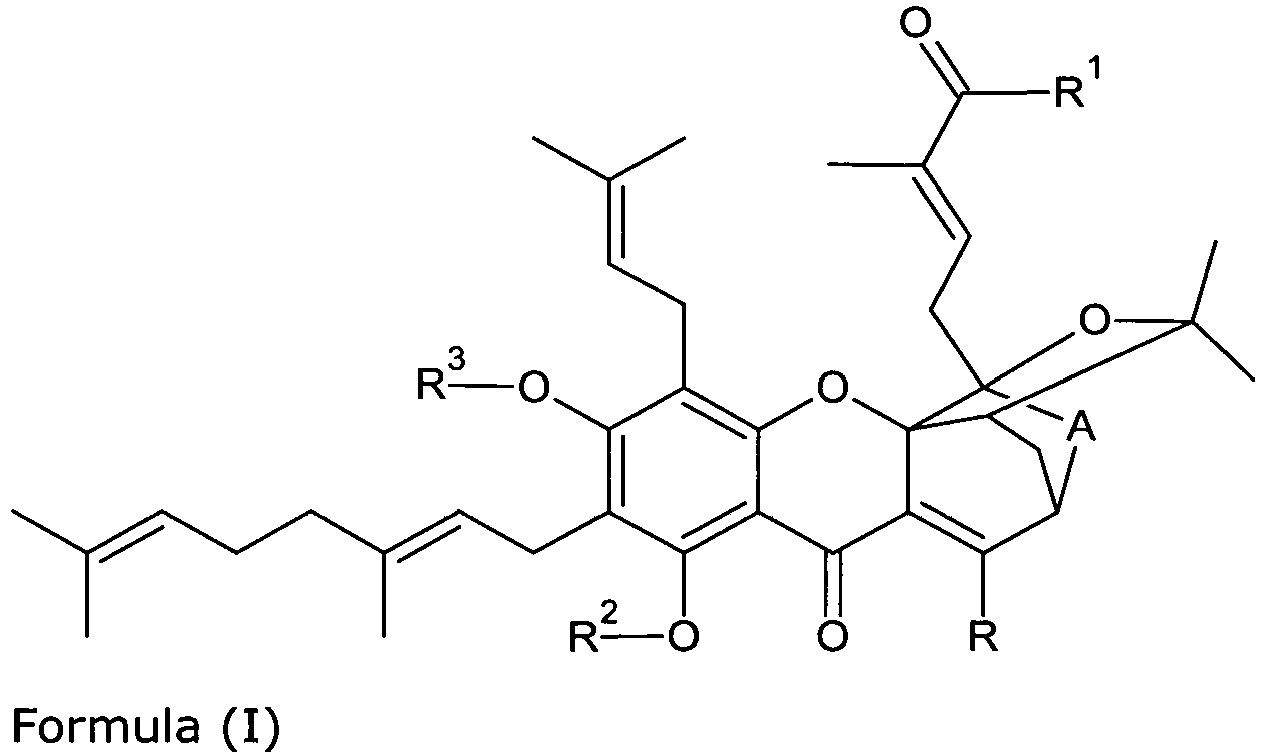
- A is -CO-;
- R2 is hydrogen;
- R3 is hydrogen;
- R is hydrogen;
- R1 is

- R5 is hydrogen and R6 is -CH2CH2OCH2CH3.
- In a second aspect, the present invention is to provide a salt of the gambogenic acid derivatives of the invention, the salt can be 1) the salt formed with inorganic acid such as hydrochloric acid salts, carbonates, sulfates; 2) the salt formed with an organic base; or 3) the salt formed with an inorganic base; 4) the salt formed with organic acid.
- In a third aspect, the present invention is to provide a method for preparing a gambogenic acid derivative, as defined in
claim 3 - Another aspect of the present invention is to provide an anticancer drug comprising an active ingredient of a gambogenic acid derivative according to the invention. The gambogenic acid anticancer drugs can be an injection, powder and other formulations.
- The tumors include, but are not limited to, human skin cancer, human thyroid cancer, human breast cancer, human gastric cancer, human colorectal cancer, human liver cancer, human lung cancer, human ovarian cancer, human head and neck cancer, human kidney cancer, human bladder cancer, human sarcoma (bone, cartilage, striated muscle, etc.), human malignant lymphoma, human leukemia, human prostate cancer, human malignant glioma, human cervical cancer, human esophageal cancer, human testicular cancer, and human malignant teratoma.
- The gambogenic acid derivative of the present invention has better antitumor activity, better security and simplified preparation by experimental verification.
-
-
Fig.1 is a flow chart of a method for gambogenic acid derivative; -
Fig.2 is a flow chart of another method for gambogenic acid derivative; -
Fig.3 is a flow chart of a third embodiment for gambogenic acid derivative; -
Fig.4 is a flow chart of a fourth embodiment for gambogenic acid derivative; -
Fig.5 is a flow chart of a fifth embodiment for gambogenic acid derivative. - The present invention provides a gambogenic acid derivative, a salt of said gambogenic acid derivative, and the preparation method and use of said gambogenic acid derivative.
- The structure of the gambogenic acid derivative of the present invention is as shown in Formula (I). The first embodiment of the preparation method of a gambogenic acid derivative is shown in
FIG. 1 , the raw material is gambogenic acid, with R2 and R3 introduced, wherein the order of the introduction of R2 and R3 can be adjusted. - The second embodiment of the preparation method of gambogenic acid derivatives is as shown in
FIG.2 , the raw material is gambogenic acid or the gambogenic acid derivative prepared from the first embodiment, and carbonyl group of C6 carbon is reduced to a hydroxyl group. - The third embodiment of the preparation method for gambogenic acid derivatives is as shown in
FIG.3 , the raw material is gambogenic acid or the gambogenic acid derivative prepared from the first embodiment or the second embodiment, and then the gambogenic acid derivative is obtained by esterification with R4OH, or by acidification with R5R6NH or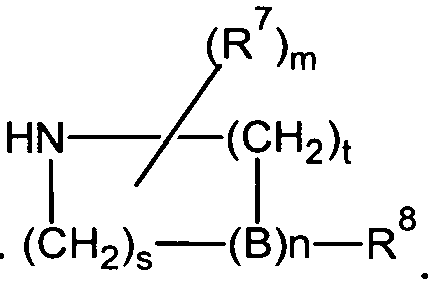
- The fourth embodiment of the preparation method for gambogenic acid derivatives is as shown in
FIG.4 , the raw material is gambogenic acid, or the gambogenic acid derivative as shown in Formula (VII), or the gambogenic acid derivative as shown in Formula (VIII), and the double bond between C8 and C9 was oxidized to prepare gambogenic acid derivative. - The fifth embodiment of the preparation method for gambogenic acid derivatives preparation is as shown in
FIG.5 , the raw material is gambogenic acid, or the gambogenic acid derivative as shown in Formula (VII), or the gambogenic acid derivative as shown in Formula (VIII), and the gambogenic acid derivative obtained by addition on double bond between the C8 and C9 by the organic copper reagent RCu. - As shown in
FIG.1 to FIG.5 and Formulae (I) to (VIII):
A is -CO- or-HC(OH)-; R1 is selected from:
1) -OR4;
wherein R4 is selected from the group consisting of any one of the following: hydrogen, straight chain or branched chain C1 to C10 alkyl group, or alkyl group containing optionally 1 to 3 substituted groups including oxygen group, halogen, C1 to C10 alkoxy group, acyloxy group, C1 to C10 alkoxycarbonyl group, aryloxy group; C3-C8 cycloalkyl group, C1 to C10 alkyl group substituted by 1, 2 or 3 heteroatoms; alkylaryl group including C1 to C10 alkyl group substituted by aromatic group and C1 to C10 alkyl group optionally substituted by 1 to 3 substituted aromatic groups including acyl group,-OCH2O-, halogen, haloalkyl group, aryl group, C3 to C8 cycloalkyl group, C1 to C10 alkyl group, hydroxyl group, acyloxy group, C1 to C10 alkoxy group; heteroarylalkyl group including C1 to C10 alkoxy group substituted by heteroaryl group, and C1 to C10 alkyl group optionally substituted by any heteroaryl group including heteroaryl group, C1 to C10 alkyl group, aralkyl group, C3 to C8 cycloalkyl group, C1 to C10 alkoxycarbonyl group, carbamoyl group, aromatic group and C1 to C6 amide group; straight chain or branched chain C2 to C10 alkenyl group or alkynyl group including optionally 1 to 3 substituted groups including oxygen group, halogen, aromatic ring group, aralkyl group, C1 to C10 alkoxy group, acyloxy group, amide group, C1 to C6 amine acyl group, C1 to C10 alkoxy group and C1 to C10 heteroalkyl group including 1, 2 or 3 heteroatoms; C4 to C10 cycloalkenyl, C4 to C10 alkynyl group, or alkynyl group including optionally 1 to 3 substituted groups including oxygen group, halogen, aromatic ring group, aralkyl group, C1 to C10 alkoxy group, acyloxy group, amide group, C1 to C6 acyl group, C1 to C10 alkoxy group, aryloxy group and C1 to C10 heteroalkyl group including optionally 1, 2 or 3 heteroatoms.
2) -NR5R6;
wherein R5 and R6 may be identical or different, and are independently selected from any one of the substituted groups as follows: hydrogen; straight chain or branched chain C1 to C10 alkyl group or C1 to C10 alkyl group containing optionally 1 to 3 substituted groups including oxygen group, halogen, C1 to C10 alkoxy group, acyloxy group, C1 to C10 alkoxyacyl group, aryloxy group; C3 to C8 cycloalkyl group; C1 to C10 alkyl group substituted by 1, 2 or 3 heteroatoms; alkylaryl group including C1 to C10 alkyl group substituted by aromatic group and C1 to C10 alkyl group substituted by optionally 1 to 3 substituted aromatic groups including acyl group,-OCH2O-, halogen, haloalkyl group, hydroxyl group, aryl group, C3 to C8 cycloalkyl group, C1 to C10 alkyl group, hydroxyl group, acyloxy group, C1 to C10 alkoxy group; heteroarylalkyl group including C1 to C10 alkoxy group substituted by heteroaryl group, and C1 to C10 alkyl group optionally substituted by any heteroaryl group including heteroaryl group, C1 to C10 alkyl group, aralkyl group, C3 to C8 cycloalkyl group, C1 to C10 alkoxycarbonyl group, carbamoyl group, aromatic group and C1 to C6 amide group; straight chain or branched chain C2 to C10 alkenyl group or alkenyl group containing optionally 1 to 3 substituted groups including oxygen group, halogen, aromatic ring group, aralkyl group, C1 to C10 alkoxy group, acyloxy group, amide group, C1 to C6 amine acyl group, C1 to C10 alkoxy group, aryloxy group and C1 to C10 heteroalkyl group containing 1, 2 or 3 heteroatoms; C4 to C10 cycloalkenyl, C4 to C10 alkynyl group, or alkynyl group containing optionally 1 to 3 substituted groups including oxygen group, halogen, aromatic ring group, aralkyl group, C1 to C10 alkoxy group, acyloxy group, amide group, C1 to C6 acyl group, C1 to C10 alkoxy group, aryloxy group and C1 to C10 heteroalkyl group including 1, 2 or 3 heteroatoms.
- wherein s and t are positive integers, and the sum of s and t is a natural number of 2 to 10;
- m is 0, 1, 2 or 3, and represents the number of the substituted group on R7 of the ring;
- n is 0, 1, 2 or 3, and represents the number of B on the ring; B is carbon, nitrogen or oxygen;
- the groups of R7, R8 are identical with the group of R5, or carbonyl group, imino group, strew group, aliphatic group; or when B is tertiary nitrogen, R8 is oxygen, so as to form nitrogen oxides with B;
- R2 is selected from any one of the substituted groups as follows: hydrogen, straight chain or branched chain C1 to C10 alkyl group, C3 to C8 cycloalkyl group, aromatic group or aromatic group substituted by C1 to C10 alkyl, heteroaryl group, acyl group substituted by C1 to C10 alkyl or acyl group substituted by aromatic group;
- R3 is selected from any one of the substituted groups as follows: hydrogen, C1 to C10 acyl group substituted by alkyl group or aryl group substituted by aromatic group;
- R is selected from any one of the substituted groups as follows: hydrogen, straight chain or branched chain C1 to C10 alkyl group, C3 to C8 cycloalkyl group, straight chain or branched chain C2 to C10 alkenyl group or C3 to C8 cycloalkenyl group, phenyl group or phenyl group substituted by C1 to C10 alkyl group, C2 to C6 alkynyl group, nucleophiles containing secondary amine group including straight chain or branched chain alkyl amino group, straight chain or branched chain alkenyl amino group; aromatic or aromatic alkylamino group, the amine obtained by addition of chain alkynyl amine group and α, β-unsaturated ketones.
- However, R, R2, R3, R4 are not simultaneously hydrogen on Formula (I).
- Other objectives, advantages and novel features of the invention will become more apparent from the following detailed description when taken in conjunction with the accompanying drawings.
- R1 is a methyl group in Formula (VI).
- With reference to
FIG 3 , 20 mg gambogenic acid, 6.5 mg sodium hydrogencarbonate, 1 ml DMA (N, N-dimethylacetamide), and 15 µl iodomethane were added into a 10 ml reaction flask and in the dark at room temperature. - Progress of the reaction was monitored by thin layer chromatography (TLC). After completion of the reaction, the reaction solution was poured into 50 ml water, extracted with ether, washed with saline, dried by anhydrous sodium sulfate, and chromatographed (eluent is ethyl acetate/petroleum ether, the volume ratio is 1:12) to obtain 9 mg orange-yellow jelly.
- R1 is methyl group, R2 is methyl group, and R3 is H in Formula (III).
- With reference to
FIG. 1 , 20 mg methyl gambogenic acid obtained from Example 1, 12 mg potassium, 1 ml DMA, 15 µ1 iodomethane were added into a 25 ml reaction flask and in the dark at room temperature. - After completion of the reaction, the reaction solution was poured into 50 ml water, and extracted with ether, washed with water, dried and chromatographed (eluent is ethyl acetate/petroleum ether, the volume ratio is 1:12) to obtain 12 mg orange-yellow jelly.
- R1 is an ethyl group in Formula (VI).
- With reference to
FIG. 3 , 20 mg gambogenic acid, 6.5 mg sodium bicarbonate, 1 ml DMA, and 15 µl bromoethane were added into a 10 ml reaction flask and in the dark at room temperature. - After completion of the reaction, the reaction solution was poured into 50 ml water, extracted with ether, chromatographed (eluent is ethyl acetate/petroleum ether, the volume ratio is 1:12) to obtain 9 mg orange-yellow jelly.
- R1 is ethyl group, R2 is ethyl group, R3 is H in Formula (III).
- With reference to
FIG. 1 , 20 mg methyl gambogenic acid obtained from Example 1, 6 mg potassium carbonate, 1 ml DMA (N, N-dimethylacetamide), and 15 µl bromoethane were added into a 25 ml reaction flask and in the dark at room temperature. - After completion of the reaction, the reaction solution was poured into 50 ml water, extracted with ether, washed with water, dried and chromatographed (eluent is ethyl acetate/petroleum ether) (the volume ratio is 1:12) to obtain 9 mg orange-yellow jelly.
- R1 is

- With reference to
FIG. 3 , 15.6 mg gambogenic acid and 0.5 ml dichloromethane were ice-bath cooled to 0°C to form an ice-solution in a 10 ml reaction flask. 6 mg 1-(3-dimethylaminopropyl)-3-ethylcarbodiimide carbodiimide hydrochloride (EDCI), 3.6 mg 1-hydroxybenzotriazole triazole (HOBT), 4.8 µ1 anhydrous piperidine and 0.4 ml dichloromethane were dubbed into the ice-solution. - The ice-solution was warmed naturally to room temperature and stirred to obtain a reaction solution. After completion of the reaction, the reaction solution was diluted with 50 ml dichloromethane, washed with 0.5 M aqueous sulfuric acid solution and saturated saline, dried over anhydrous sodium sulfate and then the solvent was evaporated, chromatographed (eluent is ethyl acetate/petroleum ether/diethyl chloromethane) (the volume ratio is 1:4:1), and then eluted to obtain 5 mg yellow jelly.
- R1 is -N(CH32CH3)2.
- With reference to
FIG. 3 , 20 mg gambogenic acid and 0.5 ml dichloromethane were ice-bath cooled to 0°C to form an ice-solution in a 10 ml reaction flask. 6 mg EDCI, 3.6 mg HOBT, 10 µ1 ethylenediamine and 0.5 ml dichloromethane were added dropwise into the ice-solution. - The ice-solution was warmed naturally to room temperature and stirred to obtain a reaction solution. After completion of the reaction, the reaction solution was diluted with 50 ml dichloromethane, washed with 0.5 M aqueous sulfuric acid solution and saturated saline, dried with anhydrous sodium sulfate and then the solvent was evaporated, chromatographed (eluent is ethyl acetate/petroleum ether/diethyl chloromethane) (the volume ratio is 1:4:1), and then eluted to obtain 7 mg yellow jelly.
- R1 is

- With reference to
FIG. 3 , 15.6 mg gambogenic acid and 0.5 ml dichloromethane were ice-bath cooled to 0 °C to form an ice-solution in a 10 ml reaction flask. 10 mg EDCI, 6 mg HOBT, 5 µ1 morpholine and 0.4 ml dichloromethane were added dropwise into the ice-solution. - The ice-solution was warmed naturally to room temperature and stirred to obtain a reaction solution. 3 mg HOBT, 5 µ1 morpholine were added to the reaction solution additionally. After completion of the reaction, the reaction solution was diluted with 50 ml dichloromethane, and then washed with 0.5 M sulfuric acid aqueous solution and saturated saline, dried with anhydrous sodium sulfate, and then the solvent was evaporated, chromatographed (eluent is chloroform/ethyl acetate) (the volume ratio is 8:1), and then eluted to obtain 5 mg orange-yellow jelly.
- The formula of 12-hydroxy gambogenic acid is as follows:

- With reference to
FIG. 2 , 20 mg gambogenic acid and 4 ml methanol were ice-bath cooled to -5°C to form an ice-solution in a 10 ml reaction flask. The ice-solution was added 44 mg sodium borohydride to form a mixture. The mixture was dried for 1 h, and then warmed naturally to room temperature for 3 hours to complete reaction. - 3 M hydrochloric acid aqueous solution was added to quench the reaction to form a reaction solution. The reaction solution was diluted with 50 ml ethyl acetate, and then washed with 0.5 M hydrochloric acid aqueous solution and saturated saline, and then dried with anhydrous sodium sulfate, and then the solvent was evaporated, chromatographed (eluent is ethyl acetate acetate/dichloromethane) (the volume ratio is 1: 4), and then eluted to obtain 9 mg orange-yellow jelly.
- The formula of 8, 9-epoxy gambogenic acid structure is as follows:

- With reference to
FIG. 4 , 50 mg gambogenic acid, 0.5 ml and 2M sodium hydroxide aqueous solution, and 0.2 ml hydrogen peroxide were added into a 10 ml reaction flask and reacted at room temperature to form a reaction solution. - After completion of the reaction, the reaction solution was extracted by ethyl acetate, and washed with 1.0 M hydrochloric acid aqueous solution and saturated saline, and dried with anhydrous sodium sulfate, and then the solvent was evaporated, chromatographed (eluent is ethyl acetate/petroleum ether) (the volume ration is 1: 3), and then eluted to obtain 12 mg orange-yellow jelly.
- A is -CO-, R1 is-NH-(CH2)10-CH3. in Formula (VI). 20 mg gambogenic acid and 0.5 ml dichloromethane were ice-bath cooled to 0°C to form an ice-solution in a 10 ml reaction flask. 10 mg EDCI, 4.5 mg HOBT, 6 µ1 n-butylamine and 0.5 ml dichloromethane were added into the ice-solution. The ice-solution was warmed naturally to room temperature and stirred to obtain a reaction solution.
- After completion of the reaction, the reaction solution was diluted with 50 ml dichloromethane, and then washed with 0.5 M sulfuric acid aqueous solution and saturated saline, dried with anhydrous sodium sulfate, and then the solvent was evaporated, chromatographed by silicagel column (eluent is ethyl acetate/petroleum ether/dichloromethane) (the volume ratio is 1: 8: 1), and then eluted to obtain 7 mg orange-yellow jelly.
- A is -CO-, R1 is-NH-(CH2)10-CH3. in Formula (VI).
- 20mg gambogenic acid and 0.5 ml dichloromethane were ice-bath cooled to 0°C to form an ice-solution in a 10 ml reaction flask. 10 mg EDCI, 4.5 mg HOBT, 6 µ1 n-undecylamine and 0.5 ml dichloromethane were added into the ice-solution. The ice-solution was warmed naturally to room temperature and stirred to obtain a reaction solution.
- After completion of the reaction, the reaction solution was diluted with 50 ml dichloromethane, and then washed with 0.5 M sulfuric acid aqueous solution and saturated saline, dried with anhydrous sodium sulfate, and then the solvent was evaporated, chromatographed by silicagel column (eluent is ethyl acetate/petroleum ether/dichloromethane (the volume ratio is 1: 8: 1), and then eluted to obtain 7 mg orange-yellow jelly.
- A is -CO-, R1 is-NH-CH(CH3)2. in Formula (VI). 20 mg gambogenic acid and 0.5 ml dichloromethane were ice-bath cooled to 0°C to form an ice-solution in a 10 ml reaction flask. 10 mg EDCI, 4.5 mg HOBT, 5 µ1 isopropylamine and 0.5 ml dichloromethane were added into the ice-solution. The ice-solution was warmed naturally to room temperature and stirred to obtain a reaction solution.
- After completion of the reaction, the reaction solution was diluted with 50 ml dichloromethane, and then washed with 0.5 M sulfuric acid aqueous solution and saturated saline, dried with anhydrous sodium sulfate, and then the solvent was evaporated, chromatographed by silicagel column (eluent is ethyl acetate/petroleum ether/dichloromethane) (the volume ratio is 1: 8: 1), and then eluted to obtain 7 mg orange-yellow jelly.
- A is-CO-, R1 is-NHR5R6, wherein R5 and R6 are both propyl group in Formula (VI).
- 20 mg gambogenic acid and 0.5 ml dichloromethane were ice-bath cooled to 0°C to form an ice-solution in a 10 ml reaction flask. 10 mg EDCI, 4.5 mg HOBT, 8 µ1 dipropylamine and 0.5 ml dichloromethane were added into the ice-solution. The ice-solution was warmed naturally to room temperature and stirred to obtain a reaction solution.
- After completion of the reaction, the reaction solution was diluted with 50 ml dichloromethane, and then washed with 0.5 M sulfuric acid aqueous solution and saturated saline, dried with anhydrous sodium sulfate, and then the solvent was evaporated, chromatographed by silicagel column (eluent is ethyl acetate/petroleum ether/dichloromethane (the volume ratio is 1: 4: 1), and then eluted to obtain 7 mg orange-yellow jelly.
- A is -CO-, R1 is-NH-C (CH3)-CH2-CH3 in Formula (VI).
- 20 mg gambogenic acid and 0.5 ml dichloromethane were ice-bath cooled to 0°C to form an ice-solution in a 10 ml reaction flask. 10 mg EDCI, 4.5 mg HOBT, 6 µ1 isobutylamine and 0.5 ml dichloromethane were added into the ice-solution. The ice-solution was warmed naturally to room temperature and stirred to obtain a reaction solution.
- After completion of the reaction, the reaction solution was diluted with 50 ml dichloromethane, and then washed with 0.5 M sulfuric acid aqueous solution and saturated saline, dried with anhydrous sodium sulfate, and then the solvent was evaporated, chromatographed by silicagel column (eluent is ethyl acetate/petroleum ether/dichloromethane (the volume ratio is 1: 8: 1), and then eluted to obtain 7 mg orange-yellow jelly.
- R1 is

- With reference to
FIG. 3 , 20 mg gambogenic acid and 0.5 ml dichloromethane were ice-bath cooled to 0°C to form an ice-solution in a 10 ml reaction flask. 10 mg EDCI, 4.5 mg HOBT, 8 µ1 2, 6-dimethylpiperidine and 0.5 ml dichloromethane were added into the ice-solution. The ice-solution was warmed naturally to room temperature and stirred to obtain a reaction solution. - After completion of the reaction, the reaction solution was diluted with 50 ml dichloromethane, and then washed with 0.5 M sulfuric acid aqueous solution and saturated saline by 3 times, dried with anhydrous sodium sulfate, and then the solvent was evaporated, chromatographed (eluent is ethyl acetate/benzene) (the volume ratio is 1: 8), and then eluted to obtain 5 mg orange-yellow jelly.
- R1 is

- With reference to
FIG. 3 , 20 mg gambogenic acid and 0.5 ml dichloromethane were ice-bath cooled to 0°C to form an ice-solution in a 10 ml reaction flask. 10 mg EDCI, 4.5 mg HOBT, 5 µ1 pyrrolidine and 0.5 ml dichloromethane were added into the ice-solution. The ice-solution was warmed naturally to room temperature and stirred to obtain a reaction solution. - After completion of the reaction, the reaction solution was diluted with 50 ml dichloromethane, and then washed with 0.5 M sulfuric acid aqueous solution and saturated saline by 3 times, dried with anhydrous sodium sulfate, and then the solvent was evaporated, chromatographed (eluent is ethyl acetate/petroleum ether) (the volume ratio is 1: 4), and then eluted to obtain 6 mg orange-yellow jelly.
- R 1 is

- With reference to
FIG. 3 , 20 mg gambogenic acid and 0.5 ml dichloromethane were ice-bath cooled to 0°C to form an ice-solution in a 10 ml reaction flask. 10 mg EDCI, 4.5 mg HOBT, 7 µ1 cyclohexylamine and 0.5 ml dichloromethane were added into the ice-solution. The ice-solution was warmed naturally to room temperature and stirred to obtain a reaction solution. - After completion of the reaction, the reaction solution was diluted with 50 ml dichloromethane, and then washed with 0.5 M sulfuric acid aqueous solution and saturated saline, dried with anhydrous sodium sulfate, and then the solvent was evaporated, chromatographed (eluent is ethyl acetate/petroleum ether/dichloromethane) (the volume ratio is 1: 4: 1), and then eluted to obtain 7 mg orange-yellow jelly.
- R1 is-NH-(CH)2-O-CH2-CH3.
- 20 mg gambogenic acid and 0.5 ml dichloromethane were ice-bath cooled to 0°C to form an ice-solution in a 10 ml reaction flask. 10 mg EDCI, 4.5 mg HOBT, 5 mg ethoxyethylamine and 0.5 ml dichloromethane were added into the ice-solution. The ice-solution was warmed naturally to room temperature and stirred to obtain a reaction solution.
- After completion of the reaction, the reaction solution was diluted with 50 ml dichloromethane, and then washed with 0.5 M sulfuric acid aqueous solution and saturated saline, dried with anhydrous sodium sulfate, and then the solvent was evaporated, chromatographed (eluent is ethyl acetate/petroleum ether/dichloromethane) (the volume ratio is 1: 4: 1), and then eluted to obtain 5 mg orange-yellow jelly.
- R1 is

- 20 mg gambogenic acid and 0.5 ml dichloromethane were ice-bath cooled to 0°C to form an ice-solution in a 10 ml reaction flask. 10 mg EDCI, 4.5 mg HOBT, 7 µ1 benzylamine and 0.5 ml dichloromethane were added into the ice-solution. The ice-solution was warmed naturally to room temperature and stirred to obtain a reaction solution.
- After completion of the reaction, the reaction solution was diluted with 50 ml dichloromethane, and then washed with 0.5 M sulfuric acid aqueous solution and saturated saline, dried with anhydrous sodium sulfate, and then the solvent was evaporated, chromatographed (eluent is ethyl acetate/petroleum ether/dichloromethane) (the volume ratio is 1: 4: 1), and then eluted to obtain 7 mg orange-yellow jelly.
- R1 is-NH-CH2-CO-O-CH2-CH3.
- 20 mg gambogenic acid and 0.5 ml dichloromethane were ice-bath cooled to 0°C to form an ice-solution in a 10 ml reaction flask. 10 mg EDCI, 4.5 mg HOBT, 10 mg glycine ethyl ester and 0.5 ml dichloromethane were added into the ice-solution. The ice-solution was warmed naturally to room temperature and stirred to obtain a reaction solution.
- After completion of the reaction, the reaction solution was diluted with 50 ml dichloromethane, and then washed with 0.5 M sulfuric acid aqueous solution and saturated saline, dried with anhydrous sodium sulfate, and then the solvent was evaporated, chromatographed (eluent is ethyl acetate/petroleum ether/dichloromethane) (the volume ratio is 1: 4: 1), and then eluted to obtain 7 mg orange-yellow jelly.
- R1 is

- 20 mg gambogenic acid and 0.5 ml dichloromethane were ice-bath cooled to 0°C to form an ice-solution in a 10 ml reaction flask. 10 mg EDCI, 4.5 mg HOBT, 4 mg piperazine and 0.5 ml dichloromethane were added into the ice-solution. The ice-solution was warmed naturally to room temperature and stirred to obtain a reaction solution.
- After completion of the reaction, the reaction solution was diluted with 50 ml dichloromethane, and then washed with 0.5 M sulfuric acid aqueous solution and saturated saline, dried with anhydrous sodium sulfate, and then the solvent was evaporated, chromatographed (eluent is ethyl acetate/methanol) (the volume ratio is 10: 1), and then eluted to obtain 7 mg orange-yellow jelly.
- R1 is

- 20 mg gambogenic acid and 0.5 ml dichloromethane were ice-bath cooled to 0 °C to form an ice-solution in a 10 ml reaction flask. 10 mg EDCI, 4.5 mg HOBT, 7 µ1 methylpiperazine and 0.5 ml dichloromethane were added into the ice-solution. The ice-solution was warmed naturally to room temperature and stirred to obtain a reaction solution.
- After completion of the reaction, the reaction solution was diluted with 50 ml dichloromethane, and then washed with 0.5 M sulfuric acid aqueous solution and saturated saline, dried with anhydrous sodium sulfate, and then the solvent was evaporated, chromatographed (eluent is ethyl acetate/petroleum ether/dichloromethane) (the volume ratio is 1: 4: 1), and then eluted to obtain 7 mg orange-yellow jelly.
- Gambogenic acyl methylpiperazine was dissolved in ethanol, ethanol the solution having citric acid was added dropwise, the resulting precipitate was dissolved by heating, cooling to obtain pale yellow precipitate, filtered, dried to obtain gambogenic acyl methylpiperazine and citric acid salt thereof.
- R1 is

- 20 mg gambogenic acid and 0.5 ml dichloromethane were ice-bath cooled to 0°C to form an ice-solution in a 10 ml reaction flask. 10 mg EDCI, 4.5 mg HOBT, 11 µ1 benzylpiperazine and 0.5 ml dichloromethane were added into the ice-solution. The ice-solution was warmed naturally to room temperature and stirred to obtain a reaction solution.
- After completion of the reaction, the reaction solution was diluted with 50 ml dichloromethane, and then washed with 0.5 M sulfuric acid aqueous solution and saturated saline, dried with anhydrous sodium sulfate, and then the solvent was evaporated, chromatographed (eluent is ethyl acetate/petroleum ether/dichloromethane) (the volume ratio is 1: 4: 1), and then eluted to obtain 7 mg orange-yellow jelly.
- R1 is

- 20 mg gambogenic acid and 0.5 ml dichloromethane were ice-bath cooled to 0°C to form an ice-solution in a 10 ml reaction flask. 10 mg EDCI, 4.5 mg HOBT, 5 mg acetylpiperazinyl and 0.5 ml dichloromethane were added into the ice-solution. The ice-solution was warmed naturally to room temperature and stirred to obtain a reaction solution.
- After completion of the reaction, the reaction solution was diluted with 50 ml dichloromethane, and then washed with 0.5 M sulfuric acid aqueous solution and saturated saline, dried with anhydrous sodium sulfate, and then the solvent was evaporated, chromatographed (eluent is ethyl acetate/petroleum ether/dichloromethane) (the volume ratio is 1: 4: 1), and then eluted to obtain 7 mg orange-yellow jelly.
- R1 is

- 20 mg gambogenic acid and 0.5 ml dichloromethane were ice-bath cooled to 0°C to form an ice-solution in a 10 ml reaction flask. 10 mg EDCI, 4.5 mg HOBT, 5 µ1 cyclopropanamine and 0.5 ml dichloromethane were added into the ice-solution. The ice-solution was warmed naturally to room temperature and stirred to obtain a reaction solution.
- After completion of the reaction, the reaction solution was diluted with 50 ml dichloromethane, and then washed with 0.5 M sulfuric acid aqueous solution and saturated saline, dried with anhydrous sodium sulfate, and then the solvent was evaporated, chromatographed (eluent is ethyl acetate/petroleum ether) (the volume ratio is 1: 8), and then eluted to obtain 5 mg orange-yellow jelly.
- R1 is

- Referring to
FIG. 3 , 20 mg gambogenic acid and 0.5 ml dichloromethane were ice-bath cooled to 0°C to form an ice-solution in a 10 ml reaction flask. 10 mg EDCI, 4.5 mg HOBT, 6 mg 3-methoxy-pyrrolidine and 0.5 ml dichloromethane were added into the ice-solution. The ice-solution was warmed naturally to room temperature and stirred to obtain a reaction solution. - After completion of the reaction, the reaction solution was diluted with 50 ml dichloromethane, and then washed with 0.5 M sulfuric acid aqueous solution and saturated saline, dried with anhydrous sodium sulfate, and then the solvent was evaporated, chromatographed (eluent is ethyl acetate/petroleum ether/dichloromethane) (the volume ratio is 1: 4: 1), and then eluted to obtain 4 mg orange-yellow jelly.
- R1 is

- With reference to
FIG. 3 , 20 mg gambogenic acid and 0.5 ml dichloromethane were ice-bath cooled to 0°C to form an ice-solution in a 10 ml reaction flask. 10 mg EDCI, 4.5 mg HOBT, 10 mg 3-(3-methoxy-pyrrolidine yl)-propanol and 0.5 ml dichloromethane were added into the ice-solution. The ice-solution was warmed naturally to room temperature and stirred to obtain a reaction solution. - After completion of the reaction, the reaction solution was diluted with 50 ml dichloromethane, and then washed with 0.5 M sulfuric acid aqueous solution and saturated saline, dried with anhydrous sodium sulfate, and then the solvent was evaporated, chromatographed (eluent is ethyl acetate/petroleum ether/dichloromethane) (the volume ratio is 1: 4: 1), and then eluted to obtain 7 mg orange-yellow jelly.
- R2 and R3 are H, and R is methyl group in Formula (V).
- With reference to
FIG. 5 , 24 mg magnesium, 1 ml ether and 0.07ml iodomethane were added dropwise into a 5 ml reaction flask, and maintained under micro-boiling to obtain a clear Grignard reagent. 100 mg cuprous iodide was dissolved in tetrahydrofuran to form a suspension, and then the suspension was cooled to -40°C and added 0.1 ml prepared Grignard reagent to form gray suspension. - 20 mg gambogenic acid was added into tetrahydrofuran at -20°C.
- After completion of the reaction, 1 M hydrochloric acid quenched the reaction, and ether extraction and chromatographed separation were performed to obtain 7 mg orange-yellow jelly.
- The compounds synthesized from the present invention were studied by sulforhodamine B protein staining (sulfothodalnine B, SRB) and mieroculture tetrozohuln (MTT) reduction method respectively for in vitro anti-tumor activity (Cancer Res., 1988, 48 (3): 589).
- The concentration gradients of the test compounds of the present invention are 10 -4M, 10-5M, 10-6M, 10-7M, 10-8M, and the test compounds are 6-methoxy methyl ester gambogenic acid, ethyl ester gambogenic acid, 6-ethoxy ethyl ester gambogenic acid, 6-acyl gambogenic acid, piperidine gambogenic acid, diethylamide gambogenic acyl, morpholine gambogenic acid, and 12-hydroxy gambogenic acid. The test compounds and positive control gambogenic acid were diluted with dimethyl sulfoxide.

- Assessment of results:
- Invalid: 10-5M inhibition rate < 85%;
- Weak: 10-5M inhibition rate ≥85% or 10-6 M> 50%;
- Potent: 10-6M inhibition rate ≥ 75% or 10-7 M inhibition rate> 50%.
- Human oral squamous cells carcinoma Cal27 were cultured in DMEM containing 10% fetal bovine serum (FBS), the cells with long-growth phase were forming suspension and culturing in 96-well plates. 10 µl test compounds of different concentrations as experimental group were added into each well of the 96-well plates. Blank control group received an equal volume containing the highest concentration of solvent (ie, 10-4 M dimethyl sulfoxide) in DMEM. After incubation at 37°C under 5% carbon dioxide conditions for 72 hours, the cells were fixed with trichloroacetic acid, and each well was added with 100 µl SRB solution, unbound SRB was washed away, and then OD values were measured at 550 nm by an automatic plate reader spectrophotometer. A tumor cell group without drugs is a blank control group. The growth inhibition rate of tumor cells were calculated and the results were as shown in Table 1.
Table 1, the growth inhibition of Cal27 tumor cell to the test compounds concentration 10-4M 10-5M 10-6M 10-7M 10-8M efficacy gambogenic acid 100 100 5 0 0 invalid 6-methoxy methyl ester gambogenic acid 100 100 100 0 0 potent ethyl ester gambogenic acid 100 100 98 0 0 potent 6-ethoxy ethyl ester gambogenic acid 100 100 94 0 0 potent 6-acyl gambogenic acid 100 100 96 0 0 potent piperidine gambogenic acid 100 100 70 0 0 invalid diethylamide gambogenic acyl 100 100 100 23 0 potent morpholine gambogenic acid 100 100 100 14 0 potent 12-hydroxy gambogenic acid 100 100 100 0 0 potent 8, 9-epoxy gambogenic acid 100 100 100 0 0 potent Table 2, the growth inhibition rate of tumor cells MCF-7 to the test compounds concentration 10-4M 10-5M 10-6M 10-7M 10-8M efficacy gambogenic acid 100 100 0 0 0 invalid 6-methoxy methyl ester gambogenic acid 100 100 80 0 0 potent ethyl ester gambogenic acid 100 100 96 0 0 potent 6-ethoxy ethyl ester gambogenic acid 100 100 86 0 0 potent 6-acyl gambogenic acid 100 100 83 0 0 potent piperidine gambogenic acid 100 100 67 0 0 invalid diethylamide gambogenic acyl 100 100 84 0 0 potent morpholine gambogenic acid 100 100 78 14 0 potent 12-hydroxy gambogenic acid 100 100 82 0 0 potent 8, 9-epoxy gambogenic acid 100 100 80 0 0 potent - Human breast cancer cells MCF-7 were cultured in DMEM containing 10% FBS, the cell with long-growth phase was formed into suspension and cultured in 96-well plates. The test compounds as experimental group with different concentrations were added into each well of the 96-well plates. Blank control group received an equal volume containing the highest concentration of solvent (ie, 10-4 M dimethyl sulfoxide) in DMEM. After incubation at 37°C under 5% carbon dioxide conditions for 72 hours, each well was added with MTT to 1 mg/ml final concentration for incubation for 4 hours. The supernatant solution in each well was aspirated and added with 200 µl DMSO to dissolve crystals, and then OD values were measured at 490 nm by an automatic plate reader spectrophotometer. A tumor cell group without drugs is a blank control group. The growth inhibition rates of tumor cells were calculated and the results were as shown in Table 2.
- Accordingly, Tables 1 and 2 of the present invention indicate that gambogenic acid derivatives have a stronger growth inhibition of tumor cell.
- All of the features disclosed in this specification may be combined in any combination.
Claims (4)
- A gambogenic acid derivative, characterized in that said gambogenic acid derivative is represented by Formula (I) as follows:

wherein:A is -CO-;R2 is hydrogen;R3 is hydrogen;R is hydrogen;R1 is R5 is hydrogen and R6 is -CH2CH2OCH2CH3.
 - A salt of gambogenic acid derivatives as claimed in claim 1, characterized in that the salt is with inorganic acid, organic acid, inorganic base or organic base.
- A method for preparing a gambogenic acid derivative according to claim 1, characterized by reaction with R5R6NH to obtain a gambogenic acid derivative as shown in Formula (I), wherein R, R1, R2, R3, R5, R6 and A are as defined in claim 1.
- An anticancer drug comprising an active ingredient of a gambogenic acid derivative as claimed in claim 1.
Applications Claiming Priority (2)
| Application Number | Priority Date | Filing Date | Title |
|---|---|---|---|
| CN201210014980.1A CN102558193B (en) | 2012-01-18 | 2012-01-18 | Gambogenic acid derivatives, and preparation method and application thereof |
| PCT/CN2012/082306 WO2013107189A1 (en) | 2012-01-18 | 2012-09-28 | Gambogenic acid derivatives, preparation method and application thereof |
Publications (3)
| Publication Number | Publication Date |
|---|---|
| EP2805956A1 EP2805956A1 (en) | 2014-11-26 |
| EP2805956A4 EP2805956A4 (en) | 2015-05-27 |
| EP2805956B1 true EP2805956B1 (en) | 2018-12-26 |
Family
ID=46404938
Family Applications (1)
| Application Number | Title | Priority Date | Filing Date |
|---|---|---|---|
| EP12865912.5A Active EP2805956B1 (en) | 2012-01-18 | 2012-09-28 | Gambogenic acid derivatives, preparation method and application thereof |
Country Status (6)
| Country | Link |
|---|---|
| US (1) | US9187491B2 (en) |
| EP (1) | EP2805956B1 (en) |
| JP (1) | JP6226871B2 (en) |
| CN (1) | CN102558193B (en) |
| RU (1) | RU2598032C2 (en) |
| WO (1) | WO2013107189A1 (en) |
Families Citing this family (5)
| Publication number | Priority date | Publication date | Assignee | Title |
|---|---|---|---|---|
| CN102558193B (en) * | 2012-01-18 | 2014-12-17 | 上海交通大学医学院附属第九人民医院 | Gambogenic acid derivatives, and preparation method and application thereof |
| CN103304575B (en) * | 2012-03-14 | 2016-04-20 | 何黎琴 | Novel garcinolic acid derivative, its preparation method and medicinal use |
| CN104447786B (en) * | 2014-12-17 | 2016-08-24 | 中国药科大学 | One class Garcinia triazole derivatives, its preparation method and medical usage |
| CN105131011B (en) * | 2015-09-01 | 2017-08-25 | 中国药科大学 | Carbamate bridged ring Xanthone derivative, its preparation method and medical usage |
| CN105367575B (en) * | 2015-12-03 | 2017-03-29 | 何黎琴 | A kind of folacin compound, its preparation method and medical usage |
Family Cites Families (10)
| Publication number | Priority date | Publication date | Assignee | Title |
|---|---|---|---|---|
| EP1180991B1 (en) * | 1999-02-01 | 2010-05-19 | Cytovia, Inc. | Gambogic acid derivatives as activators of caspases and inducers of apoptosis |
| US6462041B1 (en) * | 1999-05-21 | 2002-10-08 | Cytovia, Inc. | Gambogic acid, analogs and derivatives as activators of caspases and inducers of apoptosis |
| EP1065210A1 (en) * | 1999-07-01 | 2001-01-03 | ASTA Medica Aktiengesellschaft | Novel xanthone compounds, their preparation and use as medicament |
| EP1562598A4 (en) * | 2002-07-01 | 2010-02-03 | Cytovia Inc | GUM-GUTTE ACID DERIVATIVES AND ANALOGUES AS ACTIVATORS OF CASPASES AND INDUCERS OF APOPTOSIS |
| US7622497B2 (en) * | 2003-12-18 | 2009-11-24 | Cytovia, Inc. | Derivatives of gambogic acid and analogs as activators of caspases and inducers of apoptosis |
| CN1715283A (en) * | 2004-07-02 | 2006-01-04 | 中国科学院上海药物研究所 | Neogambogic acid derivative and its production and use |
| CN1718183A (en) | 2005-04-22 | 2006-01-11 | 王效山 | Neo-garcinolic acid prepn. for injection use, prepn. method and use thereof |
| CN1718184A (en) | 2005-04-22 | 2006-01-11 | 王效山 | Neo-garcinolic acid composition having anti-neoplastic activity, prepn. method and use thereof |
| CN101947204B (en) | 2010-07-21 | 2013-01-02 | 彭代银 | Neo-gambogic acid SLN (solid lipid nanoparticle) and preparation method thereof |
| CN102558193B (en) * | 2012-01-18 | 2014-12-17 | 上海交通大学医学院附属第九人民医院 | Gambogenic acid derivatives, and preparation method and application thereof |
-
2012
- 2012-01-18 CN CN201210014980.1A patent/CN102558193B/en active Active
- 2012-09-28 WO PCT/CN2012/082306 patent/WO2013107189A1/en not_active Ceased
- 2012-09-28 RU RU2014130249/04A patent/RU2598032C2/en active
- 2012-09-28 US US14/354,839 patent/US9187491B2/en active Active
- 2012-09-28 JP JP2014541517A patent/JP6226871B2/en active Active
- 2012-09-28 EP EP12865912.5A patent/EP2805956B1/en active Active
Non-Patent Citations (1)
| Title |
|---|
| None * |
Also Published As
| Publication number | Publication date |
|---|---|
| JP6226871B2 (en) | 2017-11-08 |
| JP2015502348A (en) | 2015-01-22 |
| US20140309418A1 (en) | 2014-10-16 |
| RU2598032C2 (en) | 2016-09-20 |
| EP2805956A4 (en) | 2015-05-27 |
| RU2014130249A (en) | 2016-03-10 |
| CN102558193B (en) | 2014-12-17 |
| EP2805956A1 (en) | 2014-11-26 |
| CN102558193A (en) | 2012-07-11 |
| US9187491B2 (en) | 2015-11-17 |
| WO2013107189A1 (en) | 2013-07-25 |
Similar Documents
| Publication | Publication Date | Title |
|---|---|---|
| Lin et al. | Xanthone derivatives as potential anti-cancer drugs | |
| CN102234259B (en) | Sphaelactone derivatives, their pharmaceutical compositions, preparation method thereof and application thereof | |
| RU2537319C2 (en) | Method for making and prescribing sphaelactone derivate and its composites | |
| CN102153564A (en) | Nitrogen-atom-containing arteannuin dimers, and preparation method and application thereof | |
| EP2805956A1 (en) | Gambogenic acid derivatives, preparation method and application thereof | |
| AU2024270034A1 (en) | Deuterated camptothecin compound, and preparation therefor and use thereof | |
| CN101434600B (en) | Curcumin piperidone analog and use thereof in anti-tumor medicament | |
| EP4083019A1 (en) | Magnolol and sulforaphane conjugate, and preparation method therefor | |
| TWI282280B (en) | Compounds isolated from gamboge resin having activity in inhibiting the growth of tumor/cancer cells and pharmaceutical compositions comprising the same | |
| CN111499608A (en) | Benzo[c]benzopyrone derivatives and their applications | |
| CN101830897A (en) | Novel isoquinoline alkaloid derivatives and preparation method and application thereof | |
| JP2006518767A (en) | Flavone acetic acid analogues and methods of use | |
| CN101157668B (en) | Substituted cinnamic acid nitrogen-containing derivative having tumor cytotoxic activity | |
| RU2561118C2 (en) | Camptothecin derivatives, possessing antitumour activity | |
| CN102875462B (en) | Anti-tumor 2-amino nicotinonitrile, application and preparation method thereof | |
| CN104926841A (en) | Application of artesunate and podophyllotoxin conjugates in anti-leukemia drugs and preparation method | |
| US9783547B2 (en) | Water soluble 4-azapodophyllotoxin analogs | |
| CN103709052A (en) | Rhein amino-alcohol ester type compound, and preparation method and pharmaceutical application thereof | |
| CN107445931A (en) | Alantolactone derivative, its pharmaceutical composition and its production and use | |
| US20170267635A1 (en) | Anticancer Miliusane Lactams | |
| CN101590035B (en) | Application of dehydrogenated silybin in preparing anti-lung-cancer medicament | |
| CN107286123A (en) | A kind of preparation method of dibenzofuran class compound and application | |
| US20160046594A1 (en) | Anticancer Miliusane Derivatives | |
| CN100443486C (en) | 7-esterified and 7,20-diesterified camptothecin derivatives and their preparation methods, pharmaceutical compositions and uses thereof | |
| CN110698491A (en) | 2- (camptothecin-10-oxyl) acetamide compound and application thereof |
Legal Events
| Date | Code | Title | Description |
|---|---|---|---|
| PUAI | Public reference made under article 153(3) epc to a published international application that has entered the european phase |
Free format text: ORIGINAL CODE: 0009012 |
|
| 17P | Request for examination filed |
Effective date: 20140715 |
|
| AK | Designated contracting states |
Kind code of ref document: A1 Designated state(s): AL AT BE BG CH CY CZ DE DK EE ES FI FR GB GR HR HU IE IS IT LI LT LU LV MC MK MT NL NO PL PT RO RS SE SI SK SM TR |
|
| DAX | Request for extension of the european patent (deleted) | ||
| RA4 | Supplementary search report drawn up and despatched (corrected) |
Effective date: 20150423 |
|
| RIC1 | Information provided on ipc code assigned before grant |
Ipc: A61K 31/4025 20060101ALI20150417BHEP Ipc: A61K 31/397 20060101ALI20150417BHEP Ipc: A61P 35/00 20060101ALI20150417BHEP Ipc: A61K 31/55 20060101ALI20150417BHEP Ipc: A61K 31/453 20060101ALI20150417BHEP Ipc: A61K 31/496 20060101ALI20150417BHEP Ipc: A61K 31/5377 20060101ALI20150417BHEP Ipc: A61K 31/352 20060101AFI20150417BHEP Ipc: C07D 493/18 20060101ALI20150417BHEP |
|
| 17Q | First examination report despatched |
Effective date: 20160408 |
|
| STAA | Information on the status of an ep patent application or granted ep patent |
Free format text: STATUS: EXAMINATION IS IN PROGRESS |
|
| REG | Reference to a national code |
Ref country code: DE Ref legal event code: R079 Ref document number: 602012055287 Country of ref document: DE Free format text: PREVIOUS MAIN CLASS: C07D0493200000 Ipc: C07D0493080000 |
|
| GRAP | Despatch of communication of intention to grant a patent |
Free format text: ORIGINAL CODE: EPIDOSNIGR1 |
|
| RIC1 | Information provided on ipc code assigned before grant |
Ipc: A61K 31/353 20060101ALI20180601BHEP Ipc: C07D 493/08 20060101AFI20180601BHEP Ipc: A61P 35/00 20060101ALI20180601BHEP |
|
| STAA | Information on the status of an ep patent application or granted ep patent |
Free format text: STATUS: GRANT OF PATENT IS INTENDED |
|
| INTG | Intention to grant announced |
Effective date: 20180712 |
|
| GRAS | Grant fee paid |
Free format text: ORIGINAL CODE: EPIDOSNIGR3 |
|
| GRAA | (expected) grant |
Free format text: ORIGINAL CODE: 0009210 |
|
| STAA | Information on the status of an ep patent application or granted ep patent |
Free format text: STATUS: THE PATENT HAS BEEN GRANTED |
|
| AK | Designated contracting states |
Kind code of ref document: B1 Designated state(s): AL AT BE BG CH CY CZ DE DK EE ES FI FR GB GR HR HU IE IS IT LI LT LU LV MC MK MT NL NO PL PT RO RS SE SI SK SM TR |
|
| REG | Reference to a national code |
Ref country code: GB Ref legal event code: FG4D |
|
| REG | Reference to a national code |
Ref country code: CH Ref legal event code: EP |
|
| REG | Reference to a national code |
Ref country code: DE Ref legal event code: R096 Ref document number: 602012055287 Country of ref document: DE |
|
| REG | Reference to a national code |
Ref country code: AT Ref legal event code: REF Ref document number: 1081248 Country of ref document: AT Kind code of ref document: T Effective date: 20190115 |
|
| REG | Reference to a national code |
Ref country code: IE Ref legal event code: FG4D |
|
| PG25 | Lapsed in a contracting state [announced via postgrant information from national office to epo] |
Ref country code: LV Free format text: LAPSE BECAUSE OF FAILURE TO SUBMIT A TRANSLATION OF THE DESCRIPTION OR TO PAY THE FEE WITHIN THE PRESCRIBED TIME-LIMIT Effective date: 20181226 Ref country code: LT Free format text: LAPSE BECAUSE OF FAILURE TO SUBMIT A TRANSLATION OF THE DESCRIPTION OR TO PAY THE FEE WITHIN THE PRESCRIBED TIME-LIMIT Effective date: 20181226 Ref country code: NO Free format text: LAPSE BECAUSE OF FAILURE TO SUBMIT A TRANSLATION OF THE DESCRIPTION OR TO PAY THE FEE WITHIN THE PRESCRIBED TIME-LIMIT Effective date: 20190326 Ref country code: HR Free format text: LAPSE BECAUSE OF FAILURE TO SUBMIT A TRANSLATION OF THE DESCRIPTION OR TO PAY THE FEE WITHIN THE PRESCRIBED TIME-LIMIT Effective date: 20181226 Ref country code: BG Free format text: LAPSE BECAUSE OF FAILURE TO SUBMIT A TRANSLATION OF THE DESCRIPTION OR TO PAY THE FEE WITHIN THE PRESCRIBED TIME-LIMIT Effective date: 20190326 Ref country code: FI Free format text: LAPSE BECAUSE OF FAILURE TO SUBMIT A TRANSLATION OF THE DESCRIPTION OR TO PAY THE FEE WITHIN THE PRESCRIBED TIME-LIMIT Effective date: 20181226 |
|
| REG | Reference to a national code |
Ref country code: NL Ref legal event code: MP Effective date: 20181226 |
|
| REG | Reference to a national code |
Ref country code: LT Ref legal event code: MG4D |
|
| PG25 | Lapsed in a contracting state [announced via postgrant information from national office to epo] |
Ref country code: GR Free format text: LAPSE BECAUSE OF FAILURE TO SUBMIT A TRANSLATION OF THE DESCRIPTION OR TO PAY THE FEE WITHIN THE PRESCRIBED TIME-LIMIT Effective date: 20190327 Ref country code: SE Free format text: LAPSE BECAUSE OF FAILURE TO SUBMIT A TRANSLATION OF THE DESCRIPTION OR TO PAY THE FEE WITHIN THE PRESCRIBED TIME-LIMIT Effective date: 20181226 Ref country code: AL Free format text: LAPSE BECAUSE OF FAILURE TO SUBMIT A TRANSLATION OF THE DESCRIPTION OR TO PAY THE FEE WITHIN THE PRESCRIBED TIME-LIMIT Effective date: 20181226 Ref country code: RS Free format text: LAPSE BECAUSE OF FAILURE TO SUBMIT A TRANSLATION OF THE DESCRIPTION OR TO PAY THE FEE WITHIN THE PRESCRIBED TIME-LIMIT Effective date: 20181226 |
|
| REG | Reference to a national code |
Ref country code: AT Ref legal event code: MK05 Ref document number: 1081248 Country of ref document: AT Kind code of ref document: T Effective date: 20181226 |
|
| PG25 | Lapsed in a contracting state [announced via postgrant information from national office to epo] |
Ref country code: NL Free format text: LAPSE BECAUSE OF FAILURE TO SUBMIT A TRANSLATION OF THE DESCRIPTION OR TO PAY THE FEE WITHIN THE PRESCRIBED TIME-LIMIT Effective date: 20181226 |
|
| PG25 | Lapsed in a contracting state [announced via postgrant information from national office to epo] |
Ref country code: IT Free format text: LAPSE BECAUSE OF FAILURE TO SUBMIT A TRANSLATION OF THE DESCRIPTION OR TO PAY THE FEE WITHIN THE PRESCRIBED TIME-LIMIT Effective date: 20181226 Ref country code: PT Free format text: LAPSE BECAUSE OF FAILURE TO SUBMIT A TRANSLATION OF THE DESCRIPTION OR TO PAY THE FEE WITHIN THE PRESCRIBED TIME-LIMIT Effective date: 20190426 Ref country code: PL Free format text: LAPSE BECAUSE OF FAILURE TO SUBMIT A TRANSLATION OF THE DESCRIPTION OR TO PAY THE FEE WITHIN THE PRESCRIBED TIME-LIMIT Effective date: 20181226 Ref country code: CZ Free format text: LAPSE BECAUSE OF FAILURE TO SUBMIT A TRANSLATION OF THE DESCRIPTION OR TO PAY THE FEE WITHIN THE PRESCRIBED TIME-LIMIT Effective date: 20181226 Ref country code: ES Free format text: LAPSE BECAUSE OF FAILURE TO SUBMIT A TRANSLATION OF THE DESCRIPTION OR TO PAY THE FEE WITHIN THE PRESCRIBED TIME-LIMIT Effective date: 20181226 |
|
| PG25 | Lapsed in a contracting state [announced via postgrant information from national office to epo] |
Ref country code: RO Free format text: LAPSE BECAUSE OF FAILURE TO SUBMIT A TRANSLATION OF THE DESCRIPTION OR TO PAY THE FEE WITHIN THE PRESCRIBED TIME-LIMIT Effective date: 20181226 Ref country code: SK Free format text: LAPSE BECAUSE OF FAILURE TO SUBMIT A TRANSLATION OF THE DESCRIPTION OR TO PAY THE FEE WITHIN THE PRESCRIBED TIME-LIMIT Effective date: 20181226 Ref country code: IS Free format text: LAPSE BECAUSE OF FAILURE TO SUBMIT A TRANSLATION OF THE DESCRIPTION OR TO PAY THE FEE WITHIN THE PRESCRIBED TIME-LIMIT Effective date: 20190426 Ref country code: SM Free format text: LAPSE BECAUSE OF FAILURE TO SUBMIT A TRANSLATION OF THE DESCRIPTION OR TO PAY THE FEE WITHIN THE PRESCRIBED TIME-LIMIT Effective date: 20181226 Ref country code: EE Free format text: LAPSE BECAUSE OF FAILURE TO SUBMIT A TRANSLATION OF THE DESCRIPTION OR TO PAY THE FEE WITHIN THE PRESCRIBED TIME-LIMIT Effective date: 20181226 |
|
| REG | Reference to a national code |
Ref country code: DE Ref legal event code: R097 Ref document number: 602012055287 Country of ref document: DE |
|
| PG25 | Lapsed in a contracting state [announced via postgrant information from national office to epo] |
Ref country code: AT Free format text: LAPSE BECAUSE OF FAILURE TO SUBMIT A TRANSLATION OF THE DESCRIPTION OR TO PAY THE FEE WITHIN THE PRESCRIBED TIME-LIMIT Effective date: 20181226 Ref country code: DK Free format text: LAPSE BECAUSE OF FAILURE TO SUBMIT A TRANSLATION OF THE DESCRIPTION OR TO PAY THE FEE WITHIN THE PRESCRIBED TIME-LIMIT Effective date: 20181226 |
|
| PLBE | No opposition filed within time limit |
Free format text: ORIGINAL CODE: 0009261 |
|
| STAA | Information on the status of an ep patent application or granted ep patent |
Free format text: STATUS: NO OPPOSITION FILED WITHIN TIME LIMIT |
|
| 26N | No opposition filed |
Effective date: 20190927 |
|
| PG25 | Lapsed in a contracting state [announced via postgrant information from national office to epo] |
Ref country code: SI Free format text: LAPSE BECAUSE OF FAILURE TO SUBMIT A TRANSLATION OF THE DESCRIPTION OR TO PAY THE FEE WITHIN THE PRESCRIBED TIME-LIMIT Effective date: 20181226 |
|
| PG25 | Lapsed in a contracting state [announced via postgrant information from national office to epo] |
Ref country code: TR Free format text: LAPSE BECAUSE OF FAILURE TO SUBMIT A TRANSLATION OF THE DESCRIPTION OR TO PAY THE FEE WITHIN THE PRESCRIBED TIME-LIMIT Effective date: 20181226 |
|
| PG25 | Lapsed in a contracting state [announced via postgrant information from national office to epo] |
Ref country code: MC Free format text: LAPSE BECAUSE OF FAILURE TO SUBMIT A TRANSLATION OF THE DESCRIPTION OR TO PAY THE FEE WITHIN THE PRESCRIBED TIME-LIMIT Effective date: 20181226 |
|
| REG | Reference to a national code |
Ref country code: CH Ref legal event code: PL |
|
| PG25 | Lapsed in a contracting state [announced via postgrant information from national office to epo] |
Ref country code: LU Free format text: LAPSE BECAUSE OF NON-PAYMENT OF DUE FEES Effective date: 20190928 Ref country code: IE Free format text: LAPSE BECAUSE OF NON-PAYMENT OF DUE FEES Effective date: 20190928 Ref country code: LI Free format text: LAPSE BECAUSE OF NON-PAYMENT OF DUE FEES Effective date: 20190930 Ref country code: CH Free format text: LAPSE BECAUSE OF NON-PAYMENT OF DUE FEES Effective date: 20190930 |
|
| REG | Reference to a national code |
Ref country code: BE Ref legal event code: MM Effective date: 20190930 |
|
| PG25 | Lapsed in a contracting state [announced via postgrant information from national office to epo] |
Ref country code: BE Free format text: LAPSE BECAUSE OF NON-PAYMENT OF DUE FEES Effective date: 20190930 |
|
| PG25 | Lapsed in a contracting state [announced via postgrant information from national office to epo] |
Ref country code: CY Free format text: LAPSE BECAUSE OF FAILURE TO SUBMIT A TRANSLATION OF THE DESCRIPTION OR TO PAY THE FEE WITHIN THE PRESCRIBED TIME-LIMIT Effective date: 20181226 |
|
| PG25 | Lapsed in a contracting state [announced via postgrant information from national office to epo] |
Ref country code: MT Free format text: LAPSE BECAUSE OF FAILURE TO SUBMIT A TRANSLATION OF THE DESCRIPTION OR TO PAY THE FEE WITHIN THE PRESCRIBED TIME-LIMIT Effective date: 20181226 Ref country code: HU Free format text: LAPSE BECAUSE OF FAILURE TO SUBMIT A TRANSLATION OF THE DESCRIPTION OR TO PAY THE FEE WITHIN THE PRESCRIBED TIME-LIMIT; INVALID AB INITIO Effective date: 20120928 |
|
| PG25 | Lapsed in a contracting state [announced via postgrant information from national office to epo] |
Ref country code: MK Free format text: LAPSE BECAUSE OF FAILURE TO SUBMIT A TRANSLATION OF THE DESCRIPTION OR TO PAY THE FEE WITHIN THE PRESCRIBED TIME-LIMIT Effective date: 20181226 |
|
| PGFP | Annual fee paid to national office [announced via postgrant information from national office to epo] |
Ref country code: DE Payment date: 20250916 Year of fee payment: 14 |
|
| PGFP | Annual fee paid to national office [announced via postgrant information from national office to epo] |
Ref country code: GB Payment date: 20250919 Year of fee payment: 14 |
|
| PGFP | Annual fee paid to national office [announced via postgrant information from national office to epo] |
Ref country code: FR Payment date: 20250929 Year of fee payment: 14 |