EP2805844A2 - Trip reset button for a vehicle instrument cluster - Google Patents
Trip reset button for a vehicle instrument cluster Download PDFInfo
- Publication number
- EP2805844A2 EP2805844A2 EP20140168132 EP14168132A EP2805844A2 EP 2805844 A2 EP2805844 A2 EP 2805844A2 EP 20140168132 EP20140168132 EP 20140168132 EP 14168132 A EP14168132 A EP 14168132A EP 2805844 A2 EP2805844 A2 EP 2805844A2
- Authority
- EP
- European Patent Office
- Prior art keywords
- actuator
- instrument panel
- housing
- sound
- microphone
- Prior art date
- Legal status (The legal status is an assumption and is not a legal conclusion. Google has not performed a legal analysis and makes no representation as to the accuracy of the status listed.)
- Withdrawn
Links
Images


Classifications
-
- B—PERFORMING OPERATIONS; TRANSPORTING
- B60—VEHICLES IN GENERAL
- B60K—ARRANGEMENT OR MOUNTING OF PROPULSION UNITS OR OF TRANSMISSIONS IN VEHICLES; ARRANGEMENT OR MOUNTING OF PLURAL DIVERSE PRIME-MOVERS IN VEHICLES; AUXILIARY DRIVES FOR VEHICLES; INSTRUMENTATION OR DASHBOARDS FOR VEHICLES; ARRANGEMENTS IN CONNECTION WITH COOLING, AIR INTAKE, GAS EXHAUST OR FUEL SUPPLY OF PROPULSION UNITS IN VEHICLES
- B60K35/00—Instruments specially adapted for vehicles; Arrangement of instruments in or on vehicles
- B60K35/10—Input arrangements, i.e. from user to vehicle, associated with vehicle functions or specially adapted therefor
-
- B—PERFORMING OPERATIONS; TRANSPORTING
- B60—VEHICLES IN GENERAL
- B60K—ARRANGEMENT OR MOUNTING OF PROPULSION UNITS OR OF TRANSMISSIONS IN VEHICLES; ARRANGEMENT OR MOUNTING OF PLURAL DIVERSE PRIME-MOVERS IN VEHICLES; AUXILIARY DRIVES FOR VEHICLES; INSTRUMENTATION OR DASHBOARDS FOR VEHICLES; ARRANGEMENTS IN CONNECTION WITH COOLING, AIR INTAKE, GAS EXHAUST OR FUEL SUPPLY OF PROPULSION UNITS IN VEHICLES
- B60K35/00—Instruments specially adapted for vehicles; Arrangement of instruments in or on vehicles
- B60K35/60—Instruments characterised by their location or relative disposition in or on vehicles
-
- B—PERFORMING OPERATIONS; TRANSPORTING
- B60—VEHICLES IN GENERAL
- B60K—ARRANGEMENT OR MOUNTING OF PROPULSION UNITS OR OF TRANSMISSIONS IN VEHICLES; ARRANGEMENT OR MOUNTING OF PLURAL DIVERSE PRIME-MOVERS IN VEHICLES; AUXILIARY DRIVES FOR VEHICLES; INSTRUMENTATION OR DASHBOARDS FOR VEHICLES; ARRANGEMENTS IN CONNECTION WITH COOLING, AIR INTAKE, GAS EXHAUST OR FUEL SUPPLY OF PROPULSION UNITS IN VEHICLES
- B60K35/00—Instruments specially adapted for vehicles; Arrangement of instruments in or on vehicles
- B60K35/20—Output arrangements, i.e. from vehicle to user, associated with vehicle functions or specially adapted therefor
- B60K35/21—Output arrangements, i.e. from vehicle to user, associated with vehicle functions or specially adapted therefor using visual output, e.g. blinking lights or matrix displays
- B60K35/22—Display screens
-
- B—PERFORMING OPERATIONS; TRANSPORTING
- B60—VEHICLES IN GENERAL
- B60K—ARRANGEMENT OR MOUNTING OF PROPULSION UNITS OR OF TRANSMISSIONS IN VEHICLES; ARRANGEMENT OR MOUNTING OF PLURAL DIVERSE PRIME-MOVERS IN VEHICLES; AUXILIARY DRIVES FOR VEHICLES; INSTRUMENTATION OR DASHBOARDS FOR VEHICLES; ARRANGEMENTS IN CONNECTION WITH COOLING, AIR INTAKE, GAS EXHAUST OR FUEL SUPPLY OF PROPULSION UNITS IN VEHICLES
- B60K37/00—Dashboards
-
- H—ELECTRICITY
- H04—ELECTRIC COMMUNICATION TECHNIQUE
- H04R—LOUDSPEAKERS, MICROPHONES, GRAMOPHONE PICK-UPS OR LIKE ACOUSTIC ELECTROMECHANICAL TRANSDUCERS; ELECTRIC HEARING AIDS; PUBLIC ADDRESS SYSTEMS
- H04R1/00—Details of transducers, loudspeakers or microphones
- H04R1/02—Casings; Cabinets ; Supports therefor; Mountings therein
- H04R1/04—Structural association of microphone with electric circuitry therefor
-
- H—ELECTRICITY
- H04—ELECTRIC COMMUNICATION TECHNIQUE
- H04R—LOUDSPEAKERS, MICROPHONES, GRAMOPHONE PICK-UPS OR LIKE ACOUSTIC ELECTROMECHANICAL TRANSDUCERS; ELECTRIC HEARING AIDS; PUBLIC ADDRESS SYSTEMS
- H04R29/00—Monitoring arrangements; Testing arrangements
- H04R29/004—Monitoring arrangements; Testing arrangements for microphones
-
- B—PERFORMING OPERATIONS; TRANSPORTING
- B60—VEHICLES IN GENERAL
- B60K—ARRANGEMENT OR MOUNTING OF PROPULSION UNITS OR OF TRANSMISSIONS IN VEHICLES; ARRANGEMENT OR MOUNTING OF PLURAL DIVERSE PRIME-MOVERS IN VEHICLES; AUXILIARY DRIVES FOR VEHICLES; INSTRUMENTATION OR DASHBOARDS FOR VEHICLES; ARRANGEMENTS IN CONNECTION WITH COOLING, AIR INTAKE, GAS EXHAUST OR FUEL SUPPLY OF PROPULSION UNITS IN VEHICLES
- B60K2360/00—Indexing scheme associated with groups B60K35/00 or B60K37/00 relating to details of instruments or dashboards
- B60K2360/128—Axially displaceable input devices for instruments
-
- B—PERFORMING OPERATIONS; TRANSPORTING
- B60—VEHICLES IN GENERAL
- B60K—ARRANGEMENT OR MOUNTING OF PROPULSION UNITS OR OF TRANSMISSIONS IN VEHICLES; ARRANGEMENT OR MOUNTING OF PLURAL DIVERSE PRIME-MOVERS IN VEHICLES; AUXILIARY DRIVES FOR VEHICLES; INSTRUMENTATION OR DASHBOARDS FOR VEHICLES; ARRANGEMENTS IN CONNECTION WITH COOLING, AIR INTAKE, GAS EXHAUST OR FUEL SUPPLY OF PROPULSION UNITS IN VEHICLES
- B60K2360/00—Indexing scheme associated with groups B60K35/00 or B60K37/00 relating to details of instruments or dashboards
- B60K2360/141—Activation of instrument input devices by approaching fingers or pens
-
- B—PERFORMING OPERATIONS; TRANSPORTING
- B60—VEHICLES IN GENERAL
- B60K—ARRANGEMENT OR MOUNTING OF PROPULSION UNITS OR OF TRANSMISSIONS IN VEHICLES; ARRANGEMENT OR MOUNTING OF PLURAL DIVERSE PRIME-MOVERS IN VEHICLES; AUXILIARY DRIVES FOR VEHICLES; INSTRUMENTATION OR DASHBOARDS FOR VEHICLES; ARRANGEMENTS IN CONNECTION WITH COOLING, AIR INTAKE, GAS EXHAUST OR FUEL SUPPLY OF PROPULSION UNITS IN VEHICLES
- B60K2360/00—Indexing scheme associated with groups B60K35/00 or B60K37/00 relating to details of instruments or dashboards
- B60K2360/146—Instrument input by gesture
-
- B—PERFORMING OPERATIONS; TRANSPORTING
- B60—VEHICLES IN GENERAL
- B60K—ARRANGEMENT OR MOUNTING OF PROPULSION UNITS OR OF TRANSMISSIONS IN VEHICLES; ARRANGEMENT OR MOUNTING OF PLURAL DIVERSE PRIME-MOVERS IN VEHICLES; AUXILIARY DRIVES FOR VEHICLES; INSTRUMENTATION OR DASHBOARDS FOR VEHICLES; ARRANGEMENTS IN CONNECTION WITH COOLING, AIR INTAKE, GAS EXHAUST OR FUEL SUPPLY OF PROPULSION UNITS IN VEHICLES
- B60K2360/00—Indexing scheme associated with groups B60K35/00 or B60K37/00 relating to details of instruments or dashboards
- B60K2360/148—Instrument input by voice
-
- B—PERFORMING OPERATIONS; TRANSPORTING
- B60—VEHICLES IN GENERAL
- B60K—ARRANGEMENT OR MOUNTING OF PROPULSION UNITS OR OF TRANSMISSIONS IN VEHICLES; ARRANGEMENT OR MOUNTING OF PLURAL DIVERSE PRIME-MOVERS IN VEHICLES; AUXILIARY DRIVES FOR VEHICLES; INSTRUMENTATION OR DASHBOARDS FOR VEHICLES; ARRANGEMENTS IN CONNECTION WITH COOLING, AIR INTAKE, GAS EXHAUST OR FUEL SUPPLY OF PROPULSION UNITS IN VEHICLES
- B60K2360/00—Indexing scheme associated with groups B60K35/00 or B60K37/00 relating to details of instruments or dashboards
- B60K2360/40—Hardware adaptations for dashboards or instruments
- B60K2360/48—Sensors
-
- B—PERFORMING OPERATIONS; TRANSPORTING
- B60—VEHICLES IN GENERAL
- B60K—ARRANGEMENT OR MOUNTING OF PROPULSION UNITS OR OF TRANSMISSIONS IN VEHICLES; ARRANGEMENT OR MOUNTING OF PLURAL DIVERSE PRIME-MOVERS IN VEHICLES; AUXILIARY DRIVES FOR VEHICLES; INSTRUMENTATION OR DASHBOARDS FOR VEHICLES; ARRANGEMENTS IN CONNECTION WITH COOLING, AIR INTAKE, GAS EXHAUST OR FUEL SUPPLY OF PROPULSION UNITS IN VEHICLES
- B60K2360/00—Indexing scheme associated with groups B60K35/00 or B60K37/00 relating to details of instruments or dashboards
- B60K2360/60—Structural details of dashboards or instruments
- B60K2360/68—Features of instruments
- B60K2360/693—Cover plate features
Definitions
- This disclosure generally relates to acoustic based control input, and more particularly relates to a trip reset button for a vehicle instrument cluster.
- Some vehicle instrument clusters convey information entirely by way of a liquid crystal displays (LCD).
- the LCD covers the entire viewing area of an instrument cluster pocket of a dashboard assembly.
- Adding a conventionally located trip/reset button has been a challenge in such instrument clusters.
- LCD manufactures either do not offer LCD panels with small holes in them for passing through a stem of the conventionally located trip/reset button, or charge a very high cost due to high fallout rates in the LCD production process.
- auto makers resort to adding the trip/reset button function to other areas of the vehicle, on the steering wheel for example, which is undesirable costly, and so locates the trip/reset button in a place not conventionally expected by the automobile customer.
- an instrument panel for a vehicle includes a housing, a microphone, and an actuator.
- the microphone is configured to detect a characteristic sound in the housing.
- the actuator is coupled to the housing.
- the actuator is also configured to emit the characteristic sound into the housing when actuated.
- the actuator may be designated to be a trip-meter reset button.
- the housing may define a lens portion, and the actuator is located on the lens portion.
- the actuator may include a snap dome.
- the actuator may further include a stem configured to actuate the snap dome when the stem is pressed.
- the microphone may include a pressure sensor configured to detect the characteristic sound.
- the actuator may be configured to emit a first sound when the actuator is pressed, and emit a second sound distinct from the first sound when the actuator is released.
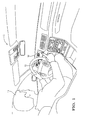
- Fig. 1 illustrates a non-limiting example of a vehicle 10 equipped with an instrument panel 12 installed into a dashboard 16 of the vehicle 10.
- the instrument panel 12 displays information to an operator 14 of the vehicle 10 such as vehicle speed, engine coolant temperature, and the like.
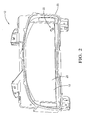
- Fig. 2 illustrates a non-limiting example of the instrument panel 12 as it might appear when not installed into the dashboard 16 of the vehicle 10.
- the instrument panel 12 includes a reconfigurable display, hereafter the display 18.
- the display 18 spans most of the viewing area of the instrument panel 12.
- a reconfigurable display includes, but is not limited to, any device that can display images in a manner similar to a display screen on a personal computer.
- the display 18 may include arrays of light emitting diodes (i.e. an LED display) or liquid crystal devices (i.e. an LCD display).
- the display 18 may be an applique that defines various symbols which become visibly apparent to the operator 14 when suitably backlit. It is recognized that an applique would not be as versatile for displaying a wide variety of information, but is believed to be a lower cost alternative to a fully reconfigurable display.
- the instrument panel 12 generally includes a housing 20 that may include features to aid attaching the instrument panel 12 to the dashboard 16 of the vehicle 10, as will be recognized by those skilled in the art.
- the instrument panel 12 also includes an actuator 22 shown at a location typically associated with a trip/reset button of the instrument panel 12.
- the actuator 22 is distinct from prior art examples of a trip/reset button in that it does not include a shaft extending through the display 18, as is the common practice for many known instrument panels.
- the actuator 22 does not rely on wires or other means of conducting an electrical signal from the actuator 22 to indicate to other circuitry in the instrument panel 12 that the actuator 22 is being actuated. Indeed, as will become apparent, the actuator 22 appears to hover over the display 18 without any obvious means for the actuation of the actuator 22 to communicate with other circuitry in the instrument panel 12.
- the actuator 22 is generally configured to emit a characteristic sound 24 ( Fig. 5 ) into the housing 20 when the actuator 22 is actuated. Accordingly, the actuator 22 is generally coupled or attached or mounted to the housing 20 in a manner effective for the characteristic sound to be coupled to the housing 20. Preferably, the actuator 22 is located on a lens portion 28 of the housing 20. It should be understood that the lens portion 28 would be formed of a clear material such as a clear polymeric compound, and so the mystery effect of how the actuator 22 communicates with, for example, a circuit board 30 of the instrument panel 12 ( Fig. 3 ).
- Fig. 3 is an exploded view of Fig. 2 that further illustrates non-limiting features of the instrument panel 12.
- the instrument panel 12 may be equipped with a microphone 26 configured to detect the characteristic sound 24 in the housing 20.
- the term microphone is used to designate any device capable of detecting sound waves or corresponding changes in pressure caused by the actuator 22 emitting the characteristic sound.
- the microphone may use, but is not limited to, use electromagnetic induction (dynamic microphone), capacitance change (condenser microphone), piezoelectric generation, or light modulation to produce an electrical voltage signal from mechanical vibration.
- the microphone 26 may be pneumatic pressure transducer such as Honeywell 26PC01SMT pressure transducer.
- the microphone 26 is preferably mounted on the circuit board 30 for reasons of manufacturing ease; however other locations may be advantageous for certain housing configurations or other environmental concerns.
- the actuator 22 includes a snap dome 32.
- Snap domes are readily available from several suppliers including Snaptron Inc. of Windsor, Colorado. Incorporating the snap dome 32 as illustrated is advantageous as the snap dome 32 can be selected to produce the characteristic sound 24 when actuated while in contact with the lens portion 28.
- the snap dome 32 could simply be attached to the surface of the lens portion 28.
- the snap dome 32 is preferably placed into a pocket 34 molded into the lens portion 28, and actuated by a stem 36 when actuated in a direction shown by an arrow 40.
- the actuator 22 includes a stem 36 configured to actuate the snap dome 32 when the stem 36 is pressed.
- an actuator may be formed on the surface of lens portion 28 , and so the examples set forth herein are not limiting.
- an actuator may be provided by molding a dome feature into the lens portion, where the dome feature is configured to deflect in a manner similar to the snap dome 32 when pressed by the operator 14.
- the actuator may be configured to emit the characteristic noise when the stem 36 or a knob in place of the stem 36 is rotated.
- the actuator 22 is generally designated to be a trip-meter reset button of the instrument panel 12.
- the teachings set forth herein regarding actuators could be applied to devices other than the instrument panel 12.
- the actuator could be used as an ON/OFF button on a radio or other entertainment device in the vehicle 10 or other device not found in the vehicle 10.
- the instrument panel 12 or other device could be equipped with multiple actuators. Each actuator could be configured to emit a distinct characteristic sound.
- the instrument panel could equipped with multiple microphones, and time-of-flight measurements of signals from the multiple microphones could be used to determine which of a plurality of actuators was being actuated.
- the actuator 22 may be configured to emit a first sound when the actuator is pressed, and emit a second sound distinct from the first sound when the actuator is released.
- the microphone 26, or a controller (not shown) receiving a signal from the microphone 26 may be configured to determine if the detected sound corresponds to pressing or releasing the actuator 22. Such a configuration would allow for press and hold operation of the actuator 22, and so provide more modes of operation for the actuator than simply acting as a trip/reset button.
- the pressing and releasing of the actuator may be determined by a polarity difference of the signal coming from the microphone.
- the controller may include a processor such as a microprocessor or other control circuitry as should be evident to those in the art.
- the controller may include memory, including non-volatile memory, such as electrically erasable programmable read-only memory (EEPROM) for storing one or more routines, thresholds and captured data.
- the one or more routines may be executed by the processor to perform steps for determining if signals received by the controller correspond to the characteristic sound 24 as described herein.
- the circuit board 30 may also include additional circuitry to filter a signal from the microphone 26 in order to better detect the characteristic sound 24.
- an actuator 22 for an instrument panel 12 of a vehicle 10 is provided. Because the actuator 22 communicates actuation with sound waves (the characteristic sound 24), there is no need for unsightly wires to be connected to the actuator 22, and the actuator 22 does not need to physically extend to or through the display 18. As such, the instrument panel 12 is more aesthetically pleasing, and provides some mastery as to how actuation of the actuator 22 is communicated to the instrument panel 12.
Landscapes
- Engineering & Computer Science (AREA)
- Chemical & Material Sciences (AREA)
- Combustion & Propulsion (AREA)
- Transportation (AREA)
- Mechanical Engineering (AREA)
- Acoustics & Sound (AREA)
- Physics & Mathematics (AREA)
- Signal Processing (AREA)
- General Health & Medical Sciences (AREA)
- Otolaryngology (AREA)
- Health & Medical Sciences (AREA)
- Fittings On The Vehicle Exterior For Carrying Loads, And Devices For Holding Or Mounting Articles (AREA)
- Push-Button Switches (AREA)
- Instrument Panels (AREA)
Abstract
Description
- This disclosure generally relates to acoustic based control input, and more particularly relates to a trip reset button for a vehicle instrument cluster.
- Some vehicle instrument clusters convey information entirely by way of a liquid crystal displays (LCD). The LCD covers the entire viewing area of an instrument cluster pocket of a dashboard assembly. Adding a conventionally located trip/reset button has been a challenge in such instrument clusters. LCD manufactures either do not offer LCD panels with small holes in them for passing through a stem of the conventionally located trip/reset button, or charge a very high cost due to high fallout rates in the LCD production process. As a work-around, auto makers resort to adding the trip/reset button function to other areas of the vehicle, on the steering wheel for example, which is undesirable costly, and so locates the trip/reset button in a place not conventionally expected by the automobile customer.
- In accordance with one embodiment, an instrument panel for a vehicle is provided. The instrument panel includes a housing, a microphone, and an actuator. The microphone is configured to detect a characteristic sound in the housing. The actuator is coupled to the housing. The actuator is also configured to emit the characteristic sound into the housing when actuated. The actuator may be designated to be a trip-meter reset button. The housing may define a lens portion, and the actuator is located on the lens portion. The actuator may include a snap dome. The actuator may further include a stem configured to actuate the snap dome when the stem is pressed. The microphone may include a pressure sensor configured to detect the characteristic sound. The actuator may be configured to emit a first sound when the actuator is pressed, and emit a second sound distinct from the first sound when the actuator is released.
- Further features and advantages will appear more clearly on a reading of the following detailed description of the preferred embodiment, which is given by way of non-limiting example only and with reference to the accompanying drawings.
- The present invention will now be described, by way of example with reference to the accompanying drawings, in which:
-
Fig. 1 is a perspective view of a vehicle interior equipped with an instrument panel that includes a needle pointer assembly in accordance with one embodiment; -
Fig. 2 is a perspective view of the instrument panel ofFig. 1 in accordance with one embodiment; -
Fig. 3 is an exploded perspective view of the instrument panel ofFig. 1 in accordance with one embodiment; -
Fig. 4 is a sectional side view of the instrument panel ofFig. 1 in accordance with one embodiment; and -
Fig. 5 is a sectional side view of the instrument panel ofFig. 1 in accordance with one embodiment. -
Fig. 1 illustrates a non-limiting example of avehicle 10 equipped with aninstrument panel 12 installed into adashboard 16 of thevehicle 10. In general, theinstrument panel 12 displays information to anoperator 14 of thevehicle 10 such as vehicle speed, engine coolant temperature, and the like. -
Fig. 2 illustrates a non-limiting example of theinstrument panel 12 as it might appear when not installed into thedashboard 16 of thevehicle 10. In general, theinstrument panel 12 includes a reconfigurable display, hereafter thedisplay 18. In this example thedisplay 18 spans most of the viewing area of theinstrument panel 12. As used herein, a reconfigurable display includes, but is not limited to, any device that can display images in a manner similar to a display screen on a personal computer. For example, thedisplay 18 may include arrays of light emitting diodes (i.e. an LED display) or liquid crystal devices (i.e. an LCD display). Alternatively, thedisplay 18 may be an applique that defines various symbols which become visibly apparent to theoperator 14 when suitably backlit. It is recognized that an applique would not be as versatile for displaying a wide variety of information, but is believed to be a lower cost alternative to a fully reconfigurable display. - The
instrument panel 12 generally includes ahousing 20 that may include features to aid attaching theinstrument panel 12 to thedashboard 16 of thevehicle 10, as will be recognized by those skilled in the art. Theinstrument panel 12 also includes anactuator 22 shown at a location typically associated with a trip/reset button of theinstrument panel 12. As will become apparent in the description that follows, theactuator 22 is distinct from prior art examples of a trip/reset button in that it does not include a shaft extending through thedisplay 18, as is the common practice for many known instrument panels. Furthermore, theactuator 22 does not rely on wires or other means of conducting an electrical signal from theactuator 22 to indicate to other circuitry in theinstrument panel 12 that theactuator 22 is being actuated. Indeed, as will become apparent, theactuator 22 appears to hover over thedisplay 18 without any obvious means for the actuation of theactuator 22 to communicate with other circuitry in theinstrument panel 12. - To achieve this effect, the
actuator 22 is generally configured to emit a characteristic sound 24 (Fig. 5 ) into thehousing 20 when theactuator 22 is actuated. Accordingly, theactuator 22 is generally coupled or attached or mounted to thehousing 20 in a manner effective for the characteristic sound to be coupled to thehousing 20. Preferably, theactuator 22 is located on alens portion 28 of thehousing 20. It should be understood that thelens portion 28 would be formed of a clear material such as a clear polymeric compound, and so the mystery effect of how theactuator 22 communicates with, for example, acircuit board 30 of the instrument panel 12 (Fig. 3 ). -
Fig. 3 is an exploded view ofFig. 2 that further illustrates non-limiting features of theinstrument panel 12. In order to detect the characteristic sound, theinstrument panel 12 may be equipped with amicrophone 26 configured to detect thecharacteristic sound 24 in thehousing 20. As used herein, the term microphone is used to designate any device capable of detecting sound waves or corresponding changes in pressure caused by theactuator 22 emitting the characteristic sound. As such, the microphone may use, but is not limited to, use electromagnetic induction (dynamic microphone), capacitance change (condenser microphone), piezoelectric generation, or light modulation to produce an electrical voltage signal from mechanical vibration. Alternatively, themicrophone 26 may be pneumatic pressure transducer such as Honeywell 26PC01SMT pressure transducer. Themicrophone 26 is preferably mounted on thecircuit board 30 for reasons of manufacturing ease; however other locations may be advantageous for certain housing configurations or other environmental concerns. -
Figs 4 and 5 further illustrated details of theactuator 22 in relation to other features of theinstrument panel 12. In one embodiment, theactuator 22 includes asnap dome 32. Snap domes are readily available from several suppliers including Snaptron Inc. of Windsor, Colorado. Incorporating thesnap dome 32 as illustrated is advantageous as thesnap dome 32 can be selected to produce thecharacteristic sound 24 when actuated while in contact with thelens portion 28. Thesnap dome 32 could simply be attached to the surface of thelens portion 28. However, thesnap dome 32 is preferably placed into apocket 34 molded into thelens portion 28, and actuated by astem 36 when actuated in a direction shown by anarrow 40. Such an arrangement is considered to be advantageous as thecharacteristic sound 24 should be more consistent as opposed to a finger of theoperator 14 making direct contact with thesnap dome 32. As such, theactuator 22 includes astem 36 configured to actuate thesnap dome 32 when thestem 36 is pressed. - Other ways for an actuator to be formed on the surface of
lens portion 28 are contemplated, and so the examples set forth herein are not limiting. For example, an actuator may be provided by molding a dome feature into the lens portion, where the dome feature is configured to deflect in a manner similar to thesnap dome 32 when pressed by theoperator 14. Furthermore, instead of pressing thestem 36, the actuator may be configured to emit the characteristic noise when thestem 36 or a knob in place of thestem 36 is rotated. - In the non-limiting example given above, the
actuator 22 is generally designated to be a trip-meter reset button of theinstrument panel 12. However, it is also contemplated that the teachings set forth herein regarding actuators could be applied to devices other than theinstrument panel 12. For example, the actuator could be used as an ON/OFF button on a radio or other entertainment device in thevehicle 10 or other device not found in thevehicle 10. Furthermore, while only one actuator is suggested, it is contemplated that theinstrument panel 12 or other device could be equipped with multiple actuators. Each actuator could be configured to emit a distinct characteristic sound. Alternatively, the instrument panel could equipped with multiple microphones, and time-of-flight measurements of signals from the multiple microphones could be used to determine which of a plurality of actuators was being actuated. - It is also recognized that when the
snap dome 32 is pressed and released, the sound emitted may be distinct. As such, theactuator 22 may be configured to emit a first sound when the actuator is pressed, and emit a second sound distinct from the first sound when the actuator is released. It follows that themicrophone 26, or a controller (not shown) receiving a signal from themicrophone 26 may be configured to determine if the detected sound corresponds to pressing or releasing theactuator 22. Such a configuration would allow for press and hold operation of theactuator 22, and so provide more modes of operation for the actuator than simply acting as a trip/reset button. Alternatively, the pressing and releasing of the actuator may be determined by a polarity difference of the signal coming from the microphone. - The controller may include a processor such as a microprocessor or other control circuitry as should be evident to those in the art. The controller may include memory, including non-volatile memory, such as electrically erasable programmable read-only memory (EEPROM) for storing one or more routines, thresholds and captured data. The one or more routines may be executed by the processor to perform steps for determining if signals received by the controller correspond to the
characteristic sound 24 as described herein. Thecircuit board 30 may also include additional circuitry to filter a signal from themicrophone 26 in order to better detect thecharacteristic sound 24. - Accordingly, an
actuator 22 for aninstrument panel 12 of avehicle 10 is provided. Because theactuator 22 communicates actuation with sound waves (the characteristic sound 24), there is no need for unsightly wires to be connected to theactuator 22, and theactuator 22 does not need to physically extend to or through thedisplay 18. As such, theinstrument panel 12 is more aesthetically pleasing, and provides some mastery as to how actuation of theactuator 22 is communicated to theinstrument panel 12.
Claims (7)
- An instrument panel (12) for a vehicle (10), said instrument panel (12) comprising:a housing (20); anda microphone (26) configured to detect a characteristic sound (24) in the housing (20); andan actuator (22) coupled to the housing (20), said actuator (22) configured to emit the characteristic sound (24) into the housing (20) when actuated.
- Instrument panel (12) in accordance with claim 1, wherein the actuator (22) is designated to be a trip-meter reset button.
- Instrument panel (12) according to any one of the preceding claims, wherein the housing (20) defines a lens portion (28), and the actuator (22) is located on the lens portion (28).
- Instrument panel (12) according to any one of the preceding claims, wherein the actuator (22) includes a snap dome (32).
- Instrument panel (12) in accordance with claim 4, wherein the actuator (22) includes a stem (36) configured to actuate the snap dome (32) when the stem (36) is pressed.
- Instrument panel (12) according to any one of the preceding claims, wherein the microphone (26) includes a pressure sensor configured to detect the characteristic sound (24).
- Instrument panel (12) according to any one of the preceding claims, wherein the actuator (22) is configured to emit a first sound when the actuator (22) is pressed, and emit a second sound distinct from the first sound when the actuator (22) is released.
Applications Claiming Priority (1)
| Application Number | Priority Date | Filing Date | Title |
|---|---|---|---|
| US13/899,702 US20140348332A1 (en) | 2013-05-22 | 2013-05-22 | Trip reset button for a vehicle instrument cluster |
Publications (2)
| Publication Number | Publication Date |
|---|---|
| EP2805844A2 true EP2805844A2 (en) | 2014-11-26 |
| EP2805844A3 EP2805844A3 (en) | 2015-04-22 |
Family
ID=50771055
Family Applications (1)
| Application Number | Title | Priority Date | Filing Date |
|---|---|---|---|
| EP20140168132 Withdrawn EP2805844A3 (en) | 2013-05-22 | 2014-05-13 | Trip reset button for a vehicle instrument cluster |
Country Status (2)
| Country | Link |
|---|---|
| US (1) | US20140348332A1 (en) |
| EP (1) | EP2805844A3 (en) |
Family Cites Families (9)
| Publication number | Priority date | Publication date | Assignee | Title |
|---|---|---|---|---|
| US4599607A (en) * | 1983-10-31 | 1986-07-08 | General Instrument Corporation | Acoustic keyboard |
| US5541375A (en) * | 1994-03-21 | 1996-07-30 | Illinois Tool Works Inc. | Switch for computer pen |
| JPH11265252A (en) * | 1998-03-17 | 1999-09-28 | Nec Corp | Switchless key and keyboard |
| US20070100666A1 (en) * | 2002-08-22 | 2007-05-03 | Stivoric John M | Devices and systems for contextual and physiological-based detection, monitoring, reporting, entertainment, and control of other devices |
| US7113351B2 (en) * | 2003-01-02 | 2006-09-26 | Covi Technologies, Inc. | Systems and methods for actuating lens assemblies |
| JP2005088619A (en) * | 2003-09-12 | 2005-04-07 | Calsonic Kansei Corp | On-vehicle measuring instrument |
| FR2885427B1 (en) * | 2005-05-09 | 2007-10-26 | Peugeot Citroen Automobiles Sa | DEVICE FOR MONITORING AND / OR CONTROLLING EQUIPMENT ELEMENTS OF A MOTOR VEHICLE WITH PUSH BUTTONS AND TOUCH SLAB |
| US7449995B1 (en) * | 2005-11-14 | 2008-11-11 | Eula Clanton-Holloway | Oil change meter |
| JP5081042B2 (en) * | 2008-04-04 | 2012-11-21 | 富士重工業株式会社 | Vehicle display device |
-
2013
- 2013-05-22 US US13/899,702 patent/US20140348332A1/en not_active Abandoned
-
2014
- 2014-05-13 EP EP20140168132 patent/EP2805844A3/en not_active Withdrawn
Non-Patent Citations (1)
| Title |
|---|
| None |
Also Published As
| Publication number | Publication date |
|---|---|
| US20140348332A1 (en) | 2014-11-27 |
| EP2805844A3 (en) | 2015-04-22 |
Similar Documents
| Publication | Publication Date | Title |
|---|---|---|
| US11203372B2 (en) | Steering wheel assembly | |
| US20130113465A1 (en) | Multiple function control knob assembly | |
| US9488727B2 (en) | Ultrasonic sensor arrangement comprising an ultrasonic sensor in the radiator grill, motor vehicle and corresponding method | |
| US8866537B2 (en) | Input apparatus | |
| JP2012103852A (en) | Touch type input device | |
| US8773363B2 (en) | Control module for an automotive vehicle using a touch sensor | |
| CN103085734A (en) | Proximity switch having wrong touch feedback | |
| US11340739B2 (en) | Input device with an array of force sensors in a film layer structure with improved durability and simplified production | |
| US9712163B2 (en) | Manually operated switching device for a vehicle with a sensor activation device | |
| US20100201503A1 (en) | Haptic feedback tactile control device | |
| US10537033B2 (en) | Display device for motor vehicle | |
| JPWO2014128838A1 (en) | Vehicle control device | |
| US20160062513A1 (en) | Capacitive touch switch with false trigger protection | |
| EP4452683B1 (en) | System and method for haptic calibration | |
| EP2805844A2 (en) | Trip reset button for a vehicle instrument cluster | |
| CN108306634A (en) | Control element for motor vehicle | |
| CN109813346B (en) | Multi-stage capacitive sensor | |
| EP3348077B1 (en) | Multi-function transducer assembly and system | |
| CN114228632A (en) | A steering wheel pressure sensor switch with integrated display | |
| KR20180067836A (en) | Integrated electronic devices and display system for vehicle | |
| US20160375772A1 (en) | Electronic Device and Operating Assembly Having an Electronic Device | |
| WO2016006216A1 (en) | Switch and input device using same | |
| KR101526410B1 (en) | Menu variable type operation button and operation method | |
| CN105522928A (en) | Dashboard for vehicle | |
| CN104919706B (en) | Control device with capacitance detecting |
Legal Events
| Date | Code | Title | Description |
|---|---|---|---|
| PUAI | Public reference made under article 153(3) epc to a published international application that has entered the european phase |
Free format text: ORIGINAL CODE: 0009012 |
|
| 17P | Request for examination filed |
Effective date: 20140513 |
|
| AK | Designated contracting states |
Kind code of ref document: A2 Designated state(s): AL AT BE BG CH CY CZ DE DK EE ES FI FR GB GR HR HU IE IS IT LI LT LU LV MC MK MT NL NO PL PT RO RS SE SI SK SM TR |
|
| AX | Request for extension of the european patent |
Extension state: BA ME |
|
| PUAL | Search report despatched |
Free format text: ORIGINAL CODE: 0009013 |
|
| AK | Designated contracting states |
Kind code of ref document: A3 Designated state(s): AL AT BE BG CH CY CZ DE DK EE ES FI FR GB GR HR HU IE IS IT LI LT LU LV MC MK MT NL NO PL PT RO RS SE SI SK SM TR |
|
| AX | Request for extension of the european patent |
Extension state: BA ME |
|
| RIC1 | Information provided on ipc code assigned before grant |
Ipc: B60K 37/02 20060101AFI20150313BHEP Ipc: H04R 1/04 20060101ALI20150313BHEP Ipc: H04R 29/00 20060101ALI20150313BHEP Ipc: B60K 37/06 20060101ALI20150313BHEP Ipc: G01C 22/00 20060101ALI20150313BHEP |
|
| R17P | Request for examination filed (corrected) |
Effective date: 20151022 |
|
| RBV | Designated contracting states (corrected) |
Designated state(s): AL AT BE BG CH CY CZ DE DK EE ES FI FR GB GR HR HU IE IS IT LI LT LU LV MC MK MT NL NO PL PT RO RS SE SI SK SM TR |
|
| STAA | Information on the status of an ep patent application or granted ep patent |
Free format text: STATUS: THE APPLICATION IS DEEMED TO BE WITHDRAWN |
|
| 18D | Application deemed to be withdrawn |
Effective date: 20161201 |