EP2803529A2 - Vehicular headlamp - Google Patents
Vehicular headlamp Download PDFInfo
- Publication number
- EP2803529A2 EP2803529A2 EP14168600.6A EP14168600A EP2803529A2 EP 2803529 A2 EP2803529 A2 EP 2803529A2 EP 14168600 A EP14168600 A EP 14168600A EP 2803529 A2 EP2803529 A2 EP 2803529A2
- Authority
- EP
- European Patent Office
- Prior art keywords
- aiming
- vehicular headlamp
- gear
- pair
- lamp
- Prior art date
- Legal status (The legal status is an assumption and is not a legal conclusion. Google has not performed a legal analysis and makes no representation as to the accuracy of the status listed.)
- Granted
Links
- 230000001105 regulatory effect Effects 0.000 claims description 15
- 238000003780 insertion Methods 0.000 description 36
- 230000037431 insertion Effects 0.000 description 36
- 230000004048 modification Effects 0.000 description 8
- 238000012986 modification Methods 0.000 description 8
- 230000003287 optical effect Effects 0.000 description 3
- 230000002708 enhancing effect Effects 0.000 description 2
- 238000006073 displacement reaction Methods 0.000 description 1
- 238000004519 manufacturing process Methods 0.000 description 1
- 239000002184 metal Substances 0.000 description 1
- 238000005549 size reduction Methods 0.000 description 1
Images





Classifications
-
- B—PERFORMING OPERATIONS; TRANSPORTING
- B60—VEHICLES IN GENERAL
- B60Q—ARRANGEMENT OF SIGNALLING OR LIGHTING DEVICES, THE MOUNTING OR SUPPORTING THEREOF OR CIRCUITS THEREFOR, FOR VEHICLES IN GENERAL
- B60Q1/00—Arrangement of optical signalling or lighting devices, the mounting or supporting thereof or circuits therefor
- B60Q1/02—Arrangement of optical signalling or lighting devices, the mounting or supporting thereof or circuits therefor the devices being primarily intended to illuminate the way ahead or to illuminate other areas of way or environments
- B60Q1/04—Arrangement of optical signalling or lighting devices, the mounting or supporting thereof or circuits therefor the devices being primarily intended to illuminate the way ahead or to illuminate other areas of way or environments the devices being headlights
- B60Q1/06—Arrangement of optical signalling or lighting devices, the mounting or supporting thereof or circuits therefor the devices being primarily intended to illuminate the way ahead or to illuminate other areas of way or environments the devices being headlights adjustable, e.g. remotely-controlled from inside vehicle
- B60Q1/068—Arrangement of optical signalling or lighting devices, the mounting or supporting thereof or circuits therefor the devices being primarily intended to illuminate the way ahead or to illuminate other areas of way or environments the devices being headlights adjustable, e.g. remotely-controlled from inside vehicle by mechanical means
- B60Q1/072—Arrangement of optical signalling or lighting devices, the mounting or supporting thereof or circuits therefor the devices being primarily intended to illuminate the way ahead or to illuminate other areas of way or environments the devices being headlights adjustable, e.g. remotely-controlled from inside vehicle by mechanical means comprising a flexible element, e.g. chain
-
- B—PERFORMING OPERATIONS; TRANSPORTING
- B60—VEHICLES IN GENERAL
- B60Q—ARRANGEMENT OF SIGNALLING OR LIGHTING DEVICES, THE MOUNTING OR SUPPORTING THEREOF OR CIRCUITS THEREFOR, FOR VEHICLES IN GENERAL
- B60Q1/00—Arrangement of optical signalling or lighting devices, the mounting or supporting thereof or circuits therefor
- B60Q1/02—Arrangement of optical signalling or lighting devices, the mounting or supporting thereof or circuits therefor the devices being primarily intended to illuminate the way ahead or to illuminate other areas of way or environments
- B60Q1/04—Arrangement of optical signalling or lighting devices, the mounting or supporting thereof or circuits therefor the devices being primarily intended to illuminate the way ahead or to illuminate other areas of way or environments the devices being headlights
- B60Q1/06—Arrangement of optical signalling or lighting devices, the mounting or supporting thereof or circuits therefor the devices being primarily intended to illuminate the way ahead or to illuminate other areas of way or environments the devices being headlights adjustable, e.g. remotely-controlled from inside vehicle
- B60Q1/068—Arrangement of optical signalling or lighting devices, the mounting or supporting thereof or circuits therefor the devices being primarily intended to illuminate the way ahead or to illuminate other areas of way or environments the devices being headlights adjustable, e.g. remotely-controlled from inside vehicle by mechanical means
- B60Q1/0683—Adjustable by rotation of a screw
-
- B—PERFORMING OPERATIONS; TRANSPORTING
- B60—VEHICLES IN GENERAL
- B60Q—ARRANGEMENT OF SIGNALLING OR LIGHTING DEVICES, THE MOUNTING OR SUPPORTING THEREOF OR CIRCUITS THEREFOR, FOR VEHICLES IN GENERAL
- B60Q1/00—Arrangement of optical signalling or lighting devices, the mounting or supporting thereof or circuits therefor
- B60Q1/02—Arrangement of optical signalling or lighting devices, the mounting or supporting thereof or circuits therefor the devices being primarily intended to illuminate the way ahead or to illuminate other areas of way or environments
- B60Q1/04—Arrangement of optical signalling or lighting devices, the mounting or supporting thereof or circuits therefor the devices being primarily intended to illuminate the way ahead or to illuminate other areas of way or environments the devices being headlights
- B60Q1/06—Arrangement of optical signalling or lighting devices, the mounting or supporting thereof or circuits therefor the devices being primarily intended to illuminate the way ahead or to illuminate other areas of way or environments the devices being headlights adjustable, e.g. remotely-controlled from inside vehicle
- B60Q1/076—Arrangement of optical signalling or lighting devices, the mounting or supporting thereof or circuits therefor the devices being primarily intended to illuminate the way ahead or to illuminate other areas of way or environments the devices being headlights adjustable, e.g. remotely-controlled from inside vehicle by electrical means including means to transmit the movements, e.g. shafts or joints
Definitions
- the present invention relates to a vehicular headlamp that is capable of adjusting an optical axis with use of an aiming mechanism and a leveling actuator.
- a vehicular headlamp include the type in which a lamp unit including a lamp source is accommodated inside a lamp outer case that is constituted by a cover and a lamp housing, the lamp unit is rotatably (tiltably) supported by an aiming mechanism via a supporting member such as a bracket, and the lamp unit is allowed to rotate by a driving force of a levelling actuator (See, for example, Japanese Patent Application Publication No. 2008-300363 ( JP 2008-300363 A ), for example).
- the aiming mechanism rotates the lamp unit to move in a vertical or lateral direction and so-called “aiming adjustment” for initial adjustment of an optical axis offset is thereby performed, while the leveling actuator rotates the lamp unit to move in the vertical direction and so-called “leveling adjustment” for adjusting an optical axis offset which varies depending on a load on a vehicle
- a pair of laterally spaced aiming shafts are provided at an upper end portion of a bracket that supports the lamp unit.
- an output shaft of the leveling actuator is connected to the bracket at a position directly under a portion to which one of the aiming shafts is connected.
- the L-shaped connecting state formed by the connected positions of the aiming shafts to the bracket and the connected position of the leveling actuator may reduce the balance between the connected positions relative to the lamp unit. Accordingly, it is difficult to secure sufficient strength of the vehicular headlamp against vibrations.
- the output shaft of the leveling actuator is arranged at a position offset to the right or the left from the central axis of the lamp unit and thus the leveling actuator tends to be arranged in a lopsided state. As a result, it is difficult to efficiently utilize the internal space of a lamp outer case and may prevent size reduction of the vehicular headlamp.
- the present invention provides a vehicular headlamp that achieves an enhanced strength against vibrations and a reduced size.
- An aspect of the present invention relates to a vehicular headlamp including: a lamp unit that includes a unit main body including a light source and a connecting portion arranged at least partially at an outer circumferential side of the unit main body; a leveling actuator that is connected to the connecting portion and that moves the lamp unit to adjust an irradiation direction of light emitted from the light source; and an aiming mechanism that includes a pair of aiming shafts connected to the connecting portion and that moves, through an operation of the aiming shafts, the lamp unit to adjust an irradiation direction of light emitted from the light source.
- the connecting portion has a leveling operation portion to which the leveling actuator is connected and a pair of aiming operation portions to which the respective the aiming shafts are connected.
- the pair of the aiming operation portions are arranged spaced from each other in a lateral direction of the vehicular headlamp.
- the leveling operation portion is arranged between the pair of the aiming operation portions, on an opposite side of the unit main body from the pair of the aiming shafts.
- the leveling operation portion may be arranged at a position corresponding to an intermediate position between the pair of the aiming operation portions, on the opposite side of the unit main body from the pair of the aiming shafts.
- the position of the aiming operation portions and the position of the leveling operation portion with respect to the lamp unit are arranged at positions corresponding to respective vertexes of an isosceles triangle.
- the vehicular headlamp may further includes a lamp housing that constitutes a lamp outer case.
- a regulated portion may be provided in the lamp unit and supported by the lamp housing so as to be movable in a front-rearward direction of the vehicular headlamp and so as to be immovable in the lateral direction of the vehicular headlamp.
- the leveling actuator may be fixed to the lamp housing.
- the vehicular headlamp may further include an arm link that extends in a predetermined direction.
- the leveling actuator may be connected, through the arm link, to the connecting portion. Further, the leveling actuator may be arranged at a rear side of the lamp unit.
- the plurality of the arm links may be connected to one another such that each arm link is allowed to rotate about an axis extending in the lateral direction of the vehicular headlamp, and one of the arm links may be supported by the lamp housing such that the one of the arm links is allowed to rotate about an axis extending in the lateral direction of the vehicular headlamp.
- the lamp unit and the leveling actuator are connected by the plurality of the arm links.
- the vehicular headlamp may further include a gear unit that includes a plurality of gears and a gear switching mechanism that changes an engagement state of the plurality of gears.
- a rotational force from the plurality of gears may be transmitted to the pair of the aiming shafts
- the gear switching mechanism may switch between a first switching mode and a second switching mode
- the pair of the aiming shafts may rotate in the same direction in the first switching mode
- the pair of the aiming shafts may rotate in the opposite directions in the second switching mode.
- the gear switching mechanism may switch between the first switching mode and the second switching mode depending on an operation on the gear unit using a jig.
- the lamp unit moves in different direction in the respective first and second switching modes.
- the present invention it is possible to make the positions of the aiming operation portions and the position of the leveling operation portion relative to the lamp unit in good balance, and therefore sufficient strength against vibrations is ensured.
- the position of the leveling actuator is not in lopsided state in either side in the lateral direction, it is possible to efficiently utilize a space of a lamp chamber, thereby reducing the size of the vehicular headlamp.
- Vehicular headlamps 1 are arranged and fixed on laterally opposite end portions of a front end portion of a vehicle body.
- the vehicular headlamp 1 includes a lamp housing 2 that opens in a frontward direction and a cover 3 that closes the opening of the lamp housing 2.
- the lamp housing 2 and the cover 3 constitute a lamp outer case 4 whose interior space is used as a lamp chamber 5.
- a mounting open portion 2a that penetrates in a front-rearward direction is formed at a rear end portion of the lamp housing 2 (See FIGs.1 to 3 ).
- a support protrusion 6 that extends in the frontward direction is provided at an inner surface of the rear end portion of the lamp housing 2.
- the support protrusion 6 is arranged at a higher position than the mounting open portion 2a.
- a regulation groove 6a that opens in a downward direction and extends in a front-rearward direction is formed in the support protrusion 6.
- sliding grooves 6b and 6b that open in a downward direction is formed in the support protrusion 6.
- the sliding grooves 6b and 6b are spaced from each other in the lateral direction and positioned at right and left sides of the regulation groove 6a, respectively. Laterally both sides of each sliding groove 6b opens inwardly and the portion other than the laterally both sides of each sliding groove 6b opens in the downward direction.
- Shaft insertion holes 2b and 2b are formed at the rear end portion of the lamp housing 2, between the mounting open portion 2a and the support protrusion 6.
- the shaft insertion holes 2b and 2b are spaced from each other in the lateral direction.
- Stationary protrusions 2c and 2c which are projected in the frontward direction are provided at the inner surface of the rear end portion of the lamp housing 2.
- the stationary protrusions 2c and 2c are arranged in a spaced relationship in the lateral direction and are positioned at a lower position than the mounting open portion 2a.
- a back cover 7 that covers the mounting open portion 2a is attached to the rear end portion of the lamp housing 2.
- a lamp unit 8 is arranged in the lamp chamber 5 (See FIG. 1 ).
- the lamp unit 8 includes a unit main body 9 and a connecting portion 10 (See FIGs. 1 to 5 ).
- the unit main body 9 includes a reflector 11 whose inner surface reflects light, a light source 12 supported at a rear end portion of the reflector 11, a lens holder 13 placed in front of the reflector 11, a projection lens 14 supported at a front end portion of the lens holder 13.
- the reflector 11 has a bowl-shape that opens in the frontward direction, and the inner surface of the reflector is formed as a reflection surface 11a.
- a lamp source mounting hole 11b is formed at the rear end portion of the reflector 11.
- a discharge lamp for example, is available.
- a rear end portion of the light source 12 is formed as a base portion 12a.
- the light source 12 is attached to the reflector 11 with the base portion 12a inserted into the lamp source mounting hole 11b.
- a driving circuit portion 15 is connected to the rear of the base portion 12a.
- the driving circuit portion 15 serves as a driving portion that turns on and off the light source 12.
- the driving circuit portion 15 is connected to a power source circuit (not shown).
- the lens holder 13 is made up of a lens holding portion 13a having a substantially annular shape and a plurality of connecting legs 13b, 13b, 13b, and so on that protrude from the lens holding portion 13a in the rearward direction.
- the plurality of the connecting legs 13b, 13b, 13b, and so on are spaced from each other in a circumferential direction the lens holding portion 13a.
- the projection lens 14 is formed in a semispherical shape protruding in the frontward direction. A rear end portion of the projection lens 14 is attached to the lens holding portion 13a and the projection lens 14 is thereby supported by the lens holder 13.
- a connecting body 16 is arranged between the reflector 11 and the lens holder 13.
- the connecting body 16 is formed in a substantial flat plate having surfaces that face the front direction and the rearward direction.
- An annular-shaped stationary shade 17 is integrally formed with a connecting surface portion 18 (as a single member) to form the connecting body 16.
- the stationary shade 17 blocks a part of light emitted from the light source 12, and the connecting surface portion 18 is provided in continuous with an outer periphery of the stationary shade 17 (See FIGs.1 and 2 ).
- each connecting leg 13b of the lens holder 13 and a front end portion of the reflector 11 is connected to the connecting body 16 by, for example, a screw.
- the lens holder 13 is arranged so as to cover the front side of the stationary shade 17, while the reflector 11 is arranged so as to cover the rear side of the stationary shade 17.
- Connecting holes 18a and 18a are formed at an upper end portion of the connecting surface portion 18 (See FIG. 2 ), being spaced form each other in the lateral direction.
- the connecting hole 18a is formed into a rectangular shape and a vertical width of the connecting hole 18a is slightly longer than a lateral width of the connecting hole 18a.
- a regulated portion 18b having a columnar shape is provided at a lateral center portion of the connecting surface portion 18. The regulated portion 18b protrudes in the upward direction.
- a solenoid 19 and a movable shade 20 driven by a driving force generated by the solenoid 19 is arranged on the connecting body 16 (See FIGs.1 and 2 ).
- the solenoid 19 includes a driving shaft 19a to be moved in an axial direction by electromagnetic force.
- the movable shade 20 is connected, via a connecting wire 21, to the driving shaft 19a.
- the movable shade 20 rotates around a shaft that extends in the lateral direction, as a result of the axial movement of the driving shaft 19a.
- the solenoid 19 and the movable shade 20 are arranged inside the stationary shade 17. Rotation of the movable shade 20 varies a blocked amount of light that is emitted from the light source 12, thereby, for example, switching between high-beam light distribution patter and low-beam light distribution pattern.
- a connecting member 22 is attached to the lower surface of the connecting body 16.
- the connecting member 22 is made up of a mounted portion 23 and a connecting protrusion 24.
- the mounted portion 23 is formed in a laterally long flat plate having surfaces that face the upward direction and the downward directions, and the connecting protrusion 24 protrudes downwardly from a lateral center portion of the mounted portion 23.
- the connecting protrusion 24 opens downwardly and its inner space is used as a connecting concave portion 24a.
- the stationary shade 17 of the connecting body 16 configured as described above constitutes, together with the solenoid 19 and the movable shade 20, part of the unit main body 9, and the connecting surface portion 18 constitutes, together with the connecting member 22, the connecting portion 10 connected to a aiming mechanism and a leveling actuator both of which will be detailed later.
- the lamp unit 8 configured as describe above is rotatably (tiltably) supported by the aiming mechanism 25 and thus by the lamp housing 2 (See FIGs.1 to 5 ).
- the aiming mechanism 25 includes fulcrum bodies 26 and 26, and aiming shafts 27 and 27.
- the fulcrum body 26 is made up of a rotation fulcrum portion 28, an insertion connecting portion 29, a support portion 30, and a sliding portion 31.
- the rotation fulcrum portion 28 has a spherical outer profile is of a spherical shape
- the insertion connecting portion 29 is formed in continuous with a front side of the rotation fulcrum portion 28
- the support portion 30 is formed in continuous with a rear side of the rotation fulcrum portion 28
- the sliding portion 31 is formed in continuous with an upper side of the support portion 30 (See FIG.2 ).
- the rotation fulcrum portion 28 is movable, together with the insertion connecting portion 29, relative to the other members, at least, in the vertical direction.
- the rotation fulcrum portion 28 is used as a fulcrum of rotation upon leveling adjustment using the leveling actuator.
- a spiral groove (not shown) is formed at its inner surface.
- An outer profile of the insertion connecting portion 29 is formed into a rectangular shape, and the insertion connecting portion 29 is inserted into the connecting hole 18a formed in the connecting surface portion 18 of the connecting body 16.
- the fulcrum body 26 and the he connecting body 16 are connected by the insertion of the insertion connecting portion 29 into the connecting hole 18a, and thus the fulcrum body 26 is not allowed to move relative to the connecting body 16 in the front-rearward direction.
- space is defined between the connecting hole 18a and the insertion connecting portion 29 in the lateral direction.
- the fulcrum body 26 is capable of moving relative to the connecting body 16 in the lateral direction.
- the sliding portion 31 includes leaf spring portions 31a and 31a that is provided at an upper surface of the sliding portion 31 and that are deformable in the vertical direction.
- the sliding portion 31 is inserted into the sliding groove 6b, formed in the support protrusion 6 of the lamp housing 2, from the front side.
- the sliding portion 31 is supported by the support protrusion 6 such that the sliding portion 31 is slidable in the front-rearward direction (See FIG. 4 ).
- the aiming shaft 27 is made up of a shaft portion 32 and an operation portion 33 connected to the rear end portion of the shaft portion 32 (See FIGs.1 and 2 ).
- An axial direction of the shaft portion 32 extends in the front-rearward direction, and a portion of the shaft portion 32 except for the its end portion is formed as a thread portion 32a.
- the operation portion 33 is formed in an annular shape extending outwardly from the rear end portion of the shaft portion 32, and has a gear portion 33a formed on a an outer periphery of a front surface of the operation portion 33.
- the shaft portion 32 of the aiming shaft 27 is inserted, from the rear side, into the shaft insertion hole 2b formed in the lamp housing 2, passes through a rotation stop washer 34, and then the thread portion 32a of the aiming shaft 27 is brought into thread engagement with the spiral groove formed in the insertion connecting portion 29 of the fulcrum body 26.
- the connecting body 16 of the lamp unit 8 is connected, via the fulcrum bodies 26 and 26, to the respective aiming shafts 27 and 27.
- the regulated portion 18b of the connecting body 16 is inserted, from the front side, into the regulation groove 6a formed at the support protrusion 6 of the lamp housing 2 (See FIG.4 ).
- the lamp unit 8 is allowed to move in the front-rearward direction, but is restricted to move in the lateral direction by inserting the fact that the regulated portion 18b into the regulation groove 6a.
- Regions of the connecting portion 10 (connecting surface portion 18) to which the pair of the aiming shafts 27 and 27 are connected are formed as aiming operation portions 80 and 80.
- a leveling actuator 35 is arranged under the lamp unit 8.
- the leveling actuator 35 is fixed to the stationary protrusions 2c and 2c of the lamp housing 2 by screwing or the like.
- the leveling actuator 35 includes a case body 36 and a driving mechanism (not shown) arranged inside the case body 36.
- An insertion hole 36a is formed at an upper surface portion of the case body 36 such that the insertion hole 36a penetrates through the upper surface portion of the case body 36 in the vertical direction.
- the insertion hole 36a has a shape extending in the front-rearward direction.
- the leveling actuator 35 includes an output shaft 35a that is driven by the driving mechanism to move in the front-rearward direction.
- the output shaft 35a protrudes, through the insertion hole 36a, in the upward direction.
- the output shaft 35a of the leveling actuator 35 is inserted into the connecting concave portion 24a of the connecting member 22, thereby connecting the leveling actuator 35 to the connecting protrusion 24.
- the lamp unit 8 is allowed to rotate about the output shaft 35a to move in both substantially lateral and vertical directions.
- the lamp unit 8 rotate about the rotation fulcrum portions 28 and 28 of the respective fulcrum bodies 26 and 26 to move in the substantially vertical direction depending on the moving direction of the output shaft 35a.
- a region of the connecting member 22 (connecting portion 10) to which the output shaft 35a is connected is formed as a leveling operation portion 90.
- the leveling operation portion 90 is arranged between the pair of the aiming operation portions 80 and 80, on the opposite side of the unit main body 9 from the aiming shafts 27 and 27 (on a side of the unit main body 9 opposite to a side where the aiming shafts 27 and 27 are arranged) (See FIG.4 ).
- leveling operation portion 90 is arranged at a position immediately under an intermediate position between the pair of the aiming operation portions 80 and 80 in the lateral direction.
- the regulated portion 18b provided on the connecting surface portion 18 of the connecting body 16 is positioned immediately above the leveling operation portion 90.
- the aiming shafts 27 and 27 are allowed to rotate by a gear unit 37 (See FIGs.1 to 5 ).
- the gear unit 37 includes a gear case 38, a plurality of gears accommodated in the gear case 38, a gear switching mechanism, and rotation wires 39 and 39 to which gear rotational forces are transmitted.
- the gear case 38 is configured by a combination of a storing case portion 40 having at its one end an opening and a lid portion 41 that closes the opening of the storing case portion 40 (See FIGs.6 to 8 ).
- Jig insertion holes 40a and 40a are formed in the storing case portion 40.
- Wire passing holes 41a and 41a are formed in the lid portion 41.
- a two-stage driving gear 42, a first connecting gear 43, an operation gear 44, a driving gear 45, and a second connecting gear 46 are accommodated within the gear case 38.
- the two-stage driving gear 42 has a small-diameter gear portion 42a and a large-diameter gear portion 42b.
- a jig insertion hole 42c that opens toward one side of the axial direction is formed in the two-stage driving gear 42.
- a connecting hole 42e that opens in the other side in the axial direction is formed in the two-stage driving gear 42.
- the first connecting gear 43 which is a spur gear, meshes with the small-diameter gear portion 42a of the two-stage driving gear 42.
- An outer gear portion 44a is formed at an outer periphery of the operation gear 44 and an inner gear portion 44b is formed at an inner periphery of the operation gear 44.
- the outer gear portion 44a od the operation gear 44 meshes with the first connecting gear 43.
- the driving gear 45 is made up of a shaft portion 47 and a gear forming portion 48 extending outward from an axial directional center portion of the shaft portion 47.
- a jig insertion hole 47a that opens toward one side of the axial direction is formed in the shaft portion 47, and a jig engagement portion 47b to be engaged with the jig 100 is formed at an bottom portion of the jig insertion hole 47a formed in the driving gear 45.
- a connecting hole 47c that opens toward the other side of the axial direction is formed in the driving gear 45.
- a first switching gear portion 48a is formed at an one side surface in the axial direction
- second switching gear portion 48b is formed at the other side surface.
- An urging spring 49 is supported by a portion of the shaft portion 47 on a side of the connecting hole 47c in the driving gear 45.
- an outer gear portion 46a is formed at an outer periphery and an inner gear portion 46b is formed at an inner periphery.
- the outer gear portion 46a of the second connecting gear 46 meshes with the large-diameter gear portion 42b of the two-stage driving gear 42.
- the driving gear 45 is urged by the urging spring 49 in a direction of the operation gear 44 and the first switching gear portion 48a meshes with the inner gear portion 44b of the operation gear 44.
- the two-stage driving gear 42 is arranged on an axis connecting one of the jig insertion holes 40a and one of the wire insertion holes 41a, while the operation gear 44, the driving gear 45 and the second connecting gear 46 is arranged on an axis connecting the other jig insertion hole 40a and the other wire insertion hole 41a.
- the first connecting gear 43 is arranged with meshed with the small-diameter gear portion 42a of the two-stage driving gear 42 and with the outer gear portion 46a of the second connecting gear 46.
- the rotation wire 39 has at its one end portion a gear portion 39a.
- the other end portions of the rotation wires 39 and 39 are inserted into a connecting hole 42e and a connecting hole 47c and thus the rotation wires 39 and 39 are connected to the two-stage driving gear 42 and the driving gear 45, respectively. Accordingly, the rotation wires 39 and 39 rotate together with rotations of the respective two-stage driving gear 42 and the driving gear 45.
- the rotation wires 39 and 39 are connected, via respective metal fixtures 50 and 50, to a rear surface of the lamp housing 2, and the gear portions 39a and 39a mesh with the gear portions 33a and 33a that are formed in the operation portions of the aiming shafts 27 and 27, respectively (See FIG.5 ).
- the rotation wires 39 and 39 rotates together with the respective rotation of the two-stage driving gear 42 and rotation of the driving gear 45, the respective aiming shafts 27 and 27 are caused to rotate, due to the resulting rotations of the respective gear portions 33a and 33a, in directions depend on the respective rotation direction of the two-stage driving gear 42 and rotation direction of the driving gear 45.
- the jig 100 is inserted, via the one of the jig insertion holes 40a and 40a of the gear case 38, into the jig insertion hole 42c of the two-stage driving gear 42 and rotates after the jig 100 is engaged with the jig engagement portion 42d, the two-stage driving gear 42 is caused to rotate.
- the driving gear 45 is urged, by the urging spring 49, to move toward the operation gear 44, which allows the first switching gear portion 48a to mesh with the inner gear portion 44b of the operation gear 44.
- the first switching mode is set.
- the two-stage driving gear 42 when the two-stage driving gear 42 is caused to rotate, the resulting rotational force is transmitted to the first connecting gear 43, the operation gear 44, and the driving gear 45 in such an order, and then the driving gear 45 rotates in the same direction as the rotational direction of the two-stage driving gear 42.
- the operation gear 44 that meshes with the large-diameter gear portion 42b rotates together with the rotation of the two-stage driving gear 42.
- the driving gear 45 rotate independently of rotation of the operation gear 44.
- the lamp unit 8 rotates about the output shaft 35a of the leveling actuator 35 to move in the substantially vertical direction, thereby performing the vertical aiming adjustment.
- the sliding portions 31 and 31 of the fulcrum bodies 26 and 26 slide in the sliding grooves 6b and 6b, respectively, and the regulated portion 18b formed on the connecting body 16 is guided by the regulation groove 6a of the support protrusion, and as a result, the lamp unit 8 moves in the substantially vertical direction while being.
- the regulated portion 18b provided on the connecting body 16 is regulated to move in the lateral direction by the regulation groove 6a of the support protrusion 6. Accordingly, the lateral aiming adjustment is performed by the rotation of the lamp unit 8 without being tilted in the lateral direction.
- providing the regulated portion 18b on the connecting body 16 makes it possible to restrict the inclination of the lamp unit 8 upon performing the aiming adjustment.
- the regulated portion 18b is arranged at the position corresponding to the intermediate position between the pair of the aiming operation portions 80 and 80, immediately above the leveling operation portion 90. Accordingly, the regulated portion 18b is less likely to receive a load in the lateral direction due to, for example, own weight of the lamp unit 8, thereby making it possible to stably perform the aiming adjustment of the lamp unit 8.
- the direction of the connecting body 16 varies relative to the insertion connecting portions 29 and 29 of the respective fulcrum bodies 26 and 26, but as described above, the space are defined between the insertion connecting portions 29 and 29 of the respective fulcrum bodies 26 and 26 and the connecting holes 18a and 18a in the lateral direction, which allows the connecting surface portion 18 to displace from the insertion connecting portions 29 and 29, whereby the lamp unit 8 is not applied with unnecessary loads from the fulcrum bodies 26 and 26.
- the lamp unit 8 rotates about the fulcrum portions 28 and 28 of the respective fulcrum bodies 26 and 26 to move in a direction depending on the moving direction of the output shaft 35a, whereby the leveling adjustment is performed.
- the stationary shade 17 and the connecting surface portion 18 are formed integrally with each other, as shown in FIG.9
- the stationary shade 17 and the connecting surface portion 18 may be formed as separate members and the stationary shade 17 may be connected to the connecting surface portion 18 by screwing or the like.
- Forming the stationary shade 17 and the connecting surface portion 18 as separate members makes it possible, in different types of vehicular headlamps, to use same connecting surface portions 18, while stationary shades of different shapes and sizes are used depending on the types of the vehicular headlamp.
- connecting surface portions 18 in different types of vehicular headlamp enhances common use of components and therefore reduces the production cost.
- it is capable of forming different light distribution patterns depending on the types of the vehicular headlamps by using the stationary shades of different shapes and sizes depending on the types of the vehicular headlamps.
- the aforementioned aspect illustrates the example in which the aiming mechanism 25 is arranged at the higher position and the leveling actuator 35 is arranged at the lower position
- the support protrusion 6 is arranged at the lower side of the mounting open portion 2a and is inverted in the vertical direction contrary to the support protrusion 6 in the aforementioned vehicular headlamp 1 (See FIG.1 , etc.).
- the stationary protrusions 2c and 2c are arranged at the upper side of the mounting open portion 2a.
- connecting holes 18a and 18a is formed in the lower end portion of the connecting surface portion 18 and the regulated portion 18b is provided at the lower end portion of the connecting surface portion 18.
- the connecting member 22 is attached to the upper surface of the connecting body 16 and the connecting concave portion 24a opens in the upward direction.
- the leveling actuator 35 is fixed to the stationary protrusions 2c and 2c in such a manner that the output shaft 35a protrudes downwardly through the insertion hole 36a.
- Such a configuration is preferable in a case where, for example, it is difficult to secure a space in which the leveling actuator 35 is located below the lamp unit 8.
- the leveling operation portion 90 is arranged between the pair of the aiming operation portions 80 and 80, on the opposite side of the unit main body 9 from the aiming shafts 27 and 27 (See FIG.11 ).
- the leveling operation portion 90 is arranged at a position intermediately above the intermediate position between the pair of the aiming operation portions 80 and 80 in the lateral direction, on the opposite side of the unit main body 9 from the aiming shafts 27 and 27.
- the regulated portion 18b provided on the connecting surface portion 18 of the connecting body 16 is positioned immediately under the leveling operation portion 90.
- a first modification will be described (See FIG. 12 ). It is to be noted that when compared to the vehicular headlamp 1 (See FIGs. 10 and 11 ) in which the aiming mechanism 25 is arranges at the higher position and the leveling actuator 35 is arranged at the lower position, the vehicular headlamp 1A according to the first modification differs therefrom only in that the leveling actuator is arranged at the rearward portion of the lamp unit with the output shaft protruded in the upward direction and an arm link is used to connect the lamp unit and the leveling actuator.
- FIGs.10 and 11 are detailed and the other portions, indicated with the same reference signs that are common in the vehicular headlamp 1, are not described.
- FIG 12 only the configuration different from the vehicular headlamp 1 is illustrated schematically.
- the leveling actuator 35 is arranged at the rearward portion of the lamp unit 8 and fixed to the stationary protrusions 2c and 2c with the output shaft 35a protruded in the upward direction.
- the lamp unit 8 and the leveling actuator 35 are connected with each other by means of an arm link 60.
- the arm link 60 is made up of an arm portion 61 that extends in a substantially front-rearward direction, a connecting shaft portion 62 that protrudes from a front end portion of the arm portion 61 in the downward direction, and a connecting protrusion portion 63 that protrudes from a rear end portion of the arm portion 61 in the downward direction.
- the connecting protrusion portion 63 opens in the downward direction and its inner space is formed as a connecting concave portion 63a.
- the connecting shaft portion 62 is fitted into the connecting concave portion 24a of the connecting member 22, thereby connecting the arm link 60 to the connecting protrusion 24, and the output shaft 35a is fitted into the connecting concave portion 63a, thereby connecting the arm link 60 to the leveling actuator 35.
- the lamp unit 8 rotates about the connecting shaft portion 62, thereby allowing the lamp unit 8 to move in both the substantially lateral direction and the substantially vertical direction.
- the lamp unit 8 rotates about the connecting shaft portion 62 to move in the substantially lateral direction depending on the rotation directions of the respective aiming shafts 27 and 27, while in the vertical aiming adjustment, the lamp unit 8 rotates about the connecting shaft portion 62 to move in the substantially lateral direction depending on the rotation directions of the respective aiming shafts 27 and 27.
- the leveling adjustment is performed in such a manner that the lamp unit 8 rotates about the fulcrum portions of the respective fulcrum bodies 26 and 26 to move in a direction depending on the moving direction of the output shaft 35a.
- arranging the leveling actuator 35 at the rearward side of the lamp unit 8 makes it possible to reduce the size of the vehicular headlamp in the vertical direction. In particular, it is possible to reduce the size of the upward protrusion at the front end portion of the vehicular headlamp 1A.
- the vehicular headlamp 1A is exemplified such that the aiming mechanism 25 is arranged at the lower side and the leveling actuator 35 is arranged at the upper side, but inversely, the arm link 60 may be used to connect the lamp unit 8 and the leveling actuator 35 in a configuration in which the aiming mechanism 25 is arranged at the upper side and the leveling actuator 35 is arranged at the lower side.
- the stationary shade 17 and the connecting surface portion 18 may be formed as separate members.
- a vehicular headlamp 1B according to the second modification differs therefrom only in that arm links are used for the connection between the lamp unit and the leveling actuator.
- arm links are used for the connection between the lamp unit and the leveling actuator.
- FIG. 13 the configuration of the vehicular headlamp 1B is illustrated schematically.
- the lamp unit 8 is connected to the leveling actuator 35 by means of arm links 70, 71, and 72.
- the arm link 70 is connected to the arm link 71 and the arm link 71 is connected to the arm link 72.
- the arm link 70 which extends in a substantially front-rearward direction, is connected at its front end portion to the output shaft 35a of the leveling actuator 35
- the arm link 71 which extends in a substantially vertical direction
- the arm link 71 which extends in a substantially vertical direction
- the arm link 72 which extends in a substantially front-rearward direction, is connected at its front end portion to an upper end portion of the lamp unit 8.
- the lower end portion of the arm link 71 and a rear end portion of the arm link 70 are rotatably connected to each other.
- An upper end portion of the arm link 71 is connected to a rear end portion of the arm link 72 and an angle formed between the arm link 71 and the arm link 72 is kept always at an angle of, for example, 90 degrees.
- the lamp unit 8 and the leveling actuator 35 may be connected by means of the arm links 70, 71, and 72 with the aiming mechanism 25 positioned at the lower side and and the leveling actuator 35 positioned at the upper side.
- the stationary shade 17 and the connecting surface portion 18 may be formed as separate members.
- the leveling operation portion 90 is arranged between the pair of the aiming operation portions 80 and 80, on the on the opposite side of the unit main body 9 from the aiming shafts 27 and 27.
- the leveling operation portion 90 when the leveling operation portion 90 is arranged at a position corresponding to the intermediate position between the pair of the aiming operation portions 80 and 80 in the lateral direction, on the opposite side of the unit main body 9 from the aiming shafts 27 and 27, the positions of the aiming operation portions 80 and 80 and the leveling operation portion 90 with respect to the lamp unit 8 correspond to respective vertexes of an isosceles triangle. As a result, it is possible to secure strength against vibrations and reduce the size of the vehicular headlamp.
- the leveling actuator 35 is fixed to the lamp housing 2, thereby improving the strength against vibrations.
Landscapes
- Engineering & Computer Science (AREA)
- Mechanical Engineering (AREA)
- Non-Portable Lighting Devices Or Systems Thereof (AREA)
- Lighting Device Outwards From Vehicle And Optical Signal (AREA)
Abstract
Description
- The present invention relates to a vehicular headlamp that is capable of adjusting an optical axis with use of an aiming mechanism and a leveling actuator.
- A vehicular headlamp include the type in which a lamp unit including a lamp source is accommodated inside a lamp outer case that is constituted by a cover and a lamp housing, the lamp unit is rotatably (tiltably) supported by an aiming mechanism via a supporting member such as a bracket, and the lamp unit is allowed to rotate by a driving force of a levelling actuator (See, for example, Japanese Patent Application Publication No.
2008-300363 JP 2008-300363 A - In such a vehicular headlamp, the aiming mechanism rotates the lamp unit to move in a vertical or lateral direction and so-called "aiming adjustment" for initial adjustment of an optical axis offset is thereby performed, while the leveling actuator rotates the lamp unit to move in the vertical direction and so-called "leveling adjustment" for adjusting an optical axis offset which varies depending on a load on a vehicle
- In the vehicular headlamp disclosed in
JP 2008-300363 A - However, in the vehicular headlamp disclosed in
JP 2008-300363 A - In addition, the output shaft of the leveling actuator is arranged at a position offset to the right or the left from the central axis of the lamp unit and thus the leveling actuator tends to be arranged in a lopsided state. As a result, it is difficult to efficiently utilize the internal space of a lamp outer case and may prevent size reduction of the vehicular headlamp.
- The present invention provides a vehicular headlamp that achieves an enhanced strength against vibrations and a reduced size.
- An aspect of the present invention relates to a vehicular headlamp including: a lamp unit that includes a unit main body including a light source and a connecting portion arranged at least partially at an outer circumferential side of the unit main body; a leveling actuator that is connected to the connecting portion and that moves the lamp unit to adjust an irradiation direction of light emitted from the light source; and an aiming mechanism that includes a pair of aiming shafts connected to the connecting portion and that moves, through an operation of the aiming shafts, the lamp unit to adjust an irradiation direction of light emitted from the light source. The connecting portion has a leveling operation portion to which the leveling actuator is connected and a pair of aiming operation portions to which the respective the aiming shafts are connected. The pair of the aiming operation portions are arranged spaced from each other in a lateral direction of the vehicular headlamp. The leveling operation portion is arranged between the pair of the aiming operation portions, on an opposite side of the unit main body from the pair of the aiming shafts.
- Thereby, it is possible to make the positions of the aiming operation portions and the position of the leveling operation portion relative to the lamp unit in good balance.
- The leveling operation portion may be arranged at a position corresponding to an intermediate position between the pair of the aiming operation portions, on the opposite side of the unit main body from the pair of the aiming shafts.
- Thereby, the position of the aiming operation portions and the position of the leveling operation portion with respect to the lamp unit are arranged at positions corresponding to respective vertexes of an isosceles triangle.
- The vehicular headlamp may further includes a lamp housing that constitutes a lamp outer case. In this case, a regulated portion may be provided in the lamp unit and supported by the lamp housing so as to be movable in a front-rearward direction of the vehicular headlamp and so as to be immovable in the lateral direction of the vehicular headlamp.
- Thereby, the displacement of the lamp unit in the lateral direction is restricted.
- The leveling actuator may be fixed to the lamp housing.
- Thereby, the backlash of the leveling actuator relative to the lamp housing is restricted.
- The vehicular headlamp may further include an arm link that extends in a predetermined direction. In this case, the leveling actuator may be connected, through the arm link, to the connecting portion. Further, the leveling actuator may be arranged at a rear side of the lamp unit.
- Thereby, it is possible to avoid locating the leveling actuator above the lamp unit.
- When a plurality of arm links are provided, the plurality of the arm links may be connected to one another such that each arm link is allowed to rotate about an axis extending in the lateral direction of the vehicular headlamp, and one of the arm links may be supported by the lamp housing such that the one of the arm links is allowed to rotate about an axis extending in the lateral direction of the vehicular headlamp.
- Thereby, the lamp unit and the leveling actuator are connected by the plurality of the arm links.
- The vehicular headlamp may further include a gear unit that includes a plurality of gears and a gear switching mechanism that changes an engagement state of the plurality of gears. In this case, a rotational force from the plurality of gears may be transmitted to the pair of the aiming shafts, the gear switching mechanism may switch between a first switching mode and a second switching mode, the pair of the aiming shafts may rotate in the same direction in the first switching mode, and the pair of the aiming shafts may rotate in the opposite directions in the second switching mode. Further, the gear switching mechanism may switch between the first switching mode and the second switching mode depending on an operation on the gear unit using a jig.
- Thereby, the lamp unit moves in different direction in the respective first and second switching modes.
- According to the present invention, it is possible to make the positions of the aiming operation portions and the position of the leveling operation portion relative to the lamp unit in good balance, and therefore sufficient strength against vibrations is ensured. In addition, since the position of the leveling actuator is not in lopsided state in either side in the lateral direction, it is possible to efficiently utilize a space of a lamp chamber, thereby reducing the size of the vehicular headlamp.
- Features, advantages, and technical and industrial significance of exemplary embodiments of the invention will be described below with reference to the accompanying drawings, in which like numerals denote like elements, and wherein:
-
FIG. 1 is a schematically illustrates a vertical cross-sectional view of a vehicular headlamp and shows embodiments of the present invention together withFIG. 2 to FIG. 13 ; -
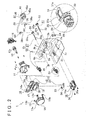
FIG. 2 is an exploded view of a lamp unit and its surrounding structures; -
FIG. 3 is a perspective view of the lamp unit and its surrounding structures; -
FIG. 4 is a front view of the lamp unit and its surrounding structures; -
FIG. 5 is a perspective view of the lamp unit and its surrounding structures viewed from the side opposite to the side from which the lamp unit and its surrounding structure is viewed inFIG. 3 ; -
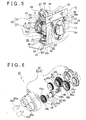
FIG. 6 is a perspective view of the gear unit with a portion thereof omitted; -
FIG. 7 is an enlarged view of the gear unit to which an operation is made in a first switching mode; -
FIG. 8 is an enlarged view of the gear unit to which an operation is made in a second switching mode; -
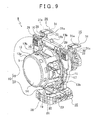
FIG. 9 is a view illustrating an exemplary lamp unit in which a stationary shade and a connecting portion are prepared as separate members; -
FIG. 10 is a perspective view illustrating an exemplary lamp unit in which a leveling actuator is positioned above an aiming mechanism; -
FIG. 11 is a front view illustrating an exemplary lamp unit in which the leveling actuator is positioned above the aiming mechanism; -
FIG. 12 is a perspective view of a part of a vehicular headlamp according to a first modification; and -
FIG. 13 is a schematic side view of a part of a vehicular headlamp according to a second modification. - Hereinbelow, embodiments of a vehicular headlamp for carrying out the present invention will be described with reference to the attached drawings.
-
Vehicular headlamps 1 are arranged and fixed on laterally opposite end portions of a front end portion of a vehicle body. - As illustrated in
FIG.1 , thevehicular headlamp 1 includes alamp housing 2 that opens in a frontward direction and acover 3 that closes the opening of thelamp housing 2. Thelamp housing 2 and thecover 3 constitute a lampouter case 4 whose interior space is used as alamp chamber 5. - A mounting
open portion 2a that penetrates in a front-rearward direction is formed at a rear end portion of the lamp housing 2 (SeeFIGs.1 to 3 ). Asupport protrusion 6 that extends in the frontward direction is provided at an inner surface of the rear end portion of thelamp housing 2. Thesupport protrusion 6 is arranged at a higher position than the mountingopen portion 2a. Aregulation groove 6a that opens in a downward direction and extends in a front-rearward direction is formed in thesupport protrusion 6. Also, slidinggrooves support protrusion 6. The slidinggrooves regulation groove 6a, respectively. Laterally both sides of each slidinggroove 6b opens inwardly and the portion other than the laterally both sides of each slidinggroove 6b opens in the downward direction. -
Shaft insertion holes lamp housing 2, between the mountingopen portion 2a and thesupport protrusion 6. Theshaft insertion holes -
Stationary protrusions lamp housing 2. Thestationary protrusions open portion 2a. - A back cover 7 that covers the mounting
open portion 2a is attached to the rear end portion of thelamp housing 2. - A
lamp unit 8 is arranged in the lamp chamber 5 (SeeFIG. 1 ). Thelamp unit 8 includes a unitmain body 9 and a connecting portion 10 (SeeFIGs. 1 to 5 ). - The unit
main body 9 includes areflector 11 whose inner surface reflects light, alight source 12 supported at a rear end portion of thereflector 11, alens holder 13 placed in front of thereflector 11, aprojection lens 14 supported at a front end portion of thelens holder 13. - The
reflector 11 has a bowl-shape that opens in the frontward direction, and the inner surface of the reflector is formed as areflection surface 11a. A lampsource mounting hole 11b is formed at the rear end portion of thereflector 11. - As the
light source 12, a discharge lamp, for example, is available. A rear end portion of thelight source 12 is formed as abase portion 12a. Thelight source 12 is attached to thereflector 11 with thebase portion 12a inserted into the lampsource mounting hole 11b. - A driving
circuit portion 15 is connected to the rear of thebase portion 12a. The drivingcircuit portion 15 serves as a driving portion that turns on and off thelight source 12. The drivingcircuit portion 15 is connected to a power source circuit (not shown). - The
lens holder 13 is made up of alens holding portion 13a having a substantially annular shape and a plurality of connectinglegs lens holding portion 13a in the rearward direction. The plurality of the connectinglegs lens holding portion 13a. - The
projection lens 14 is formed in a semispherical shape protruding in the frontward direction. A rear end portion of theprojection lens 14 is attached to thelens holding portion 13a and theprojection lens 14 is thereby supported by thelens holder 13. - A connecting
body 16 is arranged between thereflector 11 and thelens holder 13. The connectingbody 16 is formed in a substantial flat plate having surfaces that face the front direction and the rearward direction. An annular-shapedstationary shade 17 is integrally formed with a connecting surface portion 18 (as a single member) to form the connectingbody 16. Thestationary shade 17 blocks a part of light emitted from thelight source 12, and the connectingsurface portion 18 is provided in continuous with an outer periphery of the stationary shade 17 (SeeFIGs.1 and2 ). - A rear end portion of each connecting
leg 13b of thelens holder 13 and a front end portion of thereflector 11 is connected to the connectingbody 16 by, for example, a screw. Thus, thelens holder 13 is arranged so as to cover the front side of thestationary shade 17, while thereflector 11 is arranged so as to cover the rear side of thestationary shade 17. - Connecting
holes FIG. 2 ), being spaced form each other in the lateral direction. The connectinghole 18a is formed into a rectangular shape and a vertical width of the connectinghole 18a is slightly longer than a lateral width of the connectinghole 18a. Aregulated portion 18b having a columnar shape is provided at a lateral center portion of the connectingsurface portion 18. Theregulated portion 18b protrudes in the upward direction. - A
solenoid 19 and amovable shade 20 driven by a driving force generated by thesolenoid 19 is arranged on the connecting body 16 (SeeFIGs.1 and2 ). Thesolenoid 19 includes a driving shaft 19a to be moved in an axial direction by electromagnetic force. Themovable shade 20 is connected, via a connectingwire 21, to the driving shaft 19a. Themovable shade 20 rotates around a shaft that extends in the lateral direction, as a result of the axial movement of the driving shaft 19a. - The
solenoid 19 and themovable shade 20 are arranged inside thestationary shade 17. Rotation of themovable shade 20 varies a blocked amount of light that is emitted from thelight source 12, thereby, for example, switching between high-beam light distribution patter and low-beam light distribution pattern. - A connecting
member 22 is attached to the lower surface of the connectingbody 16. The connectingmember 22 is made up of a mountedportion 23 and a connectingprotrusion 24. The mountedportion 23 is formed in a laterally long flat plate having surfaces that face the upward direction and the downward directions, and the connectingprotrusion 24 protrudes downwardly from a lateral center portion of the mountedportion 23. The connectingprotrusion 24 opens downwardly and its inner space is used as a connectingconcave portion 24a. - The
stationary shade 17 of the connectingbody 16 configured as described above constitutes, together with thesolenoid 19 and themovable shade 20, part of the unitmain body 9, and the connectingsurface portion 18 constitutes, together with the connectingmember 22, the connectingportion 10 connected to a aiming mechanism and a leveling actuator both of which will be detailed later. - The
lamp unit 8 configured as describe above is rotatably (tiltably) supported by the aimingmechanism 25 and thus by the lamp housing 2 (SeeFIGs.1 to 5 ). The aimingmechanism 25 includesfulcrum bodies shafts - The
fulcrum body 26 is made up of arotation fulcrum portion 28, aninsertion connecting portion 29, asupport portion 30, and a slidingportion 31. Therotation fulcrum portion 28 has a spherical outer profile is of a spherical shape, theinsertion connecting portion 29 is formed in continuous with a front side of therotation fulcrum portion 28, thesupport portion 30 is formed in continuous with a rear side of therotation fulcrum portion 28, and the slidingportion 31 is formed in continuous with an upper side of the support portion 30 (SeeFIG.2 ). - The
rotation fulcrum portion 28 is movable, together with theinsertion connecting portion 29, relative to the other members, at least, in the vertical direction. Therotation fulcrum portion 28 is used as a fulcrum of rotation upon leveling adjustment using the leveling actuator. - In the
insertion connecting portion 29, a spiral groove (not shown) is formed at its inner surface. An outer profile of theinsertion connecting portion 29 is formed into a rectangular shape, and theinsertion connecting portion 29 is inserted into the connectinghole 18a formed in the connectingsurface portion 18 of the connectingbody 16. Thefulcrum body 26 and the he connectingbody 16 are connected by the insertion of theinsertion connecting portion 29 into the connectinghole 18a, and thus thefulcrum body 26 is not allowed to move relative to the connectingbody 16 in the front-rearward direction. In addition, in a state where theinsertion connecting portion 29 is inserted into the connectinghole 18a, space is defined between the connectinghole 18a and theinsertion connecting portion 29 in the lateral direction. Thereby, thefulcrum body 26 is capable of moving relative to the connectingbody 16 in the lateral direction. - The sliding
portion 31 includesleaf spring portions portion 31 and that are deformable in the vertical direction. The slidingportion 31 is inserted into the slidinggroove 6b, formed in thesupport protrusion 6 of thelamp housing 2, from the front side. The slidingportion 31 is supported by thesupport protrusion 6 such that the slidingportion 31 is slidable in the front-rearward direction (SeeFIG. 4 ). In a state where the slidingportion 31 is inserted into the slidinggroove 6b, theleaf spring portions portion 31 contact with an upper side surface portion of the slidingportion 31, while both lateral side surfaces in a lower surface of the slidingportion 31 is pressed against a lower side surface portion of the slidingportion 31, thereby preventing a backlash relative to thesupport protrusion 6 in the vertical direction. - The aiming
shaft 27 is made up of ashaft portion 32 and anoperation portion 33 connected to the rear end portion of the shaft portion 32 (SeeFIGs.1 and2 ). An axial direction of theshaft portion 32 extends in the front-rearward direction, and a portion of theshaft portion 32 except for the its end portion is formed as athread portion 32a. Theoperation portion 33 is formed in an annular shape extending outwardly from the rear end portion of theshaft portion 32, and has agear portion 33a formed on a an outer periphery of a front surface of theoperation portion 33. - The
shaft portion 32 of the aimingshaft 27 is inserted, from the rear side, into theshaft insertion hole 2b formed in thelamp housing 2, passes through arotation stop washer 34, and then thethread portion 32a of the aimingshaft 27 is brought into thread engagement with the spiral groove formed in theinsertion connecting portion 29 of thefulcrum body 26. Thus, the connectingbody 16 of thelamp unit 8 is connected, via thefulcrum bodies shafts shafts respective thread portions shafts 27, thereby moving thefulcrum bodies lamp unit 8, in the front-rearward direction. - In a state where the aiming
shafts respective fulcrum bodies body 16 and the slidingportion support protrusion 6, theregulated portion 18b of the connectingbody 16 is inserted, from the front side, into theregulation groove 6a formed at thesupport protrusion 6 of the lamp housing 2 (SeeFIG.4 ). Thus, thelamp unit 8 is allowed to move in the front-rearward direction, but is restricted to move in the lateral direction by inserting the fact that theregulated portion 18b into theregulation groove 6a. - Regions of the connecting portion 10 (connecting surface portion 18) to which the pair of the aiming
shafts operation portions - A leveling
actuator 35 is arranged under thelamp unit 8. The levelingactuator 35 is fixed to thestationary protrusions lamp housing 2 by screwing or the like. - The leveling
actuator 35 includes acase body 36 and a driving mechanism (not shown) arranged inside thecase body 36. - An
insertion hole 36a is formed at an upper surface portion of thecase body 36 such that theinsertion hole 36a penetrates through the upper surface portion of thecase body 36 in the vertical direction. Theinsertion hole 36a has a shape extending in the front-rearward direction. - The leveling
actuator 35 includes anoutput shaft 35a that is driven by the driving mechanism to move in the front-rearward direction. Theoutput shaft 35a protrudes, through theinsertion hole 36a, in the upward direction. - The
output shaft 35a of the levelingactuator 35 is inserted into the connectingconcave portion 24a of the connectingmember 22, thereby connecting the levelingactuator 35 to the connectingprotrusion 24. In a state where theoutput shaft 35a is connected to the connectingprotrusion 24, thelamp unit 8 is allowed to rotate about theoutput shaft 35a to move in both substantially lateral and vertical directions. When theoutput shaft 35a is moved in the front-rearward direction, thelamp unit 8 rotate about therotation fulcrum portions respective fulcrum bodies output shaft 35a. - A region of the connecting member 22 (connecting portion 10) to which the
output shaft 35a is connected is formed as a levelingoperation portion 90. The levelingoperation portion 90 is arranged between the pair of the aimingoperation portions main body 9 from the aimingshafts 27 and 27 (on a side of the unitmain body 9 opposite to a side where the aimingshafts FIG.4 ). In this case, it is preferable that levelingoperation portion 90 is arranged at a position immediately under an intermediate position between the pair of the aimingoperation portions regulated portion 18b provided on the connectingsurface portion 18 of the connectingbody 16 is positioned immediately above the levelingoperation portion 90. - The aiming
shafts FIGs.1 to 5 ). Thegear unit 37 includes agear case 38, a plurality of gears accommodated in thegear case 38, a gear switching mechanism, androtation wires - The
gear case 38 is configured by a combination of a storingcase portion 40 having at its one end an opening and alid portion 41 that closes the opening of the storing case portion 40 (SeeFIGs.6 to 8 ).Jig insertion holes case portion 40.Wire passing holes lid portion 41. - A two-
stage driving gear 42, a first connectinggear 43, anoperation gear 44, adriving gear 45, and a second connectinggear 46 are accommodated within thegear case 38. - The two-
stage driving gear 42 has a small-diameter gear portion 42a and a large-diameter gear portion 42b. Ajig insertion hole 42c that opens toward one side of the axial direction is formed in the two-stage driving gear 42. Ajig engagement portion 42d to be engaged with ajig 100, such as a screw driver, is formed at a bottom portion of thejig insertion hole 42c. A connectinghole 42e that opens in the other side in the axial direction is formed in the two-stage driving gear 42. - The first connecting
gear 43, which is a spur gear, meshes with the small-diameter gear portion 42a of the two-stage driving gear 42. - An
outer gear portion 44a is formed at an outer periphery of theoperation gear 44 and aninner gear portion 44b is formed at an inner periphery of theoperation gear 44. Theouter gear portion 44a od theoperation gear 44 meshes with the first connectinggear 43. - The
driving gear 45 is made up of ashaft portion 47 and agear forming portion 48 extending outward from an axial directional center portion of theshaft portion 47. Ajig insertion hole 47a that opens toward one side of the axial direction is formed in theshaft portion 47, and ajig engagement portion 47b to be engaged with thejig 100 is formed at an bottom portion of thejig insertion hole 47a formed in thedriving gear 45. A connectinghole 47c that opens toward the other side of the axial direction is formed in thedriving gear 45. In thegear forming portion 48, a firstswitching gear portion 48a is formed at an one side surface in the axial direction, and secondswitching gear portion 48b is formed at the other side surface. - An urging
spring 49 is supported by a portion of theshaft portion 47 on a side of the connectinghole 47c in thedriving gear 45. - In the second connecting
gear 46, anouter gear portion 46a is formed at an outer periphery and aninner gear portion 46b is formed at an inner periphery. Theouter gear portion 46a of the second connectinggear 46 meshes with the large-diameter gear portion 42b of the two-stage driving gear 42. - In the
driving gear 45, with the urgingspring 49 supported, a portion of theshaft portion 47 on a side of the connectinghole 47c and a substantially half of thegear forming portion 48 are rotatably inserted inside theoperation gear 44, and a portion of theshaft portion 47 on a side of thejig insertion hole 47a and a substantially half of thegear forming portion 48 are rotatably inserted inside the second connectinggear 46 as to be rotatable. - The
driving gear 45 is urged by the urgingspring 49 in a direction of theoperation gear 44 and the firstswitching gear portion 48a meshes with theinner gear portion 44b of theoperation gear 44. - The two-
stage driving gear 42 is arranged on an axis connecting one of thejig insertion holes 40a and one of thewire insertion holes 41a, while theoperation gear 44, thedriving gear 45 and the second connectinggear 46 is arranged on an axis connecting the otherjig insertion hole 40a and the otherwire insertion hole 41a. The first connectinggear 43 is arranged with meshed with the small-diameter gear portion 42a of the two-stage driving gear 42 and with theouter gear portion 46a of the second connectinggear 46. - The
rotation wire 39 has at its one end portion agear portion 39a. The other end portions of therotation wires hole 42e and a connectinghole 47c and thus therotation wires stage driving gear 42 and thedriving gear 45, respectively. Accordingly, therotation wires stage driving gear 42 and thedriving gear 45. - The
rotation wires respective metal fixtures lamp housing 2, and thegear portions gear portions shafts FIG.5 ). Thus, when therotation wires stage driving gear 42 and rotation of thedriving gear 45, the respective aimingshafts respective gear portions stage driving gear 42 and rotation direction of thedriving gear 45. - In the
gear unit 37 configured as described above, as shown inFIG.7 , thejig 100 is inserted, via the one of thejig insertion holes gear case 38, into thejig insertion hole 42c of the two-stage driving gear 42 and rotates after thejig 100 is engaged with thejig engagement portion 42d, the two-stage driving gear 42 is caused to rotate. At this time, thedriving gear 45 is urged, by the urgingspring 49, to move toward theoperation gear 44, which allows the firstswitching gear portion 48a to mesh with theinner gear portion 44b of theoperation gear 44. As a result, the first switching mode is set. - Thus, when the two-
stage driving gear 42 is caused to rotate, the resulting rotational force is transmitted to the first connectinggear 43, theoperation gear 44, and thedriving gear 45 in such an order, and then thedriving gear 45 rotates in the same direction as the rotational direction of the two-stage driving gear 42. - At this time, the
operation gear 44 that meshes with the large-diameter gear portion 42b rotates together with the rotation of the two-stage driving gear 42. Thedriving gear 45 rotate independently of rotation of theoperation gear 44. - When the two-
stage driving gear 42 and thedriving gear 45 rotates in the same direction, the resulting rotations of therespective rotation wires shafts lamp unit 8 rotates about theoutput shaft 35a of the levelingactuator 35 to move in the substantially vertical direction, thereby performing the vertical aiming adjustment. At this time, the slidingportions fulcrum bodies grooves regulated portion 18b formed on the connectingbody 16 is guided by theregulation groove 6a of the support protrusion, and as a result, thelamp unit 8 moves in the substantially vertical direction while being. - In addition, in the
gear unit 37 as shown inFIG.8 , when thejig 100 is inserted, via the otherjig insertion hole 40a of thegear case 38, into thejig insertion hole 47a of thedriving gear 45, and thedriving gear 45 is urged by thejig 100 toward the second connectinggear 46 after thejig 100 engages with thejig engagement portion 47b, thedriving gear 45 move toward the second connectinggear 46 against the urging force of the urgingspring 49. Upon completion of such a movement of thedriving gear 45 toward the second connectinggear 46, the mesh of thedriving gear 45 with theinner gear portion 44b of the firstswitching gear portion 48a is cancelled, while the secondswitching gear portion 48b meshes with theinner gear portion 46b of the second connectinggear 46. As a result, the second switching mode is set. - With the second switching mode set, when the
driving gear 45 rotates due to the rotation of thejig 100, the resulting rotational force is transmitted to the two-stage driving gear 42 to cause the two-stage driving gear 42 to rotate in the opposite direction to the rotation direction of thedriving gear 45. - At this time, though the first connecting
gear 43 and the second connectinggear 46 rotate together with the rotation of the two-stage driving gear 42, thedriving gear 45 rotates independently of theoperation gear 44 since thedriving gear 45 does not mesh with theoperation gear 44. - When the two-
stage driving gear 42 and thedriving gear 45 rotates in opposite directions, therespective rotation wires shafts lamp unit 8 rotates about theoutput shaft 35a of the levelingactuator 35 to move in the substantially lateral direction, thereby performing the lateral aiming adjustment. - At this time, the
regulated portion 18b provided on the connectingbody 16 is regulated to move in the lateral direction by theregulation groove 6a of thesupport protrusion 6. Accordingly, the lateral aiming adjustment is performed by the rotation of thelamp unit 8 without being tilted in the lateral direction. - Thus, providing the
regulated portion 18b on the connectingbody 16 makes it possible to restrict the inclination of thelamp unit 8 upon performing the aiming adjustment. - In addition, the
regulated portion 18b is arranged at the position corresponding to the intermediate position between the pair of the aimingoperation portions operation portion 90. Accordingly, theregulated portion 18b is less likely to receive a load in the lateral direction due to, for example, own weight of thelamp unit 8, thereby making it possible to stably perform the aiming adjustment of thelamp unit 8. - When the lateral aiming adjustment is performed, the direction of the connecting
body 16 varies relative to theinsertion connecting portions respective fulcrum bodies insertion connecting portions respective fulcrum bodies holes surface portion 18 to displace from theinsertion connecting portions lamp unit 8 is not applied with unnecessary loads from thefulcrum bodies - As described above, using the
gear unit 37 in which the first switching mode and the second switching mode are prepared makes it possible to perform the lateral aiming adjustment and the vertical aiming adjustment easily, thereby enhancing the operability and facilitating the aiming adjustments. - On the other hand, when the
output shaft 35a of the levelingactuator 35 moves in the front-rearward direction, thelamp unit 8 rotates about thefulcrum portions respective fulcrum bodies output shaft 35a, whereby the leveling adjustment is performed. - Though, in the aforementioned embodiment, an example is shown in which the
stationary shade 17 and the connectingsurface portion 18 are formed integrally with each other, as shown inFIG.9 , instead, thestationary shade 17 and the connectingsurface portion 18 may be formed as separate members and thestationary shade 17 may be connected to the connectingsurface portion 18 by screwing or the like. Forming thestationary shade 17 and the connectingsurface portion 18 as separate members makes it possible, in different types of vehicular headlamps, to use same connectingsurface portions 18, while stationary shades of different shapes and sizes are used depending on the types of the vehicular headlamp. - Thus, using the same connecting
surface portions 18 in different types of vehicular headlamp enhances common use of components and therefore reduces the production cost. At the same time, it is capable of forming different light distribution patterns depending on the types of the vehicular headlamps by using the stationary shades of different shapes and sizes depending on the types of the vehicular headlamps. - In addition, though the aforementioned aspect illustrates the example in which the aiming
mechanism 25 is arranged at the higher position and the levelingactuator 35 is arranged at the lower position, instead, as illustrated inFIGs.10 and 11 , it may be possible to configure that the aimingmechanism 25 is arranged at the lower position and the levelingactuator 35 is arranged at the higher position. In such a configuration, thesupport protrusion 6 is arranged at the lower side of the mountingopen portion 2a and is inverted in the vertical direction contrary to thesupport protrusion 6 in the aforementioned vehicular headlamp 1 (SeeFIG.1 , etc.). Thestationary protrusions open portion 2a. - In addition, the connecting
holes surface portion 18 and theregulated portion 18b is provided at the lower end portion of the connectingsurface portion 18. The connectingmember 22 is attached to the upper surface of the connectingbody 16 and the connectingconcave portion 24a opens in the upward direction. - The leveling
actuator 35 is fixed to thestationary protrusions output shaft 35a protrudes downwardly through theinsertion hole 36a. - Such a configuration is preferable in a case where, for example, it is difficult to secure a space in which the leveling
actuator 35 is located below thelamp unit 8. - Also, in a configuration in which the aiming
mechanism 25 is positioned at lower side and the levelingactuator 35 is positioned at upper side, the levelingoperation portion 90 is arranged between the pair of the aimingoperation portions main body 9 from the aimingshafts 27 and 27 (SeeFIG.11 ). In this case, it is preferable that the levelingoperation portion 90 is arranged at a position intermediately above the intermediate position between the pair of the aimingoperation portions main body 9 from the aimingshafts regulated portion 18b provided on the connectingsurface portion 18 of the connectingbody 16 is positioned immediately under the levelingoperation portion 90. - Hereinbelow, each modification of the vehicular headlamp will be described.
- At first, a first modification will be described (See
FIG. 12 ). It is to be noted that when compared to the vehicular headlamp 1 (SeeFIGs. 10 and 11 ) in which the aimingmechanism 25 is arranges at the higher position and the levelingactuator 35 is arranged at the lower position, thevehicular headlamp 1A according to the first modification differs therefrom only in that the leveling actuator is arranged at the rearward portion of the lamp unit with the output shaft protruded in the upward direction and an arm link is used to connect the lamp unit and the leveling actuator. Thus, regarding thevehicular headlamp 1A, only the different portions from thevehicular headlamp 1 as illustrated inFIGs.10 and 11 are detailed and the other portions, indicated with the same reference signs that are common in thevehicular headlamp 1, are not described. InFIG 12 , only the configuration different from thevehicular headlamp 1 is illustrated schematically. - The leveling
actuator 35 is arranged at the rearward portion of thelamp unit 8 and fixed to thestationary protrusions output shaft 35a protruded in the upward direction. - The
lamp unit 8 and the levelingactuator 35 are connected with each other by means of anarm link 60. Thearm link 60 is made up of anarm portion 61 that extends in a substantially front-rearward direction, a connectingshaft portion 62 that protrudes from a front end portion of thearm portion 61 in the downward direction, and a connectingprotrusion portion 63 that protrudes from a rear end portion of thearm portion 61 in the downward direction. The connectingprotrusion portion 63 opens in the downward direction and its inner space is formed as a connectingconcave portion 63a. - The connecting
shaft portion 62 is fitted into the connectingconcave portion 24a of the connectingmember 22, thereby connecting thearm link 60 to the connectingprotrusion 24, and theoutput shaft 35a is fitted into the connectingconcave portion 63a, thereby connecting thearm link 60 to the levelingactuator 35. Thelamp unit 8 rotates about the connectingshaft portion 62, thereby allowing thelamp unit 8 to move in both the substantially lateral direction and the substantially vertical direction. - Thus, in the lateral aiming adjustment, the
lamp unit 8 rotates about the connectingshaft portion 62 to move in the substantially lateral direction depending on the rotation directions of the respective aimingshafts lamp unit 8 rotates about the connectingshaft portion 62 to move in the substantially lateral direction depending on the rotation directions of the respective aimingshafts lamp unit 8 rotates about the fulcrum portions of therespective fulcrum bodies output shaft 35a. - In the aforementioned
vehicular headlamp 1A, arranging the levelingactuator 35 at the rearward side of thelamp unit 8 makes it possible to reduce the size of the vehicular headlamp in the vertical direction. In particular, it is possible to reduce the size of the upward protrusion at the front end portion of thevehicular headlamp 1A. - It is to be noted that though in the aforementioned modification, the
vehicular headlamp 1A is exemplified such that the aimingmechanism 25 is arranged at the lower side and the levelingactuator 35 is arranged at the upper side, but inversely, thearm link 60 may be used to connect thelamp unit 8 and the levelingactuator 35 in a configuration in which the aimingmechanism 25 is arranged at the upper side and the levelingactuator 35 is arranged at the lower side. - In addition, in the
vehicular headlamp 1A, thestationary shade 17 and the connectingsurface portion 18 may be formed as separate members. - Next, a second modification will be described (See
FIG.13 ). It is to be noted that when compared to the vehicular headlamp 1 (See, for example,Fig.1 ), avehicular headlamp 1B according to the second modification differs therefrom only in that arm links are used for the connection between the lamp unit and the leveling actuator. Thus, regarding thevehicular headlamp 1B, only the different portions are detailed, and the other portions, indicated with the same reference signs that are common in thevehicular headlamp 1, are not described. InFIG. 13 , the configuration of thevehicular headlamp 1B is illustrated schematically. - The
lamp unit 8 is connected to the levelingactuator 35 by means ofarm links arm link 70 is connected to thearm link 71 and thearm link 71 is connected to thearm link 72. Thearm link 70, which extends in a substantially front-rearward direction, is connected at its front end portion to theoutput shaft 35a of the levelingactuator 35, thearm link 71, which extends in a substantially vertical direction, is rotatably supported at its center portion by thelamp housing 2, and thearm link 72, which extends in a substantially front-rearward direction, is connected at its front end portion to an upper end portion of thelamp unit 8. The lower end portion of thearm link 71 and a rear end portion of thearm link 70 are rotatably connected to each other. An upper end portion of thearm link 71 is connected to a rear end portion of thearm link 72 and an angle formed between thearm link 71 and thearm link 72 is kept always at an angle of, for example, 90 degrees. - In the
vehicular headlamp 1B, when theoutput shaft 35a of the levelingactuator 35 moves in the front-rearward direction, thearm link 70 and thearm link 71 rotate to move in a direction depending on the moving direction of theoutput shaft 35a, thereby performing the leveling adjustment of thelamp unit 8. - In the
vehicular headlamp 1B, arranging the levelingactuator 35 at the higher position is not required. - In addition, using the plural arm links 70, 71, and 72 for the connection of the
lamp unit 8 and the levelingactuator 35 will make it possible to position the levelingactuator 35 wherever desired, thereby enhancing the possibility of design. - It is to be noted that in the
vehicular headlamp 1 B, thelamp unit 8 and the levelingactuator 35 may be connected by means of the arm links 70, 71, and 72 with the aimingmechanism 25 positioned at the lower side and and the levelingactuator 35 positioned at the upper side. In addition, thestationary shade 17 and the connectingsurface portion 18 may be formed as separate members. - As described above, in the
vehicular headlamp operation portion 90 is arranged between the pair of the aimingoperation portions main body 9 from the aimingshafts - Thus, it is possible to make both positions of the aiming
operation portions operation portion 90 relative to thelamp unit 8 in good balance, which allows ensuring sufficient strength against vibrations. In addition, since theoutput shaft 35a of the levelingactuator 35 is not lopsided in the lateral direction, it is possible to efficiently utilize a space of alamp chamber 5, thereby reducing the size of the vehicular headlamp. - In particular, when the leveling
operation portion 90 is arranged at a position corresponding to the intermediate position between the pair of the aimingoperation portions main body 9 from the aimingshafts operation portions operation portion 90 with respect to thelamp unit 8 correspond to respective vertexes of an isosceles triangle. As a result, it is possible to secure strength against vibrations and reduce the size of the vehicular headlamp. - In addition, the leveling
actuator 35 is fixed to thelamp housing 2, thereby improving the strength against vibrations.
Claims (9)
- A vehicular headlamp including:a lamp unit (8) that includes a unit main body (9) including a light source (12) and a connecting portion (10) arranged at least partially at an outer circumferential side of the unit main body (9);a leveling actuator (35) that is connected to the connecting portion (10) and that moves the lamp unit (8) to adjust an irradiation direction of light emitted from the light source (12); andan aiming mechanism (25) that includes a pair of aiming shafts (27) connected to the connecting portion (10) and that moves, through an operation of the aiming shafts (27), the lamp unit (8) to adjust an irradiation direction of light emitted from the light source (12), the vehicular headlamp characterized in that:the connecting portion (10) has a leveling operation portion (90) to which the leveling actuator (35) is connected and a pair of aiming operation portions (80) to which the respective the aiming shafts (27) are connected;the pair of the aiming operation portions (80) are arranged spaced from each other in a lateral direction of the vehicular headlamp; andthe leveling operation portion (90) is arranged between the pair of the aiming operation portions (80), on an opposite side of the unit main body (9) from the pair of the aiming shafts (27).
- The vehicular headlamp according to claim 1, wherein the leveling operation portion (90) is arranged at a position corresponding to an intermediate position between the pair of the aiming operation portions (80), on the opposite side of the unit main body (9) from the pair of the aiming shafts (27).
- The vehicular headlamp according to claim 1 or 2, further comprising a lamp housing (2) that constitutes a lamp outer case (4), wherein
a regulated portion (18b) is provided in the lamp unit (8) and supported by the lamp housing (2) so as to be movable in a front-rearward direction of the vehicular headlamp and so as to be immovable in the lateral direction of the vehicular headlamp. - The vehicular headlamp according to any one of claims 1 to 3, further comprising a lamp housing (2) that constitutes a lamp outer case (4), wherein
the leveling actuator (35) is fixed to the lamp housing (2). - The vehicular headlamp according to any one of claims 1 to 4, further comprising an arm link (60; 70, 71, 72) that extends in a predetermined direction, wherein
the leveling actuator (35) is connected, through the arm link(60; 70, 71, 72), to the connecting portion (10). - The vehicular headlamp according to claim 5, wherein the leveling actuator (35) is arranged at a rear side of the lamp unit (8).
- The vehicular headlamp according to claim 5, further comprising a lamp housing (2) that constitutes a lamp outer case (4), wherein:a plurality of arm links (70, 71, 72) are provided;the plurality of the arm links (70, 71, 72) are connected to one another such that each arm link (70, 71, 72) is allowed to rotate about an axis extending in the lateral direction of the vehicular headlamp; andone of the arm links (71) is supported by the lamp housing (2) such that the one of the arm links (71) is allowed to rotate about an axis extending in the lateral direction of
the vehicular headlamp. - The vehicular headlamp according to any one of claims 1 to 7, further comprising a gear unit (37) that includes a plurality of gears (42, 43, 44, 45, 46) and a gear switching mechanism that changes an engagement state of the plurality of gears (42, 43, 44, 45, 46), wherein:a rotational force from the plurality of gears (42, 43, 44, 45, 46) are transmitted to the pair of the aiming shafts (27);the gear switching mechanism switches between a first switching mode and a second switching mode;the pair of the aiming shafts (27) rotate in the same direction in the first switching mode and the pair of the aiming shafts (27) rotate in the opposite directions in the second switching mode.
- The vehicular headlamp according to claim 8, wherein the gear switching mechanism switches between the first switching mode and the second switching mode depending on an operation on the gear unit using a jig (100).
Applications Claiming Priority (1)
| Application Number | Priority Date | Filing Date | Title |
|---|---|---|---|
| JP2013105312A JP6125902B2 (en) | 2013-05-17 | 2013-05-17 | Vehicle headlamp |
Publications (3)
| Publication Number | Publication Date |
|---|---|
| EP2803529A2 true EP2803529A2 (en) | 2014-11-19 |
| EP2803529A3 EP2803529A3 (en) | 2015-12-30 |
| EP2803529B1 EP2803529B1 (en) | 2017-06-21 |
Family
ID=50721684
Family Applications (1)
| Application Number | Title | Priority Date | Filing Date |
|---|---|---|---|
| EP14168600.6A Not-in-force EP2803529B1 (en) | 2013-05-17 | 2014-05-16 | Vehicular headlamp |
Country Status (4)
| Country | Link |
|---|---|
| US (1) | US9283886B2 (en) |
| EP (1) | EP2803529B1 (en) |
| JP (1) | JP6125902B2 (en) |
| CN (1) | CN104165316B (en) |
Cited By (2)
| Publication number | Priority date | Publication date | Assignee | Title |
|---|---|---|---|---|
| WO2016141924A1 (en) * | 2015-03-12 | 2016-09-15 | Hella Kgaa Hueck & Co. | Headlight for vehicles |
| EP3647113A1 (en) * | 2018-10-29 | 2020-05-06 | Valeo Vision | Lighting device for vehicle with optical axis adjustment |
Families Citing this family (1)
| Publication number | Priority date | Publication date | Assignee | Title |
|---|---|---|---|---|
| JP6817011B2 (en) * | 2016-09-29 | 2021-01-20 | 株式会社小糸製作所 | Vehicle headlights |
Citations (1)
| Publication number | Priority date | Publication date | Assignee | Title |
|---|---|---|---|---|
| JP2008300363A (en) | 2008-08-06 | 2008-12-11 | Koito Mfg Co Ltd | Vehicle lamp |
Family Cites Families (20)
| Publication number | Priority date | Publication date | Assignee | Title |
|---|---|---|---|---|
| IT8552935U1 (en) * | 1985-02-01 | 1986-08-01 | Comind Spa | Automotive headlamp with adjustment device |
| FR2636578B1 (en) | 1988-09-22 | 1993-06-18 | Valeo Vision | ORIENTATION ADJUSTMENT DEVICE FOR MOTOR VEHICLE PROJECTOR |
| JPH03119904U (en) * | 1990-03-20 | 1991-12-10 | ||
| IT1285272B1 (en) * | 1996-02-27 | 1998-06-03 | Magneti Marelli Spa | DEVICE FOR CHECKING THE ORIENTATION OF THE MOBILE REFLECTOR OF A MOTOR VEHICLE HEADLAMP |
| JP3907827B2 (en) * | 1998-05-25 | 2007-04-18 | 株式会社小糸製作所 | Automotive headlamp |
| JP2001341577A (en) * | 2000-05-31 | 2001-12-11 | Mitsubishi Electric Corp | Vehicle headlight system and irradiation axis adjustment device for vehicle headlight |
| EP1270323A1 (en) * | 2001-06-19 | 2003-01-02 | Saia-Burgess Murten AG | Actuating device for adjusting the light beams emitted from a headlamp |
| DE10209623A1 (en) * | 2002-03-05 | 2003-09-25 | Automotive Lighting Reutlingen | Headlights, in particular for a motor vehicle |
| JP4761562B2 (en) * | 2006-11-13 | 2011-08-31 | 株式会社小糸製作所 | Vehicle lamp |
| JP4711983B2 (en) * | 2007-02-21 | 2011-06-29 | 株式会社小糸製作所 | Vehicle lamp |
| JP4908282B2 (en) * | 2007-03-27 | 2012-04-04 | 株式会社小糸製作所 | Vehicle lamp |
| JP5045623B2 (en) * | 2008-09-17 | 2012-10-10 | 市光工業株式会社 | Vehicle headlamp with leveling device |
| CN101722890B (en) * | 2008-10-21 | 2012-05-09 | 汽车零部件研究及发展中心有限公司 | Vehicle headlight and method for controlling deflection of lighting direction thereof |
| US8075171B2 (en) * | 2009-08-10 | 2011-12-13 | Asmo Co., Ltd. | Lamp device |
| JP2011060727A (en) * | 2009-09-14 | 2011-03-24 | Koito Mfg Co Ltd | Headlamp for vehicle |
| JP2011150993A (en) * | 2009-12-25 | 2011-08-04 | Koito Mfg Co Ltd | Vehicular headlamp |
| CN201646541U (en) * | 2010-04-26 | 2010-11-24 | 福州大学 | Automotive headlight adjustment device |
| FR2981431B1 (en) * | 2011-10-14 | 2015-04-24 | Aml Systems | LIGHTING TORCH FOR MOTOR VEHICLE |
| CN202573955U (en) * | 2012-03-07 | 2012-12-05 | 胡宇峰 | Asynchronous control follow-up steering headlight system |
| JP6218424B2 (en) * | 2013-04-26 | 2017-10-25 | 株式会社小糸製作所 | Vehicle lighting |
-
2013
- 2013-05-17 JP JP2013105312A patent/JP6125902B2/en active Active
-
2014
- 2014-05-15 CN CN201410205496.6A patent/CN104165316B/en not_active Expired - Fee Related
- 2014-05-16 US US14/279,754 patent/US9283886B2/en not_active Expired - Fee Related
- 2014-05-16 EP EP14168600.6A patent/EP2803529B1/en not_active Not-in-force
Patent Citations (1)
| Publication number | Priority date | Publication date | Assignee | Title |
|---|---|---|---|---|
| JP2008300363A (en) | 2008-08-06 | 2008-12-11 | Koito Mfg Co Ltd | Vehicle lamp |
Cited By (3)
| Publication number | Priority date | Publication date | Assignee | Title |
|---|---|---|---|---|
| WO2016141924A1 (en) * | 2015-03-12 | 2016-09-15 | Hella Kgaa Hueck & Co. | Headlight for vehicles |
| US10442337B2 (en) | 2015-03-12 | 2019-10-15 | Hella Kgaa Hueck & Co. | Vehicle headlight with separable pivoting lever |
| EP3647113A1 (en) * | 2018-10-29 | 2020-05-06 | Valeo Vision | Lighting device for vehicle with optical axis adjustment |
Also Published As
| Publication number | Publication date |
|---|---|
| JP6125902B2 (en) | 2017-05-10 |
| EP2803529A3 (en) | 2015-12-30 |
| CN104165316A (en) | 2014-11-26 |
| CN104165316B (en) | 2016-10-26 |
| US9283886B2 (en) | 2016-03-15 |
| EP2803529B1 (en) | 2017-06-21 |
| JP2014229344A (en) | 2014-12-08 |
| US20140340915A1 (en) | 2014-11-20 |
Similar Documents
| Publication | Publication Date | Title |
|---|---|---|
| KR100806658B1 (en) | Vehicular lamp | |
| JP4614347B2 (en) | Vehicle lamp | |
| EP2353935A2 (en) | Headlamp actuator | |
| CN101725883B (en) | Vehicle headlight | |
| KR20120115099A (en) | Vehicular headlamp | |
| US9310042B2 (en) | Vehicle headlamp | |
| JP2010108867A (en) | Vehicle headlight | |
| EP2338728B1 (en) | Vehicle headlamp | |
| KR100741341B1 (en) | Car luminaires | |
| US7575351B2 (en) | Vehicular headlamp | |
| EP2803529B1 (en) | Vehicular headlamp | |
| CN104279483A (en) | Vehicular headlamp | |
| WO2018190191A1 (en) | Vehicle lamp fitting | |
| CN104956146A (en) | Lamp unit for vehicle and headlamp for vehicle | |
| JP2010272373A (en) | Vehicle lighting | |
| US7387415B2 (en) | Vehicle headlamp having symmetrical actuator with front connector | |
| EP2163427A1 (en) | Vehicle headlamp | |
| JP6081115B2 (en) | Actuators and vehicle headlamps | |
| JP6052973B2 (en) | Method for manufacturing lamp unit | |
| EP2399773A1 (en) | Vehicle headlamp | |
| JP4518496B2 (en) | Vehicle lamp | |
| JP5995656B2 (en) | Vehicle headlamp | |
| JP6726091B2 (en) | Vehicle headlight device | |
| JP2025143636A (en) | Vehicle lighting fixtures | |
| JP2012169069A (en) | Headlight for vehicle |
Legal Events
| Date | Code | Title | Description |
|---|---|---|---|
| PUAI | Public reference made under article 153(3) epc to a published international application that has entered the european phase |
Free format text: ORIGINAL CODE: 0009012 |
|
| 17P | Request for examination filed |
Effective date: 20140516 |
|
| AK | Designated contracting states |
Kind code of ref document: A2 Designated state(s): AL AT BE BG CH CY CZ DE DK EE ES FI FR GB GR HR HU IE IS IT LI LT LU LV MC MK MT NL NO PL PT RO RS SE SI SK SM TR |
|
| AX | Request for extension of the european patent |
Extension state: BA ME |
|
| RIC1 | Information provided on ipc code assigned before grant |
Ipc: B60Q 1/076 20060101ALI20150714BHEP Ipc: B60Q 1/068 20060101AFI20150714BHEP |
|
| PUAL | Search report despatched |
Free format text: ORIGINAL CODE: 0009013 |
|
| AK | Designated contracting states |
Kind code of ref document: A3 Designated state(s): AL AT BE BG CH CY CZ DE DK EE ES FI FR GB GR HR HU IE IS IT LI LT LU LV MC MK MT NL NO PL PT RO RS SE SI SK SM TR |
|
| AX | Request for extension of the european patent |
Extension state: BA ME |
|
| RIC1 | Information provided on ipc code assigned before grant |
Ipc: B60Q 1/068 20060101AFI20151123BHEP Ipc: B60Q 1/076 20060101ALI20151123BHEP |
|
| GRAP | Despatch of communication of intention to grant a patent |
Free format text: ORIGINAL CODE: EPIDOSNIGR1 |
|
| RAP1 | Party data changed (applicant data changed or rights of an application transferred) |
Owner name: KOITO MANUFACTURING CO., LTD. |
|
| RIN1 | Information on inventor provided before grant (corrected) |
Inventor name: TAJIMA, KEIICHI |
|
| INTG | Intention to grant announced |
Effective date: 20170104 |
|
| GRAS | Grant fee paid |
Free format text: ORIGINAL CODE: EPIDOSNIGR3 |
|
| GRAA | (expected) grant |
Free format text: ORIGINAL CODE: 0009210 |
|
| AK | Designated contracting states |
Kind code of ref document: B1 Designated state(s): AL AT BE BG CH CY CZ DE DK EE ES FI FR GB GR HR HU IE IS IT LI LT LU LV MC MK MT NL NO PL PT RO RS SE SI SK SM TR |
|
| REG | Reference to a national code |
Ref country code: GB Ref legal event code: FG4D |
|
| REG | Reference to a national code |
Ref country code: CH Ref legal event code: EP |
|
| REG | Reference to a national code |
Ref country code: IE Ref legal event code: FG4D |
|
| REG | Reference to a national code |
Ref country code: AT Ref legal event code: REF Ref document number: 902634 Country of ref document: AT Kind code of ref document: T Effective date: 20170715 |
|
| REG | Reference to a national code |
Ref country code: DE Ref legal event code: R096 Ref document number: 602014010904 Country of ref document: DE |
|
| REG | Reference to a national code |
Ref country code: NL Ref legal event code: MP Effective date: 20170621 |
|
| PG25 | Lapsed in a contracting state [announced via postgrant information from national office to epo] |
Ref country code: NO Free format text: LAPSE BECAUSE OF FAILURE TO SUBMIT A TRANSLATION OF THE DESCRIPTION OR TO PAY THE FEE WITHIN THE PRESCRIBED TIME-LIMIT Effective date: 20170921 Ref country code: HR Free format text: LAPSE BECAUSE OF FAILURE TO SUBMIT A TRANSLATION OF THE DESCRIPTION OR TO PAY THE FEE WITHIN THE PRESCRIBED TIME-LIMIT Effective date: 20170621 Ref country code: GR Free format text: LAPSE BECAUSE OF FAILURE TO SUBMIT A TRANSLATION OF THE DESCRIPTION OR TO PAY THE FEE WITHIN THE PRESCRIBED TIME-LIMIT Effective date: 20170922 Ref country code: LT Free format text: LAPSE BECAUSE OF FAILURE TO SUBMIT A TRANSLATION OF THE DESCRIPTION OR TO PAY THE FEE WITHIN THE PRESCRIBED TIME-LIMIT Effective date: 20170621 Ref country code: FI Free format text: LAPSE BECAUSE OF FAILURE TO SUBMIT A TRANSLATION OF THE DESCRIPTION OR TO PAY THE FEE WITHIN THE PRESCRIBED TIME-LIMIT Effective date: 20170621 |
|
| REG | Reference to a national code |
Ref country code: LT Ref legal event code: MG4D |
|
| REG | Reference to a national code |
Ref country code: AT Ref legal event code: MK05 Ref document number: 902634 Country of ref document: AT Kind code of ref document: T Effective date: 20170621 |
|
| PG25 | Lapsed in a contracting state [announced via postgrant information from national office to epo] |
Ref country code: SE Free format text: LAPSE BECAUSE OF FAILURE TO SUBMIT A TRANSLATION OF THE DESCRIPTION OR TO PAY THE FEE WITHIN THE PRESCRIBED TIME-LIMIT Effective date: 20170621 Ref country code: BG Free format text: LAPSE BECAUSE OF FAILURE TO SUBMIT A TRANSLATION OF THE DESCRIPTION OR TO PAY THE FEE WITHIN THE PRESCRIBED TIME-LIMIT Effective date: 20170921 Ref country code: LV Free format text: LAPSE BECAUSE OF FAILURE TO SUBMIT A TRANSLATION OF THE DESCRIPTION OR TO PAY THE FEE WITHIN THE PRESCRIBED TIME-LIMIT Effective date: 20170621 Ref country code: NL Free format text: LAPSE BECAUSE OF FAILURE TO SUBMIT A TRANSLATION OF THE DESCRIPTION OR TO PAY THE FEE WITHIN THE PRESCRIBED TIME-LIMIT Effective date: 20170621 Ref country code: RS Free format text: LAPSE BECAUSE OF FAILURE TO SUBMIT A TRANSLATION OF THE DESCRIPTION OR TO PAY THE FEE WITHIN THE PRESCRIBED TIME-LIMIT Effective date: 20170621 |
|
| PG25 | Lapsed in a contracting state [announced via postgrant information from national office to epo] |
Ref country code: SK Free format text: LAPSE BECAUSE OF FAILURE TO SUBMIT A TRANSLATION OF THE DESCRIPTION OR TO PAY THE FEE WITHIN THE PRESCRIBED TIME-LIMIT Effective date: 20170621 Ref country code: RO Free format text: LAPSE BECAUSE OF FAILURE TO SUBMIT A TRANSLATION OF THE DESCRIPTION OR TO PAY THE FEE WITHIN THE PRESCRIBED TIME-LIMIT Effective date: 20170621 Ref country code: CZ Free format text: LAPSE BECAUSE OF FAILURE TO SUBMIT A TRANSLATION OF THE DESCRIPTION OR TO PAY THE FEE WITHIN THE PRESCRIBED TIME-LIMIT Effective date: 20170621 Ref country code: EE Free format text: LAPSE BECAUSE OF FAILURE TO SUBMIT A TRANSLATION OF THE DESCRIPTION OR TO PAY THE FEE WITHIN THE PRESCRIBED TIME-LIMIT Effective date: 20170621 Ref country code: AT Free format text: LAPSE BECAUSE OF FAILURE TO SUBMIT A TRANSLATION OF THE DESCRIPTION OR TO PAY THE FEE WITHIN THE PRESCRIBED TIME-LIMIT Effective date: 20170621 |
|
| PG25 | Lapsed in a contracting state [announced via postgrant information from national office to epo] |
Ref country code: IT Free format text: LAPSE BECAUSE OF FAILURE TO SUBMIT A TRANSLATION OF THE DESCRIPTION OR TO PAY THE FEE WITHIN THE PRESCRIBED TIME-LIMIT Effective date: 20170621 Ref country code: PL Free format text: LAPSE BECAUSE OF FAILURE TO SUBMIT A TRANSLATION OF THE DESCRIPTION OR TO PAY THE FEE WITHIN THE PRESCRIBED TIME-LIMIT Effective date: 20170621 Ref country code: IS Free format text: LAPSE BECAUSE OF FAILURE TO SUBMIT A TRANSLATION OF THE DESCRIPTION OR TO PAY THE FEE WITHIN THE PRESCRIBED TIME-LIMIT Effective date: 20171021 Ref country code: ES Free format text: LAPSE BECAUSE OF FAILURE TO SUBMIT A TRANSLATION OF THE DESCRIPTION OR TO PAY THE FEE WITHIN THE PRESCRIBED TIME-LIMIT Effective date: 20170621 Ref country code: SM Free format text: LAPSE BECAUSE OF FAILURE TO SUBMIT A TRANSLATION OF THE DESCRIPTION OR TO PAY THE FEE WITHIN THE PRESCRIBED TIME-LIMIT Effective date: 20170621 |
|
| REG | Reference to a national code |
Ref country code: DE Ref legal event code: R097 Ref document number: 602014010904 Country of ref document: DE |
|
| REG | Reference to a national code |
Ref country code: FR Ref legal event code: PLFP Year of fee payment: 5 |
|
| PLBE | No opposition filed within time limit |
Free format text: ORIGINAL CODE: 0009261 |
|
| STAA | Information on the status of an ep patent application or granted ep patent |
Free format text: STATUS: NO OPPOSITION FILED WITHIN TIME LIMIT |
|
| PG25 | Lapsed in a contracting state [announced via postgrant information from national office to epo] |
Ref country code: DK Free format text: LAPSE BECAUSE OF FAILURE TO SUBMIT A TRANSLATION OF THE DESCRIPTION OR TO PAY THE FEE WITHIN THE PRESCRIBED TIME-LIMIT Effective date: 20170621 |
|
| PGFP | Annual fee paid to national office [announced via postgrant information from national office to epo] |
Ref country code: GB Payment date: 20180329 Year of fee payment: 5 |
|
| 26N | No opposition filed |
Effective date: 20180322 |
|
| PG25 | Lapsed in a contracting state [announced via postgrant information from national office to epo] |
Ref country code: SI Free format text: LAPSE BECAUSE OF FAILURE TO SUBMIT A TRANSLATION OF THE DESCRIPTION OR TO PAY THE FEE WITHIN THE PRESCRIBED TIME-LIMIT Effective date: 20170621 |
|
| REG | Reference to a national code |
Ref country code: CH Ref legal event code: PL |
|
| REG | Reference to a national code |
Ref country code: BE Ref legal event code: MM Effective date: 20180531 |
|
| PG25 | Lapsed in a contracting state [announced via postgrant information from national office to epo] |
Ref country code: MC Free format text: LAPSE BECAUSE OF FAILURE TO SUBMIT A TRANSLATION OF THE DESCRIPTION OR TO PAY THE FEE WITHIN THE PRESCRIBED TIME-LIMIT Effective date: 20170621 |
|
| REG | Reference to a national code |
Ref country code: IE Ref legal event code: MM4A |
|
| PG25 | Lapsed in a contracting state [announced via postgrant information from national office to epo] |
Ref country code: LI Free format text: LAPSE BECAUSE OF NON-PAYMENT OF DUE FEES Effective date: 20180531 Ref country code: CH Free format text: LAPSE BECAUSE OF NON-PAYMENT OF DUE FEES Effective date: 20180531 |
|
| PG25 | Lapsed in a contracting state [announced via postgrant information from national office to epo] |
Ref country code: LU Free format text: LAPSE BECAUSE OF NON-PAYMENT OF DUE FEES Effective date: 20180516 |
|
| PG25 | Lapsed in a contracting state [announced via postgrant information from national office to epo] |
Ref country code: IE Free format text: LAPSE BECAUSE OF NON-PAYMENT OF DUE FEES Effective date: 20180516 |
|
| PG25 | Lapsed in a contracting state [announced via postgrant information from national office to epo] |
Ref country code: BE Free format text: LAPSE BECAUSE OF NON-PAYMENT OF DUE FEES Effective date: 20180531 |
|
| PGFP | Annual fee paid to national office [announced via postgrant information from national office to epo] |
Ref country code: DE Payment date: 20190430 Year of fee payment: 6 |
|
| PGFP | Annual fee paid to national office [announced via postgrant information from national office to epo] |
Ref country code: FR Payment date: 20190410 Year of fee payment: 6 |
|
| GBPC | Gb: european patent ceased through non-payment of renewal fee |
Effective date: 20190516 |
|
| PG25 | Lapsed in a contracting state [announced via postgrant information from national office to epo] |
Ref country code: MT Free format text: LAPSE BECAUSE OF NON-PAYMENT OF DUE FEES Effective date: 20180516 |
|
| PG25 | Lapsed in a contracting state [announced via postgrant information from national office to epo] |
Ref country code: TR Free format text: LAPSE BECAUSE OF FAILURE TO SUBMIT A TRANSLATION OF THE DESCRIPTION OR TO PAY THE FEE WITHIN THE PRESCRIBED TIME-LIMIT Effective date: 20170621 |
|
| PG25 | Lapsed in a contracting state [announced via postgrant information from national office to epo] |
Ref country code: GB Free format text: LAPSE BECAUSE OF NON-PAYMENT OF DUE FEES Effective date: 20190516 |
|
| PG25 | Lapsed in a contracting state [announced via postgrant information from national office to epo] |
Ref country code: PT Free format text: LAPSE BECAUSE OF FAILURE TO SUBMIT A TRANSLATION OF THE DESCRIPTION OR TO PAY THE FEE WITHIN THE PRESCRIBED TIME-LIMIT Effective date: 20170621 Ref country code: HU Free format text: LAPSE BECAUSE OF FAILURE TO SUBMIT A TRANSLATION OF THE DESCRIPTION OR TO PAY THE FEE WITHIN THE PRESCRIBED TIME-LIMIT; INVALID AB INITIO Effective date: 20140516 |
|
| PG25 | Lapsed in a contracting state [announced via postgrant information from national office to epo] |
Ref country code: CY Free format text: LAPSE BECAUSE OF FAILURE TO SUBMIT A TRANSLATION OF THE DESCRIPTION OR TO PAY THE FEE WITHIN THE PRESCRIBED TIME-LIMIT Effective date: 20170621 Ref country code: MK Free format text: LAPSE BECAUSE OF NON-PAYMENT OF DUE FEES Effective date: 20170621 |
|
| PG25 | Lapsed in a contracting state [announced via postgrant information from national office to epo] |
Ref country code: AL Free format text: LAPSE BECAUSE OF FAILURE TO SUBMIT A TRANSLATION OF THE DESCRIPTION OR TO PAY THE FEE WITHIN THE PRESCRIBED TIME-LIMIT Effective date: 20170621 |
|
| REG | Reference to a national code |
Ref country code: DE Ref legal event code: R119 Ref document number: 602014010904 Country of ref document: DE |
|
| PG25 | Lapsed in a contracting state [announced via postgrant information from national office to epo] |
Ref country code: FR Free format text: LAPSE BECAUSE OF NON-PAYMENT OF DUE FEES Effective date: 20200531 |
|
| PG25 | Lapsed in a contracting state [announced via postgrant information from national office to epo] |
Ref country code: DE Free format text: LAPSE BECAUSE OF NON-PAYMENT OF DUE FEES Effective date: 20201201 |