EP2801930A1 - A near field communication reader adapted for NFC A anti collision and a method of NFC A anti collision - Google Patents
A near field communication reader adapted for NFC A anti collision and a method of NFC A anti collision Download PDFInfo
- Publication number
- EP2801930A1 EP2801930A1 EP13167169.5A EP13167169A EP2801930A1 EP 2801930 A1 EP2801930 A1 EP 2801930A1 EP 13167169 A EP13167169 A EP 13167169A EP 2801930 A1 EP2801930 A1 EP 2801930A1
- Authority
- EP
- European Patent Office
- Prior art keywords
- nfc
- collision
- single device
- tag
- device detection
- Prior art date
- Legal status (The legal status is an assumption and is not a legal conclusion. Google has not performed a legal analysis and makes no representation as to the accuracy of the status listed.)
- Granted
Links
Images



Classifications
-
- G—PHYSICS
- G06—COMPUTING OR CALCULATING; COUNTING
- G06K—GRAPHICAL DATA READING; PRESENTATION OF DATA; RECORD CARRIERS; HANDLING RECORD CARRIERS
- G06K7/00—Methods or arrangements for sensing record carriers, e.g. for reading patterns
- G06K7/10—Methods or arrangements for sensing record carriers, e.g. for reading patterns by electromagnetic radiation, e.g. optical sensing; by corpuscular radiation
- G06K7/10009—Methods or arrangements for sensing record carriers, e.g. for reading patterns by electromagnetic radiation, e.g. optical sensing; by corpuscular radiation sensing by radiation using wavelengths larger than 0.1 mm, e.g. radio-waves or microwaves
- G06K7/10019—Methods or arrangements for sensing record carriers, e.g. for reading patterns by electromagnetic radiation, e.g. optical sensing; by corpuscular radiation sensing by radiation using wavelengths larger than 0.1 mm, e.g. radio-waves or microwaves resolving collision on the communication channels between simultaneously or concurrently interrogated record carriers.
- G06K7/10029—Methods or arrangements for sensing record carriers, e.g. for reading patterns by electromagnetic radiation, e.g. optical sensing; by corpuscular radiation sensing by radiation using wavelengths larger than 0.1 mm, e.g. radio-waves or microwaves resolving collision on the communication channels between simultaneously or concurrently interrogated record carriers. the collision being resolved in the time domain, e.g. using binary tree search or RFID responses allocated to a random time slot
- G06K7/10039—Methods or arrangements for sensing record carriers, e.g. for reading patterns by electromagnetic radiation, e.g. optical sensing; by corpuscular radiation sensing by radiation using wavelengths larger than 0.1 mm, e.g. radio-waves or microwaves resolving collision on the communication channels between simultaneously or concurrently interrogated record carriers. the collision being resolved in the time domain, e.g. using binary tree search or RFID responses allocated to a random time slot interrogator driven, i.e. synchronous
-
- G—PHYSICS
- G06—COMPUTING OR CALCULATING; COUNTING
- G06K—GRAPHICAL DATA READING; PRESENTATION OF DATA; RECORD CARRIERS; HANDLING RECORD CARRIERS
- G06K7/00—Methods or arrangements for sensing record carriers, e.g. for reading patterns
- G06K7/10—Methods or arrangements for sensing record carriers, e.g. for reading patterns by electromagnetic radiation, e.g. optical sensing; by corpuscular radiation
- G06K7/10009—Methods or arrangements for sensing record carriers, e.g. for reading patterns by electromagnetic radiation, e.g. optical sensing; by corpuscular radiation sensing by radiation using wavelengths larger than 0.1 mm, e.g. radio-waves or microwaves
- G06K7/10237—Methods or arrangements for sensing record carriers, e.g. for reading patterns by electromagnetic radiation, e.g. optical sensing; by corpuscular radiation sensing by radiation using wavelengths larger than 0.1 mm, e.g. radio-waves or microwaves the reader and the record carrier being capable of selectively switching between reader and record carrier appearance, e.g. in near field communication [NFC] devices where the NFC device may function as an RFID reader or as an RFID tag
-
- H—ELECTRICITY
- H04—ELECTRIC COMMUNICATION TECHNIQUE
- H04W—WIRELESS COMMUNICATION NETWORKS
- H04W74/00—Wireless channel access
- H04W74/04—Scheduled access
- H04W74/06—Scheduled access using polling
-
- H—ELECTRICITY
- H04—ELECTRIC COMMUNICATION TECHNIQUE
- H04W—WIRELESS COMMUNICATION NETWORKS
- H04W74/00—Wireless channel access
- H04W74/08—Non-scheduled access, e.g. ALOHA
- H04W74/0833—Random access procedures, e.g. with 4-step access
- H04W74/0841—Random access procedures, e.g. with 4-step access with collision treatment
Definitions
- NFC Near field communication
- a reader is known in NFC Forum specifications as an NFC poll mode device but is also known as a PCD (Proximity Coupled Device) or an initiator.
- a tag is known in NFC Forum specifications as an NFC listen mode device but is also known as a PICC (Proximity Integrated Circuit Card). Communication is via a radio frequency field operating at 13.56 MHz over a short range up to 20cm. More details are to be found in the specifications of the NFC Forum, and in the international standard ISO/IED 14443, the contents whereof are entirely incorporated herein by reference.
- NFC data will be stored on the NFC tag.
- the reader aims to interrogate the tag, read the data, process the data, and write data to the NFC tag.
- An NFC reader may be a dedicated device implemented in: a credit or debit payment card reader, a mobile phone, an electronic device including but not limited to tablet, laptop, handheld device, door lock or turnstile.
- An NFC tag may also be a dedicated device implemented most commonly in the form of a card or fob, examples include a credit or debit payment card, key card, travel pass or passport, or an NFC enabled mobile phone emulating an NFC tag or plurality of NFC tags.
- the technical field also includes NFC technology enabled smart devices such as smart mobile phones, pads/tablets or personal digital assistants.
- Such NFC enabled smart devices will be provided with a processor, memory, antenna and other physical components required to communicate as a reader and/or a tag so that the smart device can act as any or several kinds of tag or be able to read any kind of tag.
- NFC enabled readers and tags communicate using a number of different "technologies", specifically NFC-A, NFC-B and NFC-F.
- technologies specifically NFC-A, NFC-B and NFC-F.
- This specification relates to NFC-A technology devices as more specifically defined in ISO/IED14443A, in particular the relevant anti-collision protocols in Chapter 6 and in NFC Forum-TS-Activity-1.0, 2010-11-18.
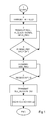
- NFC technology communications are initiated by the reader starting at step 1.
- the reader transmits an RF field which activates and may power any tags within range of the RF field irrespective of technology.
- a poll request signal SENS_REQ is transmitted by the reader. Only NFC-A technology tags will respond to a SENS_REQ poll request signal and all NFC-A tags receiving the signal will respond simultaneously with a poll response signal SENS_RES.
- the reader detects the receipt of the SENS_RES signal at step 4.
- NFC-A tag has a unique identification known as NFCID1.
- the size of NFCID1 can be 4 bytes, 7 bytes or 10 bytes.
- the SENS_RES signal will include the size of the NFCID1 enabling the reader to send the anti-collision command SDD_REQ, which will cause the tag to transmit its NFCID1.
- SDD_REQ anti-collision command
- the reader On receipt of the NFCID1 the reader will send the activate tag command incorporating the received NFCID1 SEL_REQ command.
- the tag On receipt of the SEL_REQ command the tag will enter the active state to communicate with the reader. The tag is thus resolved.
- NFCID1 may require up to three cascade levels of SDD_REQ command before the tag is resolved.
- a parameter in the SEL_RES response from the tag conveys whether the NFCID1 of the tag is complete. If the NFCID1 of the tag is not complete, the reader will send the SDD_REQ command for the next cascade level.
- NFC tags are emulated by an NFC enabled smart device
- tags especially several NFC-A type tags to be emulated by the smart device.
- NFC-A tags are present in the field simultaneously there is a probability of collision at bit level between the simultaneously received SENS_RES signals.
- the NFC forum provides for a collision resolution activity as described at "NFC Forum TS activity 1.0" 9.3.4 and Figure 7.
- the algorithm selects one device after the other. Every time a collision is detected, the algorithm continues with the valid bits of the NFCID1 cascade level followed by a 1 b cascade bit.
- the 1 b cascade bit indicates that the NFCID1 is incomplete, 0b indicates it is complete. This way, multiple devices can be identified by selecting all cascade levels of one device before using the algorithm in a new cycle to resolve the next unresolved tag. Before attempting to resolve the next unresolved tag, the resolved device is sent to SLEEP_A Sub-state to exclude it from the remaining collision resolution process.
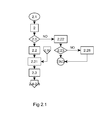
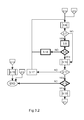
- FIG. 2 illustrates this prior art collision resolution method in more detail.
- the reader device starts the process and emits and RF field at step 2.
- the response (SENS_RES) from tags within rang of the RF field is examined to ascertain if the respective tag supports the collision resolution process.
- NFC-A tags come in three variants, namely NFC-A type 1, NFC-A type 2 and NFC-A type 4A. Only type 2 and type 4A tags support the collision resolution process. If tag in field is type 1 the process goes to step 2.22 where the read identifier command is sent. If there is collision the method ends, and the resolution for all tags will fail; if not the identity of the tag (NFCID1) is stored and the tag can be resolved.
- step 2.2 For type 2 and type 4A tags the process goes to step 2.2 where the device counter and collision flags are set to 0 for no collision.
- a poll request (SENS_REQ) is transmitted by the reader at step 2.21 and the reader selects a cascade level 1 for the requested tag response at step 2.3.
- the command SDD_REQ is broadcasted and received by all tags having the cascade level one part of the NFCID1. If more than one tag has the cascade level 1 part of NFCID1 a bit level collision may occur in the response SDD_RES transmitted by the receiving tags and be detected at steps 2.7-2.9.
- the number of valid bits received in the preceding response is set and SDD_REQ is broadcasted with SEL_CMD and SEL_PAR set in accordance with the new valid number of bits. If a collision is still detected in SDD_RES received at step 2.12 the method returns to step 2.10 and repeats steps 2.11 to 2.12.
- step 2.14 SEL_REQ is sent to activate the tag isolated and identified by the received complete NFCID1.
- step 2.16 If the NFCID1 is incomplete the cascade level is increased from 1 at step 2.16 and the method advances to step 2.4-2.6, where the previously described method steps will cycle again until NFCID1 is complete at 2.15.
- step 2.15 the method advances to steps 2.17-2.18 where the device counter is incremented and the completed NFCID1 stored. If more tags remain to be resolved at step 2.19 the method sends command SLP_REQ at step 2.20 to the last resolved tag; putting the last resolved tag into a sleep state unresponsive to the poll request and returns to step 2.21. The method continues to cycle until all tags are resolved.
- an NFC reader adapted to resolve multiple NFC-A tags and comprising:
- a method of resolving collisions in an NFC reader reading multiple NFC-A technology tags comprising the steps of:
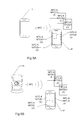
- FIG. 5A shows a reader 1 embodied in a smart device mobile phone.
- Figure 5B shows a dedicated NFC tag reader 1A perhaps embodied in a payment device or turnstile 5B.
- the reader 1 is emitting a radio frequency field F towards a set of three standalone NFC-A technology tags (i-iii) and a mobile phone P which is emulating three NFC-A technology tags (iv-vi).
- the tags are each entirely conventional and are each uniquely identifiable via an NFCID1.
- the NFCID1's are each abbreviated to: i, ii, iii, iv, v and vi.
- each NFCID1 is comprised of up to three cascade levels of binary strings. The size of the NFCID1 may vary according to the particular type of NFC-A type.
- the mobile phone 1 includes a CPU controller 2 controlling the operations of the mobile phone in response to machine readable code.
- the machine readable code is recorded in read only memory 3.
- controller 2 implements the NFC-A anti-collision method shown in the flowchart of figure 3 via the NFC specific component sub-system 5 which includes an NFC transmitter 6, an NFC receiver 7 and an antenna 8.
- the phone is powered by a rechargeable cell not shown.
- the code to run the method will be preloaded by the manufacturer or may be installed subsequently via a range of communication methods including: the cell phone's USB connection, via Bluetooth® or WiFi, GPRS, LTE, WiFiMax or any other communication system.
- An essential feature of the method may be a data package incorporating the code.
- the package may be recorded on a server to be capable of copying and download over a WAN or LAN for installation in a smart device, or recorded on media such as CD for installation via any such communication system.
- the user of the mobile phone 1 may wish to acquire data stored on one of the NFC-A technology tags emulated by the mobile phone P.
- An objective may be to establish secure communication between the mobile phone 1 and mobile phone 2 using peer to peer WiFi or Bluetooth®.
- Mobile phone P may also be in close proximity to a number of independent NFC-A tag cards (i)(ii)(iii) providing services such as contactless payment via near field communication.
- Each NFC-A device within range must be resolved.
- Communication is initiated by the user of phone reader 1 using the conventional cell phone controls to start the method.
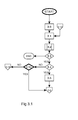
- the controller 2 then broadcasts an RF field using transmitter 5 via antenna 8 at step 3.0 in figure 3 .
- the controller sets a collision detection flag CDF to a value to indicate no collisions, in this case 0, in accordance with NFC Forum specifications.
- a single device detection command SDD_REQ is set to cascade level 1.
- each NFC-A tag receiving the SDD_REQ command must respond by transmitting a part of its unique NFCID1 from the NFCID1 cascade level set. Consequently, the method calls for NFCID1 from cascade level (CL) 1 only in the first set of method cycles.
- the reader broadcasts the poll request command SENS_REQ.
- Each NFC-A tag receiving the command SENS_REQ simultaneously transmits a poll response SENS_RES as defined at NFC Forum Activity 1.0 4.6.3.
- SENS_RES is a transmission two bytes long.
- the method confirms the receipt of any SENS_RES signals, if nothing is received the method ends. However if any SENS_RES signal has been received a collision detector operates to inspect the received SENS_RES signal at step 3.4 for any collisions. Collisions will occur where two or more different SENS_RES signals are received so that each of one and zero collide in the same frame. If a collision is detected at step 3.4, the method sets a collision detection flag at step 3.5, (e.g. INT_COLL_PEND) to 1 to indicate that a collision has been found. The method then goes to step 3.6.
- a collision detection flag e.g. INT_COLL_PEND
- the controller causes the reader to transmit the single device detection command SDD_REQ signal.
- the SDD_REQ Command is used to obtain the NFCID1 at the set cascade level of an NFC tag and to detect whether more than one tag of the same technology is in the operating field.
- each NFC-A tag responds by sending a single device detection response signal SDD_RES which may be received at step 3.6.
- SDD_REQ Command with a SEL_PAR value equal to 20h
- the NFCID1 of an NFC tag consists of 4, 7, or 10 bytes.
- the length of the response containing a complete NFCID1 cascade level i.e., NFCID1 CL1, or NFCID1 CL2, or NFCID1 CL3 is always 5 bytes.
- the received SDD_RES signals are inspected for collision between bits received in each frame. If a collision is detected the collision detected flag (CDF) is set to 1 to indicate collision detection and the method moves to step 3.9.
- the method has detected the presence of multiple NFC-A tags where no collision was detected at step 3.4.
- step 3.9 the method determines if the collision is in the last data bit of the SDD_RES responses received. If there is a collision in the last data bit the method goes to step 3.10 where the reader sends the tag selection command SEL_REQ. Tags responsive to the NFCID1 sent with SEL_REQ command respond with the tag response SEL_RES signal at cascade level 1.
- the SEL_RES signal will include a cascade bit indicating that the NFCID1 received with SEL_REQ is either complete or incomplete.
- CDF collision detection flag
- step 3.14 checks to discover if any of the single device detection (SDD) bits received with the SENS_RES signals are set to 1. If all the SDD bits are zero at step 3.14 the read identity (RID) command is sent at step 3.15 and the method ends.
- the RID Command is used to retrieve unique identifier and protocol support capabilities of an NFC tag. However if any SDD bits are set to 1 the method goes to step 3.6 to resolve the tags.
- Collisions identified in the initial steps to 3.14 of the method are resolved in a collision resolution subroutine consisting of steps 3.6 to 3.13 and steps 3.17 and 3.16.
- step 3.7 If at step 3.7 no collision is detected in SDD_RES the method goes to step 3.10 where the reader sends the SEL_REQ command.
- step 3.11 If the NFCID1 is found to be incomplete at step 3.11 the SDD_REQ cascade level is incremented at step 3.17 and the method goes to step 3.6.
Landscapes
- Engineering & Computer Science (AREA)
- Toxicology (AREA)
- Physics & Mathematics (AREA)
- Health & Medical Sciences (AREA)
- Artificial Intelligence (AREA)
- General Health & Medical Sciences (AREA)
- Electromagnetism (AREA)
- Computer Vision & Pattern Recognition (AREA)
- General Physics & Mathematics (AREA)
- Theoretical Computer Science (AREA)
- Computer Networks & Wireless Communication (AREA)
- Signal Processing (AREA)
- Mobile Radio Communication Systems (AREA)
Abstract

Description
- Near field communication (NFC) is a set of protocols for contactless communication between a reader and a tag. A reader is known in NFC Forum specifications as an NFC poll mode device but is also known as a PCD (Proximity Coupled Device) or an initiator. A tag is known in NFC Forum specifications as an NFC listen mode device but is also known as a PICC (Proximity Integrated Circuit Card). Communication is via a radio frequency field operating at 13.56 MHz over a short range up to 20cm. More details are to be found in the specifications of the NFC Forum, and in the international standard ISO/IED 14443, the contents whereof are entirely incorporated herein by reference.
- In NFC data will be stored on the NFC tag. The reader aims to interrogate the tag, read the data, process the data, and write data to the NFC tag.
- An NFC reader may be a dedicated device implemented in: a credit or debit payment card reader, a mobile phone, an electronic device including but not limited to tablet, laptop, handheld device, door lock or turnstile. An NFC tag may also be a dedicated device implemented most commonly in the form of a card or fob, examples include a credit or debit payment card, key card, travel pass or passport, or an NFC enabled mobile phone emulating an NFC tag or plurality of NFC tags. However, the technical field also includes NFC technology enabled smart devices such as smart mobile phones, pads/tablets or personal digital assistants. Such NFC enabled smart devices will be provided with a processor, memory, antenna and other physical components required to communicate as a reader and/or a tag so that the smart device can act as any or several kinds of tag or be able to read any kind of tag.
- NFC enabled readers and tags communicate using a number of different "technologies", specifically NFC-A, NFC-B and NFC-F. This specification relates to NFC-A technology devices as more specifically defined in ISO/IED14443A, in particular the relevant anti-collision protocols in
Chapter 6 and in NFC Forum-TS-Activity-1.0, 2010-11-18. - As shown in
figure 1 all NFC technology communications are initiated by the reader starting atstep 1. Atstep 2 the reader transmits an RF field which activates and may power any tags within range of the RF field irrespective of technology. At step 3 a poll request signal SENS_REQ is transmitted by the reader. Only NFC-A technology tags will respond to a SENS_REQ poll request signal and all NFC-A tags receiving the signal will respond simultaneously with a poll response signal SENS_RES. The reader detects the receipt of the SENS_RES signal atstep 4. - In the simplest case there will be only one poll response signal from an NFC-A device. Each NFC-A tag has a unique identification known as NFCID1. The size of NFCID1 can be 4 bytes, 7 bytes or 10 bytes. The SENS_RES signal will include the size of the NFCID1 enabling the reader to send the anti-collision command SDD_REQ, which will cause the tag to transmit its NFCID1. On receipt of the NFCID1 the reader will send the activate tag command incorporating the received NFCID1 SEL_REQ command. On receipt of the SEL_REQ command the tag will enter the active state to communicate with the reader. The tag is thus resolved. Depending upon the size of NFCID1, it may require up to three cascade levels of SDD_REQ command before the tag is resolved. A parameter in the SEL_RES response from the tag conveys whether the NFCID1 of the tag is complete. If the NFCID1 of the tag is not complete, the reader will send the SDD_REQ command for the next cascade level.
- In practice, especially where the NFC tags are emulated by an NFC enabled smart device, it is common for several tags, especially several NFC-A type tags to be emulated by the smart device. Where several NFC-A tags are present in the field simultaneously there is a probability of collision at bit level between the simultaneously received SENS_RES signals.
- The NFC forum provides for a collision resolution activity as described at "NFC Forum TS activity 1.0" 9.3.4 and Figure 7. The algorithm selects one device after the other. Every time a collision is detected, the algorithm continues with the valid bits of the NFCID1 cascade level followed by a 1 b cascade bit. The 1 b cascade bit indicates that the NFCID1 is incomplete, 0b indicates it is complete. This way, multiple devices can be identified by selecting all cascade levels of one device before using the algorithm in a new cycle to resolve the next unresolved tag. Before attempting to resolve the next unresolved tag, the resolved device is sent to SLEEP_A Sub-state to exclude it from the remaining collision resolution process.
-
Figure 2 illustrates this prior art collision resolution method in more detail. The reader device starts the process and emits and RF field atstep 2. At step 2.0 the response (SENS_RES) from tags within rang of the RF field is examined to ascertain if the respective tag supports the collision resolution process. NFC-A tags come in three variants, namely NFC-A type 1, NFC-A type 2 and NFC-A type 4A. Onlytype 2 and type 4A tags support the collision resolution process. If tag in field istype 1 the process goes to step 2.22 where the read identifier command is sent. If there is collision the method ends, and the resolution for all tags will fail; if not the identity of the tag (NFCID1) is stored and the tag can be resolved. - For
type 2 and type 4A tags the process goes to step 2.2 where the device counter and collision flags are set to 0 for no collision. A poll request (SENS_REQ) is transmitted by the reader at step 2.21 and the reader selects acascade level 1 for the requested tag response at step 2.3. - At steps 2.4 to 2.6 the command SDD_REQ is broadcasted and received by all tags having the cascade level one part of the NFCID1. If more than one tag has the
cascade level 1 part of NFCID1 a bit level collision may occur in the response SDD_RES transmitted by the receiving tags and be detected at steps 2.7-2.9. At step 2.10 the number of valid bits received in the preceding response is set and SDD_REQ is broadcasted with SEL_CMD and SEL_PAR set in accordance with the new valid number of bits. If a collision is still detected in SDD_RES received at step 2.12 the method returns to step 2.10 and repeats steps 2.11 to 2.12. This may produce a new SDD_RES anti-collision response signal from progressively fewer tags resulting eventually in no collisions at step 2.12. When no collisions occur the method moves to step 2.14 where SEL_REQ is sent to activate the tag isolated and identified by the received complete NFCID1. - If the NFCID1 is incomplete the cascade level is increased from 1 at step 2.16 and the method advances to step 2.4-2.6, where the previously described method steps will cycle again until NFCID1 is complete at 2.15. When NFCID1 is complete at step 2.15 the method advances to steps 2.17-2.18 where the device counter is incremented and the completed NFCID1 stored. If more tags remain to be resolved at step 2.19 the method sends command SLP_REQ at step 2.20 to the last resolved tag; putting the last resolved tag into a sleep state unresponsive to the poll request and returns to step 2.21. The method continues to cycle until all tags are resolved.
- It will be appreciated that the known prior art method cannot resolve collisions where presence of plurality of NFC-
A type 2 and/or type 4A tags results in bit collisions of certain patterns. - The prior art method does not:
- 1) Provide any clarification about how all types of NFC-A listen devices can be resolved 'autonomously' by the NFC controller.
- 2) Complete when collision occurs on the last data bit of NFCID1 sent in the SDD_RES response of any Cascade Level.
- 3) Provide any guideline on which category of NFC-A listen devices should be resolved first.
- 4) Resolve all categories of NFC-A listen device at one time.
- 5) Minimise the overall communication cycle and thus consumes much more power from the NFC Reader.
- 6) Predictably resolve
Type 1 ifType 2 and/or Type 4A category of NFC-A listen device is present. - 7) Avoid multiple polling cycles and multiple resolution processes.
- 8) Does not prevent interoperability and compliance issues.
- Accordingly the present invention provides an NFC reader adapted to resolve multiple NFC-A tags and comprising:
- a controller arranged to run machine readable code recorded in a memory in order to operate an NFC transmitter and an NFC receiver; wherein:
- the controller is responsive to a start command to operate the transmitter to: broadcast an RF field and an NFC-A technology specific poll request signal (SENS_REQ) and to operate the receiver to receive a poll response signal (SENS_RES) from any NFC-A technology tag;
- the controller being arranged to respond to receipt of any poll response signals to detect a bit level collision in the poll response signal and to implement a collision resolution sub-routine;
- characterized in that the controller is arranged to respond to the absence of a bit level collision in the poll response signal to examine the received poll response signal to determine if any bits received are set to 1, said controller being responsive to detection of a bit set to one to run the collision resolution process; and
- to respond to the absence of a bit level collision in the poll response signal to send the read identifier command (RID) and end the resolution method.
- According to a second aspect of the present invention there is provided a method of resolving collisions in an NFC reader reading multiple NFC-A technology tags comprising the steps of:
- generating a radio frequency field;
- broadcasting an NFC-A specific poll request signal;
- receiving a plurality of NFC-A poll response signals;
- inspecting the received poll response signals for bit level collision and running a collision response resolution sub-routine where a bit level collision is detected in the poll response signals;
- characterised by the steps of;
- inspecting the poll response signal received for the presence of any bit frame of the single device detection bits of the poll response signal being set to one; and in the case where a single device detection bit is one, running the collision response resolution sub-routine, and
- where no single device detection bit is set to one, transmitting a read identifier command.
- Other preferred and optional features of the present invention will be apparent from the following description and claims.
- An NFC enabled device operable as a reader and a method of operating an NFC enabled device operable as a reader, will now be described, by way of example only, with reference to the accompanying figures, wherein:
-
Figure 3 is a flowchart diagramming the method; -
Figure 4 is a diagrammatic representation of the reader; and -
Figure 5A shows the reader implemented in the form of a smart, mobile phone reading tags in the form of cards and as emulated by another smart mobile phone. -
Figure 5B shows the reader implemented in the form of a dedicated NFC device reading tags in the form of cards and as emulated by another smart mobile phone. -
Figure 5A shows areader 1 embodied in a smart device mobile phone.Figure 5B shows a dedicatedNFC tag reader 1A perhaps embodied in a payment device or turnstile 5B. In each case, thereader 1 is emitting a radio frequency field F towards a set of three standalone NFC-A technology tags (i-iii) and a mobile phone P which is emulating three NFC-A technology tags (iv-vi). The tags are each entirely conventional and are each uniquely identifiable via an NFCID1. For convenience, the NFCID1's are each abbreviated to: i, ii, iii, iv, v and vi. In practice, each NFCID1 is comprised of up to three cascade levels of binary strings. The size of the NFCID1 may vary according to the particular type of NFC-A type. - As shown in
figure 4 themobile phone 1 includes aCPU controller 2 controlling the operations of the mobile phone in response to machine readable code. The machine readable code is recorded in read onlymemory 3. When the code is runcontroller 2 implements the NFC-A anti-collision method shown in the flowchart offigure 3 via the NFCspecific component sub-system 5 which includes anNFC transmitter 6, anNFC receiver 7 and anantenna 8. The phone is powered by a rechargeable cell not shown. The code to run the method will be preloaded by the manufacturer or may be installed subsequently via a range of communication methods including: the cell phone's USB connection, via Bluetooth® or WiFi, GPRS, LTE, WiFiMax or any other communication system. An essential feature of the method may be a data package incorporating the code. The package may be recorded on a server to be capable of copying and download over a WAN or LAN for installation in a smart device, or recorded on media such as CD for installation via any such communication system. - The user of the
mobile phone 1 may wish to acquire data stored on one of the NFC-A technology tags emulated by the mobile phone P. An objective may be to establish secure communication between themobile phone 1 andmobile phone 2 using peer to peer WiFi or Bluetooth®. Mobile phone P may also be in close proximity to a number of independent NFC-A tag cards (i)(ii)(iii) providing services such as contactless payment via near field communication. Each NFC-A device within range must be resolved. Communication is initiated by the user ofphone reader 1 using the conventional cell phone controls to start the method. Thecontroller 2 then broadcasts an RFfield using transmitter 5 viaantenna 8 at step 3.0 infigure 3 . The controller sets a collision detection flag CDF to a value to indicate no collisions, in this case 0, in accordance with NFC Forum specifications. A single device detection command SDD_REQ, is set to cascadelevel 1. - As explained in the NFC specifications TS Activity 1.0 each NFC-A tag receiving the SDD_REQ command must respond by transmitting a part of its unique NFCID1 from the NFCID1 cascade level set. Consequently, the method calls for NFCID1 from cascade level (CL) 1 only in the first set of method cycles.
- At step 3.2 the reader broadcasts the poll request command SENS_REQ. Each NFC-A tag receiving the command SENS_REQ simultaneously transmits a poll response SENS_RES as defined at NFC Forum Activity 1.0 4.6.3. SENS_RES is a transmission two bytes long. At step 3.3 the method confirms the receipt of any SENS_RES signals, if nothing is received the method ends. However if any SENS_RES signal has been received a collision detector operates to inspect the received SENS_RES signal at step 3.4 for any collisions. Collisions will occur where two or more different SENS_RES signals are received so that each of one and zero collide in the same frame. If a collision is detected at step 3.4, the method sets a collision detection flag at step 3.5, (e.g. INT_COLL_PEND) to 1 to indicate that a collision has been found. The method then goes to step 3.6.
- At step 3.6 the controller causes the reader to transmit the single device detection command SDD_REQ signal. The SDD_REQ Command is used to obtain the NFCID1 at the set cascade level of an NFC tag and to detect whether more than one tag of the same technology is in the operating field. On receipt of an SDD_REQ signal each NFC-A tag responds by sending a single device detection response signal SDD_RES which may be received at step 3.6. In response to a SDD_REQ Command (with a SEL_PAR value equal to 20h) all NFC tags in the operating field transmit the requested cascade level of their NFCID1 (NFCID1 CLn, with n=1, 2 or 3). The NFCID1 of an NFC tag consists of 4, 7, or 10 bytes. The length of the response containing a complete NFCID1 cascade level (i.e., NFCID1 CL1, or NFCID1 CL2, or NFCID1 CL3) is always 5 bytes.
- At step 3.7 the received SDD_RES signals are inspected for collision between bits received in each frame. If a collision is detected the collision detected flag (CDF) is set to 1 to indicate collision detection and the method moves to step 3.9. Here it may be noted that the method has detected the presence of multiple NFC-A tags where no collision was detected at step 3.4.
- At step 3.9 the method determines if the collision is in the last data bit of the SDD_RES responses received. If there is a collision in the last data bit the method goes to step 3.10 where the reader sends the tag selection command SEL_REQ. Tags responsive to the NFCID1 sent with SEL_REQ command respond with the tag response SEL_RES signal at
cascade level 1. The SEL_RES signal will include a cascade bit indicating that the NFCID1 received with SEL_REQ is either complete or incomplete. - The method then advances to step 3.11 where the SEL_RES received by the
reader 1 is inspected to see if it is complete. If the NFID1 is complete the method advances to step 3.12 where the collision detection flag (CDF) is checked. If there is a collision (CDF=1 ) the reader sends a sleep command SLP_REQ to the tag corresponding to NFCID1 causing the tag to enter the sleep state. The method then cycles to step 3.1. - If no poll response (SENS_RES) is received at step 3.3 the method ends.
- If no collision is sensed at step 3.4, in the poll response received at step 3.3, the method goes to step 3.14 which checks to discover if any of the single device detection (SDD) bits received with the SENS_RES signals are set to 1. If all the SDD bits are zero at step 3.14 the read identity (RID) command is sent at step 3.15 and the method ends. The RID Command is used to retrieve unique identifier and protocol support capabilities of an NFC tag. However if any SDD bits are set to 1 the method goes to step 3.6 to resolve the tags.
- Collisions identified in the initial steps to 3.14 of the method are resolved in a collision resolution subroutine consisting of steps 3.6 to 3.13 and steps 3.17 and 3.16.
- If at step 3.7 no collision is detected in SDD_RES the method goes to step 3.10 where the reader sends the SEL_REQ command.
- If the NFCID1 is found to be incomplete at step 3.11 the SDD_REQ cascade level is incremented at step 3.17 and the method goes to step 3.6.
- If the collision detection flag is zero at step 3.12 the method ends.
- The tables below indicate the various possible outcomes of the method:
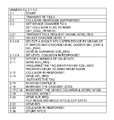
Bit-frame anti-collision process for single size NFCID1 of tag. TABLE 1 STEP NFC Reader Device (command) NFC-A Listen Device (response) 3.6 SDD_REQ (CL1) → Value: 0x9320 3.7 ← SDD_RES (CL1) 4-bytes of NFCID1 + 1-byte checksum 3.10 SEL_REQ (CL1) → Value: 0x9370 + 4-bytes of NFCID1 + 1-byte checksum 3.11 NFC Reader Device has successfully resolved the Single-Size NFC-A listen device and now knows the type of the NFC-A listen device as well as the supported protocols. ← SEL_RES(CL1) 1-byte response containing: Information about the supported protocols NFCID1 is complete Bit-frame anti-collision process for double size NFCID1 of tag. TABLE 2 STEP NFC Reader Device (command) NFC-A Listen Device (response) 3.6 SDD_REQ (CL1) → Value: 0x9320 3.7 ← SDD_RES (CL1) 1-byte cascade tag (0x88)+ first 3 bytes of NFCID1 + 1-byte checksum 3.10 SEL_REQ (CL1) → Value: 0x9370 + 1-byte cascade tag (0x88)+ first 3 bytes of NFCID1 + 1-byte checksum 3.11 ← SEL_RES (CL1) NFCID1 is NOT complete 3.17 Increment cascade level from 1 to 2 3.6 SDD_REQ (CL2) → Value: 0x9520 3.7 ← SDD_RES (CL2) last 4 bytes of NFCID1 + 1 byte checksum 3.10 SEL_REQ (CL2) last 4 bytes of NFCID1 + 1 byte checksum → 3.11 NFC reader has successfully resolved the double size tag and now knows the type of tag as well as the supported protocols ← SEL_RES (CL2) 1_byte response containing: Information about the supported protocols NFCID1 is complete Bit-frame anti-collision process for triple size NFCID1 of tag. TABLE 3 STEP NFC Reader Device (command) NFC-A Listen Device (response) 3.6 SDD_REQ (CL1) → Value: 0x9320 3.7 ← SDD_RES (CL1) 1-byte cascade tag (0x88)+ first 3 bytes of NFCID1 + 1-byte checksum 3.10 SEL_REQ (CL1) → Value: 0x9370 + 1-byte cascade tag (0x88)+ first 3 bytes of NFCID1 + 1-byte checksum 3.11 ← SEL_RES(CL1) NFCID1 is NOT complete 3.17 Increment cascade level from 1 to 2 3.6 SDD_REQ (CL2) → Value: 0x9520 3.7 ← SDD_RES (CL2) 1-byte cascade tag (0X88)+ Next 3 bytes of N FC I D + 1-byte checksum 3.10 SEL_REQ (CL2) Value 0x9570 + 1-byte cascade tag (0X88)+ Next 3 bytes of NFCID + 1-byte checksum → 3.11 ← SEL_RES (CL2) NFCID1 is NOT complete 3.17 Increment cascade level from 2 to 3 3.6 SDD_REQ (CL3) value 0x9770 → 3.7 ← SDD_RES(CL3) last 4 bytes of NFCID1 + 1 byte checksum 3.10 SEL_REQ(CL3) Value 0x9770+ last 4 bytes of NFCID1 + 1 byte checksum → 3.11 NFC reader has successfully resolved the triple size tag and now knows the type of tag as well as the supported protocols ← SEL_RES (CL3) 1 byte response containing: Information about the supported protocols, and NFCID1 is complete
Claims (12)
- An NFC reader adapted to resolve multiple NFC-A tags and comprising:a controller (2) arranged to run machine readable code recorded in a memory(3) in order to operate an NFC transmitter (6) and an NFC receiver (7); wherein:the controller (2) is responsive to a start command to operate the transmitter (6) to;
broadcast an RF field and an NFC-A technology specific poll request signal (SENS_REQ), and
to operate the receiver (7) to receive a poll response signal (SENS_RES) from any NFC-A technology tag;the controller (2) being arranged to respond to receipt of any poll response signals to detect a bit level collision in the poll response signal and to implement a collision resolution sub-routine;characterized in thatthe controller (2) is arranged to respond to the absence of a bit level collision in the poll response signal to examine the received poll response signal to determine if any bits received are set to 1, said controller (2) being responsive to detection of a bit set to one to run the collision resolution process; andto respond to the absence of a bit level collision in the poll response signal to send the read identifier command (RID) and end the resolution method. - An NFC reader according to claim 1 wherein:the controller (2) is arranged to implement the collision resolution sub-routine by: arranging the transmitter (6) a single device detection request (SDD_REQ) set to a first cascade level (CL1);and arranging the receiver (7) to receive a single device detection response (SDD_RES);the controller (2) being arranged to respond to receipt of the single device detection response (SDD_RES) to determine if a bit level collision occurs in the last data bit.
- An NFC reader according to claim 2 wherein:the controller (2) is arranged to respond to the absence of a bit level collision in the last data bit of the single device detection response signal (SDD_RES), to set a new value to the length of the single device detection poll request (SEL_PAR) and,to operate the transmitter (6) to transmit the single device detection poll request with the new length.
- An NFC reader according to claim 3 wherein,
the controller (2) is responsive to the absence of a bit level collision in the single device detection response signal (SDD_RES) to send a tag selection command (SEL_REQ) to select a specified tag using a near field communication identification code (NFCID1), said near field communication identification code being determined by the controller (2) from the resolution method, and
to operate the receiver (7) to receive a tag response (SEL_RES) including an indication that the near field communication identification code received by the tag is complete or incomplete. - An NFC reader according to claim 4 wherein the controller (2) is arranged to respond to detection of a complete NFCID1 code in a cycle where collision has been detected, to operate the transmitter (6) to transmit a tag sleep command (SLP_REQ) to put the tag corresponding to the NFCID1 to a sleep mode.
- An NFC reader according to claim 4 or claim 5 wherein the controller (2) is arranged to respond to a tag response signal (SEL_RES) indicating an incomplete near field communication identification code, to increment the cascade level for the single device detection poll request command (SDD_REQ).
- A method of resolving collisions in NFC reader reading multiple NFC-A technology tags comprising the steps of:generating a radio frequency field (3.0);broadcasting an NFC-A specific poll request signal (3.2);receiving a plurality of NFC-A poll response signals (3.3);inspecting the received poll response signals for bit level collision (3.4) andrunning a collision response resolution sub-routine where a bit level collision is detected in the poll response signals;characterised by the steps of;inspecting the poll response signal received for the presence of any bit frame of the single device detection bits of the poll response signal being set to one (3.14); andin the case where a single device detection bit is one, running the collision response resolution sub-routine, andwhere no single device detection bit is set to one, transmitting a read identifier command (3.15).
- A method according to claim 7 wherein the collision resolution sub-routine comprises the steps of:sending a single device detection request set to a first cascade level (3.6);receiving a single device detection response signal;inspecting the single device detection response signal for bit level collision (3.7); andif bit level collision is detected in the single device detection response signal, determining if a collision is in the last data bit of the single device detection response signal.
- A method according to claim 8 wherein;
when bit level collision is absent in the single device detection response signal (SDD_RES) the length of the single device detection poll request signal is changed (3.16) and the new single device poll request signal transmitted (3.6). - A method according to claim 9 wherein;
in the absence of a bit level collision in the single device detection response signal, transmitting a tag selection command (3.10) to select a specified tag using a near field communication identification code (NFCID1), and
receiving a tag response (SEL_RES) including an indication that the near field communication identification code is complete or incomplete. - A method according to claim 10 wherein;
when collision has been detected, and the near field communication identification code is complete, a sleep command (SLP_REQ) is transmitted to the identified near field communication tag. - A method according to claim 10 or 11 wherein:when the near field communication code is incomplete, the cascade level of the single device detection code is incremented (3.17) and the incremented single device detection command (SDD_REQ) sent (3.6).
Priority Applications (1)
| Application Number | Priority Date | Filing Date | Title |
|---|---|---|---|
| EP13167169.5A EP2801930B1 (en) | 2013-05-09 | 2013-05-09 | A near field communication reader adapted for NFC A anti collision and a method of NFC A anti collision |
Applications Claiming Priority (1)
| Application Number | Priority Date | Filing Date | Title |
|---|---|---|---|
| EP13167169.5A EP2801930B1 (en) | 2013-05-09 | 2013-05-09 | A near field communication reader adapted for NFC A anti collision and a method of NFC A anti collision |
Publications (2)
| Publication Number | Publication Date |
|---|---|
| EP2801930A1 true EP2801930A1 (en) | 2014-11-12 |
| EP2801930B1 EP2801930B1 (en) | 2016-07-27 |
Family
ID=48326171
Family Applications (1)
| Application Number | Title | Priority Date | Filing Date |
|---|---|---|---|
| EP13167169.5A Not-in-force EP2801930B1 (en) | 2013-05-09 | 2013-05-09 | A near field communication reader adapted for NFC A anti collision and a method of NFC A anti collision |
Country Status (1)
| Country | Link |
|---|---|
| EP (1) | EP2801930B1 (en) |
Cited By (8)
| Publication number | Priority date | Publication date | Assignee | Title |
|---|---|---|---|---|
| EP2858261A4 (en) * | 2013-01-29 | 2015-06-24 | Huawei Device Co Ltd | METHOD AND DEVICE FOR NEAR FIELD COMMUNICATION |
| CN107251447A (en) * | 2015-02-19 | 2017-10-13 | 高通股份有限公司 | NFC Forum Listen Mode Profile |
| CN109492444A (en) * | 2017-09-12 | 2019-03-19 | 恩智浦有限公司 | System and method for implementing host card simulation command storehouse in the mobile phone |
| CN113553870A (en) * | 2021-07-20 | 2021-10-26 | 深圳市汇顶科技股份有限公司 | NFC tag identification method and device, NFC equipment and storage medium |
| WO2024124436A1 (en) * | 2022-12-14 | 2024-06-20 | Stmicroelectronics (China) Investment Co., Ltd | Wireless communication method between an active nfc device and several passive nfc devices |
| EP4539347A1 (en) * | 2023-10-09 | 2025-04-16 | Nxp B.V. | Method and device for detecting proximity of an external rf field during ongoing rf activity of the device |
| CN120475359A (en) * | 2025-05-30 | 2025-08-12 | 北京中电华大电子设计有限责任公司 | Multi-card identification method, device and equipment based on near field communication technology |
| EP4601204A3 (en) * | 2024-02-08 | 2025-09-17 | Advanced Nova Technologies (Singapore) Holding Pte. Ltd. | Electronic device and nfc-based communication method and system |
-
2013
- 2013-05-09 EP EP13167169.5A patent/EP2801930B1/en not_active Not-in-force
Non-Patent Citations (3)
| Title |
|---|
| "NFC Activity Specification 1.0", 18 November 2010 (2010-11-18), XP055059248, Retrieved from the Internet <URL:http://www.nfc-forum.org/specs/spec_license/document_form/custom_layout?1365423337032> [retrieved on 20130411] * |
| JAFER HUSSAIN: "Correction to NFC-A Collision Resolution Activity", 4 September 2012 (2012-09-04), XP055083274, Retrieved from the Internet <URL:www.nfc-forum.org> [retrieved on 20131009] * |
| JOHN HILLAN: "Correction to NFC-A Collision Resolution Activity", 3 February 2012 (2012-02-03), XP055059795, Retrieved from the Internet <URL:http://www.nfc-forum.org/apps/group_public/download.php/11097/Qualcomm%20Input%20Paper%20on%20NFC-A%20Collision%20Resolution.docx> [retrieved on 20130416] * |
Cited By (10)
| Publication number | Priority date | Publication date | Assignee | Title |
|---|---|---|---|---|
| EP2858261A4 (en) * | 2013-01-29 | 2015-06-24 | Huawei Device Co Ltd | METHOD AND DEVICE FOR NEAR FIELD COMMUNICATION |
| CN107251447A (en) * | 2015-02-19 | 2017-10-13 | 高通股份有限公司 | NFC Forum Listen Mode Profile |
| CN109492444A (en) * | 2017-09-12 | 2019-03-19 | 恩智浦有限公司 | System and method for implementing host card simulation command storehouse in the mobile phone |
| CN109492444B (en) * | 2017-09-12 | 2023-12-26 | 恩智浦有限公司 | Systems and methods for implementing host card emulation command stacks in mobile phones |
| CN113553870A (en) * | 2021-07-20 | 2021-10-26 | 深圳市汇顶科技股份有限公司 | NFC tag identification method and device, NFC equipment and storage medium |
| WO2024124436A1 (en) * | 2022-12-14 | 2024-06-20 | Stmicroelectronics (China) Investment Co., Ltd | Wireless communication method between an active nfc device and several passive nfc devices |
| EP4539347A1 (en) * | 2023-10-09 | 2025-04-16 | Nxp B.V. | Method and device for detecting proximity of an external rf field during ongoing rf activity of the device |
| US12348343B2 (en) | 2023-10-09 | 2025-07-01 | Nxp B.V. | Method and device for detecting proximity of an external RF field during ongoing RF activity of the device |
| EP4601204A3 (en) * | 2024-02-08 | 2025-09-17 | Advanced Nova Technologies (Singapore) Holding Pte. Ltd. | Electronic device and nfc-based communication method and system |
| CN120475359A (en) * | 2025-05-30 | 2025-08-12 | 北京中电华大电子设计有限责任公司 | Multi-card identification method, device and equipment based on near field communication technology |
Also Published As
| Publication number | Publication date |
|---|---|
| EP2801930B1 (en) | 2016-07-27 |
Similar Documents
| Publication | Publication Date | Title |
|---|---|---|
| EP2801930B1 (en) | A near field communication reader adapted for NFC A anti collision and a method of NFC A anti collision | |
| US9928388B1 (en) | Sequential encoding for RFID tags | |
| CN107092949B (en) | Smart card performance enhancement circuit and system | |
| EP4052183B1 (en) | Rfid ics with privacy modes | |
| US10204246B1 (en) | RFID tags with port-dependent functionality | |
| JP6516133B2 (en) | Communication device and communication system | |
| CN102822843B (en) | The system and method for the existence of the second portable data storage medium is detected by the first portable data storage medium | |
| US9317725B1 (en) | RFID protocol | |
| EP3387581A1 (en) | Systems and methods for a cloud connected transponder | |
| US9615196B2 (en) | NFC device configuration after device power up | |
| EP2770755B1 (en) | Near field communication tag type identification | |
| EP2816501B1 (en) | A near field communication listen device emulating multiple NFC B technology tags | |
| US10931331B2 (en) | Communication device and method | |
| KR101329227B1 (en) | RFID Tag, Terminals for RFID | |
| US9419682B2 (en) | Apparatus and method for providing near field communication for mobile device | |
| EP2782400A1 (en) | NFC controller architecture for simultaneous emulation of multiple NFC technologies in one NFC listen device | |
| US9010649B2 (en) | IC card, portable electronic device, and reader/writer | |
| JP6241340B2 (en) | Information processing apparatus, information processing method, and information processing program | |
| US11791866B2 (en) | Systems and methods for device coexistence | |
| CN115280320A (en) | Method for identifying passive RFID card | |
| WO2008047338A1 (en) | Multi-function contactless data transaction transponder | |
| KR101354997B1 (en) | Mobile Device and Control Method | |
| KR20220099342A (en) | Payment terminal and payment means performing payment based on payment token and method of thereof |
Legal Events
| Date | Code | Title | Description |
|---|---|---|---|
| PUAI | Public reference made under article 153(3) epc to a published international application that has entered the european phase |
Free format text: ORIGINAL CODE: 0009012 |
|
| 17P | Request for examination filed |
Effective date: 20130509 |
|
| AK | Designated contracting states |
Kind code of ref document: A1 Designated state(s): AL AT BE BG CH CY CZ DE DK EE ES FI FR GB GR HR HU IE IS IT LI LT LU LV MC MK MT NL NO PL PT RO RS SE SI SK SM TR |
|
| AX | Request for extension of the european patent |
Extension state: BA ME |
|
| R17P | Request for examination filed (corrected) |
Effective date: 20150330 |
|
| RBV | Designated contracting states (corrected) |
Designated state(s): AL AT BE BG CH CY CZ DE DK EE ES FI FR GB GR HR HU IE IS IT LI LT LU LV MC MK MT NL NO PL PT RO RS SE SI SK SM TR |
|
| 17Q | First examination report despatched |
Effective date: 20150811 |
|
| 17Q | First examination report despatched |
Effective date: 20150910 |
|
| REG | Reference to a national code |
Ref country code: DE Ref legal event code: R079 Ref document number: 602013009759 Country of ref document: DE Free format text: PREVIOUS MAIN CLASS: G06K0007100000 Ipc: H04W0074080000 |
|
| GRAP | Despatch of communication of intention to grant a patent |
Free format text: ORIGINAL CODE: EPIDOSNIGR1 |
|
| RIC1 | Information provided on ipc code assigned before grant |
Ipc: G06K 7/10 20060101ALI20160202BHEP Ipc: H04W 74/06 20090101ALI20160202BHEP Ipc: H04W 74/08 20090101AFI20160202BHEP |
|
| INTG | Intention to grant announced |
Effective date: 20160219 |
|
| GRAS | Grant fee paid |
Free format text: ORIGINAL CODE: EPIDOSNIGR3 |
|
| GRAA | (expected) grant |
Free format text: ORIGINAL CODE: 0009210 |
|
| AK | Designated contracting states |
Kind code of ref document: B1 Designated state(s): AL AT BE BG CH CY CZ DE DK EE ES FI FR GB GR HR HU IE IS IT LI LT LU LV MC MK MT NL NO PL PT RO RS SE SI SK SM TR |
|
| REG | Reference to a national code |
Ref country code: GB Ref legal event code: FG4D |
|
| REG | Reference to a national code |
Ref country code: CH Ref legal event code: EP |
|
| REG | Reference to a national code |
Ref country code: AT Ref legal event code: REF Ref document number: 816701 Country of ref document: AT Kind code of ref document: T Effective date: 20160815 |
|
| REG | Reference to a national code |
Ref country code: IE Ref legal event code: FG4D |
|
| REG | Reference to a national code |
Ref country code: DE Ref legal event code: R096 Ref document number: 602013009759 Country of ref document: DE |
|
| REG | Reference to a national code |
Ref country code: LT Ref legal event code: MG4D |
|
| REG | Reference to a national code |
Ref country code: NL Ref legal event code: MP Effective date: 20160727 |
|
| REG | Reference to a national code |
Ref country code: AT Ref legal event code: MK05 Ref document number: 816701 Country of ref document: AT Kind code of ref document: T Effective date: 20160727 |
|
| REG | Reference to a national code |
Ref country code: DE Ref legal event code: R082 Ref document number: 602013009759 Country of ref document: DE Representative=s name: GRUENECKER PATENT- UND RECHTSANWAELTE PARTG MB, DE Ref country code: DE Ref legal event code: R081 Ref document number: 602013009759 Country of ref document: DE Owner name: OCT CIRCUIT TECHNOLOGIES INTERNATIONAL LTD., IE Free format text: FORMER OWNER: ST-ERICSSON SA, PLAN-LES-OUATES, CH |
|
| PG25 | Lapsed in a contracting state [announced via postgrant information from national office to epo] |
Ref country code: IS Free format text: LAPSE BECAUSE OF FAILURE TO SUBMIT A TRANSLATION OF THE DESCRIPTION OR TO PAY THE FEE WITHIN THE PRESCRIBED TIME-LIMIT Effective date: 20161127 Ref country code: HR Free format text: LAPSE BECAUSE OF FAILURE TO SUBMIT A TRANSLATION OF THE DESCRIPTION OR TO PAY THE FEE WITHIN THE PRESCRIBED TIME-LIMIT Effective date: 20160727 Ref country code: NL Free format text: LAPSE BECAUSE OF FAILURE TO SUBMIT A TRANSLATION OF THE DESCRIPTION OR TO PAY THE FEE WITHIN THE PRESCRIBED TIME-LIMIT Effective date: 20160727 Ref country code: NO Free format text: LAPSE BECAUSE OF FAILURE TO SUBMIT A TRANSLATION OF THE DESCRIPTION OR TO PAY THE FEE WITHIN THE PRESCRIBED TIME-LIMIT Effective date: 20161027 Ref country code: FI Free format text: LAPSE BECAUSE OF FAILURE TO SUBMIT A TRANSLATION OF THE DESCRIPTION OR TO PAY THE FEE WITHIN THE PRESCRIBED TIME-LIMIT Effective date: 20160727 Ref country code: RS Free format text: LAPSE BECAUSE OF FAILURE TO SUBMIT A TRANSLATION OF THE DESCRIPTION OR TO PAY THE FEE WITHIN THE PRESCRIBED TIME-LIMIT Effective date: 20160727 Ref country code: IT Free format text: LAPSE BECAUSE OF FAILURE TO SUBMIT A TRANSLATION OF THE DESCRIPTION OR TO PAY THE FEE WITHIN THE PRESCRIBED TIME-LIMIT Effective date: 20160727 Ref country code: LT Free format text: LAPSE BECAUSE OF FAILURE TO SUBMIT A TRANSLATION OF THE DESCRIPTION OR TO PAY THE FEE WITHIN THE PRESCRIBED TIME-LIMIT Effective date: 20160727 |
|
| PG25 | Lapsed in a contracting state [announced via postgrant information from national office to epo] |
Ref country code: LV Free format text: LAPSE BECAUSE OF FAILURE TO SUBMIT A TRANSLATION OF THE DESCRIPTION OR TO PAY THE FEE WITHIN THE PRESCRIBED TIME-LIMIT Effective date: 20160727 Ref country code: ES Free format text: LAPSE BECAUSE OF FAILURE TO SUBMIT A TRANSLATION OF THE DESCRIPTION OR TO PAY THE FEE WITHIN THE PRESCRIBED TIME-LIMIT Effective date: 20160727 Ref country code: PT Free format text: LAPSE BECAUSE OF FAILURE TO SUBMIT A TRANSLATION OF THE DESCRIPTION OR TO PAY THE FEE WITHIN THE PRESCRIBED TIME-LIMIT Effective date: 20161128 Ref country code: PL Free format text: LAPSE BECAUSE OF FAILURE TO SUBMIT A TRANSLATION OF THE DESCRIPTION OR TO PAY THE FEE WITHIN THE PRESCRIBED TIME-LIMIT Effective date: 20160727 Ref country code: SE Free format text: LAPSE BECAUSE OF FAILURE TO SUBMIT A TRANSLATION OF THE DESCRIPTION OR TO PAY THE FEE WITHIN THE PRESCRIBED TIME-LIMIT Effective date: 20160727 Ref country code: AT Free format text: LAPSE BECAUSE OF FAILURE TO SUBMIT A TRANSLATION OF THE DESCRIPTION OR TO PAY THE FEE WITHIN THE PRESCRIBED TIME-LIMIT Effective date: 20160727 Ref country code: GR Free format text: LAPSE BECAUSE OF FAILURE TO SUBMIT A TRANSLATION OF THE DESCRIPTION OR TO PAY THE FEE WITHIN THE PRESCRIBED TIME-LIMIT Effective date: 20161028 Ref country code: BE Free format text: LAPSE BECAUSE OF FAILURE TO SUBMIT A TRANSLATION OF THE DESCRIPTION OR TO PAY THE FEE WITHIN THE PRESCRIBED TIME-LIMIT Effective date: 20160727 |
|
| REG | Reference to a national code |
Ref country code: FR Ref legal event code: PLFP Year of fee payment: 5 |
|
| PG25 | Lapsed in a contracting state [announced via postgrant information from national office to epo] |
Ref country code: RO Free format text: LAPSE BECAUSE OF FAILURE TO SUBMIT A TRANSLATION OF THE DESCRIPTION OR TO PAY THE FEE WITHIN THE PRESCRIBED TIME-LIMIT Effective date: 20160727 Ref country code: EE Free format text: LAPSE BECAUSE OF FAILURE TO SUBMIT A TRANSLATION OF THE DESCRIPTION OR TO PAY THE FEE WITHIN THE PRESCRIBED TIME-LIMIT Effective date: 20160727 |
|
| REG | Reference to a national code |
Ref country code: DE Ref legal event code: R097 Ref document number: 602013009759 Country of ref document: DE |
|
| PG25 | Lapsed in a contracting state [announced via postgrant information from national office to epo] |
Ref country code: DK Free format text: LAPSE BECAUSE OF FAILURE TO SUBMIT A TRANSLATION OF THE DESCRIPTION OR TO PAY THE FEE WITHIN THE PRESCRIBED TIME-LIMIT Effective date: 20160727 Ref country code: BG Free format text: LAPSE BECAUSE OF FAILURE TO SUBMIT A TRANSLATION OF THE DESCRIPTION OR TO PAY THE FEE WITHIN THE PRESCRIBED TIME-LIMIT Effective date: 20161027 Ref country code: CZ Free format text: LAPSE BECAUSE OF FAILURE TO SUBMIT A TRANSLATION OF THE DESCRIPTION OR TO PAY THE FEE WITHIN THE PRESCRIBED TIME-LIMIT Effective date: 20160727 Ref country code: SK Free format text: LAPSE BECAUSE OF FAILURE TO SUBMIT A TRANSLATION OF THE DESCRIPTION OR TO PAY THE FEE WITHIN THE PRESCRIBED TIME-LIMIT Effective date: 20160727 Ref country code: SM Free format text: LAPSE BECAUSE OF FAILURE TO SUBMIT A TRANSLATION OF THE DESCRIPTION OR TO PAY THE FEE WITHIN THE PRESCRIBED TIME-LIMIT Effective date: 20160727 |
|
| PLBE | No opposition filed within time limit |
Free format text: ORIGINAL CODE: 0009261 |
|
| STAA | Information on the status of an ep patent application or granted ep patent |
Free format text: STATUS: NO OPPOSITION FILED WITHIN TIME LIMIT |
|
| 26N | No opposition filed |
Effective date: 20170502 |
|
| PGFP | Annual fee paid to national office [announced via postgrant information from national office to epo] |
Ref country code: GB Payment date: 20170426 Year of fee payment: 5 Ref country code: FR Payment date: 20170421 Year of fee payment: 5 Ref country code: DE Payment date: 20170420 Year of fee payment: 5 |
|
| PG25 | Lapsed in a contracting state [announced via postgrant information from national office to epo] |
Ref country code: LU Free format text: LAPSE BECAUSE OF NON-PAYMENT OF DUE FEES Effective date: 20170531 Ref country code: SI Free format text: LAPSE BECAUSE OF FAILURE TO SUBMIT A TRANSLATION OF THE DESCRIPTION OR TO PAY THE FEE WITHIN THE PRESCRIBED TIME-LIMIT Effective date: 20160727 |
|
| REG | Reference to a national code |
Ref country code: CH Ref legal event code: PL |
|
| PG25 | Lapsed in a contracting state [announced via postgrant information from national office to epo] |
Ref country code: MC Free format text: LAPSE BECAUSE OF FAILURE TO SUBMIT A TRANSLATION OF THE DESCRIPTION OR TO PAY THE FEE WITHIN THE PRESCRIBED TIME-LIMIT Effective date: 20160727 |
|
| REG | Reference to a national code |
Ref country code: FR Ref legal event code: TP Owner name: OCT CIRCUIT TECHNOLOGIES INTERNATIONAL LIMITED, IE Effective date: 20180116 |
|
| REG | Reference to a national code |
Ref country code: IE Ref legal event code: MM4A |
|
| PG25 | Lapsed in a contracting state [announced via postgrant information from national office to epo] |
Ref country code: CH Free format text: LAPSE BECAUSE OF NON-PAYMENT OF DUE FEES Effective date: 20170531 Ref country code: LI Free format text: LAPSE BECAUSE OF NON-PAYMENT OF DUE FEES Effective date: 20170531 |
|
| PG25 | Lapsed in a contracting state [announced via postgrant information from national office to epo] |
Ref country code: LU Free format text: LAPSE BECAUSE OF NON-PAYMENT OF DUE FEES Effective date: 20170509 |
|
| PG25 | Lapsed in a contracting state [announced via postgrant information from national office to epo] |
Ref country code: IE Free format text: LAPSE BECAUSE OF NON-PAYMENT OF DUE FEES Effective date: 20170509 |
|
| PG25 | Lapsed in a contracting state [announced via postgrant information from national office to epo] |
Ref country code: MT Free format text: LAPSE BECAUSE OF NON-PAYMENT OF DUE FEES Effective date: 20170509 |
|
| PG25 | Lapsed in a contracting state [announced via postgrant information from national office to epo] |
Ref country code: AL Free format text: LAPSE BECAUSE OF FAILURE TO SUBMIT A TRANSLATION OF THE DESCRIPTION OR TO PAY THE FEE WITHIN THE PRESCRIBED TIME-LIMIT Effective date: 20160727 |
|
| REG | Reference to a national code |
Ref country code: DE Ref legal event code: R119 Ref document number: 602013009759 Country of ref document: DE |
|
| GBPC | Gb: european patent ceased through non-payment of renewal fee |
Effective date: 20180509 |
|
| PG25 | Lapsed in a contracting state [announced via postgrant information from national office to epo] |
Ref country code: GB Free format text: LAPSE BECAUSE OF NON-PAYMENT OF DUE FEES Effective date: 20180509 Ref country code: FR Free format text: LAPSE BECAUSE OF NON-PAYMENT OF DUE FEES Effective date: 20180531 Ref country code: DE Free format text: LAPSE BECAUSE OF NON-PAYMENT OF DUE FEES Effective date: 20181201 |
|
| PG25 | Lapsed in a contracting state [announced via postgrant information from national office to epo] |
Ref country code: HU Free format text: LAPSE BECAUSE OF FAILURE TO SUBMIT A TRANSLATION OF THE DESCRIPTION OR TO PAY THE FEE WITHIN THE PRESCRIBED TIME-LIMIT; INVALID AB INITIO Effective date: 20130509 |
|
| PG25 | Lapsed in a contracting state [announced via postgrant information from national office to epo] |
Ref country code: CY Free format text: LAPSE BECAUSE OF FAILURE TO SUBMIT A TRANSLATION OF THE DESCRIPTION OR TO PAY THE FEE WITHIN THE PRESCRIBED TIME-LIMIT Effective date: 20160727 |
|
| PG25 | Lapsed in a contracting state [announced via postgrant information from national office to epo] |
Ref country code: MK Free format text: LAPSE BECAUSE OF FAILURE TO SUBMIT A TRANSLATION OF THE DESCRIPTION OR TO PAY THE FEE WITHIN THE PRESCRIBED TIME-LIMIT Effective date: 20160727 |
|
| PG25 | Lapsed in a contracting state [announced via postgrant information from national office to epo] |
Ref country code: TR Free format text: LAPSE BECAUSE OF FAILURE TO SUBMIT A TRANSLATION OF THE DESCRIPTION OR TO PAY THE FEE WITHIN THE PRESCRIBED TIME-LIMIT Effective date: 20160727 |