EP2801621A1 - A test kit for detecting mutations associated with limb-girdle muscular dystrophies type-2 - Google Patents
A test kit for detecting mutations associated with limb-girdle muscular dystrophies type-2 Download PDFInfo
- Publication number
- EP2801621A1 EP2801621A1 EP13166769.3A EP13166769A EP2801621A1 EP 2801621 A1 EP2801621 A1 EP 2801621A1 EP 13166769 A EP13166769 A EP 13166769A EP 2801621 A1 EP2801621 A1 EP 2801621A1
- Authority
- EP
- European Patent Office
- Prior art keywords
- seq
- lgmd
- limb
- mutations
- test kit
- Prior art date
- Legal status (The legal status is an assumption and is not a legal conclusion. Google has not performed a legal analysis and makes no representation as to the accuracy of the status listed.)
- Withdrawn
Links
- 230000035772 mutation Effects 0.000 title claims abstract description 58
- 201000009342 Limb-girdle muscular dystrophy Diseases 0.000 title claims abstract description 33
- 238000012360 testing method Methods 0.000 title claims abstract description 26
- 239000000523 sample Substances 0.000 claims abstract description 18
- 102200020293 rs121909619 Human genes 0.000 description 12
- 108090000623 proteins and genes Proteins 0.000 description 11
- 238000000034 method Methods 0.000 description 9
- 108020004414 DNA Proteins 0.000 description 8
- 238000012163 sequencing technique Methods 0.000 description 8
- 101150110214 Cav3 gene Proteins 0.000 description 7
- 238000000926 separation method Methods 0.000 description 7
- 238000006243 chemical reaction Methods 0.000 description 5
- 238000003745 diagnosis Methods 0.000 description 5
- 210000003205 muscle Anatomy 0.000 description 5
- 238000012549 training Methods 0.000 description 5
- 150000001413 amino acids Chemical class 0.000 description 4
- 230000003247 decreasing effect Effects 0.000 description 4
- 208000018360 neuromuscular disease Diseases 0.000 description 4
- 238000003752 polymerase chain reaction Methods 0.000 description 4
- 102100032539 Calpain-3 Human genes 0.000 description 3
- 108700024394 Exon Proteins 0.000 description 3
- 101000867715 Homo sapiens Calpain-3 Proteins 0.000 description 3
- VREFGVBLTWBCJP-UHFFFAOYSA-N alprazolam Chemical compound C12=CC(Cl)=CC=C2N2C(C)=NN=C2CN=C1C1=CC=CC=C1 VREFGVBLTWBCJP-UHFFFAOYSA-N 0.000 description 3
- 230000002759 chromosomal effect Effects 0.000 description 3
- 238000013461 design Methods 0.000 description 3
- 238000001514 detection method Methods 0.000 description 3
- 238000012216 screening Methods 0.000 description 3
- 108091026890 Coding region Proteins 0.000 description 2
- 102000004420 Creatine Kinase Human genes 0.000 description 2
- 108010042126 Creatine kinase Proteins 0.000 description 2
- 101000869042 Homo sapiens Caveolin-3 Proteins 0.000 description 2
- 101000804112 Homo sapiens DnaJ homolog subfamily B member 6 Proteins 0.000 description 2
- 101000634982 Homo sapiens E3 ubiquitin-protein ligase TRIM32 Proteins 0.000 description 2
- 208000021642 Muscular disease Diseases 0.000 description 2
- 201000009623 Myopathy Diseases 0.000 description 2
- JLCPHMBAVCMARE-UHFFFAOYSA-N [3-[[3-[[3-[[3-[[3-[[3-[[3-[[3-[[3-[[3-[[3-[[5-(2-amino-6-oxo-1H-purin-9-yl)-3-[[3-[[3-[[3-[[3-[[3-[[5-(2-amino-6-oxo-1H-purin-9-yl)-3-[[5-(2-amino-6-oxo-1H-purin-9-yl)-3-hydroxyoxolan-2-yl]methoxy-hydroxyphosphoryl]oxyoxolan-2-yl]methoxy-hydroxyphosphoryl]oxy-5-(5-methyl-2,4-dioxopyrimidin-1-yl)oxolan-2-yl]methoxy-hydroxyphosphoryl]oxy-5-(6-aminopurin-9-yl)oxolan-2-yl]methoxy-hydroxyphosphoryl]oxy-5-(6-aminopurin-9-yl)oxolan-2-yl]methoxy-hydroxyphosphoryl]oxy-5-(6-aminopurin-9-yl)oxolan-2-yl]methoxy-hydroxyphosphoryl]oxy-5-(6-aminopurin-9-yl)oxolan-2-yl]methoxy-hydroxyphosphoryl]oxyoxolan-2-yl]methoxy-hydroxyphosphoryl]oxy-5-(5-methyl-2,4-dioxopyrimidin-1-yl)oxolan-2-yl]methoxy-hydroxyphosphoryl]oxy-5-(4-amino-2-oxopyrimidin-1-yl)oxolan-2-yl]methoxy-hydroxyphosphoryl]oxy-5-(5-methyl-2,4-dioxopyrimidin-1-yl)oxolan-2-yl]methoxy-hydroxyphosphoryl]oxy-5-(5-methyl-2,4-dioxopyrimidin-1-yl)oxolan-2-yl]methoxy-hydroxyphosphoryl]oxy-5-(6-aminopurin-9-yl)oxolan-2-yl]methoxy-hydroxyphosphoryl]oxy-5-(6-aminopurin-9-yl)oxolan-2-yl]methoxy-hydroxyphosphoryl]oxy-5-(4-amino-2-oxopyrimidin-1-yl)oxolan-2-yl]methoxy-hydroxyphosphoryl]oxy-5-(4-amino-2-oxopyrimidin-1-yl)oxolan-2-yl]methoxy-hydroxyphosphoryl]oxy-5-(4-amino-2-oxopyrimidin-1-yl)oxolan-2-yl]methoxy-hydroxyphosphoryl]oxy-5-(6-aminopurin-9-yl)oxolan-2-yl]methoxy-hydroxyphosphoryl]oxy-5-(4-amino-2-oxopyrimidin-1-yl)oxolan-2-yl]methyl [5-(6-aminopurin-9-yl)-2-(hydroxymethyl)oxolan-3-yl] hydrogen phosphate Polymers Cc1cn(C2CC(OP(O)(=O)OCC3OC(CC3OP(O)(=O)OCC3OC(CC3O)n3cnc4c3nc(N)[nH]c4=O)n3cnc4c3nc(N)[nH]c4=O)C(COP(O)(=O)OC3CC(OC3COP(O)(=O)OC3CC(OC3COP(O)(=O)OC3CC(OC3COP(O)(=O)OC3CC(OC3COP(O)(=O)OC3CC(OC3COP(O)(=O)OC3CC(OC3COP(O)(=O)OC3CC(OC3COP(O)(=O)OC3CC(OC3COP(O)(=O)OC3CC(OC3COP(O)(=O)OC3CC(OC3COP(O)(=O)OC3CC(OC3COP(O)(=O)OC3CC(OC3COP(O)(=O)OC3CC(OC3COP(O)(=O)OC3CC(OC3COP(O)(=O)OC3CC(OC3COP(O)(=O)OC3CC(OC3COP(O)(=O)OC3CC(OC3CO)n3cnc4c(N)ncnc34)n3ccc(N)nc3=O)n3cnc4c(N)ncnc34)n3ccc(N)nc3=O)n3ccc(N)nc3=O)n3ccc(N)nc3=O)n3cnc4c(N)ncnc34)n3cnc4c(N)ncnc34)n3cc(C)c(=O)[nH]c3=O)n3cc(C)c(=O)[nH]c3=O)n3ccc(N)nc3=O)n3cc(C)c(=O)[nH]c3=O)n3cnc4c3nc(N)[nH]c4=O)n3cnc4c(N)ncnc34)n3cnc4c(N)ncnc34)n3cnc4c(N)ncnc34)n3cnc4c(N)ncnc34)O2)c(=O)[nH]c1=O JLCPHMBAVCMARE-UHFFFAOYSA-N 0.000 description 2
- 238000004458 analytical method Methods 0.000 description 2
- 238000003491 array Methods 0.000 description 2
- 238000003556 assay Methods 0.000 description 2
- 201000009564 autosomal recessive limb-girdle muscular dystrophy type 2A Diseases 0.000 description 2
- 210000004556 brain Anatomy 0.000 description 2
- 230000008859 change Effects 0.000 description 2
- 238000004140 cleaning Methods 0.000 description 2
- 238000007405 data analysis Methods 0.000 description 2
- 230000007547 defect Effects 0.000 description 2
- 208000037265 diseases, disorders, signs and symptoms Diseases 0.000 description 2
- 238000002474 experimental method Methods 0.000 description 2
- 230000002068 genetic effect Effects 0.000 description 2
- 238000013507 mapping Methods 0.000 description 2
- 238000001964 muscle biopsy Methods 0.000 description 2
- 230000001717 pathogenic effect Effects 0.000 description 2
- 230000007170 pathology Effects 0.000 description 2
- 238000003908 quality control method Methods 0.000 description 2
- 230000035945 sensitivity Effects 0.000 description 2
- 238000007482 whole exome sequencing Methods 0.000 description 2
- 102100030685 Alpha-sarcoglycan Human genes 0.000 description 1
- 102100039088 Amelogenin, X isoform Human genes 0.000 description 1
- 102100039109 Amelogenin, Y isoform Human genes 0.000 description 1
- 102000000326 Anoctamin-5 Human genes 0.000 description 1
- 108050008799 Anoctamin-5 Proteins 0.000 description 1
- 102100030686 Beta-sarcoglycan Human genes 0.000 description 1
- 101150072353 CAPN3 gene Proteins 0.000 description 1
- 108030001375 Calpain-3 Proteins 0.000 description 1
- 101150083642 DYSF gene Proteins 0.000 description 1
- 102100021790 Delta-sarcoglycan Human genes 0.000 description 1
- 238000009007 Diagnostic Kit Methods 0.000 description 1
- 102100035425 DnaJ homolog subfamily B member 6 Human genes 0.000 description 1
- 102100029503 E3 ubiquitin-protein ligase TRIM32 Human genes 0.000 description 1
- 102100021792 Gamma-sarcoglycan Human genes 0.000 description 1
- 101000703500 Homo sapiens Alpha-sarcoglycan Proteins 0.000 description 1
- 101000959114 Homo sapiens Amelogenin, X isoform Proteins 0.000 description 1
- 101000959107 Homo sapiens Amelogenin, Y isoform Proteins 0.000 description 1
- 101000703495 Homo sapiens Beta-sarcoglycan Proteins 0.000 description 1
- 101000616408 Homo sapiens Delta-sarcoglycan Proteins 0.000 description 1
- 101000616435 Homo sapiens Gamma-sarcoglycan Proteins 0.000 description 1
- 101001126471 Homo sapiens Plectin Proteins 0.000 description 1
- 101001003584 Homo sapiens Prelamin-A/C Proteins 0.000 description 1
- 101000846198 Homo sapiens Ribitol 5-phosphate transferase FKRP Proteins 0.000 description 1
- 208000010428 Muscle Weakness Diseases 0.000 description 1
- 206010028372 Muscular weakness Diseases 0.000 description 1
- 201000002481 Myositis Diseases 0.000 description 1
- 108010057466 NF-kappa B Proteins 0.000 description 1
- 102000003945 NF-kappa B Human genes 0.000 description 1
- 101150091206 Nfkbia gene Proteins 0.000 description 1
- 108091028043 Nucleic acid sequence Proteins 0.000 description 1
- 102100030477 Plectin Human genes 0.000 description 1
- 102100026531 Prelamin-A/C Human genes 0.000 description 1
- 102000001708 Protein Isoforms Human genes 0.000 description 1
- 108010029485 Protein Isoforms Proteins 0.000 description 1
- 102100031774 Ribitol 5-phosphate transferase FKRP Human genes 0.000 description 1
- 108010083379 Sarcoglycans Proteins 0.000 description 1
- 102000006308 Sarcoglycans Human genes 0.000 description 1
- 208000034433 TRIM32-related limb-girdle muscular dystrophy R8 Diseases 0.000 description 1
- 230000004075 alteration Effects 0.000 description 1
- 238000013459 approach Methods 0.000 description 1
- 238000003149 assay kit Methods 0.000 description 1
- 201000009565 autosomal recessive limb-girdle muscular dystrophy Diseases 0.000 description 1
- 238000004364 calculation method Methods 0.000 description 1
- 239000000969 carrier Substances 0.000 description 1
- 238000012790 confirmation Methods 0.000 description 1
- 238000012937 correction Methods 0.000 description 1
- 238000012217 deletion Methods 0.000 description 1
- 230000037430 deletion Effects 0.000 description 1
- 230000004069 differentiation Effects 0.000 description 1
- 201000010099 disease Diseases 0.000 description 1
- 238000002567 electromyography Methods 0.000 description 1
- 238000005516 engineering process Methods 0.000 description 1
- 238000011156 evaluation Methods 0.000 description 1
- 230000007717 exclusion Effects 0.000 description 1
- 238000003205 genotyping method Methods 0.000 description 1
- 238000003119 immunoblot Methods 0.000 description 1
- 238000003364 immunohistochemistry Methods 0.000 description 1
- 238000012744 immunostaining Methods 0.000 description 1
- 238000000370 laser capture micro-dissection Methods 0.000 description 1
- 238000002493 microarray Methods 0.000 description 1
- 238000012986 modification Methods 0.000 description 1
- 230000004048 modification Effects 0.000 description 1
- 210000000663 muscle cell Anatomy 0.000 description 1
- 230000003387 muscular Effects 0.000 description 1
- 201000006938 muscular dystrophy Diseases 0.000 description 1
- 230000000869 mutational effect Effects 0.000 description 1
- 210000002353 nuclear lamina Anatomy 0.000 description 1
- 239000002773 nucleotide Substances 0.000 description 1
- 125000003729 nucleotide group Chemical group 0.000 description 1
- 230000007918 pathogenicity Effects 0.000 description 1
- 230000037361 pathway Effects 0.000 description 1
- 239000013610 patient sample Substances 0.000 description 1
- 235000010987 pectin Nutrition 0.000 description 1
- 229920001277 pectin Polymers 0.000 description 1
- 239000001814 pectin Substances 0.000 description 1
- 238000002205 phenol-chloroform extraction Methods 0.000 description 1
- 102000054765 polymorphisms of proteins Human genes 0.000 description 1
- 230000008569 process Effects 0.000 description 1
- 102000004169 proteins and genes Human genes 0.000 description 1
- 208000022587 qualitative or quantitative defects of dystrophin Diseases 0.000 description 1
- 238000013442 quality metrics Methods 0.000 description 1
- 230000003252 repetitive effect Effects 0.000 description 1
- 208000024891 symptom Diseases 0.000 description 1
- 238000011870 unpaired t-test Methods 0.000 description 1
- 238000010200 validation analysis Methods 0.000 description 1
- 238000001262 western blot Methods 0.000 description 1
Images

Classifications
-
- C—CHEMISTRY; METALLURGY
- C12—BIOCHEMISTRY; BEER; SPIRITS; WINE; VINEGAR; MICROBIOLOGY; ENZYMOLOGY; MUTATION OR GENETIC ENGINEERING
- C12Q—MEASURING OR TESTING PROCESSES INVOLVING ENZYMES, NUCLEIC ACIDS OR MICROORGANISMS; COMPOSITIONS OR TEST PAPERS THEREFOR; PROCESSES OF PREPARING SUCH COMPOSITIONS; CONDITION-RESPONSIVE CONTROL IN MICROBIOLOGICAL OR ENZYMOLOGICAL PROCESSES
- C12Q1/00—Measuring or testing processes involving enzymes, nucleic acids or microorganisms; Compositions therefor; Processes of preparing such compositions
- C12Q1/68—Measuring or testing processes involving enzymes, nucleic acids or microorganisms; Compositions therefor; Processes of preparing such compositions involving nucleic acids
- C12Q1/6876—Nucleic acid products used in the analysis of nucleic acids, e.g. primers or probes
- C12Q1/6883—Nucleic acid products used in the analysis of nucleic acids, e.g. primers or probes for diseases caused by alterations of genetic material
-
- C—CHEMISTRY; METALLURGY
- C12—BIOCHEMISTRY; BEER; SPIRITS; WINE; VINEGAR; MICROBIOLOGY; ENZYMOLOGY; MUTATION OR GENETIC ENGINEERING
- C12Q—MEASURING OR TESTING PROCESSES INVOLVING ENZYMES, NUCLEIC ACIDS OR MICROORGANISMS; COMPOSITIONS OR TEST PAPERS THEREFOR; PROCESSES OF PREPARING SUCH COMPOSITIONS; CONDITION-RESPONSIVE CONTROL IN MICROBIOLOGICAL OR ENZYMOLOGICAL PROCESSES
- C12Q2600/00—Oligonucleotides characterized by their use
- C12Q2600/112—Disease subtyping, staging or classification
-
- C—CHEMISTRY; METALLURGY
- C12—BIOCHEMISTRY; BEER; SPIRITS; WINE; VINEGAR; MICROBIOLOGY; ENZYMOLOGY; MUTATION OR GENETIC ENGINEERING
- C12Q—MEASURING OR TESTING PROCESSES INVOLVING ENZYMES, NUCLEIC ACIDS OR MICROORGANISMS; COMPOSITIONS OR TEST PAPERS THEREFOR; PROCESSES OF PREPARING SUCH COMPOSITIONS; CONDITION-RESPONSIVE CONTROL IN MICROBIOLOGICAL OR ENZYMOLOGICAL PROCESSES
- C12Q2600/00—Oligonucleotides characterized by their use
- C12Q2600/156—Polymorphic or mutational markers
Definitions
- the present invention relates to a test kit for detecting Limb-Girdle Muscular Dystrophies (LGMD), especially LGMD Type-2 (LGMD-2).
- LGMD Limb-Girdle Muscular Dystrophies
- LGMD Limb-Girdle Muscular Dystrophies
- LGMD is a heterogeneous group of muscular dystrophies that mostly affect the pelvic and shoulder girdle muscle groups. LGMD is rare with an overall incidence of 1 per 100 000 people ( Yates JR, Emery AE. A population study of adult onset limb-girdle muscular dystrophy. J Med Genet 1985; 22: P250e7 ). LGMD is classified into two main groups, autosomal dominant (LGMD-1) and autosomal recessive (LGMD-2). The more common type is autosomal recessive with 16 genes or chromosomal loci identified to date ( Rosales XQ, Tsao CY. Childhood onset of limb-girdle muscular dystrophy.
- a founder mutation in Anoctamin 5 is a major cause of limb-girdle muscular dystrophy (Brain. 2011;134:171-82 ; Gundesli H, et. al.). Mutation in exon 1f of PLEC, leading to disruption of pectin isoform 1f, causes autosomal-recessive limb girdle muscular dystrophy (Am J Hum Genet. 2010;87:834-41 ). The rarer form is autosomal dominant. Ten percent of all cases of LGMD belong to this group.
- Altered proteins of LGMD patients are involved in muscle cell biology in many different ways, for example CAPN3 influences IkBa/NF-kB pathway, mutations in lamin A/C cause alterations in nuclear lamina and sarcoglycan complex of muscle is built by SCGG, SCGA, SCGB and SCGD genes ( Laval SH, Bushby KM. Limb-girdle muscular dystrophies-from genetics to molecular pathology. Neuropathol Appl Neurobiol. 2004 Apr; 30(2):91-105 ).
- LGMD Diagnosis of the different types of LGMD is a challenging process due to the number of genes involved, unidentified genes at known chromosomal loci, and the lack of common mutations in non-inbred populations.
- Aim of our invention was to develop a robust, low-cost mutation screening technique for the DNA diagnostics of LGMD patients.
- the present invention provides novel test kit for detecting mutations associated with Limb-Girdle Muscular Dystrophies Type-2 (LGMD-2).
- the test kit is characterized in that it comprises a first group of probes selected from the group consisting of SEQ ID No. 1, SEQ ID No. 2, SEQ ID No. 3, SEQ ID No. 4, SEQ ID No. 5, SEQ ID No. 6, SEQ ID No. 7, SEQ ID No. 8, SEQ ID No. 9, SEQ ID No. 10, SEQ ID No. 11, SEQ ID No. 12, SEQ ID No. 13, SEQ ID No. 14, SEQ ID No. 15, SEQ ID No. 16, SEQ ID No. 17, SEQ ID No. 18, SEQ ID No. 19 and SEQ ID No. 20.
- the present invention also provides a test kit that additionally to the first group of probes contains a second group of probes.
- Said second group of probes is selected from the group consisting of SEQ ID No. 21, SEQ ID No. 22, SEQ ID No. 23, SEQ ID No. 24, SEQ ID No. 25, SEQ ID No. 26, SEQ ID No. 27, SEQ ID No. 28, SEQ ID No. 29, SEQ ID No. 30, SEQ ID No. 31, SEQ ID No. 32, SEQ ID No. 33, SEQ ID No. 34, SEQ ID No. 35, SEQ ID No. 36, SEQ ID No. 37, SEQ ID No. 38, SEQ ID No. 39, SEQ ID No. 40, SEQ ID No. 41, SEQ ID No. 42, SEQ ID No.
- SEQ ID No. 44 SEQ ID No. 45, SEQ ID No. 46, SEQ ID No. 47, SEQ ID No. 48, SEQ ID No. 49, SEQ ID No. 50, SEQ ID No. 51, SEQ ID No. 52, SEQ ID No. 53, SEQ ID No. 54, SEQ ID No. 55, SEQ ID No. 56, SEQ ID No. 57, SEQ ID No. 58, SEQ ID No. 59, SEQ ID No. 60, SEQ ID No. 61, SEQ ID No. 62, SEQ ID No. 63, SEQ ID No. 64, SEQ ID No. 65, SEQ ID No. 66, SEQ ID No. 67, SEQ ID No. 68, SEQ ID No.
- SEQ ID No. 70 SEQ ID No. 71, SEQ ID No. 72, SEQ ID No. 73, SEQ ID No. 74, SEQ ID No. 75, SEQ ID No. 76 and SEQ ID No. 77.
- CAV3 gene (Gene ID: 859) coding region was performed. Said region has a small size of the two coding exaons for 151 amino acids. DNA samples of one hundred unrelated randomly selected persons were obtained within the framework of the national project "Genome Database of Lithuanian Population”. Sequencing of gene CAV3 both coding exons and exon intron boundaries was performed by using standard PCR and automatic genetic analyzer (ABI PRISM 3100, Applied Byosystems).
- Oligonucleotides sequences were as follows: 5'AGGGACTAACCCCACTTCC3', 5'AGGAGCGTCACAGTAGTAAG3', 5'GGCAGGCTGAAGTTATGTGG3', 5'TTTCAGGGAAACTGTGTCTGC3', 5'TCCTGCACAGATCACAGACC3 ', 5' CTTGCAGTAGCTGCCTCTTG3', 5'GTAGGGTCCAGCCACCAAG3', 5'TCATGGGGTATGGAGCAGTC 3'.
- Sequencing reactions were carried out with the use of standard conditions as suggested by the manufacturer.
- the data acquired was processed by using programs Vector NTI packet Contig Express (Applied Byosystems).
- Novel SNPs responsible for amino acid change was identified in CAV3 gene NC_000003.11 GRCh37.p10 c.220C>T, p.R74C, and included in the list additionally to previously selected and verified twenty mutations.
- Sequence having a SEQ ID No. 78, for CAV3 gene, mutation c.220C>T, p. R74C is as follows:
- the test kit can have the first group of samples selected from the group consisting of SEQ ID Nos. 1 - 20, that further comprises a semple of SEQ ID No. 78.
- Said sequences in general are mutations, which have diagnostic value for patients with limb girdle muscle dystrophy type 2 (LGMD-2), and are suitable for the detection.
- LGMD-2 limb girdle muscle dystrophy type 2
- mutation refers to DNA sequence with a certain modifications.
- Mutations were selected based on their pathogenicity, the population analyzed and the allelic frequency.
- CAPN3 gene 121 mutations DYSF gene 50 mutations, SGCA, SGCB, SGCD, SGCG 28 mutations, AMELX, AMELY two gender controls, and eight polymorphism controls (altogether - 209) were initially selected based on the above mentioned criteria.
- Illumina® VeraCodeTM technique was chosen as basic technology, due to the possibility of custom designed SNP (single nucleotide polymorphisms) or mutations and deletion/duplication robust detection and broad range of multiplexing. Call rates, reproducibility, and heritability rates are above 99.9% and there is a rapid sample throughput (Veracode, 2012).
- sequence input file was prepared according to the sequence listing design tool requirements, and final score for all of mutations was acquired. Final score described specificity and reproducibility of the PCR (Polymerase Chain Reaction) reaction for the each given mutation in numerical way.
- Failure scores are mathematical calculations by manufacturer. They are described in ranges from 0 to 1.1, with higher values reflecting greater ability to design a successful assay. Also variations with final scores below 0.4 were excluded from the list, thus increasing the overall performance of all assays, but mutation list decreased to altogether 96 sequence variations.
- the case group consisted of thirty-one patients with clinical symptoms of LGMD Type 2. Patients with predominant pelvic and shoulder girdle muscle weakness, elevated creatine kinase (CK), negative for the dystrophinopathy and electromyography (EMG) data of myopathy were included in the study.
- the control group consisted of 258 healthy unrelated randomly selected individuals from the Genome Database of Lithuanian Population. DNA was extracted by the standard phenol-chloroform method.
- Genotyping for selected mutation panel was performed with customised VeraCodeTM system by Illumina® on a BeadXpressTM reader also by Illumina®. Reactions were carried out under the standard conditions recommended by the manufacturer. In the given example by Illumina®.
- DNA samples in the 96 well plates were applied in the two different wells for one person, thus giving additional quality control in data analysis.
- one 96 well plate contained DNA samples from the 48 persons.
- GenCall Score is a quality metric, ranging from 0-1 calculated for each data point (genotype). In this example boundaries were set as Call Rate ⁇ 0.85 and p10 GC ⁇ 0.320, see Figure 1 . After this step 23 samples were excluded.
- Results for one of the analyzed mutations (SEQ ID. No. 1 - CAPN3_00010, de1550A) for 289 persons are represented in Figure 2 .
- Selected twenty mutations (SEQ ID. Nos. 1 - 20) have the best call scores, they showed stable reproducibility in all the experiments, and can be used on one microarray with massive parallel multiplexing.
- Table 1 Mean values of Call Frequency, Cluster Separation and Gen Training Score and their comparison.
- a diagnostic kit consisting of SEQ ID. Nos. 1 - 77 with defined sequence and with proven reproducibility, is introduced. Twenty mutations set showed the best performance. Nineteen mutations did not show high specificity, or failed in repetitive samples, therefore rejected in the final step of validation.
- LGMD-2 test kit is a rapid and low cost screening tool. Limb Girdle Muscle dystrophy type 2 mutation set was introduced to improve healthcare of neuromuscular disease patients. Application of this test, will allow to avoid invasive muscle biopsy, and to decrease a necessity for the hospitalization of the patients with LGMD disease.
- LGMD type 2 test set is suited for the diagnostics of Limb Girdle Muscle Dystrophy, which is inherited in an autosomal recessive mode. Its main application is clinical screening test to confirm the presence of a mutation included in the test for the patient sample.
- LGMD Type 2 test set can be used in all diagnostic platforms, which allow massive parallel multiplexing.
- LGMD-2 test kit is particularly suited for all systems and scanners, which work with VeraCodeTM systems.
- a sequencing of CAV3 gene coding region was performed. Said region has a small size of the two coding exons for 151 amino acids. DNA samples of one hundred unrelated randomly selected persons were obtained within the framework of the national project "Genome Database of Lithuanian Population”. Sequencing of gene CAV3 both coding exons and exon intron boundaries was performed by using standard PCR and automatic genetic analyzer (ABI PRISM 3100, Applied Byosystems).
- Oligonucleotides sequences were as follows: 5'AGGGACTAACCCCACTTCC3', 5'AGGAGCGTCACAGTAGTAAG3', 5'GGCAGGCTGAAGTTATGTGG3', 5'TTTCAGGGAAACTGTGTCTGC3', 5'TCCTGCACAGATCACAGACC3 ', 5' CTTGCAGTAGCTGCCTCTTG3', 5' GTAGGGTCCAGCCACCAAG3', 5'TCATGGGGTATGGAGCAGTC 3'.
- Sequencing reactions were carried out with the use of standard conditions as suggested by the manufacturer.
- the data acquired was processed by using programs Vector NTI packet Contig Express (Applied Byosystems).
- Novel SNPs responsible for amino acid change was identified c.220C>T, p.R74C, and included in the list additionally to previously selected and verified twenty mutations.
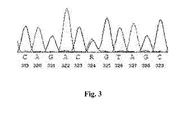
- Fig. 3 is showed a identified novel missense mutation c.220C>T, p.R74C of CAV3 gene.
- test kits of the present invention thus are useful for detecting LGMD-2 in individuals. It should be understood that the above-described embodiments and examples are merely illustrative of some of the many specific embodiments that represent the principles of the present invention. Numerous other versions can be readily devised by those skilled in the art whithout departing from the scope of the present invention.
Landscapes
- Chemical & Material Sciences (AREA)
- Life Sciences & Earth Sciences (AREA)
- Proteomics, Peptides & Aminoacids (AREA)
- Health & Medical Sciences (AREA)
- Organic Chemistry (AREA)
- Wood Science & Technology (AREA)
- Analytical Chemistry (AREA)
- Zoology (AREA)
- Genetics & Genomics (AREA)
- Engineering & Computer Science (AREA)
- Pathology (AREA)
- Immunology (AREA)
- Microbiology (AREA)
- Molecular Biology (AREA)
- Biotechnology (AREA)
- Biophysics (AREA)
- Physics & Mathematics (AREA)
- Biochemistry (AREA)
- Bioinformatics & Cheminformatics (AREA)
- General Engineering & Computer Science (AREA)
- General Health & Medical Sciences (AREA)
- Measuring Or Testing Involving Enzymes Or Micro-Organisms (AREA)
Abstract
The present invention relates to a test for detecting Limb-Girdle Muscular Dystrophies (LGMD), especially LGMD Type-2 (LGMD-2).
A test kit for detecting mutations associated with Limb-Girdle Muscular Dystrophies Type-2 (LGMD-2), characterized in that said test kit comprises a probes selected from the group consisting of SEQ ID Nos. 1 - 78.
Description
- The present invention relates to a test kit for detecting Limb-Girdle Muscular Dystrophies (LGMD), especially LGMD Type-2 (LGMD-2).
- Limb-Girdle Muscular Dystrophies (LGMD) is a heterogeneous group of muscular dystrophies that mostly affect the pelvic and shoulder girdle muscle groups. LGMD is rare with an overall incidence of 1 per 100 000 people (Yates JR, Emery AE. A population study of adult onset limb-girdle muscular dystrophy. J Med Genet 1985; 22: P250e7). LGMD is classified into two main groups, autosomal dominant (LGMD-1) and autosomal recessive (LGMD-2). The more common type is autosomal recessive with 16 genes or chromosomal loci identified to date (Rosales XQ, Tsao CY. Childhood onset of limb-girdle muscular dystrophy. Pediatr Neurol. 2012 Jan;46(1):13-23; Hicks D, et. al.). A founder mutation in Anoctamin 5 is a major cause of limb-girdle muscular dystrophy (Brain. 2011;134:171-82; Gundesli H, et. al.). Mutation in exon 1f of PLEC, leading to disruption of pectin isoform 1f, causes autosomal-recessive limb girdle muscular dystrophy (Am J Hum Genet. 2010;87:834-41). The rarer form is autosomal dominant. Ten percent of all cases of LGMD belong to this group. So far, eight genes or chromosomal loci have been associated with the autosomal dominant form (Laval SH, Bushby KM. Limb-girdle muscular dystrophies--from genetics to molecular pathology. Neuropathol Appl Neurobiol. 2004 Apr; 30(2):91-105; Greenberg SA, et. al. Etiology of limb girdle muscular dystrophy 1D/1E determined by laser capture microdissection proteomics. Ann Neurol. 2012; 71:141-5; Harms MB, et. al. Exome sequencing reveals DNAJB6 mutations in dominantly-inherited myopathy. Ann Neurol. 2012;71:407-16). Altered proteins of LGMD patients are involved in muscle cell biology in many different ways, for example CAPN3 influences IkBa/NF-kB pathway, mutations in lamin A/C cause alterations in nuclear lamina and sarcoglycan complex of muscle is built by SCGG, SCGA, SCGB and SCGD genes (Laval SH, Bushby KM. Limb-girdle muscular dystrophies-from genetics to molecular pathology. Neuropathol Appl Neurobiol. 2004 Apr; 30(2):91-105).
- Diagnosis of the different types of LGMD is a challenging process due to the number of genes involved, unidentified genes at known chromosomal loci, and the lack of common mutations in non-inbred populations.
- Immunostaining or immunoblotting of muscle biopsy has been historically the most used tool in establishing diagnosis for the most common types of LGMD, and in the differentiation of inflammatory myopathies. However secondary defects commonly mask primary defects of the dominant type of Limb Girdle Muscular Distrophy (LGMD1). Disadvantages of test are in low specificity and sensitivity (Tews DS, Goebel HH. Diagnostic immunohistochemistry in neuromuscular disorders. Histopathology. 2005 Jan; 46(1):1-23). The Western blot sensitivity for the most common form of LGMD, calpainopathy, is low, approximately 53%, the specificity is considerably better - 84% (Sáenz A, et. al. LGMD2A: genotype-phenotype correlations based on a large mutational survey on the calpain 3 gene. Brain. 2005 Apr; 128 (Pt 4):732-42). In addition said technique is invasive, time consuming and expensive.
- Confirmation of the LGMD diagnosis as well as subtyping, which nowadays is usually done by molecular techniques. These techniques are considered to be precise, presymptomatic and non invasive. Capillary sequencing of the coding gene is used most commonly, but has certain limitations due to the size and number of all involved genes. Homozygosity mapping by genome wide SNP arrays has evolved recently for consanguineous families. This was followed by capillary sequencing to confirm diagnosis for patients with mutations in genes TRIM32 and FKRP (Papić L, et. al. SNP-array based whole genome homozygosity mapping: a quick and powerful tool to achieve an accurate diagnosis in LGMD2 patients. Eur J Med Genet. 2011; Cossée M, et. al. Use of SNP array analysis to identify a novel TRIM32 mutation in limb-girdle muscular dystrophy type 2H. Neuromuscul Disord. 2009 Apr;19(4):255-60).
- Exome sequencing successfully was applied for the identification of causative gene of LGMD dominant type and resulted in the new gene DNAJB6 recognition (Harms, 2012). Joined efforts of specialists in the neuromuscular disease field worked to create NMD-chip, which aimed to develop sensitive high throughput DNA arrays for diagnosing patients affected by neuromuscular disorders, results are emerging (http://www.nmd-chip.eu). However because of the amount of genes involved (more than 30) above described techniques are expensive to check all possible mutations causing disease.
- Aim of our invention was to develop a robust, low-cost mutation screening technique for the DNA diagnostics of LGMD patients.
- The present invention provides novel test kit for detecting mutations associated with Limb-Girdle Muscular Dystrophies Type-2 (LGMD-2). The test kit is characterized in that it comprises a first group of probes selected from the group consisting of SEQ ID No. 1, SEQ ID No. 2, SEQ ID No. 3, SEQ ID No. 4, SEQ ID No. 5, SEQ ID No. 6, SEQ ID No. 7, SEQ ID No. 8, SEQ ID No. 9, SEQ ID No. 10, SEQ ID No. 11, SEQ ID No. 12, SEQ ID No. 13, SEQ ID No. 14, SEQ ID No. 15, SEQ ID No. 16, SEQ ID No. 17, SEQ ID No. 18, SEQ ID No. 19 and SEQ ID No. 20. The present invention also provides a test kit that additionally to the first group of probes contains a second group of probes. Said second group of probes is selected from the group consisting of SEQ ID No. 21, SEQ ID No. 22, SEQ ID No. 23, SEQ ID No. 24, SEQ ID No. 25, SEQ ID No. 26, SEQ ID No. 27, SEQ ID No. 28, SEQ ID No. 29, SEQ ID No. 30, SEQ ID No. 31, SEQ ID No. 32, SEQ ID No. 33, SEQ ID No. 34, SEQ ID No. 35, SEQ ID No. 36, SEQ ID No. 37, SEQ ID No. 38, SEQ ID No. 39, SEQ ID No. 40, SEQ ID No. 41, SEQ ID No. 42, SEQ ID No. 43, SEQ ID No. 44, SEQ ID No. 45, SEQ ID No. 46, SEQ ID No. 47, SEQ ID No. 48, SEQ ID No. 49, SEQ ID No. 50, SEQ ID No. 51, SEQ ID No. 52, SEQ ID No. 53, SEQ ID No. 54, SEQ ID No. 55, SEQ ID No. 56, SEQ ID No. 57, SEQ ID No. 58, SEQ ID No. 59, SEQ ID No. 60, SEQ ID No. 61, SEQ ID No. 62, SEQ ID No. 63, SEQ ID No. 64, SEQ ID No. 65, SEQ ID No. 66, SEQ ID No. 67, SEQ ID No. 68, SEQ ID No. 69, SEQ ID No. 70, SEQ ID No. 71, SEQ ID No. 72, SEQ ID No. 73, SEQ ID No. 74, SEQ ID No. 75, SEQ ID No. 76 and SEQ ID No. 77.
- Aditionally a sequencing of CAV3 gene (Gene ID: 859) coding region was performed. Said region has a small size of the two coding exaons for 151 amino acids. DNA samples of one hundred unrelated randomly selected persons were obtained within the framework of the national project "Genome Database of Latvian Population". Sequencing of gene CAV3 both coding exons and exon intron boundaries was performed by using standard PCR and automatic genetic analyzer (ABI PRISM 3100, Applied Byosystems). Oligonucleotides sequences were as follows: 5'AGGGACTAACCCCACTTCC3', 5'AGGAGCGTCACAGTAGTAAG3', 5'GGCAGGCTGAAGTTATGTGG3', 5'TTTCAGGGAAACTGTGTCTGC3', 5'TCCTGCACAGATCACAGACC3 ', 5' CTTGCAGTAGCTGCCTCTTG3', 5'GTAGGGTCCAGCCACCAAG3', 5'TCATGGGGTATGGAGCAGTC 3'.
- Sequencing reactions were carried out with the use of standard conditions as suggested by the manufacturer. The data acquired was processed by using programs Vector NTI packet Contig Express (Applied Byosystems).
- Novel SNPs responsible for amino acid change was identified in CAV3 gene NC_000003.11 GRCh37.p10 c.220C>T, p.R74C, and included in the list additionally to previously selected and verified twenty mutations.
- Sequence, having a SEQ ID No. 78, for CAV3 gene, mutation c.220C>T, p. R74C is as follows:

- According to a novel sequence of SEQ ID No. 78 the test kit can have the first group of samples selected from the group consisting of SEQ ID Nos. 1 - 20, that further comprises a semple of SEQ ID No. 78. There can be also a test kit comprising the first group of samples selected from the group consisting of SEQ ID Nos. 1 - 20, the second group of sample selected from the group consisting of SEQ ID Nos. 21 - 77, that further comprises a sample SEQ ID No. 78.
- Said sequences in general are mutations, which have diagnostic value for patients with limb girdle muscle dystrophy type 2 (LGMD-2), and are suitable for the detection.
- The term "mutation" refers to DNA sequence with a certain modifications.
- Mutations were selected based on their pathogenicity, the population analyzed and the allelic frequency.
- Mutations, which were reported as pathogenic from functional or large control group studies, were included in the set. In the later step pathogenic mutations were cross-referenced to exclude sequence variations, which originated in patients of non-Caucasian origin. Additionally, mutations were excluded, if reported from consanguinity and inbred populations. Selected mutations later were prioritized, if reported in independent studies more than once in different countries or populations. Multiple patients from one family were considered as one case.
- CAPN3 gene 121 mutations, DYSF gene 50 mutations, SGCA, SGCB, SGCD, SGCG 28 mutations, AMELX, AMELY two gender controls, and eight polymorphism controls (altogether - 209) were initially selected based on the above mentioned criteria.
- We have conducted intensive studies and found that the present invention provides a test kit for detecting Limb-Girdle Muscular Dystrophy in a most effective way.
- Those and other novel features and advantages of the present invention will be now described with reference to the accompanying drawings.
- It is to be understood that both the foregoing general description and the following detailed description are exemplary and explanatory only and are intended to provide further explanation of the present invention as claimed.
-
FIG. 1 shows plot of analyzed samples of p10GC against Call Rate values. -
FIG. 2 shows results for one of the analyzed mutations (Seq ID No. 1) for 289 persons. -
FIG. 3 shows identified novel missense mutation c.220C>T, p.R74C of CAV3 gene. - In one embodiment the Illumina® VeraCode™ technique was chosen as basic technology, due to the possibility of custom designed SNP (single nucleotide polymorphisms) or mutations and deletion/duplication robust detection and broad range of multiplexing. Call rates, reproducibility, and heritability rates are above 99.9% and there is a rapid sample throughput (Veracode, 2012).
- Limitations of the Illumina® VeraCode™ technique are:
- 1. Minimal distance between two mutations on the array >60 base pairs in both directions,
- 2. Detection of the triallelic and tetrallelic mutations and small inversions are not supported by the technique.
- Applying above-mentioned technical limitations of the VeraCode™ platform to the selection of mutations, number of mutations for the test kit decreased to 149.
- For each of the selected mutation, sequence input file was prepared according to the sequence listing design tool requirements, and final score for all of mutations was acquired. Final score described specificity and reproducibility of the PCR (Polymerase Chain Reaction) reaction for the each given mutation in numerical way.
- Total number of included mutations was considerably reduced due to designs that cannot be produced with critical failure scores calculated. Failure scores are mathematical calculations by manufacturer. They are described in ranges from 0 to 1.1, with higher values reflecting greater ability to design a successful assay. Also variations with final scores below 0.4 were excluded from the list, thus increasing the overall performance of all assays, but mutation list decreased to altogether 96 sequence variations.
- The case group consisted of thirty-one patients with clinical symptoms of LGMD Type 2. Patients with predominant pelvic and shoulder girdle muscle weakness, elevated creatine kinase (CK), negative for the dystrophinopathy and electromyography (EMG) data of myopathy were included in the study. The control group consisted of 258 healthy unrelated randomly selected individuals from the Genome Database of Latvian Population. DNA was extracted by the standard phenol-chloroform method.
- Genotyping for selected mutation panel was performed with customised VeraCode™ system by Illumina® on a BeadXpress™ reader also by Illumina®. Reactions were carried out under the standard conditions recommended by the manufacturer. In the given example by Illumina®.
- One deviation from the standard recommendations was introduced. DNA samples in the 96 well plates were applied in the two different wells for one person, thus giving additional quality control in data analysis. For example, one 96 well plate contained DNA samples from the 48 persons.
- Acquired data analysis was performed by Illumina® software "Genome Studio". The first step of data quality cleaning is the assessment of manufacturer included quality markers that describe effectiveness of several important reactions. To have the best possible results, it is necessary to manually overlook each project and exclude obviously failed mutation reads. These made us exclude six of the initially chosen mutations with specific sequence listings. The next step is to make a plot of all samples rated by their Call Rate and 10% GenCall Score (p10 GC), set boundaries for each value and exclude all outlying samples. GenCall Score is a quality metric, ranging from 0-1 calculated for each data point (genotype). In this example boundaries were set as Call Rate ≥ 0.85 and p10 GC ≥ 0.320, see
Figure 1 . After this step 23 samples were excluded. - This was followed by mutation evaluation by following criteria Cluster Sep, Call Frequency, AB R Mean and AB T Mean, last two of which are properties of heterozygous sample cluster on Y and X axes respectively.
- Additionally, "Paired Sample" test was introduced. Final cluster separation after previous adjustments must be supplemented with "Paired sample" test, which is included in Genome Studio software (http://www.illumina.com/software/genomestudio software.ilmn), but is optional in usage, and allowed combination of the both values of one sample for the final quality control. Values of remaining mutations led to exclusion of 13 mutations or sequences Nos.
- 96 loci were analyzed for 235 289 DNA samples. Data cleaning was completed, which decreased analyzed sample number to 212. Additionally Gen training score cut off values were set more than 0.3, that decreased number of available loci (mutations) to 77.
- Results for one of the analyzed mutations (SEQ ID. No. 1 - CAPN3_00010, de1550A) for 289 persons are represented in
Figure 2 . There are good separation of three clusters: 280 persons are normal homozygous clustered on the right side, seven persons represent homozygous persons with identified mutation (status affected) clustered on the left side and two persons in the cluster in the middle are heterozygous mutation carriers. - Some of the markers showed good reproducibility through the all of performed experiments and manual correction for them was not necessary (n=20), but reproducibility for the rest of the mutations was not stable.
- All of the final mutations were separated in the two groups using "paired sample" approach, one was a group of mutations, which constantly showed good results (SEQ ID. Nos. 1 - 20), and the second group showed fluctuating results (SEQ ID. Nos. 21 - 77). Basic metrics was obtained for the both groups separately from the Genome Studio software output. See Table 1 for the mean values of analyzed parameters. Mean values of Call Frequency, Cluster Separation and Gen Training Score were compared using unpaired t test analysis. Significantly higher mean Call Frequency was observed in the Group 1, describing better call scores above no-call threshold.
- Selected twenty mutations (SEQ ID. Nos. 1 - 20) have the best call scores, they showed stable reproducibility in all the experiments, and can be used on one microarray with massive parallel multiplexing.
Table 1. Mean values of Call Frequency, Cluster Separation and Gen Training Score and their comparison. Mean (SD) Call Frequency* Mean (SD) Cluster Separation** Mean (SD) Gen Training Score*** Group 1 0.94 (0.22) 0.31 (0.09) 0.54 (0.16) Group 2 0.7 (0.46) 0.29 (0.09) 0.40 (0.28) P-value 0.028 0.40 0.038 95% CI 0.026-0.454 0.027-0.067 0.008-0.272 *Call Frequency is the proportion of all samples at each locus with call scores above the no-call threshold
**Cluster separation measures the separation between the three geno-type clusters in the theta dimension and varies from 0-1
***Gen Training Score Depending on the shapes of the clusters and their relative distance to each other, a statistical score is devised - A diagnostic kit, consisting of SEQ ID. Nos. 1 - 77 with defined sequence and with proven reproducibility, is introduced. Twenty mutations set showed the best performance. Nineteen mutations did not show high specificity, or failed in repetitive samples, therefore rejected in the final step of validation.
- LGMD-2 test kit is a rapid and low cost screening tool. Limb Girdle Muscle dystrophy type 2 mutation set was introduced to improve healthcare of neuromuscular disease patients. Application of this test, will allow to avoid invasive muscle biopsy, and to decrease a necessity for the hospitalization of the patients with LGMD disease.
- LGMD type 2 test set is suited for the diagnostics of Limb Girdle Muscle Dystrophy, which is inherited in an autosomal recessive mode. Its main application is clinical screening test to confirm the presence of a mutation included in the test for the patient sample.
- LGMD Type 2 test set can be used in all diagnostic platforms, which allow massive parallel multiplexing.
- LGMD-2 test kit is particularly suited for all systems and scanners, which work with VeraCode™ systems.
- A sequencing of CAV3 gene coding region was performed. Said region has a small size of the two coding exons for 151 amino acids. DNA samples of one hundred unrelated randomly selected persons were obtained within the framework of the national project "Genome Database of Latvian Population". Sequencing of gene CAV3 both coding exons and exon intron boundaries was performed by using standard PCR and automatic genetic analyzer (ABI PRISM 3100, Applied Byosystems). Oligonucleotides sequences were as follows: 5'AGGGACTAACCCCACTTCC3', 5'AGGAGCGTCACAGTAGTAAG3', 5'GGCAGGCTGAAGTTATGTGG3', 5'TTTCAGGGAAACTGTGTCTGC3', 5'TCCTGCACAGATCACAGACC3 ', 5' CTTGCAGTAGCTGCCTCTTG3', 5' GTAGGGTCCAGCCACCAAG3', 5'TCATGGGGTATGGAGCAGTC 3'.
- Sequencing reactions were carried out with the use of standard conditions as suggested by the manufacturer. The data acquired was processed by using programs Vector NTI packet Contig Express (Applied Byosystems).
- Novel SNPs responsible for amino acid change was identified c.220C>T, p.R74C, and included in the list additionally to previously selected and verified twenty mutations. In
Fig. 3 is showed a identified novel missense mutation c.220C>T, p.R74C of CAV3 gene. - Sequence, having a SEQ ID No. 78, for CAV3 gene, mutation c.220C>T, p.R74C is as follows:

- The test kits of the present invention described herein thus are useful for detecting LGMD-2 in individuals. It should be understood that the above-described embodiments and examples are merely illustrative of some of the many specific embodiments that represent the principles of the present invention. Numerous other versions can be readily devised by those skilled in the art whithout departing from the scope of the present invention.


Claims (4)
- A test kit for detecting mutations associated with Limb-Girdle Muscular Dystrophies Type-2 (LGMD-2), characterized in that said test kit comprises a first group of probes selected from the group consisting of SEQ ID Nos. 1 - 20.
- The test kit of claim 1, characterized in that said test kit further comprises a second group of probes selected from the group consisting of SEQ ID Nos. 21 - 77.
- The kit of claim 1, characterized in that said kit further comprises a probe selected from SEQ ID No. 78.
- The kit of claim 2, characterized in that said kit further comprises a probe selected from SEQ ID No. 78.
Priority Applications (1)
| Application Number | Priority Date | Filing Date | Title |
|---|---|---|---|
| EP13166769.3A EP2801621A1 (en) | 2013-05-07 | 2013-05-07 | A test kit for detecting mutations associated with limb-girdle muscular dystrophies type-2 |
Applications Claiming Priority (1)
| Application Number | Priority Date | Filing Date | Title |
|---|---|---|---|
| EP13166769.3A EP2801621A1 (en) | 2013-05-07 | 2013-05-07 | A test kit for detecting mutations associated with limb-girdle muscular dystrophies type-2 |
Publications (1)
| Publication Number | Publication Date |
|---|---|
| EP2801621A1 true EP2801621A1 (en) | 2014-11-12 |
Family
ID=48325452
Family Applications (1)
| Application Number | Title | Priority Date | Filing Date |
|---|---|---|---|
| EP13166769.3A Withdrawn EP2801621A1 (en) | 2013-05-07 | 2013-05-07 | A test kit for detecting mutations associated with limb-girdle muscular dystrophies type-2 |
Country Status (1)
| Country | Link |
|---|---|
| EP (1) | EP2801621A1 (en) |
Citations (1)
| Publication number | Priority date | Publication date | Assignee | Title |
|---|---|---|---|---|
| US6673909B1 (en) * | 1998-08-25 | 2004-01-06 | The General Hospital Corporation | Oligonucleotides for dysferlin, a gene mutated in distal myopathy and limb girdle muscular dystrophy |
-
2013
- 2013-05-07 EP EP13166769.3A patent/EP2801621A1/en not_active Withdrawn
Patent Citations (1)
| Publication number | Priority date | Publication date | Assignee | Title |
|---|---|---|---|---|
| US6673909B1 (en) * | 1998-08-25 | 2004-01-06 | The General Hospital Corporation | Oligonucleotides for dysferlin, a gene mutated in distal myopathy and limb girdle muscular dystrophy |
Non-Patent Citations (19)
| Title |
|---|
| AM J HUM GENET, vol. 87, 2010, pages 834 - 41 |
| BICHENKOVA E V ET AL: "DNA-mounted self-assembly: New approaches for genomic analysis and SNP detection", BBA - GENE REGULATORY MECHANISMS, ELSEVIER, AMSTERDAM, NL, vol. 1809, no. 1, 1 January 2011 (2011-01-01), pages 1 - 23, XP027590836, ISSN: 1874-9399, [retrieved on 20110101] * |
| COSSEE M ET AL: "Use of SNP array analysis to identify a novel TRIM32 mutation in limb-girdle muscular dystrophy type 2H", NEUROMUSCULAR DISORDERS, PERGAMON PRESS, GB, vol. 19, no. 4, 1 April 2009 (2009-04-01), pages 255 - 260, XP026035413, ISSN: 0960-8966, [retrieved on 20090319], DOI: 10.1016/J.NMD.2009.02.003 * |
| COSSEE M: "Use of SNP array analysis to identify a novel TRIM32 mutation in limb-girdle muscular dystrophy type 2H", NEUROMUSCUL DISORD, vol. 19, no. 4, April 2009 (2009-04-01), pages 255 - 60 |
| G. PILUSO ET AL: "Motor Chip: A Comparative Genomic Hybridization Microarray for Copy-Number Mutations in 245 Neuromuscular Disorders", CLINICAL CHEMISTRY, vol. 57, no. 11, 6 September 2011 (2011-09-06), pages 1584 - 1596, XP055050351, ISSN: 0009-9147, DOI: 10.1373/clinchem.2011.168898 * |
| GREENBERG SA: "Etiology of limb girdle muscular dystrophy 1D/lE determined by laser capture microdissection proteomics", ANN NEUROL, vol. 71, 2012, pages 141 - 5 |
| GUNDESLI H, BRAIN, vol. 134, 2011, pages 171 - 82 |
| HARMS MB: "Exome sequencing reveals DNAJB6 mutations in dominantly-inherited myopathy", ANN NEUROL, vol. 71, 2012, pages 407 - 16 |
| LAVAL SH; BUSHBY KM: "Limb-girdle muscular dystrophies--from genetics to molecular pathology", NEUROPATHOL APPL NEUROBIOL, vol. 30, no. 2, April 2004 (2004-04-01), pages 91 - 105 |
| LAVAL SH; BUSHBY KM: "Limb-girdle muscular dystrophies-from genetics to molecular pathology", NEUROPATHOL APPL NEUROBIOL, vol. 30, no. 2, April 2004 (2004-04-01), pages 91 - 105 |
| LEA PAPI ET AL: "SNP-array based whole genome homozygosity mapping: A quick and powerful tool to achieve an accurate diagnosis in LGMD2 patients", EUROPEAN JOURNAL OF MEDICAL GENETICS, ELSEVIER, NL, vol. 54, no. 3, 4 December 2010 (2010-12-04), pages 214 - 219, XP028201182, ISSN: 1769-7212, [retrieved on 20101221], DOI: 10.1016/J.EJMG.2010.12.003 * |
| M. NERI ET AL: "A patient with limb girdle muscular dystrophy carries a TRIM32 deletion, detected by a novel CGH array, in compound heterozygosis with a nonsense mutation", NEUROMUSCULAR DISORDERS, vol. 23, no. 6, 28 March 2013 (2013-03-28), pages 478 - 482, XP055077098, ISSN: 0960-8966, DOI: 10.1016/j.nmd.2013.02.003 * |
| PAPIC L: "SNP- array based whole genome homozygosity mapping: a quick and powerful tool to achieve an accurate diagnosis in LGMD2 patients", EUR J MED GENET, 2011 |
| ROSALES XQ; TSAO CY; HICKS D: "Childhood onset of limb-girdle muscular dystrophy", PEDIATR NEUROL, vol. 46, no. 1, January 2012 (2012-01-01), pages 13 - 23 |
| SAENZ A: "LGMD2A: genotype-phenotype correlations based on a large mutational survey on the calpain 3 gene", BRAIN, vol. 128, no. 4, April 2005 (2005-04-01), pages 732 - 42 |
| STEFANO CAMPANARO: "Gene expression profiling in dysferlinopathies using a dedicated muscle microarray", HUMAN MOLECULAR GENETICS, vol. 11, no. 26, 1 January 2002 (2002-01-01), pages 3283 - 3298, XP055077094 * |
| TEWS DS; GOEBEL HH: "Diagnostic immunohistochemistry in neuromuscular disorders", HISTOPATHOLOGY, vol. 46, no. 1, January 2005 (2005-01-01), pages 1 - 23 |
| WILDFORSTER V ET AL: "Detecting copy number variations in autosomal recessive limb-girdle muscular dystrophies using a multiplex ligation-dependent probe amplification (MLPA) assay", MOLECULAR AND CELLULAR PROBES, ACADEMIC PRESS, LONDON, GB, vol. 23, no. 1, 1 February 2009 (2009-02-01), pages 55 - 59, XP025910712, ISSN: 0890-8508, [retrieved on 20081121], DOI: 10.1016/J.MCP.2008.11.002 * |
| YATES JR; EMERY AE: "A population study of adult onset limb-girdle muscular dystrophy", J MED GENET, vol. 22, 1985, pages 250E7 |
Similar Documents
| Publication | Publication Date | Title |
|---|---|---|
| Fadaie et al. | Whole genome sequencing and in vitro splice assays reveal genetic causes for inherited retinal diseases | |
| CA2694007C (en) | Determining a nucleic acid sequence imbalance | |
| Li et al. | Replication of TCF4 through association and linkage studies in late-onset Fuchs endothelial corneal dystrophy | |
| Leitão et al. | Systematic analysis and prediction of genes associated with monogenic disorders on human chromosome X | |
| Tan et al. | Novel method for genomic analysis of PKD1 and PKD2 mutations in autosomal dominant polycystic kidney disease | |
| Yang et al. | De novo truncating variants in the AHDC1 gene encoding the AT-hook DNA-binding motif-containing protein 1 are associated with intellectual disability and developmental delay | |
| US8835111B2 (en) | Genotyping tool for improving the prognostic and clinical management of MS patients | |
| EP2770325A1 (en) | Mutations of DEPDC5 for diagnosing epilepsic diseases, disorders or conditions | |
| US8158344B2 (en) | Methods and compositions for correlating genetic markers with multiple sclerosis | |
| Reed et al. | Genome-wide scan for a healthy aging phenotype provides support for a locus near D4S1564 promoting healthy aging | |
| Cottrell et al. | Maternal uniparental disomy of chromosome 4 in a patient with limb‐girdle muscular dystrophy 2E confirmed by SNP array technology | |
| EP2971126B1 (en) | Determining fetal genomes for multiple fetus pregnancies | |
| US20210230696A1 (en) | Method for predicting the risk of late-onset alzheimer's diseases | |
| EP2801621A1 (en) | A test kit for detecting mutations associated with limb-girdle muscular dystrophies type-2 | |
| Lovrecic et al. | ADP-ribosylation factor guanine nucleotide-exchange factor 2 (ARFGEF2): a new potential biomarker in Huntington's disease | |
| Picchetta et al. | Maternal age and genome-wide failure of meiotic recombination are associated with triploid conceptions in humans | |
| WO2014121180A1 (en) | Genetic variants in interstitial lung disease subjects | |
| Alcántara-Ortigoza et al. | CTNS gene analysis emphasizes diagnostic value of eye examination in patients with cystinosis | |
| Feizabadi et al. | Investigation of genetic variants causing Bardet–Biedl syndrome in Iranian families: Identification of a founder mutation in BBS2, p. T157T | |
| US20160032386A1 (en) | Genetic markers for osteoarthritis | |
| Mastrorosa | The Role of Copy Number Variants in Severe Idiopathic Male Infertility | |
| Balestrini et al. | Genetics of Epilepsy | |
| Zhao | Li J, Dai L, Ma Y, Bai Y and Guo H (2021) X Chromosome Inactivation Pattern and Pregnancy Outcome of Female Carriers of Pathogenic Heterozygous X-Linked Deletions | |
| US20130012497A1 (en) | Methods for detecting adhd susceptibility and predicting severity and long term outcome of adhd symptoms | |
| US20050176006A1 (en) | Genetic markers for bone mass |
Legal Events
| Date | Code | Title | Description |
|---|---|---|---|
| PUAI | Public reference made under article 153(3) epc to a published international application that has entered the european phase |
Free format text: ORIGINAL CODE: 0009012 |
|
| 17P | Request for examination filed |
Effective date: 20130507 |
|
| AK | Designated contracting states |
Kind code of ref document: A1 Designated state(s): AL AT BE BG CH CY CZ DE DK EE ES FI FR GB GR HR HU IE IS IT LI LT LU LV MC MK MT NL NO PL PT RO RS SE SI SK SM TR |
|
| AX | Request for extension of the european patent |
Extension state: BA ME |
|
| STAA | Information on the status of an ep patent application or granted ep patent |
Free format text: STATUS: THE APPLICATION IS DEEMED TO BE WITHDRAWN |
|
| 18D | Application deemed to be withdrawn |
Effective date: 20150513 |