EP2800347A1 - generation of non-secure warning tones on packet-switched networks, particularly across multiple security domains, locally by the VoIP phone - Google Patents
generation of non-secure warning tones on packet-switched networks, particularly across multiple security domains, locally by the VoIP phone Download PDFInfo
- Publication number
- EP2800347A1 EP2800347A1 EP13002336.9A EP13002336A EP2800347A1 EP 2800347 A1 EP2800347 A1 EP 2800347A1 EP 13002336 A EP13002336 A EP 13002336A EP 2800347 A1 EP2800347 A1 EP 2800347A1
- Authority
- EP
- European Patent Office
- Prior art keywords
- phone
- mls
- source
- checking
- voice gateway
- Prior art date
- Legal status (The legal status is an assumption and is not a legal conclusion. Google has not performed a legal analysis and makes no representation as to the accuracy of the status listed.)
- Granted
Links
- 238000000034 method Methods 0.000 claims abstract description 40
- 230000011664 signaling Effects 0.000 claims abstract description 14
- 238000004590 computer program Methods 0.000 claims description 7
- 238000004891 communication Methods 0.000 abstract description 3
- 239000011159 matrix material Substances 0.000 description 6
- 230000015556 catabolic process Effects 0.000 description 5
- 238000006731 degradation reaction Methods 0.000 description 5
- 230000009471 action Effects 0.000 description 4
- 230000004913 activation Effects 0.000 description 4
- 238000005516 engineering process Methods 0.000 description 4
- 230000000007 visual effect Effects 0.000 description 2
- 230000001419 dependent effect Effects 0.000 description 1
- 230000005012 migration Effects 0.000 description 1
- 238000013508 migration Methods 0.000 description 1
- 230000008569 process Effects 0.000 description 1
Images



Classifications
-
- H—ELECTRICITY
- H04—ELECTRIC COMMUNICATION TECHNIQUE
- H04M—TELEPHONIC COMMUNICATION
- H04M3/00—Automatic or semi-automatic exchanges
- H04M3/42—Systems providing special services or facilities to subscribers
- H04M3/436—Arrangements for screening incoming calls, i.e. evaluating the characteristics of a call before deciding whether to answer it
-
- H—ELECTRICITY
- H04—ELECTRIC COMMUNICATION TECHNIQUE
- H04L—TRANSMISSION OF DIGITAL INFORMATION, e.g. TELEGRAPHIC COMMUNICATION
- H04L63/00—Network architectures or network communication protocols for network security
- H04L63/14—Network architectures or network communication protocols for network security for detecting or protecting against malicious traffic
-
- H—ELECTRICITY
- H04—ELECTRIC COMMUNICATION TECHNIQUE
- H04L—TRANSMISSION OF DIGITAL INFORMATION, e.g. TELEGRAPHIC COMMUNICATION
- H04L65/00—Network arrangements, protocols or services for supporting real-time applications in data packet communication
- H04L65/10—Architectures or entities
- H04L65/102—Gateways
- H04L65/1023—Media gateways
- H04L65/103—Media gateways in the network
-
- H—ELECTRICITY
- H04—ELECTRIC COMMUNICATION TECHNIQUE
- H04L—TRANSMISSION OF DIGITAL INFORMATION, e.g. TELEGRAPHIC COMMUNICATION
- H04L65/00—Network arrangements, protocols or services for supporting real-time applications in data packet communication
- H04L65/10—Architectures or entities
- H04L65/102—Gateways
- H04L65/1033—Signalling gateways
- H04L65/104—Signalling gateways in the network
-
- H—ELECTRICITY
- H04—ELECTRIC COMMUNICATION TECHNIQUE
- H04L—TRANSMISSION OF DIGITAL INFORMATION, e.g. TELEGRAPHIC COMMUNICATION
- H04L65/00—Network arrangements, protocols or services for supporting real-time applications in data packet communication
- H04L65/1066—Session management
- H04L65/1069—Session establishment or de-establishment
-
- H—ELECTRICITY
- H04—ELECTRIC COMMUNICATION TECHNIQUE
- H04M—TELEPHONIC COMMUNICATION
- H04M3/00—Automatic or semi-automatic exchanges
- H04M3/20—Automatic or semi-automatic exchanges with means for interrupting existing connections; with means for breaking-in on conversations
- H04M3/205—Eavesdropping prevention - indication of insecurity of line or network
-
- H—ELECTRICITY
- H04—ELECTRIC COMMUNICATION TECHNIQUE
- H04M—TELEPHONIC COMMUNICATION
- H04M7/00—Arrangements for interconnection between switching centres
- H04M7/006—Networks other than PSTN/ISDN providing telephone service, e.g. Voice over Internet Protocol (VoIP), including next generation networks with a packet-switched transport layer
- H04M7/0078—Security; Fraud detection; Fraud prevention
-
- H—ELECTRICITY
- H04—ELECTRIC COMMUNICATION TECHNIQUE
- H04L—TRANSMISSION OF DIGITAL INFORMATION, e.g. TELEGRAPHIC COMMUNICATION
- H04L63/00—Network architectures or network communication protocols for network security
- H04L63/10—Network architectures or network communication protocols for network security for controlling access to devices or network resources
- H04L63/105—Multiple levels of security
Definitions
- the invention relates to improving the support of non-secure warning tones on packet-switched networks, particularly across multiple security domains.
- a Non-Secure Warning Tone is used in telephone calls to signal that a party of the call is non-trusted.
- the NSWT is applied to a voice signal of a telephone or voice call in order to be audible.
- a Multi-Level Secure (MLS) system is used for allowing secure communication between different security domains, for example secure and Non-Secure, and to use NSWTs to signal non-trusted parties in telephone communications.
- MLS voice gateway can provide handling of voice calls between any combination of VoIP (Voice over Internet Protocol) and Circuit switched voice phones in different security domains.
- the standard way of supporting NSWT is for the MLS system to issue the NSWT in-band.
- This method of supporting NSWT has critical limitations in VoIP systems, as it is essential that the NSWT is never lost, or degraded as to be unintelligible, which normally means the VoIP call must be kept at 64kbps PCM, which has substantial bandwidth implications. It also means that the call must not be allowed to route out of the initial IP network into other attached IP networks, unless it can also be ensured that the NSWT will not be lost.
- the problem addressed by the invention is how to effectively support the generation of NSWT on VoIP phones, and to overcome the following limitations with issuing the NSWT in-band.
- the solution proposed by the invention is that the signaling, particularly the VoIP signaling is enhanced between a MLS system and a phone, particularly a VoIP device to include the signaling of NSWT, which would then be generated locally by an enhanced (VoIP) phone.
- the invention can ensure that the NSWT is always clearly audible on the phone, whereas issuing the NSWT in-band can never guarantee this.
- the invention places no restriction on the voice codec, and its associated bandwidth used to support the VoIP call, whereas issuing the NSWT in-band is highly reliant on the quality of voice codec in order to minimize any possibility of the NSWT not being clearly audible.
- the invention is unaffected by the routing of a (VoIP) call and whether a destination (VoIP) phone is on the same, or on a different connected packet-switched, particularly IP network, whereas with the current method of issuing the NSWT in-band it is essential that the routing of a VoIP call is controlled, and that a destination VoIP phone is on the same IP network, so as to minimize the possibility of the NSWT not being clearly audible.
- the invention is unaffected by any degradation in the voice quality of the VoIP call, whether caused by multiple voice transcodes, or by packet delay or loss, whereas with the current method of issuing the NSWT in-band, it is essential that the voice quality of the VoIP call is always keep high.
- a further problem addressed by embodiments of the invention of is how to distinguish between multiple security domains on both VoIP, and Circuit Switched phones, when operating in MLS mode, and to overcome the key limitation with the current approach, which is to use NSWT, as a non-domain specific tone.
- Embodiments of the invention can ensure that the security domain of a remote phone is always unambiguous, whereas the current method of using NSWT, as a non-domain specific tone, cannot distinguish between multiple security domains.
- the invention has no limit on the number of different security domains supported, whereas just using NSWT, as the method of security warning, does not accurately inform the user of the security requirements of the voice connection.
- Embodiments of the invention may support 'NSWT' across multiple security domains, may have no constraint on the number of different security domains supported, may have a mode of operation compatible with standard circuit switched phones, may have a mode of operation compatible with ruggedized display-less VoIP phones, may place no requirements on the voice codec, and its associated bandwidth, used to support the VoIP call, and may be unaffected by any degradation in the voice quality of the VoIP call, whether caused by multiple voice transcodes, or by packet delay or loss.
- An embodiment of the invention relates to a method for supporting non-secure warning tones on packet-switched networks comprising the steps of receiving a call attempt from a source phone to a destination phone, checking if a connection of the security domains of the source phone and the destination phone via a MLS voice gateway is allowed, checking if a generation of a non-secure warning tone locally by the source phone is required, and establishing a call from the source phone to the destination phone upon acknowledgement of the local generation of the non-secure warning tone by the source phone.
- This embodiment establishes an enhanced signaling between a MLS voice gateway and a phone for supporting non-secure warning tone generation.
- the step of checking if a connection of the security domains of the source phone and the destination phone via a MLS voice gateway is allowed can comprise the following steps: checking if the security domains of the source phone and the destination phone are compatible, and terminating the call attempt if the security domains are not compatible.
- the MLS voice gateway can use a compatibility table containing data for the allowed connections between different security domains and the requirements of generating warning tones depending on the connection of different security domains.
- the step of checking if a generation of a non-secure warning tone locally by the source phone is required can comprise the following steps: checking if a warning is required for connecting the security domains of the source phone and the destination phone via a MLS voice gateway, and if a warning is required, signaling to the source phone that a local generation of a non-secure warning tone is required and waiting for an acknowledgment of the local generation of a non-secure warning tone locally by the source phone.
- the step of checking if a generation of a non-secure warning tone locally by the source phone is required can comprise the following steps: checking if a warning is required for connecting the security domains of the source phone and the destination phone via a MLS voice gateway, and if a warning is required, generating an In-Band non-secure warning tone by the MLS voice gateway. This also allows establishing calls from Circuit Switched phones, which can only process In-Band non-secure warning tones.
- the method can further comprise the step of generating an In-Band remote security domain warning by the MLS voice gateway if a warning is required. Thus, a further warning can be generated informing a caller about a different remote security domain, either audible or visible.
- a further embodiment of the invention relates to a MLS voice gateway for establishing a call between a source phone and a destination phone over a packet-switched network
- a MLS voice gateway for establishing a call between a source phone and a destination phone over a packet-switched network
- means for receiving a call attempt from a source phone to a destination phone means for checking if a connection of the security domains of the source phone and the destination phone via a MLS voice gateway is allowed, means for checking if a generation of a non-secure warning tone locally by the source phone is required, and means for establishing a call from the source phone to the destination phone upon acknowledgement of the local generation of the non-secure warning tone by the source phone.
- the means for checking if a connection of the security domains of the source phone and the destination phone via a MLS voice gateway is allowed can be further adapted to perform a method of the invention and as described above, and/or the means for checking if a generation of a non-secure warning tone locally by the source phone is required can be further adapted to perform a method of the invention and as described above.
- a further embodiment of the invention relates to a computer program, which implements a method according to the invention and as described herein and supporting non-secure warning tones on packet-switched networks when executed by a computer.
- a record carrier storing a computer program according to the invention may be provided, for example a CD-ROM, a DVD, a memory card, a diskette, or a similar data carrier suitable to store the computer program for electronic access.
- Another embodiment of the invention relates to a computer being configured by a computer program of the invention and as described above for implementing the support non-secure warning tones on packet-switched networks.
- a yet further embodiment of the invention relates to a phone being adapted to support non-secure warning tones on packet-switched networks and to establish calls over a MLS voice gateway of the invention and as described above, the phone being further adapted to acknowledge generating a non-secure warning tone to the MLS voice gateway upon receipt of a corresponding signaling from the MLS voice gateway.
- MLS system is used as synonym for MLS voice gateway.
- a MLS VoIP phone On activation a MLS VoIP phone shall establish a security association with a MLS voice gateway.
- Fig.1 shows the basic connectivity between the MLS VoIP phone 10 and the MLS network via the MLS voice gateway 16.
- This security association will offer protection to signaling flows between the MLS VoIP phone 10 and the MLS voice gateway 16, where the level of protection is defined by the implementation of the 'MLS' VoIP phone 10.
- the connection between the MLS voice gateway 16 and the MLS VoIP phone 10 must be on a suitable secure IP network 14. This action will identify this as a MLS VoIP phone 10 supporting MLS capabilities.
- IP address to be used by the MLS VoIP phone 10 to allow it to establish this security association will either be preconfigured in the MLS VoIP phone 10, or requested by the MLS VoIP phone 10 on activation.
- the 'MLS' VoIP phone 10 could be designed to support multiple MLS voice gateways 16 into the MLS network 12, to allow it to be fully resilient against partial network failures.
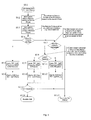
- the flow chart shown in Fig. 3 outlines a call setup from the MLS VoIP phone 10 starting with a call attempt (step S3.1).
- the fundamental stages as follows: Obtain the security domains of the source and destination phones (steps S3.2, 3.3). Check if the security domains are the same (step S3.4), if so establish the call signaling that no NSWT shall be generated by the MLS VoIP phone (step S3.5) and wait for acknowledgment ACK of the MLS VoIP phone (step S3.6). Check if ACK is received (step S3.13), if so establish a call (step S3.14). If the security domains are not the same (step S3.4), then check the 'Security Policy Matrix' to confirm that the security domains are allowed to be connected (step S3.7).
- step S3.8 If they are allowed to connect, check the 'Security Policy Matrix' to confirm if NSWT shall be generated locally by the MLS VoIP phone (step S3.8). If a NSWT is required, signal to the MLS VoIP phone that the NSWT is required (step S3.9), then wait for acknowledgment ACK of the MLS VoIP phone (step S3.10). Check if ACK is received (step S3.13), if so establish a call (step S3.14). If no NSWT is required, signal to the MLS VoIP phone that the NSWT is not required (step S3.11), then wait for acknowledgment ACK of the MLS VoIP phone (step S3.12). Check if ACK is received (step S3.13), if so establish a call (step S3.14). If ACK is not received or security domains are not allowed to be connected (step S3.7), terminate call attempt (step S3.15).
- the 'MLS' VoIP phone must always be connected to a secure IP network for its MLS functionality to operate, as by definition MLS is a 'Secure High' system, with the user being appropriately warned of a call to a different security domain.
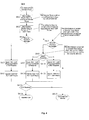
- the flow chart shown in Fig. 4 outlines a remote call setup to the MLS VoIP phone 10.
- the basic stages are the same as for the flow chart of Fig. 3 with the only difference that in step S4.1 the call attempt comes from a remote phone device, which will not necessarily be a VoIP device; it could also be a Circuit Switched phone or another MLS VoIP phone.
- the call setup method according the invention as described above has the following key advantages over prior technology:
- the method ensures that the NSWT is always clearly audible on the VoIP phone.
- the method places no requirements on the voice codec, and its associated bandwidth, used to support the VoIP call.
- the method is unaffected by the routing of the VoIP call and whether the destination VoIP phone is on the same, or on a different connected IP network.
- the method is unaffected by any degradation in the voice quality of the VoIP call, whether caused by multiple voice transcodings, or by packet delay or loss.
- NSWT Non-Secure Warning Tones
- NSWT is combined with a new Remote Security Domain Warning (RSDW) which is implemented as an audible warning, for example a message, or as a visual warning, for example a message displayed on a device's display, or both.
- RSDW Remote Security Domain Warning
- the NSWT then functions as a reminder to the local subscriber that the remote subscriber is in another security domain / caveat, with the RSDW providing full details of this remote security domain / caveat.
- the RSDW When implemented on a VoIP device, the RSDW can be signalled using enhanced VoIP signaling between a MLS system and the VoIP device, which will then locally generate the RSDW as either an audible message, or as a warning on its display, or both.
- the RSDW audible warning message can be generated by the MLS voice gateway in-band with the call to the phone, this ensures that this solution will not place any special constraints on the Circuit Switched phone, or system. This will maintain interoperability with the existing Circuit Switched technology that will continue to be a standard military technology, during the migration to VoIP.
- a MLS VoIP phone On activation a MLS VoIP phone shall establish a security association with the MLS voice gateway.
- Fig.1 shows the basic connectivity between the MLS VoIP phone 10 and the MLS voice gateway 16.
- This security association will offer protection to signalling flows between the MLS VoIP phone 10 and the MLS voice gateway 16, where the level of protection is defined by the implementation of the MLS VoIP phone 10.
- the connection between the MLS voice gateway 16 and the MLS VoIP phone 10 must be on a suitable secure IP network 14. This action will identify this as a MLS VoIP phone 10 supporting MLS capabilities, which will include the method by which the phone supports RSDW, e.g. audible warning, or visual warning, or both.
- the specific details, e.g. IP address, to be used by the MLS VoIP phone 10 to allow it to establish this security association will either be preconfigured in the MLS VoIP phone 10, or requested by the MLS VoIP phone 10 on activation.
- the MLS VoIP phone 10 could be designed to support multiple MLS voice gateways 16 into the MLS network 12, to allow it to be fully resilient against partial network failures.
- Fig. 2 shows the basic connectivity between a Circuit Switched phone 11 and the MLS voice gateway 16 via a Voice PABX 18.
- the MLS voice gateway shall need to be configured to support this. For example this could be controlled using the CLI (Calling Line Identity) of the Circuit Switched phone.
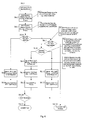
- the flow chart of Fig. 5 outlines a call setup from a MLS VoIP phone 10 starting with a call attempt (step S5.1).
- the fundamental stages are as follows: Obtain the security domains of the source and destination phones (steps S5.2, 5.3). Check if the security domains are the same (step S5.4), if so establish the call signaling that no RSDW shall be generated by the MLS VoIP phone (step S5.5) and wait for acknowledgment ACK of the MLS VoIP phone (step S5.6). Check if ACK is received (step S5.14), if so establish a call (step S5.15). If the security domains are not the same (step S5.4), then check the 'Security Policy Matrix' to confirm that the security domains are allowed to be connected (step S5.7).
- step S5.8 If they are allowed to connect, check the 'Security Policy Matrix' to confirm if RSDW shall be generated locally by the MLS VoIP phone (step S5.8). If a RDSW is required, signal to the MLS VoIP phone that the RSDW is required (step S5.9), then wait for acknowledgment ACK of the MLS VoIP phone (step S5.10) and thereafter start NSWT on the phone (step S5.11). Check if ACK is received (step S5.14), if so establish a call (step S5.15). If no RSDW is required, signal to the MLS VoIP phone that the RSDW is not required (step S5.12), then wait for acknowledgment ACK of the MLS VoIP phone (step S5.13). Check if ACK is received (step S5.14), if so establish a call (step S5.15). If ACK is not received or security domains are not allowed to be connected (step S5.7), terminate call attempt (step S5.16).
- the MLS VoIP phone must always be connected to a secure IP network for its MLS functionality to operate, as by definition MLS is a 'Secure High' system, with the user being appropriately warned of a call to a different security domain.
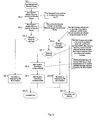
- the flow chart shown in Fig. 6 outlines a remote call setup to the MLS VoIP phone 10.
- the basic stages are the same as for the flow chart of Fig. 5 with the only difference that in step S6.1 the call attempt comes from a remote phone device, which will not necessarily be a VoIP device; it could also be a Circuit Switched phone or another MLS VoIP phone.
- the flow chart of Fig. 7 outlines a call setup from a 'MLS' Circuit Switched phone 11 starting with a call attempt (step S7.1).
- the fundamental stages are as follows: Obtain the security domains of the source and destination phones (steps S7.2, 7.3). Check if the security domains are the same (step S7.4), if so no action is required by the MLS voice gateway (step S7.5) and establish a call (step S7.11). If the security domains are not the same (step S7.4), then check the 'Security Policy Matrix' to confirm that the security domains are allowed to be connected (step S7.6).
- step S7.7 If they are allowed to connect, check the 'Security Policy Matrix' to confirm if RSDW shall be generated as an audible warning message, injected in-band by the MLS voice gateway (step S7.7). If a RDSW is required, the MLS voice gateway generates an in-band RSDW (step S7.8) and thereafter an in-band NSWT (step S7.9) before a call is established (step S7.11). If no RSDW is required, no action is required by the MLS voice gateway (step S7.10), then a call is established (step S7.11). If the security domains are not allowed to be connected (step S7.6). terminate call attempt (step S7.12).
- the 'MLS' Circuit Switched phone must always be connected to a secure Circuit Switched network for its MLS functionality to operate, as by definition MLS is a 'Secure High' system, with the user being appropriately warned of a call to a different security domain.
- the flow chart of Fig. 8 outlines a remote call setup to the 'MLS' Circuit Switched phone 11.
- the basic stages are the same as for the flow chart of Fig. 7 with the only difference that in step S8.1 the call attempt comes from a remote phone device, which will not necessarily be a VoIP device; it could also be a Circuit Switched phone or another MLS VoIP phone.
- the method supporting Non-Secure Warning Tones on IP Networks across Multiple Security Domains has the following key advantages over prior technology:
- the method supports NSWT across multiple security domains.
- the method has no limit on the number of different security domains supported.
- the method may have a mode of operation compatible with standard circuit switched phones.
- the method may have a mode of operation compatible with ruggedized display-less VoIP phones.
- the method places no requirements on the voice codec, and its associated bandwidth, used to support the VoIP call.
- the method is unaffected by any degradation in the voice quality of the VoIP call.
Landscapes
- Engineering & Computer Science (AREA)
- Signal Processing (AREA)
- Computer Networks & Wireless Communication (AREA)
- Computer Security & Cryptography (AREA)
- Multimedia (AREA)
- Computer Hardware Design (AREA)
- Computing Systems (AREA)
- General Engineering & Computer Science (AREA)
- Business, Economics & Management (AREA)
- General Business, Economics & Management (AREA)
- Telephonic Communication Services (AREA)
- Data Exchanges In Wide-Area Networks (AREA)
Abstract
Description
- The invention relates to improving the support of non-secure warning tones on packet-switched networks, particularly across multiple security domains.
- A Non-Secure Warning Tone (NSWT) is used in telephone calls to signal that a party of the call is non-trusted. The NSWT is applied to a voice signal of a telephone or voice call in order to be audible. A Multi-Level Secure (MLS) system is used for allowing secure communication between different security domains, for example secure and Non-Secure, and to use NSWTs to signal non-trusted parties in telephone communications. Particularly, MLS voice gateway can provide handling of voice calls between any combination of VoIP (Voice over Internet Protocol) and Circuit switched voice phones in different security domains.
- The standard way of supporting NSWT is for the MLS system to issue the NSWT in-band. This method of supporting NSWT has critical limitations in VoIP systems, as it is essential that the NSWT is never lost, or degraded as to be unintelligible, which normally means the VoIP call must be kept at 64kbps PCM, which has substantial bandwidth implications. It also means that the call must not be allowed to route out of the initial IP network into other attached IP networks, unless it can also be ensured that the NSWT will not be lost.
- In the following, several of critical limitations issuance of the NSWT for the MLS system in-band are briefly explained:
- It can never guarantee that the NSWT is always clearly audible on the VoIP phone.
- It is highly reliant on the quality of the voice codec in order to minimize any possibility of the NSWT not being clearly audible. This will normally mean that it must use a high bandwidth codec, e.g. G.711 / 64kbps, which clearly has substantial bandwidth implications.
- It is essential that the routing of the VoIP call is controlled, and that the destination VoIP phone is on the same IP network, so as to minimize the possibility of the NSWT not being clearly audible.
- It is affected by any degradation in the voice quality of the VoIP call, whether caused by multiple voice transcodes, or by packet delay or loss, as it is essential that the voice quality of the VoIP call is always keep high, so as to minimize the possibility of the NSWT not being clearly audible.
- A further problem is described in the following. In the past a NSWT has only been required to distinguish between two security domains, Secure and Non-secure, when operating in MLS mode. When it is necessary to support multiple security domains, e.g. in a Coalition, the single NSWT is no longer sufficient to ensure that the calling, or called, subscriber is fully informed as to what security domain the called, or calling, subscriber is in.
- The standard way, when operating in MLS mode, to distinguish between multiple security domains is to just use a NSWT to distinguish between the multiple security domains, however this suffers from several key limitations:
- It cannot guarantee that the security domain of a remote phone is clearly known to the called, or calling, subscriber.
- It has a finite limit on the number of different security domains that can be supported, because as this number increases, this method of security warning rapidly becomes ambiguous and confusing.
- Therefore, it is an object of the invention to improve the support of non-secure warning tones on packet-switched networks, particularly across multiple security domains.
- This object is achieved by the subject matter of the independent claims. Further embodiments are shown by the dependent claims.
- The problem addressed by the invention is how to effectively support the generation of NSWT on VoIP phones, and to overcome the following limitations with issuing the NSWT in-band. The solution proposed by the invention is that the signaling, particularly the VoIP signaling is enhanced between a MLS system and a phone, particularly a VoIP device to include the signaling of NSWT, which would then be generated locally by an enhanced (VoIP) phone. Thus, the invention can ensure that the NSWT is always clearly audible on the phone, whereas issuing the NSWT in-band can never guarantee this. The invention places no restriction on the voice codec, and its associated bandwidth used to support the VoIP call, whereas issuing the NSWT in-band is highly reliant on the quality of voice codec in order to minimize any possibility of the NSWT not being clearly audible. The invention is unaffected by the routing of a (VoIP) call and whether a destination (VoIP) phone is on the same, or on a different connected packet-switched, particularly IP network, whereas with the current method of issuing the NSWT in-band it is essential that the routing of a VoIP call is controlled, and that a destination VoIP phone is on the same IP network, so as to minimize the possibility of the NSWT not being clearly audible. The invention is unaffected by any degradation in the voice quality of the VoIP call, whether caused by multiple voice transcodes, or by packet delay or loss, whereas with the current method of issuing the NSWT in-band, it is essential that the voice quality of the VoIP call is always keep high.
- A further problem addressed by embodiments of the invention of is how to distinguish between multiple security domains on both VoIP, and Circuit Switched phones, when operating in MLS mode, and to overcome the key limitation with the current approach, which is to use NSWT, as a non-domain specific tone. Embodiments of the invention can ensure that the security domain of a remote phone is always unambiguous, whereas the current method of using NSWT, as a non-domain specific tone, cannot distinguish between multiple security domains. The invention has no limit on the number of different security domains supported, whereas just using NSWT, as the method of security warning, does not accurately inform the user of the security requirements of the voice connection. Embodiments of the invention may support 'NSWT' across multiple security domains, may have no constraint on the number of different security domains supported, may have a mode of operation compatible with standard circuit switched phones, may have a mode of operation compatible with ruggedized display-less VoIP phones, may place no requirements on the voice codec, and its associated bandwidth, used to support the VoIP call, and may be unaffected by any degradation in the voice quality of the VoIP call, whether caused by multiple voice transcodes, or by packet delay or loss.
- An embodiment of the invention relates to a method for supporting non-secure warning tones on packet-switched networks comprising the steps of receiving a call attempt from a source phone to a destination phone, checking if a connection of the security domains of the source phone and the destination phone via a MLS voice gateway is allowed, checking if a generation of a non-secure warning tone locally by the source phone is required, and establishing a call from the source phone to the destination phone upon acknowledgement of the local generation of the non-secure warning tone by the source phone. This embodiment establishes an enhanced signaling between a MLS voice gateway and a phone for supporting non-secure warning tone generation.
- The step of checking if a connection of the security domains of the source phone and the destination phone via a MLS voice gateway is allowed can comprise the following steps: checking if the security domains of the source phone and the destination phone are compatible, and terminating the call attempt if the security domains are not compatible. For checking compatibility, the MLS voice gateway can use a compatibility table containing data for the allowed connections between different security domains and the requirements of generating warning tones depending on the connection of different security domains.
- The step of checking if a generation of a non-secure warning tone locally by the source phone is required can comprise the following steps: checking if a warning is required for connecting the security domains of the source phone and the destination phone via a MLS voice gateway, and if a warning is required, signaling to the source phone that a local generation of a non-secure warning tone is required and waiting for an acknowledgment of the local generation of a non-secure warning tone locally by the source phone. Thus, it can be ensured that only phones being able to locally generate non-secure warning tones will be allowed to establish a call with the destination phone.
- The step of checking if a generation of a non-secure warning tone locally by the source phone is required can comprise the following steps: checking if a warning is required for connecting the security domains of the source phone and the destination phone via a MLS voice gateway, and if a warning is required, generating an In-Band non-secure warning tone by the MLS voice gateway. This also allows establishing calls from Circuit Switched phones, which can only process In-Band non-secure warning tones. The method can further comprise the step of generating an In-Band remote security domain warning by the MLS voice gateway if a warning is required. Thus, a further warning can be generated informing a caller about a different remote security domain, either audible or visible.
- A further embodiment of the invention relates to a MLS voice gateway for establishing a call between a source phone and a destination phone over a packet-switched network comprising means for receiving a call attempt from a source phone to a destination phone, means for checking if a connection of the security domains of the source phone and the destination phone via a MLS voice gateway is allowed, means for checking if a generation of a non-secure warning tone locally by the source phone is required, and means for establishing a call from the source phone to the destination phone upon acknowledgement of the local generation of the non-secure warning tone by the source phone.
- The means for checking if a connection of the security domains of the source phone and the destination phone via a MLS voice gateway is allowed can be further adapted to perform a method of the invention and as described above, and/or the means for checking if a generation of a non-secure warning tone locally by the source phone is required can be further adapted to perform a method of the invention and as described above.
- A further embodiment of the invention relates to a computer program, which implements a method according to the invention and as described herein and supporting non-secure warning tones on packet-switched networks when executed by a computer.
- According to a further embodiment of the invention, a record carrier storing a computer program according to the invention may be provided, for example a CD-ROM, a DVD, a memory card, a diskette, or a similar data carrier suitable to store the computer program for electronic access.
- Another embodiment of the invention relates to a computer being configured by a computer program of the invention and as described above for implementing the support non-secure warning tones on packet-switched networks.
- A yet further embodiment of the invention relates to a phone being adapted to support non-secure warning tones on packet-switched networks and to establish calls over a MLS voice gateway of the invention and as described above, the phone being further adapted to acknowledge generating a non-secure warning tone to the MLS voice gateway upon receipt of a corresponding signaling from the MLS voice gateway.
- These and other aspects of the invention will be apparent from and elucidated with reference to the embodiments described hereinafter.
- The invention will be described in more detail hereinafter with reference to exemplary embodiments. However, the invention is not limited to these exemplary embodiments.
-
-
Fig. 1 shows a MLS VoIP phone providing local NSWT and RSDW according to the invention connected with a MLS voice gateway via an IP network; -
Fig. 2 shows a Circuit Switched phone according to the invention connected with a MLS voice gateway, providing NSWT and RSDW in-band, via a Voice PABX; -
Fig. 3 shows a flow chart of a first embodiment of a method for a call setup from a MLS VoIP phone providing local NSWT according to the invention; -
Fig. 4 shows a flow chart of a first embodiment of a method for a remote call setup to a MLS VoIP phone providing local NSWT according to the invention; -
Fig. 5 shows a flow chart of a second embodiment of a method for a call setup from a MLS VoIP phone providing local NSWT and RSDW according to the invention; -
Fig. 6 shows a flow chart of a second embodiment of a method for a remote call setup to a MLS VoIP phone providing local NSWT and RSDW according to the invention; -
Fig. 7 shows a flow chart of an embodiment of a method for a call setup from a 'MLS' Circuit Switched phone with the MLS voice gateway providing the in-band NSWT and RSDW according to the invention; -
Fig. 8 shows a flow chart of an embodiment of a method for a remote call setup to a 'MLS' Circuit Switched phone with the MLS voice gateway providing the in-band NSWT and RSDW according to the invention. - In the following, functionally similar or identical elements may have the same reference numerals. In the flow charts of
Figs. 3 to 8 , the term MLS system is used as synonym for MLS voice gateway. - The outline of the operation of NSWT Support on IP Networks according to the invention is as follows: On activation a MLS VoIP phone shall establish a security association with a MLS voice gateway.
Fig.1 shows the basic connectivity between theMLS VoIP phone 10 and the MLS network via theMLS voice gateway 16. This security association will offer protection to signaling flows between theMLS VoIP phone 10 and theMLS voice gateway 16, where the level of protection is defined by the implementation of the 'MLS'VoIP phone 10. However, the connection between theMLS voice gateway 16 and theMLS VoIP phone 10 must be on a suitablesecure IP network 14. This action will identify this as aMLS VoIP phone 10 supporting MLS capabilities. The specific details, e.g. IP address, to be used by theMLS VoIP phone 10 to allow it to establish this security association will either be preconfigured in theMLS VoIP phone 10, or requested by theMLS VoIP phone 10 on activation. The 'MLS'VoIP phone 10 could be designed to support multiple MLS voicegateways 16 into theMLS network 12, to allow it to be fully resilient against partial network failures. - The flow chart shown in
Fig. 3 outlines a call setup from theMLS VoIP phone 10 starting with a call attempt (step S3.1). The fundamental stages as follows: Obtain the security domains of the source and destination phones (steps S3.2, 3.3). Check if the security domains are the same (step S3.4), if so establish the call signaling that no NSWT shall be generated by the MLS VoIP phone (step S3.5) and wait for acknowledgment ACK of the MLS VoIP phone (step S3.6). Check if ACK is received (step S3.13), if so establish a call (step S3.14). If the security domains are not the same (step S3.4), then check the 'Security Policy Matrix' to confirm that the security domains are allowed to be connected (step S3.7). If they are allowed to connect, check the 'Security Policy Matrix' to confirm if NSWT shall be generated locally by the MLS VoIP phone (step S3.8). If a NSWT is required, signal to the MLS VoIP phone that the NSWT is required (step S3.9), then wait for acknowledgment ACK of the MLS VoIP phone (step S3.10). Check if ACK is received (step S3.13), if so establish a call (step S3.14). If no NSWT is required, signal to the MLS VoIP phone that the NSWT is not required (step S3.11), then wait for acknowledgment ACK of the MLS VoIP phone (step S3.12). Check if ACK is received (step S3.13), if so establish a call (step S3.14). If ACK is not received or security domains are not allowed to be connected (step S3.7), terminate call attempt (step S3.15). - The 'MLS' VoIP phone must always be connected to a secure IP network for its MLS functionality to operate, as by definition MLS is a 'Secure High' system, with the user being appropriately warned of a call to a different security domain.
- The flow chart shown in
Fig. 4 outlines a remote call setup to theMLS VoIP phone 10. The basic stages are the same as for the flow chart ofFig. 3 with the only difference that in step S4.1 the call attempt comes from a remote phone device, which will not necessarily be a VoIP device; it could also be a Circuit Switched phone or another MLS VoIP phone. - The call setup method according the invention as described above has the following key advantages over prior technology: The method ensures that the NSWT is always clearly audible on the VoIP phone. The method places no requirements on the voice codec, and its associated bandwidth, used to support the VoIP call. The method is unaffected by the routing of the VoIP call and whether the destination VoIP phone is on the same, or on a different connected IP network. The method is unaffected by any degradation in the voice quality of the VoIP call, whether caused by multiple voice transcodings, or by packet delay or loss.
- Next, an embodiment of the invention supporting Non-Secure Warning Tones (NSWT) on IP Networks across Multiple Security Domains is described.
- According to this embodiment, NSWT is combined with a new Remote Security Domain Warning (RSDW) which is implemented as an audible warning, for example a message, or as a visual warning, for example a message displayed on a device's display, or both. The NSWT then functions as a reminder to the local subscriber that the remote subscriber is in another security domain / caveat, with the RSDW providing full details of this remote security domain / caveat.
- When implemented on a VoIP device, the RSDW can be signalled using enhanced VoIP signaling between a MLS system and the VoIP device, which will then locally generate the RSDW as either an audible message, or as a warning on its display, or both. When implemented on a Circuit Switched phone, the RSDW audible warning message can be generated by the MLS voice gateway in-band with the call to the phone, this ensures that this solution will not place any special constraints on the Circuit Switched phone, or system. This will maintain interoperability with the existing Circuit Switched technology that will continue to be a standard military technology, during the migration to VoIP.
- The outline of the operation of NSWT support across multiple security domains according to the invention is as follows: On activation a MLS VoIP phone shall establish a security association with the MLS voice gateway.
Fig.1 shows the basic connectivity between theMLS VoIP phone 10 and theMLS voice gateway 16. This security association will offer protection to signalling flows between theMLS VoIP phone 10 and theMLS voice gateway 16, where the level of protection is defined by the implementation of theMLS VoIP phone 10. However, the connection between theMLS voice gateway 16 and theMLS VoIP phone 10 must be on a suitablesecure IP network 14. This action will identify this as aMLS VoIP phone 10 supporting MLS capabilities, which will include the method by which the phone supports RSDW, e.g. audible warning, or visual warning, or both. The specific details, e.g. IP address, to be used by theMLS VoIP phone 10 to allow it to establish this security association will either be preconfigured in theMLS VoIP phone 10, or requested by theMLS VoIP phone 10 on activation. TheMLS VoIP phone 10 could be designed to support multiple MLS voicegateways 16 into theMLS network 12, to allow it to be fully resilient against partial network failures.Fig. 2 shows the basic connectivity between a Circuit Switchedphone 11 and theMLS voice gateway 16 via aVoice PABX 18. For a Circuit Switched phone to be given 'MLS' capabilities, the MLS voice gateway shall need to be configured to support this. For example this could be controlled using the CLI (Calling Line Identity) of the Circuit Switched phone. - The flow chart of
Fig. 5 outlines a call setup from aMLS VoIP phone 10 starting with a call attempt (step S5.1). The fundamental stages are as follows: Obtain the security domains of the source and destination phones (steps S5.2, 5.3). Check if the security domains are the same (step S5.4), if so establish the call signaling that no RSDW shall be generated by the MLS VoIP phone (step S5.5) and wait for acknowledgment ACK of the MLS VoIP phone (step S5.6). Check if ACK is received (step S5.14), if so establish a call (step S5.15). If the security domains are not the same (step S5.4), then check the 'Security Policy Matrix' to confirm that the security domains are allowed to be connected (step S5.7). If they are allowed to connect, check the 'Security Policy Matrix' to confirm if RSDW shall be generated locally by the MLS VoIP phone (step S5.8). If a RDSW is required, signal to the MLS VoIP phone that the RSDW is required (step S5.9), then wait for acknowledgment ACK of the MLS VoIP phone (step S5.10) and thereafter start NSWT on the phone (step S5.11). Check if ACK is received (step S5.14), if so establish a call (step S5.15). If no RSDW is required, signal to the MLS VoIP phone that the RSDW is not required (step S5.12), then wait for acknowledgment ACK of the MLS VoIP phone (step S5.13). Check if ACK is received (step S5.14), if so establish a call (step S5.15). If ACK is not received or security domains are not allowed to be connected (step S5.7), terminate call attempt (step S5.16). - The MLS VoIP phone must always be connected to a secure IP network for its MLS functionality to operate, as by definition MLS is a 'Secure High' system, with the user being appropriately warned of a call to a different security domain.
- The flow chart shown in
Fig. 6 outlines a remote call setup to theMLS VoIP phone 10. The basic stages are the same as for the flow chart ofFig. 5 with the only difference that in step S6.1 the call attempt comes from a remote phone device, which will not necessarily be a VoIP device; it could also be a Circuit Switched phone or another MLS VoIP phone. - The flow chart of
Fig. 7 outlines a call setup from a 'MLS' Circuit Switchedphone 11 starting with a call attempt (step S7.1). The fundamental stages are as follows: Obtain the security domains of the source and destination phones (steps S7.2, 7.3). Check if the security domains are the same (step S7.4), if so no action is required by the MLS voice gateway (step S7.5) and establish a call (step S7.11). If the security domains are not the same (step S7.4), then check the 'Security Policy Matrix' to confirm that the security domains are allowed to be connected (step S7.6). If they are allowed to connect, check the 'Security Policy Matrix' to confirm if RSDW shall be generated as an audible warning message, injected in-band by the MLS voice gateway (step S7.7). If a RDSW is required, the MLS voice gateway generates an in-band RSDW (step S7.8) and thereafter an in-band NSWT (step S7.9) before a call is established (step S7.11). If no RSDW is required, no action is required by the MLS voice gateway (step S7.10), then a call is established (step S7.11). If the security domains are not allowed to be connected (step S7.6). terminate call attempt (step S7.12). - The 'MLS' Circuit Switched phone must always be connected to a secure Circuit Switched network for its MLS functionality to operate, as by definition MLS is a 'Secure High' system, with the user being appropriately warned of a call to a different security domain.
- The flow chart of
Fig. 8 outlines a remote call setup to the 'MLS' Circuit Switchedphone 11. The basic stages are the same as for the flow chart ofFig. 7 with the only difference that in step S8.1 the call attempt comes from a remote phone device, which will not necessarily be a VoIP device; it could also be a Circuit Switched phone or another MLS VoIP phone. - The method supporting Non-Secure Warning Tones on IP Networks across Multiple Security Domains according to the invention and as described above has the following key advantages over prior technology: The method supports NSWT across multiple security domains. The method has no limit on the number of different security domains supported. The method may have a mode of operation compatible with standard circuit switched phones. The method may have a mode of operation compatible with ruggedized display-less VoIP phones. The method places no requirements on the voice codec, and its associated bandwidth, used to support the VoIP call. The method is unaffected by any degradation in the voice quality of the VoIP call.
REFERENCE NUMERALS AND ACRONYMS 10 MLS VoIP phone 11 MLS Circuit Switched phone 12 MLS Network 14 IP network 16 MLS voice gateway 18 Voice PABX IP Internet Protocol MLS Multi-Level Secure NSWT Non-Secure Warning Tone PABX Private Automatic Branch Exchange PCM Pulse Code Modulation RSDW Remote Security Domain Warning VoIP Voice over IP
Claims (11)
- A method for supporting non-secure warning tones on packet-switched networks comprising the steps of- receiving a call attempt from a source phone (10; 11) to a destination phone (S3.1; S5.1; S7.1),- checking if a connection of the security domains of the source phone (10; 11) and the destination phone via a MLS voice gateway (16) is allowed (S3.2-S3.4, S3.7; S5.2-S5.4, S5.7; S7.2-S7.4, S7.6),- checking if a generation of a non-secure warning tone locally by the source phone (10; 11) is required (S3.8-S3.10; S5.8-S5.10; S7.7), and- establishing a call from the source phone (10; 11) to the destination phone upon acknowledgement of the local generation of the non-secure warning tone by the source phone (10; 11).
- The method of claim 1, wherein the step of checking if a connection of the security domains of the source phone (10; 11) and the destination phone via a MLS voice gateway (16) is allowed comprises the following steps:- checking if the security domains of the source phone (10; 11) and the destination phone are compatible, and- terminating the call attempt if the security domains are not compatible (S3.15; S4.15; S5.16; S7.12).
- The method of claim 1 or 2, wherein the step of checking if a generation of a non-secure warning tone locally by the source phone (10; 11) is required comprises the following steps:- checking if a warning is required (S3.8; S5.8) for connecting the security domains of the source phone (10; 11) and the destination phone via a MLS voice gateway (16), and- if a warning is required, signaling to the source phone (10) that a local generation of a non-secure warning tone is required (S3.9; S5.9) and waiting for an acknowledgment of the local generation of a non-secure warning tone locally by the source phone (S3.10; S5.10).
- The method of claim 1 or 2, wherein the step of checking if a generation of a non-secure warning tone locally by the source phone (10; 11) is required comprises the following steps:- checking if a warning is required (S7.7) for connecting the security domains of the source phone (10; 11) and the destination phone via a MLS voice gateway (16), and- if a warning is required, generating an In-Band non-secure warning tone by the MLS voice gateway (16; S7.9).
- The method of claim 4, further comprising the step of generating an in-band remote security domain warning by the MLS voice gateway (16; S7.8) if a warning is required.
- A MLS voice gateway (16) for establishing a call between a source phone (10; 11) and a destination phone over a packet-switched network (14) comprising- means for receiving a call attempt from a source phone (10; 11) to a destination phone (S3.1; S5.1; S7.1),- means for checking if a connection of the security domains of the source phone (10; 11) and the destination phone via a MLS voice gateway (16) is allowed (S3.2-S3.4, S3.7; S5.2-S5.4, S5.7; S7.2-S7.4, S7.6),- means for checking if a generation of a non-secure warning tone locally by the source phone (10; 11) is required (S3.8-S3.10; S5.8-S5.10; S7.7), and- means for establishing a call from the source phone (10; 11) to the destination phone upon acknowledgement of the local generation of the non-secure warning tone by the source phone (10; 11).
- The MLS voice gateway of claim 6, wherein- the means for checking if a connection of the security domains of the source phone (10; 11) and the destination phone via a MLS voice gateway (16) is allowed are further adapted to perform a method of claim 2, and/or- the means for checking if a generation of a non-secure warning tone locally by the source phone (10; 11) is required are further adapted to perform a method of claim 3, 4 and/or 5.
- A computer program implementing a method of any of the claims 1 to 5.
- A record carrier storing a computer program according to claim 8.
- A computer being configured by a computer program of claim 8 for for supporting non-secure warning tones on packet-switched networks.
- A phone (10) being adapted to support non-secure warning tones on packet-switched networks and to establish calls over a MLS voice gateway (16) of any of claim 6 or 7, the phone (10) being further adapted to acknowledge generating a non-secure warning tone to the MLS voice gateway (16) upon receipt of a corresponding signalling from the MLS voice gateway (16).
Priority Applications (3)
| Application Number | Priority Date | Filing Date | Title |
|---|---|---|---|
| EP13002336.9A EP2800347B1 (en) | 2013-05-02 | 2013-05-02 | Improved generation of non-secure warning tones on packet-switched networks, particularly across multiple security domains, locally by the VoIP phone |
| ES13002336T ES2811056T3 (en) | 2013-05-02 | 2013-05-02 | Improved generation of non-secure alert tones in packet switched networks, particularly across multiple security domains, locally by a VoIP phone |
| US14/267,442 US10122850B2 (en) | 2013-05-02 | 2014-05-01 | Support of non-secure warning tones on packet-switched networks, particularly across multiple security domains |
Applications Claiming Priority (1)
| Application Number | Priority Date | Filing Date | Title |
|---|---|---|---|
| EP13002336.9A EP2800347B1 (en) | 2013-05-02 | 2013-05-02 | Improved generation of non-secure warning tones on packet-switched networks, particularly across multiple security domains, locally by the VoIP phone |
Publications (2)
| Publication Number | Publication Date |
|---|---|
| EP2800347A1 true EP2800347A1 (en) | 2014-11-05 |
| EP2800347B1 EP2800347B1 (en) | 2020-07-01 |
Family
ID=48326058
Family Applications (1)
| Application Number | Title | Priority Date | Filing Date |
|---|---|---|---|
| EP13002336.9A Not-in-force EP2800347B1 (en) | 2013-05-02 | 2013-05-02 | Improved generation of non-secure warning tones on packet-switched networks, particularly across multiple security domains, locally by the VoIP phone |
Country Status (3)
| Country | Link |
|---|---|
| US (1) | US10122850B2 (en) |
| EP (1) | EP2800347B1 (en) |
| ES (1) | ES2811056T3 (en) |
Citations (3)
| Publication number | Priority date | Publication date | Assignee | Title |
|---|---|---|---|---|
| EP1244322A1 (en) * | 2001-03-19 | 2002-09-25 | NTT DoCoMo, Inc. | Mobile communication terminal device and server device |
| US20080141331A1 (en) * | 2006-12-07 | 2008-06-12 | Cisco Technology, Inc. | Identify a secure end-to-end voice call |
| WO2012110818A1 (en) * | 2011-02-18 | 2012-08-23 | Bae Systems Plc | Voice traffic gateway |
Family Cites Families (2)
| Publication number | Priority date | Publication date | Assignee | Title |
|---|---|---|---|---|
| US6735291B1 (en) * | 1998-12-11 | 2004-05-11 | Securelogix Corporation | Virtual private switched telephone network |
| US8416933B2 (en) * | 2008-10-30 | 2013-04-09 | International Business Machines Corporation | Trusted environment for communication between parties |
-
2013
- 2013-05-02 EP EP13002336.9A patent/EP2800347B1/en not_active Not-in-force
- 2013-05-02 ES ES13002336T patent/ES2811056T3/en active Active
-
2014
- 2014-05-01 US US14/267,442 patent/US10122850B2/en active Active
Patent Citations (3)
| Publication number | Priority date | Publication date | Assignee | Title |
|---|---|---|---|---|
| EP1244322A1 (en) * | 2001-03-19 | 2002-09-25 | NTT DoCoMo, Inc. | Mobile communication terminal device and server device |
| US20080141331A1 (en) * | 2006-12-07 | 2008-06-12 | Cisco Technology, Inc. | Identify a secure end-to-end voice call |
| WO2012110818A1 (en) * | 2011-02-18 | 2012-08-23 | Bae Systems Plc | Voice traffic gateway |
Also Published As
| Publication number | Publication date |
|---|---|
| ES2811056T3 (en) | 2021-03-10 |
| US20140328339A1 (en) | 2014-11-06 |
| US10122850B2 (en) | 2018-11-06 |
| EP2800347B1 (en) | 2020-07-01 |
Similar Documents
| Publication | Publication Date | Title |
|---|---|---|
| CA2681984A1 (en) | Emergency assistance calling for voice over ip communications systems | |
| US8619957B2 (en) | Delivery of call data in a communication system | |
| ES2731691T3 (en) | Communication transfer treatment in SIP mode | |
| US9215169B2 (en) | Delivering correct number information in a private SIP network | |
| CN103200148B (en) | Method, device and system of registration of internet protocol (IP) private branch exchange (PBX) | |
| US8644299B2 (en) | Method and apparatus for efficiently routing packets across disparate networks | |
| US8712028B2 (en) | Telephone relaying apparatus, telephone relaying method, and program | |
| KR101051723B1 (en) | Internet extension telephone apparatus and method for transmitting an existing extension telephone, and computer-readable recording medium accordingly | |
| US10122850B2 (en) | Support of non-secure warning tones on packet-switched networks, particularly across multiple security domains | |
| CN106161376B (en) | End-to-end encrypted communication negotiation method and device | |
| JP6509061B2 (en) | Incoming call control device, incoming call control method, communication system, and program | |
| US8284906B2 (en) | Message mapping for forced hold call handling in a VoP environment | |
| CN102255980B (en) | Method and apparatus for managing calling information of session initiation protocol | |
| US10805457B2 (en) | Apparatuses and method for contacting a callee | |
| US10681090B2 (en) | Method for telecommunication and communication terminal | |
| WO2024160384A1 (en) | Verifying a calling party | |
| WO2022127587A1 (en) | Multi-card terminal emergency call method and apparatus, and electronic device and storage medium | |
| CN106888444A (en) | Realize that the voice roaming user based on LTE does called method and operation system | |
| CN115174750B (en) | DTMF signal transmission method and electronic device | |
| KR101590352B1 (en) | Call relay apparatus and control method thereof | |
| JP5246800B2 (en) | COMMUNICATION CONTROL DEVICE, COMMUNICATION CONTROL METHOD, AND COMMUNICATION CONTROL PROGRAM | |
| US7965700B1 (en) | Method and apparatus for enabling service indicators in a call control element | |
| KR20250069044A (en) | Method and system for processing duplicate calls of dual sim terminal | |
| CN103475639A (en) | RTP (Real-time Transport Protocol) backspacing method and apparatus | |
| JP2007325004A (en) | gateway |
Legal Events
| Date | Code | Title | Description |
|---|---|---|---|
| PUAI | Public reference made under article 153(3) epc to a published international application that has entered the european phase |
Free format text: ORIGINAL CODE: 0009012 |
|
| 17P | Request for examination filed |
Effective date: 20130502 |
|
| AK | Designated contracting states |
Kind code of ref document: A1 Designated state(s): AL AT BE BG CH CY CZ DE DK EE ES FI FR GB GR HR HU IE IS IT LI LT LU LV MC MK MT NL NO PL PT RO RS SE SI SK SM TR |
|
| AX | Request for extension of the european patent |
Extension state: BA ME |
|
| R17P | Request for examination filed (corrected) |
Effective date: 20150504 |
|
| STAA | Information on the status of an ep patent application or granted ep patent |
Free format text: STATUS: EXAMINATION IS IN PROGRESS |
|
| 17Q | First examination report despatched |
Effective date: 20180425 |
|
| GRAP | Despatch of communication of intention to grant a patent |
Free format text: ORIGINAL CODE: EPIDOSNIGR1 |
|
| STAA | Information on the status of an ep patent application or granted ep patent |
Free format text: STATUS: GRANT OF PATENT IS INTENDED |
|
| RAP1 | Party data changed (applicant data changed or rights of an application transferred) |
Owner name: AIRBUS DEFENCE AND SPACE LIMITED |
|
| INTG | Intention to grant announced |
Effective date: 20191217 |
|
| GRAS | Grant fee paid |
Free format text: ORIGINAL CODE: EPIDOSNIGR3 |
|
| GRAA | (expected) grant |
Free format text: ORIGINAL CODE: 0009210 |
|
| STAA | Information on the status of an ep patent application or granted ep patent |
Free format text: STATUS: THE PATENT HAS BEEN GRANTED |
|
| AK | Designated contracting states |
Kind code of ref document: B1 Designated state(s): AL AT BE BG CH CY CZ DE DK EE ES FI FR GB GR HR HU IE IS IT LI LT LU LV MC MK MT NL NO PL PT RO RS SE SI SK SM TR |
|
| REG | Reference to a national code |
Ref country code: GB Ref legal event code: FG4D |
|
| REG | Reference to a national code |
Ref country code: CH Ref legal event code: EP Ref country code: AT Ref legal event code: REF Ref document number: 1287254 Country of ref document: AT Kind code of ref document: T Effective date: 20200715 |
|
| REG | Reference to a national code |
Ref country code: IE Ref legal event code: FG4D |
|
| REG | Reference to a national code |
Ref country code: DE Ref legal event code: R096 Ref document number: 602013070264 Country of ref document: DE |
|
| REG | Reference to a national code |
Ref country code: LT Ref legal event code: MG4D |
|
| PG25 | Lapsed in a contracting state [announced via postgrant information from national office to epo] |
Ref country code: BG Free format text: LAPSE BECAUSE OF FAILURE TO SUBMIT A TRANSLATION OF THE DESCRIPTION OR TO PAY THE FEE WITHIN THE PRESCRIBED TIME-LIMIT Effective date: 20201001 |
|
| REG | Reference to a national code |
Ref country code: NL Ref legal event code: MP Effective date: 20200701 |
|
| REG | Reference to a national code |
Ref country code: AT Ref legal event code: MK05 Ref document number: 1287254 Country of ref document: AT Kind code of ref document: T Effective date: 20200701 |
|
| PG25 | Lapsed in a contracting state [announced via postgrant information from national office to epo] |
Ref country code: AT Free format text: LAPSE BECAUSE OF FAILURE TO SUBMIT A TRANSLATION OF THE DESCRIPTION OR TO PAY THE FEE WITHIN THE PRESCRIBED TIME-LIMIT Effective date: 20200701 Ref country code: SE Free format text: LAPSE BECAUSE OF FAILURE TO SUBMIT A TRANSLATION OF THE DESCRIPTION OR TO PAY THE FEE WITHIN THE PRESCRIBED TIME-LIMIT Effective date: 20200701 Ref country code: FI Free format text: LAPSE BECAUSE OF FAILURE TO SUBMIT A TRANSLATION OF THE DESCRIPTION OR TO PAY THE FEE WITHIN THE PRESCRIBED TIME-LIMIT Effective date: 20200701 Ref country code: NO Free format text: LAPSE BECAUSE OF FAILURE TO SUBMIT A TRANSLATION OF THE DESCRIPTION OR TO PAY THE FEE WITHIN THE PRESCRIBED TIME-LIMIT Effective date: 20201001 Ref country code: GR Free format text: LAPSE BECAUSE OF FAILURE TO SUBMIT A TRANSLATION OF THE DESCRIPTION OR TO PAY THE FEE WITHIN THE PRESCRIBED TIME-LIMIT Effective date: 20201002 Ref country code: PT Free format text: LAPSE BECAUSE OF FAILURE TO SUBMIT A TRANSLATION OF THE DESCRIPTION OR TO PAY THE FEE WITHIN THE PRESCRIBED TIME-LIMIT Effective date: 20201102 Ref country code: HR Free format text: LAPSE BECAUSE OF FAILURE TO SUBMIT A TRANSLATION OF THE DESCRIPTION OR TO PAY THE FEE WITHIN THE PRESCRIBED TIME-LIMIT Effective date: 20200701 Ref country code: CZ Free format text: LAPSE BECAUSE OF FAILURE TO SUBMIT A TRANSLATION OF THE DESCRIPTION OR TO PAY THE FEE WITHIN THE PRESCRIBED TIME-LIMIT Effective date: 20200701 Ref country code: LT Free format text: LAPSE BECAUSE OF FAILURE TO SUBMIT A TRANSLATION OF THE DESCRIPTION OR TO PAY THE FEE WITHIN THE PRESCRIBED TIME-LIMIT Effective date: 20200701 |
|
| PG25 | Lapsed in a contracting state [announced via postgrant information from national office to epo] |
Ref country code: LV Free format text: LAPSE BECAUSE OF FAILURE TO SUBMIT A TRANSLATION OF THE DESCRIPTION OR TO PAY THE FEE WITHIN THE PRESCRIBED TIME-LIMIT Effective date: 20200701 Ref country code: PL Free format text: LAPSE BECAUSE OF FAILURE TO SUBMIT A TRANSLATION OF THE DESCRIPTION OR TO PAY THE FEE WITHIN THE PRESCRIBED TIME-LIMIT Effective date: 20200701 Ref country code: RS Free format text: LAPSE BECAUSE OF FAILURE TO SUBMIT A TRANSLATION OF THE DESCRIPTION OR TO PAY THE FEE WITHIN THE PRESCRIBED TIME-LIMIT Effective date: 20200701 Ref country code: IS Free format text: LAPSE BECAUSE OF FAILURE TO SUBMIT A TRANSLATION OF THE DESCRIPTION OR TO PAY THE FEE WITHIN THE PRESCRIBED TIME-LIMIT Effective date: 20201101 |
|
| REG | Reference to a national code |
Ref country code: ES Ref legal event code: FG2A Ref document number: 2811056 Country of ref document: ES Kind code of ref document: T3 Effective date: 20210310 |
|
| PG25 | Lapsed in a contracting state [announced via postgrant information from national office to epo] |
Ref country code: NL Free format text: LAPSE BECAUSE OF FAILURE TO SUBMIT A TRANSLATION OF THE DESCRIPTION OR TO PAY THE FEE WITHIN THE PRESCRIBED TIME-LIMIT Effective date: 20200701 |
|
| REG | Reference to a national code |
Ref country code: DE Ref legal event code: R097 Ref document number: 602013070264 Country of ref document: DE |
|
| PG25 | Lapsed in a contracting state [announced via postgrant information from national office to epo] |
Ref country code: RO Free format text: LAPSE BECAUSE OF FAILURE TO SUBMIT A TRANSLATION OF THE DESCRIPTION OR TO PAY THE FEE WITHIN THE PRESCRIBED TIME-LIMIT Effective date: 20200701 Ref country code: SM Free format text: LAPSE BECAUSE OF FAILURE TO SUBMIT A TRANSLATION OF THE DESCRIPTION OR TO PAY THE FEE WITHIN THE PRESCRIBED TIME-LIMIT Effective date: 20200701 Ref country code: EE Free format text: LAPSE BECAUSE OF FAILURE TO SUBMIT A TRANSLATION OF THE DESCRIPTION OR TO PAY THE FEE WITHIN THE PRESCRIBED TIME-LIMIT Effective date: 20200701 Ref country code: DK Free format text: LAPSE BECAUSE OF FAILURE TO SUBMIT A TRANSLATION OF THE DESCRIPTION OR TO PAY THE FEE WITHIN THE PRESCRIBED TIME-LIMIT Effective date: 20200701 |
|
| PLBE | No opposition filed within time limit |
Free format text: ORIGINAL CODE: 0009261 |
|
| STAA | Information on the status of an ep patent application or granted ep patent |
Free format text: STATUS: NO OPPOSITION FILED WITHIN TIME LIMIT |
|
| PG25 | Lapsed in a contracting state [announced via postgrant information from national office to epo] |
Ref country code: AL Free format text: LAPSE BECAUSE OF FAILURE TO SUBMIT A TRANSLATION OF THE DESCRIPTION OR TO PAY THE FEE WITHIN THE PRESCRIBED TIME-LIMIT Effective date: 20200701 |
|
| 26N | No opposition filed |
Effective date: 20210406 |
|
| PG25 | Lapsed in a contracting state [announced via postgrant information from national office to epo] |
Ref country code: SK Free format text: LAPSE BECAUSE OF FAILURE TO SUBMIT A TRANSLATION OF THE DESCRIPTION OR TO PAY THE FEE WITHIN THE PRESCRIBED TIME-LIMIT Effective date: 20200701 |
|
| PG25 | Lapsed in a contracting state [announced via postgrant information from national office to epo] |
Ref country code: SI Free format text: LAPSE BECAUSE OF FAILURE TO SUBMIT A TRANSLATION OF THE DESCRIPTION OR TO PAY THE FEE WITHIN THE PRESCRIBED TIME-LIMIT Effective date: 20200701 |
|
| REG | Reference to a national code |
Ref country code: CH Ref legal event code: PL |
|
| PG25 | Lapsed in a contracting state [announced via postgrant information from national office to epo] |
Ref country code: LI Free format text: LAPSE BECAUSE OF NON-PAYMENT OF DUE FEES Effective date: 20210531 Ref country code: MC Free format text: LAPSE BECAUSE OF FAILURE TO SUBMIT A TRANSLATION OF THE DESCRIPTION OR TO PAY THE FEE WITHIN THE PRESCRIBED TIME-LIMIT Effective date: 20200701 Ref country code: LU Free format text: LAPSE BECAUSE OF NON-PAYMENT OF DUE FEES Effective date: 20210502 Ref country code: CH Free format text: LAPSE BECAUSE OF NON-PAYMENT OF DUE FEES Effective date: 20210531 |
|
| REG | Reference to a national code |
Ref country code: BE Ref legal event code: MM Effective date: 20210531 |
|
| PG25 | Lapsed in a contracting state [announced via postgrant information from national office to epo] |
Ref country code: IE Free format text: LAPSE BECAUSE OF NON-PAYMENT OF DUE FEES Effective date: 20210502 |
|
| PG25 | Lapsed in a contracting state [announced via postgrant information from national office to epo] |
Ref country code: BE Free format text: LAPSE BECAUSE OF NON-PAYMENT OF DUE FEES Effective date: 20210531 |
|
| PGFP | Annual fee paid to national office [announced via postgrant information from national office to epo] |
Ref country code: IT Payment date: 20220421 Year of fee payment: 10 Ref country code: GB Payment date: 20220426 Year of fee payment: 10 Ref country code: FR Payment date: 20220421 Year of fee payment: 10 Ref country code: ES Payment date: 20220601 Year of fee payment: 10 Ref country code: DE Payment date: 20220420 Year of fee payment: 10 |
|
| PG25 | Lapsed in a contracting state [announced via postgrant information from national office to epo] |
Ref country code: HU Free format text: LAPSE BECAUSE OF FAILURE TO SUBMIT A TRANSLATION OF THE DESCRIPTION OR TO PAY THE FEE WITHIN THE PRESCRIBED TIME-LIMIT; INVALID AB INITIO Effective date: 20130502 |
|
| PG25 | Lapsed in a contracting state [announced via postgrant information from national office to epo] |
Ref country code: CY Free format text: LAPSE BECAUSE OF FAILURE TO SUBMIT A TRANSLATION OF THE DESCRIPTION OR TO PAY THE FEE WITHIN THE PRESCRIBED TIME-LIMIT Effective date: 20200701 |
|
| REG | Reference to a national code |
Ref country code: DE Ref legal event code: R119 Ref document number: 602013070264 Country of ref document: DE |
|
| GBPC | Gb: european patent ceased through non-payment of renewal fee |
Effective date: 20230502 |
|
| PG25 | Lapsed in a contracting state [announced via postgrant information from national office to epo] |
Ref country code: MK Free format text: LAPSE BECAUSE OF FAILURE TO SUBMIT A TRANSLATION OF THE DESCRIPTION OR TO PAY THE FEE WITHIN THE PRESCRIBED TIME-LIMIT Effective date: 20200701 Ref country code: IT Free format text: LAPSE BECAUSE OF NON-PAYMENT OF DUE FEES Effective date: 20230502 Ref country code: DE Free format text: LAPSE BECAUSE OF NON-PAYMENT OF DUE FEES Effective date: 20231201 Ref country code: GB Free format text: LAPSE BECAUSE OF NON-PAYMENT OF DUE FEES Effective date: 20230502 |
|
| PG25 | Lapsed in a contracting state [announced via postgrant information from national office to epo] |
Ref country code: FR Free format text: LAPSE BECAUSE OF NON-PAYMENT OF DUE FEES Effective date: 20230531 |
|
| REG | Reference to a national code |
Ref country code: ES Ref legal event code: FD2A Effective date: 20240627 |
|
| PG25 | Lapsed in a contracting state [announced via postgrant information from national office to epo] |
Ref country code: TR Free format text: LAPSE BECAUSE OF FAILURE TO SUBMIT A TRANSLATION OF THE DESCRIPTION OR TO PAY THE FEE WITHIN THE PRESCRIBED TIME-LIMIT Effective date: 20200701 |
|
| PG25 | Lapsed in a contracting state [announced via postgrant information from national office to epo] |
Ref country code: ES Free format text: LAPSE BECAUSE OF NON-PAYMENT OF DUE FEES Effective date: 20230503 |
|
| PG25 | Lapsed in a contracting state [announced via postgrant information from national office to epo] |
Ref country code: ES Free format text: LAPSE BECAUSE OF NON-PAYMENT OF DUE FEES Effective date: 20230503 |
|
| PG25 | Lapsed in a contracting state [announced via postgrant information from national office to epo] |
Ref country code: MT Free format text: LAPSE BECAUSE OF FAILURE TO SUBMIT A TRANSLATION OF THE DESCRIPTION OR TO PAY THE FEE WITHIN THE PRESCRIBED TIME-LIMIT Effective date: 20200701 |