EP2800292A1 - Method and device for feedback information transmission based on enhanced phich - Google Patents
Method and device for feedback information transmission based on enhanced phich Download PDFInfo
- Publication number
- EP2800292A1 EP2800292A1 EP12862529.0A EP12862529A EP2800292A1 EP 2800292 A1 EP2800292 A1 EP 2800292A1 EP 12862529 A EP12862529 A EP 12862529A EP 2800292 A1 EP2800292 A1 EP 2800292A1
- Authority
- EP
- European Patent Office
- Prior art keywords
- phich
- enhanced phich
- ack
- feedback information
- enhanced
- Prior art date
- Legal status (The legal status is an assumption and is not a legal conclusion. Google has not performed a legal analysis and makes no representation as to the accuracy of the status listed.)
- Granted
Links
Images






Classifications
-
- H—ELECTRICITY
- H04—ELECTRIC COMMUNICATION TECHNIQUE
- H04W—WIRELESS COMMUNICATION NETWORKS
- H04W72/00—Local resource management
- H04W72/20—Control channels or signalling for resource management
- H04W72/23—Control channels or signalling for resource management in the downlink direction of a wireless link, i.e. towards a terminal
-
- H—ELECTRICITY
- H04—ELECTRIC COMMUNICATION TECHNIQUE
- H04L—TRANSMISSION OF DIGITAL INFORMATION, e.g. TELEGRAPHIC COMMUNICATION
- H04L1/00—Arrangements for detecting or preventing errors in the information received
- H04L1/004—Arrangements for detecting or preventing errors in the information received by using forward error control
- H04L1/0072—Error control for data other than payload data, e.g. control data
- H04L1/0073—Special arrangements for feedback channel
-
- H—ELECTRICITY
- H04—ELECTRIC COMMUNICATION TECHNIQUE
- H04L—TRANSMISSION OF DIGITAL INFORMATION, e.g. TELEGRAPHIC COMMUNICATION
- H04L1/00—Arrangements for detecting or preventing errors in the information received
- H04L1/12—Arrangements for detecting or preventing errors in the information received by using return channel
- H04L1/16—Arrangements for detecting or preventing errors in the information received by using return channel in which the return channel carries supervisory signals, e.g. repetition request signals
- H04L1/18—Automatic repetition systems, e.g. Van Duuren systems
- H04L1/1812—Hybrid protocols; Hybrid automatic repeat request [HARQ]
-
- H—ELECTRICITY
- H04—ELECTRIC COMMUNICATION TECHNIQUE
- H04L—TRANSMISSION OF DIGITAL INFORMATION, e.g. TELEGRAPHIC COMMUNICATION
- H04L1/00—Arrangements for detecting or preventing errors in the information received
- H04L1/12—Arrangements for detecting or preventing errors in the information received by using return channel
- H04L1/16—Arrangements for detecting or preventing errors in the information received by using return channel in which the return channel carries supervisory signals, e.g. repetition request signals
- H04L1/18—Automatic repetition systems, e.g. Van Duuren systems
- H04L1/1829—Arrangements specially adapted for the receiver end
- H04L1/1861—Physical mapping arrangements
-
- H—ELECTRICITY
- H04—ELECTRIC COMMUNICATION TECHNIQUE
- H04L—TRANSMISSION OF DIGITAL INFORMATION, e.g. TELEGRAPHIC COMMUNICATION
- H04L27/00—Modulated-carrier systems
- H04L27/26—Systems using multi-frequency codes
- H04L27/2601—Multicarrier modulation systems
-
- H—ELECTRICITY
- H04—ELECTRIC COMMUNICATION TECHNIQUE
- H04L—TRANSMISSION OF DIGITAL INFORMATION, e.g. TELEGRAPHIC COMMUNICATION
- H04L5/00—Arrangements affording multiple use of the transmission path
- H04L5/003—Arrangements for allocating sub-channels of the transmission path
- H04L5/0053—Allocation of signalling, i.e. of overhead other than pilot signals
-
- H—ELECTRICITY
- H04—ELECTRIC COMMUNICATION TECHNIQUE
- H04L—TRANSMISSION OF DIGITAL INFORMATION, e.g. TELEGRAPHIC COMMUNICATION
- H04L5/00—Arrangements affording multiple use of the transmission path
- H04L5/003—Arrangements for allocating sub-channels of the transmission path
- H04L5/0053—Allocation of signalling, i.e. of overhead other than pilot signals
- H04L5/0055—Physical resource allocation for ACK/NACK
-
- H—ELECTRICITY
- H04—ELECTRIC COMMUNICATION TECHNIQUE
- H04W—WIRELESS COMMUNICATION NETWORKS
- H04W72/00—Local resource management
- H04W72/04—Wireless resource allocation
- H04W72/044—Wireless resource allocation based on the type of the allocated resource
- H04W72/0453—Resources in frequency domain, e.g. a carrier in FDMA
-
- H—ELECTRICITY
- H04—ELECTRIC COMMUNICATION TECHNIQUE
- H04W—WIRELESS COMMUNICATION NETWORKS
- H04W88/00—Devices specially adapted for wireless communication networks, e.g. terminals, base stations or access point devices
- H04W88/08—Access point devices
Definitions
- the present invention relates to the field of communication and particularly to a method and a device for feedback information transmission based on an enhanced PHICH.
- HARQ Physical Hybrid Automatic Repeat Request
- PHICH Physical Hybrid Automatic Repeat Request Indicator Channel
- a PHICH is configured to carry Acknowledgement/Non-Acknowledgement (ACK/NACK) feedback information of an uplink service.
- a resource location of the PHICH is typically indicated by a parameter pair n PHICH group n PHICH seq , wherein n PHICH group represents the serial number of a PHICH group, and n PHICH seq represents the index of an orthogonal sequence.
- the PHICH group conceptually refers to a set of Resource Elements (REs) in which 8 PHICHs can be transmitted and the PHICHs are respectively distinguished from each other by orthogonal sequences.
- OFDM Resource Elements
- PHICH groups in the LTE Rel-10 system can be determined as follows:
- N PHICH group ⁇ ⁇ N g N RB DL / 8 ⁇ for normal cyclic prefix 2 * ⁇ N g N RB DL / 8 ⁇ for extended cyclic prefix
- N PHICH group represents the total number of PHICH groups
- N g ⁇ ⁇ 1/6,1/2,1,2 ⁇ is configured by a high layer
- N RB DL represents a system bandwidth
- the serial number of the index n PHICH group ranges from 0 to N PHICH group - 1
- the number of PHICH groups may vary in respective downlink sub-frames and be given by m i ⁇ N PHICH group , wherein m i is determined by configuration information as depicted in Table 1, N PHICH group is calculated by the above Formula 1, and the serial number of the index n PHICH group ranges from 0 to m i ⁇ N PHICH group - 1.
- PHICHs onto Resource Element Group (REG) in a control region where Physical Downlink Control Channel (PDCCH) is located, and the REG is unused by Physical Control Format Indicator Channel (PCFICH) and Cell-Specific Reference Signal (CRS), a duration time of the mapping in time domain can be configured and broadcast by the system.
- PDCCH Physical Downlink Control Channel
- PCFICH Physical Control Format Indicator Channel
- CRS Cell-Specific Reference Signal
- PHICHs are mapped onto a first Orthogonal Frequency Division Multiplexing (OFDM) symbol of a downlink sub-frame to support a scenario with a smaller number of users and a small coverage; while in a case of an extended PHICH time domain resource configuration, each PHICH group can be mapped onto the first 3 OFDM symbols of a downlink sub-frame; and in an especial case, each PHICH group can be mapped onto the first 2 OFDM symbols in a Multimedia Broadcast multicast service Single Frequency Network (MBSFN) sub-frame and TD-SCDMA Long Term Evolution (TD-LTE) sub-frames 1 and 6 to support a scenario with a larger coverage radius or a larger number of users.
- MBSFN Multimedia Broadcast multicast service Single Frequency Network
- TD-LTE Long Term Evolution
- the number of PHICH groups in a cell can also be configured at 4 different levels (i.e., N g ⁇ 1/
- Fig.1 illustrates a schematic diagram of mapping resources of one PHICH group and shows that time-frequency resources occupied by one PHICH group are related to the number of REGs, a cell ID, the serial number of the PHICH group, specific serial numbers of OFDM symbols, etc.
- a specific location of a time-frequency resource occupied in a downlink sub-frame by a PHICH is decided jointly by a lowest PRB serial number among PHICH resources indicated by scheduling signaling carried in Downlink Control Information (DCI) transmitted in the format 0 on PDCCH and a De-Modulation Reference Signal (DMRS) indicated by 3 bits in a PUSCH transmission grant indicating a lowest Physical Resource Block (PRB) serial number among resources allocated in rows and a cyclic shift of an uplink DMRS indicated by 3 bits.
- DCI Downlink Control Information
- DMRS De-Modulation Reference Signal
- N DMRS represents the value of a cyclic shift of a DMRS used in PUSCH corresponding to a PHICH and indicated by cyclic shift information in a DMRS field in the DCI format 0 (i.e., DCI in the format 0), and the specific mapping relationship is illustrated in Table 3.
- Table 3 Mapping relationship between n DMRS and a cyclic shift for a DMRS field in the DCI format 0
- n DMRS 000 0 001 1 010 2 011 3 100 4 101 5 110 6 111 7
- N SF PHICH represents the size of a spreading factor for modulation of a PHICH defined in the standard 36.221;
- I PRB_RA ⁇ I PRB_RA lowest_index in a case that a PDCCH indicates to schedule a first transmission block in a PUSCH , or there is no corresponding PDCCH and the number of received NACKs is unequal to the number of transmission blocks in a PUSCH recently scheduled by a PDCCH in a case that a PDCCH indicates to schedule I PRB_RA lowest_index + 1 a second transmission block in a PUSCH I PRB_RA lowest_index represents a lowest PRB serial number allocated by a first timeslot in transmission of a corresponding PUSCH; N PHICH group represents the number of PH
- PHICH PHICH
- a traditional method of providing an access with use of the single-layer coverage by a macro base station has failed to satisfy a user demand along with an increasingly growing data rate and demand for service load.
- some low-power base stations e.g., a Home eNodeB/a pico base station/a femto base station/a relay base station, etc., are deployed in a hotspot area or indoors.
- Such a low-power base station is a base station device applied in a home indoor environment, an office environment or other hotspot small-coverage environment to enable an operator to provide an appealing service at a higher data rate and a lower cost.
- the femto base station limits the accessing member users to a certain degree and is inaccessible to a non-member user, and if the non-member user enters the coverage area of the base station, then it may enter a coverage hole due to a stronger signal of the low-power base station and consequentially cannot operate.
- the pico base station at the same frequency as the macro base station may also generate strong interference and consequentially cannot operate.
- ABS Almost Blank Subframe
- TDM Time Division Multiple
- the interfering base station configured with the ABS will not transmit any control information in the ABS in order to avoid interferences, so transmission of a PHICH in the control region may be limited due to the introduced ABS mechanism.
- an extended carrier may be introduced to the LTE Rel-11 system, that is, a PDCCH control region supported in the LTE Rel-10 system is not included in an extended carrier, but a PUSCH can be scheduled in an extended carrier, and thus other compatible component carriers are scheduled through cross-carrier scheduling on one hand, and transmission of an enhanced PDCCH can be newly defined over an extended carrier on the other hand, wherein a PDSCH transmission region is occupied for transmission of an enhanced PDCCH.
- a PHICH in the control region may also arise in the latter case.
- a method to address the issue of limited transmission of a PHICH is to adopt scheduling signaling in the DCI format 0 for the system instead of a PHICH to notify the UE whether to retransmit a PUSCH, but this method may result in an extra overhead of system signaling and a consequential increase in operation load of the system, thus degrading the performance of the system.
- Embodiments of the present invention provide a method and a device for feedback information transmission based on PHICH so as to address the issue of limited transmission of PHICHs without any increase in the overhead of system signaling.
- a method for feedback information transmission based on an enhanced PHICH which includes:
- a method for feedback information transmission based on an enhanced PHICH which includes:
- a device for feedback information transmission based on an enhanced PHICH which includes:
- a device for feedback information transmission based on an enhanced PHICH which includes:
- a novel method for E-PHICH transmission based upon FDM is proposed, that is, ACK/NACK feedback information is carried over E-PHICH resources configured in a PDSCH region, so that on one hand, the issue of unavailable transmission of PHICHs in some scenarios, e.g., in an ABS sub-frame of eICIC and an extended carrier to be possibly defined subsequently, can be addressed; and on the other hand, the overhead of signaling can be saved and the utilization ratio of resources can be improved, for example, retransmission of a PUSCH scheduled by the system in the DCI format 0 is avoided, to achieve the effects of improving a capacity of PHICHs and addressing a legacy PHICH resource confliction.
- a transmission region of PHICHs is transferred from a legacy Physical Downlink Control Channel (PDCCH) region (also referred to as a control region) to a Physical Downlink Shared Channel (PDSCH) region, and ACK/NACK feedback information is transmitted based on enhanced PHICH resources (denoted as E-PHICH) configured in the PDSCH region.
- PDCCH Physical Downlink Control Channel
- PDSCH Physical Downlink Shared Channel
- a system can transmit ACK/NACK feedback information through E-PHICH resource blocks configured in a PDSCH region over compatible carriers and only transmit PCFICH in the PDCCH region; or the system can transmit ACK/NACK feedback information through E-PHICH resource blocks configured in a PDSCH region over extended carriers.
- ACK/NACK feedback information can be transmitted based on E-PHICH resources through multiplexed transmission including one or any combination of Time Division Multiplexing (TDM), Frequency Division Multiplexing (FDM) and Code Division Multiplexing (CDM).
- TDM Time Division Multiplexing
- FDM Frequency Division Multiplexing
- CDM Code Division Multiplexing
- a base station transmits ACK/NACK feedback information based on E-PHICH according to an embodiment of the present invention is as follows:
- Step 300 A base station determines time-frequency resources occupied by E-PHICH configured in a PDSCH region by the network side.
- the time-frequency resources occupied by the E-PHICH may be some combinations of transmission resources discontinuous in time domain or/and frequency domain.
- the time-frequency resources occupied by the E-PHICH are an E-PHICH resource block 1, an E-PHICH resource block 2, an E-PHICH resource block 3 and an E-PHICH resource block 4 in the PDSCH region, where the size of each E-PHICH resource block may be one sub-carrier or a combination of a plurality of continuous sub-carriers or a plurality of PRB pairs or a combination of a plurality of REs.
- Step 301 The base station notifies a user equipment of the determined time-frequency resources occupied by the E-PHICH.
- the step 310 may be performed in the following two implementations but will not be limited thereto:
- the user equipment is notified of the determined time-frequency resources occupied by the E-PHICH via dedicated signaling.
- the user equipment is notified of specific locations of PRB pairs occupied by the E-PHICH via Radio Resource Control (RRC) signaling or a system broadcast message.
- RRC Radio Resource Control
- the user equipment is notified of a starting location of PRB pairs occupied by the E-PHICH and the number of occupied PRB pairs via RRC signaling or a broadcast message, wherein the PRB pairs occupied by the E-PHICH are distributed uniformly throughout a downlink system bandwidth as a plurality of resource blocks, particularly as follows:
- the user equipment is notified of an E-PHICH resource configuration parameter via RRC signaling or a system broadcast message so that the user equipment occupies a part of time-frequency resources in E-PDCCH (enhanced PDCCH) (i.e., PRB pairs) according to the E-PHICH resource configuration parameter.
- E-PDCCH enhanced PDCCH
- the E-PDCCH may be transmitted by occupying the time-frequency resources in the PDSCH region, and the E-PHICH may use a part of the time-frequency resources occupied by the E-PDCCH, wherein typically the network side firstly calculates the resources reserved for the E-PHICH, and the remaining time-frequency resources may be used for the transmission of the E-PDCCH.
- the time-frequency resources used by the E-PHICH can still be reserved in a similar reservation way as the PHICH resources in the Rel-10, that is, the size of the time-frequency resources reserved for the E-PHICH (including specific locations of PRB pairs, or a starting location and the number of PRB pairs) is determined by an E-PHICH resource configuration related parameter (e.g., a PHICH configuration parameter Ng in the Rel-10), possibly still as done in the Rel-10, wherein the user equipment may be notified of the E-PHICH resource configuration related parameter via RRC signaling or a system broadcast message.
- an E-PHICH resource configuration related parameter e.g., a PHICH configuration parameter Ng in the Rel-10
- Step 320 The base station determines groups of E-PHICH resources, denoted as E-PHICH groups, for carrying ACK/NACK feedback information among the time-frequency resources occupied by the E-PHICH according to a scheduling condition of the user equipment.
- the base station may determine E-PHICH resources for carrying the ACK/NACK feedback information among the time-frequency resources occupied by the E-PHICH according to a lowest PRB pair serial number and a cyclic shift of an uplink DMRS indicated in a PUSCH transmission grant, and reference can be made to the Rel-10 for relative operations thereof, so a repeated description thereof will be omitted here.
- the base station may determine the E-PHICH groups for carrying the ACK/NACK feedback information in the following operations:
- each PRB pair included in the time-frequency resources occupied by the E-PHICH is determined;
- the time-frequency resources occupied by the E-PHICH include 4 PRB pairs (each of which corresponds to an E-PHICH resource block), and a PRB pair is represented as a 14 X 12 square with the ordinate representing the frequency domain in a unit of a sub-carrier and the abscissa representing the time domain in a unit of an OFDM symbol, wherein legacy Physical Downlink Control Channel (PDCCH) Resource Elements (REs) are carried in first two OFDM symbols.
- PDCCH Physical Downlink Control Channel
- E-PHICH groups may be performed in one of the following three schemes:
- all of REs included in sub-carriers at a specified location among the respective PRB pairs belong to an E-PHICH group according to a scheduling condition of the user equipment.
- all of REs included in sub-carriers at the location 1 among the respective PRB pairs belong to an E-PHICH group.
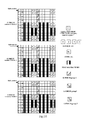
- E-PHICH groups may be determined as above, and referring to Fig.6 , for example, all of REs included in the sub-carriers at the location 1 among the respective PRB pairs may belong to an E-PHICH group 1, all of REs included in sub-carriers at the location 2 among the respective PRB pairs may belong to an E-PHICH group 2, and all of REs included in sub-carriers at the location 3 among the respective PRB pairs may belong to an E-PHICH group 3, wherein a part of the REs in one of the E-PHICH groups may or may not be reserved as reserved resources by way of an example here but without any limitation thereto.
- the REs for carrying legacy PDCCHs and reference signals need to be excluded from the respective E-PHICH groups above, wherein the so-called reference signals may be a CRS, a DMRS, a Channel State Information-Reference Signal (CSI-RS), etc.
- the so-called reference signals may be a CRS, a DMRS, a Channel State Information-Reference Signal (CSI-RS), etc.
- REs included in sub-carriers at different locations among the respective PRB pairs may belong to an E-PHICH group, for example, all of REs included in a sub-carrier at the location 1 in the first PRB pair, all of REs included in a sub-carrier at the location 2 in the second PRB pair, all of REs included in a sub-carrier at the location 3 in the third PRB pair and all of REs included in a sub-carrier at the location 4 in the fourth PRB pair belong to an E-PHICH group, and this embodiment has been described with reference to Fig.5 and Fig.6 by way of an example.
- a specified part of REs in sub-carriers at a specified location among the respective PRB pairs may belong to an E-PHICH group according to a scheduling condition of the user equipment.
- REs in the 3 rd , 4 th and 5 th OFDM symbols included in sub-carriers at the location 1 among the respective PRB pairs belong to an E-PHICH group.
- a plurality of E-PHICH groups may be determined as above, and referring to Fig.8 , for example, REs in the 3 rd , 4 th and 5 th OFDM symbols included in the sub-carriers at the location 1 among the respective PRB pairs belong to an E-PHICH group 1, REs in the 3 rd , 4 th and 5 th OFDM symbols included in sub-carriers at the location 2 among the respective PRB pairs belong to an E-PHICH group 2, REs in the 3 rd , 4 th and 5 th OFDM symbols included in sub-carriers at the location 3 among the respective PRB pairs belong to an E-PHICH group 3, REs in the 8 th , 9 th , 10 th , 11 th and 12 th OFDM symbols included in sub-carriers at the location 1 among the respective PRB pairs belong to an E-PHICH group 4, REs in the 8 th , 9 th , 10 th , 11 th and 12 th OFDM symbols included in
- the REs for carrying legacy PDCCHs and reference signals also need to be excluded from the respective E-PHICH groups above, wherein the so-called reference signals may be a CRS, a DMRS, a CSI-RS, etc.
- REs at specified locations included in sub-carriers at different locations among the respective PRB pairs may belong to an E-PHICH group.
- REs in the 8 th , 9 th , 10 th , 11 th and 12 th OFDM symbols included in a sub-carrier at the location 1 in the first PRB pair REs in the 8 th , 9 th , 10 th , 11 th and 12 th OFDM symbols included in a sub-carrier at the location 2 in the second PRB pair
- REs in the 8 th , 9 th , 10 th , 11 th and 12 th OFDM symbols included in a sub-carrier at the location 3 in the third PRB pair and REs in the 8 th , 9 th , 10 th , 11 th and 12 th OFDM symbols included in a sub-carrier at the location 4 in the fourth PRB pair belong to an E-PHICH group, and this embodiment has been described with reference to Fig.7 and Fig.8 by
- M REs in specified time domain and adjacent in frequency domain in each PRB pair, among the respective PRB pairs belong to an E-PHICH group, wherein M represents a pre-configured parameter.
- E-PHICH groups may be determined as above, and referring to Fig.10 , for example, REs in the 8 th OFDM symbols included in sub-carriers at the location 1, the location 2, the location 3 and the location 4 among the respective PRB pairs may belong to an E-PHICH group 1, REs in the 8 th OFDM symbols included in sub-carriers at the location 5, the location 6, the location 7 and the location 8 among the respective PRB pairs may belong to an E-PHICH group 2, and REs in the 8 th OFDM symbols included in sub-carriers at the location 9, the location 10, the location 11 and the location 12 among the respective PRB pairs may belong to an E-PHICH group 3.
- the REs for carrying legacy PDCCHs and reference signals also need to be excluded from the respective E-PHICH groups above, wherein the so-called reference signals may be a CRS, a DMRS, a CSI-RS, etc.
- the so-called reference signals may be a CRS, a DMRS, a CSI-RS, etc.
- Fig.11 illustrates division into E-PHICH groups in the case of two CRS antenna ports.
- the REs for carrying legacy PDCCHs and reference signals also need to be excluded from the respective E-PHICH groups above, wherein the so-called reference signals may be a CRS, a DMRS, a CSI-RS, etc.
- Step 330 The base station maps the ACK/NACK feedback information to be transmitted onto the corresponding E-PHICH groups and transmits the ACK/NACK feedback information to the user equipment. Specifically:
- the orthogonally spread modulation symbols are grouped in rows, and the respective groups of modulation symbols are mapped respectively onto REs belonging to the same E-PHICH group among the respective PRB pairs, for example, the respective groups of modulation symbols are mapped respectively onto REs included in sub-carriers at the location 1 in the PRB pairs corresponding to the E-PHICH resource block 1, REs included in sub-carriers at the location 1 in the PRB pairs corresponding to the E-PHICH resource block 2, REs included in sub-carriers at the location 1 in the PRB pairs corresponding to the E-PHICH resource block 3 and REs included in sub-carriers at the location 1 in the PRB pairs corresponding to the E-PHICH resource block 4, and naturally these REs do not include REs for carrying legacy PDCCHs and reference signals.
- the orthogonally spread modulation symbols are grouped in rows, and the respective groups of modulation symbols are mapped respectively onto REs belonging to the same E-PHICH group among the respective PRB pairs, for example, the respective groups of modulation symbols are mapped respectively onto REs in the 3 rd , 4 th and 5 th OFDM symbols included in sub-carriers at the location 1 in the PRB pairs corresponding to the E-PHICH resource block 1, REs in the 3 rd , 4 th and 5 th OFDM symbols included in sub-carriers at the location 1 in the PRB pairs corresponding to the E-PHICH resource block 2, REs in the 3 rd , 4 th and 5 th OFDM symbols included in sub-carriers at the location 1 in the PRB pairs corresponding to the E-PHICH resource block 3 and REs in the 3 rd , 4 th and 5 th OFDM symbols included in sub-carriers at the location 1 in the PRB pairs corresponding to the E-PHICH resource block 3 and REs in the
- the orthogonally spread modulation symbols are grouped in columns, and the respective groups of modulation symbols are mapped respectively onto REs belonging to the same E-PHICH group among the respective PRB pairs, for example, the respective groups of modulation symbols are mapped respectively onto REs in the 8 th OFDM symbols included in sub-carriers at the location 1, the location 2, the location 3 and the location 4 in the PRB pairs corresponding to the E-PHICH resource block 1, REs in the 8 th OFDM symbols included in sub-carriers at the location 5, the location 6, the location 7 and the location 8 in the PRB pairs corresponding to the E-PHICH resource block 2 and REs in the 8 th OFDM symbols included in sub-carriers at the location 9, the location 10, the location 11 and the location 12 in the PRB pairs corresponding to the E-PHICH resource block 3, and naturally these REs do not include REs for carrying legacy PDCCHs and reference signals.
- the base station can transmit the ACK/NACK feedback information in a transmission mode including a DMRS based single-port transmission mode and a DMRS based transmit diversity mode.
- Specific DMRS ports in use may be agreed on with the user equipment or may be notified to the user equipment via RRC signaling or a system broadcast message.
- the REs included in any one of the E-PHICH groups may carry transmission of 8 or 4 E-PHICHs, wherein different E-PHICHs may have the resources of the same E-PHICH group multiplexed through code division, and transmission of the same E-PHICH may be divided into a plurality of parts, different parts among which may occupy different time-frequency resources for transmission to achieve a diversity gain.
- the respective E-PHICHs are distinguished from each other by orthogonal sequences, so in the step 320, the base station further needs to determine orthogonal sequences for spreading according to the lowest PRB serial number and the cyclic shift of the uplink DMRS indicated in the PUSCH transmission grant and to notify the user equipment of the orthogonal sequences, and the user equipment determines the E-PHICH for receiving the ACK/NACK feedback information in the corresponding E-PHICH groups according to the obtained orthogonal sequences, particularly as in Formula 1 and Formula 2.
- This embodiment is focused on determination of the E-PHICH groups, so a description of details concerning the orthogonal sequences will be omitted here.
- a detailed flow in which a user equipment receives ACK/NACK feedback information based on E-PHICH according to an embodiment of the present invention is as follows:
- Step 1200 A user equipment determines time-frequency resources occupied by E-PHICH configured in a PDSCH region by the network side based on a notification of a base station.
- the user equipment may determine specific locations of PRB pairs occupied by the E-PHICH, or determine a starting location and the number of PRBs occupied by the E-PHICH, according to RRC signaling or a system broadcast message sent from the base station; or may obtain an E-PHICH resource configuration parameter according to RRC signaling or a system broadcast message sent from the base station and occupy a part of time-frequency resources in E-PDCCH according to the E-PHICH resource configuration parameter.
- Step 1210 The user equipment determines groups of E-PHICH resources, denoted as E-PHICH groups, for carrying ACK/NACK feedback information among the determined time-frequency resources occupied by the E-PHICH according to scheduling signaling of the base station.
- E-PHICH groups groups of E-PHICH resources, denoted as E-PHICH groups, for carrying ACK/NACK feedback information among the determined time-frequency resources occupied by the E-PHICH according to scheduling signaling of the base station.
- the user equipment may determine the E-PHICH resources for carrying the ACK/NACK feedback information among the time-frequency resources occupied by the E-PHICH according to a lowest PRB serial number and a cyclic shift of an uplink DMRS indicated in the scheduling signaling, and reference can be made to the Rel-10 for related operations thereof, so a repeated description thereof will be omitted here.
- the user equipment may perform the following operations in the step 810:
- Step 1220 The user equipment receives the ACK/NACK feedback information transmitted from the base station based on the determined E-PHICH groups. Specifically:
- orthogonally spread modulation symbols, for carrying the ACK/NACK feedback information, in the REs belonging to the same E-PHICH group among the respective PRB pairs are combined, wherein referring to Fig.9 to Fig.10 , the above orthogonally spread modulation symbols for carrying the ACK/NACK feedback information may be combined in rows or columns.
- the orthogonally spread modulation symbols for carrying the ACK/NACK feedback information are de-spread orthogonally and demodulated into simply encoded ACK/NACK feedback information;
- the REs included in any one of the E-PHICH groups may carry transmission of 8 or 4 E-PHICHs, wherein different E-PHICHs may have the resources of the same E-PHICH group multiplexed through code division, and transmission of the same E-PHICH may be divided into a plurality of parts, different parts among which may occupy different time-frequency resources for transmission to achieve a diversity gain.
- the respective E-PHICHs are distinguished from each other by orthogonal sequences, so in the step 320, the user equipment further needs to determine orthogonal sequences used by the base station according to the lowest PRB serial number and the cyclic shift of the uplink DMRS indicated in the scheduling signaling and determines the E-PHICH for receiving the ACK/NACK feedback information in the corresponding E-PHICH group according to the determined orthogonal sequences, particularly as in Formula 1 and Formula 2.
- This embodiment is focused on determination of the E-PHICH groups, so a description of details concerning the orthogonal sequences will be omitted here.
- the user equipment may receive the ACK/NACK feedback information in a transmission mode including a DMRS based single-port transmission mode and a DMRS based transmit diversity mode.
- Specific DMRS ports in use may be agreed on with the base station or may be determined according to RRC signaling or a system broadcast message sent from the base station.
- a device for feedback information transmission based on an enhanced Physical Hybrid Automatic Repeat Request (HARQ) Indicator Channel (PHICH) includes a communication component 130, a first processing component 131 and a second processing component 132.
- HARQ Physical Hybrid Automatic Repeat Request
- PHICH Physical Hybrid Automatic Repeat Request
- the first processing component 131 is configured to determine time-frequency resources occupied by an enhanced PHICH configured in a PDSCH region by the network side and to notify a user equipment of the determined time-frequency resources occupied by the E-PHICH;
- the second processing component 132 is configured to determine E-PHICH groups for carrying ACK/NACK feedback information among the time-frequency resources occupied by the E-PHICH according to a scheduling condition of the user equipment;
- the communication component 130 is configured to map the ACK/NACK feedback information to be transmitted onto the E-PHICH groups and to transmit the ACK/NACK feedback information to the user equipment.
- the first processing component 131 configured to notify the user equipment of the determined time-frequency resources occupied by the E-PHICH is further configured to:
- the second processing component 132 configured to determine the E-PHICH groups for carrying the ACK/NACK feedback information among the time-frequency resources occupied by the E-PHICH according to the scheduling condition of the user equipment is further configured to:
- the second processing component 132 excludes REs for carrying legacy control information and reference signals from the respective REs belonging to the same E-PHICH group.
- the communication component 130 configured to map the ACK/NACK information to be transmitted onto the E-PHICH groups is further configured to:
- the communication component 130 configured to map the orthogonally spread modulation symbols respectively into the E-PHICH groups is further configured to:
- the communication component 130 is configured to transmit the ACK/NACK feedback information in a DMRS based single-port transmission mode or a DMRS based transmit diversity mode.
- a device for feedback information transmission based on an enhanced Physical Hybrid Automatic Repeat Request (HARQ) Indicator Channel (PHICH) includes a communication component 140, a first control component 141 and a second control component 142.
- HARQ Physical Hybrid Automatic Repeat Request
- PHICH Physical Hybrid Automatic Repeat Request
- the first control component 141 is configured to determine time-frequency resources occupied by E-PHICH configured in a PDSCH region by a network side based on a notification of a base station;
- the second control component 142 is configured to determine E-PHICH groups for carrying ACK/NACK feedback information among the time-frequency resources occupied by the E-PHICH according to scheduling signaling of the base station;
- the communication component 140 is configured to receive the ACK/NACK feedback information transmitted from the base station based on the determined E-PHICH groups.
- the first control component 141 configured to determine time-frequency resources occupied by E-PHICH configured in the PDSCH region by the network side based on the notification of the base station is further configured to:
- the second control component 142 configured to determine the E-PHICH groups for carrying the ACK/NACK feedback information among the time-frequency resources occupied by the E-PHICH according to the scheduling signaling of the base station is further configured to:
- the second control component 142 excludes REs for carrying legacy control information and reference signals from the respective REs belonging to the same E-PHICH group.
- the communication component 140 configured to receive the ACK/NACK feedback information transmitted from the base station based on the determined E-PHICH groups is further configured to:
- the orthogonally spread modulation symbols, for carrying the ACK/NACK feedback information, in the E-PHICH groups are de-mapped as follows:
- the orthogonally spread modulation symbols, for carrying the ACK/NACK feedback information, in the REs belonging to the same E-PHICH group among the respective PRB pairs are combined, wherein the orthogonally spread modulation symbols for carrying the ACK/NACK feedback information are combined in rows or columns.
- the communication component 140 is configured to receive the ACK/NACK feedback information in a DMRS based single-port transmission mode or a DMRS based transmit diversity mode.
- an embodiment of the present invention proposes a novel method for E-PHICH transmission based upon FDM, that is, ACK/NACK feedback information is carried over E-PHICH resources configured in a PDSCH region, so that on one hand, the issue of unavailable transmission of PHICHs in some scenarios, e.g., in an ABS sub-frame of eICIC and an extended carrier to be possibly defined subsequently, can be addressed; and on the other hand, the overhead of signaling can be saved and the utilization ratio of resources can be improved, for example, retransmission of a PUSCH scheduled by the system in the DCI format 0 is avoided, to achieve the effects of improving a capacity of PHICHs and addressing a legacy PHICH resource confliction.
Landscapes
- Engineering & Computer Science (AREA)
- Signal Processing (AREA)
- Computer Networks & Wireless Communication (AREA)
- Mobile Radio Communication Systems (AREA)
Abstract
Description
- This application claims priority to Chinese Patent Application No.
201110452537.8 - The present invention relates to the field of communication and particularly to a method and a device for feedback information transmission based on an enhanced PHICH.
- At present a Physical Hybrid Automatic Repeat Request (HARQ) Indicator Channel (PHICH) in a Long Term Evolution (LTE) Release 10 (Rel-10) system is relevantly defined as follows:
- A PHICH is configured to carry Acknowledgement/Non-Acknowledgement (ACK/NACK) feedback information of an uplink service. A resource location of the PHICH is typically indicated by a parameter pair


- The PHICH group conceptually refers to a set of Resource Elements (REs) in which 8 PHICHs can be transmitted and the PHICHs are respectively distinguished from each other by orthogonal sequences. There are 8 orthogonal sequences in case of normal Cyclic Prefix (CP), and then there are 8 PHICHs in one PHICH group; and there are 4 orthogonal sequences in case of extended Cyclic Prefix (CP), and then there are 4 PHICHs in one PHICH group.
- Typically the number of PHICH groups in the LTE Rel-10 system can be determined as follows:
- In a Frequency Division Duplexing (FDD) system, the number of PHICH groups is fixed in all of sub-frames and determined by
Formula 1 below:
- Wherein


- In a Time Division Duplexing (TDD) system, the number of PHICH groups may vary in respective downlink sub-frames and be given by


above Formula 1, and the serial number of the index

Table 1 (A definition of factor mi ) Uplink-downlink configuration Sub-frame number i 0 1 2 3 4 5 6 7 8 0 2 1 - - - 2 1 - - 1 0 1 - - 1 0 1 - - 2 0 0 - 1 0 0 0 - 1 3 1 0 - - - 0 0 0 1 4 0 0 - - 0 0 0 0 1 5 0 0 - 0 0 0 0 0 1 6 1 1 - - - 1 1 - - - Typically network side maps PHICHs onto Resource Element Group (REG) in a control region where Physical Downlink Control Channel (PDCCH) is located, and the REG is unused by Physical Control Format Indicator Channel (PCFICH) and Cell-Specific Reference Signal (CRS), a duration time of the mapping in time domain can be configured and broadcast by the system. Referring to
Fig.1 , in a case of a normal PHICH time domain resource configuration (i.e., a Normal PHICH Duration), PHICHs are mapped onto a first Orthogonal Frequency Division Multiplexing (OFDM) symbol of a downlink sub-frame to support a scenario with a smaller number of users and a small coverage; while in a case of an extended PHICH time domain resource configuration, each PHICH group can be mapped onto the first 3 OFDM symbols of a downlink sub-frame; and in an especial case, each PHICH group can be mapped onto the first 2 OFDM symbols in a Multimedia Broadcast multicast service Single Frequency Network (MBSFN) sub-frame and TD-SCDMA Long Term Evolution (TD-LTE)sub-frames - 3 REGs occupied in the control region by one PHICH group are distributed differently in time and frequency domains for the purpose of maximizing time and frequency diversity gains. As illustrated in
Fig.1, Fig.1 illustrates a schematic diagram of mapping resources of one PHICH group and shows that time-frequency resources occupied by one PHICH group are related to the number of REGs, a cell ID, the serial number of the PHICH group, specific serial numbers of OFDM symbols, etc. - Correspondingly, for a User Equipment (UE), when the UE transmits uplink data based on Physical Uplink Shared Channel (PUSCH), ACK/NACK feedback information corresponding to the uplink data is transmitted by the network side to the UE based on a PHICH in a downlink sub-frame, wherein considering a PUSCH transmitted in a sub-frame n, the UE receives a corresponding PHICH in a sub-frame n +kPHICH, and for a FDD system, kPHICH = 4 and for the TDD system, kPHICH is determined through configuration information depicted in Table 2:
Table 2 (A kPHICH configuration of a TDD system) TDD UL sub-frame index n UL/DL Configuration 0 1 2 3 4 5 6 7 8 9 0 4 7 6 4 7 6 1 4 6 4 6 2 6 6 3 6 6 6 4 6 6 5 6 6 6 4 6 6 4 7 - A specific location of a time-frequency resource occupied in a downlink sub-frame by a PHICH is decided jointly by a lowest PRB serial number among PHICH resources indicated by scheduling signaling carried in Downlink Control Information (DCI) transmitted in the format 0 on PDCCH and a De-Modulation Reference Signal (DMRS) indicated by 3 bits in a PUSCH transmission grant indicating a lowest Physical Resource Block (PRB) serial number among resources allocated in rows and a cyclic shift of an uplink DMRS indicated by 3 bits.
- A specific location of a time-frequency resource occupied by a PHICH is identified by a pair of parameters


- Wherein NDMRS represents the value of a cyclic shift of a DMRS used in PUSCH corresponding to a PHICH and indicated by cyclic shift information in a DMRS field in the DCI format 0 (i.e., DCI in the format 0), and the specific mapping relationship is illustrated in Table 3.
Table 3 (Mapping relationship between nDMRS and a cyclic shift for a DMRS field in the DCI format 0) Cyclic Shift for DMRS Field in DCI format 0 in [4] nDMRS 000 0 001 1 010 2 011 3 100 4 101 5 110 6 111 7 - Referring to a PUSCH transmitted in a sub-frame n, if there is no corresponding uplink scheduling instruction in the DCI format 0 or transmission of the PUSCH is scheduled by a random access response, nDMRS is set to 0;


- The foregoing relevant definition of a PHICH is currently applicable only to the LTE-Rel-10 system. A traditional method of providing an access with use of the single-layer coverage by a macro base station has failed to satisfy a user demand along with an increasingly growing data rate and demand for service load. Thus it is typical at present to address the foregoing issue by a hierarchical coverage, for example, some low-power base stations, e.g., a Home eNodeB/a pico base station/a femto base station/a relay base station, etc., are deployed in a hotspot area or indoors. Such a low-power base station is a base station device applied in a home indoor environment, an office environment or other hotspot small-coverage environment to enable an operator to provide an appealing service at a higher data rate and a lower cost. However the femto base station limits the accessing member users to a certain degree and is inaccessible to a non-member user, and if the non-member user enters the coverage area of the base station, then it may enter a coverage hole due to a stronger signal of the low-power base station and consequentially cannot operate. Moreover the pico base station at the same frequency as the macro base station may also generate strong interference and consequentially cannot operate. In order to address such interference, an existing practice is to set an Almost Blank Subframe (ABS), so that the base station transmits signals less frequently in the ABS so as to reduce interference to an adjacent cell, to perform Inter-Cell Interference Coordination (ICIC) through Time Division Multiple (TDM).
- However in the existing TDM ICIC mechanism, the interfering base station configured with the ABS will not transmit any control information in the ABS in order to avoid interferences, so transmission of a PHICH in the control region may be limited due to the introduced ABS mechanism.
- On the other hand, the definition of an extended carrier may be introduced to the LTE Rel-11 system, that is, a PDCCH control region supported in the LTE Rel-10 system is not included in an extended carrier, but a PUSCH can be scheduled in an extended carrier, and thus other compatible component carriers are scheduled through cross-carrier scheduling on one hand, and transmission of an enhanced PDCCH can be newly defined over an extended carrier on the other hand, wherein a PDSCH transmission region is occupied for transmission of an enhanced PDCCH. Thus limited transmission of a PHICH in the control region may also arise in the latter case.
- In the prior art, a method to address the issue of limited transmission of a PHICH is to adopt scheduling signaling in the DCI format 0 for the system instead of a PHICH to notify the UE whether to retransmit a PUSCH, but this method may result in an extra overhead of system signaling and a consequential increase in operation load of the system, thus degrading the performance of the system.
- Embodiments of the present invention provide a method and a device for feedback information transmission based on PHICH so as to address the issue of limited transmission of PHICHs without any increase in the overhead of system signaling.
- Specific technical solutions provided by the embodiments of the present invention are as follows:
- A method for feedback information transmission based on an enhanced PHICH, which includes:
- determining time-frequency resources occupied by the enhanced PHICH configured in a PDSCH region by a network side;
- notifying a user equipment of the determined time-frequency resources occupied by the enhanced PHICH;
- determining groups of enhanced PHICH resources for carrying ACK/NACK feedback information among the time-frequency resources occupied by the enhanced PHICH according to a scheduling condition of the user equipment; and
- mapping the ACK/NACK feedback information to be transmitted onto the groups of enhanced PHICH resources and transmitting the ACK/NACK feedback information to the user equipment.
- A method for feedback information transmission based on an enhanced PHICH, which includes:
- determining time-frequency resources occupied by the enhanced PHICH configured in a PDSCH region by a network side based on a notification of a base station;
- determining groups of enhanced PHICH resources for carrying ACK/NACK feedback information among the time-frequency resources occupied by the enhanced PHICH according to scheduling signaling of the base station; and
- receiving the ACK/NACK feedback information transmitted from the base station based on the determined groups of enhanced PHICH resources.
- A device for feedback information transmission based on an enhanced PHICH, which includes:
- a first processing component configured to determine time-frequency resources occupied by the enhanced PHICH configured in a Physical Downlink Shared Channel (PDSCH) region by a network side and to notify a user equipment of the determined time-frequency resources occupied by the enhanced PHICH;
- a second processing component configured to determine groups of enhanced PHICH resources for carrying ACK/NACK feedback information among the time-frequency resources occupied by the enhanced PHICH according to a scheduling condition of the user equipment; and
- a communication component configured to map the ACK/NACK feedback information to be transmitted onto the groups of enhanced PHICH resources and to transmit the ACK/NACK feedback information to the user equipment.
- A device for feedback information transmission based on an enhanced PHICH, which includes:
- a first control component configured to determine time-frequency resources occupied by the enhanced PHICH configured in a Physical Downlink Shared Channel (PDSCH) region by a network side based on a notification of a base station;
- a second control component configured to determine groups of enhanced PHICH resources for carrying ACK/NACK feedback information among the time-frequency resources occupied by the enhanced PHICH according to scheduling signaling of the base station; and
- a communication component configured to receive the ACK/NACK feedback information transmitted from the base station based on the determined groups of enhanced PHICH resources.
- In the embodiments of the present invention, a novel method for E-PHICH transmission based upon FDM is proposed, that is, ACK/NACK feedback information is carried over E-PHICH resources configured in a PDSCH region, so that on one hand, the issue of unavailable transmission of PHICHs in some scenarios, e.g., in an ABS sub-frame of eICIC and an extended carrier to be possibly defined subsequently, can be addressed; and on the other hand, the overhead of signaling can be saved and the utilization ratio of resources can be improved, for example, retransmission of a PUSCH scheduled by the system in the DCI format 0 is avoided, to achieve the effects of improving a capacity of PHICHs and addressing a legacy PHICH resource confliction.
-
-
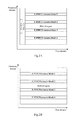
Fig.1 is a schematic diagram of resources occupied in a legacy PDCCH region by PHICHs in the prior art; -
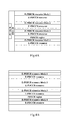
Fig.2A and Fig.2B are schematic diagrams of E-PHICH transmission method according to embodiments of the invention; -
Fig.3 is a flow chart of a base station transmitting ACK/NACK feedback information based on E-PHICH according to an embodiment of the invention; -
Fig.4A and Fig.4B are schematic diagrams of E-PHICH resource occupying methods according to embodiments of the invention; -
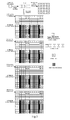
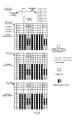
Fig.5 to Fig.11 are schematic diagrams of division into E-PHICH groups according to embodiments of the invention; -
Fig.12 is a flow chart of a user equipment receiving ACK/NACK feedback information based on E-PHICH according to an embodiment of the invention; -
Fig.13 is a schematic functional structural diagram of a base station according to an embodiment of the invention; and -
Fig.14 is a schematic functional structural diagram of a user equipment according to an embodiment of the invention. - In order to address the issue of limited transmission of PHICHs without any increase in overhead of system signaling, in an embodiment of the present invention, a transmission region of PHICHs is transferred from a legacy Physical Downlink Control Channel (PDCCH) region (also referred to as a control region) to a Physical Downlink Shared Channel (PDSCH) region, and ACK/NACK feedback information is transmitted based on enhanced PHICH resources (denoted as E-PHICH) configured in the PDSCH region.
- Referring to
Fig.2A and Fig.2B , for example, a system can transmit ACK/NACK feedback information through E-PHICH resource blocks configured in a PDSCH region over compatible carriers and only transmit PCFICH in the PDCCH region; or the system can transmit ACK/NACK feedback information through E-PHICH resource blocks configured in a PDSCH region over extended carriers. - ACK/NACK feedback information can be transmitted based on E-PHICH resources through multiplexed transmission including one or any combination of Time Division Multiplexing (TDM), Frequency Division Multiplexing (FDM) and Code Division Multiplexing (CDM).
- Preferred embodiments of the present invention will be detailed below with reference to the drawings.
- Referring to
Fig.3 , a detailed flow in which a base station transmits ACK/NACK feedback information based on E-PHICH according to an embodiment of the present invention is as follows: - Step 300: A base station determines time-frequency resources occupied by E-PHICH configured in a PDSCH region by the network side.
- The time-frequency resources occupied by the E-PHICH may be some combinations of transmission resources discontinuous in time domain or/and frequency domain. Referring to
Fig.2A and Fig.2B , for example, the time-frequency resources occupied by the E-PHICH are anE-PHICH resource block 1, anE-PHICH resource block 2, anE-PHICH resource block 3 and anE-PHICH resource block 4 in the PDSCH region, where the size of each E-PHICH resource block may be one sub-carrier or a combination of a plurality of continuous sub-carriers or a plurality of PRB pairs or a combination of a plurality of REs. - Step 301: The base station notifies a user equipment of the determined time-frequency resources occupied by the E-PHICH.
- The
step 310 may be performed in the following two implementations but will not be limited thereto: - In a first implementation, the user equipment is notified of the determined time-frequency resources occupied by the E-PHICH via dedicated signaling.
- For example, the user equipment is notified of specific locations of PRB pairs occupied by the E-PHICH via Radio Resource Control (RRC) signaling or a system broadcast message.
- In another example, the user equipment is notified of a starting location of PRB pairs occupied by the E-PHICH and the number of occupied PRB pairs via RRC signaling or a broadcast message, wherein the PRB pairs occupied by the E-PHICH are distributed uniformly throughout a downlink system bandwidth as a plurality of resource blocks, particularly as follows:
- 1. The user equipment is directly notified of the a starting location of the PRB pairs occupied by the E-PHICH and the number of occupied PRB pairs via RRC signaling or a system broadcast message.
- 2. The user equipment is notified of the starting location of the PRB pairs occupied by the E-PHICH, and the use equipment is instructed to determine the number of PRB pairs occupied by the E-PHICH as agreed on with the network side, via RRC signaling or a system broadcast message, wherein an association relationship between the number of PRB pairs occupied by the E-PHICH and the downlink system bandwidth may be agreed on.
- 3. The user equipment is instructed to calculate the starting location of the PRB pairs occupied by the E-PHICH based on a cell identifier (ID) and a system bandwidth, and to determine an agreed-on association relationship between the number of PRB pairs occupied by the E-PHICH and the downlink system bandwidth as agreed on with the network side, via RRC signaling or a system broadcast message.
- In a second implementation, the user equipment is notified of an E-PHICH resource configuration parameter via RRC signaling or a system broadcast message so that the user equipment occupies a part of time-frequency resources in E-PDCCH (enhanced PDCCH) (i.e., PRB pairs) according to the E-PHICH resource configuration parameter.
- Referring to
Fig.4A and Fig.4B , in a practical application, the E-PDCCH may be transmitted by occupying the time-frequency resources in the PDSCH region, and the E-PHICH may use a part of the time-frequency resources occupied by the E-PDCCH, wherein typically the network side firstly calculates the resources reserved for the E-PHICH, and the remaining time-frequency resources may be used for the transmission of the E-PDCCH. - In this embodiment, when the E-PHICH uses a part of the time-frequency resources occupied by the E-PDCCH, the time-frequency resources used by the E-PHICH can still be reserved in a similar reservation way as the PHICH resources in the Rel-10, that is, the size of the time-frequency resources reserved for the E-PHICH (including specific locations of PRB pairs, or a starting location and the number of PRB pairs) is determined by an E-PHICH resource configuration related parameter (e.g., a PHICH configuration parameter Ng in the Rel-10), possibly still as done in the Rel-10, wherein the user equipment may be notified of the E-PHICH resource configuration related parameter via RRC signaling or a system broadcast message.
- Step 320: The base station determines groups of E-PHICH resources, denoted as E-PHICH groups, for carrying ACK/NACK feedback information among the time-frequency resources occupied by the E-PHICH according to a scheduling condition of the user equipment.
- In the
step 320, the base station may determine E-PHICH resources for carrying the ACK/NACK feedback information among the time-frequency resources occupied by the E-PHICH according to a lowest PRB pair serial number and a cyclic shift of an uplink DMRS indicated in a PUSCH transmission grant, and reference can be made to the Rel-10 for relative operations thereof, so a repeated description thereof will be omitted here. - On the other hand, in the
step 320, the base station may determine the E-PHICH groups for carrying the ACK/NACK feedback information in the following operations: - Firstly, each PRB pair included in the time-frequency resources occupied by the E-PHICH is determined;
- Referring to
Fig.5 , for example, given a normal CP, the time-frequency resources occupied by the E-PHICH include 4 PRB pairs (each of which corresponds to an E-PHICH resource block), and a PRB pair is represented as a 14 X 12 square with the ordinate representing the frequency domain in a unit of a sub-carrier and the abscissa representing the time domain in a unit of an OFDM symbol, wherein legacy Physical Downlink Control Channel (PDCCH) Resource Elements (REs) are carried in first two OFDM symbols. - Secondly division into the E-PHICH groups may be performed in one of the following three schemes:
- In a first scheme, all of REs included in sub-carriers at a specified location among the respective PRB pairs belong to an E-PHICH group according to a scheduling condition of the user equipment.
- Referring to
Fig.5 , for example, all of REs included in sub-carriers at thelocation 1 among the respective PRB pairs belong to an E-PHICH group. - Furthermore a plurality of E-PHICH groups may be determined as above, and referring to
Fig.6 , for example, all of REs included in the sub-carriers at thelocation 1 among the respective PRB pairs may belong to anE-PHICH group 1, all of REs included in sub-carriers at thelocation 2 among the respective PRB pairs may belong to anE-PHICH group 2, and all of REs included in sub-carriers at thelocation 3 among the respective PRB pairs may belong to anE-PHICH group 3, wherein a part of the REs in one of the E-PHICH groups may or may not be reserved as reserved resources by way of an example here but without any limitation thereto. - Preferably the REs for carrying legacy PDCCHs and reference signals need to be excluded from the respective E-PHICH groups above, wherein the so-called reference signals may be a CRS, a DMRS, a Channel State Information-Reference Signal (CSI-RS), etc.
- Naturally all of REs included in sub-carriers at different locations among the respective PRB pairs may belong to an E-PHICH group, for example, all of REs included in a sub-carrier at the
location 1 in the first PRB pair, all of REs included in a sub-carrier at thelocation 2 in the second PRB pair, all of REs included in a sub-carrier at thelocation 3 in the third PRB pair and all of REs included in a sub-carrier at thelocation 4 in the fourth PRB pair belong to an E-PHICH group, and this embodiment has been described with reference toFig.5 andFig.6 by way of an example. - In a second scheme, a specified part of REs in sub-carriers at a specified location among the respective PRB pairs may belong to an E-PHICH group according to a scheduling condition of the user equipment.
- Referring to
Fig.7 , for example, REs in the 3rd, 4th and 5th OFDM symbols included in sub-carriers at thelocation 1 among the respective PRB pairs belong to an E-PHICH group. - Furthermore, a plurality of E-PHICH groups may be determined as above, and referring to
Fig.8 , for example, REs in the 3rd, 4th and 5th OFDM symbols included in the sub-carriers at thelocation 1 among the respective PRB pairs belong to anE-PHICH group 1, REs in the 3rd, 4th and 5th OFDM symbols included in sub-carriers at thelocation 2 among the respective PRB pairs belong to anE-PHICH group 2, REs in the 3rd, 4th and 5th OFDM symbols included in sub-carriers at thelocation 3 among the respective PRB pairs belong to anE-PHICH group 3, REs in the 8th, 9th, 10th, 11th and 12th OFDM symbols included in sub-carriers at thelocation 1 among the respective PRB pairs belong to anE-PHICH group 4, REs in the 8th, 9th, 10th, 11th and 12th OFDM symbols included in sub-carriers at thelocation 2 among the respective PRB pairs belong to an E-PHICH group 5, and REs in the 8th, 9th, 10th, 11th and 12th OFDM symbols included in sub-carriers at thelocation 1 among the respective PRB pairs belong to anE-PHICH group 6. - Preferably the REs for carrying legacy PDCCHs and reference signals also need to be excluded from the respective E-PHICH groups above, wherein the so-called reference signals may be a CRS, a DMRS, a CSI-RS, etc.
- Naturally, REs at specified locations included in sub-carriers at different locations among the respective PRB pairs may belong to an E-PHICH group. For example, REs in the 8th, 9th, 10th, 11th and 12th OFDM symbols included in a sub-carrier at the
location 1 in the first PRB pair, REs in the 8th, 9th, 10th, 11th and 12th OFDM symbols included in a sub-carrier at thelocation 2 in the second PRB pair, REs in the 8th, 9th, 10th, 11th and 12th OFDM symbols included in a sub-carrier at thelocation 3 in the third PRB pair and REs in the 8th, 9th, 10th, 11th and 12th OFDM symbols included in a sub-carrier at thelocation 4 in the fourth PRB pair belong to an E-PHICH group, and this embodiment has been described with reference toFig.7 andFig.8 by way of an example. - In a third implementation, M REs in specified time domain and adjacent in frequency domain in each PRB pair, among the respective PRB pairs, belong to an E-PHICH group, wherein M represents a pre-configured parameter.
- During the division of the E-PHICH groups, OFDM symbols adjacent to a DMRS in time domain may be occupied firstly. For example, if M=4, then referring to
Fig.9 , REs in the 8th OFDM symbols included in sub-carriers at thelocation 1, thelocation 2, thelocation 3 and thelocation 4 among the respective PRB pairs belong to an E-PHICH group. - Furthermore a plurality of E-PHICH groups may be determined as above, and referring to
Fig.10 , for example, REs in the 8th OFDM symbols included in sub-carriers at thelocation 1, thelocation 2, thelocation 3 and thelocation 4 among the respective PRB pairs may belong to anE-PHICH group 1, REs in the 8th OFDM symbols included in sub-carriers at the location 5, thelocation 6, thelocation 7 and the location 8 among the respective PRB pairs may belong to anE-PHICH group 2, and REs in the 8th OFDM symbols included in sub-carriers at the location 9, the location 10, thelocation 11 and the location 12 among the respective PRB pairs may belong to anE-PHICH group 3. - Preferably, the REs for carrying legacy PDCCHs and reference signals also need to be excluded from the respective E-PHICH groups above, wherein the so-called reference signals may be a CRS, a DMRS, a CSI-RS, etc. Referring to
Fig.11 , for example,Fig.11 illustrates division into E-PHICH groups in the case of two CRS antenna ports. - Preferably, the REs for carrying legacy PDCCHs and reference signals also need to be excluded from the respective E-PHICH groups above, wherein the so-called reference signals may be a CRS, a DMRS, a CSI-RS, etc.
- Step 330: The base station maps the ACK/NACK feedback information to be transmitted onto the corresponding E-PHICH groups and transmits the ACK/NACK feedback information to the user equipment.
Specifically: - A. The ACK/NACK feedback information to be transmitted is simply encoded.
For example, 1-bit ACK/NACK feedback information is simply encoded into N bits, possibly through repeated encoding or sequential encoding or in another encoding scheme, wherein N is a pre-configured parameter or may be a parameter as a result of rate matching according to available time-frequency resources.
Examples of the simply encoded ACK/NACK feedback information are as follows:- Example 1: ACK: 111..., and NACK: 000...
- Example 2: ACK: 1010..., and NACK: 0101...
- B. The simply encoded ACK/NACK feedback information is Binary Phase Shift Keying (BPSK) modulated into modulation symbols which are orthogonally spread bit by bit, preferably by a spreading factor of 4 and still using an orthogonal spreading sequence of a PHICH in the Rel-10.
- C. The orthogonally spread modulation symbols are mapped respectively into the corresponding E-PHICH groups.
- Referring to
Fig.5 , for example, the orthogonally spread modulation symbols are grouped in rows, and the respective groups of modulation symbols are mapped respectively onto REs belonging to the same E-PHICH group among the respective PRB pairs, for example, the respective groups of modulation symbols are mapped respectively onto REs included in sub-carriers at thelocation 1 in the PRB pairs corresponding to theE-PHICH resource block 1, REs included in sub-carriers at thelocation 1 in the PRB pairs corresponding to theE-PHICH resource block 2, REs included in sub-carriers at thelocation 1 in the PRB pairs corresponding to theE-PHICH resource block 3 and REs included in sub-carriers at thelocation 1 in the PRB pairs corresponding to theE-PHICH resource block 4, and naturally these REs do not include REs for carrying legacy PDCCHs and reference signals. - In another example, referring to
Fig.7 , the orthogonally spread modulation symbols are grouped in rows, and the respective groups of modulation symbols are mapped respectively onto REs belonging to the same E-PHICH group among the respective PRB pairs, for example, the respective groups of modulation symbols are mapped respectively onto REs in the 3rd, 4th and 5th OFDM symbols included in sub-carriers at thelocation 1 in the PRB pairs corresponding to theE-PHICH resource block 1, REs in the 3rd, 4th and 5th OFDM symbols included in sub-carriers at thelocation 1 in the PRB pairs corresponding to theE-PHICH resource block 2, REs in the 3rd, 4th and 5th OFDM symbols included in sub-carriers at thelocation 1 in the PRB pairs corresponding to theE-PHICH resource block 3 and REs in the 3rd, 4th and 5th OFDM symbols included in sub-carriers at thelocation 1 in the PRB pairs corresponding to theE-PHICH resource block 4, and naturally these REs do not include REs for carrying legacy PDCCHs and reference signals. - In another example, referring to
Fig.9 , the orthogonally spread modulation symbols are grouped in columns, and the respective groups of modulation symbols are mapped respectively onto REs belonging to the same E-PHICH group among the respective PRB pairs, for example, the respective groups of modulation symbols are mapped respectively onto REs in the 8th OFDM symbols included in sub-carriers at thelocation 1, thelocation 2, thelocation 3 and thelocation 4 in the PRB pairs corresponding to theE-PHICH resource block 1, REs in the 8th OFDM symbols included in sub-carriers at the location 5, thelocation 6, thelocation 7 and the location 8 in the PRB pairs corresponding to theE-PHICH resource block 2 and REs in the 8th OFDM symbols included in sub-carriers at the location 9, the location 10, thelocation 11 and the location 12 in the PRB pairs corresponding to theE-PHICH resource block 3, and naturally these REs do not include REs for carrying legacy PDCCHs and reference signals. - Based upon the foregoing embodiments, the base station can transmit the ACK/NACK feedback information in a transmission mode including a DMRS based single-port transmission mode and a DMRS based transmit diversity mode. Specific DMRS ports in use may be agreed on with the user equipment or may be notified to the user equipment via RRC signaling or a system broadcast message.
- In the foregoing embodiments, the REs included in any one of the E-PHICH groups may carry transmission of 8 or 4 E-PHICHs, wherein different E-PHICHs may have the resources of the same E-PHICH group multiplexed through code division, and transmission of the same E-PHICH may be divided into a plurality of parts, different parts among which may occupy different time-frequency resources for transmission to achieve a diversity gain. The respective E-PHICHs are distinguished from each other by orthogonal sequences, so in the
step 320, the base station further needs to determine orthogonal sequences for spreading according to the lowest PRB serial number and the cyclic shift of the uplink DMRS indicated in the PUSCH transmission grant and to notify the user equipment of the orthogonal sequences, and the user equipment determines the E-PHICH for receiving the ACK/NACK feedback information in the corresponding E-PHICH groups according to the obtained orthogonal sequences, particularly as inFormula 1 andFormula 2. This embodiment is focused on determination of the E-PHICH groups, so a description of details concerning the orthogonal sequences will be omitted here. - In correspondence to the foregoing embodiments, referring to
Fig.12 , a detailed flow in which a user equipment receives ACK/NACK feedback information based on E-PHICH according to an embodiment of the present invention is as follows: - Step 1200: A user equipment determines time-frequency resources occupied by E-PHICH configured in a PDSCH region by the network side based on a notification of a base station.
- Like the
step 310, in the step 800, the user equipment may determine specific locations of PRB pairs occupied by the E-PHICH, or determine a starting location and the number of PRBs occupied by the E-PHICH, according to RRC signaling or a system broadcast message sent from the base station; or may obtain an E-PHICH resource configuration parameter according to RRC signaling or a system broadcast message sent from the base station and occupy a part of time-frequency resources in E-PDCCH according to the E-PHICH resource configuration parameter. - Step 1210: The user equipment determines groups of E-PHICH resources, denoted as E-PHICH groups, for carrying ACK/NACK feedback information among the determined time-frequency resources occupied by the E-PHICH according to scheduling signaling of the base station.
- In the step 810, the user equipment may determine the E-PHICH resources for carrying the ACK/NACK feedback information among the time-frequency resources occupied by the E-PHICH according to a lowest PRB serial number and a cyclic shift of an uplink DMRS indicated in the scheduling signaling, and reference can be made to the Rel-10 for related operations thereof, so a repeated description thereof will be omitted here.
- On the other hand, the user equipment may perform the following operations in the step 810:
- Firstly each PRB pair included in the time-frequency resources occupied by the E-PHICH is determined; and
- Secondly, according to the scheduling signaling of the base station, all of Resource Elements (REs) included in sub-carriers at a specified location among the respective PRB pairs belong to an enhanced PHICH group; or a specified part of REs in sub-carriers at a specified location among the respective PRB pairs belong to an enhanced PHICH group; or M REs in specified time domain and adjacent in frequency domain in each PRB pair, among the respective PRB pairs, belong to an enhanced PHICH group. Preferably, when the respective E-PHICH groups are determined, REs for carrying legacy PDCCHs and reference signals are excluded from the respective REs belong to the same E-PHICH group; and reference can be made to
Fig.5 .Fig.7 andFig.9 for details thereof, so a repeated description thereof will be omitted here. - Step 1220: The user equipment receives the ACK/NACK feedback information transmitted from the base station based on the determined E-PHICH groups.
Specifically: - Firstly, orthogonally spread modulation symbols, for carrying the ACK/NACK feedback information, in the determined E-PHICH groups are de-mapped;
- For example, orthogonally spread modulation symbols, for carrying the ACK/NACK feedback information, in the REs belonging to the same E-PHICH group among the respective PRB pairs are combined, wherein referring to
Fig.9 to Fig.10 , the above orthogonally spread modulation symbols for carrying the ACK/NACK feedback information may be combined in rows or columns. - Secondly, the orthogonally spread modulation symbols for carrying the ACK/NACK feedback information are de-spread orthogonally and demodulated into simply encoded ACK/NACK feedback information; and
- Finally, the simply encoded ACK/NACK feedback information is decoded into the ACK/NACK feedback information.
- In a practical application, the REs included in any one of the E-PHICH groups may carry transmission of 8 or 4 E-PHICHs, wherein different E-PHICHs may have the resources of the same E-PHICH group multiplexed through code division, and transmission of the same E-PHICH may be divided into a plurality of parts, different parts among which may occupy different time-frequency resources for transmission to achieve a diversity gain. The respective E-PHICHs are distinguished from each other by orthogonal sequences, so in the
step 320, the user equipment further needs to determine orthogonal sequences used by the base station according to the lowest PRB serial number and the cyclic shift of the uplink DMRS indicated in the scheduling signaling and determines the E-PHICH for receiving the ACK/NACK feedback information in the corresponding E-PHICH group according to the determined orthogonal sequences, particularly as inFormula 1 andFormula 2. This embodiment is focused on determination of the E-PHICH groups, so a description of details concerning the orthogonal sequences will be omitted here. - On the other hand, in this embodiment, the user equipment may receive the ACK/NACK feedback information in a transmission mode including a DMRS based single-port transmission mode and a DMRS based transmit diversity mode. Specific DMRS ports in use may be agreed on with the base station or may be determined according to RRC signaling or a system broadcast message sent from the base station.
- In summary, referring to
Fig.13 and Fig.14 , a device (e.g., a base station) for feedback information transmission based on an enhanced Physical Hybrid Automatic Repeat Request (HARQ) Indicator Channel (PHICH) includes a communication component 130, afirst processing component 131 and asecond processing component 132. - The
first processing component 131 is configured to determine time-frequency resources occupied by an enhanced PHICH configured in a PDSCH region by the network side and to notify a user equipment of the determined time-frequency resources occupied by the E-PHICH; - The
second processing component 132 is configured to determine E-PHICH groups for carrying ACK/NACK feedback information among the time-frequency resources occupied by the E-PHICH according to a scheduling condition of the user equipment; and - The communication component 130 is configured to map the ACK/NACK feedback information to be transmitted onto the E-PHICH groups and to transmit the ACK/NACK feedback information to the user equipment.
- Furthermore the
first processing component 131 configured to notify the user equipment of the determined time-frequency resources occupied by the E-PHICH is further configured to: - notify the user equipment of specific locations of Physical Resource Block (PRB) pairs occupied by the E-PHICH, or to notify the user equipment of a starting location and the number of PRB pairs occupied by the E-PHICH, via Radio Resource Control (RRC) signaling or a system broadcast message through the communication component 130;
or - notify the user equipment of an E-PHICH resource configuration parameter via RRC signaling or a system broadcast message through the communication component 130 to instruct the user equipment to occupy a part of time-frequency resources in Enhanced-Physical Downlink Control Channel (E-PDCCH) according to the E-PHICH resource configuration parameter.
- Furthermore, the
second processing component 132 configured to determine the E-PHICH groups for carrying the ACK/NACK feedback information among the time-frequency resources occupied by the E-PHICH according to the scheduling condition of the user equipment is further configured to: - determine each Physical Resource Block (PRB) pair included in the time-frequency resources occupied by the E-PHICH; and
- attribute all of Resource Elements (REs) included in sub-carriers at a specified location among the respective PRB pairs to an enhanced PHICH group; or to attribute a specified part of REs in sub-carriers at a specified location among the respective PRB pairs to an enhanced PHICH group; or to attribute M REs in specified time domain and adjacent in frequency domain in each PRB pair, among the respective PRB pairs, to an enhanced PHICH group, according to the scheduling condition of the user equipment, wherein M represents a pre-configured parameter.
- Furthermore, when determining the respective E-PHICH groups, the
second processing component 132 excludes REs for carrying legacy control information and reference signals from the respective REs belonging to the same E-PHICH group. - Furthermore the communication component 130 configured to map the ACK/NACK information to be transmitted onto the E-PHICH groups is further configured to:
- simply encode the ACK/NACK information to be transmitted;
- perform binary phase modulation on the simply encoded ACK/NACK information and orthogonally spread obtained modulation symbols; and
- map the orthogonally spread modulation symbols respectively into the E-PHICH groups.
- Furthermore the communication component 130 configured to map the orthogonally spread modulation symbols respectively into the E-PHICH groups is further configured to:
- group the orthogonally spread modulation symbols in rows or columns and map the respective groups of modulation symbols respectively onto the REs, belonging to the same E-PHICH group, among the respective PRB pairs.
- Furthermore, the communication component 130 is configured to transmit the ACK/NACK feedback information in a DMRS based single-port transmission mode or a DMRS based transmit diversity mode.
- A device (e.g., a user equipment) for feedback information transmission based on an enhanced Physical Hybrid Automatic Repeat Request (HARQ) Indicator Channel (PHICH) includes a
communication component 140, a first control component 141 and asecond control component 142. - The first control component 141 is configured to determine time-frequency resources occupied by E-PHICH configured in a PDSCH region by a network side based on a notification of a base station;
Thesecond control component 142 is configured to determine E-PHICH groups for carrying ACK/NACK feedback information among the time-frequency resources occupied by the E-PHICH according to scheduling signaling of the base station; and
Thecommunication component 140 is configured to receive the ACK/NACK feedback information transmitted from the base station based on the determined E-PHICH groups. - Furthermore, the first control component 141 configured to determine time-frequency resources occupied by E-PHICH configured in the PDSCH region by the network side based on the notification of the base station is further configured to:
- determine specific locations of Physical Resource Block (PRB) pairs occupied by the E-PHICH, or determine a starting location and the number of PRB pairs occupied by the E-PHICH, according to Radio Resource Control (RRC) signaling or a system broadcast message sent from the base station through the
communication component 140;
or - obtain an E-PHICH resource configuration parameter according to RRC signaling or a system broadcast message sent from the base station through the
communication component 140 and occupy a part of time-frequency resources in Enhanced-Physical Downlink Control Channel (E-PDCCH) according to the E-PHICH resource configuration parameter. - Furthermore, the
second control component 142 configured to determine the E-PHICH groups for carrying the ACK/NACK feedback information among the time-frequency resources occupied by the E-PHICH according to the scheduling signaling of the base station is further configured to: - determine each Physical Resource Block (PRB) pair included in the time-frequency resources occupied by the E-PHICH; and
- attribute all of Resource Elements (REs) included in sub-carriers at a specified location among the respective PRB pairs to an enhanced PHICH group; or to attribute a specified part of REs in sub-carriers at a specified location among the respective PRB pairs to an enhanced PHICH group; or to attribute M REs in specified time domain and adjacent in frequency domain in each PRB pair, among the respective PRB pairs, to an enhanced PHICH group, according to the scheduling signaling of the base station, wherein M represents a pre-configured parameter.
- Furthermore, when determining the respective E-PHICH groups, the
second control component 142 excludes REs for carrying legacy control information and reference signals from the respective REs belonging to the same E-PHICH group. - Furthermore the
communication component 140 configured to receive the ACK/NACK feedback information transmitted from the base station based on the determined E-PHICH groups is further configured to: - de-map orthogonally spread modulation symbols, for carrying the ACK/NACK feedback information, in the E-PHICH groups;
- de-spread orthogonally and demodulate the orthogonally spread modulation symbols for carrying the ACK/NACK feedback information into simply encoded ACK/NACK feedback information; and
- decode the simply encoded ACK/NACK feedback information into the ACK/NACK feedback information.
- Furthermore, the orthogonally spread modulation symbols, for carrying the ACK/NACK feedback information, in the E-PHICH groups are de-mapped as follows:
- The orthogonally spread modulation symbols, for carrying the ACK/NACK feedback information, in the REs belonging to the same E-PHICH group among the respective PRB pairs are combined, wherein the orthogonally spread modulation symbols for carrying the ACK/NACK feedback information are combined in rows or columns.
- Furthermore, the
communication component 140 is configured to receive the ACK/NACK feedback information in a DMRS based single-port transmission mode or a DMRS based transmit diversity mode. - In summary, an embodiment of the present invention proposes a novel method for E-PHICH transmission based upon FDM, that is, ACK/NACK feedback information is carried over E-PHICH resources configured in a PDSCH region, so that on one hand, the issue of unavailable transmission of PHICHs in some scenarios, e.g., in an ABS sub-frame of eICIC and an extended carrier to be possibly defined subsequently, can be addressed; and on the other hand, the overhead of signaling can be saved and the utilization ratio of resources can be improved, for example, retransmission of a PUSCH scheduled by the system in the DCI format 0 is avoided, to achieve the effects of improving a capacity of PHICHs and addressing a legacy PHICH resource confliction.
- Evidently those skilled in the art can make various modifications and variations to the invention without departing from the spirit and scope of the invention. Thus the invention is also intended to encompass these modifications and variations thereto so long as the modifications and variations come into the scope of the claims appended to the invention and their equivalents.
Claims (28)
- A method for feedback information transmission based on an enhanced Physical Hybrid Automatic Repeat Request, HARQ, Indicator Channel, PHICH, comprising:determining time-frequency resources occupied by the enhanced PHICH configured in a Physical Downlink Shared Channel, PDSCH, region by a network side;notifying a user equipment of the determined time-frequency resources occupied by the enhanced PHICH;determining groups of enhanced PHICH resources for carrying Acknowledgement/Non-Acknowledgement, ACK/NACK, feedback information among the time-frequency resources occupied by the enhanced PHICH according to a scheduling condition of the user equipment; andmapping the ACK/NACK feedback information to be transmitted onto the groups of enhanced PHICH resources and transmitting the ACK/NACK feedback information to the user equipment.
- The method according to claim 1, wherein notifying the user equipment of the determined time-frequency resources occupied by the enhanced PHICH comprises:notifying the user equipment of specific locations of Physical Resource Block, PRB, pairs occupied by the enhanced PHICH, or notifying the user equipment of a starting location and the number of PRB pairs occupied by the enhanced PHICH, via Radio Resource Control, RRC, signaling or a system broadcast message;
ornotifying the user equipment of an enhanced PHICH resource configuration parameter via RRC signaling or a system broadcast message to instruct the user equipment to occupy a part of time-frequency resources in Enhanced-Physical Downlink Control Channel, E-PDCCH, according to the enhanced PHICH resource configuration parameter. - The method according to claim 1 or 2, wherein determining the groups of enhanced PHICH resources for carrying the ACK/NACK feedback information among the time-frequency resources occupied by the enhanced PHICH according to the scheduling condition of the user equipment comprises:determining each Physical Resource Block, PRB, pair included in the time-frequency resources occupied by the enhanced PHICH; andattributing all of Resource Elements, REs, included in sub-carriers at a specified location among the respective PRB pairs to a group of enhanced PHICH resources; or attributing a specified part of REs in sub-carriers at a specified location among the respective PRB pairs to a group of enhanced PHICH resources; or attributing M REs in specified time domain and adjacent in frequency domain in each PRB pair, among the respective PRB pairs, to a group of enhanced PHICH resources, according to the scheduling condition of the user equipment, wherein M represents a pre-configured parameter.
- The method according to claim 3, wherein when the respective groups of enhanced PHICH resources are determined, REs for carrying legacy control information and reference signals are excluded from the respective REs belonging to the same group of enhanced PHICH resources.
- The method according to claim 3, wherein mapping the ACK/NACK information to be transmitted onto the groups of E-PHICH resources comprises:simply encoding the ACK/NACK information to be transmitted;performing binary phase modulation on the simply encoded ACK/NACK information and orthogonally spreading obtained modulation symbols; andmapping the orthogonally spread modulation symbols respectively into the groups of enhanced PHICH resources.
- The method according to claim 5, wherein mapping the orthogonally spread modulation symbols respectively into the groups of enhanced PHICH resources comprises:grouping the orthogonally spread modulation symbols in rows or columns and mapping the respective groups of modulation symbols respectively onto the REs belonging to the same group of enhanced PHICH resources among the respective PRB pairs.
- The method according to claim 1 or 2, wherein the ACK/NACK feedback information is transmitted in a De-Modulation Reference Symbol, DMRS, based single-port transmission mode or a DMRS based transmit diversity mode.
- A method for feedback information transmission based on an enhanced Physical Hybrid Automatic Repeat Request, HARQ, Indicator Channel, PHICH, comprising:determining time-frequency resources occupied by the enhanced PHICH configured in a Physical Downlink Shared Channel, PDSCH, region by a network side based on a notification of a base station;determining groups of enhanced PHICH resources for carrying Acknowledgement/Non-Acknowledgement, ACK/NACK, feedback information among the determined time-frequency resources occupied by the enhanced PHICH according to scheduling signaling of the base station; andreceiving the ACK/NACK feedback information transmitted from the base station based on the determined groups of enhanced PHICH resources.
- The method according to claim 8, wherein determining the time-frequency resources occupied by the enhanced PHICH configured in the PDSCH region by the network side based on the notification of the base station comprises:determining specific locations of Physical Resource Block, PRB, pairs occupied by the enhanced PHICH, or determining a starting location and the number of PRB pairs occupied by the enhanced PHICH, according to Radio Resource Control, RRC, signaling or a system broadcast message sent from the base station;
orobtaining an enhanced PHICH resource configuration parameter according to RRC signaling or a system broadcast message sent from the base station and occupying a part of time-frequency resources in Enhanced-Physical Downlink Control Channel, E-PDCCH, according to the enhanced PHICH resource configuration parameter. - The method according to claim 8 or 9, wherein determining the groups of enhanced PHICH resources for carrying the ACK/NACK feedback information among the time-frequency resources occupied by the enhanced PHICH according to the scheduling signaling of the base station comprises:determining each Physical Resource Block, PRB, pair included in the time-frequency resources occupied by the enhanced PHICH; andattributing all of Resource Elements, REs, included in sub-carriers at a specified location among the respective PRB pairs to a group of enhanced PHICH resources; or attributing a specified part of REs in sub-carriers at a specified location among the respective PRB pairs to a group of enhanced PHICH resources; or attributing M REs in specified time domain and adjacent in frequency domain in each PRB pair, among the respective PRB pairs, to a group of enhanced PHICH resources, according to the scheduling signaling of the base station, wherein M represents a pre-configured parameter.
- The method according to claim 10, wherein when the respective groups of enhanced PHICH resources are determined, REs for carrying legacy control information and reference signals are excluded from the respective REs belonging to the same group of enhanced PHICH resources.
- The method according to claim 10, wherein receiving the ACK/NACK feedback information transmitted from the base station based on the determined groups of enhanced PHICH resources comprises:de-mapping orthogonally spread modulation symbols for carrying the ACK/NACK feedback information in the groups of enhanced PHICH resources;de-spreading orthogonally and demodulating the orthogonally spread modulation symbols for carrying the ACK/NACK feedback information into simply encoded ACK/NACK feedback information; anddecoding the simply encoded ACK/NACK feedback information into the ACK/NACK feedback information.
- The method according to claim 12, wherein de-mapping the orthogonally spread modulation symbols for carrying the ACK/NACK feedback information in the groups of enhanced PHICH resources comprises:combining the orthogonally spread modulation symbols, for carrying the ACK/NACK feedback information, in the REs belonging to the same group of enhanced PHICH resources among the respective PRB pairs, wherein the orthogonally spread modulation symbols for carrying the ACK/NACK feedback information are combined in rows or columns.
- The method according to claim 8 or 9, wherein the ACK/NACK feedback information is received in a De-Modulation Reference Symbol, DMRS, based single-port transmission mode or a DMRS based transmit diversity mode.
- A device for feedback information transmission based on an enhanced Physical Hybrid Automatic Repeat Request, HARQ, Indicator Channel, PHICH, comprising:a first processing component configured to determine time-frequency resources occupied by the enhanced PHICH configured in a Physical Downlink Shared Channel, PDSCH, region by a network side and to notify a user equipment of the determined time-frequency resources occupied by the enhanced PHICH;a second processing component configured to determine groups of enhanced PHICH resources for carrying Acknowledgement/Non-Acknowledgement, ACK/NACK, feedback information among the time-frequency resources occupied by the enhanced PHICH according to a scheduling condition of the user equipment; anda communication component configured to map the ACK/NACK feedback information to be transmitted onto the groups of enhanced PHICH resources and to transmit the ACK/NACK feedback information to the user equipment.
- The device according to claim 15, wherein the first processing component configured to notify the user equipment of the determined time-frequency resources occupied by the enhanced PHICH is further configured:to notify the user equipment of specific locations of Physical Resource Block, PRB, pairs occupied by the enhanced PHICH, or to notify the user equipment of a starting location and the number of PRB pairs occupied by the enhanced PHICH, via Radio Resource Control, RRC, signaling or a system broadcast message through the communication component;
orto notify the user equipment of an enhanced PHICH resource configuration parameter via RRC signaling or a system broadcast message to instruct the user equipment to occupy a part of time-frequency resources in Enhanced-Physical Downlink Control Channel, E-PDCCH, according to the enhanced PHICH resource configuration parameter. - The device according to claim 15 or 16, wherein the second processing component configured to determine the groups of enhanced PHICH resources for carrying the ACK/NACK feedback information among the time-frequency resources occupied by the enhanced PHICH according to the scheduling condition of the user equipment is further configured:to determine each Physical Resource Block, PRB, pair included in the time-frequency resources occupied by the enhanced PHICH; andto attribute all of Resource Elements, REs, included in sub-carriers at a specified location among the respective PRB pairs to a group of enhanced PHICH resources; or to attribute a specified part of REs in sub-carriers at a specified location among the respective PRB pairs to a group of enhanced PHICH resources; or to attribute M REs in specified time domain and adjacent in frequency domain in each PRB pair, among the respective PRB pairs, to a group of enhanced PHICH resources, according to the scheduling condition of the user equipment, wherein M represents a pre-configured parameter.
- The device according to claim 17, wherein when determining the respective groups of enhanced PHICH resources, the second processing component excludes REs for carrying legacy control information and reference signals from the respective REs belonging to the same group of enhanced PHICH resources.
- The device according to claim 18, wherein the communication component configured to map the ACK/NACK information to be transmitted onto the groups of enhanced PHICH resources is further configured:to simply encode the ACK/NACK information to be transmitted;to perform binary phase modulation on the simply encoded ACK/NACK information and to orthogonally spread obtained modulation symbols; andto map the orthogonally spread modulation symbols respectively into the groups of enhanced PHICH resources.
- The device according to claim 19, wherein the communication component configured to map the orthogonally spread modulation symbols respectively into the groups of enhanced PHICH resources is further configured:to group the orthogonally spread modulation symbols in rows or columns and to map the respective groups of modulation symbols respectively onto the REs belonging to the same group of enhanced PHICH resources among the respective PRB pairs.
- The device according to claim 15 or 16, wherein the communication component is configured to transmit the ACK/NACK feedback information in a De-Modulation Reference Symbol, DMRS, based single-port transmission mode or a DMRS based transmit diversity mode.
- A device for feedback information transmission based on an enhanced Physical Hybrid Automatic Repeat Request, HARQ, Indicator Channel, PHICH, comprising:a first control component configured to determine time-frequency resources occupied by the enhanced PHICH configured in a Physical Downlink Shared Channel, PDSCH, region by a network side based on a notification of a base station;a second control component configured to determine groups of enhanced PHICH resources for carrying Acknowledgement/Non-Acknowledgement, ACK/NACK, feedback information among the determined time-frequency resources occupied by the enhanced PHICH according to scheduling signaling of the base station; anda communication component configured to receive the ACK/NACK feedback information transmitted from the base station based on the determined groups of enhanced PHICH resources.
- The device according to claim 22, wherein the first control component configured to determine the time-frequency resources occupied by the enhanced PHICH configured in the PDSCH region by the network side based on the notification of the base station is further configured:to determine specific locations of Physical Resource Block, PRB, pairs occupied by the enhanced PHICH, or to determine a starting location and the number of PRB pairs occupied by the enhanced PHICH, according to Radio Resource Control, RRC, signaling or a system broadcast message sent from the base station through the communication component;
orto obtain an enhanced PHICH resource configuration parameter according to RRC signaling or a system broadcast message sent from the base station and to occupy a part of time-frequency resources in Enhanced-Physical Downlink Control Channel, E-PDCCH, according to the enhanced PHICH resource configuration parameter. - The device according to claim 22 or 23, wherein the second control component configured to determine the groups of enhanced PHICH resources for carrying the ACK/NACK feedback information among the time-frequency resources occupied by the enhanced PHICH according to the scheduling signaling of the base station is further configured:to determine each Physical Resource Block, PRB, pair included in the time-frequency resources occupied by the enhanced PHICH; andto attribute all of Resource Elements, REs, included in sub-carriers at a specified location among the respective PRB pairs to a group of enhanced PHICH resources; or to attribute a specified part of REs in sub-carriers at a specified location among the respective PRB pairs to a group of enhanced PHICH resources; or to attribute M REs in specified time domain and adjacent in frequency domain in each PRB pair, among the respective PRB pairs, to a group of enhanced PHICH resources, according to the scheduling signaling of the base station, wherein M represents a pre-configured parameter.
- The device according to claim 24, wherein when determining the respective groups of enhanced PHICH resources, the second control component excludes REs for carrying legacy control information and reference signals from the respective REs belonging to the same group of enhanced PHICH resources.
- The device according to claim 22, wherein the communication component configured to receive the ACK/NACK feedback information transmitted from the base station based on the determined groups of enhanced PHICH resources is further configured:to de-map orthogonally spread modulation symbols for carrying the ACK/NACK feedback information in the groups of enhanced PHICH resources;to de-spread orthogonally and demodulate the orthogonally spread modulation symbols for carrying the ACK/NACK feedback information into simply encoded ACK/NACK feedback information; andto decode the simply encoded ACK/NACK feedback information into the ACK/NACK feedback information.
- The device according to claim 23, wherein de-mapping the orthogonally spread modulation symbols for carrying the ACK/NACK feedback information in the groups of enhanced PHICH resources comprises:combining the orthogonally spread modulation symbols for carrying the ACK/NACK feedback information in the REs belonging to the same group of enhanced PHICH resources among the respective PRB pairs, wherein the orthogonally spread modulation symbols for carrying the ACK/NACK feedback information are combined in rows or columns.
- The device according to claim 22 or 23, wherein the communication component is configured to receive the ACK/NACK feedback information in a De-Modulation Reference Symbol, DMRS, based single-port transmission mode or a DMRS based transmit diversity mode.
Applications Claiming Priority (2)
| Application Number | Priority Date | Filing Date | Title |
|---|---|---|---|
| CN201110452537.8A CN102546134B (en) | 2011-12-29 | 2011-12-29 | Method and device used for transmitting feedback information and based on enhanced PHICH (Physical HARQ Indicator Channel) |
| PCT/CN2012/081698 WO2013097497A1 (en) | 2011-12-29 | 2012-09-20 | Method and device for feedback information transmission based on enhanced phich |
Publications (3)
| Publication Number | Publication Date |
|---|---|
| EP2800292A1 true EP2800292A1 (en) | 2014-11-05 |
| EP2800292A4 EP2800292A4 (en) | 2015-07-29 |
| EP2800292B1 EP2800292B1 (en) | 2019-08-07 |
Family
ID=46352159
Family Applications (1)
| Application Number | Title | Priority Date | Filing Date |
|---|---|---|---|
| EP12862529.0A Active EP2800292B1 (en) | 2011-12-29 | 2012-09-20 | Method and device for feedback information transmission based on enhanced phich |
Country Status (4)
| Country | Link |
|---|---|
| US (1) | US9451606B2 (en) |
| EP (1) | EP2800292B1 (en) |
| CN (1) | CN102546134B (en) |
| WO (1) | WO2013097497A1 (en) |
Cited By (4)
| Publication number | Priority date | Publication date | Assignee | Title |
|---|---|---|---|---|
| EP2944144A4 (en) * | 2013-01-11 | 2016-01-20 | Sharp Kk | Devices for sending and receiving feedback information |
| EP2787679A3 (en) * | 2013-04-04 | 2016-04-06 | Nokia Technologies Oy | Methods and apparatus for resource element mapping |
| WO2017209922A1 (en) * | 2016-05-31 | 2017-12-07 | Qualcomm Incorporated | Flexible control information reporting |
| EP3809759A3 (en) * | 2012-10-05 | 2021-05-12 | Interdigital Patent Holdings, Inc. | Method and apparatuses for transmitting feedback |
Families Citing this family (55)
| Publication number | Priority date | Publication date | Assignee | Title |
|---|---|---|---|---|
| CN102546134B (en) | 2011-12-29 | 2015-07-22 | 电信科学技术研究院 | Method and device used for transmitting feedback information and based on enhanced PHICH (Physical HARQ Indicator Channel) |
| US9485062B2 (en) * | 2012-03-16 | 2016-11-01 | Telefonaktiebolaget Lm Ericsson (Publ) | Systems and methods for configuring redundant transmissions in a wireless network |
| CN103580834B (en) * | 2012-07-31 | 2018-06-22 | 中兴通讯股份有限公司 | EPDCCH sending, receiving methods and device, base station, user equipment |
| WO2014042422A2 (en) | 2012-09-11 | 2014-03-20 | Lg Electronics Inc. | Method and apparatus for transmitting channel state information-reference signals in wireless communication system |
| KR101562699B1 (en) * | 2012-09-13 | 2015-10-22 | 주식회사 케이티 | Method for Receiving Downlink Control Channel, Terminal thereof, Method for Configuring Downlink Control Channel and Transmission/Reception Point thereof |
| CN103687007B (en) * | 2012-09-18 | 2017-10-20 | 电信科学技术研究院 | A kind of notice of time slot allocation information, the method and apparatus received |
| CN107979450B (en) * | 2012-09-26 | 2020-12-04 | Lg电子株式会社 | UE in wireless communication system and communication method thereof |
| JP6253025B2 (en) * | 2012-09-27 | 2017-12-27 | サン パテント トラスト | Wireless communication terminal and resource allocation method |
| BR122016013802B1 (en) * | 2012-09-28 | 2022-05-24 | Apple Inc | Blind decoding for an enhanced physical downlink control channel (epdcch) |
| JP6121124B2 (en) * | 2012-09-28 | 2017-04-26 | 株式会社Nttドコモ | Wireless communication system, wireless communication method, user terminal, and wireless base station |
| US8811332B2 (en) * | 2012-10-31 | 2014-08-19 | Sharp Laboratories Of America, Inc. | Systems and methods for carrier aggregation |
| CN103795510A (en) * | 2012-11-02 | 2014-05-14 | 北京三星通信技术研究有限公司 | Method and device for transmitting HARQ instruction information |
| CN103795509A (en) * | 2012-11-02 | 2014-05-14 | 北京三星通信技术研究有限公司 | Method and device for transmitting hybrid automatic repeat request (HARQ) indication information |
| CN103873215B (en) * | 2012-12-17 | 2017-12-05 | 中兴通讯股份有限公司 | Strengthen physical hybrid automatic repeat request indicator channel transmission method and device |
| US9031002B2 (en) * | 2013-01-11 | 2015-05-12 | Sharp Laboratories Of America, Inc. | Devices for sending and receiving feedback information |
| CN103944692A (en) * | 2013-01-18 | 2014-07-23 | 中兴通讯股份有限公司 | Transmitting method, transmitting device, receiving method and receiving device for ePHICH (enhanced Physical HybridARQ Indicator Channel) |
| CN104104482B (en) * | 2013-04-02 | 2018-05-22 | 上海诺基亚贝尔股份有限公司 | The method for configuring the physical mixed automatic re-transmission indicating channel of enhancing |
| CN104105204B (en) * | 2013-04-03 | 2018-07-03 | 上海诺基亚贝尔股份有限公司 | The method of the physical mixed automatic re-transmission indicating channel of enhancing is configured under NCT |
| CN104144510B (en) * | 2013-05-10 | 2018-08-24 | 上海诺基亚贝尔股份有限公司 | Method and apparatus for downlink transmission |
| CN105229960A (en) * | 2013-08-09 | 2016-01-06 | 富士通株式会社 | The method for mapping resource of feedback information, detection method, device and system |
| CN104811280B (en) * | 2014-01-28 | 2019-01-08 | 中国移动通信集团公司 | A kind of method and apparatus fed back by physical mixed automatic re-transmission indicating channel |
| WO2015131319A1 (en) * | 2014-03-03 | 2015-09-11 | 华为技术有限公司 | Information sending method, reception method, and apparatus |
| WO2015139275A1 (en) * | 2014-03-20 | 2015-09-24 | 富士通株式会社 | Load balancing method, apparatus and system |
| CN105763295B (en) * | 2014-12-19 | 2019-09-13 | 深圳市中兴微电子技术有限公司 | A data processing method and device |
| EP4362378A3 (en) * | 2015-08-13 | 2024-07-03 | Huawei Technologies Co., Ltd. | Uplink reference signal transmission method, user terminal, and base station |
| CN106535333B (en) * | 2015-09-11 | 2019-12-13 | 电信科学技术研究院 | A kind of physical downlink control channel transmission method and device |
| CN105356981B (en) * | 2015-11-20 | 2019-05-10 | 上海华为技术有限公司 | A kind of method of communication, equipment and system |
| CN106850163B (en) * | 2015-12-03 | 2020-08-07 | 华为技术有限公司 | A kind of transmission method of PHICH feedback information and related equipment |
| US11202282B2 (en) * | 2015-12-16 | 2021-12-14 | Qualcomm Incorporated | Contention-based physical uplink shared channel |
| EP3404973B1 (en) * | 2016-02-04 | 2021-08-04 | Huawei Technologies Co., Ltd. | Data sending method, data receiving method, user equipment and base station |
| AU2017246954B2 (en) * | 2016-04-07 | 2020-07-23 | Telefonaktiebolaget Lm Ericsson (Publ) | Radio-network node, wireless device and methods performed therein |
| EP3454595A4 (en) | 2016-05-06 | 2019-12-25 | NTT DoCoMo, Inc. | USER TERMINAL AND WIRELESS COMMUNICATION METHOD |
| CA3022919C (en) * | 2016-05-12 | 2024-05-07 | Ntt Docomo, Inc. | User terminal and radio communication method |
| CN107529225A (en) * | 2016-06-22 | 2017-12-29 | 电信科学技术研究院 | A kind of method and apparatus for sending and receiving feedback information |
| EP3482596B1 (en) * | 2016-08-11 | 2021-10-06 | Samsung Electronics Co., Ltd. | Method and apparatus of data transmission in next generation cellular networks |
| CN107733564A (en) * | 2016-08-12 | 2018-02-23 | 中兴通讯股份有限公司 | Determination method and device, base station, the terminal of PHICH resource |
| CN107769896B (en) * | 2016-08-18 | 2020-10-16 | 上海诺基亚贝尔股份有限公司 | Method, device and base station for providing receiving feedback to user equipment in wireless network |
| WO2018058543A1 (en) * | 2016-09-30 | 2018-04-05 | Lenovo Innovations Limited (Hong Kong) | Retransmission indication |
| CN109479216B (en) * | 2016-10-20 | 2023-10-13 | Oppo广东移动通信有限公司 | Methods, network side equipment and terminal equipment for transmitting uplink data |
| CN108023687B (en) * | 2016-11-01 | 2022-08-02 | 中兴通讯股份有限公司 | Information sending and receiving method and device, base station and terminal |
| CN109891816B (en) | 2016-11-04 | 2021-11-09 | 瑞典爱立信有限公司 | Short physical downlink control channel mapping method and device |
| CN108365934A (en) * | 2017-01-26 | 2018-08-03 | 索尼公司 | Wireless communications method and wireless telecom equipment |
| CN108400848B (en) * | 2017-02-04 | 2024-01-19 | 华为技术有限公司 | An indication method and device |
| CN108667586B (en) | 2017-04-01 | 2019-08-27 | 华为技术有限公司 | Method and device for transmitting DMRS |
| CN109845314B (en) * | 2017-04-07 | 2020-12-04 | 华为技术有限公司 | Control channel transmission method and related device |
| CN108811150B (en) * | 2017-05-05 | 2023-04-07 | 中兴通讯股份有限公司 | Information transmission method and device |
| CN109963336B (en) * | 2017-12-22 | 2023-08-01 | 夏普株式会社 | User equipment, base station and related methods |
| US11324066B2 (en) * | 2018-04-23 | 2022-05-03 | Qualcomm Incorporated | Dynamic downlink monitoring techniques for communication systems |
| US12273295B2 (en) * | 2018-09-28 | 2025-04-08 | Mediatek Inc. | Two-stage design for new radio (NR) sidelink control information (SCI) |
| CN115065452B (en) * | 2018-11-03 | 2024-02-27 | 上海朗帛通信技术有限公司 | Method and device used in wireless communication nodes |
| US11695777B2 (en) * | 2019-02-26 | 2023-07-04 | Vmware, Inc. | Hybrid access control model in computer systems |
| CN110495130B (en) * | 2019-04-16 | 2022-06-03 | 北京小米移动软件有限公司 | Transmission method, retransmission method, device, terminal and storage medium of control information |
| ES3038021T3 (en) | 2019-04-16 | 2025-10-09 | Beijing Xiaomi Mobile Software Co Ltd | Uplink transmission feedback and retransmission methods and apparatuses, terminal, and storage medium |
| CN113079573B (en) * | 2020-01-06 | 2025-05-16 | 夏普株式会社 | Method performed by user equipment and user equipment |
| CN116418473A (en) * | 2021-12-31 | 2023-07-11 | 大唐移动通信设备有限公司 | Method and device for PBCH resource management with low channel bandwidth |
Family Cites Families (11)
| Publication number | Priority date | Publication date | Assignee | Title |
|---|---|---|---|---|
| KR101410120B1 (en) * | 2007-08-21 | 2014-06-25 | 삼성전자주식회사 | Apparatus and method for transmitting and receiving a response signal supporting a hybrid automatic repeat request in a mobile communication system |
| KR100943908B1 (en) * | 2008-02-19 | 2010-02-24 | 엘지전자 주식회사 | Control information transmission and reception method through PDCHC |
| CN101272232B (en) * | 2008-05-14 | 2013-11-06 | 中兴通讯股份有限公司 | Scrambling method of physical mixing retransmission indication channel |
| CN101527623B (en) * | 2009-04-08 | 2014-06-11 | 中兴通讯股份有限公司 | Method for transmitting message in physical mixing automatic repeat request indicator channel and system |
| CN102396176B (en) * | 2009-04-17 | 2015-07-15 | Lg电子株式会社 | Method for detecting harq/nack feedback signal from repeater |
| KR101787097B1 (en) * | 2009-11-18 | 2017-10-19 | 엘지전자 주식회사 | Method and apparatus of performing harq in wireless communication system |
| CN102076094A (en) | 2009-11-24 | 2011-05-25 | 北京三星通信技术研究有限公司 | Method and equipment for determining PHICH ( Physical Hybrid ARQ Indicator Channel) resources in band spread system |
| US20110151910A1 (en) * | 2009-12-18 | 2011-06-23 | Electronics And Telecommunications Research Institute | Method and apparatus for allocating resources for physical channel in mobile communication system |
| US20110235534A1 (en) * | 2010-03-23 | 2011-09-29 | Motorola, Inc. | Uplink ack/nack signaling for aggregated carriers in a communication network |
| CN102202400B (en) * | 2011-05-31 | 2013-10-16 | 电信科学技术研究院 | Instruction and processing method and device for resource occupancy mode |
| CN102546134B (en) * | 2011-12-29 | 2015-07-22 | 电信科学技术研究院 | Method and device used for transmitting feedback information and based on enhanced PHICH (Physical HARQ Indicator Channel) |
-
2011
- 2011-12-29 CN CN201110452537.8A patent/CN102546134B/en active Active
-
2012
- 2012-09-20 EP EP12862529.0A patent/EP2800292B1/en active Active
- 2012-09-20 US US14/364,296 patent/US9451606B2/en active Active
- 2012-09-20 WO PCT/CN2012/081698 patent/WO2013097497A1/en not_active Ceased
Cited By (9)
| Publication number | Priority date | Publication date | Assignee | Title |
|---|---|---|---|---|
| EP3809759A3 (en) * | 2012-10-05 | 2021-05-12 | Interdigital Patent Holdings, Inc. | Method and apparatuses for transmitting feedback |
| US12382475B2 (en) | 2012-10-05 | 2025-08-05 | Interdigital Patent Holdings, Inc. | Method and apparatus for enhancing coverage of machine type communication (MTC) devices |
| EP2944144A4 (en) * | 2013-01-11 | 2016-01-20 | Sharp Kk | Devices for sending and receiving feedback information |
| EP2787679A3 (en) * | 2013-04-04 | 2016-04-06 | Nokia Technologies Oy | Methods and apparatus for resource element mapping |
| WO2017209922A1 (en) * | 2016-05-31 | 2017-12-07 | Qualcomm Incorporated | Flexible control information reporting |
| US10512065B2 (en) | 2016-05-31 | 2019-12-17 | Qualcomm Incorporated | Flexible control information reporting |
| US11432269B2 (en) | 2016-05-31 | 2022-08-30 | Qualcomm Incorporated | Flexible control information reporting |
| US20230066730A1 (en) | 2016-05-31 | 2023-03-02 | Qualcomm Incorporated | Flexible control information reporting |
| US11997683B2 (en) | 2016-05-31 | 2024-05-28 | Qualcomm Incorporated | Flexible control information reporting |
Also Published As
| Publication number | Publication date |
|---|---|
| US9451606B2 (en) | 2016-09-20 |
| CN102546134B (en) | 2015-07-22 |
| EP2800292B1 (en) | 2019-08-07 |
| US20150289234A1 (en) | 2015-10-08 |
| CN102546134A (en) | 2012-07-04 |
| WO2013097497A1 (en) | 2013-07-04 |
| EP2800292A4 (en) | 2015-07-29 |
Similar Documents
| Publication | Publication Date | Title |
|---|---|---|
| EP2800292B1 (en) | Method and device for feedback information transmission based on enhanced phich | |
| CN110352582B (en) | Uplink signal transmitting or receiving method in wireless communication system and apparatus thereof | |
| EP3468276B1 (en) | Method for transmitting or receiving signal in wireless communication system and apparatus therefor | |
| EP3480988B1 (en) | Method for uplink transmission in wireless communication system, and device therefor | |
| EP2899907B1 (en) | Method and device for receiving or transmitting downlink control signal in wireless communication system | |
| US10205575B2 (en) | Methods for sending and receiving ACK/NACK information, base station, and terminal | |
| US9918308B2 (en) | Enhanced PDCCH overlapping with the PDCCH region | |
| CN104685808B (en) | Method and device for receiving ACK/NACK in wireless communication system | |
| EP2471231B1 (en) | Method and apparatus for configuring control channel in ofdm system | |
| EP3036856B1 (en) | A node and method for uplink scheduling and hybrid automatic repeat request timing | |
| EP2289275B1 (en) | Assignment of ack resource in a wireless communication system | |
| KR102109408B1 (en) | Method and apparatus for transmitting/receiving downlink control channel in wireless communication system | |
| EP3703453A1 (en) | Method for transmitting or receiving signal in wireless communication system and device therefor | |
| EP2928095B1 (en) | Method for receiving or transmitting downlink control signal in wireless communication system, and apparatus therefor | |
| US9425940B2 (en) | Apparatus for transmitting and receiving downlink control information in a wireless access system and method thereof | |
| EP3051908B1 (en) | Terminal, base station, and communication method | |
| EP2541802B1 (en) | Method for data transmission, base station and communications system | |
| KR101530801B1 (en) | Method and apparatus for performing uplink harq in wireless communication system | |
| EP3051910B1 (en) | Terminal, base station, and communication method | |
| EP3051899B1 (en) | Terminal, base station, and communication method | |
| CN105122675B (en) | The method and apparatus sent and received signal in a wireless communication system | |
| WO2013058599A1 (en) | Method and apparatus for transceiving downlink control information in a wireless access system | |
| KR20150082237A (en) | Method and apparatus for transmitting harq indication information | |
| JPWO2017195815A1 (en) | Base station apparatus, terminal apparatus and communication method thereof | |
| WO2013009035A2 (en) | Method for transmitting a downlink control channel by a base station in a wireless communication system, and apparatus therefor |
Legal Events
| Date | Code | Title | Description |
|---|---|---|---|
| PUAI | Public reference made under article 153(3) epc to a published international application that has entered the european phase |
Free format text: ORIGINAL CODE: 0009012 |
|
| 17P | Request for examination filed |
Effective date: 20140627 |
|
| AK | Designated contracting states |
Kind code of ref document: A1 Designated state(s): AL AT BE BG CH CY CZ DE DK EE ES FI FR GB GR HR HU IE IS IT LI LT LU LV MC MK MT NL NO PL PT RO RS SE SI SK SM TR |
|
| DAX | Request for extension of the european patent (deleted) | ||
| RA4 | Supplementary search report drawn up and despatched (corrected) |
Effective date: 20150629 |
|
| RIC1 | Information provided on ipc code assigned before grant |
Ipc: H04L 1/18 20060101ALI20150623BHEP Ipc: H04L 5/00 20060101ALN20150623BHEP Ipc: H04L 1/16 20060101AFI20150623BHEP Ipc: H04L 1/00 20060101ALI20150623BHEP |
|
| 17Q | First examination report despatched |
Effective date: 20160523 |
|
| STAA | Information on the status of an ep patent application or granted ep patent |
Free format text: STATUS: EXAMINATION IS IN PROGRESS |
|
| GRAP | Despatch of communication of intention to grant a patent |
Free format text: ORIGINAL CODE: EPIDOSNIGR1 |
|
| STAA | Information on the status of an ep patent application or granted ep patent |
Free format text: STATUS: GRANT OF PATENT IS INTENDED |
|
| RIC1 | Information provided on ipc code assigned before grant |
Ipc: H04W 88/08 20090101ALN20190228BHEP Ipc: H04L 1/00 20060101ALI20190228BHEP Ipc: H04L 5/00 20060101ALN20190228BHEP Ipc: H04L 1/16 20060101AFI20190228BHEP Ipc: H04L 27/26 20060101ALN20190228BHEP Ipc: H04L 1/18 20060101ALI20190228BHEP Ipc: H04W 72/04 20090101ALN20190228BHEP |
|
| RIC1 | Information provided on ipc code assigned before grant |
Ipc: H04W 88/08 20090101ALN20190304BHEP Ipc: H04L 5/00 20060101ALN20190304BHEP Ipc: H04L 1/16 20060101AFI20190304BHEP Ipc: H04W 72/04 20090101ALN20190304BHEP Ipc: H04L 1/18 20060101ALI20190304BHEP Ipc: H04L 1/00 20060101ALI20190304BHEP Ipc: H04L 27/26 20060101ALN20190304BHEP |
|
| INTG | Intention to grant announced |
Effective date: 20190328 |
|
| GRAS | Grant fee paid |
Free format text: ORIGINAL CODE: EPIDOSNIGR3 |
|
| GRAA | (expected) grant |
Free format text: ORIGINAL CODE: 0009210 |
|
| STAA | Information on the status of an ep patent application or granted ep patent |
Free format text: STATUS: THE PATENT HAS BEEN GRANTED |
|
| AK | Designated contracting states |
Kind code of ref document: B1 Designated state(s): AL AT BE BG CH CY CZ DE DK EE ES FI FR GB GR HR HU IE IS IT LI LT LU LV MC MK MT NL NO PL PT RO RS SE SI SK SM TR |
|
| REG | Reference to a national code |
Ref country code: GB Ref legal event code: FG4D |
|
| REG | Reference to a national code |
Ref country code: AT Ref legal event code: REF Ref document number: 1165461 Country of ref document: AT Kind code of ref document: T Effective date: 20190815 Ref country code: CH Ref legal event code: EP |
|
| REG | Reference to a national code |
Ref country code: DE Ref legal event code: R096 Ref document number: 602012062818 Country of ref document: DE |
|
| REG | Reference to a national code |
Ref country code: IE Ref legal event code: FG4D |
|
| REG | Reference to a national code |
Ref country code: NL Ref legal event code: MP Effective date: 20190807 |
|
| REG | Reference to a national code |
Ref country code: LT Ref legal event code: MG4D |
|
| PG25 | Lapsed in a contracting state [announced via postgrant information from national office to epo] |
Ref country code: NL Free format text: LAPSE BECAUSE OF FAILURE TO SUBMIT A TRANSLATION OF THE DESCRIPTION OR TO PAY THE FEE WITHIN THE PRESCRIBED TIME-LIMIT Effective date: 20190807 Ref country code: BG Free format text: LAPSE BECAUSE OF FAILURE TO SUBMIT A TRANSLATION OF THE DESCRIPTION OR TO PAY THE FEE WITHIN THE PRESCRIBED TIME-LIMIT Effective date: 20191107 Ref country code: LT Free format text: LAPSE BECAUSE OF FAILURE TO SUBMIT A TRANSLATION OF THE DESCRIPTION OR TO PAY THE FEE WITHIN THE PRESCRIBED TIME-LIMIT Effective date: 20190807 Ref country code: SE Free format text: LAPSE BECAUSE OF FAILURE TO SUBMIT A TRANSLATION OF THE DESCRIPTION OR TO PAY THE FEE WITHIN THE PRESCRIBED TIME-LIMIT Effective date: 20190807 Ref country code: FI Free format text: LAPSE BECAUSE OF FAILURE TO SUBMIT A TRANSLATION OF THE DESCRIPTION OR TO PAY THE FEE WITHIN THE PRESCRIBED TIME-LIMIT Effective date: 20190807 Ref country code: NO Free format text: LAPSE BECAUSE OF FAILURE TO SUBMIT A TRANSLATION OF THE DESCRIPTION OR TO PAY THE FEE WITHIN THE PRESCRIBED TIME-LIMIT Effective date: 20191107 Ref country code: PT Free format text: LAPSE BECAUSE OF FAILURE TO SUBMIT A TRANSLATION OF THE DESCRIPTION OR TO PAY THE FEE WITHIN THE PRESCRIBED TIME-LIMIT Effective date: 20191209 Ref country code: HR Free format text: LAPSE BECAUSE OF FAILURE TO SUBMIT A TRANSLATION OF THE DESCRIPTION OR TO PAY THE FEE WITHIN THE PRESCRIBED TIME-LIMIT Effective date: 20190807 |
|
| REG | Reference to a national code |
Ref country code: AT Ref legal event code: MK05 Ref document number: 1165461 Country of ref document: AT Kind code of ref document: T Effective date: 20190807 |
|
| PG25 | Lapsed in a contracting state [announced via postgrant information from national office to epo] |
Ref country code: IS Free format text: LAPSE BECAUSE OF FAILURE TO SUBMIT A TRANSLATION OF THE DESCRIPTION OR TO PAY THE FEE WITHIN THE PRESCRIBED TIME-LIMIT Effective date: 20191207 Ref country code: RS Free format text: LAPSE BECAUSE OF FAILURE TO SUBMIT A TRANSLATION OF THE DESCRIPTION OR TO PAY THE FEE WITHIN THE PRESCRIBED TIME-LIMIT Effective date: 20190807 Ref country code: ES Free format text: LAPSE BECAUSE OF FAILURE TO SUBMIT A TRANSLATION OF THE DESCRIPTION OR TO PAY THE FEE WITHIN THE PRESCRIBED TIME-LIMIT Effective date: 20190807 Ref country code: AL Free format text: LAPSE BECAUSE OF FAILURE TO SUBMIT A TRANSLATION OF THE DESCRIPTION OR TO PAY THE FEE WITHIN THE PRESCRIBED TIME-LIMIT Effective date: 20190807 Ref country code: LV Free format text: LAPSE BECAUSE OF FAILURE TO SUBMIT A TRANSLATION OF THE DESCRIPTION OR TO PAY THE FEE WITHIN THE PRESCRIBED TIME-LIMIT Effective date: 20190807 Ref country code: GR Free format text: LAPSE BECAUSE OF FAILURE TO SUBMIT A TRANSLATION OF THE DESCRIPTION OR TO PAY THE FEE WITHIN THE PRESCRIBED TIME-LIMIT Effective date: 20191108 |
|
| PG25 | Lapsed in a contracting state [announced via postgrant information from national office to epo] |
Ref country code: TR Free format text: LAPSE BECAUSE OF FAILURE TO SUBMIT A TRANSLATION OF THE DESCRIPTION OR TO PAY THE FEE WITHIN THE PRESCRIBED TIME-LIMIT Effective date: 20190807 |
|
| PG25 | Lapsed in a contracting state [announced via postgrant information from national office to epo] |
Ref country code: DK Free format text: LAPSE BECAUSE OF FAILURE TO SUBMIT A TRANSLATION OF THE DESCRIPTION OR TO PAY THE FEE WITHIN THE PRESCRIBED TIME-LIMIT Effective date: 20190807 Ref country code: AT Free format text: LAPSE BECAUSE OF FAILURE TO SUBMIT A TRANSLATION OF THE DESCRIPTION OR TO PAY THE FEE WITHIN THE PRESCRIBED TIME-LIMIT Effective date: 20190807 Ref country code: IT Free format text: LAPSE BECAUSE OF FAILURE TO SUBMIT A TRANSLATION OF THE DESCRIPTION OR TO PAY THE FEE WITHIN THE PRESCRIBED TIME-LIMIT Effective date: 20190807 Ref country code: RO Free format text: LAPSE BECAUSE OF FAILURE TO SUBMIT A TRANSLATION OF THE DESCRIPTION OR TO PAY THE FEE WITHIN THE PRESCRIBED TIME-LIMIT Effective date: 20190807 Ref country code: EE Free format text: LAPSE BECAUSE OF FAILURE TO SUBMIT A TRANSLATION OF THE DESCRIPTION OR TO PAY THE FEE WITHIN THE PRESCRIBED TIME-LIMIT Effective date: 20190807 Ref country code: PL Free format text: LAPSE BECAUSE OF FAILURE TO SUBMIT A TRANSLATION OF THE DESCRIPTION OR TO PAY THE FEE WITHIN THE PRESCRIBED TIME-LIMIT Effective date: 20190807 |
|
| PG25 | Lapsed in a contracting state [announced via postgrant information from national office to epo] |
Ref country code: MC Free format text: LAPSE BECAUSE OF FAILURE TO SUBMIT A TRANSLATION OF THE DESCRIPTION OR TO PAY THE FEE WITHIN THE PRESCRIBED TIME-LIMIT Effective date: 20190807 Ref country code: CZ Free format text: LAPSE BECAUSE OF FAILURE TO SUBMIT A TRANSLATION OF THE DESCRIPTION OR TO PAY THE FEE WITHIN THE PRESCRIBED TIME-LIMIT Effective date: 20190807 Ref country code: SK Free format text: LAPSE BECAUSE OF FAILURE TO SUBMIT A TRANSLATION OF THE DESCRIPTION OR TO PAY THE FEE WITHIN THE PRESCRIBED TIME-LIMIT Effective date: 20190807 Ref country code: IS Free format text: LAPSE BECAUSE OF FAILURE TO SUBMIT A TRANSLATION OF THE DESCRIPTION OR TO PAY THE FEE WITHIN THE PRESCRIBED TIME-LIMIT Effective date: 20200224 Ref country code: SM Free format text: LAPSE BECAUSE OF FAILURE TO SUBMIT A TRANSLATION OF THE DESCRIPTION OR TO PAY THE FEE WITHIN THE PRESCRIBED TIME-LIMIT Effective date: 20190807 |
|
| REG | Reference to a national code |
Ref country code: CH Ref legal event code: PL |
|
| REG | Reference to a national code |
Ref country code: DE Ref legal event code: R097 Ref document number: 602012062818 Country of ref document: DE |
|
| PLBE | No opposition filed within time limit |
Free format text: ORIGINAL CODE: 0009261 |
|
| STAA | Information on the status of an ep patent application or granted ep patent |
Free format text: STATUS: NO OPPOSITION FILED WITHIN TIME LIMIT |
|
| PG2D | Information on lapse in contracting state deleted |
Ref country code: IS |
|
| PG25 | Lapsed in a contracting state [announced via postgrant information from national office to epo] |
Ref country code: LI Free format text: LAPSE BECAUSE OF NON-PAYMENT OF DUE FEES Effective date: 20190930 Ref country code: LU Free format text: LAPSE BECAUSE OF NON-PAYMENT OF DUE FEES Effective date: 20190920 Ref country code: IE Free format text: LAPSE BECAUSE OF NON-PAYMENT OF DUE FEES Effective date: 20190920 Ref country code: CH Free format text: LAPSE BECAUSE OF NON-PAYMENT OF DUE FEES Effective date: 20190930 |
|
| REG | Reference to a national code |
Ref country code: BE Ref legal event code: MM Effective date: 20190930 |
|
| 26N | No opposition filed |
Effective date: 20200603 |
|
| PG25 | Lapsed in a contracting state [announced via postgrant information from national office to epo] |
Ref country code: SI Free format text: LAPSE BECAUSE OF FAILURE TO SUBMIT A TRANSLATION OF THE DESCRIPTION OR TO PAY THE FEE WITHIN THE PRESCRIBED TIME-LIMIT Effective date: 20190807 Ref country code: BE Free format text: LAPSE BECAUSE OF NON-PAYMENT OF DUE FEES Effective date: 20190930 |
|
| PG25 | Lapsed in a contracting state [announced via postgrant information from national office to epo] |
Ref country code: CY Free format text: LAPSE BECAUSE OF FAILURE TO SUBMIT A TRANSLATION OF THE DESCRIPTION OR TO PAY THE FEE WITHIN THE PRESCRIBED TIME-LIMIT Effective date: 20190807 |
|
| PG25 | Lapsed in a contracting state [announced via postgrant information from national office to epo] |
Ref country code: MT Free format text: LAPSE BECAUSE OF FAILURE TO SUBMIT A TRANSLATION OF THE DESCRIPTION OR TO PAY THE FEE WITHIN THE PRESCRIBED TIME-LIMIT Effective date: 20190807 Ref country code: HU Free format text: LAPSE BECAUSE OF FAILURE TO SUBMIT A TRANSLATION OF THE DESCRIPTION OR TO PAY THE FEE WITHIN THE PRESCRIBED TIME-LIMIT; INVALID AB INITIO Effective date: 20120920 |
|
| REG | Reference to a national code |
Ref country code: DE Ref legal event code: R081 Ref document number: 602012062818 Country of ref document: DE Owner name: DATANG MOBILE COMMUNICATIONS EQUIPMENT CO., LT, CN Free format text: FORMER OWNER: CHINA ACADEMY OF TELECOMMUNICATIONS TECHNOLOGY, BEIJING, CN |
|
| REG | Reference to a national code |
Ref country code: GB Ref legal event code: 732E Free format text: REGISTERED BETWEEN 20211007 AND 20211013 |
|
| PG25 | Lapsed in a contracting state [announced via postgrant information from national office to epo] |
Ref country code: MK Free format text: LAPSE BECAUSE OF FAILURE TO SUBMIT A TRANSLATION OF THE DESCRIPTION OR TO PAY THE FEE WITHIN THE PRESCRIBED TIME-LIMIT Effective date: 20190807 |
|
| PGFP | Annual fee paid to national office [announced via postgrant information from national office to epo] |
Ref country code: DE Payment date: 20250919 Year of fee payment: 14 |
|
| PGFP | Annual fee paid to national office [announced via postgrant information from national office to epo] |
Ref country code: GB Payment date: 20250918 Year of fee payment: 14 |
|
| PGFP | Annual fee paid to national office [announced via postgrant information from national office to epo] |
Ref country code: FR Payment date: 20250922 Year of fee payment: 14 |