EP2797417B1 - Selective inhibition of phosphoenolpyruvate carboxylases of c4 plants - Google Patents
Selective inhibition of phosphoenolpyruvate carboxylases of c4 plants Download PDFInfo
- Publication number
- EP2797417B1 EP2797417B1 EP12813362.6A EP12813362A EP2797417B1 EP 2797417 B1 EP2797417 B1 EP 2797417B1 EP 12813362 A EP12813362 A EP 12813362A EP 2797417 B1 EP2797417 B1 EP 2797417B1
- Authority
- EP
- European Patent Office
- Prior art keywords
- group
- alkyl
- aryl
- heteroaryl
- compound
- Prior art date
- Legal status (The legal status is an assumption and is not a legal conclusion. Google has not performed a legal analysis and makes no representation as to the accuracy of the status listed.)
- Not-in-force
Links
- 0 CCCCC(C)CCC1C2C(CC)CC*C12 Chemical compound CCCCC(C)CCC1C2C(CC)CC*C12 0.000 description 12
- NZOBYJCVCOIYCX-UHFFFAOYSA-N CCCc(cc1)cc2c1nc(N)nc2N Chemical compound CCCc(cc1)cc2c1nc(N)nc2N NZOBYJCVCOIYCX-UHFFFAOYSA-N 0.000 description 2
- CMKRFOVMCPRUGH-UHFFFAOYSA-N CCc(cn1)nc2c1nc(N)nc2N Chemical compound CCc(cn1)nc2c1nc(N)nc2N CMKRFOVMCPRUGH-UHFFFAOYSA-N 0.000 description 1
- XTPXLJWQFXOBSV-UHFFFAOYSA-N CN1C(Cc(cn2)nc3c2[N]#CNC3=O)CC1 Chemical compound CN1C(Cc(cn2)nc3c2[N]#CNC3=O)CC1 XTPXLJWQFXOBSV-UHFFFAOYSA-N 0.000 description 1
Images



Classifications
-
- A—HUMAN NECESSITIES
- A01—AGRICULTURE; FORESTRY; ANIMAL HUSBANDRY; HUNTING; TRAPPING; FISHING
- A01N—PRESERVATION OF BODIES OF HUMANS OR ANIMALS OR PLANTS OR PARTS THEREOF; BIOCIDES, e.g. AS DISINFECTANTS, AS PESTICIDES OR AS HERBICIDES; PEST REPELLANTS OR ATTRACTANTS; PLANT GROWTH REGULATORS
- A01N43/00—Biocides, pest repellants or attractants, or plant growth regulators containing heterocyclic compounds
- A01N43/48—Biocides, pest repellants or attractants, or plant growth regulators containing heterocyclic compounds having rings with two nitrogen atoms as the only ring hetero atoms
- A01N43/60—1,4-Diazines; Hydrogenated 1,4-diazines
-
- A—HUMAN NECESSITIES
- A01—AGRICULTURE; FORESTRY; ANIMAL HUSBANDRY; HUNTING; TRAPPING; FISHING
- A01N—PRESERVATION OF BODIES OF HUMANS OR ANIMALS OR PLANTS OR PARTS THEREOF; BIOCIDES, e.g. AS DISINFECTANTS, AS PESTICIDES OR AS HERBICIDES; PEST REPELLANTS OR ATTRACTANTS; PLANT GROWTH REGULATORS
- A01N37/00—Biocides, pest repellants or attractants, or plant growth regulators containing organic compounds containing a carbon atom having three bonds to hetero atoms with at the most two bonds to halogen, e.g. carboxylic acids
- A01N37/36—Biocides, pest repellants or attractants, or plant growth regulators containing organic compounds containing a carbon atom having three bonds to hetero atoms with at the most two bonds to halogen, e.g. carboxylic acids containing at least one carboxylic group or a thio analogue, or a derivative thereof, and a singly bound oxygen or sulfur atom attached to the same carbon skeleton, this oxygen or sulfur atom not being a member of a carboxylic group or of a thio analogue, or of a derivative thereof, e.g. hydroxy-carboxylic acids
- A01N37/38—Biocides, pest repellants or attractants, or plant growth regulators containing organic compounds containing a carbon atom having three bonds to hetero atoms with at the most two bonds to halogen, e.g. carboxylic acids containing at least one carboxylic group or a thio analogue, or a derivative thereof, and a singly bound oxygen or sulfur atom attached to the same carbon skeleton, this oxygen or sulfur atom not being a member of a carboxylic group or of a thio analogue, or of a derivative thereof, e.g. hydroxy-carboxylic acids having at least one oxygen or sulfur atom attached to an aromatic ring system
- A01N37/40—Biocides, pest repellants or attractants, or plant growth regulators containing organic compounds containing a carbon atom having three bonds to hetero atoms with at the most two bonds to halogen, e.g. carboxylic acids containing at least one carboxylic group or a thio analogue, or a derivative thereof, and a singly bound oxygen or sulfur atom attached to the same carbon skeleton, this oxygen or sulfur atom not being a member of a carboxylic group or of a thio analogue, or of a derivative thereof, e.g. hydroxy-carboxylic acids having at least one oxygen or sulfur atom attached to an aromatic ring system having at least one carboxylic group or a thio analogue, or a derivative thereof, and one oxygen or sulfur atom attached to the same aromatic ring system
-
- A—HUMAN NECESSITIES
- A01—AGRICULTURE; FORESTRY; ANIMAL HUSBANDRY; HUNTING; TRAPPING; FISHING
- A01N—PRESERVATION OF BODIES OF HUMANS OR ANIMALS OR PLANTS OR PARTS THEREOF; BIOCIDES, e.g. AS DISINFECTANTS, AS PESTICIDES OR AS HERBICIDES; PEST REPELLANTS OR ATTRACTANTS; PLANT GROWTH REGULATORS
- A01N37/00—Biocides, pest repellants or attractants, or plant growth regulators containing organic compounds containing a carbon atom having three bonds to hetero atoms with at the most two bonds to halogen, e.g. carboxylic acids
- A01N37/44—Biocides, pest repellants or attractants, or plant growth regulators containing organic compounds containing a carbon atom having three bonds to hetero atoms with at the most two bonds to halogen, e.g. carboxylic acids containing at least one carboxylic group or a thio analogue, or a derivative thereof, and a nitrogen atom attached to the same carbon skeleton by a single or double bond, this nitrogen atom not being a member of a derivative or of a thio analogue of a carboxylic group, e.g. amino-carboxylic acids
- A01N37/46—N-acyl derivatives
-
- A—HUMAN NECESSITIES
- A01—AGRICULTURE; FORESTRY; ANIMAL HUSBANDRY; HUNTING; TRAPPING; FISHING
- A01N—PRESERVATION OF BODIES OF HUMANS OR ANIMALS OR PLANTS OR PARTS THEREOF; BIOCIDES, e.g. AS DISINFECTANTS, AS PESTICIDES OR AS HERBICIDES; PEST REPELLANTS OR ATTRACTANTS; PLANT GROWTH REGULATORS
- A01N43/00—Biocides, pest repellants or attractants, or plant growth regulators containing heterocyclic compounds
- A01N43/02—Biocides, pest repellants or attractants, or plant growth regulators containing heterocyclic compounds having rings with one or more oxygen or sulfur atoms as the only ring hetero atoms
- A01N43/04—Biocides, pest repellants or attractants, or plant growth regulators containing heterocyclic compounds having rings with one or more oxygen or sulfur atoms as the only ring hetero atoms with one hetero atom
- A01N43/14—Biocides, pest repellants or attractants, or plant growth regulators containing heterocyclic compounds having rings with one or more oxygen or sulfur atoms as the only ring hetero atoms with one hetero atom six-membered rings
- A01N43/16—Biocides, pest repellants or attractants, or plant growth regulators containing heterocyclic compounds having rings with one or more oxygen or sulfur atoms as the only ring hetero atoms with one hetero atom six-membered rings with oxygen as the ring hetero atom
-
- A—HUMAN NECESSITIES
- A01—AGRICULTURE; FORESTRY; ANIMAL HUSBANDRY; HUNTING; TRAPPING; FISHING
- A01N—PRESERVATION OF BODIES OF HUMANS OR ANIMALS OR PLANTS OR PARTS THEREOF; BIOCIDES, e.g. AS DISINFECTANTS, AS PESTICIDES OR AS HERBICIDES; PEST REPELLANTS OR ATTRACTANTS; PLANT GROWTH REGULATORS
- A01N43/00—Biocides, pest repellants or attractants, or plant growth regulators containing heterocyclic compounds
- A01N43/34—Biocides, pest repellants or attractants, or plant growth regulators containing heterocyclic compounds having rings with one nitrogen atom as the only ring hetero atom
- A01N43/40—Biocides, pest repellants or attractants, or plant growth regulators containing heterocyclic compounds having rings with one nitrogen atom as the only ring hetero atom six-membered rings
- A01N43/42—Biocides, pest repellants or attractants, or plant growth regulators containing heterocyclic compounds having rings with one nitrogen atom as the only ring hetero atom six-membered rings condensed with carbocyclic rings
-
- A—HUMAN NECESSITIES
- A01—AGRICULTURE; FORESTRY; ANIMAL HUSBANDRY; HUNTING; TRAPPING; FISHING
- A01N—PRESERVATION OF BODIES OF HUMANS OR ANIMALS OR PLANTS OR PARTS THEREOF; BIOCIDES, e.g. AS DISINFECTANTS, AS PESTICIDES OR AS HERBICIDES; PEST REPELLANTS OR ATTRACTANTS; PLANT GROWTH REGULATORS
- A01N43/00—Biocides, pest repellants or attractants, or plant growth regulators containing heterocyclic compounds
- A01N43/72—Biocides, pest repellants or attractants, or plant growth regulators containing heterocyclic compounds having rings with nitrogen atoms and oxygen or sulfur atoms as ring hetero atoms
- A01N43/82—Biocides, pest repellants or attractants, or plant growth regulators containing heterocyclic compounds having rings with nitrogen atoms and oxygen or sulfur atoms as ring hetero atoms five-membered rings with three ring hetero atoms
-
- A—HUMAN NECESSITIES
- A01—AGRICULTURE; FORESTRY; ANIMAL HUSBANDRY; HUNTING; TRAPPING; FISHING
- A01N—PRESERVATION OF BODIES OF HUMANS OR ANIMALS OR PLANTS OR PARTS THEREOF; BIOCIDES, e.g. AS DISINFECTANTS, AS PESTICIDES OR AS HERBICIDES; PEST REPELLANTS OR ATTRACTANTS; PLANT GROWTH REGULATORS
- A01N43/00—Biocides, pest repellants or attractants, or plant growth regulators containing heterocyclic compounds
- A01N43/90—Biocides, pest repellants or attractants, or plant growth regulators containing heterocyclic compounds having two or more relevant hetero rings, condensed among themselves or with a common carbocyclic ring system
-
- A—HUMAN NECESSITIES
- A01—AGRICULTURE; FORESTRY; ANIMAL HUSBANDRY; HUNTING; TRAPPING; FISHING
- A01N—PRESERVATION OF BODIES OF HUMANS OR ANIMALS OR PLANTS OR PARTS THEREOF; BIOCIDES, e.g. AS DISINFECTANTS, AS PESTICIDES OR AS HERBICIDES; PEST REPELLANTS OR ATTRACTANTS; PLANT GROWTH REGULATORS
- A01N45/00—Biocides, pest repellants or attractants, or plant growth regulators, containing compounds having three or more carbocyclic rings condensed among themselves, at least one ring not being a six-membered ring
-
- C—CHEMISTRY; METALLURGY
- C07—ORGANIC CHEMISTRY
- C07D—HETEROCYCLIC COMPOUNDS
- C07D241/00—Heterocyclic compounds containing 1,4-diazine or hydrogenated 1,4-diazine rings
- C07D241/36—Heterocyclic compounds containing 1,4-diazine or hydrogenated 1,4-diazine rings condensed with carbocyclic rings or ring systems
- C07D241/38—Heterocyclic compounds containing 1,4-diazine or hydrogenated 1,4-diazine rings condensed with carbocyclic rings or ring systems with only hydrogen or carbon atoms directly attached to the ring nitrogen atoms
- C07D241/40—Benzopyrazines
- C07D241/42—Benzopyrazines with only hydrogen atoms, hydrocarbon or substituted hydrocarbon radicals, directly attached to carbon atoms of the hetero ring
-
- C—CHEMISTRY; METALLURGY
- C07—ORGANIC CHEMISTRY
- C07D—HETEROCYCLIC COMPOUNDS
- C07D311/00—Heterocyclic compounds containing six-membered rings having one oxygen atom as the only hetero atom, condensed with other rings
- C07D311/02—Heterocyclic compounds containing six-membered rings having one oxygen atom as the only hetero atom, condensed with other rings ortho- or peri-condensed with carbocyclic rings or ring systems
- C07D311/04—Benzo[b]pyrans, not hydrogenated in the carbocyclic ring
- C07D311/22—Benzo[b]pyrans, not hydrogenated in the carbocyclic ring with oxygen or sulfur atoms directly attached in position 4
- C07D311/26—Benzo[b]pyrans, not hydrogenated in the carbocyclic ring with oxygen or sulfur atoms directly attached in position 4 with aromatic rings attached in position 2 or 3
- C07D311/28—Benzo[b]pyrans, not hydrogenated in the carbocyclic ring with oxygen or sulfur atoms directly attached in position 4 with aromatic rings attached in position 2 or 3 with aromatic rings attached in position 2 only
-
- C—CHEMISTRY; METALLURGY
- C07—ORGANIC CHEMISTRY
- C07D—HETEROCYCLIC COMPOUNDS
- C07D311/00—Heterocyclic compounds containing six-membered rings having one oxygen atom as the only hetero atom, condensed with other rings
- C07D311/02—Heterocyclic compounds containing six-membered rings having one oxygen atom as the only hetero atom, condensed with other rings ortho- or peri-condensed with carbocyclic rings or ring systems
- C07D311/04—Benzo[b]pyrans, not hydrogenated in the carbocyclic ring
- C07D311/58—Benzo[b]pyrans, not hydrogenated in the carbocyclic ring other than with oxygen or sulphur atoms in position 2 or 4
- C07D311/60—Benzo[b]pyrans, not hydrogenated in the carbocyclic ring other than with oxygen or sulphur atoms in position 2 or 4 with aryl radicals attached in position 2
-
- G—PHYSICS
- G01—MEASURING; TESTING
- G01N—INVESTIGATING OR ANALYSING MATERIALS BY DETERMINING THEIR CHEMICAL OR PHYSICAL PROPERTIES
- G01N33/00—Investigating or analysing materials by specific methods not covered by groups G01N1/00 - G01N31/00
- G01N33/48—Biological material, e.g. blood, urine; Haemocytometers
- G01N33/50—Chemical analysis of biological material, e.g. blood, urine; Testing involving biospecific ligand binding methods; Immunological testing
- G01N33/53—Immunoassay; Biospecific binding assay; Materials therefor
- G01N33/573—Immunoassay; Biospecific binding assay; Materials therefor for enzymes or isoenzymes
-
- G—PHYSICS
- G16—INFORMATION AND COMMUNICATION TECHNOLOGY [ICT] SPECIALLY ADAPTED FOR SPECIFIC APPLICATION FIELDS
- G16B—BIOINFORMATICS, i.e. INFORMATION AND COMMUNICATION TECHNOLOGY [ICT] SPECIALLY ADAPTED FOR GENETIC OR PROTEIN-RELATED DATA PROCESSING IN COMPUTATIONAL MOLECULAR BIOLOGY
- G16B20/00—ICT specially adapted for functional genomics or proteomics, e.g. genotype-phenotype associations
-
- G—PHYSICS
- G16—INFORMATION AND COMMUNICATION TECHNOLOGY [ICT] SPECIALLY ADAPTED FOR SPECIFIC APPLICATION FIELDS
- G16B—BIOINFORMATICS, i.e. INFORMATION AND COMMUNICATION TECHNOLOGY [ICT] SPECIALLY ADAPTED FOR GENETIC OR PROTEIN-RELATED DATA PROCESSING IN COMPUTATIONAL MOLECULAR BIOLOGY
- G16B20/00—ICT specially adapted for functional genomics or proteomics, e.g. genotype-phenotype associations
- G16B20/30—Detection of binding sites or motifs
-
- G—PHYSICS
- G16—INFORMATION AND COMMUNICATION TECHNOLOGY [ICT] SPECIALLY ADAPTED FOR SPECIFIC APPLICATION FIELDS
- G16B—BIOINFORMATICS, i.e. INFORMATION AND COMMUNICATION TECHNOLOGY [ICT] SPECIALLY ADAPTED FOR GENETIC OR PROTEIN-RELATED DATA PROCESSING IN COMPUTATIONAL MOLECULAR BIOLOGY
- G16B35/00—ICT specially adapted for in silico combinatorial libraries of nucleic acids, proteins or peptides
-
- G—PHYSICS
- G16—INFORMATION AND COMMUNICATION TECHNOLOGY [ICT] SPECIALLY ADAPTED FOR SPECIFIC APPLICATION FIELDS
- G16C—COMPUTATIONAL CHEMISTRY; CHEMOINFORMATICS; COMPUTATIONAL MATERIALS SCIENCE
- G16C20/00—Chemoinformatics, i.e. ICT specially adapted for the handling of physicochemical or structural data of chemical particles, elements, compounds or mixtures
- G16C20/60—In silico combinatorial chemistry
-
- G—PHYSICS
- G16—INFORMATION AND COMMUNICATION TECHNOLOGY [ICT] SPECIALLY ADAPTED FOR SPECIFIC APPLICATION FIELDS
- G16C—COMPUTATIONAL CHEMISTRY; CHEMOINFORMATICS; COMPUTATIONAL MATERIALS SCIENCE
- G16C20/00—Chemoinformatics, i.e. ICT specially adapted for the handling of physicochemical or structural data of chemical particles, elements, compounds or mixtures
- G16C20/60—In silico combinatorial chemistry
- G16C20/64—Screening of libraries
-
- G—PHYSICS
- G01—MEASURING; TESTING
- G01N—INVESTIGATING OR ANALYSING MATERIALS BY DETERMINING THEIR CHEMICAL OR PHYSICAL PROPERTIES
- G01N2333/00—Assays involving biological materials from specific organisms or of a specific nature
- G01N2333/90—Enzymes; Proenzymes
- G01N2333/988—Lyases (4.), e.g. aldolases, heparinase, enolases, fumarase
-
- G—PHYSICS
- G01—MEASURING; TESTING
- G01N—INVESTIGATING OR ANALYSING MATERIALS BY DETERMINING THEIR CHEMICAL OR PHYSICAL PROPERTIES
- G01N2500/00—Screening for compounds of potential therapeutic value
- G01N2500/04—Screening involving studying the effect of compounds C directly on molecule A (e.g. C are potential ligands for a receptor A, or potential substrates for an enzyme A)
-
- G—PHYSICS
- G01—MEASURING; TESTING
- G01N—INVESTIGATING OR ANALYSING MATERIALS BY DETERMINING THEIR CHEMICAL OR PHYSICAL PROPERTIES
- G01N2500/00—Screening for compounds of potential therapeutic value
- G01N2500/20—Screening for compounds of potential therapeutic value cell-free systems
Definitions
- the C4 metabolism offers three potential targets for a selective herbicide.
- the first target is the enzyme phosphoenol pyruvate (PEP) carboxylase, which has a role in CO 2 fixation.
- the second target is the malic enzyme (ME) or the enzyme PEP carboxykinase (PEP CK) which catalyse the release of carbon dioxide in the bundle sheath cells.
- the third target is the enzyme pyruvate phosphate dikinase (PPDK), which regenerates PEP.
- the substances unguinol and ilimaquinone were identified as selective inhibitors of PPDK from C4 plants maize, millet and proso millet. These substances were isolated from marine organisms (Motti et al., 2007).
- the only universal target, that is common to all variants of C4 metabolism, is the enzyme PEP carboxylase. Due to the high sequence homology between the C4 specific PEP carboxylase and the C3 isoforms, which have further roles in the general C3 metabolism in plants and other organism, it is not obvious to use this enzyme as selective target.
- PEP carboxylase inhibitors described so far are based on PEP analogues (e. g., 3,3-Dichloro-2-(dihydroxyphosphinoylmethyl) propenoate (DCDP)).
- DCDP 3,3-Dichloro-2-(dihydroxyphosphinoylmethyl) propenoate
- these compounds also inhibit C3 type PEP carboxylases at rates between 12-46% (Jenkins, 1989) and do not inhibit growth of C4 plants (Doyle et al., 2005).
- Pairoba et al. (1996) showed that PEP carboxylase from C4 plant Amaranthus viridis is inhibited by several flavonoles and flavones.
- the inhibiting flavonoles are quercetin, quercitrin, rutin, kaempferol, fisetin, morin, and myricetin.
- the inhibiting flavone was baicalein/baicalin.
- Brown discloses the use of 3,3-dichloro-2-(dihydroxyphosphinoylmethyl) propenoate (PEPC inhibitor) in the inhibition of apparent photosynthesis of C3 and C4 plants. Inhibition of the photosynthesis was 72% for the C4 plant Flaveria trinervia, and 14% for the C3 plant Flaveria pringlei ( Brown RH, Byrd GT, Black CC. Assessing the Degree of C4 Photosynthesis in C3-C4 Species Using an Inhibitor of Phosphoenolpyruvate Carboxylase . Plant Physiology. 1991;97(3):985-989 ).
- WO 99/54495 discloses a screening assay system to identify inhibitors of the C4 acid cycle in plants.
- the assay involves incubating compounds with PEPC and determining the inhibition of the enzyme in a malate dehydrogenase coupled system via the measurement of the oxidation of NADH.
- Wang discloses a virtual screening method for herbicides.
- a three-dimensional structure of a compound to be tested and a three-dimensional structure of the binding site of the enzyme to be inhibited are provided.
- Binding modes and binding energy were calculated using computational docking algorithms ( Wang, J.-G.; Xiao, Y.-J.; Li, Y.-H.; Ma, Y.; Li, Z.-M. Identification of some novel AHAS inhibitors via molecular docking and virtual screening approach. Bioorg. Med. Chem. 2007, 15, 374- 380 ).
- Hu discloses the virtual design of herbicidal compounds based on a screening hit structure.
- the virtual library of three-dimensional structures obtained was the docked into the three-dimensional structure of an enzyme binding site ( Hu, De-Jin & Liu, Su-Fang & Huang, Tong-Hui & tu, Hai-Yang & Zhang, Aidong. (2009). Synthesis and Herbicidal Activities of Novel 4-(4-(5-methyl-3-arylisoxazol-4-yl)thiazol-2-yl)piperidyl Carboxamides and Thiocarboxamides. Molecules (Basel, Switzerland). 14. 1288-303 ).
- Lopez-Ramos discloses the use of various virtual screening methods to identify potential herbicides.
- a three-dimensional structure of the compound to be tested was provided and docked computationally into a three dimensional structure of the binding site of the target enzyme, a hydroxyphenylpyruvate dioxygenase ( J. Chem. Inf. Model. 50, 5, 801-814 ).
- Manchera discloses a computational study on the binding interactions of inhibitors and activators of PEPC. The three-dimensional structure of the active site was provided and various inhibitors were modelled into it ( Mancera, R.L., and Carrington, B.J. (2005). The molecular binding interactions of inhibitors and activators of phosphoenolpyruvate carboxylase. J. Mol. Struct. Theochem. 755, 151-159 ).
- Rustin discloses that phosphoenolpyruvate is in competition with malate for the active site of PEPC. An additional malate specific binding site exists where malate causes non-competitive inhibition ( Pierre Rustin, Christopher R. Meyer, Randolph T. Wedding Plant Physiology Nov 1991, 97 (3) 1011-1016 ).
- Cretin discloses the differential inhibition of PEPC from C4 plants as compared to the same enzyme from C3 plants by the herbicide 2,4-D and two related compounds ( PHYTOCHEMISTRY, vol. 22, no. 12, 1 January 1983 (1983-01-01), pages 2661-2664 ).
- Rao discloses the use of the herbicides paraquat for inhibiting PEPC from various plant species both in vitro and in vivo ( Rao, Idupulapati & Swamy, P.M. & Das, V.S.R.. (1980). Herbicide-inhibited phosphoenolpyruvate carboxylase in leaves of six nonsucculent scrub species. Zeitschrift für für Thephysiologie. 99. 69-74. 10.1016/S0044-328X(80)80114-0 ).
- Engelmann discloses that the PEPC of C4 plants is more sensitive to malate than the corresponding enzyme of C3 plants when the enzymes are in their activated state, as caused by the presence of glucose-6-phosphate.
- the sensitivity is inversed in absence of glucose-6-phosphate ( Engelmann et al. 2003.
- ilimaquinone and unguinol were identified as inhibitors of PPDK. These inhibitors, however, have several disadvantages, since they inhibit a subgroup of C4 plants. Tropical grasses, which use PEP carboxykinase for CO2 release and PEP regeneration, are not inhibited. Further, the inhibitors need complex biosynthesis pathways and are expensive to produce (100 ⁇ g ilimanquinone cost 150 Euro). Also, both compounds have a low solubility in water (high clog values), which hampers the resorption by the plants.
- the inhibitory concentration of the compounds is high.
- the half maximal inhibitory concentration (IC50) for unguinol is 40 ⁇ M for the isolated enzyme. Therefore, an inhibition of the plant would need much higher concentrations up to millimolar range. Due to the high production costs, the use of these compounds is not economical.
- unguinol is used as growth hormone for animals, has anti-microbial and cytotoxic activity and inhibits the enzyme bile salt hydrolase. Therefore, it is unsuitable as herbicide.
- Flavonoids are with approx. 7000 different substances the largest class of plant secondary metabolites and have a high structural diversity. From this structurally heterogeneous class of substances, only a few flavonoles and flavones were tested. Flavanones, flavandioles, flavanes, flavanoles, isoflavones and anthocyanes, which also belong to the flavanoides, were not tested.
- the present invention relates to the use of a compound, a salt or solvate thereof as C4 plant selective herbicide wherein said compound comprises a cyclic alkyl, aryl, heterocycloalkyl or heteroaryl group, and wherein said compound further comprises
- Q in (a) is COOH, and the compound has the structure (II):
- L has a structure according to the following formula -[F 2 ] c -[L 1 ] d -[F 1 ] e -
- a compound, a salt or solvate thereof as C4 plant selective herbicide wherein said compound comprises a cyclic alkyl, aryl, heterocycloalkyl or heteroaryl group, and wherein said compound further comprises
- the term also encompasses alkyl groups which are further substituted by one or more suitable substituent.
- cyclic alkyl or "cycloalkyl” relates to optionally suitably substituted 4 to 8-membered single-ring alkyl groups as well as optionally suitably substituted multicyclic alkyl residues.
- heterocycloalkyl relates to optionally suitably substituted 4 to 8-membered single-ring alkyl groups as well as optionally suitably substituted multicyclic alkyl residues comprising one or more, preferably from 1 to 4 such as 1, 2, 3 or 4, heteroatoms, wherein in case the cycloalkyl residue comprises more than 1 heteroatom, the heteroatoms may be the same or different.
- alkyl also encompasses groups which are further substituted by one or more suitable substituent.
- substituted preferably refers to alkyl, cycloalkyl, cyclic alkyl, aryl, heteroaryl and heterocylcoalkyl groups being substituted in any position by one or more substituents, preferably by 1, 2, 3, 4, 5 or 6 substituents, more preferably by 1, 2, or 3 substituents. If two or more substituents are present, each substituent may be the same or may be different from the at least one other substituent.
- the substituents may be, for example, selected from the group consisting of aryl, alkenyl, alkynyl, halogen, hydroxyl, alkylcarbonyloxy, arylcarbonyloxy, alkoxycarbonyloxy, aryloxycarbonyloxy, carboxylate, alkylcarbonyl, arylcarbonyl, alkoxycarbonyl, aminocarbonyl, alkylaminocarbonyl, dialkylaminocarbonyl, alkylthiocarbonyl, alkoxy, phosphate, phosphonato, phosphinato, amino, acylamino, including alkylcarbonylamino, arylcarbonylamino, carbamoyl and ureido, amidino, nitro, imino, sulfhydryl, alkylthio, arylthio, thiocarboxylate, sulfates, alkylsulfinyl, sulfonate, s
- cyclopentyl or cyclohexyl such as e.g. morpholino, piperazinyl or piperidinyl, alkylaryl, arylalkyl and heteroaryl.
- Preferred substituents of such organic residues are, for example, halogens, such as fluorine, chlorine, bromine or iodine, amino groups, hydroxyl groups, carbonyl groups, thiol groups and carboxyl groups.
- cycloalkyl groups are, e.g., cyclopentyl or cyclohexyl or stereoids, e.g., steroids having a pregnane skeleton, such as 12, 20-dioxypregnane-3-yl.
- heterocycloalkyl groups are, e.g., morpholino, piperazinyl or piperidinyl.
- aryl refers to optionally suitably substituted 5- and 6-membered single-ring aromatic groups as well as optionally suitably substituted multicyclic groups, for example bicyclic or tricyclic aryl groups.
- aryl thus includes, for example, optionally substituted phenyl groups or optionally suitably substituted naphthyl groups.
- Aryl groups can also be fused or bridged with alicyclic or heterocycloalkyl rings are not aromatic so as to form a polycycle, e.g., benzodioxolyl or tetraline.
- aryl further includes aromatic groups which linked via a single bond to further aromatic groups so as to form, e.g., biphenyl groups.
- heteroaryl includes optionally suitably substituted 5- and 6-membered single-ring aromatic groups as well as substituted or unsubstituted multicyclic aryl groups, for example bicyclic or tricyclic aryl groups, comprising one or more, preferably from 1 to 4 such as 1, 2, 3 or 4, heteroatoms, wherein in case the aryl residue comprises more than 1 heteroatom, the heteroatoms may be the same or different.
- heteroaryl groups including from 1 to 4 heteroatoms are, for example, benzodioxolyl, pyrrolyl, furanyl, thiophenyl, thiazolyl, isothiazolyl, imidazolyl, triazolyl, tetrazolyl, pyrazolyl, oxazolyl, isoxazolyl, pyridinyl, pyrazinyl, pyridazinyl, benzoxazolyl, benzodioxazolyl, benzothiazolyl, benzoimidazolyl, benzothiophenyl, methylenedioxyphenylyl, napthyridinyl, quinolinyl, isoquinolinyl, indolyl, isoindolyl, benzofuranyl, purinyl, deazapurinyl, pteridinyl, or indolizinyl.
- substituted aryl and the term “substituted heteroaryl” describes moieties having substituents replacing a hydrogen on one or more atoms, e.g. C or N, of an aryl or heteroaryl moiety.
- the substituents may be, for example, selected from the group consisting of alkyl, alkenyl, alkynyl, halogen, hydroxyl, alkylcarbonyloxy, arylcarbonyloxy, alkoxycarbonyloxy, aryloxycarbonyloxy, carboxylate, alkylcarbonyl, arylcarbonyl, alkoxycarbonyl, aminocarbonyl, alkylaminocarbonyl, dialkylaminocarbonyl, alkylthiocarbonyl, alkoxy, phosphate, phosphonato, phosphinato, amino, acylamino, including alkylcarbonylamino, arylcarbonylamino, carbamoyl and ureido, amidino, nitro, imino, sulfhydryl, alkylthio, arylthio, thiocarboxylate, sulfates, alkylsulfinyl, sulfonate, s
- Preferred substituents of such organic residues are, for example, halogens, e.g. fluorine, chlorine, bromine or iodine, amino groups, hydroxyl groups, carbonyl groups, thiol groups, amino groups, and carboxyl groups.
- halogens e.g. fluorine, chlorine, bromine or iodine
- amino groups hydroxyl groups, carbonyl groups, thiol groups, amino groups, and carboxyl groups.
- the cyclic alkyl (cycloalkyl), heterocycloalkyl, aryl or heteroaryl group is, e.g., selected from the group consisting of, optionally suitably substituted, benzodioxolyl, pyrrolyl, furanyl, thiophenyl, thiazolyl, isothiazolyl, imidazolyl, triazolyl, tetrazolyl, pyrazolyl, oxazolyl, isoxazolyl, pyridinyl, pyrazinyl, pyridazinyl, benzoxazolyl, benzodioxazolyl, benzothiazolyl, benzoimidazolyl, benzothiophenyl, methylenedioxyphenylyl, napthyridinyl, quinolinyl, isoquinolinyl, indolyl, isoindolyl, benzofuranyl, purinyl, deaza
- the present invention relates to a use of a compound a salt or solvate thereof as C4 plant selective herbicide wherein said compound comprises a cyclic alkyl, aryl, heterocycloalkyl or heteroaryl group, wherein the compound has a structure according to the formula (I) wherein A is the cyclic alkyl, heterocycloalkyl, aryl or heteroaryl group.
- A is an at least bicyclic alkyl, heterocycloalkyl, aryl or heteroaryl group
- X is a functional group
- L is a linking moiety
- integer b is 0 or 1
- integer a is in the range of from 1 to 5, preferably 1 to 4, and wherein R m and R n are, independently of each other, H or alkyl.
- At least bicyclic refers to groups comprising at least two cycles, wherein these cycles may be fused or may be bridged with alicyclic groups as to form the at least bicyclic group.
- Each cylce may be selected from aromatic, heteroaromatic and non aromatic cyloalkyl or cycloheteroaryl groups.
- the term "at least bicyclic” thus also relates to groups such as biphenyl groups.
- A is a bicyclic aryl or bicyclic heteroralryl group.
- bicyclic aryl group refers to groups in which at least one of both cycles is an aryl group.
- bicyclic heteroaryl group refers to groups in which at least one of both cycles is a heteroaryl group.
- the group A comprises one of the following core structures: more preferably one of the following core structures
- the present invention also relates to the to a use of a compound a salt or solvate thereof as C4 plant selective herbicide according to the formula (I) as described above, wherein A comprises one of the following core structures: or the core structure:
- A has a structure selected from the group consisting of: and or the structure: more preferably, of the group consisting of or A is
- the present invention also relates to the use of a compound a salt or solvate thereof as C4 plant selective herbicide, the compound having a structure according to one of the following formulas: and or according to the following formula:
- A is a stereoid comprising the core structure preferably comprising the core structure
- A is a steroid
- A is preferably selected from one of the following structures: more preferably A has the structure
- the present invention also relates to the use of a compound a salt or solvate thereof as C4 plant selective herbicide according wherein A has the structure: and the compound thus has the following structure:
- R 4 and R 5 these are, independently of each other, H , Alkyl, cycloalkyl, cycloheteroalkyl, aryl or heteroaryl, preferably H or alkyl or cycloalkyl, more preferably H or a linear or branched alkyl group or a cycloalkyl group having from 1 to 10 carbon atoms, preferably an alkyl group or cycloalkyl group selected from the group consisting of methyl, ethyl, propyl, pentyl, butyl, cyclopropyl, cyclobutyl, cyclopropenyl, cyclobutenyl, and hexyl, more preferably H or methyl or ethyl.
- R 4# and R 5# is H and one of R 4# and R 5# is an alkyl group, preferably H or a linear or branched alkyl group having from 1 to 10 carbon atoms, preferably an alkyl group selected from the group consisting of methyl, ethyl, propyl, pentyl, butyl and hexyl, more preferably methyl or ethyl.
- the alkyl group is preferably a linear or branched alkyl group having from 1 to 10 carbon atoms, preferably an alkyl group selected from the group consisting of methyl, ethyl, propyl, pentyl, butyl and hexyl, more preferably methyl or ethyl.
- the aryl group is preferably an optionally substituted phenyl group, preferably phenyl.
- the present invention also relates to the use, as described above, the compound having the structure (II):
- the present invention also relates to the use of a compound, a salt or solvate thereof as C4 plant selective herbicide according to one of the following formulas: and
- Y Z is O.
- R 2 and R 3 these are, independently of each other, selected from the group consisting of H, Aryl, Alkyl, cycloalkyl, heteroaryl and cyloheteroalkyl, peferably H or alkyl or cycloalkyl, preferably H or a linear or branched, alkyl group or cycloalkyl group, having from 1 to 10 carbon atoms, preferably an alkyl group or cycloalkyl group selected from the group consisting of methyl, ethyl, propyl, pentyl, butyl, cyclopropyl, cyclobutyl, cyclopropenyl, cyclobutenyl and hexyl.
- R 2 and R 3 are, independently of each other, H or methyl or ethyl. More preferably one of R 2 and R 3 is H and one of R 2 and R 3 is an alkyl group or cycloalkyl group, preferably H or a linear or branched alkyl group or cycloalkyl group, having from 1 to 10 carbon atoms, preferably H or an alkyl group selected from the group consisting of methyl, ethyl, propyl, pentyl, butyl and hexyl, more preferably H or methyl or ethyl.
- the alkyl group is preferably a linear or branched alkyl group having from 1 to 10 carbon atoms, preferably an alkyl group selected from the group consisting of methyl, ethyl, propyl, pentyl, butyl and hexyl, more preferably methyl or ethyl.
- aryl group is preferably an optionally substituted phenyl group, preferably phenyl.
- the present invention also relates to the use, as described above, the compound having the structure (III):
- the present invention also relates to the use of a compound, a salt or solvate thereof as C4 plant selective herbicide according to one of the following formulas: and
- the present invention also relates to the use of a compound a salt or solvate thereof as C4 plant selective herbicide, the compound having a structure according to one of the following formulas: and or according to the following formula:
- X is a functional group, linking the moiety A-(L) b and the carbon atom linked to Z and the structural unit (CR m R n ) a -Q.
- integer a is in the range of from 1 to 5, such as 1, 2, 3, 4 or 5, preferably in the range of from 1 to 4
- each repeating unit [CR m R n ] may be the same or may be different from each other.
- a is in the range of from 1 to 3.
- R m and R n are, independently of each other, selected from H or branched or linear alkyl groups, comprising 1 to 10, preferably 1 to 8, more preferably 1 to 5, most preferably 1 to 3 carbon atoms. More preferably R m and R n are, independently of each other, selected from the group consisting of H, methyl, ethyl, propyl, butyl, sec-butyl and tert-butyl, more preferably R m and R n are, independently of each other, H or methyl.
- integer a is 1 or 2, most preferably 2.
- R m and R n are both H.
- the structural unit [CR m R n ] a is thus preferably -CH 2 -CH 2 -CH 2 -, -CH 2 -CH 2 - or -CH 2 -, more preferably a is 1 or 2, the structural unit [CR m R n ] a thus preferably having the structure -CH 2 -CH 2 - or -CH 2 -, most preferably a is 2 and the structural unit [CR m R n ] a is -CH 2 -CH 2 -.
- the present invention also relates to the to a use of a compound a salt or solvate thereof as C4 plant selective herbicide according to the following formula: more preferably according to one of the following formulas, more preferably according to the following formula
- L is a linking moiety. This linking moiety, if present, i.e. if integer b is 1, links A with the functional group X.
- the linking moiety L has a structure according to the following formula -[F 2 ] c -[L 1 ] d -[F 1 ] e - wherein L 1 is a linking moiety linking the structural units -[F 2 ] c and -[F 1 ] e , wherein L 1 is preferably selected from the group consisting of alkyl, alkenyl, alkylaryl, arylalkyl, aryl, heteroaryl, alkylheteroaryl and heteroarylalkyl, wherein integer d is 0 or 1, and wherein F1 and F2 are functional groups which may be the same or may differ from each other, integer e is 0 or 1 and integer c is 0 or 1.
- alkenyl refers to unsaturated alkyl groups having at least one double bond.
- the term also encompasses alkenyl groups which are substituted by one or more suitable substituents.
- alkynyl refers to unsaturated alkyl groups having at least one triple bond.
- the term also encompasses alkynyl groups which are substituted by one or more suitable substituents.
- alkylaryl as used in the context of the linking moiety described in the present invention is denoted to mean a linking moiety having the structure -alkyl-aryl-, thus being linked on one side via the alkyl group and on the other side via the aryl group, wherein this term is meant to also encompass linking moieties such as -alkyl-aryl-alkyl- linking moieties.
- alkylaryl group when used in the context of any substituent described hereinunder and above, is denoted to mean a residue being linked via the alkyl portion, said alkyl portion being further substituted with an aryl moiety.
- arylalkyl as used in the context of any linking moiety described in the present invention is denoted to mean a linking moiety having the structure -aryl-alkyl-, thus being linked on one side via the aryl group and on the other side via the alkyl group, wherein this term is meant to also encompass linking moieties such as -aryl-alkyl-aryl- linking moieties.
- arylalkyl group when used in the context of any substituent described hereinunder and above, is denoted to mean a residue being linked via the aryl portion, said aryl portion being further substituted with an alkyl moiety.
- alkylheteroaryl as used in the context of any linking moiety described in the present invention is denoted to mean a linking moiety having the structure -alkyl-heteroaryl-, thus being linked on one side via the alkyl group and on the other side via the heteroaryl group, wherein this term is meant to also encompass linking moieties such as -alkyl-heteroaryl-alkyl- linking moieties.
- alkylheteroaryl group when used in the context of any substituent described hereinunder and above, is denoted to mean a residue being linked via the alkyl portion, said alkyl portion being further substituted with a heteroaryl moiety.
- heteroarylalkyl as used in the context of any linking moiety described in the present invention is denoted to mean a linking moiety having the structure -heteroaryl-alkyl-, thus being linked on one side via the heteroaryl group and on the other side via the alkyl group, wherein this term is meant to also encompass linking moieties such as -heteroaryl-alkyl-heteroaryl- linking moieties.
- heteroarylalkyl group when used in the context of any substituent described hereinunder and above, is denoted to mean a residue being linked via the heteroaryl portion, said heteroaryl portion being further substituted with an alkyl moiety.
- L 1 is an alkylaryl, arylalkyl, heteroaryl or aryl group, preferably a group having one of the following structures: more preferably a group having one of the following structures: and even more preferably a group having one of the following structures:
- F 1 is a functional group linking X and the structural unit A-[F 2 ] c -[L 1 ] d .
- F 2 is a functional group linking A and the structural unit -[L 1 ] d -[F 1 ] e -X.
- L 1 is aryl or alkylaryl.
- L is selected from the following structures:
- the compound has a structure of the formula (IVa) or (IVb) wherein
- electron donating group is recognized in the art, and denotes the tendency of a functional group to donate valence electrons to neighboring atoms by means of a difference in electronegativity with respect to the neighbouring atom (inductive effect) and/or by donating of pi-electrons via conjugation (mesomeric effect).
- R p and R q is H and one of R p and R q is H or an alkyl group, preferably H or a linear or branched alkyl group having from 1 to 10 carbon atoms, preferably H or an alkyl group selected from the group consisting of methyl, ethyl, propyl, pentyl, butyl and hexyl, more preferably methyl or ethyl.
- R r is preferably selected from the group consisting of -OH, -NH 2 , -NH-Alkyl, -O-Alkyl and -SH-Alkyl.
- Y p is preferably selected from the group consisting of S, O and NH.
- the at least one electron donation group is -OH, i.e. at least one of R a , R b , R c , R d , R e and R f is -OH.
- the present invention to the use of a compound, as described above, wherein the compound has the structure (IVa) or (IVb), wherein at least one of R a , R b , R c , R d , R e and R f is -OH.
- the bond " " represents a bond with non-defined stereochemistry, i.e. this term represents a bond encompassing both possible stereochemistries, i.e. atropisomers.
- Atropisomers are stereoisomers resulting from hindered rotation around this single bond.
- the compounds may thus be a mixture of atropisomers or the isolated form of one specific stereoisomer.
- the compound of the invention is used as isolated stereoisomer.
- the compound has preferably one of the following structures:
- X is O, (a) and (b) are double bonds:
- Y is most preferably -N-, the compound thus most preferably having a structure according to the following formulas:
- integer d is 0 or 1.
- the core structure of the structure shown above is a 6-membered aromatic ring, being substituted with groups R h , R g and R f .
- the core structure of the structure shown above is a 5-membered aromatic ring, being substituted with groups R h , R g and R f .
- the compound has a structure selected from the group consisting of more preferably a structure selected from the group consisting of
- R a , R b , R c , R d , R e , R f , R g and R h are, independently of each other, selected from the group consisting of H, -O-Methyl, -OH and Methyl.
- the present invention also relates to compound, as described above wherein the compound has a structure selected from the group consisting of and wherein R a , R b , R c , R d , R e , R f , R g and R h are, independently of each other, selected from the group consisting of H, -O-Methyl, -OH and Methyl, or are, independently of each other, selected from the group consisting of H, -O-Methyl, -OH, -NH 2 , -COOH and Methyl.
- the compound has a structure of the formula (IVa) or (IVb) wherein
- R a and R b form a cycloalkyl, cycloheteroalkyl, aryl or heteroaryl, wherein the cycloalkyl, cycloheteroalkyl, aryl or heteroaryl is a single-ring group or a multicyclic group. It is to be understood that the cycloalkyl, cycloheteroalkyl, aryl or heteroaryl may be substituted or unsubstituted. Preferably, the cycloalkyl, cycloheteroalkyl, aryl or heteroaryl is unsubstituted.
- the present invention also relates to a compound having a structure of the formula (IVa) or (IVb), as described above, wherein
- R a and R b are together -O-CH 2 -O- and thus form a 5 membered ring.
- R a , R b , R c , R d , R f , R g and R h are, independently of each other, selected from the group consisting of H, - O-Methyl, -OH and Methyl, and R ee , R ff , R gg and R hh are, independently of each other, selected from the group consisting of H, -O-Methyl, -OH and Methyl.
- the following preferred compounds are mentioned:
- the compound has a structure of the formula (IV') or (IV") wherein
- 2-Hydroxy-5-(6,7,8-trimethyl-quinoxalin-2-yl)-benzoic acid 3-(6,7-Dimethyl-quinoxalin-2-yl)-6-hydroxy-2-methyl-benzoic acid, 6-Hydroxy-2-methyl-3-(6,7,8-trimethyl-quinoxalin-2-yl)-benzoic acid, 5-(6,7-Dimethyl-4-trifluoromethyl-quinolin-3-yl)-2-hydroxy-benzoic acid, 4-(4-Amino-2-methyl-pteridin-6-yl)-benzene-1,2-diol, 4-(1,3-Dioxa-5,8-diaza-cyclopenta[b]naphthalen-6-yl)-benzene-1,2-diol, 2-Amino-5-(6,7-dimethyl-quinoxalin-2-yl)-3-hydroxy-benzoic acid, 3-(6,7-Dimethyl-quinoxalin-2-
- the compound is selected from the group consisting of: and
- the compounds of the present invention can be formulated as pharmaceutically acceptable salt or solvate.
- Typical pharmaceutically acceptable salts include those salts prepared by reaction of the compounds of the present invention with a pharmaceutically acceptable mineral or organic acid or an organic or inorganic base. Such salts are known as acid addition and base addition salts. Acids commonly employed to form acid addition salts are inorganic acids such as hydrochloric acid, hydrobromic acid, hydroiodic acid, sulfuric acid, phosphoric acid, and organic acids such as p-toluenesulfonic acid, methanesulfonic acid, oxalic acid, p-bromophenylsulfonic acid, carbonic acid, succinic acid, citric acid, benzoic acid, acetic acid.
- inorganic acids such as hydrochloric acid, hydrobromic acid, hydroiodic acid, sulfuric acid, phosphoric acid
- organic acids such as p-toluenesulfonic acid, methanesulfonic acid, oxalic acid, p-bromophenylsulfonic acid,
- salts examples include the sulfate, pyrosulfate, bisulfate, sulfite, bisulfite, phosphate, monohydrogenphosphate, dihydrogenphosphate, metaphosphate, pyrophosphate, bromide, iodide, acetate, propionate, decanoate, caprylate, acrylate, formate, hydrochloride, dihydrochloride, isobutyrate, caproate, heptanoate, propiolate, oxalate, malonate, succinate, suberate, sebacate, fumarate, maleate, butyne-1,4-dioate, hexyne-1,6-dioate, benzoate, chlorobenzoate, methylbenzoate, hydroxybenzoate, methoxybenzoate, phthalate, xylenesulfonate, phenylacetate, phenylpropionate, phenylbutyrate, cit
- Preferred pharmaceutically acceptable acid addition salts are those formed with mineral acids such as hydrochloric acid and hydrobromic acid, and those formed with organic acids such as maleic acid and methanesulfonic acid.
- Salts of amine groups may also comprise quaternary ammonium salts in which the amino nitrogen carries a suitable organic group such as an alkyl, alkenyl, alkynyl, or aralkyl moiety.
- Base addition salts include those derived from inorganic bases, such as ammonium or alkali or alkaline earth metal hydroxides, carbonates, bicarbonates.
- Such bases useful in preparing the salts of this invention thus include sodium hydroxide, potassium hydroxide, ammonium hydroxide, potassium carbonate, sodium carbonate, sodium bicarbonate, potassium bicarbonate, calcium hydroxide, calcium carbonate.
- the potassium and sodium salt forms are particularly preferred. It should be recognized that the particular counter ion forming a part of any salt of this invention is usually not of a critical nature, so long as the salt as a whole is pharmacologically acceptable and as long as the counter ion does not contribute undesired qualities to the salt as a whole.
- acceptable solvate encompasses also pharmaceutically acceptable solvates of the compounds of the invention, wherein the compound combines with a solvent such as water, methanol, ethanol or acetonitrile to form a pharmaceutically acceptable solvate such as the corresponding hydrate, methanolate, ethanolate or acetonitrilate.
- a solvent such as water, methanol, ethanol or acetonitrile to form a pharmaceutically acceptable solvate such as the corresponding hydrate, methanolate, ethanolate or acetonitrilate.
- the disclosure relates to a method for identifying a C4 plant selective herbicide, comprising screening a compound library for a compound, which is
- the term "herbicide” is well understood in the art. As used herein, the term refers to a compound that inhibits the growth of plants. The inhibition of the growth of plants shall include all deviations from natural development. In particular, the term refers to reducing the growth of the plant or to kill a plant. Moreover, the term may include inhibition of the development. Preferably, the term further includes dwarfing.
- the herbicide to be identified by the method of the present invention shall be a C4 plant selective herbicide.
- a C4 plant selective herbicide preferably, shall inhibit the growth of a C4 plant, but shall not inhibit the growth of a C3 plant.
- a C4 plant selective herbicide shall significantly inhibit the growth of a C4 plant, whereas growth of C3 plant shall remain unchanged, in particular essentially unchanged, in the presence of said herbicide (as compared to the absence of the herbicide). Whether growth of a plant is essentially unchanged or significantly inhibited can be determined by the skilled person without further ado.
- the term "inhibiting the growth” also includes a "reducing the growth”. Accordingly, it is envisaged that the growth of a C4 shall be reduced in the presence of said herbicide (in particular in the presence of an effective amount) as compared to the growth in the in the absence of said herbicide. In contrast, the growth of a C3 plant shall not be affected by the presence of the herbicide, in particular, shall not be significantly affected in the presence of said herbicide. Accordingly, a C3 plant, preferably, shows the same growth (in particular, essentially the same growth), regardless whether the herbicide is present or not. Thus, it is envisaged, that a C4 plant selective herbicide shall reduce the growth of a C4 plant, but shall not reduce the growth of a C3 plants.
- the inhibition of the growth of the C4 plant may dependent on the concentration.
- the growth of the C4 plant is inhibited if the plant is contacted with an effective amount of the herbicide, i.e.. with a herbicidal effective amount. Whether an amount of the herbicide is effective, or not, can be determined by methods known in the art.
- C3 plant and “C4 plant” are well understood by the skilled person.
- a C3 plant in particular, shall be a plant in which the CO 2 is first fixed into a compound containing three carbon atoms (phosphoglyceric acid) before entering the Calvin cycle of photosynthesis.
- the CO 2 is first fixed into a compound containing three carbon atoms (phosphoglyceric acid) before entering the Calvin cycle of photosynthesis.
- it uses the C3 carbon fixation pathway as the sole mechanis to covert CO 2 into 3-phosphoglycerate.
- C3 plants are well known in the art and include tobacco, tomato, soybeans, potato, cucumber, cotton, wheat, rice and barley.
- C3 plants are Oryza sativa, Hordeum vulgare, Brassica napus, Triticum aestivum, and, in particular, Flaveria pringlei. Further preferred are Glycine max (soybean), cucumber, grapes, potato, tomato, cassava, sugar beet und watermelon.
- the C3 plant is selected from the group of C3 plants consisting of asparagus, green beans, cabbages and other brassicas, carrots and turnips, cassava, cauliflowers and broccoli, green chilies and peppers, cucumbers and gherkins, eggplants, grapes, lettuce and chicory, pumpkins, squash and gourds, spinach, sugar beet, sunflower seed, watermelons, and yams.
- a C4 is plant in which the CO 2 is first fixed into a compound containing four carbon atoms before entering the Calvin cycle of photosynthesis.
- a C4 plant shall utilize the C4 carbon fixation pathway in which the CO 2 is first bound to a phosphoenolpyruvate resulting in the formation of four-carbon compound (oxaloacetate).
- C4 plants are well known in the art and include monocotyledonous plants such as maize, sugarcane, and sorghum, as well as dicotyledonous plants such as Amaranthus.
- the C4 plants belong to the C4 plants of the family selected from Aizoaceae (Genus, in particular, Cypselea, Gisekia, Trianthema, Zalaeya), Amaranthaceae (Acanthochiton, Aerva, Alteranthera, Amaranthus, Brayulinea), Caryophyllaceae (Polycarpaea), Chenopodiacea (Anabis, Aellenia, Arthrophytum, Atriplex, Bassia, Bienerta, Camphorosma, Chenolea, Climacoptera, Comulaca, Cytobasis, Echinopsilon, Gamanthus, Girgensohnia, Halanthium, Halimocnemis, Halocharis, Halogeton, Halostigmaria, Haloxylon, Hammada, Horaninovia, Hypocyclix, Kochia, Londesia, Noaea, Panderia, Petrosimonia, Sal
- Particularly preferred C4 plants are selected from the group consisting of Bothriochloa saccharoides, Bothriochloa ischaemum, Imperata cylindrica (Cogon grass), Panicum capillare (Witchgrass), Panicum coloratum, Panicum fluviicola, Panicum miliaceum, Panicum phragmitoides, Panicum turgidum, Saccharum officinarum (Wild sugarcane), Sorghum bicolor, Zea mays (Maize), in particular Flaveria trinervia, Setaria italica (Foxtail millet), Setaria palmifolia, Setaria plicata, Paspalum conjugatum (Buffalo Gras), Paspalum quadrifarium, Paspalum dilatatum, Amaranthus hypochondriacus, Amaranthus spinosus (spiny amaranth), Sorghum halepense (Johnsongrass), Rottboelli
- the phosphoenolpyruvate carboxylases to be used in the context of the method of the present invention shall be derived from a C3 and from a C4 plant, respectively.
- the phosphoenolpyruvate carboxylase to be used is naturally present in a C3 and a C4 plant, respectively.
- Preferred C3 and C4 plants are disclosed herein above.
- phosphoenolpyruvate carboxylase is well understood by the skilled person. Frequently, phosphoenolpyruvate carboxylases are also referred to as PEP carboxylase, PEPCase, or PEPC.
- a phosphoenolpyruvate carboxylase as referred to herein shall be capable of catalyzing the formation of oxaloacetate from phosphoenolpyruvate (PEP) and bicarbonate (EC 4.1.1.31).
- a phosphoenolpyruvate carboxylase shall be capable of catalyzing the irreversible beta-carboxylation of phosphoenolpyruvate by bicarbonate to yield oxalacetate and phosphate.
- the aforementioned enzymatic activity can be determined by assays well known in the art.
- the regulation of the PEP carboxylase is, inter alia, effected by allosteric effectors, L-aspartate and L-malate.
- L-aspartate or L-malate bind at the enzyme to an allosteric binding domain, the malate binding site (also called “aspartate binding site” or “aspartate/malate binding site”), thereby inhibiting the activity of the PEP carboxylase.
- the malate binding site of a PEP carboxylase comprises four conserved residues which participate directly in the binding of malate and aspartate. The conserved residues are well known in the art, and e.g. described by Jacobs et al.
- Flaveria Plant Cell and Enviroment (2008), 31, 793-803 .
- the four conserved residue which participate in the binding of aspartate/malate are R641, K829, R888 and N964 (see the sequences disclosed herein for the PEPC from Flaveria pringlei und trinervia.
- the PEP carboxylase from a C4 plant is derived from Flaveria trinervia (GenBank Accession Number CAA43601.1 GI:498699), and the PEP carboxylase from a C3 plant is derived from Flaveria pringlei (GenBank Accession number CAA45505.1 GI:18458), i.e. two highly homologous PEP carboxylases.
- amino acid sequence of the PEP carboxylase from Flaveria trinervia is shown in SEQ ID NO: 1
- amino acid sequence of the PEP carboxylase from Flaveria pringlei is shown in SEQ ID NO: 2.
- the phosphoenolpyruvate carboxylase derived from a C4 plant is, in particular, encoded by a polynucleotide comprising a nucleic acid selected from the group consisting of:
- the phosphoenolpyruvate carboxylase shall be capable of catalyzing the formation of oxaloacetate from phosphoenolpyruvate (PEP) and bicarbonate (EC 4.1.1.31, see above).
- the phosphoenolpyruvate carboxylase derived from a C4 comprises, within its malate binding site, a glycine residue which corresponds to the conserved glycine residue found at position 884 of the PEP carboxylase from Flaveria pringlei.
- the inventors have found that some of the PEP carboxylases from C4 plants comprise at a position which corresponds to the glycine residue, a serine, glutamine or isoleucine residue, i.e. amino acid residues which will also not inhibit binding of the identified herbicides by their side-chain.
- the said phosphoenolpyruvate carboxylase derived from a C4 comprises, within its malate binding site, a serine, glutamine or isoleucine residue which corresponds to said glycine residue.
- the malate binding site of the PEP Carboxylase from Flaveria trinervia is well known in the art, and, e.g. described by Jacobs et al. (Plant Cell and Enviroment (2008), 31, 793-803 ).
- the variants of the phosphoenolpyruvate carboxylase set forth in c. and d. above are capable of binding malate.
- the phosphoenolpyruvate carboxylase derived from a C3 plant is, in particular, encoded by a polynucleotide comprising a nucleic acid selected from the group consisting of:
- the phosphoenolpyruvate carboxylase derived from a C3 comprises, within its malate binding site, a conserved arginine residue which corresponds to the conserved arginine residue found at position 884 of the PEP carboxylase from Flaveria pringlei.
- the conserved arginine residue is within the region of amino acid 875 to 895.
- the malate binding site of the PEP Carboxylase from Flaveria pringlei is well known in the art, and, e.g. described by Jacobs et al.
- the variants of the phosphoenolpyruvate carboxylase set forth in b. above are capable of binding malate.
- polynucleotide refers to a linear or circular nucleic acid molecule. It encompasses DNA as well as RNA molecules.
- the polynucleotide of the present invention shall be provided, preferably, either as an isolated polynucleotide (i.e. isolated from its natural context) or in genetically modified form. The term encompasses single as well as double stranded polynucleotides.
- comprised are also chemically modified polynucleotides including naturally occurring modified polynucleotides such as glycosylated or methylated polynucleotides or artificial modified one such as biotinylated polynucleotides.
- the polynucleotide of the present invention is characterized in that it shall encode a polypeptide as referred to above.
- the polynucleotide preferably, has a specific nucleotide sequence as mentioned above.
- polynucleotides are encompassed which encode a specific amino acid sequence as recited above.
- polynucleotide as used in accordance with the present invention further encompasses variants of the aforementioned specific polynucleotides. Said variants may represent orthologs, paralogs or other homologs of the polynucleotide of the present invention.
- the polynucleotide variants preferably, comprise a nucleic acid sequence characterized in that the sequence can be derived from the aforementioned specific nucleic acid sequences by at least one nucleotide substitution, addition and/or deletion whereby the variant nucleic acid sequence shall still encode a polypeptide having the activity as specified above.
- Variants also encompass polynucleotides comprising a nucleic acid sequence which is capable of hybridizing to the aforementioned specific nucleic acid sequences, preferably, under stringent hybridization conditions.
- stringent conditions are known to the skilled worker and can be found in Current Protocols in Molecular Biology, John Wiley & Sons, N. Y. (1989), 6.3.1-6.3.6 .
- hybridization conditions differ depending on the type of nucleic acid and, for example when organic solvents are present, with regard to the temperature and concentration of the buffer.
- temperature differs depending on the type of nucleic acid between 42°C and 58°C in aqueous buffer with a concentration of 0.1 to 5 x SSC (pH 7.2). If organic solvent is present in the abovementioned buffer, for example 50% formamide, the temperature under standard conditions is approximately 42°C.
- the hybridization conditions for DNA:DNA hybrids are preferably for example 0.1 x SSC and 20°C to 45°C, preferably between 30°C and 45°C.
- the hybridization conditions for DNA:RNA hybrids are preferably, for example, 0.1 x SSC and 30°C to 55°C, preferably between 45°C and 55°C.
- polynucleotide variants are obtainable by PCR-based techniques such as mixed oligonucleotide primer-based amplification of DNA, i.e. using degenerated primers against conserved domains of the polypeptides of the present invention.
- conserveed domains of the polypeptide of the present invention may be identified by a sequence comparison of the nucleic acid sequence of the polynucleotide or the amino acid sequence of the polypeptide of the present invention with sequences of other members of the enzyme families referred to in accordance with this invention. Oligonucleotides suitable as PCR primers as well as suitable PCR conditions are described in the accompanying Examples. As a template, DNA or cDNA from bacteria, fungi, plants or animals may be used.
- variants include polynucleotides comprising nucleic acid sequences which are, in increasing order of preference, at least 70%, at least 75%, at least 80%, at least 85%, at least 90%, at least 95%, at least 98% or at least 99% identical to the specific nucleic acid sequences.
- polynucleotides which comprise nucleic acid sequences encoding amino acid sequences which are, in increasing order of preference, at least 70%, at least 75%, at least 80%, at least 85%, at least 90%, at least 95%, at least 98% or at least 99% identical to the specific amino acid sequences referred to herein.
- the percent identity values as set forth herein are, preferably, calculated over the entire amino acid or nucleic acid sequence region.
- a series of programs based on a variety of algorithms is available to the skilled worker for comparing different sequences. In this context, the algorithms of Needleman and Wunsch or Smith and Waterman give particularly reliable results.
- the program PileUp Higgins 1989, CABIOS, 5 1989: 151-153
- the programs Gap and BestFit Needleman 1970, J. Mol. Biol. 48; 443-453 and Smith 198, Adv. Appl. Math. 2; 482-489 ), which are part of the GCG software packet from Genetics Computer Group, 575 Science Drive, Madison, Wisconsin, USA 53711, version 1991, are to be used.
- sequence identity values recited above in percent (%) are to be determined, preferably, using the program GAP over the entire sequence region with the following settings: Gap Weight: 50, Length Weight: 3, Average Match: 10.000 and Average Mismatch: 0.000, which, unless otherwise specified, shall always be used as standard settings for sequence alignments.
- a polynucleotide comprising a fragment of any of the aforementioned nucleic acid sequences is also encompassed as a polynucleotide of the present invention.
- the fragment shall encode a polypeptide which still has the activity as specified above. Accordingly, the polypeptide may comprise or consist of the domains of the polypeptide of the present invention conferring the said biological activity.
- a fragment as meant herein, preferably, comprises at least 50, at least 100, at least 250 or at least 500 consecutive nucleotides of any one of the aforementioned nucleic acid sequences or encodes an amino acid sequence comprising at least 20, at least 30, at least 50, at least 80, at least 100 or at least 150 consecutive amino acids of any one of the aforementioned amino acid sequences.
- PEP carboxylases from C3 plants are derived from the following plants (indicated is the organism, the GenBank Accession endeavour, and the position of the conserved arginine residue. For some enzymes, only the sequences of fragments are known, the full length sequences can be determined by the skilled person without further ado): Oryza sativa (Rice) EMBL AAG00180.1 R879 Brassica napus (Rape) TrEMBL Q42634 R883 Triticum aestivum (Wheat) EMBL CAA07610.1 R891 Phaseolus vulgaris (Kidney bean) Q9AU12 R887 Hordeum vulgare (Barley) EMBL ABB01326.1 (Fragment) R146 Vicia faba (Broad bean) (Faba vulgaris) EMBL CAA09588.1 R885 Cucumis sativus (Cucumber) EMBL CAD10147.1 (Fragment) R117 Vitis vinifera (Grape)
- PEP carboxylases from C3 plants are derived from Hordeum vulgare (BAJ88050.1 GI:326516054) or from Arabidopsis thaliana (AAC24594.1 GI:3264805)
- PEP carboxylases from C4 plants are derived from the following plants (indicated is the organism, the GenBank Accession endeavour, and the position of the conserved glycine residue, alternatively of the serine, glutamine or isoleucine, see elsewhere herein.
- the compound which is capable of binding to the malate binding site comprised by the phosphoenolpyruvate carboxylase from a C4 plant, but which is not capable of binding to the malate binding site comprised by the phosphoenolpyruvate carboxylase from a C3 plant does not bind to the malate binding site comprised by a phosphoenolpyruvate carboxylase from a C3 plant due to steric and/or electrostatic interactions with the conserved arginine residue comprised by said malate binding site. It is particularly envisaged that the said compound does not bind to the malate binding site due to steric interaction with the conserved arginine residue comprised by said malate binding site. Accordingly, binding of said compound is, preferably, inhibited by the presence of said conserved arginine residue.
- the assessment whether a compound binds to a malate binding site can be carried out in vivo or in vitro.
- Methods for carrying out this assessment are well known in the art, and include Isothermal Titration Calorimetry (ITC) for measuring biomolecular interactions as disclosed by Chaires J. B. (2008) Calorimetry and thermodynamics in drug design. Annu Rev Biophys 37, 135-151 . Further preferred methods are disclosed by Cooper M. A. (2003) Label-free screening of bio-molecular interactions. Anal Bioanal Chem 377, 834-842 .
- the assessment whether said compound binds to said malate binding site of phosphoenolpyruvate carboxylase from said C3 or C4 plant is done by determining the enzymatic activity of said (C3 or C4) phosphoenolpyruvate carboxylase after contacting the compound with the phosphoenolpyruvate carboxylase.
- a compound binds to the malate binding site of said PEP carboxylase (in particular of a C4 PEP carboxylase) if the activity of said PEP carboxylase is reduced i) after contacting said compound with said PEP carboxylase and/or ii) in comparison of a PEP carboxylase that has not been contacted with the compound.
- a compound does not bind to the malate binding site of said PEP carboxylase (in particular of a C3 PEP carboxylase) if the activity of said PEP carboxylase is unchanged, in particular, essentially unchanged i) after contacting said compound with said PEP carboxylase and/or ii) in comparison of a PEP carboxylase that has not been contacted with the compound.
- oxaloacetate can be determined spectrophotometrically, e.g., in a malate dehydrogenase coupled system.
- the reaction velocity can be measured as a decrease in A 340 resulting from the oxidation of NADH.
- the histidine-tagged PEP carboxylase from Flaveria pringlei or from Flaveria trinervia was heterologously expressed in E . coli and purified via immobilized metal affinity chromatography (IMAC). Crystals of the C3 ( F . pringlei ) and the C4 ( F. trinervia ) PEP carboxylase were obtained from the purified proteins by micro batch vapor diffusion. Crystals where analyzed by synchrotron radiation and PEPC structures were determined from the diffraction data by molecular replacement using XDS, coot and the CCP4 suite (Kabsch, 2010; Emsley et al . 2004; CCP4, 1994).
- Crystal structures of PEP carboxylase from Flaveria pringlei or from Flaveria trinervia were superimposed by the align algorithm of PyMOL (DeLano, 2002) which performs a BLAST-like BLOSUM62-weighted dynamic programming sequence alignment followed by a series of refinement cycles intended to improve the fit by eliminating pairing with high relative variability.
- the malate binding site in the aligned crystal structures was visually inspected for structural differences in the region of 10-15 ⁇ around the bound aspartate inhibitor. From this alignment the structural difference in position 884 was identified.
- the C3 type PEP carboxylase of Flaveria pringlei has a voluminous arginine side chain in this position, while the C4 type PEP carboxylase of Flaveria trinervia carries a small glycine residue in the corresponding position.
- VDS Virtual Drug Screening
- Inhibition of purified PEP carboxylases from F. pringlei and F. trinervia by compounds selected from the VDS was monitored by a spectrophotometric coupled assay with malate dehydrogenase which reduces the oxaloacetate formed by PEP carboxylase to malate.
- the simultaneous oxidation of NADH is followed at 340 nm with standard optical equipment.
- the concentration of the inhibitors selected from the VDS was varied in the coupled assay to determine the half maximal inhibitory concentration (IC50).
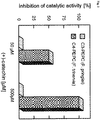
- (+)-catechin With (+)-catechin the inhibition shown in Fig. 2 of the PEP carboxylase activity of the C3 and the C4 enzyme was obtained. Further results are given in table 4.
- Inhibition of purified PEP carboxylases from F. pringlei and F. trinervia by compounds selected from the VDS was monitored by a spectrophotometric coupled assay with malate dehydrogenase which reduces the oxaloacetate formed by PEP carboxylase to malate.
- the simultaneous oxidation of NADH is followed at 340 nm with standard optical equipment.
- the concentration of the inhibitors selected from the VDS was varied in the coupled assay to determine the half maximal inhibitory concentration (IC50).
Landscapes
- Life Sciences & Earth Sciences (AREA)
- Health & Medical Sciences (AREA)
- Engineering & Computer Science (AREA)
- Chemical & Material Sciences (AREA)
- General Health & Medical Sciences (AREA)
- Organic Chemistry (AREA)
- Plant Pathology (AREA)
- Agronomy & Crop Science (AREA)
- Pest Control & Pesticides (AREA)
- Dentistry (AREA)
- Wood Science & Technology (AREA)
- Zoology (AREA)
- Environmental Sciences (AREA)
- Bioinformatics & Cheminformatics (AREA)
- Physics & Mathematics (AREA)
- Theoretical Computer Science (AREA)
- Bioinformatics & Computational Biology (AREA)
- Molecular Biology (AREA)
- Biotechnology (AREA)
- Evolutionary Biology (AREA)
- Medical Informatics (AREA)
- Spectroscopy & Molecular Physics (AREA)
- Biophysics (AREA)
- Medicinal Chemistry (AREA)
- Analytical Chemistry (AREA)
- Proteomics, Peptides & Aminoacids (AREA)
- Computing Systems (AREA)
- Crystallography & Structural Chemistry (AREA)
- Library & Information Science (AREA)
- Genetics & Genomics (AREA)
- Immunology (AREA)
- Biochemistry (AREA)
- Hematology (AREA)
- Biomedical Technology (AREA)
- Urology & Nephrology (AREA)
- Cell Biology (AREA)
- Microbiology (AREA)
- Food Science & Technology (AREA)
- General Physics & Mathematics (AREA)
- Pathology (AREA)
Description
- In the past several different targets for selective and non-selective herbicides were identified. However, there still is a great need for new herbicides, especially selective herbicides. In particular specific herbicides against C4 plants would be of outmost importance for the agribusiness and a major turning point in the control of the worst weeds in the world. These weeds reduce the crop yield of the most important C3 cereals such as rice, wheat, barley and oat.
- The C4 metabolism offers three potential targets for a selective herbicide. The first target is the enzyme phosphoenol pyruvate (PEP) carboxylase, which has a role in CO2 fixation. The second target is the malic enzyme (ME) or the enzyme PEP carboxykinase (PEP CK) which catalyse the release of carbon dioxide in the bundle sheath cells. The third target is the enzyme pyruvate phosphate dikinase (PPDK), which regenerates PEP.
- The substances unguinol and ilimaquinone were identified as selective inhibitors of PPDK from C4 plants maize, millet and proso millet. These substances were isolated from marine organisms (Motti et al., 2007). The only universal target, that is common to all variants of C4 metabolism, is the enzyme PEP carboxylase. Due to the high sequence homology between the C4 specific PEP carboxylase and the C3 isoforms, which have further roles in the general C3 metabolism in plants and other organism, it is not obvious to use this enzyme as selective target.
- The PEP carboxylase inhibitors described so far (Jenkins et al., 1987; Jenkins, 1989; McFadden et al., 1989; Mancera et al., 1995) are based on PEP analogues (e. g., 3,3-Dichloro-2-(dihydroxyphosphinoylmethyl) propenoate (DCDP)). However, these compounds also inhibit C3 type PEP carboxylases at rates between 12-46% (Jenkins, 1989) and do not inhibit growth of C4 plants (Doyle et al., 2005). Pairoba et al. (1996) showed that PEP carboxylase from C4 plant Amaranthus viridis is inhibited by several flavonoles and flavones. The inhibiting flavonoles are quercetin, quercitrin, rutin, kaempferol, fisetin, morin, and myricetin. The inhibiting flavone was baicalein/baicalin.
- But in that work, neither the binding site of the inhibiting flavonoles (or flavones, resp.), nor the molecular mechanism of inhibition were identified. Thus, the mechanism of the inhibiting flavonoles and flavones is unknown. Furthermore, the substances were also described as inhibitors of the malic enzyme from A. viridis, a fact that implies a fairly unspecific inhibition. Furthermore, the authors failed to show that the tested flavonoles and flavones inhibit C4 type PEP carboxylases only, but not C3 type isoforms.
- The crystal structures of PEP carboxylase from Escherichia coli (C3 type) and from the C4 plant maize are known (Matsumura et al., 2002). In the publications of these structures, several amino acid side chains were identified as important for the binding of the feedback inhibitors malate and aspartate. However, the authors failed to note the structural difference of the malate binding site that we use in the development of C4 selective herbicides.
- Brown discloses the use of 3,3-dichloro-2-(dihydroxyphosphinoylmethyl) propenoate (PEPC inhibitor) in the inhibition of apparent photosynthesis of C3 and C4 plants. Inhibition of the photosynthesis was 72% for the C4 plant Flaveria trinervia, and 14% for the C3 plant Flaveria pringlei (Brown RH, Byrd GT, Black CC. Assessing the Degree of C4 Photosynthesis in C3-C4 Species Using an Inhibitor of Phosphoenolpyruvate Carboxylase . Plant Physiology. 1991;97(3):985-989).
-
WO 99/54495 - Wang discloses a virtual screening method for herbicides. In this method, a three-dimensional structure of a compound to be tested and a three-dimensional structure of the binding site of the enzyme to be inhibited (acetohydroxyacid synthase) are provided. Binding modes and binding energy were calculated using computational docking algorithms (Wang, J.-G.; Xiao, Y.-J.; Li, Y.-H.; Ma, Y.; Li, Z.-M. Identification of some novel AHAS inhibitors via molecular docking and virtual screening approach. Bioorg. Med. Chem. 2007, 15, 374- 380).
- Hu discloses the virtual design of herbicidal compounds based on a screening hit structure. The virtual library of three-dimensional structures obtained was the docked into the three-dimensional structure of an enzyme binding site (Hu, De-Jin & Liu, Su-Fang & Huang, Tong-Hui & tu, Hai-Yang & Zhang, Aidong. (2009). Synthesis and Herbicidal Activities of Novel 4-(4-(5-methyl-3-arylisoxazol-4-yl)thiazol-2-yl)piperidyl Carboxamides and Thiocarboxamides. Molecules (Basel, Switzerland). 14. 1288-303).
- Lopez-Ramos discloses the use of various virtual screening methods to identify potential herbicides. In the latter method, a three-dimensional structure of the compound to be tested was provided and docked computationally into a three dimensional structure of the binding site of the target enzyme, a hydroxyphenylpyruvate dioxygenase (J. Chem. Inf. Model. 50, 5, 801-814).
- Manchera discloses a computational study on the binding interactions of inhibitors and activators of PEPC. The three-dimensional structure of the active site was provided and various inhibitors were modelled into it (Mancera, R.L., and Carrington, B.J. (2005). The molecular binding interactions of inhibitors and activators of phosphoenolpyruvate carboxylase. J. Mol. Struct. Theochem. 755, 151-159).
- Rustin discloses that phosphoenolpyruvate is in competition with malate for the active site of PEPC. An additional malate specific binding site exists where malate causes non-competitive inhibition (Pierre Rustin, Christopher R. Meyer, Randolph T. Wedding Plant Physiology Nov 1991, 97 (3) 1011-1016).
- Cretin discloses the differential inhibition of PEPC from C4 plants as compared to the same enzyme from C3 plants by the
herbicide 2,4-D and two related compounds (PHYTOCHEMISTRY, vol. 22, no. 12, 1 January 1983 (1983-01-01), pages 2661-2664). - Rao discloses the use of the herbicides paraquat for inhibiting PEPC from various plant species both in vitro and in vivo (Rao, Idupulapati & Swamy, P.M. & Das, V.S.R.. (1980). Herbicide-inhibited phosphoenolpyruvate carboxylase in leaves of six nonsucculent scrub species. Zeitschrift für Pflanzenphysiologie. 99. 69-74. 10.1016/S0044-328X(80)80114-0).
- Engelmann discloses that the PEPC of C4 plants is more sensitive to malate than the corresponding enzyme of C3 plants when the enzymes are in their activated state, as caused by the presence of glucose-6-phosphate. The sensitivity is inversed in absence of glucose-6-phosphate (Engelmann et al. 2003. Molecular evolution of C4 phosphoenolpyruvate carboxylase in the genus Flaveria - a gradual increase from C3 to C4 characteristics. Planta 217: 717-725).
- As set forth above, ilimaquinone and unguinol were identified as inhibitors of PPDK. These inhibitors, however, have several disadvantages, since they inhibit a subgroup of C4 plants. Tropical grasses, which use PEP carboxykinase for CO2 release and PEP regeneration, are not inhibited. Further, the inhibitors need complex biosynthesis pathways and are expensive to produce (100 µg ilimanquinone cost 150 Euro). Also, both compounds have a low solubility in water (high clog values), which hampers the resorption by the plants.
- Moreover, the inhibitory concentration of the compounds is high. The half maximal inhibitory concentration (IC50) for unguinol is 40 µM for the isolated enzyme. Therefore, an inhibition of the plant would need much higher concentrations up to millimolar range. Due to the high production costs, the use of these compounds is not economical.
- Finally, unguinol is used as growth hormone for animals, has anti-microbial and cytotoxic activity and inhibits the enzyme bile salt hydrolase. Therefore, it is unsuitable as herbicide.
- For those flavonoles and flavones that were identified as inhibitors of PEP carboxylase from C4 plant A. viridis, the control experiments with C3 plants are missing to show the selective inhibition of the C4 isoform. The title of the publication suggests inhibitory effect of the complete group of flavonoids (Pairoba et al., 1996), but the authors failed to show this claim. Flavonoids are with approx. 7000 different substances the largest class of plant secondary metabolites and have a high structural diversity. From this structurally heterogeneous class of substances, only a few flavonoles and flavones were tested. Flavanones, flavandioles, flavanes, flavanoles, isoflavones and anthocyanes, which also belong to the flavanoides, were not tested.
- Furthermore, an inherent disadvantage of naturally occurring flavonoids is their low solubility in water, impeding the application as well the resorption of these substances.
- The inherent disadvantage of all tested PEP analogues is the fact that they also inhibit C3 type PEP carboxylases to a certain degree. They do not show any effect on the growth of C4 plants.
- Thus, there is a need for effective C4 selective inhibitors. Thus, the present invention relates to the use of a compound, a salt or solvate thereof as C4 plant selective herbicide wherein said compound comprises a cyclic alkyl, aryl, heterocycloalkyl or heteroaryl group, and wherein said compound further comprises
- (a) at least a functional group Z being -C(=YZ)R1, wherein YZ is selected from the group consisting of O, NH and S, preferably wherein YZ is O, and wherein R1 is selected from the group consisting of H, OH and N(R2R3), - O(R2) and -S(R2), wherein R2 and R3, are independently of each other, selected from the group consisting of H, Alkyl, cycloalkyl, aryl and heteroaryl and a functional group Q which is -C(=YQ)R4, wherein YQ is selected from the group consisting of O, NH and S, preferably wherein YQ is O, and wherein R4 is selected from the group consisting of H, OH and NR4#R5#, OR4#, SR4# wherein R4# and R5#, are independently of each other, selected from the group consisting of H, alkyl, cycloalkyl, aryl and heteroaryl, wherein the compound has a structure according to the formula (I)

- wherein A is selected from the group consisting of


- X is -YX-, or -C(=YXX)-, wherein YX is selected from the group consisting of -S-, -O-, -NH-, -N(CH3)- and NH-NH-,
- and YXX is selected from the group consisting of S, O and NH,
- in particular -NH- or -C(=Y)- with Y being S or O,
- L is a linking moiety, preferably a linking moiety comprising an aryl group,
- integer b is 0 or 1,
- integer a is in the range of from 2 to 4
- and wherein Rm and Rn are, independently of each other, H or alkyl, preferably H or methyl, in particular H,
- wherein A is selected from the group consisting of
- (b) at least one electron donating group selected from the group consisting of OH, -SH, -O-Rp, -S-Rp, and -NRpRq, wherein Rp and Rq are, independently of each other, selected from the group consisting of H, alkyl, cycloalkyl and heteroaryl, wherein the compound has a structure of the formula (IV') or (IV")
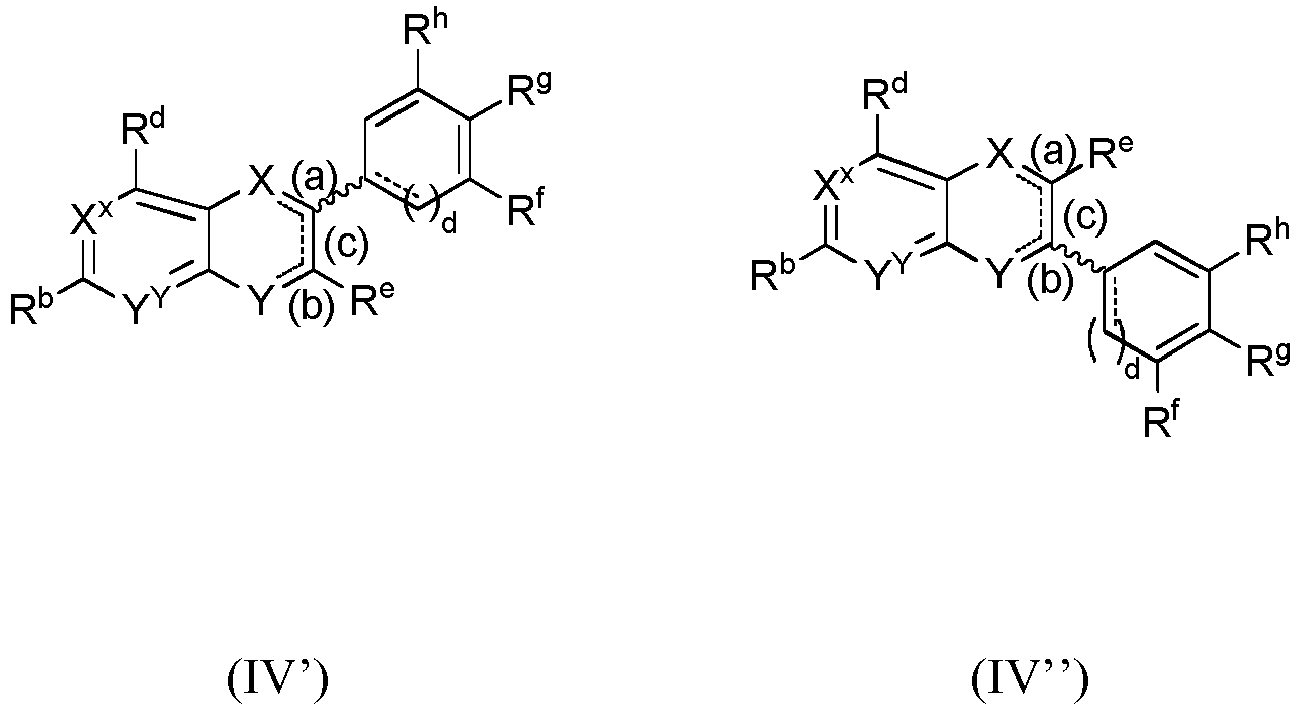
- X is selected from the group consisting of -C(=O)-, -O- and -N-,
- Y is selected from the group consisting of -C(H)p-, -C(=O)-, -O- and -N-,
- Xx is selected from the group consisting of -C(Ra)- or N, Yy is selected from the group consisting of -C(Rc)- or N,
- with p being 1 or 2,
- the bond (a) is a single or double bond,
- the bond (b) is a single or double bond,
- the bond (c) is a single or double bond,
- and wherein Ra and Rb are, independently of each other selected from the group consisting of H, Alkyl, halogene, -C(=Yp)Rr, and an electron donating group, wherein Rr is -OH, -NH2, -NH-Alkyl, -O-Alkyl, or -S-Alkyl, and
- wherein Yp is selected from the group consisting of S, O and NH, or wherein Ra and Rb form together a cycloalkyl, cycloheteroalkyl, aryl or heteroaryl, wherein the cycloalkyl, cycloheteroalkyl, aryl or heteroaryl is a single-ring group or a multicyclic group,
- and wherein Rc, Rd, Rf, Rg and Rh are, independently of each other, selected from the group consisting of H, Alkyl, halogene, -C(=Yp)Rr, and an electron donating group, wherein Rr is -OH, -NH2, -NH-Alkyl, -O-Alkyl, or -S-Alkyl, and wherein Yp is selected from the group consisting of -S-, -O-, - NH,
- and wherein Re is selected from the group consisting of H, Alkyl, halogene, -C(=Yp)Rr, -O-C(=Yp)Rr, an electron donating group, aryl, heteroaryl group and -O-C(=O)-R*, wherein R* is an aryl or heteroaryl group, and wherein
- Rr is -OH, -NH2, -NH-Alkyl, -O-Alkyl, or -S-Alkyl, and wherein Yp is selected from the group consisting of -S-, -O-, -NH
- wherein at least one of Ra, Rb, Rc, Rd, Rf, Rg, Re and Rh is the electron donating group selected from the group consisting of OH, -SH, -O-Rp, -S-Rp, and -NRpRq,, with the proviso that in case the bond (c) is a double bond (a) and (b) are both single bonds, and in case X is -C(=O)-,the bond (a) is a single bond, and wherein in case Y is -C(=O)-, the bond (b) is a single bond, and wherein integer d is 1,
- In an embodiment of the use of the present invention, Q in (a) is COOH, and the compound has the structure (II):

- In an embodiment of the use of the present invention, wherein Z in (a) is COOH, the compound having the structure (III):

- In an embodiment of the use of the present invention, wherein in (a) L has a structure according to the following formula
-[F2]c-[L1]d-[F1]e-
- wherein L1 is a linking moiety, preferably selected from the group consisting of alkyl, alkenyl, alkylaryl, arylalkyl, aryl, heteroaryl, alkylheteroaryl and heteroarylalkyl,
- and wherein integer d is 0 or 1,
- and wherein
- F1 is a functional group consisting of -YF1-, -C(=YF)-, -C(=YF)-NRY1-,
- wherein YF1 is selected from the group consisting of -S-, -O-, -NH-, -N(CH3)-and NH-NH-,
- YF is selected from the group consisting of S, O and NH,
- and RY1 is H or alkyl,
- and wherein in case X is -YX-, F1 is -C(=YF)- or -C(=YF)-NRY1 and wherein in case X is -C(=YX)-, -C(=YXX)-NRX-, F1 is -YF1-,
- integer e is 0 or 1,
- F2 is a functional group selected from the group consisting of -YF2-, -C(=YFF)-, -C(=YFF)-NRY2- and -NRY2-C(=YFF)-
- wherein YF2 is selected from the group consisting of -S-, -O-, -NH-, -N(CH3)- ,-NH-NH-,
- YFF is selected from the group consisting of S, O and NH,
- and RY2 is H or alkyl,
- and wherein integer c is 0 or 1.
- In an embodiment of the use of the present invention, X in (a) is -NH-, wherein L is
-YF2-L1-C(=YF)-
wherein L1 is alkylaryl, arylalkyl, heteroaryl or aryl group, preferably a group having one of the following structures:

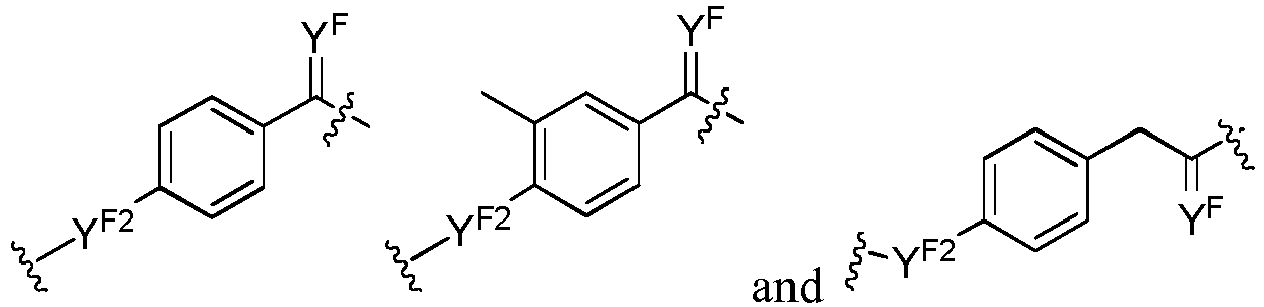
- In an embodiment of the use of the present invention, wherein the compound in (b) has a structure of the formula (IVa) or (IVb)
- Disclosed is the use of a compound, a salt or solvate thereof as C4 plant selective herbicide wherein said compound comprises a cyclic alkyl, aryl, heterocycloalkyl or heteroaryl group, and wherein said compound further comprises
- (a) at least a functional group Z being -C(=YZ)R1, wherein YZ is selected from the group consisting of O, NH and S, preferably wherein YZ is O, and wherein R1 is selected from the group consisting of H, OH and N(R2R3), -O(R2) and -S(R2), wherein R2 and R3, are, independently of each other, selected from the group consisting of H, Alkyl, cycolalkyl, aryl and heteroaryl and a functional group Q which is -C(=YQ)R4, wherein YQ is selected from the group consisting of O, NH and S, preferably wherein YQ is O, and wherein R4 is selected from the group consisting of H, OH and NR4#R5#, OR4#, SR4# wherein R4# and R5#, are independently of each other, selected from the group consisting of H, alkyl, cycloalkyl, aryl and heteroaryl, or
- (b) at least one electron donating group selected from the group consisting of OH, -SH, -O-Rp, -S-Rp, -NRpRq and -O-C(=Yp)Rr, wherein Rp and Rq are, independently of each other, selected from the group consisting of H, alkyl, cycloalkyl and heteroaryl, and wherein Rr is -OH, -NH2, -NH-Alkyl, -O-Alkyl or -NH-Alkyl, and wherein Yp is selected from the group consisting of S, O and NH,
- The term "alkyl" relates to non-branched alkyl residues and branched alkyl residues, as well as residues comprising one or more heteroatoms or functional groups, such as, by way of example, -O-, -S-, -NH-, -NH-C(=O)-, -C(=O)-NH-. The term also encompasses alkyl groups which are further substituted by one or more suitable substituent.
- The term "cyclic alkyl" or "cycloalkyl" relates to optionally suitably substituted 4 to 8-membered single-ring alkyl groups as well as optionally suitably substituted multicyclic alkyl residues.
- The term "heterocycloalkyl" relates to optionally suitably substituted 4 to 8-membered single-ring alkyl groups as well as optionally suitably substituted multicyclic alkyl residues comprising one or more, preferably from 1 to 4 such as 1, 2, 3 or 4, heteroatoms, wherein in case the cycloalkyl residue comprises more than 1 heteroatom, the heteroatoms may be the same or different.
- The term "alkyl", "cycloalkyl", "cyclic alkyl" and "heterocycloalkyl", also encompasses groups which are further substituted by one or more suitable substituent.
- The term "substituted" preferably refers to alkyl, cycloalkyl, cyclic alkyl, aryl, heteroaryl and heterocylcoalkyl groups being substituted in any position by one or more substituents, preferably by 1, 2, 3, 4, 5 or 6 substituents, more preferably by 1, 2, or 3 substituents. If two or more substituents are present, each substituent may be the same or may be different from the at least one other substituent.
- The substituents may be, for example, selected from the group consisting of aryl, alkenyl, alkynyl, halogen, hydroxyl, alkylcarbonyloxy, arylcarbonyloxy, alkoxycarbonyloxy, aryloxycarbonyloxy, carboxylate, alkylcarbonyl, arylcarbonyl, alkoxycarbonyl, aminocarbonyl, alkylaminocarbonyl, dialkylaminocarbonyl, alkylthiocarbonyl, alkoxy, phosphate, phosphonato, phosphinato, amino, acylamino, including alkylcarbonylamino, arylcarbonylamino, carbamoyl and ureido, amidino, nitro, imino, sulfhydryl, alkylthio, arylthio, thiocarboxylate, sulfates, alkylsulfinyl, sulfonate, sulfamoyl, sulfonamido, trifluoromethyl, cyano, azido, cycloalkyl such as e.g. cyclopentyl or cyclohexyl, heterocycloalkyl such as e.g. morpholino, piperazinyl or piperidinyl, alkylaryl, arylalkyl and heteroaryl. Preferred substituents of such organic residues are, for example, halogens, such as fluorine, chlorine, bromine or iodine, amino groups, hydroxyl groups, carbonyl groups, thiol groups and carboxyl groups.
- Preferred examples for cycloalkyl groups are, e.g., cyclopentyl or cyclohexyl or stereoids, e.g., steroids having a pregnane skeleton, such as 12, 20-dioxypregnane-3-yl.
- Preferred examples for heterocycloalkyl groups are, e.g., morpholino, piperazinyl or piperidinyl.
- The term "aryl" refers to optionally suitably substituted 5- and 6-membered single-ring aromatic groups as well as optionally suitably substituted multicyclic groups, for example bicyclic or tricyclic aryl groups. The term "aryl" thus includes, for example, optionally substituted phenyl groups or optionally suitably substituted naphthyl groups. Aryl groups can also be fused or bridged with alicyclic or heterocycloalkyl rings are not aromatic so as to form a polycycle, e.g., benzodioxolyl or tetraline. The term "aryl" further includes aromatic groups which linked via a single bond to further aromatic groups so as to form, e.g., biphenyl groups.
- The term "heteroaryl" includes optionally suitably substituted 5- and 6-membered single-ring aromatic groups as well as substituted or unsubstituted multicyclic aryl groups, for example bicyclic or tricyclic aryl groups, comprising one or more, preferably from 1 to 4 such as 1, 2, 3 or 4, heteroatoms, wherein in case the aryl residue comprises more than 1 heteroatom, the heteroatoms may be the same or different. Such heteroaryl groups including from 1 to 4 heteroatoms are, for example, benzodioxolyl, pyrrolyl, furanyl, thiophenyl, thiazolyl, isothiazolyl, imidazolyl, triazolyl, tetrazolyl, pyrazolyl, oxazolyl, isoxazolyl, pyridinyl, pyrazinyl, pyridazinyl, benzoxazolyl, benzodioxazolyl, benzothiazolyl, benzoimidazolyl, benzothiophenyl, methylenedioxyphenylyl, napthyridinyl, quinolinyl, isoquinolinyl, indolyl, isoindolyl, benzofuranyl, purinyl, deazapurinyl, pteridinyl, or indolizinyl.
- The term "substituted aryl" and the term "substituted heteroaryl" describes moieties having substituents replacing a hydrogen on one or more atoms, e.g. C or N, of an aryl or heteroaryl moiety. The substituents may be, for example, selected from the group consisting of alkyl, alkenyl, alkynyl, halogen, hydroxyl, alkylcarbonyloxy, arylcarbonyloxy, alkoxycarbonyloxy, aryloxycarbonyloxy, carboxylate, alkylcarbonyl, arylcarbonyl, alkoxycarbonyl, aminocarbonyl, alkylaminocarbonyl, dialkylaminocarbonyl, alkylthiocarbonyl, alkoxy, phosphate, phosphonato, phosphinato, amino, acylamino, including alkylcarbonylamino, arylcarbonylamino, carbamoyl and ureido, amidino, nitro, imino, sulfhydryl, alkylthio, arylthio, thiocarboxylate, sulfates, alkylsulfinyl, sulfonate, sulfamoyl, sulfonamido, trifluoromethyl, cyano, azido, cycloalkyl such as e.g. cyclopentyl or cyclohexyl, heterocycloalkyl e.g. morpholino, piperazinyl or piperidinyl, alkylaryl, arylalkyl and heteroaryl.
- Preferred substituents of such organic residues are, for example, halogens, e.g. fluorine, chlorine, bromine or iodine, amino groups, hydroxyl groups, carbonyl groups, thiol groups, amino groups, and carboxyl groups.
- Thus, the cyclic alkyl (cycloalkyl), heterocycloalkyl, aryl or heteroaryl group is, e.g., selected from the group consisting of, optionally suitably substituted, benzodioxolyl, pyrrolyl, furanyl, thiophenyl, thiazolyl, isothiazolyl, imidazolyl, triazolyl, tetrazolyl, pyrazolyl, oxazolyl, isoxazolyl, pyridinyl, pyrazinyl, pyridazinyl, benzoxazolyl, benzodioxazolyl, benzothiazolyl, benzoimidazolyl, benzothiophenyl, methylenedioxyphenylyl, napthyridinyl, quinolinyl, isoquinolinyl, indolyl, isoindolyl, benzofuranyl, purinyl, deazapurinyl, pteridinyl, indolizinyl, phenyl, biphenyl and stereoids.
- According to a first preferred embodiment, the present invention relates to a use of a compound a salt or solvate thereof as C4 plant selective herbicide wherein said compound comprises a cyclic alkyl, aryl, heterocycloalkyl or heteroaryl group, wherein the compound has a structure according to the formula (I)
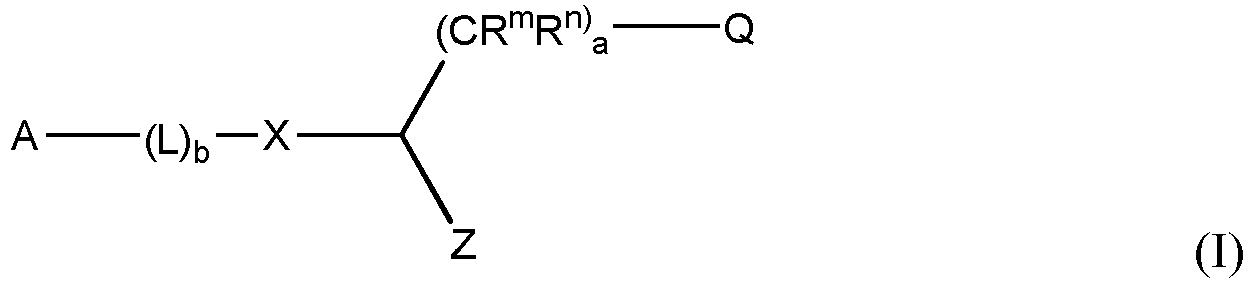
- The term "at least bicyclic" refers to groups comprising at least two cycles, wherein these cycles may be fused or may be bridged with alicyclic groups as to form the at least bicyclic group. Each cylce may be selected from aromatic, heteroaromatic and non aromatic cyloalkyl or cycloheteroaryl groups. The term "at least bicyclic" thus also relates to groups such as biphenyl groups.
- According to a preferred embodiment, A is a bicyclic aryl or bicyclic heteroralryl group. The term "bicyclic aryl group" refers to groups in which at least one of both cycles is an aryl group. The term "bicyclic heteroaryl group" refers to groups in which at least one of both cycles is a heteroaryl group.
- Preferably, the group A comprises one of the following core structures:


- The term "comprising the core structure" is denoted to mean that the shown structure may be optionally suitably substituted.
- Thus, the present invention also relates to the to a use of a compound a salt or solvate thereof as C4 plant selective herbicide according to the formula (I)


- In particular, A has a structure selected from the group consisting of:


- Thus, the present invention also relates to the use of a compound a salt or solvate thereof as C4 plant selective herbicide, the compound having a structure according to one of the following formulas:


- According to the disclosure, A is a stereoid comprising the core structure


- In case A is a steroid, A is preferably selected from one of the following structures:


- Thus, the present invention also relates to the use of a compound a salt or solvate thereof as C4 plant selective herbicide according wherein A has the structure:


- As described above, the functional group Q is -C(=YQ)R4, wherein YQ is selected from the group consisting of O, NH and S, preferably wherein YQ is O or S, and wherein R4 is selected from the group consisting of H, OH, -O-R4#, -S-R4# and NR4#R5#, wherein R4# and R5#, are independently of each other, selected from the group consisting of H, alkyl, cycloalkyl, aryl, cycloheteroalkyl and heteroaryl.
- Thus, the functional group Q is, for example, one of the following groups: - C(=O)H, -C(=O)OH, -C(=O)-O-Alkyl, -C(=O)-O-Aryl, -C(=O)-O-cycloalkyl, -C(=O)-O-heteroaryl, -C(=O)-O-cycloheteroalkyl -C(=O)NH2, - C(=O)NHAlkyl, -C(=O)NHAryl, -C(=O)NHcycloalkyl, -C(=O)NHcycloheteroalkyl, - C(=O)N(Hheteroaryl) -C(=S)H, -C(=S)OH, -C(=S)-O-Alkyl, -C(=S)-O-Aryl, -C(=O)-O-cycloalkyl, -C(=S)-O-heteroaryl, -C(=S)-O-cycloheteroalkyl.
- More preferably YQ is O. Thus, the functional group Q is, preferably selected from the group consisting of -C(=O)H, -C(=O)OH, -C(=O)-O-Alkyl, -C(=O)-O-Aryl, -C(=O)-O-cycloalkyl, -C(=O)-O-heteroaryl, -C(=O)-O-cycloheteroalkyl -C(=O)NH2, - C(=O)NHAlkyl, -C(=O)NHAryl, -C(=O)NHcycloalkyl, -C(=O)NHcycloheteroalkyl, - C(=O)N(Hheteroaryl) , More preferably, the functional group Q is selected from the group consisting of -C(=O)H, -C(=O)OH, -C(=O)-O-Alkyl, -C(=O)-O-Aryl, -C(=O)-O-cycloalkyl, -C(=O)-O-heteroaryl, -C(=O)-O-cycloheteroalkyl.
As to the groups R4 and R5, these are, independently of each other, H , Alkyl, cycloalkyl, cycloheteroalkyl, aryl or heteroaryl, preferably H or alkyl or cycloalkyl, more preferably H or a linear or branched alkyl group or a cycloalkyl group having from 1 to 10 carbon atoms, preferably an alkyl group or cycloalkyl group selected from the group consisting of methyl, ethyl, propyl, pentyl, butyl, cyclopropyl, cyclobutyl, cyclopropenyl, cyclobutenyl, and hexyl, more preferably H or methyl or ethyl. More preferably one of R4# and R5# is H and one of R4# and R5# is an alkyl group, preferably H or a linear or branched alkyl group having from 1 to 10 carbon atoms, preferably an alkyl group selected from the group consisting of methyl, ethyl, propyl, pentyl, butyl and hexyl, more preferably methyl or ethyl. - In case, YQ is -C(=O)-O-Alkyl, the alkyl group is preferably a linear or branched alkyl group having from 1 to 10 carbon atoms, preferably an alkyl group selected from the group consisting of methyl, ethyl, propyl, pentyl, butyl and hexyl, more preferably methyl or ethyl.
- In case, YQ is -C(=O)-O-aryl, the aryl group is preferably an optionally substituted phenyl group, preferably phenyl.
- Thus, according to a preferred embodiment of the invention, the functional group Q is selected from the group consisting of -C(=O)H, -C(=O)OH, -C(=O)-O-methyl, -C(=O)-O-ethyl, -C(=O)-O-propyl, -C(=O)-O-pentyl, -C(=O)-O-hexyl, -C(=O)-O-phenyl.
- In particular, the functional group Q is-C(=O)OH, i.e. -COOH, or -C(=O)-O-methyl, most preferably -COOH.
- Thus, the present invention also relates to the use, as described above, the compound having the structure (II):

- According to an even more preferred embodiment, the present invention also relates to the use of a compound, a salt or solvate thereof as C4 plant selective herbicide according to one of the following formulas:


- As described above, the functional group Z is -C(=YZ)R1, wherein YZ is selected from the group consisting of O, NH and S, preferably wherein YZ is O or S, wherein R1 is selected from the group consisting of H, OH, -O-R2, -S-R2 and -NR2R3, wherein R2 and R3, are independently of each other, selected from the group consisting of H, Aryl, Alkyl, cycloalkyl, heteroaryl and cyloheteroalkyl.
- Thus, the functional group Z is, for example, one of the following groups: - -C(=O)H, -C(=O)OH, -C(=O)-O-Alkyl, -C(=O)-O-Aryl, -C(=O)-O-cycloalkyl, -C(=O)-O-heteroaryl, -C(=O)-O-cycloheteroalkyl -C(=O)NH2, - C(=O)NHAlkyl, -C(=O)NHAryl, -C(=O)NHcycloalkyl, -C(=O)NHcycloheteroalkyl, - C(=O)N(Hheteroaryl) -C(=S)H, -C(=S)OH, -C(=S)-O-Alkyl, -C(=S)-O-Aryl, -C(=O)-O-cycloalkyl, -C(=S)-O-heteroaryl, -C(=S)-O-cycloheteroalkyl.
- More preferably YZ is O. Thus, the functional group Z is, preferably selected from the group consisting of -C(=O)H, -C(=O)OH, -C(=O)-O-Alkyl, -C(=O)-O-Aryl, -C(=O)-O-cycloalkyl, -C(=O)-O-heteroaryl, -C(=O)-O-cycloheteroalkyl -C(=O)NH2, - C(=O)NHAlkyl, -C(=O)NHAryl, -C(=O)NHcycloalkyl, -C(=O)NHcycloheteroalkyl and -C(=O)NHheteroaryl.
- As to the groups R2 and R3, these are, independently of each other, selected from the group consisting of H, Aryl, Alkyl, cycloalkyl, heteroaryl and cyloheteroalkyl, peferably H or alkyl or cycloalkyl, preferably H or a linear or branched, alkyl group or cycloalkyl group, having from 1 to 10 carbon atoms, preferably an alkyl group or cycloalkyl group selected from the group consisting of methyl, ethyl, propyl, pentyl, butyl, cyclopropyl, cyclobutyl, cyclopropenyl, cyclobutenyl and hexyl. More preferably the groups R2 and R3 are, independently of each other, H or methyl or ethyl. More preferably one of R2 and R3 is H and one of R2 and R3 is an alkyl group or cycloalkyl group, preferably H or a linear or branched alkyl group or cycloalkyl group, having from 1 to 10 carbon atoms, preferably H or an alkyl group selected from the group consisting of methyl, ethyl, propyl, pentyl, butyl and hexyl, more preferably H or methyl or ethyl.
- In case, YZ is -C(=O)-O-Alkyl, the alkyl group is preferably a linear or branched alkyl group having from 1 to 10 carbon atoms, preferably an alkyl group selected from the group consisting of methyl, ethyl, propyl, pentyl, butyl and hexyl, more preferably methyl or ethyl.
- In case, YZ is -C(=O)-O-Aryl, the aryl group is preferably an optionally substituted phenyl group, preferably phenyl.
- Thus, according to a preferred embodiment of the invention, the functional group Z is selected from the group consisting of -C(=O)H, -C(=O)OH, -C(=O)-O-methyl, -C(=O)-O-ethyl , -C(=O)-O-propyl, -C(=O)-O-pentyl, -C(=O)-O-hexyl, and -C(=O)-O-phenyl.
- In particular, the functional group Z is-C(=O)OH, i.e. -COOH, or -C(=O)-O-methyl, most preferably -COOH.
- Thus, the present invention also relates to the use, as described above, the compound having the structure (III):
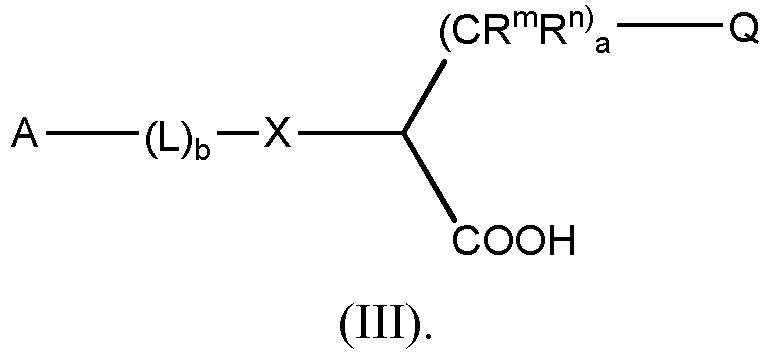
- According to an even more preferred embodiment, the present invention also relates to the use of a compound, a salt or solvate thereof as C4 plant selective herbicide according to one of the following formulas:


- In particular, Z and Q are both -COOH. Thus, the present invention also relates to the use, as described above, the compound having the structure (IV):

- In particular, the present invention also relates to the use of a compound a salt or solvate thereof as C4 plant selective herbicide, the compound having a structure according to one of the following formulas:


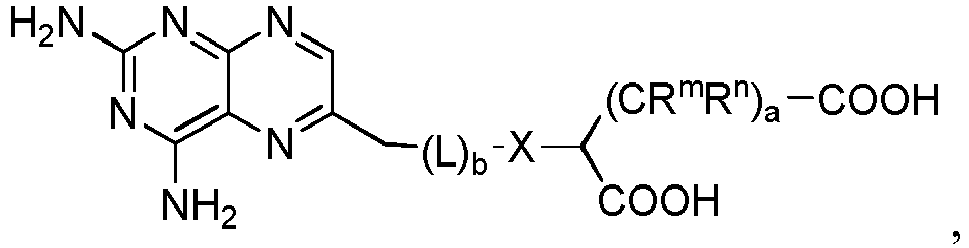


- As described above, X is a functional group, linking the moiety A-(L)b and the carbon atom linked to Z and the structural unit (CRmRn)a-Q.
- Preferably X is -YX- or -C(=YXX)-, wherein YX is selected from the group consisting of -S-, -O-, -NH-, -N(CH3)- and NH-NH-, and YXX is selected from the group consisting of - S-, -O-, -NH. Thus, X is preferably selected from the group consisting of -S-, -NH-, -O-, - N(CH3)- and NH-NH-, -C(=O)-, -C(=S)- and -C(=NH)-,
- In particular X is -NH- or -C(=Y)- with Y being S or O,
- Thus, the present invention also relates to the use, as described above, wherein X is -NH- or -C(=Y)- with Y being S or O, the compound thus having a structure according to one of the following formulas:


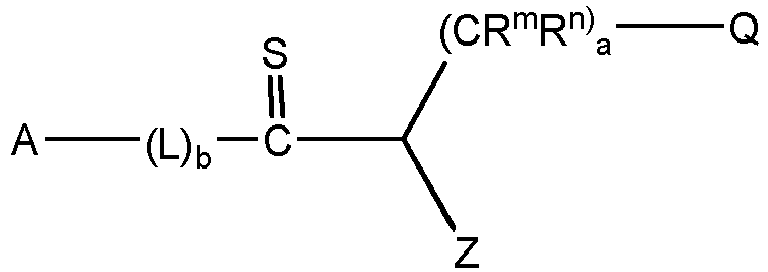
- As mentioned above, integer a is in the range of from 1 to 5, such as 1, 2, 3, 4 or 5, preferably in the range of from 1 to 4 In case integer a is greater than 1, each repeating unit [CRmRn] may be the same or may be different from each other.
- Preferably a is in the range of from 1 to 3.
- According to a preferred embodiment of the present invention, Rm and Rn are, independently of each other, selected from H or branched or linear alkyl groups, comprising 1 to 10, preferably 1 to 8, more preferably 1 to 5, most preferably 1 to 3 carbon atoms. More preferably Rm and Rn are, independently of each other, selected from the group consisting of H, methyl, ethyl, propyl, butyl, sec-butyl and tert-butyl, more preferably Rm and Rn are, independently of each other, H or methyl.
- By way of example, the following preferred structures for the structural unit [CRmRn]a are mentioned: -CH2-CH2-CH2-, -CH2-CH2-, -CH2-, -CH(CH3)-, -C(CH3)2-, -CH(CH2CH3)-, - CH(CH(CH3)2)-, -CH(CH3)-CH2-, -CH2-CH(CH3)-, -CH(CH3)-CH2-CH2-, -CH2-CH(CH3)-CH2-, -CH2-CH2-CH(CH3)-, -CH(CH3)-CH(CH3)-, CH(CH3)-CH(CH3)-CH2-, -CH2-CH(CH3)-CH(CH3)-, -CH(CH3)-CH2-CH(CH3)-.
- More preferably integer a is 1 or 2, most preferably 2.
- According to a particularly preferred embodiment of the present invention, Rm and Rn are both H. The structural unit [CRmRn]a is thus preferably -CH2-CH2-CH2-, -CH2-CH2- or -CH2-, more preferably a is 1 or 2, the structural unit [CRmRn]a thus preferably having the structure -CH2-CH2- or -CH2-, most preferably a is 2 and the structural unit [CRmRn]a is -CH2-CH2-.
- Thus, the present invention also relates to the to a use of a compound a salt or solvate thereof as C4 plant selective herbicide according to the following formula:


- As described above, L is a linking moiety. This linking moiety, if present, i.e. if integer b is 1, links A with the functional group X.
- Preferably, the linking moiety L has a structure according to the following formula
-[F2]c-[L1]d-[F1]e-
wherein L1 is a linking moiety linking the structural units -[F2]c and -[F1]e, wherein L1 is preferably selected from the group consisting of alkyl, alkenyl, alkylaryl, arylalkyl, aryl, heteroaryl, alkylheteroaryl and heteroarylalkyl, wherein integer d is 0 or 1, and wherein F1 and F2 are functional groups which may be the same or may differ from each other, integer e is 0 or 1 and integer c is 0 or 1. - The term "alkenyl" as used in the context of the present invention refers to unsaturated alkyl groups having at least one double bond. The term also encompasses alkenyl groups which are substituted by one or more suitable substituents.
- The term "alkynyl" refers to unsaturated alkyl groups having at least one triple bond. The term also encompasses alkynyl groups which are substituted by one or more suitable substituents.
- The term "alkylaryl" as used in the context of the linking moiety described in the present invention is denoted to mean a linking moiety having the structure -alkyl-aryl-, thus being linked on one side via the alkyl group and on the other side via the aryl group, wherein this term is meant to also encompass linking moieties such as -alkyl-aryl-alkyl- linking moieties.
- The term "alkylaryl group", when used in the context of any substituent described hereinunder and above, is denoted to mean a residue being linked via the alkyl portion, said alkyl portion being further substituted with an aryl moiety.
- The term "arylalkyl" as used in the context of any linking moiety described in the present invention is denoted to mean a linking moiety having the structure -aryl-alkyl-, thus being linked on one side via the aryl group and on the other side via the alkyl group, wherein this term is meant to also encompass linking moieties such as -aryl-alkyl-aryl- linking moieties.
- The term "arylalkyl group", when used in the context of any substituent described hereinunder and above, is denoted to mean a residue being linked via the aryl portion, said aryl portion being further substituted with an alkyl moiety.
- The term "alkylheteroaryl" as used in the context of any linking moiety described in the present invention is denoted to mean a linking moiety having the structure -alkyl-heteroaryl-, thus being linked on one side via the alkyl group and on the other side via the heteroaryl group, wherein this term is meant to also encompass linking moieties such as -alkyl-heteroaryl-alkyl- linking moieties.
- The term "alkylheteroaryl group", when used in the context of any substituent described hereinunder and above, is denoted to mean a residue being linked via the alkyl portion, said alkyl portion being further substituted with a heteroaryl moiety.
- The term "heteroarylalkyl" as used in the context of any linking moiety described in the present invention is denoted to mean a linking moiety having the structure -heteroaryl-alkyl-, thus being linked on one side via the heteroaryl group and on the other side via the alkyl group, wherein this term is meant to also encompass linking moieties such as -heteroaryl-alkyl-heteroaryl- linking moieties.
- The term "heteroarylalkyl group", when used in the context of any substituent described hereinunder and above, is denoted to mean a residue being linked via the heteroaryl portion, said heteroaryl portion being further substituted with an alkyl moiety.
- Preferably L1 is an alkylaryl, arylalkyl, heteroaryl or aryl group, preferably a group having one of the following structures:


- F1 is a functional group linking X and the structural unit A-[F2]c-[L1]d. There are, in general, no particular restrictions as regards the chemical nature of the functional group F1 provided that a stable bond is formed linking X and the structural unit A-[F2]c-[L1]d. Preferably F1 is a functional group is a functional group selected from the group consisting of -YF1-, -C(=YF)-, and -C(=YF)-NRY1-, wherein YF1 is selected from the group consisting of -S-, -O-, -NH-, -N(CH3)- and NH-NH-, and wherein YF is selected from the group consisting of S, O, NH and RY1 is H or alkyl.
- Thus, F1 is preferably selected from the group consisting of -S-, -O-, -NH-, -N(CH3)- and NH-NH-, -C(=S)-, -C(=O)-, -C(=NH)-, -C(=O)-NH-, -C(=O)-N(alkyl)-, -C(=S)-NH-, -C(=S)-N(alkyl)-, -C(=NH)-NH-, -C(=NH)-N(alkyl)-.
- In case X is -YX-, F1 is -C(=YF)- or -C(=YF)-NRY1.
- F2 is a functional group linking A and the structural unit -[L1]d-[F1]e-X. There are, in general, no particular restrictions as regards the chemical nature of the functional group F1 provided that a stable bond is formed linking A and the structural unit -[L1]d-[F1]e-X. Preferably F2 is selected from the group consisting of -YF2-, -C(=YFF)-, -C(=YFF)-NRY2- and -NRY2-C(=YFF)-, wherein YF2 is selected from the group consisting of -S-, -O-, -NH-, -N(CH3)- , -NH-NH-, YFF is selected from the group consisting of S, O and NH and RY2 is H or alkyl.
- Thus, F2 is preferably selected from the group consisting of -S-, -O-, -NH-, -N(CH3)-, NH-NH-, -C(=S)-, -C(=O)-, -C(=NH)-, -C(=O)-NH-, -C(=O)-N(alkyl)-, -C(=S)-NH-, - C(=S)-N(alkyl)-, -C(=NH)-NH-, -C(=NH)-N(alkyl)-. -NH-C(=O)-, -N(alkyl)-C(=O)-, - NH-C(=S)-, -N(alkyl)-C(=S)-, -NH-C(=NH)- and -N(alkyl)-C(=NH)-.
- According to a preferred embodiment of the invention, L has the structure
-YF2-L1-C(=YF)-
with YF2, L1 and YF2 being as described above. Preferably, in this preferred case, L1 is aryl or alkylaryl. - In particular L is selected from the following structures:

- By way of example, the following preferred embodiments for L are described:
Table 1: Preferred linking moieties L -[F2]c- -[F1]e- -[L1]d- -NH- -C(=O)- selected from the group consisting of -N(Me)- -C(=O)- -O- -C(=O)- 
-S- -C(=O)- -C(=O)-NH- -C(=O)- -NH-C(=O)- -C(=O)- 
-NH- -C(=S)- -N(Me)- -C(=S)- -O- -C(=S)- 
-S- -C(=S)- -C(=O)-NH- -C(=SO)- -NH-C(=O)- -C(=S)- Table 2: Preferred compounds of the invention 
A (L)b X Z (CRmRn)a Q 
Selected from the group consisting of -NH- -COOH -CH2-CH2- -COOH 


Selected from the group consisting of -NH- -COOH -CH2-- -COOH 


-N(Me)- -COOH -CH2-CH2- -COOH 


Selected from the group consisting of -N(Me)- -COOH -CH2-- -COOH 

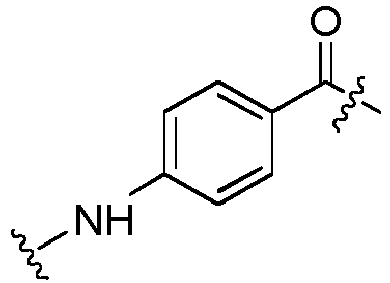


-C(=O)-NH -COOH -CH2-CH2- or -COOH -CH2-- 
Selected from the group consisting of -NH- -COOH -CH2-CH2- -COOH 
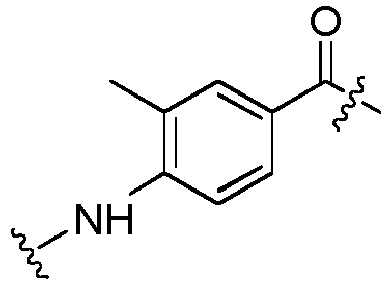


Selected from the group consisting of -NH- -COOH -CH2- -COOH 


b = 0 -C(=O)-NH -COOH -CH2- Or -CH2-CH2- -COOH 
Selected from the group consisting of -C(=O)-NH -COOH -CH2- -COOH 
or -CH2-CH2- 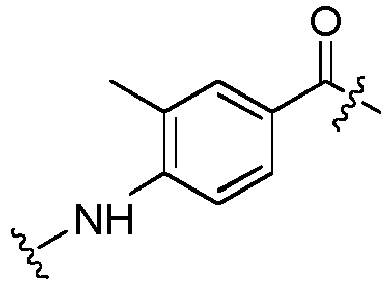


Selected from the group consisting of -C(=O)-NH -COOH -CH2- -COOH b = 0 or -CH2-CH2 


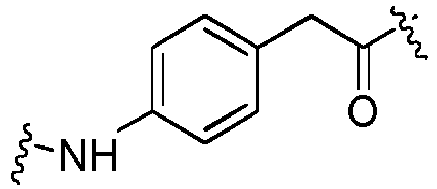


Selected from the group consisting of C(=O)-NH -COOH -CH2-CH2- or -COOH 
-CH2-- 
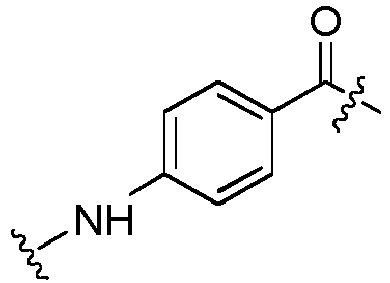


Selected from the group consisting of -NH- -COOH -CH2-CH2- -COOH 


- According to an alternative embodiment of the present invention, the compound has a structure of the formula (IVa) or (IVb)

- X is selected from the group consisting of -C(=O)-, -O- and -N-,
- Y is selected from the group consisting of -C(H)p-, -C(=O)-, -O- and -N-,
- with p being 1 or 2,
- the bond (a) is a single or double bond,
- the bond (b) is a single or double bond,
- the bond (c) is a single or double bond,
- and wherein Ra, Rb, Rc, Rd , Re, Rf, Rg and Rh are, independently of each other, selected from the group consisting of H, Alkyl and an electron donating group, or Ra, Rb, Rc, Rd , Re, Rf, Rg and Rh independently of each other, selected from the group consisting of H, Alkyl, -C(=Yp)Rr and an electron donating group, wherein Rr is -OH, -NH2, -NH-Alkyl, - O-Alkyl, or -S-Alkyl, and wherein Yp is selected from the group consisting of S, O and NH, preferably Ra, Rb, Rc, Rd , Re, Rf, Rg and Rh independently of each other, selected from the group consisting of H, Alkyl, -C(=Yp)Rr and an electron donating group, in particular Ra, Rb, Rc, Rd , Re, Rf, Rg and Rh are, independently of each other, selected from the group consisting of H, Alkyl and an electron donating group,
- wherein at least one of Ra, Rb, Rc, Rd , Re and Rf is an electron donating group, with the proviso that in case the bond (c) is a double bond (a) and (b) are both single bonds, and in case X is -C(=O)-,the bond (a) is a single bond, and wherein in case Y is -C(=O)-, the bond (b) is a single bond.
- The term "electron donating group" is recognized in the art, and denotes the tendency of a functional group to donate valence electrons to neighboring atoms by means of a difference in electronegativity with respect to the neighbouring atom (inductive effect) and/or by donating of pi-electrons via conjugation (mesomeric effect). According to the invention said electron donating group is preferably selected from the group consisting of - OH, -SH, -O-Rp, -S-Rp, -NRpRq and -OC(=Yp)Rr, wherein Rp and Rq are, independently of each other, selected from the group consisting of H, alkyl, cycloalkyl, heterocycloalkyl, aryl and heteroaryl, Rr is is preferably selected from -OH, -NH2, -NH-Alkyl, -O-Alkyl, or - S-Alkyl, and wherein Yp is selected from the group consisting of S, O and NH, more preferably the electron donating group is selected from the group consisting of - OH, -SH, -O-Rp, -S-Rp and -NRpRq, wherein Rp and Rq are, independently of each other, selected from the group consisting of H, alkyl, cycloalkyl, heterocycloalkyl, aryl and heteroaryl,
Rp and Rq are, independently of each other, preferably selected from the group consisting of H or alkyl or cycloalkyl, more preferably H or a linear or branched alkyl group or a cycloalkyl group having from 1 to 10 carbon atoms, preferably an alkyl group or cycloalkyl group selected from the group consisting of methyl, ethyl, propyl, pentyl, butyl, cyclopropyl, cyclobutyl, cyclopropenyl, cyclobutenyl, and hexyl, more preferably H or methyl or ethyl. More preferably at least one of Rp and Rq is H and one of Rp and Rq is H or an alkyl group, preferably H or a linear or branched alkyl group having from 1 to 10 carbon atoms, preferably H or an alkyl group selected from the group consisting of methyl, ethyl, propyl, pentyl, butyl and hexyl, more preferably methyl or ethyl. - Rr is preferably selected from the group consisting of -OH, -NH2, -NH-Alkyl, -O-Alkyl and -SH-Alkyl. Yp is preferably selected from the group consisting of S, O and NH.
- Preferably the at least one electron donation group is -OH, i.e. at least one of Ra, Rb, Rc, Rd , Re and Rf is -OH. Thus, the present invention to the use of a compound, as described above, wherein the compound has the structure (IVa) or (IVb), wherein at least one of Ra, Rb, Rc, Rd , Re and Rf is -OH.
- In the above-mentioned formulas (IVa) and (IVb), the bond "" represents a bond with non-defined stereochemistry, i.e. this term represents a bond encompassing both possible stereochemistries, i.e. atropisomers. Atropisomers are stereoisomers resulting from hindered rotation around this single bond.

- The compounds may thus be a mixture of atropisomers or the isolated form of one specific stereoisomer. Preferably, the compound of the invention is used as isolated stereoisomer.
- As described above, the group X in the above-mentioned formulas (IVa) and (IVb) is selected from the group consisting of -C(=O)-, -O- and -N-, preferably X is O or N.
- Thus, the compound has preferably one of the following structures:

- In case X is O, (a) and (b) are preferably single bonds, whereas (c) is a single or a double bond.

- In case X is O, Y is preferably -C(H)p- or -C(=O)-, the compound thus preferably having a structure according to one of the following formulas:

- According to an alternative preferred embodiment, X is O, (a) and (b) are double bonds:

- In case X is N, (a) and (b) are preferably double bonds, the compound thus having one of the following structures:

- According to this embodiment, Y is most preferably -N-, the compound thus most preferably having a structure according to the following formulas:

- In the structural units

- In case (d) is 0, the core structure of the structure shown above is a 5-membered aromatic ring, being substituted with groups Rh, Rg and Rf.
- According to a particularly preferred embodiment of the invention d is 1. More preferably, the compound has a structure selected from the group consisting of


- Most preferably, Ra, Rb, Rc, Rd , Re, Rf, Rg and Rh are, independently of each other, selected from the group consisting of H, -O-Methyl, -OH and Methyl.
- Thus, the present invention also relates to compound, as described above wherein the compound has a structure selected from the group consisting of


- According to a further embodiment of the present invention, the compound has a structure of the formula (IVa) or (IVb)


- X is selected from the group consisting of -C(=O)-, -O- and -N-,
- Y is selected from the group consisting of -C(H)p-, -C(=O)-, -O- and -N-,
- with p being 1 or 2,
- the bond (a) is a single or double bond,
- the bond (b) is a single or double bond,
- the bond (c) is a single or double bond,
- and wherein Ra and Rb are, independently of each other selected from the group consisting of H, Alkyl, halogen and an electron donating group or Ra and Rb are, independently of each other selected from the group consisting of H, Alkyl, halogene, -C(=Yp)Rr, and an electron donating group, wherein Rr is -OH, -NH2, -NH-Alkyl, -O-Alkyl, or -S-Alkyl, and wherein Yp is selected from the group consisting of S, O and NH, or wherein Ra and R form together a cycloalkyl, cycloheteroalkyl, aryl or heteroaryl, wherein the cycloalkyl, cycloheteroalkyl, aryl or heteroaryl is a single-ring group or a multicyclic group,
- and wherein Rc, Rd, Rf, Rg and Rh are, independently of each other, selected from the group consisting of H, halogene, alkyl and an electron donating group, or wherein Rc, Rd, Rf, Rg and Rh are, independently of each other, selected from the group consisting of H, Alkyl, halogene, -C(=Yp)Rr, and an electron donating group, wherein Rr is -OH, -NH2, - NH-Alkyl, -O-Alkyl, or -S-Alkyl, and wherein Yp is selected from the group consisting of S, O and NH
- and wherein Re is selected from the group consisting of H, Alkyl, halogen, electron donating group, aryl, heteroaryl group, -C(=Yp)Rr and -O-C(=O)-R*, wherein R* is an aryl or heteroaryl group,
- wherein at least one of Ra, Rb, Rc, Rd, Rf, Rg, Re,and Rh is an electron donating group, with the proviso that in case the bond (c) is a double bond (a) and (b) are both single bonds, and in case X is -C(=O)-,the bond (a) is a single bond, and wherein in case Y is -C(=O)-, the bond (b) is a single bond. Preferably, the electron donating group is selected from the group consisting of -OH, -SH, -O-Rp, -S-Rp and -NRpRq, wherein Rp and Rq are, independently of each other, selected from the group consisting of H, alkyl, cycloalkyl, heterocycloalkyl, aryl and heteroaryl, preferably H or alkyl or cycloalkyl, more preferably H or a linear or branched alkyl group or a cycloalkyl group having from 1 to 10 carbon atoms, preferably an alkyl group or cycloalkyl group selected from the group consisting of methyl, ethyl, propyl, pentyl, butyl, cyclopropyl, cyclobutyl, cyclopropenyl, cyclobutenyl, and hexyl, more preferably H or methyl or ethyl. More preferably at least one of Rp and Rq is H and one of Rp and Rq is H or an alkyl group, preferably H or a linear or branched alkyl group having from 1 to 10 carbon atoms, preferably H or an alkyl group selected from the group consisting of methyl, ethyl, propyl, pentyl, butyl and hexyl, more preferably methyl or ethyl. Rr is preferably selected from the group consisting of -OH, -NH2, -NH-Alkyl, -O-Alkyl or -NH-Alkyl. Yp is preferably selected from the group consisting of S, O and NH.
- According to a preferred embodiment, Ra and Rb form a cycloalkyl, cycloheteroalkyl, aryl or heteroaryl, wherein the cycloalkyl, cycloheteroalkyl, aryl or heteroaryl is a single-ring group or a multicyclic group. It is to be understood that the cycloalkyl, cycloheteroalkyl, aryl or heteroaryl may be substituted or unsubstituted. Preferably, the cycloalkyl, cycloheteroalkyl, aryl or heteroaryl is unsubstituted.
- Thus, the present invention also relates to a compound having a structure of the formula (IVa) or (IVb), as described above,

- X is selected from the group consisting of -C(=O)-, -O- and -N-,
- Y is selected from the group consisting of -C(H)p-, -C(=O)-, -O- and -N-,
- with p being 1 or 2,
- the bond (a) is a single or double bond,
- the bond (b) is a single or double bond,
- the bond (c) is a single or double bond,
- and wherein Ra and Rb form together a cycloalkyl ring, cycloheteroalkyl ring, an aryl ring or a heteroarylring, wherein the cycloalkyl, cycloheteroalkyl, aryl or heteroaryl is a single-ring group or a multicyclic group,
- and wherein Rc, Rd, Rf, Rg and Rh are, independently of each other, selected from the group consisting of H, halogene, alkyl and an electron donating group, or wherein Rc, Rd, Rf, Rg and Rh are, independently of each other, selected from the group consisting of H, Alkyl, halogene, -C(=Yp)Rr, and an electron donating group, wherein Rr is -OH, -NH2, - NH-Alkyl, -O-Alkyl, or -S-Alkyl, and wherein Yp is selected from the group consisting of S, O and NH
- and wherein Re is selected from the group consisting of H, Alkyl, halogen, electron donating group, aryl, heteroaryl group, -C(=Yp)Rr and -O-C(=O)-R*, wherein R* is an aryl or heteroaryl group,
- wherein at least one of Ra, Rb, Rc, Rd, Rf, Rg, Re,and Rh is an electron donating group, with the proviso that in case the bond (c) is a double bond (a) and (b) are both single bonds, and in case X is -C(=O)-,the bond (a) is a single bond, and wherein in case Y is -C(=O)-, the bond (b) is a single bond. In particular, the present invention also relates to a compound and the use of said compound, as described above, said compound having a structure selected from the group consisting of:

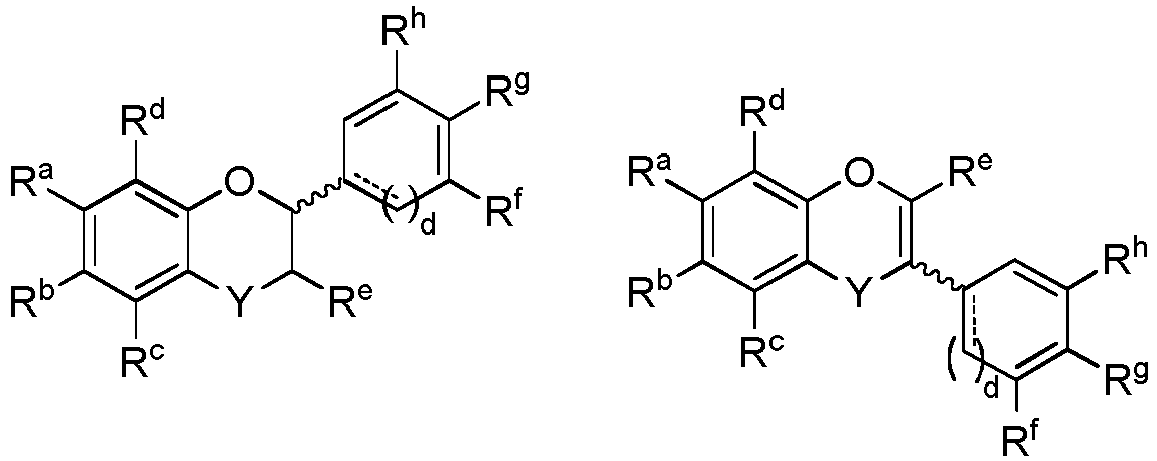


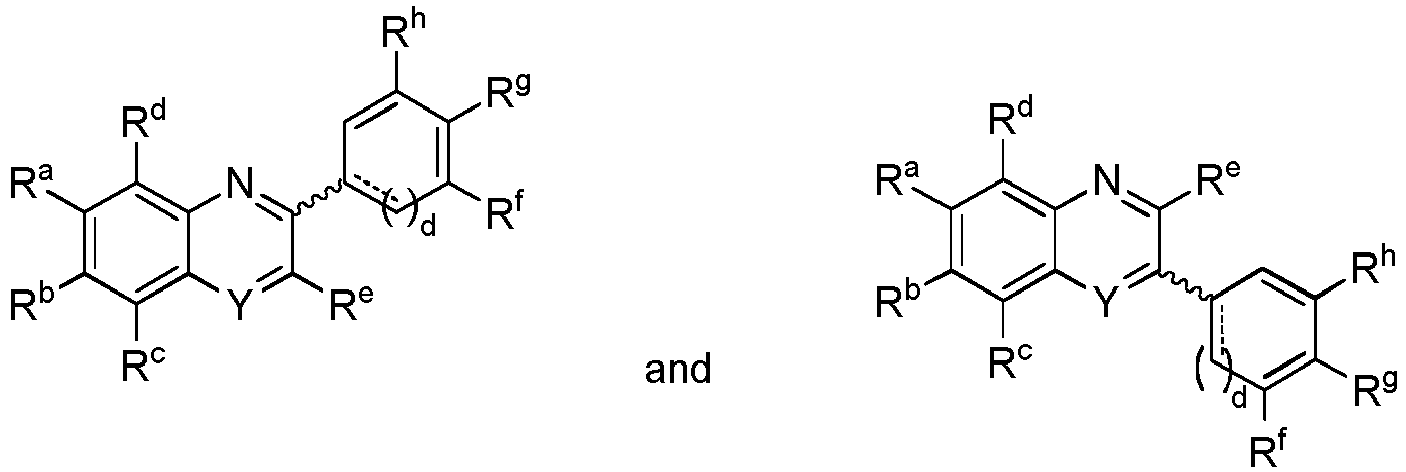
- X is selected from the group consisting of -C(=O)-, -O- and -N-,
- Y is selected from the group consisting of -C(H)p-, -C(=O)-, -O- and -N-,
- with p being 1 or 2,
- and wherein Ra and Rb form together a cycloalkyl ring, cycloheteroalkyl ring, an aryl ring or a heteroarylring, wherein the cycloalkyl, cycloheteroalkyl, aryl or heteroaryl is a single-ring group or a multicyclic group,
- and wherein Rc, Rd, Rf, Rg and Rh are, independently of each other, selected from the group consisting of H, halogene, alkyl and an electron donating group, or wherein Rc, Rd, Rf, Rg and Rh are, independently of each other, selected from the group consisting of H, Alkyl, halogene, -C(=Yp)Rr, and an electron donating group, wherein Rr is -OH, -NH2, - NH-Alkyl, -O-Alkyl, or -S-Alkyl, and wherein Yp is selected from the group consisting of S, O and NH
- and wherein Re is selected from the group consisting of H, Alkyl, halogen, electron donating group, aryl, heteroaryl group, -C(=Yp)Rr and -O-C(=O)-R*, wherein R* is an aryl or heteroaryl group,
- wherein at least one of Ra, Rb, Rc, Rd, Rf, Rg, Re,and Rh is an electron donating group.
- Preferably Ra and Rb are together -O-CH2-O- and thus form a 5 membered ring.
- By way of example, the following preferred compound is mentioned:

- According to a preferred embodiment, Re is selected from the group consisting of aryl, heteroaryl group and -O-C(=O)-R*, wherein R* is an aryl or heteroaryl group. In particular, Re is a substituted or unsubstituted phenyl group or -O-C(=O)-R* with R* being a substituted or unsubstituted phenyl, preferably wherein Re is a group having the structure
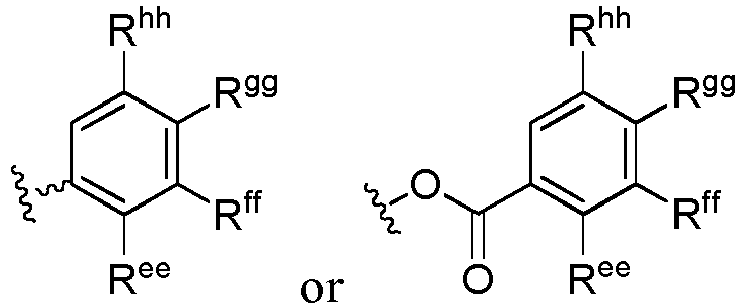


- According to a further embodiment of the invention, the compound has a structure of the formula (IV') or (IV")

- X is selected from the group consisting of -C(=O)-, -O- and -N-, Y is selected from the group consisting of -C(H)p-, -C(=O)-, -O- and -N-, Xx is selected from the group consisting of -C(Ra)- or N, Yy is selected from the group consisting of -C(Rc)- or N, wherein
- with p being 1 or 2,
- the bond (a) is a single or double bond,
- the bond (b) is a single or double bond,
- the bond (c) is a single or double bond,
- and wherein Ra and Rb are, independently of each other selected from the group consisting of H, Alkyl, halogene, -C(=Yp)Rr, and an electron donating group, wherein Rr is -OH, - NH2, -NH-Alkyl, -O-Alkyl, or -S-Alkyl, and wherein Yp is selected from the group consisting of S, O, and NH,
- or wherein Ra and R form together a cycloalkyl, cycloheteroalkyl, aryl or heteroaryl, wherein the cycloalkyl, cycloheteroalkyl, aryl or heteroaryl is a single-ring group or a multicyclic group,
- and wherein Rc, Rd, Rf, Rg and Rh are, independently of each other, selected from the group consisting of H, Alkyl, halogene, -C(=Yp)Rr, and an electron donating group, wherein Rr is -OH, -NH2, -NH-Alkyl, -O-Alkyl, or -S-Alkyl, and wherein Yp is selected from the group consisting of S, O and NH,
- and wherein Re is selected from the group consisting of H, Alkyl, halogene, -O-C(=Yp)Rr, electron donating group, , aryl, heteroaryl group and -O-C(=O)-R*, wherein R* is an aryl or heteroaryl group, wherein Rr is -OH, -NH2, -NH-Alkyl, -O-Alkyl, or -S-Alkyl, and wherein Yp is selected from the group consisting of S, O and NH and wherein at least one of Ra, Rb, Rc, Rd, Rf, Rg, Re, and Rh is an electron donating group, with the proviso that in case the bond (c) is a double bond (a) and (b) are both single bonds, and in case X is -C(=O)-, the bond (a) is a single bond, and wherein in case Y is -C(=O)-, the bond (b) is a single bond. More preferably Xx is N and Yy is N, the compound thus having one of the following structures:


- Further, the following compounds are preferred: 2-Hydroxy-5-(6,7,8-trimethyl-quinoxalin-2-yl)-benzoic acid, 3-(6,7-Dimethyl-quinoxalin-2-yl)-6-hydroxy-2-methyl-benzoic acid, 6-Hydroxy-2-methyl-3-(6,7,8-trimethyl-quinoxalin-2-yl)-benzoic acid, 5-(6,7-Dimethyl-4-trifluoromethyl-quinolin-3-yl)-2-hydroxy-benzoic acid, 4-(4-Amino-2-methyl-pteridin-6-yl)-benzene-1,2-diol, 4-(1,3-Dioxa-5,8-diaza-cyclopenta[b]naphthalen-6-yl)-benzene-1,2-diol, 2-Amino-5-(6,7-dimethyl-quinoxalin-2-yl)-3-hydroxy-benzoic acid, 3-(6,7-Dimethylquinoxalin-2-yl)-5-hydroxy-benzoic acid, 2-(3,4-Dihydroxy-phenyl)-quinoxaline-6,7-diol, 2-(3,4-Dihydroxyphenyl)-6,7-dimethylquinoxaline, 5-(6,7-Dimethyl-quinoxalin-2-yl)-benzene-1,3-diol, 2-(6,7-Dimethyl-quinoxalin-2-yl)-benzene-1,4-diol, 5-(6,7-Dimethylquinoxalin-2-yl)-2-hydroxy-benzoic acid, 4-(6,7-dimethylquinoxalin-2-yl)benzene-1,2-diol, 4-(7-Hydroxy-6-methyl-quinoxalin-2-yl)-benzene-1,2-diol, 2-(3,4-Dihydroxyphenyl)-quinoxaline-5,7-diol, -(3,4-dihydroxyphenyl)-3,7-dihydroxy-2,3-dihydrochromen-4-one (Fustin), 3,7-Dihydroxy-2-(3,4,5-trihydroxy-phenyl)-chroman-4-one, 3,5,7-Trihydroxy-2-(3,4,5-trihydroxy-phenyl)-chroman-4-one, and 4-(quinoxalin-2-yl)phenyl acetate
- According to an alternative embodiment, the compound is selected from the group consisting of:
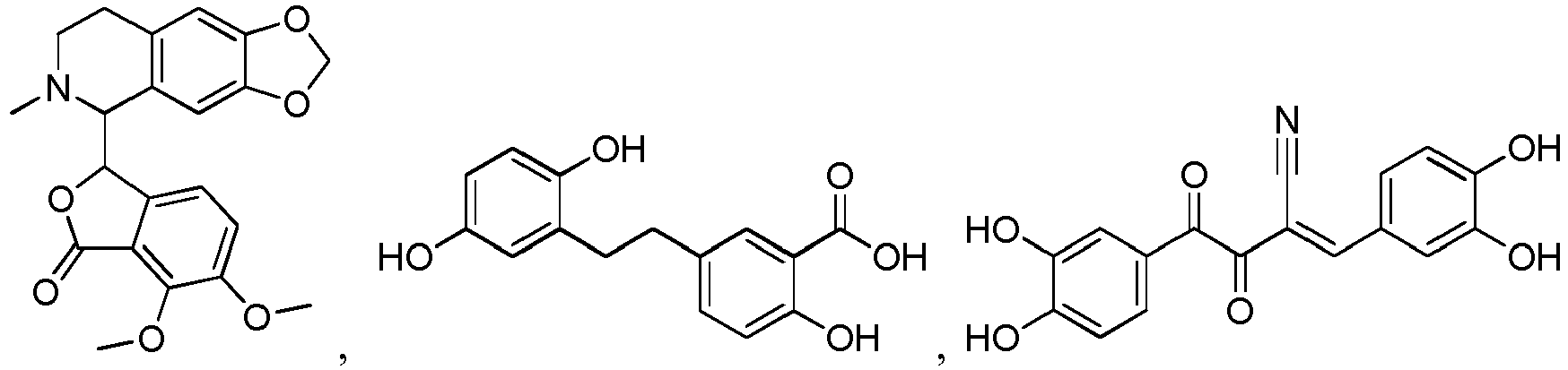

- As described above, the compounds of the present invention can be formulated as pharmaceutically acceptable salt or solvate.
- Typical pharmaceutically acceptable salts include those salts prepared by reaction of the compounds of the present invention with a pharmaceutically acceptable mineral or organic acid or an organic or inorganic base. Such salts are known as acid addition and base addition salts. Acids commonly employed to form acid addition salts are inorganic acids such as hydrochloric acid, hydrobromic acid, hydroiodic acid, sulfuric acid, phosphoric acid, and organic acids such as p-toluenesulfonic acid, methanesulfonic acid, oxalic acid, p-bromophenylsulfonic acid, carbonic acid, succinic acid, citric acid, benzoic acid, acetic acid. Examples of such pharmaceutically acceptable salts are the sulfate, pyrosulfate, bisulfate, sulfite, bisulfite, phosphate, monohydrogenphosphate, dihydrogenphosphate, metaphosphate, pyrophosphate, bromide, iodide, acetate, propionate, decanoate, caprylate, acrylate, formate, hydrochloride, dihydrochloride, isobutyrate, caproate, heptanoate, propiolate, oxalate, malonate, succinate, suberate, sebacate, fumarate, maleate, butyne-1,4-dioate, hexyne-1,6-dioate, benzoate, chlorobenzoate, methylbenzoate, hydroxybenzoate, methoxybenzoate, phthalate, xylenesulfonate, phenylacetate, phenylpropionate, phenylbutyrate, citrate, lactate, gammahydroxybutyrate, glycolate, tartrate, methanesulfonate, propanesulfonate, naphthalene-1-sulfonate, napththalene-2-sulfonate, mandelate. Preferred pharmaceutically acceptable acid addition salts are those formed with mineral acids such as hydrochloric acid and hydrobromic acid, and those formed with organic acids such as maleic acid and methanesulfonic acid. Salts of amine groups may also comprise quaternary ammonium salts in which the amino nitrogen carries a suitable organic group such as an alkyl, alkenyl, alkynyl, or aralkyl moiety. Base addition salts include those derived from inorganic bases, such as ammonium or alkali or alkaline earth metal hydroxides, carbonates, bicarbonates. Such bases useful in preparing the salts of this invention thus include sodium hydroxide, potassium hydroxide, ammonium hydroxide, potassium carbonate, sodium carbonate, sodium bicarbonate, potassium bicarbonate, calcium hydroxide, calcium carbonate. The potassium and sodium salt forms are particularly preferred. It should be recognized that the particular counter ion forming a part of any salt of this invention is usually not of a critical nature, so long as the salt as a whole is pharmacologically acceptable and as long as the counter ion does not contribute undesired qualities to the salt as a whole.
- The term acceptable solvate encompasses also pharmaceutically acceptable solvates of the compounds of the invention, wherein the compound combines with a solvent such as water, methanol, ethanol or acetonitrile to form a pharmaceutically acceptable solvate such as the corresponding hydrate, methanolate, ethanolate or acetonitrilate.
- Moreover, the disclosure relates to a method for identifying a C4 plant selective herbicide, comprising screening a compound library for a compound, which is
- i) capable of binding to the malate binding site comprised by a phosphoenolpyruvate carboxylase from a C4 plant, thereby inhibiting the activity of said phosphoenolpyruvate carboxylase, and
- ii) not capable of binding to the malate binding site comprised by a phosphoenolpyruvate carboxylase from a C3 plant.
- A compound which is capable of binding to the malate binding site comprised by the phosphoenolpyruvate carboxylase from a C4 plant, but which is not capable of binding to the malate binding site comprised by the phosphoenolpyruvate carboxylase from a C3 plant, preferably, is a candidate compound that can be used as a C4 selective herbicide.
- The term "herbicide" is well understood in the art. As used herein, the term refers to a compound that inhibits the growth of plants. The inhibition of the growth of plants shall include all deviations from natural development. In particular, the term refers to reducing the growth of the plant or to kill a plant. Moreover, the term may include inhibition of the development. Preferably, the term further includes dwarfing.
- The herbicide to be identified by the method of the present invention shall be a C4 plant selective herbicide. A C4 plant selective herbicide, preferably, shall inhibit the growth of a C4 plant, but shall not inhibit the growth of a C3 plant. Also preferably, a C4 plant selective herbicide shall significantly inhibit the growth of a C4 plant, whereas growth of C3 plant shall remain unchanged, in particular essentially unchanged, in the presence of said herbicide (as compared to the absence of the herbicide). Whether growth of a plant is essentially unchanged or significantly inhibited can be determined by the skilled person without further ado.
- As set forth above, the term "inhibiting the growth" also includes a "reducing the growth". Accordingly, it is envisaged that the growth of a C4 shall be reduced in the presence of said herbicide (in particular in the presence of an effective amount) as compared to the growth in the in the absence of said herbicide. In contrast, the growth of a C3 plant shall not be affected by the presence of the herbicide, in particular, shall not be significantly affected in the presence of said herbicide. Accordingly, a C3 plant, preferably, shows the same growth (in particular, essentially the same growth), regardless whether the herbicide is present or not. Thus, it is envisaged, that a C4 plant selective herbicide shall reduce the growth of a C4 plant, but shall not reduce the growth of a C3 plants.
- It is to be understood that the inhibition of the growth of the C4 plant may dependent on the concentration. Preferably, the growth of the C4 plant is inhibited if the plant is contacted with an effective amount of the herbicide, i.e.. with a herbicidal effective amount. Whether an amount of the herbicide is effective, or not, can be determined by methods known in the art.
- The terms "C3 plant" and "C4 plant" are well understood by the skilled person.
- A C3 plant, in particular, shall be a plant in which the CO2 is first fixed into a compound containing three carbon atoms (phosphoglyceric acid) before entering the Calvin cycle of photosynthesis. Preferably, it uses the C3 carbon fixation pathway as the sole mechanis to covert CO2 into 3-phosphoglycerate. C3 plants are well known in the art and include tobacco, tomato, soybeans, potato, cucumber, cotton, wheat, rice and barley.
- Particularly preferred C3 plants are Oryza sativa, Hordeum vulgare, Brassica napus, Triticum aestivum, and, in particular, Flaveria pringlei. Further preferred are Glycine max (soybean), cucumber, grapes, potato, tomato, cassava, sugar beet und watermelon. Moreover, it is also preferred that the C3 plant is selected from the group of C3 plants consisting of asparagus, green beans, cabbages and other brassicas, carrots and turnips, cassava, cauliflowers and broccoli, green chilies and peppers, cucumbers and gherkins, eggplants, grapes, lettuce and chicory, pumpkins, squash and gourds, spinach, sugar beet, sunflower seed, watermelons, and yams.
- A C4 is plant in which the CO2 is first fixed into a compound containing four carbon atoms before entering the Calvin cycle of photosynthesis. In particular, a C4 plant shall utilize the C4 carbon fixation pathway in which the CO2 is first bound to a phosphoenolpyruvate resulting in the formation of four-carbon compound (oxaloacetate). C4 plants are well known in the art and include monocotyledonous plants such as maize, sugarcane, and sorghum, as well as dicotyledonous plants such as Amaranthus.
- Preferably, the C4 plants belong to the C4 plants of the family selected from Aizoaceae (Genus, in particular, Cypselea, Gisekia, Trianthema, Zalaeya), Amaranthaceae (Acanthochiton, Aerva, Alteranthera, Amaranthus, Brayulinea), Caryophyllaceae (Polycarpaea), Chenopodiacea (Anabis, Aellenia, Arthrophytum, Atriplex, Bassia, Bienerta, Camphorosma, Chenolea, Climacoptera, Comulaca, Cytobasis, Echinopsilon, Gamanthus, Girgensohnia, Halanthium, Halimocnemis, Halocharis, Halogeton, Halostigmaria, Haloxylon, Hammada, Horaninovia, Hypocyclix, Kochia, Londesia, Noaea, Panderia, Petrosimonia, Salsola, Seidlitzia, Suaeda, Theleophyton, Traganum) Molluginaceae (Glinis, Mollugo) Nyctaginaceae (Ilionia, Boerhaavia, Okenia), Portulaceae (Portulaca), Polygonaceae (Calligonum), Euphorbiaceae (Chamaesyce, Euphorbia) Capparaceae (Gynandropsis), Zygophyllaceae (Kallstroemia, Tribulus, Zygophyllum) Asteraceae (Glossocordia, Glossogyne, Isostigma, Pectis), Boraginaceae, Convolvulaceae, Acanthaceae, Scrophulariaceae, Poaceae (Alloteropsis, Andropogon, Arundinella, Bouteloua, Cynodon, Echinochloa, Leptochloa, Microstegium, Panicum, Paspalum, Setaria, Sorghum, Spartina, Sporobolus, Zea). Preferred genera are indicated in brackets.
- Particularly preferred C4 plants are selected from the group consisting of Bothriochloa saccharoides, Bothriochloa ischaemum, Imperata cylindrica (Cogon grass), Panicum capillare (Witchgrass), Panicum coloratum, Panicum fluviicola, Panicum miliaceum, Panicum phragmitoides, Panicum turgidum, Saccharum officinarum (Wild sugarcane), Sorghum bicolor, Zea mays (Maize), in particular Flaveria trinervia, Setaria italica (Foxtail millet), Setaria palmifolia, Setaria plicata, Paspalum conjugatum (Buffalo Gras), Paspalum quadrifarium, Paspalum dilatatum, Amaranthus hypochondriacus, Amaranthus spinosus (spiny amaranth), Sorghum halepense (Johnsongrass), Rottboellia cochinchinensis (itchgrass), Commelina benghalensis (tropical spiderwort), Trianthema portulacastrum (desert horse purslane), Ageratum conyzoides (Chick weed, Goatweed, Whiteweed), Bidens pilosa (Spanish Needle), Euphorbia hirta, Portulaca oleracea (Pigweed). Further preferred C4 plants are Alopecurues myosuroides and Gallium aparine. Particularly preferred C4 plants are Flaveria trinervia, Flaveria australasica, Zea mays, and Sorghum bicolor.
- The phosphoenolpyruvate carboxylases to be used in the context of the method of the present invention shall be derived from a C3 and from a C4 plant, respectively. Thus, it is particular envisaged that the phosphoenolpyruvate carboxylase to be used is naturally present in a C3 and a C4 plant, respectively. Preferred C3 and C4 plants are disclosed herein above.
- The term "phosphoenolpyruvate carboxylase" is well understood by the skilled person. Frequently, phosphoenolpyruvate carboxylases are also referred to as PEP carboxylase, PEPCase, or PEPC. A phosphoenolpyruvate carboxylase as referred to herein shall be capable of catalyzing the formation of oxaloacetate from phosphoenolpyruvate (PEP) and bicarbonate (EC 4.1.1.31). In particular, a phosphoenolpyruvate carboxylase shall be capable of catalyzing the irreversible beta-carboxylation of phosphoenolpyruvate by bicarbonate to yield oxalacetate and phosphate. The aforementioned enzymatic activity can be determined by assays well known in the art.
- It is well known in the art, that the regulation of the PEP carboxylase is, inter alia, effected by allosteric effectors, L-aspartate and L-malate. L-aspartate or L-malate bind at the enzyme to an allosteric binding domain, the malate binding site (also called "aspartate binding site" or "aspartate/malate binding site"), thereby inhibiting the activity of the PEP carboxylase. The malate binding site of a PEP carboxylase comprises four conserved residues which participate directly in the binding of malate and aspartate. The conserved residues are well known in the art, and e.g. described by Jacobs et al. (Plant Cell and Enviroment (2008), 31, 793-803). In Flaveria, the four conserved residue which participate in the binding of aspartate/malate are R641, K829, R888 and N964 (see the sequences disclosed herein for the PEPC from Flaveria pringlei und trinervia.
- In a preferred embodiment of the present invention the PEP carboxylase from a C4 plant is derived from Flaveria trinervia (GenBank Accession Number CAA43601.1 GI:498699), and the PEP carboxylase from a C3 plant is derived from Flaveria pringlei (GenBank Accession number CAA45505.1 GI:18458), i.e. two highly homologous PEP carboxylases.
- The amino acid sequence of the PEP carboxylase from Flaveria trinervia is shown in SEQ ID NO: 1, the amino acid sequence of the PEP carboxylase from Flaveria pringlei is shown in SEQ ID NO: 2.
- Thus, in a preferred embodiment, the phosphoenolpyruvate carboxylase derived from a C4 plant is, in particular, encoded by a polynucleotide comprising a nucleic acid selected from the group consisting of:
- a. a nucleic acid encoding a polypeptide having an amino acid sequence as shown in SEQ ID No: 1;
- b. a nucleic acid encoding a polypeptide having an amino acid sequence being at least 90%, 95%, 97% or in particular 99% identical to the amino acid sequence shown in SEQ ID No: 1, wherein said polypeptide has phosphoenolpyruvate carboxylase activity.
- The enzymatic activity of a PEP carboxylase is disclosed elsewhere herein. Thus, the phosphoenolpyruvate carboxylase shall be capable of catalyzing the formation of oxaloacetate from phosphoenolpyruvate (PEP) and bicarbonate (EC 4.1.1.31, see above). Preferably, the phosphoenolpyruvate carboxylase derived from a C4, comprises, within its malate binding site, a glycine residue which corresponds to the conserved glycine residue found at
position 884 of the PEP carboxylase from Flaveria pringlei. Moreover, the inventors have found that some of the PEP carboxylases from C4 plants comprise at a position which corresponds to the glycine residue, a serine, glutamine or isoleucine residue, i.e. amino acid residues which will also not inhibit binding of the identified herbicides by their side-chain. Alternatively, the said phosphoenolpyruvate carboxylase derived from a C4, comprises, within its malate binding site, a serine, glutamine or isoleucine residue which corresponds to said glycine residue. The malate binding site of the PEP Carboxylase from Flaveria trinervia is well known in the art, and, e.g. described by Jacobs et al. (Plant Cell and Enviroment (2008), 31, 793-803). Preferably, the variants of the phosphoenolpyruvate carboxylase set forth in c. and d. above are capable of binding malate. - Thus, in a preferred embodiment, the phosphoenolpyruvate carboxylase derived from a C3 plant is, in particular, encoded by a polynucleotide comprising a nucleic acid selected from the group consisting of:
- a. a nucleic acid encoding a polypeptide having an amino acid sequence as shown in SEQ ID No: 2;
- b. a nucleic acid encoding a polypeptide having an amino acid sequence being at least 90%, 95%, 97% or in particular 99% identical to the amino acid sequence shown in SEQ ID No: 2, wherein said polypeptide has phosphoenolpyruvate carboxylase activity.
- The activity of a PEP carboxylase is disclosed elsewhere herein. Preferably, the phosphoenolpyruvate carboxylase derived from a C3, comprises, within its malate binding site, a conserved arginine residue which corresponds to the conserved arginine residue found at
position 884 of the PEP carboxylase from Flaveria pringlei. Preferably, the conserved arginine residue is within the region of amino acid 875 to 895. The malate binding site of the PEP Carboxylase from Flaveria pringlei is well known in the art, and, e.g. described by Jacobs et al. (Plant Cell and Enviroment (2008), 31, 793-803), which is herewith incorporated by reference with respect to its entire disclosure content. Preferably, the variants of the phosphoenolpyruvate carboxylase set forth in b. above are capable of binding malate. - The term "polynucleotide" as used herein refers to a linear or circular nucleic acid molecule. It encompasses DNA as well as RNA molecules. The polynucleotide of the present invention shall be provided, preferably, either as an isolated polynucleotide (i.e. isolated from its natural context) or in genetically modified form. The term encompasses single as well as double stranded polynucleotides. Moreover, comprised are also chemically modified polynucleotides including naturally occurring modified polynucleotides such as glycosylated or methylated polynucleotides or artificial modified one such as biotinylated polynucleotides. The polynucleotide of the present invention is characterized in that it shall encode a polypeptide as referred to above. The polynucleotide, preferably, has a specific nucleotide sequence as mentioned above. Moreover, due to the degeneracy of the genetic code, polynucleotides are encompassed which encode a specific amino acid sequence as recited above.
- Moreover, the term "polynucleotide" as used in accordance with the present invention further encompasses variants of the aforementioned specific polynucleotides. Said variants may represent orthologs, paralogs or other homologs of the polynucleotide of the present invention. The polynucleotide variants, preferably, comprise a nucleic acid sequence characterized in that the sequence can be derived from the aforementioned specific nucleic acid sequences by at least one nucleotide substitution, addition and/or deletion whereby the variant nucleic acid sequence shall still encode a polypeptide having the activity as specified above. Variants also encompass polynucleotides comprising a nucleic acid sequence which is capable of hybridizing to the aforementioned specific nucleic acid sequences, preferably, under stringent hybridization conditions. These stringent conditions are known to the skilled worker and can be found in Current Protocols in Molecular Biology, John Wiley & Sons, N. Y. (1989), 6.3.1-6.3.6. A preferred example for stringent hybridization conditions are hybridization conditions in 6 x sodium chloride/sodium citrate (= SSC) at approximately 45°C, followed by one or more wash steps in 0.2 x SSC, 0.1% SDS at 50 to 65°C. The skilled worker knows that these hybridization conditions differ depending on the type of nucleic acid and, for example when organic solvents are present, with regard to the temperature and concentration of the buffer. For example, under "standard hybridization conditions" the temperature differs depending on the type of nucleic acid between 42°C and 58°C in aqueous buffer with a concentration of 0.1 to 5 x SSC (pH 7.2). If organic solvent is present in the abovementioned buffer, for example 50% formamide, the temperature under standard conditions is approximately 42°C. The hybridization conditions for DNA:DNA hybrids are preferably for example 0.1 x SSC and 20°C to 45°C, preferably between 30°C and 45°C. The hybridization conditions for DNA:RNA hybrids are preferably, for example, 0.1 x SSC and 30°C to 55°C, preferably between 45°C and 55°C. The abovementioned hybridization temperatures are determined for example for a nucleic acid with approximately 100 bp (= base pairs) in length and a G + C content of 50% in the absence of formamide. The skilled worker knows how to determine the hybridization conditions required by referring to textbooks such as the textbook mentioned above, or the following textbooks: Sambrook et al., "Molecular Cloning", Cold Spring Harbor Laboratory, 1989; Hames and Higgins (Ed.) 1985, "Nucleic Acids Hybridization: A Practical Approach", IRL Press at Oxford University Press, Oxford; Brown (Ed.) 1991, "Essential Molecular Biology: A Practical Approach", IRL Press at Oxford University Press, Oxford. Alternatively, polynucleotide variants are obtainable by PCR-based techniques such as mixed oligonucleotide primer-based amplification of DNA, i.e. using degenerated primers against conserved domains of the polypeptides of the present invention. Conserved domains of the polypeptide of the present invention may be identified by a sequence comparison of the nucleic acid sequence of the polynucleotide or the amino acid sequence of the polypeptide of the present invention with sequences of other members of the enzyme families referred to in accordance with this invention. Oligonucleotides suitable as PCR primers as well as suitable PCR conditions are described in the accompanying Examples. As a template, DNA or cDNA from bacteria, fungi, plants or animals may be used. Further, variants include polynucleotides comprising nucleic acid sequences which are, in increasing order of preference, at least 70%, at least 75%, at least 80%, at least 85%, at least 90%, at least 95%, at least 98% or at least 99% identical to the specific nucleic acid sequences. Moreover, also encompassed are polynucleotides which comprise nucleic acid sequences encoding amino acid sequences which are, in increasing order of preference, at least 70%, at least 75%, at least 80%, at least 85%, at least 90%, at least 95%, at least 98% or at least 99% identical to the specific amino acid sequences referred to herein. The percent identity values as set forth herein are, preferably, calculated over the entire amino acid or nucleic acid sequence region. A series of programs based on a variety of algorithms is available to the skilled worker for comparing different sequences. In this context, the algorithms of Needleman and Wunsch or Smith and Waterman give particularly reliable results. To carry out the sequence alignments, the program PileUp (Higgins 1989, CABIOS, 5 1989: 151-153) or the programs Gap and BestFit (Needleman 1970, J. Mol. Biol. 48; 443-453 and Smith 198, Adv. Appl. Math. 2; 482-489), which are part of the GCG software packet from Genetics Computer Group, 575 Science Drive, Madison, Wisconsin, USA 53711, version 1991, are to be used. The sequence identity values recited above in percent (%) are to be determined, preferably, using the program GAP over the entire sequence region with the following settings: Gap Weight: 50, Length Weight: 3, Average Match: 10.000 and Average Mismatch: 0.000, which, unless otherwise specified, shall always be used as standard settings for sequence alignments.
- A polynucleotide comprising a fragment of any of the aforementioned nucleic acid sequences is also encompassed as a polynucleotide of the present invention. The fragment shall encode a polypeptide which still has the activity as specified above. Accordingly, the polypeptide may comprise or consist of the domains of the polypeptide of the present invention conferring the said biological activity. A fragment as meant herein, preferably, comprises at least 50, at least 100, at least 250 or at least 500 consecutive nucleotides of any one of the aforementioned nucleic acid sequences or encodes an amino acid sequence comprising at least 20, at least 30, at least 50, at least 80, at least 100 or at least 150 consecutive amino acids of any one of the aforementioned amino acid sequences.
- Further preferred PEP carboxylases from C3 plants are derived from the following plants (indicated is the organism, the GenBank Accession Nummer, and the position of the conserved arginine residue. For some enzymes, only the sequences of fragments are known, the full length sequences can be determined by the skilled person without further ado):
Oryza sativa (Rice) EMBL AAG00180.1 R879 Brassica napus (Rape) TrEMBL Q42634 R883 Triticum aestivum (Wheat) EMBL CAA07610.1 R891 Phaseolus vulgaris (Kidney bean) Q9AU12 R887 Hordeum vulgare (Barley) EMBL ABB01326.1 (Fragment) R146 Vicia faba (Broad bean) (Faba vulgaris) EMBL CAA09588.1 R885 Cucumis sativus (Cucumber) EMBL CAD10147.1 (Fragment) R117 Vitis vinifera (Grape) EMBL AAL83719.1 (Fragment) R258 Solanum tuberosum (Potato) P29196 R885 Gossypium hirsutum (Upland cotton) EMBL AAB80714.1 R884 Glycine max (Soybean) P51061 [UniParc] R886 Nicotiana tabacum (Common tobacco) P27154 [UniParc] R884 - Further preferred PEP carboxylases from C3 plants are derived from Hordeum vulgare (BAJ88050.1 GI:326516054) or from Arabidopsis thaliana (AAC24594.1 GI:3264805)
- Further preferred PEP carboxylases from C4 plants are derived from the following plants (indicated is the organism, the GenBank Accession Nummer, and the position of the conserved glycine residue, alternatively of the serine, glutamine or isoleucine, see elsewhere herein. For some enyzmes, only the sequences of fragments are known, the full length sequences can be determined by the skilled person without further ado):
Bothriochloa saccharoides (Fragment) TrEMBL A7DX44 G429 Bothriochloa ischaemum (Fragment) TrEMBL A7DX82 G429 Imperata cylindrica (Cogon grass) Fragment) TrEMBL A7DX63 G429 Panicum capillare (Witchgrass) (Fragment) EMBL CAM84110.1 G429 Panicum coloratum (Fragment) TrEMBL A7DXB1 G429 Panicum fluviicola TrEMBL (Fragment) D9UAH3 G721 Panicum miliaceum (Fragment) TrEMBL E1XUD1 G721 Panicum phragmitoides (Fragment) TrEMBL D9UAH8 G721 Panicum turgidum (Fragment) TrEMBL D9UAH5 G721 Saccharum officinarum (Wild sugarcane) EMBL CAC85930.1 G881 Sorghum bicolor Swiss-prot P15804 G881 Zea mays (Maize) EMBL CAA33317.1 G890 Flaveria trinervia Swiss-Prot P30694 G884 Panicum laetum (Fragment) EMBL CAM84117.1 S429 Setaria italica (Foxtail millet) TrEMBL Q8S2Z8 Q884 Setaria palmifolia (Fragment) TrEMBL A7DXC5 Q429 Setaria plicata (Fragment) TrEMBL A7DXC6 Q429 Paspalum conjugatum (Buffalo Gras) (Fragment) TrEMBL A7DXB6 Q429 Paspalum quadrifarium (Fragment) EMBL CAM84120.1 Q429 Paspalum dilatatum (Fragment) TrEMBL A7DXB7 Q429 Amaranthus hypochondriacus SwissProt Q43299 I884 - Preferably, the compound which is capable of binding to the malate binding site comprised by the phosphoenolpyruvate carboxylase from a C4 plant, but which is not capable of binding to the malate binding site comprised by the phosphoenolpyruvate carboxylase from a C3 plant does not bind to the malate binding site comprised by a phosphoenolpyruvate carboxylase from a C3 plant due to steric and/or electrostatic interactions with the conserved arginine residue comprised by said malate binding site. It is particularly envisaged that the said compound does not bind to the malate binding site due to steric interaction with the conserved arginine residue comprised by said malate binding site. Accordingly, binding of said compound is, preferably, inhibited by the presence of said conserved arginine residue.
- The assessment whether a compound binds to a malate binding site can be carried out in vivo or in vitro. Methods for carrying out this assessment are well known in the art, and include Isothermal Titration Calorimetry (ITC) for measuring biomolecular interactions as disclosed by Chaires J. B. (2008) Calorimetry and thermodynamics in drug design. Annu Rev Biophys 37, 135-151. Further preferred methods are disclosed by Cooper M. A. (2003) Label-free screening of bio-molecular interactions. Anal Bioanal Chem 377, 834-842.
- According to the disclosure, the assessment whether said compound binds to said malate binding site of phosphoenolpyruvate carboxylase from said C3 or C4 plant is done by determining the enzymatic activity of said (C3 or C4) phosphoenolpyruvate carboxylase after contacting the compound with the phosphoenolpyruvate carboxylase. Preferably, a compound binds to the malate binding site of said PEP carboxylase (in particular of a C4 PEP carboxylase) if the activity of said PEP carboxylase is reduced i) after contacting said compound with said PEP carboxylase and/or ii) in comparison of a PEP carboxylase that has not been contacted with the compound. Preferably, a compound does not bind to the malate binding site of said PEP carboxylase (in particular of a C3 PEP carboxylase) if the activity of said PEP carboxylase is unchanged, in particular, essentially unchanged i) after contacting said compound with said PEP carboxylase and/or ii) in comparison of a PEP carboxylase that has not been contacted with the compound.
- How to determine the activity of a PEP carboxylase is well known in the art. E.g, the formation of oxaloacetate can be determined spectrophotometrically, e.g., in a malate dehydrogenase coupled system. The reaction velocity can be measured as a decrease in A340 resulting from the oxidation of NADH.
- The figures show:
-
Fig. 1 : Partial alignment of PEP carboxlyases derived from various C3 and C4 plants. Indicated are the conserved arginine residues in C3 PEP carboxylases, and the conserved glycine residues in C4 PEP carboxylases. -
Fig.:2 : Selective Inhibition of a C4-PEPC by (+)-catechin (measured at a concentration of 50 micromolar and 500 micromolar. In table 2 the IC50 value determined from inhibition studies at different concentrations of (+)-catechin is given. Experiments were done in triplicate with at least seven different concentrations of the inhibitor.) -
Fig.:3 : Selective Inhibition of a C4-PEPC by folic acid (measured at a concentration of 0.025 mM) - The following Examples shall merely illustrate the invention. They shall not be construed, whatsoever, to limit the scope of the invention.
- The histidine-tagged PEP carboxylase from Flaveria pringlei or from Flaveria trinervia was heterologously expressed in E. coli and purified via immobilized metal affinity chromatography (IMAC). Crystals of the C3 (F. pringlei) and the C4 (F. trinervia) PEP carboxylase were obtained from the purified proteins by micro batch vapor diffusion. Crystals where analyzed by synchrotron radiation and PEPC structures were determined from the diffraction data by molecular replacement using XDS, coot and the CCP4 suite (Kabsch, 2010; Emsley et al. 2004; CCP4, 1994).
- Crystal structures of PEP carboxylase from Flaveria pringlei or from Flaveria trinervia were superimposed by the align algorithm of PyMOL (DeLano, 2002) which performs a BLAST-like BLOSUM62-weighted dynamic programming sequence alignment followed by a series of refinement cycles intended to improve the fit by eliminating pairing with high relative variability. The malate binding site in the aligned crystal structures was visually inspected for structural differences in the region of 10-15 Å around the bound aspartate inhibitor. From this alignment the structural difference in
position 884 was identified. The C3 type PEP carboxylase of Flaveria pringlei has a voluminous arginine side chain in this position, while the C4 type PEP carboxylase of Flaveria trinervia carries a small glycine residue in the corresponding position. - Potential selective inhibitors of C4 PEP carboxylase were selected from a Virtual Drug Screening (VDS) approach using the program PyRX (Wolf, 2009), standard compound libraries (ChemBank, NCI DataBase, KEGG Database), a library assembled from the Plant Metabolome Database and the high resolution crystal structures of PEP carboxylases from F. pringlei and F. trinervia.
- In particular, the following potential selective inhibitors of C4 PEP carboxylase were identified:
- 1. (+)-Catechin [(2R,3S)-2-(3,4-dihydroxyphenyl)-3,4-dihydro-2H-chromene-3,5,7-triol]
- 2. Epigallocatechin gallate
- 3. 2-(4-methoxy-phenyl)-3-phenylquinoxaline
- 4. Folic Acid
- 5. 1-(3'-carboxy-4'-hydroxyphenyl)-2-(2,5-dihydroxyphenyl)ethane
- 6. 1(R),9(S)-hydrastine
- 7. 1(S),9(R)-beta-hydrastine
- 8. 2-(3,4-dihydroxyphenyl)-3,5,7-chromanetriol
- 9. 2-(3,4-Dihydroxyphenyl)-6,7-dimethylquinoxaline
- 10. 4-((12,20-dioxopregnan-3-yl)oxy)-4-oxobutanoic acid
- 11. Acacetin [5,7-dihydroxy-2-(4-methoxyphenyl)chromen-4-one]
- 12. Afrormosin
- 13. Apigenin [5,7-Dihydroxy-2-(4-hydroxyphenyl)-4H-1-benzopyran-4-one]
- 14. Chrysin [5,7-dihydroxy-2-phenyl-4H-chromen-4-one]
- 15. Daidzein [7-Hydroxy-3-(4-hydroxyphenyl) chromen-4-one]
- 16. Genistein [5,7-Dihydroxy-3-(4-hydroxyphenyl)chromen-4-one]
- 17. Hydrochlorothiazide
- 18. Malvidin [3,5,7-trihydroxy-2-(4-hydroxy- 3,5-dimethoxyphenyl)chromenium]
- 19. N-((1.3-dioxo-1.3-dihydro-2H-isoindol-2-yl)acetyl)aspartic acid
- 20. N-((4-(((2.4-diamino-6-pteridinyl)methyl)amino)phenyl)acetyl)aspartic acid
- 21. N-((4-(((2-amino-4-hydroxy-6-pteridinyl)methyl)amino)phenyl)acetyl)glutamic acid
- 22. N-((5-(((2-amino-4-hydroxy-6-pteridinyl)methyl)amino)-2-thienyl)carbonyl)glutamic acid
- 23. N-([1.1'-biphenyl]-4-ylcarbonyl)glutamic acid
- 24. N-(2-quinoxalinylcarbonyl)aspartic acid
- 25. N-(2-quinoxalinylcarbonyl)glutamic acid
- 26. N-(4-((((2.4-diamino-6-pteridinyl)methyl)(methyl)amino)methyl)benzoyl)glutamic acid
- 27. N-(4-(((2,4-diamino-6-pteridinyl)methyl)amino)-3-methylbenzoyl)glutamic acid
- 28. N-(4-(((2,4-diamino-6-pteridinyl)methyl)amino)benzoyl)glutamic acid
- 29. N-(4-(((2,4-diamino-6-quinazolinyl)methyl)(methyl)amino)benzoyl)glutamic acid
- 30. N-(4-(((2,6-diamino-9H-purin-8-yl)methyl)(methyl)amino)benzoyl)glutamic acid
- 31. N-(4-(((2.4-diamino-6-pteridinyl)methyl)(methyl)amino)-3-iodobenzoyl)glutamic acid
- 32. N-(4-(((2-amino-4-hydrox-6-pteridinyl)methyl)amino)-3-iodobenzoyl)glutamic acid
- 33. N-(4-((2-(2.4-diamino-6-pteridinyl)ethyl)(methyl)amino)benzoyl)glutamic acid
- 34. N-(4-((2-(2-amino-4-hydroxy-6-pteridinyl)ethyl)(methyl)amino)benzoyl)glutamic acid
- 35. Naringenin [5,7-dihydroxy-2-(4-hydroxyphenyl)chroman-4-one]
- 36. Tectorigenin [5,7-dihydroxy-3-(4-hydroxyphenyl)-6-methoxychromen-4-one]
- 37. α-Cyano-(3,4-dihydroxy)cinnamoyl-(3',4'-dihydroxyphenyl) ketone
- Inhibition of purified PEP carboxylases from F. pringlei and F. trinervia by compounds selected from the VDS was monitored by a spectrophotometric coupled assay with malate dehydrogenase which reduces the oxaloacetate formed by PEP carboxylase to malate. The simultaneous oxidation of NADH is followed at 340 nm with standard optical equipment. The concentration of the inhibitors selected from the VDS was varied in the coupled assay to determine the half maximal inhibitory concentration (IC50).
- With (+)-catechin the inhibition shown in
Fig. 2 of the PEP carboxylase activity of the C3 and the C4 enzyme was obtained. Further results are given in table 4. - Inhibition of purified PEP carboxylases from F. pringlei and F. trinervia by compounds selected from the VDS was monitored by a spectrophotometric coupled assay with malate dehydrogenase which reduces the oxaloacetate formed by PEP carboxylase to malate. The simultaneous oxidation of NADH is followed at 340 nm with standard optical equipment. The concentration of the inhibitors selected from the VDS was varied in the coupled assay to determine the half maximal inhibitory concentration (IC50).
- With folic acid the inhibition shown in
Fig. 3 of the PEP carboxylase activity of the C3 and the C4 enzyme was obtained. -
- Collaborative Computational Project, Number 4 (1994) The CCP4 Suite: Programs for Protein Crystallography. Acta Cryst. D50, 760-763.
- DeLano, W. L., (2002) The PyMOL Molecular Graphics System, DeLano Scientific, San Carlos, CA, USA
- Doyle, JR, Burnell, JN, Haines, DS, Llewellyn, LE, Motti, CA und Tapiolas, DM (2005) A Rapid Screening Method to Detect Specific Inhibitors of Pyruvate Orthophosphate Dikinase as Leads for C4 Plant-Selective Herbicides. J Biomol Screen 10: 67-75.
- Durrant, JD, Amaro, RE und McCammon, JA (2009) AutoGrow: A Novel Algorithm for Protein Inhibitor Design. Chemical Biology & Drug Design 73(2): 168-178
- Emsley P, Cowtan K (2004)Coot: model-building tools for molecular graphics. Acta Crystallographica Section D-Biological Crystallography 60: 2126-2132 Part 12 Sp. Iss.
- Jenkins CLD, Harris RLN und McFadden HG (1987) 3,3-Dichloro-2-dihydroxyphosphinoylmethyl-2-propenoate, a new, specific inhibitor of phosphoenolpyruvate carboxylase. Biochem Int 14:219-226.
- Jenkins CLD (1989) Effects of the phosphoenolpyruvate carboxylase inhibitor3,3-dichloro-2-(dihydroxyphosphinoylmethyl)propenoate on photosynthesis. Plant Physiol 89:1231-1237.
- Kabsch, W.(2010) XDS. Acta Cryst. D66, 125-132
- Mancera RL, Gómez AG und Pisanty A. (1995) Quantitative structure-activity relationships of com-petitive inhibitors of phosphoenolpyruvate carboxylase. Bioorg Med Chem. 3(3):217-25.
- Matsumura, H, Xie, Y, Shirakata, S, Inoue, T, Yoshinaga, T, Ueno, Y, Izui, K und Kai Y. (2002) Crystal structures of C4 form maize and quaternary complex of E. coli phosphoenolpyruvate car-boxylases. Structure 10(12):1721-30.
- McFadden, HG, Harris, RLN and Jenkins, CLD (1989) Potential Inhibitors of Phosphoenolpyruvate Carboxylase. II. Phosphonic Acid Substrate Analogues Derived from Reaction of Trialkyl Phosphites with Halomethacrylates. Aust. J. Chem. 42:301-14.
- Motti, CA, Bourne, DG, Burnell, JN, Doyle, JR, Haines, DS, Liptrot, CH, Llewellyn, LE, Ludke, S, Muirhead, A und Tapiolas DM (2007) Screening marine fungi for inhibitors of the C4 plant enzyme pyruvate phosphate dikinase: unguinol as a potential novel herbicide candidate. Appl Environ Mi-crobiol. 73(6):1921-7
- Pairoba, CF, Colombo, SL and Andreo, CS (1996) Flavonoids as Inhibitors of NADP-Malic Enzyme and PEP Carboxylase from C4 Plants. Biosci. Biotech. Biochem. 60(5): 779-783.
- Trott, O und Olson, AJ (2010) AutoDock Vina: improving the speed and accuracy of docking with a new scoring function, efficient optimization and multithreading. Journal of Computational Chemistry 31:455-461.
- Wolf LK (2009) New software and Websites for the Chemical Enterprise, Chemical & Engineering News 87, 31
-
- <110> Heinrich-Heine-Universitaet Düsseldorf
- <120> Selective Inhibition of C4-PEP carboxylases
- <130> P10681PC
- <160> 13
- <170> PatentIn version 3.5
- <210> 1
<211> 966
<212> PRT
<213> Flaveria trinervia - <400> 1


- <210> 2
<211> 967
<212> PRT
<213> Flaveria pringlei - <400> 2


- <210> 3
<211> 33
<212> PRT
<213> Hordeum vulgare - <400> 3

- <210> 4
<211> 33
<212> PRT
<213> Oryza sativa - <400> 4

- <210> 5
<211> 33
<212> PRT
<213> Triticum aestivum - <400> 5


- <210> 6
<211> 33
<212> PRT
<213> Arabidopsis thaliana - <400> 6

- <210> 7
<211> 33
<212> PRT
<213> Flaveria pringlei - <400> 7

- <210> 8
<211> 33
<212> PRT
<213> Flaveria trinervia - <400> 8

- <210> 9
<211> 33
<212> PRT
<213> Flaveria australasica - <400> 9

- <210> 10
<211> 33
<212> PRT
<213> Zea mays - <400> 10

- <210> 11
<211> 33
<212> PRT
<213> Sorghum bicolor - <400> 11

- <210> 12
<211> 33
<212> PRT
<213> Saccharum spontaneum - <400> 12


- <210> 13
<211> 33
<212> PRT
<213> Saccharum officinarum - <400> 13
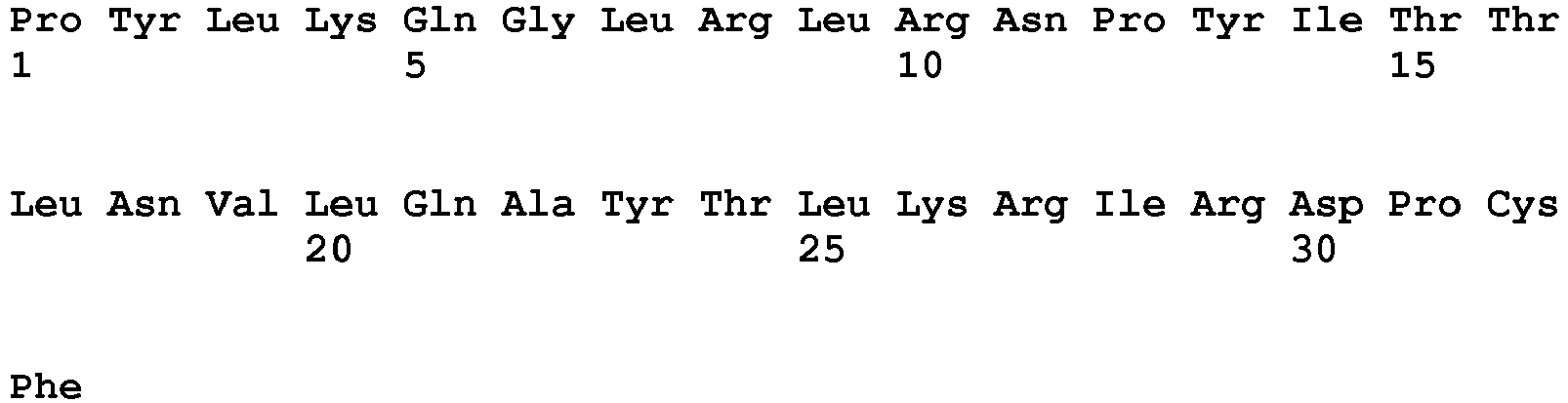
and wherein the cyclic alkyl, aryl, heterocycloalkyl or heteroaryl group inhibits binding to the malate binding site of a phosphoenolpyruvate carboxylase from a C3 plant.
and wherein the cyclic alkyl, aryl, heterocycloalkyl or heteroaryl group inhibits binding to the malate binding site of a phosphoenolpyruvate carboxylase from a C3 plant.
| Structure | Ra | Rb | Rc | Rd | Re | Rf | Rg | Rh |
| Selected from the group consisting of | Selected from the group consisting of | Selected from the group consisting of | Selected from the group consisting of | Selected from the group consisting of | Selected from the group consisting of | Selected from the group consisting of | Selected from the group consisting of | |
 | H, OH | H | H, OH | H | -OH | H, OH | H, OH | H, OH |
 | OH | H, -O-CH3 | H, OH | H | H | H | OH, -O-CH3 | H |
 | H, CH3: preferably CH3 | H, CH3, preferably CH3 | H | H | H | OH | OH | H |
 | F | F | H | H | H | OH | OH | OH |
 | H | H | H | H | H | H | -O-C(=O)-CH3 | H |
 | OH | H | OH | H | H | H | H, OH, -O- CH3 | H |
 | OH | H | H, OH | H | OH | OH | OH | OH |
 | OH | H | H | H | OH | H, OH | OH | OH |
 | OH | H | OH | H | H | H | H, OH, -O-CH3 | H |
 | OH | H | OH | H | OH | -O-CH3 | OH | -O-CH3 |
 | H, CH3 | H. CH3 | H | H | H | H | OH | OH |
 | H, CH3 | H. CH3 | H | H | H | OH | OH | H |
 | H | H | H | H | H | H | O-C(=O)-CH3 | H |
Claims (7)
- Use of a compound, a salt or solvate thereof as C4 plant selective herbicide wherein said compound comprises a cyclic alkyl, aryl, heterocycloalkyl or heteroaryl group, and wherein said compound further comprises(a) at least a functional group Z being -C(=YZ)R1, wherein YZ is selected from the group consisting of O, NH and S, preferably wherein YZ is O, and wherein R1 is selected from the group consisting of H, OH and N(R2R3), - O(R2) and -S(R2), wherein R2 and R3, are independently of each other, selected from the group consisting of H, Alkyl, cycloalkyl, aryl and heteroaryl and a functional group Q which is -C(=YQ)R4, wherein YQ is selected from the group consisting of O, NH and S, preferably wherein YQ is O, and wherein R4 is selected from the group consisting of H, OH and NR4#R5#, OR4#, SR4# wherein R4# and R5#, are independently of each other, selected from the group consisting of H, alkyl, cycloalkyl, aryl and heteroaryl, wherein the compound has a structure according to the formula (I)
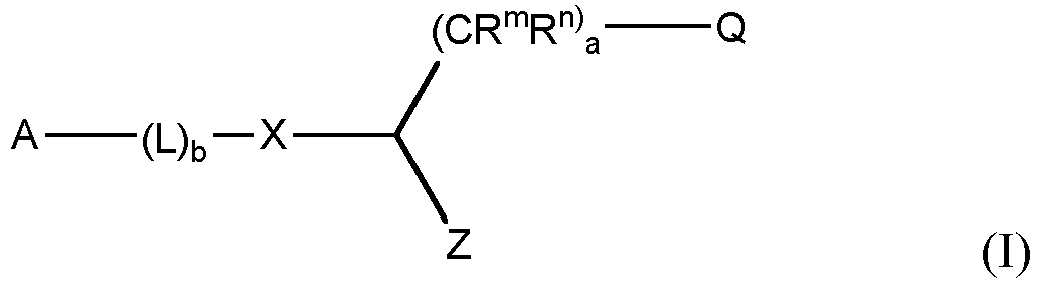 wherein A is selected from the group consisting of

 X is -YX-, or -C(=YXX)-, wherein YX is selected from the group consisting of-S-, -O-, -NH-, -N(CH3)- and NH-NH-,and YXX is selected from the group consisting of S, O and NH,in particular -NH- or -C(=Y)- with Y being S or O,L is a linking moiety, preferably a linking moiety comprising an aryl group,integer b is 0 or 1,integer a is in the range of from 2 to 4and wherein Rm and Rn are, independently of each other, H or alkyl, preferably H or methyl, in particular H,or(b) at least one electron donating group selected from the group consisting of OH, -SH, -O-Rp, -S-Rp, and -NRpRq, wherein Rp and Rq are, independently of each other, selected from the group consisting of H, alkyl, cycloalkyl and heteroaryl, wherein the compound has a structure of the formula (IV') or (IV")said compound being capable of binding to the malate binding site comprised by a phosphoenolpyruvate carboxylase from a C4 plant, thereby inhibiting said phosphoenolpyruvate carboxylase,
 X is selected from the group consisting of -C(=O)-, -O- and -N-,Y is selected from the group consisting of -C(H)p-, -C(=O)-, -O- and -N-,Xx is selected from the group consisting of -C(Ra)- or N, Yy is selected from the group consisting of -C(Rc)- or N,with p being 1 or 2,the bond (a) is a single or double bond,the bond (b) is a single or double bond,the bond (c) is a single or double bond,and wherein Ra and Rb are, independently of each other selected from the group consisting of H, Alkyl, halogene, -C(=Yp)Rr, and an electron donating group, wherein Rr is -OH, -NH2, -NH-Alkyl, -O-Alkyl, or -S-Alkyl, andwherein Yp is selected from the group consisting of S, O and NH, orwherein Ra and Rb form together a cycloalkyl, cycloheteroalkyl, aryl or heteroaryl, wherein the cycloalkyl, cycloheteroalkyl, aryl or heteroaryl is a single-ring group or a multicyclic group,and wherein Rc, Rd, Rf, Rg and Rh are, independently of each other, selected from the group consisting of H, Alkyl, halogene, -C(=Yp)Rr, and an electron donating group, wherein Rr is -OH, -NH2, -NH-Alkyl, -O-Alkyl, or -S-Alkyl, and wherein Yp is selected from the group consisting of S, O and NH, and wherein Re is selected from the group consisting of H, Alkyl, halogene, -C(=Yp)Rr, -O-C(=Yp)Rr, an electron donating group, aryl, heteroaryl group and -O-C(=O)-R*, wherein R* is an aryl or heteroaryl group, and whereinRr is -OH, -NH2, -NH-Alkyl, -O-Alkyl, or -S-Alkyl, and wherein Yp is selected from the group consisting of S, O and NH,wherein at least one of Ra, Rb, Rc, Rd, Rf, Rg, Re and Rh is the electron donating group selected from the group consisting of OH, -SH, -O-Rp, -S-Rp, and -NRpRq" with the proviso that in case the bond (c) is a double bond (a) and (b) are both single bonds, and in case X is -C(=O)-, the bond (a) is a single bond, and wherein in case Y is -C(=O)-, the bond (b) is a single bond, and wherein integer d is 1,
and wherein the cyclic alkyl, aryl, heterocycloalkyl or heteroaryl group inhibits binding to the malate binding site of a phosphoenolpyruvate carboxylase from a C3 plant. - Use according to claim 1, wherein in (a) Q is COOH, the compound having the structure (II):

- Use according to claims 1 and 2, wherein in (a) Z is COOH, the compound having the structure (III):

- Use according to any of claims 1 to 3, wherein in (a) L has a structure according to the following formula
-[F2]c-[L1]d-[F1]e-
wherein L1 is a linking moiety, preferably selected from the group consisting of alkyl, alkenyl, alkylaryl, arylalkyl, aryl, heteroaryl, alkylheteroaryl and heteroarylalkyl,and wherein integer d is 0 or 1,and whereinF1 is a functional group consisting of -YF1-, -C(=YF)-, -C(=YF)-NRY1-,wherein YF1 is selected from the group consisting of -S-, -O-, -NH-, -N(CH3)- and NH-NH-,YF is selected from the group consisting of S, O and NHand RY1 is H or alkyl,and wherein in case X is -YX-, F1 is -C(=YF)- or -C(=YF)-NRY1 and wherein in case X is -C(=YX)-, -C(=YXX)-NRX-, F1 is -YF1-,integer e is 0 or 1,F2 is a functional group selected from the group consisting of -YF2-, -C(=YFF)-, -C(=YFF)-NRY2- and -NRY2-C(=YFF)-wherein YF2 is selected from the group consisting of -S-, -O-, -NH-, -N(CH3)- ,-NH-NH-,YFF is selected from the group consisting of S, O and NH and RY2 is H or alkyl,and wherein integer c is 0 or 1. - Use according to claim 4, wherein in (a) X is -NH- and wherein L is
-YF2-L1-C(=YF)-
wherein L1 is alkylaryl, arylalkyl, heteroaryl or aryl group, preferably a group having one of the following structures:
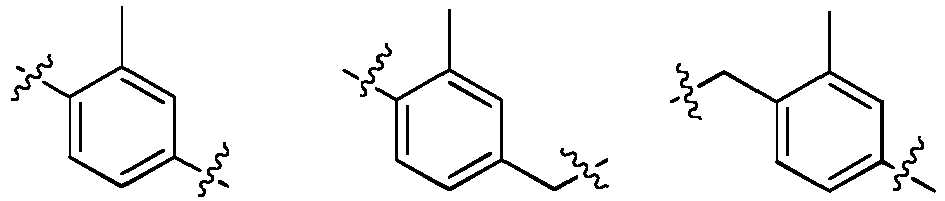


- The use according to claim 1, wherein the compound in (b) has a structure of the formula (IVa) or (IVb)

 preferably wherein Ra, Rb, Rc, Rd, Re, Rf, Rg and Rh independently of each other, selected from the group consisting of H, Alkyl, -C(=Yp)Rr, and an electron donating group, , said electron donating group being selected from the group consisting of -OH, -SH, -O-Alkyl, -S-Alkyl, -NRpRq and -C(=Yp)Rr,wherein Rp and Rq are, independently of each other H or alkyl,and wherein Rr is -OH, -NH2, -NH-Alkyl, -O-Alkyl or -NH-Alkyl,and wherein Yp is selected from the group consisting of S, O and NH,wherein at least one of Ra, Rb, Rc, Rd, Re and Rf is an electron donating group.
 - Use according to claim 1 or 6, wherein in (b) at least one of Ra, Rb, Rc, Rd, Re and Rf is -OH.
Priority Applications (1)
| Application Number | Priority Date | Filing Date | Title |
|---|---|---|---|
| EP12813362.6A EP2797417B1 (en) | 2011-12-22 | 2012-12-21 | Selective inhibition of phosphoenolpyruvate carboxylases of c4 plants |
Applications Claiming Priority (3)
| Application Number | Priority Date | Filing Date | Title |
|---|---|---|---|
| EP11195367 | 2011-12-22 | ||
| PCT/EP2012/076648 WO2013093007A1 (en) | 2011-12-22 | 2012-12-21 | Selective inhibition of phosphoenolpyruvate carboxylases of c4 plants |
| EP12813362.6A EP2797417B1 (en) | 2011-12-22 | 2012-12-21 | Selective inhibition of phosphoenolpyruvate carboxylases of c4 plants |
Publications (2)
| Publication Number | Publication Date |
|---|---|
| EP2797417A1 EP2797417A1 (en) | 2014-11-05 |
| EP2797417B1 true EP2797417B1 (en) | 2019-07-31 |
Family
ID=47553022
Family Applications (1)
| Application Number | Title | Priority Date | Filing Date |
|---|---|---|---|
| EP12813362.6A Not-in-force EP2797417B1 (en) | 2011-12-22 | 2012-12-21 | Selective inhibition of phosphoenolpyruvate carboxylases of c4 plants |
Country Status (5)
| Country | Link |
|---|---|
| US (1) | US20150216167A1 (en) |
| EP (1) | EP2797417B1 (en) |
| CN (1) | CN104114024B (en) |
| AR (1) | AR090043A1 (en) |
| WO (1) | WO2013093007A1 (en) |
Families Citing this family (2)
| Publication number | Priority date | Publication date | Assignee | Title |
|---|---|---|---|---|
| WO2014111448A1 (en) * | 2013-01-16 | 2014-07-24 | Heinrich Heine Universität Düsseldorf | Selective inhibition of c4-pep carboxylases |
| CN111423388B (en) * | 2020-04-29 | 2022-02-15 | 浙江工业大学 | A kind of 7-methoxy-3-phenylquinoxalin-2(1H)-one derivative and its preparation method and application |
Family Cites Families (4)
| Publication number | Priority date | Publication date | Assignee | Title |
|---|---|---|---|---|
| JPH10178817A (en) * | 1996-12-27 | 1998-07-07 | Uenoya Honpo:Kk | Germination suppression method for plant seed |
| AUPP304298A0 (en) * | 1998-04-17 | 1998-05-14 | Australian Institute Of Marine Science | Assay for screening inhibitors of C4 plant enzymes |
| CN101492689A (en) * | 2009-03-04 | 2009-07-29 | 河南省农业科学院 | Corn C4 phosphoric acid enol pyruvic acid carboxylase gene and uses in producing wheat |
| CN102002496B (en) * | 2010-11-15 | 2013-03-20 | 中国科学院遗传与发育生物学研究所 | DNA (Deoxyribonucleic Acid) molecule related to photosynthesis and application thereof |
-
2012
- 2012-12-21 AR ARP120104926A patent/AR090043A1/en unknown
- 2012-12-21 WO PCT/EP2012/076648 patent/WO2013093007A1/en not_active Ceased
- 2012-12-21 US US14/367,792 patent/US20150216167A1/en not_active Abandoned
- 2012-12-21 EP EP12813362.6A patent/EP2797417B1/en not_active Not-in-force
- 2012-12-21 CN CN201280069944.3A patent/CN104114024B/en not_active Expired - Fee Related
Non-Patent Citations (2)
| Title |
|---|
| "Charting New Pathways to C4 Rice", 1 January 2007, INTERNATIONAL RICE RESEARCH INSTITUTE (IRRI), Philippines, ISBN: 978-971-220-216-2, article "Hydrilla: retrofitting a C3 leaf with a single cell C4 NADP-ME system - Phosphoenolpyruvate carboxylase", pages: 283 - 285, XP055224542 * |
| PAULUS JUDITH KATHARINA ET AL: "Direct and selective small-molecule inhibition of photosynthetic PEP carboxylase: New approach to combat C4weeds in arable crops", FEBS LETTERS, vol. 588, no. 12, 8 May 2014 (2014-05-08), pages 2101 - 2106, XP029032401, ISSN: 0014-5793, DOI: 10.1016/J.FEBSLET.2014.04.043 * |
Also Published As
| Publication number | Publication date |
|---|---|
| CN104114024A (en) | 2014-10-22 |
| CN104114024B (en) | 2017-04-05 |
| EP2797417A1 (en) | 2014-11-05 |
| AR090043A1 (en) | 2014-10-15 |
| WO2013093007A1 (en) | 2013-06-27 |
| US20150216167A1 (en) | 2015-08-06 |
Similar Documents
| Publication | Publication Date | Title |
|---|---|---|
| Zheng et al. | Regulation of growth and flavonoid formation of tea plants (Camellia sinensis) by blue and green light | |
| Hodaei et al. | The effect of water stress on phytochemical accumulation, bioactive compounds and expression of key genes involved in flavonoid biosynthesis in Chrysanthemum morifolium L. | |
| Tan et al. | Apple 1-aminocyclopropane-1-carboxylic acid synthase genes, MdACS1 and MdACS3a, are expressed in different systems of ethylene biosynthesis | |
| Li et al. | Polyamine regulates tolerance to water stress in leaves of white clover associated with antioxidant defense and dehydrin genes via involvement in calcium messenger system and hydrogen peroxide signaling | |
| Doğramacı et al. | Glyphosate’s impact on vegetative growth in leafy spurge identifies molecular processes and hormone cross-talk associated with increased branching | |
| Wang et al. | Exogenous dopamine improves apple fruit quality via increasing flavonoids and soluble sugar contents | |
| Liu et al. | Salicylic acid involved in the process of aluminum induced citrate exudation in Glycine max L. | |
| Depaepe et al. | Tools of the ethylene trade: a chemical kit to influence ethylene responses in plants and its use in agriculture | |
| Phukan et al. | Mentha arvensis exhibit better adaptive characters in contrast to Mentha piperita when subjugated to sustained waterlogging stress | |
| Lee et al. | Changes in metabolite profiles in Norway spruce shoot tips during short-day induced winter bud development and long-day induced bud flush | |
| Guo et al. | Structure-dependent modulation of substrate binding and biodegradation activity of pirin proteins toward plant flavonols | |
| Olsen | Mechanisms of dormancy regulation | |
| CN104114024B (en) | The Selective depression of the phosphoenolpyruvate carboxylase of C4 plants | |
| Wang et al. | Integrated metabolomics and transcriptomics analysis reveals γ-aminobutyric acid enhances the ozone tolerance of wheat by accumulation of flavonoids | |
| Zhao et al. | Two poplar methyl salicylate esterases display comparable biochemical properties but divergent expression patterns | |
| US11641857B2 (en) | Unusually potent ABA receptor pan-antagonists | |
| Li et al. | Caffeic acid derivatives as growth inhibitors of Setaria viridis: Structure-activity relationships and mechanisms | |
| Putri et al. | Confirmation and differential metabolism associated with quinclorac resistance in smooth crabgrass (Digitaria ischaemum) | |
| BRPI0909510A2 (en) | Plant Disease Control Composition and Method for Plant Disease Control | |
| US12161114B2 (en) | Overpowered ABA receptor agonists | |
| US10188107B2 (en) | Selective inhibition of C4-PEP carboxylases | |
| BR112012014526A2 (en) | herbicidal composition comprising a pirandione herbicide and a coherbicide | |
| BR112012021744A2 (en) | Plant disease composition and method for controlling plant disease. | |
| AU2007358188A1 (en) | Method for increasing the resistance of plants to abiotic stress | |
| Yang et al. | Enhanced activity of glutathione S‐transferases and other metabolic genes confer resistance to S‐metolachlor in Abutilon theophrasti Medic |
Legal Events
| Date | Code | Title | Description |
|---|---|---|---|
| PUAI | Public reference made under article 153(3) epc to a published international application that has entered the european phase |
Free format text: ORIGINAL CODE: 0009012 |
|
| 17P | Request for examination filed |
Effective date: 20140722 |
|
| AK | Designated contracting states |
Kind code of ref document: A1 Designated state(s): AL AT BE BG CH CY CZ DE DK EE ES FI FR GB GR HR HU IE IS IT LI LT LU LV MC MK MT NL NO PL PT RO RS SE SI SK SM TR |
|
| DAX | Request for extension of the european patent (deleted) | ||
| 17Q | First examination report despatched |
Effective date: 20151105 |
|
| STAA | Information on the status of an ep patent application or granted ep patent |
Free format text: STATUS: EXAMINATION IS IN PROGRESS |
|
| REG | Reference to a national code |
Ref country code: DE Ref legal event code: R079 Ref document number: 602012062515 Country of ref document: DE Free format text: PREVIOUS MAIN CLASS: A01N0037040000 Ipc: A01N0037400000 |
|
| RIC1 | Information provided on ipc code assigned before grant |
Ipc: A01N 43/60 20060101ALI20180801BHEP Ipc: A01N 37/46 20060101ALI20180801BHEP Ipc: A01N 43/82 20060101ALI20180801BHEP Ipc: A01N 37/40 20060101AFI20180801BHEP Ipc: A01N 43/16 20060101ALI20180801BHEP Ipc: A01N 43/90 20060101ALI20180801BHEP Ipc: A01N 43/42 20060101ALI20180801BHEP Ipc: A01N 45/00 20060101ALI20180801BHEP |
|
| GRAP | Despatch of communication of intention to grant a patent |
Free format text: ORIGINAL CODE: EPIDOSNIGR1 |
|
| STAA | Information on the status of an ep patent application or granted ep patent |
Free format text: STATUS: GRANT OF PATENT IS INTENDED |
|
| INTG | Intention to grant announced |
Effective date: 20180907 |
|
| GRAJ | Information related to disapproval of communication of intention to grant by the applicant or resumption of examination proceedings by the epo deleted |
Free format text: ORIGINAL CODE: EPIDOSDIGR1 |
|
| STAA | Information on the status of an ep patent application or granted ep patent |
Free format text: STATUS: EXAMINATION IS IN PROGRESS |
|
| GRAP | Despatch of communication of intention to grant a patent |
Free format text: ORIGINAL CODE: EPIDOSNIGR1 |
|
| STAA | Information on the status of an ep patent application or granted ep patent |
Free format text: STATUS: GRANT OF PATENT IS INTENDED |
|
| INTC | Intention to grant announced (deleted) | ||
| INTG | Intention to grant announced |
Effective date: 20190206 |
|
| GRAS | Grant fee paid |
Free format text: ORIGINAL CODE: EPIDOSNIGR3 |
|
| GRAA | (expected) grant |
Free format text: ORIGINAL CODE: 0009210 |
|
| STAA | Information on the status of an ep patent application or granted ep patent |
Free format text: STATUS: THE PATENT HAS BEEN GRANTED |
|
| AK | Designated contracting states |
Kind code of ref document: B1 Designated state(s): AL AT BE BG CH CY CZ DE DK EE ES FI FR GB GR HR HU IE IS IT LI LT LU LV MC MK MT NL NO PL PT RO RS SE SI SK SM TR |
|
| REG | Reference to a national code |
Ref country code: CH Ref legal event code: EP Ref country code: GB Ref legal event code: FG4D |
|
| REG | Reference to a national code |
Ref country code: AT Ref legal event code: REF Ref document number: 1159934 Country of ref document: AT Kind code of ref document: T Effective date: 20190815 |
|
| REG | Reference to a national code |
Ref country code: IE Ref legal event code: FG4D |
|
| REG | Reference to a national code |
Ref country code: DE Ref legal event code: R096 Ref document number: 602012062515 Country of ref document: DE |
|
| REG | Reference to a national code |
Ref country code: NL Ref legal event code: MP Effective date: 20190731 |
|
| REG | Reference to a national code |
Ref country code: LT Ref legal event code: MG4D |
|
| REG | Reference to a national code |
Ref country code: AT Ref legal event code: MK05 Ref document number: 1159934 Country of ref document: AT Kind code of ref document: T Effective date: 20190731 |
|
| PG25 | Lapsed in a contracting state [announced via postgrant information from national office to epo] |
Ref country code: HR Free format text: LAPSE BECAUSE OF FAILURE TO SUBMIT A TRANSLATION OF THE DESCRIPTION OR TO PAY THE FEE WITHIN THE PRESCRIBED TIME-LIMIT Effective date: 20190731 Ref country code: LT Free format text: LAPSE BECAUSE OF FAILURE TO SUBMIT A TRANSLATION OF THE DESCRIPTION OR TO PAY THE FEE WITHIN THE PRESCRIBED TIME-LIMIT Effective date: 20190731 Ref country code: FI Free format text: LAPSE BECAUSE OF FAILURE TO SUBMIT A TRANSLATION OF THE DESCRIPTION OR TO PAY THE FEE WITHIN THE PRESCRIBED TIME-LIMIT Effective date: 20190731 Ref country code: SE Free format text: LAPSE BECAUSE OF FAILURE TO SUBMIT A TRANSLATION OF THE DESCRIPTION OR TO PAY THE FEE WITHIN THE PRESCRIBED TIME-LIMIT Effective date: 20190731 Ref country code: PT Free format text: LAPSE BECAUSE OF FAILURE TO SUBMIT A TRANSLATION OF THE DESCRIPTION OR TO PAY THE FEE WITHIN THE PRESCRIBED TIME-LIMIT Effective date: 20191202 Ref country code: NO Free format text: LAPSE BECAUSE OF FAILURE TO SUBMIT A TRANSLATION OF THE DESCRIPTION OR TO PAY THE FEE WITHIN THE PRESCRIBED TIME-LIMIT Effective date: 20191031 Ref country code: BG Free format text: LAPSE BECAUSE OF FAILURE TO SUBMIT A TRANSLATION OF THE DESCRIPTION OR TO PAY THE FEE WITHIN THE PRESCRIBED TIME-LIMIT Effective date: 20191031 Ref country code: AT Free format text: LAPSE BECAUSE OF FAILURE TO SUBMIT A TRANSLATION OF THE DESCRIPTION OR TO PAY THE FEE WITHIN THE PRESCRIBED TIME-LIMIT Effective date: 20190731 Ref country code: NL Free format text: LAPSE BECAUSE OF FAILURE TO SUBMIT A TRANSLATION OF THE DESCRIPTION OR TO PAY THE FEE WITHIN THE PRESCRIBED TIME-LIMIT Effective date: 20190731 |
|
| PG25 | Lapsed in a contracting state [announced via postgrant information from national office to epo] |
Ref country code: RS Free format text: LAPSE BECAUSE OF FAILURE TO SUBMIT A TRANSLATION OF THE DESCRIPTION OR TO PAY THE FEE WITHIN THE PRESCRIBED TIME-LIMIT Effective date: 20190731 Ref country code: IS Free format text: LAPSE BECAUSE OF FAILURE TO SUBMIT A TRANSLATION OF THE DESCRIPTION OR TO PAY THE FEE WITHIN THE PRESCRIBED TIME-LIMIT Effective date: 20191130 Ref country code: ES Free format text: LAPSE BECAUSE OF FAILURE TO SUBMIT A TRANSLATION OF THE DESCRIPTION OR TO PAY THE FEE WITHIN THE PRESCRIBED TIME-LIMIT Effective date: 20190731 Ref country code: LV Free format text: LAPSE BECAUSE OF FAILURE TO SUBMIT A TRANSLATION OF THE DESCRIPTION OR TO PAY THE FEE WITHIN THE PRESCRIBED TIME-LIMIT Effective date: 20190731 Ref country code: GR Free format text: LAPSE BECAUSE OF FAILURE TO SUBMIT A TRANSLATION OF THE DESCRIPTION OR TO PAY THE FEE WITHIN THE PRESCRIBED TIME-LIMIT Effective date: 20191101 Ref country code: AL Free format text: LAPSE BECAUSE OF FAILURE TO SUBMIT A TRANSLATION OF THE DESCRIPTION OR TO PAY THE FEE WITHIN THE PRESCRIBED TIME-LIMIT Effective date: 20190731 |
|
| PGFP | Annual fee paid to national office [announced via postgrant information from national office to epo] |
Ref country code: FR Payment date: 20191220 Year of fee payment: 8 |
|
| PG25 | Lapsed in a contracting state [announced via postgrant information from national office to epo] |
Ref country code: TR Free format text: LAPSE BECAUSE OF FAILURE TO SUBMIT A TRANSLATION OF THE DESCRIPTION OR TO PAY THE FEE WITHIN THE PRESCRIBED TIME-LIMIT Effective date: 20190731 |
|
| PG25 | Lapsed in a contracting state [announced via postgrant information from national office to epo] |
Ref country code: DK Free format text: LAPSE BECAUSE OF FAILURE TO SUBMIT A TRANSLATION OF THE DESCRIPTION OR TO PAY THE FEE WITHIN THE PRESCRIBED TIME-LIMIT Effective date: 20190731 Ref country code: PL Free format text: LAPSE BECAUSE OF FAILURE TO SUBMIT A TRANSLATION OF THE DESCRIPTION OR TO PAY THE FEE WITHIN THE PRESCRIBED TIME-LIMIT Effective date: 20190731 Ref country code: EE Free format text: LAPSE BECAUSE OF FAILURE TO SUBMIT A TRANSLATION OF THE DESCRIPTION OR TO PAY THE FEE WITHIN THE PRESCRIBED TIME-LIMIT Effective date: 20190731 Ref country code: IT Free format text: LAPSE BECAUSE OF FAILURE TO SUBMIT A TRANSLATION OF THE DESCRIPTION OR TO PAY THE FEE WITHIN THE PRESCRIBED TIME-LIMIT Effective date: 20190731 Ref country code: RO Free format text: LAPSE BECAUSE OF FAILURE TO SUBMIT A TRANSLATION OF THE DESCRIPTION OR TO PAY THE FEE WITHIN THE PRESCRIBED TIME-LIMIT Effective date: 20190731 |
|
| PG25 | Lapsed in a contracting state [announced via postgrant information from national office to epo] |
Ref country code: SM Free format text: LAPSE BECAUSE OF FAILURE TO SUBMIT A TRANSLATION OF THE DESCRIPTION OR TO PAY THE FEE WITHIN THE PRESCRIBED TIME-LIMIT Effective date: 20190731 Ref country code: CZ Free format text: LAPSE BECAUSE OF FAILURE TO SUBMIT A TRANSLATION OF THE DESCRIPTION OR TO PAY THE FEE WITHIN THE PRESCRIBED TIME-LIMIT Effective date: 20190731 Ref country code: SK Free format text: LAPSE BECAUSE OF FAILURE TO SUBMIT A TRANSLATION OF THE DESCRIPTION OR TO PAY THE FEE WITHIN THE PRESCRIBED TIME-LIMIT Effective date: 20190731 Ref country code: IS Free format text: LAPSE BECAUSE OF FAILURE TO SUBMIT A TRANSLATION OF THE DESCRIPTION OR TO PAY THE FEE WITHIN THE PRESCRIBED TIME-LIMIT Effective date: 20200224 |
|
| REG | Reference to a national code |
Ref country code: DE Ref legal event code: R097 Ref document number: 602012062515 Country of ref document: DE |
|
| PLBE | No opposition filed within time limit |
Free format text: ORIGINAL CODE: 0009261 |
|
| STAA | Information on the status of an ep patent application or granted ep patent |
Free format text: STATUS: NO OPPOSITION FILED WITHIN TIME LIMIT |
|
| PG2D | Information on lapse in contracting state deleted |
Ref country code: IS |
|
| PG25 | Lapsed in a contracting state [announced via postgrant information from national office to epo] |
Ref country code: IS Free format text: LAPSE BECAUSE OF FAILURE TO SUBMIT A TRANSLATION OF THE DESCRIPTION OR TO PAY THE FEE WITHIN THE PRESCRIBED TIME-LIMIT Effective date: 20191030 |
|
| REG | Reference to a national code |
Ref country code: CH Ref legal event code: PL |
|
| 26N | No opposition filed |
Effective date: 20200603 |
|
| REG | Reference to a national code |
Ref country code: BE Ref legal event code: MM Effective date: 20191231 |
|
| PG25 | Lapsed in a contracting state [announced via postgrant information from national office to epo] |
Ref country code: MC Free format text: LAPSE BECAUSE OF FAILURE TO SUBMIT A TRANSLATION OF THE DESCRIPTION OR TO PAY THE FEE WITHIN THE PRESCRIBED TIME-LIMIT Effective date: 20190731 Ref country code: SI Free format text: LAPSE BECAUSE OF FAILURE TO SUBMIT A TRANSLATION OF THE DESCRIPTION OR TO PAY THE FEE WITHIN THE PRESCRIBED TIME-LIMIT Effective date: 20190731 |
|
| GBPC | Gb: european patent ceased through non-payment of renewal fee |
Effective date: 20191221 |
|
| PG25 | Lapsed in a contracting state [announced via postgrant information from national office to epo] |
Ref country code: GB Free format text: LAPSE BECAUSE OF NON-PAYMENT OF DUE FEES Effective date: 20191221 Ref country code: LU Free format text: LAPSE BECAUSE OF NON-PAYMENT OF DUE FEES Effective date: 20191221 Ref country code: IE Free format text: LAPSE BECAUSE OF NON-PAYMENT OF DUE FEES Effective date: 20191221 |
|
| PG25 | Lapsed in a contracting state [announced via postgrant information from national office to epo] |
Ref country code: BE Free format text: LAPSE BECAUSE OF NON-PAYMENT OF DUE FEES Effective date: 20191231 Ref country code: LI Free format text: LAPSE BECAUSE OF NON-PAYMENT OF DUE FEES Effective date: 20191231 Ref country code: CH Free format text: LAPSE BECAUSE OF NON-PAYMENT OF DUE FEES Effective date: 20191231 |
|
| PG25 | Lapsed in a contracting state [announced via postgrant information from national office to epo] |
Ref country code: CY Free format text: LAPSE BECAUSE OF FAILURE TO SUBMIT A TRANSLATION OF THE DESCRIPTION OR TO PAY THE FEE WITHIN THE PRESCRIBED TIME-LIMIT Effective date: 20190731 |
|
| PG25 | Lapsed in a contracting state [announced via postgrant information from national office to epo] |
Ref country code: MT Free format text: LAPSE BECAUSE OF FAILURE TO SUBMIT A TRANSLATION OF THE DESCRIPTION OR TO PAY THE FEE WITHIN THE PRESCRIBED TIME-LIMIT Effective date: 20190731 Ref country code: HU Free format text: LAPSE BECAUSE OF FAILURE TO SUBMIT A TRANSLATION OF THE DESCRIPTION OR TO PAY THE FEE WITHIN THE PRESCRIBED TIME-LIMIT; INVALID AB INITIO Effective date: 20121221 |
|
| PGFP | Annual fee paid to national office [announced via postgrant information from national office to epo] |
Ref country code: DE Payment date: 20210628 Year of fee payment: 9 |
|
| PG25 | Lapsed in a contracting state [announced via postgrant information from national office to epo] |
Ref country code: FR Free format text: LAPSE BECAUSE OF NON-PAYMENT OF DUE FEES Effective date: 20201231 |
|
| PG25 | Lapsed in a contracting state [announced via postgrant information from national office to epo] |
Ref country code: MK Free format text: LAPSE BECAUSE OF FAILURE TO SUBMIT A TRANSLATION OF THE DESCRIPTION OR TO PAY THE FEE WITHIN THE PRESCRIBED TIME-LIMIT Effective date: 20190731 |
|
| REG | Reference to a national code |
Ref country code: DE Ref legal event code: R119 Ref document number: 602012062515 Country of ref document: DE |
|
| PG25 | Lapsed in a contracting state [announced via postgrant information from national office to epo] |
Ref country code: DE Free format text: LAPSE BECAUSE OF NON-PAYMENT OF DUE FEES Effective date: 20220701 |