EP2796141A1 - Cancer cell-inhibiting ceramics and method for producing cancer cell-inhibiting ceramics, method for treating bone neoplasm, and use of b tricalcium phosphate porous granules having grain size of 1 to 10 mm - Google Patents
Cancer cell-inhibiting ceramics and method for producing cancer cell-inhibiting ceramics, method for treating bone neoplasm, and use of b tricalcium phosphate porous granules having grain size of 1 to 10 mm Download PDFInfo
- Publication number
- EP2796141A1 EP2796141A1 EP12860321.4A EP12860321A EP2796141A1 EP 2796141 A1 EP2796141 A1 EP 2796141A1 EP 12860321 A EP12860321 A EP 12860321A EP 2796141 A1 EP2796141 A1 EP 2796141A1
- Authority
- EP
- European Patent Office
- Prior art keywords
- tricalcium phosphate
- phosphate porous
- cancer cell
- particle size
- granules
- Prior art date
- Legal status (The legal status is an assumption and is not a legal conclusion. Google has not performed a legal analysis and makes no representation as to the accuracy of the status listed.)
- Withdrawn
Links
- QORWJWZARLRLPR-UHFFFAOYSA-H tricalcium bis(phosphate) Chemical compound [Ca+2].[Ca+2].[Ca+2].[O-]P([O-])([O-])=O.[O-]P([O-])([O-])=O QORWJWZARLRLPR-UHFFFAOYSA-H 0.000 title claims abstract description 143
- 239000008187 granular material Substances 0.000 title claims abstract description 118
- 206010028980 Neoplasm Diseases 0.000 title claims abstract description 77
- 201000011510 cancer Diseases 0.000 title claims abstract description 69
- 230000002401 inhibitory effect Effects 0.000 title claims abstract description 47
- 239000000919 ceramic Substances 0.000 title claims abstract description 40
- 238000000034 method Methods 0.000 title claims description 28
- 238000004519 manufacturing process Methods 0.000 title claims description 10
- 208000018084 Bone neoplasm Diseases 0.000 title claims description 9
- 206010005949 Bone cancer Diseases 0.000 title 1
- 239000001506 calcium phosphate Substances 0.000 title 1
- 229940078499 tricalcium phosphate Drugs 0.000 title 1
- 229910000391 tricalcium phosphate Inorganic materials 0.000 title 1
- 235000019731 tricalcium phosphate Nutrition 0.000 title 1
- 239000002245 particle Substances 0.000 claims abstract description 59
- 238000005245 sintering Methods 0.000 claims description 12
- 230000015572 biosynthetic process Effects 0.000 claims description 8
- 239000000843 powder Substances 0.000 claims description 8
- 238000003786 synthesis reaction Methods 0.000 claims description 8
- 210000001519 tissue Anatomy 0.000 claims description 8
- 239000004088 foaming agent Substances 0.000 claims description 4
- 238000003801 milling Methods 0.000 claims description 4
- 230000002194 synthesizing effect Effects 0.000 claims description 3
- 230000035755 proliferation Effects 0.000 abstract description 12
- 230000000694 effects Effects 0.000 abstract description 6
- 210000004027 cell Anatomy 0.000 description 103
- 210000002540 macrophage Anatomy 0.000 description 14
- 238000009826 distribution Methods 0.000 description 11
- 239000002002 slurry Substances 0.000 description 6
- VTYYLEPIZMXCLO-UHFFFAOYSA-L Calcium carbonate Chemical compound [Ca+2].[O-]C([O-])=O VTYYLEPIZMXCLO-UHFFFAOYSA-L 0.000 description 4
- 206010027476 Metastases Diseases 0.000 description 4
- MCMNRKCIXSYSNV-UHFFFAOYSA-N Zirconium dioxide Chemical compound O=[Zr]=O MCMNRKCIXSYSNV-UHFFFAOYSA-N 0.000 description 4
- 210000000988 bone and bone Anatomy 0.000 description 4
- 230000010478 bone regeneration Effects 0.000 description 4
- 230000009702 cancer cell proliferation Effects 0.000 description 4
- 238000002474 experimental method Methods 0.000 description 4
- 239000002609 medium Substances 0.000 description 4
- 230000009401 metastasis Effects 0.000 description 4
- 239000007787 solid Substances 0.000 description 4
- 238000012795 verification Methods 0.000 description 4
- 238000012313 Kruskal-Wallis test Methods 0.000 description 2
- 238000000134 MTT assay Methods 0.000 description 2
- 231100000002 MTT assay Toxicity 0.000 description 2
- 230000004913 activation Effects 0.000 description 2
- 239000000654 additive Substances 0.000 description 2
- 230000000996 additive effect Effects 0.000 description 2
- 229910000019 calcium carbonate Inorganic materials 0.000 description 2
- 230000004663 cell proliferation Effects 0.000 description 2
- 238000010348 incorporation Methods 0.000 description 2
- 239000003112 inhibitor Substances 0.000 description 2
- 239000000463 material Substances 0.000 description 2
- 238000005259 measurement Methods 0.000 description 2
- 239000000203 mixture Substances 0.000 description 2
- 201000008968 osteosarcoma Diseases 0.000 description 2
- 230000002829 reductive effect Effects 0.000 description 2
- XLYOFNOQVPJJNP-UHFFFAOYSA-N water Substances O XLYOFNOQVPJJNP-UHFFFAOYSA-N 0.000 description 2
- -1 1 to 6 ml) Chemical compound 0.000 description 1
- QGZKDVFQNNGYKY-UHFFFAOYSA-O Ammonium Chemical compound [NH4+] QGZKDVFQNNGYKY-UHFFFAOYSA-O 0.000 description 1
- 208000035859 Drug effect increased Diseases 0.000 description 1
- VGGSQFUCUMXWEO-UHFFFAOYSA-N Ethene Chemical compound C=C VGGSQFUCUMXWEO-UHFFFAOYSA-N 0.000 description 1
- 239000005977 Ethylene Substances 0.000 description 1
- 201000008808 Fibrosarcoma Diseases 0.000 description 1
- FAPWRFPIFSIZLT-UHFFFAOYSA-M Sodium chloride Chemical compound [Na+].[Cl-] FAPWRFPIFSIZLT-UHFFFAOYSA-M 0.000 description 1
- 210000001744 T-lymphocyte Anatomy 0.000 description 1
- 229920004890 Triton X-100 Polymers 0.000 description 1
- 239000013504 Triton X-100 Substances 0.000 description 1
- 230000002411 adverse Effects 0.000 description 1
- 239000002246 antineoplastic agent Substances 0.000 description 1
- 229940041181 antineoplastic drug Drugs 0.000 description 1
- 210000004369 blood Anatomy 0.000 description 1
- 239000008280 blood Substances 0.000 description 1
- 238000001354 calcination Methods 0.000 description 1
- 239000011575 calcium Substances 0.000 description 1
- FUFJGUQYACFECW-UHFFFAOYSA-L calcium hydrogenphosphate Chemical compound [Ca+2].OP([O-])([O-])=O FUFJGUQYACFECW-UHFFFAOYSA-L 0.000 description 1
- XAAHAAMILDNBPS-UHFFFAOYSA-L calcium hydrogenphosphate dihydrate Chemical compound O.O.[Ca+2].OP([O-])([O-])=O XAAHAAMILDNBPS-UHFFFAOYSA-L 0.000 description 1
- 238000006243 chemical reaction Methods 0.000 description 1
- 229960004316 cisplatin Drugs 0.000 description 1
- DQLATGHUWYMOKM-UHFFFAOYSA-L cisplatin Chemical compound N[Pt](N)(Cl)Cl DQLATGHUWYMOKM-UHFFFAOYSA-L 0.000 description 1
- 238000007796 conventional method Methods 0.000 description 1
- 210000000805 cytoplasm Anatomy 0.000 description 1
- 230000003247 decreasing effect Effects 0.000 description 1
- 238000010586 diagram Methods 0.000 description 1
- 235000019700 dicalcium phosphate Nutrition 0.000 description 1
- 239000002270 dispersing agent Substances 0.000 description 1
- 239000006185 dispersion Substances 0.000 description 1
- 239000002612 dispersion medium Substances 0.000 description 1
- 239000012153 distilled water Substances 0.000 description 1
- 238000001035 drying Methods 0.000 description 1
- 238000011049 filling Methods 0.000 description 1
- 238000005187 foaming Methods 0.000 description 1
- 238000000227 grinding Methods 0.000 description 1
- XLYOFNOQVPJJNP-ZSJDYOACSA-N heavy water Substances [2H]O[2H] XLYOFNOQVPJJNP-ZSJDYOACSA-N 0.000 description 1
- 210000002865 immune cell Anatomy 0.000 description 1
- 230000010354 integration Effects 0.000 description 1
- 238000007561 laser diffraction method Methods 0.000 description 1
- 238000002156 mixing Methods 0.000 description 1
- 230000035407 negative regulation of cell proliferation Effects 0.000 description 1
- GSGDTSDELPUTKU-UHFFFAOYSA-N nonoxybenzene Chemical compound CCCCCCCCCOC1=CC=CC=C1 GSGDTSDELPUTKU-UHFFFAOYSA-N 0.000 description 1
- 229920000058 polyacrylate Polymers 0.000 description 1
- 238000011160 research Methods 0.000 description 1
- 238000000790 scattering method Methods 0.000 description 1
- 239000011780 sodium chloride Substances 0.000 description 1
- 239000000126 substance Substances 0.000 description 1
Images






Classifications
-
- A—HUMAN NECESSITIES
- A61—MEDICAL OR VETERINARY SCIENCE; HYGIENE
- A61K—PREPARATIONS FOR MEDICAL, DENTAL OR TOILETRY PURPOSES
- A61K9/00—Medicinal preparations characterised by special physical form
- A61K9/14—Particulate form, e.g. powders, Processes for size reducing of pure drugs or the resulting products, Pure drug nanoparticles
- A61K9/16—Agglomerates; Granulates; Microbeadlets ; Microspheres; Pellets; Solid products obtained by spray drying, spray freeze drying, spray congealing,(multiple) emulsion solvent evaporation or extraction
-
- A—HUMAN NECESSITIES
- A61—MEDICAL OR VETERINARY SCIENCE; HYGIENE
- A61K—PREPARATIONS FOR MEDICAL, DENTAL OR TOILETRY PURPOSES
- A61K9/00—Medicinal preparations characterised by special physical form
- A61K9/14—Particulate form, e.g. powders, Processes for size reducing of pure drugs or the resulting products, Pure drug nanoparticles
- A61K9/16—Agglomerates; Granulates; Microbeadlets ; Microspheres; Pellets; Solid products obtained by spray drying, spray freeze drying, spray congealing,(multiple) emulsion solvent evaporation or extraction
- A61K9/1605—Excipients; Inactive ingredients
- A61K9/1611—Inorganic compounds
-
- A—HUMAN NECESSITIES
- A61—MEDICAL OR VETERINARY SCIENCE; HYGIENE
- A61K—PREPARATIONS FOR MEDICAL, DENTAL OR TOILETRY PURPOSES
- A61K33/00—Medicinal preparations containing inorganic active ingredients
- A61K33/42—Phosphorus; Compounds thereof
-
- A—HUMAN NECESSITIES
- A61—MEDICAL OR VETERINARY SCIENCE; HYGIENE
- A61L—METHODS OR APPARATUS FOR STERILISING MATERIALS OR OBJECTS IN GENERAL; DISINFECTION, STERILISATION OR DEODORISATION OF AIR; CHEMICAL ASPECTS OF BANDAGES, DRESSINGS, ABSORBENT PADS OR SURGICAL ARTICLES; MATERIALS FOR BANDAGES, DRESSINGS, ABSORBENT PADS OR SURGICAL ARTICLES
- A61L27/00—Materials for grafts or prostheses or for coating grafts or prostheses
- A61L27/02—Inorganic materials
- A61L27/10—Ceramics or glasses
-
- A—HUMAN NECESSITIES
- A61—MEDICAL OR VETERINARY SCIENCE; HYGIENE
- A61L—METHODS OR APPARATUS FOR STERILISING MATERIALS OR OBJECTS IN GENERAL; DISINFECTION, STERILISATION OR DEODORISATION OF AIR; CHEMICAL ASPECTS OF BANDAGES, DRESSINGS, ABSORBENT PADS OR SURGICAL ARTICLES; MATERIALS FOR BANDAGES, DRESSINGS, ABSORBENT PADS OR SURGICAL ARTICLES
- A61L27/00—Materials for grafts or prostheses or for coating grafts or prostheses
- A61L27/02—Inorganic materials
- A61L27/12—Phosphorus-containing materials, e.g. apatite
-
- A—HUMAN NECESSITIES
- A61—MEDICAL OR VETERINARY SCIENCE; HYGIENE
- A61L—METHODS OR APPARATUS FOR STERILISING MATERIALS OR OBJECTS IN GENERAL; DISINFECTION, STERILISATION OR DEODORISATION OF AIR; CHEMICAL ASPECTS OF BANDAGES, DRESSINGS, ABSORBENT PADS OR SURGICAL ARTICLES; MATERIALS FOR BANDAGES, DRESSINGS, ABSORBENT PADS OR SURGICAL ARTICLES
- A61L27/00—Materials for grafts or prostheses or for coating grafts or prostheses
- A61L27/50—Materials characterised by their function or physical properties, e.g. injectable or lubricating compositions, shape-memory materials, surface modified materials
- A61L27/54—Biologically active materials, e.g. therapeutic substances
-
- A—HUMAN NECESSITIES
- A61—MEDICAL OR VETERINARY SCIENCE; HYGIENE
- A61L—METHODS OR APPARATUS FOR STERILISING MATERIALS OR OBJECTS IN GENERAL; DISINFECTION, STERILISATION OR DEODORISATION OF AIR; CHEMICAL ASPECTS OF BANDAGES, DRESSINGS, ABSORBENT PADS OR SURGICAL ARTICLES; MATERIALS FOR BANDAGES, DRESSINGS, ABSORBENT PADS OR SURGICAL ARTICLES
- A61L27/00—Materials for grafts or prostheses or for coating grafts or prostheses
- A61L27/50—Materials characterised by their function or physical properties, e.g. injectable or lubricating compositions, shape-memory materials, surface modified materials
- A61L27/56—Porous materials, e.g. foams or sponges
-
- A—HUMAN NECESSITIES
- A61—MEDICAL OR VETERINARY SCIENCE; HYGIENE
- A61P—SPECIFIC THERAPEUTIC ACTIVITY OF CHEMICAL COMPOUNDS OR MEDICINAL PREPARATIONS
- A61P19/00—Drugs for skeletal disorders
- A61P19/08—Drugs for skeletal disorders for bone diseases, e.g. rachitism, Paget's disease
-
- A—HUMAN NECESSITIES
- A61—MEDICAL OR VETERINARY SCIENCE; HYGIENE
- A61P—SPECIFIC THERAPEUTIC ACTIVITY OF CHEMICAL COMPOUNDS OR MEDICINAL PREPARATIONS
- A61P35/00—Antineoplastic agents
-
- A—HUMAN NECESSITIES
- A61—MEDICAL OR VETERINARY SCIENCE; HYGIENE
- A61P—SPECIFIC THERAPEUTIC ACTIVITY OF CHEMICAL COMPOUNDS OR MEDICINAL PREPARATIONS
- A61P35/00—Antineoplastic agents
- A61P35/04—Antineoplastic agents specific for metastasis
-
- C—CHEMISTRY; METALLURGY
- C01—INORGANIC CHEMISTRY
- C01B—NON-METALLIC ELEMENTS; COMPOUNDS THEREOF; METALLOIDS OR COMPOUNDS THEREOF NOT COVERED BY SUBCLASS C01C
- C01B25/00—Phosphorus; Compounds thereof
- C01B25/16—Oxyacids of phosphorus; Salts thereof
- C01B25/26—Phosphates
- C01B25/32—Phosphates of magnesium, calcium, strontium, or barium
-
- A—HUMAN NECESSITIES
- A61—MEDICAL OR VETERINARY SCIENCE; HYGIENE
- A61L—METHODS OR APPARATUS FOR STERILISING MATERIALS OR OBJECTS IN GENERAL; DISINFECTION, STERILISATION OR DEODORISATION OF AIR; CHEMICAL ASPECTS OF BANDAGES, DRESSINGS, ABSORBENT PADS OR SURGICAL ARTICLES; MATERIALS FOR BANDAGES, DRESSINGS, ABSORBENT PADS OR SURGICAL ARTICLES
- A61L2300/00—Biologically active materials used in bandages, wound dressings, absorbent pads or medical devices
- A61L2300/10—Biologically active materials used in bandages, wound dressings, absorbent pads or medical devices containing or releasing inorganic materials
- A61L2300/112—Phosphorus-containing compounds, e.g. phosphates, phosphonates
-
- A—HUMAN NECESSITIES
- A61—MEDICAL OR VETERINARY SCIENCE; HYGIENE
- A61L—METHODS OR APPARATUS FOR STERILISING MATERIALS OR OBJECTS IN GENERAL; DISINFECTION, STERILISATION OR DEODORISATION OF AIR; CHEMICAL ASPECTS OF BANDAGES, DRESSINGS, ABSORBENT PADS OR SURGICAL ARTICLES; MATERIALS FOR BANDAGES, DRESSINGS, ABSORBENT PADS OR SURGICAL ARTICLES
- A61L2300/00—Biologically active materials used in bandages, wound dressings, absorbent pads or medical devices
- A61L2300/40—Biologically active materials used in bandages, wound dressings, absorbent pads or medical devices characterised by a specific therapeutic activity or mode of action
- A61L2300/416—Anti-neoplastic or anti-proliferative or anti-restenosis or anti-angiogenic agents, e.g. paclitaxel, sirolimus
-
- A—HUMAN NECESSITIES
- A61—MEDICAL OR VETERINARY SCIENCE; HYGIENE
- A61L—METHODS OR APPARATUS FOR STERILISING MATERIALS OR OBJECTS IN GENERAL; DISINFECTION, STERILISATION OR DEODORISATION OF AIR; CHEMICAL ASPECTS OF BANDAGES, DRESSINGS, ABSORBENT PADS OR SURGICAL ARTICLES; MATERIALS FOR BANDAGES, DRESSINGS, ABSORBENT PADS OR SURGICAL ARTICLES
- A61L2400/00—Materials characterised by their function or physical properties
- A61L2400/06—Flowable or injectable implant compositions
-
- A—HUMAN NECESSITIES
- A61—MEDICAL OR VETERINARY SCIENCE; HYGIENE
- A61L—METHODS OR APPARATUS FOR STERILISING MATERIALS OR OBJECTS IN GENERAL; DISINFECTION, STERILISATION OR DEODORISATION OF AIR; CHEMICAL ASPECTS OF BANDAGES, DRESSINGS, ABSORBENT PADS OR SURGICAL ARTICLES; MATERIALS FOR BANDAGES, DRESSINGS, ABSORBENT PADS OR SURGICAL ARTICLES
- A61L2430/00—Materials or treatment for tissue regeneration
- A61L2430/02—Materials or treatment for tissue regeneration for reconstruction of bones; weight-bearing implants
-
- Y—GENERAL TAGGING OF NEW TECHNOLOGICAL DEVELOPMENTS; GENERAL TAGGING OF CROSS-SECTIONAL TECHNOLOGIES SPANNING OVER SEVERAL SECTIONS OF THE IPC; TECHNICAL SUBJECTS COVERED BY FORMER USPC CROSS-REFERENCE ART COLLECTIONS [XRACs] AND DIGESTS
- Y10—TECHNICAL SUBJECTS COVERED BY FORMER USPC
- Y10T—TECHNICAL SUBJECTS COVERED BY FORMER US CLASSIFICATION
- Y10T428/00—Stock material or miscellaneous articles
- Y10T428/29—Coated or structually defined flake, particle, cell, strand, strand portion, rod, filament, macroscopic fiber or mass thereof
- Y10T428/2982—Particulate matter [e.g., sphere, flake, etc.]
Definitions
- the present invention relates to a cancer cell-inhibiting ceramic, a process for producing the ceramic, a method for treating a bone tumor, and use of a ⁇ -tricalcium phosphate porous granule with a particle size of 1 to 10 ⁇ m.
- Patent Literature 1 discloses an effect that a film is used to apply a ⁇ -tricalcium phosphate porous body, thereby inhibiting cancer cell proliferation, metastasis, and recurrence.
- PTL 1 discloses a cancer cell inhibitor using a ⁇ -tricalcium phosphate porous body with a particle size of 25 to 75 ⁇ m. Unfortunately, cancer cells are unlikely to phagocytose the porous body with this particle size.
- the present invention provides the following solutions.
- the first aspect of the present invention provides a cancer cell-inhibiting ceramic containing a ⁇ -tricalcium phosphate porous granule with a particle size of 1 to 10 ⁇ m.
- the present inventors have conducted research and have found out that use of ⁇ -tricalcium phosphate porous granules with a granule size of 1 to 10 ⁇ m enables cancer cells to incorporate the granules to inhibit proliferation of the cancer cells.
- the ⁇ -tricalcium phosphate porous granules according to this aspect have a larger surface area and a higher solubility than non-porous granules of ⁇ -tricalcium phosphate. Accordingly, the porous granules are likely to affect the cancer cells after their incorporation. According to this aspect, the cancer cell proliferation can be thus effectively inhibited.
- the ⁇ -tricalcium phosphate porous granule with a size of 1 to 10 ⁇ m may be produced from a ⁇ -tricalcium phosphate porous body having a porosity of 20 to 90%.
- the second aspect of the present invention provides a cancer cell-inhibiting ceramic containing a ⁇ -tricalcium phosphate porous granule with a particle size of 1 to 10 ⁇ m and a ⁇ -tricalcium phosphate porous granule with a particle size of 10 to 100 ⁇ m.
- the study by the inventors has demonstrated that macrophages accumulate around the ⁇ -tricalcium phosphate porous granules with a particle size of 10 to 100 ⁇ m.
- the cancer cell-inhibiting ceramic according to this aspect may be disposed on an affected area after a cancer tissue such as a bone tumor has been removed. Even if the cancer tissue does remain in that affected area, the ⁇ -tricalcium phosphate porous granules with a particle size of 1 to 10 ⁇ m should effectively inhibit proliferation of the tumor.
- macrophages are involved in bone regeneration. Accordingly, the ⁇ -tricalcium phosphate porous granules with a particle size of 10 to 100 ⁇ m allow macrophages to accumulate in that affected area. This should achieve more effective bone regeneration.
- the ⁇ -tricalcium phosphate porous granule with a particle size of 1 to 10 ⁇ m and the ⁇ -tricalcium phosphate porous granules with a particle size of 10 to 100 ⁇ m may be produced from a ⁇ -tricalcium phosphate porous body having a porosity of 20 to 90%.
- ⁇ -tricalcium phosphate porous granules with a size of 1 to 10 ⁇ m are easily dissolved and thus taken up into cancer cells. Also, ⁇ -tricalcium phosphate porous granules with a size of 10 to 100 ⁇ m are easy to be dissolved.
- the third aspect of the present invention provides a method for treating a bone tumor, the method including: applying a cancer cell-inhibiting ceramic containing a ⁇ -tricalcium phosphate porous granule with a particle size of 1 to 10 ⁇ m onto a site and/or a surrounding thereof where a tumor tissue has been removed to treat the tumor.
- the fourth aspect of the present invention provides use of a ⁇ -tricalcium phosphate porous granule with a particle size of 1 to 10 ⁇ m in the manufacture of cancer cell-inhibiting ceramic for the treatment of a bone tumor.
- the fifth aspect of the present invention provides a process for producing a ⁇ -tricalcium phosphate porous granule, the process including: a synthesis step of synthesizing ⁇ -tricalcium phosphate powder by a mechanochemical method; a sintering step of adding a foaming agent to and sintering the ⁇ -tricalcium phosphate powder synthesized in the synthesis step to produce a ⁇ -tricalcium phosphate porous body; and a classification step of milling the ⁇ -tricalcium phosphate porous body produced in the sintering step and classifying a ⁇ -tricalcium phosphate porous granule with a particle size of 1 to 10 ⁇ m by using an air classification method.
- the classification step is used to classify and produce ⁇ -tricalcium phosphate porous granules with a particle size of 1 to 10 ⁇ m from ⁇ -tricalcium phosphate porous bodies produced in the sintering step, whose particles are in a relatively large block shape. Accordingly, as a series of a process for producing ⁇ -tricalcium phosphate porous bodies used depending on their application, ⁇ -tricalcium phosphate porous granules with a particle size of 1 to 10 ⁇ m may be produced.
- the present invention exerts effects to be able to effectively inhibit cancer cell proliferation.
- the following describes cancer cell-inhibiting ceramic according to the first embodiment of the present invention and a process for producing the ceramic.
- the cancer cell-inhibiting ceramic according to this embodiment is composed of ⁇ -tricalcium phosphate porous granules with a particle size of 1 to 10 ⁇ m.
- a process for producing the cancer cell-inhibiting ceramic includes: a synthesis step S1 of synthesizing ⁇ -tricalcium phosphate powder by a mechanochemical method; a sintering step S2 of adding a foaming agent to and sintering the ⁇ -tricalcium phosphate powder synthesized in the synthesis step S1 to produce block-shaped ⁇ -tricalcium phosphate porous bodies; and a classification step S3 of milling the ⁇ -tricalcium phosphate porous bodies produced in the sintering step S2 and classify ⁇ -tricalcium phosphate porous granules with a particle size of 1 to 10 ⁇ m by using an air classification method.
- the mechanochemical method in the synthesis step S1 is described as follows: a rotating mill, for example, a zirconia ball mill is used to mix materials for ⁇ -tricalcium phosphate; and collision energy between substances is utilized to synthesize ⁇ -tricalcium phosphate powder.
- calcium hydrogen phosphate dihydrate (CaHPO 4 ⁇ 2H 2 O) with a purity of 99.9% and calcium carbonate (CaCO 3 ) with a purity of 99.99% are mixed at an atomic ratio Ca/P of 1.50.
- pure water is added thereto to prepare slurry having a solid content of 10% by weight.
- this slurry is placed in a zirconia ball mill to make a reaction while subjected to grinding for 24 hours. After that, the solid is recovered and is put into a stainless bat. Finally, the solid is dried in an electric drying oven at 80°C.
- the dried ⁇ -tricalcium phosphate solid is subjected to milling, followed by calcination in an electric furnace at 750°C for 1 hour.
- a foaming agent and a deflocculant including ammonium polyacrylate and ethylene nonylphenyl ether e.g., 1 to 6 ml
- the mixture is subjected to mixing and foaming to prepare slurry.
- the slurry is injected into a mold.
- the deflocculant used is Celuna D-305 manufactured by Chukyo Yushi Co., Ltd.
- ⁇ -tricalcium phosphate porous bodies having a porosity of from 20 to 90% (preferably 75%).
- a conventional method was used to calculate apparent porosity.
- a TC-15N manufactured by Nisshin Engineering Inc. was used to classify ⁇ -tricalcium phosphate porous bodies with a size of 100 ⁇ m or less at a rotating speed of 2500 rpm, a wind level of 2.0 m 3 /min , and a feed rate of 1.0 kg/h. Then, ⁇ -tricalcium phosphate porous granules with a size of 10 ⁇ m or less were recovered.
- ⁇ -TCP granules A cancer cell-inhibiting ceramic
- Fig. 4 cancer cell-inhibiting ceramic
- the results demonstrated that the distribution, for example, had a peak at a particle size of 3 ⁇ m.
- the ordinate indicates a frequency (%) and integration (%).
- the abscissa indicates a particle size ( ⁇ m). The same applies to Fig. 11 .
- a particle size distribution of ⁇ -tricalcium phosphate porous granules is determined as follows: for example, distilled water is used as a dispersion medium and Triton X-100 is used as a dispersant; dispersion is carried out using an ultrasonic bath (150 W) for 1 minute; and a Microtrac HRA is then used to determine the distribution by a laser diffraction/scattering method.
- the cancer cell-inhibiting ceramic according to this embodiment When the cancer cell-inhibiting ceramic according to this embodiment is attached to cancer cells 3 (see, for example, Fig. 3 ), the cancer cells take up ⁇ -tricalcium phosphate porous granules with a particle size of 1 to 10 ⁇ m. This inhibits proliferation of the cancer cells.
- ⁇ -tricalcium phosphate porous granules Differing from an anti-cancer drug such as cisplatin, ⁇ -tricalcium phosphate porous granules are composed of only materials having a high bioaffinity. When these ⁇ -tricalcium phosphate porous granules are administered to patients, their cancer cells should be inhibited without any adverse effect. Also, the advantages include that a burden on the patients should be reduced.
- the ⁇ -tricalcium phosphate porous granules produced are a kind of ⁇ -tricalcium phosphate porous bodies. Hence, compared with non-porous granules of ⁇ -tricalcium phosphate, they have a large surface area and an increased solubility. These characteristics are likely to affect cancer cells after incorporation of the granules.
- ⁇ -TCP granules A cancer cell-inhibiting ceramic
- HT1080 cells human fibrosarcoma cells; cancer cells
- HT1080 cells human fibrosarcoma cells; cancer cells
- Fig. 3 is a photomicrograph (x 200) obtained when only HT1080 cells 3 were cultured for 1 day.
- ⁇ -TCP granules A were mixed in a medium at a concentration of 3.0 mg/ml. These granules A were added at 10 ml/dish (30 mg/dish) to a dish containing HT1080 cells 3 as shown in Fig. 4 .
- the medium used is, for example, MEM (GIBCO)/FBS (GIBCO) 10%/P.S.A.
- Fig. 4 is a photomicrograph (x 200) obtained when HT1080 cells 3 were cultured for 1 day and then, ⁇ -TCP granules A were added to a dish. The ⁇ -TCP granules A were found to accumulate in the cytoplasm.
- Figs. 5 and 6 each show a photomicrograph (x 200) at day 5 of the culture.
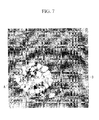
- Fig. 7 is a scanning electron microscopic image of an HT1080 cell 3 cultured 3 days after the addition of ⁇ -TCP granules A.
- This image demonstrates that the HT1080 cell 3 took up the ⁇ -TCP granules A.
- HT1080 cells 3 during the culture were observed under a light microscope. The results indicated an inhibited cell proliferation and a contracted cell morphology.
- incorporating ⁇ -TCP granules A causes the proliferation capability of HT1080 cells 3 to be reduced.
- HT1080 cells 3 were cultured on dishes, and ⁇ -TCP granules A were added to each dish at 1 mg/ml or 3 mg/ml. These cells were cultured for 3 days.
- Figs. 8 to 10 demonstrate that as the additive amount of the ⁇ -TCP granules A increased, their inhibitory effect increased.
- Fig. 8 is a light microscopic image obtained when only HT1080 cells 3 were cultured for 3 days.
- Fig. 9 is a light microscopic image obtained when HT1080 cells were cultured for 3 days after addition of 1 mg/ml of ⁇ -TCP granules A.
- Fig. 10 is a light microscopic image obtained when HT1080 cells were cultured for 3 days after addition of 3 mg/ml of ⁇ -TCP granules A.
- the cancer cell-inhibiting ceramic according to this embodiment can effectively inhibit proliferation of cancer cells, because of being composed of ⁇ -tricalcium phosphate porous granules with a particle size of 1 to 10 ⁇ m ( ⁇ -TCP granules A). Also, with such a configuration, the ⁇ -tricalcium phosphate porous granules, being porous, are easily dissolved and thus taken up into cancer cells. A production process according to this embodiment makes it possible to easily produce such ⁇ -tricalcium phosphate porous granules with a particle size of 1 to 10 ⁇ m.
- the cancer cell-inhibiting ceramic according to this embodiment is composed of ⁇ -tricalcium phosphate porous granules with a particle size of 1 to 10 ⁇ m ( ⁇ -TCP granules A) and ⁇ -tricalcium phosphate porous granules with a particle size of 10 to 100 ⁇ m.
- a TC-15N manufactured by Nisshin Engineering Inc. was used to classify ⁇ -tricalcium phosphate porous bodies with a size of 100 ⁇ m or less at a rotating speed of 4000 rpm, a wind level of 2.0 m 3 /min, and a feed rate of 1.0 kg/h. Then, a fraction containing ⁇ -tricalcium phosphate with a size of 10 to 100 ⁇ m was recovered.
- the fraction containing ⁇ -TCP with a size of 10 to 100 ⁇ m was classified at a rotating speed of 2500 rpm, a wind level of 2.0 m 3 /min, and a feed rate of 1.0 kg/h to recover ⁇ -tricalcium phosphate with a size of 10 ⁇ m or less.
- a particle size distribution of ⁇ -tricalcium phosphate porous granules with a particle size of 1 to 100 ⁇ m i.e., cancer cell-inhibiting ceramic; hereinafter, simply referred to as " ⁇ -TCP granules B" (not shown)) as produced using a production process according to this embodiment was determined. As shown in Fig. 11 , for example, the results demonstrated that the distribution had a peak at a particle size of 3 ⁇ m within a range from 1 to 10 ⁇ m and another peak at a particle size of 40 ⁇ m within a range from 10 to 100 ⁇ m.
- the method for determining a particle size distribution of the ⁇ -TCP granules B is substantially the same as the method for determining a particle size of the ⁇ -TCP granules A according to the first embodiment.
- a verification experiment for the ⁇ -TCP granules B is substantially the same as that for the ⁇ -TCP granules A according to the first embodiment.
- HT1080 cells 3 were cultured on dishes, and ⁇ -TCP granules B were added to each dish at 1 mg/ml or 3 mg/ml. These cells were cultured for 3 days.
- the ⁇ -TCP granules B also exhibited a cancer cell inhibitory effect.
- the ⁇ -TCP granules A had a higher cancer cell inhibitory effect than the ⁇ -TCP granules B.
- human osteosarcoma cells (SaOS-2; hereinafter, referred to as "SaOS cells") 5 were seeded at a density of 5 x 10 2 (cells/cm 2 ) on each dish and cultured.
- the SaOS cells 5 were cultured for 3 days on dishes. Then, no ⁇ -TCP granules A, 1 mg/ ml, 3 mg/ml, or 5 mg/ml of the ⁇ -TCP granules A were added to each dish. The medium was changed twice a week.
- Fig. 13 is a photomicrograph showing morphology of SaOS cells 5 before addition of ⁇ -TCP granules A.
- ⁇ -TCP granules A were added to SaOS cells 5, and the cells were further cultured for 2 days. As shown in Fig. 14 , the results demonstrated that depending on an amount of the ⁇ -TCP granules A, the number of living cells decreased and the number of dead cells increased.
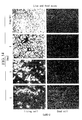
- Fig. 14 includes: photomicrographs showing living cells of the respective SaOS cells 5 when no ⁇ -TCP granules A (0 mg/ml), 1 mg/ ml, 3 mg/ml, or 5 mg/ml of the ⁇ -TCP granules A were added; and photomicrographs showing dead cells of the SaOS cells 5.
- a significant difference (P ⁇ 0.01, the Kruskal-Wallis test) is found between two groups: one with no ⁇ -TCP granules A (0 mg/ml) added and one with 5 mg/ml of the ⁇ -TCP granules A added.
- the ordinate represents "The number of dead cells / (The number of living cells + The number of dead cells)" at day 2 of culture.
- the abscissa represents a concentration (mg/ ml) of ⁇ -TCP granules A in a medium.
- an MTT assay showed an inhibition of cell proliferation of ⁇ -TCP granules A application groups.
- the groups with 3 mg/ml or 5 mg/ml of ⁇ -TCP granules A applied tended to show a stronger proliferation inhibitory effect in an earlier period than the group with 1 mg/ml of ⁇ -TCP granules A applied.
- the ordinate represents "The number of living cells / (The number of living cells + The number of dead cells)".
- the abscissa represents days.
- Macrophages may accumulate around ⁇ -tricalcium phosphate porous granules with a particle size of 10 to 100 ⁇ m.
- Fig. 17 indicates that macrophages accumulated around ⁇ -tricalcium phosphate porous granules with a particle size of about 10 ⁇ m and the ⁇ -tricalcium phosphate porous granules then disintegrated, which resulted in macrophage activation.
- a semicircular object which occupies the center region of Fig. 17 is a macrophage.
- This macrophage has pod-like protrusions in its surrounding. Thus, the macrophage seems to be activated.
- the arrows indicate disintegrated ⁇ -tricalcium phosphate porous granules.
- ⁇ -tricalcium phosphate porous granules with a particle size of 10 to 100 ⁇ m When ⁇ -tricalcium phosphate porous granules with a particle size of 10 to 100 ⁇ m are applied on an affected area, macrophages should cause T cells, an immune cell, to accumulate around cancer cells, thereby inhibiting proliferation, metastasis, and recurrence of the cancer cells.
- the cancer cell-inhibiting ceramic according to this embodiment may be disposed on an affected area after a cancer tissue such as a bone tumor has been removed. In this case, even if the cancer tissue does remain in the affected area, the tumor proliferation should be effectively inhibited.
- the ⁇ -tricalcium phosphate porous granules with a particle size of 10 to 100 ⁇ m should gather macrophages to that affected area and achieve more effective bone regeneration.
- the cancer cell-inhibiting ceramic according to the present invention may be applied on a site or its surrounding where a tumor tissue has been removed. This should inhibit cancer cell metastasis and recurrence, and further effectively regenerate bone.
- the cancer cell-inhibiting ceramic may be mixed with, for example, autologous blood, a Ringer's solution, or a saline, and may fill a site where a tumor tissue has been removed.
- an absorbable artificial bone, an autologous bone, or a mixture thereof may be used to fill the site.
Landscapes
- Health & Medical Sciences (AREA)
- Chemical & Material Sciences (AREA)
- Medicinal Chemistry (AREA)
- Life Sciences & Earth Sciences (AREA)
- Public Health (AREA)
- Veterinary Medicine (AREA)
- Animal Behavior & Ethology (AREA)
- General Health & Medical Sciences (AREA)
- Epidemiology (AREA)
- Engineering & Computer Science (AREA)
- Inorganic Chemistry (AREA)
- Pharmacology & Pharmacy (AREA)
- Dermatology (AREA)
- Transplantation (AREA)
- Oral & Maxillofacial Surgery (AREA)
- Bioinformatics & Cheminformatics (AREA)
- Organic Chemistry (AREA)
- General Chemical & Material Sciences (AREA)
- Nuclear Medicine, Radiotherapy & Molecular Imaging (AREA)
- Chemical Kinetics & Catalysis (AREA)
- Molecular Biology (AREA)
- Biomedical Technology (AREA)
- Physical Education & Sports Medicine (AREA)
- Ceramic Engineering (AREA)
- Dispersion Chemistry (AREA)
- Orthopedic Medicine & Surgery (AREA)
- Rheumatology (AREA)
- Oncology (AREA)
- Pharmaceuticals Containing Other Organic And Inorganic Compounds (AREA)
- Medicinal Preparation (AREA)
Abstract
Proliferation of cancer cells is effectively inhibited. Provided is a cancer cell-inhibiting ceramic containing a β-tricalcium phosphate porous granule with a particle size of 1 to 10 µm. The β-tricalcium phosphate porous granule is taken up into cancer cells at an affected area and have an effect of inhibiting proliferation of a cancer tissue. The β-tricalcium phosphate porous granule with a particle size of 1 to 10 µm can be used to more effectively inhibit the proliferation of the cancer cells.
Description
- The present invention relates to a cancer cell-inhibiting ceramic, a process for producing the ceramic, a method for treating a bone tumor, and use of a β-tricalcium phosphate porous granule with a particle size of 1 to 10 µm.
- Conventionally, cancer cell inhibitors that inhibit cancer cell metastasis and recurrence have been known (see, for example, Patent Literature 1).
Patent Literature 1 discloses an effect that a film is used to apply a β-tricalcium phosphate porous body, thereby inhibiting cancer cell proliferation, metastasis, and recurrence. - {PTL 1}
Japanese Unexamined Patent Application, Publication No.2010-126434 -
PTL 1 discloses a cancer cell inhibitor using a β-tricalcium phosphate porous body with a particle size of 25 to 75 µm. Unfortunately, cancer cells are unlikely to phagocytose the porous body with this particle size. - It is an object of the present invention to provide a cancer cell-inhibiting ceramic capable of effectively inhibiting cancer cell proliferation, a process for producing a cancer cell-inhibiting ceramic, a method for treating a bone tumor, and use of β-tricalcium phosphate porous granules with a particle size of 1 to 10 µm.
- The first aspect of the present invention provides a cancer cell-inhibiting ceramic containing a β-tricalcium phosphate porous granule with a particle size of 1 to 10 µm.
- The present inventors have conducted research and have found out that use of β-tricalcium phosphate porous granules with a granule size of 1 to 10 µm enables cancer cells to incorporate the granules to inhibit proliferation of the cancer cells. The β-tricalcium phosphate porous granules according to this aspect have a larger surface area and a higher solubility than non-porous granules of β-tricalcium phosphate. Accordingly, the porous granules are likely to affect the cancer cells after their incorporation. According to this aspect, the cancer cell proliferation can be thus effectively inhibited.
- In the above aspect, the β-tricalcium phosphate porous granule with a size of 1 to 10 µm may be produced from a β-tricalcium phosphate porous body having a porosity of 20 to 90%.
- With such a configuration, β-tricalcium phosphate porous granules are easily dissolved and thus taken up into cancer cells.
- The second aspect of the present invention provides a cancer cell-inhibiting ceramic containing a β-tricalcium phosphate porous granule with a particle size of 1 to 10 µm and a β-tricalcium phosphate porous granule with a particle size of 10 to 100 µm.
- The study by the inventors has demonstrated that macrophages accumulate around the β-tricalcium phosphate porous granules with a particle size of 10 to 100 µm. The cancer cell-inhibiting ceramic according to this aspect may be disposed on an affected area after a cancer tissue such as a bone tumor has been removed. Even if the cancer tissue does remain in that affected area, the β-tricalcium phosphate porous granules with a particle size of 1 to 10 µm should effectively inhibit proliferation of the tumor. In addition, macrophages are involved in bone regeneration. Accordingly, the β-tricalcium phosphate porous granules with a particle size of 10 to 100 µm allow macrophages to accumulate in that affected area. This should achieve more effective bone regeneration.
- In the above aspect, the β-tricalcium phosphate porous granule with a particle size of 1 to 10 µm and the β-tricalcium phosphate porous granules with a particle size of 10 to 100 µm may be produced from a β-tricalcium phosphate porous body having a porosity of 20 to 90%.
- With such a configuration, β-tricalcium phosphate porous granules with a size of 1 to 10 µm are easily dissolved and thus taken up into cancer cells. Also, β-tricalcium phosphate porous granules with a size of 10 to 100 µm are easy to be dissolved.
- The third aspect of the present invention provides a method for treating a bone tumor, the method including: applying a cancer cell-inhibiting ceramic containing a β-tricalcium phosphate porous granule with a particle size of 1 to 10 µm onto a site and/or a surrounding thereof where a tumor tissue has been removed to treat the tumor.
- The fourth aspect of the present invention provides use of a β-tricalcium phosphate porous granule with a particle size of 1 to 10 µm in the manufacture of cancer cell-inhibiting ceramic for the treatment of a bone tumor.
- The fifth aspect of the present invention provides a process for producing a β-tricalcium phosphate porous granule, the process including: a synthesis step of synthesizing β-tricalcium phosphate powder by a mechanochemical method; a sintering step of adding a foaming agent to and sintering the β-tricalcium phosphate powder synthesized in the synthesis step to produce a β-tricalcium phosphate porous body; and a classification step of milling the β-tricalcium phosphate porous body produced in the sintering step and classifying a β-tricalcium phosphate porous granule with a particle size of 1 to 10 µm by using an air classification method.
- According to this aspect, the classification step is used to classify and produce β-tricalcium phosphate porous granules with a particle size of 1 to 10 µm from β-tricalcium phosphate porous bodies produced in the sintering step, whose particles are in a relatively large block shape. Accordingly, as a series of a process for producing β-tricalcium phosphate porous bodies used depending on their application, β-tricalcium phosphate porous granules with a particle size of 1 to 10 µm may be produced.
- The present invention exerts effects to be able to effectively inhibit cancer cell proliferation.
-
- {
Fig. 1 }
Fig. 1 is a flow chart illustrating a process for producing β-tricalcium phosphate porous granules according to the first embodiment of the present invention. - {
Fig. 2 }
Fig. 2 is a graph showing a particle size distribution of β-tricalcium phosphate porous granules with a particle size of 1 to 10 µm, the granules being produced by the production process shown inFig. 1 . - {
Fig. 3 }
Fig. 3 is a photomicrograph obtained when only HT1080 cells were cultured for 1 day. - {
Fig. 4 }
Fig. 4 is a photomicrograph obtained when HT1080 cells were cultured for 1 day and then, β-TCP granules were added to a dish. - {
Fig. 5 }
Fig. 5 is a photomicrograph obtained when only HT1080 cells were cultured for 5 days. - {
Fig. 6 }
Fig. 6 is a photomicrograph obtained when HT1080 cells were cultured for 5 days after addition of β-TCP granules. - {
Fig. 7 }
Fig. 7 is a scanning electron microscopic image of an HT1080 cell cultured 3 days after the addition of β-TCP granules. - {
Fig. 8 }
Fig. 8 is a light microscopic image obtained when only HT1080 cells were cultured for 3 days. - {
Fig. 9 }
Fig. 9 is a light microscopic image obtained when HT1080 cells were cultured for 3 days after addition of 1 mg/ml of β-TCP granules. - {
Fig. 10 }
Fig. 10 is a light microscopic image obtained when HT1080 cells were cultured for 3 days after addition of 3 mg/ml of β-TCP granules. - {
Fig. 11 }
Fig. 11 is a graph showing particle size distributions of β-tricalcium phosphate porous granules with a particle size of 1 to 10 µm and β-tricalcium phosphate porous bodies with a particle size of 10 to 100 µm, the granules and the bodies being produced by the production process shown inFig. 1 . - {
Fig. 12 }
Fig. 12 is a diagram illustrating how to culture SaOS cells by adding β-TCP granules A. - {
Fig. 13 }
Fig. 13 is a photomicrograph showing morphology of SaOS cells before addition of β-TCP granules A. - {
Fig. 14 }
Fig. 14 is photomicrographs showing living and dead SaOS cells at each additive amount of β-TCP granules A. - {
Fig. 15 }
Fig. 15 is a graph showing the results with the Kruskal-Wallis test. - {
Fig. 16 }
Fig. 16 is a graph showing the results of an MTT assay. - {
Fig. 17 }
Fig. 17 is a picture indicating that macrophages accumulated around β-tricalcium phosphate porous granules with a particle size of 10 to 100 µm and the β-tricalcium phosphate porous granules then disintegrated, which resulted in macrophage activation. - With reference to the drawings, the following describes cancer cell-inhibiting ceramic according to the first embodiment of the present invention and a process for producing the ceramic.
- The cancer cell-inhibiting ceramic according to this embodiment is composed of β-tricalcium phosphate porous granules with a particle size of 1 to 10 µm.
- As shown in the flow chart of
Fig. 1 , a process for producing the cancer cell-inhibiting ceramic according to this embodiment includes: a synthesis step S1 of synthesizing β-tricalcium phosphate powder by a mechanochemical method; a sintering step S2 of adding a foaming agent to and sintering the β-tricalcium phosphate powder synthesized in the synthesis step S1 to produce block-shaped β-tricalcium phosphate porous bodies; and a classification step S3 of milling the β-tricalcium phosphate porous bodies produced in the sintering step S2 and classify β-tricalcium phosphate porous granules with a particle size of 1 to 10 µm by using an air classification method. - The mechanochemical method in the synthesis step S1 is described as follows: a rotating mill, for example, a zirconia ball mill is used to mix materials for β-tricalcium phosphate; and collision energy between substances is utilized to synthesize β-tricalcium phosphate powder.
- Specifically, first, calcium hydrogen phosphate dihydrate (CaHPO4·2H2O) with a purity of 99.9% and calcium carbonate (CaCO3) with a purity of 99.99% are mixed at an atomic ratio Ca/P of 1.50. Next, pure water is added thereto to prepare slurry having a solid content of 10% by weight. Then, this slurry is placed in a zirconia ball mill to make a reaction while subjected to grinding for 24 hours. After that, the solid is recovered and is put into a stainless bat. Finally, the solid is dried in an electric drying oven at 80°C.
- In the sintering step S2, first, the dried β-tricalcium phosphate solid is subjected to milling, followed by calcination in an electric furnace at 750°C for 1 hour. Next, to the calcinated powder (e.g., 60 g) are added a foaming agent and a deflocculant including ammonium polyacrylate and ethylene nonylphenyl ether (e.g., 1 to 6 ml), and the mixture is subjected to mixing and foaming to prepare slurry. Then, the slurry is injected into a mold. For example, the deflocculant used is Celuna D-305 manufactured by Chukyo Yushi Co., Ltd.
- After the slurry is dried at 80°C for 24 hours while being kept in the mold, the temperature is raised at a rate of 100°C per hour and the slurry is sintered at 1050°C for 30 minutes. This process produces β-tricalcium phosphate porous bodies having a porosity of from 20 to 90% (preferably 75%). With regard to the porosity of the β-tricalcium phosphate porous bodies according to this embodiment, a conventional method was used to calculate apparent porosity.
- For example, in the classification step S3, a TC-15N manufactured by Nisshin Engineering Inc. was used to classify β-tricalcium phosphate porous bodies with a size of 100 µm or less at a rotating speed of 2500 rpm, a wind level of 2.0 m 3 /min, and a feed rate of 1.0 kg/h. Then, β-tricalcium phosphate porous granules with a size of 10 µm or less were recovered.
- A particle size distribution of β-tricalcium phosphate porous granules with a particle size of 1 to 10 µm (i.e., cancer cell-inhibiting ceramic; hereinafter, simply referred to as "β-TCP granules A"; see
Fig. 4 ) as produced using a production process according to this embodiment, was determined. As shown inFig. 2 , the results demonstrated that the distribution, for example, had a peak at a particle size of 3 µm. InFig. 2 , the ordinate indicates a frequency (%) and integration (%). The abscissa indicates a particle size (µm). The same applies toFig. 11 . - A particle size distribution of β-tricalcium phosphate porous granules is determined as follows: for example, distilled water is used as a dispersion medium and Triton X-100 is used as a dispersant; dispersion is carried out using an ultrasonic bath (150 W) for 1 minute; and a Microtrac HRA is then used to determine the distribution by a laser diffraction/scattering method.
- The following describes effects of cancer cell-inhibiting ceramic as so prepared and a process for producing the ceramic.
- When the cancer cell-inhibiting ceramic according to this embodiment is attached to cancer cells 3 (see, for example,
Fig. 3 ), the cancer cells take up β-tricalcium phosphate porous granules with a particle size of 1 to 10 µm. This inhibits proliferation of the cancer cells. - Differing from an anti-cancer drug such as cisplatin, β-tricalcium phosphate porous granules are composed of only materials having a high bioaffinity. When these β-tricalcium phosphate porous granules are administered to patients, their cancer cells should be inhibited without any adverse effect. Also, the advantages include that a burden on the patients should be reduced. In addition, the β-tricalcium phosphate porous granules produced are a kind of β-tricalcium phosphate porous bodies. Hence, compared with non-porous granules of β-tricalcium phosphate, they have a large surface area and an increased solubility. These characteristics are likely to affect cancer cells after incorporation of the granules.
- The following describes an inhibitory effect of β-TCP granules A (cancer cell-inhibiting ceramic) on cancer cells.
- As shown in
Fig. 3 , HT1080 cells (human fibrosarcoma cells; cancer cells) 3 were seeded at 5 k/cm2 (300 k/dish) on a 10-cm dish (Nunc) and cultured (at 37°C and 5% CO2).Fig. 3 is a photomicrograph (x 200) obtained when only HT1080cells 3 were cultured for 1 day. - At the next day, β-TCP granules A were mixed in a medium at a concentration of 3.0 mg/ml. These granules A were added at 10 ml/dish (30 mg/dish) to a dish containing
HT1080 cells 3 as shown inFig. 4 . The medium used is, for example, MEM (GIBCO)/FBS (GIBCO) 10%/P.S.A.Fig. 4 is a photomicrograph (x 200) obtained whenHT1080 cells 3 were cultured for 1 day and then, β-TCP granules A were added to a dish. The β-TCP granules A were found to accumulate in the cytoplasm. - At
day 3 of the culture, the β-TCP granules A exhibited a dose dependency and caused the proliferation capability of theHT1080 cells 3 to decrease. Then, the culture was continued. After that, theHT1080 cells 3 containing the β-TCP granules A as shown inFig. 6 had a more inhibited cell proliferation capability than theHT1080 cells 3 cultured alone as shown inFig. 5. Figs. 5 and 6 each show a photomicrograph (x 200) atday 5 of the culture. -
Fig. 7 is a scanning electron microscopic image of anHT1080 cell 3 cultured 3 days after the addition of β-TCP granules A. This image demonstrates that theHT1080 cell 3 took up the β-TCP granules A. Further,HT1080 cells 3 during the culture were observed under a light microscope. The results indicated an inhibited cell proliferation and a contracted cell morphology. Hence, the above demonstrates that incorporating β-TCP granules A causes the proliferation capability ofHT1080 cells 3 to be reduced. - Next,
HT1080 cells 3 were cultured on dishes, and β-TCP granules A were added to each dish at 1 mg/ml or 3 mg/ml. These cells were cultured for 3 days.Figs. 8 to 10 demonstrate that as the additive amount of the β-TCP granules A increased, their inhibitory effect increased.Fig. 8 is a light microscopic image obtained when only HT1080cells 3 were cultured for 3 days.Fig. 9 is a light microscopic image obtained when HT1080 cells were cultured for 3 days after addition of 1 mg/ml of β-TCP granules A.Fig. 10 is a light microscopic image obtained when HT1080 cells were cultured for 3 days after addition of 3 mg/ml of β-TCP granules A. - As described above, the cancer cell-inhibiting ceramic according to this embodiment can effectively inhibit proliferation of cancer cells, because of being composed of β-tricalcium phosphate porous granules with a particle size of 1 to 10 µm (β-TCP granules A). Also, with such a configuration, the β-tricalcium phosphate porous granules, being porous, are easily dissolved and thus taken up into cancer cells. A production process according to this embodiment makes it possible to easily produce such β-tricalcium phosphate porous granules with a particle size of 1 to 10 µm.
- Hereinafter, the elements shared with those of the cancer cell-inhibiting ceramic according to the first embodiment have the same reference signs to avoid description redundancy.
- The following describes cancer cell-inhibiting ceramic according to the second embodiment of the present invention.
- The cancer cell-inhibiting ceramic according to this embodiment is composed of β-tricalcium phosphate porous granules with a particle size of 1 to 10 µm (β-TCP granules A) and β-tricalcium phosphate porous granules with a particle size of 10 to 100 µm.
- For example, in the classification step S3, a TC-15N manufactured by Nisshin Engineering Inc. was used to classify β-tricalcium phosphate porous bodies with a size of 100 µm or less at a rotating speed of 4000 rpm, a wind level of 2.0 m3/min, and a feed rate of 1.0 kg/h. Then, a fraction containing β-tricalcium phosphate with a size of 10 to 100 µm was recovered. Next, the fraction containing β-TCP with a size of 10 to 100 µm was classified at a rotating speed of 2500 rpm, a wind level of 2.0 m3/min, and a feed rate of 1.0 kg/h to recover β-tricalcium phosphate with a size of 10 µm or less.
- A particle size distribution of β-tricalcium phosphate porous granules with a particle size of 1 to 100 µm (i.e., cancer cell-inhibiting ceramic; hereinafter, simply referred to as "β-TCP granules B" (not shown)) as produced using a production process according to this embodiment was determined. As shown in
Fig. 11 , for example, the results demonstrated that the distribution had a peak at a particle size of 3 µm within a range from 1 to 10 µm and another peak at a particle size of 40 µm within a range from 10 to 100 µm. The method for determining a particle size distribution of the β-TCP granules B is substantially the same as the method for determining a particle size of the β-TCP granules A according to the first embodiment. - A verification experiment for the β-TCP granules B is substantially the same as that for the β-TCP granules A according to the first embodiment. First,
HT1080 cells 3 were cultured on dishes, and β-TCP granules B were added to each dish at 1 mg/ml or 3 mg/ml. These cells were cultured for 3 days. The β-TCP granules B also exhibited a cancer cell inhibitory effect. However, the β-TCP granules A had a higher cancer cell inhibitory effect than the β-TCP granules B. - Next, the following describes an inhibitory effect of the β-TCP granules A with a particle size of 1 to 10 µm on human osteosarcoma cells.
- As shown in
Fig. 12 , human osteosarcoma cells (SaOS-2; hereinafter, referred to as "SaOS cells") 5 were seeded at a density of 5 x 10² (cells/cm2) on each dish and cultured. TheSaOS cells 5 were cultured for 3 days on dishes. Then, no β-TCP granules A, 1 mg/ ml, 3 mg/ml, or 5 mg/ml of the β-TCP granules A were added to each dish. The medium was changed twice a week. -
Fig. 13 is a photomicrograph showing morphology ofSaOS cells 5 before addition of β-TCP granules A. - The β-TCP granules A were added to
SaOS cells 5, and the cells were further cultured for 2 days. As shown inFig. 14 , the results demonstrated that depending on an amount of the β-TCP granules A, the number of living cells decreased and the number of dead cells increased.Fig. 14 includes: photomicrographs showing living cells of therespective SaOS cells 5 when no β-TCP granules A (0 mg/ml), 1 mg/ ml, 3 mg/ml, or 5 mg/ml of the β-TCP granules A were added; and photomicrographs showing dead cells of theSaOS cells 5. - As shown in
Fig. 15 , a significant difference (P < 0.01, the Kruskal-Wallis test) is found between two groups: one with no β-TCP granules A (0 mg/ml) added and one with 5 mg/ml of the β-TCP granules A added. InFig. 15 , the ordinate represents "The number of dead cells / (The number of living cells + The number of dead cells)" atday 2 of culture. The abscissa represents a concentration (mg/ ml) of β-TCP granules A in a medium. - Further, as shown in
Fig. 16 , an MTT assay showed an inhibition of cell proliferation of β-TCP granules A application groups. In addition, the groups with 3 mg/ml or 5 mg/ml of β-TCP granules A applied tended to show a stronger proliferation inhibitory effect in an earlier period than the group with 1 mg/ml of β-TCP granules A applied. InFig. 16 , the ordinate represents "The number of living cells / (The number of living cells + The number of dead cells)". The abscissa represents days. - Macrophages may accumulate around β-tricalcium phosphate porous granules with a particle size of 10 to 100 µm.
Fig. 17 indicates that macrophages accumulated around β-tricalcium phosphate porous granules with a particle size of about 10 µm and the β-tricalcium phosphate porous granules then disintegrated, which resulted in macrophage activation. - A semicircular object which occupies the center region of
Fig. 17 is a macrophage. This macrophage has pod-like protrusions in its surrounding. Thus, the macrophage seems to be activated. In addition, in this figure, the arrows indicate disintegrated β-tricalcium phosphate porous granules. - When β-tricalcium phosphate porous granules with a particle size of 10 to 100 µm are applied on an affected area, macrophages should cause T cells, an immune cell, to accumulate around cancer cells, thereby inhibiting proliferation, metastasis, and recurrence of the cancer cells. The cancer cell-inhibiting ceramic according to this embodiment may be disposed on an affected area after a cancer tissue such as a bone tumor has been removed. In this case, even if the cancer tissue does remain in the affected area, the tumor proliferation should be effectively inhibited. As macrophages are involved in bone regeneration, the β-tricalcium phosphate porous granules with a particle size of 10 to 100 µm should gather macrophages to that affected area and achieve more effective bone regeneration.
- In actual use of the cancer cell-inhibiting ceramic in clinical practice, it is considered that the cancer cell-inhibiting ceramic according to the present invention may be applied on a site or its surrounding where a tumor tissue has been removed. This should inhibit cancer cell metastasis and recurrence, and further effectively regenerate bone.
- Also, it is considered that the cancer cell-inhibiting ceramic may be mixed with, for example, autologous blood, a Ringer's solution, or a saline, and may fill a site where a tumor tissue has been removed. In order to sufficiently recover a bone mass after the filling, an absorbable artificial bone, an autologous bone, or a mixture thereof may be used to fill the site.
-
- A
- β-TCP granule (Cancer cell-inhibiting ceramic)
- 3
- HT1080 cell (Cancer cell)
- S1
- Synthesis step
- S2
- Sintering step
- S3
- Classification step
Claims (7)
- A cancer cell-inhibiting ceramic comprising a β-tricalcium phosphate porous granule with a particle size of 1 to 10 µm.
- The cancer cell-inhibiting ceramic according to Claim 1, wherein the β-tricalcium phosphate porous granule is produced from a β-tricalcium phosphate porous body having a porosity of 20 to 90%.
- A cancer cell-inhibiting ceramic comprising:a β-tricalcium phosphate porous granule with a particle size of 1 to 10 µm; anda β-tricalcium phosphate porous granule with a particle size of 10 to 100 µm.
- The cancer cell-inhibiting ceramic according to Claim 3, wherein the β-tricalcium phosphate porous granule with a particle size of 1 to 10 µm and the β-tricalcium phosphate porous granule with a particle size of 10 to 100 µm are produced from a β-tricalcium phosphate porous body having a porosity of 20 to 90%.
- A method for treating a bone tumor, the method comprising: applying a cancer cell-inhibiting ceramic comprising a β-tricalcium phosphate porous granule with a particle size of 1 to 10 µm onto a site and/or a surrounding thereof where a tumor tissue has been removed to treat the tumor.
- Use of a β-tricalcium phosphate porous granule with a particle size of 1 to 10 µm in the manufacture of a cancer cell-inhibiting ceramic for the treatment of a bone tumor.
- A process for producing a cancer cell-inhibiting ceramic, the process comprising:a synthesis step of synthesizing β-tricalcium phosphate powder by a mechanochemical method;a sintering step of adding a foaming agent to and sintering the β-tricalcium phosphate powder synthesized in the synthesis step to produce a β-tricalcium phosphate porous body; anda classification step of milling the β-tricalcium phosphate porous body produced in the sintering step and classifying a β-tricalcium phosphate porous granule with a particle size of 1 to 10 µm by using an air classification method.
Applications Claiming Priority (2)
| Application Number | Priority Date | Filing Date | Title |
|---|---|---|---|
| JP2011281529 | 2011-12-22 | ||
| PCT/JP2012/083202 WO2013094722A1 (en) | 2011-12-22 | 2012-12-21 | Cancer cell-inhibiting ceramics and method for producing cancer cell-inhibiting ceramics, method for treating bone neoplasm, and use of β tricalcium phosphate porous granules having grain size of 1 to 10 μm |
Publications (1)
| Publication Number | Publication Date |
|---|---|
| EP2796141A1 true EP2796141A1 (en) | 2014-10-29 |
Family
ID=48668600
Family Applications (1)
| Application Number | Title | Priority Date | Filing Date |
|---|---|---|---|
| EP12860321.4A Withdrawn EP2796141A1 (en) | 2011-12-22 | 2012-12-21 | Cancer cell-inhibiting ceramics and method for producing cancer cell-inhibiting ceramics, method for treating bone neoplasm, and use of b tricalcium phosphate porous granules having grain size of 1 to 10 mm |
Country Status (5)
| Country | Link |
|---|---|
| US (1) | US20140294971A1 (en) |
| EP (1) | EP2796141A1 (en) |
| JP (1) | JPWO2013094722A1 (en) |
| CN (1) | CN104053445A (en) |
| WO (1) | WO2013094722A1 (en) |
Families Citing this family (1)
| Publication number | Priority date | Publication date | Assignee | Title |
|---|---|---|---|---|
| US11498880B2 (en) | 2019-07-26 | 2022-11-15 | Warsaw Orthopedic, Inc. | Calcium phosphate granules and methods of making them |
Family Cites Families (7)
| Publication number | Priority date | Publication date | Assignee | Title |
|---|---|---|---|---|
| US8333996B2 (en) * | 1995-05-19 | 2012-12-18 | Etex Corporation | Calcium phosphate delivery vehicle and adjuvant |
| FR2857268B1 (en) * | 2003-07-08 | 2007-09-21 | Urodelia | INJECTABLE COMPOSITE FOR MAGNETOCYTOLYSIS OF BONE METASTATIC CELLS |
| US8025903B2 (en) * | 2005-09-09 | 2011-09-27 | Wright Medical Technology, Inc. | Composite bone graft substitute cement and articles produced therefrom |
| US8062655B2 (en) * | 2007-08-31 | 2011-11-22 | Phillips Plastics Corporation | Composite scaffold structure |
| JP5045933B2 (en) * | 2008-01-31 | 2012-10-10 | 株式会社クラレ | Porous tricalcium phosphate sintered body and method for producing the same |
| JP5274214B2 (en) * | 2008-11-25 | 2013-08-28 | オリンパス株式会社 | Cancer cell suppression sheet |
| CN103153317A (en) * | 2010-07-28 | 2013-06-12 | 奥林巴斯株式会社 | Immunity inducer |
-
2012
- 2012-12-21 WO PCT/JP2012/083202 patent/WO2013094722A1/en not_active Ceased
- 2012-12-21 JP JP2013550348A patent/JPWO2013094722A1/en active Pending
- 2012-12-21 EP EP12860321.4A patent/EP2796141A1/en not_active Withdrawn
- 2012-12-21 CN CN201280062616.0A patent/CN104053445A/en active Pending
-
2014
- 2014-06-13 US US14/304,080 patent/US20140294971A1/en not_active Abandoned
Non-Patent Citations (1)
| Title |
|---|
| See references of WO2013094722A1 * |
Also Published As
| Publication number | Publication date |
|---|---|
| WO2013094722A1 (en) | 2013-06-27 |
| CN104053445A (en) | 2014-09-17 |
| JPWO2013094722A1 (en) | 2015-04-27 |
| US20140294971A1 (en) | 2014-10-02 |
Similar Documents
| Publication | Publication Date | Title |
|---|---|---|
| Roy et al. | Effects of zinc and strontium substitution in tricalcium phosphate on osteoclast differentiation and resorption | |
| EP2403547B1 (en) | Production of moldable bone substitute | |
| Meininger et al. | Effect of strontium substitution on the material properties and osteogenic potential of 3D powder printed magnesium phosphate scaffolds | |
| Porter et al. | Comparison of in vivo dissolution processes in hydroxyapatite and silicon-substituted hydroxyapatite bioceramics | |
| Naga et al. | Preparation and characterization of highly porous ceramic scaffolds based on thermally treated fish bone | |
| Kim et al. | In situ formation of biphasic calcium phosphates and their biological performance in vivo | |
| Linares et al. | Effects of nanocrystalline hydroxyapatites on macrophage polarization | |
| JP2000500110A (en) | Low temperature calcium phosphate apatite and method for producing the same | |
| JPH11511722A (en) | Bone substitute material and method for producing the same | |
| Deng et al. | Enhanced osteoinductivity of porous biphasic calcium phosphate ceramic beads with high content of strontium-incorporated calcium-deficient hydroxyapatite | |
| Marques et al. | Antibiotic-loaded Sr-doped porous calcium phosphate granules as multifunctional bone grafts | |
| Cama et al. | The role of new zinc incorporated monetite cements on osteogenic differentiation of human mesenchymal stem cells | |
| Szurkowska et al. | Novel hybrid material based on Mg2+ and SiO44-co-substituted nano-hydroxyapatite, alginate and chondroitin sulphate for potential use in biomaterials engineering | |
| Yan et al. | Biopolymer-based bone scaffold for controlled Pt (IV) prodrug release and synergistic photothermal-chemotherapy and immunotherapy in osteosarcoma | |
| Cama et al. | Structural changes and biological responsiveness of an injectable and mouldable monetite bone graft generated by a facile synthetic method | |
| Sasikumar | Effect of particle size of calcium phosphate based bioceramic drug delivery carrier on the release kinetics of ciprofloxacin hydrochloride: an in vitro study | |
| Wu et al. | Preparation and characterization of porous calcium-phosphate microspheres | |
| He et al. | 3D printing and physicochemical and biological characterizations of gallium-containing magnesium/calcium phosphate ceramic scaffolds | |
| Nakagawa et al. | Fabrications of boron-containing apatite ceramics via ultrasonic spray-pyrolysis route and their responses to immunocytes | |
| AU5744598A (en) | A synthetic biomaterial compound | |
| Hamada et al. | The preparation of PLLA/calcium phosphate hybrid composite and its evaluation of biocompatibility | |
| US20140294971A1 (en) | Cancer cell-inhibiting ceramic, process for producing cancer cell-inhibiting ceramic, method for treating bone tumor, and use of beta-tricalcium phosphate porous granules with particle size of 1 to 10 micrometer | |
| CN1501818A (en) | artificial bone material | |
| RU2395476C1 (en) | Method of preparing porous hydroxyapatite granules | |
| Fu et al. | Calcium phosphate cements: Structure-related properties |
Legal Events
| Date | Code | Title | Description |
|---|---|---|---|
| PUAI | Public reference made under article 153(3) epc to a published international application that has entered the european phase |
Free format text: ORIGINAL CODE: 0009012 |
|
| 17P | Request for examination filed |
Effective date: 20140709 |
|
| AK | Designated contracting states |
Kind code of ref document: A1 Designated state(s): AL AT BE BG CH CY CZ DE DK EE ES FI FR GB GR HR HU IE IS IT LI LT LU LV MC MK MT NL NO PL PT RO RS SE SI SK SM TR |
|
| DAX | Request for extension of the european patent (deleted) | ||
| STAA | Information on the status of an ep patent application or granted ep patent |
Free format text: STATUS: THE APPLICATION HAS BEEN WITHDRAWN |
|
| 18W | Application withdrawn |
Effective date: 20150929 |