EP2793937B1 - Vaccines against hpv - Google Patents
Vaccines against hpv Download PDFInfo
- Publication number
- EP2793937B1 EP2793937B1 EP12809271.5A EP12809271A EP2793937B1 EP 2793937 B1 EP2793937 B1 EP 2793937B1 EP 12809271 A EP12809271 A EP 12809271A EP 2793937 B1 EP2793937 B1 EP 2793937B1
- Authority
- EP
- European Patent Office
- Prior art keywords
- seq
- amino acid
- sequence
- acid sequence
- nucleic acid
- Prior art date
- Legal status (The legal status is an assumption and is not a legal conclusion. Google has not performed a legal analysis and makes no representation as to the accuracy of the status listed.)
- Active
Links
Images


Classifications
-
- A—HUMAN NECESSITIES
- A61—MEDICAL OR VETERINARY SCIENCE; HYGIENE
- A61K—PREPARATIONS FOR MEDICAL, DENTAL OR TOILETRY PURPOSES
- A61K39/00—Medicinal preparations containing antigens or antibodies
- A61K39/395—Antibodies; Immunoglobulins; Immune serum, e.g. antilymphocytic serum
- A61K39/39575—Antibodies; Immunoglobulins; Immune serum, e.g. antilymphocytic serum against materials from other living beings excluding bacteria and viruses, e.g. protozoa, fungi, plants
-
- A—HUMAN NECESSITIES
- A61—MEDICAL OR VETERINARY SCIENCE; HYGIENE
- A61K—PREPARATIONS FOR MEDICAL, DENTAL OR TOILETRY PURPOSES
- A61K39/00—Medicinal preparations containing antigens or antibodies
- A61K39/0005—Vertebrate antigens
- A61K39/0011—Cancer antigens
-
- A—HUMAN NECESSITIES
- A61—MEDICAL OR VETERINARY SCIENCE; HYGIENE
- A61K—PREPARATIONS FOR MEDICAL, DENTAL OR TOILETRY PURPOSES
- A61K39/00—Medicinal preparations containing antigens or antibodies
- A61K39/12—Viral antigens
-
- A—HUMAN NECESSITIES
- A61—MEDICAL OR VETERINARY SCIENCE; HYGIENE
- A61P—SPECIFIC THERAPEUTIC ACTIVITY OF CHEMICAL COMPOUNDS OR MEDICINAL PREPARATIONS
- A61P31/00—Antiinfectives, i.e. antibiotics, antiseptics, chemotherapeutics
- A61P31/12—Antivirals
-
- A—HUMAN NECESSITIES
- A61—MEDICAL OR VETERINARY SCIENCE; HYGIENE
- A61P—SPECIFIC THERAPEUTIC ACTIVITY OF CHEMICAL COMPOUNDS OR MEDICINAL PREPARATIONS
- A61P31/00—Antiinfectives, i.e. antibiotics, antiseptics, chemotherapeutics
- A61P31/12—Antivirals
- A61P31/20—Antivirals for DNA viruses
-
- A—HUMAN NECESSITIES
- A61—MEDICAL OR VETERINARY SCIENCE; HYGIENE
- A61P—SPECIFIC THERAPEUTIC ACTIVITY OF CHEMICAL COMPOUNDS OR MEDICINAL PREPARATIONS
- A61P35/00—Antineoplastic agents
-
- A—HUMAN NECESSITIES
- A61—MEDICAL OR VETERINARY SCIENCE; HYGIENE
- A61P—SPECIFIC THERAPEUTIC ACTIVITY OF CHEMICAL COMPOUNDS OR MEDICINAL PREPARATIONS
- A61P37/00—Drugs for immunological or allergic disorders
- A61P37/02—Immunomodulators
- A61P37/04—Immunostimulants
-
- C—CHEMISTRY; METALLURGY
- C07—ORGANIC CHEMISTRY
- C07K—PEPTIDES
- C07K14/00—Peptides having more than 20 amino acids; Gastrins; Somatostatins; Melanotropins; Derivatives thereof
- C07K14/005—Peptides having more than 20 amino acids; Gastrins; Somatostatins; Melanotropins; Derivatives thereof from viruses
-
- C—CHEMISTRY; METALLURGY
- C07—ORGANIC CHEMISTRY
- C07K—PEPTIDES
- C07K14/00—Peptides having more than 20 amino acids; Gastrins; Somatostatins; Melanotropins; Derivatives thereof
- C07K14/435—Peptides having more than 20 amino acids; Gastrins; Somatostatins; Melanotropins; Derivatives thereof from animals; from humans
- C07K14/52—Cytokines; Lymphokines; Interferons
- C07K14/521—Chemokines
- C07K14/523—Beta-chemokines, e.g. RANTES, I-309/TCA-3, MIP-1alpha, MIP-1beta/ACT-2/LD78/SCIF, MCP-1/MCAF, MCP-2, MCP-3, LDCF-1, LDCF-2
-
- C—CHEMISTRY; METALLURGY
- C07—ORGANIC CHEMISTRY
- C07K—PEPTIDES
- C07K16/00—Immunoglobulins [IG], e.g. monoclonal or polyclonal antibodies
- C07K16/08—Immunoglobulins [IG], e.g. monoclonal or polyclonal antibodies against material from viruses
- C07K16/081—DNA viruses
- C07K16/084—Papillomaviridae (F); Polyomaviridae (F), e.g. SV40, BK virus or JC virus
-
- C—CHEMISTRY; METALLURGY
- C12—BIOCHEMISTRY; BEER; SPIRITS; WINE; VINEGAR; MICROBIOLOGY; ENZYMOLOGY; MUTATION OR GENETIC ENGINEERING
- C12N—MICROORGANISMS OR ENZYMES; COMPOSITIONS THEREOF; PROPAGATING, PRESERVING, OR MAINTAINING MICROORGANISMS; MUTATION OR GENETIC ENGINEERING; CULTURE MEDIA
- C12N7/00—Viruses; Bacteriophages; Compositions thereof; Preparation or purification thereof
-
- A—HUMAN NECESSITIES
- A61—MEDICAL OR VETERINARY SCIENCE; HYGIENE
- A61K—PREPARATIONS FOR MEDICAL, DENTAL OR TOILETRY PURPOSES
- A61K39/00—Medicinal preparations containing antigens or antibodies
- A61K2039/505—Medicinal preparations containing antigens or antibodies comprising antibodies
-
- A—HUMAN NECESSITIES
- A61—MEDICAL OR VETERINARY SCIENCE; HYGIENE
- A61K—PREPARATIONS FOR MEDICAL, DENTAL OR TOILETRY PURPOSES
- A61K39/00—Medicinal preparations containing antigens or antibodies
- A61K2039/51—Medicinal preparations containing antigens or antibodies comprising whole cells, viruses or DNA/RNA
- A61K2039/53—DNA (RNA) vaccination
-
- A—HUMAN NECESSITIES
- A61—MEDICAL OR VETERINARY SCIENCE; HYGIENE
- A61K—PREPARATIONS FOR MEDICAL, DENTAL OR TOILETRY PURPOSES
- A61K39/00—Medicinal preparations containing antigens or antibodies
- A61K2039/58—Medicinal preparations containing antigens or antibodies raising an immune response against a target which is not the antigen used for immunisation
- A61K2039/585—Medicinal preparations containing antigens or antibodies raising an immune response against a target which is not the antigen used for immunisation wherein the target is cancer
-
- A—HUMAN NECESSITIES
- A61—MEDICAL OR VETERINARY SCIENCE; HYGIENE
- A61K—PREPARATIONS FOR MEDICAL, DENTAL OR TOILETRY PURPOSES
- A61K39/00—Medicinal preparations containing antigens or antibodies
- A61K2039/60—Medicinal preparations containing antigens or antibodies characteristics by the carrier linked to the antigen
- A61K2039/6031—Proteins
-
- A—HUMAN NECESSITIES
- A61—MEDICAL OR VETERINARY SCIENCE; HYGIENE
- A61K—PREPARATIONS FOR MEDICAL, DENTAL OR TOILETRY PURPOSES
- A61K39/00—Medicinal preparations containing antigens or antibodies
- A61K2039/60—Medicinal preparations containing antigens or antibodies characteristics by the carrier linked to the antigen
- A61K2039/6031—Proteins
- A61K2039/6056—Antibodies
-
- A—HUMAN NECESSITIES
- A61—MEDICAL OR VETERINARY SCIENCE; HYGIENE
- A61K—PREPARATIONS FOR MEDICAL, DENTAL OR TOILETRY PURPOSES
- A61K39/00—Medicinal preparations containing antigens or antibodies
- A61K2039/64—Medicinal preparations containing antigens or antibodies characterised by the architecture of the carrier-antigen complex, e.g. repetition of carrier-antigen units
-
- A—HUMAN NECESSITIES
- A61—MEDICAL OR VETERINARY SCIENCE; HYGIENE
- A61K—PREPARATIONS FOR MEDICAL, DENTAL OR TOILETRY PURPOSES
- A61K39/00—Medicinal preparations containing antigens or antibodies
- A61K2039/80—Vaccine for a specifically defined cancer
- A61K2039/892—Reproductive system [uterus, ovaries, cervix, testes]
-
- A—HUMAN NECESSITIES
- A61—MEDICAL OR VETERINARY SCIENCE; HYGIENE
- A61K—PREPARATIONS FOR MEDICAL, DENTAL OR TOILETRY PURPOSES
- A61K48/00—Medicinal preparations containing genetic material which is inserted into cells of the living body to treat genetic diseases; Gene therapy
-
- C—CHEMISTRY; METALLURGY
- C07—ORGANIC CHEMISTRY
- C07K—PEPTIDES
- C07K2317/00—Immunoglobulins specific features
- C07K2317/50—Immunoglobulins specific features characterized by immunoglobulin fragments
- C07K2317/52—Constant or Fc region; Isotype
- C07K2317/526—CH3 domain
-
- C—CHEMISTRY; METALLURGY
- C07—ORGANIC CHEMISTRY
- C07K—PEPTIDES
- C07K2317/00—Immunoglobulins specific features
- C07K2317/50—Immunoglobulins specific features characterized by immunoglobulin fragments
- C07K2317/52—Constant or Fc region; Isotype
- C07K2317/53—Hinge
-
- C—CHEMISTRY; METALLURGY
- C07—ORGANIC CHEMISTRY
- C07K—PEPTIDES
- C07K2319/00—Fusion polypeptide
-
- C—CHEMISTRY; METALLURGY
- C07—ORGANIC CHEMISTRY
- C07K—PEPTIDES
- C07K2319/00—Fusion polypeptide
- C07K2319/01—Fusion polypeptide containing a localisation/targetting motif
- C07K2319/02—Fusion polypeptide containing a localisation/targetting motif containing a signal sequence
-
- C—CHEMISTRY; METALLURGY
- C07—ORGANIC CHEMISTRY
- C07K—PEPTIDES
- C07K2319/00—Fusion polypeptide
- C07K2319/30—Non-immunoglobulin-derived peptide or protein having an immunoglobulin constant or Fc region, or a fragment thereof, attached thereto
-
- C—CHEMISTRY; METALLURGY
- C07—ORGANIC CHEMISTRY
- C07K—PEPTIDES
- C07K2319/00—Fusion polypeptide
- C07K2319/70—Fusion polypeptide containing domain for protein-protein interaction
- C07K2319/735—Fusion polypeptide containing domain for protein-protein interaction containing a domain for self-assembly, e.g. a viral coat protein (includes phage display)
-
- C—CHEMISTRY; METALLURGY
- C12—BIOCHEMISTRY; BEER; SPIRITS; WINE; VINEGAR; MICROBIOLOGY; ENZYMOLOGY; MUTATION OR GENETIC ENGINEERING
- C12N—MICROORGANISMS OR ENZYMES; COMPOSITIONS THEREOF; PROPAGATING, PRESERVING, OR MAINTAINING MICROORGANISMS; MUTATION OR GENETIC ENGINEERING; CULTURE MEDIA
- C12N2710/00—MICROORGANISMS OR ENZYMES; COMPOSITIONS THEREOF; PROPAGATING, PRESERVING, OR MAINTAINING MICROORGANISMS; MUTATION OR GENETIC ENGINEERING; CULTURE MEDIA dsDNA viruses
- C12N2710/00011—Details
- C12N2710/20011—Papillomaviridae
- C12N2710/20022—New viral proteins or individual genes, new structural or functional aspects of known viral proteins or genes
-
- C—CHEMISTRY; METALLURGY
- C12—BIOCHEMISTRY; BEER; SPIRITS; WINE; VINEGAR; MICROBIOLOGY; ENZYMOLOGY; MUTATION OR GENETIC ENGINEERING
- C12N—MICROORGANISMS OR ENZYMES; COMPOSITIONS THEREOF; PROPAGATING, PRESERVING, OR MAINTAINING MICROORGANISMS; MUTATION OR GENETIC ENGINEERING; CULTURE MEDIA
- C12N2710/00—MICROORGANISMS OR ENZYMES; COMPOSITIONS THEREOF; PROPAGATING, PRESERVING, OR MAINTAINING MICROORGANISMS; MUTATION OR GENETIC ENGINEERING; CULTURE MEDIA dsDNA viruses
- C12N2710/00011—Details
- C12N2710/20011—Papillomaviridae
- C12N2710/20034—Use of virus or viral component as vaccine, e.g. live-attenuated or inactivated virus, VLP, viral protein
-
- C—CHEMISTRY; METALLURGY
- C12—BIOCHEMISTRY; BEER; SPIRITS; WINE; VINEGAR; MICROBIOLOGY; ENZYMOLOGY; MUTATION OR GENETIC ENGINEERING
- C12N—MICROORGANISMS OR ENZYMES; COMPOSITIONS THEREOF; PROPAGATING, PRESERVING, OR MAINTAINING MICROORGANISMS; MUTATION OR GENETIC ENGINEERING; CULTURE MEDIA
- C12N2710/00—MICROORGANISMS OR ENZYMES; COMPOSITIONS THEREOF; PROPAGATING, PRESERVING, OR MAINTAINING MICROORGANISMS; MUTATION OR GENETIC ENGINEERING; CULTURE MEDIA dsDNA viruses
- C12N2710/00011—Details
- C12N2710/20011—Papillomaviridae
- C12N2710/20071—Demonstrated in vivo effect
-
- C—CHEMISTRY; METALLURGY
- C12—BIOCHEMISTRY; BEER; SPIRITS; WINE; VINEGAR; MICROBIOLOGY; ENZYMOLOGY; MUTATION OR GENETIC ENGINEERING
- C12N—MICROORGANISMS OR ENZYMES; COMPOSITIONS THEREOF; PROPAGATING, PRESERVING, OR MAINTAINING MICROORGANISMS; MUTATION OR GENETIC ENGINEERING; CULTURE MEDIA
- C12N2800/00—Nucleic acids vectors
- C12N2800/22—Vectors comprising a coding region that has been codon optimised for expression in a respective host
Definitions
- the present disclosure relates to therapeutic compounds, such as vaccines against human papillomavirus (HPV) and in particular to DNA vaccines against HPV16 and/or HPV18.
- the disclosure further relates to protein construct encoding homodimeric peptides, which peptides may be released from a DNA vaccine or used separately.
- HPV human papillomavirus
- prophylactic HPV vaccines are on the market (Gardasil and Cervarix).
- the aim of the prophylactic vaccines is to induce humoral immune responses by stimulating the production of neutralizing antibodies specific for the HPV viral capsid proteins, L1 and L2.
- the preventive vaccines are an important milestone for the control of HPV induced cervical cancer and possibly other HPV-associated malignancies, the effect of these vaccines will not be significantly observed for 20-40 years ( Ma B et al., Current Cancer Therapy Reviews, 2010 ).
- the coverage of mass vaccination for the prophylactic vaccines are to date limited in addition to a substantial population worldwide that already are HPV infected, HPV-associated malignancies will continue to progress.
- it will be important to develop HPV-specific therapeutic vaccines in order to reduce the mortality and morbidity of HPV-associated malignancies and its precursor lesions Ma B et al., Current Cancer Therapy Reviews, 2010 ).
- Provenge Dendreon INC
- Provenge Dendreon INC
- the majority of therapeutic cancer vaccines are tested on a patient group bearing a late stage tumor. This patient group is substantially immunosuppressed meaning that the tumor cells have for long escaped the immune system and contributed to induce immunological tolerance to the tumor along carcinogenesis.
- antigens tumor-specific vs. tumor-associated
- applied as vaccines are critical in order to induce tumor-specific immune responses and avoid killing of healthy cells in the patients which may lead to serious adverse events.
- HPV-associated precancerous lesions in particular cervical intraepithelial dysplasia (CIN).
- DNA vaccines have shown increasing promise for the treatment of human diseases, in particular cancer.
- DNA vaccines induce strong antigen-specific immune responses and can be repeatedly administered to maintain the target-specific immune responses.
- Such vaccines are considered to be safe and simple and cheap to produce on a large scale compared to other cancer therapeutic formats.
- Numerous immunotherapeutic interventions fail to induce immunological memory.
- DNA vaccination ensures sustained release of the vaccine product in vivo which enhances antigen-specific immunological memory.
- Direct delivery of antigens to professional antigen-presenting cells (APCs) stimulates both CD4+ and CD8+ T cell immune responses in vivo.
- APCs professional antigen-presenting cells
- WO 2004/076489 describes homodimeric constructs (vaccibodies) comprising a targeting unit, a dimerization unit, and an antigenic unit.
- WO 2005/089792 describes anti-cancer vaccines comprising a recombinant protein carrying papilloma virus antigens/epitopes, which are E7 fragments.
- therapeutic vaccines are provided, wherein the strong immunogenic epitopes of HPV gene products are presented with high efficiency to APCs to induce a specific and strong immune response.
- the products according to the present disclosure is primarily envisioned as therapeutic nucleic acid vaccines, such as DNA vaccines, wherein a nucleic acid construct encoding the vaccibody construct is used as the therapeutic compound leading to in vivo production of the protein product within the person receiving the vaccine.
- the protein product itself may be formulated and used directly in the vaccine.
- the present disclosure relates to a homodimeric protein of two identical amino acid chains, each amino acid chain comprising (1) a signal peptide, (2) a targeting unit, (3) a dimerization motif, and (4) an antigenic unit, said targeting unit comprising an amino acid sequence having at least 80 % sequence identity to the amino acid sequence 24-93 of SEQ ID NO:1, and an antigenic unit comprising an amino acid sequence of human papillomavirus (HPV), such as an antigenic unit comprising an amino acid sequence of HPV16 and/or HPV18, such as an antigenic unit derived from early proteins E6 and/or E7 of HPV16 and/or HPV18.
- HPV human papillomavirus
- the present disclosure relates to an amino acid chain comprising (1) a signal peptide, (2) a targeting unit, (3) a dimerization motif, and (4) an antigenic unit, said targeting unit comprising an amino acid sequence having at least 80 % sequence identity to the amino acid sequence 24-93 of SEQ ID NO:1, and an antigenic unit comprising an amino acid sequence of human papillomavirus (HPV), such as an antigenic unit comprising an amino acid sequence of HPV16 and/or HPV18, such as an antigenic unit derived from early proteins E6 and/or E7 of HPV16 and/or HPV18, which amino acid chain is able to form a homodimeric protein according to the disclosure.
- HPV human papillomavirus
- the present disclosure relates to a nucleic acid molecule, such as a DNA, encoding an amino acid chain comprising (1) a signal peptide, (2) a targeting unit, (3) a dimerization motif, and (4) an antigenic unit, said targeting unit comprising an amino acid sequence having at least 80 % sequence identity to the amino acid sequence 24-93 of SEQ ID NO:1, and an antigenic unit comprising an amino acid sequence of human papillomavirus (HPV), such as an antigenic unit comprising an amino acid sequence of HPV16 and/or HPV18, such as an antigenic unit derived from early proteins E6 and/or E7 of HPV16 and/or HPV18, which amino acid chain is able to form a homodimeric protein according to the disclosure.
- HPV human papillomavirus
- the present disclosure relates to a homodimeric protein according to the disclosure, or an amino acid chain according to the disclosure, or the nucleic acid molecule according to the disclosure for use as a medicament.
- the present disclosure relates to a pharmaceutical composition
- a pharmaceutical composition comprising a homodimeric protein according to the disclosure, or an amino acid chain according to the disclosure, or the nucleic acid molecule according to the disclosure.
- the present disclosure relates to a host cell comprising the nucleic acid molecule according to the disclosure.
- the present disclosure relates to a method for preparing a homodimeric protein according to the disclosure, or an amino acid chain of the disclosure, the method comprising a) transfecting the nucleic acid molecule according to the disclosure into a cell population; b) culturing the cell population; c) collecting and purifying the homodimeric protein, or amino acid chain expressed from the cell population.
- the present disclosure relates to a method for preparing a vaccine, such as a DNA vaccine, comprising an immunologically effective amount of a nucleic acid molecule according to the disclosure, the method comprising a) preparing a nucleic acid molecule according to the disclosure; b) dissolving the nucleic acid molecule obtained under step a) in a pharmaceutically acceptable carrier, diluent, or buffer.
- the present disclosure relates to a vaccine against HPV comprising an immunologically effective amount of a homodimeric protein according to the disclosure, or an amino acid chain according to the disclosure, or nucleic acid molecule, such as a DNA, according to the disclosure, wherein said vaccine is able to trigger both a T-cell- and B-cell immune response.
- the present disclosure relates to a method of treating or preventing a HPV induced disease or condition, such as a cancer or an infectious disease caused by HPV in a patient, the method comprising administering to the patient in need thereof, a homodimeric protein according to the disclosure, or an amino acid chain according to the disclosure, or the nucleic acid molecule, such as a DNA, according to the disclosure.
- the constructs and DNA vaccine technology described herein by the inventors of the present disclosure represents a novel vaccine strategy to induce strong and specific immune responses for both infectious diseases and cancer.
- the HPV E6/E7 such as HPV16 or HPV18 E6/E7 vaccine described herein may be administered as a DNA vaccine by intradermal injection, preferably followed by electroporation. This results in the uptake of the DNA-construct encoding the vaccibody-HPV16 and/or HPV18 E6/E7 vaccine in cells at the site of injection (dermis) including dendritic cells (Langerhans cells), leading to in vivo production of the vaccibody-E6/E7 molecule.
- HPV16 and 18 may be responsible for transformation of the basal-epithelium cells and induction of precancerous lesions. Both proteins consist of highly immunogenic epitopes and are shown herein to induce strong immune responses leading to specific eradication of "high-risk" HPV positive tumor cells both in vitro and in vivo.
- the vaccibody molecule described herein is a homodimer consisting of three modules; targeting module, dimerization module and the vaccine module ( Figure 1 ). Genes encoding the three modules are genetically engineered to be expressed as one gene. When expressed in vivo, the vaccibody molecule targets antigen presenting cells (APCs) which results in an enhanced vaccine potency compared to identical, non-targeted antigens. In vivo expression of the chemokine human macrophage inflammatory protein 1 alpha (hMIP-1 ⁇ / LD78 ⁇ ) leads to attraction of DCs, neutrophils and other immune cells carrying the CCR1 and CCR5 receptors to the site of expression.
- APCs antigen presenting cells
- vaccibody molecule consisting of hMIP-1 ⁇ as the targeting module, will not only target the antigens to specific cells, but in addition give a response-amplifying effect (adjuvant effect) by recruiting specific immune cells to the injection site.
- adjuvant effect a response-amplifying effect
- This unique mechanism may be of great importance in a clinical setting where patients can receive the vaccine without any additional adjuvants since the vaccine itself gives the adjuvant effect.
- the inventors of the present disclosure describes herein vaccine constructs where the antigenic module consist of the E7 full length genetic sequence in fusion to the E6 full length sequence originating from the HPV16 or HPV18 subtype.
- the advantage of this format is that both E6 and E7 will be present in one construct and may thus be equally expressed in vivo. Consequently, one vaccibody molecule consisting of a multi-antigenic unit may represent equal levels of E6 and E7 for the immune system.
- the HPV16 E6 and E7 gene products are oncogenic in their natural form. To neutralize their oncogenic properties, mutations at specific sites may be introduced in the E6 and E7 genetic sequence.
- the mutations, including deletions, may be introduced at specific sites, known to inhibit the oncogenic properties of E6 and E7, such as any one described in any of Dalal S et al., J Virol, 1996 ; Münger K et al., EMBO, 1989 ; Nakagawa S et al., Virology, 1995 ; Crook T et al., Cell, 1991 ; Münger K et al., HPV Compendium Online, 1997 (http://www.stdgen.lanl.gov/COMPENDIUM_PDF/97PDF/3/E7.pdf ); Nguyen, M et al., J Virol, 2002 ; Nominé Y et a., Molecular Cell, 2006 ; Moody C et al., Nat Rev Cancer, 2010 , Polakova I et al., Vaccine, 2010 ; Xie Q, Virologica Sinica, 2011 ; Mesplft al., J Virol
- the constructs according to the present disclosure contain HPV16 E6, E7 or HPV16 E6/E7 chimeric constructs with one or more mutations in either of HPV16 E6, E7 or both at a position known to inhibit the oncogenic properties as described in Dalal S et al., J Virol, 1996 ; Münger K et al., EMBO, 1989 ; Nakagawa S et al., Virology, 1995 ; Crook T et al., Cell, 1991 ; Münger K et al., HPV Compendium Online, 1997 (http://www.stdgen.lanl.gov/COMPENDIUM_PDF/97PDF/3/E7.pdf ); Nguyen, M et al., J Virol, 2002 ; Nominé Y et a., Molecular Cell, 2006 ; Moody C et al., Nat Rev Cancer, 2010 , Polakova I et al., Vaccin
- the constructs according to the present disclosure contain HPV18 E6, E7 or HPV18 E6/E7 chimeric constructs with one or more mutations in either of HPV18 E6, E7 or both at a position known to inhibit the oncogenic properties as described in Dalal S et al., J Virol, 1996 ; Münger K et al., EMBO, 1989 ; Nakagawa S et al., Virology, 1995 ; Crook T et al., Cell, 1991 ; Münger K et al., HPV Compendium Online, 1997 (http://www.stdgen.lanl.gov/COMPENDIUM_PDF/97PDF/3/E7.pdf ); Moody C et al., Nat Rev Cancer, 2010 , US 2008/0102084 and US6306397 .
- vaccibody-moiety targeting and dimerization modules
- the vaccibody-moiety may eradicate the oncogenic properties of E6 and E7 wildtype proteins in the final fusion protein.
- the disclosure describes several variant of Vaccibody HPV therapeutic DNA vaccines all based on the overall format described in figure 1 , the therapeutic vaccibody-HPV DNA vaccines encodes genes that are naturally expressed in humans; the targeting module genes encode the chemokine hMIP-1 ⁇ , which binds to its cognate receptors, CCR1 and CCR5 expressed on the cell surface of APCs.
- the dimerization module genes may encode hinge regions and constant heavy chain 3, such as from human IgG3 which connects two vaccibody monomers generating a homodimer molecule.
- Genes encoding the vaccine module for the current strategy consist of HPV, such as HPV16 and/or HPV18 E7 and E6 antigens, such as the full length HPV16 E7 and E6 antigens, optionally comprising one or more mutation to inhibit the oncogenic properties.
- HPV such as HPV16 and/or HPV18 E7 and E6 antigens, such as the full length HPV16 E7 and E6 antigens, optionally comprising one or more mutation to inhibit the oncogenic properties.
- dermal cells taking up the vaccine construct will express the vaccibody-HPV molecule.
- the in vivo produced vaccibody vaccines target to CCR1 and CCR5 expressed on the surface of APCs in the skin, in particular DCs.
- vaccibody molecule The binding of the vaccibody molecule to its cognate receptors leads to internalization of the complex in the APC, degradation of the proteins into small peptides that are loaded onto MHC molecules and presented to CD4 + and CD8 + T cells to induce HPV16 E6 and E7 specific immune responses. Once stimulated and with help from activated CD4 + T cells, CD8 + T cells will target and kill HPV16 E6 and E7 expressing cells ( Figure 2 ).
- Such enhanced immune responses to a vaccine with a "built-in" adjuvant effect may potentially overcome tumor-escape (tumor immune surveillance) by breaking immunological tolerance and efficiently kill malignant cells.
- the hMIP-1 ⁇ targeting unit may be connected through a dimerization motif, such as a hinge region, to an antigenic unit, wherein the later is in either the COOH-terminal or the NH2-terminal end.
- a dimerization motif such as a hinge region
- the present disclosure not only relates to a DNA sequence coding for this recombinant protein, but also to expression vectors comprising these DNA sequences, cell lines comprising said expression vectors, to treatment of mammals preferentially by immunization by means of Vaccibody DNA, Vaccibody RNA, or Vaccibody protein, and finally to pharmaceuticals and a kit comprising the said molecules.
- the dimerization motif in the proteins according to the present disclosure may be constructed to include a hinge region and an immunoglobulin domain (e.g. Cy3 domain), e.g. carboxyterminal C domain (C H 3 domain), or a sequence that is substantially identical to said C domain.
- the hinge region may be Ig derived and contributes to the dimerization through the formation of an interchain covalent bond(s), e.g. disulfide bridge(s).
- it functions as a flexible spacer between the domains allowing the two targeting units to bind simultaneously to two target molecules on APC expressed with variable distances.
- the immunoglobulin domains contribute to homodimerization through non-covalent interactions, e.g. hydrophobic interactions.
- the C H 3 domain is derived from IgG.
- dimerization motifs may be exchanged with other multimerization moieties (e.g. from other Ig isotypes/subclasses).
- the dimerization motif is derived from native human proteins, such as human IgG.
- the dimerization motif may have any orientation with respect to antigenic unit and targeting unit.
- the antigenic unit is in the COOH-terminal end of the dimerization motif with the targeting unit in the N-terminal end of the dimerization motif.
- the antigenic unit is in the N-terminal end of the dimerization motif with the targeting unit in the COOH-terminal end of the dimerization motif.
- the proteins according to the present disclosure include an antigenic unit derived from HPV, such as HPV16 E7 and E6 antigens, such as the full length HPV16 E7 and E6 antigens, as well as immunogenic fragments or variants thereof.
- the antigenic sequence should be of sufficient length. The minimal length of such antigenic unit may be around 9 amino acids.
- the antigenic unit derived from HPV comprises an amino acid sequence of at least 9 amino acids corresponding to at least about 27 nucleotides in a nucleic acids sequence encoding such antigenic unit.
- the antigenic unit derived from HPV is considerably longer, such as the full length HPV16 E7 and E6 antigens.
- the present disclosure relates to a vaccine composition against cancer or infectious diseases caused by HPV, the vaccine composition comprising an immunologically effective amount of the nucleic acid encoding the molecule of the disclosure or degenerate variants thereof.
- the vaccine may be able to trigger both a T-cell- and B-cell immune response.
- the present disclosure also relates to a kit comprising Vaccibody DNA, RNA, or protein for diagnostic, medical or scientific purposes.
- the disclosure further relates to a method of preparing the recombinant molecule of the disclosure comprising, transfecting the vector comprising the molecule of the disclosure into a cell population; culturing the cell population; collecting recombinant protein expressed from the cell population; and purifying the expressed protein.
- the above described nucleotide sequences may be inserted into a vector suited for gene therapy, e.g. under the control of a specific promoter, and introduced into the cells.
- the vector comprising said DNA sequence is a virus, e.g. an adenovirus, vaccinia virus or an adeno-associated virus.
- a retroviruses is used as vector. Examples of suitable retroviruses are e.g. MoMuLV or HaMuSV.
- the DNA/RNA sequences according to the disclosure can also be transported to the target cells in the form of colloidal dispersions. They comprise e.g. liposomes or lipoplexes.
- the present disclosure encompasses the use of a targeting unit as well as an antigenic unit having minimum degree of sequence identity or sequence homology with amino acid sequence(s) defined herein or with a polypeptide having the specific properties defined herein.
- the present disclosure encompasses, in particular, the use of peptide variants or peptide units to be used in the constructs according to the present disclosure having a degree of sequence identity with any one of SEQ ID NO:1, SEQ ID NO:3, SEQ ID NO:5, SEQ ID NO:7, SEQ ID NO:9, SEQ ID NO:11, SEQ ID NO:13, SEQ ID NO:15, SEQ ID NO:17, SEQ ID NO:19, SEQ ID NO:21, SEQ ID NO:22, SEQ ID NO:23, SEQ ID NO:24, SEQ ID NO:25, SEQ ID NO:26, SEQ ID NO:27, SEQ ID NO:28, SEQ ID NO:29, SEQ ID NO:30, SEQ ID NO:32, or SEQ ID NO:34
- variant means an entity having a certain degree of sequence identity with the subject amino acid sequences or the subject nucleotide sequences, where the subject amino acid sequence preferably is SEQ ID NO:1, SEQ ID NO:2, SEQ ID NO:3, SEQ ID NO:4, SEQ ID NO:5, SEQ ID NO:6, SEQ ID NO:7, SEQ ID NO:8, SEQ ID NO:9, SEQ ID NO:10, SEQ ID NO:11, SEQ ID NO:12, SEQ ID NO:13, SEQ ID NO:14, SEQ ID NO:15, SEQ ID NO:16, SEQ ID NO:17, SEQ ID NO:18, SEQ ID NO:19, SEQ ID NO:20, SEQ ID NO:21, SEQ ID NO:22, SEQ ID NO:23, SEQ ID NO:24, SEQ ID NO:25, SEQ ID NO:26, SEQ ID NO:27, SEQ ID NO:28, SEQ ID NO:29, SEQ ID NO:30, SEQ ID NO:31
- the variant or fragment amino acid sequence and/or nucleotide sequence should provide and/or encode a polypeptide which retains the functional activity and/or enhances the activity of a polypeptide of SEQ ID NO:1, SEQ ID NO:3, SEQ ID NO:5, SEQ ID NO:7, SEQ ID NO:9, SEQ ID NO:11, SEQ ID NO:13, SEQ ID NO:15, SEQ ID NO:17, SEQ ID NO:19, SEQ ID NO:21, SEQ ID NO:22, SEQ ID NO:23, SEQ ID NO:24, SEQ ID NO:25, SEQ ID NO:26, SEQ ID NO:27, SEQ ID NO:28, SEQ ID NO:29, SEQ ID NO:30, SEQ ID NO:32, or SEQ ID NO:34.
- a variant sequence is taken to include an amino acid sequence which may be at least 80%, at least 85%, at least 90%, at least 95%, at least 96%, at least 97%, at least 98% or at least 99%, identical to the subject sequence.
- the variants used according to the present disclosure will comprise the same active sites etc. as the subject amino acid sequence.
- homology can also be considered in terms of similarity (i.e. amino acid residues having similar chemical properties/functions), in the context of the present disclosure it is preferred to express homology in terms of sequence identity.
- Sequence identity comparisons can be conducted by eye, or more usually, with the aid of readily available sequence comparison computer programs. These commercially available computer programs use complex comparison algorithms to align two or more sequences that best reflect the evolutionary events that might have led to the difference(s) between the two or more sequences. Therefore, these algorithms operate with a scoring system rewarding alignment of identical or similar amino acids and penalising the insertion of gaps, gap extensions and alignment of non-similar amino acids.
- the scoring system of the comparison algorithms include:
- the scores given for alignment of non-identical amino acids are assigned according to a scoring matrix also called a substitution matrix.
- the scores provided in such substitution matrices are reflecting the fact that the likelihood of one amino acid being substituted with another during evolution varies and depends on the physical/chemical nature of the amino acid to be substituted. For example, the likelihood of a polar amino acid being substituted with another polar amino acid is higher compared to being substituted with a hydrophobic amino acid. Therefore, the scoring matrix will assign the highest score for identical amino acids, lower score for non-identical but similar amino acids and even lower score for non-identical non-similar amino acids.
- the most frequently used scoring matrices are the PAM matrices (Dayhoff et al. (1978), Jones et al. (1992)), the BLOSUM matrices (Henikoff and Henikoff (1992)) and the Gonnet matrix (Gonnet et al. (1992)).
- Suitable computer programs for carrying out such an alignment include, but are not limited to, Vector NTI (Invitrogen Corp.) and the ClustalV, ClustalW and ClustalW2 programs (Higgins DG & Sharp PM (1988), Higgins et al. (1992), Thompson et al. (1994), Larkin et al. (2007).
- Vector NTI Invitrogen Corp.
- ClustalV ClustalW
- ClustalW2 programs Higgins DG & Sharp PM (1988), Higgins et al. (1992), Thompson et al. (1994), Larkin et al. (2007).
- a selection of different alignment tools is available from the ExPASy Proteomics server at www.expasy.org.
- BLAST Basic Local Alignment Search Tool
- the software Once the software has produced an alignment, it is possible to calculate % similarity and % sequence identity. The software typically does this as part of the sequence comparison and generates a numerical result.
- ClustalW software for performing sequence alignments.
- alignment with ClustalW is performed with the following parameters for pairwise alignment: Substitution matrix: Gonnet 250 Gap open penalty: 20 Gap extension penalty: 0.2 Gap end penalty: None
- ClustalW2 is for example made available on the internet by the European Bioinformatics Institute at the EMBL-EBI webpage www.ebi.ac.uk under tools - sequence analysis - ClustalW2. Currently, the exact address of the ClustalW2 tool is www.ebi.ac.uk/Tools/clustalw2.
- Exp10 has been used with default settings:
- the present disclosure also encompasses the use of variants, fragments, and derivatives of any amino acid sequence of a protein, polypeptide, motif or domain as defined herein, particularly those of SEQ ID NO:1, SEQ ID NO:3, SEQ ID NO:5, SEQ ID NO:7, SEQ ID NO:9, SEQ ID NO:11, SEQ ID NO:13, SEQ ID NO:15, SEQ ID NO:17, SEQ ID NO:19, SEQ ID NO:21, SEQ ID NO:22, SEQ ID NO:23, SEQ ID NO:24, SEQ ID NO:25, SEQ ID NO:26, SEQ ID NO:27, SEQ ID NO:28, SEQ ID NO:29, SEQ ID NO:30, SEQ ID NO:32, or SEQ ID NO:34.
- sequences particularly those of variants, fragments, and derivatives of SEQ ID NO:1, SEQ ID NO:3, SEQ ID NO:5, SEQ ID NO:7, SEQ ID NO:9, SEQ ID NO:11, SEQ ID NO:13, SEQ ID NO:15, SEQ ID NO:17, SEQ ID NO:19, SEQ ID NO:21, SEQ ID NO:22, SEQ ID NO:23, SEQ ID NO:24, SEQ ID NO:25, SEQ ID NO:26, SEQ ID NO:27, SEQ ID NO:28, SEQ ID NO:29, SEQ ID NO:30, SEQ ID NO:32, or SEQ ID NO:34, may also have deletions, insertions or substitutions of amino acid residues which produce a silent change and result in a functionally equivalent substance.
- Deliberate amino acid substitutions may be made on the basis of similarity in polarity, charge, solubility, hydrophobicity, hydrophilicity, and/or the amphipathic nature of the residues as long as the secondary binding activity of the substance is retained.
- negatively charged amino acids include aspartic acid and glutamic acid
- positively charged amino acids include lysine and arginine
- amino acids with uncharged polar head groups having similar hydrophilicity values include leucine, isoleucine, valine, glycine, alanine, asparagine, glutamine, serine, threonine, phenylalanine, and tyrosine.
- substitution and replacement are both used herein to mean the interchange of an existing amino acid residue, with an alternative residue
- Non-conservative substitution may also occur i.e. from one class of residue to another or alternatively involving the inclusion of unnatural amino acids such as ornithine (hereinafter referred to as Z), diaminobutyric acid ornithine (hereinafter referred to as B), norleucine ornithine (hereinafter referred to as O), pyriylalanine, thienylalanine, naphthylalanine and phenylglycine.
- Conservative substitutions that may be made are, for example within the groups of basic amino acids (Arginine, Lysine and Histidine), acidic amino acids (glutamic acid and aspartic acid), aliphatic amino acids (Alanine, Valine, Leucine, Isoleucine), polar amino acids (Glutamine, Asparagine, Serine, Threonine), aromatic amino acids (Phenylalanine, Tryptophan and Tyrosine), hydroxyl amino acids (Serine, Threonine), large amino acids (Phenylalanine and Tryptophan) and small amino acids (Glycine, Alanine).
- Replacements may also be made by unnatural amino acids include; alpha* and alpha-disubstituted* amino acids, N-alkyl amino acids*, lactic acid*, halide derivatives of natural amino acids such as trifluorotyrosine*, p-Cl-phenylalanine*, p-Br-phenylalanine*, p-I-phenylalanine*, L-allyl-glycine*, ⁇ -alanine*, L- ⁇ -amino butyric acid*, L- ⁇ -amino butyric acid*, L- ⁇ -amino isobutyric acid*, L- ⁇ -amino caproic acid # , 7-amino heptanoic acid*, L-methionine sulfone # *, L-norleucine*, L-norvaline*, p-nitro-L-phenylalanine*, L-hydroxyproline # , L-thioproline*, methyl derivative
- Variant amino acid sequences may include suitable spacer groups that may be inserted between any two amino acid residues of the sequence including alkyl groups such as methyl, ethyl or propyl groups in addition to amino acid spacers such as glycine or ⁇ -alanine residues.
- alkyl groups such as methyl, ethyl or propyl groups
- amino acid spacers such as glycine or ⁇ -alanine residues.
- a further form of variation involves the presence of one or more amino acid residues in peptoid form, will be well understood by those skilled in the art.
- the peptoid form is used to refer to variant amino acid residues wherein the ⁇ -carbon substituent group is on the residue's nitrogen atom rather than the ⁇ -carbon.
- Processes for preparing peptides in the peptoid form are known in the art, for example Simon RJ et al. (1992), Horwell DC. (1995).
- the variant targeting unit used in the homodimeric protein according to the present disclosure is variant having the sequence of amino acids at least 80%, at least 85%, at least 90%, at least 95%, at least 96%, at least 97%, at least 98% or at least 99% amino acid sequence identity therewith.
- the protein or sequence used in the present disclosure is in a purified form.
- purified means that a given component is present at a high level.
- the component is desirably the predominant active component present in a composition.
- variants refers to proteins, polypeptides, units, motifs, domains or nucleic acids.
- variant may be used interchangeably with the term “mutant.”
- variants include insertions, substitutions, transversions, truncations, and/or inversions at one or more locations in the amino acid or nucleotide sequence, respectively.
- variant polypeptide polypeptide
- variant enzyme mean a polypeptide/protein that has an amino acid sequence that has been modified from the amino acid sequence of SEQ ID NO: 1.
- the variant polypeptides include a polypeptide having a certain percent, e.g., 80%, 85%, 90%, 91%, 92%, 93%, 94%, 95%, 96%, 97%, 98%, or 99%, of sequence identity with the amino acid sequence of SEQ ID NO:1, SEQ ID NO:3, SEQ ID NO:5, SEQ ID NO:7, SEQ ID NO:9, SEQ ID NO:11, SEQ ID NO:13, SEQ ID NO:15, SEQ ID NO:17, SEQ ID NO:19, SEQ ID NO:21, SEQ ID NO:22, SEQ ID NO:23, SEQ ID NO:24, SEQ ID NO:25, SEQ ID NO:26, SEQ ID NO:27, SEQ ID NO:28, SEQ ID NO:29, SEQ ID NO:30, SEQ ID NO:32, or SEQ ID NO:34.
- Variant nucleic acids can include sequences that are complementary to sequences that are capable of hybridizing to the nucleotide sequences presented herein.
- the term variant encompasses sequences that are complementary to sequences that are capable of hybridizing under highly stringent conditions, e.g., 65°C and 0.1X SSC, to the nucleotide sequences presented herein.
- the melting point (Tm) of a variant nucleic acid may be about 1, 2, or 3°C lower than the Tm of the wild-type nucleic acid.
- the variant nucleic acids include a polynucleotide having a certain percent, e.g., 80%, 85%, 90%, 95%, or 99%, of sequence identity with the nucleic acid encoding SEQ ID NO:1, SEQ ID NO:3, SEQ ID NO:5, SEQ ID NO:7, SEQ ID NO:9, SEQ ID NO:11, SEQ ID NO:13, SEQ ID NO:15, SEQ ID NO:17, SEQ ID NO:19, SEQ ID NO:21, SEQ ID NO:22, SEQ ID NO:23, SEQ ID NO:24, SEQ ID NO:25, SEQ ID NO:26, SEQ ID NO:27, SEQ ID NO:28, SEQ ID NO:29, SEQ ID NO:30, SEQ ID NO:32, or SEQ ID NO:34, encoding the monomeric
- a specific category of mutations are the mutations in E6 and E7:
- the E6 protein may be detoxified by rendering the p53 binding impossible.
- Five positions in the full length HPV16 E6 protein are sites for mutations for inactivation of E6 functionality, F47, L50, C63, C106 and I128. Any amino acid substitution in these positions may lead to inactivation of E6 and induces tumor suppression. Substitutions in any one of these positions with any one different amino acid may potentially be utilized. Sites for potential mutations are shown in SEQ ID NO:22.
- a signal peptide at the N-terminal end of the nascent polypeptide directs the molecule into the ER before transport to into the Golgi complex.
- the signal peptide is cleaved off by signal peptidase once it has served its purpose of targeting and importing the protein to the ER.
- These signal peptides are generally between 15 and 30 amino acids, but can have more than 50 residues ( Martoglio, B. et al., Trends in Cell Biology, 1998 , Knappskog, S. et al., J Biotechnol, 2007 ).
- the native signal peptide may be replaced by signal peptides from any mammalian, prokaryotic or marine origin. Commonly used signal peptides are e.g. humanIL-2 and human albumin due to their natural ability to secrete large amounts of protein. The choice of signal peptide can have a considerable impact on the amount of synthesized and secreted protein.
- the signal peptide used in the protein construct according to the present disclosure is derived from a chemokine protein, such as the signal sequence of LD78beta.
- the signal peptide is not derived from pLNOH2 (B1-8 variable immunoglobulin leader) disclosed in the international application with International Application No: PCT/EP2011/060628 .
- the signal peptide is not derived from an immunoglobulin gene.
- homodimeric protein refers to a protein comprising two individual identical strands of amino acids, or subunits held together as a single, dimeric protein by hydrogen bonding, ionic (charged) interactions, actual covalent disulfide bonding, or some combination of these interactions.
- dimerization motif refers to the sequence of amino acids between the antigenic unit and the targeting unit comprising the hinge region and the optional second domain that may contribute to the dimerization.
- This second domain may be an immunoglobulin domain, and optionally the hinge region and the second domain are connected through a linker. Accordingly the dimerization motif serves to connect the antigenic unit and the targeting unit, but also contain the hinge region that facilitates the dimerization of the two monomeric proteins into a homodimeric protein according to the disclosure.
- targeting unit refers to a unit that delivers the protein with its antigen to mouse or human APC for MHC class II-restricted presentation to CD4+ T cells or for providing cross presentation to CD8+ T cells by MHC class I restriction.
- the targeting unit used in the constructs according to the present disclosure is derived from or identical to mature LD78-beta.
- antigenic unit refers to any molecule, such as a peptide which is able to be specifically recognized by an antibody or other component of the immune system, such as a surface receptor on T-cells. Included within this definition are also immunogens that are able to induce an immune response.
- epitope or “antigenic epitope” is used to refer to a distinct molecular surface, such as a molecular surface provided by a short peptide sequence within an antigenic unit.
- the antigenic unit comprises two ore more antigenic epitopes.
- the antigenic unit used in the constructs according to the present disclosure is derived from or identical to the early gene products E6 and E7 from HPV, such as from HPV16 or HPV18.
- hinge region refers to a peptide sequence of the homodimeric protein that facilitates the dimerization, such as through the formation of an interchain covalent bond(s), e.g. disulfide bridge(s).
- the hinge region may be Ig derived, such as hinge exons h1+h4 of an Ig, such as IgG3.
- the present disclosure relates to a homodimeric protein of two identical amino acid chains, each amino acid chain comprising (1) a signal peptide, (2) a targeting unit, (3) a dimerization motif, and (4) an antigenic unit, said targeting unit comprising an amino acid sequence having at least 80 % sequence identity to the amino acid sequence 24-93 of SEQ ID NO:1, and an antigenic unit comprising an amino acid sequence of human papillomavirus (HPV), such as an antigenic unit comprising an amino acid sequence of HPV16 and/or HPV18, such as an antigenic unit derived from early proteins E6 and/or E7 of HPV16 and/or HPV18.
- the targeting unit, dimerization motif and antigenic unit in the amino acid chain are in the N-terminal to C-terminal order of targeting unit, dimerization motif and antigenic unit.
- the antigenic unit used in the constructs according to the present disclosure is derived from HPV16, such as from early proteins E6 and/or E7.
- the antigenic unit used in the constructs according to the present disclosure is derived from E6 of HPV16.
- the antigenic unit used in the constructs according to the present disclosure is derived from E7 of HPV16.
- the antigenic unit used in the constructs according to the present disclosure is derived from HPV18, such as from early proteins E6 and/or E7.
- the antigenic unit used in the constructs according to the present disclosure is derived from E6 of HPV18.
- the antigenic unit used in the constructs according to the present disclosure is derived from E7 of HPV18.
- the signal peptide consists of an amino acid sequence having at least 80 % sequence identity to the amino acid sequence 1-23 of SEQ ID NO:1.
- the signal peptide consists of an amino acid sequence having at least 85%, such as at least 86%, such as at least 87%, such as at least 88%, such as at least 89%, such as at least 90%, such as at least 91%, such as at least 92%, such as at least 93%, such as at least 94%, such as at least 95%, such as at least 96%, such as at least 97%, such as at least 98%, such as at least 99%, such as 100% sequence identity to the amino acid sequence 1-23 of SEQ ID NO:1.
- the targeting unit consists of an amino acid sequence having at least 85%, such as at least 86%, such as at least 87%, such as at least 88%, such as at least 89%, such as at least 90%, such as at least 91%, such as at least 92%, such as at least 93%, such as at least 94%, such as at least 95%, such as at least 96%, such as at least 97%, such as at least 98%, such as at least 99% sequence identity to the amino acid sequence 24-93 of SEQ ID NO:1.
- the dimerization motif comprises a hinge region and optionally another domain that facilitate dimerization, such as an immunoglobulin domain, optionally connected through a linker.
- the hinge region is Ig derived, such as derived from IgG3.
- the hinge region has the ability to form one, two, or several covalent bonds.
- the covalent bond is a disulphide bridge.
- the immunoglobulin domain of the dimerization motif is a carboxyterminal C domain, or a sequence that is substantially identical to the C domain or a variant thereof.
- the carboxyterminal C domain is derived from IgG.
- the immunoglobulin domain of the dimerization motif has the ability to homodimerize.
- the immunoglobulin domain has the ability to homodimerize via noncovalent interactions.
- the noncovalent interactions are hydrophobic interactions.
- the dimerization domain does not comprise the CH2 domain.
- the dimerization motif consists of hinge exons h1 and h4 connected through a linker to a C H 3 domain of human IgG3.
- the dimerization motif consist of an amino acid sequence having at least 80 % sequence identity to the amino acid sequence 94-237 of SEQ ID NO:3.
- the linker is a G 3 S 2 G 3 SG linker.
- the antigenic unit and the dimerization motif is connected through a linker, such as a GLGGL linker or a GLSGL linker.
- the targeting unit consists of amino acids 24-93 of SEQ ID NO:1, or a variant thereof.
- the homodimeric protein have increased affinity for any one chemokine receptor selected from CCR1, CCR3 and CCR5 as compared to the affinity of the same homodimeric protein with the targeting unit consisting of amino acids 24-93 of SEQ ID NO:1, or a variant thereof.
- the antigenic unit comprises an amino acid sequence having at least 80%, such as at least 81%, such as at least 82%, such as at least 83%, such as at least 84%, such as at least 85%, such as at least 86%, such as at least 87%, such as at least 88%, such as at least 89%, such as at least 90%, such as at least 91%, such as at least 92%, such as at least 93%, such as at least 94%, such as at least 95%, such as at least 96%, such as at least 97%, such as at least 98%, such as at least 99% sequence identity to the amino acid sequence 243-293 of SEQ ID NO:3.
- the antigenic unit consists of an amino acid sequence having at least 80%, such as at least 81%, such as at least 82%, such as at least 83%, such as at least 84%, such as at least 85%, such as at least 86%, such as at least 87%, such as at least 88%, such as at least 89%, such as at least 90%, such as at least 91%, such as at least 92%, such as at least 93%, such as at least 94%, such as at least 95%, such as at least 96%, such as at least 97%, such as at least 98%, such as at least 99% sequence identity to the amino acid sequence 243-293 of SEQ ID NO:3.
- the antigenic unit comprises one or more amino acid substitutions at a position selected from the list consisting of F47, L50, C63, C106 and I128 of SEQ ID NO:22, or a deletion involving one or more amino acid selected from the list consisting of Y43-L50 of SEQ ID NO:22.
- the antigenic unit comprises not more than 1, 2, 3, 4, 5, 6, 7, 8, 9, 10, 12, 14, 16, 18 or 20 amino acid substitutions and/or deletions relative to SEQ ID NO:22.
- the antigenic unit comprises the amino acid sequence 243-293 of SEQ ID NO:3, SEQ ID NO:5, SEQ ID NO:7, or SEQ ID NO:9, or a variant or antigenic fragment thereof.
- the antigenic unit consists of the amino acid sequence 243-293 of SEQ ID NO:3, SEQ ID NO:5, SEQ ID NO:7, or SEQ ID NO:9, or a variant or antigenic fragment thereof.
- the antigenic unit comprises an amino acid sequence having at least 80%, such as at least 81%, such as at least 82%, such as at least 83%, such as at least 84%, such as at least 85%, such as at least 86%, such as at least 87%, such as at least 88%, such as at least 89%, such as at least 90%, such as at least 91%, such as at least 92%, such as at least 93%, such as at least 94%, such as at least 95%, such as at least 96%, such as at least 97%, such as at least 98%, such as at least 99% sequence identity to the amino acid sequence 243-340 of SEQ ID NO:11.
- the antigenic unit consists of an amino acid sequence having at least 80%, such as at least 81%, such as at least 82%, such as at least 83%, such as at least 84%, such as at least 85%, such as at least 86%, such as at least 87%, such as at least 88%, such as at least 89%, such as at least 90%, such as at least 91%, such as at least 92%, such as at least 93%, such as at least 94%, such as at least 95%, such as at least 96%, such as at least 97%, such as at least 98%, such as at least 99% sequence identity to the amino acid sequence 243-340 of SEQ ID NO:11.
- the antigenic unit comprises one or more amino acid substitutions at a position selected from the list consisting of C24, E26, C58, C61, C91, and C94 of SEQ ID NO:23, or a deletion involving one or more amino acid selected from the list consisting of L22-E26 and/or C58-C61 and/or C91-S95 of SEQ ID NO:23.
- the antigenic unit comprises not more than 1, 2, 3, 4, 5, 6, 7, 8, 9, 10, 12, 14, 16, 18 or 20 amino acid substitutions and/or deletions relative to SEQ ID NO:23.
- the antigenic unit comprises the amino acid sequence 243-340 of SEQ ID NO:11, SEQ ID NO:13, SEQ ID NO:15, or SEQ ID NO:17, or a variant or antigenic fragment thereof.
- the antigenic unit consists of the amino acid sequence 243-340 of SEQ ID NO:11, SEQ ID NO:13, SEQ ID NO:15, or SEQ ID NO:17, or a variant or antigenic fragment thereof.
- the antigenic unit comprises an amino acid sequence having at least 80%, such as at least 81%, such as at least 82%, such as at least 83%, such as at least 84%, such as at least 85%, such as at least 86%, such as at least 87%, such as at least 88%, such as at least 89%, such as at least 90%, such as at least 91%, such as at least 92%, such as at least 93%, such as at least 94%, such as at least 95%, such as at least 96%, such as at least 97%, such as at least 98%, such as at least 99% sequence identity to the amino acid sequence 243-501 of SEQ ID NO:19, SEQ ID NO:21, SEQ ID NO:32, or SEQ ID NO:34.
- the antigenic unit consists of an amino acid sequence having at least 80%, such as at least 81%, such as at least 82%, such as at least 83%, such as at least 84%, such as at least 85%, such as at least 86%, such as at least 87%, such as at least 88%, such as at least 89%, such as at least 90%, such as at least 91%, such as at least 92%, such as at least 93%, such as at least 94%, such as at least 95%, such as at least 96%, such as at least 97%, such as at least 98%, such as at least 99% sequence identity to the amino acid sequence 243-501 of SEQ ID NO:19, SEQ ID NO:21, SEQ ID NO:32, or SEQ ID NO:34.
- the antigenic unit comprising an amino acid sequence of human papillomavirus 16 (HPV16) derived from both early proteins E6 and E7.
- HPV16 human papillomavirus 16
- the antigenic unit comprising an amino acid sequence of human papillomavirus 18 (HPV18) derived from both early proteins E6 and E7.
- HPV18 human papillomavirus 18
- the antigenic unit comprises one or more amino acid substitutions at a position selected from the list consisting of F47, L50G, C63, C106, I128T of SEQ ID NO:22 and C24, E26, C58, C61, C91, C94 of SEQ ID NO:23.
- the antigenic unit comprises not more than 1, 2, 3, 4, 5, 6, 7, 8, 9, 10, 12, 14, 16, 18 or 20 amino acid substitutions and/or deletions relative to SEQ ID NO:22 and SEQ ID NO:23.
- the antigenic unit consists of the amino acid sequence 243-501 of SEQ ID NO:19, SEQ ID NO:21, SEQ ID NO:32, or SEQ ID NO:34, or a variant or antigenic fragment thereof.
- the amino acid chain consists of an amino acid sequence selected from the list consisting of SEQ ID NO:3, SEQ ID NO:5, SEQ ID NO:7, SEQ ID NO:9, SEQ ID NO:11, SEQ ID NO:13, SEQ ID NO:15, SEQ ID NO:17, SEQ ID NO:19, SEQ ID NO:21, SEQ ID NO:32, and SEQ ID NO:34, or a variant or antigenic fragment thereof.
- the antigenic unit comprises an amino acid sequence having at least 80%, such as at least 81%, such as at least 82%, such as at least 83%, such as at least 84%, such as at least 85%, such as at least 86%, such as at least 87%, such as at least 88%, such as at least 89%, such as at least 90%, such as at least 91%, such as at least 92%, such as at least 93%, such as at least 94%, such as at least 95%, such as at least 96%, such as at least 97%, such as at least 98%, such as at least 99% sequence identity to any one amino acid sequence selected from SEQ ID NO:22, SEQ ID NO:23, SEQ ID NO:24, and SEQ ID NO:25.
- the antigenic unit consist of an amino acid sequence having at least 80%, such as at least 81%, such as at least 82%, such as at least 83%, such as at least 84%, such as at least 85%, such as at least 86%, such as at least 87%, such as at least 88%, such as at least 89%, such as at least 90%, such as at least 91%, such as at least 92%, such as at least 93%, such as at least 94%, such as at least 95%, such as at least 96%, such as at least 97%, such as at least 98%, such as at least 99% sequence identity to any one amino acid sequence selected from SEQ ID NO:22, SEQ ID NO:23, SEQ ID NO:24, and SEQ ID NO:25.
- the homodimeric protein according to the present disclosure is in its mature form without any signal peptide sequence.
- nucleic acid molecule according to the present disclosure is human codon optimized.
- a human codon optimized nucleic acid molecule comprises one or more nucleic acid substitution as compared to the wild type sequence, which substitution provides for a codon with higher frequency of usage in human coding regions.
- Frequency of codon usage in homo sapiens can be found at http://biowiki.edu-wiki.org/en/codon_table
- nucleic acid molecule is comprising any one of nucleotide sequences selected from the list consisting of SEQ ID NO:2, SEQ ID NO:4, SEQ ID NO:6, SEQ ID NO:8, SEQ ID NO:10, SEQ ID NO:12, SEQ ID NO:14, SEQ ID NO:16, SEQ ID NO:18, SEQ ID NO:20, SEQ ID NO:31 and SEQ ID NO:33, or a variant thereof.
- nucleic acid molecule according to the present disclosure is comprised by a vector.
- nucleic acid molecule according to the present disclosure is formulated for administration to a patient to induce production of the homodimeric protein in said patient.
- the vaccine according to the present disclosure further comprises a pharmaceutically acceptable carrier and/or adjuvant.
- the method of treating or preventing a HPV induced disease or condition, such as a cancer or an infectious disease caused by HPV in a patient according to the present disclosure comprises administering to the patient in need thereof of a nucleic acid molecule, such as a DNA, according to the present disclosure with a subsequent step of electroporation.
- a nucleic acid molecule such as a DNA
- the administration is performed intra dermal or intra muscular.
- Gene sequences were designed according to the following structure: 1: native leader sequence for human LD78 b, 2: full length LD78b sequence. 3: Human hinge-region 1 from IgG3. 4: Human hinge region 4 from IgG3. 5: Glycine- Serine linker. 6: Human CH3 domain from IgG3. 7: Glycine-Leucine linker. 8: wildtype and mutant Human papilloma virus oncogenes E6, E7 and fusion proteins of both E6 and E7 divided by a Glycine- Serine linker. The constructs are designated according to their E6 and or E7 composition as follows:
- mutants are designated according to the amino acid position in the corresponding native E6 or E7 sequence.
- VB 1009,VB1016, VB1020 and VB1021 were selected as vaccine candidates with their corresponding controls 1 and 2 respectively.
- mice 25 12.5 and 1.4 ⁇ g plasmid DNA of each candidate was injected intradermal in the lower back of C57BI/6 mice followed by electroporation, Dermavax, Cellectis (Paris, France). 7 days later the mice were boosted with similar amounts of vaccines and control plasmids. At day 21 the mice were killed and spleens were harvested.
- T cell responses were calculated by ELISPOT. ( Figures 3 a, b and c )
- VB1016, VB1020 and VB1021 with the corresponding controls 1 and 2 were selected as the vaccine candidate for therapeutic vaccine studies.
- mice 5x10 4 or 5x10 5 TC-1 cells ( Johns Hopkins University, Baltimore, USA, Lin KY et al., Cancer Res, 1996 ) were injected in the neck or thigh region of C57BI/6 mice. After days 3 and 10 or day 3,7 and 10, the mice were vaccinated with 2 ⁇ g, 10 ⁇ g, 12.5 ⁇ g or 20 ⁇ g of plasmid DNA followed by electroporation, Dermavax, Cellectis France. Tumor size were measured two to three times a week up until day 49 after TC-1 cell injection ( Figure 4 , 5 and 6 )
- a therapeutic DNA vaccine to be used may be prepared by GMP manufacturing of the plasmid vaccine according to regulatory authorities' guidelines, including GMP cell banking, GMP manufacturing of drug substance and drug product, ICH stability studies and Fill & Finish of the DNA vaccine.
- the DNA vaccine may be formulated by dissolving in a saline solution, such as 10nM Tris, 1mM EDTA at a concentration of 2-5 mg/ml.
- the vaccine may be administered either intra-dermal or intra-muscular with or without following electroporation.
- C-C motif chemokine 3-like 1 precursor including signal peptide (aa 1-23 in bold) and mature peptide (LD78-beta), aa 24-93 (SEQ ID NO:1):
- vaccibody HPV constructs The specific DNA and corresponding amino acid sequences of vaccibody HPV constructs:
- the different domains of the constructs are separated by an "
- Protein sequence of VB1001 (Homodimeric construct according to the disclosure with E6, SEQ ID NO:3): Amino acid sequence 393 amino acids.
- Protein sequence of VB1002 (Homodimeric construct according to the disclosure, SEQ ID NO:5): Amino acid sequence, 393 amino acids.
- Protein sequence of VB1003 (Homodimeric construct according to the disclosure, SEQ ID NO:7): Amino acid sequence, 393 amino acids.
- Protein sequence of VB1004 (Homodimeric construct according to the disclosure, SEQ ID NO:9): Amino acid sequence, 393 amino acids.
- Protein sequence of VB1005 (Homodimeric construct according to the disclosure with E7, SEQ ID NO:11): Amino acid sequence, 340 amino acids.
- Protein sequence of VB1006 (Homodimeric construct according to the disclosure, SEQ ID NO:13): Amino acid sequence, 340 amino acids.
- Protein sequence of VB1007 (Homodimeric construct according to the disclosure, SEQ ID NO:15): Amino acid sequence, 340 amino acids.
- Protein sequence of VB1008 (Homodimeric construct according to the disclosure, SEQ ID NO:17): Amino acid sequence, 340 amino acids.
- the different domains of the constructs are separated by an "
- Amino acids or nucleotides in bold illustrates sites of mutations.
- Protein sequence of VB1009 (Homodimeric construct according to the disclosure, SEQ ID NO:19): Amino acid sequence, 501 amino acids.
- Protein sequence of VB1016 (Homodimeric construct according to the disclosure, SEQ ID NO:21): Amino acid sequence, 501 amino acids
- SEQ ID NO:26 Hinge regions (IgG3 UH hinge), 12 amino acids: ELKTPLGDTTHT
- SEQ ID NO:27 Hinge region (IgG3, MH hinge, 15 amino acids): EPKSCDTPPPCPRCP
- SEQ ID NO:28 Gly-Ser Linker: GGGSSGGGSG
- SEQ ID NO:31 DNA sequence of VB1020:
- SEQ ID NO:32 Protein sequence of VB1020 (Homodimeric construct according to the disclosure Amino acid sequence, 501 amino acids:
- SEQ ID NO:33 DNA sequence of VB1021:
- SEQ ID NO:34 Protein sequence of VB1021 (Homodimeric construct according to the disclosure. Amino acid sequence, 501 amino acids:
Landscapes
- Health & Medical Sciences (AREA)
- Life Sciences & Earth Sciences (AREA)
- Chemical & Material Sciences (AREA)
- Organic Chemistry (AREA)
- Medicinal Chemistry (AREA)
- General Health & Medical Sciences (AREA)
- Immunology (AREA)
- Virology (AREA)
- Animal Behavior & Ethology (AREA)
- Pharmacology & Pharmacy (AREA)
- Public Health (AREA)
- Veterinary Medicine (AREA)
- Genetics & Genomics (AREA)
- Biochemistry (AREA)
- Molecular Biology (AREA)
- Microbiology (AREA)
- Mycology (AREA)
- Biophysics (AREA)
- Proteomics, Peptides & Aminoacids (AREA)
- Epidemiology (AREA)
- Gastroenterology & Hepatology (AREA)
- Engineering & Computer Science (AREA)
- Zoology (AREA)
- Oncology (AREA)
- Bioinformatics & Cheminformatics (AREA)
- Nuclear Medicine, Radiotherapy & Molecular Imaging (AREA)
- Chemical Kinetics & Catalysis (AREA)
- General Chemical & Material Sciences (AREA)
- Toxicology (AREA)
- Wood Science & Technology (AREA)
- Biotechnology (AREA)
- Communicable Diseases (AREA)
- Botany (AREA)
- Biomedical Technology (AREA)
- Tropical Medicine & Parasitology (AREA)
- General Engineering & Computer Science (AREA)
- Medicines Containing Antibodies Or Antigens For Use As Internal Diagnostic Agents (AREA)
- Micro-Organisms Or Cultivation Processes Thereof (AREA)
- Medicines That Contain Protein Lipid Enzymes And Other Medicines (AREA)
- Peptides Or Proteins (AREA)
Description
- The present disclosure relates to therapeutic compounds, such as vaccines against human papillomavirus (HPV) and in particular to DNA vaccines against HPV16 and/or HPV18. The disclosure further relates to protein construct encoding homodimeric peptides, which peptides may be released from a DNA vaccine or used separately. Further described in the present disclosure are pharmaceutical formulations, host cells and methods for producing the vaccines, as well as methods for the treatment of various HPV induced diseases, such as cancers and infectious diseases by application.
- It is now well established that human papillomavirus (HPV) is the cause of cervical cancer and other HPV-associated malignancies such as anogenital (anus, vulvar, vaginal and penile) cancers and a subset of head and neck cancers. In particular, HPV16 and HPV 18 are responsible for about 70% of all cervical cancers worldwide.
- To date, two prophylactic HPV vaccines are on the market (Gardasil and Cervarix). The aim of the prophylactic vaccines is to induce humoral immune responses by stimulating the production of neutralizing antibodies specific for the HPV viral capsid proteins, L1 and L2. Although the preventive vaccines are an important milestone for the control of HPV induced cervical cancer and possibly other HPV-associated malignancies, the effect of these vaccines will not be significantly observed for 20-40 years (Ma B et al., Current Cancer Therapy Reviews, 2010). Moreover, since the coverage of mass vaccination for the prophylactic vaccines are to date limited in addition to a substantial population worldwide that already are HPV infected, HPV-associated malignancies will continue to progress. Thus, it will be important to develop HPV-specific therapeutic vaccines in order to reduce the mortality and morbidity of HPV-associated malignancies and its precursor lesions (Ma B et al., Current Cancer Therapy Reviews, 2010).
- The development of various cancer vaccines and cancer immunotherapy strategies has throughout the last two decades expanded. Still, only one therapeutic cancer vaccine, called Provenge (Dendreon INC) has so far been approved to be applied as standard therapy for prostate cancer. Notably, due to ethical reasons the majority of therapeutic cancer vaccines are tested on a patient group bearing a late stage tumor. This patient group is substantially immunosuppressed meaning that the tumor cells have for long escaped the immune system and contributed to induce immunological tolerance to the tumor along carcinogenesis. In addition, the choice of antigens (tumor-specific vs. tumor-associated) applied as vaccines are critical in order to induce tumor-specific immune responses and avoid killing of healthy cells in the patients which may lead to serious adverse events. Thus, the major challenges in cancer immunotherapy are to break the immunological tolerance and activate tumor-specific effector functions to recognize and kill tumor cells. Although some case reports show clinical response to therapeutic cancer vaccines in late stage tumor patients, the most common primary endpoint is to observe the impact on overall survival compared to conventional therapy (surgery, chemo and radiation therapy). However, most studies are either not conclusive or that they completely fail to show this. One reason for the negative results lies in the patient group carrying end-stage tumors that are challenging to treat in the first place. A possible strategy could be to include patients with early-stage tumors in therapeutic vaccine trials.
- One strategy is to target pre-cancerous lesions. The challenges for this strategy are mainly the lack of reliable biomarkers that are specifically expressed by precancerous lesions for many tissues and poor medical screening (either non-existing or that the existing method suffers from lack of sensitivity). Exceptionally, this is not the case for HPV-induced malignancies. For instance, the majority of western countries have good screening programs for cervical dysplasia and cervical cancer by performing the papanicolaou test (Pap smear test). If there are unclear or abnormal results from Pap smear test, colposcopy will be performed (National Cervical Cancer Coalition). HPV-testing may also be recommended for some patients to detect the presence of "high-risk" HPV-type in the precancerous lesion. Thus, HPV represents a potential biomarker for HPV-associated precancerous lesions, in particular cervical intraepithelial dysplasia (CIN).
- DNA vaccines have shown increasing promise for the treatment of human diseases, in particular cancer. DNA vaccines induce strong antigen-specific immune responses and can be repeatedly administered to maintain the target-specific immune responses. Such vaccines are considered to be safe and simple and cheap to produce on a large scale compared to other cancer therapeutic formats. Numerous immunotherapeutic interventions fail to induce immunological memory. Exceptionally, DNA vaccination ensures sustained release of the vaccine product in vivo which enhances antigen-specific immunological memory. Direct delivery of antigens to professional antigen-presenting cells (APCs) stimulates both CD4+ and CD8+ T cell immune responses in vivo. Such strong cellular immune responses have been demonstrated to specifically recognize and kill antigen-positive malignant cells efficiently both in vitro and in vivo.
-
WO 2004/076489 describes homodimeric constructs (vaccibodies) comprising a targeting unit, a dimerization unit, and an antigenic unit. -
WO 2005/089792 describes anti-cancer vaccines comprising a recombinant protein carrying papilloma virus antigens/epitopes, which are E7 fragments. - There is still a need in the art for improved vaccines for inducing strong and specific immune responses against HPV responsible for both infectious diseases and cancers.
- It is an object of embodiments of the disclosure to provide specific and highly effective therapeutic compounds, such as DNA vaccines against diseases and conditions caused by HPV.
- It has been found by the present inventors that by combining the antigens of the early gene products E6 and E7 from HPV, such as from HPV16 and/or HPV18 with the targeting module of hMIP-1α, therapeutic vaccines are provided, wherein the strong immunogenic epitopes of HPV gene products are presented with high efficiency to APCs to induce a specific and strong immune response. The products according to the present disclosure is primarily envisioned as therapeutic nucleic acid vaccines, such as DNA vaccines, wherein a nucleic acid construct encoding the vaccibody construct is used as the therapeutic compound leading to in vivo production of the protein product within the person receiving the vaccine. However, as an alternative the protein product itself may be formulated and used directly in the vaccine.
- Accordingly, in a first aspect the present disclosure relates to a homodimeric protein of two identical amino acid chains, each amino acid chain comprising (1) a signal peptide, (2) a targeting unit, (3) a dimerization motif, and (4) an antigenic unit, said targeting unit comprising an amino acid sequence having at least 80 % sequence identity to the amino acid sequence 24-93 of SEQ ID NO:1, and an antigenic unit comprising an amino acid sequence of human papillomavirus (HPV), such as an antigenic unit comprising an amino acid sequence of HPV16 and/or HPV18, such as an antigenic unit derived from early proteins E6 and/or E7 of HPV16 and/or HPV18.
- In a second aspect the present disclosure relates to an amino acid chain comprising (1) a signal peptide, (2) a targeting unit, (3) a dimerization motif, and (4) an antigenic unit, said targeting unit comprising an amino acid sequence having at least 80 % sequence identity to the amino acid sequence 24-93 of SEQ ID NO:1, and an antigenic unit comprising an amino acid sequence of human papillomavirus (HPV), such as an antigenic unit comprising an amino acid sequence of HPV16 and/or HPV18, such as an antigenic unit derived from early proteins E6 and/or E7 of HPV16 and/or HPV18, which amino acid chain is able to form a homodimeric protein according to the disclosure.
- In a third aspect the present disclosure relates to a nucleic acid molecule, such as a DNA, encoding an amino acid chain comprising (1) a signal peptide, (2) a targeting unit, (3) a dimerization motif, and (4) an antigenic unit, said targeting unit comprising an amino acid sequence having at least 80 % sequence identity to the amino acid sequence 24-93 of SEQ ID NO:1, and an antigenic unit comprising an amino acid sequence of human papillomavirus (HPV), such as an antigenic unit comprising an amino acid sequence of HPV16 and/or HPV18, such as an antigenic unit derived from early proteins E6 and/or E7 of HPV16 and/or HPV18, which amino acid chain is able to form a homodimeric protein according to the disclosure.
- In a further aspect the present disclosure relates to a homodimeric protein according to the disclosure, or an amino acid chain according to the disclosure, or the nucleic acid molecule according to the disclosure for use as a medicament.
- In a further aspect the present disclosure relates to a pharmaceutical composition comprising a homodimeric protein according to the disclosure, or an amino acid chain according to the disclosure, or the nucleic acid molecule according to the disclosure.
- In a further aspect the present disclosure relates to a host cell comprising the nucleic acid molecule according to the disclosure.
- In a further aspect the present disclosure relates to a method for preparing a homodimeric protein according to the disclosure, or an amino acid chain of the disclosure, the method comprising a) transfecting the nucleic acid molecule according to the disclosure into a cell population; b) culturing the cell population; c) collecting and purifying the homodimeric protein, or amino acid chain expressed from the cell population.
- In a further aspect the present disclosure relates to a method for preparing a vaccine, such as a DNA vaccine, comprising an immunologically effective amount of a nucleic acid molecule according to the disclosure, the method comprising a) preparing a nucleic acid molecule according to the disclosure; b) dissolving the nucleic acid molecule obtained under step a) in a pharmaceutically acceptable carrier, diluent, or buffer.
- In a further aspect the present disclosure relates to a vaccine against HPV comprising an immunologically effective amount of a homodimeric protein according to the disclosure, or an amino acid chain according to the disclosure, or nucleic acid molecule, such as a DNA, according to the disclosure, wherein said vaccine is able to trigger both a T-cell- and B-cell immune response.
- In a further aspect the present disclosure relates to a method of treating or preventing a HPV induced disease or condition, such as a cancer or an infectious disease caused by HPV in a patient, the method comprising administering to the patient in need thereof, a homodimeric protein according to the disclosure, or an amino acid chain according to the disclosure, or the nucleic acid molecule, such as a DNA, according to the disclosure.
-
-
Figure 1 : The overall structure of vaccibody vaccines with E7/E6 fusion antigen. Shown are both DNA and protein formats. The vaccibody consist of three functional modules; the chemokine human MIP-1α (LD78β) in the targeting module, hinge and CH3 sequences from human IgG3 in the dimerization module and full-length E7 and/or E6 fusion in the vaccine module. -
Figure 2 : The suggested mode of action for a Vaccibody DNA vaccine against HPV -induced malignancies. Naked DNA plasmid encoding vaccibody is injected intradermal followed by electroporation. The plasmid is taken up by local cells and vaccibody proteins are produced and secreted. The chemotactic targeting modules attract CCR1 and CCR5 expressing antigen presenting cells (APC) and ensure binding and uptake into dendritic cells (DC). The DC will present antigenic peptides to CD4+ and CD8+ T cells and the CD8+ T cells will kill HPV infected and transformed cells in the cervix. -
Figure 3 : ELISPOT results showing the number of E7 and E6 specific T cell responses as a function of different amounts of vaccine administered. C57BL/6 mice were injected i.d. with naked DNA plasmids encoding VB1009 and VB1016 and their corresponding controls followed by electroporation (Cellectis, France) onday 0 and day 7. Splenocytes were harvested atday 21 and stimulated with MHC class I-restricted E7 or E6 peptide for 24h. The number of IFNγ secreting splenocytes was calculated by ELISPOT. (A)E7-specific responses after i.d. vaccination with 25µg of VB1009, control 1 (antigen alone) and pUMVC4a (empty vector).(B) E7-specific responses after i.d. vaccination with 12.5 and 1.4µg of VB1016, control 2 (antigen alone) and pUMVC4a (empty vector). (C) E6-specific responses after i.d. vaccination with 12.5 and 1.4µg of VB1016, control 2 (antigen alone) and pUMVC4a (empty vector). -
Figure 4 . Therapeutic effect of VB1016 shown by measured tumor volume. C57BL/6 mice were injected s.c. with 5x10⁵ TC-1 cells atday 0. Atday 3 andday 10, the mice were injected i.d. with 12.5µg naked DNA plasmids encoding VB1016,control 2 or empty vector followed by electroporation (Cellectis, France). The tumor sizes were measured by caliper two to three times a week and tumor volume calculated. -
Figure 5 . Therapeutic effect of VB1016 shown by measured tumor volume. C57BL/6 mice were injected s.c. in the neck area with 5x10⁴ TC-1 cells atday 0. Atday 3,7 andday 10, the mice were injected i.d. with 20µg or 2µg naked DNA plasmids encoding VB1016,control 2 or empty vector followed by electroporation (Cellectis, France). The tumor sizes were measured by caliper two to three times a week and tumor volume calculated. -
Figure 6 . Therapeutic effect of VB1020 and VB1021 shown by measured tumor volume. C57BL/6 mice were injected s.c. in the thigh with 5x10⁴ TC-1 cells atday 0. Atday 3 andday 10, the mice were injected i.d. with 10µg naked DNA plasmids encoding VB1016, VB1020, VB1021 or empty vector followed by electroporation (Cellectis, France). The tumor sizes were measured by caliper two to three times a week and tumor volume calculated. - The invention is defined by the appended claims. Any embodiment not falling under the scope of the appended claims does not form part of the invention.
- The constructs and DNA vaccine technology described herein by the inventors of the present disclosure (also referred to as "vaccibody" molecules/vaccines/constructs) represents a novel vaccine strategy to induce strong and specific immune responses for both infectious diseases and cancer. The HPV E6/E7, such as HPV16 or HPV18 E6/E7 vaccine described herein may be administered as a DNA vaccine by intradermal injection, preferably followed by electroporation. This results in the uptake of the DNA-construct encoding the vaccibody-HPV16 and/or HPV18 E6/E7 vaccine in cells at the site of injection (dermis) including dendritic cells (Langerhans cells), leading to in vivo production of the vaccibody-E6/E7 molecule.
- The early gene products E6 and E7 from "high-risk" HPV types such as HPV16 and 18 may be responsible for transformation of the basal-epithelium cells and induction of precancerous lesions. Both proteins consist of highly immunogenic epitopes and are shown herein to induce strong immune responses leading to specific eradication of "high-risk" HPV positive tumor cells both in vitro and in vivo.
- The vaccibody molecule described herein is a homodimer consisting of three modules; targeting module, dimerization module and the vaccine module (
Figure 1 ). Genes encoding the three modules are genetically engineered to be expressed as one gene. When expressed in vivo, the vaccibody molecule targets antigen presenting cells (APCs) which results in an enhanced vaccine potency compared to identical, non-targeted antigens. In vivo expression of the chemokine human macrophageinflammatory protein 1 alpha (hMIP-1α/ LD78β) leads to attraction of DCs, neutrophils and other immune cells carrying the CCR1 and CCR5 receptors to the site of expression. Thus, the vaccibody molecule consisting of hMIP-1α as the targeting module, will not only target the antigens to specific cells, but in addition give a response-amplifying effect (adjuvant effect) by recruiting specific immune cells to the injection site. This unique mechanism may be of great importance in a clinical setting where patients can receive the vaccine without any additional adjuvants since the vaccine itself gives the adjuvant effect. - The inventors of the present disclosure describes herein vaccine constructs where the antigenic module consist of the E7 full length genetic sequence in fusion to the E6 full length sequence originating from the HPV16 or HPV18 subtype. The advantage of this format is that both E6 and E7 will be present in one construct and may thus be equally expressed in vivo. Consequently, one vaccibody molecule consisting of a multi-antigenic unit may represent equal levels of E6 and E7 for the immune system. The HPV16 E6 and E7 gene products are oncogenic in their natural form. To neutralize their oncogenic properties, mutations at specific sites may be introduced in the E6 and E7 genetic sequence.
The mutations, including deletions, may be introduced at specific sites, known to inhibit the oncogenic properties of E6 and E7, such as any one described in any of Dalal S et al., J Virol, 1996 ; Münger K et al., EMBO, 1989 ; Nakagawa S et al., Virology, 1995 ; Crook T et al., Cell, 1991 ; Münger K et al., HPV Compendium Online, 1997 (http://www.stdgen.lanl.gov/COMPENDIUM_PDF/97PDF/3/E7.pdf ); Nguyen, M et al., J Virol, 2002 ; Nominé Y et a., Molecular Cell, 2006 ; Moody C et al., Nat Rev Cancer, 2010 , Polakova I et al., Vaccine, 2010 ; Xie Q, Virologica Sinica, 2011 ; Mesplède T et al., J Virol, 2012 ;US 2008/0102084 andUS6306397 . Accordingly, in some aspects of the disclosure, the constructs according to the present disclosure contain HPV16 E6, E7 or HPV16 E6/E7 chimeric constructs with one or more mutations in either of HPV16 E6, E7 or both at a position known to inhibit the oncogenic properties as described in Dalal S et al., J Virol, 1996; Münger K et al., EMBO, 1989; Nakagawa S et al., Virology, 1995; Crook T et al., Cell, 1991; Münger K et al., HPV Compendium Online, 1997 (http://www.stdgen.lanl.gov/COMPENDIUM_PDF/97PDF/3/E7.pdf); Nguyen, M et al., J Virol, 2002 ; Nominé Y et a., Molecular Cell, 2006 ; Moody C et al., Nat Rev Cancer, 2010, Polakova I et al., Vaccine, 2010 ; Xie Q, Virologica Sinica, 2011 ; Mesplède T et al., J Virol, 2012 ;US 2008/0102084 orUS6306397 . In other aspects of the disclosure, the constructs according to the present disclosure contain HPV18 E6, E7 or HPV18 E6/E7 chimeric constructs with one or more mutations in either of HPV18 E6, E7 or both at a position known to inhibit the oncogenic properties as described in Dalal S et al., J Virol, 1996; Münger K et al., EMBO, 1989; Nakagawa S et al., Virology, 1995; Crook T et al., Cell, 1991; Münger K et al., HPV Compendium Online, 1997 (http://www.stdgen.lanl.gov/COMPENDIUM_PDF/97PDF/3/E7.pdf); Moody C et al., Nat Rev Cancer, 2010,US 2008/0102084 andUS6306397 . - There is a possibility that the vaccibody-moiety (targeting and dimerization modules) may eradicate the oncogenic properties of E6 and E7 wildtype proteins in the final fusion protein. Thus, in yet another aspect of the disclosure is the utilization of the wildtype full-length E6 and/or E7 sequences in the vaccibody construction.
The disclosure describes several variant of Vaccibody HPV therapeutic DNA vaccines all based on the overall format described infigure 1 , the therapeutic vaccibody-HPV DNA vaccines encodes genes that are naturally expressed in humans; the targeting module genes encode the chemokine hMIP-1α, which binds to its cognate receptors, CCR1 and CCR5 expressed on the cell surface of APCs. The dimerization module genes may encode hinge regions and constantheavy chain 3, such as from human IgG3 which connects two vaccibody monomers generating a homodimer molecule. Genes encoding the vaccine module for the current strategy consist of HPV, such as HPV16 and/or HPV18 E7 and E6 antigens, such as the full length HPV16 E7 and E6 antigens, optionally comprising one or more mutation to inhibit the oncogenic properties. Once administered in vivo by i.d. injection followed by electroporation, dermal cells taking up the vaccine construct will express the vaccibody-HPV molecule. The in vivo produced vaccibody vaccines target to CCR1 and CCR5 expressed on the surface of APCs in the skin, in particular DCs. The binding of the vaccibody molecule to its cognate receptors leads to internalization of the complex in the APC, degradation of the proteins into small peptides that are loaded onto MHC molecules and presented to CD4+ and CD8+ T cells to induce HPV16 E6 and E7 specific immune responses. Once stimulated and with help from activated CD4+ T cells, CD8+ T cells will target and kill HPV16 E6 and E7 expressing cells (Figure 2 ). Such enhanced immune responses to a vaccine with a "built-in" adjuvant effect may potentially overcome tumor-escape (tumor immune surveillance) by breaking immunological tolerance and efficiently kill malignant cells. The hMIP-1α targeting unit may be connected through a dimerization motif, such as a hinge region, to an antigenic unit, wherein the later is in either the COOH-terminal or the NH2-terminal end. The present disclosure not only relates to a DNA sequence coding for this recombinant protein, but also to expression vectors comprising these DNA sequences, cell lines comprising said expression vectors, to treatment of mammals preferentially by immunization by means of Vaccibody DNA, Vaccibody RNA, or Vaccibody protein, and finally to pharmaceuticals and a kit comprising the said molecules. - The dimerization motif in the proteins according to the present disclosure may be constructed to include a hinge region and an immunoglobulin domain (e.g. Cy3 domain), e.g. carboxyterminal C domain (
C H3 domain), or a sequence that is substantially identical to said C domain. The hinge region may be Ig derived and contributes to the dimerization through the formation of an interchain covalent bond(s), e.g. disulfide bridge(s). In addition, it functions as a flexible spacer between the domains allowing the two targeting units to bind simultaneously to two target molecules on APC expressed with variable distances. The immunoglobulin domains contribute to homodimerization through non-covalent interactions, e.g. hydrophobic interactions. In a preferred embodiment theC H3 domain is derived from IgG. These dimerization motifs may be exchanged with other multimerization moieties (e.g. from other Ig isotypes/subclasses). Preferably the dimerization motif is derived from native human proteins, such as human IgG. - It is to be understood that the dimerization motif may have any orientation with respect to antigenic unit and targeting unit. In one embodiment the antigenic unit is in the COOH-terminal end of the dimerization motif with the targeting unit in the N-terminal end of the dimerization motif. In another embodiment the antigenic unit is in the N-terminal end of the dimerization motif with the targeting unit in the COOH-terminal end of the dimerization motif.
- International application
WO 2004/076489 discloses nucleic acid sequences and vectors, which may be used according to the present disclosure. - The proteins according to the present disclosure include an antigenic unit derived from HPV, such as HPV16 E7 and E6 antigens, such as the full length HPV16 E7 and E6 antigens, as well as immunogenic fragments or variants thereof. The antigenic sequence should be of sufficient length. The minimal length of such antigenic unit may be around 9 amino acids. Accordingly in some embodiments, the antigenic unit derived from HPV comprises an amino acid sequence of at least 9 amino acids corresponding to at least about 27 nucleotides in a nucleic acids sequence encoding such antigenic unit. Preferably the antigenic unit derived from HPV is considerably longer, such as the full length HPV16 E7 and E6 antigens. Diversity arises within a given HPV genotype through limited nucleotide changes in the coding (at a frequency of <2%) and non-coding (at a frequency of <5%) regions (Bernard, HU et al., Int J Cancer, 2006). Such variants phylogenetically segregate based on their geographical origin and are therefore labeled European, African, Asian, Asian-American and North American. Insertion of such sequences in a Vaccibody format might lead to activation of both arms of the immune response.
- Immunization by means of Vaccibody protein, Vaccibody DNA, or Vaccibody RNA, the latter two executed e.g. by intramuscular or intradermal injection with or without a following electroporation, are all feasible methods according to the present disclosure.
- As discussed above, the present disclosure relates to a vaccine composition against cancer or infectious diseases caused by HPV, the vaccine composition comprising an immunologically effective amount of the nucleic acid encoding the molecule of the disclosure or degenerate variants thereof. The vaccine may be able to trigger both a T-cell- and B-cell immune response. The present disclosure also relates to a kit comprising Vaccibody DNA, RNA, or protein for diagnostic, medical or scientific purposes.
- The disclosure further relates to a method of preparing the recombinant molecule of the disclosure comprising, transfecting the vector comprising the molecule of the disclosure into a cell population; culturing the cell population; collecting recombinant protein expressed from the cell population; and purifying the expressed protein.
- The above described nucleotide sequences may be inserted into a vector suited for gene therapy, e.g. under the control of a specific promoter, and introduced into the cells. In some embodiments the vector comprising said DNA sequence is a virus, e.g. an adenovirus, vaccinia virus or an adeno-associated virus. In some embodiments a retroviruses is used as vector. Examples of suitable retroviruses are e.g. MoMuLV or HaMuSV. For the purpose of gene therapy, the DNA/RNA sequences according to the disclosure can also be transported to the target cells in the form of colloidal dispersions. They comprise e.g. liposomes or lipoplexes.
- The present disclosure encompasses the use of a targeting unit as well as an antigenic unit having minimum degree of sequence identity or sequence homology with amino acid sequence(s) defined herein or with a polypeptide having the specific properties defined herein. The present disclosure encompasses, in particular, the use of peptide variants or peptide units to be used in the constructs according to the present disclosure having a degree of sequence identity with any one of SEQ ID NO:1, SEQ ID NO:3, SEQ ID NO:5, SEQ ID NO:7, SEQ ID NO:9, SEQ ID NO:11, SEQ ID NO:13, SEQ ID NO:15, SEQ ID NO:17, SEQ ID NO:19, SEQ ID NO:21, SEQ ID NO:22, SEQ ID NO:23, SEQ ID NO:24, SEQ ID NO:25, SEQ ID NO:26, SEQ ID NO:27, SEQ ID NO:28, SEQ ID NO:29, SEQ ID NO:30, SEQ ID NO:32, or SEQ ID NO:34. Here, the term "variant" means an entity having a certain degree of sequence identity with the subject amino acid sequences or the subject nucleotide sequences, where the subject amino acid sequence preferably is SEQ ID NO:1, SEQ ID NO:2, SEQ ID NO:3, SEQ ID NO:4, SEQ ID NO:5, SEQ ID NO:6, SEQ ID NO:7, SEQ ID NO:8, SEQ ID NO:9, SEQ ID NO:10, SEQ ID NO:11, SEQ ID NO:12, SEQ ID NO:13, SEQ ID NO:14, SEQ ID NO:15, SEQ ID NO:16, SEQ ID NO:17, SEQ ID NO:18, SEQ ID NO:19, SEQ ID NO:20, SEQ ID NO:21, SEQ ID NO:22, SEQ ID NO:23, SEQ ID NO:24, SEQ ID NO:25, SEQ ID NO:26, SEQ ID NO:27, SEQ ID NO:28, SEQ ID NO:29, SEQ ID NO:30, SEQ ID NO:31, SEQ ID NO:32, SEQ ID NO:33, or SEQ ID NO:34.
- In one aspect of the disclosure, the variant or fragment amino acid sequence and/or nucleotide sequence should provide and/or encode a polypeptide which retains the functional activity and/or enhances the activity of a polypeptide of SEQ ID NO:1, SEQ ID NO:3, SEQ ID NO:5, SEQ ID NO:7, SEQ ID NO:9, SEQ ID NO:11, SEQ ID NO:13, SEQ ID NO:15, SEQ ID NO:17, SEQ ID NO:19, SEQ ID NO:21, SEQ ID NO:22, SEQ ID NO:23, SEQ ID NO:24, SEQ ID NO:25, SEQ ID NO:26, SEQ ID NO:27, SEQ ID NO:28, SEQ ID NO:29, SEQ ID NO:30, SEQ ID NO:32, or SEQ ID NO:34.
- In the present context, a variant sequence is taken to include an amino acid sequence which may be at least 80%, at least 85%, at least 90%, at least 95%, at least 96%, at least 97%, at least 98% or at least 99%, identical to the subject sequence. Typically, the variants used according to the present disclosure will comprise the same active sites etc. as the subject amino acid sequence. Although homology can also be considered in terms of similarity (i.e. amino acid residues having similar chemical properties/functions), in the context of the present disclosure it is preferred to express homology in terms of sequence identity.
- Sequence identity comparisons can be conducted by eye, or more usually, with the aid of readily available sequence comparison computer programs. These commercially available computer programs use complex comparison algorithms to align two or more sequences that best reflect the evolutionary events that might have led to the difference(s) between the two or more sequences. Therefore, these algorithms operate with a scoring system rewarding alignment of identical or similar amino acids and penalising the insertion of gaps, gap extensions and alignment of non-similar amino acids. The scoring system of the comparison algorithms include:
- i) assignment of a penalty score each time a gap is inserted (gap penalty score),
- ii) assignment of a penalty score each time an existing gap is extended with an extra position (extension penalty score),
- iii) assignment of high scores upon alignment of identical amino acids, and
- iv) assignment of variable scores upon alignment of non-identical amino acids.
- The scores given for alignment of non-identical amino acids are assigned according to a scoring matrix also called a substitution matrix. The scores provided in such substitution matrices are reflecting the fact that the likelihood of one amino acid being substituted with another during evolution varies and depends on the physical/chemical nature of the amino acid to be substituted. For example, the likelihood of a polar amino acid being substituted with another polar amino acid is higher compared to being substituted with a hydrophobic amino acid. Therefore, the scoring matrix will assign the highest score for identical amino acids, lower score for non-identical but similar amino acids and even lower score for non-identical non-similar amino acids. The most frequently used scoring matrices are the PAM matrices (Dayhoff et al. (1978), Jones et al. (1992)), the BLOSUM matrices (Henikoff and Henikoff (1992)) and the Gonnet matrix (Gonnet et al. (1992)).
- Suitable computer programs for carrying out such an alignment include, but are not limited to, Vector NTI (Invitrogen Corp.) and the ClustalV, ClustalW and ClustalW2 programs (Higgins DG & Sharp PM (1988), Higgins et al. (1992), Thompson et al. (1994), Larkin et al. (2007). A selection of different alignment tools is available from the ExPASy Proteomics server at www.expasy.org. Another example of software that can perform sequence alignment is BLAST (Basic Local Alignment Search Tool), which is available from the webpage of National Center for Biotechnology Information which can currently be found at http://www.ncbi.nlm.nih.gov/ and which was firstly described in Altschul et al. (1990) J. Mol. Biol. 215; 403-410.
- Once the software has produced an alignment, it is possible to calculate % similarity and % sequence identity. The software typically does this as part of the sequence comparison and generates a numerical result.
- In one embodiment, it is preferred to use the ClustalW software for performing sequence alignments. Preferably, alignment with ClustalW is performed with the following parameters for pairwise alignment:
Substitution matrix: Gonnet 250Gap open penalty: 20 Gap extension penalty: 0.2 Gap end penalty: None - ClustalW2 is for example made available on the internet by the European Bioinformatics Institute at the EMBL-EBI webpage www.ebi.ac.uk under tools - sequence analysis - ClustalW2. Currently, the exact address of the ClustalW2 tool is www.ebi.ac.uk/Tools/clustalw2.
- In another embodiment, it is preferred to use the program Align X in Vector NTI (Invitrogen) for performing sequence alignments. In one embodiment, Exp10 has been may be used with default settings:
- Gap opening penalty: 10
- Gap extension penalty: 0.05
- Gapseparation penalty range: 8
- Score matrix: blosum62mt2
- Thus, the present disclosure also encompasses the use of variants, fragments, and derivatives of any amino acid sequence of a protein, polypeptide, motif or domain as defined herein, particularly those of SEQ ID NO:1, SEQ ID NO:3, SEQ ID NO:5, SEQ ID NO:7, SEQ ID NO:9, SEQ ID NO:11, SEQ ID NO:13, SEQ ID NO:15, SEQ ID NO:17, SEQ ID NO:19, SEQ ID NO:21, SEQ ID NO:22, SEQ ID NO:23, SEQ ID NO:24, SEQ ID NO:25, SEQ ID NO:26, SEQ ID NO:27, SEQ ID NO:28, SEQ ID NO:29, SEQ ID NO:30, SEQ ID NO:32, or SEQ ID NO:34.
- The sequences, particularly those of variants, fragments, and derivatives of SEQ ID NO:1, SEQ ID NO:3, SEQ ID NO:5, SEQ ID NO:7, SEQ ID NO:9, SEQ ID NO:11, SEQ ID NO:13, SEQ ID NO:15, SEQ ID NO:17, SEQ ID NO:19, SEQ ID NO:21, SEQ ID NO:22, SEQ ID NO:23, SEQ ID NO:24, SEQ ID NO:25, SEQ ID NO:26, SEQ ID NO:27, SEQ ID NO:28, SEQ ID NO:29, SEQ ID NO:30, SEQ ID NO:32, or SEQ ID NO:34, may also have deletions, insertions or substitutions of amino acid residues which produce a silent change and result in a functionally equivalent substance. Deliberate amino acid substitutions may be made on the basis of similarity in polarity, charge, solubility, hydrophobicity, hydrophilicity, and/or the amphipathic nature of the residues as long as the secondary binding activity of the substance is retained. For example, negatively charged amino acids include aspartic acid and glutamic acid; positively charged amino acids include lysine and arginine; and amino acids with uncharged polar head groups having similar hydrophilicity values include leucine, isoleucine, valine, glycine, alanine, asparagine, glutamine, serine, threonine, phenylalanine, and tyrosine.
- The present disclosure also encompasses conservative substitution (substitution and replacement are both used herein to mean the interchange of an existing amino acid residue, with an alternative residue) that may occur i.e. like-for-like substitution such as basic for basic, acidic for acidic, polar for polar etc. Non-conservative substitution may also occur i.e. from one class of residue to another or alternatively involving the inclusion of unnatural amino acids such as ornithine (hereinafter referred to as Z), diaminobutyric acid ornithine (hereinafter referred to as B), norleucine ornithine (hereinafter referred to as O), pyriylalanine, thienylalanine, naphthylalanine and phenylglycine.
- Conservative substitutions that may be made are, for example within the groups of basic amino acids (Arginine, Lysine and Histidine), acidic amino acids (glutamic acid and aspartic acid), aliphatic amino acids (Alanine, Valine, Leucine, Isoleucine), polar amino acids (Glutamine, Asparagine, Serine, Threonine), aromatic amino acids (Phenylalanine, Tryptophan and Tyrosine), hydroxyl amino acids (Serine, Threonine), large amino acids (Phenylalanine and Tryptophan) and small amino acids (Glycine, Alanine).
- Replacements may also be made by unnatural amino acids include; alpha* and alpha-disubstituted* amino acids, N-alkyl amino acids*, lactic acid*, halide derivatives of natural amino acids such as trifluorotyrosine*, p-Cl-phenylalanine*, p-Br-phenylalanine*, p-I-phenylalanine*, L-allyl-glycine*, β-alanine*, L-α-amino butyric acid*, L-γ-amino butyric acid*, L-α-amino isobutyric acid*, L-ε-amino caproic acid#, 7-amino heptanoic acid*, L-methionine sulfone#*, L-norleucine*, L-norvaline*, p-nitro-L-phenylalanine*, L-hydroxyproline#, L-thioproline*, methyl derivatives of phenylalanine (Phe) such as 4-methyl-Phe*, pentamethyl-Phe*, L-Phe (4-amino)#, L-Tyr (methyl)*, L-Phe (4-isopropyl)*, L-Tic (1,2,3,4-tetrahydroisoquinoline-3-carboxyl acid)*, L-diaminopropionic acid# and L-Phe (4-benzyl)*. The notation * has been utilised for the purpose of the discussion above (relating to homologous or non-conservative substitution), to indicate the hydrophobic nature of the derivative whereas # has been utilised to indicate the hydrophilic nature of the derivative, #* indicates amphipathic characteristics.
- Variant amino acid sequences may include suitable spacer groups that may be inserted between any two amino acid residues of the sequence including alkyl groups such as methyl, ethyl or propyl groups in addition to amino acid spacers such as glycine or β-alanine residues. A further form of variation, involves the presence of one or more amino acid residues in peptoid form, will be well understood by those skilled in the art. For the avoidance of doubt, "the peptoid form" is used to refer to variant amino acid residues wherein the α-carbon substituent group is on the residue's nitrogen atom rather than the α-carbon. Processes for preparing peptides in the peptoid form are known in the art, for example Simon RJ et al. (1992), Horwell DC. (1995).
- In one embodiment, the variant targeting unit used in the homodimeric protein according to the present disclosure is variant having the sequence of amino acids at least 80%, at least 85%, at least 90%, at least 95%, at least 96%, at least 97%, at least 98% or at least 99% amino acid sequence identity therewith.
- In one aspect of the disclosure, preferably the protein or sequence used in the present disclosure is in a purified form. The term "purified" means that a given component is present at a high level. The component is desirably the predominant active component present in a composition.
- A "variant" or "variants" refers to proteins, polypeptides, units, motifs, domains or nucleic acids. The term "variant" may be used interchangeably with the term "mutant." Variants include insertions, substitutions, transversions, truncations, and/or inversions at one or more locations in the amino acid or nucleotide sequence, respectively. The phrases "variant polypeptide", "polypeptide", "variant" and "variant enzyme" mean a polypeptide/protein that has an amino acid sequence that has been modified from the amino acid sequence of SEQ ID NO: 1. The variant polypeptides include a polypeptide having a certain percent, e.g., 80%, 85%, 90%, 91%, 92%, 93%, 94%, 95%, 96%, 97%, 98%, or 99%, of sequence identity with the amino acid sequence of SEQ ID NO:1, SEQ ID NO:3, SEQ ID NO:5, SEQ ID NO:7, SEQ ID NO:9, SEQ ID NO:11, SEQ ID NO:13, SEQ ID NO:15, SEQ ID NO:17, SEQ ID NO:19, SEQ ID NO:21, SEQ ID NO:22, SEQ ID NO:23, SEQ ID NO:24, SEQ ID NO:25, SEQ ID NO:26, SEQ ID NO:27, SEQ ID NO:28, SEQ ID NO:29, SEQ ID NO:30, SEQ ID NO:32, or SEQ ID NO:34.
- "Variant nucleic acids" can include sequences that are complementary to sequences that are capable of hybridizing to the nucleotide sequences presented herein. For example, a variant sequence is complementary to sequences capable of hybridizing under stringent conditions, e.g., 50°C and 0.2X SSC (1X SSC = 0.15 M NaCl, 0.015 M sodium citrate, pH 7.0), to the nucleotide sequences presented herein. More particularly, the term variant encompasses sequences that are complementary to sequences that are capable of hybridizing under highly stringent conditions, e.g., 65°C and 0.1X SSC, to the nucleotide sequences presented herein. The melting point (Tm) of a variant nucleic acid may be about 1, 2, or 3°C lower than the Tm of the wild-type nucleic acid. The variant nucleic acids include a polynucleotide having a certain percent, e.g., 80%, 85%, 90%, 95%, or 99%, of sequence identity with the nucleic acid encoding SEQ ID NO:1, SEQ ID NO:3, SEQ ID NO:5, SEQ ID NO:7, SEQ ID NO:9, SEQ ID NO:11, SEQ ID NO:13, SEQ ID NO:15, SEQ ID NO:17, SEQ ID NO:19, SEQ ID NO:21, SEQ ID NO:22, SEQ ID NO:23, SEQ ID NO:24, SEQ ID NO:25, SEQ ID NO:26, SEQ ID NO:27, SEQ ID NO:28, SEQ ID NO:29, SEQ ID NO:30, SEQ ID NO:32, or SEQ ID NO:34, encoding the monomeric protein which can form the homodimeric protein according to disclosure.
- A specific category of mutations are the mutations in E6 and E7:
The E6 protein may be detoxified by rendering the p53 binding impossible. Five positions in the full length HPV16 E6 protein are sites for mutations for inactivation of E6 functionality, F47, L50, C63, C106 and I128. Any amino acid substitution in these positions may lead to inactivation of E6 and induces tumor suppression. Substitutions in any one of these positions with any one different amino acid may potentially be utilized. Sites for potential mutations are shown in SEQ ID NO:22. - In the E7 protein there are conserved regions associated with oncogenic properties (see Phelps et al J. Virol. April 1992, vol. 66, no. 42418-242; Gulliver et al J Virol. 1997, August; 71(8)) including an N-terminal Rb (retinoblastoma binding protein) binding-site motif (LXCXE) and two conserved regions 3 (upstream and downstream) with a Zn- binding motif (CXXC). The preferred mutation sites in the LXCXE-motif are C24 and E26. Preferred sites in the two CXXC motifs are C58, C61, C91 and C94. However, any mutations in these regions can be envisaged to be substituted for the reduction of binding functions and thus abolish the oncogenic effects of E7. Sites for potential mutations are shown in SEQ ID NO:23.
- A signal peptide at the N-terminal end of the nascent polypeptide directs the molecule into the ER before transport to into the Golgi complex. The signal peptide is cleaved off by signal peptidase once it has served its purpose of targeting and importing the protein to the ER. These signal peptides are generally between 15 and 30 amino acids, but can have more than 50 residues ( Martoglio, B. et al., Trends in Cell Biology, 1998 , Knappskog, S. et al., J Biotechnol, 2007 ). The native signal peptide may be replaced by signal peptides from any mammalian, prokaryotic or marine origin. Commonly used signal peptides are e.g. humanIL-2 and human albumin due to their natural ability to secrete large amounts of protein. The choice of signal peptide can have a considerable impact on the amount of synthesized and secreted protein.
- In some embodiments, the signal peptide used in the protein construct according to the present disclosure is derived from a chemokine protein, such as the signal sequence of LD78beta.
- In some embodiments of the present disclosure the signal peptide is not derived from pLNOH2 (B1-8 variable immunoglobulin leader) disclosed in the international application with International Application No:
PCT/EP2011/060628 - In some embodiments of the present disclosure the signal peptide is not derived from an immunoglobulin gene.
- The term "homodimeric protein" as used herein refers to a protein comprising two individual identical strands of amino acids, or subunits held together as a single, dimeric protein by hydrogen bonding, ionic (charged) interactions, actual covalent disulfide bonding, or some combination of these interactions.
- The term "dimerization motif", as used herein, refers to the sequence of amino acids between the antigenic unit and the targeting unit comprising the hinge region and the optional second domain that may contribute to the dimerization. This second domain may be an immunoglobulin domain, and optionally the hinge region and the second domain are connected through a linker. Accordingly the dimerization motif serves to connect the antigenic unit and the targeting unit, but also contain the hinge region that facilitates the dimerization of the two monomeric proteins into a homodimeric protein according to the disclosure.
- The term "targeting unit" as used herein refers to a unit that delivers the protein with its antigen to mouse or human APC for MHC class II-restricted presentation to CD4+ T cells or for providing cross presentation to CD8+ T cells by MHC class I restriction. The targeting unit used in the constructs according to the present disclosure is derived from or identical to mature LD78-beta.
- The term "antigenic unit" as used herein refers to any molecule, such as a peptide which is able to be specifically recognized by an antibody or other component of the immune system, such as a surface receptor on T-cells. Included within this definition are also immunogens that are able to induce an immune response. The terms "epitope" or "antigenic epitope" is used to refer to a distinct molecular surface, such as a molecular surface provided by a short peptide sequence within an antigenic unit. In some embodiments of the present disclosure the antigenic unit comprises two ore more antigenic epitopes. The antigenic unit used in the constructs according to the present disclosure is derived from or identical to the early gene products E6 and E7 from HPV, such as from HPV16 or HPV18.
- The term "hinge region" refers to a peptide sequence of the homodimeric protein that facilitates the dimerization, such as through the formation of an interchain covalent bond(s), e.g. disulfide bridge(s). The hinge region may be Ig derived, such as hinge exons h1+h4 of an Ig, such as IgG3.
- As described above, the present disclosure relates to a homodimeric protein of two identical amino acid chains, each amino acid chain comprising (1) a signal peptide, (2) a targeting unit, (3) a dimerization motif, and (4) an antigenic unit, said targeting unit comprising an amino acid sequence having at least 80 % sequence identity to the amino acid sequence 24-93 of SEQ ID NO:1, and an antigenic unit comprising an amino acid sequence of human papillomavirus (HPV), such as an antigenic unit comprising an amino acid sequence of HPV16 and/or HPV18, such as an antigenic unit derived from early proteins E6 and/or E7 of HPV16 and/or HPV18. In some embodiments according to the present disclosure, the targeting unit, dimerization motif and antigenic unit in the amino acid chain are in the N-terminal to C-terminal order of targeting unit, dimerization motif and antigenic unit.
- In some embodiments, the antigenic unit used in the constructs according to the present disclosure is derived from HPV16, such as from early proteins E6 and/or E7.
- In some embodiments, the antigenic unit used in the constructs according to the present disclosure is derived from E6 of HPV16.
- In some embodiments, the antigenic unit used in the constructs according to the present disclosure is derived from E7 of HPV16.
- In some embodiments, the antigenic unit used in the constructs according to the present disclosure is derived from HPV18, such as from early proteins E6 and/or E7.
- In some embodiments, the antigenic unit used in the constructs according to the present disclosure is derived from E6 of HPV18.
- In some embodiments, the antigenic unit used in the constructs according to the present disclosure is derived from E7 of HPV18.
- In some embodiments according to the present disclosure, the signal peptide consists of an amino acid sequence having at least 80 % sequence identity to the amino acid sequence 1-23 of SEQ ID NO:1.
- In some embodiments according to the present disclosure, the signal peptide consists of an amino acid sequence having at least 85%, such as at least 86%, such as at least 87%, such as at least 88%, such as at least 89%, such as at least 90%, such as at least 91%, such as at least 92%, such as at least 93%, such as at least 94%, such as at least 95%, such as at least 96%, such as at least 97%, such as at least 98%, such as at least 99%, such as 100% sequence identity to the amino acid sequence 1-23 of SEQ ID NO:1.
- In some embodiments according to the present disclosure, the targeting unit consists of an amino acid sequence having at least 85%, such as at least 86%, such as at least 87%, such as at least 88%, such as at least 89%, such as at least 90%, such as at least 91%, such as at least 92%, such as at least 93%, such as at least 94%, such as at least 95%, such as at least 96%, such as at least 97%, such as at least 98%, such as at least 99% sequence identity to the amino acid sequence 24-93 of SEQ ID NO:1.
- In some embodiments according to the present disclosure, the dimerization motif comprises a hinge region and optionally another domain that facilitate dimerization, such as an immunoglobulin domain, optionally connected through a linker.
- In some embodiments according to the present disclosure, the hinge region is Ig derived, such as derived from IgG3.
- In some embodiments according to the present disclosure, the hinge region has the ability to form one, two, or several covalent bonds. In some embodiments according to the present disclosure, the covalent bond is a disulphide bridge.
- In some embodiments according to the present disclosure, the immunoglobulin domain of the dimerization motif is a carboxyterminal C domain, or a sequence that is substantially identical to the C domain or a variant thereof.
- In some embodiments according to the present disclosure, the carboxyterminal C domain is derived from IgG.
- In some embodiments according to the present disclosure, the immunoglobulin domain of the dimerization motif has the ability to homodimerize.
- In some embodiments according to the present disclosure, the immunoglobulin domain has the ability to homodimerize via noncovalent interactions. In some embodiments according to the present disclosure, the noncovalent interactions are hydrophobic interactions.
- In some embodiments according to the present disclosure, the dimerization domain does not comprise the CH2 domain.
- In some embodiments according to the present disclosure, the dimerization motif consists of hinge exons h1 and h4 connected through a linker to a
C H3 domain of human IgG3. - In some embodiments according to the present disclosure, the dimerization motif consist of an amino acid sequence having at least 80 % sequence identity to the amino acid sequence 94-237 of SEQ ID NO:3.
- In some embodiments according to the present disclosure, the linker is a G3S2G3SG linker.
- In some embodiments according to the present disclosure, the antigenic unit and the dimerization motif is connected through a linker, such as a GLGGL linker or a GLSGL linker.
- In some embodiments according to the present disclosure, the targeting unit consists of amino acids 24-93 of SEQ ID NO:1, or a variant thereof.
- In some embodiments according to the present disclosure, the homodimeric protein have increased affinity for any one chemokine receptor selected from CCR1, CCR3 and CCR5 as compared to the affinity of the same homodimeric protein with the targeting unit consisting of amino acids 24-93 of SEQ ID NO:1, or a variant thereof.
- In some embodiments according to the present disclosure, the antigenic unit comprises an amino acid sequence having at least 80%, such as at least 81%, such as at least 82%, such as at least 83%, such as at least 84%, such as at least 85%, such as at least 86%, such as at least 87%, such as at least 88%, such as at least 89%, such as at least 90%, such as at least 91%, such as at least 92%, such as at least 93%, such as at least 94%, such as at least 95%, such as at least 96%, such as at least 97%, such as at least 98%, such as at least 99% sequence identity to the amino acid sequence 243-293 of SEQ ID NO:3.
- In some embodiments according to the present disclosure, the antigenic unit consists of an amino acid sequence having at least 80%, such as at least 81%, such as at least 82%, such as at least 83%, such as at least 84%, such as at least 85%, such as at least 86%, such as at least 87%, such as at least 88%, such as at least 89%, such as at least 90%, such as at least 91%, such as at least 92%, such as at least 93%, such as at least 94%, such as at least 95%, such as at least 96%, such as at least 97%, such as at least 98%, such as at least 99% sequence identity to the amino acid sequence 243-293 of SEQ ID NO:3.
- In some embodiments according to the present disclosure, the antigenic unit comprises one or more amino acid substitutions at a position selected from the list consisting of F47, L50, C63, C106 and I128 of SEQ ID NO:22, or a deletion involving one or more amino acid selected from the list consisting of Y43-L50 of SEQ ID NO:22.
- In some embodiments according to the present disclosure, the antigenic unit comprises not more than 1, 2, 3, 4, 5, 6, 7, 8, 9, 10, 12, 14, 16, 18 or 20 amino acid substitutions and/or deletions relative to SEQ ID NO:22.
- In some embodiments according to the present disclosure, the antigenic unit comprises the amino acid sequence 243-293 of SEQ ID NO:3, SEQ ID NO:5, SEQ ID NO:7, or SEQ ID NO:9, or a variant or antigenic fragment thereof.
- In some embodiments according to the present disclosure, the antigenic unit consists of the amino acid sequence 243-293 of SEQ ID NO:3, SEQ ID NO:5, SEQ ID NO:7, or SEQ ID NO:9, or a variant or antigenic fragment thereof.
- In some embodiments according to the present disclosure, the antigenic unit comprises an amino acid sequence having at least 80%, such as at least 81%, such as at least 82%, such as at least 83%, such as at least 84%, such as at least 85%, such as at least 86%, such as at least 87%, such as at least 88%, such as at least 89%, such as at least 90%, such as at least 91%, such as at least 92%, such as at least 93%, such as at least 94%, such as at least 95%, such as at least 96%, such as at least 97%, such as at least 98%, such as at least 99% sequence identity to the amino acid sequence 243-340 of SEQ ID NO:11.
- In some embodiments according to the present disclosure, the antigenic unit consists of an amino acid sequence having at least 80%, such as at least 81%, such as at least 82%, such as at least 83%, such as at least 84%, such as at least 85%, such as at least 86%, such as at least 87%, such as at least 88%, such as at least 89%, such as at least 90%, such as at least 91%, such as at least 92%, such as at least 93%, such as at least 94%, such as at least 95%, such as at least 96%, such as at least 97%, such as at least 98%, such as at least 99% sequence identity to the amino acid sequence 243-340 of SEQ ID NO:11.
- In some embodiments according to the present disclosure, the antigenic unit comprises one or more amino acid substitutions at a position selected from the list consisting of C24, E26, C58, C61, C91, and C94 of SEQ ID NO:23, or a deletion involving one or more amino acid selected from the list consisting of L22-E26 and/or C58-C61 and/or C91-S95 of SEQ ID NO:23.
- In some embodiments according to the present disclosure, the antigenic unit comprises not more than 1, 2, 3, 4, 5, 6, 7, 8, 9, 10, 12, 14, 16, 18 or 20 amino acid substitutions and/or deletions relative to SEQ ID NO:23.
- In some embodiments according to the present disclosure, the antigenic unit comprises the amino acid sequence 243-340 of SEQ ID NO:11, SEQ ID NO:13, SEQ ID NO:15, or SEQ ID NO:17, or a variant or antigenic fragment thereof.
- In some embodiments according to the present disclosure, the antigenic unit consists of the amino acid sequence 243-340 of SEQ ID NO:11, SEQ ID NO:13, SEQ ID NO:15, or SEQ ID NO:17, or a variant or antigenic fragment thereof.
- In some embodiments according to the present disclosure, the antigenic unit comprises an amino acid sequence having at least 80%, such as at least 81%, such as at least 82%, such as at least 83%, such as at least 84%, such as at least 85%, such as at least 86%, such as at least 87%, such as at least 88%, such as at least 89%, such as at least 90%, such as at least 91%, such as at least 92%, such as at least 93%, such as at least 94%, such as at least 95%, such as at least 96%, such as at least 97%, such as at least 98%, such as at least 99% sequence identity to the amino acid sequence 243-501 of SEQ ID NO:19, SEQ ID NO:21, SEQ ID NO:32, or SEQ ID NO:34.
- In some embodiments according to the present disclosure, the antigenic unit consists of an amino acid sequence having at least 80%, such as at least 81%, such as at least 82%, such as at least 83%, such as at least 84%, such as at least 85%, such as at least 86%, such as at least 87%, such as at least 88%, such as at least 89%, such as at least 90%, such as at least 91%, such as at least 92%, such as at least 93%, such as at least 94%, such as at least 95%, such as at least 96%, such as at least 97%, such as at least 98%, such as at least 99% sequence identity to the amino acid sequence 243-501 of SEQ ID NO:19, SEQ ID NO:21, SEQ ID NO:32, or SEQ ID NO:34.
- In some embodiments according to the present disclosure, the antigenic unit comprising an amino acid sequence of human papillomavirus 16 (HPV16) derived from both early proteins E6 and E7.
- In some embodiments according to the present disclosure, the antigenic unit comprising an amino acid sequence of human papillomavirus 18 (HPV18) derived from both early proteins E6 and E7.
- In some embodiments according to the present disclosure, the antigenic unit comprises one or more amino acid substitutions at a position selected from the list consisting of F47, L50G, C63, C106, I128T of SEQ ID NO:22 and C24, E26, C58, C61, C91, C94 of SEQ ID NO:23.
- In some embodiments according to the present disclosure, the antigenic unit comprises not more than 1, 2, 3, 4, 5, 6, 7, 8, 9, 10, 12, 14, 16, 18 or 20 amino acid substitutions and/or deletions relative to SEQ ID NO:22 and SEQ ID NO:23.
- In some embodiments according to the present disclosure, the antigenic unit consists of the amino acid sequence 243-501 of SEQ ID NO:19, SEQ ID NO:21, SEQ ID NO:32, or SEQ ID NO:34, or a variant or antigenic fragment thereof.
- In some embodiments according to the present disclosure, the amino acid chain consists of an amino acid sequence selected from the list consisting of SEQ ID NO:3, SEQ ID NO:5, SEQ ID NO:7, SEQ ID NO:9, SEQ ID NO:11, SEQ ID NO:13, SEQ ID NO:15, SEQ ID NO:17, SEQ ID NO:19, SEQ ID NO:21, SEQ ID NO:32, and SEQ ID NO:34, or a variant or antigenic fragment thereof.
- In some embodiments according to the present disclosure, the antigenic unit comprises an amino acid sequence having at least 80%, such as at least 81%, such as at least 82%, such as at least 83%, such as at least 84%, such as at least 85%, such as at least 86%, such as at least 87%, such as at least 88%, such as at least 89%, such as at least 90%, such as at least 91%, such as at least 92%, such as at least 93%, such as at least 94%, such as at least 95%, such as at least 96%, such as at least 97%, such as at least 98%, such as at least 99% sequence identity to any one amino acid sequence selected from SEQ ID NO:22, SEQ ID NO:23, SEQ ID NO:24, and SEQ ID NO:25.
- In some embodiments according to the present disclosure, the antigenic unit consist of an amino acid sequence having at least 80%, such as at least 81%, such as at least 82%, such as at least 83%, such as at least 84%, such as at least 85%, such as at least 86%, such as at least 87%, such as at least 88%, such as at least 89%, such as at least 90%, such as at least 91%, such as at least 92%, such as at least 93%, such as at least 94%, such as at least 95%, such as at least 96%, such as at least 97%, such as at least 98%, such as at least 99% sequence identity to any one amino acid sequence selected from SEQ ID NO:22, SEQ ID NO:23, SEQ ID NO:24, and SEQ ID NO:25.
- In some embodiments the homodimeric protein according to the present disclosure, is in its mature form without any signal peptide sequence.
- In some embodiments the nucleic acid molecule according to the present disclosure is human codon optimized.
- It is to be understood that a human codon optimized nucleic acid molecule according to the present disclosure comprises one or more nucleic acid substitution as compared to the wild type sequence, which substitution provides for a codon with higher frequency of usage in human coding regions. Frequency of codon usage in homo sapiens can be found at http://biowiki.edu-wiki.org/en/codon_table
- In some embodiments the nucleic acid molecule according to the present disclosure is comprising any one of nucleotide sequences selected from the list consisting of SEQ ID NO:2, SEQ ID NO:4, SEQ ID NO:6, SEQ ID NO:8, SEQ ID NO:10, SEQ ID NO:12, SEQ ID NO:14, SEQ ID NO:16, SEQ ID NO:18, SEQ ID NO:20, SEQ ID NO:31 and SEQ ID NO:33, or a variant thereof.
- In some embodiments the nucleic acid molecule according to the present disclosure is comprised by a vector.
- In some embodiments the nucleic acid molecule according to the present disclosure is formulated for administration to a patient to induce production of the homodimeric protein in said patient.
- In some embodiments the vaccine according to the present disclosure further comprises a pharmaceutically acceptable carrier and/or adjuvant.
- In some embodiments of the present disclosure, the method of treating or preventing a HPV induced disease or condition, such as a cancer or an infectious disease caused by HPV in a patient according to the present disclosure comprises administering to the patient in need thereof of a nucleic acid molecule, such as a DNA, according to the present disclosure with a subsequent step of electroporation. In some embodiments of the present disclosure the administration is performed intra dermal or intra muscular.
- Examples not falling under the scope of the appended claims do not form part of the invention.
- Gene sequences were designed according to the following structure: 1: native leader sequence for human LD78 b, 2: full length LD78b sequence. 3: Human hinge-
region 1 from IgG3. 4: Human hinge region 4 from IgG3. 5: Glycine- Serine linker. 6: Human CH3 domain from IgG3. 7: Glycine-Leucine linker. 8: wildtype and mutant Human papilloma virus oncogenes E6, E7 and fusion proteins of both E6 and E7 divided by a Glycine- Serine linker. The constructs are designated according to their E6 and or E7 composition as follows: - VB1001: Vaccibody-E6 wild type;
- VB1005: Vaccibody-E7 wild type;
- The mutants are designated according to the amino acid position in the corresponding native E6 or E7 sequence.
- VB1002: Vaccibody-E6 C63R;
- VB1003: Vaccibody-E6 C106R;
- VB1004: Vaccibody-E6 F47R, C63R, C106R;
- VB1006: Vaccibody-E7 C24G, E26G;
- VB1007: Vaccibody-E7 C24G, E26G, C58G, C61G;
- VB1008: Vaccibody-E7 C24G, E26G, C91G, C94G;
- VB1009: Vaccibody- E7 C24G, E26G/ E6 F47R, C63R, C106R;
- VB1016: Vaccibody- E7 C24G, E26G/ E6 C63R, C106R;
- VB1020: Vaccibody- E7 C24G, E26G/ E6 F47R, C63R, C106R human codon optimized
- VB1021: Vaccibody- E7 C24G, E26G/ E6 F47R, L50G, C106R, I128T human codon optimized
- Control vaccines composed of only the antigens were included:
- Control 1: E7 C24G, E26G/ E6 F47R, C63R, C106R;
- Control 2: E7 C24G, E26G/ E6 C63R, C106R
- All gene sequences were ordered from Aldevron (Fargo ND, USA) or Eurofins MWG GmbH and cloned into the expression vector pUMVC4a.
- All constructs were transfected in to 293E cells and verified expression of intact vaccibody proteins were performed by dot blot and ELISA (data not shown). All amino acid sequences except for
Controls - VB 1009,VB1016, VB1020 and VB1021 were selected as vaccine candidates with their
corresponding controls - 25, 12.5 and 1.4 µg plasmid DNA of each candidate was injected intradermal in the lower back of C57BI/6 mice followed by electroporation, Dermavax, Cellectis (Paris, France). 7 days later the mice were boosted with similar amounts of vaccines and control plasmids. At
day 21 the mice were killed and spleens were harvested. - The T cell responses were calculated by ELISPOT. (
Figures 3 a, b andc ) - VB1016, VB1020 and VB1021 with the corresponding
controls - 5x10⁴ or 5x10⁵ TC-1 cells (Johns Hopkins University, Baltimore, USA, Lin KY et al., Cancer Res, 1996) were injected in the neck or thigh region of C57BI/6 mice. After
days day Figure 4 ,5 and 6 ) - A therapeutic DNA vaccine to be used may be prepared by GMP manufacturing of the plasmid vaccine according to regulatory authorities' guidelines, including GMP cell banking, GMP manufacturing of drug substance and drug product, ICH stability studies and Fill & Finish of the DNA vaccine. The DNA vaccine may be formulated by dissolving in a saline solution, such as 10nM Tris, 1mM EDTA at a concentration of 2-5 mg/ml. The vaccine may be administered either intra-dermal or intra-muscular with or without following electroporation.
- C-C motif chemokine 3-like 1 precursor including signal peptide (aa 1-23 in bold) and mature peptide (LD78-beta), aa 24-93 (SEQ ID NO:1):

- The specific DNA and corresponding amino acid sequences of vaccibody HPV constructs:
- For the purpose of illustration only, the different domains of the constructs are separated by an "|"with the domains in the following order: Signal peptide | human MIP-1α | Hinge h1 | Hinge h4 | Gly-Ser Linker or Gly-Leu linker | hCH3 IgG3 | Gly-Ser Linker or Gly-Leu linker | wildtype or mutant full length E6 or E7. Amino acids or nucleotides in bold illustrates sites of mutations.
- DNA sequence of VB1001 (SEQ ID NO:2):

- Protein sequence of VB1001 (Homodimeric construct according to the disclosure with E6, SEQ ID NO:3): Amino acid sequence 393 amino acids.


- DNA sequence of VB1002 (SEQ ID NO:4):

- Protein sequence of VB1002 (Homodimeric construct according to the disclosure, SEQ ID NO:5): Amino acid sequence, 393 amino acids.

- DNA sequence of VB 1003 (SEQ ID NO:6):

- Protein sequence of VB1003 (Homodimeric construct according to the disclosure, SEQ ID NO:7): Amino acid sequence, 393 amino acids.


- DNA sequence of VB1004 (SEQ ID NO:8):

- Protein sequence of VB1004 (Homodimeric construct according to the disclosure, SEQ ID NO:9): Amino acid sequence, 393 amino acids.

- DNA sequence of VB1005 (SEQ ID NO:10):

- Protein sequence of VB1005 (Homodimeric construct according to the disclosure with E7, SEQ ID NO:11): Amino acid sequence, 340 amino acids.

- DNA sequence of VB1006 (SEQ ID NO:12):

- Protein sequence of VB1006 (Homodimeric construct according to the disclosure, SEQ ID NO:13): Amino acid sequence, 340 amino acids.

- DNA sequence of VB1007 (SEQ ID NO:14):
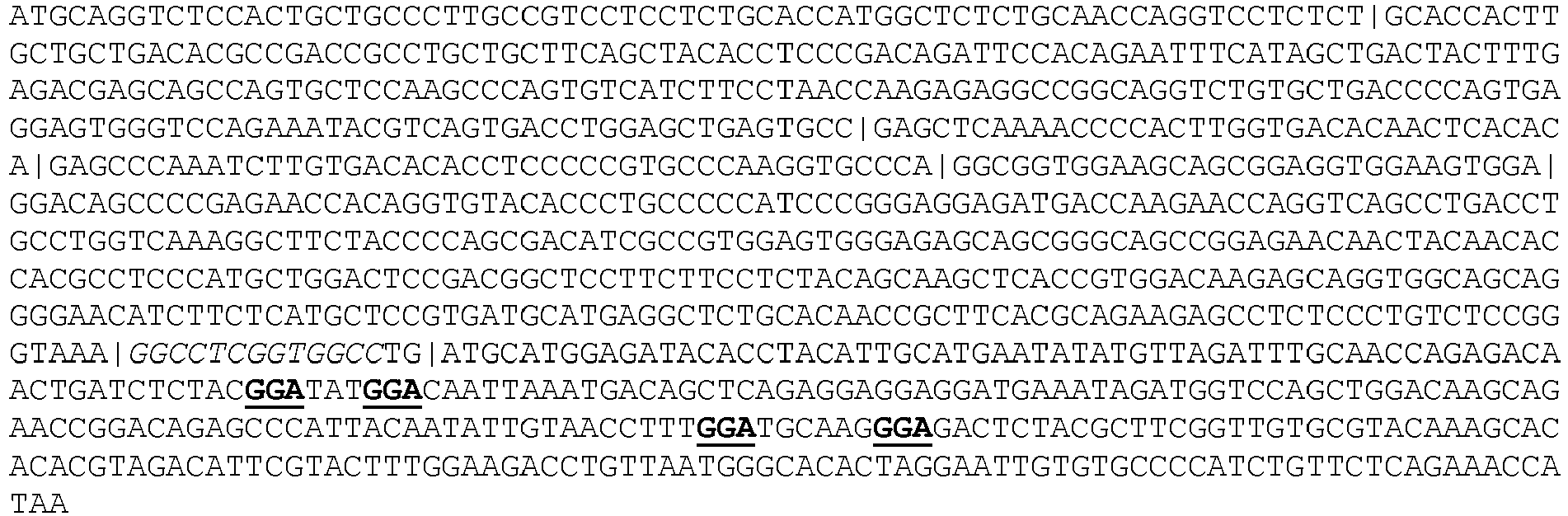
- Protein sequence of VB1007 (Homodimeric construct according to the disclosure, SEQ ID NO:15): Amino acid sequence, 340 amino acids.

- DNA sequence of VB1008 (SEQ ID NO:16):

- Protein sequence of VB1008 (Homodimeric construct according to the disclosure, SEQ ID NO:17): Amino acid sequence, 340 amino acids.

- For the purpose of illustration only, the different domains of the constructs are separated by an "|" with the domains in the following order: Signal peptide | human MIP-1α | Hinge h1 | Hinge h4 | Gly-Ser Linker or Gly-Leu linker | hCH3 IgG3 | Gly-Ser Linker or Gly-Leu linker | E7 mutant | Gly-Ser Linker or Gly-Leu linker | E6 mutant. Amino acids or nucleotides in bold illustrates sites of mutations.
- DNA sequence of VB1009 (SEQ ID NO:18):

- Protein sequence of VB1009 (Homodimeric construct according to the disclosure, SEQ ID NO:19): Amino acid sequence, 501 amino acids.

- DNA sequence of VB1016 (SEQ ID NO:20):

- Protein sequence of VB1016 (Homodimeric construct according to the disclosure, SEQ ID NO:21): Amino acid sequence, 501 amino acids

- SEQ ID NO:22:
>tr|Q778I6|Q778I6_HPV16 E6 protein OS=Human papillomavirus type 16 GN=E6 PE=4 SV=1; (Underlined amino acids denotes amino acids that may be deleted; Potential amino acids that may be mutated are highlighted)
- SEQ ID NO:23:
>sp|P03129|VE7_HPV16 Protein E7 OS=Human papillomavirus type 16 GN=E7 PE=1 SV=1; (Underlined amino acids denotes amino acids that may be deleted; Potential amino acids that may be mutated are highlighted)
- SEQ ID NO:24: >>sp|P06463|VE6_HPV18 Protein E6 OS=
Human papillomavirus type 18 GN=E6 PE=1 SV=1;
- SEQ ID NO:25: >sp|P06788|VE7_HPV18 Protein E7 OS=
Human papillomavirus type 18 GN=E7 PE=2 SV=2
- SEQ ID NO:26:
Hinge regions (IgG3 UH hinge), 12 amino acids: ELKTPLGDTTHT - SEQ ID NO:27:
Hinge region (IgG3, MH hinge, 15 amino acids): EPKSCDTPPPCPRCP - SEQ ID NO:28:
Gly-Ser Linker: GGGSSGGGSG - SEQ ID NO:29: hCH3 IgG3:

- SEQ ID NO:30: Linker: GLGGL
- SEQ ID NO:31: DNA sequence of VB1020:

- SEQ ID NO:32: Protein sequence of VB1020 (Homodimeric construct according to the disclosure Amino acid sequence, 501 amino acids:

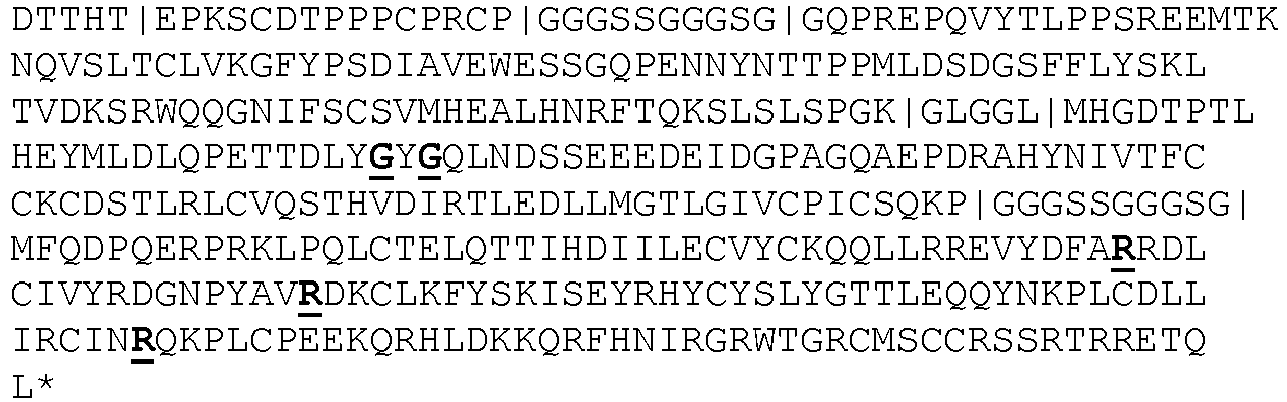
- SEQ ID NO:33: DNA sequence of VB1021:

- SEQ ID NO:34: Protein sequence of VB1021 (Homodimeric construct according to the disclosure. Amino acid sequence, 501 amino acids:

-
- <110> Vaccibody AS
- <120> VACCINES AGAINST HPV
- <130> 18999PCT00
- <160> 34
- <170> PatentIn version 3.5
- <210> 1
<211> 93
<212> PRT
<213> Artificial - <220>
<223> Artifial construct - <400> 1

- <210> 2
<211> 1182
<212> DNA
<213> Artificial - <220>
<223> Artifial construct - <400> 2


- <210> 3
<211> 393
<212> PRT
<213> Artificial - <220>
<223> Artifial construct - <400> 3


- <210> 4
<211> 1182
<212> DNA
<213> Artificial - <220>
<223> Artifial construct - <400> 4


- <210> 5
<211> 393
<212> PRT
<213> Artificial - <220>
<223> Artifial construct - <400> 5


- <210> 6
<211> 1182
<212> DNA
<213> Artificial - <220>
<223> Artifial construct - <400> 6


- <210> 7
<211> 393
<212> PRT
<213> Artificial - <220>
<223> Artifial construct - <400> 7


- <210> 8
<211> 1182
<212> DNA
<213> Artificial - <220>
<223> Artifial construct - <400> 8
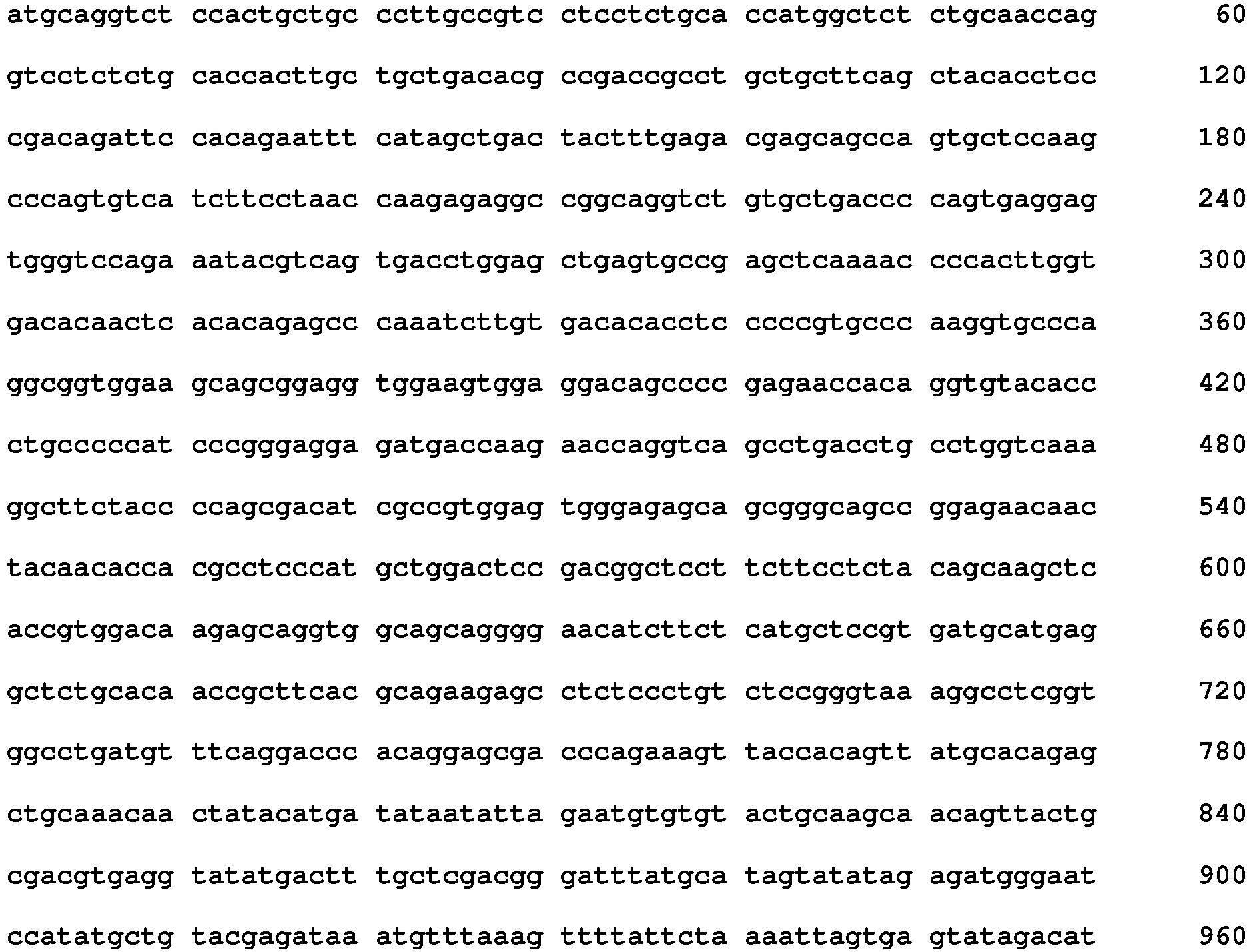

- <210> 9
<211> 393
<212> PRT
<213> Artificial - <220>
<223> Artifial construct - <400> 9


- <210> 10
<211> 1023
<212> DNA
<213> Artificial - <220>
<223> Artifial construct - <400> 10

- <210> 11
<211> 340
<212> PRT
<213> Artificial - <220>
<223> Artifial construct - <400> 11


- <210> 12
<211> 1023
<212> DNA
<213> Artificial - <220>
<223> Artifial construct - <400> 12

- <210> 13
<211> 340
<212> PRT
<213> Artificial - <220>
<223> Artifial construct - <400> 13


- <210> 14
<211> 1023
<212> DNA
<213> Artificial - <220>
<223> Artifial construct - <400> 14


- <210> 15
<211> 340
<212> PRT
<213> Artificial - <220>
<223> Artifial construct - <400> 15


- <210> 16
<211> 1023
<212> DNA
<213> Artificial - <220>
<223> Artifial construct - <400> 16


- <210> 17
<211> 340
<212> PRT
<213> Artificial - <220>
<223> Artifial construct - <400> 17
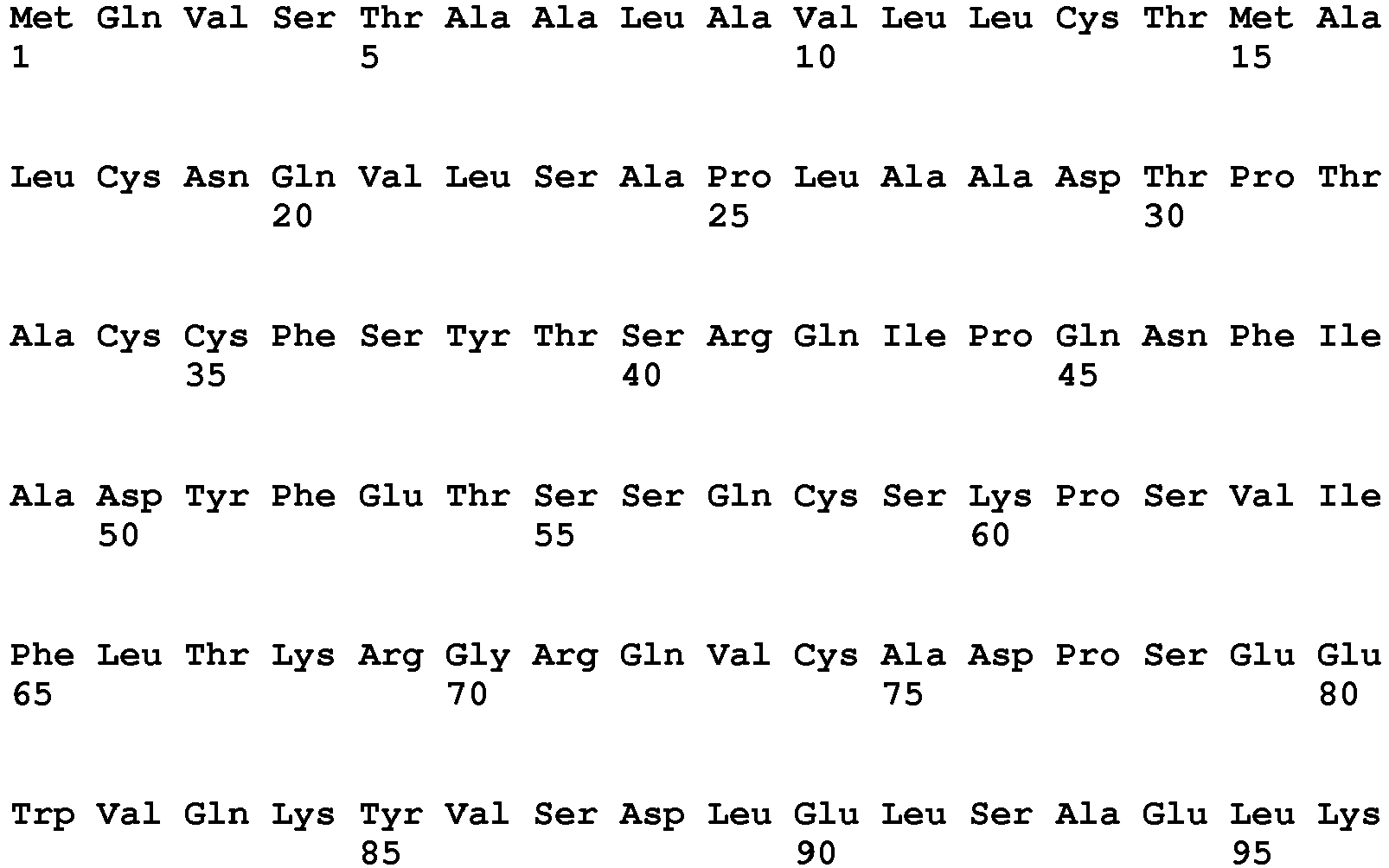

- <210> 18
<211> 1506
<212> DNA
<213> Artificial - <220>
<223> Artifial construct - <400> 18

- <210> 19
<211> 501
<212> PRT
<213> Artificial - <220>
<223> Artifial construct - <400> 19


- <210> 20
<211> 1506
<212> DNA
<213> Artificial - <220>
<223> Artifial construct - <400> 20
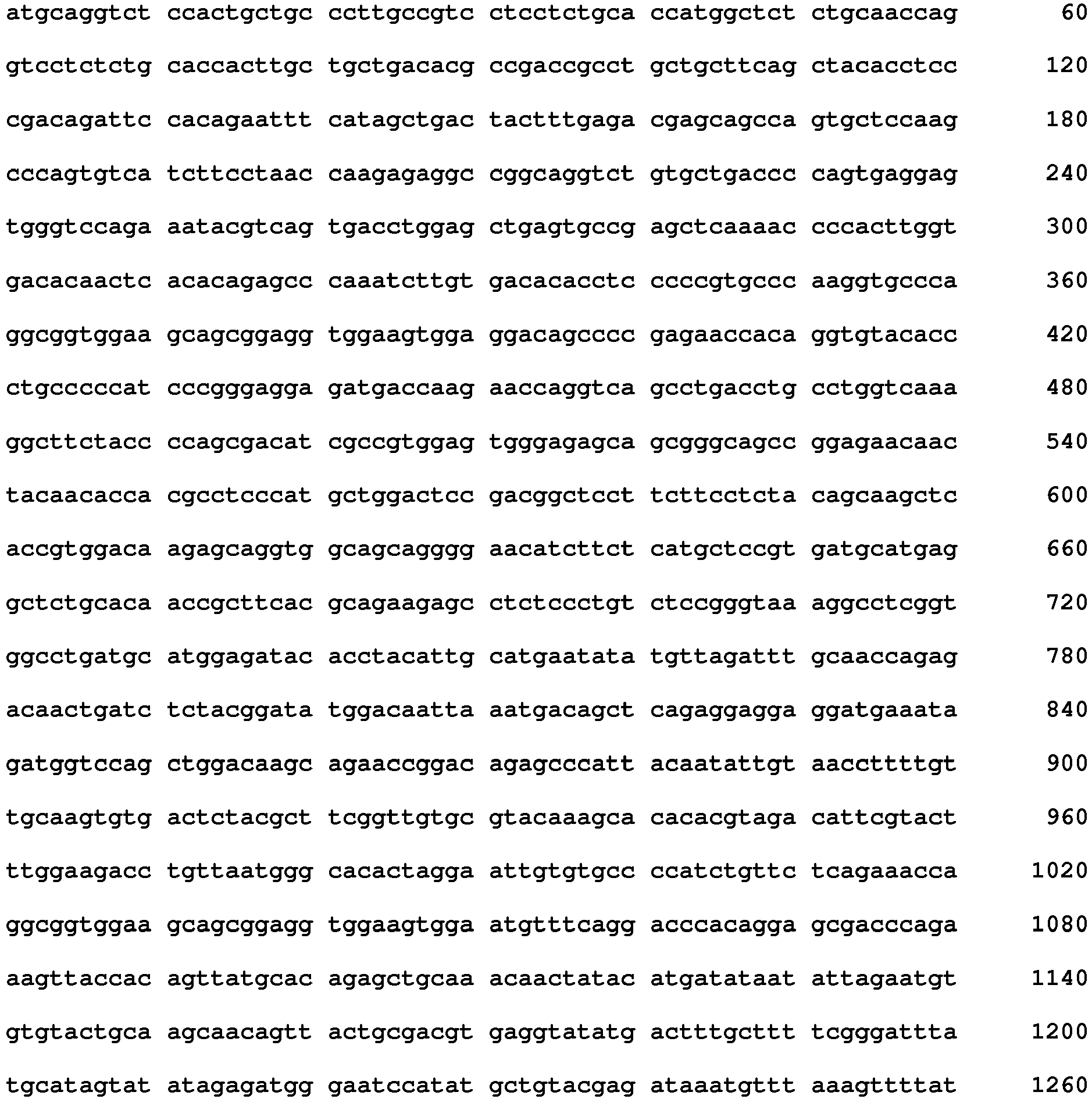

- <210> 21
<211> 501
<212> PRT
<213> Artificial - <220>
<223> Artifial construct - <400> 21


- <210> 22
<211> 151
<212> PRT
<213> Human papillomavirus - <400> 22
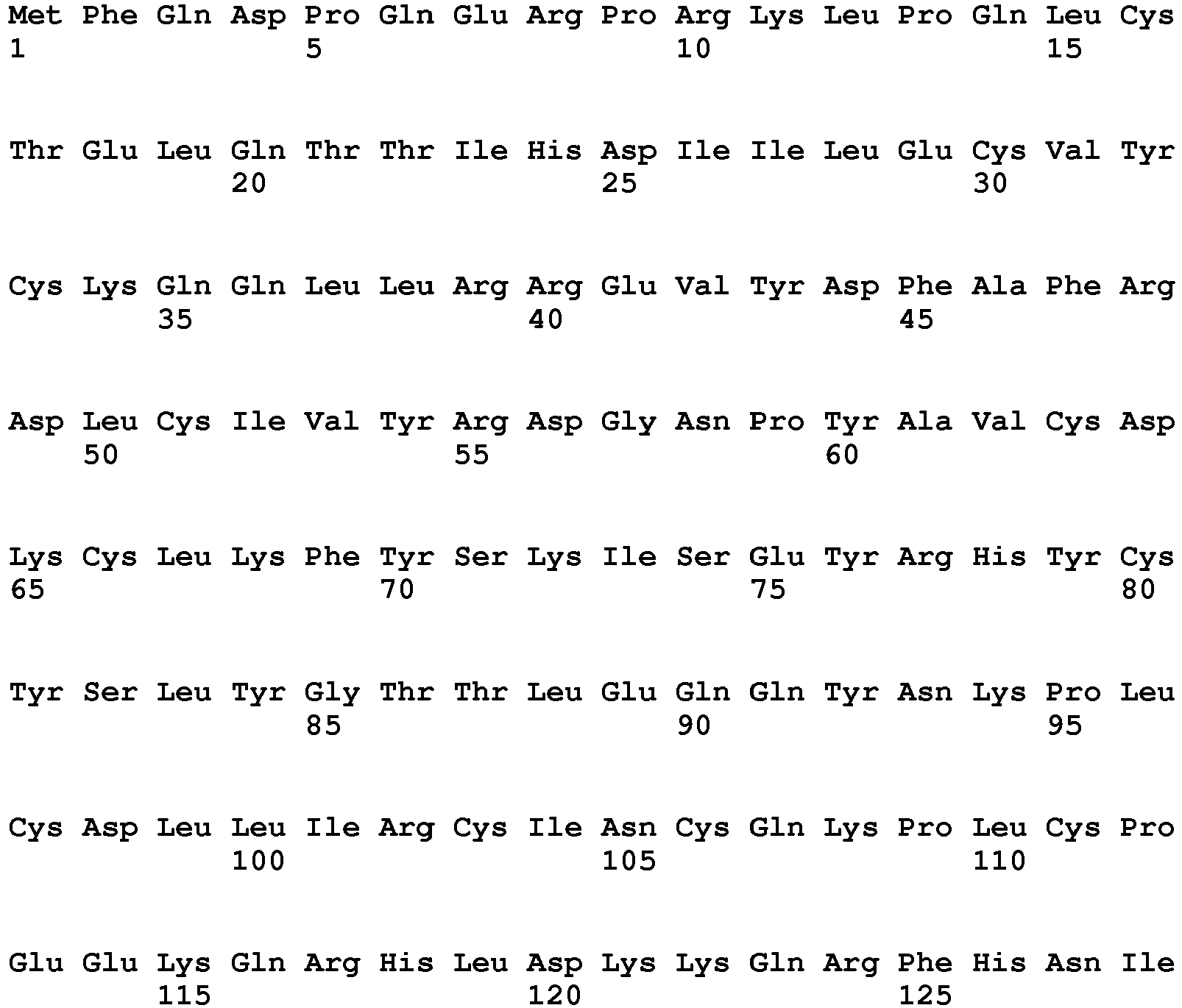

- <210> 23
<211> 98
<212> PRT
<213> Human papillomavirus - <400> 23

- <210> 24
<211> 158
<212> PRT
<213> Human papillomavirus - <400> 24


- <210> 25
<211> 105
<212> PRT
<213> Human papillomavirus - <400> 25
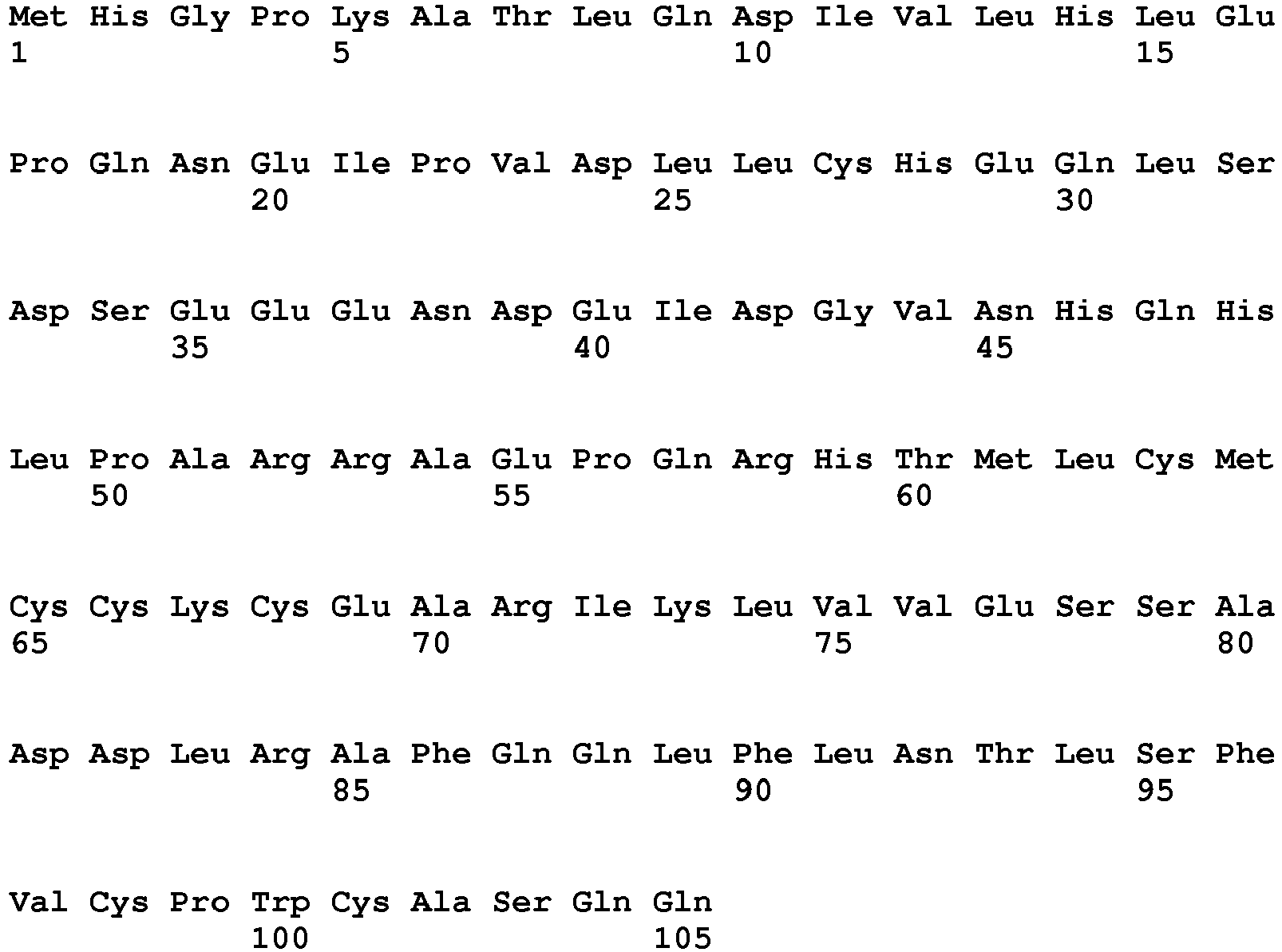
- <210> 26
<211> 12
<212> PRT
<213> Homo sapiens - <400> 26

- <210> 27
<211> 15
<212> PRT
<213> Homo sapiens - <400> 27

- <210> 28
<211> 10
<212> PRT
<213> Artificial - <220>
<223> Artifial construct - <400> 28

- <210> 29
<211> 107
<212> PRT
<213> Homo sapiens - <400> 29


- <210> 30
<211> 5
<212> PRT
<213> Artificial - <220>
<223> Artifial construct - <400> 30

- <210> 31
<211> 1506
<212> DNA
<213> Artificial - <220>
<223> Artifial construct - <400> 31


- <210> 32
<211> 501
<212> PRT
<213> Artificial - <220>
<223> Artifial construct - <400> 32


- <210> 33
<211> 1506
<212> DNA
<213> Artificial - <220>
<223> Artifial construct - <400> 33


- <210> 34
<211> 501
<212> PRT
<213> Artificial - <220>
<223> Artifial construct - <400> 34

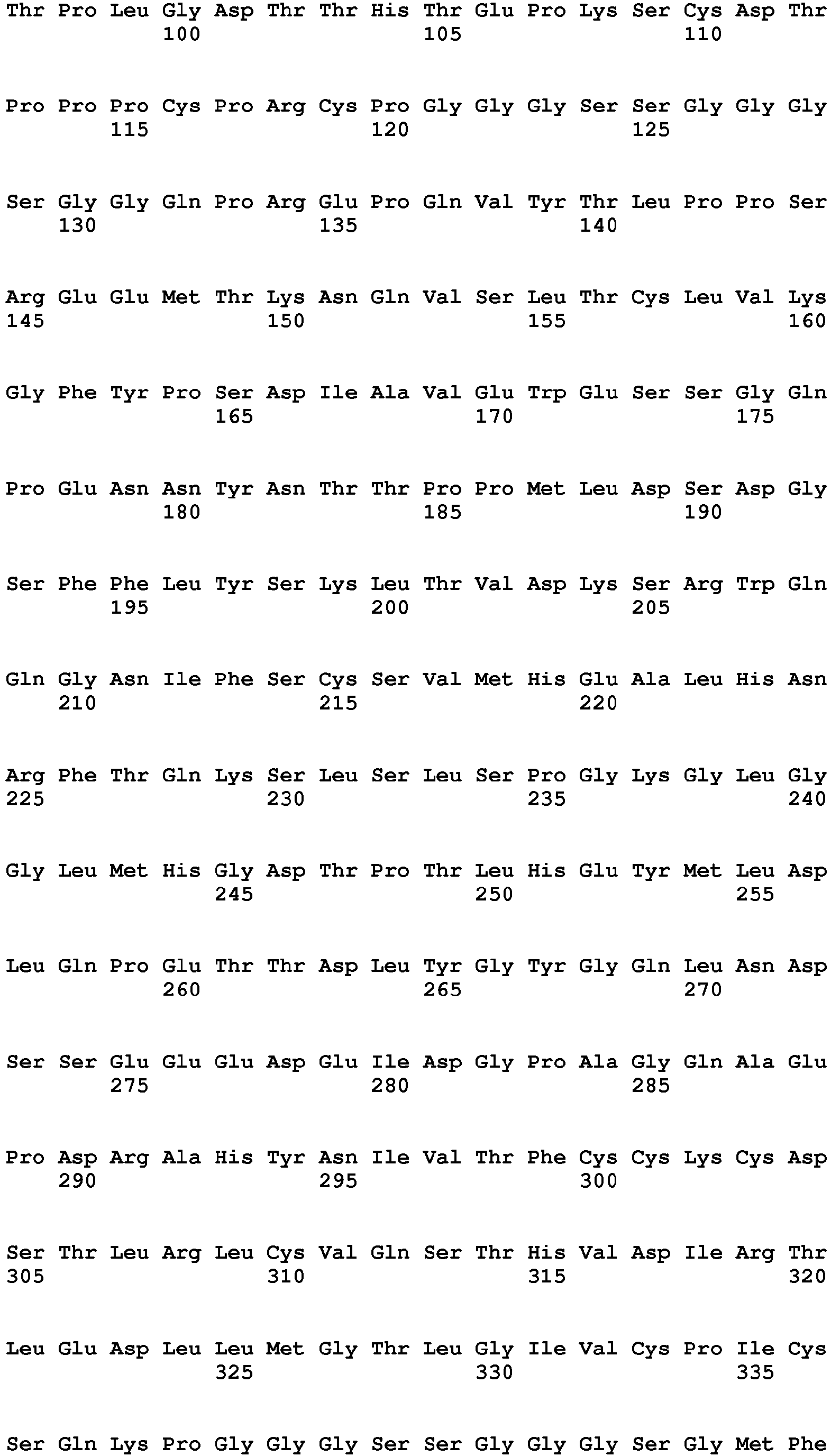

Claims (15)
- A homodimeric protein of two identical amino acid chains, each amino acid chain comprising (1) a signal peptide, (2) a targeting unit, (3) a dimerization motif, and (4) an antigenic unit, said targeting unit comprising an amino acid sequence having at least 80 % sequence identity to the amino acid sequence 24-93 of SEQ ID NO:1, and an antigenic unit comprising an amino acid sequence having at least 80% sequence identity to SEQ ID NO:22 (E6 of HPV16) and/or SEQ ID NO:24 (E6 of HPV18) and an amino acid sequence at least 80% sequence identity to SEQ ID NO:23 (E7 from HPV16) and/or SEQ ID NO:25 (E7 of HPV18), and wherein said amino acid sequences comprise one or more mutations to inhibit the oncogenic properties.
- The homodimeric protein according to claim 1, wherein said signal peptide consists of an amino acid sequence having at least 80 % sequence identity to the amino acid sequence 1-23 of SEQ ID NO:1.
- The homodimeric protein according to any one of claims 1-2, wherein said targeting unit consists of an amino acid sequence having at least 85%, such as at least 86%, such as at least 87%, such as at least 88%, such as at least 89%, such as at least 90%, such as at least 91%, such as at least 92%, such as at least 93%, such as at least 94%, such as at least 95%, such as at least 96%, such as at least 97%, such as at least 98%, such as at least 99% sequence identity to the amino acid sequence 24-93 of SEQ ID NO:1.
- The homodimeric protein according to any one of claims 1-3, wherein said antigenic unit consists of an amino acid sequence having at least 80%, such as at least 81%, such as at least 82%, such as at least 83%, such as at least 84%, such as at least 85%, such as at least 86%, such as at least 87%, such as at least 88%, such as at least 89%, such as at least 90%, such as at least 91%, such as at least 92%, such as at least 93%, such as at least 94%, such as at least 95%, such as at least 96%, such as at least 97%, such as at least 98%, such as at least 99% sequence identity to the amino acid sequence 243-293 of SEQ ID NO:3.
- The homodimeric protein according to any one of claims 1-4, in its mature form without any signal peptide sequence.
- An amino acid chain comprising (1) a signal peptide, (2) a targeting unit, (3) a dimerization motif, and (4) an antigenic unit, said targeting unit comprising an amino acid sequence having at least 80 % sequence identity to the amino acid sequence 24-93 of SEQ ID NO:1, and an antigenic unit comprising an amino acid having at least 80% sequence identity to SEQ ID NO:22 (E6 of HPV16) and/or SEQ ID NO:24 (E6 of HPV18) and an amino acid sequence having at least 80% sequence identity to SEQ ID NO:23 (E7 from HPV16) and/or SEQ ID NO:25 (E7 of HPV18), which amino acid chain is able to form a homodimeric protein according to any one of clams 1-5.
- A nucleic acid molecule, such as a DNA, encoding the amino acid chain according to claim 6.
- The nucleic acid molecule according to claim 7, which nucleic acid molecule is human codon optimized.
- A nucleic acid molecule comprising any one of nucleotide sequences selected from the list consisting of SEQ ID NO:18, SEQ ID NO:20, SEQ ID NO:31 and SEQ ID NO:33.
- The homodimeric protein according to any one of claims 1-5, or an amino acid chain according to claim 6, or the nucleic acid molecule according to any one of claims 7-8 for use as a medicament.
- A pharmaceutical composition comprising the homodimeric protein according to any one of claims 1-5, or an amino acid chain according to claim 6, or the nucleic acid molecule according to any one of claims 7-8.
- A host cell comprising the nucleic acid molecule according to any one of claims 7-8.
- A method for preparing a homodimeric protein according to any one of claims 1-5, or an amino acid chain of claim 6, the method comprisinga) transfecting the nucleic acid molecule according to any one of claims 7-8 into a cell population;b) culturing the cell population;c) collecting and purifying the homodimeric protein, or amino acid chain expressed from the cell population.
- A method for preparing a vaccine, such as a DNA vaccine, comprising an immunologically effective amount of a nucleic acid molecule according to any one of claims 7-8, the method comprisinga) preparing a nucleic acid molecule according to any one of claims 7-8;b) dissolving the nucleic acid molecule obtained under step a) in a pharmaceutically acceptable carrier, diluent, or buffer.
- A vaccine against HPV comprising an immunologically effective amount of a homodimeric protein according to any one of claims 1-5, or an amino acid chain according to claim 6, or nucleic acid molecule, such as a DNA, according to any one of claims 7-8, wherein said vaccine is able to trigger both a T-cell- and B-cell immune response.
Priority Applications (1)
| Application Number | Priority Date | Filing Date | Title |
|---|---|---|---|
| EP19166523.1A EP3533462A1 (en) | 2011-12-21 | 2012-12-20 | Vaccines against hpv |
Applications Claiming Priority (2)
| Application Number | Priority Date | Filing Date | Title |
|---|---|---|---|
| US201161578542P | 2011-12-21 | 2011-12-21 | |
| PCT/EP2012/076404 WO2013092875A1 (en) | 2011-12-21 | 2012-12-20 | Vaccines against hpv |
Related Child Applications (1)
| Application Number | Title | Priority Date | Filing Date |
|---|---|---|---|
| EP19166523.1A Division EP3533462A1 (en) | 2011-12-21 | 2012-12-20 | Vaccines against hpv |
Publications (2)
| Publication Number | Publication Date |
|---|---|
| EP2793937A1 EP2793937A1 (en) | 2014-10-29 |
| EP2793937B1 true EP2793937B1 (en) | 2019-04-10 |
Family
ID=47471832
Family Applications (2)
| Application Number | Title | Priority Date | Filing Date |
|---|---|---|---|
| EP12809271.5A Active EP2793937B1 (en) | 2011-12-21 | 2012-12-20 | Vaccines against hpv |
| EP19166523.1A Withdrawn EP3533462A1 (en) | 2011-12-21 | 2012-12-20 | Vaccines against hpv |
Family Applications After (1)
| Application Number | Title | Priority Date | Filing Date |
|---|---|---|---|
| EP19166523.1A Withdrawn EP3533462A1 (en) | 2011-12-21 | 2012-12-20 | Vaccines against hpv |
Country Status (17)
| Country | Link |
|---|---|
| US (1) | US9901635B2 (en) |
| EP (2) | EP2793937B1 (en) |
| JP (1) | JP6258864B2 (en) |
| KR (1) | KR102057265B1 (en) |
| CN (1) | CN104039833B (en) |
| AU (1) | AU2012356969B2 (en) |
| BR (1) | BR112014015016B1 (en) |
| CA (1) | CA2858963C (en) |
| DK (1) | DK2793937T3 (en) |
| ES (1) | ES2730718T3 (en) |
| HU (1) | HUE043361T2 (en) |
| IL (1) | IL233217B (en) |
| PT (1) | PT2793937T (en) |
| RU (1) | RU2644201C2 (en) |
| TR (1) | TR201908199T4 (en) |
| WO (1) | WO2013092875A1 (en) |
| ZA (1) | ZA201404516B (en) |
Families Citing this family (21)
| Publication number | Priority date | Publication date | Assignee | Title |
|---|---|---|---|---|
| EP2970466A1 (en) * | 2013-03-15 | 2016-01-20 | Vaccibody AS | Targeting vaccines for veterinary use |
| EP3094652B1 (en) | 2014-01-13 | 2021-09-29 | Baylor Research Institute | Novel vaccines against hpv and hpv-related diseases |
| AU2015302930C1 (en) | 2014-08-15 | 2023-06-01 | Genexine, Inc. | Methods of treating cervical cancer |
| BR112018003019A2 (en) * | 2015-08-20 | 2018-09-25 | Janssen Vaccines & Prevention Bv | hpv18 therapeutic vaccines |
| KR102833333B1 (en) * | 2016-01-08 | 2025-07-11 | 니코데 테라퓨틱스 에이에스에이 | Therapeutic anticancer neoepitope vaccine |
| JP2020533338A (en) | 2017-09-07 | 2020-11-19 | ユニバーシティ オブ オスロUniversity of Oslo | Vaccine molecule |
| WO2019048936A1 (en) | 2017-09-07 | 2019-03-14 | University Of Oslo | Vaccine molecules |
| JP2023522588A (en) | 2020-04-09 | 2023-05-31 | ナイコード セラピューティクス アルメン アクスイェ セルスカプ | Personalized therapeutic anti-cancer vaccine |
| US11883479B2 (en) | 2020-04-24 | 2024-01-30 | Genexine, Inc. | Method for treating cervical cancer |
| KR20230005962A (en) | 2020-05-01 | 2023-01-10 | 니코데 테라퓨틱스 에이에스에이 | Betacoronavirus prevention and treatment |
| CA3212592A1 (en) | 2021-03-26 | 2022-09-29 | Agnete Fredriksen | Therapeutic combination for treating cancer |
| US20250339509A1 (en) | 2021-05-03 | 2025-11-06 | Nykode Therapeutics ASA | Immunogenic constructs and vaccines for use in the prophylactic and therapeutic treatment of infectious diseases |
| CA3216720A1 (en) | 2021-05-10 | 2022-11-17 | Agnete Brunsvik Fredriksen | Co-expression of constructs and immunostimulatory compounds |
| JP2024518463A (en) | 2021-05-10 | 2024-05-01 | ナイコード セラピューティクス アルメン アクスイェ セルスカプ | Co-expression of constructs and immunoinhibitory compounds |
| WO2022238363A1 (en) | 2021-05-10 | 2022-11-17 | Nykode Therapeutics ASA | Immunogenic constructs and vaccines for use in the prophylactic and therapeutic treatment of infectious diseases |
| WO2022238395A1 (en) | 2021-05-10 | 2022-11-17 | Nykode Therapeutics ASA | Tolerance-inducing constructs and compositions and their use for the treatment of immune disorders |
| WO2022238381A2 (en) | 2021-05-10 | 2022-11-17 | Nykode Therapeutics ASA | Immunotherapy constructs for treatment of disease |
| KR20240007235A (en) | 2021-05-10 | 2024-01-16 | 니코데 테라퓨틱스 에이에스에이 | Tolerance-inducing constructs and compositions and their use for the treatment of immune disorders |
| JP2024540322A (en) | 2021-11-03 | 2024-10-31 | ナイコード セラピューティクス アルメン アクスイェ セルスカプ | Immunogenic constructs and vaccines for use in the prevention and treatment of disease caused by SARS-CoV-2 - Patent Application 20100223333 |
| WO2024092025A1 (en) | 2022-10-25 | 2024-05-02 | Nykode Therapeutics ASA | Constructs and their use |
| WO2024100196A1 (en) | 2022-11-09 | 2024-05-16 | Nykode Therapeutics ASA | Co-expression of constructs and polypeptides |
Family Cites Families (7)
| Publication number | Priority date | Publication date | Assignee | Title |
|---|---|---|---|---|
| GB9105383D0 (en) * | 1991-03-14 | 1991-05-01 | Immunology Ltd | An immunotherapeutic for cervical cancer |
| AUPN015794A0 (en) | 1994-12-20 | 1995-01-19 | Csl Limited | Variants of human papilloma virus antigens |
| US7223408B2 (en) * | 2002-10-03 | 2007-05-29 | Wyeth Holdings Corporation | Human papillomavirus polypeptides and immunogenic compositions |
| CA2517054C (en) * | 2003-02-25 | 2016-05-10 | Medinnova As | Use of nucleic acids encoding antibody-like molecules for use in medical treatment |
| PT1576967E (en) * | 2004-03-18 | 2007-12-03 | Pasteur Institut | Recombinant protein, carrying human papillomavirus epitopes inserted in an adenylate cyclase protein or fragment thereof, therapeutic uses thereof |
| WO2006081323A2 (en) | 2005-01-26 | 2006-08-03 | The Johns Hopkins University | Anti-cancer dna vaccine employing plasmids encoding mutant oncoprotein antigen and calreticulin |
| KR20130087517A (en) * | 2010-06-25 | 2013-08-06 | 백시바디 에이에스 | Homodimeric protein constructs |
-
2012
- 2012-12-20 KR KR1020147020468A patent/KR102057265B1/en active Active
- 2012-12-20 RU RU2014129788A patent/RU2644201C2/en active
- 2012-12-20 EP EP12809271.5A patent/EP2793937B1/en active Active
- 2012-12-20 US US14/365,536 patent/US9901635B2/en active Active
- 2012-12-20 HU HUE12809271A patent/HUE043361T2/en unknown
- 2012-12-20 CA CA2858963A patent/CA2858963C/en active Active
- 2012-12-20 JP JP2014548019A patent/JP6258864B2/en active Active
- 2012-12-20 DK DK12809271.5T patent/DK2793937T3/en active
- 2012-12-20 WO PCT/EP2012/076404 patent/WO2013092875A1/en not_active Ceased
- 2012-12-20 BR BR112014015016-8A patent/BR112014015016B1/en active IP Right Grant
- 2012-12-20 CN CN201280064089.7A patent/CN104039833B/en active Active
- 2012-12-20 EP EP19166523.1A patent/EP3533462A1/en not_active Withdrawn
- 2012-12-20 ES ES12809271T patent/ES2730718T3/en active Active
- 2012-12-20 PT PT12809271T patent/PT2793937T/en unknown
- 2012-12-20 AU AU2012356969A patent/AU2012356969B2/en active Active
- 2012-12-20 TR TR2019/08199T patent/TR201908199T4/en unknown
-
2014
- 2014-06-18 IL IL233217A patent/IL233217B/en active IP Right Grant
- 2014-06-19 ZA ZA2014/04516A patent/ZA201404516B/en unknown
Non-Patent Citations (1)
| Title |
|---|
| None * |
Also Published As
| Publication number | Publication date |
|---|---|
| BR112014015016A2 (en) | 2020-10-27 |
| CA2858963C (en) | 2023-05-23 |
| AU2012356969A1 (en) | 2014-07-03 |
| BR112014015016B1 (en) | 2023-10-03 |
| PT2793937T (en) | 2019-06-05 |
| WO2013092875A1 (en) | 2013-06-27 |
| ZA201404516B (en) | 2017-04-26 |
| NZ626124A (en) | 2016-07-29 |
| CN104039833A (en) | 2014-09-10 |
| IL233217A0 (en) | 2014-08-31 |
| RU2644201C2 (en) | 2018-02-08 |
| US9901635B2 (en) | 2018-02-27 |
| HUE043361T2 (en) | 2019-08-28 |
| CN104039833B (en) | 2018-01-30 |
| KR102057265B1 (en) | 2019-12-18 |
| CA2858963A1 (en) | 2013-06-27 |
| BR112014015016A8 (en) | 2023-05-09 |
| EP2793937A1 (en) | 2014-10-29 |
| JP2015508284A (en) | 2015-03-19 |
| DK2793937T3 (en) | 2019-07-01 |
| JP6258864B2 (en) | 2018-01-10 |
| RU2014129788A (en) | 2016-02-10 |
| HK1202442A1 (en) | 2015-10-02 |
| US20150056197A1 (en) | 2015-02-26 |
| IL233217B (en) | 2019-05-30 |
| AU2012356969B2 (en) | 2017-05-04 |
| ES2730718T3 (en) | 2019-11-12 |
| KR20140107569A (en) | 2014-09-04 |
| TR201908199T4 (en) | 2019-06-21 |
| US20150306217A9 (en) | 2015-10-29 |
| EP3533462A1 (en) | 2019-09-04 |
Similar Documents
| Publication | Publication Date | Title |
|---|---|---|
| US9901635B2 (en) | Vaccines against HPV | |
| US12516116B2 (en) | Homodimeric protein constructs | |
| AU2021232660B2 (en) | HPV vaccines | |
| TW200844230A (en) | Signaling peptides | |
| US20140234316A1 (en) | Vaccibodies targeted to cross-presenting dendritic cells | |
| HK1202442B (en) | Vaccines against hpv | |
| NZ626124B2 (en) | Vaccines against hpv |
Legal Events
| Date | Code | Title | Description |
|---|---|---|---|
| PUAI | Public reference made under article 153(3) epc to a published international application that has entered the european phase |
Free format text: ORIGINAL CODE: 0009012 |
|
| 17P | Request for examination filed |
Effective date: 20140721 |
|
| AK | Designated contracting states |
Kind code of ref document: A1 Designated state(s): AL AT BE BG CH CY CZ DE DK EE ES FI FR GB GR HR HU IE IS IT LI LT LU LV MC MK MT NL NO PL PT RO RS SE SI SK SM TR |
|
| AX | Request for extension of the european patent |
Extension state: BA ME |
|
| REG | Reference to a national code |
Ref country code: HK Ref legal event code: DE Ref document number: 1202442 Country of ref document: HK |
|
| 17Q | First examination report despatched |
Effective date: 20160322 |
|
| STAA | Information on the status of an ep patent application or granted ep patent |
Free format text: STATUS: EXAMINATION IS IN PROGRESS |
|
| GRAP | Despatch of communication of intention to grant a patent |
Free format text: ORIGINAL CODE: EPIDOSNIGR1 |
|
| STAA | Information on the status of an ep patent application or granted ep patent |
Free format text: STATUS: GRANT OF PATENT IS INTENDED |
|
| INTG | Intention to grant announced |
Effective date: 20181030 |
|
| GRAS | Grant fee paid |
Free format text: ORIGINAL CODE: EPIDOSNIGR3 |
|
| GRAA | (expected) grant |
Free format text: ORIGINAL CODE: 0009210 |
|
| STAA | Information on the status of an ep patent application or granted ep patent |
Free format text: STATUS: THE PATENT HAS BEEN GRANTED |
|
| AK | Designated contracting states |
Kind code of ref document: B1 Designated state(s): AL AT BE BG CH CY CZ DE DK EE ES FI FR GB GR HR HU IE IS IT LI LT LU LV MC MK MT NL NO PL PT RO RS SE SI SK SM TR |
|
| AX | Request for extension of the european patent |
Extension state: BA ME |
|
| REG | Reference to a national code |
Ref country code: GB Ref legal event code: FG4D |
|
| REG | Reference to a national code |
Ref country code: CH Ref legal event code: EP Ref country code: AT Ref legal event code: REF Ref document number: 1117780 Country of ref document: AT Kind code of ref document: T Effective date: 20190415 |
|
| REG | Reference to a national code |
Ref country code: IE Ref legal event code: FG4D |
|
| REG | Reference to a national code |
Ref country code: DE Ref legal event code: R096 Ref document number: 602012058904 Country of ref document: DE |
|
| REG | Reference to a national code |
Ref country code: PT Ref legal event code: SC4A Ref document number: 2793937 Country of ref document: PT Date of ref document: 20190605 Kind code of ref document: T Free format text: AVAILABILITY OF NATIONAL TRANSLATION Effective date: 20190523 |
|
| REG | Reference to a national code |
Ref country code: NL Ref legal event code: FP |
|
| REG | Reference to a national code |
Ref country code: DK Ref legal event code: T3 Effective date: 20190627 |
|
| REG | Reference to a national code |
Ref country code: CH Ref legal event code: NV Representative=s name: STOLMAR AND PARTNER INTELLECTUAL PROPERTY S.A., CH |
|
| REG | Reference to a national code |
Ref country code: SE Ref legal event code: TRGR |
|
| REG | Reference to a national code |
Ref country code: LT Ref legal event code: MG4D |
|
| REG | Reference to a national code |
Ref country code: HU Ref legal event code: AG4A Ref document number: E043361 Country of ref document: HU |
|
| REG | Reference to a national code |
Ref country code: GR Ref legal event code: EP Ref document number: 20190401917 Country of ref document: GR Effective date: 20191016 |
|
| PG25 | Lapsed in a contracting state [announced via postgrant information from national office to epo] |
Ref country code: LT Free format text: LAPSE BECAUSE OF FAILURE TO SUBMIT A TRANSLATION OF THE DESCRIPTION OR TO PAY THE FEE WITHIN THE PRESCRIBED TIME-LIMIT Effective date: 20190410 Ref country code: AL Free format text: LAPSE BECAUSE OF FAILURE TO SUBMIT A TRANSLATION OF THE DESCRIPTION OR TO PAY THE FEE WITHIN THE PRESCRIBED TIME-LIMIT Effective date: 20190410 Ref country code: HR Free format text: LAPSE BECAUSE OF FAILURE TO SUBMIT A TRANSLATION OF THE DESCRIPTION OR TO PAY THE FEE WITHIN THE PRESCRIBED TIME-LIMIT Effective date: 20190410 Ref country code: NO Free format text: LAPSE BECAUSE OF FAILURE TO SUBMIT A TRANSLATION OF THE DESCRIPTION OR TO PAY THE FEE WITHIN THE PRESCRIBED TIME-LIMIT Effective date: 20190710 |
|
| REG | Reference to a national code |
Ref country code: ES Ref legal event code: FG2A Ref document number: 2730718 Country of ref document: ES Kind code of ref document: T3 Effective date: 20191112 |
|
| PG25 | Lapsed in a contracting state [announced via postgrant information from national office to epo] |
Ref country code: PL Free format text: LAPSE BECAUSE OF FAILURE TO SUBMIT A TRANSLATION OF THE DESCRIPTION OR TO PAY THE FEE WITHIN THE PRESCRIBED TIME-LIMIT Effective date: 20190410 Ref country code: LV Free format text: LAPSE BECAUSE OF FAILURE TO SUBMIT A TRANSLATION OF THE DESCRIPTION OR TO PAY THE FEE WITHIN THE PRESCRIBED TIME-LIMIT Effective date: 20190410 Ref country code: RS Free format text: LAPSE BECAUSE OF FAILURE TO SUBMIT A TRANSLATION OF THE DESCRIPTION OR TO PAY THE FEE WITHIN THE PRESCRIBED TIME-LIMIT Effective date: 20190410 Ref country code: BG Free format text: LAPSE BECAUSE OF FAILURE TO SUBMIT A TRANSLATION OF THE DESCRIPTION OR TO PAY THE FEE WITHIN THE PRESCRIBED TIME-LIMIT Effective date: 20190710 |
|
| PG25 | Lapsed in a contracting state [announced via postgrant information from national office to epo] |
Ref country code: IS Free format text: LAPSE BECAUSE OF FAILURE TO SUBMIT A TRANSLATION OF THE DESCRIPTION OR TO PAY THE FEE WITHIN THE PRESCRIBED TIME-LIMIT Effective date: 20190810 |
|
| REG | Reference to a national code |
Ref country code: DE Ref legal event code: R097 Ref document number: 602012058904 Country of ref document: DE |
|
| PG25 | Lapsed in a contracting state [announced via postgrant information from national office to epo] |
Ref country code: SK Free format text: LAPSE BECAUSE OF FAILURE TO SUBMIT A TRANSLATION OF THE DESCRIPTION OR TO PAY THE FEE WITHIN THE PRESCRIBED TIME-LIMIT Effective date: 20190410 Ref country code: EE Free format text: LAPSE BECAUSE OF FAILURE TO SUBMIT A TRANSLATION OF THE DESCRIPTION OR TO PAY THE FEE WITHIN THE PRESCRIBED TIME-LIMIT Effective date: 20190410 Ref country code: RO Free format text: LAPSE BECAUSE OF FAILURE TO SUBMIT A TRANSLATION OF THE DESCRIPTION OR TO PAY THE FEE WITHIN THE PRESCRIBED TIME-LIMIT Effective date: 20190410 |
|
| PLBE | No opposition filed within time limit |
Free format text: ORIGINAL CODE: 0009261 |
|
| STAA | Information on the status of an ep patent application or granted ep patent |
Free format text: STATUS: NO OPPOSITION FILED WITHIN TIME LIMIT |
|
| PG25 | Lapsed in a contracting state [announced via postgrant information from national office to epo] |
Ref country code: SM Free format text: LAPSE BECAUSE OF FAILURE TO SUBMIT A TRANSLATION OF THE DESCRIPTION OR TO PAY THE FEE WITHIN THE PRESCRIBED TIME-LIMIT Effective date: 20190410 |
|
| 26N | No opposition filed |
Effective date: 20200113 |
|
| PG25 | Lapsed in a contracting state [announced via postgrant information from national office to epo] |
Ref country code: SI Free format text: LAPSE BECAUSE OF FAILURE TO SUBMIT A TRANSLATION OF THE DESCRIPTION OR TO PAY THE FEE WITHIN THE PRESCRIBED TIME-LIMIT Effective date: 20190410 |
|
| PG25 | Lapsed in a contracting state [announced via postgrant information from national office to epo] |
Ref country code: MC Free format text: LAPSE BECAUSE OF FAILURE TO SUBMIT A TRANSLATION OF THE DESCRIPTION OR TO PAY THE FEE WITHIN THE PRESCRIBED TIME-LIMIT Effective date: 20190410 |
|
| PG25 | Lapsed in a contracting state [announced via postgrant information from national office to epo] |
Ref country code: LU Free format text: LAPSE BECAUSE OF NON-PAYMENT OF DUE FEES Effective date: 20191220 |
|
| REG | Reference to a national code |
Ref country code: HU Ref legal event code: HC9C Owner name: VACCIBODY AS, NO |
|
| PG25 | Lapsed in a contracting state [announced via postgrant information from national office to epo] |
Ref country code: CY Free format text: LAPSE BECAUSE OF FAILURE TO SUBMIT A TRANSLATION OF THE DESCRIPTION OR TO PAY THE FEE WITHIN THE PRESCRIBED TIME-LIMIT Effective date: 20190410 |
|
| PG25 | Lapsed in a contracting state [announced via postgrant information from national office to epo] |
Ref country code: MT Free format text: LAPSE BECAUSE OF FAILURE TO SUBMIT A TRANSLATION OF THE DESCRIPTION OR TO PAY THE FEE WITHIN THE PRESCRIBED TIME-LIMIT Effective date: 20190410 |
|
| REG | Reference to a national code |
Ref country code: AT Ref legal event code: UEP Ref document number: 1117780 Country of ref document: AT Kind code of ref document: T Effective date: 20190410 |
|
| REG | Reference to a national code |
Ref country code: FI Ref legal event code: PCE Owner name: NYKODE THERAPEUTICS AS |
|
| REG | Reference to a national code |
Ref country code: NL Ref legal event code: HC Owner name: NYKODE THERAPEUTICS AS; NO Free format text: DETAILS ASSIGNMENT: CHANGE OF OWNER(S), CHANGE OF OWNER(S) NAME; FORMER OWNER NAME: VACCIBODY AS Effective date: 20220413 |
|
| REG | Reference to a national code |
Ref country code: ES Ref legal event code: PC2A Owner name: NYKODE THERAPEUTICS AS Effective date: 20220609 |
|
| REG | Reference to a national code |
Ref country code: DE Ref legal event code: R081 Ref document number: 602012058904 Country of ref document: DE Owner name: NYKODE THERAPEUTICS ASA, NO Free format text: FORMER OWNER: VACCIBODY AS, OSLO, NO Ref country code: DE Ref legal event code: R081 Ref document number: 602012058904 Country of ref document: DE Owner name: NYKODE THERAPEUTICS AS, NO Free format text: FORMER OWNER: VACCIBODY AS, OSLO, NO |
|
| REG | Reference to a national code |
Ref country code: HU Ref legal event code: HC9C Owner name: NYKODE THERAPEUTICS AS, NO Free format text: FORMER OWNER(S): VACCIBODY AS, NO |
|
| PG25 | Lapsed in a contracting state [announced via postgrant information from national office to epo] |
Ref country code: MK Free format text: LAPSE BECAUSE OF FAILURE TO SUBMIT A TRANSLATION OF THE DESCRIPTION OR TO PAY THE FEE WITHIN THE PRESCRIBED TIME-LIMIT Effective date: 20190410 |
|
| REG | Reference to a national code |
Ref country code: AT Ref legal event code: HC Ref document number: 1117780 Country of ref document: AT Kind code of ref document: T Owner name: NYKODE THERAPEUTICS AS, NO Effective date: 20220830 |
|
| REG | Reference to a national code |
Ref country code: HU Ref legal event code: HC9C Owner name: NYKODE THERAPEUTICS AS, NO Free format text: FORMER OWNER(S): VACCIBODY AS, NO |
|
| REG | Reference to a national code |
Ref country code: BE Ref legal event code: HC Free format text: DETAILS ASSIGNMENT: CHANGE OF OWNER(S), CHANGE OF OWNER(S) NAME Effective date: 20220615 |
|
| REG | Reference to a national code |
Ref country code: ES Ref legal event code: PC2A Owner name: NYKODE THERAPEUTICS ASA Effective date: 20221123 |
|
| REG | Reference to a national code |
Ref country code: HU Ref legal event code: HC9C Owner name: NYKODE THERAPEUTICS ASA, NO Free format text: FORMER OWNER(S): VACCIBODY AS, NO; NYKODE THERAPEUTICS AS, NO |
|
| REG | Reference to a national code |
Ref country code: NL Ref legal event code: PD Owner name: ; Free format text: DETAILS ASSIGNMENT: CHANGE OF OWNER(S), CHANGE OF LEGAL ENTITY; FORMER OWNER NAME: NYKODE THERAPEUTICS AS Effective date: 20221117 |
|
| REG | Reference to a national code |
Ref country code: BE Ref legal event code: HC Owner name: NYKODE THERAPEUTICS AS; NO Free format text: DETAILS ASSIGNMENT: CHANGE OF OWNER(S), CHANGE OF OWNER(S) NAME; FORMER OWNER NAME: VACCIBODY AS Effective date: 20221108 |
|
| REG | Reference to a national code |
Ref country code: DE Ref legal event code: R081 Ref document number: 602012058904 Country of ref document: DE Owner name: NYKODE THERAPEUTICS ASA, NO Free format text: FORMER OWNER: NYKODE THERAPEUTICS AS, OSLO, NO |
|
| REG | Reference to a national code |
Ref country code: BE Ref legal event code: HC Owner name: NYKODE THERAPEUTICS ASA; NO Free format text: DETAILS ASSIGNMENT: CHANGE OF OWNER(S), CHANGE OF OWNER(S) NAME; FORMER OWNER NAME: NYKODE THERAPEUTICS AS Effective date: 20230123 |
|
| REG | Reference to a national code |
Ref country code: AT Ref legal event code: HC Ref document number: 1117780 Country of ref document: AT Kind code of ref document: T Owner name: NYKODE THERAPEUTICS ASA, NO Effective date: 20230406 |
|
| P01 | Opt-out of the competence of the unified patent court (upc) registered |
Effective date: 20230411 |
|
| PGFP | Annual fee paid to national office [announced via postgrant information from national office to epo] |
Ref country code: PT Payment date: 20251126 Year of fee payment: 14 |
|
| PGFP | Annual fee paid to national office [announced via postgrant information from national office to epo] |
Ref country code: NL Payment date: 20251125 Year of fee payment: 14 |
|
| REG | Reference to a national code |
Ref country code: CH Ref legal event code: U11 Free format text: ST27 STATUS EVENT CODE: U-0-0-U10-U11 (AS PROVIDED BY THE NATIONAL OFFICE) Effective date: 20260101 |
|
| PGFP | Annual fee paid to national office [announced via postgrant information from national office to epo] |
Ref country code: DE Payment date: 20251127 Year of fee payment: 14 |
|
| PGFP | Annual fee paid to national office [announced via postgrant information from national office to epo] |
Ref country code: GB Payment date: 20251202 Year of fee payment: 14 |
|
| PGFP | Annual fee paid to national office [announced via postgrant information from national office to epo] |
Ref country code: AT Payment date: 20251127 Year of fee payment: 14 |
|
| PGFP | Annual fee paid to national office [announced via postgrant information from national office to epo] |
Ref country code: FI Payment date: 20251127 Year of fee payment: 14 Ref country code: DK Payment date: 20251202 Year of fee payment: 14 Ref country code: IT Payment date: 20251126 Year of fee payment: 14 |
|
| PGFP | Annual fee paid to national office [announced via postgrant information from national office to epo] |
Ref country code: HU Payment date: 20251128 Year of fee payment: 14 Ref country code: FR Payment date: 20251202 Year of fee payment: 14 |
|
| PGFP | Annual fee paid to national office [announced via postgrant information from national office to epo] |
Ref country code: TR Payment date: 20251204 Year of fee payment: 14 Ref country code: BE Payment date: 20251124 Year of fee payment: 14 Ref country code: GR Payment date: 20251222 Year of fee payment: 14 |
|
| PGFP | Annual fee paid to national office [announced via postgrant information from national office to epo] |
Ref country code: SE Payment date: 20251202 Year of fee payment: 14 |
|
| PGFP | Annual fee paid to national office [announced via postgrant information from national office to epo] |
Ref country code: IE Payment date: 20251202 Year of fee payment: 14 Ref country code: CZ Payment date: 20251126 Year of fee payment: 14 |
|
| PGFP | Annual fee paid to national office [announced via postgrant information from national office to epo] |
Ref country code: ES Payment date: 20260108 Year of fee payment: 14 |
|
| PGFP | Annual fee paid to national office [announced via postgrant information from national office to epo] |
Ref country code: CH Payment date: 20260101 Year of fee payment: 14 |