EP2793526A1 - Random access method and device in cognitive radio system - Google Patents
Random access method and device in cognitive radio system Download PDFInfo
- Publication number
- EP2793526A1 EP2793526A1 EP12856870.6A EP12856870A EP2793526A1 EP 2793526 A1 EP2793526 A1 EP 2793526A1 EP 12856870 A EP12856870 A EP 12856870A EP 2793526 A1 EP2793526 A1 EP 2793526A1
- Authority
- EP
- European Patent Office
- Prior art keywords
- random access
- backoff time
- base station
- parameter information
- station device
- Prior art date
- Legal status (The legal status is an assumption and is not a legal conclusion. Google has not performed a legal analysis and makes no representation as to the accuracy of the status listed.)
- Granted
Links
Images

Classifications
-
- H—ELECTRICITY
- H04—ELECTRIC COMMUNICATION TECHNIQUE
- H04W—WIRELESS COMMUNICATION NETWORKS
- H04W36/00—Hand-off or reselection arrangements
- H04W36/04—Reselecting a cell layer in multi-layered cells
-
- H—ELECTRICITY
- H04—ELECTRIC COMMUNICATION TECHNIQUE
- H04W—WIRELESS COMMUNICATION NETWORKS
- H04W36/00—Hand-off or reselection arrangements
- H04W36/0005—Control or signalling for completing the hand-off
- H04W36/0055—Transmission or use of information for re-establishing the radio link
-
- H—ELECTRICITY
- H04—ELECTRIC COMMUNICATION TECHNIQUE
- H04W—WIRELESS COMMUNICATION NETWORKS
- H04W36/00—Hand-off or reselection arrangements
- H04W36/0005—Control or signalling for completing the hand-off
- H04W36/0055—Transmission or use of information for re-establishing the radio link
- H04W36/0077—Transmission or use of information for re-establishing the radio link of access information of target access point
-
- H—ELECTRICITY
- H04—ELECTRIC COMMUNICATION TECHNIQUE
- H04W—WIRELESS COMMUNICATION NETWORKS
- H04W74/00—Wireless channel access
- H04W74/002—Transmission of channel access control information
-
- H—ELECTRICITY
- H04—ELECTRIC COMMUNICATION TECHNIQUE
- H04W—WIRELESS COMMUNICATION NETWORKS
- H04W74/00—Wireless channel access
- H04W74/08—Non-scheduled access, e.g. ALOHA
- H04W74/0833—Random access procedures, e.g. with 4-step access
-
- H—ELECTRICITY
- H04—ELECTRIC COMMUNICATION TECHNIQUE
- H04B—TRANSMISSION
- H04B2201/00—Indexing scheme relating to details of transmission systems not covered by a single group of H04B3/00 - H04B13/00
- H04B2201/69—Orthogonal indexing scheme relating to spread spectrum techniques in general
- H04B2201/692—Cognitive radio
-
- H—ELECTRICITY
- H04—ELECTRIC COMMUNICATION TECHNIQUE
- H04W—WIRELESS COMMUNICATION NETWORKS
- H04W36/00—Hand-off or reselection arrangements
- H04W36/06—Reselecting a communication resource in the serving access point
-
- H—ELECTRICITY
- H04—ELECTRIC COMMUNICATION TECHNIQUE
- H04W—WIRELESS COMMUNICATION NETWORKS
- H04W74/00—Wireless channel access
- H04W74/08—Non-scheduled access, e.g. ALOHA
- H04W74/0833—Random access procedures, e.g. with 4-step access
- H04W74/0841—Random access procedures, e.g. with 4-step access with collision treatment
- H04W74/085—Random access procedures, e.g. with 4-step access with collision treatment collision avoidance
Definitions
- Examples of the present disclosure relate to communication technologies, and more particularly, to a random access method and device in a cognitive radio (CR) system.
- CR cognitive radio
- the premise of opportunistically accessing, by a CR system, the white space spectrums of the authorization system is that services of the authorization system are not disturbed by the CR system.
- the CR system may have a capability of accurately determining the white space spectrums of the authorization system;
- the CR system may have a spectrum handover capability, i.e., when the CR system detects that the authorization system appears on a white space spectrum currently used (i.e., a source working frequency), the CR system may promptly exit from the white space spectrum currently used.
- the CR system is handed over to another white space spectrum (i.e., a target working frequency) for reestablishing services.
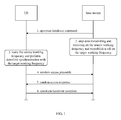
- FIG. 1 is a schematic diagram illustrating a method for implementing the spectrum handover in the CR system.
- a based station sends a spectrum handover command to a user equipment (UE) to notify the UE to stop data transmitting and receiving on the source working frequency and reestablish a cell on the target working frequency.
- UE user equipment
- the UE leaves the source working frequency and performs downlink synchronization with the target working frequency.
- the UE performs a random access procedure on the target working frequency, so as to perform uplink synchronization with the base station through the random access procedure.
- the UE sends a random access preamble to the base station and the base station sends a random access response to the UE.
- the UE sends a spectrum handover completing message to the base station and the base station sends a competition solving message to the UE.
- the spectrum handover is completed.
- UEs in a connection state within the cell are handed over to the target working frequency.
- all of the UEs in the connection state initiate the random access procedure on the target working frequency within a short period, which causes a serious random access conflict.
- the inventors find that the prior art at least has disadvantages described as follows.
- the spectrum handover procedure of the CR system there is not a reasonable solution for solving the random access conflict, which results in a higher failure probability of the spectrum handover and long service interruption time.
- users at different service levels could not be processed distinguishingly, so that user experience of the CR system is influenced.
- Various examples of the present disclosure describe a random access method and device in the CR system, which can suppress a random access conflict.
- Examples of the present disclosure describe a random access method in a CR system.
- the method includes:
- Examples of the present disclosure describe a random access method in a CR system.
- the method includes:
- Examples of the present disclosure describe a base station device, which includes:
- UE user equipment
- the random access backoff time parameter information is carried in the spectrum handover command, so that the random access conflict is suppressed during the spectrum handover procedure of the CR system.
- a large number of UEs that intensively perform random access on the target working frequency are pre-dispersed in time. As such, the delay and the failure probability of the random access on the target working frequency during the spectrum handover procedure are reduced, and thus the failure probability of the spectrum handover and the service interruption time are reduced, so that the user experience of the CR system is improved.
- the service interruption time of a user with a higher priority is reduced during the spectrum handover procedure, and thus the user experience of the user with the higher priority in the CR system is improved.
- the first example of the present disclosure describes a random access method in a CR system, which is associated with a random access procedure initiated during a spectrum handover procedure.
- the random access method may at least be applied to mobile communication systems employing the CR technology such as LTE (Long Term Evolution), TD-SCDMA (Time Division-Synchronous Code Division Multiple Access), HSPA (High-Speed Packet Access), CDMA (Code Division Multiple Access)-2000, WCDMA (Wideband Code Division Multiple Access), GSM (Global System for Mobile Communications), and etc.
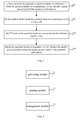
- the random access method in the CR system may include following operations.
- a base station device may generate a spectrum handover command, in which the spectrum handover command may at least include random access backoff time parameter information.
- the spectrum handover command may at least further include a target working frequency and radio resource configuration information.
- the base station device when the base station device detects that a user of an authorization system appears on a current working frequency (i.e., a source working frequency, which is a white space spectrum currently used), the base station device may determine that a spectrum handover procedure is to be performed and may generate the spectrum handover command.
- a current working frequency i.e., a source working frequency, which is a white space spectrum currently used
- the base station device may determine that a spectrum handover procedure is to be performed and may generate the spectrum handover command.
- a predetermined threshold i.e., the channel quality of the current working frequency is degraded
- the base station device may send the spectrum handover command to a UE (the UE is a UE based on the CR system) within a cell, so as to instruct the UE to initiate, during the spectrum handover procedure, the random access procedure using the random access backoff time parameter information.
- the spectrum handover command may at least include the target working frequency, the radio resource configuration information, and the random access backoff time parameter information.
- the base station device when the base station device sends the spectrum handover command to the UE, the base station device may stop data transmitting and receiving on the source working frequency. And, after the data transmitting and receiving on the source working frequency is stopped, the base station device may reestablish the cell using the target working frequency.
- the base station device may determine the number of sending the spectrum handover command. During the process of sending the spectrum handover command, the base station device may send the spectrum handover command in accordance with the determined number. For example, when the determined number is 3, the base station device may send the spectrum handover command three times.
- the UE may receive the spectrum handover command from the base station device, in which the spectrum handover command may at least include the target working frequency, the radio resource configuration information, and the random access backoff time parameter information.
- the UE may initiate the random access procedure using the random access backoff time parameter information.
- the UE may initiate the random access procedure using the random access backoff time parameter information according to a following way. Specifically, the UE may determine random access backoff time using the random access backoff time parameter information, and may initiate the random access procedure after the random access backoff time.
- the UE may determine the random access backoff time using the random access backoff time parameter information and may initiate the random access procedure after the random access backoff time according to a following way.
- the UE may perform downlink synchronization with the target working frequency.
- the UE may determine the random access backoff time using the random access backoff time parameter information.
- the UE may initiate the random access procedure after the random access backoff time.
- the UE may determine the random access backoff time using the random access backoff time parameter information.
- the UE may perform the downlink synchronization with the target working frequency.
- the UE may initiate the random access procedure after the random access backoff time.
- the UE may initiate the random access procedure using the random access backoff time parameter information according to a way described as follows.
- the UE may exit from the source working frequency and perform the downlink synchronization with the target working frequency.
- the UE may calculate the random access backoff time (T BI ) using the random access backoff time parameter information included in the spectrum handover command. After the UE waits for the random access backoff time, the UE may initialize the random access procedure of the target working frequency.
- the UE may send, on the target working frequency, a random access preamble to the base station device.
- the base station device may send a random access response to the UE.
- the UE may send a spectrum handover completing message to the base station device.
- the random access backoff time parameter information may include but not limited to a maximum random access delay factor applied to all of UEs in the cell, or, a random access delay factor sequence associated with service levels of different UEs in the cell.
- the random access delay factor sequence may be presented as T 1 , T 2 , T i-1 , T i ... T M , in which M is the total number of the service levels, T i is a maximum random access delay factor of the i-th service level, and T i is a minimum random access delay factor of the (i+1)-th service level.
- the random access delay factor sequence may not carry T 0 .
- the base station device and the UE may regard T 0 as 0 by default.
- an information field of the spectrum handover command may be shown as in Table 1.
- Table 1 information field the number of bits of the information the target working frequency n1 bit radio resource configuration information of the target working frequency n2 bit the maximum random access delay factor applied to all of the UEs in the cell n3 bit
- the UE may determine the random access backoff time using the random access backoff time parameter information according to a following way.
- the UE may randomly select the random access backoff time according to a uniform distribution between 0 and the maximum random access delay factor.
- the random access backoff time parameter information is the random access delay factor sequence associated with the service levels of different UEs in the cell
- the random access delay factor sequence may be presented as T 1 , T 2 , T i-1 , T i ... T M , in which M is the total number of the service levels, T i is a maximum random access delay factor of the i-th service level, and T i is a minimum random access delay factor of the (i+1)-th service level.
- the information field of the spectrum handover command may be shown as in Table 2.
- Table 2 information field the number of bits of the information the target working frequency n1 bit radio resource configuration information of the target working frequency n2 bit a maximum random access delay factor T 1 associated with first-type UE n3 bit a maximum random access delay factor T 2 associated with second-type UE n3 bit ... ... a maximum random access delay factor T M associated with M-type UE n3 bit
- the base station device may negotiate a mapping table between a service type and a service level with the UE.
- the base station device may negotiate the mapping table between the service type and the service level with the UE by way of statically defining by a protocol.
- the base station device may negotiate the mapping table between the service type and the service level with the UE by way of dynamic configuration.
- the base station device may determine the mapping table between the service type and the service level, and may send the mapping table to the UE through system information or dedicated signaling.
- the UE may determine the random access backoff time using the random access backoff time parameter information according to a way described as follows.
- the UE may determine a service level i of the UE (assuming the service type of the UE belongs to the i-th service level) according to the mapping table between the service type and the service level and a current service type of the UE.
- the UE may randomly select the random access backoff time according to a uniform distribution between T i-1 and T i .
- the UE may randomly select the random access backoff time according to a uniform distribution between T 0 and T 1 , in which T 0 is configured as 0 by default. In other words, the UE may randomly select the random access backoff time according to a uniform distribution between 0 to T 1 (which is carried in the spectrum handover command).
- a mapping relationship between the service level and a Quality of Service (QoS) Class Identifier may be established.
- QoS Quality of Service
- QCI Class Identifier
- a mapping principle may be described as follows.
- One UE service level may be associated with multiple QCIs, while one QCI may be associated with one UE service level. The smaller a value of the UE service level is, the higher the UE service level is.
- a method for solving the random access conflict is described as follows.
- the base station device detects that the random access conflict occurs between UEs, a random backoff parameter is carried in the random access response message.
- the UEs between which the random access conflict has already occurred are dispersed in time to avoid the random access conflict continuously occurring between the UEs during a subsequent random access procedure, so that the base station device may perform conflict suppression after the base station device detects that the random access conflict occurs between the UEs.
- the first random access conflict on the target working frequency cannot be avoided and there is a higher requirement for the base station device to detect the random access conflict, which increases the delay and the failure probability of the random access and thus results in a higher failure probability of the spectrum handover and long service interruption time.
- users at different service levels could not be processed distinguishingly, which influences the user experience of the CR system.
- the random access backoff time parameter information is carried in the spectrum handover command, so that the random access conflict is suppressed during the spectrum handover procedure of the CR system.
- a large number of UEs that intensively perform the random access on the target working frequency are pre-dispersed in time, rather than performing, by the base station device, the conflict suppression after the base station device detects the random access conflict.
- the delay and the failure probability of the random access on the target working frequency during the spectrum handover procedure can be reduced, and thus the failure probability of the spectrum handover and the service interruption time can be reduced, so that the user experience of the CR system can be improved.
- the service interruption time of a user with a higher priority is reduced during the spectrum handover procedure, and thus the user experience of the user with the higher priority in the CR system is further improved.
- the base station device may include:
- the random access backoff time parameter information may include a maximum random access delay factor applied to all of UEs in the cell, or, a random access delay factor sequence associated with service levels of different UEs in the cell.
- the random access delay factor sequence may be presented as T 1 , T 2 , T i-1 , T i ... T M , in which M is the total number of the service levels, T i is a maximum random access delay factor of the i-th service level, and T i is a minimum random access delay factor of the (i+1)-th service level.
- the base station device may further include a management module 13, configured to negotiate a mapping table between a service type and a service level with the UE.
- the management module 13 may negotiate the mapping table between the service type and the service level with the UE by way of statically defining by a protocol.
- the management module 13 may determine the mapping table between the service type and the service level, and may send the mapping table to the UE through system information or dedicated signaling.
- modules described in various examples of the present disclosure may be deployed either in a centralized or a distributed configuration; and may be either merged into a single module, or further split into a plurality of sub-modules.
- the UE may include:
- the processing module 22 may determine random access backoff time using the random access backoff time parameter information, and may initiate the random access procedure after the random access backoff time.
- the processing module 22 may further perform downlink synchronization with a target working frequency.
- the processing module 22 may determine the random access backoff time using the random access backoff time parameter information.
- the processing module 22 may initiate the random access procedure after the random access backoff time.
- the processing module 22 may determine the random access backoff time using the random access backoff time parameter information.
- the processing module 22 may perform the downlink synchronization with the target working frequency.
- the processing module 22 may initiate the random access procedure after the random access backoff time.
- the random access backoff time parameter information may include a maximum random access delay factor applied to all of UEs in the cell, or, a random access delay factor sequence associated with service levels of different UEs in the cell.
- the random access delay factor sequence may be presented as T 1 , T 2 , T i-1 , T i ... T M , in which M is the total number of the service levels, T i is a maximum random access delay factor of the i-th service level, and T i is a minimum random access delay factor of the (i+1)-th service level.
- the processing module 22 may further randomly select the random access backoff time according to a uniform distribution between 0 and the maximum random access delay factor.
- the UE may further include a management module 23, configured to negotiate a mapping table between a service type and a service level with the base station device.
- the management module 23 may negotiate the mapping table between the service type and the service level with the base station device by way of statically defining by a protocol.
- the management module 23 may receive the mapping table sent by the base station device through system information or dedicated signaling.
- the processing module 22 may further determine a service level i of the UE according to the mapping table between the service type and the service level and a current service type of the UE.
- the processing module 22 may randomly select the random access backoff time according to a uniform distribution between T i-1 and T i .
- modules described in various examples of the present disclosure may be deployed either in a centralized or a distributed configuration; and may be either merged into a single module, or further split into a plurality of sub-modules.
- the software product may be stored in a storage medium, and includes a plurality of machine-readable instructions for making a computer device (which can be a personal computer, a server, or a network device) implement methods recited in the examples of the present disclosure.
- modules in the apparatus of example embodiments of the present disclosure may be located in the apparatus as described in the example embodiments, or may be located in one or more apparatuses of the example embodiments of the present disclosure when modified accordingly.
- the modules in examples of the present disclosure may be combined into one module, or may be further divided into multiple sub-modules.
Landscapes
- Engineering & Computer Science (AREA)
- Computer Networks & Wireless Communication (AREA)
- Signal Processing (AREA)
- Mobile Radio Communication Systems (AREA)
Abstract
Description
- This application claims the priority of a Chinese patent application No.
201110418518.3, filed December 14, 2011 - Examples of the present disclosure relate to communication technologies, and more particularly, to a random access method and device in a cognitive radio (CR) system.
- With rapid development of wireless communication technologies, spectrum resources are increasingly scarce. By monitoring and studying wireless communication spectrums, it is found that some bands (such as a television band) are not used in most of time or not used within most areas, while multi-user or multi-system competition occurs in some other bands. In other words, the use of the spectrum resources is imbalanced. CR technology emerges under this background. The basic principle of CR is described as follows. Under the premise of not disturbing an authorization system and by monitoring changes of current wireless communication environment, white space spectrums of the authorization system are accessed, in the form of the dynamic opportunistic spectrum access, for communications.
- The premise of opportunistically accessing, by a CR system, the white space spectrums of the authorization system is that services of the authorization system are not disturbed by the CR system. Based on this requirement: (1) the CR system may have a capability of accurately determining the white space spectrums of the authorization system; (2) the CR system may have a spectrum handover capability, i.e., when the CR system detects that the authorization system appears on a white space spectrum currently used (i.e., a source working frequency), the CR system may promptly exit from the white space spectrum currently used. In order to ensure the business continuity of the CR system, during the spectrum handover, when the CR system exits from the source working frequency, the CR system is handed over to another white space spectrum (i.e., a target working frequency) for reestablishing services.
-
FIG. 1 is a schematic diagram illustrating a method for implementing the spectrum handover in the CR system. As shown inFIG. 1 , a based station sends a spectrum handover command to a user equipment (UE) to notify the UE to stop data transmitting and receiving on the source working frequency and reestablish a cell on the target working frequency. When receiving the spectrum handover command, the UE leaves the source working frequency and performs downlink synchronization with the target working frequency. When the downlink synchronization with the target working frequency is completed, the UE performs a random access procedure on the target working frequency, so as to perform uplink synchronization with the base station through the random access procedure. Specifically, the UE sends a random access preamble to the base station and the base station sends a random access response to the UE. The UE sends a spectrum handover completing message to the base station and the base station sends a competition solving message to the UE. In addition, after the random access procedure is completed, the spectrum handover is completed. - During the spectrum handover procedure of the CR system, UEs in a connection state within the cell are handed over to the target working frequency. As such, all of the UEs in the connection state initiate the random access procedure on the target working frequency within a short period, which causes a serious random access conflict.
- During the process of implementing various examples of the present disclosure, the inventors find that the prior art at least has disadvantages described as follows. During the spectrum handover procedure of the CR system, there is not a reasonable solution for solving the random access conflict, which results in a higher failure probability of the spectrum handover and long service interruption time. Moreover, users at different service levels could not be processed distinguishingly, so that user experience of the CR system is influenced.
- Various examples of the present disclosure describe a random access method and device in the CR system, which can suppress a random access conflict.
- Examples of the present disclosure describe a random access method in a CR system. The method includes:
- generating, by a base station device, a spectrum handover command,
wherein the spectrum handover command comprises random access backoff time parameter information; and - sending, by the base station device, the spectrum handover command to a user equipment (UE) in a cell to instruct the UE to initiate, during a spectrum handover procedure, a random access procedure using the random access backoff time parameter information.
- Examples of the present disclosure describe a random access method in a CR system. The method includes:
- receiving, by a user equipment (UE), a spectrum handover command sent from a base station device,
wherein the spectrum handover command comprises random access backoff time parameter information; and - initiating, by the UE during a spectrum handover procedure, a random access procedure using the random access backoff time parameter information.
- Examples of the present disclosure describe a base station device, which includes:
- a generating module, to generate a spectrum handover command;
wherein the spectrum handover command comprises random access backoff time parameter information; and - a sending module, to send the spectrum handover command to a user equipment (UE) in a cell to instruct the UE to initiate, during a spectrum handover procedure, a random access procedure using the random access backoff time parameter information.
- Examples of the present disclosure describe a user equipment (UE), which includes:
- a receiving module, to receive a spectrum handover command sent from a base station device;
wherein the spectrum handover command comprises random access backoff time parameter information; and - a processing module, to initiate, during a spectrum handover procedure, a random access procedure using the random access backoff time parameter information.
- Compared with the prior art, various examples of the present disclosure at least have advantages described as follows. The random access backoff time parameter information is carried in the spectrum handover command, so that the random access conflict is suppressed during the spectrum handover procedure of the CR system. A large number of UEs that intensively perform random access on the target working frequency are pre-dispersed in time. As such, the delay and the failure probability of the random access on the target working frequency during the spectrum handover procedure are reduced, and thus the failure probability of the spectrum handover and the service interruption time are reduced, so that the user experience of the CR system is improved. In addition, by providing random backoff modes based on different service levels, the service interruption time of a user with a higher priority is reduced during the spectrum handover procedure, and thus the user experience of the user with the higher priority in the CR system is improved.
- Hereinafter, accompanying drawings used for describing examples of the present disclosure may be briefly introduced to make the technical solution of the present disclosure clearer. Obviously, the drawings described below may be some example embodiments of the present disclosure. Those skilled in the art may also obtain other drawings without making creative efforts according to the accompanying drawings in which:
-
FIG. 1 is a flowchart illustrating a method for implementing spectrum handover in the prior art, according to an example of the present disclosure. -
FIG. 2 is a flowchart illustrating a random access method in a CR system, according to a first example of the present disclosure. -
FIG. 3 is a schematic diagram illustrating a structure of a base station device, according to a second example of the present disclosure. -
FIG. 4 is a schematic diagram illustrating a structure of a UE device, according to a third example of the present disclosure. - Hereinafter, the present disclosure will be described in further detail with reference to the accompanying drawings and examples. Obviously, the example embodiments described herein are selected embodiments and not all possible implementations. Based on the examples of the present disclosure, those skilled in the art may still make various modifications or variations without making creative efforts. Such modifications and variations shall fall within the protection scope of the example embodiments, as defined in attached claims.
- The first example of the present disclosure describes a random access method in a CR system, which is associated with a random access procedure initiated during a spectrum handover procedure. The random access method may at least be applied to mobile communication systems employing the CR technology such as LTE (Long Term Evolution), TD-SCDMA (Time Division-Synchronous Code Division Multiple Access), HSPA (High-Speed Packet Access), CDMA (Code Division Multiple Access)-2000, WCDMA (Wideband Code Division Multiple Access), GSM (Global System for Mobile Communications), and etc.
- As shown in
FIG. 2 , the random access method in the CR system may include following operations. - In
block 201, a base station device (the base station device is a base station device based on the CR system) may generate a spectrum handover command, in which the spectrum handover command may at least include random access backoff time parameter information. In addition, the spectrum handover command may at least further include a target working frequency and radio resource configuration information. - According to an example of the present disclosure, when the base station device detects that a user of an authorization system appears on a current working frequency (i.e., a source working frequency, which is a white space spectrum currently used), the base station device may determine that a spectrum handover procedure is to be performed and may generate the spectrum handover command. Alternatively, according to another example of the present disclosure, when the base station device detects that a channel quality of the current working frequency is less than a predetermined threshold (i.e., the channel quality of the current working frequency is degraded), the base station device may determine that the spectrum handover procedure is to be performed and may generate the spectrum handover command.
- In
block 202, the base station device may send the spectrum handover command to a UE (the UE is a UE based on the CR system) within a cell, so as to instruct the UE to initiate, during the spectrum handover procedure, the random access procedure using the random access backoff time parameter information. In this case, the spectrum handover command may at least include the target working frequency, the radio resource configuration information, and the random access backoff time parameter information. - According to an example of the present disclosure, when the base station device sends the spectrum handover command to the UE, the base station device may stop data transmitting and receiving on the source working frequency. And, after the data transmitting and receiving on the source working frequency is stopped, the base station device may reestablish the cell using the target working frequency.
- According to an example of the present disclosure, during the process of generating the spectrum handover command, the base station device may determine the number of sending the spectrum handover command. During the process of sending the spectrum handover command, the base station device may send the spectrum handover command in accordance with the determined number. For example, when the determined number is 3, the base station device may send the spectrum handover command three times.
- In
block 203, the UE may receive the spectrum handover command from the base station device, in which the spectrum handover command may at least include the target working frequency, the radio resource configuration information, and the random access backoff time parameter information. - In
block 204, during the spectrum handover procedure, the UE may initiate the random access procedure using the random access backoff time parameter information. According to an example of the present disclosure, the UE may initiate the random access procedure using the random access backoff time parameter information according to a following way. Specifically, the UE may determine random access backoff time using the random access backoff time parameter information, and may initiate the random access procedure after the random access backoff time. - According to an example of the present disclosure, the UE may determine the random access backoff time using the random access backoff time parameter information and may initiate the random access procedure after the random access backoff time according to a following way. When receiving the spectrum handover command sent from the base station device, the UE may perform downlink synchronization with the target working frequency. When the downlink synchronization with the target working frequency is completed, the UE may determine the random access backoff time using the random access backoff time parameter information. When the random access backoff time is determined, the UE may initiate the random access procedure after the random access backoff time. Alternatively, according to another example of the present disclosure, when receiving the spectrum handover command sent from the base station device, the UE may determine the random access backoff time using the random access backoff time parameter information. When the random access backoff time is determined, the UE may perform the downlink synchronization with the target working frequency. When the downlink synchronization with the target working frequency is completed, the UE may initiate the random access procedure after the random access backoff time.
- According to an example of the present disclosure, when the downlink synchronization with the target working frequency is performed firstly, during the spectrum handover procedure, the UE may initiate the random access procedure using the random access backoff time parameter information according to a way described as follows. When receiving the spectrum handover command, the UE may exit from the source working frequency and perform the downlink synchronization with the target working frequency. Meanwhile, when receiving the spectrum handover command, the UE may calculate the random access backoff time (TBI) using the random access backoff time parameter information included in the spectrum handover command. After the UE waits for the random access backoff time, the UE may initialize the random access procedure of the target working frequency. Thereafter, the UE may send, on the target working frequency, a random access preamble to the base station device. When receiving the random access preamble sent from the UE, the base station device may send a random access response to the UE. When receiving the random access response, the UE may send a spectrum handover completing message to the base station device.
- According to an example of the present disclosure, the random access backoff time parameter information may include but not limited to a maximum random access delay factor applied to all of UEs in the cell, or, a random access delay factor sequence associated with service levels of different UEs in the cell. According to an example of the present disclosure, the random access delay factor sequence may be presented as T1, T2, Ti-1, Ti ... TM, in which M is the total number of the service levels, Ti is a maximum random access delay factor of the i-th service level, and Ti is a minimum random access delay factor of the (i+1)-th service level.
- It should be noted that the random access delay factor sequence may not carry T0. The base station device and the UE may regard T0 as 0 by default.
- According to an example of the present disclosure, under a first situation, when the random access backoff time parameter information is the maximum random access delay factor applied to all of the UEs in the cell, an information field of the spectrum handover command may be shown as in Table 1.
Table 1 information field the number of bits of the information the target working frequency n1 bit radio resource configuration information of the target working frequency n2 bit the maximum random access delay factor applied to all of the UEs in the cell n3 bit - When the random access backoff time parameter information is the maximum random access delay factor applied to all of the UEs in the cell, the UE may determine the random access backoff time using the random access backoff time parameter information according to a following way. The UE may randomly select the random access backoff time according to a uniform distribution between 0 and the maximum random access delay factor.
- According to an example of the present disclosure, under a second situation, the random access backoff time parameter information is the random access delay factor sequence associated with the service levels of different UEs in the cell, the random access delay factor sequence may be presented as T1, T2, Ti-1, Ti ... TM, in which M is the total number of the service levels, Ti is a maximum random access delay factor of the i-th service level, and Ti is a minimum random access delay factor of the (i+1)-th service level. In this case, the information field of the spectrum handover command may be shown as in Table 2.
Table 2 information field the number of bits of the information the target working frequency n1 bit radio resource configuration information of the target working frequency n2 bit a maximum random access delay factor T1 associated with first-type UE n3 bit a maximum random access delay factor T2 associated with second-type UE n3 bit ... ... a maximum random access delay factor TM associated with M-type UE n3 bit - According to an example of the present disclosure, when the random access backoff time parameter information is the random access delay factor sequence associated with the service levels of different UEs in the cell, the base station device may negotiate a mapping table between a service type and a service level with the UE.
- According to an example of the present disclosure, the base station device may negotiate the mapping table between the service type and the service level with the UE by way of statically defining by a protocol. Alternatively, according to another example of the present disclosure, the base station device may negotiate the mapping table between the service type and the service level with the UE by way of dynamic configuration. In this case, the base station device may determine the mapping table between the service type and the service level, and may send the mapping table to the UE through system information or dedicated signaling.
- Based on the mapping table between the service type and the service level, when the random access backoff time parameter information is the random access delay factor sequence associated with the service levels of different UEs in the cell, the UE may determine the random access backoff time using the random access backoff time parameter information according to a way described as follows. The UE may determine a service level i of the UE (assuming the service type of the UE belongs to the i-th service level) according to the mapping table between the service type and the service level and a current service type of the UE. The UE may randomly select the random access backoff time according to a uniform distribution between Ti-1 and Ti.
- It should be noted that for a service type of which the service level is 1, the UE may randomly select the random access backoff time according to a uniform distribution between T0 and T1, in which T0 is configured as 0 by default. In other words, the UE may randomly select the random access backoff time according to a uniform distribution between 0 to T1 (which is carried in the spectrum handover command).
- According to an example of the present disclosure, for the mapping table between the service type and the service level in a LTE system, a mapping relationship between the service level and a Quality of Service (QoS) Class Identifier (QCI) may be established. In this case, a mapping principle may be described as follows. One UE service level may be associated with multiple QCIs, while one QCI may be associated with one UE service level. The smaller a value of the UE service level is, the higher the UE service level is.
- In view of the above, various examples of the present disclosure at least have following advantages compared with the prior art.
- In the prior art, a method for solving the random access conflict is described as follows. When the base station device detects that the random access conflict occurs between UEs, a random backoff parameter is carried in the random access response message. The UEs between which the random access conflict has already occurred are dispersed in time to avoid the random access conflict continuously occurring between the UEs during a subsequent random access procedure, so that the base station device may perform conflict suppression after the base station device detects that the random access conflict occurs between the UEs. In the prior art, the first random access conflict on the target working frequency cannot be avoided and there is a higher requirement for the base station device to detect the random access conflict, which increases the delay and the failure probability of the random access and thus results in a higher failure probability of the spectrum handover and long service interruption time. Moreover, users at different service levels could not be processed distinguishingly, which influences the user experience of the CR system.
- Various examples of the present disclosure describe a spectrum handover method for suppressing the random access conflict in the CR system. According to the method, the random access backoff time parameter information is carried in the spectrum handover command, so that the random access conflict is suppressed during the spectrum handover procedure of the CR system. A large number of UEs that intensively perform the random access on the target working frequency are pre-dispersed in time, rather than performing, by the base station device, the conflict suppression after the base station device detects the random access conflict. As such, the delay and the failure probability of the random access on the target working frequency during the spectrum handover procedure can be reduced, and thus the failure probability of the spectrum handover and the service interruption time can be reduced, so that the user experience of the CR system can be improved. In addition, by providing random backoff modes based on different service levels, the service interruption time of a user with a higher priority is reduced during the spectrum handover procedure, and thus the user experience of the user with the higher priority in the CR system is further improved.
- Based on the same concept of the method described above, various examples of the present disclosure also describe a base station device. As shown in
FIG. 3 , the base station device may include: - a generating module 11, configured to generate a spectrum handover command, in which the spectrum handover command may include random access backoff time parameter information; and
- a sending
module 12, configured to send the spectrum handover command to a UE within a cell, so as to instruct the UE to initiate, during a spectrum handover procedure, a random access procedure using the random access backoff time parameter information. - According to an example of the present disclosure, the random access backoff time parameter information may include a maximum random access delay factor applied to all of UEs in the cell, or, a random access delay factor sequence associated with service levels of different UEs in the cell. According to an example of the present disclosure, the random access delay factor sequence may be presented as T1, T2, Ti-1, Ti ... TM, in which M is the total number of the service levels, Ti is a maximum random access delay factor of the i-th service level, and Ti is a minimum random access delay factor of the (i+1)-th service level.
- According to an example of the present disclosure, when the random access backoff time parameter information is the random access delay factor sequence associated with the service levels of different UEs in the cell, the base station device may further include a
management module 13, configured to negotiate a mapping table between a service type and a service level with the UE. - According to an example of the present disclosure, the
management module 13 may negotiate the mapping table between the service type and the service level with the UE by way of statically defining by a protocol. Alternatively, according to another example of the present disclosure, themanagement module 13 may determine the mapping table between the service type and the service level, and may send the mapping table to the UE through system information or dedicated signaling. - The above-mentioned modules described in various examples of the present disclosure may be deployed either in a centralized or a distributed configuration; and may be either merged into a single module, or further split into a plurality of sub-modules.
- Based on the same concept of the method described above, various examples of the present disclosure also describe a UE. As shown in
FIG. 4 , the UE may include: - a receiving
module 21, configured to receive a spectrum handover command sent from a base station device, in which the spectrum handover command may include random access backoff time parameter information; and - a
processing module 22, configured to initiate, during a spectrum handover procedure, a random access procedure using the random access backoff time parameter information. - According to an example of the present disclosure, the
processing module 22 may determine random access backoff time using the random access backoff time parameter information, and may initiate the random access procedure after the random access backoff time. - According to an example of the present disclosure, when the spectrum handover command is received from the base station device, the
processing module 22 may further perform downlink synchronization with a target working frequency. When the downlink synchronization with the target working frequency is completed, theprocessing module 22 may determine the random access backoff time using the random access backoff time parameter information. When the random access backoff time is determined, theprocessing module 22 may initiate the random access procedure after the random access backoff time. Alternatively, according to another example of the present disclosure, when the spectrum handover command is received from the base station device, theprocessing module 22 may determine the random access backoff time using the random access backoff time parameter information. When the random access backoff time is determined, theprocessing module 22 may perform the downlink synchronization with the target working frequency. When the downlink synchronization with the target working frequency is completed, theprocessing module 22 may initiate the random access procedure after the random access backoff time. - According to an example of the present disclosure, the random access backoff time parameter information may include a maximum random access delay factor applied to all of UEs in the cell, or, a random access delay factor sequence associated with service levels of different UEs in the cell. According to an example of the present disclosure, the random access delay factor sequence may be presented as T1, T2, Ti-1, Ti... TM, in which M is the total number of the service levels, Ti is a maximum random access delay factor of the i-th service level, and Ti is a minimum random access delay factor of the (i+1)-th service level.
- According to an example of the present disclosure, when the random access backoff time parameter information is the maximum random access delay factor applied to all of the UEs in the cell, the
processing module 22 may further randomly select the random access backoff time according to a uniform distribution between 0 and the maximum random access delay factor. - According to an example of the present disclosure, when the random access backoff time parameter information is the random access delay factor sequence associated with the service levels of different UEs in the cell, the UE may further include a
management module 23, configured to negotiate a mapping table between a service type and a service level with the base station device. - According to an example of the present disclosure, the
management module 23 may negotiate the mapping table between the service type and the service level with the base station device by way of statically defining by a protocol. Alternatively, according to another example of the present disclosure, when the base station device determines the mapping table between the service type and the service level, themanagement module 23 may receive the mapping table sent by the base station device through system information or dedicated signaling. - According to an example of the present disclosure, the
processing module 22 may further determine a service level i of the UE according to the mapping table between the service type and the service level and a current service type of the UE. Theprocessing module 22 may randomly select the random access backoff time according to a uniform distribution between Ti-1 and Ti. - The above-mentioned modules described in various examples of the present disclosure may be deployed either in a centralized or a distributed configuration; and may be either merged into a single module, or further split into a plurality of sub-modules.
- According to the description of the above examples, it can be clearly understood by those skilled in the art that the examples of the present disclosure can be implemented by software accompanying with necessary general hardware platforms, or by hardware. Based on this, the essential parts of the technical solution mentioned above or the part contributed to the prior art can be presented in the form of a software product. The software product may be stored in a storage medium, and includes a plurality of machine-readable instructions for making a computer device (which can be a personal computer, a server, or a network device) implement methods recited in the examples of the present disclosure.
- The figures are only illustrations of examples, in which the modules or procedures shown in the figures may not be necessarily essential for implementing the present disclosure.
- Those skilled in the art can understand the modules in the apparatus of example embodiments of the present disclosure may be located in the apparatus as described in the example embodiments, or may be located in one or more apparatuses of the example embodiments of the present disclosure when modified accordingly. The modules in examples of the present disclosure may be combined into one module, or may be further divided into multiple sub-modules.
- The number of the examples of the present disclosure is offered for an illustrative purpose and is not intended and should not be construed to indicate pros and cons. of the examples.
- What has been described and illustrated herein is an example of the disclosure along with some of its variations. The terms, descriptions and figures used herein are set forth by way of illustration only and are not meant as limitations. Many variations are possible within the spirit and scope of the disclosure, which is intended to be defined by the following claims -- and their equivalents -- in which all terms are meant in their broadest reasonable sense unless otherwise indicated.
Claims (24)
- A random access method in a cognitive radio (CR) system, comprising:generating, by a base station device, a spectrum handover command,
wherein the spectrum handover command comprises random access backoff time parameter information; andsending, by the base station device, the spectrum handover command to a user equipment (UE) in a cell to instruct the UE to initiate, during a spectrum handover procedure, a random access procedure using the random access backoff time parameter information. - The method of claim 1, wherein the random access backoff time parameter information comprises:a maximum random access delay factor applied to all of UEs in the cell;
or,a random access delay factor sequence associated with service levels of different UEs in the cell,
wherein the random access delay factor sequence is presented as T1, T2, Ti-1, Ti ... TM, wherein M is the total number of the service levels, Ti is a maximum random access delay factor of the i-th service level, and Ti is a minimum random access delay factor of the (i+1)-th service level. - The method of claim 2, wherein when the random access backoff time parameter information is the random access delay factor sequence associated with the service levels of different UEs in the cell, before the operation of sending, by the base station device, the spectrum handover command to the UE in the cell, the method further comprises:negotiating, by the base station device, a mapping table between a service type and a service level with the UE.
- The method of claim 3, wherein the operation of negotiating, by the base station device, the mapping table between the service type and the service level with the UE comprises:negotiating, by the base station device, the mapping table between the service type and the service level with the UE by way of statically defining by a protocol;
or,determining, by the base station device, the mapping table between the service type and the service level, and sending the mapping table between the service type and the service level to the UE through system information or dedicated signaling. - A random access method in a cognitive radio (CR) system, comprising:receiving, by a user equipment (UE), a spectrum handover command sent from a base station device,
wherein the spectrum handover command comprises random access backoff time parameter information; andinitiating, by the UE during a spectrum handover procedure, a random access procedure using the random access backoff time parameter information. - The method of claim 5, wherein the operation of initiating, by the UE, the random access procedure using the random access backoff time parameter information comprises:determining, by the UE, random access backoff time using the random access backoff time parameter information; andinitiating the random access procedure after the random access backoff time.
- The method of claim 6, wherein the operation of determining, by the UE, the random access backoff time using the random access backoff time parameter information and initiating the random access procedure after the random access backoff time comprises:when the spectrum handover command is received from the base station device, performing, by the UE, downlink synchronization with a target working frequency;when the downlink synchronization with the target working frequency is completed, determining the random access backoff time using the random access backoff time parameter information; andwhen the random access backoff time is determined, initiating the random access
procedure after the random access backoff time;
or,when the spectrum handover command is received from the base station device, determining, by the UE, the random access backoff time using the random access backoff time parameter information;when the random access backoff time is determined, performing the downlink synchronization with the target working frequency; andwhen the downlink synchronization with the target working frequency is completed, initiating the random access procedure after the random access backoff time. - The method of claim 6, wherein the random access backoff time parameter information comprises:a maximum random access delay factor applied to all of UEs in a cell;
or,a random access delay factor sequence associated with service levels of different
UEs in the cell,
wherein the random access delay factor sequence is presented as T1, T2, Ti-1, Ti ... TM, wherein M is the total number of the service levels, Ti is a maximum random access delay factor of the i-th service level, and Ti is a minimum random access delay factor of the (i+1)-th service level. - The method of claim 8, wherein when the random access backoff time parameter information is the maximum random access delay factor applied to all of the UEs in the cell, the operation of determining, by the UE, the random access backoff time using the random access backoff time parameter information comprises:randomly selecting, by the UE, the random access backoff time according to a uniform distribution between 0 and the maximum random access delay factor.
- The method of claim 8, wherein when the random access backoff time parameter information is the random access delay factor sequence associated with the service levels of different UEs in the cell, before the operation of determining, by the UE, the random access backoff time using the random access backoff time parameter information, the method further comprises:negotiating, by the UE, a mapping table between a service type and a service level with the base station device.
- The method of claim 10, wherein the operation of negotiating, by the UE, the mapping table between the service type and the service level with the base station device comprises:negotiating, by the UE, the mapping table between the service type and the service level with the base station device by way of statically defining by a protocol; or,when the base station device determines the mapping table between the service type and the service level, receiving, by the UE, the mapping table between the service type and the service level sent from the base station device through system information or dedicated signaling.
- The method of claim 10 or 11, wherein the operation of determining, by the UE, the random access backoff time using the random access backoff time parameter information comprises:determining, by the UE, a service level i of the UE according to the mapping table between the service type and the service level and a current service type of the UE; andrandomly selecting, by the UE, the random access backoff time according to a uniform distribution between Ti-1 and Ti.
- A base station device, comprising:a generating module, to generate a spectrum handover command;
wherein the spectrum handover command comprises random access backoff time parameter information; anda sending module, to send the spectrum handover command to a user equipment (UE) in a cell to instruct the UE to initiate, during a spectrum handover procedure, a random access procedure using the random access backoff time parameter information. - The base station device of claim 13, wherein the random access backoff time parameter information comprises:a maximum random access delay factor applied to all of UEs in the cell;
or,a random access delay factor sequence associated with service levels of different
UEs in the cell,
wherein the random access delay factor sequence is presented as T1, T2, Ti-1, Ti ... TM, wherein M is the total number of the service levels, Ti is a maximum random access delay factor of the i-th service level, and Ti is a minimum random access delay factor of the (i+1)-th service level. - The base station device of claim 14, wherein when the random access backoff time parameter information is the random access delay factor sequence associated with the service levels of different UEs in the cell, the base station device further comprises:a management module, to negotiate a mapping table between a service type and a service level with the UE.
- The base station device of claim 15, wherein the management module is to:negotiate the mapping table between the service type and the service level with the UE by way of statically defining by a protocol;
or,determine the mapping table between the service type and the service level, and send the mapping table between the service type and the service level to the UE through system information or dedicated signaling. - A user equipment (UE), comprising:a receiving module, to receive a spectrum handover command sent from a base station device;
wherein the spectrum handover command comprises random access backoff time parameter information; anda processing module, to initiate, during a spectrum handover procedure, a random access procedure using the random access backoff time parameter information. - The UE of claim 17, wherein the processing module is to:determine random access backoff time using the random access backoff time parameter information; andinitiate the random access procedure after the random access backoff time.
- The UE of claim 18, wherein the processing module is further to:perform, when the spectrum handover command is received from the base station device, downlink synchronization with a target working frequency;determine, when the downlink synchronization with the target working frequency is completed, the random access backoff time using the random access backoff time parameter information; andinitiate, when the random access backoff time is determined, the random access procedure after the random access backoff time;
or,determine, when the spectrum handover command is received from the base station device, the random access backoff time using the random access backoff time parameter information;perform, when the random access backoff time is determined, the downlink synchronization with the target working frequency; andinitiate, when the downlink synchronization with the target working frequency is completed, the random access procedure after the random access backoff time. - The UE of claim 18, wherein the random access backoff time parameter information comprises:a maximum random access delay factor applied to all of UEs in a cell;
or,a random access delay factor sequence associated with service levels of different UEs in the cell,
wherein the random access delay factor sequence is presented as T1, T2, Ti-1, Ti ... TM, wherein M is the total number of the service levels, Ti is a maximum random access delay factor of the i-th service level, and Ti is a minimum random access delay factor of the (i+1)-th service level. - The UE of claim 20, wherein when the random access backoff time parameter information is the maximum random access delay factor applied to all of the UEs in the cell, the processing module is further to:randomly select the random access backoff time according to a uniform distribution between 0 and the maximum random access delay factor.
- The UE of claim 20, wherein when the random access backoff time parameter information is the random access delay factor sequence associated with the service levels of different UEs in the cell, the UE further comprises:a management module, to negotiate a mapping table between a service type and a service level with the base station device.
- The UE of claim 22, wherein the management module is to:negotiate the mapping table between the service type and the service level with the base station device by way of statically defining by a protocol;
or,receive, when the base station device determines the mapping table between the service type and the service level, the mapping table between the service type and the service level sent from the base station device through system information or dedicated signaling. - The UE of claim 22 or 23, wherein the processing module is further to:determine a service level i of the UE according to the mapping table between the service type and the service level and a current service type of the UE; andrandomly select the random access backoff time according to a uniform distribution between Ti-1 and Ti.
Applications Claiming Priority (2)
| Application Number | Priority Date | Filing Date | Title |
|---|---|---|---|
| CN201110418518.3A CN103167624B (en) | 2011-12-14 | 2011-12-14 | Accidental access method in a kind of cognitive radio system and equipment |
| PCT/CN2012/081252 WO2013086874A1 (en) | 2011-12-14 | 2012-09-11 | Random access method and device in cognitive radio system |
Publications (3)
| Publication Number | Publication Date |
|---|---|
| EP2793526A1 true EP2793526A1 (en) | 2014-10-22 |
| EP2793526A4 EP2793526A4 (en) | 2014-12-03 |
| EP2793526B1 EP2793526B1 (en) | 2016-03-16 |
Family
ID=48590273
Family Applications (1)
| Application Number | Title | Priority Date | Filing Date |
|---|---|---|---|
| EP12856870.6A Active EP2793526B1 (en) | 2011-12-14 | 2012-09-11 | Random access method and device in cognitive radio system |
Country Status (4)
| Country | Link |
|---|---|
| US (1) | US9210726B2 (en) |
| EP (1) | EP2793526B1 (en) |
| CN (1) | CN103167624B (en) |
| WO (1) | WO2013086874A1 (en) |
Cited By (6)
| Publication number | Priority date | Publication date | Assignee | Title |
|---|---|---|---|---|
| WO2016068563A1 (en) * | 2014-10-28 | 2016-05-06 | Lg Electronics Inc. | Method and apparatus for performing backoff of transmission and reception for licensed assisted access in wireless communication system |
| EP3107331A4 (en) * | 2014-03-06 | 2016-12-21 | Huawei Tech Co Ltd | BASE STATION, TERMINAL AND SWITCHING METHOD |
| EP3131335A1 (en) * | 2015-08-14 | 2017-02-15 | Alcatel Lucent | Handover |
| WO2018075985A1 (en) * | 2016-10-21 | 2018-04-26 | Qualcomm Incorporated | Directional synchronization in assisted millimeter wave systems |
| EP3646657A4 (en) * | 2017-07-04 | 2020-09-23 | Samsung Electronics Co., Ltd. | METHOD AND DEVICE FOR COMMUNICATION BASED ON A FRAMEWORK STRUCTURE |
| US20210266821A1 (en) * | 2016-07-11 | 2021-08-26 | Guangdong Oppo Mobile Telecommunications Corp., Ltd. | Information transmission method and device |
Families Citing this family (18)
| Publication number | Priority date | Publication date | Assignee | Title |
|---|---|---|---|---|
| KR20150073165A (en) * | 2012-10-16 | 2015-06-30 | 엘지전자 주식회사 | Method and apparatus for accessing channel in wireless lan |
| US20150119034A1 (en) * | 2013-10-31 | 2015-04-30 | At&T Mobility Ii, Llc | Method and system for managing wireless access to a communication system |
| CN103763709B (en) * | 2014-01-24 | 2017-07-14 | 电信科学技术研究院 | A kind of frequency spectrum makes a concession method, frequency spectrum and takes method and device |
| CN107210938A (en) * | 2015-05-14 | 2017-09-26 | 华为技术有限公司 | Method, user equipment and the base station of the signal of licensed spectrum channel are exempted from detection |
| CN106332283B (en) * | 2015-06-23 | 2019-10-11 | 中国移动通信集团公司 | Method, device and equipment for LAA system uplink transmission |
| KR102554560B1 (en) * | 2015-07-07 | 2023-07-13 | 소니그룹주식회사 | Communication device and communication method |
| KR102727586B1 (en) * | 2015-07-27 | 2024-11-07 | 애플 인크. | Enhanced rach (random access channel) design for 5g ciot (cellular internet of things) |
| CN106413117B (en) * | 2015-07-29 | 2021-08-17 | 索尼公司 | Apparatus and method for wireless communication system, base station side and user equipment side |
| US20170265230A1 (en) * | 2016-03-14 | 2017-09-14 | Futurewei Technologies, Inc. | System and Method for Random Access Backoffs |
| WO2017213375A1 (en) * | 2016-06-08 | 2017-12-14 | 엘지전자 주식회사 | Method and apparatus for measuring downlink synchronization in wireless communication system |
| MY203892A (en) * | 2017-01-23 | 2024-07-23 | Guangdong Oppo Mobile Telecommunications Corp Ltd | Method for random access, and terminal device |
| CN108633106B (en) * | 2017-03-24 | 2019-09-17 | 电信科学技术研究院 | Random access and indicating means, device after a kind of random access backoff |
| EP3613252B1 (en) * | 2018-01-25 | 2021-05-26 | Guangdong Oppo Mobile Telecommunications Corp., Ltd. | A random access method and wireless device |
| CN110536349B (en) * | 2018-05-25 | 2023-05-09 | 中国移动通信有限公司研究院 | A method, device, device, and storage medium for determining rollback time |
| WO2020034159A1 (en) * | 2018-08-16 | 2020-02-20 | 北京小米移动软件有限公司 | Bandwidth part adjustment method and bandwidth part adjustment apparatus |
| US11184288B2 (en) | 2019-01-11 | 2021-11-23 | Arista Networks, Inc. | System and a method for controlling timing of processing network data |
| US11412549B2 (en) | 2019-03-27 | 2022-08-09 | Mediatek Singapore Pte. Ltd. | Broadcast and group-based handover in NR-based LEO-NTN |
| US12238594B2 (en) * | 2019-07-16 | 2025-02-25 | Sharp Kabushiki Kaisha | Method of handover procedure and related device |
Family Cites Families (11)
| Publication number | Priority date | Publication date | Assignee | Title |
|---|---|---|---|---|
| US6597675B1 (en) * | 1997-04-30 | 2003-07-22 | Telefonaktiebolaget Lm Ericsson (Publ) | Random access in a mobile telecommunications system |
| CN1260917C (en) | 2002-12-03 | 2006-06-21 | 华为技术有限公司 | A control method for random access |
| ES2799299T3 (en) * | 2005-10-31 | 2020-12-16 | Evolved Wireless Llc | Method of transmission and reception of radio access information in a wireless mobile communication system |
| CA2767302C (en) * | 2006-09-28 | 2012-10-16 | Fujitsu Limited | Wireless communication device |
| EP2123102B1 (en) * | 2007-03-22 | 2015-04-08 | Telefonaktiebolaget LM Ericsson (publ) | Random access aligned handover |
| JP5309708B2 (en) * | 2008-06-16 | 2013-10-09 | 富士通株式会社 | Mobile station and data transmission method |
| CN101616488A (en) * | 2008-06-23 | 2009-12-30 | 华为技术有限公司 | A control method, device and system for enhanced random access |
| TW201108827A (en) * | 2009-03-16 | 2011-03-01 | Htc Corp | Method of handling random access procedure and related communication device |
| CN101702635B (en) * | 2009-10-28 | 2013-06-19 | 北京邮电大学 | Method for switching frequency spectrum based on cognitive radio technology and system thereof |
| US8477801B2 (en) * | 2009-12-15 | 2013-07-02 | Qualcomm Incorporated | Backoff procedure for post downlink SDMA operation |
| CN102196452B (en) * | 2010-03-11 | 2015-07-01 | 中国移动通信集团公司 | Frequency switching method and equipment |
-
2011
- 2011-12-14 CN CN201110418518.3A patent/CN103167624B/en active Active
-
2012
- 2012-09-11 WO PCT/CN2012/081252 patent/WO2013086874A1/en not_active Ceased
- 2012-09-11 US US14/365,202 patent/US9210726B2/en active Active
- 2012-09-11 EP EP12856870.6A patent/EP2793526B1/en active Active
Cited By (17)
| Publication number | Priority date | Publication date | Assignee | Title |
|---|---|---|---|---|
| EP3107331A4 (en) * | 2014-03-06 | 2016-12-21 | Huawei Tech Co Ltd | BASE STATION, TERMINAL AND SWITCHING METHOD |
| US10004013B2 (en) | 2014-03-06 | 2018-06-19 | Huawei Technologies Co., Ltd. | Base station, terminal, and handover method |
| WO2016068563A1 (en) * | 2014-10-28 | 2016-05-06 | Lg Electronics Inc. | Method and apparatus for performing backoff of transmission and reception for licensed assisted access in wireless communication system |
| US10652926B2 (en) | 2014-10-28 | 2020-05-12 | Lg Electronics Inc. | Method and apparatus for performing backoff of transmission and reception for licensed assisted access in wireless communication system |
| EP3131335A1 (en) * | 2015-08-14 | 2017-02-15 | Alcatel Lucent | Handover |
| WO2017029222A1 (en) * | 2015-08-14 | 2017-02-23 | Alcatel Lucent | Handover |
| TWI635761B (en) * | 2015-08-14 | 2018-09-11 | 阿爾卡特朗訊公司 | Handover |
| US20210266821A1 (en) * | 2016-07-11 | 2021-08-26 | Guangdong Oppo Mobile Telecommunications Corp., Ltd. | Information transmission method and device |
| US12267765B2 (en) * | 2016-07-11 | 2025-04-01 | Guangdong Oppo Mobile Telecommunications Corp., Ltd. | Information transmission method and device |
| WO2018075985A1 (en) * | 2016-10-21 | 2018-04-26 | Qualcomm Incorporated | Directional synchronization in assisted millimeter wave systems |
| US11082911B2 (en) | 2016-10-21 | 2021-08-03 | Qualcomm Incorporated | Directional synchronization in assisted millimeter wave systems |
| US11696218B2 (en) | 2016-10-21 | 2023-07-04 | Qualcomm Incorporated | Multiplexing initial access and data transmissions in assisted millimeter wave systems |
| US10172071B2 (en) | 2016-10-21 | 2019-01-01 | Qualcomm Incorporated | Directional synchronization in assisted millimeter wave systems |
| EP3646657A4 (en) * | 2017-07-04 | 2020-09-23 | Samsung Electronics Co., Ltd. | METHOD AND DEVICE FOR COMMUNICATION BASED ON A FRAMEWORK STRUCTURE |
| US11212761B2 (en) | 2017-07-04 | 2021-12-28 | Samsung Electronics Co., Ltd. | Method and apparatus for communication based on frame structure |
| US12041563B2 (en) | 2017-07-04 | 2024-07-16 | Samsung Electronics Co., Ltd. | Method and apparatus for communication based on frame structure |
| US12200642B2 (en) | 2017-07-04 | 2025-01-14 | Samsung Electronics Co., Ltd. | Method and apparatus for communication based on frame structure |
Also Published As
| Publication number | Publication date |
|---|---|
| CN103167624A (en) | 2013-06-19 |
| US20140328325A1 (en) | 2014-11-06 |
| WO2013086874A1 (en) | 2013-06-20 |
| EP2793526A4 (en) | 2014-12-03 |
| EP2793526B1 (en) | 2016-03-16 |
| CN103167624B (en) | 2015-09-30 |
| US9210726B2 (en) | 2015-12-08 |
Similar Documents
| Publication | Publication Date | Title |
|---|---|---|
| EP2793526B1 (en) | Random access method and device in cognitive radio system | |
| US10375579B2 (en) | Channel detection method and system, device, and terminal having base station functions | |
| EP3155859B1 (en) | Wireless communications over unlicensed radio frequency spectrum | |
| US20200022185A1 (en) | Signal transmission method and device | |
| US9491662B2 (en) | Method in a radio network node for controlling usage of rat and frequency bandwidth in a radio communication system | |
| US10051478B2 (en) | Method for scheduling unlicensed spectrum, user equipment, and base station | |
| US9900875B2 (en) | Method for configuring resource, method for receiving downlink control information, and terminal device | |
| CN109076601B (en) | Listen Before Talk (LBT) configuration for wireless communication in unlicensed frequency bands | |
| EP2373090A1 (en) | Optimized carrier aggregation for handover | |
| EP3132630B1 (en) | Techniques for transmitting data over an unlicensed radio frequency spectrum band in accordance with an agreement between operators and corresponding apparatus and computer-readable medium | |
| CN111212448B (en) | BWP self-adaptive selection modulation method and system | |
| US20140334294A1 (en) | Method and arrangement for smooth change of bandwidth usage for a rat in a radio communication system | |
| JP2017529006A (en) | Method and apparatus for performing transmission | |
| US20230164802A1 (en) | Information sending method and apparatus, and information receiving method and apparatus | |
| US11533705B2 (en) | Access signal transmission and reception | |
| CN110972294B (en) | Method and apparatus for transmitting random access signal | |
| US12120751B2 (en) | Random access method, user equipment, and storage medium | |
| US10904767B2 (en) | Frequency band sharing method, apparatus, and system | |
| US11515974B2 (en) | Communication method and communications apparatus | |
| CN106454855B (en) | Spectrum sharing method and device | |
| EP3739931B1 (en) | Method and device for transmitting information | |
| US10291421B2 (en) | Method for monitoring licensed-assisted access cell, device, and base station | |
| US12549956B2 (en) | Optimal new radio (NR) resource allocation using bandwidth part (BWP) across asymmetric DSS networks | |
| EP4432591A1 (en) | Communication method and apparatus | |
| EP3110223B1 (en) | Data transmission method and station |
Legal Events
| Date | Code | Title | Description |
|---|---|---|---|
| PUAI | Public reference made under article 153(3) epc to a published international application that has entered the european phase |
Free format text: ORIGINAL CODE: 0009012 |
|
| 17P | Request for examination filed |
Effective date: 20140708 |
|
| AK | Designated contracting states |
Kind code of ref document: A1 Designated state(s): AL AT BE BG CH CY CZ DE DK EE ES FI FR GB GR HR HU IE IS IT LI LT LU LV MC MK MT NL NO PL PT RO RS SE SI SK SM TR |
|
| A4 | Supplementary search report drawn up and despatched |
Effective date: 20141105 |
|
| RIC1 | Information provided on ipc code assigned before grant |
Ipc: H04W 74/08 20090101AFI20141030BHEP |
|
| DAX | Request for extension of the european patent (deleted) | ||
| GRAP | Despatch of communication of intention to grant a patent |
Free format text: ORIGINAL CODE: EPIDOSNIGR1 |
|
| INTG | Intention to grant announced |
Effective date: 20151008 |
|
| GRAS | Grant fee paid |
Free format text: ORIGINAL CODE: EPIDOSNIGR3 |
|
| GRAA | (expected) grant |
Free format text: ORIGINAL CODE: 0009210 |
|
| AK | Designated contracting states |
Kind code of ref document: B1 Designated state(s): AL AT BE BG CH CY CZ DE DK EE ES FI FR GB GR HR HU IE IS IT LI LT LU LV MC MK MT NL NO PL PT RO RS SE SI SK SM TR |
|
| REG | Reference to a national code |
Ref country code: GB Ref legal event code: FG4D |
|
| REG | Reference to a national code |
Ref country code: CH Ref legal event code: EP |
|
| REG | Reference to a national code |
Ref country code: IE Ref legal event code: FG4D |
|
| REG | Reference to a national code |
Ref country code: AT Ref legal event code: REF Ref document number: 782148 Country of ref document: AT Kind code of ref document: T Effective date: 20160415 |
|
| REG | Reference to a national code |
Ref country code: DE Ref legal event code: R096 Ref document number: 602012015824 Country of ref document: DE |
|
| REG | Reference to a national code |
Ref country code: NL Ref legal event code: MP Effective date: 20160316 |
|
| REG | Reference to a national code |
Ref country code: LT Ref legal event code: MG4D |
|
| PG25 | Lapsed in a contracting state [announced via postgrant information from national office to epo] |
Ref country code: NO Free format text: LAPSE BECAUSE OF FAILURE TO SUBMIT A TRANSLATION OF THE DESCRIPTION OR TO PAY THE FEE WITHIN THE PRESCRIBED TIME-LIMIT Effective date: 20160616 Ref country code: FI Free format text: LAPSE BECAUSE OF FAILURE TO SUBMIT A TRANSLATION OF THE DESCRIPTION OR TO PAY THE FEE WITHIN THE PRESCRIBED TIME-LIMIT Effective date: 20160316 Ref country code: GR Free format text: LAPSE BECAUSE OF FAILURE TO SUBMIT A TRANSLATION OF THE DESCRIPTION OR TO PAY THE FEE WITHIN THE PRESCRIBED TIME-LIMIT Effective date: 20160617 Ref country code: HR Free format text: LAPSE BECAUSE OF FAILURE TO SUBMIT A TRANSLATION OF THE DESCRIPTION OR TO PAY THE FEE WITHIN THE PRESCRIBED TIME-LIMIT Effective date: 20160316 |
|
| REG | Reference to a national code |
Ref country code: AT Ref legal event code: MK05 Ref document number: 782148 Country of ref document: AT Kind code of ref document: T Effective date: 20160316 |
|
| PG25 | Lapsed in a contracting state [announced via postgrant information from national office to epo] |
Ref country code: LV Free format text: LAPSE BECAUSE OF FAILURE TO SUBMIT A TRANSLATION OF THE DESCRIPTION OR TO PAY THE FEE WITHIN THE PRESCRIBED TIME-LIMIT Effective date: 20160316 Ref country code: SE Free format text: LAPSE BECAUSE OF FAILURE TO SUBMIT A TRANSLATION OF THE DESCRIPTION OR TO PAY THE FEE WITHIN THE PRESCRIBED TIME-LIMIT Effective date: 20160316 Ref country code: NL Free format text: LAPSE BECAUSE OF FAILURE TO SUBMIT A TRANSLATION OF THE DESCRIPTION OR TO PAY THE FEE WITHIN THE PRESCRIBED TIME-LIMIT Effective date: 20160316 Ref country code: RS Free format text: LAPSE BECAUSE OF FAILURE TO SUBMIT A TRANSLATION OF THE DESCRIPTION OR TO PAY THE FEE WITHIN THE PRESCRIBED TIME-LIMIT Effective date: 20160316 Ref country code: LT Free format text: LAPSE BECAUSE OF FAILURE TO SUBMIT A TRANSLATION OF THE DESCRIPTION OR TO PAY THE FEE WITHIN THE PRESCRIBED TIME-LIMIT Effective date: 20160316 |
|
| REG | Reference to a national code |
Ref country code: FR Ref legal event code: PLFP Year of fee payment: 5 |
|
| PG25 | Lapsed in a contracting state [announced via postgrant information from national office to epo] |
Ref country code: PL Free format text: LAPSE BECAUSE OF FAILURE TO SUBMIT A TRANSLATION OF THE DESCRIPTION OR TO PAY THE FEE WITHIN THE PRESCRIBED TIME-LIMIT Effective date: 20160316 Ref country code: IS Free format text: LAPSE BECAUSE OF FAILURE TO SUBMIT A TRANSLATION OF THE DESCRIPTION OR TO PAY THE FEE WITHIN THE PRESCRIBED TIME-LIMIT Effective date: 20160716 Ref country code: EE Free format text: LAPSE BECAUSE OF FAILURE TO SUBMIT A TRANSLATION OF THE DESCRIPTION OR TO PAY THE FEE WITHIN THE PRESCRIBED TIME-LIMIT Effective date: 20160316 |
|
| PG25 | Lapsed in a contracting state [announced via postgrant information from national office to epo] |
Ref country code: CZ Free format text: LAPSE BECAUSE OF FAILURE TO SUBMIT A TRANSLATION OF THE DESCRIPTION OR TO PAY THE FEE WITHIN THE PRESCRIBED TIME-LIMIT Effective date: 20160316 Ref country code: ES Free format text: LAPSE BECAUSE OF FAILURE TO SUBMIT A TRANSLATION OF THE DESCRIPTION OR TO PAY THE FEE WITHIN THE PRESCRIBED TIME-LIMIT Effective date: 20160316 Ref country code: PT Free format text: LAPSE BECAUSE OF FAILURE TO SUBMIT A TRANSLATION OF THE DESCRIPTION OR TO PAY THE FEE WITHIN THE PRESCRIBED TIME-LIMIT Effective date: 20160718 Ref country code: SK Free format text: LAPSE BECAUSE OF FAILURE TO SUBMIT A TRANSLATION OF THE DESCRIPTION OR TO PAY THE FEE WITHIN THE PRESCRIBED TIME-LIMIT Effective date: 20160316 Ref country code: RO Free format text: LAPSE BECAUSE OF FAILURE TO SUBMIT A TRANSLATION OF THE DESCRIPTION OR TO PAY THE FEE WITHIN THE PRESCRIBED TIME-LIMIT Effective date: 20160316 Ref country code: SM Free format text: LAPSE BECAUSE OF FAILURE TO SUBMIT A TRANSLATION OF THE DESCRIPTION OR TO PAY THE FEE WITHIN THE PRESCRIBED TIME-LIMIT Effective date: 20160316 Ref country code: AT Free format text: LAPSE BECAUSE OF FAILURE TO SUBMIT A TRANSLATION OF THE DESCRIPTION OR TO PAY THE FEE WITHIN THE PRESCRIBED TIME-LIMIT Effective date: 20160316 |
|
| REG | Reference to a national code |
Ref country code: DE Ref legal event code: R097 Ref document number: 602012015824 Country of ref document: DE |
|
| PG25 | Lapsed in a contracting state [announced via postgrant information from national office to epo] |
Ref country code: IT Free format text: LAPSE BECAUSE OF FAILURE TO SUBMIT A TRANSLATION OF THE DESCRIPTION OR TO PAY THE FEE WITHIN THE PRESCRIBED TIME-LIMIT Effective date: 20160316 |
|
| PLBE | No opposition filed within time limit |
Free format text: ORIGINAL CODE: 0009261 |
|
| STAA | Information on the status of an ep patent application or granted ep patent |
Free format text: STATUS: NO OPPOSITION FILED WITHIN TIME LIMIT |
|
| PG25 | Lapsed in a contracting state [announced via postgrant information from national office to epo] |
Ref country code: DK Free format text: LAPSE BECAUSE OF FAILURE TO SUBMIT A TRANSLATION OF THE DESCRIPTION OR TO PAY THE FEE WITHIN THE PRESCRIBED TIME-LIMIT Effective date: 20160316 |
|
| 26N | No opposition filed |
Effective date: 20161219 |
|
| PG25 | Lapsed in a contracting state [announced via postgrant information from national office to epo] |
Ref country code: BG Free format text: LAPSE BECAUSE OF FAILURE TO SUBMIT A TRANSLATION OF THE DESCRIPTION OR TO PAY THE FEE WITHIN THE PRESCRIBED TIME-LIMIT Effective date: 20160616 |
|
| PG25 | Lapsed in a contracting state [announced via postgrant information from national office to epo] |
Ref country code: MC Free format text: LAPSE BECAUSE OF FAILURE TO SUBMIT A TRANSLATION OF THE DESCRIPTION OR TO PAY THE FEE WITHIN THE PRESCRIBED TIME-LIMIT Effective date: 20160316 |
|
| REG | Reference to a national code |
Ref country code: CH Ref legal event code: PL |
|
| PG25 | Lapsed in a contracting state [announced via postgrant information from national office to epo] |
Ref country code: SI Free format text: LAPSE BECAUSE OF FAILURE TO SUBMIT A TRANSLATION OF THE DESCRIPTION OR TO PAY THE FEE WITHIN THE PRESCRIBED TIME-LIMIT Effective date: 20160316 |
|
| REG | Reference to a national code |
Ref country code: IE Ref legal event code: MM4A |
|
| PG25 | Lapsed in a contracting state [announced via postgrant information from national office to epo] |
Ref country code: CH Free format text: LAPSE BECAUSE OF NON-PAYMENT OF DUE FEES Effective date: 20160930 Ref country code: LI Free format text: LAPSE BECAUSE OF NON-PAYMENT OF DUE FEES Effective date: 20160930 Ref country code: IE Free format text: LAPSE BECAUSE OF NON-PAYMENT OF DUE FEES Effective date: 20160911 |
|
| PG25 | Lapsed in a contracting state [announced via postgrant information from national office to epo] |
Ref country code: LU Free format text: LAPSE BECAUSE OF NON-PAYMENT OF DUE FEES Effective date: 20160911 |
|
| REG | Reference to a national code |
Ref country code: FR Ref legal event code: PLFP Year of fee payment: 6 |
|
| PG25 | Lapsed in a contracting state [announced via postgrant information from national office to epo] |
Ref country code: HU Free format text: LAPSE BECAUSE OF FAILURE TO SUBMIT A TRANSLATION OF THE DESCRIPTION OR TO PAY THE FEE WITHIN THE PRESCRIBED TIME-LIMIT; INVALID AB INITIO Effective date: 20120911 |
|
| PG25 | Lapsed in a contracting state [announced via postgrant information from national office to epo] |
Ref country code: MT Free format text: LAPSE BECAUSE OF NON-PAYMENT OF DUE FEES Effective date: 20160930 Ref country code: MK Free format text: LAPSE BECAUSE OF FAILURE TO SUBMIT A TRANSLATION OF THE DESCRIPTION OR TO PAY THE FEE WITHIN THE PRESCRIBED TIME-LIMIT Effective date: 20160316 Ref country code: CY Free format text: LAPSE BECAUSE OF FAILURE TO SUBMIT A TRANSLATION OF THE DESCRIPTION OR TO PAY THE FEE WITHIN THE PRESCRIBED TIME-LIMIT Effective date: 20160316 |
|
| REG | Reference to a national code |
Ref country code: FR Ref legal event code: PLFP Year of fee payment: 7 |
|
| PG25 | Lapsed in a contracting state [announced via postgrant information from national office to epo] |
Ref country code: TR Free format text: LAPSE BECAUSE OF FAILURE TO SUBMIT A TRANSLATION OF THE DESCRIPTION OR TO PAY THE FEE WITHIN THE PRESCRIBED TIME-LIMIT Effective date: 20160316 Ref country code: AL Free format text: LAPSE BECAUSE OF FAILURE TO SUBMIT A TRANSLATION OF THE DESCRIPTION OR TO PAY THE FEE WITHIN THE PRESCRIBED TIME-LIMIT Effective date: 20160316 |
|
| REG | Reference to a national code |
Ref country code: DE Ref legal event code: R081 Ref document number: 602012015824 Country of ref document: DE Owner name: DATANG MOBILE COMMUNICATIONS EQUIPMENT CO., LT, CN Free format text: FORMER OWNER: CHINA ACADEMY OF TELECOMMUNICATIONS TECHNOLOGY, HAIDIAN, DISTRICT BEIJING, CN |
|
| REG | Reference to a national code |
Ref country code: BE Ref legal event code: PD Owner name: DATANG MOBILE COMMUNICATIONS EQUIPMENT CO., LTD.; CN Free format text: DETAILS ASSIGNMENT: CHANGE OF OWNER(S), ASSIGNMENT; FORMER OWNER NAME: CHINA ACADEMY OF TELECOMMUNICATIONS TECHNOLOGY Effective date: 20210624 |
|
| REG | Reference to a national code |
Ref country code: GB Ref legal event code: 732E Free format text: REGISTERED BETWEEN 20210729 AND 20210804 |
|
| PGFP | Annual fee paid to national office [announced via postgrant information from national office to epo] |
Ref country code: DE Payment date: 20250919 Year of fee payment: 14 |
|
| PGFP | Annual fee paid to national office [announced via postgrant information from national office to epo] |
Ref country code: BE Payment date: 20250918 Year of fee payment: 14 Ref country code: GB Payment date: 20250918 Year of fee payment: 14 |
|
| PGFP | Annual fee paid to national office [announced via postgrant information from national office to epo] |
Ref country code: FR Payment date: 20250922 Year of fee payment: 14 |