EP2793192A2 - Display processing method and apparatus - Google Patents
Display processing method and apparatus Download PDFInfo
- Publication number
- EP2793192A2 EP2793192A2 EP14164202.5A EP14164202A EP2793192A2 EP 2793192 A2 EP2793192 A2 EP 2793192A2 EP 14164202 A EP14164202 A EP 14164202A EP 2793192 A2 EP2793192 A2 EP 2793192A2
- Authority
- EP
- European Patent Office
- Prior art keywords
- voxel
- data
- geometric model
- section
- cross
- Prior art date
- Legal status (The legal status is an assumption and is not a legal conclusion. Google has not performed a legal analysis and makes no representation as to the accuracy of the status listed.)
- Granted
Links
Images





Classifications
-
- G—PHYSICS
- G06—COMPUTING OR CALCULATING; COUNTING
- G06T—IMAGE DATA PROCESSING OR GENERATION, IN GENERAL
- G06T7/00—Image analysis
- G06T7/0002—Inspection of images, e.g. flaw detection
- G06T7/0012—Biomedical image inspection
-
- G—PHYSICS
- G06—COMPUTING OR CALCULATING; COUNTING
- G06T—IMAGE DATA PROCESSING OR GENERATION, IN GENERAL
- G06T19/00—Manipulating three-dimensional [3D] models or images for computer graphics
-
- G—PHYSICS
- G06—COMPUTING OR CALCULATING; COUNTING
- G06T—IMAGE DATA PROCESSING OR GENERATION, IN GENERAL
- G06T15/00—Three-dimensional [3D] image rendering
- G06T15/08—Volume rendering
-
- G—PHYSICS
- G06—COMPUTING OR CALCULATING; COUNTING
- G06T—IMAGE DATA PROCESSING OR GENERATION, IN GENERAL
- G06T2210/00—Indexing scheme for image generation or computer graphics
- G06T2210/41—Medical
Definitions
- This invention relates to a display processing program, method and apparatus.
- medical measurement apparatus such as ultrasonic echo apparatus, Magnetic Resonance Imaging (MRI) apparatus, Computed Tomography (CT) scan apparatus and the like, information of organs such as the cross section of the heart muscle is measured.
- the information of the cross section of the heart muscle is two-dimensional data, typically.
- Both of them express the behavior of the heart muscle, there are demands to compare the results of both of them.
- data formats of both of them are different, it is possible to display both of them left and right, however, it is not easy to display a state in which both of them are disposed at appropriate positions so as to superimpose them in accordance with the time course. In other words, it is not easy to superimpose them only by putting the origins of them together and scaling.
- element shapes by which the space is divided, are different each other.
- the medical data is represented by the voxel data
- the shape data used in the simulation is represented by a set of tetrahedral elements.
- the distribution of physical values can be observed by displaying the well-known voxel data.
- Non-Patent Document 1 Yoko Eto, et. al., "Automated Mitral Annular Tracking: A Novel Method for Evaluating Mitral Annular Motion Using Two-dimensional Echocardiography", Journal of the American Society of Echocardiography, pp.306-312, Volume 18 Number 4, (2005 )
- an object of this invention is to provide a technique for enabling to display data of a geometric model as the voxel data.
- a display processing method includes: (A) performing a processing for adjusting positions of voxel data for an object and data of a geometric model for the object; (B) calculating, for each voxel included in a range defined by a cross section among plural voxels that are included in the voxel data, a voxel value of the voxel from physical values in elements of the geometric model, which are included in a predetermined range of the voxel, based on a relation between the cross section and first vectors, wherein a first vector of the first vectors is set for one element of plural elements included in the geometric model, the first vectors represent a direction of an inner structure of the object, and the cross section is set for the voxel data and the geometric model data; and (C) rendering an image by using the voxel value calculated for each voxel.
- FIG. 1 illustrates a functional block diagram of a display processing apparatus relating to an embodiment of the present invention.
- the display processing apparatus 100 is connected to a measurement equipment 200 such as an ultrasonic echo apparatus, MRI apparatus or CT scan apparatus, and is also connected to an input unit 140 and display unit 150.
- the display processing apparatus 100 has a voxel data storage unit 110 that stores voxel data received from the measurement equipment 200, a geometric model data storage unit 120 that stores data of the three-dimensional geometric model and the like, a data storage unit 130 that stores data in progress, and a processing unit 160 that executes a processing related to this embodiment.
- the voxel data storage unit 110 stores voxel data outputted by the measurement equipment 200 at plural time steps that are lined up at intervals of a predetermined time, for example.
- the voxel data represents a set of voxels.
- FIG. 2 illustrates an example of image data that is generated from the voxel data.
- the upper right of FIG. 2 represents a portion of the heart, and when the heart is cut by a cross section X and drawn, an image as illustrated in the lower left of FIG. 2 is obtained.
- a circular portion on the right side represents the heart muscle of the left ventricle.
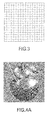
- each voxel is represented by a square when it is flatly drawn as illustrated in FIG. 3 , and a physical value (scalar value or vector value) is disposed at its center portion.
- the geometric model data storage unit 120 stores geometric model data (e.g. tetrahedral element data) inatime series, whichwasgeneratedbyasimulator, during one beat of the heart, in case of the heart.
- the geometric model data includes coordinate values of each vertex of the tetrahedral elements for identifying the shape, element information, physical values on each element, and the like, for example.
- the geometric model data includes the heart muscle data and blood flow data.
- the physical value of the heart muscle is a scalar value or tensor value.
- the scalar value at least one scalar value is defined for each tetrahedral element.
- the tensor value the size or magnitude of either of three diagonal elements is defined for each element or a scalar value that is derived from 9 values of the tensor, such as von Mises stress value, is defined.
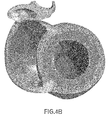
- FIG. 4A illustrates an example of a geometric model of the entire heart
- a boundary line between dark and light portions corresponds to the cross section X in FIG. 2
- FIG. 4B illustrates an example that this cross section is drawn so that a deeper color is drawn when the stress value in the tetrahedral element is greater. It is understood that the stress inside of the heart muscle of the left ventricle, which is illustrated in the right side, is high.
- the geometric model is divided into the tetrahedral elements (in FIG. 5 , triangles because the space is two-dimensional.).
- the geometric model data storage unit 120 also stores data representing the fiber direction of the heart muscle (also called heart muscle fiber data).
- a unit vector representing the fiber direction of the heart muscle is set for each tetrahedral element. For example, when the unit vectors representing the direction of the heart muscle fiber are superimposed in case of the heart, a state as illustrated in FIG. 6 is obtained.
- the unit vector representing the fiber direction of the heart muscle is also called "a unit vector" representing the direction of the inner structure of an object (here, the heart).
- the processing unit 160 has a time-step adjustment unit 161, a disposition processing unit 162, a cross-section generator 163, a voxel-value calculation unit 164 and a drawing processing unit 165.
- the time-step adjustment unit 161 extracts data of the geometric models so as to synchronize the time-step intervals of the voxel data, for example, because the number of time steps of the voxel data in a period of one beat of the heart, for example, is different from the number of time steps of the geometric model.
- the disposition processing unit 162 disposes voxel data and geometric model data in a virtual three-dimensional space, and performs a processing for adjusting both positions of them according to an instruction or the like from the input unit 140. Any existing method can be employed for this processing for adjusting positions. For example, plural control points are disposed for both data, and scaling, parallel movement and/or rotation are performed for former or latter data so as to move corresponding control points to the same position.
- the cross-section generator 163 identifies voxel data within a designated cross section in the voxel data, and tetrahedral element data within the designated cross section in the geometric model data.
- the voxel-value calculation unit 164 calculates a voxel value in a voxel on the designated cross section from the tetrahedral element data in the designated cross section and corresponding heart muscle fiber data.
- the voxel value is a value in a center of one voxel.
- the drawing processing unit 165 generates image data for the designated cross section by using the voxel values calculated by the voxel-value calculation unit 164, and cause the display unit 150 to display the image data.
- the time-step adjustment unit 161 of the processing unit 160 performs a processing for adjusting the time steps of the voxel data and geometric model from the time-step intervals of the voxel data stored in the voxel data storage unit 110 and the time-step intervals of the geometric models stored in the geometric model data storage unit 120 ( FIG. 7 : step S1).
- the data of the geometric models at the same times exist.
- the data of the geometric model at that time is generated.
- the gap between the time of the geometric model and the time of the voxel data is lesser, the geometric model at the time may be extracted as it is without interpolation.
- the voxel data may be extracted so that the time of the voxel data is equal to the time of the geometric model.
- the processing unit 160 sets "0" as time t (step S3). Then, the disposition processing unit 162 disposes the voxel data and geometric model data in the virtual three-dimensional space (step S5), and performs a processing for adjusting the positions (step S7). As described above, because the existing method can be applied, further explanation is omitted.
- the position adjustment may be performed by accepting the user' s instruction from the input unit 140.
- the cross-section generator 163 sets the cross section according to the user' s instruction, which was accepted by the input unit 140, and identifies the voxel data within the set cross section in the voxel data (step S9).
- the voxel-value calculation unit 164 identifies one unprocessed voxel in the set cross section (step S11). For example, a list of voxels relating to the set cross section is generated, and unprocessed voxels are identified according to the list.
- thevoxel-value calculationunit 164 identifies tetrahedral elements whose center of gravity is included in a range of a preset distance d from the center of the voxel identified at the step S11 (step S13).
- tetrahedral elements here, triangles
- T 1 to T 4 tetrahedral elements T 1 to T 4 whose center of gravity is included in the range W of the distance d from the center V1 of one voxel V are identified.
- the center of gravity of the tetrahedral element T 1 is p 1
- the center of gravity of the tetrahedral element T 2 is p 2
- the center of gravity of the tetrahedral element T 3 is p 3
- the center of gravity of the tetrahedral element T 4 is p 4 .
- the voxel-value calculation unit 164 calculates, as a voxel value v c , an average value of results obtained by weighting the physical value with a length obtained when projecting the unit vector representing the fiber direction of the heart muscle to the set cross section for the voxel identified at the step S11 (step S15).
- a voxel value v c an average value of results obtained by weighting the physical value with a length obtained when projecting the unit vector representing the fiber direction of the heart muscle to the set cross section for the voxel identified at the step S11 (step S15).
- the cross section Cs when the cross section Cs is set, its normal vector f is determined.
- a vector Sp on the plane Cs is obtained when projecting the unit vector S onto the plane Cs.
- n the number of tetrahedral elements identified at the step S13.
- T (Si) is a function that returns a length (which is equal to or less than 1) obtained when projecting the unit vector Si set for the i-th tetrahedral element onto the cross section Cs.
- simulation is performed so that cells changes their shapes by one tetrahedral element unit within the heart muscle, and their changes reflect on the final changes of the tetrahedral elements.
- the unit vectors representing the fiber direction of the heart muscle are inputted as the model.
- the output results of the simulation are outputted as the stress tensor in each axis direction of the tetrahedral element, data concerning what stress exists in what direction is obtained.
- the activity state of the heart muscle which is represented by this stress data, can be represented by the aforementioned new voxel value v c on the set cross section.
- the voxel-value calculation unit 164 determines whether or not any unprocessed voxel exists among voxels within the set cross section (step S19). When there is an unprocessed voxel, the processing returns to the step S11 in FIG. 7 through terminalB. On the other hand, thereisnounprocessedvoxel, thedrawingprocessing unit 165 performs a drawing processing (i.e. rendering processing) by using the voxel values calculated at the step S15 (step S21).
- a drawing processing i.e. rendering processing
- the drawing processing unit 165 causes the display unit 150 to display the colors.
- the drawing processing itself is as conventionally known, and its further explanation is omitted.
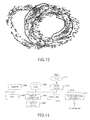
- FIG. 12 For example, instead of the display illustrated in FIG. 2 , an image as illustrated in FIG. 12 is displayed.
- the state of the unit vectors representing the fiber direction of the heart muscle on the aforementioned cross section is as illustrated in FIG. 13 .
- An area surrounded by a line represents an area in which a lot of vectors that are almost parallel with the cross section. Therefore, also in the image as illustrated in FIG. 12 , a dark value appears on pixels at corresponding positions.
- the voxel value represents the stress
- the activity of the heart muscle which is included in the simulation result, is reflected to the pixel values in relation with the cross section, and expressed in the image.
- the processing unit 160 determines whether or not time t reaches its maximum value (for example, a value determined from final data of the voxel data stored in the voxel data storage unit 110) (step S23). When time t has not reached its maximum value, the processing unit 160 increments t by "1" (step S25), and the processing shifts to the step S5 in FIG. 7 through the terminal C. When time t reached its maximum value, the processing ends.
- its maximum value for example, a value determined from final data of the voxel data stored in the voxel data storage unit 110
- FIG. 1 is an example, and does not correspond to the program module configuration.
- the turns of the steps may be exchanged, and plural steps may be executed in parallel.
- the aforementioned display processing apparatus 100 is a computer device as illustrated in FIG. 14 . That is, a memory 2501 (storage device), aCPU2503 (processor), aharddiskdrive (HDD) 2505, adisplaycontroller 2507 connected to a display device 2509, a drive device 2513 for a removable disk 2511, an input unit 2515, and a communication controller 2517 for connection with a network are connected through a bus 2519 as illustrated in FIG.14 .
- An operating system (OS) and an application program for carrying out the foregoing processing in the embodiment, are stored in the HDD 2505, and when executed by the CPU 2503, they are read out from the HDD 2505 to the memory 2501.
- OS operating system
- an application program for carrying out the foregoing processing in the embodiment
- the CPU 2503 controls the display controller 2507, the communication controller 2517, and the drive device 2513, and causes them to perform predetermined operations. Moreover, intermediate processing data is stored in the memory 2501, and if necessary, it is stored in the HDD 2505.
- the application program to realize the aforementioned functions is stored in the computer-readable, non-transitory removable disk 2511 and distributed, and then it is installed into the HDD 2505 from the drive device 2513. It maybe installed into the HDD 2505 via the network such as the Internet and the communication controller 2517.
- the hardware such as the CPU 2503 and the memory 2501, the OS and the application programs systematically cooperate with each other, so that various functions as described above in details are realized.
- the aforementioned calculating may include weighting a physical value in each element in the geometric model, which is included in a second predetermined range of the voxel, according to a length of a second vector obtained when projecting the first vector of the element onto the cross section.
- a greater weight is set for an element whose first vector is almost parallel to the cross section.
- a state of the first vector representing the inner structure of the object can be reflected to the set cross section to be drawn.
- the vector representing the fiber direction of the heart muscle it is possible to emphasize the magnitude of the stress of the heart muscle, for example, for the vector that is parallel to the set cross section.
- the calculating may further include: calculating an average value of weighted physical values, as the voxel value. For example, the physical values of elements of the geometric model, which relate to each voxel, are reflected.
Landscapes
- Engineering & Computer Science (AREA)
- Physics & Mathematics (AREA)
- General Physics & Mathematics (AREA)
- Theoretical Computer Science (AREA)
- Computer Graphics (AREA)
- Computer Hardware Design (AREA)
- General Engineering & Computer Science (AREA)
- Software Systems (AREA)
- Health & Medical Sciences (AREA)
- General Health & Medical Sciences (AREA)
- Medical Informatics (AREA)
- Nuclear Medicine, Radiotherapy & Molecular Imaging (AREA)
- Radiology & Medical Imaging (AREA)
- Quality & Reliability (AREA)
- Computer Vision & Pattern Recognition (AREA)
- Image Generation (AREA)
- Magnetic Resonance Imaging Apparatus (AREA)
- Apparatus For Radiation Diagnosis (AREA)
- Ultra Sonic Daignosis Equipment (AREA)
Abstract
Description
- This invention relates to a display processing program, method and apparatus.
- Recently, various analysis is performed for organs of the human being, especially a heart. More specifically, the blood is ejected toward the entire body by the heart muscle that contracts in response to electrical signals, and the numerical analysis (i.e. simulation) for reproducing this phenomenon of the heart is performed. Then, the behavior of the heart muscle, which is obtained as results of the numerical analysis, is displayed by using a technique of the three-dimensional computer graphics (CG).
- On the other hand, in the medical site, by using medical measurement apparatus such as ultrasonic echo apparatus, Magnetic Resonance Imaging (MRI) apparatus, Computed Tomography (CT) scan apparatus and the like, information of organs such as the cross section of the heart muscle is measured. The information of the cross section of the heart muscle is two-dimensional data, typically.
- Both of them express the behavior of the heart muscle, there are demands to compare the results of both of them. However, because data formats of both of them are different, it is possible to display both of them left and right, however, it is not easy to display a state in which both of them are disposed at appropriate positions so as to superimpose them in accordance with the time course. In other words, it is not easy to superimpose them only by putting the origins of them together and scaling.
- Inaddition, element shapes, by which the space is divided, are different each other. In other words, the medical data is represented by the voxel data, and the shape data used in the simulation is represented by a set of tetrahedral elements. In such a case, it is possible to put the outer shapes of the hearts together and cause one heart to be penetrated by the CG technique. However, because the observation is performed for the voxel data in the conventional medical service, it may be preferable that the distribution of physical values can be observed by displaying the well-known voxel data.
- Non-Patent Document 1: Yoko Eto, et. al., "Automated Mitral Annular Tracking: A Novel Method for Evaluating Mitral Annular Motion Using Two-dimensional Echocardiography", Journal of the American Society of Echocardiography, pp.306-312, Volume 18 Number 4, (2005)
- Therefore, as one aspect, an object of this invention is to provide a technique for enabling to display data of a geometric model as the voxel data.
- According to one aspect of embodiments, a display processing method includes: (A) performing a processing for adjusting positions of voxel data for an object and data of a geometric model for the object; (B) calculating, for each voxel included in a range defined by a cross section among plural voxels that are included in the voxel data, a voxel value of the voxel from physical values in elements of the geometric model, which are included in a predetermined range of the voxel, based on a relation between the cross section and first vectors, wherein a first vector of the first vectors is set for one element of plural elements included in the geometric model, the first vectors represent a direction of an inner structure of the object, and the cross section is set for the voxel data and the geometric model data; and (C) rendering an image by using the voxel value calculated for each voxel.
- Reference will now be made, by way of example, to the accompanying Drawings, in which:
-
FIG. 1 is a functional block diagram of a display processing apparatus relating to an embodiment of this invention; -
FIG. 2 is a diagram depicting an example of an image generated from voxel data; -
FIG. 3 is a diagram to explain the voxel data; -
FIG. 4A is a diagram depicting an example of a geometric model; -
FIG. 4B is a diagram depicting an example of an image that represents stress on a cross section of the geometric model; -
FIG. 5 is a diagram depicting triangular division of the geometric model on a plane; -
FIG. 6 is a diagram depicting an example of vectors that represent fiber directions of a heart muscle; -
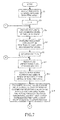
FIG. 7 is a diagram depicting a processing flow relating to this embodiment; -
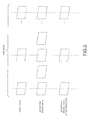
FIG. 8 is a diagram to explain adjustment of a time step; -
FIG. 9 is a diagram depicting an example of tetrahedral elements included in a predetermined distance from a specific voxel; -
FIG. 10 is a diagram depicting a relation between the cross section and vectors that represent the fiber directions of the heart muscle; -
FIG. 11 is a diagram depicting a processing flow relating to this embodiment; -
FIG. 12 is a diagram depicting a display example relating to this embodiment; -
FIG. 13 is a diagram depicting a state of vectors that represent the fiber directions of the heart muscle on the cross section; and -
FIG. 14 is a functional block diagram of a computer. -
FIG. 1 illustrates a functional block diagram of a display processing apparatus relating to an embodiment of the present invention. Thedisplay processing apparatus 100 is connected to ameasurement equipment 200 such as an ultrasonic echo apparatus, MRI apparatus or CT scan apparatus, and is also connected to aninput unit 140 anddisplay unit 150. Moreover, thedisplay processing apparatus 100 has a voxeldata storage unit 110 that stores voxel data received from themeasurement equipment 200, a geometric modeldata storage unit 120 that stores data of the three-dimensional geometric model and the like, adata storage unit 130 that stores data in progress, and aprocessing unit 160 that executes a processing related to this embodiment. - The voxel
data storage unit 110 stores voxel data outputted by themeasurement equipment 200 at plural time steps that are lined up at intervals of a predetermined time, for example. The voxel data represents a set of voxels.FIG. 2 illustrates an example of image data that is generated from the voxel data. The upper right ofFIG. 2 represents a portion of the heart, and when the heart is cut by a cross section X and drawn, an image as illustrated in the lower left ofFIG. 2 is obtained. In an image illustrated in the lower left ofFIG. 2 , a circular portion on the right side represents the heart muscle of the left ventricle. One cube obtained by dividing an object in the three-dimensional grid manner is called "a voxel" so as to correspond to "a pixel" in the two-dimensional image. In other words, each voxel is represented by a square when it is flatly drawn as illustrated inFIG. 3 , and a physical value (scalar value or vector value) is disposed at its center portion. - The geometric model
data storage unit 120 stores geometric model data (e.g. tetrahedral element data) inatime series, whichwasgeneratedbyasimulator, during one beat of the heart, in case of the heart. The geometric model data includes coordinate values of each vertex of the tetrahedral elements for identifying the shape, element information, physical values on each element, and the like, for example. In case of the heart, the geometric model data includes the heart muscle data and blood flow data. - The physical value of the heart muscle is a scalar value or tensor value. In case of the scalar value, at least one scalar value is defined for each tetrahedral element. In case of the tensor value, the size or magnitude of either of three diagonal elements is defined for each element or a scalar value that is derived from 9 values of the tensor, such as von Mises stress value, is defined.
-
FIG. 4A illustrates an example of a geometric model of the entire heart, and inFIG. 4A , a boundary line between dark and light portions corresponds to the cross section X inFIG. 2 .FIG. 4B illustrates an example that this cross section is drawn so that a deeper color is drawn when the stress value in the tetrahedral element is greater. It is understood that the stress inside of the heart muscle of the left ventricle, which is illustrated in the right side, is high. - As schematically illustrated in
FIG. 5 , the geometric model is divided into the tetrahedral elements (inFIG. 5 , triangles because the space is two-dimensional.). - Moreover, the geometric model
data storage unit 120 also stores data representing the fiber direction of the heart muscle (also called heart muscle fiber data). A unit vector representing the fiber direction of the heart muscle is set for each tetrahedral element. For example, when the unit vectors representing the direction of the heart muscle fiber are superimposed in case of the heart, a state as illustrated inFIG. 6 is obtained. The unit vector representing the fiber direction of the heart muscle is also called "a unit vector" representing the direction of the inner structure of an object (here, the heart). - The
processing unit 160 has a time-step adjustment unit 161, adisposition processing unit 162, across-section generator 163, a voxel-value calculation unit 164 and adrawing processing unit 165. - The time-
step adjustment unit 161 extracts data of the geometric models so as to synchronize the time-step intervals of the voxel data, for example, because the number of time steps of the voxel data in a period of one beat of the heart, for example, is different from the number of time steps of the geometric model. - The
disposition processing unit 162 disposes voxel data and geometric model data in a virtual three-dimensional space, and performs a processing for adjusting both positions of them according to an instruction or the like from theinput unit 140. Any existing method can be employed for this processing for adjusting positions. For example, plural control points are disposed for both data, and scaling, parallel movement and/or rotation are performed for former or latter data so as to move corresponding control points to the same position. - Furthermore, in response to an instruction from a user, the
cross-section generator 163 identifies voxel data within a designated cross section in the voxel data, and tetrahedral element data within the designated cross section in the geometric model data. - Moreover, the voxel-
value calculation unit 164 calculates a voxel value in a voxel on the designated cross section from the tetrahedral element data in the designated cross section and corresponding heart muscle fiber data. The voxel value is a value in a center of one voxel. - Moreover, the
drawing processing unit 165 generates image data for the designated cross section by using the voxel values calculated by the voxel-value calculation unit 164, and cause thedisplay unit 150 to display the image data. - Next, processing contents of the
display processing apparatus 100 will be explained by usingFIGs. 7 to 13 . - First, the time-
step adjustment unit 161 of theprocessing unit 160 performs a processing for adjusting the time steps of the voxel data and geometric model from the time-step intervals of the voxel data stored in the voxeldata storage unit 110 and the time-step intervals of the geometric models stored in the geometric model data storage unit 120 (FIG. 7 : step S1). - Because the intervals of the time step of the voxel data are typically longer, data of the geometric model is extracted so that the intervals of the time step of the voxel data are equal to the intervals of the time step of the geometric model, for example. This processing is schematically illustrated in
FIG. 8 . For example, when the voxel data and data of the geometric model are arranged for one heart beat, the geometric models whose number of time steps is greater than the number of time steps of the voxel data are prepared. Then, by extracting the data of the geometric models at the same times (dotted lines in the vertical direction) as those of the voxel data, the extracted geometric models are used as processing targets. In an example ofFIG. 8 , an example is illustrated in which the data of the geometric models at the same times exist. However, by, for example, interpolating the geometric models after and before the time if the data of the geometric models do not exist, the data of the geometric model at that time is generated. However, when the gap between the time of the geometric model and the time of the voxel data is lesser, the geometric model at the time may be extracted as it is without interpolation. Moreover, when the time-step intervals of the voxel data are shorter, the voxel data may be extracted so that the time of the voxel data is equal to the time of the geometric model. - Next, the
processing unit 160 sets "0" as time t (step S3). Then, thedisposition processing unit 162 disposes the voxel data and geometric model data in the virtual three-dimensional space (step S5), and performs a processing for adjusting the positions (step S7). As described above, because the existing method can be applied, further explanation is omitted. The position adjustment may be performed by accepting the user' s instruction from theinput unit 140. - Moreover, the
cross-section generator 163 sets the cross section according to the user' s instruction, which was accepted by theinput unit 140, and identifies the voxel data within the set cross section in the voxel data (step S9). - Then, the voxel-
value calculation unit 164 identifies one unprocessed voxel in the set cross section (step S11). For example, a list of voxels relating to the set cross section is generated, and unprocessed voxels are identified according to the list. - After that, thevoxel-
value calculationunit 164 identifies tetrahedral elements whose center of gravity is included in a range of a preset distance d from the center of the voxel identified at the step S11 (step S13). In an example ofFIG. 9 , tetrahedral elements (here, triangles) T1 to T4 whose center of gravity is included in the range W of the distance d from the center V1 of one voxel V are identified. The center of gravity of the tetrahedral element T1 is p1, the center of gravity of the tetrahedral element T2 is p2, the center of gravity of the tetrahedral element T3 is p3, and the center of gravity of the tetrahedral element T4 is p4. By performing this processing, a list of indices of the tetrahedral elements is generated. Thus, even when a tetrahedral element is larger than one voxel, tetrahedral elements corresponding to the voxel can be identified. - Then, the voxel-
value calculation unit 164 calculates, as a voxel value vc, an average value of results obtained by weighting the physical value with a length obtained when projecting the unit vector representing the fiber direction of the heart muscle to the set cross section for the voxel identified at the step S11 (step S15). As illustrated inFIG. 10 , when the cross section Cs is set, its normal vector f is determined. Then, because the unit vector S representing the fiber direction of the heart muscle is set for each tetrahedral element as described above, a vector Sp on the plane Cs is obtained when projecting the unit vector S onto the plane Cs. - Then, a following calculation is performed at the step S15.

- For example, simulation is performed so that cells changes their shapes by one tetrahedral element unit within the heart muscle, and their changes reflect on the final changes of the tetrahedral elements. At that time, the unit vectors representing the fiber direction of the heart muscle are inputted as the model. For example, when the output results of the simulation are outputted as the stress tensor in each axis direction of the tetrahedral element, data concerning what stress exists in what direction is obtained. The activity state of the heart muscle, which is represented by this stress data, can be represented by the aforementioned new voxel value vc on the set cross section.
- Shifting to a processing illustrated in
FIG. 11 through terminal A, the voxel-value calculation unit 164 determines whether or not any unprocessed voxel exists among voxels within the set cross section (step S19). When there is an unprocessed voxel, the processing returns to the step S11 inFIG. 7 through terminalB. On the other hand, thereisnounprocessedvoxel,thedrawingprocessing unit 165 performs a drawing processing (i.e. rendering processing) by using the voxel values calculated at the step S15 (step S21). At that time, after converting each of the calculated voxel values to a color according to a preset color map, thedrawing processing unit 165 causes thedisplay unit 150 to display the colors. The drawing processing itself is as conventionally known, and its further explanation is omitted. - For example, instead of the display illustrated in
FIG. 2 , an image as illustrated inFIG. 12 is displayed. The state of the unit vectors representing the fiber direction of the heart muscle on the aforementioned cross section is as illustrated inFIG. 13 . An area surrounded by a line represents an area in which a lot of vectors that are almost parallel with the cross section. Therefore, also in the image as illustrated inFIG. 12 , a dark value appears on pixels at corresponding positions. When the voxel value represents the stress, the activity of the heart muscle, which is included in the simulation result, is reflected to the pixel values in relation with the cross section, and expressed in the image. - Then, the
processing unit 160 determines whether or not time t reaches its maximum value (for example, a value determined from final data of the voxel data stored in the voxel data storage unit 110) (step S23). When time t has not reached its maximum value, theprocessing unit 160 increments t by "1" (step S25), and the processing shifts to the step S5 inFIG. 7 through the terminal C. When time t reached its maximum value, the processing ends. - By carrying out the aforementioned processing, it is possible to display the simulation result as the voxel data.
- Although the embodiments of this invention were explained, this invention is not limited to those. The functional block diagram in
FIG. 1 is an example, and does not correspond to the program module configuration. As for the processing flow, as long as the processing result does not change, the turns of the steps may be exchanged, and plural steps may be executed in parallel. - Furthermore, an example of the heart was explained above, however, other object such as organs other than the heart may be processed as described above. Moreover, in the aforementioned example, for each time t, the cross section is reset, however, the same cross section may be used according to the initial setting after t = 1. As for the processing for adjusting the positions, the position adjustment is performed according to the instruction of the user initially, however, it is possible to omit the user' s instruction by performing the same processing for adjusting the position after t = 1.
- Moreover, an example was explained in which the shape of the element in the geometric model data is tetrahedral, however, other shapes may be employed.
- In addition, the aforementioned
display processing apparatus 100 is a computer device as illustrated inFIG. 14 . That is, a memory 2501 (storage device), aCPU2503 (processor), aharddiskdrive (HDD) 2505, adisplaycontroller 2507 connected to adisplay device 2509, adrive device 2513 for aremovable disk 2511, aninput unit 2515, and acommunication controller 2517 for connection with a network are connected through abus 2519 as illustrated inFIG.14 . An operating system (OS) and an application program for carrying out the foregoing processing in the embodiment, are stored in theHDD 2505, and when executed by theCPU 2503, they are read out from theHDD 2505 to thememory 2501. As the need arises, theCPU 2503 controls thedisplay controller 2507, thecommunication controller 2517, and thedrive device 2513, and causes them to perform predetermined operations. Moreover, intermediate processing data is stored in thememory 2501, and if necessary, it is stored in theHDD 2505. In this embodiment of this technique, the application program to realize the aforementioned functions is stored in the computer-readable, non-transitoryremovable disk 2511 and distributed, and then it is installed into theHDD 2505 from thedrive device 2513. It maybe installed into theHDD 2505 via the network such as the Internet and thecommunication controller 2517. In the computer as stated above, the hardware such as theCPU 2503 and thememory 2501, the OS and the application programs systematically cooperate with each other, so that various functions as described above in details are realized. - The aforementioned embodiments are outlined as follows:
- A display processing method according to the embodiment includes: (A) performing a processing for adjusting positions of voxel data for an object and data of a geometric model for the object; (B) calculating, for each voxel included in a range defined by a cross section among plural voxels that are included in the voxel data, a voxel value of the voxel from physical values in elements of the geometric model, which are included in a predetermined range of the voxel, based on a relation between the cross section and first vectors, wherein a first vector of the first vectors is set for one element of plural elements included in the geometric model, the first vectors represent a direction of an inner structure of the object, and the cross section is set for the voxel data and the geometric model data; and (C) rendering an image by using the voxel value calculated for each voxel.
- By doing so, it is possible to draw data of the geometric model, as the voxel data, according to the relation between the cross section and first vectors that represent the inner structure of the object.
- Moreover, the aforementioned calculating may include weighting a physical value in each element in the geometric model, which is included in a second predetermined range of the voxel, according to a length of a second vector obtained when projecting the first vector of the element onto the cross section. Thus, a greater weight is set for an element whose first vector is almost parallel to the cross section. In other words, a state of the first vector representing the inner structure of the object can be reflected to the set cross section to be drawn. For example, in case of the vector representing the fiber direction of the heart muscle, it is possible to emphasize the magnitude of the stress of the heart muscle, for example, for the vector that is parallel to the set cross section.
- Furthermore, the calculating may further include: calculating an average value of weighted physical values, as the voxel value. For example, the physical values of elements of the geometric model, which relate to each voxel, are reflected.
- Incidentally, it is possible to create a program causing a computer to execute the aforementioned processing, and such a program is stored in a computer readable storage medium or storage device such as a flexible disk, CD-ROM, DVD-ROM, magneto-optic disk, a semiconductor memory, and hard disk. In addition, the intermediate processing result is temporarily stored in a storage device such as a main memory or the like.
- All examples and conditional language recited herein are intended for pedagogical purposes to aid the reader in understanding the invention and the concepts contributed by the inventor to furthering the art, and are to be construed as being without limitation to such specifically recited examples and conditions, nor does the organization of such examples in the specification relate to a showing of the superiority and inferiority of the invention. Although the embodiments of the present inventions have been described in detail, it should be understood that the various changes, substitutions, and alterations could be made hereto without departing from the spirit and scope of the invention.
Claims (5)
- A display processing method, comprising:performing a processing for adjusting positions of voxel data for an object and data of a geometric model for the object;calculating, for each voxel included in a range defined by a cross section among a plurality of voxels that are included in the voxel data, a voxel value of the voxel from physical values in elements of the geometric model, which are included in a predetermined range of the voxel, based on a relation between the cross section and first vectors, wherein a first vector of the first vectors is set for one element of a plurality of elements included in the geometric model, the first vectors represent a direction of an inner structure of the object, and the cross section is set for the voxel data and the geometric model data; andrendering an image by using the voxel value calculated for each voxel.
- The display processing method as set forth in claim 1, wherein the calculating comprises:weighting a physical value in each element in the geometric model, which is included in a second predetermined range of the voxel, according to a length of a second vector obtained when projecting the first vector of the element onto the cross section.
- The display processing method as set forth in claim 2, wherein the calculating further comprises:calculating an average value of weighted physical values, as the voxel value.
- A display processing apparatus, comprising:a memory; anda processor configured to execute a process, comprising:performing a processing for adjusting positions of voxel data for an object and data of a geometric model for the object;calculating, for each voxel included in a range defined by a cross section among a plurality of voxels that are included in the voxel data, a voxel value of the voxel from physical values in elements of the geometric model, which are included in a predetermined range of the voxel, based on a relation between the cross section and first vectors, wherein a first vector of the first vectors is set for one element of a plurality of elements included in the geometric model, the first vectors represent a direction of an inner structure of the object, and the cross section is set for the voxel data and the geometric model data; andrendering an image by using the voxel value calculated for each voxel.
- A program for causing a computer to execute the display processing method as set forth in any one of claims 1 to 3.
Applications Claiming Priority (1)
| Application Number | Priority Date | Filing Date | Title |
|---|---|---|---|
| JP2013085277A JP6032610B2 (en) | 2013-04-15 | 2013-04-15 | Display processing program, display processing method, and display processing apparatus |
Publications (3)
| Publication Number | Publication Date |
|---|---|
| EP2793192A2 true EP2793192A2 (en) | 2014-10-22 |
| EP2793192A3 EP2793192A3 (en) | 2015-10-07 |
| EP2793192B1 EP2793192B1 (en) | 2016-11-23 |
Family
ID=50771397
Family Applications (1)
| Application Number | Title | Priority Date | Filing Date |
|---|---|---|---|
| EP14164202.5A Not-in-force EP2793192B1 (en) | 2013-04-15 | 2014-04-10 | Display processing method and apparatus |
Country Status (3)
| Country | Link |
|---|---|
| US (1) | US9519965B2 (en) |
| EP (1) | EP2793192B1 (en) |
| JP (1) | JP6032610B2 (en) |
Families Citing this family (3)
| Publication number | Priority date | Publication date | Assignee | Title |
|---|---|---|---|---|
| US10950338B2 (en) * | 2007-04-20 | 2021-03-16 | Robert Edwin Douglas | Method and apparatus for generating an artificial intelligence 3D dataset and performing interactive manipulation and rendering of the dataset |
| US11295537B1 (en) * | 2018-02-23 | 2022-04-05 | Tipping Point Medical Images, Llc | Method and apparatus for inserting virtual contrast into CT and MRI examinations |
| JP7401225B2 (en) * | 2019-08-29 | 2023-12-19 | 株式会社明治 | Swallowing simulation device and swallowing simulation method |
Family Cites Families (18)
| Publication number | Priority date | Publication date | Assignee | Title |
|---|---|---|---|---|
| US5038302A (en) | 1988-07-26 | 1991-08-06 | The Research Foundation Of State University Of New York | Method of converting continuous three-dimensional geometrical representations into discrete three-dimensional voxel-based representations within a three-dimensional voxel-based system |
| JPH0663025A (en) * | 1992-08-21 | 1994-03-08 | Nippon Koden Corp | Simulator of electric phenomenon of heart |
| JP2003210456A (en) * | 2002-01-21 | 2003-07-29 | Toshiba Corp | Processing device for time-series images |
| CA2555201A1 (en) * | 2004-02-09 | 2005-08-18 | Institut De Cardiologie De Montreal | Computation of a geometric parameter of a cardiac chamber from a cardiac tomography data set |
| US7822246B2 (en) | 2004-12-20 | 2010-10-26 | Koninklijke Philips Electronics N.V. | Method, a system and a computer program for integration of medical diagnostic information and a geometric model of a movable body |
| US8040345B2 (en) | 2006-11-30 | 2011-10-18 | Sensable Technologies, Inc. | Systems for hybrid geometric/volumetric representation of 3D objects |
| JP4709177B2 (en) * | 2007-04-12 | 2011-06-22 | 富士フイルム株式会社 | Three-dimensional image processing apparatus and method, and program |
| JP5173303B2 (en) * | 2007-07-27 | 2013-04-03 | 株式会社東芝 | Medical image processing apparatus and medical image diagnostic apparatus |
| JP5599709B2 (en) * | 2007-09-03 | 2014-10-01 | コーニンクレッカ フィリップス エヌ ヴェ | Visualization of voxel data |
| EP2415401A4 (en) * | 2009-03-31 | 2017-04-19 | Hitachi, Ltd. | Medical image diagnosis device and volume calculating method |
| JP5462598B2 (en) * | 2009-11-18 | 2014-04-02 | 日立アロカメディカル株式会社 | Ultrasound diagnostic system |
| JP2011161220A (en) * | 2010-01-14 | 2011-08-25 | Toshiba Corp | Image processing apparatus, x-ray computed tomography apparatus, and image processing program |
| JP2012061019A (en) * | 2010-09-14 | 2012-03-29 | Fujifilm Corp | Image processing apparatus, image processing method, and image processing program |
| JP4709937B2 (en) * | 2010-10-01 | 2011-06-29 | 株式会社東芝 | Ultrasonic diagnostic apparatus and image processing apparatus |
| EP2646979B1 (en) * | 2010-12-02 | 2015-08-26 | Koninklijke Philips N.V. | Image registration apparatus |
| US8922547B2 (en) * | 2010-12-22 | 2014-12-30 | Electronics And Telecommunications Research Institute | 3D model shape transformation method and apparatus |
| US8907944B2 (en) * | 2011-06-28 | 2014-12-09 | General Electric Company | Method and system for navigating, segmenting, and extracting a three-dimensional image |
| JP2013040829A (en) * | 2011-08-12 | 2013-02-28 | Tokyo Metropolitan Univ | Volume data processor and method |
-
2013
- 2013-04-15 JP JP2013085277A patent/JP6032610B2/en not_active Expired - Fee Related
-
2014
- 2014-04-07 US US14/246,434 patent/US9519965B2/en not_active Expired - Fee Related
- 2014-04-10 EP EP14164202.5A patent/EP2793192B1/en not_active Not-in-force
Non-Patent Citations (1)
| Title |
|---|
| YOKO ETO: "Automated Mitral Annular Tracking: A Novel Method for Evaluating Mitral Annular Motion Using Two-dimensional Echocardiography", JOURNAL OF THE AMERICAN SOCIETY OF ECHOCARDIOGRAPHY, vol. 18, no. 4, 2005, pages 306 - 312, XP005217830, DOI: doi:10.1016/j.echo.2004.11.001 |
Also Published As
| Publication number | Publication date |
|---|---|
| JP6032610B2 (en) | 2016-11-30 |
| US20140306960A1 (en) | 2014-10-16 |
| US9519965B2 (en) | 2016-12-13 |
| EP2793192B1 (en) | 2016-11-23 |
| JP2014206931A (en) | 2014-10-30 |
| EP2793192A3 (en) | 2015-10-07 |
Similar Documents
| Publication | Publication Date | Title |
|---|---|---|
| US9141763B2 (en) | Method and system for patient-specific computational modeling and simulation for coupled hemodynamic analysis of cerebral vessels | |
| Duan et al. | Volume preserved mass–spring model with novel constraints for soft tissue deformation | |
| CN105938628B (en) | The direct calculating of biological marker from image | |
| US11468570B2 (en) | Method and system for acquiring status of strain and stress of a vessel wall | |
| EP3279865B2 (en) | Method, device and system for simulating shadow images | |
| CN114297957B (en) | Method and device for obtaining cardiac indicators, and computer-readable storage medium | |
| US20190362548A1 (en) | Apparatus and method for creating biological model | |
| Hogea et al. | Modeling glioma growth and mass effect in 3D MR images of the brain | |
| EP2793192B1 (en) | Display processing method and apparatus | |
| US20150131914A1 (en) | Shape data generation method and apparatus | |
| JP2018508873A (en) | Finite element modeling of anatomical structures | |
| EP2960870B1 (en) | A visualization method for a human skeleton from a medical scan | |
| JP4337987B2 (en) | Information processing apparatus and program | |
| EP2541501A2 (en) | Shape data generation method and apparatus | |
| US20140032180A1 (en) | Method and apparatus for computing deformation of an object | |
| JP7763539B2 (en) | Information processing device, information processing method, and recording medium | |
| RU2538327C2 (en) | Anatomy-defined automated curved planar reformation (cpr) generation | |
| WO2023126241A1 (en) | Device, system and method for segmentation of images | |
| US9324187B2 (en) | Visualization apparatus and method | |
| CA2617227A1 (en) | Deformable model for segmenting patient contours versus support structures in medical images | |
| US9489589B2 (en) | Information processing apparatus and control method thereof | |
| US20240135536A1 (en) | Image processing device, image processing method, and program | |
| Hong et al. | An implicit skeleton-based method for the geometry reconstruction of vasculatures | |
| US12288328B2 (en) | Blood flow field estimation apparatus, learning apparatus, blood flow field estimation method, and program | |
| CN112381823B (en) | Extraction method for geometric features of image and related product |
Legal Events
| Date | Code | Title | Description |
|---|---|---|---|
| PUAI | Public reference made under article 153(3) epc to a published international application that has entered the european phase |
Free format text: ORIGINAL CODE: 0009012 |
|
| 17P | Request for examination filed |
Effective date: 20140410 |
|
| AK | Designated contracting states |
Kind code of ref document: A2 Designated state(s): AL AT BE BG CH CY CZ DE DK EE ES FI FR GB GR HR HU IE IS IT LI LT LU LV MC MK MT NL NO PL PT RO RS SE SI SK SM TR |
|
| AX | Request for extension of the european patent |
Extension state: BA ME |
|
| REG | Reference to a national code |
Ref country code: DE Ref legal event code: R079 Ref document number: 602014004981 Country of ref document: DE Free format text: PREVIOUS MAIN CLASS: G06T0015000000 Ipc: G06T0015080000 |
|
| PUAL | Search report despatched |
Free format text: ORIGINAL CODE: 0009013 |
|
| AK | Designated contracting states |
Kind code of ref document: A3 Designated state(s): AL AT BE BG CH CY CZ DE DK EE ES FI FR GB GR HR HU IE IS IT LI LT LU LV MC MK MT NL NO PL PT RO RS SE SI SK SM TR |
|
| AX | Request for extension of the european patent |
Extension state: BA ME |
|
| RIC1 | Information provided on ipc code assigned before grant |
Ipc: G06T 7/00 20060101ALI20150903BHEP Ipc: A61B 5/00 20060101ALI20150903BHEP Ipc: G06T 15/08 20110101AFI20150903BHEP |
|
| R17P | Request for examination filed (corrected) |
Effective date: 20151204 |
|
| RBV | Designated contracting states (corrected) |
Designated state(s): AL AT BE BG CH CY CZ DE DK EE ES FI FR GB GR HR HU IE IS IT LI LT LU LV MC MK MT NL NO PL PT RO RS SE SI SK SM TR |
|
| GRAP | Despatch of communication of intention to grant a patent |
Free format text: ORIGINAL CODE: EPIDOSNIGR1 |
|
| INTG | Intention to grant announced |
Effective date: 20160704 |
|
| GRAS | Grant fee paid |
Free format text: ORIGINAL CODE: EPIDOSNIGR3 |
|
| GRAA | (expected) grant |
Free format text: ORIGINAL CODE: 0009210 |
|
| AK | Designated contracting states |
Kind code of ref document: B1 Designated state(s): AL AT BE BG CH CY CZ DE DK EE ES FI FR GB GR HR HU IE IS IT LI LT LU LV MC MK MT NL NO PL PT RO RS SE SI SK SM TR |
|
| REG | Reference to a national code |
Ref country code: GB Ref legal event code: FG4D |
|
| REG | Reference to a national code |
Ref country code: CH Ref legal event code: EP |
|
| REG | Reference to a national code |
Ref country code: IE Ref legal event code: FG4D |
|
| REG | Reference to a national code |
Ref country code: AT Ref legal event code: REF Ref document number: 848521 Country of ref document: AT Kind code of ref document: T Effective date: 20161215 |
|
| REG | Reference to a national code |
Ref country code: DE Ref legal event code: R096 Ref document number: 602014004981 Country of ref document: DE |
|
| PG25 | Lapsed in a contracting state [announced via postgrant information from national office to epo] |
Ref country code: LV Free format text: LAPSE BECAUSE OF FAILURE TO SUBMIT A TRANSLATION OF THE DESCRIPTION OR TO PAY THE FEE WITHIN THE PRESCRIBED TIME-LIMIT Effective date: 20161123 |
|
| REG | Reference to a national code |
Ref country code: FR Ref legal event code: PLFP Year of fee payment: 4 |
|
| REG | Reference to a national code |
Ref country code: LT Ref legal event code: MG4D |
|
| REG | Reference to a national code |
Ref country code: NL Ref legal event code: MP Effective date: 20161123 |
|
| REG | Reference to a national code |
Ref country code: AT Ref legal event code: MK05 Ref document number: 848521 Country of ref document: AT Kind code of ref document: T Effective date: 20161123 |
|
| PG25 | Lapsed in a contracting state [announced via postgrant information from national office to epo] |
Ref country code: GR Free format text: LAPSE BECAUSE OF FAILURE TO SUBMIT A TRANSLATION OF THE DESCRIPTION OR TO PAY THE FEE WITHIN THE PRESCRIBED TIME-LIMIT Effective date: 20170224 Ref country code: LT Free format text: LAPSE BECAUSE OF FAILURE TO SUBMIT A TRANSLATION OF THE DESCRIPTION OR TO PAY THE FEE WITHIN THE PRESCRIBED TIME-LIMIT Effective date: 20161123 Ref country code: SE Free format text: LAPSE BECAUSE OF FAILURE TO SUBMIT A TRANSLATION OF THE DESCRIPTION OR TO PAY THE FEE WITHIN THE PRESCRIBED TIME-LIMIT Effective date: 20161123 Ref country code: NO Free format text: LAPSE BECAUSE OF FAILURE TO SUBMIT A TRANSLATION OF THE DESCRIPTION OR TO PAY THE FEE WITHIN THE PRESCRIBED TIME-LIMIT Effective date: 20170223 Ref country code: NL Free format text: LAPSE BECAUSE OF FAILURE TO SUBMIT A TRANSLATION OF THE DESCRIPTION OR TO PAY THE FEE WITHIN THE PRESCRIBED TIME-LIMIT Effective date: 20161123 |
|
| PG25 | Lapsed in a contracting state [announced via postgrant information from national office to epo] |
Ref country code: RS Free format text: LAPSE BECAUSE OF FAILURE TO SUBMIT A TRANSLATION OF THE DESCRIPTION OR TO PAY THE FEE WITHIN THE PRESCRIBED TIME-LIMIT Effective date: 20161123 Ref country code: ES Free format text: LAPSE BECAUSE OF FAILURE TO SUBMIT A TRANSLATION OF THE DESCRIPTION OR TO PAY THE FEE WITHIN THE PRESCRIBED TIME-LIMIT Effective date: 20161123 Ref country code: PT Free format text: LAPSE BECAUSE OF FAILURE TO SUBMIT A TRANSLATION OF THE DESCRIPTION OR TO PAY THE FEE WITHIN THE PRESCRIBED TIME-LIMIT Effective date: 20170323 Ref country code: HR Free format text: LAPSE BECAUSE OF FAILURE TO SUBMIT A TRANSLATION OF THE DESCRIPTION OR TO PAY THE FEE WITHIN THE PRESCRIBED TIME-LIMIT Effective date: 20161123 Ref country code: AT Free format text: LAPSE BECAUSE OF FAILURE TO SUBMIT A TRANSLATION OF THE DESCRIPTION OR TO PAY THE FEE WITHIN THE PRESCRIBED TIME-LIMIT Effective date: 20161123 Ref country code: PL Free format text: LAPSE BECAUSE OF FAILURE TO SUBMIT A TRANSLATION OF THE DESCRIPTION OR TO PAY THE FEE WITHIN THE PRESCRIBED TIME-LIMIT Effective date: 20161123 Ref country code: FI Free format text: LAPSE BECAUSE OF FAILURE TO SUBMIT A TRANSLATION OF THE DESCRIPTION OR TO PAY THE FEE WITHIN THE PRESCRIBED TIME-LIMIT Effective date: 20161123 |
|
| PG25 | Lapsed in a contracting state [announced via postgrant information from national office to epo] |
Ref country code: DK Free format text: LAPSE BECAUSE OF FAILURE TO SUBMIT A TRANSLATION OF THE DESCRIPTION OR TO PAY THE FEE WITHIN THE PRESCRIBED TIME-LIMIT Effective date: 20161123 Ref country code: EE Free format text: LAPSE BECAUSE OF FAILURE TO SUBMIT A TRANSLATION OF THE DESCRIPTION OR TO PAY THE FEE WITHIN THE PRESCRIBED TIME-LIMIT Effective date: 20161123 Ref country code: SK Free format text: LAPSE BECAUSE OF FAILURE TO SUBMIT A TRANSLATION OF THE DESCRIPTION OR TO PAY THE FEE WITHIN THE PRESCRIBED TIME-LIMIT Effective date: 20161123 Ref country code: CZ Free format text: LAPSE BECAUSE OF FAILURE TO SUBMIT A TRANSLATION OF THE DESCRIPTION OR TO PAY THE FEE WITHIN THE PRESCRIBED TIME-LIMIT Effective date: 20161123 Ref country code: RO Free format text: LAPSE BECAUSE OF FAILURE TO SUBMIT A TRANSLATION OF THE DESCRIPTION OR TO PAY THE FEE WITHIN THE PRESCRIBED TIME-LIMIT Effective date: 20161123 |
|
| REG | Reference to a national code |
Ref country code: DE Ref legal event code: R097 Ref document number: 602014004981 Country of ref document: DE |
|
| PG25 | Lapsed in a contracting state [announced via postgrant information from national office to epo] |
Ref country code: SM Free format text: LAPSE BECAUSE OF FAILURE TO SUBMIT A TRANSLATION OF THE DESCRIPTION OR TO PAY THE FEE WITHIN THE PRESCRIBED TIME-LIMIT Effective date: 20161123 Ref country code: BE Free format text: LAPSE BECAUSE OF FAILURE TO SUBMIT A TRANSLATION OF THE DESCRIPTION OR TO PAY THE FEE WITHIN THE PRESCRIBED TIME-LIMIT Effective date: 20161123 Ref country code: BG Free format text: LAPSE BECAUSE OF FAILURE TO SUBMIT A TRANSLATION OF THE DESCRIPTION OR TO PAY THE FEE WITHIN THE PRESCRIBED TIME-LIMIT Effective date: 20170223 Ref country code: IT Free format text: LAPSE BECAUSE OF FAILURE TO SUBMIT A TRANSLATION OF THE DESCRIPTION OR TO PAY THE FEE WITHIN THE PRESCRIBED TIME-LIMIT Effective date: 20161123 |
|
| PLBE | No opposition filed within time limit |
Free format text: ORIGINAL CODE: 0009261 |
|
| STAA | Information on the status of an ep patent application or granted ep patent |
Free format text: STATUS: NO OPPOSITION FILED WITHIN TIME LIMIT |
|
| 26N | No opposition filed |
Effective date: 20170824 |
|
| PG25 | Lapsed in a contracting state [announced via postgrant information from national office to epo] |
Ref country code: SI Free format text: LAPSE BECAUSE OF FAILURE TO SUBMIT A TRANSLATION OF THE DESCRIPTION OR TO PAY THE FEE WITHIN THE PRESCRIBED TIME-LIMIT Effective date: 20161123 |
|
| REG | Reference to a national code |
Ref country code: CH Ref legal event code: PL |
|
| REG | Reference to a national code |
Ref country code: IE Ref legal event code: MM4A |
|
| PG25 | Lapsed in a contracting state [announced via postgrant information from national office to epo] |
Ref country code: MC Free format text: LAPSE BECAUSE OF FAILURE TO SUBMIT A TRANSLATION OF THE DESCRIPTION OR TO PAY THE FEE WITHIN THE PRESCRIBED TIME-LIMIT Effective date: 20161123 |
|
| PG25 | Lapsed in a contracting state [announced via postgrant information from national office to epo] |
Ref country code: CH Free format text: LAPSE BECAUSE OF NON-PAYMENT OF DUE FEES Effective date: 20170430 Ref country code: LU Free format text: LAPSE BECAUSE OF NON-PAYMENT OF DUE FEES Effective date: 20170410 Ref country code: LI Free format text: LAPSE BECAUSE OF NON-PAYMENT OF DUE FEES Effective date: 20170430 |
|
| REG | Reference to a national code |
Ref country code: FR Ref legal event code: PLFP Year of fee payment: 5 |
|
| PG25 | Lapsed in a contracting state [announced via postgrant information from national office to epo] |
Ref country code: IE Free format text: LAPSE BECAUSE OF NON-PAYMENT OF DUE FEES Effective date: 20170410 |
|
| PG25 | Lapsed in a contracting state [announced via postgrant information from national office to epo] |
Ref country code: MT Free format text: LAPSE BECAUSE OF NON-PAYMENT OF DUE FEES Effective date: 20170410 |
|
| PG25 | Lapsed in a contracting state [announced via postgrant information from national office to epo] |
Ref country code: HU Free format text: LAPSE BECAUSE OF FAILURE TO SUBMIT A TRANSLATION OF THE DESCRIPTION OR TO PAY THE FEE WITHIN THE PRESCRIBED TIME-LIMIT; INVALID AB INITIO Effective date: 20140410 |
|
| PG25 | Lapsed in a contracting state [announced via postgrant information from national office to epo] |
Ref country code: CY Free format text: LAPSE BECAUSE OF FAILURE TO SUBMIT A TRANSLATION OF THE DESCRIPTION OR TO PAY THE FEE WITHIN THE PRESCRIBED TIME-LIMIT Effective date: 20161123 |
|
| PG25 | Lapsed in a contracting state [announced via postgrant information from national office to epo] |
Ref country code: MK Free format text: LAPSE BECAUSE OF FAILURE TO SUBMIT A TRANSLATION OF THE DESCRIPTION OR TO PAY THE FEE WITHIN THE PRESCRIBED TIME-LIMIT Effective date: 20161123 |
|
| PG25 | Lapsed in a contracting state [announced via postgrant information from national office to epo] |
Ref country code: TR Free format text: LAPSE BECAUSE OF FAILURE TO SUBMIT A TRANSLATION OF THE DESCRIPTION OR TO PAY THE FEE WITHIN THE PRESCRIBED TIME-LIMIT Effective date: 20161123 |
|
| PG25 | Lapsed in a contracting state [announced via postgrant information from national office to epo] |
Ref country code: AL Free format text: LAPSE BECAUSE OF FAILURE TO SUBMIT A TRANSLATION OF THE DESCRIPTION OR TO PAY THE FEE WITHIN THE PRESCRIBED TIME-LIMIT Effective date: 20161123 Ref country code: IS Free format text: LAPSE BECAUSE OF FAILURE TO SUBMIT A TRANSLATION OF THE DESCRIPTION OR TO PAY THE FEE WITHIN THE PRESCRIBED TIME-LIMIT Effective date: 20170323 |
|
| PGFP | Annual fee paid to national office [announced via postgrant information from national office to epo] |
Ref country code: FR Payment date: 20230309 Year of fee payment: 10 |
|
| PGFP | Annual fee paid to national office [announced via postgrant information from national office to epo] |
Ref country code: GB Payment date: 20230302 Year of fee payment: 10 |
|
| PGFP | Annual fee paid to national office [announced via postgrant information from national office to epo] |
Ref country code: DE Payment date: 20230228 Year of fee payment: 10 |
|
| REG | Reference to a national code |
Ref country code: DE Ref legal event code: R119 Ref document number: 602014004981 Country of ref document: DE |
|
| GBPC | Gb: european patent ceased through non-payment of renewal fee |
Effective date: 20240410 |
|
| PG25 | Lapsed in a contracting state [announced via postgrant information from national office to epo] |
Ref country code: DE Free format text: LAPSE BECAUSE OF NON-PAYMENT OF DUE FEES Effective date: 20241105 |
|
| PG25 | Lapsed in a contracting state [announced via postgrant information from national office to epo] |
Ref country code: GB Free format text: LAPSE BECAUSE OF NON-PAYMENT OF DUE FEES Effective date: 20240410 |
|
| PG25 | Lapsed in a contracting state [announced via postgrant information from national office to epo] |
Ref country code: FR Free format text: LAPSE BECAUSE OF NON-PAYMENT OF DUE FEES Effective date: 20240430 |
|
| PG25 | Lapsed in a contracting state [announced via postgrant information from national office to epo] |
Ref country code: GB Free format text: LAPSE BECAUSE OF NON-PAYMENT OF DUE FEES Effective date: 20240410 Ref country code: FR Free format text: LAPSE BECAUSE OF NON-PAYMENT OF DUE FEES Effective date: 20240430 Ref country code: DE Free format text: LAPSE BECAUSE OF NON-PAYMENT OF DUE FEES Effective date: 20241105 |