EP2793099A1 - Driver self-tuning method using electro-hydraulic actuator system - Google Patents
Driver self-tuning method using electro-hydraulic actuator system Download PDFInfo
- Publication number
- EP2793099A1 EP2793099A1 EP11877421.5A EP11877421A EP2793099A1 EP 2793099 A1 EP2793099 A1 EP 2793099A1 EP 11877421 A EP11877421 A EP 11877421A EP 2793099 A1 EP2793099 A1 EP 2793099A1
- Authority
- EP
- European Patent Office
- Prior art keywords
- actuator
- maximum speed
- user
- operator
- hmi
- Prior art date
- Legal status (The legal status is an assumption and is not a legal conclusion. Google has not performed a legal analysis and makes no representation as to the accuracy of the status listed.)
- Withdrawn
Links
- 238000000034 method Methods 0.000 title claims abstract description 22
- 238000013507 mapping Methods 0.000 claims abstract description 23
- 230000001133 acceleration Effects 0.000 claims description 36
- 238000003825 pressing Methods 0.000 claims description 10
- 230000003247 decreasing effect Effects 0.000 claims description 8
- 230000007423 decrease Effects 0.000 abstract 1
- 238000010276 construction Methods 0.000 description 1
- 230000000694 effects Effects 0.000 description 1
- 238000012986 modification Methods 0.000 description 1
- 230000004048 modification Effects 0.000 description 1
Images


Classifications
-
- F—MECHANICAL ENGINEERING; LIGHTING; HEATING; WEAPONS; BLASTING
- F15—FLUID-PRESSURE ACTUATORS; HYDRAULICS OR PNEUMATICS IN GENERAL
- F15B—SYSTEMS ACTING BY MEANS OF FLUIDS IN GENERAL; FLUID-PRESSURE ACTUATORS, e.g. SERVOMOTORS; DETAILS OF FLUID-PRESSURE SYSTEMS, NOT OTHERWISE PROVIDED FOR
- F15B21/00—Common features of fluid actuator systems; Fluid-pressure actuator systems or details thereof, not covered by any other group of this subclass
- F15B21/08—Servomotor systems incorporating electrically operated control means
- F15B21/082—Servomotor systems incorporating electrically operated control means with different modes
-
- F—MECHANICAL ENGINEERING; LIGHTING; HEATING; WEAPONS; BLASTING
- F15—FLUID-PRESSURE ACTUATORS; HYDRAULICS OR PNEUMATICS IN GENERAL
- F15B—SYSTEMS ACTING BY MEANS OF FLUIDS IN GENERAL; FLUID-PRESSURE ACTUATORS, e.g. SERVOMOTORS; DETAILS OF FLUID-PRESSURE SYSTEMS, NOT OTHERWISE PROVIDED FOR
- F15B19/00—Testing; Calibrating; Fault detection or monitoring; Simulation or modelling of fluid-pressure systems or apparatus not otherwise provided for
- F15B19/002—Calibrating
-
- E—FIXED CONSTRUCTIONS
- E02—HYDRAULIC ENGINEERING; FOUNDATIONS; SOIL SHIFTING
- E02F—DREDGING; SOIL-SHIFTING
- E02F9/00—Component parts of dredgers or soil-shifting machines, not restricted to one of the kinds covered by groups E02F3/00 - E02F7/00
- E02F9/20—Drives; Control devices
- E02F9/2058—Electric or electro-mechanical or mechanical control devices of vehicle sub-units
- E02F9/2095—Control of electric, electro-mechanical or mechanical equipment not otherwise provided for, e.g. ventilators, electro-driven fans
-
- E—FIXED CONSTRUCTIONS
- E02—HYDRAULIC ENGINEERING; FOUNDATIONS; SOIL SHIFTING
- E02F—DREDGING; SOIL-SHIFTING
- E02F9/00—Component parts of dredgers or soil-shifting machines, not restricted to one of the kinds covered by groups E02F3/00 - E02F7/00
- E02F9/20—Drives; Control devices
- E02F9/22—Hydraulic or pneumatic drives
- E02F9/2203—Arrangements for controlling the attitude of actuators, e.g. speed, floating function
-
- E—FIXED CONSTRUCTIONS
- E02—HYDRAULIC ENGINEERING; FOUNDATIONS; SOIL SHIFTING
- E02F—DREDGING; SOIL-SHIFTING
- E02F9/00—Component parts of dredgers or soil-shifting machines, not restricted to one of the kinds covered by groups E02F3/00 - E02F7/00
- E02F9/20—Drives; Control devices
- E02F9/22—Hydraulic or pneumatic drives
- E02F9/2278—Hydraulic circuits
- E02F9/2289—Closed circuit
-
- F—MECHANICAL ENGINEERING; LIGHTING; HEATING; WEAPONS; BLASTING
- F15—FLUID-PRESSURE ACTUATORS; HYDRAULICS OR PNEUMATICS IN GENERAL
- F15B—SYSTEMS ACTING BY MEANS OF FLUIDS IN GENERAL; FLUID-PRESSURE ACTUATORS, e.g. SERVOMOTORS; DETAILS OF FLUID-PRESSURE SYSTEMS, NOT OTHERWISE PROVIDED FOR
- F15B21/00—Common features of fluid actuator systems; Fluid-pressure actuator systems or details thereof, not covered by any other group of this subclass
- F15B21/08—Servomotor systems incorporating electrically operated control means
- F15B21/087—Control strategy, e.g. with block diagram
-
- F—MECHANICAL ENGINEERING; LIGHTING; HEATING; WEAPONS; BLASTING
- F15—FLUID-PRESSURE ACTUATORS; HYDRAULICS OR PNEUMATICS IN GENERAL
- F15B—SYSTEMS ACTING BY MEANS OF FLUIDS IN GENERAL; FLUID-PRESSURE ACTUATORS, e.g. SERVOMOTORS; DETAILS OF FLUID-PRESSURE SYSTEMS, NOT OTHERWISE PROVIDED FOR
- F15B2211/00—Circuits for servomotor systems
- F15B2211/20—Fluid pressure source, e.g. accumulator or variable axial piston pump
- F15B2211/205—Systems with pumps
- F15B2211/20507—Type of prime mover
- F15B2211/20515—Electric motor
-
- F—MECHANICAL ENGINEERING; LIGHTING; HEATING; WEAPONS; BLASTING
- F15—FLUID-PRESSURE ACTUATORS; HYDRAULICS OR PNEUMATICS IN GENERAL
- F15B—SYSTEMS ACTING BY MEANS OF FLUIDS IN GENERAL; FLUID-PRESSURE ACTUATORS, e.g. SERVOMOTORS; DETAILS OF FLUID-PRESSURE SYSTEMS, NOT OTHERWISE PROVIDED FOR
- F15B2211/00—Circuits for servomotor systems
- F15B2211/20—Fluid pressure source, e.g. accumulator or variable axial piston pump
- F15B2211/205—Systems with pumps
- F15B2211/2053—Type of pump
- F15B2211/20561—Type of pump reversible
-
- F—MECHANICAL ENGINEERING; LIGHTING; HEATING; WEAPONS; BLASTING
- F15—FLUID-PRESSURE ACTUATORS; HYDRAULICS OR PNEUMATICS IN GENERAL
- F15B—SYSTEMS ACTING BY MEANS OF FLUIDS IN GENERAL; FLUID-PRESSURE ACTUATORS, e.g. SERVOMOTORS; DETAILS OF FLUID-PRESSURE SYSTEMS, NOT OTHERWISE PROVIDED FOR
- F15B2211/00—Circuits for servomotor systems
- F15B2211/20—Fluid pressure source, e.g. accumulator or variable axial piston pump
- F15B2211/205—Systems with pumps
- F15B2211/2053—Type of pump
- F15B2211/20569—Type of pump capable of working as pump and motor
-
- F—MECHANICAL ENGINEERING; LIGHTING; HEATING; WEAPONS; BLASTING
- F15—FLUID-PRESSURE ACTUATORS; HYDRAULICS OR PNEUMATICS IN GENERAL
- F15B—SYSTEMS ACTING BY MEANS OF FLUIDS IN GENERAL; FLUID-PRESSURE ACTUATORS, e.g. SERVOMOTORS; DETAILS OF FLUID-PRESSURE SYSTEMS, NOT OTHERWISE PROVIDED FOR
- F15B2211/00—Circuits for servomotor systems
- F15B2211/20—Fluid pressure source, e.g. accumulator or variable axial piston pump
- F15B2211/205—Systems with pumps
- F15B2211/20576—Systems with pumps with multiple pumps
-
- F—MECHANICAL ENGINEERING; LIGHTING; HEATING; WEAPONS; BLASTING
- F15—FLUID-PRESSURE ACTUATORS; HYDRAULICS OR PNEUMATICS IN GENERAL
- F15B—SYSTEMS ACTING BY MEANS OF FLUIDS IN GENERAL; FLUID-PRESSURE ACTUATORS, e.g. SERVOMOTORS; DETAILS OF FLUID-PRESSURE SYSTEMS, NOT OTHERWISE PROVIDED FOR
- F15B2211/00—Circuits for servomotor systems
- F15B2211/30—Directional control
- F15B2211/305—Directional control characterised by the type of valves
- F15B2211/30505—Non-return valves, i.e. check valves
- F15B2211/30515—Load holding valves
-
- F—MECHANICAL ENGINEERING; LIGHTING; HEATING; WEAPONS; BLASTING
- F15—FLUID-PRESSURE ACTUATORS; HYDRAULICS OR PNEUMATICS IN GENERAL
- F15B—SYSTEMS ACTING BY MEANS OF FLUIDS IN GENERAL; FLUID-PRESSURE ACTUATORS, e.g. SERVOMOTORS; DETAILS OF FLUID-PRESSURE SYSTEMS, NOT OTHERWISE PROVIDED FOR
- F15B2211/00—Circuits for servomotor systems
- F15B2211/60—Circuit components or control therefor
- F15B2211/63—Electronic controllers
- F15B2211/6303—Electronic controllers using input signals
- F15B2211/6346—Electronic controllers using input signals representing a state of input means, e.g. joystick position
-
- F—MECHANICAL ENGINEERING; LIGHTING; HEATING; WEAPONS; BLASTING
- F15—FLUID-PRESSURE ACTUATORS; HYDRAULICS OR PNEUMATICS IN GENERAL
- F15B—SYSTEMS ACTING BY MEANS OF FLUIDS IN GENERAL; FLUID-PRESSURE ACTUATORS, e.g. SERVOMOTORS; DETAILS OF FLUID-PRESSURE SYSTEMS, NOT OTHERWISE PROVIDED FOR
- F15B2211/00—Circuits for servomotor systems
- F15B2211/60—Circuit components or control therefor
- F15B2211/665—Methods of control using electronic components
- F15B2211/6651—Control of the prime mover, e.g. control of the output torque or rotational speed
-
- F—MECHANICAL ENGINEERING; LIGHTING; HEATING; WEAPONS; BLASTING
- F15—FLUID-PRESSURE ACTUATORS; HYDRAULICS OR PNEUMATICS IN GENERAL
- F15B—SYSTEMS ACTING BY MEANS OF FLUIDS IN GENERAL; FLUID-PRESSURE ACTUATORS, e.g. SERVOMOTORS; DETAILS OF FLUID-PRESSURE SYSTEMS, NOT OTHERWISE PROVIDED FOR
- F15B2211/00—Circuits for servomotor systems
- F15B2211/60—Circuit components or control therefor
- F15B2211/665—Methods of control using electronic components
- F15B2211/6658—Control using different modes, e.g. four-quadrant-operation, working mode and transportation mode
-
- F—MECHANICAL ENGINEERING; LIGHTING; HEATING; WEAPONS; BLASTING
- F15—FLUID-PRESSURE ACTUATORS; HYDRAULICS OR PNEUMATICS IN GENERAL
- F15B—SYSTEMS ACTING BY MEANS OF FLUIDS IN GENERAL; FLUID-PRESSURE ACTUATORS, e.g. SERVOMOTORS; DETAILS OF FLUID-PRESSURE SYSTEMS, NOT OTHERWISE PROVIDED FOR
- F15B2211/00—Circuits for servomotor systems
- F15B2211/70—Output members, e.g. hydraulic motors or cylinders or control therefor
- F15B2211/705—Output members, e.g. hydraulic motors or cylinders or control therefor characterised by the type of output members or actuators
- F15B2211/7051—Linear output members
- F15B2211/7053—Double-acting output members
Definitions
- the present invention relates to an operator self-tuning method using an electro-hydraulic actuator system. More particularly, the present invention relates to an operator self-tuning method using an electro-hydraulic actuator system, in which an operator can personally tune a lookup table of a joystick command vs. an actuator speed command through a human machine interface (HMI) display instrument in a machine including a plurality of electro-hydraulic actuator systems, so that the operator can personally tune the acceleration characteristics of the actuator to desired actuator speed characteristics, unlike a machine including only existing fixed actuator speed characteristics.
- HMI human machine interface
- the present invention has been made to solve the aforementioned problem occurring in the prior art, and it is an object of the present invention to provide an operator self-tuning method using an electro-hydraulic actuator system, in which an operator can personally tune the speed of a corresponding actuator through a human machine interface (HMI) display instrument in a machine including a plurality of electro-hydraulic actuator systems so as to attain actuator speed characteristics desired by the operator.
- HMI human machine interface
- the present invention has a function that cannot be implemented in a machine including an existing fixed hydraulic system.
- the present invention enables an operator to personally tune proper actuator speed characteristics in consideration of an operator's characteristics and work environment characteristics, thereby improving productivity of the machine.
- the present invention enables an operator to personally tune proper actuator speed characteristics in consideration of an operator's characteristics and work environment characteristics, thereby improving productivity of the machine.
- an operator self-tuning method using an electro-hydraulic actuator system including: a step of allowing a human machine instrument (HMI) to select any one of a plurality of electro-hydraulic actuator (EHA) systems in response to a user's manipulation; a step of displaying a graph in which a mapping relationship of a joystick command vs.
- HMI human machine instrument
- EHA electro-hydraulic actuator
- an actuator speed command of the selected EHA system is defined; a step of, if a predetermined button (or key) is pressed by the user, tuning a maximum speed of a corresponding actuator by multiplying a pre-stored maximum speed value of an actuator of the selected EHA system by a gain that is increased or decreased in proportion to the number of pressings of the button (or key); and a step of storing the tuned maximum speed of the actuator in an upper controller of the corresponding EHA system.
- the operator self-tuning method using an electro-hydraulic actuator system in accordance with the present invention may further include: a step of, if it is determined that the user desires to tune the acceleration characteristics of the actuator according to the user's manipulation, allowing the HMI to selecting any one of the plurality of EHA systems in response to the user's manipulation; a step of displaying a graph in which a mapping relationship of the joystick command vs.
- an actuator acceleration command of the selected EHA system is defined; a step of, if a predetermined button (or key) is pressed by the user, tuning acceleration characteristics of a corresponding actuator by multiplying a pre-stored acceleration characteristic value of an actuator of the selected EHA system by a gain that is increased or decreased in proportion to the number of pressings of the button (or key); and a step of storing the tuned acceleration characteristics of the actuator in an upper controller of the corresponding EHA system.
- the operator self-tuning method using an electro-hydraulic actuator system in accordance with the present invention may further include a step of allowing the HMI to notify the user of the mapping graph of the joystick command vs. the actuator speed command that is tuned whenever the maximum speed value of the actuator is multiplied by the gain through the displaying of the mapping graph.
- the step of allowing the HMI to select the EHA system nay include: a step of allowing the HMI to select a predetermined operator tuning mode in response to the user's manipulation; a step of, if the operator tuning mode is selected, inquiring whether the user desires to tune the maximum speed of the actuator; and a step of, if the user desires to tune the maximum speed of the actuator is desired as a result of the inquiry, selecting any one of the plurality of EHA systems in response to the user's manipulation.
- the operator self-tuning method using an electro-hydraulic actuator system in accordance with the present invention may further include: a step of inquiring whether to reset the maximum speed value of the actuator to a default value in an initial tuning state; and a step of, if it is desired to reset the maximum speed value according to the user's manipulation as a result of the inquiry, storing an initial mapping table value of the joystick command vs. the actuator speed command in the upper controller of the corresponding EHA system, and on the other hand, if it is not desired to reset the maximum speed value, allowing the program to proceed to the step of inquiring whether it is desired to tune the maximum speed of the actuator.
- the operator self-tuning method using an electro-hydraulic actuator system in accordance with an embodiment of the present invention as constructed above has the following advantages.
- the operator can personally tune the actuator speed characteristics using an HMI display instrument and a manipulation button, which cannot be implemented in a conventional machine.
- the present invention enables an operator to personally tune proper actuator speed characteristics in consideration of an operator's characteristics and work environment characteristics, thereby improving productivity of the machine.
- Fig. 1 is a diagrammatic view showing an example of a system to which an operator self-tuning method using an electro-hydraulic actuator system in accordance with the present invention is applied.
- the inventive system includes a plurality of EHA systems 101-1 to 101-3, a HMA 102 that is configured to tune speed characteristics and acceleration characteristics of an actuator of a specific EHA system of the plurality of EHA systems 101-1 to 101-3 in response to a user's manipulation, an upper controller 103 that is configured to control an electric motor (EM) 104 based on the speed characteristics and acceleration characteristics of the actuator, which are tuned by the HMI 102, the EM 104 that is driven using a value of a command tuned by the HMI 102 under the control of the upper controller 103, and an actuator 105 that is operated based on the speed characteristics and acceleration characteristics of the actuator, which are tuned by the HMI 102.
- EM electric motor
- the HMI 102 is operated such that it selects any one of a plurality of electro-hydraulic actuator (EHA) systems 101-1 to 101-3 in response to a user's manipulation, displays a graph in which a mapping relationship of a joystick command vs. an actuator speed command of the selected EHA system is defined, tunes a maximum speed of a corresponding actuator by multiplying a pre-stored maximum speed value of an actuator of the selected EHA system by a gain that is increased or decreased in proportion to the number of pressings of the button (or key) if a user presses a predetermined button (or key) while viewing the displayed graph, and stores the tuned maximum speed of the actuator in the upper controller of the corresponding EHA system.
- EHA electro-hydraulic actuator
- the HMI 102 is operated such that it selects any one of the plurality of EHA systems101-1 to 101-3 in response to the user's manipulation if it is determined that the user desires to tune the acceleration characteristics of the actuator according to the user's manipulation, displays a graph in which a mapping relationship of the joystick command vs.
- an actuator acceleration command of the selected EHA system tunes acceleration characteristics of a corresponding actuator by multiplying a pre-stored acceleration characteristic value of an actuator of the selected EHA system by a gain that is increased or decreased in proportion to the number of pressings of the button (or key) if a user presses a predetermined button (or key) while viewing the displayed graph; and stores the tuned acceleration characteristics of the actuator in an upper controller of the corresponding EHA system.
- the HMI 102 notifies the user of the mapping graph of the joystick command vs. the actuator speed command that is tuned whenever the maximum speed value of the actuator is multiplied by the gain through the displaying of the mapping graph.
- the HMI 102 selects a predetermined operator tuning mode in response to the user's manipulation, inquires whether the user desires to tune the maximum speed of the actuator if the operator tuning mode is selected, and selects any one of the plurality of EHA systems in response to the user's manipulation if the user desires to tune the maximum speed of the actuator is desired as a result of the inquiry.
- the HMI 102 inquires whether to reset the maximum speed value of the actuator to a default value in an initial tuning state, and stores an initial mapping table value of the joystick command vs. the actuator speed command in the upper controller of the corresponding EHA system if it is desired to reset the maximum speed value according to the user's manipulation as a result of the inquiry, and on the other hand, allows the program to proceed to the step of inquiring whether it is desired to tune the maximum speed of the actuator if it is not desired to reset the maximum speed value.
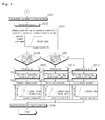
- Figs. 2 and 3 are flowcharts sequentially showing the control operation of an operator self-tuning method using an electro-hydraulic actuator system in accordance with the present invention.
- the HMI is turned on after the start-up of the machine. Thereafter, when an operator selects an operator tuning mode (S101), the HMI inquires whether to reset the maximum speed value of the actuator to a default value in an initial tuning state of the machine (S102).
- the HMI stores an initial mapping table value of the joystick command vs. the actuator speed command in the upper controller (S103).
- the HMI determines that the operator desires to tune the machine and the program proceeds to a subsequent step (S104).
- the HMI inquires whether the operator desires to tune the maximum speed of the actuator (S104).
- the program proceeds to a step of tuning the acceleration characteristics of the actuator.
- the HMI selects any one of the plurality of EHA systems in response to the operator's manipulation (S105).
- the EMI displays a graph in which a mapping relationship of a joystick command vs. an actuator speed command of the EHA system selected by the operator is defined (S106) and inquires whether the operator desires to tune the maximum speed command of the actuator to a larger one( S107).
- the HMI tunes a maximum speed of a corresponding actuator by multiplying a pre-stored maximum speed value of an actuator of the selected EHA system by a gain ( >1) that is increased in proportion to the number of pressings of the button (S110).
- the HMI notifies the user of the mapping graph of the joystick command vs. the actuator speed command that is tuned whenever the maximum speed value of the actuator is multiplied by the gain ( >1) through the displaying of the mapping graph so that the operator can confirm the modified value (S1111).
- the program proceeds to a subsequent step where the HMI inquires whether the operator desires to tune the maximum speed of the actuator to a smaller one (S108).
- the HMI tunes a maximum speed of a corresponding actuator by multiplying a pre-stored maximum speed value of an actuator of the selected EHA system by a gain ( ⁇ 1) that is decreased in proportion to the number of pressings of the button (S114).
- the HMI displays the mapping graph of the joystick command vs. the actuator speed command that is tuned whenever the maximum speed value of the actuator is multiplied by the gain ( ⁇ 1) so that the operator can confirm the modified value (S115).
- the HMI stores the tuned result in the upper controller, and terminates the program (S112).
- the operator may perform the tuning of the acceleration characteristics of the actuator.
- the HMI tunes the acceleration characteristics of a corresponding actuator by multiplying a pre-stored acceleration characteristic value of the actuator of the selected EHA system by a gain (>1) that is increased in proportion to the number of pressings of the button (S206).
- the HMI displays the mapping graph of the joystick command vs. the actuator speed command that is tuned whenever the acceleration characteristic value of the actuator is multiplied by the gain ( >1) so that the operator can confirm the modified value (S207).
- the program proceeds to a subsequent step where the HMI inquires whether the operator desires to tune the acceleration characteristic value of the actuator to a smaller one (S209).
- the HMI tunes the acceleration characteristics of a corresponding actuator by multiplying a pre-stored acceleration characteristic value of an actuator of the selected EHA system by a gain ( ⁇ 1) that is decreased in proportion to the number of pressings of the button (S211).
- the HMI displays the mapping graph of the joystick command vs. the actuator speed command that is tuned whenever the acceleration characteristic value of the actuator is multiplied by the gain ( ⁇ 1) so that the operator can confirm the modified value (S212).
- the HMI stores the tuned result in the upper controller, and terminates the program (S208).
- the present invention enables an operator can personally tune a lookup table of a joystick command vs. an actuator speed command through an HMI display instrument in a machine including a plurality of electro-hydraulic actuator systems, so that the operator can personally tune the acceleration characteristics of the actuator to desired actuator speed characteristics, unlike a machine including only existing fixed actuator speed characteristics.
- an operator can personally tune a lookup table of a joystick command vs. an actuator speed command through a human machine interface (HMI) display instrument in a machine including a plurality of electro-hydraulic actuator systems, so that the operator can personally tune the acceleration characteristics of the actuator to desired actuator speed characteristics, unlike a machine including only existing fixed actuator speed characteristics.
- HMI human machine interface
Landscapes
- Engineering & Computer Science (AREA)
- Physics & Mathematics (AREA)
- General Engineering & Computer Science (AREA)
- Fluid Mechanics (AREA)
- Mechanical Engineering (AREA)
- Analytical Chemistry (AREA)
- Chemical & Material Sciences (AREA)
- General Physics & Mathematics (AREA)
- Automation & Control Theory (AREA)
- Position Input By Displaying (AREA)
- Mechanical Control Devices (AREA)
- Fluid-Pressure Circuits (AREA)
- Control Of Position Or Direction (AREA)
Abstract
Description
- The present invention relates to an operator self-tuning method using an electro-hydraulic actuator system. More particularly, the present invention relates to an operator self-tuning method using an electro-hydraulic actuator system, in which an operator can personally tune a lookup table of a joystick command vs. an actuator speed command through a human machine interface (HMI) display instrument in a machine including a plurality of electro-hydraulic actuator systems, so that the operator can personally tune the acceleration characteristics of the actuator to desired actuator speed characteristics, unlike a machine including only existing fixed actuator speed characteristics.
- In a machine including a conventional hydraulic actuator system, once a spool design is determined, the speed characteristics of the actuator cannot be modified as long as the spool is not replaced. In addition, since an operator cannot personally modify the speed characteristics of the actuator, it is impossible for the operator to tune the actuator speed characteristics actually. However, in a machine including hydraulic actuator system, the operator can personally tune the actuator speed characteristics using an HMI display, which cannot be implemented in a conventional machine.
- Accordingly, the present invention has been made to solve the aforementioned problem occurring in the prior art, and it is an object of the present invention to provide an operator self-tuning method using an electro-hydraulic actuator system, in which an operator can personally tune the speed of a corresponding actuator through a human machine interface (HMI) display instrument in a machine including a plurality of electro-hydraulic actuator systems so as to attain actuator speed characteristics desired by the operator.
- For reference, the present invention has a function that cannot be implemented in a machine including an existing fixed hydraulic system. In addition, the present invention enables an operator to personally tune proper actuator speed characteristics in consideration of an operator's characteristics and work environment characteristics, thereby improving productivity of the machine.
- In addition, in a machine including a conventional hydraulic actuator system, once a spool design is determined, the speed characteristics of the actuator cannot be modified as long as the spool is not replaced. On the contrary, the present invention enables an operator to personally tune proper actuator speed characteristics in consideration of an operator's characteristics and work environment characteristics, thereby improving productivity of the machine.
- To accomplish the above object, in accordance with an embodiment of the present invention, there is provided an operator self-tuning method using an electro-hydraulic actuator system, the method including: a step of allowing a human machine instrument (HMI) to select any one of a plurality of electro-hydraulic actuator (EHA) systems in response to a user's manipulation; a step of displaying a graph in which a mapping relationship of a joystick command vs. an actuator speed command of the selected EHA system is defined; a step of, if a predetermined button (or key) is pressed by the user, tuning a maximum speed of a corresponding actuator by multiplying a pre-stored maximum speed value of an actuator of the selected EHA system by a gain that is increased or decreased in proportion to the number of pressings of the button (or key); and a step of storing the tuned maximum speed of the actuator in an upper controller of the corresponding EHA system.
- Preferably, the operator self-tuning method using an electro-hydraulic actuator system in accordance with the present invention may further include: a step of, if it is determined that the user desires to tune the acceleration characteristics of the actuator according to the user's manipulation, allowing the HMI to selecting any one of the plurality of EHA systems in response to the user's manipulation; a step of displaying a graph in which a mapping relationship of the joystick command vs. an actuator acceleration command of the selected EHA system is defined; a step of, if a predetermined button (or key) is pressed by the user, tuning acceleration characteristics of a corresponding actuator by multiplying a pre-stored acceleration characteristic value of an actuator of the selected EHA system by a gain that is increased or decreased in proportion to the number of pressings of the button (or key); and a step of storing the tuned acceleration characteristics of the actuator in an upper controller of the corresponding EHA system.
- In addition, the operator self-tuning method using an electro-hydraulic actuator system in accordance with the present invention may further include a step of allowing the HMI to notify the user of the mapping graph of the joystick command vs. the actuator speed command that is tuned whenever the maximum speed value of the actuator is multiplied by the gain through the displaying of the mapping graph.
- Preferably, the step of allowing the HMI to select the EHA system nay include: a step of allowing the HMI to select a predetermined operator tuning mode in response to the user's manipulation; a step of, if the operator tuning mode is selected, inquiring whether the user desires to tune the maximum speed of the actuator; and a step of, if the user desires to tune the maximum speed of the actuator is desired as a result of the inquiry, selecting any one of the plurality of EHA systems in response to the user's manipulation.
- In addition, the operator self-tuning method using an electro-hydraulic actuator system in accordance with the present invention, between the step of the HMI to select the operator tuning mode and the step of inquiring whether the user desires to tune the maximum speed of the actuator, may further include: a step of inquiring whether to reset the maximum speed value of the actuator to a default value in an initial tuning state; and a step of, if it is desired to reset the maximum speed value according to the user's manipulation as a result of the inquiry, storing an initial mapping table value of the joystick command vs. the actuator speed command in the upper controller of the corresponding EHA system, and on the other hand, if it is not desired to reset the maximum speed value, allowing the program to proceed to the step of inquiring whether it is desired to tune the maximum speed of the actuator.
- The operator self-tuning method using an electro-hydraulic actuator system in accordance with an embodiment of the present invention as constructed above has the following advantages.
- In a machine using the electro-hydraulic actuator system, the operator can personally tune the actuator speed characteristics using an HMI display instrument and a manipulation button, which cannot be implemented in a conventional machine.
- In addition, in a machine including a conventional hydraulic actuator system, once a spool design is determined, the speed characteristics of the actuator cannot be modified as long as the spool is not replaced. On the contrary, the present invention enables an operator to personally tune proper actuator speed characteristics in consideration of an operator's characteristics and work environment characteristics, thereby improving productivity of the machine.
- The above objects, other features and advantages of the present invention will become more apparent by describing the preferred embodiments thereof with reference to the accompanying drawings, in which:
-
Fig. 1 is a diagrammatic view showing an example of a system to which an operator self-tuning method using an electro-hydraulic actuator system in accordance with the present invention is applied; and -
Figs. 2 and3 are flowcharts sequentially showing the control operation of an operator self-tuning method using an electro-hydraulic actuator system in accordance with the present invention. - Now, preferred embodiments of the present invention will be described in detail with reference to the accompanying drawings. The matters defined in the description, such as the detailed construction and elements, are nothing but specific details provided to assist those of ordinary skill in the art in a comprehensive understanding of the invention, and the present invention is not limited to the embodiments disclosed hereinafter.
- In order to definitely describe the present invention, a portion having no relevance to the description will be omitted, and through the specification, like elements are designated by like reference numerals.
- In the specification and the claims, when a portion includes an element, it is meant to include other elements, but not exclude the other elements unless otherwise specially stated herein.
-
Fig. 1 is a diagrammatic view showing an example of a system to which an operator self-tuning method using an electro-hydraulic actuator system in accordance with the present invention is applied. - As shown in
Fig. 1 , the inventive system includes a plurality of EHA systems 101-1 to 101-3, aHMA 102 that is configured to tune speed characteristics and acceleration characteristics of an actuator of a specific EHA system of the plurality of EHA systems 101-1 to 101-3 in response to a user's manipulation, anupper controller 103 that is configured to control an electric motor (EM) 104 based on the speed characteristics and acceleration characteristics of the actuator, which are tuned by theHMI 102, theEM 104 that is driven using a value of a command tuned by theHMI 102 under the control of theupper controller 103, and anactuator 105 that is operated based on the speed characteristics and acceleration characteristics of the actuator, which are tuned by theHMI 102. - Herein, in order to tune the speed of the actuator, the
HMI 102 is operated such that it selects any one of a plurality of electro-hydraulic actuator (EHA) systems 101-1 to 101-3 in response to a user's manipulation, displays a graph in which a mapping relationship of a joystick command vs. an actuator speed command of the selected EHA system is defined, tunes a maximum speed of a corresponding actuator by multiplying a pre-stored maximum speed value of an actuator of the selected EHA system by a gain that is increased or decreased in proportion to the number of pressings of the button (or key) if a user presses a predetermined button (or key) while viewing the displayed graph, and stores the tuned maximum speed of the actuator in the upper controller of the corresponding EHA system. - In addition, in order to tube the acceleration characteristics of the actuator, the
HMI 102 is operated such that it selects any one of the plurality of EHA systems101-1 to 101-3 in response to the user's manipulation if it is determined that the user desires to tune the acceleration characteristics of the actuator according to the user's manipulation, displays a graph in which a mapping relationship of the joystick command vs. an actuator acceleration command of the selected EHA system is defined, tunes acceleration characteristics of a corresponding actuator by multiplying a pre-stored acceleration characteristic value of an actuator of the selected EHA system by a gain that is increased or decreased in proportion to the number of pressings of the button (or key) if a user presses a predetermined button (or key) while viewing the displayed graph; and stores the tuned acceleration characteristics of the actuator in an upper controller of the corresponding EHA system. - In particular, the
HMI 102 notifies the user of the mapping graph of the joystick command vs. the actuator speed command that is tuned whenever the maximum speed value of the actuator is multiplied by the gain through the displaying of the mapping graph. - Hereinafter, the step of allowing the
HMI 102 to select the EHA system by will be performed. - In other words, first, the
HMI 102 selects a predetermined operator tuning mode in response to the user's manipulation, inquires whether the user desires to tune the maximum speed of the actuator if the operator tuning mode is selected, and selects any one of the plurality of EHA systems in response to the user's manipulation if the user desires to tune the maximum speed of the actuator is desired as a result of the inquiry. - In addition, the
HMI 102, between the step of the HMI to select the operator tuning mode and the step of inquiring whether the user desires to tune the maximum speed of the actuator, inquires whether to reset the maximum speed value of the actuator to a default value in an initial tuning state, and stores an initial mapping table value of the joystick command vs. the actuator speed command in the upper controller of the corresponding EHA system if it is desired to reset the maximum speed value according to the user's manipulation as a result of the inquiry, and on the other hand, allows the program to proceed to the step of inquiring whether it is desired to tune the maximum speed of the actuator if it is not desired to reset the maximum speed value. - Hereinafter, the operation of the operator self-tuning method using an electro-hydraulic actuator system in accordance with the present invention of
Fig. 1 will be described in detail with reference toFigs. 2 and3 . -
Figs. 2 and3 are flowcharts sequentially showing the control operation of an operator self-tuning method using an electro-hydraulic actuator system in accordance with the present invention. - First, as shown in
Fig. 2 , the HMI is turned on after the start-up of the machine. Thereafter, when an operator selects an operator tuning mode (S101), the HMI inquires whether to reset the maximum speed value of the actuator to a default value in an initial tuning state of the machine (S102). - If the operator desires to reset the maximum speed value to the default value as a result of the inquiry, the HMI stores an initial mapping table value of the joystick command vs. the actuator speed command in the upper controller (S103).
- On the other hand, if the operator does not desire to reset the maximum speed value to the default value, the HMI determines that the operator desires to tune the machine and the program proceeds to a subsequent step (S104).
- In the subsequent step, the HMI inquires whether the operator desires to tune the maximum speed of the actuator (S104).
- As a result of if the operator does not desire to tune the maximum speed of the actuator, the program proceeds to a step of tuning the acceleration characteristics of the actuator. On the other hand, if the operator desires to tune the maximum speed of the actuator is desired as a result of the inquiry, the HMI selects any one of the plurality of EHA systems in response to the operator's manipulation (S105).
- Next, the EMI displays a graph in which a mapping relationship of a joystick command vs. an actuator speed command of the EHA system selected by the operator is defined (S106) and inquires whether the operator desires to tune the maximum speed command of the actuator to a larger one( S107).
- At this time, if the operator desires to tune the maximum speed of the actuator to a larger one, he or she presses a predetermined button (S109).
- Then, the HMI tunes a maximum speed of a corresponding actuator by multiplying a pre-stored maximum speed value of an actuator of the selected EHA system by a gain ( >1) that is increased in proportion to the number of pressings of the button (S110).
- Thereafter, the HMI notifies the user of the mapping graph of the joystick command vs. the actuator speed command that is tuned whenever the maximum speed value of the actuator is multiplied by the gain ( >1) through the displaying of the mapping graph so that the operator can confirm the modified value (S1111).
- On the other hand, if the operator does not desire to tune the maximum speed of the actuator to a larger one, the program proceeds to a subsequent step where the HMI inquires whether the operator desires to tune the maximum speed of the actuator to a smaller one (S108).
- As a result of the inquiry, if the operator desires to tune the maximum speed of the actuator to a smaller one, he or she presses a predetermined button (S109). At this time, the HMI tunes a maximum speed of a corresponding actuator by multiplying a pre-stored maximum speed value of an actuator of the selected EHA system by a gain (< 1) that is decreased in proportion to the number of pressings of the button (S114).
- Thereafter, the HMI displays the mapping graph of the joystick command vs. the actuator speed command that is tuned whenever the maximum speed value of the actuator is multiplied by the gain (<1) so that the operator can confirm the modified value (S115).
- Finally, if the operator does not desire to tune the maximum speed of the actuator, the HMI multiplies the maximum speed value of an actuator of the selected EHA system by a gain (= 1) so that the tuned value equals to a previous value (S116 to S118).
- In the end, the HMI stores the tuned result in the upper controller, and terminates the program (S112).
- Additionally, the operator may perform the tuning of the acceleration characteristics of the actuator.
- In other words, as shown in
Fig. 3 , if the operator desires to tune a preset acceleration characteristic value to a larger one, he or she presses a predetermined button (S201 to S205). - At this time, the HMI tunes the acceleration characteristics of a corresponding actuator by multiplying a pre-stored acceleration characteristic value of the actuator of the selected EHA system by a gain (>1) that is increased in proportion to the number of pressings of the button (S206).
- Then, the HMI displays the mapping graph of the joystick command vs. the actuator speed command that is tuned whenever the acceleration characteristic value of the actuator is multiplied by the gain ( >1) so that the operator can confirm the modified value (S207).
- On the other hand, if the operator does not desire to tune a preset acceleration characteristic value to a larger one, the program proceeds to a subsequent step where the HMI inquires whether the operator desires to tune the acceleration characteristic value of the actuator to a smaller one (S209).
- As a result of the inquiry, if the operator desires to tune the acceleration characteristic value of the actuator to a smaller one, he or she presses a predetermined button (S210). At this time, the HMI tunes the acceleration characteristics of a corresponding actuator by multiplying a pre-stored acceleration characteristic value of an actuator of the selected EHA system by a gain (< 1) that is decreased in proportion to the number of pressings of the button (S211).
- Thereafter, the HMI displays the mapping graph of the joystick command vs. the actuator speed command that is tuned whenever the acceleration characteristic value of the actuator is multiplied by the gain (<1) so that the operator can confirm the modified value (S212).
- Finally, if the operator does not desire to tune the acceleration characteristic value of the actuator, the HMI multiplies the acceleration characteristic value of an actuator of the selected EHA system by a gain (= 1) so that the tuned value equals to a previous value (S213 to S215).
- In the end, the HMI stores the tuned result in the upper controller, and terminates the program (S208).
- As described above, the present invention enables an operator can personally tune a lookup table of a joystick command vs. an actuator speed command through an HMI display instrument in a machine including a plurality of electro-hydraulic actuator systems, so that the operator can personally tune the acceleration characteristics of the actuator to desired actuator speed characteristics, unlike a machine including only existing fixed actuator speed characteristics.
- While the present invention has been described in connection with the specific embodiments illustrated in the drawings, they are merely illustrative, and the invention is not limited to these embodiments. It is to be understood that various equivalent modifications and variations of the embodiments can be made by a person having an ordinary skill in the art without departing from the spirit and scope of the present invention. Therefore, the true technical scope of the present invention should not be defined by the above-mentioned embodiments but should be defined by the appended claims and equivalents thereof.
- As described above, according to the present invention as constructed above, an operator can personally tune a lookup table of a joystick command vs. an actuator speed command through a human machine interface (HMI) display instrument in a machine including a plurality of electro-hydraulic actuator systems, so that the operator can personally tune the acceleration characteristics of the actuator to desired actuator speed characteristics, unlike a machine including only existing fixed actuator speed characteristics.
| 7a: | branch flow path | ||
| 101-1 ∼ 101-3 : | EHA systems | 102 : | HMI |
| 103 : | upper controller | 104 : | EM |
| 105 : | actuator |
Claims (5)
- An operator self-tuning method using an electro-hydraulic actuator system comprising:a step of allowing a human machine instrument (HMI) to select any one of a plurality of electro-hydraulic actuator (EHA) systems in response to a user's manipulation;a step of displaying a graph in which a mapping relationship of a joystick command vs. an actuator speed command of the selected EHA system is defined;a step of, if a predetermined button (or key) is pressed by the user, tuning a maximum speed of a corresponding actuator by multiplying a pre-stored maximum speed value of an actuator of the selected EHA system by a gain that is increased or decreased in proportion to the number of pressings of the button (or key); anda step of storing the tuned maximum speed of the actuator in an upper controller of the corresponding EHA system.
- The operator self-tuning method using an electro-hydraulic actuator system according to claim 1, further comprising:a step of, if it is determined that the user desires to tune the acceleration characteristics of the actuator according to the user's manipulation, allowing the HMI to selecting any one of the plurality of EHA systems in response to the user's manipulation;a step of displaying a graph in which a mapping relationship of the joystick command vs. an actuator acceleration command of the selected EHA system is defined;a step of, if a predetermined button (or key) is pressed by the user, tuning acceleration characteristics of a corresponding actuator by multiplying a pre-stored acceleration characteristic value of an actuator of the selected EHA system by a gain that is increased or decreased in proportion to the number of pressings of the button (or key); anda step of storing the tuned acceleration characteristics of the actuator in an upper controller of the corresponding EHA system.
- The operator self-tuning method using an electro-hydraulic actuator system according to claim 1 or 2, further comprising a step of allowing the HMI to notify the user of the mapping graph of the joystick command vs. the actuator speed command that is tuned whenever the maximum speed value of the actuator is multiplied by the gain through the displaying of the mapping graph.
- The operator self-tuning method using an electro-hydraulic actuator system according to claim 3, wherein the step of allowing the HMI to select the EHA system comprises:a step of allowing the HMI to select a predetermined operator tuning mode in response to the user's manipulation;a step of, if the operator tuning mode is selected, inquiring whether the user desires to tune the maximum speed of the actuator; anda step of, if the user desires to tune the maximum speed of the actuator is desired as a result of the inquiry, selecting any one of the plurality of EHA systems in response to the user's manipulation.
- The operator self-tuning method using an electro-hydraulic actuator system according to claim 4, between the step of the HMI to select the operator tuning mode and the step of inquiring whether the user desires to tune the maximum speed of the actuator, further comprising:a step of inquiring whether to reset the maximum speed value of the actuator to a default value in an initial tuning state; anda step of, if it is desired to reset the maximum speed value according to the user's manipulation as a result of the inquiry, storing an initial mapping table value of the joystick command vs. the actuator speed command in the upper controller of the corresponding EHA system, and on the other hand, if it is not desired to reset the maximum speed value, allowing the program to proceed to the step of inquiring whether it is desired to tune the maximum speed of the actuator.
Applications Claiming Priority (1)
| Application Number | Priority Date | Filing Date | Title |
|---|---|---|---|
| PCT/KR2011/009732 WO2013089299A1 (en) | 2011-12-16 | 2011-12-16 | Driver self-tuning method using electro-hydraulic actuator system |
Publications (2)
| Publication Number | Publication Date |
|---|---|
| EP2793099A1 true EP2793099A1 (en) | 2014-10-22 |
| EP2793099A4 EP2793099A4 (en) | 2015-12-02 |
Family
ID=48612729
Family Applications (1)
| Application Number | Title | Priority Date | Filing Date |
|---|---|---|---|
| EP11877421.5A Withdrawn EP2793099A4 (en) | 2011-12-16 | 2011-12-16 | Driver self-tuning method using electro-hydraulic actuator system |
Country Status (5)
| Country | Link |
|---|---|
| US (1) | US9644650B2 (en) |
| EP (1) | EP2793099A4 (en) |
| KR (1) | KR101545677B1 (en) |
| CN (1) | CN103999006B (en) |
| WO (1) | WO2013089299A1 (en) |
Families Citing this family (7)
| Publication number | Priority date | Publication date | Assignee | Title |
|---|---|---|---|---|
| CN105190052B (en) * | 2013-03-14 | 2018-10-19 | 斗山英维高株式会社 | The hydraulic system of engineering machinery |
| IN2014CH00257A (en) * | 2014-01-21 | 2015-07-31 | Yokogawa Electric Corp | |
| JP2016147754A (en) * | 2015-02-13 | 2016-08-18 | 株式会社タダノ | Actuator control device and work vehicle |
| CN104859626B (en) * | 2015-05-28 | 2017-07-14 | 西北工业大学 | A kind of electric hydrostatic braking action device of aircraft |
| US9598844B1 (en) | 2015-12-22 | 2017-03-21 | Caterpillar Trimble Control Technologies Llc | Implement control based on surface-based cost function and noise values |
| US12031639B2 (en) | 2020-05-09 | 2024-07-09 | Emerson Process Management Valve Automation, Inc. | Universal logic circuit for electro-hydraulic actuator |
| US12297623B2 (en) | 2022-12-06 | 2025-05-13 | Cnh Industrial America Llc | System and method for controlling load dependent valve flow with an overruning load |
Family Cites Families (15)
| Publication number | Priority date | Publication date | Assignee | Title |
|---|---|---|---|---|
| US5029067A (en) | 1987-01-30 | 1991-07-02 | Kabushiki Kaisha Komatsu Seisakusho | Operation control device |
| US5223778A (en) * | 1992-09-16 | 1993-06-29 | Allen-Bradley Company, Inc. | Automatic tuning apparatus for PID controllers |
| US6330502B1 (en) * | 2000-05-23 | 2001-12-11 | Caterpillar Inc. | Method and system for selecting desired response of an electronic-controlled sub-system |
| JP2003065301A (en) | 2001-08-24 | 2003-03-05 | Shin Caterpillar Mitsubishi Ltd | Hydraulic controller of construction equipment |
| JP2006199146A (en) * | 2005-01-20 | 2006-08-03 | Toyota Motor Corp | Brake hydraulic pressure control device |
| JP4625751B2 (en) | 2005-10-21 | 2011-02-02 | 株式会社小松製作所 | Hydraulic drive |
| JP4839864B2 (en) * | 2006-01-31 | 2011-12-21 | トヨタ自動車株式会社 | VEHICLE, ITS CONTROL METHOD, AND BRAKE DEVICE |
| JP4425253B2 (en) * | 2006-08-30 | 2010-03-03 | ダイキン工業株式会社 | Hydraulic unit and motor speed control method in hydraulic unit |
| EP2252799B1 (en) * | 2008-02-12 | 2014-06-11 | Parker-Hannifin Corporation | Flow management system for hydraulic work machine |
| EP2250379B1 (en) | 2008-03-10 | 2013-03-20 | Parker-Hannifin Corporation | Hydraulic system having multiple actuators and an associated control method |
| KR20100024737A (en) | 2008-08-26 | 2010-03-08 | 볼보 컨스트럭션 이키프먼트 홀딩 스웨덴 에이비 | Pressure control apparatus of using joystick and method thereof |
| WO2010030830A1 (en) | 2008-09-11 | 2010-03-18 | Parker Hannifin Corporation | Method of controlling an electro-hydraulic actuator system having multiple functions |
| US8095281B2 (en) * | 2008-12-11 | 2012-01-10 | Caterpillar Inc. | System for controlling a hydraulic system |
| WO2013052540A2 (en) * | 2011-10-04 | 2013-04-11 | Parker-Hannifin Corporation | Method and system for controlling electric actuators |
| US9506225B2 (en) * | 2011-10-11 | 2016-11-29 | Volvo Construction Equipment Ab | Actuator displacement measurement system in electronic hydraulic system of construction equipment |
-
2011
- 2011-12-16 KR KR1020147016023A patent/KR101545677B1/en active Active
- 2011-12-16 WO PCT/KR2011/009732 patent/WO2013089299A1/en not_active Ceased
- 2011-12-16 US US14/365,475 patent/US9644650B2/en active Active
- 2011-12-16 EP EP11877421.5A patent/EP2793099A4/en not_active Withdrawn
- 2011-12-16 CN CN201180075586.2A patent/CN103999006B/en active Active
Also Published As
| Publication number | Publication date |
|---|---|
| CN103999006A (en) | 2014-08-20 |
| CN103999006B (en) | 2016-07-13 |
| US20140350731A1 (en) | 2014-11-27 |
| KR101545677B1 (en) | 2015-08-19 |
| WO2013089299A1 (en) | 2013-06-20 |
| EP2793099A4 (en) | 2015-12-02 |
| US9644650B2 (en) | 2017-05-09 |
| KR20140098785A (en) | 2014-08-08 |
Similar Documents
| Publication | Publication Date | Title |
|---|---|---|
| US9644650B2 (en) | Driver self-tuning method using electro-hydraulic actuator system | |
| US20240061518A1 (en) | Display device and method thereof | |
| US20160378281A1 (en) | System and methods for navigation bar presentation and device control | |
| US9545335B2 (en) | Graphical user interface for phacoemulsification surgical system | |
| US20120048955A1 (en) | Thermostat | |
| DE102004013553B4 (en) | Cooking appliance with preset parameter, program and / or operating mode | |
| US9497313B2 (en) | User interface generation apparatus | |
| US20100251168A1 (en) | Mixer device, method for controlling windows of mixer device, and program for controlling windows of mixer device | |
| WO2011108109A1 (en) | Image display system, information processing apparatus, display apparatus, and image display method | |
| JP5538634B1 (en) | Programmable display | |
| US10895967B2 (en) | Display device and method thereof | |
| EP2065651B1 (en) | Household device with a control unit | |
| EP2889256A1 (en) | Industrial truck with display and operating device | |
| EP3247119A1 (en) | Media system and method for implementing various modes using force input | |
| KR101863994B1 (en) | Engineering device and method for controlling screen display | |
| EP1143335A1 (en) | A method and device for providing a user-defined parameter setting | |
| JPH0954657A (en) | Display control method for icon | |
| JP2007135325A (en) | Inverter device and parameter setting method | |
| JP2006285373A (en) | Screen display method and information terminal | |
| CN114341970B (en) | Display Components | |
| US20060262089A1 (en) | Controller, control method, and program | |
| EP3292364B2 (en) | Furnace for dental prosthesis or partial dental prosthesis | |
| JP3011050B2 (en) | Pointing confirmation method | |
| CN109521668B (en) | Regulating instrument | |
| JPH03282609A (en) | Menu input device |
Legal Events
| Date | Code | Title | Description |
|---|---|---|---|
| PUAI | Public reference made under article 153(3) epc to a published international application that has entered the european phase |
Free format text: ORIGINAL CODE: 0009012 |
|
| 17P | Request for examination filed |
Effective date: 20140613 |
|
| AK | Designated contracting states |
Kind code of ref document: A1 Designated state(s): AL AT BE BG CH CY CZ DE DK EE ES FI FR GB GR HR HU IE IS IT LI LT LU LV MC MK MT NL NO PL PT RO RS SE SI SK SM TR |
|
| RIN1 | Information on inventor provided before grant (corrected) |
Inventor name: KIM, JI-YUN |
|
| DAX | Request for extension of the european patent (deleted) | ||
| RA4 | Supplementary search report drawn up and despatched (corrected) |
Effective date: 20151030 |
|
| RIC1 | Information provided on ipc code assigned before grant |
Ipc: F15B 21/08 20060101ALI20151026BHEP Ipc: F15B 21/02 20060101ALI20151026BHEP Ipc: G05G 21/00 20060101AFI20151026BHEP |
|
| STAA | Information on the status of an ep patent application or granted ep patent |
Free format text: STATUS: THE APPLICATION HAS BEEN WITHDRAWN |
|
| 18W | Application withdrawn |
Effective date: 20160603 |