EP2792666A2 - Phorbol type diterpene compound, pharmaceutical composition for treatment or prevention of viral infectious diseases including same - Google Patents
Phorbol type diterpene compound, pharmaceutical composition for treatment or prevention of viral infectious diseases including same Download PDFInfo
- Publication number
- EP2792666A2 EP2792666A2 EP12842971.9A EP12842971A EP2792666A2 EP 2792666 A2 EP2792666 A2 EP 2792666A2 EP 12842971 A EP12842971 A EP 12842971A EP 2792666 A2 EP2792666 A2 EP 2792666A2
- Authority
- EP
- European Patent Office
- Prior art keywords
- virus
- viral infectious
- compound
- composition
- compound represented
- Prior art date
- Legal status (The legal status is an assumption and is not a legal conclusion. Google has not performed a legal analysis and makes no representation as to the accuracy of the status listed.)
- Granted
Links
Images


Classifications
-
- C—CHEMISTRY; METALLURGY
- C07—ORGANIC CHEMISTRY
- C07C—ACYCLIC OR CARBOCYCLIC COMPOUNDS
- C07C69/00—Esters of carboxylic acids; Esters of carbonic or haloformic acids
- C07C69/66—Esters of carboxylic acids having esterified carboxylic groups bound to acyclic carbon atoms and having any of the groups OH, O—metal, —CHO, keto, ether, acyloxy, groups, groups, or in the acid moiety
- C07C69/73—Esters of carboxylic acids having esterified carboxylic groups bound to acyclic carbon atoms and having any of the groups OH, O—metal, —CHO, keto, ether, acyloxy, groups, groups, or in the acid moiety of unsaturated acids
- C07C69/738—Esters of keto-carboxylic acids or aldehydo-carboxylic acids
-
- C—CHEMISTRY; METALLURGY
- C07—ORGANIC CHEMISTRY
- C07C—ACYCLIC OR CARBOCYCLIC COMPOUNDS
- C07C69/00—Esters of carboxylic acids; Esters of carbonic or haloformic acids
- C07C69/74—Esters of carboxylic acids having an esterified carboxyl group bound to a carbon atom of a ring other than a six-membered aromatic ring
- C07C69/753—Esters of carboxylic acids having an esterified carboxyl group bound to a carbon atom of a ring other than a six-membered aromatic ring of polycyclic acids
-
- C—CHEMISTRY; METALLURGY
- C07—ORGANIC CHEMISTRY
- C07C—ACYCLIC OR CARBOCYCLIC COMPOUNDS
- C07C69/00—Esters of carboxylic acids; Esters of carbonic or haloformic acids
- C07C69/02—Esters of acyclic saturated monocarboxylic acids having the carboxyl group bound to an acyclic carbon atom or to hydrogen
- C07C69/22—Esters of acyclic saturated monocarboxylic acids having the carboxyl group bound to an acyclic carbon atom or to hydrogen having three or more carbon atoms in the acid moiety
- C07C69/33—Esters of acyclic saturated monocarboxylic acids having the carboxyl group bound to an acyclic carbon atom or to hydrogen having three or more carbon atoms in the acid moiety esterified with hydroxy compounds having more than three hydroxy groups
-
- A—HUMAN NECESSITIES
- A23—FOODS OR FOODSTUFFS; TREATMENT THEREOF, NOT COVERED BY OTHER CLASSES
- A23L—FOODS, FOODSTUFFS OR NON-ALCOHOLIC BEVERAGES, NOT OTHERWISE PROVIDED FOR; PREPARATION OR TREATMENT THEREOF
- A23L33/00—Modifying nutritive qualities of foods; Dietetic products; Preparation or treatment thereof
-
- A—HUMAN NECESSITIES
- A61—MEDICAL OR VETERINARY SCIENCE; HYGIENE
- A61K—PREPARATIONS FOR MEDICAL, DENTAL OR TOILETRY PURPOSES
- A61K31/00—Medicinal preparations containing organic active ingredients
- A61K31/01—Hydrocarbons
- A61K31/015—Hydrocarbons carbocyclic
-
- A—HUMAN NECESSITIES
- A61—MEDICAL OR VETERINARY SCIENCE; HYGIENE
- A61K—PREPARATIONS FOR MEDICAL, DENTAL OR TOILETRY PURPOSES
- A61K31/00—Medicinal preparations containing organic active ingredients
- A61K31/21—Esters, e.g. nitroglycerine, selenocyanates
- A61K31/215—Esters, e.g. nitroglycerine, selenocyanates of carboxylic acids
-
- A—HUMAN NECESSITIES
- A61—MEDICAL OR VETERINARY SCIENCE; HYGIENE
- A61P—SPECIFIC THERAPEUTIC ACTIVITY OF CHEMICAL COMPOUNDS OR MEDICINAL PREPARATIONS
- A61P31/00—Antiinfectives, i.e. antibiotics, antiseptics, chemotherapeutics
- A61P31/12—Antivirals
-
- A—HUMAN NECESSITIES
- A23—FOODS OR FOODSTUFFS; TREATMENT THEREOF, NOT COVERED BY OTHER CLASSES
- A23V—INDEXING SCHEME RELATING TO FOODS, FOODSTUFFS OR NON-ALCOHOLIC BEVERAGES AND LACTIC OR PROPIONIC ACID BACTERIA USED IN FOODSTUFFS OR FOOD PREPARATION
- A23V2002/00—Food compositions, function of food ingredients or processes for food or foodstuffs
-
- C—CHEMISTRY; METALLURGY
- C07—ORGANIC CHEMISTRY
- C07C—ACYCLIC OR CARBOCYCLIC COMPOUNDS
- C07C2603/00—Systems containing at least three condensed rings
- C07C2603/02—Ortho- or ortho- and peri-condensed systems
- C07C2603/40—Ortho- or ortho- and peri-condensed systems containing four condensed rings
Definitions
- the present invention relates to a diterpene compound derived from Aleurites fordii, and a pharmaceutical composition for treating or preventing viral infectious diseases, a health functional food for preventing or ameliorating viral infectious diseases and a composition for enhancing the production of interferon-gamma, which comprise the diterpene compound. Furthermore, the present invention relates to a method for preventing or treating viral infectious diseases including administering the composition to a subject having a viral infectious disease occurrence or a risk thereof with a therapeutically effective dose.
- IFN- ⁇ interferon- ⁇
- NK natural killer
- NKT natural killer T
- cytokain IFN- ⁇ The biological role of cytokain IFN- ⁇ in a defense system is well known, and the role is related to both virus replication and direct suppression of immunostimulation ( Gessani, S. et al., Cytokine & Growth F. R. 1998, 9, 117-123 ; Goodbourn, S. et al., J. Gen. Virol. 2000, 81, 2341-2364 ).
- a virus is a small infectious agent(average of 0.1 um or less) that is smaller than bacteria and thereby cannot be filtered even with a bacterial filter (0.22 um), and is an organism that has only nucleic acid (DNA or RNA) and a small number of proteins as substances needed for survival, and thereby are dependent upon hosts.
- drugs that weaken or kill the action of viruses infested into the body are referred to as antiviral therapeutic agents.
- Immunotherapy a vaccines is currently a mainstream viral infectious disease treatment.
- examples of therapeutic agent for the infectious disease caused by chlamydia (giant virus) such as trachoma and fourth venereal disease (venereal disease) comprise tetracycline and chloramphenicol
- examples of a preventive agent for influenza A-type virus include amantadine, an idoxuridine (IDU) eye bath drop was developed as a preventive agent for herpes keratitis, and vidarabine/acyclovir have received attention as a simple herpes encephalitis (encephalitis) or an immunosuppressant.
- interferon is a most promising drug for viral infectious diseases, and usefulness thereof is currently being examined.
- Aleurites fordii is a deciduous tree of Dicotyledone Geraniales Euphorbiaceae, its scientific name is Aleurites fordii, and it is often referred to as a Tung oil tree. China is the country of origin, and its fruits, leaves and roots have been used in traditional oriental medicines to treat sore throat, respiratory disease and constipation ( Pencreach G. et al., Anal. Biochem., 2002, 303, 17-24 ; Ito Y. et al., Cancer Lett., 1983, 18, 87-95 ).
- HHPA 12-O-hexadecanoyl-16-hydroxyphorbol-13-acetate
- Hirota M. et al., Agri. Bio. Chem., 1979, 43, 2523-2529 the application for the treatment of viral infectious diseases has not been reported.
- the inventors of the present invention have made various efforts to identify natural product-derived materials having antiviral activities, and as a result, have isolated 4 known phorbol ester compounds in addition to 12-O-hexadecanoyl-7-oxo-5-ene-16-hydroxyphorbol-13-acetate, a novel phorbol ester compound, from the leaf of Aleurites fordii, then verified that the compounds enhance the production of interferon gamma (IFN- ⁇ ), an important cytokine in innate and acquired immunity against viruses and in bacterial infection between cells, in NK92 cells, and completed the present invention.
- IFN- ⁇ interferon gamma
- a first object of the present invention is to provide a compound represented by Chemical Formula 1 or a pharmaceutically acceptable salt thereof.
- a second object of the present invention is to provide a pharmaceutical composition for treating or preventing viral infectious diseases, which comprises a compound represented by Chemical Formulae 2 to 4 or a pharmaceutically acceptable salt thereof as an active ingredient.
- a third object of the present invention is to provide a health functional food for preventing or ameliorating iral infectious diseases, which comprises a compound represented by Chemical Formulae 2 to 4 or a sitologically acceptable salt thereof as an active ingredient.
- a fourth object of the present invention is to provide a composition for enhancing the production of interferon-gamma, which comprises a compound represented by Chemical Formulae 2 to 4 or a pharmaceutically acceptable salt thereof as an active ingredient.
- a fifth object of the present invention is to provide a method for preventing or treating viral infectious diseases comprising administering a compound represented by Chemical Formulae 2 to 4 or a pharmaceutically acceptable salt thereof to a subject having a viral infectious disease occurrence or a risk thereof with a therapeutically effective dose.
- the present invention provides a phorbol-type novel diterpene compound isolated from the leaf of Aleurites fordii, and phorbol-type diterpene-based compounds derived from Aleurites fordii including the novel compound have activities of inducing the production of IFN- ⁇ in NK cells, and thereby are effective in treating or preventing viral infectious diseases.
- the present invention provides a compound represented by the following Chemical Formula 1 or a pharmaceutically acceptable salt thereof.
- the compound represented by Chemical Formula 1 is represented by Compound 1, and a name thereof is 12-O-hexadecanoyl-7-oxo-5-ene-16-hydroxyphorbol-13-acetate.
- the Compound 1 is a phorbol-type diterpene compound, and is a novel material that the inventors of the present invention isolated from the leaf area of Aleurites fordii.
- the Compound 1 may have an activity facilitating or enhancing the interferon gamma production in cells.
- the present invention provides a pharmaceutical composition for treating or preventing viral infectious diseases, which comprises a compound represented by the following Chemical Formulae 2 to 4 or a pharmaceutically acceptable salt thereof as an active ingredient.
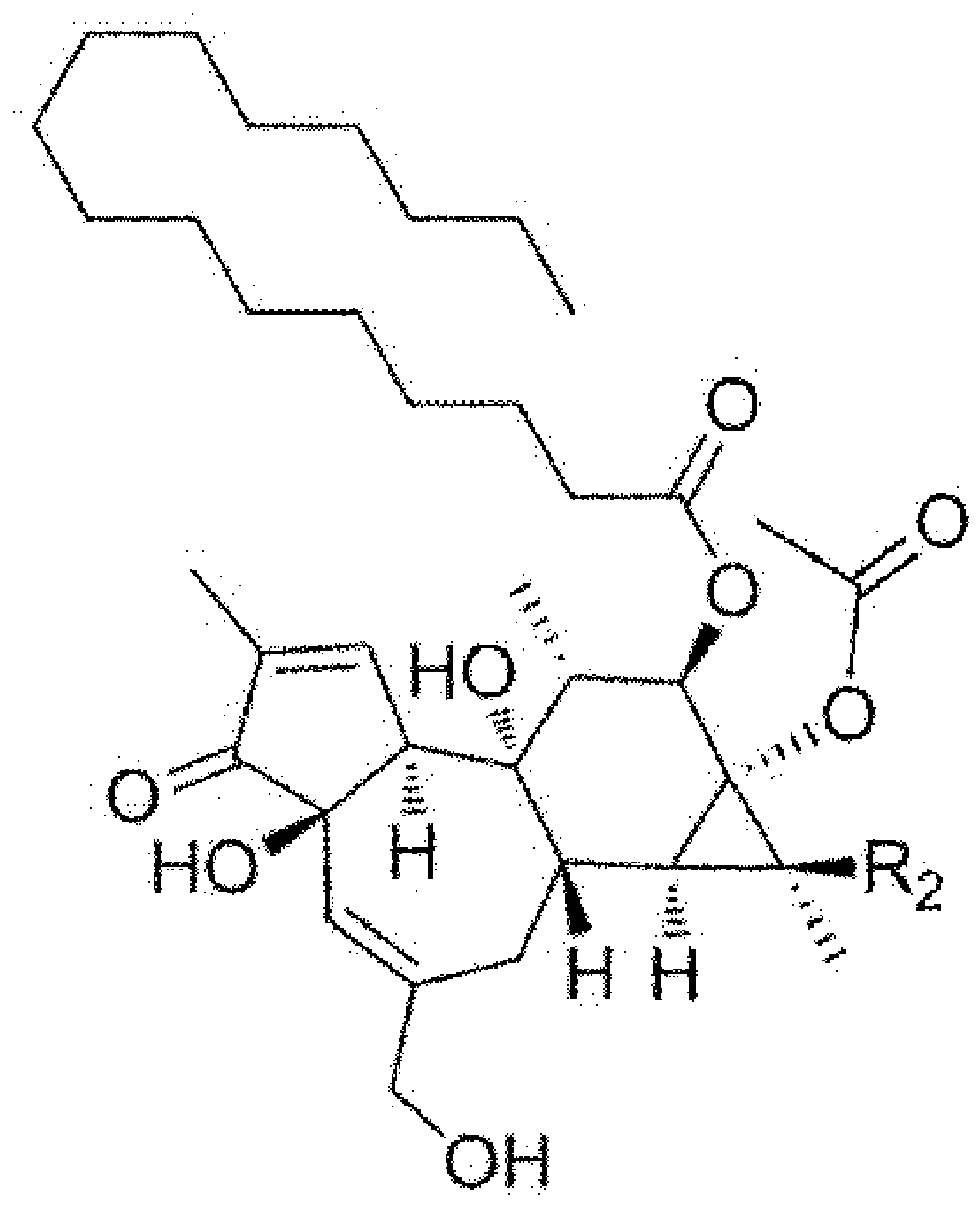
- R 1 is CH 2 OH or CH 3
- R 2 is CH 3 or CH 2 OH.
- the phorbol-type diterpene compound represented by Chemical Formulae 2 to 4 may be isolated from Aleurites fordii, and preferably from the leaf area of Aleurites fordii.
- the pharmaceutical composition of the present invention may comprise a chemically synthesized compound represented by Chemical Formulae 2 to 4 or a pharmaceutically acceptable salt thereof.
- the present invention comprises not only the compound represented by Chemical Formulae 2 to 4 and the pharmaceutically acceptable salt thereof, but also all solvates, hydrates or racemates that can be prepared therefrom.
- prevention in the present invention means all actions that suppress viral infectious diseases or delay the outbreak of diseases by the administration of the composition.
- treatment in the present invention means all actions that enable symptoms by virus infection ameliorate or change for the better by the administration of the composition.
- the viral infectious disease may be a disease caused by one or more viruses selected from the group consisting of influenza virus, Influenza A virus subtype H1N1, avian influenza virus, rhinovirus, adenovirus, coronavirus, parainfluenza virus, respiratory syncytial virus, Herpesvirus (HSV), human immunodeficiency virus (HIV), rotavirus and hepatitis virus, but the virus is not limited thereto.
- the viral infectious disease may be one or more viral infectious diseases selected from the group consisting of a rotaviral infectious disease, an adenoviral infectious disease, influenza, cold, a sore throat, bronchitis, pneumonia, avian influenza, eye inflammation, encephalitis, acquired immunodeficiency syndrome, hepatitis and severe acute respiratory syndrome (SARS), but the viral infectious disease is not limited thereto.
- viruses may be treated by interferon- ⁇ , and one embodiment of the present invention verified that the compounds enhance the production of interferon- ⁇ , therefore, it was verified that the compounds are effective in treating virus infection.
- the compound represented by Chemical Formulae 2 to 4 of the present invention may have a form of a pharmaceutically acceptable salt, and as the salt, an acid addition salt formed by a pharmaceutically acceptable free acid may be used.
- the acid addition salt is obtained from inorganic acids such as hydrochloric acid, nitric acid, phosphoric acid, sulfuric acid, hydrobromic acid, hydroiodic acid, nitrous acid or phosphorous acid, and nontoxic organic acids such as aliphatic mono- and dicarboxylate, phenyl-substituted alkanoate, hydroxyalkanoate and alkanedioate, aromatic acids, aliphatic and aromatic sulfonic acids.
- Such pharmaceutically nontoxic salts comprise sulfate, pyrosulfate, bisulfate, sulfite, bisulfite, nitrate, phosphate, monohydrogen phosphate, dihydrogen phosphate, metaphosphate, pyrophosphate, chloride, bromide, iodide, fluoride, acetate, propionate, decanoate, caprylate, acrylate, formate, isobutyrate, caprate, heptanoate, propiolate, oxalate, malonate, succinate, suberate, sebacate, fumarate, maleate, butene-1,4-dioate, hexane-1,6-dioate, benzoate, chlorobenzoate, methyl benzoate, dinitrobenzoate, hydroxybenzoate, methoxybenzoate, phthalate, terephthalate, benzenesulfonate, toluenesulfonate, chlor
- the acid addition salt according to the present invention may be prepared by common methods such as dissolving the compound of Chemical Formula 2, 3 or 4 in an excess aqueous acid solution, and precipitating this salt using a water- miscible organic solvent such as methanol, ethanol, acetone or acetonitrile.
- a water- miscible organic solvent such as methanol, ethanol, acetone or acetonitrile.
- a pharmaceutically acceptable metal salt may be prepared using a base.
- An alkali metal or alkaline-earth metal salt is obtained by, for example, dissolving the compound in an excess alkali metal hydroxide or alkaline-earth metal hydroxide solution, filtering the non-soluble compound salt, drying the filtrate and drying the result.
- preparing a sodium, potassium or calcium salt as the metal salt is pharmaceutically suitable.
- a silver salt corresponding to this is obtained by reacting the alkali metal or alkaline-earth metal salt with a suitable silver salt (for example, silver nitrate).
- the composition of the present invention may comprise a pharmaceutically acceptable carrier.
- the composition including a pharmaceutically acceptable carrier may have various oral or non-oral formulations.
- the composition is prepared using a filler, an extending agent, a bonding agent, a wetting agent, a disintegrating agent, a diluent such as a surfactant or a diluting agent commonly used.
- Solid formulations for oral administration comprise tablets, pills, powders, granules, capsules and the like, and these solid formulations are prepared by mixing one or more compounds with at least one or more diluting agents such as starch, potassium carbonate, sucrose or lactose and gelatine.
- Liquid formulations for oral administration comprise suspensions, oral solutions, emulsions, syrups and the like, and various diluting agents such as a wetting agent, a sweeting agent, a flavoring agent and a preserving agent may be comprised therein in addition to commonly used diluents such as water and liquid paraffin.
- the formulations for non-oral administration comprise sterilized aqueous solutions, non-aqueous solvents, suspensions, emulsions, freeze-dried formulations and suppositories.
- the non-aqueous solvent and the suspension may be comprised of propylene glycol, polyethylene glycol, vegetable oil such as olive oil, and injectable ester such as ethylolate.
- injectable ester such as ethylolate.
- base of suppository witepsol, macrogol, tween 61, cacao butter, laurin butter, glycerogelatin and the like may be used.
- the present invention provides a method for preventing or treating viral infectious diseases including administering the composition of the present invention to a subject having a viral infectious disease occurrence or a risk thereof with a therapeutically effective dose.
- subject in the present invention means all animals including human beings already infected or having a possibility to be infected by viruses, and the diseases can be effectively prevented and treated by administering the composition of the present invention to the subject.
- the composition of the present invention may be administered in combination with existing therapeutic agents for viral infectious diseases.
- the composition may be administered through any general path as long as the composition reaches a target tissue.
- the composition of the present invention may be administered by intraperitoneal administration, intravenous administration, intramuscular administration, subcutaneous administration, intracutaneous administration, oral administration, intranasal administration, pulmonary administration or rectal administration depending on the purpose, but the administration method is not limited thereto.
- the composition may be administered by any apparatus capable of moving an active material to a target cell.
- the composition of the present invention is administered with a therapeutically effective dose.
- therapeutically effective dose means an amount sufficient to treat diseases in a reasonable benefit/risk ratio applicable to medical treatments, and the level of the effective dose may be determined depending on factors including the types of subjects, severity, age, gender, the types of infecting viruses, the activity of drugs, the sensitivity to drugs, administration time, administration paths and excretion rates, treatment period and drugs simultaneously used, and other factors well-known in the field of medicine.
- the composition of the present invention may be administered as an individual therapeutic agent or as a combination with other therapeutic agents, and the composition of the present invention may be administered consecutively or simultaneously with existing therapeutic agents.
- the composition of the present invention may be administered by single or multiple administration. It is important to administer the amount capable of obtaining a maxomum effect with a minimal amount without side effects considering all the factors described above, and the amount may be readily determined by those skilled in the art.
- composition of the present invention may be used for preventing and treating virus infection either alone, or as a combination with methods such as surgery, hormone treatments, medication treatments and methods using biologic response modifiers.
- the compound represented by the following Chemical Formula 2 is isolated from Aleurites fordii, and identified.
- R 1 is CH 2 OH or CH 3
- R 2 is CH 3 or CH 2 OH.
- the compound represented by Chemical Formula 2 in which R 1 is CH 2 OH is represented by Compound 1
- the compound represented by Chemical Formula 2 in which R 1 is CH 3 is represented by Compound 2
- the compound represented by Chemical Formula 3 in which R 2 is CH 3 is represented by Compound 3
- the compound represented by Chemical Formula 3 in which R 2 is CH 2 OH is represented by Compound 4
- the compound represented by Chemical Formula 4 is represented by Compound 5.
- Compound 1 is 12-O-hexadecanoyl-7-oxo-5-ene-16-hydroxyphorbol-13-acetate
- the name of Compound 2 is 12-O-hexadecanoyl-7-oxo-5-ene-phorbol-13-acetate
- the name of Compound 3 is 12- O -hexadecanoyl-phorbol-13-acetate
- the name of Compound 4 is 12-O-hexadecanoyl-16-hydroxyphorbol-13-acetate
- the name of Compound 5 is 12- O -hexadecanoyl-4-deoxy-4 ⁇ -16-hydroxyphorbol-13-acetate.
- the effects of the compounds (1 to 5) on the expression of IFN- ⁇ in NK92 cells are investigated using an ELISA analysis, and it is verified that the compounds 1 to 5 induce the production of IFN- ⁇ in NK92 cells ( FIG. 7 and FIG. 8 ). These results show that the compounds 1 to 5 identified in the present invention may be used as useful antiviral agents by facilitating or enhancing the production of IFN- ⁇ in cells.
- the present invention provides a health functional food for preventing or ameliorating viral infectious diseases, which comprises the compound represented by Chemical Formulae 2 to 4 or a sitologically acceptable salt thereof as an active ingredient.
- the compound represented by Chemical Formulae 2 to 4 or the sitologically acceptable salt thereof may be added to foods with the purpose of preventing or ameliorating viral infectious diseases.
- prevention means all actions that suppress viral infectious diseases or delay the outbreak of diseases by the intake of the health functional foods
- treatment means all actions that enable symptoms by virus infection ameliorate or change for the better by the intake of the health functional foods.
- the health functional food of the present invention comprises all forms such as functional health foods, nutritional supplements, nutritionals, pharmafoods, health foods, nutraceuticals, designer foods, food additives and feed additives.
- the compound or the sitologically acceptable salt thereof When the compound of Chemical Formulae 2 to 4, or the sitologically acceptable salt thereof is added as an additive of a health functional food, the compound or the sitologically acceptable salt thereof may be added either alone or together with other foods or food ingredients, and may be suitably used according to common methods.
- the amount of mixed active ingredients may be properly determined depending on the purpose of use (use for prevention or amelioration).
- the types of the foods are not particularly limited, and examples thereof comprise meat, sausage, bread, chocolate, candies, snacks, cookies, pizza, ramen, other noodles, gums, dairy products including ice cream, various soups, beverages, teas, health drinks, alcoholic beverages and vitamin complexes and the like, and comprise all health functional foods in an acceptable meaning.
- the health functional food of the present invention may contain various neutritionals, vitamins, electrolytes, flavoring agents, coloring agents, pectic acid and a salt thereof, alginic acid and a salt thereof, organic acids, protective colloidal viscosity agents, pH regulating agents, stabilizing agents, preservatives, glycerin, alcohols, carbonating agents used in carbonated beverages, and the like.
- the health functional food of the present invention may contain flesh for preparing natural fruit juices, fruit juice beverages and vegetable beverages.
- the viral infectious diseases are the same as described above.
- the present invention provides a composition for enhancing the production of interferon-gamma, which comprises the compound represented by Chemical Formulae 2 to 4 or the pharmaceutically acceptable salt thereof as an active ingredient.
- composition for enhancing the production of interferon-gamma may further comprise a pharmaceutically acceptable carrier, and the pharmaceutically acceptable carrier is the same as described above.
- the compound represented by Chemical Formulae 2 to 4 when the compound represented by Chemical Formulae 2 to 4 is applied to NK92 cells, it is verified that the IFN- ⁇ expression in the NK92 cells increased ( FIG. 7 and FIG. 8 ). Therefore, the compound represented by Chemical Formulae 2 to 4 or the pharmaceutically acceptable salt thereof enhances the IFN- ⁇ production in cells, preferably in NK cells, and thereby is ultimately useful in preventing or treating viral infectious diseases.
- the optical rotation was measured using a Jasco P2000 polarimeter (Jasco Corporation, Japan).
- the UV data were obtained on a UV-VIS spectrometer 2400 (Shimadzu Co. Ltd., Japan), and the NMR spectra were recorded on a Varian UNITY 400 (Varian, Inc., Palo Alto, CA) using tetramethylsilane as an internal standard material.
- the HRESIMS was carried out on a Waters Q-Tof Premier spectrometer (Micromass UK Ltd., Manchester, UK).
- the column chromatography was carried out using silica gel (230-400 mesh, SiliCycle Inc., Quebec, Canada), RP-C18 (Cosmosil 75C18-PREP, Kyoto, Japan), and Sephadex LH-20 (25-100 ⁇ m, Sigma-Aldrich, Steinheim, Germany).
- the TLC was carried out on a precoated Kiesel-gel 60 F254 (0.25 mm, Merck, Darmstadt, Germany) and Kiesel-gel 60 RP-18F254s (0.25 mm, Merck, Steinheim, Germany).
- NK92 cells human NK lymphoma were obtained from American Type Culture Collection. NK92 cells were kept in ⁇ -MEM (Invitrogen, US) containing 20% fetal bovine serum (Invitrogen), 2 mM L-glutamate, 100 mg/mL penicillin and 100 mg/mL streptomycin (Invitrogen), and were replenished with 100 U/mL IL-2 (Peprotech, US). NK92 cell culture was carried out in a culture medium at 37°C under 5% CO 2 humidity atmosphere. The amount of human IFN- ⁇ was analyzed according to the protocol of a supplier using an assay kit (Endogen, Woburn, US).
- the hexane extract was column chromatographed (CC) on silica gel (230 to 400 mesh) using hexane/EtOAc (50:1 to 1:5) as an eluent, and then silica gel column chromatographed once again using CHCl 3 /MeOH (10:1 to 1:1) to give 38 fractions (LH1 to LH38).
- Fraction LH3435 a combination of active fractions LH34 and LH35, was silica gel column chromatographed using CHCl 3 /MeOH (50:1, 20:1) to give subfractions LH3435-1 to LH3435-11.
- Fraction LH3435-7 (1.2 g) was once again fractioned with Sephadex LH20 column chromatography using hexane/CH 2 Cl 2 /MeOH (10:10:1) as an eluent to give subfractions LH3435-7-1 to LH3435-7-8.
- LH3435-7-2 (784 mg) was once again chromatographed on a silica gel column chromatography using a concentration gradient solvent of CHCl 3 /acetone (5:1, 4:1) to give Compound 1 (39.8 mg) and Compound 4 (278 mg).
- Fraction N3435-3 50. 1 mg was Sephadex LH20 column chromatographed using hexane/CH 2 Cl 2 /MeOH (10:10:1) as an eluent to give 4 subfractions LH3435-3-1 to LH3435-3-4.
- LH3435-3-2 (30 mg) was preparative layer chromatographed (PLC) using CHCl 3 /acetone (2:1) to give LH-3-2-P, and LH-3-2-P was further purified through preparative HPLC (C18, 5 ⁇ m, 92% ACN) to give Compound 5 (6.0 mg).
- Compound 1 was isolated as white noncrystalline solids. The molecular formula thereof was identified as C 38 H 58 O 10 through the [M-H] - molecular ion peak of 673.3953 shown in a High Resolution Electron Spray Ionization Mass Spectrum (HRESIMS) ( FIG. 1 ). The 1 H, 13 C and DEPT spectra of Compound 1 exhibited 2 double bonds, 4 carbonyl groups, 5 methyl groups, 2 oxygenated methylene groups, 5 methine groups and 4 quaternary carbons (3 oxygenated) ( FIG. 2 to FIG. 4 ). It was seen from the large wide peak at ⁇ H 1.24 of 1 H spectrum that a long chain unit of carbon exists within this compound.
- the carbon skeleton of Compound 1 was surmised to be partially similar to 12- O -decanoylphorbol-13-acetate ( Patricia Y.H. et al., J. Nat. Prod., 2010, 73, 1907-1913 ) derived from Pimelea elongate and identified as a phorbol-type diterpene. All the 1 H and 13 C-NMR signals of Compound 1 were similar except that hydroxymethylene (C-16) were present in Compound 1 instead of a methyl signal in Compound 2. Based on the information above, the structure of Compound 1 was identified as 12- O -hexadecanoyl-7-oxo-5-ene-16-hydroxyphorbol-13-acetate.
- Compound 2 was obtained as colorless oil and showed a molecular ion [M-H] - of m/z 657.3969 in a HRESIMS corresponding to a molecular formula C 38 H 58 O 9 .
- the 1 H and 13 C NMR data of Compound 2 were identical to those of Compound 1 except that the methyl group was substituted with hydroxymethylene at C-16. Therefore, the structure of Compound 2 was identified as 12- O -hexadecanoyl-7-oxo-5-ene-phorbol-13-acetate.
- This compound has been reported previously as a compound isolated from a Chinese tallow tree (Sapium sebiferum) ( Ohigashi H. et al., Agri. Bio. Chem., 1983, 7, 1617-1622 ), however, the properties of this compound have not been reported.
- Compound 3 was obtained as colorless oil and showed a molecular ion peak [M-H] - of m/z 643.4244 in a HRESIMS corresponding to a molecular formula of C 38 H 60 O 8 .
- the 1 H and 13 C-NMR signals of Compound 3 were identical to literature NMR data of 12- O -decanoylphorbol-13-acetate except for the differences in the 16-carbon ester chain identified with mass spectroscopy. Therefore, Compound 3 was identified as 12- O -hexadecanoyl-phorbol-13-acetate.
- Compound 4 was isolated as white noncrystalline powders and showed a molecular ion peak [M-H] - of m/z 659.4143 in a HRESIMS corresponding to a molecular formula of C 38 H 60 O 9 .
- the 1 H and 13 C NMR spectra of Compound 4 comprise practically the same signals with the spectra of Compound 3 except that the methyl group was substituted with hydroxymethylene at C-16. Therefore, the structure of Compound 4 was identified as 12- O- hexadecanoyl-16-hydroxyphorbol-13-acetate.
- Compound 5 was obtained as colorless oil and showed a molecular ion peak [M+FA-H] - of m/z 689.4296 in a HRESIMS corresponding to a molecular formula of C 38 H 60 O 8 .
- the signals within the 1 H and 13 C NMR spectra of Compound 5 were identical to the signals of Compound 4 except that the oxygenated quaternary carbon at ⁇ C 73.1 (C-4) was reduced to tertiary carbon at ⁇ C 49.5.
- the proton at ⁇ H 2.78 (H-4) showed correlation with the proton at ⁇ H 3.51 (H-10), and there was a cross-peak between C-4, and H1 and H5. Therefore, the structure of Compound 5 was identified as 12- O -hexadecanoyl-4-deoxy-4 ⁇ -16-hydroxyphorbol-13-acetate.
- the IFN- ⁇ production capability of the compounds of the present invention was investigated as follows. Moreover, with each compound of the present invention, a Aleurites fordii methanol extract (Total), a Daphne genkwa methanol extract (P10) of which anti-influenza virus activity has been reported (Korean Patent Application No. 10-2009-0034132 ), genkwadaphnin (GD), yuanhuacine (YH) and phorbol 12-myristate 13-acetate (PMA) were used as a positive control group.
- Total Aleurites fordii methanol extract
- P10 Daphne genkwa methanol extract
- PMA phorbol 12-myristate 13-acetate
- the Daphne genkwa methanol extract was obtained by adding 4 L of methanol to a total of 2 Kg of Daphne genkwa dry material collected in Yongin, Kyunggido, extracting the result for 24 hours while rotating at room temperature, collecting the filtered supernatant, and then concentrating the result under reduced pressure.
- NK92 cell/mL was inoculated in a 48-well culture plate, and was cultured for 12 hours with each of the compounds or extracts in an ⁇ -MEM medium containing 20% FBS and IL-2.
- the IFN- ⁇ released in the culture supernatant was analyzed using an ELISA method.
- the absorbance was measured on a microplate reader and the treatment and the analysis for all the compounds or extracts were repeated twice.
- the cell toxicity of the compound-treated NK92 cells was evaluated through an MTT analysis.
- FIG. 7 showed that Compounds 1 to 5 all induced the production of IFN- ⁇ in NK92 cells.
- an effective dose of each compound for IFN- ⁇ production significantly varied.
- FIG. 7 showed that Compounds 1, 3 and 4 (64 nM) had significant effects of 2 to 3 times or higher on the IFN- ⁇ production compared to the same does of the Daphne genkwa methanol extract (P10).
- Compounds 2 (1.6 ⁇ M) and 5 (8 ⁇ M) also had activity for inducing IFN- ⁇ production when applied to NK92 cells.
Landscapes
- Chemical & Material Sciences (AREA)
- Organic Chemistry (AREA)
- Health & Medical Sciences (AREA)
- Life Sciences & Earth Sciences (AREA)
- Animal Behavior & Ethology (AREA)
- Veterinary Medicine (AREA)
- Public Health (AREA)
- Medicinal Chemistry (AREA)
- General Health & Medical Sciences (AREA)
- Pharmacology & Pharmacy (AREA)
- Epidemiology (AREA)
- Emergency Medicine (AREA)
- Mycology (AREA)
- Polymers & Plastics (AREA)
- Food Science & Technology (AREA)
- Engineering & Computer Science (AREA)
- Nutrition Science (AREA)
- Communicable Diseases (AREA)
- Virology (AREA)
- Oncology (AREA)
- Chemical Kinetics & Catalysis (AREA)
- General Chemical & Material Sciences (AREA)
- Nuclear Medicine, Radiotherapy & Molecular Imaging (AREA)
- Acyclic And Carbocyclic Compounds In Medicinal Compositions (AREA)
- Pharmaceuticals Containing Other Organic And Inorganic Compounds (AREA)
- Medicines Containing Plant Substances (AREA)
- Coloring Foods And Improving Nutritive Qualities (AREA)
Abstract
Description
- The present invention relates to a diterpene compound derived from Aleurites fordii, and a pharmaceutical composition for treating or preventing viral infectious diseases, a health functional food for preventing or ameliorating viral infectious diseases and a composition for enhancing the production of interferon-gamma, which comprise the diterpene compound. Furthermore, the present invention relates to a method for preventing or treating viral infectious diseases including administering the composition to a subject having a viral infectious disease occurrence or a risk thereof with a therapeutically effective dose.
- The production of interferon-γ (IFN-γ) in immunocytes is an important step in early-stage self-defense and tumor control against virus and bacterial infection (Biron, C. A. et al., Annu. Rev. Immunol. 1999, 17, 189-220). IFN-γ is produced in natural killer (NK) and natural killer T (NKT) cells that are generally used as effector cells in regulating immune reactions (Schoenborn, J. R. et al., Adv. Immunol. 2007, 96, 41-101). IFN-γ expression is particularly related to a pro-inflammatory state. The biological role of cytokain IFN-γ in a defense system is well known, and the role is related to both virus replication and direct suppression of immunostimulation (Gessani, S. et al., Cytokine & Growth F. R. 1998, 9, 117-123; Goodbourn, S. et al., J. Gen. Virol. 2000, 81, 2341-2364).
- Pharmaceutical markets have grown globally due to an increase in incomes, aging population, increased demand for chronic disease-related medicines, life expectancy increase and the like, and as a result, research and development on biopharmaceuticals have increased in pharmaceutical industries at home and abroad. Among other things, there has been increased demand for antiviral therapeutic agent-related research that is the base of the development of AIDS therapeutic agents, and liver disease and influenza disease therapeutic agents, which are problems needed be solved for all mankind, for the development of therapeutic agents utilizing the results of the research, and for the development of medical technologies and technologies for improving quality of life.
- A virus is a small infectious agent(average of 0.1 um or less) that is smaller than bacteria and thereby cannot be filtered even with a bacterial filter (0.22 um), and is an organism that has only nucleic acid (DNA or RNA) and a small number of proteins as substances needed for survival, and thereby are dependent upon hosts. As therapeutic agents for diseases caused by viruses, drugs that weaken or kill the action of viruses infested into the body are referred to as antiviral therapeutic agents.
- Immunotherapy a vaccines is currently a mainstream viral infectious disease treatment. Specifically, examples of therapeutic agent for the infectious disease caused by chlamydia (giant virus) such as trachoma and fourth venereal disease (venereal disease) comprise tetracycline and chloramphenicol, examples of a preventive agent for influenza A-type virus include amantadine, an idoxuridine (IDU) eye bath drop was developed as a preventive agent for herpes keratitis, and vidarabine/acyclovir have received attention as a simple herpes encephalitis (encephalitis) or an immunosuppressant. Particularly, interferon is a most promising drug for viral infectious diseases, and usefulness thereof is currently being examined.
- Lately, the preference for natural substances in treating or preventing health issues has grown globally. This trend is affecting pharmaceutical companies, in that they are producing new antimicrobial agents extracted from plants. Accordingly, research on exploring new anti-viral materials from thousands of plant types has been constantly carried out globally, and various phytochemicals having antiviral activities, such as flavonoid, terpenoid, lignan, sulfide, polyphenols, coumarin, saponin, alkaloid, polyyne, thiophene, proteins and peptides have been identified. Several volatile essential oils of generally used edible herbs, spices and herb teas also have antiviral activities. However, with the exception of a few compound groups described above, most research on the active substances of medicinal plants having antiviral activities is in its beginning stages.
- Aleurites fordii is a deciduous tree of Dicotyledone Geraniales Euphorbiaceae, its scientific name is Aleurites fordii, and it is often referred to as a Tung oil tree. China is the country of origin, and its fruits, leaves and roots have been used in traditional oriental medicines to treat sore throat, respiratory disease and constipation (Pencreach G. et al., Anal. Biochem., 2002, 303, 17-24; Ito Y. et al., Cancer Lett., 1983, 18, 87-95).
- Numerous compounds such as diterpenoid ester, sterol, tannin, oil and coumarin have been obtained through the chemical component analysis of Aleurites fordii (Fozdar B.I. et al., Phytochemistry, 1989, 9, 2459-2461; Lee Y.C. et al., J. Am. Pharmaceut. Assoc., 1959, 3, 162-165; Xie Y.F. et al., Zhongguo Tianran Yaowu, 2010, 8, 264-266). Among these, several biological activities such as piscicidal effects and Epstein-Barr virus activation have been reported for 12-O-hexadecanoyl-16-hydroxyphorbol-13-acetate (HHPA), a phorbol ester-based compound isolated from the leaf of Aleurites fordii (Hirota M. et al., Agri. Bio. Chem., 1979, 43, 2523-2529). However, the application for the treatment of viral infectious diseases has not been reported.
- In view of the above, the inventors of the present invention have made various efforts to identify natural product-derived materials having antiviral activities, and as a result, have isolated 4 known phorbol ester compounds in addition to 12-O-hexadecanoyl-7-oxo-5-ene-16-hydroxyphorbol-13-acetate, a novel phorbol ester compound, from the leaf of Aleurites fordii, then verified that the compounds enhance the production of interferon gamma (IFN-γ), an important cytokine in innate and acquired immunity against viruses and in bacterial infection between cells, in NK92 cells, and completed the present invention.
- A first object of the present invention is to provide a compound represented by Chemical Formula 1 or a pharmaceutically acceptable salt thereof.
- A second object of the present invention is to provide a pharmaceutical composition for treating or preventing viral infectious diseases, which comprises a compound represented by Chemical Formulae 2 to 4 or a pharmaceutically acceptable salt thereof as an active ingredient.
- A third object of the present invention is to provide a health functional food for preventing or ameliorating iral infectious diseases, which comprises a compound represented by Chemical Formulae 2 to 4 or a sitologically acceptable salt thereof as an active ingredient.
- A fourth object of the present invention is to provide a composition for enhancing the production of interferon-gamma, which comprises a compound represented by Chemical Formulae 2 to 4 or a pharmaceutically acceptable salt thereof as an active ingredient.
- A fifth object of the present invention is to provide a method for preventing or treating viral infectious diseases comprising administering a compound represented by Chemical Formulae 2 to 4 or a pharmaceutically acceptable salt thereof to a subject having a viral infectious disease occurrence or a risk thereof with a therapeutically effective dose.
- The present invention provides a phorbol-type novel diterpene compound isolated from the leaf of Aleurites fordii, and phorbol-type diterpene-based compounds derived from Aleurites fordii including the novel compound have activities of inducing the production of IFN-γ in NK cells, and thereby are effective in treating or preventing viral infectious diseases.
-
-
FIG. 1 shows a High Resolution Electron Spray Ionization Mass Spectrum (HRESIMS) ofCompound 1. -
FIG. 2 shows a 1H spectrum ofCompound 1. -
FIG. 3 shows a 13C spectrum ofCompound 1. -
FIG. 4 shows a DEPT spectrum ofCompound 1. -
FIG. 5 shows HMBC (H→C) correlation and COSY (H-H) correlation ofCompound 1. -
FIG. 6 shows a 1H-1H COSY spectrum ofCompound 5. -
FIG. 7 andFIG. 8 are graphs showing the effects ofCompounds 1 to 5 each with a different concentration on the production of IFN-γ in human natural killer cells (NK92). Herein, with each of the compounds of the present invention, an Aleurites fordii methanol extract (Total), a Daphne genkwa methanol extract (P10), genkwadaphnin (GD), yuanhuacine (YH) and phorbol 12-myristate 13-acetate (PMA) are used as a positive control group. Each value is an average ± standard deviation value obtained by culture carried out three times. - In view of the above, the present invention provides a compound represented by the following Chemical Formula 1 or a pharmaceutically acceptable salt thereof.

- In the present invention, the compound represented by Chemical Formula 1 is represented by
Compound 1, and a name thereof is 12-O-hexadecanoyl-7-oxo-5-ene-16-hydroxyphorbol-13-acetate. - The
Compound 1 is a phorbol-type diterpene compound, and is a novel material that the inventors of the present invention isolated from the leaf area of Aleurites fordii. TheCompound 1 may have an activity facilitating or enhancing the interferon gamma production in cells. - In addition, the present invention provides a pharmaceutical composition for treating or preventing viral infectious diseases, which comprises a compound represented by the following Chemical Formulae 2 to 4 or a pharmaceutically acceptable salt thereof as an active ingredient.


- In the formulae,
R1 is CH2OH or CH3, and
R2 is CH3 or CH2OH. - In the present invention, the phorbol-type diterpene compound represented by Chemical Formulae 2 to 4 may be isolated from Aleurites fordii, and preferably from the leaf area of Aleurites fordii.
- In addition to the compound represented by Chemical Formulae 2 to 4 isolated from Aleurites fordii, the pharmaceutical composition of the present invention may comprise a chemically synthesized compound represented by Chemical Formulae 2 to 4 or a pharmaceutically acceptable salt thereof.
- The present invention comprises not only the compound represented by Chemical Formulae 2 to 4 and the pharmaceutically acceptable salt thereof, but also all solvates, hydrates or racemates that can be prepared therefrom.
- The term "prevention" in the present invention means all actions that suppress viral infectious diseases or delay the outbreak of diseases by the administration of the composition.
- The term "treatment" in the present invention means all actions that enable symptoms by virus infection ameliorate or change for the better by the administration of the composition.
- In the present invention, the viral infectious disease may be a disease caused by one or more viruses selected from the group consisting of influenza virus, Influenza A virus subtype H1N1, avian influenza virus, rhinovirus, adenovirus, coronavirus, parainfluenza virus, respiratory syncytial virus, Herpesvirus (HSV), human immunodeficiency virus (HIV), rotavirus and hepatitis virus, but the virus is not limited thereto.
- In addition, the viral infectious disease may be one or more viral infectious diseases selected from the group consisting of a rotaviral infectious disease, an adenoviral infectious disease, influenza, cold, a sore throat, bronchitis, pneumonia, avian influenza, eye inflammation, encephalitis, acquired immunodeficiency syndrome, hepatitis and severe acute respiratory syndrome (SARS), but the viral infectious disease is not limited thereto. Such viruses may be treated by interferon-γ, and one embodiment of the present invention verified that the compounds enhance the production of interferon-γ, therefore, it was verified that the compounds are effective in treating virus infection.
- The compound represented by
Chemical Formulae 2 to 4 of the present invention may have a form of a pharmaceutically acceptable salt, and as the salt, an acid addition salt formed by a pharmaceutically acceptable free acid may be used. The acid addition salt is obtained from inorganic acids such as hydrochloric acid, nitric acid, phosphoric acid, sulfuric acid, hydrobromic acid, hydroiodic acid, nitrous acid or phosphorous acid, and nontoxic organic acids such as aliphatic mono- and dicarboxylate, phenyl-substituted alkanoate, hydroxyalkanoate and alkanedioate, aromatic acids, aliphatic and aromatic sulfonic acids. Such pharmaceutically nontoxic salts comprise sulfate, pyrosulfate, bisulfate, sulfite, bisulfite, nitrate, phosphate, monohydrogen phosphate, dihydrogen phosphate, metaphosphate, pyrophosphate, chloride, bromide, iodide, fluoride, acetate, propionate, decanoate, caprylate, acrylate, formate, isobutyrate, caprate, heptanoate, propiolate, oxalate, malonate, succinate, suberate, sebacate, fumarate, maleate, butene-1,4-dioate, hexane-1,6-dioate, benzoate, chlorobenzoate, methyl benzoate, dinitrobenzoate, hydroxybenzoate, methoxybenzoate, phthalate, terephthalate, benzenesulfonate, toluenesulfonate, chlorobenzenesulfonate, xylenesulfonate, phenyl acetate, phenyl propionate, phenyl butyrate, citrate, lactate, β-hydroxybutyrate, glycolate, malate, tartrate, methanesulfonate, propanesulfonate, naphthalene-1-sulfonate, naphthalene-2-sulfonate or mandelate. - The acid addition salt according to the present invention may be prepared by common methods such as dissolving the compound of
Chemical Formula - In addition, a pharmaceutically acceptable metal salt may be prepared using a base. An alkali metal or alkaline-earth metal salt is obtained by, for example, dissolving the compound in an excess alkali metal hydroxide or alkaline-earth metal hydroxide solution, filtering the non-soluble compound salt, drying the filtrate and drying the result. Herein, preparing a sodium, potassium or calcium salt as the metal salt is pharmaceutically suitable. Furthermore, a silver salt corresponding to this is obtained by reacting the alkali metal or alkaline-earth metal salt with a suitable silver salt (for example, silver nitrate).
- The composition of the present invention may comprise a pharmaceutically acceptable carrier. The composition including a pharmaceutically acceptable carrier may have various oral or non-oral formulations. When formulated, the composition is prepared using a filler, an extending agent, a bonding agent, a wetting agent, a disintegrating agent, a diluent such as a surfactant or a diluting agent commonly used. Solid formulations for oral administration comprise tablets, pills, powders, granules, capsules and the like, and these solid formulations are prepared by mixing one or more compounds with at least one or more diluting agents such as starch, potassium carbonate, sucrose or lactose and gelatine. In addition, lubricants such as magnesium stearate and talc are also used in addition to simple diluting agents. Liquid formulations for oral administration comprise suspensions, oral solutions, emulsions, syrups and the like, and various diluting agents such as a wetting agent, a sweeting agent, a flavoring agent and a preserving agent may be comprised therein in addition to commonly used diluents such as water and liquid paraffin. The formulations for non-oral administration comprise sterilized aqueous solutions, non-aqueous solvents, suspensions, emulsions, freeze-dried formulations and suppositories. The non-aqueous solvent and the suspension may be comprised of propylene glycol, polyethylene glycol, vegetable oil such as olive oil, and injectable ester such as ethylolate. As the base of suppository, witepsol, macrogol, tween 61, cacao butter, laurin butter, glycerogelatin and the like may be used.
- Meanwhile, the present invention provides a method for preventing or treating viral infectious diseases including administering the composition of the present invention to a subject having a viral infectious disease occurrence or a risk thereof with a therapeutically effective dose.
- The term "subject" in the present invention means all animals including human beings already infected or having a possibility to be infected by viruses, and the diseases can be effectively prevented and treated by administering the composition of the present invention to the subject.
- The composition of the present invention may be administered in combination with existing therapeutic agents for viral infectious diseases. The composition may be administered through any general path as long as the composition reaches a target tissue. The composition of the present invention may be administered by intraperitoneal administration, intravenous administration, intramuscular administration, subcutaneous administration, intracutaneous administration, oral administration, intranasal administration, pulmonary administration or rectal administration depending on the purpose, but the administration method is not limited thereto. In addition, the composition may be administered by any apparatus capable of moving an active material to a target cell.
- The composition of the present invention is administered with a therapeutically effective dose. The term "therapeutically effective dose" means an amount sufficient to treat diseases in a reasonable benefit/risk ratio applicable to medical treatments, and the level of the effective dose may be determined depending on factors including the types of subjects, severity, age, gender, the types of infecting viruses, the activity of drugs, the sensitivity to drugs, administration time, administration paths and excretion rates, treatment period and drugs simultaneously used, and other factors well-known in the field of medicine. The composition of the present invention may be administered as an individual therapeutic agent or as a combination with other therapeutic agents, and the composition of the present invention may be administered consecutively or simultaneously with existing therapeutic agents. In addition, the composition of the present invention may be administered by single or multiple administration. It is important to administer the amount capable of obtaining a maxomum effect with a minimal amount without side effects considering all the factors described above, and the amount may be readily determined by those skilled in the art.
- The composition of the present invention may be used for preventing and treating virus infection either alone, or as a combination with methods such as surgery, hormone treatments, medication treatments and methods using biologic response modifiers.
- In the examples of the present invention, the compound represented by the following
Chemical Formula 2, the compound represented by the followingChemical Formula 3 and the compound represented by the followingChemical Formula 4 are isolated from Aleurites fordii, and identified.


- In the formulae,
R1 is CH2OH or CH3, and
R2 is CH3 or CH2OH. - In the present invention, the compound represented by
Chemical Formula 2 in which R1 is CH2OH is represented byCompound 1, the compound represented byChemical Formula 2 in which R1 is CH3 is represented byCompound 2, the compound represented byChemical Formula 3 in which R2 is CH3 is represented byCompound 3, the compound represented byChemical Formula 3 in which R2 is CH2OH is represented byCompound 4, and the compound represented byChemical Formula 4 is represented byCompound 5. - The name of
Compound 1 is 12-O-hexadecanoyl-7-oxo-5-ene-16-hydroxyphorbol-13-acetate, the name ofCompound 2 is 12-O-hexadecanoyl-7-oxo-5-ene-phorbol-13-acetate, the name ofCompound 3 is 12-O-hexadecanoyl-phorbol-13-acetate, the name ofCompound 4 is 12-O-hexadecanoyl-16-hydroxyphorbol-13-acetate, and the name ofCompound 5 is 12-O-hexadecanoyl-4-deoxy-4α-16-hydroxyphorbol-13-acetate. - In the examples of the present invention, the effects of the compounds (1 to 5) on the expression of IFN-γ in NK92 cells are investigated using an ELISA analysis, and it is verified that the
compounds 1 to 5 induce the production of IFN-γ in NK92 cells (FIG. 7 andFIG. 8 ). These results show that thecompounds 1 to 5 identified in the present invention may be used as useful antiviral agents by facilitating or enhancing the production of IFN-γ in cells. - Furthermore, the present invention provides a health functional food for preventing or ameliorating viral infectious diseases, which comprises the compound represented by
Chemical Formulae 2 to 4 or a sitologically acceptable salt thereof as an active ingredient. In other words, the compound represented byChemical Formulae 2 to 4 or the sitologically acceptable salt thereof may be added to foods with the purpose of preventing or ameliorating viral infectious diseases. - In the present invention, "prevention" means all actions that suppress viral infectious diseases or delay the outbreak of diseases by the intake of the health functional foods, and "treatment" means all actions that enable symptoms by virus infection ameliorate or change for the better by the intake of the health functional foods.
- The health functional food of the present invention comprises all forms such as functional health foods, nutritional supplements, nutritionals, pharmafoods, health foods, nutraceuticals, designer foods, food additives and feed additives.
- When the compound of
Chemical Formulae 2 to 4, or the sitologically acceptable salt thereof is added as an additive of a health functional food, the compound or the sitologically acceptable salt thereof may be added either alone or together with other foods or food ingredients, and may be suitably used according to common methods. The amount of mixed active ingredients may be properly determined depending on the purpose of use (use for prevention or amelioration). - The types of the foods are not particularly limited, and examples thereof comprise meat, sausage, bread, chocolate, candies, snacks, cookies, pizza, ramen, other noodles, gums, dairy products including ice cream, various soups, beverages, teas, health drinks, alcoholic beverages and vitamin complexes and the like, and comprise all health functional foods in an acceptable meaning.
- In addition to the above, the health functional food of the present invention may contain various neutritionals, vitamins, electrolytes, flavoring agents, coloring agents, pectic acid and a salt thereof, alginic acid and a salt thereof, organic acids, protective colloidal viscosity agents, pH regulating agents, stabilizing agents, preservatives, glycerin, alcohols, carbonating agents used in carbonated beverages, and the like.
- Furthermore, in addition to these, the health functional food of the present invention may contain flesh for preparing natural fruit juices, fruit juice beverages and vegetable beverages.
- The viral infectious diseases are the same as described above.
- In addition, the present invention provides a composition for enhancing the production of interferon-gamma, which comprises the compound represented by
Chemical Formulae 2 to 4 or the pharmaceutically acceptable salt thereof as an active ingredient. - The composition for enhancing the production of interferon-gamma may further comprise a pharmaceutically acceptable carrier, and the pharmaceutically acceptable carrier is the same as described above.
- In the examples of the present invention, when the compound represented by
Chemical Formulae 2 to 4 is applied to NK92 cells, it is verified that the IFN-γ expression in the NK92 cells increased (FIG. 7 andFIG. 8 ). Therefore, the compound represented byChemical Formulae 2 to 4 or the pharmaceutically acceptable salt thereof enhances the IFN-γ production in cells, preferably in NK cells, and thereby is ultimately useful in preventing or treating viral infectious diseases. - Hereinafter, the constitutions and the effects of the present invention will be described in more detail with reference to examples, however, these examples are for illustrative purposes only, and the scope of the present invention is not limited thereto.
- The optical rotation was measured using a Jasco P2000 polarimeter (Jasco Corporation, Japan). The UV data were obtained on a UV-VIS spectrometer 2400 (Shimadzu Co. Ltd., Japan), and the NMR spectra were recorded on a Varian UNITY 400 (Varian, Inc., Palo Alto, CA) using tetramethylsilane as an internal standard material. The HRESIMS was carried out on a Waters Q-Tof Premier spectrometer (Micromass UK Ltd., Manchester, UK). The column chromatography was carried out using silica gel (230-400 mesh, SiliCycle Inc., Quebec, Canada), RP-C18 (Cosmosil 75C18-PREP, Kyoto, Japan), and Sephadex LH-20 (25-100 µm, Sigma-Aldrich, Steinheim, Germany). The TLC was carried out on a precoated Kiesel-
gel 60 F254 (0.25 mm, Merck, Darmstadt, Germany) and Kiesel-gel 60 RP-18F254s (0.25 mm, Merck, Steinheim, Germany). - Leaves of Aleurites fordii used were collected in Seogwipo, Jejudo.
- NK92 cells (human NK lymphoma) were obtained from American Type Culture Collection. NK92 cells were kept in α-MEM (Invitrogen, US) containing 20% fetal bovine serum (Invitrogen), 2 mM L-glutamate, 100 mg/mL penicillin and 100 mg/mL streptomycin (Invitrogen), and were replenished with 100 U/mL IL-2 (Peprotech, US). NK92 cell culture was carried out in a culture medium at 37°C under 5% CO2 humidity atmosphere. The amount of human IFN-γ was analyzed according to the protocol of a supplier using an assay kit (Endogen, Woburn, US).
- 2.9 kg of the Aleurites fordii leaf dried in the atmosphere was grinded, and extracted 3 times with MeOH at room temperature to give 449.6 g of a solid extract. The MeOH extract was suspended in H2O, and then partitioned to n-hexane, EtOAc, and n-BuOH continuously to give 96.3 g, 53.9 g and 85.9 g of residues, respectively. The hexane extract showed higher IFN-γ inducing activity compared to other solvent extracts. Accordingly, the hexane extract was column chromatographed (CC) on silica gel (230 to 400 mesh) using hexane/EtOAc (50:1 to 1:5) as an eluent, and then silica gel column chromatographed once again using CHCl3/MeOH (10:1 to 1:1) to give 38 fractions (LH1 to LH38). Active fractions LH30 and LH31 were mixed together since they were shown to be similar on a TLC chromatogram, and then the result was chromatographed on a RP-C18 (75C18-PREP) medium pressure liquid chromatography (MPLC) column using a stepwise concentration gradient mixture of MeOH-H2O (45:55 to 90:10) as an eluent to give 21 subfractions (LH3031-1 to LH3031-21). Fraction LH3031-20 (30 mg) was once again silica gel column chromatographed using hexane/EtOAc (2.5:1) to give Compound 2 (2.6 mg) and Compound 3 (13 mg). Fraction LH3435, a combination of active fractions LH34 and LH35, was silica gel column chromatographed using CHCl3/MeOH (50:1, 20:1) to give subfractions LH3435-1 to LH3435-11. Fraction LH3435-7 (1.2 g) was once again fractioned with Sephadex LH20 column chromatography using hexane/CH2Cl2/MeOH (10:10:1) as an eluent to give subfractions LH3435-7-1 to LH3435-7-8. Next, LH3435-7-2 (784 mg) was once again chromatographed on a silica gel column chromatography using a concentration gradient solvent of CHCl3/acetone (5:1, 4:1) to give Compound 1 (39.8 mg) and Compound 4 (278 mg). Fraction N3435-3 (50. 1 mg) was Sephadex LH20 column chromatographed using hexane/CH2Cl2/MeOH (10:10:1) as an eluent to give 4 subfractions LH3435-3-1 to LH3435-3-4. Next, LH3435-3-2 (30 mg) was preparative layer chromatographed (PLC) using CHCl3/acetone (2:1) to give LH-3-2-P, and LH-3-2-P was further purified through preparative HPLC (C18, 5 µm, 92% ACN) to give Compound 5 (6.0 mg).
-
Compound 1 was isolated as white noncrystalline solids. The molecular formula thereof was identified as C38H58O10 through the [M-H]- molecular ion peak of 673.3953 shown in a High Resolution Electron Spray Ionization Mass Spectrum (HRESIMS) (FIG. 1 ). The 1H, 13C and DEPT spectra ofCompound 1 exhibited 2 double bonds, 4 carbonyl groups, 5 methyl groups, 2 oxygenated methylene groups, 5 methine groups and 4 quaternary carbons (3 oxygenated) (FIG. 2 to FIG. 4 ). It was seen from the large wide peak at δH 1.24 of 1H spectrum that a long chain unit of carbon exists within this compound. In the HMBC spectrum, one olefin proton δH at 6.86 (H-5) showed correlation with oxygenated carbon at δC 61.3 (C-20) and 2 carbonyl groups at δC 205.1 (C-3) and 202.6 (C-7), and another olefin proton δH at 7.61 (H-1) showed resonance with a methyl group at 10.6 (C-19) and a carbonyl group at 205.1 (C-3). This shows the presence of 2 α,β-unsaturated ketone skeletons within this compound, and shows that these skeletons are not far from each other. In addition, signals exist between δH 3.83 (H-16) and δC 18.4 (C-17), however, 2 singlet protons each showed correlation with C-14 in which the proton is shown as doublet, and C-15 (quaternary carbon). This shows that these carbons form a gem-disubstituted-cyclopropane portion. In addition, 2 carbonyl groups were exhibited at δC 173.5 and 174.4. The first peak showed correlation with the protons at δH 5.45 (H-12), δH 2.30 and 1.60, however, the second peak showed a possibility of being in contact with singlet methyl at δH 2.15 (H-22). Based on the data above, it was seen that the carbon at δC 174.4 belonged to the acetate group, and the other carbon was a component of the 16-carbon ester chain identified in mass spectroscopy. The HMBC (H→C) correlation and the COSY (H-H) correlation ofCompound 1 were shown inFIG. 5 . - Based on the data above, the carbon skeleton of
Compound 1 was surmised to be partially similar to 12-O-decanoylphorbol-13-acetate (Patricia Y.H. et al., J. Nat. Prod., 2010, 73, 1907-1913) derived from Pimelea elongate and identified as a phorbol-type diterpene. All the 1H and 13C-NMR signals ofCompound 1 were similar except that hydroxymethylene (C-16) were present inCompound 1 instead of a methyl signal inCompound 2. Based on the information above, the structure ofCompound 1 was identified as 12-O-hexadecanoyl-7-oxo-5-ene-16-hydroxyphorbol-13-acetate. -
Compound 2 was obtained as colorless oil and showed a molecular ion [M-H]- of m/z 657.3969 in a HRESIMS corresponding to a molecular formula C38H58O9. When compared withCompound 1, the 1H and 13C NMR data ofCompound 2 were identical to those ofCompound 1 except that the methyl group was substituted with hydroxymethylene at C-16. Therefore, the structure ofCompound 2 was identified as 12-O-hexadecanoyl-7-oxo-5-ene-phorbol-13-acetate. This compound has been reported previously as a compound isolated from a Chinese tallow tree (Sapium sebiferum) (Ohigashi H. et al., Agri. Bio. Chem., 1983, 7, 1617-1622), however, the properties of this compound have not been reported. -
Compound 3 was obtained as colorless oil and showed a molecular ion peak [M-H]- of m/z 643.4244 in a HRESIMS corresponding to a molecular formula of C38H60O8. The 1H and 13C-NMR signals ofCompound 3 were identical to literature NMR data of 12-O-decanoylphorbol-13-acetate except for the differences in the 16-carbon ester chain identified with mass spectroscopy. Therefore,Compound 3 was identified as 12-O-hexadecanoyl-phorbol-13-acetate. -
Compound 4 was isolated as white noncrystalline powders and showed a molecular ion peak [M-H]- of m/z 659.4143 in a HRESIMS corresponding to a molecular formula of C38H60O9. The 1H and 13C NMR spectra ofCompound 4 comprise practically the same signals with the spectra ofCompound 3 except that the methyl group was substituted with hydroxymethylene at C-16. Therefore, the structure ofCompound 4 was identified as 12-O-hexadecanoyl-16-hydroxyphorbol-13-acetate. -
Compound 5 was obtained as colorless oil and showed a molecular ion peak [M+FA-H]- of m/z 689.4296 in a HRESIMS corresponding to a molecular formula of C38H60O8. The signals within the 1H and 13C NMR spectra ofCompound 5 were identical to the signals ofCompound 4 except that the oxygenated quaternary carbon at δC 73.1 (C-4) was reduced to tertiary carbon at δC 49.5. In the 1H-1H COSY spectrum (FIG. 6 ), the proton at δH 2.78 (H-4) showed correlation with the proton at δH 3.51 (H-10), and there was a cross-peak between C-4, and H1 and H5. Therefore, the structure ofCompound 5 was identified as 12-O-hexadecanoyl-4-deoxy-4α-16-hydroxyphorbol-13-acetate. - Physicochemical properties and spectroscopic data of
Compounds 1 to 5 are shown below: - 12-O-hexadecanoyl-7-oxo-5-ene-16-hydroxyphorbol-13-acetate (1): white noncrystalline solids; [α]20 D +10.7° (c 1.68, CHCl3); UV (EtOH); λmax (logs) 222 (2.84) nm; 1H and 13C NMR data, refer to the following Tables 1 and 2; HRESIMS m/z 673.3953 [M-H]- (calculated for C38H57O10, 673.3952).
- 12-O-hexadecanoyl-7-oxo-5-ene-phorbol-13-acetate (2): colorless oil; [α]20 D +41.5° (c 0.11, CHCl3); UV (EtOH); λmax (logs) 221 (2.46) nm; 1H and 13C NMR data, refer to the following Tables 1 and 2; HRESIMS m/z 657.3969 [M-H]-(calculated for C38H57O9, 657.4003).
- 12-O-hexadecanoyl-phorbol-13-acetate (3): colorless oil; [α]20 D +42.6° (c 0.21, CHCl3); UV (EtOH); λmax (logs) 202 (3.22), 228 (1.80) nm; 1H and 13C NMR data, refer to the following Tables 1 and 2; HRESIMS m/z 643.4244 [M-H]-(calculated for C38H59O8, 643.4210).
- 12-O-hexadecanoyl-16-hydroxyphorbol-13-acetate (4): noncrystalline white powders; [α]20 D +61.06° (c 0.34, CHCl3); UV (EtOH); λmax (logs) 203 (3.32), 227 (1.92) nm; 1H and 13C NMR data, refer to the following Tables 1 and 2; HRESIMS m/z 659.4143 [M-H]- (calculated for C38H59O9, 659.4159).
- 12-O-hexadecanoyl-4-deoxy-4a-16-hydroxyphorbol-13-acetate (5): colorless oil; [α]20 D -7.6° (c 0.45, CHCl3); UV (EtOH); λmax (logs) 232 (2.62) nm; 1H and 13C NMR data, refer to the following Tables 1 and 2; HRESIMS m/z 689.4296 [M-H]-(calculated for C39H61O10, 689.4265).
- The IFN-γ production capability of the compounds of the present invention was investigated as follows. Moreover, with each compound of the present invention, a Aleurites fordii methanol extract (Total), a Daphne genkwa methanol extract (P10) of which anti-influenza virus activity has been reported (Korean Patent Application No.
10-2009-0034132 - First, in order to detect IFN-γ, 2 x 10⁵ NK92 cell/mL was inoculated in a 48-well culture plate, and was cultured for 12 hours with each of the compounds or extracts in an α-MEM medium containing 20% FBS and IL-2. The IFN-γ released in the culture supernatant was analyzed using an ELISA method. The absorbance was measured on a microplate reader and the treatment and the analysis for all the compounds or extracts were repeated twice. The cell toxicity of the compound-treated NK92 cells was evaluated through an MTT analysis.
- The results are shown in
FIG. 7 andFIG. 8 . - As seen in
FIG. 7 andFIG. 8 , it was seen that Compounds 1 to 5 all induced the production of IFN-γ in NK92 cells. In addition, an effective dose of each compound for IFN-γ production significantly varied.FIG. 7 showed thatCompounds FIG. 8 showed thatCompound 1 of the present invention had high activity for inducing IFN-γ production even at a level of 40 nM, andCompound 3 and 4 (4 nM) had similar or higher activity for inducing IFN-γ production compared to the same dose of the phorbol 12-myristate 13-acetate (PMA). Based on these results, it was verified that the phorbol-type diterpene compounds isolated from the leaf of Aleurites fordii in the present invention are useful as an IFN-γ inducing agent.
| H | 1 | 2 | 3 | 4 | 5 |
| 1 | 7.61 brs | 7.66 brs | 7.58 brs | 7.56 brs | 7.01 brs |
| 2 | |||||
| 3 | |||||
| 4 | 2.78 m | ||||
| 5 | 6.86 s | 6.90 brs | 2.56 d (19.2) | 2.61 d (19.2) | 3.40 dd (15.6,2.5) |
| 2.48 d (19.2) | 2.40 d (19.2) | 2.48 dd (15.6,5.0) | |||
| 6 | |||||
| 7 | 5.67 d (5.1) | 5.66 d (4.5) | 5.14 brs | ||
| 8 | 4.01 d (4.2) | 3.73 d (5.3) | 3.25 brs | 3.35 brs | 2.03 brs |
| 9 | |||||
| 10 | 3.14 brs | 3.31 m | 3.25 brs | 3.21 brs | 3.51 m |
| 11 | 2.36 m | 2.20 m | 2.14 m | 2.21 m | 1.73 m |
| 12 | 5.45 d (10.1) | 5.45 d (10.4) | 5.40 d (10.3) | 5.43 d (10.2) | 5.58 d (10.4) |
| 13 | |||||
| 14 | 2.03 d (5.3) | 1.85 | 1.08 d (5.2) | 1.24 | 0.98 d (5.1) |
| 15 | |||||
| 16 | 3.83 s | 1.20 | 1.24 s | 3.81 s | 3.73 s |
| 17 | 1.29 s | 1.19 | 1.21 s | 1.32 s | 1.29 s |
| 18 | 0.99 d (6.1) | 0.94 d (6.4) | 0.88 | 0.90 d (6.4) | 1.11 d (6.3) |
| 19 | 1.83 d (1.5) | 1.84 | 1.77 dd (2.8. 1.1) | 1.75 d (1.8) | 1.77 brs |
| 20 | 4.31 d (15.8) | 4.39 d (14.2) | 4.04 d (13.0) | 4.01 d (13.0) | 4.01 (11.3) |
| 4.10 d (15.8) | 4.29 d (14.2) | 3.98 d (13.0) | 3.97 d (12.9) | 3.89 (12.4) | |
| 21 | |||||
| 22 | 2.15 s | 2.11 s | 2.09 s | 2.10 s | 2.07 s |
| 1' | |||||
| 2' | 2.30 m | 2.32 m | 2.32 m | 2.30 m | 2.37m |
| 3' | 1.60 m | 1.64 m | 1.63 m | 1.61 m | 1.67 m |
| 4' | 1.24 | 1.25 | 1.25 | 1.24 | 1.26 |
| 5' | 1.24 | 1.25 | 1.25 | 1.24 | 1.26 |
| 6' | 1.24 | 1.25 | 1.25 | 1.24 | 1.26 |
| 7' | 1.24 | 1.25 | 1.25 | 1.24 | 1.26 |
| 8' | 1.24 | 1.25 | 1.25 | 1.24 | 1.26 |
| 9' | 1.24 | 1.25 | 1.25 | 1.24 | 1.26 |
| 10' | 1.24 | 1.25 | 1.25 | 1.24 | 1.26 |
| 11' | 1.24 | 1.25 | 1.25 | 1.24 | 1.26 |
| 12' | 1.24 | 1.25 | 1.25 | 1.24 | 1.26 |
| 13' | 1.24 | 1.25 | 1.25 | 1.24 | 1.26 |
| 14' | 1.24 | 1.26 | 1.25 | 1.24 | 1.26 |
| 15' | 1.27 | 1.27 | 1.27 | 1.27 | 1.27 |
| 16' | 0.87 t (7.0) | 0.87 t (7.0) | 0.87 t (7.1) | 0.87 t (7.0) | 0.88 t (7.0) |
| H | 1 | 2 | 3 | 4 | 5 |
| 1 | 158.9 | 159.8 | 160.9 | 160.7 | 155.6 |
| 2 | 135.9 | 135.2 | 133.0 | 133.2 | 143.8 |
| 3 | 205.1 | 204.9 | 209.0 | 209.5 | 212.9 |
| 4 | 73.1 | 73.2 | 73.8 | 73.6 | 49.5 |
| 5 | 134.7 | 137.4 | 38.7 | 38.4 | 25.3 |
| 6 | 149.1 | 148.5 | 140.6 | 140.9 | 137.7 |
| 7 | 202.6 | 201.5 | 129.3 | 128.9 | 125.9 |
| 8 | 54.9 | 54.9 | 39.2 | 39.1 | 40.7 |
| 9 | 75.7 | 75.6 | 78.4 | 78.3 | 78.2 |
| 10 | 59.3 | 59.2 | 56.3 | 56.0 | 47.4 |
| 11 | 45.0 | 44.5 | 43.0 | 43.1 | 43.5 |
| 12 | 76.3 | 76.1 | 76.7 | 76.4 | 75.5 |
| 13 | 65.9 | 65.7 | 65.8 | 66.0 | 65.5 |
| 14 | 29.6 | 29.4 | 36.4 | 36.6 | 37.9 |
| 15 | 31.4 | 25.3 | 25.8 | 31.8 | 31.4 |
| 16 | 62.5 | 16.8 | 16.9 | 62.3 | 62.6 |
| 17 | 18.4 | 23.6 | 24.0 | 18.9 | 19.8 |
| 18 | 14.8 | 14.6 | 14.6 | 14.6 | 12.1 |
| 19 | 10.6 | 10.4 | 10.2 | 10.1 | 10.6 |
| 20 | 61.3 | 63.7 | 68.0 | 68.2 | 69.3 |
| 21 | 174.4 | 173.8 | 173.9 | 173.8 | 173.4 |
| 22 | 21.1 | 21.1 | 21.2 | 21.1 | 21.1 |
| 1' | 173.5 | 173.7 | 173.9 | 173.4 | 172.9 |
| 2' | 34.7 | 34.5 | 34.7 | 34.6 | 34.7 |
| 3' | 25.3 | 25.2 | 25.3 | 25.2 | 25.2 |
| 4' | 29.2 | 29.1 | 29.2 | 29.1 | 29.2 |
| 5' | 29.4 | 29.4 | 29.4 | 29.3 | 29.4 |
| 6' | 29.5 | 29.5 | 29.5 | 29.4 | 29.5 |
| 7' | 29.5 | 29.6 | 29.7 | 29.4 | 29.6 |
| 8' | 29.7 | 29.7 | 29.7 | 29.6 | 29.7 |
| 9' | 29.8 | 29.7 | 29.8 | 29.7 | 29.8 |
| 10' | 29.8 | 29.7 | 29.8 | 29.7 | 29.8 |
| 11' | 29.8 | 29.8 | 29.8 | 29.7 | 29.8 |
| 12' | 29.8 | 29.8 | 29.8 | 29.8 | 29.8 |
| 13' | 29.8 | 29.8 | 29.8 | 29.8 | 29.8 |
| 14' | 31.9 | 32.0 | 32.1 | 31.8 | 31.9 |
| 15' | 22.7 | 22.8 | 22.8 | 22.8 | 22.7 |
| 16' | 14.3 | 14.2 | 14.3 | 14.2 | 14.1 |
Claims (10)
- A compound represented by the following Chemical Formula 1 or a pharmaceutically acceptable salt thereof:

- A pharmaceutical composition for treating or preventing viral infectious diseases comprising a compound represented by Chemical Formulae 2 to 4 or a pharmaceutically acceptable salt thereof as an active ingredient:


R1 is CH2OH or CH3; and
R2 is CH3 or CH2OH. - The composition of Claim 2, wherein the compound represented by Chemical Formulae 2 to 4 has activity for inducing enhanced interferon-gamma production in cells.
- The composition of Claim 2, wherein the viral infectious disease is a disease caused by one or more viruses selected from the group consisting of influenza virus, Influenza A virus subtype H1N1, avian influenza virus, rhinovirus, adenovirus, coronavirus, parainfluenza virus, respiratory syncytial virus, Herpesvirus (HSV), human immunodeficiency virus (HIV), rotavirus and hepatitis virus.
- A health functional food for preventing or ameliorating viral infectious diseases comprising a compound represented by the following Chemical Formulae 2 to 4 or a sitologically acceptable salt thereof as an active ingredient:



R1 is CH2OH or CH3; and
R2 is CH3 or CH2OH. - The health functional food of Claim 5, wherein the compound represented by Chemical Formulae 2 to 4 has activity for inducing enhanced interferon-gamma production.
- The health functional food of Claim 5, wherein the viral infectious disease is a disease caused by one or more viruses selected from the group consisting of influenza virus, Influenza A virus subtype H1N1, avian influenza virus, rhinovirus, adenovirus, coronavirus, parainfluenza virus, respiratory syncytial virus, Herpesvirus (HSV), human immunodeficiency virus (HIV), rotavirus and hepatitis virus.
- A composition for enhancing production of interferon-gamma comprising a compound represented by the following Chemical Formulae 2 to 4 or a pharmaceutically acceptable salt thereof as an active ingredient:


R1 is CH2OH or CH3; and
R2 is CH3 or CH2OH. - The composition of Claim 8, which enhances interferon gamma production in natural killer cells.
- A method for preventing or treating viral infectious diseases comprising administering the composition of any one of Claims 2 to 4 to a subject having a viral infectious disease occurrence or a risk thereof with a therapeutically effective dose.
Applications Claiming Priority (2)
| Application Number | Priority Date | Filing Date | Title |
|---|---|---|---|
| KR1020110110184A KR101374760B1 (en) | 2011-10-26 | 2011-10-26 | Phorbol type diterpene compound and a pharmaceutical composition for treatment and prevention of virus infection comprising the same |
| PCT/KR2012/007896 WO2013062247A2 (en) | 2011-10-26 | 2012-09-28 | Phorbol type diterpene compound, pharmaceutical composition for treatment or prevention of viral infectious diseases including same |
Publications (3)
| Publication Number | Publication Date |
|---|---|
| EP2792666A2 true EP2792666A2 (en) | 2014-10-22 |
| EP2792666A4 EP2792666A4 (en) | 2015-07-15 |
| EP2792666B1 EP2792666B1 (en) | 2018-04-25 |
Family
ID=48168710
Family Applications (1)
| Application Number | Title | Priority Date | Filing Date |
|---|---|---|---|
| EP12842971.9A Not-in-force EP2792666B1 (en) | 2011-10-26 | 2012-09-28 | Phorbol type diterpene compound, pharmaceutical composition for treatment or prevention of viral infectious diseases including same |
Country Status (5)
| Country | Link |
|---|---|
| US (1) | US9174925B2 (en) |
| EP (1) | EP2792666B1 (en) |
| KR (1) | KR101374760B1 (en) |
| CN (1) | CN104011009B (en) |
| WO (1) | WO2013062247A2 (en) |
Families Citing this family (5)
| Publication number | Priority date | Publication date | Assignee | Title |
|---|---|---|---|---|
| CN104083354A (en) * | 2014-07-08 | 2014-10-08 | 李玉芬 | Composition containing phorbol diterpenoid |
| CN105153087A (en) * | 2015-09-23 | 2015-12-16 | 刘高志 | Highly-oxidized diterpene compound and preparing method and medical application thereof |
| CN117015375A (en) * | 2020-05-28 | 2023-11-07 | 福尔医学公司 | Compositions and methods for treating acute respiratory distress syndrome (ARDS) and inflammatory conditions caused by coronavirus |
| CN114796247B (en) * | 2022-05-24 | 2023-08-08 | 广东医科大学 | Application of secoisolariciresinol diglucoside in preparation of rotavirus resistant medicine |
| KR20240177354A (en) * | 2023-06-20 | 2024-12-27 | 필리아바이오 주식회사 | Composition for Treatment of Bovine Rotavirus Diarrheal Diseases |
Family Cites Families (7)
| Publication number | Priority date | Publication date | Assignee | Title |
|---|---|---|---|---|
| US4460685A (en) * | 1980-05-29 | 1984-07-17 | New York University | Method of enhancing the production of human γ Interferon |
| JPH08310993A (en) * | 1995-05-19 | 1996-11-26 | Seimei Kagaku Kenkyusho:Kk | Diterpenes |
| JPH10287617A (en) * | 1997-04-16 | 1998-10-27 | Tsumura & Co | New diterpenes and antiviral agents containing diterpenes as active ingredients |
| AUPO864097A0 (en) * | 1997-08-19 | 1997-09-11 | Peplin Pty Ltd | Anti-cancer compounds |
| KR100996447B1 (en) | 2007-10-02 | 2010-11-25 | 주식회사 에피밸리 | Group III nitride semiconductor light emitting device |
| KR101331148B1 (en) * | 2009-11-03 | 2013-11-20 | 한국생명공학연구원 | A composition for anti-virus comprising the extract or fraction of Aleurites fordii as an effective ingredient |
| EP2505203B1 (en) * | 2009-11-03 | 2016-03-16 | Korea Research Institute of Bioscience and Biotechnology | Antiviral composition containing an aleurites fordii or daphne kiusiana extract or a fraction thereof as an active ingredient |
-
2011
- 2011-10-26 KR KR1020110110184A patent/KR101374760B1/en not_active Expired - Fee Related
-
2012
- 2012-09-28 CN CN201280064213.XA patent/CN104011009B/en not_active Expired - Fee Related
- 2012-09-28 US US14/353,892 patent/US9174925B2/en not_active Expired - Fee Related
- 2012-09-28 EP EP12842971.9A patent/EP2792666B1/en not_active Not-in-force
- 2012-09-28 WO PCT/KR2012/007896 patent/WO2013062247A2/en not_active Ceased
Also Published As
| Publication number | Publication date |
|---|---|
| WO2013062247A2 (en) | 2013-05-02 |
| WO2013062247A3 (en) | 2013-06-20 |
| US9174925B2 (en) | 2015-11-03 |
| US20140364492A1 (en) | 2014-12-11 |
| EP2792666A4 (en) | 2015-07-15 |
| EP2792666B1 (en) | 2018-04-25 |
| CN104011009A (en) | 2014-08-27 |
| KR101374760B1 (en) | 2014-03-17 |
| CN104011009B (en) | 2015-11-25 |
| KR20130045770A (en) | 2013-05-06 |
Similar Documents
| Publication | Publication Date | Title |
|---|---|---|
| EP2769973B1 (en) | Ingenane-type diterpene compound, and pharmaceutical composition for treating or preventing viral infectious diseases | |
| KR100842693B1 (en) | remedy | |
| US20100055065A1 (en) | Agent for inhibiting production of hepatitis c virus and its use | |
| EP2792666B1 (en) | Phorbol type diterpene compound, pharmaceutical composition for treatment or prevention of viral infectious diseases including same | |
| JP6923100B1 (en) | New isoflavone compound | |
| KR101189823B1 (en) | Composition for prevention and treatment of influenza virus and composition for inhibiting the activity of neuraminidase comprising polyphenol compounds | |
| KR102049875B1 (en) | Novel compounds derived from adventitious root cultures of Echinacea purpurea and anti-inflammatory use thereof | |
| KR101011454B1 (en) | Pharmaceutical composition for the prevention and treatment of influenza virus infection disease containing as extract the extract of ginseng, the extract of ginseng, terokapane-based and flavonoid-based compounds or pharmaceutically acceptable salts thereof | |
| KR100999872B1 (en) | Pharmaceutical composition for the prevention and treatment of viral diseases containing as a active ingredient extracts, honggyeongcheon extract, honggyeongcheon fraction, flavonoid compounds, derivatives thereof or pharmaceutically acceptable salts thereof | |
| KR20160114841A (en) | Composition for improvement or treatment of Fat comprising Eucommiae ulmoides Oliv. Bark. extract or Adiponectin isolated therefrom as active ingredient | |
| EP4151226A1 (en) | Coronavirus therapeutic agent comprising zanthoxylum piperitum leaf extract as active ingredient | |
| KR101000351B1 (en) | Pharmaceutical compositions for prevention and treatment of influenza viral diseases containing Sophora flavescens extracts, fractions, the isolated pterocarpan and flavonoid compounds therefrom, or the pharmaceutically acceptable salts as an active ingredient | |
| KR101341819B1 (en) | Anti-inflammatory pharmaceutical composition comprising an extract from colored potato peel and its active fraction | |
| KR101794924B1 (en) | Method for Isolating Isorhamnetin for Prevention or Treatment of Non-alcoholic Fatty Liver Disease derived from Salicornia SPP. | |
| KR102849419B1 (en) | Antioxidant and anti-inflammatory composition comprising novel compound isolated from peel of new citrus variety Yellowball as effective component | |
| KR102679960B1 (en) | A composition for preventing, treating, or improving side effects caused by anticancer drugs, containing as an active ingredient a root extract or a compound isolated therefrom | |
| KR102226992B1 (en) | Compositions for inhibiting the activity of neuraminidase comprising diarylheptanoids from Alpinia officinarum | |
| KR100806226B1 (en) | Composition for the prevention and treatment of cardiovascular diseases comprising soybean root extract or polyphenol-based compound isolated therefrom as an active ingredient | |
| KR20250129849A (en) | Antibacterial, antioxidant or anti-inflammatory compositions comprising compounds isolated from agarwood | |
| KR100981296B1 (en) | Pharmaceutical composition for the prevention and treatment of viral diseases containing as a active ingredient extracts, honggyeongcheon extract, honggyeongcheon fraction, flavonoid compounds, derivatives thereof or pharmaceutically acceptable salts thereof | |
| KR20210139180A (en) | Therapeutic agent for coronavirus comprising Zanthoxylum piperitum leaf extract as effective component | |
| JPWO2001076614A1 (en) | therapeutic agent |
Legal Events
| Date | Code | Title | Description |
|---|---|---|---|
| PUAI | Public reference made under article 153(3) epc to a published international application that has entered the european phase |
Free format text: ORIGINAL CODE: 0009012 |
|
| 17P | Request for examination filed |
Effective date: 20140520 |
|
| AK | Designated contracting states |
Kind code of ref document: A2 Designated state(s): AL AT BE BG CH CY CZ DE DK EE ES FI FR GB GR HR HU IE IS IT LI LT LU LV MC MK MT NL NO PL PT RO RS SE SI SK SM TR |
|
| DAX | Request for extension of the european patent (deleted) | ||
| A4 | Supplementary search report drawn up and despatched |
Effective date: 20150615 |
|
| RIC1 | Information provided on ipc code assigned before grant |
Ipc: C07C 69/013 20060101ALI20150608BHEP Ipc: C07C 69/738 20060101AFI20150608BHEP Ipc: A61K 31/015 20060101ALI20150608BHEP |
|
| 17Q | First examination report despatched |
Effective date: 20170316 |
|
| GRAP | Despatch of communication of intention to grant a patent |
Free format text: ORIGINAL CODE: EPIDOSNIGR1 |
|
| INTG | Intention to grant announced |
Effective date: 20171108 |
|
| GRAS | Grant fee paid |
Free format text: ORIGINAL CODE: EPIDOSNIGR3 |
|
| GRAA | (expected) grant |
Free format text: ORIGINAL CODE: 0009210 |
|
| AK | Designated contracting states |
Kind code of ref document: B1 Designated state(s): AL AT BE BG CH CY CZ DE DK EE ES FI FR GB GR HR HU IE IS IT LI LT LU LV MC MK MT NL NO PL PT RO RS SE SI SK SM TR |
|
| REG | Reference to a national code |
Ref country code: GB Ref legal event code: FG4D |
|
| REG | Reference to a national code |
Ref country code: CH Ref legal event code: EP |
|
| REG | Reference to a national code |
Ref country code: AT Ref legal event code: REF Ref document number: 992713 Country of ref document: AT Kind code of ref document: T Effective date: 20180515 |
|
| REG | Reference to a national code |
Ref country code: IE Ref legal event code: FG4D |
|
| REG | Reference to a national code |
Ref country code: DE Ref legal event code: R096 Ref document number: 602012045744 Country of ref document: DE |
|
| REG | Reference to a national code |
Ref country code: FR Ref legal event code: PLFP Year of fee payment: 7 |
|
| REG | Reference to a national code |
Ref country code: NL Ref legal event code: MP Effective date: 20180425 |
|
| REG | Reference to a national code |
Ref country code: LT Ref legal event code: MG4D |
|
| PG25 | Lapsed in a contracting state [announced via postgrant information from national office to epo] |
Ref country code: NL Free format text: LAPSE BECAUSE OF FAILURE TO SUBMIT A TRANSLATION OF THE DESCRIPTION OR TO PAY THE FEE WITHIN THE PRESCRIBED TIME-LIMIT Effective date: 20180425 |
|
| PG25 | Lapsed in a contracting state [announced via postgrant information from national office to epo] |
Ref country code: PL Free format text: LAPSE BECAUSE OF FAILURE TO SUBMIT A TRANSLATION OF THE DESCRIPTION OR TO PAY THE FEE WITHIN THE PRESCRIBED TIME-LIMIT Effective date: 20180425 Ref country code: LT Free format text: LAPSE BECAUSE OF FAILURE TO SUBMIT A TRANSLATION OF THE DESCRIPTION OR TO PAY THE FEE WITHIN THE PRESCRIBED TIME-LIMIT Effective date: 20180425 Ref country code: SE Free format text: LAPSE BECAUSE OF FAILURE TO SUBMIT A TRANSLATION OF THE DESCRIPTION OR TO PAY THE FEE WITHIN THE PRESCRIBED TIME-LIMIT Effective date: 20180425 Ref country code: BG Free format text: LAPSE BECAUSE OF FAILURE TO SUBMIT A TRANSLATION OF THE DESCRIPTION OR TO PAY THE FEE WITHIN THE PRESCRIBED TIME-LIMIT Effective date: 20180725 Ref country code: FI Free format text: LAPSE BECAUSE OF FAILURE TO SUBMIT A TRANSLATION OF THE DESCRIPTION OR TO PAY THE FEE WITHIN THE PRESCRIBED TIME-LIMIT Effective date: 20180425 Ref country code: NO Free format text: LAPSE BECAUSE OF FAILURE TO SUBMIT A TRANSLATION OF THE DESCRIPTION OR TO PAY THE FEE WITHIN THE PRESCRIBED TIME-LIMIT Effective date: 20180725 Ref country code: ES Free format text: LAPSE BECAUSE OF FAILURE TO SUBMIT A TRANSLATION OF THE DESCRIPTION OR TO PAY THE FEE WITHIN THE PRESCRIBED TIME-LIMIT Effective date: 20180425 |
|
| PGFP | Annual fee paid to national office [announced via postgrant information from national office to epo] |
Ref country code: FR Payment date: 20180813 Year of fee payment: 7 Ref country code: DE Payment date: 20180918 Year of fee payment: 7 |
|
| PG25 | Lapsed in a contracting state [announced via postgrant information from national office to epo] |
Ref country code: LV Free format text: LAPSE BECAUSE OF FAILURE TO SUBMIT A TRANSLATION OF THE DESCRIPTION OR TO PAY THE FEE WITHIN THE PRESCRIBED TIME-LIMIT Effective date: 20180425 Ref country code: GR Free format text: LAPSE BECAUSE OF FAILURE TO SUBMIT A TRANSLATION OF THE DESCRIPTION OR TO PAY THE FEE WITHIN THE PRESCRIBED TIME-LIMIT Effective date: 20180726 Ref country code: HR Free format text: LAPSE BECAUSE OF FAILURE TO SUBMIT A TRANSLATION OF THE DESCRIPTION OR TO PAY THE FEE WITHIN THE PRESCRIBED TIME-LIMIT Effective date: 20180425 Ref country code: RS Free format text: LAPSE BECAUSE OF FAILURE TO SUBMIT A TRANSLATION OF THE DESCRIPTION OR TO PAY THE FEE WITHIN THE PRESCRIBED TIME-LIMIT Effective date: 20180425 |
|
| REG | Reference to a national code |
Ref country code: AT Ref legal event code: MK05 Ref document number: 992713 Country of ref document: AT Kind code of ref document: T Effective date: 20180425 |
|
| PG25 | Lapsed in a contracting state [announced via postgrant information from national office to epo] |
Ref country code: PT Free format text: LAPSE BECAUSE OF FAILURE TO SUBMIT A TRANSLATION OF THE DESCRIPTION OR TO PAY THE FEE WITHIN THE PRESCRIBED TIME-LIMIT Effective date: 20180827 |
|
| REG | Reference to a national code |
Ref country code: DE Ref legal event code: R097 Ref document number: 602012045744 Country of ref document: DE |
|
| PG25 | Lapsed in a contracting state [announced via postgrant information from national office to epo] |
Ref country code: AT Free format text: LAPSE BECAUSE OF FAILURE TO SUBMIT A TRANSLATION OF THE DESCRIPTION OR TO PAY THE FEE WITHIN THE PRESCRIBED TIME-LIMIT Effective date: 20180425 Ref country code: RO Free format text: LAPSE BECAUSE OF FAILURE TO SUBMIT A TRANSLATION OF THE DESCRIPTION OR TO PAY THE FEE WITHIN THE PRESCRIBED TIME-LIMIT Effective date: 20180425 Ref country code: CZ Free format text: LAPSE BECAUSE OF FAILURE TO SUBMIT A TRANSLATION OF THE DESCRIPTION OR TO PAY THE FEE WITHIN THE PRESCRIBED TIME-LIMIT Effective date: 20180425 Ref country code: SK Free format text: LAPSE BECAUSE OF FAILURE TO SUBMIT A TRANSLATION OF THE DESCRIPTION OR TO PAY THE FEE WITHIN THE PRESCRIBED TIME-LIMIT Effective date: 20180425 Ref country code: EE Free format text: LAPSE BECAUSE OF FAILURE TO SUBMIT A TRANSLATION OF THE DESCRIPTION OR TO PAY THE FEE WITHIN THE PRESCRIBED TIME-LIMIT Effective date: 20180425 Ref country code: DK Free format text: LAPSE BECAUSE OF FAILURE TO SUBMIT A TRANSLATION OF THE DESCRIPTION OR TO PAY THE FEE WITHIN THE PRESCRIBED TIME-LIMIT Effective date: 20180425 |
|
| PG25 | Lapsed in a contracting state [announced via postgrant information from national office to epo] |
Ref country code: SM Free format text: LAPSE BECAUSE OF FAILURE TO SUBMIT A TRANSLATION OF THE DESCRIPTION OR TO PAY THE FEE WITHIN THE PRESCRIBED TIME-LIMIT Effective date: 20180425 Ref country code: IT Free format text: LAPSE BECAUSE OF FAILURE TO SUBMIT A TRANSLATION OF THE DESCRIPTION OR TO PAY THE FEE WITHIN THE PRESCRIBED TIME-LIMIT Effective date: 20180425 |
|
| PLBE | No opposition filed within time limit |
Free format text: ORIGINAL CODE: 0009261 |
|
| STAA | Information on the status of an ep patent application or granted ep patent |
Free format text: STATUS: NO OPPOSITION FILED WITHIN TIME LIMIT |
|
| 26N | No opposition filed |
Effective date: 20190128 |
|
| PG25 | Lapsed in a contracting state [announced via postgrant information from national office to epo] |
Ref country code: MC Free format text: LAPSE BECAUSE OF FAILURE TO SUBMIT A TRANSLATION OF THE DESCRIPTION OR TO PAY THE FEE WITHIN THE PRESCRIBED TIME-LIMIT Effective date: 20180425 |
|
| REG | Reference to a national code |
Ref country code: CH Ref legal event code: PL |
|
| GBPC | Gb: european patent ceased through non-payment of renewal fee |
Effective date: 20180928 |
|
| PG25 | Lapsed in a contracting state [announced via postgrant information from national office to epo] |
Ref country code: SI Free format text: LAPSE BECAUSE OF FAILURE TO SUBMIT A TRANSLATION OF THE DESCRIPTION OR TO PAY THE FEE WITHIN THE PRESCRIBED TIME-LIMIT Effective date: 20180425 |
|
| REG | Reference to a national code |
Ref country code: BE Ref legal event code: MM Effective date: 20180930 |
|
| REG | Reference to a national code |
Ref country code: IE Ref legal event code: MM4A |
|
| PG25 | Lapsed in a contracting state [announced via postgrant information from national office to epo] |
Ref country code: LU Free format text: LAPSE BECAUSE OF NON-PAYMENT OF DUE FEES Effective date: 20180928 |
|
| PG25 | Lapsed in a contracting state [announced via postgrant information from national office to epo] |
Ref country code: IE Free format text: LAPSE BECAUSE OF NON-PAYMENT OF DUE FEES Effective date: 20180928 |
|
| PG25 | Lapsed in a contracting state [announced via postgrant information from national office to epo] |
Ref country code: BE Free format text: LAPSE BECAUSE OF NON-PAYMENT OF DUE FEES Effective date: 20180930 Ref country code: CH Free format text: LAPSE BECAUSE OF NON-PAYMENT OF DUE FEES Effective date: 20180930 Ref country code: LI Free format text: LAPSE BECAUSE OF NON-PAYMENT OF DUE FEES Effective date: 20180930 |
|
| PG25 | Lapsed in a contracting state [announced via postgrant information from national office to epo] |
Ref country code: GB Free format text: LAPSE BECAUSE OF NON-PAYMENT OF DUE FEES Effective date: 20180928 |
|
| PG25 | Lapsed in a contracting state [announced via postgrant information from national office to epo] |
Ref country code: AL Free format text: LAPSE BECAUSE OF FAILURE TO SUBMIT A TRANSLATION OF THE DESCRIPTION OR TO PAY THE FEE WITHIN THE PRESCRIBED TIME-LIMIT Effective date: 20180425 |
|
| PG25 | Lapsed in a contracting state [announced via postgrant information from national office to epo] |
Ref country code: MT Free format text: LAPSE BECAUSE OF NON-PAYMENT OF DUE FEES Effective date: 20180928 |
|
| PG25 | Lapsed in a contracting state [announced via postgrant information from national office to epo] |
Ref country code: TR Free format text: LAPSE BECAUSE OF FAILURE TO SUBMIT A TRANSLATION OF THE DESCRIPTION OR TO PAY THE FEE WITHIN THE PRESCRIBED TIME-LIMIT Effective date: 20180425 |
|
| REG | Reference to a national code |
Ref country code: DE Ref legal event code: R119 Ref document number: 602012045744 Country of ref document: DE |
|
| PG25 | Lapsed in a contracting state [announced via postgrant information from national office to epo] |
Ref country code: HU Free format text: LAPSE BECAUSE OF FAILURE TO SUBMIT A TRANSLATION OF THE DESCRIPTION OR TO PAY THE FEE WITHIN THE PRESCRIBED TIME-LIMIT; INVALID AB INITIO Effective date: 20120928 |
|
| PG25 | Lapsed in a contracting state [announced via postgrant information from national office to epo] |
Ref country code: CY Free format text: LAPSE BECAUSE OF FAILURE TO SUBMIT A TRANSLATION OF THE DESCRIPTION OR TO PAY THE FEE WITHIN THE PRESCRIBED TIME-LIMIT Effective date: 20180425 Ref country code: MK Free format text: LAPSE BECAUSE OF NON-PAYMENT OF DUE FEES Effective date: 20180425 |
|
| PG25 | Lapsed in a contracting state [announced via postgrant information from national office to epo] |
Ref country code: DE Free format text: LAPSE BECAUSE OF NON-PAYMENT OF DUE FEES Effective date: 20200401 Ref country code: IS Free format text: LAPSE BECAUSE OF FAILURE TO SUBMIT A TRANSLATION OF THE DESCRIPTION OR TO PAY THE FEE WITHIN THE PRESCRIBED TIME-LIMIT Effective date: 20180825 |
|
| PG25 | Lapsed in a contracting state [announced via postgrant information from national office to epo] |
Ref country code: FR Free format text: LAPSE BECAUSE OF NON-PAYMENT OF DUE FEES Effective date: 20190930 |