EP2790522B1 - Emulsified food product containing dairy protein - Google Patents
Emulsified food product containing dairy protein Download PDFInfo
- Publication number
- EP2790522B1 EP2790522B1 EP12795789.2A EP12795789A EP2790522B1 EP 2790522 B1 EP2790522 B1 EP 2790522B1 EP 12795789 A EP12795789 A EP 12795789A EP 2790522 B1 EP2790522 B1 EP 2790522B1
- Authority
- EP
- European Patent Office
- Prior art keywords
- iron
- food product
- emulsified
- oil
- weight
- Prior art date
- Legal status (The legal status is an assumption and is not a legal conclusion. Google has not performed a legal analysis and makes no representation as to the accuracy of the status listed.)
- Revoked
Links
- 235000013305 food Nutrition 0.000 title claims description 65
- 102000004169 proteins and genes Human genes 0.000 title claims description 51
- 108090000623 proteins and genes Proteins 0.000 title claims description 51
- 235000013365 dairy product Nutrition 0.000 title claims description 44
- XEEYBQQBJWHFJM-UHFFFAOYSA-N iron Substances [Fe] XEEYBQQBJWHFJM-UHFFFAOYSA-N 0.000 claims description 115
- 229910052742 iron Inorganic materials 0.000 claims description 74
- 235000018102 proteins Nutrition 0.000 claims description 50
- 238000000034 method Methods 0.000 claims description 41
- -1 iron ions Chemical class 0.000 claims description 34
- KCXVZYZYPLLWCC-UHFFFAOYSA-N EDTA Chemical compound OC(=O)CN(CC(O)=O)CCN(CC(O)=O)CC(O)=O KCXVZYZYPLLWCC-UHFFFAOYSA-N 0.000 claims description 33
- 235000010746 mayonnaise Nutrition 0.000 claims description 32
- 239000008268 mayonnaise Substances 0.000 claims description 30
- 230000008569 process Effects 0.000 claims description 30
- 239000003921 oil Substances 0.000 claims description 29
- 235000019197 fats Nutrition 0.000 claims description 23
- 235000020660 omega-3 fatty acid Nutrition 0.000 claims description 22
- 229940012843 omega-3 fatty acid Drugs 0.000 claims description 22
- 239000006014 omega-3 oil Substances 0.000 claims description 20
- 102000002322 Egg Proteins Human genes 0.000 claims description 17
- 108010000912 Egg Proteins Proteins 0.000 claims description 17
- 235000013345 egg yolk Nutrition 0.000 claims description 17
- 210000002969 egg yolk Anatomy 0.000 claims description 17
- 238000002156 mixing Methods 0.000 claims description 17
- 239000002535 acidifier Substances 0.000 claims description 14
- 108010067454 caseinomacropeptide Proteins 0.000 claims description 7
- XLYOFNOQVPJJNP-UHFFFAOYSA-N water Substances O XLYOFNOQVPJJNP-UHFFFAOYSA-N 0.000 claims description 7
- 235000014438 salad dressings Nutrition 0.000 claims description 5
- 235000008452 baby food Nutrition 0.000 claims description 3
- 235000013361 beverage Nutrition 0.000 claims description 3
- 235000013350 formula milk Nutrition 0.000 claims description 3
- 235000011868 grain product Nutrition 0.000 claims description 3
- 238000004519 manufacturing process Methods 0.000 claims description 3
- 235000015243 ice cream Nutrition 0.000 claims description 2
- 239000000243 solution Substances 0.000 description 44
- 235000019198 oils Nutrition 0.000 description 24
- 230000027455 binding Effects 0.000 description 23
- 102000008133 Iron-Binding Proteins Human genes 0.000 description 21
- 108010035210 Iron-Binding Proteins Proteins 0.000 description 21
- 239000000047 product Substances 0.000 description 17
- 239000008351 acetate buffer Substances 0.000 description 16
- QTBSBXVTEAMEQO-UHFFFAOYSA-N Acetic acid Chemical compound CC(O)=O QTBSBXVTEAMEQO-UHFFFAOYSA-N 0.000 description 14
- 239000013580 millipore water Substances 0.000 description 13
- 235000019484 Rapeseed oil Nutrition 0.000 description 11
- 230000002378 acidificating effect Effects 0.000 description 11
- FBAFATDZDUQKNH-UHFFFAOYSA-M iron chloride Chemical compound [Cl-].[Fe] FBAFATDZDUQKNH-UHFFFAOYSA-M 0.000 description 11
- 238000007254 oxidation reaction Methods 0.000 description 11
- 235000021122 unsaturated fatty acids Nutrition 0.000 description 11
- 150000004670 unsaturated fatty acids Chemical class 0.000 description 11
- 230000003647 oxidation Effects 0.000 description 10
- KRKNYBCHXYNGOX-UHFFFAOYSA-N citric acid Chemical compound OC(=O)CC(O)(C(O)=O)CC(O)=O KRKNYBCHXYNGOX-UHFFFAOYSA-N 0.000 description 9
- 230000007935 neutral effect Effects 0.000 description 9
- 108010076119 Caseins Proteins 0.000 description 7
- 102000011632 Caseins Human genes 0.000 description 7
- 229940071162 caseinate Drugs 0.000 description 7
- 108090000765 processed proteins & peptides Proteins 0.000 description 7
- 239000012460 protein solution Substances 0.000 description 7
- 239000000523 sample Substances 0.000 description 7
- 238000002835 absorbance Methods 0.000 description 6
- 229960000583 acetic acid Drugs 0.000 description 6
- 239000012496 blank sample Substances 0.000 description 6
- BECPQYXYKAMYBN-UHFFFAOYSA-N casein, tech. Chemical compound NCCCCC(C(O)=O)N=C(O)C(CC(O)=O)N=C(O)C(CCC(O)=N)N=C(O)C(CC(C)C)N=C(O)C(CCC(O)=O)N=C(O)C(CC(O)=O)N=C(O)C(CCC(O)=O)N=C(O)C(C(C)O)N=C(O)C(CCC(O)=N)N=C(O)C(CCC(O)=N)N=C(O)C(CCC(O)=N)N=C(O)C(CCC(O)=O)N=C(O)C(CCC(O)=O)N=C(O)C(COP(O)(O)=O)N=C(O)C(CCC(O)=N)N=C(O)C(N)CC1=CC=CC=C1 BECPQYXYKAMYBN-UHFFFAOYSA-N 0.000 description 6
- 235000021240 caseins Nutrition 0.000 description 6
- 230000000694 effects Effects 0.000 description 6
- 239000004615 ingredient Substances 0.000 description 6
- 235000013336 milk Nutrition 0.000 description 6
- 239000008267 milk Substances 0.000 description 6
- 210000004080 milk Anatomy 0.000 description 6
- 239000000654 additive Substances 0.000 description 5
- 239000005018 casein Substances 0.000 description 5
- 230000015572 biosynthetic process Effects 0.000 description 4
- 108010079058 casein hydrolysate Proteins 0.000 description 4
- OEUUFNIKLCFNLN-LLVKDONJSA-N chembl432481 Chemical class OC(=O)[C@@]1(C)CSC(C=2C(=CC(O)=CC=2)O)=N1 OEUUFNIKLCFNLN-LLVKDONJSA-N 0.000 description 4
- 235000014113 dietary fatty acids Nutrition 0.000 description 4
- 239000000839 emulsion Substances 0.000 description 4
- 229930195729 fatty acid Natural products 0.000 description 4
- 239000000194 fatty acid Substances 0.000 description 4
- 150000004665 fatty acids Chemical class 0.000 description 4
- 102000004196 processed proteins & peptides Human genes 0.000 description 4
- 102100027992 Casein kinase II subunit beta Human genes 0.000 description 3
- 101710158100 Casein kinase II subunit beta Proteins 0.000 description 3
- 108010001441 Phosphopeptides Proteins 0.000 description 3
- BGNXCDMCOKJUMV-UHFFFAOYSA-N Tert-Butylhydroquinone Chemical compound CC(C)(C)C1=CC(O)=CC=C1O BGNXCDMCOKJUMV-UHFFFAOYSA-N 0.000 description 3
- 108010046377 Whey Proteins Proteins 0.000 description 3
- 235000011054 acetic acid Nutrition 0.000 description 3
- 239000002253 acid Substances 0.000 description 3
- 239000002738 chelating agent Substances 0.000 description 3
- 235000015165 citric acid Nutrition 0.000 description 3
- 239000012895 dilution Substances 0.000 description 3
- 238000010790 dilution Methods 0.000 description 3
- 239000000796 flavoring agent Substances 0.000 description 3
- 150000002632 lipids Chemical class 0.000 description 3
- 238000005259 measurement Methods 0.000 description 3
- 230000020477 pH reduction Effects 0.000 description 3
- 235000013824 polyphenols Nutrition 0.000 description 3
- 239000000843 powder Substances 0.000 description 3
- 230000001953 sensory effect Effects 0.000 description 3
- 238000003756 stirring Methods 0.000 description 3
- 238000003860 storage Methods 0.000 description 3
- 239000000052 vinegar Substances 0.000 description 3
- 235000021419 vinegar Nutrition 0.000 description 3
- 235000021119 whey protein Nutrition 0.000 description 3
- QTBSBXVTEAMEQO-UHFFFAOYSA-M Acetate Chemical compound CC([O-])=O QTBSBXVTEAMEQO-UHFFFAOYSA-M 0.000 description 2
- CIWBSHSKHKDKBQ-JLAZNSOCSA-N Ascorbic acid Chemical compound OC[C@H](O)[C@H]1OC(=O)C(O)=C1O CIWBSHSKHKDKBQ-JLAZNSOCSA-N 0.000 description 2
- 241000219198 Brassica Species 0.000 description 2
- 235000003351 Brassica cretica Nutrition 0.000 description 2
- 235000003343 Brassica rupestris Nutrition 0.000 description 2
- 239000004255 Butylated hydroxyanisole Substances 0.000 description 2
- 239000004322 Butylated hydroxytoluene Substances 0.000 description 2
- NLZUEZXRPGMBCV-UHFFFAOYSA-N Butylhydroxytoluene Chemical compound CC1=CC(C(C)(C)C)=C(O)C(C(C)(C)C)=C1 NLZUEZXRPGMBCV-UHFFFAOYSA-N 0.000 description 2
- VZCYOOQTPOCHFL-OWOJBTEDSA-N Fumaric acid Chemical compound OC(=O)\C=C\C(O)=O VZCYOOQTPOCHFL-OWOJBTEDSA-N 0.000 description 2
- VEXZGXHMUGYJMC-UHFFFAOYSA-N Hydrochloric acid Chemical compound Cl VEXZGXHMUGYJMC-UHFFFAOYSA-N 0.000 description 2
- NBIIXXVUZAFLBC-UHFFFAOYSA-N Phosphoric acid Chemical compound OP(O)(O)=O NBIIXXVUZAFLBC-UHFFFAOYSA-N 0.000 description 2
- ZTHYODDOHIVTJV-UHFFFAOYSA-N Propyl gallate Chemical compound CCCOC(=O)C1=CC(O)=C(O)C(O)=C1 ZTHYODDOHIVTJV-UHFFFAOYSA-N 0.000 description 2
- VMHLLURERBWHNL-UHFFFAOYSA-M Sodium acetate Chemical compound [Na+].CC([O-])=O VMHLLURERBWHNL-UHFFFAOYSA-M 0.000 description 2
- 230000000996 additive effect Effects 0.000 description 2
- JAZBEHYOTPTENJ-JLNKQSITSA-N all-cis-5,8,11,14,17-icosapentaenoic acid Chemical compound CC\C=C/C\C=C/C\C=C/C\C=C/C\C=C/CCCC(O)=O JAZBEHYOTPTENJ-JLNKQSITSA-N 0.000 description 2
- 125000000539 amino acid group Chemical group 0.000 description 2
- 229940040526 anhydrous sodium acetate Drugs 0.000 description 2
- 239000003963 antioxidant agent Substances 0.000 description 2
- 235000006708 antioxidants Nutrition 0.000 description 2
- SQVRNKJHWKZAKO-UHFFFAOYSA-N beta-N-Acetyl-D-neuraminic acid Natural products CC(=O)NC1C(O)CC(O)(C(O)=O)OC1C(O)C(O)CO SQVRNKJHWKZAKO-UHFFFAOYSA-N 0.000 description 2
- QKSKPIVNLNLAAV-UHFFFAOYSA-N bis(2-chloroethyl) sulfide Chemical compound ClCCSCCCl QKSKPIVNLNLAAV-UHFFFAOYSA-N 0.000 description 2
- 235000019282 butylated hydroxyanisole Nutrition 0.000 description 2
- CZBZUDVBLSSABA-UHFFFAOYSA-N butylated hydroxyanisole Chemical compound COC1=CC=C(O)C(C(C)(C)C)=C1.COC1=CC=C(O)C=C1C(C)(C)C CZBZUDVBLSSABA-UHFFFAOYSA-N 0.000 description 2
- 229940043253 butylated hydroxyanisole Drugs 0.000 description 2
- 235000010354 butylated hydroxytoluene Nutrition 0.000 description 2
- 229940095259 butylated hydroxytoluene Drugs 0.000 description 2
- 230000009920 chelation Effects 0.000 description 2
- 238000010668 complexation reaction Methods 0.000 description 2
- CYQFCXCEBYINGO-IAGOWNOFSA-N delta1-THC Chemical compound C1=C(C)CC[C@H]2C(C)(C)OC3=CC(CCCCC)=CC(O)=C3[C@@H]21 CYQFCXCEBYINGO-IAGOWNOFSA-N 0.000 description 2
- BABWHSBPEIVBBZ-UHFFFAOYSA-N diazete Chemical compound C1=CN=N1 BABWHSBPEIVBBZ-UHFFFAOYSA-N 0.000 description 2
- 235000020673 eicosapentaenoic acid Nutrition 0.000 description 2
- 229960005135 eicosapentaenoic acid Drugs 0.000 description 2
- JAZBEHYOTPTENJ-UHFFFAOYSA-N eicosapentaenoic acid Natural products CCC=CCC=CCC=CCC=CCC=CCCCC(O)=O JAZBEHYOTPTENJ-UHFFFAOYSA-N 0.000 description 2
- 238000004945 emulsification Methods 0.000 description 2
- 239000000284 extract Substances 0.000 description 2
- 235000019634 flavors Nutrition 0.000 description 2
- 239000012362 glacial acetic acid Substances 0.000 description 2
- 230000013595 glycosylation Effects 0.000 description 2
- 238000006206 glycosylation reaction Methods 0.000 description 2
- 230000003993 interaction Effects 0.000 description 2
- JVTAAEKCZFNVCJ-UHFFFAOYSA-N lactic acid Chemical compound CC(O)C(O)=O JVTAAEKCZFNVCJ-UHFFFAOYSA-N 0.000 description 2
- 235000014611 low fat mayonnaise Nutrition 0.000 description 2
- 235000010460 mustard Nutrition 0.000 description 2
- 230000008447 perception Effects 0.000 description 2
- 230000026731 phosphorylation Effects 0.000 description 2
- 238000006366 phosphorylation reaction Methods 0.000 description 2
- 238000002360 preparation method Methods 0.000 description 2
- 230000009467 reduction Effects 0.000 description 2
- 230000002829 reductive effect Effects 0.000 description 2
- KDYFGRWQOYBRFD-UHFFFAOYSA-N succinic acid Chemical compound OC(=O)CCC(O)=O KDYFGRWQOYBRFD-UHFFFAOYSA-N 0.000 description 2
- 239000004250 tert-Butylhydroquinone Substances 0.000 description 2
- 235000019281 tert-butylhydroquinone Nutrition 0.000 description 2
- DQJCDTNMLBYVAY-ZXXIYAEKSA-N (2S,5R,10R,13R)-16-{[(2R,3S,4R,5R)-3-{[(2S,3R,4R,5S,6R)-3-acetamido-4,5-dihydroxy-6-(hydroxymethyl)oxan-2-yl]oxy}-5-(ethylamino)-6-hydroxy-2-(hydroxymethyl)oxan-4-yl]oxy}-5-(4-aminobutyl)-10-carbamoyl-2,13-dimethyl-4,7,12,15-tetraoxo-3,6,11,14-tetraazaheptadecan-1-oic acid Chemical compound NCCCC[C@H](C(=O)N[C@@H](C)C(O)=O)NC(=O)CC[C@H](C(N)=O)NC(=O)[C@@H](C)NC(=O)C(C)O[C@@H]1[C@@H](NCC)C(O)O[C@H](CO)[C@H]1O[C@H]1[C@H](NC(C)=O)[C@@H](O)[C@H](O)[C@@H](CO)O1 DQJCDTNMLBYVAY-ZXXIYAEKSA-N 0.000 description 1
- DVSZKTAMJJTWFG-SKCDLICFSA-N (2e,4e,6e,8e,10e,12e)-docosa-2,4,6,8,10,12-hexaenoic acid Chemical compound CCCCCCCCC\C=C\C=C\C=C\C=C\C=C\C=C\C(O)=O DVSZKTAMJJTWFG-SKCDLICFSA-N 0.000 description 1
- BJEPYKJPYRNKOW-REOHCLBHSA-N (S)-malic acid Chemical compound OC(=O)[C@@H](O)CC(O)=O BJEPYKJPYRNKOW-REOHCLBHSA-N 0.000 description 1
- GZJLLYHBALOKEX-UHFFFAOYSA-N 6-Ketone, O18-Me-Ussuriedine Natural products CC=CCC=CCC=CCC=CCC=CCC=CCCCC(O)=O GZJLLYHBALOKEX-UHFFFAOYSA-N 0.000 description 1
- OKTJSMMVPCPJKN-UHFFFAOYSA-N Carbon Chemical group [C] OKTJSMMVPCPJKN-UHFFFAOYSA-N 0.000 description 1
- 230000010736 Chelating Activity Effects 0.000 description 1
- 108090000746 Chymosin Proteins 0.000 description 1
- 235000005979 Citrus limon Nutrition 0.000 description 1
- 244000131522 Citrus pyriformis Species 0.000 description 1
- FEWJPZIEWOKRBE-JCYAYHJZSA-N Dextrotartaric acid Chemical compound OC(=O)[C@H](O)[C@@H](O)C(O)=O FEWJPZIEWOKRBE-JCYAYHJZSA-N 0.000 description 1
- 108010015899 Glycopeptides Proteins 0.000 description 1
- 102000002068 Glycopeptides Human genes 0.000 description 1
- 239000005905 Hydrolysed protein Substances 0.000 description 1
- 102000010445 Lactoferrin Human genes 0.000 description 1
- 108010063045 Lactoferrin Proteins 0.000 description 1
- 102000014171 Milk Proteins Human genes 0.000 description 1
- 108010011756 Milk Proteins Proteins 0.000 description 1
- OVRNDRQMDRJTHS-CBQIKETKSA-N N-Acetyl-D-Galactosamine Chemical compound CC(=O)N[C@H]1[C@@H](O)O[C@H](CO)[C@H](O)[C@@H]1O OVRNDRQMDRJTHS-CBQIKETKSA-N 0.000 description 1
- MBLBDJOUHNCFQT-UHFFFAOYSA-N N-acetyl-D-galactosamine Natural products CC(=O)NC(C=O)C(O)C(O)C(O)CO MBLBDJOUHNCFQT-UHFFFAOYSA-N 0.000 description 1
- SQVRNKJHWKZAKO-PFQGKNLYSA-N N-acetyl-beta-neuraminic acid Chemical compound CC(=O)N[C@@H]1[C@@H](O)C[C@@](O)(C(O)=O)O[C@H]1[C@H](O)[C@H](O)CO SQVRNKJHWKZAKO-PFQGKNLYSA-N 0.000 description 1
- BZQFBWGGLXLEPQ-UHFFFAOYSA-N O-phosphoryl-L-serine Natural products OC(=O)C(N)COP(O)(O)=O BZQFBWGGLXLEPQ-UHFFFAOYSA-N 0.000 description 1
- 102000007079 Peptide Fragments Human genes 0.000 description 1
- 108010033276 Peptide Fragments Proteins 0.000 description 1
- 230000002292 Radical scavenging effect Effects 0.000 description 1
- LSNNMFCWUKXFEE-UHFFFAOYSA-N Sulfurous acid Chemical class OS(O)=O LSNNMFCWUKXFEE-UHFFFAOYSA-N 0.000 description 1
- FEWJPZIEWOKRBE-UHFFFAOYSA-N Tartaric acid Natural products [H+].[H+].[O-]C(=O)C(O)C(O)C([O-])=O FEWJPZIEWOKRBE-UHFFFAOYSA-N 0.000 description 1
- 102000007544 Whey Proteins Human genes 0.000 description 1
- 150000007513 acids Chemical class 0.000 description 1
- 230000009471 action Effects 0.000 description 1
- 239000000783 alginic acid Substances 0.000 description 1
- 235000010443 alginic acid Nutrition 0.000 description 1
- 229920000615 alginic acid Polymers 0.000 description 1
- 229960001126 alginic acid Drugs 0.000 description 1
- 150000004781 alginic acids Chemical class 0.000 description 1
- WQZGKKKJIJFFOK-PHYPRBDBSA-N alpha-D-galactose Chemical compound OC[C@H]1O[C@H](O)[C@H](O)[C@@H](O)[C@H]1O WQZGKKKJIJFFOK-PHYPRBDBSA-N 0.000 description 1
- BJEPYKJPYRNKOW-UHFFFAOYSA-N alpha-hydroxysuccinic acid Natural products OC(=O)C(O)CC(O)=O BJEPYKJPYRNKOW-UHFFFAOYSA-N 0.000 description 1
- 235000020661 alpha-linolenic acid Nutrition 0.000 description 1
- 229910000147 aluminium phosphate Inorganic materials 0.000 description 1
- 230000003276 anti-hypertensive effect Effects 0.000 description 1
- 230000003078 antioxidant effect Effects 0.000 description 1
- 235000019789 appetite Nutrition 0.000 description 1
- 230000036528 appetite Effects 0.000 description 1
- 239000008346 aqueous phase Substances 0.000 description 1
- 235000019568 aromas Nutrition 0.000 description 1
- 235000010323 ascorbic acid Nutrition 0.000 description 1
- 239000011668 ascorbic acid Substances 0.000 description 1
- 229960005070 ascorbic acid Drugs 0.000 description 1
- 230000009286 beneficial effect Effects 0.000 description 1
- 230000008901 benefit Effects 0.000 description 1
- 239000006172 buffering agent Substances 0.000 description 1
- 210000004899 c-terminal region Anatomy 0.000 description 1
- 239000001201 calcium disodium ethylene diamine tetra-acetate Substances 0.000 description 1
- 150000001721 carbon Chemical group 0.000 description 1
- 229910052799 carbon Inorganic materials 0.000 description 1
- 229940021722 caseins Drugs 0.000 description 1
- 230000015556 catabolic process Effects 0.000 description 1
- 239000003054 catalyst Substances 0.000 description 1
- 150000001765 catechin Chemical class 0.000 description 1
- ADRVNXBAWSRFAJ-UHFFFAOYSA-N catechin Natural products OC1Cc2cc(O)cc(O)c2OC1c3ccc(O)c(O)c3 ADRVNXBAWSRFAJ-UHFFFAOYSA-N 0.000 description 1
- 235000005487 catechin Nutrition 0.000 description 1
- 238000001311 chemical methods and process Methods 0.000 description 1
- 229940080701 chymosin Drugs 0.000 description 1
- 235000015089 cold sauces Nutrition 0.000 description 1
- 150000001875 compounds Chemical class 0.000 description 1
- 235000005687 corn oil Nutrition 0.000 description 1
- 239000002285 corn oil Substances 0.000 description 1
- GVJHHUAWPYXKBD-UHFFFAOYSA-N d-alpha-tocopherol Natural products OC1=C(C)C(C)=C2OC(CCCC(C)CCCC(C)CCCC(C)C)(C)CCC2=C1C GVJHHUAWPYXKBD-UHFFFAOYSA-N 0.000 description 1
- 230000003247 decreasing effect Effects 0.000 description 1
- 238000006731 degradation reaction Methods 0.000 description 1
- 230000003413 degradative effect Effects 0.000 description 1
- 230000001419 dependent effect Effects 0.000 description 1
- 229950006137 dexfosfoserine Drugs 0.000 description 1
- 235000015872 dietary supplement Nutrition 0.000 description 1
- 229930004069 diterpene Natural products 0.000 description 1
- 235000020669 docosahexaenoic acid Nutrition 0.000 description 1
- KAUVQQXNCKESLC-UHFFFAOYSA-N docosahexaenoic acid (DHA) Natural products COC(=O)C(C)NOCC1=CC=CC=C1 KAUVQQXNCKESLC-UHFFFAOYSA-N 0.000 description 1
- 238000007580 dry-mixing Methods 0.000 description 1
- 235000013601 eggs Nutrition 0.000 description 1
- 238000005516 engineering process Methods 0.000 description 1
- 235000021323 fish oil Nutrition 0.000 description 1
- 229930003935 flavonoid Natural products 0.000 description 1
- 150000002215 flavonoids Chemical class 0.000 description 1
- 235000017173 flavonoids Nutrition 0.000 description 1
- 235000021583 food-grade chelating agent Nutrition 0.000 description 1
- 235000011389 fruit/vegetable juice Nutrition 0.000 description 1
- 239000001530 fumaric acid Substances 0.000 description 1
- 235000011087 fumaric acid Nutrition 0.000 description 1
- 229930182830 galactose Natural products 0.000 description 1
- 239000011521 glass Substances 0.000 description 1
- 229940094952 green tea extract Drugs 0.000 description 1
- 235000020688 green tea extract Nutrition 0.000 description 1
- 230000036541 health Effects 0.000 description 1
- 230000007407 health benefit Effects 0.000 description 1
- 235000011167 hydrochloric acid Nutrition 0.000 description 1
- 239000000413 hydrolysate Substances 0.000 description 1
- 230000000899 immune system response Effects 0.000 description 1
- 230000000415 inactivating effect Effects 0.000 description 1
- 239000003112 inhibitor Substances 0.000 description 1
- 230000002401 inhibitory effect Effects 0.000 description 1
- 230000003871 intestinal function Effects 0.000 description 1
- CSSYQJWUGATIHM-IKGCZBKSSA-N l-phenylalanyl-l-lysyl-l-cysteinyl-l-arginyl-l-arginyl-l-tryptophyl-l-glutaminyl-l-tryptophyl-l-arginyl-l-methionyl-l-lysyl-l-lysyl-l-leucylglycyl-l-alanyl-l-prolyl-l-seryl-l-isoleucyl-l-threonyl-l-cysteinyl-l-valyl-l-arginyl-l-arginyl-l-alanyl-l-phenylal Chemical compound C([C@H](N)C(=O)N[C@@H](CCCCN)C(=O)N[C@@H](CS)C(=O)N[C@@H](CCCNC(N)=N)C(=O)N[C@@H](CCCNC(N)=N)C(=O)N[C@@H](CC=1C2=CC=CC=C2NC=1)C(=O)N[C@@H](CCC(N)=O)C(=O)N[C@@H](CC=1C2=CC=CC=C2NC=1)C(=O)N[C@@H](CCCNC(N)=N)C(=O)N[C@@H](CCSC)C(=O)N[C@@H](CCCCN)C(=O)N[C@@H](CCCCN)C(=O)N[C@@H](CC(C)C)C(=O)NCC(=O)N[C@@H](C)C(=O)N1CCC[C@H]1C(=O)N[C@@H](CO)C(=O)N[C@@H]([C@@H](C)CC)C(=O)N[C@@H]([C@@H](C)O)C(=O)N[C@@H](CS)C(=O)N[C@@H](C(C)C)C(=O)N[C@@H](CCCNC(N)=N)C(=O)N[C@@H](CCCNC(N)=N)C(=O)N[C@@H](C)C(=O)N[C@@H](CC=1C=CC=CC=1)C(O)=O)C1=CC=CC=C1 CSSYQJWUGATIHM-IKGCZBKSSA-N 0.000 description 1
- 239000004310 lactic acid Substances 0.000 description 1
- 235000014655 lactic acid Nutrition 0.000 description 1
- 235000021242 lactoferrin Nutrition 0.000 description 1
- 229940078795 lactoferrin Drugs 0.000 description 1
- 230000000670 limiting effect Effects 0.000 description 1
- 239000001630 malic acid Substances 0.000 description 1
- 235000011090 malic acid Nutrition 0.000 description 1
- 239000011159 matrix material Substances 0.000 description 1
- 230000007246 mechanism Effects 0.000 description 1
- 229910021645 metal ion Inorganic materials 0.000 description 1
- 235000021239 milk protein Nutrition 0.000 description 1
- GNOLWGAJQVLBSM-UHFFFAOYSA-N n,n,5,7-tetramethyl-1,2,3,4-tetrahydronaphthalen-1-amine Chemical compound C1=C(C)C=C2C(N(C)C)CCCC2=C1C GNOLWGAJQVLBSM-UHFFFAOYSA-N 0.000 description 1
- 235000016709 nutrition Nutrition 0.000 description 1
- 230000035764 nutrition Effects 0.000 description 1
- 239000007764 o/w emulsion Substances 0.000 description 1
- 230000001590 oxidative effect Effects 0.000 description 1
- 239000003002 pH adjusting agent Substances 0.000 description 1
- 238000004806 packaging method and process Methods 0.000 description 1
- ISWSIDIOOBJBQZ-UHFFFAOYSA-N phenol group Chemical group C1(=CC=CC=C1)O ISWSIDIOOBJBQZ-UHFFFAOYSA-N 0.000 description 1
- 235000011007 phosphoric acid Nutrition 0.000 description 1
- BZQFBWGGLXLEPQ-REOHCLBHSA-N phosphoserine Chemical group OC(=O)[C@@H](N)COP(O)(O)=O BZQFBWGGLXLEPQ-REOHCLBHSA-N 0.000 description 1
- 150000008442 polyphenolic compounds Chemical class 0.000 description 1
- 229920001282 polysaccharide Polymers 0.000 description 1
- 239000005017 polysaccharide Substances 0.000 description 1
- 150000004804 polysaccharides Chemical class 0.000 description 1
- 239000000473 propyl gallate Substances 0.000 description 1
- 235000010388 propyl gallate Nutrition 0.000 description 1
- 229940075579 propyl gallate Drugs 0.000 description 1
- 230000001681 protective effect Effects 0.000 description 1
- 238000012552 review Methods 0.000 description 1
- 235000020748 rosemary extract Nutrition 0.000 description 1
- 150000003839 salts Chemical class 0.000 description 1
- 230000036186 satiety Effects 0.000 description 1
- 235000019627 satiety Nutrition 0.000 description 1
- SQVRNKJHWKZAKO-OQPLDHBCSA-N sialic acid Chemical compound CC(=O)N[C@@H]1[C@@H](O)C[C@@](O)(C(O)=O)OC1[C@H](O)[C@H](O)CO SQVRNKJHWKZAKO-OQPLDHBCSA-N 0.000 description 1
- 235000012424 soybean oil Nutrition 0.000 description 1
- 230000003019 stabilising effect Effects 0.000 description 1
- 239000001384 succinic acid Substances 0.000 description 1
- 235000011044 succinic acid Nutrition 0.000 description 1
- 239000011975 tartaric acid Substances 0.000 description 1
- 235000002906 tartaric acid Nutrition 0.000 description 1
- 235000010384 tocopherol Nutrition 0.000 description 1
- 229960001295 tocopherol Drugs 0.000 description 1
- 229930003799 tocopherol Natural products 0.000 description 1
- 239000011732 tocopherol Substances 0.000 description 1
- VZCYOOQTPOCHFL-UHFFFAOYSA-N trans-butenedioic acid Natural products OC(=O)C=CC(O)=O VZCYOOQTPOCHFL-UHFFFAOYSA-N 0.000 description 1
- 230000037221 weight management Effects 0.000 description 1
- 235000013618 yogurt Nutrition 0.000 description 1
- GVJHHUAWPYXKBD-IEOSBIPESA-N α-tocopherol Chemical compound OC1=C(C)C(C)=C2O[C@@](CCC[C@H](C)CCC[C@H](C)CCCC(C)C)(C)CCC2=C1C GVJHHUAWPYXKBD-IEOSBIPESA-N 0.000 description 1
- 235000021246 κ-casein Nutrition 0.000 description 1
Images

Classifications
-
- A—HUMAN NECESSITIES
- A23—FOODS OR FOODSTUFFS; TREATMENT THEREOF, NOT COVERED BY OTHER CLASSES
- A23D—EDIBLE OILS OR FATS, e.g. MARGARINES, SHORTENINGS OR COOKING OILS
- A23D7/00—Edible oil or fat compositions containing an aqueous phase, e.g. margarines
- A23D7/003—Compositions other than spreads
-
- A—HUMAN NECESSITIES
- A23—FOODS OR FOODSTUFFS; TREATMENT THEREOF, NOT COVERED BY OTHER CLASSES
- A23B—PRESERVATION OF FOODS, FOODSTUFFS OR NON-ALCOHOLIC BEVERAGES; CHEMICAL RIPENING OF FRUIT OR VEGETABLES
- A23B2/00—Preservation of foods or foodstuffs, in general
- A23B2/70—Preservation of foods or foodstuffs, in general by treatment with chemicals
- A23B2/725—Preservation of foods or foodstuffs, in general by treatment with chemicals in the form of liquids or solids
- A23B2/729—Organic compounds; Microorganisms; Enzymes
-
- A—HUMAN NECESSITIES
- A23—FOODS OR FOODSTUFFS; TREATMENT THEREOF, NOT COVERED BY OTHER CLASSES
- A23D—EDIBLE OILS OR FATS, e.g. MARGARINES, SHORTENINGS OR COOKING OILS
- A23D7/00—Edible oil or fat compositions containing an aqueous phase, e.g. margarines
- A23D7/005—Edible oil or fat compositions containing an aqueous phase, e.g. margarines characterised by ingredients other than fatty acid triglycerides
- A23D7/0053—Compositions other than spreads
-
- A—HUMAN NECESSITIES
- A23—FOODS OR FOODSTUFFS; TREATMENT THEREOF, NOT COVERED BY OTHER CLASSES
- A23L—FOODS, FOODSTUFFS OR NON-ALCOHOLIC BEVERAGES, NOT OTHERWISE PROVIDED FOR; PREPARATION OR TREATMENT THEREOF
- A23L27/00—Spices; Flavouring agents or condiments; Artificial sweetening agents; Table salts; Dietetic salt substitutes; Preparation or treatment thereof
- A23L27/60—Salad dressings; Mayonnaise; Ketchup
- A23L27/66—Use of milk products or milk derivatives in the preparation of dressings
-
- A—HUMAN NECESSITIES
- A23—FOODS OR FOODSTUFFS; TREATMENT THEREOF, NOT COVERED BY OTHER CLASSES
- A23D—EDIBLE OILS OR FATS, e.g. MARGARINES, SHORTENINGS OR COOKING OILS
- A23D7/00—Edible oil or fat compositions containing an aqueous phase, e.g. margarines
- A23D7/005—Edible oil or fat compositions containing an aqueous phase, e.g. margarines characterised by ingredients other than fatty acid triglycerides
Definitions
- This invention relates to an emulsified food product and a process for preparing an emulsified food product.
- the invention relates to an EDTA-free mayonnaise, and the use of dairy proteins to stabilise mayonnaise against the degradative effects of iron ions present in the mayonnaise.
- a perception of naturalness is increasingly becoming an important attribute for food products. More and more, consumers demand that foods do not contain any additives, especially additives that are perceived to be non-natural or artificial. Cold sauces such as mayonnaise are no exception to this consumer demand.
- the additive EDTA ethylenediaminetetraacetic acid
- the presence of EDTA in a food product requires an E number (E385) on the product packaging, and this is recognised by consumers as an additive that is non-natural and so can influence purchasing decisions.
- Mayonnaise products contain unsaturated fatty acids, especially omega-3 fatty acids, many of which are polyunsaturated acids. These compounds decompose on storage through oxidation catalysed by trace amounts of iron ions to give the undesirable off-notes. Iron is naturally present in egg yolk and so the presence of iron is unavoidable in any food product containing egg yolk.
- EDTA is a well-known chelating agent and is added to bind the iron ions making them unavailable for catalysing the oxidation of unsaturated fatty acids. The fatty acids are therefore stabilised and the off-notes are minimised or prevented altogether.
- EDTA is the only solution known for inhibiting the formation of fishy and rancid off-notes in mayonnaises having a content high in omega-3 fatty acids. Its use can extend the shelf-life of such mayonnaise products from, for example, 1 month to 9 months.
- US patent application 12/642,223 describes one way to avoid the addition of EDTA to food products which would otherwise develop an unpleasant taste or aroma through lipid oxidation.
- the method involves preparing an iron-reduced egg yolk. Iron and phosvitin are extracted from the egg yolk. The iron is removed from the phosvitin and the phosvitin is then added back to the egg yolk. A mayonnaise containing no iron can then be prepared from this egg yolk. This method is, however, time consuming and complicated, which is unlikely to be economically viable for mayonnaises and similar food products.
- Jacobsen et al., Trends in Food Science and Technology, 2008, 19, 76-93 also deals with the oxidative stability of emulsified food products containing unsaturated fatty acids such as mayonnaise and discloses lactoferrin for binding iron ions which would otherwise catalyse the oxidation reaction.
- Some food products are known that rely on additives other than EDTA to stabilise unsaturated fatty acids.
- additives other than EDTA may be traditional phenolic synthetic antioxidants, e.g. BHA (butylated hydroxyanisole), BHT (butylated hydroxytoluene), TBHQ (tert-butylhydroquinone), and propyl gallate, or natural antioxidants, e.g. green tea extract (which has a high content of catechins and polyphenolic), rosemary extracts (which are rich in phenolic diterpenes) and tocopherol extracts (which are derived from soya oil).
- Citric acid and certain sulphites are also used in some mayonnaise products.
- Different classes of molecules are potential natural metal-chelators including flavonoids, polyphenols, proteins, peptides and polysaccharides.
- Proteins have been widely reported to be efficient in delaying metal-catalysed lipid oxidation in emulsions. The mechanism of protection depends on the location of the protein in the emulsion system. When adsorbed at the oil/water interface, proteins can repel iron electrostatically and thus reduce interactions between iron and lipid hydroperoxides ( Kellerby et al., Journal of Agricultural and Food Chemistry, 2006, 54, 7879-7884 ). When present in the aqueous phase, proteins can bind to the iron, with caseinate for example, having better chelating activity than whey proteins ( Faraji et al., Journal of Agricultural and Food Chemistry, 2004, 52, 4558-4564 ).
- Some milk proteins and peptides are known to have good antioxidant properties ( Elias et al., Critical Reviews in Food Science and Nutrition, 2008, 48, 430-441 ). This is mainly attributed to the presence of phosphoserine amino acid residues, which can bind to metal ions. For example, casein phosphopeptides can inhibit the oxidation of corn oil emulsions at acidic and neutral pH ( Diaz et al., Journal ofAgricultural and Food Chemistry, 2003, 51, 2365-2370 ).
- Casein hydrolysates are also excellent inhibitors of lipid oxidation in emulsions because they have both metal-chelating and radical-scavenging properties ( Diaz et al., Journal ofAgricultural and Food Chemistry, 2003, 51, 2365-2370 ). Because they have fewer clusters of phosphoserine residues, whey proteins have a lower iron-binding activity than caseins ( Sugiarto et al., Dairy Sci. Technol., 2009 , in press, DOI: 10.1051/dst/2009053).
- Casein glycomacropeptide (cGMP) is a dairy protein known for its many potential health benefits. For example, cGMP may modulate immune system responses, have an antihypertensive effect and regulate intestinal function.
- cGMP is mainly used in food products and food supplements for weight management. cGMP, however, contains only one phosphorylation site and therefore would not be expected to exhibit strong iron-binding activity.
- dairy proteins, and cGMP in particular, do bind iron under the right conditions and therefore are effective for stabilising emulsified food products that contain unsaturated fatty acids such as mayonnaise.
- An object of the present invention is therefore to provide an emulsified food product that at least goes part way to overcoming one or more of the above disadvantages of existing products, or at least to provide a useful alternative.
- an emulsified food product comprising:
- the food product preferably comprises at least 1 %, more preferably at least 5 %, and even more preferably at least 10 %, by weight oil and/or fat.
- the oil and/or fat preferably contains at least 0.1 %, more preferably at least 1 %, and even more preferably at least 5 %, by weight of omega-3 fatty acids.
- the oil and/fat contains 8 to 12 % by weight omega-3 fatty acids.
- the oil and/fat contains 20 to 40 % by weight omega-3 fatty acids.
- the food product comprises 15 to 35 % by weight oil and/or fat. In other embodiments, the food product comprises 70 to 85 % by weight oil and/or fat.
- the food product comprises 0.1 to 3 % by weight of dairy protein. It is also preferred that the food product comprises at least 20 ppm iron ions, preferably at least 50 ppm iron ions.
- the dairy protein is a casein glycomacropeptide.
- the food product may comprise egg yolk, which may be fresh egg yolk or powdered egg yolk.
- the egg yolk is preferably present in the amount of at least 1 % by weight.
- the food product is a mayonnaise, salad dressing, beverage, creamer, infant formula, baby food, dairy product, cereal products, functional drink, or pet food.
- an emulsified food product that contains no EDTA (ethylenediaminetetraacetic acid) comprising mixing together:
- the process may further comprise mixing an acidifier with components a) to d).
- the acidifier is mixed with components b) to c), and then a) is added and emulsified.
- components b) and c) are mixed together, then the acidifier is added and mixed, and then a) is added and emulsified.
- components b) and c) are mixed together, then a) is added and emulsified, and then the acidifier is added and mixed.
- emulsified as it relates to the food product of this invention means oil droplets dispersed in a water matrix, i.e. an oil-in-water emulsion.
- omega-3 fatty acid means an unsaturated fatty acid having a double bond starting after the third carbon atom from the end (known as the omega end) of the carbon chain.
- iron ions refers to Fe 2+ or Fe 3+ or any combination thereof.
- protein means a combination of chemically bound amino acid residues, and includes peptides, hydrolysed proteins, and any protein or peptide fragment.
- the term "acidifier” means any ingredient that is used to decrease pH, and also may be referred to as acid, acidity regulator, acidic buffering agent, pH adjusting agent etc.
- the acidifier used in this invention may be, but is not limited to, vinegar, mustard, citric acid, lemon juice, acetic acid, hydrochloric acid, phosphoric acid, malic acid, lactic acid, ascorbic acid, tartaric acid, fumaric acid, alginic acid, or succinic acid.
- air protein refers to any protein, peptide, protein or peptide fraction, or any combination thereof, derived from milk.
- casein glycomacropeptide or "cGMP” or “GMP”, also known as “casein glycopeptide” or “CGP” refers to the C-terminal kappa-casein peptide containing the amino acid residues 106-169, and is part of the whey protein obtained from the treatment of milk with chymosin.
- the degree and nature of glycosylation can vary significantly depending primarily on processing conditions, and may comprise, for example, galactose, N-acetylneuraminic acid (sialic acid) and N-acetylgalactosamine.
- the theoretical molecular weight of cGMP is 6707 Daltons but, depending on the glycosylation, may be much higher.
- variant A variant A and variant B.
- the invention provides an emulsified food product comprising oil and/or fat (at least some of which is omega-3 fatty acids), dairy protein in the amount of 0.05 to 5 % by weight, and iron ions in the amount of at least 10 ppm, wherein there is no EDTA in the food product.
- oil and/or fat at least some of which is omega-3 fatty acids
- dairy protein in the amount of 0.05 to 5 % by weight
- iron ions in the amount of at least 10 ppm, wherein there is no EDTA in the food product.
- iron is a known catalyst for a range of chemical processes, one of which is the oxidation of unsaturated fatty acids.
- omega-3 fatty acids in particular are oxidised, fishy and rancid flavours and aromas are commonly recognised by consumers.
- omega-3 fatty acids in particular are oxidised, fishy and rancid flavours and aromas are commonly recognised by consumers.
- omega-3 fatty acids in particular are oxidised, fishy and rancid flavours and aromas are commonly recognised by consumers.
- omega-3 fatty acids in particular are oxidised, fishy and rancid flavours and aromas are commonly recognised by consumers.
- the common method for doing this is to add a food grade chelating agent, such as EDTA, that will bind to the iron ions thereby inactivating the omega-3 fatty acid oxidation process.
- dairy protein can be included as an ingredient in emulsified food products to bind the iron ions present such that the addition of EDTA is not needed.
- cGMP is the preferred dairy protein of the invention.
- Binding of iron to dairy proteins at neutral pH can be achieved with a one-step process by directly mixing the iron ions with the dairy protein.
- the iron-binding activity of dairy proteins is significantly reduced and complexes do not form when mixing the iron ions and the protein directly.
- iron-binding activity is strongly dependent on pH and ionic strength.
- the maximum iron-binding activity is obtained at neutral pH and low ionic strength.
- the inventors have found that a two-step process, including pre-mixing of the dairy protein with iron ions at neutral pH, followed by acidification to acidic pH, was necessary to allow complexation of iron ions by the dairy protein and a much higher iron-binding activity than the standard one-step process.
- the food product of the invention contains oil or fat. It is not important whether the product contains oil or contains fat, or a combination of the two.
- the food product preferably comprises at least 1 %, more preferably at least 5 %, and even more preferably at least 10 %, by weight oil and/or fat.
- the oil and/or fat component of the food product contains at least some omega-3 fatty acids, preferably at least 0.1 %, more preferably at least 1 %, and even more preferably at least 5 %.
- the oil and/fat contains 8 to 12 % by weight omega-3 fatty acids, which is typical of products containing rapeseed oil.
- the oil and/fat contains 20 to 40 % by weight omega-3 fatty acids, which is typical of products containing fish oil.
- omega-3 fatty acids may be, but are not limited to, any of the nutritionally important fatty acids ⁇ -linolenic acid (ALA), eicosapentaenoic acid (EPA), and docosahexaenoic acid (DHA), all of which are polyunsaturated.
- the amount of oil and/or fat in the food product may vary considerably.
- a salad dressing or a low-fat mayonnaise may contain 15 to 35 % by weight oil and/or fat
- a full-fat mayonnaise may contain 70 to 85 % by weight oil and/or fat.
- the dairy protein may be any protein obtained from milk, provided that it does give the desired benefit, i.e. interacts with iron or unsaturated fatty acids in some way to prevent or minimise the production of fishy off-notes. While not limiting to any particular theory, it is considered that the dairy protein binds in some manner (e.g. by chelation or complexation) to iron ions present and therefore renders them inactive to catalysing oxidation of the unsaturated fatty acids.
- the most preferred protein of the invention is cGMP.
- the dairy protein may be incorporated into the food product using milk powder itself, or may be incorporated in the form of an extract from milk or milk powder.
- the food product may be any emulsified food product that contains omega-3 fatty acids and iron ions and therefore where there is a need to minimise or prevent the formation of fishy off-notes.
- Particularly suited products are mayonnaise, salad dressing, various beverages, creamer, infant formula, baby food, dairy products such as yoghurt and ice cream, cereal products, functional drinks, and pet food.
- the products may be full-fat or reduced-fat products, e.g. low fat mayonnaise.
- the method of preparation of the food product of the invention can have an impact on the effectiveness of the dairy protein for countering the effect of the iron ions on the fatty acids.
- the dairy protein in a one-step process the dairy protein may be mixed with an ingredient inherently containing iron ions before oil addition and emulsification.
- This process is particularly suited for neutral pH food products.
- an acidifier may be mixed with the protein and the iron source before the addition of oil and emulsification.
- the protein may first be mixed with an ingredient already containing iron ions, and then an acidifier may be added.
- the oil may be added and emulsified either before or after addition of the acidifier.
- the two-step process is particularly suited to acid pH products (e.g. mayonnaise products or salad dressings containing vinegar or citric acid as acidifier) as it enhances the effectiveness of the protein in preventing fishy off-note formation in the final emulsified product.
- acid pH products e.g. mayonnaise products or salad dressings containing vinegar or citric acid as acidifier
- This two-step process is also especially suited to dairy peptides, which may have very low effectiveness in the food product if prepared in a one-step process but a higher effectiveness if prepared using the two-step process.
- Example 1 Iron binding activity of cGMP compared to casein phosphopeptide and caseinate hydrolysate
- Different EDTA solutions (5-50 ⁇ M) were prepared by dissolving 10 mg EDTA in 100 ml Millipore water, and further dilution of this 0.34 mM solution to obtain lower EDTA concentrations.
- the different dairy protein solutions (1-50 ⁇ M) were prepared by dissolving some protein sample in 100 ml Millipore water and mixing for 1 hour.
- a 0.5 mM iron chloride solution was prepared by dissolving 13 mg in 200 ml Millipore water.
- Iron calibrating solutions were prepared by several dilutions of the above solution.
- a 1 mM ferrozine solution was prepared by dissolving 25 mg of ferrozine in 50 ml in Millipore water.
- the iron calibration was performed by mixing 135 ⁇ l Millipore water and 30 ⁇ l of the above iron chloride solutions.
- the iron-chelator complexes were prepared by mixing 135 ⁇ l of EDTA or dairy protein solutions at different concentrations and 30 ⁇ l of 0.5 mM iron chloride solution for 20 min at 26 °C.
- the free iron was measured by addition of 150 ⁇ l of 1 mM ferrozine to the solutions, stirring during 5 min at 26 °C, and measurement of the absorbance of the solutions at 562 nm using a UV/Vis-Spectrometer with microplate reader (Varioskan Flash).
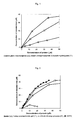
- Figure 1 shows that when the concentration of casein hydrolysate increases, the concentration of bound iron does not increase much ( ⁇ 20% of bound iron ions), i.e. casein hydrolysate is a poor iron binding ingredient.
- concentration of cGMP increases, the concentration of bound iron ions increases significantly in water, up to a maximum value (40 ⁇ M) corresponding to binding of ⁇ 80% of iron ions present in solution.
- cGMP is thus a much more efficient iron binding ingredient compared to casein hydrolysate.
- the iron binding activity of cGMP was surprisingly even higher than that of casein phosphopeptide, despite its much lower degree of phosphorylation.
- Iron-cGMP complexes were prepared at neutral pH according to the method described in Example 1
- a 0.1 M acetate buffer solution was prepared by mixing 463 ml of a 0.2 M acetic acid solution (5.7 ml glacial acetic acid in 494.3 ml Millipore water) with 37 ml of a 0.2 M acetate solution (1.64 g anhydrous sodium acetate with 98.36 g of Millipore water).
- the pH of the 0.1 M acetate buffer solution was 3.6 ⁇ 0.1.
- the different dairy protein solutions (1-50 ⁇ M) were prepared by dissolving some protein sample in 100 ml of 0.1 M acetate buffer solution and mixing for 1 hour.
- a 0.5 mM iron chloride solution was prepared by dissolving 13 mg in 200 ml of 0.1 M acetate buffer solution. Iron calibrating solutions were prepared by several dilution of the above solution.
- a 1 mM ferrozine solution was prepared by dissolving 25 mg of ferrozine in 50 ml 0.1 M acetate buffer solution.
- the iron calibration was performed by mixing 135 ⁇ l of 0.1 M acetate buffer solution and 30 ⁇ l of the above iron chloride solutions.
- the iron-chelator complexes were prepared by mixing 135 ⁇ l of dairy protein solutions at different concentrations and 30 ⁇ l of 0.5 mM iron chloride solution for 20 min at 26 °C.
- the free iron was measured by addition of 150 ⁇ l of 1 mM ferrozine to the solutions, stirring during 5 min at 26 °C, and measurement of the absorbance of the solutions at 562 nm using a UV/Vis-Spectrometer with microplate reader (Varioskan Flash). All samples were analysed in quadruplicate.
- Blank samples (dairy protein without iron) were prepared replacing 30 ⁇ l of 0.5 mM iron chloride solution with 30 ⁇ l of 0.1 M acetate buffer solution in the procedure described above. The absorbance value of the blank sample (without iron) was deducted from the reading of the sample (with iron).
- a 0.2 M acetate buffer solution was prepared by mixing 463 ml of a 0.4 M acetic acid solution (11.4 ml glacial acetic acid in 488.6 ml Millipore water) with 37 ml of a 0.4 M acetate solution (3.28 g anhydrous sodium acetate with 96.72 g of Millipore water) and 500 ml of Millipore water.
- the pH of the 0.2 M acetate buffer solution was 3.6 ⁇ 0.1.
- the different dairy protein solutions (10-200 ⁇ M) were prepared by dissolving some protein powder in Millipore water different concentrations and mixing for 1 hour.
- a 18 mM iron chloride solution was prepared by dissolving 231 mg in 100 ml of 0.1 M acetate buffer solution.
- a 1 mM ferrozine solution was prepared by dissolving 25 mg of ferrozine in 50 ml 0.1 M acetate buffer solution. Iron calibrating solutions (10-100 ⁇ M) were prepared in 0.1 M acetate buffer (following the method described for the one-step process).
- the iron-chelator complexes were prepared by mixing 25 ml of the above dairy protein solutions with 0.25 ml of 18 mM iron chloride solution for 20 min. Acidification was performed by addition of 25 ml of pH 3.6 0.2 M acetate buffer. The free iron was measured by addition of 150 ⁇ l of 1 mM ferrozine to 165 ⁇ l of iron-chelator solutions, stirring during 5 min at 26 °C, and measurement of the absorbance of the solutions at 562 nm using a UV/Vis-Spectrometer with microplate reader (Varioskan Flash). All samples were analysed in quadruplicate.
- Blank samples (dairy protein without iron) were prepared replacing 0.25 ml of 18 mM iron chloride solution with 0.25 ml of Millipore water in the procedure described above. The absorbance value of the blank sample (without iron) was deducted from the reading of the sample (with iron).
- the final iron-protein solutions all contained acetate buffer (pH 3.6, 0.1 M).
- Figure 2 shows that the iron-binding activity of cGMP depends on the method of preparation of the complexes.
- the iron-binding activity of cGMP at acidic pH in acetate buffer is extremely low when the complexes are prepared with a one-step process (less than 10% of iron ions bound).
- the iron-binding activity is, however, much higher when the complexes are prepared with a two-step process, i.e. when the iron ions and the cGMP are pre-mixed at neutral pH before acidification with pH 3.6 acetate buffer.
- this 2-step process the iron-binding activity of cGMP was surprisingly even higher than that obtained at neutral pH where maximum efficiency was expected and was even similar to that of EDTA.
- Iron-caseinate complexes were prepared at neutral pH according to the method described in Example 1, and at acidic pH according to the one-step and two-step processes described in Example 2.
- Figure 3 shows that caseinate has no iron-binding activity at acidic pH when the iron-protein complexes are prepared according to the one-step process, i.e. directly at low pH.
- the iron-binding activity of caseinate is significantly improved when complexes are prepared according to the two-step process.
- Example 4 Influence of cGMP on sensory profile of rapeseed oil mayonnaise
- Rapeseed oil mayonnaise containing 80 % oil, and some egg yolk, mustard, vinegar, water, sugar, salt and flavourings was prepared using a Stephan mixer. Different concentrations of cGMP were added to mayonnaise during dry mixing. The mayonnaise samples were stored in glass jars in the dark at 20 °C for up to 10 months. The rancidity and fishiness were evaluated by a panel (> 5 people) on a scale from 0 to 6 (0: not noticeable, 1: just noticeable off-note, 2: slight off-note, 3: slight definite off-note, 4: definite off-note, 5: definite strong off-note, 6: strong off-note. A sample having a sensory score of 5 or higher was considered as unacceptable. The sensory profiles of the different mayonnaise samples were assessed until the sample was unacceptable.
- Example 4 shows that fishiness developed quickly (less than 2 months) and strongly (score 5) in standard rapeseed oil mayonnaise.
- Addition of 0.1 % cGMP decreased the fishiness perception after 2 months (score 3) but did not extent shelf life. Barely any fishiness was noticeable in rapeseed oil mayonnaise containing 1% of cGMP.
- the addition of 2 % cGMP entirely inhibited off-note formation over 10 months of storage and was found to be as efficient as EDTA in preventing degradation of rapeseed oil mayonnaise.
- Rapeseed oil mayonnaise 0 5 5 - - - Rapeseed oil mayonnaise + 75 ppm EDTA 0 0 0 0 0 0 0 Rapeseed oil mayonnaise 0.1 % cGMP 0 3 - - - - Rapeseed oil mayonnaise 1 % cGMP 0 1 1 0 0 0 Rapeseed oil mayonnaise 2 % cGMP 0 0 0 0 0 0 0 0 0 0 0 0 0
Landscapes
- Chemical & Material Sciences (AREA)
- Engineering & Computer Science (AREA)
- Life Sciences & Earth Sciences (AREA)
- Polymers & Plastics (AREA)
- Food Science & Technology (AREA)
- Oil, Petroleum & Natural Gas (AREA)
- Nutrition Science (AREA)
- Health & Medical Sciences (AREA)
- Wood Science & Technology (AREA)
- Zoology (AREA)
- Seasonings (AREA)
- Edible Oils And Fats (AREA)
- Dairy Products (AREA)
- Confectionery (AREA)
Description
- This invention relates to an emulsified food product and a process for preparing an emulsified food product. In particular, the invention relates to an EDTA-free mayonnaise, and the use of dairy proteins to stabilise mayonnaise against the degradative effects of iron ions present in the mayonnaise.
- A perception of naturalness is increasingly becoming an important attribute for food products. More and more, consumers demand that foods do not contain any additives, especially additives that are perceived to be non-natural or artificial. Cold sauces such as mayonnaise are no exception to this consumer demand. The additive EDTA (ethylenediaminetetraacetic acid) is particularly relevant for mayonnaise products. The presence of EDTA in a food product requires an E number (E385) on the product packaging, and this is recognised by consumers as an additive that is non-natural and so can influence purchasing decisions.
- The reason EDTA is added to many mayonnaise products is to counter the fishy and metallic flavour off-notes that develop after some time. Mayonnaise products contain unsaturated fatty acids, especially omega-3 fatty acids, many of which are polyunsaturated acids. These compounds decompose on storage through oxidation catalysed by trace amounts of iron ions to give the undesirable off-notes. Iron is naturally present in egg yolk and so the presence of iron is unavoidable in any food product containing egg yolk. EDTA is a well-known chelating agent and is added to bind the iron ions making them unavailable for catalysing the oxidation of unsaturated fatty acids. The fatty acids are therefore stabilised and the off-notes are minimised or prevented altogether.
- EDTA is the only solution known for inhibiting the formation of fishy and rancid off-notes in mayonnaises having a content high in omega-3 fatty acids. Its use can extend the shelf-life of such mayonnaise products from, for example, 1 month to 9 months.
-
US patent application 12/642,223 - Jacobsen et al., Trends in Food Science and Technology, 2008, 19, 76-93, also deals with the oxidative stability of emulsified food products containing unsaturated fatty acids such as mayonnaise and discloses lactoferrin for binding iron ions which would otherwise catalyse the oxidation reaction.
- There is an ongoing search for new and improved ways of producing emulsified food products having varying levels and types of unsaturated fatty acids which are resistant to oxidation and spoilage and yet do not contain EDTA or other non-natural chelating agents for binding with iron.
- Some food products are known that rely on additives other than EDTA to stabilise unsaturated fatty acids. These may be traditional phenolic synthetic antioxidants, e.g. BHA (butylated hydroxyanisole), BHT (butylated hydroxytoluene), TBHQ (tert-butylhydroquinone), and propyl gallate, or natural antioxidants, e.g. green tea extract (which has a high content of catechins and polyphenolic), rosemary extracts (which are rich in phenolic diterpenes) and tocopherol extracts (which are derived from soya oil). Citric acid and certain sulphites are also used in some mayonnaise products.
- Different classes of molecules are potential natural metal-chelators including flavonoids, polyphenols, proteins, peptides and polysaccharides.
- Proteins have been widely reported to be efficient in delaying metal-catalysed lipid oxidation in emulsions. The mechanism of protection depends on the location of the protein in the emulsion system. When adsorbed at the oil/water interface, proteins can repel iron electrostatically and thus reduce interactions between iron and lipid hydroperoxides (Kellerby et al., Journal of Agricultural and Food Chemistry, 2006, 54, 7879-7884). When present in the aqueous phase, proteins can bind to the iron, with caseinate for example, having better chelating activity than whey proteins (Faraji et al., Journal of Agricultural and Food Chemistry, 2004, 52, 4558-4564).
- Some milk proteins and peptides are known to have good antioxidant properties (Elias et al., Critical Reviews in Food Science and Nutrition, 2008, 48, 430-441). This is mainly attributed to the presence of phosphoserine amino acid residues, which can bind to metal ions. For example, casein phosphopeptides can inhibit the oxidation of corn oil emulsions at acidic and neutral pH (Diaz et al., Journal ofAgricultural and Food Chemistry, 2003, 51, 2365-2370). Casein hydrolysates are also excellent inhibitors of lipid oxidation in emulsions because they have both metal-chelating and radical-scavenging properties (Diaz et al., Journal ofAgricultural and Food Chemistry, 2003, 51, 2365-2370). Because they have fewer clusters of phosphoserine residues, whey proteins have a lower iron-binding activity than caseins (Sugiarto et al., Dairy Sci. Technol., 2009, in press, DOI: 10.1051/dst/2009053). Casein glycomacropeptide (cGMP) is a dairy protein known for its many potential health benefits. For example, cGMP may modulate immune system responses, have an antihypertensive effect and regulate intestinal function. It has also been described to have a dental protective effect (oral hygiene, tooth remineralization, plaque reduction). Because of its appetite reduction or satiety enhancement effect, cGMP is mainly used in food products and food supplements for weight management. cGMP, however, contains only one phosphorylation site and therefore would not be expected to exhibit strong iron-binding activity.
- Contrary to this expectation, the applicant has found that dairy proteins, and cGMP in particular, do bind iron under the right conditions and therefore are effective for stabilising emulsified food products that contain unsaturated fatty acids such as mayonnaise.
- An object of the present invention is therefore to provide an emulsified food product that at least goes part way to overcoming one or more of the above disadvantages of existing products, or at least to provide a useful alternative.
- In a first aspect of the invention there is provided an emulsified food product comprising:
- a) oil and/or fat, which contains some omega-3 fatty acids;
- b) 0.05 to 5 % by weight of dairy protein; and
- c) at least 10 ppm iron ions;
- The food product preferably comprises at least 1 %, more preferably at least 5 %, and even more preferably at least 10 %, by weight oil and/or fat. The oil and/or fat preferably contains at least 0.1 %, more preferably at least 1 %, and even more preferably at least 5 %, by weight of omega-3 fatty acids. In some preferred embodiments of the invention, the oil and/fat contains 8 to 12 % by weight omega-3 fatty acids. In other preferred embodiments, the oil and/fat contains 20 to 40 % by weight omega-3 fatty acids.
- In some embodiments, the food product comprises 15 to 35 % by weight oil and/or fat. In other embodiments, the food product comprises 70 to 85 % by weight oil and/or fat.
- Preferably, the food product comprises 0.1 to 3 % by weight of dairy protein. It is also preferred that the food product comprises at least 20 ppm iron ions, preferably at least 50 ppm iron ions.
- The dairy protein is a casein glycomacropeptide.
- The food product may comprise egg yolk, which may be fresh egg yolk or powdered egg yolk. The egg yolk is preferably present in the amount of at least 1 % by weight.
- In preferred embodiments of the invention, the food product is a mayonnaise, salad dressing, beverage, creamer, infant formula, baby food, dairy product, cereal products, functional drink, or pet food.
- In a second aspect of the invention, there is provided an emulsified food product that contains no EDTA (ethylenediaminetetraacetic acid) comprising mixing together:
- a) oil and/or fat, which contains some omega-3 fatty acids;
- b) 0.05 to 5 % by weight of dairy protein
- c) a source of iron which contains at least 10 ppm iron ions; and
- d) water;
- The process may further comprise mixing an acidifier with components a) to d). In some embodiments, the acidifier is mixed with components b) to c), and then a) is added and emulsified. In other embodiments, components b) and c) are mixed together, then the acidifier is added and mixed, and then a) is added and emulsified. In other embodiments, components b) and c) are mixed together, then a) is added and emulsified, and then the acidifier is added and mixed.
-
-
Figure 1 shows the iron binding activity of cGMP and casein hydrolysate in water compared with EDTA. -
Figure 2 shows the effect of process on iron binding activity of cGMP at acidic pH. -
Figure 3 shows the effect of process on iron binding activity for caseinate at acidic pH. - The term "emulsified" as it relates to the food product of this invention means oil droplets dispersed in a water matrix, i.e. an oil-in-water emulsion.
- The term "omega-3 fatty acid" means an unsaturated fatty acid having a double bond starting after the third carbon atom from the end (known as the omega end) of the carbon chain.
- The term "iron ions" refers to Fe2+ or Fe3+ or any combination thereof.
- The term "protein" means a combination of chemically bound amino acid residues, and includes peptides, hydrolysed proteins, and any protein or peptide fragment.
- The term "acidifier" means any ingredient that is used to decrease pH, and also may be referred to as acid, acidity regulator, acidic buffering agent, pH adjusting agent etc. The acidifier used in this invention may be, but is not limited to, vinegar, mustard, citric acid, lemon juice, acetic acid, hydrochloric acid, phosphoric acid, malic acid, lactic acid, ascorbic acid, tartaric acid, fumaric acid, alginic acid, or succinic acid.
- The term "dairy protein" refers to any protein, peptide, protein or peptide fraction, or any combination thereof, derived from milk.
- The term "casein glycomacropeptide" or "cGMP" or "GMP", also known as "casein glycopeptide" or "CGP" refers to the C-terminal kappa-casein peptide containing the amino acid residues 106-169, and is part of the whey protein obtained from the treatment of milk with chymosin. The degree and nature of glycosylation can vary significantly depending primarily on processing conditions, and may comprise, for example, galactose, N-acetylneuraminic acid (sialic acid) and N-acetylgalactosamine. The theoretical molecular weight of cGMP is 6707 Daltons but, depending on the glycosylation, may be much higher. There are two major variants of cGMP, variant A and variant B.
- As used in this specification, the words "comprises", "comprising", and similar words, are not to be interpreted in an exclusive or exhaustive sense. In other words, they are intended to mean "including, but not limited to".
- Further, any reference in this specification to prior art documents is not intended to be an admission that they are widely known or form part of the common general knowledge in the field.
- The invention provides an emulsified food product comprising oil and/or fat (at least some of which is omega-3 fatty acids), dairy protein in the amount of 0.05 to 5 % by weight, and iron ions in the amount of at least 10 ppm, wherein there is no EDTA in the food product. As described above, the presence of EDTA in many food products is undesirable, but excluding EDTA then requires an alternative way to avoid the undesirable fishy off-notes that result from the interaction between iron ions and unsaturated fatty acids, particularly omega-3 fatty acids.
- Incorporating dairy protein into emulsified food products that contain iron has now been found to preserve omega-3 fatty acids such that the presence of EDTA is not required to negate the action of iron by chelation. Thus, emulsified food products are obtained that contain no EDTA and have a higher level of omega-3 fatty acids which are well-known to be beneficial to human health.
- Many food products inherently contain some iron ions. For example, any food product made from egg, especially egg yolk, will contain iron. Iron is a known catalyst for a range of chemical processes, one of which is the oxidation of unsaturated fatty acids. When omega-3 fatty acids in particular are oxidised, fishy and rancid flavours and aromas are commonly recognised by consumers. Thus, there is a need to remove the iron to render the iron ions inactive in some way. Removal of the iron is technically difficult and adds expense to food products. It has therefore been necessary to inactivate the iron present. The common method for doing this is to add a food grade chelating agent, such as EDTA, that will bind to the iron ions thereby inactivating the omega-3 fatty acid oxidation process.
- The inventors have now found that dairy protein can be included as an ingredient in emulsified food products to bind the iron ions present such that the addition of EDTA is not needed. cGMP is the preferred dairy protein of the invention.
- Binding of iron to dairy proteins at neutral pH can be achieved with a one-step process by directly mixing the iron ions with the dairy protein. However, at low pH and/or high ionic strength, the iron-binding activity of dairy proteins is significantly reduced and complexes do not form when mixing the iron ions and the protein directly. It is known that iron-binding activity is strongly dependent on pH and ionic strength. The maximum iron-binding activity is obtained at neutral pH and low ionic strength. The inventors have found that a two-step process, including pre-mixing of the dairy protein with iron ions at neutral pH, followed by acidification to acidic pH, was necessary to allow complexation of iron ions by the dairy protein and a much higher iron-binding activity than the standard one-step process.
- The food product of the invention contains oil or fat. It is not important whether the product contains oil or contains fat, or a combination of the two. The food product preferably comprises at least 1 %, more preferably at least 5 %, and even more preferably at least 10 %, by weight oil and/or fat. The oil and/or fat component of the food product contains at least some omega-3 fatty acids, preferably at least 0.1 %, more preferably at least 1 %, and even more preferably at least 5 %. In preferred embodiments of the invention, the oil and/fat contains 8 to 12 % by weight omega-3 fatty acids, which is typical of products containing rapeseed oil. In other preferred embodiments, the oil and/fat contains 20 to 40 % by weight omega-3 fatty acids, which is typical of products containing fish oil. These fatty acids may be, but are not limited to, any of the nutritionally important fatty acids α-linolenic acid (ALA), eicosapentaenoic acid (EPA), and docosahexaenoic acid (DHA), all of which are polyunsaturated.
- The amount of oil and/or fat in the food product may vary considerably. For example, a salad dressing or a low-fat mayonnaise may contain 15 to 35 % by weight oil and/or fat, and a full-fat mayonnaise may contain 70 to 85 % by weight oil and/or fat.
- The dairy protein may be any protein obtained from milk, provided that it does give the desired benefit, i.e. interacts with iron or unsaturated fatty acids in some way to prevent or minimise the production of fishy off-notes. While not limiting to any particular theory, it is considered that the dairy protein binds in some manner (e.g. by chelation or complexation) to iron ions present and therefore renders them inactive to catalysing oxidation of the unsaturated fatty acids. The most preferred protein of the invention is cGMP. The dairy protein may be incorporated into the food product using milk powder itself, or may be incorporated in the form of an extract from milk or milk powder.
- The food product may be any emulsified food product that contains omega-3 fatty acids and iron ions and therefore where there is a need to minimise or prevent the formation of fishy off-notes. Particularly suited products are mayonnaise, salad dressing, various beverages, creamer, infant formula, baby food, dairy products such as yoghurt and ice cream, cereal products, functional drinks, and pet food. The products may be full-fat or reduced-fat products, e.g. low fat mayonnaise.
- The inventors have also found that the method of preparation of the food product of the invention can have an impact on the effectiveness of the dairy protein for countering the effect of the iron ions on the fatty acids. Thus, in a one-step process the dairy protein may be mixed with an ingredient inherently containing iron ions before oil addition and emulsification. This process is particularly suited for neutral pH food products. For acidic pH products, an acidifier may be mixed with the protein and the iron source before the addition of oil and emulsification. In a two-step process (see Example 2 below), the protein may first be mixed with an ingredient already containing iron ions, and then an acidifier may be added. In this two-step process, the oil may be added and emulsified either before or after addition of the acidifier. The two-step process is particularly suited to acid pH products (e.g. mayonnaise products or salad dressings containing vinegar or citric acid as acidifier) as it enhances the effectiveness of the protein in preventing fishy off-note formation in the final emulsified product. This two-step process is also especially suited to dairy peptides, which may have very low effectiveness in the food product if prepared in a one-step process but a higher effectiveness if prepared using the two-step process.
- The invention is further described with reference to the following examples. It will be appreciated that the invention as claimed is not intended to be limited in any way by these examples.
- Different EDTA solutions (5-50 µM) were prepared by dissolving 10 mg EDTA in 100 ml Millipore water, and further dilution of this 0.34 mM solution to obtain lower EDTA concentrations. The different dairy protein solutions (1-50 µM) were prepared by dissolving some protein sample in 100 ml Millipore water and mixing for 1 hour. A 0.5 mM iron chloride solution was prepared by dissolving 13 mg in 200 ml Millipore water. Iron calibrating solutions were prepared by several dilutions of the above solution. A 1 mM ferrozine solution was prepared by dissolving 25 mg of ferrozine in 50 ml in Millipore water.
- The iron calibration was performed by mixing 135 µl Millipore water and 30 µl of the above iron chloride solutions. The iron-chelator complexes were prepared by mixing 135 µl of EDTA or dairy protein solutions at different concentrations and 30 µl of 0.5 mM iron chloride solution for 20 min at 26 °C. The free iron was measured by addition of 150 µl of 1 mM ferrozine to the solutions, stirring during 5 min at 26 °C, and measurement of the absorbance of the solutions at 562 nm using a UV/Vis-Spectrometer with microplate reader (Varioskan Flash).
- All samples were analysed in quadruplicate. Blank samples (EDTA and dairy protein without iron) were prepared replacing 30 µl of 0.5 mM iron chloride solution with 30 µl of Millipore water in the procedure described above. The absorbance value of the blank sample (without iron) was deducted from the reading of the sample (with iron).
-
Figure 1 shows that when the concentration of casein hydrolysate increases, the concentration of bound iron does not increase much (∼20% of bound iron ions), i.e. casein hydrolysate is a poor iron binding ingredient. However, when the concentration of cGMP increases, the concentration of bound iron ions increases significantly in water, up to a maximum value (40 µM) corresponding to binding of ∼80% of iron ions present in solution. cGMP is thus a much more efficient iron binding ingredient compared to casein hydrolysate. The iron binding activity of cGMP was surprisingly even higher than that of casein phosphopeptide, despite its much lower degree of phosphorylation. - Iron-cGMP complexes were prepared at neutral pH according to the method described in Example 1
- A 0.1 M acetate buffer solution was prepared by mixing 463 ml of a 0.2 M acetic acid solution (5.7 ml glacial acetic acid in 494.3 ml Millipore water) with 37 ml of a 0.2 M acetate solution (1.64 g anhydrous sodium acetate with 98.36 g of Millipore water). The pH of the 0.1 M acetate buffer solution was 3.6 ± 0.1. The different dairy protein solutions (1-50 µM) were prepared by dissolving some protein sample in 100 ml of 0.1 M acetate buffer solution and mixing for 1 hour. A 0.5 mM iron chloride solution was prepared by dissolving 13 mg in 200 ml of 0.1 M acetate buffer solution. Iron calibrating solutions were prepared by several dilution of the above solution. A 1 mM ferrozine solution was prepared by dissolving 25 mg of ferrozine in 50 ml 0.1 M acetate buffer solution.
- The iron calibration was performed by mixing 135 µl of 0.1 M acetate buffer solution and 30 µl of the above iron chloride solutions. The iron-chelator complexes were prepared by mixing 135 µl of dairy protein solutions at different concentrations and 30 µl of 0.5 mM iron chloride solution for 20 min at 26 °C. The free iron was measured by addition of 150 µl of 1 mM ferrozine to the solutions, stirring during 5 min at 26 °C, and measurement of the absorbance of the solutions at 562 nm using a UV/Vis-Spectrometer with microplate reader (Varioskan Flash). All samples were analysed in quadruplicate. Blank samples (dairy protein without iron) were prepared replacing 30 µl of 0.5 mM iron chloride solution with 30 µl of 0.1 M acetate buffer solution in the procedure described above. The absorbance value of the blank sample (without iron) was deducted from the reading of the sample (with iron).
- A 0.2 M acetate buffer solution was prepared by mixing 463 ml of a 0.4 M acetic acid solution (11.4 ml glacial acetic acid in 488.6 ml Millipore water) with 37 ml of a 0.4 M acetate solution (3.28 g anhydrous sodium acetate with 96.72 g of Millipore water) and 500 ml of Millipore water. The pH of the 0.2 M acetate buffer solution was 3.6 ± 0.1. The different dairy protein solutions (10-200 µM) were prepared by dissolving some protein powder in Millipore water different concentrations and mixing for 1 hour. A 18 mM iron chloride solution was prepared by dissolving 231 mg in 100 ml of 0.1 M acetate buffer solution. A 1 mM ferrozine solution was prepared by dissolving 25 mg of ferrozine in 50 ml 0.1 M acetate buffer solution. Iron calibrating solutions (10-100 µM) were prepared in 0.1 M acetate buffer (following the method described for the one-step process).
- The iron-chelator complexes were prepared by mixing 25 ml of the above dairy protein solutions with 0.25 ml of 18 mM iron chloride solution for 20 min. Acidification was performed by addition of 25 ml of pH 3.6 0.2 M acetate buffer. The free iron was measured by addition of 150 µl of 1 mM ferrozine to 165 µl of iron-chelator solutions, stirring during 5 min at 26 °C, and measurement of the absorbance of the solutions at 562 nm using a UV/Vis-Spectrometer with microplate reader (Varioskan Flash). All samples were analysed in quadruplicate. Blank samples (dairy protein without iron) were prepared replacing 0.25 ml of 18 mM iron chloride solution with 0.25 ml of Millipore water in the procedure described above. The absorbance value of the blank sample (without iron) was deducted from the reading of the sample (with iron).
- For both the one-step and the two-step process, the final iron-protein solutions all contained acetate buffer (pH 3.6, 0.1 M).
-
Figure 2 shows that the iron-binding activity of cGMP depends on the method of preparation of the complexes. The iron-binding activity of cGMP at acidic pH in acetate buffer is extremely low when the complexes are prepared with a one-step process (less than 10% of iron ions bound). The iron-binding activity is, however, much higher when the complexes are prepared with a two-step process, i.e. when the iron ions and the cGMP are pre-mixed at neutral pH before acidification with pH 3.6 acetate buffer. With this 2-step process, the iron-binding activity of cGMP was surprisingly even higher than that obtained at neutral pH where maximum efficiency was expected and was even similar to that of EDTA. - Iron-caseinate complexes were prepared at neutral pH according to the method described in Example 1, and at acidic pH according to the one-step and two-step processes described in Example 2.
-
Figure 3 shows that caseinate has no iron-binding activity at acidic pH when the iron-protein complexes are prepared according to the one-step process, i.e. directly at low pH. However, the iron-binding activity of caseinate is significantly improved when complexes are prepared according to the two-step process. - Rapeseed oil mayonnaise containing 80 % oil, and some egg yolk, mustard, vinegar, water, sugar, salt and flavourings was prepared using a Stephan mixer. Different concentrations of cGMP were added to mayonnaise during dry mixing. The mayonnaise samples were stored in glass jars in the dark at 20 °C for up to 10 months. The rancidity and fishiness were evaluated by a panel (> 5 people) on a scale from 0 to 6 (0: not noticeable, 1: just noticeable off-note, 2: slight off-note, 3: slight definite off-note, 4: definite off-note, 5: definite strong off-note, 6: strong off-note. A sample having a sensory score of 5 or higher was considered as unacceptable. The sensory profiles of the different mayonnaise samples were assessed until the sample was unacceptable.
- Example 4 shows that fishiness developed quickly (less than 2 months) and strongly (score 5) in standard rapeseed oil mayonnaise. Addition of 0.1 % cGMP decreased the fishiness perception after 2 months (score 3) but did not extent shelf life. Barely any fishiness was noticeable in rapeseed oil mayonnaise containing 1% of cGMP. The addition of 2 % cGMP entirely inhibited off-note formation over 10 months of storage and was found to be as efficient as EDTA in preventing degradation of rapeseed oil mayonnaise.
Storage time (months) 0 2 4 5 7 10 Rapeseed oil mayonnaise 0 5 5 - - - Rapeseed oil mayonnaise + 75 ppm EDTA 0 0 0 0 0 0 Rapeseed oil mayonnaise 0.1 % cGMP 0 3 - - - - Rapeseed oil mayonnaise 1 % cGMP 0 1 1 0 0 0 Rapeseed oil mayonnaise 2 % cGMP 0 0 0 0 0 0
wherein the dairy protein is casein glycomacropeptide (cGMP).
Claims (14)
- An emulsified food product comprising:a) oil and/or fat, which contains some omega-3 fatty acids;b) 0.05 to 5 % by weight of dairy protein; andc) at least 10 ppm iron ions;wherein the food product contains no EDTA (ethylenediaminetetraacetic acid); and wherein the dairy protein is casein glycomacropeptide (cGMP).
- An emulsified food product as claimed in claim 1, which comprises at least 1 %, preferably at least 5 %, more preferably at least 10 %, by weight oil and/or fat.
- An emulsified food product as claimed in claim 1 or claim 2, wherein the oil and/or fat contains at least 0.1 %, preferably at least 1 %, more preferably at least 5 %, by weight of omega-3 fatty acids, for example 8 to 12 % or 20 to 40 % by weight omega-3 fatty acids.
- An emulsified food product as claimed in any one of claims 1 to 3, which comprises 15 to 35 % or 70 to 85 % by weight oil and/or fat.
- An emulsified food product as claimed in any one of claims 1 to 4, which comprises 0.1 to 3 % by weight of dairy protein.
- An emulsified food product as claimed in any one of claims 1 to 5, which comprises at least 20 ppm iron ions, preferably at least 50 ppm iron ions.
- An emulsified food product as claimed in any one of claims 1 to 6, comprising egg yolk, preferably at least 1 % by weight egg yolk.
- An emulsified food product as claimed in claim 7, wherein the egg yolk is fresh egg yolk or powdered egg yolk.
- An emulsified food product as claimed in any one of claims 1 to 8, which is a mayonnaise, salad dressing, beverage, creamer, infant formula, baby food, dairy product, cereal product, functional drink, ice cream, or pet food.
- A process for preparing an emulsified food product that contains no EDTA (ethylenediaminetetraacetic acid) comprising mixing together:a) oil and/or fat, which contains some omega-3 fatty acids;b) 0.05 to 5 % by weight of dairy protein;c) a source of iron which contains at least 10 ppm iron ions; andd) water;wherein the dairy protein is casein glycomacropeptide (cGMP).
- A process as claimed in claim 10, further comprising mixing an acidifier with components a) to d).
- A process as claimed in any one of claims 10 to 11, wherein components b) and d) are mixed together, then the acidifier is added and mixed, and then a) is added and emulsified.
- A process as claimed in any one of claims 10 to 11, wherein components b) and d) are mixed together, then a) is added and emulsified, and then the acidifier is added and mixed.
- A process as claimed in any one of claims 10 to 11, wherein components b) and d) and acidifier are mixed together, and then a) is added and emulsified.
Priority Applications (2)
| Application Number | Priority Date | Filing Date | Title |
|---|---|---|---|
| PL12795789T PL2790522T3 (en) | 2011-12-14 | 2012-11-30 | EMULSIONED FOOD PRODUCT CONTAINING MILK PROTEIN |
| EP12795789.2A EP2790522B1 (en) | 2011-12-14 | 2012-11-30 | Emulsified food product containing dairy protein |
Applications Claiming Priority (3)
| Application Number | Priority Date | Filing Date | Title |
|---|---|---|---|
| EP11193518 | 2011-12-14 | ||
| PCT/EP2012/074018 WO2013087419A1 (en) | 2011-12-14 | 2012-11-30 | Emulsified food product containing dairy protein |
| EP12795789.2A EP2790522B1 (en) | 2011-12-14 | 2012-11-30 | Emulsified food product containing dairy protein |
Publications (2)
| Publication Number | Publication Date |
|---|---|
| EP2790522A1 EP2790522A1 (en) | 2014-10-22 |
| EP2790522B1 true EP2790522B1 (en) | 2015-06-03 |
Family
ID=47294881
Family Applications (1)
| Application Number | Title | Priority Date | Filing Date |
|---|---|---|---|
| EP12795789.2A Revoked EP2790522B1 (en) | 2011-12-14 | 2012-11-30 | Emulsified food product containing dairy protein |
Country Status (5)
| Country | Link |
|---|---|
| EP (1) | EP2790522B1 (en) |
| PL (1) | PL2790522T3 (en) |
| RU (1) | RU2620370C2 (en) |
| UA (1) | UA113419C2 (en) |
| WO (1) | WO2013087419A1 (en) |
Families Citing this family (1)
| Publication number | Priority date | Publication date | Assignee | Title |
|---|---|---|---|---|
| CN111526730B (en) * | 2017-12-29 | 2024-02-23 | 卡夫食品集团品牌有限责任公司 | Improved oxidative stability of oil-in-water emulsions using natural stabilizers |
Citations (12)
| Publication number | Priority date | Publication date | Assignee | Title |
|---|---|---|---|---|
| US4282265A (en) | 1980-01-14 | 1981-08-04 | Bristol-Myers Company | Fat compositions for infant formulas |
| WO1994015952A1 (en) | 1993-01-08 | 1994-07-21 | Novo Nordisk A/S | Method for production of a kappa-casein glycomacropeptide and use of a kappa-casein glycomacropeptide |
| US5700590A (en) | 1994-01-10 | 1997-12-23 | Abbott Laboratories | Nutritional formula with ribo-nucleotides |
| US6294206B1 (en) | 1999-04-09 | 2001-09-25 | Abbott Laboratories | Powdered human milk fortifier |
| US6355612B1 (en) | 1998-10-16 | 2002-03-12 | Nestec S.A. | Protein material for slow digestion and its use |
| US6387883B1 (en) | 1996-04-25 | 2002-05-14 | Abbott Laboratories | Method for the prevention and treatment of cachexia and anorexia |
| US6506422B1 (en) | 1996-08-30 | 2003-01-14 | Nestec S.A. | Nutritional formula for phenylketonuria patients |
| US20040013787A1 (en) | 2002-06-28 | 2004-01-22 | Theuer Richard C. | Fat compositions for infant formula and methods therefor |
| PL190081B1 (en) | 1998-10-05 | 2005-10-31 | Univ Warminsko Mazurski W Olsz | Mayonnaise sauce |
| US20060246146A1 (en) | 2005-04-29 | 2006-11-02 | Mcmahon Robert J | Method of increasing the salivary sialic acid content in a mammal |
| US20060247153A1 (en) | 2005-04-29 | 2006-11-02 | Mcmahon Robert J | Method of improving learning and memory in mammals |
| US7867541B2 (en) | 2003-04-14 | 2011-01-11 | Mead Johnson Nutrition Company | Compositions and methods of formulation for enteral formulas containing sialic acid |
Family Cites Families (4)
| Publication number | Priority date | Publication date | Assignee | Title |
|---|---|---|---|---|
| US6231913B1 (en) * | 1998-02-28 | 2001-05-15 | Kraft Foods, Inc. | Food product dressings and methods for preparing food product dressings |
| BR0209449A (en) * | 2001-05-03 | 2004-08-03 | Unilever Nv | Oil-in-water emulsion and its preparation process |
| WO2005067970A1 (en) * | 2004-01-14 | 2005-07-28 | Gekkeikan Sake Co., Ltd. | Iron supplement and utilization of the same |
| RU2423054C2 (en) * | 2009-06-08 | 2011-07-10 | Открытое Акционерное Общество "Казанский Жировой Комбинат" | Emulsion food product |
-
2012
- 2012-11-30 RU RU2014128656A patent/RU2620370C2/en not_active IP Right Cessation
- 2012-11-30 PL PL12795789T patent/PL2790522T3/en unknown
- 2012-11-30 UA UAA201407787A patent/UA113419C2/en unknown
- 2012-11-30 WO PCT/EP2012/074018 patent/WO2013087419A1/en not_active Ceased
- 2012-11-30 EP EP12795789.2A patent/EP2790522B1/en not_active Revoked
Patent Citations (12)
| Publication number | Priority date | Publication date | Assignee | Title |
|---|---|---|---|---|
| US4282265A (en) | 1980-01-14 | 1981-08-04 | Bristol-Myers Company | Fat compositions for infant formulas |
| WO1994015952A1 (en) | 1993-01-08 | 1994-07-21 | Novo Nordisk A/S | Method for production of a kappa-casein glycomacropeptide and use of a kappa-casein glycomacropeptide |
| US5700590A (en) | 1994-01-10 | 1997-12-23 | Abbott Laboratories | Nutritional formula with ribo-nucleotides |
| US6387883B1 (en) | 1996-04-25 | 2002-05-14 | Abbott Laboratories | Method for the prevention and treatment of cachexia and anorexia |
| US6506422B1 (en) | 1996-08-30 | 2003-01-14 | Nestec S.A. | Nutritional formula for phenylketonuria patients |
| PL190081B1 (en) | 1998-10-05 | 2005-10-31 | Univ Warminsko Mazurski W Olsz | Mayonnaise sauce |
| US6355612B1 (en) | 1998-10-16 | 2002-03-12 | Nestec S.A. | Protein material for slow digestion and its use |
| US6294206B1 (en) | 1999-04-09 | 2001-09-25 | Abbott Laboratories | Powdered human milk fortifier |
| US20040013787A1 (en) | 2002-06-28 | 2004-01-22 | Theuer Richard C. | Fat compositions for infant formula and methods therefor |
| US7867541B2 (en) | 2003-04-14 | 2011-01-11 | Mead Johnson Nutrition Company | Compositions and methods of formulation for enteral formulas containing sialic acid |
| US20060246146A1 (en) | 2005-04-29 | 2006-11-02 | Mcmahon Robert J | Method of increasing the salivary sialic acid content in a mammal |
| US20060247153A1 (en) | 2005-04-29 | 2006-11-02 | Mcmahon Robert J | Method of improving learning and memory in mammals |
Non-Patent Citations (15)
| Title |
|---|
| 12 February 2016 (2016-02-12), XP055260845, Retrieved from the Internet <URL:https://en.wikipedia.org/wiki/Canola> |
| BRODY, E.P.: "Biological activities of bovine glycomacropeptide", BRITISH JOURNAL OF NUTRITION, vol. 84, no. Suppl. 1, 2000, pages S39 - S46, XP009077372 |
| DATABASE ON FOOD ADDITIVES, 1 March 2016 (2016-03-01), Retrieved from the Internet <URL:https://webgate.ec. europa .eu/sanco _foods/main/index.cfm?event=substance.view&identifier=144.> |
| DAUGAARD, L.: "Emulsifiers for mayonnaise production", FOOD MARKETING AND TECHNOLOGY, vol. 7, no. 4, August 1993 (1993-08-01), Nuernberg, DE, pages 17 - 19, XP001095910 |
| EL-SALAM: "separation of casein glycomacropeptide fro whey: methods of potential industrial application", INTL. J. DAIRY SCI., vol. 1, no. 1, 2006, pages 93 - 99, XP055260629 |
| EUROPEAN DIRECTIVE 2006/141/ EC, 22 December 2006 (2006-12-22), XP055260592 |
| EUROPEAN PARLIAMENT AND COUNCIL DIRECTIVE 95/2/ EC, 20 February 1995 (1995-02-20) |
| JACOBSEN ET AL.: "Antioxidant strategies for preventing oxidative flavor deterioration of foods enriched with n-3 polyunsaturated lipids: a comparative evaluation", TRENDS IN FOOD SCIENCE AND TECHNOLOGY, vol. 19, no. 2, 2008, pages 76 - 93, XP022415460 |
| KELLEHER, S.L.: "Glycomacropeptide and alpha-lactalbumin supplementation of infant formula affects growth and nutritional status in infant rhesus monkeys", AMERICAN JOURNAL OF CLINICAL NUTRITION, vol. 77, 2003, pages 1261 - 1268, XP055260587 |
| MARTIN-DIANA ET AL.: "Emulsifying properties of whey protein concentrate and caseinomacropeptide of cow, ewe and goat", MILCHWISSENSCHAFT, vol. 60, no. 4, 2005, pages 363 - 366, XP055260591 |
| NEURINGER: "dietary omega-3 fatty acid deficiency and visual loss in infant rhesus monkeys", J. CLIN. INVEST., vol. 73, January 1984 (1984-01-01), pages 272 - 276, XP055260626 |
| NEY ET AL.: "Dietary Glycomacropeptide supports growth and reduces the concentrations of phenylalanine in plasma and brain in a murine model of phenylketonuria", THE JOURNAL OF NUTRITION, vol. 138, no. 2, 2008, pages 316 - 322, XP055260590 |
| OPINION ON CERTAIN ADDITIVES FOR USE IN FOODS FOR INFANTS AND YOUNG CHILDREN IN GOOD HEALTH AND IN FOODS FOR SPECIAL MEDICAL PURPOSES FOR INFANTS AND YOUNG CHILDREN |
| RICHTLINIE 90/496/EWG DES RATES, 24 September 1990 (1990-09-24), XP055260846 |
| WOOLLARD ET AL.: "carnitine in milk: a survey of content distribution and temporal variation", FOOD CHEMISTRY, vol. 66, 1999, pages 121 - 127, XP001022651 |
Also Published As
| Publication number | Publication date |
|---|---|
| RU2620370C2 (en) | 2017-05-25 |
| WO2013087419A1 (en) | 2013-06-20 |
| EP2790522A1 (en) | 2014-10-22 |
| UA113419C2 (en) | 2017-01-25 |
| RU2014128656A (en) | 2016-02-10 |
| PL2790522T3 (en) | 2015-10-30 |
Similar Documents
| Publication | Publication Date | Title |
|---|---|---|
| Jacobsen et al. | Stabilization of omega-3 oils and enriched foods using antioxidants | |
| KR20130012950A (en) | Omega-3 fatty acid enriched beverages | |
| AU2007283700A1 (en) | Antimicrobial micelles for food applications | |
| EP3599898A1 (en) | Liquid nutritional compositions containing oxidizable fish oil, rosmarinic acid and ferric iron | |
| US20110236560A1 (en) | Food supplementation with phenolic antioxidants in vinegar | |
| KR102465933B1 (en) | Processing of aronia milk and aronia milk thereby the same that | |
| Jacobsen | Challenges when developing omega-3 enriched foods | |
| CN102469826A (en) | Omega-3 fatty acid enriched soups and sauces | |
| JP2008283900A (en) | Dispersion stabilizer of soymilk | |
| Jacobsen et al. | Enrichment of emulsified foods with omega-3 fatty acids | |
| WO2013087419A1 (en) | Emulsified food product containing dairy protein | |
| US9332783B2 (en) | Metal-complexing aroma compounds for use in aroma stabilization | |
| JP6266205B2 (en) | Method for suppressing deterioration of flavor of food and drink containing minerals, vitamin E and emulsifier | |
| JP2021510067A (en) | Improved oxidative stability of oil-in-water emulsions using natural stabilizers | |
| WO2013075940A1 (en) | Emulsified food product containing egg protein and iron | |
| Amani et al. | Processed meat products: health issues and attempts toward healthier food | |
| JP4049709B2 (en) | Container-packed emulsified beverage | |
| RU2531238C2 (en) | Mayonnaise | |
| EP3952658B1 (en) | Oil-in-water emulsified food composition with high oleic oil | |
| US20230018522A1 (en) | Process for reducing oxidation of a foodstuff and related compositions | |
| US20220118042A1 (en) | Composition and use thereof in an emulsion or a foodstuff | |
| EP2351493B1 (en) | Composition based on conjugated linoleic acid for canned products comprising at least one tuna | |
| Márquez-Ruiz et al. | Effect of sterilization of bottled infant milk: impact on lipid oxidation and tocopherols | |
| WADHWA | DEVELOPMENT AND EVALUATION OF VITAMIN A AND IRON FORTIFIED MILK | |
| Jacobsen | Omega‐3 Fatty Acid‐enriched Foods: Health Benefits and Challenges |
Legal Events
| Date | Code | Title | Description |
|---|---|---|---|
| PUAI | Public reference made under article 153(3) epc to a published international application that has entered the european phase |
Free format text: ORIGINAL CODE: 0009012 |
|
| 17P | Request for examination filed |
Effective date: 20140714 |
|
| AK | Designated contracting states |
Kind code of ref document: A1 Designated state(s): AL AT BE BG CH CY CZ DE DK EE ES FI FR GB GR HR HU IE IS IT LI LT LU LV MC MK MT NL NO PL PT RO RS SE SI SK SM TR |
|
| GRAP | Despatch of communication of intention to grant a patent |
Free format text: ORIGINAL CODE: EPIDOSNIGR1 |
|
| RIC1 | Information provided on ipc code assigned before grant |
Ipc: A23D 7/005 20060101AFI20150115BHEP Ipc: A23D 7/00 20060101ALI20150115BHEP Ipc: A23L 1/22 20060101ALI20150115BHEP Ipc: A23L 1/24 20060101ALI20150115BHEP Ipc: A23L 3/3463 20060101ALI20150115BHEP |
|
| DAX | Request for extension of the european patent (deleted) | ||
| INTG | Intention to grant announced |
Effective date: 20150205 |
|
| GRAS | Grant fee paid |
Free format text: ORIGINAL CODE: EPIDOSNIGR3 |
|
| GRAA | (expected) grant |
Free format text: ORIGINAL CODE: 0009210 |
|
| AK | Designated contracting states |
Kind code of ref document: B1 Designated state(s): AL AT BE BG CH CY CZ DE DK EE ES FI FR GB GR HR HU IE IS IT LI LT LU LV MC MK MT NL NO PL PT RO RS SE SI SK SM TR |
|
| REG | Reference to a national code |
Ref country code: GB Ref legal event code: FG4D |
|
| REG | Reference to a national code |
Ref country code: CH Ref legal event code: EP |
|
| REG | Reference to a national code |
Ref country code: AT Ref legal event code: REF Ref document number: 729454 Country of ref document: AT Kind code of ref document: T Effective date: 20150715 Ref country code: IE Ref legal event code: FG4D |
|
| REG | Reference to a national code |
Ref country code: DE Ref legal event code: R096 Ref document number: 602012007820 Country of ref document: DE |
|
| PG25 | Lapsed in a contracting state [announced via postgrant information from national office to epo] |
Ref country code: NO Free format text: LAPSE BECAUSE OF FAILURE TO SUBMIT A TRANSLATION OF THE DESCRIPTION OR TO PAY THE FEE WITHIN THE PRESCRIBED TIME-LIMIT Effective date: 20150903 Ref country code: ES Free format text: LAPSE BECAUSE OF FAILURE TO SUBMIT A TRANSLATION OF THE DESCRIPTION OR TO PAY THE FEE WITHIN THE PRESCRIBED TIME-LIMIT Effective date: 20150603 Ref country code: HR Free format text: LAPSE BECAUSE OF FAILURE TO SUBMIT A TRANSLATION OF THE DESCRIPTION OR TO PAY THE FEE WITHIN THE PRESCRIBED TIME-LIMIT Effective date: 20150603 Ref country code: FI Free format text: LAPSE BECAUSE OF FAILURE TO SUBMIT A TRANSLATION OF THE DESCRIPTION OR TO PAY THE FEE WITHIN THE PRESCRIBED TIME-LIMIT Effective date: 20150603 Ref country code: LT Free format text: LAPSE BECAUSE OF FAILURE TO SUBMIT A TRANSLATION OF THE DESCRIPTION OR TO PAY THE FEE WITHIN THE PRESCRIBED TIME-LIMIT Effective date: 20150603 |
|
| REG | Reference to a national code |
Ref country code: PL Ref legal event code: T3 |
|
| REG | Reference to a national code |
Ref country code: NL Ref legal event code: MP Effective date: 20150603 |
|
| REG | Reference to a national code |
Ref country code: LT Ref legal event code: MG4D |
|
| PG25 | Lapsed in a contracting state [announced via postgrant information from national office to epo] |
Ref country code: BG Free format text: LAPSE BECAUSE OF FAILURE TO SUBMIT A TRANSLATION OF THE DESCRIPTION OR TO PAY THE FEE WITHIN THE PRESCRIBED TIME-LIMIT Effective date: 20150903 Ref country code: RS Free format text: LAPSE BECAUSE OF FAILURE TO SUBMIT A TRANSLATION OF THE DESCRIPTION OR TO PAY THE FEE WITHIN THE PRESCRIBED TIME-LIMIT Effective date: 20150603 Ref country code: LV Free format text: LAPSE BECAUSE OF FAILURE TO SUBMIT A TRANSLATION OF THE DESCRIPTION OR TO PAY THE FEE WITHIN THE PRESCRIBED TIME-LIMIT Effective date: 20150603 Ref country code: GR Free format text: LAPSE BECAUSE OF FAILURE TO SUBMIT A TRANSLATION OF THE DESCRIPTION OR TO PAY THE FEE WITHIN THE PRESCRIBED TIME-LIMIT Effective date: 20150904 |
|
| PG25 | Lapsed in a contracting state [announced via postgrant information from national office to epo] |
Ref country code: EE Free format text: LAPSE BECAUSE OF FAILURE TO SUBMIT A TRANSLATION OF THE DESCRIPTION OR TO PAY THE FEE WITHIN THE PRESCRIBED TIME-LIMIT Effective date: 20150603 |
|
| REG | Reference to a national code |
Ref country code: DE Ref legal event code: R026 Ref document number: 602012007820 Country of ref document: DE |
|
| PLBI | Opposition filed |
Free format text: ORIGINAL CODE: 0009260 |
|
| PG25 | Lapsed in a contracting state [announced via postgrant information from national office to epo] |
Ref country code: CZ Free format text: LAPSE BECAUSE OF FAILURE TO SUBMIT A TRANSLATION OF THE DESCRIPTION OR TO PAY THE FEE WITHIN THE PRESCRIBED TIME-LIMIT Effective date: 20150603 Ref country code: SK Free format text: LAPSE BECAUSE OF FAILURE TO SUBMIT A TRANSLATION OF THE DESCRIPTION OR TO PAY THE FEE WITHIN THE PRESCRIBED TIME-LIMIT Effective date: 20150603 Ref country code: PT Free format text: LAPSE BECAUSE OF FAILURE TO SUBMIT A TRANSLATION OF THE DESCRIPTION OR TO PAY THE FEE WITHIN THE PRESCRIBED TIME-LIMIT Effective date: 20151006 Ref country code: RO Free format text: LAPSE BECAUSE OF NON-PAYMENT OF DUE FEES Effective date: 20150603 Ref country code: IS Free format text: LAPSE BECAUSE OF FAILURE TO SUBMIT A TRANSLATION OF THE DESCRIPTION OR TO PAY THE FEE WITHIN THE PRESCRIBED TIME-LIMIT Effective date: 20151003 |
|
| PLBI | Opposition filed |
Free format text: ORIGINAL CODE: 0009260 |
|
| 26 | Opposition filed |
Opponent name: ABBOTT LABORATORIES Effective date: 20160218 |
|
| PLAX | Notice of opposition and request to file observation + time limit sent |
Free format text: ORIGINAL CODE: EPIDOSNOBS2 |
|
| 26 | Opposition filed |
Opponent name: N.V. NUTRICIA Effective date: 20160303 |
|
| PG25 | Lapsed in a contracting state [announced via postgrant information from national office to epo] |
Ref country code: DK Free format text: LAPSE BECAUSE OF FAILURE TO SUBMIT A TRANSLATION OF THE DESCRIPTION OR TO PAY THE FEE WITHIN THE PRESCRIBED TIME-LIMIT Effective date: 20150603 Ref country code: IT Free format text: LAPSE BECAUSE OF FAILURE TO SUBMIT A TRANSLATION OF THE DESCRIPTION OR TO PAY THE FEE WITHIN THE PRESCRIBED TIME-LIMIT Effective date: 20150603 |
|
| PG25 | Lapsed in a contracting state [announced via postgrant information from national office to epo] |
Ref country code: SI Free format text: LAPSE BECAUSE OF FAILURE TO SUBMIT A TRANSLATION OF THE DESCRIPTION OR TO PAY THE FEE WITHIN THE PRESCRIBED TIME-LIMIT Effective date: 20150603 |
|
| PG25 | Lapsed in a contracting state [announced via postgrant information from national office to epo] |
Ref country code: MC Free format text: LAPSE BECAUSE OF FAILURE TO SUBMIT A TRANSLATION OF THE DESCRIPTION OR TO PAY THE FEE WITHIN THE PRESCRIBED TIME-LIMIT Effective date: 20150603 Ref country code: LU Free format text: LAPSE BECAUSE OF FAILURE TO SUBMIT A TRANSLATION OF THE DESCRIPTION OR TO PAY THE FEE WITHIN THE PRESCRIBED TIME-LIMIT Effective date: 20151130 |
|
| PLBB | Reply of patent proprietor to notice(s) of opposition received |
Free format text: ORIGINAL CODE: EPIDOSNOBS3 |
|
| REG | Reference to a national code |
Ref country code: IE Ref legal event code: MM4A |
|
| REG | Reference to a national code |
Ref country code: FR Ref legal event code: ST Effective date: 20160729 |
|
| PG25 | Lapsed in a contracting state [announced via postgrant information from national office to epo] |
Ref country code: IE Free format text: LAPSE BECAUSE OF NON-PAYMENT OF DUE FEES Effective date: 20151130 |
|
| PG25 | Lapsed in a contracting state [announced via postgrant information from national office to epo] |
Ref country code: FR Free format text: LAPSE BECAUSE OF NON-PAYMENT OF DUE FEES Effective date: 20151130 |
|
| PG25 | Lapsed in a contracting state [announced via postgrant information from national office to epo] |
Ref country code: BE Free format text: LAPSE BECAUSE OF FAILURE TO SUBMIT A TRANSLATION OF THE DESCRIPTION OR TO PAY THE FEE WITHIN THE PRESCRIBED TIME-LIMIT Effective date: 20150603 |
|
| PGFP | Annual fee paid to national office [announced via postgrant information from national office to epo] |
Ref country code: GB Payment date: 20161130 Year of fee payment: 5 |
|
| PG25 | Lapsed in a contracting state [announced via postgrant information from national office to epo] |
Ref country code: SM Free format text: LAPSE BECAUSE OF FAILURE TO SUBMIT A TRANSLATION OF THE DESCRIPTION OR TO PAY THE FEE WITHIN THE PRESCRIBED TIME-LIMIT Effective date: 20150603 |
|
| REG | Reference to a national code |
Ref country code: AT Ref legal event code: UEP Ref document number: 729454 Country of ref document: AT Kind code of ref document: T Effective date: 20150603 |
|
| PG25 | Lapsed in a contracting state [announced via postgrant information from national office to epo] |
Ref country code: SE Free format text: LAPSE BECAUSE OF FAILURE TO SUBMIT A TRANSLATION OF THE DESCRIPTION OR TO PAY THE FEE WITHIN THE PRESCRIBED TIME-LIMIT Effective date: 20150603 Ref country code: NL Free format text: LAPSE BECAUSE OF FAILURE TO SUBMIT A TRANSLATION OF THE DESCRIPTION OR TO PAY THE FEE WITHIN THE PRESCRIBED TIME-LIMIT Effective date: 20150603 Ref country code: HU Free format text: LAPSE BECAUSE OF FAILURE TO SUBMIT A TRANSLATION OF THE DESCRIPTION OR TO PAY THE FEE WITHIN THE PRESCRIBED TIME-LIMIT; INVALID AB INITIO Effective date: 20121130 Ref country code: CY Free format text: LAPSE BECAUSE OF FAILURE TO SUBMIT A TRANSLATION OF THE DESCRIPTION OR TO PAY THE FEE WITHIN THE PRESCRIBED TIME-LIMIT Effective date: 20150603 |
|
| PG25 | Lapsed in a contracting state [announced via postgrant information from national office to epo] |
Ref country code: MT Free format text: LAPSE BECAUSE OF FAILURE TO SUBMIT A TRANSLATION OF THE DESCRIPTION OR TO PAY THE FEE WITHIN THE PRESCRIBED TIME-LIMIT Effective date: 20150603 |
|
| REG | Reference to a national code |
Ref country code: DE Ref legal event code: R064 Ref document number: 602012007820 Country of ref document: DE Ref country code: DE Ref legal event code: R103 Ref document number: 602012007820 Country of ref document: DE |
|
| RAP2 | Party data changed (patent owner data changed or rights of a patent transferred) |
Owner name: NESTEC S.A. |
|
| RDAF | Communication despatched that patent is revoked |
Free format text: ORIGINAL CODE: EPIDOSNREV1 |
|
| STAA | Information on the status of an ep patent application or granted ep patent |
Free format text: STATUS: THE PATENT HAS BEEN GRANTED |
|
| PGFP | Annual fee paid to national office [announced via postgrant information from national office to epo] |
Ref country code: PL Payment date: 20170914 Year of fee payment: 6 |
|
| PGFP | Annual fee paid to national office [announced via postgrant information from national office to epo] |
Ref country code: DE Payment date: 20171121 Year of fee payment: 6 |
|
| RDAG | Patent revoked |
Free format text: ORIGINAL CODE: 0009271 |
|
| STAA | Information on the status of an ep patent application or granted ep patent |
Free format text: STATUS: PATENT REVOKED |
|
| REG | Reference to a national code |
Ref country code: CH Ref legal event code: PLX |
|
| PGFP | Annual fee paid to national office [announced via postgrant information from national office to epo] |
Ref country code: AT Payment date: 20171026 Year of fee payment: 6 Ref country code: CH Payment date: 20171114 Year of fee payment: 6 |
|
| 27W | Patent revoked |
Effective date: 20170914 |
|
| GBPR | Gb: patent revoked under art. 102 of the ep convention designating the uk as contracting state |
Effective date: 20170914 |
|
| PG25 | Lapsed in a contracting state [announced via postgrant information from national office to epo] |
Ref country code: LI Free format text: LAPSE BECAUSE OF THE APPLICANT RENOUNCES Effective date: 20150603 Ref country code: CH Free format text: LAPSE BECAUSE OF THE APPLICANT RENOUNCES Effective date: 20150603 |
|
| REG | Reference to a national code |
Ref country code: AT Ref legal event code: MA03 Ref document number: 729454 Country of ref document: AT Kind code of ref document: T Effective date: 20170914 |
|
| PG25 | Lapsed in a contracting state [announced via postgrant information from national office to epo] |
Ref country code: AL Free format text: LAPSE BECAUSE OF FAILURE TO SUBMIT A TRANSLATION OF THE DESCRIPTION OR TO PAY THE FEE WITHIN THE PRESCRIBED TIME-LIMIT Effective date: 20150603 |
|
| PG25 | Lapsed in a contracting state [announced via postgrant information from national office to epo] |
Ref country code: TR Free format text: LAPSE BECAUSE OF FAILURE TO SUBMIT A TRANSLATION OF THE DESCRIPTION OR TO PAY THE FEE WITHIN THE PRESCRIBED TIME-LIMIT Effective date: 20150603 |