EP2789338A2 - Condensed pyridine derivate and use thereof - Google Patents
Condensed pyridine derivate and use thereof Download PDFInfo
- Publication number
- EP2789338A2 EP2789338A2 EP14167191.7A EP14167191A EP2789338A2 EP 2789338 A2 EP2789338 A2 EP 2789338A2 EP 14167191 A EP14167191 A EP 14167191A EP 2789338 A2 EP2789338 A2 EP 2789338A2
- Authority
- EP
- European Patent Office
- Prior art keywords
- group
- compound
- optionally substituted
- alkyl group
- atom
- Prior art date
- Legal status (The legal status is an assumption and is not a legal conclusion. Google has not performed a legal analysis and makes no representation as to the accuracy of the status listed.)
- Withdrawn
Links
- JUJWROOIHBZHMG-UHFFFAOYSA-N Pyridine Chemical compound C1=CC=NC=C1 JUJWROOIHBZHMG-UHFFFAOYSA-N 0.000 title description 49
- UMJSCPRVCHMLSP-UHFFFAOYSA-N pyridine Natural products COC1=CC=CN=C1 UMJSCPRVCHMLSP-UHFFFAOYSA-N 0.000 title description 24
- 238000000034 method Methods 0.000 claims abstract description 244
- 210000005036 nerve Anatomy 0.000 claims abstract description 37
- 206010011803 Cystocele Diseases 0.000 claims abstract description 36
- 201000004989 Enterocele Diseases 0.000 claims abstract description 36
- 206010019909 Hernia Diseases 0.000 claims abstract description 36
- 238000011282 treatment Methods 0.000 claims abstract description 36
- 230000036724 intravesical pressure Effects 0.000 claims abstract description 32
- 238000012216 screening Methods 0.000 claims abstract description 28
- 241001465754 Metazoa Species 0.000 claims abstract description 27
- 238000011321 prophylaxis Methods 0.000 claims abstract description 27
- 239000003814 drug Substances 0.000 claims abstract description 24
- 230000001965 increasing effect Effects 0.000 claims abstract description 16
- 230000004044 response Effects 0.000 claims abstract description 12
- 230000002146 bilateral effect Effects 0.000 claims abstract description 11
- 210000003708 urethra Anatomy 0.000 claims abstract description 11
- 229940079593 drug Drugs 0.000 claims abstract description 10
- 210000000664 rectum Anatomy 0.000 claims abstract description 7
- 210000001215 vagina Anatomy 0.000 claims abstract description 7
- 210000003205 muscle Anatomy 0.000 claims description 35
- 210000003903 pelvic floor Anatomy 0.000 claims description 29
- 230000011514 reflex Effects 0.000 claims description 18
- 230000008602 contraction Effects 0.000 claims description 10
- 230000035606 childbirth Effects 0.000 claims description 9
- 230000003247 decreasing effect Effects 0.000 claims description 9
- 208000014674 injury Diseases 0.000 claims description 7
- 230000006378 damage Effects 0.000 claims description 6
- 206010012601 diabetes mellitus Diseases 0.000 claims description 6
- 238000009806 oophorectomy Methods 0.000 claims description 6
- 208000027418 Wounds and injury Diseases 0.000 claims description 5
- 238000001647 drug administration Methods 0.000 claims description 5
- 150000001875 compounds Chemical class 0.000 description 592
- -1 methylamino, ethylamino, propylamino, dimethylamino, diethylamino, dipropylamino Chemical group 0.000 description 258
- 125000000217 alkyl group Chemical group 0.000 description 218
- 125000004435 hydrogen atom Chemical group [H]* 0.000 description 158
- 125000005843 halogen group Chemical group 0.000 description 153
- 238000006243 chemical reaction Methods 0.000 description 141
- 150000003839 salts Chemical class 0.000 description 134
- 125000001424 substituent group Chemical group 0.000 description 119
- 125000003118 aryl group Chemical group 0.000 description 118
- 239000002904 solvent Substances 0.000 description 115
- 125000003545 alkoxy group Chemical group 0.000 description 91
- 125000000753 cycloalkyl group Chemical group 0.000 description 89
- YXFVVABEGXRONW-UHFFFAOYSA-N Toluene Chemical compound CC1=CC=CC=C1 YXFVVABEGXRONW-UHFFFAOYSA-N 0.000 description 84
- ZMXDDKWLCZADIW-UHFFFAOYSA-N N,N-Dimethylformamide Chemical compound CN(C)C=O ZMXDDKWLCZADIW-UHFFFAOYSA-N 0.000 description 81
- QZAYGJVTTNCVMB-UHFFFAOYSA-N serotonin Chemical compound C1=C(O)C=C2C(CCN)=CNC2=C1 QZAYGJVTTNCVMB-UHFFFAOYSA-N 0.000 description 80
- ZMANZCXQSJIPKH-UHFFFAOYSA-N Triethylamine Chemical compound CCN(CC)CC ZMANZCXQSJIPKH-UHFFFAOYSA-N 0.000 description 72
- UHOVQNZJYSORNB-UHFFFAOYSA-N Benzene Chemical compound C1=CC=CC=C1 UHOVQNZJYSORNB-UHFFFAOYSA-N 0.000 description 66
- 125000001072 heteroaryl group Chemical group 0.000 description 61
- WEVYAHXRMPXWCK-UHFFFAOYSA-N Acetonitrile Chemical compound CC#N WEVYAHXRMPXWCK-UHFFFAOYSA-N 0.000 description 60
- 239000002585 base Substances 0.000 description 58
- HEMHJVSKTPXQMS-UHFFFAOYSA-M Sodium hydroxide Chemical compound [OH-].[Na+] HEMHJVSKTPXQMS-UHFFFAOYSA-M 0.000 description 57
- 125000004169 (C1-C6) alkyl group Chemical group 0.000 description 56
- WYURNTSHIVDZCO-UHFFFAOYSA-N Tetrahydrofuran Chemical compound C1CCOC1 WYURNTSHIVDZCO-UHFFFAOYSA-N 0.000 description 56
- HEDRZPFGACZZDS-UHFFFAOYSA-N Chloroform Chemical compound ClC(Cl)Cl HEDRZPFGACZZDS-UHFFFAOYSA-N 0.000 description 54
- KWYUFKZDYYNOTN-UHFFFAOYSA-M Potassium hydroxide Chemical compound [OH-].[K+] KWYUFKZDYYNOTN-UHFFFAOYSA-M 0.000 description 54
- 229910052799 carbon Inorganic materials 0.000 description 52
- 125000000547 substituted alkyl group Chemical group 0.000 description 48
- 208000037265 diseases, disorders, signs and symptoms Diseases 0.000 description 47
- 125000002496 methyl group Chemical group [H]C([H])([H])* 0.000 description 44
- BWHMMNNQKKPAPP-UHFFFAOYSA-L potassium carbonate Chemical compound [K+].[K+].[O-]C([O-])=O BWHMMNNQKKPAPP-UHFFFAOYSA-L 0.000 description 44
- YMWUJEATGCHHMB-UHFFFAOYSA-N Dichloromethane Chemical compound ClCCl YMWUJEATGCHHMB-UHFFFAOYSA-N 0.000 description 42
- RTZKZFJDLAIYFH-UHFFFAOYSA-N Diethyl ether Chemical compound CCOCC RTZKZFJDLAIYFH-UHFFFAOYSA-N 0.000 description 42
- SJRJJKPEHAURKC-UHFFFAOYSA-N N-Methylmorpholine Chemical compound CN1CCOCC1 SJRJJKPEHAURKC-UHFFFAOYSA-N 0.000 description 42
- 230000002411 adverse Effects 0.000 description 41
- 150000001721 carbon Chemical group 0.000 description 41
- IAZDPXIOMUYVGZ-UHFFFAOYSA-N Dimethylsulphoxide Chemical compound CS(C)=O IAZDPXIOMUYVGZ-UHFFFAOYSA-N 0.000 description 40
- 229940076279 serotonin Drugs 0.000 description 40
- LFQSCWFLJHTTHZ-UHFFFAOYSA-N Ethanol Chemical compound CCO LFQSCWFLJHTTHZ-UHFFFAOYSA-N 0.000 description 38
- 229910052757 nitrogen Inorganic materials 0.000 description 38
- 125000004433 nitrogen atom Chemical group N* 0.000 description 38
- OKKJLVBELUTLKV-UHFFFAOYSA-N Methanol Chemical compound OC OKKJLVBELUTLKV-UHFFFAOYSA-N 0.000 description 36
- CDBYLPFSWZWCQE-UHFFFAOYSA-L Sodium Carbonate Chemical compound [Na+].[Na+].[O-]C([O-])=O CDBYLPFSWZWCQE-UHFFFAOYSA-L 0.000 description 36
- UAOMVDZJSHZZME-UHFFFAOYSA-N diisopropylamine Chemical compound CC(C)NC(C)C UAOMVDZJSHZZME-UHFFFAOYSA-N 0.000 description 36
- GETQZCLCWQTVFV-UHFFFAOYSA-N trimethylamine Chemical compound CN(C)C GETQZCLCWQTVFV-UHFFFAOYSA-N 0.000 description 36
- 125000002723 alicyclic group Chemical group 0.000 description 35
- 229910052783 alkali metal Inorganic materials 0.000 description 35
- 125000001495 ethyl group Chemical group [H]C([H])([H])C([H])([H])* 0.000 description 35
- 125000004123 n-propyl group Chemical group [H]C([H])([H])C([H])([H])C([H])([H])* 0.000 description 35
- 238000002425 crystallisation Methods 0.000 description 34
- 239000000203 mixture Substances 0.000 description 33
- UIIMBOGNXHQVGW-UHFFFAOYSA-M Sodium bicarbonate Chemical compound [Na+].OC([O-])=O UIIMBOGNXHQVGW-UHFFFAOYSA-M 0.000 description 32
- 239000003054 catalyst Substances 0.000 description 32
- 230000008025 crystallization Effects 0.000 description 31
- 125000001449 isopropyl group Chemical group [H]C([H])([H])C([H])(*)C([H])([H])[H] 0.000 description 31
- 238000000926 separation method Methods 0.000 description 31
- 125000001559 cyclopropyl group Chemical group [H]C1([H])C([H])([H])C1([H])* 0.000 description 29
- JLTDJTHDQAWBAV-UHFFFAOYSA-N N,N-dimethylaniline Chemical compound CN(C)C1=CC=CC=C1 JLTDJTHDQAWBAV-UHFFFAOYSA-N 0.000 description 28
- 150000002170 ethers Chemical class 0.000 description 28
- MFRIHAYPQRLWNB-UHFFFAOYSA-N sodium tert-butoxide Chemical compound [Na+].CC(C)(C)[O-] MFRIHAYPQRLWNB-UHFFFAOYSA-N 0.000 description 28
- YLQBMQCUIZJEEH-UHFFFAOYSA-N tetrahydrofuran Natural products C=1C=COC=1 YLQBMQCUIZJEEH-UHFFFAOYSA-N 0.000 description 28
- XEKOWRVHYACXOJ-UHFFFAOYSA-N Ethyl acetate Chemical compound CCOC(C)=O XEKOWRVHYACXOJ-UHFFFAOYSA-N 0.000 description 27
- 238000004587 chromatography analysis Methods 0.000 description 27
- 201000010099 disease Diseases 0.000 description 27
- 229940052308 general anesthetics halogenated hydrocarbons Drugs 0.000 description 27
- 150000008282 halocarbons Chemical class 0.000 description 27
- 239000012071 phase Substances 0.000 description 27
- 238000001953 recrystallisation Methods 0.000 description 27
- 125000002914 sec-butyl group Chemical group [H]C([H])([H])C([H])([H])C([H])(*)C([H])([H])[H] 0.000 description 27
- 208000008589 Obesity Diseases 0.000 description 26
- 125000004414 alkyl thio group Chemical group 0.000 description 26
- 235000020824 obesity Nutrition 0.000 description 26
- 230000035484 reaction time Effects 0.000 description 25
- 238000000638 solvent extraction Methods 0.000 description 25
- WQDUMFSSJAZKTM-UHFFFAOYSA-N Sodium methoxide Chemical compound [Na+].[O-]C WQDUMFSSJAZKTM-UHFFFAOYSA-N 0.000 description 24
- 206010066218 Stress Urinary Incontinence Diseases 0.000 description 24
- 150000001412 amines Chemical class 0.000 description 24
- 238000000746 purification Methods 0.000 description 24
- 230000002829 reductive effect Effects 0.000 description 24
- 238000012546 transfer Methods 0.000 description 24
- LWIHDJKSTIGBAC-UHFFFAOYSA-K tripotassium phosphate Chemical compound [K+].[K+].[K+].[O-]P([O-])([O-])=O LWIHDJKSTIGBAC-UHFFFAOYSA-K 0.000 description 24
- 125000005913 (C3-C6) cycloalkyl group Chemical group 0.000 description 23
- 239000003795 chemical substances by application Substances 0.000 description 23
- 125000000959 isobutyl group Chemical group [H]C([H])([H])C([H])(C([H])([H])[H])C([H])([H])* 0.000 description 23
- 210000003932 urinary bladder Anatomy 0.000 description 23
- 238000002955 isolation Methods 0.000 description 22
- 229910000027 potassium carbonate Inorganic materials 0.000 description 22
- 235000011181 potassium carbonates Nutrition 0.000 description 22
- 239000000126 substance Substances 0.000 description 22
- 229940126585 therapeutic drug Drugs 0.000 description 22
- CTQNGGLPUBDAKN-UHFFFAOYSA-N O-Xylene Chemical compound CC1=CC=CC=C1C CTQNGGLPUBDAKN-UHFFFAOYSA-N 0.000 description 21
- 125000001511 cyclopentyl group Chemical group [H]C1([H])C([H])([H])C([H])([H])C([H])(*)C1([H])[H] 0.000 description 21
- 229930195733 hydrocarbon Natural products 0.000 description 21
- 150000002430 hydrocarbons Chemical class 0.000 description 21
- VLKZOEOYAKHREP-UHFFFAOYSA-N n-Hexane Chemical compound CCCCCC VLKZOEOYAKHREP-UHFFFAOYSA-N 0.000 description 21
- 239000008096 xylene Substances 0.000 description 21
- 229910052731 fluorine Inorganic materials 0.000 description 20
- 125000001153 fluoro group Chemical group F* 0.000 description 20
- 210000000056 organ Anatomy 0.000 description 20
- 102000005962 receptors Human genes 0.000 description 20
- 108020003175 receptors Proteins 0.000 description 20
- 150000002825 nitriles Chemical class 0.000 description 19
- 230000000069 prophylactic effect Effects 0.000 description 19
- 150000001408 amides Chemical class 0.000 description 18
- 229910052801 chlorine Inorganic materials 0.000 description 18
- 125000001309 chloro group Chemical group Cl* 0.000 description 18
- 239000000047 product Substances 0.000 description 18
- 108091006084 receptor activators Proteins 0.000 description 18
- 229910000029 sodium carbonate Inorganic materials 0.000 description 18
- 235000017550 sodium carbonate Nutrition 0.000 description 18
- 208000035475 disorder Diseases 0.000 description 17
- 206010071289 Lower urinary tract symptoms Diseases 0.000 description 16
- 125000001995 cyclobutyl group Chemical group [H]C1([H])C([H])([H])C([H])(*)C1([H])[H] 0.000 description 16
- 239000011736 potassium bicarbonate Substances 0.000 description 16
- 235000015497 potassium bicarbonate Nutrition 0.000 description 16
- 229910000028 potassium bicarbonate Inorganic materials 0.000 description 16
- TYJJADVDDVDEDZ-UHFFFAOYSA-M potassium hydrogencarbonate Chemical compound [K+].OC([O-])=O TYJJADVDDVDEDZ-UHFFFAOYSA-M 0.000 description 16
- 229940086066 potassium hydrogencarbonate Drugs 0.000 description 16
- 229910000030 sodium bicarbonate Inorganic materials 0.000 description 16
- 235000017557 sodium bicarbonate Nutrition 0.000 description 16
- 229910052723 transition metal Inorganic materials 0.000 description 16
- 150000003624 transition metals Chemical class 0.000 description 16
- QTBSBXVTEAMEQO-UHFFFAOYSA-N Acetic acid Chemical compound CC(O)=O QTBSBXVTEAMEQO-UHFFFAOYSA-N 0.000 description 15
- 238000011156 evaluation Methods 0.000 description 15
- 125000000719 pyrrolidinyl group Chemical group 0.000 description 15
- RYHBNJHYFVUHQT-UHFFFAOYSA-N 1,4-Dioxane Chemical compound C1COCCO1 RYHBNJHYFVUHQT-UHFFFAOYSA-N 0.000 description 14
- GQHTUMJGOHRCHB-UHFFFAOYSA-N 2,3,4,6,7,8,9,10-octahydropyrimido[1,2-a]azepine Chemical compound C1CCCCN2CCCN=C21 GQHTUMJGOHRCHB-UHFFFAOYSA-N 0.000 description 14
- XTHFKEDIFFGKHM-UHFFFAOYSA-N Dimethoxyethane Chemical compound COCCOC XTHFKEDIFFGKHM-UHFFFAOYSA-N 0.000 description 14
- KFZMGEQAYNKOFK-UHFFFAOYSA-N Isopropanol Chemical compound CC(C)O KFZMGEQAYNKOFK-UHFFFAOYSA-N 0.000 description 14
- IMNFDUFMRHMDMM-UHFFFAOYSA-N N-Heptane Chemical compound CCCCCCC IMNFDUFMRHMDMM-UHFFFAOYSA-N 0.000 description 14
- 230000002140 halogenating effect Effects 0.000 description 14
- BDAGIHXWWSANSR-UHFFFAOYSA-N methanoic acid Natural products OC=O BDAGIHXWWSANSR-UHFFFAOYSA-N 0.000 description 14
- 230000003287 optical effect Effects 0.000 description 14
- 125000001997 phenyl group Chemical group [H]C1=C([H])C([H])=C(*)C([H])=C1[H] 0.000 description 14
- LPNYRYFBWFDTMA-UHFFFAOYSA-N potassium tert-butoxide Chemical compound [K+].CC(C)(C)[O-] LPNYRYFBWFDTMA-UHFFFAOYSA-N 0.000 description 14
- 208000011580 syndromic disease Diseases 0.000 description 14
- 208000012287 Prolapse Diseases 0.000 description 13
- KEAYESYHFKHZAL-UHFFFAOYSA-N Sodium Chemical compound [Na] KEAYESYHFKHZAL-UHFFFAOYSA-N 0.000 description 13
- 239000002253 acid Substances 0.000 description 13
- 150000004982 aromatic amines Chemical class 0.000 description 13
- 125000001797 benzyl group Chemical group [H]C1=C([H])C([H])=C(C([H])=C1[H])C([H])([H])* 0.000 description 13
- QDRKDTQENPPHOJ-UHFFFAOYSA-N sodium ethoxide Chemical compound [Na+].CC[O-] QDRKDTQENPPHOJ-UHFFFAOYSA-N 0.000 description 13
- 239000012312 sodium hydride Substances 0.000 description 13
- 229910000104 sodium hydride Inorganic materials 0.000 description 13
- WSLDOOZREJYCGB-UHFFFAOYSA-N 1,2-Dichloroethane Chemical compound ClCCCl WSLDOOZREJYCGB-UHFFFAOYSA-N 0.000 description 12
- WMFOQBRAJBCJND-UHFFFAOYSA-M Lithium hydroxide Chemical compound [Li+].[OH-] WMFOQBRAJBCJND-UHFFFAOYSA-M 0.000 description 12
- KDLHZDBZIXYQEI-UHFFFAOYSA-N Palladium Chemical compound [Pd] KDLHZDBZIXYQEI-UHFFFAOYSA-N 0.000 description 12
- DTQVDTLACAAQTR-UHFFFAOYSA-N Trifluoroacetic acid Chemical compound OC(=O)C(F)(F)F DTQVDTLACAAQTR-UHFFFAOYSA-N 0.000 description 12
- FJDQFPXHSGXQBY-UHFFFAOYSA-L caesium carbonate Chemical compound [Cs+].[Cs+].[O-]C([O-])=O FJDQFPXHSGXQBY-UHFFFAOYSA-L 0.000 description 12
- 229910000024 caesium carbonate Inorganic materials 0.000 description 12
- 229940043279 diisopropylamine Drugs 0.000 description 12
- GNOIPBMMFNIUFM-UHFFFAOYSA-N hexamethylphosphoric triamide Chemical compound CN(C)P(=O)(N(C)C)N(C)C GNOIPBMMFNIUFM-UHFFFAOYSA-N 0.000 description 12
- 125000000587 piperidin-1-yl group Chemical group [H]C1([H])N(*)C([H])([H])C([H])([H])C([H])([H])C1([H])[H] 0.000 description 12
- 239000002798 polar solvent Substances 0.000 description 12
- 229910000160 potassium phosphate Inorganic materials 0.000 description 12
- 235000011009 potassium phosphates Nutrition 0.000 description 12
- 239000001488 sodium phosphate Substances 0.000 description 12
- 229910000162 sodium phosphate Inorganic materials 0.000 description 12
- RYFMWSXOAZQYPI-UHFFFAOYSA-K trisodium phosphate Chemical compound [Na+].[Na+].[Na+].[O-]P([O-])([O-])=O RYFMWSXOAZQYPI-UHFFFAOYSA-K 0.000 description 12
- XLYOFNOQVPJJNP-UHFFFAOYSA-N water Substances O XLYOFNOQVPJJNP-UHFFFAOYSA-N 0.000 description 12
- WKBOTKDWSSQWDR-UHFFFAOYSA-N Bromine atom Chemical group [Br] WKBOTKDWSSQWDR-UHFFFAOYSA-N 0.000 description 11
- VEXZGXHMUGYJMC-UHFFFAOYSA-N Hydrochloric acid Chemical compound Cl VEXZGXHMUGYJMC-UHFFFAOYSA-N 0.000 description 11
- FAPWRFPIFSIZLT-UHFFFAOYSA-M Sodium chloride Chemical compound [Na+].[Cl-] FAPWRFPIFSIZLT-UHFFFAOYSA-M 0.000 description 11
- 150000002148 esters Chemical class 0.000 description 11
- 229910052987 metal hydride Inorganic materials 0.000 description 11
- 150000004681 metal hydrides Chemical class 0.000 description 11
- NTTOTNSKUYCDAV-UHFFFAOYSA-N potassium hydride Chemical compound [KH] NTTOTNSKUYCDAV-UHFFFAOYSA-N 0.000 description 11
- 229910000105 potassium hydride Inorganic materials 0.000 description 11
- 229940043274 prophylactic drug Drugs 0.000 description 11
- 239000011780 sodium chloride Substances 0.000 description 11
- OKTJSMMVPCPJKN-UHFFFAOYSA-N Carbon Chemical compound [C] OKTJSMMVPCPJKN-UHFFFAOYSA-N 0.000 description 10
- JGFZNNIVVJXRND-UHFFFAOYSA-N N,N-Diisopropylethylamine (DIPEA) Chemical compound CCN(C(C)C)C(C)C JGFZNNIVVJXRND-UHFFFAOYSA-N 0.000 description 10
- 241000700159 Rattus Species 0.000 description 10
- QAOWNCQODCNURD-UHFFFAOYSA-N Sulfuric acid Chemical compound OS(O)(=O)=O QAOWNCQODCNURD-UHFFFAOYSA-N 0.000 description 10
- 150000001298 alcohols Chemical class 0.000 description 10
- 230000032050 esterification Effects 0.000 description 10
- 238000005886 esterification reaction Methods 0.000 description 10
- 229910052739 hydrogen Inorganic materials 0.000 description 10
- 239000001257 hydrogen Substances 0.000 description 10
- 239000003446 ligand Substances 0.000 description 10
- 208000024891 symptom Diseases 0.000 description 10
- RIOQSEWOXXDEQQ-UHFFFAOYSA-N triphenylphosphine Chemical compound C1=CC=CC=C1P(C=1C=CC=CC=1)C1=CC=CC=C1 RIOQSEWOXXDEQQ-UHFFFAOYSA-N 0.000 description 10
- BWHDROKFUHTORW-UHFFFAOYSA-N tritert-butylphosphane Chemical compound CC(C)(C)P(C(C)(C)C)C(C)(C)C BWHDROKFUHTORW-UHFFFAOYSA-N 0.000 description 10
- 230000002485 urinary effect Effects 0.000 description 10
- 125000006700 (C1-C6) alkylthio group Chemical group 0.000 description 9
- UFHFLCQGNIYNRP-UHFFFAOYSA-N Hydrogen Chemical compound [H][H] UFHFLCQGNIYNRP-UHFFFAOYSA-N 0.000 description 9
- DGAQECJNVWCQMB-PUAWFVPOSA-M Ilexoside XXIX Chemical compound C[C@@H]1CC[C@@]2(CC[C@@]3(C(=CC[C@H]4[C@]3(CC[C@@H]5[C@@]4(CC[C@@H](C5(C)C)OS(=O)(=O)[O-])C)C)[C@@H]2[C@]1(C)O)C)C(=O)O[C@H]6[C@@H]([C@H]([C@@H]([C@H](O6)CO)O)O)O.[Na+] DGAQECJNVWCQMB-PUAWFVPOSA-M 0.000 description 9
- WHXSMMKQMYFTQS-UHFFFAOYSA-N Lithium Chemical compound [Li] WHXSMMKQMYFTQS-UHFFFAOYSA-N 0.000 description 9
- PXHVJJICTQNCMI-UHFFFAOYSA-N Nickel Chemical compound [Ni] PXHVJJICTQNCMI-UHFFFAOYSA-N 0.000 description 9
- 230000009471 action Effects 0.000 description 9
- 239000013078 crystal Substances 0.000 description 9
- 125000000113 cyclohexyl group Chemical group [H]C1([H])C([H])([H])C([H])([H])C([H])(*)C([H])([H])C1([H])[H] 0.000 description 9
- 125000000250 methylamino group Chemical group [H]N(*)C([H])([H])[H] 0.000 description 9
- 229940002612 prodrug Drugs 0.000 description 9
- 239000000651 prodrug Substances 0.000 description 9
- 239000011734 sodium Substances 0.000 description 9
- 229910052708 sodium Inorganic materials 0.000 description 9
- 210000002700 urine Anatomy 0.000 description 9
- ZCYVEMRRCGMTRW-UHFFFAOYSA-N 7553-56-2 Chemical group [I] ZCYVEMRRCGMTRW-UHFFFAOYSA-N 0.000 description 8
- LRHPLDYGYMQRHN-UHFFFAOYSA-N N-Butanol Chemical compound CCCCO LRHPLDYGYMQRHN-UHFFFAOYSA-N 0.000 description 8
- ZLMJMSJWJFRBEC-UHFFFAOYSA-N Potassium Chemical compound [K] ZLMJMSJWJFRBEC-UHFFFAOYSA-N 0.000 description 8
- 230000003187 abdominal effect Effects 0.000 description 8
- 150000008044 alkali metal hydroxides Chemical class 0.000 description 8
- 239000011203 carbon fibre reinforced carbon Substances 0.000 description 8
- 125000005842 heteroatom Chemical group 0.000 description 8
- 125000002887 hydroxy group Chemical group [H]O* 0.000 description 8
- 238000001727 in vivo Methods 0.000 description 8
- 229910052740 iodine Inorganic materials 0.000 description 8
- 229910052744 lithium Inorganic materials 0.000 description 8
- 238000004519 manufacturing process Methods 0.000 description 8
- NFHFRUOZVGFOOS-UHFFFAOYSA-N palladium;triphenylphosphane Chemical compound [Pd].C1=CC=CC=C1P(C=1C=CC=CC=1)C1=CC=CC=C1.C1=CC=CC=C1P(C=1C=CC=CC=1)C1=CC=CC=C1.C1=CC=CC=C1P(C=1C=CC=CC=1)C1=CC=CC=C1.C1=CC=CC=C1P(C=1C=CC=CC=1)C1=CC=CC=C1 NFHFRUOZVGFOOS-UHFFFAOYSA-N 0.000 description 8
- 125000003538 pentan-3-yl group Chemical group [H]C([H])([H])C([H])([H])C([H])(*)C([H])([H])C([H])([H])[H] 0.000 description 8
- 229960003975 potassium Drugs 0.000 description 8
- 239000011591 potassium Substances 0.000 description 8
- 229910052700 potassium Inorganic materials 0.000 description 8
- 238000002360 preparation method Methods 0.000 description 8
- 239000007858 starting material Substances 0.000 description 8
- 150000003462 sulfoxides Chemical class 0.000 description 8
- BSKHPKMHTQYZBB-UHFFFAOYSA-N 2-methylpyridine Chemical compound CC1=CC=CC=N1 BSKHPKMHTQYZBB-UHFFFAOYSA-N 0.000 description 7
- 241000124008 Mammalia Species 0.000 description 7
- 150000004945 aromatic hydrocarbons Chemical class 0.000 description 7
- 235000019253 formic acid Nutrition 0.000 description 7
- 238000002347 injection Methods 0.000 description 7
- 239000007924 injection Substances 0.000 description 7
- 125000000956 methoxy group Chemical group [H]C([H])([H])O* 0.000 description 7
- 230000036453 micturition reflex Effects 0.000 description 7
- 125000004573 morpholin-4-yl group Chemical group N1(CCOCC1)* 0.000 description 7
- 230000007170 pathology Effects 0.000 description 7
- 125000000467 secondary amino group Chemical group [H]N([*:1])[*:2] 0.000 description 7
- 230000000638 stimulation Effects 0.000 description 7
- 125000000999 tert-butyl group Chemical group [H]C([H])([H])C(*)(C([H])([H])[H])C([H])([H])[H] 0.000 description 7
- 229940124597 therapeutic agent Drugs 0.000 description 7
- CYPYTURSJDMMMP-WVCUSYJESA-N (1e,4e)-1,5-diphenylpenta-1,4-dien-3-one;palladium Chemical compound [Pd].[Pd].C=1C=CC=CC=1\C=C\C(=O)\C=C\C1=CC=CC=C1.C=1C=CC=CC=1\C=C\C(=O)\C=C\C1=CC=CC=C1.C=1C=CC=CC=1\C=C\C(=O)\C=C\C1=CC=CC=C1 CYPYTURSJDMMMP-WVCUSYJESA-N 0.000 description 6
- 125000004191 (C1-C6) alkoxy group Chemical group 0.000 description 6
- VHYFNPMBLIVWCW-UHFFFAOYSA-N 4-Dimethylaminopyridine Chemical compound CN(C)C1=CC=NC=C1 VHYFNPMBLIVWCW-UHFFFAOYSA-N 0.000 description 6
- WVDDGKGOMKODPV-UHFFFAOYSA-N Benzyl alcohol Chemical compound OCC1=CC=CC=C1 WVDDGKGOMKODPV-UHFFFAOYSA-N 0.000 description 6
- WSFSSNUMVMOOMR-UHFFFAOYSA-N Formaldehyde Chemical compound O=C WSFSSNUMVMOOMR-UHFFFAOYSA-N 0.000 description 6
- OAKJQQAXSVQMHS-UHFFFAOYSA-N Hydrazine Chemical compound NN OAKJQQAXSVQMHS-UHFFFAOYSA-N 0.000 description 6
- AFVFQIVMOAPDHO-UHFFFAOYSA-N Methanesulfonic acid Chemical compound CS(O)(=O)=O AFVFQIVMOAPDHO-UHFFFAOYSA-N 0.000 description 6
- RWRDLPDLKQPQOW-UHFFFAOYSA-N Pyrrolidine Chemical compound C1CCNC1 RWRDLPDLKQPQOW-UHFFFAOYSA-N 0.000 description 6
- VMHLLURERBWHNL-UHFFFAOYSA-M Sodium acetate Chemical compound [Na+].CC([O-])=O VMHLLURERBWHNL-UHFFFAOYSA-M 0.000 description 6
- 206010046543 Urinary incontinence Diseases 0.000 description 6
- 230000005856 abnormality Effects 0.000 description 6
- 150000001242 acetic acid derivatives Chemical class 0.000 description 6
- WGQKYBSKWIADBV-UHFFFAOYSA-N benzylamine Chemical compound NCC1=CC=CC=C1 WGQKYBSKWIADBV-UHFFFAOYSA-N 0.000 description 6
- 125000001664 diethylamino group Chemical group [H]C([H])([H])C([H])([H])N(*)C([H])([H])C([H])([H])[H] 0.000 description 6
- 125000002147 dimethylamino group Chemical group [H]C([H])([H])N(*)C([H])([H])[H] 0.000 description 6
- 230000007062 hydrolysis Effects 0.000 description 6
- 238000006460 hydrolysis reaction Methods 0.000 description 6
- 150000007529 inorganic bases Chemical class 0.000 description 6
- 125000006316 iso-butyl amino group Chemical group [H]N(*)C([H])([H])C([H])(C([H])([H])[H])C([H])([H])[H] 0.000 description 6
- 230000007246 mechanism Effects 0.000 description 6
- 150000007530 organic bases Chemical class 0.000 description 6
- 229910052763 palladium Inorganic materials 0.000 description 6
- YJVFFLUZDVXJQI-UHFFFAOYSA-L palladium(ii) acetate Chemical compound [Pd+2].CC([O-])=O.CC([O-])=O YJVFFLUZDVXJQI-UHFFFAOYSA-L 0.000 description 6
- 108090000623 proteins and genes Proteins 0.000 description 6
- 238000006722 reduction reaction Methods 0.000 description 6
- 206010041232 sneezing Diseases 0.000 description 6
- 239000001632 sodium acetate Substances 0.000 description 6
- 235000017281 sodium acetate Nutrition 0.000 description 6
- 229910052717 sulfur Inorganic materials 0.000 description 6
- 125000004434 sulfur atom Chemical group 0.000 description 6
- DYHSDKLCOJIUFX-UHFFFAOYSA-N tert-butoxycarbonyl anhydride Chemical compound CC(C)(C)OC(=O)OC(=O)OC(C)(C)C DYHSDKLCOJIUFX-UHFFFAOYSA-N 0.000 description 6
- JOXIMZWYDAKGHI-UHFFFAOYSA-N toluene-4-sulfonic acid Chemical compound CC1=CC=C(S(O)(=O)=O)C=C1 JOXIMZWYDAKGHI-UHFFFAOYSA-N 0.000 description 6
- BMYNFMYTOJXKLE-UHFFFAOYSA-N 3-azaniumyl-2-hydroxypropanoate Chemical compound NCC(O)C(O)=O BMYNFMYTOJXKLE-UHFFFAOYSA-N 0.000 description 5
- OSWFIVFLDKOXQC-UHFFFAOYSA-N 4-(3-methoxyphenyl)aniline Chemical compound COC1=CC=CC(C=2C=CC(N)=CC=2)=C1 OSWFIVFLDKOXQC-UHFFFAOYSA-N 0.000 description 5
- 206010028980 Neoplasm Diseases 0.000 description 5
- 235000011054 acetic acid Nutrition 0.000 description 5
- 230000004913 activation Effects 0.000 description 5
- 230000001154 acute effect Effects 0.000 description 5
- 150000001340 alkali metals Chemical class 0.000 description 5
- 229940052651 anticholinergic tertiary amines Drugs 0.000 description 5
- UORVGPXVDQYIDP-UHFFFAOYSA-N borane Chemical compound B UORVGPXVDQYIDP-UHFFFAOYSA-N 0.000 description 5
- BVKZGUZCCUSVTD-UHFFFAOYSA-N carbonic acid Chemical class OC(O)=O BVKZGUZCCUSVTD-UHFFFAOYSA-N 0.000 description 5
- 150000004649 carbonic acid derivatives Chemical class 0.000 description 5
- 125000003178 carboxy group Chemical group [H]OC(*)=O 0.000 description 5
- 230000009989 contractile response Effects 0.000 description 5
- 238000005859 coupling reaction Methods 0.000 description 5
- 125000002541 furyl group Chemical group 0.000 description 5
- 229910052736 halogen Inorganic materials 0.000 description 5
- 150000002367 halogens Chemical class 0.000 description 5
- 230000006698 induction Effects 0.000 description 5
- 238000005259 measurement Methods 0.000 description 5
- 125000002816 methylsulfanyl group Chemical group [H]C([H])([H])S[*] 0.000 description 5
- PIBWKRNGBLPSSY-UHFFFAOYSA-L palladium(II) chloride Chemical compound Cl[Pd]Cl PIBWKRNGBLPSSY-UHFFFAOYSA-L 0.000 description 5
- 125000006239 protecting group Chemical group 0.000 description 5
- 210000000278 spinal cord Anatomy 0.000 description 5
- 150000003512 tertiary amines Chemical class 0.000 description 5
- 125000004178 (C1-C4) alkyl group Chemical group 0.000 description 4
- 125000003682 3-furyl group Chemical group O1C([H])=C([*])C([H])=C1[H] 0.000 description 4
- 125000001255 4-fluorophenyl group Chemical group [H]C1=C([H])C(*)=C([H])C([H])=C1F 0.000 description 4
- 125000004199 4-trifluoromethylphenyl group Chemical group [H]C1=C([H])C(=C([H])C([H])=C1*)C(F)(F)F 0.000 description 4
- FEJUGLKDZJDVFY-UHFFFAOYSA-N 9-borabicyclo(3.3.1)nonane Chemical compound C1CCC2CCCC1B2 FEJUGLKDZJDVFY-UHFFFAOYSA-N 0.000 description 4
- 241000282414 Homo sapiens Species 0.000 description 4
- 206010020772 Hypertension Diseases 0.000 description 4
- YNAVUWVOSKDBBP-UHFFFAOYSA-N Morpholine Chemical compound C1COCCN1 YNAVUWVOSKDBBP-UHFFFAOYSA-N 0.000 description 4
- NQRYJNQNLNOLGT-UHFFFAOYSA-N Piperidine Chemical compound C1CCNCC1 NQRYJNQNLNOLGT-UHFFFAOYSA-N 0.000 description 4
- 210000001015 abdomen Anatomy 0.000 description 4
- 238000005917 acylation reaction Methods 0.000 description 4
- 150000001338 aliphatic hydrocarbons Chemical class 0.000 description 4
- VSCWAEJMTAWNJL-UHFFFAOYSA-K aluminium trichloride Chemical compound Cl[Al](Cl)Cl VSCWAEJMTAWNJL-UHFFFAOYSA-K 0.000 description 4
- 238000004458 analytical method Methods 0.000 description 4
- 230000006399 behavior Effects 0.000 description 4
- WTEOIRVLGSZEPR-UHFFFAOYSA-N boron trifluoride Chemical compound FB(F)F WTEOIRVLGSZEPR-UHFFFAOYSA-N 0.000 description 4
- 150000001735 carboxylic acids Chemical class 0.000 description 4
- 238000009903 catalytic hydrogenation reaction Methods 0.000 description 4
- 208000026106 cerebrovascular disease Diseases 0.000 description 4
- 239000003638 chemical reducing agent Substances 0.000 description 4
- QOPVNWQGBQYBBP-UHFFFAOYSA-N chloroethyl chloroformate Chemical compound CC(Cl)OC(Cl)=O QOPVNWQGBQYBBP-UHFFFAOYSA-N 0.000 description 4
- 238000007796 conventional method Methods 0.000 description 4
- XBDQKXXYIPTUBI-UHFFFAOYSA-N dimethylselenoniopropionate Natural products CCC(O)=O XBDQKXXYIPTUBI-UHFFFAOYSA-N 0.000 description 4
- 230000000694 effects Effects 0.000 description 4
- 238000010575 fractional recrystallization Methods 0.000 description 4
- 230000026030 halogenation Effects 0.000 description 4
- 238000005658 halogenation reaction Methods 0.000 description 4
- 125000003253 isopropoxy group Chemical group [H]C([H])([H])C([H])(O*)C([H])([H])[H] 0.000 description 4
- 229910052759 nickel Inorganic materials 0.000 description 4
- CTSLXHKWHWQRSH-UHFFFAOYSA-N oxalyl chloride Chemical compound ClC(=O)C(Cl)=O CTSLXHKWHWQRSH-UHFFFAOYSA-N 0.000 description 4
- 125000004430 oxygen atom Chemical group O* 0.000 description 4
- 208000013823 pelvic organ prolapse Diseases 0.000 description 4
- XHXFXVLFKHQFAL-UHFFFAOYSA-N phosphoryl trichloride Chemical compound ClP(Cl)(Cl)=O XHXFXVLFKHQFAL-UHFFFAOYSA-N 0.000 description 4
- 238000003825 pressing Methods 0.000 description 4
- HCJTYESURSHXNB-UHFFFAOYSA-N propynamide Chemical compound NC(=O)C#C HCJTYESURSHXNB-UHFFFAOYSA-N 0.000 description 4
- 150000003222 pyridines Chemical class 0.000 description 4
- 125000005920 sec-butoxy group Chemical group 0.000 description 4
- NDVLTYZPCACLMA-UHFFFAOYSA-N silver oxide Chemical compound [O-2].[Ag+].[Ag+] NDVLTYZPCACLMA-UHFFFAOYSA-N 0.000 description 4
- 210000000813 small intestine Anatomy 0.000 description 4
- 239000000243 solution Substances 0.000 description 4
- 210000005070 sphincter Anatomy 0.000 description 4
- 238000003860 storage Methods 0.000 description 4
- 125000004213 tert-butoxy group Chemical group [H]C([H])([H])C(O*)(C([H])([H])[H])C([H])([H])[H] 0.000 description 4
- FYSNRJHAOHDILO-UHFFFAOYSA-N thionyl chloride Chemical compound ClS(Cl)=O FYSNRJHAOHDILO-UHFFFAOYSA-N 0.000 description 4
- VNDYJBBGRKZCSX-UHFFFAOYSA-L zinc bromide Chemical compound Br[Zn]Br VNDYJBBGRKZCSX-UHFFFAOYSA-L 0.000 description 4
- JIAARYAFYJHUJI-UHFFFAOYSA-L zinc dichloride Chemical compound [Cl-].[Cl-].[Zn+2] JIAARYAFYJHUJI-UHFFFAOYSA-L 0.000 description 4
- 125000004916 (C1-C6) alkylcarbonyl group Chemical group 0.000 description 3
- DMAYBPBPEUFIHJ-UHFFFAOYSA-N 4-bromobut-1-ene Chemical compound BrCCC=C DMAYBPBPEUFIHJ-UHFFFAOYSA-N 0.000 description 3
- CSCPPACGZOOCGX-UHFFFAOYSA-N Acetone Chemical compound CC(C)=O CSCPPACGZOOCGX-UHFFFAOYSA-N 0.000 description 3
- 208000019901 Anxiety disease Diseases 0.000 description 3
- 206010005063 Bladder pain Diseases 0.000 description 3
- 125000000882 C2-C6 alkenyl group Chemical group 0.000 description 3
- 208000035473 Communicable disease Diseases 0.000 description 3
- ZAFNJMIOTHYJRJ-UHFFFAOYSA-N Diisopropyl ether Chemical compound CC(C)OC(C)C ZAFNJMIOTHYJRJ-UHFFFAOYSA-N 0.000 description 3
- 206010019280 Heart failures Diseases 0.000 description 3
- 206010020853 Hypertonic bladder Diseases 0.000 description 3
- 229910021586 Nickel(II) chloride Inorganic materials 0.000 description 3
- 208000009722 Overactive Urinary Bladder Diseases 0.000 description 3
- MUBZPKHOEPUJKR-UHFFFAOYSA-N Oxalic acid Chemical compound OC(=O)C(O)=O MUBZPKHOEPUJKR-UHFFFAOYSA-N 0.000 description 3
- 208000002193 Pain Diseases 0.000 description 3
- 206010040047 Sepsis Diseases 0.000 description 3
- 206010040070 Septic Shock Diseases 0.000 description 3
- FEWJPZIEWOKRBE-UHFFFAOYSA-N Tartaric acid Natural products [H+].[H+].[O-]C(=O)C(O)C(O)C([O-])=O FEWJPZIEWOKRBE-UHFFFAOYSA-N 0.000 description 3
- 210000003489 abdominal muscle Anatomy 0.000 description 3
- 239000012190 activator Substances 0.000 description 3
- 239000000654 additive Substances 0.000 description 3
- 230000032683 aging Effects 0.000 description 3
- 239000003513 alkali Substances 0.000 description 3
- 229910000288 alkali metal carbonate Inorganic materials 0.000 description 3
- 150000008041 alkali metal carbonates Chemical class 0.000 description 3
- 150000004703 alkoxides Chemical class 0.000 description 3
- BHELZAPQIKSEDF-UHFFFAOYSA-N allyl bromide Chemical compound BrCC=C BHELZAPQIKSEDF-UHFFFAOYSA-N 0.000 description 3
- 235000001014 amino acid Nutrition 0.000 description 3
- 150000001413 amino acids Chemical class 0.000 description 3
- 125000005099 aryl alkyl carbonyl group Chemical group 0.000 description 3
- AGEZXYOZHKGVCM-UHFFFAOYSA-N benzyl bromide Chemical compound BrCC1=CC=CC=C1 AGEZXYOZHKGVCM-UHFFFAOYSA-N 0.000 description 3
- 229910000085 borane Inorganic materials 0.000 description 3
- 201000011510 cancer Diseases 0.000 description 3
- 210000003169 central nervous system Anatomy 0.000 description 3
- 208000015114 central nervous system disease Diseases 0.000 description 3
- KRKNYBCHXYNGOX-UHFFFAOYSA-N citric acid Chemical compound OC(=O)CC(O)(C(O)=O)CC(O)=O KRKNYBCHXYNGOX-UHFFFAOYSA-N 0.000 description 3
- 210000004351 coronary vessel Anatomy 0.000 description 3
- 125000001352 cyclobutyloxy group Chemical group C1(CCC1)O* 0.000 description 3
- 230000007423 decrease Effects 0.000 description 3
- HPNMFZURTQLUMO-UHFFFAOYSA-N diethylamine Chemical compound CCNCC HPNMFZURTQLUMO-UHFFFAOYSA-N 0.000 description 3
- 125000002485 formyl group Chemical group [H]C(*)=O 0.000 description 3
- 230000006870 function Effects 0.000 description 3
- 150000004820 halides Chemical class 0.000 description 3
- 125000000623 heterocyclic group Chemical group 0.000 description 3
- 150000002431 hydrogen Chemical class 0.000 description 3
- RAXXELZNTBOGNW-UHFFFAOYSA-N imidazole Natural products C1=CNC=N1 RAXXELZNTBOGNW-UHFFFAOYSA-N 0.000 description 3
- 238000002844 melting Methods 0.000 description 3
- 230000008018 melting Effects 0.000 description 3
- 229910052751 metal Inorganic materials 0.000 description 3
- 239000002184 metal Substances 0.000 description 3
- 229940098779 methanesulfonic acid Drugs 0.000 description 3
- 230000027939 micturition Effects 0.000 description 3
- JJYKJUXBWFATTE-UHFFFAOYSA-N mosher's acid Chemical compound COC(C(O)=O)(C(F)(F)F)C1=CC=CC=C1 JJYKJUXBWFATTE-UHFFFAOYSA-N 0.000 description 3
- 125000004108 n-butyl group Chemical group [H]C([H])([H])C([H])([H])C([H])([H])C([H])([H])* 0.000 description 3
- QMMRZOWCJAIUJA-UHFFFAOYSA-L nickel dichloride Chemical compound Cl[Ni]Cl QMMRZOWCJAIUJA-UHFFFAOYSA-L 0.000 description 3
- 125000000449 nitro group Chemical group [O-][N+](*)=O 0.000 description 3
- 150000007524 organic acids Chemical class 0.000 description 3
- 208000020629 overactive bladder Diseases 0.000 description 3
- 230000036407 pain Effects 0.000 description 3
- LXNAVEXFUKBNMK-UHFFFAOYSA-N palladium(II) acetate Substances [Pd].CC(O)=O.CC(O)=O LXNAVEXFUKBNMK-UHFFFAOYSA-N 0.000 description 3
- 125000001147 pentyl group Chemical group C(CCCC)* 0.000 description 3
- 230000002093 peripheral effect Effects 0.000 description 3
- 230000035479 physiological effects, processes and functions Effects 0.000 description 3
- RPDAUEIUDPHABB-UHFFFAOYSA-N potassium ethoxide Chemical compound [K+].CC[O-] RPDAUEIUDPHABB-UHFFFAOYSA-N 0.000 description 3
- NLKNQRATVPKPDG-UHFFFAOYSA-M potassium iodide Chemical compound [K+].[I-] NLKNQRATVPKPDG-UHFFFAOYSA-M 0.000 description 3
- BDAWXSQJJCIFIK-UHFFFAOYSA-N potassium methoxide Chemical compound [K+].[O-]C BDAWXSQJJCIFIK-UHFFFAOYSA-N 0.000 description 3
- 125000002924 primary amino group Chemical group [H]N([H])* 0.000 description 3
- 208000037803 restenosis Diseases 0.000 description 3
- 125000003808 silyl group Chemical group [H][Si]([H])([H])[*] 0.000 description 3
- FVAUCKIRQBBSSJ-UHFFFAOYSA-M sodium iodide Chemical compound [Na+].[I-] FVAUCKIRQBBSSJ-UHFFFAOYSA-M 0.000 description 3
- 238000003786 synthesis reaction Methods 0.000 description 3
- 125000001981 tert-butyldimethylsilyl group Chemical group [H]C([H])([H])[Si]([H])(C([H])([H])[H])[*]C(C([H])([H])[H])(C([H])([H])[H])C([H])([H])[H] 0.000 description 3
- 125000005931 tert-butyloxycarbonyl group Chemical group [H]C([H])([H])C(OC(*)=O)(C([H])([H])[H])C([H])([H])[H] 0.000 description 3
- 230000001052 transient effect Effects 0.000 description 3
- 125000000026 trimethylsilyl group Chemical group [H]C([H])([H])[Si]([*])(C([H])([H])[H])C([H])([H])[H] 0.000 description 3
- 125000002221 trityl group Chemical group [H]C1=C([H])C([H])=C([H])C([H])=C1C([*])(C1=C(C(=C(C(=C1[H])[H])[H])[H])[H])C1=C([H])C([H])=C([H])C([H])=C1[H] 0.000 description 3
- 230000003313 weakening effect Effects 0.000 description 3
- UGOMMVLRQDMAQQ-UHFFFAOYSA-N xphos Chemical group CC(C)C1=CC(C(C)C)=CC(C(C)C)=C1C1=CC=CC=C1P(C1CCCCC1)C1CCCCC1 UGOMMVLRQDMAQQ-UHFFFAOYSA-N 0.000 description 3
- YFRCAAXJQIVNIB-RRKGBCIJSA-N (3r)-3-methyl-4-(8-methyl-5,6,7,8-tetrahydro-1,6-naphthyridin-2-yl)morpholine Chemical compound C[C@@H]1COCCN1C1=CC=C(CNCC2C)C2=N1 YFRCAAXJQIVNIB-RRKGBCIJSA-N 0.000 description 2
- 125000004454 (C1-C6) alkoxycarbonyl group Chemical group 0.000 description 2
- 125000006552 (C3-C8) cycloalkyl group Chemical group 0.000 description 2
- 125000004502 1,2,3-oxadiazolyl group Chemical group 0.000 description 2
- 125000004511 1,2,3-thiadiazolyl group Chemical group 0.000 description 2
- 125000001399 1,2,3-triazolyl group Chemical group N1N=NC(=C1)* 0.000 description 2
- 125000004504 1,2,4-oxadiazolyl group Chemical group 0.000 description 2
- 125000004514 1,2,4-thiadiazolyl group Chemical group 0.000 description 2
- 125000001376 1,2,4-triazolyl group Chemical group N1N=C(N=C1)* 0.000 description 2
- 125000001781 1,3,4-oxadiazolyl group Chemical group 0.000 description 2
- 125000004520 1,3,4-thiadiazolyl group Chemical group 0.000 description 2
- HZAXFHJVJLSVMW-UHFFFAOYSA-N 2-Aminoethan-1-ol Chemical compound NCCO HZAXFHJVJLSVMW-UHFFFAOYSA-N 0.000 description 2
- UOMYTZGYOJIHND-UHFFFAOYSA-N 2-cyclopropyl-5,6,7,8-tetrahydro-1,6-naphthyridine Chemical compound C1CC1C1=CC=C(CNCC2)C2=N1 UOMYTZGYOJIHND-UHFFFAOYSA-N 0.000 description 2
- QUWYUVCTDIGSMX-UHFFFAOYSA-N 2-propan-2-yl-5,6,7,8-tetrahydro-1,6-naphthyridine Chemical compound C1NCCC2=NC(C(C)C)=CC=C21 QUWYUVCTDIGSMX-UHFFFAOYSA-N 0.000 description 2
- BRTSHNIYRGVHLQ-UHFFFAOYSA-N 2-propan-2-yloxy-5,6,7,8-tetrahydro-1,6-naphthyridine Chemical compound C1NCCC2=NC(OC(C)C)=CC=C21 BRTSHNIYRGVHLQ-UHFFFAOYSA-N 0.000 description 2
- AGBBRPKYGQMMLJ-UHFFFAOYSA-N 4-(8-methyl-5,6,7,8-tetrahydro-1,6-naphthyridin-2-yl)morpholine Chemical compound N1=C2C(C)CNCC2=CC=C1N1CCOCC1 AGBBRPKYGQMMLJ-UHFFFAOYSA-N 0.000 description 2
- CMIKMFDHGWQXJB-UHFFFAOYSA-N 4-(9-methyl-6,7,8,9-tetrahydro-5h-pyrido[3,2-c]azepin-2-yl)morpholine Chemical compound N1=C2C(C)CCNCC2=CC=C1N1CCOCC1 CMIKMFDHGWQXJB-UHFFFAOYSA-N 0.000 description 2
- 208000030507 AIDS Diseases 0.000 description 2
- 208000024827 Alzheimer disease Diseases 0.000 description 2
- QGZKDVFQNNGYKY-UHFFFAOYSA-N Ammonia Chemical compound N QGZKDVFQNNGYKY-UHFFFAOYSA-N 0.000 description 2
- 206010002091 Anaesthesia Diseases 0.000 description 2
- 229910015900 BF3 Inorganic materials 0.000 description 2
- 206010004446 Benign prostatic hyperplasia Diseases 0.000 description 2
- VTYYLEPIZMXCLO-UHFFFAOYSA-L Calcium carbonate Chemical compound [Ca+2].[O-]C([O-])=O VTYYLEPIZMXCLO-UHFFFAOYSA-L 0.000 description 2
- 229920002134 Carboxymethyl cellulose Polymers 0.000 description 2
- 206010009944 Colon cancer Diseases 0.000 description 2
- QPLDLSVMHZLSFG-UHFFFAOYSA-N Copper oxide Chemical compound [Cu]=O QPLDLSVMHZLSFG-UHFFFAOYSA-N 0.000 description 2
- 239000005751 Copper oxide Substances 0.000 description 2
- 206010011224 Cough Diseases 0.000 description 2
- YZCKVEUIGOORGS-OUBTZVSYSA-N Deuterium Chemical group [2H] YZCKVEUIGOORGS-OUBTZVSYSA-N 0.000 description 2
- FEWJPZIEWOKRBE-JCYAYHJZSA-N Dextrotartaric acid Chemical compound OC(=O)[C@H](O)[C@@H](O)C(O)=O FEWJPZIEWOKRBE-JCYAYHJZSA-N 0.000 description 2
- 208000032131 Diabetic Neuropathies Diseases 0.000 description 2
- 208000008967 Enuresis Diseases 0.000 description 2
- 102000004190 Enzymes Human genes 0.000 description 2
- 108090000790 Enzymes Proteins 0.000 description 2
- 208000010228 Erectile Dysfunction Diseases 0.000 description 2
- VZCYOOQTPOCHFL-OWOJBTEDSA-N Fumaric acid Chemical compound OC(=O)\C=C\C(O)=O VZCYOOQTPOCHFL-OWOJBTEDSA-N 0.000 description 2
- 206010061216 Infarction Diseases 0.000 description 2
- XEEYBQQBJWHFJM-UHFFFAOYSA-N Iron Chemical compound [Fe] XEEYBQQBJWHFJM-UHFFFAOYSA-N 0.000 description 2
- 208000007766 Kaposi sarcoma Diseases 0.000 description 2
- 239000002841 Lewis acid Substances 0.000 description 2
- BZLVMXJERCGZMT-UHFFFAOYSA-N Methyl tert-butyl ether Chemical compound COC(C)(C)C BZLVMXJERCGZMT-UHFFFAOYSA-N 0.000 description 2
- 208000003926 Myelitis Diseases 0.000 description 2
- 206010033645 Pancreatitis Diseases 0.000 description 2
- 208000000450 Pelvic Pain Diseases 0.000 description 2
- 206010061339 Perineal pain Diseases 0.000 description 2
- NBIIXXVUZAFLBC-UHFFFAOYSA-N Phosphoric acid Chemical compound OP(O)(O)=O NBIIXXVUZAFLBC-UHFFFAOYSA-N 0.000 description 2
- 206010035664 Pneumonia Diseases 0.000 description 2
- 208000008601 Polycythemia Diseases 0.000 description 2
- 208000004403 Prostatic Hyperplasia Diseases 0.000 description 2
- 201000004681 Psoriasis Diseases 0.000 description 2
- 208000006294 Pudendal Neuralgia Diseases 0.000 description 2
- 206010039757 Scrotal pain Diseases 0.000 description 2
- 201000001880 Sexual dysfunction Diseases 0.000 description 2
- 229920002472 Starch Polymers 0.000 description 2
- 208000005718 Stomach Neoplasms Diseases 0.000 description 2
- DKGAVHZHDRPRBM-UHFFFAOYSA-N Tert-Butanol Chemical compound CC(C)(C)O DKGAVHZHDRPRBM-UHFFFAOYSA-N 0.000 description 2
- 208000009205 Tinnitus Diseases 0.000 description 2
- 206010046461 Urethral pain Diseases 0.000 description 2
- 206010062225 Urinary tract pain Diseases 0.000 description 2
- IOPQYDKQISFMJI-UHFFFAOYSA-N [1-[2-bis(4-methylphenyl)phosphanylnaphthalen-1-yl]naphthalen-2-yl]-bis(4-methylphenyl)phosphane Chemical group C1=CC(C)=CC=C1P(C=1C(=C2C=CC=CC2=CC=1)C=1C2=CC=CC=C2C=CC=1P(C=1C=CC(C)=CC=1)C=1C=CC(C)=CC=1)C1=CC=C(C)C=C1 IOPQYDKQISFMJI-UHFFFAOYSA-N 0.000 description 2
- 230000002378 acidificating effect Effects 0.000 description 2
- 150000007513 acids Chemical class 0.000 description 2
- 230000003213 activating effect Effects 0.000 description 2
- 239000012042 active reagent Substances 0.000 description 2
- 230000010933 acylation Effects 0.000 description 2
- 230000000996 additive effect Effects 0.000 description 2
- 230000029936 alkylation Effects 0.000 description 2
- 238000005804 alkylation reaction Methods 0.000 description 2
- AZDRQVAHHNSJOQ-UHFFFAOYSA-N alumane Chemical class [AlH3] AZDRQVAHHNSJOQ-UHFFFAOYSA-N 0.000 description 2
- 125000003277 amino group Chemical group 0.000 description 2
- 206010002026 amyotrophic lateral sclerosis Diseases 0.000 description 2
- 230000037005 anaesthesia Effects 0.000 description 2
- 230000036506 anxiety Effects 0.000 description 2
- 230000036528 appetite Effects 0.000 description 2
- 235000019789 appetite Nutrition 0.000 description 2
- 125000006615 aromatic heterocyclic group Chemical group 0.000 description 2
- 125000005098 aryl alkoxy carbonyl group Chemical group 0.000 description 2
- 125000003710 aryl alkyl group Chemical group 0.000 description 2
- QVGXLLKOCUKJST-UHFFFAOYSA-N atomic oxygen Chemical group [O] QVGXLLKOCUKJST-UHFFFAOYSA-N 0.000 description 2
- 230000002567 autonomic effect Effects 0.000 description 2
- 125000003725 azepanyl group Chemical group 0.000 description 2
- 125000003236 benzoyl group Chemical group [H]C1=C([H])C([H])=C(C([H])=C1[H])C(*)=O 0.000 description 2
- 235000019445 benzyl alcohol Nutrition 0.000 description 2
- 125000001584 benzyloxycarbonyl group Chemical group C(=O)(OCC1=CC=CC=C1)* 0.000 description 2
- MUALRAIOVNYAIW-UHFFFAOYSA-N binap Chemical group C1=CC=CC=C1P(C=1C(=C2C=CC=CC2=CC=1)C=1C2=CC=CC=C2C=CC=1P(C=1C=CC=CC=1)C=1C=CC=CC=1)C1=CC=CC=C1 MUALRAIOVNYAIW-UHFFFAOYSA-N 0.000 description 2
- 210000004369 blood Anatomy 0.000 description 2
- 239000008280 blood Substances 0.000 description 2
- 230000037396 body weight Effects 0.000 description 2
- 210000004556 brain Anatomy 0.000 description 2
- 239000001768 carboxy methyl cellulose Substances 0.000 description 2
- 235000010948 carboxy methyl cellulose Nutrition 0.000 description 2
- 239000008112 carboxymethyl-cellulose Substances 0.000 description 2
- 230000000747 cardiac effect Effects 0.000 description 2
- 239000003153 chemical reaction reagent Substances 0.000 description 2
- 230000001684 chronic effect Effects 0.000 description 2
- KMPWYEUPVWOPIM-KODHJQJWSA-N cinchonidine Chemical compound C1=CC=C2C([C@H]([C@H]3[N@]4CC[C@H]([C@H](C4)C=C)C3)O)=CC=NC2=C1 KMPWYEUPVWOPIM-KODHJQJWSA-N 0.000 description 2
- KMPWYEUPVWOPIM-UHFFFAOYSA-N cinchonidine Natural products C1=CC=C2C(C(C3N4CCC(C(C4)C=C)C3)O)=CC=NC2=C1 KMPWYEUPVWOPIM-UHFFFAOYSA-N 0.000 description 2
- 238000006482 condensation reaction Methods 0.000 description 2
- 229910000431 copper oxide Inorganic materials 0.000 description 2
- 239000003405 delayed action preparation Substances 0.000 description 2
- 229910052805 deuterium Inorganic materials 0.000 description 2
- 238000011161 development Methods 0.000 description 2
- 230000018109 developmental process Effects 0.000 description 2
- 238000000113 differential scanning calorimetry Methods 0.000 description 2
- 208000009190 disseminated intravascular coagulation Diseases 0.000 description 2
- 238000004090 dissolution Methods 0.000 description 2
- 238000004821 distillation Methods 0.000 description 2
- 230000004064 dysfunction Effects 0.000 description 2
- 201000006549 dyspepsia Diseases 0.000 description 2
- 229940088598 enzyme Drugs 0.000 description 2
- 238000002474 experimental method Methods 0.000 description 2
- 125000003838 furazanyl group Chemical group 0.000 description 2
- 210000004211 gastric acid Anatomy 0.000 description 2
- 206010017758 gastric cancer Diseases 0.000 description 2
- 210000004392 genitalia Anatomy 0.000 description 2
- 201000011066 hemangioma Diseases 0.000 description 2
- 208000006454 hepatitis Diseases 0.000 description 2
- 125000004051 hexyl group Chemical group [H]C([H])([H])C([H])([H])C([H])([H])C([H])([H])C([H])([H])C([H])([H])* 0.000 description 2
- 230000001631 hypertensive effect Effects 0.000 description 2
- 125000002883 imidazolyl group Chemical group 0.000 description 2
- 201000001881 impotence Diseases 0.000 description 2
- 230000001939 inductive effect Effects 0.000 description 2
- 230000007574 infarction Effects 0.000 description 2
- 230000002757 inflammatory effect Effects 0.000 description 2
- 238000001802 infusion Methods 0.000 description 2
- 230000002401 inhibitory effect Effects 0.000 description 2
- 229910052500 inorganic mineral Inorganic materials 0.000 description 2
- 238000007915 intraurethral administration Methods 0.000 description 2
- 230000000302 ischemic effect Effects 0.000 description 2
- ZXEKIIBDNHEJCQ-UHFFFAOYSA-N isobutanol Chemical compound CC(C)CO ZXEKIIBDNHEJCQ-UHFFFAOYSA-N 0.000 description 2
- 125000001786 isothiazolyl group Chemical group 0.000 description 2
- 125000000842 isoxazolyl group Chemical group 0.000 description 2
- 150000007517 lewis acids Chemical class 0.000 description 2
- ZCSHNCUQKCANBX-UHFFFAOYSA-N lithium diisopropylamide Chemical compound [Li+].CC(C)[N-]C(C)C ZCSHNCUQKCANBX-UHFFFAOYSA-N 0.000 description 2
- 208000019423 liver disease Diseases 0.000 description 2
- XTTZERNUQAFMOF-QMMMGPOBSA-N lorcaserin Chemical compound C[C@H]1CNCCC2=CC=C(Cl)C=C12 XTTZERNUQAFMOF-QMMMGPOBSA-N 0.000 description 2
- 231100000053 low toxicity Toxicity 0.000 description 2
- HQKMJHAJHXVSDF-UHFFFAOYSA-L magnesium stearate Chemical compound [Mg+2].CCCCCCCCCCCCCCCCCC([O-])=O.CCCCCCCCCCCCCCCCCC([O-])=O HQKMJHAJHXVSDF-UHFFFAOYSA-L 0.000 description 2
- IWYDHOAUDWTVEP-UHFFFAOYSA-N mandelic acid Chemical compound OC(=O)C(O)C1=CC=CC=C1 IWYDHOAUDWTVEP-UHFFFAOYSA-N 0.000 description 2
- 239000000155 melt Substances 0.000 description 2
- 229910044991 metal oxide Inorganic materials 0.000 description 2
- 150000004706 metal oxides Chemical class 0.000 description 2
- UKVIEHSSVKSQBA-UHFFFAOYSA-N methane;palladium Chemical compound C.[Pd] UKVIEHSSVKSQBA-UHFFFAOYSA-N 0.000 description 2
- 235000010755 mineral Nutrition 0.000 description 2
- 239000011707 mineral Substances 0.000 description 2
- 150000007522 mineralic acids Chemical class 0.000 description 2
- 239000002808 molecular sieve Substances 0.000 description 2
- 201000006417 multiple sclerosis Diseases 0.000 description 2
- IMPKDTJQTQHCCV-UHFFFAOYSA-N n,8-dimethyl-n-propan-2-yl-5,6,7,8-tetrahydro-1,6-naphthyridin-2-amine Chemical compound C1NCC(C)C2=NC(N(C)C(C)C)=CC=C21 IMPKDTJQTQHCCV-UHFFFAOYSA-N 0.000 description 2
- 230000001537 neural effect Effects 0.000 description 2
- 125000005961 oxazepanyl group Chemical group 0.000 description 2
- 125000002971 oxazolyl group Chemical group 0.000 description 2
- HBEQXAKJSGXAIQ-UHFFFAOYSA-N oxopalladium Chemical compound [Pd]=O HBEQXAKJSGXAIQ-UHFFFAOYSA-N 0.000 description 2
- 229910052760 oxygen Chemical group 0.000 description 2
- 239000001301 oxygen Chemical group 0.000 description 2
- 229910003445 palladium oxide Inorganic materials 0.000 description 2
- 230000001575 pathological effect Effects 0.000 description 2
- 210000004197 pelvis Anatomy 0.000 description 2
- 239000000825 pharmaceutical preparation Substances 0.000 description 2
- 230000000144 pharmacologic effect Effects 0.000 description 2
- UYWQUFXKFGHYNT-UHFFFAOYSA-N phenylmethyl ester of formic acid Natural products O=COCC1=CC=CC=C1 UYWQUFXKFGHYNT-UHFFFAOYSA-N 0.000 description 2
- ACVYVLVWPXVTIT-UHFFFAOYSA-M phosphinate Chemical class [O-][PH2]=O ACVYVLVWPXVTIT-UHFFFAOYSA-M 0.000 description 2
- UHZYTMXLRWXGPK-UHFFFAOYSA-N phosphorus pentachloride Chemical compound ClP(Cl)(Cl)(Cl)Cl UHZYTMXLRWXGPK-UHFFFAOYSA-N 0.000 description 2
- 230000026731 phosphorylation Effects 0.000 description 2
- 238000006366 phosphorylation reaction Methods 0.000 description 2
- 230000004962 physiological condition Effects 0.000 description 2
- BASFCYQUMIYNBI-UHFFFAOYSA-N platinum Chemical compound [Pt] BASFCYQUMIYNBI-UHFFFAOYSA-N 0.000 description 2
- SCVFZCLFOSHCOH-UHFFFAOYSA-M potassium acetate Chemical compound [K+].CC([O-])=O SCVFZCLFOSHCOH-UHFFFAOYSA-M 0.000 description 2
- BDERNNFJNOPAEC-UHFFFAOYSA-N propan-1-ol Chemical compound CCCO BDERNNFJNOPAEC-UHFFFAOYSA-N 0.000 description 2
- 235000019260 propionic acid Nutrition 0.000 description 2
- 102000004169 proteins and genes Human genes 0.000 description 2
- 230000002685 pulmonary effect Effects 0.000 description 2
- 125000003373 pyrazinyl group Chemical group 0.000 description 2
- 125000003226 pyrazolyl group Chemical group 0.000 description 2
- 125000002098 pyridazinyl group Chemical group 0.000 description 2
- 125000004076 pyridyl group Chemical group 0.000 description 2
- 125000000714 pyrimidinyl group Chemical group 0.000 description 2
- 125000000168 pyrrolyl group Chemical group 0.000 description 2
- IUVKMZGDUIUOCP-BTNSXGMBSA-N quinbolone Chemical compound O([C@H]1CC[C@H]2[C@H]3[C@@H]([C@]4(C=CC(=O)C=C4CC3)C)CC[C@@]21C)C1=CCCC1 IUVKMZGDUIUOCP-BTNSXGMBSA-N 0.000 description 2
- 230000005855 radiation Effects 0.000 description 2
- 239000011541 reaction mixture Substances 0.000 description 2
- 229940044601 receptor agonist Drugs 0.000 description 2
- 239000000018 receptor agonist Substances 0.000 description 2
- 201000010727 rectal prolapse Diseases 0.000 description 2
- 230000009467 reduction Effects 0.000 description 2
- 238000012552 review Methods 0.000 description 2
- 206010039073 rheumatoid arthritis Diseases 0.000 description 2
- 238000007363 ring formation reaction Methods 0.000 description 2
- 230000035807 sensation Effects 0.000 description 2
- 230000037152 sensory function Effects 0.000 description 2
- 231100000872 sexual dysfunction Toxicity 0.000 description 2
- 229910001923 silver oxide Inorganic materials 0.000 description 2
- URGAHOPLAPQHLN-UHFFFAOYSA-N sodium aluminosilicate Chemical compound [Na+].[Al+3].[O-][Si]([O-])=O.[O-][Si]([O-])=O URGAHOPLAPQHLN-UHFFFAOYSA-N 0.000 description 2
- 239000007787 solid Substances 0.000 description 2
- 239000012453 solvate Substances 0.000 description 2
- 235000019698 starch Nutrition 0.000 description 2
- 239000008107 starch Substances 0.000 description 2
- 201000011549 stomach cancer Diseases 0.000 description 2
- 150000003460 sulfonic acids Chemical class 0.000 description 2
- 239000000454 talc Substances 0.000 description 2
- 229910052623 talc Inorganic materials 0.000 description 2
- 235000012222 talc Nutrition 0.000 description 2
- 238000012360 testing method Methods 0.000 description 2
- FPGGTKZVZWFYPV-UHFFFAOYSA-M tetrabutylammonium fluoride Chemical compound [F-].CCCC[N+](CCCC)(CCCC)CCCC FPGGTKZVZWFYPV-UHFFFAOYSA-M 0.000 description 2
- 125000003831 tetrazolyl group Chemical group 0.000 description 2
- 230000001225 therapeutic effect Effects 0.000 description 2
- 125000000335 thiazolyl group Chemical group 0.000 description 2
- 125000001544 thienyl group Chemical group 0.000 description 2
- 231100000886 tinnitus Toxicity 0.000 description 2
- XJDNKRIXUMDJCW-UHFFFAOYSA-J titanium tetrachloride Chemical compound Cl[Ti](Cl)(Cl)Cl XJDNKRIXUMDJCW-UHFFFAOYSA-J 0.000 description 2
- VZCYOOQTPOCHFL-UHFFFAOYSA-N trans-butenedioic acid Natural products OC(=O)C=CC(O)=O VZCYOOQTPOCHFL-UHFFFAOYSA-N 0.000 description 2
- 230000008733 trauma Effects 0.000 description 2
- 125000004306 triazinyl group Chemical group 0.000 description 2
- CSRZQMIRAZTJOY-UHFFFAOYSA-N trimethylsilyl iodide Chemical compound C[Si](C)(C)I CSRZQMIRAZTJOY-UHFFFAOYSA-N 0.000 description 2
- 210000004291 uterus Anatomy 0.000 description 2
- 229940102001 zinc bromide Drugs 0.000 description 2
- 239000011592 zinc chloride Substances 0.000 description 2
- 235000005074 zinc chloride Nutrition 0.000 description 2
- GMELMFSDPDSXOZ-UHFFFAOYSA-N (1,1,1-trichloro-2-methylpropan-2-yl) carbonochloridate Chemical compound ClC(Cl)(Cl)C(C)(C)OC(Cl)=O GMELMFSDPDSXOZ-UHFFFAOYSA-N 0.000 description 1
- RQEUFEKYXDPUSK-SSDOTTSWSA-N (1R)-1-phenylethanamine Chemical compound C[C@@H](N)C1=CC=CC=C1 RQEUFEKYXDPUSK-SSDOTTSWSA-N 0.000 description 1
- RQEUFEKYXDPUSK-ZETCQYMHSA-N (1S)-1-phenylethanamine Chemical compound C[C@H](N)C1=CC=CC=C1 RQEUFEKYXDPUSK-ZETCQYMHSA-N 0.000 description 1
- MLBHFBKZUPLWBD-ZETCQYMHSA-N (2S)-1-[3-(trifluoromethyl)phenyl]-2-propanamine Chemical compound C[C@H](N)CC1=CC=CC(C(F)(F)F)=C1 MLBHFBKZUPLWBD-ZETCQYMHSA-N 0.000 description 1
- OBQZQQHWYDPMDY-VIFPVBQESA-N (2s)-1-(2,3,7,8-tetrahydrofuro[2,3-g]indol-1-yl)propan-2-amine Chemical compound C1=C2OCCC2=C2N(C[C@@H](N)C)CCC2=C1 OBQZQQHWYDPMDY-VIFPVBQESA-N 0.000 description 1
- IGAAICGMRRWZJW-QMMMGPOBSA-N (2s)-1-(5-fluoro-6-methylsulfanyl-2,3-dihydroindol-1-yl)propan-2-amine Chemical compound C1=C(F)C(SC)=CC2=C1CCN2C[C@H](C)N IGAAICGMRRWZJW-QMMMGPOBSA-N 0.000 description 1
- QGRQJMXAQYGAKK-QMMMGPOBSA-N (2s)-1-(6-bromo-2,3-dihydroindol-1-yl)propan-2-amine Chemical compound C1=C(Br)C=C2N(C[C@@H](N)C)CCC2=C1 QGRQJMXAQYGAKK-QMMMGPOBSA-N 0.000 description 1
- SDEXYLCQNBTWLI-JTQLQIEISA-N (2s)-1-pyrrolo[2,3-f]quinolin-1-ylpropan-2-amine Chemical compound N1=CC=CC2=C3N(C[C@@H](N)C)C=CC3=CC=C21 SDEXYLCQNBTWLI-JTQLQIEISA-N 0.000 description 1
- KJEAKWPQCIAVGR-MERQFXBCSA-N (3s)-3-[(5-methoxy-2,3-dihydro-1h-inden-4-yl)oxy]pyrrolidine;hydrochloride Chemical compound Cl.COC1=CC=C2CCCC2=C1O[C@H]1CCNC1 KJEAKWPQCIAVGR-MERQFXBCSA-N 0.000 description 1
- 125000006624 (C1-C6) alkoxycarbonylamino group Chemical group 0.000 description 1
- 125000004739 (C1-C6) alkylsulfonyl group Chemical group 0.000 description 1
- 125000006557 (C2-C5) alkylene group Chemical group 0.000 description 1
- 125000006553 (C3-C8) cycloalkenyl group Chemical group 0.000 description 1
- 125000006636 (C3-C8) cycloalkylcarbonyl group Chemical group 0.000 description 1
- IWYDHOAUDWTVEP-SSDOTTSWSA-N (R)-mandelic acid Chemical compound OC(=O)[C@H](O)C1=CC=CC=C1 IWYDHOAUDWTVEP-SSDOTTSWSA-N 0.000 description 1
- BJEPYKJPYRNKOW-REOHCLBHSA-N (S)-malic acid Chemical compound OC(=O)[C@@H](O)CC(O)=O BJEPYKJPYRNKOW-REOHCLBHSA-N 0.000 description 1
- PAAZPARNPHGIKF-UHFFFAOYSA-N 1,2-dibromoethane Chemical compound BrCCBr PAAZPARNPHGIKF-UHFFFAOYSA-N 0.000 description 1
- VEFLKXRACNJHOV-UHFFFAOYSA-N 1,3-dibromopropane Chemical compound BrCCCBr VEFLKXRACNJHOV-UHFFFAOYSA-N 0.000 description 1
- YHRUOJUYPBUZOS-UHFFFAOYSA-N 1,3-dichloropropane Chemical compound ClCCCCl YHRUOJUYPBUZOS-UHFFFAOYSA-N 0.000 description 1
- 125000005960 1,4-diazepanyl group Chemical group 0.000 description 1
- ULTHEAFYOOPTTB-UHFFFAOYSA-N 1,4-dibromobutane Chemical compound BrCCCCBr ULTHEAFYOOPTTB-UHFFFAOYSA-N 0.000 description 1
- KJDRSWPQXHESDQ-UHFFFAOYSA-N 1,4-dichlorobutane Chemical compound ClCCCCCl KJDRSWPQXHESDQ-UHFFFAOYSA-N 0.000 description 1
- 125000005962 1,4-oxazepanyl group Chemical group 0.000 description 1
- IBODDUNKEPPBKW-UHFFFAOYSA-N 1,5-dibromopentane Chemical compound BrCCCCCBr IBODDUNKEPPBKW-UHFFFAOYSA-N 0.000 description 1
- LBKDGROORAKTLC-UHFFFAOYSA-N 1,5-dichloropentane Chemical compound ClCCCCCCl LBKDGROORAKTLC-UHFFFAOYSA-N 0.000 description 1
- SGRHVVLXEBNBDV-UHFFFAOYSA-N 1,6-dibromohexane Chemical compound BrCCCCCCBr SGRHVVLXEBNBDV-UHFFFAOYSA-N 0.000 description 1
- OVISMSJCKCDOPU-UHFFFAOYSA-N 1,6-dichlorohexane Chemical compound ClCCCCCCCl OVISMSJCKCDOPU-UHFFFAOYSA-N 0.000 description 1
- VHFVKMTVMIZMIK-UHFFFAOYSA-N 1-(3-chlorophenyl)piperazine Chemical compound ClC1=CC=CC(N2CCNCC2)=C1 VHFVKMTVMIZMIK-UHFFFAOYSA-N 0.000 description 1
- 125000001637 1-naphthyl group Chemical group [H]C1=C([H])C([H])=C2C(*)=C([H])C([H])=C([H])C2=C1[H] 0.000 description 1
- 125000004869 2,2-dimethylpropylcarbonyl group Chemical group CC(CC(=O)*)(C)C 0.000 description 1
- CILPHQCEVYJUDN-VWYCJHECSA-N 2-[(1s,2s,5r)-5-methyl-2-propan-2-ylcyclohexyl]oxyacetic acid Chemical compound CC(C)[C@@H]1CC[C@@H](C)C[C@@H]1OCC(O)=O CILPHQCEVYJUDN-VWYCJHECSA-N 0.000 description 1
- CJAWPFJGFFNXQI-UHFFFAOYSA-N 2-chloro-6-(1-piperazinyl)pyrazine Chemical compound ClC1=CN=CC(N2CCNCC2)=N1 CJAWPFJGFFNXQI-UHFFFAOYSA-N 0.000 description 1
- 125000001622 2-naphthyl group Chemical group [H]C1=C([H])C([H])=C2C([H])=C(*)C([H])=C([H])C2=C1[H] 0.000 description 1
- BTEQQLFQAPLTLI-UHFFFAOYSA-N 2-trimethylsilylethyl carbonochloridate Chemical compound C[Si](C)(C)CCOC(Cl)=O BTEQQLFQAPLTLI-UHFFFAOYSA-N 0.000 description 1
- CSDQQAQKBAQLLE-UHFFFAOYSA-N 4-(4-chlorophenyl)-4,5,6,7-tetrahydrothieno[3,2-c]pyridine Chemical compound C1=CC(Cl)=CC=C1C1C(C=CS2)=C2CCN1 CSDQQAQKBAQLLE-UHFFFAOYSA-N 0.000 description 1
- KKJUPNGICOCCDW-UHFFFAOYSA-N 7-N,N-Dimethylamino-1,2,3,4,5-pentathiocyclooctane Chemical compound CN(C)C1CSSSSSC1 KKJUPNGICOCCDW-UHFFFAOYSA-N 0.000 description 1
- PHGWDAICBXUJDU-UHFFFAOYSA-N 8,9-dichloro-1,2,3,4,4a,6-hexahydropyrazino[1,2-a]quinoxalin-5-one Chemical compound N1C(=O)C2CNCCN2C2=C1C=C(Cl)C(Cl)=C2 PHGWDAICBXUJDU-UHFFFAOYSA-N 0.000 description 1
- KZDMZAUEEJBTNZ-UHFFFAOYSA-N 8-morpholin-4-yl-2,3,4,5-tetrahydropyrido[3,2-f][1,4]oxazepine Chemical compound C1COCCN1C1=CC=C(CNCCO2)C2=N1 KZDMZAUEEJBTNZ-UHFFFAOYSA-N 0.000 description 1
- 208000004611 Abdominal Obesity Diseases 0.000 description 1
- 208000004998 Abdominal Pain Diseases 0.000 description 1
- 206010001052 Acute respiratory distress syndrome Diseases 0.000 description 1
- 208000026872 Addison Disease Diseases 0.000 description 1
- 206010001541 Akinesia Diseases 0.000 description 1
- 208000007848 Alcoholism Diseases 0.000 description 1
- 208000035285 Allergic Seasonal Rhinitis Diseases 0.000 description 1
- GUBGYTABKSRVRQ-XLOQQCSPSA-N Alpha-Lactose Chemical compound O[C@@H]1[C@@H](O)[C@@H](O)[C@@H](CO)O[C@H]1O[C@@H]1[C@@H](CO)O[C@H](O)[C@H](O)[C@H]1O GUBGYTABKSRVRQ-XLOQQCSPSA-N 0.000 description 1
- 208000000044 Amnesia Diseases 0.000 description 1
- 208000031091 Amnestic disease Diseases 0.000 description 1
- 206010061424 Anal cancer Diseases 0.000 description 1
- 206010002198 Anaphylactic reaction Diseases 0.000 description 1
- 206010002383 Angina Pectoris Diseases 0.000 description 1
- 206010002388 Angina unstable Diseases 0.000 description 1
- 208000003120 Angiofibroma Diseases 0.000 description 1
- 208000007860 Anus Neoplasms Diseases 0.000 description 1
- 239000004475 Arginine Substances 0.000 description 1
- 208000031104 Arterial Occlusive disease Diseases 0.000 description 1
- 206010003210 Arteriosclerosis Diseases 0.000 description 1
- 206010003591 Ataxia Diseases 0.000 description 1
- 201000001320 Atherosclerosis Diseases 0.000 description 1
- 208000037260 Atherosclerotic Plaque Diseases 0.000 description 1
- 206010003805 Autism Diseases 0.000 description 1
- 208000020706 Autistic disease Diseases 0.000 description 1
- 208000023275 Autoimmune disease Diseases 0.000 description 1
- 208000008035 Back Pain Diseases 0.000 description 1
- 241000894006 Bacteria Species 0.000 description 1
- 208000009137 Behcet syndrome Diseases 0.000 description 1
- 206010005003 Bladder cancer Diseases 0.000 description 1
- 206010071445 Bladder outlet obstruction Diseases 0.000 description 1
- 208000010392 Bone Fractures Diseases 0.000 description 1
- 208000018084 Bone neoplasm Diseases 0.000 description 1
- ZOXJGFHDIHLPTG-UHFFFAOYSA-N Boron Chemical compound [B] ZOXJGFHDIHLPTG-UHFFFAOYSA-N 0.000 description 1
- 241000283690 Bos taurus Species 0.000 description 1
- 208000003174 Brain Neoplasms Diseases 0.000 description 1
- 206010048962 Brain oedema Diseases 0.000 description 1
- 206010006187 Breast cancer Diseases 0.000 description 1
- 208000026310 Breast neoplasm Diseases 0.000 description 1
- 125000005947 C1-C6 alkylsulfonyloxy group Chemical group 0.000 description 1
- ZYUZLEUJKZZXNN-UHFFFAOYSA-N C1=CC(CC(N)C(O)=O)=CC=C1OS(=O)(=O)C1=CC=C(C=CC=C2)C2=C1 Chemical group C1=CC(CC(N)C(O)=O)=CC=C1OS(=O)(=O)C1=CC=C(C=CC=C2)C2=C1 ZYUZLEUJKZZXNN-UHFFFAOYSA-N 0.000 description 1
- 125000005915 C6-C14 aryl group Chemical group 0.000 description 1
- OYPRJOBELJOOCE-UHFFFAOYSA-N Calcium Chemical compound [Ca] OYPRJOBELJOOCE-UHFFFAOYSA-N 0.000 description 1
- 208000031868 Calculus ureteric Diseases 0.000 description 1
- 206010007026 Calculus urethral Diseases 0.000 description 1
- 206010007027 Calculus urinary Diseases 0.000 description 1
- 206010007559 Cardiac failure congestive Diseases 0.000 description 1
- 206010065941 Central obesity Diseases 0.000 description 1
- 241000282693 Cercopithecidae Species 0.000 description 1
- 206010008111 Cerebral haemorrhage Diseases 0.000 description 1
- 206010008190 Cerebrovascular accident Diseases 0.000 description 1
- 208000005243 Chondrosarcoma Diseases 0.000 description 1
- 206010008874 Chronic Fatigue Syndrome Diseases 0.000 description 1
- 206010008909 Chronic Hepatitis Diseases 0.000 description 1
- 208000006545 Chronic Obstructive Pulmonary Disease Diseases 0.000 description 1
- 208000000668 Chronic Pancreatitis Diseases 0.000 description 1
- 208000002881 Colic Diseases 0.000 description 1
- 206010009900 Colitis ulcerative Diseases 0.000 description 1
- 208000027932 Collagen disease Diseases 0.000 description 1
- 208000001333 Colorectal Neoplasms Diseases 0.000 description 1
- 229940126062 Compound A Drugs 0.000 description 1
- 206010010741 Conjunctivitis Diseases 0.000 description 1
- 208000016998 Conn syndrome Diseases 0.000 description 1
- 206010010774 Constipation Diseases 0.000 description 1
- 208000020406 Creutzfeldt Jacob disease Diseases 0.000 description 1
- 208000003407 Creutzfeldt-Jakob Syndrome Diseases 0.000 description 1
- 208000010859 Creutzfeldt-Jakob disease Diseases 0.000 description 1
- 241000699800 Cricetinae Species 0.000 description 1
- 208000011231 Crohn disease Diseases 0.000 description 1
- 208000014311 Cushing syndrome Diseases 0.000 description 1
- XDTMQSROBMDMFD-UHFFFAOYSA-N Cyclohexane Chemical compound C1CCCCC1 XDTMQSROBMDMFD-UHFFFAOYSA-N 0.000 description 1
- 241000701022 Cytomegalovirus Species 0.000 description 1
- 208000019505 Deglutition disease Diseases 0.000 description 1
- 206010012335 Dependence Diseases 0.000 description 1
- 201000004624 Dermatitis Diseases 0.000 description 1
- 208000002249 Diabetes Complications Diseases 0.000 description 1
- 208000007342 Diabetic Nephropathies Diseases 0.000 description 1
- 206010012655 Diabetic complications Diseases 0.000 description 1
- 206010054044 Diabetic microangiopathy Diseases 0.000 description 1
- 206010012689 Diabetic retinopathy Diseases 0.000 description 1
- 206010012735 Diarrhoea Diseases 0.000 description 1
- XBPCUCUWBYBCDP-UHFFFAOYSA-N Dicyclohexylamine Chemical compound C1CCCCC1NC1CCCCC1 XBPCUCUWBYBCDP-UHFFFAOYSA-N 0.000 description 1
- OIFBSDVPJOWBCH-UHFFFAOYSA-N Diethyl carbonate Chemical compound CCOC(=O)OCC OIFBSDVPJOWBCH-UHFFFAOYSA-N 0.000 description 1
- 206010061825 Duodenal neoplasm Diseases 0.000 description 1
- 206010014612 Encephalitis viral Diseases 0.000 description 1
- 201000009273 Endometriosis Diseases 0.000 description 1
- 208000000461 Esophageal Neoplasms Diseases 0.000 description 1
- JOYRKODLDBILNP-UHFFFAOYSA-N Ethyl urethane Chemical compound CCOC(N)=O JOYRKODLDBILNP-UHFFFAOYSA-N 0.000 description 1
- 241000282326 Felis catus Species 0.000 description 1
- 208000016908 Female Genital disease Diseases 0.000 description 1
- 206010057671 Female sexual dysfunction Diseases 0.000 description 1
- 206010016654 Fibrosis Diseases 0.000 description 1
- 206010053717 Fibrous histiocytoma Diseases 0.000 description 1
- 208000007882 Gastritis Diseases 0.000 description 1
- 206010067715 Gastrointestinal sounds abnormal Diseases 0.000 description 1
- 108010010803 Gelatin Proteins 0.000 description 1
- 208000010412 Glaucoma Diseases 0.000 description 1
- 206010018364 Glomerulonephritis Diseases 0.000 description 1
- 208000002705 Glucose Intolerance Diseases 0.000 description 1
- WHUUTDBJXJRKMK-UHFFFAOYSA-N Glutamic acid Natural products OC(=O)C(N)CCC(O)=O WHUUTDBJXJRKMK-UHFFFAOYSA-N 0.000 description 1
- 208000009329 Graft vs Host Disease Diseases 0.000 description 1
- 208000037357 HIV infectious disease Diseases 0.000 description 1
- 206010019196 Head injury Diseases 0.000 description 1
- 206010019233 Headaches Diseases 0.000 description 1
- 241000590002 Helicobacter pylori Species 0.000 description 1
- 208000028861 Helicobacter pylori infectious disease Diseases 0.000 description 1
- 208000035186 Hemolytic Autoimmune Anemia Diseases 0.000 description 1
- 206010073069 Hepatic cancer Diseases 0.000 description 1
- NLDMNSXOCDLTTB-UHFFFAOYSA-N Heterophylliin A Natural products O1C2COC(=O)C3=CC(O)=C(O)C(O)=C3C3=C(O)C(O)=C(O)C=C3C(=O)OC2C(OC(=O)C=2C=C(O)C(O)=C(O)C=2)C(O)C1OC(=O)C1=CC(O)=C(O)C(O)=C1 NLDMNSXOCDLTTB-UHFFFAOYSA-N 0.000 description 1
- 208000031361 Hiccup Diseases 0.000 description 1
- 208000017604 Hodgkin disease Diseases 0.000 description 1
- 208000010747 Hodgkins lymphoma Diseases 0.000 description 1
- 241000282412 Homo Species 0.000 description 1
- 101000841267 Homo sapiens Long chain 3-hydroxyacyl-CoA dehydrogenase Proteins 0.000 description 1
- 208000023105 Huntington disease Diseases 0.000 description 1
- 229920002153 Hydroxypropyl cellulose Polymers 0.000 description 1
- 208000001953 Hypotension Diseases 0.000 description 1
- XQFRJNBWHJMXHO-RRKCRQDMSA-N IDUR Chemical compound C1[C@H](O)[C@@H](CO)O[C@H]1N1C(=O)NC(=O)C(I)=C1 XQFRJNBWHJMXHO-RRKCRQDMSA-N 0.000 description 1
- 206010061218 Inflammation Diseases 0.000 description 1
- 208000022559 Inflammatory bowel disease Diseases 0.000 description 1
- 206010022562 Intermittent claudication Diseases 0.000 description 1
- 208000005615 Interstitial Cystitis Diseases 0.000 description 1
- 208000029523 Interstitial Lung disease Diseases 0.000 description 1
- 238000006617 Intramolecular Heck reaction Methods 0.000 description 1
- 206010022998 Irritability Diseases 0.000 description 1
- 208000002260 Keloid Diseases 0.000 description 1
- 206010023330 Keloid scar Diseases 0.000 description 1
- 208000008839 Kidney Neoplasms Diseases 0.000 description 1
- AHLPHDHHMVZTML-BYPYZUCNSA-N L-Ornithine Chemical compound NCCC[C@H](N)C(O)=O AHLPHDHHMVZTML-BYPYZUCNSA-N 0.000 description 1
- ODKSFYDXXFIFQN-BYPYZUCNSA-P L-argininium(2+) Chemical compound NC(=[NH2+])NCCC[C@H]([NH3+])C(O)=O ODKSFYDXXFIFQN-BYPYZUCNSA-P 0.000 description 1
- CKLJMWTZIZZHCS-REOHCLBHSA-N L-aspartic acid Chemical compound OC(=O)[C@@H](N)CC(O)=O CKLJMWTZIZZHCS-REOHCLBHSA-N 0.000 description 1
- WHUUTDBJXJRKMK-VKHMYHEASA-N L-glutamic acid Chemical compound OC(=O)[C@@H](N)CCC(O)=O WHUUTDBJXJRKMK-VKHMYHEASA-N 0.000 description 1
- KDXKERNSBIXSRK-YFKPBYRVSA-N L-lysine Chemical compound NCCCC[C@H](N)C(O)=O KDXKERNSBIXSRK-YFKPBYRVSA-N 0.000 description 1
- OIGHTPDWPMLMGT-UHFFFAOYSA-N LSM-3233 Chemical compound C1CNCC2=CC=CC3=C2N1C1=C3CCCC1 OIGHTPDWPMLMGT-UHFFFAOYSA-N 0.000 description 1
- GUBGYTABKSRVRQ-QKKXKWKRSA-N Lactose Natural products OC[C@H]1O[C@@H](O[C@H]2[C@H](O)[C@@H](O)C(O)O[C@@H]2CO)[C@H](O)[C@@H](O)[C@H]1O GUBGYTABKSRVRQ-QKKXKWKRSA-N 0.000 description 1
- 208000004552 Lacunar Stroke Diseases 0.000 description 1
- 206010051078 Lacunar infarction Diseases 0.000 description 1
- 206010023825 Laryngeal cancer Diseases 0.000 description 1
- 102100029107 Long chain 3-hydroxyacyl-CoA dehydrogenase Human genes 0.000 description 1
- 208000008930 Low Back Pain Diseases 0.000 description 1
- 206010058467 Lung neoplasm malignant Diseases 0.000 description 1
- 206010025323 Lymphomas Diseases 0.000 description 1
- KDXKERNSBIXSRK-UHFFFAOYSA-N Lysine Natural products NCCCCC(N)C(O)=O KDXKERNSBIXSRK-UHFFFAOYSA-N 0.000 description 1
- 239000004472 Lysine Substances 0.000 description 1
- 206010026749 Mania Diseases 0.000 description 1
- 208000005450 Maxillary Sinus Neoplasms Diseases 0.000 description 1
- 208000026139 Memory disease Diseases 0.000 description 1
- FEWJPZIEWOKRBE-XIXRPRMCSA-N Mesotartaric acid Chemical compound OC(=O)[C@@H](O)[C@@H](O)C(O)=O FEWJPZIEWOKRBE-XIXRPRMCSA-N 0.000 description 1
- 208000000811 Mesothelial Neoplasms Diseases 0.000 description 1
- 208000029725 Metabolic bone disease Diseases 0.000 description 1
- 206010027566 Micturition urgency Diseases 0.000 description 1
- 208000019695 Migraine disease Diseases 0.000 description 1
- 241000699666 Mus <mouse, genus> Species 0.000 description 1
- 206010052904 Musculoskeletal stiffness Diseases 0.000 description 1
- 206010028570 Myelopathy Diseases 0.000 description 1
- 208000009525 Myocarditis Diseases 0.000 description 1
- FXHOOIRPVKKKFG-UHFFFAOYSA-N N,N-Dimethylacetamide Chemical compound CN(C)C(C)=O FXHOOIRPVKKKFG-UHFFFAOYSA-N 0.000 description 1
- 229910020889 NaBH3 Inorganic materials 0.000 description 1
- GRYLNZFGIOXLOG-UHFFFAOYSA-N Nitric acid Chemical compound O[N+]([O-])=O GRYLNZFGIOXLOG-UHFFFAOYSA-N 0.000 description 1
- 208000021384 Obsessive-Compulsive disease Diseases 0.000 description 1
- 206010030043 Ocular hypertension Diseases 0.000 description 1
- 206010030201 Oesophageal ulcer Diseases 0.000 description 1
- AHLPHDHHMVZTML-UHFFFAOYSA-N Orn-delta-NH2 Natural products NCCCC(N)C(O)=O AHLPHDHHMVZTML-UHFFFAOYSA-N 0.000 description 1
- UTJLXEIPEHZYQJ-UHFFFAOYSA-N Ornithine Natural products OC(=O)C(C)CCCN UTJLXEIPEHZYQJ-UHFFFAOYSA-N 0.000 description 1
- 241000283973 Oryctolagus cuniculus Species 0.000 description 1
- 208000010191 Osteitis Deformans Diseases 0.000 description 1
- 206010057178 Osteoarthropathies Diseases 0.000 description 1
- 208000001715 Osteoblastoma Diseases 0.000 description 1
- 206010049088 Osteopenia Diseases 0.000 description 1
- 208000001132 Osteoporosis Diseases 0.000 description 1
- 206010033128 Ovarian cancer Diseases 0.000 description 1
- 206010061535 Ovarian neoplasm Diseases 0.000 description 1
- 208000027067 Paget disease of bone Diseases 0.000 description 1
- 206010033557 Palpitations Diseases 0.000 description 1
- 208000016222 Pancreatic disease Diseases 0.000 description 1
- 206010061902 Pancreatic neoplasm Diseases 0.000 description 1
- 206010033649 Pancreatitis chronic Diseases 0.000 description 1
- 208000018737 Parkinson disease Diseases 0.000 description 1
- 241001494479 Pecora Species 0.000 description 1
- 208000007683 Pediatric Obesity Diseases 0.000 description 1
- 208000002471 Penile Neoplasms Diseases 0.000 description 1
- 206010034299 Penile cancer Diseases 0.000 description 1
- 208000008469 Peptic Ulcer Diseases 0.000 description 1
- 241000009328 Perro Species 0.000 description 1
- 208000009565 Pharyngeal Neoplasms Diseases 0.000 description 1
- 201000007100 Pharyngitis Diseases 0.000 description 1
- 206010036018 Pollakiuria Diseases 0.000 description 1
- 208000004880 Polyuria Diseases 0.000 description 1
- 206010071366 Post-traumatic neck syndrome Diseases 0.000 description 1
- 206010036618 Premenstrual syndrome Diseases 0.000 description 1
- 206010036790 Productive cough Diseases 0.000 description 1
- OFOBLEOULBTSOW-UHFFFAOYSA-N Propanedioic acid Natural products OC(=O)CC(O)=O OFOBLEOULBTSOW-UHFFFAOYSA-N 0.000 description 1
- 206010060862 Prostate cancer Diseases 0.000 description 1
- 208000000236 Prostatic Neoplasms Diseases 0.000 description 1
- 208000003251 Pruritus Diseases 0.000 description 1
- 208000003782 Raynaud disease Diseases 0.000 description 1
- 208000012322 Raynaud phenomenon Diseases 0.000 description 1
- 208000015634 Rectal Neoplasms Diseases 0.000 description 1
- 206010038084 Rectocele Diseases 0.000 description 1
- 208000001647 Renal Insufficiency Diseases 0.000 description 1
- 206010038389 Renal cancer Diseases 0.000 description 1
- 208000013616 Respiratory Distress Syndrome Diseases 0.000 description 1
- 208000017442 Retinal disease Diseases 0.000 description 1
- 206010038923 Retinopathy Diseases 0.000 description 1
- 206010039085 Rhinitis allergic Diseases 0.000 description 1
- 206010061495 Rickettsiosis Diseases 0.000 description 1
- 241000283984 Rodentia Species 0.000 description 1
- KJTLSVCANCCWHF-UHFFFAOYSA-N Ruthenium Chemical compound [Ru] KJTLSVCANCCWHF-UHFFFAOYSA-N 0.000 description 1
- 206010039491 Sarcoma Diseases 0.000 description 1
- 206010039710 Scleroderma Diseases 0.000 description 1
- 206010048908 Seasonal allergy Diseases 0.000 description 1
- 206010039966 Senile dementia Diseases 0.000 description 1
- 208000019802 Sexually transmitted disease Diseases 0.000 description 1
- 201000010001 Silicosis Diseases 0.000 description 1
- 208000021386 Sjogren Syndrome Diseases 0.000 description 1
- 208000000453 Skin Neoplasms Diseases 0.000 description 1
- 206010041067 Small cell lung cancer Diseases 0.000 description 1
- 206010054184 Small intestine carcinoma Diseases 0.000 description 1
- 235000021355 Stearic acid Nutrition 0.000 description 1
- 208000007107 Stomach Ulcer Diseases 0.000 description 1
- 208000006011 Stroke Diseases 0.000 description 1
- KDYFGRWQOYBRFD-UHFFFAOYSA-N Succinic acid Natural products OC(=O)CCC(O)=O KDYFGRWQOYBRFD-UHFFFAOYSA-N 0.000 description 1
- 229930006000 Sucrose Natural products 0.000 description 1
- CZMRCDWAGMRECN-UGDNZRGBSA-N Sucrose Chemical compound O[C@H]1[C@H](O)[C@@H](CO)O[C@@]1(CO)O[C@@H]1[C@H](O)[C@@H](O)[C@H](O)[C@@H](CO)O1 CZMRCDWAGMRECN-UGDNZRGBSA-N 0.000 description 1
- 208000034972 Sudden Infant Death Diseases 0.000 description 1
- 206010042440 Sudden infant death syndrome Diseases 0.000 description 1
- 201000008736 Systemic mastocytosis Diseases 0.000 description 1
- 206010052901 Terminal dribbling Diseases 0.000 description 1
- 206010043540 Thromboangiitis obliterans Diseases 0.000 description 1
- 208000007536 Thrombosis Diseases 0.000 description 1
- 208000034841 Thrombotic Microangiopathies Diseases 0.000 description 1
- 208000024770 Thyroid neoplasm Diseases 0.000 description 1
- 206010062129 Tongue neoplasm Diseases 0.000 description 1
- 231100000650 Toxic shock syndrome Toxicity 0.000 description 1
- 206010052779 Transplant rejections Diseases 0.000 description 1
- 206010044565 Tremor Diseases 0.000 description 1
- GSEJCLTVZPLZKY-UHFFFAOYSA-N Triethanolamine Chemical compound OCCN(CCO)CCO GSEJCLTVZPLZKY-UHFFFAOYSA-N 0.000 description 1
- 206010067584 Type 1 diabetes mellitus Diseases 0.000 description 1
- 201000006704 Ulcerative Colitis Diseases 0.000 description 1
- 208000007814 Unstable Angina Diseases 0.000 description 1
- 108010046334 Urease Proteins 0.000 description 1
- 208000000014 Ureteral Calculi Diseases 0.000 description 1
- 208000000921 Urge Urinary Incontinence Diseases 0.000 description 1
- 208000003800 Urinary Bladder Neck Obstruction Diseases 0.000 description 1
- 208000007097 Urinary Bladder Neoplasms Diseases 0.000 description 1
- 206010046555 Urinary retention Diseases 0.000 description 1
- 206010046640 Urine flow decreased Diseases 0.000 description 1
- 208000012931 Urologic disease Diseases 0.000 description 1
- 208000006105 Uterine Cervical Neoplasms Diseases 0.000 description 1
- 208000002495 Uterine Neoplasms Diseases 0.000 description 1
- 206010046798 Uterine leiomyoma Diseases 0.000 description 1
- 206010047097 Vascular purpura Diseases 0.000 description 1
- 206010072810 Vascular wall hypertrophy Diseases 0.000 description 1
- 208000012886 Vertigo Diseases 0.000 description 1
- 241000700605 Viruses Species 0.000 description 1
- 206010047791 Vulvovaginal dryness Diseases 0.000 description 1
- 208000021567 Whiplash injury Diseases 0.000 description 1
- 101100020289 Xenopus laevis koza gene Proteins 0.000 description 1
- DSVGQVZAZSZEEX-UHFFFAOYSA-N [C].[Pt] Chemical compound [C].[Pt] DSVGQVZAZSZEEX-UHFFFAOYSA-N 0.000 description 1
- JEDZLBFUGJTJGQ-UHFFFAOYSA-N [Na].COCCO[AlH]OCCOC Chemical class [Na].COCCO[AlH]OCCOC JEDZLBFUGJTJGQ-UHFFFAOYSA-N 0.000 description 1
- 230000002159 abnormal effect Effects 0.000 description 1
- 238000010521 absorption reaction Methods 0.000 description 1
- 235000010489 acacia gum Nutrition 0.000 description 1
- 239000001785 acacia senegal l. willd gum Substances 0.000 description 1
- 125000002777 acetyl group Chemical group [H]C([H])([H])C(*)=O 0.000 description 1
- 230000021736 acetylation Effects 0.000 description 1
- 238000006640 acetylation reaction Methods 0.000 description 1
- 125000003668 acetyloxy group Chemical group [H]C([H])([H])C(=O)O[*] 0.000 description 1
- 238000005903 acid hydrolysis reaction Methods 0.000 description 1
- 239000004480 active ingredient Substances 0.000 description 1
- 125000004423 acyloxy group Chemical group 0.000 description 1
- 208000011341 adult acute respiratory distress syndrome Diseases 0.000 description 1
- 201000000028 adult respiratory distress syndrome Diseases 0.000 description 1
- 229910000086 alane Inorganic materials 0.000 description 1
- 201000007930 alcohol dependence Diseases 0.000 description 1
- 235000010443 alginic acid Nutrition 0.000 description 1
- 229920000615 alginic acid Polymers 0.000 description 1
- 239000000783 alginic acid Substances 0.000 description 1
- 229960001126 alginic acid Drugs 0.000 description 1
- 150000004781 alginic acids Chemical class 0.000 description 1
- 229910052784 alkaline earth metal Inorganic materials 0.000 description 1
- 125000005115 alkyl carbamoyl group Chemical group 0.000 description 1
- 125000003806 alkyl carbonyl amino group Chemical group 0.000 description 1
- 125000005281 alkyl ureido group Chemical group 0.000 description 1
- 125000002947 alkylene group Chemical group 0.000 description 1
- 125000005530 alkylenedioxy group Chemical group 0.000 description 1
- 208000026935 allergic disease Diseases 0.000 description 1
- 201000010105 allergic rhinitis Diseases 0.000 description 1
- 238000005937 allylation reaction Methods 0.000 description 1
- BJEPYKJPYRNKOW-UHFFFAOYSA-N alpha-hydroxysuccinic acid Natural products OC(=O)C(O)CC(O)=O BJEPYKJPYRNKOW-UHFFFAOYSA-N 0.000 description 1
- 208000008445 altitude sickness Diseases 0.000 description 1
- 229910052782 aluminium Inorganic materials 0.000 description 1
- XAGFODPZIPBFFR-UHFFFAOYSA-N aluminium Chemical compound [Al] XAGFODPZIPBFFR-UHFFFAOYSA-N 0.000 description 1
- 229910000147 aluminium phosphate Inorganic materials 0.000 description 1
- 230000009435 amidation Effects 0.000 description 1
- 238000007112 amidation reaction Methods 0.000 description 1
- 229910021529 ammonia Inorganic materials 0.000 description 1
- 150000003863 ammonium salts Chemical class 0.000 description 1
- 230000006986 amnesia Effects 0.000 description 1
- 230000036783 anaphylactic response Effects 0.000 description 1
- 208000003455 anaphylaxis Diseases 0.000 description 1
- 238000002399 angioplasty Methods 0.000 description 1
- 239000000883 anti-obesity agent Substances 0.000 description 1
- 229940125713 antianxiety drug Drugs 0.000 description 1
- 239000000935 antidepressant agent Substances 0.000 description 1
- 229940005513 antidepressants Drugs 0.000 description 1
- 201000011165 anus cancer Diseases 0.000 description 1
- 239000002249 anxiolytic agent Substances 0.000 description 1
- 239000007864 aqueous solution Substances 0.000 description 1
- 125000005140 aralkylsulfonyl group Chemical group 0.000 description 1
- ODKSFYDXXFIFQN-UHFFFAOYSA-N arginine Natural products OC(=O)C(N)CCCNC(N)=N ODKSFYDXXFIFQN-UHFFFAOYSA-N 0.000 description 1
- 230000006793 arrhythmia Effects 0.000 description 1
- 206010003119 arrhythmia Diseases 0.000 description 1
- 208000021328 arterial occlusion Diseases 0.000 description 1
- 208000011775 arteriosclerosis disease Diseases 0.000 description 1
- 210000001367 artery Anatomy 0.000 description 1
- 206010003246 arthritis Diseases 0.000 description 1
- 125000004659 aryl alkyl thio group Chemical group 0.000 description 1
- 125000002102 aryl alkyloxo group Chemical group 0.000 description 1
- 125000005161 aryl oxy carbonyl group Chemical group 0.000 description 1
- 125000004391 aryl sulfonyl group Chemical group 0.000 description 1
- 125000005279 aryl sulfonyloxy group Chemical group 0.000 description 1
- 125000004104 aryloxy group Chemical group 0.000 description 1
- 230000001174 ascending effect Effects 0.000 description 1
- 235000003704 aspartic acid Nutrition 0.000 description 1
- 208000006673 asthma Diseases 0.000 description 1
- 239000012298 atmosphere Substances 0.000 description 1
- 201000000448 autoimmune hemolytic anemia Diseases 0.000 description 1
- 230000010455 autoregulation Effects 0.000 description 1
- 230000001580 bacterial effect Effects 0.000 description 1
- 208000022362 bacterial infectious disease Diseases 0.000 description 1
- 159000000009 barium salts Chemical class 0.000 description 1
- 208000001119 benign fibrous histiocytoma Diseases 0.000 description 1
- JUHORIMYRDESRB-UHFFFAOYSA-N benzathine Chemical compound C=1C=CC=CC=1CNCCNCC1=CC=CC=C1 JUHORIMYRDESRB-UHFFFAOYSA-N 0.000 description 1
- SRSXLGNVWSONIS-UHFFFAOYSA-N benzenesulfonic acid Chemical compound OS(=O)(=O)C1=CC=CC=C1 SRSXLGNVWSONIS-UHFFFAOYSA-N 0.000 description 1
- 229940092714 benzenesulfonic acid Drugs 0.000 description 1
- 125000001231 benzoyloxy group Chemical group C(C1=CC=CC=C1)(=O)O* 0.000 description 1
- 238000005574 benzylation reaction Methods 0.000 description 1
- 125000000051 benzyloxy group Chemical group [H]C1=C([H])C([H])=C(C([H])=C1[H])C([H])([H])O* 0.000 description 1
- OQFSQFPPLPISGP-UHFFFAOYSA-N beta-carboxyaspartic acid Natural products OC(=O)C(N)C(C(O)=O)C(O)=O OQFSQFPPLPISGP-UHFFFAOYSA-N 0.000 description 1
- 239000011230 binding agent Substances 0.000 description 1
- 229920002988 biodegradable polymer Polymers 0.000 description 1
- 239000004621 biodegradable polymer Substances 0.000 description 1
- 230000004071 biological effect Effects 0.000 description 1
- 230000015572 biosynthetic process Effects 0.000 description 1
- AZWXAPCAJCYGIA-UHFFFAOYSA-N bis(2-methylpropyl)alumane Chemical class CC(C)C[AlH]CC(C)C AZWXAPCAJCYGIA-UHFFFAOYSA-N 0.000 description 1
- 230000008499 blood brain barrier function Effects 0.000 description 1
- 239000012503 blood component Substances 0.000 description 1
- 210000004204 blood vessel Anatomy 0.000 description 1
- 210000001218 blood-brain barrier Anatomy 0.000 description 1
- 208000016738 bone Paget disease Diseases 0.000 description 1
- 210000000988 bone and bone Anatomy 0.000 description 1
- 238000005885 boration reaction Methods 0.000 description 1
- 229910052796 boron Inorganic materials 0.000 description 1
- 208000006752 brain edema Diseases 0.000 description 1
- IYYIVELXUANFED-UHFFFAOYSA-N bromo(trimethyl)silane Chemical compound C[Si](C)(C)Br IYYIVELXUANFED-UHFFFAOYSA-N 0.000 description 1
- 206010006451 bronchitis Diseases 0.000 description 1
- RRKTZKIUPZVBMF-IBTVXLQLSA-N brucine Chemical compound O([C@@H]1[C@H]([C@H]2C3)[C@@H]4N(C(C1)=O)C=1C=C(C(=CC=11)OC)OC)CC=C2CN2[C@@H]3[C@]41CC2 RRKTZKIUPZVBMF-IBTVXLQLSA-N 0.000 description 1
- RRKTZKIUPZVBMF-UHFFFAOYSA-N brucine Natural products C1=2C=C(OC)C(OC)=CC=2N(C(C2)=O)C3C(C4C5)C2OCC=C4CN2C5C31CC2 RRKTZKIUPZVBMF-UHFFFAOYSA-N 0.000 description 1
- 239000000872 buffer Substances 0.000 description 1
- KDYFGRWQOYBRFD-NUQCWPJISA-N butanedioic acid Chemical compound O[14C](=O)CC[14C](O)=O KDYFGRWQOYBRFD-NUQCWPJISA-N 0.000 description 1
- 239000011575 calcium Substances 0.000 description 1
- 229910052791 calcium Inorganic materials 0.000 description 1
- 229910000019 calcium carbonate Inorganic materials 0.000 description 1
- 239000001506 calcium phosphate Substances 0.000 description 1
- 229910000389 calcium phosphate Inorganic materials 0.000 description 1
- 235000011010 calcium phosphates Nutrition 0.000 description 1
- 159000000007 calcium salts Chemical class 0.000 description 1
- CJZGTCYPCWQAJB-UHFFFAOYSA-L calcium stearate Chemical compound [Ca+2].CCCCCCCCCCCCCCCCCC([O-])=O.CCCCCCCCCCCCCCCCCC([O-])=O CJZGTCYPCWQAJB-UHFFFAOYSA-L 0.000 description 1
- 239000008116 calcium stearate Substances 0.000 description 1
- 235000013539 calcium stearate Nutrition 0.000 description 1
- 239000002775 capsule Substances 0.000 description 1
- 125000003917 carbamoyl group Chemical group [H]N([H])C(*)=O 0.000 description 1
- 125000001951 carbamoylamino group Chemical group C(N)(=O)N* 0.000 description 1
- 125000004432 carbon atom Chemical group C* 0.000 description 1
- 125000002057 carboxymethyl group Chemical group [H]OC(=O)C([H])([H])[*] 0.000 description 1
- 230000010261 cell growth Effects 0.000 description 1
- 229920002678 cellulose Polymers 0.000 description 1
- 239000001913 cellulose Substances 0.000 description 1
- 235000010980 cellulose Nutrition 0.000 description 1
- 230000002490 cerebral effect Effects 0.000 description 1
- 206010008118 cerebral infarction Diseases 0.000 description 1
- 208000013677 cerebrovascular dementia Diseases 0.000 description 1
- 238000010800 chemical transportation method Methods 0.000 description 1
- 201000001883 cholelithiasis Diseases 0.000 description 1
- 208000025302 chronic primary adrenal insufficiency Diseases 0.000 description 1
- 208000013507 chronic prostatitis Diseases 0.000 description 1
- LOUPRKONTZGTKE-UHFFFAOYSA-N cinchonine Natural products C1C(C(C2)C=C)CCN2C1C(O)C1=CC=NC2=CC=C(OC)C=C21 LOUPRKONTZGTKE-UHFFFAOYSA-N 0.000 description 1
- 230000007882 cirrhosis Effects 0.000 description 1
- 208000019425 cirrhosis of liver Diseases 0.000 description 1
- 239000011248 coating agent Substances 0.000 description 1
- 238000000576 coating method Methods 0.000 description 1
- 230000001113 coital effect Effects 0.000 description 1
- 208000029742 colonic neoplasm Diseases 0.000 description 1
- 239000003086 colorant Substances 0.000 description 1
- 238000004440 column chromatography Methods 0.000 description 1
- 230000000052 comparative effect Effects 0.000 description 1
- 210000002808 connective tissue Anatomy 0.000 description 1
- 238000010276 construction Methods 0.000 description 1
- 238000001816 cooling Methods 0.000 description 1
- 238000007887 coronary angioplasty Methods 0.000 description 1
- 239000012043 crude product Substances 0.000 description 1
- 208000035250 cutaneous malignant susceptibility to 1 melanoma Diseases 0.000 description 1
- 238000005520 cutting process Methods 0.000 description 1
- 125000004093 cyano group Chemical group *C#N 0.000 description 1
- 125000000392 cycloalkenyl group Chemical group 0.000 description 1
- 125000005144 cycloalkylsulfonyl group Chemical group 0.000 description 1
- 125000006637 cyclobutyl carbonyl group Chemical group 0.000 description 1
- 125000006639 cyclohexyl carbonyl group Chemical group 0.000 description 1
- 125000006638 cyclopentyl carbonyl group Chemical group 0.000 description 1
- 125000000298 cyclopropenyl group Chemical group [H]C1=C([H])C1([H])* 0.000 description 1
- 125000006255 cyclopropyl carbonyl group Chemical group [H]C1([H])C([H])([H])C1([H])C(*)=O 0.000 description 1
- 208000026725 cyclothymic disease Diseases 0.000 description 1
- 201000003146 cystitis Diseases 0.000 description 1
- 230000006735 deficit Effects 0.000 description 1
- 238000013461 design Methods 0.000 description 1
- 201000009101 diabetic angiopathy Diseases 0.000 description 1
- 208000033679 diabetic kidney disease Diseases 0.000 description 1
- 238000000502 dialysis Methods 0.000 description 1
- ZBCBWPMODOFKDW-UHFFFAOYSA-N diethanolamine Chemical compound OCCNCCO ZBCBWPMODOFKDW-UHFFFAOYSA-N 0.000 description 1
- 238000009792 diffusion process Methods 0.000 description 1
- 239000003085 diluting agent Substances 0.000 description 1
- IEJIGPNLZYLLBP-UHFFFAOYSA-N dimethyl carbonate Chemical compound COC(=O)OC IEJIGPNLZYLLBP-UHFFFAOYSA-N 0.000 description 1
- 125000006222 dimethylaminomethyl group Chemical group [H]C([H])([H])N(C([H])([H])[H])C([H])([H])* 0.000 description 1
- 239000007884 disintegrant Substances 0.000 description 1
- 238000009826 distribution Methods 0.000 description 1
- 208000002173 dizziness Diseases 0.000 description 1
- 206010013663 drug dependence Diseases 0.000 description 1
- 201000000312 duodenum cancer Diseases 0.000 description 1
- 230000020595 eating behavior Effects 0.000 description 1
- 238000005868 electrolysis reaction Methods 0.000 description 1
- 230000002996 emotional effect Effects 0.000 description 1
- 238000004945 emulsification Methods 0.000 description 1
- 239000000839 emulsion Substances 0.000 description 1
- 150000002081 enamines Chemical class 0.000 description 1
- 206010014599 encephalitis Diseases 0.000 description 1
- 208000030172 endocrine system disease Diseases 0.000 description 1
- 230000007613 environmental effect Effects 0.000 description 1
- 206010015037 epilepsy Diseases 0.000 description 1
- 210000003743 erythrocyte Anatomy 0.000 description 1
- 201000004101 esophageal cancer Diseases 0.000 description 1
- 208000028299 esophageal disease Diseases 0.000 description 1
- 208000019064 esophageal ulcer Diseases 0.000 description 1
- 125000003754 ethoxycarbonyl group Chemical group C(=O)(OCC)* 0.000 description 1
- ZDKZSPYOFQFYPZ-UHFFFAOYSA-N ethyl 3-bromo-3-oxopropanoate Chemical compound CCOC(=O)CC(Br)=O ZDKZSPYOFQFYPZ-UHFFFAOYSA-N 0.000 description 1
- KWFADUNOPOSMIJ-UHFFFAOYSA-N ethyl 3-chloro-3-oxopropanoate Chemical compound CCOC(=O)CC(Cl)=O KWFADUNOPOSMIJ-UHFFFAOYSA-N 0.000 description 1
- RIFGWPKJUGCATF-UHFFFAOYSA-N ethyl chloroformate Chemical compound CCOC(Cl)=O RIFGWPKJUGCATF-UHFFFAOYSA-N 0.000 description 1
- 125000004672 ethylcarbonyl group Chemical group [H]C([H])([H])C([H])([H])C(*)=O 0.000 description 1
- 125000006125 ethylsulfonyl group Chemical group 0.000 description 1
- 230000029142 excretion Effects 0.000 description 1
- 210000003195 fascia Anatomy 0.000 description 1
- 238000001914 filtration Methods 0.000 description 1
- 238000007667 floating Methods 0.000 description 1
- 238000007716 flux method Methods 0.000 description 1
- 239000003205 fragrance Substances 0.000 description 1
- 238000002194 freeze distillation Methods 0.000 description 1
- 239000001530 fumaric acid Substances 0.000 description 1
- 235000011087 fumaric acid Nutrition 0.000 description 1
- 230000008717 functional decline Effects 0.000 description 1
- 208000024386 fungal infectious disease Diseases 0.000 description 1
- 238000004817 gas chromatography Methods 0.000 description 1
- 238000010574 gas phase reaction Methods 0.000 description 1
- 238000010582 gas stream method Methods 0.000 description 1
- 201000005917 gastric ulcer Diseases 0.000 description 1
- 201000005298 gastrointestinal allergy Diseases 0.000 description 1
- 239000008273 gelatin Substances 0.000 description 1
- 229920000159 gelatin Polymers 0.000 description 1
- 235000019322 gelatine Nutrition 0.000 description 1
- 235000011852 gelatine desserts Nutrition 0.000 description 1
- 206010061989 glomerulosclerosis Diseases 0.000 description 1
- 239000004220 glutamic acid Substances 0.000 description 1
- 235000013922 glutamic acid Nutrition 0.000 description 1
- 239000003163 gonadal steroid hormone Substances 0.000 description 1
- 208000024908 graft versus host disease Diseases 0.000 description 1
- 239000008187 granular material Substances 0.000 description 1
- 238000005469 granulation Methods 0.000 description 1
- 230000003179 granulation Effects 0.000 description 1
- 230000012010 growth Effects 0.000 description 1
- 201000010536 head and neck cancer Diseases 0.000 description 1
- 208000014829 head and neck neoplasm Diseases 0.000 description 1
- 231100000869 headache Toxicity 0.000 description 1
- 208000019622 heart disease Diseases 0.000 description 1
- 208000024798 heartburn Diseases 0.000 description 1
- 229940037467 helicobacter pylori Drugs 0.000 description 1
- 208000014617 hemorrhoid Diseases 0.000 description 1
- 231100000283 hepatitis Toxicity 0.000 description 1
- IXCSERBJSXMMFS-UHFFFAOYSA-N hydrogen chloride Substances Cl.Cl IXCSERBJSXMMFS-UHFFFAOYSA-N 0.000 description 1
- 229910000041 hydrogen chloride Inorganic materials 0.000 description 1
- 238000001027 hydrothermal synthesis Methods 0.000 description 1
- 239000001863 hydroxypropyl cellulose Substances 0.000 description 1
- 235000010977 hydroxypropyl cellulose Nutrition 0.000 description 1
- 230000036543 hypotension Effects 0.000 description 1
- 230000002267 hypothalamic effect Effects 0.000 description 1
- 208000009326 ileitis Diseases 0.000 description 1
- 208000027866 inflammatory disease Diseases 0.000 description 1
- 230000004054 inflammatory process Effects 0.000 description 1
- 201000004332 intermediate coronary syndrome Diseases 0.000 description 1
- 208000021156 intermittent vascular claudication Diseases 0.000 description 1
- 238000011835 investigation Methods 0.000 description 1
- 150000004694 iodide salts Chemical class 0.000 description 1
- 229910052742 iron Inorganic materials 0.000 description 1
- FBAFATDZDUQKNH-UHFFFAOYSA-M iron chloride Chemical compound [Cl-].[Fe] FBAFATDZDUQKNH-UHFFFAOYSA-M 0.000 description 1
- AQBLLJNPHDIAPN-LNTINUHCSA-K iron(3+);(z)-4-oxopent-2-en-2-olate Chemical compound [Fe+3].C\C([O-])=C\C(C)=O.C\C([O-])=C\C(C)=O.C\C([O-])=C\C(C)=O AQBLLJNPHDIAPN-LNTINUHCSA-K 0.000 description 1
- 208000002551 irritable bowel syndrome Diseases 0.000 description 1
- 125000005928 isopropyloxycarbonyl group Chemical group [H]C([H])([H])C([H])(OC(*)=O)C([H])([H])[H] 0.000 description 1
- 210000001117 keloid Anatomy 0.000 description 1
- 150000002576 ketones Chemical class 0.000 description 1
- 201000010982 kidney cancer Diseases 0.000 description 1
- 208000017169 kidney disease Diseases 0.000 description 1
- 201000006370 kidney failure Diseases 0.000 description 1
- 238000004898 kneading Methods 0.000 description 1
- 239000008101 lactose Substances 0.000 description 1
- 206010023841 laryngeal neoplasm Diseases 0.000 description 1
- 201000004962 larynx cancer Diseases 0.000 description 1
- 201000010260 leiomyoma Diseases 0.000 description 1
- 208000032839 leukemia Diseases 0.000 description 1
- 210000000265 leukocyte Anatomy 0.000 description 1
- 206010024627 liposarcoma Diseases 0.000 description 1
- 239000007788 liquid Substances 0.000 description 1
- 238000004811 liquid chromatography Methods 0.000 description 1
- 238000004943 liquid phase epitaxy Methods 0.000 description 1
- 239000012280 lithium aluminium hydride Substances 0.000 description 1
- YNESATAKKCNGOF-UHFFFAOYSA-N lithium bis(trimethylsilyl)amide Chemical compound [Li+].C[Si](C)(C)[N-][Si](C)(C)C YNESATAKKCNGOF-UHFFFAOYSA-N 0.000 description 1
- 229910000103 lithium hydride Inorganic materials 0.000 description 1
- 201000007270 liver cancer Diseases 0.000 description 1
- 208000014018 liver neoplasm Diseases 0.000 description 1
- 230000033001 locomotion Effects 0.000 description 1
- 230000007774 longterm Effects 0.000 description 1
- 229960005060 lorcaserin Drugs 0.000 description 1
- 239000000314 lubricant Substances 0.000 description 1
- 201000005202 lung cancer Diseases 0.000 description 1
- 208000020816 lung neoplasm Diseases 0.000 description 1
- 159000000003 magnesium salts Chemical class 0.000 description 1
- 235000019359 magnesium stearate Nutrition 0.000 description 1
- VZCYOOQTPOCHFL-UPHRSURJSA-N maleic acid Chemical compound OC(=O)\C=C/C(O)=O VZCYOOQTPOCHFL-UPHRSURJSA-N 0.000 description 1
- 239000011976 maleic acid Substances 0.000 description 1
- 239000001630 malic acid Substances 0.000 description 1
- 235000011090 malic acid Nutrition 0.000 description 1
- 230000003211 malignant effect Effects 0.000 description 1
- 208000015486 malignant pancreatic neoplasm Diseases 0.000 description 1
- 208000008585 mastocytosis Diseases 0.000 description 1
- 238000010297 mechanical methods and process Methods 0.000 description 1
- 201000001441 melanoma Diseases 0.000 description 1
- 230000009245 menopause Effects 0.000 description 1
- 230000003340 mental effect Effects 0.000 description 1
- 230000006996 mental state Effects 0.000 description 1
- 208000030159 metabolic disease Diseases 0.000 description 1
- 230000004060 metabolic process Effects 0.000 description 1
- AFCCDDWKHLHPDF-UHFFFAOYSA-M metam-sodium Chemical compound [Na+].CNC([S-])=S AFCCDDWKHLHPDF-UHFFFAOYSA-M 0.000 description 1
- 230000001394 metastastic effect Effects 0.000 description 1
- 206010061289 metastatic neoplasm Diseases 0.000 description 1
- RPNNPZHFJPXFQS-UHFFFAOYSA-N methane;rhodium Chemical compound C.[Rh] RPNNPZHFJPXFQS-UHFFFAOYSA-N 0.000 description 1
- 125000001160 methoxycarbonyl group Chemical group [H]C([H])([H])OC(*)=O 0.000 description 1
- 238000006063 methoxycarbonylation reaction Methods 0.000 description 1
- VMOARNBNNXJLCW-UHFFFAOYSA-N methyl 3-bromo-3-oxopropanoate Chemical compound COC(=O)CC(Br)=O VMOARNBNNXJLCW-UHFFFAOYSA-N 0.000 description 1
- UTBCRHAMJFMIIR-UHFFFAOYSA-N methyl 3-chloro-3-oxopropanoate Chemical compound COC(=O)CC(Cl)=O UTBCRHAMJFMIIR-UHFFFAOYSA-N 0.000 description 1
- XMJHPCRAQCTCFT-UHFFFAOYSA-N methyl chloroformate Chemical compound COC(Cl)=O XMJHPCRAQCTCFT-UHFFFAOYSA-N 0.000 description 1
- 125000004170 methylsulfonyl group Chemical group [H]C([H])([H])S(*)(=O)=O 0.000 description 1
- 206010027599 migraine Diseases 0.000 description 1
- 238000002156 mixing Methods 0.000 description 1
- 238000012544 monitoring process Methods 0.000 description 1
- 125000002757 morpholinyl group Chemical group 0.000 description 1
- 210000002161 motor neuron Anatomy 0.000 description 1
- 210000004400 mucous membrane Anatomy 0.000 description 1
- 208000029766 myalgic encephalomeyelitis/chronic fatigue syndrome Diseases 0.000 description 1
- 206010028417 myasthenia gravis Diseases 0.000 description 1
- 125000006124 n-propyl sulfonyl group Chemical group 0.000 description 1
- 125000006252 n-propylcarbonyl group Chemical group [H]C([H])([H])C([H])([H])C([H])([H])C(*)=O 0.000 description 1
- 125000001624 naphthyl group Chemical group 0.000 description 1
- UPQSZFKXKRKCGZ-UHFFFAOYSA-N naphthylaminopropane Chemical compound C1=CC=CC2=CC(CC(N)C)=CC=C21 UPQSZFKXKRKCGZ-UHFFFAOYSA-N 0.000 description 1
- 201000008383 nephritis Diseases 0.000 description 1
- 208000004296 neuralgia Diseases 0.000 description 1
- 208000007538 neurilemmoma Diseases 0.000 description 1
- 230000004770 neurodegeneration Effects 0.000 description 1
- 208000015122 neurodegenerative disease Diseases 0.000 description 1
- 238000006386 neutralization reaction Methods 0.000 description 1
- 239000002547 new drug Substances 0.000 description 1
- 229910017604 nitric acid Inorganic materials 0.000 description 1
- 206010029446 nocturia Diseases 0.000 description 1
- 208000005346 nocturnal enuresis Diseases 0.000 description 1
- 208000002154 non-small cell lung carcinoma Diseases 0.000 description 1
- QIQXTHQIDYTFRH-UHFFFAOYSA-N octadecanoic acid Chemical compound CCCCCCCCCCCCCCCCCC(O)=O QIQXTHQIDYTFRH-UHFFFAOYSA-N 0.000 description 1
- OQCDKBAXFALNLD-UHFFFAOYSA-N octadecanoic acid Natural products CCCCCCCC(C)CCCCCCCCC(O)=O OQCDKBAXFALNLD-UHFFFAOYSA-N 0.000 description 1
- QZYYPQAYSFBKPW-UHFFFAOYSA-N org 12962 Chemical compound N1=C(Cl)C(C(F)(F)F)=CC=C1N1CCNCC1 QZYYPQAYSFBKPW-UHFFFAOYSA-N 0.000 description 1
- 239000003960 organic solvent Substances 0.000 description 1
- 210000004798 organs belonging to the digestive system Anatomy 0.000 description 1
- 229960003104 ornithine Drugs 0.000 description 1
- 201000008482 osteoarthritis Diseases 0.000 description 1
- 208000005368 osteomalacia Diseases 0.000 description 1
- 201000008968 osteosarcoma Diseases 0.000 description 1
- 208000015124 ovarian disease Diseases 0.000 description 1
- FVYUQFQCEOZYHZ-UHFFFAOYSA-N oxaflozane Chemical compound C1N(C(C)C)CCOC1C1=CC=CC(C(F)(F)F)=C1 FVYUQFQCEOZYHZ-UHFFFAOYSA-N 0.000 description 1
- 229960002019 oxaflozane Drugs 0.000 description 1
- 235000006408 oxalic acid Nutrition 0.000 description 1
- 230000003647 oxidation Effects 0.000 description 1
- 238000007254 oxidation reaction Methods 0.000 description 1
- MUMZUERVLWJKNR-UHFFFAOYSA-N oxoplatinum Chemical compound [Pt]=O MUMZUERVLWJKNR-UHFFFAOYSA-N 0.000 description 1
- 125000001820 oxy group Chemical group [*:1]O[*:2] 0.000 description 1
- NXJCBFBQEVOTOW-UHFFFAOYSA-L palladium(2+);dihydroxide Chemical compound O[Pd]O NXJCBFBQEVOTOW-UHFFFAOYSA-L 0.000 description 1
- 230000026792 palmitoylation Effects 0.000 description 1
- 208000024691 pancreas disease Diseases 0.000 description 1
- 201000002528 pancreatic cancer Diseases 0.000 description 1
- 208000008443 pancreatic carcinoma Diseases 0.000 description 1
- 208000019906 panic disease Diseases 0.000 description 1
- 230000001734 parasympathetic effect Effects 0.000 description 1
- 230000018052 penile erection Effects 0.000 description 1
- 208000011906 peptic ulcer disease Diseases 0.000 description 1
- 208000033808 peripheral neuropathy Diseases 0.000 description 1
- 239000000546 pharmaceutical excipient Substances 0.000 description 1
- 229940127557 pharmaceutical product Drugs 0.000 description 1
- 201000008006 pharynx cancer Diseases 0.000 description 1
- 125000000951 phenoxy group Chemical group [H]C1=C([H])C([H])=C(O*)C([H])=C1[H] 0.000 description 1
- HKOOXMFOFWEVGF-UHFFFAOYSA-N phenylhydrazine Chemical compound NNC1=CC=CC=C1 HKOOXMFOFWEVGF-UHFFFAOYSA-N 0.000 description 1
- 229940067157 phenylhydrazine Drugs 0.000 description 1
- 125000003170 phenylsulfonyl group Chemical group C1(=CC=CC=C1)S(=O)(=O)* 0.000 description 1
- 239000008363 phosphate buffer Substances 0.000 description 1
- 125000005633 phthalidyl group Chemical group 0.000 description 1
- 125000000612 phthaloyl group Chemical group C(C=1C(C(=O)*)=CC=CC1)(=O)* 0.000 description 1
- 230000035790 physiological processes and functions Effects 0.000 description 1
- 239000002504 physiological saline solution Substances 0.000 description 1
- 125000004193 piperazinyl group Chemical group 0.000 description 1
- 125000003386 piperidinyl group Chemical group 0.000 description 1
- 229910052697 platinum Inorganic materials 0.000 description 1
- 229910003446 platinum oxide Inorganic materials 0.000 description 1
- 208000014081 polyp of colon Diseases 0.000 description 1
- 235000013855 polyvinylpyrrolidone Nutrition 0.000 description 1
- 239000001267 polyvinylpyrrolidone Substances 0.000 description 1
- 229920000036 polyvinylpyrrolidone Polymers 0.000 description 1
- 230000002980 postoperative effect Effects 0.000 description 1
- 235000011056 potassium acetate Nutrition 0.000 description 1
- XAEFZNCEHLXOMS-UHFFFAOYSA-M potassium benzoate Chemical compound [K+].[O-]C(=O)C1=CC=CC=C1 XAEFZNCEHLXOMS-UHFFFAOYSA-M 0.000 description 1
- IUBQJLUDMLPAGT-UHFFFAOYSA-N potassium bis(trimethylsilyl)amide Chemical compound C[Si](C)(C)N([K])[Si](C)(C)C IUBQJLUDMLPAGT-UHFFFAOYSA-N 0.000 description 1
- 239000000843 powder Substances 0.000 description 1
- 238000000634 powder X-ray diffraction Methods 0.000 description 1
- 201000009104 prediabetes syndrome Diseases 0.000 description 1
- 238000004321 preservation Methods 0.000 description 1
- 239000003755 preservative agent Substances 0.000 description 1
- 230000002335 preservative effect Effects 0.000 description 1
- 208000013846 primary aldosteronism Diseases 0.000 description 1
- 201000009395 primary hyperaldosteronism Diseases 0.000 description 1
- 108090000765 processed proteins & peptides Proteins 0.000 description 1
- 125000004742 propyloxycarbonyl group Chemical group 0.000 description 1
- 201000007094 prostatitis Diseases 0.000 description 1
- 238000000159 protein binding assay Methods 0.000 description 1
- 208000020016 psychiatric disease Diseases 0.000 description 1
- 208000002815 pulmonary hypertension Diseases 0.000 description 1
- 201000003651 pulmonary sarcoidosis Diseases 0.000 description 1
- 208000008128 pulmonary tuberculosis Diseases 0.000 description 1
- 125000005400 pyridylcarbonyl group Chemical group N1=C(C=CC=C1)C(=O)* 0.000 description 1
- 238000011552 rat model Methods 0.000 description 1
- 206010038038 rectal cancer Diseases 0.000 description 1
- 201000001275 rectum cancer Diseases 0.000 description 1
- 230000000306 recurrent effect Effects 0.000 description 1
- 230000009158 reflex pathway Effects 0.000 description 1
- 230000008663 renal system process Effects 0.000 description 1
- 208000023504 respiratory system disease Diseases 0.000 description 1
- 201000009410 rhabdomyosarcoma Diseases 0.000 description 1
- 229910052703 rhodium Inorganic materials 0.000 description 1
- 239000010948 rhodium Substances 0.000 description 1
- MHOVAHRLVXNVSD-UHFFFAOYSA-N rhodium atom Chemical compound [Rh] MHOVAHRLVXNVSD-UHFFFAOYSA-N 0.000 description 1
- 229910052707 ruthenium Inorganic materials 0.000 description 1
- 229920006395 saturated elastomer Polymers 0.000 description 1
- 229930195734 saturated hydrocarbon Natural products 0.000 description 1
- PYPPENBDXAWXJC-QNTKWALQSA-N sca-136 Chemical compound Cl.C1CNCC2=CC=CC3=C2N1C[C@@H]1CCC[C@@H]13 PYPPENBDXAWXJC-QNTKWALQSA-N 0.000 description 1
- 201000000980 schizophrenia Diseases 0.000 description 1
- 206010039667 schwannoma Diseases 0.000 description 1
- 238000010581 sealed tube method Methods 0.000 description 1
- 230000014860 sensory perception of taste Effects 0.000 description 1
- 230000036303 septic shock Effects 0.000 description 1
- 208000013223 septicemia Diseases 0.000 description 1
- 230000001568 sexual effect Effects 0.000 description 1
- 210000002027 skeletal muscle Anatomy 0.000 description 1
- 201000000849 skin cancer Diseases 0.000 description 1
- 208000019116 sleep disease Diseases 0.000 description 1
- 208000020685 sleep-wake disease Diseases 0.000 description 1
- 238000010583 slow cooling Methods 0.000 description 1
- 208000000587 small cell lung carcinoma Diseases 0.000 description 1
- 210000002460 smooth muscle Anatomy 0.000 description 1
- WRIKHQLVHPKCJU-UHFFFAOYSA-N sodium bis(trimethylsilyl)amide Chemical compound C[Si](C)(C)N([Na])[Si](C)(C)C WRIKHQLVHPKCJU-UHFFFAOYSA-N 0.000 description 1
- 239000012279 sodium borohydride Substances 0.000 description 1
- 229910000033 sodium borohydride Inorganic materials 0.000 description 1
- 235000009518 sodium iodide Nutrition 0.000 description 1
- 159000000000 sodium salts Chemical class 0.000 description 1
- 208000010110 spontaneous platelet aggregation Diseases 0.000 description 1
- 238000005507 spraying Methods 0.000 description 1
- 239000003381 stabilizer Substances 0.000 description 1
- 239000008117 stearic acid Substances 0.000 description 1
- 230000001954 sterilising effect Effects 0.000 description 1
- 238000004659 sterilization and disinfection Methods 0.000 description 1
- 208000011117 substance-related disease Diseases 0.000 description 1
- KZNICNPSHKQLFF-UHFFFAOYSA-N succinimide Chemical class O=C1CCC(=O)N1 KZNICNPSHKQLFF-UHFFFAOYSA-N 0.000 description 1
- 230000035322 succinylation Effects 0.000 description 1
- 238000010613 succinylation reaction Methods 0.000 description 1
- 239000005720 sucrose Substances 0.000 description 1
- 238000001308 synthesis method Methods 0.000 description 1
- 239000006188 syrup Substances 0.000 description 1
- 235000020357 syrup Nutrition 0.000 description 1
- 230000009885 systemic effect Effects 0.000 description 1
- 201000000596 systemic lupus erythematosus Diseases 0.000 description 1
- 239000003826 tablet Substances 0.000 description 1
- 239000011975 tartaric acid Substances 0.000 description 1
- 235000002906 tartaric acid Nutrition 0.000 description 1
- 230000006209 tert-butylation Effects 0.000 description 1
- 125000003718 tetrahydrofuranyl group Chemical group 0.000 description 1
- 125000001412 tetrahydropyranyl group Chemical group 0.000 description 1
- 125000005958 tetrahydrothienyl group Chemical group 0.000 description 1
- 125000003396 thiol group Chemical group [H]S* 0.000 description 1
- 125000004568 thiomorpholinyl group Chemical group 0.000 description 1
- 210000000115 thoracic cavity Anatomy 0.000 description 1
- 201000002510 thyroid cancer Diseases 0.000 description 1
- 210000001519 tissue Anatomy 0.000 description 1
- 201000006134 tongue cancer Diseases 0.000 description 1
- 230000008359 toxicosis Effects 0.000 description 1
- IMFACGCPASFAPR-UHFFFAOYSA-N tributylamine Chemical compound CCCCN(CCCC)CCCC IMFACGCPASFAPR-UHFFFAOYSA-N 0.000 description 1
- QORWJWZARLRLPR-UHFFFAOYSA-H tricalcium bis(phosphate) Chemical compound [Ca+2].[Ca+2].[Ca+2].[O-]P([O-])([O-])=O.[O-]P([O-])([O-])=O QORWJWZARLRLPR-UHFFFAOYSA-H 0.000 description 1
- ITMCEJHCFYSIIV-UHFFFAOYSA-N triflic acid Chemical compound OS(=O)(=O)C(F)(F)F ITMCEJHCFYSIIV-UHFFFAOYSA-N 0.000 description 1
- COIOYMYWGDAQPM-UHFFFAOYSA-N tris(2-methylphenyl)phosphane Chemical compound CC1=CC=CC=C1P(C=1C(=CC=CC=1)C)C1=CC=CC=C1C COIOYMYWGDAQPM-UHFFFAOYSA-N 0.000 description 1
- 201000008827 tuberculosis Diseases 0.000 description 1
- 208000029729 tumor suppressor gene on chromosome 11 Diseases 0.000 description 1
- 241001529453 unidentified herpesvirus Species 0.000 description 1
- 241000712461 unidentified influenza virus Species 0.000 description 1
- 201000009160 urethral calculus Diseases 0.000 description 1
- 201000005112 urinary bladder cancer Diseases 0.000 description 1
- 208000022934 urinary frequency Diseases 0.000 description 1
- 208000014001 urinary system disease Diseases 0.000 description 1
- 210000001635 urinary tract Anatomy 0.000 description 1
- 230000036318 urination frequency Effects 0.000 description 1
- 208000008281 urolithiasis Diseases 0.000 description 1
- 206010046766 uterine cancer Diseases 0.000 description 1
- 238000009834 vaporization Methods 0.000 description 1
- 230000002792 vascular Effects 0.000 description 1
- 231100000889 vertigo Toxicity 0.000 description 1
- 201000002498 viral encephalitis Diseases 0.000 description 1
- 208000009935 visceral pain Diseases 0.000 description 1
- 239000008215 water for injection Substances 0.000 description 1
- XOSKJKGKWRIMGV-DGCLKSJQSA-N way-163909 Chemical compound C1NCCN2[C@@H]3CCC[C@@H]3C3=CC=CC1=C32 XOSKJKGKWRIMGV-DGCLKSJQSA-N 0.000 description 1
- 238000004857 zone melting Methods 0.000 description 1
Images

Classifications
-
- A—HUMAN NECESSITIES
- A61—MEDICAL OR VETERINARY SCIENCE; HYGIENE
- A61K—PREPARATIONS FOR MEDICAL, DENTAL OR TOILETRY PURPOSES
- A61K31/00—Medicinal preparations containing organic active ingredients
- A61K31/33—Heterocyclic compounds
- A61K31/395—Heterocyclic compounds having nitrogen as a ring hetero atom, e.g. guanethidine or rifamycins
- A61K31/535—Heterocyclic compounds having nitrogen as a ring hetero atom, e.g. guanethidine or rifamycins having six-membered rings with at least one nitrogen and one oxygen as the ring hetero atoms, e.g. 1,2-oxazines
- A61K31/5375—1,4-Oxazines, e.g. morpholine
- A61K31/5377—1,4-Oxazines, e.g. morpholine not condensed and containing further heterocyclic rings, e.g. timolol
-
- A—HUMAN NECESSITIES
- A61—MEDICAL OR VETERINARY SCIENCE; HYGIENE
- A61K—PREPARATIONS FOR MEDICAL, DENTAL OR TOILETRY PURPOSES
- A61K31/00—Medicinal preparations containing organic active ingredients
- A61K31/33—Heterocyclic compounds
- A61K31/395—Heterocyclic compounds having nitrogen as a ring hetero atom, e.g. guanethidine or rifamycins
- A61K31/435—Heterocyclic compounds having nitrogen as a ring hetero atom, e.g. guanethidine or rifamycins having six-membered rings with one nitrogen as the only ring hetero atom
- A61K31/44—Non condensed pyridines; Hydrogenated derivatives thereof
- A61K31/445—Non condensed piperidines, e.g. piperocaine
- A61K31/4523—Non condensed piperidines, e.g. piperocaine containing further heterocyclic ring systems
- A61K31/4545—Non condensed piperidines, e.g. piperocaine containing further heterocyclic ring systems containing a six-membered ring with nitrogen as a ring hetero atom, e.g. pipamperone, anabasine
-
- A—HUMAN NECESSITIES
- A61—MEDICAL OR VETERINARY SCIENCE; HYGIENE
- A61K—PREPARATIONS FOR MEDICAL, DENTAL OR TOILETRY PURPOSES
- A61K31/00—Medicinal preparations containing organic active ingredients
- A61K31/33—Heterocyclic compounds
- A61K31/395—Heterocyclic compounds having nitrogen as a ring hetero atom, e.g. guanethidine or rifamycins
- A61K31/55—Heterocyclic compounds having nitrogen as a ring hetero atom, e.g. guanethidine or rifamycins having seven-membered rings, e.g. azelastine, pentylenetetrazole
-
- A—HUMAN NECESSITIES
- A61—MEDICAL OR VETERINARY SCIENCE; HYGIENE
- A61P—SPECIFIC THERAPEUTIC ACTIVITY OF CHEMICAL COMPOUNDS OR MEDICINAL PREPARATIONS
- A61P1/00—Drugs for disorders of the alimentary tract or the digestive system
-
- A—HUMAN NECESSITIES
- A61—MEDICAL OR VETERINARY SCIENCE; HYGIENE
- A61P—SPECIFIC THERAPEUTIC ACTIVITY OF CHEMICAL COMPOUNDS OR MEDICINAL PREPARATIONS
- A61P13/00—Drugs for disorders of the urinary system
- A61P13/02—Drugs for disorders of the urinary system of urine or of the urinary tract, e.g. urine acidifiers
-
- A—HUMAN NECESSITIES
- A61—MEDICAL OR VETERINARY SCIENCE; HYGIENE
- A61P—SPECIFIC THERAPEUTIC ACTIVITY OF CHEMICAL COMPOUNDS OR MEDICINAL PREPARATIONS
- A61P13/00—Drugs for disorders of the urinary system
- A61P13/10—Drugs for disorders of the urinary system of the bladder
-
- A—HUMAN NECESSITIES
- A61—MEDICAL OR VETERINARY SCIENCE; HYGIENE
- A61P—SPECIFIC THERAPEUTIC ACTIVITY OF CHEMICAL COMPOUNDS OR MEDICINAL PREPARATIONS
- A61P15/00—Drugs for genital or sexual disorders; Contraceptives
- A61P15/10—Drugs for genital or sexual disorders; Contraceptives for impotence
-
- A—HUMAN NECESSITIES
- A61—MEDICAL OR VETERINARY SCIENCE; HYGIENE
- A61P—SPECIFIC THERAPEUTIC ACTIVITY OF CHEMICAL COMPOUNDS OR MEDICINAL PREPARATIONS
- A61P25/00—Drugs for disorders of the nervous system
- A61P25/22—Anxiolytics
-
- A—HUMAN NECESSITIES
- A61—MEDICAL OR VETERINARY SCIENCE; HYGIENE
- A61P—SPECIFIC THERAPEUTIC ACTIVITY OF CHEMICAL COMPOUNDS OR MEDICINAL PREPARATIONS
- A61P25/00—Drugs for disorders of the nervous system
- A61P25/24—Antidepressants
-
- A—HUMAN NECESSITIES
- A61—MEDICAL OR VETERINARY SCIENCE; HYGIENE
- A61P—SPECIFIC THERAPEUTIC ACTIVITY OF CHEMICAL COMPOUNDS OR MEDICINAL PREPARATIONS
- A61P3/00—Drugs for disorders of the metabolism
- A61P3/04—Anorexiants; Antiobesity agents
-
- A—HUMAN NECESSITIES
- A61—MEDICAL OR VETERINARY SCIENCE; HYGIENE
- A61P—SPECIFIC THERAPEUTIC ACTIVITY OF CHEMICAL COMPOUNDS OR MEDICINAL PREPARATIONS
- A61P43/00—Drugs for specific purposes, not provided for in groups A61P1/00-A61P41/00
-
- C—CHEMISTRY; METALLURGY
- C07—ORGANIC CHEMISTRY
- C07D—HETEROCYCLIC COMPOUNDS
- C07D471/00—Heterocyclic compounds containing nitrogen atoms as the only ring hetero atoms in the condensed system, at least one ring being a six-membered ring with one nitrogen atom, not provided for by groups C07D451/00 - C07D463/00
- C07D471/02—Heterocyclic compounds containing nitrogen atoms as the only ring hetero atoms in the condensed system, at least one ring being a six-membered ring with one nitrogen atom, not provided for by groups C07D451/00 - C07D463/00 in which the condensed system contains two hetero rings
- C07D471/04—Ortho-condensed systems
-
- G—PHYSICS
- G01—MEASURING; TESTING
- G01N—INVESTIGATING OR ANALYSING MATERIALS BY DETERMINING THEIR CHEMICAL OR PHYSICAL PROPERTIES
- G01N33/00—Investigating or analysing materials by specific methods not covered by groups G01N1/00 - G01N31/00
- G01N33/48—Biological material, e.g. blood, urine; Haemocytometers
- G01N33/50—Chemical analysis of biological material, e.g. blood, urine; Testing involving biospecific ligand binding methods; Immunological testing
- G01N33/5005—Chemical analysis of biological material, e.g. blood, urine; Testing involving biospecific ligand binding methods; Immunological testing involving human or animal cells
- G01N33/5008—Chemical analysis of biological material, e.g. blood, urine; Testing involving biospecific ligand binding methods; Immunological testing involving human or animal cells for testing or evaluating the effect of chemical or biological compounds, e.g. drugs, cosmetics
- G01N33/5082—Supracellular entities, e.g. tissue, organisms
- G01N33/5088—Supracellular entities, e.g. tissue, organisms of vertebrates
-
- G—PHYSICS
- G01—MEASURING; TESTING
- G01N—INVESTIGATING OR ANALYSING MATERIALS BY DETERMINING THEIR CHEMICAL OR PHYSICAL PROPERTIES
- G01N33/00—Investigating or analysing materials by specific methods not covered by groups G01N1/00 - G01N31/00
- G01N33/48—Biological material, e.g. blood, urine; Haemocytometers
- G01N33/50—Chemical analysis of biological material, e.g. blood, urine; Testing involving biospecific ligand binding methods; Immunological testing
- G01N33/68—Chemical analysis of biological material, e.g. blood, urine; Testing involving biospecific ligand binding methods; Immunological testing involving proteins, peptides or amino acids
- G01N33/6893—Chemical analysis of biological material, e.g. blood, urine; Testing involving biospecific ligand binding methods; Immunological testing involving proteins, peptides or amino acids related to diseases not provided for elsewhere
-
- G—PHYSICS
- G01—MEASURING; TESTING
- G01N—INVESTIGATING OR ANALYSING MATERIALS BY DETERMINING THEIR CHEMICAL OR PHYSICAL PROPERTIES
- G01N2800/00—Detection or diagnosis of diseases
- G01N2800/34—Genitourinary disorders
Definitions
- the present invention relates to a condensed pyridine derivative having an excellent serotonin 5-HT 2C receptor activation action, and useful as a therapeutic or prophylactic agent and the like for a lower urinary tract symptom, obesity and/or organ prolapse and the like, a screening method for a substance that increases leak point pressure upon a rise in the intravesical pressure or a prophylactic or therapeutic drug for stress urinary incontinence, a prophylactic or therapeutic drug for cystoceles and enteroceles, comprising a serotonin 5-HT 2C receptor activator and a screening method therefor, and a screening method for a prophylactic or therapeutic drug for cystoceles and enteroceles, which improves functional decline of pelvic floor muscles and the like.
- the serotonin 5-HT 2C receptor which is one of the receptor of the biological transmitter, serotonin, is distributed mainly in the central nervous system and controls many physiological functions in vivo.
- a representative example is the control of appetite; it has been demonstrated in a study with rodents that when the central serotonin 5-HT 2C receptor is stimulated, eating behavior lessens and body weight is lost.
- rodents when the central serotonin 5-HT 2C receptor is stimulated, eating behavior lessens and body weight is lost.
- a serotonin 5-HT 2C receptor activator is administered, appetite is suppressed and body weight is lost (see non-patent document 1).
- stimulation of the central serotonin 5-HT 2C receptor has been shown to suppress depression-related behavior in a rat study using a serotonin 5-HT 2C receptor activator (see non-patent document 2), and has also been reported to be effective on many central nervous diseases such as anxiety (see non-patent document 3).
- the serotonin 5-HT 2C receptor is also highly expressed in the parasympathetic nucleus and motor neurons in the sacral spinal cord, and is thought to control peripheral nervous functions (see non-patent document 4).
- Stress urinary incontinence is a disease characterized by a symptom of urine leakage when abdominal pressure rises transiently as a result of coughing, sneezing, straining, light exercise such as ascending or descending of stairs and the like, carrying heavy baggage and the like, and is a disorder of urinary continence mechanism.
- This disease is often found in female, and considered to be developed because pelvic floor muscles are weakened due to childbirth and aging, and the anatomical positions of the organs in the pelvic floor including the bladder and the urethra have changed (see, for example, non-patent document 6).
- the method including electric stimulation of abdominal muscle of rats and the method including connecting a container filled with saline to the bladder and increasing the height thereof until induction of urine leakage require many trials of intravesicular pressure increase by raising the increase level of intravesicular pressure so as to determine the leak point pressure, and therefore, are not entirely efficient screening methods.
- the method including pressing bladder filled with a small amount of saline or abdomen of the test animal until induction of urine leakage does not ensure an increase in the intravesicular pressure by a stable procedure.
- a method including injecting saline into the bladder of a rat under anesthesia at a predetermined rate with an infusion pump and determining the leak point pressure has also been reported (see, for example, non-patent document 10).
- this method uses an animal showing micturition reflex, in which injection was performed at a rate of 6 ml/hr as in general cystometry, and the intravesicular pressure at a moment when urination began was taken as the leak point pressure (modified leak point pressure).
- the intravesicular pressure at the time point of the start of voiding in an animal showing micturition reflex may reflect urethral resistance after relaxation of the urethra due to micturition reflex, and evaluation of the urethral resistance in the urinary storage phase is hardly achieved.
- injection at a rate of 6 ml/h requires a long time before urine leakage is observed, and is considered to not accompany an abrupt increase in the intravesicular pressure like human pathology.
- Cystoceles and enteroceles are diseases wherein bladder and small intestine descend and protrude beyond the vaginal orifice (see, for example, non-patent document 14 and non-patent document 15). This descent becomes conspicuous when abdominal pressure rises transiently as a result of straining or bearing a heavy load and the like.
- These diseases are prevalent in females, with childbirth, aging, and obesity being known as risk factors, where one of the causes is considered to be the weakening of pelvic floor muscles, fascia and connective tissues surrounding the organs, which support the intrapelvic organs and the like including bladder.
- the pelvic floor muscles are skeletal muscles that unite with the pelvis in a hammock-like way, serving constantly to maintain some contraction and support the organs in the pelvis from below.
- organ weights reportedly become unendurable because of the weakening of these pelvic floor muscles, resulting in the descent of bladder and the like (see, for example, non-patent document 14 and non-patent document 15), it is thought that when abdominal pressure rises particularly, the increased pressure becomes unendurable and the protrusion becomes more conspicuous.
- the present invention aims to provide a condensed pyridine derivative having a serotonin 5-HT 2C receptor activating action and the like, which has a chemical structure different from that of known compounds (including the aforementioned compounds), and an agent for the prophylaxis or treatment of diseases such as a lower urinary tract symptom, obesity and/or organ prolapse and the like, containing the condensed pyridine derivative.
- the methods based on sneezing, electric stimulation, control of intravesicular pressure by adjusting the height of a container and the like require many times of increase in the intravesicular pressure, and the measurement takes time since the minimum intravesical pressure inducing urine incontinence is taken as the leak point pressure.
- the method including pressing the bladder or abdomen does not ensure operation by a stable procedure, and is not a convenient method suitable for screening.
- the present invention aims to construct a new evaluation system capable of efficiently screening for a therapeutic drug for stress urinary incontinence by a stable procedure, and provide a superior therapeutic drug for stress urinary incontinence.
- a medicament for cystoceles or enteroceles has not been developed. Therefore, once a medicament that improves functional disorders including decline in the reflex contractile force of the pelvic floor muscles and prevents cystoceles or enteroceles is developed, it can improve quality of life of many patients.
- the present invention aims to provide an agent for the prophylaxis or treatment of cystoceles or enteroceles, for which no effective therapeutic drug exists. Moreover, the present invention aims to provide a method of screening for such drugs.
- the present inventors have conducted intensive studies in an attempt to solve the aforementioned problems and found that a compound represented by the following formula and a salt thereof have a superior serotonin 5-HT 2C receptor activation action.
- the present inventors have enabled measurement of a leak point pressure by injecting saline rapidly and transiently with an infusion pump and the like into the bladder of an animal showing no micturition reflex due to an operation such as spinal cord transection and the like but showing functional bladder-spinal cord-urethra reflex.
- a substance that activates serotonin 5-HT 2C receptor can increase reflex contraction reaction of the pelvic floor muscles and prevent or treat cystoceles or enteroceles.
- the spinal cord is cut at the thoracic spinal cord, and where the hypogastric nerve and the pudendal nerve are cut bilaterally, the urethral closure responses observed upon a rise in the intravesical pressure in an anesthetized female rat are remarkably decreased by cutting the nerves that innervates iliococcygeus muscle and the pubococcygeus muscle bilaterally, and are reactions by the iliococcygeus muscle and the pubococcygeus muscle, which are the pelvic floor muscles.
- the present inventors have found that a substance that activates a serotonin 5-HT 2C receptor increases the reflex contractile responses of the pelvic floor muscles by using these in vivo efficacy evaluation methods, and newly found that a substance that activates the serotonin 5-HT 2C receptor can prevent or treat cystoceles or enteroceles.
- the present inventors have conducted further investigations based on these findings, and completed the present invention.
- the present invention relates to the following:
- the present invention also relates to the following.
- the compound of the present invention or a prodrug thereof has a superior serotonin 5-HT 2C receptor activation action, it is useful as a safe prophylactic or therapeutic drug for any serotonin 5-HT 2C receptor associated disease, for example, a lower urinary tract symptom, obesity and/or organ prolapse and the like.
- the screening method for a prophylactic or therapeutic drug for stress urinary incontinence of the present invention since the urethral resistance upon a rapid and transient rise in the intravesical pressure is measured as a leak point pressure conveniently by a stable procedure, it is superior as an in vivo evaluation system, and can be applied beneficially and efficiently to screening for a substance used for the prophylaxis or treatment of stress urinary incontinence. On the other hand, it is also useful as an evaluation system to verify that a substance used for the prophylaxis or treatment of other diseases does not induce stress urinary incontinence.
- various pathological and physiological studies aiming at elucidation of the pathology mechanism of stress urinary incontinence, such as identification of a gene with expression that varies along with pathology and elucidation of behavior thereof, analysis of protein expression variation, study of treatment effect of gene introduction on stress urinary incontinence and the like, can be efficiently conducted with high precision.
- a substance usable for the screening method of the present invention for example, a substance that increases leak point pressure upon a rise in the intravesical pressure can be used as a prophylactic or therapeutic agent for stress urinary incontinence.
- the method is superior as an in vivo evaluation system for pathology, and can be applied beneficially and efficiently to screening for a substance used for the prophylaxis or treatment of cystoceles or enteroceles.
- it is also useful as an evaluation system to verify that a substance used for the prophylaxis or treatment of other diseases does not induce cystoceles and enteroceles.
- a substance obtained by the screening method of the present invention for example, a medicament comprising a serotonin 5-HT 2C receptor activator can be used as a prophylactic or therapeutic drug for cystoceles or enteroceles.
- Fig. 1 shows a typical example of the action of a 5-HT 2C receptor agonist, 8-morpholin-4-yl-2,3,4,5-tetrahydropyrido[3,2-f][1,4]oxazepine (to be referred to as compound A) on a urethral closure response induced by an increased intravesical pressure after bilateral transection of the hypogastric nerve and pudendal nerve of a female rat under urethane anesthesia.
- compound A 8-morpholin-4-yl-2,3,4,5-tetrahydropyrido[3,2-f][1,4]oxazepine
- halogen atom examples include a fluorine atom, a chlorine atom, a bromine atom and an iodine atom.
- alkyl group examples include a C 1-6 alkyl group (e.g., methyl, ethyl, n-propyl, isopropyl, n-butyl, isobutyl, sec-butyl, tert-butyl, pentyl, hexyl etc.).
- examples of the "C 1-6 alkyl group” include an alkyl group having a carbon number of 1 to 6 (e.g., methyl, ethyl, n-propyl, isopropyl, n-butyl, isobutyl, sec-butyl, tert-butyl, pentyl, hexyl etc.).
- examples of the "C 3-5 alkyl group” include an alkyl group having a carbon number of 3 to 5 (e.g., n-propyl, isopropyl, n-butyl, isobutyl, sec-butyl, tert-butyl, pentyl etc.).
- C 3 alkyl group examples include an alkyl group having a carbon number of 3, and n-propyl or isopropyl can be mentioned.
- examples of the "alkyl group optionally substituted by a cycloalkyl group” include the above-mentioned “alkyl group” optionally substituted by 1 to 4, preferably 1 to 3, C 3-6 cycloalkyl groups (e.g., cyclopropyl, cyclobutyl, cyclopentyl, cyclohexyl).
- examples of the "alkyl group optionally substituted by a halogen atom” include the above-mentioned “alkyl group” optionally substituted by 1 to 4, preferably 1 to 3, halogen atoms (e.g., fluorine atom, chlorine atom, bromine atom, iodine atom).
- examples of the "C 1-6 alkyl group optionally substituted by a halogen atom” include the above-mentioned “C 1-6 alkyl group” optionally substituted by 1 to 4, preferably 1 to 3, halogen atoms (e.g., fluorine atom, chlorine atom, bromine atom, iodine atom).
- halogen atoms e.g., fluorine atom, chlorine atom, bromine atom, iodine atom.
- examples of the "C 1-6 alkyl group substituted by a halogen atom” include the above-mentioned “C 1-6 alkyl group” substituted by 1 to 4, preferably 1 to 3, halogen atoms (e.g., fluorine atom, chlorine atom, bromine atom, iodine atom).
- halogen atoms e.g., fluorine atom, chlorine atom, bromine atom, iodine atom.
- examples of the "optionally substituted alkyl group” include the above-mentioned “alkyl group” optionally having substituents selected from the following, wherein the number of the substituents is 1 to 4, preferably 1 to 3.
- examples of the "cycloalkyl group” include a C 3-6 cycloalkyl group (e.g., cyclopropyl, cyclobutyl, cyclopentyl, cyclohexyl).
- examples of the "C 3-6 cycloalkyl group” include a cycloalkyl group having a carbon number of 3 to 6 (e.g., cyclopropyl, cyclobutyl, cyclopentyl, cyclohexyl).
- examples of the "C 1-6 alkyl group optionally substituted by a C 3-6 cycloalkyl group” include the above-mentioned “C 1-6 alkyl group” optionally substituted by 1 to 4, preferably 1 to 3, of the above-mentioned "C 3-6 cycloalkyl group”.
- alkoxy group examples include a C 1-6 alkoxy group (e.g., methoxy, ethoxy, n-propoxy, isopropoxy, n-butoxy, isobutoxy, sec-butoxy, tert-butoxy, pentoxy, hexoxy etc.).
- alkylthio group examples include a C 1-6 alkylthio group (e.g., methylthio, ethylthio, n-propylthio, isopropylthio, n-butylthio, isobutylthio, sec-butylthio, tert-butylthio, pentylthio, hexylthio etc.).
- a C 1-6 alkylthio group e.g., methylthio, ethylthio, n-propylthio, isopropylthio, n-butylthio, isobutylthio, sec-butylthio, tert-butylthio, pentylthio, hexylthio etc.
- examples of the "C 1-6 alkylthio group” include an alkylthio group wherein the alkyl moiety is the above-mentioned "C 1-6 alkyl” (e.g., methylthio, ethylthio, n-propylthio, isopropylthio, n-butylthio, isobutylthio, sec-butylthio, tert-butylthio, pentylthio, hexylthio etc.).
- C 1-6 alkyl e.g., methylthio, ethylthio, n-propylthio, isopropylthio, n-butylthio, isobutylthio, sec-butylthio, tert-butylthio, pentylthio, hexylthio etc.
- aryl group examples include a C 6-14 aryl group (e.g., phenyl, naphthyl etc.).
- examples of the "aryl group optionally substituted by substituent(s) selected from halogen atom, an alkyl group optionally substituted by a halogen atom, an alkoxy group, an alkylthio group and an aryl group" for R 1 include the above-mentioned "aryl group” optionally substituted by 1 to 4, preferably 1 to 3, substituents selected from the above-mentioned "halogen atom”, the above-mentioned “alkyl group optionally substituted by a halogen atom”, the above-mentioned “alkoxy group", the above-mentioned “alkylthio group” and the above-mentioned "aryl group”.
- heteroaryl group examples include a 5- to 8-membered heteroaryl group containing, besides carbon atom, 1 to 4 hetero atoms selected from nitrogen atom, sulfur atom and oxygen atom (for example, furyl, thienyl, pyrrolyl, oxazolyl, isoxazolyl, thiazolyl, isothiazolyl, imidazolyl, pyrazolyl, 1,2,3-oxadiazolyl, 1,2,4-oxadiazolyl, 1,3,4-oxadiazolyl, furazanyl, 1,2,3-thiadiazolyl, 1,2,4-thiadiazolyl, 1,3,4-thiadiazolyl, 1,2,3-triazolyl, 1,2,4-triazolyl, tetrazolyl, pyridyl, pyridazinyl, pyrimidinyl, pyrazinyl, triazinyl etc.).
- non-aromatic cyclic amino group examples include a 5- to 8-membered non-aromatic cyclic amino group containing, besides carbon atom and nitrogen atom, 1 to 4 hetero atoms selected from sulfur atom and oxygen atom (for example, pyrrolidinyl, piperidino, morpholino, thiomorpholino, piperazinyl, azepanyl, 1,4-diazepanyl, oxazepanyl(e.g., 1,4-oxazepanyl) etc.).
- hetero atoms selected from sulfur atom and oxygen atom
- examples of the "non-aromatic cyclic amino group optionally substituted by substituent(s) selected from halogen atom, an alkyl group, an alkoxy group and an aryl group” optionally formed by R 3 and R 4 together with the adjacent nitrogen atom include the above-mentioned "non-aromatic cyclic amino group” optionally substituted by 1 to 4, preferably 1 to 3, substituents selected from the above-mentioned "halogen atom", the above-mentioned “alkyl group”, the above-mentioned “alkoxy group” and the above-mentioned "aryl group”.
- examples of the "non-aromatic cyclic amino group optionally substituted by substituent(s) selected from halogen atom, an alkyl group, an alkoxy group and an aryl group" optionally formed, together with the adjacent nitrogen atom, by R 3' and R 4' which are crosslinked to each other via a carbon-carbon bond include a non-aromatic cyclic amino group formed only by one nitrogen atom and two or more (for example, 4 to 7, preferably 4 or 5) carbon atoms, which is optionally substituted by 1 to 4, preferably 1 to 3, substituents selected from the above-mentioned "halogen atom", the above-mentioned "alkyl group", the above-mentioned “alkoxy group” and the above-mentioned "aryl group” (for example, pyrrolidinyl, piperidino, azepanyl etc.).
- examples of the "alicyclic hydrocarbon group optionally substituted by substituent(s) selected from a halogen atom, an alkyl group and an alkoxy group" optionally formed by R 2a and R 2b together with the adjacent carbon atom include C 3-14 cycloalkyl group (preferably C 3-8 cycloalkyl group) such as cyclopropyl, cyclobutyl, cyclopentyl, cyclohexyl, perhydronaphthyl, perhydroanthranyl, bicyclo[2,2,1]heptyl and the like, C 3-14 cycloalkenyl group (preferably C 3-8 cycloalkenyl group) such as cyclopropenyl, cyclobuten-1-or 3-yl, cyclopenten-1-, 3- or 4-yl, cyclohexen-1-or 3-yl and the like, and the like, each of which is optionally substituted by 1 to 4, preferably 1 to 3 substituents
- examples of the "substituent" for R 7 , R 8 , R 9 or R 10 include the above-mentioned “optionally substituted alkyl group” and the substituents that the alkyl group of the above-mentioned "optionally substituted alkyl group” optionally has.
- R 1 examples include isopropylamino group, isobutylamino group, cyclopropylmethylamino group, dimethylamino group, diethylamino group, methyl(ethyl)amino group, methyl(n-propyl)amino group, methyl(isopropyl)amino group, methyl(isobutyl)amino group, methyl(sec-butyl)amino group, methyl(cyclopropylmethyl)amino group, methyl(cyclopentyl)amino group, hydroxy group, isopropoxy group, sec-butoxy group, tert-butoxy group, 1-cyclopropylethoxy group, 1-cyclopentylethoxy group, 1-cyclohexylethoxy group, cyclobutyloxy group, an n-propyl group, an isopropyl group, an isobutyl group, a sec-butyl group, a 1-ethylpropy
- R 2a and R 2b are the same or different and each is a hydrogen atom or an optionally substituted alkyl group, or R 2a and R 2b form, together with the adjacent carbon atom, an alicyclic hydrocarbon group optionally substituted by substituent(s) selected from a halogen atom, an alkyl group and an alkoxy group.
- R 2a and R 2b are the same or different and each is preferably a hydrogen atom or an alkyl group (particularly, methyl group, ethyl group).
- n is 0 or 1. n is preferably 0.
- R 1 is preferably
- R 1 examples include isopropylamino group, isobutylamino group, cyclopropylmethylamino group, dimethylamino group, diethylamino group, methyl(ethyl)amino group, methyl(n-propyl)amino group, methyl(isopropyl)amino group, methyl(isobutyl)amino group, methyl(sec-butyl)amino group, methyl(cyclopropylmethyl)amino group, isopropoxy group, 1-cyclopropylethoxy group, 1-cyclopentylethoxy group, 1-cyclohexylethoxy group, sec-butoxy group, tert-butoxy group, an n-propyl group, an isopropyl group, an isobutyl group, a sec-butyl group, a 1-ethylpropyl group, a cyclopropyl group, a cyclobutyl group, pyrrol
- R 2a and R 2b are the same or different and each is a hydrogen atom or an optionally substituted alkyl group, or R 2a and R 2b form, together with the adjacent carbon atom, an alicyclic hydrocarbon group optionally substituted by substituent(s) selected from a halogen atom, an alkyl group and an alkoxy group.
- R 2a and R 2b are the same or different and each is preferably a hydrogen atom or an alkyl group (particularly, methyl group, ethyl group).
- n is 0 or 1. n is preferably 0.
- R 2a and R 2b are the same or different and each is a hydrogen atom or an optionally substituted alkyl group, or R 2a and R 2b form, together with the adjacent carbon atom, an alicyclic hydrocarbon group optionally substituted by substituent(s) selected from a halogen atom, an alkyl group and an alkoxy group.
- R 2a and R 2b are the same or different and each is preferably a hydrogen atom, a methyl group or an ethyl group.
- R 7 , R 8 , R 9 and R 10 are the same or different and each is a hydrogen atom or a substituent.
- R 7 , R 8 , R 9 and R 10 are the same or different and each is preferably a hydrogen atom or an optionally substituted alkyl group (particularly, methyl group, ethyl group and n-propyl group).
- R 2a and R 2b are an optionally substituted alkyl group
- R 7 , R 8 , R 9 and R 10 are the same or different and each is a hydrogen atom or a substituent
- R 2a and R 2b form, together with the adjacent carbon atom, an alicyclic hydrocarbon group optionally substituted by substituent(s) selected from a halogen atom, an alkyl group and an alkoxy group, or (3) at least one group of R 7 , R 8 , R 9 and R 10 is a substituent.
- At least one group of R 2a , R 2b , R 7 , R 8 , R 9 and R 10 is preferably an optionally substituted alkyl group (particularly, a methyl group, an ethyl group or an n-propyl group).
- compound (Ia') the compounds of Examples 3, 5, 7, 8, 9, 35 - 37, 48 - 50, 65, 66 and 73 - 78 and the like are preferable.
- R 2a and R 2b are the same or different and each is a hydrogen atom or an optionally substituted alkyl group, or R 2a and R 2b form, together with the adjacent carbon atom, an alicyclic hydrocarbon group optionally substituted by substituent(s) selected from a halogen atom, an alkyl group and an alkoxy group.
- R 2a and R 2b are the same or different and each is preferably a hydrogen atom, a methyl group or an ethyl group.
- R 7 , R 8 , R 9 and R 10 are the same or different and each is a hydrogen atom or a substituent.
- R 7 , R 8 , R 9 and R 10 are the same or different and each is preferably a hydrogen atom or an optionally substituted alkyl group (particularly, a methyl group, an ethyl group or an n-propyl group).
- R 2a and R 2b are an optionally substituted alkyl group
- R 7 , R 8 , R 9 and R 10 are the same or different and each is a hydrogen atom or a substituent
- R 2a and R 2b form, together with the adjacent carbon atom, an alicyclic hydrocarbon group optionally substituted by substituent(s) selected from a halogen atom, an alkyl group and an alkoxy group, or (3) at least one group of R 7 , R 8 , R 9 and R 10 is a substituent.
- At least one group of R 2a , R 2b , R 7 , R 8 , R 9 and R 10 is preferably an optionally substituted alkyl group (particularly, a methyl group, an ethyl group or an n-propyl group).
- compound (Ia) the compounds of Examples 3, 5, 7, 8, 9, 48 - 50, 65, 66 and 73 - 78 and the like are preferable.
- X is a hydrogen atom.
- R 2a and R 2b are the same or different and each is a hydrogen atom or an alkyl group (provided that one or each of R 2a and R 2b is a C 1-6 alkyl group).
- R 2a and R 2b are the same or different and each is preferably a hydrogen atom or a methyl group.
- R 7 and R 8 are the same or different and each is a hydrogen atom or a C 1-6 alkyl group (provided that at least one group of R 7 and R 8 is a hydrogen atom).
- R 7 and R 8 are the same or different and each is preferably a hydrogen atom, a methyl group, an ethyl group or an n-propyl group.
- R 9 and R 10 are each a hydrogen atom.
- X is a hydrogen atom or a halogen atom.
- X is preferably a hydrogen atom, a fluorine atom, a chlorine atom or a bromine atom.
- R 2a and R 2b are each a hydrogen atom.
- R 7 , R 9 and R 10 are each a hydrogen atom.
- R 8 is a C 1-6 alkyl group.
- R 8 is preferably a methyl group.
- X is a hydrogen atom or a halogen atom.
- X is preferably a hydrogen atom or a chlorine atom.
- R 1 is a group represented by the formula wherein R 3' is a hydrogen atom or an alkyl group optionally substituted by a cycloalkyl group, R 4' is a cycloalkyl group or an alkyl group optionally substituted by a cycloalkyl group, or R 3' and R 4' are crosslinked to each other via a carbon-carbon bond to form, together with the adjacent nitrogen atom, a non-aromatic cyclic amino group optionally substituted by substituent(s) selected from a halogen atom, an alkyl group, an alkoxy group and an aryl group, excluding a methylamino group.
- R 3' is a hydrogen atom and a C 1-6 alkyl group (e.g., methyl group, ethyl group, an n-propyl group, an isopropyl group, an isobutyl group and sec-butyl group and the like) optionally substituted by cyclopropyl is preferable.
- a C 1-6 alkyl group e.g., methyl group, ethyl group, an n-propyl group, an isopropyl group, an isobutyl group and sec-butyl group and the like
- R 4' is a cycloalkyl group (e.g., a cyclopentyl group and the like) and a C 1-6 alkyl group (e.g., a methyl group, an ethyl group, an n-propyl group, an isopropyl group, an isobutyl group and a sec-butyl group and the like) optionally substituted by cyclopropyl is preferable.
- a cycloalkyl group e.g., a cyclopentyl group and the like
- a C 1-6 alkyl group e.g., a methyl group, an ethyl group, an n-propyl group, an isopropyl group, an isobutyl group and a sec-butyl group and the like
- R 3' and R 4' are preferably crosslinked to each other via a carbon-carbon bond to form, together with the adjacent nitrogen atom, a non-aromatic cyclic amino group (e.g., pyrrolidinyl group, piperidino group and the like) optionally substituted by an alkyl group (e.g., methyl group and the like).
- a non-aromatic cyclic amino group e.g., pyrrolidinyl group, piperidino group and the like
- an alkyl group e.g., methyl group and the like
- R 1 examples include isopropylamino group, isobutylamino group, cyclopropylmethylamino group, methyl(cyclopropylmethyl)amino group, dimethylamino group, diethylamino group, methyl(ethyl)amino group, methyl(n-propyl)amino group, methyl(isopropyl)amino group, methyl(isobutyl)amino group, methyl(sec-butyl)amino group, methyl(cyclopentyl)amino group, pyrrolidinyl group, 2,5-dimethylpyrrolidinyl group, piperidino group and the like.
- R 2a and R 2b are the same or different and each is a hydrogen atom or an optionally substituted alkyl group, or R 2a and R 2b form, together with the adjacent carbon atom, an alicyclic hydrocarbon group optionally substituted by substituent(s) selected from a halogen atom, an alkyl group and an alkoxy group.
- R 2a and R 2b are the same or different and each is preferably a hydrogen atom or a methyl group.
- X is a hydrogen atom or a halogen atom. X is preferably a hydrogen atom or a chlorine atom.
- R 3' is preferably a hydrogen atom or a C 1-6 alkyl group (e.g., a methyl group, an ethyl group, an n-propyl group, an isopropyl group, an isobutyl group and a sec-butyl group and the like).
- R 4' is preferably a C 3-6 cycloalkyl group (e.g., a cyclopentyl group and the like) or a C 1-6 alkyl group (e.g., a methyl group, an ethyl group, an n-propyl group, an isopropyl group, an isobutyl group and a sec-butyl group and the like) optionally substituted by cyclopropyl.
- a C 3-6 cycloalkyl group e.g., a cyclopentyl group and the like
- a C 1-6 alkyl group e.g., a methyl group, an ethyl group, an n-propyl group, an isopropyl group, an isobutyl group and a sec-butyl group and the like
- R 1 examples include isopropylamino group, isobutylamino group, cyclopropylmethylamino group, methyl(cyclopropylmethyl)amino group, dimethylamino group, diethylamino group, methyl(ethyl)amino group, methyl(n-propyl)amino group, methyl(isopropyl)amino group, methyl(isobutyl)amino group, methyl(sec-butyl)amino group, methyl(cyclopentyl)amino group, pyrrolidinyl group, 2,5-dimethylpyrrolidinyl group, piperidino group and the like.
- R 2a and R 2b are the same or different and each is a hydrogen atom or a C 1-6 alkyl group.
- R 2a and R 2b are the same or different and each is preferably a hydrogen atom or a methyl group.
- X is a hydrogen atom or a halogen atom.
- X is preferably a hydrogen atom or a chlorine atom.
- R 1 is (1) a group represented by the formula wherein R 3' is a hydrogen atom or a C 1-6 alkyl group, R 4' is a cycloalkyl group, or a C 1-6 alkyl group optionally substituted by a C 3-6 cycloalkyl group, excluding a methylamino group, or (2) a group represented by the formula wherein R 11 is a hydrogen atom or a C 1-6 alkyl group.
- R 3' is preferably a hydrogen atom or a C 1-6 alkyl group (e.g., a methyl group, an ethyl group, an n-propyl group, an isopropyl group, an isobutyl group and a sec-butyl group and the like).
- R 4' is preferably a C 3-6 cycloalkyl group (e.g., a cyclopentyl group and the like) or a C 1-6 alkyl group (e.g., a methyl group, an ethyl group, an n-propyl group, an isopropyl group, an isobutyl group and a sec-butyl group and the like) optionally substituted by cyclopropyl.
- a C 3-6 cycloalkyl group e.g., a cyclopentyl group and the like
- a C 1-6 alkyl group e.g., a methyl group, an ethyl group, an n-propyl group, an isopropyl group, an isobutyl group and a sec-butyl group and the like
- R 11 is preferably a methyl group.
- R 1 examples include isopropylamino group, isobutylamino group, cyclopropylmethylamino group, methyl(cyclopropylmethyl)amino group, dimethylamino group, diethylamino group, methyl(ethyl)amino group, methyl(n-propyl)amino group, methyl(isopropyl)amino group, methyl(isobutyl)amino group, methyl(sec-butyl)amino group, methyl(cyclopentyl)amino group, pyrrolidinyl group, 2,5-dimethylpyrrolidinyl group, piperidino group and the like.
- R 2a and R 2b are the same or different and each is a hydrogen atom or a C 1-6 alkyl group (provided that at least one group of R 2a and R 2b is a hydrogen atom).
- R 2a and R 2b are the same or different and each is preferably a hydrogen atom or a methyl group.
- R 1 is a group represented by the formula wherein R 3' is a hydrogen atom or an alkyl group optionally substituted by a cycloalkyl group, R 4' is an alkyl group optionally substituted by a cycloalkyl group, or R 3 and R 4' are crosslinked to each other via a carbon-carbon bond to form, together with the adjacent nitrogen atom, a non-aromatic cyclic amino group optionally substituted by substituent(s) selected from a halogen atom, an alkyl group, an alkoxy group and an aryl group, excluding a methylamino group.
- R 3' is preferably a hydrogen atom or a C 1-6 alkyl group (e.g., a methyl group, an ethyl group, an n-propyl group, an isopropyl group, an isobutyl group and a sec-butyl group and the like) optionally substituted by cyclopropyl.
- R 4' is preferably a C 1-6 alkyl group (e.g., a methyl group, an ethyl group, an n-propyl group, an isopropyl group, an isobutyl group and a sec-butyl group and the like) optionally substituted by cyclopropyl.
- R 3' and R 4' are also preferably crosslinked to each other via a carbon-carbon bond to form, together with the adjacent nitrogen atom, a non-aromatic cyclic amino group (e.g., pyrrolidinyl group, piperidino group and the like) optionally substituted by an alkyl group (e.g., methyl group and the like).
- a non-aromatic cyclic amino group e.g., pyrrolidinyl group, piperidino group and the like
- an alkyl group e.g., methyl group and the like
- R 1 examples include isopropylamino group, isobutylamino group, cyclopropylmethylamino group, methyl(cyclopropylmethyl)amino group, dimethylamino group, diethylamino group, methyl(ethyl)amino group, methyl(n-propyl)amino group, methyl(isopropyl)amino group, methyl(isobutyl)amino group, methyl(sec-butyl)amino group, pyrrolidinyl group, 2,5-dimethylpyrrolidinyl group, piperidino group and the like.
- R 2a and R 2b are the same or different and each is a hydrogen atom or an optionally substituted alkyl group, or R 2a and R 2b form, together with the adjacent carbon atom, an alicyclic hydrocarbon group optionally substituted by substituent(s) selected from a halogen atom, an alkyl group and an alkoxy group.
- R 2a and R 2b are each preferably a hydrogen atom.
- R 1 examples include hydroxy group, isopropoxy group, sec-butoxy group, tert-butoxy group, 1-cyclopropylethoxy group, 1-cyclopentylethoxy group, 1-cyclohexylethoxy group, cyclobutyloxy group, an n-propyl group, an isopropyl group, an isobutyl group, a sec-butyl group, a 1-ethylpropyl group, 4-fluorophenyl group, 4-trifluoromethylphenyl group, 4-methylthiophenyl group, 3-furyl group, a cyclopropyl group, a cyclobutyl group, a cyclopentyl group and the like.
- R 2a and R 2b are the same or different and each is a hydrogen atom or an optionally substituted alkyl group, or R 2a and R 2b form, together with the adjacent carbon atom, an alicyclic hydrocarbon group optionally substituted by substituent(s) selected from a halogen atom, an alkyl group and an alkoxy group.
- R 2a and R 2b are the same or different and each is preferably a hydrogen atom or an alkyl group (particularly, methyl group, ethyl group).
- R 5 is preferably an alkyl group (particularly, a C 1-6 alkyl group such as an ethyl group, an isopropyl group and the like) optionally substituted by cyclopropyl.
- R 1 is preferably
- R 2a and R 2b are the same or different and each is a hydrogen atom or an optionally substituted alkyl group, or R 2a and R 2b form, together with the adjacent carbon atom, an alicyclic hydrocarbon group optionally substituted by substituent(s) selected from a halogen atom, an alkyl group and an alkoxy group.
- R 2a and R 2b are each preferably a hydrogen atom.
- R 1 examples include hydroxy group, isopropoxy group, sec-butoxy group, tert-butoxy group, 1-cyclopropylethoxy group, 1-cyclopentylethoxy group, 1-cyclohexylethoxy group, cyclobutyloxy group, an n-propyl group, an isopropyl group, an isobutyl group, a sec-butyl group, a 1-ethylpropyl group, 4-fluorophenyl group, 4-trifluoromethylphenyl group, 4-methylthiophenyl group, 3-furyl group, a cyclopropyl group, a cyclobutyl group, a cyclopentyl group and the like.
- R 2a and R 2b are the same or different and each is a hydrogen atom or an optionally substituted alkyl group.
- R 2a and R 2b are the same or different and each is preferably a hydrogen atom or an alkyl group (particularly, methyl group, ethyl group).
- compound (Ib-1) the compounds of Examples 4, 24 - 31, 40 - 47, 54 - 64 and 67 - 72 and the like are preferable.
- R 1 is preferably
- R 3 and R 4 form, together with the adjacent nitrogen atom, a non-aromatic cyclic amino group (particularly, a morpholino group).
- R 2a and R 2b are the same or different and each is a hydrogen atom or an optionally substituted alkyl group, or R 2a and R 2b form, together with the adjacent carbon atom, an alicyclic hydrocarbon group optionally substituted by substituent(s) selected from a halogen atom, an alkyl group and an alkoxy group.
- R 2a and R 2b are the same or different and each is preferably a hydrogen atom or an alkyl group (particularly, methyl group).
- R 2a and R 2b are hydrogen atom and the other is a C 16 alkyl group.
- one of R 2a and R 2b is a hydrogen atom, and the other is a methyl group.
- salts include salt with inorganic base, ammonium salt, salt with organic base, salt with inorganic acid, salt with organic acid, salt with basic or acidic amino acid and the like.
- the salt with inorganic base include alkali metal salts such as sodium salt, potassium salt and the like; alkaline earth metal salts such as calcium salt, magnesium salt, barium salt and the like; aluminum salt and the like.
- salt with organic base examples include salts with trimethylamine, triethylamine, pyridine, picoline, ethanolamine, diethanolamine, triethanolamine, dicyclohexylamine, N,N'-dibenzylethylenediamine and the like.
- salt with inorganic acid examples include salts with hydrochloric acid, hydrobromic acid, nitric acid, sulfuric acid, phosphoric acid and the like.
- the salt with organic acid include salts with formic acid, acetic acid, trifluoroacetic acid, fumaric acid, oxalic acid, tartaric acid, maleic acid, citric acid, succinic acid, malic acid, methanesulfonic acid, benzenesulfonic acid, p-toluenesulfonic acid and the like.
- salt with basic amino acid examples include salts with arginine, lysine, ornithine and the like.
- salt with acidic amino acid include salts with aspartic acid, glutamic acid and the like.
- Compound (Ix) encompasses a solvate, for example, hydrate.
- compound (Ix) may be labeled with an isotope (e.g., 3 H, 14 C, 35 S, 125 I and the like) and the like.
- compound (Ix) may be a non-solvate (including non-hydrate).
- compound (Ix) may be a deuterium exchanged compound.
- compound (Ix) of the present invention has an asymmetric center
- isomers such as enantiomer, diastereomer and the like may be present.
- Such isomers and a mixture thereof are all encompassed in the scope of the present invention.
- isomer due to conformation is present, such isomer and a mixture thereof are also encompassed in compound (Ix) of the present invention.
- the compounds (Ix) of the present invention can be produced, for example, using the following method A, method B, method C, method D, method E, method F, method G, method H and method I. Unless otherwise specified, each symbol in the chemical formulas of each scheme is as defined above.
- the compounds (Iaa), (Ibb), (Icc) and (Id) - (Ii), which are the final products of each scheme, are all encompassed in compound (Ix).
- the compounds of each scheme may form salts and examples thereof include those similar to the salts of compound (Ix), and the like.
- the starting material compound and intermediate when the starting material compound and intermediate has an amino group, a carboxyl group or a hydroxyl group as a substituent, these groups may be protected by a protecting group generally used in the peptide chemistry and the like. In this case, the object compound can be obtained by removing the protecting group as necessary after the reaction.
- amino-protecting group examples include formyl group, C 1-6 alkyl-carbonyl group, C 1-6 alkoxy-carbonyl group, benzoyl group, C 7-10 aralkyl-carbonyl group (e.g., benzylcarbonyl), C 7-14 aralkyloxy-carbonyl group (e.g., benzyloxycarbonyl, 9-fluorenylmethoxycarbonyl), trityl group, phthaloyl group, N,N-dimethylaminomethylene group, substituted silyl group (e.g., trimethylsilyl, triethylsilyl, dimethylphenylsilyl, tert-butyldimethylsilyl, tert-butyldiethylsilyl), C 2-6 alkenyl group (e.g., 1-allyl) and the like. These groups are optionally substituted by 1 to 3 substituents selected from a halogen atom, a C hal
- carboxyl-protecting group examples include C 1-6 alkyl group, C 7-11 aralkyl group (e.g., benzyl), a phenyl group, trityl group, substituted silyl group (e.g., trimethylsilyl, triethylsilyl, dimethylphenylsilyl, tert-butyldimethylsilyl, tert-butyldiethylsilyl), C 2-6 alkenyl group (e.g., 1-allyl) and the like.
- aralkyl group e.g., benzyl
- a phenyl group e.g., phenyl group
- trityl group substituted silyl group
- substituted silyl group e.g., trimethylsilyl, triethylsilyl, dimethylphenylsilyl, tert-butyldimethylsilyl, tert-butyldiethyl
- hydroxyl-protecting group examples include C 1-6 alkyl group, a phenyl group, trityl group, C 7-10 aralkyl group (e.g., benzyl), formyl group, C 1-6 alkyl-carbonyl group, benzoyl group, C 7-10 aralkyl-carbonyl group (e.g., benzylcarbonyl), 2-tetrahydropyranyl group, 2-tetrahydrofuranyl group, substituted silyl group (e.g., trimethylsilyl, triethylsilyl, dimethylphenylsilyl, tert-butyldimethylsilyl, tert-butyldiethylsilyl), C 2-6 alkenyl group (e.g., 1-allyl) and the like.
- These groups are optionally substituted by 1 to 3 substituents selected from a halogen atom, a C 1-6 alkyl group, a C 1-6 alkoxy group and a nitro group.
- the above-mentioned protecting groups can be removed by a method known per se, for example, the method described in Protective Groups in Organic Synthesis, John Wiley and Sons (1980 ) and the like. Specifically, a method using acid, base, ultraviolet rays, hydrazine, phenylhydrazine, sodium N-methyldithiocarbamate, tetrabutylammonium fluoride, palladium acetate, trialkylsilyl halide (for example, trimethylsilyl iodide, trimethylsilyl bromide and the like) and the like, reduction method and the like are employed.
- the compound obtained in each step can be used for the next reaction in the form of a reaction mixture or a crude product.
- it can also be isolated from a reaction mixture according to a conventional method, and easily purified by a separation means such as recrystallization, distillation, chromatography and the like.
- This step is a step of converting compound (II) to a compound represented by the formula (III) or a salt thereof (hereinafter to be referred to as compound (III)) by halogenating compound (II) with a halogenating agent (in the scheme, halogen is shown by a chlorine atom for convenience).
- the halogenation can be carried out according to a method known per se [e.g., the method described in 4th ed. Jikken Kagaku Koza, vol. 22, page 115 and the like], for example, it can be carried out in the presence of a halogenating agent, in a solvent that does not adversely influence the reaction.
- Compound (II) may be a commercially available product, or can be produced from the corresponding starting material compound according to a method known per se.
- halogenating agent examples include thionyl chloride, phosphorus pentachloride, phosphorus oxychloride, oxalyl chloride and the like.
- the amount thereof to be used is about 1 to about 10 molar equivalents, preferably about 1 to about 3 molar equivalents, per 1 mol of compound (II).
- Examples of the solvent that does not adversely influence the reaction include hydrocarbons (e.g., benzene, toluene, xylene etc.), halogenated hydrocarbons (e.g., chloroform, 1,2-dichloroethane etc.), nitriles (e.g., acetonitrile etc.), ethers (e.g., dimethoxyethane, tetrahydrofuran etc.), aprotic polar solvents (e.g., N,N-dimethylformamide, dimethyl sulfoxide, hexamethylphosphoramide etc.) and a mixture thereof.
- the amount of the solvent to be used is generally 1-fold volume to 100-fold volume, relative to compound (II).
- the reaction temperature is generally about -10 to about 200°C, preferably about 0 to about 150°C.
- the reaction time is generally about 0.5 to about 48 hr, preferably about 0.5 to about 16 hr.
- the thus-obtained compound (III) can be isolated and purified by known separation and purification means, for example, concentration, concentration under reduced pressure, solvent extraction, crystallization, recrystallization, phase transfer, chromatography and the like.
- compound (III) may be used for the next reaction without isolation.
- This step is a step of producing a compound represented by the formula (V) or a salt thereof (hereinafter to be referred to as compound (V)) by reacting compound (III) with a compound represented by the formula (IV) (hereinafter to be referred to as compound (IV)).
- Compound (IV) (benzylamine) can be generally a commercially available product.
- the amount of compound (IV) to be used is generally about 1 molar equivalent to about 10 molar equivalents, preferably about 1 molar equivalent to about 2 molar equivalents, per 1 mol of compound (III).
- the above-mentioned reaction is generally carried out in a solvent that does not adversely influence the reaction, and an appropriate base for promotion of the reaction may be added.
- the solvent examples include hydrocarbons (e.g., benzene, toluene etc.), ethers (e.g., diethyl ether, dioxane, tetrahydrofuran etc.), esters (e.g., ethyl acetate etc.), halogenated hydrocarbons (e.g., chloroform, dichloromethane etc.), amides (e.g., N,N-dimethylformamide etc.), aromatic amines (e.g., pyridine etc.), water and the like.
- hydrocarbons e.g., benzene, toluene etc.
- ethers e.g., diethyl ether, dioxane, tetrahydrofuran etc.
- esters e.g., ethyl acetate etc.
- halogenated hydrocarbons e.g., chloroform, dichloromethane etc.
- amides
- Examples of the base include alkali metal hydroxides (e.g., sodium hydroxide, potassium hydroxide etc.), hydrogen carbonates (e.g., sodium hydrogen carbonate, potassium hydrogen carbonate etc.), carbonates (e.g., sodium carbonate, potassium carbonate etc.), acetates (e.g., sodium acetate etc.), tertiary amines (e.g., trimethylamine, triethylamine, N-methylmorpholine etc.), aromatic amines (e.g., pyridine, picoline, N,N-dimethylaniline etc.) and the like.
- the amount of the base to be used is generally about 1 to about 100 molar equivalents, preferably about 1 to about 5 molar equivalents, per 1 mol of compound (III).
- the reaction temperature is generally about -80°C to about 150°C, preferably about 0°C to about 100°C.
- the reaction time is generally about 0.1 hr to about 48 hr, preferably about 0.5 hr to about 16 hr.
- the thus-obtained compound (V) can be isolated and purified by known separation and purification means, for example, concentration, concentration under reduced pressure, solvent extraction, crystallization, recrystallization, phase transfer, chromatography and the like.
- compound (V) may be used for the next reaction without isolation.
- This step is a step of producing a compound represented by the formula (VI) or a salt thereof (hereinafter to be referred to as compound (VI)) by subjecting compound (V) to a reduction reaction.
- This reaction can be carried out according to a method known per se generally in the presence of a reducing agent, and where necessary, in a solvent that does not adversely influence the reaction.
- the reducing agent examples include aluminum reagents (e.g., lithium aluminum hydrides (LiAlH 4 ), diisobutylaluminum hydrides (DIBAL-H), sodium bis(2-methoxyethoxy)aluminum hydrides (Red-Al), Alane (AlH 3 ) etc.), boron reagents (e.g., borane (BH 3 ), 9-borabicyclo[3.3.1]nonane (9-BBN), sodium borohydrides (NaBH 4 ), sodium cyanoborohydrides (NaBH 3 CN), sodium triacetoxyborohydrides (NaBH(OAc) 3 ) etc.) and the like.
- aluminum reagents e.g., lithium aluminum hydrides (LiAlH 4 ), diisobutylaluminum hydrides (DIBAL-H), sodium bis(2-methoxyethoxy)aluminum hydrides (Red-Al), Alan
- lithium aluminum hydride and borane are preferable. While the amount of the reducing agent to be used varies depending on the kind of the solvent and the other reaction conditions, it is generally about 1 molar equivalent to about 10 molar equivalents, preferably about 1 molar equivalent to about 5 molar equivalents, per 1 mol of compound (V).
- Examples of the solvent that does not adversely influence the reaction include alcohols (e.g., methanol, ethanol, propanol, 2-propanol, butanol, isobutanol, tert-butanol etc.), hydrocarbons (e.g., benzene, toluene, xylene, hexane, heptane etc.), halogenated hydrocarbons (e.g., dichloromethane, chloroform etc.), ethers (e.g., diethyl ether, diisopropyl ether, tert-butyl methyl ether, tetrahydrofuran, dioxane, dimethoxyethane etc.), carboxylic acids (e.g., acetic acid, trifluoroacetic acid etc.) and the like. These solvents may be used in a mixture of two or more solvents at an appropriate ratio. The amount of the solvent to be used is generally 1-fold volume to 100-
- the reaction temperature is generally within the range of about -80°C to about 200°C, preferably about -80°C to about 100°C. While the reaction time varies depending on the kind of the reducing agent, the reaction temperature and the like, it is generally, about 0.1 hr to about 100 hr, preferably about 0.5 hr to about 24 hr.
- the thus-obtained compound (VI) can be isolated and purified by known separation and purification means, for example, concentration, concentration under reduced pressure, solvent extraction, crystallization, recrystallization, phase transfer, chromatography and the like.
- compound (VI) may be used for the next reaction without isolation.
- This step is a step of producing a compound represented by the formula (VII) or a salt thereof (hereinafter to be referred to as compound (VII)) by subjecting compound (VI) to a homoallylation reaction with a homoallyl bromide.
- This reaction can be carried out according to a method known per se, generally, in the presence of a base, and where necessary, in a solvent that does not adversely influence the reaction.
- the homoallyl bromide may be generally commercially available product.
- the amount of the homoallyl bromide to be used is generally about 1 molar equivalent to about 10 molar equivalents, preferably about 1 molar equivalent to about 3 molar equivalents, per 1 mol of compound (VI).
- the solvent examples include hydrocarbons (e.g., benzene, toluene etc.), ethers (e.g., diethyl ether, dioxane, tetrahydrofuran etc.), esters (e.g., ethyl acetate etc.), halogenated hydrocarbons (e.g., chloroform, dichloromethane etc.), amides (e.g., N,N-dimethylformamide etc.), aromatic amines (e.g., pyridine etc.), water and the like.
- hydrocarbons e.g., benzene, toluene etc.
- ethers e.g., diethyl ether, dioxane, tetrahydrofuran etc.
- esters e.g., ethyl acetate etc.
- halogenated hydrocarbons e.g., chloroform, dichloromethane etc.
- amides
- Examples of the base include alkali metal hydroxides (e.g., sodium hydroxide, potassium hydroxide etc.), hydrogen carbonates (e.g., sodium hydrogen carbonate, potassium hydrogen carbonate etc.), carbonates (e.g., sodium carbonate, potassium carbonate etc.), acetates (e.g., sodium acetate etc.), tertiary amines (e.g., trimethylamine, triethylamine, N-methylmorpholine etc.), aromatic amines (e.g., pyridine, picoline, N,N-dimethylaniline etc.) and the like.
- the amount of the base to be used is generally about 1 molar equivalent to about 100 molar equivalents, preferably about 1 molar equivalent to about 5 molar equivalents, per 1 mol of compound (VI).
- the reaction temperature is generally about -80°C to about 150°C, preferably about 0°C to about 100°C.
- the reaction time is generally about 0.1 hr to about 48 hr, preferably about 0.5 hr to about 16 hr.
- the thus-obtained compound (VII) can be isolated and purified by known separation and purification means, for example, concentration, concentration under reduced pressure, solvent extraction, crystallization, recrystallization, phase transfer, chromatography and the like.
- compound (VII) may be used for the next reaction without isolation.
- This step is a step of converting compound (VII) to a compound represented by the formula (VIII) or a salt thereof (hereinafter to be referred to as compound (VIII)) by subjecting compound (VII) to an intramolecular Heck reaction.
- This step can be carried out according to a method known per se [e.g., the method described in J. Org. Chem. 2006, vol.71, page 1732 and the like], for example, and in the presence of a transition metal catalyst and a base, in a solvent that does not adversely influence the reaction.
- transition metal catalyst examples include palladium catalysts (e.g., palladium (II) acetate, tris(dibenzylideneacetone)dipalladium (0), palladium (II) chloride, tetrakis(triphenylphosphine)palladium (0) etc.) and the like.
- palladium catalysts e.g., palladium (II) acetate, tris(dibenzylideneacetone)dipalladium (0), palladium (II) chloride, tetrakis(triphenylphosphine)palladium (0) etc.
- Ligands e.g., 2,2'-bis(diphenylphosphino)-1,1'-binaphthyl, 2,2'-bis(di-p-tolylphosphino)-1,1'-binaphthyl, 2-dicyclohexylphosphino-2',4',6'-triisopropyl-1,1'-biphenyl, triphenylphosphine, tri-tert-butylphosphine, tris(2-methylphenyl)phosphine etc.) may be added as necessary.
- 2,2'-bis(diphenylphosphino)-1,1'-binaphthyl 2,2'-bis(di-p-tolylphosphino)-1,1'-binaphthyl
- 2-dicyclohexylphosphino-2',4',6'-triisopropyl-1,1'-biphenyl triphenyl
- the amount of the catalyst to be used varies depending on kind thereof, it is generally about 0.0001 to about 1 molar equivalent, preferably about 0.01 to about 0.5 molar equivalent, per 1 mol of compound (VII).
- the amount of the ligand to be used is generally about 0.0001 to about 4 molar equivalents, preferably about 0.01 to about 2 molar equivalents, per 1 mol of compound (VII).
- Examples of the base to be used include organic amines (e.g., trimethylamine, triethylamine, diisopropylamine, N-methylmorpholine, 1,8-diazabicyclo[5.4.0]undec-7-ene, pyridine, N,N-dimethylaniline etc.), alkali metal salts (e.g., sodium hydrogen carbonate, potassium hydrogen carbonate, sodium carbonate, potassium carbonate, cesium carbonate, sodium phosphate, potassium phosphate, sodium hydroxide, potassium hydroxide etc.), metal hydrides (potassium hydride, sodium hydride etc.), alkali metal alkoxides (sodium methoxide, sodium ethoxide, sodium-tert-butoxide, potassium-tert-butoxide etc.), alkali disilazides (e.g., lithium disilazide, sodium disilazide, potassium disilazide etc.) and the like.
- organic amines e.g.
- metal hydrides potassium hydride etc.
- alkali metal alkoxides such as sodium-tert-butoxide, potassium-tert-butoxide and the like; and the like are preferable.
- the amount of the base to be used is generally about 0.1 to about 10 molar equivalents, preferably about 1 to about 5 molar equivalents, per 1 mol of compound (VII).
- Examples of the solvent that does not adversely influence the reaction include hydrocarbons (e.g., benzene, toluene, xylene etc.), halogenated hydrocarbons (e.g., chloroform, 1,2-dichloroethane etc.), nitriles (e.g., acetonitrile etc.), ethers (e.g., dimethoxyethane, tetrahydrofuran etc.), aprotic polar solvents (e.g., N,N-dimethylformamide, dimethyl sulfoxide, hexamethylphosphoramide etc.) and a mixture thereof and the like.
- the amount of the solvent to be used is generally 1-fold volume to 100-fold volume, relative to compound (VII).
- the reaction temperature is generally about -10 to about 200°C, preferably about 0 to about 150°C.
- the reaction time is generally about 0.5 to about 48 hr, preferably about 0.5 to about 16 hr.
- the thus-obtained compound (VIII) can be isolated and purified by known separation and purification means, for example, concentration, concentration under reduced pressure, solvent extraction, crystallization, recrystallization, phase transfer, chromatography and the like.
- compound (VIII) may be used for the next reaction without isolation.
- This step is a step of producing a compound represented by the formula (IX) or a salt thereof (hereinafter to be referred to as compound (IX)) by reacting compound (VIII) with an amine represented by the formula: HNR 3 R 4 wherein each symbol is as defined above, or a salt thereof.
- This step can be carried out according to a method known per se [e.g., the method described in J. Am. Chem. Soc. 2003, vol.125, page 6653 , J. Org. Chem. 2000, vol.65, page 1174 and the like], for example, in the presence of a transition metal catalyst, a base and an amine represented by the formula: HNR 3 R 4 or a salt thereof, in a solvent that does not adversely influence the reaction.
- the amine represented by the formula: HNR 3 R 4 or a salt thereof may be a commercially available product, or can be produced from the corresponding starting material compound according to a method known per se.
- the amount of the amine or a salt thereof to be used is generally about 1 molar equivalent to about 10 molar equivalents, preferably about 1 molar equivalent to about 3 molar equivalents, per 1 mol of compound (VIII).
- transition metal catalyst examples include palladium catalysts (e.g., palladium(II) acetate, tris(dibenzylideneacetone)dipalladium(0), palladium(II) chloride, tetrakis(triphenylphosphine)palladium(0) etc.), nickel catalysts (e.g., nickel chloride etc.) and the like.
- Ligands e.g., 2-dicyclohexylphosphino-2',4',6'-triisopropyl-1,1'-biphenyl, triphenylphosphine, tri-tert-butylphosphine etc. may be added as necessary.
- the amount of the transition metal catalyst to be used varies depending on the kind, it is generally about 0.0001 molar equivalent to about 1 molar equivalent, preferably about 0.01 molar equivalent to about 0.5 molar equivalent, per 1 mol of compound (VIII).
- the amount of the ligand to be used is generally about 0.0001 molar equivalent to about 4 molar equivalents, preferably about 0.01 molar equivalent to about 2 molar equivalents, per 1 mol of compound (VIII).
- the base examples include organic amines (e.g., trimethylamine, triethylamine, diisopropylamine, N-methylmorpholine, 1,8-diazabicyclo[5.4.0]undec-7-ene, pyridine, N,N-dimethylaniline etc.), alkali metal salts (e.g., sodium hydrogen carbonate, potassium hydrogen carbonate, sodium carbonate, potassium carbonate, cesium carbonate, sodium phosphate, potassium phosphate, sodium hydroxide, potassium hydroxide etc.), metal hydrides (e.g., potassium hydride, sodium hydride etc.), alkali metal alkoxides (e.g., sodium methoxide, sodium ethoxide, sodium-tert-butoxide, potassium-tert-butoxide etc.), alkali metal disilazides (e.g., lithium disilazide, sodium disilazide, potassium disilazide etc.) and the like.
- organic amines e
- alkali metal salts such as potassium carbonate, cesium carbonate, sodium phosphate, potassium phosphate and the like
- alkali metal alkoxides such as sodium-tert-butoxide, potassium-tert-butoxide and the like
- organic amines such as triethylamine, diisopropylamine and the like and the like are preferable.
- the amount of the base to be used is generally about 0.1 molar equivalent to about 10 molar equivalents, preferably about 1 molar equivalent to about 5 molar equivalents, per 1 mol of compound (VIII).
- Examples of the solvent that does not adversely influence the reaction include hydrocarbons (e.g., benzene, toluene, xylene etc.), halogenated hydrocarbons (e.g., chloroform, 1,2-dichloroethane etc.), nitriles (e.g., acetonitrile etc.), ethers (e.g., dimethoxyethane, tetrahydrofuran etc.), aprotic polar solvents (e.g., N,N-dimethylformamide, dimethyl sulfoxide, hexamethylphosphoramide etc.) and a mixture thereof and the like.
- the amount of the solvent to be used is generally 1-fold volume to 100-fold volume, relative to compound (VIII).
- the reaction temperature is generally about -10°C to about 200°C, preferably about 0°C to about 150°C.
- the reaction time is generally about 0.5 hr to about 48 hr, preferably about 0.5 hr to about 16 hr.
- the thus-obtained compound (IX) can be isolated and purified by known separation and purification means, for example, concentration, concentration under reduced pressure, solvent extraction, crystallization, recrystallization, phase transfer, chromatography and the like.
- compound (IX) may be used for the next reaction without isolation.
- This step is a step of producing compound (X) or a salt thereof (hereinafter to be referred to as compound (X)) by subjecting compound (IX) to a reduction reaction.
- the reduction reaction can be carried out according to a method known per se [e.g., the method described in Guide to Organic Chemical Experiments 3, synthesis reaction I, Kagaku Dojin, pages 38-40 and the like], for example, by reducing with hydrogen gas in the presence of various transition metal catalyst in a solvent that does not adversely influence the reaction.
- transition metal catalyst examples include platinum, palladium, rhodium, ruthenium, nickel, palladium oxide, palladium carbon, Wilkinson's complex and the like. While the amount of the transition metal catalyst to be used varies depending on the kind, it is generally about 0.1 molar equivalent to about 5 molar equivalents, preferably about 0.1 molar equivalent to about 2 molar equivalents, per 1 mol of compound (IX).
- the hydrogen gas may be used at a normal pressure or pressurized.
- formic acid, formic acid amine salt, phosphinate salt, hydrazine and the like can be used as a hydrogen source instead of hydrogen gas.
- Examples of the solvent that does not adversely influence the reaction include hydrocarbons (e.g., benzene, toluene, xylene etc.), nitriles (e.g., acetonitrile etc.), ethers (e.g., dimethoxyethane, tetrahydrofuran), alcohols (e.g., methanol, ethanol etc.), aprotic polar solvents (e.g., dimethylformamide, dimethyl sulfoxide, hexamethylphosphoramide etc.), water and a mixture thereof and the like.
- the amount of the solvent to be used is generally 1-fold volume to 100-fold volume, relative to compound (IX).
- the reaction temperature is generally about -100°C to about 100°C, preferably about -78°C to about 50°C.
- the reaction time is generally about 0.5 hr to about 48 hr, preferably about 0.5 hr to about 16 hr.
- the thus-obtained compound (X) can be isolated and purified by known separation and purification means, for example, concentration, concentration under reduced pressure, solvent extraction, crystallization, recrystallization, phase transfer, chromatography and the like.
- compound (X) may be used for the next reaction without isolation.
- This step is a step of converting compound (X) to a compound represented by the formula (Iaa) or a salt thereof (hereinafter to be referred to as compound (Iaa)) by removing the benzyl group of compound (X).
- the benzyl group can be removed according to a method known per se or the method described in Wiley-InterScience, 1999, "Protective Groups in Organic Synthesis, 3rd Ed.” (Theodara W. Greene, Peter G.M. Wuts ) and the like or a method analogous thereto, for example, by subjecting compound (X) to a catalytic hydrogenation or by treating compound (X) with an acid halide and the like.
- the catalytic hydrogenation can be carried out in the presence of a catalyst under hydrogen atmosphere.
- a catalyst include palladiums (e.g., palladium carbon, palladium hydroxide carbon, palladium oxide etc.), nickels (e.g., activated nickel catalyst etc.), platinums (e.g., platinum oxide, platinum carbon etc.), rhodiums (e.g., rhodium carbon etc.) and the like.
- the amount thereof to be used is generally about 0.001 to about 1 molar equivalent, preferably about 0.01 to about 0.5 molar equivalent, per 1 mol of compound (X).
- the catalytic hydrogenation is generally carried out in a solvent inert to the reaction.
- the solvent include alcohols (e.g., methanol, ethanol, propanol, butanol etc.), hydrocarbons (e.g., benzene, toluene, xylene etc.), halogenated hydrocarbons (e.g., dichloromethane, chloroform etc.), ethers (e.g., diethyl ether, dioxane, tetrahydrofuran etc.), esters (e.g., ethyl acetate etc.), amides (e.g., N,N-dimethylformamide etc.), carboxylic acids (e.g., acetic acid etc.), water and a mixture thereof.
- the amount of the solvent to be used is generally 1-fold volume to 100-fold volume, relative to compound (X).
- the hydrogen pressure for catalytic hydrogenation is generally about 1 to about 50 atm, preferably about 1 to about 10 atm.
- Formic acid, formic acid amine salt, phosphinate salt, hydrazine and the like may be used as a hydrogen source instead of hydrogen gas.
- the reaction temperature is generally about 0°C to about 150°C, preferably about 20°C to about 100°C.
- the reaction time is generally about 5 min to about 72 hr, preferably about 0.5 hr to about 40 hr.
- Examples of the treatment with an acid halide include method using 1-chloroethyl chloroformate, 2,2,2-trichloro-1,1-dimethylethyl chloroformate, ⁇ -trimethylsilylethyl chloroformate and the like. Of these, method using 1-chloroethyl chloroformate is preferable.
- the amount of the acid halide to be used is generally about 1 to about 10 molar equivalents, preferably about 1 to about 2 molar equivalents, per 1 mol of compound (X).
- the reaction can be generally carried out in a solvent inert to the reaction.
- the solvent include hydrocarbons (e.g., benzene, toluene, xylene etc.), halogenated hydrocarbons (e.g., dichloromethane, chloroform etc.), ethers (e.g., diethyl ether, dioxane, tetrahydrofuran etc.), esters (e.g., ethyl acetate etc.), amides (e.g., N,N-dimethylformamide etc.), nitriles (e.g., acetonitrile etc.) and a mixture thereof.
- the amount of the solvent to be used is generally 1-fold volume to 100-fold volume, relative to compound (X).
- the reaction temperature is generally about -80°C to about 150°C, preferably about 0°C to about 100°C.
- the reaction time is generally about 5 min to about 72 hr, preferably about 0.5 hr to about 20 hr.
- compound (X) is reacted with 1-chloroethyl chloroformate, and the resulting compound is treated with an alcohol (e.g., methanol, ethanol etc.), an aqueous solution (e.g., aqueous sodium hydroxide solution etc.) or water to give compound (Iaa).
- the reaction temperature is generally about 0°C to about 150°C, preferably about 5°C to about 100°C.
- the reaction time is generally about 5 min to about 24 hr, preferably about 0.5 hr to about 5 hr.
- the thus-obtained compound (Iaa) can be isolated and purified by known separation and purification means, for example, concentration, concentration under reduced pressure, solvent extraction, crystallization, recrystallization, phase transfer, chromatography and the like.
- This step is a step of producing a compound represented by the formula (XI) or a salt thereof (hereinafter to be referred to as compound (XI)) by subjecting compound (VI) to an allylation reaction with allyl bromide.
- This reaction can be carried out according to a method known per se, generally, in the presence of a base, and where necessary, in a solvent that does not adversely influence the reaction.
- the allyl bromide may be generally commercially available product.
- the amount of the allyl bromide to be used is generally about 1 molar equivalent to about 10 molar equivalents, preferably about 1 molar equivalent to about 3 molar equivalents, per 1 mol of compound (VI).
- the solvent examples include hydrocarbons (e.g., benzene, toluene etc.), ethers (e.g., diethyl ether, dioxane, tetrahydrofuran etc.), esters (e.g., ethyl acetate etc.), halogenated hydrocarbons (e.g., chloroform, dichloromethane etc.), amides (e.g., N,N-dimethylformamide etc.), aromatic amines (e.g., pyridine etc.), water and the like.
- hydrocarbons e.g., benzene, toluene etc.
- ethers e.g., diethyl ether, dioxane, tetrahydrofuran etc.
- esters e.g., ethyl acetate etc.
- halogenated hydrocarbons e.g., chloroform, dichloromethane etc.
- amides
- Examples of the base include alkali metal hydroxides (e.g., sodium hydroxide, potassium hydroxide etc.), hydrogen carbonates (e.g., sodium hydrogen carbonate, potassium hydrogen carbonate etc.), carbonates (e.g., sodium carbonate, potassium carbonate etc.), acetates (e.g., sodium acetate etc.), tertiary amines (e.g., trimethylamine, triethylamine, N-methylmorpholine etc.), aromatic amines (e.g., pyridine, picoline, N,N-dimethylaniline etc.) and the like.
- the amount of the base to be used is generally about 1 molar equivalent to about 100 molar equivalents, preferably about 1 molar equivalent to about 5 molar equivalents, per 1 mol of compound (VI).
- the reaction temperature is generally about -80°C to about 150°C, preferably about 0°C to about 100°C.
- the reaction time is generally about 0.1 hr to about 48 hr, preferably about 0.5 hr to about 16 hr.
- the thus-obtained compound (XI) can be isolated and purified by known separation and purification means, for example, concentration, concentration under reduced pressure, solvent extraction, crystallization, recrystallization, phase transfer, chromatography and the like.
- compound (XI) may be used for the next reaction without isolation.
- This step is a step of producing a compound represented by the formula (XVIII) or a salt thereof (hereinafter to be referred to as compound (XVIII)) by subjecting compound (XV) to a coupling reaction with a compound represented by the formula: R 1 -B(OH) 2 wherein each symbol is as defined above, or a salt thereof.
- This step can be carried out according to a method known per se [e.g., the method described in Chemical Reviews, 1995, vol.95, page 2457 and the like] , for example, in the presence of a transition metal catalyst and a base, in a solvent that does not adversely influence the reaction.
- Compound (XV) may be a commercially available product, or can be produced from the corresponding starting material compound according to a method known per se.
- the compound represented by the formula: R 1 -B(OH) 2 or a salt thereof may be a commercially available product, or can be produced from the corresponding starting material compound according to a method known per se.
- the amount of the compound represented by the formula: R 1 -B(OH) 2 or a salt thereof to be used is generally about 1 molar equivalent to about 10 molar equivalents, preferably about 1 molar equivalent to about 3 molar equivalents, per 1 mol of compound (XV).
- transition metal catalyst examples include palladium catalysts (e.g., palladium acetate, palladium chloride, tetrakistriphenylphosphine palladium etc.), nickel catalysts (e.g., nickel chloride etc.) and the like.
- a ligand e.g., triphenylphosphine, tri-tert-butylphosphine etc.
- a metal oxide e.g., copper oxide, silver oxide etc.
- the amount of the transition metal catalyst to be used varies depending on the kind, it is generally about 0.0001 molar equivalent to 1 molar equivalent, preferably about 0.01 molar equivalent to 0.5 molar equivalent, per 1 mol of compound (XV).
- the amount of the ligand to be used is generally about 0.0001 molar equivalent to 4 molar equivalents, preferably about 0.01 molar equivalent to 2 molar equivalents, per 1 mol of compound (XV).
- the amount of the cocatalyst to be used is generally about 0.0001 molar equivalent to 4 molar equivalents, preferably about 0.01 molar equivalent to 2 molar equivalents, per 1 mol of compound (XV).
- the base examples include organic amines (e.g., trimethylamine, triethylamine, diisopropylamine, N-methylmorpholine, 1,8-diazabicyclo[5,4,0]undec-7-ene, pyridine, N,N-dimethylaniline etc.), alkali metal salts (e.g., sodium hydrogen carbonate, potassium hydrogen carbonate, sodium carbonate, potassium carbonate, cesium carbonate, sodium phosphate, potassium phosphate, sodium hydroxide, potassium hydroxide etc.), metal hydrides (e.g., potassium hydride, sodium hydride etc.), alkali metal alkoxides (e.g., sodium methoxide, sodium ethoxide, sodium-tert-butoxide, potassium-tert-butoxide etc.), alkali metal disilazides (e.g., lithium disilazide, sodium disilazide, potassium disilazide etc.) and the like.
- organic amines
- alkali metal salts such as potassium carbonate, cesium carbonate, sodium phosphate, potassium phosphate and the like
- alkali metal alkoxides such as sodium-tert-butoxide, potassium-tert-butoxide and the like
- organic amines such as triethylamine, diisopropylamine and the like and the like are preferable.
- the amount of the base to be used is generally about 0.1 molar equivalent to 10 molar equivalents, preferably about 1 molar equivalent to 5 molar equivalents, per 1 mol of compound (XV).
- Examples of the solvent that does not adversely influence the reaction include hydrocarbons (e.g., benzene, toluene, xylene etc.), halogenated hydrocarbons (e.g., chloroform, 1,2-dichloroethane etc.), nitriles (e.g., acetonitrile etc.), ethers (e.g., dimethoxyethane, tetrahydrofuran), alcohols (e.g., methanol, ethanol etc.), aprotic polar solvents (e.g., dimethylformamide, dimethyl sulfoxide, hexamethylphosphoramide etc.), water and a mixture thereof and the like.
- the amount of the solvent to be used is generally 1-fold volume to 100-fold volume, relative to compound (XV).
- the reaction temperature is generally -10°C to 200°C, preferably about 0°C to 150°C.
- the reaction time is generally 0.5 hr to 48 hr, preferably 0.5 hr to 16 hr.
- the thus-obtained compound (XVIII) can be isolated and purified by known separation and purification means, for example, concentration, concentration under reduced pressure, solvent extraction, crystallization, recrystallization, phase transfer, chromatography and the like.
- compound (XVIII) may be used for the next reaction without isolation.
- This step is a step of converting compound (XV) to a compound represented by the formula (XX) or a salt thereof (hereinafter to be referred to as compound (XX)) by subjecting compound (XV) to an alkoxylation with an alcohol represented by the formula: R 5 OH wherein each symbol is as defined above, or a salt thereof.
- This step can be carried out according to a method known per se [e.g., the method described in J. Am. Soc. Chem. 1997, vol.119, page 3395 and the like], for example, in the presence of a transition metal catalyst and a base in a solvent that does not adversely influence the reaction.
- the alcohol represented by the formula: R 5 OH or a salt thereof may be a commercially available product, or can be produced from the corresponding starting material compound according to a method known per se.
- the amount of the alcohol or a salt thereof to be used is preferably about 1 molar equivalent to about 3 molar equivalents, per 1 mol of compound (XV).
- transition metal catalyst examples include palladium catalysts (e.g., palladium (II) acetate, tris(dibenzylideneacetone)dipalladium (0), palladium (II) chloride, tetrakis(triphenylphosphine)palladium (0) etc.) and the like.
- palladium catalysts e.g., palladium (II) acetate, tris(dibenzylideneacetone)dipalladium (0), palladium (II) chloride, tetrakis(triphenylphosphine)palladium (0) etc.
- a ligand e.g., 2,2'-bis(diphenylphosphino)-1,1'-binaphthyl, 2,2'-bis(di-p-tolylphosphino)-1,1'-binaphthyl, 2-dicyclohexylphosphino-2',4',6'-triisopropyl-1,1'-biphenyl, triphenylphosphine, tri-tert-butylphosphine etc.
- a ligand e.g., 2,2'-bis(diphenylphosphino)-1,1'-binaphthyl, 2,2'-bis(di-p-tolylphosphino)-1,1'-binaphthyl, 2-dicyclohexylphosphino-2',4',6'-triisopropyl-1,1'-biphenyl, triphenylphosphine, tri-
- the amount of the catalyst to be used varies depending on the kind, it is generally about 0.0001 to about 1 molar equivalent, preferably about 0.01 to about 0.5 molar equivalent, per 1 mol of compound (XV).
- the amount of the ligand to be used is generally about 0.0001 to about 4 molar equivalents, preferably about 0.01 to about 2 molar equivalents, per 1 mol of compound (XV).
- Examples of the base to be used include organic amines (e.g., trimethylamine, triethylamine, diisopropylamine, N-methylmorpholine, 1,8-diazabicyclo[5.4.0]undec-7-ene, pyridine, N,N-dimethylaniline etc.), alkali metal salts (e.g., sodium hydrogen carbonate, potassium hydrogen carbonate, sodium carbonate, potassium carbonate, cesium carbonate, sodium phosphate, potassium phosphate, sodium hydroxide, potassium hydroxide etc.), metal hydrides (potassium hydride, sodium hydride etc.), alkali metal alkoxides (sodium methoxide, sodium ethoxide, sodium-tert-butoxide, potassium-tert-butoxide etc.), alkali disilazides (e.g., lithium disilazide, sodium disilazide, potassium disilazide etc.) and the like.
- organic amines e.g.
- metal hydrides potassium hydride etc.
- alkali metal alkoxides such as sodium-tert-butoxide, potassium-tert-butoxide and the like; and the like are preferable.
- the amount of the base to be used is generally about 0.1 to about 10 molar equivalents, preferably about 1 to about 5 molar equivalents, per 1 mol of compound (XV).
- Examples of the solvent that does not adversely influence the reaction include hydrocarbons (e.g., benzene, toluene, xylene etc.), halogenated hydrocarbons (e.g., chloroform, 1,2-dichloroethane etc.), nitriles (e.g., acetonitrile etc.), ethers (e.g., dimethoxyethane, tetrahydrofuran etc.), aprotic polar solvents (e.g., N,N-dimethylformamide, dimethyl sulfoxide, hexamethylphosphoramide etc.) and a mixture thereof.
- the amount of the solvent to be used is generally 1-fold volume to 100-fold volume, relative to compound (XV).
- the reaction temperature is generally about -10 to about 200°C, preferably about 0 to about 150°C.
- the reaction time is generally about 0.5 to about 48 hr, preferably about 0.5 to about 16 hr.
- the thus-obtained compound (XX) can be isolated and purified by known separation and purification means, for example, concentration, concentration under reduced pressure, solvent extraction, crystallization, recrystallization, phase transfer, chromatography and the like.
- compound (XX) may be used for the next reaction without isolation.
- This step is a step of producing a compound represented by the formula (XXII) or a salt thereof (hereinafter to be referred to as compound (XXII)) by subjecting compound (XXI) to a tert-butoxycarbonylation reaction.
- the tert-butoxycarbonylation reaction can be carried out according to a conventional method, for example, using di-tert-butyl dicarbonate, where necessary in the presence of a base in a solvent that does not adversely influence the reaction.
- the di-tert-butyl dicarbonate may be generally, commercially available product.
- the amount of the di-tert-butyl dicarbonate to be used is generally about 1 molar equivalent to about 10 molar equivalents, preferably about 1 molar equivalent to about 3 molar equivalents, per 1 mol of compound (XXI).
- Examples of the base include triethylamine, tributylamine, diisopropylethylamine, potassium carbonate, sodium carbonate, sodium hydride, potassium hydride and the like.
- the amount of the base to be used is generally about 1 molar equivalent to about 5 molar equivalents, relative to compound (XXI).
- solvents such as tetrahydrofuran and the like; halogenated hydrocarbons such as chloroform and the like; aromatic hydrocarbons such as toluene and the like; amides such as N,N-dimethylformamide and the like; sulfoxides such as dimethylsulfoxide and the like and the like.
- ethers such as tetrahydrofuran and the like
- halogenated hydrocarbons such as chloroform and the like
- aromatic hydrocarbons such as toluene and the like
- amides such as N,N-dimethylformamide and the like
- sulfoxides such as dimethylsulfoxide and the like and the like.
- the reaction temperature is generally about -50°C to about 250°C, preferably 0°C to 120°C.
- the reaction time is generally about 0.5 to about 24 hr.
- the thus-obtained compound (XXII) can be isolated and purified by known separation and purification means, for example, concentration, concentration under reduced pressure, solvent extraction, crystallization, recrystallization, phase transfer, chromatography and the like.
- compound (XXII) may be used for the next reaction without isolation.
- This step is a step of producing a compound represented by the formula (If) or a salt thereof (hereinafter to be referred to as compound (If)) by removing the tert-butoxycarbonyl group (Boc group) of compound (XXIV).
- This reaction can be carried out according to a method known per se, generally by reacting compound (XXIV) with an acid in a solvent that does not adversely influence the reaction.
- the acid examples include hydrochloric acid, hydrobromic acid, sulfuric acid, trifluoroacetic acid, trifluoromethanesulfonic acid, hydrogen chloride and the like.
- the amount of the acid to be used is preferably about 1 molar equivalent to about 100 molar equivalents, per 1 mol of compound (XXIV).
- solvents examples include alcohols (e.g., methanol etc.), ethers (e.g., tetrahydrofuran etc.), halogenated hydrocarbons (e.g., chloroform etc.), aromatic hydrocarbons (e.g., toluene etc.), amides (e.g., N,N-dimethylformamide etc.), sulfoxides (e.g., dimethyl sulfoxide etc.), esters (e.g., ethyl acetate etc.) and the like.
- These solvents may be used in a mixture of two or more solvents at an appropriate ratio.
- the amount of the solvent to be used is generally 1-fold volume to 100-fold volume, relative to compound (XXIV).
- the reaction temperature is generally about -50°C to about 250°C, preferably 0°C to 120°C.
- the reaction time is generally about 0.5 hr to about 24 hr.
- the thus-obtained compound (If) can be isolated and purified by known separation and purification means, for example, concentration, concentration under reduced pressure, solvent extraction, crystallization, recrystallization, phase transfer, chromatography and the like.
- This step is a step of producing a compound represented by the formula (XXVI) or a salt thereof (hereinafter to be referred to as compound (XXVI)) by reacting compound (XXV) with a dihalogenoalkane in the presence of a base.
- This step can be carried out according to a method known per se [e.g., the method described in Biorg. Med. Chem. Lett. 1999, vol.9, page 2329 and the like], for example, in the presence of a dihalogenoalkane and a base in a solvent that does not adversely influence the reaction.
- Compound (XXV) may be a commercially available product, or can be produced from the corresponding starting material compound according to a method known per se.
- dihalogenoalkane examples include 1,2-dibromoethane, 1,3-dibromopropane, 1,4-dibromobutane, 1,5-dibromopentane, 1,6-dibromohexane, 1,2-dichloroethane, 1,3-dichloropropane, 1,4-dichlorobutane, 1,5-dichloropentane, 1,6-dichlorohexane and the like.
- the dihalogenoalkane may be generally, commercially available product.
- the amount of the dihalogenoalkane to be used varies depending on the kind, it is generally about 1 molar equivalent to about 3 molar equivalents, preferably about 1 molar equivalent to about 1.3 molar equivalents, per 1 mol of compound (XXV).
- the base include organic amines (e.g., trimethylamine, triethylamine, diisopropylamine, N-methylmorpholine, 1,8-diazabicyclo[5.4.0]undec-7-ene, pyridine, N,N-dimethylaniline etc.), alkali metal salts (e.g., sodium hydrogen carbonate, potassium hydrogen carbonate, sodium carbonate, potassium carbonate, cesium carbonate, sodium phosphate, potassium phosphate, sodium hydroxide, potassium hydroxide etc.), metal hydrides (e.g., potassium hydride, sodium hydride etc.), alkali metal alkoxides (e.g., sodium methoxide, sodium ethoxide, sodium-tert-butoxide, potassium-tert-butoxide etc.), alkali metal disilazides (e.g., lithium disilazide, sodium disilazide, potassium disilazide etc.) and the like.
- organic amines e.
- alkali metal salt such as potassium carbonate, cesium carbonate, sodium phosphate, potassium phosphate and the like
- alkali metal alkoxide such as sodium-tert-butoxide, potassium-tert-butoxide and the like
- organic amines such as triethylamine, diisopropylamine etc. and the like are preferable.
- the amount of the base to be used is generally about 0.1 molar equivalent to about 10 molar equivalents, preferably about 1 molar equivalent to about 5 molar equivalents, per 1 mol of compound (XXV).
- Examples of the solvent that does not adversely influence the reaction include hydrocarbons (e.g., benzene, toluene, xylene etc.), halogenated hydrocarbons (e.g., chloroform, 1,2-dichloroethane etc.), nitriles (e.g., acetonitrile etc.), ethers (e.g., dimethoxyethane, tetrahydrofuran etc.), aprotic polar solvents (e.g., N,N-dimethylformamide, dimethyl sulfoxide, hexamethyl phosphoramide etc.) and a mixture thereof and the like.
- the amount of the solvent to be used is generally 1-fold volume to 100-fold volume, relative to compound (XXV).
- the reaction temperature is generally about -10°C to about 200°C, preferably about 0°C to about 150°C.
- the reaction time is generally about 0.5 hr to about 48 hr, preferably about 0.5 hr to about 16 hr.
- the thus-obtained compound (XXVI) can be isolated and purified by known separation and purification means, for example, concentration, concentration under reduced pressure, solvent extraction, crystallization, recrystallization, phase transfer, chromatography and the like.
- compound (XXVI) may be used for the next reaction without isolation.
- This step is a step of producing a compound represented by the formula (XXVII) or a salt thereof (hereinafter to be referred to as compound (XXVII)) by reacting compound (XXVI) with propiolic amide in the presence of a base.
- This step can be carried out according to a method known per se [e.g., the method described in patent document EP1595881 and the like], for example, in the presence of propiolic amide and a base in a solvent that does not adversely influence the reaction.
- the propiolic amide may be generally commercially available product. While the amount of the propiolic amide to be used varies depending on the kind of compound (XXVI), it is generally about 1 molar equivalent to about 10 molar equivalents, preferably about 1 molar equivalent to about 3 molar equivalents, per 1 mol of compound (XXVI).
- the base examples include organic amines (e.g., pyrrolidine, piperidine, morpholine, diethylamine, trimethylamine, triethylamine, diisopropylamine, N-methylmorpholine, 1,8-diazabicyclo[5.4.0]undec-7-ene, pyridine, N,N-dimethylaniline etc.), alkali metal salts (e.g., sodium hydrogen carbonate, potassium hydrogen carbonate, sodium carbonate, potassium carbonate, cesium carbonate, sodium phosphate, potassium phosphate, sodium hydroxide, potassium hydroxide etc.), metal hydrides (e.g., potassium hydride, sodium hydride etc.), alkali metal alkoxides (e.g., sodium methoxide, sodium ethoxide, sodium-tert-butoxide, potassium-tert-butoxide etc.), alkali metal disilazides (e.g., lithium disilazide, sodium disilazide, potassium
- organic amines such as pyrrolidine, piperidine, morpholine, diethylamine and the like and the like are preferable.
- the amount of the base to be used is generally about 0.1 molar equivalent to about 10 molar equivalents, preferably about 1 molar equivalent to about 5 molar equivalents, per 1 mol of compound (XXVI).
- Examples of the solvent that does not adversely influence the reaction include hydrocarbons (e.g., benzene, toluene, xylene etc.), halogenated hydrocarbons (e.g., chloroform, 1,2-dichloroethane etc.), nitriles (e.g., acetonitrile etc.), ethers (e.g., dimethoxyethane, tetrahydrofuran etc.), aprotic polar solvents (e.g., N,N-dimethylformamide, dimethyl sulfoxide, hexamethylphosphoramide etc.) and a mixture thereof and the like.
- the amount of the solvent to be used is generally 1-fold volume to 100-fold volume, relative to compound (XXVI).
- the reaction temperature is generally about -10°C to about 200°C, preferably about 0°C to about 150°C.
- the reaction time is generally about 0.5 hr to about 48 hr, preferably about 0.5 hr to about 16 hr.
- the thus-obtained compound (XXVII) can be isolated and purified by known separation and purification means, for example, concentration, concentration under reduced pressure, solvent extraction, crystallization, recrystallization, phase transfer, chromatography and the like.
- compound (XXVII) may be used for the next reaction without isolation.
- This step is a step of converting compound (XXVII) to a compound represented by the formula (XXVIII) or a salt thereof (hereinafter to be referred to as compound (XXVIII)) by reacting compound (XXVII) with a halogenating agent (in the scheme, halogen is shown by a chlorine atom for convenience).
- a halogenating agent in the scheme, halogen is shown by a chlorine atom for convenience.
- the halogenation can be carried out according to a method known per se [e.g., the method described in patent document EP1595881 and the like], for example, in the presence of a halogenating agent in a solvent that does not adversely influence the reaction.
- halogenating agent examples include thionyl chloride, phosphorus pentachloride, phosphorus oxychloride, oxalyl chloride and the like.
- the amount thereof to be used is generally about 1 to about 10 molar equivalents, preferably about 1 to about 3 molar equivalents, per 1 mol of compound (XXVII).
- Examples of the solvent that does not adversely influence the reaction include hydrocarbons (e.g., benzene, toluene, xylene etc.), halogenated hydrocarbons (e.g., chloroform, 1,2-dichloroethane etc.), nitriles (e.g., acetonitrile etc.), ethers (e.g., dimethoxyethane, tetrahydrofuran etc.), aprotic polar solvents (e.g., N,N-dimethylformamide, dimethyl sulfoxide, hexamethylphosphoramide etc.) and a mixture thereof.
- the amount of the solvent to be used is generally 1-fold volume to 100-fold volume, relative to compound (XXVII).
- the reaction temperature is generally about -10 to about 200°C, preferably about 0 to about 150°C.
- the reaction time is generally about 0.5 to about 48 hr, preferably about 0.5 to about 16 hr.
- the thus-obtained compound (XXVIII) can be isolated and purified by known separation and purification means, for example, concentration, concentration under reduced pressure, solvent extraction, crystallization, recrystallization, phase transfer, chromatography and the like.
- compound (XXVIII) may be used for the next reaction without isolation.
- compound (Ix) can be also produced, for example, according to Method J, Method K, Method L, Method M, Method N, Method O, Method P, Method Q or Method R. Unless otherwise specified, each symbol in the chemical formulas of each scheme is as defined above.
- the compounds (Ij)-(Ir), which are the final products of each scheme, are all encompassed in compound (Ix).
- the compounds of each scheme may form salts and examples thereof include those similar to the salts of compound (Ix), and the like.
- compound (Ix) is a compound represented by the formula (1j) or a salt thereof (hereinafter to be referred to as compound (1j))
- the compound can be produced according to the following Method J.
- R 2aa is an optionally substituted alkyl group, and the other symbols are each as defined above.
- the "optionally substituted alkyl group" for R 2aa is as defined for the "optionally substituted alkyl group” for R 2a .
- This step is a step of producing a compound represented by the formula (XXXII) or a salt thereof (hereinafter to be referred to as compound (XXXII)) by reacting compound (XV) with a compound represented by the formula: R 2aa -X wherein X is a leaving group, or a salt thereof.
- Examples of the leaving group for X include halogen atoms (a chlorine atom, a bromine atom, an iodine atom etc.), substituted sulfonyloxy groups (C 1-6 alkylsulfonyloxy groups such as methanesulfonyloxy, ethanesulfonyloxy and the like; C 6-14 arylsulfonyloxy groups such as benzenesulfonyloxy, p-toluenesulfonyloxy and the like; C 7-16 aralkylsulfonyloxy groups such as benzylsulfonyloxy and the like, etc.), acyloxy groups (acetoxy group, benzoyloxy group etc.), an oxy group substituted by a hetero ring or aryl group (succinimidoxy, benzotriazoloxy, quinolyloxy, 4-nitrophenoxy etc.), a hetero ring (imidazole etc.)
- the amount of the compound represented by the formula: R 2aa -X to be used is, for example, about 1 to 100 molar equivalents, preferably about 1 to 10 molar equivalents, per 1 mol of compound (XV).
- This reaction can be generally carried out by reacting compound (XV) with a compound represented by the formula: R 2aa -X in a solvent in the presence of a base.
- the solvent include hydrocarbons (e.g., benzene, toluene, xylene etc.), halogenated hydrocarbons (e.g., chloroform, 1,2-dichloroethane etc.), nitriles (e.g., acetonitrile etc.), ethers (e.g., dimethoxyethane, tetrahydrofuran etc.), aprotic polar solvents (e.g., N,N-dimethylformamide, dimethyl sulfoxide, hexamethylphosphoramide etc.) and the like. These solvents may be used in a mixture at an appropriate ratio. The amount of the solvent to be used is generally 1-fold volume to 100-fold volume, relative to compound (XV).
- the base examples include organic bases (trimethylamine, triethylamine, N-methylmorpholine, pyridine, picoline, N,N-dimethylaniline etc.), inorganic bases (potassium carbonate, sodium carbonate, potassium hydroxide, sodium hydroxide etc.), metal amides (lithium hexamethyl disilazide, sodium hexamethyl disilazide, potassium hexamethyl disilazide, lithium diisopropylamide etc.), metal hydrides (lithium hydride, sodium hydride, calcium hydride) and the like.
- the amount of the base to be used is, for example, about 1 to 100 molar equivalents, preferably about 1 to 10 molar equivalents, per 1 mol of compound (XV).
- an additive may also be added to promote the reaction.
- the additive include iodides (sodium iodide, potassium iodide etc.) and the like.
- the amount thereof to be used is about 0.1 to 10 molar equivalents, preferably about 0.1 to 5 molar equivalents, per 1 mol of compound (XV).
- the reaction temperature is generally -10 to 200°C, preferably about 0 to 110°C.
- the reaction time is generally 0.5 to 48 hr, preferably 0.5 to 16 hr.
- the thus-obtained compound (XXXII) can be isolated and purified by known separation and purification means, for example, concentration, concentration under reduced pressure, solvent extraction, crystallization, recrystallization, phase transfer, chromatography and the like.
- compound (XXXII) may be used for the next reaction without isolation.
- This step is a step of producing a compound represented by the formula (XXXIII) or a salt thereof (hereinafter to be referred to as compound (XXXIII)) by reacting compound (XXXII) with an amine represented by the formula: HNR 3 R 4 wherein each symbol is as defined above, or a salt thereof.
- This step can be carried out in the same manner as in the method described in Method A, Step 6.
- This step is a step of producing compound (1j) by removing the benzyl group of compound (XXXIII). This step can be carried out in the same manner as in the method described in Method A, Step 8.
- compound (Ix) is a compound represented by the formula (1k) or a salt thereof (hereinafter to be referred to as compound (1k))
- the compound can be produced according to the following Method K.
- This step is a step of producing a compound represented by the formula (XXXIV) or a salt thereof (hereinafter to be referred to as compound (XXXIV)) by subjecting compound (XXXII) to a coupling reaction with a compound represented by the formula: R 1 -M wherein R 1 -M is R 1 -B(OH) 2 or R 1 -MgX (X is a halogen atom) and the like, and the other symbols are each as defined above, or a salt thereof.
- the coupling reaction can be carried out according to a method known per se [e.g., the method described in Chemical Reviews, 1995, vol.95, page 2457 and the like], for example, in the presence of a transition metal catalyst in a solvent that does not adversely influence the reaction. Where necessary, a base may be added.
- the compound represented by the formula: R 1 -M may be a commercially available product, or can be produced from the corresponding starting material compound according to a method known per se.
- the amount of the compound represented by the formula: formula: R 1 -M or a salt thereof to be used is generally about 1 molar equivalent to about 10 molar equivalents, preferably about 1 molar equivalent to about 5 molar equivalents, per 1 mol of compound (XXXII).
- transition metal catalyst examples include palladium catalysts (e.g., palladium acetate, palladium chloride, tetrakistriphenylphosphinepalladium etc.), nickel catalysts (e.g., nickel chloride etc.), iron catalysts (iron chloride, iron (III) acetylacetonate) and the like.
- a ligand e.g., triphenylphosphine, tri-tert-butylphosphine etc.
- a metal oxide e.g., copper oxide, silver oxide etc.
- the amount of the transition metal catalyst to be used varies depending on the kind, it is generally about 0.0001 molar equivalent to 1 molar equivalent, preferably about 0.01 molar equivalent to 0.5 molar equivalent, per 1 mol of compound (XXXII).
- the amount of the ligand to be used is generally about 0.0001 molar equivalent to 4 molar equivalents, preferably about 0.01 molar equivalent to 2 molar equivalents, per 1 mol of compound (XXXII).
- the amount of the cocatalyst to be used is generally about 0.0001 molar equivalent to 4 molar equivalents, preferably about 0.01 molar equivalent to 2 molar equivalents, per 1 mol of compound (XXXII).
- the base examples include organic amines (e.g., trimethylamine, triethylamine, diisopropylamine, N-methylmorpholine, 1,8-diazabicyclo[5,4,0]undec-7-ene, pyridine, N,N-dimethylaniline etc.), alkali metal salts (e.g., sodium hydrogen carbonate, potassium hydrogen carbonate, sodium carbonate, potassium carbonate, cesium carbonate, sodium phosphate, potassium phosphate, sodium hydroxide, potassium hydroxide etc.), metal hydrides (e.g., potassium hydride, sodium hydride etc.), alkali metal alkoxides (e.g., sodium methoxide, sodium ethoxide, sodium-tert-butoxide, potassium-tert-butoxide etc.), alkali metal disilazides (e.g., lithium disilazide, sodium disilazide, potassium disilazide etc.) and the like.
- organic amines
- alkali metal salts such as potassium carbonate, cesium carbonate, sodium phosphate, potassium phosphate and the like
- alkali metal alkoxides such as sodium-tert-butoxide, potassium-tert-butoxide and the like
- organic amines such as triethylamine, diisopropylamine and the like and the like are preferable.
- the amount of the base to be used is generally about 0.1 molar equivalent to 10 molar equivalents, preferably about 1 molar equivalent to 5 molar equivalents, per 1 mol of compound (XXXII).
- Examples of the solvent that does not adversely influence the reaction include hydrocarbons (e.g., benzene, toluene, xylene etc.), halogenated hydrocarbons (e.g., chloroform, 1,2-dichloroethane etc.), nitriles (e.g., acetonitrile etc.), ethers (e.g., dimethoxyethane, tetrahydrofuran etc.), aprotic polar solvents (e.g., N,N-dimethylformamide, dimethyl sulfoxide, hexamethylphosphoramide etc.) and a mixture thereof and the like.
- the amount of the solvent to be used is generally 1-fold volume to 100-fold volume, relative to compound (XXXII).
- the thus-obtained compound (XXXIV) can be isolated and purified by known separation and purification means, for example, concentration, concentration under reduced pressure, solvent extraction, crystallization, recrystallization, phase transfer, chromatography and the like.
- compound (XXXIV) may be used for the next reaction without isolation.
- This step is a step of producing compound (1k) by removing the benzyl group of compound (XXXIV). This step can be carried out in the same manner as in the method described in Method A, Step 8.
- compound (Ix) is a compound represented by the formula (11) or a salt thereof (hereinafter to be referred to as compound (11))
- the compound can be produced according to the following Method L.
- This step is a step of producing a compound represented by the formula (XXXV) or a salt thereof (hereinafter to be referred to as compound (XXXV)) by subjecting compound (XXXII) to an alkoxylation with a compound represented by the formula (XIX) or a salt thereof (hereinafter to be referred to as compound (XIX)).
- This step can be carried out in the same manner as in the method described in Method E, Step 11.
- This step is a step of producing compound (11) by removing the benzyl group of compound (XXXV). This step can be carried out in the same manner as in the method described in Method A, Step 8.
- compound (Ix) is a compound represented by the formula (1m) or a salt thereof (hereinafter to be referred to as compound (1m))
- the compound can be produced according to the following Method M.
- X is a halogen atom, and the other symbols are each as defined above.
- This step is a step of producing a compound represented by the formula (XXXVI) or a salt thereof (hereinafter to be referred to as compound (XXXVI)) by removing the benzyl group of compound (XXXII).
- This step can be carried out in the same manner as in the method described in Method A, Step 8.
- This step is a step of producing a compound represented by the formula (XXXVII) or a salt thereof (hereinafter to be referred to as compound (XXXVII)) by subjecting compound (XXXVI) to a tert-butoxycarbonylation reaction.
- This step can be carried out in the same manner as in the method described in Method F, Step 12.
- This step is a step of producing a compound represented by the formula (XXXVIII) or a salt thereof (hereinafter to be referred to as compound (XXXVIII)) by reacting compound (XXXVII) with an amine represented by the formula: HNR 3 R 4 wherein each symbol is as defined above, or a salt thereof.
- This step can be carried out in the same manner as in the method described in Method A, Step 6.
- This step is a step of converting compound (XXXVIII) to a compound represented by the formula (XXXIX) or a salt thereof (hereinafter to be referred to as compound (XXXIX)) by reacting compound (XXXVIII) with a halogenating agent.
- the halogenation can be carried out according to a method known per se, for example, in the presence of a halogenating agent in a solvent that does not adversely influence the reaction.
- halogenating agent examples include halogen elements, N-halogenated succinimide, N-halogenated pyridinium salt, N-fluoro-N'-chloromethyltriethylenediamine bis(tetrafluoroboric acid) and the like.
- the amount thereof to be used is generally about 1 to about 10 molar equivalents, preferably about 1 to about 3 molar equivalents, per 1 mol of compound (XXXVIII).
- Examples of the solvent that does not adversely influence the reaction include hydrocarbons (e.g., benzene, toluene, xylene etc.), halogenated hydrocarbons (e.g., chloroform, 1,2-dichloroethane etc.), nitriles (e.g., acetonitrile etc.), ethers (e.g., dimethoxyethane, tetrahydrofuran etc.), aprotic polar solvents (e.g., N,N-dimethylformamide, dimethyl sulfoxide, hexamethylphosphoramide etc.) and a mixture thereof.
- the amount of the solvent to be used is generally 1-fold volume to 100-fold volume, relative to compound (XXXVIII).
- the reaction temperature is generally about -10 to about 200°C, preferably about 0 to about 150°C.
- the reaction time is generally about 0.5 to about 48 hr, preferably about 0.5 to about 16 hr.
- the thus-obtained compound (XXXIX) can be isolated and purified by known separation and purification means, for example, concentration, concentration under reduced pressure, solvent extraction, crystallization, recrystallization, phase transfer, chromatography and the like.
- compound (XXXIX) may be used for the next reaction without isolation.
- This step is a step of producing compound (1m) by removing the tert-butoxycarbonyl group (Boc group) of compound (XXXIX). This step can be carried out in the same manner as in the method described in Method F, Step 13.
- compound (Ix) is a compound represented by the formula (1n) or a salt thereof (hereinafter to be referred to as compound (1n))
- the compound can be produced according to the following Method N.
- This step is a step of producing a compound represented by the formula (XL) or a salt thereof (hereinafter to be referred to as compound (XL)) by subjecting compound (XXXII) to a coupling reaction with a compound represented by the formula: R 1 -M wherein each symbol is as defined above, or a salt thereof.
- This step can be carried out in the same manner as in the method described in Method K, Step 1.
- This step is a step of producing compound (1n) by removing the benzyl group of compound (XL). This step can be carried out in the same manner as in the method described in Method A, Step 8.
- compound (Ix) is a compound represented by the formula (1o) or a salt thereof (hereinafter to be referred to as compound (1o))
- the compound can be produced according to the following Method O.
- This step is a step of producing a compound represented by the formula (XLI) or a salt thereof (hereinafter to be referred to as compound (XLI)) by subjecting compound (XXXII) to an alkoxylation with compound (XIX).
- This step can be carried out in the same manner as in the method described in Method E, Step 11.
- This step is a step of producing compound (1o) by removing the benzyl group of compound (XLI). This step can be carried out in the same manner as in the method described in Method A, Step 8.
- compound (Ix) is a compound represented by the formula (1p) or a salt thereof (hereinafter to be referred to as compound (1p))
- the compound can be produced according to the following Method P.
- This step is a step of producing a compound represented by the formula (XLIII) or a salt thereof (hereinafter to be referred to as compound (XLIII)) by reacting a compound represented by the formula (XLII) or a salt thereof (hereinafter to be referred to as compound (XLII)) with benzylamine and formaldehyde in the presence of an acid and a base.
- the reaction is generally carried out in a solvent that does not adversely influence the reaction.
- the solvent include aromatic hydrocarbons (toluene, xylene etc.), aliphatic hydrocarbons (heptane, hexane etc.), halogenated hydrocarbons (chloroform, dichloromethane etc.), ethers (diethyl ether, tetrahydrofuran, dioxane etc.), alcohols (methanol, ethanol, 2-propanol, butanol, benzyl alcohol etc.), nitriles (acetonitrile etc.), amides (N,N-dimethylformamide etc.), sulfoxides (dimethyl sulfoxide etc.) and the like.
- solvents may be used in a mixture of two or more solvents at an appropriate ratio.
- the amount of the formaldehyde and benzylamine to be used is, for example, about 1 to 100 molar equivalents, preferably about 1 to 5 molar equivalents, per 1 mol of compound (XLII), respectively.
- Examples of the acid to be used include mineral acids (hydrochloric acid, hydrobromic acid, sulfuric acid etc.), carboxylic acids (formic acid, acetic acid, propionic acid, trifluoroacetic acid etc.), sulfonic acids (methanesulfonic acid, p-toluenesulfonic acid etc.) and Lewis acids (aluminum chloride, zinc chloride, zinc bromide, boron trifluoride, titanium chloride etc.). Of these, hydrochloric acid, hydrobromic acid, sulfuric acid and the like are preferable.
- the amount of the acid to be used is, for example, about 0.1 to 10 molar equivalents, preferably about 1 to 5 molar equivalents, per 1 mol of compound (XLII).
- Examples of the base to be used include organic amines (e.g., trimethylamine, triethylamine, diisopropylamine, N-methylmorpholine, 1,8-diazabicyclo[5.4.0]undec-7-ene, pyridine, N,N-dimethylaniline etc.), alkali metal salts (e.g., sodium hydrogen carbonate, potassium hydrogen carbonate, sodium carbonate, potassium carbonate, cesium carbonate, sodium phosphate, potassium phosphate, sodium hydroxide, potassium hydroxide etc.), metal hydrides (potassium hydride, sodium hydride etc.), alkali metal alkoxides (sodium methoxide, sodium ethoxide, sodium-tert-butoxide, potassium-tert-butoxide etc.), alkali disilazides (e.g., lithium disilazide, sodium disilazide, potassium disilazide etc.) and the like.
- the amount of the base to be used is
- the reaction temperature is generally about 0°C to 200°C, preferably about 20°C to 150°C.
- the reaction time is generally 0.5 to 48 hr, preferably 0.5 to 24 hr.
- the thus-obtained compound (XLIII) can be isolated and purified by known separation and purification means, for example, concentration, concentration under reduced pressure, solvent extraction, crystallization, recrystallization, phase transfer, chromatography and the like. In addition, compound (XLIII) may be used for the next reaction without isolation.
- This step is a step of producing a compound represented by the formula (XLIV) or a salt thereof (hereinafter to be referred to as compound (XLIV)) by reacting compound (XLIII) with an alkoxycarbonylating agent.
- This reaction can be carried out according to a method known per se, generally, in the presence of a base, and where necessary, in a solvent that does not adversely influence the reaction.
- alkoxycarbonylating agent examples include dimethyl carbonate, diethyl carbonate, methyl chloroformate, ethyl chloroformate and the like.
- the amount thereof to be used is about 1 to about 10 molar equivalents, preferably about 1 to about 3 molar equivalents, per 1 mol of compound (XLIII).
- the solvent examples include hydrocarbons (e.g., benzene, toluene etc.), alcohols (e.g., methanol, ethanol etc.), ethers (e.g., diethyl ether, dioxane, tetrahydrofuran etc.), esters (e.g., ethyl acetate etc.), halogenated hydrocarbons (e.g., chloroform, dichloromethane etc.), amides (e.g., N,N-dimethylformamide etc.), aromatic amines (e.g., pyridine etc.) and the like.
- hydrocarbons e.g., benzene, toluene etc.
- alcohols e.g., methanol, ethanol etc.
- ethers e.g., diethyl ether, dioxane, tetrahydrofuran etc.
- esters e.g., ethyl acetate
- Examples of the base include alkali metal hydroxides (e.g., sodium hydroxide, potassium hydroxide etc.), hydrogen carbonates (e.g., sodium hydrogen carbonate, potassium hydrogen carbonate etc.), carbonates (e.g., sodium carbonate, potassium carbonate etc.), acetates (e.g., sodium acetate etc.), tertiary amines (e.g., trimethylamine, triethylamine, N-methylmorpholine etc.), aromatic amines (e.g., pyridine, picoline, N,N-dimethylaniline etc.) and the like.
- sodium hydride, sodium ethoxide and the like are preferable.
- the amount of the base to be used is generally about 1 molar equivalent to about 100 molar equivalents, preferably about 1 molar equivalent to about 5 molar equivalents, per 1 mol of compound (XLIII).
- the reaction temperature is generally about -80°C to about 150°C, preferably about 0°C to about 100°C.
- the reaction time is generally about 0.1 hr to about 48 hr, preferably about 0.5 hr to about 16 hr.
- the thus-obtained compound (XLIV) can be isolated and purified by known separation and purification means, for example, concentration, concentration under reduced pressure, solvent extraction, crystallization, recrystallization, phase transfer, chromatography and the like. In addition, compound (XLIV) may be used for the next reaction without isolation.
- This step is a step of producing a compound represented by the formula (XLV) or a salt thereof (hereinafter to be referred to as compound (XLV)) by subjecting compound (XLIV) to an enamine-forming reaction.
- compound (XLV) is condensed with ammonia or a salt thereof to give an enamine.
- the enamine-forming reaction is generally carried out in a solvent that does not adversely influence the reaction.
- the solvent include aromatic hydrocarbons (toluene, xylene etc.), aliphatic hydrocarbons (heptane, hexane etc.), halogenated hydrocarbons (chloroform, dichloromethane etc.), ethers (diethyl ether, tetrahydrofuran, dioxane etc.), alcohols (methanol, ethanol, 2-propanol, butanol, benzyl alcohol etc.), nitriles (acetonitrile etc.), amides (N,N-dimethylformamide etc.), sulfoxides (dimethyl sulfoxide etc.) and the like.
- These solvents may be used in a mixture of two or more solvents at an appropriate ratio.
- the amount of the solvent to be used is generally 1-fold volume to 100-fold volume, relative to compound (XLIV).
- a catalyst may also be added to advantageously perform the reaction.
- the catalyst include mineral acids (hydrochloric acid, hydrobromic acid, sulfuric acid etc.), carboxylic acids (formic acid, acetic acid, propionic acid, trifluoroacetic acid etc.), sulfonic acids (methanesulfonic acid, p-toluenesulfonic acid etc.), Lewis acids (aluminum chloride, zinc chloride, zinc bromide, boron trifluoride, titanium chloride etc.), acetates (sodium acetate, potassium acetate etc.) and molecular sieves (molecular sieves 3A, 4A, 5A etc.).
- the amount of the catalyst to be used is, for example, about 0.01 to 50 molar equivalents, preferably about 0.1 to 10 molar equivalents, per 1 mol of compound (XLIV).
- the reaction temperature is generally about 0°C to 200°C, preferably about 20°C to 150°C.
- the reaction time is generally 0.5 to 48 hr, preferably 0.5 to 24 hr.
- the thus-obtained compound (XLV) can be isolated and purified by known separation and purification means, for example, concentration, concentration under reduced pressure, solvent extraction, crystallization, recrystallization, phase transfer, chromatography and the like.
- compound (XLV) may be used for the next reaction without isolation.
- This step is a step of converting a compound represented by the formula (XLVI) or a salt thereof (hereinafter to be referred to as compound (XLVI)) by subjecting compound (XLV) to an acylation reaction with an alkyl halogenated formylacetate, and then a cyclization reaction.
- compound (XLVI) a compound represented by the formula (XLVI) or a salt thereof (hereinafter to be referred to as compound (XLVI)) by subjecting compound (XLV) to an acylation reaction with an alkyl halogenated formylacetate, and then a cyclization reaction.
- the acylation reaction can be carried out according to a method known per se, generally, in the presence of a base, and where necessary in a solvent that does not adversely influence the reaction.
- alkyl halogenated formylacetate examples include ethyl chloroformylacetate, ethyl bromoformylacetate, methyl chloroformylacetate, methyl bromoformylacetate and the like.
- the amount thereof to be used is about 1 to about 10 molar equivalents, preferably about 1 to about 3 molar equivalents, per 1 mol of compound (XLV).
- the base examples include inorganic bases (alkali metal hydroxides such as lithium hydroxide, sodium hydroxide, potassium hydroxide and the like, alkali metal hydrogen carbonates such as sodium hydrogen carbonate, potassium hydrogen carbonate and the like, alkali metal carbonates such as sodium carbonate, potassium carbonate and the like), metal alkoxides (sodium methoxide, sodium ethoxide, potassium methoxide, potassium ethoxide etc.), organic bases (amines such as trimethylamine, triethylamine, diisopropylethylamine and the like, aromatic amines such as pyridine, 4-dimethylaminopyridine and the like, etc.) and the like.
- inorganic bases alkali metal hydroxides such as lithium hydroxide, sodium hydroxide, potassium hydroxide and the like, alkali metal hydrogen carbonates such as sodium hydrogen carbonate, potassium hydrogen carbonate and the like, alkali metal carbonates such as sodium carbonate, potassium carbonate and the like
- the amount of the base to be used varies depending on the kind of the solvent, the other reaction conditions, it is generally about 1 to 100 molar equivalents, preferably about 1 to 20 molar equivalents, per 1 mol of compound (XLV).
- solvents examples include aromatic hydrocarbons (toluene, xylene etc.), aliphatic hydrocarbons (heptane, hexane etc.), halogenated hydrocarbons (chloroform, dichloromethane etc.), ethers (diethyl ether, tetrahydrofuran, dioxane etc.), nitriles (acetonitrile etc.), amides (N,N-dimethylformamide etc.), sulfoxides (dimethyl sulfoxide etc.) and the like. These solvents may be used in a mixture of two or more solvents at an appropriate ratio. The amount of the solvent to be used is generally 1-fold volume to 100-fold volume, relative to compound (XLV).
- the cyclization reaction can be carried out according to a method known per se, generally, in the presence of a base, and where necessary in a solvent that does not adversely influence the reaction.
- the base examples include inorganic bases (alkali metal hydroxides such as lithium hydroxide, sodium hydroxide, potassium hydroxide and the like, alkali metal hydrogen carbonates such as sodium hydrogen carbonate, potassium hydrogen carbonate and the like, alkali metal carbonates such as sodium carbonate, potassium carbonate and the like), metal alkoxides (sodium methoxide, sodium ethoxide, potassium methoxide, potassium ethoxide etc.), organic bases (amines such as trimethylamine, triethylamine, diisopropylethylamine and the like, aromatic amines such as pyridine, 4-dimethylaminopyridine and the like, etc.) and the like.
- inorganic bases alkali metal hydroxides such as lithium hydroxide, sodium hydroxide, potassium hydroxide and the like, alkali metal hydrogen carbonates such as sodium hydrogen carbonate, potassium hydrogen carbonate and the like, alkali metal carbonates such as sodium carbonate, potassium carbonate and the like
- sodium methoxide, sodium ethoxide, potassium methoxide, potassium ethoxide and the like are preferable.
- amount of the base to be used varies depending on the kind of the solvent and the other reaction conditions, it is generally about 1 to 100 molar equivalents, preferably about 1 to 20 molar equivalents, per 1 mol of compound (XLV).
- solvents examples include aromatic hydrocarbons (toluene, xylene etc.), aliphatic hydrocarbons (heptane, hexane etc.), halogenated hydrocarbons (chloroform, dichloromethane etc.), ethers (diethyl ether, tetrahydrofuran, dioxane etc.), nitriles (acetonitrile etc.), amides (N,N-dimethylformamide etc.), sulfoxides (dimethyl sulfoxide etc.) and the like. These solvents may be used in a mixture of two or more solvents at an appropriate ratio. The amount of the solvent to be used is generally 1-fold volume to 100-fold volume, relative to compound (XLV).
- the thus-obtained compound (XLVI) can be isolated and purified by known separation and purification means, for example, concentration, concentration under reduced pressure, solvent extraction, crystallization, recrystallization, phase transfer, chromatography and the like.
- compound (XLVI) may be used for the next reaction without isolation.
- This step is a step of converting compound (XLVI) to a compound represented by the formula (XLVII) or a salt thereof (hereinafter to be referred to as compound (XLVII)) by subjecting compound (XLVI) to hydrolysis, and halogenating the resulting compound with a halogenating agent (in the scheme, halogen is shown by a chlorine atom for convenience).
- the hydrolysis can be carried out according to a method known per se, generally, in the presence of a base, and where necessary in a solvent that does not adversely influence the reaction.
- the base examples include inorganic bases (alkali metal hydroxides such as lithium hydroxide, sodium hydroxide, potassium hydroxide and the like, alkali metal hydrogen carbonates such as sodium hydrogen carbonate, potassium hydrogen carbonate and the like, alkali metal carbonates such as sodium carbonate, potassium carbonate and the like, alkoxides such as sodium methoxide, sodium ethoxide and the like, etc.), organic bases (amines such as trimethylamine, triethylamine, diisopropylethylamine and the like, aromatic amines such as pyridine, 4-dimethylaminopyridine and the like, etc.) and the like.
- lithium hydroxide, sodium hydroxide, potassium hydroxide and the like are preferable.
- the amount of the base to be used varies depending on the kind of the solvent, and the other reaction conditions, it is generally about 1 to 100 molar equivalents, preferably about 1 to 20 molar equivalents, per 1 mol of compound (XLVI).
- Examples of the solvent that does not adversely influence the reaction include hydrocarbons (benzene, toluene, xylene, hexane, heptane etc.), halogenated hydrocarbons (dichloromethane, chloroform etc.), ethers (diethyl ether, diisopropyl ether, t-butyl methyl ether, tetrahydrofuran, dioxane, dimethoxyethane etc.), nitriles (acetonitrile etc.), amides (N,N-dimethylformamide, N,N-dimethylacetamide etc.), sulfoxides (dimethyl sulfoxide etc.), water and the like. These solvents may be used in a mixture of two or more solvents at an appropriate ratio. The amount of the solvent to be used is generally 1-fold volume to 100-fold volume, relative to compound (XLVI).
- the reaction temperature is, for example, within the range of about -50 to 200°C, preferably about 0 to 100°C. While the reaction time varies depending on the kind of compound (XLVI), the reaction temperature and the like, it is, for example, about 0.5 to 24 hr, preferably about 0.5 to 2 hr.
- the halogenation can be carried out in the same manner as in the method described in Method G, Step 16.
- This step is a step of producing a compound represented by the formula (XLVIII) or a salt thereof (hereinafter to be referred to as compound (XLVIII)) by subjecting compound (XLVII) to a reduction reaction.
- This step can be carried out in the same manner as in the method described in Method A, Step 7.
- This step is a step of producing a compound represented by the formula (XLIX) or a salt thereof (hereinafter to be referred to as compound (XLIX)) by subjecting compound (XLVIII) to a benzylation reaction with benzylbromide.
- This reaction can be carried out according to a method known per se, generally, in the presence of a base, and where necessary, in a solvent that does not adversely influence the reaction.
- the benzyl bromide may be generally, commercially available product.
- the amount of the benzyl bromide to be used is generally about 1 molar equivalent to about 10 molar equivalents, preferably about 1 molar equivalent to about 3 molar equivalents, per 1 mol of compound (XLVIII).
- the solvent examples include hydrocarbons (e.g., benzene, toluene etc.), ethers (e.g., diethyl ether, dioxane, tetrahydrofuran etc.), esters (e.g., ethyl acetate etc.), halogenated hydrocarbons (e.g., chloroform, dichloromethane etc.), amides (e.g., N,N-dimethylformamide etc.), aromatic amines (e.g., pyridine etc.), water and the like.
- hydrocarbons e.g., benzene, toluene etc.
- ethers e.g., diethyl ether, dioxane, tetrahydrofuran etc.
- esters e.g., ethyl acetate etc.
- halogenated hydrocarbons e.g., chloroform, dichloromethane etc.
- amides
- Examples of the base include alkali metal hydroxides (e.g., sodium hydroxide, potassium hydroxide etc.), hydrogen carbonates (e.g., sodium hydrogen carbonate, potassium hydrogen carbonate etc.), carbonates (e.g., sodium carbonate, potassium carbonate etc.), acetates (e.g., sodium acetate etc.), tertiary amines (e.g., trimethylamine, triethylamine, N-methylmorpholine etc.), aromatic amines (e.g., pyridine, picoline, N,N-dimethylaniline etc.) and the like.
- the amount of the base to be used is generally about 1 molar equivalent to about 100 molar equivalents, preferably about 1 molar equivalent to about 5 molar equivalents, per 1 mol of compound (XLVIII).
- the reaction temperature is generally about -80°C to about 150°C, preferably about 0°C to about 100°C.
- the reaction time is generally about 0.1 hr to about 48 hr, preferably about 0.5 hr to about 16 hr.
- the thus-obtained compound (XLIX) can be isolated and purified by known separation and purification means, for example, concentration, concentration under reduced pressure, solvent extraction, crystallization, recrystallization, phase transfer, chromatography and the like.
- compound (XLIX) may be used for the next reaction without isolation.
- This step is a step of converting compound (XLIX) to a compound represented by the formula (L) or a salt thereof (hereinafter to be referred to as compound (L)) by halogenating compound (XLIX) with a halogenating agent (in the scheme, halogen is shown by a chlorine atom for convenience).
- This step can be carried out in the same manner as in the method described in Method G, Step 16.
- This step is a step of producing a compound represented by the formula (LI) or a salt thereof (hereinafter to be referred to as compound (LI)) by reacting compound (L) with an amine represented by the formula: HNR 3 R 4 wherein each symbol is as defined above, or a salt thereof.
- This step can be carried out in the same manner as in the method described in Method A, Step 6.
- This step is a step of producing compound (1p) by removing the benzyl group of compound (LI). This step can be carried out in the same manner as in the method described in Method A, Step 8.
- compound (Ix) is a compound represented by the formula (1q) or a salt thereof (hereinafter to be referred to as compound (1q))
- the compound can be produced according to the following Method Q.
- This step is a step of producing a compound represented by the formula (LII) or a salt thereof (hereinafter to be referred to as compound (LII)) by subjecting compound (L) to a coupling reaction with a compound represented by the formula: R 1 -M wherein each symbol is as defined above, or a salt thereof.
- This step can be carried out in the same manner as in the method described in Method K, Step 1.
- This step is a step of producing compound (1q) by removing the benzyl group of compound (LII). This step can be carried out in the same manner as in the method described in Method A, Step 8.
- compound (Ix) is a compound represented by the formula (1r) or a salt thereof (hereinafter to be referred to as compound (1r))
- the compound can be produced according to the following Method R.
- This step is a step of producing a compound represented by the formula (LIII) or a salt thereof (hereinafter to be referred to as compound (LIII)) by subjecting compound (L) to an alkoxylation with compound (XIX).
- This step can be carried out in the same manner as in the method described in Method E, Step 11.
- This step is a step of producing compound (1r) by removing the benzyl group of compound (LIII). This step can be carried out in the same manner as in the method described in Method A, Step 8.
- Compound (Ix) produced by such method can be isolated and purified by a typical separation means such as recrystallization, distillation, chromatography, etc.
- compound (Ix) contains an optical isomer, a stereoisomer, a regioisomer or a rotamer, these are also encompassed in compound (Ix), and can be obtained as a single product according to synthesis and separation methods known per se (e.g., concentration, solvent extraction, column chromatography, recrystallization, etc.).
- compound (Ix) has an optical isomer, an optical isomer resolved from this compound is also encompassed in compound (Ix).
- the optical isomer can be produced according to a method known per se. To be specific, an optically active synthetic intermediate is used, or the final racemate product is subjected to optical resolution according to a conventional method to give an optical isomer.
- the method of optical resolution may be a method known per se, such as a fractional recrystallization method, a chiral column method, a diastereomer method, etc.
- a method wherein a salt of a racemate with an optically active compound e.g., (+)-mandelic acid, (-)-mandelic acid, (+)-tartaric acid, (-)-tartaric acid, (+)-1-phenethylamine, (-)-1-phenethylamine, cinchonine, (-)-cinchonidine, brucine, etc.
- an optically active compound e.g., (+)-mandelic acid, (-)-mandelic acid, (+)-tartaric acid, (-)-tartaric acid, (+)-1-phenethylamine, (-)-1-phenethylamine, cinchonine, (-)-cinchonidine, brucine, etc.
- a method wherein a racemate or a salt thereof is applied to a column for separation of an optical isomer (a chiral column) to allow separation.
- a chiral column such as ENANTIO-OVM (manufactured by Tosoh Corporation), CHIRAL series (manufactured by Daicel Chemical Industries, Ltd.) and the like, and developed with water, various buffers (e.g., phosphate buffer, etc.) and organic solvents (e.g., ethanol, methanol, isopropanol, acetonitrile, trifluoroacetic acid, diethylamine, etc.) solely or in admixture to separate the optical isomer.
- a chiral column such as CP-Chirasil-DeX CB (manufactured by GL Sciences Inc.) and the like is used to allow
- a typical separation means e.g., a fractional recrystallization method, a chromatography method, etc.
- compound (Ix) when compound (Ix) contains a hydroxyl group, or primary or secondary amino in a molecule, the compound and an optically active organic acid (e.g., MTPA [ ⁇ -methoxy- ⁇ -(trifluoromethyl)phenylacetic acid], (-)-menthoxyacetic acid, etc.) and the like are subjected to condensation reaction to give diastereomers in the ester form or in the amide form, respectively.
- compound (Ix) has carboxyl
- this compound and an optically active amine or optically active alcohol are subjected to condensation reaction to give diastereomers in the amide form or in the ester form, respectively.
- the separated diastereomer is converted to an optical isomer of the original compound by acid hydrolysis or base hydrolysis.
- the compound (Ix) may be a crystal.
- the crystal of the compound (Ix) can be produced by crystallization of compound (Ix) according to crystallization methods known per se.
- Examples of the crystallization method include a method of crystallization from a solution, a method of crystallization from vapor, a method of crystallization from the melts and the like.
- the "crystallization from a solution” is typically a method of shifting a non-saturated state to supersaturated state by varying factors involved in solubility of compounds (solvent composition, pH, temperature, ionic strength, redox state, etc.) or the amount of solvent.
- solvent composition a concentration method, a slow cooling method, a reaction method (a diffusion method, an electrolysis method), a hydrothermal growth method, a flux method and the like can be mentioned.
- solvent to be used examples include aromatic hydrocarbons (e.g., benzene, toluene, xylene, etc.), halogenated hydrocarbons (e.g., dichloromethane, chloroform, etc.), saturated hydrocarbons (e.g., hexane, heptane, cyclohexane, etc.), ethers (e.g., diethyl ether, diisopropyl ether, tetrahydrofuran, dioxane, etc.), nitriles (e.g., acetonitrile, etc.), ketones (e.g., acetone, etc.), sulfoxides (e.g., dimethyl sulfoxide, etc.), acid amides (e.g., N,N-dimethylformamide, etc.), esters (e.g., ethyl acetate, etc.), alcohols (e.g., methanol, ethanol,
- the "crystallization from vapor” is, for example, a vaporization method (a sealed tube method, a gas stream method), a gas phase reaction method, a chemical transportation method and the like.
- the "crystallization from the melts” is, for example, a normal freezing method (a Czockralski method, a temperature gradient method and a Bridgman method, etc.), a zone melting method (a zone leveling method and a floating zone method, etc.), a special growth method (a VLS method and a liquid phase epitaxy method, etc.) and the like.
- Preferable examples of the crystallization method include a method of dissolving compound (Ix) in a suitable solvent (e.g., alcohols such as methanol, ethanol, etc., and the like) at a temperature of 20 to 120°C, and cooling the resulting solution to a temperature not higher than the temperature of dissolution (e.g., 0 to 50°C, preferably 0 to 20°C) and the like.
- a suitable solvent e.g., alcohols such as methanol, ethanol, etc., and the like
- an analysis method of the obtained crystal is generally a method of crystal analysis by powder X-ray diffraction.
- a method of determining crystal orientation a mechanical method or an optical method and the like can also be used.
- the crystal of compound (Ix) obtained by the above-mentioned production method (hereinafter to be abbreviated as "the crystal of the present invention") has high purity, high quality, and low hygroscopicity, is not denatured even after a long-term preservation under general conditions, and is extremely superior in the stability. In addition, it is also superior in the biological properties (e.g., pharmacokinetics (absorption, distribution, metabolism, excretion), efficacy expression etc.) and is extremely useful as a medicament.
- the melting point means a melting point measured using, for example, a micro melting point apparatus (YANACO, MP-500D), a DSC (differential scanning calorimetry) apparatus (SEIKO, EXSTAR6000) and the like.
- a prodrug of the compound (Ix) means a compound which is converted to the compound (Ix) with a reaction due to an enzyme, an gastric acid, etc. under the physiological condition in the living body, that is, a compound which is converted to the compound (Ix) with oxidation, reduction, hydrolysis, etc. according to an enzyme; a compound which is converted to the compound (Ix) by hydrolysis etc. due to gastric acid, etc.
- a prodrug for compound (Ix) may be a compound obtained by subjecting amino in compound (Ix) to an acylation, alkylation or phosphorylation [e.g., a compound obtained by subjecting amino in compound (Ix) to an eicosanoylation, alanylation, pentylaminocarbonylation, (5-methyl-2-oxo-1,3-dioxolen-4-yl)methoxycarbonylation, tetrahydrofuranylation, pyrrolidylmethylation, pivaloyloxymethylation and tert-butylation, etc.]; a compound obtained by subjecting a hydroxy group in compound (Ix) to an acylation, alkylation, phosphorylation or boration (e.g., a compound obtained by subjecting a hydroxy group in compound (Ix) to an acetylation, palmitoylation, propanoylation, pivaloylation, succinylation, fumarylation, alanylation
- a prodrug for compound (Ix) may also be one which is converted into compound (Ix) under a physiological condition, such as those described in IYAKUHIN no KAIHATSU (Development of Pharmaceuticals), Vol. 7, Design of Molecules, p.163-198, Published by HIROKAWA SHOTEN (1990 ).
- Compound (Ix) of the present invention or a prodrug thereof (hereinafter to be abbreviated as the compound of the present invention) has a superior serotonin 5-HT 2C receptor activating action.
- the compound of the present invention has low toxicity and is safe.
- compound (I) of the present invention having a superior serotonin 5-HT 2C receptor activation action is useful as a prophylaxis or therapeutic drug for all serotonin 5-HT 2C associated diseases in mammals (e.g., mouse, rat, hamster, rabbit, cat, dog, bovine, sheep, monkey, human and the like), for example,
- serotonin 5-HT 2C receptor activators including the compound of the present invention can also be used for the prophylaxis or treatment of diseases caused by prolapses of an organ from its normal position due to weakened pelvic floor muscles such as cystocele, enterocele and the like (e.g., proctocele and the like).
- Pelvic organ prolapse, rectal prolapse, cystocele and enterocele are diseases characterized by the protrusion of bladder, uterus, small intestine, rectal or the like beyond the vaginal orifice or the rectal orifice due to the insufficient contractile force of the pelvic floor muscles.
- the compound of the present invention is particularly useful as a serotonin 5-HT 2C receptor activator, as an ameliorator for a lower urinary tract symptoms such as overactive bladder, stress urinary incontinence, and as a prophylactic or therapeutic drug for the lower urinary tract symptoms, a prophylactic or therapeutic agent for obesity, or a prophylactic or therapeutic agent for pelvic organ prolapse.
- various serotonin 5-HT 2C receptor activators can be used besides the aforementioned compounds of the present invention and, for example, one having an inhibitory activity as evidenced by 50% inhibitory concentration (IC 50 ) of not more than about 1000 nM, preferably not more than about 100 nM, by a binding assay is more preferable.
- IC 50 50% inhibitory concentration
- serotonin 5-HT 2C receptor agonist compounds described in EP0572863 , EP0863136 , EP1213017 , USP3253989 , USP3676558 , USP3652588 , USP4082844 , USP4971969 , USP5494928 , USP5646173 , USP6310208 , WO97/42183 , WO98/30546 , WO98/30548 , WO98/33504 , WO99/02159 , WO99/43647 ( USP6281243 ), WO00/12475 ( USP6380238 ), WO00/12502 ( USP6365598 ), WPO00/12510( USP6433175 ), WO00/12475 , WO00/12481 ( USP6552062 ), WO00/12482 , WO00/12502 , WO00/16761 , WO00/17170 , WO00
- Preparations comprising the compound of the present invention may be in any solid forms of powders, granules, tablets, capsules, orally disintegrable films, etc., and in any liquid forms of syrups, emulsions, injections, etc.
- the preparations of the present invention for prophylaxis or treatment can be produced by any conventional methods, for example, blending, kneading, granulation, tableting, coating, sterilization, emulsification, etc., in accordance with the forms of the preparations to be produced.
- blending, kneading, granulation, tableting, coating, sterilization, emulsification, etc. in accordance with the forms of the preparations to be produced.
- each of the items in General Rules for Preparations in the Japanese Pharmacopoeia can be made reference to.
- the preparations of the present invention may be formulated into a sustained release preparation containing active ingredients and biodegradable polymer compounds.
- the sustained release preparation can be produced according to the method described in JP-A-9-263545 .
- the content of the compound in the present invention varies depending on the forms of the preparations, but is generally in the order of 0.01 to 100 % by weight, preferably 0.1 to 50 % by weight, more preferably 0.5 to 20 % by weight, relative to the total weight of each preparation.
- the compound of the present invention when used in the above-mentioned pharmaceutical products, it may be used alone, or in admixture with a suitable, pharmacologically acceptable carrier, for example, excipients (e.g., starch, lactose, sucrose, calcium carbonate, calcium phosphate, etc.), binders (e.g., starch, arabic gum, carboxymethyl cellulose, hydroxypropyl cellulose, crystalline cellulose, alginic acid, gelatin, polyvinylpyrrolidone, etc.), lubricants (e.g., stearic acid, magnesium stearate, calcium stearate, talc, etc.), disintegrants (e.g., calcium carboxymethylcellulose, talc, etc.), diluents (e.g., water for injection, physiological saline, etc.) and if desired, with the additives (e.g., a stabilizer, a preservative, a colorant, a fragrance,
- the compound of the present invention can be formulated into the solid preparations such as powders, fine granules, granules, tablets, capsules, etc., or into the liquid preparations such as injections, etc., and can be administered orally or parenterally.
- the compound of the present invention can also be directly administered to the affected part of an articular disease. In this case, an injection is preferable. It can also be administered as a parenteral agent for topical administration (e.g., intramuscular injection, subcutaneous injection, organ injection, injection to the vicinity of a joint and the like, solid preparation such as implant, granule, powder and the like, liquid such as suspension and the like, ointment etc.) and the like.
- the compound of the present invention is formulated into an aqueous suspension with a dispersing agent (e.g., surfactant such as Tween 80, HCO-60 and the like, polysaccharides such as carboxymethylcellulose, sodium alginate, hyaluronic acid and the like, polysorbate etc.), preservative (e.g., methylparaben, propylparaben etc.), isotonic agent (e.g., sodium chloride, mannitol, sorbitol, glucose etc.), buffer (e.g., calcium carbonate etc.), pH adjuster (e.g., sodium phosphate, potassium phosphate etc.) and the like to give a preparation for practical injection.
- a dispersing agent e.g., surfactant such as Tween 80, HCO-60 and the like, polysaccharides such as carboxymethylcellulose, sodium alginate, hyaluronic acid and the like, polysorbate etc.
- preservative e.g
- an oily suspension can be obtained by dispersing the compound of the present invention together with vegetable oil such as sesame oil, corn oil and the like or a mixture thereof with a phospholipid such as lecithin and the like, or medium-chain fatty acid triglyceride (e.g., miglyol 812 etc.) to give an injection to be actually used.
- vegetable oil such as sesame oil, corn oil and the like or a mixture thereof with a phospholipid such as lecithin and the like, or medium-chain fatty acid triglyceride (e.g., miglyol 812 etc.)
- An agent for the prophylaxis or treatment of the present invention can be used along with other medicament.
- concomitant drug As the drug that can be mixed with or concomitantly used with the compound of the present invention (hereinafter to be abbreviated as concomitant drug), for example, the following drugs can be used.
- Adrenaline ⁇ 1 receptor agonists e.g., ephedrine hydrochloride, midodrine hydrochloride
- adrenaline ⁇ 2 receptor agonists e.g., Clenbuterol
- noradrenaline uptake inhibitors noradrenaline and serotonin uptake inhibitors (e.g., duloxetine)
- tricyclic antidepressants e.g., imipramine hydrochloride
- anticholinergic agents or smooth muscle stimulants e.g., oxybutynin hydrochloride, propiverine hydrochloride, celimeverine hydrochloride
- female hormone drugs e.g., conjugated estrogen (premarin), estriol
- Insulin preparations e.g., animal insulin preparations extracted from the bovine or swine pancreas; human insulin preparations synthesized by a genetic engineering technique using Escherichia coli or a yeast; insulin zinc; protamine zinc insulin; a fragment or a derivative of insulin (e.g., INS-1, etc.)], insulin sensitizers (e.g., pioglitazone hydrochloride, troglitazone, rosiglitazone or its maleate, JTT-501, MCC-555, YM-440, GI-262570, KRP-297, FK-614, CS-011, etc.), ⁇ -glucosidase inhibitors (e.g., voglibose, acarbose, miglitol, emiglitate, etc.), biguanides (e.g., phenformin, metformin, buformin, etc.), sulfonylureas (e.g.
- Aldose reductase inhibitors e.g., tolrestat, epalrestat, zenarestat, zopolrestat, fidarestat (SNK-860), minalrestat (ARI-509), CT-112, etc.
- neurotrophic factors e.g., NGF, NT-3, etc.
- AGE inhibitors e.g., ALT-945, pimagedine, pyratoxathine, N-phenacylthiazolium bromide (ALT-766), EXO-226, etc.
- active oxygen scavengers e.g., thioctic acid, etc.
- cerebral vasodilators e.g., tiapride, etc.
- Statin compounds inhibiting cholesterol synthesis e.g., pravastatin, simvastatin, lovastatin, atorvastatin, fluvastatin, cerivastatin or their salt (e.g., sodium salt, etc.), etc.
- squalene synthase inhibitors e.g., fibrate compounds having triglyceride lowering action (e.g., bezafibrate, clofibrate, simfibrate, clinofibrate, etc.) and the like.
- Angiotensin converting enzyme inhibitors e.g., captopril, enalapril, delapril, etc.
- angiotensin II antagonists e.g., losartan, candesartan cilexetil, etc.
- calcium antagonists e.g., manidipine, nifedipine, amlodipine, efonidipine, nicardipine, etc.
- clonidine and the like.
- Antiobesity drugs acting on the central nervous system e.g. dexfenfluramine, fenfluramine, phentermine, sibutramine, anfepramone, dexamphetamine, mazindol, phenylpropanolamine, clobenzorex, etc.
- pancreatic lipase inhibitors e.g. orlistat, etc.
- ⁇ 3 agonists e.g. CL-316243, SR-58611-A, UL-TG-307, AJ-9677, AZ40140, etc.
- anorectic peptides e.g. leptin, CNTF (Ciliary Neurotrophic Factor), etc.
- cholecystokinin agonists e.g. lintitript, FPL-15849, etc.
- Xanthine derivatives e.g., theobromine sodium salicylate, theobromine calcium salicylate, etc.
- thiazide preparations e.g., ethiazide, cyclopenthiazide, trichlormethiazide, hydrochlorothiazide, hydroflumethiazide, benzylhydrochlorothiazide, penflutizide, polythiazide, methyclothiazide, etc.
- antialdosterone preparations e.g., spironolactone, triamterene, etc.
- carbonic anhydrase inhibitors e.g., acetazolamide, etc.
- chlorobenzenesulfonamide preparations e.g., chlorthalidone, mefruside, indapamide, etc.
- azosemide isosorbide, ethacrynic acid, piretanide, bumet
- Alkylating agents e.g., cyclophosphamide, ifosamide, etc.
- metabolic antagonists e.g., methotrexate, 5-fluorouracil, etc.
- antitumor antibiotics e.g., mitomycin, adriamycin, etc.
- plant-derived antitumor agents e.g., vincristine, vindesine, taxol, etc.
- cisplatin carboplatin, etoposide, etc.
- 5-fluorouracil derivatives such as Furtulon and Neo-Furtulon are preferred.
- Microorganism- or bacterium-derived components e.g., muramyl dipeptide derivatives, Picibanil, etc.
- immunopotentiator polysaccharides e.g., lentinan, schizophyllan, krestin, etc.
- genetically engineered cytokines e.g., interferons, interleukins (IL), etc.
- colony stimulating factors e.g., granulocyte colony stimulating factor, erythropoietin, etc.
- IL-1, IL-2, IL-12, etc. are preferred.
- Progesterone derivatives e.g., megestrol acetate
- metoclopramide pharmaceuticals e.g., tetrahydrocannabinol pharmaceuticals (the above references are applied to both)
- fat metabolism ameliorating agents e.g., eicosapentaenoic acid
- growth hormones IGF-1
- antibodies to the cachexia-inducing factors such as TNF- ⁇ , LIF, IL-6 and oncostatin M.
- Steroids e.g., dexamethasone, etc.
- sodium hyaluronate e.g., sodium hyaluronate
- cyclooxygenase inhibitors e.g., indomethacin, ketoprofen, loxoprofen, meloxicam, ampiroxicam, celecoxib, rofecoxib, etc.
- Glycosylation inhibitors e.g., ALT-711, etc.
- nerve regeneration promoting drugs e.g., Y-128, VX853, prosaptide, etc.
- drugs acting on the central nervous system e.g., antidepressants such as desipramine, amitriptyline, imipramine, fluoxetine, paroxetine, doxepin, etc.
- anticonvulsants e.g., lamotrigine, carbamazepine
- antiarrhythmic drugs e.g., mexiletine
- acetylcholine receptor ligands e.g., ABT-594
- endothelin receptor antagonists e.g., ABT-627
- monoamine uptake inhibitors e.g., tramadol
- indoleamine uptake inhibitors e.g., fluoxetine, paroxetine
- narcotic analgesics e.g., morphine
- Anticholinergic agents include, for example, atropine, scopolamine, homatropine, tropicamide, cyclopentolate, butylscopolamine bromide, propantheline bromide, methylbenactyzium bromide, mepenzolate bromide, flavoxate, pirenzepine, ipratropium bromide, trihexyphenidyl, oxybutynin, propiverine, darifenacin, tolterodine, temiverine, trospium chloride or a salt thereof (e.g., atropine sulfate, scopolamine hydrogen bromide, homatropine hydrogen bromide, cyclopentolate hydrochloride, flavoxate hydrochloride, pirenzepine hydrochloride, trihexyphenidyl hydrochloride, oxybutynin hydrochloride, tolterodine tartrate, etc.), preferably, oxybutynin,
- NK-2 receptor antagonists include, for example, a piperidine derivative such as GR159897, GR149861, SR48968 (saredutant), SR144190, YM35375, YM38336, ZD7944, L-743986, MDL105212A, ZD6021, MDL105172A, SCH205528, SCH62373, R-113281, etc., a perhydroisoindole derivative such as RPR-106145, etc., a quinoline derivative such as SB-414240, etc., a pyrrolopyrimidine derivative such as ZM-253270, etc., a pseudopeptide derivative such as MEN11420 (nepadutant), SCH217048, L-659877, PD-147714 (CAM-2291), MEN10376, S16474, etc., and others such as GR100679, DNK333, GR94800, UK-224671, MEN10376, MEN10627, or a salt
- the administration time of the compound of the present invention and the concomitant drug is not restricted, and the compound of the present invention or a pharmaceutical composition thereof and the concomitant drug or a pharmaceutical composition thereof can be administered to the administration subject simultaneously, or may be administered at different times.
- the dosage of the concomitant drug may be determined according to the administration amount clinically used, and can be appropriately selected depending on the administration subject, administration route, disease, combination and the like.
- the concomitant administration mode is not particularly restricted, and it is sufficient that the compound of the present invention and the concomitant drug are combined in administration.
- Examples of such administration mode include the following methods:
- the mixing ratio of compound of the present invention and a concomitant drug in the combination drug of the present invention can be appropriately determined according to the subject of administration, administration route, disease and the like.
- the content of compound of the present invention in the combination drug of the present invention varies depending on the form of the preparation, it is generally about 0.01 to about 100 wt%, preferably about 0.1 to about 50 wt%, more preferably about 0.5 to about 20 wt%, relative to the whole preparation.
- the content of the concomitant drug in the combination drug of the present invention varies depending on the form of the preparation, it is generally about 0.01 to about 100 wt%, preferably about 0.1 to about 50 wt%, more preferably about 0.5 to about 20 wt%, relative to the whole preparation.
- the content of the additive such as a carrier and the like in the combination drug of the present invention varies depending on the form of the preparation, it is generally about 1 to about 99.99 wt%, preferably about 10 to about 90 wt%, relative to the whole preparation.
- the dose varies depending on the kind of the compound of the present invention or a pharmaceutically acceptable salt thereof, administration route, symptom, age of patients and the like, for example, for oral administration to an adult patient with stress urinary incontinence, obesity and/or pelvic organ prolapse, it is about 0.005 - 50 mg, preferably about 0.05 - 10 mg, more preferably about 0.2 - 4 mg/kg body weight/day as the compound of the present invention, which can be administered in 1 to about 3 portions.
- the dose varies depending on the kind and content of the compound in the present invention, dosage form, period of sustained drug release, subject animal of administration (e.g., mammals such as human, rat, mouse, cat, dog, rabbit, bovine, swine and the like) and administration object.
- subject animal of administration e.g., mammals such as human, rat, mouse, cat, dog, rabbit, bovine, swine and the like
- administration object e.g., mammals such as human, rat, mouse, cat, dog, rabbit, bovine, swine and the like
- parenteral administration for example, about 0.1 - about 100 mg of the compound in the present invention only needs to be released in one week from the administered preparation.
- the dose of the concomitant drug may be set within the range such that it causes no problems of side effects.
- the daily dose as the concomitant drug varies depending on severity of symptoms, age, sex, weight and sensitivity of the subject to be administered, time and interval of administration, property, formulation and kinds of pharmaceutical preparation, kinds of active ingredients, etc., and is not particularly limited.
- a daily dosage in terms of drugs is usually in the order of about 0.001 to 2000 mg, preferably about 0.01 to 500 mg, and more preferably about 0.1 to 100 mg, per 1 kg body weight of mammals, which may be administered once a day or in two to four divided portions a day.
- the concomitant drug may be administered before administering the compound of the present invention, and vice versa.
- the time interval varies depending on the active ingredients to be administered, a formulation and an administration route.
- the compound of the present invention may be administered 1 minute to 3 days, preferably 10 minutes to 1 day, more preferably 15 minutes to 1 hour after administering the concomitant drug.
- the concomitant drug may be administered 1 minute to 1 day, preferably 10 minutes to 6 hours, more preferably 15 minutes to 1 hour after administering the compound of the present invention.
- the pharmaceutical composition of the present invention shows low toxicity and can be used safely. Particularly, since the Example compounds shown below are superior in the absorption by oral administration, they can be advantageously used for oral preparations.
- the screening method of the present invention can be performed by examining an influence of a test substance on the total urethral resistance of an animal (e.g., non-human mammal) between administration and without administration of the substance based on the measurement of the leak point pressure.
- an animal e.g., non-human mammal
- the "leak point pressure” refers to an intravesicular pressure when leakage of urine has occurred without contraction of detrusor muscles, and shows the maximum urethral resistance that can resist an increase in the intravesicular pressure.
- the leak point pressure is an intravesicular pressure when incontinence is induced by injecting saline rapidly and transiently with, preferably, an instrument capable of controlling the rate such as an infusion pump and the like into the bladder of an animal showing no micturition reflex due to an operation such as transection of the spinal cord and the like but showing functional bladder-spinal cord-urethral reflex.
- the injection rate of saline into the bladder is set so that leakage of the intravesical fluid is observed preferably in 1 sec - 1 hr, more preferably 5 sec - 30 sec.
- a specific measurement method of the leak point pressure is described in detail in the below-mentioned Examples.
- the gender of the "animal" to be used in the present invention is preferably female, and the species is, for example, a non-human animal such as monkey, dog, cat, rabbit, guinea pig, hamster, rat, mouse, Mongolian gerbil and the like can be mentioned. Among these, rats (Wistar, SD and the like) are most preferable.
- the weeks of age, body weight, experience of birth and the like of the "animals" to be used in the present invention are not particularly limited as long as they are applicable to the desired screening, the conditions may be changed as appropriate.
- the "animals" to be used in the present invention may be normal animals (those free of pathology and the like), but those showing lower leak point pressure upon a rise in the intravesical pressure are preferably used.
- the lower leak point pressure is preferably caused by transection or injury of the nerve relating to urethra closing reflex or decreased weight of the pelvic floor muscles and the external urethral sphincter.
- ⁇ -bungarotoxin for example, ⁇ -bungarotoxin, d-tubocurarine, pancuronium, decamethonium, suxamethonium, which are myoneural junction blockers, botulinum toxin A which is a neurotoxin, and the like are used.
- a leak point pressure upon a rapid and transient rise in the intravesicular pressure of an animal can be measured efficiently and stably.
- a method for rapidly and transiently rising the intravesicular pressure by a stable procedure for example, saline is rapidly injected (preferably not more than 3600 ml/hr, more preferably 360 ml/hr) into the bladder with an infusion pump and the like, infusion is stopped simultaneously with leakage of saline from the meatus urethra, and the intravesicular pressure is released and the like.
- test substance known or novel synthetic compounds, physiologically active substances derived from naturally occurring substances, peptides, proteins and the like, as well as, for example, tissue extracts, cell culture supernatants and the like of warm-blooded animals (for example, mouse, rat, swine, bovine, sheep, monkey, human and the like) are used.
- tissue extracts, cell culture supernatants and the like of warm-blooded animals for example, mouse, rat, swine, bovine, sheep, monkey, human and the like.
- a substance that increases the leak point pressure upon a rise in the intravesical pressure can be screened for using, as an index, an increase in the leak point pressure by the administration of a test substance as compared to that without administration thereof.
- this screening method when this screening method is applied to rats and the leak point pressure has increased by about 5 cmH 2 O, preferably not less than about 10 cmH 2 O, more preferably not less than about 15 cmH 2 O, by the administration of a test substance as compared to that without administration thereof, the test substance is determined to have a stress urinary incontinence-improving effect.
- a leak point pressure upon a rise in the intravesicular pressure of an animal is measured, and can be beneficially and efficiently applied to screening for a substance used for the prophylaxis or treatment of stress urinary incontinence (for example, adrenaline ⁇ 1 receptor agonist, adrenaline ⁇ 2 receptor agonist, serotonin receptor agonist, serotonin uptake inhibitory substance, noradrenaline uptake inhibitory substance, serotonin and noradrenaline uptake inhibitory substance and the like).
- a substance used for the prophylaxis or treatment of stress urinary incontinence for example, adrenaline ⁇ 1 receptor agonist, adrenaline ⁇ 2 receptor agonist, serotonin receptor agonist, serotonin uptake inhibitory substance, noradrenaline uptake inhibitory substance, serotonin and noradrenaline uptake inhibitory substance and the like.
- a prophylactic or therapeutic drug for stress urinary incontinence can be evaluated by administering about 0.0001 - about 1000 mg/kg (preferably, about 0.001 - about 100 mg/kg) of a test substance to a non-human mammal in the screening method of the present invention, and examining the treatment effect of the test substance with the leak point pressure as an index.
- the concept of the prophylaxis of stress urinary incontinence includes suppress of decline of urethral resistance
- the concept of the treatment of stress urinary incontinence includes improvement of stress urinary incontinence, suppression of progression, and prophylaxis of aggravation.
- the timing of administration of a test substance to an animal in the evaluation method of the present invention is, for example, before or after a leak point pressure lowering treatment, during a leak point pressure measurement and the like.
- Drugs aiming at the prophylaxis or treatment of stress urinary incontinence can be evaluated according to the respective administration periods.
- the animals to be used in the present invention may be normal animals (those free of pathology and the like), but those showing pathology such as stress urinary incontinence, overactive bladder, benign prostatic hyperplasia, detrusor underactivity, diabetes, diabetes neurosis, hypertension, obesity, hyperlipidemia, arteriosclerosis, gastric ulcer, asthma, chronic closure respiratory diseases, uterus cancer, cerebrovascular disorder, brain damage, spinal trauma and the like, for example, obese rats (Wistar fatty rat) and the like may be used for the aforementioned leak point pressure measurement.
- pathology such as stress urinary incontinence, overactive bladder, benign prostatic hyperplasia, detrusor underactivity, diabetes, diabetes neurosis, hypertension, obesity, hyperlipidemia, arteriosclerosis, gastric ulcer, asthma, chronic closure respiratory diseases, uterus cancer, cerebrovascular disorder, brain damage, spinal trauma and the like, for example, obese rats (Wistar fatty rat) and the like may be used for the aforementioned leak point pressure measurement.
- a new stress urinary incontinence animal model can be searched for, and the animal model can be effectively applied to screening for a medical substance used for the prophylaxis or treatment of such complications, can be applied to screening for a medical substance effective for, for example, the aforementioned pathology (e.g., digestive organ diseases such as gastric ulcer and the like, and the like) alone and noninfluential on stress urinary incontinence, and can be applied to screening to exclude a test substance that induces stress urinary incontinence from those to be selected.
- the aforementioned pathology e.g., digestive organ diseases such as gastric ulcer and the like, and the like
- the screening method of the present invention can also be applied effectively to screening for a medical substance for the prophylaxis or treatment of stress urinary incontinence by applying a test substance and determining a leak point pressure increasing effect, as well as screening for various medical substances by applying a test substance and determining an influence (including aggravation, no influence, improvement) on urethral resistance upon a rise in the intravesical pressure.
- test substance that aggravates stress urinary incontinence from a medical substance to be selected; select a test substance noninfluential on stress urinary incontinence as a medical substance for the prophylaxis or treatment of a disease other than stress urinary incontinence; select a test substance showing a stress urinary incontinence-improving effect as a medical substance for the prophylaxis or treatment of stress urinary incontinence or complications of stress urinary incontinence and a certain kind of disease (e.g., urological diseases such as overactive bladder and the like, and the like); and the like.
- urological diseases such as overactive bladder and the like, and the like
- the screening method of the present invention can be applied as a useful evaluation system to screening for various medical substances for any object mentioned above, since evaluation is possible by rapidly increasing the intravesicular pressure conveniently by a stable procedure in an animal showing no micturition reflex but showing functional bladder-spinal cordurethra reflex.
- a substance obtained by the screening method of the present invention can be formulated into a preparation and used as a prophylactic or therapeutic agent for stress urinary incontinence, like the aforementioned substance of the present invention.
- the screening methods of the present invention can be performed by administering a test substance to a test animal and without administration thereof, and examining the influence of the test substance on the contractile responses of the pelvic floor muscles in the animal (e.g., non-human mammal) in terms of reflex closure responses in the urethra or urethral resistance (leak point pressure) upon a rise in intravesical pressure.
- the animals used in the screening methods of the present invention have the hypogastric nerve and the pudendal nerve cut bilaterally.
- Muscular tissues that influence urethral closure pressure include the internal urethral sphincter, which is a smooth muscle, the external urethral sphincter and the pelvic floor muscles, which are striated muscles, and the like; the pelvic floor muscles include the iliococcygeus muscle and the pubococcygeus muscle.
- the internal urethral sphincter is under the control of the hypogastric nerve
- the external urethral sphincter is under the control of the pudendal nerve
- the iliococcygeus muscle and the pubococcygeus muscle are under the control of the nerves that lead to the iliococcygeus muscle and the pubococcygeus muscle (no unified names across species available).
- urethral closure responses or urethral resistance which are attributed mainly to the pelvic floor muscles (the iliococcygeus muscle and the pubococcygeus muscle), can be measured, and the contractile responses of the pelvic floor muscles can be evaluated.
- "Leak point pressure upon a rise in intravesical pressure” refers to an intravesical pressure upon occurrence of urine leakage without contraction of the detrusor, showing the maximum urethral resistance against rises in intravesical pressure.
- the reflex contractile responses of the pelvic floor muscles upon a rise in intravesical pressure can be evaluated also by measuring reflex closure responses in the vagina.
- a drug that increases such values can be found by examining the reflex closure response of the urethra or vagina and the urethral resistance (leak point pressure) upon a rise in the intravesical pressure, a prophylactic or therapeutic drug for cystoceles or enteroceles can be obtained.
- the gender of the "animal” to be used in the present invention female is preferable, and the species is a non-human animal such as monkey, dog, cat, rabbit, guinea pig, hamster, rat, mouse, Mongolian gerbil and the like can be mentioned, and rat (Wistar, SD and the like) is most preferable.
- While the age in weeks, body weight, delivery or non-delivery and the like of the "animal” to be used in the present invention are not particularly limited as long as they are applicable to the objective screening, these conditions may be appropriately changed.
- the "animal” to be used in the present invention normal animals (animals free of pathosis and the like) may be used.
- animals with functional decline of pelvic floor muscles such as those having partially sectioned or injured nerve involved in the contraction of the pelvic floor muscles or having decreased weight of the pelvic floor muscles, can also be used.
- a part of the nerve involved in the reflex contraction reflex of the pelvic floor muscles e.g., pelvic nerve, nerve to iliococcygeus muscle/pubococcygeus muscle and the like
- the animal is made to deliver, the ovary is removed, vagina is mechanically expanded, diabetes is induced, a drug is administered, or these may be combined.
- ⁇ -bungarotoxin for example, ⁇ -bungarotoxin, d-tubocurarine, pancuronium, decamethonium, suxamethonium and the like, which are neuromuscular junction blockers, botulinum toxin A, which is a neurotoxin, and the like are used.
- model animals can be produced according to a known method, for example, the method described in Urology, 1998, vol. 52, p. 143-151 , Journal of Urology, 2001, vol. 166, p. 311-317 , The Journal of Urology, 2006, vol. 176, p. 819-823 .
- test substance a known or novel synthetic compound, a physiological active substance derived from a naturally occurring substance, peptide, protein and the like and, for example, tissue extract, cell culture supernatant and the like of warm-blooded mammals (e.g., mouse, rat, swine, bovine, sheep, monkey, human and the like) are used.
- tissue extract, cell culture supernatant and the like of warm-blooded mammals e.g., mouse, rat, swine, bovine, sheep, monkey, human and the like.
- a substance that increases the contractile force of the pelvic floor muscles can be screened for using, as an index, the fact that the reflex closure response or the leak point pressure increases when a test substance is administered than without administration.
- a test substance can be evaluated to have an improving effect on cystoceles and enteroceles when the contractile response of the pelvic floor muscles increased by not less than about 100%, preferably not less than about 20%, more preferably not less than about 50%, with administration of the test substance as compared to the absence of administration of the test substance.
- the screening method of the present invention measures the contractile response of the pelvic floor muscles during an abrupt increase in abdominal pressure in an animal, and is useful for and efficiently applicable to the screening for a substance usable for the prophylaxis or treatment of cystoceles or enteroceles.
- a test substance for example, in the screening method of the present invention, about 0.0001 - about 1000 mg/kg (preferably about 0.001 - about 100 mg/kg) of a test substance is administered to a non-human mammal, and the treatment effect of the test substance is examined with the contractile response of the pelvic floor muscles as an index, whereby a drug for the prophylaxis or treatment of cystoceles or enteroceles can be evaluated.
- the concept of the treatment of cystoceles or enteroceles includes improvement, suppression of progression and prophylaxis of aggravation of cystoceles and enteroceles.
- a test substance is administered to an animal before or after the treatment for decreasing the reflex contractile force of pelvic floor muscles (or leak point pressure), or during the measurement of contractile force (or leak point pressure) and the like.
- a drug can be evaluated for the purpose of preventing or treating cystoceles and enteroceles according to each administration period.
- animals to be used in the present invention may be a normal animal (animal free of pathosis), for example, an animal (e.g., overweight rat (Wistar fatty rat) and the like) showing the pathosis of urinary incontinence, overactive bladder, benign prostatic hyperplasia, detrusor underactivity, diabetes, diabetes neuropathy, hypertension, obesity, hyperlipidemia, arteriosclerosis, gastric ulcer, asthma, chronic obstructive respiratory disease, uterus cancer, cerebrovascular disorder, brain damage, spinal cord injury and the like may be used for the measurement of the aforementioned reflex contraction of the pelvic floor muscles.
- an animal e.g., overweight rat (Wistar fatty rat) and the like
- the pathosis of urinary incontinence e.g., overweight rat (Wistar fatty rat) and the like
- an animal e.g., overweight rat (Wistar fatty rat) and the like
- the measurement can be effectively applied to the screening for a pharmaceutical substance for the prophylaxis or treatment of the complications.
- the measurement is applicable to the screening for a pharmaceutical substance effective only for the aforementioned pathosis (e.g., digestive disease such as gastric ulcer etc., and the like) and free of an influence on the cystoceles and enteroceles, and also applicable to the screening for the purpose of removing a test substance inducing cystoceles and enteroceles from a pharmaceutical substance to be selected.
- the screening method of the present invention can be effectively applied to the screening for a pharmaceutical substance for the prophylaxis or treatment of cystoceles or enteroceles by applying a test substance and testing increasing effect on the contractile force of pelvic floor muscles (or leak point pressure), as well as effectively applied to the screening for the purpose of applying a test substance and selecting a test substance showing an improving effect on cystoceles and enteroceles, as a pharmaceutical substance for the prophylaxis or treatment of cystoceles or enteroceles or the complications with a certain kind of disease; and the like.
- the substance obtained by the screening method of the present invention can be formed as a preparation in the same manner as in the aforementioned substance of the present invention and can be used as an agent for the prophylaxis or treatment of cystoceles or enteroceles. Examples
- column chromatography was performed using Purif-8 or Purif- ⁇ 2 manufactured by MORITEX and under observation by a UV detector.
- the silica gel used for column chromatography was Purif-Pack manufactured by MORITEX.
- the room temperature referred herein means temperature generally from about 10°C to 30°C.
- a mixed solution of the compound (7.68 g) obtained in step 3, potassium carbonate (6.61 g), tetrabutylammonium bromide (15.4 g), palladium acetate (0.537 g) and tri(2-methylphenyl)phosphine (0.727 g) in DMF (50 mL) was stirred under a nitrogen atmosphere at 130°C for 20 hr.
- the reaction solution was cooled, filtered through celite, and the filtrate was concentrated.
- a mixed solution of the compound (2.00 g) obtained in Example 1, step 3, potassium carbonate (1.72 g), palladium acetate (0.139 g), and tri(2-methylphenyl)phosphine (0.417 g) in DMF (60 mL) was stirred under a nitrogen atmosphere at 100°C for 16 hr.
- the reaction solution was filtered through celite, poured into water, and the mixture was extracted with ethyl acetate, dried over anhydrous magnesium sulfate, and concentrated.
- the obtained residue was purified by silica gel column chromatography (solvent gradient: 5 ⁇ 30% ethyl acetate/hexane) to give a 1:3 mixture of exo form and endo form as an oil.
- step 2 To a suspension of the compound (23.0 g) obtained in Example 1, step 2 and potassium carbonate (11.9 g) in DMF (400 mL) was added dropwise allyl bromide (10.4 g), and the reaction mixture was stirred at room temperature for 10 hr. The reaction mixture was poured into water, and the mixture was extracted 3 times with ethyl acetate. The organic layer was washed with saturated brine, dried over anhydrous magnesium sulfate, and concentrated.
- the obtained residue was purified by silica gel column chromatography (solvent gradient: 10 ⁇ 100% ethyl acetate/hexane) to give 6-benzyl-2-morpholin-4-yl-5,6,7,8-tetrahydro-1,6-naphthyridine (0.481 g, 81%) as a yellow powder.
- the obtained residue was purified by silica gel column chromatography (solvent gradient: 0 ⁇ 60% ethyl acetate/hexane) to give 6-benzyl-2-pyrrolidin-1-yl-5,6,7,8-tetrahydro-1,6-naphthyridine (0.272 g, 48%) as a yellow powder.
- a suspension of the compound (0.200 g) obtained in step 1 and 20% palladium hydroxide/carbon catalyst (0.200 g) in methanol (10 mL) was stirred at 50°C for 2 hr under a hydrogen atmosphere.
- the catalyst was filtered off through celite, and the filtrate was concentrated.
- the obtained residue was dissolved in a mixed solution of ethyl acetate (10 mL) and methanol (5 mL), 4N hydrogen chloride-ethyl acetate solution (0.229 mL) was added, and the mixture was stirred at room temperature for 30 min.
- the obtained residue was purified by silica gel column chromatography (solvent gradient: 0 ⁇ 100% ethyl acetate/hexane) to give 6-benzyl-N,N-dimethyl-5,6,7,8-tetrahydro-1,6-naphthyridin-2-amine (0.495 g, 96%) as an oil.
- N,N-diethyl-5,6,7,8-tetrahydro-1,6-naphthyridin-2-amine hydrochloride (0.101 g, 23%) was obtained as a white powder.
- N-methyl-N-propyl-5,6,7,8-tetrahydro-1,6-naphthyridin-2-amine hydrochloride (0.203 g, 46%) was obtained as a yellow powder.
- N-ethyl-N-methyl-5,6,7,8-tetrahydro-1,6-naphthyridin-2-amine hydrochloride (0.286 g, 34%) was obtained as a yellow powder.
- the obtained residue was purified by silica gel column chromatography (solvent gradient: 5 ⁇ 100% ethyl acetate/hexane) to give 6-benzyl-N-isopropyl-5,6,7,8-tetrahydro-1,6-naphthyridin-2-amine (0.540 g, 50%) as an oil.
- a suspension of the compound (0.100 g) obtained in step 1 and 10% palladium/carbon catalyst (0.100 g) in methanol (5 mL) was stirred under a hydrogen atmosphere at room temperature for 16 hr.
- the catalyst was filtered off through celite, and the filtrate was concentrated.
- the obtained residue was dissolved in a mixed solution of ethyl acetate (10 mL) and methanol (5 mL), 2N hydrogen chloride-methanol solution (0.148 mL) was added, and the mixture was stirred at room temperature for 1 hr.
- the obtained residue was purified by silica gel column chromatography (solvent gradient: 5 ⁇ 50% ethyl acetate/hexane) to give 6-benzyl-N-isopropyl-N-methyl-5,6,7,8-tetrahydro-1,6-naphthyridin-2-amine (0.206 g, 48%) as an oil.
- the obtained residue was purified by silica gel column chromatography (solvent gradient: 0 ⁇ 40% ethyl acetate/hexane) to give 6-benzyl-N-isobutyl-N-methyl-5,6,7,8-tetrahydro-1,6-naphthyridin-2-amine (0.304 g, 69%) as a white powder.
- step 2 Using the compound obtained in Example 6, step 2 and 1-cyclopropylmethanamine and in the same manner as in the method described in Example 18, step 1, 6-benzyl-N-(cyclopropylmethyl)-5,6,7,8-tetrahydro-1,6-naphthyridin-2-amine (0.464 g, 82%) was obtained as an oil.
- step 1 Using the compound obtained in Example 20, step 1 and in the same manner as in the method described in Example 19, step 1, 6-benzyl-N-(cyclopropylmethyl)-N-methyl-5,6,7,8-tetrahydro-1,6-naphthyridin-2-amine (0.349 g, 82%) was obtained as a white powder.
- step 1 6-benzyl-N-methyl-N-[(1R)-1-methylpropyl]-5,6,7,8-tetrahydro-1,6-naphthyridin-2-amine (0.174 g, 53%) was obtained as an oil.
- N-methyl-N-[(1S)-1-methylpropyl]-5,6,7,8-tetrahydro-1,6-naphthyridin-2-amine p-toluenesulfonate (0.157 g, 80%) was obtained as a white powder.
- the obtained residue was purified by silica gel column chromatography (solvent gradient: 0 ⁇ 60% ethyl acetate/hexane) to give 6-benzyl-2-isopropyl-5,6,7,8-tetrahydro-1,6-naphthyridine (0.313 g, 61%) as an oil.
- step 1 Using the compound obtained in Example 26, step 1 and isopropylamine and in the same manner as in the method described in Example 18, step 1 and Example 19, step 1, tert-butyl 2-[methyl(1-methylethyl)amino]-7,8-dihydro-1,6-naphthyridine-6(5H)-carboxylate (0.591 g, 65%) was obtained as an oil.
- step 1 Using the compound obtained in Example 26, step 1 and (3R)-3-methylmorpholine p-toluenesulfonate and in the same manner as in the method described in Example 7, step 1, tert-butyl 2-[(3R)-3-methylmorpholin-4-yl]-7,8-dihydro-1,6-naphthyridine-6(5H)-carboxylate (0.441 g, 36%) was obtained as an oil.
- step 3 3-chloro-2-[(3R)-3-methylmorpholin-4-yl]-5,6,7,8-tetrahydro-1,6-naphthyridine dihydrochloride (0.057 g, 62%) was obtained as a white powder.
- step 3 3-fluoro-2-[(3R)-3-methylmorpholin-4-yl]-5,6,7,8-tetrahydro-1,6-naphthyridine dihydrochloride (0.00119 g, 22%) was obtained as a white powder.
- step 1 Using the compound obtained in Example 35, step 1 and N-bromosuccinimide and in the same manner as in the method described in Example 32, step 2 and Example 26, step 3, 3-bromo-2-[(3R)-3-methylmorpholin-4-yl]-5,6,7,8-tetrahydro-1,6-naphthyridine dihydrochloride (0.352 g, 73%) was obtained as a white powder.
- the obtained residue was purified by silica gel column chromatography (solvent gradient: 0 ⁇ 60% ethyl acetate/hexane) to give 6-benzyl-2-(1-ethylpropyl)-5,6,7,8-tetrahydro-1,6-naphthyridine (0.160 g, 28%) as an oil.
- the obtained residue was purified by silica gel column chromatography (solvent gradient: 10 ⁇ 80% ethyl acetate/hexane) to give 6-benzyl-2-cyclopropyl-5,6,7,8-tetrahydro-1,6-naphthyridine (0.401 g, 78%) as a yellow powder.
- step 2 Using the compound obtained in Example 6, step 2 and 1-cyclopentylethanol and in the same manner as in the method described in Example 45, step 1 and Example 21, step 2, 2-(1-cyclopentylethoxy)-5,6,7,8-tetrahydro-1,6-naphthyrid p-toluenesulfonate (0.182 g, 75%) was obtained as a white powder.
- step 2 Using the compound obtained in Example 6, step 2 and 1-cyclohexylethanol and in the same manner as in the method described in Example 45, step 1 and Example 21, step 2, 2-(1-cyclohexylethoxy)-5,6,7,8-tetrahydro-1,6-naphthyrid p-toluenesulfonate (0.248 g, 80%) was obtained as a white powder.
- step 1 Using the compound obtained in Example 48, step 1 and (3R)-ethylmorpholine p-toluenesulfonate and in the same manner as in the method described in Example 7, 2-[(3R)-3-ethylmorpholin-4-yl]-8-methyl-5,6,7,8-tetrahydro-1,6-naphthyridine hydrochloride (0.177 g, 33%) was obtained as a yellow powder.
- step 1 Using the compound obtained in Example 48, step 1 and 3-propylmorpholine p-toluenesulfonate and in the same manner as in the method described in Example 7, 8-methyl-2-(3-propylmorpholin-4-yl)-5,6,7,8-tetrahydro-1,6-naphthyridine hydrochloride (0.0777 g, 23%) was obtained as a yellow powder.
- step 1 To a mixture of the compound (0.500 g) obtained in Example 48, step 1, cyclopentylamine (0.312 g), XPhos (0.105 g), sodium tert-butoxide (0.266 g) and toluene (10 mL) was added under an argon atmosphere tris(dibenzylideneacetone)dipalladium (0) (0.0671 g), and the reaction solution was stirred at 100°C for 16 hr. To the reaction solution was added water, the insoluble material was filtered off through celite, and the resulting product was extracted with ethyl acetate. The organic layer was washed with saturated brine, dried over anhydrous magnesium sulfate, and concentrated.
- the obtained residue was purified by silica gel column chromatography (solvent gradient: 5 ⁇ 100% ethyl acetate/hexane).
- a solution (10 mL) of the obtained compound, formalin (2.27 mL), sodium triacetoxyborohydride (2.31 g) and acetic acid (0.4 mL) in DMF was stirred at room temperature for 16 hr.
- To the reaction solution were added water and 8N aqueous sodium hydroxide solution, and the resulting product was extracted with ethyl acetate.
- the organic layer was washed with saturated brine, dried over anhydrous magnesium sulfate, and concentrated.
- the obtained residue was purified by silica gel column chromatography (solvent gradient: 0 ⁇ 50% ethyl acetate/hexane) to give 6-benzyl-N-cyclopentyl-N,8-dimethyl-5,6,7,8-tetrahydro-1,6-naphthyridin-2-amine (0.114 g, 18%) as a white powder.
- N-isopropyl-N,8-dimethyl-5,6,7,8-tetrahydro-1,6-naphthyridin-2-amine hydrochloride (0.108 g, 23%) was obtained as a pale-yellow powder.
Landscapes
- Health & Medical Sciences (AREA)
- Life Sciences & Earth Sciences (AREA)
- Chemical & Material Sciences (AREA)
- Engineering & Computer Science (AREA)
- Medicinal Chemistry (AREA)
- General Health & Medical Sciences (AREA)
- Biomedical Technology (AREA)
- Organic Chemistry (AREA)
- Pharmacology & Pharmacy (AREA)
- Animal Behavior & Ethology (AREA)
- Public Health (AREA)
- Veterinary Medicine (AREA)
- Urology & Nephrology (AREA)
- Immunology (AREA)
- Bioinformatics & Cheminformatics (AREA)
- Hematology (AREA)
- Nuclear Medicine, Radiotherapy & Molecular Imaging (AREA)
- Molecular Biology (AREA)
- Chemical Kinetics & Catalysis (AREA)
- General Chemical & Material Sciences (AREA)
- Cell Biology (AREA)
- Epidemiology (AREA)
- Analytical Chemistry (AREA)
- Biotechnology (AREA)
- Pathology (AREA)
- General Physics & Mathematics (AREA)
- Biochemistry (AREA)
- Physics & Mathematics (AREA)
- Food Science & Technology (AREA)
- Microbiology (AREA)
- Proteomics, Peptides & Aminoacids (AREA)
- Neurosurgery (AREA)
- Neurology (AREA)
- Tropical Medicine & Parasitology (AREA)
- Toxicology (AREA)
- Gynecology & Obstetrics (AREA)
- Reproductive Health (AREA)
- Psychiatry (AREA)
- Endocrinology (AREA)
- Child & Adolescent Psychology (AREA)
Abstract
Description
- The present invention relates to a condensed pyridine derivative having an excellent serotonin 5-HT2C receptor activation action, and useful as a therapeutic or prophylactic agent and the like for a lower urinary tract symptom, obesity and/or organ prolapse and the like, a screening method for a substance that increases leak point pressure upon a rise in the intravesical pressure or a prophylactic or therapeutic drug for stress urinary incontinence, a prophylactic or therapeutic drug for cystoceles and enteroceles, comprising a serotonin 5-HT2C receptor activator and a screening method therefor, and a screening method for a prophylactic or therapeutic drug for cystoceles and enteroceles, which improves functional decline of pelvic floor muscles and the like.
- The serotonin 5-HT2C receptor, which is one of the receptor of the biological transmitter, serotonin, is distributed mainly in the central nervous system and controls many physiological functions in vivo. A representative example is the control of appetite; it has been demonstrated in a study with rodents that when the central serotonin 5-HT2C receptor is stimulated, eating behavior lessens and body weight is lost. In humans as well, it has been reported that when a serotonin 5-HT2C receptor activator is administered, appetite is suppressed and body weight is lost (see non-patent document 1). In addition, stimulation of the central serotonin 5-HT2C receptor has been shown to suppress depression-related behavior in a rat study using a serotonin 5-HT2C receptor activator (see non-patent document 2), and has also been reported to be effective on many central nervous diseases such as anxiety (see non-patent document 3). The serotonin 5-HT2C receptor is also highly expressed in the parasympathetic nucleus and motor neurons in the sacral spinal cord, and is thought to control peripheral nervous functions (see non-patent document 4). It has been reported that when a serotonin 5-HT2C receptor activator is administered to rats, penile erection is induced (see non-patent document 5), and urethral resistance is increased (see patent document 1); all these actions are attributed to stimulation of the serotonin 5-HT2C receptor in the sacral spinal cord. For serotonin 5-HT2C receptor activators, many clinical applications are likely, with particular expectations for anti-obesity drugs, antidepressants, anti-anxiety drugs, therapeutic drugs for male erectile dysfunction, and therapeutic drugs for stress urinary incontinence and the like.
- As the condensed pyridine derivative, the following compounds have been reported.
- Patent document 2:


- patent document 3:

- patent document 4:

- patent document 5:

- However, no reference is made to the serotonin 5-HT2C receptor-activating action of these compounds.
- "Stress urinary incontinence" is a disease characterized by a symptom of urine leakage when abdominal pressure rises transiently as a result of coughing, sneezing, straining, light exercise such as ascending or descending of stairs and the like, carrying heavy baggage and the like, and is a disorder of urinary continence mechanism. This disease is often found in female, and considered to be developed because pelvic floor muscles are weakened due to childbirth and aging, and the anatomical positions of the organs in the pelvic floor including the bladder and the urethra have changed (see, for example, non-patent document 6). When intravesical pressure rises due to an increase in abdominal pressure, while the abdominal pressure is considered to be passively transmitted to the bladder and the urethra, the pelvic floor muscles and the external urethral sphincter actively contract via the nerve system to maintain urinary continence (see, for example, non-patent document 7). The weakening of the pelvic floor muscles and the external urethral sphincter due to childbirth and aging is one of the factors causing stress urinary incontinence, and the possibility of disordered reflex urinary continence mechanism in patients with stress urinary incontinence has been reported (see, for example, non-patent document 8).
- In mammal inclusive of human, when the urinary continence mechanism is intact, the reflex elevation of urethral resistande prevents urinary leakage by an increase in the intravesical pressure irrelevant to detrusor contraction. On the other hand, for example, when even one part related to the urinary continence mechanism is disordered, for example, a disorder of a neural circuit involved in the reflex, decrease in contractile strength of muscles involved in intraurethral pressure increase and the like, reflex increase in the intraurethral pressure cannot antagonize an increase in the intravesicular pressure and urine leakage occurs. To screen for a therapeutic drug for stress urinary incontinence, therefore, an evaluation system having such pathology is important.
- Since human patients with stress urinary incontinence include many parous women, and the rate thereof increases after menopause, trauma associated with childbirth and decrease of female sex hormone are presumed to cause the onset of stress urinary incontinence, and parous rats (or virginal female rats with vaginal expansion), rats with ovariectomy, or a combination of these is reported as a rat model for stress urinary incontinence (see, for example, non-patent documents 9 and 10). In clinical setting, one of the evaluation items used for diagnosing stress urinary incontinence is a leak point pressure showing the urethral resistance in the urinary storage phase. In animal experiments, reported methods for the measurement of the leak point pressure upon rise in the intravesicular pressure include induction of sneezing by mechanical stimulation of intranasal mucous membrane, electric stimulation of abdominal muscle to cause abrupt rise of the abdominal pressure, connecting a syringe filled with saline to the bladder and increasing the height thereof until urine leakage is induced, pressing the bladder filled with a small amount of saline or abdomen until induction of urine leakage, and the like (see, for example, non-patent documents 11 to 13). By the method inducing sneezing, however, the level of increase in the intravesicular pressure depends on the size of sneezing, which is difficult to control. The method including electric stimulation of abdominal muscle of rats and the method including connecting a container filled with saline to the bladder and increasing the height thereof until induction of urine leakage require many trials of intravesicular pressure increase by raising the increase level of intravesicular pressure so as to determine the leak point pressure, and therefore, are not entirely efficient screening methods. In addition, the method including pressing bladder filled with a small amount of saline or abdomen of the test animal until induction of urine leakage does not ensure an increase in the intravesicular pressure by a stable procedure.
- A method including injecting saline into the bladder of a rat under anesthesia at a predetermined rate with an infusion pump and determining the leak point pressure has also been reported (see, for example, non-patent document 10). However, this method uses an animal showing micturition reflex, in which injection was performed at a rate of 6 ml/hr as in general cystometry, and the intravesicular pressure at a moment when urination began was taken as the leak point pressure (modified leak point pressure). The intravesicular pressure at the time point of the start of voiding in an animal showing micturition reflex may reflect urethral resistance after relaxation of the urethra due to micturition reflex, and evaluation of the urethral resistance in the urinary storage phase is hardly achieved. In addition, injection at a rate of 6 ml/h requires a long time before urine leakage is observed, and is considered to not accompany an abrupt increase in the intravesicular pressure like human pathology.
- Cystoceles and enteroceles are diseases wherein bladder and small intestine descend and protrude beyond the vaginal orifice (see, for example, non-patent document 14 and non-patent document 15). This descent becomes conspicuous when abdominal pressure rises transiently as a result of straining or bearing a heavy load and the like. These diseases are prevalent in females, with childbirth, aging, and obesity being known as risk factors, where one of the causes is considered to be the weakening of pelvic floor muscles, fascia and connective tissues surrounding the organs, which support the intrapelvic organs and the like including bladder. The pelvic floor muscles are skeletal muscles that unite with the pelvis in a hammock-like way, serving constantly to maintain some contraction and support the organs in the pelvis from below. In cystoceles and enteroceles, organ weights reportedly become unendurable because of the weakening of these pelvic floor muscles, resulting in the descent of bladder and the like (see, for example, non-patent document 14 and non-patent document 15), it is thought that when abdominal pressure rises particularly, the increased pressure becomes unendurable and the protrusion becomes more conspicuous. On the other hand, it has been reported that when abdominal pressure rises, the urinary bladder is compressed, and the pelvic floor muscles contract by the reflex via bladder-spinal cord-pelvic floor muscles (see, for example, non-patent document 16). For this reason, it is thought that upon a rise in abdominal pressure, the pelvic floor muscles contract reflexly to prevent the descent of bladder, small intestine and the like. If there is a disorder in this reflex pathway or the pelvic floor muscles, sufficient contraction of the pelvic floor muscles cannot be obtained and support for the bladder, small intestine and the like becomes inadequate. Therefore, in screening for a therapeutic drug for cystoceles and enteroceles, a test system for evaluating the contractile responses of the pelvic floor muscles is useful. However, almost no basic studies have been conducted on these diseases, and currently there is no evaluation system.
- Many compounds are known to bind to the serotonin 5-HT2C receptor; patent documents 6 to 11 state that compounds that bind to the serotonin 5-HT2C receptor are useful in the treatment of stress urinary incontinence and the like, but there is no statement on their therapeutic effects on cystoceles and enteroceles.
- patent document 1:
WO04/096196 - patent document 2:
WO2005/111036 - patent document 3:
WO2004/069162 - patent document 4:
WO03/076427 - patent document 5:
JP-A-58-57379 - patent document 6:
WO02/040457 - patent document 7:
WO02/083863 - patent document 8:
WO03/097636 - patent document 9:
WO04/000829 - patent document 10:
WO04/000830 - patent document 11:
WO02/008178 - non-patent document 1: Expert Opinion on Investigational Drugs, 2006, vol. 15, p. 257-266
- non-patent document 2: J. Pharmacol. Exp. Ther., 1998, vol. 286, p. 913-924
- non-patent document 3: Pharmacology Biochemistry Behavior, 2002, vol. 71, p. 533-554
- non-patent document 4: Neuroscience, 1999, vol. 92, p. 1523-1537
- non-patent document 5: Eur. J. Pharmacol., 2004, vol. 483, p. 37-43
- non-patent document 6: The Journal of Family Practice, 1982, vol. 14, p. 935-936
- non-patent document 7: The Journal of Urology, 1982, vol. 127, p. 1202-1206
- non-patent document 8: British Journal of Urology, 1994, vol. 73, p. 413-417
- non-patent document 9: Urology, 1998, vol. 52, p. 143-151
- non-patent document 10: The Journal of Urology, 2001, vol. 166, p. 311-317
- non-patent document 11: American Journal of Physiology-Regulatory, Integrative and Comparative Physiology, 2003, vol. 285, p. R356-R365
- non-patent document 12: American Journal of Physiology-Renal Physiology, 2007, vol. 293, p. F920-F926
- non-patent document 13: International Urogynecology Journal Including Pelvic Floor Dysfunction, 2005, vol. 16, p. 359-363
- non-patent document 14: Lancet 2007, vol. 369, p. 1027-38
- non-patent document 15: European Urology 2007, vol. 51, p. 884-886
- non-patent document 16: American Journal of Physiology Renal Physiology 2004, vol. 287, p. F434-441
- There is a demand for the development of a compound that possesses serotonin 5-HT2C receptor activation action, that is useful as an agent for the treatment or prophylaxis and the like of a lower urinary tract symptom, obesity and/or organ prolapse and the like, and that has excellent profiles in terms of receptor selectivity, pharmacological efficacy, duration of action, specificity, low toxicity and the like.
- The present invention aims to provide a condensed pyridine derivative having a serotonin 5-HT2C receptor activating action and the like, which has a chemical structure different from that of known compounds (including the aforementioned compounds), and an agent for the prophylaxis or treatment of diseases such as a lower urinary tract symptom, obesity and/or organ prolapse and the like, containing the condensed pyridine derivative.
- When screening for a new therapeutic drug for stress urinary incontinence, construction of an in vivo evaluation system, which is convenient, useful and operable by a stable procedure is an important problem. As an efficacy evaluation system by the measurement of leak point pressure due to a transient increase in the intravesicular pressure in animals, measurement of the leak point pressure by induction of sneezing, electric stimulation of abdominal muscles, changing the height of a container containing saline, which is connected to the bladder, directly pressing the bladder or abdomen and the like, and the like have been employed so far. Moreover, since the methods based on sneezing, electric stimulation, control of intravesicular pressure by adjusting the height of a container and the like require many times of increase in the intravesicular pressure, and the measurement takes time since the minimum intravesical pressure inducing urine incontinence is taken as the leak point pressure. In addition, the method including pressing the bladder or abdomen does not ensure operation by a stable procedure, and is not a convenient method suitable for screening.
- The present invention aims to construct a new evaluation system capable of efficiently screening for a therapeutic drug for stress urinary incontinence by a stable procedure, and provide a superior therapeutic drug for stress urinary incontinence.
- Furthermore, a medicament for cystoceles or enteroceles has not been developed. Therefore, once a medicament that improves functional disorders including decline in the reflex contractile force of the pelvic floor muscles and prevents cystoceles or enteroceles is developed, it can improve quality of life of many patients.
- The present invention aims to provide an agent for the prophylaxis or treatment of cystoceles or enteroceles, for which no effective therapeutic drug exists. Moreover, the present invention aims to provide a method of screening for such drugs.
- The present inventors have conducted intensive studies in an attempt to solve the aforementioned problems and found that a compound represented by the following formula and a salt thereof have a superior serotonin 5-HT2C receptor activation action.
- Moreover, the present inventors have enabled measurement of a leak point pressure by injecting saline rapidly and transiently with an infusion pump and the like into the bladder of an animal showing no micturition reflex due to an operation such as spinal cord transection and the like but showing functional bladder-spinal cord-urethra reflex.
- Furthermore, the present inventors have found that a substance that activates serotonin 5-HT2C receptor can increase reflex contraction reaction of the pelvic floor muscles and prevent or treat cystoceles or enteroceles. In a state where the spinal cord is cut at the thoracic spinal cord, and where the hypogastric nerve and the pudendal nerve are cut bilaterally, the urethral closure responses observed upon a rise in the intravesical pressure in an anesthetized female rat are remarkably decreased by cutting the nerves that innervates iliococcygeus muscle and the pubococcygeus muscle bilaterally, and are reactions by the iliococcygeus muscle and the pubococcygeus muscle, which are the pelvic floor muscles. That is, it is possible to evaluate the contractile responses of the pelvic floor muscles in vivo by raising intravesical pressure in a condition wherein the hypogastric nerve and the pudendal nerve are cut bilaterally, and monitoring the urethral closure responses. Thus, the present inventors found that a new method of in vivo evaluation of pharmacological efficacy for seeking a therapeutic drug for cystoceles or enteroceles is provided by introducing this evaluation item. On the basis of the same principle as this method, by raising the intravesical pressure in a state wherein the hypogastric nerve and the pudendal nerve are cut bilaterally, and measuring the closure responses of rectal internal pressure or vaginal internal pressure, it is also possible to evaluate the contractile responses of the iliococcygeus muscle and the pubococcygeus muscle, which are the pelvic floor muscles. Urethral resistance in the urine storage phase can also be evaluated instead of urethral closure responses. As an index of urethral resistance, leak point pressure, which is an intravesical pressure that causes urine leakage, can be used. By raising the intravesical pressure in a condition wherein the hypogastric nerve and the pudendal nerve are cut bilaterally, and evaluating leak point pressure, it is possible to evaluate the contractile responses of the pelvic floor muscles. According to these methods, a new in vivo efficacy evaluation method for searching a therapeutic drug for cystoceles or enteroceles is provided.
- Furthermore, the present inventors have found that a substance that activates a serotonin 5-HT2C receptor increases the reflex contractile responses of the pelvic floor muscles by using these in vivo efficacy evaluation methods, and newly found that a substance that activates the serotonin 5-HT2C receptor can prevent or treat cystoceles or enteroceles. The present inventors have conducted further investigations based on these findings, and completed the present invention.
- Accordingly, the present invention relates to the following:
- [1] A serotonin 5-HT2C receptor activator comprising a compound represented by the formula

- X is a hydrogen atom or a halogen atom,
- R1 is
- (1) a group represented by the formula

- R3 and R4 are the same or different and each is a hydrogen atom, a cycloalkyl group or an alkyl group optionally substituted by a cycloalkyl group, or
- R3 and R4 form, together with the adjacent nitrogen atom, a non-aromatic cyclic amino group optionally substituted by substituent(s) selected from a halogen atom, an alkyl group, an alkoxy group and an aryl group,
- (2) a group represented by -OR5 wherein R5 is a hydrogen atom, a cycloalkyl group, an alkyl group optionally substituted by a cycloalkyl group, an aryl group or a heteroaryl group,
- (3) a group represented by -SR6 wherein R6 is an alkyl group, an aryl group or a heteroaryl group,
- (4) an alkyl group,
- (5) a cycloalkyl group,
- (6) an aryl group optionally substituted by substituent(s) selected from a halogen atom, an alkyl group optionally substituted by a halogen atom, an alkoxy group, an alkylthio group and an aryl group, or
- (7) a heteroaryl group,
- R2a and R2b are the same or different and each is a hydrogen atom or an optionally substituted alkyl group, or
- R2a and R2b form, together with the adjacent carbon atom, an alicyclic hydrocarbon group optionally substituted by substituent(s) selected from a halogen atom, an alkyl group and an alkoxy group, and
- n is 0 or 1,
- (1) a group represented by the formula
- [2] A serotonin 5-HT2c receptor activator comprising a compound represented by the formula

- R1 is
- (1) a group represented by the formula

- R3 and R4 are the same or different and each is a hydrogen atom or an alkyl group optionally substituted by a cycloalkyl group, or
- R3 and R4 form, together with the adjacent nitrogen atom, a non-aromatic cyclic amino group optionally substituted by substituent(s) selected from a halogen atom, an alkyl group, an alkoxy group and an aryl group,
- (2) a group represented by -OR5 wherein R5 is an alkyl group optionally substituted by a cycloalkyl group, an aryl group or a heteroaryl group,
- (3) a group represented by -SR6 wherein R6 is an alkyl group, an aryl group or a heteroaryl group,
- (4) an alkyl group,
- (5) a cycloalkyl group,
- (6) an aryl group optionally substituted by substituent(s) selected from a halogen atom, an alkyl group optionally substituted by a halogen atom, an alkoxy group, an alkylthio group and an aryl group, or
- (7) a heteroaryl group,
- R2a and R2b are the same or different and each is a hydrogen atom or an optionally substituted alkyl group, or
- R2a and R2b form, together with the adjacent carbon atom, an alicyclic hydrocarbon group optionally substituted by substituent(s) selected from a halogen atom, an alkyl group and an alkoxy group, and
- n is 0 or 1,
- (1) a group represented by the formula
- R1 is
- [3] The agent of the above-mentioned [1], wherein R1 is a group represented by the formula

- R3 and R4 are the same or different and each is a hydrogen atom, a cycloalkyl group or an alkyl group optionally substituted by a cycloalkyl group, or
- R3 and R4 form, together with the adjacent nitrogen atom, a non-aromatic cyclic amino group optionally substituted by substituent(s) selected from a halogen atom, an alkyl group, an alkoxy group and an aryl group.
- [4] The agent of the above-mentioned [1], wherein n is 0.
- [5] The agent of the above-mentioned [1], which is an agent for the prophylaxis or treatment of a lower urinary tract symptom, obesity and/or organ prolapse.
- [6] A method for the prophylaxis or treatment of a lower urinary tract symptom, obesity and/or organ prolapse, comprising administering, to a mammal, an effective amount of a compound represented by the formula

- X is a hydrogen atom or a halogen atom,
- R1 is
- (1) a group represented by the formula

- R3 and R4 are the same or different and each is a hydrogen atom, a cycloalkyl group or an alkyl group optionally substituted by a cycloalkyl group, or
- R3 and R4 form, together with the adjacent nitrogen atom, a non-aromatic cyclic amino group optionally substituted by substituent(s) selected from a halogen atom, an alkyl group, an alkoxy group and an aryl group,
- (2) a group represented by -OR5 wherein R5 is a hydrogen atom, a cycloalkyl group, an alkyl group optionally substituted by a cycloalkyl group, an aryl group or a heteroaryl group,
- (3) a group represented by -SR6 wherein R6 is an alkyl group, an aryl group or a heteroaryl group,
- (4) an alkyl group,
- (5) a cycloalkyl group,
- (6) an aryl group optionally substituted by substituent(s) selected from a halogen atom, an alkyl group optionally substituted by a halogen atom, an alkoxy group, an alkylthio group and an aryl group, or
- (7) a heteroaryl group,
- R2a and R2b are the same or different and each is a hydrogen atom or an optionally substituted alkyl group, or
- R2a and R2b form, together with the adjacent carbon atom, an alicyclic hydrocarbon group optionally substituted by substituent(s) selected from a halogen atom, an alkyl group and an alkoxy group, and
- n is 0 or 1,
- (1) a group represented by the formula
- [7] A method for the prophylaxis or treatment of a lower urinary tract symptom, obesity and/or organ prolapse, comprising administering, to a mammal, an effective amount of a compound represented by the formula

- R1 is
- (1) a group represented by the formula

- R3 and R4 are the same or different and each is a hydrogen atom or an alkyl group optionally substituted by a cycloalkyl group, or
- R3 and R4 form, together with the adjacent nitrogen atom, a non-aromatic cyclic amino group optionally substituted by substituent(s) selected from a halogen atom, an alkyl group, an alkoxy group and an aryl group,
- (2) a group represented by -OR5 (R5 is an alkyl group optionally substituted by a cycloalkyl group, an aryl group or a heteroaryl group),
- (3) a group represented by -SR6 (R6 is an alkyl group, an aryl group or a heteroaryl group,
- (4) an alkyl group,
- (5) a cycloalkyl group,
- (6) an aryl group optionally substituted by substituent(s) selected from a halogen atom, an alkyl group optionally substituted by a halogen atom, an alkoxy group, an alkylthio group and an aryl group, or
- (7) a heteroaryl group,
- R2a and R2b are the same or different and each is a hydrogen atom or an optionally substituted alkyl group, or
- R2a and R2b form, together with the adjacent carbon atom, an alicyclic hydrocarbon group optionally substituted by substituent(s) selected from a halogen atom, an alkyl group and an alkoxy group, and
- n is 0 or 1,
- (1) a group represented by the formula
- R1 is
- [8] Use of a compound represented by the formula

- X is a hydrogen atom or a halogen atom,
- R1 is
- (1) a group represented by the formula

- R3 and R4 are the same or different and each is a hydrogen atom, a cycloalkyl group or an alkyl group optionally substituted by a cycloalkyl group, or
- R3 and R4 form, together with the adjacent nitrogen atom, a non-aromatic cyclic amino group optionally substituted by substituent(s) selected from a halogen atom, an alkyl group, an alkoxy group and an aryl group,
- (2) a group represented by -OR5 (R5 is a hydrogen atom, a cycloalkyl group, an alkyl group optionally substituted by a cycloalkyl group, an aryl group or a heteroaryl group,
- (3) a group represented by -SR6 (R6 is an alkyl group, an aryl group or a heteroaryl group),
- (4) an alkyl group,
- (5) a cycloalkyl group,
- (6) an aryl group optionally substituted by substituent(s) selected from a halogen atom, an alkyl group optionally substituted by a halogen atom, an alkoxy group, an alkylthio group and an aryl group, or
- (7) a heteroaryl group,
- R2a and R2b are the same or different and each is a hydrogen atom or an optionally substituted alkyl group, or
- R2a and R2b form, together with the adjacent carbon atom, an alicyclic hydrocarbon group optionally substituted by substituent(s) selected from a halogen atom, an alkyl group and an alkoxy group, and
- n is 0 or 1,
- (1) a group represented by the formula
- [9] Use of a compound represented by the formula

- R1 is
- (1) a group represented by the formula

- R3 and R4 are the same or different and each is a hydrogen atom or an alkyl group optionally substituted by a cycloalkyl group, or
- R3 and R4 form, together with the adjacent nitrogen atom, a non-aromatic cyclic amino group optionally substituted by substituent(s) selected from a halogen atom, an alkyl group, an alkoxy group and an aryl group,
- (2) a group represented by -OR5 (R5 is an alkyl group optionally substituted by a cycloalkyl group, an aryl group or a heteroaryl group),
- (3) a group represented by -SR6 (R6 is an alkyl group, an aryl group or a heteroaryl group),
- (4) an alkyl group,
- (5) a cycloalkyl group,
- (6) an aryl group optionally substituted by substituent(s) selected from a halogen atom, an alkyl group optionally substituted by a halogen atom, an alkoxy group, an alkylthio group and an aryl group, or
- (7) a heteroaryl group,
- R2a and R2b are the same or different and each is a hydrogen atom or an optionally substituted alkyl group, or
- R2a and R2b form, together with the adjacent carbon atom, an alicyclic hydrocarbon group optionally substituted by substituent(s) selected from a halogen atom, an alkyl group and an alkoxy group, and
- n is 0 or 1,
- (1) a group represented by the formula
- R1 is
- [10] A compound represented by the formula

- X is a hydrogen atom or a halogen atom,
- R2a and R2b are the same or different and each is a hydrogen atom or an optionally substituted alkyl group, or
- R2a and R2b form, together with the adjacent carbon atom, an alicyclic hydrocarbon group optionally substituted by substituent(s) selected from a halogen atom, an alkyl group and an alkoxy group, and
- R7, R8, R3 and R10 are the same or different and each is a hydrogen atom or a substituent,
- provided that
- (1) one or each of R2a and R2b is an optionally substituted alkyl group,
- (2) R7, R8, R9 and R10 are the same or different and each is a hydrogen atom or a substituent, and R2a and R2b form, together with the adjacent carbon atom, an alicyclic hydrocarbon group optionally substituted by substituent(s) selected from a halogen atom, an alkoxy group and an alkyl group, and
- (3) at least one group of R7, R8, R9 and R10 is a substituent, or a salt thereof (hereinafter sometimes to be abbreviated as "compound (Ia')").
- [11] A compound represented by the formula

- R2a and R2b are the same or different and each is a hydrogen atom or an optionally substituted alkyl group, or
- R2a and R2b form, together with the adjacent carbon atom, an alicyclic hydrocarbon group optionally substituted by substituent(s) selected from a halogen atom, an alkyl group and an alkoxy group, and
- R7, R8, R3 and R10 are the same or different and each is a hydrogen atom or a substituent,
- provided that
- (1) one or each of R2a and R2b is an optionally substituted alkyl group,
- (2) R7, R8, R9 and R10 are the same or different and each is a hydrogen atom or a substituent, and R2a and R2b form, together with the adjacent carbon atom, an alicyclic hydrocarbon group optionally substituted by substituent(s) selected from a halogen atom, an alkoxy group and an alkyl group, or
- (3) at least one group of R7, R8, R9 and R10 is a substituent, or a salt thereof (hereinafter sometimes to be abbreviated as "compound (Ia)").
- [12] The compound of the above-mentioned [10], wherein at least one group of R2a, R2b, R7, R8, R9 and R10 is an optionally substituted alkyl group.
- [13] A compound represented by the formula

- (1)
- X is a hydrogen atom,
- R2a and R2b are the same or different and each is a hydrogen atom or a C1-6 alkyl group (provided that one or each of R2a and R2b is a C1-6 alkyl group),
- R7 and R8 are the same or different and each is a hydrogen atom or a C1-6 alkyl group (provided that at least one group of R7 and R8 is a hydrogen atom), and
- R9 and R10 are each a hydrogen atom, or
- (2)
- X is a hydrogen atom or a halogen atom,
- R2a and R2b are each a hydrogen atom,
- R7, R9 and R10 are each a hydrogen atom, and
- R8 is a C1-6 alkyl group,
- (1)
- [14] A compound represented by the formula

- X is a hydrogen atom or a halogen atom,
- R1 is a group represented by the formula

- R3' is a hydrogen atom or an alkyl group optionally substituted by a cycloalkyl group,
- R4' is a cycloalkyl group or an alkyl group optionally substituted by a cycloalkyl group, or
- R3' and R4' are crosslinked to each other via a carbon-carbon bond to form, together with the adjacent nitrogen atom, a non-aromatic cyclic amino group optionally substituted by substituent(s) selected from a halogen atom, an alkyl group, an alkoxy group and an aryl group,
- R2a and R2b are the same or different and each is a hydrogen atom or an optionally substituted alkyl group, or
- R2a and R2b form, together with the adjacent carbon atom, an alicyclic hydrocarbon group optionally substituted by substituent(s) selected from a halogen atom, an alkyl group and an alkoxy group,
- [15] A compound represented by the formula
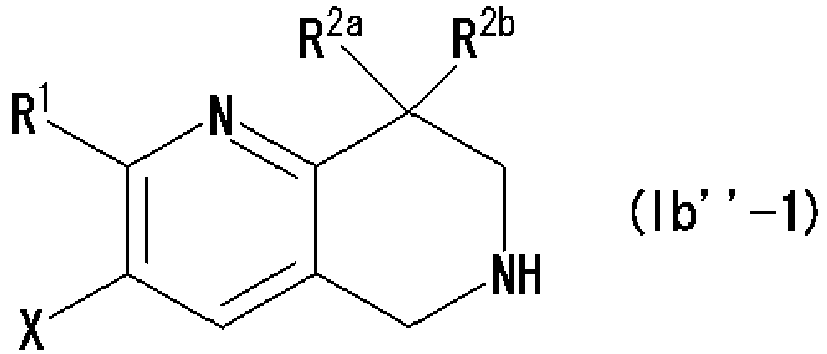
- X is a hydrogen atom or a halogen atom,
- R1 is
- (1) a group represented by the formula

- R3' is a hydrogen atom or a C1-6 alkyl group, and
- R4' is a C3-6 cycloalkyl group or a C1-6 alkyl group optionally substituted by a C3-6 cycloalkyl group, excluding a methylamino group, or
- (2) a group represented by the formula

- R2a and R2b are the same or different and each is a hydrogen atom or a C1-6 alkyl group,
- (1) a group represented by the formula
- [16] A compound represented by the formula

- X is a hydrogen atom or a halogen atom,
- R1 is
- (1) a group represented by the formula

- R3' is a hydrogen atom or a C1-6 alkyl group, and
- R4' is C3-6 cycloalkyl or a C1-6 alkyl group optionally substituted by a C3-6 cycloalkyl group,
- (2) a group represented by the formula

- wherein R11 is a hydrogen atom or a C1-6 alkyl group, and
- R2a and R2b are the same or different and each is a hydrogen atom or a C1-6 alkyl group (provided that at least one group of R2a and R2b is a hydrogen atom),
- (1) a group represented by the formula
- [17] A compound represented by the formula

- R1 is a group represented by the formula

- R3' is a hydrogen atom or an alkyl group optionally substituted by a cycloalkyl group,
- R4' is an alkyl group optionally substituted by a cycloalkyl group, or
- R3' and R4' are crosslinked to each other via a carbon-carbon bond to form, together with the adjacent nitrogen atom, a non-aromatic cyclic amino group optionally substituted by substituent(s) selected from a halogen atom, an alkyl group, an alkoxy group and an aryl group,
- R2a and R2b are the same or different and each is a hydrogen atom or an optionally substituted alkyl group, or
- R2a and R2b form, together with the adjacent carbon atom, an alicyclic hydrocarbon group optionally substituted by substituent(s) selected from a halogen atom, an alkyl group and an alkoxy group,
- R1 is a group represented by the formula
- [18] A compound represented by the formula

- R1 is
- (1) a group represented by -OR5 (R5 is a hydrogen atom, a cycloalkyl group, an alkyl group optionally substituted by a cycloalkyl group, an aryl group or a heteroaryl group),
- (2) a C3-5 alkyl group (alkyl group having a carbon number of 3 to 5),
- (3) an aryl group optionally substituted by substituent(s) selected from a halogen atom, an alkyl group optionally substituted by a halogen atom, an alkoxy group, an alkylthio group and an aryl group,
- (4) a heteroaryl group, or
- (5) a cycloalkyl group,
- R2a and R2b are the same or different and each is a hydrogen atom or an optionally substituted alkyl group, or
- R2a and R2b form, together with the adjacent carbon atom, an alicyclic hydrocarbon group optionally substituted by substituent(s) selected from a halogen atom, an alkyl group and an alkoxy group,
or a salt thereof.
- R1 is
- [19] A compound represented by the formula

- R1 is
- (1) a group represented by -OR5 (R5 is an alkyl group optionally substituted by a cycloalkyl group, an aryl group or a heteroaryl group),
- (2) a C3 alkyl group (alkyl group having a carbon number of 3),
- (3) an aryl group optionally substituted by substituent(s) selected from a halogen atom, an alkyl group optionally substituted by a halogen atom, an alkoxy group, an alkylthio group and an aryl group, or
- (4) a heteroaryl group,
- R2a and R2b are the same or different and each is a hydrogen atom or an optionally substituted alkyl group, or
- R2a and R2b form, together with the adjacent carbon atom, an alicyclic hydrocarbon group optionally substituted by substituent(s) selected from a halogen atom, an alkyl group and an alkoxy group,
or a salt thereof (hereinafter to be sometimes abbreviated as "compound (Ib')").
- R1 is
- [20] A compound represented by the formula

- R1 is
- (1) a group represented by -OR5 (R5 is a hydrogen atom, a C3-6 cycloalkyl group, or a C1-6 alkyl group optionally substituted by a C3-6 cycloalkyl group),
- (2) a C3-5 alkyl group,
- (3) a phenyl group optionally substituted by substituent(s) selected from a halogen atom, a C1-6 alkyl group optionally substituted by a halogen atom, and a C1-6 alkylthio group,
- (4) a group represented by the formula
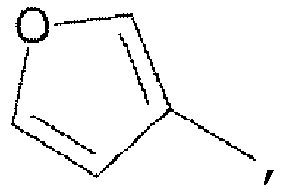
- (5) a C3-6 cycloalkyl group,
- R2a and R2b are the same or different and each is a hydrogen atom or an optionally substituted alkyl group, (excluding a compound wherein R1 is a methoxy group and R2a and R2b are each a hydrogen atom),
- R1 is
- [21] The compound of the above-mentioned [18], wherein R1 is a phenyl group substituted by substituent(s) selected from a halogen atom, a C1-6 alkyl group substituted by a halogen atom and a C1-6 alkylthio group.
- [22] A compound represented by the formula

- R1 is
- (1) a group represented by the formula

- R3 and R4 are the same or different and each is a hydrogen atom or an alkyl group, or
- R3 and R4 form, together with the adjacent nitrogen atom, a non-aromatic cyclic amino group optionally substituted by substituent(s) selected from a halogen atom, an alkyl group, an alkoxy group and an aryl group,
- (2) a group represented by -OR5 (R5 is an alkyl group, an aryl group or a heteroaryl group),
- (3) a group represented by -SR6 (R6 is an alkyl group, an aryl group or a heteroaryl group,
- (4) an alkyl group,
- (5) a cycloalkyl group,
- (6) an aryl group optionally substituted by substituent(s) selected from a halogen atom, an alkyl group, an alkoxy group, an alkylthio group and an aryl group, or
- (7) a heteroaryl group,
- R2a and R2b are the same or different and each is a hydrogen atom or an optionally substituted alkyl group, or
- R2a and R2b form, together with the adjacent carbon atom, an alicyclic hydrocarbon group optionally substituted by substituent(s) selected from a halogen atom, an alkyl group and an alkoxy group,
- (1) a group represented by the formula
- R1 is
- [23] A compound represented by the formula

or a salt thereof (hereinafter to be sometimes abbreviated as "compound (Ic')"). - [24] 2-Isopropyl-5,6,7,8-tetrahydro-1,6-naphthyridine or a salt thereof.
- [25] 2-Isopropoxy-5,6,7,8-tetrahydro-1,6-naphthyridine or a salt thereof.
- [26] 2-Cyclopropyl-5,6,7,8-tetrahydro-1,6-naphthyridine or a salt thereof.
- [27] 8-Methyl-2-morpholin-4-yl-5,6,7,8-tetrahydro-1,6-naphthyridine or a salt thereof.
- [28] 8-Methyl-2-[(3R)-3-methylmorpholin-4-yl]-5,6,7,8-tetrahydro-1,6-naphthyridine or a salt thereof.
- [29] 9-Methyl-2-morpholin-4-yl-6,7,8,9-tetrahydro-5H-pyrido[3,2-c]azepine or a salt thereof.
- [30] N-Isopropyl-N,8-dimethyl-5,6,7,8-tetrahydro-1,6-naphthyridin-2-amine or a salt thereof.
- [31] A prodrug of the compound of any of the above-mentioned [10] - [30].
- [32] A medicament comprising the compound of any of the above-mentioned [10] - [30] or a prodrug thereof.
- [33] A method of screening for a substance that increases a leak point pressure upon a rise in the intravesical pressure, which comprises measuring a leak point pressure when an intravesical pressure is increased by injection of saline rapidly and transiently into the bladder of an animal showing no urination reflection but showing a functional bladder-spinal cord- urethra reflex.
- [34] A method of screening for a prophylactic or therapeutic drug for stress urinary incontinence, which comprises measuring a leak point pressure when an intravesical pressure is increased by injection of saline rapidly and transiently into the bladder of an animal showing no micturition reflex but showing a functional bladder-spinal cord-urethra reflex.
- [35] The method of the above-mentioned [33] or [34], wherein the animal used shows a decreased leak point pressure upon a rise in the intravesical pressure.
- [36] The method of the above-mentioned [35], wherein the decreased leak point pressure upon a rise in the intravesical pressure is based on the transection or injury of the nerve involved in the reflex contraction of pelvic floor muscles or external urethral sphincter, childbirth, ovariectomy, a mechanical vaginal expansion treatment, diabetes, a drug administration or a combination of these.
- [37] The method of the above-mentioned [33] or [34], wherein the animal is female.
- [38] A drug for the prophylaxis or treatment of cystoceles or enteroceles, comprising a serotonin 5-HT2C receptor activator.
- [39] A method for the prophylaxis or treatment of cystoceles or enteroceles, comprising administering an effective amount of a serotonin 5-HT2C receptor activator to a mammal.
- [40] Use of a serotonin 5-HT2C receptor activator for the production of an agent for the prophylaxis or treatment of cystoceles or enteroceles.
- [41] A method of screening for a drug for the prophylaxis or treatment of cystoceles or enteroceles, comprising increasing an intravesical pressure after bilateral transection of the hypogastric nerve and pudendal nerve of an animal, and measuring a closure response in the urethra, the rectum or the vagina observed at that time.
- [42] A method of screening for a drug for the prophylaxis or treatment of cystoceles or enteroceles, comprising increasing an intravesical pressure after bilateral transection of the hypogastric nerve and pudendal nerve of an animal, and measuring the leak point pressure at that time.
- [43] The method of the above-mentioned [41] or [42], wherein the closure response in the urethra, the rectum or the vagina or urethral resistance (decreased leak point pressure) upon increase in the intravesical pressure after bilateral transection of the hypogastric nerve and pudendal nerve of an animal is based on the unilateral transection or injury of the nerve involved in the reflex contraction of pelvic floor muscles, childbirth, ovariectomy, a mechanical vaginal expansion treatment, diabetes, a drug administration or a combination of these.
- [44] The method of any of the above-mentioned [41] - [43], wherein the animal is female.
- The present invention also relates to the following.
- [1] A serotonin 5-HT2c receptor activator comprising a compound represented by the formula

- (1) a group represented by the formula
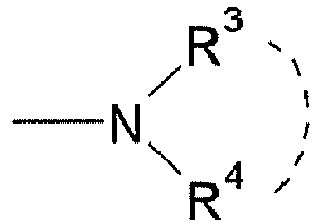
- (2) a group represented by -OR5 (R5 is an alkyl group optionally substituted by a cycloalkyl group, an aryl group or a heteroaryl group),
- (3) a group represented by -SR6 (R6 is an alkyl group, an aryl group or a heteroaryl group),
- (4) an alkyl group,
- (5) a cycloalkyl group,
- (6) an aryl group optionally substituted by substituent(s) selected from a halogen atom, an alkyl group optionally substituted by a halogen atom, an alkoxy group, an alkylthio group and an aryl group or
- (7) a heteroaryl group,
R2a and R2b are each a hydrogen atom or an optionally substituted alkyl group, or R2a and R2b optionally form, together with the adjacent carbon atom, an alicyclic hydrocarbon group optionally substituted by substituent(s) selected from a halogen atom, an alkyl group and an alkoxy group, and
n is 0 or 1,
or a salt thereof (hereinafter sometimes to be abbreviated as compound (I)).
- (1) a group represented by the formula
- [2] The activator of the above-mentioned [1], wherein R1 is a group represented by the formula
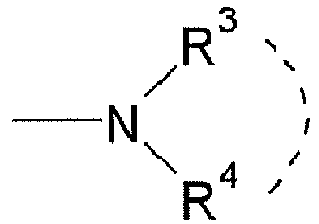
- [3] The activator of the above-mentioned [1], wherein n is 0.
- [4] The activator of the above-mentioned [1], which is a prophylactic or therapeutic agent for a lower urinary tract symptom, obesity and/or organ prolapse.
- [5] A method for the prophylaxis or treatment of a lower urinary tract symptom, obesity and/or organ prolapse, comprising administering, to a mammal, an effective amount of a compound represented by the formula

- (1) a group represented by the formula
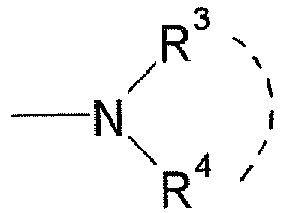
- (2) a group represented by -OR5 (R5 is an alkyl group optionally substituted by a cycloalkyl group, an aryl group or a heteroaryl group),
- (3) a group represented by -SR6 (R6 is an alkyl group, an aryl group or a heteroaryl group),
- (4) an alkyl group,
- (5) a cycloalkyl group,
- (6) an aryl group optionally substituted by substituent(s) selected from a halogen atom, an alkyl group optionally substituted by a halogen atom, an alkoxy group, an alkylthio group and an aryl group, or
- (7) a heteroaryl group,
R2a and R2b are each a hydrogen atom or an optionally substituted alkyl group, or R2a and R2b optionally form, together with the adjacent carbon atom, an alicyclic hydrocarbon group optionally substituted by substituent(s) selected from a halogen atom, an alkyl group and an alkoxy group, and
n is 0 or 1,
or a salt thereof.
- (1) a group represented by the formula
- [6] Use of a compound represented by the formula

- (1) a group represented by the formula

- (2) a group represented by -OR5 (R5 is an alkyl group optionally substituted by a cycloalkyl group, an aryl group or a heteroaryl group),
- (3) a group represented by -SR6 (R6 is an alkyl group, an aryl group or a heteroaryl group),
- (4) an alkyl group,
- (5) a cycloalkyl group,
- (6) an aryl group optionally substituted by substituent(s) selected from a halogen atom, an alkyl group optionally substituted by a halogen atom, an alkoxy group, an alkylthio group and an aryl group, or
- (7) a heteroaryl group,
R2a and R2b are each a hydrogen atom or an optionally substituted alkyl group, or R2a and R2b optionally form, together with the adjacent carbon atom, an alicyclic hydrocarbon group optionally substituted by substituent(s) selected from a halogen atom, an alkyl group and an alkoxy group, and
n is 0 or 1,
or a salt thereof for the production of a prophylactic or therapeutic agent for a lower urinary tract symptom, obesity and/or organ prolapse.
- (1) a group represented by the formula
- [7] A compound represented by the formula

R7, R8, R9 and R10 are each a hydrogen atom or a substituent, provided that (1) one or each of R2a and R2b is an optionally substituted alkyl group, or (2) R7, R8, R9 and R10 are each a hydrogen atom or a substituent, and R2a and R2b form, together with the adjacent carbon atom, an alicyclic hydrocarbon group optionally substituted by substituent(s) selected from a halogen atom, an alkoxy group and an alkyl group, or (3) at least one group of R7, R8, R9 and R10 is a substituent,
or a salt thereof (hereinafter sometimes to be abbreviated as compound (Ia)). - [8] The compound of the above-mentioned [7], wherein at least one group of R2a, R2b, R7, R8, R9 and R10 is an optionally substituted alkyl group.
- [9] A compound represented by the formula


R2a and R2b are each a hydrogen atom or an optionally substituted alkyl group, or R2a and R2b optionally form, together with the adjacent carbon atom, an alicyclic hydrocarbon group optionally substituted by substituent(s) selected from a halogen atom, an alkyl group and an alkoxy group,
or a salt thereof (hereinafter sometimes to be abbreviated as compound (Ib)). - [10] A compound represented by the formula

- (1) a group represented by -OR5 (R5 is an alkyl group optionally substituted by a cycloalkyl group, an aryl group or a heteroaryl group),
- (2) a C3 alkyl group (alkyl group having a carbon number of 3),
- (3) an aryl group optionally substituted by substituent(s) selected from a halogen atom, an alkyl group optionally substituted by a halogen atom, an alkoxy group, an alkylthio group and an aryl group, or
- (4) a heteroaryl group,
R2a and R2b are each a hydrogen atom or an optionally substituted alkyl group, or R2a and R2b optionally form, together with the adjacent carbon atom, an alicyclic hydrocarbon group optionally substituted by substituent(s) selected from a halogen atom, an alkyl group and an alkoxy group (excluding a compound wherein R1 is a methoxy group and R2a and R2b are each a hydrogen atom),
or a salt thereof (hereinafter sometimes to be abbreviated as compound (Ib')).
- [11] A compound represented by the formula

- (1) a group represented by the formula

- (2) a group represented by -OR5 (R5 is an alkyl group, an aryl group or a heteroaryl group),
- (3) a group represented by -SR6 (R6 is an alkyl group, an aryl group or a heteroaryl group),
- (4) an alkyl group,
- (5) a cycloalkyl group,
- (6) an aryl group optionally substituted by substituent(s) selected from a halogen atom, an alkyl group, an alkoxy group, an alkylthio group and an aryl group, or
- (7) a heteroaryl group,
R2a and R2b are each a hydrogen atom or an optionally substituted alkyl group, or R2a and R2b optionally form, together with the adjacent carbon atom, an alicyclic hydrocarbon group optionally substituted by substituent(s) selected from a halogen atom, an alkyl group and an alkoxy group,
or a salt thereof (hereinafter sometimes to be abbreviated as compound (Ic)).
- (1) a group represented by the formula
- [12] A prodrug of the compound of any of the above-mentioned [7]-[11].
- [13] A medicament comprising the compound of any of the above-mentioned [7]-[11] or a salt thereof or a prodrug thereof.
- [14] A method of screening for a substance that increases a leak point pressure upon a rise in the intravesical pressure, which comprises measuring a leak point pressure when an intravesical pressure is increased by injection of saline rapidly and transiently into the bladder of an animal showing no micturition reflex but showing a functional bladder-spinal cord-urethra reflex.
- [15] A method of screening for a prophylactic or therapeutic drug for stress urinary incontinence, which comprises measuring a leak point pressure when an intravesical pressure is increased by injection of saline rapidly and transiently into the bladder of an animal showing no micturition reflex but showing a functional bladder-spinal cord-urethra reflex.
- [16] The method of the above-mentioned [14] or [15], wherein the animal used shows a decreased leak point pressure upon a rise in the intravesical pressure.
- [17] The method of the above-mentioned [16], wherein the decreased leak point pressure upon a rise in the intravesical pressure is based on the transection or injury of the nerve involved in the reflex contraction of pelvic floor muscles or external urethral sphincter, childbirth, ovariectomy, a mechanical vaginal expansion treatment, diabetes, a drug administration or a combination of these.
- [18] The method of the above-mentioned [14] or [15], wherein the animal is female.
- [19] A drug for the prophylaxis or treatment of cystoceles or enteroceles, comprising a serotonin 5-HT2C receptor activator.
- [20] A method for the prophylaxis or treatment of cystoceles or enteroceles, comprising administering an effective amount of a serotonin 5-HT2C receptor activator to a mammal.
- [21] Use of a serotonin 5-HT2C receptor activator for the production of an agent for the prophylaxis or treatment of cystoceles or enteroceles.
- [22] A method of screening for a drug for the prophylaxis or treatment of cystoceles or enteroceles, comprising increasing an intravesical pressure after bilateral transection of the hypogastric nerve and pudendal nerve of an animal, and measuring a closure response in the urethra, the rectum or the vagina observed at that time.
- [23] A method of screening for a drug for the prophylaxis or treatment of cystoceles or enteroceles, comprising increasing an intravesical pressure after bilateral transection of the hypogastric nerve and pudendal nerve of an animal, and measuring the leak point pressure at that time.
- [24] The method of the above-mentioned [22] or [23], wherein the closure response in the urethra, the rectum or the vagina or urethral resistance (decreased leak point pressure) upon increase in the intravesical pressure after bilateral transection of the hypogastric nerve and pudendal nerve of an animal is based on the unilateral transection or injury of the nerve involved in the reflex contraction of pelvic floor muscles, childbirth, ovariectomy, a mechanical vaginal expansion treatment, diabetes, a drug administration or a combination of these.
- [25] The method of any of the above-mentioned [22] - [24], wherein the animal is female.
- Since the compound of the present invention or a prodrug thereof has a superior serotonin 5-HT2C receptor activation action, it is useful as a safe prophylactic or therapeutic drug for any serotonin 5-HT2C receptor associated disease, for example, a lower urinary tract symptom, obesity and/or organ prolapse and the like.
- In the screening method for a prophylactic or therapeutic drug for stress urinary incontinence of the present invention, since the urethral resistance upon a rapid and transient rise in the intravesical pressure is measured as a leak point pressure conveniently by a stable procedure, it is superior as an in vivo evaluation system, and can be applied beneficially and efficiently to screening for a substance used for the prophylaxis or treatment of stress urinary incontinence. On the other hand, it is also useful as an evaluation system to verify that a substance used for the prophylaxis or treatment of other diseases does not induce stress urinary incontinence. Moreover, using the screening method of the present invention, various pathological and physiological studies aiming at elucidation of the pathology mechanism of stress urinary incontinence, such as identification of a gene with expression that varies along with pathology and elucidation of behavior thereof, analysis of protein expression variation, study of treatment effect of gene introduction on stress urinary incontinence and the like, can be efficiently conducted with high precision.
- Moreover, a substance usable for the screening method of the present invention, for example, a substance that increases leak point pressure upon a rise in the intravesical pressure can be used as a prophylactic or therapeutic agent for stress urinary incontinence.
- In the screening method for a prophylactic or therapeutic drug for cystoceles or enteroceles of the present invention, since contraction force of pelvic floor muscles is measured, the method is superior as an in vivo evaluation system for pathology, and can be applied beneficially and efficiently to screening for a substance used for the prophylaxis or treatment of cystoceles or enteroceles. On the other hand, it is also useful as an evaluation system to verify that a substance used for the prophylaxis or treatment of other diseases does not induce cystoceles and enteroceles. Moreover, using the screening method of the present invention, various pathological and physiological studies aiming at elucidation of the pathology mechanism of cystoceles and enteroceles, such as identification of a gene with expression that varies along with pathology and elucidation of behavior thereof, analysis of protein expression variation, study of treatment effect of gene introduction on cystoceles and enteroceles and the like, can be efficiently conducted with high precision. Furthermore, a substance obtained by the screening method of the present invention, for example, a medicament comprising a serotonin 5-HT2C receptor activator can be used as a prophylactic or therapeutic drug for cystoceles or enteroceles.
-
Fig. 1 shows a typical example of the action of a 5-HT2C receptor agonist, 8-morpholin-4-yl-2,3,4,5-tetrahydropyrido[3,2-f][1,4]oxazepine (to be referred to as compound A) on a urethral closure response induced by an increased intravesical pressure after bilateral transection of the hypogastric nerve and pudendal nerve of a female rat under urethane anesthesia. - The present invention is explained in detail in the following.
- In the present specification, examples of the "halogen atom" include a fluorine atom, a chlorine atom, a bromine atom and an iodine atom.
- In the present specification, examples of the "alkyl group" include a C1-6 alkyl group (e.g., methyl, ethyl, n-propyl, isopropyl, n-butyl, isobutyl, sec-butyl, tert-butyl, pentyl, hexyl etc.).
- In the present specification, examples of the "C1-6 alkyl group" include an alkyl group having a carbon number of 1 to 6 (e.g., methyl, ethyl, n-propyl, isopropyl, n-butyl, isobutyl, sec-butyl, tert-butyl, pentyl, hexyl etc.).
- In the present specification, examples of the "C3-5 alkyl group" include an alkyl group having a carbon number of 3 to 5 (e.g., n-propyl, isopropyl, n-butyl, isobutyl, sec-butyl, tert-butyl, pentyl etc.).
- In the present specification, moreover, examples of the "C3 alkyl group" include an alkyl group having a carbon number of 3, and n-propyl or isopropyl can be mentioned.
- In the present specification, examples of the "alkyl group optionally substituted by a cycloalkyl group" include the above-mentioned "alkyl group" optionally substituted by 1 to 4, preferably 1 to 3, C3-6 cycloalkyl groups (e.g., cyclopropyl, cyclobutyl, cyclopentyl, cyclohexyl).
- In the present specification, examples of the "alkyl group optionally substituted by a halogen atom" include the above-mentioned "alkyl group" optionally substituted by 1 to 4, preferably 1 to 3, halogen atoms (e.g., fluorine atom, chlorine atom, bromine atom, iodine atom).
- In the present specification, examples of the "C1-6 alkyl group optionally substituted by a halogen atom" include the above-mentioned "C1-6 alkyl group" optionally substituted by 1 to 4, preferably 1 to 3, halogen atoms (e.g., fluorine atom, chlorine atom, bromine atom, iodine atom).
- In the present specification, examples of the "C1-6 alkyl group substituted by a halogen atom" include the above-mentioned "C1-6 alkyl group" substituted by 1 to 4, preferably 1 to 3, halogen atoms (e.g., fluorine atom, chlorine atom, bromine atom, iodine atom).
- In the present specification, examples of the "optionally substituted alkyl group" include the above-mentioned "alkyl group" optionally having substituents selected from the following, wherein the number of the substituents is 1 to 4, preferably 1 to 3.
- (i) a halogen atom (e.g., fluorine atom, chlorine atom, bromine atom, iodine atom),
- (ii) a cyano group,
- (iii) a hydroxy group,
- (iv) a nitro group,
- (v) a formyl group,
- (vi) an amino group,
- (vii) a mono- or di-C1-6 alkylamino group (e.g., methylamino, ethylamino, propylamino, dimethylamino, diethylamino, dipropylamino etc.),
- (viii) a C1-6 alkyl-carbonylamino group (e.g., acetylamino, ethylcarbonylamino etc.),
- (ix) a C1-6 alkoxy-carbonylamino group (e.g., methoxycarbonylamino, ethoxycarbonylamino, propoxycarbonylamino etc.),
- (x) a C3-8 cycloalkyl group (e.g., cyclopropyl, cyclobutyl, cyclopentyl, cyclohexyl etc.),
- (xi) a C6-12 aryl group (e.g., phenyl, 1-naphthyl, 2-naphthyl etc.) optionally substituted by substituent(s) selected from a halogen atom (e.g., fluorine atom, chlorine atom, bromine atom, iodine atom) and a C1-6 alkoxy group (e.g., methoxy, ethoxy, propoxy etc.),
- (xii) a C1-6 alkoxy group (e.g., methoxy, ethoxy, propoxy, isopropoxy, butoxy, isobutoxy, sec-butoxy, tert-butoxy etc.) optionally substituted by a halogen atom (e.g., fluorine atom, chlorine atom, bromine atom, iodine atom),
- (xiii) a C7-12 aralkyloxy group (e.g., benzyloxy etc.),
- (xiv) a C6-12 aryloxy group (e.g., phenoxy etc.),
- (xv) a carboxyl group,
- (xvi) a C1-6 alkoxy-carbonyl group (e.g., methoxycarbonyl, ethoxycarbonyl, propoxycarbonyl, isopropoxycarbonyl, tert-butoxycarbonyl etc.),
- (xvii) a C7-12 aralkyloxy-carbonyl group (e.g., benzyloxycarbonyl etc.),
- (xviii) a C6-12 aryloxy-carbonyl group (e.g., phenyloxycarbonyl etc.),
- (xix) a C1-6 alkyl-carbonyl group (e.g., acetyl, ethylcarbonyl, n-propylcarbonyl, isopropylcarbonyl, 2,2-dimethylpropylcarbonyl etc.),
- (xx) a C3-8 cycloalkyl-carbonyl group (e.g., cyclopropylcarbonyl, cyclobutylcarbonyl, cyclopentylcarbonyl, cyclohexylcarbonyl etc.),
- (xxi) a C7-12 aralkyl-carbonyl group (e.g., benzylcarbonyl etc.),
- (xxii) a carbamoyl group,
- (xxiii) a thiocarbamoyl group,
- (xxiv) a mono-or di-C1-6 alkyl-carbamoyl group (e.g., methylcarbamoyl, ethylcarbamoyl, n-propylcarbamoyl, isopropylcarbamoyl, dimethylcarbamoyl, diethylcarbamoyl, dipropylcarbamoyl etc.),
- (xxv) a mono-or di-C7-12 aralkyl-carbamoyl group (e.g., benzylcarbamoyl, dibenzylcarbamoyl etc.),
- (xxvi) a thiol group,
- (xxvii) a C1-6 alkylthio group (e.g., methylthio, ethylthio, propylthio etc.),
- (xxviii) a C7-12 aralkylthio group (e.g., benzylthio etc.),
- (xxix) a C1-6 alkylsulfonyl group (e.g., methylsulfonyl, ethylsulfonyl, n-propylsulfonyl, isopropylsulfonyl etc.),
- (xxx) a C3-8 cycloalkylsulfonyl group (e.g., cyclopropylsulfonyl, cyclobutylsulfonyl, cyclopentylsulfonyl etc.),
- (xxxi) a C6-12 arylsulfonyl group (e.g., phenylsulfonyl, 1-naphthylsulfonyl, 2-naphthylsulfonyl etc.),
- (xxxii) a C7-12 aralkylsulfonyl group (e.g., benzylsulfonyl etc.),
- (xxxiii) a 5- to 8-membered non-aromatic heterocyclic group containing, besides carbon atom, 1 to 4 hetero atoms selected from nitrogen atom, sulfur atom and oxygen atom (for example, pyrrolidinyl, tetrahydrofuryl, tetrahydrothienyl, piperidinyl, tetrahydropyranyl, morpholinyl, thiomorpholinyl, piperazinyl, azepanyl, oxazepanyl etc.),
- (xxxiv) a 5- to 8-membered aromatic heterocyclic group containing, besides carbon atom, 1 to 4 hetero atoms selected from nitrogen atom, sulfur atom and oxygen atom (for example, furyl, thienyl, pyrrolyl, oxazolyl, isoxazolyl, thiazolyl, isothiazolyl, imidazolyl, pyrazolyl, 1,2,3-oxadiazolyl, 1,2,4-oxadiazolyl, 1,3,4-oxadiazolyl, furazanyl, 1,2,3-thiadiazolyl, 1,2,4-thiadiazolyl, 1,3,4-thiadiazolyl, 1,2,3-triazolyl, 1,2,4-triazolyl, tetrazolyl, pyridyl, pyridazinyl, pyrimidinyl, pyrazinyl, triazinyl etc.),
- (xxxv) a 5- to 8-membered non-aromatic heterocyclyl containing, besides carbon atom, 1 to 4 hetero atoms selected from nitrogen atom, sulfur atom and oxygen atom-carbonyl group (e.g., pyrrolidinylcarbonyl, tetrahydrofurylcarbonyl, tetrahydrothienylcarbonyl, piperidinylcarbonyl, tetrahydropyranylcarbonyl, morpholinylcarbonyl, thiomorpholinylcarbonyl, piperazinylcarbonyl etc.),
- (xxxvi) a 5- to 8-membered aromatic heterocyclyl containing, besides carbon atom, 1 to 4 hetero atoms selected from nitrogen atom, sulfur atom and oxygen atom-carbonyl group (e.g., furylcarbonyl, thienylcarbonyl, pyrrolylcarbonyl, oxazolylcarbonyl, isooxazolylcarbonyl, thiazolylcarbonyl, isothiazolylcarbonyl, imidazolylcarbonyl, pyrazolylcarbonyl, 1,2,3-oxadiazolylcarbonyl, 1,2,4-oxadiazolylcarbonyl, 1,3,4-oxadiazolylcarbonyl, furazanylcarbonyl, 1,2,3-thiadiazolylcarbonyl, 1,2,4-thiadiazolylcarbonyl, 1,3,4-thiadiazolylcarbonyl, 1,2,3-triazolylcarbonyl, 1,2,4-triazolylcarbonyl, tetrazolylcarbonyl, pyridylcarbonyl, pyridazinylcarbonyl, pyrimidinylcarbonyl, pyrazinylcarbonyl, triazinylcarbonyl etc.),
- (xxxvii) a ureido group,
- (xxxviii) a C1-6 alkylureido group (e.g., methylureido, ethylureido, propylureido etc.),
- (xxxix) a C6-12 arylureido group (e.g., phenylureido, 1-naphthylureido, 2-naphthylureido etc.) and
- (xxxx) a C1-4 alkylenedioxy group (e.g., methylenedioxy, ethylenedioxy, propylenedioxy etc.)
- In the present specification, examples of the "cycloalkyl group" include a C3-6 cycloalkyl group (e.g., cyclopropyl, cyclobutyl, cyclopentyl, cyclohexyl).
- In the present specification, examples of the "C3-6 cycloalkyl group" include a cycloalkyl group having a carbon number of 3 to 6 (e.g., cyclopropyl, cyclobutyl, cyclopentyl, cyclohexyl).
- In the present specification, examples of the "C1-6 alkyl group optionally substituted by a C3-6 cycloalkyl group" include the above-mentioned "C1-6 alkyl group" optionally substituted by 1 to 4, preferably 1 to 3, of the above-mentioned "C3-6 cycloalkyl group".
- In the present specification, examples of the "alkoxy group" include a C1-6 alkoxy group (e.g., methoxy, ethoxy, n-propoxy, isopropoxy, n-butoxy, isobutoxy, sec-butoxy, tert-butoxy, pentoxy, hexoxy etc.).
- In the present specification, examples of the "alkylthio group" include a C1-6 alkylthio group (e.g., methylthio, ethylthio, n-propylthio, isopropylthio, n-butylthio, isobutylthio, sec-butylthio, tert-butylthio, pentylthio, hexylthio etc.).
- In the present specification, examples of the "C1-6 alkylthio group" include an alkylthio group wherein the alkyl moiety is the above-mentioned "C1-6 alkyl" (e.g., methylthio, ethylthio, n-propylthio, isopropylthio, n-butylthio, isobutylthio, sec-butylthio, tert-butylthio, pentylthio, hexylthio etc.).
- In the present specification, examples of the "aryl group" include a C6-14 aryl group (e.g., phenyl, naphthyl etc.).
- In the present specification, examples of the "aryl group optionally substituted by substituent(s) selected from halogen atom, an alkyl group optionally substituted by a halogen atom, an alkoxy group, an alkylthio group and an aryl group" for R1 include the above-mentioned "aryl group" optionally substituted by 1 to 4, preferably 1 to 3, substituents selected from the above-mentioned "halogen atom", the above-mentioned "alkyl group optionally substituted by a halogen atom", the above-mentioned "alkoxy group", the above-mentioned "alkylthio group" and the above-mentioned "aryl group".
- In the present specification, examples of the "heteroaryl group" include a 5- to 8-membered heteroaryl group containing, besides carbon atom, 1 to 4 hetero atoms selected from nitrogen atom, sulfur atom and oxygen atom (for example, furyl, thienyl, pyrrolyl, oxazolyl, isoxazolyl, thiazolyl, isothiazolyl, imidazolyl, pyrazolyl, 1,2,3-oxadiazolyl, 1,2,4-oxadiazolyl, 1,3,4-oxadiazolyl, furazanyl, 1,2,3-thiadiazolyl, 1,2,4-thiadiazolyl, 1,3,4-thiadiazolyl, 1,2,3-triazolyl, 1,2,4-triazolyl, tetrazolyl, pyridyl, pyridazinyl, pyrimidinyl, pyrazinyl, triazinyl etc.).
- In the present specification, examples of the "non-aromatic cyclic amino group" include a 5- to 8-membered non-aromatic cyclic amino group containing, besides carbon atom and nitrogen atom, 1 to 4 hetero atoms selected from sulfur atom and oxygen atom (for example, pyrrolidinyl, piperidino, morpholino, thiomorpholino, piperazinyl, azepanyl, 1,4-diazepanyl, oxazepanyl(e.g., 1,4-oxazepanyl) etc.).
- In the present specification, examples of the "non-aromatic cyclic amino group optionally substituted by substituent(s) selected from halogen atom, an alkyl group, an alkoxy group and an aryl group" optionally formed by R3 and R4 together with the adjacent nitrogen atom include the above-mentioned "non-aromatic cyclic amino group" optionally substituted by 1 to 4, preferably 1 to 3, substituents selected from the above-mentioned "halogen atom", the above-mentioned "alkyl group", the above-mentioned "alkoxy group" and the above-mentioned "aryl group".
- In the present specification, examples of the "non-aromatic cyclic amino group optionally substituted by substituent(s) selected from halogen atom, an alkyl group, an alkoxy group and an aryl group" optionally formed, together with the adjacent nitrogen atom, by R3' and R4' which are crosslinked to each other via a carbon-carbon bond include a non-aromatic cyclic amino group formed only by one nitrogen atom and two or more (for example, 4 to 7, preferably 4 or 5) carbon atoms, which is optionally substituted by 1 to 4, preferably 1 to 3, substituents selected from the above-mentioned "halogen atom", the above-mentioned "alkyl group", the above-mentioned "alkoxy group" and the above-mentioned "aryl group" (for example, pyrrolidinyl, piperidino, azepanyl etc.).
- In the present specification, examples of the "alicyclic hydrocarbon group optionally substituted by substituent(s) selected from a halogen atom, an alkyl group and an alkoxy group" optionally formed by R2a and R2b together with the adjacent carbon atom include C3-14 cycloalkyl group (preferably C3-8 cycloalkyl group) such as cyclopropyl, cyclobutyl, cyclopentyl, cyclohexyl, perhydronaphthyl, perhydroanthranyl, bicyclo[2,2,1]heptyl and the like, C3-14 cycloalkenyl group (preferably C3-8 cycloalkenyl group) such as cyclopropenyl, cyclobuten-1-or 3-yl, cyclopenten-1-, 3- or 4-yl, cyclohexen-1-or 3-yl and the like, and the like, each of which is optionally substituted by 1 to 4, preferably 1 to 3 substituents selected from the above-mentioned "halogen atom", the above-mentioned "alkyl group" and the above-mentioned "alkoxy group".
- In the present specification, examples of the "substituent" for R7, R8, R9 or R10 include the above-mentioned "optionally substituted alkyl group" and the substituents that the alkyl group of the above-mentioned "optionally substituted alkyl group" optionally has.
- Compounds (Ix), (I), (Ia'), (Ia), (Ia'-1), (Ib''), (Ib''-1), (Ib), (Ib'), (Ib-1), (Ic) and (Ic') are explained in detail in the following.
-
- X is a hydrogen atom or a halogen atom.
- X is preferably a hydrogen atom, a fluorine atom, a chlorine atom or a bromine atom.
- R1 is
- (1) a group represented by the formula

- (2) a group represented by -OR5 (R5 is a hydrogen atom, a cycloalkyl group, an alkyl group optionally substituted by a cycloalkyl group, an aryl group or a heteroaryl group),
- (3) a group represented by -SR6 (R6 is an alkyl group, an aryl group or a heteroaryl group),
- (4) an alkyl group,
- (5) a cycloalkyl group,
- (6) an aryl group optionally substituted by substituent(s) selected from a halogen atom, an alkyl group optionally substituted by a halogen atom, an alkoxy group, an alkylthio group and an aryl group, or
- (7) a heteroaryl group.
- (1) a group represented by the formula
- R1 is preferably
- (1) a group represented by the formula

- (2) a group represented by -OR5 (R5 is a hydrogen atom, a cycloalkyl group (particularly, a cyclobutyl group), an alkyl group (particularly, ethyl group, an isopropyl group, a sec-butyl group, tert-butyl group), an aryl group or a heteroaryl group) optionally substituted by a cycloalkyl group (particularly, a cyclopropyl group, a cyclopentyl group, a cyclohexyl group),
- (4) an alkyl group (particularly, an n-propyl group, an isopropyl group, an isobutyl group, a sec-butyl group, a 1-ethylpropyl group),
- (5) a cycloalkyl group (particularly, a cyclopropyl group, a cyclobutyl group, a cyclopentyl group),
- (6) an aryl group (particularly, a phenyl group) optionally substituted by substituent(s) selected from a halogen atom (particularly, a fluorine atom), alkyl group (particularly, methyl group) optionally substituted by a halogen atom (particularly, a fluorine atom), an alkoxy group, an alkylthio group (particularly, a methylthio group) and an aryl group, and
- (7) a heteroaryl group (particularly, a furyl group), more preferably,
- (1) a group represented by the formula

- (1) a group represented by the formula
- (1) a group represented by the formula
- Specific examples of R1 include isopropylamino group, isobutylamino group, cyclopropylmethylamino group, dimethylamino group, diethylamino group, methyl(ethyl)amino group, methyl(n-propyl)amino group, methyl(isopropyl)amino group, methyl(isobutyl)amino group, methyl(sec-butyl)amino group, methyl(cyclopropylmethyl)amino group, methyl(cyclopentyl)amino group, hydroxy group, isopropoxy group, sec-butoxy group, tert-butoxy group, 1-cyclopropylethoxy group, 1-cyclopentylethoxy group, 1-cyclohexylethoxy group, cyclobutyloxy group, an n-propyl group, an isopropyl group, an isobutyl group, a sec-butyl group, a 1-ethylpropyl group, pyrrolidinyl group, 2,5-dimethylpyrrolidinyl group, piperidino group, morpholino group, 2-methylmorpholino group, 2-ethylmorpholino group, 2-n-propylmorpholino group, 4-fluorophenyl group, 4-trifluoromethylphenyl group, 4-methylthiophenyl group, 3-furyl group, a cyclopropyl group, a cyclobutyl group, a cyclopentyl group and the like.
- R2a and R2b are the same or different and each is a hydrogen atom or an optionally substituted alkyl group, or R2a and R2b form, together with the adjacent carbon atom, an alicyclic hydrocarbon group optionally substituted by substituent(s) selected from a halogen atom, an alkyl group and an alkoxy group.
- R2a and R2b are the same or different and each is preferably a hydrogen atom or an alkyl group (particularly, methyl group, ethyl group).
- n is 0 or 1. n is preferably 0.
- As compound (Ix), the compounds of Examples 1 - 80 and the like are preferable.
- R1 is
- (1) a group represented by the formula

- (2) a group represented by -OR5 (R5 is an alkyl group optionally substituted by a cycloalkyl group, an aryl group or a heteroaryl group),
- (3) a group represented by -SR6 (R6 is an alkyl group, an aryl group or a heteroaryl group),
- (4) an alkyl group,
- (5) a cycloalkyl group,
- (6) an aryl group optionally substituted by substituent(s) selected from a halogen atom, an alkyl group optionally substituted by a halogen atom, an alkoxy group, an alkylthio group and an aryl group or
- (7) a heteroaryl group.
- R1 is preferably
- (1) a group represented by the formula

- (2) a group represented by -OR5 (R5 is an alkyl group (particularly, ethyl group, an isopropyl group, a sec-butyl group, tert-butyl group) optionally substituted by a cycloalkyl group (particularly, a cyclopropyl group, a cyclopentyl group, a cyclohexyl group), an aryl group or a heteroaryl group),
- (4) an alkyl group (particularly, an n-propyl group, an isopropyl group, an isobutyl group, a sec-butyl group, a 1-ethylpropyl group),
- (5) a cycloalkyl group (particularly, a cyclopropyl group, a cyclobutyl group, a cyclopentyl group),
- (6) an aryl group (particularly, a phenyl group) optionally substituted by substituent(s) selected from a halogen atom (particularly, a fluorine atom), an alkyl group (particularly, methyl group) optionally substituted by a halogen atom (particularly, a fluorine atom), an alkoxy group, an alkylthio group (particularly, a methylthio group) and an aryl group or
- (7) a heteroaryl group (particularly, a furyl group), more preferably,
- (1) a group represented by the formula

- (1) a group represented by the formula
- Specific examples of R1 include isopropylamino group, isobutylamino group, cyclopropylmethylamino group, dimethylamino group, diethylamino group, methyl(ethyl)amino group, methyl(n-propyl)amino group, methyl(isopropyl)amino group, methyl(isobutyl)amino group, methyl(sec-butyl)amino group, methyl(cyclopropylmethyl)amino group, isopropoxy group, 1-cyclopropylethoxy group, 1-cyclopentylethoxy group, 1-cyclohexylethoxy group, sec-butoxy group, tert-butoxy group, an n-propyl group, an isopropyl group, an isobutyl group, a sec-butyl group, a 1-ethylpropyl group, a cyclopropyl group, a cyclobutyl group, pyrrolidinyl group, 2,5-dimethylpyrrolidinyl group, piperidino group, morpholino group, 2-methylmorpholino group, 2-ethylmorpholino group, 2-n-propylmorpholino group, 4-fluorophenyl group, 4-trifluoromethylphenyl group, 4-methylthiophenyl group, 3-furyl group and the like.
- R2a and R2b are the same or different and each is a hydrogen atom or an optionally substituted alkyl group, or R2a and R2b form, together with the adjacent carbon atom, an alicyclic hydrocarbon group optionally substituted by substituent(s) selected from a halogen atom, an alkyl group and an alkoxy group.
- R2a and R2b are the same or different and each is preferably a hydrogen atom or an alkyl group (particularly, methyl group, ethyl group).
- n is 0 or 1. n is preferably 0.
- As compound (I), the compounds of Examples 1 - 31, 38 - 51, 53 - 59, 61 and 63 - 80 and the like are preferable.
-
- X is a hydrogen atom or a halogen atom.
- X is preferably a hydrogen atom, a fluorine atom, a chlorine atom or a bromine atom.
- R2a and R2b are the same or different and each is a hydrogen atom or an optionally substituted alkyl group, or R2a and R2b form, together with the adjacent carbon atom, an alicyclic hydrocarbon group optionally substituted by substituent(s) selected from a halogen atom, an alkyl group and an alkoxy group.
- R2a and R2b are the same or different and each is preferably a hydrogen atom, a methyl group or an ethyl group.
- R7, R8, R9 and R10 are the same or different and each is a hydrogen atom or a substituent.
- R7, R8, R9 and R10 are the same or different and each is preferably a hydrogen atom or an optionally substituted alkyl group (particularly, methyl group, ethyl group and n-propyl group).
- Note that (1) one or each of R2a and R2b is an optionally substituted alkyl group, or (2) R7, R8, R9 and R10 are the same or different and each is a hydrogen atom or a substituent, and R2a and R2b form, together with the adjacent carbon atom, an alicyclic hydrocarbon group optionally substituted by substituent(s) selected from a halogen atom, an alkyl group and an alkoxy group, or (3) at least one group of R7, R8, R9 and R10 is a substituent.
- At least one group of R2a, R2b, R7, R8, R9 and R10 is preferably an optionally substituted alkyl group (particularly, a methyl group, an ethyl group or an n-propyl group).
- As compound (Ia'), the compounds of Examples 3, 5, 7, 8, 9, 35 - 37, 48 - 50, 65, 66 and 73 - 78 and the like are preferable.
- R2a and R2b are the same or different and each is a hydrogen atom or an optionally substituted alkyl group, or R2a and R2b form, together with the adjacent carbon atom, an alicyclic hydrocarbon group optionally substituted by substituent(s) selected from a halogen atom, an alkyl group and an alkoxy group.
- R2a and R2b are the same or different and each is preferably a hydrogen atom, a methyl group or an ethyl group.
- R7, R8, R9 and R10 are the same or different and each is a hydrogen atom or a substituent.
- R7, R8, R9 and R10 are the same or different and each is preferably a hydrogen atom or an optionally substituted alkyl group (particularly, a methyl group, an ethyl group or an n-propyl group).
- Note that (1) one or each of R2a and R2b is an optionally substituted alkyl group, or (2) R7, R8, R9 and R10 are the same or different and each is a hydrogen atom or a substituent, and R2a and R2b form, together with the adjacent carbon atom, an alicyclic hydrocarbon group optionally substituted by substituent(s) selected from a halogen atom, an alkyl group and an alkoxy group, or (3) at least one group of R7, R8, R9 and R10 is a substituent.
- At least one group of R2a, R2b, R7, R8, R9 and R10 is preferably an optionally substituted alkyl group (particularly, a methyl group, an ethyl group or an n-propyl group).
- As compound (Ia), the compounds of Examples 3, 5, 7, 8, 9, 48 - 50, 65, 66 and 73 - 78 and the like are preferable.
- X is a hydrogen atom.
- R2a and R2b are the same or different and each is a hydrogen atom or an alkyl group (provided that one or each of R2a and R2b is a C1-6 alkyl group).
- R2a and R2b are the same or different and each is preferably a hydrogen atom or a methyl group.
- R7 and R8 are the same or different and each is a hydrogen atom or a C1-6 alkyl group (provided that at least one group of R7 and R8 is a hydrogen atom).
- R7 and R8 are the same or different and each is preferably a hydrogen atom, a methyl group, an ethyl group or an n-propyl group.
- R9 and R10 are each a hydrogen atom.
- X is a hydrogen atom or a halogen atom.
- X is preferably a hydrogen atom, a fluorine atom, a chlorine atom or a bromine atom.
- R2a and R2b are each a hydrogen atom.
- R7, R9 and R10 are each a hydrogen atom.
- R8 is a C1-6 alkyl group.
- R8 is preferably a methyl group.
- As compound (Ia'-1), the compounds of Examples 3, 5, 7-9, 35 - 37, 48 - 50, 65, 66 and 73 - 78 and the like are preferable.
- X is a hydrogen atom or a halogen atom.
- X is preferably a hydrogen atom or a chlorine atom.
- R1 is a group represented by the formula

- R3' is a hydrogen atom and a C1-6 alkyl group (e.g., methyl group, ethyl group, an n-propyl group, an isopropyl group, an isobutyl group and sec-butyl group and the like) optionally substituted by cyclopropyl is preferable. R4' is a cycloalkyl group (e.g., a cyclopentyl group and the like) and a C1-6 alkyl group (e.g., a methyl group, an ethyl group, an n-propyl group, an isopropyl group, an isobutyl group and a sec-butyl group and the like) optionally substituted by cyclopropyl is preferable. In addition, R3' and R4' are preferably crosslinked to each other via a carbon-carbon bond to form, together with the adjacent nitrogen atom, a non-aromatic cyclic amino group (e.g., pyrrolidinyl group, piperidino group and the like) optionally substituted by an alkyl group (e.g., methyl group and the like).
- Specific examples of R1 include isopropylamino group, isobutylamino group, cyclopropylmethylamino group, methyl(cyclopropylmethyl)amino group, dimethylamino group, diethylamino group, methyl(ethyl)amino group, methyl(n-propyl)amino group, methyl(isopropyl)amino group, methyl(isobutyl)amino group, methyl(sec-butyl)amino group, methyl(cyclopentyl)amino group, pyrrolidinyl group, 2,5-dimethylpyrrolidinyl group, piperidino group and the like.
- R2a and R2b are the same or different and each is a hydrogen atom or an optionally substituted alkyl group, or R2a and R2b form, together with the adjacent carbon atom, an alicyclic hydrocarbon group optionally substituted by substituent(s) selected from a halogen atom, an alkyl group and an alkoxy group.
- R2a and R2b are the same or different and each is preferably a hydrogen atom or a methyl group.
- As compound (Ib''), the compounds of Examples 10 - 23, 32 - 34, 38, 39, 51 - 53, 79 and 80 and the like are preferable.
- X is a hydrogen atom or a halogen atom.
X is preferably a hydrogen atom or a chlorine atom. - R1 is
- (1) a group represented by the formula

- (2) a group represented by the formula

- R3' is preferably a hydrogen atom or a C1-6 alkyl group (e.g., a methyl group, an ethyl group, an n-propyl group, an isopropyl group, an isobutyl group and a sec-butyl group and the like). R4' is preferably a C3-6 cycloalkyl group (e.g., a cyclopentyl group and the like) or a C1-6 alkyl group (e.g., a methyl group, an ethyl group, an n-propyl group, an isopropyl group, an isobutyl group and a sec-butyl group and the like) optionally substituted by cyclopropyl.
- Specific examples of R1 include isopropylamino group, isobutylamino group, cyclopropylmethylamino group, methyl(cyclopropylmethyl)amino group, dimethylamino group, diethylamino group, methyl(ethyl)amino group, methyl(n-propyl)amino group, methyl(isopropyl)amino group, methyl(isobutyl)amino group, methyl(sec-butyl)amino group, methyl(cyclopentyl)amino group, pyrrolidinyl group, 2,5-dimethylpyrrolidinyl group, piperidino group and the like.
- R2a and R2b are the same or different and each is a hydrogen atom or a C1-6 alkyl group.
- R2a and R2b are the same or different and each is preferably a hydrogen atom or a methyl group.
- X is a hydrogen atom or a halogen atom.
- X is preferably a hydrogen atom or a chlorine atom.
- R1 is (1) a group represented by the formula


- R3' is preferably a hydrogen atom or a C1-6 alkyl group (e.g., a methyl group, an ethyl group, an n-propyl group, an isopropyl group, an isobutyl group and a sec-butyl group and the like). R4' is preferably a C3-6 cycloalkyl group (e.g., a cyclopentyl group and the like) or a C1-6 alkyl group (e.g., a methyl group, an ethyl group, an n-propyl group, an isopropyl group, an isobutyl group and a sec-butyl group and the like) optionally substituted by cyclopropyl.
- R11 is preferably a methyl group.
- Specific examples of R1 include isopropylamino group, isobutylamino group, cyclopropylmethylamino group, methyl(cyclopropylmethyl)amino group, dimethylamino group, diethylamino group, methyl(ethyl)amino group, methyl(n-propyl)amino group, methyl(isopropyl)amino group, methyl(isobutyl)amino group, methyl(sec-butyl)amino group, methyl(cyclopentyl)amino group, pyrrolidinyl group, 2,5-dimethylpyrrolidinyl group, piperidino group and the like.
- R2a and R2b are the same or different and each is a hydrogen atom or a C1-6 alkyl group (provided that at least one group of R2a and R2b is a hydrogen atom).
- R2a and R2b are the same or different and each is preferably a hydrogen atom or a methyl group.
- As compound (Ib''-1), the compounds of Examples 10 - 23, 32 - 34, 38, 39, 51 - 53, 79 and 80 and the like are preferable.
- R1 is a group represented by the formula

- R3' is preferably a hydrogen atom or a C1-6 alkyl group (e.g., a methyl group, an ethyl group, an n-propyl group, an isopropyl group, an isobutyl group and a sec-butyl group and the like) optionally substituted by cyclopropyl. R4' is preferably a C1-6 alkyl group (e.g., a methyl group, an ethyl group, an n-propyl group, an isopropyl group, an isobutyl group and a sec-butyl group and the like) optionally substituted by cyclopropyl. R3' and R4' are also preferably crosslinked to each other via a carbon-carbon bond to form, together with the adjacent nitrogen atom, a non-aromatic cyclic amino group (e.g., pyrrolidinyl group, piperidino group and the like) optionally substituted by an alkyl group (e.g., methyl group and the like).
- Specific examples of R1 include isopropylamino group, isobutylamino group, cyclopropylmethylamino group, methyl(cyclopropylmethyl)amino group, dimethylamino group, diethylamino group, methyl(ethyl)amino group, methyl(n-propyl)amino group, methyl(isopropyl)amino group, methyl(isobutyl)amino group, methyl(sec-butyl)amino group, pyrrolidinyl group, 2,5-dimethylpyrrolidinyl group, piperidino group and the like.
- R2a and R2b are the same or different and each is a hydrogen atom or an optionally substituted alkyl group, or R2a and R2b form, together with the adjacent carbon atom, an alicyclic hydrocarbon group optionally substituted by substituent(s) selected from a halogen atom, an alkyl group and an alkoxy group.
- R2a and R2b are each preferably a hydrogen atom.
- As compound (Ib), the compounds of Examples 10 - 23, 38, 39, 51, 53, 79 and 80 and the like are preferable.
- [2] excluding a compound wherein R1 is a methoxy group and R2a and R2b are each a hydrogen atom):
- R1 is
- (1) a group represented by -OR5 (R5 is a hydrogen atom, a cycloalkyl group, an alkyl group optionally substituted by a cycloalkyl group, an aryl group or a heteroaryl group),
- (2) a C3-5 alkyl group (alkyl group having a carbon number of 3 to 5),
- (3) an aryl group optionally substituted by substituent(s) selected from a halogen atom, an alkyl group optionally substituted by a halogen atom, an alkoxy group, an alkylthio group and an aryl group,
- (4) a heteroaryl group, or
- (5) a cycloalkyl group.
- R1 is preferably
- (1) a group represented by -OR5 (R5 is a hydrogen atom, a cycloalkyl group (particularly, a cyclobutyl group), an alkyl group (particularly, an ethyl group, an isopropyl group, a sec-butyl group, a tert-butyl group) optionally substituted by a cycloalkyl group (particularly, a cyclopropyl group, a cyclopentyl group, a cyclohexyl group), an aryl group or a heteroaryl group),
- (2) a C3-5 alkyl group (particularly, an n-propyl group, an isopropyl group, an isobutyl group, a sec-butyl group, a 1-ethylpropyl group),
- (3) an aryl group (particularly, a phenyl group) optionally substituted by substituent(s) selected from a halogen atom (particularly, a fluorine atom), an alkyl group (particularly, methyl group) optionally substituted by a halogen atom (particularly, a fluorine atom), an alkoxy group, an alkylthio group (particularly, a methylthio group) and an aryl group,
- (4) a heteroaryl group (particularly, a furyl group), or
- (5) a cycloalkyl group (particularly, a cyclopropyl group, a cyclobutyl group, a cyclopentyl group), more preferably (3) a phenyl group substituted by substituent(s) selected from a halogen atom (particularly, a fluorine atom), a C1-6 alkyl group (particularly, methyl group) substituted by a halogen atom (particularly, a fluorine atom) and a C1-6 alkylthio group (particularly, a methylthio group).
- Specific examples of R1 include hydroxy group, isopropoxy group, sec-butoxy group, tert-butoxy group, 1-cyclopropylethoxy group, 1-cyclopentylethoxy group, 1-cyclohexylethoxy group, cyclobutyloxy group, an n-propyl group, an isopropyl group, an isobutyl group, a sec-butyl group, a 1-ethylpropyl group, 4-fluorophenyl group, 4-trifluoromethylphenyl group, 4-methylthiophenyl group, 3-furyl group, a cyclopropyl group, a cyclobutyl group, a cyclopentyl group and the like.
- R2a and R2b are the same or different and each is a hydrogen atom or an optionally substituted alkyl group, or R2a and R2b form, together with the adjacent carbon atom, an alicyclic hydrocarbon group optionally substituted by substituent(s) selected from a halogen atom, an alkyl group and an alkoxy group.
- R2a and R2b are the same or different and each is preferably a hydrogen atom or an alkyl group (particularly, methyl group, ethyl group).
- As compound (Ib), the compounds of Examples 4, 24 - 31, 40 - 47, 54 - 64 and 67 - 72 and the like are preferable.
- 9. Compound (Ib') [excluding a compound wherein R1 is a methoxy group and R2a and R2b are each a hydrogen atom] :
- R1 is
- (1) a group represented by -OR5 (R5 is an alkyl group optionally substituted by a cycloalkyl group, an aryl group or a heteroaryl group),
- (2) a C3 alkyl group (alkyl group having a carbon number of 3 (e.g., n-propyl, isopropyl)),
- (3) an aryl group optionally substituted by substituent(s) selected from a halogen atom, an alkyl group optionally substituted by a halogen atom, an alkoxy group, an alkylthio group and an aryl group, or
- (4) a heteroaryl group.
- R5 is preferably an alkyl group (particularly, a C1-6 alkyl group such as an ethyl group, an isopropyl group and the like) optionally substituted by cyclopropyl.
- R1 is preferably
- (1) a group represented by -OR5 (R5 is a C1-6 alkyl group optionally substituted by cyclopropyl),
- (2) a C3 alkyl group (alkyl group having a carbon number of 3 (e.g., n-propyl, isopropyl)),
- (3) a phenyl group optionally substituted by 1 - 3 substituents selected from a halogen atom, a C1-6 alkyl group optionally substituted by a halogen atom and a C1-6 alkylthio group, or
- (4) a heteroaryl group.
- R2a and R2b are the same or different and each is a hydrogen atom or an optionally substituted alkyl group, or R2a and R2b form, together with the adjacent carbon atom, an alicyclic hydrocarbon group optionally substituted by substituent(s) selected from a halogen atom, an alkyl group and an alkoxy group.
- R2a and R2b are each preferably a hydrogen atom.
- As compound (Ib'), the compounds of Examples 4, 24 - 31, 45 - 47, 54, 61, 63, 64, 67, 71 and 72 and the like are preferable.
- 10. Compound (Ib-1) [excluding a compound wherein R1 is a methoxy group and R2a and R2b are each a hydrogen atom]:
- R1 is
- (1) a group represented by -OR5 (R5 is a hydrogen atom, a C3-6 cycloalkyl group or a C1-6 alkyl group optionally substituted by a C3-6 cycloalkyl group),
- (2) a C3-5 alkyl group,
- (3) a phenyl group optionally substituted by substituent(s) selected from a halogen atom, a C1-6 alkyl group optionally substituted by a halogen atom, a C1-6 alkylthio group and an aryl group,
- (4) a group represented by the formula

- (5) a C3-6 cycloalkyl group.
- R1 is preferably
- (1) a group represented by -OR5 (R5 is a hydrogen atom, a C3-6 cycloalkyl group (particularly, a cyclobutyl group), or a C1-6 alkyl group (particularly, ethyl group, an isopropyl group, a sec-butyl group, tert-butyl group) optionally substituted by a C3-6 cycloalkyl group (particularly, a cyclopropyl group, a cyclopentyl group, a cyclohexyl group)),
- (2) a C3-5 alkyl group (particularly, an n-propyl group, an isopropyl group, an isobutyl group, a sec-butyl group, a 1-ethylpropyl group),
- (3) a phenyl group optionally substituted by substituent(s) selected from a halogen atom (particularly, a fluorine atom), a C1-6 alkyl group (particularly, methyl group) optionally substituted by a halogen atom (particularly, a fluorine atom), and a C1-6 alkylthio group (particularly, a methylthio group),
- (4) a group represented by the formula

- (5) a C3-6 cycloalkyl group (particularly, a cyclopropyl group, a cyclobutyl group, a cyclopentyl group).
- Specific examples of R1 include hydroxy group, isopropoxy group, sec-butoxy group, tert-butoxy group, 1-cyclopropylethoxy group, 1-cyclopentylethoxy group, 1-cyclohexylethoxy group, cyclobutyloxy group, an n-propyl group, an isopropyl group, an isobutyl group, a sec-butyl group, a 1-ethylpropyl group, 4-fluorophenyl group, 4-trifluoromethylphenyl group, 4-methylthiophenyl group, 3-furyl group, a cyclopropyl group, a cyclobutyl group, a cyclopentyl group and the like.
- R2a and R2b are the same or different and each is a hydrogen atom or an optionally substituted alkyl group.
- R2a and R2b are the same or different and each is preferably a hydrogen atom or an alkyl group (particularly, methyl group, ethyl group).
- As compound (Ib-1), the compounds of Examples 4, 24 - 31, 40 - 47, 54 - 64 and 67 - 72 and the like are preferable.
- R1 is
- (1) a group represented by the formula

- (2) a group represented by -OR5 (R5 is an alkyl group, an aryl group or a heteroaryl group),
- (3) a group represented by -SR6 (R6 is an alkyl group, an aryl group or a heteroaryl group),
- (4) an alkyl group,
- (5) a cycloalkyl group,
- (6) an aryl group optionally substituted by substituent(s) selected from a halogen atom, an alkyl group, an alkoxy group, an alkylthio group and an aryl group, or
- (7) a heteroaryl group.
- R1 is preferably
- (1) a group represented by the formula

- R3 and R4 form, together with the adjacent nitrogen atom, a non-aromatic cyclic amino group (particularly, a morpholino group).
- R2a and R2b are the same or different and each is a hydrogen atom or an optionally substituted alkyl group, or R2a and R2b form, together with the adjacent carbon atom, an alicyclic hydrocarbon group optionally substituted by substituent(s) selected from a halogen atom, an alkyl group and an alkoxy group.
- R2a and R2b are the same or different and each is preferably a hydrogen atom or an alkyl group (particularly, methyl group).
- As compound (Ic), the compounds of Examples 1 and 2 and the like are preferable.
- One of R2a and R2b is a hydrogen atom and the other is a C16 alkyl group.
- Preferably, one of R2a and R2b is a hydrogen atom, and the other is a methyl group.
- As the compounds of the present invention,
- 2-isopropyl-5,6,7,8-tetrahydro-1,6-naphthyridine or a salt thereof (Example 24),
- 2-isopropoxy-5,6,7,8-tetrahydro-1,6-naphthyridine or a salt thereof (Example 30),
- 2-cyclopropyl-5,6,7,8-tetrahydro-1,6-naphthyridine or a salt thereof (Example 43),
- 8-methyl-2-morpholin-4-yl-5,6,7,8-tetrahydro-1,6-naphthyridine or a salt thereof (Examples 5, 73, 74),
- 8-methyl-2-[(3R)-3-methylmorpholin-4-yl]-5,6,7,8-tetrahydro-1,6-naphthyridine or a salt thereof (Examples 48, 75, 76),
- 9-methyl-2-morpholin-4-yl-6,7,8,9-tetrahydro-5H-pyrido[3,2-c]azepine or a salt thereof (Example 2), and
- N-isopropyl-N,8-dimethyl-5,6,7,8-tetrahydro-1,6-naphthyridin-2-amine or a salt thereof (Examples 53, 79, 80) are particularly preferable.
- When compounds (Ix), (I), (Ia'), (Ia), (Ia'-1), (Ib''), (Ib''-1), (Ib), (Ib'), (Ib-1), (Ic) and (Ic') (hereinafter sometimes to be comprehensively abbreviated as compound (Ix)) are a salt, examples of the salt include salt with inorganic base, ammonium salt, salt with organic base, salt with inorganic acid, salt with organic acid, salt with basic or acidic amino acid and the like.
- Preferable examples of the salt with inorganic base include alkali metal salts such as sodium salt, potassium salt and the like; alkaline earth metal salts such as calcium salt, magnesium salt, barium salt and the like; aluminum salt and the like.
- Preferable examples of the salt with organic base include salts with trimethylamine, triethylamine, pyridine, picoline, ethanolamine, diethanolamine, triethanolamine, dicyclohexylamine, N,N'-dibenzylethylenediamine and the like.
- Preferable examples of the salt with inorganic acid include salts with hydrochloric acid, hydrobromic acid, nitric acid, sulfuric acid, phosphoric acid and the like.
- Preferable examples of the salt with organic acid include salts with formic acid, acetic acid, trifluoroacetic acid, fumaric acid, oxalic acid, tartaric acid, maleic acid, citric acid, succinic acid, malic acid, methanesulfonic acid, benzenesulfonic acid, p-toluenesulfonic acid and the like.
- Preferable examples of the salt with basic amino acid include salts with arginine, lysine, ornithine and the like.
- Preferable examples of the salt with acidic amino acid include salts with aspartic acid, glutamic acid and the like.
- Of these salts, pharmaceutically acceptable salts are preferable.
- Compound (Ix) encompasses a solvate, for example, hydrate. In addition, compound (Ix) may be labeled with an isotope (e.g., 3H, 14C, 35S, 125I and the like) and the like. Alternatively, compound (Ix) may be a non-solvate (including non-hydrate). In addition, compound (Ix) may be a deuterium exchanged compound.
- When compound (Ix) of the present invention has an asymmetric center, isomers such as enantiomer, diastereomer and the like may be present. Such isomers and a mixture thereof are all encompassed in the scope of the present invention. When an isomer due to conformation is present, such isomer and a mixture thereof are also encompassed in compound (Ix) of the present invention.
- The production methods of the compounds (Ix) of the present invention are explained in the following.
- The compounds (Ix) of the present invention can be produced, for example, using the following method A, method B, method C, method D, method E, method F, method G, method H and method I. Unless otherwise specified, each symbol in the chemical formulas of each scheme is as defined above. The compounds (Iaa), (Ibb), (Icc) and (Id) - (Ii), which are the final products of each scheme, are all encompassed in compound (Ix). The compounds of each scheme may form salts and examples thereof include those similar to the salts of compound (Ix), and the like.
- In each of the following reactions, when the starting material compound and intermediate has an amino group, a carboxyl group or a hydroxyl group as a substituent, these groups may be protected by a protecting group generally used in the peptide chemistry and the like. In this case, the object compound can be obtained by removing the protecting group as necessary after the reaction.
- Examples of the amino-protecting group include formyl group, C1-6 alkyl-carbonyl group, C1-6 alkoxy-carbonyl group, benzoyl group, C7-10 aralkyl-carbonyl group (e.g., benzylcarbonyl), C7-14 aralkyloxy-carbonyl group (e.g., benzyloxycarbonyl, 9-fluorenylmethoxycarbonyl), trityl group, phthaloyl group, N,N-dimethylaminomethylene group, substituted silyl group (e.g., trimethylsilyl, triethylsilyl, dimethylphenylsilyl, tert-butyldimethylsilyl, tert-butyldiethylsilyl), C2-6 alkenyl group (e.g., 1-allyl) and the like. These groups are optionally substituted by 1 to 3 substituents selected from a halogen atom, a C1-6 alkoxy group and a nitro group.
- Examples of the carboxyl-protecting group include C1-6 alkyl group, C7-11 aralkyl group (e.g., benzyl), a phenyl group, trityl group, substituted silyl group (e.g., trimethylsilyl, triethylsilyl, dimethylphenylsilyl, tert-butyldimethylsilyl, tert-butyldiethylsilyl), C2-6 alkenyl group (e.g., 1-allyl) and the like.
- Examples of the hydroxyl-protecting group include C1-6 alkyl group, a phenyl group, trityl group, C7-10 aralkyl group (e.g., benzyl), formyl group, C1-6 alkyl-carbonyl group, benzoyl group, C7-10 aralkyl-carbonyl group (e.g., benzylcarbonyl), 2-tetrahydropyranyl group, 2-tetrahydrofuranyl group, substituted silyl group (e.g., trimethylsilyl, triethylsilyl, dimethylphenylsilyl, tert-butyldimethylsilyl, tert-butyldiethylsilyl), C2-6 alkenyl group (e.g., 1-allyl) and the like.
- These groups are optionally substituted by 1 to 3 substituents selected from a halogen atom, a C1-6 alkyl group, a C1-6 alkoxy group and a nitro group.
- The above-mentioned protecting groups can be removed by a method known per se, for example, the method described in Protective Groups in Organic Synthesis, John Wiley and Sons (1980) and the like. Specifically, a method using acid, base, ultraviolet rays, hydrazine, phenylhydrazine, sodium N-methyldithiocarbamate, tetrabutylammonium fluoride, palladium acetate, trialkylsilyl halide (for example, trimethylsilyl iodide, trimethylsilyl bromide and the like) and the like, reduction method and the like are employed.
- While the compound obtained in each step can be used for the next reaction in the form of a reaction mixture or a crude product. Alternatively, it can also be isolated from a reaction mixture according to a conventional method, and easily purified by a separation means such as recrystallization, distillation, chromatography and the like.


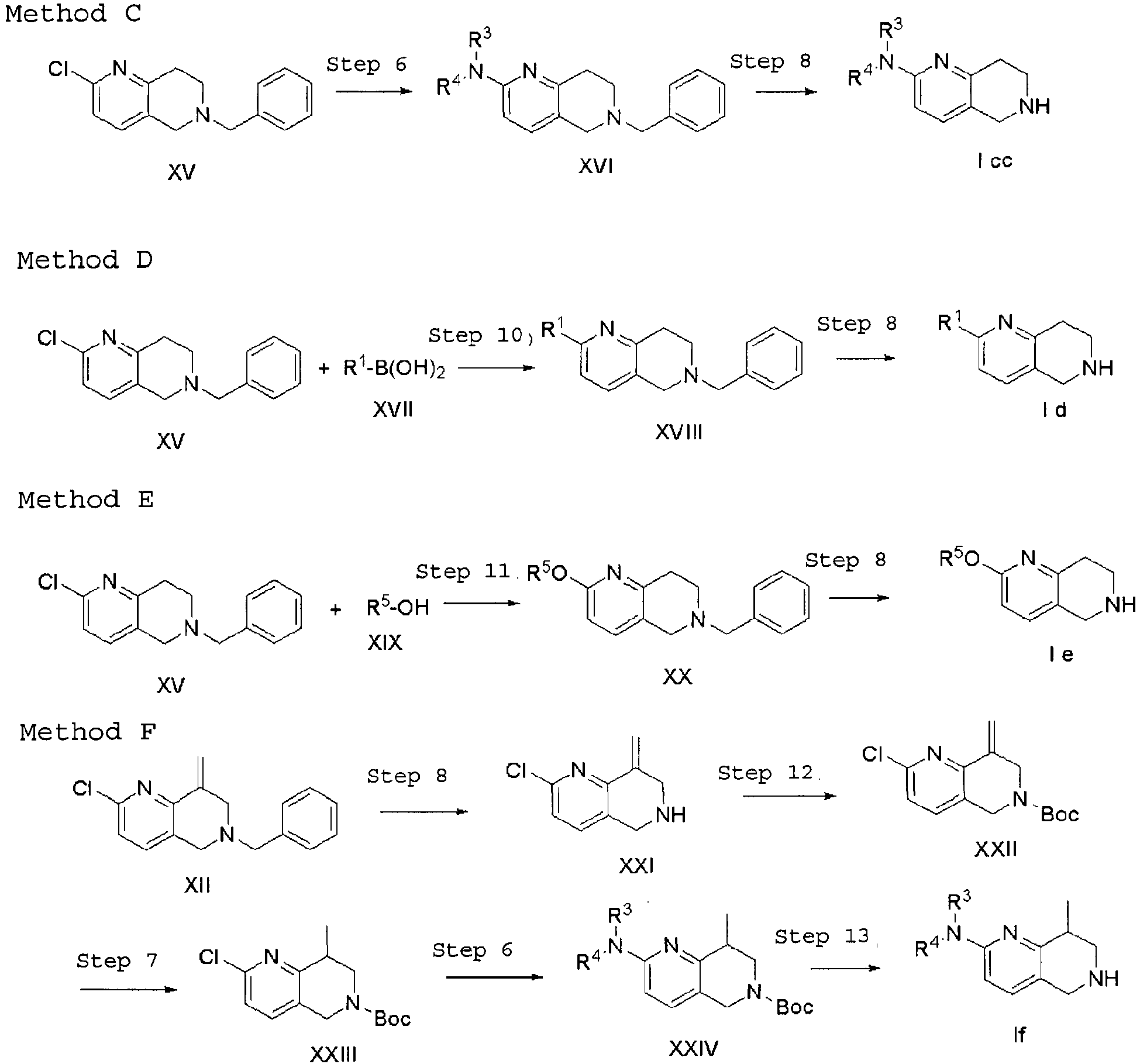

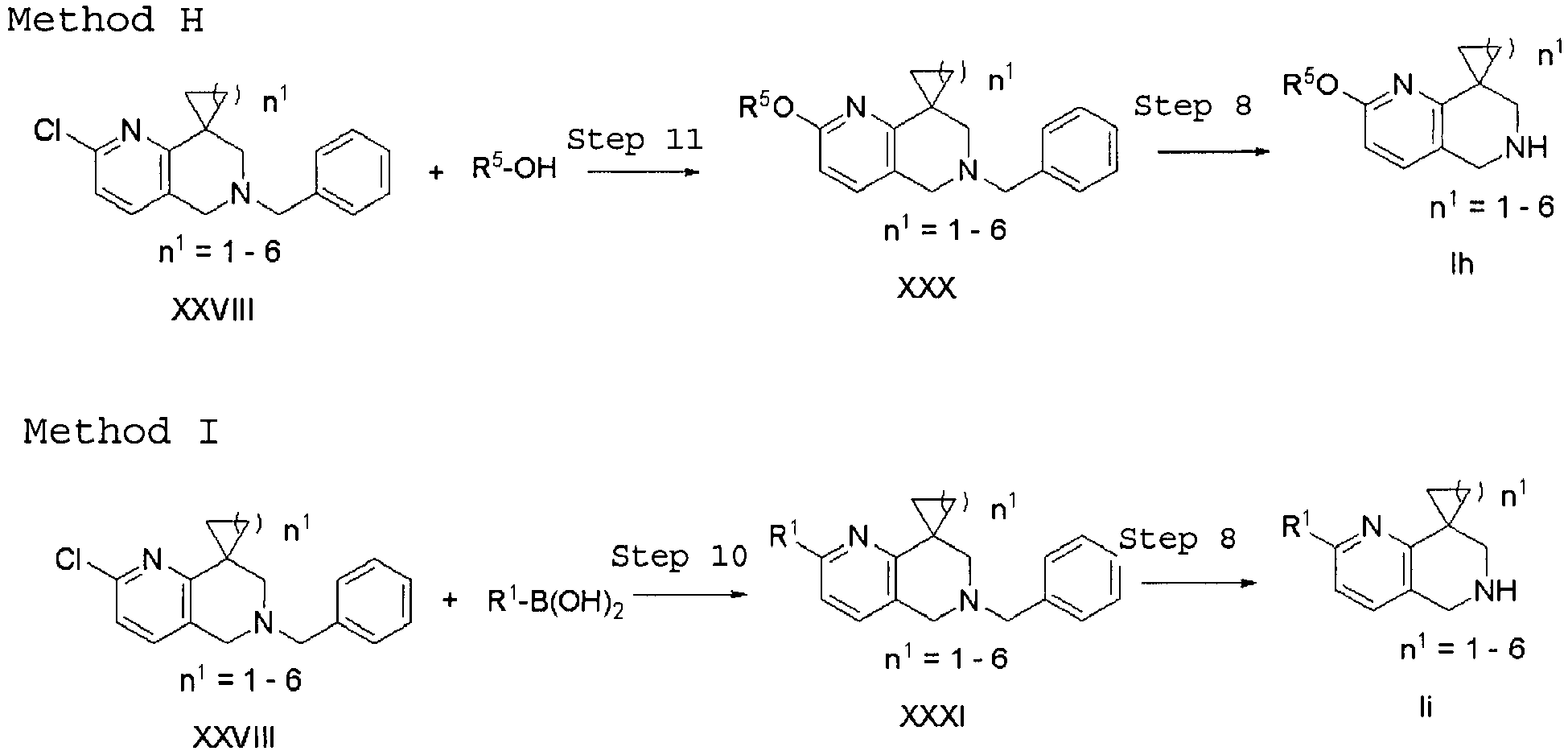
- Each step described in the above-mentioned scheme (Method A, method B, method C, method D, method E, method F, method G, method H, method I) is explained in detail in the following.
- This step is a step of converting compound (II) to a compound represented by the formula (III) or a salt thereof (hereinafter to be referred to as compound (III)) by halogenating compound (II) with a halogenating agent (in the scheme, halogen is shown by a chlorine atom for convenience). The halogenation can be carried out according to a method known per se [e.g., the method described in 4th ed. Jikken Kagaku Koza, vol. 22, page 115 and the like], for example, it can be carried out in the presence of a halogenating agent, in a solvent that does not adversely influence the reaction.
- Compound (II) may be a commercially available product, or can be produced from the corresponding starting material compound according to a method known per se.
- Examples of the halogenating agent include thionyl chloride, phosphorus pentachloride, phosphorus oxychloride, oxalyl chloride and the like. The amount thereof to be used is about 1 to about 10 molar equivalents, preferably about 1 to about 3 molar equivalents, per 1 mol of compound (II).
- Examples of the solvent that does not adversely influence the reaction include hydrocarbons (e.g., benzene, toluene, xylene etc.), halogenated hydrocarbons (e.g., chloroform, 1,2-dichloroethane etc.), nitriles (e.g., acetonitrile etc.), ethers (e.g., dimethoxyethane, tetrahydrofuran etc.), aprotic polar solvents (e.g., N,N-dimethylformamide, dimethyl sulfoxide, hexamethylphosphoramide etc.) and a mixture thereof. The amount of the solvent to be used is generally 1-fold volume to 100-fold volume, relative to compound (II).
- The reaction temperature is generally about -10 to about 200°C, preferably about 0 to about 150°C. The reaction time is generally about 0.5 to about 48 hr, preferably about 0.5 to about 16 hr.
- The thus-obtained compound (III) can be isolated and purified by known separation and purification means, for example, concentration, concentration under reduced pressure, solvent extraction, crystallization, recrystallization, phase transfer, chromatography and the like. In addition, compound (III) may be used for the next reaction without isolation.
- This step is a step of producing a compound represented by the formula (V) or a salt thereof (hereinafter to be referred to as compound (V)) by reacting compound (III) with a compound represented by the formula (IV) (hereinafter to be referred to as compound (IV)).
- Compound (IV) (benzylamine) can be generally a commercially available product. The amount of compound (IV) to be used is generally about 1 molar equivalent to about 10 molar equivalents, preferably about 1 molar equivalent to about 2 molar equivalents, per 1 mol of compound (III).
- The above-mentioned reaction is generally carried out in a solvent that does not adversely influence the reaction, and an appropriate base for promotion of the reaction may be added.
- Examples of the solvent include hydrocarbons (e.g., benzene, toluene etc.), ethers (e.g., diethyl ether, dioxane, tetrahydrofuran etc.), esters (e.g., ethyl acetate etc.), halogenated hydrocarbons (e.g., chloroform, dichloromethane etc.), amides (e.g., N,N-dimethylformamide etc.), aromatic amines (e.g., pyridine etc.), water and the like. These solvents may be used in a mixture of two or more kinds at an appropriate ratio. The amount of the solvent to be used is generally 1-fold volume to 100-fold volume, relative to compound (III).
- Examples of the base include alkali metal hydroxides (e.g., sodium hydroxide, potassium hydroxide etc.), hydrogen carbonates (e.g., sodium hydrogen carbonate, potassium hydrogen carbonate etc.), carbonates (e.g., sodium carbonate, potassium carbonate etc.), acetates (e.g., sodium acetate etc.), tertiary amines (e.g., trimethylamine, triethylamine, N-methylmorpholine etc.), aromatic amines (e.g., pyridine, picoline, N,N-dimethylaniline etc.) and the like. The amount of the base to be used is generally about 1 to about 100 molar equivalents, preferably about 1 to about 5 molar equivalents, per 1 mol of compound (III).
- The reaction temperature is generally about -80°C to about 150°C, preferably about 0°C to about 100°C. The reaction time is generally about 0.1 hr to about 48 hr, preferably about 0.5 hr to about 16 hr.
- The thus-obtained compound (V) can be isolated and purified by known separation and purification means, for example, concentration, concentration under reduced pressure, solvent extraction, crystallization, recrystallization, phase transfer, chromatography and the like. In addition, compound (V) may be used for the next reaction without isolation.
- This step is a step of producing a compound represented by the formula (VI) or a salt thereof (hereinafter to be referred to as compound (VI)) by subjecting compound (V) to a reduction reaction. This reaction can be carried out according to a method known per se generally in the presence of a reducing agent, and where necessary, in a solvent that does not adversely influence the reaction.
- Examples of the reducing agent include aluminum reagents (e.g., lithium aluminum hydrides (LiAlH4), diisobutylaluminum hydrides (DIBAL-H), sodium bis(2-methoxyethoxy)aluminum hydrides (Red-Al), Alane (AlH3) etc.), boron reagents (e.g., borane (BH3), 9-borabicyclo[3.3.1]nonane (9-BBN), sodium borohydrides (NaBH4), sodium cyanoborohydrides (NaBH3CN), sodium triacetoxyborohydrides (NaBH(OAc)3) etc.) and the like. Of these, lithium aluminum hydride and borane are preferable. While the amount of the reducing agent to be used varies depending on the kind of the solvent and the other reaction conditions, it is generally about 1 molar equivalent to about 10 molar equivalents, preferably about 1 molar equivalent to about 5 molar equivalents, per 1 mol of compound (V).
- Examples of the solvent that does not adversely influence the reaction include alcohols (e.g., methanol, ethanol, propanol, 2-propanol, butanol, isobutanol, tert-butanol etc.), hydrocarbons (e.g., benzene, toluene, xylene, hexane, heptane etc.), halogenated hydrocarbons (e.g., dichloromethane, chloroform etc.), ethers (e.g., diethyl ether, diisopropyl ether, tert-butyl methyl ether, tetrahydrofuran, dioxane, dimethoxyethane etc.), carboxylic acids (e.g., acetic acid, trifluoroacetic acid etc.) and the like. These solvents may be used in a mixture of two or more solvents at an appropriate ratio. The amount of the solvent to be used is generally 1-fold volume to 100-fold volume, relative to compound (V).
- The reaction temperature is generally within the range of about -80°C to about 200°C, preferably about -80°C to about 100°C. While the reaction time varies depending on the kind of the reducing agent, the reaction temperature and the like, it is generally, about 0.1 hr to about 100 hr, preferably about 0.5 hr to about 24 hr.
- The thus-obtained compound (VI) can be isolated and purified by known separation and purification means, for example, concentration, concentration under reduced pressure, solvent extraction, crystallization, recrystallization, phase transfer, chromatography and the like. In addition, compound (VI) may be used for the next reaction without isolation.
- This step is a step of producing a compound represented by the formula (VII) or a salt thereof (hereinafter to be referred to as compound (VII)) by subjecting compound (VI) to a homoallylation reaction with a homoallyl bromide. This reaction can be carried out according to a method known per se, generally, in the presence of a base, and where necessary, in a solvent that does not adversely influence the reaction.
- The homoallyl bromide may be generally commercially available product. The amount of the homoallyl bromide to be used is generally about 1 molar equivalent to about 10 molar equivalents, preferably about 1 molar equivalent to about 3 molar equivalents, per 1 mol of compound (VI).
- Examples of the solvent include hydrocarbons (e.g., benzene, toluene etc.), ethers (e.g., diethyl ether, dioxane, tetrahydrofuran etc.), esters (e.g., ethyl acetate etc.), halogenated hydrocarbons (e.g., chloroform, dichloromethane etc.), amides (e.g., N,N-dimethylformamide etc.), aromatic amines (e.g., pyridine etc.), water and the like. These solvents may be used in a mixture of two or more solvents at an appropriate ratio. The amount of the solvent to be used is generally 1-fold volume to 100-fold volume, relative to compound (VI).
- Examples of the base include alkali metal hydroxides (e.g., sodium hydroxide, potassium hydroxide etc.), hydrogen carbonates (e.g., sodium hydrogen carbonate, potassium hydrogen carbonate etc.), carbonates (e.g., sodium carbonate, potassium carbonate etc.), acetates (e.g., sodium acetate etc.), tertiary amines (e.g., trimethylamine, triethylamine, N-methylmorpholine etc.), aromatic amines (e.g., pyridine, picoline, N,N-dimethylaniline etc.) and the like. The amount of the base to be used is generally about 1 molar equivalent to about 100 molar equivalents, preferably about 1 molar equivalent to about 5 molar equivalents, per 1 mol of compound (VI).
- The reaction temperature is generally about -80°C to about 150°C, preferably about 0°C to about 100°C. The reaction time is generally about 0.1 hr to about 48 hr, preferably about 0.5 hr to about 16 hr.
- The thus-obtained compound (VII) can be isolated and purified by known separation and purification means, for example, concentration, concentration under reduced pressure, solvent extraction, crystallization, recrystallization, phase transfer, chromatography and the like. In addition, compound (VII) may be used for the next reaction without isolation.
- This step is a step of converting compound (VII) to a compound represented by the formula (VIII) or a salt thereof (hereinafter to be referred to as compound (VIII)) by subjecting compound (VII) to an intramolecular Heck reaction. This step can be carried out according to a method known per se [e.g., the method described in J. Org. Chem. 2006, vol.71, page 1732 and the like], for example, and in the presence of a transition metal catalyst and a base, in a solvent that does not adversely influence the reaction.
- Examples of the transition metal catalyst to be used include palladium catalysts (e.g., palladium (II) acetate, tris(dibenzylideneacetone)dipalladium (0), palladium (II) chloride, tetrakis(triphenylphosphine)palladium (0) etc.) and the like. Ligands (e.g., 2,2'-bis(diphenylphosphino)-1,1'-binaphthyl, 2,2'-bis(di-p-tolylphosphino)-1,1'-binaphthyl, 2-dicyclohexylphosphino-2',4',6'-triisopropyl-1,1'-biphenyl, triphenylphosphine, tri-tert-butylphosphine, tris(2-methylphenyl)phosphine etc.) may be added as necessary. While the amount of the catalyst to be used varies depending on kind thereof, it is generally about 0.0001 to about 1 molar equivalent, preferably about 0.01 to about 0.5 molar equivalent, per 1 mol of compound (VII). The amount of the ligand to be used is generally about 0.0001 to about 4 molar equivalents, preferably about 0.01 to about 2 molar equivalents, per 1 mol of compound (VII).
- Examples of the base to be used include organic amines (e.g., trimethylamine, triethylamine, diisopropylamine, N-methylmorpholine, 1,8-diazabicyclo[5.4.0]undec-7-ene, pyridine, N,N-dimethylaniline etc.), alkali metal salts (e.g., sodium hydrogen carbonate, potassium hydrogen carbonate, sodium carbonate, potassium carbonate, cesium carbonate, sodium phosphate, potassium phosphate, sodium hydroxide, potassium hydroxide etc.), metal hydrides (potassium hydride, sodium hydride etc.), alkali metal alkoxides (sodium methoxide, sodium ethoxide, sodium-tert-butoxide, potassium-tert-butoxide etc.), alkali disilazides (e.g., lithium disilazide, sodium disilazide, potassium disilazide etc.) and the like. Of these, metal hydrides (potassium hydride, sodium hydride etc.); alkali metal alkoxides such as sodium-tert-butoxide, potassium-tert-butoxide and the like; and the like are preferable. The amount of the base to be used is generally about 0.1 to about 10 molar equivalents, preferably about 1 to about 5 molar equivalents, per 1 mol of compound (VII).
- Examples of the solvent that does not adversely influence the reaction include hydrocarbons (e.g., benzene, toluene, xylene etc.), halogenated hydrocarbons (e.g., chloroform, 1,2-dichloroethane etc.), nitriles (e.g., acetonitrile etc.), ethers (e.g., dimethoxyethane, tetrahydrofuran etc.), aprotic polar solvents (e.g., N,N-dimethylformamide, dimethyl sulfoxide, hexamethylphosphoramide etc.) and a mixture thereof and the like. The amount of the solvent to be used is generally 1-fold volume to 100-fold volume, relative to compound (VII).
- The reaction temperature is generally about -10 to about 200°C, preferably about 0 to about 150°C. The reaction time is generally about 0.5 to about 48 hr, preferably about 0.5 to about 16 hr.
- The thus-obtained compound (VIII) can be isolated and purified by known separation and purification means, for example, concentration, concentration under reduced pressure, solvent extraction, crystallization, recrystallization, phase transfer, chromatography and the like. In addition, compound (VIII) may be used for the next reaction without isolation.
- The conversion of compound (XI) to compound (XII) in method B in the scheme can be also carried out by this step.
- This step is a step of producing a compound represented by the formula (IX) or a salt thereof (hereinafter to be referred to as compound (IX)) by reacting compound (VIII) with an amine represented by the formula: HNR3R4 wherein each symbol is as defined above, or a salt thereof. This step can be carried out according to a method known per se [e.g., the method described in J. Am. Chem. Soc. 2003, vol.125, page 6653, J. Org. Chem. 2000, vol.65, page 1174 and the like], for example, in the presence of a transition metal catalyst, a base and an amine represented by the formula: HNR3R4 or a salt thereof, in a solvent that does not adversely influence the reaction.
- The amine represented by the formula: HNR3R4 or a salt thereof may be a commercially available product, or can be produced from the corresponding starting material compound according to a method known per se. The amount of the amine or a salt thereof to be used is generally about 1 molar equivalent to about 10 molar equivalents, preferably about 1 molar equivalent to about 3 molar equivalents, per 1 mol of compound (VIII).
- Examples of the transition metal catalyst include palladium catalysts (e.g., palladium(II) acetate, tris(dibenzylideneacetone)dipalladium(0), palladium(II) chloride, tetrakis(triphenylphosphine)palladium(0) etc.), nickel catalysts (e.g., nickel chloride etc.) and the like. Ligands (e.g., 2-dicyclohexylphosphino-2',4',6'-triisopropyl-1,1'-biphenyl, triphenylphosphine, tri-tert-butylphosphine etc.) may be added as necessary. While the amount of the transition metal catalyst to be used varies depending on the kind, it is generally about 0.0001 molar equivalent to about 1 molar equivalent, preferably about 0.01 molar equivalent to about 0.5 molar equivalent, per 1 mol of compound (VIII). The amount of the ligand to be used is generally about 0.0001 molar equivalent to about 4 molar equivalents, preferably about 0.01 molar equivalent to about 2 molar equivalents, per 1 mol of compound (VIII).
- Examples of the base include organic amines (e.g., trimethylamine, triethylamine, diisopropylamine, N-methylmorpholine, 1,8-diazabicyclo[5.4.0]undec-7-ene, pyridine, N,N-dimethylaniline etc.), alkali metal salts (e.g., sodium hydrogen carbonate, potassium hydrogen carbonate, sodium carbonate, potassium carbonate, cesium carbonate, sodium phosphate, potassium phosphate, sodium hydroxide, potassium hydroxide etc.), metal hydrides (e.g., potassium hydride, sodium hydride etc.), alkali metal alkoxides (e.g., sodium methoxide, sodium ethoxide, sodium-tert-butoxide, potassium-tert-butoxide etc.), alkali metal disilazides (e.g., lithium disilazide, sodium disilazide, potassium disilazide etc.) and the like. Of these, alkali metal salts such as potassium carbonate, cesium carbonate, sodium phosphate, potassium phosphate and the like; alkali metal alkoxides such as sodium-tert-butoxide, potassium-tert-butoxide and the like; organic amines such as triethylamine, diisopropylamine and the like and the like are preferable. The amount of the base to be used is generally about 0.1 molar equivalent to about 10 molar equivalents, preferably about 1 molar equivalent to about 5 molar equivalents, per 1 mol of compound (VIII).
- Examples of the solvent that does not adversely influence the reaction include hydrocarbons (e.g., benzene, toluene, xylene etc.), halogenated hydrocarbons (e.g., chloroform, 1,2-dichloroethane etc.), nitriles (e.g., acetonitrile etc.), ethers (e.g., dimethoxyethane, tetrahydrofuran etc.), aprotic polar solvents (e.g., N,N-dimethylformamide, dimethyl sulfoxide, hexamethylphosphoramide etc.) and a mixture thereof and the like. The amount of the solvent to be used is generally 1-fold volume to 100-fold volume, relative to compound (VIII).
- The reaction temperature is generally about -10°C to about 200°C, preferably about 0°C to about 150°C. The reaction time is generally about 0.5 hr to about 48 hr, preferably about 0.5 hr to about 16 hr.
- The thus-obtained compound (IX) can be isolated and purified by known separation and purification means, for example, concentration, concentration under reduced pressure, solvent extraction, crystallization, recrystallization, phase transfer, chromatography and the like. In addition, compound (IX) may be used for the next reaction without isolation.
- The conversion of compound (XII) to compound (XIII) in method B in the scheme, the conversion of compound (XV) to compound (XVI) in method C in the scheme, the conversion of compound (XXIII) to compound (XXIV) in method F in the scheme, and the conversion of compound (XXVIII) to compound (XXIX) in method G in the scheme can be also carried out by this step.
- This step is a step of producing compound (X) or a salt thereof (hereinafter to be referred to as compound (X)) by subjecting compound (IX) to a reduction reaction. The reduction reaction can be carried out according to a method known per se [e.g., the method described in Guide to Organic Chemical Experiments 3, synthesis reaction I, Kagaku Dojin, pages 38-40 and the like], for example, by reducing with hydrogen gas in the presence of various transition metal catalyst in a solvent that does not adversely influence the reaction.
- Examples of the transition metal catalyst include platinum, palladium, rhodium, ruthenium, nickel, palladium oxide, palladium carbon, Wilkinson's complex and the like. While the amount of the transition metal catalyst to be used varies depending on the kind, it is generally about 0.1 molar equivalent to about 5 molar equivalents, preferably about 0.1 molar equivalent to about 2 molar equivalents, per 1 mol of compound (IX). The hydrogen gas may be used at a normal pressure or pressurized. In addition, formic acid, formic acid amine salt, phosphinate salt, hydrazine and the like can be used as a hydrogen source instead of hydrogen gas.
- Examples of the solvent that does not adversely influence the reaction include hydrocarbons (e.g., benzene, toluene, xylene etc.), nitriles (e.g., acetonitrile etc.), ethers (e.g., dimethoxyethane, tetrahydrofuran), alcohols (e.g., methanol, ethanol etc.), aprotic polar solvents (e.g., dimethylformamide, dimethyl sulfoxide, hexamethylphosphoramide etc.), water and a mixture thereof and the like. The amount of the solvent to be used is generally 1-fold volume to 100-fold volume, relative to compound (IX).
- The reaction temperature is generally about -100°C to about 100°C, preferably about -78°C to about 50°C. The reaction time is generally about 0.5 hr to about 48 hr, preferably about 0.5 hr to about 16 hr.
- The thus-obtained compound (X) can be isolated and purified by known separation and purification means, for example, concentration, concentration under reduced pressure, solvent extraction, crystallization, recrystallization, phase transfer, chromatography and the like. In addition, compound (X) may be used for the next reaction without isolation.
- The conversion of compound (XIII) to compound (XIV) in method B in the scheme, and the conversion of compound (XXII) to compound (XXIII) in method F in the scheme can be also carried out by this step.
- This step is a step of converting compound (X) to a compound represented by the formula (Iaa) or a salt thereof (hereinafter to be referred to as compound (Iaa)) by removing the benzyl group of compound (X). The benzyl group can be removed according to a method known per se or the method described in Wiley-InterScience, 1999, "Protective Groups in Organic Synthesis, 3rd Ed." (Theodara W. Greene, Peter G.M. Wuts) and the like or a method analogous thereto, for example, by subjecting compound (X) to a catalytic hydrogenation or by treating compound (X) with an acid halide and the like.
- The catalytic hydrogenation can be carried out in the presence of a catalyst under hydrogen atmosphere. Examples of the catalyst include palladiums (e.g., palladium carbon, palladium hydroxide carbon, palladium oxide etc.), nickels (e.g., activated nickel catalyst etc.), platinums (e.g., platinum oxide, platinum carbon etc.), rhodiums (e.g., rhodium carbon etc.) and the like. The amount thereof to be used is generally about 0.001 to about 1 molar equivalent, preferably about 0.01 to about 0.5 molar equivalent, per 1 mol of compound (X).
- The catalytic hydrogenation is generally carried out in a solvent inert to the reaction. Examples of the solvent include alcohols (e.g., methanol, ethanol, propanol, butanol etc.), hydrocarbons (e.g., benzene, toluene, xylene etc.), halogenated hydrocarbons (e.g., dichloromethane, chloroform etc.), ethers (e.g., diethyl ether, dioxane, tetrahydrofuran etc.), esters (e.g., ethyl acetate etc.), amides (e.g., N,N-dimethylformamide etc.), carboxylic acids (e.g., acetic acid etc.), water and a mixture thereof. The amount of the solvent to be used is generally 1-fold volume to 100-fold volume, relative to compound (X).
- The hydrogen pressure for catalytic hydrogenation is generally about 1 to about 50 atm, preferably about 1 to about 10 atm. Formic acid, formic acid amine salt, phosphinate salt, hydrazine and the like may be used as a hydrogen source instead of hydrogen gas. The reaction temperature is generally about 0°C to about 150°C, preferably about 20°C to about 100°C. The reaction time is generally about 5 min to about 72 hr, preferably about 0.5 hr to about 40 hr.
- Examples of the treatment with an acid halide include method using 1-chloroethyl chloroformate, 2,2,2-trichloro-1,1-dimethylethyl chloroformate, β-trimethylsilylethyl chloroformate and the like. Of these, method using 1-chloroethyl chloroformate is preferable. The amount of the acid halide to be used is generally about 1 to about 10 molar equivalents, preferably about 1 to about 2 molar equivalents, per 1 mol of compound (X).
- The reaction can be generally carried out in a solvent inert to the reaction. Examples of the solvent include hydrocarbons (e.g., benzene, toluene, xylene etc.), halogenated hydrocarbons (e.g., dichloromethane, chloroform etc.), ethers (e.g., diethyl ether, dioxane, tetrahydrofuran etc.), esters (e.g., ethyl acetate etc.), amides (e.g., N,N-dimethylformamide etc.), nitriles (e.g., acetonitrile etc.) and a mixture thereof. The amount of the solvent to be used is generally 1-fold volume to 100-fold volume, relative to compound (X).
- The reaction temperature is generally about -80°C to about 150°C, preferably about 0°C to about 100°C. The reaction time is generally about 5 min to about 72 hr, preferably about 0.5 hr to about 20 hr.
- When 1-chloroethyl chloroformate is used, compound (X) is reacted with 1-chloroethyl chloroformate, and the resulting compound is treated with an alcohol (e.g., methanol, ethanol etc.), an aqueous solution (e.g., aqueous sodium hydroxide solution etc.) or water to give compound (Iaa). The reaction temperature is generally about 0°C to about 150°C, preferably about 5°C to about 100°C. The reaction time is generally about 5 min to about 24 hr, preferably about 0.5 hr to about 5 hr.
- The thus-obtained compound (Iaa) can be isolated and purified by known separation and purification means, for example, concentration, concentration under reduced pressure, solvent extraction, crystallization, recrystallization, phase transfer, chromatography and the like.
- The conversion of compound (XIV) to compound (Ibb) in method B in the scheme, the conversion of compound (XVI) to compound (Icc) in method C in the scheme, the conversion of compound (XVIII) to compound (Id) in method D in the scheme, the conversion of compound (XX) to compound (Ie) in method E in the scheme, the conversion of compound (XII) to compound (XXI) in method F in the scheme, the conversion of compound (XXIX) to compound (Ig) in method G in the scheme, the conversion of compound (XXX) to compound (Ih) in method H in the scheme, and the conversion of compound (XXXI) to compound (Ii) in method I in the scheme can be also carried out by this step.
- This step is a step of producing a compound represented by the formula (XI) or a salt thereof (hereinafter to be referred to as compound (XI)) by subjecting compound (VI) to an allylation reaction with allyl bromide. This reaction can be carried out according to a method known per se, generally, in the presence of a base, and where necessary, in a solvent that does not adversely influence the reaction.
- The allyl bromide may be generally commercially available product. The amount of the allyl bromide to be used is generally about 1 molar equivalent to about 10 molar equivalents, preferably about 1 molar equivalent to about 3 molar equivalents, per 1 mol of compound (VI).
- Examples of the solvent include hydrocarbons (e.g., benzene, toluene etc.), ethers (e.g., diethyl ether, dioxane, tetrahydrofuran etc.), esters (e.g., ethyl acetate etc.), halogenated hydrocarbons (e.g., chloroform, dichloromethane etc.), amides (e.g., N,N-dimethylformamide etc.), aromatic amines (e.g., pyridine etc.), water and the like. These solvents may be used in a mixture of two or more solvents at an appropriate ratio. The amount of the solvent to be used is generally 1-fold volume to 100-fold volume, relative to compound (VI).
- Examples of the base include alkali metal hydroxides (e.g., sodium hydroxide, potassium hydroxide etc.), hydrogen carbonates (e.g., sodium hydrogen carbonate, potassium hydrogen carbonate etc.), carbonates (e.g., sodium carbonate, potassium carbonate etc.), acetates (e.g., sodium acetate etc.), tertiary amines (e.g., trimethylamine, triethylamine, N-methylmorpholine etc.), aromatic amines (e.g., pyridine, picoline, N,N-dimethylaniline etc.) and the like. The amount of the base to be used is generally about 1 molar equivalent to about 100 molar equivalents, preferably about 1 molar equivalent to about 5 molar equivalents, per 1 mol of compound (VI).
- The reaction temperature is generally about -80°C to about 150°C, preferably about 0°C to about 100°C. The reaction time is generally about 0.1 hr to about 48 hr, preferably about 0.5 hr to about 16 hr.
- The thus-obtained compound (XI) can be isolated and purified by known separation and purification means, for example, concentration, concentration under reduced pressure, solvent extraction, crystallization, recrystallization, phase transfer, chromatography and the like. In addition, compound (XI) may be used for the next reaction without isolation.
- This step is a step of producing a compound represented by the formula (XVIII) or a salt thereof (hereinafter to be referred to as compound (XVIII)) by subjecting compound (XV) to a coupling reaction with a compound represented by the formula: R1-B(OH)2 wherein each symbol is as defined above, or a salt thereof. This step can be carried out according to a method known per se [e.g., the method described in Chemical Reviews, 1995, vol.95, page 2457 and the like] , for example, in the presence of a transition metal catalyst and a base, in a solvent that does not adversely influence the reaction.
- Compound (XV) may be a commercially available product, or can be produced from the corresponding starting material compound according to a method known per se.
- The compound represented by the formula: R1-B(OH)2 or a salt thereof may be a commercially available product, or can be produced from the corresponding starting material compound according to a method known per se. The amount of the compound represented by the formula: R1-B(OH)2 or a salt thereof to be used is generally about 1 molar equivalent to about 10 molar equivalents, preferably about 1 molar equivalent to about 3 molar equivalents, per 1 mol of compound (XV).
- Examples of the transition metal catalyst include palladium catalysts (e.g., palladium acetate, palladium chloride, tetrakistriphenylphosphine palladium etc.), nickel catalysts (e.g., nickel chloride etc.) and the like. Where necessary, a ligand (e.g., triphenylphosphine, tri-tert-butylphosphine etc.) may be added, a metal oxide (e.g., copper oxide, silver oxide etc.) and the like may used as a cocatalyst. While the amount of the transition metal catalyst to be used varies depending on the kind, it is generally about 0.0001 molar equivalent to 1 molar equivalent, preferably about 0.01 molar equivalent to 0.5 molar equivalent, per 1 mol of compound (XV). The amount of the ligand to be used is generally about 0.0001 molar equivalent to 4 molar equivalents, preferably about 0.01 molar equivalent to 2 molar equivalents, per 1 mol of compound (XV). The amount of the cocatalyst to be used is generally about 0.0001 molar equivalent to 4 molar equivalents, preferably about 0.01 molar equivalent to 2 molar equivalents, per 1 mol of compound (XV).
- Examples of the base include organic amines (e.g., trimethylamine, triethylamine, diisopropylamine, N-methylmorpholine, 1,8-diazabicyclo[5,4,0]undec-7-ene, pyridine, N,N-dimethylaniline etc.), alkali metal salts (e.g., sodium hydrogen carbonate, potassium hydrogen carbonate, sodium carbonate, potassium carbonate, cesium carbonate, sodium phosphate, potassium phosphate, sodium hydroxide, potassium hydroxide etc.), metal hydrides (e.g., potassium hydride, sodium hydride etc.), alkali metal alkoxides (e.g., sodium methoxide, sodium ethoxide, sodium-tert-butoxide, potassium-tert-butoxide etc.), alkali metal disilazides (e.g., lithium disilazide, sodium disilazide, potassium disilazide etc.) and the like. Of these, alkali metal salts such as potassium carbonate, cesium carbonate, sodium phosphate, potassium phosphate and the like, alkali metal alkoxides such as sodium-tert-butoxide, potassium-tert-butoxide and the like, organic amines such as triethylamine, diisopropylamine and the like and the like are preferable. The amount of the base to be used is generally about 0.1 molar equivalent to 10 molar equivalents, preferably about 1 molar equivalent to 5 molar equivalents, per 1 mol of compound (XV).
- Examples of the solvent that does not adversely influence the reaction include hydrocarbons (e.g., benzene, toluene, xylene etc.), halogenated hydrocarbons (e.g., chloroform, 1,2-dichloroethane etc.), nitriles (e.g., acetonitrile etc.), ethers (e.g., dimethoxyethane, tetrahydrofuran), alcohols (e.g., methanol, ethanol etc.), aprotic polar solvents (e.g., dimethylformamide, dimethyl sulfoxide, hexamethylphosphoramide etc.), water and a mixture thereof and the like. The amount of the solvent to be used is generally 1-fold volume to 100-fold volume, relative to compound (XV).
- The reaction temperature is generally -10°C to 200°C, preferably about 0°C to 150°C. The reaction time is generally 0.5 hr to 48 hr, preferably 0.5 hr to 16 hr.
- The thus-obtained compound (XVIII) can be isolated and purified by known separation and purification means, for example, concentration, concentration under reduced pressure, solvent extraction, crystallization, recrystallization, phase transfer, chromatography and the like. In addition, compound (XVIII) may be used for the next reaction without isolation.
- The conversion of compound (XXVIII) to compound (XXXI) in method I in the scheme can be also carried out by this step.
- This step is a step of converting compound (XV) to a compound represented by the formula (XX) or a salt thereof (hereinafter to be referred to as compound (XX)) by subjecting compound (XV) to an alkoxylation with an alcohol represented by the formula: R5OH wherein each symbol is as defined above, or a salt thereof. This step can be carried out according to a method known per se [e.g., the method described in J. Am. Soc. Chem. 1997, vol.119, page 3395 and the like], for example, in the presence of a transition metal catalyst and a base in a solvent that does not adversely influence the reaction.
- The alcohol represented by the formula: R5OH or a salt thereof may be a commercially available product, or can be produced from the corresponding starting material compound according to a method known per se. The amount of the alcohol or a salt thereof to be used is preferably about 1 molar equivalent to about 3 molar equivalents, per 1 mol of compound (XV).
- Examples of the transition metal catalyst to be used include palladium catalysts (e.g., palladium (II) acetate, tris(dibenzylideneacetone)dipalladium (0), palladium (II) chloride, tetrakis(triphenylphosphine)palladium (0) etc.) and the like. Where necessary, a ligand (e.g., 2,2'-bis(diphenylphosphino)-1,1'-binaphthyl, 2,2'-bis(di-p-tolylphosphino)-1,1'-binaphthyl, 2-dicyclohexylphosphino-2',4',6'-triisopropyl-1,1'-biphenyl, triphenylphosphine, tri-tert-butylphosphine etc.) may be added. While the amount of the catalyst to be used varies depending on the kind, it is generally about 0.0001 to about 1 molar equivalent, preferably about 0.01 to about 0.5 molar equivalent, per 1 mol of compound (XV). The amount of the ligand to be used is generally about 0.0001 to about 4 molar equivalents, preferably about 0.01 to about 2 molar equivalents, per 1 mol of compound (XV).
- Examples of the base to be used include organic amines (e.g., trimethylamine, triethylamine, diisopropylamine, N-methylmorpholine, 1,8-diazabicyclo[5.4.0]undec-7-ene, pyridine, N,N-dimethylaniline etc.), alkali metal salts (e.g., sodium hydrogen carbonate, potassium hydrogen carbonate, sodium carbonate, potassium carbonate, cesium carbonate, sodium phosphate, potassium phosphate, sodium hydroxide, potassium hydroxide etc.), metal hydrides (potassium hydride, sodium hydride etc.), alkali metal alkoxides (sodium methoxide, sodium ethoxide, sodium-tert-butoxide, potassium-tert-butoxide etc.), alkali disilazides (e.g., lithium disilazide, sodium disilazide, potassium disilazide etc.) and the like. Of these, metal hydrides (potassium hydride, sodium hydride etc.); alkali metal alkoxides such as sodium-tert-butoxide, potassium-tert-butoxide and the like; and the like are preferable. The amount of the base to be used is generally about 0.1 to about 10 molar equivalents, preferably about 1 to about 5 molar equivalents, per 1 mol of compound (XV).
- Examples of the solvent that does not adversely influence the reaction include hydrocarbons (e.g., benzene, toluene, xylene etc.), halogenated hydrocarbons (e.g., chloroform, 1,2-dichloroethane etc.), nitriles (e.g., acetonitrile etc.), ethers (e.g., dimethoxyethane, tetrahydrofuran etc.), aprotic polar solvents (e.g., N,N-dimethylformamide, dimethyl sulfoxide, hexamethylphosphoramide etc.) and a mixture thereof. The amount of the solvent to be used is generally 1-fold volume to 100-fold volume, relative to compound (XV).
- The reaction temperature is generally about -10 to about 200°C, preferably about 0 to about 150°C. The reaction time is generally about 0.5 to about 48 hr, preferably about 0.5 to about 16 hr.
- The thus-obtained compound (XX) can be isolated and purified by known separation and purification means, for example, concentration, concentration under reduced pressure, solvent extraction, crystallization, recrystallization, phase transfer, chromatography and the like. In addition, compound (XX) may be used for the next reaction without isolation.
- The conversion of compound (XXVIII) to compound (XXX) in method H in the scheme can be also carried out by this step.
- This step is a step of producing a compound represented by the formula (XXII) or a salt thereof (hereinafter to be referred to as compound (XXII)) by subjecting compound (XXI) to a tert-butoxycarbonylation reaction. The tert-butoxycarbonylation reaction can be carried out according to a conventional method, for example, using di-tert-butyl dicarbonate, where necessary in the presence of a base in a solvent that does not adversely influence the reaction.
- The di-tert-butyl dicarbonate may be generally, commercially available product. The amount of the di-tert-butyl dicarbonate to be used is generally about 1 molar equivalent to about 10 molar equivalents, preferably about 1 molar equivalent to about 3 molar equivalents, per 1 mol of compound (XXI).
- Examples of the base include triethylamine, tributylamine, diisopropylethylamine, potassium carbonate, sodium carbonate, sodium hydride, potassium hydride and the like. The amount of the base to be used is generally about 1 molar equivalent to about 5 molar equivalents, relative to compound (XXI).
- Examples of the solvent that does not adversely influence the reaction include ethers such as tetrahydrofuran and the like; halogenated hydrocarbons such as chloroform and the like; aromatic hydrocarbons such as toluene and the like; amides such as N,N-dimethylformamide and the like; sulfoxides such as dimethylsulfoxide and the like and the like. These solvents may be used in a mixture of two or more solvents at an appropriate ratio. The amount of the solvent to be used is generally 1-fold volume to 100-fold volume, relative to compound (XXI).
- The reaction temperature is generally about -50°C to about 250°C, preferably 0°C to 120°C. The reaction time is generally about 0.5 to about 24 hr.
- The thus-obtained compound (XXII) can be isolated and purified by known separation and purification means, for example, concentration, concentration under reduced pressure, solvent extraction, crystallization, recrystallization, phase transfer, chromatography and the like. In addition, compound (XXII) may be used for the next reaction without isolation.
- This step is a step of producing a compound represented by the formula (If) or a salt thereof (hereinafter to be referred to as compound (If)) by removing the tert-butoxycarbonyl group (Boc group) of compound (XXIV). This reaction can be carried out according to a method known per se, generally by reacting compound (XXIV) with an acid in a solvent that does not adversely influence the reaction.
- Examples of the acid include hydrochloric acid, hydrobromic acid, sulfuric acid, trifluoroacetic acid, trifluoromethanesulfonic acid, hydrogen chloride and the like. The amount of the acid to be used is preferably about 1 molar equivalent to about 100 molar equivalents, per 1 mol of compound (XXIV).
- Examples of the solvent that does not adversely influence the reaction include alcohols (e.g., methanol etc.), ethers (e.g., tetrahydrofuran etc.), halogenated hydrocarbons (e.g., chloroform etc.), aromatic hydrocarbons (e.g., toluene etc.), amides (e.g., N,N-dimethylformamide etc.), sulfoxides (e.g., dimethyl sulfoxide etc.), esters (e.g., ethyl acetate etc.) and the like. These solvents may be used in a mixture of two or more solvents at an appropriate ratio. The amount of the solvent to be used is generally 1-fold volume to 100-fold volume, relative to compound (XXIV).
- The reaction temperature is generally about -50°C to about 250°C, preferably 0°C to 120°C. The reaction time is generally about 0.5 hr to about 24 hr.
- The thus-obtained compound (If) can be isolated and purified by known separation and purification means, for example, concentration, concentration under reduced pressure, solvent extraction, crystallization, recrystallization, phase transfer, chromatography and the like.
- This step is a step of producing a compound represented by the formula (XXVI) or a salt thereof (hereinafter to be referred to as compound (XXVI)) by reacting compound (XXV) with a dihalogenoalkane in the presence of a base. This step can be carried out according to a method known per se [e.g., the method described in Biorg. Med. Chem. Lett. 1999, vol.9, page 2329 and the like], for example, in the presence of a dihalogenoalkane and a base in a solvent that does not adversely influence the reaction.
- Compound (XXV) may be a commercially available product, or can be produced from the corresponding starting material compound according to a method known per se.
- Examples of the dihalogenoalkane include 1,2-dibromoethane, 1,3-dibromopropane, 1,4-dibromobutane, 1,5-dibromopentane, 1,6-dibromohexane, 1,2-dichloroethane, 1,3-dichloropropane, 1,4-dichlorobutane, 1,5-dichloropentane, 1,6-dichlorohexane and the like. The dihalogenoalkane may be generally, commercially available product. While the amount of the dihalogenoalkane to be used varies depending on the kind, it is generally about 1 molar equivalent to about 3 molar equivalents, preferably about 1 molar equivalent to about 1.3 molar equivalents, per 1 mol of compound (XXV).
- Preferable examples of the base include organic amines (e.g., trimethylamine, triethylamine, diisopropylamine, N-methylmorpholine, 1,8-diazabicyclo[5.4.0]undec-7-ene, pyridine, N,N-dimethylaniline etc.), alkali metal salts (e.g., sodium hydrogen carbonate, potassium hydrogen carbonate, sodium carbonate, potassium carbonate, cesium carbonate, sodium phosphate, potassium phosphate, sodium hydroxide, potassium hydroxide etc.), metal hydrides (e.g., potassium hydride, sodium hydride etc.), alkali metal alkoxides (e.g., sodium methoxide, sodium ethoxide, sodium-tert-butoxide, potassium-tert-butoxide etc.), alkali metal disilazides (e.g., lithium disilazide, sodium disilazide, potassium disilazide etc.) and the like. Of these, alkali metal salt such as potassium carbonate, cesium carbonate, sodium phosphate, potassium phosphate and the like; alkali metal alkoxide such as sodium-tert-butoxide, potassium-tert-butoxide and the like; organic amines such as triethylamine, diisopropylamine etc. and the like are preferable. The amount of the base to be used is generally about 0.1 molar equivalent to about 10 molar equivalents, preferably about 1 molar equivalent to about 5 molar equivalents, per 1 mol of compound (XXV).
- Examples of the solvent that does not adversely influence the reaction include hydrocarbons (e.g., benzene, toluene, xylene etc.), halogenated hydrocarbons (e.g., chloroform, 1,2-dichloroethane etc.), nitriles (e.g., acetonitrile etc.), ethers (e.g., dimethoxyethane, tetrahydrofuran etc.), aprotic polar solvents (e.g., N,N-dimethylformamide, dimethyl sulfoxide, hexamethyl phosphoramide etc.) and a mixture thereof and the like. The amount of the solvent to be used is generally 1-fold volume to 100-fold volume, relative to compound (XXV).
- The reaction temperature is generally about -10°C to about 200°C, preferably about 0°C to about 150°C. The reaction time is generally about 0.5 hr to about 48 hr, preferably about 0.5 hr to about 16 hr.
- The thus-obtained compound (XXVI) can be isolated and purified by known separation and purification means, for example, concentration, concentration under reduced pressure, solvent extraction, crystallization, recrystallization, phase transfer, chromatography and the like. In addition, compound (XXVI) may be used for the next reaction without isolation.
- This step is a step of producing a compound represented by the formula (XXVII) or a salt thereof (hereinafter to be referred to as compound (XXVII)) by reacting compound (XXVI) with propiolic amide in the presence of a base. This step can be carried out according to a method known per se [e.g., the method described in patent document
EP1595881 and the like], for example, in the presence of propiolic amide and a base in a solvent that does not adversely influence the reaction. - The propiolic amide may be generally commercially available product. While the amount of the propiolic amide to be used varies depending on the kind of compound (XXVI), it is generally about 1 molar equivalent to about 10 molar equivalents, preferably about 1 molar equivalent to about 3 molar equivalents, per 1 mol of compound (XXVI).
- Examples of the base include organic amines (e.g., pyrrolidine, piperidine, morpholine, diethylamine, trimethylamine, triethylamine, diisopropylamine, N-methylmorpholine, 1,8-diazabicyclo[5.4.0]undec-7-ene, pyridine, N,N-dimethylaniline etc.), alkali metal salts (e.g., sodium hydrogen carbonate, potassium hydrogen carbonate, sodium carbonate, potassium carbonate, cesium carbonate, sodium phosphate, potassium phosphate, sodium hydroxide, potassium hydroxide etc.), metal hydrides (e.g., potassium hydride, sodium hydride etc.), alkali metal alkoxides (e.g., sodium methoxide, sodium ethoxide, sodium-tert-butoxide, potassium-tert-butoxide etc.), alkali metal disilazides (e.g., lithium disilazide, sodium disilazide, potassium disilazide etc.) and the like. Of these, organic amines such as pyrrolidine, piperidine, morpholine, diethylamine and the like and the like are preferable. The amount of the base to be used is generally about 0.1 molar equivalent to about 10 molar equivalents, preferably about 1 molar equivalent to about 5 molar equivalents, per 1 mol of compound (XXVI).
- Examples of the solvent that does not adversely influence the reaction include hydrocarbons (e.g., benzene, toluene, xylene etc.), halogenated hydrocarbons (e.g., chloroform, 1,2-dichloroethane etc.), nitriles (e.g., acetonitrile etc.), ethers (e.g., dimethoxyethane, tetrahydrofuran etc.), aprotic polar solvents (e.g., N,N-dimethylformamide, dimethyl sulfoxide, hexamethylphosphoramide etc.) and a mixture thereof and the like. The amount of the solvent to be used is generally 1-fold volume to 100-fold volume, relative to compound (XXVI).
- The reaction temperature is generally about -10°C to about 200°C, preferably about 0°C to about 150°C. The reaction time is generally about 0.5 hr to about 48 hr, preferably about 0.5 hr to about 16 hr.
- The thus-obtained compound (XXVII) can be isolated and purified by known separation and purification means, for example, concentration, concentration under reduced pressure, solvent extraction, crystallization, recrystallization, phase transfer, chromatography and the like. In addition, compound (XXVII) may be used for the next reaction without isolation.
- This step is a step of converting compound (XXVII) to a compound represented by the formula (XXVIII) or a salt thereof (hereinafter to be referred to as compound (XXVIII)) by reacting compound (XXVII) with a halogenating agent (in the scheme, halogen is shown by a chlorine atom for convenience). The halogenation can be carried out according to a method known per se [e.g., the method described in patent document
EP1595881 and the like], for example, in the presence of a halogenating agent in a solvent that does not adversely influence the reaction. - Examples of the halogenating agent include thionyl chloride, phosphorus pentachloride, phosphorus oxychloride, oxalyl chloride and the like. The amount thereof to be used is generally about 1 to about 10 molar equivalents, preferably about 1 to about 3 molar equivalents, per 1 mol of compound (XXVII).
- Examples of the solvent that does not adversely influence the reaction include hydrocarbons (e.g., benzene, toluene, xylene etc.), halogenated hydrocarbons (e.g., chloroform, 1,2-dichloroethane etc.), nitriles (e.g., acetonitrile etc.), ethers (e.g., dimethoxyethane, tetrahydrofuran etc.), aprotic polar solvents (e.g., N,N-dimethylformamide, dimethyl sulfoxide, hexamethylphosphoramide etc.) and a mixture thereof. The amount of the solvent to be used is generally 1-fold volume to 100-fold volume, relative to compound (XXVII).
- The reaction temperature is generally about -10 to about 200°C, preferably about 0 to about 150°C. The reaction time is generally about 0.5 to about 48 hr, preferably about 0.5 to about 16 hr.
- The thus-obtained compound (XXVIII) can be isolated and purified by known separation and purification means, for example, concentration, concentration under reduced pressure, solvent extraction, crystallization, recrystallization, phase transfer, chromatography and the like. In addition, compound (XXVIII) may be used for the next reaction without isolation.
- In addition, compound (Ix) can be also produced, for example, according to Method J, Method K, Method L, Method M, Method N, Method O, Method P, Method Q or Method R. Unless otherwise specified, each symbol in the chemical formulas of each scheme is as defined above. The compounds (Ij)-(Ir), which are the final products of each scheme, are all encompassed in compound (Ix). The compounds of each scheme may form salts and examples thereof include those similar to the salts of compound (Ix), and the like.
- For example, when compound (Ix) is a compound represented by the formula (1j) or a salt thereof (hereinafter to be referred to as compound (1j)), the compound can be produced according to the following Method J.
-

- The "optionally substituted alkyl group" for R2aa is as defined for the "optionally substituted alkyl group" for R2a.
- This step is a step of producing a compound represented by the formula (XXXII) or a salt thereof (hereinafter to be referred to as compound (XXXII)) by reacting compound (XV) with a compound represented by the formula: R2aa-X wherein X is a leaving group, or a salt thereof.
- Examples of the leaving group for X include halogen atoms (a chlorine atom, a bromine atom, an iodine atom etc.), substituted sulfonyloxy groups (C1-6 alkylsulfonyloxy groups such as methanesulfonyloxy, ethanesulfonyloxy and the like; C6-14 arylsulfonyloxy groups such as benzenesulfonyloxy, p-toluenesulfonyloxy and the like; C7-16 aralkylsulfonyloxy groups such as benzylsulfonyloxy and the like, etc.), acyloxy groups (acetoxy group, benzoyloxy group etc.), an oxy group substituted by a hetero ring or aryl group (succinimidoxy, benzotriazoloxy, quinolyloxy, 4-nitrophenoxy etc.), a hetero ring (imidazole etc.) and the like, particularly a halogen atom is preferable.
- The amount of the compound represented by the formula: R2aa-X to be used is, for example, about 1 to 100 molar equivalents, preferably about 1 to 10 molar equivalents, per 1 mol of compound (XV).
- This reaction can be generally carried out by reacting compound (XV) with a compound represented by the formula: R2aa-X in a solvent in the presence of a base. Examples of the solvent include hydrocarbons (e.g., benzene, toluene, xylene etc.), halogenated hydrocarbons (e.g., chloroform, 1,2-dichloroethane etc.), nitriles (e.g., acetonitrile etc.), ethers (e.g., dimethoxyethane, tetrahydrofuran etc.), aprotic polar solvents (e.g., N,N-dimethylformamide, dimethyl sulfoxide, hexamethylphosphoramide etc.) and the like. These solvents may be used in a mixture at an appropriate ratio. The amount of the solvent to be used is generally 1-fold volume to 100-fold volume, relative to compound (XV).
- Examples of the base include organic bases (trimethylamine, triethylamine, N-methylmorpholine, pyridine, picoline, N,N-dimethylaniline etc.), inorganic bases (potassium carbonate, sodium carbonate, potassium hydroxide, sodium hydroxide etc.), metal amides (lithium hexamethyl disilazide, sodium hexamethyl disilazide, potassium hexamethyl disilazide, lithium diisopropylamide etc.), metal hydrides (lithium hydride, sodium hydride, calcium hydride) and the like. The amount of the base to be used is, for example, about 1 to 100 molar equivalents, preferably about 1 to 10 molar equivalents, per 1 mol of compound (XV).
- Where necessary, an additive may also be added to promote the reaction. Examples of the additive include iodides (sodium iodide, potassium iodide etc.) and the like. The amount thereof to be used is about 0.1 to 10 molar equivalents, preferably about 0.1 to 5 molar equivalents, per 1 mol of compound (XV).
- The reaction temperature is generally -10 to 200°C, preferably about 0 to 110°C. The reaction time is generally 0.5 to 48 hr, preferably 0.5 to 16 hr.
- The thus-obtained compound (XXXII) can be isolated and purified by known separation and purification means, for example, concentration, concentration under reduced pressure, solvent extraction, crystallization, recrystallization, phase transfer, chromatography and the like. In addition, compound (XXXII) may be used for the next reaction without isolation.
- This step is a step of producing a compound represented by the formula (XXXIII) or a salt thereof (hereinafter to be referred to as compound (XXXIII)) by reacting compound (XXXII) with an amine represented by the formula: HNR3R4 wherein each symbol is as defined above, or a salt thereof. This step can be carried out in the same manner as in the method described in Method A, Step 6.
- This step is a step of producing compound (1j) by removing the benzyl group of compound (XXXIII). This step can be carried out in the same manner as in the method described in Method A, Step 8.
- For example, when compound (Ix) is a compound represented by the formula (1k) or a salt thereof (hereinafter to be referred to as compound (1k)), the compound can be produced according to the following Method K.
-

- This step is a step of producing a compound represented by the formula (XXXIV) or a salt thereof (hereinafter to be referred to as compound (XXXIV)) by subjecting compound (XXXII) to a coupling reaction with a compound represented by the formula: R1-M wherein R1-M is R1-B(OH)2 or R1-MgX (X is a halogen atom) and the like, and the other symbols are each as defined above, or a salt thereof.
- The coupling reaction can be carried out according to a method known per se [e.g., the method described in Chemical Reviews, 1995, vol.95, page 2457 and the like], for example, in the presence of a transition metal catalyst in a solvent that does not adversely influence the reaction. Where necessary, a base may be added.
- The compound represented by the formula: R1-M may be a commercially available product, or can be produced from the corresponding starting material compound according to a method known per se. The amount of the compound represented by the formula: formula: R1-M or a salt thereof to be used is generally about 1 molar equivalent to about 10 molar equivalents, preferably about 1 molar equivalent to about 5 molar equivalents, per 1 mol of compound (XXXII).
- Examples of the transition metal catalyst include palladium catalysts (e.g., palladium acetate, palladium chloride, tetrakistriphenylphosphinepalladium etc.), nickel catalysts (e.g., nickel chloride etc.), iron catalysts (iron chloride, iron (III) acetylacetonate) and the like. Where necessary, a ligand (e.g., triphenylphosphine, tri-tert-butylphosphine etc.) may be added, and a metal oxide (e.g., copper oxide, silver oxide etc.) and the like may be used as a cocatalyst. While the amount of the transition metal catalyst to be used varies depending on the kind, it is generally about 0.0001 molar equivalent to 1 molar equivalent, preferably about 0.01 molar equivalent to 0.5 molar equivalent, per 1 mol of compound (XXXII). The amount of the ligand to be used is generally about 0.0001 molar equivalent to 4 molar equivalents, preferably about 0.01 molar equivalent to 2 molar equivalents, per 1 mol of compound (XXXII). The amount of the cocatalyst to be used is generally about 0.0001 molar equivalent to 4 molar equivalents, preferably about 0.01 molar equivalent to 2 molar equivalents, per 1 mol of compound (XXXII).
- Examples of the base include organic amines (e.g., trimethylamine, triethylamine, diisopropylamine, N-methylmorpholine, 1,8-diazabicyclo[5,4,0]undec-7-ene, pyridine, N,N-dimethylaniline etc.), alkali metal salts (e.g., sodium hydrogen carbonate, potassium hydrogen carbonate, sodium carbonate, potassium carbonate, cesium carbonate, sodium phosphate, potassium phosphate, sodium hydroxide, potassium hydroxide etc.), metal hydrides (e.g., potassium hydride, sodium hydride etc.), alkali metal alkoxides (e.g., sodium methoxide, sodium ethoxide, sodium-tert-butoxide, potassium-tert-butoxide etc.), alkali metal disilazides (e.g., lithium disilazide, sodium disilazide, potassium disilazide etc.) and the like. Of these, alkali metal salts such as potassium carbonate, cesium carbonate, sodium phosphate, potassium phosphate and the like, alkali metal alkoxides such as sodium-tert-butoxide, potassium-tert-butoxide and the like, organic amines such as triethylamine, diisopropylamine and the like and the like are preferable. The amount of the base to be used is generally about 0.1 molar equivalent to 10 molar equivalents, preferably about 1 molar equivalent to 5 molar equivalents, per 1 mol of compound (XXXII).
- Examples of the solvent that does not adversely influence the reaction include hydrocarbons (e.g., benzene, toluene, xylene etc.), halogenated hydrocarbons (e.g., chloroform, 1,2-dichloroethane etc.), nitriles (e.g., acetonitrile etc.), ethers (e.g., dimethoxyethane, tetrahydrofuran etc.), aprotic polar solvents (e.g., N,N-dimethylformamide, dimethyl sulfoxide, hexamethylphosphoramide etc.) and a mixture thereof and the like. The amount of the solvent to be used is generally 1-fold volume to 100-fold volume, relative to compound (XXXII).
- The thus-obtained compound (XXXIV) can be isolated and purified by known separation and purification means, for example, concentration, concentration under reduced pressure, solvent extraction, crystallization, recrystallization, phase transfer, chromatography and the like. In addition, compound (XXXIV) may be used for the next reaction without isolation.
- This step is a step of producing compound (1k) by removing the benzyl group of compound (XXXIV). This step can be carried out in the same manner as in the method described in Method A, Step 8.
- For example, when compound (Ix) is a compound represented by the formula (11) or a salt thereof (hereinafter to be referred to as compound (11)), the compound can be produced according to the following Method L.
-

- This step is a step of producing a compound represented by the formula (XXXV) or a salt thereof (hereinafter to be referred to as compound (XXXV)) by subjecting compound (XXXII) to an alkoxylation with a compound represented by the formula (XIX) or a salt thereof (hereinafter to be referred to as compound (XIX)). This step can be carried out in the same manner as in the method described in Method E, Step 11.
- This step is a step of producing compound (11) by removing the benzyl group of compound (XXXV). This step can be carried out in the same manner as in the method described in Method A, Step 8.
- For example, when compound (Ix) is a compound represented by the formula (1m) or a salt thereof (hereinafter to be referred to as compound (1m)), the compound can be produced according to the following Method M.
-

- This step is a step of producing a compound represented by the formula (XXXVI) or a salt thereof (hereinafter to be referred to as compound (XXXVI)) by removing the benzyl group of compound (XXXII). This step can be carried out in the same manner as in the method described in Method A, Step 8.
- This step is a step of producing a compound represented by the formula (XXXVII) or a salt thereof (hereinafter to be referred to as compound (XXXVII)) by subjecting compound (XXXVI) to a tert-butoxycarbonylation reaction. This step can be carried out in the same manner as in the method described in Method F, Step 12.
- This step is a step of producing a compound represented by the formula (XXXVIII) or a salt thereof (hereinafter to be referred to as compound (XXXVIII)) by reacting compound (XXXVII) with an amine represented by the formula: HNR3R4 wherein each symbol is as defined above, or a salt thereof. This step can be carried out in the same manner as in the method described in Method A, Step 6.
- This step is a step of converting compound (XXXVIII) to a compound represented by the formula (XXXIX) or a salt thereof (hereinafter to be referred to as compound (XXXIX)) by reacting compound (XXXVIII) with a halogenating agent. The halogenation can be carried out according to a method known per se, for example, in the presence of a halogenating agent in a solvent that does not adversely influence the reaction.
- Examples of the halogenating agent include halogen elements, N-halogenated succinimide, N-halogenated pyridinium salt, N-fluoro-N'-chloromethyltriethylenediamine bis(tetrafluoroboric acid) and the like. The amount thereof to be used is generally about 1 to about 10 molar equivalents, preferably about 1 to about 3 molar equivalents, per 1 mol of compound (XXXVIII).
- Examples of the solvent that does not adversely influence the reaction include hydrocarbons (e.g., benzene, toluene, xylene etc.), halogenated hydrocarbons (e.g., chloroform, 1,2-dichloroethane etc.), nitriles (e.g., acetonitrile etc.), ethers (e.g., dimethoxyethane, tetrahydrofuran etc.), aprotic polar solvents (e.g., N,N-dimethylformamide, dimethyl sulfoxide, hexamethylphosphoramide etc.) and a mixture thereof. The amount of the solvent to be used is generally 1-fold volume to 100-fold volume, relative to compound (XXXVIII).
- The reaction temperature is generally about -10 to about 200°C, preferably about 0 to about 150°C. The reaction time is generally about 0.5 to about 48 hr, preferably about 0.5 to about 16 hr.
- The thus-obtained compound (XXXIX) can be isolated and purified by known separation and purification means, for example, concentration, concentration under reduced pressure, solvent extraction, crystallization, recrystallization, phase transfer, chromatography and the like. In addition, compound (XXXIX) may be used for the next reaction without isolation.
- This step is a step of producing compound (1m) by removing the tert-butoxycarbonyl group (Boc group) of compound (XXXIX). This step can be carried out in the same manner as in the method described in Method F, Step 13.
- For example, when compound (Ix) is a compound represented by the formula (1n) or a salt thereof (hereinafter to be referred to as compound (1n)), the compound can be produced according to the following Method N.
-

- This step is a step of producing a compound represented by the formula (XL) or a salt thereof (hereinafter to be referred to as compound (XL)) by subjecting compound (XXXII) to a coupling reaction with a compound represented by the formula: R1-M wherein each symbol is as defined above, or a salt thereof. This step can be carried out in the same manner as in the method described in Method K,
Step 1. - This step is a step of producing compound (1n) by removing the benzyl group of compound (XL). This step can be carried out in the same manner as in the method described in Method A, Step 8.
- For example, when compound (Ix) is a compound represented by the formula (1o) or a salt thereof (hereinafter to be referred to as compound (1o)), the compound can be produced according to the following Method O.
-
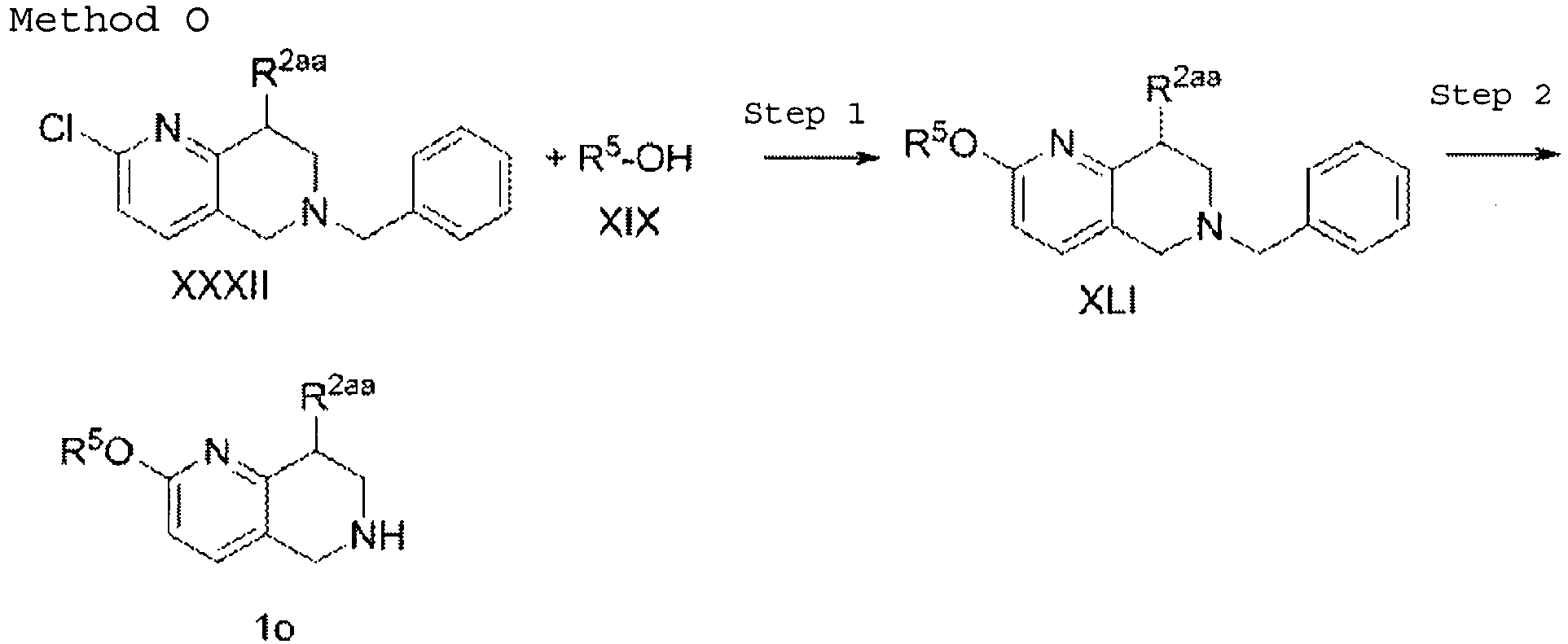
- This step is a step of producing a compound represented by the formula (XLI) or a salt thereof (hereinafter to be referred to as compound (XLI)) by subjecting compound (XXXII) to an alkoxylation with compound (XIX). This step can be carried out in the same manner as in the method described in Method E, Step 11.
- This step is a step of producing compound (1o) by removing the benzyl group of compound (XLI). This step can be carried out in the same manner as in the method described in Method A, Step 8.
- For example, when compound (Ix) is a compound represented by the formula (1p) or a salt thereof (hereinafter to be referred to as compound (1p)), the compound can be produced according to the following Method P.
-

- This step is a step of producing a compound represented by the formula (XLIII) or a salt thereof (hereinafter to be referred to as compound (XLIII)) by reacting a compound represented by the formula (XLII) or a salt thereof (hereinafter to be referred to as compound (XLII)) with benzylamine and formaldehyde in the presence of an acid and a base.
- The reaction is generally carried out in a solvent that does not adversely influence the reaction. Examples of the solvent include aromatic hydrocarbons (toluene, xylene etc.), aliphatic hydrocarbons (heptane, hexane etc.), halogenated hydrocarbons (chloroform, dichloromethane etc.), ethers (diethyl ether, tetrahydrofuran, dioxane etc.), alcohols (methanol, ethanol, 2-propanol, butanol, benzyl alcohol etc.), nitriles (acetonitrile etc.), amides (N,N-dimethylformamide etc.), sulfoxides (dimethyl sulfoxide etc.) and the like. These solvents may be used in a mixture of two or more solvents at an appropriate ratio. The amount of the formaldehyde and benzylamine to be used is, for example, about 1 to 100 molar equivalents, preferably about 1 to 5 molar equivalents, per 1 mol of compound (XLII), respectively.
- Examples of the acid to be used include mineral acids (hydrochloric acid, hydrobromic acid, sulfuric acid etc.), carboxylic acids (formic acid, acetic acid, propionic acid, trifluoroacetic acid etc.), sulfonic acids (methanesulfonic acid, p-toluenesulfonic acid etc.) and Lewis acids (aluminum chloride, zinc chloride, zinc bromide, boron trifluoride, titanium chloride etc.). Of these, hydrochloric acid, hydrobromic acid, sulfuric acid and the like are preferable. The amount of the acid to be used is, for example, about 0.1 to 10 molar equivalents, preferably about 1 to 5 molar equivalents, per 1 mol of compound (XLII).
- Examples of the base to be used include organic amines (e.g., trimethylamine, triethylamine, diisopropylamine, N-methylmorpholine, 1,8-diazabicyclo[5.4.0]undec-7-ene, pyridine, N,N-dimethylaniline etc.), alkali metal salts (e.g., sodium hydrogen carbonate, potassium hydrogen carbonate, sodium carbonate, potassium carbonate, cesium carbonate, sodium phosphate, potassium phosphate, sodium hydroxide, potassium hydroxide etc.), metal hydrides (potassium hydride, sodium hydride etc.), alkali metal alkoxides (sodium methoxide, sodium ethoxide, sodium-tert-butoxide, potassium-tert-butoxide etc.), alkali disilazides (e.g., lithium disilazide, sodium disilazide, potassium disilazide etc.) and the like. The amount of the base to be used is generally about 0.1 to about 10 molar equivalents, preferably about 1 to about 5 molar equivalents, per 1 mol of compound (XLII).
- The reaction temperature is generally about 0°C to 200°C, preferably about 20°C to 150°C. The reaction time is generally 0.5 to 48 hr, preferably 0.5 to 24 hr.
- The thus-obtained compound (XLIII) can be isolated and purified by known separation and purification means, for example, concentration, concentration under reduced pressure, solvent extraction, crystallization, recrystallization, phase transfer, chromatography and the like. In addition, compound (XLIII) may be used for the next reaction without isolation.
- This step is a step of producing a compound represented by the formula (XLIV) or a salt thereof (hereinafter to be referred to as compound (XLIV)) by reacting compound (XLIII) with an alkoxycarbonylating agent. This reaction can be carried out according to a method known per se, generally, in the presence of a base, and where necessary, in a solvent that does not adversely influence the reaction.
- Examples of the alkoxycarbonylating agent include dimethyl carbonate, diethyl carbonate, methyl chloroformate, ethyl chloroformate and the like. The amount thereof to be used is about 1 to about 10 molar equivalents, preferably about 1 to about 3 molar equivalents, per 1 mol of compound (XLIII).
- Examples of the solvent include hydrocarbons (e.g., benzene, toluene etc.), alcohols (e.g., methanol, ethanol etc.), ethers (e.g., diethyl ether, dioxane, tetrahydrofuran etc.), esters (e.g., ethyl acetate etc.), halogenated hydrocarbons (e.g., chloroform, dichloromethane etc.), amides (e.g., N,N-dimethylformamide etc.), aromatic amines (e.g., pyridine etc.) and the like. These solvents may be used in a mixture of two or more solvents at an appropriate ratio. The amount of the solvent to be used is generally 1-fold volume to 100-fold volume, relative to compound (XLIII).
- Examples of the base include alkali metal hydroxides (e.g., sodium hydroxide, potassium hydroxide etc.), hydrogen carbonates (e.g., sodium hydrogen carbonate, potassium hydrogen carbonate etc.), carbonates (e.g., sodium carbonate, potassium carbonate etc.), acetates (e.g., sodium acetate etc.), tertiary amines (e.g., trimethylamine, triethylamine, N-methylmorpholine etc.), aromatic amines (e.g., pyridine, picoline, N,N-dimethylaniline etc.) and the like. Of these, sodium hydride, sodium ethoxide and the like are preferable. The amount of the base to be used is generally about 1 molar equivalent to about 100 molar equivalents, preferably about 1 molar equivalent to about 5 molar equivalents, per 1 mol of compound (XLIII).
- The reaction temperature is generally about -80°C to about 150°C, preferably about 0°C to about 100°C. The reaction time is generally about 0.1 hr to about 48 hr, preferably about 0.5 hr to about 16 hr.
- The thus-obtained compound (XLIV) can be isolated and purified by known separation and purification means, for example, concentration, concentration under reduced pressure, solvent extraction, crystallization, recrystallization, phase transfer, chromatography and the like. In addition, compound (XLIV) may be used for the next reaction without isolation.
- This step is a step of producing a compound represented by the formula (XLV) or a salt thereof (hereinafter to be referred to as compound (XLV)) by subjecting compound (XLIV) to an enamine-forming reaction. In the enamine-forming reaction, compound (XLIV) is condensed with ammonia or a salt thereof to give an enamine.
- The enamine-forming reaction is generally carried out in a solvent that does not adversely influence the reaction. Examples of the solvent include aromatic hydrocarbons (toluene, xylene etc.), aliphatic hydrocarbons (heptane, hexane etc.), halogenated hydrocarbons (chloroform, dichloromethane etc.), ethers (diethyl ether, tetrahydrofuran, dioxane etc.), alcohols (methanol, ethanol, 2-propanol, butanol, benzyl alcohol etc.), nitriles (acetonitrile etc.), amides (N,N-dimethylformamide etc.), sulfoxides (dimethyl sulfoxide etc.) and the like. These solvents may be used in a mixture of two or more solvents at an appropriate ratio. The amount of the solvent to be used is generally 1-fold volume to 100-fold volume, relative to compound (XLIV).
- Where necessary, a catalyst may also be added to advantageously perform the reaction. Examples of the catalyst include mineral acids (hydrochloric acid, hydrobromic acid, sulfuric acid etc.), carboxylic acids (formic acid, acetic acid, propionic acid, trifluoroacetic acid etc.), sulfonic acids (methanesulfonic acid, p-toluenesulfonic acid etc.), Lewis acids (aluminum chloride, zinc chloride, zinc bromide, boron trifluoride, titanium chloride etc.), acetates (sodium acetate, potassium acetate etc.) and molecular sieves (molecular sieves 3A, 4A, 5A etc.). The amount of the catalyst to be used is, for example, about 0.01 to 50 molar equivalents, preferably about 0.1 to 10 molar equivalents, per 1 mol of compound (XLIV).
- The reaction temperature is generally about 0°C to 200°C, preferably about 20°C to 150°C. The reaction time is generally 0.5 to 48 hr, preferably 0.5 to 24 hr.
- The thus-obtained compound (XLV) can be isolated and purified by known separation and purification means, for example, concentration, concentration under reduced pressure, solvent extraction, crystallization, recrystallization, phase transfer, chromatography and the like. In addition, compound (XLV) may be used for the next reaction without isolation.
- This step is a step of converting a compound represented by the formula (XLVI) or a salt thereof (hereinafter to be referred to as compound (XLVI)) by subjecting compound (XLV) to an acylation reaction with an alkyl halogenated formylacetate, and then a cyclization reaction.
- The acylation reaction can be carried out according to a method known per se, generally, in the presence of a base, and where necessary in a solvent that does not adversely influence the reaction.
- Examples of the alkyl halogenated formylacetate include ethyl chloroformylacetate, ethyl bromoformylacetate, methyl chloroformylacetate, methyl bromoformylacetate and the like. The amount thereof to be used is about 1 to about 10 molar equivalents, preferably about 1 to about 3 molar equivalents, per 1 mol of compound (XLV).
- Examples of the base include inorganic bases (alkali metal hydroxides such as lithium hydroxide, sodium hydroxide, potassium hydroxide and the like, alkali metal hydrogen carbonates such as sodium hydrogen carbonate, potassium hydrogen carbonate and the like, alkali metal carbonates such as sodium carbonate, potassium carbonate and the like), metal alkoxides (sodium methoxide, sodium ethoxide, potassium methoxide, potassium ethoxide etc.), organic bases (amines such as trimethylamine, triethylamine, diisopropylethylamine and the like, aromatic amines such as pyridine, 4-dimethylaminopyridine and the like, etc.) and the like. Of these, triethylamine, diisopropylethylamine and the like are preferable. While the amount of the base to be used varies depending on the kind of the solvent, the other reaction conditions, it is generally about 1 to 100 molar equivalents, preferably about 1 to 20 molar equivalents, per 1 mol of compound (XLV).
- Examples of the solvent that does not adversely influence the reaction include aromatic hydrocarbons (toluene, xylene etc.), aliphatic hydrocarbons (heptane, hexane etc.), halogenated hydrocarbons (chloroform, dichloromethane etc.), ethers (diethyl ether, tetrahydrofuran, dioxane etc.), nitriles (acetonitrile etc.), amides (N,N-dimethylformamide etc.), sulfoxides (dimethyl sulfoxide etc.) and the like. These solvents may be used in a mixture of two or more solvents at an appropriate ratio. The amount of the solvent to be used is generally 1-fold volume to 100-fold volume, relative to compound (XLV).
- The cyclization reaction can be carried out according to a method known per se, generally, in the presence of a base, and where necessary in a solvent that does not adversely influence the reaction.
- Examples of the base include inorganic bases (alkali metal hydroxides such as lithium hydroxide, sodium hydroxide, potassium hydroxide and the like, alkali metal hydrogen carbonates such as sodium hydrogen carbonate, potassium hydrogen carbonate and the like, alkali metal carbonates such as sodium carbonate, potassium carbonate and the like), metal alkoxides (sodium methoxide, sodium ethoxide, potassium methoxide, potassium ethoxide etc.), organic bases (amines such as trimethylamine, triethylamine, diisopropylethylamine and the like, aromatic amines such as pyridine, 4-dimethylaminopyridine and the like, etc.) and the like. Of these, sodium methoxide, sodium ethoxide, potassium methoxide, potassium ethoxide and the like are preferable. While the amount of the base to be used varies depending on the kind of the solvent and the other reaction conditions, it is generally about 1 to 100 molar equivalents, preferably about 1 to 20 molar equivalents, per 1 mol of compound (XLV).
- Examples of the solvent that does not adversely influence the reaction include aromatic hydrocarbons (toluene, xylene etc.), aliphatic hydrocarbons (heptane, hexane etc.), halogenated hydrocarbons (chloroform, dichloromethane etc.), ethers (diethyl ether, tetrahydrofuran, dioxane etc.), nitriles (acetonitrile etc.), amides (N,N-dimethylformamide etc.), sulfoxides (dimethyl sulfoxide etc.) and the like. These solvents may be used in a mixture of two or more solvents at an appropriate ratio. The amount of the solvent to be used is generally 1-fold volume to 100-fold volume, relative to compound (XLV).
- The thus-obtained compound (XLVI) can be isolated and purified by known separation and purification means, for example, concentration, concentration under reduced pressure, solvent extraction, crystallization, recrystallization, phase transfer, chromatography and the like. In addition, compound (XLVI) may be used for the next reaction without isolation.
- This step is a step of converting compound (XLVI) to a compound represented by the formula (XLVII) or a salt thereof (hereinafter to be referred to as compound (XLVII)) by subjecting compound (XLVI) to hydrolysis, and halogenating the resulting compound with a halogenating agent (in the scheme, halogen is shown by a chlorine atom for convenience).
- The hydrolysis can be carried out according to a method known per se, generally, in the presence of a base, and where necessary in a solvent that does not adversely influence the reaction.
- Examples of the base include inorganic bases (alkali metal hydroxides such as lithium hydroxide, sodium hydroxide, potassium hydroxide and the like, alkali metal hydrogen carbonates such as sodium hydrogen carbonate, potassium hydrogen carbonate and the like, alkali metal carbonates such as sodium carbonate, potassium carbonate and the like, alkoxides such as sodium methoxide, sodium ethoxide and the like, etc.), organic bases (amines such as trimethylamine, triethylamine, diisopropylethylamine and the like, aromatic amines such as pyridine, 4-dimethylaminopyridine and the like, etc.) and the like. Of these, lithium hydroxide, sodium hydroxide, potassium hydroxide and the like are preferable. While the amount of the base to be used varies depending on the kind of the solvent, and the other reaction conditions, it is generally about 1 to 100 molar equivalents, preferably about 1 to 20 molar equivalents, per 1 mol of compound (XLVI).
- Examples of the solvent that does not adversely influence the reaction include hydrocarbons (benzene, toluene, xylene, hexane, heptane etc.), halogenated hydrocarbons (dichloromethane, chloroform etc.), ethers (diethyl ether, diisopropyl ether, t-butyl methyl ether, tetrahydrofuran, dioxane, dimethoxyethane etc.), nitriles (acetonitrile etc.), amides (N,N-dimethylformamide, N,N-dimethylacetamide etc.), sulfoxides (dimethyl sulfoxide etc.), water and the like. These solvents may be used in a mixture of two or more solvents at an appropriate ratio. The amount of the solvent to be used is generally 1-fold volume to 100-fold volume, relative to compound (XLVI).
- The reaction temperature is, for example, within the range of about -50 to 200°C, preferably about 0 to 100°C. While the reaction time varies depending on the kind of compound (XLVI), the reaction temperature and the like, it is, for example, about 0.5 to 24 hr, preferably about 0.5 to 2 hr.
- The halogenation can be carried out in the same manner as in the method described in Method G, Step 16.
- This step is a step of producing a compound represented by the formula (XLVIII) or a salt thereof (hereinafter to be referred to as compound (XLVIII)) by subjecting compound (XLVII) to a reduction reaction. This step can be carried out in the same manner as in the method described in Method A, Step 7.
- This step is a step of producing a compound represented by the formula (XLIX) or a salt thereof (hereinafter to be referred to as compound (XLIX)) by subjecting compound (XLVIII) to a benzylation reaction with benzylbromide. This reaction can be carried out according to a method known per se, generally, in the presence of a base, and where necessary, in a solvent that does not adversely influence the reaction.
- The benzyl bromide may be generally, commercially available product. The amount of the benzyl bromide to be used is generally about 1 molar equivalent to about 10 molar equivalents, preferably about 1 molar equivalent to about 3 molar equivalents, per 1 mol of compound (XLVIII).
- Examples of the solvent include hydrocarbons (e.g., benzene, toluene etc.), ethers (e.g., diethyl ether, dioxane, tetrahydrofuran etc.), esters (e.g., ethyl acetate etc.), halogenated hydrocarbons (e.g., chloroform, dichloromethane etc.), amides (e.g., N,N-dimethylformamide etc.), aromatic amines (e.g., pyridine etc.), water and the like. These solvents may be used in a mixture of two or more solvents at an appropriate ratio. The amount of the solvent to be used is generally 1-fold volume to 100-fold volume, relative to compound (XLVIII).
- Examples of the base include alkali metal hydroxides (e.g., sodium hydroxide, potassium hydroxide etc.), hydrogen carbonates (e.g., sodium hydrogen carbonate, potassium hydrogen carbonate etc.), carbonates (e.g., sodium carbonate, potassium carbonate etc.), acetates (e.g., sodium acetate etc.), tertiary amines (e.g., trimethylamine, triethylamine, N-methylmorpholine etc.), aromatic amines (e.g., pyridine, picoline, N,N-dimethylaniline etc.) and the like. The amount of the base to be used is generally about 1 molar equivalent to about 100 molar equivalents, preferably about 1 molar equivalent to about 5 molar equivalents, per 1 mol of compound (XLVIII).
- The reaction temperature is generally about -80°C to about 150°C, preferably about 0°C to about 100°C. The reaction time is generally about 0.1 hr to about 48 hr, preferably about 0.5 hr to about 16 hr.
- The thus-obtained compound (XLIX) can be isolated and purified by known separation and purification means, for example, concentration, concentration under reduced pressure, solvent extraction, crystallization, recrystallization, phase transfer, chromatography and the like. In addition, compound (XLIX) may be used for the next reaction without isolation.
- This step is a step of converting compound (XLIX) to a compound represented by the formula (L) or a salt thereof (hereinafter to be referred to as compound (L)) by halogenating compound (XLIX) with a halogenating agent (in the scheme, halogen is shown by a chlorine atom for convenience). This step can be carried out in the same manner as in the method described in Method G, Step 16.
- This step is a step of producing a compound represented by the formula (LI) or a salt thereof (hereinafter to be referred to as compound (LI)) by reacting compound (L) with an amine represented by the formula: HNR3R4 wherein each symbol is as defined above, or a salt thereof. This step can be carried out in the same manner as in the method described in Method A, Step 6.
- This step is a step of producing compound (1p) by removing the benzyl group of compound (LI). This step can be carried out in the same manner as in the method described in Method A, Step 8.
- For example, when compound (Ix) is a compound represented by the formula (1q) or a salt thereof (hereinafter to be referred to as compound (1q)), the compound can be produced according to the following Method Q.
-

- This step is a step of producing a compound represented by the formula (LII) or a salt thereof (hereinafter to be referred to as compound (LII)) by subjecting compound (L) to a coupling reaction with a compound represented by the formula: R1-M wherein each symbol is as defined above, or a salt thereof. This step can be carried out in the same manner as in the method described in Method K,
Step 1. - This step is a step of producing compound (1q) by removing the benzyl group of compound (LII). This step can be carried out in the same manner as in the method described in Method A, Step 8.
- For example, when compound (Ix) is a compound represented by the formula (1r) or a salt thereof (hereinafter to be referred to as compound (1r)), the compound can be produced according to the following Method R.
-

- This step is a step of producing a compound represented by the formula (LIII) or a salt thereof (hereinafter to be referred to as compound (LIII)) by subjecting compound (L) to an alkoxylation with compound (XIX). This step can be carried out in the same manner as in the method described in Method E, Step 11.
- This step is a step of producing compound (1r) by removing the benzyl group of compound (LIII). This step can be carried out in the same manner as in the method described in Method A, Step 8.
- Compound (Ix) produced by such method, can be isolated and purified by a typical separation means such as recrystallization, distillation, chromatography, etc.
- When compound (Ix) contains an optical isomer, a stereoisomer, a regioisomer or a rotamer, these are also encompassed in compound (Ix), and can be obtained as a single product according to synthesis and separation methods known per se (e.g., concentration, solvent extraction, column chromatography, recrystallization, etc.). For example, when compound (Ix) has an optical isomer, an optical isomer resolved from this compound is also encompassed in compound (Ix).
- In addition, a deuterium exchange compound of compound (Ix) is also encompassed in compound (Ix).
- The optical isomer can be produced according to a method known per se. To be specific, an optically active synthetic intermediate is used, or the final racemate product is subjected to optical resolution according to a conventional method to give an optical isomer.
- The method of optical resolution may be a method known per se, such as a fractional recrystallization method, a chiral column method, a diastereomer method, etc.
- A method wherein a salt of a racemate with an optically active compound (e.g., (+)-mandelic acid, (-)-mandelic acid, (+)-tartaric acid, (-)-tartaric acid, (+)-1-phenethylamine, (-)-1-phenethylamine, cinchonine, (-)-cinchonidine, brucine, etc.) is formed, which is separated by a fractional recrystallization method, and if desired, a free optical isomer is obtained by a neutralization step.
- A method wherein a racemate or a salt thereof is applied to a column for separation of an optical isomer (a chiral column) to allow separation. In the case of a liquid chromatography, for example, a mixture of the optical isomers is applied to a chiral column such as ENANTIO-OVM (manufactured by Tosoh Corporation), CHIRAL series (manufactured by Daicel Chemical Industries, Ltd.) and the like, and developed with water, various buffers (e.g., phosphate buffer, etc.) and organic solvents (e.g., ethanol, methanol, isopropanol, acetonitrile, trifluoroacetic acid, diethylamine, etc.) solely or in admixture to separate the optical isomer. In the case of a gas chromatography, for example, a chiral column such as CP-Chirasil-DeX CB (manufactured by GL Sciences Inc.) and the like is used to allow separation.
- A method wherein a racemic mixture is prepared into a diastereomeric mixture by chemical reaction with an optically active reagent, which is made into a single substance by a typical separation means (e.g., a fractional recrystallization method, a chromatography method, etc.) and the like, and is subjected to a chemical treatment such as hydrolysis and the like to separate an optically active reagent moiety, whereby an optical isomer is obtained. For example, when compound (Ix) contains a hydroxyl group, or primary or secondary amino in a molecule, the compound and an optically active organic acid (e.g., MTPA [α-methoxy-α-(trifluoromethyl)phenylacetic acid], (-)-menthoxyacetic acid, etc.) and the like are subjected to condensation reaction to give diastereomers in the ester form or in the amide form, respectively. When compound (Ix) has carboxyl, this compound and an optically active amine or optically active alcohol are subjected to condensation reaction to give diastereomers in the amide form or in the ester form, respectively. The separated diastereomer is converted to an optical isomer of the original compound by acid hydrolysis or base hydrolysis.
- The compound (Ix) may be a crystal.
- The crystal of the compound (Ix) can be produced by crystallization of compound (Ix) according to crystallization methods known per se.
- Examples of the crystallization method include a method of crystallization from a solution, a method of crystallization from vapor, a method of crystallization from the melts and the like.
- The "crystallization from a solution" is typically a method of shifting a non-saturated state to supersaturated state by varying factors involved in solubility of compounds (solvent composition, pH, temperature, ionic strength, redox state, etc.) or the amount of solvent. To be specific, for example, a concentration method, a slow cooling method, a reaction method (a diffusion method, an electrolysis method), a hydrothermal growth method, a flux method and the like can be mentioned. Examples of the solvent to be used include aromatic hydrocarbons (e.g., benzene, toluene, xylene, etc.), halogenated hydrocarbons (e.g., dichloromethane, chloroform, etc.), saturated hydrocarbons (e.g., hexane, heptane, cyclohexane, etc.), ethers (e.g., diethyl ether, diisopropyl ether, tetrahydrofuran, dioxane, etc.), nitriles (e.g., acetonitrile, etc.), ketones (e.g., acetone, etc.), sulfoxides (e.g., dimethyl sulfoxide, etc.), acid amides (e.g., N,N-dimethylformamide, etc.), esters (e.g., ethyl acetate, etc.), alcohols (e.g., methanol, ethanol, isopropyl alcohol, etc.), water and the like. These solvents are used alone or in a combination of two or more at a suitable ratio (e.g., 1:1 to 1:100 (a volume ratio)). Where necessary, a seed crystal can be used.
- The "crystallization from vapor" is, for example, a vaporization method (a sealed tube method, a gas stream method), a gas phase reaction method, a chemical transportation method and the like.
- The "crystallization from the melts" is, for example, a normal freezing method (a Czockralski method, a temperature gradient method and a Bridgman method, etc.), a zone melting method (a zone leveling method and a floating zone method, etc.), a special growth method (a VLS method and a liquid phase epitaxy method, etc.) and the like.
- Preferable examples of the crystallization method include a method of dissolving compound (Ix) in a suitable solvent (e.g., alcohols such as methanol, ethanol, etc., and the like) at a temperature of 20 to 120°C, and cooling the resulting solution to a temperature not higher than the temperature of dissolution (e.g., 0 to 50°C, preferably 0 to 20°C) and the like.
- The thus obtained crystals of compound (Ix) of the present invention can be isolated, for example, by filtration and the like.
- As an analysis method of the obtained crystal is generally a method of crystal analysis by powder X-ray diffraction. As a method of determining crystal orientation, a mechanical method or an optical method and the like can also be used.
- The crystal of compound (Ix) obtained by the above-mentioned production method (hereinafter to be abbreviated as "the crystal of the present invention") has high purity, high quality, and low hygroscopicity, is not denatured even after a long-term preservation under general conditions, and is extremely superior in the stability. In addition, it is also superior in the biological properties (e.g., pharmacokinetics (absorption, distribution, metabolism, excretion), efficacy expression etc.) and is extremely useful as a medicament.
- In the present specification, the melting point means a melting point measured using, for example, a micro melting point apparatus (YANACO, MP-500D), a DSC (differential scanning calorimetry) apparatus (SEIKO, EXSTAR6000) and the like.
- A prodrug of the compound (Ix) means a compound which is converted to the compound (Ix) with a reaction due to an enzyme, an gastric acid, etc. under the physiological condition in the living body, that is, a compound which is converted to the compound (Ix) with oxidation, reduction, hydrolysis, etc. according to an enzyme; a compound which is converted to the compound (Ix) by hydrolysis etc. due to gastric acid, etc. A prodrug for compound (Ix) may be a compound obtained by subjecting amino in compound (Ix) to an acylation, alkylation or phosphorylation [e.g., a compound obtained by subjecting amino in compound (Ix) to an eicosanoylation, alanylation, pentylaminocarbonylation, (5-methyl-2-oxo-1,3-dioxolen-4-yl)methoxycarbonylation, tetrahydrofuranylation, pyrrolidylmethylation, pivaloyloxymethylation and tert-butylation, etc.]; a compound obtained by subjecting a hydroxy group in compound (Ix) to an acylation, alkylation, phosphorylation or boration (e.g., a compound obtained by subjecting a hydroxy group in compound (Ix) to an acetylation, palmitoylation, propanoylation, pivaloylation, succinylation, fumarylation, alanylation, dimethylaminomethylcarbonylation, etc.); a compound obtained by subjecting carboxyl in compound (Ix) to an esterification or amidation [e.g., a compound obtained by subjecting carboxyl in compound (Ix) to an ethyl esterification, phenyl esterification, carboxymethyl esterification, dimethylaminomethyl esterification, pivaloyloxymethyl esterification, ethoxycarbonyloxyethyl esterification, phthalidyl esterification, (5-methyl-2-oxo-1,3-dioxolen-4-yl)methyl esterification, cyclohexyloxycarbonylethyl esterification and methylamidation, etc.] and the like. Any of these compounds can be produced from compound (Ix) by a method known per se.
- A prodrug for compound (Ix) may also be one which is converted into compound (Ix) under a physiological condition, such as those described in IYAKUHIN no KAIHATSU (Development of Pharmaceuticals), Vol. 7, Design of Molecules, p.163-198, Published by HIROKAWA SHOTEN (1990).
- Compound (Ix) of the present invention or a prodrug thereof (hereinafter to be abbreviated as the compound of the present invention) has a superior serotonin 5-HT2C receptor activating action.
- In addition, the compound of the present invention has low toxicity and is safe.
- Accordingly, compound (I) of the present invention having a superior serotonin 5-HT2C receptor activation action is useful as a prophylaxis or therapeutic drug for all serotonin 5-HT2C associated diseases in mammals (e.g., mouse, rat, hamster, rabbit, cat, dog, bovine, sheep, monkey, human and the like), for example,
- (1) lower urinary tract diseases (including all diseases having a lower urinary tract symptoms described below including, for example, overactive bladder, benign prostatic hyperplasia, interstitial cystitis, chronic prostatitis etc.): storage symptom (e.g., day time urinary frequency, nocturia, urinary urgency, urinary incontinence, stress urinary incontinence, urge urinary incontinence, mixed urinary incontinence, enuresis, nocturnal enuresis, overflow urinary incontinence, other urinary incontinence, enhanced, decreased or missing bladder sensation etc.), voiding symptom (e.g., weak urinary stream (or slow stream), split urinary stream, spraying stream, intermittent urinary stream, voiding postponement, straining at urination, terminal dribbling etc.), post-micturition symptom (e.g., sense of residual urine, post-micturition dribble etc.), symptom due to sexual intercourse (e.g., coital pain, vaginal dryness, urinary incontinence etc.), symptom due to pelvic organ prolapse (e.g., foreign body sensation, lumbago etc.), genital organ pain or lower urinary tract pain (e.g., cystalgia, urethral pain, pudendalgia, vaginodynia, scrotal pain, perineal pain, pelvic pain etc.), genital organ or urinary tract pain syndrome (e.g., cystalgia syndrome, urethral pain syndrome, pudendalgia syndrome, vaginal syndrome, scrotal pain syndrome, perineal pain syndrome, pelvic pain syndrome etc.), symptom syndrome suggesting lower urinary tract dysfunction (e.g., overactive bladder syndrome, a lower urinary tract symptom suggesting bladder outlet obstruction etc.), polyuria, urolithiasis (e.g., ureteral calculus, urethral calculus) and the like,
- (2) metabolic diseases [for example, diabetes (insulin dependent diabetes, diabetic complications, diabetic retinopathy, diabetic microangiopathy, diabetic neuropathy etc.), impaired glucose tolerance, obesity [e.g., malignant mastocytosis, exogenous obesity, hyperinsulinar obesity, hyperplasmic obesity, hypophyseal adiposity, hypoplasmic obesity, hypothyroid obesity, hypothalamic obesity, symptomatic obesity, infantile obesity, upper body obesity, alimentary obesity, hypogonadal obesity, systemic mastocytosis, simple obesity, central obesity], benign prostatic hyperplasia, sexual dysfunction and the like]
- (3) central nervous system diseases [for example, neurodegenerative diseases (e.g., Alzheimer's disease, Down's disease, Parkinson's disease, Creutzfeldt-Jakob disease, amyotrophic lateral sclerosis (ALS), Huntington chorea, diabetic neuropathy, multiple sclerosis etc.), mental diseases (e.g., schizophrenia, depression, mania, anxiety neurosis, obsessive-compulsive neurosis, panic disorder, epilepsy, alcohol dependence, drug dependence, anxiety, anxious mental state, emotional abnormality, cyclothymia, nervous erethism, autism, faint, addiction, low sex drive etc.), disorders such as central nervous system and peripheral nerve disorders (e.g., head trauma, spinal trauma, brain edema, disorders of sensory function, abnormality of sensory function, disorders of autonomic nervous function, abnormality of autonomic nervous function, whiplash injury etc.), memory disorders (e.g., senile dementia, amnesia, cerebrovascular dementia etc.), cerebrovascular disorder (e.g., cerebral hemorrhage, cerebral infarction and the like and sequelae or complication thereof, asymptomatic cerebrovascular accident, transient cerebral ischemic attack, hypertensive encephalopathia, blood-brain barrier disorder, etc.), recurrence and sequelae of cerebrovascular disorders (e.g., neural symptoms, mental symptoms, subjective symptoms, disorders of daily living activities etc.), central nervous system hypofunction after brain blood vessel occlusion, disorder or abnormality of autoregulation ability of brain circulation or renal circulation, sleep disorder etc.]
- (4) sexual dysfunction diseases [for example, male erectile dysfunction, dysspermia, female sexual dysfunction etc.]
- (5) digestive organ diseases [for example, an irritable bowel syndrome, inflammatory bowel disease, ulcerative colitis, Crohn's disease, diseases caused by a spiral urease-positive gram-negative bacterium (e.g., Helicobacter pylori, etc.) (e.g., gastritis, gastric ulcer, etc.), gastric cancer, postgastrostomy disorder, indigestion, esophageal ulcer, pancreatitis, polyp of the colon, cholelithiasis, hemorrhoids, peptic ulcer, situational ileitis, gluttony, constipation, diarrhea, borborygmus, etc.]
- (6) inflammatory or allergic diseases [for example, allergic rhinitis, conjunctivitis, gastrointestinal allergy, pollinosis, anaphylaxis, dermatitis, herpes, psoriasis, bronchitis, expectoration, retinopathy, postoperative and posttraumatic inflammation, regression of puffiness, pharyngitis, cystitis, meningitidis, inflammatory ophthalmic diseases, etc.]
- (7) osteoarthropathy diseases [for example, rheumatoid arthritis (chronic rheumatoid arthritis), arthritis deformans, rheumatoid myelitis, osteoporosis, abnormal growth of cells, bone fracture, bone refracture, osteomalacia, osteopenia, Paget's disease of bone, rigid myelitis, articular tissue destruction by gonarthrosis deformans and similar diseases thereto, etc.]
- (8) respiratory diseases [for example, cold syndrome, pneumonia, asthma, pulmonary hypertension, pulmonary thrombi/pulmonary obliteration, pulmonary sarcoidosis, pulmonary tuberculosis, interstitial pneumonia, silicosis, adult respiratory distress syndrome, chronic obstructive pulmonary disease, cough, etc.]
- (9) infectious diseases [HIV infectious diseases, virus infectious diseases due to cytomegalo virus, influenza virus, herpes virus and the like, rickettsia infectious diseases, bacterial infectious diseases, sexually-transmitted diseases, carinii pneumonia, Helicobacter pylori infectious disease, systemic fungal infectious diseases, tuberculosis, invasive staphylococcal infectious diseases, acute viral encephalitis, acute bacterial meningitidis, AIDS encephalitis, septicemia, sepsis, sepsis gravis, septic shock, endotoxin shock, toxic shock syndromes, etc.]
- (10) cancers [for example, primary, metastatic or recurrent breast cancer, prostatic cancer, pancreatic cancer, gastric cancer, lung cancer, colorectal cancer (colon cancer, rectal cancer, anal cancer), esophagus cancer, duodenal cancer, head and neck cancer (tongue cancer, pharynx cancer, larynx cancer), brain tumor, neurinoma, non-small cell lung cancer, small cell lung cancer, hepatic cancer, renal cancer, colic cancer, uterine cancer (cancer of the uterine body, uterine cervical cancer), ovarian cancer, bladder cancer, skin cancer, hemangioma, malignant lymphoma, malignant melanoma, thyroid cancer, bone tumor, hemangioma, angiofibroma, retinosarcoma, penis cancer, pediatric solid cancer, Kaposi's sarcoma, Kaposi's sarcoma caused by AIDS, tumor of the maxillary sinus, fibrous histiocytoma, smooth muscle sarcoma, rhabdomyosarcoma, liposarcoma, fibroid tumors of the uterus, osteoblastoma, osteosarcoma, chondrosarcoma, carcinomatous mesothelial tumor, tumors such as leukemia, Hodgkin's disease, etc.]
- (11) circulatory diseases [for example, acute coronary artery syndromes (e.g., acute cardiac infarction, unstable angina, etc.), peripheral arterial occlusion, Raynaud's disease, Buerger's disease, restenosis after coronary-artery intervention (percutaneous transluminal coronary angioplasty (PTCA), directional coronary atherectomy (DCA), stenting, etc.), restenosis after coronary-artery bypass operation, restenosis after intervention (angioplasty, atherectomy, stenting, etc.) or bypass operation in other peripheral artery, ischemic cardiac diseases (e.g., cardiac infarction, angina, etc.), myocarditis, intermittent claudication, lacunar infarction, arteriosclerosis (e.g., atherosclerosis, etc.), cardiac failure (acute cardiac failure, chronic cardiac failure including congestive cardiac failure), arrhythmia, progress of atherosclerotic plaque, thrombosis, hypertension, hypertensive tinnitus, hypotension, etc.]
- (12) pains [e.g., headache, migraine, neuralgia, pelvic visceral pain (including cystalgia), etc.]
- (13) autoimmune diseases [for example, collagen disease, systemic lupus erythematosus, scleroderma, polyarteritis, myasthenia gravis, multiple sclerosis, Sjogren's syndrome, Behcet's disease, etc.]
- (14) hepatic diseases [e.g., hepatitis (including chronic hepatitis), cirrhosis, interstitial hepatic diseases, etc.]
- (15) pancreatic diseases [e.g., pancreatitis (including chronic pancreatitis), etc.]
- (16) renal diseases [e.g., nephritis, glomerulonephritis, glomerulosclerosis, renal failure, thrombotic microangiopathy, dialysis complications, organ disorders including nephropathia by radiation, diabetic nephropathy, etc.]
- (17) endocrine diseases [e.g., Addison's disease, Cushing's syndrome, melanocytoma, primary aldosteronism, etc.]
- (18) other diseases [for example,
- (a) transplant rejection [e.g., posttransplantational rejection, posttransplantational polycythemia, hypertension, organ disorder and/or vascular hypertrophy, graft-versus-host disease, etc.]
- (b) abnormality in characteristic of blood and/or blood components [e.g., enhancement in platelet aggregation, abnormality of erythrocyte deformability, enhancement in leukocyte adhesiveness, increase in blood viscosity, polycythemia, vascular peliosis, autoimmune hemolytic anemia, disseminated intravascular coagulation syndrome (DIC), multiple myelopathy, etc.]
- (c) gynecologic diseases [e.g., climacteric disorder, gestational toxicosis, endometriosis, hysteromyoma, ovarian disease, mammary disease, premenstrual syndrome, pelvic organ prolapse, rectal prolapse, cystoceles, enteroceles etc.]
- (d) dermatic diseases [e.g., keloid, angioma, psoriasis, pruritus, etc.]
- (e) ophthalmic diseases [e.g., glaucoma, ocular hypertension disease, etc.]
- (f) otolaryngological diseases [e.g., Menuel syndrome, tinnitus, gustation disorder, dizziness, disequilibrium, dysphagia, etc.]
- (g) diseases due to environmental and/or occupational factors (e.g., radiation disorder, disorders by ultraviolet ray/infrared ray/laser ray, altitude sickness, etc.)
- (h) ataxia, stiffness, tremor, motion impairment, akinesia and the like
- (i) chronic fatigue syndrome
- (j) sudden infant death syndrome
- (k) hiccup
- (l) diseases causing palpitation, vertigo, heartburn and the like.
- In addition, the serotonin 5-HT2C receptor activators including the compound of the present invention can also be used for the prophylaxis or treatment of diseases caused by prolapses of an organ from its normal position due to weakened pelvic floor muscles such as cystocele, enterocele and the like (e.g., proctocele and the like).
- Pelvic organ prolapse, rectal prolapse, cystocele and enterocele are diseases characterized by the protrusion of bladder, uterus, small intestine, rectal or the like beyond the vaginal orifice or the rectal orifice due to the insufficient contractile force of the pelvic floor muscles.
- In the above-mentioned diseases, the compound of the present invention is particularly useful as a serotonin 5-HT2C receptor activator, as an ameliorator for a lower urinary tract symptoms such as overactive bladder, stress urinary incontinence, and as a prophylactic or therapeutic drug for the lower urinary tract symptoms, a prophylactic or therapeutic agent for obesity, or a prophylactic or therapeutic agent for pelvic organ prolapse.
- As a useful compound that can be used as a prophylactic or therapeutic drug for cystoceles or enteroceles, various serotonin 5-HT2C receptor activators can be used besides the aforementioned compounds of the present invention and, for example, one having an inhibitory activity as evidenced by 50% inhibitory concentration (IC50) of not more than about 1000 nM, preferably not more than about 100 nM, by a binding assay is more preferable. Specifically, as the serotonin 5-HT2C receptor agonist, compounds described in
EP0572863 ,EP0863136 ,EP1213017 ,USP3253989 ,USP3676558 ,USP3652588 ,USP4082844 ,USP4971969 ,USP5494928 ,USP5646173 ,USP6310208 ,WO97/42183 WO98/30546 WO98/30548 WO98/33504 WO99/02159 WO99/43647 USP6281243 ),WO00/12475 USP6380238 ),WO00/12502 USP6365598 ), WPO00/12510(USP6433175 ),WO00/12475 WO00/12481 USP6552062 ),WO00/12482 WO00/12502 WO00/16761 WO00/17170 WO00/28993 WO00/35922 USP6372745 ),WO00/44737 WO00/44753 WO00/64899 WO00/77001 WO00/77002 WO00/77010 WO00/76984 USP6465467 ),WO01/09111 WO01/09122 WO01/09123 USP6638936 ),WO01/09126 WO01/12602 WO01/12603 USP6706750 ),WO01/40183 WO01/66548 USP6583134 ),WO01/70207 WO01/70223 WO01/72752 USP6734301 ),WO01/83487 WO02/04456 WO02/04457 WO02/08178 WO02/10169 WO02/24700 WO02/24701 WO02/36596 WO02/40456 WO02/40457 WO02/42304 WO02/44152 USP6479534 ),WO02/48124 WO02/51844 USP6610685 ),WO02/59124 WO02/59127 WO02/59129 WO02/72584 WO02/74746 WO02/83863 WO02/98350 WO02/98400 WO02/98860 WO03/00663 WO03/00666 WO03/04501 WO03/06466 WO03/11281 WO03/14118 WO03/14125 WO03/24976 WO03/28733 WO03/33497 WO03/57161 WO03/57213 WO03/57673 WO03/57674 WO03/62205 WO03/64423 WO03/86306 WO03/87086 WO03/89409 WO03/91250 WO03/91251 WO03/91257 WO03/97636 WO04/00829 WO04/00830 USP6667303 ),WO04/56324 WO04/78718 WO04/81010 WO04/087156 WO04/87662 WO04/87692 WO04/89897 WO04/096196 WO04/96201 WO04/112769 US2004192754 ,WO05/00849 WO05/03096 EP1500391 ,WO05/16902 WO05/19180 US2005080074 ,WO05/40146 WO05/41856 WO05/42490 WO05/42491 WO05/44812 WO05/082859 WO05/000309 WO05/019179 WO05/121113 WO05/049623 WO05/105082 WO05/109987 WO05/121113 WO05/113535 US06/003990 ,US06/014777 ,US06/014778 ,WO06/000902 WO06/028961 WO06/020817 WO06/020049 WO06/019940 WO06/004931 US06/025601 ,WO06/044762 WO06/047032 WO06/050007 WO06/052887 WO06/077025 WO06/065600 WO06/103511 WO06/116165 WO06/047228 WO06/117304 US06/241172 ,US06/241176 ,WO06/116136 WO06/116148 WO06/116151 WO06/116171 WO06/116170 WO06/116218 WO06/116169 WO06/077025 US07/032481 ,WO07/025144 WO07/028082 WO07/028132 WO07/028131 WO07/028083 WO07/030150 US2007/0049613 ,WO07/140213 WO07/084622 WO08/052075 WO08/052078 WO08/052086 WO08/052087 WO08/052088 WO08/010073 US08/0146583 WO08/117169 WO08/009125 US08/0255092 US08/0269196 - (1) WAY-161503
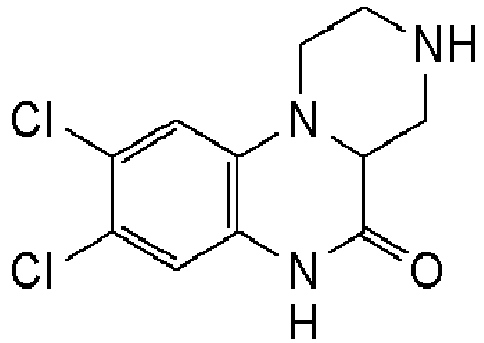
- (2) m-CPP

- (3) PNU-22394A

- (4) Ro60-0175

- (5) ORG-12962

- (6) Nordexfenfluramine

- (7) MK-212

- (8) Oxaflozane

- (9) a compound represented by the following structural formula described in
WO00/12510 USP6433175 )
- (10) a compound represented by the following structural formula described in
WO02/51844 USP6610685 )
- (11) a compound represented by the following structural formula described in
WO01/66548 USP6583134 )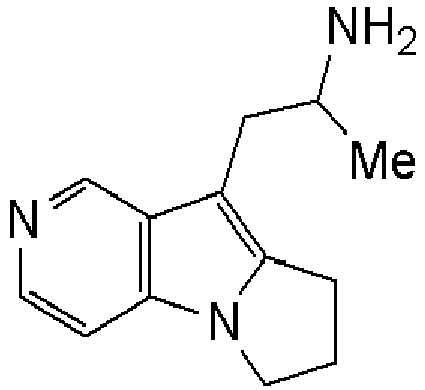
- (12) a compound represented by the following structural formula described in
WO00/12482 
- (13) a compound represented by the following structural formula described in
WO03/24976 
- (14) ALX-2218

- (15) ALX-2226

- (16) Ro60-0332

- (17) VER-2692

- (18) VER-6925

- (19) VER-7397

- (20) VER-7499

- (21) VER-7443

- (22) VER-3993

- (23) YM-348

- (24) a compound represented by the following structural formula described in
WO03/57213 
- (25) a compound represented by the following structural formula described in
WO03/57674 
- (26) a compound represented by the following structural formula described in
WO02/98860 
- (27) VER-5593

- (28) VER-5384

- (29) VER-3323

- (30) a compound represented by the following structural formula described in
WO02/44152 USP6479534 )
- (31) a compound represented by the following structural formula described in
WO0/44737 
- (32) APD-356

- (33) AR-10A
- (34) a compound represented by the following structural formula described in
WO02/40456 
- (35) BVT-933
- (36) a compound represented by the following structural formula described in
WO02/08178 
- (37) PNU-243922

- (38) a compound represented by the following structural formula described in
WO03/00666 
- (39) a compound represented by the following structural formula described in
WO01/09123 USP6638936 )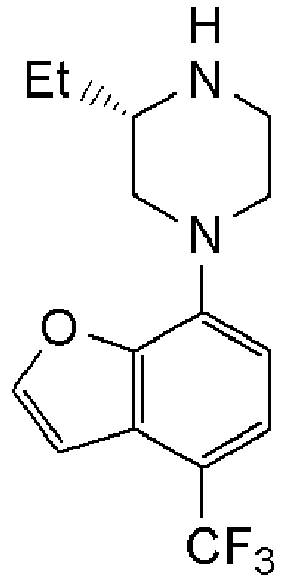
- (40) a compound represented by the following structural formula described in
WO01/09122 
- (41) a compound represented by the following structural formula described in
WO01/09126 
- (42) Org-37684

- (43) Org-36262 (Ro60-0527)

- (44) a compound represented by the following structural formula described in
EP0572863 
- (45) Ro60-0017(Org-35013)

- (46) VER-3881

- (47) a compound represented by the following structural formula described in
WO02/72584 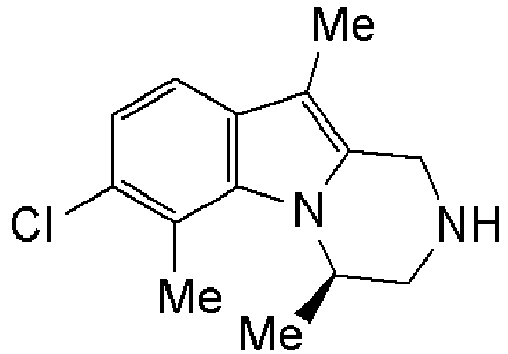
- (48) Ro0721256

- (49) PNU-181731A

- (50) a compound represented by the following structural formula described in
WO02/59127 
- (51) a compound represented by the following structural formula described in
WO03/14118 
- (52) a compound represented by the following structural formula described in
WO03/33497 
- (53) IL-639
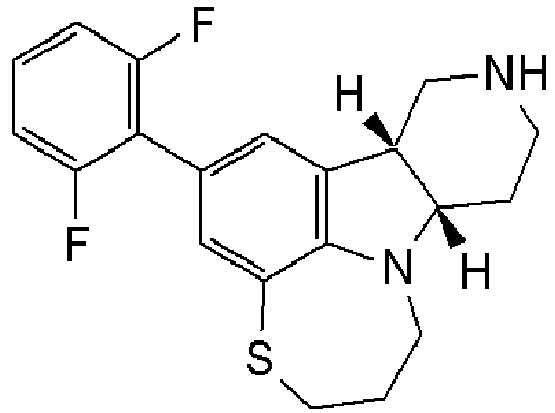
- (54) IK-264
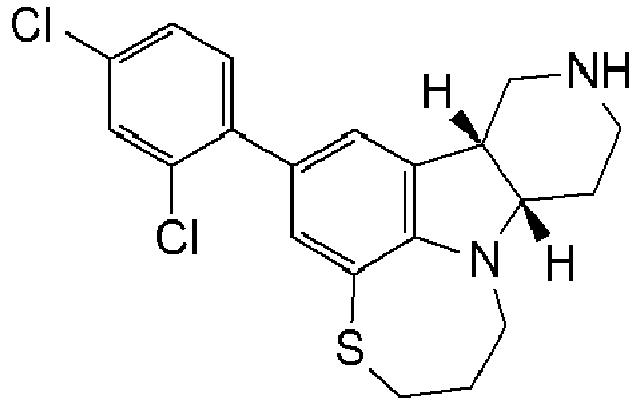
- (55) VR-1065
- (56) Ro60-0759

- (57) Ro60-0869

- (58) a compound represented by the following structural formula described in
WO00/64899 
- (59) PNU-57378E

- (60) a compound represented by the following structural formula described in
WO03/06466 
- (61) a compound represented by the following structural formula described in
WO02/74746 
- (62) a compound represented by the following structural formula described in
WO02/42304 
- (63) WAY-470

- (64) WAY-629

- (65) a compound represented by the following structural formula described in
WO97/42183 
- (66) a compound represented by the following structural formula described in
WO02/48124 
- (67) WAY-162545

- (68) WAY-163909
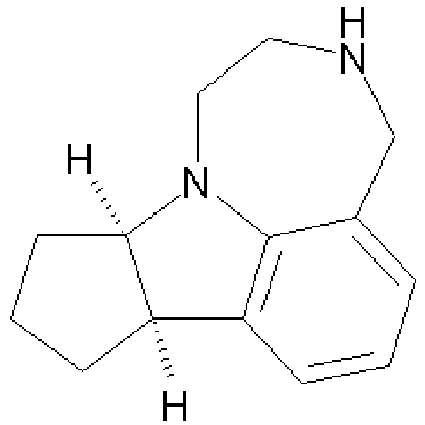
- (69) IX-065

- (70) A-37215

- (71) a compound represented by the following structural formula described in
WO05/42491 
- (72) a compound represented by the following structural formula described in
WO05/16902 
- (73) a compound represented by the following structural formula described in
WO04/99150 
- (74) PAL-287
- (75) SCA-136

- (76) a compound represented by the following structural formula described in
WO08/010073 
- (77) ATHX-105
- Preparations comprising the compound of the present invention may be in any solid forms of powders, granules, tablets, capsules, orally disintegrable films, etc., and in any liquid forms of syrups, emulsions, injections, etc.
- The preparations of the present invention for prophylaxis or treatment can be produced by any conventional methods, for example, blending, kneading, granulation, tableting, coating, sterilization, emulsification, etc., in accordance with the forms of the preparations to be produced. For the production of such pharmaceutical preparations, for example, each of the items in General Rules for Preparations in the Japanese Pharmacopoeia, can be made reference to. In addition, the preparations of the present invention may be formulated into a sustained release preparation containing active ingredients and biodegradable polymer compounds. The sustained release preparation can be produced according to the method described in
JP-A-9-263545 - In the preparations of the present invention, the content of the compound in the present invention varies depending on the forms of the preparations, but is generally in the order of 0.01 to 100 % by weight, preferably 0.1 to 50 % by weight, more preferably 0.5 to 20 % by weight, relative to the total weight of each preparation.
- When the compound of the present invention is used in the above-mentioned pharmaceutical products, it may be used alone, or in admixture with a suitable, pharmacologically acceptable carrier, for example, excipients (e.g., starch, lactose, sucrose, calcium carbonate, calcium phosphate, etc.), binders (e.g., starch, arabic gum, carboxymethyl cellulose, hydroxypropyl cellulose, crystalline cellulose, alginic acid, gelatin, polyvinylpyrrolidone, etc.), lubricants (e.g., stearic acid, magnesium stearate, calcium stearate, talc, etc.), disintegrants (e.g., calcium carboxymethylcellulose, talc, etc.), diluents (e.g., water for injection, physiological saline, etc.) and if desired, with the additives (e.g., a stabilizer, a preservative, a colorant, a fragrance, a dissolution aid, an emulsifier, a buffer, an isotonic agent, etc.) and the like, by ordinary methods. It can be formulated into the solid preparations such as powders, fine granules, granules, tablets, capsules, etc., or into the liquid preparations such as injections, etc., and can be administered orally or parenterally. When the compound of the present invention is formed as a preparation for topical administration and administered, it can also be directly administered to the affected part of an articular disease. In this case, an injection is preferable. It can also be administered as a parenteral agent for topical administration (e.g., intramuscular injection, subcutaneous injection, organ injection, injection to the vicinity of a joint and the like, solid preparation such as implant, granule, powder and the like, liquid such as suspension and the like, ointment etc.) and the like.
- For formulation into an injection, for example, the compound of the present invention is formulated into an aqueous suspension with a dispersing agent (e.g., surfactant such as Tween 80, HCO-60 and the like, polysaccharides such as carboxymethylcellulose, sodium alginate, hyaluronic acid and the like, polysorbate etc.), preservative (e.g., methylparaben, propylparaben etc.), isotonic agent (e.g., sodium chloride, mannitol, sorbitol, glucose etc.), buffer (e.g., calcium carbonate etc.), pH adjuster (e.g., sodium phosphate, potassium phosphate etc.) and the like to give a preparation for practical injection. In addition, an oily suspension can be obtained by dispersing the compound of the present invention together with vegetable oil such as sesame oil, corn oil and the like or a mixture thereof with a phospholipid such as lecithin and the like, or medium-chain fatty acid triglyceride (e.g., miglyol 812 etc.) to give an injection to be actually used.
- An agent for the prophylaxis or treatment of the present invention can be used along with other medicament.
- As the drug that can be mixed with or concomitantly used with the compound of the present invention (hereinafter to be abbreviated as concomitant drug), for example, the following drugs can be used.
- Adrenaline α1 receptor agonists (e.g., ephedrine hydrochloride, midodrine hydrochloride), adrenaline β2 receptor agonists (e.g., Clenbuterol), noradrenaline uptake inhibitors, noradrenaline and serotonin uptake inhibitors (e.g., duloxetine), tricyclic antidepressants (e.g., imipramine hydrochloride), anticholinergic agents or smooth muscle stimulants (e.g., oxybutynin hydrochloride, propiverine hydrochloride, celimeverine hydrochloride), female hormone drugs (e.g., conjugated estrogen (premarin), estriol) and the like.
- Insulin preparations [e.g., animal insulin preparations extracted from the bovine or swine pancreas; human insulin preparations synthesized by a genetic engineering technique using Escherichia coli or a yeast; insulin zinc; protamine zinc insulin; a fragment or a derivative of insulin (e.g., INS-1, etc.)], insulin sensitizers (e.g., pioglitazone hydrochloride, troglitazone, rosiglitazone or its maleate, JTT-501, MCC-555, YM-440, GI-262570, KRP-297, FK-614, CS-011, etc.), α-glucosidase inhibitors (e.g., voglibose, acarbose, miglitol, emiglitate, etc.), biguanides (e.g., phenformin, metformin, buformin, etc.), sulfonylureas (e.g., tolbutamide, glibenclamide, gliclazide, chlorpropamide, tolazamide, acetohexamide, glyclopyramide, glimepiride, etc.) and other insulin secretagogues (e.g., repaglinide, senaglinide, mitiglinide or its calcium salt hydrate, GLP-1, nateglinide, etc.), dipeptidylpeptidase IV inhibitors (e.g., vildagliptin, sitagliptin, saxagliptin, alogliptin, NVP-DPP-728, PT-100, P32/98, etc.), β3 agonists (e.g., CL-316243, SR-58611-A, UL-TG-307, AJ-9677, AZ40140, etc.), amylin agonists (e.g., pramlintide, etc.), phosphotyrosine phosphatase inhibitors (e.g., vanadic acid, etc.), gluconeogenesis inhibitors (e.g., glycogen phosphorylase inhibitors, glucose-6-phosphatase inhibitors, glucagon antagonists, etc.), SGLT (sodium-glucose cotransporter) inhibitors (e.g., T-1095, etc.) and the like.
- Aldose reductase inhibitors (e.g., tolrestat, epalrestat, zenarestat, zopolrestat, fidarestat (SNK-860), minalrestat (ARI-509), CT-112, etc.), neurotrophic factors (e.g., NGF, NT-3, etc.), AGE inhibitors (e.g., ALT-945, pimagedine, pyratoxathine, N-phenacylthiazolium bromide (ALT-766), EXO-226, etc.), active oxygen scavengers (e.g., thioctic acid, etc.), cerebral vasodilators (e.g., tiapride, etc.) and the like.
- Statin compounds inhibiting cholesterol synthesis (e.g., pravastatin, simvastatin, lovastatin, atorvastatin, fluvastatin, cerivastatin or their salt (e.g., sodium salt, etc.), etc.), squalene synthase inhibitors, fibrate compounds having triglyceride lowering action (e.g., bezafibrate, clofibrate, simfibrate, clinofibrate, etc.) and the like.
- Angiotensin converting enzyme inhibitors (e.g., captopril, enalapril, delapril, etc.), angiotensin II antagonists (e.g., losartan, candesartan cilexetil, etc.), calcium antagonists (e.g., manidipine, nifedipine, amlodipine, efonidipine, nicardipine, etc.), clonidine, and the like.
- Antiobesity drugs acting on the central nervous system (e.g. dexfenfluramine, fenfluramine, phentermine, sibutramine, anfepramone, dexamphetamine, mazindol, phenylpropanolamine, clobenzorex, etc.), pancreatic lipase inhibitors (e.g. orlistat, etc.), β3 agonists (e.g. CL-316243, SR-58611-A, UL-TG-307, AJ-9677, AZ40140, etc.), anorectic peptides (e.g. leptin, CNTF (Ciliary Neurotrophic Factor), etc.), cholecystokinin agonists (e.g. lintitript, FPL-15849, etc.).
- Xanthine derivatives (e.g., theobromine sodium salicylate, theobromine calcium salicylate, etc.), thiazide preparations (e.g., ethiazide, cyclopenthiazide, trichlormethiazide, hydrochlorothiazide, hydroflumethiazide, benzylhydrochlorothiazide, penflutizide, polythiazide, methyclothiazide, etc.), antialdosterone preparations (e.g., spironolactone, triamterene, etc.), carbonic anhydrase inhibitors (e.g., acetazolamide, etc.), chlorobenzenesulfonamide preparations (e.g., chlorthalidone, mefruside, indapamide, etc.), azosemide, isosorbide, ethacrynic acid, piretanide, bumetanide, furosemide, etc.
- Alkylating agents (e.g., cyclophosphamide, ifosamide, etc.), metabolic antagonists (e.g., methotrexate, 5-fluorouracil, etc.), antitumor antibiotics (e.g., mitomycin, adriamycin, etc.), plant-derived antitumor agents (e.g., vincristine, vindesine, taxol, etc.), cisplatin, carboplatin, etoposide, etc. Among these, 5-fluorouracil derivatives such as Furtulon and Neo-Furtulon are preferred.
- Microorganism- or bacterium-derived components (e.g., muramyl dipeptide derivatives, Picibanil, etc.), immunopotentiator polysaccharides (e.g., lentinan, schizophyllan, krestin, etc.), genetically engineered cytokines (e.g., interferons, interleukins (IL), etc.), colony stimulating factors (e.g., granulocyte colony stimulating factor, erythropoietin, etc.) and the like. Among these, IL-1, IL-2, IL-12, etc. are preferred.
- Progesterone derivatives (e.g., megestrol acetate) [Journal of Clinical Oncology, vol. 12, pp. 213-225, 1994], metoclopramide pharmaceuticals, tetrahydrocannabinol pharmaceuticals (the above references are applied to both), fat metabolism ameliorating agents (e.g., eicosapentaenoic acid) [British Journal of Cancer, vol. 68, pp. 314-318, 1993], growth hormones, IGF-1, and antibodies to the cachexia-inducing factors such as TNF-α, LIF, IL-6 and oncostatin M.
- Steroids (e.g., dexamethasone, etc.), sodium hyaluronate, cyclooxygenase inhibitors (e.g., indomethacin, ketoprofen, loxoprofen, meloxicam, ampiroxicam, celecoxib, rofecoxib, etc.) and the like.
- Glycosylation inhibitors (e.g., ALT-711, etc.), nerve regeneration promoting drugs (e.g., Y-128, VX853, prosaptide, etc.), drugs acting on the central nervous system (e.g., antidepressants such as desipramine, amitriptyline, imipramine, fluoxetine, paroxetine, doxepin, etc.), anticonvulsants (e.g., lamotrigine, carbamazepine), antiarrhythmic drugs (e.g., mexiletine), acetylcholine receptor ligands (e.g., ABT-594), endothelin receptor antagonists (e.g., ABT-627), monoamine uptake inhibitors (e.g., tramadol), indoleamine uptake inhibitors (e.g., fluoxetine, paroxetine), narcotic analgesics (e.g., morphine), GABA receptor agonists (e.g., gabapentin), GABA uptake inhibitors (e.g., tiagabine), α2 receptor agonists (e.g., clonidine), local analgesics (e.g., capsaicin), protein kinase C inhibitors (e.g., LY-333531), antianxiety drugs (e.g., benzodiazepines), phosphodiesterase inhibitors (e.g., sildenafil), dopamine receptor agonists (e.g., apomorphine), dopamine receptor antagonists (e.g., haloperidol), serotonin receptor agonists (e.g., tandospirone citrate, sumatryptan), serotonin receptor antagonists (e.g., cyproheptadine hydrochloride, ondansetron), serotonin uptake inhibitors (e.g., fluvoxamine maleate, fluoxetine, paroxetine), hypnotics (e.g., triazolam, zolpidem), anticholinergic agents, α1 receptor blocking agents (e.g., tamsulosin, silodosin, naftopidil), muscle relaxants (e.g., baclofen), potassium channel openers (e.g., nicorandil), calcium channel blocking agents (e.g., nifedipine), agents for preventing and/or treating Alzheimer's disease (e.g., donepezil, rivastigmine, galanthamine), agents for treating Parkinson's disease (e.g., L-dopa), agents for preventing and/or treating multiple sclerosis (e.g., interferon β-1a), histamine H1 receptor inhibitors (e.g., promethazine hydrochloride), proton pump inhibitors (e.g., lansoprazole, omeprazole), antithrombotic agents (e.g., aspirin, cilostazol), NK-2 receptor antagonists, agents of treating HIV infection (saquinavir, zidovudine, lamivudine, nevirapine), agents of treating chronic obstructive pulmonary diseases (salmeterol, thiotropium bromide, cilomilast), etc.
- Anticholinergic agents include, for example, atropine, scopolamine, homatropine, tropicamide, cyclopentolate, butylscopolamine bromide, propantheline bromide, methylbenactyzium bromide, mepenzolate bromide, flavoxate, pirenzepine, ipratropium bromide, trihexyphenidyl, oxybutynin, propiverine, darifenacin, tolterodine, temiverine, trospium chloride or a salt thereof (e.g., atropine sulfate, scopolamine hydrogen bromide, homatropine hydrogen bromide, cyclopentolate hydrochloride, flavoxate hydrochloride, pirenzepine hydrochloride, trihexyphenidyl hydrochloride, oxybutynin hydrochloride, tolterodine tartrate, etc.), preferably, oxybutynin, propiverine, darifenacin, tolterodine, temiverine, trospium chloride or a salt thereof (e.g., oxybutynin hydrochloride, tolterodine tartrate, etc.). In addition, acetylcholinesterase inhibitors (e.g., distigmine, etc.) and the like can be used.
- NK-2 receptor antagonists include, for example, a piperidine derivative such as GR159897, GR149861, SR48968 (saredutant), SR144190, YM35375, YM38336, ZD7944, L-743986, MDL105212A, ZD6021, MDL105172A, SCH205528, SCH62373, R-113281, etc., a perhydroisoindole derivative such as RPR-106145, etc., a quinoline derivative such as SB-414240, etc., a pyrrolopyrimidine derivative such as ZM-253270, etc., a pseudopeptide derivative such as MEN11420 (nepadutant), SCH217048, L-659877, PD-147714 (CAM-2291), MEN10376, S16474, etc., and others such as GR100679, DNK333, GR94800, UK-224671, MEN10376, MEN10627, or a salt thereof, and the like.
- In combination of the compound of the present invention and the concomitant drug, the administration time of the compound of the present invention and the concomitant drug is not restricted, and the compound of the present invention or a pharmaceutical composition thereof and the concomitant drug or a pharmaceutical composition thereof can be administered to the administration subject simultaneously, or may be administered at different times. The dosage of the concomitant drug may be determined according to the administration amount clinically used, and can be appropriately selected depending on the administration subject, administration route, disease, combination and the like.
- The concomitant administration mode is not particularly restricted, and it is sufficient that the compound of the present invention and the concomitant drug are combined in administration. Examples of such administration mode include the following methods:
- (1) The compound of the present invention or a pharmaceutical composition thereof and the concomitant drug are simultaneously produced to give a single preparation which is administered. (2) The compound of the present invention or a pharmaceutical composition thereof and the concomitant drug or a pharmaceutical composition thereof are separately produced to give two kinds of preparations which are administered simultaneously by the same administration route. (3) The compound of the present invention or a pharmaceutical composition thereof and the concomitant drug or a pharmaceutical composition thereof are separately produced to give two kinds of preparations which are administered by the same administration route only at the different times. (4) The compound of the present invention or a pharmaceutical composition thereof and the concomitant drug or a pharmaceutical composition thereof are separately produced to give two kinds of preparations which are administered simultaneously by different administration routes. (5) The compound of the present invention or a pharmaceutical composition thereof and the concomitant drug or a pharmaceutical composition thereof are separately produced to give two kinds of preparations which are administered by different administration routes at different times (for example, the compound of the present invention or a pharmaceutical composition thereof; the concomitant drug or a pharmaceutical composition thereof are administered in this order, or in the reverse order).
- The mixing ratio of compound of the present invention and a concomitant drug in the combination drug of the present invention can be appropriately determined according to the subject of administration, administration route, disease and the like.
- For example, while the content of compound of the present invention in the combination drug of the present invention varies depending on the form of the preparation, it is generally about 0.01 to about 100 wt%, preferably about 0.1 to about 50 wt%, more preferably about 0.5 to about 20 wt%, relative to the whole preparation.
- While the content of the concomitant drug in the combination drug of the present invention varies depending on the form of the preparation, it is generally about 0.01 to about 100 wt%, preferably about 0.1 to about 50 wt%, more preferably about 0.5 to about 20 wt%, relative to the whole preparation.
- While the content of the additive such as a carrier and the like in the combination drug of the present invention varies depending on the form of the preparation, it is generally about 1 to about 99.99 wt%, preferably about 10 to about 90 wt%, relative to the whole preparation.
- Similar contents can be employed when the compound of the present invention and the concomitant drug are independently formulated.
- While the dose varies depending on the kind of the compound of the present invention or a pharmaceutically acceptable salt thereof, administration route, symptom, age of patients and the like, for example, for oral administration to an adult patient with stress urinary incontinence, obesity and/or pelvic organ prolapse, it is about 0.005 - 50 mg, preferably about 0.05 - 10 mg, more preferably about 0.2 - 4 mg/kg body weight/day as the compound of the present invention, which can be administered in 1 to about 3 portions.
- When the pharmaceutical composition of the present invention is a sustained-release preparation, the dose varies depending on the kind and content of the compound in the present invention, dosage form, period of sustained drug release, subject animal of administration (e.g., mammals such as human, rat, mouse, cat, dog, rabbit, bovine, swine and the like) and administration object. For parenteral administration, for example, about 0.1 - about 100 mg of the compound in the present invention only needs to be released in one week from the administered preparation.
- The dose of the concomitant drug may be set within the range such that it causes no problems of side effects. The daily dose as the concomitant drug varies depending on severity of symptoms, age, sex, weight and sensitivity of the subject to be administered, time and interval of administration, property, formulation and kinds of pharmaceutical preparation, kinds of active ingredients, etc., and is not particularly limited. In the case of oral administration, a daily dosage in terms of drugs is usually in the order of about 0.001 to 2000 mg, preferably about 0.01 to 500 mg, and more preferably about 0.1 to 100 mg, per 1 kg body weight of mammals, which may be administered once a day or in two to four divided portions a day.
- In administering the combination drug of the present invention, it may be administered at the same time or, the concomitant drug may be administered before administering the compound of the present invention, and vice versa. In case of staggered administration, the time interval varies depending on the active ingredients to be administered, a formulation and an administration route. For example, if the concomitant drug is administered first, the compound of the present invention may be administered 1 minute to 3 days, preferably 10 minutes to 1 day, more preferably 15 minutes to 1 hour after administering the concomitant drug. If the compound of the present invention is administered first, the concomitant drug may be administered 1 minute to 1 day, preferably 10 minutes to 6 hours, more preferably 15 minutes to 1 hour after administering the compound of the present invention.
- The pharmaceutical composition of the present invention shows low toxicity and can be used safely. Particularly, since the Example compounds shown below are superior in the absorption by oral administration, they can be advantageously used for oral preparations.
- The screening method of the present invention can be performed by examining an influence of a test substance on the total urethral resistance of an animal (e.g., non-human mammal) between administration and without administration of the substance based on the measurement of the leak point pressure.
- The "leak point pressure" refers to an intravesicular pressure when leakage of urine has occurred without contraction of detrusor muscles, and shows the maximum urethral resistance that can resist an increase in the intravesicular pressure. In the screening method of the present invention, the leak point pressure is an intravesicular pressure when incontinence is induced by injecting saline rapidly and transiently with, preferably, an instrument capable of controlling the rate such as an infusion pump and the like into the bladder of an animal showing no micturition reflex due to an operation such as transection of the spinal cord and the like but showing functional bladder-spinal cord-urethral reflex. The injection rate of saline into the bladder is set so that leakage of the intravesical fluid is observed preferably in 1 sec - 1 hr, more preferably 5 sec - 30 sec. A specific measurement method of the leak point pressure is described in detail in the below-mentioned Examples.
- The gender of the "animal" to be used in the present invention is preferably female, and the species is, for example, a non-human animal such as monkey, dog, cat, rabbit, guinea pig, hamster, rat, mouse, Mongolian gerbil and the like can be mentioned. Among these, rats (Wistar, SD and the like) are most preferable.
- While the weeks of age, body weight, experience of birth and the like of the "animals" to be used in the present invention are not particularly limited as long as they are applicable to the desired screening, the conditions may be changed as appropriate. The "animals" to be used in the present invention may be normal animals (those free of pathology and the like), but those showing lower leak point pressure upon a rise in the intravesical pressure are preferably used. Here, the lower leak point pressure is preferably caused by transection or injury of the nerve relating to urethra closing reflex or decreased weight of the pelvic floor muscles and the external urethral sphincter. To lower the reflex contraction force of the pelvic floor muscles and the external urethral sphincter, physical, chemical or biological transection or injury of the nerve relating to urethra closing reflex (for example, pelvic nerve, pudendal nerve, nerve heading for iliococcygeal muscle/pubococcygeal muscle and the like), childbirth, ovariectomy, mechanical vaginal expansion, induction of diabetes, drug administration or a combination of these is only needed.
- As the drug, for example, α-bungarotoxin, d-tubocurarine, pancuronium, decamethonium, suxamethonium, which are myoneural junction blockers, botulinum toxin A which is a neurotoxin, and the like are used.
- These animal models can be produced according to a known method, for example, the methods described in Urology, 1998, vol. 52, p. 143-151, The Journal of Urology, 2001, vol. 166, p. 311-317, and The Journal of Urology, 2006, vol. 176, p. 819-823.
- According to the screening method of the present invention, moreover, a leak point pressure upon a rapid and transient rise in the intravesicular pressure of an animal can be measured efficiently and stably. As a method for rapidly and transiently rising the intravesicular pressure by a stable procedure, for example, saline is rapidly injected (preferably not more than 3600 ml/hr, more preferably 360 ml/hr) into the bladder with an infusion pump and the like, infusion is stopped simultaneously with leakage of saline from the meatus urethra, and the intravesicular pressure is released and the like.
- As a test substance, known or novel synthetic compounds, physiologically active substances derived from naturally occurring substances, peptides, proteins and the like, as well as, for example, tissue extracts, cell culture supernatants and the like of warm-blooded animals (for example, mouse, rat, swine, bovine, sheep, monkey, human and the like) are used.
- Using this screening method, a substance that increases the leak point pressure upon a rise in the intravesical pressure can be screened for using, as an index, an increase in the leak point pressure by the administration of a test substance as compared to that without administration thereof.
- For example, when this screening method is applied to rats and the leak point pressure has increased by about 5 cmH2O, preferably not less than about 10 cmH2O, more preferably not less than about 15 cmH2O, by the administration of a test substance as compared to that without administration thereof, the test substance is determined to have a stress urinary incontinence-improving effect.
- In the screening method of the present invention, a leak point pressure upon a rise in the intravesicular pressure of an animal is measured, and can be beneficially and efficiently applied to screening for a substance used for the prophylaxis or treatment of stress urinary incontinence (for example, adrenaline α1 receptor agonist, adrenaline β2 receptor agonist, serotonin receptor agonist, serotonin uptake inhibitory substance, noradrenaline uptake inhibitory substance, serotonin and noradrenaline uptake inhibitory substance and the like).
- For example, a prophylactic or therapeutic drug for stress urinary incontinence can be evaluated by administering about 0.0001 - about 1000 mg/kg (preferably, about 0.001 - about 100 mg/kg) of a test substance to a non-human mammal in the screening method of the present invention, and examining the treatment effect of the test substance with the leak point pressure as an index. Here, the concept of the prophylaxis of stress urinary incontinence includes suppress of decline of urethral resistance, and the concept of the treatment of stress urinary incontinence includes improvement of stress urinary incontinence, suppression of progression, and prophylaxis of aggravation. The timing of administration of a test substance to an animal in the evaluation method of the present invention is, for example, before or after a leak point pressure lowering treatment, during a leak point pressure measurement and the like. Drugs aiming at the prophylaxis or treatment of stress urinary incontinence can be evaluated according to the respective administration periods.
- The animals to be used in the present invention may be normal animals (those free of pathology and the like), but those showing pathology such as stress urinary incontinence, overactive bladder, benign prostatic hyperplasia, detrusor underactivity, diabetes, diabetes neurosis, hypertension, obesity, hyperlipidemia, arteriosclerosis, gastric ulcer, asthma, chronic closure respiratory diseases, uterus cancer, cerebrovascular disorder, brain damage, spinal trauma and the like, for example, obese rats (Wistar fatty rat) and the like may be used for the aforementioned leak point pressure measurement. When an animal showing such pathology is subjected to the aforementioned leak point pressure measurement, a new stress urinary incontinence animal model can be searched for, and the animal model can be effectively applied to screening for a medical substance used for the prophylaxis or treatment of such complications, can be applied to screening for a medical substance effective for, for example, the aforementioned pathology (e.g., digestive organ diseases such as gastric ulcer and the like, and the like) alone and noninfluential on stress urinary incontinence, and can be applied to screening to exclude a test substance that induces stress urinary incontinence from those to be selected.
- Furthermore, the screening method of the present invention can also be applied effectively to screening for a medical substance for the prophylaxis or treatment of stress urinary incontinence by applying a test substance and determining a leak point pressure increasing effect, as well as screening for various medical substances by applying a test substance and determining an influence (including aggravation, no influence, improvement) on urethral resistance upon a rise in the intravesical pressure. That is, it can be applied effectively to screening to exclude a test substance that aggravates stress urinary incontinence from a medical substance to be selected; select a test substance noninfluential on stress urinary incontinence as a medical substance for the prophylaxis or treatment of a disease other than stress urinary incontinence; select a test substance showing a stress urinary incontinence-improving effect as a medical substance for the prophylaxis or treatment of stress urinary incontinence or complications of stress urinary incontinence and a certain kind of disease (e.g., urological diseases such as overactive bladder and the like, and the like); and the like. The screening method of the present invention, unlike conventional methods, can be applied as a useful evaluation system to screening for various medical substances for any object mentioned above, since evaluation is possible by rapidly increasing the intravesicular pressure conveniently by a stable procedure in an animal showing no micturition reflex but showing functional bladder-spinal cordurethra reflex.
- A substance obtained by the screening method of the present invention can be formulated into a preparation and used as a prophylactic or therapeutic agent for stress urinary incontinence, like the aforementioned substance of the present invention.
- The screening methods of a prophylactic or therapeutic drug for cystoceles or enteroceles are described in the following.
- The screening methods of the present invention can be performed by administering a test substance to a test animal and without administration thereof, and examining the influence of the test substance on the contractile responses of the pelvic floor muscles in the animal (e.g., non-human mammal) in terms of reflex closure responses in the urethra or urethral resistance (leak point pressure) upon a rise in intravesical pressure. The animals used in the screening methods of the present invention have the hypogastric nerve and the pudendal nerve cut bilaterally. Muscular tissues that influence urethral closure pressure include the internal urethral sphincter, which is a smooth muscle, the external urethral sphincter and the pelvic floor muscles, which are striated muscles, and the like; the pelvic floor muscles include the iliococcygeus muscle and the pubococcygeus muscle. The internal urethral sphincter is under the control of the hypogastric nerve, the external urethral sphincter is under the control of the pudendal nerve, and the iliococcygeus muscle and the pubococcygeus muscle are under the control of the nerves that lead to the iliococcygeus muscle and the pubococcygeus muscle (no unified names across species available). When a water reservoir connected to the urinary bladder is raised to a given height, a reflex urethral contractile response is observed in the middle urethra (see "American Journal of Physiology Renal Physiology", 2004, vol. 287, p. F434-441); by increasing the intravesical pressure in an animal having the hypogastric nerve and the pudendal nerve cut bilaterally, and monitoring the resulting urethral contractile responses or leak point pressure, urethral closure responses or urethral resistance, which are attributed mainly to the pelvic floor muscles (the iliococcygeus muscle and the pubococcygeus muscle), can be measured, and the contractile responses of the pelvic floor muscles can be evaluated. "Leak point pressure upon a rise in intravesical pressure" refers to an intravesical pressure upon occurrence of urine leakage without contraction of the detrusor, showing the maximum urethral resistance against rises in intravesical pressure. Applying "the reflex contractile responses of the pelvic floor muscles upon a rise in intravesical pressure", the reflex contractile responses of the pelvic floor muscles can be evaluated also by measuring reflex closure responses in the vagina. When a drug that increases such values can be found by examining the reflex closure response of the urethra or vagina and the urethral resistance (leak point pressure) upon a rise in the intravesical pressure, a prophylactic or therapeutic drug for cystoceles or enteroceles can be obtained.
- As the gender of the "animal" to be used in the present invention, female is preferable, and the species is a non-human animal such as monkey, dog, cat, rabbit, guinea pig, hamster, rat, mouse, Mongolian gerbil and the like can be mentioned, and rat (Wistar, SD and the like) is most preferable.
- While the age in weeks, body weight, delivery or non-delivery and the like of the "animal" to be used in the present invention are not particularly limited as long as they are applicable to the objective screening, these conditions may be appropriately changed. As the "animal" to be used in the present invention, normal animals (animals free of pathosis and the like) may be used. In addition, animals with functional decline of pelvic floor muscles, such as those having partially sectioned or injured nerve involved in the contraction of the pelvic floor muscles or having decreased weight of the pelvic floor muscles, can also be used. To decrease the reflex contractile force of the pelvic floor muscles or the weight of the pelvic floor muscles, a part of the nerve involved in the reflex contraction reflex of the pelvic floor muscles (e.g., pelvic nerve, nerve to iliococcygeus muscle/pubococcygeus muscle and the like) is physically, chemically or biologically sectioned or injured, the animal is made to deliver, the ovary is removed, vagina is mechanically expanded, diabetes is induced, a drug is administered, or these may be combined.
- As the drug, for example, α-bungarotoxin, d-tubocurarine, pancuronium, decamethonium, suxamethonium and the like, which are neuromuscular junction blockers, botulinum toxin A, which is a neurotoxin, and the like are used.
- These model animals can be produced according to a known method, for example, the method described in Urology, 1998, vol. 52, p. 143-151, Journal of Urology, 2001, vol. 166, p. 311-317, The Journal of Urology, 2006, vol. 176, p. 819-823.
- As the test substance, a known or novel synthetic compound, a physiological active substance derived from a naturally occurring substance, peptide, protein and the like and, for example, tissue extract, cell culture supernatant and the like of warm-blooded mammals (e.g., mouse, rat, swine, bovine, sheep, monkey, human and the like) are used.
- Using this screening method, a substance that increases the contractile force of the pelvic floor muscles can be screened for using, as an index, the fact that the reflex closure response or the leak point pressure increases when a test substance is administered than without administration.
- For example, by performing the present screening method using rats, a test substance can be evaluated to have an improving effect on cystoceles and enteroceles when the contractile response of the pelvic floor muscles increased by not less than about 100%, preferably not less than about 20%, more preferably not less than about 50%, with administration of the test substance as compared to the absence of administration of the test substance.
- The screening method of the present invention measures the contractile response of the pelvic floor muscles during an abrupt increase in abdominal pressure in an animal, and is useful for and efficiently applicable to the screening for a substance usable for the prophylaxis or treatment of cystoceles or enteroceles.
- For example, in the screening method of the present invention, about 0.0001 - about 1000 mg/kg (preferably about 0.001 - about 100 mg/kg) of a test substance is administered to a non-human mammal, and the treatment effect of the test substance is examined with the contractile response of the pelvic floor muscles as an index, whereby a drug for the prophylaxis or treatment of cystoceles or enteroceles can be evaluated. Here, the concept of the treatment of cystoceles or enteroceles includes improvement, suppression of progression and prophylaxis of aggravation of cystoceles and enteroceles. In the evaluation method of the present invention, a test substance is administered to an animal before or after the treatment for decreasing the reflex contractile force of pelvic floor muscles (or leak point pressure), or during the measurement of contractile force (or leak point pressure) and the like. A drug can be evaluated for the purpose of preventing or treating cystoceles and enteroceles according to each administration period.
- While the animals to be used in the present invention may be a normal animal (animal free of pathosis), for example, an animal (e.g., overweight rat (Wistar fatty rat) and the like) showing the pathosis of urinary incontinence, overactive bladder, benign prostatic hyperplasia, detrusor underactivity, diabetes, diabetes neuropathy, hypertension, obesity, hyperlipidemia, arteriosclerosis, gastric ulcer, asthma, chronic obstructive respiratory disease, uterus cancer, cerebrovascular disorder, brain damage, spinal cord injury and the like may be used for the measurement of the aforementioned reflex contraction of the pelvic floor muscles. When animals showing such pathosis are subjected to the aforementioned measurement of the contractile force of the pelvic floor muscles (or leak point pressure), a new model animal of cystoceles and enteroceles can be searched for, and the measurement can be effectively applied to the screening for a pharmaceutical substance for the prophylaxis or treatment of the complications. For example, the measurement is applicable to the screening for a pharmaceutical substance effective only for the aforementioned pathosis (e.g., digestive disease such as gastric ulcer etc., and the like) and free of an influence on the cystoceles and enteroceles, and also applicable to the screening for the purpose of removing a test substance inducing cystoceles and enteroceles from a pharmaceutical substance to be selected.
- Furthermore, the screening method of the present invention can be effectively applied to the screening for a pharmaceutical substance for the prophylaxis or treatment of cystoceles or enteroceles by applying a test substance and testing increasing effect on the contractile force of pelvic floor muscles (or leak point pressure), as well as effectively applied to the screening for the purpose of applying a test substance and selecting a test substance showing an improving effect on cystoceles and enteroceles, as a pharmaceutical substance for the prophylaxis or treatment of cystoceles or enteroceles or the complications with a certain kind of disease; and the like. The substance obtained by the screening method of the present invention can be formed as a preparation in the same manner as in the aforementioned substance of the present invention and can be used as an agent for the prophylaxis or treatment of cystoceles or enteroceles. Examples
- The present invention is further described in detail with reference to Examples, Formulation Examples and Experimental Examples which are not intended to restrict the invention and may be modified without departing from the scope of the invention.
- In Examples, column chromatography was performed using Purif-8 or Purif-α2 manufactured by MORITEX and under observation by a UV detector. The silica gel used for column chromatography was Purif-Pack manufactured by MORITEX. The room temperature referred herein means temperature generally from about 10°C to 30°C.
- The abbreviations in Examples mean the following.
- LC: liquid chromatography
- MS: mass spectrometry spectrum
- ESI: electrospray ionization method
- M: molecular weight
- NMR: nuclear magnetic resonance spectrum
- Hz: hertz
- J: coupling constant
- m: multiplet
- q: quartet
- t: triplet
- d: doublet
- dd: double doublet
- s: singlet
- dt: double triplet
- brs: broad singlet
- Boc: tert-butyloxycarbonyl group
- Ph: phenyl group
- N: normal concentration
- DMF: N,N-dimethylformamide
- THF: tetrahydrofuran
- DMSO: dimethyl sulfoxide
- DME: dimethoxyethane
- MeOH: methanol
- NMP: 1-methyl-pyrrolidin-2-one
- (Boc)2O: di-tert-butyl bicarbonate
- XPhos: dicyclohexyl(2',4',6'-triisopropylbiphenyl-2-yl)phosphine
- BINAP: 2,2'-bis(diphenylphosphino)-1,1'-binaphthyl
- 5-HT: serotonin (or 5-hydroxytryptamine)
- LC-MS in Examples was measured under the following conditions.
-
- Measurement device: Waters LC-MS system
- HPLC: Agilent HP1100
- MS: Micromass ZQ
-
- Column: CAPCELL PAK C18UG120, S-3 µm, 1.5x35 mm (Shiseido)
- Solvent: Solution A; water containing 0.05% trifluoroacetic acid, Solution B; acetonitrile containing 0.05% trifluoroacetic acid
- Gradient cycle: 0.00 min (Solution A/Solution B=90/10), 2.00 min (Solution A/Solution B=5/95), 2.75 min (Solution A/Solution B=5/95), 2.76 min (Solution A/Solution B=90/10), 3.60 min (Solution A/Solution B=90/10)
- Injection volume: 2 µL, flow rate: 0.5 mL/min, detection method: UV 220 nm
- Ionization method: ESI
- Purification by preparative HPLC in Examples was carried out under the following conditions.
- Instrument: Gilson high-throughput purification system
- Column: CombiPrep ODS-AS-5 µm, 50×20 mm (YMC)
- Solvent: Solution A; water containing 0.1% trifluoroacetic acid, Solution B; acetonitrile containing 0.1% trifluoroacetic acid
- Gradient cycle: 0.00 min (Solution A/Solution B=95/5), 1.00 min (Solution A/Solution B=95/5), 5.20 min (Solution A/Solution B=5/95), 6.40 min (Solution A/Solution B=5/95), 6.50 min (Solution A/Solution B=95/5), 6.60 min (Solution A/Solution B=95/5)
- Flow rate: 25 mL/min, detection method: UV 220 nm
- To a solution of 2,6-dichloronicotinic acid (50.0 g) and DMF (10 mL) in toluene (1 L) was added dropwise oxalyl dichloride (22.3 mL) under ice-cooling, and the mixture was stirred at room temperature for 1.5 hr. The reaction mixture was concentrated, and THF (200 mL) was added to the residue. To this solution was added a solution of benzylamine (30.7 g) in THF (300 mL), and 1N aqueous sodium hydroxide solution (500 mL) was added. After stirring at room temperature for 1 hr, the reaction solution was poured into water, and the mixture was extracted with ethyl acetate. The organic layer was washed with saturated brine, dried over anhydrous magnesium sulfate, and concentrated. The obtained residue was recrystallized from ethyl acetate to give N-benzyl-2,6-dichloronicotinamide (56.2 g, 77%) as a solid.
1H-NMR(CDCl3):δ4.67(2H,d,J=5.6Hz), 6.79(1H,brs), 7.28-7.49(6H,m), 8.15(1H,d,J=8.1Hz)
MS(ESI+):281(M+H) - To a solution of the compound (30.0 g) obtained in
step 1 in THF (200 mL) was added a 1 mol/L solution (373 mL) of BH3·THF complex in THF under ice-cooling, and the mixture was stirred at 70°C for 2 hr. The reaction solution was cooled to room temperature, methanol was added under ice-cooling, and the mixture was concentrated. To the residue was added 6N hydrochloric acid (200 mL), and the mixture was refluxed for 2 hr. To the reaction solution was added 2N aqueous sodium hydroxide solution (200 mL) at room temperature, and the mixture was extracted with ethyl acetate. The extract was washed with water, dried over anhydrous magnesium sulfate, and concentrated. The obtained residue was purified by silica gel column chromatography (solvent gradient: 0→30% ethyl acetate/hexane) to give N-benzyl-1-(2,6-dichloropyridin-3-yl)methanamine (15.8 g, 55%) as an oil.
1H-NMR(CDCl3) :δ3.82(2H,s), 3.87(2H,s), 7.23-7.37(6H,m), 7.81(1H,d,J=7.9Hz)
MS(ESI+):267(M+H) - To a solution of the compound (8.88 g) obtained in step 2 in acetonitrile (100 mL) were added potassium carbonate (9.18 g), sodium iodide (0.498 g) and 4-bromo-1-butene (4.94 g), and the mixture was stirred at 85°C for 30 hr. The reaction solution was poured into water, and the mixture was extracted with ethyl acetate. The extract was washed with water, dried over anhydrous magnesium sulfate, and concentrated. The residue was purified by silica gel column chromatography (solvent gradient: 5→10% ethyl acetate/hexane) to give N-benzyl-N-[(2,6-dichloropyridin-3-yl)methyl]but-3-en-1-amine (6.17 g, 58%) as an oil.
1H-NMR(CDCl3) :δ2.25-2.32(2H,m), 2.56(2H,t,J=7.3Hz), 3.64(4H,s), 4.95-5.07(2H,m), 5.68-5.82(1H,m), 7.23-7.34(6H,m), 7.92(1H,d,J=7.9Hz)
MS(ESI+):322(M+H) - A mixed solution of the compound (7.68 g) obtained in step 3, potassium carbonate (6.61 g), tetrabutylammonium bromide (15.4 g), palladium acetate (0.537 g) and tri(2-methylphenyl)phosphine (0.727 g) in DMF (50 mL) was stirred under a nitrogen atmosphere at 130°C for 20 hr. The reaction solution was cooled, filtered through celite, and the filtrate was concentrated. The obtained residue was purified by silica gel column chromatography (solvent gradient: 7→25% ethyl acetate/hexane) to give 6-benzyl-2-chloro-9-methylene-6,7,8,9-tetrahydro-5H-pyrido[3,2-c]azepine (1.90 g, 28%) as an oil.
1H-NMR(CDCl3) :δ2.52-2.58(2H,m), 2.94-3.02(2H,m), 3.58(2H,s), 3.67(2H,s), 5.25-5.28(1H,m), 5.60(1H,d,J=1.5Hz), 7.02-7.05(1H,m), 7.09-7.12(1H,m), 7.16-7.30(5H,m)
MS(ESI+):285(M+H) - A mixture of the compound (0.500 g) obtained in step 4, sodium tert-butoxide (0.253 g), morpholine (0.305 g), tris(dibenzylideneacetone)dipalladium (0) (0.0643 g), XPhos (0.100 g) and toluene (5 mL) was stirred under a nitrogen atmosphere at 100°C for 20 hr. The reaction solution was cooled to room temperature, filtered through celite, and concentrated. The obtained residue was purified by silica gel column chromatography (solvent gradient: 10→30% ethyl acetate/hexane) to give 6-benzyl-9-methylene-2-morpholin-4-yl-6,7,8,9-tetrahydro-5H-pyrido[3,2-c]azepine (0.317 g, 54%) as an oil.
1H-NMR(CDCl3) :δ2.61-2.69(2H,m), 2.97-3.06(2H,m), 3.46-3.55(4H,s), 3.65(2H,s), 3.71(2H,s), 3.79-3.88(4H,m), 5.18-5.27(1H,m), 5.60-5.69(1H,m), 6.46(1H,d,J=8.5Hz), 7.11(1H,d,J=8.5Hz), 7.18-7.39(5H,m)
MS(ESI+):336(M+H) - A suspension of the compound (0.317 g) obtained in step 5 and 10% palladium/carbon catalyst (0.200 g) in methanol (3 mL) was stirred under a hydrogen atmosphere at room temperature for 2 hr. The insoluble material was filtered off through celite, and the filtrate was concentrated. The obtained residue was purified by basic silica gel column chromatography (solvent gradient: 70→100% ethyl acetate/hexane) to give 9-methyl-2-morpholin-4-yl-6,7,8,9-tetrahydro-5H-pyrido-[3,2-c]azepine (0.160 g, 69%) as an oil.
1H-NMR(CDCl3) :δ1.37(3H,d,J=6.8Hz), 1.43-1.59(1H,m), 1.59-1.82(1H,m), 3.05-3.17(1H,m), 3.17-3.28(1H,m), 3.29-3.40(1H,m), 3.42-3.55(4H,m), 3.79-3.88(6H,m), 6.34(1H,d,J=8.3Hz), 7.22(1H,d,J=8.3Hz)
MS(ESI+):248(M+H) - A mixture of the compound (0.160 g) obtained in Example 1 and 4N hydrogen chloride-ethyl acetate solution (5 mL) was stirred at room temperature for 16 hr, and concentrated. The obtained residue was recrystallized from ethanol/diisopropyl ether to give 9-methyl-2-morpholin-4-yl-6,7,8,9-tetrahydro-5H-pyrido[3,2-c]azepine hydrochloride (0.134 g, 73%) as a solid.
1H-NMR(DMSO-d6) :δ1.30(3H,d,J=7.0Hz), 1.52-1.70(1H,m), 1.82-1.94(1H,m), 3.22-3.38(3H,m), 3.43-3.50(4H,m), 3.64-3.73(4H,m), 4.10-4.28(2H,m), 6.63(1H,d,J=8.5Hz), 7.53(1H,d,J=8.5Hz), 8.90(2H,brs)
MS(ESI+):248(M-HCl+H) - A mixed solution of the compound (2.00 g) obtained in Example 1, step 3, potassium carbonate (1.72 g), palladium acetate (0.139 g), and tri(2-methylphenyl)phosphine (0.417 g) in DMF (60 mL) was stirred under a nitrogen atmosphere at 100°C for 16 hr. The reaction solution was filtered through celite, poured into water, and the mixture was extracted with ethyl acetate, dried over anhydrous magnesium sulfate, and concentrated. The obtained residue was purified by silica gel column chromatography (solvent gradient: 5→30% ethyl acetate/hexane) to give a 1:3 mixture of exo form and endo form as an oil. A mixture of the obtained mixture (0.627 g), sodium tert-butoxide (0.211 g), morpholine (0.383 g), tris(dibenzylideneacetone)dipalladium (0) (0.0807 g), XPhos (0.126 g) and toluene (5 mL) was stirred under a nitrogen atmosphere at 100°C for 15 hr. The reaction solution was filtered through celite, and concentrated. The obtained residue was purified by silica gel column chromatography (solvent gradient: 10→40% ethyl acetate/hexane) to give a 1:3 mixture of exo form and endo form as an oil. The mixture was separated by HPLC to give (8E)-6-benzyl-8-ethylidene-2-morpholin-4-yl-5,6,7,8-tetrahydro-1,6-naphthyridine (0.517 g, 29%) as an oil.
1H-NMR(CDCl3) :δ1.73(3H,d,J=7.4Hz), 3.44-3.53(6H,m), 3.57(2H,s), 3.69(2H,s), 3.75-3.87(4H,m), 6.47(1H,d,J=8.5Hz), 6.86-6.98(1H,m), 7.13(1H,d,J=8.5Hz), 7.22-7.40(5H,m)
MS(ESI+):336(M+H) - A suspension of the compound (0.052 g) obtained in
step 1, 10% palladium/carbon catalyst (0.10 g), and methanol (5 mL) was stirred under a hydrogen atmosphere at room temperature for 2 hr. The insoluble material was filtered off through celite, and the filtrate was concentrated. The obtained residue was purified by basic silica gel column chromatography (solvent gradient; 10%→100% ethyl acetate/hexane) to give 8-ethyl-2-morpholin-4-yl-5,6,7,8-tetrahydro-1,6-naphthyridine (0.0078 g, 20%) as an oil.
1H-NMR(CDCl3) :δ0.93(3H,t,J=7.4Hz), 1.37-1.58(1H,m), 1.91-2.09(1H,m), 2.44-2.58(1H,m), 2.88(1H,dd,J=12.8Hz,6.2Hz), 3.17(1H,dd,J=12.8Hz,5.1Hz), 3.28-3.50(4H,m), 3.68-3.85(6H,m), 6.37(1H,d,J=8.5Hz), 7.07(1H,d,J=8.5Hz)
MS(ESI+):248(M+H) - To a suspension of the compound (23.0 g) obtained in Example 1, step 2 and potassium carbonate (11.9 g) in DMF (400 mL) was added dropwise allyl bromide (10.4 g), and the reaction mixture was stirred at room temperature for 10 hr. The reaction mixture was poured into water, and the mixture was extracted 3 times with ethyl acetate. The organic layer was washed with saturated brine, dried over anhydrous magnesium sulfate, and concentrated. The obtained residue was purified by silica gel column chromatography (solvent gradient: 0→50% ethyl acetate/hexane) to give N-benzyl-N-[(2,6-dichloropyridin-3-yl)methyl]prop-2-en-1-amine (17.6 g, 67%) as an oil.
1H-NMR(CDCl3) :δ3.10(2H,d,J=6.4Hz), 3.64(4H,d,J=3.0Hz), 5.11-5.29(2H,m), 5.79-5.97(1H,m), 7.20-7.37(6H,m), 7.94(1H,d,J=8.1Hz)
MS(ESI+):307(M+H) - A suspension of the compound (10.0 g) obtained in
step 1, palladium acetate (0.731 g), tri(2-methylphenyl)phosphine (1.98 g) and potassium carbonate (6.75 g) in DMF (400 mL) was stirred under a nitrogen atmosphere at 115°C for 4 hr. The reaction mixture was cooled to room temperature, and filtered through celite. The filtrate was concentrated, and the obtained residue was purified by silica gel column chromatography (solvent gradient: 0→50% ethyl acetate/hexane) to give 6-benzyl-2-chloro-8-methylene-5,6,7,8-tetrahydro-1,6-naphthyridine (3.32 g, 38%) as an oil.
1H-NMR(CDCl3) :δ3.51(2H,s), 3.69(4H,s), 5.16(1H,s), 6.34(1H,s), 7.12(1H,d,J=8.0Hz), 7.22-7.40(6H,m) - To a solution of the compound (2.00 g) obtained in step 2 in dichloroethane (20 mL) was added 1-chloroethyl chloroformate (1.27 g) and the mixture was stirred at 90°C for 1 hr. The reaction mixture was cooled to room temperature, and concentrated. To the obtained residue was added methanol (20 mL), and the mixture was stirred under reflux for 2 hr. The reaction mixture was cooled to room temperature, and concentrated. The obtained solid was washed with ethyl acetate/diisopropyl ether to give 2-chloro-8-methylene-5,6,7,8-tetrahydro-1,6-naphthyridine dihydrochloride (1.78 g, 95%) as a brown powder.
1H-NMR(CDCl3) :δ4.18(2H,brs), 4.41(2H,brs), 5.55(1H,s), 6.34(1H,s), 7.52(1H,d,J=8.3Hz), 7.84(1H,d,J=8.3Hz), 9.78(2H,brs) - A mixed solution of the compound (1.78 g) obtained in step 3 and (Boc)2O (2.30 g) in THF/1N aqueous sodium hydroxide solution (20 mL/20 mL) was stirred at room temperature for 16 hr. The organic layer was separated, and the aqueous layer was extracted 3 times with ethyl acetate. The organic layers were combined, washed with saturated brine, dried over anhydrous magnesium sulfate, and concentrated. The obtained residue was purified by silica gel column chromatography (solvent gradient: 0→50% ethyl acetate/hexane) to give tert-butyl 2-chloro-8-methylene-7,8-dihydro-1,6-naphthyridine-6(5H)-carboxylate (1.42 g, 72%) as an oil.
1H-NMR(CDCl3) :δ1.47(9H,s), 4.33(2H,s), 4.62(2H,s), 5.29(1H,brs), 6.31(1H,s), 7.18(1H,d,J=8.1Hz), 7.40(1H,d,J=8.1Hz) - A suspension of the compound (1.42 g) obtained in step 4 and palladium-fibroin catalyst (1.00 g) in methanol (30 mL) was stirred under a hydrogen atmosphere at room temperature for 1 hr. The reaction mixture was filtered through celite, and the catalyst was washed with methanol. The filtrate was concentrated, and the obtained residue was purified by silica gel column chromatography (solvent gradient: 0→50% ethyl acetate/hexane) to give tert-butyl 2-chloro-8-methyl-7,8-dihydro-1,6-naphthyridine-6(5H)-carboxylate (0.280 g, 20%) as an oil.
1H-NMR(CDCl3):δ1,33(3H,d,J=7.2Hz), 1.50(9H,s), 3.04(1H,brs), 3.60(2H,brs), 4.45(1H,brs), 4.74(1H,brs), 7.15(1H,d,J=8.1Hz), 7.36(1H,d,J=8.1Hz) - To a mixed solution of the compound (0.200 g) obtained in step 5, 4-fluorophenylboronic acid (0.148 g) and potassium carbonate (0.0978 g) in DME/water (10 mL/1 mL) was added under an argon atmosphere tetrakis(triphenylphosphine)palladium (0) (Pd(PPh3)4) (0.0817 g), and the reaction vessel was irradiated in a microwave reaction apparatus at 160°C for 20 min. To the reaction solution was added water, the insoluble material was filtered off through celite, and the resulting product was extracted with ethyl acetate. The organic layer was washed with saturated brine, dried over anhydrous magnesium sulfate, and concentrated. The obtained residue was purified by silica gel column chromatography (solvent gradient: 0→50% ethyl acetate/hexane) to give tert-butyl 2-(4-fluorophenyl)-8-methyl-7,8-dihydro-1,6-naphthyridine-6(5H)-carboxylate (0.204 g, 84%) as a white powder.
1H-NMR(CDCl3) :δ1.41(3H,d,J=7.0Hz), 1.51(9H,s), 3.07-3.21(1H,m), 3.44-3.89(2H,m), 4.44-4.91(2H,m), 7.08-7.18(2H,m), 7.40-7.53(2H,m), 7.94-8.03(2H,m) - A solution of the compound (0.204 g) obtained in step 6 in 4N hydrogen chloride-ethyl acetate solution (6 mL) was stirred at room temperature for 16 hr. The reaction solution was concentrated, and the residue was recrystallized from ethanol/diisopropyl ether to give 2-(4-fluorophenyl)-8-methyl-5,6,7,8-tetrahydro-1,6-naphthyridine hydrochloride (0.0797 g, 48%) as a yellow powder.
1H-NMR(DMSO-d6) :δ1.45(3H,d,J=7.1Hz), 3.18(1H,brs), 3.26-3.37(1H,m), 3.61-3.69(1H,m), 4.36(2H,brs), 7.29-7.38(2H,m), 7.75(1H,d,J=8.3Hz), 7.89(1H,d,J=8.3Hz), 8.14-8.20(2H,m), 9.49(2H,brs)
MS(ESI+):243(M-HC1+H) - A mixture of the compound (0.130 g) obtained in Example 4, step 5, morpholine (0.0801 g), tris(dibenzylideneacetone)dipalladium (0) (0.0168 g), XPhos (0.0801 g), sodium tert-butoxide (0.0663 g) and toluene (5 mL) was stirred under a nitrogen atmosphere with heating at 100°C for 3 hr. To the reaction solution was added water, and the insoluble material was filtered off through celite. The aqueous layer was extracted with ethyl acetate, and the organic layer was washed with saturated brine, dried over anhydrous magnesium sulfate, and concentrated. The obtained residue was purified by silica gel column chromatography (solvent gradient: 0→50% ethyl acetate/hexane) to give tert-butyl 8-methyl-2-morpholin-4-yl-7,8-dihydro-1,6-naphthyridine-6(5H)-carboxylate (0.0559 g, 36%) as an oil.
1H-NMR(CDCl3) :δ1.28(3H,d,J=7.2Hz), 1.49(9H,s), 2.82-2.98(1H,m), 3.40-3.56(5H,m),3.57-3.77(1H,m), 3.82(4H,t,J=4.8Hz), 4.40-4.60(2H,m), 6.48(1H,d,J=8.5Hz), 7.22(1H,d,J=8.5Hz) - A mixed solution of the compound (0.0559 g) obtained in
step 1 and 4N hydrogen chloride-ethyl acetate solution (2 mL) was stirred at room temperature for 16 hr. The reaction solution was concentrated, and the residue was recrystallized from ethanol to give 8-methyl-2-morpholin-4-yl-5,6,7,8-tetrahydro-1,6-naphthyridine dihydrochloride (0.0127 g, 32%) as an orange powder.
1H-NMR(DMSO-d6) :δ1.31(3H,d,J=6.4Hz), 2.97-3.21(2H,m), 3.39-3.49(4H,m), 3.49-3.59(1H,m), 3.69(4H,t,J=4.7Hz), 4.14(2H,brs), 6.79(1H,d,J=8.7Hz), 7.43(1H,d,J=8.7Hz), 9.43(2H,brs) MS(ESI+):234(M-2HCl+H) - A solution of 1-benzyl-4-piperidone (12.8 g) and pyrrolidine (11.2 mL) in toluene (42 mL) was heated for 18 hr under azeotropic conditions while removing generated water. The reaction solution was cooled to room temperature, and concentrated. To the obtained residue were added acrylamide (9.60 g) and p-toluenesulfonic acid monohydrate (0.600 g), and the mixture was heated at 90°C for 1 hr, then at 120°C for 2 hr. The reaction mixture was cooled to room temperature, the resulting solid was filtered, and the solid was washed with acetone and ether. The filtrates were combined, concentrated, diluted with ethyl acetate, and washed with water. The organic layer was dried over anhydrous magnesium sulfate, and concentrated. The obtained residue and the solid were combined, p-toluenesulfonic acid monohydrate (0.600 g) and dioxane (42 mL) were added, and the mixture was refluxed for 18 hr. The reaction mixture was cooled to room temperature, and the obtained solid was washed with ethyl acetate to give 6-benzyl-3,4,5,6,7,8-hexahydro-1,6-naphthyridin-2(1H)-one (10.4 g, 64%) as a yellow powder.
1H-NMR(CDCl3) :δ2.08-2.25(4H,m), 2.50(2H,t,J=8.1Hz), 2.64(2H,t,J=5.7Hz), 2.94(2H,s), 3.61(2H,s), 6.74(1H,brs), 7.21-7.38(5H,m)
MS(ESI+):243(M+H) - A solution of the compound (10.0 g) obtained in
step 1, chloranil (10.7 g), and phosphoryl chloride (31.6 g) in toluene (130 mL) was refluxed under a nitrogen atmosphere for 18 hr. The reaction mixture was cooled to room temperature, and concentrated. The residue was basified with 4N aqueous sodium hydroxide solution, and the mixture was extracted 3 times with ethyl acetate. The organic layer was washed with saturated brine, dried over anhydrous magnesium sulfate, and concentrated. The obtained residue was purified by silica gel column chromatography (solvent gradient: 0→50% ethyl acetate/hexane) to give 6-benzyl-2-chloro-5,6,7,8-tetrahydro-1,6-naphthyridine (2.98 g, 28%) as an oil.
1H-NMR(CDCl3) :δ2.83(2H,t,J=6.1Hz), 3.02(2H,t,J=6.1Hz), 3.58(2H,s), 3.71(2H,s), 7.07(1H,d,J=8.0Hz), 7.20-7.40(6H,m)
MS(ESI+):259(M+H) - A mixture of the compound (0.500 g) obtained in step 2, morpholine (0.337 g), tris(dibenzylideneacetone)dipalladium (0) (0.0708 g), XPhos (0.111 g), sodium tert-butoxide (0.279 g) and toluene (5 mL) was stirred by heating at 100°C for 16 hr under a nitrogen atmosphere. To the reaction solution was added water, the insoluble material was filtered off through celite, and the resulting product was extracted with ethyl acetate. The organic layer was washed with saturated brine, dried over anhydrous magnesium sulfate, and concentrated. The obtained residue was purified by silica gel column chromatography (solvent gradient: 10→100% ethyl acetate/hexane) to give 6-benzyl-2-morpholin-4-yl-5,6,7,8-tetrahydro-1,6-naphthyridine (0.481 g, 81%) as a yellow powder.
1H-NMR(CDCl3) :δ2.76-2.83(2H,m), 2.83-2.91(2H,m), 3.44(4H,t,J=4.9Hz), 3.51(2H,s), 3.68(2H,s), 3.81(4H,t,J=4.9Hz), 6.42(1H,d,J=8.7Hz), 7.12(1H,d,J=8.7Hz), 7.23-7.41(5H,m)
MS(ESI+):310(M+H) - A suspension of the compound (0.350 g) obtained in step 3 and 10% palladium/carbon catalyst (0.100 g) in methanol (10 mL) was stirred under a hydrogen atmosphere at 50°C for 2 hr. The catalyst was filtered off through celite, and the filtrate was concentrated. The obtained solid was collected by filtration, and washed with diisopropyl ether to give 2-morpholin-4-yl-5,6,7,8-tetrahydro-1,6-naphthyridine (0.162 g, 65%) as a white powder.
1H-NMR(CDCl3) :δ2.77(2H,t,J=6.1Hz), 3.18(2H,t,J=6.1Hz), 3.42-3.49(4H,m), 3.79-3.85(4H,m), 3.90(2H,s), 6.45(1H,d,J=8.3Hz), 7.16(1H,d,J=8.3Hz)
MS(ESI+):220(M+H) - A mixture of the compound (0.500 g) obtained in Example 6, step 2, (3R)-methylmorpholine p-toluenesulfonate (0.580 g), tris(dibenzylideneacetone)dipalladium (0) (0.0708 g), XPhos (0.111 g), sodium tert-butoxide (0.464 g) and toluene (5 mL) was stirred by heating at 100°C for 16 hr under a nitrogen atmosphere. To the reaction solution was added water, the insoluble material was filtered off through celite, and the resulting product was extracted with ethyl acetate. The organic layer was washed with saturated brine, dried over anhydrous magnesium sulfate, and concentrated. The obtained residue was purified by silica gel column chromatography (solvent gradient: 0→50% ethyl acetate/hexane) to give 6-benzyl-2-[(3R)-3-methylmorpholin-4-yl]-5,6,7,8-tetrahydro-1,6-naphthyridine (0.234 g, 38%) as a yellow powder.
1H-NMR(CDCl3) :δ1.17(3H,d,J=6.8Hz), 2.86(4H,brs), 3.15(1H,dt,J=3.7Hz,12.5Hz), 3.52(2H,brs), 3.56-3.66(1H,m), 3.67-3.74(2H,m), 3.74-3.83(3H,m), 3.94-4.02(1H,m), 4.20-4.31(1H,m), 6.37(1H,d,J=8.7Hz), 7.10(1H,d,J=8.7Hz), 7.24-7.48(5H,m)
MS(ESI+):324(M+H) - A suspension of the compound (0.150 g) obtained in
step 1 and 10% palladium/carbon catalyst (0.100 g) in methanol (10 mL) was stirred under a hydrogen atmosphere at room temperature for 16 hr. The catalyst was filtered off through celite, and the filtrate was concentrated. The obtained residue was dissolved in ethyl acetate, and 4N hydrogen chloride-ethyl acetate solution (0.128 mL) was added. The reaction solution was stirred at room temperature for 10 min, and concentrated. The obtained solid was collected by filtration and washed with diisopropyl ether to give 2-[(3R)-3-methylmorpholin-4-yl]-5,6,7,8-tetrahydro-1,6-naphthyridine hydrochloride (0.0908 g, 73%) as a white powder.
1H-NMR(DMSO-d6) :δ1.08(3H,d,J=6.4Hz), 2.89(2H,t,J=6.3Hz), 3.00(1H,dt,J=3.8Hz,12.7Hz), 3.39(2H,t,J=6.4Hz), 3.42-3.50(1H,m), 3.56-3.63(1H,m), 3.67-3.75(1H,m), 3.80-3.97(2H,m), 4.11(2H,s), 4.22-4.33(1H,m), 6.69(1H,d,J=8.7Hz), 7.39(1H,d,J=8.7Hz), 9.36(2H,brs)
MS(ESI+):234(M-HCl+H) - A mixture of the compound (0.500 g) obtained in Example 6, step 2, (3S)-methylmorpholine p-toluenesulfonate (0.580 g), tris(dibenzylideneacetone)dipalladium (0) (0.0708 g), XPhos (0.111 g), sodium tert-butoxide (0.464 g) and toluene (5 mL) was stirred by heating at 100°C for 16 hr under a nitrogen atmosphere. To the reaction solution was added water, and the insoluble material was filtered off through celite. The object product was extracted with ethyl acetate, washed with saturated brine, dried over anhydrous magnesium sulfate, and concentrated. The obtained residue was purified by silica gel column chromatography (solvent gradient: 0→50% ethyl acetate/hexane) to give 6-benzyl-2-[(3S)-3-methylmorpholin-4-yl]-5,6,7,8-tetrahydro-1,6-naphthyridine (0.276 g, 44%) as a yellow powder.
1H-NMR(CDCl3) :δ1.17(3H,d,J=6.6Hz), 2.77-2.92(4H,m), 3.15(1H,dt,J=3.8Hz,12.4Hz), 3.52(2H,brs), 3.56-3.67(1H,m), 3.71(2H,brs), 3.75-3.84(3H,m), 3.94-4.03(1H,m), 4.20-4.31(1H,m), 6.37(1H,d,J=8.5Hz), 7.10(1H,d,J=8.5Hz), 7.24-7.47(5H,m)
MS(ESI+):324(M+H) - A suspension of the compound (0.200 g) obtained in
step 1 and 10% palladium/carbon catalyst (0.100 g) in methanol (10 mL) was stirred under a hydrogen atmosphere at room temperature for 16 hr. The catalyst was filtered off through celite, and the filtrate was concentrated. The obtained residue was dissolved in ethyl acetate, and 4N hydrogen chloride-ethyl acetate solution (0.167 mL) was added. The reaction solution was stirred at room temperature for 10 min, and concentrated. The obtained solid was collected by filtration and washed with diisopropyl ether to give 2-[(3S)-3-methylmorpholin-4-yl]-5,6,7,8-tetrahydro-1,6-naphthyridine hydrochloride (0.137 g, 80%) as a white powder.
1H-NMR(DMSO-d6) :δ1.09(3H,d,J=6.4Hz), 2.85-2.93(2H,m), 3.00(1H,dt,J=3.6Hz,12.6Hz), 3.34-3.50(3H,m), 3.55-3.64(1H,m), 3.67-3.75(1H,m), 3.80-3.96(2H,m), 4.11(2H,brs), 4.22-4.33(1H,m), 6.70(1H,d,J=8.7Hz), 7.40(1H,d,J=8.7Hz), 9.32(2H,brs)
MS(ESI+):234(M-HCl+H) - Using the compound obtained in Example 6, step 2 and (3R)-3-ethylmorpholine p-toluenesulfonate and in the same manner as in the method described in Example 7, 2-[(3R)-3-ethylmorpholin-4-yl]-5,6,7,8-tetrahydro-1,6-naphthyridine hydrochloride (0.177 g, 33%) was obtained as a yellow powder.
1H-NMR(DMSO-d6) :δ0.84(3H,t,J=7.4Hz), 1.38-1.55(1H,m), 1.64-1.83(1H,m), 2.88(2H,t,J=6.1Hz), 3.01(1H,dt,J=3.6Hz,12.7Hz), 3.29-3.54(4H,m), 3.78-4.07(4H,m), 4.10(2H,s), 6.69(1H,d,J=8.7Hz), 7.37(1H,d,J=8.7Hz), 9.39(2H,brs)
MS(ESI+):248(M-HCl+H) - A mixture of the compound (0.500 g) obtained in Example 6, step 2, pyrrolidine (0.275 g), tris(dibenzylideneacetone)dipalladium (0) (0.0708 g), XPhos (0.111 g), sodium tert-butoxide (0.279 g) and toluene (5 mL) was stirred by heating at 100°C for 16 hr under a nitrogen atmosphere. To the reaction solution was added water, the insoluble material was filtered off through celite, and the resulting product was extracted with ethyl acetate. The organic layer was washed with saturated brine, dried over anhydrous magnesium sulfate, and concentrated. The obtained residue was purified by silica gel column chromatography (solvent gradient: 0→60% ethyl acetate/hexane) to give 6-benzyl-2-pyrrolidin-1-yl-5,6,7,8-tetrahydro-1,6-naphthyridine (0.272 g, 48%) as a yellow powder.
1H-NMR(CDCl3) :δ1.92-2.01(4H,m), 2.75-2.83(2H,m), 2.84-2.91(2H,m), 3.37-3.46(4H,m), 3.49(2H,s), 3.68(2H,s), 6.16(1H,d,J=8.3Hz), 7.04(1H,d,J=8.3Hz), 7.23-7.42(5H,m)
MS(ESI+):294(M+H) - A suspension of the compound (0.200 g) obtained in
step 1 and 20% palladium hydroxide/carbon catalyst (0.200 g) in methanol (10 mL) was stirred at 50°C for 2 hr under a hydrogen atmosphere. The catalyst was filtered off through celite, and the filtrate was concentrated. The obtained residue was dissolved in a mixed solution of ethyl acetate (10 mL) and methanol (5 mL), 4N hydrogen chloride-ethyl acetate solution (0.229 mL) was added, and the mixture was stirred at room temperature for 30 min. The reaction solution was concentrated, and the obtained solid was recrystallized from ethanol/diisopropyl ether to give 2-pyrrolidin-1-yl-5,6,7,8-tetrahydro-1,6-naphthyridine hydrochloride (0.100 g, 61%) as a white powder.
1H-NMR(CDCl3) :δ1.86-1.98(4H,m), 2.87(2H,t,J=6.3Hz), 3.28-3.42(6H,m), 4.09(2H,s), 6.36(1H,d,J=8.7Hz), 7.31(1H,d,J=8.7Hz), 9.29(2H,brs)
MS(ESI+):204(M+H) - Using the compound obtained in Example 6, step 2 and piperidine and in the same manner as in the method described in Example 10, 2-piperidin-1-yl-5,6,7,8-tetrahydro-1,6-naphthyridine hydrochloride (0.0785 g, 23%) was obtained as a white powder.
1H-NMR(DMSO-d6) :δ1.44-1.66(6H,m), 2.87(2H,t,J=6.3Hz), 3.39(2H,t,J=6.3Hz), 3.44-3.54(4H,m), 4.09(2H,s), 6.73(1H,d,J=8.7Hz), 7.34(1H,d,J=8.7Hz), 9.30(2H,brs)
MS(ESI+):218(M-HCl+H) - A mixture of the compound (0.500 g) obtained in Example 6, step 2, dimethylamine hydrochloride (0.315 g), tris(dibenzylideneacetone)dipalladium (0) (0.0708 g), XPhos (0.111 g), sodium tert-butoxide (0.650 g) and toluene (10 mL) was stirred by heating at 100°C for 16 hr under a nitrogen atmosphere. To the reaction solution was added water, the insoluble material was filtered off through celite, and the resulting product was extracted with ethyl acetate. The organic layer was washed with saturated brine, dried over anhydrous magnesium sulfate, and concentrated. The obtained residue was purified by silica gel column chromatography (solvent gradient: 0→100% ethyl acetate/hexane) to give 6-benzyl-N,N-dimethyl-5,6,7,8-tetrahydro-1,6-naphthyridin-2-amine (0.495 g, 96%) as an oil.
1H-NMR(CDCl3) :δ2.76-2.83(2H,m), 2.83-2.90(2H,m), 3.03(6H,s), 3.49(2H,s), 3.68(2H,s), 6.32(1H,d,J=8.7Hz), 7.06(1H,d,J=8.7Hz), 7.23-7.42(5H,m)
MS(ESI+):268(M+H) - A suspension of the compound (0.475 g) obtained in
step 1 and 20% palladium hydroxide/carbon catalyst (0.200 g) in methanol (10 mL) was stirred under a hydrogen atmosphere at room temperature for 16 hr. The catalyst was filtered off through celite, and the filtrate was concentrated. The obtained residue was dissolved in a mixed solution of ethyl acetate (10 mL) and methanol (5 mL), 4N hydrogen chloride-ethyl acetate solution (0.444 mL) was added, and the mixture was stirred at room temperature for 30 min. The reaction solution was concentrated, and the obtained solid was recrystallized from ethanol/diisopropyl ether to give N,N-dimethyl-5,6,7,8-tetrahydro-1,6-naphthyridin-2-amine hydrochloride (0.204 g, 54%) as a yellow powder.
1H-NMR(DMSO-d6) :δ2.89-3.15(8H,m),3.40(2H,brs), 4.11(2H,brs), 6.71(1H,brs), 7.46(1H,brs), 9.56(2H,brs)
MS(ESI+):178(M-HCl+H) - Using the compound obtained in Example 6, step 2 and diethylamine and in the same manner as in the method described in Example 10, N,N-diethyl-5,6,7,8-tetrahydro-1,6-naphthyridin-2-amine hydrochloride (0.101 g, 23%) was obtained as a white powder.
1H-NMR(DMSO-d6) :δ1.07(6H,t,J=7.0Hz), 2.86(2H,t,J=6.2Hz), 3.38(2H,t,J=6.2Hz), 3.46(4H,q,J=7.0Hz), 4.07(2H,s), 6.50(1H,d,J=8.9Hz), 7.29(1H,d,J=8.9Hz), 9.33(2H,brs)
MS(ESI+):206(M-HCl+H) - Using the compound obtained in Example 6, step 2 and N-methylpropylamine and in the same manner as in the method described in Example 10, N-methyl-N-propyl-5,6,7,8-tetrahydro-1,6-naphthyridin-2-amine hydrochloride (0.203 g, 46%) was obtained as a yellow powder.
1H-NMR(DMSO-d6) :δ0.84(3H,t,J=7.4Hz), 1.44-1.59(2H,m), 2.87(2H,t,J=6.2Hz), 2.97(3H,s), 3.28-3.49(4H,m), 4.07(2H,s), 6.53(1H,d,J=8.7Hz), 7.31(1H,d,J=8.7Hz), 9.43(2H,brs)
MS(ESI+):206(M-HCl+H) - Using the compound obtained in Example 6, step 2 and N-methylethylamine and in the same manner as in the method described in Example 10, N-ethyl-N-methyl-5,6,7,8-tetrahydro-1,6-naphthyridin-2-amine hydrochloride (0.286 g, 34%) was obtained as a yellow powder.
1H-NMR(DMSO-d6) :δ1.05(3H,t,J=7.0Hz), 2.91(2H,brs), 2.98(3H,brs), 3.37(2H,brs), 3.55(2H,q,J=7.0Hz), 4.09(2H,brs), 6.57(1H,brs), 7.36(1H,brs), 9.39(2H,brs)
MS(ESI+):192(M-HCl+H) - To a mixture of the compound (1.00 g) obtained in Example 6, step 2, isopropylamine (0.457 g), XPhos (0.221 g), sodium tert-butoxide (0.561 g) and toluene (20 mL) was added under an argon atmosphere tris(dibenzylideneacetone)dipalladium (0) (0.142 g), and the reaction solution was stirred at 100°C for 2 hr. The reaction solution was poured into water, the insoluble material was filtered off through celite, and the resulting product was extracted with ethyl acetate. The organic layer was washed with saturated brine, dried over anhydrous magnesium sulfate, and concentrated. The obtained residue was purified by silica gel column chromatography (solvent gradient: 5→100% ethyl acetate/hexane) to give 6-benzyl-N-isopropyl-5,6,7,8-tetrahydro-1,6-naphthyridin-2-amine (0.540 g, 50%) as an oil.
1H-NMR(CDCl3) :δ1.20(6H,d,J=6.4Hz), 2.74-2.87(4H,m), 3.48(2H,s), 3.65-3.81(3H,s), 6.18(1H,d,J=8.5Hz), 7.06(1H,d,J=8.5Hz), 7.23-7.43(5H,m)
MS(ESI+):282(M+H) - A suspension of the compound (0.100 g) obtained in
step 1 and 10% palladium/carbon catalyst (0.100 g) in methanol (5 mL) was stirred under a hydrogen atmosphere at room temperature for 16 hr. The catalyst was filtered off through celite, and the filtrate was concentrated. The obtained residue was dissolved in a mixed solution of ethyl acetate (10 mL) and methanol (5 mL), 2N hydrogen chloride-methanol solution (0.148 mL) was added, and the mixture was stirred at room temperature for 1 hr. The reaction solution was concentrated, and the obtained solid was recrystallized from ethanol/ethyl acetate to give N-isopropyl-5,6,7,8-tetrahydro-1,6-naphthyridin-2-amine hydrochloride (0.0170 g, 21%) as a white powder.
1H-NMR(DMSO-d6) :δ1.11(6H,d,J=6.4Hz), 2.78-2.86(2H,m), 3.36(2H,t,J=6.4Hz), 3.87-4.00(1H,m), 4.03(2H,s), 6.34(2H,m), 7.17(1H,d,J=8.5Hz), 9.04(2H,brs)
MS(ESI+):192(M-HCl+H) - >
- A solution (5 mL) of the compound (0.440 g) obtained in Example 16,
step 1, formalin (2.66 mL), sodium triacetoxyborohydride (2.32 g), and acetic acid (0.200 mL) in dichloromethane was stirred at room temperature for 16 hr. To the reaction solution were added ethyl acetate and water, the organic layer was separated, and the aqueous layer was extracted 3 times with ethyl acetate. The organic layers were combined, washed with saturated brine, dried over anhydrous magnesium sulfate, and concentrated. The obtained residue was purified by silica gel column chromatography (solvent gradient: 5→50% ethyl acetate/hexane) to give 6-benzyl-N-isopropyl-N-methyl-5,6,7,8-tetrahydro-1,6-naphthyridin-2-amine (0.206 g, 48%) as an oil.
1H-NMR(CDCl3) :δ1.13(6H,d,J=6.4Hz), 2.75-2.89(4H,m), 2.80(3H,s), 3.48(2H,s), 3.68(2H,s), 4.73-4.90(1H,m), 6.30(1H,d,J=8.7Hz), 7.04(1H,d,J=8.7Hz), 7.23-7.42(5H,m)
MS(ESI+):296(M-HCl+H) - A suspension of the compound (0.204 g) obtained in
step 1 and 10% palladium/carbon catalyst (0.100 g) in methanol (5 mL) was stirred under a hydrogen atmosphere at room temperature for 16 hr. The catalyst was filtered off through celite, and the filtrate was concentrated. The obtained residue was dissolved in ethyl acetate (10 mL), 4N hydrogen chloride-ethyl acetate solution (0.173 mL) was added, and the mixture was stirred at room temperature for 1 hr. The reaction solution was concentrated, and the obtained solid was recrystallized from ethanol/ethyl acetate to give N-isopropyl-N-methyl-5,6,7,8-tetrahydro-1,6-naphthyridin-2-amine hydrochloride (0.0970 g, 58%) as a white powder.
1H-NMR(DMSO-d6) :δ1.09(6H,t,J=6.8Hz), 2.77(3H,s), 2.87(2H,t,J=6.3Hz), 3.39(2H,t,J=6.3Hz), 4.09(2H,s), 4.74-4.89(1H,m), 6.54(1H,d,J=8.7Hz), 7.33(1H,d,J=8.7Hz), 9.23(2H,brs)
MS(ESI+):206(M-HCl+H) - To a mixture of the compound (0.500 g) obtained in Example 6, step 2, isobutylamine (0.580 mL), (R)-1-[(S)-2-(dicyclohexylphosphino)ferrocenyl]ethyl di-tert-butylphosphine (SL-J009-1) (0.0321 g), sodium tert-butoxide (0.279 g) and toluene (10 mL) was added under an argon atmosphere palladium acetate (0.0130 g), and the mixture was stirred under an argon atmosphere at 100°C for 2 hr. The reaction solution was poured into water, and the resulting product was extracted with ethyl acetate. The organic layer was washed with water and saturated brine, dried over sodium sulfate, and concentrated. The obtained residue was purified by silica gel column chromatography (solvent gradient; 0→40% ethyl acetate/hexane) to give 6-benzyl-N-isobutyl-5,6,7,8-tetrahydro-1,6-naphthyridin-2-amine (0.483 g, 80%) as an oil.
1H-NMR(CDCl3):δ0.97(6H,t,J=6.8Hz), 1.75-1.90(1H,m), 2.75-2.85(4H,m), 3.00(2H,t,J=6.4Hz), 3.48(2H,s), 3.67(2H,s), 4.55(1H,brs), 6.18(1H,d,J=8.4Hz), 7.06(1H,d,J=8.4Hz), 7.25-7.40(5H,m) - A suspension of the compound (0.0600 g) obtained in
step 1 and 20% palladium hydroxide/carbon catalyst (0.0100 g) in methanol (2 mL) was stirred under a hydrogen atmosphere at room temperature for 16 hr. The catalyst was filtered off, and the filtrate was concentrated. The obtained residue was purified by basic silica gel column chromatography (solvent gradient; 50→100% ethyl acetate/hexane) to give N-isobutyl-5,6,7,8-tetrahydro-1,6-naphthyridin-2-amine (0.0240 g, 58%) as a white powder.
1H-NMR(CDCl3):δ0.98(6H,t,J=6.6Hz), 1.82-1.91(2H,m), 2.77(2H,t,J=5.8Hz), 3.01(2H,dd,J=6.2Hz,6.2Hz), 3.17(2H,t,J=5.8Hz), 3.86(2H,s), 4.53(1H,brs), 6.22(1H,d,J=8.4Hz), 7.10(1H,d,J=8.4Hz)
MS(ESI+):206(M+H) - A solution (8 mL) of the compound (0.423 g) obtained in Example 18,
step 1, paraformaldehyde (0.129 g), sodium triacetoxyborohydride (0.455 g) and acetic acid (1 mL) in dichloromethane was stirred at room temperature for 2 hr. Paraformaldehyde (0.129 g) and sodium triacetoxyborohydride (0.455 g) were added again, and the mixture was stirred at room temperature for 16 hr. To the reaction solution were added ethyl acetate and 1N aqueous sodium hydroxide solution and the organic layer was separated. The organic layer was washed with saturated brine, dried over anhydrous sodium sulfate, and concentrated. The obtained residue was purified by silica gel column chromatography (solvent gradient: 0→40% ethyl acetate/hexane) to give 6-benzyl-N-isobutyl-N-methyl-5,6,7,8-tetrahydro-1,6-naphthyridin-2-amine (0.304 g, 69%) as a white powder.
1H-NMR(CDCl3):δ0.88(6H,t,J=6.3Hz), 1.90-2.10(1H,m), 2.77-2.84(4H,m), 3.03(3H,s), 3.27(2H,d,J=7.3Hz), 3.48(2H,s), 3.68(2H,s), 6.27(1H,d,J=8.6Hz), 7.03(1H,d,J=8.6Hz), 7.25-7.41(5H,m) - A suspension of the compound (0.275 g) obtained in
step 1 and 20% palladium hydroxide/carbon catalyst (0.0300 g) in methanol (10 mL) was stirred under a hydrogen atmosphere at 40°C for 16 hr. The catalyst was filtered off, and the filtrate was concentrated. The obtained solid was recrystallized from hexane to give N-isobutyl-N-methyl-5,6,7,8-tetrahydro-1,6-naphthyridin-2-amine (0.163 g, 84%) as a white powder.
1H-NMR(CDCl3):δ0.90(6H,t,J=6.7Hz), 1.61(1H,brs), 2.00-2.10(1H,m), 2.74(2H,t,J=6.0Hz), 3.04(3H,s), 3.16(2H,t,J=6.0Hz), 3.28(2H,t,J=7.5Hz), 3.86(2H,s), 6.30(1H,d,J=8.6Hz), 7.06(1H,d,J=8.6Hz)
MS(ESI+):220(M+H) - Using the compound obtained in Example 6, step 2 and 1-cyclopropylmethanamine and in the same manner as in the method described in Example 18,
step 1, 6-benzyl-N-(cyclopropylmethyl)-5,6,7,8-tetrahydro-1,6-naphthyridin-2-amine (0.464 g, 82%) was obtained as an oil.
1H-NMR(CDCl3):δ0.20-0.25(2H,m), 0.48-0.54(2H,m), 1.00-1.20(1H,m), 2.75-2.84(4H,m), 3.05(2H,t,J=6.4Hz), 3.48(2H,s), 3.67(2H,s), 4.61(1H,s), 6.18(1H,d,J=8.3Hz), 7.06(1H,d,J=8.3Hz), 7.26-7.39(5H,m) - A suspension of the compound (0.060 g) obtained in
step 1 and 20% palladium hydroxide/carbon catalyst (0.010 g) in methanol (2 mL) was stirred under a hydrogen atmosphere at room temperature for 16 hr. The catalyst was filtered off, and the filtrate was concentrated. The obtained residue was purified by basic silica gel column chromatography (solvent gradient; 50→100% ethyl acetate/hexane), 4N hydrogen chloride-ethyl acetate solution (0.056 mL) was added, and the mixture was concentrated. The obtained residue was recrystallized from ethanol/diisopropyl ether to give N-(cyclopropylmethyl)-5,6,7,8-tetrahydro-1,6-naphthyridin-2-amine hydrochloride (0.020 g, 41%) as a white powder.
1H-NMR(DMSO-d6):δ0.27-0.32(2H,m), 0.50-0.56(2H,m), 1.00-1.20(1H,m), 3.11(2H,brs), 3.32(2H,brs), 3.38(2H,brs), 3.90(1H,brs), 4.10(2H,s), 7.0-7.10(1H,m), 7.65-7.80(1H,m), 9.78-9.88(2H,m)
MS(ESI+):204(M-HCl+H) - Using the compound obtained in Example 20,
step 1 and in the same manner as in the method described in Example 19,step 1, 6-benzyl-N-(cyclopropylmethyl)-N-methyl-5,6,7,8-tetrahydro-1,6-naphthyridin-2-amine (0.349 g, 82%) was obtained as a white powder.
1H-NMR(CDCl3):δ0.20-0.25(2H,m), 0.43-0.49(2H,m), 0.95-1.10(1H,m), 2.77-2.85(4H,m), 3.05(3H,s), 3.41(2H,d,J=6.6Hz), 3.49(2H,s), 3.68(2H,s), 6.34(1H,d,J=8.6Hz), 7.05(1H,d,J=8.6Hz), 7.25-7.41(5H,m) - A suspension of the compound (0.327 g) obtained in
step 1 and 20% palladium hydroxide/carbon catalyst (0.030 g) in methanol (10 mL) was stirred under a hydrogen atmosphere at 40°C for 16 hr. The catalyst was filtered off, and the filtrate was concentrated. The obtained residue was purified by basic silica gel column chromatography (solvent gradient: 0→10% methanol/ethyl acetate), and the obtained oil and p-toluenesulfonic acid monohydrate (0.164 g) were dissolved in methanol, and the solution was concentrated. The obtained residue was recrystallized from ethanol/diisopropyl ether to give N-(cyclopropylmethyl)-N-methyl-5,6,7,8-tetrahydro-1,6-naphthyridin-2-amine p-toluenesulfonate (0.164 g, 40%) as a white powder.
1H-NMR(DMSO-d6):δ0.22-0.27(2H,m), 0.39-0.45(2H,m), 0.95-1.05(1H,m), 2.29(3H,s), 2.88(2H,brs), 3.03(3H,s), 3.40-3.45(4H,m), 4.12(2H,brs), 6.62(1H,brs), 7.11(2H,d,J=8.0Hz), 7.34(1H,brs), 7.47(2H,d,J=8.0Hz), 8.90(2H,brs)
MS (ESI+) : 218 (M-C7H8O3S+H) - Using the compound obtained in Example 6, step 2 and (2R)-butan-2-amine and in the same manner as in the method described in Example 18,
step 1 and Example 19,step 1, 6-benzyl-N-methyl-N-[(1R)-1-methylpropyl]-5,6,7,8-tetrahydro-1,6-naphthyridin-2-amine (0.174 g, 53%) was obtained as an oil.
1H-NMR(CDCl3):δ0.82(3H,t,J=7.4Hz), 1.09(3H,t,J=6.8Hz), 1.40-1.60(2H,m), 2.77(3H,s), 2.77-2.90(4H,m), 3.48(2H,s), 3.67(2H,s), 4.50-4.65(1H,m), 6.30(1H,d,J=8.7Hz), 7.03(1H,d,J=8.7Hz), 7.25-7.40(5H,m) - A suspension of the compound (0.174 g) obtained in
step 1 and 20% palladium hydroxide/carbon catalyst (0.0200 g) in methanol (5 mL) was stirred under a hydrogen atmosphere at 40°C for 16 hr. The catalyst was filtered off, and the filtrate was concentrated. The obtained oil and p-toluenesulfonic acid monohydrate (0.124 g) were dissolved in methanol, and the solution was concentrated. The obtained residue was recrystallized from ethyl acetate to give N-methyl-N-[(1R)-1-methylpropyl]-5,6,7,8-tetrahydro-1,6-naphthyridin-2-amine p-toluenesulfonate (0.180 g, 82%) as a white powder. 1H-NMR (DMSO-d6):δ0.75(3H,t,J=7.3Hz), 1.07(3H,t,J=6.6Hz), 1.40-1.60(2H,m), 2.29(3H,s), 2.76(3H,brs), 2.76-2.95(2H,m), 3.40-3.50(2H,m), 4.12(2H,brs), 4.57(1H,brs), 6.55(1H,brs), 7.11(2H,d,J=7.9Hz), 7.33(1H,brs), 7.47(2H,d,J=7.9Hz), 8.88(2H,brs)
MS (ESI+) : 220 (M-C7H8O3S+H)
[α]D 25 -11.8(c 0.1, MeOH) - Using the compound obtained in Example 6, step 2 and (2S)-butan-2-amine and in the same manner as in the method described in Example 22, N-methyl-N-[(1S)-1-methylpropyl]-5,6,7,8-tetrahydro-1,6-naphthyridin-2-amine p-toluenesulfonate (0.157 g, 80%) was obtained as a white powder.
1H-NMR(DMSO-d6):δ0.75(3H,t,J=7.4Hz), 1.07(3H,t,J=6.4Hz), 1.40-1.60(2H,m), 2.29(3H,s), 2.77(3H,brs), 2.77-2.95(2H,m), 3.40-3.50(2H,m), 4.12(2H,brs), 4.59(1H,brs), 6.55(1H,brs), 7.11(2H,d,J=7.9Hz), 7.34(1H,brs), 7.47(2H,d,J=7.9Hz), 8.88(2H,brs)
MS (ESI+) : 220 (M-C7H8O3S+H)
[α]D 25 +7.8(c 0.1, MeOH) - To a mixed solution of the compound (0.500 g) obtained in Example 6, step 2 and iron (III) acetylacetonate (0.0682 g) in THF/NMP (10 mL/1 mL) was added a 1 mol/L solution (9.70 mL) of isopropylmagnesium chloride in ether under ice-cooling, and the mixture was stirred at room temperature for 16 hr. To the reaction solution was added 8N aqueous sodium hydroxide solution, and the resulting product was extracted with ethyl acetate. The organic layer was washed with saturated brine, dried over anhydrous magnesium sulfate, and concentrated. The obtained residue was purified by silica gel column chromatography (solvent gradient: 0→60% ethyl acetate/hexane) to give 6-benzyl-2-isopropyl-5,6,7,8-tetrahydro-1,6-naphthyridine (0.313 g, 61%) as an oil.
1H-NMR(CDCl3):δ1.26(6H,d,J=6.8Hz), 2.85(2H,t,J=5.9Hz), 2.96-3.06(3H,m), 3.58(2H,s), 3.70(2H,s), 6.93(1H,d,J=8.0Hz), 7.21(1H,d,J=8.0Hz), 7.24-7.42(5H,m)
MS(ESI+):267(M-HCl+H) - A suspension of the compound (0.299 g) obtained in
step 1 and 20% palladium hydroxide/carbon catalyst (0.200 g) in methanol (10 mL) was stirred under a hydrogen atmosphere at room temperature for 16 hr. The catalyst was filtered off through celite, and the filtrate was concentrated. The obtained residue was dissolved in a mixed solution of ethyl acetate (10 mL) and methanol (5 mL), a 4N hydrogen chloride-ethyl acetate solution (0.280 mL) was added, and the mixture was stirred at room temperature for 30 min. The reaction solution was concentrated, and the obtained solid was recrystallized from ethanol/diisopropyl ether to give 2-isopropyl-5,6,7,8-tetrahydro-1,6-naphthyridine hydrochloride (0.180 g, 76%) as a white powder.
1H-NMR(DMSO-d6):δ1.21(6H,d,J=6.8Hz), 2.90-3.01(1H,m), 3.05(2H,t,J=6.4Hz), 3.45(2H,t,J=6.4Hz), 4.24(2H,s), 7.18(1H,d,J=8.0Hz), 7.56(1H,d,J=8.0Hz), 9.51(2H,brs)
MS(ESI+):177(M-HCl+H) - Using the compound obtained in Example 6, step 2 and a 1 mol/L solution of cyclopropylmagnesium bromide in THF and in the same manner as in the method described in Example 24, 2-propyl-5,6,7,8-tetrahydro-1,6-naphthyridine hydrochloride (0.0749 g, 21%) was obtained as a brown powder.
1H-NMR(DMSO-d6):δ0.90(3H,t,J=7.4Hz), 1.60-1.75(2H,m), 2.73(2H,t,J=7.4Hz), 3.13(2H,brs), 3.45(2H,brs), 4.27(2H,brs), 7.22-7.37(1H,m), 7.70(1H,brs), 9.79(2H,brs)
MS(ESI+):177(M-HCl+H) - To a solution of the compound (2.00 g) obtained in Example 6, step 2 in dichloroethane (30 mL) was added 1-chloroethyl chloroformate (0.917 mL), and the mixture was stirred at 90°C for 2 hr. The reaction mixture was cooled to room temperature, and concentrated. To the obtained residue was added methanol (20 mL), and the mixture was stirred under reflux for 1 hr. To the reaction mixture was added diisopropyl ether (30 mL), and the precipitate was collected by filtration. A mixed solution of the obtained solid (1.55 g) and (Boc)2O (1.69 g) in THF/1N aqueous sodium hydroxide solution (23 mL/23 mL) was stirred at room temperature for 16 hr. The organic layer was separated, and the aqueous layer was extracted with ethyl acetate. The organic layers were combined, washed with saturated brine, dried over anhydrous sodium sulfate, and concentrated to give tert-butyl 2-chloro-7,8-dihydro-1,6-naphthyridine-6(5H)-carboxylate (1.56 g, 75%) as a white powder.
1H-NMR(CDCl3):δ1.49(9H,s), 2.97(2H,t,J=6.0Hz), 3.73(2H,d,J=6.0Hz), 4.56(2H,s), 7.17(1H,d,J=8.2Hz), 7.38(1H,d,J=8.2Hz) - To a mixed solution of the compound (0.300 g) obtained in
step 1, 3-furylboronic acid (0.187 g) and potassium carbonate (0.154 g) in DME/water (6 mL/0.6 mL) was added under an argon atmosphere tetrakis(triphenylphosphine)palladium (0) (Pd(PPh3)4) (0.129 g), and the reaction vessel was irradiated in a microwave reaction apparatus at 150°C for 20 min. To the reaction solution was added water, and the resulting product was extracted with ethyl acetate. The organic layer was washed with saturated brine, dried over anhydrous sodium sulfate, and concentrated. The obtained residue was purified by silica gel column chromatography (solvent gradient: 0→30% ethyl acetate/hexane) to give tert-butyl 2-(3-furyl)-7,8-dihydro-1,6-naphthyridine-6(5H)-carboxylate (0.310 g, 92%) as an oil.
1H-NMR(CDCl3):δ1.50(9H,s), 2.95-3.05(2H,m), 3.73-3.77(2H,m), 4.58(2H,s), 6.87(1H,dd,J=1.7Hz,0.7Hz), 7.29(1H,d,J=8.2Hz), 7.39(1H,d,J=8.2Hz), 7.47(1H,dd,J=1.7Hz,1.7Hz), 7.99(1H,s) - A mixture of the compound (0.310 g) obtained in step 2 and 4N hydrogen chloride-ethyl acetate solution (3 mL) was stirred at room temperature for 2 hr. The precipitate was collected by filtration, and the obtained solid was recrystallized from methanol/diisopropyl ether to give 2-(3-furyl)-5,6,7,8-tetrahydro-1,6-naphthyridine dihydrochloride (0.224 g, 80%) as a white powder.
1H-NMR(DMSO-d6):δ3.20-3.24(2H,m), 3.47(2H,brs), 4.30-4.33(2H,m), 7.16(1H,s), 7.77(1H,d,J=8.3Hz), 7.82(1H,s), 7.85(1H,d,J=8.3Hz), 8.51(1H,s 8.70(1H,brs), 9.82(2H,brs)
MS(ESI+):201(M-2HCl+H) - Using the compound obtained in Example 26,
step 1 and 4-fluorophenylboronic acid and in the same manner as in the method described in Example 26, 2-(4-fluorophenyl)-5,6,7,8-tetrahydro-1,6-naphthyridine dihydrochloride (0.265 g, 85%) was obtained as a white powder.
1H-NMR(DMSO-d6):δ3.23(2H,brs), 3.49(2H,brs), 4.34(2H,brs), 7.35(2H,d,J=8.6Hz), 7.86(1H,d,J=8.2Hz), 7.93(1H,d,J=8.2Hz), 8.12-8.16(2H,m), 8.75(1H,brs), 9.97(2H,brs)
MS(ESI+):229(M-2HCl+H) - Using the compound obtained in Example 26,
step 1 and 4-(methylthio)phenylboronic acid and in the same manner as in the method described in Example 26, 2-[4-(methylthio)phenyl]-5,6,7,8-tetrahydro-1,6-naphthyridine dihydrochloride (0.317 g, 99%) was obtained as a white powder.
1H-NMR(DMSO-d6):δ3.17(3H,s), 3.20(2H,t,J=6.0Hz), 3.49(2H,brs), 4.32-4.35(2H,m), 5.24(1H,brs), 7.38(2H,d,J=8.7Hz), 7.81(1H,d,J=8.2Hz), 7.90(1H,d,J=8.2Hz), 8.04(2H,d,J=8.7Hz), 9.76(2H,brs)
MS(ESI+):257(M-2HCl+H) - Using the compound obtained in Example 26,
step 1 and 4-(trifluoromethyl)phenylboronic acid and in the same manner as in the method described in Example 26, 2-[4-(trifluoromethyl)phenyl]-5,6,7,8-tetrahydro-1,6-naphthyridine dihydrochloride (0.284 g, 87%) was obtained as a white powder.
1H-NMR(DMSO-d6):δ3.19-3.23(2H,m), 3.51(2H,brs), 4.36(2H,brs), 6.79(1H,brs), 7.83-7.88(3H,m), 8.01(1H,d,J=8.1Hz), 8.31(2H,d,J=8.1Hz), 9.82(2H,brs)
MS(ESI+):257(M-2HCl+H) - To a solution (5 mL) of isopropyl alcohol (0.089 mL) in toluene was added sodium hydride (0.093 g), and the mixture was stirred under a nitrogen atmosphere at 70°C for 30 min. The compound (0.30 g) obtained in Example 6, step 2, BINAP (0.022 g) and tris(dibenzylideneacetone)dipalladium (0) (0.016 g) were added, and the mixture was stirred under an argon atmosphere at 100°C for 2 hr. The reaction solution was poured into water, and the resulting product was extracted with ethyl acetate. The organic layer was washed with water and saturated brine, dried over anhydrous sodium sulfate, and concentrated. The residue was purified by silica gel column chromatography (solvent gradient; 0→30% ethyl acetate/hexane) to give 6-benzyl-2-isopropoxy-5,6,7,8-tetrahydro-1,6-naphthyridine (0.18 g, 55%) as an oil.
1H-NMR(CDCl3):δ1.31(6H,d,J=6.2Hz), 2.77-2.81(2H,m), 2.87-2.95(2H,m), 3.51(2H,s), 3.69(2H,s), 5.20-5.30(1H,m), 6.44(1H,d,J=8.4Hz), 7.14(1H,d,J=8.4Hz), 7.25-7.39(5H,m) - A suspension of the compound (0.18 g) obtained in
step 1 and 20% palladium hydroxide/carbon catalyst (0.020 g) in methanol (3 mL) was stirred under a hydrogen atmosphere at 40°C for 16 hr. The catalyst was filtered off, and the filtrate was concentrated. The obtained residue was purified by basic silica gel column chromatography (solvent gradient; 0→40% ethyl acetate/hexane) to give an oil. To the obtained oil was added 4N hydrogen chloride-ethyl acetate solution and the mixture was concentrated. The obtained residue was recrystallized from ethanol/diisopropyl ether to give 2-isopropoxy-5,6,7,8-tetrahydro-1,6-naphthyridine hydrochloride (0.037 g, 26%) as a white powder.
1H-NMR(DMSO-d6):δ1.27(6H,d,J=6.2Hz), 2.96(2H,t,J=6.2Hz), 3.42(2H,brs), 4.17(2H,s), 5.18-5.26(1H,m), 6.65(1H,d,J=8.5Hz), 7.54(1H,d,J=8.5Hz), 9.46(2H,brs)
MS(ESI+):193(M-HCl+H) - To a solution (5 mL) of 1-cyclopropylethanol (0.11 mL) in toluene was added sodium hydride (0.093 g) and the mixture was stirred under a nitrogen atmosphere at 70°C for 30 min. The compound (0.30 g) obtained in Example 6, step 2, BINAP (0.022 g) and tris(dibenzylideneacetone)dipalladium (0) (0.016 g) were added, and the mixture was stirred under an argon atmosphere at 100°C for 2 hr. The reaction solution was poured into water, and the resulting product was extracted with ethyl acetate. The organic layer was washed with water and saturated brine, dried over anhydrous sodium sulfate, and concentrated. The residue was purified by silica gel column chromatography (solvent gradient; 0→30% ethyl acetate/hexane) to give 6-benzyl-2-(1-cyclopropylethoxy)-5,6,7,8-tetrahydro-1,6-naphthyridine (0.27 g, 77%) as an oil.
1H-NMR(CDCl3):δ0.20-0.35(1H,m), 0.35-0.60(3H,m), 1.03-1.12(1H,m), 1.35(3H,d,J=6.2Hz), 2.76-2.80(2H,m), 2.84-2.88(2H,m), 3.50(2H,s), 3.68(2H,s), 4.58-4.67(1H,m), 6.47(1H,d,J=8.3Hz), 7.13(1H,d,J=8.3Hz), 7.24-7.39(5H,m) - A suspension of the compound (0.27 g) obtained in
step 1 and 20% palladium hydroxide/carbon catalyst (0.020 g) in methanol (3 mL) was stirred under a hydrogen atmosphere at 40°C for 16 hr. The catalyst was filtered off, and the filtrate was concentrated. The obtained residue was purified by basic silica gel column chromatography (solvent gradient; 0→40% ethyl acetate/hexane) to give an oil. To the obtained oil was added a 4N hydrogen chloride-ethyl acetate solution, and the mixture was concentrated. The obtained residue was recrystallized from ethanol/diisopropyl ether to give 2-(1-cyclopropylethoxy)-5,6,7,8-tetrahydro-1,6-naphthyridine hydrochloride (0.058 g, 25%) as a white powder.
1H-NMR(DMSO-d6):δ0.20-0.40(2H,m), 0.40-0.60(2H,m), 1.00-1.20(1H,m), 1.30(3H,d,J=6.2Hz), 2.91-2.95(2H,m), 3.39-3.43(2H,m), 4.17(2H,s), 4.50-4.70(1H,m), 6.67(1H,d,J=8.4Hz), 7.53(1H,d,J=8.4Hz), 9.38(2H,brs)
MS(ESI+):219(M-HCl+H) - Using the compound obtained in Example 26,
step 1 and N,2-dimethylpropan-1-amine and in the same manner as in the method described in Example 6, step 3, tert-butyl 2-[methyl(2-methylpropyl)amino]-7,8-dihydro-1,6-naphthyridine-6(5H)-carboxylate (1.02 g, 86%) was obtained as an oil.
1H-NMR(CDCl3):δ0.90(6H,d,J=6.8Hz), 1.48(9H,s), 1.95-2.15(1H,m), 2.75-2.81(2H,m), 3.04(3H,s), 3.28(2H,d,J=7.3Hz), 3.65-3.70(2H,m), 4.42(2H,s), 6.34(1H,d,J=8.6Hz), 7.13(1H,d,J=8.6Hz) MS(ESI+):320(M+H) - A solution (3 mL) of the compound (0.200 g) obtained in
step 1 and N-chlorosuccinimide (0.100 g) in dichloromethane was stirred at room temperature for two days. To the reaction solution was added water, and the resulting product was extracted with ethyl acetate. The organic layer was washed with saturated brine, dried over anhydrous sodium sulfate, and concentrated. The obtained residue was purified by silica gel column chromatography (solvent gradient: 0→40% ethyl acetate/hexane) to give tert-butyl 3-chloro-2-[methyl(2-methylpropyl)amino]-7,8-dihydro-1,6-naphthyridine-6(5H)-carboxylate (0.115 g, 52%) as an oil.
1H-NMR(CDCl3):δ0.88(6H,d,J=6.6Hz), 1.49(9H,s), 1.90-2.05(1H,m), 2.75-2.82(2H,m), 2.95(3H,s), 3.19(2H,d,J=7.4Hz), 3.67-3.70(2H,m), 4.45(2H,s), 7.27(1H,s)
MS(ESI+):354(M+H) - A mixture of the compound (0.115 g) obtained in step 2 and 4N hydrogen chloride-ethyl acetate solution (3 mL) was stirred at room temperature for 2 hr. To the reaction solution was added 1N aqueous sodium hydroxide solution, and the resulting product was extracted with ethyl acetate. The organic layer was washed with saturated brine, dried over anhydrous sodium sulfate, and concentrated. To the obtained residue was added a 4N hydrogen chloride-ethyl acetate solution, and the mixture was concentrated. The obtained residue was recrystallized from ethanol/diisopropyl ether to give 3-chloro-N-isobutyl-N-methyl-5,6,7,8-tetrahydro-1,6-naphthyridin-2-amine hydrochloride (0.0260 g, 28%) as a white powder.
1H-NMR(DMSO-d6):δ0.82(6H,d,J=6.6Hz), 1.90-2.00(1H,m), 2.92(3H,s), 3.21(2H,d,J=7.5Hz), 3.35-3.45(2H,m), 3.57(2H,m), 4.16(2H,brs), 7.64(1H,s), 9.32(2H,brs)
MS(ESI+):254(M-HCl+H) - Using the compound obtained in Example 26,
step 1 and isopropylamine and in the same manner as in the method described in Example 18,step 1 and Example 19,step 1, tert-butyl 2-[methyl(1-methylethyl)amino]-7,8-dihydro-1,6-naphthyridine-6(5H)-carboxylate (0.591 g, 65%) was obtained as an oil.
1H-NMR(CDCl3):δ1.15(6H,d,J=6.6Hz), 1.48(9H,s), 2.78-2.82(2H,m), 2.82(3H,s), 3.66-3.70(2H,m), 4.42(2H,s), 4.75-4.90(1H,m), 6.37(1H,d,J=8.7Hz), 7.16(1H,d,J=8.7Hz) - Using the compound obtained in
step 1 and in the same manner as in the method described in Example 32, steps 2 and 3, 3-chloro-N-isopropyl-N-methyl-5,6,7,8-tetrahydro-1,6-naphthyridin-2-amine dihydrochloride (0.082 g, 84%) was obtained as a white powder.
1H-NMR(DMSO-d6):δ1.13(6H,d,J=6.6Hz), 2.71(3H,s), 2.91-2.95(2H,m), 3.40-3.45(2H,m), 4.00-4.15(1H,m), 4.16(2H,s), 4.51(1H,brs), 7.66(1H,s), 9.42(2H,brs)
MS(ESI+):240(M-2HCl+H) - Using the compound obtained in Example 26,
step 1 and N-methylethylamine and in the same manner as in the method described in Example 32, 3-chloro-N-ethyl-N-methyl-5,6,7,8-tetrahydro-1,6-naphthyridin-2-amine hydrochloride (0.039 g, 47%) was obtained as a white powder.
1H-NMR(DMSO-d6):δ1.14(3H,t,J=7.0Hz), 2.86(3H,s), 2.87-3.00(2H,m), 3.32(2H,q,J=7.0Hz), 3.45(2H,m), 4.16(2H,s), 7.66(1H,s), 9.21(1H,brs), 9.33(1H,brs)
MS(ESI+):226(M-HCl+H) - Using the compound obtained in Example 26,
step 1 and (3R)-3-methylmorpholine p-toluenesulfonate and in the same manner as in the method described in Example 7,step 1, tert-butyl 2-[(3R)-3-methylmorpholin-4-yl]-7,8-dihydro-1,6-naphthyridine-6(5H)-carboxylate (0.441 g, 36%) was obtained as an oil.
1H-NMR(CDCl3):δ1.20(3H,d,J=6.6Hz), 1.49(9H,s), 2.80(2H,t,J=5.9Hz), 3.17(1H,dt,J=3.8Hz,12.4Hz), 3.61(1H,dt,J=3.2Hz,12.1Hz), 3.69(2H,t,J=5.9Hz), 3.77-3.78(2H,m), 3.85(1H,dd,J=2.7Hz,13.0Hz), 4.00(1H,dd,J=2.8Hz,11.3Hz), 4.10-4.15(1H,m), 4.44(2H,s), 6.44(1H,d,J=8.6Hz), 7.21(1H,d,J=8.6Hz)
MS(ESI+):368(M+H) - Using the compound obtained in
step 1 and in the same manner as in the method described in Example 32, step 2 and Example 26, step 3, 3-chloro-2-[(3R)-3-methylmorpholin-4-yl]-5,6,7,8-tetrahydro-1,6-naphthyridine dihydrochloride (0.057 g, 62%) was obtained as a white powder.
1H-NMR(DMSO-d6):δ1.02(3H,d,J=6.6Hz), 2.95-3.05(3H,m), 3.30-3.51(4H,m), 3.62-3.81(3H,m), 3.85-3.89(1H,m), 4.20(2H,s), 5.25(1H,brs), 7.76(1H,s), 9.60(2H,brs)
MS(ESI+):268(M-2HCl+H) - A solution of the compound (0.0930 g) obtained in Example 35,
step 1 and N-fluoro-N'-chloromethyltriethylenediamine bis(tetrafluoroborate) (0.110 g) in acetonitrile was stirred under a nitrogen atmosphere at room temperature for two days. To the reaction solution was added water, and the resulting product was extracted with ethyl acetate. The organic layer was washed with saturated brine, dried over anhydrous sodium sulfate, and concentrated. The obtained residue was separated by HPLC to give tert-butyl 3-fluoro-2-[(3R)-3-methylmorpholin-4-yl]-7,8-dihydro-1,6-naphthyridine-6(5H)-carboxylate (0.00580 g, 6%) as an oil
1H-NMR(CDCl3):δ1.21(3H,d,J=6.8Hz), 1.49(9H,s), 2.75-2.80(2H,m), 3.33-3.43(1H,m), 3.53-3.58(1H,m), 3.61-3.74(4H,m), 3.82-3.95(2H,m), 4.13-4.16(1H,m), 4.45(2H,s), 6.97(1H,d,J=13.2Hz)
MS(ESI+):352(M+H) - Using the compound obtained in
step 1 and in the same manner as in the method described in Example 26, step 3, 3-fluoro-2-[(3R)-3-methylmorpholin-4-yl]-5,6,7,8-tetrahydro-1,6-naphthyridine dihydrochloride (0.00119 g, 22%) was obtained as a white powder.
1H-NMR(DMSO-d6):δ1.13(3H,d,J=6.6Hz), 2.85-2.95(2H,m), 3.20-3.30(2H,m), 3.50-3.75(6H,m), 3.87(1H,d,J=11.4Hz), 4.05-4.15(1H,m), 4.17(2H,s), 7.46(1H,d,J=14.1Hz), 9.13(2H,brs)
MS(ESI+):252(M-2HCl+H) - Using the compound obtained in Example 35,
step 1 and N-bromosuccinimide and in the same manner as in the method described in Example 32, step 2 and Example 26, step 3, 3-bromo-2-[(3R)-3-methylmorpholin-4-yl]-5,6,7,8-tetrahydro-1,6-naphthyridine dihydrochloride (0.352 g, 73%) was obtained as a white powder.
1H-NMR(DMSO-d6):δ0.97(3H,d,J=6.0Hz), 2.90-3.05(3H,m), 3.28-3.36(1H,m), 3.41-3.47(3H,m), 3.65-3.83(4H,m), 4.20(2H,s), 7.39(1H,s), 9.67(2H,brs)
MS(ESI+):312(M-2HCl+H) - A suspension of the compound (1.650 g) obtained in Example 22,
step 1 and 20% palladium hydroxide/carbon catalyst (0.165 g) in methanol (30 mL) was stirred under a hydrogen atmosphere at 40°C for 16 hr. The catalyst was filtered off, and the filtrate was concentrated. The obtained oil was purified by basic silica gel column chromatography (solvent gradient: 30→70% ethyl acetate/hexane) and hydrobromic acid-ethanol solution and ethyl acetate were added. The solution was concentrated, and the obtained residue was recrystallized from ethanol/diisopropyl ether to give N-methyl-N-[(1R)-1-methylpropyl]-5,6,7,8-tetrahydro-1,6-naphthyridin-2-amine hydrobromide(0.879 g, 55%) as a white powder.
1H-NMR(DMSO-d6):δ0.74(3H,t,J=7.4Hz), 1.05(3H,t,J=6.6Hz), 1.45-1.60(2H,m), 2.74(3H,brs), 2.84-2.88(2H,m), 3.40-3.44(2H,m), 4.11(2H,s), 4.50-4.70(1H,m), 6.56(1H,d,J=8.8Hz), 7.32(1H,d,J=8.8Hz), 8.87(2H,brs)
MS(ESI+):220(M-HBr+H)
[α]D 25 -13.9°(c 1.0, MeOH) - Using the compound obtained in Example 6, step 2 and (2S)-butan-2-amine and in the same manner as in the method described in Example 18,
step 1, Example 19,step 1 and Example 38, N-methyl-N-[(1S)-1-methylpropyl]-5,6,7,8-tetrahydro-1,6-naphthyridin-2-amine hydrobromide(0.739 g, 58%) was obtained as a white powder.
1H-NMR(DMSO-d6):δ0.74(3H,t,J=7.4Hz), 1.05(3H,t,J=6.1Hz), 1.45-1.60(2H,m), 2.74(3H,brs), 2.84-2.88(2H,m), 3.40-3.44(2H,m), 4.11(2H,s), 4.50-4.70(1H,m), 6.56(1H,d,J=8.7Hz), 7.32(1H,d,J=8.9Hz), 8.88(2H,brs)
MS(ESI+):220(M-HBr+H)
[α]D 25 +14.3°(c 1.0, MeOH) - Using the compound obtained in Example 6, step 2 and a 1 mol/L solution of isobutylmagnesium bromide in THF and in the same manner as in the method described in Example 24, 2-isobutyl-5,6,7,8-tetrahydro-1,6-naphthyridine hydrochloride (0.138 g, 31%) was obtained as a white powder.
1H-NMR(DMSO-d6):δ0.87(6H,d,J=6.4Hz), 1.93-2.09(1H,m), 2.57(2H,d,J=7.2Hz), 3.06(2H,t,J=6.3Hz), 3.45(2H,brs), 4.26(2H,brs), 7.13(1H,d,J=8.0Hz), 7.57(1H,d,J=8.0Hz), 9.50(2H,brs)
MS(ESI+):191(M-HCl+H) - Using the compound obtained in Example 6, step 2 and a 1 mol/L solution of sec-butylmagnesium bromide in THF and in the same manner as in the method described in Example 24, 2-(1-methylpropyl)-5,6,7,8-tetrahydro-1,6-naphthyridine hydrochloride (0.979 g, 22%) was obtained as a white powder.
1H-NMR(DMSO-d6):δ0.77(3H,t,J=7.4Hz), 1.19(3H,d,J=6.8Hz), 1.47-1.76(2H,m), 2.67-2.81(1H,m), 3.07(2H,t,J=6.1Hz), 3.41-3.48(2H,m), 4.25(2H,brs), 7.16(1H,d,J=8.0Hz), 7.59(1H,d,J=8.0Hz), 9.76(2H,brs)
MS(ESI+):191(M-HCl+H) - To a mixed solution of the compound (0.500 g) obtained in Example 6, step 2 and iron (III) acetylacetonate (0.0682 g) in THF/NMP (10 mL/1 mL) was added a 1 mol/L solution (9.70 mL) of 1-ethylpropylmagnesium bromide in THF under ice-cooling, and the mixture was stirred at room temperature for 16 hr. To the reaction solution was added 8N aqueous sodium hydroxide solution, and the resulting product was extracted with ethyl acetate. The organic layer was washed with saturated brine, dried over anhydrous magnesium sulfate, and concentrated. The obtained residue was purified by silica gel column chromatography (solvent gradient: 0→60% ethyl acetate/hexane) to give 6-benzyl-2-(1-ethylpropyl)-5,6,7,8-tetrahydro-1,6-naphthyridine (0.160 g, 28%) as an oil.
1H-NMR(CDCl3):δ0.77(3H,t,J=7.6Hz), 1.59-1.72(4H,m), 2.45-2.57(1H,m), 2.84(2H,t,J=6.1Hz), 3.03(2H,t,J=6.1Hz), 3.59(2H,s), 3.70(2H,s), 6.85(1H,d,J=8.0Hz), 7.19(1H,d,J=8.0Hz), 7.25-7.42(5H,m)
MS(ESI+):295(M+H) - A suspension of the compound (0.299 g) obtained in
step 1 and 20% palladium hydroxide/carbon catalyst (0.200 g) in methanol (10 mL) was stirred under a hydrogen atmosphere at room temperature for 16 hr. The catalyst was filtered off through celite, and the filtrate was concentrated. The obtained residue was dissolved in a mixed solution of ethyl acetate (10 mL) and methanol (5 mL), 4N hydrogen chloride-ethyl acetate solution (0.280 mL) was added, and the mixture was stirred at room temperature for 30 min and concentrated. To the residue was added 1N aqueous sodium hydroxide solution, and the resulting product was extracted with ethyl acetate. The organic layer was washed with saturated brine, dried over anhydrous sodium sulfate, and concentrated. The obtained residue was dissolved in methanol, a 5% hydrogen bromide-methanol solution (0.901 mL) was added, and the mixture was stirred at room temperature for 1 hr and concentrated. The obtained residue was recrystallized from ethanol/diisopropyl ether to give 2-(1-ethylpropyl)-5,6,7,8-tetrahydro-1,6-naphthyridine hydrobromide(0.0704 g, 45%) as a white powder.
1H-NMR(DMSO-d6):δ0.71(6H,t,J=7.4Hz), 1.55-1.71(4H,m), 2.45-2.59(1H,m), 3.07(2H,t,J=6.2Hz), 3.49(2H,brs), 4.30(2H,brs), 7.14(1H,d,J=7.7Hz), 7.60(1H,d,J=7.7Hz), 9.05(2H,brs) MS(ESI+):205(M-HBr+H) - To a mixed solution of the compound (0.500 g) obtained in Example 6, step 2, cyclopropylboronic acid (0.199 g), and potassium phosphate (1.23 g) in toluene/water (8 mL/0.4 mL) were added under an argon atmosphere palladium acetate (0.0217 g) and tricyclohexylphosphine (0.0542 g), the reaction solution was stirred at 100°C for 24 hr. To the reaction solution was added water, and the insoluble material was filtered off through celite. The resulting product was extracted with ethyl acetate, and the organic layer was washed with saturated brine, dried over anhydrous sodium sulfate, and concentrated. The obtained residue was purified by silica gel column chromatography (solvent gradient: 10→80% ethyl acetate/hexane) to give 6-benzyl-2-cyclopropyl-5,6,7,8-tetrahydro-1,6-naphthyridine (0.401 g, 78%) as a yellow powder.
1H-NMR(CDCl3):δ0.87-0.97(4H,m), 1.94-2.06(1H,m), 2.78-2.85(2H,m), 2.92-2.99(2H,m), 3.56(2H,s), 3.69(2H,s), 6.78(1H,d,J=8.0Hz), 7.12(1H,d,J=8.0Hz), 7.23-7.41(5H,m)
MS(ESI+):265(M+H) - To a solution of the compound (0.401 g) obtained in
step 1 in toluene (5 mL) was added 1-chloroethyl chloroformate (0.198 mL), and the mixture was stirred at 80°C for 4 hr. The reaction mixture was cooled to room temperature, and concentrated. To the obtained residue was added methanol (5 mL), and the mixture was stirred under reflux for 2 hr. The reaction mixture was concentrated, and the obtained solid was recrystallized from ethanol/diisopropyl ether to give 2-cyclopropyl-5,6,7,8-tetrahydro-1,6-naphthyridine hydrochloride (0.187 g, 59%) as a pale-yellow powder.
1H-NMR(DMSO-d6):δ0.83-0.98(4H,m), 2.98(2H,t,J=6.3Hz), 3.42(2H,t,J=6.3Hz), 4.21(2H,s), 7.16(1H,d,J=8.0Hz), 7.49(1H,d,J=8.0Hz), 9.56(2H,brs)
MS(ESI+):175(M-HCl+H) - Using the compound obtained in Example 6, step 2 and a 1 mol/L solution of cyclobutylmagnesium bromide in THF and in the same manner as in the method described in Example 24, 2-cyclobutyl-5,6,7,8-tetrahydro-1,6-naphthyridine hydrochloride (0.325 g, 74%) was obtained as a yellow powder.
1H-NMR(DMSO-d6):δ1.75-1.89(1H,m), 1.89-2.08(1H,m), 2.21-2.29(4H,m), 3.04-3.15(2H,m), 3.45(2H,brs), 3.56-3.72(1H,m), 4.26(2H,brs), 7.24(1H,brs), 7.62(1H,brs), 9.53(2H,brs)
MS(ESI+):189(M-HCl+H) - A mixture of the compound (5.00 g) obtained in Example 6, step 2, BINAP (0.361 g), tris(dibenzylideneacetone)dipalladium (0) (0.265 g), sodium tert-butoxide (3.71 g) and toluene (100 mL) was stirred under an argon atmosphere at 100°C for 3 hr. To the reaction solution was added water, and the insoluble material was filtered off through celite. The resulting product was extracted with ethyl acetate, and the organic layer was washed with saturated brine, dried over anhydrous magnesium sulfate, and concentrated. The residue was purified by silica gel column chromatography (solvent gradient; 0→50% ethyl acetate/hexane) to give 6-benzyl-2-tert-butoxy-5,6,7,8-tetrahydro-1,6-naphthyridine (5.11 g, 89%) as a yellow powder.
1H-NMR(CDCl3):δ1.54(9H,s), 2.76-2.83(2H,m), 2.85-2.93(2H,m), 3.51(2H,s), 3.69(2H,s), 6.42(1H,d,J=8.3Hz), 7.11(1H,d,J=8.3Hz), 7.24-7.42(5H,m)
MS(ESI+):297(M+H) - A suspension of the compound (0.500 g) obtained in
step 1 and 10% palladium/carbon catalyst (0.200 g) in methanol (20 mL) was stirred under a hydrogen atmosphere at room temperature for 16 hr. The catalyst was filtered off through celite, and the filtrate was concentrated. The obtained residue was dissolved in ethyl acetate/methanol (5 mL/5 mL), 4N hydrogen chloride-ethyl acetate solution (0.422 mL) was added, and the mixture was stirred at room temperature for 1 hr. The reaction solution was concentrated, and the obtained solid was recrystallized from ethanol/ethyl acetate to give 2-tert-butoxy-5,6,7,8-tetrahydro-1,6-naphthyridine hydrochloride (0.303 g, 74%) as a white powder.
1H-NMR(DMSO-d6):δ1.54(9H,s), 2.96(2H,t,J=6.2Hz), 3.42(2H,t,J=6.2Hz), 4.16(2H,s), 6.58(1H,d,J=8.5Hz), 7.49(1H,d,J=8.5Hz), 9.42(2H,brs)
MS(ESI+):207(M-HCl+H) - Using the compound obtained in Example 6, step 2 and 1-cyclopentylethanol and in the same manner as in the method described in Example 45,
step 1 and Example 21, step 2, 2-(1-cyclopentylethoxy)-5,6,7,8-tetrahydro-1,6-naphthyrid p-toluenesulfonate (0.182 g, 75%) was obtained as a white powder.
1H-NMR(DMSO-d6):δ1.22(3H,d,J=6.3Hz), 1.21-1.40(2H,m), 1.45-1.63(4H,m), 1.63-1.80(2H,m), 2.04-2.15(1H,m), 2.29(3H,s), 2.94(2H,t,J=6.4Hz), 3.45(2H,t,J=6.4Hz), 4.20(2H,s), 4.95-5.10(1H,m), 6.66(1H,d,J=8.5Hz), 7.11(2H,d,J=7.9Hz), 7.47(2H,d,J=7.9Hz), 7.53(1H,d,J=8.5Hz), 8.91(2H,brs)
MS(ESI+):247(M-C7H8O3S+H) - Using the compound obtained in Example 6, step 2 and 1-cyclohexylethanol and in the same manner as in the method described in Example 45,
step 1 and Example 21, step 2, 2-(1-cyclohexylethoxy)-5,6,7,8-tetrahydro-1,6-naphthyrid p-toluenesulfonate (0.248 g, 80%) was obtained as a white powder.
1H-NMR(DMSO-d6):δ0.90-1.30(5H,m), 1.19(3H,d,J=6.2Hz), 1.45-1.90(6H,m), 2.29(3H,s), 2.94(2H,t,J=6.4Hz), 3.45(2H,t,J=6.4Hz), 4.20(2H,s), 4.90-5.05(1H,m), 6.65(1H,d,J=8.5Hz), 7.11(2H,d,J=7.9Hz), 7.47(2H,d,J=7.9Hz), 7.53(1H,d,J=8.5Hz), 8.93(2H,brs)
MS (ESI+) : 261 (M-C7H8O3S+H) - Under an argon atmosphere, to a solution of diisopropylamine (16.5 mL) in THF (200 mL) was added dropwise 1.6 mol/L n-butyllithium hexane solution (58.0 mL) at -78°C, and the mixture was stirred for 1 hr. To this reaction solution was added dropwise a solution of the compound (20.0 g) obtained in Example 6, step 2 in THF (50 mL) under an argon atmosphere at -78°C, and the mixture was stirred for 1 hr. To the obtained reaction solution was added dropwise methyl iodide (5.05 mL) under an argon atmosphere at -78°C, and the mixture was stirred for 1 hr. To the reaction solution was added a saturated aqueous ammonium chloride solution, and the mixture was warmed to room temperature and ether and water were added. The organic layer was separated, and the aqueous layer was extracted twice with ethyl acetate. The organic layers were combined, washed with saturated brine, dried over anhydrous magnesium sulfate, and concentrated. The residue was purified by silica gel column chromatography (solvent gradient; 0→50% ethyl acetate/hexane) to give 6-benzyl-2-chloro-8-methyl-5,6,7,8-tetrahydro-1,6-naphthyridine (17.8 g, 84%) as a pale-yellow powder.
1H-NMR(CDCl3):δ1.37(3H,d,J=6.8Hz), 2.52(1H,dd,J=11.4,6.1Hz), 2.87(1H,dd,J=11.4,4.9Hz), 3.01-3.15(1H,m), 3.50-3.63(2H,m), 3.62-3.76(2H,m), 7.05(1H,d,J=8.3Hz), 7.22(1H,d,J=8.3Hz), 7.25-7.41(5H,m)
MS(ESI+):273(M+H) - Using the compound obtained in
step 1 and (3R)-methylmorpholine p-toluenesulfonate and in the same manner as in the method described in Example 7, 8-methyl-2-[(3R)-3-methylmorpholin-4-yl]-5,6,7,8-tetrahydro-1,6-naphthyridine hydrochloride (0.0803 g, 15%) was obtained as a pale-yellow powder.
1H-NMR(DMSO-d6):δ1.06-1.15(3H,m), 1.32(3H,d,J=6.4Hz), 2.97-3.18(3H,m), 3.40-3.57(2H,m), 3.57-3.77(2H,m), 3.79-3.99(2H,m), 4.12(2H,brs), 4.24-4.39(1H,m), 6.73(1H,d,J=8.5Hz), 7.42(1H,d,J=8.5Hz), 9.53(2H,brs)
MS(ESI+):248(M-HCl+H) - Using the compound obtained in Example 48,
step 1 and (3R)-ethylmorpholine p-toluenesulfonate and in the same manner as in the method described in Example 7, 2-[(3R)-3-ethylmorpholin-4-yl]-8-methyl-5,6,7,8-tetrahydro-1,6-naphthyridine hydrochloride (0.177 g, 33%) was obtained as a yellow powder.
1H-NMR(DMSO-d6):δ0.80-0.90(3H,m), 1.26-1.35(3H,m), 1.38-1.56(1H,m), 1.65-1.84(1H,m), 2.95-3.15(3H,m), 3.37-3.57(3H,m), 3.79-4.19(6H,m), 6.67(1H,d,J=8.7Hz), 7.36(1H,d,J=8.7Hz), 9.59(2H,brs)
MS(ESI+):262(M-HCl+H) - Using the compound obtained in Example 48,
step 1 and 3-propylmorpholine p-toluenesulfonate and in the same manner as in the method described in Example 7, 8-methyl-2-(3-propylmorpholin-4-yl)-5,6,7,8-tetrahydro-1,6-naphthyridine hydrochloride (0.0777 g, 23%) was obtained as a yellow powder.
1H-NMR(DMSO-d6):δ0.81-0.93(3H,m), 1.12-1.47(6H,m), 1.64-1.82(1H,m), 2.94-3.15(3H,m), 3.36-3.66(3H,m), 3.77-3.99(3H,m), 4.11(2H,brs), 4.15-4.29(1H,m), 6.67(1H,d,J=8.7Hz), 7.36(1H,d,J=8.7Hz), 9.52(2H,brs)
MS(ESI+):276(M-HCl+H) - Using the compound obtained in Example 48,
step 1 and 2,5-dimethylpyrrolidine and in the same manner as in the method described in Example 10, 2-(2,5-dimethylpyrrolidin-1-yl)-8-methyl-5,6,7,8-tetrahydro-1,6-naphthyridine hydrochloride (0.140 g, 27%) was obtained as a yellow powder.
1H-NMR(DMSO-d6):δ1.23(3H,d,J=6.4Hz), 1.26(3H,d,J=6.4Hz), 1.32(3H,d,J=6.4Hz), 1.63-1.75(2H,m), 1.94-2.09(2H,m), 2.94-3.11(2H,m), 3.46-3.56(1H,m), 3.89-4.04(2H,m), 4.09(2H,brs), 6.38(1H,d,J=8.7Hz), 7.29(1H,d,J=8.7Hz), 9.45(2H,brs)
MS(ESI+):246(M-HCl+H) - To a mixture of the compound (0.500 g) obtained in Example 48,
step 1, cyclopentylamine (0.312 g), XPhos (0.105 g), sodium tert-butoxide (0.266 g) and toluene (10 mL) was added under an argon atmosphere tris(dibenzylideneacetone)dipalladium (0) (0.0671 g), and the reaction solution was stirred at 100°C for 16 hr. To the reaction solution was added water, the insoluble material was filtered off through celite, and the resulting product was extracted with ethyl acetate. The organic layer was washed with saturated brine, dried over anhydrous magnesium sulfate, and concentrated. The obtained residue was purified by silica gel column chromatography (solvent gradient: 5→100% ethyl acetate/hexane). A solution (10 mL) of the obtained compound, formalin (2.27 mL), sodium triacetoxyborohydride (2.31 g) and acetic acid (0.4 mL) in DMF was stirred at room temperature for 16 hr. To the reaction solution were added water and 8N aqueous sodium hydroxide solution, and the resulting product was extracted with ethyl acetate. The organic layer was washed with saturated brine, dried over anhydrous magnesium sulfate, and concentrated. The obtained residue was purified by silica gel column chromatography (solvent gradient: 0→50% ethyl acetate/hexane) to give 6-benzyl-N-cyclopentyl-N,8-dimethyl-5,6,7,8-tetrahydro-1,6-naphthyridin-2-amine (0.114 g, 18%) as a white powder.
1H-NMR(CDCl3):δ1.32(3H,d,J=6.8Hz), 1.46-1.78(6H,m), 1.78-1.93(2H,m), 2.36-2.46(1H,m), 2.83-3.00(2H,m), 2.86(3H,s), 3.41-3.53(2H,m), 3.59-3.72(2H,m), 4.84-4.97(1H,m), 6.31(1H,d,J=8.7Hz), 7.03(1H,d,J=8.7Hz), 7.21-7.43(5H,m)
MS(ESI+):336(M+H) - A suspension of the compound (0.114 g) obtained in
step 1 and 20% palladium hydroxide/carbon catalyst (0.200 g) in methanol (10 mL) was stirred under a hydrogen atmosphere at room temperature for 16 hr. The catalyst was filtered off through celite, and the filtrate was concentrated. The obtained residue was dissolved in methanol, and 4N hydrogen chloride-ethyl acetate solution (0.0850 mL) was added. The reaction solution was stirred at room temperature for 30 min, and concentrated. The obtained residue was recrystallized from ethanol/diisopropyl ether to give N-cyclopentyl-N,8-dimethyl-5,6,7,8-tetrahydro-1,6-naphthyridin-2-amine hydrochloride (0.0551 g, 58%) as a yellow powder.
1H-NMR(DMSO-d6):δ1.31(3H,d,J=6.4Hz), 1.44-1.64(4H,m), 1.64-1.85(4H,m), 2.83(3H,s), 2.96-3.12(2H,m), 3.46-3.59(1H,m), 4.09(2H,s), 4.81-4.95(1H,m), 6.57(1H,d,J=8.7Hz), 7.31(1H,d,J=8.7Hz), 9.37(2H,brs)
MS(ESI+):246(M-HCl+H) - Using the compound obtained in Example 48,
step 1 and isopropylamine and in the same manner as in the method described in Example 52, N-isopropyl-N,8-dimethyl-5,6,7,8-tetrahydro-1,6-naphthyridin-2-amine hydrochloride (0.108 g, 23%) was obtained as a pale-yellow powder.
1H-NMR(DMSO-d6):δ1.10(3H,d,J=6.4Hz), 1.12(3H,d,J=6.4Hz), 1.32(3H,d,J=6.4Hz), 2.81(3H,s), 3.05(2H,brs), 3.45-3.57(1H,m), 4.07-4.13(2H,m), 4.68-4.85(1H,m), 6.58(1H,brs), 7.27-7.42(1H,m), 9.37(2H,brs)
MS(ESI+):220(M-HCl+H) - Using the compound obtained in Example 48,
step 1 and a 1 mol/L solution of isopropylmagnesium chloride in THF and in the same manner as in the method described in Example 24, 2-isopropyl-8-methyl-5,6,7,8-tetrahydro-1,6-naphthyridine hydrochloride (0.0893 g, 27%) was obtained as a white powder.
H-NMR(DMSO-d6):δ1.22(6H,d,J=6.8Hz), 1.36(3H,d,J=6.8Hz), 2.92-3.05(1H,m), 3.05-3.28(2H,m), 3.58(1H,dd,J=11.9,5.1Hz), 4.26(2H,s), 7.17(1H,d,J=8.0Hz), 7.55(1H,d,J=8.0Hz), 9.38(2H,brs)
MS(ESI+):191(M-HCl+H) - Using the compound obtained in Example 48,
step 1 and a 1 mol/L solution of isobutylmagnesium bromide in THF and in the same manner as in the method described in Example 24, 2-isobutyl-8-methyl-5,6,7,8-tetrahydro-1,6-naphthyridine hydrochloride (0.161 g, 43%) was obtained as a white powder.
1H-NMR(DMSO-d6):δ0.88(6H,d,J=6.4Hz), 1.35(3H,d,J=6.8Hz), 1.94-2.14(1H,m), 2.58(2H,d,J=7.2Hz), 3.05-3.29(2H,m), 3.58(1H,dd,J=11.7,5.3Hz), 4.26(2H,s), 7.11(1H,d,J=8.0Hz), 7.54(1H,d,J=8.0Hz), 9.51(2H,brs)
MS(ESI+):205(M-HCl+H) - Using the compound obtained in Example 48,
step 1 and a 1 mol/L solution of sec-butylmagnesium bromide in THF and in the same manner as in the method described in Example 24, 8-methyl-2-(1-methylpropyl)-5,6,7,8-tetrahydro-1,6-naphthyridine hydrochloride (0.0671 g, 19%) was obtained as a white powder.
1H-NMR(DMSO-d6):δ0.77(3H,t,J=7.4Hz), 1.15-1.22(3H,m), 1.35(3H,d,J=6.8Hz), 1.47-1.79(2H,m), 2.68-2.82(1H,m), 3.06-3.27(2H,m), 3.54-3.64(1H,m), 4.27(2H,s), 7.14(1H,d,J=8.0Hz), 7.55(1H,d,J=8.0Hz), 9.44(2H,brs)
MS(ESI+):205(M-HCl+H) - Using the compound obtained in Example 48,
step 1 and cyclopropylboronic acid and in the same manner as in the method described in Example 43, 2-cyclopropyl-8-methyl-5,6,7,8-tetrahydro-1,6-naphthyridine hydrochloride (0.260 g, 63%) was obtained as a white powder.
1H-NMR(DMSO-d6):δ0.85-1.00(4H,m), 1.31(3H,d,J=6.8Hz), 2.02-2.14(1H,m), 3.01-3.23(2H,m), 3.55(1H,m), 4.23(2H,brs), 7.17(1H,d,J=8.1Hz), 7.49(1H,d,J=8.1Hz), 9.53(2H,brs)
MS(ESI+):189(M-HCl+H) - To a mixture of chlorocyclobutane (1.00 g), turnings magnesium (3.36 g) and THF (50 mL) was added iodine (1 piece), and the mixture was refluxed for 10 min. A solution of chlorocyclobutane (9.00 g) in THF (50 mL) was added dropwise to the reaction solution, and the mixture was further refluxed for 16 hr and cooled to room temperature.
- To a mixed solution of the obtained compound (0.486 g) in Example 4, step 5 and iron (III) acetylacetonate (0.0608 g) in THF/NMP (5 mL/1 mL) was added the solution (8.60 mL) obtained in
step 1 under ice-cooling, and the mixture was stirred at room temperature for 6 hr. To the reaction solution was added 1N hydrochloric acid, and the resulting product was extracted with ethyl acetate. The organic layer was washed with saturated brine, dried over anhydrous magnesium sulfate, and concentrated. The obtained residue was purified by silica gel column chromatography (solvent gradient: 0→50% ethyl acetate/hexane) to give tert-butyl 2-cyclobutyl-8-methyl-7,8-dihydro-1,6-naphthyridine-6(5H)-carboxylate (0.0872 g, 17%) as an oil.
1H-NMR(CDCl3):δ1.33(3H,d,J=7.2Hz), 1.49(9H,s), 1.81-1.95(1H,m), 1.95-2.13(1H,m), 2.21-2.41(4H,m), 2.99-3.13(1H,m), 3.48-3.81(3H,m), 4.28-4.85(2H,m), 7.02(1H,d,J=8.0Hz), 7.31(1H,d,J=8.0Hz)
MS(ESI+):303(M+H) - A mixture of the compound (0.132 g) obtained in step 2 and 4N hydrogen chloride-ethyl acetate solution (6 mL) was stirred at room temperature for 2 hr. To the reaction solution was added 1N aqueous sodium hydroxide solution, and the resulting product was extracted with ethyl acetate. The organic layer was washed with saturated brine, dried over anhydrous magnesium sulfate, and concentrated. The obtained residue was purified by basic silica gel column chromatography (solvent gradient: 5→100% ethyl acetate/hexane), and the resulting product was dissolved in methanol. A 5% hydrogen bromide methanol solution (0.389 mL) was added, and the mixture was stirred at room temperature for 30 min, and concentrated. The obtained residue was recrystallized from ethanol/diisopropyl ether to give 2-cyclobutyl-8-methyl-5,6,7,8-tetrahydro-1,6-naphthyridine hydrobromide(0.0404 g, 33%) as a white powder.
1H-NMR(DMSO-d6):δ1.38(3H,d,J=6.8Hz), 1.77-1.91(1H,m), 1.91-2.08(1H,m), 2.18-2.31(4H,m), 3.09-3.28(2H,m), 3.54-3.70(2H,m), 4.29(2H,s), 7.16(1H,d,J=8.0Hz), 7.55(1H,d,J=8.0Hz), 9.03(2H,brs)
MS(ESI+):203(M-HBr+H) - Using the compound obtained in Example 48,
step 1 and a 1 mol/L solution of cyclopentylmagnesium bromide in THF and in the same manner as in the method described in Example 24, 2-cyclopentyl-8-methyl-5,6,7,8-tetrahydro-1,6-naphthyridine hydrochloride (0.0954 g, 21%) was obtained as a white powder.
1H-NMR(DMSO-d6):δ1.51(3H,d,J=7.0Hz), 1.55-1.88(6H,m), 1.96-2.10(2H,m), 3.08-3.21(2H,m), 3.35-3.50(1H,m), 3.66(1H,dd,J=12.6,5.3Hz), 4.36(2H,s), 7.04(1H,d,J=7.9Hz), 7.30(1H,d,J=7.9Hz), 10.20(2H,brs)
MS(ESI+):217(M-HCl+H) - A mixture of the compound (0.500 g) obtained in Example 48,
step 1, BINAP (0.0342 g), tris(dibenzylideneacetone)dipalladium (0) (0.0252 g), sodium tert-butoxide (0.352 g) and toluene (5 mL) was stirred under an argon atmosphere at 100°C for 16 hr. To the reaction solution was added water, and the insoluble material was filtered off through celite. The resulting product was extracted with ethyl acetate, and the organic layer was washed with saturated brine, dried over anhydrous magnesium sulfate, and concentrated. The residue was purified by silica gel column chromatography (solvent gradient; 0→50% ethyl acetate/hexane) to give 6-benzyl-2-tert-butoxy-8-methyl-5,6,7,8-tetrahydro-1,6-naphthyridine (0.422 g, 74%) as a yellow powder.
1H-NMR(CDCl3):δ1.31(3H,d,J=6.8Hz), 1.56(9H,s), 2.38(1H,dd,J=10.9,7.2Hz), 2.89-3.06(2H,m), 3.41-3.59(2H,m), 3.61-3.72(2H,m), 6.40(1H,d,J=8.7Hz), 7.10(1H,d,J=8.7Hz), 7.23-7.42(5H,m)
MS(ESI+):311(M+H) - A suspension of the compound (0.422 g) obtained in
step 1 and 20% palladium hydroxide/carbon catalyst (0.200 g) in methanol (5 mL) was stirred under a hydrogen atmosphere at room temperature for 16 hr. The catalyst was filtered off through celite, and the filtrate was concentrated. The obtained residue was dissolved in ethyl acetate/methanol (5 mL/1 mL), a 4N hydrogen chloride-ethyl acetate solution (0.340 mL) was added, and the mixture was stirred at room temperature for 1 hr. The reaction solution was concentrated, and the obtained solid was recrystallized from ethanol/diisopropyl ether to give 8-methyl-5,6,7,8-tetrahydro-1,6-naphthyridin-2(1H)-one hydrochloride (0.260 g, 95%) as a white powder.
1H-NMR(DMSO-d6):δ1.32(3H,d,J=7.0Hz), 2.91-3.14(2H,m), 3.33-3.48(1H,m), 3.95(2H,brs), 6.29(1H,d,J=9.2Hz), 7.30(1H,d,J=9.2Hz), 9.35(1H,brs), 9.67(1H,brs)
MS(ESI+):165(M-HCl+H) - Using the compound obtained in Example 48,
step 1 and 2-propanol and in the same manner as in the method described in Example 30, 2-isopropoxy-8-methyl-5,6,7,8-tetrahydro-1,6-naphthyridine hydrochloride (0.170 g, 38%) was obtained as a white powder.
1H-NMR(DMSO-d6):δ1.29(6H,d,J=6.1Hz), 1.33(3H,d,J=6.8Hz), 3.00-3.23(2H,m), 3.55(1H,dd,J=11.7,5.3Hz), 4.18(2H,s), 5.15-5.29(1H,m), 6.64(1H,d,J=8.3Hz), 7.52(1H,d,J=8.3Hz), 9.58(2H,brs)
MS(ESI+):207(M-HCl+H) - Using the compound obtained in Example 48,
step 1 and cyclobutanol and in the same manner as in the method described in Example 30, 2-cyclobutoxy-8-methyl-5,6,7,8-tetrahydro-1,6-naphthyridine hydrochloride (0.124 g, 27%) was obtained as a white powder.
1H-NMR(DMSO-d6):δ1.32 (3H,d,J=6.8Hz), 1.56-1.85(2H,m), 1.93-2.14(2H,m), 2.31-2.47(2H,m), 2.99-3.21(2H,m), 3.55(1H,dd,J=11.2,4.6Hz), 4.18(2H,s), 5.02-5.15(1H,m), 6.68(1H,d,J=8.5Hz), 7.54(1H,d,J=8.5Hz), 9.53(2H,brs)
MS(ESI+):219(M-HCl+H) - Using the compound obtained in Example 48,
step 1 and (2S)-butan-2-ol and in the same manner as in the method described in Example 30, 8-methyl-2-[(1S)-1-methylpropoxyl-5,6,7,8-tetrahydro-1,6-naphthyridine hydrochloride (0.136 g, 29%) was obtained as a white powder.
1H-NMR(DMSO-d6):δ0.85-0.94(3H,m), 1.25(3H,d,J=6.4Hz), 1.30-1.37(3H,m), 1.52-1.75(2H,m), 2.98-3.24(2H,m), 3.50-3.59(1H,m), 4.17(2H,s), 4.97-5.17(1H,m), 6.65(1H,d,J=8.5Hz), 7.52(1H,d,J=8.5Hz), 9.69(2H,brs)
MS(ESI+):221(M-HCl+H) - Using the compound obtained in Example 48,
step 1 and (2R)-butan-2-ol and in the same manner as in the method described in Example 30, 8-methyl-2-[(1R)-1-methylpropoxy]-5,6,7,8-tetrahydro-1,6-naphthyridine hydrochloride (0.147 g, 31%) was obtained as a white powder.
1H-NMR(DMSO-d6):δ0.84-0.95(3H,m), 1.25(3H,d,J=5.3Hz), 1.29-1.37(3H,m), 1.52-1.75(2H,m), 3.02-3.21(2H,m), 3.52-3.61(1H,m), 4.19(2H,s), 4.98-5.17(1H,m), 6.66(1H,d,J=8.3Hz), 7.52(1H,d,J=8.3Hz), 9.41(2H,brs)
MS(ESI+):221(M-HCl+H) - To a solution of formalin (61.1 mL) in ethanol (150 mL) was added dropwise benzylamine (36.4 mL) under ice-cooling, and the obtained reaction mixture was added dropwise to a solution of 3-methylbutan-2-one (30.6 g), and concentrated hydrochloric acid (31.0 mL) in ethanol (150 mL) under refluxing. The reaction solution was stirred for 16 hr under reflux, and cooled to room temperature. N-Ethyldiisopropylamine (50.2 mL) and formalin (8.15 mL) were added to the reaction solution, and the mixture was stirred under reflux for 16 hr, and cooled to room temperature. To the reaction solution was added a solution of potassium hydroxide (20.7 g) in water (70 mL), and ethanol was evaporated under reduced pressure. The resulting product was extracted with ethyl acetate, and the organic layer was washed with saturated brine, dried over anhydrous magnesium sulfate, and concentrated. The obtained residue was purified by silica gel column chromatography (solvent gradient: 5→15% ethyl acetate/hexane) to give 1-benzyl-3,3-dimethylpiperidin-4-one (51.8 g, 71%) as an oil.
1H-NMR(CDCl3):δ1.13(6H,s), 2.40(2H,s), 2.52(2H,t,J=6.2Hz), 2.72(2H,t,J=6.2Hz), 3.56(2H,s), 7.23-7.41(5H,m)
MS(ESI+):218(M+H) - A solution of the compound (25.0 g) obtained in
step 1 in THF (100 mL) was added dropwise under reflux to a suspension of diethyl carbonate (34.0 g) and sodium hydride (13.8 g) in THF (100 mL), and the mixture was stirred for 16 hr. The reaction mixture was cooled to room temperature, saturated aqueous ammonium chloride solution was added under ice-cooling, and ether and water were added. The organic layer was separated, and the aqueous layer was extracted with ethyl acetate. The organic layer was washed with saturated brine, dried over anhydrous magnesium sulfate, and concentrated. The obtained residue was purified by silica gel column chromatography (solvent gradient: 0→50% ethyl acetate/hexane) to give ethyl 1-benzyl-5,5-dimethyl-4-oxopiperidine-3-carboxylate (27.8 g, 84%) as an oil.
1H-NMR(CDCl3):δ1.16(6H,s), 1.27(3H,t,J=7.2Hz), 2.27(2H,s), 3.19(2H,s), 3.59(2H,s), 4.19(2H,q,J=7.2Hz), 7.24-7.39(5H,m), 12.21(1H,s)
MS(ESI+):290(M+H) - A solution of the compound (33.1 g) obtained in step 2 and ammonium acetate (88.1 g) in methanol (300 mL) was stirred for 96 hr, and concentrated. To the residue was added ethyl acetate, and the organic layer was washed with saturated aqueous sodium hydrogen carbonate solution. The aqueous layer was extracted with ethyl acetate, and the organic layer was washed with saturated brine, dried over anhydrous magnesium sulfate, and concentrated to give ethyl 4-amino-1-benzyl-5,5-dimethyl-1,2,5,6-tetrahydropyridine-3-carboxylate (33.0 g, quantitative yield) as an oil.
1H-NMR(CDCl3):δ1.15(6H,s), 1.25(3H,t,J=7.1Hz), 2.21(2H,s), 3.25(2H,s), 4.12(2H,q,J=7.1Hz), 7.21-7.40(5H,m)
MS(ESI+):289(M+H) - To a solution of the compound (33.0 g) obtained in step 3 and triethylamine (31.9 mL) in THF (400 mL) was added dropwise ethyl chloroformylacetate (21.0 g) under ice-cooling, and the mixture was stirred at room temperature for 16 hr. The reaction mixture was concentrated, and ethyl acetate was added to the residue. The organic layer was washed with saturated aqueous sodium hydrogen carbonate solution. The aqueous layer was extracted with ethyl acetate, and the organic layer was washed with saturated brine, dried over anhydrous magnesium sulfate, and concentrated. The obtained residue was dissolved in ethanol (500 mL), sodium ethoxide (23.3 g) was gradually added under ice-cooling, and the mixture was stirred at room temperature for 16 hr. The reaction mixture was concentrated, and the residue was washed with 20% ethyl acetate/hexane solution, and dissolved in water. The aqueous layer was neutralized with 1N hydrochloric acid, and the resulting solid was collected by filtration and washed with ethyl acetate. The aqueous layer was extracted with ethyl acetate, and the organic layer was washed with saturated brine, dried over anhydrous magnesium sulfate, and concentrated. The obtained solid was collected, and washed with ethanol and ethyl acetate to give ethyl 6-benzyl-4-hydroxy-8,8-dimethyl-2-oxo-1,2,5,6,7,8-hexahydro-1,6-naphthyridine-3-carboxylate (15.0 g,37%) as a white powder.
1H-NMR(CDCl3):δ1.35(6H,s), 1.38(3H,t,J=7.2Hz), 2.38(2H,s), 3.42(2H,s), 3.68(2H,s), 4.37(2H,q,J=7.2Hz), 7.24-7.41(5H,m), 11.39(1H,brs), 13.62(1H,s)
MS(ESI+):356(M+H) - A mixture of the compound (14.0 g) obtained in step 4 and 2N aqueous sodium hydroxide solution (200 mL) was stirred under reflux for 24 hr, and cooled to room temperature. The reaction solution was neutralized with 1N hydrochloric acid, and the resulting solid was collected by filtration, washed with an ethanol/ethyl acetate mixed solution, and dried. To a solution of the obtained solid (10.0 g) in DMF (100 mL) was added dropwise phosphorus oxychloride(10.0 g) under ice-cooling, and the mixture was stirred at 90°C for 2 hr. The reaction solution was cooled to room temperature, poured into a saturated aqueous sodium hydrogen carbonate solution, and the resulting solid was collected by filtration. The filtrate was extracted with ethyl acetate, and the organic layer was washed with saturated brine, dried over anhydrous magnesium sulfate, and concentrated. The obtained residue and solid were combined, washed with an ethanol/ethyl acetate mixed solution and dried to give 6-benzyl-4-chloro-8,8-dimethyl-5,6,7,8-tetrahydro-1,6-naphthyridin-2(1H)-one (6.32 g, 64%) as a pale-yellow powder.
1H-NMR(CDCl3):δ1.32(6H,s), 2.39(2H,s), 3.44(2H,s), 3.68(2H,s), 6.49(1H,s), 7.24-7.40(5H,m), 11.24(1H,brs)
MS(ESI+):303(M+H) - A suspension of the compound (6.32 g) obtained in step 5 and 20% palladium hydroxide-carbon catalyst (2.00 g) in methanol (100 mL) was stirred under a hydrogen atmosphere at room temperature for 16 hr. The insoluble material was filtered off through celite, and the filtrate was concentrated to give 8,8-dimethyl-5,6,7,8-tetrahydro-1,6-naphthyridin-2(1H)-one (3.30 g, 89%) as a white powder.
1H-NMR(DMSO-d6):δ1.36(6H,s), 3.16(2H,s), 3.95(2H,s), 6.29(1H,d,J=9.5Hz), 7.31(1H,d,J=9.5Hz), 9.59(1H,brs), 11.42(1H,brs) - A mixture of the compound (3.00 g) obtained in step 6, potassium carbonate (4.65 g), benzyl bromide (2.88 g) and DMF (50 mL) was stirred at room temperature for 24 hr, and the reaction mixture was poured into water. The resulting product was extracted with ethyl acetate, and the organic layer was washed with saturated brine, dried over anhydrous magnesium sulfate, and concentrated. The obtained solid was washed with a mixed solution of ethanol-diisopropyl ether to give 6-benzyl-8,8-dimethyl-5,6,7,8-tetrahydro-1,6-naphthyridin-2(1H)-one (3.23 g, 71%) as a white powder.
1H-NMR(DMSO-d6):δ1.21(6H,s), 2.32(2H,s), 3.26(2H,s), 3.60(2H,s), 6.11(1H,d,J=9.2Hz), 7.13(1H,d,J=9.2Hz), 7.21-7.39(5H,m), 11.24(1H,brs)
MS(ESI+):269(M+H) - A solution of the compound (3.50 g) obtained in step 7, phosphorus oxychloride (10.0 g), and DMF (5 mL) in toluene (30 mL) was stirred at 110°C for 2 hr, and cooled to room temperature. The reaction mixture was concentrated, poured into ice water, and basified with an 8N aqueous sodium hydroxide solution. The resulting product was extracted with ethyl acetate, and the organic layer was washed with saturated brine, dried over anhydrous magnesium sulfate, and concentrated. The obtained residue was purified by silica gel column chromatography (solvent gradient: 0→50% ethyl acetate/hexane) to give 6-benzyl-2-chloro-8,8-dimethyl-5,6,7,8-tetrahydro-1,6-naphthyridine (3.46 g, 93%) as an oil.
1H-NMR(CDCl3):δ1.32(6H,s), 2.52(2H,s), 3.56(2H,s), 3.67(2H,s), 7.02(1H,d,J=8.0Hz), 7.20(1H,d,J=8.0Hz), 7.24-7.42(5H,m) MS(ESI+):287(M+H) - Using the compound obtained in step 8 and in the same manner as in the method described in Example 7, 8,8-dimethyl-2-[(3R)-3-methylmorpholin-4-yl]-5,6,7,8-tetrahydro-1,6-naphthyridine hydrochloride (0.0642 g, 16%) was obtained as a orange powder.
1H-NMR(DMSO-d6):δ1.09(3H,d,J=6.8Hz), 1.32(6H,s), 3.01(1H,td,J=12.5,3.8Hz), 3.26(2H,brs), 3.41-3.53(1H,m), 3.58-3.65(1H,m), 3.69-3.76(1H,m), 3.83(1H,dd,J=13.3,1.9Hz), 3.93(1H,dd,J=11.2,3.6Hz), 4.12(2H,brs), 4.27-4.37(1H,m), 6.67(1H,d,J=8.7Hz), 7.38(1H,d,J=8.7Hz), 9.42(2H,brs)
MS(ESI+):262(M-HCl+H) - Using the compound obtained in Example 65, step 8 and in the same manner as in the method described in Example 6, step 3 and step 4, 8,8-dimethyl-2-morpholin-4-yl-5,6,7,8-tetrahydro-1,6-naphthyridine hydrochloride (0.241 g, 61%) was obtained as a white powder.
1H-NMR(DMSO-d6):δ1.32(6H,s), 3.25(2H,s), 3.40-3.47(4H,m), 3.66-3.72(4H,m), 4.12(2H,s), 6.74(1H,d,J=8.7Hz), 7.40(1H,d,J=8.7Hz), 9.44(2H,brs)
MS(ESI+):248(M-HCl+H) - Using the compound obtained in Example 65, step 8 and a 1 mol/L solution of isopropylmagnesium chloride in THF and in the same manner as in the method described in Example 24, 2-isopropyl-8,8-dimethyl-5,6,7,8-tetrahydro-1,6-naphthyridine hydrochloride (0.0535 g, 16%) was obtained as a white powder.
1H-NMR(DMSO-d6):δ1.23(6H,d,J=6.8Hz), 1.40(6H,s), 2.99-3.15(1H,m), 3.26-3.35(2H,m), 4.26(2H,brs), 7.22(1H,brs), 7.62(1H,brs), 9.82(2H,brs)
MS(ESI+):205(M-HCl+H) - Using the compound obtained in Example 65, step 8 and a 1 mol/L solution of sec-butylmagnesium bromide in THF and in the same manner as in the method described in Example 24, 8,8-dimethyl-2-(1-methylpropyl)-5,6,7,8-tetrahydro-1,6-naphthyridine hydrochloride (0.0701 g, 20%) was obtained as a white powder.
1H-NMR(DMSO-d6):δ0.90(3H,t,J=7.4Hz), 1.26(3H,d,J=6.1Hz), 1.35(6H,s), 1.52-1.77(2H,m), 3.27(2H,s), 4.16(2H,s), 4.99-5.12(1H,m), 6.63(1H,d,J=8.7Hz), 7.52(1H,d,J=8.7Hz), 9.73(2H,brs)
MS(ESI+):219(M-HCl+H) - Using the compound obtained in Example 65, step 8 and cyclopropylboronic acid and in the same manner as in the method described in Example 43, 2-cyclopropyl-8,8-dimethyl-5,6,7,8-tetrahydro-1,6-naphthyridine hydrochloride (0.105 g, 32%) was obtained as a white powder.
1H-NMR(DMSO-d6):δ0.83-1.01(4H,m), 1.33(6H,s), 2.04-2.23(1H,m), 3.21-3.35(2H,m), 4.18-4.27(2H,m), 7.16(1H,d,J=8.0Hz), 7.51(1H,d,J=8.0Hz), 9.67(2H,brs)
MS(ESI+):203(M-HCl+H) - Using the compound obtained in Example 65, step 8 and a 1 mol/L solution of cyclobutylmagnesium bromide in THF and in the same manner as in the method described in Example 24, 2-cyclobutyl-8,8-dimethyl-5,6,7,8-tetrahydro-1,6-naphthyridine hydrochloride (0.194 g, 55%) was obtained as a white powder.
1H-NMR(DMSO-d6):δ1.38(6H,s), 1.78-1.91(1H,m), 1.91-2.07(1H,m), 2.19-2.31(4H,m), 3.33(2H,s), 3.54-3.68(1H,m), 4.26(2H,s), 7.12(1H,d,J=8.0Hz), 7.53(1H,d,J=8.0Hz), 9.41(2H,brs)
MS(ESI+):217(M-HCl+H) - Using the compound obtained in Example 65, step 8 and 2-propanol and in the same manner as in the method described in Example 30, 2-isopropoxy-8,8-dimethyl-5,6,7,8-tetrahydro-1,6-naphthyridine hydrochloride (0.0667 g, 19%) was obtained as a white powder.
1H-NMR(DMSO-d6):δ1.30(6H,d,J=6.1Hz), 1.35(6H,s), 3.28(2H,s), 4.17(2H,s), 5.14-5.28(1H,m), 6.62(1H,d,J=8.3Hz), 7.52(1H,d,J=8.3Hz), 9.59(2H,brs)
MS(ESI+):221(M-HCl+H) - Using the compound obtained in Example 65, step 8 and (2S)-butan-2-ol and in the same manner as in the method described in Example 30, 8,8-dimethyl-2-[(1S)-1-methylpropoxyl-5,6,7,8-tetrahydro-1,6-naphthyridine hydrochloride (0.115 g, 31%) was obtained as a white powder.
1H-NMR(DMSO-d6):δ0.90(3H,t,J=7.4Hz), 1.26(3H,d,J=6.1Hz), 1.35(6H,s), 1.52-1.77(2H,m), 3.27(2H,s), 4.16(2H,s), 4.99-5.12(1H,m), 6.63(1H,d,J=8.7Hz), 7.52(1H,d,J=8.7Hz), 9.73(2H,brs)
MS(ESI+):235(M-HC1+H) - A solution of the compound (13.7 g) obtained in Example 48,
step 1 and 1-chloroethyl chloroformate (8.64 g) in toluene was stirred at 80°C for 2 hr, and the mixture was stirred at room temperature for 16 hr. The reaction solution was concentrated, and methanol (50 mL) was added to the residue. The mixture was refluxed for 1 hr, and cooled to room temperature. To the reaction solution was added diisopropyl ether (100 mL), and the resulting solid was collected by filtration and washed with diisopropyl ether. A mixed solution of the obtained solid and (Boc)2O (14.2 g) in THF/1N aqueous sodium hydroxide solution (100 mL/100 mL) was stirred at room temperature for 16 hr. The organic layer was separated, and the aqueous layer was extracted 3 times with ethyl acetate. The organic layer was washed with saturated brine, dried over anhydrous magnesium sulfate, and concentrated. The obtained residue was purified by silica gel column chromatography (solvent gradient: 0→50% ethyl acetate/hexane) to give tert-butyl 2-chloro-8-methyl-7,8-dihydro-1,6-naphthyridine-6(5H)-carboxylate (12.1 g, 98%) as a white solid.
1H-NMR(CDCl3) :δ1.33(3H,d,J=7.0Hz), 1.49(9H,s), 2.98-3.12(1H,m), 3.50-3.77(2H,m), 4.35-4.51(1H,m 4.74(1H,brs), 7.14(1H,d,J=8.1Hz), 7.36(1H,d,J=8.1Hz)
MS(ESI+):283(M+H) - The compound (12.1 g) obtained in
step 1 was subjected to optical resolution using CHIRALPAK AD (50×500 mm) manufactured by Daicel Chemical Industries, Ltd. and 2% 2-propanol/hexane solvent (flow rate 80 mL/min) under detection at UV 220 nm, whereby compound C (5.99 g, 99.9%ee) with early elution time and compound B (5.92 g, 99.9%ee) with late elution time were obtained. - A mixture of the compound C (0.500 g) obtained in step 2, morpholine (0.308 g), tris(dibenzylideneacetone)dipalladium (0) (0.0648 g), XPhos (0.101 g), sodium tert-butoxide (0.255 g) and toluene (10 mL) was stirred under a nitrogen atmosphere at 100°C for 3 hr. To the reaction solution was added water, the insoluble material was filtered off through celite, and the resulting product was extracted with ethyl acetate. The organic layer was washed with saturated brine, dried over anhydrous magnesium sulfate, and concentrated. The obtained residue was purified by silica gel column chromatography (solvent gradient: 2→40% ethyl acetate/hexane) to give tert-butyl (8R*)-8-methyl-2-morpholin-4-yl-7,8-dihydro-1,6-naphthyridine-6(5H)-carboxylate (0.555 g, 94%) as an oil.
1H-NMR(CDCl3) :δ1.28(3H,d,J=7.2Hz), 1.49(9H,s), 2.81-2.98(1H,m), 3.36-3.57(5H,m), 3.60-3.79(1H,m) 3.80-3.84(4H,m), 4.34-4.64(2H,m), 6.48(1H,d,J=8.3Hz), 7.22(1H,d,J=8.3Hz) MS(ESI+):334(M+H) - A mixture of the compound (0.555 g) obtained in step 3 and 4N hydrogen chloride-ethyl acetate solution (5 mL) was stirred at room temperature for 3 hr, and concentrated. To the obtained residue were added 8N aqueous sodium hydroxide solution and saturated brine, and the resulting product was extracted with ethyl acetate. The organic layer was washed with saturated brine, dried over anhydrous sodium sulfate, and concentrated. The obtained residue was dissolved in methanol, and 4N hydrogen chloride-ethyl acetate solution (0.416 mL) was added. The reaction solution was stirred at room temperature for 10 min, and concentrated. The obtained residue was recrystallized from ethanol/diisopropyl ether to give (8R*)-8-methyl-2-morpholin-4-yl-5,6,7,8-tetrahydro-1,6-naphthyridine hydrochloride (0.354 g, 78%) as a white powder.
1H-NMR(DMSO-d6) :δ1.31(3H,d,J=6.9Hz), 2.97-3.16(2H,m), 3.40-3.47(4H,m), 3.49-3.58(1H,m) 3.65-3.72(4H,m), 4.13(2H,s), 6.75(1H,d,J=8.9Hz), 7.41(1H,d,J=8.9Hz), 9.47(2H,brs) MS(ESI+):234(M-HCl+H) - A mixture of the compound B (0.500 g) obtained in Example 73, step 2, morpholine (0.308 g), tris(dibenzylideneacetone)dipalladium (0) (0.0648 g), XPhos (0.101 g), sodium tert-butoxide (0.255 g) and toluene (10 mL) was stirred under a nitrogen atmosphere at 100°C for 16 hr. To the reaction solution was added water, the insoluble material was filtered off through celite, and the resulting product was extracted with ethyl acetate. The organic layer was washed with saturated brine, dried over anhydrous magnesium sulfate, and concentrated. The obtained residue was purified by silica gel column chromatography (solvent gradient: 2→40% ethyl acetate/hexane) to give tert-butyl (8S*)-8-methyl-2-morpholin-4-yl-7,8-dihydro-1,6-naphthyridine-6(5H)-carboxylate (0.267 g, 45%) as an oil.
1H-NMR(CDC13):b1.28(3H,d,J=6.8Hz), 1.49(9H,s), 2.88(1H,brs), 3.33-3.57(5H,m), 3.59-3.78(1H,m), 3.78-3.86(4H,m), 4.33-4.66(2H,m), 6.48(1H,d,J=8.7Hz), 7.22(1H,d,J=8.7Hz)
MS(ESI+):334(M+H) - A mixture of the compound (0.267 g) obtained in
step 1 and 4N hydrogen chloride-ethyl acetate solution (5 mL) was stirred at room temperature for 3 hr, and concentrated. To the obtained residue were added 8N aqueous sodium hydroxide solution and saturated brine, and the resulting product was extracted with ethyl acetate. The organic layer was washed with saturated brine, dried over anhydrous sodium sulfate, and concentrated. The obtained residue was dissolved in methanol, and 4N hydrogen chloride-ethyl acetate solution (0.200 mL) was added. The reaction solution was stirred at room temperature for 10 min, and concentrated. The obtained residue was recrystallized from ethanol/diisopropyl ether to give (8S*)-8-methyl-2-morpholin-4-yl-5,6,7,8-tetrahydro-1,6-naphthyridine hydrochloride (0.192 g, 89%) as a white powder.
1H-NMR(DMSO-d6):δ1.31(3H,d,J=6.4Hz), 2.98-3.15(2H,m), 3.39-3.48(4H,m), 3.48-3.61(1H,m 3.64-3.74(4H,m), 4.14(2H,s), 6.75(1H,d,J=8.7Hz), 7.40(1H,d,J=8.7Hz), 9.25-9.52(2H,m)
MS(ESI+):234(M-HCl+H) - A mixture of the compound C (0.500 g) obtained in Example 73, step 2, (3R)-3-methylmorpholine p-toluenesulfonate (0.483 g), tris(dibenzylideneacetone)dipalladium (0) (0.0648 g), XPhos (0.101 g), sodium tert-butoxide (0.425 g) and toluene (10 mL) was stirred under a nitrogen atmosphere at 100°C for 16 hr. To the reaction solution was added water, the insoluble material was filtered off through celite, and the resulting product was extracted with ethyl acetate. The organic layer was washed with saturated brine, dried over anhydrous magnesium sulfate, and concentrated. The obtained residue was purified by silica gel column chromatography (solvent gradient: 2→40% ethyl acetate/hexane) to give tert-butyl (8R*)-8-methyl-2-[(3R)-3-methylmorpholin-4-yl]-7,8-dihydro-1,6-naphthyridine-6(5H)-carboxylate (0.295 g, 48%) as an oil.
1H-NMR(CDCl3):δ1.19(3H,d,J=6.6Hz), 1.28(3H,d,J=7.0Hz), 1.49(9H,s), 2.89(1H,brs), 3.16(1H,td,J=12.4,3.8Hz), 3.31-3.56(1H,m), 3.57-3.85(5H,m), 4.00(1H,dd,J=11.3,2.8Hz) 4.28-4.39(1H,m), 4.40-4.65(2H,m), 6.42(1H,d,J=8.5Hz), 7.20(1H,d,J=8.5Hz)
MS(ESI+):348(M+H) - A mixture of the compound (0.295 g) obtained in
step 1 and 4N hydrogen chloride-ethyl acetate solution (5 mL) was stirred at room temperature for 2 hr, and concentrated. To the obtained residue were added 8N aqueous sodium hydroxide solution and saturated brine, and the resulting product was extracted with ethyl acetate. The organic layer was washed with saturated brine, dried over anhydrous sodium sulfate, and concentrated. The obtained residue was dissolved in methanol, 4N hydrogen chloride-ethyl acetate solution (0.212 mL) was added. The reaction solution was stirred at room temperature for 10 min, and concentrated. The obtained residue was recrystallized from ethanol/diisopropyl ether to give (8R*)-8-methyl-2-[(3R)-3-methylmorpholin-4-yl]-5,6,7,8-tetrahydro-1,6-naphthyridine hydrochloride (0.165 g, 68%) as a pale-yellow powder.
1H-NMR(DMSO-d6):δ1.09(3H,d,J=6.4Hz), 1.30(3H,d,J=6.8Hz), 2.93-3.16(3H,m), 3.40-3.65(3H,m), 3.68-3.76(1H,m), 3.83(1H,dd,J=13.3,1.9Hz), 3.93(1H,dd,J=11.4,3.4Hz), 4.12(2H,s), 4.26-4.36(1H,m), 6.69(1H,d,J=8.7Hz), 7.39(1H,d,J=8.7Hz), 9.49(2H,brs)
MS(ESI+):248(M-HC1+H) - A mixture of the compound B (0.500 g) obtained in Example 73, step 2, (3R)-3-methylmorpholine p-toluenesulfonate (0.483 g), tris(dibenzylideneacetone)dipalladium (0) (0.0648 g), XPhos (0.101 g), sodium tert-butoxide (0.425 g) and toluene (10 mL) was stirred under a nitrogen atmosphere at 100°C for 3 hr. To the reaction solution was added water, the insoluble material was filtered off through celite, and the resulting product was extracted with ethyl acetate. The organic layer was washed with saturated brine, dried over anhydrous magnesium sulfate, and concentrated. The obtained residue was purified by silica gel column chromatography (solvent gradient: 2→40% ethyl acetate/hexane) to give tert-butyl (8S*)-8-methyl-2-[(3R)-3-methylmorpholin-4-yl]-7,8-dihydro-1,6-naphthyridine-6(5H)-carboxylate (0.363 g, 59%) as an oil.
1H-NMR(CDCl3):δ1.21(3H,d,J=6.8Hz), 1.28(3H,d,J=6.8Hz), 1.49(9H,s), 2.80-2.96(1H,m), 3.16(1H,td,J=12.7,3.8Hz), 3.29-3.54(1H,m), 3.56-3.84(4H,m), 3.86-3.94(1H,m), 3.96-4.04(1H,m), 4.21-4.32(1H,m), 4.34-4.64(2H,m), 6.41(1H,d,J=8.3Hz), 7.19(1H,d,J=8.3Hz)
MS(ESI+):348(M+H) - A mixture of the compound (0.363 g) obtained in
step 1 and 4N hydrogen chloride-ethyl acetate solution (5 mL) was stirred at room temperature for 2 hr, and concentrated. To the obtained residue were added 8N aqueous sodium hydroxide solution and saturated brine, and the resulting product was extracted with ethyl acetate. The organic layer was washed with saturated brine, dried over anhydrous sodium sulfate, and concentrated. The obtained residue was dissolved in methanol, and 4N hydrogen chloride-ethyl acetate solution (0.273 mL) was added. The reaction solution was stirred at room temperature for 10 min, and concentrated. The obtained residue was recrystallized from ethanol/diisopropyl ether to give (8S*)-8-methyl-2-[(3R)-3-methylmorpholin-4-yl]-5,6,7,8-tetrahydro-1,6-naphthyridine hydrochloride (0.211 g, 82%) as a yellow powder.
1H-NMR(DMSO-d6):δ1.10(3H,d,J=6.8Hz), 1.31(3H,d,J=6.8Hz), 2.95-3.15(3H,m), 3.31-3.66(3H,m), 3.67-3.76(1H,m), 3.86-3.97(2H,m), 4.13(2H,brs), 4.24-4.35(1H,m), 6.68(1H,d,J=8.9Hz), 7.39(1H,d,J=8.9Hz), 9.40(2H,brs)
MS(ESI+):248(M-HCl+H) - A mixture of the compound C (0.500 g) obtained in Example 73, step 2, (3R)-3-ethylmorpholine p-toluenesulfonate (0.508 g), tris(dibenzylideneacetone)dipalladium (0) (0.0648 g), XPhos (0.101 g), sodium tert-butoxide (0.425 g) and toluene (10 mL) was stirred under a nitrogen atmosphere at 100°C for 16 hr. To the reaction solution was added water, the insoluble material was filtered off through celite, and the resulting product was extracted with ethyl acetate. The organic layer was washed with saturated brine, dried over anhydrous magnesium sulfate, and concentrated. The obtained residue was purified by silica gel column chromatography (solvent gradient: 2→40% ethyl acetate/hexane) to give tert-butyl (8R*)-2-[(3R)-3-ethylmorpholin-4-yl]-8-methyl-7,8-dihydro-1,6-naphthyridine-6(5H)-carboxylate (0.135 g, 21%) as an oil.
1H-NMR(CDCl3):δ0.90(3H,t,J=7.6Hz), 1.27(3H,d,J=6.8Hz), 1.49(9H,s), 1.54-1.67(1H,m), 1.76-1.94(1H,m), 2.80-2.97(1H,m), 3.17(1H,td,J=12.5,3.8Hz), 3.30-3.55(1H,m), 3.55-3.86(4H,m), 3.90-4.01(2H,m), 4.04-4.15(1H,m), 4.34-4.63(2H,m), 6.39(1H,d,J=8.7Hz), 7.18(1H,d,J=8.7Hz)
MS(ESI+):362(M+H) - A solution of the compound (0.135 g) obtained in
step 1 and 4N hydrogen chloride-ethyl acetate solution (5 mL) in methanol (1 mL) was stirred at room temperature for 3 hr, and concentrated. To the obtained residue was added 8N aqueous sodium hydroxide solution, and the resulting product was extracted with ethyl acetate. The organic layer was washed with saturated brine, dried over anhydrous sodium sulfate, and concentrated. The obtained residue was dissolved in methanol, and 4N hydrogen chloride-ethyl acetate solution (0.0774 mL) was added. The reaction solution was stirred at room temperature for 10 min, and concentrated. The obtained residue was recrystallized from ethanol/diisopropyl ether to give (8R*)-2-[(3R)-3-ethylmorpholin-4-yl]-8-methyl-5,6,7,8-tetrahydro-1,6-naphthyridine hydrochloride (0.0809 g, 73%) as a pale-yellow powder.
1H-NMR(DMSO-d6):δ0.84(3H,t,J=7.6Hz), 1.30(3H,d,J=6.8Hz), 1.37-1.54(1H,m), 1.64-1.82(1H,m), 2.95-3.14(3H,m), 3.37-3.61(3H,m), 3.80-3.94(3H,m), 4.06-4.19(3H,m), 6.68(1H,d,J=8.7Hz), 7.36(1H,d,J=8.7Hz), 9.23-9.49(2H,m)
MS(ESI+):262(M-HCl+H) - A mixture of the compound B (0.500 g) obtained in Example 73, step 2, (3R)-3-ethylmorpholine p-toluenesulfonate (0.508 g), tris(dibenzylideneacetone)dipalladium (0) (0.0648 g), XPhos (0.101 g), sodium tert-butoxide (0.425 g) and toluene (10 mL) was stirred under a nitrogen atmosphere at 100°C for 16 hr. To the reaction solution was added water, the insoluble material was filtered off through celite, and the resulting product was extracted with ethyl acetate. The organic layer was washed with saturated brine, dried over anhydrous magnesium sulfate, and concentrated. The obtained residue was purified by silica gel column chromatography (solvent gradient: 2→40% ethyl acetate/hexane). A solution of the obtained compound (0.304 g) and 4N hydrogen chloride-ethyl acetate solution (5 mL) in methanol (1 mL) was stirred at room temperature for 2 hr, and concentrated. To the obtained residue were added 8N aqueous sodium hydroxide solution and saturated brine, and the resulting product was extracted with ethyl acetate. The organic layer was washed with saturated brine, dried over anhydrous sodium sulfate, and concentrated. The obtained residue was dissolved in methanol, and 4N hydrogen chloride-ethyl acetate solution (0.210 mL) was added. The reaction solution was stirred at room temperature for 10 min, and concentrated. The obtained residue was recrystallized from ethanol/diisopropyl ether to give (8S*)-2-[(3R)-3-ethylmorpholin-4-yl]-8-methyl-5,6,7,8-tetrahydro-1,6-naphthyridine hydrochloride (0.228 g, 91%) as a pale-yellow powder.
1H-NMR(DMSO-d6):δ0.85(3H,t,J=7.4Hz), 1.30(3H,d,J=6.4Hz), 1.38-1.54(1H,m), 1.66-1.83(1H,m), 2.94-3.13(3H,m), 3.36-3.59(3H,m), 3.79-4.08(4H,m), 4.11(2H,s), 6.67(1H,d,J=8.7Hz), 7.36(1H,d,J=8.7Hz), 9.29-9.52(2H,m)
MS(ESI+):262(M-HCl+H) - A mixture of the compound C (0.500 g) obtained in Example 73, step 2, isopropylamine (0.209 g), tris(dibenzylideneacetone)dipalladium (0) (0.0648 g), XPhos (0.101 g), sodium tert-butoxide (0.255 g) and toluene (10 mL) was stirred under a nitrogen atmosphere at 100°C for 16 hr. To the reaction solution was added water, the insoluble material was filtered off through celite, and the resulting product was extracted with ethyl acetate. The organic layer was washed with saturated brine, dried over anhydrous magnesium sulfate, and concentrated. The obtained residue was purified by silica gel column chromatography (solvent gradient: 2→40% ethyl acetate/hexane). To a solution of the obtained compound (0.340 g), formalin (0.287 g), and acetic acid (0.200 g) in acetonitrile (10 mL) was added sodium triacetoxyborohydride (0.353 g), and the mixture was stirred at room temperature for 48 hr. To the reaction solution was added saturated brine, and the resulting product was extracted with ethyl acetate. The organic layer was washed with saturated brine, dried over anhydrous magnesium sulfate, and concentrated. The obtained residue was purified by silica gel column chromatography (solvent gradient: 0→30% ethyl acetate/hexane) to give tert-butyl (8R*)-2-(isopropylmethylamino)-8-methyl-7,8-dihydro-1,6-naphthyridine-6(5H)-carboxylate (0.170 g, 30%) as an oil.
1H-NMR(CDCl3):δ1.14(3H,d,J=7.0Hz), 1.16(3H,d,J=7.0Hz), 1.29(3H,d,J=6.8Hz), 1.44-1.51(9H,m), 2.77-2.95(4H,m), 3.28-3.56(1H,m), 3.56-3.87(1H,m), 4.27-4.63(2H,m), 4.76-4.93(1H,m), 6.35(1H,d,J=8.7Hz), 7.14(1H,d,J=8.7Hz)
MS(ESI+):320(M+H) - A solution of the compound (0.170 g) obtained in
step 1 and 4N hydrogen chloride-ethyl acetate solution (5 mL) in methanol (1 mL) was stirred at room temperature for 16 hr, and concentrated. To the obtained residue were added 8N aqueous sodium hydroxide solution and saturated brine, and the resulting product was extracted with ethyl acetate. The organic layer was washed with saturated brine, dried over anhydrous sodium sulfate, and concentrated. The obtained residue was dissolved in methanol, and 4N hydrogen chloride-ethyl acetate solution (0.133 mL) was added. The reaction solution was stirred at room temperature for 10 min, and concentrated. The obtained residue was recrystallized from ethanol/diisopropyl ether to give (8R*)-N-isopropyl-N,8-dimethyl-5,6,7,8-tetrahydro-1,6-naphthyridin-2-amine hydrochloride (0.101 g, 74%) as a yellow powder.
1H-NMR(DMSO-d6):δ1.09(3H,d,J=6.4Hz), 1.11(3H,d,J=6.4Hz), 1.31(3H,d,J=6.4Hz), 2.79(3H,s), 2.95-3.13(1H,m), 3.38(1H,brs), 3.46-3.59(1H,m), 4.10(2H,brs), 4.70-4.87(1H,m), 6.54(1H,d,J=8.7Hz), 7.32(1H,d,J=8.7Hz), 9.37(2H,brs)
MS(ESI+):220(M-HCl+H) - A mixture of the compound B (0.500 g) obtained in Example 73, step 2, isopropylamine (0.209 g), tris(dibenzylideneacetone)dipalladium (0) (0.0648 g), XPhos (0.101 g), sodium tert-butoxide (0.255 g) and toluene (10 mL) was stirred under a nitrogen atmosphere at 100°C for 16 hr. To the reaction solution was added water, the insoluble material was filtered off through celite, and the resulting product was extracted with ethyl acetate. The organic layer was washed with saturated brine, dried over anhydrous magnesium sulfate, and concentrated. The obtained residue was purified by silica gel column chromatography (solvent gradient: 2→40% ethyl acetate/hexane). To a solution of the obtained compound (0.373 g), formalin (0.315 g), and acetic acid (0.220 g) in acetonitrile (10 mL) was added sodium triacetoxyborohydride (0.388 g), and the mixture was stirred at room temperature for 24 hr. To the reaction solution was added saturated brine, and the resulting product was extracted with ethyl acetate. The organic layer was washed with saturated brine, dried over anhydrous magnesium sulfate, and concentrated. The obtained residue was purified by silica gel column chromatography (solvent gradient: 0→30% ethyl acetate/hexane) to give tert-butyl (8S*)-2-(isopropylmethylamino)-8-methyl-7,8-dihydro-1,6-naphthyridine-6(5H)-carboxylate (0.207 g, 37%) as an oil.
1H-NMR(CDCl3):δ1.11-1.18(6H,m), 1.23-1.31(3H,m), 1.49(9H,s), 2.79-2.95(4H,m), 3.30-3.56(1H,m), 3.56-3.87(1H,m), 4.30-4.63(2H,m), 4.77-4.92(1H,m), 6.35(1H,d,J=8.7Hz), 7.14(1H,d,J=8.7Hz)
MS(ESI+):320(M+H) - A solution of the compound (0.207 g) obtained in
step 1 and 4N hydrogen chloride-ethyl acetate solution (5 mL) in methanol (1 mL) was stirred at room temperature for 2 hr, and concentrated. To the obtained residue were added 8N aqueous sodium hydroxide solution and saturated brine, and the resulting product was extracted with ethyl acetate. The organic layer was washed with saturated brine, dried over anhydrous sodium sulfate, and concentrated. The obtained residue was dissolved in methanol, and 4N hydrogen chloride-ethyl acetate solution (0.162 mL) was added. The reaction solution was stirred at room temperature for 10 min, and concentrated. The obtained residue was recrystallized from ethanol/diisopropyl ether to give (8S*)-N-isopropyl-N,8-dimethyl-5,6,7,8-tetrahydro-1,6-naphthyridin-2-amine hydrochloride (0.118 g, 71%) as a yellow powder.
1H-NMR(DMSO-d6):δ1.10(3H,d,J=6.8Hz), 1.11(3H,d,J=6.8Hz), 1.31(3H,d,J=6.8Hz), 2.79(3H,s), 3.04(1H,brs), 3.38-3.59(2H,m), 4.10(2H,brs), 4.71-4.87(1H,m), 6.54(1H,d,J=8.7Hz), 7.32(1H,d,J=8.7Hz), 9.35(2H,brs)
MS(ESI+):220(M-HCl+H) - The chemical structural formulas of the compounds obtained in the Examples are shown in the following Tables 1 to 5.
Table 1 Ex. No. structural formula salt 1 
2 
HCl 3 
4 
HCl 5 
2HCl Table 2 

Ex. No. R1 salt Ex . No. R1 salt 6 
19 
7 
HCl 20 
HCl 8 
HCl 21 
TsOH 9 
HCl 22 
TsOH 10 
HCl 23 
TsOH 11 
HCl 24 
HCl 12 
HCl 25 
HCl 13 
HCl 26 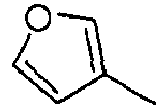
2HCl 14 
HCl 27 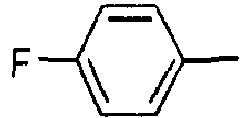
2HCl 15 
HCl 28 
2HCl 16 
HCl 29 
2HCl 17 
HCl 30 
HCl 18 
31 
HCl Table 3 Ex. No. structural salt Ex. No. structural salt 32 
HCl 42 
HBr 33 
2HCl 43 
HCl 34 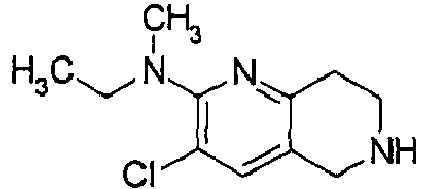
HCl 44 
HCl 35 
2HCl 45 
HCl 36 
2HCl 46 
TsOH 37 
2HCl 47 
TsOH 38 
HBr 48 
HCl 39 
HBr 49 
HCl 40 
HCl 50 
HCl 41 
HCl 51 
HCl [Table 4] Ex. No. structural salt Ex. No. structural salt 52 
HCl 62 
HCl 53 
HCl 63 
HCl 54 
HCl 64 
HCl 55 
HCl 65 
HCl 56 
HCl 66 
HCl 57 
HCl 67 
HCl 58 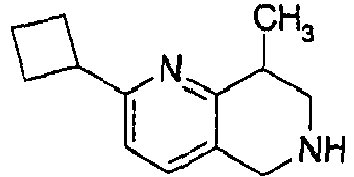
HBr 68 
HCl 59 
HCl 69 
HCl 60 
HCl 70 
HCl 61 
HCl 71 
HCl [Table 5] Ex. No. structural salt Ex. No. structural salt 72 
HCl 77 
HCl 73 
HCl 78 
HCl 74 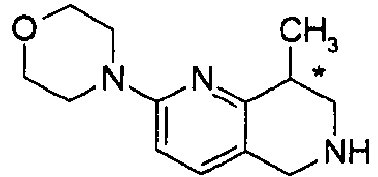
HCl 79 
HCl 75 
HCl 80 
HCl 76 
HCl -
- (1) Compound of Example 1 10 mg
- (2)
Lactose 60 mg - (3) Cornstarch 35 mg
- (4) hydroxypropylmethylcellulose 3 mg
- (5) Magnesium stearate 2 mg
- A mixture of 10 mg of the compound obtained in Example 1, 60 mg of lactose and 35 mg of corn starch is granulated using 0.03 mL of a 10 wt% aqueous solution of hydroxypropylmethylcellulose (3 mg as hydroxypropylmethylcellulose), and then dried at 40°C and sieved. The obtained granules are mixed with 2 mg of magnesium stearate and compressed. The obtained uncoated tablets are sugar-coated with an aqueous suspension of sucrose, titanium dioxide, talc and gum arabic. The thus-coated tablets are glazed with beeswax to give finally-coated tablets.
-
- (1) Compound of Example 1 10 mg
- (2) Lactose 70 mg
- (3) Cornstarch 50 mg
- (4) Soluble starch 7 mg
- (5) Magnesium stearate 3 mg
- The compound (10 mg) obtained in Example 1 and 3 mg of magnesium stearate are granulated with 0.07 mL of an aqueous solution of soluble starch (7 mg as soluble starch), dried, and mixed with 70 mg of lactose and 50 mg of corn starch. The mixture is compressed to give tablets.
-
- (1) Rofecoxib 5.0 mg
- (2) Sodium chloride 20.0 mg
- (3) Distilled water amount to make total volume 2.0 mL
- Rofecoxib (5.0 mg) and 20.0 mg of Sodium chloride are dissolved in distilled water, and water is added to make the total volume 2.0 mL. The solution is filtered, and filled into 2 mL of ampoule under sterile condition. The ampoule is sterilized, and then sealed to give a solution for injection.
-
- (1) Rofecoxib 50 mg
- (2) Lactose 34 mg
- (3) Cornstarch 10.6 mg
- (4) Cornstarch (paste) 5 mg
- (5) Magnesium stearate 0.4 mg
- (6) Calcium carboxymethylcellulose 20 mg total 120 mg
- The above-mentioned (1) to (6) are mixed according to a conventional method and the mixture is tableted by a tableting machine to give a tablet.
- The formulation prepared in Formulation Example 1 or 2, and the formulation prepared in Reference Formulation Example 1 or 2 are combined.
- The serotonin 5-HT2c receptor agonist activity of the Example compounds was evaluated based on the changes in the intracellular calcium concentration by the following method. After transcription, 5-HT2c undergoes RNA editing of the second intracellular loop, which results in the change of three amino acids and 14 receptor isoforms. 5-HT2c stably expressing CHO cell that expresses isoform type VSV stably was purchased from Euroscreen S.A., and cultured in an UltraCHO (BioWhittaker) medium containing 1% dialyzed bovine serum and 400 µg/ml G418. The cells were plated in a 384-well black clear bottom plate (PE Biosystems) at 5000 cells/well, cultured for 24 hr in a CO2 incubator, and changes in the intracellular calcium concentration mediated by the 5-HT2c receptor were evaluated using Calcium Kit-Fluo 3 (Dojindo Laboratories). A calcium kit buffer containing 2.5 mM probenecid, 0.04% Pluronic F-127 and 2.5 µg Fluo-3 AM (calcium indicator fluorescent dye) was prepared and used as a Fluo-3 loading solution (contained in Dojindo Laboratories Calcium Kit). The loading solution was incubated at 37°C, the medium in the wells of the cell culture plate was removed, and the loading solution was added to each well by 40 µL. The cells were reacted at 37°C for 1 hr to allow uptake of Fluo-3 AM into the cells and washed. The Example compound was diluted with a calcium kit buffer, and dispensed to each well of the 384-well plate (REMP) by 40 µL to give a Example compound plate. The cell culture plate and test compound plate were set on a Fluometric Imaging Plate Reader (FLIPR, Molecular Devices), and changes in the intracellular calcium concentration were measured. An increase in the fluorescence intensity of Fluo-3 matches with an increase in the intracellular calcium concentration mediated by a receptor. The changes in the intracellular fluorescence intensity were measured every second with a CCD camera of FLIPR and, after measurement for 5 seconds before addition of the compound, a diluted solution of the Example compound was added by 20 µL to each well of the cell culture plate using an automatic dispenser in FLIPR.
- The agonist activity was evaluated based on the difference in the fluorescence level obtained by subtracting the fluorescence intensity before addition of the compound from the maximum fluorescence intensity after the addition thereof. The activity of the test compound is shown by the ratio relative to the maximum response by 5-HT (Table 6).
[Table 6] Ex. No. ratio relative to maximum response by 5-HT (1 µM) Ex. No. ratio relative to maximum response by 5-HT (1 µM) 2 92.8 29 97 4 101.2 30 97.8 5 100.7 31 88.4 6 100.2 43 97 7 95.6 48 95.5 8 90.8 53 91 15 101.8 73 101 17 100.2 74 103 24 101.4 75 103 26 98.2 76 105 27 91.7 79 106 28 101.8 80 102 - SD female rats (body weight 180-350 g) were anesthetized with urethane (Wako Pure Chemical Industries, Ltd.), and the spinal cord was cut at T8-9 level to eliminate the micturition reflex. During the operation, halothane (Takeda Pharmaceutical Company Limited) anesthesia was added as necessary. The rats were fixed at a dorsal position, and two catheters (PE-100; Clay Adams) were indwelled in the bladder. One of the catheters was filled with saline stained with Evans Blue dye (Merck), and connected to a 50 ml syringe (TERUMO CORPORATION) fixed on an infusion pump (KD Scientific) via a three-way cock. The other catheter was connected to a pressure transducer (DX-100; NIHON KOHDEN CORPORATION), and signals of the transducer were transmitted to computer via an amplifier (blood pressure amplification unit AP-641G; NIHON KOHDEN CORPORATION) and a data analyzer (BIOPAC; MP100), and recorded on a hard disk. The data was analyzed on the computer using a software (BIOPAC; AcqKnowledge). Saline was injected into the bladder using the infusion pump at a rate of 360 ml/hr, infusion was stopped on the moment fluid leakage from the urethral meatus was observed, and the solution in the bladder was discharged by opening the three-way cock. The maximum intravesical pressure during infusion was taken as a leak point pressure. The leak point pressure was measured at least 3 times until the value was stabilized, the average value of the last three measures was taken as the data, which was compared before and after administration of duloxetine. Duloxetine was dissolved in N,N-dimethylformamide (DMA)/polyethylene glycol 400 (PEG400) (1:1) and intravenously administered at 0.5 ml/kg.
- When saline was injected into the bladder of spinal cord transected rat under urethane anesthesia at 360 ml/hr, the intravesical pressure started to rise immediately after injection or several seconds thereafter, and the rise rate was about 10 cmH2O/sec, and incontinence was observed in about 5-10 seconds after the start of the injection. The leak point pressure measured by infusion was 65.7 cmH2O on average of 10 cases. When duloxetine which is a therapeutic drug for stress urinary incontinence and has been reported to increase the leak point pressure in experiment animals (for example, American Journal of Physiology-Renal Physiology, 2007, vol. 293, p. F920-F926 and the like) was intravenously administered and the leak point pressure was compared before and after the administration, it significantly increased the leak point pressure (Table 7).
- Table 7: Action of intravenous administration of duloxetine on leak point pressure in spinal cord-transected female rats under urethane anesthesia by high speed infusion method
[Table 7] dose (mg/kg, i.v.) n change of leak point pressure (cmH2O) solvent - 5 5.0±2.0 duloxetine 1 5 11.4±2.4* - The data shows mean±SEM of each group. * P<0.05, vs solvent administration group (Student's t-test).
- SD female rats (body weight 180-350 g) were anesthetized with urethane (Wako Pure Chemical Industries, Ltd.), and the spinal cord was cut at T8-9 level to eliminate the micturition reflex. During the operation, halothane (Takeda Pharmaceutical Company Limited) anesthesia was added as necessary. The rats were fixed at a dorsal position, and two catheters (PE-100; Clay Adams) were indwelled in the bladder. One of the catheters was filled with saline stained with Evans Blue dye (Merck), and connected to a 50 ml syringe (TERUMO CORPORATION) fixed on an infusion pump (KD Scientific) via a three-way cock. The other catheter was connected to a pressure transducer (DX-100; NIHON KOHDEN CORPORATION), and signals of the transducer were transmitted to computer via an amplifier (blood pressure amplification unit AP-641G; NIHON KOHDEN CORPORATION) and a data analyzer (BIOPAC; MP100), and recorded on a hard disk. The data was analyzed on the computer using a software (BIOPAC; AcqKnowledge). Saline was injected into the bladder using the infusion pump at a rate of 360 ml/hr, infusion was stopped on the moment fluid leakage from the urethral meatus was observed, and the solution in the bladder was discharged by opening the three-way cock. The maximum intravesical pressure during infusion was taken as a leak point pressure, which was measured repeatedly until the value was stabilized, and the average value of the last three measures was taken as the data. Serotonin 5-HT2c receptor agonist, WAY-161503, WAY-163909, APD-356 and compound A were intravenously administered, and the leak point pressure was compared before and after the administration. All the drugs were dissolved in DMA/PEG400 (1:1) and intravenously administered at 0.5 ml/kg.
- Intravenous administration of all the tested serotonin 5-HT2c receptor agonists, i.e., WAY-161503, WAY-163909, APD-356 and compound A, increased the leak point pressure in a dose-dependent manner (Table 8).
- Table 8: Action of intravenous administration of serotonin 5-HT2c receptor agonist on leak point pressure in spinal cord-transected female rats under urethane anesthesia by high speed infusion method
[Table 8] dose (mg/kg, i.v.) n change of leak point pressure (cmH2O) solvent - 5 5.0±2.0 WAY-161503 0.03 4 7.4±3.8 0.3 6 12.8±1.0* WAY-163909 0.1 5 4.4±1.6 1 5 12.9±4.2 3 3 30.1±2.6* APD-356 0.1 5 5.2±2.6 1 5 19.2±3.1* 3 3 28.9±3.3* compound A 0.1 4 8.4±5.0 1 4 10.3±2.4 3 3 25.7±8.7* - The data shows mean±SEM. * P<0.025, increase in the leak point pressure was compared with solvent administration group (one-sided test, Williams' test).
- Female SD rats (body weight 190-310 g) were anesthetized with urethane (Wako Pure Chemical Industries, Ltd.), and the spinal cord was transected at T8-9 level to eliminate the micturition reflex. During the operation, halothane (Takeda Pharmaceutical Company Limited) anesthesia was added when necessary. After abdominal section, bladder neck was ligated with a suture thread, and then the hypogastric nerve and pudendal nerve were bilaterally transected. In some animals, the nerves advancing toward the iliococcygeus muscle and pubococcygeus muscle were also bilaterally transected. A catheter (PE-90, Clay Adams) was placed in the bladder, and the other end of the bladder catheter was connected to a pressure transducer and a water reservoir (60 ml syringe) of saline via a three-way cock. A microtip transducer catheter (SPR-524, Millar Instruments Inc.) was inserted toward the bladder from the urethral orifice, and adjusted using a scale on the catheter surface so that the transducer part is positioned in the urethra at 10.0 - 15.0 mm from the urethral orifice.
- The changes in the topical pressure within the urethra (hereinafter conveniently indicated as urethral pressure) as measured by the microtip transducer was transmitted to a computer via an amplifier (blood pressure amplification unit AP-641G; NIHON KOHDEN) and a data analyzer (MP-100; biopack; sampled at 500 Hz), and recorded on a hard disc. The intravesical pressure was rapidly increased to 50 cmH2O for 30 sec by setting the position of the water reservoir of saline at 50 cm higher, and changes in the urethral pressure were observed. The reaction of the urethra induced by an increased intravesical pressure was measured 3 times, and the average of the last 2 measures was taken as the value before drug administration. The evaluation item was reflex urethral closure response, and the recorded values were subjected to smoothing process at 500 points to calculate an average urethral pressure per 1 sec, after which the value immediately before increase in the intravesical pressure was subtracted from the maximum value on increase in the intravesical pressure and taken as the urethral closure response.
- Using rats in which the spinal cord was transected to eliminate the micturition reflex, and the hypogastric nerve and the pudendal nerve controlling the internal urethral sphincter, external urethral sphincter and coccygeus muscle were bilaterally transected, the intravesical pressure was rapidly increased from 0 cmH2O to 50 cmH2O. As a result, a urethral pressure-increasing response (urethral closure response) was observed (
Fig. 1 ). The mean±SEM of the urethral closure responses in 20 rats subjected to the experiment was 5.6±0.7 cmH2O. - In rats in which the nerve advancing toward the iliococcygeus muscle and pubococcygeus muscle was bilaterally transected in addition to the hypogastric nerve and pudendal nerve, the mean±SEM of the urethral closure responses due to an increased intravesical pressure was 1.3±0.4 cmH2O (4 rats), which was significantly low (P<0.05, two-sided test, Student's t-test) as compared to the rats free of transection of the nerve advancing toward the iliococcygeus muscle and pubococcygeus muscle. The results reveal that the urethral closure response obtained by rapidly increasing the intravesical pressure from 0 cmH2O to 50 cmH2O in the rats with bilaterally transected hypogastric nerve and pudendal nerve is attributable to a contractile response mainly by the iliococcygeus muscle and pubococcygeus muscle.
- Female SD rats (body weight 200-310 g) were anesthetized with urethane (Wako Pure Chemical Industries, Ltd.), and the spinal cord was transected at T8-9 level to eliminate the micturition reflex. During the operation, halothane (Takeda Pharmaceutical Company Limited) anesthesia was added when necessary. After abdominal section, bladder neck was ligated with a suture thread, and then the hypogastric nerve and pudendal nerve were bilaterally transected. A catheter (PE-90, Clay Adams) was placed in the bladder, and the other end of the bladder catheter was connected to a pressure transducer and a water reservoir (60 ml syringe) of saline via a three-way cock. A microtip transducer catheter (SPR-524, Millar Instruments Inc.) was inserted toward the bladder from the urethral orifice, and adjusted using a scale on the catheter surface so that the transducer part is positioned in the urethra at 10.0 - 15.0 mm from the urethral orifice.
- The changes in the topical pressure within the urinary tract (hereinafter conveniently indicated as urethral pressure) as measured by the microtip transducer was transmitted to a computer via an amplifier (blood pressure amplification unit AP-641G; NIHON KOHDEN) and a data analyzer (MP-100; biopack; sampled at 500 Hz), and recorded on a hard disc. The intravesical pressure was rapidly increased to 50 cmH2O for 30 sec by setting the position of the water reservoir of saline at 50 cm higher, and changes in the urethral pressure were observed. The reaction of the urinary tract induced by an increased intravesical pressure was measured 3 times, and the average of the last 2 measures was taken as the value before drug administration. The evaluation item was reflex urethral closure response, and the recorded values were subjected to smoothing process at 500 points to calculate an average urethral pressure per 1 sec, after which the value immediately before increase in the intravesical pressure was subtracted from the maximum value on increase in the intravesical pressure and taken as the urethral closure response. After measurement of the value before drug administration, WAY-163909, APD-356 or compound A, which are 5-HT2c receptor agonists, was intravenously administered, and the urethral closure response was evaluated again 10 min later. The drugs were all dissolved in N,N-dimethylformamide/polyethylene glycol 400 (1:1) and administered intravenously at a volume of 0.5 ml/kg.
- Using female spinal cord-transected rats in which the hypogastric nerve and pudendal nerve were bilaterally transected, the intravesical pressure was rapidly increased from 0 cmH2O to 50 cmH2O, and the action of various 5-HT2c receptor agonists (WAY-163909, APD-356 and compound A) on the urethral pressure-increasing response (urethral closure response) induced thereby was investigated. As a result, all of these three kinds of 5-HT2c receptor agonists with different chemotype (a basic skeleton on the chemical structure) enhanced the urethral closure response induced by the increased intravesical pressure (Table 9,
Fig. 1 ). Particularly, WAY-163909 and compound A, which are selective 5-HT2c receptor agonists, enhanced the reflex urethral closure response. The results clarified that the urethral closure response by the iliococcygeus muscle and pubococcygeus muscle, which are pelvic floor muscles, is enhanced by stimulation of a 5-HT2c receptor (Table 9). - Table 9: Action of 5-HT2c receptor agonist on urethral closure response (cmH2O) induced by increased intravesical pressure in spinal cord transected female rats whose hypogastric nerve and pudendal nerves were bilaterally cut
[Table 9] dose (mg/kg, i.v.) urethral closure response (cmH2O) before drug administration after drug administration solvent administration group - 7.9±1.7 5.1±2.2 WAY-163909 3 4.4±0.8 10.2±1.6*** APD-356 1 5.3±1.7 8.6±2.7* Compound A 1 4.6±0.8 7.5±1.6* - The data shows mean±SEM of each group (n=5). * P<0.05, *** P<0.001, difference in the urethral closure response before and after drug administration was compared with solvent administration group (two-sided test, Dunnet's t-test).
- Since the compound of the present invention has a superior serotonin 5-HT2c receptor activating action, it is useful as a safe prophylactic or therapeutic drug for any serotonin 5-HT2c associated disease, for example, a lower urinary tract symptom, obesity and/or organ prolapse and the like.
- In the screening method for a prophylactic or therapeutic drug for stress urinary incontinence of the present invention, since the urethral resistance upon a rapid and transient rise in the intravesical pressure is measured as a leak point pressure conveniently by a stable procedure, it is superior as an in vivo evaluation system, and can be applied beneficially and efficiently to screening for a substance used for the prophylaxis or treatment of stress urinary incontinence. On the other hand, it is also useful as an evaluation system to verify that a substance used for the prophylaxis or treatment of other diseases does not induce stress urinary incontinence. Moreover, using the screening method of the present invention, various pathological and physiological studies aiming at elucidation of the pathology mechanism of stress urinary incontinence, such as identification of a gene with expression that varies along with pathology and elucidation of behavior thereof, analysis of protein expression variation, study of treatment effect of gene introduction on stress urinary incontinence and the like, can be efficiently conducted with high precision.
- Moreover, a substance usable for the screening method of the present invention, for example, a substance that increases leak point pressure upon a rise in the intravesical pressure can be used as a prophylactic or therapeutic agent for stress urinary incontinence.
- In the screening method for a prophylactic or therapeutic drug for cystoceles or enteroceles of the present invention, since contraction force of pelvic floor muscles is measured, the method is superior as an in vivo evaluation system for pathology, and can be applied beneficially and efficiently to screening for a substance used for the prophylaxis or treatment of cystoceles or enteroceles. On the other hand, it is also useful as an evaluation system to verify that a substance used for the prophylaxis or treatment of other diseases does not induce cystoceles and enteroceles. Moreover, using the screening method of the present invention, various pathological and physiological studies aiming at elucidation of the pathology mechanism of cystoceles and enteroceles, such as identification of a gene with expression that varies along with pathology and elucidation of behavior thereof, analysis of protein expression variation, study of treatment effect of gene introduction on cystoceles and enteroceles and the like, can be efficiently conducted with high precision. Furthermore, a substance obtained by the screening method of the present invention, for example, a medicament comprising a serotonin 5-HT2c receptor activator can be used as a prophylactic or therapeutic drug for cystoceles or rectocele.
- This application is based on a patent application No.
2007-297170 - Further embodiments of the present invention are:
- 1. A serotonin 5-HT2c receptor activator comprising a compound represented by the formula

- X is a hydrogen atom or a halogen atom,
- R1 is
- (1) a group represented by the formula

- R3 and R4 are the same or different and each is a hydrogen atom, a cycloalkyl group or an alkyl group optionally substituted by a cycloalkyl group, or
- R3 and R4 form, together with the adjacent nitrogen atom, a non-aromatic cyclic amino group optionally substituted by substituent(s) selected from a halogen atom, an alkyl group, an alkoxy group and an aryl group,
- (2) a group represented by -OR5 wherein R5 is a hydrogen atom, a cycloalkyl group, an alkyl group optionally substituted by a cycloalkyl group, an aryl group or a heteroaryl group,
- (3) a group represented by -SR6 wherein R6 is an alkyl group, an aryl group or a heteroaryl group,
- (4) an alkyl group,
- (5) a cycloalkyl group,
- (6) an aryl group optionally substituted by substituent(s) selected from a halogen atom, an alkyl group optionally substituted by a halogen atom, an alkoxy group, an alkylthio group and an aryl group, or
- (7) a heteroaryl group,
- R2a and R2b are the same or different and each is a hydrogen atom or an optionally substituted alkyl group, or
- R2a and R2b form, together with the adjacent carbon atom, an alicyclic hydrocarbon group optionally substituted by substituent(s) selected from a halogen atom, an alkyl group and an alkoxy group, and
- n is 0 or 1,
- (1) a group represented by the formula
- 2. A serotonin 5-HT2c receptor activator comprising a compound represented by the formula

- R1 is
- (1) a group represented by the formula

- R3 and R4 are the same or different and each is a hydrogen atom or an alkyl group optionally substituted by a cycloalkyl group, or
- R3 and R4 form, together with the adjacent nitrogen atom, a non-aromatic cyclic amino group optionally substituted by substituent(s) selected from a halogen atom, an alkyl group, an alkoxy group and an aryl group,
- (2) a group represented by -OR5 wherein R5 is an alkyl group optionally substituted by a cycloalkyl group, an aryl group or a heteroaryl group,
- (3) a group represented by -SR6 wherein R6 is an alkyl group, an aryl group or a heteroaryl group,
- (4) an alkyl group,
- (5) a cycloalkyl group,
- (6) an aryl group optionally substituted by substituent(s) selected from a halogen atom, an alkyl group optionally substituted by a halogen atom, an alkoxy group, an alkylthio group and an aryl group, or
- (7) a heteroaryl group,
- R2a and R2b are the same or different and each is a hydrogen atom or an optionally substituted alkyl group, or
- R2a and R2b form, together with the adjacent carbon atom, an alicyclic hydrocarbon group optionally substituted by substituent(s) selected from a halogen atom, an alkyl group and an alkoxy group, and
- n is 0 or 1,
- (1) a group represented by the formula
- R1 is
- 3. The agent according to
embodiment 1, wherein R1 is a group represented by the formula
- R3 and R4 are the same or different and each is a hydrogen atom, a cycloalkyl group or an alkyl group optionally substituted by a cycloalkyl group, or
- R3 and R4 form, together with the adjacent nitrogen atom, a non-aromatic cyclic amino group optionally substituted by substituent(s) selected from a halogen atom, an alkyl group, an alkoxy group and an aryl group.
- 4. The agent according to
embodiment 1, wherein n is 0. - 5. The agent according to
embodiment 1, which is an agent for the prophylaxis or treatment of a lower urinary tract symptom, obesity and/or organ prolapse. - 6. A method for the prophylaxis or treatment of a lower urinary tract symptom, obesity and/or organ prolapse, comprising administering, to a mammal, an effective amount of a compound represented by the formula

- X is a hydrogen atom or a halogen atom,
- R1 is
- (1) a group represented by the formula

- R3 and R4 are the same or different and each is a hydrogen atom, a cycloalkyl group or an alkyl group optionally substituted by a cycloalkyl group, or
- R3 and R4 form, together with the adjacent nitrogen atom, a non-aromatic cyclic amino group optionally substituted by substituent(s) selected from a halogen atom, an alkyl group, an alkoxy group and an aryl group,
- (2) a group represented by -OR5 wherein R5 is a hydrogen atom, a cycloalkyl group, an alkyl group optionally substituted by a cycloalkyl group, an aryl group or a heteroaryl group,
- (3) a group represented by -SR6 wherein R6 is an alkyl group, an aryl group or a heteroaryl group,
- (4) an alkyl group,
- (5) a cycloalkyl group,
- (6) an aryl group optionally substituted by substituent(s) selected from a halogen atom, an alkyl group optionally substituted by a halogen atom, an alkoxy group, an alkylthio group and an aryl group, or
- (7) a heteroaryl group,
- R2a and R2b are the same or different and each is a hydrogen atom or an optionally substituted alkyl group, or
- R2a and R2b form, together with the adjacent carbon atom, an alicyclic hydrocarbon group optionally substituted by substituent(s) selected from a halogen atom, an alkyl group and an alkoxy group, and
- n is 0 or 1,
- (1) a group represented by the formula
- 7. A method for the prophylaxis or treatment of a lower urinary tract symptom, obesity and/or organ prolapse, comprising administering, to a mammal, an effective amount of a compound represented by the formula

- R1 is
- (1) a group represented by the formula

- R3 and R4 are the same or different and each is a hydrogen atom or an alkyl group optionally substituted by a cycloalkyl group, or
- R3 and R4 form, together with the adjacent nitrogen atom, a non-aromatic cyclic amino group optionally substituted by substituent(s) selected from a halogen atom, an alkyl group, an alkoxy group and an aryl group,
- (2) a group represented by -OR5 (R5 is an alkyl group optionally substituted by a cycloalkyl group, an aryl group or a heteroaryl group),
- (3) a group represented by -SR6 (R6 is an alkyl group, an aryl group or a heteroaryl group,
- (4) an alkyl group,
- (5) a cycloalkyl group,
- (6) an aryl group optionally substituted by substituent(s) selected from a halogen atom, an alkyl group optionally substituted by a halogen atom, an alkoxy group, an alkylthio group and an aryl group, or
- (7) a heteroaryl group,
- R2a and R2b are the same or different and each is a hydrogen atom or an optionally substituted alkyl group, or
- R2a and R2b form, together with the adjacent carbon atom, an alicyclic hydrocarbon group optionally substituted by substituent(s) selected from a halogen atom, an alkyl group and an alkoxy group, and
- n is 0 or 1,
- (1) a group represented by the formula
- R1 is
- 8. Use of a compound represented by the formula

- X is a hydrogen atom or a halogen atom,
- R1 is
- (1) a group represented by the formula

- R3 and R4 are the same or different and each is a hydrogen atom, a cycloalkyl group or an alkyl group optionally substituted by a cycloalkyl group, or
- R3 and R4 form, together with the adjacent nitrogen atom, a non-aromatic cyclic amino group optionally substituted by substituent(s) selected from a halogen atom, an alkyl group, an alkoxy group and an aryl group,
- (2) a group represented by -OR5 (R5 is a hydrogen atom, a cycloalkyl group, an alkyl group optionally substituted by a cycloalkyl group, an aryl group or a heteroaryl group,
- (3) a group represented by -SR6 (R6 is an alkyl group, an aryl group or a heteroaryl group),
- (4) an alkyl group,
- (5) a cycloalkyl group,
- (6) an aryl group optionally substituted by substituent(s) selected from a halogen atom, an alkyl group optionally substituted by a halogen atom, an alkoxy group, an alkylthio group and an aryl group, or
- (7) a heteroaryl group,
- R2a and R2b are the same or different and each is a hydrogen atom or an optionally substituted alkyl group, or
- R2a and R2b form, together with the adjacent carbon atom, an alicyclic hydrocarbon group optionally substituted by substituent(s) selected from a halogen atom, an alkyl group and an alkoxy group, and
- n is 0 or 1,
- (1) a group represented by the formula
- 9. Use of a compound represented by the formula

- R1 is
- (1) a group represented by the formula
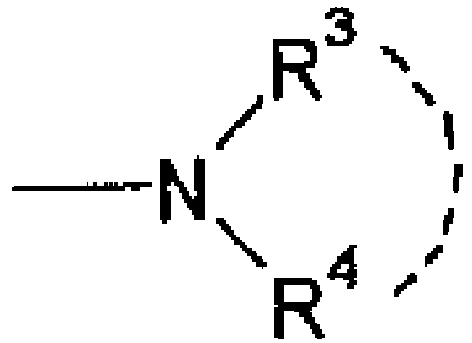
- R3 and R4 are the same or different and each is a hydrogen atom or an alkyl group optionally substituted by a cycloalkyl group, or
- R3 and R4 form, together with the adjacent nitrogen atom, a non-aromatic cyclic amino group optionally substituted by substituent(s) selected from a halogen atom, an alkyl group, an alkoxy group and an aryl group,
- (2) a group represented by -OR5 (R5 is an alkyl group optionally substituted by a cycloalkyl group, an aryl group or a heteroaryl group),
- (3) a group represented by -SR6 (R6 is an alkyl group, an aryl group or a heteroaryl group),
- (4) an alkyl group,
- (5) a cycloalkyl group,
- (6) an aryl group optionally substituted by substituent(s) selected from a halogen atom, an alkyl group optionally substituted by a halogen atom, an alkoxy group, an alkylthio group and an aryl group, or
- (7) a heteroaryl group,
- R2a and R2b are the same or different and each is a hydrogen atom or an optionally substituted alkyl group, or
- R2a and R2b form, together with the adjacent carbon atom, an alicyclic hydrocarbon group optionally substituted by substituent(s) selected from a halogen atom, an alkyl group and an alkoxy group, and
- n is 0 or 1,
- (1) a group represented by the formula
- R1 is
- 10. A compound represented by the formula

- X is a hydrogen atom or a halogen atom,
- R2a and R2b are the same or different and each is a hydrogen atom or an optionally substituted alkyl group, or
- R2a and R2b form, together with the adjacent carbon atom, an alicyclic hydrocarbon group optionally substituted by substituent(s) selected from a halogen atom, an alkyl group and an alkoxy group, and
- R7, R8, R9 and R10 are the same or different and each is a hydrogen atom or a substituent,
- provided that
- (1) one or each of R2a and R2b is an optionally substituted alkyl group,
- (2) R7, R8, R9 and R10 are the same or different and each is a hydrogen atom or a substituent, and R2a and R2b form, together with the adjacent carbon atom, an alicyclic hydrocarbon group optionally substituted by substituent(s) selected from a halogen atom, an alkoxy group and an alkyl group, and
- (3) at least one group of R7, R8, R9 and R10 is a substituent, or a salt thereof.
- 11. A compound represented by the formula

- R2a and R2b are the same or different and each is a hydrogen atom or an optionally substituted alkyl group, or
- R2a and R2b form, together with the adjacent carbon atom, an alicyclic hydrocarbon group optionally substituted by substituent(s) selected from a halogen atom, an alkyl group and an alkoxy group, and
- R7, R8, R9 and R10 are the same or different and each is a hydrogen atom or a substituent,
- provided that
- (1) one or each of R2a and R2b is an optionally substituted alkyl group,
- (2) R7, R8, R9 and R10 are the same or different and each is a hydrogen atom or a substituent, and R2a and R2b form, together with the adjacent carbon atom, an alicyclic hydrocarbon group optionally substituted by substituent(s) selected from a halogen atom, an alkoxy group and an alkyl group, or
- (3) at least one group of R7, R8, R9 and R10 is a substituent, or a salt thereof.
- 12. The compound according to embodiment 10, wherein at least one group of R2a, R2b, R7, R8, R9 and R10 is an optionally substituted alkyl group.
- 13. A compound represented by the formula

- (1)
- X is a hydrogen atom,
- R2a and R2b are the same or different and each is a hydrogen atom or a C1-6 alkyl group (provided that one or each of R2a and R2b is a C1-6 alkyl group),
- R7 and R8 are the same or different and each is a hydrogen atom or a C1-6 alkyl group (provided that at least one group of R7 and R8 is a hydrogen atom), and
- R9 and R10 are each a hydrogen atom, or
- (2)
- X is a hydrogen atom or a halogen atom,
- R2a and R2b are each a hydrogen atom,
- R7, R9 and R10 are each a hydrogen atom, and
- R8 is a C1-6 alkyl group,
- (1)
- 14. A compound represented by the formula

- X is a hydrogen atom or a halogen atom,
- R1 is a group represented by the formula

- R3' is a hydrogen atom or an alkyl group optionally substituted by a cycloalkyl group,
- R4' is a cycloalkyl group or an alkyl group optionally substituted by a cycloalkyl group, or
- R3' and R4' are crosslinked to each other via a carbon-carbon bond to form, together with the adjacent nitrogen atom, a non-aromatic cyclic amino group optionally substituted by substituent(s) selected from a halogen atom, an alkyl group, an alkoxy group and an aryl group,
- R2a and R2b are the same or different and each is a hydrogen atom or an optionally substituted alkyl group, or
- R2a and R2b form, together with the adjacent carbon atom, an alicyclic hydrocarbon group optionally substituted by substituent(s) selected from a halogen atom, an alkyl group and an alkoxy group,
- 15. A compound represented by the formula

- X is a hydrogen atom or a halogen atom,
- R1 is
- (1) a group represented by the formula

- R3' is a hydrogen atom or a C1-6 alkyl group, and
- R4' is a C3-6 cycloalkyl group or a C1-6 alkyl group optionally substituted by a C3-6 cycloalkyl group, excluding a methylamino group, or
- (2) a group represented by the formula

- R2a and R2b are the same or different and each is a hydrogen atom or a C1-6 alkyl group,
- (1) a group represented by the formula
- 16. A compound represented by the formula

- X is a hydrogen atom or a halogen atom,
- R1 is
- (1) a group represented by the formula

- R3' is a hydrogen atom or a C1-6 alkyl group, and
- R4' is C3-6 cycloalkyl or a C1-6 alkyl group optionally substituted by a C3-6 cycloalkyl group, excluding a methylamino group, or
- (2) a group represented by the formula

- R2a and R2b are the same or different and each is a hydrogen atom or a C1-6 alkyl group (provided that at least one group of R2a and R2b is a hydrogen atom), or a salt thereof.
- (1) a group represented by the formula
- 17. A compound represented by the formula
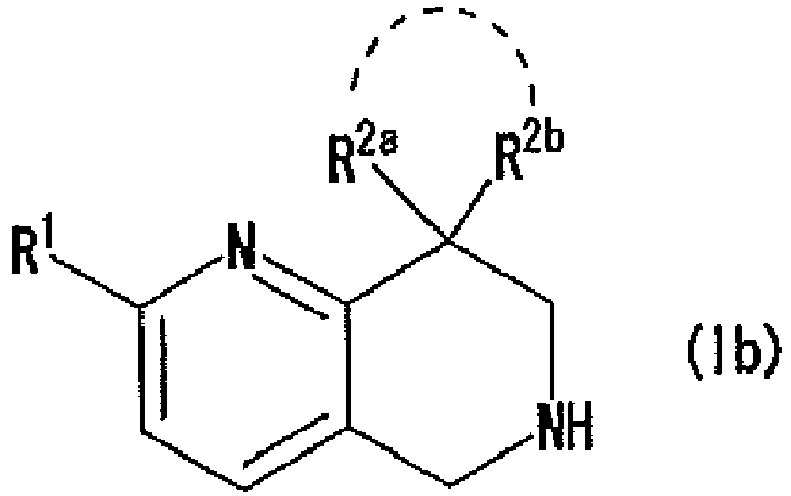
- R1 is a group represented by the formula

- R3' is a hydrogen atom or an alkyl group optionally substituted by a cycloalkyl group,
- R4' is an alkyl group optionally substituted by a cycloalkyl group, or
- R3' and R4' are crosslinked to each other via a carbon-carbon bond to form, together with the adjacent nitrogen atom, a non-aromatic cyclic amino group optionally substituted by substituent(s) selected from a halogen atom, an alkyl group, an alkoxy group and an aryl group, excluding a methylamino group,
- R2a and R2b are the same or different and each is a hydrogen atom or an optionally substituted alkyl group, or
- R2a and R2b form, together with the adjacent carbon atom, an alicyclic hydrocarbon group optionally substituted by substituent(s) selected from a halogen atom, an alkyl group and an alkoxy group, or a salt thereof.
- R1 is a group represented by the formula
- 18. A compound represented by the formula

- R1 is
- (1) a group represented by -OR5 (R5 is a hydrogen atom, a cycloalkyl group, an alkyl group optionally substituted by a cycloalkyl group, an aryl group or a heteroaryl group),
- (2) a C3-5 alkyl group (alkyl group having a carbon number of 3 to 5),
- (3) an aryl group optionally substituted by substituent(s) selected from a halogen atom, an alkyl group optionally substituted by a halogen atom, an alkoxy group, an alkylthio group and an aryl group,
- (4) a heteroaryl group, or
- (5) a cycloalkyl group,
- R2a and R2b are the same or different and each is a hydrogen atom or an optionally substituted alkyl group, or
- R2a and R2b form, together with the adjacent carbon atom, an alicyclic hydrocarbon group optionally substituted by substituent(s) selected from a halogen atom, an alkyl group and an alkoxy group,
- R1 is
- 19. A compound represented by the formula

- R1 is
- (1) a group represented by -OR5 (R5 is an alkyl group optionally substituted by a cycloalkyl group, an aryl group or a heteroaryl group),
- (2) a C3 alkyl group (alkyl group having a carbon number of 3),
- (3) an aryl group optionally substituted by substituent(s) selected from a halogen atom, an alkyl group optionally substituted by a halogen atom, an alkoxy group, an alkylthio group and an aryl group, or
- (4) a heteroaryl group,
- R2a and R2b are the same or different and each is a hydrogen atom or an optionally substituted alkyl group, or
- R2a and R2b form, together with the adjacent carbon atom, an alicyclic hydrocarbon group optionally substituted by substituent(s) selected from a halogen atom, an alkyl group and an alkoxy group,
- R1 is
- 20. A compound represented by the formula

- R1 is
- (1) a group represented by -OR5 (R5 is a hydrogen atom, a C3-6 cycloalkyl group, or a C1-6 alkyl group optionally substituted by a C3-6 cycloalkyl group),
- (2) a C3-5 alkyl group,
- (3) a phenyl group optionally substituted by substituent(s) selected from a halogen atom, a C1-6 alkyl group optionally substituted by a halogen atom, and a C1-6 alkylthio group,
- (4) a group represented by the formula

- (5) a C3-6 cycloalkyl group,
- R2a and R2b are the same or different and each is a hydrogen atom or an optionally substituted alkyl group, (excluding a compound wherein R1 is a methoxy group and R2a and R2b are each a hydrogen atom),
- R1 is
- 21. The compound according to embodiment 18, wherein R1 is a phenyl group substituted by substituent(s) selected from a halogen atom, a C1-6 alkyl group substituted by a halogen atom and a C1-6 alkylthio group.
- 22. A compound represented by the formula

- R1 is
- (1) a group represented by the formula

- R3 and R4 are the same or different and each is a hydrogen atom or an alkyl group, or
- R3 and R4 form, together with the adjacent nitrogen atom, a non-aromatic cyclic amino group optionally substituted by substituent(s) selected from a halogen atom, an alkyl group, an alkoxy group and an aryl group,
- (2) a group represented by -OR5 (R5 is an alkyl group, an aryl group or a heteroaryl group),
- (3) a group represented by -SR6 (R6 is an alkyl group, an aryl group or a heteroaryl group,
- (4) an alkyl group,
- (5) a cycloalkyl group,
- (6) an aryl group optionally substituted by substituent(s) selected from a halogen atom, an alkyl group, an alkoxy group, an alkylthio group and an aryl group, or
- (7) a heteroaryl group,
- R2a and R2b are the same or different and each is a hydrogen atom or an optionally substituted alkyl group, or
- R2a and R2b form, together with the adjacent carbon atom, an alicyclic hydrocarbon group optionally substituted by substituent(s) selected from a halogen atom, an alkyl group and an alkoxy group,
- (1) a group represented by the formula
- R1 is
- 23. A compound represented by the formula

- 24. 2-Isopropyl-5,6,7,8-tetrahydro-1,6-naphthyridine or a salt thereof.
- 25. 2-Isopropoxy-5,6,7,8-tetrahydro-1,6-naphthyridine or a salt thereof. 26. 2-Cyclopropyl-5,6,7,8-tetrahydro-1,6-naphthyridine or a salt thereof.
- 27. 8-Methyl-2-morpholin-4-yl-5,6,7,8-tetrahydro-1,6-naphthyridine or a salt thereof.
- 28. 8-Methyl-2-[(3R)-3-methylmorpholin-4-yl]-5,6,7,8-tetrahydro-1,6-naphthyridine or a salt thereof.
- 29. 9-Methyl-2-morpholin-4-yl-6,7,8,9-tetrahydro-5H-pyrido[3,2-c]azepine or a salt thereof.
- 30. N-Isopropyl-N,8-dimethyl-5,6,7,8-tetrahydro-1,6-naphthyridin-2-amine or a salt thereof.
- 31. A prodrug of the compound according to any one of embodiments 10 to 30.
- 32. A medicament comprising the compound according to any one of embodiments 10 to 30 or a prodrug thereof.
- 33. A method of screening for a substance that increases a leak point pressure upon a rise in the intravesical pressure, which comprises measuring a leak point pressure when an intravesical pressure is increased by injection of saline rapidly and transiently into the bladder of an animal showing no micturition reflex but showing a functional bladder-spinal cord-urethra reflex.
- 34. A method of screening for a prophylactic or therapeutic drug for stress urinary incontinence, which comprises measuring a leak point pressure when an intravesical pressure is increased by injection of saline rapidly and transiently into the bladder of an animal showing no micturition reflex but showing a functional bladder-spinal cord- urethra reflex.
- 35. The method according to embodiment 33 or 34, wherein the animal used shows a decreased leak point pressure upon a rise in the intravesical pressure.
- 36. The method according to embodiment 35, wherein the decreased leak point pressure upon a rise in the intravesical pressure is based on the transection or injury of the nerve involved in the reflex contraction of the pelvic floor muscles or the external urethral sphincter, childbirth, ovariectomy, a mechanical vaginal expansion treatment, diabetes, a drug administration or a combination of these.
- 37. The method according to embodiment 33 or 34, wherein the animal is female.
- 38. A drug for the prophylaxis or treatment of cystoceles or enteroceles, comprising a serotonin 5-HT2C receptor activator.
- 39. A method for the prophylaxis or treatment of cystoceles or enteroceles, comprising administering an effective amount of a serotonin 5-HT2C receptor activator to a mammal.
- 40. Use of a serotonin 5-HT2C receptor activator for the production of an agent for the prophylaxis or treatment of cystoceles or enteroceles.
- 41. A method of screening for a drug for the prophylaxis or treatment of cystoceles or enteroceles, comprising increasing an intravesical pressure after bilateral transection of the hypogastric nerve and pudendal nerve of an animal, and measuring a closure response in the urethra, the rectum or the vagina observed at that time.
- 42. A method of screening for a drug for the prophylaxis or treatment of cystoceles or enteroceles, comprising increasing an intravesical pressure after bilateral transection of the hypogastric nerve and pudendal nerve of an animal, and measuring the leak point pressure at that time.
- 43. The method according to embodiment 41 or 42, wherein the closure response in the urethra, the rectum or the vagina or urethral resistance (decreased leak point pressure) upon increase in the intravesical pressure after bilateral transection of the hypogastric nerve and pudendal nerve of an animal is based on the unilateral transection or injury of the nerve involved in the reflex contraction of the pelvic floor muscles, childbirth, ovariectomy, a mechanical vaginal expansion treatment, diabetes, a drug administration or a combination of these.
- 44. The method according to any one of embodiments 41 to 43, wherein the animal is female.
Claims (4)
- A method of screening for a drug for the prophylaxis or treatment of cystoceles or enteroceles, comprising increasing an intravesical pressure after bilateral transection of the hypogastric nerve and pudendal nerve of an animal, and measuring a closure response in the urethra, the rectum or the vagina observed at that time.
- A method of screening for a drug for the prophylaxis or treatment of cystoceles or enteroceles, comprising increasing an intravesical pressure after bilateral transection of the hypogastric nerve and pudendal nerve of an animal, and measuring the leak point pressure at that time.
- The method according to claim 1 or 2, wherein the closure response in the urethra, the rectum or the vagina or urethral resistance (decreased leak point pressure) upon increase in the intravesical pressure after bilateral transection of the hypogastric nerve and pudendal nerve of an animal is based on the unilateral transection or injury of the nerve involved in the reflex contraction of the pelvic floor muscles, childbirth, ovariectomy, a mechanical vaginal expansion treatment, diabetes, a drug administration or a combination of these.
- The method according to any one of claims 1 to 3, wherein the animal is female.
Applications Claiming Priority (2)
| Application Number | Priority Date | Filing Date | Title |
|---|---|---|---|
| JP2007297170 | 2007-11-15 | ||
| EP08851020A EP2216023A4 (en) | 2007-11-15 | 2008-11-14 | CONDENSED PYRIDINE DERIVATIVE AND USE THEREOF |
Related Parent Applications (1)
| Application Number | Title | Priority Date | Filing Date |
|---|---|---|---|
| EP08851020A Division EP2216023A4 (en) | 2007-11-15 | 2008-11-14 | CONDENSED PYRIDINE DERIVATIVE AND USE THEREOF |
Publications (2)
| Publication Number | Publication Date |
|---|---|
| EP2789338A2 true EP2789338A2 (en) | 2014-10-15 |
| EP2789338A3 EP2789338A3 (en) | 2015-01-14 |
Family
ID=40638838
Family Applications (2)
| Application Number | Title | Priority Date | Filing Date |
|---|---|---|---|
| EP08851020A Withdrawn EP2216023A4 (en) | 2007-11-15 | 2008-11-14 | CONDENSED PYRIDINE DERIVATIVE AND USE THEREOF |
| EP14167191.7A Withdrawn EP2789338A3 (en) | 2007-11-15 | 2008-11-14 | Condensed pyridine derivate and use thereof |
Family Applications Before (1)
| Application Number | Title | Priority Date | Filing Date |
|---|---|---|---|
| EP08851020A Withdrawn EP2216023A4 (en) | 2007-11-15 | 2008-11-14 | CONDENSED PYRIDINE DERIVATIVE AND USE THEREOF |
Country Status (4)
| Country | Link |
|---|---|
| US (1) | US20100266504A1 (en) |
| EP (2) | EP2216023A4 (en) |
| JP (1) | JP5520051B2 (en) |
| WO (1) | WO2009063992A1 (en) |
Cited By (1)
| Publication number | Priority date | Publication date | Assignee | Title |
|---|---|---|---|---|
| WO2023205196A1 (en) * | 2022-04-21 | 2023-10-26 | Merck Sharp & Dohme Llc | Process for preparing agglomerated crystalline medium-chain fatty acid sodium salts |
Families Citing this family (9)
| Publication number | Priority date | Publication date | Assignee | Title |
|---|---|---|---|---|
| US8247403B2 (en) | 2007-03-07 | 2012-08-21 | Takeda Pharmaceutical Company Limited | Benzoxazepine derivatives and use thereof |
| EA201001329A1 (en) * | 2008-02-22 | 2011-04-29 | Айрм Ллк | COMPOUNDS AND COMPOSITIONS AS GPR119 ACTIVITY MODULATORS |
| JP5579262B2 (en) | 2009-06-15 | 2014-08-27 | 武田薬品工業株式会社 | Pyrazinooxazepine derivatives |
| WO2011016459A1 (en) | 2009-08-04 | 2011-02-10 | 武田薬品工業株式会社 | Thienooxazepine derivative |
| US20130267500A1 (en) | 2010-09-01 | 2013-10-10 | Arena Pharmaceuticals, Inc. | 5-ht2c receptor agonists in the treatment of disorders ameliorated by reduction of norepinephrine level |
| JP6198715B2 (en) * | 2012-03-06 | 2017-09-20 | 武田薬品工業株式会社 | Tricyclic compounds |
| WO2015066344A1 (en) | 2013-11-01 | 2015-05-07 | Arena Pharmaceuticals, Inc. | 5-ht2c receptor agonists and compositions and methods of use |
| EP3500570B1 (en) * | 2016-08-19 | 2022-10-05 | Arena Pharmaceuticals, Inc. | 5-ht2c receptor agonists and compositions and methods of use |
| CN115634220B (en) * | 2022-12-23 | 2023-04-07 | 中国人民解放军军事科学院军事医学研究院 | Application of metformin in the preparation of products for preventing and/or treating reproductive damage caused by electromagnetic radiation |
Citations (173)
| Publication number | Priority date | Publication date | Assignee | Title |
|---|---|---|---|---|
| US3253989A (en) | 1963-02-11 | 1966-05-31 | American Cyanamid Co | Process for producing anorexia |
| US3652588A (en) | 1969-10-23 | 1972-03-28 | Upjohn Co | 6-alkyl-1 2 3 4 5 6-hexahydroazepino(4 5-b)indoles |
| US3676558A (en) | 1970-08-28 | 1972-07-11 | Upjohn Co | Anorexigenic compositions comprising 6-alkyl-1,2,3,4,5,6-hexahydroazepino 4,5-indoles as active ingredient and process of treatment |
| US4082844A (en) | 1976-02-09 | 1978-04-04 | Merck & Co., Inc. | 6-chloro-2-(1-piperazinyl)pyrazine |
| JPS5857379A (en) | 1981-10-01 | 1983-04-05 | Nippon Kayaku Co Ltd | 5,6,7,8-tetrahydro-1,6-naphthyridine derivative and its preparation |
| US4971969A (en) | 1988-11-24 | 1990-11-20 | Akzo N.V. | Pharmaceutical composition containing 1-(mono- or bis(trifluoromethyl)-2-pyridinyl)piperazines |
| EP0572863A1 (en) | 1992-06-05 | 1993-12-08 | F. Hoffmann-La Roche Ag | CNS pyrazinoindoles |
| US5494928A (en) | 1993-01-22 | 1996-02-27 | Hoffmann-La Roche Inc. | Indole derivatives |
| US5646173A (en) | 1993-10-22 | 1997-07-08 | Hoffmann-La Roche Inc. | Tricyclic pyrrole derivatives useful as 5-HT selective agents |
| JPH09263545A (en) | 1995-06-05 | 1997-10-07 | Takeda Chem Ind Ltd | Bone formation promoting pharmaceutical composition |
| WO1997042183A1 (en) | 1996-05-03 | 1997-11-13 | F. Hoffmann-La Roche Ag | Benzofuryl derivatives and their use |
| WO1998030546A1 (en) | 1997-01-08 | 1998-07-16 | F. Hoffmann-La Roche Ag | TRICYCLIC BENZO[e]ISOINDOLES AND BENZO[h]ISOQUINOLINES |
| WO1998030548A1 (en) | 1997-01-13 | 1998-07-16 | Yamanouchi Pharmaceutical Co., Ltd. | 5-HT2c RECEPTOR AGONISTS AND AMINOALKYLINDAZOLE DERIVATIVES |
| WO1998033504A1 (en) | 1997-02-03 | 1998-08-06 | Akzo Nobel N.V. | Treatment of urinary incontinence |
| EP0863136A1 (en) | 1997-02-25 | 1998-09-09 | Akzo Nobel N.V. | Derivatives of azetidine and pyrrolidine |
| WO1999002159A1 (en) | 1997-07-09 | 1999-01-21 | Nortran Pharmaceuticals Inc. | Aroylpiperazines for modulating sexual activity |
| WO2000012510A1 (en) | 1998-09-01 | 2000-03-09 | Vernalis Research Limited | Pyrroloindoles, pyridoindoles and azepinoindoles as 5-ht2c agonists |
| WO2000012475A1 (en) | 1998-09-01 | 2000-03-09 | Vernalis Research Limited | Indoline derivatives as 5-ht2b and/or 5-ht2c receptor ligands |
| WO2000012482A2 (en) | 1998-09-01 | 2000-03-09 | Vernalis Research Limited | Indazole derivatives with 5-ht2 receptor activity |
| WO2000012481A2 (en) | 1998-09-01 | 2000-03-09 | Vernalis Research Limited | Indazole derivatives with 5-ht2 receptor activity________________ |
| WO2000012502A1 (en) | 1998-09-01 | 2000-03-09 | Vernalis Research Limited | Pyrroloquinolines for treatment of obesity |
| WO2000017170A2 (en) | 1998-09-23 | 2000-03-30 | Vernalis Research Limited | N1-substituted benzopyrazoles as inhibitors of 5-ht2 receptors |
| WO2000016761A2 (en) | 1998-09-18 | 2000-03-30 | Alcon Laboratories, Inc. | Serotonergic 5ht2 agonists for treating glaucoma |
| WO2000028993A1 (en) | 1998-11-19 | 2000-05-25 | Nortran Pharmaceuticals, Inc. | Serotonin ligands as pro-erectile compounds |
| WO2000035922A1 (en) | 1998-12-17 | 2000-06-22 | American Home Products Corporation | 2,3,4,4a-tetrahydro-1h-pyrazino(1,2-a)quinoxalin-5(6h)one derivates being 5ht2c agonists |
| WO2000044737A1 (en) | 1999-01-27 | 2000-08-03 | Eli Lilly And Company | Aminoalkylbenzofurans as serotonin (5-ht(2c)) agonists |
| WO2000044753A1 (en) | 1999-01-29 | 2000-08-03 | Vernalis Research Limited | Pirazino(aza)indole derivatives |
| WO2000064899A1 (en) | 1999-04-23 | 2000-11-02 | Pharmacia & Upjohn Company | Tetracyclic azepinoindole compounds as 5-ht receptor ligands |
| WO2000077010A2 (en) | 1999-06-15 | 2000-12-21 | Du Pont Pharmaceuticals Company | Substituted heterocycle fused gamma-carbolines |
| WO2000076984A2 (en) | 1999-05-21 | 2000-12-21 | Biovitrum Ab | Novel compounds, their use and preparation |
| WO2001009123A1 (en) | 1999-07-29 | 2001-02-08 | Eli Lilly And Company | Benzofurylpiperazine serotonin agonists |
| WO2001009122A2 (en) | 1999-07-29 | 2001-02-08 | Eli Lilly And Company | Serotonergic benzofurans |
| WO2001009126A1 (en) | 1999-07-29 | 2001-02-08 | Eli Lilly And Company | Serotonergic benzothiophenes |
| WO2001009111A1 (en) | 1999-07-29 | 2001-02-08 | Eli Lilly And Company | Benzofurylpiperazines and benzofurylhomopiperazines: serotonin agonists |
| WO2001012603A1 (en) | 1999-08-11 | 2001-02-22 | Vernalis Research Limited | Indole derivatives, process for their preparation, pharmaceutical compositions containing them and their medicinal application |
| WO2001012602A1 (en) | 1999-08-11 | 2001-02-22 | Vernalis Research Limited | Condensed indoline derivatives and their use as 5ht, in particular 5ht2c, receptor ligands |
| WO2001040183A1 (en) | 1999-12-03 | 2001-06-07 | Alcon Universal Ltd. | 1-aminoalkyl-1h-indoles for treating glaucoma |
| US6281243B1 (en) | 1998-02-26 | 2001-08-28 | Akzo Nobel N.V. | Derivatives of azetidine and pyrrolidine |
| WO2001066548A1 (en) | 2000-03-06 | 2001-09-13 | F. Hoffmann-La Roche Ag | New aza-indolyl derivatives |
| WO2001070223A1 (en) | 2000-03-17 | 2001-09-27 | Alcon, Inc. | Compounds with 5-ht2 and 5-ht1a agonist activity for treating glaucoma |
| WO2001070207A2 (en) | 2000-03-17 | 2001-09-27 | Alcon, Inc. | 5ht2 agonists for controlling iop and treating glaucoma |
| WO2001072752A2 (en) | 2000-03-14 | 2001-10-04 | Pharmacia & Upjohn Company | 2,3,4,5-TETRAHYDRO-1H-[1,4]DIAZEPINO[1,7-a]INDOLE COMPOUNDS |
| US6310208B1 (en) | 1997-01-08 | 2001-10-30 | Hoffmann-La Roche Inc. | Serotonin receptor binding benzo[e]isoindoles and benzo[h]isoquinolines |
| WO2001083487A1 (en) | 2000-04-28 | 2001-11-08 | Yamanouchi Pharmaceutical Co., Ltd. | Froindazole derivative |
| WO2002004456A1 (en) | 2000-07-06 | 2002-01-17 | Pharmacia & Upjohn Company | SUBSTITUTED 2,3,7,8,9,10,11,12-OCTAHYDROAZEPINO[4,5-b]PYRANO[3,2-e]INDOLES |
| WO2002008178A1 (en) | 2000-07-21 | 2002-01-31 | Biovitrum Ab | New combination of serotonin agonist (5ht2) and antagonist (5ht6)as pharmaceutical formulation |
| WO2002010169A1 (en) | 2000-07-31 | 2002-02-07 | F. Hoffmann-La Roche Ag | Piperazine derivatives |
| WO2002024701A2 (en) | 2000-09-20 | 2002-03-28 | Pharmacia & Upjohn Company | Substituted azepino[4,5b)indole derivatives |
| US6372745B1 (en) | 1999-12-06 | 2002-04-16 | American Home Products Corporation | 2,3,4,4A-tetrahydro-1H-pyrazino[1,2-A]quinoxalin-5(6H)one derivatives |
| WO2002036596A2 (en) | 2000-11-03 | 2002-05-10 | Wyeth | CYCLOALKYL[b][1,4]DIAZEPINO[6,7,1-hi]INDOLES AND DERIVATIVES |
| WO2002040456A1 (en) | 2000-11-20 | 2002-05-23 | Biovitrum Ab | Piperazinylpyrazine compounds as agonist or antagonist of serotonin 5ht-2 receptor |
| WO2002040457A1 (en) | 2000-11-20 | 2002-05-23 | Biovitrum Ab | Piperazinylpyrazines compounds as antagonists of serotonin 5-ht2 receptor |
| WO2002042304A2 (en) | 2000-11-03 | 2002-05-30 | Wyeth | Cyclopenta[b][1,4] diazepino[6,7,1-hi]indoles as 5ht2c antagonists |
| WO2002044152A1 (en) | 2000-10-16 | 2002-06-06 | F. Hoffmann-La Roche Ag | Indoline derivatives and their use as 5-ht2 receptor ligands |
| EP1213017A2 (en) | 2000-12-05 | 2002-06-12 | Akzo Nobel N.V. | Use of a 5-HT2C receptor agonist for the treatment of hot flushes |
| WO2002048124A2 (en) | 2000-12-15 | 2002-06-20 | F. Hoffmann-La Roche Ag | Piperazine derivatives |
| WO2002051844A1 (en) | 2000-12-27 | 2002-07-04 | F. Hoffmann-La Roche Ag | Indole derivatives and their use as 5-ht2b and 5-ht2c receptor ligands |
| WO2002059127A2 (en) | 2000-12-20 | 2002-08-01 | Bristol-Myers Squibb Pharma Company | Pyrazinoquinoxaline derivatives as serotonin agonists and antagonists |
| WO2002059129A2 (en) | 2000-12-20 | 2002-08-01 | Bristol-Myers Squibb Company | Substituted tetracyclic pyridoindoles as serotonin agonists and antagonists |
| WO2002059124A2 (en) | 2000-12-20 | 2002-08-01 | Bristol-Myers Squibb Company | Substituted pyrroloquinolines and pyridoquinolines as serotonin agonists and antagonists |
| WO2002072584A2 (en) | 2001-03-13 | 2002-09-19 | F. Hoffmann-La Roche Ag | Tetrahydro-pyrazino (1,2-a) indoles for the treatment of central nervous disorders |
| WO2002074746A1 (en) | 2001-03-16 | 2002-09-26 | Yamanouchi Pharmaceutical Co., Ltd. | Benzazepine derivatives |
| US6465467B1 (en) | 1999-05-21 | 2002-10-15 | Biovitrum Ab | Certain aryl-aliphatic and heteroaryl-aliphatic piperazinyl pyrazines and their use in the treatment of serotonin-related diseases |
| WO2002083863A2 (en) | 2001-04-17 | 2002-10-24 | Sepracor, Inc. | Thiazole and other heterocyclic ligands and use thereof |
| WO2002098350A2 (en) | 2001-06-01 | 2002-12-12 | Alcon, Inc. | Pyranoindazoles and their use for the treatment of glaucoma |
| WO2002098860A1 (en) | 2001-06-01 | 2002-12-12 | Alcon, Inc. | Novel fused indazoles and indoles and their use for the treatment of glaucoma |
| WO2002098400A1 (en) | 2001-06-01 | 2002-12-12 | Alcon, Inc. | Novel arylaminopropane analogues and their use for the treatment of glaucoma |
| WO2003000663A1 (en) | 2001-06-21 | 2003-01-03 | Pfizer Products Inc. | 5-ht receptor ligands and uses thereof |
| WO2003004501A2 (en) | 2001-07-05 | 2003-01-16 | Pharmacia & Upjohn Company | (hetero) aryl substituted benzofurans as 5-ht ligands |
| WO2003006466A1 (en) | 2001-07-13 | 2003-01-23 | Pharmacia & Upjohn Company | Hexahydroazepino (4, 5-g) indoles and indolines as 5-ht receptor ligands |
| WO2003011281A1 (en) | 2001-08-02 | 2003-02-13 | Vernalis Research Limited | Treatment of attention deficit hyperactivity disorder or attention deficit disorder |
| WO2003014125A1 (en) | 2001-08-06 | 2003-02-20 | Pharmacia & Upjohn Company | Therapeutically useful tetracyclic ligands |
| WO2003014118A1 (en) | 2001-08-08 | 2003-02-20 | Pharmacia & Upjohn Company | THERAPEUTIC 1H-PYRIDO[4,3-b]INDOLES |
| WO2003024976A2 (en) | 2001-09-21 | 2003-03-27 | Pharmacia & Upjohn Company | Tricyclic indole derivatives as 5-ht ligands |
| WO2003028733A1 (en) | 2001-08-06 | 2003-04-10 | Pharmacia & Upjohn Company | Tetracyclic indole derivatives as 5-ht receptor ligands |
| WO2003033497A1 (en) | 2001-10-18 | 2003-04-24 | Pharmacia & Upjohn Company | Tetracyclic azaindoles and -indolines having serotonin 5-ht2c activity |
| WO2003057213A2 (en) | 2001-12-28 | 2003-07-17 | Bayer Pharmaceuticals Corporation | Cyclohexano- and cycloheptapyrazole derivative compounds, for use in diseases associated with the 5-ht2c receptor |
| WO2003057674A1 (en) | 2001-12-28 | 2003-07-17 | Bayer Pharmaceuticals Corporation | 4-sulfide / sulfoxide / sulfonyl-1h-pyrazolyl derivative compounds, for use in diseases associated with the 5-ht2c receptor |
| WO2003057673A1 (en) | 2001-12-28 | 2003-07-17 | Bayer Pharmaceuticals Corporation | 1h-pyrazolyl derivative compounds, for use in diseases associated with the 5-ht2c receptor |
| WO2003057161A2 (en) | 2001-12-28 | 2003-07-17 | Bayer Pharmaceuticals Corporation | BENZOTHIENO [3,2-c]PYRAZOLYL AND BENZOFURANO [3,2-c] PYRAZOLYL COMPOUNDS, THEIR USE IN DISEASES ASSOCIATED WITH THE 5-HT2C RECEPTOR AND INTERMEDIATE COMPOUNDS THEREOF |
| WO2003062205A1 (en) | 2001-12-21 | 2003-07-31 | Smithkline Beecham P.L.C. | 7-sulfonyl-3-benzazepine derivatives as modulators of the dopamine receptor and their use for the treatment of cns disorders |
| WO2003064423A1 (en) | 2002-01-29 | 2003-08-07 | F. Hoffmann-La Roche Ag | Aza-arylpiperazines |
| WO2003076427A1 (en) | 2002-03-14 | 2003-09-18 | Pfizer Limited | Quinazoline compounds useful in therapy |
| WO2003087086A2 (en) | 2002-04-16 | 2003-10-23 | Merck Patent Gmbh | Substituted indoles |
| WO2003086306A2 (en) | 2002-04-12 | 2003-10-23 | Arena Pharmaceuticals, Inc. | 5ht2c receptor modulators |
| WO2003089409A1 (en) | 2002-04-19 | 2003-10-30 | Glaxo Group Limited | Compounds having affinity at 5ht2c receptor and use thereof in therapy |
| WO2003091250A1 (en) | 2002-04-25 | 2003-11-06 | Wyeth | [1,4]diazepino[6,7,1-ij]quinoline derivatives as anti psychotic and antiobesity agents |
| WO2003091257A1 (en) | 2002-04-25 | 2003-11-06 | Wyeth | [1,4]DIAZOCINO [7,8,1-hi]INDOLE DERIVATIVES AS ANTIPSYCHOTIC AND ANTIOBESITY AGENTS |
| WO2003091251A1 (en) | 2002-04-25 | 2003-11-06 | Wyeth | 1,2,3,4,7,8-hexahydro-6h-[1,4]diazepino[6,7,1-1j]quinoline derivatives as antipsychotic and antiobesity agents |
| WO2003097636A1 (en) | 2002-05-17 | 2003-11-27 | Biovitrum Ab | Novel compounds and their use |
| US6667303B1 (en) | 2001-07-30 | 2003-12-23 | Wyeth | Aryl substituted 1,4-diazepanes and method of use thereof |
| WO2004000830A1 (en) | 2002-06-19 | 2003-12-31 | Biovitrum Ab | Novel compounds, their use and preparation |
| WO2004000829A1 (en) | 2002-06-19 | 2003-12-31 | Biovitrum Ab | Novel process |
| WO2004056324A2 (en) | 2002-12-19 | 2004-07-08 | Bristol-Myers Squibb Company | Substituted tricyclic gamma-carbolines as serotonin receptor agonists and antagonists |
| WO2004069162A2 (en) | 2003-01-31 | 2004-08-19 | Merck & Co., Inc. | 3-amino-4-phenylbutanoic acid derivatives as dipeptidyl peptidase inhibitors for the treatment or prevention of diabetes |
| WO2004078718A1 (en) | 2003-03-05 | 2004-09-16 | Glaxo Group Limited | Compounds having activity at 5ht2c receptor and uses thereof |
| WO2004081010A1 (en) | 2003-03-11 | 2004-09-23 | Glaxo Group Limited | Compounds having activity at 5ht2c receptor and uses thereof |
| US20040192754A1 (en) | 2003-03-24 | 2004-09-30 | Shapira Nathan Andrew | Methods for treating idiopathic hyperhidrosis and associated conditions |
| WO2004087662A1 (en) | 2003-04-04 | 2004-10-14 | H. Lundbeck A/S | 4-(2-phenylsulfanyl-phenyl)-1,2,3,6-tetrahydropyridine derivatives as serotonin reuptake inhibitors |
| WO2004087156A1 (en) | 2003-04-04 | 2004-10-14 | H. Lundbeck A/S | 4-(2-phenylsulfanyl-phenyl)-piperidine derivatives as serotonin reuptake inhibitors |
| WO2004087692A1 (en) | 2003-04-04 | 2004-10-14 | Merck Patent Gmbh | Chromenone indoles |
| WO2004089897A1 (en) | 2003-04-07 | 2004-10-21 | Glaxo Group Limited | Compounds having activity at 5ht2c receptor and uses thereof |
| WO2004096196A2 (en) | 2003-04-25 | 2004-11-11 | Pfizer Limited | Treatment of incontinence with 5htc2 agonists |
| WO2004096201A1 (en) | 2003-04-29 | 2004-11-11 | Orexigen Therapeutics, Inc. | Compositions for affecting weight loss |
| WO2004099150A2 (en) | 2003-04-30 | 2004-11-18 | Wyeth | 3-(1-naphthyl)-2-cyanopropanoic acid derivatives as estrogen receptor ligands |
| WO2004112769A1 (en) | 2003-06-23 | 2004-12-29 | EGIS Gyógyszergyár Rt. | Use of bicyclo[2.2.1]heptane derivatives for the preparation of neuroprotective pharmaceutical compositions |
| WO2005000309A2 (en) | 2003-06-27 | 2005-01-06 | Ionix Pharmaceuticals Limited | Chemical compounds |
| WO2005000849A1 (en) | 2003-06-26 | 2005-01-06 | F. Hoffmann-La Roche Ag | 5ht2c receptor agonists for the treatment of diabetes and obesity |
| WO2005003096A1 (en) | 2003-06-17 | 2005-01-13 | Arena Pharmaceuticals, Inc. | Benzazepine derivatives useful for the treatment of 5ht2c receptor associated diseases |
| EP1500391A1 (en) | 2003-07-24 | 2005-01-26 | Neuro3D | Therapeutic use of bicycloheptane derivatives |
| WO2005016902A1 (en) | 2003-06-20 | 2005-02-24 | Arena Pharmaceuticals, Inc. | N-phenyl-piperazine derivatives and methods of prophylaxis or treatment of 5ht2c receptor associated diseases |
| WO2005019179A2 (en) | 2003-06-17 | 2005-03-03 | Arena Pharmaceuticals, Inc. | Benzazepine derivatives useful for the treatment of 5ht2c receptor associated diseases |
| WO2005019180A1 (en) | 2003-08-11 | 2005-03-03 | Eli Lilly And Company | 6-(2,2,2-TRIFLUOROETHYLAMINO)-7-CHLORO-2,3,4,5-TETRAHYDRO-1H-BENZO[d]AZEPINE AS A 5-HT2c RECEPTOR AGONIST |
| US20050080074A1 (en) | 2003-10-07 | 2005-04-14 | Wacker Dean A. | Modulators of serotonin receptors |
| WO2005040146A1 (en) | 2003-10-24 | 2005-05-06 | Wyeth | Dihydrobenzofuranyl alkanamines and pharmaceutical compositions containing them |
| WO2005041856A2 (en) | 2003-11-03 | 2005-05-12 | Pliva-Istrazivacki Institut D.O.O. | Use of 2-thia-dibenzo[e, h]azulenes for the treatment and prevention of central nervous system diseases and disorders |
| WO2005042491A1 (en) | 2003-10-22 | 2005-05-12 | Arena Pharmaceuticals, Inc. | Benzazepine derivatives and methods of prophylaxis or treatment of 5ht2c receptor associated diseases |
| WO2005042490A1 (en) | 2003-10-22 | 2005-05-12 | Arena Pharmaceuticals, Inc. | Benzazepine derivatives and methods of prophylaxis or treatment of 5ht2c receptor associated diseases |
| WO2005044812A1 (en) | 2003-10-24 | 2005-05-19 | Wyeth A Corporation Of The State Of Delaware | Dihydrobenzofuranyl alkanamine derivatives as 5ht2c agonists |
| WO2005049623A1 (en) | 2003-11-21 | 2005-06-02 | Pliva-Istrazivacki Institut D.O.O. | PREPARATION OF 1-AZA-2-OXA-DIBENZO[e,h]AZULENES AND THEIR USE FOR THE MANUFACTURE OF PHARMACEUTICAL FORMULATIONS FOR THE TREATMENT AND PREVENTION OF CENTRAL NERVOUS SYSTEM DISEASES AND DISORDERS |
| WO2005082859A1 (en) | 2004-02-25 | 2005-09-09 | Eli Lilly And Company | 6-substituted 2,3,4,5-tetrahydro-1h-benzo[d]azepines as 5-ht2c receptor agonists |
| WO2005105082A1 (en) | 2004-04-14 | 2005-11-10 | Bristol-Myers Squibb Company | Substituted hexahydro-pyridoindole derivatives as serotonin receptor agonists and antagonists |
| EP1595881A1 (en) | 2004-05-12 | 2005-11-16 | Pfizer Limited | Tetrahydronaphthyridine derivates useful as histamine H3 receptor ligands |
| WO2005109987A2 (en) | 2004-05-11 | 2005-11-24 | Egis Gyógyszergyár Nyrt. | 3-(((4-phenyl)-piperazine-1-yl)-alkyl)-3-alkyl-1, 3-dihydro-2h-indol-2-one derivatives and related compounds for the treatment of central nervous system disorders |
| WO2005113535A2 (en) | 2004-05-21 | 2005-12-01 | Pfizer Products Inc. | Pyrazinylmethyl lactam derivatives |
| WO2005121113A1 (en) | 2004-06-14 | 2005-12-22 | Janssen Pharmaceutica N.V. | Novel tetracyclic tetrahydrofuran derivatives |
| US20060003990A1 (en) | 2004-06-30 | 2006-01-05 | Athersys, Inc. | Substituted azepine derivatives as serotonin receptor modulators |
| WO2006000902A1 (en) | 2004-06-25 | 2006-01-05 | Pfizer Products Inc. | Dihydrobenzofuran compounds and uses thereof |
| US20060014778A1 (en) | 2004-07-14 | 2006-01-19 | Fevig John M | Pyrrolo(oxo)quinolines as 5HT ligands |
| US20060014777A1 (en) | 2004-07-14 | 2006-01-19 | Fevig John M | Pyrrolo(oxo)isoquinolines as 5HT ligands |
| US20060025601A1 (en) | 2004-07-29 | 2006-02-02 | Athersys, Inc. | Tricyclic indeno-pyrrole derivatives as serotonin receptor modulators |
| WO2006020049A2 (en) | 2004-07-15 | 2006-02-23 | Amr Technology, Inc. | Aryl-and heteroaryl-substituted tetrahydroisoquinolines and use thereof to block reuptake of norepinephrine, dopamine, and serotonin |
| WO2006020817A1 (en) | 2004-08-13 | 2006-02-23 | Omeros Corporation | Novel serotonin receptor ligands and their uses thereof |
| WO2006028961A2 (en) | 2004-09-03 | 2006-03-16 | Athersys, Inc. | Tricyclic heteroaryl piperazines, pyrrolidines and azetidines as serotonin receptor modulators |
| WO2006044762A2 (en) | 2004-10-15 | 2006-04-27 | Bayer Pharmaceuticals Corporation | Tetrahydro-5h-pyrimido[4,5-d]azepine derivatives useful for the treatment of diseases associated with the 5-ht2c receptor |
| WO2006047032A2 (en) | 2004-09-27 | 2006-05-04 | Organix, Inc. | Indole compounds useful as serotonin selective agents |
| WO2006047228A1 (en) | 2004-10-21 | 2006-05-04 | Wyeth | Asymmetric synthesis of substituted dihydrobenzofurans |
| WO2006050007A2 (en) | 2004-11-01 | 2006-05-11 | Wyeth | Substituted indolizines and derivatives as cns agents |
| WO2006052887A1 (en) | 2004-11-05 | 2006-05-18 | Wyeth | Formulations of [1,4]diazepino[6,7,1-ij]quinoline derivatives |
| WO2006065600A2 (en) | 2004-12-13 | 2006-06-22 | Arena Pharmaceuticals, Inc. | N-biaryl and n-arylheteroaryl piperazine derivatives as modulators of the 5ht2c receptor useful for the treatment of disorders related thereto |
| WO2006077025A2 (en) | 2005-01-18 | 2006-07-27 | F. Hoffmann-La Roche Ag | Morpholines as 5ht2c agonists |
| WO2006103511A1 (en) | 2005-03-31 | 2006-10-05 | Pfizer Products Inc. | Cyclopentapyridine and tetrahydroquinoline derivatives |
| US20060241176A1 (en) | 2005-04-22 | 2006-10-26 | Wyeth | Dihydrobenzofuran derivatives and uses thereof |
| US20060241172A1 (en) | 2005-04-22 | 2006-10-26 | Wyeth | Benzodioxane and benzodioxolane derivatives and uses thereof |
| WO2006116171A1 (en) | 2005-04-22 | 2006-11-02 | Wyeth | Treatment of pain |
| WO2006116170A1 (en) | 2005-04-22 | 2006-11-02 | Wyeth | Dihydrobenzofuran derivatives and uses thereof |
| WO2006116148A2 (en) | 2005-04-22 | 2006-11-02 | Wyeth | (7-arlysubstituted 2, 3-dihydr0-1-benz0furan-2-yl) alkylamines in the treatment' of substance abuse |
| WO2006116136A1 (en) | 2005-04-22 | 2006-11-02 | Wyeth | Dihydrobenzofuran derivatives and uses thereof |
| WO2006116151A1 (en) | 2005-04-22 | 2006-11-02 | Wyeth | Benzofuranyl alkanamine derivatives and uses thereof as 5-ht2c agonists |
| WO2006116218A1 (en) | 2005-04-22 | 2006-11-02 | Wyeth | Crystal forms of {[(2r)-7-(2,6-dichlorophenyl)-5-fluoro-2,3-dihydro-1-benzofuran-2-yl]methyl}amine hydrochloride |
| WO2006116165A1 (en) | 2005-04-22 | 2006-11-02 | Wyeth | Chromane and chromene derivatives and uses thereof |
| WO2006116169A2 (en) | 2005-04-24 | 2006-11-02 | Wyeth | Methods for modulating bladder function |
| WO2006117304A1 (en) | 2005-05-03 | 2006-11-09 | F. Hoffmann-La Roche Ag | Tetracyclic azapyrazinoindolines as 5-ht2 ligands |
| US20070032481A1 (en) | 2005-08-04 | 2007-02-08 | Dvorak Curt A | Pyrimidine compounds as serotonin receptor modulators |
| WO2007025144A1 (en) | 2005-08-24 | 2007-03-01 | University Of Illinois - Chicago | 5-ht2c receptor agonists as anorectic agents |
| US20070049613A1 (en) | 2005-08-24 | 2007-03-01 | Bristol-Myers Squibb Company | Substituted tricyclic heterocycles as serotonin receptor agonists and antagonists |
| WO2007028083A2 (en) | 2005-09-01 | 2007-03-08 | Eli Lilly And Company | 6-arylalkylamino- 2,3,4,5-tetrahydro-1h-benzo[d]azepines as 5-ht2c receptor agonists |
| WO2007028131A1 (en) | 2005-09-01 | 2007-03-08 | Eli Lilly And Company | 6-SUBSTITUTED 2,3,4,5-TETRAHYDRO-1H-BENZO[d]AZEPINES AS 5-HT2C RECEPTOR AGONISTS |
| WO2007028082A1 (en) | 2005-09-01 | 2007-03-08 | Eli Lilly And Company | 6-substituted- 2,3,4,5-tetrahydro-1h-benzo[d]azepines as 5-ht2c receptor agonists |
| WO2007028132A2 (en) | 2005-09-01 | 2007-03-08 | Eli Lilly And Company | 6-N-LINKED HETEROCYCLE-SUBSTITUTED 2,3,4,5-TETRAHYDRO-1H-BENZO[d]AZEPINES AS 5-HT2C RECEPTOR AGONISTS |
| WO2007030150A1 (en) | 2005-04-22 | 2007-03-15 | Wyeth | Dihydrobenzofuranyl alkanamine derivatives as 5ht2c agonists |
| WO2007084622A2 (en) | 2006-01-19 | 2007-07-26 | Athersys, Inc. | Thiophenyl and pyrrolyl azepines as serotonin 5-ht2c receptor ligands and uses thereof |
| JP2007297170A (en) | 2006-04-28 | 2007-11-15 | Fuji Xerox Co Ltd | Image forming device |
| WO2007140213A1 (en) | 2006-05-26 | 2007-12-06 | Forest Laboratories Holdings Limited | Pyridoazepine derivatives |
| WO2008010073A1 (en) | 2006-07-14 | 2008-01-24 | Pfizer Products Inc. | Tartrate salt of (7s)-7-[(5-fluoro-2-methyl-benzyl)oxy]-2-[(2r)-2-methylpiperazin-1-yl]-6,7-dihydro-5h-cyclopenta[b]pyridine |
| WO2008009125A1 (en) | 2006-07-20 | 2008-01-24 | Cascade Therapeutics Inc. | Tetrahydro-5h-pyrido[2,3-d]azepines as 5-ht2c ligands |
| WO2008052088A1 (en) | 2006-10-25 | 2008-05-02 | Wyeth | Chromane derivatives, synthesis thereof, and intermediates thereto |
| WO2008052078A2 (en) | 2006-10-24 | 2008-05-02 | Wyeth | Benzoxathiine and benzoxathiole derivatives and uses thereof |
| WO2008052086A1 (en) | 2006-10-24 | 2008-05-02 | Wyeth | Benzodioxane derivatives and uses thereof |
| WO2008052075A2 (en) | 2006-10-24 | 2008-05-02 | Wyeth | Benzoxazine derivatives and uses thereof |
| WO2008052087A1 (en) | 2006-10-24 | 2008-05-02 | Wyeth | Chromane derivatives and uses thereof |
| US20080146583A1 (en) | 2003-05-15 | 2008-06-19 | Pfizer Inc | Treatment of Incontinence |
| WO2008117169A1 (en) | 2007-03-23 | 2008-10-02 | Pfizer Limited | Pyrimido [4, 5-d] azepine derivatives as 5-ht2c agonists |
Family Cites Families (7)
| Publication number | Priority date | Publication date | Assignee | Title |
|---|---|---|---|---|
| JPWO2002051849A1 (en) | 2000-12-26 | 2004-04-22 | 第一製薬株式会社 | Cdk4 activity inhibitor |
| JP2004159919A (en) * | 2002-11-13 | 2004-06-10 | Takeda Chem Ind Ltd | Screening method for stress urinary incontinence prophylactic medicine |
| EP1792629A4 (en) * | 2004-08-25 | 2010-08-25 | Takeda Pharmaceutical | PREVENTIVE / REMEDY AGENTS FOR INCONTINENCE OF STRESS AND SELECETING METHOD THEREOF |
| JP2009531314A (en) * | 2006-03-10 | 2009-09-03 | ニューロジェン・コーポレーション | Piperazinyloxoalkyltetrahydroisoquinolines and related analogs |
| EP2727585A1 (en) * | 2006-05-16 | 2014-05-07 | Takeda Pharmaceutical Company Limited | In-vivo screening method |
| EP2039695A4 (en) * | 2006-07-11 | 2010-09-15 | Takeda Pharmaceutical | HETEROCYCLIC BICYCTIC COMPOUND AND USE THEREOF |
| WO2008007661A1 (en) * | 2006-07-11 | 2008-01-17 | Takeda Pharmaceutical Company Limited | Tricyclic heterocyclic compound and use thereof |
-
2008
- 2008-11-14 EP EP08851020A patent/EP2216023A4/en not_active Withdrawn
- 2008-11-14 JP JP2009541194A patent/JP5520051B2/en not_active Expired - Fee Related
- 2008-11-14 EP EP14167191.7A patent/EP2789338A3/en not_active Withdrawn
- 2008-11-14 US US12/742,781 patent/US20100266504A1/en not_active Abandoned
- 2008-11-14 WO PCT/JP2008/070809 patent/WO2009063992A1/en not_active Ceased
Patent Citations (194)
| Publication number | Priority date | Publication date | Assignee | Title |
|---|---|---|---|---|
| US3253989A (en) | 1963-02-11 | 1966-05-31 | American Cyanamid Co | Process for producing anorexia |
| US3652588A (en) | 1969-10-23 | 1972-03-28 | Upjohn Co | 6-alkyl-1 2 3 4 5 6-hexahydroazepino(4 5-b)indoles |
| US3676558A (en) | 1970-08-28 | 1972-07-11 | Upjohn Co | Anorexigenic compositions comprising 6-alkyl-1,2,3,4,5,6-hexahydroazepino 4,5-indoles as active ingredient and process of treatment |
| US4082844A (en) | 1976-02-09 | 1978-04-04 | Merck & Co., Inc. | 6-chloro-2-(1-piperazinyl)pyrazine |
| JPS5857379A (en) | 1981-10-01 | 1983-04-05 | Nippon Kayaku Co Ltd | 5,6,7,8-tetrahydro-1,6-naphthyridine derivative and its preparation |
| US4971969A (en) | 1988-11-24 | 1990-11-20 | Akzo N.V. | Pharmaceutical composition containing 1-(mono- or bis(trifluoromethyl)-2-pyridinyl)piperazines |
| EP0572863A1 (en) | 1992-06-05 | 1993-12-08 | F. Hoffmann-La Roche Ag | CNS pyrazinoindoles |
| US5494928A (en) | 1993-01-22 | 1996-02-27 | Hoffmann-La Roche Inc. | Indole derivatives |
| US5646173A (en) | 1993-10-22 | 1997-07-08 | Hoffmann-La Roche Inc. | Tricyclic pyrrole derivatives useful as 5-HT selective agents |
| JPH09263545A (en) | 1995-06-05 | 1997-10-07 | Takeda Chem Ind Ltd | Bone formation promoting pharmaceutical composition |
| WO1997042183A1 (en) | 1996-05-03 | 1997-11-13 | F. Hoffmann-La Roche Ag | Benzofuryl derivatives and their use |
| WO1998030546A1 (en) | 1997-01-08 | 1998-07-16 | F. Hoffmann-La Roche Ag | TRICYCLIC BENZO[e]ISOINDOLES AND BENZO[h]ISOQUINOLINES |
| US6310208B1 (en) | 1997-01-08 | 2001-10-30 | Hoffmann-La Roche Inc. | Serotonin receptor binding benzo[e]isoindoles and benzo[h]isoquinolines |
| WO1998030548A1 (en) | 1997-01-13 | 1998-07-16 | Yamanouchi Pharmaceutical Co., Ltd. | 5-HT2c RECEPTOR AGONISTS AND AMINOALKYLINDAZOLE DERIVATIVES |
| WO1998033504A1 (en) | 1997-02-03 | 1998-08-06 | Akzo Nobel N.V. | Treatment of urinary incontinence |
| EP0863136A1 (en) | 1997-02-25 | 1998-09-09 | Akzo Nobel N.V. | Derivatives of azetidine and pyrrolidine |
| WO1999043647A1 (en) | 1997-02-25 | 1999-09-02 | Akzo Nobel N.V. | Derivatives of azetidine and pyrrolidine |
| WO1999002159A1 (en) | 1997-07-09 | 1999-01-21 | Nortran Pharmaceuticals Inc. | Aroylpiperazines for modulating sexual activity |
| US6281243B1 (en) | 1998-02-26 | 2001-08-28 | Akzo Nobel N.V. | Derivatives of azetidine and pyrrolidine |
| WO2000012475A1 (en) | 1998-09-01 | 2000-03-09 | Vernalis Research Limited | Indoline derivatives as 5-ht2b and/or 5-ht2c receptor ligands |
| US6552062B1 (en) | 1998-09-01 | 2003-04-22 | Vernalis Research Limited | Indazole derivatives with 5-HT2 receptor activity |
| WO2000012502A1 (en) | 1998-09-01 | 2000-03-09 | Vernalis Research Limited | Pyrroloquinolines for treatment of obesity |
| WO2000012481A2 (en) | 1998-09-01 | 2000-03-09 | Vernalis Research Limited | Indazole derivatives with 5-ht2 receptor activity________________ |
| WO2000012510A1 (en) | 1998-09-01 | 2000-03-09 | Vernalis Research Limited | Pyrroloindoles, pyridoindoles and azepinoindoles as 5-ht2c agonists |
| WO2000012482A2 (en) | 1998-09-01 | 2000-03-09 | Vernalis Research Limited | Indazole derivatives with 5-ht2 receptor activity |
| US6365598B1 (en) | 1998-09-01 | 2002-04-02 | Vernalis Research Limited | Pyrroloquinolines for treatment of obesity |
| US6380238B1 (en) | 1998-09-01 | 2002-04-30 | Vernalis Research Limited | Indoline derivatives as 5-HT2B and or 5-HTC receptor ligands |
| US6433175B1 (en) | 1998-09-01 | 2002-08-13 | Vernalis Research Limited | Pyrroloindoles, pyridoindoles and azepinoindoles as 5-ht2c agonists |
| WO2000016761A2 (en) | 1998-09-18 | 2000-03-30 | Alcon Laboratories, Inc. | Serotonergic 5ht2 agonists for treating glaucoma |
| WO2000017170A2 (en) | 1998-09-23 | 2000-03-30 | Vernalis Research Limited | N1-substituted benzopyrazoles as inhibitors of 5-ht2 receptors |
| WO2000028993A1 (en) | 1998-11-19 | 2000-05-25 | Nortran Pharmaceuticals, Inc. | Serotonin ligands as pro-erectile compounds |
| WO2000035922A1 (en) | 1998-12-17 | 2000-06-22 | American Home Products Corporation | 2,3,4,4a-tetrahydro-1h-pyrazino(1,2-a)quinoxalin-5(6h)one derivates being 5ht2c agonists |
| WO2000044737A1 (en) | 1999-01-27 | 2000-08-03 | Eli Lilly And Company | Aminoalkylbenzofurans as serotonin (5-ht(2c)) agonists |
| WO2000044753A1 (en) | 1999-01-29 | 2000-08-03 | Vernalis Research Limited | Pirazino(aza)indole derivatives |
| WO2000064899A1 (en) | 1999-04-23 | 2000-11-02 | Pharmacia & Upjohn Company | Tetracyclic azepinoindole compounds as 5-ht receptor ligands |
| US6465467B1 (en) | 1999-05-21 | 2002-10-15 | Biovitrum Ab | Certain aryl-aliphatic and heteroaryl-aliphatic piperazinyl pyrazines and their use in the treatment of serotonin-related diseases |
| WO2000076984A2 (en) | 1999-05-21 | 2000-12-21 | Biovitrum Ab | Novel compounds, their use and preparation |
| WO2000077010A2 (en) | 1999-06-15 | 2000-12-21 | Du Pont Pharmaceuticals Company | Substituted heterocycle fused gamma-carbolines |
| WO2000077002A1 (en) | 1999-06-15 | 2000-12-21 | Du Pont Pharmaceuticals Company | Substituted heterocycle fused gamma-carbolines |
| WO2000077001A1 (en) | 1999-06-15 | 2000-12-21 | Du Pont Pharmaceuticals Company | Substituted heterocycle fused gamma-carbolines |
| WO2001009111A1 (en) | 1999-07-29 | 2001-02-08 | Eli Lilly And Company | Benzofurylpiperazines and benzofurylhomopiperazines: serotonin agonists |
| WO2001009122A2 (en) | 1999-07-29 | 2001-02-08 | Eli Lilly And Company | Serotonergic benzofurans |
| WO2001009126A1 (en) | 1999-07-29 | 2001-02-08 | Eli Lilly And Company | Serotonergic benzothiophenes |
| US6638936B1 (en) | 1999-07-29 | 2003-10-28 | Eli Lilly And Company | Benzofurylpiperazine serotonin agonists |
| WO2001009123A1 (en) | 1999-07-29 | 2001-02-08 | Eli Lilly And Company | Benzofurylpiperazine serotonin agonists |
| WO2001012602A1 (en) | 1999-08-11 | 2001-02-22 | Vernalis Research Limited | Condensed indoline derivatives and their use as 5ht, in particular 5ht2c, receptor ligands |
| US6706750B1 (en) | 1999-08-11 | 2004-03-16 | Vernalis Research Limited | Indole derivatives process for their preparation, pharmaceutical compositions containing them and their medicinal application |
| WO2001012603A1 (en) | 1999-08-11 | 2001-02-22 | Vernalis Research Limited | Indole derivatives, process for their preparation, pharmaceutical compositions containing them and their medicinal application |
| WO2001040183A1 (en) | 1999-12-03 | 2001-06-07 | Alcon Universal Ltd. | 1-aminoalkyl-1h-indoles for treating glaucoma |
| US6372745B1 (en) | 1999-12-06 | 2002-04-16 | American Home Products Corporation | 2,3,4,4A-tetrahydro-1H-pyrazino[1,2-A]quinoxalin-5(6H)one derivatives |
| US6583134B2 (en) | 2000-03-06 | 2003-06-24 | Hoffman-La Roche Inc. | Aza- indolyl derivatives for treating obesity |
| WO2001066548A1 (en) | 2000-03-06 | 2001-09-13 | F. Hoffmann-La Roche Ag | New aza-indolyl derivatives |
| US6734301B2 (en) | 2000-03-14 | 2004-05-11 | Pharmacia & Upjohn Company | 2,3,4,5-Tetrahydro-1H-[1,4]diazepino[1,7-a]indole compounds |
| WO2001072752A2 (en) | 2000-03-14 | 2001-10-04 | Pharmacia & Upjohn Company | 2,3,4,5-TETRAHYDRO-1H-[1,4]DIAZEPINO[1,7-a]INDOLE COMPOUNDS |
| WO2001070207A2 (en) | 2000-03-17 | 2001-09-27 | Alcon, Inc. | 5ht2 agonists for controlling iop and treating glaucoma |
| WO2001070223A1 (en) | 2000-03-17 | 2001-09-27 | Alcon, Inc. | Compounds with 5-ht2 and 5-ht1a agonist activity for treating glaucoma |
| WO2001083487A1 (en) | 2000-04-28 | 2001-11-08 | Yamanouchi Pharmaceutical Co., Ltd. | Froindazole derivative |
| WO2002004457A1 (en) | 2000-07-06 | 2002-01-17 | Pharmacia & Upjohn Company | Azepino[4,5-b]pyrano[3,2-e]indoles |
| WO2002004456A1 (en) | 2000-07-06 | 2002-01-17 | Pharmacia & Upjohn Company | SUBSTITUTED 2,3,7,8,9,10,11,12-OCTAHYDROAZEPINO[4,5-b]PYRANO[3,2-e]INDOLES |
| WO2002008178A1 (en) | 2000-07-21 | 2002-01-31 | Biovitrum Ab | New combination of serotonin agonist (5ht2) and antagonist (5ht6)as pharmaceutical formulation |
| WO2002010169A1 (en) | 2000-07-31 | 2002-02-07 | F. Hoffmann-La Roche Ag | Piperazine derivatives |
| WO2002024700A2 (en) | 2000-09-20 | 2002-03-28 | Pharmacia & Upjohn Company | SUBSTITUTED AZEPINO[4,5b]INDOLINE DERIVATIVES |
| WO2002024701A2 (en) | 2000-09-20 | 2002-03-28 | Pharmacia & Upjohn Company | Substituted azepino[4,5b)indole derivatives |
| WO2002044152A1 (en) | 2000-10-16 | 2002-06-06 | F. Hoffmann-La Roche Ag | Indoline derivatives and their use as 5-ht2 receptor ligands |
| US6479534B1 (en) | 2000-10-16 | 2002-11-12 | Hoffmann La Roche | Indoline derivatives and method of treating obesity |
| WO2002042304A2 (en) | 2000-11-03 | 2002-05-30 | Wyeth | Cyclopenta[b][1,4] diazepino[6,7,1-hi]indoles as 5ht2c antagonists |
| WO2002036596A2 (en) | 2000-11-03 | 2002-05-10 | Wyeth | CYCLOALKYL[b][1,4]DIAZEPINO[6,7,1-hi]INDOLES AND DERIVATIVES |
| WO2002040456A1 (en) | 2000-11-20 | 2002-05-23 | Biovitrum Ab | Piperazinylpyrazine compounds as agonist or antagonist of serotonin 5ht-2 receptor |
| WO2002040457A1 (en) | 2000-11-20 | 2002-05-23 | Biovitrum Ab | Piperazinylpyrazines compounds as antagonists of serotonin 5-ht2 receptor |
| EP1213017A2 (en) | 2000-12-05 | 2002-06-12 | Akzo Nobel N.V. | Use of a 5-HT2C receptor agonist for the treatment of hot flushes |
| WO2002048124A2 (en) | 2000-12-15 | 2002-06-20 | F. Hoffmann-La Roche Ag | Piperazine derivatives |
| WO2002059124A2 (en) | 2000-12-20 | 2002-08-01 | Bristol-Myers Squibb Company | Substituted pyrroloquinolines and pyridoquinolines as serotonin agonists and antagonists |
| WO2002059127A2 (en) | 2000-12-20 | 2002-08-01 | Bristol-Myers Squibb Pharma Company | Pyrazinoquinoxaline derivatives as serotonin agonists and antagonists |
| WO2002059129A2 (en) | 2000-12-20 | 2002-08-01 | Bristol-Myers Squibb Company | Substituted tetracyclic pyridoindoles as serotonin agonists and antagonists |
| US6610685B2 (en) | 2000-12-27 | 2003-08-26 | Hoffmann-La Roche Inc. | Fused indole derivatives |
| WO2002051844A1 (en) | 2000-12-27 | 2002-07-04 | F. Hoffmann-La Roche Ag | Indole derivatives and their use as 5-ht2b and 5-ht2c receptor ligands |
| WO2002072584A2 (en) | 2001-03-13 | 2002-09-19 | F. Hoffmann-La Roche Ag | Tetrahydro-pyrazino (1,2-a) indoles for the treatment of central nervous disorders |
| WO2002074746A1 (en) | 2001-03-16 | 2002-09-26 | Yamanouchi Pharmaceutical Co., Ltd. | Benzazepine derivatives |
| WO2002083863A2 (en) | 2001-04-17 | 2002-10-24 | Sepracor, Inc. | Thiazole and other heterocyclic ligands and use thereof |
| WO2002098350A2 (en) | 2001-06-01 | 2002-12-12 | Alcon, Inc. | Pyranoindazoles and their use for the treatment of glaucoma |
| WO2002098400A1 (en) | 2001-06-01 | 2002-12-12 | Alcon, Inc. | Novel arylaminopropane analogues and their use for the treatment of glaucoma |
| WO2002098860A1 (en) | 2001-06-01 | 2002-12-12 | Alcon, Inc. | Novel fused indazoles and indoles and their use for the treatment of glaucoma |
| WO2003000666A1 (en) | 2001-06-21 | 2003-01-03 | Pfizer Products Inc. | 5-ht receptor ligands and uses thereof |
| WO2003000663A1 (en) | 2001-06-21 | 2003-01-03 | Pfizer Products Inc. | 5-ht receptor ligands and uses thereof |
| WO2003004501A2 (en) | 2001-07-05 | 2003-01-16 | Pharmacia & Upjohn Company | (hetero) aryl substituted benzofurans as 5-ht ligands |
| WO2003006466A1 (en) | 2001-07-13 | 2003-01-23 | Pharmacia & Upjohn Company | Hexahydroazepino (4, 5-g) indoles and indolines as 5-ht receptor ligands |
| US6667303B1 (en) | 2001-07-30 | 2003-12-23 | Wyeth | Aryl substituted 1,4-diazepanes and method of use thereof |
| WO2003011281A1 (en) | 2001-08-02 | 2003-02-13 | Vernalis Research Limited | Treatment of attention deficit hyperactivity disorder or attention deficit disorder |
| WO2003028733A1 (en) | 2001-08-06 | 2003-04-10 | Pharmacia & Upjohn Company | Tetracyclic indole derivatives as 5-ht receptor ligands |
| WO2003014125A1 (en) | 2001-08-06 | 2003-02-20 | Pharmacia & Upjohn Company | Therapeutically useful tetracyclic ligands |
| WO2003014118A1 (en) | 2001-08-08 | 2003-02-20 | Pharmacia & Upjohn Company | THERAPEUTIC 1H-PYRIDO[4,3-b]INDOLES |
| WO2003024976A2 (en) | 2001-09-21 | 2003-03-27 | Pharmacia & Upjohn Company | Tricyclic indole derivatives as 5-ht ligands |
| WO2003033497A1 (en) | 2001-10-18 | 2003-04-24 | Pharmacia & Upjohn Company | Tetracyclic azaindoles and -indolines having serotonin 5-ht2c activity |
| WO2003062205A1 (en) | 2001-12-21 | 2003-07-31 | Smithkline Beecham P.L.C. | 7-sulfonyl-3-benzazepine derivatives as modulators of the dopamine receptor and their use for the treatment of cns disorders |
| WO2003057674A1 (en) | 2001-12-28 | 2003-07-17 | Bayer Pharmaceuticals Corporation | 4-sulfide / sulfoxide / sulfonyl-1h-pyrazolyl derivative compounds, for use in diseases associated with the 5-ht2c receptor |
| WO2003057161A2 (en) | 2001-12-28 | 2003-07-17 | Bayer Pharmaceuticals Corporation | BENZOTHIENO [3,2-c]PYRAZOLYL AND BENZOFURANO [3,2-c] PYRAZOLYL COMPOUNDS, THEIR USE IN DISEASES ASSOCIATED WITH THE 5-HT2C RECEPTOR AND INTERMEDIATE COMPOUNDS THEREOF |
| WO2003057673A1 (en) | 2001-12-28 | 2003-07-17 | Bayer Pharmaceuticals Corporation | 1h-pyrazolyl derivative compounds, for use in diseases associated with the 5-ht2c receptor |
| WO2003057213A2 (en) | 2001-12-28 | 2003-07-17 | Bayer Pharmaceuticals Corporation | Cyclohexano- and cycloheptapyrazole derivative compounds, for use in diseases associated with the 5-ht2c receptor |
| WO2003064423A1 (en) | 2002-01-29 | 2003-08-07 | F. Hoffmann-La Roche Ag | Aza-arylpiperazines |
| WO2003076427A1 (en) | 2002-03-14 | 2003-09-18 | Pfizer Limited | Quinazoline compounds useful in therapy |
| WO2003086306A2 (en) | 2002-04-12 | 2003-10-23 | Arena Pharmaceuticals, Inc. | 5ht2c receptor modulators |
| WO2003087086A2 (en) | 2002-04-16 | 2003-10-23 | Merck Patent Gmbh | Substituted indoles |
| WO2003089409A1 (en) | 2002-04-19 | 2003-10-30 | Glaxo Group Limited | Compounds having affinity at 5ht2c receptor and use thereof in therapy |
| WO2003091257A1 (en) | 2002-04-25 | 2003-11-06 | Wyeth | [1,4]DIAZOCINO [7,8,1-hi]INDOLE DERIVATIVES AS ANTIPSYCHOTIC AND ANTIOBESITY AGENTS |
| WO2003091251A1 (en) | 2002-04-25 | 2003-11-06 | Wyeth | 1,2,3,4,7,8-hexahydro-6h-[1,4]diazepino[6,7,1-1j]quinoline derivatives as antipsychotic and antiobesity agents |
| WO2003091250A1 (en) | 2002-04-25 | 2003-11-06 | Wyeth | [1,4]diazepino[6,7,1-ij]quinoline derivatives as anti psychotic and antiobesity agents |
| WO2003097636A1 (en) | 2002-05-17 | 2003-11-27 | Biovitrum Ab | Novel compounds and their use |
| WO2004000830A1 (en) | 2002-06-19 | 2003-12-31 | Biovitrum Ab | Novel compounds, their use and preparation |
| WO2004000829A1 (en) | 2002-06-19 | 2003-12-31 | Biovitrum Ab | Novel process |
| WO2004056324A2 (en) | 2002-12-19 | 2004-07-08 | Bristol-Myers Squibb Company | Substituted tricyclic gamma-carbolines as serotonin receptor agonists and antagonists |
| WO2004069162A2 (en) | 2003-01-31 | 2004-08-19 | Merck & Co., Inc. | 3-amino-4-phenylbutanoic acid derivatives as dipeptidyl peptidase inhibitors for the treatment or prevention of diabetes |
| WO2004078718A1 (en) | 2003-03-05 | 2004-09-16 | Glaxo Group Limited | Compounds having activity at 5ht2c receptor and uses thereof |
| WO2004081010A1 (en) | 2003-03-11 | 2004-09-23 | Glaxo Group Limited | Compounds having activity at 5ht2c receptor and uses thereof |
| US20040192754A1 (en) | 2003-03-24 | 2004-09-30 | Shapira Nathan Andrew | Methods for treating idiopathic hyperhidrosis and associated conditions |
| WO2004087662A1 (en) | 2003-04-04 | 2004-10-14 | H. Lundbeck A/S | 4-(2-phenylsulfanyl-phenyl)-1,2,3,6-tetrahydropyridine derivatives as serotonin reuptake inhibitors |
| WO2004087156A1 (en) | 2003-04-04 | 2004-10-14 | H. Lundbeck A/S | 4-(2-phenylsulfanyl-phenyl)-piperidine derivatives as serotonin reuptake inhibitors |
| WO2004087692A1 (en) | 2003-04-04 | 2004-10-14 | Merck Patent Gmbh | Chromenone indoles |
| WO2004089897A1 (en) | 2003-04-07 | 2004-10-21 | Glaxo Group Limited | Compounds having activity at 5ht2c receptor and uses thereof |
| WO2004096196A2 (en) | 2003-04-25 | 2004-11-11 | Pfizer Limited | Treatment of incontinence with 5htc2 agonists |
| WO2004096201A1 (en) | 2003-04-29 | 2004-11-11 | Orexigen Therapeutics, Inc. | Compositions for affecting weight loss |
| WO2004099150A2 (en) | 2003-04-30 | 2004-11-18 | Wyeth | 3-(1-naphthyl)-2-cyanopropanoic acid derivatives as estrogen receptor ligands |
| US20080146583A1 (en) | 2003-05-15 | 2008-06-19 | Pfizer Inc | Treatment of Incontinence |
| WO2005003096A1 (en) | 2003-06-17 | 2005-01-13 | Arena Pharmaceuticals, Inc. | Benzazepine derivatives useful for the treatment of 5ht2c receptor associated diseases |
| WO2005019179A2 (en) | 2003-06-17 | 2005-03-03 | Arena Pharmaceuticals, Inc. | Benzazepine derivatives useful for the treatment of 5ht2c receptor associated diseases |
| WO2005016902A1 (en) | 2003-06-20 | 2005-02-24 | Arena Pharmaceuticals, Inc. | N-phenyl-piperazine derivatives and methods of prophylaxis or treatment of 5ht2c receptor associated diseases |
| WO2004112769A1 (en) | 2003-06-23 | 2004-12-29 | EGIS Gyógyszergyár Rt. | Use of bicyclo[2.2.1]heptane derivatives for the preparation of neuroprotective pharmaceutical compositions |
| WO2005000849A1 (en) | 2003-06-26 | 2005-01-06 | F. Hoffmann-La Roche Ag | 5ht2c receptor agonists for the treatment of diabetes and obesity |
| WO2005000309A2 (en) | 2003-06-27 | 2005-01-06 | Ionix Pharmaceuticals Limited | Chemical compounds |
| EP1500391A1 (en) | 2003-07-24 | 2005-01-26 | Neuro3D | Therapeutic use of bicycloheptane derivatives |
| WO2005019180A1 (en) | 2003-08-11 | 2005-03-03 | Eli Lilly And Company | 6-(2,2,2-TRIFLUOROETHYLAMINO)-7-CHLORO-2,3,4,5-TETRAHYDRO-1H-BENZO[d]AZEPINE AS A 5-HT2c RECEPTOR AGONIST |
| US20050080074A1 (en) | 2003-10-07 | 2005-04-14 | Wacker Dean A. | Modulators of serotonin receptors |
| WO2005042491A1 (en) | 2003-10-22 | 2005-05-12 | Arena Pharmaceuticals, Inc. | Benzazepine derivatives and methods of prophylaxis or treatment of 5ht2c receptor associated diseases |
| WO2005042490A1 (en) | 2003-10-22 | 2005-05-12 | Arena Pharmaceuticals, Inc. | Benzazepine derivatives and methods of prophylaxis or treatment of 5ht2c receptor associated diseases |
| WO2005040146A1 (en) | 2003-10-24 | 2005-05-06 | Wyeth | Dihydrobenzofuranyl alkanamines and pharmaceutical compositions containing them |
| WO2005044812A1 (en) | 2003-10-24 | 2005-05-19 | Wyeth A Corporation Of The State Of Delaware | Dihydrobenzofuranyl alkanamine derivatives as 5ht2c agonists |
| WO2005041856A2 (en) | 2003-11-03 | 2005-05-12 | Pliva-Istrazivacki Institut D.O.O. | Use of 2-thia-dibenzo[e, h]azulenes for the treatment and prevention of central nervous system diseases and disorders |
| WO2005049623A1 (en) | 2003-11-21 | 2005-06-02 | Pliva-Istrazivacki Institut D.O.O. | PREPARATION OF 1-AZA-2-OXA-DIBENZO[e,h]AZULENES AND THEIR USE FOR THE MANUFACTURE OF PHARMACEUTICAL FORMULATIONS FOR THE TREATMENT AND PREVENTION OF CENTRAL NERVOUS SYSTEM DISEASES AND DISORDERS |
| WO2005082859A1 (en) | 2004-02-25 | 2005-09-09 | Eli Lilly And Company | 6-substituted 2,3,4,5-tetrahydro-1h-benzo[d]azepines as 5-ht2c receptor agonists |
| WO2005105082A1 (en) | 2004-04-14 | 2005-11-10 | Bristol-Myers Squibb Company | Substituted hexahydro-pyridoindole derivatives as serotonin receptor agonists and antagonists |
| WO2005109987A2 (en) | 2004-05-11 | 2005-11-24 | Egis Gyógyszergyár Nyrt. | 3-(((4-phenyl)-piperazine-1-yl)-alkyl)-3-alkyl-1, 3-dihydro-2h-indol-2-one derivatives and related compounds for the treatment of central nervous system disorders |
| WO2005111036A1 (en) | 2004-05-12 | 2005-11-24 | Pfizer Limited | Tetrahydronaphthyridine derivatives useful as histamine h3 receptor ligands |
| EP1595881A1 (en) | 2004-05-12 | 2005-11-16 | Pfizer Limited | Tetrahydronaphthyridine derivates useful as histamine H3 receptor ligands |
| WO2005113535A2 (en) | 2004-05-21 | 2005-12-01 | Pfizer Products Inc. | Pyrazinylmethyl lactam derivatives |
| WO2005121113A1 (en) | 2004-06-14 | 2005-12-22 | Janssen Pharmaceutica N.V. | Novel tetracyclic tetrahydrofuran derivatives |
| WO2006000902A1 (en) | 2004-06-25 | 2006-01-05 | Pfizer Products Inc. | Dihydrobenzofuran compounds and uses thereof |
| US20060003990A1 (en) | 2004-06-30 | 2006-01-05 | Athersys, Inc. | Substituted azepine derivatives as serotonin receptor modulators |
| WO2006004931A2 (en) | 2004-06-30 | 2006-01-12 | Athersys, Inc. | Substituted azepine derivatives as serotonin receptor modulators |
| US20060014777A1 (en) | 2004-07-14 | 2006-01-19 | Fevig John M | Pyrrolo(oxo)isoquinolines as 5HT ligands |
| WO2006019940A2 (en) | 2004-07-14 | 2006-02-23 | Bristol-Myers Squibb Company | Pyrrolo(oxo)quinolines as 5ht ligands |
| US20060014778A1 (en) | 2004-07-14 | 2006-01-19 | Fevig John M | Pyrrolo(oxo)quinolines as 5HT ligands |
| WO2006020049A2 (en) | 2004-07-15 | 2006-02-23 | Amr Technology, Inc. | Aryl-and heteroaryl-substituted tetrahydroisoquinolines and use thereof to block reuptake of norepinephrine, dopamine, and serotonin |
| US20060025601A1 (en) | 2004-07-29 | 2006-02-02 | Athersys, Inc. | Tricyclic indeno-pyrrole derivatives as serotonin receptor modulators |
| WO2006020817A1 (en) | 2004-08-13 | 2006-02-23 | Omeros Corporation | Novel serotonin receptor ligands and their uses thereof |
| WO2006028961A2 (en) | 2004-09-03 | 2006-03-16 | Athersys, Inc. | Tricyclic heteroaryl piperazines, pyrrolidines and azetidines as serotonin receptor modulators |
| WO2006047032A2 (en) | 2004-09-27 | 2006-05-04 | Organix, Inc. | Indole compounds useful as serotonin selective agents |
| WO2006044762A2 (en) | 2004-10-15 | 2006-04-27 | Bayer Pharmaceuticals Corporation | Tetrahydro-5h-pyrimido[4,5-d]azepine derivatives useful for the treatment of diseases associated with the 5-ht2c receptor |
| WO2006047228A1 (en) | 2004-10-21 | 2006-05-04 | Wyeth | Asymmetric synthesis of substituted dihydrobenzofurans |
| WO2006050007A2 (en) | 2004-11-01 | 2006-05-11 | Wyeth | Substituted indolizines and derivatives as cns agents |
| WO2006052887A1 (en) | 2004-11-05 | 2006-05-18 | Wyeth | Formulations of [1,4]diazepino[6,7,1-ij]quinoline derivatives |
| WO2006065600A2 (en) | 2004-12-13 | 2006-06-22 | Arena Pharmaceuticals, Inc. | N-biaryl and n-arylheteroaryl piperazine derivatives as modulators of the 5ht2c receptor useful for the treatment of disorders related thereto |
| WO2006077025A2 (en) | 2005-01-18 | 2006-07-27 | F. Hoffmann-La Roche Ag | Morpholines as 5ht2c agonists |
| WO2006103511A1 (en) | 2005-03-31 | 2006-10-05 | Pfizer Products Inc. | Cyclopentapyridine and tetrahydroquinoline derivatives |
| US20060241172A1 (en) | 2005-04-22 | 2006-10-26 | Wyeth | Benzodioxane and benzodioxolane derivatives and uses thereof |
| WO2006116171A1 (en) | 2005-04-22 | 2006-11-02 | Wyeth | Treatment of pain |
| WO2006116170A1 (en) | 2005-04-22 | 2006-11-02 | Wyeth | Dihydrobenzofuran derivatives and uses thereof |
| WO2006116148A2 (en) | 2005-04-22 | 2006-11-02 | Wyeth | (7-arlysubstituted 2, 3-dihydr0-1-benz0furan-2-yl) alkylamines in the treatment' of substance abuse |
| WO2006116136A1 (en) | 2005-04-22 | 2006-11-02 | Wyeth | Dihydrobenzofuran derivatives and uses thereof |
| WO2006116151A1 (en) | 2005-04-22 | 2006-11-02 | Wyeth | Benzofuranyl alkanamine derivatives and uses thereof as 5-ht2c agonists |
| WO2006116218A1 (en) | 2005-04-22 | 2006-11-02 | Wyeth | Crystal forms of {[(2r)-7-(2,6-dichlorophenyl)-5-fluoro-2,3-dihydro-1-benzofuran-2-yl]methyl}amine hydrochloride |
| WO2006116165A1 (en) | 2005-04-22 | 2006-11-02 | Wyeth | Chromane and chromene derivatives and uses thereof |
| US20060241176A1 (en) | 2005-04-22 | 2006-10-26 | Wyeth | Dihydrobenzofuran derivatives and uses thereof |
| WO2007030150A1 (en) | 2005-04-22 | 2007-03-15 | Wyeth | Dihydrobenzofuranyl alkanamine derivatives as 5ht2c agonists |
| WO2006116169A2 (en) | 2005-04-24 | 2006-11-02 | Wyeth | Methods for modulating bladder function |
| WO2006117304A1 (en) | 2005-05-03 | 2006-11-09 | F. Hoffmann-La Roche Ag | Tetracyclic azapyrazinoindolines as 5-ht2 ligands |
| US20070032481A1 (en) | 2005-08-04 | 2007-02-08 | Dvorak Curt A | Pyrimidine compounds as serotonin receptor modulators |
| US20070049613A1 (en) | 2005-08-24 | 2007-03-01 | Bristol-Myers Squibb Company | Substituted tricyclic heterocycles as serotonin receptor agonists and antagonists |
| WO2007025144A1 (en) | 2005-08-24 | 2007-03-01 | University Of Illinois - Chicago | 5-ht2c receptor agonists as anorectic agents |
| WO2007028131A1 (en) | 2005-09-01 | 2007-03-08 | Eli Lilly And Company | 6-SUBSTITUTED 2,3,4,5-TETRAHYDRO-1H-BENZO[d]AZEPINES AS 5-HT2C RECEPTOR AGONISTS |
| WO2007028132A2 (en) | 2005-09-01 | 2007-03-08 | Eli Lilly And Company | 6-N-LINKED HETEROCYCLE-SUBSTITUTED 2,3,4,5-TETRAHYDRO-1H-BENZO[d]AZEPINES AS 5-HT2C RECEPTOR AGONISTS |
| WO2007028082A1 (en) | 2005-09-01 | 2007-03-08 | Eli Lilly And Company | 6-substituted- 2,3,4,5-tetrahydro-1h-benzo[d]azepines as 5-ht2c receptor agonists |
| WO2007028083A2 (en) | 2005-09-01 | 2007-03-08 | Eli Lilly And Company | 6-arylalkylamino- 2,3,4,5-tetrahydro-1h-benzo[d]azepines as 5-ht2c receptor agonists |
| US20080269196A1 (en) | 2005-09-01 | 2008-10-30 | Karin Briner | 6-Arylalkylamino-2,3,4,5-Tetrahydro-1H-Benzo[D]Azepines as 5-Ht2c Receptor Agonists |
| US20080255092A1 (en) | 2005-09-01 | 2008-10-16 | John Gordon Allen | 6-Substituted-2,3,4,5-Tetrahydro-1H-Benzo[d]Azepines as 5-Ht2c Receptor Agonists |
| WO2007084622A2 (en) | 2006-01-19 | 2007-07-26 | Athersys, Inc. | Thiophenyl and pyrrolyl azepines as serotonin 5-ht2c receptor ligands and uses thereof |
| JP2007297170A (en) | 2006-04-28 | 2007-11-15 | Fuji Xerox Co Ltd | Image forming device |
| WO2007140213A1 (en) | 2006-05-26 | 2007-12-06 | Forest Laboratories Holdings Limited | Pyridoazepine derivatives |
| WO2008010073A1 (en) | 2006-07-14 | 2008-01-24 | Pfizer Products Inc. | Tartrate salt of (7s)-7-[(5-fluoro-2-methyl-benzyl)oxy]-2-[(2r)-2-methylpiperazin-1-yl]-6,7-dihydro-5h-cyclopenta[b]pyridine |
| WO2008009125A1 (en) | 2006-07-20 | 2008-01-24 | Cascade Therapeutics Inc. | Tetrahydro-5h-pyrido[2,3-d]azepines as 5-ht2c ligands |
| WO2008052086A1 (en) | 2006-10-24 | 2008-05-02 | Wyeth | Benzodioxane derivatives and uses thereof |
| WO2008052075A2 (en) | 2006-10-24 | 2008-05-02 | Wyeth | Benzoxazine derivatives and uses thereof |
| WO2008052087A1 (en) | 2006-10-24 | 2008-05-02 | Wyeth | Chromane derivatives and uses thereof |
| WO2008052078A2 (en) | 2006-10-24 | 2008-05-02 | Wyeth | Benzoxathiine and benzoxathiole derivatives and uses thereof |
| WO2008052088A1 (en) | 2006-10-25 | 2008-05-02 | Wyeth | Chromane derivatives, synthesis thereof, and intermediates thereto |
| WO2008117169A1 (en) | 2007-03-23 | 2008-10-02 | Pfizer Limited | Pyrimido [4, 5-d] azepine derivatives as 5-ht2c agonists |
Non-Patent Citations (31)
| Title |
|---|
| "Design of Molecules", vol. 7, 1990, HIROKAWA SHOTEN, article "IYAKUHIN no KAIHATSU", pages: 163 - 198 |
| "Guide to Organic Chemical Experiments 3, synthesis reaction I", KAGAKU DOJIN, pages: 38 - 40 |
| "Jikken Kagaku Koza 4th ed.", vol. 22, pages: 115 |
| "Protective Groups in Organic Synthesis", 1980, JOHN WILEY AND SONS |
| AMERICAN JOURNAL OF PHYSIOLOGY RENAL PHYSIOLOGY, vol. 287, 2004, pages F434 - 441 |
| AMERICAN JOURNAL OF PHYSIOLOGY-REGULATORY, INTEGRATIVE AND COMPARATIVE PHYSIOLOGY, vol. 285, 2003, pages R356 - R365 |
| AMERICAN JOURNAL OF PHYSIOLOGY-RENAL PHYSIOLOGY, vol. 293, 2007, pages F920 - F926 |
| BIORG. MED. CHEM. LETT., vol. 9, 1999, pages 2329 |
| BRITISH JOURNAL OF CANCER, vol. 68, 1993, pages 314 - 318 |
| BRITISH JOURNAL OF UROLOGY, vol. 73, 1994, pages 413 - 417 |
| CHEMICAL REVIEWS, vol. 95, 1995, pages 2457 |
| EUR. J. PHARMACOL., vol. 483, 2004, pages 37 - 43 |
| EUROPEAN UROLOGY, vol. 51, 2007, pages 884 - 886 |
| EXPERT OPINION ON INVESTIGATIONAL DRUGS, vol. 15, 2006, pages 257 - 266 |
| INTERNATIONAL UROGYNECOLOGY JOURNAL INCLUDING PELVIC FLOOR DYSFUNCTION, vol. 16, 2005, pages 359 - 363 |
| J. AM. CHEM. SOC., vol. 125, 2003, pages 6653 |
| J. AM. SOC. CHEM., vol. 119, 1997, pages 3395 |
| J. ORG. CHEM., vol. 65, 2000, pages 1174 |
| J. ORG. CHEM., vol. 71, 2006, pages 1732 |
| J. PHARMACOL. EXP. THER., vol. 286, 1998, pages 913 - 924 |
| JOURNAL OF CLINICAL ONCOLOGY, vol. 12, 1994, pages 213 - 225 |
| JOURNAL OF UROLOGY, vol. 166, 2001, pages 311 - 317 |
| LANCET, vol. 369, 2007, pages 1027 - 38 |
| NEUROSCIENCE, vol. 92, 1999, pages 1523 - 1537 |
| PHARMACOLOGY BIOCHEMISTRY BEHAVIOR, vol. 71, 2002, pages 533 - 554 |
| THE JOURNAL OF FAMILY PRACTICE, vol. 14, 1982, pages 935 - 936 |
| THE JOURNAL OF UROLOGY, vol. 127, 1982, pages 1202 - 1206 |
| THE JOURNAL OF UROLOGY, vol. 166, 2001, pages 311 - 317 |
| THE JOURNAL OF UROLOGY, vol. 176, 2006, pages 819 - 823 |
| THEODARA W. GREENE; PETER G.M. WUTS: "Protective Groups in Organic Synthesis, 3rd Ed.", 1999, WILEY-INTERSCIENCE |
| UROLOGY, vol. 52, 1998, pages 143 - 151 |
Cited By (1)
| Publication number | Priority date | Publication date | Assignee | Title |
|---|---|---|---|---|
| WO2023205196A1 (en) * | 2022-04-21 | 2023-10-26 | Merck Sharp & Dohme Llc | Process for preparing agglomerated crystalline medium-chain fatty acid sodium salts |
Also Published As
| Publication number | Publication date |
|---|---|
| JP5520051B2 (en) | 2014-06-11 |
| EP2216023A1 (en) | 2010-08-11 |
| JPWO2009063992A1 (en) | 2011-03-31 |
| EP2789338A3 (en) | 2015-01-14 |
| US20100266504A1 (en) | 2010-10-21 |
| EP2216023A4 (en) | 2013-03-13 |
| WO2009063992A1 (en) | 2009-05-22 |
Similar Documents
| Publication | Publication Date | Title |
|---|---|---|
| US8158617B2 (en) | Fused heterocyclic compound and use thereof | |
| EP2216023A1 (en) | Condensed pyridine derivative and use thereof | |
| EP2442870B1 (en) | Pyrazinooxazepine derivatives | |
| EP2824106B1 (en) | Tricyclic compound | |
| EP2213675B1 (en) | Pyridooxazepine derivative and use thereof | |
| EP2463290B1 (en) | Thienooxazepine derivative | |
| HK1169623B (en) | Pyrazinooxazepine derivatives |
Legal Events
| Date | Code | Title | Description |
|---|---|---|---|
| PUAI | Public reference made under article 153(3) epc to a published international application that has entered the european phase |
Free format text: ORIGINAL CODE: 0009012 |
|
| 17P | Request for examination filed |
Effective date: 20140506 |
|
| AC | Divisional application: reference to earlier application |
Ref document number: 2216023 Country of ref document: EP Kind code of ref document: P |
|
| AK | Designated contracting states |
Kind code of ref document: A2 Designated state(s): AT BE BG CH CY CZ DE DK EE ES FI FR GB GR HR HU IE IS IT LI LT LU LV MC MT NL NO PL PT RO SE SI SK TR |
|
| PUAL | Search report despatched |
Free format text: ORIGINAL CODE: 0009013 |
|
| AK | Designated contracting states |
Kind code of ref document: A3 Designated state(s): AT BE BG CH CY CZ DE DK EE ES FI FR GB GR HR HU IE IS IT LI LT LU LV MC MT NL NO PL PT RO SE SI SK TR |
|
| RIC1 | Information provided on ipc code assigned before grant |
Ipc: G01N 33/68 20060101ALI20141209BHEP Ipc: A61K 31/5377 20060101AFI20141209BHEP Ipc: A61K 31/55 20060101ALI20141209BHEP Ipc: G01N 33/50 20060101ALI20141209BHEP Ipc: C07D 471/04 20060101ALI20141209BHEP Ipc: A61K 31/4545 20060101ALI20141209BHEP |
|
| R17P | Request for examination filed (corrected) |
Effective date: 20150713 |
|
| RBV | Designated contracting states (corrected) |
Designated state(s): AT BE BG CH CY CZ DE DK EE ES FI FR GB GR HR HU IE IS IT LI LT LU LV MC MT NL NO PL PT RO SE SI SK TR |
|
| GRAP | Despatch of communication of intention to grant a patent |
Free format text: ORIGINAL CODE: EPIDOSNIGR1 |
|
| INTG | Intention to grant announced |
Effective date: 20151008 |
|
| RIN1 | Information on inventor provided before grant (corrected) |
Inventor name: YOSHIKAWA, KYOKO Inventor name: KUSUMOTO, TOMOKAZU Inventor name: NAGAMIYA, HIROYUKI Inventor name: KAMO, IZUMI Inventor name: MAEZAKI, HIRONOBU Inventor name: MATSUMOTO, TAKAHIRO Inventor name: FURUKAWA, HIDEKI |
|
| GRAS | Grant fee paid |
Free format text: ORIGINAL CODE: EPIDOSNIGR3 |
|
| GRAP | Despatch of communication of intention to grant a patent |
Free format text: ORIGINAL CODE: EPIDOSNIGR1 |
|
| INTG | Intention to grant announced |
Effective date: 20160624 |
|
| STAA | Information on the status of an ep patent application or granted ep patent |
Free format text: STATUS: THE APPLICATION IS DEEMED TO BE WITHDRAWN |
|
| 18D | Application deemed to be withdrawn |
Effective date: 20161105 |