EP2787653A1 - Prequalification of vectoring before implementation - Google Patents
Prequalification of vectoring before implementation Download PDFInfo
- Publication number
- EP2787653A1 EP2787653A1 EP14162914.7A EP14162914A EP2787653A1 EP 2787653 A1 EP2787653 A1 EP 2787653A1 EP 14162914 A EP14162914 A EP 14162914A EP 2787653 A1 EP2787653 A1 EP 2787653A1
- Authority
- EP
- European Patent Office
- Prior art keywords
- noise
- fext
- fext noise
- value
- overall
- Prior art date
- Legal status (The legal status is an assumption and is not a legal conclusion. Google has not performed a legal analysis and makes no representation as to the accuracy of the status listed.)
- Granted
Links
Images


Classifications
-
- H—ELECTRICITY
- H04—ELECTRIC COMMUNICATION TECHNIQUE
- H04B—TRANSMISSION
- H04B3/00—Line transmission systems
- H04B3/02—Details
- H04B3/32—Reducing cross-talk, e.g. by compensating
-
- H—ELECTRICITY
- H04—ELECTRIC COMMUNICATION TECHNIQUE
- H04B—TRANSMISSION
- H04B3/00—Line transmission systems
- H04B3/02—Details
- H04B3/46—Monitoring; Testing
- H04B3/487—Testing crosstalk effects
-
- H—ELECTRICITY
- H04—ELECTRIC COMMUNICATION TECHNIQUE
- H04M—TELEPHONIC COMMUNICATION
- H04M11/00—Telephonic communication systems specially adapted for combination with other electrical systems
- H04M11/06—Simultaneous speech and data transmission, e.g. telegraphic transmission over the same conductors
- H04M11/062—Simultaneous speech and data transmission, e.g. telegraphic transmission over the same conductors using different frequency bands for speech and other data
-
- H—ELECTRICITY
- H04—ELECTRIC COMMUNICATION TECHNIQUE
- H04M—TELEPHONIC COMMUNICATION
- H04M3/00—Automatic or semi-automatic exchanges
- H04M3/22—Arrangements for supervision, monitoring or testing
- H04M3/26—Arrangements for supervision, monitoring or testing with means for applying test signals or for measuring
- H04M3/28—Automatic routine testing ; Fault testing; Installation testing; Test methods, test equipment or test arrangements therefor
- H04M3/30—Automatic routine testing ; Fault testing; Installation testing; Test methods, test equipment or test arrangements therefor for subscriber's lines, for the local loop
- H04M3/305—Automatic routine testing ; Fault testing; Installation testing; Test methods, test equipment or test arrangements therefor for subscriber's lines, for the local loop testing of physical copper line parameters, e.g. capacitance or resistance
- H04M3/306—Automatic routine testing ; Fault testing; Installation testing; Test methods, test equipment or test arrangements therefor for subscriber's lines, for the local loop testing of physical copper line parameters, e.g. capacitance or resistance for frequencies above the voice frequency, e.g. xDSL line qualification
Definitions
- This disclosure relates to prequalification of Digital Subscriber Line (DSL), and more particularly to estimating the effect of implementing vectoring at a prequalification stage.
- DSL Digital Subscriber Line
- DSL is a technology that transmits data over a local telephone network and prequalification is a procedure to detect conditions and estimate performance of data transmission, such as bitrate, on the line.
- the performance of the DSL is affected by noise such as Near-End Crosstalk (NEXT), Far-End Crosstalk (FEXT), impulse and white noise.
- noise such as Near-End Crosstalk (NEXT), Far-End Crosstalk (FEXT), impulse and white noise.
- Vectoring is a transmission method that employs the coordination of line signals to provide cancelling and reducing of FEXT levels and improvement of performance.
- AN Access Node
- CO Central Office
- Vectoring requires implementation of a heavy signal processing to cancel FEXT noise.
- vectoring cancels FEXT and greatly improves rate and reach performance, vectoring cannot achieve full improvement when there are non-vectored lines or lines form separate vector group.
- a prequalification determination is made on a DSL line to predict the bit rate improvement that might be accomplished by implementation of vectoring, thus assisting in deciding whether or not to implement vectoring in an individual situation.
- the system comprises measurement instrument capable of measuring network performance including determining overall noise, and determining FEXT noise; and a system that can predict the effect of FEXT noise cancellation and calculate bit rates with vectoring (FEXT noise cancelled) and without vectoring.
- DSL Digital Subscriber Line Access Multiplexer
- CO Central Office
- RT Remote Terminal
- Test instrument 24 comprises components 24a and 24b located at both CO and RT sites to measure both NEXT noise at CO site and FEXT noise at RT site of the subscribed line.
- the test instrument may be connected to PC 26 to upload and download, store, and manipulate data.
- test instrument 24c can be located at only CO site 14 to measure NEXT only.
- the FEXT noise can be estimated using the NEXT noise measurement.
- NEXT noise at CO site 14 and optionally FEXT noise at RT site 20 are measured.
- the measurement instrument not only measures noise but also performs metallic testing including measurement of attenuation, wideband longitudinal balance and bridge tap detection to measure metallic conditions that will affect to the DSL performance.
- the measured data is stored in storage 30, located in either in the measurement instrument 24 or in PC 26 (via an external link).
- FEXT noise can be measured either at RT site 20 by use of Dual End Line Test (DELT) in step 28 as in FIG. 1 or can be estimated in step 32 as in FIG. 2 from the NEXT noise measurement at CO site 14 by Single End Line Test (SELT).
- FEXT noise is estimated with attenuation, wide band longitudinal and the NEXT noise measurement data.
- the instrument 24 calculates precise FEXT noise with the NEXT noise and metallic conditions (length and wideband longitudinal balance data).
- step 34 as one of the performance matrix of DSL, bitrate is calculated with attenuation, wide band longitudinal balance, and noise information.
- the noise information included is both the NEXT and FEXT noise measurement (or estimated FEXT noise).
- step 36 bitrate is calculated with the FEXT noise cancellation from the FEXT Cancellation Model 38 that emulates the FEXT cancellation (vectoring).
- the model 38 will give cancelled FEXT noise, since the actual cancellation accomplished is likely to not cancel FEXT noise entirely, so a model of the expected cancellation is provided.
- the estimated cancelled FEXT noise will be used instead of the measured FEXT noise to estimate the effect of cancellation.
- the model can be constructed, for example, as described in the publication Near-End and Far-End Crosstalk Statistical Models, COMMITTEE T1-TELECOMMUNICATIONS T1E1.4/99-527, Working Group T1E1.4 (DSL Access), Clearwater, Florida, December 6-10, 1999 , employing Artificial Intelligent model instead of the mathematical model in the publication.
- Polynomial Fuzzy Neural Network (PFNN) is used to model vectoring scheme and Genetic Algorithms (GA) is used to optimize the model.
- PFNN is method to design data-driven nonlinear model.
- the model 38 is designed offline with noise (NEXT and FEXT), and metallic data (length and wideband longitudinal data) and binding information such as number of pairs in binding group, number of vectored lines, and co-existence of SDSL.
- the input of the model 38 is NEXT noise, (estimated) FEXT noise, attenuation (by length), wideband longitudinal balance, actual FEXT cancellation by vectoring device, and number of pairs in binding group, number of vectored lines, and number of SDSL lines.
- the model gives estimated FEXT noise cancellation. Once the model 38 is designed, it gives FEXT Cancellation (vectoring) online with the noise and metallic data measured in steps 28, 32 and 34.
- FEXT noise cancellation or vectoring
- bitrate with FEXT cancellation model and without the FEXT cancellation model is the benefit of the implementation of the vectoring.
- FEXT noise can either measured at RT side 20 with instrument 24b or can be estimated.
- FEXT can be estimated as an attenuated value of NEXT by length of cable.
- FEXT can be represented as a function of NEXT, frequency, length of cable and number of pairs in a binder.
- FEXT can be represented using a mathematical equation of frequency f, length d, and number of pairs in a binder n as equation (1).
- FEXT is estimated with insertion loss IL, NEXT, length d, and number of pairs in a binder n as equation (2).
- FEXT f 3 10 - 4 n / 49 0.6 f 2 ⁇ d
- FEXT f f LL f ⁇ d , NEXT f ⁇ n , d , n
- insertion loss IL(f,d) can be represented in mathematical equation as in (3).
- IL f exp - 2 k d f 1 / 2
- the FEXT model in step 34 and the FEXT cancellation model in step 38 are implemented using a polynomial fuzzy neural network (PFNN).
- PFNN polynomial fuzzy neural network
- GA genetic algorithm
- the equation can be represented as the fuzzy neural networks structure as in FIG. 4 .
- the PFNN is a feed-forward network that computes a polynomial function of a set of parallel inputs to generate an output.
- the premise part in FIG. 4 is implemented by fuzzy neural networks.
- the inference system is implemented based on the Takagi, Sugeno, and Kang fuzzy model[2].
- a polynomial neural network is employed in the defuzzification scheme to improve output performance and to select rules.
- the input nodes are implemented with Gaussian fuzzy membership function given by in equation (5).
- ⁇ Ai x exp - c i - x 2 / 2 ⁇ ⁇ i 2 where, c i , and ⁇ i are the center and width of the i-th fuzzy set A i , respectively.
- the parameters are optimized using genetic algorithm (GA) with the mean square error criteria to minimize the difference between reference model output ⁇ and the actual output y.
- GA genetic algorithm
- Vectoring can greatly improve the performance of DSL by removing the FEXT within a vectored group (self-FEXT). Yet in the reality there may be simultaneous presence of vectored and non-vectored lines and also multiple vectoring groups as existing DSL equipment is replaced with vectored DSL. Crosstalk from non-vectored lines or from lines belonging to other vectored groups within the same cable or binder (alien-FEXT) may not always be removed within a vectored group and it will degrade vectoring performance.
- the suggested FEXT cancellation model in step 38 of FIG. 3 is designed with the information of which pairs will be implemented with vectoring.
- the model also includes existence of special pairs of HDSL (or T1), which also frequently happens in crossbox.
- the FEXT cancellation model is designed with PFNN described above.
- the PFNN model is a data driven model, not a mathematical model and can be easily model complicated system.
- the model includes not only noise information (NEXT, FEXT) and metallic information (attenuation and wideband longitudinal balance) but also information of number of pairs in binding group n, number of vectored lines m (the number of non-vectored lines will be n-m), co-existence of SDSL (Symmetric DSL including T1 and HDSL) p, and band plan (profiles) to get accurate estimation of the vectoring effect.
- a method of designing reference model of vectoring effect is provided, using artificial intelligence method such as fuzzy logic, neural networks, and genetic algorithm, but not just limited on method using artificial intelligence but any realization of the data-driven model to calculate performance of vectoring.
- artificial intelligence method such as fuzzy logic, neural networks, and genetic algorithm
- Co-existence of vectored and non-vectored pairs in the binding group and co-existence of special lines such as Symmetric DSL including HDSL and T1 lines is also accommodated.
Landscapes
- Engineering & Computer Science (AREA)
- Computer Networks & Wireless Communication (AREA)
- Signal Processing (AREA)
- Monitoring And Testing Of Exchanges (AREA)
- Telephonic Communication Services (AREA)
Abstract
Description
- This disclosure relates to prequalification of Digital Subscriber Line (DSL), and more particularly to estimating the effect of implementing vectoring at a prequalification stage.
- DSL is a technology that transmits data over a local telephone network and prequalification is a procedure to detect conditions and estimate performance of data transmission, such as bitrate, on the line.
- The performance of the DSL is affected by noise such as Near-End Crosstalk (NEXT), Far-End Crosstalk (FEXT), impulse and white noise.
- Vectoring is a transmission method that employs the coordination of line signals to provide cancelling and reducing of FEXT levels and improvement of performance. To implement vectoring and conditioning of the signal, extra devices need to be implemented in the Access Node (AN) located at a Central Office (CO). Vectoring requires implementation of a heavy signal processing to cancel FEXT noise.
- Though vectoring cancels FEXT and greatly improves rate and reach performance, vectoring cannot achieve full improvement when there are non-vectored lines or lines form separate vector group.
- In accordance with the disclosure, a prequalification determination is made on a DSL line to predict the bit rate improvement that might be accomplished by implementation of vectoring, thus assisting in deciding whether or not to implement vectoring in an individual situation.
- Accordingly, it is an advantage of the present disclosure to provide an improved method and apparatus for predicting bit rate improvement that might be had by implementing vectoring.
- It is a further advantage of the present disclosure to provide an improved tool to help with a decision to implement vectoring.
- Since vectoring cannot perform fully with the co-existence of non-vectored lines, it is a further advantage of the disclosure to employ a reference model that includes the effect of co-existence of non-vectored lines and gives accurate prediction of DSL performance by the expected numbers of vectoring and non-vectoring lines.
- The subject matter of the present technology is particularly pointed out and distinctly claimed in the concluding portion of this specification. However, both the organization and method of operation, together with further advantages and embodiments thereof, may best be understood by reference to the following description taken in connection with accompanying drawings wherein like reference characters refer to like elements.
-
-
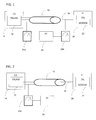
FIG. 1 and 2 are block diagrams of a network model for vectored system with instrument for prequalification; -
FIG. 3 is a flow chart of the operational steps; and -
FIG. 4 is a fuzzy neural networks structure. - The system according to a preferred embodiment of the present disclosure comprises measurement instrument capable of measuring network performance including determining overall noise, and determining FEXT noise; and a system that can predict the effect of FEXT noise cancellation and calculate bit rates with vectoring (FEXT noise cancelled) and without vectoring.
- Referring to
FIG. 1 , a block diagram of a network model for vectored system with instrument for prequalification, to implement DSL, Digital Subscriber Line Access Multiplexer (DSLAM) 12 needs to be implemented at a Central Office (CO) site, 14.Cables 16 contain copper line(s) 18 to each Remote Terminal (RT) 20 that contains aDSL Modem 22. Test instrument 24 comprisescomponents - Referring to
FIG. 2 , alternatively, thetest instrument 24c can be located at onlyCO site 14 to measure NEXT only. In this case, the FEXT noise can be estimated using the NEXT noise measurement. - Referring to
FIG. 3 , the operational steps performed by the instrument are described, wherein operation begins with afirst step 28, wherein NEXT noise atCO site 14 and optionally FEXT noise atRT site 20 are measured. The measurement instrument not only measures noise but also performs metallic testing including measurement of attenuation, wideband longitudinal balance and bridge tap detection to measure metallic conditions that will affect to the DSL performance. The measured data is stored instorage 30, located in either in the measurement instrument 24 or in PC 26 (via an external link). FEXT noise can be measured either atRT site 20 by use of Dual End Line Test (DELT) instep 28 as inFIG. 1 or can be estimated instep 32 as inFIG. 2 from the NEXT noise measurement atCO site 14 by Single End Line Test (SELT). FEXT noise is estimated with attenuation, wide band longitudinal and the NEXT noise measurement data. The instrument 24 calculates precise FEXT noise with the NEXT noise and metallic conditions (length and wideband longitudinal balance data). - Next,
step 34, as one of the performance matrix of DSL, bitrate is calculated with attenuation, wide band longitudinal balance, and noise information. The noise information included is both the NEXT and FEXT noise measurement (or estimated FEXT noise). - Then,
step 36, bitrate is calculated with the FEXT noise cancellation from the FEXT Cancellation Model 38 that emulates the FEXT cancellation (vectoring). The model 38 will give cancelled FEXT noise, since the actual cancellation accomplished is likely to not cancel FEXT noise entirely, so a model of the expected cancellation is provided. The estimated cancelled FEXT noise will be used instead of the measured FEXT noise to estimate the effect of cancellation. The model can be constructed, for example, as described in the publication Near-End and Far-End Crosstalk Statistical Models, COMMITTEE T1-TELECOMMUNICATIONS T1E1.4/99-527, Working Group T1E1.4 (DSL Access), Clearwater, Florida, December 6-10, 1999, employing Artificial Intelligent model instead of the mathematical model in the publication. Polynomial Fuzzy Neural Network (PFNN) is used to model vectoring scheme and Genetic Algorithms (GA) is used to optimize the model. PFNN is method to design data-driven nonlinear model. The model 38 is designed offline with noise (NEXT and FEXT), and metallic data (length and wideband longitudinal data) and binding information such as number of pairs in binding group, number of vectored lines, and co-existence of SDSL. - The input of the model 38 is NEXT noise, (estimated) FEXT noise, attenuation (by length), wideband longitudinal balance, actual FEXT cancellation by vectoring device, and number of pairs in binding group, number of vectored lines, and number of SDSL lines. The model gives estimated FEXT noise cancellation. Once the model 38 is designed, it gives FEXT Cancellation (vectoring) online with the noise and metallic data measured in
steps - And finally, the benefit of FEXT noise cancellation, or vectoring, is evaluated and reported in
step 40. The difference of bitrate with FEXT cancellation model and without the FEXT cancellation model is the benefit of the implementation of the vectoring. - In
step 34, FEXT noise can either measured atRT side 20 withinstrument 24b or can be estimated. FEXT can be estimated as an attenuated value of NEXT by length of cable. Thus, FEXT can be represented as a function of NEXT, frequency, length of cable and number of pairs in a binder. FEXT can be represented using a mathematical equation of frequency f, length d, and number of pairs in a binder n as equation (1). We use a polynomial fuzzy neural network to model FEXT accurately. FEXT is estimated with insertion loss IL, NEXT, length d, and number of pairs in a binder n as equation (2).

- Where, insertion loss IL(f,d) can be represented in mathematical equation as in (3). Here, we use a measured value by
test instrument 24c inFIG. 2 .
- The FEXT model in
step 34 and the FEXT cancellation model in step 38 are implemented using a polynomial fuzzy neural network (PFNN). Each membership function of the fuzzy neural network is optimized with a genetic algorithm (GA). With PFNN, a nonlinear model can be driven through input-output data. GA is very effective on searching (optimizing) when function spaces are not smooth or continuous, which is the general case of nonlinear modeling. - Let's assume that the reference model can be represented in Ivahnenko polynomial[1] as in equation (4).

[1] A.G. Ivahnenko, Polynomial theory of complex systems, IEEE Trans. Syst. Man Cybern., pp.364-378, SMC-1, 1971. - The equation can be represented as the fuzzy neural networks structure as in
FIG. 4 . - The PFNN is a feed-forward network that computes a polynomial function of a set of parallel inputs to generate an output.
- The premise part in
FIG. 4 is implemented by fuzzy neural networks. The inference system is implemented based on the Takagi, Sugeno, and Kang fuzzy model[2]. A polynomial neural network is employed in the defuzzification scheme to improve output performance and to select rules. - [2] M.Sugeno and G.T.Kang, "Structure identification of fuzzy model", Fuzzy Sets and Systems, vol.28, pp.15-33, 1988.
- The input nodes (neurons) are implemented with Gaussian fuzzy membership function given by in equation (5).

- The parameters (fuzzy membership functions and weight of each node) are optimized using genetic algorithm (GA) with the mean square error criteria to minimize the difference between reference model output ŷ and the actual output y.
- The pseudo code of genetic algorithm is described below.
 Procedure Genetic_Algorithm
 {
     initialize_population
     evaluate_population
     while (not termination_condition) do
     {
         select_parents_for _reproduction
         crossover
         mutation
         evaluate_population
     }
     }
- [3] Wonoh Kim, "Hierarchical Control System with Statistical Process Control and Soft Computing", Ph.D Dissertation Proposal, School of Electrical and Computer Engineering, Georgia Institute of Technology, 2000.
- [4] Wonoh Kim and George Vachtsevanos, "Hierarchical Process Control by Combining SPC and Soft Computing Methods", 19th Int. Conf. of the North American Fuzzy Information Processing Society (NAFIPS 2000), pp.485-489, 2000.
- [5] Wonoh Kim et al., "Fuzzy Logic Ratio Control for a CVT Hydraulic Module", Proc. IEEE Int. Symp. on Intelligent Control, pp.151-156, 2000.
- [6] Wonoh Kim et al., "Autonomous Vehicles, From Flight Control to Mission Planning using Fuzzy Logic Techniques", 13th Int. Conf. on Digital Signal Processing Proceedings (DSP 97), vol.2, pp.977-981, 1997.
Claims (15)
- An apparatus for prequalification of vectoring before implementation, comprising:a noise measurement apparatus for measuring overall noise and providing an FEXT noise value; anda calculator for determining bit rates with the overall noise, and the bit rates with overall noise minus the FEXT noise.
- The apparatus according to claim 1, wherein said calculator employs methods selected from fuzzy logic, neural networks, genetic algorithm, and realization of a data-driven model to calculate, and
optionally:-
said calculator factors in co-existence of vectored and non-vectored pairs in a binding group and co-existence of special lines. - The apparatus according to claim 1, wherein the provided FEXT noise value is a measured FEXT noise value.
- The apparatus according to claim 1, wherein the provided FEXT noise value is an estimated FEXT noise value, and
optionally:-
the estimated FEXT noise value is based on NEXT noise attenuated by a line length. - The apparatus according to claim 1, wherein the calculator for determining the bit rates with overall noise minus the FEXT noise employs a model of FEXT noise cancellation.
- A method for prequalification of vectoring before implementation, comprising:measuring overall noise on a DSL line;providing a value of FEXT noise on the DSL line;subtracting the FEXT noise from the overall noise; anddetermining a bit rate with overall noise minus the FEXT noise.
- The method according to claim 6, wherein said determining employs methods selected from fuzzy logic, neural networks, genetic algorithm, and realization of a data-driven model to calculate, and
optionally:-
said determining factors in co-existence of vectored and non-vectored pairs in a binding group and co-existence of special lines. - The method according to claim 6, wherein at least one of:-
the method further comprises determining a bit rate with the overall noise; and/or the method further comprises displaying the determined bit rate; and/or
providing the FEXT noise value comprises measuring the FEXT noise value. - The method according to claim 6, wherein providing the FEXT noise value comprises estimating the FEXT noise value, and
optionally:-
providing the estimated FEXT noise value is based on NEXT noise attenuated by a line length. - The method according to claim 6, wherein said determining the bit rates with overall noise minus the FEXT noise comprises employing a model representing FEXT noise cancellation.
- An apparatus for prequalification of vectoring before implementation on a DSL line, comprising:an interface for connecting to the DSL line;a stimulus/response apparatus for measuring overall noise on the DSL line and providing an FEXT noise value representative of FEXT noise on the DSL line; anda processor for determining a bit rate based on the overall noise minus the FEXT noise value.
- The apparatus according to claim 11 wherein:-
the processor further determines a bit rate based on the overall noise. - The apparatus according to claim 11, wherein;-
the provided FEXT noise value is a measured FEXT noise value; and/or
the provided FEXT noise value is an estimated FEXT noise value. - The apparatus according to claim 11, wherein said processor employs methods selected from fuzzy logic, neural networks, genetic algorithm, and realization of a data-driven model to calculate, and
optionally:-
said processor factors in co-existence of vectored and non-vectored pairs in a binding group and co-existence of special lines. - The apparatus according to claim 11, wherein the processor for determining the bit rates with overall noise minus the FEXT noise employs a model of FEXT noise cancellation for the determination.
Applications Claiming Priority (1)
| Application Number | Priority Date | Filing Date | Title |
|---|---|---|---|
| US13/854,746 US9148199B2 (en) | 2013-04-01 | 2013-04-01 | Prequalification of vectoring before implementation |
Publications (2)
| Publication Number | Publication Date |
|---|---|
| EP2787653A1 true EP2787653A1 (en) | 2014-10-08 |
| EP2787653B1 EP2787653B1 (en) | 2017-11-15 |
Family
ID=50624383
Family Applications (1)
| Application Number | Title | Priority Date | Filing Date |
|---|---|---|---|
| EP14162914.7A Active EP2787653B1 (en) | 2013-04-01 | 2014-03-31 | Prequalification of vectoring before implementation |
Country Status (3)
| Country | Link |
|---|---|
| US (1) | US9148199B2 (en) |
| EP (1) | EP2787653B1 (en) |
| ES (1) | ES2657650T3 (en) |
Cited By (3)
| Publication number | Priority date | Publication date | Assignee | Title |
|---|---|---|---|---|
| EP3018831A1 (en) * | 2014-11-07 | 2016-05-11 | Alcatel Lucent | Method and system for detecting an incorrectly wired line in a vectoring group |
| EP3076601A1 (en) * | 2015-03-31 | 2016-10-05 | Alcatel Lucent | Method and device for predicting the attainable bitrate of a telecommunication line |
| WO2017164788A1 (en) * | 2016-03-24 | 2017-09-28 | Telefonaktiebolaget Lm Ericsson (Publ) | Method and system for estimating crosstalk between electrical transmission lines |
Families Citing this family (2)
| Publication number | Priority date | Publication date | Assignee | Title |
|---|---|---|---|---|
| EP2629435B1 (en) * | 2012-02-16 | 2016-11-09 | Alcatel Lucent | Method and device for locating an impairment within a telecommunication line |
| KR101672513B1 (en) * | 2015-06-09 | 2016-11-03 | 주식회사 케이티 | Apparatus for decreasing interference in bundle cable and method thereof |
Citations (2)
| Publication number | Priority date | Publication date | Assignee | Title |
|---|---|---|---|---|
| US6819746B1 (en) * | 2000-07-10 | 2004-11-16 | Verizon Services Corp. | Expert system for loop qualification of XDSL services |
| US20120155618A1 (en) * | 2010-12-15 | 2012-06-21 | Hart Richard D | Apparatus, methods, and articles of manufacture to predict vectored digital subscriber line (dsl) performance gains |
Family Cites Families (21)
| Publication number | Priority date | Publication date | Assignee | Title |
|---|---|---|---|---|
| JP3082756B2 (en) * | 1998-02-27 | 2000-08-28 | 日本電気株式会社 | Multi-carrier transmission system and method |
| JP3480313B2 (en) * | 1998-05-26 | 2003-12-15 | 富士通株式会社 | Digital subscriber line transmission method and xDSL device |
| GB9820427D0 (en) * | 1998-09-18 | 1998-11-11 | Northern Telecom Ltd | Wireline communication system and method of frequency allocation therin |
| US6636603B1 (en) * | 1999-07-30 | 2003-10-21 | Cisco Technology, Inc. | System and method for determining the transmit power of a communication device operating on digital subscriber lines |
| US6633545B1 (en) * | 1999-07-30 | 2003-10-14 | Cisco Technology, Inc. | System and method for determining the data rate capacity of digital subscriber lines |
| US6970560B1 (en) * | 1999-11-11 | 2005-11-29 | Tokyo Electron Limited | Method and apparatus for impairment diagnosis in communication systems |
| US7126984B2 (en) * | 2001-12-19 | 2006-10-24 | Stmicroelectronics, Inc. | Near-end crosstalk noise minimization and power reduction for digital subscriber loops |
| US20050026572A1 (en) * | 2003-07-28 | 2005-02-03 | Texas Instruments Incorporated | Noise determiner, a DSL modem including a noise determiner and a method of determining noise in a communications system |
| US7315592B2 (en) * | 2003-09-08 | 2008-01-01 | Aktino, Inc. | Common mode noise cancellation |
| EP1630968A1 (en) * | 2004-08-23 | 2006-03-01 | Alcatel | Crosstalk manager for access network nodes |
| CN101030997B (en) * | 2006-03-03 | 2011-01-12 | 华为技术有限公司 | Method and apparatus for obtaining cross talk information |
| US7813293B2 (en) * | 2006-05-12 | 2010-10-12 | John Papandriopoulos | Method for distributed spectrum management of digital communications systems |
| CN101197592B (en) * | 2006-12-07 | 2011-09-14 | 华为技术有限公司 | Far-end cross talk counteracting method and device, signal transmission device and signal processing system |
| US7864697B2 (en) * | 2007-08-03 | 2011-01-04 | John Papandriopoulos | Adapted method for spectrum management of digital communication systems |
| EP2200185B1 (en) * | 2008-12-18 | 2013-04-03 | Alcatel Lucent | Method and apparatus for configuring a multi-carrier data communication path |
| US8767809B2 (en) * | 2009-02-11 | 2014-07-01 | Telefonaktiebolaget L M Ericsson (Publ) | Methods and devices for transmission line analysis |
| GB2474943A (en) * | 2009-10-27 | 2011-05-04 | Lantiq Deutschland Gmbh | Vectored data transmission to reduce crosstalk between connections |
| WO2011053207A1 (en) * | 2009-10-30 | 2011-05-05 | Telefonaktiebolaget Lm Ericsson (Publ) | Single ended estimation of far-end crosstalk in a digital subscriber line |
| WO2011119081A1 (en) * | 2010-03-26 | 2011-09-29 | Telefonaktiebolaget L M Ericsson (Publ) | Estimating pair symmetry status for a communication line |
| US8588286B2 (en) * | 2010-05-25 | 2013-11-19 | Xw, Llc | Processor, modem and method for cancelling alien noise in coordinated digital subscriber lines |
| CN103460609B (en) * | 2011-02-08 | 2016-06-29 | 伊卡诺斯通讯公司 | For improving spectrum efficiency in Synchronous Multi-User multi-carrier communication and dissecting the system and method for crosstalk noise |
-
2013
- 2013-04-01 US US13/854,746 patent/US9148199B2/en active Active
-
2014
- 2014-03-31 ES ES14162914.7T patent/ES2657650T3/en active Active
- 2014-03-31 EP EP14162914.7A patent/EP2787653B1/en active Active
Patent Citations (2)
| Publication number | Priority date | Publication date | Assignee | Title |
|---|---|---|---|---|
| US6819746B1 (en) * | 2000-07-10 | 2004-11-16 | Verizon Services Corp. | Expert system for loop qualification of XDSL services |
| US20120155618A1 (en) * | 2010-12-15 | 2012-06-21 | Hart Richard D | Apparatus, methods, and articles of manufacture to predict vectored digital subscriber line (dsl) performance gains |
Non-Patent Citations (7)
| Title |
|---|
| "COMMITTEE T1 - TELECOMMUNICATIONS T1E1.4/99-527", 6 December 1999, WORKING GROUP T1E1.4, article "Near-End and Far-End Crosstalk Statistical Models" |
| A.G. IVAHNENKO: "Polynomial theory of complex systems", IEEE TRANS. SYST. MAN CYBERN., 1971, pages 364 - 378 |
| M.SUGENO; G.T.KANG: "Structure identification of fuzzy model", FUZZY SETS AND SYSTEMS, vol. 28, 1988, pages 15 - 33 |
| WONOH KIM ET AL.: "Autonomous Vehicles, From Flight Control to Mission Planning using Fuzzy Logic Techniques", 13TH INT. CONF. ON DIGITAL SIGNAL PROCESSING PROCEEDINGS, vol. 2, 1997, pages 977 - 981, XP010251194, DOI: doi:10.1109/ICDSP.1997.628527 |
| WONOH KIM ET AL.: "Fuzzy Logic Ratio Control for a CVT Hydraulic Module", PROC. IEEE INT. SYMP. ON INTELLIGENT CONTROL, 2000, pages 151 - 156, XP010522344 |
| WONOH KIM: "Hierarchical Control System with Statistical Process Control and Soft Computing", PH.D DISSERTATION PROPOSAL, SCHOOL OF ELECTRICAL AND COMPUTER ENGINEERING, GEORGIA INSTITUTE OF TECHNOLOGY, 2000 |
| WONOH KIM; GEORGE VACHTSEVANOS: "Hierarchical Process Control by Combining SPC and Soft Computing Methods", 19TH INT. CONF. OF THE NORTH AMERICAN FUZZY INFORMATION PROCESSING SOCIETY, 2000, pages 485 - 489, XP010515972 |
Cited By (4)
| Publication number | Priority date | Publication date | Assignee | Title |
|---|---|---|---|---|
| EP3018831A1 (en) * | 2014-11-07 | 2016-05-11 | Alcatel Lucent | Method and system for detecting an incorrectly wired line in a vectoring group |
| EP3076601A1 (en) * | 2015-03-31 | 2016-10-05 | Alcatel Lucent | Method and device for predicting the attainable bitrate of a telecommunication line |
| WO2017164788A1 (en) * | 2016-03-24 | 2017-09-28 | Telefonaktiebolaget Lm Ericsson (Publ) | Method and system for estimating crosstalk between electrical transmission lines |
| US11411606B2 (en) | 2016-03-24 | 2022-08-09 | Telefonaktiebolaget Lm Ericsson (Publ) | Method and system for estimating crosstalk between electrical transmission lines |
Also Published As
| Publication number | Publication date |
|---|---|
| ES2657650T3 (en) | 2018-03-06 |
| EP2787653B1 (en) | 2017-11-15 |
| US9148199B2 (en) | 2015-09-29 |
| US20140294054A1 (en) | 2014-10-02 |
Similar Documents
| Publication | Publication Date | Title |
|---|---|---|
| EP2787653B1 (en) | Prequalification of vectoring before implementation | |
| Beaulieu et al. | An optimal lognormal approximation to lognormal sum distributions | |
| CN112149554B (en) | Training and fault detection methods of fault classification model and related devices | |
| KR100683289B1 (en) | Systems, methods and information storage media for determining loop length and bridged tap length of transmission lines | |
| CN110601777B (en) | A co-channel interference estimation method for satellite-to-ground downlink under low-orbit mobile satellite constellation | |
| Lee et al. | An enhanced Lagrangian neural network for the ELD problems with piecewise quadratic cost functions and nonlinear constraints | |
| Charytoniuk et al. | Neural network design for short-term load forecasting | |
| Acatauassu et al. | Simple and causal copper cable model suitable for G. fast frequencies | |
| CN118376873A (en) | Intelligent wire and cable fault diagnosis method and system | |
| CN113033077A (en) | Direct-current transmission line fault distance measurement method based on neural network algorithm | |
| US6687372B1 (en) | Pure delay estimation | |
| Chiu et al. | Combining a neural network with a rule-based expert system approach for short-term power load forecasting in Taiwan | |
| Wu et al. | Automatic fuzzy model identification for short-term load forecast | |
| Huai et al. | Combined line fault location method for MMC–HVDC transmission systems | |
| US20120215503A1 (en) | arrangement and method relating to analysis of transmission lines | |
| Choi et al. | Development of the ELDC and reliability evaluation of composite power system using Monte Carlo method | |
| Zhao et al. | Approach for modelling of broadband low‐voltage PLC channels using graph theory | |
| CN111669241A (en) | An Efficient Prediction Method of Shortwave Communication Channel Availability | |
| Thevaril et al. | Speech enhancement using adaptive neuro-fuzzy filtering | |
| Wuhrl | Pilot signal removal, digital signal processing algorithm and it’s practical implementation | |
| Shin et al. | Channel modeling for indoor broadband power-line communications networks with arbitrary topologies by taking adjacent nodes into account | |
| Al-Badi et al. | Prediction of metallic conductor voltage owing to electromagnetic coupling using neuro fuzzy modeling | |
| KR100797191B1 (en) | Method and apparatus for real-time prediction of customer electric load configuration | |
| Lilik et al. | Fuzzy based prequalification methods for EoSHDSL technology | |
| Saha et al. | l 0 Norm Based Improved Proportionate Maximum Correntropy Criterion Algorithm for Sparse System Identification |
Legal Events
| Date | Code | Title | Description |
|---|---|---|---|
| PUAI | Public reference made under article 153(3) epc to a published international application that has entered the european phase |
Free format text: ORIGINAL CODE: 0009012 |
|
| 17P | Request for examination filed |
Effective date: 20140331 |
|
| AK | Designated contracting states |
Kind code of ref document: A1 Designated state(s): AL AT BE BG CH CY CZ DE DK EE ES FI FR GB GR HR HU IE IS IT LI LT LU LV MC MK MT NL NO PL PT RO RS SE SI SK SM TR |
|
| AX | Request for extension of the european patent |
Extension state: BA ME |
|
| 17Q | First examination report despatched |
Effective date: 20151118 |
|
| GRAP | Despatch of communication of intention to grant a patent |
Free format text: ORIGINAL CODE: EPIDOSNIGR1 |
|
| INTG | Intention to grant announced |
Effective date: 20170517 |
|
| GRAS | Grant fee paid |
Free format text: ORIGINAL CODE: EPIDOSNIGR3 |
|
| GRAA | (expected) grant |
Free format text: ORIGINAL CODE: 0009210 |
|
| AK | Designated contracting states |
Kind code of ref document: B1 Designated state(s): AL AT BE BG CH CY CZ DE DK EE ES FI FR GB GR HR HU IE IS IT LI LT LU LV MC MK MT NL NO PL PT RO RS SE SI SK SM TR |
|
| REG | Reference to a national code |
Ref country code: CH Ref legal event code: EP Ref country code: GB Ref legal event code: FG4D Ref country code: AT Ref legal event code: REF Ref document number: 947217 Country of ref document: AT Kind code of ref document: T Effective date: 20171115 |
|
| REG | Reference to a national code |
Ref country code: IE Ref legal event code: FG4D |
|
| REG | Reference to a national code |
Ref country code: DE Ref legal event code: R096 Ref document number: 602014017124 Country of ref document: DE |
|
| REG | Reference to a national code |
Ref country code: ES Ref legal event code: FG2A Ref document number: 2657650 Country of ref document: ES Kind code of ref document: T3 Effective date: 20180306 |
|
| REG | Reference to a national code |
Ref country code: NL Ref legal event code: MP Effective date: 20171115 |
|
| REG | Reference to a national code |
Ref country code: LT Ref legal event code: MG4D Ref country code: FR Ref legal event code: PLFP Year of fee payment: 5 |
|
| REG | Reference to a national code |
Ref country code: AT Ref legal event code: MK05 Ref document number: 947217 Country of ref document: AT Kind code of ref document: T Effective date: 20171115 |
|
| PG25 | Lapsed in a contracting state [announced via postgrant information from national office to epo] |
Ref country code: NO Free format text: LAPSE BECAUSE OF FAILURE TO SUBMIT A TRANSLATION OF THE DESCRIPTION OR TO PAY THE FEE WITHIN THE PRESCRIBED TIME-LIMIT Effective date: 20180215 Ref country code: SE Free format text: LAPSE BECAUSE OF FAILURE TO SUBMIT A TRANSLATION OF THE DESCRIPTION OR TO PAY THE FEE WITHIN THE PRESCRIBED TIME-LIMIT Effective date: 20171115 Ref country code: FI Free format text: LAPSE BECAUSE OF FAILURE TO SUBMIT A TRANSLATION OF THE DESCRIPTION OR TO PAY THE FEE WITHIN THE PRESCRIBED TIME-LIMIT Effective date: 20171115 Ref country code: LT Free format text: LAPSE BECAUSE OF FAILURE TO SUBMIT A TRANSLATION OF THE DESCRIPTION OR TO PAY THE FEE WITHIN THE PRESCRIBED TIME-LIMIT Effective date: 20171115 Ref country code: NL Free format text: LAPSE BECAUSE OF FAILURE TO SUBMIT A TRANSLATION OF THE DESCRIPTION OR TO PAY THE FEE WITHIN THE PRESCRIBED TIME-LIMIT Effective date: 20171115 |
|
| PG25 | Lapsed in a contracting state [announced via postgrant information from national office to epo] |
Ref country code: HR Free format text: LAPSE BECAUSE OF FAILURE TO SUBMIT A TRANSLATION OF THE DESCRIPTION OR TO PAY THE FEE WITHIN THE PRESCRIBED TIME-LIMIT Effective date: 20171115 Ref country code: BG Free format text: LAPSE BECAUSE OF FAILURE TO SUBMIT A TRANSLATION OF THE DESCRIPTION OR TO PAY THE FEE WITHIN THE PRESCRIBED TIME-LIMIT Effective date: 20180215 Ref country code: AT Free format text: LAPSE BECAUSE OF FAILURE TO SUBMIT A TRANSLATION OF THE DESCRIPTION OR TO PAY THE FEE WITHIN THE PRESCRIBED TIME-LIMIT Effective date: 20171115 Ref country code: RS Free format text: LAPSE BECAUSE OF FAILURE TO SUBMIT A TRANSLATION OF THE DESCRIPTION OR TO PAY THE FEE WITHIN THE PRESCRIBED TIME-LIMIT Effective date: 20171115 Ref country code: GR Free format text: LAPSE BECAUSE OF FAILURE TO SUBMIT A TRANSLATION OF THE DESCRIPTION OR TO PAY THE FEE WITHIN THE PRESCRIBED TIME-LIMIT Effective date: 20180216 Ref country code: LV Free format text: LAPSE BECAUSE OF FAILURE TO SUBMIT A TRANSLATION OF THE DESCRIPTION OR TO PAY THE FEE WITHIN THE PRESCRIBED TIME-LIMIT Effective date: 20171115 |
|
| PG25 | Lapsed in a contracting state [announced via postgrant information from national office to epo] |
Ref country code: SK Free format text: LAPSE BECAUSE OF FAILURE TO SUBMIT A TRANSLATION OF THE DESCRIPTION OR TO PAY THE FEE WITHIN THE PRESCRIBED TIME-LIMIT Effective date: 20171115 Ref country code: CY Free format text: LAPSE BECAUSE OF FAILURE TO SUBMIT A TRANSLATION OF THE DESCRIPTION OR TO PAY THE FEE WITHIN THE PRESCRIBED TIME-LIMIT Effective date: 20171115 Ref country code: CZ Free format text: LAPSE BECAUSE OF FAILURE TO SUBMIT A TRANSLATION OF THE DESCRIPTION OR TO PAY THE FEE WITHIN THE PRESCRIBED TIME-LIMIT Effective date: 20171115 Ref country code: EE Free format text: LAPSE BECAUSE OF FAILURE TO SUBMIT A TRANSLATION OF THE DESCRIPTION OR TO PAY THE FEE WITHIN THE PRESCRIBED TIME-LIMIT Effective date: 20171115 Ref country code: DK Free format text: LAPSE BECAUSE OF FAILURE TO SUBMIT A TRANSLATION OF THE DESCRIPTION OR TO PAY THE FEE WITHIN THE PRESCRIBED TIME-LIMIT Effective date: 20171115 |
|
| REG | Reference to a national code |
Ref country code: DE Ref legal event code: R097 Ref document number: 602014017124 Country of ref document: DE |
|
| PG25 | Lapsed in a contracting state [announced via postgrant information from national office to epo] |
Ref country code: SM Free format text: LAPSE BECAUSE OF FAILURE TO SUBMIT A TRANSLATION OF THE DESCRIPTION OR TO PAY THE FEE WITHIN THE PRESCRIBED TIME-LIMIT Effective date: 20171115 Ref country code: PL Free format text: LAPSE BECAUSE OF FAILURE TO SUBMIT A TRANSLATION OF THE DESCRIPTION OR TO PAY THE FEE WITHIN THE PRESCRIBED TIME-LIMIT Effective date: 20171115 Ref country code: RO Free format text: LAPSE BECAUSE OF FAILURE TO SUBMIT A TRANSLATION OF THE DESCRIPTION OR TO PAY THE FEE WITHIN THE PRESCRIBED TIME-LIMIT Effective date: 20171115 Ref country code: IT Free format text: LAPSE BECAUSE OF FAILURE TO SUBMIT A TRANSLATION OF THE DESCRIPTION OR TO PAY THE FEE WITHIN THE PRESCRIBED TIME-LIMIT Effective date: 20171115 |
|
| PLBE | No opposition filed within time limit |
Free format text: ORIGINAL CODE: 0009261 |
|
| STAA | Information on the status of an ep patent application or granted ep patent |
Free format text: STATUS: NO OPPOSITION FILED WITHIN TIME LIMIT |
|
| 26N | No opposition filed |
Effective date: 20180817 |
|
| REG | Reference to a national code |
Ref country code: CH Ref legal event code: PL |
|
| PG25 | Lapsed in a contracting state [announced via postgrant information from national office to epo] |
Ref country code: SI Free format text: LAPSE BECAUSE OF FAILURE TO SUBMIT A TRANSLATION OF THE DESCRIPTION OR TO PAY THE FEE WITHIN THE PRESCRIBED TIME-LIMIT Effective date: 20171115 Ref country code: MC Free format text: LAPSE BECAUSE OF FAILURE TO SUBMIT A TRANSLATION OF THE DESCRIPTION OR TO PAY THE FEE WITHIN THE PRESCRIBED TIME-LIMIT Effective date: 20171115 |
|
| REG | Reference to a national code |
Ref country code: BE Ref legal event code: MM Effective date: 20180331 |
|
| REG | Reference to a national code |
Ref country code: IE Ref legal event code: MM4A |
|
| PG25 | Lapsed in a contracting state [announced via postgrant information from national office to epo] |
Ref country code: LU Free format text: LAPSE BECAUSE OF NON-PAYMENT OF DUE FEES Effective date: 20180331 |
|
| PG25 | Lapsed in a contracting state [announced via postgrant information from national office to epo] |
Ref country code: IE Free format text: LAPSE BECAUSE OF NON-PAYMENT OF DUE FEES Effective date: 20180331 |
|
| PG25 | Lapsed in a contracting state [announced via postgrant information from national office to epo] |
Ref country code: BE Free format text: LAPSE BECAUSE OF NON-PAYMENT OF DUE FEES Effective date: 20180331 Ref country code: CH Free format text: LAPSE BECAUSE OF NON-PAYMENT OF DUE FEES Effective date: 20180331 Ref country code: LI Free format text: LAPSE BECAUSE OF NON-PAYMENT OF DUE FEES Effective date: 20180331 |
|
| PG25 | Lapsed in a contracting state [announced via postgrant information from national office to epo] |
Ref country code: MT Free format text: LAPSE BECAUSE OF NON-PAYMENT OF DUE FEES Effective date: 20180331 |
|
| PG25 | Lapsed in a contracting state [announced via postgrant information from national office to epo] |
Ref country code: TR Free format text: LAPSE BECAUSE OF FAILURE TO SUBMIT A TRANSLATION OF THE DESCRIPTION OR TO PAY THE FEE WITHIN THE PRESCRIBED TIME-LIMIT Effective date: 20171115 |
|
| PG25 | Lapsed in a contracting state [announced via postgrant information from national office to epo] |
Ref country code: HU Free format text: LAPSE BECAUSE OF FAILURE TO SUBMIT A TRANSLATION OF THE DESCRIPTION OR TO PAY THE FEE WITHIN THE PRESCRIBED TIME-LIMIT; INVALID AB INITIO Effective date: 20140331 Ref country code: PT Free format text: LAPSE BECAUSE OF FAILURE TO SUBMIT A TRANSLATION OF THE DESCRIPTION OR TO PAY THE FEE WITHIN THE PRESCRIBED TIME-LIMIT Effective date: 20171115 |
|
| PG25 | Lapsed in a contracting state [announced via postgrant information from national office to epo] |
Ref country code: MK Free format text: LAPSE BECAUSE OF NON-PAYMENT OF DUE FEES Effective date: 20171115 |
|
| PG25 | Lapsed in a contracting state [announced via postgrant information from national office to epo] |
Ref country code: AL Free format text: LAPSE BECAUSE OF FAILURE TO SUBMIT A TRANSLATION OF THE DESCRIPTION OR TO PAY THE FEE WITHIN THE PRESCRIBED TIME-LIMIT Effective date: 20171115 Ref country code: IS Free format text: LAPSE BECAUSE OF FAILURE TO SUBMIT A TRANSLATION OF THE DESCRIPTION OR TO PAY THE FEE WITHIN THE PRESCRIBED TIME-LIMIT Effective date: 20180315 |
|
| PGFP | Annual fee paid to national office [announced via postgrant information from national office to epo] |
Ref country code: ES Payment date: 20250423 Year of fee payment: 12 |
|
| PGFP | Annual fee paid to national office [announced via postgrant information from national office to epo] |
Ref country code: GB Payment date: 20260327 Year of fee payment: 13 |
|
| PGFP | Annual fee paid to national office [announced via postgrant information from national office to epo] |
Ref country code: DE Payment date: 20260327 Year of fee payment: 13 |
|
| PGFP | Annual fee paid to national office [announced via postgrant information from national office to epo] |
Ref country code: FR Payment date: 20260325 Year of fee payment: 13 |