EP2787051A1 - Cooling agent and trpm8 activator - Google Patents
Cooling agent and trpm8 activator Download PDFInfo
- Publication number
- EP2787051A1 EP2787051A1 EP20120853310 EP12853310A EP2787051A1 EP 2787051 A1 EP2787051 A1 EP 2787051A1 EP 20120853310 EP20120853310 EP 20120853310 EP 12853310 A EP12853310 A EP 12853310A EP 2787051 A1 EP2787051 A1 EP 2787051A1
- Authority
- EP
- European Patent Office
- Prior art keywords
- carbon atoms
- group
- hydrogen atom
- total
- alkoxy group
- Prior art date
- Legal status (The legal status is an assumption and is not a legal conclusion. Google has not performed a legal analysis and makes no representation as to the accuracy of the status listed.)
- Granted
Links
- 239000002826 coolant Substances 0.000 title claims abstract description 28
- 239000012190 activator Substances 0.000 title claims abstract description 14
- 125000004432 carbon atom Chemical group C* 0.000 claims abstract description 237
- 125000004435 hydrogen atom Chemical group [H]* 0.000 claims abstract description 91
- 125000003545 alkoxy group Chemical group 0.000 claims abstract description 83
- 150000001875 compounds Chemical class 0.000 claims abstract description 72
- 102000003610 TRPM8 Human genes 0.000 claims abstract description 59
- 101150111302 Trpm8 gene Proteins 0.000 claims abstract description 59
- 230000035597 cooling sensation Effects 0.000 claims abstract description 39
- 125000002887 hydroxy group Chemical group [H]O* 0.000 claims abstract description 38
- 238000000034 method Methods 0.000 claims abstract description 35
- 125000005083 alkoxyalkoxy group Chemical group 0.000 claims abstract description 31
- 230000003213 activating effect Effects 0.000 claims abstract description 30
- 125000002102 aryl alkyloxo group Chemical group 0.000 claims abstract description 30
- 125000000000 cycloalkoxy group Chemical group 0.000 claims abstract description 30
- 125000003342 alkenyl group Chemical group 0.000 claims abstract description 26
- 125000004423 acyloxy group Chemical group 0.000 claims abstract description 21
- 125000004104 aryloxy group Chemical group 0.000 claims abstract description 16
- 125000000217 alkyl group Chemical group 0.000 claims abstract description 15
- 239000004480 active ingredient Substances 0.000 claims abstract description 8
- 230000004913 activation Effects 0.000 claims description 5
- 238000004519 manufacturing process Methods 0.000 claims description 5
- XEKOWRVHYACXOJ-UHFFFAOYSA-N Ethyl acetate Chemical compound CCOC(C)=O XEKOWRVHYACXOJ-UHFFFAOYSA-N 0.000 description 93
- HEDRZPFGACZZDS-MICDWDOJSA-N Trichloro(2H)methane Chemical compound [2H]C(Cl)(Cl)Cl HEDRZPFGACZZDS-MICDWDOJSA-N 0.000 description 74
- 239000000203 mixture Substances 0.000 description 70
- GIZSHQYTTBQKOQ-UHFFFAOYSA-N threo-Syringoylglycerol Chemical compound COC1=CC(C(O)C(O)CO)=CC(OC)=C1O GIZSHQYTTBQKOQ-UHFFFAOYSA-N 0.000 description 30
- KFZMGEQAYNKOFK-UHFFFAOYSA-N Isopropanol Chemical compound CC(C)O KFZMGEQAYNKOFK-UHFFFAOYSA-N 0.000 description 29
- -1 n-heptyloxy group Chemical group 0.000 description 24
- 238000000655 nuclear magnetic resonance spectrum Methods 0.000 description 20
- 239000000126 substance Substances 0.000 description 20
- 238000005160 1H NMR spectroscopy Methods 0.000 description 19
- 238000001644 13C nuclear magnetic resonance spectroscopy Methods 0.000 description 18
- HEDRZPFGACZZDS-UHFFFAOYSA-N Chloroform Chemical compound ClC(Cl)Cl HEDRZPFGACZZDS-UHFFFAOYSA-N 0.000 description 18
- 210000004027 cell Anatomy 0.000 description 16
- 238000010898 silica gel chromatography Methods 0.000 description 16
- 238000012360 testing method Methods 0.000 description 16
- NOOLISFMXDJSKH-KXUCPTDWSA-N (-)-Menthol Chemical compound CC(C)[C@@H]1CC[C@@H](C)C[C@H]1O NOOLISFMXDJSKH-KXUCPTDWSA-N 0.000 description 15
- LFQSCWFLJHTTHZ-UHFFFAOYSA-N Ethanol Chemical compound CCO LFQSCWFLJHTTHZ-UHFFFAOYSA-N 0.000 description 15
- WYURNTSHIVDZCO-UHFFFAOYSA-N Tetrahydrofuran Chemical compound C1CCOC1 WYURNTSHIVDZCO-UHFFFAOYSA-N 0.000 description 14
- 239000000047 product Substances 0.000 description 14
- NOOLISFMXDJSKH-UHFFFAOYSA-N DL-menthol Natural products CC(C)C1CCC(C)CC1O NOOLISFMXDJSKH-UHFFFAOYSA-N 0.000 description 13
- 239000007864 aqueous solution Substances 0.000 description 13
- 229940041616 menthol Drugs 0.000 description 13
- UIIMBOGNXHQVGW-UHFFFAOYSA-M Sodium bicarbonate Chemical compound [Na+].OC([O-])=O UIIMBOGNXHQVGW-UHFFFAOYSA-M 0.000 description 12
- 239000012295 chemical reaction liquid Substances 0.000 description 12
- VEXZGXHMUGYJMC-UHFFFAOYSA-N Hydrochloric acid Chemical compound Cl VEXZGXHMUGYJMC-UHFFFAOYSA-N 0.000 description 11
- 239000012299 nitrogen atmosphere Substances 0.000 description 11
- 229920006395 saturated elastomer Polymers 0.000 description 11
- NLXLAEXVIDQMFP-UHFFFAOYSA-N Ammonia chloride Chemical compound [NH4+].[Cl-] NLXLAEXVIDQMFP-UHFFFAOYSA-N 0.000 description 10
- 239000000825 pharmaceutical preparation Substances 0.000 description 10
- 229940127557 pharmaceutical product Drugs 0.000 description 10
- 238000011156 evaluation Methods 0.000 description 9
- 239000002537 cosmetic Substances 0.000 description 8
- 238000002360 preparation method Methods 0.000 description 8
- HVTICUPFWKNHNG-UHFFFAOYSA-N iodoethane Chemical compound CCI HVTICUPFWKNHNG-UHFFFAOYSA-N 0.000 description 7
- YLQBMQCUIZJEEH-UHFFFAOYSA-N tetrahydrofuran Natural products C=1C=COC=1 YLQBMQCUIZJEEH-UHFFFAOYSA-N 0.000 description 7
- YMWUJEATGCHHMB-UHFFFAOYSA-N Dichloromethane Chemical compound ClCCl YMWUJEATGCHHMB-UHFFFAOYSA-N 0.000 description 6
- OKKJLVBELUTLKV-UHFFFAOYSA-N Methanol Chemical compound OC OKKJLVBELUTLKV-UHFFFAOYSA-N 0.000 description 6
- 230000015572 biosynthetic process Effects 0.000 description 6
- 230000003287 optical effect Effects 0.000 description 6
- 230000008569 process Effects 0.000 description 6
- 229910000030 sodium bicarbonate Inorganic materials 0.000 description 6
- 235000017557 sodium bicarbonate Nutrition 0.000 description 6
- 238000003786 synthesis reaction Methods 0.000 description 6
- XLYOFNOQVPJJNP-UHFFFAOYSA-N water Substances O XLYOFNOQVPJJNP-UHFFFAOYSA-N 0.000 description 6
- OYPRJOBELJOOCE-UHFFFAOYSA-N Calcium Chemical compound [Ca] OYPRJOBELJOOCE-UHFFFAOYSA-N 0.000 description 5
- 235000019270 ammonium chloride Nutrition 0.000 description 5
- 239000011575 calcium Substances 0.000 description 5
- 229910052791 calcium Inorganic materials 0.000 description 5
- 238000001816 cooling Methods 0.000 description 5
- 235000013305 food Nutrition 0.000 description 5
- 238000002955 isolation Methods 0.000 description 5
- 239000007788 liquid Substances 0.000 description 5
- 238000005259 measurement Methods 0.000 description 5
- 239000002324 mouth wash Substances 0.000 description 5
- FWMPKHMKIJDEMJ-UHFFFAOYSA-N 4-allyl-2,6-dimethoxyphenol Chemical compound COC1=CC(CC=C)=CC(OC)=C1O FWMPKHMKIJDEMJ-UHFFFAOYSA-N 0.000 description 4
- 101100047459 Homo sapiens TRPM8 gene Proteins 0.000 description 4
- 238000006243 chemical reaction Methods 0.000 description 4
- 230000000694 effects Effects 0.000 description 4
- 239000000706 filtrate Substances 0.000 description 4
- NUJOXMJBOLGQSY-UHFFFAOYSA-N manganese dioxide Chemical compound O=[Mn]=O NUJOXMJBOLGQSY-UHFFFAOYSA-N 0.000 description 4
- FDPIMTJIUBPUKL-UHFFFAOYSA-N pentan-3-one Chemical compound CCC(=O)CC FDPIMTJIUBPUKL-UHFFFAOYSA-N 0.000 description 4
- BWHMMNNQKKPAPP-UHFFFAOYSA-L potassium carbonate Chemical compound [K+].[K+].[O-]C([O-])=O BWHMMNNQKKPAPP-UHFFFAOYSA-L 0.000 description 4
- 108020003175 receptors Proteins 0.000 description 4
- 102000005962 receptors Human genes 0.000 description 4
- 239000000243 solution Substances 0.000 description 4
- 230000001225 therapeutic effect Effects 0.000 description 4
- MWOOGOJBHIARFG-UHFFFAOYSA-N vanillin Chemical compound COC1=CC(C=O)=CC=C1O MWOOGOJBHIARFG-UHFFFAOYSA-N 0.000 description 4
- WVDDGKGOMKODPV-UHFFFAOYSA-N Benzyl alcohol Chemical compound OCC1=CC=CC=C1 WVDDGKGOMKODPV-UHFFFAOYSA-N 0.000 description 3
- OKTJSMMVPCPJKN-UHFFFAOYSA-N Carbon Chemical compound [C] OKTJSMMVPCPJKN-UHFFFAOYSA-N 0.000 description 3
- RTZKZFJDLAIYFH-UHFFFAOYSA-N Diethyl ether Chemical compound CCOCC RTZKZFJDLAIYFH-UHFFFAOYSA-N 0.000 description 3
- 235000009421 Myristica fragrans Nutrition 0.000 description 3
- ZMXDDKWLCZADIW-UHFFFAOYSA-N N,N-Dimethylformamide Chemical compound CN(C)C=O ZMXDDKWLCZADIW-UHFFFAOYSA-N 0.000 description 3
- HEMHJVSKTPXQMS-UHFFFAOYSA-M Sodium hydroxide Chemical compound [OH-].[Na+] HEMHJVSKTPXQMS-UHFFFAOYSA-M 0.000 description 3
- KMGBZBJJOKUPIA-UHFFFAOYSA-N butyl iodide Chemical compound CCCCI KMGBZBJJOKUPIA-UHFFFAOYSA-N 0.000 description 3
- 229910052799 carbon Inorganic materials 0.000 description 3
- 230000000052 comparative effect Effects 0.000 description 3
- 239000002552 dosage form Substances 0.000 description 3
- RAXXELZNTBOGNW-UHFFFAOYSA-N imidazole Natural products C1=CNC=N1 RAXXELZNTBOGNW-UHFFFAOYSA-N 0.000 description 3
- 230000000977 initiatory effect Effects 0.000 description 3
- INQOMBQAUSQDDS-UHFFFAOYSA-N iodomethane Chemical compound IC INQOMBQAUSQDDS-UHFFFAOYSA-N 0.000 description 3
- 239000000463 material Substances 0.000 description 3
- 125000000956 methoxy group Chemical group [H]C([H])([H])O* 0.000 description 3
- 229940051866 mouthwash Drugs 0.000 description 3
- VLKZOEOYAKHREP-UHFFFAOYSA-N n-Hexane Chemical compound CCCCCC VLKZOEOYAKHREP-UHFFFAOYSA-N 0.000 description 3
- 238000007911 parenteral administration Methods 0.000 description 3
- 230000002688 persistence Effects 0.000 description 3
- 239000002904 solvent Substances 0.000 description 3
- 125000004178 (C1-C4) alkyl group Chemical group 0.000 description 2
- KBPLFHHGFOOTCA-UHFFFAOYSA-N 1-Octanol Chemical compound CCCCCCCCO KBPLFHHGFOOTCA-UHFFFAOYSA-N 0.000 description 2
- QJGIDXOMZMVHIJ-UHFFFAOYSA-N 4-[1-hydroxy-2-(2-methoxyphenoxy)propyl]-2-methoxyphenol Chemical compound COC1=CC=CC=C1OC(C)C(O)C1=CC=C(O)C(OC)=C1 QJGIDXOMZMVHIJ-UHFFFAOYSA-N 0.000 description 2
- QTBSBXVTEAMEQO-UHFFFAOYSA-N Acetic acid Chemical compound CC(O)=O QTBSBXVTEAMEQO-UHFFFAOYSA-N 0.000 description 2
- CSCPPACGZOOCGX-UHFFFAOYSA-N Acetone Chemical compound CC(C)=O CSCPPACGZOOCGX-UHFFFAOYSA-N 0.000 description 2
- GLZPCOQZEFWAFX-UHFFFAOYSA-N Geraniol Chemical compound CC(C)=CCCC(C)=CCO GLZPCOQZEFWAFX-UHFFFAOYSA-N 0.000 description 2
- 239000007818 Grignard reagent Substances 0.000 description 2
- 102000004310 Ion Channels Human genes 0.000 description 2
- 241000498779 Myristica Species 0.000 description 2
- JGFZNNIVVJXRND-UHFFFAOYSA-N N,N-Diisopropylethylamine (DIPEA) Chemical compound CCN(C(C)C)C(C)C JGFZNNIVVJXRND-UHFFFAOYSA-N 0.000 description 2
- VYPSYNLAJGMNEJ-UHFFFAOYSA-N Silicium dioxide Chemical compound O=[Si]=O VYPSYNLAJGMNEJ-UHFFFAOYSA-N 0.000 description 2
- KEAYESYHFKHZAL-UHFFFAOYSA-N Sodium Chemical compound [Na] KEAYESYHFKHZAL-UHFFFAOYSA-N 0.000 description 2
- DKGAVHZHDRPRBM-UHFFFAOYSA-N Tert-Butanol Chemical compound CC(C)(C)O DKGAVHZHDRPRBM-UHFFFAOYSA-N 0.000 description 2
- 239000000654 additive Substances 0.000 description 2
- 239000002775 capsule Substances 0.000 description 2
- 229940106189 ceramide Drugs 0.000 description 2
- 239000003638 chemical reducing agent Substances 0.000 description 2
- 239000003795 chemical substances by application Substances 0.000 description 2
- 238000007796 conventional method Methods 0.000 description 2
- 239000006071 cream Substances 0.000 description 2
- MWKFXSUHUHTGQN-UHFFFAOYSA-N decan-1-ol Chemical compound CCCCCCCCCCO MWKFXSUHUHTGQN-UHFFFAOYSA-N 0.000 description 2
- 238000005516 engineering process Methods 0.000 description 2
- RRAFCDWBNXTKKO-UHFFFAOYSA-N eugenol Chemical compound COC1=CC(CC=C)=CC=C1O RRAFCDWBNXTKKO-UHFFFAOYSA-N 0.000 description 2
- 238000000605 extraction Methods 0.000 description 2
- 150000004795 grignard reagents Chemical class 0.000 description 2
- ZSIAUFGUXNUGDI-UHFFFAOYSA-N hexan-1-ol Chemical compound CCCCCCO ZSIAUFGUXNUGDI-UHFFFAOYSA-N 0.000 description 2
- 102000045979 human TRPM8 Human genes 0.000 description 2
- 238000003384 imaging method Methods 0.000 description 2
- 230000001939 inductive effect Effects 0.000 description 2
- ZXEKIIBDNHEJCQ-UHFFFAOYSA-N isobutanol Chemical compound CC(C)CO ZXEKIIBDNHEJCQ-UHFFFAOYSA-N 0.000 description 2
- CDOSHBSSFJOMGT-UHFFFAOYSA-N linalool Chemical compound CC(C)=CCCC(C)(O)C=C CDOSHBSSFJOMGT-UHFFFAOYSA-N 0.000 description 2
- 239000012280 lithium aluminium hydride Substances 0.000 description 2
- 239000006210 lotion Substances 0.000 description 2
- FRIJBUGBVQZNTB-UHFFFAOYSA-M magnesium;ethane;bromide Chemical compound [Mg+2].[Br-].[CH2-]C FRIJBUGBVQZNTB-UHFFFAOYSA-M 0.000 description 2
- 210000000214 mouth Anatomy 0.000 description 2
- 210000004400 mucous membrane Anatomy 0.000 description 2
- SYSQUGFVNFXIIT-UHFFFAOYSA-N n-[4-(1,3-benzoxazol-2-yl)phenyl]-4-nitrobenzenesulfonamide Chemical class C1=CC([N+](=O)[O-])=CC=C1S(=O)(=O)NC1=CC=C(C=2OC3=CC=CC=C3N=2)C=C1 SYSQUGFVNFXIIT-UHFFFAOYSA-N 0.000 description 2
- 210000005036 nerve Anatomy 0.000 description 2
- 210000002569 neuron Anatomy 0.000 description 2
- 239000001702 nutmeg Substances 0.000 description 2
- 239000007800 oxidant agent Substances 0.000 description 2
- 229910000027 potassium carbonate Inorganic materials 0.000 description 2
- 239000002994 raw material Substances 0.000 description 2
- 230000004043 responsiveness Effects 0.000 description 2
- 230000001953 sensory effect Effects 0.000 description 2
- 239000012279 sodium borohydride Substances 0.000 description 2
- 229910000033 sodium borohydride Inorganic materials 0.000 description 2
- 239000012312 sodium hydride Substances 0.000 description 2
- 229910000104 sodium hydride Inorganic materials 0.000 description 2
- 239000007787 solid Substances 0.000 description 2
- 230000000638 stimulation Effects 0.000 description 2
- 239000003826 tablet Substances 0.000 description 2
- FGQOOHJZONJGDT-UHFFFAOYSA-N vanillin Natural products COC1=CC(O)=CC(C=O)=C1 FGQOOHJZONJGDT-UHFFFAOYSA-N 0.000 description 2
- 235000012141 vanillin Nutrition 0.000 description 2
- 239000001490 (3R)-3,7-dimethylocta-1,6-dien-3-ol Substances 0.000 description 1
- CDOSHBSSFJOMGT-JTQLQIEISA-N (R)-linalool Natural products CC(C)=CCC[C@@](C)(O)C=C CDOSHBSSFJOMGT-JTQLQIEISA-N 0.000 description 1
- 239000005968 1-Decanol Substances 0.000 description 1
- 125000004973 1-butenyl group Chemical group C(=CCC)* 0.000 description 1
- 125000006039 1-hexenyl group Chemical group 0.000 description 1
- 125000006023 1-pentenyl group Chemical group 0.000 description 1
- 125000006017 1-propenyl group Chemical group 0.000 description 1
- VFTFKUDGYRBSAL-UHFFFAOYSA-N 15-crown-5 Chemical compound C1COCCOCCOCCOCCO1 VFTFKUDGYRBSAL-UHFFFAOYSA-N 0.000 description 1
- YFHOHYAUMDHSBX-SNAWJCMRSA-N 2,6-Dimethoxy-4-(1-propenyl)phenol Chemical compound COC1=CC(\C=C\C)=CC(OC)=C1O YFHOHYAUMDHSBX-SNAWJCMRSA-N 0.000 description 1
- YFHOHYAUMDHSBX-UHFFFAOYSA-N 2,6-dimethoxy-4-(1-propenyl)phenol Natural products COC1=CC(C=CC)=CC(OC)=C1O YFHOHYAUMDHSBX-UHFFFAOYSA-N 0.000 description 1
- 125000004974 2-butenyl group Chemical group C(C=CC)* 0.000 description 1
- POAOYUHQDCAZBD-UHFFFAOYSA-N 2-butoxyethanol Chemical compound CCCCOCCO POAOYUHQDCAZBD-UHFFFAOYSA-N 0.000 description 1
- 125000003903 2-propenyl group Chemical group [H]C([*])([H])C([H])=C([H])[H] 0.000 description 1
- RRKMWVISRMWBAL-UHFFFAOYSA-N 3,4-dihydroxy-5-methoxybenzaldehyde Chemical compound COC1=CC(C=O)=CC(O)=C1O RRKMWVISRMWBAL-UHFFFAOYSA-N 0.000 description 1
- 125000006027 3-methyl-1-butenyl group Chemical group 0.000 description 1
- HIEZYOSSPDOPCS-UHFFFAOYSA-N 4-[1-ethoxy-2-(2-methoxyphenoxy)propyl]-2-methoxyphenol Chemical compound C=1C=C(O)C(OC)=CC=1C(OCC)C(C)OC1=CC=CC=C1OC HIEZYOSSPDOPCS-UHFFFAOYSA-N 0.000 description 1
- WKBOTKDWSSQWDR-UHFFFAOYSA-N Bromine atom Chemical compound [Br] WKBOTKDWSSQWDR-UHFFFAOYSA-N 0.000 description 1
- HIEZYOSSPDOPCS-YTJLLHSVSA-O CCOC([C@H](C)[OH+]c(cccc1)c1OC)c(cc1)cc(OC)c1O Chemical compound CCOC([C@H](C)[OH+]c(cccc1)c1OC)c(cc1)cc(OC)c1O HIEZYOSSPDOPCS-YTJLLHSVSA-O 0.000 description 1
- 0 COc(cc(*)cc1*)c1OC(C*)[C@](*)c(cc1OC)cc(*)c1O* Chemical compound COc(cc(*)cc1*)c1OC(C*)[C@](*)c(cc1OC)cc(*)c1O* 0.000 description 1
- NPBVQXIMTZKSBA-UHFFFAOYSA-N Chavibetol Natural products COC1=CC=C(CC=C)C=C1O NPBVQXIMTZKSBA-UHFFFAOYSA-N 0.000 description 1
- XJUZRXYOEPSWMB-UHFFFAOYSA-N Chloromethyl methyl ether Chemical compound COCCl XJUZRXYOEPSWMB-UHFFFAOYSA-N 0.000 description 1
- KDXKERNSBIXSRK-RXMQYKEDSA-N D-lysine Chemical compound NCCCC[C@@H](N)C(O)=O KDXKERNSBIXSRK-RXMQYKEDSA-N 0.000 description 1
- 239000006144 Dulbecco’s modified Eagle's medium Substances 0.000 description 1
- 239000005770 Eugenol Substances 0.000 description 1
- OUVXYXNWSVIOSJ-UHFFFAOYSA-N Fluo-4 Chemical compound CC1=CC=C(N(CC(O)=O)CC(O)=O)C(OCCOC=2C(=CC=C(C=2)C2=C3C=C(F)C(=O)C=C3OC3=CC(O)=C(F)C=C32)N(CC(O)=O)CC(O)=O)=C1 OUVXYXNWSVIOSJ-UHFFFAOYSA-N 0.000 description 1
- 239000005792 Geraniol Substances 0.000 description 1
- GLZPCOQZEFWAFX-YFHOEESVSA-N Geraniol Natural products CC(C)=CCC\C(C)=C/CO GLZPCOQZEFWAFX-YFHOEESVSA-N 0.000 description 1
- BJIOGJUNALELMI-ONEGZZNKSA-N Isoeugenol Natural products COC1=CC(\C=C\C)=CC=C1O BJIOGJUNALELMI-ONEGZZNKSA-N 0.000 description 1
- 229910010084 LiAlH4 Inorganic materials 0.000 description 1
- 239000012097 Lipofectamine 2000 Substances 0.000 description 1
- 241001465754 Metazoa Species 0.000 description 1
- 239000004909 Moisturizer Substances 0.000 description 1
- 244000270834 Myristica fragrans Species 0.000 description 1
- UVMRYBDEERADNV-UHFFFAOYSA-N Pseudoeugenol Natural products COC1=CC(C(C)=C)=CC=C1O UVMRYBDEERADNV-UHFFFAOYSA-N 0.000 description 1
- 229930182558 Sterol Natural products 0.000 description 1
- 239000002250 absorbent Substances 0.000 description 1
- 230000002745 absorbent Effects 0.000 description 1
- 125000003668 acetyloxy group Chemical group [H]C([H])([H])C(=O)O[*] 0.000 description 1
- QOMNQGZXFYNBNG-UHFFFAOYSA-N acetyloxymethyl 2-[2-[2-[5-[3-(acetyloxymethoxy)-2,7-difluoro-6-oxoxanthen-9-yl]-2-[bis[2-(acetyloxymethoxy)-2-oxoethyl]amino]phenoxy]ethoxy]-n-[2-(acetyloxymethoxy)-2-oxoethyl]-4-methylanilino]acetate Chemical compound CC(=O)OCOC(=O)CN(CC(=O)OCOC(C)=O)C1=CC=C(C)C=C1OCCOC1=CC(C2=C3C=C(F)C(=O)C=C3OC3=CC(OCOC(C)=O)=C(F)C=C32)=CC=C1N(CC(=O)OCOC(C)=O)CC(=O)OCOC(C)=O QOMNQGZXFYNBNG-UHFFFAOYSA-N 0.000 description 1
- 230000009471 action Effects 0.000 description 1
- 239000000443 aerosol Substances 0.000 description 1
- 150000001298 alcohols Chemical class 0.000 description 1
- 230000000202 analgesic effect Effects 0.000 description 1
- 238000004458 analytical method Methods 0.000 description 1
- 239000003242 anti bacterial agent Substances 0.000 description 1
- 230000003110 anti-inflammatory effect Effects 0.000 description 1
- 230000002421 anti-septic effect Effects 0.000 description 1
- 239000003963 antioxidant agent Substances 0.000 description 1
- 229940064004 antiseptic throat preparations Drugs 0.000 description 1
- 235000019445 benzyl alcohol Nutrition 0.000 description 1
- 125000000051 benzyloxy group Chemical group [H]C1=C([H])C([H])=C(C([H])=C1[H])C([H])([H])O* 0.000 description 1
- 230000003115 biocidal effect Effects 0.000 description 1
- 239000007844 bleaching agent Substances 0.000 description 1
- 238000005893 bromination reaction Methods 0.000 description 1
- GDTBXPJZTBHREO-UHFFFAOYSA-N bromine Substances BrBr GDTBXPJZTBHREO-UHFFFAOYSA-N 0.000 description 1
- 229910052794 bromium Inorganic materials 0.000 description 1
- 238000001460 carbon-13 nuclear magnetic resonance spectrum Methods 0.000 description 1
- 150000001768 cations Chemical class 0.000 description 1
- 238000005119 centrifugation Methods 0.000 description 1
- 150000001783 ceramides Chemical class 0.000 description 1
- 230000008859 change Effects 0.000 description 1
- 239000002738 chelating agent Substances 0.000 description 1
- 239000007795 chemical reaction product Substances 0.000 description 1
- 229940061627 chloromethyl methyl ether Drugs 0.000 description 1
- 238000004587 chromatography analysis Methods 0.000 description 1
- 235000019504 cigarettes Nutrition 0.000 description 1
- BJIOGJUNALELMI-ARJAWSKDSA-N cis-isoeugenol Chemical compound COC1=CC(\C=C/C)=CC=C1O BJIOGJUNALELMI-ARJAWSKDSA-N 0.000 description 1
- 238000010367 cloning Methods 0.000 description 1
- 235000009508 confectionery Nutrition 0.000 description 1
- 150000003983 crown ethers Chemical class 0.000 description 1
- 239000000287 crude extract Substances 0.000 description 1
- 239000012043 crude product Substances 0.000 description 1
- 239000012531 culture fluid Substances 0.000 description 1
- 125000003113 cycloheptyloxy group Chemical group C1(CCCCCC1)O* 0.000 description 1
- HPXRVTGHNJAIIH-UHFFFAOYSA-N cyclohexanol Chemical compound OC1CCCCC1 HPXRVTGHNJAIIH-UHFFFAOYSA-N 0.000 description 1
- 125000002933 cyclohexyloxy group Chemical group C1(CCCCC1)O* 0.000 description 1
- 125000004410 cyclooctyloxy group Chemical group C1(CCCCCCC1)O* 0.000 description 1
- 238000010511 deprotection reaction Methods 0.000 description 1
- 239000000645 desinfectant Substances 0.000 description 1
- 238000001514 detection method Methods 0.000 description 1
- 238000003745 diagnosis Methods 0.000 description 1
- 238000010586 diagram Methods 0.000 description 1
- 231100000673 dose–response relationship Toxicity 0.000 description 1
- 239000008298 dragée Substances 0.000 description 1
- 239000003651 drinking water Substances 0.000 description 1
- 235000020188 drinking water Nutrition 0.000 description 1
- 238000001035 drying Methods 0.000 description 1
- 239000000839 emulsion Substances 0.000 description 1
- 125000001301 ethoxy group Chemical group [H]C([H])([H])C([H])([H])O* 0.000 description 1
- 125000001495 ethyl group Chemical group [H]C([H])([H])C([H])([H])* 0.000 description 1
- 229960002217 eugenol Drugs 0.000 description 1
- 230000005284 excitation Effects 0.000 description 1
- 230000002964 excitative effect Effects 0.000 description 1
- 230000001747 exhibiting effect Effects 0.000 description 1
- 239000000284 extract Substances 0.000 description 1
- 239000003889 eye drop Substances 0.000 description 1
- 229940012356 eye drops Drugs 0.000 description 1
- 238000001914 filtration Methods 0.000 description 1
- 230000037406 food intake Effects 0.000 description 1
- 239000000499 gel Substances 0.000 description 1
- 229940113087 geraniol Drugs 0.000 description 1
- 239000008187 granular material Substances 0.000 description 1
- WPFVBOQKRVRMJB-UHFFFAOYSA-N hydroxycitronellal Chemical compound O=CCC(C)CCCC(C)(C)O WPFVBOQKRVRMJB-UHFFFAOYSA-N 0.000 description 1
- 239000004615 ingredient Substances 0.000 description 1
- 239000000077 insect repellent Substances 0.000 description 1
- 125000002510 isobutoxy group Chemical group [H]C([H])([H])C([H])(C([H])([H])[H])C([H])([H])O* 0.000 description 1
- 229940035429 isobutyl alcohol Drugs 0.000 description 1
- 125000000959 isobutyl group Chemical group [H]C([H])([H])C([H])(C([H])([H])[H])C([H])([H])* 0.000 description 1
- 125000000555 isopropenyl group Chemical group [H]\C([H])=C(\*)C([H])([H])[H] 0.000 description 1
- 125000003253 isopropoxy group Chemical group [H]C([H])([H])C([H])(O*)C([H])([H])[H] 0.000 description 1
- 125000001449 isopropyl group Chemical group [H]C([H])([H])C([H])(*)C([H])([H])[H] 0.000 description 1
- 239000003446 ligand Substances 0.000 description 1
- 229930007744 linalool Natural products 0.000 description 1
- 230000007246 mechanism Effects 0.000 description 1
- 239000002609 medium Substances 0.000 description 1
- 125000002496 methyl group Chemical group [H]C([H])([H])* 0.000 description 1
- 239000012046 mixed solvent Substances 0.000 description 1
- 230000001333 moisturizer Effects 0.000 description 1
- 125000006606 n-butoxy group Chemical group 0.000 description 1
- 125000004108 n-butyl group Chemical group [H]C([H])([H])C([H])([H])C([H])([H])C([H])([H])* 0.000 description 1
- 125000001298 n-hexoxy group Chemical group [H]C([H])([H])C([H])([H])C([H])([H])C([H])([H])C([H])([H])C([H])([H])O* 0.000 description 1
- 125000001280 n-hexyl group Chemical group C(CCCCC)* 0.000 description 1
- 125000006609 n-nonyloxy group Chemical group 0.000 description 1
- 125000006608 n-octyloxy group Chemical group 0.000 description 1
- 125000003935 n-pentoxy group Chemical group [H]C([H])([H])C([H])([H])C([H])([H])C([H])([H])C([H])([H])O* 0.000 description 1
- 125000000740 n-pentyl group Chemical group [H]C([H])([H])C([H])([H])C([H])([H])C([H])([H])C([H])([H])* 0.000 description 1
- 125000003506 n-propoxy group Chemical group [H]C([H])([H])C([H])([H])C([H])([H])O* 0.000 description 1
- 125000004123 n-propyl group Chemical group [H]C([H])([H])C([H])([H])C([H])([H])* 0.000 description 1
- PVWOIHVRPOBWPI-UHFFFAOYSA-N n-propyl iodide Chemical compound CCCI PVWOIHVRPOBWPI-UHFFFAOYSA-N 0.000 description 1
- 229940100662 nasal drops Drugs 0.000 description 1
- 229930014626 natural product Natural products 0.000 description 1
- 229930182783 neolignan Natural products 0.000 description 1
- 125000001971 neopentyl group Chemical group [H]C([*])([H])C(C([H])([H])[H])(C([H])([H])[H])C([H])([H])[H] 0.000 description 1
- 238000006386 neutralization reaction Methods 0.000 description 1
- 239000003921 oil Substances 0.000 description 1
- 239000002674 ointment Substances 0.000 description 1
- 239000003002 pH adjusting agent Substances 0.000 description 1
- 238000005192 partition Methods 0.000 description 1
- 230000002085 persistent effect Effects 0.000 description 1
- 239000006187 pill Substances 0.000 description 1
- 239000000843 powder Substances 0.000 description 1
- 238000000425 proton nuclear magnetic resonance spectrum Methods 0.000 description 1
- 238000001953 recrystallisation Methods 0.000 description 1
- 238000001226 reprecipitation Methods 0.000 description 1
- 230000004044 response Effects 0.000 description 1
- 238000003757 reverse transcription PCR Methods 0.000 description 1
- 238000004007 reversed phase HPLC Methods 0.000 description 1
- 210000004761 scalp Anatomy 0.000 description 1
- 125000005920 sec-butoxy group Chemical group 0.000 description 1
- 125000002914 sec-butyl group Chemical group [H]C([H])([H])C([H])([H])C([H])(*)C([H])([H])[H] 0.000 description 1
- 230000035807 sensation Effects 0.000 description 1
- 210000001044 sensory neuron Anatomy 0.000 description 1
- 239000002453 shampoo Substances 0.000 description 1
- 239000002884 skin cream Substances 0.000 description 1
- AKHNMLFCWUSKQB-UHFFFAOYSA-L sodium thiosulfate Chemical compound [Na+].[Na+].[O-]S([O-])(=O)=S AKHNMLFCWUSKQB-UHFFFAOYSA-L 0.000 description 1
- 235000019345 sodium thiosulphate Nutrition 0.000 description 1
- 230000001954 sterilising effect Effects 0.000 description 1
- 150000003432 sterols Chemical class 0.000 description 1
- 235000003702 sterols Nutrition 0.000 description 1
- 239000007940 sugar coated tablet Substances 0.000 description 1
- 239000000725 suspension Substances 0.000 description 1
- 238000001308 synthesis method Methods 0.000 description 1
- 230000002194 synthesizing effect Effects 0.000 description 1
- COBXDAOIDYGHGK-UHFFFAOYSA-N syringaldehyde Natural products COC1=CC=C(C=O)C(OC)=C1O COBXDAOIDYGHGK-UHFFFAOYSA-N 0.000 description 1
- KCDXJAYRVLXPFO-UHFFFAOYSA-N syringaldehyde Chemical compound COC1=CC(C=O)=CC(OC)=C1O KCDXJAYRVLXPFO-UHFFFAOYSA-N 0.000 description 1
- 239000006188 syrup Substances 0.000 description 1
- 235000020357 syrup Nutrition 0.000 description 1
- 125000004213 tert-butoxy group Chemical group [H]C([H])([H])C(O*)(C([H])([H])[H])C([H])([H])[H] 0.000 description 1
- 125000000999 tert-butyl group Chemical group [H]C([H])([H])C(*)(C([H])([H])[H])C([H])([H])[H] 0.000 description 1
- BCNZYOJHNLTNEZ-UHFFFAOYSA-N tert-butyldimethylsilyl chloride Chemical compound CC(C)(C)[Si](C)(C)Cl BCNZYOJHNLTNEZ-UHFFFAOYSA-N 0.000 description 1
- 238000002560 therapeutic procedure Methods 0.000 description 1
- 210000001519 tissue Anatomy 0.000 description 1
- 230000001256 tonic effect Effects 0.000 description 1
- 239000000606 toothpaste Substances 0.000 description 1
- 229940034610 toothpaste Drugs 0.000 description 1
- BJIOGJUNALELMI-UHFFFAOYSA-N trans-isoeugenol Natural products COC1=CC(C=CC)=CC=C1O BJIOGJUNALELMI-UHFFFAOYSA-N 0.000 description 1
- 125000000391 vinyl group Chemical group [H]C([*])=C([H])[H] 0.000 description 1
- 238000005406 washing Methods 0.000 description 1
Images

Classifications
-
- C—CHEMISTRY; METALLURGY
- C07—ORGANIC CHEMISTRY
- C07C—ACYCLIC OR CARBOCYCLIC COMPOUNDS
- C07C43/00—Ethers; Compounds having groups, groups or groups
- C07C43/02—Ethers
- C07C43/20—Ethers having an ether-oxygen atom bound to a carbon atom of a six-membered aromatic ring
- C07C43/23—Ethers having an ether-oxygen atom bound to a carbon atom of a six-membered aromatic ring containing hydroxy or O-metal groups
-
- A—HUMAN NECESSITIES
- A61—MEDICAL OR VETERINARY SCIENCE; HYGIENE
- A61K—PREPARATIONS FOR MEDICAL, DENTAL OR TOILETRY PURPOSES
- A61K8/00—Cosmetics or similar toiletry preparations
- A61K8/18—Cosmetics or similar toiletry preparations characterised by the composition
- A61K8/30—Cosmetics or similar toiletry preparations characterised by the composition containing organic compounds
- A61K8/33—Cosmetics or similar toiletry preparations characterised by the composition containing organic compounds containing oxygen
-
- A—HUMAN NECESSITIES
- A61—MEDICAL OR VETERINARY SCIENCE; HYGIENE
- A61K—PREPARATIONS FOR MEDICAL, DENTAL OR TOILETRY PURPOSES
- A61K8/00—Cosmetics or similar toiletry preparations
- A61K8/18—Cosmetics or similar toiletry preparations characterised by the composition
- A61K8/30—Cosmetics or similar toiletry preparations characterised by the composition containing organic compounds
- A61K8/33—Cosmetics or similar toiletry preparations characterised by the composition containing organic compounds containing oxygen
- A61K8/34—Alcohols
- A61K8/347—Phenols
-
- A—HUMAN NECESSITIES
- A61—MEDICAL OR VETERINARY SCIENCE; HYGIENE
- A61Q—SPECIFIC USE OF COSMETICS OR SIMILAR TOILETRY PREPARATIONS
- A61Q1/00—Make-up preparations; Body powders; Preparations for removing make-up
-
- A—HUMAN NECESSITIES
- A61—MEDICAL OR VETERINARY SCIENCE; HYGIENE
- A61Q—SPECIFIC USE OF COSMETICS OR SIMILAR TOILETRY PREPARATIONS
- A61Q11/00—Preparations for care of the teeth, of the oral cavity or of dentures; Dentifrices, e.g. toothpastes; Mouth rinses
-
- A—HUMAN NECESSITIES
- A61—MEDICAL OR VETERINARY SCIENCE; HYGIENE
- A61Q—SPECIFIC USE OF COSMETICS OR SIMILAR TOILETRY PREPARATIONS
- A61Q19/00—Preparations for care of the skin
-
- A—HUMAN NECESSITIES
- A61—MEDICAL OR VETERINARY SCIENCE; HYGIENE
- A61K—PREPARATIONS FOR MEDICAL, DENTAL OR TOILETRY PURPOSES
- A61K2800/00—Properties of cosmetic compositions or active ingredients thereof or formulation aids used therein and process related aspects
- A61K2800/10—General cosmetic use
-
- A—HUMAN NECESSITIES
- A61—MEDICAL OR VETERINARY SCIENCE; HYGIENE
- A61K—PREPARATIONS FOR MEDICAL, DENTAL OR TOILETRY PURPOSES
- A61K2800/00—Properties of cosmetic compositions or active ingredients thereof or formulation aids used therein and process related aspects
- A61K2800/20—Chemical, physico-chemical or functional or structural properties of the composition as a whole
- A61K2800/24—Thermal properties
- A61K2800/244—Endothermic; Cooling; Cooling sensation
-
- A—HUMAN NECESSITIES
- A61—MEDICAL OR VETERINARY SCIENCE; HYGIENE
- A61Q—SPECIFIC USE OF COSMETICS OR SIMILAR TOILETRY PREPARATIONS
- A61Q5/00—Preparations for care of the hair
- A61Q5/02—Preparations for cleaning the hair
Definitions
- the present invention relates to a cooling agent, a TRPM8 activator, a method for imparting cooling sensation, and a novel compound useful for imparting cooling sensation.
- cool feeling materials are often incorporated into various manufactured goods such as cosmetic products, hair care products, toiletries, bath additives and pharmaceutical products, and menthol is widely used as such a cool feeling material.
- cooling sensation is imparted by menthol as a result of menthol having a direct action on the sensory nerve endings that exist in the skin or mucosal tissues, and studies on the mechanism concerning this impartation of cooling sensation have been underway.
- Non-Patent Document 1 a cooling sensation caused by stimulation of menthol is induced by an inward calcium current.
- CMR-1 cold and menthol sensitive receptor
- TRPM8 Non-Patent Document 3
- this receptor which is an excitatory ion channel belonging to the TRP ion channel family, induces the calcium current described above.
- the present invention provides a cooling agent comprising, as an active ingredient, a compound (hereinafter, also referred to as compound (1)) represented by the following formula (1): in the formula (1), R 1 represents a hydrogen atom; R 2 represents a hydrogen atom, a hydroxyl group or an alkoxy group having from 1 to 3 carbon atoms; R 3 represents a hydrogen atom or a hydroxyl group; R 4 represents a hydrogen atom, an alkyl group having from 1 to 6 carbon atoms, an alkenyl group having from 2 to 6 carbon atoms, or an alkoxy group having from 1 to 3 carbon atoms; R 5 represents a hydrogen atom or an alkoxy group having from 1 to 3 carbon atoms; and R 6 represents a hydrogen atom, a hydroxyl group, an alkoxy group having from 1 to 14 carbon atoms, an alkoxyalkoxy group having from 2 to 12 carbon atoms in total, a cycloalkoxy group having from 3 to 12 carbon atoms, an ary
- the present invention provides a TRPM8 activator comprising the compound (1) as an active ingredient.
- the present invention provides a method for imparting cooling sensation comprising using the compound (1).
- the present invention provides a method for activating TRPM8 comprising using the compound (1).
- the present invention provides use of the compound (1) for producing a cooling agent.
- the present invention provides use of the compound (1) for producing a TRPM8 activator.
- the present invention provides the compound (1) for use in imparting cooling sensation. Furthermore, the present invention provides the compound (1) for use in TRPM8 activation.
- R 7 represents an alkoxy group having from 3 to 14 carbon atoms, an alkoxyalkoxy group having from 2 to 12 carbon atoms in total, a cycloalkoxy group having from 3 to 12 carbon atoms, an aryloxy group having from 6 to 12 carbon atoms, or an aralkyloxy group having from 7 to 14 carbon atoms in total; and R 1 , R 2 , R 3 , R 4 and R 5 have the same meanings as defined above.
- Fig. 1 is a diagram showing continuous cooling sensation of the cooling agent of the present invention.
- Menthol may cause, when used in a large amount, problems such as stimulation to the skin or mucous membrane or characteristic unpleasant irritating odor, and therefore, there may be limitations on the amount of use.
- Non-Patent Document 4 linalool, geraniol, hydroxycitronellal and the like are also known to activate TRPM8 (Non-Patent Document 4), but in recent years, there is a tendency that a strong refreshing feeling or persistence of the feeling is demanded. However, in the TRPM8 activating action induced by menthol or the compound described in Non-Patent Document 4, such a demand cannot be sufficiently satisfied.
- the inventors of the present invention found that a particular compound having an 8,4'-oxyneolignan skeleton has an excellent TRPM8 activating action, thus completing the present invention.
- the compound (1) has an excellent TRPM8 activating action, can impart cooling sensation, and has excellent persistence of cooling sensation. Therefore, the cooling agent, TRPM8 activator and method for imparting cooling sensation of the present invention have an excellent TRPM8 activating action, and cooling sensation can be consistently imparted thereby.
- the cooling agent and TRPM8 activator of the present invention comprise the compound (1) as an active ingredient.
- TRPM8 activation means that as a result of a ligand binding to a TRPM8 receptor, the amount of inflow of extracellular cations increases, and cooling sensation means that as a result of TRPM8 being activated, the temperature sensing threshold temperature increases, and it makes one cold regardless of whether an actual decrease in temperature is accompanied.
- R 1 represents a hydrogen atom.
- R 2 represents a hydrogen atom, a hydroxyl group or an alkoxy group having 1 to 3 carbon atoms, preferably a hydrogen atom or an alkoxy group having 1 to 3 carbon atoms, and more preferably a hydrogen atom.
- the alkoxy group may be straight-chained or branched, and examples thereof include a methoxy group, an ethoxy group, an n-propoxy group and an isopropoxy group.
- R 3 represents a hydrogen atom or a hydroxyl group, and a hydrogen atom is preferred.
- R 4 represents a hydrogen atom, an alkyl group having from 1 to 6 carbon atoms, an alkenyl group having from 2 to 6 carbon atoms, or an alkoxy group having from 1 to 3 carbon atoms, a hydrogen atom and an alkenyl group having from 2 to 6 carbon atoms are preferred, and from the viewpoint of the TRPM8 activating action, an alkenyl group having from 2 to 6 carbon atoms is more preferred.
- the number of carbon atoms of the alkyl group is preferably from 1 to 3.
- the number of carbon atoms of the alkenyl group is preferably from 2 to 4, more preferably 2 or 3, and even more preferably 3.
- alkyl group, alkenyl group and alkoxy group represented by R 4 may be straight-chained or branched, and examples of the alkyl group include a methyl group, an ethyl group, an n-propyl group, an isopropyl group, an n-butyl group, an isobutyl group, a tert-butyl group, a sec-butyl group, an n-pentyl group, a neopentyl group, an n-hexyl group and the like.
- examples of the alkenyl group include a vinyl group, a 1-propenyl group, a 2-propenyl group, an isopropenyl group, a 1-butenyl group, a 2-butenyl group, a 3-methyl-1-butenyl group, a 1-pentenyl group, a 1-hexenyl group and the like.
- alkenyl groups from the viewpoint of the TRPM8 activating action, an alkenyl group having a terminal double bond is preferred.
- examples of the alkoxy group include those listed as examples of the alkoxy group represented by R 2 .
- R 5 represents a hydrogen atom or an alkoxy group having 1 to 3 carbon atoms, and from the viewpoint of the TRPM8 activating action, an alkoxy group having from 1 to 3 carbon atoms is preferred. Examples of such an alkoxy group include the same ones as those represented by R 2 , and a methoxy group is preferred.
- R 6 represents a hydrogen atom, a hydroxyl group, an alkoxy group having from 1 to 14 carbon atoms, an alkoxyalkoxy group having from 2 to 12 carbon atoms in total, a cycloalkoxy group having from 3 to 12 carbon atoms, an aryloxy group having from 6 to 12 carbon atoms, an aralkyloxy group having from 7 to 14 carbon atoms in total, or an alkanoyloxy group having from 2 to 12 carbon atoms in total.
- a hydrogen atom, a hydroxyl group, an alkoxy group having from 1 to 14 carbon atoms, an alkoxyalkoxy group having from 2 to 12 carbon atoms in total, a cycloalkoxy group having from 3 to 12 carbon atoms, an aralkyloxy group having from 7 to 14 carbon atoms in total, and an alkanoyloxy group having from 2 to 12 carbon atoms in total are preferred;
- a hydrogen atom, an alkoxy group having from 1 to 14 carbon atoms, an alkoxyalkoxy group having from 2 to 12 carbon atoms in total, a cycloalkoxy group having from 3 to 12 carbon atoms, an aralkyloxy group having from 7 to 14 carbon atoms in total, and an alkanoyloxy group having from 2 to 12 carbon atoms in total are more preferred; and an alkoxy group having from 1 to 14 carbon atoms, an alkoxyalkoxy group having from 2 to 12 carbon atoms in total,
- an alkoxy group having from 1 to 14 carbon atoms an alkoxyalkoxy group having from 2 to 12 carbon atoms in total, a cycloalkoxy group having from 3 to 12 carbon atoms, and an aralkyloxy group having from 7 to 14 carbon atoms in total are even more preferred.
- the number of carbon atoms of the alkoxy group represented by R 6 is preferably from 2 to 14, more preferably from 3 to 14, even more preferably from 3 to 12, and even more preferably from 3 to 10.
- the alkoxy group may be straight-chained or branched, and examples of the alkoxy group include those listed as examples of the alkoxy group represented by R 2 , as well as an n-butoxy group, an isobutoxy group, a tert-butoxy group, a sec-butoxy group, an n-pentoxy group, an n-hexyloxy group, an n-heptyloxy group, an n-octyloxy group, an n-nonyloxy group, an n-decanyloxy group and the like.
- the total number of carbon atoms of the alkoxyalkoxy group represented by R 6 is preferably from 3 to 10, more preferably from 4 to 8, even more preferably from 5 to 7, and even more preferably from 6 or 7.
- the alkoxyalkoxy group may be straight-chained or branched, and examples thereof include a methoxymethoxy group, a methoxyethoxy group, an ethoxymethoxy group, an ethoxyethoxy group, a methoxypropoxy group, a propoxymethoxy group, a methoxyisopropoxy group, an isopropoxymethoxy group, a methoxybutoxy group, a butoxymethoxy group, an ethoxypropoxy group, a propoxyethoxy group, a methoxypentoxy group, a pentoxymethoxy group, an ethoxybutoxy group, a butoxyethoxy group, a propoxypropoxy group and the like.
- the number of carbon atoms of the cycloalkoxy group represented by R 6 is preferably from 5 to 10, and more preferably from 6 to 8. Examples thereof include a cyclohexyloxy group, a cycloheptyloxy group, a cyclooctyloxy group and the like.
- the number of carbon atoms of the aryloxy group represented by R 6 is preferably from 6 to 8, and more preferably 6. Examples thereof include a phenyloxy group and the like.
- the total number of carbon atoms of the aralkyloxy group represented by R 6 is preferably from 7 to 12, more preferably from 7 to 10, and even more preferably from 7 or 8. Examples thereof include a benzyloxy group and the like.
- the total number of carbon atoms of the alkanoyloxy group represented by R 6 is preferably from 2 to 8, more preferably from 2 to 4, and even more preferably from 2. Examples thereof include an acetoxy group a propionyloxy group and the like.
- R 1 to R 6 from the viewpoint of the TRPM8 activating action, a combination in which R 1 to R 3 are hydrogen atoms, R 4 is a hydrogen atom or an alkenyl group having from 2 to 6, R 5 is a hydrogen atom or an alkoxy group having from 1 to 3 carbon atoms, and R 6 is a hydrogen atom, a hydroxyl group, an alkoxy group having from 1 to 14 carbon atoms, an alkoxyalkoxy group having from 2 to 12 carbon atoms in total, a cycloalkoxy group having from 3 to 12 carbon atoms, an aralkyloxy group having from 7 to 14 carbon atoms in total, or an alkanoyloxy group having from 2 to 12 carbon atoms in total, is preferred; a combination in which R 1 to R 3 are hydrogen atoms, R 4 is an alkenyl group having from 2 to 6 carbon atoms, R 5 is an alkoxy group having from 1 to 3 carbon atoms, and R
- the compound (1) has at least two asymmetric carbon atoms, and the compound (1) includes stereoisomers represented by the following formulas (1-1) to (1-4) originating from such asymmetric carbon atoms: in the formulae, the respective symbols have the same meanings as defined above.
- the compound (1) may be any one of these stereoisomers, or may be a mixture of these stereoisomers; from the viewpoint of the TRPM8 activating action, a stereoisomer represented by the formula (1-1) or the formula (1-2), or a mixture thereof is preferred, and a stereoisomer represented by the formula (1-1) is more preferred.
- a compound represented by the following formula (2) is a novel compound: in the formula (2), R 7 represents an alkoxy group having from 3 to 14 carbon atoms, an alkoxyalkoxy group having from 2 to 12 carbon atoms in total, a cycloalkoxy group having from 3 to 12 carbon atoms, an aryloxy group having from 6 to 12 carbon atoms, or an aralkyloxy group having from 7 to 14 carbon atoms in total; and R 1 , R 2 , R 3 , R 4 and R 5 have the same meanings as defined above.
- alkoxy group having from 3 to 14 carbon atoms alkoxyalkoxy group having from 2 to 12 carbon atoms in total, cycloalkoxy group having from 3 to 12 carbon atoms, aryloxy group having from 6 to 12 carbon atoms, and aralkyloxy group having from 7 to 14 carbon atoms in total, all represented by R 7 , the same groups as those represented by R 6 may be employed.
- an alkoxy group having from 3 to 14 carbon atoms an alkoxyalkoxy group having from 2 to 12 carbon atoms in total, a cycloalkoxy group having from 3 to 12 carbon atoms, and an aralkyloxy group having from 7 to 14 carbon atoms in total are preferred.
- the compound (1) can be synthesized by combining conventional methods according to the method described in K. Konya, Zs. Valga & S. Antus, Phytomedicine, 2001, 8(6), 454-459 . Furthermore, the compound (1) can be isolated from a natural product according to the method described in A. Isogai, S. Murakoshi, A. Suzuki & S. Tamura, Agr. Biol. Chem., 1973, 37(4), 889-895 or the like, or can also be produced by converting an -OH group bonded to the 7-position carbon of the isolated neolignan compound, to a group -R 6 according to a conventional method.
- Such a method may be the following synthesis method. Meanwhile, such a method may be carried out by appropriately combining steps (i) to (vi) that will be described below, with a protection reaction, a deprotection reaction or optical resolution as necessary.
- Step (i) is a process of allowing a raw material compound (a) to react with a Grignard reagent (b) to obtain an intermediate (c).
- Examples of the raw material compound (a) include vanillin, 5-hydroxyvanillin, syringaldehyde and the like.
- examples of the Grignard reagent (b) include ethylmagnesium bromide and the like.
- the oxidizing agent include manganese dioxide and the like.
- Step (iii) is a process of subjecting the intermediate (d) to ⁇ -bromination to obtain an intermediate (e).
- Step (iv) is a process of allowing the intermediate (e) to react with a compound (f) in the presence of a base to obtain an intermediate (g).
- Examples of the compound (f) include 6-methoxyeugenol, 4-(1-propenyl)syringol, eugenol, isoeugenol and the like.
- examples of the base include potassium carbonate and the like.
- Step (vi) is a process of converting the -OH group bonded to the 7-position carbon of the intermediate (h) to a group -R 6 using a C 1-4 alkyl iodide a C 1-14 alcohol or the like to obtain a compound (1).
- Examples of the C 1-4 alkyl iodide used in this reaction include methyl iodide, ethyl iodide, propyl iodide, butyl iodide and the like.
- isolation of each reaction product may be carried out by appropriately combining conventional means such as filtration, washing, drying, recrystallization, reprecipitation, centrifugation, extraction with various solvents, neutralization, and chromatography as necessary.
- the compound (1) obtainable as described above has an excellent TRPM8 activating action, can impart cooling sensation, and has excellent persistence of cooling sensation, as will be disclosed in Examples described below.
- the compound (1) can be directly used as a cooling agent and a TRPM8 activator (hereinafter, also referred to as a cooling agent and the like), and can also be used as a material for producing a cooling agent and the like. Furthermore, cooling sensation can be imparted using the compound (1). In addition, the above-described effect can be obtained even without using menthol.
- a TRPM8 activator hereinafter, also referred to as a cooling agent and the like
- non-therapeutic is a concept that does not include medical practice, that is, a concept that does not include a method of operating, treating or diagnosing a human being, more specifically a concept that does not include a method in which a doctor or a person instructed by a doctor performs operation, treatment or diagnosis to a human being.
- non-therapeutic use include cosmetic procedures performed by an esthetician.
- the cooling agent and the like can be used as pharmaceutical products, cosmetics, food and drink products, oral compositions, pet foods, other personal preference products (cigarettes and the like), and the like for human being or animals.
- the pharmaceutical products can be administered in arbitrary forms of administration.
- the forms of administration may be roughly classified into parenteral administration such as transmucosal and transdermal administration, and oral administration.
- the dosage forms of the pharmaceutical products are not particularly limited.
- Examples of the dosage forms of the pharmaceutical products for parenteral administration include external preparations for skin such as liquid preparations, gel preparations, cream preparations, ointments, poultices, aerosol preparations, lotion preparations, and foundations, as well as eye drops nose drops and the like.
- examples of the dosage forms of the pharmaceutical products for oral administration include tablets, capsules, granules, pulvis, powders, pills, sugar-coated tablets, internal preparations, suspension liquids, syrups and the like.
- the pharmaceutical products may contain one kind or two or more kinds of other medicinal ingredients such as an anti-inflammatory analgesic, a sterilizing disinfectant, an astringent, and an antibiotic.
- other medicinal ingredients such as an anti-inflammatory analgesic, a sterilizing disinfectant, an astringent, and an antibiotic.
- cooling agent and the like are used as cosmetics
- the forms are not particularly limited. Examples thereof include external preparations for skin (insect repellant and the like), cleansers, lotions, emulsions, skin creams, foundations, lipsticks, cosmetics for scalp, cosmetics for hair (shampoo, hair tonic, and the like), bath additives and the like.
- the cosmetics may contain, in addition to the compound (1), one kind or two or more kinds of oils, ceramides, pseudo-ceramides, sterols, moisturizers, antioxidants, ultraviolet absorbents, whitening agents, alcohols, chelating agents, pH adjusting agents, antiseptics, and the like.
- cooling agent and the like are used as food and drink products
- the forms are not particularly limited. Examples thereof include candy, gum, tablet, capsule, drinking water and the like.
- cooling agent and the like are used as oral compositions
- the forms are not particularly limited, and examples thereof include toothpaste, mouthwash, gum massage cream and the like.
- the content of the compound (1) included in the cooling agent and the like is not particularly limited, and in the case of pharmaceutical products for oral administration, food and drink products, oral compositions or pet foods, the lower limit of the content is preferably 0.1 ppm or more, more preferably 1 ppm or more, even more preferably 10 ppm or more, and even more preferably 50 ppm or more, from the viewpoint of the TRPM8 activating action.
- the upper limit of the content is preferably 10,000 ppm or less, more preferably 1000 ppm or less, and even more preferably 750 ppm or less, from the same viewpoint as that for the lower limit.
- the content is preferably 0.1 ppm or more, more preferably from 1 ppm to 10,000 ppm, even more preferably from 10 ppm to 1000 ppm, and even more preferably from 50 ppm to 750 ppm.
- the lower limit of the content is preferably 0.001% by mass or more, and more preferably 0.01% by mass or more.
- the upper limit of the content is preferably 10% by mass or less from the same viewpoint as that for the lower limit.
- the content is preferably 0.001% by mass or more, and more preferably from 0.01% to 10% by mass.
- the subject of administration or ingestion of the cooling agent and the like is not particularly limited as long as the subject is a subject who is in need of the cooling agent and the like.
- Examples of the embodiments of such method for imparting cooling sensation and activating TRPM8 include application of the compound (1), intake of the same and the like. Furthermore, on the occasion of using the compound (1), the cooling agent and the like may be used as the compound (1).
- the present invention further discloses the following cooling agent and the like.
- the 1 H-NMR spectrum was measured by Avance-600 manufactured by Bruker Corp., using CHCl 3 (7.24) as an internal standard substance.
- the 13 C-NMR spectrum was measured by Avance-600 manufactured by Bruker Corp., using CHCl 3 (77.0) as an internal standard substance.
- the specific optical rotation was measured by JASCO P-1020 POLARIMETER manufactured by JASCO, Inc.
- a condensate (4) was synthesized according to the synthesis scheme described below.
- Vanillin (3) (7.61 g) was dissolved in N,N-dimethylformamide (100 mL), and imidazole (9.02 g) and tert-butyldimethylchlorosilane (4.43 g) were added thereto. The mixture was stirred for 1.5 hours at room temperature in a nitrogen atmosphere. Water and ethyl acetate were added to the reaction liquid, the ethyl acetate layer was dried under reduced pressure, and then the ethyl acetate layer was purified by silica gel chromatography. Thus, a TBS-protected form (5) (12.6 g) was obtained.
- the TBS-removed form (8) thus obtained was dissolved in dichloromethane (60 mL), and diisopropylethylamine (6.29 mL) and chloromethyl methyl ether (2.53 mL) were added thereto. The mixture was stirred for 2 hours at room temperature in a nitrogen atmosphere. A saturated aqueous solution of ammonium chloride and ethyl acetate were added to the reaction liquid, and the ethyl acetate layer was dried under reduced pressure and then was purified by silica gel chromatography. Thus, a MOM-protected form (9) (6.23 g) was obtained.
- erythro- ⁇ 8'-7-ethoxy-4-hydroxy-3,3',5'-trimethoxy-8-O-4'-neolignan (hereinafter, also referred to as erythro-form (1)) was synthesized.
- LiAlH 4 (149 mg) was suspended in tetrahydrofuran (6 mL), and a solution obtained by dissolving the condensate (4) (326 mg) obtained in Synthesis Example 1 in tetrahydrofuran (2 mL) was added thereto. The mixture was stirred for 2 hours at room temperature in a nitrogen atmosphere. Water (0.2 mL), a 15% aqueous solution of sodium hydroxide (0.2 mL), and water (0.6 mL) were sequentially added to the reaction liquid, and the mixture was stirred for one day and filtered through Celite. The filtrate was dried under reduced pressure, and then was purified by silica gel chromatography. Thus, an erythrohydroxy-form (11) (253 mg) was obtained.
- erythrohydroxy-form (11) thus obtained was dissolved in tetrahydrofuran (3 mL), and sodium hydride (purity: 55%, 63.6 mg) and ethyl iodide (0.075 mL) were added thereto. The mixture was stirred for 0.5 hours at 0°C and for 12 hours at room temperature in a nitrogen atmosphere. A saturated aqueous solution of ammonium chloride and ethyl acetate were added to the reaction liquid, and the ethyl acetate layer was dried under reduced pressure and then was purified by silica gel chromatography. Thus, an erythroethoxy-form (12) (99.8 mg) was obtained.
- threo- ⁇ 8'-7-ethoxy-4-hydroxy-3,3',5'-trimethoxy-8-O-4'-neolignan (hereinafter, also referred to as threo-form (2)) was synthesized.
- threohydroxy-form (13) thus obtained was dissolved in tetrahydrofuran (3 mL), and sodium hydride (purity: 55%, 65.1 mg) and ethyl iodide (0.077 mL) were added thereto.
- the mixture was stirred for 0.5 hours at 0°C, and for 12 hours at room temperature, in a nitrogen atmosphere.
- a saturated aqueous solution of ammonium chloride and ethyl acetate were added to the reaction liquid, and the ethyl acetate layer was dried under reduced pressure and then was purified by silica gel chromatography.
- a threoethoxy-form (14) 85.8 mg
- Example 2 Furthermore, the threo-form (2) obtained in Example 2 was also subjected to optical resolution under the same conditions, and (7R,8R)- ⁇ 8'-7-ethoxy-4-hydroxy-3,3',5'-trimethoxy-8-O-4'-neolignan (hereinafter, also referred to as 7R8R-form (2a)) (3.9 mg) and (7S,8S)- ⁇ 8'-7-ethoxy-4-hydroxy-3,3',5'-trimethoxy-8-O-4'-neolignan (hereinafter, also referred to as 7S8S-form (2b)) (5.4 mg) were obtained.
- 7R8R-form (2a) 7.8R-form (2a)
- the erythro-form (1) obtained in Example 1 and the threo-form (2) obtained in Example 2 were mixed at a ratio of 1 : 1, and thus a mixture of four kinds of isomers of ⁇ 8'-7-ethoxy-4-hydroxy-3,3',5'-trimethoxy-8-O-4'-neolignan (hereinafter, also referred to as mixture (15)) was obtained.
- Erythro- ⁇ 8'-4-hydroxy-3,3',5',7-tetramethoxy-8-O-4'-neolignan (hereinafter, also referred to as erythro-form (16)) was synthesized from the condensate (4) in the same manner as in Example 1, except that ethyl iodide was changed to methyl iodide.
- threo- ⁇ 8'-4-hydroxy-3,3',5',7-tetramethoxy-8-O-4'-neolignan (hereinafter, also referred to as threo-form (17)) was synthesized from the condensate (4) in the same manner as in Example 2, except that ethyl iodide was changed to methyl iodide.
- the erythro-form (16) and the threo-form (17) obtained as described above were mixed at a ratio of 60 : 40, and a mixture of four kinds of isomers of ⁇ 8'-4-hydroxy-3,3',5',7-tetramethoxy-8-O-4'-neolignan (hereinafter, also referred to as mixture (18)) was obtained.
- mixture (18) a mixture of four kinds of isomers of ⁇ 8'-4-hydroxy-3,3',5',7-tetramethoxy-8-O-4'-neolignan
- Erythro- ⁇ 8'-7-butoxy-4-hydroxy-3,3',5'-trimethoxy-8-O-4'-neolignan (hereinafter, also referred to as erythro-form (19)) was synthesized from the condensate (4) in the same manner as in Example 1, except that ethyl iodide was changed to butyl iodide.
- the NMR spectrum and the chemical structure of the erythro-form (19) thus obtained are presented below.
- Threo- ⁇ 8'-7-butoxy-4-hydrax.y-3,3',5'-trimethoxy-8-O-4'-neolignan (hereinafter, also referred to as threo-form (20)) was synthesized from the condensate (4) in the same manner as in Example 2, except that ethyl iodide was changed to butyl iodide.
- Erythro- ⁇ 8'-4,7-dihydroxy-3,3',5'-trimethoxy-8-O-4'-neolignan (hereinafter, also referred to as erythro-form (21)), erythro- ⁇ 8'-4,7-dihydroxy-3,3'-dimethoxy-8-O-4'-neolignan (hereinafter, also referred to as erythro-form (22)), and erythro- ⁇ 8'-7-acetyl-4-hydroxy-3,3',5'-trimethoxy-8-O-4'-neolignan (hereinafter, also referred to as erythro-form (23)) were isolated from nutmeg according to the isolation scheme described below.
- the erythro-form (21) (5.9 mg) obtained in Isolation Example 1 was dissolved in isopropyl alcohol (0.2 mL), and then concentrated hydrochloric acid (2 ⁇ L) was added thereto. The mixture was allowed to react for 5 hours at 60°C. After cooling, ethyl acetate and a saturated aqueous solution of sodium hydrogen carbonate were added thereto, and the ethyl acetate layer was concentrated under reduced pressure and then was purified by silica gel chromatography.
- ⁇ 8'-7-Isobutoxy-4-hydroxy-3,3',5'-trimethoxy-8-O-4'-neolignan (hereinafter, also referred to as mixture (25)) was obtained from the erythro-form (21) at a diastereomer ratio of 60 : 40, in the same manner as in Example 9, except that isopropyl alcohol was changed to isobutyl alcohol.
- ⁇ 8'-7-Hexoxy-4-hydroxy-3,3',5'-trimethoxy-8-O-4'-neolignan (hereinafter, also referred to as mixture (26)) was obtained from the erythro-form (21) at a diastereomer ratio of 60 : 40, in the same manner as in Example 9 except that isopropyl alcohol was changed to 1-hexanol.
- ⁇ 8'-7-Octoxy-4-hydroxy-3,3',5'-trimethoxy-8-O-4'-neolignan (hereinafter, also referred to as mixture (27)) was obtained from the erythro-form (21) at a diastereomer ratio of 60 : 40, in the same manner as in Example 9 except that isopropyl alcohol was changed to 1-octanol.
- ⁇ 8'-7-Decoxy-4-hydroxy-3,3',5'-trimethoxy-8-O-4'-neolignan (hereinafter, also referred to as mixture (28)) was obtained from the erythro-form (21) at a diastereomer ratio of 60 : 40, in the same manner as in Example 9 except that isopropyl alcohol was changed to 1-decanol.
- ⁇ 8'-7-Cyclohexoxy-4-hydroxy-3,3',5'-trimethoxy-8-O-4'-neolignan (hereinafter, also referred to as mixture (29)) was obtained from the erythro-form (21) at a diastereomer ratio of 60 : 40, in the same manner as in Example 9 except that isopropyl alcohol was changed to cyclohexanol.
- ⁇ 8'-7-t-Butoxy-4-hydroxy-3,3',5'-trimethoxy-8-O-4'-neolignan (hereinafter, also referred to as mixture (31)) was obtained from the erythro-form (21) at a diastereomer ratio of 50 : 50, in the same manner as in Example 9 except that isopropyl alcohol was changed to t-butanol.
- ⁇ 8'-7-Oxybutoxyethyl-4-hydroxy-3,3',5'-trimethoxy-8-O-4'-neolignan (hereinafter, also referred to as mixture (32)) was obtained from the erythro-form (21) at a diastereomer ratio of 60 : 40, in the same manner as in Example 9 except that isopropyl alcohol was changed to 2-butoxyethanol.
- the erythro-form (22) (5.0 mg) obtained in Isolation Example 1 was dissolved in ethanol (0.2 mL), subsequently concentrated hydrochloric acid (2 ⁇ L) was added thereto, and the mixture was allowed to react for 5 hours at 60°C. After cooling, ethyl acetate and a saturated aqueous solution of sodium hydrogen carbonate were added thereto, and the ethyl acetate layer was concentrated under reduced pressure and then was purified by silica gel chromatography. Thus, erythro- ⁇ 8'-7-ethoxy-4-hydroxy-3,3'-dimethoxy-8-O-4'-neolignan (hereinafter, also referred to as erythro-form (33)) (4.0 mg) was obtained.
- ⁇ 8'-4-Hydroxy-3,3'-dimethoxy-1'-propenyl-8-O-4'-neolignan (manufactured by Analyticon Technologies AG, NP-000262) (hereinafter, also referred to as compound (35)) (4.8 mg) was dissolved in ethanol (0.2 mL), subsequently concentrated hydrochloric acid (2 ⁇ L) was added thereto, and the mixture was allowed to react for 3 hours at 60°C. After cooling, ethyl acetate and a saturated aqueous solution of sodium hydrogen carbonate were added thereto, and the ethyl acetate layer was concentrated under reduced pressure, and then was purified by silica gel chromatography.
- the EC 50 value in connection with the TRPM8 activating action of a test sample was measured according to the following procedure.
- cloning of human TRPM8 gene was carried out.
- a full-length human TRPM8 gene was amplified from human prostatic tissue total RNA (manufactured by Cosmobio Co., Ltd.) using an RT-PCR method.
- the PCR product thus obtained was cloned into an entry vector pENTR-D/TOPO (manufactured by Invitrogen, Inc.), and then was sub-cloned into pCDNA3.2-V5/DEST (manufactured by Invitrogen, Inc.).
- the vector was transduced into HEK293 cells by means of LIPOFECTAMINE 2000 (manufactured by Invitrogen, Inc.).
- the transduced cells were proliferated in DMEM medium containing 450 ⁇ g/mL of G-418 (Promega Corp.) and screened. Since HEK293 cells do not express endogenous TRPM8, the cells can be used as a control for a TRPM8-transduced cell line.
- the cultured TRPM8 expressing cells were seeded (30,000 cells/well.) in a 96-well plate coated with poly-D-lysine (manufactured by BD Biosciences Co.), the cells were incubated overnight at 37°C, and then the culture fluid was removed. Fluo4-AM liquid (manufactured by Dojindo Molecular Technologies, Inc.; CALCIUM KIT II) was added thereto, and the cells were incubated for 30 to 60 minutes at 37°C.
- the 96-well plate was mounted on a fluorescence plate reader (FDSS3000; manufactured by Hamamatsu Photonics K.K.), and while the temperature inside the apparatus chamber was maintained at 32°C, a fluorescent image made by Fluo4 when excited at an excitation wavelength of 480 nm, was captured at a detection wavelength of 520 nm using a CCD camera.
- FDSS3000 fluorescence plate reader
- test sample prepared by dissolving each of the compounds indicated in the following Table 1 in ethanol
- FDSS3000 a dispenser equipped in FDSS3000
- activity of TRPM8 was evaluated based on the change in fluorescence intensity.
- the intrinsic fluorescence was excluded using the following formula, so as to eliminate the influence of intrinsic fluorescence caused by the test sample.
- the TRPM8 activating action induced by each sample was evaluated using the peak of the fluorescence intensity ratio after the addition of the test sample.
- the fluorescence intensity ratio was calculated using the following formula.
- Fluorescence intensity ratio F sub at each time point / F sub at the time of measurement initiation
- the evaluation was carried out using two wells per each treated group, and the average value was used.
- Test samples (mouthwashes) indicated in Table 2 were prepared, and the cooling sensation inducing effect was evaluated according to the following procedure and criteria. The evaluation results are shown in Fig. 1 .
- Test product A Comparative Example 1
- Test product B Example 22
- EMANON CH-40 Kao
- 1.2 g 1.2 g 1-MENTHOL Water
- 0.02 g - Mixture 15
- 0.02 g Water balance
- the mouthwash of Example 22 exhibits highly persistent cooling sensation, compared with the mouthwash of Comparative Example 1 (a product containing the same concentration of 1-MENTHOL instead of the mixture (15)).
Landscapes
- Health & Medical Sciences (AREA)
- Life Sciences & Earth Sciences (AREA)
- Veterinary Medicine (AREA)
- Animal Behavior & Ethology (AREA)
- General Health & Medical Sciences (AREA)
- Public Health (AREA)
- Organic Chemistry (AREA)
- Chemical & Material Sciences (AREA)
- Epidemiology (AREA)
- Birds (AREA)
- Emergency Medicine (AREA)
- Oral & Maxillofacial Surgery (AREA)
- Dermatology (AREA)
- Organic Low-Molecular-Weight Compounds And Preparation Thereof (AREA)
- Acyclic And Carbocyclic Compounds In Medicinal Compositions (AREA)
- Cosmetics (AREA)
- Pharmaceuticals Containing Other Organic And Inorganic Compounds (AREA)
Abstract

Description
- The present invention relates to a cooling agent, a TRPM8 activator, a method for imparting cooling sensation, and a novel compound useful for imparting cooling sensation.
- For the purpose of imparting a refreshing feeling during use or after use, cool feeling materials are often incorporated into various manufactured goods such as cosmetic products, hair care products, toiletries, bath additives and pharmaceutical products, and menthol is widely used as such a cool feeling material.
- It is speculated that cooling sensation is imparted by menthol as a result of menthol having a direct action on the sensory nerve endings that exist in the skin or mucosal tissues, and studies on the mechanism concerning this impartation of cooling sensation have been underway.
- First, it has been discovered that among the sensory nerves of rat, neurons that generate an inward ionic current in response to weak cooling stimuli, also exhibit the same responsiveness to menthol (Non-Patent Document 1). Through this discovery, it has been clarified that a cooling sensation caused by stimulation of menthol is induced by an inward calcium current.
- Furthermore, as a receptor exhibiting responsiveness to menthol and cold stimuli, CMR-1 (cold and menthol sensitive receptor) has been identified from trigeminal neurons (Non-Patent Document 2). This receptor is called TRPM8 (Non-Patent Document 3), and it is contemplated that this receptor, which is an excitatory ion channel belonging to the TRP ion channel family, induces the calcium current described above.
- Through these reports, it has been made clear that as menthol binds to TRPM8 that are present in sensory nerves, whereby generating an inward current, a cooling sensation is caused by menthol.
-
- Non-Patent Document 1: REID, G. & FLONTA, M.L. (2002), Neurosci. Lett., 324, p.164-168
- Non-Patent Document 2: MCKEMY, D.D., NEUHAUSSER, W.M., & JULIUS, D. (2002), Nature, 416, p. 52-56
- Non-Patent Document 3: PEIER, A.M., MOQRICH, A., HERGARDEN, A.C., REEVE, A.J., ANDERSSON, D.A., STORY, G.M., EARLEY, T.J., DRAGONI, I., MCINTYRE, P., BEVAN, S. & PATAPOUTIAN, A. (2002), Cell, 108, p.705-715
- Non-Patent Document 4: BEHRENDT, H.-J., GERMANN, T., GILLEN, C., HATT, H. & JOSTOCK, R. (2004), Br. J. Pharmacol., 141, p.737-745
- The present invention provides a cooling agent comprising, as an active ingredient, a compound (hereinafter, also referred to as compound (1)) represented by the following formula (1):

- Furthermore, the present invention provides a TRPM8 activator comprising the compound (1) as an active ingredient.
- Furthermore, the present invention provides a method for imparting cooling sensation comprising using the compound (1).
- Furthermore, the present invention provides a method for activating TRPM8 comprising using the compound (1).
- Furthermore, the present invention provides use of the compound (1) for producing a cooling agent.
- Furthermore, the present invention provides use of the compound (1) for producing a TRPM8 activator.
- Furthermore, the present invention provides the compound (1) for use in imparting cooling sensation. Furthermore, the present invention provides the compound (1) for use in TRPM8 activation.
- Furthermore, the present invention provides a compound (hereinafter, also referred to as compound (2)) represented by the following formula (2):

-
Fig. 1 is a diagram showing continuous cooling sensation of the cooling agent of the present invention. - The present invention relates to a cooling agent having an excellent TRPM8 activating action, a TRPM8 activator, a method for imparting cooling sensation, and a novel compound useful for imparting cooling sensation.
- Menthol may cause, when used in a large amount, problems such as stimulation to the skin or mucous membrane or characteristic unpleasant irritating odor, and therefore, there may be limitations on the amount of use.
- Furthermore, in addition to menthol, linalool, geraniol, hydroxycitronellal and the like are also known to activate TRPM8 (Non-Patent Document 4), but in recent years, there is a tendency that a strong refreshing feeling or persistence of the feeling is demanded. However, in the TRPM8 activating action induced by menthol or the compound described in
Non-Patent Document 4, such a demand cannot be sufficiently satisfied. - The inventors of the present invention found that a particular compound having an 8,4'-oxyneolignan skeleton has an excellent TRPM8 activating action, thus completing the present invention.
- The compound (1) has an excellent TRPM8 activating action, can impart cooling sensation, and has excellent persistence of cooling sensation. Therefore, the cooling agent, TRPM8 activator and method for imparting cooling sensation of the present invention have an excellent TRPM8 activating action, and cooling sensation can be consistently imparted thereby.
- The cooling agent and TRPM8 activator of the present invention comprise the compound (1) as an active ingredient.
- Here, according to the present invention, TRPM8 activation means that as a result of a ligand binding to a TRPM8 receptor, the amount of inflow of extracellular cations increases, and cooling sensation means that as a result of TRPM8 being activated, the temperature sensing threshold temperature increases, and it makes one cold regardless of whether an actual decrease in temperature is accompanied.
- Next, the compound (1) will be described in detail.
- R1 represents a hydrogen atom.
- R2 represents a hydrogen atom, a hydroxyl group or an alkoxy group having 1 to 3 carbon atoms, preferably a hydrogen atom or an alkoxy group having 1 to 3 carbon atoms, and more preferably a hydrogen atom. The alkoxy group may be straight-chained or branched, and examples thereof include a methoxy group, an ethoxy group, an n-propoxy group and an isopropoxy group.
- R3 represents a hydrogen atom or a hydroxyl group, and a hydrogen atom is preferred.
- R4 represents a hydrogen atom, an alkyl group having from 1 to 6 carbon atoms, an alkenyl group having from 2 to 6 carbon atoms, or an alkoxy group having from 1 to 3 carbon atoms, a hydrogen atom and an alkenyl group having from 2 to 6 carbon atoms are preferred, and from the viewpoint of the TRPM8 activating action, an alkenyl group having from 2 to 6 carbon atoms is more preferred.
- Furthermore, the number of carbon atoms of the alkyl group is preferably from 1 to 3. On the other hand, the number of carbon atoms of the alkenyl group is preferably from 2 to 4, more preferably 2 or 3, and even more preferably 3.
- Furthermore, the alkyl group, alkenyl group and alkoxy group represented by R4 may be straight-chained or branched, and examples of the alkyl group include a methyl group, an ethyl group, an n-propyl group, an isopropyl group, an n-butyl group, an isobutyl group, a tert-butyl group, a sec-butyl group, an n-pentyl group, a neopentyl group, an n-hexyl group and the like.
- Furthermore, examples of the alkenyl group include a vinyl group, a 1-propenyl group, a 2-propenyl group, an isopropenyl group, a 1-butenyl group, a 2-butenyl group, a 3-methyl-1-butenyl group, a 1-pentenyl group, a 1-hexenyl group and the like. Among these alkenyl groups, from the viewpoint of the TRPM8 activating action, an alkenyl group having a terminal double bond is preferred.
- Furthermore, examples of the alkoxy group include those listed as examples of the alkoxy group represented by R2.
- R5 represents a hydrogen atom or an alkoxy group having 1 to 3 carbon atoms, and from the viewpoint of the TRPM8 activating action, an alkoxy group having from 1 to 3 carbon atoms is preferred. Examples of such an alkoxy group include the same ones as those represented by R2, and a methoxy group is preferred.
- R6 represents a hydrogen atom, a hydroxyl group, an alkoxy group having from 1 to 14 carbon atoms, an alkoxyalkoxy group having from 2 to 12 carbon atoms in total, a cycloalkoxy group having from 3 to 12 carbon atoms, an aryloxy group having from 6 to 12 carbon atoms, an aralkyloxy group having from 7 to 14 carbon atoms in total, or an alkanoyloxy group having from 2 to 12 carbon atoms in total. Among these, a hydrogen atom, a hydroxyl group, an alkoxy group having from 1 to 14 carbon atoms, an alkoxyalkoxy group having from 2 to 12 carbon atoms in total, a cycloalkoxy group having from 3 to 12 carbon atoms, an aralkyloxy group having from 7 to 14 carbon atoms in total, and an alkanoyloxy group having from 2 to 12 carbon atoms in total are preferred; a hydrogen atom, an alkoxy group having from 1 to 14 carbon atoms, an alkoxyalkoxy group having from 2 to 12 carbon atoms in total, a cycloalkoxy group having from 3 to 12 carbon atoms, an aralkyloxy group having from 7 to 14 carbon atoms in total, and an alkanoyloxy group having from 2 to 12 carbon atoms in total are more preferred; and an alkoxy group having from 1 to 14 carbon atoms, an alkoxyalkoxy group having from 2 to 12 carbon atoms in total, a cycloalkoxy group having from 3 to 12 carbon atoms, an aralkyloxy group having from 7 to 14 carbon atoms in total, and an alkanoyloxy group having 2 to 12 carbon atoms in total are even more preferred. From the viewpoint of the TRPM8 activating action, an alkoxy group having from 1 to 14 carbon atoms, an alkoxyalkoxy group having from 2 to 12 carbon atoms in total, a cycloalkoxy group having from 3 to 12 carbon atoms, and an aralkyloxy group having from 7 to 14 carbon atoms in total are even more preferred.
- From the viewpoint of the TRPM8 activating action, the number of carbon atoms of the alkoxy group represented by R6 is preferably from 2 to 14, more preferably from 3 to 14, even more preferably from 3 to 12, and even more preferably from 3 to 10. The alkoxy group may be straight-chained or branched, and examples of the alkoxy group include those listed as examples of the alkoxy group represented by R2, as well as an n-butoxy group, an isobutoxy group, a tert-butoxy group, a sec-butoxy group, an n-pentoxy group, an n-hexyloxy group, an n-heptyloxy group, an n-octyloxy group, an n-nonyloxy group, an n-decanyloxy group and the like.
- The total number of carbon atoms of the alkoxyalkoxy group represented by R6 is preferably from 3 to 10, more preferably from 4 to 8, even more preferably from 5 to 7, and even more preferably from 6 or 7. The alkoxyalkoxy group may be straight-chained or branched, and examples thereof include a methoxymethoxy group, a methoxyethoxy group, an ethoxymethoxy group, an ethoxyethoxy group, a methoxypropoxy group, a propoxymethoxy group, a methoxyisopropoxy group, an isopropoxymethoxy group, a methoxybutoxy group, a butoxymethoxy group, an ethoxypropoxy group, a propoxyethoxy group, a methoxypentoxy group, a pentoxymethoxy group, an ethoxybutoxy group, a butoxyethoxy group, a propoxypropoxy group and the like. Among these, a C2-4 alkoxy-C2-4 alkoxy group is preferred.
- The number of carbon atoms of the cycloalkoxy group represented by R6 is preferably from 5 to 10, and more preferably from 6 to 8. Examples thereof include a cyclohexyloxy group, a cycloheptyloxy group, a cyclooctyloxy group and the like.
- The number of carbon atoms of the aryloxy group represented by R6 is preferably from 6 to 8, and more preferably 6. Examples thereof include a phenyloxy group and the like.
- The total number of carbon atoms of the aralkyloxy group represented by R6 is preferably from 7 to 12, more preferably from 7 to 10, and even more preferably from 7 or 8. Examples thereof include a benzyloxy group and the like.
- The total number of carbon atoms of the alkanoyloxy group represented by R6 is preferably from 2 to 8, more preferably from 2 to 4, and even more preferably from 2. Examples thereof include an acetoxy group a propionyloxy group and the like.
- Meanwhile, regarding the combination of R1 to R6, from the viewpoint of the TRPM8 activating action, a combination in which R1 to R3 are hydrogen atoms, R4 is a hydrogen atom or an alkenyl group having from 2 to 6, R5 is a hydrogen atom or an alkoxy group having from 1 to 3 carbon atoms, and R6 is a hydrogen atom, a hydroxyl group, an alkoxy group having from 1 to 14 carbon atoms, an alkoxyalkoxy group having from 2 to 12 carbon atoms in total, a cycloalkoxy group having from 3 to 12 carbon atoms, an aralkyloxy group having from 7 to 14 carbon atoms in total, or an alkanoyloxy group having from 2 to 12 carbon atoms in total, is preferred; a combination in which R1 to R3 are hydrogen atoms, R4 is an alkenyl group having from 2 to 6 carbon atoms, R5 is an alkoxy group having from 1 to 3 carbon atoms, and R6 is a hydrogen atom, an alkoxy group having from 1 to 14 carbon atoms, an alkoxyalkoxy group having from 2 to 12 carbon atoms in total, a cycloalkoxy group having from 3 to 12 carbon atoms, an aralkyloxy group having from 7 to 14 carbon atoms in total, or an alkanoyloxy group having from 2 to 12 carbon atoms in total, is more preferred; a combination in which R1 to R3 are hydrogen atoms, R4 is an alkenyl group having from 2 to 6 carbon atoms, R5 is an alkoxy group having from 1 to 3 carbon atoms, and R6 is an alkoxy group having from 1 to 14 carbon atoms, an alkoxyalkoxy group having from 2 to 12 carbon atoms in total, a cycloalkoxy group having from 3 to 12 carbon atoms, an aralkyloxy group having from 7 to 14 carbon atoms in total, or an alkanoyloxy group having from 2 to 12 carbon atoms in total, is even more preferred; and a combination in which R1 to R3 are hydrogen atom, R4 is an alkenyl group having from 2 to 6 carbon atoms, R5 is an alkoxy group having from 1 to 3 carbon atoms, and R6 is an alkoxy group having from 1 to 14 carbon atoms, an alkoxyalkoxy group having from 2 to 12 carbon atoms in total, a cycloalkoxy group having from 3 to 12 carbon atoms, or an aralkyloxy group having from 7 to 14 carbon atoms in total, is even more preferred.
- Furthermore, as is clearly understood from the formula (1), the compound (1) has at least two asymmetric carbon atoms, and the compound (1) includes stereoisomers represented by the following formulas (1-1) to (1-4) originating from such asymmetric carbon atoms:


- The compound (1) may be any one of these stereoisomers, or may be a mixture of these stereoisomers; from the viewpoint of the TRPM8 activating action, a stereoisomer represented by the formula (1-1) or the formula (1-2), or a mixture thereof is preferred, and a stereoisomer represented by the formula (1-1) is more preferred.
- Furthermore, among the compounds (1), a compound represented by the following formula (2) is a novel compound:

- Meanwhile, in the formula (2), regarding the alkoxy group having from 3 to 14 carbon atoms, alkoxyalkoxy group having from 2 to 12 carbon atoms in total, cycloalkoxy group having from 3 to 12 carbon atoms, aryloxy group having from 6 to 12 carbon atoms, and aralkyloxy group having from 7 to 14 carbon atoms in total, all represented by R7, the same groups as those represented by R6 may be employed. Among the groups represented by R7 as such, an alkoxy group having from 3 to 14 carbon atoms, an alkoxyalkoxy group having from 2 to 12 carbon atoms in total, a cycloalkoxy group having from 3 to 12 carbon atoms, and an aralkyloxy group having from 7 to 14 carbon atoms in total are preferred.
- Next, the method for synthesizing the compound (1) will be described.
- The compound (1) can be synthesized by combining conventional methods according to the method described in K. Konya, Zs. Valga & S. Antus, Phytomedicine, 2001, 8(6), 454-459. Furthermore, the compound (1) can be isolated from a natural product according to the method described in A. Isogai, S. Murakoshi, A. Suzuki & S. Tamura, Agr. Biol. Chem., 1973, 37(4), 889-895 or the like, or can also be produced by converting an -OH group bonded to the 7-position carbon of the isolated neolignan compound, to a group -R6 according to a conventional method.
- An example of such a method may be the following synthesis method. Meanwhile, such a method may be carried out by appropriately combining steps (i) to (vi) that will be described below, with a protection reaction, a deprotection reaction or optical resolution as necessary.

- In the formulae, the respective symbols have the same meanings as defined above.
- Step (i) is a process of allowing a raw material compound (a) to react with a Grignard reagent (b) to obtain an intermediate (c).
- Examples of the raw material compound (a) include vanillin, 5-hydroxyvanillin, syringaldehyde and the like.
- Also, examples of the Grignard reagent (b) include ethylmagnesium bromide and the like.
- Step (ii) is a process of converting an -OH group of the intermediate (c) to an =O group using an oxidizing agent to obtain an intermediate (d). Examples of the oxidizing agent include manganese dioxide and the like.
- Step (iii) is a process of subjecting the intermediate (d) to α-bromination to obtain an intermediate (e).
- Step (iv) is a process of allowing the intermediate (e) to react with a compound (f) in the presence of a base to obtain an intermediate (g).
- Examples of the compound (f) include 6-methoxyeugenol, 4-(1-propenyl)syringol, eugenol, isoeugenol and the like.
- Furthermore, examples of the base include potassium carbonate and the like.
- Step (v) is a process of converting the =O group bonded to the 7-position carbon of the intermediate (g) to an -OH group to obtain an intermediate (h).
- Meanwhile, when this reaction is carried out in the presence of a strong reducing agent such as lithium aluminum hydride, an erythro-form of the intermediate (h) is obtained. On the other hand, when the reaction is carried out in the presence of a weak reducing agent such as sodium borohydride and a crown ether, a threo-form of the intermediate (h) is obtained.
- Step (vi) is a process of converting the -OH group bonded to the 7-position carbon of the intermediate (h) to a group -R6 using a C1-4 alkyl iodide a C1-14 alcohol or the like to obtain a compound (1).
- Examples of the C1-4 alkyl iodide used in this reaction include methyl iodide, ethyl iodide, propyl iodide, butyl iodide and the like.
- In the respective steps, isolation of each reaction product may be carried out by appropriately combining conventional means such as filtration, washing, drying, recrystallization, reprecipitation, centrifugation, extraction with various solvents, neutralization, and chromatography as necessary.
- The compound (1) obtainable as described above has an excellent TRPM8 activating action, can impart cooling sensation, and has excellent persistence of cooling sensation, as will be disclosed in Examples described below.
- Therefore, the compound (1) can be directly used as a cooling agent and a TRPM8 activator (hereinafter, also referred to as a cooling agent and the like), and can also be used as a material for producing a cooling agent and the like. Furthermore, cooling sensation can be imparted using the compound (1). In addition, the above-described effect can be obtained even without using menthol.
- Furthermore, the use described above may be a use in a human being or a non-human animal, or in a specimen originating from a human being or a non-human animal, and the use may be a therapeutic use or a non-therapeutic use. Here, the term "non-therapeutic" is a concept that does not include medical practice, that is, a concept that does not include a method of operating, treating or diagnosing a human being, more specifically a concept that does not include a method in which a doctor or a person instructed by a doctor performs operation, treatment or diagnosis to a human being. Examples of such non-therapeutic use include cosmetic procedures performed by an esthetician.
- Next, embodiments of the cooling agent and the TRPM8 activator of the present invention will be described.
- The cooling agent and the like can be used as pharmaceutical products, cosmetics, food and drink products, oral compositions, pet foods, other personal preference products (cigarettes and the like), and the like for human being or animals.
- When the cooling agent and the like are used as pharmaceutical products, the pharmaceutical products can be administered in arbitrary forms of administration. The forms of administration may be roughly classified into parenteral administration such as transmucosal and transdermal administration, and oral administration.
- Furthermore, the dosage forms of the pharmaceutical products are not particularly limited. Examples of the dosage forms of the pharmaceutical products for parenteral administration include external preparations for skin such as liquid preparations, gel preparations, cream preparations, ointments, poultices, aerosol preparations, lotion preparations, and foundations, as well as eye drops nose drops and the like.
- On the other hand, examples of the dosage forms of the pharmaceutical products for oral administration include tablets, capsules, granules, pulvis, powders, pills, sugar-coated tablets, internal preparations, suspension liquids, syrups and the like.
- Furthermore, the pharmaceutical products may contain one kind or two or more kinds of other medicinal ingredients such as an anti-inflammatory analgesic, a sterilizing disinfectant, an astringent, and an antibiotic.
- Furthermore, when the cooling agent and the like are used as cosmetics, the forms are not particularly limited. Examples thereof include external preparations for skin (insect repellant and the like), cleansers, lotions, emulsions, skin creams, foundations, lipsticks, cosmetics for scalp, cosmetics for hair (shampoo, hair tonic, and the like), bath additives and the like.
- Furthermore, the cosmetics may contain, in addition to the compound (1), one kind or two or more kinds of oils, ceramides, pseudo-ceramides, sterols, moisturizers, antioxidants, ultraviolet absorbents, whitening agents, alcohols, chelating agents, pH adjusting agents, antiseptics, and the like.
- Furthermore, when the cooling agent and the like are used as food and drink products, the forms are not particularly limited. Examples thereof include candy, gum, tablet, capsule, drinking water and the like.
- Furthermore, when the cooling agent and the like are used as oral compositions, the forms are not particularly limited, and examples thereof include toothpaste, mouthwash, gum massage cream and the like.
- Furthermore, the content of the compound (1) included in the cooling agent and the like is not particularly limited, and in the case of pharmaceutical products for oral administration, food and drink products, oral compositions or pet foods, the lower limit of the content is preferably 0.1 ppm or more, more preferably 1 ppm or more, even more preferably 10 ppm or more, and even more preferably 50 ppm or more, from the viewpoint of the TRPM8 activating action. On the other hand, the upper limit of the content is preferably 10,000 ppm or less, more preferably 1000 ppm or less, and even more preferably 750 ppm or less, from the same viewpoint as that for the lower limit. Specifically, from the viewpoint of the TRPM8 activating action, the content is preferably 0.1 ppm or more, more preferably from 1 ppm to 10,000 ppm, even more preferably from 10 ppm to 1000 ppm, and even more preferably from 50 ppm to 750 ppm.
- On the other hand, in the case of pharmaceutical products for parenteral administration, cosmetics or other personal preference products, from the viewpoint of the TRPM8 activating action, the lower limit of the content is preferably 0.001% by mass or more, and more preferably 0.01% by mass or more. On the other hand, the upper limit of the content is preferably 10% by mass or less from the same viewpoint as that for the lower limit. Specifically, from the viewpoint of the TRPM8 activating action, the content is preferably 0.001% by mass or more, and more preferably from 0.01% to 10% by mass.
- The subject of administration or ingestion of the cooling agent and the like is not particularly limited as long as the subject is a subject who is in need of the cooling agent and the like.
- Next, embodiments of the method for imparting cooling sensation of the present invention, and the method for activating TRPM8 will be described.
- Examples of the embodiments of such method for imparting cooling sensation and activating TRPM8 include application of the compound (1), intake of the same and the like. Furthermore, on the occasion of using the compound (1), the cooling agent and the like may be used as the compound (1).
- In regard to the exemplary embodiments described above, the present invention further discloses the following cooling agent and the like.
-
- <1> A cooling agent comprising a compound represented by the above-described formula (1) as an active ingredient.
- <2> A TRPM8 activator comprising a compound represented by the above-described formula (1) as an active ingredient.
- <3> A method for imparting cooling sensation comprising using a compound represented by the above-described formula (1).
- <4> A method for imparting cooling sensation comprising administering or ingesting a compound represented by the above-described formula (1).
- <5> A method for activating TRPM8 comprising using a compound represented by the above-described formula (1).
- <6> A method for activating TRPM8 comprising administering or ingesting a compound represented by the above-described formula (1).
- <7> The method described in any one of items <3> to <6>, which is a non-therapeutic method.
- <8> Use of a compound represented by the above-described formula (1), for the manufacture of a cooling agent.
- <9> Use of a compound represented by the above-described formula (1), for the manufacture of a TRPM8 activator.
- <10> A compound represented by the above-described formula (1), for the use in imparting cooling sensation.
- <11> A compound represented by the above-described formula (1), for the use in TRPM8 activation.
- <12> A compound represented by the above-described formula (2).
- <13> In regard to the items <1> to <12>, R2 is preferably a hydrogen atom or an alkoxy group having from 1 to 3 carbon atoms, and more preferably a hydrogen atom.
- <14> In regard to the items <1> to <12>, R3 is preferably a hydrogen atom.
- <15> In regard to the items <1> to <12>, R4 is preferably a hydrogen atom or an alkenyl group having from 2 to 6 carbon atoms; more preferably an alkenyl group having from 2 to 6 carbon atoms; and even more preferably an alkenyl group having from 2 to 6 carbon atoms and having a terminal double bond.
- <16> In regard to the items <1> to <12>, R5 is preferably an alkoxy group having from 1 to 3 carbon atoms, and more preferably a methoxy group.
- <17> In regard to the items <1> to <11>, R6 is preferably a hydrogen atom, a hydroxyl group, an alkoxy group having from 1 to 14 carbon atoms, an alkoxyalkoxy group having from 2 to 12 carbon atoms in total, a cycloalkoxy group having from 3 to 12 carbon atoms, an aralkyloxy group having from 7 to 14 carbon atoms in total, or an alkanoyloxy group having from 2 to 12 carbon atoms in total; more preferably a hydrogen atom, an alkoxy group having from 1 to 14 carbon atoms, an alkoxyalkoxy group having from 2 to 12 carbon atoms in total, a cycloalkoxy group having from 3 to 12 carbon atoms, an aralkyloxy group having from 7 to 14 carbon atoms in total, or an alkanoyloxy group having from 2 to 12 carbon atoms in total; even more preferably an alkoxy group having from 1 to 14 carbon atoms, an alkoxyalkoxy group having from 2 to 12 carbon atoms in total, a cycloalkoxy group having from 3 to 12 carbon atoms, an aralkyloxy group having from 7 to 14 carbon atoms in total, or an alkanoyloxy group having from 2 to 12 carbon atoms in total; and even more preferably an alkoxy group having from 1 to 14 carbon atoms, an alkoxyalkoxy group having from 2 to 12 carbon atoms in total, a cycloalkoxy group having from 3 to 12 carbon atoms, or an aralkyloxy group having from 7 to 14 carbon atoms in total.
- <18> In regard to the item <12>, R7 is preferably an alkoxy group having from 3 to 14 carbon atoms, an alkoxyalkoxy group having from 2 to 12 carbon atoms in total, a cycloalkoxy group having from 3 to 12 carbon atoms, or an aralkyloxy group having from 7 to 14 carbon atoms in total.
- The analysis conditions for the compounds obtained in Examples that will be described below are as follows.
- The 1H-NMR spectrum was measured by Avance-600 manufactured by Bruker Corp., using CHCl3 (7.24) as an internal standard substance.
- The 13C-NMR spectrum was measured by Avance-600 manufactured by Bruker Corp., using CHCl3 (77.0) as an internal standard substance.
- The specific optical rotation was measured by JASCO P-1020 POLARIMETER manufactured by JASCO, Inc.
- A condensate (4) was synthesized according to the synthesis scheme described below.

- Vanillin (3) (7.61 g) was dissolved in N,N-dimethylformamide (100 mL), and imidazole (9.02 g) and tert-butyldimethylchlorosilane (4.43 g) were added thereto. The mixture was stirred for 1.5 hours at room temperature in a nitrogen atmosphere. Water and ethyl acetate were added to the reaction liquid, the ethyl acetate layer was dried under reduced pressure, and then the ethyl acetate layer was purified by silica gel chromatography. Thus, a TBS-protected form (5) (12.6 g) was obtained.
- 12.5 g of the TBS-protected form (5) thus obtained was dissolved in tetrahydrofuran (100 mL), ethylmagnesium bromide (3M diethyl ether solution, 17.2 mL) was added thereto, and the mixture was stirred for 0.5 hours at 0°C in a nitrogen atmosphere. A saturated aqueous solution of ammonium chloride and ethyl acetate were added to the reaction liquid, the ethyl acetate layer was dried under reduced pressure, and thus a crude product (6) was obtained. This was dissolved in dichloromethane (100 mL), and manganese dioxide (52.1 g) was added thereto. The mixture was stirred for 27 hours at room temperature, and the mixture was filtered through Celite. The filtrate was dried under reduced pressure and then was purified by silica gel chromatography. Thus, ethyl ketone (7) (9.09 g) was obtained.
- 9.05 g of the ethyl ketone (7) thus obtained was dissolved in chloroform (60 mL), and bromine (5.40 g) dissolved in chloroform (37.8 mL) was added thereto. The mixture was stirred for one day. An aqueous solution of sodium thiosulfate and ethyl acetate were added to the reaction liquid, the ethyl acetate layer was dried under reduced pressure, and thus a crude brominated form was obtained. This was dissolved in methanol (99 mL) and chloroform (99 mL), 6 N HCl (2 mL) was added thereto, and the mixture was stirred for 15 hours at room temperature in a nitrogen atmosphere. Water and ethyl acetate were added to the reaction liquid, and the ethyl acetate layer was dried under reduced pressure and then was purified by silica gel chromatography. Thus, a TBS-removed form (8) (7.20 g) was obtained.
- The TBS-removed form (8) thus obtained was dissolved in dichloromethane (60 mL), and diisopropylethylamine (6.29 mL) and chloromethyl methyl ether (2.53 mL) were added thereto. The mixture was stirred for 2 hours at room temperature in a nitrogen atmosphere. A saturated aqueous solution of ammonium chloride and ethyl acetate were added to the reaction liquid, and the ethyl acetate layer was dried under reduced pressure and then was purified by silica gel chromatography. Thus, a MOM-protected form (9) (6.23 g) was obtained.
- 711 mg of the MOM-protected form (9) thus obtained was dissolved in acetone (20 mL), and 6-methoxyeugenol (10) (0.46 mL) and potassium carbonate (1.62 g) were added thereto. The mixture was stirred for 2 days at room temperature in a nitrogen atmosphere, and the reaction liquid was filtered. The filtrate was dried under reduced pressure, and then was purified by silica gel chromatography. Thus, a condensate (4) (691 mg) was obtained.
- According to the following synthesis scheme, erythro-Δ8'-7-ethoxy-4-hydroxy-3,3',5'-trimethoxy-8-O-4'-neolignan (hereinafter, also referred to as erythro-form (1)) was synthesized.

- LiAlH4 (149 mg) was suspended in tetrahydrofuran (6 mL), and a solution obtained by dissolving the condensate (4) (326 mg) obtained in Synthesis Example 1 in tetrahydrofuran (2 mL) was added thereto. The mixture was stirred for 2 hours at room temperature in a nitrogen atmosphere. Water (0.2 mL), a 15% aqueous solution of sodium hydroxide (0.2 mL), and water (0.6 mL) were sequentially added to the reaction liquid, and the mixture was stirred for one day and filtered through Celite. The filtrate was dried under reduced pressure, and then was purified by silica gel chromatography. Thus, an erythrohydroxy-form (11) (253 mg) was obtained.
- 122 mg of the erythrohydroxy-form (11) thus obtained was dissolved in tetrahydrofuran (3 mL), and sodium hydride (purity: 55%, 63.6 mg) and ethyl iodide (0.075 mL) were added thereto. The mixture was stirred for 0.5 hours at 0°C and for 12 hours at room temperature in a nitrogen atmosphere. A saturated aqueous solution of ammonium chloride and ethyl acetate were added to the reaction liquid, and the ethyl acetate layer was dried under reduced pressure and then was purified by silica gel chromatography. Thus, an erythroethoxy-form (12) (99.8 mg) was obtained.
- 28.0 mg of the erythroethoxy-form (12) thus obtained was dissolved in tetrahydrofuran (1 mL), 6 N HCl (0.1 mL) was added thereto, and the mixture was stirred for 20 hours at room temperature in a nitrogen atmosphere. A saturated aqueous solution of sodium hydrogen carbonate and ethyl acetate were added to the reaction liquid, and the ethyl acetate layer was dried under reduced pressure and then was purified by silica gel chromatography. Thus, an erythro-form (1) (15.4 mg) was obtained as a racemate.
- The NMR spectrum of the erythro-form (1) is presented below.
1HNMR (600 MHz, CDCl3) δ 6.87 (d, J = 1.8 Hz, 1H), 6.81 (d, J = 8.1 Hz, 1H), 6.74 (dd, J = 8.1, 1.8 Hz, 1H), 6.34 (s, 2H), 5.93 (ddt, J =17.0, 10.1, 6.8 Hz, 1H), 5.51 (s, 1H), 5.06 (m, 2H), 4.43 (d, J = 4.2 Hz, 1H), 4.19 (qd, J =6.4, 4.2 Hz, 1H), 3.84 (s, 3H), 3.73 (s, 6H), 3.47 (m, 2H), 3.30 (d, J = 6.8 Hz, 2H), 1. 25 (d, J = 6.4 Hz, 3H), 1.22 (t, J = 7.0 Hz, 3H)
13CNMR (150 MHz, CDCl3) δ 153.4, 146.2, 144.6, 137.3, 135.2, 134.5, 132.5, 120.4, 115.9, 113.6, 109.5, 105.5, 83.3, 82.4, 64.7, 55.9×2, 40.5, 15.4, 14.4. - According to the following synthesis scheme, threo-Δ8'-7-ethoxy-4-hydroxy-3,3',5'-trimethoxy-8-O-4'-neolignan (hereinafter, also referred to as threo-form (2)) was synthesized.

- Sodium borohydride (136 mg) was suspended in isopropanol (8 mL), 15-crown-5 (0.857 mL) was added thereto, and the mixture was stirred for 15 hours at room temperature in a nitrogen atmosphere. A solution obtained by dissolving the condensate (4) (500 mg) obtained in Synthesis Example 1 in methanol (4 mL) was added to the reaction liquid, and the mixture was further stirred for 7 hours. Thereafter, a saturated aqueous solution of ammonium chloride and ethyl acetate were added thereto, and the ethyl acetate layer was dried under reduced pressure, and then was purified by silica gel chromatography. Thus, a threohydroxy-form (13) (338 mg) was obtained.
- 125 mg of the threohydroxy-form (13) thus obtained was dissolved in tetrahydrofuran (3 mL), and sodium hydride (purity: 55%, 65.1 mg) and ethyl iodide (0.077 mL) were added thereto. The mixture was stirred for 0.5 hours at 0°C, and for 12 hours at room temperature, in a nitrogen atmosphere. A saturated aqueous solution of ammonium chloride and ethyl acetate were added to the reaction liquid, and the ethyl acetate layer was dried under reduced pressure and then was purified by silica gel chromatography. Thus, a threoethoxy-form (14) (85.8 mg) was obtained.
- 29.0 mg of the threoethoxy-form (14) thus obtained was dissolved in tetrahydrofuran (1 mL), 6 N HCl (0.1 mL) was added thereto, and the mixture was stirred for 20 hours at room temperature in a nitrogen atmosphere. A saturated aqueous solution of sodium hydrogen carbonate and ethyl acetate were added to the reaction liquid, and the ethyl acetate layer was dried under reduced pressure, and then was purified by silica gel chromatography. Thus, a threo-form (2) (18.8 mg) was obtained as a racemate.
- The NMR spectrum of the threo-form (2) is presented below.
1HNMR (600 MHz, CDCl3) δ 6.94 (s, 1H), 6.85 (m, 2H), 6.37 (s, 2H), 5.94 (ddt, J = 16.9, 10.1, 6.8 Hz, 1H), 5.57 (s, 1H), 5.07 (m, 2H), 4.43 (d, J = 6.1 Hz, 1H), 4.32 (qd, J = 6.4, 6.1 Hz, 1H), 3.86 (s, 3H), 3.79 (s, 6H), 3.35 (m, 2H), 3. 31 (d, J = 6.8 Hz, 2H), 1.03 (t, J = 7.0 Hz, 3H), 0.99 (d, J = 6.4 Hz, 3H);
13CNMR (150 MHz, CDCl3) δ 153.1, 146.3, 144.8, 137.4, 135.6, 134.8, 131.8, 120.9, 115.8, 113.6, 109.8, 105.4, 85.5, 81.5, 64.5, 55.9×2, 40.5, 16.8, 15.2. - The erythro-form (1) obtained in Example 1 was subjected to optical resolution using a chiral column (CHIRALPAK IC manufactured by Daicel Corp., 10 × 250 mm), and (7R,8S)-Δ8'-7-ethoxy-4-hydroxy-3,3',5'-trimethoxy-8-O-4'-neolignan (hereinafter, also referred to as 7R8S-form (1a)) (5.1 mg) and (7S,8R)-Δ8'-7-ethoxy-4-hydroxy-3,3',5'-trimethoxy-8-O-4'-neolignan (hereinafter, also referred to as 7S8R-form (1b)) (4.4 mg) were obtained. Meanwhile, for the mobile phase, a mixed solvent of hexane/EtOH/AcOH = 95/5/0.1 was used.
- Furthermore, the threo-form (2) obtained in Example 2 was also subjected to optical resolution under the same conditions, and (7R,8R)-Δ8'-7-ethoxy-4-hydroxy-3,3',5'-trimethoxy-8-O-4'-neolignan (hereinafter, also referred to as 7R8R-form (2a)) (3.9 mg) and (7S,8S)-Δ8'-7-ethoxy-4-hydroxy-3,3',5'-trimethoxy-8-O-4'-neolignan (hereinafter, also referred to as 7S8S-form (2b)) (5.4 mg) were obtained.
- The specific optical rotation and the chemical structure of each isomer thus obtained are shown below.
- 7R8S-form (1a) : [α]D27 + 6.6 (c 0.25, CHCl3)
- 7S8R-form (1b) : [α]D27 - 2.5 (c 0.22, CHCl3)
- 7R8R-form (2a): [α]D27 - 13. 9 (
c 0. 19, CHCl3) - 7S8S-form (2b): [α]D27 + 18.6 (c 0.27, CHCl3)
- The erythro-form (1) obtained in Example 1 and the threo-form (2) obtained in Example 2 were mixed at a ratio of 1 : 1, and thus a mixture of four kinds of isomers of Δ8'-7-ethoxy-4-hydroxy-3,3',5'-trimethoxy-8-O-4'-neolignan (hereinafter, also referred to as mixture (15)) was obtained.
- Erythro-Δ8'-4-hydroxy-3,3',5',7-tetramethoxy-8-O-4'-neolignan (hereinafter, also referred to as erythro-form (16)) was synthesized from the condensate (4) in the same manner as in Example 1, except that ethyl iodide was changed to methyl iodide.
- The NMR spectrum of the erythro-form (16) thus obtained is presented below.
1HNMR (600 MHz, CDCl3) δ 6.86-6.82 (m, 2H), 6.71 (dd, J = 8.1, 1.7 Hz, 1H), 6.36 (s, 2H), 5.94 (m, 1H), 5.56 (br, 1H), 5.07 (m, 2H), 4.37 (d, J = 3.6 Hz, 1H), 4.14 (qd, J = 6.4, 3.6 Hz, 1H), 3.84 (s, 3H), 3.76 (s, 6H), 3.35 (s, 3H), 3.31 (d, J = 6.8 Hz, 2H), 1.23 (d, J = 6.4 Hz, 3H);
13CNMR (150 MHz, CDCl3) δ 153.4, 146.3, 144.7, 137.3, 135.3, 1.34.4, 131.4, 120.4, 115.9, 113.7, 109.3, 105.4, 85.0, 82.5, 57.4, 55.9, 40.5, 13.8. - On the other hand, threo-Δ8'-4-hydroxy-3,3',5',7-tetramethoxy-8-O-4'-neolignan (hereinafter, also referred to as threo-form (17)) was synthesized from the condensate (4) in the same manner as in Example 2, except that ethyl iodide was changed to methyl iodide.
- The NMR spectrum of the threo-form (17) thus obtained is presented below.
1HNMR (600 MHz, CDCl3) δ 6.91 (d, J = 1.7 Hz, 1H), 6.87-6.82 (m, 2H), 6.37 (s, 2H), 5.95 (m, 1H), 5.60 (br, 1H), 5.07 (m, 2H), 4.35-4.30 (m, 2H), 3.86 (s, 3H), 3.79 (s, 6H), 3.31 (d, J = 6.8 Hz, 2H), 3.19 (s, 3H), 0.95 (d, J = 6.1 Hz, 3H);
13CNMR (150 MHz, CDCl3) δ 153.2, 146.4, 145.0, 137.3, 135.0, 134.9, 131.2, 121.1, 115.8, 113.7, 109.7, 105.3, 87.7, 81.1, 56.8, 55.9, 40.5, 16.7. - The erythro-form (16) and the threo-form (17) obtained as described above were mixed at a ratio of 60 : 40, and a mixture of four kinds of isomers of Δ8'-4-hydroxy-3,3',5',7-tetramethoxy-8-O-4'-neolignan (hereinafter, also referred to as mixture (18)) was obtained. The chemical structure of the mixture (18) thus obtained is presented below.

- Erythro-Δ8'-7-butoxy-4-hydroxy-3,3',5'-trimethoxy-8-O-4'-neolignan (hereinafter, also referred to as erythro-form (19)) was synthesized from the condensate (4) in the same manner as in Example 1, except that ethyl iodide was changed to butyl iodide. The NMR spectrum and the chemical structure of the erythro-form (19) thus obtained are presented below.
1HNMR (600 MHz, CDCl3) δ 6.87 (d, J = 1.8 Hz, 1H), 6.81 (d, J = 8.1 Hz, 1H), 6.74 (dd, J = 8.1, 1.8 Hz, 1H), 6.33 (s, 2H), 5.94 (m, 1H), 5.12-5.02 (m, 2H), 4.39 (d, J = 4.3 Hz, 1H), 4.20 (qd, J = 6.4, 4.3 Hz, 1H), 3.83 (s, 3H), 3.72 (s, 6H), 3.38 (m, 2H), 3.29 (d, J = 6.8 Hz, 2H), 1.60 (m, 2H), 1.40 (m, 2H), 1.25 (d, J = 6.4 Hz, 3H), 0.89 (t, J = 7.3 Hz, 3H);
13CNMR (150 MHz, CDCl3) δ 153.4, 146.1, 144.5, 137.3, 135.2, 134.5, 132.6, 120.5, 115.8, 113.5, 109.5, 105.6, 83.5, 82.4, 69.2, 56.0, 55.8, 40.5, 32.1, 19.5, 14.5, 14.0.
- Threo-Δ8'-7-butoxy-4-hydrax.y-3,3',5'-trimethoxy-8-O-4'-neolignan (hereinafter, also referred to as threo-form (20)) was synthesized from the condensate (4) in the same manner as in Example 2, except that ethyl iodide was changed to butyl iodide.
- The NMR spectrum of the threo-form (20) thus obtained is presented below.
1HNMR (600 MHz, CDCl3) δ 6.96 (d, J = 1.5 Hz, 1H), 6.87 (dd, J = 8.1, 1.5 Hz, 1H), 6.86 (d, J = 8.1 Hz, 1H), 6.37 (s, 2H), 5.94 (m, 1H), 5.12-5.02 (m, 2H), 4.43 (d, J = 5.9 Hz, 1H), 4.32 (qd, J = 6.4, 5.9 Hz, 1H), 3.86 (s, 3H), 3.78 (s, 6H), 3.31 (d, J = 6.8 Hz, 2H), 3.28 (m, 2H), 1.40 (m, 2H), 1.24 (m, 2H), 0.98 (d, J = 6.4 Hz, 3H), 0.81 (t, J = 7.3 Hz, 3H);
13CNMR (150 MHz, CDCl3) 5 153.2, 146.2, 144.8, 137.4, 135.6, 134.8, 131.9, 120.9, 115.8, 113.5, 109.9, 105.5, 85.2, 81.4, 69.0, 56.0, 55.9, 40.5, 32.0, 19.3, 16.7, 14.0. - Erythro-Δ8'-4,7-dihydroxy-3,3',5'-trimethoxy-8-O-4'-neolignan (hereinafter, also referred to as erythro-form (21)), erythro-Δ8'-4,7-dihydroxy-3,3'-dimethoxy-8-O-4'-neolignan (hereinafter, also referred to as erythro-form (22)), and erythro-Δ8'-7-acetyl-4-hydroxy-3,3',5'-trimethoxy-8-O-4'-neolignan (hereinafter, also referred to as erythro-form (23)) were isolated from nutmeg according to the isolation scheme described below.
- 4 L of a 50 vol% aqueous ethanol solution was added to 400 g of the seeds of nutmeg (Myristica fragrans Houtt.), and extraction was carried out by immersing the seeds for 2 days at room temperature. Subsequently, the extract was filtered, and a crude extract liquid was obtained. This was concentrated under reduced pressure, subsequently 2 L of ethanol was added thereto, and insoluble matters were filtered. The filtrate was concentrated under reduced pressure, and then 2 L each of water and ethyl acetate were added thereto to perform liquid partition. The ethyl acetate layer was dried under reduced pressure, and 13.15 g of solid components were obtained. 5.00 g of the solid components were purified by silica gel chromatography, and 1.10 g of a fraction containing erythro-forms (21) to (23) was obtained. This was further purified by reverse phase HPLC (INERTSIL ODS-3), and erythro-forms (21) to (23) were obtained. The erythro-form (23) was directly diluted in a solvent and used in Test Example 1.
- The NMR spectrum of the erythro-form (23) and the chemical structures of the erythro-forms (21) to (23) are presented below.
1HNMR (600 MHz, CDCl3) δ 6.84 (d, J = 1.4 Hz, 1H), 6.82 (d, J = 8.2 Hz, 1H), 6.76 (dd, J = 8.2, 1.4 Hz, 1H), 6.36 (s, 2H), 5.94 (ddt, J = 16.9, 10.1, 6.8 Hz, 1H), 5.81 (d, J = 3.3 Hz, 1H), 5.57 (s, 1H), 5.11-5.05 (m, 2H), 4.38 (qd, J = 6.4, 3.3 Hz, 1H), 3.84 (s, 3H), 3.75 (s, 6H), 3.31 (d, J = 6.8 Hz, 2H), 2.15 (s, 3H), 1.26 (d, J = 6.4 Hz, 3H);
13CNMR (600 MHz, CDCl3) δ 170.3, 153.3, 146.2, 145.1, 137.2, 135.7, 133.6, 129.9, 119.9, 116.0, 114.0, 109.5, 105.4, 80.1, 76.6, 55.9, 55.8, 40.5, 21.3, 14.4.
- The erythro-form (21) (5.9 mg) obtained in Isolation Example 1 was dissolved in isopropyl alcohol (0.2 mL), and then concentrated hydrochloric acid (2 µL) was added thereto. The mixture was allowed to react for 5 hours at 60°C. After cooling, ethyl acetate and a saturated aqueous solution of sodium hydrogen carbonate were added thereto, and the ethyl acetate layer was concentrated under reduced pressure and then was purified by silica gel chromatography. Thus, Δ8'-7-isopropoxy-4-hydroxy-3,3',5'-trimethoxy-8-O-4'-neolignan (hereinafter, also referred to as mixture (24)) (4.4 mg) was obtained at a diastereomer ratio of 60 : 40.
- The NMR spectrum and the chemical structure of the mixture (24) thus obtained are presented below.
1HNMR (600 MHz, CDCl3) δ 7.04 (d, J = 1.7 Hz, 0.4H), 6.93 (dd, J = 8.0, 1.7 Hz, 0.4H), 6.91 (s, 0.6H), 6.85 (d, J = 8.0 Hz, 0.4H), 6.81 (d, J = 1.1 Hz, 1.2H), 6.36 (s, 0.8H), 6.30 (s, 1.2H), 5.97-5.88 (m, 1H), 5.53 (s, 0.4H), 5.50 (s, 0.6H), 5.10-5.02 (m, 2H), 4.63 (d, J = 4.9 Hz, 0.4H), 4.51 (d, J = 5.3 Hz, 0.6H), 4.29 (qd, J = 6.4, 4.9 Hz, 0.4H), 4.23 (qd, J = 6.2, 5.3 Hz, 0.6H), 3.87 (s, 1.2H), 3.83 (s, 1.8H), 3.76 (s, 2.4H), 3.69 (s, 3.6H), 3.62 (m, 0.6H), 3.57 (m, 0.4H), 3.30 (d, J = 6.7 Hz, 0.8H), 3.27 (d, J = 6.8 Hz, 1.2H), 1.26 (d, J = 6.2 Hz, 1.8H), 1.18 (d, J = 6.0 Hz, 1.8H), 1.07 (d, J = 6.0 Hz, 3H), 1.03 (d, J = 6.3 Hz, 1.2H), 0.97 (d, J = 6.4 Hz, 1.8H);
13CNMR (150 MHz, CDCl3) δ 153.2 (2C), 146.0 (2C), 144.6, 144.5, 137.4 (2C), 135.4, 135.0, 134.9, 134.6, 133.5, 132.4, 120.8, 120.6, 115.8 (2C), 113.4 (2C), 110.3, 109.8, 105.6, 105.5, 82.2, 81.7, 81.3, 81.2, 69.7, 69.4, 56.0, 55.9 (2C), 55.8, 40.5, 40.4, 23.3 (2C), 21.4 (2C), 16.1, 15.3.
- Δ8'-7-Isobutoxy-4-hydroxy-3,3',5'-trimethoxy-8-O-4'-neolignan (hereinafter, also referred to as mixture (25)) was obtained from the erythro-form (21) at a diastereomer ratio of 60 : 40, in the same manner as in Example 9, except that isopropyl alcohol was changed to isobutyl alcohol.
- The NMR spectrum and the chemical structure of the mixture (25) thus obtained are presented below.
1HNMR (600 MHz, CDCl3) δ 6.97 (d, J = 1.6 Hz, 0.4H), 6.88 (m, 1H), 6.85 (d, J = 8.1 Hz, 0.4H), 6.81 (d, J = 8.1 Hz, 0.6H), 6.74 (dd, J = 8.1, 1.7 Hz, 0.6H), 6.36 (s, 0.8H), 6.33 (s, 1.2H), 5.97-5.89 (m, 1H), 5.53 (s, 0.4H), 5.50 (s, 0.6H), 5.10-5.03 (m, 2H), 4.44 (d, J = 5.6 Hz, 0.4H), 4.38 (d, J = 4.4 Hz, 0.6H), 4.32 (qd, J = 6.4, 5.6 Hz, 0.4H), 4.21 (qd, J = 6.3, 4.4 Hz, 0.6H), 3.86 (s, 1.2H), 3.83 (s, 1.8H), 3.78 (s, 2.4H), 3.72 (s, 3.6H), 3.30 (d, J = 6.9 Hz, 0.8H), 3.29 (d, J = 6.9 Hz, 1.2H), 3.20 (dd, J = 8.9, 6.0 Hz, 0.6H), 3.11 (dd, J = 8.9, 7.5 Hz, 0.6H), 3.08 (dd, J = 8.8, 6.2 Hz, 0.4H), 3.04 (dd, J = 8.8, 7.3 Hz, 0.4H), 1.93 (m, 0.6H), 1.71 (m, 0.4H), 1.26 (d, J = 6.3 Hz, 1.8H), 0.98 (d, J = 6.4 Hz, 1.2H), 0.93 (d, J = 6.7 Hz, 1.8H), 0.89 (d, J = 6.7 Hz, 1.8H), 0.79 (d, J = 6.6 Hz, 1.2H), 0.76 (J = 6.7 Hz, 1.2H);
13CNMR (150 MHz, CDCl3) δ 153.4, 153.2, 146.2, 146.1, 144.7, 144.5, 137.4, 137.3, 135.5, 135.2, 134.8, 134.5, 132.6, 131.8, 120.9, 120.5, 115.8 (2C), 113.5 (2C), 110.1, 109.6, 105.6 (2C), 84.7, 83.5, 82.4, 81.4, 76.2, 75.8, 56.0 (2C), 55.9, 55.8, 40.5 (2C), 28.7, 28.6, 19.7, 19.5, 19.4, 19.3, 16.5, 14.6.
- Δ8'-7-Hexoxy-4-hydroxy-3,3',5'-trimethoxy-8-O-4'-neolignan (hereinafter, also referred to as mixture (26)) was obtained from the erythro-form (21) at a diastereomer ratio of 60 : 40, in the same manner as in Example 9 except that isopropyl alcohol was changed to 1-hexanol.
- The NMR spectrum and the chemical structure of the mixture (26) thus obtained are presented below.
1HNMR (600 MHz, CDCl3) δ 6.95 (d, J = 1.4 Hz, 0.4H), 6.88-6.85 (m, 1.4H), 6.81 (d, J = 8.1 Hz, 0.6H), 6.74 (dd, J = 8.1, 1.7 Hz, 0.6H), 6.36 (s, 0.8H), 6.33 (s, 1.2H), 5.98-5.89 (m, 1H), 5.54 (s, 0.4H), 5.50 (s, 0.6H), 5.10-5.04 (m, 2H), 4.42 (d, J = 5.9 Hz, 0.4H), 4.39 (d, J = 4.5 Hz, 0.6H), 4.31 (qd, J = 6.4, 5.9 Hz, 0.4H), 4.20 (qd, J = 6.4, 4.5 Hz, 0.6H), 3.86 (s, 1.2H), 3.83 (s, 1.8H), 3.78 (s, 2.4H), 3.72 (s, 3.6H), 3.42-3.24 (m, 4H), 1.66-1.52 (m, 2H), 1.44-1.14 (m, 6H), 1.25 (d, J = 6.4 Hz, 1.8H), 0.98 (d, J = 6.4 Hz, 1.2H), 0.85 (t, J = 7.2 Hz, 1.8H), 0.82 (t, J = 7.2 Hz, 1.2H);
13CNMR (150 MHz, CDCl3) δ 153.4, 153.2, 146.3, 146.2, 144.8, 144.6, 137.5, 137.4, 135.6, 135.2, 134.8, 134.5, 1.32.6, 131.9, 120.9, 120.5, 115.9, 115.8, 113.6 (2C), 110.0, 109.6, 105.6, 105.5, 85.3, 83.5, 82.4, 81.5, 69.6, 69.4, 56.0 (2C), 55.9 (2C), 40.5 (2C), 31.8 (2C), 30.0, 29.8, 26.1, 25.9, 22.7 (2C), 16.7, 14.6, 14.1 (2C).
- Δ8'-7-Octoxy-4-hydroxy-3,3',5'-trimethoxy-8-O-4'-neolignan (hereinafter, also referred to as mixture (27)) was obtained from the erythro-form (21) at a diastereomer ratio of 60 : 40, in the same manner as in Example 9 except that isopropyl alcohol was changed to 1-octanol.
- The NMR spectrum and the chemical structure of the mixture (27) thus obtained are presented below.
1HNMR (600 MHz, CDCl3) δ 6.95 (d, J = 1.5 Hz, 0.4H), 6.88-6.85 (m, 1.4H), 6.81 (d, J = 8.1 Hz, 0.6H), 6.74 (dd, J = 8.1, 1.7 Hz, 0.6H), 6.36 (s, 0.8H), 6.33 (s, 1.2H), 5.98-5.89 (m, 1H), 5.54 (s, 0.4H), 5.50 (s, 0.6H), 5.10-5.04 (m, 2H), 4.42 (d, J = 5.7 Hz, 0.4H), 4.39 (d, J = 4.5 Hz, 0.6H), 4.31 (qd, J = 6.4, 5.7 Hz, 0.4H), 4.20 (qd, J = 6.4, 4.5 Hz, 0.6H), 3.86 (s, 1.2H), 3.83 (s, 1.8H), 3.78 (s, 2.4H), 3.72 (s, 3.6H), 3.42-3.24 (m, 4H), 1.66-1.52 (m, 2H), 1.44-1.14 (m, 10H), 1.25 (d, J = 6.4 Hz, 1.8H), 0.98 (d, J = 6.4 Hz, 1.2H), 0.85 (t, J = 7.2 Hz, 1.8H), 0.84 (t, J = 7.2 Hz, 1.2H);
13CNMR (150 MHz, CDCl3) δ 153.4, 153.1, 146.2, 146.1, 144.8, 144.6, 137.4, 137.3, 135.6, 135.2, 134.8, 134.5, 132.6, 131.9, 120.9, 120.5, 115.9, 115.8, 113.5 (2C), 109.9, 109.5, 105.5 (2C), 85.2, 83.5, 82.3, 81.4, 69.5, 69.3, 56.0 (2C), 55.9, 55.8, 40.5 (2C), 31.8 (2C), 30.0, 29.8, 29.5 (2C), 29.3 (2C), 26.3, 26.2, 22.7 (2C), 16.7, 14.6, 14.1 (2C).
- Δ8'-7-Decoxy-4-hydroxy-3,3',5'-trimethoxy-8-O-4'-neolignan (hereinafter, also referred to as mixture (28)) was obtained from the erythro-form (21) at a diastereomer ratio of 60 : 40, in the same manner as in Example 9 except that isopropyl alcohol was changed to 1-decanol.
- The NMR spectrum and the chemical structure of the mixture (28) thus obtained are presented below.
1HNMR (600 MHz, CDCl3) δ 6.95 (d, J = 1.4 Hz, 0.4H), 6.88-6.85 (m, 1.4H), 6.81 (d, J = 8.0 Hz, 0.6H), 6.74 (dd, J = 8.0, 1.7 Hz, 0.6H), 6.36 (s, 0.8H), 6.33 (s, 1.2H), 5.98-5.89 (m, 1H), 5.54 (s, 0.4H), 5.50 (s, 0.6H), 5.10-5.04 (m, 2H), 4.42 (d, J = 5.8 Hz, 0.4H), 4.39 (d, J = 4.3 Hz, 0.6H), 4.31 (qd, J = 6.4, 5.8 Hz, 0.4H), 4.20 (qd, J = 6.4, 4.3 Hz, 0.6H), 3.86 (s, 1.2H), 3.83 (s, 1.8H), 3.78 (s, 2.4H), 3.72 (s, 3.6H), 3.42-3.24 (m, 4H), 1.66-1.52 (m, 2H), 1.44-1.14 (m, 14H), 1.25 (d, J = 6.4 Hz, 1.8H), 0.98 (d, J = 6.4 Hz, 1.2H), 0.85 (t, J = 7.2 Hz, 3H);
13CNMR (150 MHz, CDCl3) δ 153.4, 153.1, 146.2, 146.1, 144.8, 144.6, 137.4, 137.3, 135.6, 135.2, 134.8, 134.5, 132.6, 131.9, 120.9, 120.5, 115.9, 115.8, 113.6, 113.5, 109.9, 109.5, 105.5 (2C), 85.2, 83.5, 82.3, 81.4, 69.5, 69.3, 56.0 (2C), 55.9, 55.8, 40.5 (2C), 31.9 (2C), 30.0, 29.8, 29.7, 29.6 (5C), 29.3 (2C), 26.3, 26.2, 22.7 (2C), 16.9, 14.6, 14.1 (2C).
- Δ8'-7-Cyclohexoxy-4-hydroxy-3,3',5'-trimethoxy-8-O-4'-neolignan (hereinafter, also referred to as mixture (29)) was obtained from the erythro-form (21) at a diastereomer ratio of 60 : 40, in the same manner as in Example 9 except that isopropyl alcohol was changed to cyclohexanol.
- The NMR spectrum and the chemical structure of the mixture (29) thus obtained are presented below.
1HNMR (600 MHz, CDCl3) δ 7.06 (d, J = 1.8 Hz, 0.4H), 6.93 (dd, J = 8.0, 1.8 Hz, 0.4H), 6.92 (d, J = 1.4 Hz, 0.6H), 6.85 (d, J = 8.0 Hz, 0.4H), 6.81 (m, 1.2H), 6.36 (s, 0.8H), 6.30 (s, 1.2H), 5.97-5.89 (m, 1H), 5.53 (s, 0.4H), 5.49 (s, 0.6H), 5.10-5.02 (m, 2H), 4.68 (d, J = 4.9 Hz, 0.4H), 4.55 (d, J = 5.5 Hz, 0.6H), 4.29 (qd, J = 6.4, 4.9 Hz, 0.4H), 4.24 (qd, J = 6.3, 5.5 Hz, 0.6H), 3.87 (s, 1.2H), 3.83 (s, 1.8H), 3.76 (s, 2.4H), 3.68 (s, 3.6H), 3.33-3.21 (m, 3H), 1.76-1.08 (m, 10H), 1.26 (d, J = 6.3 Hz, 1.8H), 0.97 (d, J = 6.4 Hz, 1.2H);
13CNMR (150 MHz, CDCl3) δ 153.3 (2C), 146.0 (2C), 144.5, 144.4, 137.4 (2C), 135.4, 135.0, 134.9, 134.5, 132.6 (2C), 120.7, 120.6, 115.8 (2C), 113.3 (2C), 110.4, 109.8, 105.7, 105.5, 82.2, 81.8, 80.9, 80.8, 75.9, 75.4, 56.0, 55.9 (3C), 40.5, 40.4, 33.5, 33.4, 31.7, 31.5, 25.9, 25.8, 24.3, 24.2 (2C), 24.1, 16.1, 15.5.
- Δ8'-7-Benzyloxy-4-hydroxy-3,3',5'-trimethoxy-8-O-4'-neolignan (hereinafter, also referred to as mixture (30)) was obtained from the erythro-form (21) at a diastereomer ratio of 60 : 40, in the same manner as in Example 9 except that isopropyl alcohol was changed to benzyl alcohol.
- The NMR spectrum and the chemical structure of the mixture (30) thus obtained are presented below.
1HNMR (600 MHz, CDCl3) δ 7.39-7.10 (m, 5H), 6.97 (d, J = 1.8 Hz, 0.4H), 6.92 (d, J = 1.8 Hz, 0.6H), 6.90 (dd, J = 8.0, 1.8 Hz, 0.4H), 6.87 (d, J = 8.0 Hz, 0.4H), 6.84 (d, J = 8.1 Hz, 0.6H), 6.80 (dd, J = 8.1, 1.8 Hz, 0.6H), 6.35 (s, 0.8H), 6.33 (s, 1.2H), 5.99-5.89 (m, 1H), 5.56 (s, 0.4H), 5.53 (s, 0.6H), 5.12-5.04 (m, 2H), 4.59 (d, J = 5.8 Hz, 0.4H), 4.55 (d, J = 4.5 Hz, 0.6H), 4.52 (d, J = 11.8 Hz, 0.6H), 4.48 (d, J = 11.8 Hz, 0.6H), 4.42 (d, J = 11.9 Hz, 0.4H), 4.40 (qd, J = 6.4, 5.8 Hz, 0.4H), 4.37 (d, J = 11.9 Hz, 0.4H), 4.33 (qd, J = 6.4, 4.5 Hz, 0.6H), 3.84 (s, 1.2H), 3.80 (s, 1.8H), 3.71 (s, 2.4H), 3.70 (s, 3.6H), 3.31 (d, J = 6.9 Hz, 0.8H), 3.29 (d, J = 6.9 Hz, 1.2H), 1.29 (d, J = 6.4 Hz, 1.8H), 1.03 (d, J = 6.4 Hz, 1.2H);
13CNMR (150 MHz, CDCl3) δ 153.4, 153.1, 146.4, 146.2, 145.0, 144.8, 139.0, 138.9, 137.5, 137.3, 135.5, 135.2, 134.8, 134.3, 131.9, 137.2, 128.2, 128.0, 127.5, 127.2 (2C), 127.0, 121.1, 120.7, 115.9, 115.8, 113.7, 113.6, 110.0, 109.8, 105.5, 105.5, 85.1, 83.4, 82.1, 81.5, 70.9, 70.5, 56.0 (2C), 55.9 (2C), 40.5 (2C), 16.9, 14.9.
- Δ8'-7-t-Butoxy-4-hydroxy-3,3',5'-trimethoxy-8-O-4'-neolignan (hereinafter, also referred to as mixture (31)) was obtained from the erythro-form (21) at a diastereomer ratio of 50 : 50, in the same manner as in Example 9 except that isopropyl alcohol was changed to t-butanol.
- The NMR spectrum and the chemical structure of the mixture (31) thus obtained are presented below.
1HNMR (600 MHz, CDCl3) δ 7.20 (d, J = 1.7 Hz, 0.5H), 7.04 (dd, J = 8.1, 1.7 Hz, 0.5H), 6.98 (d, J = 1.8 Hz, 0.5H), 6.87 (dd, J = 8.1, 1.8 Hz, 0.5H), 6.84 (d, J = 8.1 Hz, 0.5H), 6.79 (d, J = 8.1 Hz, 0.5H), 6.37 (s, 1H), 6.30 (s, 1H), 5.97-5.87 (m, 1H), 5.48 (s, 0.5H), 5.45 (s, 0.5H), 5.09-5.01 (m, 2H), 4.86 (d, J = 4.0 Hz, 0.5H), 4.69 (d, J = 5.7 Hz, 0.5H), 4.18-4.09 (m, 1H), 3.87 (s, 1.5H), 3.84 (s, 1.5H), 3.76 (s, 3H), 3.67 (s, 3H), 3.30 (d, J = 6.7 Hz, 1H), 3.26 (d, J = 6.8 Hz, 1H), 1.18 (d, J = 6.3 Hz, 1.5H), 1.15 (s, 4.5H), 1.09 (s, 4.5H), 0.92 (d, J = 6.4 Hz, 1.5H).
- Δ8'-7-Oxybutoxyethyl-4-hydroxy-3,3',5'-trimethoxy-8-O-4'-neolignan (hereinafter, also referred to as mixture (32)) was obtained from the erythro-form (21) at a diastereomer ratio of 60 : 40, in the same manner as in Example 9 except that isopropyl alcohol was changed to 2-butoxyethanol.
- The NMR spectrum and the chemical structure of the mixture (32) thus obtained are presented below.
1HNMR (600 MHz, CDCl3) δ 6.98 (d, J = 1.7 Hz, 0.4H), 6.92 (d, J = 1.8 Hz, 0.6H), 6.88 (dd, J = 8.0, 1.7 Hz, 0.4H), 6.85 (d, J = 8.0 Hz, 0.4H), 6.81 (d, J = 8.0 Hz, 0.6H), 6.74 (dd, J = 8.0, 1.8 Hz, 0.6H), 6.36 (s, 0.8H), 6.34 (s, 1.2H), 5.97-5.89 (m, 1H), 5.52 (br, 1H), 5.10-5.03 (m, 2H), 4.47 (d, J = 5.9 Hz, 0.4H), 4.46 (d, J = 4.3 Hz, 0.6H), 4.34 (qd, J = 6.4, 5.9 Hz, 0.4H), 4.21 (qd, J = 6.4, 4.3 Hz, 0.6H), 3.86 (s, 1.2H), 3.83 (s, 1.8H), 3.78 (s, 2.4H), 3.73 (s, 3.6H), 3.67-3.28 (m, 8H), 1.56-1.50 (m, 1.2H), 1.49-1.43 (m, 0.8H), 1.38-1.31 (m, 1.2H), 1.31-1.26 (m, 0.8H), 1.25 (d, J = 6.4 Hz, 1.8H), 0.99 (d, J = 6.4 Hz, 1.2H), 0.89 (t, J = 7.3 Hz, 1.8H), 0.86 (t, J = 7.3 Hz, 1.2H);
13CNMR (150 MHz, CDCl3) δ 153.3, 153.2, 146.3, 146.2, 144.9, 144.6, 137.4, 137.3, 135.4, 135.3, 134.9, 134.4, 132.0, 131.4, 121.0, 120.5, 115.9, 115.8, 113.6 (2C), 110.0, 109.7, 105.5 (2C), 85.6, 83.7, 82.4, 81.3, 71.1, 71.0, 70.1, 69.9, 68.8, 68.4, 55.9 (4C), 40.5 (2C), 31.8 (2C), 19.3, 19.2, 16.6, 14.4, 14.0, 13.9.
- The erythro-form (22) (5.0 mg) obtained in Isolation Example 1 was dissolved in ethanol (0.2 mL), subsequently concentrated hydrochloric acid (2 µL) was added thereto, and the mixture was allowed to react for 5 hours at 60°C. After cooling, ethyl acetate and a saturated aqueous solution of sodium hydrogen carbonate were added thereto, and the ethyl acetate layer was concentrated under reduced pressure and then was purified by silica gel chromatography. Thus, erythro-Δ8'-7-ethoxy-4-hydroxy-3,3'-dimethoxy-8-O-4'-neolignan (hereinafter, also referred to as erythro-form (33)) (4.0 mg) was obtained.
- The NMR spectrum and the chemical structure of the erythro-form (33) thus obtained are presented below.
1HNMR (600 MHz, CDCl3) δ 6.91 (s, 1H), 6.82 (m, 2H), 6.66 (d, J = 8.1 Hz, 1H), 6.64 (d, J = 1.9 Hz, 1H), 6.60 (dd, J = 8.1, 1.9 Hz, 1H), 5.91 (ddt, J = 16.9, 10.1, 6.7 Hz, 1H), 5.52 (s, 1H), 5.06-5.00 (m, 2H), 4.34 (d, J = 5.5 Hz, 1H), 4.29 (qd, J = 6.3, 5.5 Hz, 1H), 3.84 (s, 3H), 3.74 (s, 3H), 3.47 (dq, J = 9.3, 6.9 Hz, 1H), 3.41 (dq, J = 9.3, 7.1 Hz, 1H), 3.28 (d, J = 6.7 Hz, 2H), 1.33 (d, J = 6.3 Hz, 3H), 1.19 (dd, J = 7.1, 6.9 Hz, 3H);
13CNMR (150 MHz, CDCl3) δ 150.5, 146.3, 145.7, 144.9, 137.6, 133.6, 131.9, 120.5 (2C), 117.2, 115.6, 113.7, 112.8, 109.8, 83.4, 79.7, 64.7, 55.9 (2C), 39.8, 15.7, 15.3.
- Δ8'-4-Hydroxy-3,3'-dimethoxy-8-O-4'-neolignan (manufactured by Analyticon Biotechnologies AG, NP-016261) (hereinafter, also referred to as compound (34)) was directly diluted in a solvent and used in Test Example 1. The chemical structure of the compound (34) is presented below.

- Δ8'-4-Hydroxy-3,3'-dimethoxy-1'-propenyl-8-O-4'-neolignan (manufactured by Analyticon Technologies AG, NP-000262) (hereinafter, also referred to as compound (35)) (4.8 mg) was dissolved in ethanol (0.2 mL), subsequently concentrated hydrochloric acid (2 µL) was added thereto, and the mixture was allowed to react for 3 hours at 60°C. After cooling, ethyl acetate and a saturated aqueous solution of sodium hydrogen carbonate were added thereto, and the ethyl acetate layer was concentrated under reduced pressure, and then was purified by silica gel chromatography. Thus, Δ8'-7-ethoxy-4-hydroxy-3,3'-dimethoxy-1'-propenyl-8-O-4'-neolignan (hereinafter, also referred to as mixture (36)) (1.9 mg) was obtained at a diastereomer ratio of 60 : 40.
- The NMR spectrum of the mixture (36) thus obtained, and the chemical structures of the compound (35) and the mixture (36) are presented below.
1HNMR (600 MHz, CDCl3) δ 6.92-6.80 (m, 4.8H), 6.74 (dd, J = 8.2, 2.0 Hz, 0.6H), 6.66 (d, J = 8.2 Hz, 0.6H), 6.31 (m, 0.4H), 6.28 (m, 0.6H), 6.12-6.03 (m, 1H), 5.56 (s, 0.4H), 5.52 (s, 0.6H), 4.42 (m, 0.4H), 4.38-4.30 (m, 1.6H), 3.87 (s, 1.2H), 3.84 (s, 1.8H), 3.82 (s, 1.2H), 3.77 (s, 1.8H), 3.49-3.38 (m, 2H), 1.84 (m, 1.2H), 1.83 (dd, J = 6.7, 1.7 Hz, 1.8H), 1.33 (d, J = 6.0 Hz, 1.8H), 1.18 (dd, J= 7.1, 6.9 Hz, 1.8H), 1.12 (dd, J = 7.1, 6.9 Hz, 1.2H), 1.07 (d, J = 6.4 Hz, 1.2H);
13CNMR (150 MHz, CDCl3) 5 150.6, 150.4, 147.3, 146.5, 146.4, 146.3, 145.1, 144.9, 132.0, 131.8, 131.7, 131.2, 130.5 (2C), 124.0, 123.9, 120.9, 120.5, 118.6 (2C), 117.0, 116.6, 113.7 (2C), 109.8 (2C), 109.5, 109.4, 84.4, 83.3, 79.6, 79.1, 64.7 (2C), 55.9 (4C), 18.4 (2C), 16.5, 15.6, 15.3 (2C).
- 4-[1-Hydroxy-2-(2-methoxyphenoxy)propyl]-2-methoxyphenol (manufactured by Pharmeks, Ltd., P2000N-11879) (hereinafter, also referred to as compound (37)) (5.1 mg) was dissolved in ethanol (0.2 mL), subsequently concentrated hydrochloric acid (2 µL) was added thereto, and the mixture was allowed to react for 3 hours at 60°C. After cooling, ethyl acetate and a saturated aqueous solution of sodium hydrogen carbonate were added thereto, and the ethyl acetate layer was concentrated under reduced pressure and then was purified by silica gel chromatography. Thus, 4-[1-ethoxy-2-(2-methoxyphenoxy)propyl]-2-methoxyphenol (hereinafter, also referred to as mixture (38)) (5.4 mg) was obtained at a diastereomer ratio of 50 : 50.
- The NMR spectrum of the mixture (38) thus obtained, and the chemical structures of the compound (37) and the mixture (38) are presented below.
1HNMR (600 MHz, CDCl3) δ 6.99 (m, 0.5H), 6.93-6.73 (m, 6.5H), 5.57 (s, 0.5H), 5.53 (s, 0.5H), 4.45 (m, 0.5H), 4.40-4.32 (m, 1.5H), 3.87 (s, 1.5H), 3.84 (s, 1.5H), 3.82 (s, 1.5H), 3.76 (s, 1.5H), 3.51-3.37 (m, 2H), 1.35 (d, J = 5.7 Hz, 1.5H), 1.19 (t, J = 7.1 Hz, 1.5H), 1.13 (t, J = 7.0 Hz, 1.5H), 1.08 (d, J = 6.3 Hz, 1.5H);
13CNMR (150 MHz, CDCl3) δ 150.6, 150.4, 148.2, 147.5, 146.4, 146.3, 145.1, 144.9, 131.8, 131.3, 121.7, 121.5, 120.9, 120.8 (2C), 120.5, 117.0, 116.8, 113.7 (2C), 112.4, 112.3, 109.8 (2C), 84.4, 83.4, 79.4, 79.1, 64.7, 55.9 (3C), 55.8, 16.5, 15.7, 15.3 (2C).
- The EC50 value in connection with the TRPM8 activating action of a test sample was measured according to the following procedure.
- In order to produce a HEK293 cell line stably expressing human TRPM8, cloning of human TRPM8 gene was carried out. A full-length human TRPM8 gene was amplified from human prostatic tissue total RNA (manufactured by Cosmobio Co., Ltd.) using an RT-PCR method.
- The PCR product thus obtained was cloned into an entry vector pENTR-D/TOPO (manufactured by Invitrogen, Inc.), and then was sub-cloned into pCDNA3.2-V5/DEST (manufactured by Invitrogen, Inc.). The vector was transduced into HEK293 cells by means of LIPOFECTAMINE 2000 (manufactured by Invitrogen, Inc.). The transduced cells were proliferated in DMEM medium containing 450 µg/mL of G-418 (Promega Corp.) and screened. Since HEK293 cells do not express endogenous TRPM8, the cells can be used as a control for a TRPM8-transduced cell line.
- Measurement of the activity of TRPM8 transduced into HEK293 cells was carried out by a fluorescent calcium imaging method.
- First, the cultured TRPM8 expressing cells were seeded (30,000 cells/well.) in a 96-well plate coated with poly-D-lysine (manufactured by BD Biosciences Co.), the cells were incubated overnight at 37°C, and then the culture fluid was removed. Fluo4-AM liquid (manufactured by Dojindo Molecular Technologies, Inc.; CALCIUM KIT II) was added thereto, and the cells were incubated for 30 to 60 minutes at 37°C. Thereafter, the 96-well plate was mounted on a fluorescence plate reader (FDSS3000; manufactured by Hamamatsu Photonics K.K.), and while the temperature inside the apparatus chamber was maintained at 32°C, a fluorescent image made by Fluo4 when excited at an excitation wavelength of 480 nm, was captured at a detection wavelength of 520 nm using a CCD camera.
- Measurement was carried out at every one second for 4 minutes in total. 15 seconds after the initiation of measurement, a test sample (prepared by dissolving each of the compounds indicated in the following Table 1 in ethanol) was added through a dispenser equipped in FDSS3000, and the activity of TRPM8 was evaluated based on the change in fluorescence intensity.
- For the TRPM8 activity, the intrinsic fluorescence was excluded using the following formula, so as to eliminate the influence of intrinsic fluorescence caused by the test sample.
- Fluorescence intensity excluding intrinsic fluorescence (Fsub) = (Fluorescence intensity of TRPM8 expressing cells at each time point) - {(fluorescence intensity of HEK293 cells at each time point) - (fluorescence intensity of HEK293 cells at the time of measurement initiation)}
- Furthermore, the TRPM8 activating action induced by each sample was evaluated using the peak of the fluorescence intensity ratio after the addition of the test sample. The fluorescence intensity ratio was calculated using the following formula.
- Fluorescence intensity ratio = Fsub at each time point / Fsub at the time of measurement initiation
- The evaluation was carried out using two wells per each treated group, and the average value was used.
- The TRPM8 activating action of each test sample was evaluated at a final concentration in the range of 1 nM to 1.00 µM, and a dose dependent curve approximating Hill's equation by the least square method was determined. The EC50 values in the TRPM8 activating action of various test samples, calculated from this curve were as indicated in the following Table 1.
[Table 1] Example No. Sample EC50 (nM) 1 Erythro-form (1) 1569 2 Threo-form (2) 199 3 7R8S-form (1a) 1225 3 7S8R-form (1b) 981 3 7R8R-form (2a) 610 3 7S8S-form (2b) 87 4 Mixture (15) 309 5 Mixture (18) 2412 6 Erythro-form (19) 581 7 Threo-form (20) 43 8 Erythro-form (23) 2600 9 Mixture (24) 75 10 Mixture (25) 113 11 Mixture (26) 218 12 Mixture (27) 88 13 Mixture (28) 61 14 Mixture (29) 45 15 Mixture (30) 144 16 Mixture (31) 40 17 Mixture (32) 131 19 Mixture (34) 5853 20 Mixture (36) 12235 21 Mixture (38) 56167 - 1-MENTHOL 9566 - As indicated in the above Table 1, the various compounds obtained in Examples have an excellent TRPM8 activating action.
- Test samples (mouthwashes) indicated in Table 2 were prepared, and the cooling sensation inducing effect was evaluated according to the following procedure and criteria. The evaluation results are shown in
Fig. 1 .[Table 2] Test product A (Comparative Example 1) Test product B (Example 22) EMANON CH-40 (Kao) 1.2 g 1.2 g 1-MENTHOL (Wako Pure Chemical Industries) 0.02 g - Mixture (15) - 0.02 g Water (balance) Amount making up a total amount of 100 g Amount making up a total amount of 100 g - An evaluation of cooling sensation induced by mouthwashes was carried out by a panel of six men. 15 mL each of Test product A (Comparative Example 1) or Test product B (Example 22) described below was held in mouth for 30 seconds and spitted out. Subsequently, the cooling sensation felt in the oral cavity for 30 minutes was evaluated based on a grading system from 0 to 5.0 points (11-stage evaluation with increments of 0.5). Application of the test product was performed after a rest of 30 minutes or longer.
-
- 0 point: Not feeling any sensation
- 0.5 point
- 1.0 point: Feeling slight cooling sensation
- 1.5 point
- 2.0 point: Feeling weak cooling sensation
- 2.5 point
- 3.0 point: Clearly feeling cooling sensation
- 3.5 point
- 4.0 point: Feeling strong cooling sensation
- 4.5 point
- 5.0 point: Feeling very strong cooling sensation
- As shown in
Fig. 1 , the mouthwash of Example 22 exhibits highly persistent cooling sensation, compared with the mouthwash of Comparative Example 1 (a product containing the same concentration of 1-MENTHOL instead of the mixture (15)).

Claims (9)
- A cooling agent comprising, as an active ingredient, a compound represented by the following formula (1):

- A TRPM8 activator comprising, as an active ingredient, a compound represented by the following formula (1):

- A method for imparting cooling sensation comprising using a compound represented by the following formula (1):
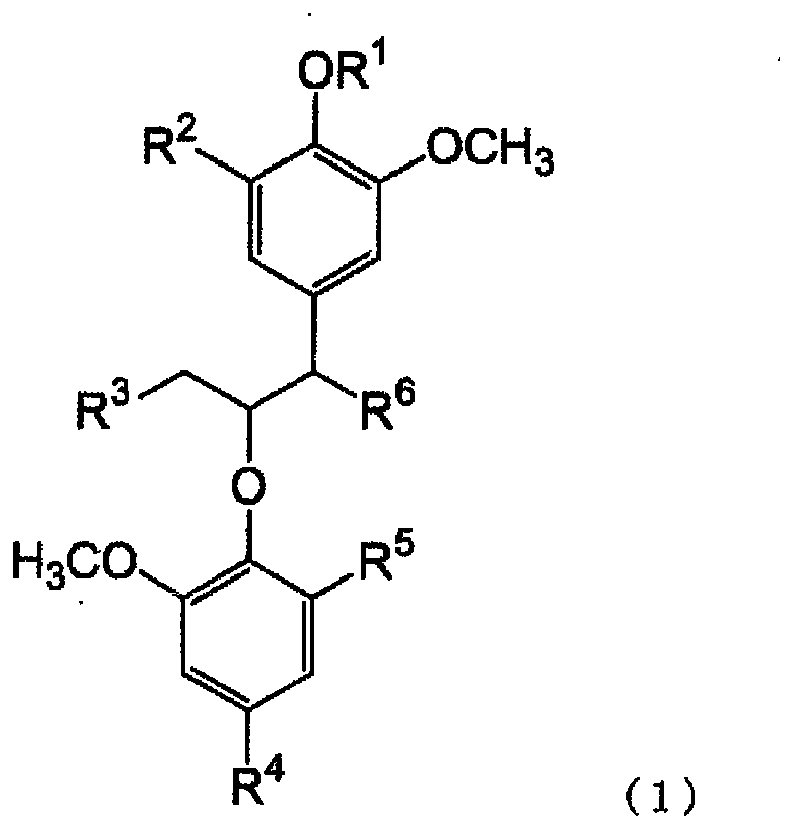
- A method for activating TRPM8 comprising using a compound represented by the following formula (1):

- Use of a compound represented by the following formula (1), for the manufacture of a cooling agent:
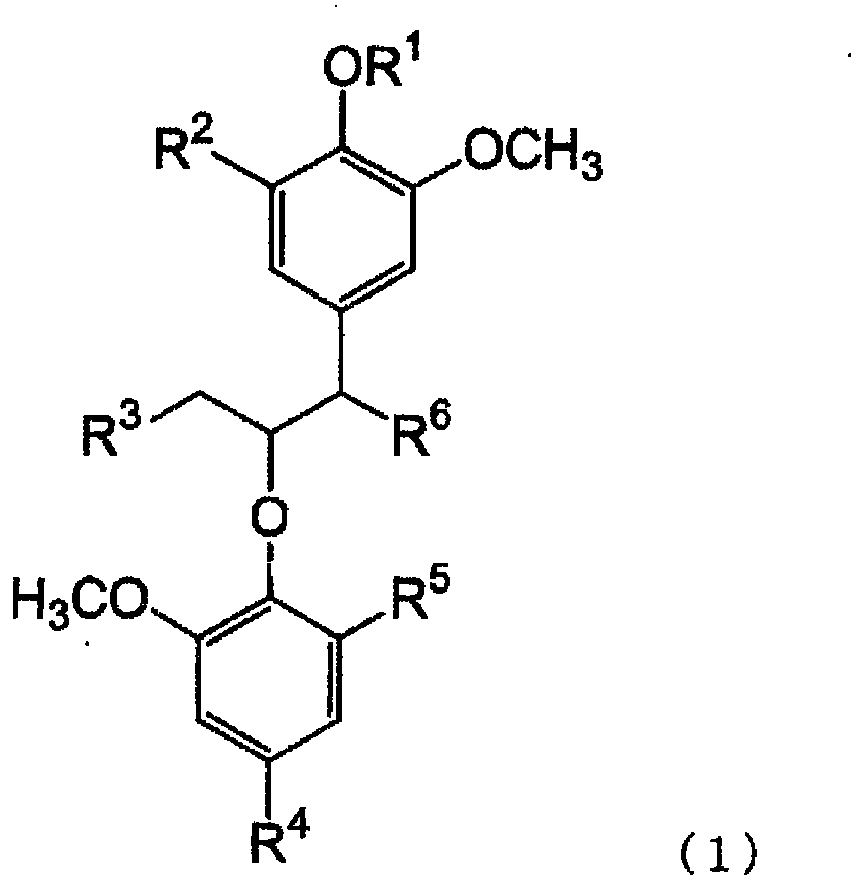
- Use of a compound represented by the following formula (1), for the manufacture of a TRPM8 activator:

- A compound represented by the following formula (1), for the use in imparting cooling sensation:

- A compound represented by the following formula (1), for the use in TRPM8 activation:

- A compound represented by the following formula (2):

Applications Claiming Priority (2)
| Application Number | Priority Date | Filing Date | Title |
|---|---|---|---|
| JP2011258706 | 2011-11-28 | ||
| PCT/JP2012/079979 WO2013080830A1 (en) | 2011-11-28 | 2012-11-19 | Cooling agent and trpm8 activator |
Publications (3)
| Publication Number | Publication Date |
|---|---|
| EP2787051A1 true EP2787051A1 (en) | 2014-10-08 |
| EP2787051A4 EP2787051A4 (en) | 2015-07-15 |
| EP2787051B1 EP2787051B1 (en) | 2017-09-13 |
Family
ID=48535292
Family Applications (1)
| Application Number | Title | Priority Date | Filing Date |
|---|---|---|---|
| EP12853310.6A Not-in-force EP2787051B1 (en) | 2011-11-28 | 2012-11-19 | Cooling agent and trpm8 activator |
Country Status (5)
| Country | Link |
|---|---|
| US (1) | US9340478B2 (en) |
| EP (1) | EP2787051B1 (en) |
| JP (1) | JP5528524B2 (en) |
| CN (1) | CN103958636B (en) |
| WO (1) | WO2013080830A1 (en) |
Cited By (1)
| Publication number | Priority date | Publication date | Assignee | Title |
|---|---|---|---|---|
| EP3356356A4 (en) * | 2015-10-01 | 2019-02-27 | Senomyx, Inc. | COMPOUNDS USEFUL AS MODULATORS OF TRPM8 |
Families Citing this family (5)
| Publication number | Priority date | Publication date | Assignee | Title |
|---|---|---|---|---|
| US9918930B2 (en) | 2012-07-12 | 2018-03-20 | Kao Corporation | Processed nutmeg product and method for producing same |
| JP6076832B2 (en) * | 2013-05-24 | 2017-02-08 | 花王株式会社 | Menthol derivative, and cooling sensation agent, TRPM8 activator, cooling sensation imparting method and TRPM8 activation method using the same |
| US20200188289A1 (en) | 2017-05-15 | 2020-06-18 | Firmenich Sa | Compositions comprising essential oils |
| CN111032004B (en) | 2017-12-20 | 2023-10-20 | 弗门尼舍有限公司 | Oral care compositions |
| WO2022088026A1 (en) * | 2020-10-30 | 2022-05-05 | 江苏君澜纺织品有限公司 | Method for preparing fabric for face mask, and face mask |
Family Cites Families (3)
| Publication number | Priority date | Publication date | Assignee | Title |
|---|---|---|---|---|
| JP5004153B2 (en) * | 2006-03-28 | 2012-08-22 | 独立行政法人産業技術総合研究所 | Adiponectin production promoter |
| KR101404398B1 (en) * | 2007-06-20 | 2014-06-09 | (주)뉴트리 | Wrinkle-improving cosmetic composition |
| WO2012098281A2 (en) * | 2011-01-19 | 2012-07-26 | Universidad Miguel Hernández De Elche | Trp-receptor-modulating peptides and uses thereof |
-
2012
- 2012-11-19 WO PCT/JP2012/079979 patent/WO2013080830A1/en not_active Ceased
- 2012-11-19 US US14/354,260 patent/US9340478B2/en not_active Expired - Fee Related
- 2012-11-19 JP JP2012253512A patent/JP5528524B2/en active Active
- 2012-11-19 EP EP12853310.6A patent/EP2787051B1/en not_active Not-in-force
- 2012-11-19 CN CN201280058568.8A patent/CN103958636B/en not_active Expired - Fee Related
Cited By (3)
| Publication number | Priority date | Publication date | Assignee | Title |
|---|---|---|---|---|
| EP3356356A4 (en) * | 2015-10-01 | 2019-02-27 | Senomyx, Inc. | COMPOUNDS USEFUL AS MODULATORS OF TRPM8 |
| US10392371B2 (en) | 2015-10-01 | 2019-08-27 | Senomyx, Inc. | Compounds useful as modulators of TRPM8 |
| RU2745616C1 (en) * | 2015-10-01 | 2021-03-29 | Сеномикс, Инк. | Compounds used as trpm8 modulators |
Also Published As
| Publication number | Publication date |
|---|---|
| EP2787051B1 (en) | 2017-09-13 |
| JP5528524B2 (en) | 2014-06-25 |
| US20140329910A1 (en) | 2014-11-06 |
| WO2013080830A1 (en) | 2013-06-06 |
| JP2013136733A (en) | 2013-07-11 |
| EP2787051A4 (en) | 2015-07-15 |
| CN103958636B (en) | 2016-06-29 |
| US9340478B2 (en) | 2016-05-17 |
| CN103958636A (en) | 2014-07-30 |
Similar Documents
| Publication | Publication Date | Title |
|---|---|---|
| US9340478B2 (en) | Cooling agent and TRPM8 activator | |
| WO2012099449A2 (en) | Novel use of flavone-based compound | |
| EP1382329A1 (en) | Compositions for photoprotection comprising a flavonoid | |
| JP6163356B2 (en) | Flavoring composition | |
| JP2013155172A (en) | Soothing agent of irritating sensation | |
| JPH10265325A (en) | Melanin formation suppressant and skin whitening cosmetic material | |
| FR3026011B1 (en) | COMPOSITION COMPRISING AT LEAST ONE INHIBITOR OF CERTAIN CHEMOKINES, METHOD FOR PRODUCING THE SAME AND USE THEREOF DERMOCOSMAL PHARMACEUTICAL | |
| WO2019083132A1 (en) | Antiaging composition comprising cytochalasin d or sag, and method for screening antiaging substance | |
| JP6076832B2 (en) | Menthol derivative, and cooling sensation agent, TRPM8 activator, cooling sensation imparting method and TRPM8 activation method using the same | |
| TW202535859A (en) | Antioxidant composition | |
| TWI383793B (en) | A skin oxidative agent, a skin whitening improving agent, a wrinkle improving agent, a skin relaxation improving agent, a skin water content improving agent, a whitening agent, a melanin inhibitor, a nitric oxide eliminating agent, and an oxidative prevention agent agent | |
| KR101256971B1 (en) | Method of extracting decursinol and cosmetic composition comprising the decursinol | |
| KR101048477B1 (en) | Skin whitening composition containing indole alkaloid compound | |
| JP3813733B2 (en) | Cosmetics for preventing and improving wrinkles | |
| WO2014010657A1 (en) | Processed nutmeg product and method for producing same | |
| EP3674296B1 (en) | Novel compound produced by means of marine microorganism and composition for improving skin wrinkles, enhancing elasticity and skin whitening comprising same compound as active ingredient | |
| CN107108471B (en) | Compounds, salts of compounds, external preparations for skin, cosmetics and food additives | |
| JP6238394B2 (en) | Ceramide production promoter | |
| JP5789642B2 (en) | Irritation mitigation agent | |
| JP5778134B2 (en) | Topical skin preparation | |
| JP2024014567A (en) | irritation reliever | |
| KR20240177652A (en) | composition for improving skin comprising a glyceride derivative compound of a physiologically active organic substance | |
| JP2004115495A (en) | Tyrosinase activity inhibitor | |
| KR20080040094A (en) | Extraction method of decosinol and cosmetic composition comprising the decosinol | |
| JP2002145749A (en) | Cosmetic |
Legal Events
| Date | Code | Title | Description |
|---|---|---|---|
| PUAI | Public reference made under article 153(3) epc to a published international application that has entered the european phase |
Free format text: ORIGINAL CODE: 0009012 |
|
| 17P | Request for examination filed |
Effective date: 20140625 |
|
| AK | Designated contracting states |
Kind code of ref document: A1 Designated state(s): AL AT BE BG CH CY CZ DE DK EE ES FI FR GB GR HR HU IE IS IT LI LT LU LV MC MK MT NL NO PL PT RO RS SE SI SK SM TR |
|
| DAX | Request for extension of the european patent (deleted) | ||
| RA4 | Supplementary search report drawn up and despatched (corrected) |
Effective date: 20150617 |
|
| RIC1 | Information provided on ipc code assigned before grant |
Ipc: C07C 43/23 20060101ALI20150610BHEP Ipc: A61K 8/34 20060101ALI20150610BHEP Ipc: A61Q 11/00 20060101ALI20150610BHEP Ipc: A61K 47/08 20060101ALI20150610BHEP Ipc: C09K 3/00 20060101AFI20150610BHEP |
|
| 17Q | First examination report despatched |
Effective date: 20160407 |
|
| GRAP | Despatch of communication of intention to grant a patent |
Free format text: ORIGINAL CODE: EPIDOSNIGR1 |
|
| INTG | Intention to grant announced |
Effective date: 20170323 |
|
| GRAS | Grant fee paid |
Free format text: ORIGINAL CODE: EPIDOSNIGR3 |
|
| GRAA | (expected) grant |
Free format text: ORIGINAL CODE: 0009210 |
|
| AK | Designated contracting states |
Kind code of ref document: B1 Designated state(s): AL AT BE BG CH CY CZ DE DK EE ES FI FR GB GR HR HU IE IS IT LI LT LU LV MC MK MT NL NO PL PT RO RS SE SI SK SM TR |
|
| REG | Reference to a national code |
Ref country code: GB Ref legal event code: FG4D |
|
| REG | Reference to a national code |
Ref country code: CH Ref legal event code: EP |
|
| REG | Reference to a national code |
Ref country code: IE Ref legal event code: FG4D |
|
| REG | Reference to a national code |
Ref country code: AT Ref legal event code: REF Ref document number: 928117 Country of ref document: AT Kind code of ref document: T Effective date: 20171015 |
|
| REG | Reference to a national code |
Ref country code: DE Ref legal event code: R096 Ref document number: 602012037426 Country of ref document: DE |
|
| REG | Reference to a national code |
Ref country code: FR Ref legal event code: PLFP Year of fee payment: 6 |
|
| REG | Reference to a national code |
Ref country code: NL Ref legal event code: MP Effective date: 20170913 |
|
| REG | Reference to a national code |
Ref country code: LT Ref legal event code: MG4D |
|
| PG25 | Lapsed in a contracting state [announced via postgrant information from national office to epo] |
Ref country code: SE Free format text: LAPSE BECAUSE OF FAILURE TO SUBMIT A TRANSLATION OF THE DESCRIPTION OR TO PAY THE FEE WITHIN THE PRESCRIBED TIME-LIMIT Effective date: 20170913 Ref country code: LT Free format text: LAPSE BECAUSE OF FAILURE TO SUBMIT A TRANSLATION OF THE DESCRIPTION OR TO PAY THE FEE WITHIN THE PRESCRIBED TIME-LIMIT Effective date: 20170913 Ref country code: FI Free format text: LAPSE BECAUSE OF FAILURE TO SUBMIT A TRANSLATION OF THE DESCRIPTION OR TO PAY THE FEE WITHIN THE PRESCRIBED TIME-LIMIT Effective date: 20170913 Ref country code: HR Free format text: LAPSE BECAUSE OF FAILURE TO SUBMIT A TRANSLATION OF THE DESCRIPTION OR TO PAY THE FEE WITHIN THE PRESCRIBED TIME-LIMIT Effective date: 20170913 Ref country code: NO Free format text: LAPSE BECAUSE OF FAILURE TO SUBMIT A TRANSLATION OF THE DESCRIPTION OR TO PAY THE FEE WITHIN THE PRESCRIBED TIME-LIMIT Effective date: 20171213 |
|
| REG | Reference to a national code |
Ref country code: AT Ref legal event code: MK05 Ref document number: 928117 Country of ref document: AT Kind code of ref document: T Effective date: 20170913 |
|
| PG25 | Lapsed in a contracting state [announced via postgrant information from national office to epo] |
Ref country code: BG Free format text: LAPSE BECAUSE OF FAILURE TO SUBMIT A TRANSLATION OF THE DESCRIPTION OR TO PAY THE FEE WITHIN THE PRESCRIBED TIME-LIMIT Effective date: 20171213 Ref country code: GR Free format text: LAPSE BECAUSE OF FAILURE TO SUBMIT A TRANSLATION OF THE DESCRIPTION OR TO PAY THE FEE WITHIN THE PRESCRIBED TIME-LIMIT Effective date: 20171214 Ref country code: RS Free format text: LAPSE BECAUSE OF FAILURE TO SUBMIT A TRANSLATION OF THE DESCRIPTION OR TO PAY THE FEE WITHIN THE PRESCRIBED TIME-LIMIT Effective date: 20170913 Ref country code: ES Free format text: LAPSE BECAUSE OF FAILURE TO SUBMIT A TRANSLATION OF THE DESCRIPTION OR TO PAY THE FEE WITHIN THE PRESCRIBED TIME-LIMIT Effective date: 20170913 Ref country code: LV Free format text: LAPSE BECAUSE OF FAILURE TO SUBMIT A TRANSLATION OF THE DESCRIPTION OR TO PAY THE FEE WITHIN THE PRESCRIBED TIME-LIMIT Effective date: 20170913 |
|
| PG25 | Lapsed in a contracting state [announced via postgrant information from national office to epo] |
Ref country code: NL Free format text: LAPSE BECAUSE OF FAILURE TO SUBMIT A TRANSLATION OF THE DESCRIPTION OR TO PAY THE FEE WITHIN THE PRESCRIBED TIME-LIMIT Effective date: 20170913 |
|
| PG25 | Lapsed in a contracting state [announced via postgrant information from national office to epo] |
Ref country code: RO Free format text: LAPSE BECAUSE OF FAILURE TO SUBMIT A TRANSLATION OF THE DESCRIPTION OR TO PAY THE FEE WITHIN THE PRESCRIBED TIME-LIMIT Effective date: 20170913 Ref country code: CZ Free format text: LAPSE BECAUSE OF FAILURE TO SUBMIT A TRANSLATION OF THE DESCRIPTION OR TO PAY THE FEE WITHIN THE PRESCRIBED TIME-LIMIT Effective date: 20170913 Ref country code: PL Free format text: LAPSE BECAUSE OF FAILURE TO SUBMIT A TRANSLATION OF THE DESCRIPTION OR TO PAY THE FEE WITHIN THE PRESCRIBED TIME-LIMIT Effective date: 20170913 |
|
| PG25 | Lapsed in a contracting state [announced via postgrant information from national office to epo] |
Ref country code: IT Free format text: LAPSE BECAUSE OF FAILURE TO SUBMIT A TRANSLATION OF THE DESCRIPTION OR TO PAY THE FEE WITHIN THE PRESCRIBED TIME-LIMIT Effective date: 20170913 Ref country code: AT Free format text: LAPSE BECAUSE OF FAILURE TO SUBMIT A TRANSLATION OF THE DESCRIPTION OR TO PAY THE FEE WITHIN THE PRESCRIBED TIME-LIMIT Effective date: 20170913 Ref country code: SK Free format text: LAPSE BECAUSE OF FAILURE TO SUBMIT A TRANSLATION OF THE DESCRIPTION OR TO PAY THE FEE WITHIN THE PRESCRIBED TIME-LIMIT Effective date: 20170913 Ref country code: EE Free format text: LAPSE BECAUSE OF FAILURE TO SUBMIT A TRANSLATION OF THE DESCRIPTION OR TO PAY THE FEE WITHIN THE PRESCRIBED TIME-LIMIT Effective date: 20170913 Ref country code: SM Free format text: LAPSE BECAUSE OF FAILURE TO SUBMIT A TRANSLATION OF THE DESCRIPTION OR TO PAY THE FEE WITHIN THE PRESCRIBED TIME-LIMIT Effective date: 20170913 Ref country code: IS Free format text: LAPSE BECAUSE OF FAILURE TO SUBMIT A TRANSLATION OF THE DESCRIPTION OR TO PAY THE FEE WITHIN THE PRESCRIBED TIME-LIMIT Effective date: 20180113 |
|
| REG | Reference to a national code |
Ref country code: DE Ref legal event code: R097 Ref document number: 602012037426 Country of ref document: DE |
|
| PG25 | Lapsed in a contracting state [announced via postgrant information from national office to epo] |
Ref country code: MC Free format text: LAPSE BECAUSE OF FAILURE TO SUBMIT A TRANSLATION OF THE DESCRIPTION OR TO PAY THE FEE WITHIN THE PRESCRIBED TIME-LIMIT Effective date: 20170913 |
|
| PLBE | No opposition filed within time limit |
Free format text: ORIGINAL CODE: 0009261 |
|
| STAA | Information on the status of an ep patent application or granted ep patent |
Free format text: STATUS: NO OPPOSITION FILED WITHIN TIME LIMIT |
|
| PG25 | Lapsed in a contracting state [announced via postgrant information from national office to epo] |
Ref country code: DK Free format text: LAPSE BECAUSE OF FAILURE TO SUBMIT A TRANSLATION OF THE DESCRIPTION OR TO PAY THE FEE WITHIN THE PRESCRIBED TIME-LIMIT Effective date: 20170913 Ref country code: CH Free format text: LAPSE BECAUSE OF NON-PAYMENT OF DUE FEES Effective date: 20171130 Ref country code: LI Free format text: LAPSE BECAUSE OF NON-PAYMENT OF DUE FEES Effective date: 20171130 |
|
| 26N | No opposition filed |
Effective date: 20180614 |
|
| PG25 | Lapsed in a contracting state [announced via postgrant information from national office to epo] |
Ref country code: LU Free format text: LAPSE BECAUSE OF NON-PAYMENT OF DUE FEES Effective date: 20171119 |
|
| REG | Reference to a national code |
Ref country code: BE Ref legal event code: MM Effective date: 20171130 |
|
| REG | Reference to a national code |
Ref country code: IE Ref legal event code: MM4A |
|
| PG25 | Lapsed in a contracting state [announced via postgrant information from national office to epo] |
Ref country code: MT Free format text: LAPSE BECAUSE OF NON-PAYMENT OF DUE FEES Effective date: 20171119 |
|
| REG | Reference to a national code |
Ref country code: FR Ref legal event code: PLFP Year of fee payment: 7 |
|
| PG25 | Lapsed in a contracting state [announced via postgrant information from national office to epo] |
Ref country code: IE Free format text: LAPSE BECAUSE OF NON-PAYMENT OF DUE FEES Effective date: 20171119 |
|
| PG25 | Lapsed in a contracting state [announced via postgrant information from national office to epo] |
Ref country code: BE Free format text: LAPSE BECAUSE OF NON-PAYMENT OF DUE FEES Effective date: 20171130 Ref country code: SI Free format text: LAPSE BECAUSE OF FAILURE TO SUBMIT A TRANSLATION OF THE DESCRIPTION OR TO PAY THE FEE WITHIN THE PRESCRIBED TIME-LIMIT Effective date: 20170913 |
|
| PG25 | Lapsed in a contracting state [announced via postgrant information from national office to epo] |
Ref country code: HU Free format text: LAPSE BECAUSE OF FAILURE TO SUBMIT A TRANSLATION OF THE DESCRIPTION OR TO PAY THE FEE WITHIN THE PRESCRIBED TIME-LIMIT; INVALID AB INITIO Effective date: 20121119 |
|
| PG25 | Lapsed in a contracting state [announced via postgrant information from national office to epo] |
Ref country code: CY Free format text: LAPSE BECAUSE OF FAILURE TO SUBMIT A TRANSLATION OF THE DESCRIPTION OR TO PAY THE FEE WITHIN THE PRESCRIBED TIME-LIMIT Effective date: 20170913 |
|
| PG25 | Lapsed in a contracting state [announced via postgrant information from national office to epo] |
Ref country code: MK Free format text: LAPSE BECAUSE OF FAILURE TO SUBMIT A TRANSLATION OF THE DESCRIPTION OR TO PAY THE FEE WITHIN THE PRESCRIBED TIME-LIMIT Effective date: 20170913 |
|
| PG25 | Lapsed in a contracting state [announced via postgrant information from national office to epo] |
Ref country code: TR Free format text: LAPSE BECAUSE OF FAILURE TO SUBMIT A TRANSLATION OF THE DESCRIPTION OR TO PAY THE FEE WITHIN THE PRESCRIBED TIME-LIMIT Effective date: 20170913 |
|
| PG25 | Lapsed in a contracting state [announced via postgrant information from national office to epo] |
Ref country code: PT Free format text: LAPSE BECAUSE OF FAILURE TO SUBMIT A TRANSLATION OF THE DESCRIPTION OR TO PAY THE FEE WITHIN THE PRESCRIBED TIME-LIMIT Effective date: 20170913 |
|
| PG25 | Lapsed in a contracting state [announced via postgrant information from national office to epo] |
Ref country code: AL Free format text: LAPSE BECAUSE OF FAILURE TO SUBMIT A TRANSLATION OF THE DESCRIPTION OR TO PAY THE FEE WITHIN THE PRESCRIBED TIME-LIMIT Effective date: 20170913 |
|
| PGFP | Annual fee paid to national office [announced via postgrant information from national office to epo] |
Ref country code: GB Payment date: 20220930 Year of fee payment: 11 |
|
| PGFP | Annual fee paid to national office [announced via postgrant information from national office to epo] |
Ref country code: FR Payment date: 20221010 Year of fee payment: 11 |
|
| PGFP | Annual fee paid to national office [announced via postgrant information from national office to epo] |
Ref country code: DE Payment date: 20220621 Year of fee payment: 11 |
|
| REG | Reference to a national code |
Ref country code: DE Ref legal event code: R119 Ref document number: 602012037426 Country of ref document: DE |
|
| GBPC | Gb: european patent ceased through non-payment of renewal fee |
Effective date: 20231119 |
|
| PG25 | Lapsed in a contracting state [announced via postgrant information from national office to epo] |
Ref country code: DE Free format text: LAPSE BECAUSE OF NON-PAYMENT OF DUE FEES Effective date: 20240601 |
|
| PG25 | Lapsed in a contracting state [announced via postgrant information from national office to epo] |
Ref country code: GB Free format text: LAPSE BECAUSE OF NON-PAYMENT OF DUE FEES Effective date: 20231119 |
|
| PG25 | Lapsed in a contracting state [announced via postgrant information from national office to epo] |
Ref country code: FR Free format text: LAPSE BECAUSE OF NON-PAYMENT OF DUE FEES Effective date: 20231130 |
|
| PG25 | Lapsed in a contracting state [announced via postgrant information from national office to epo] |
Ref country code: GB Free format text: LAPSE BECAUSE OF NON-PAYMENT OF DUE FEES Effective date: 20231119 Ref country code: FR Free format text: LAPSE BECAUSE OF NON-PAYMENT OF DUE FEES Effective date: 20231130 Ref country code: DE Free format text: LAPSE BECAUSE OF NON-PAYMENT OF DUE FEES Effective date: 20240601 |