EP2786749A1 - Use of nitrooxyderivative of drug for the treatment of muscular dystrophies - Google Patents
Use of nitrooxyderivative of drug for the treatment of muscular dystrophies Download PDFInfo
- Publication number
- EP2786749A1 EP2786749A1 EP20140175223 EP14175223A EP2786749A1 EP 2786749 A1 EP2786749 A1 EP 2786749A1 EP 20140175223 EP20140175223 EP 20140175223 EP 14175223 A EP14175223 A EP 14175223A EP 2786749 A1 EP2786749 A1 EP 2786749A1
- Authority
- EP
- European Patent Office
- Prior art keywords
- integer
- formula
- ono
- nitric oxide
- group
- Prior art date
- Legal status (The legal status is an assumption and is not a legal conclusion. Google has not performed a legal analysis and makes no representation as to the accuracy of the status listed.)
- Withdrawn
Links
- 201000006938 muscular dystrophy Diseases 0.000 title claims abstract description 17
- 238000011282 treatment Methods 0.000 title claims description 13
- 239000003814 drug Substances 0.000 title description 15
- 229940079593 drug Drugs 0.000 title description 13
- 229910004679 ONO2 Inorganic materials 0.000 claims description 13
- 125000000008 (C1-C10) alkyl group Chemical group 0.000 claims description 6
- 239000002840 nitric oxide donor Substances 0.000 claims description 5
- 125000006832 (C1-C10) alkylene group Chemical group 0.000 claims description 4
- HBAQYPYDRFILMT-UHFFFAOYSA-N 8-[3-(1-cyclopropylpyrazol-4-yl)-1H-pyrazolo[4,3-d]pyrimidin-5-yl]-3-methyl-3,8-diazabicyclo[3.2.1]octan-2-one Chemical class C1(CC1)N1N=CC(=C1)C1=NNC2=C1N=C(N=C2)N1C2C(N(CC1CC2)C)=O HBAQYPYDRFILMT-UHFFFAOYSA-N 0.000 claims description 3
- 125000005843 halogen group Chemical group 0.000 claims description 2
- 125000004435 hydrogen atom Chemical group [H]* 0.000 claims description 2
- 125000002887 hydroxy group Chemical group [H]O* 0.000 claims description 2
- 125000001424 substituent group Chemical group 0.000 claims description 2
- 125000002947 alkylene group Chemical group 0.000 claims 1
- MWUXSHHQAYIFBG-UHFFFAOYSA-N Nitric oxide Chemical compound O=[N] MWUXSHHQAYIFBG-UHFFFAOYSA-N 0.000 abstract description 34
- 150000001875 compounds Chemical class 0.000 abstract description 17
- 230000000979 retarding effect Effects 0.000 abstract description 4
- 0 CCC(C)(CC(*)=C)C(C)C(C(Cc1ccccc1)*1=CC1)c1ccccc1* Chemical compound CCC(C)(CC(*)=C)C(C)C(C(Cc1ccccc1)*1=CC1)c1ccccc1* 0.000 description 10
- 230000000694 effects Effects 0.000 description 9
- -1 2-(acetyloxy)benzoic acid 3-(nitrooxymethyl) phenyl ester Chemical class 0.000 description 8
- 229960001145 deflazacort Drugs 0.000 description 7
- FBHSPRKOSMHSIF-GRMWVWQJSA-N deflazacort Chemical compound C1CC2=CC(=O)C=C[C@]2(C)[C@@H]2[C@@H]1[C@@H]1C[C@H]3OC(C)=N[C@@]3(C(=O)COC(=O)C)[C@@]1(C)C[C@@H]2O FBHSPRKOSMHSIF-GRMWVWQJSA-N 0.000 description 7
- 210000003205 muscle Anatomy 0.000 description 7
- 229960005205 prednisolone Drugs 0.000 description 7
- OIGNJSKKLXVSLS-VWUMJDOOSA-N prednisolone Chemical compound O=C1C=C[C@]2(C)[C@H]3[C@@H](O)C[C@](C)([C@@](CC4)(O)C(=O)CO)[C@@H]4[C@@H]3CCC2=C1 OIGNJSKKLXVSLS-VWUMJDOOSA-N 0.000 description 7
- 241000699670 Mus sp. Species 0.000 description 6
- 241001465754 Metazoa Species 0.000 description 5
- TUZYXOIXSAXUGO-UHFFFAOYSA-N Pravastatin Natural products C1=CC(C)C(CCC(O)CC(O)CC(O)=O)C2C(OC(=O)C(C)CC)CC(O)C=C21 TUZYXOIXSAXUGO-UHFFFAOYSA-N 0.000 description 5
- 239000003246 corticosteroid Substances 0.000 description 5
- 229960002965 pravastatin Drugs 0.000 description 5
- 210000002027 skeletal muscle Anatomy 0.000 description 5
- 230000015572 biosynthetic process Effects 0.000 description 4
- 230000001338 necrotic effect Effects 0.000 description 4
- 238000003786 synthesis reaction Methods 0.000 description 4
- 238000012360 testing method Methods 0.000 description 4
- 102000016579 Alpha-sarcoglycan Human genes 0.000 description 3
- 102000004420 Creatine Kinase Human genes 0.000 description 3
- 108010042126 Creatine kinase Proteins 0.000 description 3
- 206010013801 Duchenne Muscular Dystrophy Diseases 0.000 description 3
- 229940121710 HMGCoA reductase inhibitor Drugs 0.000 description 3
- KCWZGJVSDFYRIX-YFKPBYRVSA-N N(gamma)-nitro-L-arginine methyl ester Chemical compound COC(=O)[C@@H](N)CCCN=C(N)N[N+]([O-])=O KCWZGJVSDFYRIX-YFKPBYRVSA-N 0.000 description 3
- 108010083379 Sarcoglycans Proteins 0.000 description 3
- WPYMKLBDIGXBTP-UHFFFAOYSA-N benzoic acid Chemical compound OC(=O)C1=CC=CC=C1 WPYMKLBDIGXBTP-UHFFFAOYSA-N 0.000 description 3
- 210000004027 cell Anatomy 0.000 description 3
- 229960001334 corticosteroids Drugs 0.000 description 3
- 230000006378 damage Effects 0.000 description 3
- 230000002757 inflammatory effect Effects 0.000 description 3
- 239000003112 inhibitor Substances 0.000 description 3
- 230000003387 muscular Effects 0.000 description 3
- 208000024891 symptom Diseases 0.000 description 3
- 210000001519 tissue Anatomy 0.000 description 3
- 125000001255 4-fluorophenyl group Chemical group [H]C1=C([H])C(*)=C([H])C([H])=C1F 0.000 description 2
- BSYNRYMUTXBXSQ-UHFFFAOYSA-N Aspirin Chemical compound CC(=O)OC1=CC=CC=C1C(O)=O BSYNRYMUTXBXSQ-UHFFFAOYSA-N 0.000 description 2
- XUKUURHRXDUEBC-UHFFFAOYSA-N Atorvastatin Natural products C=1C=CC=CC=1C1=C(C=2C=CC(F)=CC=2)N(CCC(O)CC(O)CC(O)=O)C(C(C)C)=C1C(=O)NC1=CC=CC=C1 XUKUURHRXDUEBC-UHFFFAOYSA-N 0.000 description 2
- 208000002177 Cataract Diseases 0.000 description 2
- 108010069091 Dystrophin Proteins 0.000 description 2
- 102100034239 Emerin Human genes 0.000 description 2
- 201000009344 Emery-Dreifuss muscular dystrophy Diseases 0.000 description 2
- 102000004190 Enzymes Human genes 0.000 description 2
- 108090000790 Enzymes Proteins 0.000 description 2
- WZUVPPKBWHMQCE-UHFFFAOYSA-N Haematoxylin Chemical compound C12=CC(O)=C(O)C=C2CC2(O)C1C1=CC=C(O)C(O)=C1OC2 WZUVPPKBWHMQCE-UHFFFAOYSA-N 0.000 description 2
- 102100022745 Laminin subunit alpha-2 Human genes 0.000 description 2
- 201000009342 Limb-girdle muscular dystrophy Diseases 0.000 description 2
- 208000029578 Muscle disease Diseases 0.000 description 2
- 208000029549 Muscle injury Diseases 0.000 description 2
- 206010068871 Myotonic dystrophy Diseases 0.000 description 2
- 208000021017 Weight Gain Diseases 0.000 description 2
- 239000002253 acid Substances 0.000 description 2
- 230000002411 adverse Effects 0.000 description 2
- 230000003110 anti-inflammatory effect Effects 0.000 description 2
- 230000002785 anti-thrombosis Effects 0.000 description 2
- 239000003146 anticoagulant agent Substances 0.000 description 2
- 229960005370 atorvastatin Drugs 0.000 description 2
- 210000004369 blood Anatomy 0.000 description 2
- 239000008280 blood Substances 0.000 description 2
- 201000006815 congenital muscular dystrophy Diseases 0.000 description 2
- 208000011425 congenital myotonic dystrophy Diseases 0.000 description 2
- CVSVTCORWBXHQV-UHFFFAOYSA-N creatine Chemical compound NC(=[NH2+])N(C)CC([O-])=O CVSVTCORWBXHQV-UHFFFAOYSA-N 0.000 description 2
- 230000007850 degeneration Effects 0.000 description 2
- 208000037265 diseases, disorders, signs and symptoms Diseases 0.000 description 2
- 230000002496 gastric effect Effects 0.000 description 2
- 239000002471 hydroxymethylglutaryl coenzyme A reductase inhibitor Substances 0.000 description 2
- 230000006872 improvement Effects 0.000 description 2
- 230000008595 infiltration Effects 0.000 description 2
- 238000001764 infiltration Methods 0.000 description 2
- 238000012153 long-term therapy Methods 0.000 description 2
- 238000005259 measurement Methods 0.000 description 2
- 238000000034 method Methods 0.000 description 2
- 239000000203 mixture Substances 0.000 description 2
- 201000009340 myotonic dystrophy type 1 Diseases 0.000 description 2
- 208000015122 neurodegenerative disease Diseases 0.000 description 2
- 150000002828 nitro derivatives Chemical class 0.000 description 2
- 239000000041 non-steroidal anti-inflammatory agent Substances 0.000 description 2
- 229940021182 non-steroidal anti-inflammatory drug Drugs 0.000 description 2
- 238000007911 parenteral administration Methods 0.000 description 2
- 230000036470 plasma concentration Effects 0.000 description 2
- 229960004618 prednisone Drugs 0.000 description 2
- XOFYZVNMUHMLCC-ZPOLXVRWSA-N prednisone Chemical compound O=C1C=C[C@]2(C)[C@H]3C(=O)C[C@](C)([C@@](CC4)(O)C(=O)CO)[C@@H]4[C@@H]3CCC2=C1 XOFYZVNMUHMLCC-ZPOLXVRWSA-N 0.000 description 2
- 230000000750 progressive effect Effects 0.000 description 2
- 230000001105 regulatory effect Effects 0.000 description 2
- 230000000241 respiratory effect Effects 0.000 description 2
- 210000002966 serum Anatomy 0.000 description 2
- 229940124597 therapeutic agent Drugs 0.000 description 2
- 230000004584 weight gain Effects 0.000 description 2
- 235000019786 weight gain Nutrition 0.000 description 2
- 125000004169 (C1-C6) alkyl group Chemical group 0.000 description 1
- IOJUJUOXKXMJNF-UHFFFAOYSA-N 2-acetyloxybenzoic acid [3-(nitrooxymethyl)phenyl] ester Chemical compound CC(=O)OC1=CC=CC=C1C(=O)OC1=CC=CC(CO[N+]([O-])=O)=C1 IOJUJUOXKXMJNF-UHFFFAOYSA-N 0.000 description 1
- 201000001320 Atherosclerosis Diseases 0.000 description 1
- 125000003031 C5-C7 cycloalkylene group Chemical group 0.000 description 1
- 238000011740 C57BL/6 mouse Methods 0.000 description 1
- 208000024172 Cardiovascular disease Diseases 0.000 description 1
- 208000014311 Cushing syndrome Diseases 0.000 description 1
- 102000001039 Dystrophin Human genes 0.000 description 1
- 206010048554 Endothelial dysfunction Diseases 0.000 description 1
- 206010019280 Heart failures Diseases 0.000 description 1
- 206010020772 Hypertension Diseases 0.000 description 1
- 206010061218 Inflammation Diseases 0.000 description 1
- ODKSFYDXXFIFQN-BYPYZUCNSA-N L-arginine Chemical compound OC(=O)[C@@H](N)CCCN=C(N)N ODKSFYDXXFIFQN-BYPYZUCNSA-N 0.000 description 1
- 229930064664 L-arginine Natural products 0.000 description 1
- 235000014852 L-arginine Nutrition 0.000 description 1
- 208000010428 Muscle Weakness Diseases 0.000 description 1
- 208000021642 Muscular disease Diseases 0.000 description 1
- 206010028372 Muscular weakness Diseases 0.000 description 1
- 102000008299 Nitric Oxide Synthase Human genes 0.000 description 1
- 108010021487 Nitric Oxide Synthase Proteins 0.000 description 1
- 208000001132 Osteoporosis Diseases 0.000 description 1
- 208000018262 Peripheral vascular disease Diseases 0.000 description 1
- 108091000080 Phosphotransferase Proteins 0.000 description 1
- 102000001253 Protein Kinase Human genes 0.000 description 1
- 208000004756 Respiratory Insufficiency Diseases 0.000 description 1
- 208000020221 Short stature Diseases 0.000 description 1
- 208000026214 Skeletal muscle atrophy Diseases 0.000 description 1
- 230000004075 alteration Effects 0.000 description 1
- 230000000202 analgesic effect Effects 0.000 description 1
- 238000010171 animal model Methods 0.000 description 1
- 230000000702 anti-platelet effect Effects 0.000 description 1
- QVGXLLKOCUKJST-UHFFFAOYSA-N atomic oxygen Chemical compound [O] QVGXLLKOCUKJST-UHFFFAOYSA-N 0.000 description 1
- 230000003190 augmentative effect Effects 0.000 description 1
- 230000003542 behavioural effect Effects 0.000 description 1
- 230000009286 beneficial effect Effects 0.000 description 1
- 230000008901 benefit Effects 0.000 description 1
- 230000000903 blocking effect Effects 0.000 description 1
- 230000037396 body weight Effects 0.000 description 1
- 210000000170 cell membrane Anatomy 0.000 description 1
- 238000005119 centrifugation Methods 0.000 description 1
- 239000003153 chemical reaction reagent Substances 0.000 description 1
- 230000008602 contraction Effects 0.000 description 1
- 238000011461 current therapy Methods 0.000 description 1
- 230000002950 deficient Effects 0.000 description 1
- 238000011161 development Methods 0.000 description 1
- 230000018109 developmental process Effects 0.000 description 1
- 206010012601 diabetes mellitus Diseases 0.000 description 1
- 230000037213 diet Effects 0.000 description 1
- 235000005911 diet Nutrition 0.000 description 1
- 201000010099 disease Diseases 0.000 description 1
- 208000035475 disorder Diseases 0.000 description 1
- 230000008694 endothelial dysfunction Effects 0.000 description 1
- 230000037149 energy metabolism Effects 0.000 description 1
- YQGOJNYOYNNSMM-UHFFFAOYSA-N eosin Chemical compound [Na+].OC(=O)C1=CC=CC=C1C1=C2C=C(Br)C(=O)C(Br)=C2OC2=C(Br)C(O)=C(Br)C=C21 YQGOJNYOYNNSMM-UHFFFAOYSA-N 0.000 description 1
- 238000002474 experimental method Methods 0.000 description 1
- 239000000835 fiber Substances 0.000 description 1
- 230000004190 glucose uptake Effects 0.000 description 1
- 230000005931 immune cell recruitment Effects 0.000 description 1
- 238000011065 in-situ storage Methods 0.000 description 1
- 230000004054 inflammatory process Effects 0.000 description 1
- 238000002347 injection Methods 0.000 description 1
- 239000007924 injection Substances 0.000 description 1
- 238000001990 intravenous administration Methods 0.000 description 1
- 239000000865 liniment Substances 0.000 description 1
- 239000007788 liquid Substances 0.000 description 1
- 238000004519 manufacturing process Methods 0.000 description 1
- 238000002483 medication Methods 0.000 description 1
- 239000012528 membrane Substances 0.000 description 1
- 230000004220 muscle function Effects 0.000 description 1
- 230000035772 mutation Effects 0.000 description 1
- 210000001087 myotubule Anatomy 0.000 description 1
- 125000001893 nitrooxy group Chemical group [O-][N+](=O)O* 0.000 description 1
- 230000006911 nucleation Effects 0.000 description 1
- 238000010899 nucleation Methods 0.000 description 1
- 229910052760 oxygen Inorganic materials 0.000 description 1
- 239000001301 oxygen Substances 0.000 description 1
- 125000004430 oxygen atom Chemical group O* 0.000 description 1
- 230000007170 pathology Effects 0.000 description 1
- 230000000144 pharmacologic effect Effects 0.000 description 1
- 102000020233 phosphotransferase Human genes 0.000 description 1
- 229920000515 polycarbonate Polymers 0.000 description 1
- 239000004417 polycarbonate Substances 0.000 description 1
- 201000009395 primary hyperaldosteronism Diseases 0.000 description 1
- 230000008569 process Effects 0.000 description 1
- 208000026526 progressive weakness Diseases 0.000 description 1
- 108060006633 protein kinase Proteins 0.000 description 1
- 235000018102 proteins Nutrition 0.000 description 1
- 108090000623 proteins and genes Proteins 0.000 description 1
- 102000004169 proteins and genes Human genes 0.000 description 1
- 238000011002 quantification Methods 0.000 description 1
- 230000008929 regeneration Effects 0.000 description 1
- 238000011069 regeneration method Methods 0.000 description 1
- 201000004193 respiratory failure Diseases 0.000 description 1
- 210000000518 sarcolemma Anatomy 0.000 description 1
- 230000025185 skeletal muscle atrophy Effects 0.000 description 1
- 239000008247 solid mixture Substances 0.000 description 1
- 230000000087 stabilizing effect Effects 0.000 description 1
- 238000010186 staining Methods 0.000 description 1
- 238000011272 standard treatment Methods 0.000 description 1
- 150000003431 steroids Chemical class 0.000 description 1
- 239000000829 suppository Substances 0.000 description 1
- 230000001225 therapeutic effect Effects 0.000 description 1
- 238000002560 therapeutic procedure Methods 0.000 description 1
- 230000002792 vascular Effects 0.000 description 1
- 230000024883 vasodilation Effects 0.000 description 1
- 230000002747 voluntary effect Effects 0.000 description 1
Classifications
-
- C—CHEMISTRY; METALLURGY
- C07—ORGANIC CHEMISTRY
- C07D—HETEROCYCLIC COMPOUNDS
- C07D209/00—Heterocyclic compounds containing five-membered rings, condensed with other rings, with one nitrogen atom as the only ring hetero atom
- C07D209/02—Heterocyclic compounds containing five-membered rings, condensed with other rings, with one nitrogen atom as the only ring hetero atom condensed with one carbocyclic ring
- C07D209/52—Heterocyclic compounds containing five-membered rings, condensed with other rings, with one nitrogen atom as the only ring hetero atom condensed with one carbocyclic ring condensed with a ring other than six-membered
-
- A—HUMAN NECESSITIES
- A61—MEDICAL OR VETERINARY SCIENCE; HYGIENE
- A61K—PREPARATIONS FOR MEDICAL, DENTAL OR TOILETRY PURPOSES
- A61K31/00—Medicinal preparations containing organic active ingredients
- A61K31/04—Nitro compounds
-
- A—HUMAN NECESSITIES
- A61—MEDICAL OR VETERINARY SCIENCE; HYGIENE
- A61K—PREPARATIONS FOR MEDICAL, DENTAL OR TOILETRY PURPOSES
- A61K31/00—Medicinal preparations containing organic active ingredients
- A61K31/21—Esters, e.g. nitroglycerine, selenocyanates
- A61K31/215—Esters, e.g. nitroglycerine, selenocyanates of carboxylic acids
- A61K31/216—Esters, e.g. nitroglycerine, selenocyanates of carboxylic acids of acids having aromatic rings, e.g. benactizyne, clofibrate
-
- A—HUMAN NECESSITIES
- A61—MEDICAL OR VETERINARY SCIENCE; HYGIENE
- A61K—PREPARATIONS FOR MEDICAL, DENTAL OR TOILETRY PURPOSES
- A61K31/00—Medicinal preparations containing organic active ingredients
- A61K31/21—Esters, e.g. nitroglycerine, selenocyanates
- A61K31/215—Esters, e.g. nitroglycerine, selenocyanates of carboxylic acids
- A61K31/235—Esters, e.g. nitroglycerine, selenocyanates of carboxylic acids having an aromatic ring attached to a carboxyl group
-
- A—HUMAN NECESSITIES
- A61—MEDICAL OR VETERINARY SCIENCE; HYGIENE
- A61K—PREPARATIONS FOR MEDICAL, DENTAL OR TOILETRY PURPOSES
- A61K31/00—Medicinal preparations containing organic active ingredients
- A61K31/33—Heterocyclic compounds
- A61K31/335—Heterocyclic compounds having oxygen as the only ring hetero atom, e.g. fungichromin
-
- A—HUMAN NECESSITIES
- A61—MEDICAL OR VETERINARY SCIENCE; HYGIENE
- A61K—PREPARATIONS FOR MEDICAL, DENTAL OR TOILETRY PURPOSES
- A61K31/00—Medicinal preparations containing organic active ingredients
- A61K31/33—Heterocyclic compounds
- A61K31/38—Heterocyclic compounds having sulfur as a ring hetero atom
-
- A—HUMAN NECESSITIES
- A61—MEDICAL OR VETERINARY SCIENCE; HYGIENE
- A61K—PREPARATIONS FOR MEDICAL, DENTAL OR TOILETRY PURPOSES
- A61K31/00—Medicinal preparations containing organic active ingredients
- A61K31/33—Heterocyclic compounds
- A61K31/38—Heterocyclic compounds having sulfur as a ring hetero atom
- A61K31/381—Heterocyclic compounds having sulfur as a ring hetero atom having five-membered rings
-
- A—HUMAN NECESSITIES
- A61—MEDICAL OR VETERINARY SCIENCE; HYGIENE
- A61K—PREPARATIONS FOR MEDICAL, DENTAL OR TOILETRY PURPOSES
- A61K31/00—Medicinal preparations containing organic active ingredients
- A61K31/33—Heterocyclic compounds
- A61K31/395—Heterocyclic compounds having nitrogen as a ring hetero atom, e.g. guanethidine or rifamycins
- A61K31/40—Heterocyclic compounds having nitrogen as a ring hetero atom, e.g. guanethidine or rifamycins having five-membered rings with one nitrogen as the only ring hetero atom, e.g. sulpiride, succinimide, tolmetin, buflomedil
-
- A—HUMAN NECESSITIES
- A61—MEDICAL OR VETERINARY SCIENCE; HYGIENE
- A61K—PREPARATIONS FOR MEDICAL, DENTAL OR TOILETRY PURPOSES
- A61K31/00—Medicinal preparations containing organic active ingredients
- A61K31/33—Heterocyclic compounds
- A61K31/395—Heterocyclic compounds having nitrogen as a ring hetero atom, e.g. guanethidine or rifamycins
- A61K31/40—Heterocyclic compounds having nitrogen as a ring hetero atom, e.g. guanethidine or rifamycins having five-membered rings with one nitrogen as the only ring hetero atom, e.g. sulpiride, succinimide, tolmetin, buflomedil
- A61K31/401—Proline; Derivatives thereof, e.g. captopril
-
- A—HUMAN NECESSITIES
- A61—MEDICAL OR VETERINARY SCIENCE; HYGIENE
- A61K—PREPARATIONS FOR MEDICAL, DENTAL OR TOILETRY PURPOSES
- A61K31/00—Medicinal preparations containing organic active ingredients
- A61K31/33—Heterocyclic compounds
- A61K31/395—Heterocyclic compounds having nitrogen as a ring hetero atom, e.g. guanethidine or rifamycins
- A61K31/40—Heterocyclic compounds having nitrogen as a ring hetero atom, e.g. guanethidine or rifamycins having five-membered rings with one nitrogen as the only ring hetero atom, e.g. sulpiride, succinimide, tolmetin, buflomedil
- A61K31/403—Heterocyclic compounds having nitrogen as a ring hetero atom, e.g. guanethidine or rifamycins having five-membered rings with one nitrogen as the only ring hetero atom, e.g. sulpiride, succinimide, tolmetin, buflomedil condensed with carbocyclic rings, e.g. carbazole
- A61K31/404—Indoles, e.g. pindolol
-
- A—HUMAN NECESSITIES
- A61—MEDICAL OR VETERINARY SCIENCE; HYGIENE
- A61K—PREPARATIONS FOR MEDICAL, DENTAL OR TOILETRY PURPOSES
- A61K31/00—Medicinal preparations containing organic active ingredients
- A61K31/33—Heterocyclic compounds
- A61K31/395—Heterocyclic compounds having nitrogen as a ring hetero atom, e.g. guanethidine or rifamycins
- A61K31/40—Heterocyclic compounds having nitrogen as a ring hetero atom, e.g. guanethidine or rifamycins having five-membered rings with one nitrogen as the only ring hetero atom, e.g. sulpiride, succinimide, tolmetin, buflomedil
- A61K31/407—Heterocyclic compounds having nitrogen as a ring hetero atom, e.g. guanethidine or rifamycins having five-membered rings with one nitrogen as the only ring hetero atom, e.g. sulpiride, succinimide, tolmetin, buflomedil condensed with other heterocyclic ring systems, e.g. ketorolac, physostigmine
-
- A—HUMAN NECESSITIES
- A61—MEDICAL OR VETERINARY SCIENCE; HYGIENE
- A61K—PREPARATIONS FOR MEDICAL, DENTAL OR TOILETRY PURPOSES
- A61K31/00—Medicinal preparations containing organic active ingredients
- A61K31/33—Heterocyclic compounds
- A61K31/395—Heterocyclic compounds having nitrogen as a ring hetero atom, e.g. guanethidine or rifamycins
- A61K31/41—Heterocyclic compounds having nitrogen as a ring hetero atom, e.g. guanethidine or rifamycins having five-membered rings with two or more ring hetero atoms, at least one of which being nitrogen, e.g. tetrazole
- A61K31/415—1,2-Diazoles
-
- A—HUMAN NECESSITIES
- A61—MEDICAL OR VETERINARY SCIENCE; HYGIENE
- A61K—PREPARATIONS FOR MEDICAL, DENTAL OR TOILETRY PURPOSES
- A61K31/00—Medicinal preparations containing organic active ingredients
- A61K31/33—Heterocyclic compounds
- A61K31/395—Heterocyclic compounds having nitrogen as a ring hetero atom, e.g. guanethidine or rifamycins
- A61K31/41—Heterocyclic compounds having nitrogen as a ring hetero atom, e.g. guanethidine or rifamycins having five-membered rings with two or more ring hetero atoms, at least one of which being nitrogen, e.g. tetrazole
- A61K31/42—Oxazoles
-
- A—HUMAN NECESSITIES
- A61—MEDICAL OR VETERINARY SCIENCE; HYGIENE
- A61K—PREPARATIONS FOR MEDICAL, DENTAL OR TOILETRY PURPOSES
- A61K31/00—Medicinal preparations containing organic active ingredients
- A61K31/33—Heterocyclic compounds
- A61K31/395—Heterocyclic compounds having nitrogen as a ring hetero atom, e.g. guanethidine or rifamycins
- A61K31/435—Heterocyclic compounds having nitrogen as a ring hetero atom, e.g. guanethidine or rifamycins having six-membered rings with one nitrogen as the only ring hetero atom
- A61K31/4353—Heterocyclic compounds having nitrogen as a ring hetero atom, e.g. guanethidine or rifamycins having six-membered rings with one nitrogen as the only ring hetero atom ortho- or peri-condensed with heterocyclic ring systems
- A61K31/436—Heterocyclic compounds having nitrogen as a ring hetero atom, e.g. guanethidine or rifamycins having six-membered rings with one nitrogen as the only ring hetero atom ortho- or peri-condensed with heterocyclic ring systems the heterocyclic ring system containing a six-membered ring having oxygen as a ring hetero atom, e.g. rapamycin
-
- A—HUMAN NECESSITIES
- A61—MEDICAL OR VETERINARY SCIENCE; HYGIENE
- A61K—PREPARATIONS FOR MEDICAL, DENTAL OR TOILETRY PURPOSES
- A61K31/00—Medicinal preparations containing organic active ingredients
- A61K31/33—Heterocyclic compounds
- A61K31/395—Heterocyclic compounds having nitrogen as a ring hetero atom, e.g. guanethidine or rifamycins
- A61K31/435—Heterocyclic compounds having nitrogen as a ring hetero atom, e.g. guanethidine or rifamycins having six-membered rings with one nitrogen as the only ring hetero atom
- A61K31/44—Non condensed pyridines; Hydrogenated derivatives thereof
-
- A—HUMAN NECESSITIES
- A61—MEDICAL OR VETERINARY SCIENCE; HYGIENE
- A61K—PREPARATIONS FOR MEDICAL, DENTAL OR TOILETRY PURPOSES
- A61K31/00—Medicinal preparations containing organic active ingredients
- A61K31/33—Heterocyclic compounds
- A61K31/395—Heterocyclic compounds having nitrogen as a ring hetero atom, e.g. guanethidine or rifamycins
- A61K31/495—Heterocyclic compounds having nitrogen as a ring hetero atom, e.g. guanethidine or rifamycins having six-membered rings with two or more nitrogen atoms as the only ring heteroatoms, e.g. piperazine or tetrazines
- A61K31/505—Pyrimidines; Hydrogenated pyrimidines, e.g. trimethoprim
-
- A—HUMAN NECESSITIES
- A61—MEDICAL OR VETERINARY SCIENCE; HYGIENE
- A61P—SPECIFIC THERAPEUTIC ACTIVITY OF CHEMICAL COMPOUNDS OR MEDICINAL PREPARATIONS
- A61P21/00—Drugs for disorders of the muscular or neuromuscular system
-
- A—HUMAN NECESSITIES
- A61—MEDICAL OR VETERINARY SCIENCE; HYGIENE
- A61P—SPECIFIC THERAPEUTIC ACTIVITY OF CHEMICAL COMPOUNDS OR MEDICINAL PREPARATIONS
- A61P21/00—Drugs for disorders of the muscular or neuromuscular system
- A61P21/04—Drugs for disorders of the muscular or neuromuscular system for myasthenia gravis
-
- A—HUMAN NECESSITIES
- A61—MEDICAL OR VETERINARY SCIENCE; HYGIENE
- A61P—SPECIFIC THERAPEUTIC ACTIVITY OF CHEMICAL COMPOUNDS OR MEDICINAL PREPARATIONS
- A61P29/00—Non-central analgesic, antipyretic or antiinflammatory agents, e.g. antirheumatic agents; Non-steroidal antiinflammatory drugs [NSAID]
-
- A—HUMAN NECESSITIES
- A61—MEDICAL OR VETERINARY SCIENCE; HYGIENE
- A61P—SPECIFIC THERAPEUTIC ACTIVITY OF CHEMICAL COMPOUNDS OR MEDICINAL PREPARATIONS
- A61P43/00—Drugs for specific purposes, not provided for in groups A61P1/00-A61P41/00
-
- C—CHEMISTRY; METALLURGY
- C07—ORGANIC CHEMISTRY
- C07D—HETEROCYCLIC COMPOUNDS
- C07D207/00—Heterocyclic compounds containing five-membered rings not condensed with other rings, with one nitrogen atom as the only ring hetero atom
- C07D207/02—Heterocyclic compounds containing five-membered rings not condensed with other rings, with one nitrogen atom as the only ring hetero atom with only hydrogen or carbon atoms directly attached to the ring nitrogen atom
- C07D207/30—Heterocyclic compounds containing five-membered rings not condensed with other rings, with one nitrogen atom as the only ring hetero atom with only hydrogen or carbon atoms directly attached to the ring nitrogen atom having two double bonds between ring members or between ring members and non-ring members
Definitions
- the present invention relates to the use of nitric oxide releasing compounds for retarding or reversing muscular dystrophies such as Duchenne and Becker dystrophies.
- Muscular dystrophies are caused by progressive degeneration of skeletal muscle fibres. Lack of one of several proteins located either at the plasma membrane or within internal membranes, increases the probability of damage during contraction, and eventually leads to fibre degeneration, accompanied by severe local inflammation with infiltration of immune-competent cells.
- Muscular dystrophies encompasse a group of inherited, progressive muscle disorders, distinguished clinically by the selective distribution of skeletal muscle weakness.
- the two most common forms of muscle dystrophy are Duchenne and Becker dystrophies, each resulting from the inheritance of a mutation in the dystrophin gene, which is located at the Xp21 locus.
- Other dystrophies include, but are not limited to, limb-girdle muscular dystrophy, fascioscapulohumeral (Landouzy-Dejerine) muscular dystrophy, congenital muscular dystrophy, myotonic dystrophy, and Emery-Dreifuss muscular dystrophy.
- Duchenne muscular dystrophy occur almost exclusively in males, and start at about 3-7 years of age with most patients confined to a wheelchair by 10-12 years and many die at about 20 years of age due to respiratory complications.
- corticosteroids such as prednisone, prednisolone and deflazacort have shown potential for providing temporary improvement. This improvement results mainly from slowing the rate of progression or stabilizing muscle strength and function. Corticosteroid therapy also leads to side effects; as yet there is no consensus regarding their use as standard treatment.
- Corticosteroids such as prednisone, are believed to act by blocking the immune cell activation and infiltration which are precipitated by muscle fiber damage resulting from the disease.
- the long-term therapies with corticosteroids as the remedy for muscular dystrophy are associated with adverse effects such as osteoporosis, hypertension and Cushing syndrome, weight gain, cataracts, short stature, gastrointestinal symptoms, behavioural changes in case of the prednisolone and weight gain and cataracts as for deflazacort.
- nitric oxide (NO) generated by muscular NO synthase which is structurally and functionally linked to the dystrophin complex at the sarcolemma, participates to physiological development and function of skeletal muscle by regulating vasodilation and thus supply oxygen during exercise, by increasing glucose uptake in the myofibres and by regulating the enzymes activity relevant to cell energy metabolism.
- EP 759899 describes nitrooxy derivative of NSAIDs.
- the pharmacological data reported in the document show that these compounds show a good anti-inflammatory, analgesic and antithrombotic activities and an increased gastric tolerability than the correspondent parent drug.
- the document does not report that these compounds are active for the treatment of muscular degenerative diseases.
- WO 2004/105754 describes statins nitroderivatives, which exhibit strong anti-inflammatory, antithrombotic and antiplatelet activities.
- the document reports that the statins nitroderivatives can be used for treating or preventing cardiovascular diseases and peripheral vascular diseases and all disorders associated with endothelial dysfunctions such as vascular complications in diabetic patients and atherosclerosis. Also this document does not report that these compounds are active for the treatment of muscular degenerative diseases.
- WO 00/53191 discloses the use of nitric oxide (NO), NO donors, inhibitor of NO activity or regulator of NO production for the treatment of muscle diseases which include Duchenne dystrophy, Becker dystrophy, limb-girdle muscular dystrophy, fascioscapulohumeral (Landouzy-Dejerine) muscular dystrophy, congenital muscular dystrophy, myotonic dystrophy, and Emery-Dreifuss muscular dystrophy.
- NO nitric oxide
- the document discloses the results of a study of mdx dystrophic mice treated with deflazacort, deflazacort plus L-NAME (a NOS enzymes inhibitor) or deflazacort plus L-arginine (a NO donor).
- deflazacort a NOS enzymes inhibitor
- deflazacort plus L-arginine a NO donor
- CNI central nucleation index
- nitric oxide releasing compounds of formula M-X-Y-ONO 2 wherein M is the residue of a therapeutic agent which is an NSAID or a statin are effective for retarding or reversing (treatment) muscular dystrophies. Moreover they have the advantage that they induce fewer adverse side effects, they are well tolerated by the patients and therefore they can be used in long term therapies.
- nitric oxide releasing drugs of formula (Ia) M-X-Y-ONO 2 (Ia) or enantiomers or diasteroisomers thereof for the treatment of muscular dystrophies, wherein in the general formula (Ia) M, X and Y have the following meanings:
- One preferred embodiment of the invention comprises the use of the nitric oxide releasing drug of formula (Ib) for the treatment of muscular dystrophies; the compound of formula (Ib) is known as 2-(acetyloxy)benzoic acid 3-(nitrooxymethyl) phenyl ester of formula.
- Another preferred embodiment of the invention comprises the use of the nitric oxide releasing drug of formula (IIIb) or its enantiomers for the retarding or reversing muscular dystrophies; the compound of formula (IIIb) is known as 2-fluoro-alfa-methyl-4[1,1'-biphenyl]4-acetic acid 4-nitrooxybutyl ester.
- Another preferred embodiment of the invention comprises the use of a nitric oxide-releasing drug of formula (Ia) for treatment of muscular dystrophies, wherein in formula (Ia) M is selected from the group consisting of: X is an oxygen atom, Y is selected from:
- Another preferred embodiment is the use for the treatment of muscular dystrophies of a nitric oxide-releasing drug selected from the group consisting of: which is known as [1S-[1 ⁇ ( ⁇ S*, ⁇ S*),2 ⁇ ,6 ⁇ ,8 ⁇ -(R*),8a ⁇ ]]-1,2,6,7,8,8a-hexahydro - ⁇ , ⁇ ,6-trihydroxy-2-methyl-8-(2-methyl-1-oxobutoxy)-1-naphthaleneheptanoic acid 4-(nitrooxy)butyl ester or as pravastatin 4-(nitrooxy)butyl ester; which is known as [1S-[1 ⁇ ( ⁇ S*, ⁇ S*),2 ⁇ ,6 ⁇ ,8 ⁇ -(R*),8a ⁇ ]]-1,2,6,7,8,8a-hexahydro- ⁇ , ⁇ ,6-trihydroxy-2-methyl-8-(2-methyl-1-oxobutoxy)-1-naphthaleneheptanoic acid 4-(nitrooxymethyl)benzyl este
- the doses to be administered are determined depending upon, for example, age, body weight, symptom, the desired therapeutic effect, the route of administration, and the duration of the treatment.
- the doses per person at a time are generally from 1 mg to 1000 mg, by oral administration, up to several times per day, and from 1 mg to 100 mg, by parenteral administration (preferably intravenous administration), up to several times per day, or continuous administration for from 1 to 24 hours.
- the doses to be used depend upon various conditions. Therefore, there are cases wherein doses lower than or greater than the ranges specified above may be used.
- the compounds of the present invention may be administered in the form of, for example, solid compositions, liquid compositions or other compositions for oral administration, injections, liniments or suppositories for parenteral administration.
- Muscular dystrophy model ( ⁇ -sarcoglycan-deficient mice). Reference for animal model: Duclos F. et al. J Cell Biol. 1998 Sep 21;142(6):1461-71 .
- the tested compounds are:
- skeletal muscle function was tested by the free wheel test. 24 hours later animals were sacrificed, tissue isolated and histological characteristics analysed. Infiltrates were assessed after staining with the Azan Mallory technique; Necrotic fibres were measured in hematoxilin-stained sections; creatin kinase was measured using a commercially available kit on blood samples obtained 24 hours prior to the wheel test. ( Sampaolesi M., et al Science 301, 487-492, 2003 ). The data are reported in table 1.
- Free wheel running Voluntary wheel running was used as the exercise paradigm to avoid any physiological changes that may occur due to the stress of forced treadmill running. Mice were housed singly for a 24 hour period in a polycarbonate running wheel equipped with a magnetic counter, the output of which was sent to a speedometer, allowing quantification of the number of revolutions per day. The data are reported in table 2.
- Creatine kinase activity measurements quantitative and kinetic determination of creatine kinase activity in serum of control and drug treated-animals was measured using creatine kinase reagent (Sigma), according to the manufacturer's instructions. Blood was collected from tail of 2-7 months-old mice and serum obtained after centrifugation at 13.000 rpm for 10 minutes was stored at -80°C before measurements. The data are reported in table 1.
Landscapes
- Health & Medical Sciences (AREA)
- Chemical & Material Sciences (AREA)
- General Health & Medical Sciences (AREA)
- Veterinary Medicine (AREA)
- Animal Behavior & Ethology (AREA)
- Life Sciences & Earth Sciences (AREA)
- Medicinal Chemistry (AREA)
- Pharmacology & Pharmacy (AREA)
- Public Health (AREA)
- Epidemiology (AREA)
- Organic Chemistry (AREA)
- Emergency Medicine (AREA)
- General Chemical & Material Sciences (AREA)
- Chemical Kinetics & Catalysis (AREA)
- Nuclear Medicine, Radiotherapy & Molecular Imaging (AREA)
- Bioinformatics & Cheminformatics (AREA)
- Engineering & Computer Science (AREA)
- Orthopedic Medicine & Surgery (AREA)
- Neurology (AREA)
- Physical Education & Sports Medicine (AREA)
- Pain & Pain Management (AREA)
- Rheumatology (AREA)
- Pharmaceuticals Containing Other Organic And Inorganic Compounds (AREA)
- Acyclic And Carbocyclic Compounds In Medicinal Compositions (AREA)
- Medicines That Contain Protein Lipid Enzymes And Other Medicines (AREA)
- Organic Low-Molecular-Weight Compounds And Preparation Thereof (AREA)
Abstract
Description
- The present invention relates to the use of nitric oxide releasing compounds for retarding or reversing muscular dystrophies such as Duchenne and Becker dystrophies.
- Muscular dystrophies are caused by progressive degeneration of skeletal muscle fibres. Lack of one of several proteins located either at the plasma membrane or within internal membranes, increases the probability of damage during contraction, and eventually leads to fibre degeneration, accompanied by severe local inflammation with infiltration of immune-competent cells.
- Muscular dystrophies encompasse a group of inherited, progressive muscle disorders, distinguished clinically by the selective distribution of skeletal muscle weakness. The two most common forms of muscle dystrophy are Duchenne and Becker dystrophies, each resulting from the inheritance of a mutation in the dystrophin gene, which is located at the Xp21 locus. Other dystrophies include, but are not limited to, limb-girdle muscular dystrophy, fascioscapulohumeral (Landouzy-Dejerine) muscular dystrophy, congenital muscular dystrophy, myotonic dystrophy, and Emery-Dreifuss muscular dystrophy.
- In the most severe form, such as Duchenne muscular dystrophy, regeneration is exhausted and skeletal muscle is progressively replaced by fat and fibrous tissue. This condition leads to patient showing a progressive weakness and eventually death by respiratory and/or cardiac failure.
- The symptoms of Duchenne muscular dystrophy occur almost exclusively in males, and start at about 3-7 years of age with most patients confined to a wheelchair by 10-12 years and many die at about 20 years of age due to respiratory complications.
- Of the different medications that have been tried as potential treatments for Duchenne muscular dystrophy, only the corticosteroids such as prednisone, prednisolone and deflazacort have shown potential for providing temporary improvement. This improvement results mainly from slowing the rate of progression or stabilizing muscle strength and function. Corticosteroid therapy also leads to side effects; as yet there is no consensus regarding their use as standard treatment.
- Corticosteroids, such as prednisone, are believed to act by blocking the immune cell activation and infiltration which are precipitated by muscle fiber damage resulting from the disease.
- The long-term therapies with corticosteroids as the remedy for muscular dystrophy, are associated with adverse effects such as osteoporosis, hypertension and Cushing syndrome, weight gain, cataracts, short stature, gastrointestinal symptoms, behavioural changes in case of the prednisolone and weight gain and cataracts as for deflazacort.
- Bredt D. S. in Proc. Natl. Acad. Sci. USA 95 (1998), 14592-14593 reports that nitric oxide (NO) generated by muscular NO synthase, which is structurally and functionally linked to the dystrophin complex at the sarcolemma, participates to physiological development and function of skeletal muscle by regulating vasodilation and thus supply oxygen during exercise, by increasing glucose uptake in the myofibres and by regulating the enzymes activity relevant to cell energy metabolism.
-
EP 759899 WO 2004/105754 describes statins nitroderivatives, which exhibit strong anti-inflammatory, antithrombotic and antiplatelet activities. The document reports that the statins nitroderivatives can be used for treating or preventing cardiovascular diseases and peripheral vascular diseases and all disorders associated with endothelial dysfunctions such as vascular complications in diabetic patients and atherosclerosis. Also this document does not report that these compounds are active for the treatment of muscular degenerative diseases. -
WO 00/53191 - In particular the document discloses the results of a study of mdx dystrophic mice treated with deflazacort, deflazacort plus L-NAME (a NOS enzymes inhibitor) or deflazacort plus L-arginine (a NO donor). In the experiment muscle tissues of tibialis anterior muscle and diaphragm were collected from the treated animal and the central nucleation index (CNI), which is a useful measure of muscle damage index, was assessed. The results show that the addition of the NO donor to deflazacort did not improve the status of muscles in mdx mice and that L-NAME augmented the beneficial effects of deflazacort only on diaphragm. The author concluded that the results show that L-NAME o other NOS inhibitors can be used for improve the effects of steroid when applied in situ.
- Thus, there is a need to identify therapeutic agents which slow the muscle fibres damage and delay the onset of disability in patients with muscular dystrophies, but cause a lesser degree of skeletal muscle atrophy than current therapies.
- Quite surprisingly and unexpectedly, it was found that nitric oxide releasing compounds of formula M-X-Y-ONO2 wherein M is the residue of a therapeutic agent which is an NSAID or a statin are effective for retarding or reversing (treatment) muscular dystrophies. Moreover they have the advantage that they induce fewer adverse side effects, they are well tolerated by the patients and therefore they can be used in long term therapies.
- It is an object of the present invention the use of nitric oxide releasing drugs of formula (Ia)
M-X-Y-ONO2 (Ia)
or enantiomers or diasteroisomers thereof for the treatment of muscular dystrophies, wherein in the general formula (Ia) M, X and Y have the following meanings: - M is the residue selected from:


- X is -O-, -S- or -NR1-, wherein R1 is H or linear or branched C1-C6 alkyl;
- Y is a bivalent radical having the following meanings:
- a)
- straight or branched C1-C20 alkylene, preferably C1-C10, being optionally substituted with one or more of the substituents selected from the group consisting of: halogen atoms, hydroxy, -ONO2 or T, wherein T is
- OC(O)(C1-C10 alkyl)-ONO2 or -O(C1-C10 alkyl)-ONO2; more preferably Y is C1-C10 alkylene;
- C5-C7 cycloalkylene group optionally substituted with linear or branched C1-C10 alkyl group, preferably CH3;
- b)

- c)

- a)
- n1 is an integer from 1 to 20, preferably n1 is an integer from 1 to 5, more preferably n1 is 1;
- with the proviso that when Y is selected from the bivalent radicals mentioned under b)and c) then the -ONO2 group of formula (I) is bound to-(CH2)n 1-;
- d)

X1 = -OCO- or -COO- and R2 is H or CH3;
na is an integer from 1 to 20; preferably n is an integer from 1 to 5;
n2 is an integer from 0 to 2; - e)

- Y1 is -CH2-CH2-(CH2)n 2-; or -CH=CH-(CH2)n 2-;
- X1, na, n2 and R2 are as defined above;
- f)

- na and R2 are as defined above, R3 is H or -COCH3;
- with the proviso that when Y is selected from the bivalent radicals mentioned under d)-f) then the -ONO2 group of formula (I) is bound to -(CH2)na;
- with the proviso that when X is -NR1-, wherein R1 is as above defined Y cannot be f);
- g)


X2 is -O- or -S-;
n3 is an integer from 1 to 6, preferably from 1 to 4, and
R2 is as defined above.
- d)
- One preferred embodiment of the invention comprises the use of the nitric oxide releasing drug of formula (Ib)

- Another preferred embodiment of the invention comprises the use of the nitric oxide releasing drug of formula (IIIb) or its enantiomers

- Another preferred embodiment of the invention comprises the use of a nitric oxide-releasing drug of formula (Ia) for treatment of muscular dystrophies, wherein in formula (Ia) M is selected from the group consisting of:


Y is selected from: - straight C1-C10 alkylene,;
- b)

n1 is an integer from 1 to 5, more preferably n1 is 1;
- b)
- Another preferred embodiment is the use for the treatment of muscular dystrophies of a nitric oxide-releasing drug selected from the group consisting of:


- The doses to be administered are determined depending upon, for example, age, body weight, symptom, the desired therapeutic effect, the route of administration, and the duration of the treatment. In the human adult, the doses per person at a time are generally from 1 mg to 1000 mg, by oral administration, up to several times per day, and from 1 mg to 100 mg, by parenteral administration (preferably intravenous administration), up to several times per day, or continuous administration for from 1 to 24 hours.
- As mentioned above, the doses to be used depend upon various conditions. Therefore, there are cases wherein doses lower than or greater than the ranges specified above may be used.
- The compounds of the present invention may be administered in the form of, for example, solid compositions, liquid compositions or other compositions for oral administration, injections, liniments or suppositories for parenteral administration.
- The general synthesis of the nitric oxide-releasing drug of formula (Ia) wherein M is selected from the residues of formulae (I)-(XXIV) and X are as above defined, is described in the
EP 7 559 899 - The process of synthesis of 2-(acetyloxy)benzoic acid 3-(nitrooxymethyl)phenyl ester of formula (Ib) is described in
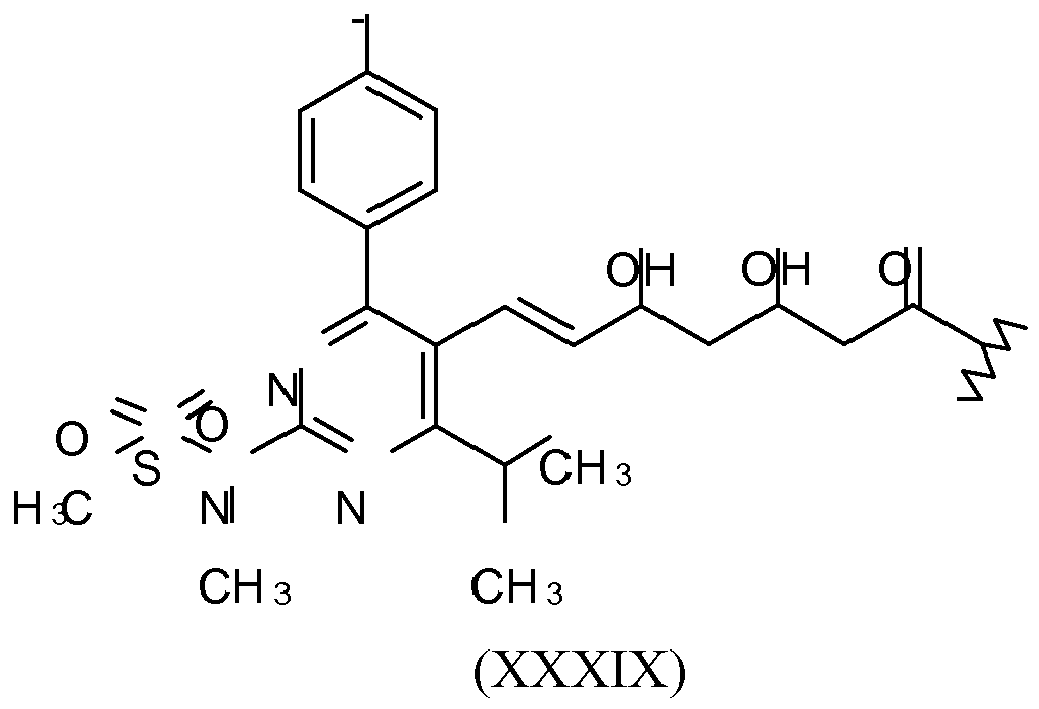
EP 1 194 397 . - The general synthesis of nitric oxide-releasing of formula (Ia) wherein M is selected from the residues of formulae (XXXIV)-(XXXIX) and the synthesis of pravastatin 4-(nitrooxy)butyl ester are described in
WO 2004/105754 . - Muscular dystrophy model (α-sarcoglycan-deficient mice). Reference for animal model: Duclos F. et al. J Cell Biol. 1998 Sep 21;142(6):1461-71.
- The tested compounds are:
- 2-acetyloxy benzoic acid 3-(nitrooxymethyl) benzoate of formula (Ib);
- pravastatin 4-(nitrooxy)butyl ester which of formula (XXXVb);
- 2-fluoro-alfa-methyl-4[1,1'-biphenyl]4-acetic acid 4-nitrooxybutyl ester of formula (IIIb);
- prednisolone as reference corticosteroid drug.
- Four groups of α-sarcoglycan (SG)-null C57BL/6 mice were treated with 2-acetyloxy benzoic acid 3-(nitrooxymethyl) benzoate (compound Ib) (100 mg/kg), pravastatin 4-(nitrooxy)butyl ester (compound XXXVb)(12 mg/kg), 2-fluoro-alfa-methyl-4[1,1'-biphenyl]4-acetic acid 4-nitrooxybutyl ester (compound IIIb)(30 mg/kg), prednisolone (3 mg/kg) or vehicle, administered daily in the diet.
- At indicated time-points (ranging from 20 to 80 days) skeletal muscle function was tested by the free wheel test. 24 hours later animals were sacrificed, tissue isolated and histological characteristics analysed. Infiltrates were assessed after staining with the Azan Mallory technique; Necrotic fibres were measured in hematoxilin-stained sections; creatin kinase was measured using a commercially available kit on blood samples obtained 24 hours prior to the wheel test. (Sampaolesi M., et al Science 301, 487-492, 2003). The data are reported in table 1.
- Free wheel running: Voluntary wheel running was used as the exercise paradigm to avoid any physiological changes that may occur due to the stress of forced treadmill running. Mice were housed singly for a 24 hour period in a polycarbonate running wheel equipped with a magnetic counter, the output of which was sent to a speedometer, allowing quantification of the number of revolutions per day. The data are reported in table 2.
- Creatine kinase activity measurements: quantitative and kinetic determination of creatine kinase activity in serum of control and drug treated-animals was measured using creatine kinase reagent (Sigma), according to the manufacturer's instructions. Blood was collected from tail of 2-7 months-old mice and serum obtained after centrifugation at 13.000 rpm for 10 minutes was stored at -80°C before measurements. The data are reported in table 1.
- Histology: Diaphragm and tibialis anterior of untreated and drug-treated mice were isolated and included in Killik frozen section medium, quickly frozen and cut into 8-µm thick sections with the muscle fibres oriented transversely using a cryostat. Sections were stained with either Hematoxylin & Eosin or Azan Mallory, to evaluate the number of inflammatory infiltrates and necrotic fibres (18-10 sections for tissue). The data are reported in table 1.
- The results show that the tested compounds (Ib), (XXXVb) and (IIIb) were significantly effective in reducing the histological, functional and biochemical alterations which typically occur in these animals. In particular, treated animals showed significantly reduced inflammatory infiltrates and almost undetectable necrotic fibres. (Table 1)
- Plasma levels of creatin kinase, a hallmark of muscle damage, were significantly lower in treated animals; consistently, they performed significantly better on the free-wheel running test. (table 2)
- Altogether the data show that the compounds of the present invention have a better profile as compared to prednisolone that is the drug of choice for this pathology.
Table 1 Compound Days of treat. Histology data N° of inflammatory Infiltrates/section N° of necrotic Fibres/section Control (n=3) 80 192.6 ± 46.5 263.2 ± 43 (XXXVb) (n=5) 80 54.2 ± 8.05** 35 ± 2.1** (Ib) (n=5) 80 91.3 ± 34.5* 124.1 ± 33** (IIIb) (n=5) 80 84.2 ± 22.5** 48.4 ± 2.3** Prednisolone 80 59.4 ± 7.00** 197.1 ± 23** **P < 0.01; *P < 0.05 vs. control Table 2 Compound Days of treatment CK plasma level (U/ml) Free wheel test (km/24h) Control (n=3) 20 595.2 ± 87 0.34 ± 0.02 40 892.0 ± 96 0.06 ± 0.03 60 844.3 ± 50 0.11 ± 0.02 80 979.8 ± 91 0.14 ± 0.05 (XXXVb) (n=5) 20 440.6 ± 33** 0.55 ± 0.03** 40 488.2 ± 96.5* 0.58 ± 0.01** 60 627.4 ± 69.3** 0.54 ± 0.03** 80 614.8 ± 37** 0.65 ± 0.05** (Ib) (n=5) 20 665.6 ± 51 0.65 ± 0.07** 40 944.0 ± 95.5 0.42 ± 0.08** 60 444.2 ± 20.2** 0.31 ± 0.1 * 80 494.6 ± 56.1** (IIIb) (n=5) 20 662.6 ± 41 40 824.0 ± 90.5 60 648.2 ± 25.2** 80 482.3 ± 51.2** 0.95 ± 0.1** Prednisolone 20 440.6 ± 33** 40 488.2 ± 96.5* 60 711.3 ± 69.3** 80 717.6 ± 31.1** 0.55 ± 0.1** **P < 0.01; *P < 0.05 vs. control
Claims (3)
- A nitric oxide releasing compound of formula (Ia)
M-X-Y-ONO2 (Ia)
or enantiomers or diastereoisomers thereof for use in the treatment of muscular dystrophies, wherein in the general formula (Ia) M, X and Y have the following meanings:M is the residue selected from:wherein


Y is a bivalent radical having the following meanings:a)- straight or branched C1-C20 alkylene, being optionally substituted with one or more of the substituents selected from the group consisting of: halogen atoms, hydroxy, -ONO2 or T, wherein T is- OC(O)(C1-C10 alkyl)-ONO2 or -O(C1-C10 alkyl)-ONO2; more preferably Y is C1-C10 alkylene;- C5-C7 cycloalkylene group optionally substituted with linear or branched C1-C10 alkyl group, preferably CH3;b) c)wherein n is an integer from 0 to 20, preferably n is an integer from 0 to 5, more preferably n is 0;
n1 is an integer from 1 to 20, preferably n1 is an integer from 1 to 5, more preferably n1 is 1;
with the proviso that when Y is selected from the bivalent radicals mentioned under b)and c) then the -ONO2 group of formula (I) is bound to-(CH2)n 1-;d)wherein
X1 = -OCO- or -COO- and R2 is H or CH3;
na is an integer from 1 to 20; preferably n is an integer from 1 to 5; n2 is an integer from 0 to 2;e) Y1 is -CH2-CH2-(CH2)n 2-; or -CH=CH-(CH2)n 2-;X1, na, n2 and R2 are as defined above;f)
na and R2 are as defined above, R3 is H or -COCH3;
with the proviso that when Y is selected from the bivalent radicals mentioned under d)-f) then the -ONO2 group of formula (I) is bound to -(CH2)na;
with the proviso that when X is -NR1-, wherein R1 is as above defined Y cannot be f);g)

X2 is -O- or -S-;
n3 is an integer from 1 to 6, preferably from 1 to 4, and
R2 is as defined above. - A nitric oxide releasing compound of formula (Ia) for use according to claim 1 wherein Y is a straight or branched C1-C10 alkylene.
- A nitric oxide releasing compound of formula (Ia) for use according to claim 1 or 2 wherein Y is a straight C4 alkylene chain.
Applications Claiming Priority (2)
| Application Number | Priority Date | Filing Date | Title |
|---|---|---|---|
| US76475506P | 2006-02-03 | 2006-02-03 | |
| EP07712084.8A EP1978947B1 (en) | 2006-02-03 | 2007-01-23 | Nitrooxyderivatives for use in the treatment of muscular dystrophies |
Related Parent Applications (2)
| Application Number | Title | Priority Date | Filing Date |
|---|---|---|---|
| EP07712084.8A Division EP1978947B1 (en) | 2006-02-03 | 2007-01-23 | Nitrooxyderivatives for use in the treatment of muscular dystrophies |
| EP07712084.8A Division-Into EP1978947B1 (en) | 2006-02-03 | 2007-01-23 | Nitrooxyderivatives for use in the treatment of muscular dystrophies |
Publications (1)
| Publication Number | Publication Date |
|---|---|
| EP2786749A1 true EP2786749A1 (en) | 2014-10-08 |
Family
ID=38004694
Family Applications (2)
| Application Number | Title | Priority Date | Filing Date |
|---|---|---|---|
| EP07712084.8A Active EP1978947B1 (en) | 2006-02-03 | 2007-01-23 | Nitrooxyderivatives for use in the treatment of muscular dystrophies |
| EP20140175223 Withdrawn EP2786749A1 (en) | 2006-02-03 | 2007-01-23 | Use of nitrooxyderivative of drug for the treatment of muscular dystrophies |
Family Applications Before (1)
| Application Number | Title | Priority Date | Filing Date |
|---|---|---|---|
| EP07712084.8A Active EP1978947B1 (en) | 2006-02-03 | 2007-01-23 | Nitrooxyderivatives for use in the treatment of muscular dystrophies |
Country Status (17)
| Country | Link |
|---|---|
| US (1) | US8575222B2 (en) |
| EP (2) | EP1978947B1 (en) |
| JP (1) | JP5745210B2 (en) |
| KR (1) | KR20080097989A (en) |
| CN (1) | CN101378739B (en) |
| AU (1) | AU2007211508B2 (en) |
| CA (1) | CA2641816C (en) |
| DK (1) | DK1978947T3 (en) |
| ES (1) | ES2520893T3 (en) |
| IL (1) | IL192299A0 (en) |
| NZ (1) | NZ569396A (en) |
| PL (1) | PL1978947T3 (en) |
| PT (1) | PT1978947E (en) |
| RU (2) | RU2429828C2 (en) |
| SI (1) | SI1978947T1 (en) |
| WO (1) | WO2007088123A2 (en) |
| ZA (1) | ZA200805716B (en) |
Families Citing this family (27)
| Publication number | Priority date | Publication date | Assignee | Title |
|---|---|---|---|---|
| AU2006249323B2 (en) | 2005-05-27 | 2012-08-30 | The University Of North Carolina At Chapel Hill | Nitric oxide-releasing particles for nitric oxide therapeutics and biomedical applications |
| JP5537152B2 (en) | 2006-08-01 | 2014-07-02 | フリクサス ファーマシューティカルズ, インコーポレイテッド | Treatment for chronic progressive heart failure |
| AU2008238143A1 (en) * | 2007-04-13 | 2008-10-23 | Nicox S.A. | Crystalline forms of atorvastatin 4-(nitrooxy) butyl ester |
| EP2719389B1 (en) | 2007-12-17 | 2016-07-06 | The Regents Of The University Of Michigan | Compositions and methods for treating and preventing skeletal muscle deficiencies |
| EP2257340A2 (en) * | 2008-04-04 | 2010-12-08 | BioMarin IGA Limited | Compounds for treating muscular dystrophy |
| WO2010108843A1 (en) | 2009-03-27 | 2010-09-30 | Nicox S.A. | Use of nitrooxyderivative of paracetamol for the treatment of muscular dystrophies |
| US9919072B2 (en) | 2009-08-21 | 2018-03-20 | Novan, Inc. | Wound dressings, methods of using the same and methods of forming the same |
| CA3062005C (en) | 2009-08-21 | 2022-02-15 | Novan, Inc. | Topical gels comprising nitric oxide-releasing polysiloxane macromolecules and uses thereof |
| US9023890B2 (en) | 2009-12-02 | 2015-05-05 | The Charlotte-Mecklenburg Hospital Authority | Nitrate esters and their use for the treatment of muscle and muscle related diseases |
| US8591876B2 (en) | 2010-12-15 | 2013-11-26 | Novan, Inc. | Methods of decreasing sebum production in the skin |
| WO2012118829A2 (en) | 2011-02-28 | 2012-09-07 | Novan, Inc. | Tertiary s-nitrosothiol-modified nitricoxide-releasing xerogels and methods of using the same |
| US9452117B2 (en) | 2011-06-01 | 2016-09-27 | The Charlotte-Mecklenburg Hospital Authority | Nitrate esters and their use for the treatment of muscle and muscle related diseases |
| WO2014111957A1 (en) | 2013-01-21 | 2014-07-24 | Apparao Satyam | Nitric oxide releasing prodrugs of therapeutic agents |
| RU2517259C1 (en) * | 2013-03-06 | 2014-05-27 | Федеральное государственное бюджетное учреждение науки Государственный научный центр Российской Федерации - Институт медико-биологических проблем Российской академии наук (ГНЦ РФ-ИМБП РАН) | Method for preventing and reducing destruction of skeletal proteins of atrophied skeletal muscles caused by hypokinesia and/or discharge by gravity |
| WO2014169976A1 (en) * | 2013-04-18 | 2014-10-23 | Nicox Science Ireland | Quinone based nitric oxide donating compounds |
| US9974767B2 (en) | 2014-07-14 | 2018-05-22 | University Of Washington | Statins in the treatment of muscular dystrophies and myopathies |
| US10993993B2 (en) | 2015-05-28 | 2021-05-04 | Immunoforge Co., Ltd. | Pharmaceutical composition for treating muscle atrophy or sarcopenia including glucagon-like peptide (GLP-1) or GLP-1 receptor agonist |
| KR101661332B1 (en) | 2015-05-28 | 2016-09-29 | (의료)길의료재단 | Pharmaceutical composition for treating muscle atrophy comprising glucagon like-peptide-1 receptor agonist |
| EP3680241A1 (en) | 2017-03-20 | 2020-07-15 | Forma Therapeutics, Inc. | Pyrrolopyrrole compositions as pyruvate kinase (pkr) activators |
| US11364244B2 (en) | 2018-04-25 | 2022-06-21 | Oncocross Co., Ltd. | Compositions for treatment of muscular disorders |
| WO2020055186A1 (en) | 2018-09-14 | 2020-03-19 | 고려대학교 산학협력단 | Pharmaceutical composition for preventing or treating obesity or sarcopenia, containing if1 as active ingredient |
| US10675274B2 (en) | 2018-09-19 | 2020-06-09 | Forma Therapeutics, Inc. | Activating pyruvate kinase R |
| WO2020061255A1 (en) | 2018-09-19 | 2020-03-26 | Forma Therapeutics, Inc. | Activating pyruvate kinase r |
| HUE072832T2 (en) | 2019-09-19 | 2025-12-28 | Novo Nordisk Healthcare Ag | Pyruvate kinase r (pkr) activating compositions |
| US12128035B2 (en) | 2021-03-19 | 2024-10-29 | Novo Nordisk Health Care Ag | Activating pyruvate kinase R |
| KR102272616B1 (en) | 2021-03-25 | 2021-07-05 | 주식회사 엔테로바이옴 | Pharmaceutical composition for preventing or treating muscular atrophy comprising feacalibacterium prausnitzii strain |
| KR102329853B1 (en) | 2021-03-25 | 2021-11-23 | 주식회사 엔테로바이옴 | Pharmaceutical composition for preventing or treating muscular atrophy comprising akkermansia muciniphila strain |
Citations (6)
| Publication number | Priority date | Publication date | Assignee | Title |
|---|---|---|---|---|
| WO1995030641A1 (en) * | 1994-05-10 | 1995-11-16 | Nicox S.A. | Nitro compounds and their compositions having anti-inflammatory, analgesic and anti-thrombotic acitivities |
| WO2000053191A2 (en) | 1999-03-11 | 2000-09-14 | The University Of Manitoba | Modulation of skeletal muscle precursor cell activation |
| EP1194397A1 (en) | 1999-07-09 | 2002-04-10 | Nicox S.A. | A process for obtaining (nitroxymethyl)phenyl esters of salicylic acid derivatives |
| EP1473288A1 (en) * | 1996-09-04 | 2004-11-03 | Nicox S.A. | Nitric ester derivatives of COX-2 inhibitors and their use for treating inflammation and cardiovascular diseases |
| WO2004105754A1 (en) | 2003-05-27 | 2004-12-09 | Nicox S.A. | Nitrooxyderivatives of fluvastatin, pravastatin, cerivastatin, atorvastatin and rosuvastatin as cholesterol-reducing agents with improved anti-inflammatory, antithrombotic and antiplatelet activity |
| WO2005023305A2 (en) * | 2003-09-10 | 2005-03-17 | Inpharmatica Limited | Modulating cell activity by using an agent that reduces the level of cholesterol within a cell |
Family Cites Families (8)
| Publication number | Priority date | Publication date | Assignee | Title |
|---|---|---|---|---|
| US5583101A (en) * | 1994-07-15 | 1996-12-10 | Harvard College | Use of nitrogen oxide species and adducts to inhibit skeletal muscle contraction |
| FR2794647A1 (en) * | 1999-06-11 | 2000-12-15 | Centre Nat Rech Scient | PHARMACEUTICAL COMPOSITIONS COMPRISING NO OR AT LEAST A COMPOUND CAPABLE OF RELEASING OR INDUCING THE FORMATION OF NO IN CELLS |
| IT1313596B1 (en) * | 1999-08-04 | 2002-09-09 | Nicox Sa | PROCESS FOR THE PREPARATION OF NITROXIALKYL ESTERS OF NAPROXENE |
| ITMI20011744A1 (en) * | 2001-08-09 | 2003-02-09 | Nicox Sa | DRUGS FOR VASCULOPATHIES |
| ITMI20021392A1 (en) * | 2002-06-25 | 2003-12-29 | Nicox Sa | PHARMACEUTICAL FORMS FOR THE ORAL ADMINISTRATION OF LIQUID DRUGS AT AMBIENT TEMPERATURE EQUIPPED WITH BETTER BIOAVAILABILITY |
| WO2005023189A2 (en) * | 2003-09-03 | 2005-03-17 | Pharmacia Corporation | Method of cox-2 selective inhibitor and nitric oxide-donating agent |
| WO2006130982A1 (en) * | 2005-06-09 | 2006-12-14 | University Of Manitoba | Compositions and methods for enhancing nitric oxide delivery |
| WO2007088050A2 (en) | 2006-02-03 | 2007-08-09 | San Raffaele Centro Fond | Method of treatment for muscular dystrophy |
-
2007
- 2007-01-23 DK DK07712084.8T patent/DK1978947T3/en active
- 2007-01-23 US US12/159,577 patent/US8575222B2/en not_active Expired - Fee Related
- 2007-01-23 PT PT77120848T patent/PT1978947E/en unknown
- 2007-01-23 RU RU2008135153/15A patent/RU2429828C2/en not_active IP Right Cessation
- 2007-01-23 PL PL07712084T patent/PL1978947T3/en unknown
- 2007-01-23 AU AU2007211508A patent/AU2007211508B2/en not_active Ceased
- 2007-01-23 SI SI200731542T patent/SI1978947T1/en unknown
- 2007-01-23 EP EP07712084.8A patent/EP1978947B1/en active Active
- 2007-01-23 KR KR1020087015930A patent/KR20080097989A/en not_active Ceased
- 2007-01-23 NZ NZ569396A patent/NZ569396A/en not_active IP Right Cessation
- 2007-01-23 ES ES07712084.8T patent/ES2520893T3/en active Active
- 2007-01-23 RU RU2011118522/04A patent/RU2560144C2/en not_active IP Right Cessation
- 2007-01-23 WO PCT/EP2007/050630 patent/WO2007088123A2/en not_active Ceased
- 2007-01-23 CA CA2641816A patent/CA2641816C/en not_active Expired - Fee Related
- 2007-01-23 JP JP2008552778A patent/JP5745210B2/en not_active Expired - Fee Related
- 2007-01-23 CN CN200780004219.7A patent/CN101378739B/en not_active Expired - Fee Related
- 2007-01-23 EP EP20140175223 patent/EP2786749A1/en not_active Withdrawn
-
2008
- 2008-06-19 IL IL192299A patent/IL192299A0/en unknown
- 2008-06-30 ZA ZA200805716A patent/ZA200805716B/en unknown
Patent Citations (7)
| Publication number | Priority date | Publication date | Assignee | Title |
|---|---|---|---|---|
| WO1995030641A1 (en) * | 1994-05-10 | 1995-11-16 | Nicox S.A. | Nitro compounds and their compositions having anti-inflammatory, analgesic and anti-thrombotic acitivities |
| EP0759899A1 (en) | 1994-05-10 | 1997-03-05 | Nicox S.A. | Nitro compounds and their compositions having anti-inflammatory, analgesic and anti-thrombotic acitivities |
| EP1473288A1 (en) * | 1996-09-04 | 2004-11-03 | Nicox S.A. | Nitric ester derivatives of COX-2 inhibitors and their use for treating inflammation and cardiovascular diseases |
| WO2000053191A2 (en) | 1999-03-11 | 2000-09-14 | The University Of Manitoba | Modulation of skeletal muscle precursor cell activation |
| EP1194397A1 (en) | 1999-07-09 | 2002-04-10 | Nicox S.A. | A process for obtaining (nitroxymethyl)phenyl esters of salicylic acid derivatives |
| WO2004105754A1 (en) | 2003-05-27 | 2004-12-09 | Nicox S.A. | Nitrooxyderivatives of fluvastatin, pravastatin, cerivastatin, atorvastatin and rosuvastatin as cholesterol-reducing agents with improved anti-inflammatory, antithrombotic and antiplatelet activity |
| WO2005023305A2 (en) * | 2003-09-10 | 2005-03-17 | Inpharmatica Limited | Modulating cell activity by using an agent that reduces the level of cholesterol within a cell |
Non-Patent Citations (8)
| Title |
|---|
| BREDT D S: "NO skeletal muscle derived relaxing factor in Duchenne muscular dystrophy.", PROCEEDINGS OF THE NATIONAL ACADEMY OF SCIENCES OF THE UNITED STATES OF AMERICA 8 DEC 1998, vol. 95, no. 25, 8 December 1998 (1998-12-08), pages 14592 - 14593, XP002433416, ISSN: 0027-8424 * |
| BREDT D. S., PROC. NATL. ACAD. SCI. USA, vol. 95, 1998, pages 14592 - 14593 |
| CHIROLI V ET AL: "Nitric oxide-donating non-steroidal anti-inflammatory drugs: the case of nitroderivatives of aspirin", EUROPEAN JOURNAL OF MEDICINAL CHEMISTRY, EDITIONS SCIENTIFIQUE ELSEVIER, PARIS, FR, vol. 38, no. 4, April 2003 (2003-04-01), pages 441 - 446, XP004425019, ISSN: 0223-5234 * |
| DUCLOS F. ET AL., J CELL BIOL., vol. 142, no. 6, 21 September 1998 (1998-09-21), pages 1461 - 71 |
| ENGVALL EVA ET AL: "The new frontier in muscular dystrophy research: booster genes.", THE FASEB JOURNAL : OFFICIAL PUBLICATION OF THE FEDERATION OF AMERICAN SOCIETIES FOR EXPERIMENTAL BIOLOGY SEP 2003, vol. 17, no. 12, September 2003 (2003-09-01), pages 1579 - 1584, XP002433417, ISSN: 1530-6860 * |
| ONGINI ENNIO ET AL: "Nitric oxide (NO)-releasing statin derivatives, a class of drugs showing enhanced antiproliferative and antiinflammatory properties.", PROCEEDINGS OF THE NATIONAL ACADEMY OF SCIENCES OF THE UNITED STATES OF AMERICA 1 JUN 2004, vol. 101, no. 22, 1 June 2004 (2004-06-01), pages 8497 - 8502, XP002433418, ISSN: 0027-8424 * |
| SAMPAOLESI M. ET AL., SCIENCE, vol. 301, 2003, pages 487 - 492 |
| WEHLING M ET AL: "A nitric oxide synthase transgene ameliorates muscular dystrophy in mdx mice.", THE JOURNAL OF CELL BIOLOGY 1 OCT 2001, vol. 155, no. 1, 1 October 2001 (2001-10-01), pages 123 - 131, XP002433415, ISSN: 0021-9525 * |
Also Published As
| Publication number | Publication date |
|---|---|
| WO2007088123A2 (en) | 2007-08-09 |
| RU2429828C2 (en) | 2011-09-27 |
| RU2011118522A (en) | 2012-11-20 |
| NZ569396A (en) | 2011-06-30 |
| PT1978947E (en) | 2014-11-03 |
| ES2520893T3 (en) | 2014-11-12 |
| US20090093510A1 (en) | 2009-04-09 |
| CA2641816A1 (en) | 2007-08-09 |
| AU2007211508A1 (en) | 2007-08-09 |
| CN101378739B (en) | 2014-06-04 |
| CA2641816C (en) | 2016-01-05 |
| EP1978947B1 (en) | 2014-08-13 |
| PL1978947T3 (en) | 2015-03-31 |
| AU2007211508B2 (en) | 2012-08-23 |
| HK1129592A1 (en) | 2009-12-04 |
| US8575222B2 (en) | 2013-11-05 |
| KR20080097989A (en) | 2008-11-06 |
| SI1978947T1 (en) | 2014-12-31 |
| RU2008135153A (en) | 2010-03-10 |
| CN101378739A (en) | 2009-03-04 |
| ZA200805716B (en) | 2009-11-25 |
| JP5745210B2 (en) | 2015-07-08 |
| DK1978947T3 (en) | 2014-11-03 |
| RU2560144C2 (en) | 2015-08-20 |
| WO2007088123A3 (en) | 2007-09-20 |
| EP1978947A2 (en) | 2008-10-15 |
| JP2009525302A (en) | 2009-07-09 |
| IL192299A0 (en) | 2009-08-03 |
Similar Documents
| Publication | Publication Date | Title |
|---|---|---|
| EP1978947B1 (en) | Nitrooxyderivatives for use in the treatment of muscular dystrophies | |
| US8481570B2 (en) | 1-methylnicotinaide derivatives and formulations of treatment of lipoprotein abnormalities | |
| JP2021155436A (en) | Method of using cyclodextrin | |
| JP2022504601A (en) | MST1 kinase inhibitors and their use | |
| PL194329B1 (en) | Probucol monoesters in treating circulatory system and inflammatory diseases | |
| CA2139851A1 (en) | Method of treating hyperproliferative vascular disease | |
| JP2005533810A (en) | Novel anticholesterol composition and method of use thereof | |
| RU2204388C2 (en) | Ibuprofen thioether as inhibitor depending upon nf-kb formation of inflammation and pain mediators | |
| KR20170095302A (en) | Pharmaceutical combination comprising a selective s1p1 receptor agonist | |
| JP2016522831A (en) | Cryopilin inhibitors for preventing and treating inflammation | |
| ES2394984T3 (en) | New combination for use in the treatment of inflammatory disorders | |
| US8198317B2 (en) | Methylenedioxy phenolic compounds and their use to treat disease | |
| JP2005526768A (en) | Dexanabinol and dexanabinol analogues that regulate inflammation-related genes | |
| US8802726B2 (en) | Use of nitrooxyderivative of drug for the treatment of muscular dystrophies | |
| ES2395120T3 (en) | Combination of pemirolast and ramotrobán for use in the treatment of inflammatory disorders | |
| Kurata et al. | Cerivastatin induces carotid artery plaque stabilization independently of cholesterol lowering in patients with hypercholesterolaemia | |
| HK1129592B (en) | Use of nitrooxyderivative of drug for the treatment of muscular dystrophies | |
| Caner et al. | Effects of orlistat and its relationship with nitric oxide in the small intestinal mucosa | |
| WO2010108843A1 (en) | Use of nitrooxyderivative of paracetamol for the treatment of muscular dystrophies | |
| US20250064776A1 (en) | Treatment of amyotrophic lateral sclerosis using pkc activators |
Legal Events
| Date | Code | Title | Description |
|---|---|---|---|
| PUAI | Public reference made under article 153(3) epc to a published international application that has entered the european phase |
Free format text: ORIGINAL CODE: 0009012 |
|
| 17P | Request for examination filed |
Effective date: 20140701 |
|
| AC | Divisional application: reference to earlier application |
Ref document number: 1978947 Country of ref document: EP Kind code of ref document: P |
|
| AK | Designated contracting states |
Kind code of ref document: A1 Designated state(s): AT BE BG CH CY CZ DE DK EE ES FI FR GB GR HU IE IS IT LI LT LU LV MC NL PL PT RO SE SI SK TR |
|
| AX | Request for extension of the european patent |
Extension state: AL BA HR MK RS |
|
| RAP1 | Party data changed (applicant data changed or rights of an application transferred) |
Owner name: NICOX SCIENCE IRELAND |
|
| RIN1 | Information on inventor provided before grant (corrected) |
Inventor name: BRUNELLI, SILVIA Inventor name: COSSU, GIULIO Inventor name: CLEMENTI, EMILIO Inventor name: ONGINI, ENNIO |
|
| R17P | Request for examination filed (corrected) |
Effective date: 20150319 |
|
| RAX | Requested extension states of the european patent have changed |
Extension state: RS Payment date: 20150319 Extension state: BA Payment date: 20150319 Extension state: HR Payment date: 20150319 Extension state: MK Payment date: 20150319 Extension state: AL Payment date: 20150319 |
|
| RBV | Designated contracting states (corrected) |
Designated state(s): AT BE BG CH CY CZ DE DK EE ES FI FR GB GR HU IE IS IT LI LT LU LV MC NL PL PT RO SE SI SK TR |
|
| GRAP | Despatch of communication of intention to grant a patent |
Free format text: ORIGINAL CODE: EPIDOSNIGR1 |
|
| INTG | Intention to grant announced |
Effective date: 20150924 |
|
| STAA | Information on the status of an ep patent application or granted ep patent |
Free format text: STATUS: THE APPLICATION IS DEEMED TO BE WITHDRAWN |
|
| 18D | Application deemed to be withdrawn |
Effective date: 20160205 |