EP2785340B1 - Compositions and methods for treating hepatitis c virus - Google Patents
Compositions and methods for treating hepatitis c virus Download PDFInfo
- Publication number
- EP2785340B1 EP2785340B1 EP12795307.3A EP12795307A EP2785340B1 EP 2785340 B1 EP2785340 B1 EP 2785340B1 EP 12795307 A EP12795307 A EP 12795307A EP 2785340 B1 EP2785340 B1 EP 2785340B1
- Authority
- EP
- European Patent Office
- Prior art keywords
- weeks
- ribavirin
- unit dosage
- dosage form
- treatment
- Prior art date
- Legal status (The legal status is an assumption and is not a legal conclusion. Google has not performed a legal analysis and makes no representation as to the accuracy of the status listed.)
- Active
Links
- 0 *C1(C(N(C=CC(N2)=O)C2=O)OC(COP(Oc2ccccc2)=O)C1O)F Chemical compound *C1(C(N(C=CC(N2)=O)C2=O)OC(COP(Oc2ccccc2)=O)C1O)F 0.000 description 1
Images

Classifications
-
- A—HUMAN NECESSITIES
- A61—MEDICAL OR VETERINARY SCIENCE; HYGIENE
- A61K—PREPARATIONS FOR MEDICAL, DENTAL OR TOILETRY PURPOSES
- A61K31/00—Medicinal preparations containing organic active ingredients
- A61K31/70—Carbohydrates; Sugars; Derivatives thereof
- A61K31/7042—Compounds having saccharide radicals and heterocyclic rings
- A61K31/7052—Compounds having saccharide radicals and heterocyclic rings having nitrogen as a ring hetero atom, e.g. nucleosides, nucleotides
- A61K31/706—Compounds having saccharide radicals and heterocyclic rings having nitrogen as a ring hetero atom, e.g. nucleosides, nucleotides containing six-membered rings with nitrogen as a ring hetero atom
- A61K31/7064—Compounds having saccharide radicals and heterocyclic rings having nitrogen as a ring hetero atom, e.g. nucleosides, nucleotides containing six-membered rings with nitrogen as a ring hetero atom containing condensed or non-condensed pyrimidines
- A61K31/7068—Compounds having saccharide radicals and heterocyclic rings having nitrogen as a ring hetero atom, e.g. nucleosides, nucleotides containing six-membered rings with nitrogen as a ring hetero atom containing condensed or non-condensed pyrimidines having oxo groups directly attached to the pyrimidine ring, e.g. cytidine, cytidylic acid
- A61K31/7072—Compounds having saccharide radicals and heterocyclic rings having nitrogen as a ring hetero atom, e.g. nucleosides, nucleotides containing six-membered rings with nitrogen as a ring hetero atom containing condensed or non-condensed pyrimidines having oxo groups directly attached to the pyrimidine ring, e.g. cytidine, cytidylic acid having two oxo groups directly attached to the pyrimidine ring, e.g. uridine, uridylic acid, thymidine, zidovudine
-
- A—HUMAN NECESSITIES
- A61—MEDICAL OR VETERINARY SCIENCE; HYGIENE
- A61K—PREPARATIONS FOR MEDICAL, DENTAL OR TOILETRY PURPOSES
- A61K31/00—Medicinal preparations containing organic active ingredients
- A61K31/33—Heterocyclic compounds
- A61K31/395—Heterocyclic compounds having nitrogen as a ring hetero atom, e.g. guanethidine or rifamycins
- A61K31/41—Heterocyclic compounds having nitrogen as a ring hetero atom, e.g. guanethidine or rifamycins having five-membered rings with two or more ring hetero atoms, at least one of which being nitrogen, e.g. tetrazole
- A61K31/4196—1,2,4-Triazoles
-
- A—HUMAN NECESSITIES
- A61—MEDICAL OR VETERINARY SCIENCE; HYGIENE
- A61K—PREPARATIONS FOR MEDICAL, DENTAL OR TOILETRY PURPOSES
- A61K31/00—Medicinal preparations containing organic active ingredients
- A61K31/33—Heterocyclic compounds
- A61K31/395—Heterocyclic compounds having nitrogen as a ring hetero atom, e.g. guanethidine or rifamycins
- A61K31/495—Heterocyclic compounds having nitrogen as a ring hetero atom, e.g. guanethidine or rifamycins having six-membered rings with two or more nitrogen atoms as the only ring heteroatoms, e.g. piperazine or tetrazines
- A61K31/505—Pyrimidines; Hydrogenated pyrimidines, e.g. trimethoprim
- A61K31/513—Pyrimidines; Hydrogenated pyrimidines, e.g. trimethoprim having oxo groups directly attached to the heterocyclic ring, e.g. cytosine
-
- A—HUMAN NECESSITIES
- A61—MEDICAL OR VETERINARY SCIENCE; HYGIENE
- A61K—PREPARATIONS FOR MEDICAL, DENTAL OR TOILETRY PURPOSES
- A61K31/00—Medicinal preparations containing organic active ingredients
- A61K31/66—Phosphorus compounds
- A61K31/675—Phosphorus compounds having nitrogen as a ring hetero atom, e.g. pyridoxal phosphate
-
- A—HUMAN NECESSITIES
- A61—MEDICAL OR VETERINARY SCIENCE; HYGIENE
- A61K—PREPARATIONS FOR MEDICAL, DENTAL OR TOILETRY PURPOSES
- A61K31/00—Medicinal preparations containing organic active ingredients
- A61K31/70—Carbohydrates; Sugars; Derivatives thereof
- A61K31/7042—Compounds having saccharide radicals and heterocyclic rings
- A61K31/7052—Compounds having saccharide radicals and heterocyclic rings having nitrogen as a ring hetero atom, e.g. nucleosides, nucleotides
- A61K31/7056—Compounds having saccharide radicals and heterocyclic rings having nitrogen as a ring hetero atom, e.g. nucleosides, nucleotides containing five-membered rings with nitrogen as a ring hetero atom
-
- A—HUMAN NECESSITIES
- A61—MEDICAL OR VETERINARY SCIENCE; HYGIENE
- A61K—PREPARATIONS FOR MEDICAL, DENTAL OR TOILETRY PURPOSES
- A61K9/00—Medicinal preparations characterised by special physical form
- A61K9/20—Pills, tablets, discs, rods
- A61K9/2004—Excipients; Inactive ingredients
- A61K9/2009—Inorganic compounds
-
- A—HUMAN NECESSITIES
- A61—MEDICAL OR VETERINARY SCIENCE; HYGIENE
- A61K—PREPARATIONS FOR MEDICAL, DENTAL OR TOILETRY PURPOSES
- A61K9/00—Medicinal preparations characterised by special physical form
- A61K9/20—Pills, tablets, discs, rods
- A61K9/2004—Excipients; Inactive ingredients
- A61K9/2013—Organic compounds, e.g. phospholipids, fats
-
- A—HUMAN NECESSITIES
- A61—MEDICAL OR VETERINARY SCIENCE; HYGIENE
- A61K—PREPARATIONS FOR MEDICAL, DENTAL OR TOILETRY PURPOSES
- A61K9/00—Medicinal preparations characterised by special physical form
- A61K9/20—Pills, tablets, discs, rods
- A61K9/2004—Excipients; Inactive ingredients
- A61K9/2013—Organic compounds, e.g. phospholipids, fats
- A61K9/2018—Sugars, or sugar alcohols, e.g. lactose, mannitol; Derivatives thereof, e.g. polysorbates
-
- A—HUMAN NECESSITIES
- A61—MEDICAL OR VETERINARY SCIENCE; HYGIENE
- A61K—PREPARATIONS FOR MEDICAL, DENTAL OR TOILETRY PURPOSES
- A61K9/00—Medicinal preparations characterised by special physical form
- A61K9/20—Pills, tablets, discs, rods
- A61K9/2004—Excipients; Inactive ingredients
- A61K9/2022—Organic macromolecular compounds
- A61K9/205—Polysaccharides, e.g. alginate, gums; Cyclodextrin
- A61K9/2054—Cellulose; Cellulose derivatives, e.g. hydroxypropyl methylcellulose
-
- A—HUMAN NECESSITIES
- A61—MEDICAL OR VETERINARY SCIENCE; HYGIENE
- A61P—SPECIFIC THERAPEUTIC ACTIVITY OF CHEMICAL COMPOUNDS OR MEDICINAL PREPARATIONS
- A61P1/00—Drugs for disorders of the alimentary tract or the digestive system
- A61P1/16—Drugs for disorders of the alimentary tract or the digestive system for liver or gallbladder disorders, e.g. hepatoprotective agents, cholagogues, litholytics
-
- A—HUMAN NECESSITIES
- A61—MEDICAL OR VETERINARY SCIENCE; HYGIENE
- A61P—SPECIFIC THERAPEUTIC ACTIVITY OF CHEMICAL COMPOUNDS OR MEDICINAL PREPARATIONS
- A61P31/00—Antiinfectives, i.e. antibiotics, antiseptics, chemotherapeutics
- A61P31/12—Antivirals
-
- A—HUMAN NECESSITIES
- A61—MEDICAL OR VETERINARY SCIENCE; HYGIENE
- A61P—SPECIFIC THERAPEUTIC ACTIVITY OF CHEMICAL COMPOUNDS OR MEDICINAL PREPARATIONS
- A61P31/00—Antiinfectives, i.e. antibiotics, antiseptics, chemotherapeutics
- A61P31/12—Antivirals
- A61P31/14—Antivirals for RNA viruses
-
- A—HUMAN NECESSITIES
- A61—MEDICAL OR VETERINARY SCIENCE; HYGIENE
- A61P—SPECIFIC THERAPEUTIC ACTIVITY OF CHEMICAL COMPOUNDS OR MEDICINAL PREPARATIONS
- A61P43/00—Drugs for specific purposes, not provided for in groups A61P1/00-A61P41/00
-
- Y—GENERAL TAGGING OF NEW TECHNOLOGICAL DEVELOPMENTS; GENERAL TAGGING OF CROSS-SECTIONAL TECHNOLOGIES SPANNING OVER SEVERAL SECTIONS OF THE IPC; TECHNICAL SUBJECTS COVERED BY FORMER USPC CROSS-REFERENCE ART COLLECTIONS [XRACs] AND DIGESTS
- Y02—TECHNOLOGIES OR APPLICATIONS FOR MITIGATION OR ADAPTATION AGAINST CLIMATE CHANGE
- Y02A—TECHNOLOGIES FOR ADAPTATION TO CLIMATE CHANGE
- Y02A50/00—TECHNOLOGIES FOR ADAPTATION TO CLIMATE CHANGE in human health protection, e.g. against extreme weather
- Y02A50/30—Against vector-borne diseases, e.g. mosquito-borne, fly-borne, tick-borne or waterborne diseases whose impact is exacerbated by climate change
Definitions
- compositions and unit dosage forms for the treatment of hepatitis C virus (HCV) infection comprising GS-7977 and at least one pharmaceutically acceptable excipient, as well as methods for making the said composition and unit dosage form.
- HCV hepatitis C virus
- methods for making the said composition and unit dosage form are also disclosed herein.
- a method of treating a subject, preferably a human, infected with hepatitis C virus said method comprising administering to the subject for a time period an effective amount of GS-7977 and an effective amount of ribavirin.
- HCV Hepatitis C virus
- the protein is phosphorylated at specific sites, primarily on serine residue within domains II and III, by host cell kinases.
- Ide et al. Gene (1997) 201: 151-158 ; Kaneko et al., Biochem. Biophys. Res. Commun. (1994) 205: 320-326 ; Katze et al., Virology (2000) 278: 501-513 ; Reed et al., J. Biol. Chem. (1999) 274: 28011-28018 ; Reed et al., J. Virol. (1997) 71: 7187-7197 ; and Tanji et al., J. Virol. (1995) 69: 3980-3986 .)
- PEG-IFN- ⁇ -2b Peginterferon alfa-2b
- PEGINTRON® Peginterferon alfa-2b
- PEGINTRON® Peginterferon alfa-2b
- genotype 1 patients who fail therapy with boceprevir and/or telaprevir in combination with peginterferon and ribavirin may develop undesirable NS3 protease inhibitor resistance.
- Pawlotsky, Hepatology (2011) 53(5): 1742-1751 . There is a need for improved treatment regimens that are more effective, safe, tolerable, shorter in duration, and which are associated with reduced rates of viral breakthrough and/or viral resistance.
- Genotypes There are several recognized HCV Genotypes (1, 2, 3, 4, 5, 6, 7, 8, 9, 10 and 11), which can be further categorized by different sub-types: 1 (1a, 1b, and 1c), 2 (2a, 2b, 2c), 3 (3a and 3b), 4 (4a, 4b, 4c, 4d, and 4e), 5 (5a), 6 (6a), 7 (7a and 7b), 8 (8a and 8b), 9 (9a), 10 (10a), and 11 (11a).
- Genotype 1 is the predominant form found in North and South America, Europe, Asia, Australia, and New Zealand. Genotypes 2 and 3 are also widely distributed throughout North America, Europe, Australia, East Asia and some portions of Africa.
- interferon-free refers to a treatment regimen that does not involve the administration of interferon or pegylated interferon to the subject.
- treatment is an approach for obtaining beneficial or desired clinical results.
- beneficial or desired clinical results include, but are not limited to, alleviation of symptoms, diminishment of extent of disease, stabilized (i.e., not worsening) state of disease, delay or slowing of disease progression, amelioration or palliation of the disease state, and remission (whether partial or total), whether detectable or undetectable.
- Treatment can also mean prolonging survival as compared to expected survival if not receiving treatment.
- Treatment is an intervention performed with the intention of preventing the development or altering the pathology of a disorder.
- treatment of an HCV infection, as used herein, also includes treatment or prophylaxis of a disease or a condition associated with or mediated by HCV infection, or the clinical symptoms thereof.
- the composition for the treatment of HCV comprises from about 25% to about 35% w/w of GS-7977.
- the composition comprises from about 30% to about 35% w/w of GS-7977.
- the composition comprises from about 25%, about 26%, about 27%, about 28%, about 29%, about 30%, about 31%, about 32%, about 33%, about 34%, or about 35% w/w of GS-7977.
- the composition comprises about 30% w/w of GS-7977.
- the composition comprises about 33% w/w of GS-7977.
- the composition comprises about 33.33% w/w of GS-7977.
- composition comprises crystalline GS-7977 having XRPD 2 ⁇ -reflections (°) at about: 6.1, 8.2, 10.4, 12.7, 17.2, 17.7, 18.0, 18.8, 19.4, 19.8, 20.1, 20.8, 21.8, and 23.3.
- the lubricant is magnesium stearate.
- the pharmaceutically acceptable excipient comprises: a) about 30% w/w of mannitol and about 30% w/w of microcrystalline cellulose; b) about 5 % w/w of croscarmellose sodium; c) about 0.5% w/w of colloidal silicon dioxide; and d) about 1.5% w/w of magnesium stearate.
- Tablets may be prepared according to methods known in the art, including dry granulation (e.g., roller compaction), wet granulation (e.g., fluid bed granulation and high shear granulation), and direct compression, and the type of excipients used will vary accordingly. It has been found that dry granulation is particularly suitable for providing high strength, low breakage tablets comprising relatively high concentrations of crystalline GS-7977 (e.g., about 33%), on a scale suitable for commercial production.
- an effective amount of GS-7977 and an effective amount of ribavirin are administered to the subject according to an interferon-free treatment regimen.
- the interferon-free treatment regimen consists of administering an effective amount of GS-7977 and an effective amount of ribavirin to the subject for the time period.
- the time period is selected from among from about 2 weeks to about 12 weeks, from about 3 weeks to about 12 weeks, from about 4 weeks to about 12 weeks, from about 5 weeks to about 12 weeks, from about 6 weeks to about 12 weeks, from about 7 weeks to about 12 weeks, from about 8 weeks to about 12 weeks, from about 9 weeks to about 12 weeks, from about 10 weeks to about 12 weeks, from about 11 weeks to about 12 weeks, and about 12 weeks.
- the time period is 12 weeks. In another example the time period is 8 weeks.
- the effective amount of ribavirin is a daily dose selected from about 600 mg to about 1400 mg, and from about 800 mg to about 1200 mg. In one example, the effective amount of ribavirin is a daily dose of about 1000 mg to about 1200 mg. In another example, the effective amount of ribavirin is a daily dose of about 1000 mg to about 1200 mg based on the subject's body weight. In another example, the effective amount of ribavirin is a daily dose of about 800 mg. In another example, the daily dose of ribavirin is administered to the subject QD, BID, TID, or QID. In a further example, the daily dose of ribavirin is administered to the subject BID.
- the effective amount of GS-7977 comprises a composition comprising GS-7977 and at least one pharmaceutically acceptable excipient as disclosed herein.
- the effective amount of GS-7977 comprises a unit dosage form comprising GS-7977 and at least one pharmaceutically acceptable excipient as disclosed herein.
- the composition does not comprise peginterferon.
- the effective amount of GS-7977 comprises from about 100 mg to about 800 mg, from about 200 mg to about 800 mg, from about 400 mg to about 800 mg, from about 600 mg to about 800 mg, from about 100 mg to about 600 mg, from about 100 mg to about 400 mg, from about 100 mg to about 200 mg, from about 200 mg to about 600 mg, from about 200 mg to about 400 mg, from about 400 mg to about 600 mg, and about 400 mg of GS-7977 administered to the subject daily.
- the composition comprises about 400 mg of GS-7977 administered to the subject QD.
- the use comprises administering an effective amount of GS-7977 and an effective amount of ribavirin to the subject for a time period selected from among from about 2 weeks to about 12 weeks, from about 3 weeks to about 12 weeks, from about 4 weeks to about 12 weeks, from about 5 weeks to about 12 weeks, from about 6 weeks to about 12 weeks, from about 7 weeks to about 12 weeks, from about 8 weeks to about 12 weeks, from about 9 weeks to about 12 weeks, from about 10 weeks to about 12 weeks, from about 11 weeks to about 12 weeks, and about 12 weeks.
- the time period is 12 weeks. In another example the time period is 8 weeks.
- the subject has an undetectable amount of HCV RNA for at least 12 weeks after the end of the time period. In one example, the subject has an undetectable amount of HCV RNA for at least 24 weeks after the end of the time period. In another example, the subject has an undetectable amount of HCV RNA for at least 36 weeks after the end of the time period. In a further example, the subject has an undetectable amount of HCV RNA for at least 48 weeks after the end of the time period.
- Formulations B2 and G2 in Table 1A prepared per a roller compaction/granulation process were further evaluated.
- the prototype tablet batches were packaged 30 tablets per bottle and placed on stability in 40°C/75% RH conditions, with each bottle containing a molecular sieve (Tri-Sorb®) dessicant.
- the data shown in Table 1B show a decrease in moisture level as the amount of mannitol is increased (concomitant with reduction in microcrystalline cellulose). Table 1B.
- Table C Another formulation (Tablet C ) was prepared containing GS-7977 polymorphic Form 6 (33.33%), mannitol (30.00%), microcrystalline cellulose (29.67%), croscarmellose sodium (5.00%), colloidal silicon dioxide (0.50%), and magnesium stearate (1.50%), as described in Table 3. While a low moisture grade of microcrystalline cellulose (PH 112) was used in the Form 1 formulation to improve the stability of Form 1 GS-7977, the microcrystalline cellulose grade was changed to PH 102 for the Tablet C formulation due to the non-hygroscopic nature of Form 6.
- PH 112 a low moisture grade of microcrystalline cellulose
- a Phase 2a, 3-cohort placebo-controlled study evaluated treatment with GS-7977 (100 mg, 200 mg or 400 mg QD) in combination with peginterferon and ribavirin in treatment-naive GT1 HCV subjects for 4 weeks, followed by up to an additional 44 weeks of treatment with SOC peginterferon and ribavirin.
- High RVR 88-94%) was observed for all three GS-7977 treatment groups.
- SVR-12 and SVR-24 was greatest in the 400 mg treatment group (86.7% and 80.0%, respectively).
- the Phase 2b PROTON study evaluated treatment with a combination of GS-7977, peginterferon, and ribavirin at daily dosage levels of 200 mg and 400 mg of GS-7977 for 12 weeks, followed by up to an additional 36 weeks of treatment with SOC peginterferon and ribavirin.
- a greater number of subjects experienced viral breakthrough after cessation of the GS-7977 200 mg dosage level while still receiving peginterferon/ribavirin treatment compared to no viral breakthroughs after cessation of the GS-7977 400 mg dosage level while still receiving peginterferon/ribavirin treatment.
- SVR-12 was 100% for HCV GT2 and GT3 treatment-naive patients who received a combination of GS-7977 and ribavirin for 12 weeks and 84% for HCV GT1 treatment-naive patients who received a combination of GS-7977 and ribavirin for 12 weeks, compared to 60% SVR-12 for HCV GT2 and GT3 treatment-naive patients who received GS-7977 alone.
- ribavirin alone, has been shown to have little to no effect on HCV RNA levels in human clinical trials, the foregoing clinical and in vitro data demonstrates that the combination of GS-7977 and ribavirin produces a synergistic reduction in HCV RNA levels.
- treatment arms in the ELECTRON trial receiving GS-7977 in combination with ribavirin compared to treatment arms also receiving peginterferon, reported reduced incidences of side effects, suggesting that interferon-free treatment with a combination of GS-7977 and ribavirin may offer advantages over treatment regimens involving peginterferon.
Landscapes
- Health & Medical Sciences (AREA)
- Life Sciences & Earth Sciences (AREA)
- Chemical & Material Sciences (AREA)
- Pharmacology & Pharmacy (AREA)
- General Health & Medical Sciences (AREA)
- Veterinary Medicine (AREA)
- Public Health (AREA)
- Animal Behavior & Ethology (AREA)
- Medicinal Chemistry (AREA)
- Epidemiology (AREA)
- Molecular Biology (AREA)
- General Chemical & Material Sciences (AREA)
- Nuclear Medicine, Radiotherapy & Molecular Imaging (AREA)
- Organic Chemistry (AREA)
- Chemical Kinetics & Catalysis (AREA)
- Biophysics (AREA)
- Virology (AREA)
- Engineering & Computer Science (AREA)
- Bioinformatics & Cheminformatics (AREA)
- Oncology (AREA)
- Inorganic Chemistry (AREA)
- Communicable Diseases (AREA)
- Gastroenterology & Hepatology (AREA)
- Pharmaceuticals Containing Other Organic And Inorganic Compounds (AREA)
- Medicines That Contain Protein Lipid Enzymes And Other Medicines (AREA)
- Medicinal Preparation (AREA)
- Medicines Containing Material From Animals Or Micro-Organisms (AREA)
Description
- Disclosed herein are a composition and unit dosage form for the treatment of hepatitis C virus (HCV) infection comprising GS-7977 and at least one pharmaceutically acceptable excipient, as well as methods for making the said composition and unit dosage form. Also disclosed herein is the use of such compositions and unit dosage forms in the treatment of hepatitis C virus infection in a human. Also disclosed herein is a method of treating a subject, preferably a human, infected with hepatitis C virus, said method comprising administering to the subject for a time period an effective amount of GS-7977 and an effective amount of ribavirin. In one example, the method comprises administering to the subject an interferon-free treatment regimen comprising an effective amount of GS-7977 and an effective amount of ribavirin. In a particular example, the method is sufficient to produce an undetectable amount of HCV RNA in the subject for at least 12 weeks after the end of the time period.
- Hepatitis C virus ("HCV") infection is a major health problem that leads to chronic liver disease, such as cirrhosis and hepatocellular carcinoma, in a substantial number of infected individuals, estimated by the World Health Organization to be about 3% of the world's population. (World Health Organization, Hepatitis C (2002).) According to the U.S. Centers for Disease Control and Prevention, HCV is the most common blood-borne infection in the United States, with an estimated 3.2 million people (1.8%) chronically infected in the United States alone. (U.S. Centers for Disease Control and Prevention, Viral Hepatitis Surveillance - United States, 2010; U.S. Centers for Disease Control and Prevention, Morbidity and Mortality Weekly Report 70(17): 537-539 (May 6, 2011).) An estimated 150-180 million individuals are chronically infected with HCV worldwide, with 3 to 4 million people infected each year. (World Health Organization, Hepatitis C, Fact Sheet No. 164 (July 2012); Ghany et al., Hepatology (2009) 49(4): 1335-1374.) Once infected, about 20% of people clear the virus, but the rest can harbor HCV for the rest of their lives. Ten to twenty percent of chronically infected individuals eventually develop liver-destroying cirrhosis or cancer. (Naggie et al., J. Antimicrob. Chemother. (2010) 65: 2063-2069.) The viral disease is transmitted parenterally by contaminated blood and blood products, contaminated needles, or sexually and vertically from infected mothers or carrier mothers to their offspring.
- The HCV virion is an enveloped positive-strand RNA virus with a single oligoribonucleotide genomic sequence of about 9600 bases which encodes a polyprotein of about 3,010 amino acids. The protein products of the HCV gene consist of the structural proteins C, E1, and E2, and the non-structural proteins NS2, NS3, NS4A and NS4B, and NS5A and NS5B. The nonstructural ("NS") proteins are believed to provide the catalytic machinery for viral replication. The NS3 protease releases NS5B, the RNA-dependent RNA polymerase, from the polyprotein chain. HCV NS5B polymerase is required for the synthesis of a double-stranded RNA from a single-stranded viral RNA that serves as a template in the replication cycle of HCV. Therefore, NS5B polymerase is considered to be an essential component in the HCV replication complex. (K. Ishi, et al, Hepatology (1999) 29: 1227-1235; V. Lohmann, et al., Virology (1998) 249: 108-118.) Inhibition of HCV NS5B polymerase prevents formation of the double-stranded HCV RNA and therefore constitutes an attractive approach to the development of HCV-specific antiviral therapies.
- A number of potential molecular targets for drug development of direct acting antivirals as anti-HCV therapeutics have now been identified including, but not limited to, the NS2-NS3 autoprotease, the N3 protease, the N3 helicase, and the NS5B polymerase. The RNA-dependent RNA polymerase is essential for replication of the single-stranded, positive sense, RNA genome, and this enzyme has elicited significant interest among medicinal chemists. Another auxiliary protein of HCV is referred to as NS5A. The NS5A nonstructural protein is a phosphoprotein, with no apparent enzymatic activity; however it acts as a multifunctional regulator of cellular pathways, including host cell growth, immunity and innate immunity, and virus replication. (Appel et al., J. Virol. (2005) 79: 3187-3194; Evans et al., Proc. Natl. Acad. Sci. USA (2004) 101: 13038-13043; Gale et al., Nature (2005) 436: 939-945; Gale et al., Virology (1997) 230: 217-227; Ghosh et al., J. Gen. Virol. (1999) 80(Pt 5): 1179-1183; Neddermann et al., J. Virol. (1999) 73: 9984-9991; Polyak et al., Hepatology (1999) 29: 1262-1271; Shimakami et al., J. Virol. (2004) 78: 2738-2748; Shirota et al., J. Biol. Chem. (2002) 277: 11149-11155; and Tan et al., Proc. Natl. Acad. Sci. U. S. A. (1999) 96: 5533-5538.) NS5A is associated with host cell membranes through its N-terminal amphipathic helix, where it is a part of the replication complex. (Elazar et al., J. Virol. (2004) 78: 11393-11400 and Penin et al., J. Biol. Chem. (2004) 279: 40835-40843.) Recent studies suggest that NS5A is organized into three domains: the first 213 amino acids in the N-terminal domain constitutes domain I and contains a zinc binding motif suggesting that the protein is a zinc metalloprotein and domains II and III are in the C-terminal region of the protein. (Tellinghuisen et al., J. Biol. Chem. (2004) 279: 48576-48587 and Tellinghuisen et al., Nature (2005) 435: 374-379.) NS5A exists in two phosphorylated forms: a basal form of 56 kD and a hyperphosphorylated form of 58 kD. The protein is phosphorylated at specific sites, primarily on serine residue within domains II and III, by host cell kinases. (Ide et al., Gene (1997) 201: 151-158; Kaneko et al., Biochem. Biophys. Res. Commun. (1994) 205: 320-326; Katze et al., Virology (2000) 278: 501-513; Reed et al., J. Biol. Chem. (1999) 274: 28011-28018; Reed et al., J. Virol. (1997) 71: 7187-7197; and Tanji et al., J. Virol. (1995) 69: 3980-3986.)
- The initially-approved standard of care ("SOC") for the treatment of chronic HCV infection is a combination therapy with pegylated interferon alfa-2a or pegylated interferon alfa-2b (collectively "peginterferon" or "PEG") used alone or in combination with ribavirin ("RBV"). The primary goal of treatment for chronic hepatitis C is a sustained virologic response ("SVR"), which refers to an undetectable level of serum HCV RNA maintained for a period of time post-treatment. Host factors including age, body weight, race, and advanced fibrosis influence the outcome of treatment (Dienstag and McHutchison Gastroenterology (2006)130: 231-264 and Missiha et al., Gastroenterology (2008) 134: 1699-1714), but are poor predictors of response. In contrast, viral factors like the genotype and the on-treatment pattern of viral response can be used to determine the likelihood of treatment success and guide treatment duration individually, and they have proven to be very useful in clinical practice. (Ge et al., Nature (2009) 461: 399-401.)
- In spite of an encouraging response in some patients to SOC treatment, the overall response to peginterferon/ribavirin combination therapy among patients infected with Hepatitis C virus is only about 50%. SVR rates are <50% for patients infected with genotype 1 HCV treated with a prolonged duration (48-72 weeks) of peginterferon/ribavirin therapy. (Naggie et al., J. Antimicrob. Chemother. (2010) 65: 2063-2069.) Accordingly, there is a need to provide a therapy resulting in improved SVR compared to the outcome of treatment with peginterferon alone or in combination with ribavirin. There is also a need to provide a therapy that reduces the time in which patients show evidence of complete viral suppression (negative HCV status) following the initiation of treatment.
- Peginterferon alfa-2a ("PEG-IFN-α-2a" or "peginterferon α-2a"), marketed under the trademark PEGASYS®, is an antiviral administered by subcutaneous injection indicated for, among other things, treatment of chronic hepatitis C ("CHC") when administered alone or in combination with ribavirin. PEGASYS® is indicated for the treatment of CHC in patients with compensated liver disease not previously treated with interferon alpha, in patients with histological evidence of cirrhosis and compensated liver disease, and in adults with CHC/HIV co-infection. Combination therapy using PEG-IFN-α-2a and ribavirin is recommended unless the patient has contraindication to or significant intolerance to ribavirin.
- Peginterferon alfa-2b ("PEG-IFN-α-2b" or "peginterferon α-2b"), marketed under the trademark PEGINTRON®, is also administered by subcutaneous injection and is indicated for use alone or in combination with ribavirin to treat CHC in patients with compensated liver disease. Like PEG-IFN-α-2a, PEG-IFN-α-2b has undesirable side effects.
- Ribavirin ("RBV"), marketed under the trademark COPEGUS®, is a nucleoside analogue indicated for the treatment of CHC virus infection in combination with peginterferon in patients 5 years of age and older with compensated liver disease not previously treated with peginterferon, and in adult CHC patients co-infected with HIV. Ribavirin alone is not approved for the treatment of CHC. (COPEGUS® FDA-approved label, revised 08/2011.) Clinical trials have shown that ribavirin alone can normalize alanine aminotransferase ("ALT") levels transiently during the course of treatment in some patients with CHC infections. However, these studies have reported that ribavirin alone did not reduce HCV RNA levels during or after therapy and did not produce any sustained virologic response. (Di Bisceglie et al., Ann. Intern. Med. (1995) 123(12): 897-903; Dusheiko et al., J. Hepatology (1996) 25: 591-598; Bodenheimer, Jr., et al., Hepatology (1997) 26(2): 473-477.) One clinical study reported observing a decrease in HCV RNA from treatment with ribavirin monotherapy (1.0 to 1.2 g daily for 24 weeks); however, the observed HCV RNA decrease was transient and no patient receiving ribavirin monotherapy cleared HCV RNA. (Pawlotsky et al., Gastroenterology (2004) 126: 703-714.)
- Treatment of CHC using peginterferon alone or in combination with ribavirin has several disadvantages. First and foremost, this therapy is not effective for many patients. For instance, certain Phase 3 clinical trials using the combination of peginterferon and ribavirin reported SVR rates of 54 to 63%, but additional studies show that the SVR rates may be much lower in certain populations. (Feurstadt et al., Hepatology (2010) 51(4): 1137-1143.) Second, use of peginterferon and ribavirin is associated with certain adverse events. For instance, the boxed warning on the PEGASYS® label states that use of peginterferon may cause or aggravate fatal or life-threatening neuropsychiatric, autoimmune, ischemic, and infectious disorders. (PEGASYS® (peginterferon alfa-2a) FDA-approved label, revised 09/2011.) Additionally, the boxed warning on the COPEGUS® label states that ribavirin adverse effects may include hemolytic anemia and that significant "teratogenic and embryocidal effects have been demonstrated in all animal species exposed to ribavirin." (COPEGUS® (ribavirin) FDA-approved label, revised 08/2011.) Finally, the peginterferon/ribavirin treatment protocol is quite expensive. Given these disadvantages, there has been a recognized need to develop new anti-HCV drug substances and treatment regimens.
- The FDA recently approved two additional drug products for the treatment of genotype 1 CHC, boceprevir and telaprevir, both of which are HCV NS3/4 protease inhibitors. Boceprevir, marketed under the trademark VICTRELIS®, is indicated for the treatment of genotype 1 CHC infection, in combination with interferon and ribavirin, in adult patients (≥18 years of age) with compensated liver disease, including cirrhosis, who are previously untreated or who have failed previous interferon and ribavirin therapy. Telaprevir, marketed under the trademark INCIVEK®, is indicated, in combination with interferon and ribavirin, for the treatment of genotype 1 CHC in adult patients with compensated liver disease, including cirrhosis, who are treatment-naive or who have been previously treated with interferon-based treatment, including prior null responders, partial responders, and relapsers. Both boceprevir and telaprevir are approved for administration in combination with peginterferon and ribavirin only; neither is approved for monotherapy or for administration with ribavirin alone. (INCIVEK® (telaprevir) FDA-approved label, revised 06/2012; VICTRELIS® (boceprevir) FDA-approved label, revised 07/2012.)
- The introduction of both boceprevir and telaprevir has increased the therapeutic options available to HCV-infected patients; however, both treatment regimens have certain disadvantages. A principle disadvantage is that the boceprevir and telaprevir regimens still require the use of peginterferon. Additional disadvantages are summarized below.
- Boceprevir (used in combination with peginterferon α-2a and ribavirin) has a complicated dosing regimen, e.g., 800 mg (4 x 200 mg) three times daily (every 7 to 9 hours) with food. Moreover, late-stage clinical studies show that boceprevir used in combination with peginterferon and ribavirin results in a 66% SVR rate. (Manns et al., Liver Int'l (2012) 27-31.) Additionally, the boceprevir regimen must be administered for 48 weeks, which means that the treatment costs are quite expensive. Finally, use of boceprevir in combination with peginterferon and ribavirin is presently limited to those subjects infected with HCV genotype 1.
- The telaprevir regimen (used in combination with peginterferon and ribavirin) requires a dosing regimen of 750 mg (2 x 375 mg) three times daily (7-9 hours apart) with food. An SVR rate of 79% was reported for patients receiving telaprevir in combination with peginterferon and ribavirin for 12 weeks. (Jacobson et al., New Engl. J. Med. (2011) 364: 2405-2416.) However, reports reveal that about half of the treated patients developed a skin rash or itching, and a small number of patients developed the severe Stevens-Johnson Syndrome, a life-threatening skin condition, in which case the regimen must be terminated. Finally, use of telaprevir in combination with peginterferon and ribavirin is presently limited to those subjects infected with HCV genotype 1. Although the treatment period is reduced for telaprevir as compared to that for boceprevir, the treatment costs for the two regimens are about the same.
- Despite the additional options offered by the boceprevir and telaprevir regimens, these alternative treatments still have disadvantages. Further, genotype 1 patients who fail therapy with boceprevir and/or telaprevir in combination with peginterferon and ribavirin may develop undesirable NS3 protease inhibitor resistance. (E.g., Pawlotsky, Hepatology (2011) 53(5): 1742-1751.) There is a need for improved treatment regimens that are more effective, safe, tolerable, shorter in duration, and which are associated with reduced rates of viral breakthrough and/or viral resistance. In particular, there is a need for interferon-free treatment regimens that are effective for treating CHC but result in reduced side-effects compared to treatment regimens involving interferon or peginterferon. There is also a need for interferon-free treatment regimens for patients suffering from CHC infection who are interferon-ineligible or interferon-intolerant.
- GS-7977 (also called sofosbuvir and formerly called PSI-7977) is a nucleotide analog prodrug currently in Phase 2/Phase 3 trials for treatment of chronic HCV infection.
- Several Phase 2 clinical trials have been conducted to evaluate the efficacy, safety and tolerability of GS-7977 400 mg administered for 8 or 12 weeks with or without ribavirin and optionally peginterferon in subjects with GT1, GT2 or GT3 HCV. The results of these trials, along with the results if in vitro studies, revealed several potential and hereto unknown advantages of HCV treatment regimens utilizing GS-7977 in combination with ribavirin. These results provide a basis for the disclosed and claimed method and composition for treating HCV infection.
- Aspects and embodiments of the present invention are defined in the claims.
- Disclosed herein are a composition and unit dosage form for the treatment of hepatitis C virus (HCV) infection comprising GS-7977 and at least one pharmaceutically acceptable excipient, as well as methods for making said composition and unit dosage form. Also disclosed herein is the use of such compositions and unit dosage forms in the treatment of hepatitis C virus infection in a human.
- Also disclosed herein is a method of treating a subject, preferably a human, infected with hepatitis C virus, said method comprising administering to the subject for a time period an effective amount of GS-7977 and an effective amount of ribavirin. In one example, the method comprises administering to the subject an interferon-free treatment regimen comprising an effective amount of GS-7977 and an effective amount of ribavirin. In a particular example, the method is sufficient to produce an undetectable amount of HCV RNA in the subject for at least 12 weeks after the end of the time period.
-
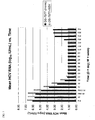
- Figure 1.
- Plot of Mean HCV RNA (log10 IU/mL) versus time during treatment and for up to 12 weeks after the end of treatment ("EOT") for HCV GT2/GT3 treatment-naive patients receiving a combination of GS-7977 (400 mg QD) and RBV (1000/1200 mg BID based on weight) for 12 weeks (ELECTRON Group 1).
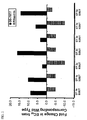
- Figure 2.
- Fold-change in EC50 for HCV replicons containing 1b, 1a, 2a, 2b, 3a, 4a, and 5a NS5B harboring the S282T mutation (compared to the corresponding wild-type) treated with GS-7977 or ribavirin.
- Figure 3.
- Percentage of wild-type at S282 position in HCV replicons before and after treatment with GS-7977, ribavirin, and a combination of GS-7977 and ribavirin in long-term passaging study (15-30 days).
- The phrase "a" or "an" entity as used herein refers to one or more of that entity; for example, a compound refers to one or more compounds or at least one compound. As such, the terms "a" (or "an"), "one or more", and "at least one" can be used interchangeably herein.
- The term "about" (also represented by "∼") has its plain and ordinary meaning of "approximately" except as related to an amount of GS-7977, an amount of ribavirin, or an amount of HCV RNA. As related to an amount of GS-7977, an amount of ribavirin, or an amount of HCV RNA, the qualifier "about" reflects the standard experimental error.
- The terms "optional" or "optionally" as used herein means that a subsequently described event or circumstance may but need not occur, and that the description includes instances where the event or circumstance occurs and instances in which it does not.
- The term "subject" as used herein means a mammal. Preferably the subject is a human.
- The term "effective amount" as used herein means an amount sufficient to reduce symptoms of the HCV infection in a subject.
- The term "undetectable amount" refers to an amount of HCV RNA, as determined by the assay methodology described herein, that is less than the limit of detection ("LOD") of about 15 IU/mL.
- A sustained virologic response (SVR) for a patient treated according to one of the treatment regimens described herein is defined as a patient who completes the HCV treatment regimen and who has an undetectable amount of HCV RNA (i.e., < about 15 IU/mL) for a period of time post-treatment as measured in accordance with the assay methodology described herein. SVR-N is the abbreviation for sustained virologic response N weeks after completion of one of the HCV treatment regimens disclosed herein. For example, SVR-4 is the abbreviation for sustained
virologic response 4 weeks after completion of one of the HCV treatment regimens disclosed herein. - The term "preparation" or "dosage form" is intended to include both solid and liquid formulations of the active compound and one skilled in the art will appreciate that an active ingredient can exist in different preparations depending on the desired dose and pharmacokinetic parameters.
- The term "unit dosage form" refers to a physically discrete unit containing a predetermined quantity of the active compound. Preferred unit dosage forms are those containing a daily dose or unit daily sub-dose, or an appropriate fraction thereof, of GS-7977.
- The terms "pharmaceutically acceptable excipient" and "pharmaceutical excipient" as used herein refer to a compound that is used to prepare a pharmaceutical composition, and is generally safe, non-toxic and neither biologically nor otherwise undesirable, and includes excipients that are acceptable for veterinary use as well as human pharmaceutical use.
- RVR is the abbreviation for rapid virologic response and refers to an undetectable level of HCV RNA in the blood at
week 4 of treatment. The occurrence of RVR has been reported to be predictive of ultimate SVR for a full treatment course of 48 weeks with peginterferon/ribavirin combination treatment in HCV GT-1 patients. (Poordad et al., Clin. Infect. Dis. (2008) 46: 78-84.) - QD means that the dose is administered once a day.
- BID means that the dose is administered twice a day.
- TID means that the dose is administered three times a day.
- QID means that the dose is administered four times a day.
- The highest activities of alanine aminotransferase (ALT) are found in hepatocytes and striated (skeletal and cardiac) muscle cells. Increased serum ALT activity can accompany hepatocellular injury or necrosis of striated muscle. With cell injury or death, ALT escapes from the cytosol. In addition, release of ALT from the cytosol can occur secondary to cellular necrosis or as a result of cellular injury with membrane damage. Determination of ALT activity is a relatively sensitive indicator of hepatic damage. Mechanisms of increased activity of ALT in serum include enzyme release from damaged cells or induction of enzyme activity, such as increased enzyme synthesis from drug administration. (Zeuzem, et al., Aliment Pharmacol Ther. 2006 ).
- The interleukin 28B (IL28B) gene encodes a cytokine distantly related to type I interferons and the IL-10 family. The IL28B gene, interleukin 28A (IL28A), and interleukin 29 (IL29) are three closely related cytokine genes that form a cytokine gene cluster on a chromosomal region mapped to 19q13. Expression of the cytokines encoded by the three genes can be induced by viral infection. All three cytokines have been shown to interact with a heterodimeric class II cytokine receptor that consists of
interleukin 10 receptor, beta (IL10RB), and interleukin 28 receptor, alpha (IL28RA). (National Center for Biotechnology Information, Entrez Gene Entry for IL28B, Gene ID: 282617, updated on 23-Oct-2010.) - Body mass index ("BMI") is a measurement based on a person's weight and height and is used to estimate a healthy body weight based on a person's height, assuming an average body composition. The units of BMI are kg/m2.
- LOD is the abbreviation for limit of detection. As used herein with regard to HCV RNA measurements, in one aspect LOD is from about 1 IU/mL to about 60 IU/mL, more preferably from about 5 IU/mL to about 30 IU/mL, and even more preferably from about 10 IU/mL to about 20 IU/mL. In a particularly preferred embodiment, the LOD is about 15 IU/mL.
- GT is the abbreviation for genotype.
- IU is the abbreviation for international unit, which is a measure of the amount of a substance based on biological activity or effect.
- There are several recognized HCV Genotypes (1, 2, 3, 4, 5, 6, 7, 8, 9, 10 and 11), which can be further categorized by different sub-types: 1 (1a, 1b, and 1c), 2 (2a, 2b, 2c), 3 (3a and 3b), 4 (4a, 4b, 4c, 4d, and 4e), 5 (5a), 6 (6a), 7 (7a and 7b), 8 (8a and 8b), 9 (9a), 10 (10a), and 11 (11a). Genotype 1 is the predominant form found in North and South America, Europe, Asia, Australia, and New Zealand. Genotypes 2 and 3 are also widely distributed throughout North America, Europe, Australia, East Asia and some portions of Africa. In some portions of Africa,
Genotype 4 predominates, while in others (such as South Africa) genotype 5 predominates. The method disclosed herein is contemplated to be independently effective for the treatment of each of the HCV genotypes, and in particular each genotype-sub-type. - The term "interferon-free" as used herein refers to a treatment regimen that does not involve the administration of interferon or pegylated interferon to the subject.
- GS-7977, (S)-isopropyl 2-(((S)-(((2R,3R,4R,5R)-5-(2,4-dioxo-3,4-dihydropyrimidin-1(2H)-yl)-4-fluoro-3-hydroxy-4-methyltetrahydrofuran-2-yl)methoxy)(phenoxy)phosphoryl)amino)propanoate, available from Gilead Sciences, Inc., is described and claimed in
U.S. Patent No. 7,964,580 . (See alsoUS 2010/0016251 ,US 2010/0298257 ,US 2011/0251152 andUS 2012/0107278 .) GS-7977 has the structure:
- GS-7977 can be crystalline or amorphous. Examples of preparing crystalline and amorphous forms of GS-7977 are disclosed in
US 2010/0298257 (US 12/783,680 US 2011/0251152 (US 13/076,552 US 2010/0298257 and/orUS 2011/0251152 have the following characteristic X-ray powder diffraction (XRPD) pattern 2θ-values measured according to the XRPD methods disclosed therein: - (1) 2θ-reflections (°) at about: 5.2, 7.5, 9.6, 16.7, 18.3, and 22.2 (Form 1);
- (2) 2θ-reflections (°) at about: 5.0, 7.3, 9.4, and 18.1 (Form 1);
- (3) 2θ-reflections (°) at about: 4.9, 6.9, 9.8, 19.8, 20.6, 24.7, and 26.1 (Form 2);
- (4) 2θ-reflections (°) at about: 6.9, 9.8, 19.7, 20.6, and 24.6 (Form 3);
- (5) 2θ-reflections (°) at about: 5.0, 6.8, 19.9, 20.6, 20.9, and 24.9 (Form 4);
- (6) 2θ-reflections (°) at about: 5.2, 6.6, 7.1, 15.7, 19.1, and 25.0 (Form 5); and
- (7) 2θ-reflections (°) at about: 6.1, 8.2, 10.4, 12.7, 17.2, 17.7, 18.0, 18.8, 19.4, 19.8, 20.1, 20.8, 21.8, and 23.3 (Form 6).
- Polymorphic Forms 1 and 6 are alternatively characterized by the following characteristic XRPD pattern 2θ-values measured according to the methods disclosed in
US 2010/0298257 (US 12/783,680 US 2011/0251152 (US 13/076,552 - (1) 2θ-reflections (°) at about: 5.0 and 7.3 (Form 1); and
- (2) 2θ-reflections (°) at about: 6.1 and 12.7 (Form 6).
- The disclosed composition comprises polymorphic Form 6 of GS-7977. It has been found that Form 6 has a melt onset of approximately 121°C and is not hygroscopic, with less than 0.2% moisture sorption at room temperature and 90% RH. Form 6 is chemically stable when stored under opened conditions at 40°C/75% RH for 30 days.
- In one aspect, GS-7977 is substantially free from its corresponding phosphorous-based diastereomer (S)-isopropyl 2-(((R)-(((2R,3R,4R,5R)-5-(2,4-dioxo-3,4-dihydropyrimidin-1(2H)-yl)-4-fluoro-3-hydroxy-4-methyltetrahydrofuran-2-yl)methoxy)(phenoxy)phosphoryl)amino)propanoate. In one embodiment, GS-7977 is at least 95% free from its corresponding phosphorous-based diastereomer. In another embodiment, GS-7977 is at least 97% free from its corresponding phosphorous-based diastereomer. In another embodiment, GS-7977 is at least 99% free from its corresponding phosphorous-based diastereomer. In a further embodiment, GS-7977 is at least 99.9% free from its corresponding phosphorous-based diastereomer.
- Ribavirin, 1-β-D-ribofuranosyl-1H-1,2,4-triazole-3-carboxamide, is described in the Merck Index (12th Edition), monograph no. 8365. (See also
U.S. Patent No. 4,530,901 .) - As used herein, "treatment" or "treating" is an approach for obtaining beneficial or desired clinical results. Beneficial or desired clinical results include, but are not limited to, alleviation of symptoms, diminishment of extent of disease, stabilized (i.e., not worsening) state of disease, delay or slowing of disease progression, amelioration or palliation of the disease state, and remission (whether partial or total), whether detectable or undetectable. "Treatment" can also mean prolonging survival as compared to expected survival if not receiving treatment. "Treatment" is an intervention performed with the intention of preventing the development or altering the pathology of a disorder. The term "treatment" of an HCV infection, as used herein, also includes treatment or prophylaxis of a disease or a condition associated with or mediated by HCV infection, or the clinical symptoms thereof.
- A first embodiment is directed to a composition for the treatment of hepatitis C virus (HCV) comprising a) GS-7977, and b) a pharmaceutically acceptable excipient.
- The composition for the treatment of HCV comprises from about 25% to about 35% w/w of GS-7977. In an aspect of the first embodiment, the composition comprises from about 30% to about 35% w/w of GS-7977. In another aspect, the composition comprises from about 25%, about 26%, about 27%, about 28%, about 29%, about 30%, about 31%, about 32%, about 33%, about 34%, or about 35% w/w of GS-7977. In one subembodiment, the composition comprises about 30% w/w of GS-7977. In another subembodiment, the composition comprises about 33% w/w of GS-7977. In another subembodiment, the composition comprises about 33.33% w/w of GS-7977.
- The composition comprises crystalline GS-7977 having XRPD 2θ-reflections (°) at about: 6.1, 8.2, 10.4, 12.7, 17.2, 17.7, 18.0, 18.8, 19.4, 19.8, 20.1, 20.8, 21.8, and 23.3.
- The pharmaceutically acceptable excipient comprises a diluent, a disintegrant, a glidant, and a lubricant.
- The diluent is a combination of mannitol and microcrystalline cellulose.
- The disintegrant is croscarmellose sodium (e.g., Ac-Di-Sol®).
- The glidant comprises colloidal silicon dioxide.
- The lubricant is magnesium stearate.
- The pharmaceutically acceptable excipient comprises: a) about 30% w/w of mannitol and about 30% w/w of microcrystalline cellulose; b) about 5 % w/w of croscarmellose sodium; c) about 0.5% w/w of colloidal silicon dioxide; and d) about 1.5% w/w of magnesium stearate.
- In a first aspect of the first embodiment, the composition further comprises a coating agent. In one subembodiment, the coating agent is formed from an aqueous film coat composition, wherein the aqueous film coat composition comprises a film-forming polymer, water and/or an alcohol as a vehicle, and optionally one or more adjuvants such as are known in the film-coating art. In another subembodiment, the coating agent is selected from the group consisting of hydroxypropylmethylcellulose, hydroxypropylcellulose, methylcellulose, ethylcellulose, hydroxyethylcellulose, cellulose acetate phthalate, sodium ethyl cellulose sulfate, carboxymethyl cellulose, polyvinylpyrolidone, zein, and an acrylic polymer (e.g., methacrylic acid/methacrylic acid ester copolymers such as methacrylic acid/methylmethacrylate copolymers, etc.), and a polyvinyl alcohol. In another subembodiment, the coating agent comprises a polyvinyl alcohol.
- In a second aspect of the first embodiment, the composition comprises about 25% w/w to about 35% w/w of crystalline GS-7977; about 30% w/w of mannitol and about 30% w/w of microcrystalline cellulose; about 5 %w/w of croscarmellose sodium; about 0.5% w/w of colloidal silicon dioxide; and about 1.5% w/w of magnesium stearate. In one subembodiment, the composition comprises about 30% w/w to about 35% w/w of crystalline GS-7977; about 30% w/w of mannitol and about 30% w/w of microcrystalline cellulose; about 5 %w/w of croscarmellose sodium; about 0.5% w/w of colloidal silicon dioxide; and about 1.5% w/w of magnesium stearate. In another subembodiment, the composition comprises about 30% w/w of crystalline GS-7977; about 30% w/w of mannitol and about 30% w/w of microcrystalline cellulose; about 5 %w/w of croscarmellose sodium; about 0.5% w/w of colloidal silicon dioxide; and about 1.5% w/w of magnesium stearate. In one subembodiment, the composition comprises about 30% w/w of crystalline GS-7977 having XRPD 2θ-reflections (°) at about 6.1, 8.2, 10.4, 12.7, 17.2, 17.7, 18.0, 18.8, 19.4, 19.8, 20.1, 20.8, 21.8, and 23.3; about 30% w/w of mannitol and about 30% w/w of microcrystalline cellulose; about 5 %w/w of croscarmellose sodium; about 0.5% w/w of colloidal silicon dioxide; and about 1.5% w/w of magnesium stearate. In another subembodiment, the composition comprises about 33% w/w of crystalline GS-7977 having XRPD 2θ-reflections (°) at about 6.1, 8.2, 10.4, 12.7, 17.2, 17.7, 18.0, 18.8, 19.4, 19.8, 20.1, 20.8, 21.8, and 23.3; about 30% w/w of mannitol and about 30% w/w of microcrystalline cellulose; about 5 %w/w of croscarmellose sodium; about 0.5% w/w of colloidal silicon dioxide; and about 1.5% w/w of magnesium stearate. In another subembodiment, the composition further comprises a coating agent.
- A second embodiment is directed to a unit dosage form for the treatment of hepatitis C virus (HCV), said composition comprising a) about 400 mg of GS-7977, and b) a pharmaceutically acceptable excipient.
- The unit dosage form comprises crystalline GS-7977 having XRPD 2θ-reflections (°) at about: 6.1, 8.2, 10.4, 12.7, 17.2, 17.7, 18.0, 18.8, 19.4, 19.8, 20.1, 20.8, 21.8, and 23.3.
- The pharmaceutically acceptable excipient comprises a diluent, a disintegrant, a glidant, and a lubricant.
- In a one subembodiment, diluent is selected from the group consisting of calcium carbonate, dicalcium phosphate, dry starch, calcium sulfate, cellulose, compressible sugars, confectioner's sugar, dextrates, dextrin, dextrose, dibasic calcium phosphate dihydrate, glyceryl palmitostearate, hydrogenated vegetable oil (type I), inositol, kaolin, lactose, magnesium carbonate, magnesium oxide, maltodextrin, mannitol, microcrystalline cellulose, polymethacrylates, potassium chloride, powdered cellulose, powdered sugar, pregelatinized starch, sodium chloride, sorbitol, starch, sucrose, sugar spheres, talc, tribasic calcium phosphate, and combinations thereof. In a preferred subembodiment, the diluent is selected from the group consisting of dicalcium phosphate, cellulose, compressible sugars, dibasic calcium phosphate dehydrate, lactose, mannitol, microcrystalline cellulose, starch, tribasic calcium phosphate, and combinations thereof In another preferred subembodiment, the diluent is selected from the group consisting of mannitol, microcrystalline cellulose, and combinations thereof.
- In another subembodiment, the disintegrant is selected from the group consisting of agar, alginic acid, bentonite, carboxymethylcellulose calcium, carboxymethylcellulose sodium, carboxymethylcellulose, cellulose, a cation exchange resin, cellulose, gums, citrus pulp, colloidal silicon dioxide, com starch, croscarmellose sodium (e.g., Ac-Di-Sol®), crospovidone, guar gum, hydrous aluminum silicate, an ion exchange resin (e.g., polyacrin potassium), magnesium aluminum silicate, methyl cellulose, microcrystalline cellulose, modified cellulose gum, modified corn starch, montmorillonite clay, natural sponge, polyacrilin potassium, potato starch, powdered cellulose, povidone, pregelatinized starch, sodium alginate, sodium bicarbonate in admixture with an acidulant such as tartaric acid or citric acid, sodium starch glycolate, starch, silicates (e.g., Veegum® HV), and combinations thereof. In a preferred subembodiment, the disintegrant is selected from the group consisting of croscarmellose sodium (e.g., Ac-Di-Sol), crospovidone, microcrystalline cellulose, modified corn starch, povidone, pregelatinized starch, sodium starch glycolate, and combinations thereof. In another preferred subembodiment, the disintegrant is croscarmellose sodium (e.g., Ac-Di-Sol).
- In another subembodiment, the glidant is selected from the group consisting of colloidal silicon dioxide, talc, starch, starch derivatives, and combinations thereof. In a preferred subembodiment, the glidant comprises colloidal silicon dioxide.
- In another subembodiment, the lubricant is selected from the group consisting of calcium stearate, glyceryl monostearate, glyceryl palmitostearate, hydrogenated castor oil, hydrogenated vegetable oil, light mineral oil, magnesium stearate, mineral oil, polyethylene glycol, sodium benzoate, sodium lauryl sulfate, sodium stearyl fumarate, stearic acid, talc, zinc stearate, and combinations thereof. In a preferred subembodiment, the lubricant is selected from the group consisting of calcium stearate, magnesium stearate, polyethylene glycol, sodium stearyl fumarate, stearic acid, talc, and combinations thereof. In another preferred subembodiment, the lubricant is magnesium stearate.
- The pharmaceutically acceptable excipient comprises: a) about 660 mg to about 780 mg of a diluent; b) about 30 mg to about 90 mg of a disintegrant; c) about 3 mg to about 9 mg of a glidant; and d) about 15 mg to about 21 mg of a lubricant. In a preferred subembodiment, the pharmaceutically acceptable excipient comprises a) about 710 mg to about 720 mg of a diluent; b) about 60 mg of a disintegrant; c) about 6 mg of a glidant; and d) about 18 mg of a lubricant. In another preferred subembodiment, the pharmaceutically acceptable excipient comprises a) about 716 mg of a diluent; b) about 60 mg of a disintegrant; c) about 6 mg of a glidant; and d) about 18 mg of a lubricant. In another preferred subembodiment, the pharmaceutically acceptable excipient comprises a) about 710 mg to about 720 mg of a diluent comprising mannitol and/or microcrystalline cellulose; b) about 60 mg of croscarmellose sodium; c) about 6 mg of colloidal silicon dioxide; and d) about 18 mg of magnesium stearate. In another preferred subembodiment, the pharmaceutically acceptable excipient comprises a) about 716 mg of a diluent comprising mannitol and/or microcrystalline cellulose; b) about 60 mg of croscarmellose sodium; c) about 6 mg of colloidal silicon dioxide; and d) about 18 mg of magnesium stearate. In another preferred subembodiment, the pharmaceutically acceptable excipient comprises a) about 360 mg of mannitol and about 356 mg of microcrystalline cellulose; b) about 60 mg of croscarmellose sodium; c) about 6 mg of colloidal silicon dioxide; and d) about 18 mg of magnesium stearate.
- In a first aspect of the second embodiment, the unit dosage form further comprises a coating agent. In one subembodiment, the coating agent further comprises a taste-masking agent. In one subembodiment, the coating agent is formed from an aqueous film coat composition, wherein the aqueous film coat composition comprises a film-forming polymer, water and/or an alcohol as a vehicle, and optionally one or more adjuvants such as are known in the film-coating art. In another subembodiment, the coating agent is selected from among hydroxypropylmethylcellulose, hydroxypropylcellulose, methylcellulose, ethylcellulose, hydroxyethylcellulose, cellulose acetate phthalate, sodium ethyl cellulose sulfate, carboxymethyl cellulose, polyvinylpyrolidone, zein, and an acrylic polymer (e.g., methacrylic acid/methacrylic acid ester copolymers such as methacrylic acid/methylmethacrylate copolymers, etc.), and a polyvinyl alcohol. In another subembodiment, the coating agent comprises a polyvinyl alcohol. In another subembodiment, the unit dosage comprises about 24 mg to about 60 mg of a coating agent. In another subembodiment, the unit dosage comprises about 36 mg to about 48 mg of a coating agent. In another subembodiment, the unit dosage comprises about 36 mg of a coating agent. In another subembodiment, the unit dosage comprises about 36 mg of a coating agent that further comprises a taste-masking agent.
- In a second aspect of the second embodiment, the unit dosage form comprises about 400 mg of crystalline GS-7977 having XRPD 2θ-reflections (°) at about 6.1, 8.2, 10.4, 12.7, 17.2, 17.7, 18.0, 18.8, 19.4, 19.8, 20.1, 20.8, 21.8, and 23.3; about 360 mg of mannitol and about 356 mg of microcrystalline cellulose; about 60 mg of croscarmellose sodium; about 6 mg of colloidal silicon dioxide; and about 18 mg of magnesium stearate.
- In a third aspect of the second embodiment, the unit dosage form comprises a capsule or a tablet. In one subembodiment, the unit dosage form comprises a tablet. In another subembodiment, the unit dosage form comprises a tablet and further comprises a coating agent.
- With respect to the coating agent, film-forming polymers are typically provided in either aqueous or organic solvent-based solutions or aqueous dispersions. However, the polymers may be provided in dry form, alone or in a powdery mixture with other components (e.g., a plasticizer and/or colorant), which is made into a solution or dispersion by the user by admixing with the aqueous vehicle.
- It will be appreciated that the aqueous film coat composition further comprises water as a vehicle for the other components, to facilitate their delivery to the surface of the unit dosage form. The vehicle may optionally further comprise one or more water soluble solvents, e.g., an alcohol and/or a ketone. Examples of an alcohol include but are not limited to methanol, isopropanol, propanol, etc. A non-limiting example for the ketone is acetone. The skilled artisan can select appropriate vehicle components to provide good interaction between the film-forming polymer and the vehicle to ensure good film properties. In general, polymer-vehicle interaction is designed to yield maximum polymer chain extension to produce films having the greatest cohesive strength and thus mechanical properties. The components are also selected to provide good deposition of the film-forming polymer onto the surface of the unit dosage form, such that a coherent and adherent film is achieved.
- Suitable aqueous film coating compositions include those commercially available from Colorcon, Inc. of West Point, Pa., under the trade name OPADRY and OPADRY II (non-limiting examples includes Opadry II Purple and Opadry II Yellow).
- A third embodiment is directed to a composition according to the first embodiment or a unit dosage form according to the second embodiment for use in the treatment of hepatitis C virus infection in a human. In a first aspect of the third embodiment, the composition is used in combination with ribavirin.
- In a second aspect of the third embodiment, the unit dosage form is used in combination with ribavirin.
- The choice of particular types and amounts of excipients, and tabletting technique employed depends on the further properties of GS-7977 and the excipients, e.g., compressibility, flowability, particle size, compatibility, and density. In this regard, reference is made Remington: The Science and Practice of Pharmacy 2006, 21st edition, Lippincott Williams & Wilkins; see also Handbook of Pharmaceutical Excipients 1994, edited by A. Wade and P. J. Weller, The Pharmaceutical Press, 2nd Edition, London. A skilled formulation scientist may modify the formulations within the teachings of the specification to provide numerous formulations for a particular route of administration without rendering compositions containing GS-7977 unstable or compromising their therapeutic activity.
- Tablets may be prepared according to methods known in the art, including dry granulation (e.g., roller compaction), wet granulation (e.g., fluid bed granulation and high shear granulation), and direct compression, and the type of excipients used will vary accordingly. It has been found that dry granulation is particularly suitable for providing high strength, low breakage tablets comprising relatively high concentrations of crystalline GS-7977 (e.g., about 33%), on a scale suitable for commercial production.
- Suitable dry granulated tablets comprise granules comprising GS-7977 and one or more of a diluent, a disintegrant, a glidant, and a lubricant, wherein the granules are mixed with one or more of a diluent, a disintegrant, a glidant, and a lubricant to form a granulation mixture that is compressed to form tablets.
- Also disclosed herein is a process for preparing a tablet composition comprising about 400 mg of GS-7977, said process comprising blending an intragranular composition and an extragranular composition to obtain a blended composition; compressing the blended composition to obtain a tablet composition; and optionally coating the tablet composition.
- In a first example, the intragranular composition comprises GS-7977, a first intragranular diluent, optionally a second intragranular diluent, an intragranular disintegrant, an intragranular glidant, and an intragranular lubricant; and the extragranular composition comprises a first extragranular diluent, optionally a second extragranular diluent, an extragranular disintegrant, an extragranular glidant, and an extragranular lubricant, wherein the first intragranular diluent, the second intragranular diluent, the first extragranular diluent, and the second extragranular diluent are the same or different, the intragranular disintegrant and the extragranular disintegrant are the same or different, the intragranular glidant and the extragranular glidant are the same or different, and the intragranular lubricant and the extragranular lubricant are the same or different.
- In a second example, the intragranular composition comprises GS-7977, a first intragranular diluent, an intragranular disintegrant, an intragranular glidant, and an intragranular lubricant; and the extragranular composition comprises a first extragranular diluent, a second extragranular diluent, an extragranular disintegrant, an extragranular glidant, and an extragranular lubricant, wherein the first intragranular diluent, the first extragranular diluent, and the second extragranular diluent are the same or different, the intragranular disintegrant and the extragranular disintegrant are the same or different, the intragranular glidant and the extragranular glidant are the same or different, and the intragranular lubricant and the extragranular lubricant are the same or different.
- In a third example, the intragranular composition comprises GS-7977, a first intragranular diluent, a second intragranular diluent, an intragranular disintegrant, an intragranular glidant, and an intragranular lubricant; and the extragranular composition comprises a first extragranular diluent, an extragranular disintegrant, an extragranular glidant, and an extragranular lubricant, wherein the first intragranular diluent, the second intragranular diluent, and the first extragranular diluent are the same or different, the intragranular disintegrant and the extragranular disintegrant are the same or different, the intragranular glidant and the extragranular glidant are the same or different, and the intragranular lubricant and the extragranular lubricant are the same or different.
- A fourth example of the fifth embodiment comprises at least one of the following steps:
- (1) Sifting/Blending: GS-7977 and pharmaceutically acceptable excipients are sifted and/or blended during the formulation process. In one non-limiting example, first, GS-7977 and intragranular excipients (first diluent, optional second diluent, glidant, disintegrant; except for the intragranular lubricant) are sifted through a 20-mesh screen, added to a blender, and blended for a first blending time period to produce an initial blend. In one example, the first blending time period ranges from about 5 to about 30 minutes. Separately, an intragranular lubricant is passed through a 20-mesh screen, mixed with a portion of the initial blend, added to the blender, and blended for a second blending time period. In one example, the second blending time period is from about 1 minute to about 10 minutes. In another example, the second blending time period is from about 1 minute to about 5 minutes. In another example, the second blending time period is from about 5 minutes to about 10 minutes. Second, extragranular excipients (first diluent, optional second diluent, glidant, disintegrant) (except for the extragranular lubricant) are sifted through a 20-mesh screen and used in the final blending. It is contemplated that the blending time periods may increase as the scale of the formulation process increases.
- (2) Dry Granulation:
- (A) Roller Compaction: GS-7977 and pharmaceutically acceptable excipients are passed through a roller compactor to product compacts. Compacts are then milled (below) to achieve granules. In one example, a blend comprising GS-7977, intragranular excipients, and lubricant, is passed through a roller compactor until granulation is achieved. The example has the following parameters: granulator speed ranges from about 50 to about 90 rpm, more specifically about 70 rpm; compactor speed ranges from about 4 to about 6 rpm, more specifically about 5 rpm; and pressure ranges from about 65 to about 100 barr, more specifically about 75 to about 100 bar.
- (B) Milling (preparation of milled/sifted granule): GS-7977 and pharmaceuticaly acceptable excipients are milled and/or sifted. In one example, after GS-7977 and intragranular excipients have passed through the roller compactor, the material is passed/forced through a 20-mesh screen using a Comill or Fitz Mill, and then sifted with a 60 mesh screen. In this example, material which remains on the 60 mesh screen is considered to be an acceptable granule, but material which passes through the 60 mesh screen is considered fines and is re-circulated through the roller compactor. This process is repeated until the percentage of fines is less than 20%. In one example, the mill speed ranges from about 50 to about 90 rpm, more specifically about 70 rpm,
- (3) Final Blending: Granules comprising GS-7977 and intragranular excipients that have been milled/sifted are blended with extragranular excipients in a final blending. In one example, the milled/sifted granules comprising GS-7977 and intragranular exceipients are added to a blender (e.g., a double-cone blender, a bin blender, or a V-shell blender) along with extragranular excipients (first diluent and/or second diluent, glidant, and disintegrant) and blended for about 10 to about 30 minutes. The extragranular lubricant is passed through a 20-mesh screen and added to the blend. The blend/mixture is blended for about 5 minutes. It is contemplated that the blending time periods may increase as the scale of the formulation process increases.
- (4) Compressing: The final blend is compressed into tablets using a tablet press (e.g., a Globe Pharma Mini Press).
- (5) Optionally, tablets are film-coated with a film-coating agent.
- In a fifth example, GS-7977 is blended with intragranular excipients comprising microcrystalline cellulose, mannitol, croscarmellose sodium and colloidal silicon dioxide in a blender. The mixture is milled and blended with a portion of magnesium stearate, then dry granulated using a roller compactor and mill. The resulting granules are then blended with extragranular excipients comprising microcrystalline cellulose, croscarmellose sodium, and colloidal silicon dioxide. An additional portion of magnesium stearate is added and the resulting composition is mixed to yield a powder blend comprising 33.33% w/w GS-7977. The powder blend is compressed into tablet cores to yield tablets comprising about 400 mg of GS-7977. The tablet cores are film-coated, and the resulting film-coated tablets are then packaged.
- The embodiments described herein may be modified by one of ordinary skill without straying from the expressed intent using materials and methods described in Remington: The Science and Practice of Pharmacy 1995, edited by E. W. Martin, Mack Publishing Company, 19th edition, Easton, Pennsylvania; see also Handbook of Pharmaceutical Excipients 1994, edited by A. Wade and P. J. Weller, The Pharmaceutical Press, 2nd Edition, London. One of ordinary skill may modify the formulations within the teachings of the specification to provide numerous formulations without rendering compositions containing GS-7977 unstable or compromising its therapeutic activity. The following non-limiting examples provide further guidance related to additional aspects of the disclosed methods and compositions.
- Also disclosed herein is a method for treating a subject infected with hepatitis C virus comprising administering to the subject for a time period an effective amount of GS-7977 and an effective amount of ribavirin.
- In a first example, the time period is selected from among from about 2 weeks to about 12 weeks, from about 3 weeks to about 12 weeks, from about 4 weeks to about 12 weeks, from about 5 weeks to about 12 weeks, from about 6 weeks to about 12 weeks, from about 7 weeks to about 12 weeks, from about 8 weeks to about 12 weeks, from about 9 weeks to about 12 weeks, from about 10 weeks to about 12 weeks, from about 11 weeks to about 12 weeks, and about 12 weeks. In one example the time period is 12 weeks. In another example the time period is 8 weeks.
- In a second example, the effective amount of GS-7977 is a daily dose selected from about 100 mg to about 800 mg, from about 200 mg to about 800 mg, from about 400 mg to about 800 mg, from about 600 mg to about 800 mg, from about 100 mg to about 600 mg, from about 100 mg to about 400 mg, from about 100 mg to about 200 mg, from about 200 mg to about 600 mg, from about 200 mg to about 400 mg, from about 400 mg to about 600 mg, and about 400 mg. In one example, the daily dose of GS-7977 is administered to the subject QD, BID, TID, or QID. In another example, a daily dose of about 400 mg of GS-7977 is administered to the subject QD, BID, TID, or QID. In another example, a daily dose of about 400 mg of GS-7977 is administered to the subject QD.
- In a third example, an effective amount of GS-7977 is administered to the subject in combination with an effective amount of ribavirin, wherein the administration is concurrent or alternative.
- In a fourth example, the effective amount of ribavirin is a daily dose selected from about 600 mg to about 1400 mg, and from about 800 mg to about 1200 mg. In one example, the effective amount of ribavirin is a daily dose of about 1000 mg to about 1200 mg. In another example, the effective amount of ribavirin is a daily dose of about 1000 mg to about 1200 mg based on the subject's body weight. In another example, the effective amount of ribavirin is a daily dose of about 800 mg. In another example, the daily dose of ribavirin is administered to the subject QD, BID, TID, or QID. In a further example, the daily dose of ribavirin is administered to the subject BID.
- In a fifth example, a daily dose of about 400 mg of GS-7977 is administered to the subject in combination with a daily dose of about 800 mg to about 1200 mg of ribavirin. In one example, a daily dose of about 400 mg of GS-7977 is administered to the subject in combination with a daily dose of about 800 mg of ribavirin. In another example, a daily dose of about 400 mg of GS-7977 is administered to the subject in combination with a daily dose of about 1000 mg to about 1200 mg of ribavirin.
- In a sixth example, the subject is infected with
HCV genotype 1, 2, 3, 4, 5 or 6, or any combination thereof. In one example, the subject is infected with HCV genotype 1, 2, or 3, or any combination thereof. - In a seventh example, the subject has an undetectable amount of HCV RNA for at least 12 weeks after the end of the time period. In one example, the subject has an undetectable amount of HCV RNA for at least 24 weeks after the end of the time period. In another example, the subject has an undetectable amount of HCV RNA for at least 36 weeks after the end of the time period. In a further example, the subject has an undetectable amount of HCV RNA for at least 48 weeks after the end of the time period.
- In an eighth example, the subject is a human.
- In a ninth example, an effective amount of GS-7977 and an effective amount of ribavirin are administered to the subject according to an interferon-free treatment regimen. In one example, the interferon-free treatment regimen consists of administering an effective amount of GS-7977 and an effective amount of ribavirin to the subject for the time period.
- In a tenth example, the effective amount of GS-7977 comprises a composition comprising GS-7977 and at least one pharmaceutically acceptable excipient as disclosed herein.
- In an eleventh example, the effective amount of GS-7977 comprises a unit dosage form comprising GS-7977 and at least one pharmaceutically acceptable excipient as disclosed herein.
- Further disclosed herein is a method of treating a subject infected with hepatitis C virus, said method comprising administering to the subject for a time period an effective amount of GS-7977 and an effective amount of ribavirin sufficient to produce an undetectable amount of HCV RNA in the subject for at least 12 weeks after the end of the time period.
- In a first example, the time period is selected from among from about 2 weeks to about 12 weeks, from about 3 weeks to about 12 weeks, from about 4 weeks to about 12 weeks, from about 5 weeks to about 12 weeks, from about 6 weeks to about 12 weeks, from about 7 weeks to about 12 weeks, from about 8 weeks to about 12 weeks, from about 9 weeks to about 12 weeks, from about 10 weeks to about 12 weeks, from about 11 weeks to about 12 weeks, and about 12 weeks. In one example the time period is 12 weeks. In another example the time period is 8 weeks.
- In a second example, the effective amount of GS-7977 is a daily dose selected from about 100 mg to about 800 mg, from about 200 mg to about 800 mg, from about 400 mg to about 800 mg, from about 600 mg to about 800 mg, from about 100 mg to about 600 mg, from about 100 mg to about 400 mg, from about 100 mg to about 200 mg, from about 200 mg to about 600 mg, from about 200 mg to about 400 mg, from about 400 mg to about 600 mg, and about 400 mg. In one example, the daily dose of GS-7977 is administered to the subject QD, BID, TID, or QID. In another example, a daily dose of about 400 mg of GS-7977 is administered to the subject QD, BID, TID, or QID. In another example, a daily dose of about 400 mg of GS-7977 is administered to the subject QD.
- In a third example, an effective amount of GS-7977 is administered to the subject in combination with an effective amount of ribavirin, wherein the administration is concurrent or alternative.
- In a fourth aspect of the seventh embodiment, the effective amount of ribavirin is a daily dose selected from about 600 mg to about 1400 mg, and from about 800 mg to about 1200 mg. In one example, the effective amount of ribavirin is a daily dose of about 1000 mg to about 1200 mg. In another example, the effective amount of ribavirin is a daily dose of about 1000 mg to about 1200 mg based on the subject's body weight. In another example, the effective amount of ribavirin is a daily dose of about 800 mg. In another example, the daily dose of ribavirin is administered to the subject QD, BID, TID, or QID. In a further example, the daily dose of ribavirin is administered to the subject BID.
- In a fifth example, a daily dose of about 400 mg of GS-7977 is administered to the subject in combination with a daily dose of about 800 mg to about 1200 mg of ribavirin. In one example, a daily dose of about 400 mg of GS-7977 is administered to the subject in combination with a daily dose of about 800 mg of ribavirin. In another example, a daily dose of about 400 mg of GS-7977 is administered to the subject in combination with a daily dose of about 1000 mg to about 1200 mg of ribavirin.
- In a sixth example, the subject is infected with
HCV genotype 1, 2, 3, 4, 5 or 6, or any combination thereof. In one example, the subject is infected with HCV genotype 1, 2, 3, or any combination thereof. - In a seventh example, the subject has an undetectable amount of HCV RNA for at least 24 weeks after the end of the time period. In one example, the subject has an undetectable amount of HCV RNA for at least 36 weeks after the end of the time period. In another example, the subject has an undetectable amount of HCV RNA for at least 48 weeks after the end of the time period.
- In an eighth example, the subject is a human.
- In a ninth example, an effective amount of GS-7977 and an effective amount of ribavirin are administered to the subject according to an interferon-free treatment regimen. In one example, the interferon-free treatment regimen consists of administering an effective amount of GS-7977 and an effective amount of ribavirin to the subject for the time period.
- In a tenth example, the effective amount of GS-7977 comprises a composition comprising GS-7977 and at least one pharmaceutically acceptable excipient as disclosed herein.
- In an eleventh example, the effective amount of GS-7977 comprises a unit dosage form comprising GS-7977 and at least one pharmaceutically acceptable excipient as disclosed herein.
- Further disclosed herein is a method of treating a human infected with hepatitis C virus, said method comprising administering to the human for a time period an effective amount of GS-7977 and an effective amount of ribavirin sufficient to produce an undetectable amount of HCV RNA in the human for at least 12 weeks after the end of the time period.
- In a first example, the time period is selected from among from about 2 weeks to about 12 weeks, from about 3 weeks to about 12 weeks, from about 4 weeks to about 12 weeks, from about 5 weeks to about 12 weeks, from about 6 weeks to about 12 weeks, from about 7 weeks to about 12 weeks, from about 8 weeks to about 12 weeks, from about 9 weeks to about 12 weeks, from about 10 weeks to about 12 weeks, from about 11 weeks to about 12 weeks, and about 12 weeks. In one example the time period is 12 weeks. In another example the time period is 8 weeks.
- In a second example, the effective amount of GS-7977 is a daily dose selected from about 100 mg to about 800 mg, from about 200 mg to about 800 mg, from about 400 mg to about 800 mg, from about 600 mg to about 800 mg, from about 100 mg to about 600 mg, from about 100 mg to about 400 mg, from about 100 mg to about 200 mg, from about 200 mg to about 600 mg, from about 200 mg to about 400 mg, from about 400 mg to about 600 mg, and about 400 mg. In one example, the daily dose of GS-7977 is administered to the human QD, BID, TID, or QID. In another example, a daily dose of about 400 mg of GS-7977 is administered to the human QD, BID, TID, or QID. In another example, a daily dose of about 400 mg of GS-7977 is administered to the human QD.
- In a third example, an effective amount of GS-7977 is administered to the subject in combination with an effective amount of ribavirin, wherein the administration is concurrent or alternative.
- In a fourth example, the effective amount of ribavirin is a daily dose selected from about 600 mg to about 1400 mg, and from about 800 mg to about 1200 mg. In one example, the effective amount of ribavirin is a daily dose of about 1000 mg to about 1200 mg. In another example, the effective amount of ribavirin is a daily dose of about 1000 mg to about 1200 mg based on the human's body weight. In another example, the effective amount of ribavirin is a daily dose of about 800 mg. In another example, the daily dose of ribavirin is administered to the human QD, BID, TID, or QID. In a further example, the daily dose of ribavirin is administered to the human BID.
- In a fifth example, a daily dose of about 400 mg of GS-7977 is administered to the human in combination with a daily dose of about 800 mg to about 1200 mg of ribavirin. In one example, a daily dose of about 400 mg of GS-7977 is administered to the human in combination with a daily dose of about 800 mg of ribavirin. In another example, a daily dose of about 400 mg of GS-7977 is administered to the human in combination with a daily dose of about 1000 mg to about 1200 mg of ribavirin.
- In a sixth example, the human is infected with
HCV genotype 1, 2, 3, 4, 5, or 6, or any combination thereof. In one example, the subject is infected with HCV genotype 1, 2, or 3, or any combination thereof. - In a seventh example, the human has an undetectable amount of HCV RNA for at least 24 weeks after the end of the time period. In one example, the human has an undetectable amount of HCV RNA for at least 36 weeks after the end of the time period. In another example, the human has an undetectable amount of HCV RNA for at least 48 weeks after the end of the time period.
- In an eighth example, an effective amount of GS-7977 and an effective amount of ribavirin are administered to the human according to an interferon-free treatment regimen. In one example, the interferon-free treatment regimen consists of administering an effective amount of GS-7977 and an effective amount of ribavirin to the subject for the time period.
- In a ninth example, the effective amount of GS-7977 comprises a composition comprising GS-7977 and at least one pharmaceutically acceptable excipient as disclosed herein.
- In a tenth example, the effective amount of GS-7977 comprises a unit dosage form comprising GS-7977 and at least one pharmaceutically acceptable excipient as disclosed herein.
- Further disclosed herein is a method of treating a human infected with hepatitis C virus, said method comprising administering to the human for a time period an effective amount of GS-7977 and an effective amount of ribavirin sufficient to produce an amount of HCV RNA in the human that is less than about 15 IU/mL for at least 12 weeks after the end of the time period.
- In a first example, the time period is selected from among from about 2 weeks to about 12 weeks, from about 3 weeks to about 12 weeks, from about 4 weeks to about 12 weeks, from about 5 weeks to about 12 weeks, from about 6 weeks to about 12 weeks, from about 7 weeks to about 12 weeks, from about 8 weeks to about 12 weeks, from about 9 weeks to about 12 weeks, from about 10 weeks to about 12 weeks, from about 11 weeks to about 12 weeks, and about 12 weeks. In one example the time period is about 12 weeks. In another example the time period is about 8 weeks.
- In a second example, the effective amount of GS-7977 is a daily dose selected from about 100 mg to about 800 mg, from about 200 mg to about 800 mg, from about 400 mg to about 800 mg, from about 600 mg to about 800 mg, from about 100 mg to about 600 mg, from about 100 mg to about 400 mg, from about 100 mg to about 200 mg, from about 200 mg to about 600 mg, from about 200 mg to about 400 mg, from about 400 mg to about 600 mg, and about 400 mg. In one example, the daily dose of GS-7977 is administered to the human QD, BID, TID, or QID. In another example, a daily dose of about 400 mg of GS-7977 is administered to the human QD, BID, TID, or QID. In another example, a daily dose of about 400 mg of GS-7977 is administered to the human QD.
- In a third example, an effective amount of GS-7977 is administered to the human in combination with an effective amount of ribavirin wherein the administration is concurrent or alternative.
- In a fourth example, the effective amount of ribavirin is a daily dose selected from about 600 mg to about 1400 mg, and from about 800 mg to about 1200 mg. In one example, the effective amount of ribavirin is a daily dose of about 1000 mg to about 1200 mg. In another example, the effective amount of ribavirin is a daily dose of about 1000 mg to about 1200 mg based on the human's body weight. In another example, the effective amount of ribavirin is a daily dose of about 800 mg. In another example, the daily dose of ribavirin is administered to the human QD, BID, TID, or QID. In a further example, the daily dose of ribavirin is administered to the human BID.
- In a fifth example, a daily dose of about 400 mg of GS-7977 is administered to the human in combination with a daily dose of about 800 mg to about 1200 mg of ribavirin. In one example, a daily dose of about 400 mg of GS-7977 is administered to the human in combination with a daily dose of about 800 mg of ribavirin. In another example, a daily dose of about 400 mg of GS-7977 is administered to the human in combination with a daily dose of about 1000 mg to about 1200 mg of ribavirin.
- In a sixth example, the human is infected with
HCV genotype 1, 2, 3, 4, 5, or 6, or any combination thereof. In one example, the human is infected with HCV genotype 1, 2, or 3, or any combination thereof. - In a seventh example, the human has an amount of HCV RNA less than about 15 IU/mL for at least 24 weeks after the end of the time period. In one example, the human has an amount of HCV RNA less than about 15 IU/mL for at least 36 weeks after the end of the time period. In another example, the human has an amount of HCV RNA less than about 15 IU/mL for at least 48 weeks after the end of the time period.
- In an eighth example, an effective amount of GS-7977 and an effective amount of ribavirin are administered to the human according to an interferon-free treatment regimen. In one example, the interferon-free treatment regiment consists of administering an effective amount of GS-7977 and an effective amount of ribavirin to the subject for the time period.
- In a ninth example, the effective amount of GS-7977 comprises a composition comprising GS-7977 and at least one pharmaceutically acceptable excipient as disclosed herein.
- In a tenth example, the effective amount of GS-7977 comprises a unit dosage form comprising GS-7977 and at least one pharmaceutically acceptable excipient as disclosed herein.
- Further disclosed herein is a method of treating a human infected with hepatitis C virus, said method consisting of administering to the human for a time period about 400 mg of GS-7977 and about 800 mg to about 1200 mg of ribavirin.
- In a first example, the time period is selected from among from about 2 weeks to about 12 weeks, from about 3 weeks to about 12 weeks, from about 4 weeks to about 12 weeks, from about 5 weeks to about 12 weeks, from about 6 weeks to about 12 weeks, from about 7 weeks to about 12 weeks, from about 8 weeks to about 12 weeks, from about 9 weeks to about 12 weeks, from about 10 weeks to about 12 weeks, from about 11 weeks to about 12 weeks, and about 12 weeks. In one example the time period is 12 weeks. In another example the time period is 8 weeks.
- In a second example, about 400 mg of GS-7977 is administered to the human daily. In one example, a daily dose of about 400 mg of GS-7977 is administered to the human QD, BID, TID, or QID. In another example, a daily dose of about 400 mg of GS-7977 is administered to the human QD.
- In a third example, about 400 mg of GS-7977 is administered to the human in combination with about 800 mg to about 1200 mg of ribavirin, wherein the administration is concurrent or alternative.
- In a fourth example, about 1000 mg to about 1200 mg of ribavirin is administered to the human daily. In one example, a daily dose of about 1000 mg to about 1200 mg of ribavirin is administered to the human QD, BID, TID, or QID. In another example, a daily dose of about 1000 mg to about 1200 mg of ribavirin is administered to the human BID. In a further example, a daily dose of 1000 mg or 1200 mg of ribavirin is administered to the subject based on body weight.
- In a fifth example, about 800 mg of ribavirin is administered to the human daily. In one example, a daily dose of about 800 mg of ribavirin is administered to the human QD, BID, TD or QID. In another example, a daily dose of about 800 mg of ribavirin is administered to the human BID.
- In a sixth example, the human is infected with
HCV genotype 1, 2, 3, 4, 5 or 6, or any combination thereof. In one example, the human is infected with HCV genotype 1, 2, or 3, or any combination thereof. - In a seventh example, the human has an undetectable amount of HCV RNA for at least 12 weeks after the end of the time period. In one example, the human has an undetectable amount of HCV RNA for at least 24 weeks after the end of the time period. In another example, the human has an undetectable amount of HCV RNA for at least 36 weeks after the end of the time period. In a further example, the human has an undetectable amount of HCV RNA for at least 48 weeks after the end of the time period.
- In an eighth example, the about 400 mg of GS-7977 comprises a composition comprising GS-7977 and at least one pharmaceutically acceptable excipient as disclosed herein.
- In a ninth example, the about 400 mg of GS-7977 comprises a unit dosage form comprising GS-7977 and at least one pharmaceutically acceptable excipient as disclosed herein.
- Further disclosed herein is a composition useful for the treatment of hepatitis C virus infection in a subject, said composition comprising an effective amount of GS-7977 and an effective amount of ribavirin.
- In a first example, the composition does not comprise peginterferon.
- In a second example, the effective amount of GS-7977 comprises from about 100 mg to about 800 mg, from about 200 mg to about 800 mg, from about 400 mg to about 800 mg, from about 600 mg to about 800 mg, from about 100 mg to about 600 mg, from about 100 mg to about 400 mg, from about 100 mg to about 200 mg, from about 200 mg to about 600 mg, from about 200 mg to about 400 mg, from about 400 mg to about 600 mg, and about 400 mg of GS-7977 administered to the subject daily. In one example, the composition comprises about 400 mg of GS-7977 administered to the subject QD.
- In a third example, the effective amount of ribavirin comprises from about 600 mg to about 1400 mg, or from about 800 mg to about 1200 mg administered to the subject daily. In one example, the effective amount of ribavirin is about 1000 mg to about 1200 mg administered to the subject daily. In another example, the effective amount of ribavirin is about 1000 mg to about 1200 mg administered to the subject daily based on the subject's body weight. In another example, the effective amount of ribavirin about 800 mg administered to the subject daily. In another example, the composition comprises an effective amount ribavirin administered to the subject QD, BID, TID, or QID. In a further example, the composition comprises an effective amount of ribavirin administered to the subject BID.
- In a fourth example, the composition comprises about 400 mg of GS-7977 administered to the subject QD and about 800 mg to about 1200 mg of ribavirin administered to the subject BID. In one example, the composition comprises about 400 mg of GS-7977 administered to the subject QD and about 800 mg of ribavirin administered to the subject BID. In another example, the composition comprises about 400 mg of GS-7977 administered to the subject QD and about 100 mg to about 1200 mg of ribavirin administered to the subject BID
- In a fifth example, the composition is capable of providing an undetectable amount of HCV RNA for at least 12 weeks after the end of a time period following treatment of a subject infected with hepatitis C virus for the time period. In one example, the composition is capable of providing an undetectable amount of HCV RNA for at least 24 weeks after the end of a time period following treatment of a subject infected with hepatitis C virus for the time period. In another example, the composition is capable of providing an undetectable amount of HCV RNA for at least 36 weeks after the end of a time period following treatment of a subject infected with hepatitis C virus for the time period. In a further example, the composition is capable of providing an undetectable amount of HCV RNA for at least 48 weeks after the end of a time period following treatment of a subject infected with hepatitis C virus for the time period.
- In a sixth example, the composition is capable of providing less than about 15 IU/mL of HCV RNA for at least 12 weeks after the end of a time period following treatment of a subject infected with hepatitis C virus for the time period. In one example, the composition is capable of providing less than about 15 IU/mL of HCV RNA for at least 24 weeks after the end of a time period following treatment of a subject infected with hepatitis C virus for the time period. In another example, the composition is capable of providing less than about 15 IU/mL of HCV RNA for at least 36 weeks after the end of a time period following treatment of a subject infected with hepatitis C virus for the time period. In a further example, the composition is capable of providing less than about 15 IU/mL of HCV RNA for at least 48 weeks after the end of a time period following treatment of a subject infected with hepatitis C virus for the time period.
- In a seventh example, the effective amount of GS-7977 comprises a unit dosage form comprising GS-7977 and at least one pharmaceutically acceptable excipient as disclosed herein administered to the subject. In one example, the unit dosage form comprising GS-7977 and at least one pharmaceutically acceptable excipient as disclosed herein is administered to the subject QD.
- Further disclosed herein is the to use of an effective amount of GS-7977 and an effective amount of ribavirin to treat hepatitis C virus infection in a subject in need thereof.
- In a first example, the use comprises administering an effective amount of GS-7977 and an effective amount of ribavirin to the subject for a time period selected from among from about 2 weeks to about 12 weeks, from about 3 weeks to about 12 weeks, from about 4 weeks to about 12 weeks, from about 5 weeks to about 12 weeks, from about 6 weeks to about 12 weeks, from about 7 weeks to about 12 weeks, from about 8 weeks to about 12 weeks, from about 9 weeks to about 12 weeks, from about 10 weeks to about 12 weeks, from about 11 weeks to about 12 weeks, and about 12 weeks. In one example the time period is 12 weeks. In another example the time period is 8 weeks.
- In a second example, the effective amount of GS-7977 is a daily dose selected from about 100 mg to about 800 mg, from about 200 mg to about 800 mg, from about 400 mg to about 800 mg, from about 600 mg to about 800 mg, from about 100 mg to about 600 mg, from about 100 mg to about 400 mg, from about 100 mg to about 200 mg, from about 200 mg to about 600 mg, from about 200 mg to about 400 mg, from about 400 mg to about 600 mg, and about 400 mg. In one example, the daily dose of GS-7977 is administered to the subject QD, BID, TID, or QID. In another example, a daily dose of about 400 mg of GS-7977 is administered to the subject QD, BID, TID, or QID. In another example, a daily dose of about 400 mg of GS-7977 is administered to the subject QD.
- In a third example, an effective amount of GS-7977 is used in combination with an effective amount of ribavirin, wherein the administration of GS-7977 and ribavirin is concurrent or alternative.
- In a fourth example, the effective amount of ribavirin is a daily dose selected from about 600 mg to about 1400 mg, and from about 800 mg to about 1200 mg. In one example, the effective amount of ribavirin is a daily dose of about 1000 mg to about 1200 mg. In another example, the effective amount of ribavirin is a daily dose of about 1000 mg to about 1200 mg based on the subject's body weight. In another example, the effective amount of ribavirin is a daily dose of about 800 mg. In another example, the daily dose of ribavirin is administered to the subject QD, BID, TID, or QID. In a further example, the daily dose of ribavirin is administered to the subject BID.
- In a fifth example, the effective amount of GS-7977 is about 400 mg QD and the effective amount of ribavirin is about 800 mg to about 1200 mg BID. In one example, the effective amount of GS-7977 is about 400 mg QD and the effective amount of ribavirin is about 800 mg BID. In another example, the effective amount of GS-7977 is about 400 mg QD and the effective amount of ribavirin is about 1000 mg to about 1200 mg BID.
- In a sixth example, the subject is infected with
HCV genotype 1, 2, 3, 4, 5 or 6, or any combination thereof. In one example, the subject is infected with HCV genotype 1, 2, or 3, or any combination thereof. - In a seventh example, the subject has an undetectable amount of HCV RNA for at least 12 weeks after the end of the time period. In one example, the subject has an undetectable amount of HCV RNA for at least 24 weeks after the end of the time period. In another example, the subject has an undetectable amount of HCV RNA for at least 36 weeks after the end of the time period. In a further example, the subject has an undetectable amount of HCV RNA for at least 48 weeks after the end of the time period.
- In an eighth example, the subject has an amount of HCV RNA less than about 15 IU/mL for at least 12 weeks after the end of the time period. In one example, the subject has an amount of HCV RNA less than about 15 IU/mL for at least 24 weeks after the end of the time period. In one example, the subject has an amount of HCV RNA less than about 15 IU/mL for at least 36 weeks after the end of the time period. In another example, the subject has an amount of HCV RNA less than about 15 IU/mL for at least 48 weeks after the end of the time period.
- In a ninth example, the subject is a human.
- In a tenth example, an effective amount of GS-7977 and an effective amount of ribavirin are used according to an interferon-free treatment regimen. In one example, the interferon-free treatment regimen consists of administering an effective amount of GS-7977 and an effective amount of ribavirin to the subject for a time period.
- In an eleventh example, the effective amount of GS-7977 comprises a composition comprising GS-7977 and at least one pharmaceutically acceptable excipient as disclosed herein.
- In a twelfth example, the effective amount of GS-7977 comprises a unit dosage form comprising GS-7977 and at least one pharmaceutically acceptable excipient as disclosed herein.
- According to the FDA-approved label dated August 22, 2011, the recommended dose of COPEGUS® (ribavirin) tablets when used in combination with peginterferon depends on body weight and the HCV genotype to be treated, as shown in the following table.
HCV Genotype PEGASYS® Dose* COPEGUS® Dose Duration Genotypes 1, 4 180 µg <75 kg = 1000 mg 48 weeks ≥75 kg = 1200 mg 48 weeks Genotypes 2, 3 180 µg 800 mg 24 weeks Genotypes 2 and 3 showed no increased response to treatment beyond 24 weeks. *See PEGASYS® Package Insert for further details on PEGASYS® dosing and administration. - The daily dose of COPEGUS® indicated for use in combination with peginterferon is 800 mg to 1200 mg administered orally in two divided doses (BID). The dose should be individualized to the subject depending on baseline disease characteristics (e.g., genotype), response to therapy, and tolerability of the regimen. Based on the foregoing, as well as the examples described below, an effective amount ribavirin when used in combination with an effective amount of GS-7977 is contemplated to include 800 mg and 1000 mg to 1200 mg, including daily doses of 1000 mg or 1200 mg depending on body weight.
- Based on the data reported herein, an effective amount of GS-7977 is 400 mg QD, which can also be administered BID, TID, or QID. It is also contemplated that an effective amount of GS-7977 can include 100 mg to 400 mg and all integer values in between.
- When administered as a combination, GS-7977 is administered to the subject in association with ribavirin. That is, the GS-7977 dose is administered during the same time period that the subject receives doses of ribavirin. Concurrent or alternative administration is considered, which means that while the GS-7977 and ribavirin are administered during the same time period, the specific order of administration on a daily basis can be: GS-7977 followed by ribavirin, GS-7977 and ribavirin together, or ribavirin followed by GS-7977. GS-7977 may be administered orally in capsule or tablet form, or any other suitable unit dosage form, in association with the oral (capsule or tablet form) administration of ribavirin. Of course, other types of administration of both medicaments, as they become available, are contemplated, such as by nasal spray, by a buccal or sublingual administration dosage form, transdermally, by suppository, by sustained release dosage form, etc. Any form of administration will work so long as the proper dosages are delivered without destroying the active ingredient and/or without impeding the effective amount of GS-7977 and/or an effective amount of ribavirin delivered to the subject.
- A series of formulations containing polymorphic Form 1 GS-7977 with different quantitative compositions of excipients were prepared and screened using the roller compaction process to evaluate the impact of various diluents and compression aids on granulation powder properties and on tablet disintegration and dissolution times. Considerations were also given to moisture sorption properties of the tablets due to the sensitivity of Form 1 of GS-7977 to moisture.
- All formulations were compressed into tablets at both high and low hardness levels. Formulation and tablet performance were determined by tablet disintegration time, content uniformity, and dissolution, as presented in Table 1A.
Table 1A. Formulation Compositions for GS-7977 Form 1 Tablets Using a Roller Compaction Process Formulation Composition (% w/w) Ingredient A B1 B2 C G1 G2 H Intragranular GS-7977 25.0 33.3 33.3 33.3 33.3 33.3 33.3 Microcrystalline Cellulose 25.0 33.3 33.3 - - - - Mannitol - - - 33.3 30.6 33.3 30.6 Croscarmellose Sodium - - - - 2.00 3.0 2.00 Colloidal Silicon Dioxide 0.5 0.25 0.3 0.25 0.25 0.3 0.25 Magnesium Stearate - 0.5 0.5 0.5 0.5 0.5 0.5 Extragranular Microcrystalline Cellulose 49.0 31.9 31.8 - 15.3 21.0 - Mannitol - - - 31.9 15.3 5.8 - Croscarmellose Sodium - - - - 2.0 2.0 2.00 Dicalcium Phosphate - - - - - - 30.6 Colloidal Silicon Dioxide - 0.25 0.25 0.25 0.25 0.3 0.25 Magnesium Stearate 0.5 0.5 0.5 0.5 0.5 0.5 0.5 Total Tablet Weight (mg) 400 300 300 300 300 300 300 Hardness (kp) Low/High 8.1 16.3 7.4 17.2 10.2 5.8 NA 5.4 12.1 8.2 5.1 9.9 Disintegration time (min:sec) 0:17 0:33 0:13 3:16 0:48 45:00 0:14 6:27 1:43 1:23 8:06 Dissolution @ 45 min (% LS) 98 102 94 91 82 87 NA 101 95 96 60 64 - The results in Table 1A show that use of microcrystalline cellulose as the sole diluent (Formulations A, B1, B2) produced tablets with acceptable hardness, disintegration and dissolution, even without incorporating a disintegrant. In contrast, incorporation of mannitol as the sole diluent (Formulation C) without a disintegrant resulted in lower compressibility and a longer disintegration time resulting in slower dissolution. When used in combination with microcrystalline cellulose, mannitol levels as high as 75% of total filler amount (Formulation G) produced an acceptable tablet as long as a disintegrant was added to the formulation. However, lowering mannitol levels produced a harder and more robust tablet. Dicalcium phosphate used in combination with mannitol (Formulation H) failed to produce an acceptable tablet with respect to dissolution and hardness. The data in Table 1A support the use of formulations containing microcrystalline cellulose and mannitol/microcrystalline cellulose, in particular, as diluents.
- Formulations B2 and G2 in Table 1A prepared per a roller compaction/granulation process were further evaluated. The prototype tablet batches were packaged 30 tablets per bottle and placed on stability in 40°C/75% RH conditions, with each bottle containing a molecular sieve (Tri-Sorb®) dessicant. The data shown in Table 1B show a decrease in moisture level as the amount of mannitol is increased (concomitant with reduction in microcrystalline cellulose).
Table 1B. Stability Data for GS-7977 Form 1 Tablets Using a Roller Compaction Process HPLC Assay Dissolution (% Dissolved)a Formulation Stability Condition Time (mo.) % LS Unknown % img/deg at RRT 0.67 15 min 30 min 45 min 60 min Water Content (%) B2 25 °C/60% RH 0 98.5 - 76 (4) 80 (3) 82 (3) 85 (3) 4.3 3 98.4 - 73 (2) 77 (3) 79 (3) 81 (3) 3.2 6 96.2 <0.04 76 (2) 80 (2) 82 (2) 85 (2) 3.2 40 °C/75% RH 3 97.0 - 71 (5) 74 (5) 77 (4) 79 (4) 3.3 6 96.8 0.04 79 (8) 84 (8) 87 (8) 89 (7) 3.5 G2 25 °C/60% RH 0 99.9 - 84 (6) 93 (3) 96 (3) 98 (3) 1.7 3 98.3 <0.04 72 (8) 92 (2) 96 (2) 97 (3) 1.4 6 97.9 <0.04 82 (4) 93 (2) 95 (3) 97 (2) 1.3 40 °C/75% RH 3 98.0 <0.04 77 (4) 84 (4) 88 (3) 89 (3) 1.5 6 99.0 <0.04 80 (5) 90 (5) 93 (4) 94 (4) 1.2 40 °C/75% RH (no dessicant) 3 97.9 0.08 79 (4) 91 (3) 96 (2) 97 (2) 1.9 6 97.8 0.18 72 (8) 85 (2) 91 (2) 93 (3) 1.9 aDissolution method: USP Apparatus II (paddles) with 900 mL, pH 6.8 (50 mM sodium phosphate), 0.5% SLS, 75 rpm, 37 °C - Formulations (Tablets A and B) comprising GS-7977 polymorphic Form 1 were prepared by dry granulation. The formulations contained GS-7977 (polymorphic Form 1) (33.33%), mannitol (30.00%), microcrystalline cellulose (29.67%), croscarmellose sodium (5.00%), colloidal silicon dioxide (0.50%), and magnesium stearate (1.50%), as described in Table 2.
Table 2. GS-7977 Polymorphic Form 1 400 mg Tablet Compositions % w/w of 400 mg tablet Tablet A Tablet B Intragranular Components GS-7977 (Form 1) 33.33 33.33 Mannitol 30.0 30.0 Croscarmellose Sodium 3.0 3.0 FD&C Red 40 Aluminum Lake-- 0.27 FD&C Blue 2 Aluminum Lake -- 0.10 Colloidal Silicon Dioxide 0.25 0.25 Magnesium Stearate 0.50 0.5 Extragranular Components Microcrystalline Cellulose 29.67 29.12 Croscarmellose Sodium 2.00 2.00 FD&C Red 40 Aluminum Lake-- 0.13 FD&C Blue 2 Aluminum Lake -- 0.05 Colloidal Silicon Dioxide 0.25 0.25 Magnesium Stearate 1.00 1.00 Total 100.00 100.00 Coating Agent 3.00 -- - Tablets containing about 400 mg of GS-7977 (Form 1) per tablet and an Opadry II purple film coating (Tablet A in Table 2) were prepared as follows:
- (1) A composition comprising GS-7977 (Form 1) and the intragranular excipients (mannitol, croscarmellose sodium, and colloidal silicon dioxide) was sifted through a 20-mesh screen and added to a blender (V-shell blender) and blended for about 10-15 minutes to obtain an initial blend. Separately, the intragranular magnesium stearate was passed through a 20-mesh screen and mixed with a portion of the initial blend, added to the blender, and blended for about 5 minutes to obtain an intragranular blend.
- (2) Separately, the extragranular excipients microcrystalline cellulose, croscarmellose sodium, and colloidal silicon dioxide were sifted through a 20-mesh screen for use in the final blending (step (4), below).
- (3) The intragranular blend comprising GS-7977, mannitol, croscarmellose sodium, colloidal silicon dioxide, and magnesium stearate was passed through a roller compactor equipped with a 20-mesh (0.84 mm) milling screen on the granulator and both 20- and 60-mesh (0.25 mm) screens on the separator until granulation was achieved. The roller compactor parameters were: (i) granulator speed ranges from about 50 to about 90 rpm, more specifically about 70 rpm, compactor speed ranges from about 4 to about 6 rpm, more specifically about 5 rpm, and pressure ranges from about 65 to about 100 barr, more specifically about 75 to about 100 bar. Ribbons were produced using flat straight-grooved rollers. Upon passing through the roller compactor, the material was passed/forced through a 20-mesh screen and then sifted with a 60 mesh screen. Granules were sorted into three categories (coarse, acceptable, and fine) using the separator portion of the dry granulator. 'Coarse' granules retained on the 20-mesh (0.84 mm) screen on the separator were passed through a Comil with a 0.055-inch (1.4 mm) round screen. Granules that remained on the 60 mesh screen were considered to be 'acceptable' granules. The milled/sifted granule material was passed to the final blending step. Material that passed through the 60 mesh screen was considered 'fine' and was re-circulated through the roller compactor. This process was repeated until a minimum amount (e.g., less than 20%) of fines remained.
- (4) The milled/sifted granules from step (3) and the sifted extragranular excipients (microcrystalline cellulose, mannitol, croscarmellose sodium and silicon dioxide) from step (2) were added to a blender (V-shell blender) and blended for about 15 minutes. Separately, magnesium stearate was passed through a 20-mesh screen. The magnesium stearate was added to the blender and blended for about 5 minutes to obtain a final powder blend comprising 33.33% w/w GS-7977. Blend uniformity samples were taken prior to removing the blend from the blender.
- (5) The final blend was compressed into tablets using a tablet press (e.g., a Globe Pharma Mini Press) to obtain 1200 mg uncoated tablets comprising about 400 mg of GS-7977. As needed, a 15% w/w aqueous suspension for film-coating comprising polyvinyl alcohol (Opadry II Purple) was prepared and applied to achieve a target weight gain of 3% (range: 2-4%). The coating suspension was sprayed at 300 g/min/4 guns (range: 200-400 g/min/4 guns) at a target pan speed of 5 rpm (range: 4-8 rpm) and an exhaust temperature of 46 ±5 °C. The GS-7977 tablets were packaged with 30 tablets and 1 gram of desiccant per bottle.
- Uncoated tablets comprising 400 mg of GS-7977 (Form 1) were prepared in a similar manner using blue and red lake in the blend (Tablet B in Table 2).
- Another formulation (Tablet C) was prepared containing GS-7977 polymorphic Form 6 (33.33%), mannitol (30.00%), microcrystalline cellulose (29.67%), croscarmellose sodium (5.00%), colloidal silicon dioxide (0.50%), and magnesium stearate (1.50%), as described in Table 3. While a low moisture grade of microcrystalline cellulose (PH 112) was used in the Form 1 formulation to improve the stability of Form 1 GS-7977, the microcrystalline cellulose grade was changed to PH 102 for the Tablet C formulation due to the non-hygroscopic nature of Form 6. In addition, incorporation of a large proportion of the excipients into the intragranular composition decreased the potential for powder segregation and the variability in the blend, and improved the tablet content uniformity for the Tablet C formulation.
Table 3. GS-7977 Polymorphic Form 6 400 mg Tablet Composition Tablet C % w/w mg/tablet Intragranular Components GS-7977 (Form 6) 33.33 400.0 Mannitol 30.00 360.0 Microcrystalline Cellulose 24.67 296.0 Croscarmellose Sodium 2.50 30.0 Colloidal Silicon Dioxide 0.45 5.4 Magnesium Stearate 0.75 9.0 Extragranular Components Microcrystalline Cellulose 5.00 60.0 Croscarmellose Sodium 2.50 30.0 Colloidal Silicon Dioxide 0.05 0.6 Magnesium Stearate 0.75 9.0 Total 100.00 1200 Coating Agent 3.0 36.0 - The Tablet C formulation was prepared by blending the intragranular components listed in Table 3, other than magnesium stearate (i.e., GS-7977, microcrystalline cellulose, mannitol, croscarmellose sodium and colloidal silicon dioxide) in a blender. The mixture was milled, blended with the intragranular magnesium stearate and dry granulated using a roller compaction process train and mill. The resulting ribbons were milled through a milling screen and then blended with the extragranular excipients (microcrystalline cellulose, croscarmellose sodium, colloidal silicon dioxiade, magnesium stearate) to yield a powder blend comprising 33.33% w/w GS-7977. The powder blend was compressed to a target tablet weight of 1200 mg, with each tablet comprising about 400 mg of GS-7977. An aqueous suspension for the film-coating process was prepared and applied to achieve a target weight gain of 3%.
- Moisture content was tested for Tablets A-C and tablet stability (30 tablets/bottle with a 1 gram Tri-sorb® dessicant in a 60 cc HDPE bottle) was tested for Tablets B and C, the results of which are presented in Table 4.
Table 4. Moisture and Stability Data for GS-7977 400 mg Tablets Tablet A Tablet B Tablet C Moisture (% w/w) HPLC Assay Moisture (% w/w) HPLC Assay HPLC Assay % GS-7977 % Impurity % GS-7977 % Impurity % GS-7977 Initial 1.8 100 0.05 1.5 99.5 0.05 101.7 40°C/75% RH 1 month 1.4 102.4 0.04 1.5 101.7 0.05 101.1 2 months 1.5 101.5 0.04 1.7 101.1 0.04 100.9 - The results in Table 4 show that the exemplary tablet compositions described herein exhibit stability to both moisture and degradation.
- The dissolution profile (75 RPM, Apparatus II (Paddle), Phosphate buffer pH 6.8 900 mL) of tablets having the Tablet B formulation was tested initially and after storage at 40°C and 75% relative humidity. The results are presented in Table 5.
Table 5. Dissolution Data for GS-7977 (Form 1) 400 mg Tablet B Composition Mean Dissolution (± RSDa) 15 min 30 min 45 min 60 min Initial 97 ± 1 102 ± 2 103 ± 1 102 ± 1 40°C/75% RH 1 month 87 ± 3 99 ± 2 101 ± 2 100 ± 3 2 month 96 ± 1 102 ± 1 102 ± 1 102 ± 1 aRSD = Relative Standard Deviation - The antiviral effect of GS-7977 in combination with ribavirin was evaluated using the
HCV genotype 1a replicon. (Robinson et al., Antimicrob. Agents Chemother. (2010) 54(8): 3099-3106.) The cells were grown in cell culture medium containing Dulbecco's Modified Eagle Medium (DMEM) with Gibco® GlutaMAX supplemented with 10% HyClone FBS, 100 units/mL penicillin, 100 µg/mL streptomycin, and 0.1 mM non-essential amino acids. Replicon cells were maintained in 0.5 mg/mL Geneticin®. The cells were passaged every 3-4 days before reaching confluency. All compounds were supplied in 100% DMSO and compound serial dilutions were performed in 100% DMSO. To each well of a 384-well plate was added 90 µL of cell culture medium (without Geneticin®) containing 2000 suspended HCV replicon cells and 0.4 µL of compound solution. The DMSO concentration of the final assay wells was 0.44%. The plates were incubated for 3 days at 37°C with 5% CO2 and 85% humidity. - For the CC50 assay, the media in the 384-well plate was aspirated and the wells were washed four times with 100 µL 1 X PBS each. A volume of 50 µL of a solution containing 400 nM calcein AM in 1 X PBS was added to each well and the plate was incubated for 30 minutes at room temperature before the fluorescence signal (excitation 490 nm, emission 520 nm) was measured.
- EC50 assays were performed in the same wells as CC50 assays. The calcein-PBS solution was aspirated and a volume of 20 µL of Dual-Glo® luciferase buffer was added to each well. The plate was incubated for 10 minutes at room temperature and a volume of 20 µL of a solution containing a 1:100 mixture of Dual-Glo® Stop & Glo® substrate and Dual-Glo® Stop & Glo® buffer was added to each well. The plate was incubated at room temperature for 10 minutes before the luminescence signal was measured.
- The combination study experimental data were analyzed for two-compound synergy using the MacSynergy II program developed by Prichard and Shipman. (Prichard et al., MacSyngergy™ II, Version 1.0, University of Michigan, Ann Arbor (1993).) Two-compound synergy definitions are provided in Table 6:
Table 6. Two-Compound Synergy Definitions Synergy/Antagonism Volume (nM2%) Interaction >100 Strong Synergy >50 and ≤ 100 Moderate Synergy > 25 and ≤ 50 Minor Synergy ≤ 25 and > -25 Additive ≤ -25 and > -50 Minor Antagonism ≤ -50 and > -100 Moderate Antagonsim ≤ -100 Strong Antagonsim - GS-7977 in combination with ribavirin showed a synergy volume of 35.3 ± 3.2 nM2% indicating a synergistic interaction. A cytotoxicity study analyzing the combined effect of GS-7977 and ribavirin showed cell viability greater than 85% at the highest combined drug concentrations (320 nM GS-7977, 1600 nM ribavirin, 14.0 ± 4.4 % inhibition on cell growth). (See also Hebner et al., 63rd Annual Meeting of the American Association for the Study of Liver Diseases, Poster 1875, Nov. 12, 2012.) These findings support the potential of GS-7977 administered in combination with ribavirin to achieve enhanced viral suppression compared to GS-7977 or ribavirin monotherapy.
- In vitro studies have shown that S282T is the primary mutation selected by GS-7977 in
HCV genotype - Introduction of the NS5B S282T mutation into 1b, 1a, 2a, 2b, 3a, 4a, and 5a HCV replicons resulted in reduced susceptibility to GS-7977 for all seven genotypes, producing a 2- to 16-fold increase in EC50 values compared to the wild-type from the corresponding genotypes. Surprisingly, the S282T replicons were 3- to 10-fold more sensitive to treatment with ribavirin than their corresponding wild-type for these seven genotypes. EC50 values were not calculated for genotype 6a S282T mutants due to low signal-to-noise ratios; the genotype 6a mutant did not replicate sufficiently to obtain drug susceptibility data. The results of these studies are presented in Table 7, below, and in
Figure 2 .Table 7. Antiviral Activity of GS-7977 and Ribavirin Against S282T Mutants in Genotype 1-6 Replicons Genotype GS-7977 Ribavirin EC50 nMa Fold Changeb EC50 nMa Foldb Change WT S282T WT S282T 1b 21.5 189.2 8.8 6.6 1.6 0.2 1a 25.1 253.1 10.1 21.0 5.0 0.2 2a 146.8 346.1 2.4 8.3 0.6 0.1 2bc 13.3 215.6 16.2 2.6 0.6 0.2 3ac 33.9 117.1 3.5 6.7 1.0 0.2 4ac 35.8 217.5 6.1 6.2 0.6 0.1 5ac 9.91 142.2 14.35 1.9 0.6 0.3 6ac 39.8 n/ad - 5.3 n/ad - aEC50 indicates average of 2 or more independent experiments. bFold change from corresponding wild-type. cThese chimeric replicons carry NS5B from genotypes genotype 1b.dEC50 was not determined due to low signal-to-noise ratio. - A long-term passaging study in
GT 2a replicons revealed that GS-7977 alone displayed greater inhibition of WT than S282T, resulting in a population that was 92% mutant S282T over fifteen days. Ribavirin alone suppressed S282T more than WT, resulting in a population that was 96% WT after fifteen days. The combination of GS-7977 and ribavirin also preferentially inhibited S282T over WT, resulting in a population that was 91% WT following thirty days of treatment. The results of the passaging study are presented inFigure 3 . (See also Han et al., 63rd Annual Meeting of the American Association for the Study of Liver Diseases, Poster 1078, Nov. 11, 2012.) - Thus, while the S282T replicon has been shown to confer reduced susceptibility to GS-7977 in vitro, the mutant replicon has demonstrated increased susceptibility to ribavirin over the wile-type, suggesting that treatment of CHC with the combination of GS-7977 and ribavirin may result in reduced viral breakthroughs and incidence of resistance compared to monotherapy with GS-7977 alone. The hypersensitivity of S282T mutants to ribavirin may provide an additional advantage to combination treatment comprising GS-7977 and ribavirin, in terms of preventing or delaying the emergency of S282T mutants.
- Quantitative HCV RNA testing for clinical trials was performed using the Roche COBAS® AmpliPrep/COBAS® HCV TaqMan® assay using a standardized, automatic RNA extraction system and standardized controls and calibrators. The established LOD of the assay was 15 IU/mL (defined by a 95% hit rate with WHO Standards). HCV RNA levels were measured using serum samples.
-
US 2010/0226885 (US 12/376,180 - A
Phase 2a, 3-cohort placebo-controlled study (P7977-0221) evaluated treatment with GS-7977 (100 mg, 200 mg or 400 mg QD) in combination with peginterferon and ribavirin in treatment-naive GT1 HCV subjects for 4 weeks, followed by up to an additional 44 weeks of treatment with SOC peginterferon and ribavirin. High RVR (88-94%) was observed for all three GS-7977 treatment groups. Following discontinuation of GS-7977, the durability of antiviral response (SVR-12 and SVR-24) was greatest in the 400 mg treatment group (86.7% and 80.0%, respectively). SVR-12 and SVR-24 rates were 72.2% and 83.3%, respectively, for patients receiving a 200 mg GS-7977 treatment regimen, and the majority of GS-7977-treated patients who failed to achieve SVR received a 100 mg QD dose of GS-7977. - The
Phase 2b PROTON study evaluated treatment with a combination of GS-7977, peginterferon, and ribavirin at daily dosage levels of 200 mg and 400 mg of GS-7977 for 12 weeks, followed by up to an additional 36 weeks of treatment with SOC peginterferon and ribavirin. A greater number of subjects experienced viral breakthrough after cessation of the GS-7977 200 mg dosage level while still receiving peginterferon/ribavirin treatment compared to no viral breakthroughs after cessation of the GS-7977 400 mg dosage level while still receiving peginterferon/ribavirin treatment. - The preceding studies indicate enhanced efficacy for a GS-7977 400 mg daily dose level compared to a 200 mg daily dose level.
- The
ongoing Phase 2a ELECTRON clinical study evaluated GS-7977 400 mg QD for 8 or 12 weeks in combination with or without ribavirin and/or peginterferon in subjects with GT1, GT2 or GT3 HCV infection. Preliminary data demonstrates 100% SVR-12 for treatment-naive GT2 or GT3 HCV patients treated with a combination of GS-7977 and ribavirin, regardless of the presence of peginterferon, as well as 84% SVR-12 for treatment-naive GT1 HCV patients receiving combination treatment with GS-7977 and ribavirin. In comparison, only 60% of treatment-naive GT2/GT3 HCV patients receiving GS-7977 monotherapy achieved SVR-12. - Part 1 of the ELECTRON trial evaluated 12-week regimens of GS-7977 400 mg QD in combination with ribavirin (RBV) only (1000/12000 mg by weight BID) and, in separate arms, with abbreviated durations of peginterferon for 4, 8, or 12 weeks in treatment-naive patients with HCV GT2 or GT3:
- Group 1: GS-7977 (400 mg QD) with RBV (1000/1200 mg BID) for 12 weeks (no peginterferon) (GT2/GT3 treatment-naive); and
- Groups 2, 3, 4: GS-7977 (400 mg QD) with RBV (1000/1200 mg BID) for 12 weeks and PEG (180 µg weekly) weeks 1-4 only / PEG (180 µg weekly) weeks 1-8 only / PEG (180 µg weekly) weeks 1-12 (GT2/GT3 treatment-naive).
- In Part 2 of the ELECTRON trial, an additional 30 patients were enrolled in exploratory regimens of GS-7977 monotherapy and abbreviated durations of total therapy with the combination of GS-7977, RBV and PEG:
- Group 5: GS-7977 (400 mg QD) monotherapy for 12 weeks (GT2/GT3 treatment-naïve);
- Group 6: GS-7977 (400 mg QD) with PEG (180 µg weekly) and RBV (1000/1200 mg BID) for 8 weeks (GT2/GT3 treatment-naive); and
- Group 7: GS-7977 (400 mg QD) with RBV (1000/1200 mg BID) for 12 weeks (GT1 null responders).
- In Part 3 of the ELECTRON trial, two additional peginterferon-free regimens were explored in treatment-naive patients with HCV GT1 and treatment-experienced patients with HCV GT2 or HCV GT3:
- Group 8: GS-7977 (400 mg QD) with RBV (1000/1200 mg BID) for 12 weeks (GT1 treatment-naive); and
- Group 9: GS-7977 (400 mg QD) with RBV (1000/1200 mg BID) for 12 weeks (GT2/GT3 treatment-experienced).
- In
Part 4 of the ELECTRON trial, two further peginterferon-free regimens were added: - Group 10: GS-7977 (400 mg QD) with RBV (1000/1200 mg BID) for 8 weeks (GT2/GT3 treatment-naive); and
- Group 11: GS-7977 (400 mg QD) with RBV (800 mg BID) for 12 weeks (GT2/GT3 treatment-naive).
- Null responders were defined as patients with <2 log10 IU/mL decline from baseline HCV RNA after at least 12 weeks of treatment with peginterferon and ribavirin.
- Treatment-experienced patients were defined as those who had any of the following responses after at least 12 weeks of treatment with peginterferon and ribavirin: (1) < 2 log10 IU/mL decline from baseline HCV RNA, (2) ≥ log10 IU/mL reduction in HCV RNA, but HCV RNA > limit of quantitation ("LOQ") at end of treatment, and (3) HCV RNA < LOQ at end of treatment but subsequent HCV RNA > LOQ (relapsers).
- The preliminary results of the ELECTRON trial are presented below.
- The patient population and demographics for ELECTRON Groups 1-9 are summarized in Tables 8A and 8B, below.
Table 8A. ELECTRON Patient Demographics (Groups 1-5) GS-7977 RBV NO PEG GS-7977 RBV 4 Wks PEG GS-7977 RBV 8 Wks PEG GS-7977 RBV 12 Wks PEG GS-7977 NO RBV NO PEG GT2/GT3 Tx-Naive (Group 1) (Groups 2, 3, 4) (Group 5) Number (N) 10 9 10 11 10 Male (n, %) 8 (80) 5 (56) 5 (50) 9 (82) 4 (40) Race (Caucasian, %) 7 (70) 4 (44) 8 (80) 8 (73) 7 (70) Age (Mean, range) 47 (35-53) 47 (29-66) 49 (29-66) 46 (22-57) 43 (22-57) BMI (Mean, range) (kg/m2) 28 (23.7-35.7) 26 (21.3-32.2) 25 (18.1-32.5) 24 (20.8-28.4) 26 (18.2-39.4) HCV RNA (Mean, SD) (log10 IU/mL) 6.7 (0.42) 6.6 (0.52) 6.4 (0.57) 6.3 (0.76) 5.7 (0.89) HCV RNA (Median, range) 6.7 (6.6-7.3) 6.6 (5.8-7.3) 6.4 (5.1-7.0) 6.4 (5.2-7.1) 5.7 (4.6-7.3) HCV GT-2:GT-3 4:6 3:6 4:6 4:7 3:7 IL28B CC/CT/TT 5/4/1 4/4/1 4/4/2 4/5/2 2/6/2 IL28B CC (n, %) 5 (50) 4 (44) 4 (40) 4 (36) 2 (20) Table 8B. ELECTRON Patient Demographics (Groups 6-9) GS-7977 RBV PEG 8 Wks GT2/GT3 Tx-NaiveGS-7977 RBV NO PEG 12 Wks GT1 Null GS-7977 RBV NO PEG 12 Wks GT1 Tx-Naive GS-7977 RBV NO PEG 12 Wks GT2/GT3 Tx-Experienced (Group 6) (Group 7) (Group 8) (Group 9) Number (N) 10 10 25 25 Male (n, %) 50 70 60 76 Race (Caucasian, %) 70 90 80 68 BMI (Mean, range) 24.8 (21-34.9) 28.1 (19.5-35.7) 25.6 (19.3-37.6) 26.8 (19.2-40.0) HCV RNA (Mean, SD) (log10 IU/mL) 6.1 (4.3-7.3) 6.8 (5.6-7.5) 6.1 (4.4-7.2) 6.5 (4.8-7.7) GT 1a (%)n/a 90 88 n/a GT 3 (%) 100 n/a n/a 76 IL28B CC/CT/TT 3/6/1 2/5/3 11/12/2 11/12/2 IL28B CC (n, %) 3 (30) 2 (20) 11 (44) 11 (44) - A summary of the patient results for treatment-naïve HCV GT2/GT3 Groups 1-5 as related to the percentage of patients having an amount of HCV RNA below the limits of detection (LOD) is provided in Table 9.
Table 9. ELECTRON Groups 1-5 Patient Results Time (Wks) GS-7977 RBV NO PEG GS-7977 RBV 4 wks PEG GS-7977 RBV 8 wks PEGa GS-7977 RBV 12 weeks PEGa GS-7977 NO RBV NO PEG (Group 1) (Groups 2, 3, 4) (Group 5) n/N %<LOD n/N %<LOD n/N %<LOD n/N %<LOD n/N %<LOD 0 0/10 0 0/9 0 0/10 0 0/11 0 10/0 0 4 10/10 100 9/9 100 10/10 100 11/11 100 10/10 100 8 10/10 100 9/9 100 10/10 100 11/11 100 10/10 100 12 10/10 100 9/9 100 10/10 100 11/11 100 10/10 100 SVR-4 10/10 100 9/9 100 10/10 100 11/11 100 6/10 60 SVR-8 10/10 100 9/9 100 10/10 100 11/11 100 6/10 60 SVR-12 10/10 100 9/9 100 10/10 100 11/11 100 6/10 60 SVR-24 10/10 100 9/9 100 10/10 100 11/11 100 6/10 60 - From Table 9 it can be seen that all treatment-naive HCV GT2 and GT3 patients treated with GS-7977 and RBV for 12 weeks (Groups 1-4) had no detectable amount of HCV RNA during the entire treatment period (with or without PEG). All such patients treated with a combination of GS-7977 and RBV (with or without PEG) had no detectable amount of HCV RNA at 12 weeks and at 24 weeks after the termination of treatment.
- Table 9 also reveals that all HCV GT2/GT3 treatment-naive patients receiving 12 weeks of GS-7977 (400 mg QD) monotherapy (Group 5) had no detectable amount of HCV RNA during the entire treatment period. However, only 60% of the patients receiving GS-7977 monotherapy achieved SVR-12 and SVR-24.
- Comparing Group 1 (GS-7977 + RBV) with Group 5 (GS-7977 monotherapy), the combination of GS-7977 and ribavirin appears to provide a synergistic increase in SVR-4, SVR-8, SVR-12 and SVR-24 rates, as ribavirin alone has been reported to have little to no effect on HCV RNA levels.
- Table 10 provides the mean HCV RNA values (log10 IU/mL) for treatment-naive HCV GT2/GT3 patients (N=10) for time of treatment (12 weeks) up to 12 weeks after treatment (W24) for patients receiving a combination of 400 mg QD of GS-7977 and 1000/1200 mg BID (based on weight) of RBV (Group 1). Table 10 also provides the mean HCV RNA values (log10 IU/mL) for treatment-naive HCV GT2/GT3 patients (N=10) for the time of treatment (12 weeks) for patients receiving a 12-week regimen of 400 mg QD of GS-7977 only (Group 5). The terms "D1 (6 hr)" and "D1 (12 hr)" refer to the recorded measurements made 6 hrs and 12 hrs, respectively, on day 1 following day 1 dosing. The data presented in Table 10 is also illustrated in
Figure 1 .Table 10. ELECTRON Groups 1 and 5 HCV RNA values (log10IU/mL) Time HCV RNA (log10 IU/mL) GS-7977 RBV (Group 1) GS-7977 NO RBV (Group 5) T=0a 6.79 6.08 D1 6.67 5.74 D1 (6 hr)b 6.65 5.63 D1 (12 hr)c 5.86 4.98 D2 4.50 3.75 D3 3.41 2.62 W1 2.16 1.56 W2 1.36 1.22 W3 1.18 1.15 W4 1.15 1.15 W5 1.15 1.15 W6 1.15 1.15 W7 1.15 1.15 W8 1.15 1.15 W9 1.15 1.15 W10 1.15 1.15 W11 1.15 1.15 W12 1.15 1.15 W14 1.15 1.66 W16 1.15 2.95 W20 1.15 3.12 W24 1.15 3.17 aInitial Screening Values for patients. bDay 1 results 6 hrs after dosing. cDay 1 results 12 hrs after dosing. - The data in Table 10 and
Figure 1 clearly show that treatment of HCV GT2/GT3 treatment-naive patients with a combination of GS-7977 and RBV (in the amounts noted above) results in mean HCV RNA levels below the limit of detection during weeks 4-12 of the treatment period, as well as SVR-12. This data also shows that the mean HCV RNA value is below the limit of detection during weeks 3-12 of the treatment period for patients receiving GS-7977 monotherapy. However, Table 10 andFigure 1 also illustrate that patients who received a combination of GS-7977 and ribavirin for 12 weeks (Group 1) maintained lower mean HCV RNA levels for the 12 weeks following cessation of treatment compared to patients who received monotherapy with GS-7977 (Group 5). - These results demonstrate that the combination of GS-7977 and ribavirin is advantageous in that patients can be treated for HCV without receiving peginterferon treatment and achieve a high rate of SVR-12.
- A summary of the preliminary patient results for all nine fully reported cohorts of the ELECTRON trial as related to the percentage of patients having an amount of HCV RNA below the limits of detection (LOD) is summarized in Table 11.
Table 11. ELECTRON Groups 1-9 Patient Results Time (Wks) Genotype 2/3 Treatment Naive Genotype 1 Null Responders Genotype 1 Genotype 2/3 Treatment Experienced GS-7977 RBV NO PEG 12 wks (Group 1) (N=10) n (%) GS-7977 RBV PEG 12 wks (Groups 2, 3, 4) (N = 30) n (%) GS-7977 NO RBV NO PEG 12 weeks (Group 5) (N=10) n (%) GS-7977 RBV PEG 8 weeks (Group 6) (N=10) n (%) GS-7977 RBV NO PEG 12 weeks (Group 7) (N = 10) n (%) GS-7977 RBV NO PEG 12 weeks (Group 8) (N = 25) n (%) GS-7977 RBV NO PEG 12 weeks (Group 9) (N = 25) n (%) 0 0 0 0 0 0 0 0 1 2 (20) 8 (27) 5 (50) 6 (60) 1 (10) 8 (32) 8 (32) 2 8 (80) 23 (77) 8 (80) 10 (100) 7 (70) 17 (68) 21 (84) 3 9 (90) 25 (83) 10 (100) 10 (100) 10 (100) 22 (88) 25 (100) 4 10 (100) 30 (100) 10 (100) 10 (100) 10 (100) 25 (100) 25 (100) 8 10 (100) 30 (100) 10 (100) N/A 10 (100) 25 (100) 25 (100) 12 10 (100) 30 (100) 10 (100) 10 (100) 10 (100) 25 (100) 25 (100) SVR-4 10 (100) 30 (100) 6 (60) 10 (100) 1 (10) 22 (88) 19 (76) SVR-12 10 (100) 30 (100) 6 (60) 10 (100) 1 (10) 21 (84) 17 (68) - The data in Table 11 demonstrate an SVR-12 rate of 100% for treatment-naive patients with HCV GT2/GT3 (Groups 1-4, 6) when treated with a combination of GS-7977 (400 mg QD) and RBV, regardless of the presence of peginterferon. The data in Table 11 also demonstrates an SVR-12 rate of 84% for patients with HCV GT1 (Group 8) treated with a combination of GS-7977 and RBV in the absence of peginterferon. In contrast, monotherapy with GS-7977 (Group 5) for GT2/GT3 treatment-naive patients produced an SVR-12 rate of 60%.
- All patients enrolled in Group 10 (8 weeks of GS-7977 + ribavirin combination therapy in treatment-naive GT2/GT3 HCV subjects) achieved rapid virological response, and there were no discontinuations or on-treatment breakthroughs.
- Treating a subject infected with HCV by administering an effective amount of GS-7977, either alone or in combination with an effective amount of RBV, means that the side-effects normally associated with peginterferon may be avoided. Table 12 presents adverse events reported in at least 15% of the subjects in any treatment group for ELECTRON Groups 1-9.
Table 12. ELECTRON Groups 1-9 Adverse Events Reported in at Least 15% of Subjects in Any Treatment Group Adverse Event GS-7977 RBV NO PEG 12 wks N = 70 (Groups 1, 7, 8, 9) GS-7977 PEG RBV 12 wks N = 30 (Groups 2, 3, 4) GS-7977 NO RBV NO PEG 12 wks N = 10 (Group 5) GS-7977 RBV PEG 8 wks N = 10 (Group 6) ≥1 AE: n (%) 69 (99) 30 (100) 10 (100) 10 (100) Blood and Lymphatic System Disorders 10 (14) 10 (33) 0 3 (30) Anemia 3 (4) 5 (17) 0 3 (30) Gastrointestinal Disorders 32 (46) 17 (57) 8 (80) 7 (70) Nausea 18 (26) 9 (30) 3 (30) 2 (20) Diarrhoea 10 (14) 4 (13) 0 3 (30) Abdominl Pain 1 (1) 1 (3) 0 2 (20) Flatulence 1 (1) 0 0 2 (20) General Disorders and Administration Site Conditions 43 (61) 22 (73) 8 (80) 10 (100) Fatigue 27 (39) 11 (37) 3 (30) 7 (70) Irritability 8 (11) 5 (17) 1 (10) 2 (20) Pyrexia 1 (1) 4 (13) 0 5 (50) Pain 1 (1) 2 (7) 0 2 (20) Chills 0 2 (7) 0 2 (20) Injection Site Erythema 0 1 (3) 0 2 (20) Axillary Pain 0 0 2 (20) 0 Infections and Infestations 33 (47) 12 (40) 5 (50) 6(60) Upper Respiratory Tract Infection 11 (16) 3 (10) 2 (20) 1 (10) Metabolism and Nutrition Disorders 5 (7) 11 (37) 0 50 (50) Decreased Appetite 4 (6) 5 (17) 0 50 (50) Musculoskeletal and Connective Tissue Disorders 23 (33) 19 (63) 2 (20) 7 (70) Myalgia 10 (14) 9 (30) 1 (10) 4 (40) Back Pain 3 (4) 4 (13) 1 (10) 2 (20) Arthralgia 4 (6) 5 (17) 0 1 (10) Nervous System Disorders 40 (57) 26 (87) 9 (90) 7 (70) Headache 28 (40) 24 (80) 8 (80) 6 (60) Dizziness 7 (10) 9 (30) 2 (20) 1 (10) Dizziness Postural 0 0 0 2 (20) Psychiatric Disorders 26 (37) 23 (77) 6(60) 5 (50) Insomnia 15 (21) 16 (53) 6(60) 1 (10) Respiratory, Thoracic and Mediastinal Disorders 18 (26) 15 (50) 3 (30) 5(50) Oropharyngeal Pain 5 (7) 3 (10) 2 (20) 1 (10) Dyspnoea 2 (3) 5 (17) 0 1 (10) Skin and Subcutaneous Tissue Disorders 31 (44) 25 (83) 3 (30) 8 (80) Rash 16 (23) 9 (30) 1 (10) 5 (50) Pruritus 4 (6) 8 (27) 0 2 (20) Dry Skin 7 (10) 5 (17) 0 2 (20) Alopecia 0 5 (17) 0 1 (10) - The data in Table 12 reveal that lower incidence rates (%) were reported for a number of types of adverse events for treatment regimens involving the combination of GS-7977 and ribavirin (
Groups 1, 7, 8, 9) compared to treatment regimens also involving peginterferon (Groups 2, 3, 4). For example, reduced rates of the following adverse events were reported for the interferon-free treatment regimens combining GS-7977 and ribavirin: blood and lymphatic system disorders (including anemia); pain and chills; metabolism and nutrition disorders (including decreased appetite); musculoskeletal and connective tissue disorders (including myalgia, back pain and arthralgia); nervous system disorders (including headache and dizziness); psychiatric disorders (including insomnia); respiratory, thoracic and mediastinal disorders (including dyspnoea); and skin and subcutaneous tissue disorders (including pruritis, dry skin and alopecia). - The data in Table 13, below, reveals reduced frequencies of Grade 3 and
Grade 4 hematologic abnormalities for interferon-free Groups Groups 2, 3, 4 and 6 receiving treatment regimens including peginterferon:Table 13. ELECTRON Groups 1-9 Reported Grade 3/4 Hematologic Abnormalities Laboratory Abnormalities GS-7977 RBV NO PEG 12 wks (Group 1) (N=10) n (%) GS-7977 RBV PEG 12 wks (Groups 2, 3, 4) (N = 30) n (%) GS-7977 NO RBV NO PEG 12 weeks (Group 5) (N = 10) n (%) GS-7977 RBV PEG 8 weeks (Group 6) (N=10) n (%) GS-7977 RBV NO PEG 12 weeks (Group 7) (N = 10) n (%) GS-7977 RBV NO PEG 12 weeks (Group 8) (N = 25) n (%) GS-7977 RBV NO PEG 12 weeks (Group 9) (N = 25) n (%) Alanine aminotransferase Grade 3 0 1 (3) 0 0 0 1 (4) 0 Hemoglobin Grade 3 0 1 (3) 0 1 (10) 1 (10) 0 0 Lymphocytes Grade 3 0 3 (10) 0 0 0 0 0 Grade 4 0 0 1 (10) 0 0 1 (4) 0 Neutropenia Grade 3 0 5 (17) 0 2 (20) 0 0 0 Grade 4 0 5 (17) 0 0 0 0 0 White blood cells Grade 3 0 6 (20) 0 0 0 0 0 INR Grade 3 1 (10) 0 0 0 1 (10) 0 0 - Additional results, not shown here, show a rapid normalization of ALT levels in all patients in ELECTRON Groups 1-5 during the treatment period (12 weeks), and to the extent of available data, for periods after the end of the treatment period.
- To date, no virologic breakthrough has been observed during treatment with GS-7977, suggesting a high barrier to resistance. Across the P7977-0221, PROTON, ELECTRON (Groups 1-9) and ATOMIC Phase 2 human clinical studies of treatment regimens involving GS-7977 alone or in combination with ribavirin and/or peginterferon, 53 out of 621 patients have experienced viral relapse after cessation of GS-7977-containing treatment. Population sequencing of the viral relapse samples showed that S282T was detected in only one of the 53 patients, who was GT2b and relapsed 4 weeks after completion of 12 weeks of GS-7977 monotherapy. Deep sequencing revealed 99% S282T in this GT2b patient at relapse. Population and clonal phenotypic analysis demonstrated that the GT2b S282T-containing sample was 8- to 13-fold less susceptible to GS-7977 compared to corresponding baseline virus. For the other 52 patients experiencing relapse, deep sequencing at baseline and relapse showed no S282T, and no specific NS5B mutation at other residues was identified by population or deep sequencing as being associated with GS-7977 resistance. (See also Svarovskaia et al., 63rd Annual Meeting of the American Association for the Study of Liver Diseases, Poster 753, Nov. 11, 2012.)
- The foregoing illustrates that GS-7977 has a high resistance barrier. Notably, the S282T mutation has not been observed in any patient receiving a treatment regimen combining GS-7977 and ribavirin.
- Florian et al. have reported that SVR-12 and SVR-24 were concordant across a large population database of HCV clinical trials including trials involving peginterferon/ribavirin combination treatment and treatment regimens combining peginterferon, ribavirin and telaprevir or boceprevir, with SVR-12 having a positive predictive value of 98% for SVR-24. (Florian et al., AASLD 2011, Abstract LB-28; see also Martinot-Peignoux et al., Hepatology (2010) 51(4): 1122-1126.)
- HCV data from treatment-naive GT1, GT2 and GT3 patients in the PROTON, ELECTRON and ATOMIC Phase 2 studies who received at least 12 weeks of treatment with GS-7977, either alone or in combination with ribavirin and optionally peginterferon, were evaluated. Only patients treated for at least 12 weeks with 400 mg GS-7977 who had SVR-4 and SVR-12 or SVR-4 and SVR-24 data were included in the analysis (259 of 596 patients). The analysis found 99-100% concordance between SVR-4 and both SVR-12 and SVR-24 across all regimens for patients who achieved SVR-4 and for whom posttreatment week 12 data were available. These results show that SVR-4 is highly concordant with SVR-12 and SVR-24 for GT1, GT3 and GT3 HCV patients treated with 400 mg GS-7977 and ribavirin, and optionally with peginterferon. (Lawitz et al., GS-7977 Phase 2 Trials: Concordance of SVR4 with SVR12 and SVR24 in HCV Genotypes 1-3, EASL (April 18-22, 2012).)
- The foregoing suggests that the SVR data presented herein may have predictive value for longer-term SVR rates including SVR-24, SVR-36 and SVR-48.
- The compositions and unit dosage forms comprising GS-7977 disclosed herein provide good stability to moisture and degradation, as well as desirable dissolution and disintegration profiles. They may be used to treat HCV infection optionally in combination with ribavirin, peginterferon or any other antiviral agent.
- Additionally, the foregoing data illustrate that GS-7977 administered in combination with ribavirin (with or without peginterferon) elicited a rapid decline in HCV RNA and end of treatment response (EOTR) in patients with HCV GT1, GT2 and GT3. No viral breakthrough has been observed during the course of treatment with GS-7977, including when combined with ribavirin and optionally peginterferon. SVR-12 was 100% for HCV GT2 and GT3 treatment-naive patients who received a combination of GS-7977 and ribavirin for 12 weeks and 84% for HCV GT1 treatment-naive patients who received a combination of GS-7977 and ribavirin for 12 weeks, compared to 60% SVR-12 for HCV GT2 and GT3 treatment-naive patients who received GS-7977 alone. Given that ribavirin, alone, has been shown to have little to no effect on HCV RNA levels in human clinical trials, the foregoing clinical and in vitro data demonstrates that the combination of GS-7977 and ribavirin produces a synergistic reduction in HCV RNA levels.
- Further, treatment arms in the ELECTRON trial receiving GS-7977 in combination with ribavirin, compared to treatment arms also receiving peginterferon, reported reduced incidences of side effects, suggesting that interferon-free treatment with a combination of GS-7977 and ribavirin may offer advantages over treatment regimens involving peginterferon.
- Even further, in vitro results showing that HCV replicons with the S282T mutation, which show reduced susceptibility to GS-7977, display increased susceptibility to ribavirin suggest that the combination of GS-7977 and ribavirin may provide a treatment regimen resulting in reduced rates of resistance compared to monotherapy with GS-7977. Thus far, the S282T mutation has not been observed in a patient receiving GS-7977 and ribavirin combination therapy, compared to the observation of the mutation in one patient receiving GS-7977 monotherapy.
- The ability to provide effective therapy without peginterferon according to the methods described herein has the potential to significantly improve therapeutic options for individuals living with HCV infection.
- The foregoing description of the present invention provides illustration and description, but is not intended to be exhaustive or to limit the invention to the precise one disclosed. Modifications and variations are possible in light of the above teachings or may be acquired from practice of the invention.
Claims (18)
- A pharmaceutical composition comprising:a) about 25% to about 35% w/w of crystalline GS-7977 having the structure
 b) a pharmaceutically acceptable excipient comprising:wherein the crystalline GS-7977 has XRPD 2θ-reflections (°) at about: 6.1, 8.2, 10.4, 12.7, 17.2, 17.7, 18.0, 18.8, 19.4, 19.8, 20.1, 20.8, 21.8, and 23.3.i) about 30% w/w of mannitol and about 30% w/w of microcrystalline cellulose;ii) about 5 %w/w of croscarmellose sodium;iii) about 0.5% w/w of colloidal silicon dioxide; andiv) about 1.5% w/w of magnesium stearate,
 - A unit dosage form comprising:a) about 400 mg of crystalline GS-7977 having the structure
 b) a pharmaceutically acceptable excipient comprising:wherein the crystalline GS-7977 has XRPD 20-reflections (°) at about: 6.1, 8.2, 10.4, 12.7, 17.2, 17.7, 18.0, 18.8, 19.4, 19.8, 20.1, 20.8, 21.8, and 23.3.i) about 660 mg to about 780 mg of a diluent;ii) about 30 mg to about 90 mg of a disintegrant;iii) about 3 mg to about 9 mg of a glidant; andiv) about 15 mg to about 21 mg of a lubricant,
 - A unit dosage form according to claim 2, wherein the diluent is selected from the group consisting of dicalcium phosphate, cellulose, compressible sugars, dibasic calcium phosphate dehydrate, lactose, mannitol, microcrystalline cellulose, starch, tribasic calcium phosphate, and combinations thereof.
- A unit dosage form according to claim 3, wherein the diluent is selected from the group consisting of mannitol, microcrystalline cellulose, and combinations thereof.
- A unit dosage form according to claim 2, wherein the disintegrant is selected from the group consisting of croscarmellose sodium, crospovidone, microcrystalline cellulose, modified corn starch, povidone, pregelatinized starch, sodium starch glycolate, and combinations thereof.
- A unit dosage form according to claim 5, wherein the disintegrant is croscarmellose sodium.
- A unit dosage form according to claim 2, wherein the glidant is selected from the group consisting of colloidal silicon dioxide, talc, starch, starch derivatives, and combinations thereof.
- A unit dosage form according to claim 7, wherein the glidant is colloidal silicon dioxide.
- A unit dosage form according to claim 2, wherein the lubricant is selected from the group consisting of calcium stearate, magnesium stearate, polyethylene glycol, sodium stearyl fumarate, stearic acid, talc, and combinations thereof.
- A unit dosage form according to claim 9, wherein the lubricant is magnesium stearate.
- A pharmaceutical composition according to claim 1 or a unit dosage form according to claim 2 further comprising a coating agent.
- A unit dosage form according to claim 2, wherein the unit dosage form comprises:a) about 400 mg of crystalline GS-7977;b) about 360 mg of mannitol and about 356 mg of microcrystalline cellulose;c) about 60 mg of croscarmellose sodium;d) about 6 mg of colloidal silicon dioxide; ande) about 18 mg of magnesium stearate.
- A unit dosage form according to claim 2, wherein the unit dosage form comprises a capsule or a tablet.
- A pharmaceutical composition according to claim 1 or a unit dosage form according to claim 2 for use in the treatment of hepatitis C virus infection in a human.
- A pharmaceutical composition for use or a unit dosage form for use according to claim 14 for use in combination with ribavirin.
- A pharmaceutical composition for use or a unit dosage form for use according to claim 15, wherein the use in combination with ribavirin is as part of an interferon-free treatment regimen.
- A pharmaceutical composition for use or a unit dosage form for use according to claim 14, wherein the hepatitis C virus is HCV genotype 1, 2, 3, 4 or any combination thereof.
- A pharmaceutical composition for use or a unit dosage form for use according to claim 17 wherein the hepatitis C virus is HCV genotype 4.
Priority Applications (1)
| Application Number | Priority Date | Filing Date | Title |
|---|---|---|---|
| EP20176183.0A EP3777867A1 (en) | 2011-11-29 | 2012-11-27 | Composition and methods for treating hepatitis c virus |
Applications Claiming Priority (5)
| Application Number | Priority Date | Filing Date | Title |
|---|---|---|---|
| US201161564500P | 2011-11-29 | 2011-11-29 | |
| PCT/US2012/055621 WO2013040492A2 (en) | 2011-09-16 | 2012-09-14 | Methods for treating hcv |
| US201261707459P | 2012-09-28 | 2012-09-28 | |
| US13/661,509 US20130109647A1 (en) | 2011-10-31 | 2012-10-26 | Methods and compositions for treating hepatitis c virus |
| PCT/US2012/066605 WO2013082003A1 (en) | 2011-11-29 | 2012-11-27 | Compositions and methods for treating hepatitis c virus |
Related Child Applications (2)
| Application Number | Title | Priority Date | Filing Date |
|---|---|---|---|
| EP20176183.0A Division EP3777867A1 (en) | 2011-11-29 | 2012-11-27 | Composition and methods for treating hepatitis c virus |
| EP20176183.0A Division-Into EP3777867A1 (en) | 2011-11-29 | 2012-11-27 | Composition and methods for treating hepatitis c virus |
Publications (2)
| Publication Number | Publication Date |
|---|---|
| EP2785340A1 EP2785340A1 (en) | 2014-10-08 |
| EP2785340B1 true EP2785340B1 (en) | 2020-07-15 |
Family
ID=56291296
Family Applications (2)
| Application Number | Title | Priority Date | Filing Date |
|---|---|---|---|
| EP12795307.3A Active EP2785340B1 (en) | 2011-11-29 | 2012-11-27 | Compositions and methods for treating hepatitis c virus |
| EP20176183.0A Withdrawn EP3777867A1 (en) | 2011-11-29 | 2012-11-27 | Composition and methods for treating hepatitis c virus |
Family Applications After (1)
| Application Number | Title | Priority Date | Filing Date |
|---|---|---|---|
| EP20176183.0A Withdrawn EP3777867A1 (en) | 2011-11-29 | 2012-11-27 | Composition and methods for treating hepatitis c virus |
Country Status (21)
| Country | Link |
|---|---|
| EP (2) | EP2785340B1 (en) |
| JP (2) | JP5899327B2 (en) |
| KR (1) | KR101560994B1 (en) |
| CN (1) | CN104039319B (en) |
| AR (1) | AR089578A1 (en) |
| AU (1) | AU2012346217B2 (en) |
| BR (1) | BR112014012739A8 (en) |
| CA (1) | CA2856529C (en) |
| CO (1) | CO6970603A2 (en) |
| EA (1) | EA027296B1 (en) |
| EC (1) | ECSP14005678A (en) |
| ES (1) | ES2817886T3 (en) |
| MD (1) | MD4430C1 (en) |
| MX (1) | MX2014006373A (en) |
| PE (1) | PE20141296A1 (en) |
| PH (1) | PH12014501133A1 (en) |
| SG (1) | SG11201402609RA (en) |
| TW (1) | TWI566773B (en) |
| UY (1) | UY34474A (en) |
| WO (1) | WO2013082003A1 (en) |
| ZA (1) | ZA201404061B (en) |
Families Citing this family (30)
| Publication number | Priority date | Publication date | Assignee | Title |
|---|---|---|---|---|
| SI2709613T2 (en) | 2011-09-16 | 2020-12-31 | Gilead Pharmasset LLC c/o Gilead Sciences, Inc. | Methods for treating hcv |
| NZ729172A (en) | 2013-01-31 | 2018-06-29 | Gilead Pharmasset Llc | Combination formulation of two antiviral compounds |
| EP3113762A1 (en) * | 2014-03-05 | 2017-01-11 | Galenicum Health S.L. | Stable pharmaceutical compositions of sofosbuvir |
| US10214553B2 (en) | 2014-06-13 | 2019-02-26 | Teva Pharmaceuticals International Gmbh | Solid state forms of sofosbuvir |
| US20170112867A1 (en) * | 2014-06-23 | 2017-04-27 | Sanovel Ilac Sanayi Ve Ticaret Anonim Sirketi | Pharmaceutical combinations of sofosbuvir and ribavirin |
| WO2015197535A1 (en) * | 2014-06-23 | 2015-12-30 | Sanovel Ilac Sanayi Ve Ticaret A.S. | Modified release pharmaceutical compositions of sofosbuvir and ribavirin |
| US20170151272A1 (en) * | 2014-06-23 | 2017-06-01 | Sanovel Ilac Sanayi Ve Ticaret Anonim Sirketi | A novel pharmaceutical composition of sofosbuvir and ribavirin |
| CN105267232A (en) * | 2014-06-30 | 2016-01-27 | 康普药业股份有限公司 | Pharmaceutical preparation for treating hepatitis C and preparing method thereof |
| WO2016035006A1 (en) * | 2014-09-01 | 2016-03-10 | Dr. Reddy’S Laboratories Limited | Novel nucleotide analogs, process for the preparation of sofosbuvir and its analogs, novel forms of sofosbuvir and solid dispersion of sofosbuvir |
| WO2016055576A1 (en) * | 2014-10-08 | 2016-04-14 | Sandoz Ag | High drug load tablets comprising sofosbuvir |
| CN104546783A (en) * | 2014-12-12 | 2015-04-29 | 安徽一灵药业有限公司 | Sofosbuvir film coating tablet preparation and preparation method thereof |
| CN104622836B (en) * | 2014-12-23 | 2020-02-21 | 浙江华海药业股份有限公司 | Sofosbuvir coated tablet and preparation method thereof |
| IL296496B2 (en) | 2014-12-26 | 2024-10-01 | Univ Emory | N4-hydroxycytidine, history and related antiviral uses |
| CN104586802B (en) * | 2015-02-02 | 2018-01-16 | 长春海悦药业股份有限公司 | A kind of pharmaceutical composition containing Suo Feibuwei |
| WO2016156330A1 (en) * | 2015-03-30 | 2016-10-06 | Ratiopharm Gmbh | Solid pharmaceutical composition comprising amorphous sofosbuvir and a phospholipid |
| CN104840964B (en) * | 2015-05-07 | 2018-01-16 | 南京正大天晴制药有限公司 | A kind of rope fluorine cloth Wei pharmaceutical composition of stabilization and preparation method thereof |
| CZ2015443A3 (en) | 2015-06-26 | 2017-01-04 | Zentiva, K.S. | Sofosbuvir pharmaceutical formulation |
| CN104906062B (en) * | 2015-06-30 | 2018-05-25 | 浙江天顺生物科技有限公司 | A kind of tablet of Suo Feibuwei and preparation method thereof |
| JOP20170127A1 (en) | 2016-06-02 | 2017-12-02 | Gilead Pharmasset Llc | A combined formula consisting of three antiviral compounds |
| US20190185507A1 (en) | 2016-08-19 | 2019-06-20 | Sandoz Ag | Sofosbuvir Derivatives for the Treatment of Hepatitis C |
| CZ2016553A3 (en) | 2016-09-09 | 2018-03-21 | Zentiva, K.S. | A solid pharmaceutical dosage form containing sofosbuvir |
| CN106667936B (en) * | 2016-12-31 | 2021-02-05 | 江苏科本药业有限公司 | Sofosbuvir tablet and preparation method thereof |
| CN106880642B (en) * | 2017-02-17 | 2019-08-06 | 杭州青玥医药科技有限公司 | Rope fluorine cloth Wei pharmaceutical composition and preparation method thereof |
| CN107041873B (en) * | 2017-02-17 | 2020-02-28 | 杭州青玥医药科技有限公司 | Preparation method of sofosbuvir coated tablet |
| KR102626210B1 (en) | 2017-12-07 | 2024-01-18 | 에모리 유니버시티 | N4-hydroxycytidine and derivatives and anti-viral uses related thereto |
| KR20200043618A (en) * | 2018-10-18 | 2020-04-28 | 주식회사유한양행 | Pharmaceutical composition for oral administration comprising an aminopyrimidine derivative or its salt |
| CN110604726B (en) * | 2019-07-19 | 2022-06-07 | 株洲千金药业股份有限公司 | Sofosbuvir composition and application thereof |
| CN111072742B (en) * | 2019-12-23 | 2022-12-02 | 南京正大天晴制药有限公司 | A new crystal form and composition thereof for treating hepatitis C |
| CN111973566A (en) * | 2020-07-23 | 2020-11-24 | 石药集团中奇制药技术(石家庄)有限公司 | Sofosbuvir tablet |
| CN114796144A (en) * | 2021-01-29 | 2022-07-29 | 北京澳合药物研究院有限公司 | Sofosbuvir pharmaceutical composition, and preparation method and application thereof |
Family Cites Families (15)
| Publication number | Priority date | Publication date | Assignee | Title |
|---|---|---|---|---|
| US4530901A (en) | 1980-01-08 | 1985-07-23 | Biogen N.V. | Recombinant DNA molecules and their use in producing human interferon-like polypeptides |
| IL154306A0 (en) * | 2003-02-05 | 2003-09-17 | Rimonyx Pharmaceuticals Ltd | Pharmaceutical compositions comprising thieno [2,3-c] pyridine derivatives and use thereof |
| US7816326B2 (en) * | 2004-02-27 | 2010-10-19 | Schering Corporation | Sulfur compounds as inhibitors of hepatitis C virus NS3 serine protease |
| EP2125113A2 (en) * | 2007-02-26 | 2009-12-02 | Achillion Pharmaceuticals, Inc. | Tertiary amine substituted peptides useful as inhibitors of hcv replication |
| US7964580B2 (en) | 2007-03-30 | 2011-06-21 | Pharmasset, Inc. | Nucleoside phosphoramidate prodrugs |
| AU2008301981A1 (en) * | 2007-09-14 | 2009-03-26 | Merck Sharp & Dohme Corp. | Method of treating hepatitis C patients |
| DE102007052070A1 (en) * | 2007-10-30 | 2009-05-07 | Tiefenbacher Pharmachemikalien Alfred E. Tiefenbacher Gmbh & Co. Kg | candesartancilexetil |
| DE102008057284A1 (en) * | 2008-11-14 | 2010-05-20 | Ratiopharm Gmbh | Preparation of tablets containing lenalidomide and adhesion promoter, where the tablets are produced by dry granulation or direct compression, useful e.g. for stimulating erythropoiesis and as an immunomodulator |
| US8445430B2 (en) * | 2008-11-20 | 2013-05-21 | Achillion Pharmaceuticals, Inc. | Cyclic carboxamide compounds and analogues thereof as of hepatitis C virus |
| DE102009015702A1 (en) * | 2009-03-31 | 2010-10-07 | Ratiopharm Gmbh | Tablets containing dapoxetine and dry processing for their preparation |
| US8618076B2 (en) * | 2009-05-20 | 2013-12-31 | Gilead Pharmasset Llc | Nucleoside phosphoramidates |
| TWI583692B (en) * | 2009-05-20 | 2017-05-21 | 基利法瑪席特有限責任公司 | Nucleoside phosphoramidates |
| EP2467144A1 (en) * | 2009-07-24 | 2012-06-27 | ViroLogik GmbH | Combination of proteasome inhibitors and anti-hepatitis medication for treating hepatitis |
| CL2011000716A1 (en) * | 2010-03-31 | 2012-04-20 | Gilead Pharmasset Llc | Crystalline forms 1 6 of (s) -isopropyl-2 - (((s) - (((2r.3r.4r.5r) -5- (2,4-dioxo-3,4-dihydropyrimidin-1 (2h) -yl) -4-fluoro-3-hydroxy-4-methyl tetrahydrofuran-2-yl) methoxy) (phenoxy) phosphoryl) amino) propanoate; pharmaceutical composition and combination; and its use to treat a hepatitis c virus infection. |
| US20120107278A1 (en) | 2010-10-29 | 2012-05-03 | Pharmasset, Inc. | Abbreviated hcv therapy for hcv infected patients with il28b c/c genotype |
-
2012
- 2012-11-27 BR BR112014012739A patent/BR112014012739A8/en not_active Application Discontinuation
- 2012-11-27 SG SG11201402609RA patent/SG11201402609RA/en unknown
- 2012-11-27 EP EP12795307.3A patent/EP2785340B1/en active Active
- 2012-11-27 WO PCT/US2012/066605 patent/WO2013082003A1/en not_active Ceased
- 2012-11-27 EP EP20176183.0A patent/EP3777867A1/en not_active Withdrawn
- 2012-11-27 CA CA2856529A patent/CA2856529C/en active Active
- 2012-11-27 ES ES12795307T patent/ES2817886T3/en active Active
- 2012-11-27 JP JP2014543607A patent/JP5899327B2/en active Active
- 2012-11-27 PE PE2014000749A patent/PE20141296A1/en active IP Right Grant
- 2012-11-27 MX MX2014006373A patent/MX2014006373A/en unknown
- 2012-11-27 CN CN201280058114.0A patent/CN104039319B/en active Active
- 2012-11-27 AU AU2012346217A patent/AU2012346217B2/en active Active
- 2012-11-27 KR KR1020147016699A patent/KR101560994B1/en active Active
- 2012-11-27 MD MDA20140058A patent/MD4430C1/en active IP Right Grant
- 2012-11-27 EA EA201490903A patent/EA027296B1/en unknown
- 2012-11-28 TW TW101144495A patent/TWI566773B/en active
- 2012-11-28 UY UY0001034474A patent/UY34474A/en active IP Right Grant
- 2012-11-29 AR ARP120104483A patent/AR089578A1/en not_active Application Discontinuation
-
2014
- 2014-05-21 PH PH12014501133A patent/PH12014501133A1/en unknown
- 2014-05-30 ZA ZA2014/04061A patent/ZA201404061B/en unknown
- 2014-06-05 CO CO14121393A patent/CO6970603A2/en not_active Application Discontinuation
- 2014-06-18 EC ECIEPI20145678A patent/ECSP14005678A/en unknown
-
2016
- 2016-01-19 JP JP2016007633A patent/JP2016053096A/en not_active Withdrawn
Non-Patent Citations (1)
| Title |
|---|
| None * |
Also Published As
Similar Documents
| Publication | Publication Date | Title |
|---|---|---|
| US9549941B2 (en) | Compositions and methods for treating hepatitis C virus | |
| CA2856529C (en) | Compositions and methods for treating hepatitis c virus | |
| US20130109647A1 (en) | Methods and compositions for treating hepatitis c virus | |
| EP1583542B9 (en) | Compositions and methods for combination antiviral therapy | |
| EP2776024A1 (en) | Methods and compositions for treating hepatitis c virus | |
| US20140363396A1 (en) | Once daily treatment of hepatitis c with ribavirin and taribavirin | |
| US10471048B2 (en) | Thienopyridine derivative for the treatment of hepatitis C infections | |
| HK1202268B (en) | Compositions and methods for treating hepatitis c virus | |
| IL232889A (en) | Gi7977 and uses thereof in treating hepatitis c virus | |
| OA17352A (en) | Compositions and methods for treating hepatitis C virus. | |
| NZ625532B2 (en) | Compositions and methods for treating hepatitis c virus | |
| CN111096954B (en) | A pharmaceutical composition for resisting viral infection and its preparation method | |
| CN105267232A (en) | Pharmaceutical preparation for treating hepatitis C and preparing method thereof | |
| HK1079122B (en) | Compositions and methods for combination antiviral therapy |
Legal Events
| Date | Code | Title | Description |
|---|---|---|---|
| PUAI | Public reference made under article 153(3) epc to a published international application that has entered the european phase |
Free format text: ORIGINAL CODE: 0009012 |
|
| 17P | Request for examination filed |
Effective date: 20140620 |
|
| AK | Designated contracting states |
Kind code of ref document: A1 Designated state(s): AL AT BE BG CH CY CZ DE DK EE ES FI FR GB GR HR HU IE IS IT LI LT LU LV MC MK MT NL NO PL PT RO RS SE SI SK SM TR |
|
| AX | Request for extension of the european patent |
Extension state: BA ME |
|
| REG | Reference to a national code |
Ref country code: HK Ref legal event code: DE Ref document number: 1202268 Country of ref document: HK |
|
| 17Q | First examination report despatched |
Effective date: 20160704 |
|
| STAA | Information on the status of an ep patent application or granted ep patent |
Free format text: STATUS: EXAMINATION IS IN PROGRESS |
|
| GRAP | Despatch of communication of intention to grant a patent |
Free format text: ORIGINAL CODE: EPIDOSNIGR1 |
|
| STAA | Information on the status of an ep patent application or granted ep patent |
Free format text: STATUS: GRANT OF PATENT IS INTENDED |
|
| INTG | Intention to grant announced |
Effective date: 20200124 |
|
| RIN1 | Information on inventor provided before grant (corrected) |
Inventor name: HINDES, ROBERT, G. Inventor name: HEBNER, CHRISTY, M. Inventor name: BERREY, MIRIAM, MICHELLE Inventor name: STEFANIDIS, DIMITRIOS Inventor name: PAKDAMAN, ROWCHANAK Inventor name: OLIYAI, REZA Inventor name: CASTEEL, MELISSA, JEAN Inventor name: CLEARY, DARRYL, G. Inventor name: RAY, ADRIAN, S. Inventor name: SYMONDS, WILLIAM, T. Inventor name: MO, HONGMEI Inventor name: REYNOLDS, CHARLES, J. Inventor name: ZIA, VAHID |
|
| GRAS | Grant fee paid |
Free format text: ORIGINAL CODE: EPIDOSNIGR3 |
|
| GRAA | (expected) grant |
Free format text: ORIGINAL CODE: 0009210 |
|
| STAA | Information on the status of an ep patent application or granted ep patent |
Free format text: STATUS: THE PATENT HAS BEEN GRANTED |
|
| AK | Designated contracting states |
Kind code of ref document: B1 Designated state(s): AL AT BE BG CH CY CZ DE DK EE ES FI FR GB GR HR HU IE IS IT LI LT LU LV MC MK MT NL NO PL PT RO RS SE SI SK SM TR |
|
| AX | Request for extension of the european patent |
Extension state: BA ME |
|
| REG | Reference to a national code |
Ref country code: GB Ref legal event code: FG4D Ref country code: CH Ref legal event code: EP |
|
| REG | Reference to a national code |
Ref country code: IE Ref legal event code: FG4D |
|
| REG | Reference to a national code |
Ref country code: DE Ref legal event code: R096 Ref document number: 602012071276 Country of ref document: DE |
|
| REG | Reference to a national code |
Ref country code: AT Ref legal event code: REF Ref document number: 1290199 Country of ref document: AT Kind code of ref document: T Effective date: 20200815 |
|
| REG | Reference to a national code |
Ref country code: LT Ref legal event code: MG4D |
|
| REG | Reference to a national code |
Ref country code: AT Ref legal event code: MK05 Ref document number: 1290199 Country of ref document: AT Kind code of ref document: T Effective date: 20200715 |
|
| REG | Reference to a national code |
Ref country code: NL Ref legal event code: MP Effective date: 20200715 |
|
| PG25 | Lapsed in a contracting state [announced via postgrant information from national office to epo] |
Ref country code: FI Free format text: LAPSE BECAUSE OF FAILURE TO SUBMIT A TRANSLATION OF THE DESCRIPTION OR TO PAY THE FEE WITHIN THE PRESCRIBED TIME-LIMIT Effective date: 20200715 Ref country code: GR Free format text: LAPSE BECAUSE OF FAILURE TO SUBMIT A TRANSLATION OF THE DESCRIPTION OR TO PAY THE FEE WITHIN THE PRESCRIBED TIME-LIMIT Effective date: 20201016 Ref country code: NO Free format text: LAPSE BECAUSE OF FAILURE TO SUBMIT A TRANSLATION OF THE DESCRIPTION OR TO PAY THE FEE WITHIN THE PRESCRIBED TIME-LIMIT Effective date: 20201015 Ref country code: LT Free format text: LAPSE BECAUSE OF FAILURE TO SUBMIT A TRANSLATION OF THE DESCRIPTION OR TO PAY THE FEE WITHIN THE PRESCRIBED TIME-LIMIT Effective date: 20200715 Ref country code: HR Free format text: LAPSE BECAUSE OF FAILURE TO SUBMIT A TRANSLATION OF THE DESCRIPTION OR TO PAY THE FEE WITHIN THE PRESCRIBED TIME-LIMIT Effective date: 20200715 Ref country code: SE Free format text: LAPSE BECAUSE OF FAILURE TO SUBMIT A TRANSLATION OF THE DESCRIPTION OR TO PAY THE FEE WITHIN THE PRESCRIBED TIME-LIMIT Effective date: 20200715 Ref country code: BG Free format text: LAPSE BECAUSE OF FAILURE TO SUBMIT A TRANSLATION OF THE DESCRIPTION OR TO PAY THE FEE WITHIN THE PRESCRIBED TIME-LIMIT Effective date: 20201015 Ref country code: PT Free format text: LAPSE BECAUSE OF FAILURE TO SUBMIT A TRANSLATION OF THE DESCRIPTION OR TO PAY THE FEE WITHIN THE PRESCRIBED TIME-LIMIT Effective date: 20201116 Ref country code: AT Free format text: LAPSE BECAUSE OF FAILURE TO SUBMIT A TRANSLATION OF THE DESCRIPTION OR TO PAY THE FEE WITHIN THE PRESCRIBED TIME-LIMIT Effective date: 20200715 |
|
| PG25 | Lapsed in a contracting state [announced via postgrant information from national office to epo] |
Ref country code: IS Free format text: LAPSE BECAUSE OF FAILURE TO SUBMIT A TRANSLATION OF THE DESCRIPTION OR TO PAY THE FEE WITHIN THE PRESCRIBED TIME-LIMIT Effective date: 20201115 Ref country code: PL Free format text: LAPSE BECAUSE OF FAILURE TO SUBMIT A TRANSLATION OF THE DESCRIPTION OR TO PAY THE FEE WITHIN THE PRESCRIBED TIME-LIMIT Effective date: 20200715 Ref country code: RS Free format text: LAPSE BECAUSE OF FAILURE TO SUBMIT A TRANSLATION OF THE DESCRIPTION OR TO PAY THE FEE WITHIN THE PRESCRIBED TIME-LIMIT Effective date: 20200715 Ref country code: LV Free format text: LAPSE BECAUSE OF FAILURE TO SUBMIT A TRANSLATION OF THE DESCRIPTION OR TO PAY THE FEE WITHIN THE PRESCRIBED TIME-LIMIT Effective date: 20200715 |
|
| PG25 | Lapsed in a contracting state [announced via postgrant information from national office to epo] |
Ref country code: NL Free format text: LAPSE BECAUSE OF FAILURE TO SUBMIT A TRANSLATION OF THE DESCRIPTION OR TO PAY THE FEE WITHIN THE PRESCRIBED TIME-LIMIT Effective date: 20200715 |
|
| REG | Reference to a national code |
Ref country code: ES Ref legal event code: FG2A Ref document number: 2817886 Country of ref document: ES Kind code of ref document: T3 Effective date: 20210408 |
|
| REG | Reference to a national code |
Ref country code: DE Ref legal event code: R097 Ref document number: 602012071276 Country of ref document: DE |
|
| PG25 | Lapsed in a contracting state [announced via postgrant information from national office to epo] |
Ref country code: EE Free format text: LAPSE BECAUSE OF FAILURE TO SUBMIT A TRANSLATION OF THE DESCRIPTION OR TO PAY THE FEE WITHIN THE PRESCRIBED TIME-LIMIT Effective date: 20200715 Ref country code: CZ Free format text: LAPSE BECAUSE OF FAILURE TO SUBMIT A TRANSLATION OF THE DESCRIPTION OR TO PAY THE FEE WITHIN THE PRESCRIBED TIME-LIMIT Effective date: 20200715 Ref country code: DK Free format text: LAPSE BECAUSE OF FAILURE TO SUBMIT A TRANSLATION OF THE DESCRIPTION OR TO PAY THE FEE WITHIN THE PRESCRIBED TIME-LIMIT Effective date: 20200715 Ref country code: RO Free format text: LAPSE BECAUSE OF FAILURE TO SUBMIT A TRANSLATION OF THE DESCRIPTION OR TO PAY THE FEE WITHIN THE PRESCRIBED TIME-LIMIT Effective date: 20200715 Ref country code: SM Free format text: LAPSE BECAUSE OF FAILURE TO SUBMIT A TRANSLATION OF THE DESCRIPTION OR TO PAY THE FEE WITHIN THE PRESCRIBED TIME-LIMIT Effective date: 20200715 |
|
| PLBE | No opposition filed within time limit |
Free format text: ORIGINAL CODE: 0009261 |
|
| STAA | Information on the status of an ep patent application or granted ep patent |
Free format text: STATUS: NO OPPOSITION FILED WITHIN TIME LIMIT |
|
| PG25 | Lapsed in a contracting state [announced via postgrant information from national office to epo] |
Ref country code: AL Free format text: LAPSE BECAUSE OF FAILURE TO SUBMIT A TRANSLATION OF THE DESCRIPTION OR TO PAY THE FEE WITHIN THE PRESCRIBED TIME-LIMIT Effective date: 20200715 |
|
| 26N | No opposition filed |
Effective date: 20210416 |
|
| PG25 | Lapsed in a contracting state [announced via postgrant information from national office to epo] |
Ref country code: SK Free format text: LAPSE BECAUSE OF FAILURE TO SUBMIT A TRANSLATION OF THE DESCRIPTION OR TO PAY THE FEE WITHIN THE PRESCRIBED TIME-LIMIT Effective date: 20200715 Ref country code: MC Free format text: LAPSE BECAUSE OF FAILURE TO SUBMIT A TRANSLATION OF THE DESCRIPTION OR TO PAY THE FEE WITHIN THE PRESCRIBED TIME-LIMIT Effective date: 20200715 |
|
| REG | Reference to a national code |
Ref country code: CH Ref legal event code: PL |
|
| PG25 | Lapsed in a contracting state [announced via postgrant information from national office to epo] |
Ref country code: LU Free format text: LAPSE BECAUSE OF NON-PAYMENT OF DUE FEES Effective date: 20201127 |
|
| REG | Reference to a national code |
Ref country code: BE Ref legal event code: MM Effective date: 20201130 |
|
| PG25 | Lapsed in a contracting state [announced via postgrant information from national office to epo] |
Ref country code: SI Free format text: LAPSE BECAUSE OF FAILURE TO SUBMIT A TRANSLATION OF THE DESCRIPTION OR TO PAY THE FEE WITHIN THE PRESCRIBED TIME-LIMIT Effective date: 20200715 Ref country code: LI Free format text: LAPSE BECAUSE OF NON-PAYMENT OF DUE FEES Effective date: 20201130 Ref country code: CH Free format text: LAPSE BECAUSE OF NON-PAYMENT OF DUE FEES Effective date: 20201130 |
|
| PG25 | Lapsed in a contracting state [announced via postgrant information from national office to epo] |
Ref country code: TR Free format text: LAPSE BECAUSE OF FAILURE TO SUBMIT A TRANSLATION OF THE DESCRIPTION OR TO PAY THE FEE WITHIN THE PRESCRIBED TIME-LIMIT Effective date: 20200715 Ref country code: MT Free format text: LAPSE BECAUSE OF FAILURE TO SUBMIT A TRANSLATION OF THE DESCRIPTION OR TO PAY THE FEE WITHIN THE PRESCRIBED TIME-LIMIT Effective date: 20200715 Ref country code: CY Free format text: LAPSE BECAUSE OF FAILURE TO SUBMIT A TRANSLATION OF THE DESCRIPTION OR TO PAY THE FEE WITHIN THE PRESCRIBED TIME-LIMIT Effective date: 20200715 |
|
| PG25 | Lapsed in a contracting state [announced via postgrant information from national office to epo] |
Ref country code: MK Free format text: LAPSE BECAUSE OF FAILURE TO SUBMIT A TRANSLATION OF THE DESCRIPTION OR TO PAY THE FEE WITHIN THE PRESCRIBED TIME-LIMIT Effective date: 20200715 |
|
| PG25 | Lapsed in a contracting state [announced via postgrant information from national office to epo] |
Ref country code: BE Free format text: LAPSE BECAUSE OF NON-PAYMENT OF DUE FEES Effective date: 20201130 |
|
| REG | Reference to a national code |
Ref country code: DE Ref legal event code: R081 Ref document number: 602012071276 Country of ref document: DE Owner name: GILEAD SCIENCES, INC., FOSTER CITY, US Free format text: FORMER OWNER: GILEAD PHARMASSET LLC, FOSTER CITY, CALIF., US |
|
| REG | Reference to a national code |
Ref country code: GB Ref legal event code: 732E Free format text: REGISTERED BETWEEN 20240509 AND 20240515 |
|
| PGFP | Annual fee paid to national office [announced via postgrant information from national office to epo] |
Ref country code: FR Payment date: 20250930 Year of fee payment: 14 |
|
| PGFP | Annual fee paid to national office [announced via postgrant information from national office to epo] |
Ref country code: IE Payment date: 20250909 Year of fee payment: 14 |
|
| PGFP | Annual fee paid to national office [announced via postgrant information from national office to epo] |
Ref country code: DE Payment date: 20250930 Year of fee payment: 14 |
|
| PGFP | Annual fee paid to national office [announced via postgrant information from national office to epo] |
Ref country code: GB Payment date: 20251001 Year of fee payment: 14 |
|
| PGFP | Annual fee paid to national office [announced via postgrant information from national office to epo] |
Ref country code: IT Payment date: 20251022 Year of fee payment: 14 |
|
| PGFP | Annual fee paid to national office [announced via postgrant information from national office to epo] |
Ref country code: ES Payment date: 20251211 Year of fee payment: 14 |