EP2785019A1 - Managing mobile telecommunication devices with a general purpose messaging transport protocol in digital cellular telecommunication networks - Google Patents
Managing mobile telecommunication devices with a general purpose messaging transport protocol in digital cellular telecommunication networks Download PDFInfo
- Publication number
- EP2785019A1 EP2785019A1 EP20140158670 EP14158670A EP2785019A1 EP 2785019 A1 EP2785019 A1 EP 2785019A1 EP 20140158670 EP20140158670 EP 20140158670 EP 14158670 A EP14158670 A EP 14158670A EP 2785019 A1 EP2785019 A1 EP 2785019A1
- Authority
- EP
- European Patent Office
- Prior art keywords
- mobile telecommunication
- xmpp
- telecommunication device
- designated
- messages
- Prior art date
- Legal status (The legal status is an assumption and is not a legal conclusion. Google has not performed a legal analysis and makes no representation as to the accuracy of the status listed.)
- Granted
Links
Images



Classifications
-
- H—ELECTRICITY
- H04—ELECTRIC COMMUNICATION TECHNIQUE
- H04L—TRANSMISSION OF DIGITAL INFORMATION, e.g. TELEGRAPHIC COMMUNICATION
- H04L51/00—User-to-user messaging in packet-switching networks, transmitted according to store-and-forward or real-time protocols, e.g. e-mail
- H04L51/04—Real-time or near real-time messaging, e.g. instant messaging [IM]
- H04L51/046—Interoperability with other network applications or services
-
- H—ELECTRICITY
- H04—ELECTRIC COMMUNICATION TECHNIQUE
- H04L—TRANSMISSION OF DIGITAL INFORMATION, e.g. TELEGRAPHIC COMMUNICATION
- H04L67/00—Network arrangements or protocols for supporting network services or applications
- H04L67/01—Protocols
- H04L67/02—Protocols based on web technology, e.g. hypertext transfer protocol [HTTP]
-
- H—ELECTRICITY
- H04—ELECTRIC COMMUNICATION TECHNIQUE
- H04L—TRANSMISSION OF DIGITAL INFORMATION, e.g. TELEGRAPHIC COMMUNICATION
- H04L67/00—Network arrangements or protocols for supporting network services or applications
- H04L67/14—Session management
Definitions
- the communication between the mobile telecommunication device and the second mobile telecommunication device comprises the mobile telecommunication device managing, controlling, and monitoring the second mobile telecommunications device.
- the mobile telecommunication devices receive commands over the established XMPP channel.
- the received commands from the XMPP server can include commands to lock/unlock the device, to write data to the device, to erase data from the device, to acquire health statistics of the device, and to install applications on the device.
- the mobile telecommunication device can send to the XMPP server geo-location data and snippets of error logs over the same channel that the XMPP server uses to transmit to the mobile telecommunication device.
- FIG. 1B is a block diagram illustrating another example embodiment of a system that uses XMPP protocol to control and monitor a plurality of mobile telecommunication devices.
- FIG. 1B illustrates the mobile device 120A in a little more detail.
- the mobile device 120A includes a XMPP agent 122, and a client agent 124.
- the client agent 124 further includes a manage device module 125 and a manage apps module 126 .
- An XMPP message broker 140 serves as middleware between the mobile devices and the servers.
- the server agent 130 includes the XMPP agent 110.
- the server agent 130 further includes a device monitoring REST API 131, a service layer 132, and a persistence module 133.
- the server agent 130 communicates with database 150, and is accessible via user interface 135.
- the examples of data being specific for operating of the designated mobile telecommunication device used in function c) may be commands parsable by the designated mobile telecommunication device and a jabber identification (ID) of said designated mobile telecommunication device, wherein the jabber ID is used for identification of said designated in networks using XMPP protocol.
- ID a jabber identification
- one of the users issues a command to request a battery level of one of the mobile telecommunication devices.
- a body of the command may be formulated using a structured query language (SQL) comprising a name of the designated mobile telecommunication device and a dedicated field requesting the value of battery level.
- SQL structured query language
- each designated mobile device has at least one respective XMPP message designated for it comprising the command converted by using data being specific for operating of the each designated mobile telecommunication device, otherwise in a case when said command is issued by either one of the users or one of the REST clients sending an error message via one of the REST APIs to either said user or said REST client, wherein said REST API was activated upon the receipt of said command, and in a case when said command in generated by one of the mobile telecommunication devices generating an XMPP message comprising an error message designated for the one of the mobile telecommunication devices; wherein in a case when as a result of execution on one of the mobile telecommunication devices of one of the commands a configuration of said mobile telecommunication device is changed the data generated as a result of execution of said command on said mobile telecommunication device comprises information representing changes
Landscapes
- Engineering & Computer Science (AREA)
- Computer Networks & Wireless Communication (AREA)
- Signal Processing (AREA)
- Mobile Radio Communication Systems (AREA)
- Telephonic Communication Services (AREA)
- Information Transfer Between Computers (AREA)
Abstract
Description
- The present disclosure relates to managing mobile telecommunication devices using a general purpose messaging transport protocol. The present invention is attributed to IPC class H04L "transmission of digital information".
- Traditionally, mobile telecommunication devices are managed using a Server/Client agent design paradigm. The server agent is configured to remotely control and monitor the mobile telecommunication devices via a client agent deployed on smart phones. Such control and monitoring is particularly important for business organizations that have personnel deployed in the field with smart phones. However, current monitoring and control systems that use Server/Client agents are limited by scalability and cost factors. For bottom of the pyramid solutions, it would be helpful if there was a mobile telecommunication device management application for monitoring and controlling mobile telecommunication devices that is scalable and low in cost.
- As usual mobile telecommunication device management uses Client/Server architecture using protocols like Hypertext Transfer Protocol (HTTP) which block the server sockets until the required actions initiated by the client or the server is completed. In such a configuration clients can make call to server easily, but if a server has to talk to client then client also should be run as lightweight server for the original sever to initiate the call. This limits the server capability to handle the number of clients and clients are also are bit heavy with lightweight server component running. A Microsoft System Center Configuration Manager 2007 is a typical example of a system having aforementioned limitations.
- The present invention provides for embodiments that fill the need of effective monitoring and controlling of the mobile telecommunication devices. Preferred embodiments are described in the corresponding dependent claims. Certain embodiments are based on utilization of a general purpose messaging protocol, such as for instance Extensible Messaging and Presence Protocol (XMPP), being a bi-directional non-blocking asynchronous protocol, enabling (XMPP) Agents installed on the server and clients to talk each other in seamless asynchronous manner. This means that (XMPP) agent on server or client can initiate a call by sending the required message to a message broker and close the call, while the message broker makes call to counter-party agent(s) and pass on requested message and closes the call. The counterparty agent(s) processes the messages and makes call back to the message broker and gives back response and closes the call and the message broker then pass on the response(s) from the counter party agent(s) to the original client which made the call. As a result thereof there are no persistent connections between agents and hence this architecture can support a very big number of clients and can be scaled easily.
- It should be appreciated that the present invention can be implemented in numerous ways, including as a telecommunication method, an apparatus, a mobile telecommunication device, a method of operating of the mobile telecommunication device, one or more computer readable non-transitory storage media embodying computer instructions for performing each of aforementioned methods. Several inventive embodiments are described below.
- Representational state transfer application program interfaces (REST API) is understood here as type of Web Service that exposes possible system functionalities that other systems (programs) and users via various user interfaces can use to issue commands, access information or change the state of the system etc.
- REST client is understood here as the program used to invoke REST API for specific operation to be performed. The REST API can be directly invoked by users via user interfaces as well.
- One embodiment provides for a server cluster comprising a mobile telecommunication device management server and a fan-out server. The mobile device management server comprises a computer microprocessor configured to: receive commands issued by users (135) or REST clients designated for mobile telecommunication devices for operating of the mobile telecommunication devices, wherein each mobile telecommunication device is configured to execute one or more commands designated for the each mobile telecommunication device and generate data by execution of said one or more external commands; upon the receipt of the command issued by either one of the users or one of the REST clients activate a respective REST API (131) of the mobile telecommunication device management server, wherein the respective REST API enables forwarding of said received external command to a XMPP agent (110) of the mobile telecommunication device management server after processing of said command by a service layer component (132) of the mobile telecommunication device management server, wherein the mobile telecommunication device management server comprises a plurality of the REST APIs and the commands issued by the users or by the REST clients are grouped in groups and each group has the respective REST API; cause the service layer component to process the command designated for one or more of the mobile telecommunication devices, wherein the processing of the command by the service layer component comprises generating one or more XMPP messages in a format of the XMPP protocol, wherein as a result thereof each designated mobile device has at least one respective XMPP message designated for it comprising the command converted by using data being specific for operating of the each designated mobile telecommunication device; cause the XMPP agent of the mobile telecommunication device management server to send one or more XMPP messages designated for one or more of the mobile telecommunication devices to the fan-out server via bidirectional sockets of said XMPP agent and the fan-out server using the XMPP protocol; cause the XMPP agent of the mobile telecommunication device management server to receive one or more XMPP messages designated for the mobile telecommunication device management server from the fan-out server via the bidirectional sockets of said XMPP agent and the fan-out server using the XMPP protocol; forward one or more XMPP messages received by the XMPP agent of the mobile telecommunication device management server from the XMPP agent of the mobile telecommunication device management server to the service layer component; cause the service layer component to process one or more XMPP messages forwarded from the XMPP agent of the mobile telecommunication device management server to the service layer component.
- The processing of said one or more XMPP messages comprises the following in a case when said one or more XMPP messages comprise data generated by execution of one of the commands issued either by one of the users or by the one of the REST clients on one or more of the mobile telecommunication devices for which said command was designated: retrieving said data from said one or more XMPP messages; and forwarding at least a portion of said data via the one of the REST APIs to either said user or to said REST client, wherein said REST API was activated upon the receipt of said command.
- The fan-out server comprises a computer microprocessor configured to: receive the XMPP messages designated for the mobile telecommunication devices from the XMPP agent (110) of the mobile telecommunication device management server via the bidirectional sockets of the fan-out server and the XMPP agent of the mobile telecommunication device management server using the XMPP protocol; dispatch the XMPP messages to respective XMPP agents (122) of the designated mobile telecommunication devices (120A....120N) using the XMPP protocol via a cellular digital telecommunication network and bidirectional sockets of said XMPP agents and fan-out server, wherein each mobile telecommunication device has the respective XMPP agent being configured to enable receiving the dispatched XMPP messages designated for the each mobile telecommunication device via the bidirectional sockets of the each mobile telecommunication device when the each mobile telecommunication device is in an on-line state.
- Each XMPP agent of the respective mobile telecommunication device is further configured to cause the respective mobile telecommunication device to perform the following in a case when the each XMPP agent has received one or more XMPP messages comprising one or more commands: retrieve one or more commands from said one or more received XMPP messages; cause said mobile telecommunication device to generate data by executing the one or more retrieved commands on said respective mobile telecommunication device; and generate one or more XMPP messages comprising the generated data.
- The computer microprocessor of the fan-out server is further configured to: persist of the dispatching of the XMPP message to the designated mobile telecommunication device until the state of said designated device is changed from an off-line sate to the on-line state, wherein each mobile telecommunication device has the respective XMPP agent being configured to disable receiving the dispatched XMPP messages designated for the each mobile telecommunication device via the bidirectional sockets of the each mobile telecommunication device when the each mobile telecommunication device is in the off-line state; receive XMPP messages from the XMPP agents of the mobile telecommunication devices designated for the mobile telecommunication device management server using the XMPP protocol via the cellular digital telecommunication network and the bidirectional sockets of the XMPP agents and the fan-out server, wherein said XMPP messages are generated by the respective mobile telecommunication devices; and forward the XMPP messages received from the XMPP agents of the respective mobile telecommunication devices to the XMPP agent of the mobile telecommunication device management server via bidirectional sockets of the fan-out server and the XMPP agent of the mobile telecommunication device management server using the XMPP protocol.
- In another embodiment at least a portion of users and at least a portion of REST clients are connected to the mobile telecommunication device management server via internet.
- In yet another embodiment each of at least a portion of the XMPP agents of the respective mobile telecommunications device is further configured to cause the respective mobile telecommunication device to perform the following in a case when the each of at least a portion of the XMPP agents has received one or more XMPP messages comprising one or more commands: cause said mobile telecommunication device to generate one or more other commands designated for one or more of the mobile telecommunication devices by executing said one or more commands retrieved from said one or more XMPP messages on said respective mobile telecommunication device; and generate one or more XMPP messages comprising the one or more generated commands.
- The processing by the service component layer of one or more XMPP messages comprises the following in a case when said one or more XMPP messages comprise one of the commands designated for one or more of the mobile telecommunication devices: retrieving said command from said one or more XMPP messages; and the processing of the retrieved command by the service layer component.
- The processing by the service component layer of one or more XMPP messages comprises the following in a case when said one or more XMPP messages comprise data generated by execution of one or more commands on one or more of the mobile telecommunication devices for which said one or more commands generated by one of the mobile telecommunication devices were designated: retrieving said data from said one or more XMPP messages; and generating one or more XMPP messages in the format of the XMPP protocol designated for the mobile telecommunication device which has generated said one or more commands, wherein the one or more generated XMPP messages comprise at least a portion of the retrieved data.
- In yet another embodiment the processing of the command by the service layer component further comprises: retrieving from a database configuration information of one or more of the mobile telecommunication devices for which said command is designated; and in a case when said command complies with the retrieved configuration information performing of the generating of the one or more XMPP messages in the format of the XMPP protocol, wherein as a result thereof each designated mobile device has at least one respective XMPP message designated for it comprising the command converted by using data being specific for operating of the each designated mobile telecommunication device, otherwise in a case when said command is issued by either one of the users or one of the REST clients sending an error message via one of the REST APIs to either said user or said REST client, wherein said REST API was activated upon the receipt of said command, and in a case when said command is generated by one of the mobile telecommunication devices generating an XMPP message comprising an error message designated for the one of the mobile telecommunication devices.
- In a case when as a result of execution on one of the mobile telecommunication devices of one of the commands a configuration of said mobile telecommunication device is changed the data generated as a result of execution of said command on said mobile telecommunication device comprises information representing changes in the configuration of said mobile telecommunication device and the processing of one or more XMPP messages comprising said data by the service layer component comprises the following: retrieving the information representing changes in the configuration of said mobile telecommunication device from said one or more received XMPP messages; and updating configuration information of said mobile telecommunication device in the database by using the retrieved information representing changes in the configuration of said mobile telecommunication device.
- Yet another embodiment provides for a system comprising: a computer microprocessor configured touse a general purpose messaging transport protocol to manage, control, and monitor mobile telecommunication devices.
- In yet another embodiment the general purpose messaging transport protocol comprises Extensible Messaging and Presence Protocol (XMPP).
- In yet another embodiment the XMPP is implemented using transport control protocol/internet protocol (TCP/IP) with non-blocking sockets.
- In yet another embodiment the mobile telecommunication devices comprise one or more of a smart phone and a point of sale (POS) device.
- In yet another embodiment the system comprises a general purpose message broker and a server agent component that is configured to communicate with the general purpose message broker, wherein the general purpose message broker is configured to communicate with client agents of the respective mobile telecommunication devices, wherein the general purpose message broker is configured to fan-out packets of the general purpose messaging transport protocol to the designated mobile telecommunication devices.
- In yet another embodiment the mobile telecommunication device is operable to establish a transport control protocol (TCP) connection with the general purpose message broker upon startup of the mobile telecommunication device.
- In yet another embodiment the client agent and the general purpose message broker establish a bidirectional socket.
- In yet another embodiment the client agent of at least one mobile telecommunication device is configured to control and monitor one or more other telecommunication mobile devices via their respective client agents.
- In yet another embodiment the general purpose broker is a fan-out server on a digital cellular telecommunication network, the client agents of the mobile telecommunication devices communicate with the server agent component via the fan-out server using the digital cellular telecommunication network.
- In yet another embodiment the computer microprocessor is operable to lock the mobile telecommunication device, unlock the mobile telecommunication device, modify data on the mobile telecommunication device, receive status data relating to the mobile telecommunication device, install an application on the mobile telecommunication device, receive geo-location data from the mobile telecommunication device, and receive an error log from the mobile telecommunication device.
- In yet another embodiment the mobile telecommunication devices are configured to communicate with each other in a peer to peer fashion using the general purpose messaging transport protocol.
- Yet another embodiment provides for a process comprising:using a general purpose messaging transport protocol to manage, control, and monitor a mobile telecommunication device. In yet another embodiment the general purpose messaging transport protocol comprises Extensible Messaging and Presence Protocol (XMPP), wherein the XMPP is implemented using transport control protocol/internet protocol (TCP/IP) with non-blocking sockets.
- In yet another embodiment the mobile telecommunication device comprises a client agent that is operable to communicate with a general purpose message broker; wherein the mobile telecommunication device is operable to establish a transport control protocol (TCP) connection with the general purpose message broker upon startup of the mobile telecommunication device; and wherein the client agent and the general purpose message broker establish a bidirectional socket.
- In yet another embodiment the process comprises controlling a plurality of mobile telecommunication devices with the general purpose transport protocol; wherein two or more of the plurality of mobile telecommunication devices are associated with a group of mobile telecommunication devices.
- In yet another embodiment the communication between the mobile telecommunication device and the second mobile telecommunication device comprises the mobile telecommunication device managing, controlling, and monitoring the second mobile telecommunications device.
- Yet another embodiment provides for a computer readable medium comprising instructions that when executed by a microprocessor execute a process comprising using a general purpose messaging transport protocol to manage, control, and monitor a mobile telecommunication device.
- Yet another embodiment provides for a method for operating a server cluster comprising a mobile telecommunication device management server and a fan-out server. The method comprises causing a computer microprocessor of the mobile telecommunication device management server to receive commands issued by users or REST clients designated for mobile telecommunication devices for operating of the mobile telecommunication devices, wherein each mobile telecommunication device is configured to execute one or more commands designated for the each mobile telecommunication device and generate data by execution of said one or more external commands; upon the receipt of the command issued by either one of the users or one of the REST clients activate a respective REST API of the mobile telecommunication device management server, wherein the respective REST API enables forwarding of said received external command to a XMPP agent of the mobile telecommunication device management server after processing of said command by a service layer component of the mobile telecommunication device management server, wherein the mobile telecommunication device management server comprises a plurality of the REST APIs and the commands issued by the users or by the REST clients are grouped in groups and each group has the respective REST API;cause the service layer component to process the command designated for one or more of the mobile telecommunication devices, wherein the processing of the command by the service layer component comprises generating one or more XMPP messages in a format of the XMPP protocol, wherein as a result thereof each designated mobile device has at least one respective XMPP message designated for it comprising the command converted by using data being specific for operating of the each designated mobile telecommunication device;cause the XMPP agent of the mobile telecommunication device management server to send one or more XMPP messages designated for one or more of the mobile telecommunication devices to the fan-out server via bidirectional sockets of said XMPP agent and the fan-out server using the XMPP protocol; cause the XMPP agent of the mobile telecommunication device management server to receive one or more XMPP messages designated for the mobile telecommunication device management server from the fan-out server via the bidirectional sockets of said XMPP agent and the fan-out server using the XMPP protocol; forward one or more XMPP messages received by the XMPP agent of the mobile telecommunication device management server from the XMPP agent of the mobile telecommunication device management server to the service layer component (132); and cause the service layer component to process one or more XMPP messages forwarded from the XMPP agent of the mobile telecommunication device management server to the service layer component.
- The processing of said one or more XMPP messages comprises the following in a case when said one or more XMPP messages comprise data generated by execution of one of the commands issued either by one of the users or by the one of the REST clients on one or more of the mobile telecommunication devices for which said command was designated: retrieving said data from said one or more XMPP messages; and forwarding at least a portion of said data via the one of the REST APIs to either said user or to said REST client, wherein said REST API was activated upon the receipt of said command.
- The method further comprises causing a computer microprocessor of the fan-out server to perform the following: receive the XMPP messages designated for the mobile telecommunication devices from the XMPP agent of the mobile telecommunication device management server via the bidirectional sockets of the fan-out server and the XMPP agent of the mobile telecommunication device management server using the XMPP protocol; dispatch the XMPP messages to respective XMPP agents (122) of the designated mobile telecommunication devices (120A....120N) using the XMPP protocol via a cellular digital telecommunication network and bidirectional sockets of said XMPP agents and fan-out server, wherein each mobile telecommunication device has the respective XMPP agent being configured to enable receiving the dispatched XMPP messages designated for the each mobile telecommunication device via the bidirectional sockets of the each mobile telecommunication device when the each mobile telecommunication device is in an on-line state.
- Each XMPP agent of the respective mobile telecommunication device is further configured to cause the respective mobile telecommunication device to perform the following in a case when the each XMPP agent has received one or more dispatched XMPP messages comprising one or more commands: retrieve one or more commands from said one or more received XMPP messages; cause said mobile telecommunication device to generate data by executing the one or more retrieved commands on said respective mobile telecommunication device; and generate one or more XMPP messages comprising the generated data.
- The method further comprises causing the computer microprocessor of the fan-out server to perform the following: persist of the dispatching of the XMPP message to the designated mobile telecommunication device until the state of said designated device is changed from an off-line sate to the on-line state, wherein each mobile telecommunication device has the respective XMPP agent being configured to disable receiving the dispatched XMPP messages designated for the each mobile telecommunication device via the bidirectional sockets of the each mobile telecommunication device when the each mobile telecommunication device is in the off-line state; receive XMPP messages from the XMPP agents of the mobile telecommunication devices designated for the mobile telecommunication device management server using the XMPP protocol via the cellular digital telecommunication network and the bidirectional sockets of the XMPP agents and the fan-out server, wherein said XMPP messages are generated by the respective mobile telecommunication devices; and forward the XMPP messages received from the XMPP agents of the respective mobile telecommunication devices to the XMPP agent of the mobile telecommunication device management server via bidirectional sockets of the fan-out server and the XMPP agent of the mobile telecommunication device management server using the XMPP protocol.
- Yet another embodiment provides for a non-transitory computer readable storage medium embodying a computer program for performing the aforementioned method.
-
-
FIGS. 1A and1B are block diagrams of example embodiments of systems for using a general purpose messaging transport protocol for managing and controlling a plurality of mobile communication devices. -
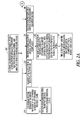
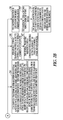
FIGS. 2A and2B are a flowchart-like diagram illustrating steps and features of a process and a system for managing and controlling a plurality of mobile communication devices. -
FIG. 3 is a block diagram of an example embodiment of a computer system in connection with which one or more embodiments of the present disclosure can execute. - In the following detailed description, reference is made to the accompanying drawings that show, by way of illustration, specific embodiments in which the invention may be practiced. These embodiments are described in sufficient detail to enable those skilled in the art to practice the invention. It is to be understood that the various embodiments of the invention, although different, are not necessarily mutually exclusive. Furthermore, a particular feature, structure, or characteristic described herein in connection with one embodiment may be implemented within other embodiments without departing from the scope of the invention. In addition, it is to be understood that the location or arrangement of individual elements within each disclosed embodiment may be modified without departing from the scope of the invention. The following detailed description is, therefore, not to be taken in a limiting sense, and the scope of the present invention is defined only by the appended claims, appropriately interpreted, along with the full range of equivalents to which the claims are entitled. In the drawings, like numerals refer to the same or similar functionality throughout the several views.
- In an embodiment, the above-discussed difficulties in managing mobile devices are addressed by using, instead of the currently-used Server/Client agents, a general purpose messaging transport protocol such as Extensible Messaging and Presence Protocol (XMPP). As is known to those of skill in the art, XMPP is a communications protocol for message-oriented middleware based on XML (Extensible Markup Language). XMPP is a set of open technologies for instant messaging, multi-party chat, voice and video calls, collaboration, lightweight middleware, content syndication, and generalized routing of XML data. Because of its extensible design, it can also be used for publish-subscribe systems; signaling for VoIP (Voice over IP), video, and file transfer; gaming; and social networking services. Because of its open nature, anyone may implement an XMPP service and interoperate with other organizations' implementations of XMPP services. In addition to its open nature, the architecture of an XMPP network is similar to email. That is, anyone can run their own XMPP server, and there is no central master server.
- Due in part to its open structure, custom functionalities can be built on top of an XMPP system or server. To maintain interoperability however, common extensions are managed by the XMPP Standards Foundation. As noted, such XMPP functionalities and applications beyond instant messaging include groupchat, network management, content syndication, collaboration tools, file sharing, gaming, remote systems control and monitoring, geo-location, middleware and cloud computing, VoIP, and identity services. XMPP is also used in deployments of non-IM services, including smart grid systems such as demand-response applications, message-oriented middleware, and as a replacement forshort message service (SMS)to provide text messaging on many smartphone clients.
- The XMPP Standards Foundation(or XSF) is active in developing open XMPP extensions. However, extensions can also be defined by any individual, software project, or organization. An example of an extension is the federation protocol in Apache Wave (the child of Google Wave), which is based on XMPP.
- An XMPP network uses a client-server architecture (i.e., clients do not talk directly to one another). However, it is decentralized by design, since there is no central authoritative server, and as noted, anyone may run their own XMPP server on their own domain.
- In an embodiment, an XMPP-based presence-enabled communication is created between a plurality of mobile telecommunication devices and the XMPP server over transmission control protocol/internet protocol (TCP/IP). In a specific embodiment, the XMPP server uses Apache MINA(Multipurpose Infrastructure for Network Application) with non-blocking sockets to achieve a large scale and to support a large fleet of devices deployed remotely. The open source XMPP server implementation can scale up to 100,000 connections pernode.
- As is known to those of skill in the art, Apache MINA is an open source Java network application framework. MINA can be used to create scalable, high performance network applications. MINA provides unified application program interfaces (APIs) for various transports like TCP, UDP, and serial communication. It also makes it easy to make an implementation of custom transport type. MINA provides both high-level and low-level network APIs. A user application interacts with MINA APIs, shielding the user application from low level I/O details. This makes it easy for the users to concentrate on the application logic and leave the I/O handling to Apache MINA.
- In using an XMPP server to monitor and control mobile telecommunication devices, each mobile telecommunication device has an XMPP client agent installed on it that, on startup of the mobile telecommunication device, establishes a durable TCP connection with the XMPP server. The same TCP connection can be used for bidirectional socket communication. In effect, this means that the server and client agents can push information as well as receive information on the same socket.
- The mobile telecommunication devices receive commands over the established XMPP channel. The received commands from the XMPP server can include commands to lock/unlock the device, to write data to the device, to erase data from the device, to acquire health statistics of the device, and to install applications on the device. Additionally, the mobile telecommunication device can send to the XMPP server geo-location data and snippets of error logs over the same channel that the XMPP server uses to transmit to the mobile telecommunication device.
-
FIG. 1A is a block diagram illustrating an example embodiment of asystem 100 that uses anXMPP server 110 to control and monitor a plurality ofmobile telecommunication devices FIG. 1A , theXMPP server 110 and themobile telecommunication devices system 100 further includes aserver agent 130, which connects to theXMPP server 110 via XMPP protocol. Theserver agent 130 is also abstracted to communicate using protocols other than XMPP. Theserver agent 130 is wholly responsible for sending the commands noted in the previous paragraph (e.g., commands to lock/unlock a device). - As further illustrated in
FIG. 1A , the mobile telecommunication devices can be aggregated into groups. For example,mobile telecommunication devices mobile telecommunication devices -
FIG. 1B is a block diagram illustrating another example embodiment of a system that uses XMPP protocol to control and monitor a plurality of mobile telecommunication devices.FIG. 1B illustrates themobile device 120A in a little more detail. Specifically, themobile device 120A includes aXMPP agent 122, and aclient agent 124. Theclient agent 124 further includes a managedevice module 125 and a manageapps module 126. AnXMPP message broker 140 serves as middleware between the mobile devices and the servers. Theserver agent 130 includes theXMPP agent 110. Theserver agent 130 further includes a devicemonitoring REST API 131, aservice layer 132, and apersistence module 133. Theserver agent 130 communicates withdatabase 150, and is accessible viauser interface 135. The service layer is configured to covert commands for operatingmobile telecommunication devices 120A...120N received by the server agent via user interface into XMPP messages. The persistence module is used by the service layer for saving or accessing any data related to devices being managed or server information stored in the database. This persistence module further provides a universal interface between the service layer and the database. It enables changing a type of database without affecting the service layer. For instance it enables changing the databasetype from My Structured Query Language (MySQL) type to High-Performance Analytic Appliance (HANA)type without a need to modify the service layer. - In another embodiment server cluster comprising a mobile telecommunication device management server (130) and a fan-out server (140) is used to manage, control, and monitor the mobile telecommunication devices (120A;.....120N).
- The mobile device management server comprises a computer microprocessor configured to perform the following functions:
- a)receive commands issued by users (135) or REST clients designated for mobile telecommunication devices for operating of the mobile telecommunication devices, wherein each mobile telecommunication device is configured to execute one or more commands designated for the each mobile telecommunication device and generate data by execution of said one or more external commands;
- b) upon the receipt of the command issued by either one of the users or one of the REST clients activate a respective REST API (131) of the mobile telecommunication device management server, wherein the respective REST API enables forwarding of said received external command to a XMPP agent (110) of the mobile telecommunication device management server after processing of said command by a service layer component (132) of the mobile telecommunication device management server, wherein the mobile telecommunication device management server comprises a plurality of the REST APIs and the commands issued by the users or by the REST clients are grouped in groups and each group has the respective REST API;
- c) cause the service layer component to process the command designated for one or more of the mobile telecommunication devices, wherein the processing of the command by the service layer component comprises generating one or more XMPP messages in a format of the XMPP protocol, wherein as a result thereof each designated mobile device has at least one respective XMPP message designated for it comprising the command converted by using data being specific for operating of the each designated mobile telecommunication device;
- d) cause the XMPP agent of the mobile telecommunication device management server to send one or more XMPP messages designated for one or more of the mobile telecommunication devices to the fan-out server via bidirectional sockets of said XMPP agent and the fan-out server using the XMPP protocol;
- e) cause the XMPP agent of the mobile telecommunication device management server to receive one or more XMPP messages designated for the mobile telecommunication device management server from the fan-out server via the bidirectional sockets of said XMPP agent and the fan-out server using the XMPP protocol;
- f) forward one or more XMPP messages received by the XMPP agent of the mobile telecommunication device management server from the XMPP agent of the mobile telecommunication device management server to the service layer component (132);
- g) cause the service layer component to process one or more XMPP messages forwarded from the XMPP agent of the mobile telecommunication device management server to the service layer component, wherein the processing of said one or more XMPP messages comprises the following in a case when said one or more XMPP messages comprise data generated by execution of one of the commands issued either by one of the users or by the one of the REST clients on one or more of the mobile telecommunication devices for which said command was designated:
- o retrieving said data from said one or more XMPP messages; and
- o forwarding at least a portion of said data via the one of the REST APIs to either said user or to said REST client, wherein said REST API was activated upon the receipt of said command;
- h) receive the XMPP messages designated for the mobile telecommunication devices from the XMPP agent (110) of the mobile telecommunication device management server via the bidirectional sockets of the fan-out server and the XMPP agent of the mobile telecommunication device management server using the XMPP protocol;
- i) dispatch the XMPP messages to respective XMPP agents (122) of the designated mobile telecommunication devices (120A....120N) using the XMPP protocol via a cellular digital telecommunication network and bidirectional sockets of said XMPP agents and fan-out server, wherein each mobile telecommunication device has the respective XMPP agent being configured to enable receiving the dispatched XMPP messages designated for the each mobile telecommunication device via the bidirectional sockets of the each mobile telecommunication device when the each mobile telecommunication device is in an on-line state, wherein each XMPP agent of the respective mobile telecommunication device is further configured to cause the respective mobile telecommunication device to perform the following in a case when the each XMPP agent has received one or more dispatched XMPP messages comprising one or more commands:
- o retrieve one or more commands from said one or more received XMPP messages;
- o cause said mobile telecommunication device to generate data by executing the one or more retrievedcommands on said respective mobile telecommunication device; and
- o generate one or more XMPP messages comprising the generated data;
- j) persist of the dispatching of the XMPP message to the designated mobile telecommunication device until the state of said designated device is changed from an off-line sate to the on-line state, wherein each mobile telecommunication device has the respective XMPP agent being configured to disable receiving the dispatched XMPP messages designated for the each mobile telecommunication device via the bidirectional sockets of the each mobile telecommunication device when the each mobile telecommunication device is in the off-line state;
- k) receive XMPP messages from the XMPP agents of the mobile telecommunication devices designated for the mobile telecommunication device management server using the XMPP protocol via the cellular digital telecommunication network and the bidirectional sockets of the XMPP agents and the fan-out server, wherein said XMPP messages are generated by the respective mobile telecommunication devices;
- l) forward the XMPP messages received from the XMPP agents of the respective mobile telecommunication devices to the XMPP agent of the mobile telecommunication device management server via bidirectional sockets of the fan-out server and the XMPP agent of the mobile telecommunication device management server using the XMPP protocol.
- The examples of data being specific for operating of the designated mobile telecommunication device used in function c) may be commands parsable by the designated mobile telecommunication device and a jabber identification (ID) of said designated mobile telecommunication device, wherein the jabber ID is used for identification of said designated in networks using XMPP protocol. For instance one of the users issues a command to request a battery level of one of the mobile telecommunication devices. A body of the command may be formulated using a structured query language (SQL) comprising a name of the designated mobile telecommunication device and a dedicated field requesting the value of battery level. In this case the name of the designated mobile telecommunication device is substituted by the jabber ID of said designated mobile telecommunication device and the dedicated field is substituted by a command requesting the battery level of said designated mobile telecommunication device being parsable by said designated mobile telecommunication device. Referring again to the aforementioned example illustrating function c) execution of the function g) may result in generating a message addressed to the user issued the aforementioned command, wherein the message comprises an SQL document. Said SQL document is generated using received XMPP message comprising the jabber ID of the designated mobile telecommunication device and a value of the battery level of said designated mobile telecommunication device. The generated SQL document comprises a line comprising the name of said designated mobile telecommunication device identified on a basis of the jabber ID and a line comprising the value if the battery level retrieved from the XMPP message.
- Execution of the function j) may be implemented as follows. In a case when the fan-out server has an XMPP message to be dispatched to one of the mobile telecommunication devices in the off-line state the fan-out server starts monitoring the state of said mobile telecommunication device. After the fan-out sever registers a change in the state of the mobile telecommunication device from off-line state to the on-line state, the fan-out server dispatches said XMPP message to said mobile telecommunication device.
- Yet another embodiment provides for a method to manage, control, and monitor the mobile telecommunication devices (120A;.....120N) using a server cluster comprising a mobile telecommunication device management server (130) and a fan-out server (140).
- The mobile telecommunication devices have the same functionalities as specified in the embodiment described above. The mobile device management server comprises a computer microprocessor configured to perform the aforementioned functions: a)- g). The fan-out server comprises a computer microprocessor configured to perform the aforementioned functions: h)-l). The method comprises execution of functions a)-l).
- The method, wherein a command designated to one of the mobile telecommunication device being in the on-line state is performed by executing the aforementioned functions in the following order: a), b), c), d), h), i), k), l), e), f), g).
- The method, wherein a command designated to one of the mobile telecommunication device being in the off-line state is performed by executing the aforementioned functions in the following order: a), b), c), d), h),j), k), l), e), f), g).
- Yet another embodiment provides for non-transitory computer readable storage medium embodying a computer program for performing the method of the previous embodiment.
- In the latter three embodiments at least a portion of users and at least a portion of REST clients may be connected to the mobile telecommunication device management server via internet.
- The latter four embodiments may be extended with additional functionality of the mobile telecommunication device enabling management, control, and monitoring of one or more mobile telecommunication device via said mobile telecommunication device.
- Each of at least a portion of the XMPP agents of the respective mobile telecommunications device is further configured to cause the respective mobile telecommunication device to perform the following in a case when the each of at least a portion of the XMPP agents has received one or more XMPP messages comprising one or more commands:
- o cause said mobile telecommunication device to generate one or more other commands designated for one or more of the mobile telecommunication devices by executing said one or more commands retrieved from said one or more XMPP messages on said respective mobile telecommunication device; and
- o generate one or more XMPP messages comprising the one or more generated commands;
- o retrieving said command from said one or more XMPP messages; and
- o the processing of the retrieved command by the service layer component;
- o retrieving said data from said one or more XMPP messages; and
- o generating one or more XMPP messages in the format of the XMPP protocol designated for the mobile telecommunication device which has generated said one or more commands, wherein the one or more generated XMPP messages comprise at least a portion of the retrieved data.
- The latter five embodiments may be extended with additional functionality safe execution of the commands and monitoring configurations of the mobile telecommunication devices. The processing of the command by the service layer component (132) further comprises: retrieving from a database (150) configuration information of one or more of the mobile telecommunication devices for which said command is designated;
- in a case when said command complies with the retrieved configuration information performing of the generating of the one or more XMPP messages in the format of the XMPP protocol, wherein as a result thereof each designated mobile device has at least one respective XMPP message designated for it comprising the command converted by using data being specific for operating of the each designated mobile telecommunication device, otherwise in a case when said command is issued by either one of the users or one of the REST clients sending an error message via one of the REST APIs to either said user or said REST client, wherein said REST API was activated upon the receipt of said command, and in a case when said command in generated by one of the mobile telecommunication devices generating an XMPP message comprising an error message designated for the one of the mobile telecommunication devices;
wherein in a case when as a result of execution on one of the mobile telecommunication devices of one of the commands a configuration of said mobile telecommunication device is changed the data generated as a result of execution of said command on said mobile telecommunication device comprises information representing changes in the configuration of said mobile telecommunication device and the processing of one or more XMPP messages comprising said data by the service layer component comprises the following: - o retrieving the information representing changes in the configuration of said mobile telecommunication device from said one or more received XMPP messages; and
- o updating configuration information of said mobile telecommunication device in the database by using the retrieved information representing changes in the configuration of said mobile telecommunication device.
- In another embodiment, XMPP communications occur in a peer to peer fashion between devices. In such a peer to peer system, all devices can be given equal functionality, or one or more devices could be given additional supervisory authority, so as to monitor and control the other devices.
- The
system 100 can be deployed in connection with Androids, Apple's Iphone, or other smart phone platforms. The system can also be deployed in connection with mobile point of sale (POS) devices. -
FIG. 2 is a block diagram illustrating steps and features of an example process and system for managing mobile telecommunication devices using a general purpose messaging transport protocol.FIG. 2 includes a number of process blocks 200-274. Though arranged serially in the examples ofFIG. 2 , other examples may reorder the blocks, omit one or more blocks, and/or execute two or more blocks in parallel using multiple microprocessors or a single microprocessor organized as two or more virtual machines or sub-microprocessors. Moreover, still other examples can implement the blocks as one or more specific interconnected hardware or integrated circuit modules with related control and data signals communicated between and through the modules. Thus, any process flow is applicable to software, firmware, hardware, and hybrid implementations. - Referring to
FIG. 2 , at 200, a computer microprocessor is operable to use a general purpose messaging transport protocol to manage, control, and monitor a mobile telecommunication device. - As noted at 210, the general purpose messaging transport protocol can be the Extensible Messaging and Presence Protocol (XMPP). As noted above, the XMPP is an open source architecture that permits scalability to many mobile telecommunication devices. In an embodiment, as indicated at 212, the XMPP is implemented using transport control protocol/internet protocol (TCP/IP) with non-blocking sockets.
- As indicated at 220, the mobile telecommunication device can be a smart phone. The smart phone can be an Android smart phone, an iPhone by the Apple Corporation, or any other smart phone platform. The device could also be a mobile point of sale (POS) device.
Block 230 indicates that the mobile telecommunication device can include a client agent. The client agent is configured to communicate with a general purpose message broker. As noted inblock 210, the general transport messaging transport server/protocol can be an XMPP server/protocol. Additionally, block 232 shows that the mobile telecommunication device is operable to establish a transport control protocol (TCP) connection with the general purpose message broker upon startup of the mobile telecommunication device. Further, block 234 shows that the client agent and the general purpose message broker communicate via a bidirectional socket. The bidirectional socket permits the client agent on the mobile telecommunication device and the general purpose message broker to entertain requests and responses to those requests. For example, the server agent via the message broker could request a health status of the mobile telecommunication device, and the mobile telecommunication device can respond with the status of the device. -
Block 240 shows that the computer microprocessor can include the general purpose message broker and additionally include a server agent component that is operable to communicate with the general purpose message broker. -
Block 250 indicates that the computer microprocessor is operable to perform several functions in its managing, monitoring, and controlling of the mobile telecommunication device. For example, the computer microprocessor can be configured to lock the mobile telecommunication device, to unlock the mobile telecommunication device, to modify data on the mobile telecommunication device, to receive status data relating to the mobile telecommunication device, to install an application on the mobile telecommunication device, to receive geo-location data from the mobile telecommunication device, and to receive an error log from the mobile telecommunication device. -
Block 260 shows that the general purpose transport protocol can be used to control a plurality of mobile telecommunication devices. Additionally, at 262, the general transport protocol can be used in connection with a grouping of two or more of the plurality of mobile telecommunication devices. As noted above, the grouping of the mobile telecommunication devices can be according to any criteria (e.g., departments within a company), and used for any purpose (e.g., monitoring the costs associated with the plurality of mobile telecommunication devices on a per company department basis). -
Block 270 indicates that the computer microprocessor can be located on the mobile telecommunication device. Additionally, at 272, the system includes a second mobile telecommunication device. At 274, the mobile telecommunication device and the second mobile telecommunication device are operable to communicate with each other in a peer to peer fashion using the general purpose messaging transport protocol. As noted above, one or more mobile telecommunication devices can be configured to monitor and control the plurality of other mobile telecommunication devices. - The following are sample code snippets to illustrate an example of using an XMPP protocol in requests/responses for locking a mobile telecommunication device and requests/responses for determining memory usage in a mobile telecommunication device.


-
FIG. 3 is an overview diagram of hardware and an operating environment in conjunction with which embodiments of the invention may be practiced. The description ofFIG. 3 is intended to provide a brief, general description of suitable computer hardware and a suitable computing environment in conjunction with which the invention may be implemented. In some embodiments, the invention is described in the general context of computer-executable instructions, such as program modules, being executed by a computer, such as a personal computer. Generally, program modules include routines, programs, objects, components, data structures, etc., that perform particular tasks or implement particular abstract data types. Moreover, those skilled in the art will appreciate that the invention may be practiced with other computer system configurations, including hand-held devices, multiprocessor systems, microprocessor-based or programmable consumer electronics, network PCs, minicomputers, mainframe computers, and the like. The invention may also be practiced in distributed computer environments where tasks are performed by I/O remote processing devices that are linked through a communications network. In a distributed computing environment, program modules may be located in both local and remote memory storage devices. - In the embodiment shown in
FIG. 3 , a hardware and operating environment is provided that is applicable to any of the servers and/or remote clients shown in the other Figures. - As shown in
FIG. 3 , one embodiment of the hardware and operating environment includes a general purpose computing device in the form of a computer 20 (e.g., a personal computer, workstation, or server), including one ormore processing units 21, asystem memory 22, and asystem bus 23 that operatively couples various system components including thesystem memory 22 to theprocessing unit 21. There may be only one or there may be more than oneprocessing unit 21, such that the processor ofcomputer 20 comprises a single central-processing unit (CPU), or a plurality of processing units, commonly referred to as a multiprocessor or parallel-processor environment. A multiprocessor system can include cloud computing environments. In various embodiments,computer 20 is a conventional computer, a distributed computer, or any other type of computer. - The
system bus 23 can be any of several types of bus structures including a memory bus or memory controller, a peripheral bus, and a local bus using any of a variety of bus architectures. The system memory can also be referred to as simply the memory, and, in some embodiments, includes read-only memory (ROM) 24 and random-access memory (RAM) 25. A basic input/output system (BIOS)program 26, containing the basic routines that help to transfer information between elements within thecomputer 20, such as during start-up, may be stored inROM 24. Thecomputer 20 further includes ahard disk drive 27 for reading from and writing to a hard disk, not shown, amagnetic disk drive 28 for reading from or writing to a removablemagnetic disk 29, and anoptical disk drive 30 for reading from or writing to a removableoptical disk 31 such as a CD ROM or other optical media. Thehard disk drive 27,magnetic disk drive 28, andoptical disk drive 30 couple with a harddisk drive interface 32, a magneticdisk drive interface 33, and an opticaldisk drive interface 34, respectively. The drives and their associated computer-readable media provide non volatile storage of computer-readable instructions, data structures, program modules and other data for thecomputer 20. It should be appreciated by those skilled in the art that any type of computer-readable media which can store data that is accessible by a computer, such as magnetic cassettes, flash memory cards, digital video disks, Bernoulli cartridges, random access memories (RAMs), read only memories (ROMs), redundant arrays of iodependent disks (e.g., RAID storage devices) and the like, can be used in the exemplary operating environment. - A plurality of program modules can be stored on the hard disk,
magnetic disk 29,optical disk 31,ROM 24, orRAM 25, including anoperating system 35, one ormore application programs 36,other program modules 37, andprogram data 38. A plug in containing a security transmission engine for the present invention can be resident on any one or number of these computer-readable media. - A user may enter commands and information into
computer 20 through input devices such as akeyboard 40 andpointing device 42. Other input devices (not shown) can include a microphone, joystick, game pad, satellite dish, scanner, or the like. These other input devices are often connected to theprocessing unit 21 through aserial port interface 46 that is coupled to thesystem bus 23, but can be connected by other interfaces, such as a parallel port, game port, or a universal serial bus (USB). Amonitor 47 or other type of display device can also be connected to thesystem bus 23 via an interface, such as avideo adapter 48. Themonitor 47 can display a graphical user interface for the user. In addition to themonitor 47, computers typically include other peripheral output devices (not shown), such as speakers and printers. - The
computer 20 may operate in a networked environment using logical connections to one or more remote computers or servers, such asremote computer 49. These logical connections are achieved by a communication device coupled to or a part of thecomputer 20; the invention is not limited to a particular type of communications device. Theremote computer 49 can be another computer, a server, a router, a network PC, a client, a peer device or other common network node, and typically includes many or all of the elements described above I/0 relative to thecomputer 20, although only amemory storage device 50 has been illustrated. The logical connections depicted inFIG. 3 include a local area network (LAN) 51 and/or a wide area network (WAN) 52. Such networking environments are commonplace in office networks, enterprise-wide computer networks, intranets and the internet, which are all types of networks. - When used in a LAN-networking environment, the
computer 20 is connected to theLAN 51 through a network interface oradapter 53, which is one type of communications device. In some embodiments, when used in a WAN-networking environment, thecomputer 20 typically includes a modem 54 (another type of communications device) or any other type of communications device, e.g., a wireless transceiver, for establishing communications over the wide-area network 52, such as the internet. Themodem 54, which may be internal or external, is connected to thesystem bus 23 via theserial port interface 46. In a networked environment, program modules depicted relative to thecomputer 20 can be stored in the remotememory storage device 50 of remote computer, orserver 49. It is appreciated that the network connections shown are exemplary and other means of, and communications devices for, establishing a communications link between the computers may be used including hybrid fiber-coax connections, T1-T3 lines, DSL's, OC-3 and/or OC-12, TCP/IP, microwave, wireless application protocol, and any other electronic media through any suitable switches, routers, outlets and power lines, as the same are known and understood by one of ordinary skill in the art. - The Abstract is provided to comply with 37 C.F.R. § 1.72(b) and will allow the reader to quickly ascertain the nature and gist of the technical disclosure. It is submitted with the understanding that it will not be used to interpret or limit the scope or meaning of the claims. In the foregoing description of the embodiments, various features are grouped together in a single embodiment for the purpose of streamlining the disclosure. This method of disclosure is not to be interpreted as reflecting that the claimed embodiments have more features than are expressly recited in each claim. Rather, as the following claims reflect, inventive subject matter lies in less than all features of a single disclosed embodiment. Thus the following claims are hereby incorporated into the Description of the Embodiments, with each claim standing on its own as a separate example embodiment.
Claims (29)
- A server cluster comprising a mobile telecommunication device management server (130) and a fan-out server (140), wherein the mobile device management server comprises a computer microprocessor configured to:receive commands issued by users (135) or representational state transfer (REST) clients designated for mobile telecommunication devices for operating of the mobile telecommunication devices, wherein each mobile telecommunication device is configured to execute one or more commands designated for the each mobile telecommunication device and generate data by execution of said one or more external commands;upon the receipt of the command issued by either one of the users or one of the REST clients activate a respective REST application program interfaces (API) (131) of the mobile telecommunication device management server, wherein the respective REST API enables forwarding of said received external command to a extensible messaging and presence protocol (XMPP) agent (110) of the mobile telecommunication device management server after processing of said command by a service layer component (132) of the mobile telecommunication device management server, wherein the mobile telecommunication device management server comprises a plurality of the REST APIs and the commands issued by the users or by the REST clients are grouped in groups and each group has the respective REST API;cause the service layer component to process the command designated for one or more of the mobile telecommunication devices, wherein the processing of the command by the service layer component comprises generating one or more XMPP messages in a format of the XMPP protocol, wherein as a result thereof each designated mobile device has at least one respective XMPP message designated for it comprising the command converted by using data being specific for operating of the each designated mobile telecommunication device;cause the XMPP agent of the mobile telecommunication device management server to send one or more XMPP messages designated for one or more of the mobile telecommunication devices to the fan-out server via bidirectional sockets of said XMPP agent and the fan-out server using the XMPP protocol;cause the XMPP agent of the mobile telecommunication device management server to receive one or more XMPP messages designated for the mobile telecommunication device management server from the fan-out server via the bidirectional sockets of said XMPP agent and the fan-out server using the XMPP protocol;forward one or more XMPP messages received by the XMPP agent of the mobile telecommunication device management server from the XMPP agent of the mobile telecommunication device management server to the service layer component (132);cause the service layer component to process one or more XMPP messages forwarded from the XMPP agent of the mobile telecommunication device management server to the service layer component, wherein the processing of said one or more XMPP messages comprises the following in a case when said one or more XMPP messages comprise data generated by execution of one of the commands issued either by one of the users or by the one of the REST clients on one or more of the mobile telecommunication devices for which said command was designated:wherein the fan-out server comprises a computer microprocessor configured to:retrieving said data from said one or more XMPP messages; andforwarding at least a portion of said data via the one of the REST APIs to either said user or to said REST client, wherein said REST API was activated upon the receiptof said command;receive the XMPP messages designated for the mobile telecommunication devices from the XMPP agent (110) of the mobile telecommunication device management server via the bidirectional sockets of the fan-out server and the XMPP agent of the mobile telecommunication device management server using the XMPP protocol;dispatch the XMPP messages to respective XMPP agents (122) of the designated mobile telecommunication devices (120A....120N) using the XMPP protocol via a cellular digital telecommunication network and bidirectional sockets of said XMPP agents and fan-out server, wherein each mobile telecommunication device has the respective XMPP agent being configured to enable receiving the dispatched XMPP messages designated for the each mobile telecommunication device via the bidirectional sockets of the each mobile telecommunication device when the each mobile telecommunication device is in an on-line state, wherein each XMPP agent of the respective mobile telecommunication device is further configured to cause the respective mobile telecommunication device to perform the following in a case when the each XMPP agent has received one or more dispatched XMPP messages comprising one or more commands:o retrieve one or more commands from said one or more received XMPP messages;o cause said mobile telecommunication device to generate data by executing the one or more retrieved commands on said respective mobile telecommunication device; ando generate one or more XMPP messages comprising the generated data;persist of the dispatching of the XMPP message to the designated mobile telecommunication device until the state of said designated device is changed from an off-line sate to the on-line state, wherein each mobile telecommunication device has the respective XMPP agent being configured to disable receiving the dispatched XMPP messages designated for the each mobile telecommunication device via the bidirectional sockets of the each mobile telecommunication device when the each mobile telecommunication device is in the off-line state;receive XMPP messages from the XMPP agents of the mobile telecommunication devices designated for the mobile telecommunication device management server using the XMPP protocol via the cellular digital telecommunication network and the bidirectional sockets of the XMPP agents and the fan-out server, wherein said XMPP messages are generated by the respective mobile telecommunication devices;forward the XMPP messages received from the XMPP agents of the respective mobile telecommunication devices to the XMPP agent of the mobile telecommunication device management server via bidirectional sockets of the fan-out server and the XMPP agent of the mobile telecommunication device management server using the XMPP protocol.
- The server cluster of claim 1, wherein at least a portion of users and at least a portion of REST clients are connected to the mobile telecommunication device management server via internet.
- The server cluster of any one of preceding claims, wherein each of at least a portion of the XMPP agents of the respective mobile telecommunications device is further configured to cause the respective mobile telecommunication device to perform the following in a case when the each of at least a portion of the XMPP agents has received one or more XMPP messages comprising one or more commands:o cause said mobile telecommunication device to generate one or more other commands designated for one or more of the mobile telecommunication devices by executing said one or more commands retrieved from said one or more XMPP messages on said respective mobile telecommunication device; ando generate one or more XMPP messages comprising the one or more generated commands;wherein the processing by the service component layer of one or more XMPP messages comprises the following in a case when said one or more XMPP messages comprise one of the commands designated for one or more of the mobile telecommunication devices:o retrieving said command from said one or more XMPP messages; ando the processing of the retrieved command by the service layer component;wherein the processing by the service component layer of one or more XMPP messages comprises the following in a case when said one or more XMPP messages comprise data generated by execution of one or more commands on one or more of the mobile telecommunication devices for which said one or more commands generated by one of the mobile telecommunication devices were designated:o retrieving said data from said one or more XMPP messages; ando generating one or more XMPP messages in the format of the XMPP protocol designated for the mobile telecommunication device which has generated said one or more commands, wherein the one or more generated XMPP messages comprise at least a portion of the retrieved data.
- The cluster server of any one of preceding claims, wherein the processing of the command by the service layer component (132) further comprises:retrieving from a database (150) configuration information of one or more of the mobile telecommunication devices for which said command is designated;in a case when said command complies with the retrieved configuration information performing of the generating of the one or more XMPP messages in the format of the XMPP protocol, wherein as a result thereof each designated mobile device has at least one respective XMPP message designated for it comprising the command converted by using data being specific for operating of the each designated mobile telecommunication device, otherwise in a case when said command is issued by either one of the users or one of the REST clients sending an error message via one of the REST APIs to either said user or said REST client, wherein said REST API was activated upon the receipt of said command, and in a case when said command is generated by one of the mobile telecommunication devices generating an XMPP message comprising an error message designated for the one of the mobile telecommunication devices;wherein in a case when as a result of execution on one of the mobile telecommunication devices of one of the commands a configuration of said mobile telecommunication device is changed the data generated as a result of execution of said command on said mobile telecommunication device comprises information representing changes in the configuration of said mobile telecommunication device and the processing of one or more XMPP messages comprising said data by the service layer component comprises the following:o retrieving the information representing changes in the configuration of said mobile telecommunication device from said one or more received XMPP messages; ando updating configuration information of said mobile telecommunication device in the database by using the retrieved information representing changes in the configuration of said mobile telecommunication device.
- A system (130) comprising:a computer microprocessor configured to:use a general purpose messaging transport protocol to manage, control, and monitor mobile telecommunication devices (120A;...120N).
- The system of claim 5, wherein the general purpose messaging transport protocol comprises Extensible Messaging and Presence Protocol (XMPP).
- The system of claim 6, wherein the XMPP is implemented using transport control protocol/internet protocol (TCP/IP) with non-blocking sockets.
- The system of one of the preceding claims5-7, wherein the mobile telecommunication devices comprise one or more of a smart phone and a point of sale (POS) device.
- The system of claim 5, wherein the systemmicroprocessor comprises a general purpose message broker (140) and a server agent component (130) that is configured to communicate with the general purpose message broker, wherein the general purpose message broker is configured to communicate with client agents (124) of the respective mobile telecommunication devices, wherein the general purpose message broker is configured to fan-out packets of the general purpose messaging transport protocol to the designated mobile telecommunication devices.
- The system of claim 9, wherein the mobile telecommunication device is operable to establish a transport control protocol (TCP) connection with the general purpose message broker upon startup of the mobile telecommunication device.
- The system of claim 9, wherein the client agent and the general purpose message broker establish a bidirectional socket.
- The system of claim 9, wherein the client agent of at least one mobile telecommunication device is configured to control and monitor one or more other telecommunication mobile devices via their respective client agents.
- The system of claim 9, the general purpose broker is a fan-out server on a digital cellular telecommunication network, the client agents of the mobile telecommunication devices communicate with the server agent component via the fan-out server using the digital cellular telecommunication network.
- The system of one of the preceding claims5-13, wherein the computer microprocessor is operable to lock the mobile telecommunication device, unlock the mobile telecommunication device, modify data on the mobile telecommunication device, receive status data relating to the mobile telecommunication device, install an application on the mobile telecommunication device, receive geo-location data from the mobile telecommunication device, and receive an error log from the mobile telecommunication device.
- The system of one of the preceding claims5-13, wherein the mobile telecommunication device s are configured to communicate with each other in a peer to peer fashion using the general purpose messaging transport protocol.
- A process comprising:using a general purpose messaging transport protocol to manage, control, and monitor a mobile telecommunication device (120A;.....120N).
- The process of claim 16, wherein the general purpose messaging transport protocol comprises Extensible Messaging and Presence Protocol (XMPP); and wherein the XMPP is implemented using transport control protocol/internet protocol (TCP/IP) with non-blocking sockets.
- The process of claim 16, wherein the mobile telecommunication device comprises one or more of a smart phone and a point of sale (POS) device.
- The process of claim 16, wherein the mobile telecommunication device comprises a client agent that is operable to communicate with a general purpose message broker; wherein the mobile telecommunication device is operable to establish a transport control protocol (TCP) connection with the general purpose message broker upon startup of the mobile telecommunication device; and wherein the client agent and the general purpose message broker establish a bidirectional socket.
- The process of claim 16, wherein the managing, controlling, and monitoring of the mobile telecommunication device comprises locking the mobile telecommunication device, unlocking the mobile telecommunication device, modifying data on the mobile telecommunication device, receiving status data relating to the mobile telecommunication device, instaling an application on the mobile telecommunication device, receiving geo-location data from the mobile telecommunication device, and receiving an error log from the mobile telecommunication device.
- The process of claim 16, comprising controlling a plurality of mobile telecommunication devices with the general purpose transport protocol; wherein two or more of the plurality of mobile telecommunication devices are associated with a group of mobile telecommunication devices.
- The process of claim 16, wherein the mobile telecommunication device communicates with a second mobile telecommunication device in a peer to peer fashion using the general purpose messaging transport protocol.
- The process of claim 22, wherein the communication between the mobile telecommunication device and the second mobile telecommunication device comprises the mobile telecommunication device managing, controlling, and monitoring the second mobile telecommunications device.
- A computer readable medium comprising instructions that when executed by a microprocessor execute a process comprising:using a general purpose messaging transport protocol to manage, control, and monitor a mobile telecommunication device.
- A method for operating a server cluster comprising a mobile telecommunication device management server (130) and a fan-out server (140), the method comprising:causing a computer processor of the mobile telecommunication device management server to perform the following:receive commands issued by users (135) or representational state transfer (REST) clients designated for mobile telecommunication devices for operating of the mobile telecommunication devices, wherein each mobile telecommunication device is configured to execute one or more commands designated for the each mobile telecommunication device and generate data by execution of said one or more external commands;upon the receipt of the command issued by either one of the users or one of the REST clients activate a respective REST application program interfaces (API) (131) of the mobile telecommunication device management server, wherein the respective REST API enables forwarding of said received external command to a extensible messaging and presence protocol (XMPP) agent (110) of the mobile telecommunication device management server after processing of said command by a service layer component (132) of the mobile telecommunication device management server, wherein the mobile telecommunication device management server comprises a plurality of the REST APIs and the commands issued by the users or by the REST clients are grouped in groups and each group has the respective REST API;cause the service layer component to process the command designated for one or more of the mobile telecommunication devices, wherein the processing of the command by the service layer component comprises generating one or more XMPP messages in a format of the XMPP protocol, wherein as a result thereof each designated mobile device has at least one respective XMPP message designated for it comprising the command converted by using data being specific for operating of the each designated mobile telecommunication device;cause the XMPP agent of the mobile telecommunication device management server to send one or more XMPP messages designated for one or more of the mobile telecommunication devices to the fan-out server via bidirectional sockets of said XMPP agent and the fan-out server using the XMPP protocol;cause the XMPP agent of the mobile telecommunication device management server to receive one or more XMPP messages designated for the mobile telecommunication device management server from the fan-out server via the bidirectional sockets of said XMPP agent and the fan-out server using the XMPP protocol;forward one or more XMPP messages received by the XMPP agent of the mobile telecommunication device management server from the XMPP agent of the mobile telecommunication device management server to the service layer component (132);cause the service layer component to process one or more XMPP messages forwarded from the XMPP agent of the mobile telecommunication device management server to the service layer component, wherein the processing of said one or more XMPP messages comprises the following in a case when said one or more XMPP messages comprise data generated by execution of one of the commands issued either by one of the users or by the one of the REST clients on one or more of the mobile telecommunication devices for which said command was designated:retrieving said data from said one or more XMPP messages; andforwarding at least a portion of said data via the one of the REST APIs to either said user or to said REST client, wherein said REST API was activated upon the receipt of said command;causing a computer microprocessor of the fan-out server to perform the following:receive the XMPP messages designated for the mobile telecommunication devices from the XMPP agent (110) of the mobile telecommunication device management server via the bidirectional sockets of the fan-out server and the XMPP agent of the mobile telecommunication device management server using the XMPP protocol;dispatch the XMPP messages to respective XMPP agents (122) of the designated mobile telecommunication devices (120A....120N) using the XMPP protocol via a cellular digital telecommunication network and bidirectional sockets of said XMPP agents and fan-out server, wherein each mobile telecommunication device has the respective XMPP agent being configured to enable receiving the dispatched XMPP messages designated for the each mobile telecommunication device via the bidirectional sockets of the each mobile telecommunication device when the each mobile telecommunication device is in an on-line state, wherein each XMPP agent of the respective mobile telecommunication device is further configured to cause the respective mobile telecommunication device to perform the following in a case when the each XMPP agent has received one or more dispatched XMPP messages comprising one or more commands:o retrieve one or more commands from said one or more received XMPP messages;o cause said mobile telecommunication device to generate data by executing the one or more retrieved commands on said respective mobile telecommunication device; ando generate one or more XMPP messages comprising the generated data;persist of the dispatching of the XMPP message to the designated mobile telecommunication device until the state of said designated device is changed from an off-line sate to the on-line state, wherein each mobile telecommunication device has the respective XMPP agent being configured to disable receiving the dispatched XMPP messages designated for the each mobile telecommunication device via the bidirectional sockets of the each mobile telecommunication device when the each mobile telecommunication device is in the off-line state;receive XMPP messages from the XMPP agents of the mobile telecommunication devices designated for the mobile telecommunication device management server using the XMPP protocol via the cellular digital telecommunication network and the bidirectional sockets of the XMPP agents and the fan-out server, wherein said XMPP messages are generated by the respective mobile telecommunication devices;forward the XMPP messages received from the XMPP agents of the respective mobile telecommunication devices to the XMPP agent of the mobile telecommunication device management server via bidirectional sockets of the fan-out server and the XMPP agent of the mobile telecommunication device management server using the XMPP protocol.
- The method of claim 25, wherein at least a portion of users and at least a portion of REST clients are connected to the mobile telecommunication device management server via internet.
- The method of one of claims 25 or 26, wherein each of at least a portion of the XMPP agents of the respective mobile telecommunications device is further configured to cause the respective mobile telecommunication device to perform the following in a case when the each of at least a portion of the XMPP agents has received one or more XMPP messages comprising one or more commands:o cause said mobile telecommunication device to generate one or more other commands designated for one or more of the mobile telecommunication devices by executing said one or more commands retrieved from said one or more XMPP messages on said respective mobile telecommunication device; ando generate one or more XMPP messages comprising the one or more generated commands;wherein the processing by the service component layer of one or more XMPP messages comprises the following in a case when said one or more XMPP messages comprise one of the commands designated for one or more of the mobile telecommunication devices:o retrieving said command from said one or more XMPP messages; ando the processing of the retrieved command by the service layer component;wherein the processing by the service component layer of one or more XMPP messages comprises the following in a case when said one or more XMPP messages comprise data generated by execution of one or more commands on one or more of the mobile telecommunication devices for which said one or more commands generated by one of the mobile telecommunication devices were designated:o retrieving said data from said one or more XMPP messages; ando generating one or more XMPP messages in the format of the XMPP protocol designated for the mobile telecommunication device which has generated said one or more commands, wherein the one or more generated XMPP messages comprise at least a portion of the retrieved data.
- The method of one of claims 25 - 27, wherein the processing of the command by the service layer component (132) further comprises:retrieving from a database (150) configuration information of one or more of the mobile telecommunication devices for which said command is designated;in a case when said command complies with the retrieved configuration information performing of the generating of the one or more XMPP messages in the format of the XMPP protocol, wherein as a result thereof each designated mobile device has at least one respective XMPP message designated for it comprising the command converted by using data being specific for operating of the each designated mobile telecommunication device, otherwise in a case when said command is issued by either one of the users or one of the REST clients sending an error messagevia one of the REST APIs to either said user or said REST client, wherein said REST API was activated upon the receipt of said command, and in a case when said command is generated by one of the mobile telecommunication devices generating an XMPP message comprising an error message designated for the one of the mobile telecommunication devices ;wherein in a case when as a result of execution on one of the mobile telecommunication devices of one of the commands a configuration of said mobile telecommunication device is changed the data generated as a result of execution of said command on said mobile telecommunication device comprises information representing changes in the configuration of said mobile telecommunication device and the processing of one or more XMPP messages comprising said data by the service layer component comprises the following:o retrieving the information representing changes in the configuration of said mobile telecommunication device from said one or more received XMPP messages; ando updating configuration information of said mobile telecommunication device in the database by using the retrieved information representing changes in the configuration of said mobile telecommunication device.
- A non-transitory computer readable storage medium embodying a computer program for performing the method of any one of claims 25-28.
Applications Claiming Priority (1)
| Application Number | Priority Date | Filing Date | Title |
|---|---|---|---|
| US13/794,289 US20140258488A1 (en) | 2013-03-11 | 2013-03-11 | Managing mobile devices with a general purpose messaging transport protocol |
Publications (2)
| Publication Number | Publication Date |
|---|---|
| EP2785019A1 true EP2785019A1 (en) | 2014-10-01 |
| EP2785019B1 EP2785019B1 (en) | 2015-05-27 |
Family
ID=50241179
Family Applications (1)
| Application Number | Title | Priority Date | Filing Date |
|---|---|---|---|
| EP14158670.1A Active EP2785019B1 (en) | 2013-03-11 | 2014-03-10 | Managing mobile telecommunication devices with a general purpose messaging transport protocol in digital cellular telecommunication networks |
Country Status (3)
| Country | Link |
|---|---|
| US (1) | US20140258488A1 (en) |
| EP (1) | EP2785019B1 (en) |
| CN (1) | CN104052785B (en) |
Families Citing this family (3)
| Publication number | Priority date | Publication date | Assignee | Title |
|---|---|---|---|---|
| CN105005201A (en) * | 2015-06-04 | 2015-10-28 | 广东康宝电器股份有限公司 | Multi-mobile-terminal data synchronization and push system for intelligent household |
| CN106097609A (en) * | 2016-07-21 | 2016-11-09 | 中国银联股份有限公司 | The remote control administrative system of intelligence POS terminal and remote monitoring and administration method |
| US10616035B1 (en) * | 2018-01-30 | 2020-04-07 | EMC IP Holding Company LLC | Methods and apparatus for device chat and management |
Citations (2)
| Publication number | Priority date | Publication date | Assignee | Title |
|---|---|---|---|---|
| US20050149529A1 (en) * | 2004-01-02 | 2005-07-07 | Andi Gutmans | Efficient handling of download requests |
| US20120254362A1 (en) * | 2011-04-04 | 2012-10-04 | Avaya Inc. | System and method to transport htpp over xmpp |
Family Cites Families (4)
| Publication number | Priority date | Publication date | Assignee | Title |
|---|---|---|---|---|
| US9209995B2 (en) * | 2006-12-29 | 2015-12-08 | Prodea Systems, Inc. | Presence status notification from digital endpoint devices through a multi-services gateway device at the user premises |
| US8467768B2 (en) * | 2009-02-17 | 2013-06-18 | Lookout, Inc. | System and method for remotely securing or recovering a mobile device |
| US8756311B2 (en) * | 2010-05-28 | 2014-06-17 | Openpeak Inc. | Shared heartbeat service for managed devices |
| US8667100B2 (en) * | 2010-07-07 | 2014-03-04 | Comcast Interactive Media, Llc | Device communication, monitoring and control architecture and method |
-
2013
- 2013-03-11 US US13/794,289 patent/US20140258488A1/en not_active Abandoned
-
2014
- 2014-03-10 EP EP14158670.1A patent/EP2785019B1/en active Active
- 2014-03-11 CN CN201410087817.7A patent/CN104052785B/en active Active
Patent Citations (2)
| Publication number | Priority date | Publication date | Assignee | Title |
|---|---|---|---|---|
| US20050149529A1 (en) * | 2004-01-02 | 2005-07-07 | Andi Gutmans | Efficient handling of download requests |
| US20120254362A1 (en) * | 2011-04-04 | 2012-10-04 | Avaya Inc. | System and method to transport htpp over xmpp |
Non-Patent Citations (3)
| Title |
|---|
| CHUNYAN FU ET AL: "RESTful web services for bridging presence service across technologies and domains: an early feasibility prototype", IEEE COMMUNICATIONS MAGAZINE, IEEE SERVICE CENTER, PISCATAWAY, US, vol. 48, no. 12, 1 December 2010 (2010-12-01), pages 92 - 100, XP011340433, ISSN: 0163-6804, DOI: 10.1109/MCOM.2010.5673078 * |
| JONATHAN RODRIGUEZ: "Mobile Multimedia Communications: 6th International ICST Conference, MOBIMEDIA 2010, Lisbon, Portugal, September 6-8, 2010", 17 November 2012, SPRINGER, ISBN: 3642351549, article MIGUEL ALMEDIA AND ALFREDO MATOS: "Bridging the devices with the web cloud: A restful managementarchitecture over XMPP", pages: 136 - 150, XP009179757, DOI: 10.1007/978-3-642-35155-6_12 * |
| WALCZAK D ET AL: "Machine-to-Machine communication and data processing approach in Future Internet applications", COMMUNICATION SYSTEMS, NETWORKS&DIGITAL SIGNAL PROCESSING (CSNDSP), 2012 8TH INTERNATIONAL SYMPOSIUM ON, IEEE, 18 July 2012 (2012-07-18), pages 1 - 5, XP032237121, ISBN: 978-1-4577-1472-6, DOI: 10.1109/CSNDSP.2012.6292779 * |
Also Published As
| Publication number | Publication date |
|---|---|
| US20140258488A1 (en) | 2014-09-11 |
| CN104052785B (en) | 2019-06-11 |
| EP2785019B1 (en) | 2015-05-27 |
| CN104052785A (en) | 2014-09-17 |
Similar Documents
| Publication | Publication Date | Title |
|---|---|---|
| US12301433B2 (en) | Automated service-oriented performance management | |
| US10693816B2 (en) | Communication methods and systems, electronic devices, and computer clusters | |
| US20190132276A1 (en) | Unified event processing for data/event exchanges with existing systems | |
| US11194572B2 (en) | Managing external feeds in an event-based computing system | |
| US10841268B2 (en) | Methods and apparatus to generate virtual war rooms via social media in enterprise network environments | |
| CN108306980A (en) | A kind of engineering flight support big data Log Analysis System | |
| US9596127B2 (en) | Scalable data feed system | |
| US20120016999A1 (en) | Context for Sharing Data Objects | |
| US9467483B2 (en) | ABAP channels for event signaling | |
| CN112527523B (en) | Distributed message delivery method and system for high performance computing multi-cloud | |
| US10877941B2 (en) | Methods and systems for migrating public folders to online mailboxes | |
| CN110086759B (en) | A method and apparatus for implementing message passing between heterogeneous systems | |
| US20210034338A1 (en) | Communications Enablement Platform, System, and Method | |
| CN106126351A (en) | A kind of data resource sharing based on message queue management system | |
| US11729111B2 (en) | Pluggable data resource management controller | |
| EP2785019B1 (en) | Managing mobile telecommunication devices with a general purpose messaging transport protocol in digital cellular telecommunication networks | |
| CN118250204A (en) | Method, device and computer equipment for processing event information on existing network | |
| CN105915587A (en) | Content push method, content push system and buffer memory server | |
| CN113296983A (en) | Internet of things platform supporting high data concurrency | |
| US20140337443A1 (en) | Using the distance from a forum posting as criteria to selectively convey email notifications or not | |
| US20250335169A1 (en) | Integration development and deployment framework | |
| US20260105063A1 (en) | Actor-based information system | |
| KR20240104561A (en) | Method and device for updating document data | |
| Inanir et al. | Sub Data Path Filtering Protocol for Subscription of Event Parts and Event Regeneration in Pub/Sub Pattern | |
| Zhang et al. | Research and Design of UAV Control System Based on SOA |
Legal Events
| Date | Code | Title | Description |
|---|---|---|---|
| 17P | Request for examination filed |
Effective date: 20140310 |
|
| AK | Designated contracting states |
Kind code of ref document: A1 Designated state(s): AL AT BE BG CH CY CZ DE DK EE ES FI FR GB GR HR HU IE IS IT LI LT LU LV MC MK MT NL NO PL PT RO RS SE SI SK SM TR |
|
| AX | Request for extension of the european patent |
Extension state: BA ME |
|
| PUAI | Public reference made under article 153(3) epc to a published international application that has entered the european phase |
Free format text: ORIGINAL CODE: 0009012 |
|
| RAP1 | Party data changed (applicant data changed or rights of an application transferred) |
Owner name: SAP SE |
|
| GRAP | Despatch of communication of intention to grant a patent |
Free format text: ORIGINAL CODE: EPIDOSNIGR1 |
|
| R17P | Request for examination filed (corrected) |
Effective date: 20140912 |
|
| RBV | Designated contracting states (corrected) |
Designated state(s): AL AT BE BG CH CY CZ DE DK EE ES FI FR GB GR HR HU IE IS IT LI LT LU LV MC MK MT NL NO PL PT RO RS SE SI SK SM TR |
|
| RIC1 | Information provided on ipc code assigned before grant |
Ipc: H04L 29/08 20060101AFI20150309BHEP Ipc: H04L 12/58 20060101ALI20150309BHEP |
|
| GRAS | Grant fee paid |
Free format text: ORIGINAL CODE: EPIDOSNIGR3 |
|
| INTG | Intention to grant announced |
Effective date: 20150325 |
|
| GRAA | (expected) grant |
Free format text: ORIGINAL CODE: 0009210 |
|
| AK | Designated contracting states |
Kind code of ref document: B1 Designated state(s): AL AT BE BG CH CY CZ DE DK EE ES FI FR GB GR HR HU IE IS IT LI LT LU LV MC MK MT NL NO PL PT RO RS SE SI SK SM TR |
|
| REG | Reference to a national code |
Ref country code: GB Ref legal event code: FG4D |
|
| REG | Reference to a national code |
Ref country code: CH Ref legal event code: EP |
|
| REG | Reference to a national code |
Ref country code: AT Ref legal event code: REF Ref document number: 729361 Country of ref document: AT Kind code of ref document: T Effective date: 20150615 |
|
| REG | Reference to a national code |
Ref country code: IE Ref legal event code: FG4D |
|
| REG | Reference to a national code |
Ref country code: DE Ref legal event code: R096 Ref document number: 602014000032 Country of ref document: DE Effective date: 20150709 |
|
| REG | Reference to a national code |
Ref country code: AT Ref legal event code: MK05 Ref document number: 729361 Country of ref document: AT Kind code of ref document: T Effective date: 20150527 |
|
| REG | Reference to a national code |
Ref country code: LT Ref legal event code: MG4D |
|
| PG25 | Lapsed in a contracting state [announced via postgrant information from national office to epo] |
Ref country code: NO Free format text: LAPSE BECAUSE OF FAILURE TO SUBMIT A TRANSLATION OF THE DESCRIPTION OR TO PAY THE FEE WITHIN THE PRESCRIBED TIME-LIMIT Effective date: 20150827 Ref country code: LT Free format text: LAPSE BECAUSE OF FAILURE TO SUBMIT A TRANSLATION OF THE DESCRIPTION OR TO PAY THE FEE WITHIN THE PRESCRIBED TIME-LIMIT Effective date: 20150527 Ref country code: ES Free format text: LAPSE BECAUSE OF FAILURE TO SUBMIT A TRANSLATION OF THE DESCRIPTION OR TO PAY THE FEE WITHIN THE PRESCRIBED TIME-LIMIT Effective date: 20150527 Ref country code: FI Free format text: LAPSE BECAUSE OF FAILURE TO SUBMIT A TRANSLATION OF THE DESCRIPTION OR TO PAY THE FEE WITHIN THE PRESCRIBED TIME-LIMIT Effective date: 20150527 Ref country code: HR Free format text: LAPSE BECAUSE OF FAILURE TO SUBMIT A TRANSLATION OF THE DESCRIPTION OR TO PAY THE FEE WITHIN THE PRESCRIBED TIME-LIMIT Effective date: 20150527 Ref country code: PT Free format text: LAPSE BECAUSE OF FAILURE TO SUBMIT A TRANSLATION OF THE DESCRIPTION OR TO PAY THE FEE WITHIN THE PRESCRIBED TIME-LIMIT Effective date: 20150928 |
|
| REG | Reference to a national code |
Ref country code: NL Ref legal event code: MP Effective date: 20150527 |
|
| PG25 | Lapsed in a contracting state [announced via postgrant information from national office to epo] |
Ref country code: IS Free format text: LAPSE BECAUSE OF FAILURE TO SUBMIT A TRANSLATION OF THE DESCRIPTION OR TO PAY THE FEE WITHIN THE PRESCRIBED TIME-LIMIT Effective date: 20150927 Ref country code: AT Free format text: LAPSE BECAUSE OF FAILURE TO SUBMIT A TRANSLATION OF THE DESCRIPTION OR TO PAY THE FEE WITHIN THE PRESCRIBED TIME-LIMIT Effective date: 20150527 Ref country code: LV Free format text: LAPSE BECAUSE OF FAILURE TO SUBMIT A TRANSLATION OF THE DESCRIPTION OR TO PAY THE FEE WITHIN THE PRESCRIBED TIME-LIMIT Effective date: 20150527 Ref country code: RS Free format text: LAPSE BECAUSE OF FAILURE TO SUBMIT A TRANSLATION OF THE DESCRIPTION OR TO PAY THE FEE WITHIN THE PRESCRIBED TIME-LIMIT Effective date: 20150527 Ref country code: BG Free format text: LAPSE BECAUSE OF FAILURE TO SUBMIT A TRANSLATION OF THE DESCRIPTION OR TO PAY THE FEE WITHIN THE PRESCRIBED TIME-LIMIT Effective date: 20150827 Ref country code: GR Free format text: LAPSE BECAUSE OF FAILURE TO SUBMIT A TRANSLATION OF THE DESCRIPTION OR TO PAY THE FEE WITHIN THE PRESCRIBED TIME-LIMIT Effective date: 20150828 |
|
| PG25 | Lapsed in a contracting state [announced via postgrant information from national office to epo] |
Ref country code: DK Free format text: LAPSE BECAUSE OF FAILURE TO SUBMIT A TRANSLATION OF THE DESCRIPTION OR TO PAY THE FEE WITHIN THE PRESCRIBED TIME-LIMIT Effective date: 20150527 Ref country code: EE Free format text: LAPSE BECAUSE OF FAILURE TO SUBMIT A TRANSLATION OF THE DESCRIPTION OR TO PAY THE FEE WITHIN THE PRESCRIBED TIME-LIMIT Effective date: 20150527 |
|
| REG | Reference to a national code |
Ref country code: FR Ref legal event code: PLFP Year of fee payment: 3 |
|
| PG25 | Lapsed in a contracting state [announced via postgrant information from national office to epo] |
Ref country code: PL Free format text: LAPSE BECAUSE OF FAILURE TO SUBMIT A TRANSLATION OF THE DESCRIPTION OR TO PAY THE FEE WITHIN THE PRESCRIBED TIME-LIMIT Effective date: 20150527 Ref country code: RO Free format text: LAPSE BECAUSE OF NON-PAYMENT OF DUE FEES Effective date: 20150527 Ref country code: SK Free format text: LAPSE BECAUSE OF FAILURE TO SUBMIT A TRANSLATION OF THE DESCRIPTION OR TO PAY THE FEE WITHIN THE PRESCRIBED TIME-LIMIT Effective date: 20150527 Ref country code: CZ Free format text: LAPSE BECAUSE OF FAILURE TO SUBMIT A TRANSLATION OF THE DESCRIPTION OR TO PAY THE FEE WITHIN THE PRESCRIBED TIME-LIMIT Effective date: 20150527 |
|
| REG | Reference to a national code |
Ref country code: DE Ref legal event code: R097 Ref document number: 602014000032 Country of ref document: DE |
|
| PLBE | No opposition filed within time limit |
Free format text: ORIGINAL CODE: 0009261 |
|
| STAA | Information on the status of an ep patent application or granted ep patent |
Free format text: STATUS: NO OPPOSITION FILED WITHIN TIME LIMIT |
|
| PG25 | Lapsed in a contracting state [announced via postgrant information from national office to epo] |
Ref country code: IT Free format text: LAPSE BECAUSE OF FAILURE TO SUBMIT A TRANSLATION OF THE DESCRIPTION OR TO PAY THE FEE WITHIN THE PRESCRIBED TIME-LIMIT Effective date: 20150527 |
|
| 26N | No opposition filed |
Effective date: 20160301 |
|
| PG25 | Lapsed in a contracting state [announced via postgrant information from national office to epo] |
Ref country code: SI Free format text: LAPSE BECAUSE OF FAILURE TO SUBMIT A TRANSLATION OF THE DESCRIPTION OR TO PAY THE FEE WITHIN THE PRESCRIBED TIME-LIMIT Effective date: 20150527 |
|
| PG25 | Lapsed in a contracting state [announced via postgrant information from national office to epo] |
Ref country code: BE Free format text: LAPSE BECAUSE OF FAILURE TO SUBMIT A TRANSLATION OF THE DESCRIPTION OR TO PAY THE FEE WITHIN THE PRESCRIBED TIME-LIMIT Effective date: 20150527 |
|
| PG25 | Lapsed in a contracting state [announced via postgrant information from national office to epo] |
Ref country code: MC Free format text: LAPSE BECAUSE OF FAILURE TO SUBMIT A TRANSLATION OF THE DESCRIPTION OR TO PAY THE FEE WITHIN THE PRESCRIBED TIME-LIMIT Effective date: 20150527 Ref country code: LU Free format text: LAPSE BECAUSE OF FAILURE TO SUBMIT A TRANSLATION OF THE DESCRIPTION OR TO PAY THE FEE WITHIN THE PRESCRIBED TIME-LIMIT Effective date: 20160310 |
|
| REG | Reference to a national code |
Ref country code: IE Ref legal event code: MM4A |
|
| PG25 | Lapsed in a contracting state [announced via postgrant information from national office to epo] |
Ref country code: IE Free format text: LAPSE BECAUSE OF NON-PAYMENT OF DUE FEES Effective date: 20160310 |
|
| REG | Reference to a national code |
Ref country code: FR Ref legal event code: PLFP Year of fee payment: 4 |
|
| PG25 | Lapsed in a contracting state [announced via postgrant information from national office to epo] |
Ref country code: NL Free format text: LAPSE BECAUSE OF FAILURE TO SUBMIT A TRANSLATION OF THE DESCRIPTION OR TO PAY THE FEE WITHIN THE PRESCRIBED TIME-LIMIT Effective date: 20150527 Ref country code: SE Free format text: LAPSE BECAUSE OF FAILURE TO SUBMIT A TRANSLATION OF THE DESCRIPTION OR TO PAY THE FEE WITHIN THE PRESCRIBED TIME-LIMIT Effective date: 20150527 |
|
| PG25 | Lapsed in a contracting state [announced via postgrant information from national office to epo] |
Ref country code: MT Free format text: LAPSE BECAUSE OF FAILURE TO SUBMIT A TRANSLATION OF THE DESCRIPTION OR TO PAY THE FEE WITHIN THE PRESCRIBED TIME-LIMIT Effective date: 20150527 |
|
| REG | Reference to a national code |
Ref country code: CH Ref legal event code: PL |
|
| PG25 | Lapsed in a contracting state [announced via postgrant information from national office to epo] |
Ref country code: CH Free format text: LAPSE BECAUSE OF NON-PAYMENT OF DUE FEES Effective date: 20170331 Ref country code: LI Free format text: LAPSE BECAUSE OF NON-PAYMENT OF DUE FEES Effective date: 20170331 |
|
| REG | Reference to a national code |
Ref country code: FR Ref legal event code: PLFP Year of fee payment: 5 |
|
| PG25 | Lapsed in a contracting state [announced via postgrant information from national office to epo] |
Ref country code: HU Free format text: LAPSE BECAUSE OF FAILURE TO SUBMIT A TRANSLATION OF THE DESCRIPTION OR TO PAY THE FEE WITHIN THE PRESCRIBED TIME-LIMIT; INVALID AB INITIO Effective date: 20140310 Ref country code: SM Free format text: LAPSE BECAUSE OF FAILURE TO SUBMIT A TRANSLATION OF THE DESCRIPTION OR TO PAY THE FEE WITHIN THE PRESCRIBED TIME-LIMIT Effective date: 20150527 |
|
| PG25 | Lapsed in a contracting state [announced via postgrant information from national office to epo] |
Ref country code: MT Free format text: LAPSE BECAUSE OF FAILURE TO SUBMIT A TRANSLATION OF THE DESCRIPTION OR TO PAY THE FEE WITHIN THE PRESCRIBED TIME-LIMIT Effective date: 20160331 Ref country code: CY Free format text: LAPSE BECAUSE OF FAILURE TO SUBMIT A TRANSLATION OF THE DESCRIPTION OR TO PAY THE FEE WITHIN THE PRESCRIBED TIME-LIMIT Effective date: 20150527 Ref country code: MK Free format text: LAPSE BECAUSE OF FAILURE TO SUBMIT A TRANSLATION OF THE DESCRIPTION OR TO PAY THE FEE WITHIN THE PRESCRIBED TIME-LIMIT Effective date: 20150527 Ref country code: TR Free format text: LAPSE BECAUSE OF FAILURE TO SUBMIT A TRANSLATION OF THE DESCRIPTION OR TO PAY THE FEE WITHIN THE PRESCRIBED TIME-LIMIT Effective date: 20150527 |
|
| PG25 | Lapsed in a contracting state [announced via postgrant information from national office to epo] |
Ref country code: AL Free format text: LAPSE BECAUSE OF FAILURE TO SUBMIT A TRANSLATION OF THE DESCRIPTION OR TO PAY THE FEE WITHIN THE PRESCRIBED TIME-LIMIT Effective date: 20150527 |
|
| REG | Reference to a national code |
Ref country code: DE Ref legal event code: R079 Ref document number: 602014000032 Country of ref document: DE Free format text: PREVIOUS MAIN CLASS: H04L0029080000 Ipc: H04L0065000000 |
|
| PGFP | Annual fee paid to national office [announced via postgrant information from national office to epo] |
Ref country code: GB Payment date: 20260324 Year of fee payment: 13 |
|
| PGFP | Annual fee paid to national office [announced via postgrant information from national office to epo] |
Ref country code: DE Payment date: 20260319 Year of fee payment: 13 |
|
| PGFP | Annual fee paid to national office [announced via postgrant information from national office to epo] |
Ref country code: FR Payment date: 20260320 Year of fee payment: 13 |