EP2785014A1 - Device and method for organizing forwarding information in nodes of a content centric networking - Google Patents
Device and method for organizing forwarding information in nodes of a content centric networking Download PDFInfo
- Publication number
- EP2785014A1 EP2785014A1 EP20130161714 EP13161714A EP2785014A1 EP 2785014 A1 EP2785014 A1 EP 2785014A1 EP 20130161714 EP20130161714 EP 20130161714 EP 13161714 A EP13161714 A EP 13161714A EP 2785014 A1 EP2785014 A1 EP 2785014A1
- Authority
- EP
- European Patent Office
- Prior art keywords
- forwarding information
- building
- content item
- data structure
- name
- Prior art date
- Legal status (The legal status is an assumption and is not a legal conclusion. Google has not performed a legal analysis and makes no representation as to the accuracy of the status listed.)
- Granted
Links
Images
Classifications
-
- H—ELECTRICITY
- H04—ELECTRIC COMMUNICATION TECHNIQUE
- H04L—TRANSMISSION OF DIGITAL INFORMATION, e.g. TELEGRAPHIC COMMUNICATION
- H04L67/00—Network arrangements or protocols for supporting network services or applications
- H04L67/50—Network services
- H04L67/60—Scheduling or organising the servicing of application requests, e.g. requests for application data transmissions using the analysis and optimisation of the required network resources
- H04L67/63—Routing a service request depending on the request content or context
-
- H—ELECTRICITY
- H04—ELECTRIC COMMUNICATION TECHNIQUE
- H04L—TRANSMISSION OF DIGITAL INFORMATION, e.g. TELEGRAPHIC COMMUNICATION
- H04L45/00—Routing or path finding of packets in data switching networks
- H04L45/74—Address processing for routing
- H04L45/745—Address table lookup; Address filtering
- H04L45/7453—Address table lookup; Address filtering using hashing
Definitions
- the present invention relates to architectural design of content centric networking (or CCN).
- CCN Content Centric Networking
- a content item is split in a sequence of chunks uniquely identified by a hierarchical name of B components (e.g. /bell_labs/video/talks.avi/chunk1)) amongst which B-1 components define the full content item name (e.g. /bell_labs/video/talks.avi/)) and one component defines the chunk name (e.g. chunk1)).
- B-1 components define the full content item name (e.g. /bell_labs/video/talks.avi/)) and one component defines the chunk name (e.g. chunk1)).
- Content servers announce the set of name prefixes (e.g. /bell_labs/video/ or /bell_labs/ or else only "/" (default gateway)) of content items they can serve by means of routing protocols (i.e. prefixes of permanently stored content items).
- Network nodes receiving these announcements build their forwarding tables (or FIBs) accordingly. Chunks are then requested by the receiver through interest packets that are forwarded by network nodes towards content servers storing permanent replicas of the requested chunks. Interest packets leave a trail of "bread crumbs" that a matching chunk will follow to reach back the original requester. A matching chunk can be found in every node caching a temporary content replica or at the content server where the permanent content replica is stored.
- an interest packet When an interest packet is received by a CCN node, it checks for content availability in its content store (or CS). If this content is available, the CS sends the requested data back on the incoming interface. Otherwise, the CCN node checks in a pending interest table (or PIT) whether this content has been already requested upward. If an entry is found in the PIT, it is updated in order to track that the incoming interface is waiting for this content. If no PIT entry is found, a new entry is created and the interest packet is forwarded to one or multiple interfaces determined via longest prefix match on the content name prefixes stored in the FIB. It is important to note that a CCN node can also probe interfaces not specified in the FIB in order to discover other available routes.
- PIT pending interest table
- a CCN node When a data packet is received by a CCN node, it checks for pending requests in its PIT. If a pending request is found, the data packet is stored in its CS and forwarded towards all requesting interfaces, as listed in the PIT. If no matching PIT entry is found, the data packet is discarded. Moreover, when a data packet is received, the CCN node updates information about the quality (for instance RTT and number of hops) of the interface from which the data packet has been received.
- each CCN node Every content item being identified, addressed and retrieved by its name, each CCN node must potentially store the content data it forwards to serve future requests for the same content. So, it has been proposed to equip network nodes with enhanced storage capabilities to maintain temporary content replicas spread through the network for a period of time ranging from minutes to hours or days.
- a solution has been proposed by the CCNx open source project to deal with the FIB size. It consists in storing for every entry in a FIB, a list of interfaces ranked according to the forwarding policies. Additional metrics, such as RTT or status, may be also stored per every interface, and quality metrics for every interface are updated upon reception of a data packet.
- This solution has at least two drawbacks. Indeed, it stores interface information per every prefix and not per content object. So, a prefix is used to forward request for different content items having different popularities, and therefore content items with different popularities have different availabilities across the network and then quality metric collected for a given content item cannot be exploited for other content items. Moreover, the size of the FIB is already an issue, even if only one next hop interface (without quality metric) is stored for every prefix, because a FIB in a CCN node will have probably to store hundreds of millions of prefixes plus next hop information. If, in addition to next hop information, it is necessary to store quality information related to every interface, the size of the FIB will largely grow. More, quality information collected during chunk retrieval appears to be useful only for a limited period of time, and it is therefore not necessary to store information for prefixes that are not currently requested or have not been recently requested.
- the invention aims notably at overcoming at least one of the above mentioned drawbacks by proposing a CCN architectural design allowing to support dynamic or adaptive forwarding protocols in CCN nodes.
- the invention notably provides a device, intended for organizing forwarding information into a node of a content centric networking comprising servers storing permanent replicas of content items associated to name prefixes, and comprising a building means arranged for building into this node:
- the device according to the invention may include additional characteristics considered separately or combined, and notably:
- the invention also provides a communication equipment, intended for defining a node of a content centric networking comprising servers storing permanent replicas of content items associated to name prefixes, and comprising a device such as the one above introduced.
- the invention also provides a method, intended for organizing forwarding information into nodes of a content centric networking comprising servers storing permanent replicas of content items associated to name prefixes, and comprising a step during which:
- the invention also provides a computer program product comprising a set of instructions arranged for performing a method such as the one above introduced to allow organization of forwarding information into nodes of a content centric networking comprising servers storing permanent replicas of content items associated to name prefixes.
- the invention aims, notably, at offering a method, and an associated device D intended for organizing forwarding information into nodes Nj of a content centric networking (or CCN).
- FIG. 1 A simplified example of content centric networking (or CCN) is illustrated in figure 1 .
- CCN nodes Nj may temporary store content replicas.
- a CCN may comprise any number of CCN nodes Nj as soon as this number is greater than or equal to two, and any number of content servers CSk as soon as this number is greater than or equal to one.
- each CCN node Nj comprises a device D which may be made of software modules (and in this case it constitutes a computer program product comprising a set of instructions arranged for performing the method (described below) when it is executed by processing means).But this is not mandatory. Indeed, it may be made of a combination of electronic circuit(s) (or hardware module(s)) and software modules.
- This device D comprises at least a building means (or module) BM arranged for building into its node Nj a forwarding information data structure S1 and an associated temporary forwarding information data structure S2.
- a content request is a request that is sent by a communication equipment into the CCN and that is intended for requesting chunks of content items.
- the above mentioned interfaces are interfaces of the considered CCN node Nj that interconnect nodes Nj among themselves and towards the content servers CSk.
- a node Nj does not send a content request to a content server CSk directly but to the next node Nj' towards this content server CSk. In order to do so, it uses the interface that interconnects itself (Nj) and the selected next node (Nj').
- FIG. 2 A non-limiting example of arrangement of a forwarding information data structureS1 built by a device D is illustrated in figure 2 .
- the forwarding information data structure S1 comprises P' name prefixes,each associated to only a list of interfaces id1 to idN P' , but not with information about the quality or status of the interfaces idn.
- the building means BM is preferably arranged for building the forwarding information data structure S1 from information that is provided by routing protocols.
- a forwarding information data structure S1 is not updated during a chunk retrieval process. Indeed, when a chunk is received there is no process performed on the forwarding information data structure S1. On the contrary, the detailed information contained in the temporary forwarding information data structure S2 corresponding to the requested content item is updated. For instance, the average chunk retrieval time is updated.
- the temporary forwarding information data structure S2 comprises chosen detailed forwarding information DFIn associated to each full content item name of a content item that is currently requested and that is associated to at least one of the name prefixes stored in the forwarding information data structure S1, and to each full content item name of a content item that has been recently requested and that is associated to at least one of the name prefixes stored in the forwarding information data structure S1.
- the temporary forwarding information data structure S2 is indexed using the full content item name indexes (e.g. /bell_labs/video/talks.avi).
- the building means BM is arranged for storing the forwarding information data structure S1 and the temporary forwarding information data structure S2 in a storing means SM of its node Nj.
- the part of this storing means SM that stores the temporary forwarding information data structure S2 may be a memory chip of a SRAM type, or RLDRAM type, or else DRAM type, to allow fast lookup operation and an implementation in high-speed network communication equipments Nj.
- the building means BM is arranged for building a temporary forwarding information data structure S2 that is bounded in size.
- the building means BM is preferably arranged, when a new full content item name (i.e. a new entry) must be added to this temporary forwarding information data structure S2 and when the latter (S2) is full, for removing a full content item name of a chosen one of the recently requested content items or of a chosen one of the currently requested content items.
- a new full content item name i.e. a new entry
- S2 the latter
- the choice depends on a specific criterion defined by the replacement policy.
- the chosen detailed forwarding information may comprise an interface identifier idn and a quality metric representing an average chunk retrieval time(or RTT) on this interface and/or an average hop distance between the node Nj and chunks of the requested content item. It may also comprise a stale time field, and/or other fields (and notably those used for quality of service (or QoS)).
- FIG. 3 A non-limiting example of arrangement of a temporary forwarding information data structure S2 built by a device D is illustrated in figure 3 .
- the temporary forwarding information data structure S2 comprises P full content item names, each associated to Np groups of chosen detailed forwarding information DFIn, here comprising an interface identifier idn, a quality metric and a stale time field.
- the building means BM may be arranged for managing the temporary forwarding information data structure S2 as a cache by means of a cache replacement policy. For instance, it may use a traditional cache replacement policy such as Least Recently Used (or LRU) or Random.
- a cache replacement policy such as Least Recently Used (or LRU) or Random.
- the building means BM may be arranged for building the temporary forwarding information data structure S2 as a hash table.
- the hash table can be implemented by the building means BM as a fixed size non-chained hash-table (as proposed by indexing scheme used for high speed caching).
- Each full content item name is hashed into a hash value whose first H-bits are stored, along with chosen detailed forwarding information DFIn (for instance an interface identifier idn, a quality metric and a stale time field), in the bucket corresponding to the hash value modulo the number of buckets.
- DFIn for instance an interface identifier idn, a quality metric and a stale time field
- the building means BM may be arranged for building the hash table S2 as a chained hash-table, in which each full content item name is hashed into a hash value and stored, along with chosen detailed forwarding information, in a bucket corresponding to its hash value modulo a number of buckets of the hash table.
- collisions i.e. multiple hash values which map to the same bucket
- they may be solved using a list of elements per bucket.
- the building means BM may be arranged for building the hash table S2 by using a d-left hashing design, in which d-hash tables are used indexed with different hash functions.
- the full content item name along with chosen detailed forwarding information is inserted in the table with the least loaded bucket with ties broken to the left. This allows to further reduce the load per bucket.
- FIG. 4 A non-limiting example of procedure that can be implemented by a CCN node Nj upon reception of an interest packet is illustrated in figure 4 .
- the procedure starts in a step 10 when an interest packet is received by a CCN node Nj. Then in a step 20 the CCN node Nj checks for content availability in its content store (or CS). If this content is available ("match") in the CCN node Nj, its CS sends the requested data back on the incoming interface in a step 30. Otherwise (“no match"), in a step 40 the CCN node Nj checks in a pending interest table (or PIT) whether this content has been already requested upward. If an entry is found in the PIT, it is updated in a step 50 in order to track that the incoming interface is waiting for this content. If no PIT entry is found, an exact match lookup is performed in a step 60 in the temporary forwarding information data structure S2.
- CS content store
- PIT pending interest table
- the content item name contained into the incoming interest packet is used (i.e. B-1 components of the interest content item name). If a matching entry is found, detailed forwarding information is extracted from the temporary forwarding information data structure S2in a step 70, and then used to forward the interest packet in a step 100. If no matching entry is found, a longest prefix match lookup is performed on the forwarding information data structure S1 in a step 80. Then the information retrieved from the forwarding information data structure S1 is used to forward the interest packet in step 100. It is important to note that the CCN node Nj can also probe interfaces not specified in the forwarding information data structure S1 in order to discover other available routes.
- a step 90 the information retrieved from the forwarding information data structure S1 is added to the temporary forwarding information data structure S2 using the received content item name in order to update it (S2) (after this step the detailed forwarding information is initialized in the temporary forwarding information data structure S2 and then updated during following request/chunk exchange for the content item). If the temporary forwarding information data structure S2 is full, a content item name index is removed from the latter (S2).
- a non-limiting example of procedure than can be implemented by a CCN node Nj upon reception of a data packet is illustrated in figure 5 .
- the procedure starts in a step 10' when a data packet is received by a CCN node Nj. Then, in a step 20', the CCN node Nj checks for pending requests in its PIT. If no matching PIT entry is found, the data packet is discarded in a step 30'.If a pending request is found, the data packet is stored in the content store (CS) of the CCN node Nj in a step 40',and forwarded towards all requesting interfaces listed in the PIT in a step 70'.
- CS content store
- the CCN node Nj updates its PIT in a step 50', and updates information, about the quality (for instance RTT and number of hops) of the interface from which the data packet has been received, into the temporary forwarding information data structure S2, in a step 60'.
- the invention can also be considered in terms of a method intended for organizing forwarding information into CCN nodes Nj. Such a method may be implemented by means of a device D such as the one above described with reference to figure 1 . Therefore, only its main characteristics will be mentioned hereafter.
- the method according to the invention comprises a step during which one (D) builds into each node Nj:
- This invention allows implementing dynamic (or adaptive) forwarding algorithms in CCN nodes (even of the high-speed type), and therefore can provide significant benefits in terms of end-user performance and network cost.
Landscapes
- Engineering & Computer Science (AREA)
- Computer Networks & Wireless Communication (AREA)
- Signal Processing (AREA)
- Data Exchanges In Wide-Area Networks (AREA)
Abstract
Description
- The present invention relates to architectural design of content centric networking (or CCN).
- Content Centric Networking (CCN) introduces a new networking paradigm, where the communication is centred on named-data rather than host address. Indeed, in CCN every content item is identified, addressed and retrieved by its name instead of its physical location defined by its address.
- More precisely, in CCN a content item is split in a sequence of chunks uniquely identified by a hierarchical name of B components (e.g. /bell_labs/video/talks.avi/chunk1)) amongst which B-1 components define the full content item name (e.g. /bell_labs/video/talks.avi/)) and one component defines the chunk name (e.g. chunk1)). Content servers announce the set of name prefixes (e.g. /bell_labs/video/ or /bell_labs/ or else only "/" (default gateway)) of content items they can serve by means of routing protocols (i.e. prefixes of permanently stored content items). Network nodes receiving these announcements build their forwarding tables (or FIBs) accordingly. Chunks are then requested by the receiver through interest packets that are forwarded by network nodes towards content servers storing permanent replicas of the requested chunks. Interest packets leave a trail of "bread crumbs" that a matching chunk will follow to reach back the original requester. A matching chunk can be found in every node caching a temporary content replica or at the content server where the permanent content replica is stored.
- When an interest packet is received by a CCN node, it checks for content availability in its content store (or CS). If this content is available, the CS sends the requested data back on the incoming interface. Otherwise, the CCN node checks in a pending interest table (or PIT) whether this content has been already requested upward. If an entry is found in the PIT, it is updated in order to track that the incoming interface is waiting for this content. If no PIT entry is found, a new entry is created and the interest packet is forwarded to one or multiple interfaces determined via longest prefix match on the content name prefixes stored in the FIB. It is important to note that a CCN node can also probe interfaces not specified in the FIB in order to discover other available routes.
- When a data packet is received by a CCN node, it checks for pending requests in its PIT. If a pending request is found, the data packet is stored in its CS and forwarded towards all requesting interfaces, as listed in the PIT. If no matching PIT entry is found, the data packet is discarded. Moreover, when a data packet is received, the CCN node updates information about the quality (for instance RTT and number of hops) of the interface from which the data packet has been received.
- Every content item being identified, addressed and retrieved by its name, each CCN node must potentially store the content data it forwards to serve future requests for the same content. So, it has been proposed to equip network nodes with enhanced storage capabilities to maintain temporary content replicas spread through the network for a period of time ranging from minutes to hours or days.
- The availability of different content replicas depends on one or several factors, like content popularity or cache replacement policies, and is clearly impacted by the request forwarding policy. An ideal name-based routing protocol would have to address all temporary replicas of every content item in order to forward user requests towards the "best" available replica (e.g. the closest). But, this appears to be clearly unfeasible in CCN for different reasons. A first reason is the network scale, as the paradigm applies to content of different applications and is not intended to be confined to small controlled network regions. A second reason is the time scale, as temporary replicas stored in CCN nodes are highly volatile and the signalling overhead involved by frequent route updates would be excessive. A third reason is the forwarding table (or FIB) size that is already a matter of concern even considering only permanent content replicas rather than network-cached temporary replicas.
- A solution has been proposed by the CCNx open source project to deal with the FIB size. It consists in storing for every entry in a FIB, a list of interfaces ranked according to the forwarding policies. Additional metrics, such as RTT or status, may be also stored per every interface, and quality metrics for every interface are updated upon reception of a data packet.
- This solution has at least two drawbacks. Indeed, it stores interface information per every prefix and not per content object. So, a prefix is used to forward request for different content items having different popularities, and therefore content items with different popularities have different availabilities across the network and then quality metric collected for a given content item cannot be exploited for other content items. Moreover, the size of the FIB is already an issue, even if only one next hop interface (without quality metric) is stored for every prefix, because a FIB in a CCN node will have probably to store hundreds of millions of prefixes plus next hop information. If, in addition to next hop information, it is necessary to store quality information related to every interface, the size of the FIB will largely grow. More, quality information collected during chunk retrieval appears to be useful only for a limited period of time, and it is therefore not necessary to store information for prefixes that are not currently requested or have not been recently requested.
- So the invention aims notably at overcoming at least one of the above mentioned drawbacks by proposing a CCN architectural design allowing to support dynamic or adaptive forwarding protocols in CCN nodes.
- To this effect the invention notably provides a device, intended for organizing forwarding information into a node of a content centric networking comprising servers storing permanent replicas of content items associated to name prefixes, and comprising a building means arranged for building into this node:
- a forwarding information data structure comprising for each name prefix a list of interfaces where a received packet of a content request can be forwarded towards servers, and
- a temporary forwarding information data structure comprising chosen detailed forwarding information associated to each full content item name of a currently requested content item associated to at least one of these name prefixes and to each full content item name of a recently requested content item associated to at least one of these name prefixes.
- For instance, if the (full) chunk name of a content item is "/bell_labs/video/talks.avi/chunk1", then the full content item name of this content is "/bell_labs/video/talks.avi" and name prefixes of this content item may be "/bell_labs/video" or "/bell_labs" or else "/".
- The device according to the invention may include additional characteristics considered separately or combined, and notably:
- its building means may be arranged for building the forwarding information data structure from information provided by routing protocols;
- its building means may be arranged for building a temporary forwarding information data structure that is bounded in size;
- ➢ its building means may be arranged, when a new full content item name must be added to the temporary forwarding information data structure and when the latter is full, for removing a full content item name of a chosen one of the recently requested content items from the temporary forwarding information data structure;
- the chosen detailed forwarding information may comprise an interface identifier and a quality metric representing an average chunk retrieval time and/or an average hop distance between the node and chunks of the requested content item;
- its building means may be arranged for managing the temporary forwarding information data structure as a cache by means of a cache replacement policy;
- in variant or in a combination, its building means may be arranged for building the temporary forwarding information data structure as a hash table;
- ➢ its building means may be arranged for building said hash table as a fixed size non-chained hash-table, in which each full content item name is hashed into a hash value and stored, along with chosen detailed forwarding information, in a bucket corresponding to its hash value modulo a number of buckets of the hash table;
- ➢ its building means may be arranged for building the hash table as a chained hash-table, in which each full content item name is hashed into a hash value and stored, along with chosen detailed forwarding information, in a bucket corresponding to its hash value modulo a number of buckets of the hash table;
- ➢ the two aforementioned hash-table designs can be optimized with multiple hash functions used to identify potential buckets, and where the full content item name along with chosen detailed forwarding information is inserted in the least loaded one;
- ➢ its building means may be arranged for building the hash table by using a d-left hashing design, in which d-hash tables are used indexed with different hash functions;
- its building means may be arranged for storing the temporary forwarding information data structure in a memory chip of its node having a type chosen from a group comprising at least a SRAM, a RLDRAM and a DRAM.
- The invention also provides a communication equipment, intended for defining a node of a content centric networking comprising servers storing permanent replicas of content items associated to name prefixes, and comprising a device such as the one above introduced.
- The invention also provides a method, intended for organizing forwarding information into nodes of a content centric networking comprising servers storing permanent replicas of content items associated to name prefixes, and comprising a step during which:
- one builds into each node a forwarding information data structure comprising for each name prefix a list of interfaces where a received packet of a content request can be forwarded towards servers, and
- a temporary forwarding information data structure comprising chosen detailed forwarding information associated to each full content item name of a currently requested content item associated to at least one of these name prefixes and to each full content item name of a recently requested content item associated to at least one of these name prefixes.
- The invention also provides a computer program product comprising a set of instructions arranged for performing a method such as the one above introduced to allow organization of forwarding information into nodes of a content centric networking comprising servers storing permanent replicas of content items associated to name prefixes.
- Other features and advantages of the invention will become apparent on examining the detailed specifications hereafter and the appended drawings, wherein:
-
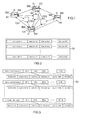
figure 1 schematically and functionally illustrates a content centric networking comprising four CCN nodes, each equipped with a device according to the invention, and three content servers, -
figure 2 schematically illustrates an example of arrangement of a forwarding information data structure built by a device according to the invention, -
figure 3 schematically illustrates an example of arrangement of a temporary forwarding information data structure built by a device according to the invention, -
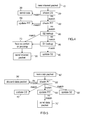
figure 4 schematically illustrates an example of procedure than can be implemented by a CCN node upon reception of an interest packet, and -
figure 5 schematically illustrates an example of procedure than can be implemented by a CCN node upon reception of a data packet. - The appended drawings may serve not only to complete the invention, but also to contribute to its understanding, if need be.
- The invention aims, notably, at offering a method, and an associated device D intended for organizing forwarding information into nodes Nj of a content centric networking (or CCN).
- A simplified example of content centric networking (or CCN) is illustrated in
figure 1 . In this example, the CCN comprises four communication equipments Nj (j = 1 to 4), each defining a CCN node connected to at least one other CCN node Nj' (j' ≠ j), and three content servers CSk (k = 1 to 3), each coupled to at least one CCN node Nj and storing permanent replicas of content items associated to name prefixes. - It is important to note that CCN nodes Nj may temporary store content replicas.
- It is also important to note that a CCN may comprise any number of CCN nodes Nj as soon as this number is greater than or equal to two, and any number of content servers CSk as soon as this number is greater than or equal to one.
- As mentioned above, the invention notably proposes a device D intended for organizing forwarding information into a CCN node Nj. As illustrated in
figure 1 , each CCN node Nj comprises a device D which may be made of software modules (and in this case it constitutes a computer program product comprising a set of instructions arranged for performing the method (described below) when it is executed by processing means).But this is not mandatory. Indeed, it may be made of a combination of electronic circuit(s) (or hardware module(s)) and software modules. - This device D comprises at least a building means (or module) BM arranged for building into its node Nj a forwarding information data structure S1 and an associated temporary forwarding information data structure S2.
- The forwarding information data structure S1 comprises for each name prefix (referenced by index p' = 1 to P') a list of interfaces (designated by an identifier idn, with n = 1 to Np') where a received packet of a content request can be forwarded towards content servers CSk (comprising a permanent replica of the requested content).
- A content request is a request that is sent by a communication equipment into the CCN and that is intended for requesting chunks of content items.
- The above mentioned interfaces are interfaces of the considered CCN node Nj that interconnect nodes Nj among themselves and towards the content servers CSk. A node Nj does not send a content request to a content server CSk directly but to the next node Nj' towards this content server CSk. In order to do so, it uses the interface that interconnects itself (Nj) and the selected next node (Nj').
- A non-limiting example of arrangement of a forwarding information data structureS1 built by a device D is illustrated in
figure 2 . In this example, the forwarding information data structure S1 comprises P' name prefixes,each associated to only a list of interfaces id1 to idNP', but not with information about the quality or status of the interfaces idn. - The building means BM is preferably arranged for building the forwarding information data structure S1 from information that is provided by routing protocols.
- As will be explained below a forwarding information data structure S1 is not updated during a chunk retrieval process. Indeed, when a chunk is received there is no process performed on the forwarding information data structure S1. On the contrary, the detailed information contained in the temporary forwarding information data structure S2 corresponding to the requested content item is updated. For instance, the average chunk retrieval time is updated.
- The temporary forwarding information data structure S2 comprises chosen detailed forwarding information DFIn associated to each full content item name of a content item that is currently requested and that is associated to at least one of the name prefixes stored in the forwarding information data structure S1, and to each full content item name of a content item that has been recently requested and that is associated to at least one of the name prefixes stored in the forwarding information data structure S1.
- It is important to note that the temporary forwarding information data structure S2 is indexed using the full content item name indexes (e.g. /bell_labs/video/talks.avi).
- As illustrated in the non-limiting example of
figure 1 , the building means BM is arranged for storing the forwarding information data structure S1 and the temporary forwarding information data structure S2 in a storing means SM of its node Nj. For instance, the part of this storing means SM that stores the temporary forwarding information data structure S2 may be a memory chip of a SRAM type, or RLDRAM type, or else DRAM type, to allow fast lookup operation and an implementation in high-speed network communication equipments Nj. - Preferably, the building means BM is arranged for building a temporary forwarding information data structure S2 that is bounded in size.
- In the case where the temporary forwarding information data structure S2 is bounded in size, the building means BM is preferably arranged, when a new full content item name (i.e. a new entry) must be added to this temporary forwarding information data structure S2 and when the latter (S2) is full, for removing a full content item name of a chosen one of the recently requested content items or of a chosen one of the currently requested content items. The choice depends on a specific criterion defined by the replacement policy.
- This allows storing information at the content item granularity and reducing the state to be maintained in a CCN node Nj to content items currently retrieved or that have recently been requested.
- The chosen detailed forwarding information may comprise an interface identifier idn and a quality metric representing an average chunk retrieval time(or RTT) on this interface and/or an average hop distance between the node Nj and chunks of the requested content item. It may also comprise a stale time field, and/or other fields (and notably those used for quality of service (or QoS)).
- A non-limiting example of arrangement of a temporary forwarding information data structure S2 built by a device D is illustrated in
figure 3 . In this example, the temporary forwarding information data structure S2 comprises P full content item names, each associated to Np groups of chosen detailed forwarding information DFIn, here comprising an interface identifier idn, a quality metric and a stale time field. - In a first example of embodiment, the building means BM may be arranged for managing the temporary forwarding information data structure S2 as a cache by means of a cache replacement policy. For instance, it may use a traditional cache replacement policy such as Least Recently Used (or LRU) or Random.
- In a second example of embodiment, which can be used in combination with the first embodiment, the building means BM may be arranged for building the temporary forwarding information data structure S2 as a hash table. In this case, the hash table can be implemented by the building means BM as a fixed size non-chained hash-table (as proposed by indexing scheme used for high speed caching). Each full content item name is hashed into a hash value whose first H-bits are stored, along with chosen detailed forwarding information DFIn (for instance an interface identifier idn, a quality metric and a stale time field), in the bucket corresponding to the hash value modulo the number of buckets. It is recalled that buckets are the addressable elements of a hash table. In order to reduce collisions a bucket can store multiple entries, or multiple hash functions can be employed.
- In a variant, the building means BM may be arranged for building the hash table S2 as a chained hash-table, in which each full content item name is hashed into a hash value and stored, along with chosen detailed forwarding information, in a bucket corresponding to its hash value modulo a number of buckets of the hash table. In the case where collisions occur (i.e. multiple hash values which map to the same bucket), they may be solved using a list of elements per bucket.
- It is important to note that the two aforementioned hash-table designs can be optimized with multiple hash functions used to identify potential buckets, and where the full content item name along with chosen detailed forwarding information is inserted in the least loaded one. This allows reducing the load per bucket.
- In another variant, the building means BM may be arranged for building the hash table S2 by using a d-left hashing design, in which d-hash tables are used indexed with different hash functions. The full content item name along with chosen detailed forwarding information is inserted in the table with the least loaded bucket with ties broken to the left. This allows to further reduce the load per bucket.
- It is important to note that the smaller the load per bucket is the faster the lookup is.
- Due to the existence of associated forwarding information data structure S1 andtemporary forwarding information data structure S2, the procedures that must be carried out in a CCN node Nj upon reception of interest packets or data packets representing a content request must be modified.
- A non-limiting example of procedure that can be implemented by a CCN node Nj upon reception of an interest packet is illustrated in
figure 4 . - The procedure starts in a
step 10 when an interest packet is received by a CCN node Nj. Then in astep 20 the CCN node Nj checks for content availability in its content store (or CS). If this content is available ("match") in the CCN node Nj, its CS sends the requested data back on the incoming interface in astep 30. Otherwise ("no match"), in astep 40 the CCN node Nj checks in a pending interest table (or PIT) whether this content has been already requested upward. If an entry is found in the PIT, it is updated in astep 50 in order to track that the incoming interface is waiting for this content. If no PIT entry is found, an exact match lookup is performed in astep 60 in the temporary forwarding information data structure S2. For this lookup the content item name contained into the incoming interest packet is used (i.e. B-1 components of the interest content item name). If a matching entry is found, detailed forwarding information is extracted from the temporary forwarding information data structure S2in astep 70, and then used to forward the interest packet in astep 100. If no matching entry is found, a longest prefix match lookup is performed on the forwarding information data structure S1 in astep 80. Then the information retrieved from the forwarding information data structure S1 is used to forward the interest packet instep 100. It is important to note that the CCN node Nj can also probe interfaces not specified in the forwarding information data structure S1 in order to discover other available routes. Then in astep 90 the information retrieved from the forwarding information data structure S1 is added to the temporary forwarding information data structure S2 using the received content item name in order to update it (S2) (after this step the detailed forwarding information is initialized in the temporary forwarding information data structure S2 and then updated during following request/chunk exchange for the content item). If the temporary forwarding information data structure S2 is full, a content item name index is removed from the latter (S2). - A non-limiting example of procedure than can be implemented by a CCN node Nj upon reception of a data packet is illustrated in
figure 5 . - The procedure starts in a step 10' when a data packet is received by a CCN node Nj. Then, in a step 20', the CCN node Nj checks for pending requests in its PIT. If no matching PIT entry is found, the data packet is discarded in a
step 30'.If a pending request is found, the data packet is stored in the content store (CS) of the CCN node Nj in a step 40',and forwarded towards all requesting interfaces listed in the PIT in a step 70'. Then, the CCN node Nj updates its PIT in a step 50', and updates information, about the quality (for instance RTT and number of hops) of the interface from which the data packet has been received, into the temporary forwarding information data structure S2, in a step 60'. - The invention can also be considered in terms of a method intended for organizing forwarding information into CCN nodes Nj. Such a method may be implemented by means of a device D such as the one above described with reference to
figure 1 . Therefore, only its main characteristics will be mentioned hereafter. - The method according to the invention comprises a step during which one (D) builds into each node Nj:
- a forwarding information data structure S1 comprising for each name prefix a list of interfaces where a received packet of a content request can be forwarded towards content servers CSk, and
- a temporary forwarding information data structure S2 comprising chosen detailed forwarding information associated to each full content item name of a currently requested content item associated to at least one of these name prefixes and to each full content item name of a recently requested content item associated to at least one of these name prefixes.
- This invention allows implementing dynamic (or adaptive) forwarding algorithms in CCN nodes (even of the high-speed type), and therefore can provide significant benefits in terms of end-user performance and network cost.
- The invention is not limited to the embodiments of method, device and communication equipment described above, only as examples, but it encompasses all alternative embodiments which may be considered by one skilled in the art within the scope of the claims hereafter.
Claims (14)
- Device (D) for organizing forwarding information into a node (Nj) of a content centric networking comprising servers (CSk) storing permanent replicas of content items associated to name prefixes, said device (D) comprisinga building means (BM) arranged for building into said node (Nj) a forwarding information data structure (S1), comprising for each name prefix a list of interfaces where a received packet of a content request can be forwarded towards servers (CSk), and a temporary forwarding information data structure (S2), comprising chosen detailed forwarding information associated to each full content item name of a currently requested content item associated to at least one of said name prefixes and to each full content item name of a recently requested content item associated to at least one of said name prefixes.
- Device according to claim 1, wherein said building means (BM) is arranged for building said forwarding information data structure (S1) from information provided by routing protocols.
- Device according to one of claims 1 and 2, wherein said building means (BM) is arranged for building a temporary forwarding information data structure (S2) bounded in size.
- Device according to claim 3, wherein said building means (BM) is arranged, when a new full content item name must be added to said temporary forwarding information data structure (S2) and when the latter (S2) is full, for removing a full content item name of a chosen one of said recently requested content items from said temporary forwarding information data structure (S2).
- Device according to one of claims 1 to 4, wherein said chosen detailed forwarding information comprises an interface identifier and a quality metric representing an average chunk retrieval time and/or an average hop distance between a node (Nj) and chunks of the requested content item.
- Device according to one of claims 1 to 5, wherein said building means (BM) is arranged for managing said temporary forwarding information data structure (S2) as a cache, by means of a cache replacement policy.
- Device according to one of claims 1 to 6, wherein said building means (BM) is arranged for building said temporary forwarding information data structure (S2) as a hash table.
- Device according to claim 7, wherein said building means (BM) is arranged for building said hash table (S2) as a fixed size non-chained hash-table, in which each full content item name is hashed into a hash value and stored, along with chosen detailed forwarding information, in a bucket corresponding to its hash value modulo a number of buckets of said hash table.
- Device according to claim 7, wherein said building means (BM) is arranged for building said hash table (S2) its building means may be arranged for building said hash table as a chained hash-table, in which each full content item name is hashed into a hash value and stored, along with chosen detailed forwarding information, in a bucket corresponding to its hash value modulo a number of buckets of the hash table.
- Device according to one of claims 8 and 9, wherein said building means (BM) is arranged for building said hash table (S2) with multiple hash functions used to identify potential buckets, and where the full content item name along with chosen detailed forwarding information is inserted in the least loaded one.
- Device according to claim 7, wherein said building means (BM) is arranged for building said hash table (S2) by using a d-left hashing design, in which d-hash tables are used indexed with different hash functions.
- Device according to one of claims 1 to 11, wherein said building means (BM) is arranged for storing said temporary forwarding information data structure (S2) in a memory chip of said node (Nj) having a type chosen from a group comprising at least a SRAM, a RLDRAM and a DRAM.
- Method for organizing forwarding information into nodes (Nj) of a content centric networking comprising servers (CSk) storing permanent replicas of content items associated to name prefixes, said method comprising a step during which one builds into each node (Nj) a forwarding information data structure (S1), comprising for each name prefix a list of interfaces where a received packet of a content request can be forwarded towards servers (CSk), and a temporary forwarding information data structure (S2), comprising chosen detailed forwarding information associated to each full content item name of a currently requested content item associated to at least one of said name prefixes and to each full content item name of a recently requested content item associated to at least one of said name prefixes.
- Computer program product comprising a set of instructions arranged for performing the method according to claim 13 to allow organization of forwarding information into nodes (Nj) of a content centric networking comprising servers (CSk) storing permanent replicas of content items associated to name prefixes.
Priority Applications (1)
| Application Number | Priority Date | Filing Date | Title |
|---|---|---|---|
| EP13161714.4A EP2785014B1 (en) | 2013-03-28 | 2013-03-28 | Device and method for organizing forwarding information in nodes of a content centric networking |
Applications Claiming Priority (1)
| Application Number | Priority Date | Filing Date | Title |
|---|---|---|---|
| EP13161714.4A EP2785014B1 (en) | 2013-03-28 | 2013-03-28 | Device and method for organizing forwarding information in nodes of a content centric networking |
Publications (2)
| Publication Number | Publication Date |
|---|---|
| EP2785014A1 true EP2785014A1 (en) | 2014-10-01 |
| EP2785014B1 EP2785014B1 (en) | 2019-07-24 |
Family
ID=47997252
Family Applications (1)
| Application Number | Title | Priority Date | Filing Date |
|---|---|---|---|
| EP13161714.4A Active EP2785014B1 (en) | 2013-03-28 | 2013-03-28 | Device and method for organizing forwarding information in nodes of a content centric networking |
Country Status (1)
| Country | Link |
|---|---|
| EP (1) | EP2785014B1 (en) |
Cited By (1)
| Publication number | Priority date | Publication date | Assignee | Title |
|---|---|---|---|---|
| GB2549550A (en) * | 2016-04-19 | 2017-10-25 | Cisco Tech Inc | Network centric adaptive bit rate in an IP network |
Citations (3)
| Publication number | Priority date | Publication date | Assignee | Title |
|---|---|---|---|---|
| EP2323346A1 (en) * | 2009-10-21 | 2011-05-18 | Palo Alto Research Center Incorporated | Adaptive multi-interface use for content networking |
| EP2466857A1 (en) * | 2010-12-16 | 2012-06-20 | Palo Alto Research Center Incorporated | Custodian-based routing in content-centric networks |
| EP2552083A2 (en) * | 2011-07-29 | 2013-01-30 | Samsung Electronics Co., Ltd. | Source node and router in content centric network, and communication method thereof |
-
2013
- 2013-03-28 EP EP13161714.4A patent/EP2785014B1/en active Active
Patent Citations (3)
| Publication number | Priority date | Publication date | Assignee | Title |
|---|---|---|---|---|
| EP2323346A1 (en) * | 2009-10-21 | 2011-05-18 | Palo Alto Research Center Incorporated | Adaptive multi-interface use for content networking |
| EP2466857A1 (en) * | 2010-12-16 | 2012-06-20 | Palo Alto Research Center Incorporated | Custodian-based routing in content-centric networks |
| EP2552083A2 (en) * | 2011-07-29 | 2013-01-30 | Samsung Electronics Co., Ltd. | Source node and router in content centric network, and communication method thereof |
Cited By (2)
| Publication number | Priority date | Publication date | Assignee | Title |
|---|---|---|---|---|
| GB2549550A (en) * | 2016-04-19 | 2017-10-25 | Cisco Tech Inc | Network centric adaptive bit rate in an IP network |
| GB2549550B (en) * | 2016-04-19 | 2020-02-12 | Cisco Tech Inc | Network centric adaptive bit rate in an IP network |
Also Published As
| Publication number | Publication date |
|---|---|
| EP2785014B1 (en) | 2019-07-24 |
Similar Documents
| Publication | Publication Date | Title |
|---|---|---|
| CN101820386B (en) | Method and system for facilitating forwarding a packet in a content-centric network | |
| EP2835942B1 (en) | Dynamic interest forwarding mechanism for information centric networking | |
| US20140280823A1 (en) | Wire-speed pending interest table | |
| JP6225249B2 (en) | Routing and forwarding method, apparatus and system | |
| Yuan et al. | Scalable pending interest table design: From principles to practice | |
| EP2562978B1 (en) | Content router of a content centric network | |
| EP2813060A1 (en) | A method for collaborative caching for content-oriented networks | |
| KR20140127876A (en) | Method and system for fast and large-scale longest prefix matching | |
| EP2880827A1 (en) | High-speed content routing | |
| CN103581052A (en) | Data processing method, router and NDN system | |
| RU2483457C2 (en) | Message routing platform | |
| EP2785014B1 (en) | Device and method for organizing forwarding information in nodes of a content centric networking | |
| Ooka et al. | Design of a high-speed content-centric-networking router using content addressable memory | |
| JP6495777B2 (en) | Transfer device, server device, and program for content distribution network | |
| KR20150123401A (en) | A Cloud-based Routing Method Using Content Caching in Content-Centric Networking | |
| CN107204926B (en) | Rapid route searching method for preprocessing cache | |
| EP2947839B1 (en) | Method and apparatus to forward a request for content | |
| CN119232668B (en) | Fragment message tuple recovery method, network card, gateway, storage medium and program | |
| Bosunia et al. | Efficient data delivery based on content-centric networking | |
| JP2017142675A (en) | Transfer device and program for content distribution network | |
| Iio et al. | Content download method with distributed cache management | |
| Yao et al. | Learning forwarding mechanism in content-centric networking | |
| Pognart | Design and Evaluation of the Keyword-Based Information-Centric Networks | |
| 大岡睦 | Router Architecture and Caching Mechanisms | |
| JP2016115209A (en) | Transfer device of content delivery network, client device, and program |
Legal Events
| Date | Code | Title | Description |
|---|---|---|---|
| 17P | Request for examination filed |
Effective date: 20130328 |
|
| AK | Designated contracting states |
Kind code of ref document: A1 Designated state(s): AL AT BE BG CH CY CZ DE DK EE ES FI FR GB GR HR HU IE IS IT LI LT LU LV MC MK MT NL NO PL PT RO RS SE SI SK SM TR |
|
| AX | Request for extension of the european patent |
Extension state: BA ME |
|
| PUAI | Public reference made under article 153(3) epc to a published international application that has entered the european phase |
Free format text: ORIGINAL CODE: 0009012 |
|
| R17P | Request for examination filed (corrected) |
Effective date: 20150401 |
|
| RBV | Designated contracting states (corrected) |
Designated state(s): AL AT BE BG CH CY CZ DE DK EE ES FI FR GB GR HR HU IE IS IT LI LT LU LV MC MK MT NL NO PL PT RO RS SE SI SK SM TR |
|
| STAA | Information on the status of an ep patent application or granted ep patent |
Free format text: STATUS: EXAMINATION IS IN PROGRESS |
|
| 17Q | First examination report despatched |
Effective date: 20170613 |
|
| RAP1 | Party data changed (applicant data changed or rights of an application transferred) |
Owner name: INSTITUT MINES-TELECOM Owner name: ALCATEL LUCENT |
|
| GRAP | Despatch of communication of intention to grant a patent |
Free format text: ORIGINAL CODE: EPIDOSNIGR1 |
|
| STAA | Information on the status of an ep patent application or granted ep patent |
Free format text: STATUS: GRANT OF PATENT IS INTENDED |
|
| INTG | Intention to grant announced |
Effective date: 20190211 |
|
| GRAS | Grant fee paid |
Free format text: ORIGINAL CODE: EPIDOSNIGR3 |
|
| GRAA | (expected) grant |
Free format text: ORIGINAL CODE: 0009210 |
|
| STAA | Information on the status of an ep patent application or granted ep patent |
Free format text: STATUS: THE PATENT HAS BEEN GRANTED |
|
| AK | Designated contracting states |
Kind code of ref document: B1 Designated state(s): AL AT BE BG CH CY CZ DE DK EE ES FI FR GB GR HR HU IE IS IT LI LT LU LV MC MK MT NL NO PL PT RO RS SE SI SK SM TR |
|
| REG | Reference to a national code |
Ref country code: GB Ref legal event code: FG4D |
|
| REG | Reference to a national code |
Ref country code: CH Ref legal event code: EP |
|
| REG | Reference to a national code |
Ref country code: DE Ref legal event code: R096 Ref document number: 602013058098 Country of ref document: DE |
|
| REG | Reference to a national code |
Ref country code: AT Ref legal event code: REF Ref document number: 1159629 Country of ref document: AT Kind code of ref document: T Effective date: 20190815 |
|
| REG | Reference to a national code |
Ref country code: IE Ref legal event code: FG4D |
|
| REG | Reference to a national code |
Ref country code: NL Ref legal event code: MP Effective date: 20190724 |
|
| REG | Reference to a national code |
Ref country code: LT Ref legal event code: MG4D |
|
| REG | Reference to a national code |
Ref country code: AT Ref legal event code: MK05 Ref document number: 1159629 Country of ref document: AT Kind code of ref document: T Effective date: 20190724 |
|
| PG25 | Lapsed in a contracting state [announced via postgrant information from national office to epo] |
Ref country code: NO Free format text: LAPSE BECAUSE OF FAILURE TO SUBMIT A TRANSLATION OF THE DESCRIPTION OR TO PAY THE FEE WITHIN THE PRESCRIBED TIME-LIMIT Effective date: 20191024 Ref country code: FI Free format text: LAPSE BECAUSE OF FAILURE TO SUBMIT A TRANSLATION OF THE DESCRIPTION OR TO PAY THE FEE WITHIN THE PRESCRIBED TIME-LIMIT Effective date: 20190724 Ref country code: PT Free format text: LAPSE BECAUSE OF FAILURE TO SUBMIT A TRANSLATION OF THE DESCRIPTION OR TO PAY THE FEE WITHIN THE PRESCRIBED TIME-LIMIT Effective date: 20191125 Ref country code: HR Free format text: LAPSE BECAUSE OF FAILURE TO SUBMIT A TRANSLATION OF THE DESCRIPTION OR TO PAY THE FEE WITHIN THE PRESCRIBED TIME-LIMIT Effective date: 20190724 Ref country code: NL Free format text: LAPSE BECAUSE OF FAILURE TO SUBMIT A TRANSLATION OF THE DESCRIPTION OR TO PAY THE FEE WITHIN THE PRESCRIBED TIME-LIMIT Effective date: 20190724 Ref country code: SE Free format text: LAPSE BECAUSE OF FAILURE TO SUBMIT A TRANSLATION OF THE DESCRIPTION OR TO PAY THE FEE WITHIN THE PRESCRIBED TIME-LIMIT Effective date: 20190724 Ref country code: BG Free format text: LAPSE BECAUSE OF FAILURE TO SUBMIT A TRANSLATION OF THE DESCRIPTION OR TO PAY THE FEE WITHIN THE PRESCRIBED TIME-LIMIT Effective date: 20191024 Ref country code: AT Free format text: LAPSE BECAUSE OF FAILURE TO SUBMIT A TRANSLATION OF THE DESCRIPTION OR TO PAY THE FEE WITHIN THE PRESCRIBED TIME-LIMIT Effective date: 20190724 Ref country code: LT Free format text: LAPSE BECAUSE OF FAILURE TO SUBMIT A TRANSLATION OF THE DESCRIPTION OR TO PAY THE FEE WITHIN THE PRESCRIBED TIME-LIMIT Effective date: 20190724 |
|
| PG25 | Lapsed in a contracting state [announced via postgrant information from national office to epo] |
Ref country code: AL Free format text: LAPSE BECAUSE OF FAILURE TO SUBMIT A TRANSLATION OF THE DESCRIPTION OR TO PAY THE FEE WITHIN THE PRESCRIBED TIME-LIMIT Effective date: 20190724 Ref country code: LV Free format text: LAPSE BECAUSE OF FAILURE TO SUBMIT A TRANSLATION OF THE DESCRIPTION OR TO PAY THE FEE WITHIN THE PRESCRIBED TIME-LIMIT Effective date: 20190724 Ref country code: IS Free format text: LAPSE BECAUSE OF FAILURE TO SUBMIT A TRANSLATION OF THE DESCRIPTION OR TO PAY THE FEE WITHIN THE PRESCRIBED TIME-LIMIT Effective date: 20191124 Ref country code: GR Free format text: LAPSE BECAUSE OF FAILURE TO SUBMIT A TRANSLATION OF THE DESCRIPTION OR TO PAY THE FEE WITHIN THE PRESCRIBED TIME-LIMIT Effective date: 20191025 Ref country code: RS Free format text: LAPSE BECAUSE OF FAILURE TO SUBMIT A TRANSLATION OF THE DESCRIPTION OR TO PAY THE FEE WITHIN THE PRESCRIBED TIME-LIMIT Effective date: 20190724 Ref country code: ES Free format text: LAPSE BECAUSE OF FAILURE TO SUBMIT A TRANSLATION OF THE DESCRIPTION OR TO PAY THE FEE WITHIN THE PRESCRIBED TIME-LIMIT Effective date: 20190724 |
|
| PG25 | Lapsed in a contracting state [announced via postgrant information from national office to epo] |
Ref country code: TR Free format text: LAPSE BECAUSE OF FAILURE TO SUBMIT A TRANSLATION OF THE DESCRIPTION OR TO PAY THE FEE WITHIN THE PRESCRIBED TIME-LIMIT Effective date: 20190724 |
|
| PG25 | Lapsed in a contracting state [announced via postgrant information from national office to epo] |
Ref country code: RO Free format text: LAPSE BECAUSE OF FAILURE TO SUBMIT A TRANSLATION OF THE DESCRIPTION OR TO PAY THE FEE WITHIN THE PRESCRIBED TIME-LIMIT Effective date: 20190724 Ref country code: PL Free format text: LAPSE BECAUSE OF FAILURE TO SUBMIT A TRANSLATION OF THE DESCRIPTION OR TO PAY THE FEE WITHIN THE PRESCRIBED TIME-LIMIT Effective date: 20190724 Ref country code: EE Free format text: LAPSE BECAUSE OF FAILURE TO SUBMIT A TRANSLATION OF THE DESCRIPTION OR TO PAY THE FEE WITHIN THE PRESCRIBED TIME-LIMIT Effective date: 20190724 Ref country code: DK Free format text: LAPSE BECAUSE OF FAILURE TO SUBMIT A TRANSLATION OF THE DESCRIPTION OR TO PAY THE FEE WITHIN THE PRESCRIBED TIME-LIMIT Effective date: 20190724 Ref country code: IT Free format text: LAPSE BECAUSE OF FAILURE TO SUBMIT A TRANSLATION OF THE DESCRIPTION OR TO PAY THE FEE WITHIN THE PRESCRIBED TIME-LIMIT Effective date: 20190724 |
|
| PG25 | Lapsed in a contracting state [announced via postgrant information from national office to epo] |
Ref country code: CZ Free format text: LAPSE BECAUSE OF FAILURE TO SUBMIT A TRANSLATION OF THE DESCRIPTION OR TO PAY THE FEE WITHIN THE PRESCRIBED TIME-LIMIT Effective date: 20190724 Ref country code: IS Free format text: LAPSE BECAUSE OF FAILURE TO SUBMIT A TRANSLATION OF THE DESCRIPTION OR TO PAY THE FEE WITHIN THE PRESCRIBED TIME-LIMIT Effective date: 20200224 Ref country code: SM Free format text: LAPSE BECAUSE OF FAILURE TO SUBMIT A TRANSLATION OF THE DESCRIPTION OR TO PAY THE FEE WITHIN THE PRESCRIBED TIME-LIMIT Effective date: 20190724 Ref country code: SK Free format text: LAPSE BECAUSE OF FAILURE TO SUBMIT A TRANSLATION OF THE DESCRIPTION OR TO PAY THE FEE WITHIN THE PRESCRIBED TIME-LIMIT Effective date: 20190724 |
|
| REG | Reference to a national code |
Ref country code: DE Ref legal event code: R097 Ref document number: 602013058098 Country of ref document: DE |
|
| PLBE | No opposition filed within time limit |
Free format text: ORIGINAL CODE: 0009261 |
|
| STAA | Information on the status of an ep patent application or granted ep patent |
Free format text: STATUS: NO OPPOSITION FILED WITHIN TIME LIMIT |
|
| PG2D | Information on lapse in contracting state deleted |
Ref country code: IS |
|
| 26N | No opposition filed |
Effective date: 20200603 |
|
| PG25 | Lapsed in a contracting state [announced via postgrant information from national office to epo] |
Ref country code: SI Free format text: LAPSE BECAUSE OF FAILURE TO SUBMIT A TRANSLATION OF THE DESCRIPTION OR TO PAY THE FEE WITHIN THE PRESCRIBED TIME-LIMIT Effective date: 20190724 |
|
| PG25 | Lapsed in a contracting state [announced via postgrant information from national office to epo] |
Ref country code: MC Free format text: LAPSE BECAUSE OF FAILURE TO SUBMIT A TRANSLATION OF THE DESCRIPTION OR TO PAY THE FEE WITHIN THE PRESCRIBED TIME-LIMIT Effective date: 20190724 |
|
| REG | Reference to a national code |
Ref country code: CH Ref legal event code: PL |
|
| REG | Reference to a national code |
Ref country code: BE Ref legal event code: MM Effective date: 20200331 |
|
| PG25 | Lapsed in a contracting state [announced via postgrant information from national office to epo] |
Ref country code: LU Free format text: LAPSE BECAUSE OF NON-PAYMENT OF DUE FEES Effective date: 20200328 |
|
| PG25 | Lapsed in a contracting state [announced via postgrant information from national office to epo] |
Ref country code: LI Free format text: LAPSE BECAUSE OF NON-PAYMENT OF DUE FEES Effective date: 20200331 Ref country code: IE Free format text: LAPSE BECAUSE OF NON-PAYMENT OF DUE FEES Effective date: 20200328 Ref country code: CH Free format text: LAPSE BECAUSE OF NON-PAYMENT OF DUE FEES Effective date: 20200331 |
|
| PG25 | Lapsed in a contracting state [announced via postgrant information from national office to epo] |
Ref country code: BE Free format text: LAPSE BECAUSE OF NON-PAYMENT OF DUE FEES Effective date: 20200331 |
|
| REG | Reference to a national code |
Ref country code: DE Ref legal event code: R079 Ref document number: 602013058098 Country of ref document: DE Free format text: PREVIOUS MAIN CLASS: H04L0029080000 Ipc: H04L0065000000 |
|
| PG25 | Lapsed in a contracting state [announced via postgrant information from national office to epo] |
Ref country code: MT Free format text: LAPSE BECAUSE OF FAILURE TO SUBMIT A TRANSLATION OF THE DESCRIPTION OR TO PAY THE FEE WITHIN THE PRESCRIBED TIME-LIMIT Effective date: 20190724 Ref country code: CY Free format text: LAPSE BECAUSE OF FAILURE TO SUBMIT A TRANSLATION OF THE DESCRIPTION OR TO PAY THE FEE WITHIN THE PRESCRIBED TIME-LIMIT Effective date: 20190724 |
|
| PG25 | Lapsed in a contracting state [announced via postgrant information from national office to epo] |
Ref country code: MK Free format text: LAPSE BECAUSE OF FAILURE TO SUBMIT A TRANSLATION OF THE DESCRIPTION OR TO PAY THE FEE WITHIN THE PRESCRIBED TIME-LIMIT Effective date: 20190724 |
|
| PGFP | Annual fee paid to national office [announced via postgrant information from national office to epo] |
Ref country code: GB Payment date: 20260209 Year of fee payment: 14 |
|
| PGFP | Annual fee paid to national office [announced via postgrant information from national office to epo] |
Ref country code: DE Payment date: 20260204 Year of fee payment: 14 |
|
| PGFP | Annual fee paid to national office [announced via postgrant information from national office to epo] |
Ref country code: FR Payment date: 20260209 Year of fee payment: 14 |