EP2784671A1 - Virtual machine management system and method - Google Patents
Virtual machine management system and method Download PDFInfo
- Publication number
- EP2784671A1 EP2784671A1 EP12851881.8A EP12851881A EP2784671A1 EP 2784671 A1 EP2784671 A1 EP 2784671A1 EP 12851881 A EP12851881 A EP 12851881A EP 2784671 A1 EP2784671 A1 EP 2784671A1
- Authority
- EP
- European Patent Office
- Prior art keywords
- virtual machine
- time
- computing resources
- size
- physical
- Prior art date
- Legal status (The legal status is an assumption and is not a legal conclusion. Google has not performed a legal analysis and makes no representation as to the accuracy of the status listed.)
- Withdrawn
Links
Images


Classifications
-
- G—PHYSICS
- G06—COMPUTING OR CALCULATING; COUNTING
- G06F—ELECTRIC DIGITAL DATA PROCESSING
- G06F9/00—Arrangements for program control, e.g. control units
- G06F9/06—Arrangements for program control, e.g. control units using stored programs, i.e. using an internal store of processing equipment to receive or retain programs
- G06F9/44—Arrangements for executing specific programs
- G06F9/455—Emulation; Interpretation; Software simulation, e.g. virtualisation or emulation of application or operating system execution engines
-
- G—PHYSICS
- G06—COMPUTING OR CALCULATING; COUNTING
- G06F—ELECTRIC DIGITAL DATA PROCESSING
- G06F9/00—Arrangements for program control, e.g. control units
- G06F9/06—Arrangements for program control, e.g. control units using stored programs, i.e. using an internal store of processing equipment to receive or retain programs
- G06F9/44—Arrangements for executing specific programs
- G06F9/455—Emulation; Interpretation; Software simulation, e.g. virtualisation or emulation of application or operating system execution engines
- G06F9/45533—Hypervisors; Virtual machine monitors
- G06F9/45558—Hypervisor-specific management and integration aspects
-
- G—PHYSICS
- G06—COMPUTING OR CALCULATING; COUNTING
- G06F—ELECTRIC DIGITAL DATA PROCESSING
- G06F9/00—Arrangements for program control, e.g. control units
- G06F9/06—Arrangements for program control, e.g. control units using stored programs, i.e. using an internal store of processing equipment to receive or retain programs
- G06F9/44—Arrangements for executing specific programs
- G06F9/455—Emulation; Interpretation; Software simulation, e.g. virtualisation or emulation of application or operating system execution engines
- G06F9/45533—Hypervisors; Virtual machine monitors
- G06F9/45558—Hypervisor-specific management and integration aspects
- G06F2009/45575—Starting, stopping, suspending or resuming virtual machine instances
Definitions
- Embodiments of the present disclosure relate to cloud computing technology, and particularly to a control computer and method for managing virtual machines installed in physical machines.
- a data center includes a plurality of physical machines (e.g., servers), where each physical machine is installed with a plurality of virtual machines (VMs) that provide multiple services to users.
- VMs virtual machines
- Each virtual machine occupies some computing resources (e.g., CPU and hard disks) of the physical machine.
- the computing resources occupied by the virtual machine need to be adjusted (increased or decreased) when the computing resources of the virtual machine are too many (need to decrease) or insufficient (need to increase).
- a virtual machine management method includes receiving a control command for adjusting an initial size of a first virtual machine installed in one of the physical machines. Searching for a physical machine that has enough computing resources for creating a second virtual machine of a specified size, creating the second virtual machine of the specified size in a found physical machine, copying computing resources of the first virtual machine to the second virtual machine at a first time. Controlling the first virtual machine and the second virtual machine running in a parallel mode until all of the computing resources of the first virtual machine have been copied to the second virtual machine. Stopping parallel running of the first virtual machine and the second virtual machine at a second time, and deleting the first virtual machine, and releasing the computing resource of the first virtual machine.
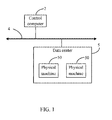
- FIG. 1 is a schematic diagram of one embodiment of a control computer 2 electronically connected with a data center 5 through a network 4.
- the data center 5 includes a plurality of physical machines (e.g. servers) 50.
- the network 4 may be the Internet, an intranet, or any other relevant network.
- each physical machine 50 is installed with a plurality of virtual machines (VMs) that provide services to users.
- VMs virtual machines
- the virtual machines "iVM-S,” and “iVM-M” are installed in the left physical machine “Host01,” the virtual machine “iVM-M” is installed in the right physical machine “Host02".
- the virtual machine include a small type (iVM-S), a medium type (iVM-M), and a big type (iVM-XL).
- the type of the virtual machine is determined according to computing resources (e.g., CPU or hard disk) occupied by the virtual machine. For example, the big type of the virtual machine occupies more computing resources than the medium type and the small type.
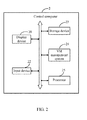
- FIG. 2 is a schematic diagram of one embodiment of the control computer 2 including a VM management system 24.
- the control computer 2 further includes a display device 20, an input device 22, a storage device 23, and at least one processor 25.
- the control computer 2 may be a server or any other computing device.
- FIG. 2 illustrates only one example of the control computer 2 that may include more or fewer components than as illustrated, or a different configuration of the various components may exist in other embodiments.
- the display device 20 may be a liquid crystal display (LCD) or a cathode ray tube (CRT) display
- the input device 22 may be a mouse, a keyboard, a touch screen, and/or a touchpad used for inputting data.
- the VM management system 24 is used to increase or decrease a size of a designated virtual machine which is running without suspending the virtual machine when computing resources (e.g., CPU or hard disk) of the virtual machine are too many (need to decrease) or insufficient (need to increase).
- the computing resources may include central processing units (CPUs), memory, and hard disks occupied by the virtual machine.
- the VM management system 24 may include computerized instructions in the form of one or more programs that are executed by the at least one processor 25 and stored in the storage device 23 (or memory). A detailed description of the VM management system 24 will be given in the following paragraphs.
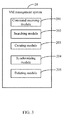
- FIG. 3 is a schematic diagram of function modules of the VM management system 24 included in the control computer 2.
- the VM management system 24 may include one or more modules, for example, a command receiving module 201, a searching module 202, a creating module 203, a synchronizing module 204, and a deleting module 205.
- module refers to logic embodied in hardware or firmware, or to a collection of software instructions, written in a programming language, such as, Java, C, or assembly.
- One or more software instructions in the modules may be embedded in firmware, such as in an EPROM.
- the modules described herein may be implemented as either software and/or hardware modules and may be stored in any type of non-transitory computer-readable medium or other storage device.
- non-transitory computer-readable medium include CDs, DVDs, BLU-RAY, flash memory, and hard disk drives.
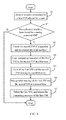
- FIG. 4 is a flowchart of one embodiment of a method for managing virtual machines installed in the physical machines 50 using the control computer 2. Depending on the embodiment, additional steps may be added, others removed, and the ordering of the steps may be changed.
- the command receiving module 201 receives a control command for adjusting an initial size of a first virtual machine installed in one of the physical machines 50, and receives a specified size of a second virtual machine used to replace the initial size of the first virtual machine.
- the control command includes a first type for increasing the initial size of the first virtual machine and a second type for decreasing the initial size of the first virtual machine.
- the initial size of the first virtual machine may include a first number of the CPU, a first size of the memory, and a first size of the hard disk allocated to the first virtual machine.
- the specified size of the second virtual machine may include a second number of the CPU, a second size of the memory, and a second size of the hard disk specified by a user.
- the specified size of the second virtual machine is greater than the initial size of the first virtual machine if the control command is the first type, and the specified size of the second virtual machine is less than the initial size of the first virtual machine if the control command is the second type.
- the first virtual machine may be the virtual machine "iVM-S" (i.e., the left one) in the physical machine "Host01".
- a resource usage rate of the first virtual machine is greater than a first value (e.g., 90%), namely the computing resource is determined to be insufficient
- the command receiving module 201 receives the first type of the control command to increase the initial size of the first virtual machine.
- a second value e.g. 20%
- the command receiving module 201 receives the second type of the control command to decrease the initial size of the first virtual machine.
- the resource usages rate are selected from the group including a CPU usage rate, a hard disk usage rate, and a memory usage rate of the physical machine 50 occupied by the first virtual machine.
- step S2 the searching module 202 searches for a physical machine 50 that has enough computing resources for creating the second virtual machine of the specified size, and determines whether the physical machine 50 having enough computing resources has been found. If the physical machine 50 having enough computing resources has been found, the procedure goes to step S3. If the physical machine 50 having enough computing resources has not been found, the searching module 202 outputs a failure message on the display device 20, then the procedure ends.
- step S3 the creating module 203 creates the second virtual machine of the specified size in a found physical machine 50 (i.e., the physical machine found in step S2).
- a found physical machine 50 i.e., the physical machine found in step S2.
- the initial size of the first virtual machine "iVM-S" is (CPU:1, RAM:2GB, HD:200GB)
- the specified size of the second virtual machine “iVM-XL” is (CPU:8, RAM:16GB, HD:1600GB). If the physical machine "Host02" has enough computing resources for creating the second virtual machine "iVM-XL,” the second virtual machine is created in "Host02" as shown in FIG. 5B
- step S4 the synchronizing module 204 copies the computing resources of the first virtual machine "iVM-S" to the second virtual machine "iVM-XL" at a first time (refers to FIG. 5C ).
- the synchronizing module 204 first copies the computing resources of idle applications in the first virtual machine to the second virtual machine, and copies the computing resources of working applications in the first virtual machine to the second virtual machine when the working applications have ended.
- the first time is determined to be a creation time of the second virtual machine "iVM-XL", or determined to be a total time of the creation time and a first preset delay time (i.e., two seconds).
- step S5 the synchronizing module 204 controls the first virtual machine "iVM-S" and the second virtual machine “iVM-XL” running in a parallel mode until all of the computing resources of the first virtual machine "iVM-S" have been copied to the second virtual machine "iVM-XL” (refers to FIG. 5D ).
- the first virtual machine and the second virtual machine are running synchronously in the parallel mode, namely, the working application is executed in both the first virtual machine "iVM-S" and the second virtual machine "iVM-XL” at the same time such that the services provided by the first virtual machine "iVM-S" are not interrupted when the initial size of the first virtual machine "iVM-S" is adjusted (e.g., increased or decrease).
- step S6 the synchronizing module 204 stops parallel running of the first virtual machine "iVM-S" and the second virtual machine "iVM-XL” at a second time.
- the second time is determined to be a finish time when all of the computing resources of the first virtual machine "iVM-S" have been copied to the second virtual machine "iVM-XL", or determined to be a total time of the finish time and a second preset delay time (e.g., four seconds).
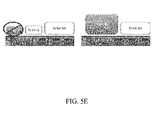
- step S7 the deleting module 205 deletes the first virtual machine "iVM-S", and releases the computing resource of the first virtual machine "iVM-S" (refers to FIG. 5E ).
Landscapes
- Engineering & Computer Science (AREA)
- Software Systems (AREA)
- Theoretical Computer Science (AREA)
- Physics & Mathematics (AREA)
- General Engineering & Computer Science (AREA)
- General Physics & Mathematics (AREA)
- Information Retrieval, Db Structures And Fs Structures Therefor (AREA)
- Stored Programmes (AREA)
Abstract
A method for managing virtual machines (VMs) installed in physical machines using a control computer, the method receives a control command for adjusting an initial size of a first VM (S1), searches for a physical machine that has enough computing resources for creating a second VM of a specified size (S2), creates the second VM of the specified size in a found physical machine (S3). The method further copies computing resources of the first VM to the second VM at a first time (S4), controls the first VM and the second VM running in a parallel mode until all of the computing resources of the first VM have been copied to the second VM (S5), stops parallel running of the first VM and the second VM at a second time (S6), deletes the first VM and releases the computing resource of the first VM (S7).
Description
- Embodiments of the present disclosure relate to cloud computing technology, and particularly to a control computer and method for managing virtual machines installed in physical machines.
- In cloud computing technology, a data center includes a plurality of physical machines (e.g., servers), where each physical machine is installed with a plurality of virtual machines (VMs) that provide multiple services to users. Each virtual machine occupies some computing resources (e.g., CPU and hard disks) of the physical machine. The computing resources occupied by the virtual machine need to be adjusted (increased or decreased) when the computing resources of the virtual machine are too many (need to decrease) or insufficient (need to increase).
- However, the virtual machine is suspended during the adjustment process, and cannot provide services to the users. Therefore, an efficient method for managing virtual machines installed in physical machines is desired.
- According to one aspect of the disclosure, a virtual machine management method is provided. The virtual machine management method includes receiving a control command for adjusting an initial size of a first virtual machine installed in one of the physical machines. Searching for a physical machine that has enough computing resources for creating a second virtual machine of a specified size, creating the second virtual machine of the specified size in a found physical machine, copying computing resources of the first virtual machine to the second virtual machine at a first time. Controlling the first virtual machine and the second virtual machine running in a parallel mode until all of the computing resources of the first virtual machine have been copied to the second virtual machine. Stopping parallel running of the first virtual machine and the second virtual machine at a second time, and deleting the first virtual machine, and releasing the computing resource of the first virtual machine.
- Embodiments of the invention are described, by way of example only, with reference to the accompanying drawings, in which:
-
FIG. 1 is a schematic diagram of one embodiment of a control computer electronically connected with a data center. -
FIG. 2 is a schematic diagram of one embodiment of the control computer including a virtual machine management system. -
FIG. 3 is a schematic diagram of function modules of the virtual machine management system included in the control computer. -
FIG. 4 is a flowchart of one embodiment of a method for managing virtual machines installed in physical machines using the control computer. -
FIGs. 5A-5E are schematic diagrams of an example of increasing a size of a virtual machine installed in a physical machine. -
FIG. 1 is a schematic diagram of one embodiment of acontrol computer 2 electronically connected with adata center 5 through anetwork 4. Thedata center 5 includes a plurality of physical machines (e.g. servers) 50. For example, thenetwork 4 may be the Internet, an intranet, or any other relevant network. - In one embodiment, each
physical machine 50 is installed with a plurality of virtual machines (VMs) that provide services to users. For example, as shown inFIG. 5A , the virtual machines "iVM-S," and "iVM-M" are installed in the left physical machine "Host01," the virtual machine "iVM-M" is installed in the right physical machine "Host02". In one embodiment, the virtual machine include a small type (iVM-S), a medium type (iVM-M), and a big type (iVM-XL). The type of the virtual machine is determined according to computing resources (e.g., CPU or hard disk) occupied by the virtual machine. For example, the big type of the virtual machine occupies more computing resources than the medium type and the small type. -
FIG. 2 is a schematic diagram of one embodiment of thecontrol computer 2 including aVM management system 24. Thecontrol computer 2 further includes adisplay device 20, aninput device 22, astorage device 23, and at least oneprocessor 25. Thecontrol computer 2 may be a server or any other computing device.FIG. 2 illustrates only one example of thecontrol computer 2 that may include more or fewer components than as illustrated, or a different configuration of the various components may exist in other embodiments. - The
display device 20 may be a liquid crystal display (LCD) or a cathode ray tube (CRT) display, and theinput device 22 may be a mouse, a keyboard, a touch screen, and/or a touchpad used for inputting data. - The
VM management system 24 is used to increase or decrease a size of a designated virtual machine which is running without suspending the virtual machine when computing resources (e.g., CPU or hard disk) of the virtual machine are too many (need to decrease) or insufficient (need to increase). For example, the computing resources may include central processing units (CPUs), memory, and hard disks occupied by the virtual machine. In one embodiment, theVM management system 24 may include computerized instructions in the form of one or more programs that are executed by the at least oneprocessor 25 and stored in the storage device 23 (or memory). A detailed description of theVM management system 24 will be given in the following paragraphs. -
FIG. 3 is a schematic diagram of function modules of theVM management system 24 included in thecontrol computer 2. In one embodiment, theVM management system 24 may include one or more modules, for example, acommand receiving module 201, asearching module 202, a creatingmodule 203, a synchronizingmodule 204, and adeleting module 205. In general, the word "module", as used herein, refers to logic embodied in hardware or firmware, or to a collection of software instructions, written in a programming language, such as, Java, C, or assembly. One or more software instructions in the modules may be embedded in firmware, such as in an EPROM. The modules described herein may be implemented as either software and/or hardware modules and may be stored in any type of non-transitory computer-readable medium or other storage device. Some non-limiting examples of non-transitory computer-readable medium include CDs, DVDs, BLU-RAY, flash memory, and hard disk drives. -
FIG. 4 is a flowchart of one embodiment of a method for managing virtual machines installed in thephysical machines 50 using thecontrol computer 2. Depending on the embodiment, additional steps may be added, others removed, and the ordering of the steps may be changed. - In step S1, the
command receiving module 201 receives a control command for adjusting an initial size of a first virtual machine installed in one of thephysical machines 50, and receives a specified size of a second virtual machine used to replace the initial size of the first virtual machine. In one embodiment, the control command includes a first type for increasing the initial size of the first virtual machine and a second type for decreasing the initial size of the first virtual machine. For example, the initial size of the first virtual machine may include a first number of the CPU, a first size of the memory, and a first size of the hard disk allocated to the first virtual machine. The specified size of the second virtual machine may include a second number of the CPU, a second size of the memory, and a second size of the hard disk specified by a user. - The specified size of the second virtual machine is greater than the initial size of the first virtual machine if the control command is the first type, and the specified size of the second virtual machine is less than the initial size of the first virtual machine if the control command is the second type. For example, as shown in
FIG. 5A , the first virtual machine may be the virtual machine "iVM-S" (i.e., the left one) in the physical machine "Host01". - For example, if a resource usage rate of the first virtual machine is greater than a first value (e.g., 90%), namely the computing resource is determined to be insufficient, the
command receiving module 201 receives the first type of the control command to increase the initial size of the first virtual machine. If the resource usage rate of the first virtual machine is less than a second value (e.g., 20%), namely it is determined too many computing resources are attached, thecommand receiving module 201 receives the second type of the control command to decrease the initial size of the first virtual machine. The resource usages rate are selected from the group including a CPU usage rate, a hard disk usage rate, and a memory usage rate of thephysical machine 50 occupied by the first virtual machine. - In step S2, the
searching module 202 searches for aphysical machine 50 that has enough computing resources for creating the second virtual machine of the specified size, and determines whether thephysical machine 50 having enough computing resources has been found. If thephysical machine 50 having enough computing resources has been found, the procedure goes to step S3. If thephysical machine 50 having enough computing resources has not been found, thesearching module 202 outputs a failure message on thedisplay device 20, then the procedure ends. - In step S3, the creating
module 203 creates the second virtual machine of the specified size in a found physical machine 50 (i.e., the physical machine found in step S2). For example, as shown inFIG. 5A , the initial size of the first virtual machine "iVM-S" is (CPU:1, RAM:2GB, HD:200GB), the specified size of the second virtual machine "iVM-XL" is (CPU:8, RAM:16GB, HD:1600GB). If the physical machine "Host02" has enough computing resources for creating the second virtual machine "iVM-XL," the second virtual machine is created in "Host02" as shown inFIG. 5B - In step S4, the synchronizing
module 204 copies the computing resources of the first virtual machine "iVM-S" to the second virtual machine "iVM-XL" at a first time (refers toFIG. 5C ). In one embodiment, the synchronizingmodule 204 first copies the computing resources of idle applications in the first virtual machine to the second virtual machine, and copies the computing resources of working applications in the first virtual machine to the second virtual machine when the working applications have ended. In one embodiment, the first time is determined to be a creation time of the second virtual machine "iVM-XL", or determined to be a total time of the creation time and a first preset delay time (i.e., two seconds). - In step S5, the synchronizing
module 204 controls the first virtual machine "iVM-S" and the second virtual machine "iVM-XL" running in a parallel mode until all of the computing resources of the first virtual machine "iVM-S" have been copied to the second virtual machine "iVM-XL" (refers toFIG. 5D ). In one embodiment, the first virtual machine and the second virtual machine are running synchronously in the parallel mode, namely, the working application is executed in both the first virtual machine "iVM-S" and the second virtual machine "iVM-XL" at the same time such that the services provided by the first virtual machine "iVM-S" are not interrupted when the initial size of the first virtual machine "iVM-S" is adjusted (e.g., increased or decrease). - In step S6, the synchronizing
module 204 stops parallel running of the first virtual machine "iVM-S" and the second virtual machine "iVM-XL" at a second time. In one embodiment, the second time is determined to be a finish time when all of the computing resources of the first virtual machine "iVM-S" have been copied to the second virtual machine "iVM-XL", or determined to be a total time of the finish time and a second preset delay time (e.g., four seconds). - In step S7, the deleting
module 205 deletes the first virtual machine "iVM-S", and releases the computing resource of the first virtual machine "iVM-S" (refers toFIG. 5E ). - It should be emphasized that the above-described embodiments of the present disclosure, particularly, any embodiments, are merely possible examples of implementations, merely set forth for a clear understanding of the principles of the disclosure. Many variations and modifications may be made to the above-described embodiment(s) of the disclosure without departing substantially from the spirit and principles of the disclosure. All such modifications and variations are intended to be included herein within the scope of this disclosure and the present disclosure and protected by the following claims.
Claims (10)
- A system for managing virtual machines installed in physical machines using a control computer, the system comprising:a command receiving module that receives a control command for adjusting an initial size of a first virtual machine installed in one of the physical machines;a searching module that searches for a physical machine that has enough computing resources for creating a second virtual machine of a specified size;a creating module that creates the second virtual machine of the specified size in a found physical machine;a synchronizing module that copies computing resources of the first virtual machine to the second virtual machine at a first time;the synchronizing module further controls the first virtual machine and the second virtual machine running in a parallel mode until all of the computing resources of the first virtual machine have been copied to the second virtual machine;the synchronizing module further stops parallel running of the first virtual machine and the second virtual machine at a second time; anda deleting module that deletes the first virtual machine, and releases the computing resource of the first virtual machine.
- The system according to claim 1, wherein the computing resources comprise central processing units (CPUs), memory, and hard disks of the physical machines.
- The system according to claim 1, wherein the specified size comprises a number of central processing unit (CPU), a size of memory, and a size of hard disk occupied by the second virtual machine.
- The system according to claim 1, wherein the first time is determined to be a creation time of the second virtual machine, or determined to be a total time of the creation time and a preset delay time.
- The system according to claim 1, wherein the second time is determined to be a finish time when all of the computing resources of the first virtual machine have been copied to the second virtual machine, or determined to be a total time of the finish time and a preset delay time.
- A computer-implemented method for managing virtual machines installed in physical machines using a control computer comprising a processor, the method comprising execution of the steps comprising:receiving a control command for adjusting an initial size of a first virtual machine installed in one of the physical machines;searching for a physical machine that has enough computing resources for creating a second virtual machine of a specified size;creating the second virtual machine of the specified size in a found physical machine;copying computing resources of the first virtual machine to the second virtual machine at a first time;controlling the first virtual machine and the second virtual machine running in a parallel mode until all of the computing resources of the first virtual machine have been copied to the second virtual machine;stopping parallel running of the first virtual machine and the second virtual machine at a second time; anddeleting the first virtual machine, and releasing the computing resource of the first virtual machine.
- The method according to claim 6, wherein the computing resources comprise central processing units (CPUs), memory, and hard disks of the physical machines.
- The method according to claim 6, wherein the specified size comprises a number of central processing unit (CPU), a size of memory, and a size of hard disk occupied by the second virtual machine.
- The method according to claim 6, wherein the first time is determined to be a creation time of the second virtual machine, or determined to be a total time of the creation time and a preset delay time.
- The method according to claim 6, wherein the second time is determined to be a finish time when all of the computing resources of the first virtual machine have been copied to the second virtual machine, or determined to be a total time of the finish time and a preset delay time.
Applications Claiming Priority (2)
| Application Number | Priority Date | Filing Date | Title |
|---|---|---|---|
| CN2011103787513A CN103136030A (en) | 2011-11-24 | 2011-11-24 | Virtual machine management system and method |
| PCT/CN2012/073122 WO2013075440A1 (en) | 2011-11-24 | 2012-03-27 | Virtual machine management system and method |
Publications (1)
| Publication Number | Publication Date |
|---|---|
| EP2784671A1 true EP2784671A1 (en) | 2014-10-01 |
Family
ID=48469057
Family Applications (1)
| Application Number | Title | Priority Date | Filing Date |
|---|---|---|---|
| EP12851881.8A Withdrawn EP2784671A1 (en) | 2011-11-24 | 2012-03-27 | Virtual machine management system and method |
Country Status (6)
| Country | Link |
|---|---|
| US (1) | US20130232487A1 (en) |
| EP (1) | EP2784671A1 (en) |
| JP (1) | JP2013114684A (en) |
| CN (1) | CN103136030A (en) |
| TW (1) | TW201322134A (en) |
| WO (1) | WO2013075440A1 (en) |
Families Citing this family (14)
| Publication number | Priority date | Publication date | Assignee | Title |
|---|---|---|---|---|
| US9069669B2 (en) | 2012-10-11 | 2015-06-30 | Industrial Technology Research Institute | Method and computer system for memory management on virtual machine |
| CN103885857B (en) * | 2014-03-10 | 2017-05-17 | 中标软件有限公司 | virtual machine fault-tolerant method and device |
| CN103902401B (en) * | 2014-03-14 | 2018-01-12 | 汉柏科技有限公司 | Virtual machine fault-tolerance approach and device based on monitoring |
| US9417902B1 (en) * | 2014-03-24 | 2016-08-16 | Amazon Technologies, Inc. | Managing resource bursting |
| CN105490908A (en) * | 2014-09-16 | 2016-04-13 | 中兴通讯股份有限公司 | Method and device for processing occupied conditions of target resource |
| JP6548540B2 (en) * | 2014-12-16 | 2019-07-24 | キヤノン株式会社 | Management system and control method of management system |
| CN104866370B (en) * | 2015-05-06 | 2018-02-23 | 华中科技大学 | Towards the dynamic time piece dispatching method and system of Parallel application under a kind of cloud computing environment |
| CN106201566B (en) | 2015-05-07 | 2019-08-23 | 阿里巴巴集团控股有限公司 | Librvit software hot upgrade method and equipment |
| CN106293781B (en) * | 2015-05-15 | 2019-10-18 | 阿里巴巴集团控股有限公司 | Method and device for online upgrade of machine virtualizer |
| US10158583B2 (en) | 2016-03-17 | 2018-12-18 | Huawei Technologies Co., Ltd. | Virtual network function state scaling |
| CN107643937B (en) * | 2016-07-22 | 2020-07-03 | 北京金山云网络技术有限公司 | A kind of virtual machine monitor upgrade method and device |
| US10346062B2 (en) * | 2016-11-16 | 2019-07-09 | International Business Machines Corporation | Point-in-time backups via a storage controller to an object storage cloud |
| CN107357630A (en) * | 2017-07-13 | 2017-11-17 | 郑州云海信息技术有限公司 | A kind of method, apparatus and storage medium for realizing that virtual machine is synchronous |
| CN116032572A (en) * | 2022-12-16 | 2023-04-28 | 北京青云科技股份有限公司 | Method, device, equipment and medium for updating cloud platform firewall instance capacity |
Family Cites Families (11)
| Publication number | Priority date | Publication date | Assignee | Title |
|---|---|---|---|---|
| US6802062B1 (en) * | 1997-04-01 | 2004-10-05 | Hitachi, Ltd. | System with virtual machine movable between virtual machine systems and control method |
| JP4585463B2 (en) * | 2006-02-15 | 2010-11-24 | 富士通株式会社 | Program for functioning virtual computer system |
| US9842004B2 (en) * | 2008-08-22 | 2017-12-12 | Red Hat, Inc. | Adjusting resource usage for cloud-based networks |
| JP2010113677A (en) * | 2008-11-10 | 2010-05-20 | Hitachi Ltd | Service management device, service management method, and service management system |
| US8316125B2 (en) * | 2009-08-31 | 2012-11-20 | Red Hat, Inc. | Methods and systems for automated migration of cloud processes to external clouds |
| US8498890B2 (en) * | 2009-09-18 | 2013-07-30 | International Business Machines Corporation | Planning and orchestrating workflow instance migration |
| US8756602B2 (en) * | 2010-11-14 | 2014-06-17 | Brocade Communications Systems, Inc. | Virtual machine and application migration over local and wide area networks without timeout |
| CN102096461B (en) * | 2011-01-13 | 2013-06-19 | 浙江大学 | Energy-saving method of cloud data center based on virtual machine migration and load perception integration |
| CN102164184A (en) * | 2011-04-22 | 2011-08-24 | 广州杰赛科技股份有限公司 | Computer entity access and management method for cloud computing network and cloud computing network |
| CN102185928B (en) * | 2011-06-01 | 2013-07-17 | 广州杰赛科技股份有限公司 | Method for creating virtual machine in cloud computing system and cloud computing system |
| US9026630B2 (en) * | 2011-06-14 | 2015-05-05 | Vmware, Inc. | Managing resources in a distributed system using dynamic clusters |
-
2011
- 2011-11-24 CN CN2011103787513A patent/CN103136030A/en active Pending
-
2012
- 2012-03-27 US US13/696,605 patent/US20130232487A1/en not_active Abandoned
- 2012-03-27 EP EP12851881.8A patent/EP2784671A1/en not_active Withdrawn
- 2012-03-27 WO PCT/CN2012/073122 patent/WO2013075440A1/en not_active Ceased
- 2012-09-18 TW TW101134165A patent/TW201322134A/en unknown
- 2012-11-20 JP JP2012253946A patent/JP2013114684A/en active Pending
Non-Patent Citations (1)
| Title |
|---|
| See references of WO2013075440A1 * |
Also Published As
| Publication number | Publication date |
|---|---|
| JP2013114684A (en) | 2013-06-10 |
| TW201322134A (en) | 2013-06-01 |
| US20130232487A1 (en) | 2013-09-05 |
| WO2013075440A1 (en) | 2013-05-30 |
| CN103136030A (en) | 2013-06-05 |
Similar Documents
| Publication | Publication Date | Title |
|---|---|---|
| US20130232487A1 (en) | Control computer and method for managing virtual machine | |
| US11809913B2 (en) | Load balancing of cloned virtual machines | |
| US9608933B2 (en) | Method and system for managing cloud computing environment | |
| US9262192B2 (en) | Virtual machine data store queue allocation | |
| US9817606B1 (en) | System and methods for dynamically adjusting between asynchronous and synchronous data replication policies in a networked virtualization environment | |
| US9619378B2 (en) | Dynamically optimizing memory allocation across virtual machines | |
| US8776058B2 (en) | Dynamic generation of VM instance at time of invocation | |
| WO2016199232A1 (en) | Storage management computer and management method for storage device | |
| KR20130101693A (en) | Method and apparatus for power management in virtualization system using different operation system | |
| US10185585B2 (en) | Calculating a performance metric of a cluster in a virtualization infrastructure | |
| CN102713856A (en) | Multi-stage file system recovery with selective on-demand data availability | |
| US20140282540A1 (en) | Performant host selection for virtualization centers | |
| US9135064B2 (en) | Fine grained adaptive throttling of background processes | |
| EP3543850B1 (en) | Cloud system data management method | |
| US20200169614A1 (en) | Function Based Dynamic Traffic Management for Network Services | |
| US9792050B2 (en) | Distributed caching systems and methods | |
| US20130298119A1 (en) | Management system and method using the same | |
| JP2016139237A (en) | Computer system and method for coping with performance disorder of computer system | |
| US8977752B2 (en) | Event-based dynamic resource provisioning | |
| US10002173B1 (en) | System and methods for dynamically adjusting between asynchronous and synchronous data replication policies in a networked virtualization environment | |
| CN110196752A (en) | Data processing method, device and storage medium | |
| US10992733B1 (en) | Workload management in hybrid clouds | |
| CN106325972B (en) | Virtual machine management method and network equipment | |
| US11347532B2 (en) | Hot-swapping storage pool backend functional modules | |
| CN109617954B (en) | A method and apparatus for creating a cloud host |
Legal Events
| Date | Code | Title | Description |
|---|---|---|---|
| PUAI | Public reference made under article 153(3) epc to a published international application that has entered the european phase |
Free format text: ORIGINAL CODE: 0009012 |
|
| 17P | Request for examination filed |
Effective date: 20140314 |
|
| AK | Designated contracting states |
Kind code of ref document: A1 Designated state(s): AL AT BE BG CH CY CZ DE DK EE ES FI FR GB GR HR HU IE IS IT LI LT LU LV MC MK MT NL NO PL PT RO RS SE SI SK SM TR |
|
| DAX | Request for extension of the european patent (deleted) | ||
| STAA | Information on the status of an ep patent application or granted ep patent |
Free format text: STATUS: THE APPLICATION IS DEEMED TO BE WITHDRAWN |
|
| 18D | Application deemed to be withdrawn |
Effective date: 20151001 |