EP2782319A1 - Proxy device interconnecting communications networks and including a caching unit - Google Patents
Proxy device interconnecting communications networks and including a caching unit Download PDFInfo
- Publication number
- EP2782319A1 EP2782319A1 EP13160174.2A EP13160174A EP2782319A1 EP 2782319 A1 EP2782319 A1 EP 2782319A1 EP 13160174 A EP13160174 A EP 13160174A EP 2782319 A1 EP2782319 A1 EP 2782319A1
- Authority
- EP
- European Patent Office
- Prior art keywords
- communication devices
- proxy device
- query
- communications network
- data
- Prior art date
- Legal status (The legal status is an assumption and is not a legal conclusion. Google has not performed a legal analysis and makes no representation as to the accuracy of the status listed.)
- Granted
Links
Images

Classifications
-
- H—ELECTRICITY
- H04—ELECTRIC COMMUNICATION TECHNIQUE
- H04L—TRANSMISSION OF DIGITAL INFORMATION, e.g. TELEGRAPHIC COMMUNICATION
- H04L67/00—Network arrangements or protocols for supporting network services or applications
- H04L67/2866—Architectures; Arrangements
- H04L67/2871—Implementation details of single intermediate entities
-
- H—ELECTRICITY
- H04—ELECTRIC COMMUNICATION TECHNIQUE
- H04L—TRANSMISSION OF DIGITAL INFORMATION, e.g. TELEGRAPHIC COMMUNICATION
- H04L67/00—Network arrangements or protocols for supporting network services or applications
- H04L67/50—Network services
- H04L67/51—Discovery or management thereof, e.g. service location protocol [SLP] or web services
-
- H—ELECTRICITY
- H04—ELECTRIC COMMUNICATION TECHNIQUE
- H04L—TRANSMISSION OF DIGITAL INFORMATION, e.g. TELEGRAPHIC COMMUNICATION
- H04L67/00—Network arrangements or protocols for supporting network services or applications
- H04L67/50—Network services
- H04L67/56—Provisioning of proxy services
- H04L67/566—Grouping or aggregating service requests, e.g. for unified processing
Definitions
- the present invention generally relates to a proxy mechanism adapted to process advertisement messages and queries at an interconnection of plural communications networks, in the scope of a device discovery protocol.
- Device discovery protocols are widely implemented in communications networks, in order for any communication device to automatically obtain information about parameters of other communication devices and/or about functionalities implemented by other communication devices and/or services implemented by other communication devices.
- DNS Domain Name System
- Multicast Domain Name System is a decentralised DNS approach with quite similar packet formats and operating, which therefore does not require any centralised server to operate and which relies on multicast transmissions of messages.
- the mDNS protocol is part of IETF Zero Configuration Networking (Zeroconf), a set of techniques that automatically creates a usable Internet Protocol (Internet Protocol, as specified in the normative document RFC 791) network without manual operator intervention nor specific configuration servers. Apple Inc.'s technologies RendezVous and Bonjour rely on the mDNS principles.
- the mDNS protocol is detailed in a set of normative documents, such as RFC 1034 "Domain Names - Concepts and Facilities" and RFC 1035 "Domain Names - Implementation and Specification”.
- Each advertisement message contains at least a resource record of type "A" indicating an IPv4 address of the communication device, or of type "AAAA” indicating an IPv6 address of the communication device, as well as a symbolic name of the communication device to which the advertisement message refers.
- Each advertisement message may further contain resource records of other types, such as PTR (Domain Name Pointer), SVC (Service) and NSEC (Next-Secure).
- Each resource record is typically associated with a time-to-live indication, specified in the TTL (Time-To-Live) field of the corresponding resource record contained in the advertisement message.
- the time-to-live indication is representative of a time period during which the associated resource record is valid.
- a problem encountered with device discovery protocols is that numerous multicast messages are exchanged to propagate advertisement messages and queries, especially in case of interconnected communications network.
- a printing service client typically periodically transmits a query, namely a query with PTR resource record type labelled "_http._tcp.local" to discover printer devices available via the communications network.
- Each printer device receiving the query replies with a multicast response, which may lead to a quite long multicast burst when many printers are present in the communications network.
- Those long and frequent multicast bursts may be a critical issue for network resources management, especially in case of wireless communications network. Indeed, in many wireless communication technologies, e.g. the IEEE 802.11 standard, since the broadcast and multicast traffic is not acknowledged, a more resilient modulation and coding scheme is implemented compared to the acknowledged unicast traffic. Long and frequent multicast bursts therefore increase communications overhead and significantly decrease the available bandwidth.
- Such multicast message exchanges moreover lead to extra power consumption and even avoid some communication devices to enter stand-by mode, since said communication devices have to interpret transmitted queries and advertisement messages, and possibly respond to said transmitted queries.
- the present invention concerns a method performed by a proxy device interconnecting at least a first and a second communications network, communication devices connected to either said communications network transmitting advertisement messages including information about respective parameters of said communication devices and/or about respective functionalities implemented by said communication devices and/or respective services implemented by said communication devices.
- the method is such that said proxy device performs: collecting data from advertisement messages received by the proxy device from communication devices connected to either said communications network; storing said collected data in a caching unit; and, upon receiving a query about parameters of communication devices and/or functionalities implemented by communication devices and/or services implemented by communication devices, the proxy device further performs: retrieving from the caching unit data corresponding to the received query; generating a response message including the retrieved data, wherein, when the retrieved data represent plural communication devices, the response message aggregates said retrieved data representing said plural communication devices; and transmitting, in response to the received query, the generated response message.
- the amount of messages exchanged in the scope of the device discovery is reduced, as the proxy device generates a single response on behalf of plural communication devices when needed. Moreover, awakening communication devices in stand-by mode is avoided to respond to the query.
- the proxy device when retrieving the data corresponding to the received query from the caching unit, performs: filtering the data stored by the caching unit, by removing data representing communication devices connected to respective communication networks for which the proxy device has no authority for responding on behalf of communication devices connected thereto; and forwarding the query via each communications network for which the proxy device has no authority for responding on behalf of communication devices connected thereto, except, when the query is received in multicast form, the communications network from which said query has been received by the proxy device.
- the proxy device when retrieving the data corresponding to the received query from the caching unit and when the query is received in multicast form, the proxy device filters the data stored by the caching unit, by removing data representing communication devices connected to the communications network from which said query has been received by the proxy device.
- the proxy device doesn't respond for communication devices that directly received the query message.
- the proxy device when the query is received in unicast form by the proxy device via a wireless communications network, the proxy device being supposed to propagate in multicast form the received query via said wireless communications network, the proxy device effectively propagates the received query via said wireless communications network, when the proxy device has no authority for responding on behalf of communication devices connected thereto.
- the proxy device when retrieving the data corresponding to the received query from the caching unit, the proxy device checks a time-to-live indication associated with the retrieved data, and when the time-to-live indication shows validity expiry of the retrieved data, the proxy device performs: transmitting at least one query in unicast form to each communications device represented by the retrieved data associated with the time-to-live indication showing validity expiry, said at least one query being adapted to verify said validity; and postponing the steps of generating and transmitting the response message up to a predetermined instant at which the query shall be responded, until at least one response to respective said at least one query in unicast form is received by the proxy device.
- the proxy device keeps up-to-date the stored data by: checking whether a time period equal to N times said time period P has expired since the last update of said time-to-live indication, wherein N is a positive integer greater than 1; and, transmitting at least one query in unicast form to each communications device represented by the stored data associated with the time-to-live indication showing validity expiry, said at least one query being adapted to verify said validity.
- the proxy device keeps up-to-date the stored data by: receiving an advertisement including expired information associated with a null time-to-live indication; and, removing from the caching unit data corresponding to said expired information.
- a communication device may cancel a previous advertisement using a null time-to-live indication, and the caching unit is maintained consistent with advertisements propagated via the communications network.
- the proxy device stores a configuration parameter indicating, for each said communications network, whether responses to queries have to be transmitted by the proxy device as unicast or multicast messages to the communication devices having respectively transmitted the queries.
- multicast transmissions may be limited according to a predefined criteria, for instance set by an administrator of the communications networks.
- the configuration parameter is set according to security and/or privacy considerations.
- some network infrastructure devices such as bridges, may be configured to filter multicast transmissions. The configuration parameter might therefore be set according to such filtering constraints.
- the configuration parameter is defined according to a type of said communications network.
- multicast responses are privileged on Ethernet networks
- multicast responses are privileged on Wi-Fi (registered trademark) networks, which optimizes network resource consumption, as multicast transmissions (not acknowledged) may require a more robust modulation and coding scheme than unicast transmissions (acknowledged).
- advertisement messages and queries are in accordance with the mDNS protocol.
- the present invention also concerns a proxy device intended to interconnect at least a first and a second communications network, communication devices connected to either said communications network being adapted to transmit advertisement messages including information about respective parameters of said communication devices and/or about respective functionalities implemented by said communication devices and/or respective services implemented by said communication devices.
- the proxy device implements: means for collecting data from advertisement messages received by the proxy device from communication devices connected to either said communications network; means for storing said collecting data in a caching unit; and, upon receiving a query about parameters of communication devices and/or functionalities implemented by communication devices and/or services implemented by communication devices, the proxy device further implements: means for retrieving from the caching unit data corresponding to the received query; means for generating a response message including the retrieved data, wherein, when the retrieved data represent plural communication devices, the response message aggregates said retrieved data representing said plural communication devices; and means for transmitting, in response to the query, the generated response message.
- the present invention also concerns a computer program that can be downloaded from a communication network and/or stored on a medium that can be read by a computer and run by a processor.
- This computer program comprises instructions for implementing the aforementioned method in any one of its embodiments, when said program is run by the processor.
- the present invention also concerns information storage means, storing such a computer program.
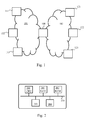
- Fig. 1 schematically represents a proxy device 100 interconnecting a first communications network 101 and a second communications network 102.
- the proxy device 100 may interconnect more communications networks.
- the proxy device 100 may be an Ethernet bridge, an IP router, a Wi-Fi (registered trademark) access point or a router implementing the same.
- Each communications network interconnected by the proxy device 100 comprises one or more communication devices.
- Fig. 1 shows three communication devices 111, 112, 113, in the first communications network 101 and three communication devices 121, 122, 123, in the second communications network 102.
- the communication devices connected to the first 101 or second 102 communications network are adapted to advertise via said communications network functionalities and/or services respectively implemented by said communication devices.
- the communication devices are adapted to transmit via said communications network respective advertisement messages including information representative of said communication devices and of said functionalities and/or services.
- the communication devices connected to the first 101 or second 102 communications network are further adapted to respond to queries received via the communications network to which the communication devices are respectively connected.
- the communication devices implement the mDNS protocol, although other discovery protocols may be implemented, such as SSDP (Simple Service Discovery Protocol) as implemented in the UPnP (Universal Plug n' Play) standard.
- SSDP Simple Service Discovery Protocol
- UPnP Universal Plug n' Play
- XML eXtended Markup Language
- HTTP HyperText Transfer Protocol
- mDNS relies on UDP (User Datagram Protocol, as specified in the normative document RFC 768).
- a communications network is a wireless communications network managed by an access point, as is the case of Wi-Fi (registered trademark) or IEEE 802.11 networks
- advertisement messages and queries are transmitted in unicast form to the access point, which is then expected to multicast the advertisement messages and queries via the wireless communications network.
- some communication devices of the wireless communications network may not be able to directly communicate with other communication devices of the wireless communications network, and the access point acts as a relay at link layer level (OSI model) to enable communications between said communication devices.
- OSI model link layer level
- the proxy device 100 comprises a caching unit storing data collected by the proxy device 100 when receiving advertisement messages from communication devices connected to the communications network that the proxy device 100 interconnects. Under certain circumstances, the proxy device 100 responds to queries on behalf of one or more communication devices, as detailed hereafter with regard to Fig. 4 . Selecting the data to be stored by the caching unit is detailed hereafter with regard to Fig. 3 and keeping up-to-date said data is detailed hereafter with regard to Fig. 5 .
- the data stored by the caching unit may be recorded in a structure having the following format: a first structure element indicates the communications network to which the communication device to which the data relate is connected; a second structure element indicates the IP address of said communication device; a third structure element stores the concerned service or functionality data advertised by said communication device, e.g. the advertised resource record in the terminology of the mDNS protocol; a fourth structure element storing a time-to-live indication associated with the advertised data, representative of an expiry instant of the validity of said data.
- the stored structures may be organised as a hash table indexed using a hash key that derives from the stored data.
- Fig. 2 schematically represents an architecture of the proxy device 100.
- the proxy device 100 comprises the following components interconnected by a communications bus 210: a processor, microprocessor, microcontroller or CPU ( Central Processing Unit ) 200; a RAM ( Random-Access Memory ) 201; a ROM ( Read-Only Memory ) 202; an HDD ( Hard Disk Drive ) 203, or any other device adapted to read information stored on storage means; and, a set 204 of communication interfaces, which allows connecting the proxy device 100 to the first communications network 101 and to the second communications network 102.
- a communications bus 210 a processor, microprocessor, microcontroller or CPU ( Central Processing Unit ) 200; a RAM ( Random-Access Memory ) 201; a ROM ( Read-Only Memory ) 202; an HDD ( Hard Disk Drive ) 203, or any other device adapted to read information stored on storage means; and, a set 204 of communication interfaces, which allows connecting the proxy device 100 to the first communications network 101
- CPU 200 is capable of executing instructions loaded into RAM 201 from ROM 202, from an external memory such as an SD ( Secure Digital ) card, or from HDD 203. After the proxy device 100 has been powered on, CPU 200 is capable of reading instructions from RAM 201 and executing these instructions.
- the instructions form one computer program that causes CPU 200 to perform some or all of the steps of the algorithms described hereafter.
- Any and all steps of the algorithms described hereafter may be implemented in software by execution of a set of instructions or program by a programmable computing machine, such as a PC ( Personal Computer ) , a DSP ( Digital Signal Processor ) or a microcontroller; or else implemented in hardware by a machine or a dedicated component, such as an FPGA ( Field-Programmable Gate Array ) or an ASIC ( Application-Specific Integrated Circuit ) .
- a programmable computing machine such as a PC ( Personal Computer ) , a DSP ( Digital Signal Processor ) or a microcontroller; or else implemented in hardware by a machine or a dedicated component, such as an FPGA ( Field-Programmable Gate Array ) or an ASIC ( Application-Specific Integrated Circuit ) .
- Fig. 3 schematically represents an algorithm, performed by the proxy device 100, for handling data of the caching unit.
- the algorithm starts in a step S301.
- the proxy device 100 receives an advertisement message from the first communications network 101 or from the second communications network 102.
- the advertisement message includes information about the communications device having transmitted the advertisement message via the first communications network 101 or via the second communications network 102. Such information relates for instance to naming or addressing of said communications device, to configuration parameters of said communications device, to services or functionalities implemented by said communications device.
- the advertisement message is a Gratuitous Multicast DNS Response.
- the proxy device 100 checks whether said proxy device 100 has authority for acting on behalf of the communications devices connected to the communications network from which the advertisement message has been received in the step S302. When the proxy device 100 doesn't have such authority, the algorithm ends in a step S312; otherwise a step S304 is performed.
- the proxy device 100 stores a flag indicating, for each communications network that the proxy device 100 interconnects, whether the proxy device 100 has authority for acting on behalf of the communications devices connected to said communications network.
- Whether the proxy device 100 has authority for each communications network may be defined as a configuration parameter, which can be setup by an administrator.
- the proxy device 100 checks a time-to-live indication associated with the information included in the received advertisement message.
- the proxy device 100 checks the TTL (Time-To-Live) field of the received advertisement message.
- the time-to-live indication indicates that the information included in the received advertisement message has expired
- a step S309 is performed; otherwise, a step S305 is performed.
- the step S309 is performed when the TTL field has a null value. Indeed, according to the mDNS protocol rules, a communication device can clear a resource record preceding advertisement by sending a subsequent advertisement message with a null TTL field associated with said resource record.
- the proxy device 100 searches in the data stored by the caching unit in order to determine whether the information included in the received advertisement message concerns a communication device already described among the data stored by the caching unit.
- the proxy device 100 checks whether information about said communication device has been found among the data stored by the caching unit. When such information has been found, a step S307 is performed; otherwise, a step S308 is performed.
- the proxy device 100 updates the data stored by the caching unit, if needed, with supplementary or up-to-date information included in the received advertisement message. More particularly, the proxy device 100 at least updates a time-to-live indication stored in the caching unit in association with the information concerning said communication device with the time-to-live indication included in the received advertisement message. By doing so, the proxy device 100 collects up-to-date data and stores the collected data in the caching unit. Then, the algorithm ends in the step S312.
- the proxy device 100 adds a new entry in the caching unit for said communication device.
- the proxy device 100 stores information included in the received advertisement message and concerning said communication device, in order to be able to respond later on to queries on behalf of said communications device. By doing so, the proxy device 100 collects new data and stores the collected data in the caching unit. Then, the algorithm ends in the step S312.
- the proxy device 100 searches in the data stored by the caching unit in order to determine whether the information included in the received advertisement message concerns a communication device already described among the data stored by the caching unit.
- the proxy device 100 checks whether information about said communication device has been found among the data stored by the caching unit. When such information has been found, a step S311 is performed; otherwise, the algorithm ends in the step S312, as the advertisement message indicates validity expiry of data that was not previously stored by the caching unit.
- the proxy device 100 removes from the caching unit the stored data concerning said communication device, or at least removed therefrom the information included in the received advertisement message and associated with the validity expiry indication, e.g. the information associated with the null TTL field when implementing the mDNS protocol. Then, the algorithm ends in the step S312.
- the proxy device 100 is not supposed to store advertisement data for communication devices connected to a communications network for which the proxy device 100 has no authority.
- the proxy device 100 stores such advertisement data for communication devices connected to a communications network for which the proxy device 100 has no authority, the step S303 being in this case not performed. This would allow the proxy device 100 to anticipate a later change in the authority configuration.
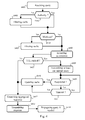
- Fig. 4 schematically represents an algorithm, performed by the proxy device 100, for processing queries using the data stored by the caching unit.
- the proxy device 100 receives a query from the first communications network 101 or from the second communications network 102.
- the proxy device 100 checks whether said proxy device 100 has authority for acting on behalf of the communications devices connected to the communications network to which said proxy device 100 is connected. When the proxy device 100 doesn't have such authority for all said communications network, a step S404 is performed; otherwise a step S403 is performed.
- the proxy device 100 filters the data stored in the caching unit in order to withdraw the data concerning communication devices connected to each communication network for which the proxy device 100 has no authority. Only remains, for the need of the execution of the algorithm of Fig. 4 , the data concerning communication devices connected to each communications network for which the proxy device 100 has authority. Then the step S404 is performed. When the step S403 is not performed, the whole content of the caching unit is considered.
- the proxy device 100 when the step S303 is performed in the algorithm of Fig. 3 , the proxy device 100 does not store advertisement data for communication devices connected to a communications network for which the proxy device 100 has no authority. In this case, the steps S402 and S403 might be avoided.
- the proxy device 100 checks whether the query has been transmitted as a multicast message. For instance, when the query is transmitted via a WiFi network in which the proxy device 100 is an access point, the query is transmitted as a unicast message to the access point, which is in charge of relaying the message via the WiFi in the form of a multicast message. However, in a Local Area Network (LAN), the communication device is expected to transmit the query directly in the form of a multicast message.
- LAN Local Area Network
- multicast messages are addressed to the IP address "224.0.0.251" and UDP port "5353".
- a step S405 is performed; otherwise, a step S406 is performed.
- the proxy device 100 filters the data stored in the caching unit, possibly already filtered via the step S403, in order to withdraw the data concerning communication devices connected to the communications network from which the multicast query has been received in the step S401. Indeed, as the query is in multicast form, there is no need for the proxy device 100 to act on behalf of other communication devices connected to said communications network. Then the step S406 is performed.
- the proxy device 100 searches among the data stored by the caching unit, possibly filtered via the step S403 and/or the step S405, information for responding to the query. Queries usually concern information that are typically advertised by communication devices via the communications network to which said communication devices are connected. Queries typically are messages interrogating the communication devices connected to the communications whether, and which, said communication devices implement a certain functionality or service. The multicast queries often lead to plural responses transmitted by respective communication devices implementing said functionality or service. The proxy device 100 therefore extracts from the data stored by the caching unit information for responding to the query on behalf of each communication device for which information is stored by the caching unit and matches the query.
- the proxy device 100 checks whether the time-to-live indication associated with each information extracted from the caching unit shows expiry of the validity of said extracted information.
- a step S408 is performed; otherwise, a step S412 is performed.
- the proxy device 100 transmits at least one unicast query addressed to each communication for which the time-to-live indication showed validity expiry in the step S407, in order to update the data stored in the caching unit.
- step S409 the proxy device 100 checks whether each unicast query transmitted in the step S408 has been responded.
- a step S410 is performed; otherwise, a step S411 is performed.
- the proxy device 100 updates the data stored in the caching unit with information included in each response to each unicast query transmitted in the step S408. More particularly, the proxy device 100 at least updates the time-to-live indication stored in the caching unit in association with said information. Then, the step S412 is performed.
- the proxy device 100 checks whether a timeout has expired.
- the timeout is representative of an instant at which a response to the query received in the step S401 shall be transmitted, with an optional predefined margin.
- the maximum delay to transmit a response is set to 500 ms.
- the proxy device postpones the steps of generating and transmitting the aggregated response message up to a predetermined instant at which the query received in the step S401 shall be responded.
- the step S410 is performed for updating the data according to responses that have been received so far.
- the proxy device 100 In the step S412, the proxy device 100 generates an aggregated response to the query received in the step S401, the aggregated response being built on the basis of the data extracted in the step S406.
- the proxy device 100 has previously recorded in the caching unit information contained in advertisement messages transmitted by the communication devices 111, 112, 113, 121, 122 and 123. Let's further consider that the communication devices 111, 112 and 123 have all previously advertised implementing a service S, and that the time-to-live indication associated with the related advertised information shows that said information is still valid. Let's also consider that the communication device 113 transmits a query for discovering which communication devices of the first 101 and second 102 communications networks implement the service S. Let's also consider that the first communications network 101 is a Wi-Fi (registered trademark) network and that the second communications network is an Ethernet-based LAN (Local Area Network) network.
- Wi-Fi registered trademark
- Ethernet-based LAN Local Area Network
- the query transmitted by the communication device 113 is therefore in the form of a unicast message, for which the proxy device 100, acting as an access point, is supposed to generate and propagate respective multicast messages via the first communications network 101 and via the second communications network 102.
- the proxy device 100 retrieves information contained in the advertisement messages previously transmitted by the communication devices 111, 112 and 123 for the service S.
- the proxy device 100 then generates a response message aggregating the information that was previously advertised by the communication devices 111, 112 and 123, and that has been retrieved from the caching unit. By doing so, the proxy device 100 avoids generating and propagating multicast messages for the query.
- the bandwidth consumption of the first 101 and second 102 communications network is thus improved, and the communication devices 111, 112 and 123 don't need to be awake to enable the communication device 113 obtaining the queried information.
- the proxy device 100 transmits the generated aggregated response message via the communications network from which the query has been received in the step S401.
- the proxy device 100 stores a configuration parameter indicating, for each communications network that the proxy device 100 interconnects, whether responses have to be transmitted by the proxy device 100 as unicast or multicast messages to the communication device having transmitted the corresponding query.
- the configuration parameter may depend on a type of the considered communications network. For instance, multicast responses are privileged on Ethernet networks, whereas multicast responses are privileged on Wi-Fi (registered trademark) networks, which optimizes network resource consumption.
- the proxy device 100 forwards the query to all communications networks for which the proxy device 100 has no authority, in order to allow each communication device that are connected to said communications network and that are supposed to respond to the query to do so.
- the proxy device 100 may decide forwarding the query.
- the proxy device 100 does not forward the query to the communications network from which said query has been received by the proxy device 100, when said query has been transmitted in multicast form.
- the proxy device 100 when the query is received in unicast form by the proxy device 100 via a wireless communications network, the proxy device 100 being supposed to propagate in multicast form the received query via said wireless communications network, the proxy device 100 effectively propagates the received query via said wireless communications network, only when the proxy device 100 has no authority for responding on behalf of communication devices connected thereto.
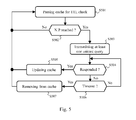
- Fig. 5 schematically represents an algorithm, performed by the proxy device 100, for keeping up-to-date the data stored by the caching unit.
- the proxy device 100 parses the data stored by the caching unit for checking time-to-live indication associated with each stored data.
- the proxy device 100 checks whether the time-to-live indication, for at least one data, shows expiry of the validity of said data.
- the time-to-live indication is representative of a time period P of validity of said data.
- the proxy device 100 may check in the step S502 whether said time period P of validity has expired.
- the proxy device 100 checks in the step S502 whether a time period equal to N times said time period P of validity has expired since the last update of said time-to-live indication, wherein N is a positive integer greater than 1.
- a step S503 is performed; otherwise, the step S501 is repeated.
- the proxy device 100 transmits at least one unicast query addressed to each communication for which the time-to-live indication showed validity expiry in the step S502, in order to update the data stored in the caching unit.
- the proxy device 100 checks whether each unicast query transmitted in the step S503 has been responded. When each unicast query transmitted in the step S503 has been responded, a step S505 is performed; otherwise, a step S506 is performed.
- the proxy device 100 updates the data stored in the caching unit with information included each response to each unicast query transmitted in the step S503. More particularly, the proxy device 100 at least updates the time-to-live indication stored in the caching unit in association with said information. Then, the step S501 is repeated.
- the proxy device 100 checks whether a timeout has expired.
- the timeout is representative of an instant at which a response to the query transmitted in the step S503 is expected to be received by the proxy device 100.
- a step S507 is performed; otherwise, the step S504 is repeated.
- the proxy device 100 may re-transmit each non-responded query a predefined number of times when the timeout expires for said non-responded query.
- the proxy device 100 removes from the caching unit the data concerned by each non-responded query. Then, the step S501 is repeated.
Landscapes
- Engineering & Computer Science (AREA)
- Computer Networks & Wireless Communication (AREA)
- Signal Processing (AREA)
- Data Exchanges In Wide-Area Networks (AREA)
- Mobile Radio Communication Systems (AREA)
Abstract
Description
- The present invention generally relates to a proxy mechanism adapted to process advertisement messages and queries at an interconnection of plural communications networks, in the scope of a device discovery protocol.
- Device discovery protocols are widely implemented in communications networks, in order for any communication device to automatically obtain information about parameters of other communication devices and/or about functionalities implemented by other communication devices and/or services implemented by other communication devices.
- Domain Name System (DNS) is a hierarchical distributed naming system for computers, services, or any resource connected to the Internet or a private communications network. DNS associates various information with domain names assigned to each entity participating in the considered communications network, such as functionalities and/or services implemented by said participating entities. Among other functions, DNS allows translating domain names to IP addresses needed for the purpose of addressing communication devices in the considered communications network.
- Multicast Domain Name System (mDNS) is a decentralised DNS approach with quite similar packet formats and operating, which therefore does not require any centralised server to operate and which relies on multicast transmissions of messages. The mDNS protocol is part of IETF Zero Configuration Networking (Zeroconf), a set of techniques that automatically creates a usable Internet Protocol (Internet Protocol, as specified in the normative document RFC 791) network without manual operator intervention nor specific configuration servers. Apple Inc.'s technologies RendezVous and Bonjour rely on the mDNS principles. The mDNS protocol is detailed in a set of normative documents, such as RFC 1034 "Domain Names - Concepts and Facilities" and RFC 1035 "Domain Names - Implementation and Specification".
- After initialization, the communication devices implementing the mDNS protocol advertises resource records representing their respective configuration parameters, e.g. IP addresses, as well as implemented functionalities and/or services, e.g. IPP (Internet Printing Protocol) printing service. This phase is sometimes referred to as Announcing. Each advertisement message contains at least a resource record of type "A" indicating an IPv4 address of the communication device, or of type "AAAA" indicating an IPv6 address of the communication device, as well as a symbolic name of the communication device to which the advertisement message refers. Each advertisement message may further contain resource records of other types, such as PTR (Domain Name Pointer), SVC (Service) and NSEC (Next-Secure). Each resource record is typically associated with a time-to-live indication, specified in the TTL (Time-To-Live) field of the corresponding resource record contained in the advertisement message. The time-to-live indication is representative of a time period during which the associated resource record is valid.
- A problem encountered with device discovery protocols, such as mDNS, is that numerous multicast messages are exchanged to propagate advertisement messages and queries, especially in case of interconnected communications network. For example, a printing service client typically periodically transmits a query, namely a query with PTR resource record type labelled "_http._tcp.local" to discover printer devices available via the communications network. Each printer device receiving the query replies with a multicast response, which may lead to a quite long multicast burst when many printers are present in the communications network. Those long and frequent multicast bursts may be a critical issue for network resources management, especially in case of wireless communications network. Indeed, in many wireless communication technologies, e.g. the IEEE 802.11 standard, since the broadcast and multicast traffic is not acknowledged, a more resilient modulation and coding scheme is implemented compared to the acknowledged unicast traffic. Long and frequent multicast bursts therefore increase communications overhead and significantly decrease the available bandwidth.
- Such multicast message exchanges moreover lead to extra power consumption and even avoid some communication devices to enter stand-by mode, since said communication devices have to interpret transmitted queries and advertisement messages, and possibly respond to said transmitted queries.
- It is desirable to overcome the aforementioned problems of the state of the art.
- In particular, it is desirable to provide a solution that allows reducing the amount of messages exchanged in the scope of the device discovery, therefore reducing the bandwidth consumption.
- It is furthermore desirable to provide a solution that avoids awakening communication devices in stand-by mode in the scope of the device discovery.
- It is furthermore desirable to provide a solution that is easy-to-implement and that is cost-effective.
- To that end, the present invention concerns a method performed by a proxy device interconnecting at least a first and a second communications network, communication devices connected to either said communications network transmitting advertisement messages including information about respective parameters of said communication devices and/or about respective functionalities implemented by said communication devices and/or respective services implemented by said communication devices. The method is such that said proxy device performs: collecting data from advertisement messages received by the proxy device from communication devices connected to either said communications network; storing said collected data in a caching unit; and, upon receiving a query about parameters of communication devices and/or functionalities implemented by communication devices and/or services implemented by communication devices, the proxy device further performs: retrieving from the caching unit data corresponding to the received query; generating a response message including the retrieved data, wherein, when the retrieved data represent plural communication devices, the response message aggregates said retrieved data representing said plural communication devices; and transmitting, in response to the received query, the generated response message.
- Thus, the amount of messages exchanged in the scope of the device discovery is reduced, as the proxy device generates a single response on behalf of plural communication devices when needed. Moreover, awakening communication devices in stand-by mode is avoided to respond to the query.
- According to a particular feature, when retrieving the data corresponding to the received query from the caching unit, the proxy device performs: filtering the data stored by the caching unit, by removing data representing communication devices connected to respective communication networks for which the proxy device has no authority for responding on behalf of communication devices connected thereto; and forwarding the query via each communications network for which the proxy device has no authority for responding on behalf of communication devices connected thereto, except, when the query is received in multicast form, the communications network from which said query has been received by the proxy device.
- Thus, flexibility is brought to the usage of the proxy device at the interconnection of plural communications networks.
- According to a particular feature, when retrieving the data corresponding to the received query from the caching unit and when the query is received in multicast form, the proxy device filters the data stored by the caching unit, by removing data representing communication devices connected to the communications network from which said query has been received by the proxy device.
- Thus, the proxy device doesn't respond for communication devices that directly received the query message.
- According to a particular feature, when the query is received in unicast form by the proxy device via a wireless communications network, the proxy device being supposed to propagate in multicast form the received query via said wireless communications network, the proxy device effectively propagates the received query via said wireless communications network, when the proxy device has no authority for responding on behalf of communication devices connected thereto.
- Thus, propagating the multicast query is avoided when possible.
- According to a particular feature, when retrieving the data corresponding to the received query from the caching unit, the proxy device checks a time-to-live indication associated with the retrieved data, and when the time-to-live indication shows validity expiry of the retrieved data, the proxy device performs: transmitting at least one query in unicast form to each communications device represented by the retrieved data associated with the time-to-live indication showing validity expiry, said at least one query being adapted to verify said validity; and postponing the steps of generating and transmitting the response message up to a predetermined instant at which the query shall be responded, until at least one response to respective said at least one query in unicast form is received by the proxy device.
- Thus, the most up-to-date data are transmitted in the response.
- According to a particular feature, the data stored by the caching unit being associated with a time-to-live indication representative of a time period P of validity of said stored data, the proxy device keeps up-to-date the stored data by: checking whether a time period equal to N times said time period P has expired since the last update of said time-to-live indication, wherein N is a positive integer greater than 1; and, transmitting at least one query in unicast form to each communications device represented by the stored data associated with the time-to-live indication showing validity expiry, said at least one query being adapted to verify said validity.
- Thus, a reduced amount of exchanges are performed for keeping up-to-date the data stored in the caching unit.
- According to a particular feature, the data stored by the caching unit being associated with a time-to-live indication representative of a time period of validity of said stored data, the proxy device keeps up-to-date the stored data by: receiving an advertisement including expired information associated with a null time-to-live indication; and, removing from the caching unit data corresponding to said expired information.
- Thus, a communication device may cancel a previous advertisement using a null time-to-live indication, and the caching unit is maintained consistent with advertisements propagated via the communications network.
- According to a particular feature, the proxy device stores a configuration parameter indicating, for each said communications network, whether responses to queries have to be transmitted by the proxy device as unicast or multicast messages to the communication devices having respectively transmitted the queries.
- Thus, multicast transmissions may be limited according to a predefined criteria, for instance set by an administrator of the communications networks. For instance, the configuration parameter is set according to security and/or privacy considerations. Moreover, some network infrastructure devices, such as bridges, may be configured to filter multicast transmissions. The configuration parameter might therefore be set according to such filtering constraints.
- According to a particular feature, the configuration parameter is defined according to a type of said communications network.
- For instance, multicast responses are privileged on Ethernet networks, whereas multicast responses are privileged on Wi-Fi (registered trademark) networks, which optimizes network resource consumption, as multicast transmissions (not acknowledged) may require a more robust modulation and coding scheme than unicast transmissions (acknowledged).
- According to a particular feature, advertisement messages and queries are in accordance with the mDNS protocol.
- The present invention also concerns a proxy device intended to interconnect at least a first and a second communications network, communication devices connected to either said communications network being adapted to transmit advertisement messages including information about respective parameters of said communication devices and/or about respective functionalities implemented by said communication devices and/or respective services implemented by said communication devices. The proxy device implements: means for collecting data from advertisement messages received by the proxy device from communication devices connected to either said communications network; means for storing said collecting data in a caching unit; and, upon receiving a query about parameters of communication devices and/or functionalities implemented by communication devices and/or services implemented by communication devices, the proxy device further implements: means for retrieving from the caching unit data corresponding to the received query; means for generating a response message including the retrieved data, wherein, when the retrieved data represent plural communication devices, the response message aggregates said retrieved data representing said plural communication devices; and means for transmitting, in response to the query, the generated response message.
- The present invention also concerns a computer program that can be downloaded from a communication network and/or stored on a medium that can be read by a computer and run by a processor. This computer program comprises instructions for implementing the aforementioned method in any one of its embodiments, when said program is run by the processor. The present invention also concerns information storage means, storing such a computer program.
- Since the features and advantages related to the proxy device and to the computer program are identical to those already mentioned with regard to the corresponding aforementioned method, they are not repeated here.
- The characteristics of the invention will emerge more clearly from a reading of the following description of an example of embodiment, said description being produced with reference to the accompanying drawings, among which:
-
Fig. 1 schematically represents a proxy device interconnecting a first communications network and a second communications network; -
Fig. 2 schematically represents an architecture of the proxy device; -
Fig. 3 schematically represents an algorithm, performed by the proxy device, for handling data of a caching unit of the proxy device; -
Fig. 4 schematically represents an algorithm, performed by the proxy device, for processing queries using data stored by the caching unit; -
Fig. 5 schematically represents an algorithm, performed by the proxy device, for keeping up-to-date the data stored by the caching unit. -
Fig. 1 schematically represents aproxy device 100 interconnecting afirst communications network 101 and asecond communications network 102. Theproxy device 100 may interconnect more communications networks. Theproxy device 100 may be an Ethernet bridge, an IP router, a Wi-Fi (registered trademark) access point or a router implementing the same. - Each communications network interconnected by the
proxy device 100 comprises one or more communication devices.Fig. 1 shows threecommunication devices first communications network 101 and threecommunication devices second communications network 102. - The communication devices connected to the first 101 or second 102 communications network are adapted to advertise via said communications network functionalities and/or services respectively implemented by said communication devices. To achieve this, the communication devices are adapted to transmit via said communications network respective advertisement messages including information representative of said communication devices and of said functionalities and/or services.
- The communication devices connected to the first 101 or second 102 communications network are further adapted to respond to queries received via the communications network to which the communication devices are respectively connected.
- In a preferred embodiment, the communication devices implement the mDNS protocol, although other discovery protocols may be implemented, such as SSDP (Simple Service Discovery Protocol) as implemented in the UPnP (Universal Plug n' Play) standard. However, SSDP relies on XML (eXtended Markup Language) and HTTP (HyperText Transfer Protocol, as specified in the normative document RFC 2616 for HTTP/1.1), whereas mDNS relies on UDP (User Datagram Protocol, as specified in the normative document RFC 768).
- When a communications network is a wireless communications network managed by an access point, as is the case of Wi-Fi (registered trademark) or IEEE 802.11 networks, advertisement messages and queries are transmitted in unicast form to the access point, which is then expected to multicast the advertisement messages and queries via the wireless communications network. Indeed, due to shadowing effects, some communication devices of the wireless communications network may not be able to directly communicate with other communication devices of the wireless communications network, and the access point acts as a relay at link layer level (OSI model) to enable communications between said communication devices. Under certain circumstances, as detailed hereafter with regard to
Fig. 4 , even though the communications network is such a wireless communications network, theproxy device 100 acting as access point does not multicast advertisement messages and queries received in unicast form. - The
proxy device 100 comprises a caching unit storing data collected by theproxy device 100 when receiving advertisement messages from communication devices connected to the communications network that theproxy device 100 interconnects. Under certain circumstances, theproxy device 100 responds to queries on behalf of one or more communication devices, as detailed hereafter with regard toFig. 4 . Selecting the data to be stored by the caching unit is detailed hereafter with regard toFig. 3 and keeping up-to-date said data is detailed hereafter with regard toFig. 5 . - The data stored by the caching unit may be recorded in a structure having the following format: a first structure element indicates the communications network to which the communication device to which the data relate is connected; a second structure element indicates the IP address of said communication device; a third structure element stores the concerned service or functionality data advertised by said communication device, e.g. the advertised resource record in the terminology of the mDNS protocol; a fourth structure element storing a time-to-live indication associated with the advertised data, representative of an expiry instant of the validity of said data. The stored structures may be organised as a hash table indexed using a hash key that derives from the stored data.
-
Fig. 2 schematically represents an architecture of theproxy device 100. According to the shown architecture, theproxy device 100 comprises the following components interconnected by a communications bus 210: a processor, microprocessor, microcontroller or CPU (Central Processing Unit) 200; a RAM (Random-Access Memory) 201; a ROM (Read-Only Memory) 202; an HDD (Hard Disk Drive) 203, or any other device adapted to read information stored on storage means; and, aset 204 of communication interfaces, which allows connecting theproxy device 100 to thefirst communications network 101 and to thesecond communications network 102. -
CPU 200 is capable of executing instructions loaded intoRAM 201 fromROM 202, from an external memory such as an SD (Secure Digital) card, or fromHDD 203. After theproxy device 100 has been powered on,CPU 200 is capable of reading instructions fromRAM 201 and executing these instructions. The instructions form one computer program that causesCPU 200 to perform some or all of the steps of the algorithms described hereafter. - Any and all steps of the algorithms described hereafter may be implemented in software by execution of a set of instructions or program by a programmable computing machine, such as a PC (Personal Computer), a DSP (Digital Signal Processor) or a microcontroller; or else implemented in hardware by a machine or a dedicated component, such as an FPGA (Field-Programmable Gate Array) or an ASIC (Application-Specific Integrated Circuit).
-
Fig. 3 schematically represents an algorithm, performed by theproxy device 100, for handling data of the caching unit. - The algorithm starts in a step S301. In a following step S302, the
proxy device 100 receives an advertisement message from thefirst communications network 101 or from thesecond communications network 102. The advertisement message includes information about the communications device having transmitted the advertisement message via thefirst communications network 101 or via thesecond communications network 102. Such information relates for instance to naming or addressing of said communications device, to configuration parameters of said communications device, to services or functionalities implemented by said communications device. When the mDNS protocol is implemented in the first 101 and second 102 communications networks, the advertisement message is a Gratuitous Multicast DNS Response. - In a following step S303, the
proxy device 100 checks whether saidproxy device 100 has authority for acting on behalf of the communications devices connected to the communications network from which the advertisement message has been received in the step S302. When theproxy device 100 doesn't have such authority, the algorithm ends in a step S312; otherwise a step S304 is performed. - The
proxy device 100 stores a flag indicating, for each communications network that theproxy device 100 interconnects, whether theproxy device 100 has authority for acting on behalf of the communications devices connected to said communications network. - Whether the
proxy device 100 has authority for each communications network may be defined as a configuration parameter, which can be setup by an administrator. - In the step S304, the
proxy device 100 checks a time-to-live indication associated with the information included in the received advertisement message. When the mDNS protocol is implemented in the first 101 and second 102 communications networks, theproxy device 100 checks the TTL (Time-To-Live) field of the received advertisement message. When the time-to-live indication indicates that the information included in the received advertisement message has expired, a step S309 is performed; otherwise, a step S305 is performed. When the mDNS protocol is implemented in the first 101 and second 102 communications networks, the step S309 is performed when the TTL field has a null value. Indeed, according to the mDNS protocol rules, a communication device can clear a resource record preceding advertisement by sending a subsequent advertisement message with a null TTL field associated with said resource record. - In the step S305, the
proxy device 100 searches in the data stored by the caching unit in order to determine whether the information included in the received advertisement message concerns a communication device already described among the data stored by the caching unit. - In a following step S306, the
proxy device 100 checks whether information about said communication device has been found among the data stored by the caching unit. When such information has been found, a step S307 is performed; otherwise, a step S308 is performed. - In the step S307, the
proxy device 100 updates the data stored by the caching unit, if needed, with supplementary or up-to-date information included in the received advertisement message. More particularly, theproxy device 100 at least updates a time-to-live indication stored in the caching unit in association with the information concerning said communication device with the time-to-live indication included in the received advertisement message. By doing so, theproxy device 100 collects up-to-date data and stores the collected data in the caching unit. Then, the algorithm ends in the step S312. - In the step S308, the
proxy device 100 adds a new entry in the caching unit for said communication device. Theproxy device 100 stores information included in the received advertisement message and concerning said communication device, in order to be able to respond later on to queries on behalf of said communications device. By doing so, theproxy device 100 collects new data and stores the collected data in the caching unit. Then, the algorithm ends in the step S312. - In the step S309, the
proxy device 100 searches in the data stored by the caching unit in order to determine whether the information included in the received advertisement message concerns a communication device already described among the data stored by the caching unit. - In a following step S310, the
proxy device 100 checks whether information about said communication device has been found among the data stored by the caching unit. When such information has been found, a step S311 is performed; otherwise, the algorithm ends in the step S312, as the advertisement message indicates validity expiry of data that was not previously stored by the caching unit. - In the step S311, the
proxy device 100 removes from the caching unit the stored data concerning said communication device, or at least removed therefrom the information included in the received advertisement message and associated with the validity expiry indication, e.g. the information associated with the null TTL field when implementing the mDNS protocol. Then, the algorithm ends in the step S312. - In the algorithm of
Fig. 3 , it is considered that theproxy device 100 is not supposed to store advertisement data for communication devices connected to a communications network for which theproxy device 100 has no authority. In a variant, theproxy device 100 stores such advertisement data for communication devices connected to a communications network for which theproxy device 100 has no authority, the step S303 being in this case not performed. This would allow theproxy device 100 to anticipate a later change in the authority configuration. -
Fig. 4 schematically represents an algorithm, performed by theproxy device 100, for processing queries using the data stored by the caching unit. - In a step S401, the
proxy device 100 receives a query from thefirst communications network 101 or from thesecond communications network 102. - In a following step S402, the
proxy device 100 checks whether saidproxy device 100 has authority for acting on behalf of the communications devices connected to the communications network to which saidproxy device 100 is connected. When theproxy device 100 doesn't have such authority for all said communications network, a step S404 is performed; otherwise a step S403 is performed. - In the step S403, the
proxy device 100 filters the data stored in the caching unit in order to withdraw the data concerning communication devices connected to each communication network for which theproxy device 100 has no authority. Only remains, for the need of the execution of the algorithm ofFig. 4 , the data concerning communication devices connected to each communications network for which theproxy device 100 has authority. Then the step S404 is performed. When the step S403 is not performed, the whole content of the caching unit is considered. - In a variant, when the step S303 is performed in the algorithm of
Fig. 3 , theproxy device 100 does not store advertisement data for communication devices connected to a communications network for which theproxy device 100 has no authority. In this case, the steps S402 and S403 might be avoided. - In the step S404, the
proxy device 100 checks whether the query has been transmitted as a multicast message. For instance, when the query is transmitted via a WiFi network in which theproxy device 100 is an access point, the query is transmitted as a unicast message to the access point, which is in charge of relaying the message via the WiFi in the form of a multicast message. However, in a Local Area Network (LAN), the communication device is expected to transmit the query directly in the form of a multicast message. When the mDNS protocol is implemented in the first 101 and second 102 communications networks, multicast messages are addressed to the IP address "224.0.0.251" and UDP port "5353". - When the query has been transmitted as a multicast message, a step S405 is performed; otherwise, a step S406 is performed.
- In the step S405, the
proxy device 100 filters the data stored in the caching unit, possibly already filtered via the step S403, in order to withdraw the data concerning communication devices connected to the communications network from which the multicast query has been received in the step S401. Indeed, as the query is in multicast form, there is no need for theproxy device 100 to act on behalf of other communication devices connected to said communications network. Then the step S406 is performed. - In the step S406, the
proxy device 100 searches among the data stored by the caching unit, possibly filtered via the step S403 and/or the step S405, information for responding to the query. Queries usually concern information that are typically advertised by communication devices via the communications network to which said communication devices are connected. Queries typically are messages interrogating the communication devices connected to the communications whether, and which, said communication devices implement a certain functionality or service. The multicast queries often lead to plural responses transmitted by respective communication devices implementing said functionality or service. Theproxy device 100 therefore extracts from the data stored by the caching unit information for responding to the query on behalf of each communication device for which information is stored by the caching unit and matches the query. - In a following step S407, the
proxy device 100 checks whether the time-to-live indication associated with each information extracted from the caching unit shows expiry of the validity of said extracted information. When the time-to-live indication shows expiry of the validity of said extracted information, a step S408 is performed; otherwise, a step S412 is performed. - In the step S408, the
proxy device 100 transmits at least one unicast query addressed to each communication for which the time-to-live indication showed validity expiry in the step S407, in order to update the data stored in the caching unit. - In a following step S409, the
proxy device 100 checks whether each unicast query transmitted in the step S408 has been responded. When each unicast query transmitted in the step S408 has been responded, a step S410 is performed; otherwise, a step S411 is performed. - In the step S410, the
proxy device 100 updates the data stored in the caching unit with information included in each response to each unicast query transmitted in the step S408. More particularly, theproxy device 100 at least updates the time-to-live indication stored in the caching unit in association with said information. Then, the step S412 is performed. - In the step S411, the
proxy device 100 checks whether a timeout has expired. The timeout is representative of an instant at which a response to the query received in the step S401 shall be transmitted, with an optional predefined margin. In the mDNS protocol, the maximum delay to transmit a response is set to 500 ms. In other words, the proxy device postpones the steps of generating and transmitting the aggregated response message up to a predetermined instant at which the query received in the step S401 shall be responded. When the timeout has expired, the step S410 is performed for updating the data according to responses that have been received so far. - In the step S412, the
proxy device 100 generates an aggregated response to the query received in the step S401, the aggregated response being built on the basis of the data extracted in the step S406. - For example, let's consider that the
proxy device 100 has previously recorded in the caching unit information contained in advertisement messages transmitted by thecommunication devices communication devices communication device 113 transmits a query for discovering which communication devices of the first 101 and second 102 communications networks implement the service S. Let's also consider that thefirst communications network 101 is a Wi-Fi (registered trademark) network and that the second communications network is an Ethernet-based LAN (Local Area Network) network. The query transmitted by thecommunication device 113 is therefore in the form of a unicast message, for which theproxy device 100, acting as an access point, is supposed to generate and propagate respective multicast messages via thefirst communications network 101 and via thesecond communications network 102. Upon receiving the query, theproxy device 100 retrieves information contained in the advertisement messages previously transmitted by thecommunication devices proxy device 100 then generates a response message aggregating the information that was previously advertised by thecommunication devices proxy device 100 avoids generating and propagating multicast messages for the query. The bandwidth consumption of the first 101 and second 102 communications network is thus improved, and thecommunication devices communication device 113 obtaining the queried information. - In a following step S413, the
proxy device 100 transmits the generated aggregated response message via the communications network from which the query has been received in the step S401. - In a particular embodiment, the
proxy device 100 stores a configuration parameter indicating, for each communications network that theproxy device 100 interconnects, whether responses have to be transmitted by theproxy device 100 as unicast or multicast messages to the communication device having transmitted the corresponding query. The configuration parameter may depend on a type of the considered communications network. For instance, multicast responses are privileged on Ethernet networks, whereas multicast responses are privileged on Wi-Fi (registered trademark) networks, which optimizes network resource consumption. - In a following step S414, the
proxy device 100 forwards the query to all communications networks for which theproxy device 100 has no authority, in order to allow each communication device that are connected to said communications network and that are supposed to respond to the query to do so. - When the
proxy device 100 is not able to extract relevant response data in the step S406, theproxy device 100 may decide forwarding the query. - In any case, the
proxy device 100 does not forward the query to the communications network from which said query has been received by theproxy device 100, when said query has been transmitted in multicast form. - Therefore, when the query is received in unicast form by the
proxy device 100 via a wireless communications network, theproxy device 100 being supposed to propagate in multicast form the received query via said wireless communications network, theproxy device 100 effectively propagates the received query via said wireless communications network, only when theproxy device 100 has no authority for responding on behalf of communication devices connected thereto. -
Fig. 5 schematically represents an algorithm, performed by theproxy device 100, for keeping up-to-date the data stored by the caching unit. - In a step S501, the
proxy device 100 parses the data stored by the caching unit for checking time-to-live indication associated with each stored data. - In a following step S502, the
proxy device 100 checks whether the time-to-live indication, for at least one data, shows expiry of the validity of said data. Typically the time-to-live indication is representative of a time period P of validity of said data. Theproxy device 100 may check in the step S502 whether said time period P of validity has expired. In a variant, theproxy device 100 checks in the step S502 whether a time period equal to N times said time period P of validity has expired since the last update of said time-to-live indication, wherein N is a positive integer greater than 1. This approach allows limiting message exchanges via the communications networks for polling communications devices in the context of maintaining up-to-date the data stored by the caching unit. - When the time-to-live indication, for at least one data, shows expiry of the validity of said data, a step S503 is performed; otherwise, the step S501 is repeated.
- In the step S503, the
proxy device 100 transmits at least one unicast query addressed to each communication for which the time-to-live indication showed validity expiry in the step S502, in order to update the data stored in the caching unit. - In a following step S504, the
proxy device 100 checks whether each unicast query transmitted in the step S503 has been responded. When each unicast query transmitted in the step S503 has been responded, a step S505 is performed; otherwise, a step S506 is performed. - In the step S505, the
proxy device 100 updates the data stored in the caching unit with information included each response to each unicast query transmitted in the step S503. More particularly, theproxy device 100 at least updates the time-to-live indication stored in the caching unit in association with said information. Then, the step S501 is repeated. - In the step S506, the
proxy device 100 checks whether a timeout has expired. The timeout is representative of an instant at which a response to the query transmitted in the step S503 is expected to be received by theproxy device 100. When the timeout has expired, a step S507 is performed; otherwise, the step S504 is repeated. - It has to be noticed that the
proxy device 100 may re-transmit each non-responded query a predefined number of times when the timeout expires for said non-responded query. - In the step S507, the
proxy device 100 removes from the caching unit the data concerned by each non-responded query. Then, the step S501 is repeated.
Claims (13)
- A method performed by a proxy device interconnecting at least a first and a second communications network, communication devices connected to either said communications network transmitting advertisement messages including information about respective parameters of said communication devices and/or about respective functionalities implemented by said communication devices and/or respective services implemented by said communication devices, characterized in that said proxy device performs:- collecting data from advertisement messages received by the proxy device from communication devices connected to either said communications network;- storing said collected data in a caching unit;and, upon receiving a query about parameters of communication devices and/or functionalities implemented by communication devices and/or services implemented by communication devices, the proxy device further performs:- retrieving from the caching unit data corresponding to the received query;- generating a response message including the retrieved data, wherein, when the retrieved data represent plural communication devices, the response message aggregates said retrieved data representing said plural communication devices; and- transmitting, in response to the received query, the generated response message.
- The method according to claim 1, characterized in that, when retrieving the data corresponding to the received query from the caching unit, the proxy device performs:- filtering the data stored by the caching unit, by removing data representing communication devices connected to respective communication networks for which the proxy device has no authority for responding on behalf of communication devices connected thereto; and- forwarding the query via each communications network for which the proxy device has no authority for responding on behalf of communication devices connected thereto, except, when the query is received in multicast form, the communications network from which said query has been received by the proxy device.
- The method according to any one of claims 1 or 2, characterized in that, when retrieving the data corresponding to the received query from the caching unit and when the query is received in multicast form, the proxy device filters the data stored by the caching unit, by removing data representing communication devices connected to the communications network from which said query has been received by the proxy device.
- The method according to any one of claims 1 to 3, characterized in that, when the query is received in unicast form by the proxy device via a wireless communications network, the proxy device being supposed to propagate in multicast form the received query via said wireless communications network, the proxy device effectively propagates the received query via said wireless communications network, only when the proxy device has no authority for responding on behalf of communication devices connected thereto.
- The method according to any one of claims 1 to 4, characterized in that, when retrieving the data corresponding to the received query from the caching unit, the proxy device checks a time-to-live indication associated with the retrieved data, and when the time-to-live indication shows validity expiry of the retrieved data, the proxy device performs:- transmitting at least one query in unicast form to each communications device represented by the retrieved data associated with the time-to-live indication showing validity expiry, said at least one query being adapted to verify said validity; and- postponing the steps of generating and transmitting the response message up to a predetermined instant at which the query shall be responded, until at least one response to respective said at least one query in unicast form is received by the proxy device.
- The method according to any one of claims 1 to 5, characterized in that, the data stored by the caching unit being associated with a time-to-live indication representative of a time period P of validity of said stored data, the proxy device keeps up-to-date the stored data by:- checking whether a time period equal to N times said time period P has expired since the last update of said time-to-live indication, wherein N is a positive integer greater than 1; and- transmitting at least one query in unicast form to each communications device represented by the stored data associated with the time-to-live indication showing validity expiry, said at least one query being adapted to verify said validity.
- The method according to any one of claims 1 to 6, characterized in that, the data stored by the caching unit being associated with a time-to-live indication representative of a time period of validity of said stored data, the proxy device keeps up-to-date the stored data by:- receiving an advertisement including expired information associated with a null time-to-live indication; and- removing from the caching unit data corresponding to said expired information.
- The method according to any one of claims 1 to 7, characterized in that the proxy device stores a configuration parameter indicating, for each said communications network, whether responses to queries have to be transmitted by the proxy device as unicast or multicast messages to the communication devices having respectively transmitted the queries.
- The method according to claim 8, characterized in that the a configuration parameter is defined according to a type of said communications network.
- The method according to any one of claims 1 to 9, characterized in that advertisement messages and queries are in accordance with the mDNS protocol.
- A computer program characterized in that it comprises program code instructions which can be loaded in a programmable device for implementing the method according to any one of claims 1 to 10, when the program code instructions are run by the programmable device.
- Information storage means, characterized in that they store a computer program comprising program code instructions which can be loaded in a programmable device for implementing the method according to any one of claims 1 to 10, when the program code instructions are run by the programmable device.
- A proxy device intended to interconnect at least a first and a second communications network, communication devices connected to either said communications network being adapted to transmit advertisement messages including information about respective parameters of said communication devices and/or about respective functionalities implemented by said communication devices and/or respective services implemented by said communication devices, characterized in that said proxy device implements:- means for collecting data from advertisement messages received by the proxy device from communication devices connected to either said communications network;- means for storing said collected data in a caching unit;and, upon receiving a query about parameters of communication devices and/or functionalities implemented by communication devices and/or services implemented by communication devices, the proxy device further implements:- means for retrieving from the caching unit data corresponding to the received query;- means for generating a response message including the retrieved data, wherein, when the retrieved data represent plural communication devices, the response message aggregates said retrieved data representing said plural communication devices; and- means for transmitting, in response to the received query, the generated response message.
Priority Applications (2)
| Application Number | Priority Date | Filing Date | Title |
|---|---|---|---|
| EP13160174.2A EP2782319B1 (en) | 2013-03-20 | 2013-03-20 | Proxy device interconnecting communications networks and including a caching unit |
| JP2014019194A JP6104190B2 (en) | 2013-03-20 | 2014-02-04 | Method, computer program, information storage means and proxy device executed by proxy device |
Applications Claiming Priority (1)
| Application Number | Priority Date | Filing Date | Title |
|---|---|---|---|
| EP13160174.2A EP2782319B1 (en) | 2013-03-20 | 2013-03-20 | Proxy device interconnecting communications networks and including a caching unit |
Publications (2)
| Publication Number | Publication Date |
|---|---|
| EP2782319A1 true EP2782319A1 (en) | 2014-09-24 |
| EP2782319B1 EP2782319B1 (en) | 2016-07-06 |
Family
ID=47915501
Family Applications (1)
| Application Number | Title | Priority Date | Filing Date |
|---|---|---|---|
| EP13160174.2A Not-in-force EP2782319B1 (en) | 2013-03-20 | 2013-03-20 | Proxy device interconnecting communications networks and including a caching unit |
Country Status (2)
| Country | Link |
|---|---|
| EP (1) | EP2782319B1 (en) |
| JP (1) | JP6104190B2 (en) |
Citations (4)
| Publication number | Priority date | Publication date | Assignee | Title |
|---|---|---|---|---|
| US20060002320A1 (en) * | 2004-07-01 | 2006-01-05 | Jose Costa-Requena | Multicast relay for mobile devices |
| US20060075100A1 (en) * | 2004-09-28 | 2006-04-06 | Nokia Corporation | System, device, software and method for providing enhanced UPnP support on devices |
| US20070162165A1 (en) * | 2005-12-02 | 2007-07-12 | Nokia Corporation | SYSTEM AND METHOD FOR USING WEB SYNDICATION PROTOCOLS AS AN OUT-OF-BAND UPnP SERVICE DISCOVERY SYSTEM |
| US7656822B1 (en) * | 2003-12-22 | 2010-02-02 | Sun Microsystems, Inc. | Method and apparatus for decentralized device and service description and discovery |
Family Cites Families (3)
| Publication number | Priority date | Publication date | Assignee | Title |
|---|---|---|---|---|
| US20040073707A1 (en) * | 2001-05-23 | 2004-04-15 | Hughes Electronics Corporation | Generating a list of network addresses for pre-loading a network address cache via multicast |
| JP2004215052A (en) * | 2003-01-07 | 2004-07-29 | Nec Nexsolutions Ltd | Information delivery system and information delivery method |
| US20080267144A1 (en) * | 2007-04-26 | 2008-10-30 | Motorola, Inc. | System and method for managing broadcast and/or multicast based communication sessions for mobile nodes |
-
2013
- 2013-03-20 EP EP13160174.2A patent/EP2782319B1/en not_active Not-in-force
-
2014
- 2014-02-04 JP JP2014019194A patent/JP6104190B2/en not_active Expired - Fee Related
Patent Citations (4)
| Publication number | Priority date | Publication date | Assignee | Title |
|---|---|---|---|---|
| US7656822B1 (en) * | 2003-12-22 | 2010-02-02 | Sun Microsystems, Inc. | Method and apparatus for decentralized device and service description and discovery |
| US20060002320A1 (en) * | 2004-07-01 | 2006-01-05 | Jose Costa-Requena | Multicast relay for mobile devices |
| US20060075100A1 (en) * | 2004-09-28 | 2006-04-06 | Nokia Corporation | System, device, software and method for providing enhanced UPnP support on devices |
| US20070162165A1 (en) * | 2005-12-02 | 2007-07-12 | Nokia Corporation | SYSTEM AND METHOD FOR USING WEB SYNDICATION PROTOCOLS AS AN OUT-OF-BAND UPnP SERVICE DISCOVERY SYSTEM |
Non-Patent Citations (1)
| Title |
|---|
| STUART CHESHIRE MARC KROCHMAL APPLE INC: "Multicast DNS; draft-cheshire-dnsext-multicastdns-08.txt", MULTICAST DNS; DRAFT-CHESHIRE-DNSEXT-MULTICASTDNS-08.TXT, INTERNET ENGINEERING TASK FORCE, IETF; STANDARDWORKINGDRAFT, INTERNET SOCIETY (ISOC) 4, RUE DES FALAISES CH- 1205 GENEVA, SWITZERLAND, no. 8, 10 September 2009 (2009-09-10), XP015064093 * |
Also Published As
| Publication number | Publication date |
|---|---|
| JP6104190B2 (en) | 2017-03-29 |
| JP2014183570A (en) | 2014-09-29 |
| EP2782319B1 (en) | 2016-07-06 |
Similar Documents
| Publication | Publication Date | Title |
|---|---|---|
| KR102047197B1 (en) | Discovering Wide Area Services for the Internet of Things | |
| CN104283979B (en) | The method, apparatus and system of message transmissions in multicast domain name system | |
| JP5782791B2 (en) | Management device, management method, program, and recording medium | |
| EP2922321B1 (en) | 6lowpan network-based service discovery | |
| Sleman et al. | Integration of wireless sensor network services into other home and industrial networks; using device profile for web services (DPWS) | |
| JP2005287045A (en) | Method for discovering a device connected to an IP network and device for executing this method | |
| CN101848247A (en) | Method for implementing access of IPv6 host to IPv4 host, method for acquiring IPv6 address prefix and conversion device | |
| TW200924462A (en) | System and method for connection of hosts behind NATs | |
| Blunk et al. | Multi-threaded routing toolkit (MRT) routing information export format | |
| US20160119186A1 (en) | Zero-configuration networking protocol | |
| US8009670B2 (en) | Communication system, information processor, intervening server, identification information transmitting server, communication method and program | |
| WO2007063408A2 (en) | System and method for using web syndication protocols as an out-of-band upnp service discovery system | |
| Klauck et al. | Enhanced DNS message compression-Optimizing mDNS/DNS-SD for the use in 6LoWPANs | |
| JP2013090089A (en) | Information processing device, information processing method and program | |
| JP5091217B2 (en) | Home device information collecting apparatus and home device information collecting method | |
| CN107231249B (en) | Method for acquiring physical topology information of forwarding node, controller and forwarding node | |
| EP2782319B1 (en) | Proxy device interconnecting communications networks and including a caching unit | |
| US20210274025A1 (en) | Communication protocol discover method in constrained application protocol (coap) | |
| EP2077029B1 (en) | Identifying a subnet address range from dns information | |
| US10805405B2 (en) | Method for network change tolerant service discovery in a computer network | |
| JP6002642B2 (en) | Communication node, network system, and device control method | |
| JP2012221184A (en) | Management method | |
| JP2007325155A (en) | Network management apparatus and network management system | |
| JP2019024161A (en) | Communication apparatus and data transfer method | |
| CN105745876A (en) | DLNA based communications between subnets |
Legal Events
| Date | Code | Title | Description |
|---|---|---|---|
| PUAI | Public reference made under article 153(3) epc to a published international application that has entered the european phase |
Free format text: ORIGINAL CODE: 0009012 |
|
| 17P | Request for examination filed |
Effective date: 20130320 |
|
| AK | Designated contracting states |
Kind code of ref document: A1 Designated state(s): AL AT BE BG CH CY CZ DE DK EE ES FI FR GB GR HR HU IE IS IT LI LT LU LV MC MK MT NL NO PL PT RO RS SE SI SK SM TR |
|
| AX | Request for extension of the european patent |
Extension state: BA ME |
|
| R17P | Request for examination filed (corrected) |
Effective date: 20150324 |
|
| RBV | Designated contracting states (corrected) |
Designated state(s): AL AT BE BG CH CY CZ DE DK EE ES FI FR GB GR HR HU IE IS IT LI LT LU LV MC MK MT NL NO PL PT RO RS SE SI SK SM TR |
|
| GRAP | Despatch of communication of intention to grant a patent |
Free format text: ORIGINAL CODE: EPIDOSNIGR1 |
|
| INTG | Intention to grant announced |
Effective date: 20160212 |
|
| GRAS | Grant fee paid |
Free format text: ORIGINAL CODE: EPIDOSNIGR3 |
|
| GRAA | (expected) grant |
Free format text: ORIGINAL CODE: 0009210 |
|
| AK | Designated contracting states |
Kind code of ref document: B1 Designated state(s): AL AT BE BG CH CY CZ DE DK EE ES FI FR GB GR HR HU IE IS IT LI LT LU LV MC MK MT NL NO PL PT RO RS SE SI SK SM TR |
|
| REG | Reference to a national code |
Ref country code: GB Ref legal event code: FG4D |
|
| REG | Reference to a national code |
Ref country code: AT Ref legal event code: REF Ref document number: 811410 Country of ref document: AT Kind code of ref document: T Effective date: 20160715 Ref country code: CH Ref legal event code: EP |
|
| REG | Reference to a national code |
Ref country code: IE Ref legal event code: FG4D |
|
| REG | Reference to a national code |
Ref country code: DE Ref legal event code: R096 Ref document number: 602013009052 Country of ref document: DE |
|
| REG | Reference to a national code |
Ref country code: NL Ref legal event code: MP Effective date: 20160706 |
|
| REG | Reference to a national code |
Ref country code: LT Ref legal event code: MG4D |
|
| REG | Reference to a national code |
Ref country code: AT Ref legal event code: MK05 Ref document number: 811410 Country of ref document: AT Kind code of ref document: T Effective date: 20160706 |
|
| PG25 | Lapsed in a contracting state [announced via postgrant information from national office to epo] |
Ref country code: NL Free format text: LAPSE BECAUSE OF FAILURE TO SUBMIT A TRANSLATION OF THE DESCRIPTION OR TO PAY THE FEE WITHIN THE PRESCRIBED TIME-LIMIT Effective date: 20160706 Ref country code: RS Free format text: LAPSE BECAUSE OF FAILURE TO SUBMIT A TRANSLATION OF THE DESCRIPTION OR TO PAY THE FEE WITHIN THE PRESCRIBED TIME-LIMIT Effective date: 20160706 Ref country code: IS Free format text: LAPSE BECAUSE OF FAILURE TO SUBMIT A TRANSLATION OF THE DESCRIPTION OR TO PAY THE FEE WITHIN THE PRESCRIBED TIME-LIMIT Effective date: 20161106 Ref country code: LT Free format text: LAPSE BECAUSE OF FAILURE TO SUBMIT A TRANSLATION OF THE DESCRIPTION OR TO PAY THE FEE WITHIN THE PRESCRIBED TIME-LIMIT Effective date: 20160706 Ref country code: FI Free format text: LAPSE BECAUSE OF FAILURE TO SUBMIT A TRANSLATION OF THE DESCRIPTION OR TO PAY THE FEE WITHIN THE PRESCRIBED TIME-LIMIT Effective date: 20160706 Ref country code: NO Free format text: LAPSE BECAUSE OF FAILURE TO SUBMIT A TRANSLATION OF THE DESCRIPTION OR TO PAY THE FEE WITHIN THE PRESCRIBED TIME-LIMIT Effective date: 20161006 Ref country code: HR Free format text: LAPSE BECAUSE OF FAILURE TO SUBMIT A TRANSLATION OF THE DESCRIPTION OR TO PAY THE FEE WITHIN THE PRESCRIBED TIME-LIMIT Effective date: 20160706 Ref country code: IT Free format text: LAPSE BECAUSE OF FAILURE TO SUBMIT A TRANSLATION OF THE DESCRIPTION OR TO PAY THE FEE WITHIN THE PRESCRIBED TIME-LIMIT Effective date: 20160706 |
|
| PG25 | Lapsed in a contracting state [announced via postgrant information from national office to epo] |
Ref country code: BE Free format text: LAPSE BECAUSE OF FAILURE TO SUBMIT A TRANSLATION OF THE DESCRIPTION OR TO PAY THE FEE WITHIN THE PRESCRIBED TIME-LIMIT Effective date: 20160706 Ref country code: SE Free format text: LAPSE BECAUSE OF FAILURE TO SUBMIT A TRANSLATION OF THE DESCRIPTION OR TO PAY THE FEE WITHIN THE PRESCRIBED TIME-LIMIT Effective date: 20160706 Ref country code: LV Free format text: LAPSE BECAUSE OF FAILURE TO SUBMIT A TRANSLATION OF THE DESCRIPTION OR TO PAY THE FEE WITHIN THE PRESCRIBED TIME-LIMIT Effective date: 20160706 Ref country code: AT Free format text: LAPSE BECAUSE OF FAILURE TO SUBMIT A TRANSLATION OF THE DESCRIPTION OR TO PAY THE FEE WITHIN THE PRESCRIBED TIME-LIMIT Effective date: 20160706 Ref country code: PL Free format text: LAPSE BECAUSE OF FAILURE TO SUBMIT A TRANSLATION OF THE DESCRIPTION OR TO PAY THE FEE WITHIN THE PRESCRIBED TIME-LIMIT Effective date: 20160706 Ref country code: ES Free format text: LAPSE BECAUSE OF FAILURE TO SUBMIT A TRANSLATION OF THE DESCRIPTION OR TO PAY THE FEE WITHIN THE PRESCRIBED TIME-LIMIT Effective date: 20160706 Ref country code: GR Free format text: LAPSE BECAUSE OF FAILURE TO SUBMIT A TRANSLATION OF THE DESCRIPTION OR TO PAY THE FEE WITHIN THE PRESCRIBED TIME-LIMIT Effective date: 20161007 Ref country code: PT Free format text: LAPSE BECAUSE OF FAILURE TO SUBMIT A TRANSLATION OF THE DESCRIPTION OR TO PAY THE FEE WITHIN THE PRESCRIBED TIME-LIMIT Effective date: 20161107 |
|
| REG | Reference to a national code |
Ref country code: FR Ref legal event code: PLFP Year of fee payment: 5 |
|
| REG | Reference to a national code |
Ref country code: DE Ref legal event code: R097 Ref document number: 602013009052 Country of ref document: DE |
|
| PG25 | Lapsed in a contracting state [announced via postgrant information from national office to epo] |
Ref country code: EE Free format text: LAPSE BECAUSE OF FAILURE TO SUBMIT A TRANSLATION OF THE DESCRIPTION OR TO PAY THE FEE WITHIN THE PRESCRIBED TIME-LIMIT Effective date: 20160706 Ref country code: RO Free format text: LAPSE BECAUSE OF FAILURE TO SUBMIT A TRANSLATION OF THE DESCRIPTION OR TO PAY THE FEE WITHIN THE PRESCRIBED TIME-LIMIT Effective date: 20160706 |
|
| PLBE | No opposition filed within time limit |
Free format text: ORIGINAL CODE: 0009261 |
|
| STAA | Information on the status of an ep patent application or granted ep patent |
Free format text: STATUS: NO OPPOSITION FILED WITHIN TIME LIMIT |
|
| PG25 | Lapsed in a contracting state [announced via postgrant information from national office to epo] |
Ref country code: CZ Free format text: LAPSE BECAUSE OF FAILURE TO SUBMIT A TRANSLATION OF THE DESCRIPTION OR TO PAY THE FEE WITHIN THE PRESCRIBED TIME-LIMIT Effective date: 20160706 Ref country code: BG Free format text: LAPSE BECAUSE OF FAILURE TO SUBMIT A TRANSLATION OF THE DESCRIPTION OR TO PAY THE FEE WITHIN THE PRESCRIBED TIME-LIMIT Effective date: 20161006 Ref country code: SK Free format text: LAPSE BECAUSE OF FAILURE TO SUBMIT A TRANSLATION OF THE DESCRIPTION OR TO PAY THE FEE WITHIN THE PRESCRIBED TIME-LIMIT Effective date: 20160706 Ref country code: SM Free format text: LAPSE BECAUSE OF FAILURE TO SUBMIT A TRANSLATION OF THE DESCRIPTION OR TO PAY THE FEE WITHIN THE PRESCRIBED TIME-LIMIT Effective date: 20160706 Ref country code: DK Free format text: LAPSE BECAUSE OF FAILURE TO SUBMIT A TRANSLATION OF THE DESCRIPTION OR TO PAY THE FEE WITHIN THE PRESCRIBED TIME-LIMIT Effective date: 20160706 |
|
| 26N | No opposition filed |
Effective date: 20170407 |
|
| PG25 | Lapsed in a contracting state [announced via postgrant information from national office to epo] |
Ref country code: SI Free format text: LAPSE BECAUSE OF FAILURE TO SUBMIT A TRANSLATION OF THE DESCRIPTION OR TO PAY THE FEE WITHIN THE PRESCRIBED TIME-LIMIT Effective date: 20160706 |
|
| REG | Reference to a national code |
Ref country code: CH Ref legal event code: PL |
|
| PG25 | Lapsed in a contracting state [announced via postgrant information from national office to epo] |
Ref country code: MC Free format text: LAPSE BECAUSE OF FAILURE TO SUBMIT A TRANSLATION OF THE DESCRIPTION OR TO PAY THE FEE WITHIN THE PRESCRIBED TIME-LIMIT Effective date: 20160706 |
|
| REG | Reference to a national code |
Ref country code: IE Ref legal event code: MM4A |
|
| PG25 | Lapsed in a contracting state [announced via postgrant information from national office to epo] |
Ref country code: LU Free format text: LAPSE BECAUSE OF NON-PAYMENT OF DUE FEES Effective date: 20170320 |
|
| PG25 | Lapsed in a contracting state [announced via postgrant information from national office to epo] |
Ref country code: CH Free format text: LAPSE BECAUSE OF NON-PAYMENT OF DUE FEES Effective date: 20170331 Ref country code: IE Free format text: LAPSE BECAUSE OF NON-PAYMENT OF DUE FEES Effective date: 20170320 Ref country code: LI Free format text: LAPSE BECAUSE OF NON-PAYMENT OF DUE FEES Effective date: 20170331 |
|
| REG | Reference to a national code |
Ref country code: FR Ref legal event code: PLFP Year of fee payment: 6 |
|
| PG25 | Lapsed in a contracting state [announced via postgrant information from national office to epo] |
Ref country code: MT Free format text: LAPSE BECAUSE OF NON-PAYMENT OF DUE FEES Effective date: 20170320 |
|
| PG25 | Lapsed in a contracting state [announced via postgrant information from national office to epo] |
Ref country code: AL Free format text: LAPSE BECAUSE OF FAILURE TO SUBMIT A TRANSLATION OF THE DESCRIPTION OR TO PAY THE FEE WITHIN THE PRESCRIBED TIME-LIMIT Effective date: 20160706 |
|
| PG25 | Lapsed in a contracting state [announced via postgrant information from national office to epo] |
Ref country code: HU Free format text: LAPSE BECAUSE OF FAILURE TO SUBMIT A TRANSLATION OF THE DESCRIPTION OR TO PAY THE FEE WITHIN THE PRESCRIBED TIME-LIMIT; INVALID AB INITIO Effective date: 20130320 |
|
| PG25 | Lapsed in a contracting state [announced via postgrant information from national office to epo] |
Ref country code: CY Free format text: LAPSE BECAUSE OF NON-PAYMENT OF DUE FEES Effective date: 20160706 |
|
| PG25 | Lapsed in a contracting state [announced via postgrant information from national office to epo] |
Ref country code: MK Free format text: LAPSE BECAUSE OF FAILURE TO SUBMIT A TRANSLATION OF THE DESCRIPTION OR TO PAY THE FEE WITHIN THE PRESCRIBED TIME-LIMIT Effective date: 20160706 |
|
| PG25 | Lapsed in a contracting state [announced via postgrant information from national office to epo] |
Ref country code: TR Free format text: LAPSE BECAUSE OF FAILURE TO SUBMIT A TRANSLATION OF THE DESCRIPTION OR TO PAY THE FEE WITHIN THE PRESCRIBED TIME-LIMIT Effective date: 20160706 |
|
| PGFP | Annual fee paid to national office [announced via postgrant information from national office to epo] |
Ref country code: FR Payment date: 20210326 Year of fee payment: 9 |
|
| PGFP | Annual fee paid to national office [announced via postgrant information from national office to epo] |
Ref country code: GB Payment date: 20210324 Year of fee payment: 9 Ref country code: DE Payment date: 20210319 Year of fee payment: 9 |
|
| REG | Reference to a national code |
Ref country code: DE Ref legal event code: R079 Ref document number: 602013009052 Country of ref document: DE Free format text: PREVIOUS MAIN CLASS: H04L0029080000 Ipc: H04L0065000000 |
|
| REG | Reference to a national code |
Ref country code: DE Ref legal event code: R119 Ref document number: 602013009052 Country of ref document: DE |
|
| GBPC | Gb: european patent ceased through non-payment of renewal fee |
Effective date: 20220320 |
|
| PG25 | Lapsed in a contracting state [announced via postgrant information from national office to epo] |
Ref country code: GB Free format text: LAPSE BECAUSE OF NON-PAYMENT OF DUE FEES Effective date: 20220320 Ref country code: FR Free format text: LAPSE BECAUSE OF NON-PAYMENT OF DUE FEES Effective date: 20220331 Ref country code: DE Free format text: LAPSE BECAUSE OF NON-PAYMENT OF DUE FEES Effective date: 20221001 |