EP2781909A1 - Surface plasmon-based nanosensors and systems and methods for sensing photons and chemical or biological agents - Google Patents
Surface plasmon-based nanosensors and systems and methods for sensing photons and chemical or biological agents Download PDFInfo
- Publication number
- EP2781909A1 EP2781909A1 EP13159918.5A EP13159918A EP2781909A1 EP 2781909 A1 EP2781909 A1 EP 2781909A1 EP 13159918 A EP13159918 A EP 13159918A EP 2781909 A1 EP2781909 A1 EP 2781909A1
- Authority
- EP
- European Patent Office
- Prior art keywords
- electromagnetic radiation
- surface plasmon
- nanosensor
- plasmon resonance
- source
- Prior art date
- Legal status (The legal status is an assumption and is not a legal conclusion. Google has not performed a legal analysis and makes no representation as to the accuracy of the status listed.)
- Granted
Links
Images


Classifications
-
- H—ELECTRICITY
- H10—SEMICONDUCTOR DEVICES; ELECTRIC SOLID-STATE DEVICES NOT OTHERWISE PROVIDED FOR
- H10F—INORGANIC SEMICONDUCTOR DEVICES SENSITIVE TO INFRARED RADIATION, LIGHT, ELECTROMAGNETIC RADIATION OF SHORTER WAVELENGTH OR CORPUSCULAR RADIATION
- H10F77/00—Constructional details of devices covered by this subclass
- H10F77/40—Optical elements or arrangements
- H10F77/496—Luminescent members, e.g. fluorescent sheets
-
- B—PERFORMING OPERATIONS; TRANSPORTING
- B82—NANOTECHNOLOGY
- B82Y—SPECIFIC USES OR APPLICATIONS OF NANOSTRUCTURES; MEASUREMENT OR ANALYSIS OF NANOSTRUCTURES; MANUFACTURE OR TREATMENT OF NANOSTRUCTURES
- B82Y15/00—Nanotechnology for interacting, sensing or actuating, e.g. quantum dots as markers in protein assays or molecular motors
-
- G—PHYSICS
- G01—MEASURING; TESTING
- G01N—INVESTIGATING OR ANALYSING MATERIALS BY DETERMINING THEIR CHEMICAL OR PHYSICAL PROPERTIES
- G01N21/00—Investigating or analysing materials by the use of optical means, i.e. using sub-millimetre waves, infrared, visible or ultraviolet light
- G01N21/17—Systems in which incident light is modified in accordance with the properties of the material investigated
- G01N21/55—Specular reflectivity
- G01N21/552—Attenuated total reflection
- G01N21/553—Attenuated total reflection and using surface plasmons
- G01N21/554—Attenuated total reflection and using surface plasmons detecting the surface plasmon resonance of nanostructured metals, e.g. localised surface plasmon resonance
-
- G—PHYSICS
- G01—MEASURING; TESTING
- G01N—INVESTIGATING OR ANALYSING MATERIALS BY DETERMINING THEIR CHEMICAL OR PHYSICAL PROPERTIES
- G01N21/00—Investigating or analysing materials by the use of optical means, i.e. using sub-millimetre waves, infrared, visible or ultraviolet light
- G01N21/62—Systems in which the material investigated is excited whereby it emits light or causes a change in wavelength of the incident light
- G01N21/63—Systems in which the material investigated is excited whereby it emits light or causes a change in wavelength of the incident light optically excited
- G01N21/64—Fluorescence; Phosphorescence
- G01N21/645—Specially adapted constructive features of fluorimeters
- G01N21/648—Specially adapted constructive features of fluorimeters using evanescent coupling or surface plasmon coupling for the excitation of fluorescence
-
- G—PHYSICS
- G01—MEASURING; TESTING
- G01N—INVESTIGATING OR ANALYSING MATERIALS BY DETERMINING THEIR CHEMICAL OR PHYSICAL PROPERTIES
- G01N21/00—Investigating or analysing materials by the use of optical means, i.e. using sub-millimetre waves, infrared, visible or ultraviolet light
- G01N21/62—Systems in which the material investigated is excited whereby it emits light or causes a change in wavelength of the incident light
- G01N21/63—Systems in which the material investigated is excited whereby it emits light or causes a change in wavelength of the incident light optically excited
- G01N21/64—Fluorescence; Phosphorescence
- G01N21/6489—Photoluminescence of semiconductors
-
- G—PHYSICS
- G02—OPTICS
- G02B—OPTICAL ELEMENTS, SYSTEMS OR APPARATUS
- G02B5/00—Optical elements other than lenses
- G02B5/008—Surface plasmon devices
-
- B—PERFORMING OPERATIONS; TRANSPORTING
- B82—NANOTECHNOLOGY
- B82Y—SPECIFIC USES OR APPLICATIONS OF NANOSTRUCTURES; MEASUREMENT OR ANALYSIS OF NANOSTRUCTURES; MANUFACTURE OR TREATMENT OF NANOSTRUCTURES
- B82Y20/00—Nanooptics, e.g. quantum optics or photonic crystals
-
- G—PHYSICS
- G01—MEASURING; TESTING
- G01N—INVESTIGATING OR ANALYSING MATERIALS BY DETERMINING THEIR CHEMICAL OR PHYSICAL PROPERTIES
- G01N21/00—Investigating or analysing materials by the use of optical means, i.e. using sub-millimetre waves, infrared, visible or ultraviolet light
- G01N21/17—Systems in which incident light is modified in accordance with the properties of the material investigated
- G01N21/59—Transmissivity
- G01N2021/5903—Transmissivity using surface plasmon resonance [SPR], e.g. extraordinary optical transmission [EOT]
Definitions
- the present invention relates to surface plasmon-based nanosensors, a system for sensing photons, a system for sensing chemical or biological agents, a method for sensing photons and a method for sensing chemical or biological agents.
- Nano-scale systems have demonstrated many novel and interesting optical properties. These systems are extremely important for future photon-based devices among many other applications. One of the most important nano-devices are nanosensors.
- a surface plasmon-based nanosensor comprising: at least one first element of metal, preferably silver or gold, or of semiconductor, the first element being excitable to surface plasmon resonance, in particular localized surface Plasmon resonance, in the presence of electromagnetic radiation from a source, and at least one second element preferably near the first element that in the presence of the electromagnetic radiation is exiton-plasmon coupled to the first element and emits electromagnetic radiation representative of the exiton-plasmon coupling.
- Said nanosensor might be called "a plasmonic sensor” as well and can be categorized as an optical sensor.
- the at least one first element and the at least one second element are usually different.
- this aim is also achieved by a system for sensing photons of electromagnetic radiation from an external source, comprising: a surface plasmon-based nanosensor according to any one of claims 1 to 3 and a detector for detecting electromagnetic radiation emitted by the second element in response to electromagnetic radiation from an external source.
- the invention provides a system for sensing chemical or biological agents, comprising: a surface plasmon-based nanosensor according to claim 3 or 4, and a detector for detecting electromagnetic radiation emitted by the second element in response to the electromagnetic radiation from an external source or the internal source with a chemical or biological agent in direct or indirect contact with the at least one first element, in particular further comprising an evaluation unit for evaluating the identity of the chemical or biological agent based on the detected electromagnetic radiation.
- a surface plasmon-based nanosensor comprising: at least one first element of metal, preferably silver or gold, or of semiconductor, the first element being excitable to surface plasmon resonance, in particular localized surface plasmon resonance, in the presence of electromagnetic radiation from a source and at least one second element preferably near the first element for exciting surface plasmon resonance of the at least one first element.
- the invention also provides a system for sensing photons of electromagnetic radiation from an external source, comprising: a surface plasmon-based nanosensor according to any one of claims 8 to 10, a pumping unit for pumping the at least one second element and a detector for detecting the total electromagnetic radiation emitted by the at least first element and the at least one second element in response to electromagnetic radiation emitted by an external source or the internal source and incident on the at least one first element and the at least one second element, in particular further comprising an evaluation unit for evaluating the statistics, in particular the frequency and/or the intensity and/or photon number, of the electromagnetic radiation from the external source based on the detected electromagnetic radiation.
- a system for sensing chemical or biological agents comprising: a surface plasmon-based nanosensor according the claim 10 or 11, a pumping unit for pumping the at least one second element and a detector for detecting the total electromagnetic radiation emitted by the at least one first element and the at least one second element in response to the electromagnetic radiation emitted by an external source or the internal source and incident on the at least one first element and the at least one second element with a chemical or biological agent in direct or indirect contact with the at least one first element.
- the present invention is also directed to the use of a nanosensor according to any one of claims 1 to 3 or 8 to 10 or of a system according to claim 5 or 12 for sensing photons and the use of a nanosensor according to claims 3,4,10 or 11 or of a system according to claim 6 or 13 for sensing chemical or biological agents.
- the present invention also provides a method for sensing photons of electromagnetic radiation from a source, comprising; irradiating at least one first element of metal, preferably silver or gold, or of semiconductor, excitable to surface plasmon resonance, in particular localized surface plasmon resonance, with electromagnetic radiation from a source for exciting surface plasmon resonance on said at least one first element, providing for exciton-plasmon coupling between the at least one first element and at least one second element and for emission of electromagnetic radiation by the at least one second element, and detecting the electromagnetic radiation emitted by the at least one second element.
- a method for sensing photons of electromagnetic radiation from a source comprising; irradiating at least one first element of metal, preferably silver or gold, or of semiconductor, excitable to surface plasmon resonance, in particular localized surface plasmon resonance, with electromagnetic radiation from a source for exciting surface plasmon resonance on said at least one first element, providing for exciton-plasmon coupling between the at least one first element and at least one second element and
- the present invention provides a method for sensing photons of electromagnetic radiation from a source, comprising: irradiating at least one first element of metal, preferably silver or gold, or of semiconductor, excitable to surface plasmon resonance, in particular localized surface plasmon resonance, and at least one second element with electromagnetic radiation from a source, the at least one second element being pumped by pumping unit for exciting surface plasmon resonance on or in the at least first element and detecting the total electromagnetic radiation emitted by the exiton-plasmon coupled pumped at least one second element and at least one first element.
- a method for sensing photons of electromagnetic radiation from a source comprising: irradiating at least one first element of metal, preferably silver or gold, or of semiconductor, excitable to surface plasmon resonance, in particular localized surface plasmon resonance, and at least one second element with electromagnetic radiation from a source, the at least one second element being pumped by pumping unit for exciting surface plasmon resonance on or in the at least first element and detecting the total electromagnetic radiation
- the present invention provides a method for sensing chemical or biological agents, comprising: directly or indirectly contacting at least one first element of metal, preferably silver or gold, or of semiconductor, excitable to surface plasmon resonance, in particular localized surface plasmon resonance, with a sample comprising a chemical or biological agent to be sensed, irradiating the at least one first element with electromagnetic radiation from an internal or external source for exciting surface plasmon resonance on said at least one first element, providing for exciton-plasmon coupling between the at least one first element and the at least one second element and for emission of electromagnetic radiation by the at least one second element, and detecting the electromagnetic radiation emitted by the at least one second element.
- the present invention provides a method for sensing chemical or biological agents, comprising: directly or indirectly contacting at least one first element of metal, preferably silver or gold, or of semiconductor, excitable to surface plasmon resonance, in particular localized surface plasmon resonance, with a sample comprising a chemical or biological agent to be sensed, irradiating the at least one first element and the at least one second element with electromagnetic radiation from a source, the at least one second element being pumped by a pumping unit for exciting surface plasmon resonance on said at least one first element and detecting the total electromagnetic radiation emitted by the exciton-plasmon coupled pumped at least one second element and at least one first element.
- the at least one first element is a nanoparticle and/or the at least one second element is quantum dot. More generally, the second element could be a two-level-system (TLS).
- TLS two-level-system
- the at least one second element is preferably totally embedded in a matrix of Photonic or Polaritonic Band-gap (PGB)-material, preferably silicon carbide (SiC), and/or wherein the at least one first element is at least or only partially or totally embedded in a matrix of Photonic or Polaritonic Band-gap (PGB)-material, preferably silicon carbide (SiC).
- PGB Photonic or Polaritonic Band-gap
- SiC silicon carbide
- a further special embodiment is characterized in further comprising an internal source capable of emitting the electromagnetic radiation.
- an embodiment would be well suited for use of the nanosensor as a bio-sensor for sensing biological or chemical agents (analytes).
- the system comprises a shielding for shielding the at least one second element against external electromagnetic radiation.
- the at least one first element is a nanoparticle and/or the at least one second element is a quantum dot. More generally, the at least one second element might be a two-level-system (TLS).
- TLS two-level-system
- the at least one second element is preferably totally embedded in a matrix of Photonic or Polaritonic Band-gap (PGB)-material, preferably silicon carbide (SiC), and/or wherein the at least one first element is at least or only partially or totally embedded in a matrix of Photonic or Polaritonic Band-gap (PGB)-material, preferably silicon carbide (SiC).
- PGB Photonic or Polaritonic Band-gap
- SiC silicon carbide
- the method according to claim 16 or 17 further comprises evaluating the statistics, in particular the frequency and/or intensity and/or photon number, of the electromagnetic radiation from the source based on the detected electromagnetic radiation.
- the method according to claim 19 or 20 further comprises identifying the identity of the chemical or biological agent based on the detected electromagnetic radiation.
- the present invention is based on the unexpected conclusion that by way of using the phenomenon of surface plasmon resonance weak electromagnetic radiation/signals or signal changes can be enhanced and can be made (easier) detectable.
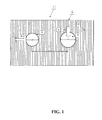
- the system 10 of Fig. 1 for sensing photons of electromagnetic radiation from an external source comprises a surface plasmon-based nanosensor 12.
- Said nanosensor 12 comprises a nanoparticle 14 of metal, e.g. silver or gold, or of semiconductor as a first element.
- the nanoparticle 14 is excitable to surface plasmon resonance, in particular localized as surface plasmon resonance, in the presence of electromagnetic radiation 16 from an external source (not shown).
- the nanosensor 12 comprises a quantum dot 18.
- a quantum dot is normally a nanometer sized semiconductor region within another material of larger Band-gap.
- the quantum dot 18 with diameter d 2 is situated in a distance of R to the nanoparticle 14 with the diameter d 1 .
- the quantum dot 18 will be exciton-plasmon coupled to the nanoparticle 14 in the presence of the electromagnetic radiation 16 and will emit electromagnetic radiation 20 representative of the exciton-plasmon coupling.
- the nanosensor 12 and the quantum dot 18 are embedded in PGB-material 22.
- the system 10 further comprises a detector (not shown) for detecting the electromagnetic radiation 20 emitted by the quantum dot 18 in response to the electromagnetic radiation 16 from the external source (not shown). Also, said system 10 comprises an evaluation unit (not shown) for evaluating the statistics, in particular the frequency and/or the intensity and/or the photon number, of the electromagnetic radiation 16 from the external source (not shown). Preferably, the system 10 comprises a shielding (not shown) for shielding the quantum dot 18 against external electromagnetic radiation, in particular the external electromagnetic radiation 16.
- the PBG-material 22 e.g. silicon carbide, improves the preciseness of the detection of photons with certain frequency ranges. But the PBG-material is not a must.
- PBG-materials are characterized as having a gap in their dispersion relation characterized by an upper and lower energy band, corresponding to frequencies of light that are forbidden to propagate within the PBG-medium.
- the system 10 can be described as made of a receiver or signal transformer, the quantum dot 18, situated near or close to the nanoparticle 14 that works as a photon collector.
- the quantum dot 18 When photons of the electromagnetic radiation 16 from the external source (not shown) hit the nanoparticle 14, they excite certain plasmon modes that depend on the frequency of the photons and on the shape and material of the nanoparticle 14. These plasmons, in turn, generate a certain dipole moment, which, and through the near-field, will couple to the transformer (quantum dot 18), which will also generate a dipole moment that is proportional in magnitude to that of the nanoparticle 14 which in turn is proportional to the frequency and intensity of the incident electromagnetic radiation 16.
- the transformer (quantum dot 18) will transform the signal coming from the nanoparticle 14 into a more readable signal , e.g. electrical signal, through the population inversion that will occur within the transformer's (quantum dot) electronic states. This population difference carries within it the statistical properties of the incoming photons.
- the usage of the PBG-material 22 has the effect of increasing the sensitivity of the nanoparticle 14 to the frequency of the incident electromagnetic radiation 16.
- the system 10 can be used to detect specific signals, especially those close to the plasmon frequency of the nanoparticle 14 as these plasmons resonate, almost spontaneously, at their natural frequency leading to a large induced dipole moment in the nanoparticle 14 and consequently a stronger signal will be transmitted.
- the whole "system” can be tuned such that to resonate with very narrow frequency range. This can be done by designing the nanoparticle 14 and the quantum dot 18 such that they only resonate at a specific frequency, e.g. by choosing an elongated of spheroid nanoparticle for example instead of spherical.
- the nanoparticle 14 can come in any shape, configuration and material.
- the above configuration can be put in any other medium or configuration to produce the results desirable by the experimenter or manufacturer.
- nanoparticle 14 and quantum dot 18 are shown, this is not necessary.
- the elements can take any shape for getting the desired results.
- the nanoparticle 14 can have non-isomorphic shape that can support multiple plasmon resonances. Thus, by tuning the exciting element (nanopaiticle) to these resonances, photons with different frequencies can be detected. It is also to be noted that ensembles of nanoparticles and/or quantum dots can be used.
- a more readable signal is the usual electric signal that most electronics are using in their operations.
- Every nanoparticle will have a specific plasmonic resonance frequency based on its shape and material and the surrounding material.
- the outcome signal (electromagnetic radiation 20) from the quantum dot 18 depends on this coupling, labelled omega.
- the coupling between the nanoparticle 14 and the quantum dot 18 depends on the dipole moments of the nanoparticle 14 and the quantum dot 18, which in turn depends on the frequency of the incident electromagnetic radiation 16.
- the signal lamda(p) coming out of the quantum dot 18 depends on the intensity of the electromagnetic radiation 16, which is proportional to the number of photons carried in the electromagnetic radiation 16.
- ⁇ p 2 1 - ⁇ z ⁇ 4 ⁇ GKI 1 - 2 ⁇ G ⁇ ⁇ Z 0 ⁇ ⁇ z 2 + ⁇ 2 ⁇ Z 2 + ⁇ e ⁇ ⁇ z
- Z 0 and Z 2 are the form constants of the nanoparticle 14 and the quantum dot 18, respectively, which are related to the PBG-material 22.
- G 2 ⁇ ⁇ ⁇ c with Omega being the coupling constant of the quantum dot 18 and the nanoparticle 14 which depends on the relative values of their dipole moments ⁇ 2 and ⁇ 0 .
- ⁇ z is the population inversion between the electronic states of the quantum dot 18.
- K 4 ⁇ ⁇ 0 2 ⁇ ⁇ Z 0 2 ⁇ ⁇ 2 and I is the intensity of the field and is proportional to the number of photons.
- the signal provided by the quantum dot 18 is an optical signal, because the electronic/electrons of the quantum dot 18 is/are excited to a higher state, when it de-excites, it will emit a photon/photons. It is up to the experimentalist or the manufacturer to decide what to do with this photon/these photons, for example keep it/them this way, amplifying it/them or turning it/them into an electronic signal, etc. It is the electromagnetic radiation 16 that pumps the nanoparticle 14 which in turn will excite a population inversion in the electronic states of the quantum dot 18 and consequently produces the final signal.
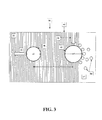
- Fig. 2 shows a further special embodiment of a system 24 for sensing photons of electromagnetic radiation from an external source (not shown).
- Said system 24 comprises a surface plasmon-based nanosensor 26.
- Said nanosensor 26 comprises a nanoparticle 28 of metal, preferably silver or gold, or of semiconductor, as a first element.
- Said nanoparticle 28 is excitable to surface plasmon resonance, in particular localized surface plasmon resonance, in the presence of electromagnetic radiation from a source.
- said nanosensor 26 comprises a quantum dot 30 as a second element for exciting surface plasmon resonance of the nanoparticle 28.
- the diameter d 1 of the nanoparticle 28 is the same as the diameter d 1 of the nanoparticle 14
- the diameter d 2 of the quantum dot 30 is the same as the diameter d 2 of the quantum dot 18 and the distance between the nanoparticle 28 and the quantum dot 30 is R and the same as the distance R between the nanoparticle 14 and the quantum dot 18.
- the nanoparticle 28 and the quantum dot 30 are totally embedded in PGB-material 22.
- the system 24 further comprises a pumping unit (not shown) for pumping the quantum dot 30 by way of electromagnetic radiation 32 and a detector (not shown) for detecting the total electromagnetic radiation 34 emitted by the nanoparticle 28 and the quantum dot 30 in response to electromagnetic radiation 36 emitted by an external source (not shown) and incident on the nanoparticle 28 and the quantum dot 30.
- a pumping unit for pumping the quantum dot 30 by way of electromagnetic radiation 32
- a detector for detecting the total electromagnetic radiation 34 emitted by the nanoparticle 28 and the quantum dot 30 in response to electromagnetic radiation 36 emitted by an external source (not shown) and incident on the nanoparticle 28 and the quantum dot 30.
- said system 24 further comprises an evaluation unit (not shown) for evaluating the statistics, in particular the frequency and/or the intensity and/or photon number, of the electromagnetic radiation 36 from the external source (not shown) based on the detected total electromagnetic radiation 34.
- the configuration of the system 24 is similar to that of the system 10, with the exception, that in the system 24 the quantum dot 30 is pumped/excited by the electromagnetic radiation 32 and will pump the plasmons of the nanoparticle 28 which inturn will emit electromagnetic radiation, e.g. light, with certain statistics, frequency and spectral width.
- Applying the electromagnetic radiation 36 to the nanoparticle 28 and the quantum dot 30 will induce changes in the properties of the emitted total electromagnetic radiation, e.g. its intensity and spectral width. These changes are directly related to the properties of the electromagnetic radiation 36, e.g. intensity. Thus, from theses changes one can gain information on the applied electromagnetic radiation/external field.
- Both the system 10 and the system 24 can be used to detect specific signals, especially those close to the plasmon frequency of the nanoparticle as these plasmons resonate, almost spontaneously, at their natural frequency leading to a large induced dipole moment in the nanoparticle and consequently a stronger signal will be transmitted.
- the final total emitted signal/electromagnetic radiation 34 is read and information about the applied external field/electromagnetic radiation 36 is gathered from it.
- Fig. 3 and 4 show special embodiments of nanosensors and systems for sensing chemical or biological agents (analytes). Said systems are similar to the systems 10 and 24, respectively.
- the system 38 comprises a surface plasmon-based nanosensor 40.
- Said nanosensor 40 comprises a nanoparticle 42 of metal, preferably silver or gold, or of semiconductor, as a first element.
- the nanoparticle 42 is excitable to surface plasmon resonance, in particular localized surface plasmon resonance, in the presence of electromagnetic radiation 44 from a source (not shown).
- said source might be external from the nanosensor 40 or inside the nanosensor 40.
- the nanosensor 40 comprises a quantum dot 46 near the nanoparticle 42 as a second element.
- Said quantum dot 46 will be exciton-plasmon coupled to the nanoparticle 42 in the presence of the electromagnetic radiation 44 and will emit electromagnetic radiation 48 representative of the exciton-plasmon coupling.
- the nanoparticle 42 and the quantum dot 46 have the same diameter d 1 and d 2 , respectively, as the nanoparticle 14 and the quantum dot 18 of fig. 1 .
- the quantum dot 46 is also totally embedded in PGB-material 50.
- the nanoparticle 42 is only partially embedded in the PGB-material 50.
- the nanoparticle 42 protudes a little bit from the PGB-material 50 into an external medium 52, e.g. buffer solution, thin film etc., where the chemical or biological agent (analyte) will be supplied.
- an external medium 52 e.g. buffer solution, thin film etc.
- This protusion could effect the plasmonic resonance frequency of the nanoparticle 42 a bit or it may not. It depends on how much the nanoparticle 42 is protruding into the external medium 52. However, this can be easily accounted for by measuring the plasmon resonance prior to the inclusion of the external agent 54, and once the agent 54 is supplied, the actual shifting of the plasmon resonance can be measured.
- the system 38 further comprises a detector (not shown) for detecting the electromagnetic radiation 48 emitted by the quantum dot 46 in response to the electromagnetic radiation 44 with said medium 52 or agent 54 in direct contact with the nanoparticle 42.
- said system 38 further comprises an evaluation unit (not shown) for evaluating the identity of the chemical or biological agent 54 based on the detected electromagnetic radiation 56.
- the resonance of the plasmons is greatly sensitive to the surrounding environment.
- the surface plasmon resonance frequency depends specifically on the dielectric function of the plasmonic material, e.g. gold and silver, and the surrounding material, e.g. silicon, buffer solution, thin film, etc..
- the external agent 54 will change the surface plasmon resonance frequency of the nanoparticle 42 and consequently will change how the nanoparticle 42 will interact with the electromagnetic radiation 48, which will translate into a change in the signal output of the quantum dot 46. From this change, one can deduce information about the external agent 54. It should be noted that the quantum dot 46 should be shielded from the external agent 54 to ensure that they will not interfere with the signal coming out of the quantum dot 46. Otherwise, this interference should be included in the final calculations.
- the system 58 shown in fig. 4 comprises a surface plasmon-based nanosensor 60.
- Said nanosensor 60 comprises a nanoparticle 62 of metal, preferably silver or gold, or of semiconductor, as a first element.
- the nanoparticle 62 is excitable to surface plasmon resonance, in particular localized surface plasmon resonance, in the presence of electromagnetic radiation 64 from an external or internal source (not shown).
- said nanosensor 60 comprises a quantum dot 66 as a second element near the nanoparticle 62 for exciting surface plasmon resonance of the nanoparticle 62.
- the nanoparticle 62 and the quantum dot 66 have the same diameter d 1 and d 2 , respectively, and are spaced apart by a distance R as the nanoparticle 42 and the quantum dot 46 of the system 38.
- the quantum dot 66 is totally embedded in a PGB-material 68, whereas the nanoparticle 62 is only partially embedded in said PGB-material 68 like the nanoparticle 42 of the system 38.
- the system 58 further comprises a pumping unit (not shown) for pumping the quantum dot 66 by means of electromagnetic radiation 70 and a detector (not shown) for detecting the total electromagnetic radiation 72 emitted by the nanoparticle 62 and the quantum dot 66. Also, said system 58 comprises an evaluation unit (not shown) for evaluating the identity of the chemical or biological agent 74 (in an external medium 76) based on the detected electromagnetic radiation 72.
- the changes induced by the external agent 74 will translate into changes in the total electromagnetic radiation 72.
- the external agent 74 will shift the plasmon resonance of the nanoparticle 62. This shift will be detected from the statistics of the total electromagnetic radiation, e.g. light, emitted out of the system 58, which was generated from the interaction between the pumped quantum dot 66 and the nanoparticle 62.
- the quantum dot 66 is shielded from the external agent 74.
- the nanosensor 60 as well the system 58 are simple, small and mobile. Like in the system 38 of fig. 3 , in the system 58 of fig. 4 and integrated source of electromagnetic radiation, e.g. light, like a nanolaser could be incorporated.
Landscapes
- Health & Medical Sciences (AREA)
- Chemical & Material Sciences (AREA)
- Physics & Mathematics (AREA)
- General Health & Medical Sciences (AREA)
- Life Sciences & Earth Sciences (AREA)
- General Physics & Mathematics (AREA)
- Immunology (AREA)
- Biochemistry (AREA)
- Analytical Chemistry (AREA)
- Pathology (AREA)
- Engineering & Computer Science (AREA)
- Nanotechnology (AREA)
- Nuclear Medicine, Radiotherapy & Molecular Imaging (AREA)
- Molecular Biology (AREA)
- Crystallography & Structural Chemistry (AREA)
- Optics & Photonics (AREA)
- Investigating Or Analysing Materials By Optical Means (AREA)
- Investigating, Analyzing Materials By Fluorescence Or Luminescence (AREA)
Abstract
Description
- The present invention relates to surface plasmon-based nanosensors, a system for sensing photons, a system for sensing chemical or biological agents, a method for sensing photons and a method for sensing chemical or biological agents.
- Nano-scale systems have demonstrated many novel and interesting optical properties. These systems are extremely important for future photon-based devices among many other applications. One of the most important nano-devices are nanosensors.
- It is the object of the present invention to provide a nanosensor that is small, but yet sensitive to weak electromagnetic signals/fields or changes thereof.
- This aim is achieved by a surface plasmon-based nanosensor, comprising: at least one first element of metal, preferably silver or gold, or of semiconductor, the first element being excitable to surface plasmon resonance, in particular localized surface Plasmon resonance, in the presence of electromagnetic radiation from a source, and at least one second element preferably near the first element that in the presence of the electromagnetic radiation is exiton-plasmon coupled to the first element and emits electromagnetic radiation representative of the exiton-plasmon coupling. Said nanosensor might be called "a plasmonic sensor" as well and can be categorized as an optical sensor. The at least one first element and the at least one second element are usually different.
- According to further a further aspect, this aim is also achieved by a system for sensing photons of electromagnetic radiation from an external source, comprising: a surface plasmon-based nanosensor according to any one of claims 1 to 3 and a detector for detecting electromagnetic radiation emitted by the second element in response to electromagnetic radiation from an external source.
- Further, according to further aspect the invention provides a system for sensing chemical or biological agents, comprising: a surface plasmon-based nanosensor according to claim 3 or 4, and a detector for detecting electromagnetic radiation emitted by the second element in response to the electromagnetic radiation from an external source or the internal source with a chemical or biological agent in direct or indirect contact with the at least one first element, in particular further comprising an evaluation unit for evaluating the identity of the chemical or biological agent based on the detected electromagnetic radiation.
- This aim also achieved by a surface plasmon-based nanosensor , comprising: at least one first element of metal, preferably silver or gold, or of semiconductor, the first element being excitable to surface plasmon resonance, in particular localized surface plasmon resonance, in the presence of electromagnetic radiation from a source and at least one second element preferably near the first element for exciting surface plasmon resonance of the at least one first element.
- The invention also provides a system for sensing photons of electromagnetic radiation from an external source, comprising: a surface plasmon-based nanosensor according to any one of claims 8 to 10, a pumping unit for pumping the at least one second element and a detector for detecting the total electromagnetic radiation emitted by the at least first element and the at least one second element in response to electromagnetic radiation emitted by an external source or the internal source and incident on the at least one first element and the at least one second element, in particular further comprising an evaluation unit for evaluating the statistics, in particular the frequency and/or the intensity and/or photon number, of the electromagnetic radiation from the external source based on the detected electromagnetic radiation.
- Further, this aim is achieved by a system for sensing chemical or biological agents, comprising: a surface plasmon-based nanosensor according the
claim 10 or 11, a pumping unit for pumping the at least one second element and a detector for detecting the total electromagnetic radiation emitted by the at least one first element and the at least one second element in response to the electromagnetic radiation emitted by an external source or the internal source and incident on the at least one first element and the at least one second element with a chemical or biological agent in direct or indirect contact with the at least one first element. - The present invention is also directed to the use of a nanosensor according to any one of claims 1 to 3 or 8 to 10 or of a system according to
claim 5 or 12 for sensing photons and the use of a nanosensor according toclaims 3,4,10 or 11 or of a system according to claim 6 or 13 for sensing chemical or biological agents. - The present invention also provides a method for sensing photons of electromagnetic radiation from a source, comprising; irradiating at least one first element of metal, preferably silver or gold, or of semiconductor, excitable to surface plasmon resonance, in particular localized surface plasmon resonance, with electromagnetic radiation from a source for exciting surface plasmon resonance on said at least one first element, providing for exciton-plasmon coupling between the at least one first element and at least one second element and for emission of electromagnetic radiation by the at least one second element, and detecting the electromagnetic radiation emitted by the at least one second element.
- Also, the present invention provides a method for sensing photons of electromagnetic radiation from a source, comprising: irradiating at least one first element of metal, preferably silver or gold, or of semiconductor, excitable to surface plasmon resonance, in particular localized surface plasmon resonance, and at least one second element with electromagnetic radiation from a source, the at least one second element being pumped by pumping unit for exciting surface plasmon resonance on or in the at least first element and detecting the total electromagnetic radiation emitted by the exiton-plasmon coupled pumped at least one second element and at least one first element.
- In addition, the present invention provides a method for sensing chemical or biological agents, comprising: directly or indirectly contacting at least one first element of metal, preferably silver or gold, or of semiconductor, excitable to surface plasmon resonance, in particular localized surface plasmon resonance, with a sample comprising a chemical or biological agent to be sensed, irradiating the at least one first element with electromagnetic radiation from an internal or external source for exciting surface plasmon resonance on said at least one first element, providing for exciton-plasmon coupling between the at least one first element and the at least one second element and for emission of electromagnetic radiation by the at least one second element, and detecting the electromagnetic radiation emitted by the at least one second element.
- Finally, the present invention provides a method for sensing chemical or biological agents, comprising: directly or indirectly contacting at least one first element of metal, preferably silver or gold, or of semiconductor, excitable to surface plasmon resonance, in particular localized surface plasmon resonance, with a sample comprising a chemical or biological agent to be sensed, irradiating the at least one first element and the at least one second element with electromagnetic radiation from a source, the at least one second element being pumped by a pumping unit for exciting surface plasmon resonance on said at least one first element and detecting the total electromagnetic radiation emitted by the exciton-plasmon coupled pumped at least one second element and at least one first element.
- According to a special embodiment of the nanosensor according to claim 1, the at least one first element is a nanoparticle and/or the at least one second element is quantum dot. More generally, the second element could be a two-level-system (TLS).
- Preferably the at least one second element is preferably totally embedded in a matrix of Photonic or Polaritonic Band-gap (PGB)-material, preferably silicon carbide (SiC), and/or wherein the at least one first element is at least or only partially or totally embedded in a matrix of Photonic or Polaritonic Band-gap (PGB)-material, preferably silicon carbide (SiC).
- A further special embodiment is characterized in further comprising an internal source capable of emitting the electromagnetic radiation. Such an embodiment would be well suited for use of the nanosensor as a bio-sensor for sensing biological or chemical agents (analytes).
- Conveniently, the system comprises a shielding for shielding the at least one second element against external electromagnetic radiation.
- According to a special embodiment of the nanosensor according to claim 8, the at least one first element is a nanoparticle and/or the at least one second element is a quantum dot. More generally, the at least one second element might be a two-level-system (TLS).
- Preferably, the at least one second element is preferably totally embedded in a matrix of Photonic or Polaritonic Band-gap (PGB)-material, preferably silicon carbide (SiC), and/or wherein the at least one first element is at least or only partially or totally embedded in a matrix of Photonic or Polaritonic Band-gap (PGB)-material, preferably silicon carbide (SiC).
- In particular when being used as a biological sensor (bio-sensor) or chemical sensor, it might further comprise an internal source capable of emitting the electromagnetic radiation.
- Conveniently the method according to
claim 16 or 17 further comprises evaluating the statistics, in particular the frequency and/or intensity and/or photon number, of the electromagnetic radiation from the source based on the detected electromagnetic radiation. - Finally, conveniently the method according to
claim 19 or 20 further comprises identifying the identity of the chemical or biological agent based on the detected electromagnetic radiation. - The present invention is based on the unexpected conclusion that by way of using the phenomenon of surface plasmon resonance weak electromagnetic radiation/signals or signal changes can be enhanced and can be made (easier) detectable.
- Further features and advantages of the invention will become clear from the claims and following description, in which embodiments of the invention are illustrated in detail with reference to the schematic drawings:
- Fig. 1
- shows a scheme of a system for sensing photons of electromagnetic radiation from an external source according to a first special embodiment of the invention;
- Fig. 2
- shows a scheme of a system for sensing photons of electromagnetic radiation from an external source according to a second special embodiment of the invention;
- Fig. 3
- shows a scheme of a system for sensing chemical or biological agents according to a first special embodiment of the invention; and
- Fig. 4
- shows a scheme of a system for sensing chemical or biological agents according to a second special embodiment of the invention.
- The
system 10 ofFig. 1 for sensing photons of electromagnetic radiation from an external source comprises a surface plasmon-basednanosensor 12. Saidnanosensor 12 comprises ananoparticle 14 of metal, e.g. silver or gold, or of semiconductor as a first element. Thenanoparticle 14 is excitable to surface plasmon resonance, in particular localized as surface plasmon resonance, in the presence ofelectromagnetic radiation 16 from an external source (not shown). Furthermore, thenanosensor 12 comprises aquantum dot 18. A quantum dot is normally a nanometer sized semiconductor region within another material of larger Band-gap. In particular, thequantum dot 18 with diameter d2 is situated in a distance of R to thenanoparticle 14 with the diameter d1. Thequantum dot 18 will be exciton-plasmon coupled to thenanoparticle 14 in the presence of theelectromagnetic radiation 16 and will emitelectromagnetic radiation 20 representative of the exciton-plasmon coupling. - The
nanosensor 12 and thequantum dot 18 are embedded in PGB-material 22. - The
system 10 further comprises a detector (not shown) for detecting theelectromagnetic radiation 20 emitted by thequantum dot 18 in response to theelectromagnetic radiation 16 from the external source (not shown). Also, saidsystem 10 comprises an evaluation unit (not shown) for evaluating the statistics, in particular the frequency and/or the intensity and/or the photon number, of theelectromagnetic radiation 16 from the external source (not shown). Preferably, thesystem 10 comprises a shielding (not shown) for shielding thequantum dot 18 against external electromagnetic radiation, in particular the externalelectromagnetic radiation 16. - By way of the
nanosensor 12 and thesystem 10 photons - perhaps even single photons - can be detected within very narrow spectral width and provide statistical information about them, e.g. photon numbers. The PBG-material 22, e.g. silicon carbide, improves the preciseness of the detection of photons with certain frequency ranges. But the PBG-material is not a must. PBG-materials are characterized as having a gap in their dispersion relation characterized by an upper and lower energy band, corresponding to frequencies of light that are forbidden to propagate within the PBG-medium. - The
system 10 can be described as made of a receiver or signal transformer, thequantum dot 18, situated near or close to thenanoparticle 14 that works as a photon collector. When photons of theelectromagnetic radiation 16 from the external source (not shown) hit thenanoparticle 14, they excite certain plasmon modes that depend on the frequency of the photons and on the shape and material of thenanoparticle 14. These plasmons, in turn, generate a certain dipole moment, which, and through the near-field, will couple to the transformer (quantum dot 18), which will also generate a dipole moment that is proportional in magnitude to that of thenanoparticle 14 which in turn is proportional to the frequency and intensity of the incidentelectromagnetic radiation 16. The transformer (quantum dot 18) will transform the signal coming from thenanoparticle 14 into a more readable signal , e.g. electrical signal, through the population inversion that will occur within the transformer's (quantum dot) electronic states. This population difference carries within it the statistical properties of the incoming photons. - The usage of the PBG-
material 22 has the effect of increasing the sensitivity of thenanoparticle 14 to the frequency of the incidentelectromagnetic radiation 16. - The
system 10 can be used to detect specific signals, especially those close to the plasmon frequency of thenanoparticle 14 as these plasmons resonate, almost spontaneously, at their natural frequency leading to a large induced dipole moment in thenanoparticle 14 and consequently a stronger signal will be transmitted. In fact, the whole "system" can be tuned such that to resonate with very narrow frequency range. This can be done by designing thenanoparticle 14 and thequantum dot 18 such that they only resonate at a specific frequency, e.g. by choosing an elongated of spheroid nanoparticle for example instead of spherical. - Moreover, by changing the material and/or shape of the
nanoparticle 14 it is possible to change its natural plasmonic frequency and consequently fine tune the "system" to be responsive to certain light frequencies, even if the intensity of the light is weak, as in electromagnetic signals emitted from for example some biological entities. Thenanoparticle 14 can come in any shape, configuration and material. - The above configuration can be put in any other medium or configuration to produce the results desirable by the experimenter or manufacturer.
- Even though in
Fig. 1 spherical elements (nanoparticle 14 and quantum dot 18) are shown, this is not necessary. The elements can take any shape for getting the desired results. Thenanoparticle 14 can have non-isomorphic shape that can support multiple plasmon resonances. Thus, by tuning the exciting element (nanopaiticle) to these resonances, photons with different frequencies can be detected. It is also to be noted that ensembles of nanoparticles and/or quantum dots can be used. - A more readable signal is the usual electric signal that most electronics are using in their operations.
- Every nanoparticle will have a specific plasmonic resonance frequency based on its shape and material and the surrounding material. The more the incoming/incident electromagnetic radiation, for example light, is in resonance with the plasmonic frequency, the more responsive the nanoparticle's electrons will be and the larger the dipole moment generated by the oscillations of the electrons will be. Consequently, the exciton plasmon coupling between the nanoparticle and the receiver, e.g.
quantum dot 18, will be stronger. The outcome signal (electromagnetic radiation 20) from thequantum dot 18 depends on this coupling, labelled omega. - Thus, the coupling between the
nanoparticle 14 and thequantum dot 18 depends on the dipole moments of thenanoparticle 14 and thequantum dot 18, which in turn depends on the frequency of the incidentelectromagnetic radiation 16. In addition, and as the below equation indicates, the signal lamda(p) coming out of thequantum dot 18 depends on the intensity of theelectromagnetic radiation 16, which is proportional to the number of photons carried in theelectromagnetic radiation 16. Thus, from the below equation, if lambda(p) is known, the other statistics of the electromagnetic radiation 16 (external field) can also be deduced.
- Here, γ2,γ are the decay constant of the
quantum dot 18 andnanoparticle 14, respectively,
nanoparticle 14 and thequantum dot 18, respectively, which are related to the PBG-material 22.
quantum dot 18 and thenanoparticle 14 which depends on the relative values of their dipole moments µ2 and µ0. Σz is the population inversion between the electronic states of thequantum dot 18.
- The signal provided by the
quantum dot 18 is an optical signal, because the electronic/electrons of thequantum dot 18 is/are excited to a higher state, when it de-excites, it will emit a photon/photons. It is up to the experimentalist or the manufacturer to decide what to do with this photon/these photons, for example keep it/them this way, amplifying it/them or turning it/them into an electronic signal, etc. It is theelectromagnetic radiation 16 that pumps thenanoparticle 14 which in turn will excite a population inversion in the electronic states of thequantum dot 18 and consequently produces the final signal. -
Fig. 2 shows a further special embodiment of asystem 24 for sensing photons of electromagnetic radiation from an external source (not shown). Saidsystem 24 comprises a surface plasmon-basednanosensor 26. Saidnanosensor 26 comprises ananoparticle 28 of metal, preferably silver or gold, or of semiconductor, as a first element. Saidnanoparticle 28 is excitable to surface plasmon resonance, in particular localized surface plasmon resonance, in the presence of electromagnetic radiation from a source. Furthermore, saidnanosensor 26 comprises aquantum dot 30 as a second element for exciting surface plasmon resonance of thenanoparticle 28. In the present example, the diameter d1 of thenanoparticle 28 is the same as the diameter d1 of thenanoparticle 14, the diameter d2 of thequantum dot 30 is the same as the diameter d2 of thequantum dot 18 and the distance between thenanoparticle 28 and thequantum dot 30 is R and the same as the distance R between thenanoparticle 14 and thequantum dot 18. Thenanoparticle 28 and thequantum dot 30 are totally embedded in PGB-material 22. - The
system 24 further comprises a pumping unit (not shown) for pumping thequantum dot 30 by way ofelectromagnetic radiation 32 and a detector (not shown) for detecting the totalelectromagnetic radiation 34 emitted by thenanoparticle 28 and thequantum dot 30 in response toelectromagnetic radiation 36 emitted by an external source (not shown) and incident on thenanoparticle 28 and thequantum dot 30. - In addition, said
system 24 further comprises an evaluation unit (not shown) for evaluating the statistics, in particular the frequency and/or the intensity and/or photon number, of theelectromagnetic radiation 36 from the external source (not shown) based on the detected totalelectromagnetic radiation 34. - The configuration of the
system 24 is similar to that of thesystem 10, with the exception, that in thesystem 24 thequantum dot 30 is pumped/excited by theelectromagnetic radiation 32 and will pump the plasmons of thenanoparticle 28 which inturn will emit electromagnetic radiation, e.g. light, with certain statistics, frequency and spectral width. Applying theelectromagnetic radiation 36 to thenanoparticle 28 and thequantum dot 30 will induce changes in the properties of the emitted total electromagnetic radiation, e.g. its intensity and spectral width. These changes are directly related to the properties of theelectromagnetic radiation 36, e.g. intensity. Thus, from theses changes one can gain information on the applied electromagnetic radiation/external field. - Both the
system 10 and thesystem 24 can be used to detect specific signals, especially those close to the plasmon frequency of the nanoparticle as these plasmons resonate, almost spontaneously, at their natural frequency leading to a large induced dipole moment in the nanoparticle and consequently a stronger signal will be transmitted. - For sensing photons with the
system 24, the final total emitted signal/electromagnetic radiation 34 is read and information about the applied external field/electromagnetic radiation 36 is gathered from it. -
Fig. 3 and4 show special embodiments of nanosensors and systems for sensing chemical or biological agents (analytes). Said systems are similar to thesystems - In particular, the
system 38 comprises a surface plasmon-basednanosensor 40. Saidnanosensor 40 comprises ananoparticle 42 of metal, preferably silver or gold, or of semiconductor, as a first element. Thenanoparticle 42 is excitable to surface plasmon resonance, in particular localized surface plasmon resonance, in the presence ofelectromagnetic radiation 44 from a source (not shown). In this example, said source might be external from thenanosensor 40 or inside thenanosensor 40. - Furthermore, the
nanosensor 40 comprises aquantum dot 46 near thenanoparticle 42 as a second element. Saidquantum dot 46 will be exciton-plasmon coupled to thenanoparticle 42 in the presence of theelectromagnetic radiation 44 and will emitelectromagnetic radiation 48 representative of the exciton-plasmon coupling. In this example, thenanoparticle 42 and thequantum dot 46 have the same diameter d1 and d2, respectively, as thenanoparticle 14 and thequantum dot 18 offig. 1 . Thequantum dot 46 is also totally embedded in PGB-material 50. - However, the
nanoparticle 42 is only partially embedded in the PGB-material 50. Thenanoparticle 42 protudes a little bit from the PGB-material 50 into anexternal medium 52, e.g. buffer solution, thin film etc., where the chemical or biological agent (analyte) will be supplied. This is for enabling thenanoparticle 42 to sense the presence of theexternal agent 54. This protusion could effect the plasmonic resonance frequency of the nanoparticle 42 a bit or it may not. It depends on how much thenanoparticle 42 is protruding into theexternal medium 52. However, this can be easily accounted for by measuring the plasmon resonance prior to the inclusion of theexternal agent 54, and once theagent 54 is supplied, the actual shifting of the plasmon resonance can be measured. - The
system 38 further comprises a detector (not shown) for detecting theelectromagnetic radiation 48 emitted by thequantum dot 46 in response to theelectromagnetic radiation 44 with said medium 52 oragent 54 in direct contact with thenanoparticle 42. In addition, saidsystem 38 further comprises an evaluation unit (not shown) for evaluating the identity of the chemical orbiological agent 54 based on the detected electromagnetic radiation 56. - One idea behind the
plasmonic bio nanosensor 40 and thesystem 38 is that the resonance of the plasmons is greatly sensitive to the surrounding environment. In fact, the surface plasmon resonance frequency depends specifically on the dielectric function of the plasmonic material, e.g. gold and silver, and the surrounding material, e.g. silicon, buffer solution, thin film, etc.. - Now when working as a bio-detector, what happens is that when the biological or chemical agents get into close proximity to the surface of the
nanoparticle 42, either they will change the permittivity of the surrounding material (external medium 52), e.g. a buffer solution, or stick to the surface of thenanoparticle 42. In either case they will change the surrounding conditions of thenanoparticle 42, which in turn will change the resonance frequency of the surface plasmons, shifting them toward for example the red or blue end of the spectrum depending on the changes induced by the biological or chemicalexternal agent 54. This shifting can be detected and based upon it can determine the identity of theexternal agent 54. In thesystem 38 theexternal agent 54 will change the surface plasmon resonance frequency of thenanoparticle 42 and consequently will change how thenanoparticle 42 will interact with theelectromagnetic radiation 48, which will translate into a change in the signal output of thequantum dot 46. From this change, one can deduce information about theexternal agent 54. It should be noted that thequantum dot 46 should be shielded from theexternal agent 54 to ensure that they will not interfere with the signal coming out of thequantum dot 46. Otherwise, this interference should be included in the final calculations. - The
system 58 shown infig. 4 comprises a surface plasmon-basednanosensor 60. Saidnanosensor 60 comprises ananoparticle 62 of metal, preferably silver or gold, or of semiconductor, as a first element. Thenanoparticle 62 is excitable to surface plasmon resonance, in particular localized surface plasmon resonance, in the presence ofelectromagnetic radiation 64 from an external or internal source (not shown). Further, saidnanosensor 60 comprises aquantum dot 66 as a second element near thenanoparticle 62 for exciting surface plasmon resonance of thenanoparticle 62. Thenanoparticle 62 and thequantum dot 66 have the same diameter d1 and d2, respectively, and are spaced apart by a distance R as thenanoparticle 42 and thequantum dot 46 of thesystem 38. Thequantum dot 66 is totally embedded in a PGB-material 68, whereas thenanoparticle 62 is only partially embedded in said PGB-material 68 like thenanoparticle 42 of thesystem 38. - The
system 58 further comprises a pumping unit (not shown) for pumping thequantum dot 66 by means ofelectromagnetic radiation 70 and a detector (not shown) for detecting the totalelectromagnetic radiation 72 emitted by thenanoparticle 62 and thequantum dot 66. Also, saidsystem 58 comprises an evaluation unit (not shown) for evaluating the identity of the chemical or biological agent 74 (in an external medium 76) based on the detectedelectromagnetic radiation 72. - In the
system 58 offig. 4 , just like in thesystem 38 offig. 3 , the changes induced by theexternal agent 74 will translate into changes in the totalelectromagnetic radiation 72. In fact, on saidsystem 58, and when working as a bio-detector, theexternal agent 74 will shift the plasmon resonance of thenanoparticle 62. This shift will be detected from the statistics of the total electromagnetic radiation, e.g. light, emitted out of thesystem 58, which was generated from the interaction between the pumpedquantum dot 66 and thenanoparticle 62. In addition, as in the case of thesystem 38, it might be much better if thequantum dot 66 is shielded from theexternal agent 74. - The
nanosensor 60 as well thesystem 58 are simple, small and mobile. Like in thesystem 38 offig. 3 , in thesystem 58 offig. 4 and integrated source of electromagnetic radiation, e.g. light, like a nanolaser could be incorporated. - One important factor that determines the efficiency of the nanosensor is how accurate it is. Plasmonic resonances are fairly narrow. However, the spectrum of the electromagnetic radiation, for example light, emitted from the system is usually not narrow due to broadening processes. This could be overcome by the PGB-
material 68. Incorporating the PGB-material into the system will greatly narrow the spectrum of the electromagnetic radiation, e.g. light, emitted from the system, rendering the sensing operation much more sensitive and accurate. However, an ensemble of anyone of the systems described above may be necessary to ensure better detecting. - The features disclosed in the foregoing description, in the claims and/or in the accompanying drawings may, both separately and in any combination thereof, be material for realising the invention in diverse forms thereof.
-
10 system 12 nanosensor 14 nanoparticle 16 electromagnetic radiation 18 quantum dot 20 electromagnetic radiation 22 PGB- material 24 system 30 quantum dot 26 nanosensor 28 nanoparticle 32 electromagnetic radiation 34 total electromagnetic radiation 36 electromagnetic radiation 38 system 40 nanosensor 42 nanoparticle 44 electromagnetic radiation 46 quantum dot 48 electromagnetic radiation 50 PGB- material 52 external medium 54 agent 58 system 60 nanosensor 62 nanoparticle 64 electromagnetic radiation 66 quantum dot 68 PGB- material 70 electromagnetic radiation 72 total electromagnetic radiation 74 agent 76 external medium d1 diameter of nanoparticle d2 diameter of quantum dots R distance
Claims (21)
- Surface plasmon-based nanosensor (12; 40), comprising:- at least one first element of metal, preferably silver or gold, or of semiconductor, the first element being excitable to surface plasmon resonance, in particular localized surface plasmon resonance, in the presence of electromagnetic radiation (16; 44) from a source, and- at least one second element preferably near the first element that in the presence of the electromagnetic radiation (20, 48) is exciton-plasmon coupled to the first element and emits electromagnetic radiation representative of the exciton-plasmon coupling.
- Nanosensor (12; 40) according to claim 1, wherein the at least one first element is a nanoparticle (14; 42) and/or the at least one second element is a quantum dot (18; 46).
- Nanosensor (12; 40) according to any one of the preceding claims, wherein the at least one second element is preferably totally embedded in a matrix of Photonic or Polaritonic Band-gap (PGB)-material, preferably silicon carbide (SiC) and/or wherein the at least one first element is at least or only partially or totally embedded in a matrix of Photonic or Polaritonic Band-gap (PGB)-material, preferably silicon carbide (SiC).
- Nanosensor according to claim 1 or 3, further comprising an internal source capable of emitting the electromagnetic radiation.
- System (10) for sensing photons of electromagnetic radiation (16) from an external source, comprising:- a surface plasmon-based nanosensor (12) according to any one of claims 1 to 3 and- a detector for detecting electromagnetic radiation (20) emitted by the second element in response to electromagnetic radiation (16) from an external source, in particular further comprising an evaluation unit for evaluating the statistics, in particular the frequency and/or intensity and/or photon number, of the electromagnetic radiation (16) from the external source based on the detected electromagnetic radiation (20).
- System (38) for sensing chemical or biological agents, comprising:- a surface plasmon-based nanosensor (40) according to claim 3 or 4, and- a detector for detecting electromagnetic radiation (48) emitted by the second element in response to the electromagnetic radiation (44) from an external source or the internal source with a chemical or biological agent (54) in direct or indirect contact with the at least one first element, in particular further comprising an evaluation unit for evaluating the identity of the chemical or biological agent (54) based on the detected electromagnetic radiation (48).
- System (10; 38) according to any one of claims 5 and 6, further comprising a shielding for shielding the second element against external electromagnetic radiation.
- Surface plasmon-based nanosensor (26; 60), comprising:- at least one first element of metal, preferably silver or gold, or of semiconductor, the first element being excitable to surface plasmon resonance, in particular localized surface plasmon resonance, in the presence of electromagnetic radiation (36; 64) from a source and- at least one second element preferably near the first element for exciting surface plasmon resonance of the at least one first element.
- Nanosensor (26; 60) according to claim 8, wherein the at least one first element is a nanoparticle (28; 62) and/or the at least second element is a quantum dot (30; 66).
- Nanosensor (26; 60) according to claim 8 or 9, wherein the at least one second element is preferably totally embedded in a matrix of Photonic or Polaritonic Band-gap (PGB)-material, preferably silicon carbide (SiC) and/or wherein the at least one first element is at least or only partially or totally embedded in a matrix of Photonic or Polaritonic Band-gap (PGB)-material, preferably silicon carbide (SiC).
- Nanosensor according to claim 8 or 10, further comprising an internal source capable of emitting the electromagnetic radiation.
- System (24) for sensing photons of electromagnetic radiation (36) from an external source, comprising:- a surface plasmon-based nanosensor (26) according to any one of claims 8 to 10,- a pumping unit for pumping the at least one second element and- a detector for detecting the total electromagnetic radiation (34) emitted by the at least first element and the at least one second element in response to electromagnetic radiation (36) emitted by an external source or the internal source and incident on the at least one first element and the at least one second element, in particular further comprising an evaluation unit for evaluating the statistics, in particular the frequency and/or the intensity and/or photon number, of the electromagnetic radiation (36) from the external source based on the detected electromagnetic radiation (34).
- System (58) for sensing chemical or biological agents, comprising:- a surface plasmon-based nanosensor (60) according the claim 10 or 11,- a pumping unit for pumping the at least one second element and- a detector for detecting the total electromagnetic radiation (72) emitted by the at least one first element and the at least one second element in response to the electromagnetic radiation (64) emitted by an external source or the internal source and incident on the at least one first element and the at least one second element with a chemical or biological agent (74) in direct or indirect contact with the at least one first element, in particular further comprising an evaluation unit for evaluating the identity of the chemical or biological agent (74) based on the detected electromagnetic radiation (72).
- Use of a nanosensor (12; 26) according to any one of claims 1 to 3 or 8 to 10 or of a system (10; 24) according to claims 5 or 12 for sensing photons.
- Use of a nanosensor (40; 60) according to claim 3, 4, 10 or 11 or of a system (38; 58) according to claim 6 or 13 for sensing chemical or biological agents (54; 74).
- Method for sensing photons of electromagnetic radiation from a source, comprising:- irradiating at least one first element of metal, preferably silver or gold, or of semiconductor, excitable to surface plasmon resonance, in particular localized surface plasmon resonance, with electromagnetic radiation (16) from a source for exciting surface plasmon resonance on said at least one first element,- providing for exciton-plasmon coupling between the at least one first element and at least one second element and for emission of electromagnetic radiation (20) by the at least one second element, and- detecting the electromagnetic radiation emitted by the at least one second element.
- Method for sensing photons of electromagnetic radiation from a source, comprising:- irradiating at least one first element of metal, preferably silver or gold, or of semiconductor, excitable to surface plasmon resonance, in particular localized surface plasmon resonance, and at least one second element with electromagnetic radiation (36) from a source, the at least one second element being pumped by a pumping unit for exciting surface plasmon resonance on the at least first element and- detecting the total electromagnetic radiation (34) emitted by the exciton-plasmon coupled pumped at least one second element and at least one first element.
- Method according to claim 16 or 17, further comprising evaluating the statistics, in particular the frequency and/or intensity and/or photon number, of the electromagnetic radiation (36) from the source based on the detected electromagnetic radiation (34).
- Method for sensing chemical or biological agents, comprising:- directly or indirectly contacting at least one first element of metal, preferably silver or gold, or of semiconductor, excitable to surface plasmon resonance, in particular localized surface plasmon resonance, with a sample comprising a chemical or biological agent (54) to be sensed,- irradiating the at least one first element with electromagnetic radiation (44) from an internal or external source for exciting surface plasmon resonance on said at least one first element,- providing for exciton-plasmon coupling between the at least one first element and the at least one second element and for emission of electromagnetic radiation (48) by the at least one second element, and- detecting the electromagnetic radiation (48) emitted by the at least one second element.
- Method for sensing chemical or biological agents, comprising:- directly or indirectly contacting at least one first element of metal, preferably silver or gold, or of semiconductor, excitable to surface plasmon resonance, in particular localized surface plasmon resonance, with a sample comprising a chemical or biological agent (74) to be sensed,- irradiating the at least one first element and the at least one second element with electromagnetic radiation (64) from a source, the at least one second element being pumped by a pumping unit for exciting surface plasmon resonance on said at least one first element and- detecting the total electromagnetic radiation (72) emitted by the exciton-plasmon coupled pumped at least one second element and at least one first element.
- Method according to claim 19 or 20, further comprising identifying the identity of the chemical or biological agent (54; 74) based on the detected electromagnetic radiation (48; 72).
Priority Applications (3)
| Application Number | Priority Date | Filing Date | Title |
|---|---|---|---|
| EP13159918.5A EP2781909B1 (en) | 2013-03-19 | 2013-03-19 | Surface plasmon-based nanostructures suitable for being used as nanosensor for sensing chemical or biological agents and systems for sensing chemical or biological agents |
| US14/168,051 US10239752B2 (en) | 2013-03-19 | 2014-01-30 | Surface plasmon-based nanosensors and systems and methods for sensing photons and chemical or biological agents |
| US15/016,335 US10329147B2 (en) | 2013-03-19 | 2016-02-05 | Surface plasmon-based nanosensors and systems and methods for sensing photons and chemical or biological agents |
Applications Claiming Priority (1)
| Application Number | Priority Date | Filing Date | Title |
|---|---|---|---|
| EP13159918.5A EP2781909B1 (en) | 2013-03-19 | 2013-03-19 | Surface plasmon-based nanostructures suitable for being used as nanosensor for sensing chemical or biological agents and systems for sensing chemical or biological agents |
Publications (2)
| Publication Number | Publication Date |
|---|---|
| EP2781909A1 true EP2781909A1 (en) | 2014-09-24 |
| EP2781909B1 EP2781909B1 (en) | 2021-09-29 |
Family
ID=48039996
Family Applications (1)
| Application Number | Title | Priority Date | Filing Date |
|---|---|---|---|
| EP13159918.5A Not-in-force EP2781909B1 (en) | 2013-03-19 | 2013-03-19 | Surface plasmon-based nanostructures suitable for being used as nanosensor for sensing chemical or biological agents and systems for sensing chemical or biological agents |
Country Status (2)
| Country | Link |
|---|---|
| US (2) | US10239752B2 (en) |
| EP (1) | EP2781909B1 (en) |
Families Citing this family (1)
| Publication number | Priority date | Publication date | Assignee | Title |
|---|---|---|---|---|
| EP3992616A1 (en) * | 2020-11-03 | 2022-05-04 | Insplorion Sensor Systems AB | An optical measurement device |
Citations (7)
| Publication number | Priority date | Publication date | Assignee | Title |
|---|---|---|---|---|
| US20040155184A1 (en) * | 2003-01-03 | 2004-08-12 | The Georgia State University Research Foundation | Surface plasmon amplification by stimulated emission of radiation |
| US20090117002A1 (en) * | 2005-05-27 | 2009-05-07 | Ohio University | Nanoparticle assemblies with molecular springs |
| EP2133688A1 (en) * | 2008-06-11 | 2009-12-16 | Koninklijke Philips Electronics N.V. | Nanoantenna and uses thereof |
| US20100264333A1 (en) * | 2007-12-17 | 2010-10-21 | Stichting Imec Nederland | Gas Sensing Device |
| EP2375242A1 (en) * | 2010-04-06 | 2011-10-12 | FOM Institute for Atomic and Moleculair Physics | Integrated plasmonic nanocavity sensing device |
| US20120107952A1 (en) * | 2005-01-03 | 2012-05-03 | University Of Maryland Biotechnology Institute | Microwave-accelerated plasmonics |
| EP2610980A1 (en) * | 2011-12-29 | 2013-07-03 | King Saud University | Nanolaser for generating coherent electromagnetic radiation |
Family Cites Families (9)
| Publication number | Priority date | Publication date | Assignee | Title |
|---|---|---|---|---|
| US125452A (en) * | 1872-04-09 | Improvement in dental pluggers | ||
| EP2218762A3 (en) * | 2001-07-20 | 2010-09-29 | Life Technologies Corporation | Luminescent nanoparticles and methods for their preparation |
| US20060148104A1 (en) * | 2004-10-29 | 2006-07-06 | Massachusetts Institute Of Technology | Detection of ion channel or receptor activity |
| KR100704011B1 (en) * | 2005-02-16 | 2007-04-04 | 한국과학기술원 | Biomolecule-specific binding detection method by FTR of metal nanoparticles and quantum dots |
| BRPI0611821A2 (en) * | 2005-06-10 | 2011-12-20 | Gilupi Gmbh | diagnostic nanosensor, method to produce it, use of it, detection method |
| US7449299B2 (en) * | 2006-03-10 | 2008-11-11 | David Bauer | Quantum dot nanoparticle-based universal neurotoxin biosensor |
| US20090200486A1 (en) * | 2008-02-13 | 2009-08-13 | Nianqiang Wu | Quantum dot-DNA-metallic nanoparticle ensemble as fluorescent nanosensor system for multiplexed detection of heavy metals |
| WO2012161683A1 (en) * | 2011-05-20 | 2012-11-29 | Hewlett-Packard Development Company L.P. | Surface enhanced raman spectroscopy sensor, system and method of sensing |
| US20140268128A1 (en) * | 2013-03-12 | 2014-09-18 | Hewlett-Packard Development Company, L.P. | Self-Exciting Surface Enhanced Raman Spectroscopy |
-
2013
- 2013-03-19 EP EP13159918.5A patent/EP2781909B1/en not_active Not-in-force
-
2014
- 2014-01-30 US US14/168,051 patent/US10239752B2/en not_active Expired - Fee Related
-
2016
- 2016-02-05 US US15/016,335 patent/US10329147B2/en not_active Expired - Fee Related
Patent Citations (7)
| Publication number | Priority date | Publication date | Assignee | Title |
|---|---|---|---|---|
| US20040155184A1 (en) * | 2003-01-03 | 2004-08-12 | The Georgia State University Research Foundation | Surface plasmon amplification by stimulated emission of radiation |
| US20120107952A1 (en) * | 2005-01-03 | 2012-05-03 | University Of Maryland Biotechnology Institute | Microwave-accelerated plasmonics |
| US20090117002A1 (en) * | 2005-05-27 | 2009-05-07 | Ohio University | Nanoparticle assemblies with molecular springs |
| US20100264333A1 (en) * | 2007-12-17 | 2010-10-21 | Stichting Imec Nederland | Gas Sensing Device |
| EP2133688A1 (en) * | 2008-06-11 | 2009-12-16 | Koninklijke Philips Electronics N.V. | Nanoantenna and uses thereof |
| EP2375242A1 (en) * | 2010-04-06 | 2011-10-12 | FOM Institute for Atomic and Moleculair Physics | Integrated plasmonic nanocavity sensing device |
| EP2610980A1 (en) * | 2011-12-29 | 2013-07-03 | King Saud University | Nanolaser for generating coherent electromagnetic radiation |
Non-Patent Citations (6)
| Title |
|---|
| A. ROSENTHAL ET AL: "Dipole nanolasers: A study of their quantum properties", PHYSICAL REVIEW A, vol. 79, no. 4, 1 April 2009 (2009-04-01), XP055026107, ISSN: 1050-2947, DOI: 10.1103/PhysRevA.79.043824 * |
| ALEXANDER O. GOVOROV ET AL: "Exciton-Plasmon Interaction and Hybrid Excitons in Semiconductor-Metal Nanoparticle Assemblies", NANO LETTERS, vol. 6, no. 5, 1 May 2006 (2006-05-01), US, pages 984 - 994, XP055683341, ISSN: 1530-6984, DOI: 10.1021/nl0602140 * |
| DEJIAN DAI ET AL: "Paper;Giant photoluminescence enhancement in SiC nanocrystals by resonant semiconductor exciton metal surface plasmon coupling;Giant photoluminescence enhancement in SiC nanocrystals by resonant semiconductor exciton metal surface plasmon coupling", NANOTECHNOLOGY, INSTITUTE OF PHYSICS PUBLISHING, GB, vol. 24, no. 2, 13 December 2012 (2012-12-13), pages 25201, XP020236669, ISSN: 0957-4484, DOI: 10.1088/0957-4484/24/2/025201 * |
| GHANNAM T: "Coherent light emission from a nanosystem embedded within a polaritonic band-gap medium", PHYSICAL REVIEW A (ATOMIC, MOLECULAR, AND OPTICAL PHYSICS), APS THROUGH AIP, USA, vol. 85, no. 3, 1 March 2012 (2012-03-01), pages 33803 - 1, XP009158992, ISSN: 1050-2947, [retrieved on 20120307], DOI: 10.1103/PHYSREVA.85.033803 * |
| GHANNAM T: "Dipole nano-laser: the effect of an external electric field;Dipole nano-laser: the effect of an external electric field", JOURNAL OF PHYSICS B, ATOMIC MOLECULAR AND OPTICAL PHYSICS, INSTITUTE OF PHYSICS PUBLISHING, BRISTOL, GB, vol. 43, no. 15, 20 July 2010 (2010-07-20), pages 155505, XP020195806, ISSN: 0953-4075, DOI: 10.1088/0953-4075/43/15/155505 * |
| PROTSENKO I E ET AL: "Dipole nano-laser", JOURNAL OF PHYSICS: CONFERENCE SERIES, INSTITUTE OF PHYSICS PUBLISHING, BRISTOL, GB, vol. 107, no. 1, 1 January 2008 (2008-01-01), XP009159010, ISSN: 1742-6596 * |
Also Published As
| Publication number | Publication date |
|---|---|
| US20140285809A1 (en) | 2014-09-25 |
| US20160161407A1 (en) | 2016-06-09 |
| US20150276596A2 (en) | 2015-10-01 |
| EP2781909B1 (en) | 2021-09-29 |
| US10329147B2 (en) | 2019-06-25 |
| US10239752B2 (en) | 2019-03-26 |
Similar Documents
| Publication | Publication Date | Title |
|---|---|---|
| US10082545B2 (en) | Laser-based sensor for measuring an external magnetic field | |
| Stürner et al. | Integrated and portable magnetometer based on nitrogen‐vacancy ensembles in diamond | |
| Chien et al. | Single-molecule optical absorption imaging by nanomechanical photothermal sensing | |
| US8193808B2 (en) | Optically integrated biosensor based on optically detected magnetic resonance | |
| US8710427B2 (en) | Sensor chip, sensor cartridge, and analysis apparatus | |
| Kosako et al. | Directional control of light by a nano-optical Yagi–Uda antenna | |
| CN102483350B (en) | Thz frequency range antenna | |
| US20150285728A1 (en) | Detection of nano-scale particles with a self-referenced and self-heterodyned raman micro-laser | |
| CN116113839A (en) | quantum sensor | |
| US7569188B2 (en) | Surface plasmon amplification by stimulated emission of radiation (SPASER) | |
| Munsch et al. | Continuous-wave versus time-resolved measurements of Purcell factors for quantum dots in semiconductor microcavities | |
| KR101372234B1 (en) | Optical Sensor using the nano spacer and Detecting Method using the Optical Sensor | |
| JP5350226B2 (en) | Apparatus and method for obtaining spectral information | |
| Ghosh et al. | Superquenching of coumarin 153 by gold nanoparticles | |
| EP3963325A1 (en) | Self-referenced sensor | |
| US10329147B2 (en) | Surface plasmon-based nanosensors and systems and methods for sensing photons and chemical or biological agents | |
| CN101421606A (en) | Surface Enhanced Resonance Raman Spectroscopy | |
| CN103048308B (en) | Fabrication method of surface-enhanced Raman probe based on secondary enhancement | |
| US20110084199A1 (en) | Optical sensor using nano-spacer and detection method using the same | |
| Ghosh et al. | Excitation Intensity-Dependent Quantum Yield of Semiconductor Nanocrystals | |
| US20080094620A1 (en) | Systems and methods for detection of Raman scattered photons | |
| Upadhyay et al. | Enhanced spontaneous emission in proximity of a plasmonic nano-slit antenna | |
| Biris et al. | Excitation of dark plasmonic cavity modes via nonlinearly induced dipoles: applications to near-infrared plasmonic sensing | |
| Wang et al. | Rapid and quantitative measurement of single quantum dots in a sheath flow cuvette | |
| Khan et al. | Sensitivity control at the gain-assisted dielectric and nano-composite interface |
Legal Events
| Date | Code | Title | Description |
|---|---|---|---|
| PUAI | Public reference made under article 153(3) epc to a published international application that has entered the european phase |
Free format text: ORIGINAL CODE: 0009012 |
|
| 17P | Request for examination filed |
Effective date: 20130319 |
|
| AK | Designated contracting states |
Kind code of ref document: A1 Designated state(s): AL AT BE BG CH CY CZ DE DK EE ES FI FR GB GR HR HU IE IS IT LI LT LU LV MC MK MT NL NO PL PT RO RS SE SI SK SM TR |
|
| AX | Request for extension of the european patent |
Extension state: BA ME |
|
| R17P | Request for examination filed (corrected) |
Effective date: 20141013 |
|
| RBV | Designated contracting states (corrected) |
Designated state(s): AL AT BE BG CH CY CZ DE DK EE ES FI FR GB GR HR HU IE IS IT LI LT LU LV MC MK MT NL NO PL PT RO RS SE SI SK SM TR |
|
| STAA | Information on the status of an ep patent application or granted ep patent |
Free format text: STATUS: EXAMINATION IS IN PROGRESS |
|
| 17Q | First examination report despatched |
Effective date: 20200414 |
|
| REG | Reference to a national code |
Ref country code: DE Ref legal event code: R079 Ref document number: 602013079435 Country of ref document: DE Free format text: PREVIOUS MAIN CLASS: G01N0021550000 Ipc: G01N0021552000 |
|
| GRAP | Despatch of communication of intention to grant a patent |
Free format text: ORIGINAL CODE: EPIDOSNIGR1 |
|
| STAA | Information on the status of an ep patent application or granted ep patent |
Free format text: STATUS: GRANT OF PATENT IS INTENDED |
|
| RIC1 | Information provided on ipc code assigned before grant |
Ipc: H01L 31/0232 20140101ALI20210615BHEP Ipc: G02B 5/00 20060101ALI20210615BHEP Ipc: G01N 21/64 20060101ALI20210615BHEP Ipc: G01N 21/552 20140101AFI20210615BHEP |
|
| INTG | Intention to grant announced |
Effective date: 20210705 |
|
| GRAS | Grant fee paid |
Free format text: ORIGINAL CODE: EPIDOSNIGR3 |
|
| GRAA | (expected) grant |
Free format text: ORIGINAL CODE: 0009210 |
|
| STAA | Information on the status of an ep patent application or granted ep patent |
Free format text: STATUS: THE PATENT HAS BEEN GRANTED |
|
| AK | Designated contracting states |
Kind code of ref document: B1 Designated state(s): AL AT BE BG CH CY CZ DE DK EE ES FI FR GB GR HR HU IE IS IT LI LT LU LV MC MK MT NL NO PL PT RO RS SE SI SK SM TR |
|
| REG | Reference to a national code |
Ref country code: GB Ref legal event code: FG4D |
|
| REG | Reference to a national code |
Ref country code: DE Ref legal event code: R096 Ref document number: 602013079435 Country of ref document: DE |
|
| REG | Reference to a national code |
Ref country code: CH Ref legal event code: EP Ref country code: AT Ref legal event code: REF Ref document number: 1434611 Country of ref document: AT Kind code of ref document: T Effective date: 20211015 |
|
| REG | Reference to a national code |
Ref country code: IE Ref legal event code: FG4D |
|
| REG | Reference to a national code |
Ref country code: LT Ref legal event code: MG9D |
|
| PG25 | Lapsed in a contracting state [announced via postgrant information from national office to epo] |
Ref country code: LT Free format text: LAPSE BECAUSE OF FAILURE TO SUBMIT A TRANSLATION OF THE DESCRIPTION OR TO PAY THE FEE WITHIN THE PRESCRIBED TIME-LIMIT Effective date: 20210929 Ref country code: BG Free format text: LAPSE BECAUSE OF FAILURE TO SUBMIT A TRANSLATION OF THE DESCRIPTION OR TO PAY THE FEE WITHIN THE PRESCRIBED TIME-LIMIT Effective date: 20211229 Ref country code: RS Free format text: LAPSE BECAUSE OF FAILURE TO SUBMIT A TRANSLATION OF THE DESCRIPTION OR TO PAY THE FEE WITHIN THE PRESCRIBED TIME-LIMIT Effective date: 20210929 Ref country code: NO Free format text: LAPSE BECAUSE OF FAILURE TO SUBMIT A TRANSLATION OF THE DESCRIPTION OR TO PAY THE FEE WITHIN THE PRESCRIBED TIME-LIMIT Effective date: 20211229 Ref country code: FI Free format text: LAPSE BECAUSE OF FAILURE TO SUBMIT A TRANSLATION OF THE DESCRIPTION OR TO PAY THE FEE WITHIN THE PRESCRIBED TIME-LIMIT Effective date: 20210929 Ref country code: SE Free format text: LAPSE BECAUSE OF FAILURE TO SUBMIT A TRANSLATION OF THE DESCRIPTION OR TO PAY THE FEE WITHIN THE PRESCRIBED TIME-LIMIT Effective date: 20210929 Ref country code: HR Free format text: LAPSE BECAUSE OF FAILURE TO SUBMIT A TRANSLATION OF THE DESCRIPTION OR TO PAY THE FEE WITHIN THE PRESCRIBED TIME-LIMIT Effective date: 20210929 |
|
| REG | Reference to a national code |
Ref country code: NL Ref legal event code: MP Effective date: 20210929 |
|
| REG | Reference to a national code |
Ref country code: AT Ref legal event code: MK05 Ref document number: 1434611 Country of ref document: AT Kind code of ref document: T Effective date: 20210929 |
|
| PG25 | Lapsed in a contracting state [announced via postgrant information from national office to epo] |
Ref country code: LV Free format text: LAPSE BECAUSE OF FAILURE TO SUBMIT A TRANSLATION OF THE DESCRIPTION OR TO PAY THE FEE WITHIN THE PRESCRIBED TIME-LIMIT Effective date: 20210929 Ref country code: GR Free format text: LAPSE BECAUSE OF FAILURE TO SUBMIT A TRANSLATION OF THE DESCRIPTION OR TO PAY THE FEE WITHIN THE PRESCRIBED TIME-LIMIT Effective date: 20211230 |
|
| PG25 | Lapsed in a contracting state [announced via postgrant information from national office to epo] |
Ref country code: AT Free format text: LAPSE BECAUSE OF FAILURE TO SUBMIT A TRANSLATION OF THE DESCRIPTION OR TO PAY THE FEE WITHIN THE PRESCRIBED TIME-LIMIT Effective date: 20210929 |
|
| PG25 | Lapsed in a contracting state [announced via postgrant information from national office to epo] |
Ref country code: IS Free format text: LAPSE BECAUSE OF FAILURE TO SUBMIT A TRANSLATION OF THE DESCRIPTION OR TO PAY THE FEE WITHIN THE PRESCRIBED TIME-LIMIT Effective date: 20220129 Ref country code: SK Free format text: LAPSE BECAUSE OF FAILURE TO SUBMIT A TRANSLATION OF THE DESCRIPTION OR TO PAY THE FEE WITHIN THE PRESCRIBED TIME-LIMIT Effective date: 20210929 Ref country code: RO Free format text: LAPSE BECAUSE OF FAILURE TO SUBMIT A TRANSLATION OF THE DESCRIPTION OR TO PAY THE FEE WITHIN THE PRESCRIBED TIME-LIMIT Effective date: 20210929 Ref country code: PT Free format text: LAPSE BECAUSE OF FAILURE TO SUBMIT A TRANSLATION OF THE DESCRIPTION OR TO PAY THE FEE WITHIN THE PRESCRIBED TIME-LIMIT Effective date: 20220131 Ref country code: PL Free format text: LAPSE BECAUSE OF FAILURE TO SUBMIT A TRANSLATION OF THE DESCRIPTION OR TO PAY THE FEE WITHIN THE PRESCRIBED TIME-LIMIT Effective date: 20210929 Ref country code: NL Free format text: LAPSE BECAUSE OF FAILURE TO SUBMIT A TRANSLATION OF THE DESCRIPTION OR TO PAY THE FEE WITHIN THE PRESCRIBED TIME-LIMIT Effective date: 20210929 Ref country code: ES Free format text: LAPSE BECAUSE OF FAILURE TO SUBMIT A TRANSLATION OF THE DESCRIPTION OR TO PAY THE FEE WITHIN THE PRESCRIBED TIME-LIMIT Effective date: 20210929 Ref country code: EE Free format text: LAPSE BECAUSE OF FAILURE TO SUBMIT A TRANSLATION OF THE DESCRIPTION OR TO PAY THE FEE WITHIN THE PRESCRIBED TIME-LIMIT Effective date: 20210929 Ref country code: CZ Free format text: LAPSE BECAUSE OF FAILURE TO SUBMIT A TRANSLATION OF THE DESCRIPTION OR TO PAY THE FEE WITHIN THE PRESCRIBED TIME-LIMIT Effective date: 20210929 Ref country code: AL Free format text: LAPSE BECAUSE OF FAILURE TO SUBMIT A TRANSLATION OF THE DESCRIPTION OR TO PAY THE FEE WITHIN THE PRESCRIBED TIME-LIMIT Effective date: 20210929 |
|
| REG | Reference to a national code |
Ref country code: DE Ref legal event code: R097 Ref document number: 602013079435 Country of ref document: DE |
|
| PG25 | Lapsed in a contracting state [announced via postgrant information from national office to epo] |
Ref country code: DK Free format text: LAPSE BECAUSE OF FAILURE TO SUBMIT A TRANSLATION OF THE DESCRIPTION OR TO PAY THE FEE WITHIN THE PRESCRIBED TIME-LIMIT Effective date: 20210929 |
|
| PLBE | No opposition filed within time limit |
Free format text: ORIGINAL CODE: 0009261 |
|
| STAA | Information on the status of an ep patent application or granted ep patent |
Free format text: STATUS: NO OPPOSITION FILED WITHIN TIME LIMIT |
|
| 26N | No opposition filed |
Effective date: 20220630 |
|
| PG25 | Lapsed in a contracting state [announced via postgrant information from national office to epo] |
Ref country code: MC Free format text: LAPSE BECAUSE OF FAILURE TO SUBMIT A TRANSLATION OF THE DESCRIPTION OR TO PAY THE FEE WITHIN THE PRESCRIBED TIME-LIMIT Effective date: 20210929 |
|
| PGFP | Annual fee paid to national office [announced via postgrant information from national office to epo] |
Ref country code: GB Payment date: 20220929 Year of fee payment: 10 Ref country code: DE Payment date: 20220926 Year of fee payment: 10 |
|
| REG | Reference to a national code |
Ref country code: CH Ref legal event code: PL |
|
| PG25 | Lapsed in a contracting state [announced via postgrant information from national office to epo] |
Ref country code: SI Free format text: LAPSE BECAUSE OF FAILURE TO SUBMIT A TRANSLATION OF THE DESCRIPTION OR TO PAY THE FEE WITHIN THE PRESCRIBED TIME-LIMIT Effective date: 20210929 |
|
| PGFP | Annual fee paid to national office [announced via postgrant information from national office to epo] |
Ref country code: FR Payment date: 20220929 Year of fee payment: 10 |
|
| REG | Reference to a national code |
Ref country code: BE Ref legal event code: MM Effective date: 20220331 |
|
| PG25 | Lapsed in a contracting state [announced via postgrant information from national office to epo] |
Ref country code: LU Free format text: LAPSE BECAUSE OF NON-PAYMENT OF DUE FEES Effective date: 20220319 Ref country code: LI Free format text: LAPSE BECAUSE OF NON-PAYMENT OF DUE FEES Effective date: 20220331 Ref country code: IT Free format text: LAPSE BECAUSE OF FAILURE TO SUBMIT A TRANSLATION OF THE DESCRIPTION OR TO PAY THE FEE WITHIN THE PRESCRIBED TIME-LIMIT Effective date: 20210929 Ref country code: IE Free format text: LAPSE BECAUSE OF NON-PAYMENT OF DUE FEES Effective date: 20220319 Ref country code: CH Free format text: LAPSE BECAUSE OF NON-PAYMENT OF DUE FEES Effective date: 20220331 |
|
| PG25 | Lapsed in a contracting state [announced via postgrant information from national office to epo] |
Ref country code: BE Free format text: LAPSE BECAUSE OF NON-PAYMENT OF DUE FEES Effective date: 20220331 |
|
| REG | Reference to a national code |
Ref country code: DE Ref legal event code: R119 Ref document number: 602013079435 Country of ref document: DE |
|
| GBPC | Gb: european patent ceased through non-payment of renewal fee |
Effective date: 20230319 |
|
| PG25 | Lapsed in a contracting state [announced via postgrant information from national office to epo] |
Ref country code: GB Free format text: LAPSE BECAUSE OF NON-PAYMENT OF DUE FEES Effective date: 20230319 |
|
| PG25 | Lapsed in a contracting state [announced via postgrant information from national office to epo] |
Ref country code: GB Free format text: LAPSE BECAUSE OF NON-PAYMENT OF DUE FEES Effective date: 20230319 Ref country code: FR Free format text: LAPSE BECAUSE OF NON-PAYMENT OF DUE FEES Effective date: 20230331 Ref country code: DE Free format text: LAPSE BECAUSE OF NON-PAYMENT OF DUE FEES Effective date: 20231003 |
|
| PG25 | Lapsed in a contracting state [announced via postgrant information from national office to epo] |
Ref country code: HU Free format text: LAPSE BECAUSE OF FAILURE TO SUBMIT A TRANSLATION OF THE DESCRIPTION OR TO PAY THE FEE WITHIN THE PRESCRIBED TIME-LIMIT; INVALID AB INITIO Effective date: 20130319 |
|
| PG25 | Lapsed in a contracting state [announced via postgrant information from national office to epo] |
Ref country code: SM Free format text: LAPSE BECAUSE OF FAILURE TO SUBMIT A TRANSLATION OF THE DESCRIPTION OR TO PAY THE FEE WITHIN THE PRESCRIBED TIME-LIMIT Effective date: 20210929 Ref country code: MK Free format text: LAPSE BECAUSE OF FAILURE TO SUBMIT A TRANSLATION OF THE DESCRIPTION OR TO PAY THE FEE WITHIN THE PRESCRIBED TIME-LIMIT Effective date: 20210929 Ref country code: CY Free format text: LAPSE BECAUSE OF FAILURE TO SUBMIT A TRANSLATION OF THE DESCRIPTION OR TO PAY THE FEE WITHIN THE PRESCRIBED TIME-LIMIT Effective date: 20210929 |
|
| PG25 | Lapsed in a contracting state [announced via postgrant information from national office to epo] |
Ref country code: MT Free format text: LAPSE BECAUSE OF FAILURE TO SUBMIT A TRANSLATION OF THE DESCRIPTION OR TO PAY THE FEE WITHIN THE PRESCRIBED TIME-LIMIT Effective date: 20210929 |
|
| PG25 | Lapsed in a contracting state [announced via postgrant information from national office to epo] |
Ref country code: TR Free format text: LAPSE BECAUSE OF FAILURE TO SUBMIT A TRANSLATION OF THE DESCRIPTION OR TO PAY THE FEE WITHIN THE PRESCRIBED TIME-LIMIT Effective date: 20210929 |