EP2779105B1 - Level-based data sharing for digital content production - Google Patents
Level-based data sharing for digital content production Download PDFInfo
- Publication number
- EP2779105B1 EP2779105B1 EP14160025.4A EP14160025A EP2779105B1 EP 2779105 B1 EP2779105 B1 EP 2779105B1 EP 14160025 A EP14160025 A EP 14160025A EP 2779105 B1 EP2779105 B1 EP 2779105B1
- Authority
- EP
- European Patent Office
- Prior art keywords
- node
- scene description
- linearization
- data
- target
- Prior art date
- Legal status (The legal status is an assumption and is not a legal conclusion. Google has not performed a legal analysis and makes no representation as to the accuracy of the status listed.)
- Active
Links
Images




Classifications
-
- G—PHYSICS
- G06—COMPUTING OR CALCULATING; COUNTING
- G06T—IMAGE DATA PROCESSING OR GENERATION, IN GENERAL
- G06T13/00—Animation
- G06T13/20—Three-dimensional [3D] animation
- G06T13/40—Three-dimensional [3D] animation of characters, e.g. humans, animals or virtual beings
-
- G—PHYSICS
- G06—COMPUTING OR CALCULATING; COUNTING
- G06T—IMAGE DATA PROCESSING OR GENERATION, IN GENERAL
- G06T13/00—Animation
- G06T13/20—Three-dimensional [3D] animation
-
- G—PHYSICS
- G06—COMPUTING OR CALCULATING; COUNTING
- G06T—IMAGE DATA PROCESSING OR GENERATION, IN GENERAL
- G06T15/00—Three-dimensional [3D] image rendering
-
- G—PHYSICS
- G06—COMPUTING OR CALCULATING; COUNTING
- G06T—IMAGE DATA PROCESSING OR GENERATION, IN GENERAL
- G06T17/00—Three-dimensional [3D] modelling for computer graphics
-
- G—PHYSICS
- G06—COMPUTING OR CALCULATING; COUNTING
- G06T—IMAGE DATA PROCESSING OR GENERATION, IN GENERAL
- G06T19/00—Manipulating three-dimensional [3D] models or images for computer graphics
-
- G—PHYSICS
- G06—COMPUTING OR CALCULATING; COUNTING
- G06T—IMAGE DATA PROCESSING OR GENERATION, IN GENERAL
- G06T2210/00—Indexing scheme for image generation or computer graphics
- G06T2210/61—Scene description
Definitions
- the present disclosure relates to computer-generated scene data and, more specifically, to computer-generated scene data using directed acyclic graphs.
- a computer-generated animation is typically created by rendering a sequence of images, with each image depicting a computer-generated scene composed of one or more computer-generated assets (e.g., a character, a group of characters, an environment, an effect, or a lighting rig).
- the computer-generated images illustrate different scenes containing the same assets.
- a scene may depict a male character during daytime hours, and a different scene may depict the same character during nighttime hours.
- the character may be clean-shaven during daytime hours, but may have stubble or other differences in appearance during nighttime hours.
- two versions of the same character are traditionally maintained: a first asset representing the character as clean-shaven for use in scenes depicting daytime hours and a second asset representing the character as having stubble for use in scenes depicting nighttime hours.
- a modification to the character during animation production may require that a change be applied to all versions of the character.
- production may require changes in the nose and chin structure of the character. Implementing this same change to both character assets is a time-consuming and computer-intensive task.
- US 2008 278482 A1 discloses a method to render a rootless scene graph with a user controlled order of rendering.
- the invention is a computer-implemented method according to claim 1, a non-transitory computer-readable storage medium according to claim 7 and an apparatus according to claim 11.
- a computer-generated animation is typically created by rendering a sequence of images, each image depicting a computer-generated scene composed of one or more computer-generated assets.
- Light sources, materials, textures, and other visual effects may be associated with a computer-generated object to create a realistic visual appearance for the computer-generated scene.
- a computer-generated scene generally refers to the virtual three-dimensional (3D) space that may be filmed using a virtual camera, and may also be referred to generically as a scene.
- Digital content may refer to parametric scene description data. Portions of the scene description data are reused in multiple sites. Sites may refer to individual shots or groups of shots.
- Base data refers to asset definitions, such as for characters, environments, and lighting rigs. Modifications refer to alterations to be applied to scene description data.
- the first node in the non-transitory computer-readable storage medium, and/or in the apparatus, the first node may be a base node that is a root node.
- initializing the scene description using the scene description data of the first node may be based on the linearization.
- the one or more computer processors may initialize the scene description using the scene description data of the first node based on the linearization.
- the second node in the non-transitory computer-readable storage medium, and/or in the apparatus, may comprise a second scene description data.
- the second scene description data may be applied to the scene description to produce the updated scene description.
- determining the linearization of the ancestors of the target node may comprise determining the linearization of the ancestors of the target node based on a C3 superclass linearization algorithm.
- the one or more computer processors configured to determine the linearization of the ancestors of the target node may be configured to determine the linearization of the ancestors of the target node based on a C3 superclass linearization algorithm.
- the one or more computer processors configured to determine the linearization of the ancestors of the target node may be configured to order the first node and the second node based on the first tag and the second tag
- FIGS. 1A-B depict exemplary computer-generated images that may be rendered using level-based data sharing according to various embodiments.
- FIG. 1A illustrates an asset-a personified lion character-depicted in a daytime scene.
- An animator or artist may prefer the lion character to have short facial hair in the series of shots that occur in the daytime scene to produce a daytime animation.
- FIG. 1B illustrates the same lion character, but depicted in a nighttime scene.
- An animator or artist may prefer for the lion character to have long facial hair in the series of shots that occur in the nighttime scene to produce a nighttime animation. This gives the appearance that time has passed, allowing for the lion character's facial hair to grow during the day.
- this required maintaining the two lion characters as two separate assets-each with its own characteristics and data describing the asset.
- the same lion asset can be efficiently used for various shots where the visual characteristics of the lion character differ based on the shot. Because the same asset is used as the base for producing the various depictions of the lion character in the various shots, even a fundamental change to the lion character, such as a change in the lion character's facial structure, may easily be applied to all shots where the lion asset is used. This speeds up production of animation and reduces computational complexity for rendering purposes.
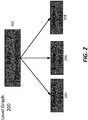
- FIG. 2 illustrates an exemplary level graph 200 for use in content production.
- a level graph is a directed acyclic graph.
- the level graph includes a scene description.
- a scene description may be a data format or a language for describing an asset.
- Scene description data are used either directly or passed to another process, such as a rendering process, to produce an image or series of images.
- Modifications, or "deltas,” are used to describe alterations to a scene description data or to other modifications. Therefore, given a scene description and a set of deltas, various new scene descriptions can be produced.
- a level graph is defined as part of the animation production process.
- Each node in the level graph is called a level node, and contains either scene description data, modifications, or both.
- Each level of the graph may produce a scene description (e.g., a "level") by merging contents from incoming edges with the node's own contents.
- a node at the start of an edge may be referred to as a parent, and a node at the end of an edge may be referred to as a child.
- a base node 202 is a parent to three child nodes, each of which contain a variation for the base scene description data.
- the three child nodes are variation node 204, variation node 206, and variation node 208.
- Base node 202 is associated with a scene description data.
- Variation node 204 is associated with a variation, which is labeled "mod 1.”
- Variation node 206 is associated with a variation, which is labeled "mod 2.”
- Variation node 208 is associated with a variation, which is labeled "mod 3.”
- a system receives a request to produce a scene description at the level "Variation 1" of variation node 204.
- the level “Variation 1" of node 204 is the result of applying "mod 1" to the scene description data of base node 202.
- mod 1 of node 204 may describe the changes required to transform the lion character of base node 202 into a lion character that has stubble and is intended to be depicted during the nighttime.
- users can work on both the base node data and on the variations independently. For example, one user may work updating the scene description data associated with base node 202 by changing the facial structure of the character asset, while a different user works to change the color or texture of the facial hair variation described in variation node 204.
- Livcncss dcscribcs the concept that changes made to a base node may be incorporated when a level is computed at a variation that is a child node of the changed base node. Liveness of sharing data is achieved by the ability to recompute levels at any time. When the level associated with the variation is computed, the changes made to the base node are incorporated into the produced description data. In order to effectively support liveness, content production tools and editing tools may be adapted to deliver changes in the form of deltas.
- data residing at a child node may be promoted up through the graph. For example, if production requires that a variation residing at a child node be used in all shots, a user may promote the variation so that it is incorporated at the base node. This way, any level computation that includes the base node will (at least initially) include the promoted variation.
- FIG. 3 illustrates an exemplary level graph 300 for use in content production.
- a level node may have multiple parents, and may contain both scene description data and modification data.
- base 302 includes scene description data.
- Nodes 304, 306, and 310 include modification data.
- Node 308 includes both modification data and scene description data.
- Computing the level at node 310 is done as follows.
- the process starts with the scene description data of base node 302.
- a decision is made regarding which of nodes 306 or 308 to process first.
- the technique for making this decision is called linearization and is described in detail below.
- the modification data of node 306 is applied to the scene description data of base node 302, producing a first intermediate description data.
- This intermediate description data may be stored in memory.
- the modification data and scene description data of node 308 is applied to the first intermediate description data to produce a second intermediate description data.
- the modification data of node 308 modifies the scene description data that was appended at a previous step.
- the scene description data of node 308 When the scene description data of node 308 is appended to the first intermediate result, it docs not affect the existing scene description data. Instead, it adds to the scene description data.
- the modification data of node 310 is applied to the second modification data. Accordingly, the level is computed for node 310 in the level graph 300.
- FIG. 4 illustrates an exemplary process 400 for computing a level for rendering a three-dimensional image using a level graph.
- the process begins at block 402 when the system detects a request to process a level associated with a target node.
- the target node is the node at which the level is being computed.
- the system determines the set of level ancestor nodes of the target node. These are the parents, grandparents, and other ancestors of the target node.
- the ancestor nodes are ordered into a sequence using a linearization technique.
- Various linearization techniques are described below.
- a scene description is initialized based on the node in the set of level ancestor nodes that is first in the sequence. This produces an intermediate description data, which may be stored in memory.
- the process continues by consecutively applying the remaining ancestor nodes of the set of level ancestor nodes to the intermediate description data in sequence, as determined by the linearization technique.
- the level ancestor nodes may contain scene description data, deltas, or both.
- the operation that applies the delta to the intermediate scene description data may fail.
- an operation to apply a delta fails when the operation attempts to apply the delta to non-existent data.
- a variation to add facial hair to a character's face fails when the intermediate scene data does not contain the character's face. Thus, the facial hair property cannot be modified.
- the node containing the failed delta may be skipped and the entire level computation may be computed without the node containing the failed delta.
- the level computation may halt, and a user may be notified of the failure.
- the target node is applied to the intermediate description data, resulting in the final level scene description.
- an image is rendered using the final level scene description.
- linearization is significant insofar as the order of applying deltas affects the final level scene description.
- the cases where deltas do not commute can be characterized as conflicts, and therefore linearization is used to determine how conflicting modifications should be resolved.
- a first linearization technique is derived from the "C3 Superclass Linearization" method developed for the programming language Dylan.
- level graphs play the role of the class inheritance hierarchy. This algorithm requires that users or a process add annotations to the level graph indicating a precedence order for incoming edges.
- a second linearization technique relies on an integer tag annotation associated with each level node.
- the linearization lists ancestor nodes in descending order of tag, with a failure condition when equal tags appear in the same linearization input set.
- linearization techniques may be applied.
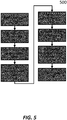
- FIG. 5 illustrates an exemplary process for rendering three-dimensional images using a level graph.
- the level graph is accessed.
- the level graph comprises a first node, a second node, and a target node.
- the second node and target node are descendants of the first node.
- the first node comprises a first scene description data
- the second node comprises a first variation data
- the target node comprises a second variation data.
- the first node is a base node, which is a root node of the level graph.
- the base node may associated with an asset, such as a character, a group of characters, an environment, an effect, or a lighting rig.
- a selection of the target node for computation is received.
- the selection of the target node may be made by an external rendering process or by a user.
- ancestors of the target node arc determined.
- the first node and the second node are ancestors of the target node.
- a linearization of the ancestors of the target node is determined.
- the linearization comprises an ordering of at least some of the ancestors of the target node.
- the linearization may be based on a C3 superclass linearization algorithm.
- the first node comprises a first tag and the second node comprises a second tag.
- the linearization of the ancestors comprises ordering the first node and the second node based on their respective tags.
- a user may manually determine which nodes should be applied prior to other nodes by appropriately setting the values of the tags.
- a scene description is initialized using the first scene description data of the first node. In one example, the initialization is based on the linearization.
- the first variation of the second node is applied to the scene description.
- the first variation is applied based on the linearization.
- the second node further comprises a second scene description data.
- the second scene description data is also applied to the scene description. This produces an updated scene description.
- the second variation of the target node is applied to the updated scene description. This produces a final scene description.
- the final scene description may be data describing an asset.
- an image is rendered based on the final scene description.
- FIG. 6 illustrates an exemplary animation system 600 that can be used to implement the level-based data sharing technique discussed above.
- the level-based data sharing technique can be implemented, for example, in either hardware or in software stored on a non-transitory computer-readable storage medium.
- the animation system 600 can be configured to receive user input from an input device 620.
- the input device 620 can be any device that receives input from the user and transmits it to the animation system 600.
- the input device 620 can be a keyboard, a mouse, a tablet, a stylus, or the like. Those skilled in the art will recognize that other types of input devices can also be used.
- the animation system 600 can be configured to output graphics, images, or animation to an output device 630.
- the output device 630 can include any device that receives data from the animation system and presents the data to the user.
- the output device 630 may include a liquid crystal display, a set of light-emitting diodes, a projector, or the like. Those skilled in the art will recognize that other types of output devices can also be used.
- the animation system 600 may further include a central processing unit 602.
- the central processing unit may include one or more processing cores.
- the central processing unit 602 may be coupled to and able to communicate with the input device 620.
- the animation system 600 may include multiple processing units.
- the animation system 600 may also include a graphics processing unit 604.
- the graphics processing unit 604 may be dedicated to processing graphics-related data.
- the graphics processing unit 604 may include a single processing core or multiple processing cores.
- the animation system 600 is illustrated with one graphics processing unit 604, the animation system 600 may include a plurality of graphics processing units.
- the central processing unit 602 and/or the graphics processing unit 604 may be coupled to and able to communicate data to the output device 630.
- the animation system 600 may include one or more processors and instructions stored in a non-transitory computer-readable storage medium, such as a memory or storage device, that when executed by the one or more processors, perform animation rendering using the level-based data sharing technique described above.
- a "non-transitory computer-readable storage medium" can be any medium that can contain or store the program for use by or in connection with the instruction execution system, apparatus, or device.
- the non-transitory computer-readable storage medium can include, but is not limited to, an clcctronic, magnetic, optical, clcctromagnctic, infrared, or semiconductor system, apparatus or device, a portable computer diskette (magnetic), a random access memory (RAM) (magnetic), a read-only memory (ROM) (magnetic), an erasable programmable read-only memory (EPROM) (magnetic), a portable optical disc such a CD, CD-R, CD-RW, DVD, DVD-R, or DVD-RW, or flash memory such as compact flash cards, secured digital cards, USB memory devices, memory sticks, and the like.
- the animation system 600 may include volatile memory 606, which is a non-transitory computer-readable storage medium, in communication with the central processing unit 602.
- the volatile memory 606 may include, for example, random access memory, such as dynamic random access memory or static random access memory, or any other type of volatile memory.
- the volatile memory 606 may be used to store data or instructions during the operation of the animation system 600. Those skilled in the art will recognize that other types of volatile memory can also be used.
- the animation system 600 may also include non-volatile memory 608, which is a non-transitory computer-readable storage medium, in communication with the central processing unit 602.
- the non-volatile memory 608 may include flash memory, hard disks, magnetic storage devices, read-only memory, or the like.
- the non-volatile memory 608 may be used to store animation data, level-based data, computer instructions, or any other information. Those skilled in the art will recognize that other types of non-volatile memory can also be used.
- the animation system 600 is not limited to the devices, configurations, and functionalities described above.
- a single volatile memory 606, non-volatile memory 608, central processing unit 602, graphics processing unit 604, input device 620, and output device 630 are illustrated, a plurality of any of these devices can be implemented internal or external to the animation system 600.
- the animation system 600 may include a network access device for accessing information on a network, such as an internal network or the Internet. Those skilled in the art will recognize that other configurations of the animation system 600 can be used.
Landscapes
- Engineering & Computer Science (AREA)
- Physics & Mathematics (AREA)
- General Physics & Mathematics (AREA)
- Theoretical Computer Science (AREA)
- Computer Graphics (AREA)
- Software Systems (AREA)
- Computer Hardware Design (AREA)
- General Engineering & Computer Science (AREA)
- Geometry (AREA)
- Processing Or Creating Images (AREA)
- Image Generation (AREA)
Description
- The present disclosure relates to computer-generated scene data and, more specifically, to computer-generated scene data using directed acyclic graphs.
- A computer-generated animation is typically created by rendering a sequence of images, with each image depicting a computer-generated scene composed of one or more computer-generated assets (e.g., a character, a group of characters, an environment, an effect, or a lighting rig). Frequently, the computer-generated images illustrate different scenes containing the same assets. For example, a scene may depict a male character during daytime hours, and a different scene may depict the same character during nighttime hours. In this example, the character may be clean-shaven during daytime hours, but may have stubble or other differences in appearance during nighttime hours.
- Traditional techniques for rendering images require managing various implementations of assets when the assets have different characteristics in different scenes. However, maintaining numerous separate versions of an asset presents challenges. One particularly challenging aspect of maintaining separate versions of an asset is the difficulty in applying the same change across some or all versions of the asset.
- Referring back to the example above, two versions of the same character are traditionally maintained: a first asset representing the character as clean-shaven for use in scenes depicting daytime hours and a second asset representing the character as having stubble for use in scenes depicting nighttime hours. A modification to the character during animation production may require that a change be applied to all versions of the character. As an example, production may require changes in the nose and chin structure of the character. Implementing this same change to both character assets is a time-consuming and computer-intensive task.
- It is therefore desirable to use a technique for sharing digital content in a manner that reduces the need for maintaining multiple independent versions of an asset.
US 2008 278482 A1 discloses a method to render a rootless scene graph with a user controlled order of rendering. - The invention is a computer-implemented method according to
claim 1, a non-transitory computer-readable storage medium according to claim 7 and an apparatus according to claim 11. - The present application can be best understood by reference to the following description taken in conjunction with the accompanying drawing figures, in which like parts may be referred to by like numerals.
-
FIGS. 1A-B depict exemplary computer-generated images that may be rendered using level-based data sharing according to various embodiments. -
FIG. 2 illustrates an exemplary level graph for use in content production. -
FIG. 3 illustrates another exemplary level graph for use in content production. -
FIG. 4 illustrates an exemplary process for rendering three-dimensional images using a level graph. -
FIG. 5 illustrates an exemplary process for rendering three-dimensional images using a level graph. -
FIG. 6 illustrates an exemplary computing system. - The following description is presented to enable a person of ordinary skill in the art to make and use the various embodiments. Descriptions of specific devices, techniques, and applications are provided only as examples. Various modifications to the examples described herein will be readily apparent to those of ordinary skill in the art, and the general principles defined herein may be applied to other examples and applications without departing from the spirit and scope of the present technology. Thus, the disclosed technology is not intended to be limited to the examples described herein and shown, but is to be accorded the scope consistent with the claims.
- For descriptive purposes, throughout this disclosure, software, software modules, software objects, and the like may be described as performing various functions. One of ordinary skill in the art, however, will recognize that software may not actively perform any function and instead may include instructions that are executable on a computer processor. As such, although software may be described herein as performing a function, it should be appreciated that a computer processor or other computing device may typically perform those functions attributed herein to software modules or objects by executing computer instructions provided by the software modules or objects.
- A computer-generated animation is typically created by rendering a sequence of images, each image depicting a computer-generated scene composed of one or more computer-generated assets. Light sources, materials, textures, and other visual effects may be associated with a computer-generated object to create a realistic visual appearance for the computer-generated scene. For purposes of this discussion, a computer-generated scene generally refers to the virtual three-dimensional (3D) space that may be filmed using a virtual camera, and may also be referred to generically as a scene.
- Various embodiments are described below relating to producing digital content. Digital content may refer to parametric scene description data. Portions of the scene description data are reused in multiple sites. Sites may refer to individual shots or groups of shots. Base data refers to asset definitions, such as for characters, environments, and lighting rigs. Modifications refer to alterations to be applied to scene description data.
- In the computer-implemented method, in the non-transitory computer-readable storage medium, and/or in the apparatus, the first node may be a base node that is a root node.
- In the computer-implemented method, in the non-transitory computer-readable storage medium, and/or in the apparatus, initializing the scene description using the scene description data of the first node may be based on the linearization. In the apparatus, the one or more computer processors may initialize the scene description using the scene description data of the first node based on the linearization.
- In the computer-implemented method, in the non-transitory computer-readable storage medium, and/or in the apparatus, the second node may comprise a second scene description data. The second scene description data may be applied to the scene description to produce the updated scene description.
- In the computer-implemented method, in the non-transitory computer-readable storage medium, and/or in the apparatus, determining the linearization of the ancestors of the target node may comprise determining the linearization of the ancestors of the target node based on a C3 superclass linearization algorithm. In the apparatus, the one or more computer processors configured to determine the linearization of the ancestors of the target node may be configured to determine the linearization of the ancestors of the target node based on a C3 superclass linearization algorithm.
- In the computer-implemented method, in the non-transitory computer-readable storage medium, and/or in the apparatus, the first node may comprise a first tag and the second node may comprise a second tag. Determining the linearization of the ancestors of the target node may comprise ordering the first node and the second node based on the first tag and the second tag. In the apparatus, the one or more computer processors configured to determine the linearization of the ancestors of the target node may be configured to order the first node and the second node based on the first tag and the second tag
-
FIGS. 1A-B depict exemplary computer-generated images that may be rendered using level-based data sharing according to various embodiments.FIG. 1A illustrates an asset-a personified lion character-depicted in a daytime scene. An animator or artist may prefer the lion character to have short facial hair in the series of shots that occur in the daytime scene to produce a daytime animation.FIG. 1B illustrates the same lion character, but depicted in a nighttime scene. An animator or artist may prefer for the lion character to have long facial hair in the series of shots that occur in the nighttime scene to produce a nighttime animation. This gives the appearance that time has passed, allowing for the lion character's facial hair to grow during the day. Traditionally, this required maintaining the two lion characters as two separate assets-each with its own characteristics and data describing the asset. - Using level-based data sharing, the same lion asset can be efficiently used for various shots where the visual characteristics of the lion character differ based on the shot. Because the same asset is used as the base for producing the various depictions of the lion character in the various shots, even a fundamental change to the lion character, such as a change in the lion character's facial structure, may easily be applied to all shots where the lion asset is used. This speeds up production of animation and reduces computational complexity for rendering purposes.
-
FIG. 2 illustrates anexemplary level graph 200 for use in content production. A level graph is a directed acyclic graph. The level graph includes a scene description. A scene description may be a data format or a language for describing an asset. Scene description data are used either directly or passed to another process, such as a rendering process, to produce an image or series of images. Modifications, or "deltas," are used to describe alterations to a scene description data or to other modifications. Therefore, given a scene description and a set of deltas, various new scene descriptions can be produced. - A level graph is defined as part of the animation production process. Each node in the level graph is called a level node, and contains either scene description data, modifications, or both. Each level of the graph may produce a scene description (e.g., a "level") by merging contents from incoming edges with the node's own contents. A node at the start of an edge may be referred to as a parent, and a node at the end of an edge may be referred to as a child.
- In the example of
FIG. 2 , abase node 202 is a parent to three child nodes, each of which contain a variation for the base scene description data. The three child nodes arevariation node 204,variation node 206, andvariation node 208.Base node 202 is associated with a scene description data.Variation node 204 is associated with a variation, which is labeled "mod 1."Variation node 206 is associated with a variation, which is labeled "mod 2."Variation node 208 is associated with a variation, which is labeled "mod 3." - In one example, a system receives a request to produce a scene description at the level "
Variation 1" ofvariation node 204. The level "Variation 1" ofnode 204 is the result of applying "mod 1" to the scene description data ofbase node 202. Assuming thatbase node 202 describes the lion character asset as intended to be depicted during the daytime without stubble,mod 1 ofnode 204 may describe the changes required to transform the lion character ofbase node 202 into a lion character that has stubble and is intended to be depicted during the nighttime. - Using this technique in the course of animation production, users can work on both the base node data and on the variations independently. For example, one user may work updating the scene description data associated with
base node 202 by changing the facial structure of the character asset, while a different user works to change the color or texture of the facial hair variation described invariation node 204. - Livcncss dcscribcs the concept that changes made to a base node may be incorporated when a level is computed at a variation that is a child node of the changed base node. Liveness of sharing data is achieved by the ability to recompute levels at any time. When the level associated with the variation is computed, the changes made to the base node are incorporated into the produced description data. In order to effectively support liveness, content production tools and editing tools may be adapted to deliver changes in the form of deltas.
- Additionally, data residing at a child node, such as a variation or description data, may be promoted up through the graph. For example, if production requires that a variation residing at a child node be used in all shots, a user may promote the variation so that it is incorporated at the base node. This way, any level computation that includes the base node will (at least initially) include the promoted variation.
-
FIG. 3 illustrates anexemplary level graph 300 for use in content production. As illustrated inFIG. 3 , a level node may have multiple parents, and may contain both scene description data and modification data. In this example,base 302 includes scene description data.Nodes Node 308 includes both modification data and scene description data. - Computing the level at node 310 (mod 4) is done as follows. The process starts with the scene description data of
base node 302. A decision is made regarding which ofnodes node 306 beforenode 308, the modification data ofnode 306 is applied to the scene description data ofbase node 302, producing a first intermediate description data. This intermediate description data may be stored in memory. Next, the modification data and scene description data ofnode 308 is applied to the first intermediate description data to produce a second intermediate description data. When the modification data ofnode 308 is applied to the first intermediate description data, it modifies the scene description data that was appended at a previous step. When the scene description data ofnode 308 is appended to the first intermediate result, it docs not affect the existing scene description data. Instead, it adds to the scene description data. Next, the modification data ofnode 310 is applied to the second modification data. Accordingly, the level is computed fornode 310 in thelevel graph 300. -
FIG. 4 illustrates anexemplary process 400 for computing a level for rendering a three-dimensional image using a level graph. The process begins atblock 402 when the system detects a request to process a level associated with a target node. The target node is the node at which the level is being computed. Atblock 404, the system determines the set of level ancestor nodes of the target node. These are the parents, grandparents, and other ancestors of the target node. - At
block 406, the ancestor nodes are ordered into a sequence using a linearization technique. Various linearization techniques are described below. At block 408, a scene description is initialized based on the node in the set of level ancestor nodes that is first in the sequence. This produces an intermediate description data, which may be stored in memory. - At block 410, the process continues by consecutively applying the remaining ancestor nodes of the set of level ancestor nodes to the intermediate description data in sequence, as determined by the linearization technique. The level ancestor nodes may contain scene description data, deltas, or both. In the case of nodes that contain deltas, the operation that applies the delta to the intermediate scene description data may fail. In one example, an operation to apply a delta fails when the operation attempts to apply the delta to non-existent data. In a more specific example, a variation to add facial hair to a character's face fails when the intermediate scene data does not contain the character's face. Thus, the facial hair property cannot be modified. If an operation to apply a delta fails, the node containing the failed delta may be skipped and the entire level computation may be computed without the node containing the failed delta. In one example, if an operation to apply a delta fails, the level computation may halt, and a user may be notified of the failure.
- At
block 412, the target node is applied to the intermediate description data, resulting in the final level scene description. Atblock 414, an image is rendered using the final level scene description. - The algorithm used for linearization is significant insofar as the order of applying deltas affects the final level scene description. The cases where deltas do not commute can be characterized as conflicts, and therefore linearization is used to determine how conflicting modifications should be resolved.
- A first linearization technique is derived from the "C3 Superclass Linearization" method developed for the programming language Dylan. In the context of level-based data sharing techniques, level graphs play the role of the class inheritance hierarchy. This algorithm requires that users or a process add annotations to the level graph indicating a precedence order for incoming edges.
- A second linearization technique relies on an integer tag annotation associated with each level node. The linearization lists ancestor nodes in descending order of tag, with a failure condition when equal tags appear in the same linearization input set. One of ordinary skill in the art will appreciate that other linearization techniques may be applied.
-
FIG. 5 illustrates an exemplary process for rendering three-dimensional images using a level graph. Atblock 502, the level graph is accessed. The level graph comprises a first node, a second node, and a target node. The second node and target node are descendants of the first node. The first node comprises a first scene description data, the second node comprises a first variation data, and the target node comprises a second variation data. In some examples, the first node is a base node, which is a root node of the level graph. The base node may associated with an asset, such as a character, a group of characters, an environment, an effect, or a lighting rig. - At
block 504, a selection of the target node for computation is received. For example, the selection of the target node may be made by an external rendering process or by a user. Atblock 506, ancestors of the target node arc determined. The first node and the second node are ancestors of the target node. - At
block 508, a linearization of the ancestors of the target node is determined. The linearization comprises an ordering of at least some of the ancestors of the target node. In one example, the linearization may be based on a C3 superclass linearization algorithm. In another example, the first node comprises a first tag and the second node comprises a second tag. In this example, the linearization of the ancestors comprises ordering the first node and the second node based on their respective tags. In one implementation of this technique, a user may manually determine which nodes should be applied prior to other nodes by appropriately setting the values of the tags. At block 510, a scene description is initialized using the first scene description data of the first node. In one example, the initialization is based on the linearization. - At
block 512, the first variation of the second node is applied to the scene description. The first variation is applied based on the linearization. In some examples, the second node further comprises a second scene description data. In that case, the second scene description data is also applied to the scene description. This produces an updated scene description. Atblock 514, the second variation of the target node is applied to the updated scene description. This produces a final scene description. The final scene description may be data describing an asset. Atblock 516, an image is rendered based on the final scene description. -
FIG. 6 illustrates anexemplary animation system 600 that can be used to implement the level-based data sharing technique discussed above. The level-based data sharing technique can be implemented, for example, in either hardware or in software stored on a non-transitory computer-readable storage medium. - The
animation system 600 can be configured to receive user input from aninput device 620. Theinput device 620 can be any device that receives input from the user and transmits it to theanimation system 600. For example, theinput device 620 can be a keyboard, a mouse, a tablet, a stylus, or the like. Those skilled in the art will recognize that other types of input devices can also be used. - The
animation system 600 can be configured to output graphics, images, or animation to anoutput device 630. Theoutput device 630 can include any device that receives data from the animation system and presents the data to the user. For example, theoutput device 630 may include a liquid crystal display, a set of light-emitting diodes, a projector, or the like. Those skilled in the art will recognize that other types of output devices can also be used. - The
animation system 600 may further include acentral processing unit 602. The central processing unit may include one or more processing cores. Thecentral processing unit 602 may be coupled to and able to communicate with theinput device 620. Although theanimation system 600 is illustrated with onecentral processing unit 602, theanimation system 600 may include multiple processing units. Theanimation system 600 may also include agraphics processing unit 604. Thegraphics processing unit 604 may be dedicated to processing graphics-related data. Thegraphics processing unit 604 may include a single processing core or multiple processing cores. Although theanimation system 600 is illustrated with onegraphics processing unit 604, theanimation system 600 may include a plurality of graphics processing units. Thecentral processing unit 602 and/or thegraphics processing unit 604 may be coupled to and able to communicate data to theoutput device 630. - In one example, the
animation system 600 may include one or more processors and instructions stored in a non-transitory computer-readable storage medium, such as a memory or storage device, that when executed by the one or more processors, perform animation rendering using the level-based data sharing technique described above. In the context of the embodiments described herein, a "non-transitory computer-readable storage medium" can be any medium that can contain or store the program for use by or in connection with the instruction execution system, apparatus, or device. The non-transitory computer-readable storage medium can include, but is not limited to, an clcctronic, magnetic, optical, clcctromagnctic, infrared, or semiconductor system, apparatus or device, a portable computer diskette (magnetic), a random access memory (RAM) (magnetic), a read-only memory (ROM) (magnetic), an erasable programmable read-only memory (EPROM) (magnetic), a portable optical disc such a CD, CD-R, CD-RW, DVD, DVD-R, or DVD-RW, or flash memory such as compact flash cards, secured digital cards, USB memory devices, memory sticks, and the like. - The
animation system 600 may includevolatile memory 606, which is a non-transitory computer-readable storage medium, in communication with thecentral processing unit 602. Thevolatile memory 606 may include, for example, random access memory, such as dynamic random access memory or static random access memory, or any other type of volatile memory. Thevolatile memory 606 may be used to store data or instructions during the operation of theanimation system 600. Those skilled in the art will recognize that other types of volatile memory can also be used. - The
animation system 600 may also includenon-volatile memory 608, which is a non-transitory computer-readable storage medium, in communication with thecentral processing unit 602. Thenon-volatile memory 608 may include flash memory, hard disks, magnetic storage devices, read-only memory, or the like. Thenon-volatile memory 608 may be used to store animation data, level-based data, computer instructions, or any other information. Those skilled in the art will recognize that other types of non-volatile memory can also be used. - The
animation system 600 is not limited to the devices, configurations, and functionalities described above. For example, although a singlevolatile memory 606,non-volatile memory 608,central processing unit 602,graphics processing unit 604,input device 620, andoutput device 630 are illustrated, a plurality of any of these devices can be implemented internal or external to theanimation system 600. In addition, theanimation system 600 may include a network access device for accessing information on a network, such as an internal network or the Internet. Those skilled in the art will recognize that other configurations of theanimation system 600 can be used.
Claims (15)
- A computer-implemented method for rendering three-dimensional images using a level graph, the method comprising:accessing the level graph, the level graph comprising a first node, a second node, a third node and a target node, wherein:the second node, the third node and target node are descendants of the first node,the target node or an ancestor of the target node is a direct descendant of both the second node and the third node, andthe first node comprises a first scene description data, the second node comprises a first variation data, the third node comprises a second variation data, and the target node comprises a third variation data, the first scene description data describing an asset comprising at least one of a character, a group of characters, an environment and a lighting rig;receiving a selection of the target node for computation;determining ancestors of the target node, wherein the ancestors of the target node comprises the first node, the second node and the third node;determining a linearization of the ancestors of the target node, the linearization comprising an order of the ancestors of the target node;initializing a scene description using the first scene description data of the first node;applying the variation data of the second node and the third node, based on the order determined by the linearization, to the scene description to produce an updated scene description;applying the third variation of the target node to the updated scene description to produce a final scene description; andrendering an image based on the final scene description.
- Computer-implemented method according to claim 1, wherein the first node is a base node that is a root node.
- Computer-implemented method according to any of claims 1-2, wherein initializing the scene description using the scene description data of the first node is based on the linearization.
- Computer-implemented method according to any of claims 1-3, wherein the second node further comprises a second scene description data, and wherein the second scene description data is applied to the scene description to produce the updated scene description.
- Computer-implemented method according to any of claims 1-4, wherein determining the linearization of the ancestors of the target node comprises determining the linearization of the ancestors of the target node based on a C3 superclass linearization algorithm.
- Computer-implemented method according to any of claims 1-5, wherein:the first node comprises a first tag and the second node comprises a second tag; anddetermining the linearization of the ancestors of the target node comprises ordering the first node and the second node based on the first tag and the second tag.
- A non-transitory computer-readable storage medium comprising computer-executable instructions for rendering three-dimensional images using a level graph, the computer-executable instructions comprising instructions for:accessing the level graph, the level graph comprising a first node, a second node, a third node and a target node, wherein:the second node, the third node and target node are descendants of the first nodethe target node or an ancestor of the target node is a direct descendant of both the second node and the third node, andthe first node comprises a first scene description data, the second node comprises a first variation data, the third node comprises a second variation data and the target node comprises a third variation data, the first scene description data describing an asset comprising at least one of a character, a group of characters, an environment and a lighting rig;receiving a selection of the target node for computation;determining ancestors of the target node, wherein the ancestors of the target node comprises the first node, the second node and the third node;determining a linearization of the ancestors of the target node, the linearization comprising an order of the ancestors of the target node;initializing a scene description using the first scene description data of the first node;applying the variation data of the second node and the third node, based on the order determined by the linearization to the scene description to produce an updated scene description;applying the third variation of the target node to the updated scene description to produce a final scene description; andrendering an image based on the final scene description.
- Non-transitory computer-readable storage medium according to claim 7, wherein the first node is a base node that is a root node.
- Non-transitory computer-readable storage medium according to any of claims 7-8, wherein initializing the scene description using the scene description data of the first node is based on the linearization.
- Non-transitory computer-readable storage medium according to any of claims 7-9, wherein determining the linearization of the ancestors of the target node comprises determining the linearization of the ancestors of the target node based on a C3 superclass linearization algorithm.
- An apparatus for rendering three-dimensional images using a level graph, the apparatus comprising:a memory configured to store the level graph; andone or more computer processors configured to:access the level graph, the level graph comprising a first node, a second node, a third node and a target node, wherein:the second node, the third node and target node are descendants of the first nodethe target node or an ancestor of the target node is a direct descendant of both the second node and the third node, andthe first node comprises a first scene description data, the second node comprises a first variation data, the third node comprises a second variation data, and the target node comprises a third variation data, wherein the first scene description data describes an asset comprising at least one of a character, a group of characters, an environment and a lighting rig;receive a selection of the target node for computation;determine ancestors of the target node, wherein the ancestors of the target node comprises the first node, the second node and the third node;determine a linearization of the ancestors of the target node, the linearization comprising an order of the ancestors of the target node;initialize a scene description using the first scene description data of the first node;apply the variation data of the second node and the third node, based on the order determined by the linearization to the scene description to produce an updated scene description;apply the third variation of the target node to the updated scene description to produce a final scene description; andrender an image based on the final scene description.
- Apparatus according to claim 11, wherein the first node is a base node that is a root node.
- Apparatus according to any of claims 11-12, wherein initializing the scene description using the scene description data of the first node is based on the linearization.
- Apparatus according to any of claims 11-13, wherein the second node further comprises a second scene description data, and wherein the second scene description data is applied to the scene description to produce the updated scene description.
- Apparatus according to any of claims 11-14, wherein determining the linearization of the ancestors of the target node comprises determining the linearization of the ancestors of the target node based on a C3 superclass linearization algorithm.
Applications Claiming Priority (1)
| Application Number | Priority Date | Filing Date | Title |
|---|---|---|---|
| US13/843,695 US9811936B2 (en) | 2013-03-15 | 2013-03-15 | Level-based data sharing for digital content production |
Publications (3)
| Publication Number | Publication Date |
|---|---|
| EP2779105A2 EP2779105A2 (en) | 2014-09-17 |
| EP2779105A3 EP2779105A3 (en) | 2016-09-07 |
| EP2779105B1 true EP2779105B1 (en) | 2021-12-08 |
Family
ID=50382224
Family Applications (1)
| Application Number | Title | Priority Date | Filing Date |
|---|---|---|---|
| EP14160025.4A Active EP2779105B1 (en) | 2013-03-15 | 2014-03-14 | Level-based data sharing for digital content production |
Country Status (3)
| Country | Link |
|---|---|
| US (1) | US9811936B2 (en) |
| EP (1) | EP2779105B1 (en) |
| CN (1) | CN104050698A (en) |
Families Citing this family (7)
| Publication number | Priority date | Publication date | Assignee | Title |
|---|---|---|---|---|
| US10282883B2 (en) * | 2014-12-12 | 2019-05-07 | Pizar | Hierarchy-based character rigging |
| WO2018183778A1 (en) * | 2017-03-30 | 2018-10-04 | Magic Leap, Inc. | Centralized rendering |
| US12100112B2 (en) | 2018-08-10 | 2024-09-24 | Nvidia Corporation | Cloud-centric platform for collaboration and connectivity on 3D virtual environments |
| WO2020033969A1 (en) | 2018-08-10 | 2020-02-13 | Nvidia Corporation | Platform and method for collaborative generation of content |
| US11328470B2 (en) | 2019-07-25 | 2022-05-10 | Dreamworks Animation Llc | Distributed multi-context interactive rendering |
| US20220134222A1 (en) * | 2020-11-03 | 2022-05-05 | Nvidia Corporation | Delta propagation in cloud-centric platforms for collaboration and connectivity |
| CN113192166B (en) * | 2021-05-24 | 2022-08-30 | 上海曼恒数字技术股份有限公司 | Skeleton tree restoration method and system |
Citations (1)
| Publication number | Priority date | Publication date | Assignee | Title |
|---|---|---|---|---|
| CA2806802A1 (en) * | 2010-07-30 | 2012-02-02 | Allegorithmic | System and method for editing, optimizing and rendering procedural textures |
Family Cites Families (123)
| Publication number | Priority date | Publication date | Assignee | Title |
|---|---|---|---|---|
| US4922413A (en) | 1987-03-24 | 1990-05-01 | Center For Innovative Technology | Method for concurrent execution of primitive operations by dynamically assigning operations based upon computational marked graph and availability of data |
| JPH04181423A (en) | 1990-11-16 | 1992-06-29 | Fujitsu Ltd | Version control system |
| US5307295A (en) | 1991-01-14 | 1994-04-26 | Vari-Lite, Inc. | Creating and controlling lighting designs |
| DE69232403T2 (en) | 1991-08-06 | 2002-08-22 | Canon K.K., Tokio/Tokyo | Three-dimensional model processing method and device |
| GB2264603B (en) | 1992-02-28 | 1995-08-23 | Sony Broadcast & Communication | Multiplexing and demultiplexing image data |
| US5675752A (en) | 1994-09-15 | 1997-10-07 | Sony Corporation | Interactive applications generator for an interactive presentation environment |
| US5986667A (en) | 1994-12-22 | 1999-11-16 | Apple Computer, Inc. | Mechanism for rendering scenes using an object drawing subsystem |
| US5692184A (en) | 1995-05-09 | 1997-11-25 | Intergraph Corporation | Object relationship management system |
| US5808617A (en) | 1995-08-04 | 1998-09-15 | Microsoft Corporation | Method and system for depth complexity reduction in a graphics rendering system |
| US5808625A (en) | 1995-08-04 | 1998-09-15 | Silicon Graphics Incorporated | System and method for using dependency graphs for the control of a graphics creation process |
| US5870097A (en) | 1995-08-04 | 1999-02-09 | Microsoft Corporation | Method and system for improving shadowing in a graphics rendering system |
| US5982389A (en) | 1996-06-17 | 1999-11-09 | Microsoft Corporation | Generating optimized motion transitions for computer animated objects |
| US5896139A (en) * | 1996-08-01 | 1999-04-20 | Platinum Technology Ip, Inc. | System and method for optimizing a scene graph for optimizing rendering performance |
| US7920143B1 (en) | 1997-03-27 | 2011-04-05 | At&T Intellectual Property Ii, L.P. | Method for defining animation parameters for an animation definition interface |
| US6496190B1 (en) | 1997-07-02 | 2002-12-17 | Mental Images Gmbh & Co Kg. | System and method for generating and using systems of cooperating and encapsulated shaders and shader DAGs for use in a computer graphics system |
| US7548238B2 (en) | 1997-07-02 | 2009-06-16 | Nvidia Corporation | Computer graphics shader systems and methods |
| US6154215A (en) | 1997-08-01 | 2000-11-28 | Silicon Graphics, Inc. | Method and apparatus for maintaining multiple representations of a same scene in computer generated graphics |
| AU761202B2 (en) * | 1997-09-22 | 2003-05-29 | Sony Corporation | Generation of a bit stream containing binary image/audio data that is multiplexed with a code defining an object in ascii format |
| US6243856B1 (en) | 1998-02-03 | 2001-06-05 | Amazing Media, Inc. | System and method for encoding a scene graph |
| US6272650B1 (en) | 1998-02-03 | 2001-08-07 | Amazing Media, Inc. | System and method for disambiguating scene graph loads |
| US6263496B1 (en) | 1998-02-03 | 2001-07-17 | Amazing Media, Inc. | Self modifying scene graph |
| US6263103B1 (en) | 1998-11-30 | 2001-07-17 | Mitsubishi Electric Research Laboratories, Inc. | Estimating scenes using statistical properties of images and scenes |
| US6563504B1 (en) | 1998-12-24 | 2003-05-13 | B3D, Inc. | System and method for creating 3D animated content for multiple playback platforms from a single production process |
| US6362822B1 (en) | 1999-03-12 | 2002-03-26 | Terminal Reality, Inc. | Lighting and shadowing methods and arrangements for use in computer graphic simulations |
| US6760485B1 (en) | 1999-05-20 | 2004-07-06 | Eastman Kodak Company | Nonlinearly modifying a rendered digital image |
| US7657330B2 (en) | 1999-06-11 | 2010-02-02 | Parker-Hannifin Corporation | Optical ring architecture |
| US6556200B1 (en) | 1999-09-01 | 2003-04-29 | Mitsubishi Electric Research Laboratories, Inc. | Temporal and spatial coherent ray tracing for rendering scenes with sampled and geometry data |
| US7184038B2 (en) | 1999-09-24 | 2007-02-27 | Sun Microsystems, Inc. | Using render bin parallelism for rendering scene graph based graphics data |
| US7231327B1 (en) | 1999-12-03 | 2007-06-12 | Digital Sandbox | Method and apparatus for risk management |
| AU2001239926A1 (en) | 2000-02-25 | 2001-09-03 | The Research Foundation Of State University Of New York | Apparatus and method for volume processing and rendering |
| US7414626B1 (en) | 2000-05-30 | 2008-08-19 | Autodesk, Inc. | System for passing algorithms with polymorphic parameter sets in a dependency graph of a graphic creation process |
| US7659894B2 (en) | 2000-06-19 | 2010-02-09 | Mental Images Gmbh | Terminating spatial partition hierarchies by a priori bounding memory |
| US7865306B2 (en) | 2000-09-28 | 2011-01-04 | Michael Mays | Devices, methods, and systems for managing route-related information |
| US7176921B2 (en) * | 2000-10-20 | 2007-02-13 | Sony Corporation | Graphical rewriting system for multimedia descriptions |
| US6845358B2 (en) | 2001-01-05 | 2005-01-18 | Matsushita Electric Industrial Co., Ltd. | Prosody template matching for text-to-speech systems |
| EP1223759A1 (en) | 2001-01-08 | 2002-07-17 | Robert Bosch Gmbh | Method for providing an extension code for a binary description for multimedia data |
| US6873344B2 (en) | 2001-02-22 | 2005-03-29 | Sony Corporation | Media production system using flowgraph representation of operations |
| JP4038434B2 (en) | 2001-05-14 | 2008-01-23 | 株式会社ネットディメンション | Information distribution system and information distribution method |
| US7117216B2 (en) | 2001-06-07 | 2006-10-03 | Sun Microsystems, Inc. | Method and apparatus for runtime merging of hierarchical trees |
| US6919891B2 (en) | 2001-10-18 | 2005-07-19 | Microsoft Corporation | Generic parameterization for a scene graph |
| JP4075039B2 (en) | 2002-02-19 | 2008-04-16 | 株式会社セガ | Texture mapping method, program and apparatus |
| US7439982B2 (en) * | 2002-05-31 | 2008-10-21 | Envivio, Inc. | Optimized scene graph change-based mixed media rendering |
| US7129943B2 (en) | 2002-11-15 | 2006-10-31 | Microsoft Corporation | System and method for feature-based light field morphing and texture transfer |
| KR100443552B1 (en) | 2002-11-18 | 2004-08-09 | 한국전자통신연구원 | System and method for embodying virtual reality |
| US7034835B2 (en) | 2002-11-29 | 2006-04-25 | Research In Motion Ltd. | System and method of converting frame-based animations into interpolator-based animations |
| US20050140672A1 (en) | 2003-02-18 | 2005-06-30 | Jeremy Hubbell | Shader editor and compiler |
| US7417645B2 (en) | 2003-03-27 | 2008-08-26 | Microsoft Corporation | Markup language and object model for vector graphics |
| US7126606B2 (en) | 2003-03-27 | 2006-10-24 | Microsoft Corporation | Visual and scene graph interfaces |
| US7173623B2 (en) | 2003-05-09 | 2007-02-06 | Microsoft Corporation | System supporting animation of graphical display elements through animation object instances |
| US7444595B2 (en) | 2003-08-13 | 2008-10-28 | National Instruments Corporation | Graphical programming system and method for creating and managing a scene graph |
| US7511718B2 (en) | 2003-10-23 | 2009-03-31 | Microsoft Corporation | Media integration layer |
| US7432925B2 (en) | 2003-11-21 | 2008-10-07 | International Business Machines Corporation | Techniques for representing 3D scenes using fixed point data |
| JP2005284694A (en) | 2004-03-30 | 2005-10-13 | Fujitsu Ltd | 3D model data providing program, 3D model data providing server, and 3D model data transfer method |
| US7231632B2 (en) | 2004-04-16 | 2007-06-12 | Apple Computer, Inc. | System for reducing the number of programs necessary to render an image |
| US7248265B2 (en) | 2004-04-16 | 2007-07-24 | Apple Inc. | System and method for processing graphics operations with graphics processing unit |
| EP1747537B1 (en) | 2004-05-10 | 2016-08-03 | Pixar | Techniques for animating complex scenes |
| US7330185B2 (en) | 2004-05-10 | 2008-02-12 | Pixar | Techniques for processing complex scenes |
| WO2005114587A1 (en) | 2004-05-10 | 2005-12-01 | Pixar | Techniques for rendering complex scenes |
| US7821516B2 (en) | 2004-05-17 | 2010-10-26 | Pixar | Automatic pre-render pinning of change isolated assets methods and apparatus |
| US7614037B2 (en) * | 2004-05-21 | 2009-11-03 | Microsoft Corporation | Method and system for graph analysis and synchronization |
| CN100507908C (en) * | 2004-05-21 | 2009-07-01 | 微软公司 | Method and system for graph analysis and synchronization |
| KR20070093084A (en) | 2005-01-05 | 2007-09-17 | 힐크레스트 래보래토리스, 인크. | Distributed software architecture for the user interface |
| WO2006094199A2 (en) | 2005-03-03 | 2006-09-08 | Pixar | Hybrid hardware-accelerated relighting system for computer cinematography |
| EP1918880A3 (en) | 2005-04-19 | 2009-09-02 | Digitalfish, Inc. | Techniques and workflows for computer graphics animation system |
| US20060274070A1 (en) | 2005-04-19 | 2006-12-07 | Herman Daniel L | Techniques and workflows for computer graphics animation system |
| JP2009500730A (en) | 2005-07-01 | 2009-01-08 | メンタル イメージズ ゲーエムベーハー | Computer graphic shader system and method |
| US7441230B2 (en) | 2005-10-07 | 2008-10-21 | Lucasfilm Entertainment Company Ltd. | Method of utilizing product proxies with a dependency graph |
| WO2007067131A1 (en) * | 2005-12-08 | 2007-06-14 | Agency 9 Ab | A method to render a root-less scene graph with a user controlled order of rendering |
| US20070176926A1 (en) | 2006-01-31 | 2007-08-02 | Garcia Jose M D | Lighting states in a computer aided design |
| US8024356B2 (en) | 2006-02-03 | 2011-09-20 | Autodesk, Inc. | Database-managed image processing |
| US8773433B1 (en) | 2006-04-12 | 2014-07-08 | Pixar | Component-based lighting |
| US7836086B2 (en) | 2006-06-09 | 2010-11-16 | Pixar | Layering and referencing of scene description |
| FR2902908B1 (en) | 2006-06-21 | 2012-12-07 | Streamezzo | METHOD FOR OPTIMIZED CREATION AND RESTITUTION OF THE RENDERING OF A MULTIMEDIA SCENE COMPRISING AT LEAST ONE ACTIVE OBJECT, WITHOUT PRIOR MODIFICATION OF THE SEMANTIC AND / OR THE SCENE DESCRIPTION FORMAT |
| WO2008011353A2 (en) | 2006-07-16 | 2008-01-24 | The Jim Henson Company | System and method of producing an animated performance utilizing multiple cameras |
| CA2593902A1 (en) | 2006-07-31 | 2008-01-31 | Avid Technology, Inc. | Efficient processing of operator graphs representing three-dimensional character animation |
| TW200811756A (en) | 2006-08-23 | 2008-03-01 | Shu-Kai Yang | Computer graphics system and method thereof |
| US20080122838A1 (en) | 2006-09-27 | 2008-05-29 | Russell Dean Hoover | Methods and Systems for Referencing a Primitive Located in a Spatial Index and in a Scene Index |
| AU2006235850B2 (en) | 2006-11-03 | 2012-12-20 | Canon Information Systems Research Australia Pty Ltd | Reviewing editing operations |
| US8941664B2 (en) | 2006-11-22 | 2015-01-27 | Take Two Interactive Software, Inc. | System and method for real-time pose-based deformation of character models |
| US7782319B2 (en) | 2007-03-28 | 2010-08-24 | Autodesk, Inc. | Three-dimensional orientation indicator and controller |
| US8189003B2 (en) | 2007-05-08 | 2012-05-29 | Dreamworks Animation Llc | System and method for rendering computer graphics utilizing a shadow illuminator |
| US20090021513A1 (en) | 2007-07-18 | 2009-01-22 | Pixblitz Studios Inc. | Method of Customizing 3D Computer-Generated Scenes |
| US20090027380A1 (en) | 2007-07-23 | 2009-01-29 | Vivek Rajan | 3-D visualization |
| US8223148B1 (en) | 2007-11-12 | 2012-07-17 | Adobe Systems Incorporated | Method and apparatus for computing indirect lighting for global illumination rendering in 3-D computer graphics |
| US8274506B1 (en) | 2008-04-28 | 2012-09-25 | Adobe Systems Incorporated | System and methods for creating a three-dimensional view of a two-dimensional map |
| US8612485B2 (en) | 2008-08-11 | 2013-12-17 | Sony Corporation | Deferred 3-D scenegraph processing |
| WO2010035141A2 (en) | 2008-09-24 | 2010-04-01 | Erwan Maigret | Method and system for rendering or interactive lighting of a complex three dimensional scene |
| US8441496B1 (en) | 2008-09-30 | 2013-05-14 | Adobe Systems Incorporated | Method and system for modifying and rendering scenes via display lists |
| US8665274B2 (en) | 2008-10-01 | 2014-03-04 | International Business Machines Corporation | Method and system for generating and displaying an interactive dynamic view of bi-directional impact analysis results for multiply connected objects |
| US8577156B2 (en) | 2008-10-03 | 2013-11-05 | 3M Innovative Properties Company | Systems and methods for multi-perspective scene analysis |
| US8831271B2 (en) | 2008-10-07 | 2014-09-09 | Ochanomizu University | Subgraph detection device, subgraph detection method, program, data structure of data, and information recording medium |
| US8352443B1 (en) | 2008-11-08 | 2013-01-08 | Pixar | Representing scene description in databases |
| US8508537B2 (en) | 2008-11-17 | 2013-08-13 | Disney Enterprises, Inc. | System and method for dependency graph evaluation for animation |
| US8730245B2 (en) * | 2008-12-01 | 2014-05-20 | Naturalmotion Ltd. | Defining an animation of a virtual object within a virtual world |
| US8411086B2 (en) | 2009-02-24 | 2013-04-02 | Fuji Xerox Co., Ltd. | Model creation using visual markup languages |
| US8624898B1 (en) | 2009-03-09 | 2014-01-07 | Pixar | Typed dependency graphs |
| US20100289804A1 (en) | 2009-05-13 | 2010-11-18 | International Business Machines Corporation | System, mechanism, and apparatus for a customizable and extensible distributed rendering api |
| US9142044B2 (en) | 2009-05-26 | 2015-09-22 | Oracle International Corporation | Apparatus, systems and methods for layout of scene graphs using node bounding areas |
| US8644431B2 (en) | 2009-06-17 | 2014-02-04 | Coherent Logix, Incorporated | Parallel execution of trellis-based methods |
| WO2010150150A1 (en) | 2009-06-25 | 2010-12-29 | Koninklijke Philips Electronics N.V. | Effect-driven specification of dynamic lighting |
| US8797336B2 (en) | 2009-06-30 | 2014-08-05 | Apple Inc. | Multi-platform image processing framework |
| US8352397B2 (en) | 2009-09-10 | 2013-01-08 | Microsoft Corporation | Dependency graph in data-driven model |
| US20110090236A1 (en) | 2009-10-15 | 2011-04-21 | Microsoft Corporation | Graphic Object Data Binding |
| CN102053989A (en) | 2009-10-30 | 2011-05-11 | 国际商业机器公司 | Method and system for determining node to be objectified |
| US9171390B2 (en) | 2010-01-19 | 2015-10-27 | Disney Enterprises, Inc. | Automatic and semi-automatic generation of image features suggestive of motion for computer-generated images and video |
| US8488783B2 (en) | 2010-02-19 | 2013-07-16 | Nokia | Method and apparatus for applying recipient criteria in identity-based encryption |
| US8665266B2 (en) | 2010-06-23 | 2014-03-04 | The United States Of America, As Represented By The Secretary Of The Navy | Global visualization process terrain database builder |
| US8629875B2 (en) | 2010-11-09 | 2014-01-14 | Qualcomm Incorporated | Constraint systems and methods for manipulating non-hierarchical objects |
| US8892569B2 (en) | 2010-12-23 | 2014-11-18 | Ianywhere Solutions, Inc. | Indexing spatial data with a quadtree index having cost-based query decomposition |
| FR2973907B1 (en) | 2011-04-11 | 2013-04-26 | Bull Sas | METHOD AND DEVICE FOR PROCESSING ADMINISTRATION CONTROLS IN A CLUSTER |
| US20120280991A1 (en) | 2011-05-03 | 2012-11-08 | Microsoft Corporation | Employing mesh files to animate transitions in client applications |
| US9001128B2 (en) | 2011-05-06 | 2015-04-07 | Danglesnort, Llc | Efficient method of producing an animated sequence of images |
| US9552212B2 (en) | 2011-05-06 | 2017-01-24 | Microsoft Technology Licensing, Llc | Caching intermediate data for scroll view rendering |
| WO2012174128A1 (en) | 2011-06-13 | 2012-12-20 | Paneve, Llc | General purpose digital data processor, systems and methods |
| US9508181B2 (en) | 2011-08-31 | 2016-11-29 | Adobe Systems Incorporated | Ordering and rendering buffers for complex scenes with cyclic dependency |
| CN103875032B (en) | 2011-09-06 | 2016-10-12 | 梦工厂动画公司 | Optimize chart assessment |
| US20130063460A1 (en) | 2011-09-08 | 2013-03-14 | Microsoft Corporation | Visual shader designer |
| US20130063472A1 (en) | 2011-09-08 | 2013-03-14 | Microsoft Corporation | Customized image filters |
| US9240073B2 (en) | 2011-11-15 | 2016-01-19 | Pixar | File format for representing a scene |
| GB2500405B (en) | 2012-03-20 | 2014-04-16 | Lightmap Ltd | Point and click lighting for image based lighting surfaces |
| US9892529B2 (en) | 2012-08-03 | 2018-02-13 | Dreamworks Animation L.L.C. | Constraint evaluation in directed acyclic graphs |
| US10110412B2 (en) | 2012-10-17 | 2018-10-23 | Disney Enterprises, Inc. | Dynamically allocated computing method and system for distributed node-based interactive workflows |
| EP2779100A1 (en) | 2013-03-11 | 2014-09-17 | Thomson Licensing | Method for processing a computer-animated scene and corresponding device |
-
2013
- 2013-03-15 US US13/843,695 patent/US9811936B2/en active Active
-
2014
- 2014-03-14 EP EP14160025.4A patent/EP2779105B1/en active Active
- 2014-03-17 CN CN201410097094.9A patent/CN104050698A/en active Pending
Patent Citations (1)
| Publication number | Priority date | Publication date | Assignee | Title |
|---|---|---|---|---|
| CA2806802A1 (en) * | 2010-07-30 | 2012-02-02 | Allegorithmic | System and method for editing, optimizing and rendering procedural textures |
Also Published As
| Publication number | Publication date |
|---|---|
| EP2779105A2 (en) | 2014-09-17 |
| US9811936B2 (en) | 2017-11-07 |
| US20140267237A1 (en) | 2014-09-18 |
| CN104050698A (en) | 2014-09-17 |
| EP2779105A3 (en) | 2016-09-07 |
Similar Documents
| Publication | Publication Date | Title |
|---|---|---|
| US9811936B2 (en) | Level-based data sharing for digital content production | |
| US9208597B2 (en) | Generalized instancing for three-dimensional scene data | |
| US8665267B2 (en) | System and method for generating 3D surface patches from unconstrained 3D curves | |
| EP2779104B1 (en) | Preserving and reusing intermediate data | |
| US8457405B2 (en) | Example-based procedural synthesis of element arrangements | |
| Doboš et al. | 3D Diff: an interactive approach to mesh differencing and conflict resolution | |
| US20140279976A1 (en) | Method and system for recording information about rendered assets | |
| WO2024011733A1 (en) | 3d image implementation method and system | |
| EP2790155A1 (en) | Arbitrary hierarchical tagging of computer-generated animation assets | |
| US20230315779A1 (en) | Image Tracing System and Method | |
| US9589382B2 (en) | Render setup graph | |
| US8363055B1 (en) | Multiple time scales in computer graphics | |
| US10990505B2 (en) | Stipulated overrides with violation resolution | |
| EP2779112B1 (en) | For node in render setup graph | |
| CN107103636B (en) | System and method for multiple representation dependency graphs | |
| CN114020254B (en) | Data generation method, device, storage medium and electronic device | |
| US11972534B2 (en) | Modifying materials of three-dimensional digital scenes utilizing a visual neural network | |
| US20170300321A1 (en) | Computer code quality assurance through a scene attribute filter system | |
| US20140267251A1 (en) | Search-based matching for multiple parameter sets | |
| KR102850535B1 (en) | Apparatus and method for providing multi-viewimages of a person | |
| Rininsland et al. | D3. js: cutting-edge data visualization | |
| CN114880499B (en) | A method, device and equipment for playing and generating three-dimensional slides | |
| WO2023194907A1 (en) | Image tracing system and method | |
| Nieto et al. | Semantically aware dynamic layouts | |
| CN121620781A (en) | Creating virtual three-dimensional space using generative models |
Legal Events
| Date | Code | Title | Description |
|---|---|---|---|
| 17P | Request for examination filed |
Effective date: 20140314 |
|
| AK | Designated contracting states |
Kind code of ref document: A2 Designated state(s): AL AT BE BG CH CY CZ DE DK EE ES FI FR GB GR HR HU IE IS IT LI LT LU LV MC MK MT NL NO PL PT RO RS SE SI SK SM TR |
|
| AX | Request for extension of the european patent |
Extension state: BA ME |
|
| PUAI | Public reference made under article 153(3) epc to a published international application that has entered the european phase |
Free format text: ORIGINAL CODE: 0009012 |
|
| PUAL | Search report despatched |
Free format text: ORIGINAL CODE: 0009013 |
|
| AK | Designated contracting states |
Kind code of ref document: A3 Designated state(s): AL AT BE BG CH CY CZ DE DK EE ES FI FR GB GR HR HU IE IS IT LI LT LU LV MC MK MT NL NO PL PT RO RS SE SI SK SM TR |
|
| AX | Request for extension of the european patent |
Extension state: BA ME |
|
| RIC1 | Information provided on ipc code assigned before grant |
Ipc: G06T 15/00 20110101ALI20160803BHEP Ipc: G06T 13/20 20110101AFI20160803BHEP |
|
| STAA | Information on the status of an ep patent application or granted ep patent |
Free format text: STATUS: REQUEST FOR EXAMINATION WAS MADE |
|
| R17P | Request for examination filed (corrected) |
Effective date: 20170306 |
|
| RBV | Designated contracting states (corrected) |
Designated state(s): AL AT BE BG CH CY CZ DE DK EE ES FI FR GB GR HR HU IE IS IT LI LT LU LV MC MK MT NL NO PL PT RO RS SE SI SK SM TR |
|
| STAA | Information on the status of an ep patent application or granted ep patent |
Free format text: STATUS: EXAMINATION IS IN PROGRESS |
|
| 17Q | First examination report despatched |
Effective date: 20191104 |
|
| GRAP | Despatch of communication of intention to grant a patent |
Free format text: ORIGINAL CODE: EPIDOSNIGR1 |
|
| STAA | Information on the status of an ep patent application or granted ep patent |
Free format text: STATUS: GRANT OF PATENT IS INTENDED |
|
| INTG | Intention to grant announced |
Effective date: 20210723 |
|
| RIN1 | Information on inventor provided before grant (corrected) |
Inventor name: MCNERNEY, PETER Inventor name: SMYTH, EVAN P. Inventor name: WILSON, ROBERT GILES Inventor name: HEFLIN, GREG Inventor name: BEALL, JEFF Inventor name: GIBBS, JONATHAN Inventor name: HAMLER, MIKE Inventor name: GAGNON, BENOIT |
|
| GRAS | Grant fee paid |
Free format text: ORIGINAL CODE: EPIDOSNIGR3 |
|
| GRAA | (expected) grant |
Free format text: ORIGINAL CODE: 0009210 |
|
| STAA | Information on the status of an ep patent application or granted ep patent |
Free format text: STATUS: THE PATENT HAS BEEN GRANTED |
|
| AK | Designated contracting states |
Kind code of ref document: B1 Designated state(s): AL AT BE BG CH CY CZ DE DK EE ES FI FR GB GR HR HU IE IS IT LI LT LU LV MC MK MT NL NO PL PT RO RS SE SI SK SM TR |
|
| REG | Reference to a national code |
Ref country code: GB Ref legal event code: FG4D |
|
| REG | Reference to a national code |
Ref country code: AT Ref legal event code: REF Ref document number: 1454344 Country of ref document: AT Kind code of ref document: T Effective date: 20211215 Ref country code: CH Ref legal event code: EP |
|
| REG | Reference to a national code |
Ref country code: DE Ref legal event code: R096 Ref document number: 602014081612 Country of ref document: DE |
|
| REG | Reference to a national code |
Ref country code: IE Ref legal event code: FG4D |
|
| REG | Reference to a national code |
Ref country code: LT Ref legal event code: MG9D |
|
| REG | Reference to a national code |
Ref country code: NL Ref legal event code: MP Effective date: 20211208 |
|
| PG25 | Lapsed in a contracting state [announced via postgrant information from national office to epo] |
Ref country code: RS Free format text: LAPSE BECAUSE OF FAILURE TO SUBMIT A TRANSLATION OF THE DESCRIPTION OR TO PAY THE FEE WITHIN THE PRESCRIBED TIME-LIMIT Effective date: 20211208 Ref country code: LT Free format text: LAPSE BECAUSE OF FAILURE TO SUBMIT A TRANSLATION OF THE DESCRIPTION OR TO PAY THE FEE WITHIN THE PRESCRIBED TIME-LIMIT Effective date: 20211208 Ref country code: FI Free format text: LAPSE BECAUSE OF FAILURE TO SUBMIT A TRANSLATION OF THE DESCRIPTION OR TO PAY THE FEE WITHIN THE PRESCRIBED TIME-LIMIT Effective date: 20211208 Ref country code: BG Free format text: LAPSE BECAUSE OF FAILURE TO SUBMIT A TRANSLATION OF THE DESCRIPTION OR TO PAY THE FEE WITHIN THE PRESCRIBED TIME-LIMIT Effective date: 20220308 |
|
| REG | Reference to a national code |
Ref country code: AT Ref legal event code: MK05 Ref document number: 1454344 Country of ref document: AT Kind code of ref document: T Effective date: 20211208 |
|
| PG25 | Lapsed in a contracting state [announced via postgrant information from national office to epo] |
Ref country code: SE Free format text: LAPSE BECAUSE OF FAILURE TO SUBMIT A TRANSLATION OF THE DESCRIPTION OR TO PAY THE FEE WITHIN THE PRESCRIBED TIME-LIMIT Effective date: 20211208 Ref country code: NO Free format text: LAPSE BECAUSE OF FAILURE TO SUBMIT A TRANSLATION OF THE DESCRIPTION OR TO PAY THE FEE WITHIN THE PRESCRIBED TIME-LIMIT Effective date: 20220308 Ref country code: LV Free format text: LAPSE BECAUSE OF FAILURE TO SUBMIT A TRANSLATION OF THE DESCRIPTION OR TO PAY THE FEE WITHIN THE PRESCRIBED TIME-LIMIT Effective date: 20211208 Ref country code: HR Free format text: LAPSE BECAUSE OF FAILURE TO SUBMIT A TRANSLATION OF THE DESCRIPTION OR TO PAY THE FEE WITHIN THE PRESCRIBED TIME-LIMIT Effective date: 20211208 Ref country code: GR Free format text: LAPSE BECAUSE OF FAILURE TO SUBMIT A TRANSLATION OF THE DESCRIPTION OR TO PAY THE FEE WITHIN THE PRESCRIBED TIME-LIMIT Effective date: 20220309 Ref country code: ES Free format text: LAPSE BECAUSE OF FAILURE TO SUBMIT A TRANSLATION OF THE DESCRIPTION OR TO PAY THE FEE WITHIN THE PRESCRIBED TIME-LIMIT Effective date: 20211208 |
|
| PG25 | Lapsed in a contracting state [announced via postgrant information from national office to epo] |
Ref country code: NL Free format text: LAPSE BECAUSE OF FAILURE TO SUBMIT A TRANSLATION OF THE DESCRIPTION OR TO PAY THE FEE WITHIN THE PRESCRIBED TIME-LIMIT Effective date: 20211208 |
|
| PG25 | Lapsed in a contracting state [announced via postgrant information from national office to epo] |
Ref country code: SM Free format text: LAPSE BECAUSE OF FAILURE TO SUBMIT A TRANSLATION OF THE DESCRIPTION OR TO PAY THE FEE WITHIN THE PRESCRIBED TIME-LIMIT Effective date: 20211208 Ref country code: SK Free format text: LAPSE BECAUSE OF FAILURE TO SUBMIT A TRANSLATION OF THE DESCRIPTION OR TO PAY THE FEE WITHIN THE PRESCRIBED TIME-LIMIT Effective date: 20211208 Ref country code: RO Free format text: LAPSE BECAUSE OF FAILURE TO SUBMIT A TRANSLATION OF THE DESCRIPTION OR TO PAY THE FEE WITHIN THE PRESCRIBED TIME-LIMIT Effective date: 20211208 Ref country code: PT Free format text: LAPSE BECAUSE OF FAILURE TO SUBMIT A TRANSLATION OF THE DESCRIPTION OR TO PAY THE FEE WITHIN THE PRESCRIBED TIME-LIMIT Effective date: 20220408 Ref country code: EE Free format text: LAPSE BECAUSE OF FAILURE TO SUBMIT A TRANSLATION OF THE DESCRIPTION OR TO PAY THE FEE WITHIN THE PRESCRIBED TIME-LIMIT Effective date: 20211208 Ref country code: CZ Free format text: LAPSE BECAUSE OF FAILURE TO SUBMIT A TRANSLATION OF THE DESCRIPTION OR TO PAY THE FEE WITHIN THE PRESCRIBED TIME-LIMIT Effective date: 20211208 |
|
| PG25 | Lapsed in a contracting state [announced via postgrant information from national office to epo] |
Ref country code: PL Free format text: LAPSE BECAUSE OF FAILURE TO SUBMIT A TRANSLATION OF THE DESCRIPTION OR TO PAY THE FEE WITHIN THE PRESCRIBED TIME-LIMIT Effective date: 20211208 Ref country code: AT Free format text: LAPSE BECAUSE OF FAILURE TO SUBMIT A TRANSLATION OF THE DESCRIPTION OR TO PAY THE FEE WITHIN THE PRESCRIBED TIME-LIMIT Effective date: 20211208 |
|
| REG | Reference to a national code |
Ref country code: DE Ref legal event code: R097 Ref document number: 602014081612 Country of ref document: DE |
|
| PG25 | Lapsed in a contracting state [announced via postgrant information from national office to epo] |
Ref country code: IS Free format text: LAPSE BECAUSE OF FAILURE TO SUBMIT A TRANSLATION OF THE DESCRIPTION OR TO PAY THE FEE WITHIN THE PRESCRIBED TIME-LIMIT Effective date: 20220408 |
|
| PLBE | No opposition filed within time limit |
Free format text: ORIGINAL CODE: 0009261 |
|
| STAA | Information on the status of an ep patent application or granted ep patent |
Free format text: STATUS: NO OPPOSITION FILED WITHIN TIME LIMIT |
|
| PG25 | Lapsed in a contracting state [announced via postgrant information from national office to epo] |
Ref country code: MC Free format text: LAPSE BECAUSE OF FAILURE TO SUBMIT A TRANSLATION OF THE DESCRIPTION OR TO PAY THE FEE WITHIN THE PRESCRIBED TIME-LIMIT Effective date: 20211208 Ref country code: DK Free format text: LAPSE BECAUSE OF FAILURE TO SUBMIT A TRANSLATION OF THE DESCRIPTION OR TO PAY THE FEE WITHIN THE PRESCRIBED TIME-LIMIT Effective date: 20211208 Ref country code: AL Free format text: LAPSE BECAUSE OF FAILURE TO SUBMIT A TRANSLATION OF THE DESCRIPTION OR TO PAY THE FEE WITHIN THE PRESCRIBED TIME-LIMIT Effective date: 20211208 |
|
| REG | Reference to a national code |
Ref country code: CH Ref legal event code: PL |
|
| 26N | No opposition filed |
Effective date: 20220909 |
|
| PG25 | Lapsed in a contracting state [announced via postgrant information from national office to epo] |
Ref country code: SI Free format text: LAPSE BECAUSE OF FAILURE TO SUBMIT A TRANSLATION OF THE DESCRIPTION OR TO PAY THE FEE WITHIN THE PRESCRIBED TIME-LIMIT Effective date: 20211208 |
|
| REG | Reference to a national code |
Ref country code: BE Ref legal event code: MM Effective date: 20220331 |
|
| PG25 | Lapsed in a contracting state [announced via postgrant information from national office to epo] |
Ref country code: LU Free format text: LAPSE BECAUSE OF NON-PAYMENT OF DUE FEES Effective date: 20220314 Ref country code: LI Free format text: LAPSE BECAUSE OF NON-PAYMENT OF DUE FEES Effective date: 20220331 Ref country code: IE Free format text: LAPSE BECAUSE OF NON-PAYMENT OF DUE FEES Effective date: 20220314 Ref country code: CH Free format text: LAPSE BECAUSE OF NON-PAYMENT OF DUE FEES Effective date: 20220331 |
|
| PG25 | Lapsed in a contracting state [announced via postgrant information from national office to epo] |
Ref country code: BE Free format text: LAPSE BECAUSE OF NON-PAYMENT OF DUE FEES Effective date: 20220331 |
|
| PG25 | Lapsed in a contracting state [announced via postgrant information from national office to epo] |
Ref country code: IT Free format text: LAPSE BECAUSE OF FAILURE TO SUBMIT A TRANSLATION OF THE DESCRIPTION OR TO PAY THE FEE WITHIN THE PRESCRIBED TIME-LIMIT Effective date: 20211208 |
|
| P01 | Opt-out of the competence of the unified patent court (upc) registered |
Effective date: 20230525 |
|
| PG25 | Lapsed in a contracting state [announced via postgrant information from national office to epo] |
Ref country code: HU Free format text: LAPSE BECAUSE OF FAILURE TO SUBMIT A TRANSLATION OF THE DESCRIPTION OR TO PAY THE FEE WITHIN THE PRESCRIBED TIME-LIMIT; INVALID AB INITIO Effective date: 20140314 |
|
| PG25 | Lapsed in a contracting state [announced via postgrant information from national office to epo] |
Ref country code: MK Free format text: LAPSE BECAUSE OF FAILURE TO SUBMIT A TRANSLATION OF THE DESCRIPTION OR TO PAY THE FEE WITHIN THE PRESCRIBED TIME-LIMIT Effective date: 20211208 Ref country code: CY Free format text: LAPSE BECAUSE OF FAILURE TO SUBMIT A TRANSLATION OF THE DESCRIPTION OR TO PAY THE FEE WITHIN THE PRESCRIBED TIME-LIMIT Effective date: 20211208 |
|
| PG25 | Lapsed in a contracting state [announced via postgrant information from national office to epo] |
Ref country code: MT Free format text: LAPSE BECAUSE OF FAILURE TO SUBMIT A TRANSLATION OF THE DESCRIPTION OR TO PAY THE FEE WITHIN THE PRESCRIBED TIME-LIMIT Effective date: 20211208 |
|
| PG25 | Lapsed in a contracting state [announced via postgrant information from national office to epo] |
Ref country code: TR Free format text: LAPSE BECAUSE OF FAILURE TO SUBMIT A TRANSLATION OF THE DESCRIPTION OR TO PAY THE FEE WITHIN THE PRESCRIBED TIME-LIMIT Effective date: 20211208 |
|
| PGFP | Annual fee paid to national office [announced via postgrant information from national office to epo] |
Ref country code: GB Payment date: 20260327 Year of fee payment: 13 |
|
| PGFP | Annual fee paid to national office [announced via postgrant information from national office to epo] |
Ref country code: DE Payment date: 20260327 Year of fee payment: 13 |
|
| PGFP | Annual fee paid to national office [announced via postgrant information from national office to epo] |
Ref country code: FR Payment date: 20260325 Year of fee payment: 13 |