EP2774917A1 - Pharmaceutical composition for treating diabetes - Google Patents
Pharmaceutical composition for treating diabetes Download PDFInfo
- Publication number
- EP2774917A1 EP2774917A1 EP20120845716 EP12845716A EP2774917A1 EP 2774917 A1 EP2774917 A1 EP 2774917A1 EP 20120845716 EP20120845716 EP 20120845716 EP 12845716 A EP12845716 A EP 12845716A EP 2774917 A1 EP2774917 A1 EP 2774917A1
- Authority
- EP
- European Patent Office
- Prior art keywords
- compound
- mmol
- group
- yield
- solvent
- Prior art date
- Legal status (The legal status is an assumption and is not a legal conclusion. Google has not performed a legal analysis and makes no representation as to the accuracy of the status listed.)
- Withdrawn
Links
- 239000008194 pharmaceutical composition Substances 0.000 title claims description 17
- 206010012601 diabetes mellitus Diseases 0.000 title claims description 12
- 150000001875 compounds Chemical class 0.000 claims abstract description 504
- 150000003839 salts Chemical class 0.000 claims abstract description 37
- 108010001483 Glycogen Synthase Proteins 0.000 claims abstract description 20
- 125000000623 heterocyclic group Chemical group 0.000 claims abstract description 6
- -1 acetamido, aminocarbonyl Chemical group 0.000 claims description 34
- 125000000217 alkyl group Chemical group 0.000 claims description 23
- 125000001424 substituent group Chemical group 0.000 claims description 18
- 229910052736 halogen Inorganic materials 0.000 claims description 14
- 150000002367 halogens Chemical class 0.000 claims description 14
- 239000012190 activator Substances 0.000 claims description 11
- 150000001413 amino acids Chemical class 0.000 claims description 10
- 125000004966 cyanoalkyl group Chemical group 0.000 claims description 9
- 229910052757 nitrogen Inorganic materials 0.000 claims description 9
- 125000004433 nitrogen atom Chemical group N* 0.000 claims description 9
- 125000003545 alkoxy group Chemical group 0.000 claims description 8
- ONIBWKKTOPOVIA-UHFFFAOYSA-N Proline Natural products OC(=O)C1CCCN1 ONIBWKKTOPOVIA-UHFFFAOYSA-N 0.000 claims description 7
- 229910052739 hydrogen Inorganic materials 0.000 claims description 7
- 239000001257 hydrogen Substances 0.000 claims description 7
- 125000004093 cyano group Chemical group *C#N 0.000 claims description 6
- 125000002485 formyl group Chemical group [H]C(*)=O 0.000 claims description 6
- 125000001997 phenyl group Chemical group [H]C1=C([H])C([H])=C(*)C([H])=C1[H] 0.000 claims description 5
- UFHFLCQGNIYNRP-UHFFFAOYSA-N Hydrogen Chemical compound [H][H] UFHFLCQGNIYNRP-UHFFFAOYSA-N 0.000 claims description 4
- 125000003282 alkyl amino group Chemical group 0.000 claims description 4
- 125000000539 amino acid group Chemical group 0.000 claims description 4
- 125000003277 amino group Chemical group 0.000 claims description 4
- 125000004985 dialkyl amino alkyl group Chemical group 0.000 claims description 4
- 125000004663 dialkyl amino group Chemical group 0.000 claims description 4
- 125000002887 hydroxy group Chemical group [H]O* 0.000 claims description 4
- 125000004183 alkoxy alkyl group Chemical group 0.000 claims description 3
- 125000004453 alkoxycarbonyl group Chemical group 0.000 claims description 3
- 125000000278 alkyl amino alkyl group Chemical group 0.000 claims description 3
- 125000004103 aminoalkyl group Chemical group 0.000 claims description 3
- 125000001797 benzyl group Chemical group [H]C1=C([H])C([H])=C(C([H])=C1[H])C([H])([H])* 0.000 claims description 3
- 125000000051 benzyloxy group Chemical group [H]C1=C([H])C([H])=C(C([H])=C1[H])C([H])([H])O* 0.000 claims description 3
- 125000002768 hydroxyalkyl group Chemical group 0.000 claims description 3
- 125000000449 nitro group Chemical group [O-][N+](*)=O 0.000 claims description 3
- 125000000876 trifluoromethoxy group Chemical group FC(F)(F)O* 0.000 claims description 3
- 125000002023 trifluoromethyl group Chemical group FC(F)(F)* 0.000 claims description 3
- 125000002924 primary amino group Chemical group [H]N([H])* 0.000 claims description 2
- 125000001500 prolyl group Chemical group [H]N1C([H])(C(=O)[*])C([H])([H])C([H])([H])C1([H])[H] 0.000 claims 3
- 150000002431 hydrogen Chemical group 0.000 claims 1
- 102000003728 Peroxisome Proliferator-Activated Receptors Human genes 0.000 abstract description 4
- 108090000029 Peroxisome Proliferator-Activated Receptors Proteins 0.000 abstract description 4
- 230000004913 activation Effects 0.000 abstract description 2
- XEKOWRVHYACXOJ-UHFFFAOYSA-N Ethyl acetate Chemical compound CCOC(C)=O XEKOWRVHYACXOJ-UHFFFAOYSA-N 0.000 description 294
- 239000002904 solvent Substances 0.000 description 166
- IAZDPXIOMUYVGZ-WFGJKAKNSA-N Dimethyl sulfoxide Chemical compound [2H]C([2H])([2H])S(=O)C([2H])([2H])[2H] IAZDPXIOMUYVGZ-WFGJKAKNSA-N 0.000 description 112
- 230000015572 biosynthetic process Effects 0.000 description 107
- 238000003786 synthesis reaction Methods 0.000 description 107
- CSNNHWWHGAXBCP-UHFFFAOYSA-L Magnesium sulfate Chemical compound [Mg+2].[O-][S+2]([O-])([O-])[O-] CSNNHWWHGAXBCP-UHFFFAOYSA-L 0.000 description 104
- 229940093499 ethyl acetate Drugs 0.000 description 98
- 235000019439 ethyl acetate Nutrition 0.000 description 98
- 238000005160 1H NMR spectroscopy Methods 0.000 description 91
- 229960002429 proline Drugs 0.000 description 84
- VEXZGXHMUGYJMC-UHFFFAOYSA-N Hydrochloric acid Chemical compound Cl VEXZGXHMUGYJMC-UHFFFAOYSA-N 0.000 description 82
- HEMHJVSKTPXQMS-UHFFFAOYSA-M Sodium hydroxide Chemical compound [OH-].[Na+] HEMHJVSKTPXQMS-UHFFFAOYSA-M 0.000 description 81
- VLKZOEOYAKHREP-UHFFFAOYSA-N n-Hexane Chemical compound CCCCCC VLKZOEOYAKHREP-UHFFFAOYSA-N 0.000 description 80
- 239000000243 solution Substances 0.000 description 74
- HPALAKNZSZLMCH-UHFFFAOYSA-M sodium;chloride;hydrate Chemical class O.[Na+].[Cl-] HPALAKNZSZLMCH-UHFFFAOYSA-M 0.000 description 73
- HEDRZPFGACZZDS-MICDWDOJSA-N Trichloro(2H)methane Chemical compound [2H]C(Cl)(Cl)Cl HEDRZPFGACZZDS-MICDWDOJSA-N 0.000 description 70
- OKKJLVBELUTLKV-UHFFFAOYSA-N Methanol Chemical compound OC OKKJLVBELUTLKV-UHFFFAOYSA-N 0.000 description 66
- ZMXDDKWLCZADIW-UHFFFAOYSA-N N,N-Dimethylformamide Chemical compound CN(C)C=O ZMXDDKWLCZADIW-UHFFFAOYSA-N 0.000 description 62
- XLYOFNOQVPJJNP-UHFFFAOYSA-N water Substances O XLYOFNOQVPJJNP-UHFFFAOYSA-N 0.000 description 62
- YMWUJEATGCHHMB-UHFFFAOYSA-N Dichloromethane Chemical compound ClCCl YMWUJEATGCHHMB-UHFFFAOYSA-N 0.000 description 57
- BWHMMNNQKKPAPP-UHFFFAOYSA-L potassium carbonate Chemical compound [K+].[K+].[O-]C([O-])=O BWHMMNNQKKPAPP-UHFFFAOYSA-L 0.000 description 54
- 239000007864 aqueous solution Substances 0.000 description 43
- 238000000605 extraction Methods 0.000 description 36
- DCNVPYHWDHKFIW-UHFFFAOYSA-N 7-bromo-4,5-difluoro-1-benzofuran Chemical compound FC1=CC(Br)=C2OC=CC2=C1F DCNVPYHWDHKFIW-UHFFFAOYSA-N 0.000 description 34
- CDBYLPFSWZWCQE-UHFFFAOYSA-L Sodium Carbonate Chemical compound [Na+].[Na+].[O-]C([O-])=O CDBYLPFSWZWCQE-UHFFFAOYSA-L 0.000 description 34
- 238000006243 chemical reaction Methods 0.000 description 33
- 238000010898 silica gel chromatography Methods 0.000 description 30
- 229910052943 magnesium sulfate Inorganic materials 0.000 description 29
- 235000019341 magnesium sulphate Nutrition 0.000 description 29
- 125000003236 benzoyl group Chemical group [H]C1=C([H])C([H])=C(C([H])=C1[H])C(*)=O 0.000 description 28
- 238000004007 reversed phase HPLC Methods 0.000 description 28
- 229910000027 potassium carbonate Inorganic materials 0.000 description 27
- WYURNTSHIVDZCO-UHFFFAOYSA-N Tetrahydrofuran Chemical compound C1CCOC1 WYURNTSHIVDZCO-UHFFFAOYSA-N 0.000 description 26
- 230000003197 catalytic effect Effects 0.000 description 23
- 125000002496 methyl group Chemical group [H]C([H])([H])* 0.000 description 23
- 235000002639 sodium chloride Nutrition 0.000 description 23
- 238000005406 washing Methods 0.000 description 22
- UIIMBOGNXHQVGW-UHFFFAOYSA-M Sodium bicarbonate Chemical compound [Na+].OC([O-])=O UIIMBOGNXHQVGW-UHFFFAOYSA-M 0.000 description 20
- DTQVDTLACAAQTR-UHFFFAOYSA-N Trifluoroacetic acid Chemical compound OC(=O)C(F)(F)F DTQVDTLACAAQTR-UHFFFAOYSA-N 0.000 description 19
- 239000002198 insoluble material Substances 0.000 description 19
- QTBSBXVTEAMEQO-UHFFFAOYSA-N Acetic acid Chemical compound CC(O)=O QTBSBXVTEAMEQO-UHFFFAOYSA-N 0.000 description 18
- WMFOQBRAJBCJND-UHFFFAOYSA-M Lithium hydroxide Chemical compound [Li+].[OH-] WMFOQBRAJBCJND-UHFFFAOYSA-M 0.000 description 18
- 238000001816 cooling Methods 0.000 description 18
- 239000000203 mixture Substances 0.000 description 18
- RYHBNJHYFVUHQT-UHFFFAOYSA-N 1,4-Dioxane Chemical compound C1COCCO1 RYHBNJHYFVUHQT-UHFFFAOYSA-N 0.000 description 17
- 229910000029 sodium carbonate Inorganic materials 0.000 description 17
- ONIBWKKTOPOVIA-BYPYZUCNSA-N L-Proline Chemical compound OC(=O)[C@@H]1CCCN1 ONIBWKKTOPOVIA-BYPYZUCNSA-N 0.000 description 16
- 108091008725 peroxisome proliferator-activated receptors alpha Proteins 0.000 description 16
- FYSNRJHAOHDILO-UHFFFAOYSA-N thionyl chloride Chemical compound ClS(Cl)=O FYSNRJHAOHDILO-UHFFFAOYSA-N 0.000 description 16
- WEVYAHXRMPXWCK-UHFFFAOYSA-N Acetonitrile Chemical compound CC#N WEVYAHXRMPXWCK-UHFFFAOYSA-N 0.000 description 15
- 230000000694 effects Effects 0.000 description 15
- 239000012074 organic phase Substances 0.000 description 14
- 229920006395 saturated elastomer Polymers 0.000 description 14
- MEYRABVEYCFHHB-UHFFFAOYSA-N 2-bromo-4-fluorophenol Chemical compound OC1=CC=C(F)C=C1Br MEYRABVEYCFHHB-UHFFFAOYSA-N 0.000 description 12
- WFDIJRYMOXRFFG-UHFFFAOYSA-N Acetic anhydride Chemical compound CC(=O)OC(C)=O WFDIJRYMOXRFFG-UHFFFAOYSA-N 0.000 description 12
- 229930182821 L-proline Natural products 0.000 description 12
- 102100038831 Peroxisome proliferator-activated receptor alpha Human genes 0.000 description 12
- ZMANZCXQSJIPKH-UHFFFAOYSA-N Triethylamine Chemical compound CCN(CC)CC ZMANZCXQSJIPKH-UHFFFAOYSA-N 0.000 description 12
- 150000001408 amides Chemical class 0.000 description 12
- KDLHZDBZIXYQEI-UHFFFAOYSA-N palladium Substances [Pd] KDLHZDBZIXYQEI-UHFFFAOYSA-N 0.000 description 12
- RHCWCBVBRKJAOU-UHFFFAOYSA-N (4-fluoro-1-benzofuran-7-yl)boronic acid Chemical compound OB(O)C1=CC=C(F)C2=C1OC=C2 RHCWCBVBRKJAOU-UHFFFAOYSA-N 0.000 description 11
- YUHSMQQNPRLEEJ-UHFFFAOYSA-N methyl 3-(bromomethyl)benzoate Chemical compound COC(=O)C1=CC=CC(CBr)=C1 YUHSMQQNPRLEEJ-UHFFFAOYSA-N 0.000 description 11
- 238000002360 preparation method Methods 0.000 description 11
- KZPYGQFFRCFCPP-UHFFFAOYSA-N 1,1'-bis(diphenylphosphino)ferrocene Chemical compound [Fe+2].C1=CC=C[C-]1P(C=1C=CC=CC=1)C1=CC=CC=C1.C1=CC=C[C-]1P(C=1C=CC=CC=1)C1=CC=CC=C1 KZPYGQFFRCFCPP-UHFFFAOYSA-N 0.000 description 10
- WTDHULULXKLSOZ-UHFFFAOYSA-N Hydroxylamine hydrochloride Chemical compound Cl.ON WTDHULULXKLSOZ-UHFFFAOYSA-N 0.000 description 10
- 229940079593 drug Drugs 0.000 description 10
- 238000000034 method Methods 0.000 description 10
- 235000017557 sodium bicarbonate Nutrition 0.000 description 10
- 229910000030 sodium bicarbonate Inorganic materials 0.000 description 10
- 238000012360 testing method Methods 0.000 description 10
- IAZDPXIOMUYVGZ-UHFFFAOYSA-N Dimethylsulphoxide Chemical compound CS(C)=O IAZDPXIOMUYVGZ-UHFFFAOYSA-N 0.000 description 9
- 239000002585 base Substances 0.000 description 9
- NLXLAEXVIDQMFP-UHFFFAOYSA-N Ammonia chloride Chemical compound [NH4+].[Cl-] NLXLAEXVIDQMFP-UHFFFAOYSA-N 0.000 description 8
- PCLIMKBDDGJMGD-UHFFFAOYSA-N N-bromosuccinimide Chemical compound BrN1C(=O)CCC1=O PCLIMKBDDGJMGD-UHFFFAOYSA-N 0.000 description 8
- 229940024606 amino acid Drugs 0.000 description 8
- MVPPADPHJFYWMZ-UHFFFAOYSA-N chlorobenzene Chemical compound ClC1=CC=CC=C1 MVPPADPHJFYWMZ-UHFFFAOYSA-N 0.000 description 8
- 239000003814 drug Substances 0.000 description 8
- NOESYZHRGYRDHS-UHFFFAOYSA-N insulin Chemical compound N1C(=O)C(NC(=O)C(CCC(N)=O)NC(=O)C(CCC(O)=O)NC(=O)C(C(C)C)NC(=O)C(NC(=O)CN)C(C)CC)CSSCC(C(NC(CO)C(=O)NC(CC(C)C)C(=O)NC(CC=2C=CC(O)=CC=2)C(=O)NC(CCC(N)=O)C(=O)NC(CC(C)C)C(=O)NC(CCC(O)=O)C(=O)NC(CC(N)=O)C(=O)NC(CC=2C=CC(O)=CC=2)C(=O)NC(CSSCC(NC(=O)C(C(C)C)NC(=O)C(CC(C)C)NC(=O)C(CC=2C=CC(O)=CC=2)NC(=O)C(CC(C)C)NC(=O)C(C)NC(=O)C(CCC(O)=O)NC(=O)C(C(C)C)NC(=O)C(CC(C)C)NC(=O)C(CC=2NC=NC=2)NC(=O)C(CO)NC(=O)CNC2=O)C(=O)NCC(=O)NC(CCC(O)=O)C(=O)NC(CCCNC(N)=N)C(=O)NCC(=O)NC(CC=3C=CC=CC=3)C(=O)NC(CC=3C=CC=CC=3)C(=O)NC(CC=3C=CC(O)=CC=3)C(=O)NC(C(C)O)C(=O)N3C(CCC3)C(=O)NC(CCCCN)C(=O)NC(C)C(O)=O)C(=O)NC(CC(N)=O)C(O)=O)=O)NC(=O)C(C(C)CC)NC(=O)C(CO)NC(=O)C(C(C)O)NC(=O)C1CSSCC2NC(=O)C(CC(C)C)NC(=O)C(NC(=O)C(CCC(N)=O)NC(=O)C(CC(N)=O)NC(=O)C(NC(=O)C(N)CC=1C=CC=CC=1)C(C)C)CC1=CN=CN1 NOESYZHRGYRDHS-UHFFFAOYSA-N 0.000 description 8
- 239000002253 acid Substances 0.000 description 7
- NFHFRUOZVGFOOS-UHFFFAOYSA-N palladium;triphenylphosphane Chemical compound [Pd].C1=CC=CC=C1P(C=1C=CC=CC=1)C1=CC=CC=C1.C1=CC=CC=C1P(C=1C=CC=CC=1)C1=CC=CC=C1.C1=CC=CC=C1P(C=1C=CC=CC=1)C1=CC=CC=C1.C1=CC=CC=C1P(C=1C=CC=CC=1)C1=CC=CC=C1 NFHFRUOZVGFOOS-UHFFFAOYSA-N 0.000 description 7
- 125000000951 phenoxy group Chemical group [H]C1=C([H])C([H])=C(O*)C([H])=C1[H] 0.000 description 7
- 229940002612 prodrug Drugs 0.000 description 7
- 239000000651 prodrug Substances 0.000 description 7
- YORCIIVHUBAYBQ-UHFFFAOYSA-N propargyl bromide Chemical compound BrCC#C YORCIIVHUBAYBQ-UHFFFAOYSA-N 0.000 description 7
- 239000007787 solid Substances 0.000 description 7
- UDRRWFVYAGOEDE-UHFFFAOYSA-N 2-bromo-4,5-difluorobenzenethiol Chemical compound FC1=CC(S)=C(Br)C=C1F UDRRWFVYAGOEDE-UHFFFAOYSA-N 0.000 description 6
- FCYZOOHWUOEAOX-UHFFFAOYSA-N 2-bromo-4,5-difluorophenol Chemical compound OC1=CC(F)=C(F)C=C1Br FCYZOOHWUOEAOX-UHFFFAOYSA-N 0.000 description 6
- KIHSQKXPFLEBSQ-UHFFFAOYSA-N 3-[[4-(5-fluoro-2,3-dihydro-1-benzofuran-7-yl)phenoxy]methyl]benzoic acid Chemical compound OC(=O)C1=CC=CC(COC=2C=CC(=CC=2)C=2C=3OCCC=3C=C(F)C=2)=C1 KIHSQKXPFLEBSQ-UHFFFAOYSA-N 0.000 description 6
- LFQSCWFLJHTTHZ-UHFFFAOYSA-N Ethanol Chemical compound CCO LFQSCWFLJHTTHZ-UHFFFAOYSA-N 0.000 description 6
- JLTDJTHDQAWBAV-UHFFFAOYSA-N N,N-dimethylaniline Chemical compound CN(C)C1=CC=CC=C1 JLTDJTHDQAWBAV-UHFFFAOYSA-N 0.000 description 6
- VQFAIAKCILWQPZ-UHFFFAOYSA-N bromoacetone Chemical compound CC(=O)CBr VQFAIAKCILWQPZ-UHFFFAOYSA-N 0.000 description 6
- XJHCXCQVJFPJIK-UHFFFAOYSA-M caesium fluoride Chemical compound [F-].[Cs+] XJHCXCQVJFPJIK-UHFFFAOYSA-M 0.000 description 6
- 125000004432 carbon atom Chemical group C* 0.000 description 6
- 238000001914 filtration Methods 0.000 description 6
- 125000004435 hydrogen atom Chemical group [H]* 0.000 description 6
- FSYKKLYZXJSNPZ-UHFFFAOYSA-N sarcosine Chemical compound C[NH2+]CC([O-])=O FSYKKLYZXJSNPZ-UHFFFAOYSA-N 0.000 description 6
- VZGDMQKNWNREIO-UHFFFAOYSA-N tetrachloromethane Chemical compound ClC(Cl)(Cl)Cl VZGDMQKNWNREIO-UHFFFAOYSA-N 0.000 description 6
- COIQUVGFTILYGA-UHFFFAOYSA-N (4-hydroxyphenyl)boronic acid Chemical compound OB(O)C1=CC=C(O)C=C1 COIQUVGFTILYGA-UHFFFAOYSA-N 0.000 description 5
- IGCWMDSBIVZANQ-UHFFFAOYSA-N 3-[[4-(4-fluoro-2,3-dihydro-1-benzofuran-7-yl)phenoxy]methyl]benzoic acid Chemical compound OC(=O)C1=CC=CC(COC=2C=CC(=CC=2)C=2C=3OCCC=3C(F)=CC=2)=C1 IGCWMDSBIVZANQ-UHFFFAOYSA-N 0.000 description 5
- 101100176977 Homo sapiens GYS1 gene Proteins 0.000 description 5
- PBCJIPOGFJYBJE-UHFFFAOYSA-N acetonitrile;hydrate Chemical compound O.CC#N PBCJIPOGFJYBJE-UHFFFAOYSA-N 0.000 description 5
- 150000002148 esters Chemical class 0.000 description 5
- 239000013613 expression plasmid Substances 0.000 description 5
- 230000006698 induction Effects 0.000 description 5
- 239000003112 inhibitor Substances 0.000 description 5
- 238000010992 reflux Methods 0.000 description 5
- 125000000999 tert-butyl group Chemical group [H]C([H])([H])C(*)(C([H])([H])[H])C([H])([H])[H] 0.000 description 5
- GUNWWJRDSHDSEQ-UHFFFAOYSA-N 4-(5-fluoro-1-benzofuran-7-yl)phenol Chemical compound C1=CC(O)=CC=C1C1=CC(F)=CC2=C1OC=C2 GUNWWJRDSHDSEQ-UHFFFAOYSA-N 0.000 description 4
- TYBMMMOEVBNTDU-UHFFFAOYSA-N 7-bromo-5-fluoro-1-benzofuran Chemical compound FC1=CC(Br)=C2OC=CC2=C1 TYBMMMOEVBNTDU-UHFFFAOYSA-N 0.000 description 4
- WPYMKLBDIGXBTP-UHFFFAOYSA-N Benzoic acid Natural products OC(=O)C1=CC=CC=C1 WPYMKLBDIGXBTP-UHFFFAOYSA-N 0.000 description 4
- 239000004342 Benzoyl peroxide Substances 0.000 description 4
- 102000004877 Insulin Human genes 0.000 description 4
- 108090001061 Insulin Proteins 0.000 description 4
- 102000023984 PPAR alpha Human genes 0.000 description 4
- VMHLLURERBWHNL-UHFFFAOYSA-M Sodium acetate Chemical compound [Na+].CC([O-])=O VMHLLURERBWHNL-UHFFFAOYSA-M 0.000 description 4
- 238000002835 absorbance Methods 0.000 description 4
- 239000000556 agonist Substances 0.000 description 4
- 235000019270 ammonium chloride Nutrition 0.000 description 4
- 125000004429 atom Chemical group 0.000 description 4
- 235000019400 benzoyl peroxide Nutrition 0.000 description 4
- 210000004027 cell Anatomy 0.000 description 4
- 239000003795 chemical substances by application Substances 0.000 description 4
- 229940000425 combination drug Drugs 0.000 description 4
- 201000010099 disease Diseases 0.000 description 4
- 208000037265 diseases, disorders, signs and symptoms Diseases 0.000 description 4
- 238000011156 evaluation Methods 0.000 description 4
- YMAWOPBAYDPSLA-UHFFFAOYSA-N glycylglycine Chemical compound [NH3+]CC(=O)NCC([O-])=O YMAWOPBAYDPSLA-UHFFFAOYSA-N 0.000 description 4
- 229940125396 insulin Drugs 0.000 description 4
- UKVIEHSSVKSQBA-UHFFFAOYSA-N methane;palladium Chemical compound C.[Pd] UKVIEHSSVKSQBA-UHFFFAOYSA-N 0.000 description 4
- 239000001632 sodium acetate Substances 0.000 description 4
- 235000017281 sodium acetate Nutrition 0.000 description 4
- VZCYOOQTPOCHFL-UHFFFAOYSA-N trans-butenedioic acid Natural products OC(=O)C=CC(O)=O VZCYOOQTPOCHFL-UHFFFAOYSA-N 0.000 description 4
- REXUYBKPWIPONM-UHFFFAOYSA-N 2-bromoacetonitrile Chemical compound BrCC#N REXUYBKPWIPONM-UHFFFAOYSA-N 0.000 description 3
- FPQQSJJWHUJYPU-UHFFFAOYSA-N 3-(dimethylamino)propyliminomethylidene-ethylazanium;chloride Chemical compound Cl.CCN=C=NCCCN(C)C FPQQSJJWHUJYPU-UHFFFAOYSA-N 0.000 description 3
- BICZJRAGTCRORZ-UHFFFAOYSA-N 4-(4,4,5,5-tetramethyl-1,3,2-dioxaborolan-2-yl)phenol Chemical compound O1C(C)(C)C(C)(C)OB1C1=CC=C(O)C=C1 BICZJRAGTCRORZ-UHFFFAOYSA-N 0.000 description 3
- QAHCQGXGAYRHHW-UHFFFAOYSA-N 5-bromo-2,3-difluorophenol Chemical compound OC1=CC(Br)=CC(F)=C1F QAHCQGXGAYRHHW-UHFFFAOYSA-N 0.000 description 3
- CSCPPACGZOOCGX-UHFFFAOYSA-N Acetone Chemical compound CC(C)=O CSCPPACGZOOCGX-UHFFFAOYSA-N 0.000 description 3
- 239000005711 Benzoic acid Substances 0.000 description 3
- LYCAIKOWRPUZTN-UHFFFAOYSA-N Ethylene glycol Chemical compound OCCO LYCAIKOWRPUZTN-UHFFFAOYSA-N 0.000 description 3
- VZCYOOQTPOCHFL-OWOJBTEDSA-N Fumaric acid Chemical compound OC(=O)\C=C\C(O)=O VZCYOOQTPOCHFL-OWOJBTEDSA-N 0.000 description 3
- DGAQECJNVWCQMB-PUAWFVPOSA-M Ilexoside XXIX Chemical compound C[C@@H]1CC[C@@]2(CC[C@@]3(C(=CC[C@H]4[C@]3(CC[C@@H]5[C@@]4(CC[C@@H](C5(C)C)OS(=O)(=O)[O-])C)C)[C@@H]2[C@]1(C)O)C)C(=O)O[C@H]6[C@@H]([C@H]([C@@H]([C@H](O6)CO)O)O)O.[Na+] DGAQECJNVWCQMB-PUAWFVPOSA-M 0.000 description 3
- 108060001084 Luciferase Proteins 0.000 description 3
- 239000005089 Luciferase Substances 0.000 description 3
- MUBZPKHOEPUJKR-UHFFFAOYSA-N Oxalic acid Chemical compound OC(=O)C(O)=O MUBZPKHOEPUJKR-UHFFFAOYSA-N 0.000 description 3
- 240000004808 Saccharomyces cerevisiae Species 0.000 description 3
- 108010077895 Sarcosine Proteins 0.000 description 3
- YXFVVABEGXRONW-UHFFFAOYSA-N Toluene Chemical compound CC1=CC=CC=C1 YXFVVABEGXRONW-UHFFFAOYSA-N 0.000 description 3
- OKJPEAGHQZHRQV-UHFFFAOYSA-N Triiodomethane Natural products IC(I)I OKJPEAGHQZHRQV-UHFFFAOYSA-N 0.000 description 3
- 230000002378 acidificating effect Effects 0.000 description 3
- 239000004480 active ingredient Substances 0.000 description 3
- 239000000654 additive Substances 0.000 description 3
- IADUEWIQBXOCDZ-UHFFFAOYSA-N azetidine-2-carboxylic acid Chemical compound OC(=O)C1CCN1 IADUEWIQBXOCDZ-UHFFFAOYSA-N 0.000 description 3
- 235000010233 benzoic acid Nutrition 0.000 description 3
- 125000003178 carboxy group Chemical group [H]OC(*)=O 0.000 description 3
- KRKNYBCHXYNGOX-UHFFFAOYSA-N citric acid Chemical compound OC(=O)CC(O)(C(O)=O)CC(O)=O KRKNYBCHXYNGOX-UHFFFAOYSA-N 0.000 description 3
- 238000012258 culturing Methods 0.000 description 3
- INQOMBQAUSQDDS-UHFFFAOYSA-N iodomethane Chemical compound IC INQOMBQAUSQDDS-UHFFFAOYSA-N 0.000 description 3
- 238000005259 measurement Methods 0.000 description 3
- 230000007246 mechanism Effects 0.000 description 3
- 102000039446 nucleic acids Human genes 0.000 description 3
- 108020004707 nucleic acids Proteins 0.000 description 3
- 150000007523 nucleic acids Chemical class 0.000 description 3
- 125000004430 oxygen atom Chemical group O* 0.000 description 3
- 239000013612 plasmid Substances 0.000 description 3
- 229920000137 polyphosphoric acid Polymers 0.000 description 3
- 238000000746 purification Methods 0.000 description 3
- 229910052708 sodium Inorganic materials 0.000 description 3
- 239000011734 sodium Substances 0.000 description 3
- 239000012279 sodium borohydride Substances 0.000 description 3
- 229910000033 sodium borohydride Inorganic materials 0.000 description 3
- FVAUCKIRQBBSSJ-UHFFFAOYSA-M sodium iodide Chemical compound [Na+].[I-] FVAUCKIRQBBSSJ-UHFFFAOYSA-M 0.000 description 3
- 229910052717 sulfur Inorganic materials 0.000 description 3
- 125000004434 sulfur atom Chemical group 0.000 description 3
- 239000000725 suspension Substances 0.000 description 3
- XJJBXZIKXFOMLP-ZETCQYMHSA-N tert-butyl (2s)-pyrrolidine-2-carboxylate Chemical compound CC(C)(C)OC(=O)[C@@H]1CCCN1 XJJBXZIKXFOMLP-ZETCQYMHSA-N 0.000 description 3
- JOXIMZWYDAKGHI-UHFFFAOYSA-N toluene-4-sulfonic acid Chemical compound CC1=CC=C(S(O)(=O)=O)C=C1 JOXIMZWYDAKGHI-UHFFFAOYSA-N 0.000 description 3
- IBYHHJPAARCAIE-UHFFFAOYSA-N 1-bromo-2-chloroethane Chemical compound ClCCBr IBYHHJPAARCAIE-UHFFFAOYSA-N 0.000 description 2
- HLVFKOKELQSXIQ-UHFFFAOYSA-N 1-bromo-2-methylpropane Chemical compound CC(C)CBr HLVFKOKELQSXIQ-UHFFFAOYSA-N 0.000 description 2
- HZAXFHJVJLSVMW-UHFFFAOYSA-N 2-Aminoethan-1-ol Chemical compound NCCO HZAXFHJVJLSVMW-UHFFFAOYSA-N 0.000 description 2
- QKNYBSVHEMOAJP-UHFFFAOYSA-N 2-amino-2-(hydroxymethyl)propane-1,3-diol;hydron;chloride Chemical compound Cl.OCC(N)(CO)CO QKNYBSVHEMOAJP-UHFFFAOYSA-N 0.000 description 2
- YPTHSYKJDRMAJY-UHFFFAOYSA-N 5-bromo-2-fluorophenol Chemical compound OC1=CC(Br)=CC=C1F YPTHSYKJDRMAJY-UHFFFAOYSA-N 0.000 description 2
- 229940077274 Alpha glucosidase inhibitor Drugs 0.000 description 2
- IADUEWIQBXOCDZ-VKHMYHEASA-N Azetidine-2-carboxylic acid Natural products OC(=O)[C@@H]1CCN1 IADUEWIQBXOCDZ-VKHMYHEASA-N 0.000 description 2
- FERIUCNNQQJTOY-UHFFFAOYSA-N Butyric acid Chemical compound CCCC(O)=O FERIUCNNQQJTOY-UHFFFAOYSA-N 0.000 description 2
- HEDRZPFGACZZDS-UHFFFAOYSA-N Chloroform Chemical compound ClC(Cl)Cl HEDRZPFGACZZDS-UHFFFAOYSA-N 0.000 description 2
- 239000006144 Dulbecco’s modified Eagle's medium Substances 0.000 description 2
- 102000004190 Enzymes Human genes 0.000 description 2
- 108090000790 Enzymes Proteins 0.000 description 2
- 108010011459 Exenatide Proteins 0.000 description 2
- YLQBMQCUIZJEEH-UHFFFAOYSA-N Furan Chemical group C=1C=COC=1 YLQBMQCUIZJEEH-UHFFFAOYSA-N 0.000 description 2
- 102100039556 Galectin-4 Human genes 0.000 description 2
- 108010004460 Gastric Inhibitory Polypeptide Proteins 0.000 description 2
- 229920002527 Glycogen Polymers 0.000 description 2
- 108010008488 Glycylglycine Proteins 0.000 description 2
- 101000608765 Homo sapiens Galectin-4 Proteins 0.000 description 2
- GRSZFWQUAKGDAV-KQYNXXCUSA-N IMP Chemical compound O[C@@H]1[C@H](O)[C@@H](COP(O)(O)=O)O[C@H]1N1C(NC=NC2=O)=C2N=C1 GRSZFWQUAKGDAV-KQYNXXCUSA-N 0.000 description 2
- 206010022489 Insulin Resistance Diseases 0.000 description 2
- TWRXJAOTZQYOKJ-UHFFFAOYSA-L Magnesium chloride Chemical compound [Mg+2].[Cl-].[Cl-] TWRXJAOTZQYOKJ-UHFFFAOYSA-L 0.000 description 2
- AFVFQIVMOAPDHO-UHFFFAOYSA-N Methanesulfonic acid Chemical compound CS(O)(=O)=O AFVFQIVMOAPDHO-UHFFFAOYSA-N 0.000 description 2
- YNAVUWVOSKDBBP-UHFFFAOYSA-N Morpholine Chemical compound C1COCCN1 YNAVUWVOSKDBBP-UHFFFAOYSA-N 0.000 description 2
- MZRVEZGGRBJDDB-UHFFFAOYSA-N N-Butyllithium Chemical compound [Li]CCCC MZRVEZGGRBJDDB-UHFFFAOYSA-N 0.000 description 2
- SECXISVLQFMRJM-UHFFFAOYSA-N N-Methylpyrrolidone Chemical compound CN1CCCC1=O SECXISVLQFMRJM-UHFFFAOYSA-N 0.000 description 2
- GDFAOVXKHJXLEI-VKHMYHEASA-N N-methyl-L-alanine Chemical compound C[NH2+][C@@H](C)C([O-])=O GDFAOVXKHJXLEI-VKHMYHEASA-N 0.000 description 2
- NBIIXXVUZAFLBC-UHFFFAOYSA-N Phosphoric acid Chemical compound OP(O)(O)=O NBIIXXVUZAFLBC-UHFFFAOYSA-N 0.000 description 2
- NQRYJNQNLNOLGT-UHFFFAOYSA-N Piperidine Chemical compound C1CCNCC1 NQRYJNQNLNOLGT-UHFFFAOYSA-N 0.000 description 2
- JUJWROOIHBZHMG-UHFFFAOYSA-N Pyridine Chemical compound C1=CC=NC=C1 JUJWROOIHBZHMG-UHFFFAOYSA-N 0.000 description 2
- YASAKCUCGLMORW-UHFFFAOYSA-N Rosiglitazone Chemical compound C=1C=CC=NC=1N(C)CCOC(C=C1)=CC=C1CC1SC(=O)NC1=O YASAKCUCGLMORW-UHFFFAOYSA-N 0.000 description 2
- VYPSYNLAJGMNEJ-UHFFFAOYSA-N Silicium dioxide Chemical compound O=[Si]=O VYPSYNLAJGMNEJ-UHFFFAOYSA-N 0.000 description 2
- FAPWRFPIFSIZLT-UHFFFAOYSA-M Sodium chloride Chemical compound [Na+].[Cl-] FAPWRFPIFSIZLT-UHFFFAOYSA-M 0.000 description 2
- 102000000070 Sodium-Glucose Transport Proteins Human genes 0.000 description 2
- 108010080361 Sodium-Glucose Transport Proteins Proteins 0.000 description 2
- 229920002472 Starch Polymers 0.000 description 2
- QAOWNCQODCNURD-UHFFFAOYSA-N Sulfuric acid Chemical compound OS(O)(=O)=O QAOWNCQODCNURD-UHFFFAOYSA-N 0.000 description 2
- 230000003213 activating effect Effects 0.000 description 2
- 229940127003 anti-diabetic drug Drugs 0.000 description 2
- 239000003472 antidiabetic agent Substances 0.000 description 2
- 239000012298 atmosphere Substances 0.000 description 2
- 230000027455 binding Effects 0.000 description 2
- 150000001642 boronic acid derivatives Chemical class 0.000 description 2
- LEMUFSYUPGXXCM-JNEQYSBXSA-N caninsulin Chemical compound [Zn].C([C@@H](C(=O)N[C@@H](CC(C)C)C(=O)N[C@H]1CSSC[C@H]2C(=O)N[C@H](C(=O)N[C@@H](CO)C(=O)N[C@H](C(=O)N[C@H](C(N[C@@H](CO)C(=O)N[C@@H](CC(C)C)C(=O)N[C@@H](CC=3C=CC(O)=CC=3)C(=O)N[C@@H](CCC(N)=O)C(=O)N[C@@H](CC(C)C)C(=O)N[C@@H](CCC(O)=O)C(=O)N[C@@H](CC(N)=O)C(=O)N[C@@H](CC=3C=CC(O)=CC=3)C(=O)N[C@@H](CSSC[C@H](NC(=O)[C@H](C(C)C)NC(=O)[C@H](CC(C)C)NC(=O)[C@H](CC=3C=CC(O)=CC=3)NC(=O)[C@H](CC(C)C)NC(=O)[C@H](C)NC(=O)[C@H](CCC(O)=O)NC(=O)[C@H](C(C)C)NC(=O)[C@H](CC(C)C)NC(=O)[C@H](CC3N=CN=C3)NC(=O)[C@H](CO)NC(=O)CNC1=O)C(=O)NCC(=O)N[C@@H](CCC(O)=O)C(=O)N[C@@H](CCCNC(N)=N)C(=O)NCC(=O)N[C@@H](CC=1C=CC=CC=1)C(=O)N[C@@H](CC=1C=CC=CC=1)C(=O)N[C@@H](CC=1C=CC(O)=CC=1)C(=O)N[C@@H]([C@@H](C)O)C(=O)N1[C@@H](CCC1)C(=O)N[C@@H](CCCCN)C(=O)N[C@@H](C(C)O)C(O)=O)C(=O)N[C@@H](CC(N)=O)C(O)=O)=O)CSSC[C@@H](C(N2)=O)NC(=O)[C@H](CCC(N)=O)NC(=O)[C@H](CCC(O)=O)NC(=O)[C@H](C(C)C)NC(=O)[C@@H](NC(=O)CN)[C@@H](C)CC)[C@@H](C)CC)[C@@H](C)O)NC(=O)[C@H](CCC(N)=O)NC(=O)[C@H](CC(N)=O)NC(=O)[C@@H](NC(=O)[C@@H](N)CC=1C=CC=CC=1)C(C)C)C1C=NC=N1 LEMUFSYUPGXXCM-JNEQYSBXSA-N 0.000 description 2
- 150000004657 carbamic acid derivatives Chemical class 0.000 description 2
- 150000001732 carboxylic acid derivatives Chemical class 0.000 description 2
- 239000003054 catalyst Substances 0.000 description 2
- 239000003153 chemical reaction reagent Substances 0.000 description 2
- 238000010367 cloning Methods 0.000 description 2
- 238000005859 coupling reaction Methods 0.000 description 2
- NXQGGXCHGDYOHB-UHFFFAOYSA-L cyclopenta-1,4-dien-1-yl(diphenyl)phosphane;dichloropalladium;iron(2+) Chemical compound [Fe+2].Cl[Pd]Cl.[CH-]1C=CC(P(C=2C=CC=CC=2)C=2C=CC=CC=2)=C1.[CH-]1C=CC(P(C=2C=CC=CC=2)C=2C=CC=CC=2)=C1 NXQGGXCHGDYOHB-UHFFFAOYSA-L 0.000 description 2
- 239000003405 delayed action preparation Substances 0.000 description 2
- 235000014113 dietary fatty acids Nutrition 0.000 description 2
- 229930195729 fatty acid Natural products 0.000 description 2
- 239000000194 fatty acid Substances 0.000 description 2
- 229940096919 glycogen Drugs 0.000 description 2
- 229940043257 glycylglycine Drugs 0.000 description 2
- 239000008187 granular material Substances 0.000 description 2
- MNWFXJYAOYHMED-UHFFFAOYSA-N heptanoic acid Chemical compound CCCCCCC(O)=O MNWFXJYAOYHMED-UHFFFAOYSA-N 0.000 description 2
- 238000005984 hydrogenation reaction Methods 0.000 description 2
- 235000013902 inosinic acid Nutrition 0.000 description 2
- 230000003914 insulin secretion Effects 0.000 description 2
- 210000003734 kidney Anatomy 0.000 description 2
- JVTAAEKCZFNVCJ-UHFFFAOYSA-N lactic acid Chemical compound CC(O)C(O)=O JVTAAEKCZFNVCJ-UHFFFAOYSA-N 0.000 description 2
- 239000007788 liquid Substances 0.000 description 2
- 239000012139 lysis buffer Substances 0.000 description 2
- RMGJCSHZTFKPNO-UHFFFAOYSA-M magnesium;ethene;bromide Chemical compound [Mg+2].[Br-].[CH-]=C RMGJCSHZTFKPNO-UHFFFAOYSA-M 0.000 description 2
- VZCYOOQTPOCHFL-UPHRSURJSA-N maleic acid Chemical compound OC(=O)\C=C/C(O)=O VZCYOOQTPOCHFL-UPHRSURJSA-N 0.000 description 2
- NUJOXMJBOLGQSY-UHFFFAOYSA-N manganese dioxide Chemical compound O=[Mn]=O NUJOXMJBOLGQSY-UHFFFAOYSA-N 0.000 description 2
- 239000002609 medium Substances 0.000 description 2
- BDAGIHXWWSANSR-UHFFFAOYSA-N methanoic acid Natural products OC=O BDAGIHXWWSANSR-UHFFFAOYSA-N 0.000 description 2
- 239000003094 microcapsule Substances 0.000 description 2
- 210000002824 peroxisome Anatomy 0.000 description 2
- 239000003614 peroxisome proliferator Substances 0.000 description 2
- 150000002989 phenols Chemical class 0.000 description 2
- YBYRMVIVWMBXKQ-UHFFFAOYSA-N phenylmethanesulfonyl fluoride Chemical compound FS(=O)(=O)CC1=CC=CC=C1 YBYRMVIVWMBXKQ-UHFFFAOYSA-N 0.000 description 2
- 125000002467 phosphate group Chemical group [H]OP(=O)(O[H])O[*] 0.000 description 2
- DTBNBXWJWCWCIK-UHFFFAOYSA-N phosphoenolpyruvic acid Chemical compound OC(=O)C(=C)OP(O)(O)=O DTBNBXWJWCWCIK-UHFFFAOYSA-N 0.000 description 2
- HYAFETHFCAUJAY-UHFFFAOYSA-N pioglitazone Chemical compound N1=CC(CC)=CC=C1CCOC(C=C1)=CC=C1CC1C(=O)NC(=O)S1 HYAFETHFCAUJAY-UHFFFAOYSA-N 0.000 description 2
- SCVFZCLFOSHCOH-UHFFFAOYSA-M potassium acetate Chemical compound [K+].CC([O-])=O SCVFZCLFOSHCOH-UHFFFAOYSA-M 0.000 description 2
- 239000000843 powder Substances 0.000 description 2
- 230000005855 radiation Effects 0.000 description 2
- YGSDEFSMJLZEOE-UHFFFAOYSA-N salicylic acid Chemical compound OC(=O)C1=CC=CC=C1O YGSDEFSMJLZEOE-UHFFFAOYSA-N 0.000 description 2
- 229940043230 sarcosine Drugs 0.000 description 2
- SUBJHSREKVAVAR-UHFFFAOYSA-N sodium;methanol;methanolate Chemical compound [Na+].OC.[O-]C SUBJHSREKVAVAR-UHFFFAOYSA-N 0.000 description 2
- 235000019698 starch Nutrition 0.000 description 2
- 235000000346 sugar Nutrition 0.000 description 2
- 150000008163 sugars Chemical group 0.000 description 2
- 239000003826 tablet Substances 0.000 description 2
- 229940126585 therapeutic drug Drugs 0.000 description 2
- 238000001890 transfection Methods 0.000 description 2
- AQRLNPVMDITEJU-UHFFFAOYSA-N triethylsilane Chemical compound CC[SiH](CC)CC AQRLNPVMDITEJU-UHFFFAOYSA-N 0.000 description 2
- QAEDZJGFFMLHHQ-UHFFFAOYSA-N trifluoroacetic anhydride Chemical compound FC(F)(F)C(=O)OC(=O)C(F)(F)F QAEDZJGFFMLHHQ-UHFFFAOYSA-N 0.000 description 2
- 208000001072 type 2 diabetes mellitus Diseases 0.000 description 2
- RARYKHVUFJIGKT-UHFFFAOYSA-N (2-fluoro-4-hydroxyphenyl)boronic acid Chemical compound OB(O)C1=CC=C(O)C=C1F RARYKHVUFJIGKT-UHFFFAOYSA-N 0.000 description 1
- QBYIENPQHBMVBV-HFEGYEGKSA-N (2R)-2-hydroxy-2-phenylacetic acid Chemical compound O[C@@H](C(O)=O)c1ccccc1.O[C@@H](C(O)=O)c1ccccc1 QBYIENPQHBMVBV-HFEGYEGKSA-N 0.000 description 1
- XUFXOAAUWZOOIT-SXARVLRPSA-N (2R,3R,4R,5S,6R)-5-[[(2R,3R,4R,5S,6R)-5-[[(2R,3R,4S,5S,6R)-3,4-dihydroxy-6-methyl-5-[[(1S,4R,5S,6S)-4,5,6-trihydroxy-3-(hydroxymethyl)-1-cyclohex-2-enyl]amino]-2-oxanyl]oxy]-3,4-dihydroxy-6-(hydroxymethyl)-2-oxanyl]oxy]-6-(hydroxymethyl)oxane-2,3,4-triol Chemical compound O([C@H]1O[C@H](CO)[C@H]([C@@H]([C@H]1O)O)O[C@H]1O[C@@H]([C@H]([C@H](O)[C@H]1O)N[C@@H]1[C@@H]([C@@H](O)[C@H](O)C(CO)=C1)O)C)[C@@H]1[C@@H](CO)O[C@@H](O)[C@H](O)[C@H]1O XUFXOAAUWZOOIT-SXARVLRPSA-N 0.000 description 1
- VXEVKSKAINMPFG-QWUNSSNDSA-N (2S)-5-[[(5S)-5-[[(2S)-2-[[(2S)-2-[[(2S)-5-amino-2-[[2-[[(2S)-2-[[(2S)-2-[[(2S)-2-[[(2S)-2-[[(2S)-2-[[(2S)-2-[[(2S)-2-[[(2S)-2-[[(2S,3R)-2-[[(2S)-2-[[(2S,3R)-2-[[2-[[(2S)-2-[[(2S)-2-[[(2S)-2-amino-3-(1H-imidazol-4-yl)propanoyl]amino]propanoyl]amino]-4-carboxybutanoyl]amino]acetyl]amino]-3-hydroxybutanoyl]amino]-3-phenylpropanoyl]amino]-3-hydroxybutanoyl]amino]-3-hydroxypropanoyl]amino]-3-carboxypropanoyl]amino]-3-methylbutanoyl]amino]-3-hydroxypropanoyl]amino]-3-hydroxypropanoyl]amino]-3-(4-hydroxyphenyl)propanoyl]amino]-4-methylpentanoyl]amino]-4-carboxybutanoyl]amino]acetyl]amino]-5-oxopentanoyl]amino]propanoyl]amino]propanoyl]amino]-6-[[(2S)-4-carboxy-1-[[(2S)-1-[[(2S,3S)-1-[[(2S)-1-[[(2S)-1-[[(2S)-1-[[(2S)-1-[[(2S)-1-[[2-[[(2S)-1-(carboxymethylamino)-5-(diaminomethylideneamino)-1-oxopentan-2-yl]amino]-2-oxoethyl]amino]-5-(diaminomethylideneamino)-1-oxopentan-2-yl]amino]-3-methyl-1-oxobutan-2-yl]amino]-4-methyl-1-oxopentan-2-yl]amino]-3-(1H-indol-3-yl)-1-oxopropan-2-yl]amino]-1-oxopropan-2-yl]amino]-3-methyl-1-oxopentan-2-yl]amino]-1-oxo-3-phenylpropan-2-yl]amino]-1-oxobutan-2-yl]amino]-6-oxohexyl]amino]-2-(hexadecanoylamino)-5-hydroxypentanoic acid Chemical compound CCCCCCCCCCCCCCCC(=O)N[C@@H](CCC(NCCCC[C@@H](C(=O)N[C@@H](CCC(=O)O)C(=O)N[C@@H](CC1=CC=CC=C1)C(=O)N[C@@H]([C@@H](C)CC)C(=O)N[C@@H](C)C(=O)N[C@@H](CC2=CNC3=CC=CC=C32)C(=O)N[C@@H](CC(C)C)C(=O)N[C@@H](C(C)C)C(=O)N[C@@H](CCCN=C(N)N)C(=O)NCC(=O)N[C@@H](CCCN=C(N)N)C(=O)NCC(=O)O)NC(=O)[C@H](C)NC(=O)[C@H](C)NC(=O)[C@H](CCC(=O)N)NC(=O)CNC(=O)[C@H](CCC(=O)O)NC(=O)[C@H](CC(C)C)NC(=O)[C@H](CC4=CC=C(C=C4)O)NC(=O)[C@H](CO)NC(=O)[C@H](CO)NC(=O)[C@H](C(C)C)NC(=O)[C@H](CC(=O)O)NC(=O)[C@H](CO)NC(=O)[C@H]([C@@H](C)O)NC(=O)[C@H](CC5=CC=CC=C5)NC(=O)[C@H]([C@@H](C)O)NC(=O)CNC(=O)[C@H](CCC(=O)O)NC(=O)[C@H](C)NC(=O)[C@H](CC6=CNC=N6)N)O)C(=O)O VXEVKSKAINMPFG-QWUNSSNDSA-N 0.000 description 1
- CVACZZGAOLDCAK-KRWDZBQOSA-N (2s)-1-[3-[(4-iodophenoxy)methyl]benzoyl]pyrrolidine-2-carboxylic acid Chemical compound OC(=O)[C@@H]1CCCN1C(=O)C1=CC=CC(COC=2C=CC(I)=CC=2)=C1 CVACZZGAOLDCAK-KRWDZBQOSA-N 0.000 description 1
- WXSXCONHTZPTRF-QHCPKHFHSA-N (2s)-1-[3-[[4-(4,5-difluoro-1-benzofuran-7-yl)phenoxy]methyl]benzoyl]-2,5-dihydropyrrole-2-carboxylic acid Chemical compound OC(=O)[C@@H]1C=CCN1C(=O)C1=CC=CC(COC=2C=CC(=CC=2)C=2C=3OC=CC=3C(F)=C(F)C=2)=C1 WXSXCONHTZPTRF-QHCPKHFHSA-N 0.000 description 1
- DAIMHZDHLOSNBQ-QFIPXVFZSA-N (2s)-1-[3-[[4-(4,5-difluoro-1-benzofuran-7-yl)phenoxy]methyl]benzoyl]azetidine-2-carboxylic acid Chemical compound OC(=O)[C@@H]1CCN1C(=O)C1=CC=CC(COC=2C=CC(=CC=2)C=2C=3OC=CC=3C(F)=C(F)C=2)=C1 DAIMHZDHLOSNBQ-QFIPXVFZSA-N 0.000 description 1
- SLNSEPAGEHPBBD-DEOSSOPVSA-N (2s)-1-[3-[[4-(4,5-difluoro-2-formylphenyl)phenoxy]methyl]benzoyl]pyrrolidine-2-carboxylic acid Chemical compound OC(=O)[C@@H]1CCCN1C(=O)C1=CC=CC(COC=2C=CC(=CC=2)C=2C(=CC(F)=C(F)C=2)C=O)=C1 SLNSEPAGEHPBBD-DEOSSOPVSA-N 0.000 description 1
- DEGFKENJUMYHQM-UCSBTNPJSA-N (2s)-1-[3-[[4-[3,4-difluoro-5-(2-hydroxypropoxy)phenyl]phenoxy]methyl]benzoyl]pyrrolidine-2-carboxylic acid Chemical compound FC1=C(F)C(OCC(O)C)=CC(C=2C=CC(OCC=3C=C(C=CC=3)C(=O)N3[C@@H](CCC3)C(O)=O)=CC=2)=C1 DEGFKENJUMYHQM-UCSBTNPJSA-N 0.000 description 1
- OMGHIGVFLOPEHJ-BYPYZUCNSA-N (2s)-2,5-dihydro-1h-pyrrole-2-carboxylic acid Chemical compound OC(=O)[C@H]1NCC=C1 OMGHIGVFLOPEHJ-BYPYZUCNSA-N 0.000 description 1
- WMUIIGVAWPWQAW-DEOSSOPVSA-N (2s)-2-ethoxy-3-{4-[2-(10h-phenoxazin-10-yl)ethoxy]phenyl}propanoic acid Chemical compound C1=CC(C[C@H](OCC)C(O)=O)=CC=C1OCCN1C2=CC=CC=C2OC2=CC=CC=C21 WMUIIGVAWPWQAW-DEOSSOPVSA-N 0.000 description 1
- CDZRCFSCIRPYON-UHFFFAOYSA-N (4,5-difluoro-2-formylphenyl)boronic acid Chemical compound OB(O)C1=CC(F)=C(F)C=C1C=O CDZRCFSCIRPYON-UHFFFAOYSA-N 0.000 description 1
- YIKIRVLQGNKPFB-UHFFFAOYSA-N (4,5-difluoro-2-hydroxyphenyl)boronic acid Chemical compound OB(O)C1=CC(F)=C(F)C=C1O YIKIRVLQGNKPFB-UHFFFAOYSA-N 0.000 description 1
- NIAMCBVZNDHNHR-QFIPXVFZSA-N (4r)-3-[3-[[4-(4,5-difluoro-1-benzofuran-7-yl)phenoxy]methyl]benzoyl]-1,3-thiazolidine-4-carboxylic acid Chemical compound OC(=O)[C@@H]1CSCN1C(=O)C1=CC=CC(COC=2C=CC(=CC=2)C=2C=3OC=CC=3C(F)=C(F)C=2)=C1 NIAMCBVZNDHNHR-QFIPXVFZSA-N 0.000 description 1
- GMZWEGJGZVSVIE-UHFFFAOYSA-N (7-bromo-4,5-difluoro-1-benzofuran-2-yl)methanol Chemical compound FC1=CC(Br)=C2OC(CO)=CC2=C1F GMZWEGJGZVSVIE-UHFFFAOYSA-N 0.000 description 1
- PGOZQEXFXAYZPI-UHFFFAOYSA-N (7-bromo-4,5-difluoro-1-benzofuran-3-yl)methanol Chemical compound C1=C(F)C(F)=C2C(CO)=COC2=C1Br PGOZQEXFXAYZPI-UHFFFAOYSA-N 0.000 description 1
- MZBRLFXVMFAXIT-UHFFFAOYSA-N (7-fluoro-1,3-benzodioxol-4-yl)boronic acid Chemical compound OB(O)C1=CC=C(F)C2=C1OCO2 MZBRLFXVMFAXIT-UHFFFAOYSA-N 0.000 description 1
- BJEPYKJPYRNKOW-REOHCLBHSA-N (S)-malic acid Chemical compound OC(=O)[C@@H](O)CC(O)=O BJEPYKJPYRNKOW-REOHCLBHSA-N 0.000 description 1
- BEIKNVAUEWMMAZ-UHFFFAOYSA-N 1,3-benzodioxol-4-ylboronic acid Chemical compound OB(O)C1=CC=CC2=C1OCO2 BEIKNVAUEWMMAZ-UHFFFAOYSA-N 0.000 description 1
- OEMXKLIBQCDMCT-UHFFFAOYSA-N 1,3-dibromo-2-(2-chloroethoxy)-5-fluorobenzene Chemical compound FC1=CC(Br)=C(OCCCl)C(Br)=C1 OEMXKLIBQCDMCT-UHFFFAOYSA-N 0.000 description 1
- FBWDXAFICVQSQH-UHFFFAOYSA-N 1-(2-bromo-4,5-difluorophenyl)sulfanylpropan-2-one Chemical compound CC(=O)CSc1cc(F)c(F)cc1Br FBWDXAFICVQSQH-UHFFFAOYSA-N 0.000 description 1
- VCSXTDPJVIOGCM-UHFFFAOYSA-N 1-(7-bromo-4,5-difluoro-1-benzothiophen-2-yl)-n,n-dimethylmethanamine Chemical compound FC1=CC(Br)=C2SC(CN(C)C)=CC2=C1F VCSXTDPJVIOGCM-UHFFFAOYSA-N 0.000 description 1
- LMDZBCPBFSXMTL-UHFFFAOYSA-N 1-Ethyl-3-(3-dimethylaminopropyl)carbodiimide Substances CCN=C=NCCCN(C)C LMDZBCPBFSXMTL-UHFFFAOYSA-N 0.000 description 1
- TUSDEZXZIZRFGC-UHFFFAOYSA-N 1-O-galloyl-3,6-(R)-HHDP-beta-D-glucose Natural products OC1C(O2)COC(=O)C3=CC(O)=C(O)C(O)=C3C3=C(O)C(O)=C(O)C=C3C(=O)OC1C(O)C2OC(=O)C1=CC(O)=C(O)C(O)=C1 TUSDEZXZIZRFGC-UHFFFAOYSA-N 0.000 description 1
- BOVGTQGAOIONJV-BETUJISGSA-N 1-[(3ar,6as)-3,3a,4,5,6,6a-hexahydro-1h-cyclopenta[c]pyrrol-2-yl]-3-(4-methylphenyl)sulfonylurea Chemical compound C1=CC(C)=CC=C1S(=O)(=O)NC(=O)NN1C[C@H]2CCC[C@H]2C1 BOVGTQGAOIONJV-BETUJISGSA-N 0.000 description 1
- WYXQQAYIAJRORT-UHFFFAOYSA-N 1-benzofuran-5-ylboronic acid Chemical compound OB(O)C1=CC=C2OC=CC2=C1 WYXQQAYIAJRORT-UHFFFAOYSA-N 0.000 description 1
- GCDOPNZOLYBYNO-UHFFFAOYSA-N 1-benzofuran-7-ylboronic acid Chemical compound OB(O)C1=CC=CC2=C1OC=C2 GCDOPNZOLYBYNO-UHFFFAOYSA-N 0.000 description 1
- GYSCBCSGKXNZRH-UHFFFAOYSA-N 1-benzothiophene-2-carboxamide Chemical compound C1=CC=C2SC(C(=O)N)=CC2=C1 GYSCBCSGKXNZRH-UHFFFAOYSA-N 0.000 description 1
- LICKLILGJPJQTH-UHFFFAOYSA-N 1-bromo-4,5-difluoro-2-methylsulfanylbenzene Chemical compound CSC1=CC(F)=C(F)C=C1Br LICKLILGJPJQTH-UHFFFAOYSA-N 0.000 description 1
- 102000004277 11-beta-hydroxysteroid dehydrogenases Human genes 0.000 description 1
- 108090000874 11-beta-hydroxysteroid dehydrogenases Proteins 0.000 description 1
- FALCMQXTWHPRIH-UHFFFAOYSA-N 2,3-dichloroprop-1-ene Chemical compound ClCC(Cl)=C FALCMQXTWHPRIH-UHFFFAOYSA-N 0.000 description 1
- JDOYUFYZFXCQJP-UHFFFAOYSA-N 2,3-dihydro-1-benzofuran-7-ylboronic acid Chemical compound OB(O)C1=CC=CC2=C1OCC2 JDOYUFYZFXCQJP-UHFFFAOYSA-N 0.000 description 1
- NMRWDFUZLLQSBN-UHFFFAOYSA-N 2,4-dichloro-n-(3,5-dichloro-4-quinolin-3-yloxyphenyl)benzenesulfonamide Chemical compound ClC1=CC(Cl)=CC=C1S(=O)(=O)NC(C=C1Cl)=CC(Cl)=C1OC1=CN=C(C=CC=C2)C2=C1 NMRWDFUZLLQSBN-UHFFFAOYSA-N 0.000 description 1
- OMGHIGVFLOPEHJ-UHFFFAOYSA-N 2,5-dihydro-1h-pyrrol-1-ium-2-carboxylate Chemical compound OC(=O)C1NCC=C1 OMGHIGVFLOPEHJ-UHFFFAOYSA-N 0.000 description 1
- RRAZCUUOWIDAJS-UHFFFAOYSA-N 2,6-dibromo-4-fluorophenol Chemical compound OC1=C(Br)C=C(F)C=C1Br RRAZCUUOWIDAJS-UHFFFAOYSA-N 0.000 description 1
- XVMBBOIKZFJJCT-UHFFFAOYSA-N 2-(2-bromo-4,5-difluorophenyl)acetamide Chemical compound NC(=O)CC1=CC(F)=C(F)C=C1Br XVMBBOIKZFJJCT-UHFFFAOYSA-N 0.000 description 1
- FQSLXVRCDYUESO-UHFFFAOYSA-N 2-(2-bromo-4,5-difluorophenyl)acetic acid Chemical compound OC(=O)CC1=CC(F)=C(F)C=C1Br FQSLXVRCDYUESO-UHFFFAOYSA-N 0.000 description 1
- OTFXKFDOOXFNLS-UHFFFAOYSA-N 2-(2-bromo-4,5-difluorophenyl)acetonitrile Chemical compound FC1=CC(Br)=C(CC#N)C=C1F OTFXKFDOOXFNLS-UHFFFAOYSA-N 0.000 description 1
- UJXWAWRKYJWSRC-UHFFFAOYSA-N 2-(2-bromo-4,5-difluorophenyl)sulfanylacetonitrile Chemical compound FC1=CC(Br)=C(SCC#N)C=C1F UJXWAWRKYJWSRC-UHFFFAOYSA-N 0.000 description 1
- DDTQLPXXNHLBAB-UHFFFAOYSA-N 2-(4-chlorophenyl)-2-[3-(trifluoromethyl)phenoxy]acetic acid Chemical compound C=1C=C(Cl)C=CC=1C(C(=O)O)OC1=CC=CC(C(F)(F)F)=C1 DDTQLPXXNHLBAB-UHFFFAOYSA-N 0.000 description 1
- FNZKGZQDBWXCIQ-UHFFFAOYSA-N 2-(7-bromo-4,5-difluoro-1-benzofuran-3-yl)acetonitrile Chemical compound FC1=CC(Br)=C2OC=C(CC#N)C2=C1F FNZKGZQDBWXCIQ-UHFFFAOYSA-N 0.000 description 1
- NGNBDVOYPDDBFK-UHFFFAOYSA-N 2-[2,4-di(pentan-2-yl)phenoxy]acetyl chloride Chemical compound CCCC(C)C1=CC=C(OCC(Cl)=O)C(C(C)CCC)=C1 NGNBDVOYPDDBFK-UHFFFAOYSA-N 0.000 description 1
- GMCVVSAIXZXHEE-UHFFFAOYSA-N 2-[[3-[[4-(5-fluoro-2,3-dihydro-1-benzofuran-7-yl)phenoxy]methyl]benzoyl]-methylamino]acetic acid Chemical compound OC(=O)CN(C)C(=O)C1=CC=CC(COC=2C=CC(=CC=2)C=2C=3OCCC=3C=C(F)C=2)=C1 GMCVVSAIXZXHEE-UHFFFAOYSA-N 0.000 description 1
- LOBRHADLNRMHOO-UHFFFAOYSA-N 2-amino-6-bromophenol Chemical compound NC1=CC=CC(Br)=C1O LOBRHADLNRMHOO-UHFFFAOYSA-N 0.000 description 1
- AGMQCXYWIMAOMT-UHFFFAOYSA-N 2-bromo-3,5-difluorophenol Chemical compound OC1=CC(F)=CC(F)=C1Br AGMQCXYWIMAOMT-UHFFFAOYSA-N 0.000 description 1
- OTUPVJWVGCBFOC-UHFFFAOYSA-N 2-bromo-4-fluoro-1-(2-methylprop-2-enoxy)benzene Chemical compound CC(=C)COC1=CC=C(F)C=C1Br OTUPVJWVGCBFOC-UHFFFAOYSA-N 0.000 description 1
- VADKRMSMGWJZCF-UHFFFAOYSA-N 2-bromophenol Chemical compound OC1=CC=CC=C1Br VADKRMSMGWJZCF-UHFFFAOYSA-N 0.000 description 1
- 125000000954 2-hydroxyethyl group Chemical group [H]C([*])([H])C([H])([H])O[H] 0.000 description 1
- LMGHUTIUVKVZNH-UHFFFAOYSA-N 3,4-difluoro-2-methylbenzonitrile Chemical compound CC1=C(F)C(F)=CC=C1C#N LMGHUTIUVKVZNH-UHFFFAOYSA-N 0.000 description 1
- DLEFLSPPPWUWRE-UHFFFAOYSA-N 3-(2-bromo-4,5-difluorophenyl)sulfanylpropanenitrile Chemical compound FC1=CC(Br)=C(SCCC#N)C=C1F DLEFLSPPPWUWRE-UHFFFAOYSA-N 0.000 description 1
- OHXAOPZTJOUYKM-UHFFFAOYSA-N 3-Chloro-2-methylpropene Chemical compound CC(=C)CCl OHXAOPZTJOUYKM-UHFFFAOYSA-N 0.000 description 1
- KBRRQXLEHPNAFG-UHFFFAOYSA-N 3-[[4-(4,4,5,5-tetramethyl-1,3,2-dioxaborolan-2-yl)phenoxy]methyl]benzoic acid Chemical compound O1C(C)(C)C(C)(C)OB1C(C=C1)=CC=C1OCC1=CC=CC(C(O)=O)=C1 KBRRQXLEHPNAFG-UHFFFAOYSA-N 0.000 description 1
- RBNTXQAKDLDJEK-UHFFFAOYSA-N 3-[[4-(4,5-difluoro-1-benzofuran-7-yl)-2-fluorophenoxy]methyl]benzoic acid Chemical compound OC(=O)C1=CC=CC(COC=2C(=CC(=CC=2)C=2C=3OC=CC=3C(F)=C(F)C=2)F)=C1 RBNTXQAKDLDJEK-UHFFFAOYSA-N 0.000 description 1
- LOTMVYKPRCCCLR-UHFFFAOYSA-N 3-[[4-(4,5-difluoro-1-benzofuran-7-yl)phenoxy]methyl]benzoic acid Chemical compound OC(=O)C1=CC=CC(COC=2C=CC(=CC=2)C=2C=3OC=CC=3C(F)=C(F)C=2)=C1 LOTMVYKPRCCCLR-UHFFFAOYSA-N 0.000 description 1
- CZDUAHDPIYZFSW-UHFFFAOYSA-N 3-[[4-(4,5-difluoro-2,3-dihydro-1-benzofuran-7-yl)phenoxy]methyl]benzoic acid Chemical compound OC(=O)C1=CC=CC(COC=2C=CC(=CC=2)C=2C=3OCCC=3C(F)=C(F)C=2)=C1 CZDUAHDPIYZFSW-UHFFFAOYSA-N 0.000 description 1
- HFAZCGFENRMSCQ-UHFFFAOYSA-N 3-[[4-(5-fluoro-1-benzofuran-7-yl)phenoxy]methyl]benzoic acid Chemical compound OC(=O)C1=CC=CC(COC=2C=CC(=CC=2)C=2C=3OC=CC=3C=C(F)C=2)=C1 HFAZCGFENRMSCQ-UHFFFAOYSA-N 0.000 description 1
- XIIVFXIZKSAVCD-UHFFFAOYSA-N 3-[[4-(7-fluoro-1-benzofuran-4-yl)phenoxy]methyl]benzoic acid Chemical compound OC(=O)C1=CC=CC(COC=2C=CC(=CC=2)C=2C=3C=COC=3C(F)=CC=2)=C1 XIIVFXIZKSAVCD-UHFFFAOYSA-N 0.000 description 1
- SVQVDALOJWFOHY-UHFFFAOYSA-N 3-[[4-(7-fluoro-1-benzofuran-5-yl)phenoxy]methyl]benzoic acid Chemical compound OC(=O)C1=CC=CC(COC=2C=CC(=CC=2)C=2C=C3C=COC3=C(F)C=2)=C1 SVQVDALOJWFOHY-UHFFFAOYSA-N 0.000 description 1
- BMYNFMYTOJXKLE-UHFFFAOYSA-N 3-azaniumyl-2-hydroxypropanoate Chemical compound NCC(O)C(O)=O BMYNFMYTOJXKLE-UHFFFAOYSA-N 0.000 description 1
- CQZIEDXCLQOOEH-UHFFFAOYSA-N 3-bromopropanenitrile Chemical compound BrCCC#N CQZIEDXCLQOOEH-UHFFFAOYSA-N 0.000 description 1
- WZFZJEPHYDDFCT-UHFFFAOYSA-N 3-chloro-2-methyl-n-[4-[2-(3-oxomorpholin-4-yl)ethyl]-1,3-thiazol-2-yl]benzenesulfonamide Chemical compound CC1=C(Cl)C=CC=C1S(=O)(=O)NC1=NC(CCN2C(COCC2)=O)=CS1 WZFZJEPHYDDFCT-UHFFFAOYSA-N 0.000 description 1
- JIZZIFPQXJPREL-UHFFFAOYSA-N 4-(2-methyl-1-benzofuran-7-yl)phenol Chemical compound C=12OC(C)=CC2=CC=CC=1C1=CC=C(O)C=C1 JIZZIFPQXJPREL-UHFFFAOYSA-N 0.000 description 1
- HXTOEGYJURXAGQ-UHFFFAOYSA-N 4-(2h-chromen-7-yl)phenol Chemical compound C1=CC(O)=CC=C1C1=CC=C(C=CCO2)C2=C1 HXTOEGYJURXAGQ-UHFFFAOYSA-N 0.000 description 1
- OSWFIVFLDKOXQC-UHFFFAOYSA-N 4-(3-methoxyphenyl)aniline Chemical compound COC1=CC=CC(C=2C=CC(N)=CC=2)=C1 OSWFIVFLDKOXQC-UHFFFAOYSA-N 0.000 description 1
- QDCIXBBEUHMLDN-UHFFFAOYSA-N 4-(4,4,5,5-tetramethyl-1,3,2-dioxaborolan-2-yl)-1h-indole Chemical compound O1C(C)(C)C(C)(C)OB1C1=CC=CC2=C1C=CN2 QDCIXBBEUHMLDN-UHFFFAOYSA-N 0.000 description 1
- WLWHVXLVPUZVCZ-UHFFFAOYSA-N 4-(4,5-difluoro-1-benzofuran-7-yl)phenol Chemical compound C1=CC(O)=CC=C1C1=CC(F)=C(F)C2=C1OC=C2 WLWHVXLVPUZVCZ-UHFFFAOYSA-N 0.000 description 1
- JVRKGGNJRWHLSH-UHFFFAOYSA-N 4-(4,5-difluoro-2,3-dihydro-1-benzofuran-7-yl)phenol Chemical compound C1=CC(O)=CC=C1C1=CC(F)=C(F)C2=C1OCC2 JVRKGGNJRWHLSH-UHFFFAOYSA-N 0.000 description 1
- HLZUORLSKHCRHS-UHFFFAOYSA-N 4-(4-fluoro-2,3-dihydro-1-benzofuran-7-yl)phenol Chemical compound C1=CC(O)=CC=C1C1=CC=C(F)C2=C1OCC2 HLZUORLSKHCRHS-UHFFFAOYSA-N 0.000 description 1
- DXKQFRYPPBYJPB-UHFFFAOYSA-N 4-(7-fluoro-1-benzofuran-4-yl)phenol Chemical compound C1=CC(O)=CC=C1C1=CC=C(F)C2=C1C=CO2 DXKQFRYPPBYJPB-UHFFFAOYSA-N 0.000 description 1
- OHJWJELXZOXROA-UHFFFAOYSA-N 4-(7-fluoro-1-benzofuran-5-yl)phenol Chemical compound C1=CC(O)=CC=C1C1=CC(F)=C(OC=C2)C2=C1 OHJWJELXZOXROA-UHFFFAOYSA-N 0.000 description 1
- JZAVCMMYGSROJP-UHFFFAOYSA-N 4-bromo-2,3-difluorophenol Chemical compound OC1=CC=C(Br)C(F)=C1F JZAVCMMYGSROJP-UHFFFAOYSA-N 0.000 description 1
- BYZMZJIWCQTYSR-UHFFFAOYSA-N 4-bromo-2,5-difluorophenol Chemical compound OC1=CC(F)=C(Br)C=C1F BYZMZJIWCQTYSR-UHFFFAOYSA-N 0.000 description 1
- RYVOZMPTISNBDB-UHFFFAOYSA-N 4-bromo-2-fluorophenol Chemical compound OC1=CC=C(Br)C=C1F RYVOZMPTISNBDB-UHFFFAOYSA-N 0.000 description 1
- OBYGQQVLKJWFJK-UHFFFAOYSA-N 4-bromo-6,7-difluoro-1-benzofuran Chemical compound FC1=CC(Br)=C2C=COC2=C1F OBYGQQVLKJWFJK-UHFFFAOYSA-N 0.000 description 1
- DFVFXVDSICLMAC-UHFFFAOYSA-N 4-bromo-6,7-difluoro-1h-indole Chemical compound FC1=CC(Br)=C2C=CNC2=C1F DFVFXVDSICLMAC-UHFFFAOYSA-N 0.000 description 1
- AZFONIPLRNJQSU-UHFFFAOYSA-N 4-bromo-6,7-difluoro-2-methyl-1h-indole Chemical compound C1=C(F)C(F)=C2NC(C)=CC2=C1Br AZFONIPLRNJQSU-UHFFFAOYSA-N 0.000 description 1
- CNWKJXVITMEVEA-UHFFFAOYSA-N 4-bromo-7-fluoro-1-benzofuran Chemical compound FC1=CC=C(Br)C2=C1OC=C2 CNWKJXVITMEVEA-UHFFFAOYSA-N 0.000 description 1
- PBQKMEMSAFAVKF-UHFFFAOYSA-N 4-bromo-7-fluoro-1h-indole Chemical compound FC1=CC=C(Br)C2=C1NC=C2 PBQKMEMSAFAVKF-UHFFFAOYSA-N 0.000 description 1
- GZFGOTFRPZRKDS-UHFFFAOYSA-N 4-bromophenol Chemical compound OC1=CC=C(Br)C=C1 GZFGOTFRPZRKDS-UHFFFAOYSA-N 0.000 description 1
- VSMDINRNYYEDRN-UHFFFAOYSA-N 4-iodophenol Chemical compound OC1=CC=C(I)C=C1 VSMDINRNYYEDRN-UHFFFAOYSA-N 0.000 description 1
- XGFAWHUVCQZPGD-UHFFFAOYSA-N 4-oxoboranyloxyphenol Chemical compound OC1=CC=C(OB=O)C=C1 XGFAWHUVCQZPGD-UHFFFAOYSA-N 0.000 description 1
- HAAXAFNSRADSMK-UHFFFAOYSA-N 5-[[4-[2-(5-methyl-2-phenyl-1,3-oxazol-4-yl)ethoxy]-1-benzothiophen-7-yl]methyl]-1,3-thiazolidine-2,4-dione Chemical compound CC=1OC(C=2C=CC=CC=2)=NC=1CCOC(C=1C=CSC=11)=CC=C1CC1SC(=O)NC1=O HAAXAFNSRADSMK-UHFFFAOYSA-N 0.000 description 1
- OUPFVSYTAGACOT-UHFFFAOYSA-N 5-bromo-1,2-difluoro-3-nitrobenzene Chemical compound [O-][N+](=O)C1=CC(Br)=CC(F)=C1F OUPFVSYTAGACOT-UHFFFAOYSA-N 0.000 description 1
- DPJGPKDQQFNHTH-UHFFFAOYSA-N 5-bromo-4,7-difluoro-1-benzofuran Chemical compound FC1=CC(Br)=C(F)C2=C1OC=C2 DPJGPKDQQFNHTH-UHFFFAOYSA-N 0.000 description 1
- LKNHKGHJFPWBGL-UHFFFAOYSA-N 5-bromo-6,7-difluoro-1-benzofuran Chemical compound FC1=C(Br)C=C2C=COC2=C1F LKNHKGHJFPWBGL-UHFFFAOYSA-N 0.000 description 1
- KKVACMAATHFELM-UHFFFAOYSA-N 5-bromo-7-fluoro-1-benzofuran Chemical compound FC1=CC(Br)=CC2=C1OC=C2 KKVACMAATHFELM-UHFFFAOYSA-N 0.000 description 1
- JTRQKQGKIYROIO-UHFFFAOYSA-N 7-bromo-1h-indene Chemical compound BrC1=CC=CC2=C1CC=C2 JTRQKQGKIYROIO-UHFFFAOYSA-N 0.000 description 1
- GUBNMXODNVJLNT-UHFFFAOYSA-N 7-bromo-2-(bromomethyl)-4,5-difluoro-1-benzofuran Chemical compound FC1=CC(Br)=C2OC(CBr)=CC2=C1F GUBNMXODNVJLNT-UHFFFAOYSA-N 0.000 description 1
- CNUUMGZEKRCKQO-UHFFFAOYSA-N 7-bromo-2-(bromomethyl)-4,5-difluoro-1-benzothiophene Chemical compound FC1=CC(Br)=C2SC(CBr)=CC2=C1F CNUUMGZEKRCKQO-UHFFFAOYSA-N 0.000 description 1
- RLVGRFODLCTVTN-UHFFFAOYSA-N 7-bromo-2-methyl-1-benzofuran Chemical compound C1=CC(Br)=C2OC(C)=CC2=C1 RLVGRFODLCTVTN-UHFFFAOYSA-N 0.000 description 1
- TYNLZLXPOHNCLR-UHFFFAOYSA-N 7-bromo-3-(bromomethyl)-4,5-difluoro-1-benzofuran Chemical compound FC1=CC(Br)=C2OC=C(CBr)C2=C1F TYNLZLXPOHNCLR-UHFFFAOYSA-N 0.000 description 1
- NKFNRVQCOLUGLZ-UHFFFAOYSA-N 7-bromo-4,5-difluoro-1-benzofuran-2-carbaldehyde Chemical compound FC1=CC(Br)=C2OC(C=O)=CC2=C1F NKFNRVQCOLUGLZ-UHFFFAOYSA-N 0.000 description 1
- JIORHFNIEOSTEA-UHFFFAOYSA-N 7-bromo-4,5-difluoro-1-benzofuran-2-carbonitrile Chemical compound FC1=CC(Br)=C2OC(C#N)=CC2=C1F JIORHFNIEOSTEA-UHFFFAOYSA-N 0.000 description 1
- HENMJFNLRPNMBI-UHFFFAOYSA-N 7-bromo-4,5-difluoro-1-benzofuran-3-carbaldehyde Chemical compound FC1=CC(Br)=C2OC=C(C=O)C2=C1F HENMJFNLRPNMBI-UHFFFAOYSA-N 0.000 description 1
- JPGVXXJAVWUZPZ-UHFFFAOYSA-N 7-bromo-4,5-difluoro-1-benzofuran-3-carbonitrile Chemical compound FC1=CC(Br)=C2OC=C(C#N)C2=C1F JPGVXXJAVWUZPZ-UHFFFAOYSA-N 0.000 description 1
- WEEQVMVYTFDNEM-UHFFFAOYSA-N 7-bromo-4,5-difluoro-1-benzothiophene Chemical compound FC1=CC(Br)=C2SC=CC2=C1F WEEQVMVYTFDNEM-UHFFFAOYSA-N 0.000 description 1
- HMMGKPVQNPZYSI-UHFFFAOYSA-N 7-bromo-4,5-difluoro-1-benzothiophene-2-carbaldehyde Chemical compound FC1=CC(Br)=C2SC(C=O)=CC2=C1F HMMGKPVQNPZYSI-UHFFFAOYSA-N 0.000 description 1
- UAIZPBQTIPDMAO-UHFFFAOYSA-N 7-bromo-4,5-difluoro-2-(methoxymethyl)-1-benzofuran Chemical compound FC1=CC(Br)=C2OC(COC)=CC2=C1F UAIZPBQTIPDMAO-UHFFFAOYSA-N 0.000 description 1
- OONQPOCZZNEMEY-UHFFFAOYSA-N 7-bromo-4,5-difluoro-2-(methoxymethyl)-1-benzothiophene Chemical compound FC1=CC(Br)=C2SC(COC)=CC2=C1F OONQPOCZZNEMEY-UHFFFAOYSA-N 0.000 description 1
- DBMMGYTZDWCPOY-UHFFFAOYSA-N 7-bromo-4,5-difluoro-2-methyl-1-benzofuran Chemical compound FC1=CC(Br)=C2OC(C)=CC2=C1F DBMMGYTZDWCPOY-UHFFFAOYSA-N 0.000 description 1
- XWAJWANJAHHAPW-UHFFFAOYSA-N 7-bromo-4,5-difluoro-2-methyl-1-benzothiophene Chemical compound FC1=CC(Br)=C2SC(C)=CC2=C1F XWAJWANJAHHAPW-UHFFFAOYSA-N 0.000 description 1
- DAYRQQIFGICJQZ-UHFFFAOYSA-N 7-bromo-4,5-difluoro-3-(methoxymethyl)-1-benzofuran Chemical compound C1=C(F)C(F)=C2C(COC)=COC2=C1Br DAYRQQIFGICJQZ-UHFFFAOYSA-N 0.000 description 1
- FRQLVDBNIFYNAA-UHFFFAOYSA-N 7-bromo-4,5-difluoro-3-methyl-1-benzofuran Chemical compound C1=C(F)C(F)=C2C(C)=COC2=C1Br FRQLVDBNIFYNAA-UHFFFAOYSA-N 0.000 description 1
- FMFAOYNBSCSKKZ-UHFFFAOYSA-N 7-bromo-4,5-difluoro-3-methyl-1-benzothiophene Chemical compound C1=C(F)C(F)=C2C(C)=CSC2=C1Br FMFAOYNBSCSKKZ-UHFFFAOYSA-N 0.000 description 1
- DNGCBPGHKZHBRA-UHFFFAOYSA-N 7-bromo-4,6-difluoro-1-benzofuran Chemical compound FC1=CC(F)=C2C=COC2=C1Br DNGCBPGHKZHBRA-UHFFFAOYSA-N 0.000 description 1
- NNJAMRGRRKELDU-UHFFFAOYSA-N 7-bromo-5-fluoro-2,2-dimethyl-3h-1-benzofuran Chemical compound FC1=CC(Br)=C2OC(C)(C)CC2=C1 NNJAMRGRRKELDU-UHFFFAOYSA-N 0.000 description 1
- YMTDRJZBYRHXTD-UHFFFAOYSA-N 7-bromo-5-fluoro-2,3-dihydro-1-benzofuran Chemical compound BrC1=CC(F)=CC2=C1OCC2 YMTDRJZBYRHXTD-UHFFFAOYSA-N 0.000 description 1
- 125000005330 8 membered heterocyclic group Chemical group 0.000 description 1
- MXGZXVYFCYGWSX-UHFFFAOYSA-N 8-bromo-2h-chromene Chemical compound C1=CCOC2=C1C=CC=C2Br MXGZXVYFCYGWSX-UHFFFAOYSA-N 0.000 description 1
- HVAUFFKLCUWHEY-UHFFFAOYSA-N 8-bromo-4h-1,2-benzoxazin-3-one Chemical compound C1C(=O)NOC2=C1C=CC=C2Br HVAUFFKLCUWHEY-UHFFFAOYSA-N 0.000 description 1
- 102000011690 Adiponectin Human genes 0.000 description 1
- 108010076365 Adiponectin Proteins 0.000 description 1
- 108010088751 Albumins Proteins 0.000 description 1
- 102000009027 Albumins Human genes 0.000 description 1
- GUBGYTABKSRVRQ-XLOQQCSPSA-N Alpha-Lactose Chemical compound O[C@@H]1[C@@H](O)[C@@H](O)[C@@H](CO)O[C@H]1O[C@@H]1[C@@H](CO)O[C@H](O)[C@H](O)[C@H]1O GUBGYTABKSRVRQ-XLOQQCSPSA-N 0.000 description 1
- USFZMSVCRYTOJT-UHFFFAOYSA-N Ammonium acetate Chemical compound N.CC(O)=O USFZMSVCRYTOJT-UHFFFAOYSA-N 0.000 description 1
- 239000005695 Ammonium acetate Substances 0.000 description 1
- ATRRKUHOCOJYRX-UHFFFAOYSA-N Ammonium bicarbonate Chemical compound [NH4+].OC([O-])=O ATRRKUHOCOJYRX-UHFFFAOYSA-N 0.000 description 1
- VHUUQVKOLVNVRT-UHFFFAOYSA-N Ammonium hydroxide Chemical compound [NH4+].[OH-] VHUUQVKOLVNVRT-UHFFFAOYSA-N 0.000 description 1
- 229940127438 Amylin Agonists Drugs 0.000 description 1
- 239000004475 Arginine Substances 0.000 description 1
- 108700001281 BIM 51077 Proteins 0.000 description 1
- OMPJBNCRMGITSC-UHFFFAOYSA-N Benzoylperoxide Chemical compound C=1C=CC=CC=1C(=O)OOC(=O)C1=CC=CC=C1 OMPJBNCRMGITSC-UHFFFAOYSA-N 0.000 description 1
- 229940123208 Biguanide Drugs 0.000 description 1
- 241000283690 Bos taurus Species 0.000 description 1
- 108091003079 Bovine Serum Albumin Proteins 0.000 description 1
- 108010055448 CJC 1131 Proteins 0.000 description 1
- OYPRJOBELJOOCE-UHFFFAOYSA-N Calcium Chemical compound [Ca] OYPRJOBELJOOCE-UHFFFAOYSA-N 0.000 description 1
- 208000005623 Carcinogenesis Diseases 0.000 description 1
- 206010007269 Carcinogenicity Diseases 0.000 description 1
- VGCXGMAHQTYDJK-UHFFFAOYSA-N Chloroacetyl chloride Chemical compound ClCC(Cl)=O VGCXGMAHQTYDJK-UHFFFAOYSA-N 0.000 description 1
- 241000282552 Chlorocebus aethiops Species 0.000 description 1
- RKWGIWYCVPQPMF-UHFFFAOYSA-N Chloropropamide Chemical compound CCCNC(=O)NS(=O)(=O)C1=CC=C(Cl)C=C1 RKWGIWYCVPQPMF-UHFFFAOYSA-N 0.000 description 1
- NBSCHQHZLSJFNQ-GASJEMHNSA-N D-Glucose 6-phosphate Chemical compound OC1O[C@H](COP(O)(O)=O)[C@@H](O)[C@H](O)[C@H]1O NBSCHQHZLSJFNQ-GASJEMHNSA-N 0.000 description 1
- FBPFZTCFMRRESA-KVTDHHQDSA-N D-Mannitol Chemical compound OC[C@@H](O)[C@@H](O)[C@H](O)[C@H](O)CO FBPFZTCFMRRESA-KVTDHHQDSA-N 0.000 description 1
- 230000004568 DNA-binding Effects 0.000 description 1
- JVHXJTBJCFBINQ-ADAARDCZSA-N Dapagliflozin Chemical compound C1=CC(OCC)=CC=C1CC1=CC([C@H]2[C@@H]([C@@H](O)[C@H](O)[C@@H](CO)O2)O)=CC=C1Cl JVHXJTBJCFBINQ-ADAARDCZSA-N 0.000 description 1
- GHVNFZFCNZKVNT-UHFFFAOYSA-N Decanoic acid Natural products CCCCCCCCCC(O)=O GHVNFZFCNZKVNT-UHFFFAOYSA-N 0.000 description 1
- YZCKVEUIGOORGS-OUBTZVSYSA-N Deuterium Chemical group [2H] YZCKVEUIGOORGS-OUBTZVSYSA-N 0.000 description 1
- 239000004375 Dextrin Substances 0.000 description 1
- 229920001353 Dextrin Polymers 0.000 description 1
- FEWJPZIEWOKRBE-JCYAYHJZSA-N Dextrotartaric acid Chemical compound OC(=O)[C@H](O)[C@@H](O)C(O)=O FEWJPZIEWOKRBE-JCYAYHJZSA-N 0.000 description 1
- 208000002249 Diabetes Complications Diseases 0.000 description 1
- 206010012655 Diabetic complications Diseases 0.000 description 1
- XBPCUCUWBYBCDP-UHFFFAOYSA-N Dicyclohexylamine Chemical compound C1CCCCC1NC1CCCCC1 XBPCUCUWBYBCDP-UHFFFAOYSA-N 0.000 description 1
- 229940124213 Dipeptidyl peptidase 4 (DPP IV) inhibitor Drugs 0.000 description 1
- KCXVZYZYPLLWCC-UHFFFAOYSA-N EDTA Chemical compound OC(=O)CN(CC(O)=O)CCN(CC(O)=O)CC(O)=O KCXVZYZYPLLWCC-UHFFFAOYSA-N 0.000 description 1
- 241000588724 Escherichia coli Species 0.000 description 1
- KMTRUDSVKNLOMY-UHFFFAOYSA-N Ethylene carbonate Chemical compound O=C1OCCO1 KMTRUDSVKNLOMY-UHFFFAOYSA-N 0.000 description 1
- HTQBXNHDCUEHJF-XWLPCZSASA-N Exenatide Chemical compound C([C@@H](C(=O)N[C@@H]([C@@H](C)CC)C(=O)N[C@@H](CCC(O)=O)C(=O)N[C@@H](CC=1C2=CC=CC=C2NC=1)C(=O)N[C@@H](CC(C)C)C(=O)N[C@@H](CCCCN)C(=O)N[C@@H](CC(N)=O)C(=O)NCC(=O)NCC(=O)N1[C@@H](CCC1)C(=O)N[C@@H](CO)C(=O)N[C@@H](CO)C(=O)NCC(=O)N[C@@H](C)C(=O)N1[C@@H](CCC1)C(=O)N1[C@@H](CCC1)C(=O)N1[C@@H](CCC1)C(=O)N[C@@H](CO)C(N)=O)NC(=O)[C@H](CC(C)C)NC(=O)[C@H](CCCNC(N)=N)NC(=O)[C@@H](NC(=O)[C@H](C)NC(=O)[C@H](CCC(O)=O)NC(=O)[C@H](CCC(O)=O)NC(=O)[C@H](CCC(O)=O)NC(=O)[C@H](CCSC)NC(=O)[C@H](CCC(N)=O)NC(=O)[C@H](CCCCN)NC(=O)[C@H](CO)NC(=O)[C@H](CC(C)C)NC(=O)[C@H](CC(O)=O)NC(=O)[C@H](CO)NC(=O)[C@@H](NC(=O)[C@H](CC=1C=CC=CC=1)NC(=O)[C@@H](NC(=O)CNC(=O)[C@H](CCC(O)=O)NC(=O)CNC(=O)[C@@H](N)CC=1NC=NC=1)[C@@H](C)O)[C@@H](C)O)C(C)C)C1=CC=CC=C1 HTQBXNHDCUEHJF-XWLPCZSASA-N 0.000 description 1
- 239000001263 FEMA 3042 Substances 0.000 description 1
- 102100023374 Forkhead box protein M1 Human genes 0.000 description 1
- 102100026148 Free fatty acid receptor 1 Human genes 0.000 description 1
- 102100040134 Free fatty acid receptor 4 Human genes 0.000 description 1
- 101710198884 GATA-type zinc finger protein 1 Proteins 0.000 description 1
- 108010010803 Gelatin Proteins 0.000 description 1
- VFRROHXSMXFLSN-UHFFFAOYSA-N Glc6P Natural products OP(=O)(O)OCC(O)C(O)C(O)C(O)C=O VFRROHXSMXFLSN-UHFFFAOYSA-N 0.000 description 1
- 102000051325 Glucagon Human genes 0.000 description 1
- 108060003199 Glucagon Proteins 0.000 description 1
- DTHNMHAUYICORS-KTKZVXAJSA-N Glucagon-like peptide 1 Chemical compound C([C@@H](C(=O)N[C@@H]([C@@H](C)CC)C(=O)N[C@@H](C)C(=O)N[C@@H](CC=1C2=CC=CC=C2NC=1)C(=O)N[C@@H](CC(C)C)C(=O)N[C@@H](C(C)C)C(=O)N[C@@H](CCCCN)C(=O)NCC(=O)N[C@@H](CCCNC(N)=N)C(N)=O)NC(=O)[C@H](CCC(O)=O)NC(=O)[C@H](CCCCN)NC(=O)[C@H](C)NC(=O)[C@H](C)NC(=O)[C@H](CCC(N)=O)NC(=O)CNC(=O)[C@H](CCC(O)=O)NC(=O)[C@H](CC(C)C)NC(=O)[C@H](CC=1C=CC(O)=CC=1)NC(=O)[C@H](CO)NC(=O)[C@H](CO)NC(=O)[C@@H](NC(=O)[C@H](CC(O)=O)NC(=O)[C@H](CO)NC(=O)[C@@H](NC(=O)[C@H](CC=1C=CC=CC=1)NC(=O)[C@@H](NC(=O)CNC(=O)[C@H](CCC(O)=O)NC(=O)[C@H](C)NC(=O)[C@@H](N)CC=1N=CNC=1)[C@@H](C)O)[C@@H](C)O)C(C)C)C1=CC=CC=C1 DTHNMHAUYICORS-KTKZVXAJSA-N 0.000 description 1
- 229940089838 Glucagon-like peptide 1 receptor agonist Drugs 0.000 description 1
- FAEKWTJYAYMJKF-QHCPKHFHSA-N GlucoNorm Chemical compound C1=C(C(O)=O)C(OCC)=CC(CC(=O)N[C@@H](CC(C)C)C=2C(=CC=CC=2)N2CCCCC2)=C1 FAEKWTJYAYMJKF-QHCPKHFHSA-N 0.000 description 1
- 102000030595 Glucokinase Human genes 0.000 description 1
- 108010021582 Glucokinase Proteins 0.000 description 1
- 229940121931 Gluconeogenesis inhibitor Drugs 0.000 description 1
- WQZGKKKJIJFFOK-GASJEMHNSA-N Glucose Natural products OC[C@H]1OC(O)[C@H](O)[C@@H](O)[C@@H]1O WQZGKKKJIJFFOK-GASJEMHNSA-N 0.000 description 1
- 208000002705 Glucose Intolerance Diseases 0.000 description 1
- 102000003638 Glucose-6-Phosphatase Human genes 0.000 description 1
- 108010086800 Glucose-6-Phosphatase Proteins 0.000 description 1
- NMWQEPCLNXHPDX-UHFFFAOYSA-N Glybuzole Chemical compound S1C(C(C)(C)C)=NN=C1NS(=O)(=O)C1=CC=CC=C1 NMWQEPCLNXHPDX-UHFFFAOYSA-N 0.000 description 1
- HNSCCNJWTJUGNQ-UHFFFAOYSA-N Glyclopyramide Chemical compound C1=CC(Cl)=CC=C1S(=O)(=O)NC(=O)NN1CCCC1 HNSCCNJWTJUGNQ-UHFFFAOYSA-N 0.000 description 1
- 102000007390 Glycogen Phosphorylase Human genes 0.000 description 1
- 108010046163 Glycogen Phosphorylase Proteins 0.000 description 1
- 206010019842 Hepatomegaly Diseases 0.000 description 1
- 101000907578 Homo sapiens Forkhead box protein M1 Proteins 0.000 description 1
- 101000912510 Homo sapiens Free fatty acid receptor 1 Proteins 0.000 description 1
- 101000890672 Homo sapiens Free fatty acid receptor 4 Proteins 0.000 description 1
- 101000926939 Homo sapiens Glucocorticoid receptor Proteins 0.000 description 1
- 101001071608 Homo sapiens Glutathione reductase, mitochondrial Proteins 0.000 description 1
- 101000976075 Homo sapiens Insulin Proteins 0.000 description 1
- 239000003458 I kappa b kinase inhibitor Substances 0.000 description 1
- GDFAOVXKHJXLEI-UHFFFAOYSA-N L-N-Boc-N-methylalanine Natural products CNC(C)C(O)=O GDFAOVXKHJXLEI-UHFFFAOYSA-N 0.000 description 1
- 102000003855 L-lactate dehydrogenase Human genes 0.000 description 1
- 108700023483 L-lactate dehydrogenases Proteins 0.000 description 1
- DZLNHFMRPBPULJ-VKHMYHEASA-N L-thioproline Chemical compound OC(=O)[C@@H]1CSCN1 DZLNHFMRPBPULJ-VKHMYHEASA-N 0.000 description 1
- GUBGYTABKSRVRQ-QKKXKWKRSA-N Lactose Natural products OC[C@H]1O[C@@H](O[C@H]2[C@H](O)[C@@H](O)C(O)O[C@@H]2CO)[C@H](O)[C@@H](O)[C@H]1O GUBGYTABKSRVRQ-QKKXKWKRSA-N 0.000 description 1
- 102000016267 Leptin Human genes 0.000 description 1
- 108010092277 Leptin Proteins 0.000 description 1
- KDXKERNSBIXSRK-UHFFFAOYSA-N Lysine Natural products NCCCCC(N)C(O)=O KDXKERNSBIXSRK-UHFFFAOYSA-N 0.000 description 1
- 239000004472 Lysine Substances 0.000 description 1
- FYYHWMGAXLPEAU-UHFFFAOYSA-N Magnesium Chemical compound [Mg] FYYHWMGAXLPEAU-UHFFFAOYSA-N 0.000 description 1
- 229930195725 Mannitol Natural products 0.000 description 1
- 241001465754 Metazoa Species 0.000 description 1
- IBAQFPQHRJAVAV-ULAWRXDQSA-N Miglitol Chemical compound OCCN1C[C@H](O)[C@@H](O)[C@H](O)[C@H]1CO IBAQFPQHRJAVAV-ULAWRXDQSA-N 0.000 description 1
- 239000004909 Moisturizer Substances 0.000 description 1
- IRLWJILLXJGJTD-UHFFFAOYSA-N Muraglitazar Chemical compound C1=CC(OC)=CC=C1OC(=O)N(CC(O)=O)CC(C=C1)=CC=C1OCCC1=C(C)OC(C=2C=CC=CC=2)=N1 IRLWJILLXJGJTD-UHFFFAOYSA-N 0.000 description 1
- NNDJKXWRBAUCDT-LCTJPRMWSA-O N=C([C@H](CCC1)N1C(C1=CC=CC2(CNc(cc3)ccc3-c(cc(c3c4cc[nH]3)I)c4I)[C@@H]1C2)=N)[OH2+] Chemical compound N=C([C@H](CCC1)N1C(C1=CC=CC2(CNc(cc3)ccc3-c(cc(c3c4cc[nH]3)I)c4I)[C@@H]1C2)=N)[OH2+] NNDJKXWRBAUCDT-LCTJPRMWSA-O 0.000 description 1
- OKJHGOPITGTTIM-DEOSSOPVSA-N Naveglitazar Chemical compound C1=CC(C[C@H](OC)C(O)=O)=CC=C1OCCCOC(C=C1)=CC=C1OC1=CC=CC=C1 OKJHGOPITGTTIM-DEOSSOPVSA-N 0.000 description 1
- GRYLNZFGIOXLOG-UHFFFAOYSA-N Nitric acid Chemical compound O[N+]([O-])=O GRYLNZFGIOXLOG-UHFFFAOYSA-N 0.000 description 1
- LRBQNJMCXXYXIU-PPKXGCFTSA-N Penta-digallate-beta-D-glucose Natural products OC1=C(O)C(O)=CC(C(=O)OC=2C(=C(O)C=C(C=2)C(=O)OC[C@@H]2[C@H]([C@H](OC(=O)C=3C=C(OC(=O)C=4C=C(O)C(O)=C(O)C=4)C(O)=C(O)C=3)[C@@H](OC(=O)C=3C=C(OC(=O)C=4C=C(O)C(O)=C(O)C=4)C(O)=C(O)C=3)[C@H](OC(=O)C=3C=C(OC(=O)C=4C=C(O)C(O)=C(O)C=4)C(O)=C(O)C=3)O2)OC(=O)C=2C=C(OC(=O)C=3C=C(O)C(O)=C(O)C=3)C(O)=C(O)C=2)O)=C1 LRBQNJMCXXYXIU-PPKXGCFTSA-N 0.000 description 1
- 239000002202 Polyethylene glycol Substances 0.000 description 1
- 229920001214 Polysorbate 60 Polymers 0.000 description 1
- 239000004793 Polystyrene Substances 0.000 description 1
- ZLMJMSJWJFRBEC-UHFFFAOYSA-N Potassium Chemical compound [K] ZLMJMSJWJFRBEC-UHFFFAOYSA-N 0.000 description 1
- 102100040918 Pro-glucagon Human genes 0.000 description 1
- OFOBLEOULBTSOW-UHFFFAOYSA-N Propanedioic acid Natural products OC(=O)CC(O)=O OFOBLEOULBTSOW-UHFFFAOYSA-N 0.000 description 1
- 102000007327 Protamines Human genes 0.000 description 1
- 108010007568 Protamines Proteins 0.000 description 1
- 102000002727 Protein Tyrosine Phosphatase Human genes 0.000 description 1
- 102000013009 Pyruvate Kinase Human genes 0.000 description 1
- 108020005115 Pyruvate Kinase Proteins 0.000 description 1
- IWYDHOAUDWTVEP-UHFFFAOYSA-N R-2-phenyl-2-hydroxyacetic acid Natural products OC(=O)C(O)C1=CC=CC=C1 IWYDHOAUDWTVEP-UHFFFAOYSA-N 0.000 description 1
- 241000700159 Rattus Species 0.000 description 1
- 108091027967 Small hairpin RNA Proteins 0.000 description 1
- 108020004459 Small interfering RNA Proteins 0.000 description 1
- PMZURENOXWZQFD-UHFFFAOYSA-L Sodium Sulfate Chemical compound [Na+].[Na+].[O-]S([O-])(=O)=O PMZURENOXWZQFD-UHFFFAOYSA-L 0.000 description 1
- 229940127504 Somatostatin Receptor Agonists Drugs 0.000 description 1
- KDYFGRWQOYBRFD-UHFFFAOYSA-N Succinic acid Natural products OC(=O)CCC(O)=O KDYFGRWQOYBRFD-UHFFFAOYSA-N 0.000 description 1
- 229930006000 Sucrose Natural products 0.000 description 1
- CZMRCDWAGMRECN-UGDNZRGBSA-N Sucrose Chemical compound O[C@H]1[C@H](O)[C@@H](CO)O[C@@]1(CO)O[C@@H]1[C@H](O)[C@@H](O)[C@H](O)[C@@H](CO)O1 CZMRCDWAGMRECN-UGDNZRGBSA-N 0.000 description 1
- 241000282887 Suidae Species 0.000 description 1
- 229940100389 Sulfonylurea Drugs 0.000 description 1
- FEWJPZIEWOKRBE-UHFFFAOYSA-N Tartaric acid Natural products [H+].[H+].[O-]C(=O)C(O)C(O)C([O-])=O FEWJPZIEWOKRBE-UHFFFAOYSA-N 0.000 description 1
- FZWLAAWBMGSTSO-UHFFFAOYSA-N Thiazole Chemical group C1=CSC=N1 FZWLAAWBMGSTSO-UHFFFAOYSA-N 0.000 description 1
- 102000006601 Thymidine Kinase Human genes 0.000 description 1
- 108020004440 Thymidine kinase Proteins 0.000 description 1
- JLRGJRBPOGGCBT-UHFFFAOYSA-N Tolbutamide Chemical compound CCCCNC(=O)NS(=O)(=O)C1=CC=C(C)C=C1 JLRGJRBPOGGCBT-UHFFFAOYSA-N 0.000 description 1
- HSCJRCZFDFQWRP-JZMIEXBBSA-N UDP-alpha-D-glucose Chemical compound O[C@@H]1[C@@H](O)[C@H](O)[C@@H](CO)O[C@@H]1OP(O)(=O)OP(O)(=O)OC[C@@H]1[C@@H](O)[C@@H](O)[C@H](N2C(NC(=O)C=C2)=O)O1 HSCJRCZFDFQWRP-JZMIEXBBSA-N 0.000 description 1
- HSCJRCZFDFQWRP-UHFFFAOYSA-N Uridindiphosphoglukose Natural products OC1C(O)C(O)C(CO)OC1OP(O)(=O)OP(O)(=O)OCC1C(O)C(O)C(N2C(NC(=O)C=C2)=O)O1 HSCJRCZFDFQWRP-UHFFFAOYSA-N 0.000 description 1
- FZNCGRZWXLXZSZ-CIQUZCHMSA-N Voglibose Chemical compound OCC(CO)N[C@H]1C[C@](O)(CO)[C@@H](O)[C@H](O)[C@H]1O FZNCGRZWXLXZSZ-CIQUZCHMSA-N 0.000 description 1
- 229960002632 acarbose Drugs 0.000 description 1
- XUFXOAAUWZOOIT-UHFFFAOYSA-N acarviostatin I01 Natural products OC1C(O)C(NC2C(C(O)C(O)C(CO)=C2)O)C(C)OC1OC(C(C1O)O)C(CO)OC1OC1C(CO)OC(O)C(O)C1O XUFXOAAUWZOOIT-UHFFFAOYSA-N 0.000 description 1
- 229960001466 acetohexamide Drugs 0.000 description 1
- VGZSUPCWNCWDAN-UHFFFAOYSA-N acetohexamide Chemical compound C1=CC(C(=O)C)=CC=C1S(=O)(=O)NC(=O)NC1CCCCC1 VGZSUPCWNCWDAN-UHFFFAOYSA-N 0.000 description 1
- 150000007513 acids Chemical class 0.000 description 1
- 230000000996 additive effect Effects 0.000 description 1
- 150000001298 alcohols Chemical class 0.000 description 1
- 229910052783 alkali metal Inorganic materials 0.000 description 1
- 150000001340 alkali metals Chemical class 0.000 description 1
- 229910052784 alkaline earth metal Inorganic materials 0.000 description 1
- 150000001342 alkaline earth metals Chemical class 0.000 description 1
- BHELZAPQIKSEDF-UHFFFAOYSA-N allyl bromide Chemical compound BrCC=C BHELZAPQIKSEDF-UHFFFAOYSA-N 0.000 description 1
- 229960001667 alogliptin Drugs 0.000 description 1
- ZSBOMTDTBDDKMP-OAHLLOKOSA-N alogliptin Chemical compound C=1C=CC=C(C#N)C=1CN1C(=O)N(C)C(=O)C=C1N1CCC[C@@H](N)C1 ZSBOMTDTBDDKMP-OAHLLOKOSA-N 0.000 description 1
- 239000003888 alpha glucosidase inhibitor Substances 0.000 description 1
- BJEPYKJPYRNKOW-UHFFFAOYSA-N alpha-hydroxysuccinic acid Natural products OC(=O)C(O)CC(O)=O BJEPYKJPYRNKOW-UHFFFAOYSA-N 0.000 description 1
- 230000004075 alteration Effects 0.000 description 1
- 229910000147 aluminium phosphate Inorganic materials 0.000 description 1
- 159000000013 aluminium salts Chemical class 0.000 description 1
- 150000001412 amines Chemical class 0.000 description 1
- 235000019257 ammonium acetate Nutrition 0.000 description 1
- 229940043376 ammonium acetate Drugs 0.000 description 1
- 239000001099 ammonium carbonate Substances 0.000 description 1
- 235000012501 ammonium carbonate Nutrition 0.000 description 1
- 235000011114 ammonium hydroxide Nutrition 0.000 description 1
- 150000003863 ammonium salts Chemical class 0.000 description 1
- 238000010171 animal model Methods 0.000 description 1
- 238000005349 anion exchange Methods 0.000 description 1
- 239000005557 antagonist Substances 0.000 description 1
- 239000000883 anti-obesity agent Substances 0.000 description 1
- 230000000692 anti-sense effect Effects 0.000 description 1
- 229940030600 antihypertensive agent Drugs 0.000 description 1
- 239000002220 antihypertensive agent Substances 0.000 description 1
- ODKSFYDXXFIFQN-UHFFFAOYSA-N arginine Natural products OC(=O)C(N)CCCNC(N)=N ODKSFYDXXFIFQN-UHFFFAOYSA-N 0.000 description 1
- 238000003556 assay Methods 0.000 description 1
- SRSXLGNVWSONIS-UHFFFAOYSA-N benzenesulfonic acid Chemical compound OS(=O)(=O)C1=CC=CC=C1 SRSXLGNVWSONIS-UHFFFAOYSA-N 0.000 description 1
- 229940092714 benzenesulfonic acid Drugs 0.000 description 1
- WQZGKKKJIJFFOK-VFUOTHLCSA-N beta-D-glucose Chemical compound OC[C@H]1O[C@@H](O)[C@H](O)[C@@H](O)[C@@H]1O WQZGKKKJIJFFOK-VFUOTHLCSA-N 0.000 description 1
- 150000005347 biaryls Chemical group 0.000 description 1
- 150000004283 biguanides Chemical class 0.000 description 1
- 239000011230 binding agent Substances 0.000 description 1
- 229940098773 bovine serum albumin Drugs 0.000 description 1
- XSEUMFJMFFMCIU-UHFFFAOYSA-N buformin Chemical compound CCCC\N=C(/N)N=C(N)N XSEUMFJMFFMCIU-UHFFFAOYSA-N 0.000 description 1
- 229960004111 buformin Drugs 0.000 description 1
- KDYFGRWQOYBRFD-NUQCWPJISA-N butanedioic acid Chemical compound O[14C](=O)CC[14C](O)=O KDYFGRWQOYBRFD-NUQCWPJISA-N 0.000 description 1
- 239000011575 calcium Substances 0.000 description 1
- 229910052791 calcium Inorganic materials 0.000 description 1
- ZQNPDAVSHFGLIQ-UHFFFAOYSA-N calcium;hydrate Chemical class O.[Ca] ZQNPDAVSHFGLIQ-UHFFFAOYSA-N 0.000 description 1
- 229960001713 canagliflozin Drugs 0.000 description 1
- VHOFTEAWFCUTOS-TUGBYPPCSA-N canagliflozin hydrate Chemical compound O.CC1=CC=C([C@H]2[C@@H]([C@@H](O)[C@H](O)[C@@H](CO)O2)O)C=C1CC(S1)=CC=C1C1=CC=C(F)C=C1.CC1=CC=C([C@H]2[C@@H]([C@@H](O)[C@H](O)[C@@H](CO)O2)O)C=C1CC(S1)=CC=C1C1=CC=C(F)C=C1 VHOFTEAWFCUTOS-TUGBYPPCSA-N 0.000 description 1
- 230000036952 cancer formation Effects 0.000 description 1
- 239000002775 capsule Substances 0.000 description 1
- 229910052799 carbon Inorganic materials 0.000 description 1
- 150000004649 carbonic acid derivatives Chemical class 0.000 description 1
- 150000001735 carboxylic acids Chemical class 0.000 description 1
- 231100000504 carcinogenesis Toxicity 0.000 description 1
- 231100000260 carcinogenicity Toxicity 0.000 description 1
- 230000007670 carcinogenicity Effects 0.000 description 1
- 238000005341 cation exchange Methods 0.000 description 1
- 230000008859 change Effects 0.000 description 1
- JUFFVKRROAPVBI-PVOYSMBESA-N chembl1210015 Chemical compound C([C@@H](C(=O)N[C@@H]([C@@H](C)CC)C(=O)N[C@@H](CCC(O)=O)C(=O)N[C@@H](CC=1C2=CC=CC=C2NC=1)C(=O)N[C@@H](CC(C)C)C(=O)N[C@@H](CCCCN)C(=O)N[C@@H](CC(=O)N[C@H]1[C@@H]([C@@H](O)[C@H](O[C@H]2[C@@H]([C@@H](O)[C@@H](O)[C@@H](CO[C@]3(O[C@@H](C[C@H](O)[C@H](O)CO)[C@H](NC(C)=O)[C@@H](O)C3)C(O)=O)O2)O)[C@@H](CO)O1)NC(C)=O)C(=O)NCC(=O)NCC(=O)N1[C@@H](CCC1)C(=O)N[C@@H](CO)C(=O)N[C@@H](CO)C(=O)NCC(=O)N[C@@H](C)C(=O)N1[C@@H](CCC1)C(=O)N1[C@@H](CCC1)C(=O)N1[C@@H](CCC1)C(=O)N[C@@H](CO)C(N)=O)NC(=O)[C@H](CC(C)C)NC(=O)[C@H](CCCNC(N)=N)NC(=O)[C@@H](NC(=O)[C@H](C)NC(=O)[C@H](CCC(O)=O)NC(=O)[C@H](CCC(O)=O)NC(=O)[C@H](CCC(O)=O)NC(=O)[C@H](CCSC)NC(=O)[C@H](CCC(N)=O)NC(=O)[C@H](CCCCN)NC(=O)[C@H](CO)NC(=O)[C@H](CC(C)C)NC(=O)[C@H](CC(O)=O)NC(=O)[C@H](CO)NC(=O)[C@@H](NC(=O)[C@H](CC=1C=CC=CC=1)NC(=O)[C@@H](NC(=O)CNC(=O)[C@H](CCC(O)=O)NC(=O)CNC(=O)[C@@H](N)CC=1NC=NC=1)[C@@H](C)O)[C@@H](C)O)C(C)C)C1=CC=CC=C1 JUFFVKRROAPVBI-PVOYSMBESA-N 0.000 description 1
- KXZJHVJKXJLBKO-UHFFFAOYSA-N chembl1408157 Chemical compound N=1C2=CC=CC=C2C(C(=O)O)=CC=1C1=CC=C(O)C=C1 KXZJHVJKXJLBKO-UHFFFAOYSA-N 0.000 description 1
- 229910052801 chlorine Inorganic materials 0.000 description 1
- 125000001309 chloro group Chemical group Cl* 0.000 description 1
- 229960001761 chlorpropamide Drugs 0.000 description 1
- 239000002299 complementary DNA Substances 0.000 description 1
- 238000009833 condensation Methods 0.000 description 1
- 230000005494 condensation Effects 0.000 description 1
- 238000007796 conventional method Methods 0.000 description 1
- 229960003834 dapagliflozin Drugs 0.000 description 1
- 229910052805 deuterium Inorganic materials 0.000 description 1
- 238000011161 development Methods 0.000 description 1
- 235000019425 dextrin Nutrition 0.000 description 1
- 239000003603 dipeptidyl peptidase IV inhibitor Substances 0.000 description 1
- 239000002270 dispersing agent Substances 0.000 description 1
- 239000008298 dragée Substances 0.000 description 1
- 238000009509 drug development Methods 0.000 description 1
- 229950000195 edaglitazone Drugs 0.000 description 1
- 229950000269 emiglitate Drugs 0.000 description 1
- 229960003345 empagliflozin Drugs 0.000 description 1
- OBWASQILIWPZMG-QZMOQZSNSA-N empagliflozin Chemical compound O[C@@H]1[C@@H](O)[C@H](O)[C@@H](CO)O[C@H]1C1=CC=C(Cl)C(CC=2C=CC(O[C@@H]3COCC3)=CC=2)=C1 OBWASQILIWPZMG-QZMOQZSNSA-N 0.000 description 1
- 239000003995 emulsifying agent Substances 0.000 description 1
- 239000000839 emulsion Substances 0.000 description 1
- 239000003623 enhancer Substances 0.000 description 1
- NWWORXYTJRPSMC-QKPAOTATSA-N ethyl 4-[2-[(2r,3r,4r,5s)-3,4,5-trihydroxy-2-(hydroxymethyl)piperidin-1-yl]ethoxy]benzoate Chemical compound C1=CC(C(=O)OCC)=CC=C1OCCN1[C@H](CO)[C@@H](O)[C@H](O)[C@@H](O)C1 NWWORXYTJRPSMC-QKPAOTATSA-N 0.000 description 1
- OAYLNYINCPYISS-UHFFFAOYSA-N ethyl acetate;hexane Chemical compound CCCCCC.CCOC(C)=O OAYLNYINCPYISS-UHFFFAOYSA-N 0.000 description 1
- DEFVIWRASFVYLL-UHFFFAOYSA-N ethylene glycol bis(2-aminoethyl)tetraacetic acid Chemical compound OC(=O)CN(CC(O)=O)CCOCCOCCN(CC(O)=O)CC(O)=O DEFVIWRASFVYLL-UHFFFAOYSA-N 0.000 description 1
- 229960001519 exenatide Drugs 0.000 description 1
- 239000013604 expression vector Substances 0.000 description 1
- 239000003889 eye drop Substances 0.000 description 1
- 229940012356 eye drops Drugs 0.000 description 1
- 201000005577 familial hyperlipidemia Diseases 0.000 description 1
- 239000000835 fiber Substances 0.000 description 1
- 229940050549 fiber Drugs 0.000 description 1
- 239000000945 filler Substances 0.000 description 1
- 239000010408 film Substances 0.000 description 1
- 239000007941 film coated tablet Substances 0.000 description 1
- 239000000706 filtrate Substances 0.000 description 1
- 239000000796 flavoring agent Substances 0.000 description 1
- 235000019634 flavors Nutrition 0.000 description 1
- 229910052731 fluorine Inorganic materials 0.000 description 1
- 125000001153 fluoro group Chemical group F* 0.000 description 1
- 235000013305 food Nutrition 0.000 description 1
- 235000003599 food sweetener Nutrition 0.000 description 1
- 235000019253 formic acid Nutrition 0.000 description 1
- 238000009472 formulation Methods 0.000 description 1
- 239000012634 fragment Substances 0.000 description 1
- 239000001530 fumaric acid Substances 0.000 description 1
- 235000011087 fumaric acid Nutrition 0.000 description 1
- AIWAEWBZDJARBJ-PXUUZXDZSA-N fz7co35x2s Chemical compound C([C@@H](C(=O)N[C@@H]([C@@H](C)CC)C(=O)N[C@@H](C)C(=O)N[C@@H](CC=1C2=CC=CC=C2NC=1)C(=O)N[C@@H](CC(C)C)C(=O)N[C@@H](C(C)C)C(=O)N[C@@H](CCCCN)C(=O)NCC(=O)N[C@@H](CCCN=C(N)N)C(=O)N[C@@H](CCCCNC(=O)COCCOCCNC(=O)CCN1C(C=CC1=O)=O)C(N)=O)NC(=O)[C@H](CCC(O)=O)NC(=O)[C@H](CCCCN)NC(=O)[C@H](C)NC(=O)[C@H](C)NC(=O)[C@H](CCC(N)=O)NC(=O)CNC(=O)[C@H](CCC(O)=O)NC(=O)[C@H](CC(C)C)NC(=O)[C@H](CC=1C=CC(O)=CC=1)NC(=O)[C@H](CO)NC(=O)[C@H](CO)NC(=O)[C@@H](NC(=O)[C@H](CC(O)=O)NC(=O)[C@H](CO)NC(=O)[C@@H](NC(=O)[C@H](CC=1C=CC=CC=1)NC(=O)[C@@H](NC(=O)CNC(=O)[C@H](CCC(O)=O)NC(=O)[C@@H](C)NC(=O)[C@@H](N)CC=1N=CNC=1)[C@@H](C)O)[C@@H](C)O)C(C)C)C1=CC=CC=C1 AIWAEWBZDJARBJ-PXUUZXDZSA-N 0.000 description 1
- LRBQNJMCXXYXIU-QWKBTXIPSA-N gallotannic acid Chemical compound OC1=C(O)C(O)=CC(C(=O)OC=2C(=C(O)C=C(C=2)C(=O)OC[C@H]2[C@@H]([C@@H](OC(=O)C=3C=C(OC(=O)C=4C=C(O)C(O)=C(O)C=4)C(O)=C(O)C=3)[C@H](OC(=O)C=3C=C(OC(=O)C=4C=C(O)C(O)=C(O)C=4)C(O)=C(O)C=3)[C@@H](OC(=O)C=3C=C(OC(=O)C=4C=C(O)C(O)=C(O)C=4)C(O)=C(O)C=3)O2)OC(=O)C=2C=C(OC(=O)C=3C=C(O)C(O)=C(O)C=3)C(O)=C(O)C=2)O)=C1 LRBQNJMCXXYXIU-QWKBTXIPSA-N 0.000 description 1
- 229920000159 gelatin Polymers 0.000 description 1
- 239000007903 gelatin capsule Substances 0.000 description 1
- 235000019322 gelatine Nutrition 0.000 description 1
- 235000011852 gelatine desserts Nutrition 0.000 description 1
- 238000010353 genetic engineering Methods 0.000 description 1
- 229960004580 glibenclamide Drugs 0.000 description 1
- 229960000346 gliclazide Drugs 0.000 description 1
- 229960004346 glimepiride Drugs 0.000 description 1
- WIGIZIANZCJQQY-RUCARUNLSA-N glimepiride Chemical compound O=C1C(CC)=C(C)CN1C(=O)NCCC1=CC=C(S(=O)(=O)NC(=O)N[C@@H]2CC[C@@H](C)CC2)C=C1 WIGIZIANZCJQQY-RUCARUNLSA-N 0.000 description 1
- 229960001381 glipizide Drugs 0.000 description 1
- ZJJXGWJIGJFDTL-UHFFFAOYSA-N glipizide Chemical compound C1=NC(C)=CN=C1C(=O)NCCC1=CC=C(S(=O)(=O)NC(=O)NC2CCCCC2)C=C1 ZJJXGWJIGJFDTL-UHFFFAOYSA-N 0.000 description 1
- MASNOZXLGMXCHN-ZLPAWPGGSA-N glucagon Chemical compound C([C@@H](C(=O)N[C@H](C(=O)N[C@@H](CCC(N)=O)C(=O)N[C@@H](CC=1C2=CC=CC=C2NC=1)C(=O)N[C@@H](CC(C)C)C(=O)N[C@@H](CCSC)C(=O)N[C@@H](CC(N)=O)C(=O)N[C@@H]([C@@H](C)O)C(O)=O)C(C)C)NC(=O)[C@H](CC(O)=O)NC(=O)[C@H](CCC(N)=O)NC(=O)[C@H](C)NC(=O)[C@H](CCCNC(N)=N)NC(=O)[C@H](CCCNC(N)=N)NC(=O)[C@H](CO)NC(=O)[C@H](CC(O)=O)NC(=O)[C@H](CC(C)C)NC(=O)[C@H](CC=1C=CC(O)=CC=1)NC(=O)[C@H](CCCCN)NC(=O)[C@H](CO)NC(=O)[C@H](CC=1C=CC(O)=CC=1)NC(=O)[C@H](CC(O)=O)NC(=O)[C@H](CO)NC(=O)[C@@H](NC(=O)[C@H](CC=1C=CC=CC=1)NC(=O)[C@@H](NC(=O)CNC(=O)[C@H](CCC(N)=O)NC(=O)[C@H](CO)NC(=O)[C@@H](N)CC=1NC=NC=1)[C@@H](C)O)[C@@H](C)O)C1=CC=CC=C1 MASNOZXLGMXCHN-ZLPAWPGGSA-N 0.000 description 1
- 229960004666 glucagon Drugs 0.000 description 1
- 239000008103 glucose Substances 0.000 description 1
- ZNNLBTZKUZBEKO-UHFFFAOYSA-N glyburide Chemical compound COC1=CC=C(Cl)C=C1C(=O)NCCC1=CC=C(S(=O)(=O)NC(=O)NC2CCCCC2)C=C1 ZNNLBTZKUZBEKO-UHFFFAOYSA-N 0.000 description 1
- 229950005232 glybuzole Drugs 0.000 description 1
- 229950002888 glyclopyramide Drugs 0.000 description 1
- 125000005842 heteroatom Chemical group 0.000 description 1
- 150000004677 hydrates Chemical class 0.000 description 1
- 125000004029 hydroxymethyl group Chemical group [H]OC([H])([H])* 0.000 description 1
- 239000012729 immediate-release (IR) formulation Substances 0.000 description 1
- 238000001727 in vivo Methods 0.000 description 1
- 239000004615 ingredient Substances 0.000 description 1
- 239000007924 injection Substances 0.000 description 1
- 238000002347 injection Methods 0.000 description 1
- PBGKTOXHQIOBKM-FHFVDXKLSA-N insulin (human) Chemical compound C([C@@H](C(=O)N[C@@H](CC(C)C)C(=O)N[C@H]1CSSC[C@H]2C(=O)N[C@H](C(=O)N[C@@H](CO)C(=O)N[C@H](C(=O)N[C@H](C(N[C@@H](CO)C(=O)N[C@@H](CC(C)C)C(=O)N[C@@H](CC=3C=CC(O)=CC=3)C(=O)N[C@@H](CCC(N)=O)C(=O)N[C@@H](CC(C)C)C(=O)N[C@@H](CCC(O)=O)C(=O)N[C@@H](CC(N)=O)C(=O)N[C@@H](CC=3C=CC(O)=CC=3)C(=O)N[C@@H](CSSC[C@H](NC(=O)[C@H](C(C)C)NC(=O)[C@H](CC(C)C)NC(=O)[C@H](CC=3C=CC(O)=CC=3)NC(=O)[C@H](CC(C)C)NC(=O)[C@H](C)NC(=O)[C@H](CCC(O)=O)NC(=O)[C@H](C(C)C)NC(=O)[C@H](CC(C)C)NC(=O)[C@H](CC=3NC=NC=3)NC(=O)[C@H](CO)NC(=O)CNC1=O)C(=O)NCC(=O)N[C@@H](CCC(O)=O)C(=O)N[C@@H](CCCNC(N)=N)C(=O)NCC(=O)N[C@@H](CC=1C=CC=CC=1)C(=O)N[C@@H](CC=1C=CC=CC=1)C(=O)N[C@@H](CC=1C=CC(O)=CC=1)C(=O)N[C@@H]([C@@H](C)O)C(=O)N1[C@@H](CCC1)C(=O)N[C@@H](CCCCN)C(=O)N[C@@H]([C@@H](C)O)C(O)=O)C(=O)N[C@@H](CC(N)=O)C(O)=O)=O)CSSC[C@@H](C(N2)=O)NC(=O)[C@H](CCC(N)=O)NC(=O)[C@H](CCC(O)=O)NC(=O)[C@H](C(C)C)NC(=O)[C@@H](NC(=O)CN)[C@@H](C)CC)[C@@H](C)CC)[C@@H](C)O)NC(=O)[C@H](CCC(N)=O)NC(=O)[C@H](CC(N)=O)NC(=O)[C@@H](NC(=O)[C@@H](N)CC=1C=CC=CC=1)C(C)C)C1=CN=CN1 PBGKTOXHQIOBKM-FHFVDXKLSA-N 0.000 description 1
- 239000007927 intramuscular injection Substances 0.000 description 1
- 238000010255 intramuscular injection Methods 0.000 description 1
- 239000007928 intraperitoneal injection Substances 0.000 description 1
- 238000010253 intravenous injection Methods 0.000 description 1
- 229950000991 ipragliflozin Drugs 0.000 description 1
- AHFWIQIYAXSLBA-RQXATKFSSA-N ipragliflozin Chemical compound O[C@@H]1[C@@H](O)[C@H](O)[C@@H](CO)O[C@H]1C1=CC=C(F)C(CC=2SC3=CC=CC=C3C=2)=C1 AHFWIQIYAXSLBA-RQXATKFSSA-N 0.000 description 1
- 239000007951 isotonicity adjuster Substances 0.000 description 1
- 239000004310 lactic acid Substances 0.000 description 1
- 235000014655 lactic acid Nutrition 0.000 description 1
- 229960000448 lactic acid Drugs 0.000 description 1
- 239000008101 lactose Substances 0.000 description 1
- NRYBAZVQPHGZNS-ZSOCWYAHSA-N leptin Chemical compound O=C([C@H](CO)NC(=O)[C@H](CC(C)C)NC(=O)[C@H](CC(O)=O)NC(=O)[C@H](CC(C)C)NC(=O)[C@H](CCC(N)=O)NC(=O)[C@H](CC=1C2=CC=CC=C2NC=1)NC(=O)[C@H](CC(C)C)NC(=O)[C@@H](NC(=O)[C@H](CC(O)=O)NC(=O)[C@H](CCC(N)=O)NC(=O)[C@H](CC(C)C)NC(=O)[C@H](CO)NC(=O)CNC(=O)[C@H](CCC(N)=O)NC(=O)[C@@H](N)CC(C)C)CCSC)N1CCC[C@H]1C(=O)NCC(=O)N[C@@H](CS)C(O)=O NRYBAZVQPHGZNS-ZSOCWYAHSA-N 0.000 description 1
- 229940039781 leptin Drugs 0.000 description 1
- 239000003446 ligand Substances 0.000 description 1
- 210000004185 liver Anatomy 0.000 description 1
- 201000007270 liver cancer Diseases 0.000 description 1
- 208000014018 liver neoplasm Diseases 0.000 description 1
- 230000007774 longterm Effects 0.000 description 1
- 239000011777 magnesium Substances 0.000 description 1
- 229910052749 magnesium Inorganic materials 0.000 description 1
- 229910001629 magnesium chloride Inorganic materials 0.000 description 1
- UZNGRHDUJIVHQT-UHFFFAOYSA-M magnesium;prop-1-ene;bromide Chemical compound [Mg+2].[Br-].C[C-]=C UZNGRHDUJIVHQT-UHFFFAOYSA-M 0.000 description 1
- 239000011976 maleic acid Substances 0.000 description 1
- 239000001630 malic acid Substances 0.000 description 1
- 235000011090 malic acid Nutrition 0.000 description 1
- 229940099690 malic acid Drugs 0.000 description 1
- 229960002510 mandelic acid Drugs 0.000 description 1
- 239000000594 mannitol Substances 0.000 description 1
- 235000010355 mannitol Nutrition 0.000 description 1
- 230000001404 mediated effect Effects 0.000 description 1
- XZWYZXLIPXDOLR-UHFFFAOYSA-N metformin Chemical compound CN(C)C(=N)NC(N)=N XZWYZXLIPXDOLR-UHFFFAOYSA-N 0.000 description 1
- 229960003105 metformin Drugs 0.000 description 1
- 229940098779 methanesulfonic acid Drugs 0.000 description 1
- 125000001160 methoxycarbonyl group Chemical group [H]C([H])([H])OC(*)=O 0.000 description 1
- JFKWYMUPUWCUSK-UHFFFAOYSA-N methyl 4,5-difluoro-2-(4,4,5,5-tetramethyl-1,3,2-dioxaborolan-2-yl)benzoate Chemical compound COC(=O)C1=CC(F)=C(F)C=C1B1OC(C)(C)C(C)(C)O1 JFKWYMUPUWCUSK-UHFFFAOYSA-N 0.000 description 1
- 229960001110 miglitol Drugs 0.000 description 1
- 150000007522 mineralic acids Chemical class 0.000 description 1
- 229960003365 mitiglinide Drugs 0.000 description 1
- WPGGHFDDFPHPOB-BBWFWOEESA-N mitiglinide Chemical compound C([C@@H](CC(=O)N1C[C@@H]2CCCC[C@@H]2C1)C(=O)O)C1=CC=CC=C1 WPGGHFDDFPHPOB-BBWFWOEESA-N 0.000 description 1
- 230000001333 moisturizer Effects 0.000 description 1
- 235000013923 monosodium glutamate Nutrition 0.000 description 1
- 229950001135 muraglitazar Drugs 0.000 description 1
- IFYDWYVPVAMGRO-UHFFFAOYSA-N n-[3-(dimethylamino)propyl]tetradecanamide Chemical compound CCCCCCCCCCCCCC(=O)NCCCN(C)C IFYDWYVPVAMGRO-UHFFFAOYSA-N 0.000 description 1
- 210000004897 n-terminal region Anatomy 0.000 description 1
- 125000001624 naphthyl group Chemical group 0.000 description 1
- 229960000698 nateglinide Drugs 0.000 description 1
- OELFLUMRDSZNSF-BRWVUGGUSA-N nateglinide Chemical compound C1C[C@@H](C(C)C)CC[C@@H]1C(=O)N[C@@H](C(O)=O)CC1=CC=CC=C1 OELFLUMRDSZNSF-BRWVUGGUSA-N 0.000 description 1
- 229950003494 naveglitazar Drugs 0.000 description 1
- 238000006386 neutralization reaction Methods 0.000 description 1
- 229910017604 nitric acid Inorganic materials 0.000 description 1
- 231100000957 no side effect Toxicity 0.000 description 1
- 239000004533 oil dispersion Substances 0.000 description 1
- 239000002674 ointment Substances 0.000 description 1
- 229940125395 oral insulin Drugs 0.000 description 1
- 239000006191 orally-disintegrating tablet Substances 0.000 description 1
- 210000003463 organelle Anatomy 0.000 description 1
- 235000006408 oxalic acid Nutrition 0.000 description 1
- 229940116315 oxalic acid Drugs 0.000 description 1
- UQPUONNXJVWHRM-UHFFFAOYSA-N palladium;triphenylphosphane Chemical compound [Pd].C1=CC=CC=C1P(C=1C=CC=CC=1)C1=CC=CC=C1 UQPUONNXJVWHRM-UHFFFAOYSA-N 0.000 description 1
- WLJNZVDCPSBLRP-UHFFFAOYSA-N pamoic acid Chemical compound C1=CC=C2C(CC=3C4=CC=CC=C4C=C(C=3O)C(=O)O)=C(O)C(C(O)=O)=CC2=C1 WLJNZVDCPSBLRP-UHFFFAOYSA-N 0.000 description 1
- 210000000496 pancreas Anatomy 0.000 description 1
- FJKROLUGYXJWQN-UHFFFAOYSA-N papa-hydroxy-benzoic acid Natural products OC(=O)C1=CC=C(O)C=C1 FJKROLUGYXJWQN-UHFFFAOYSA-N 0.000 description 1
- 239000006072 paste Substances 0.000 description 1
- 239000008188 pellet Substances 0.000 description 1
- 125000004437 phosphorous atom Chemical group 0.000 description 1
- 229910052698 phosphorus Inorganic materials 0.000 description 1
- 230000000704 physical effect Effects 0.000 description 1
- 229960005095 pioglitazone Drugs 0.000 description 1
- 229920001223 polyethylene glycol Polymers 0.000 description 1
- 229920001184 polypeptide Polymers 0.000 description 1
- 229920002223 polystyrene Polymers 0.000 description 1
- 229910052700 potassium Inorganic materials 0.000 description 1
- 239000011591 potassium Substances 0.000 description 1
- 235000011056 potassium acetate Nutrition 0.000 description 1
- 229960003611 pramlintide Drugs 0.000 description 1
- 108010029667 pramlintide Proteins 0.000 description 1
- NRKVKVQDUCJPIZ-MKAGXXMWSA-N pramlintide acetate Chemical compound C([C@@H](C(=O)NCC(=O)N1CCC[C@H]1C(=O)N[C@@H]([C@@H](C)CC)C(=O)N[C@@H](CC(C)C)C(=O)N1[C@@H](CCC1)C(=O)N1[C@@H](CCC1)C(=O)N[C@@H]([C@@H](C)O)C(=O)N[C@@H](CC(N)=O)C(=O)N[C@@H](C(C)C)C(=O)NCC(=O)N[C@@H](CO)C(=O)N[C@@H](CC(N)=O)C(=O)N[C@@H]([C@@H](C)O)C(=O)N[C@@H](CC=1C=CC(O)=CC=1)C(N)=O)NC(=O)[C@H](CC(N)=O)NC(=O)[C@H](CC(N)=O)NC(=O)[C@H](CO)NC(=O)[C@H](CO)NC(=O)[C@H](CC=1NC=NC=1)NC(=O)[C@@H](NC(=O)[C@H](CC(C)C)NC(=O)[C@H](CC=1C=CC=CC=1)NC(=O)[C@H](CC(N)=O)NC(=O)[C@H](C)NC(=O)[C@H](CC(C)C)NC(=O)[C@H](CCCNC(N)=N)NC(=O)[C@H](CCC(N)=O)NC(=O)[C@@H](NC(=O)[C@H](C)NC(=O)[C@H](CS)NC(=O)[C@@H](NC(=O)[C@H](C)NC(=O)[C@@H](NC(=O)[C@H](CC(N)=O)NC(=O)[C@H](CS)NC(=O)[C@@H](N)CCCCN)[C@@H](C)O)[C@@H](C)O)[C@@H](C)O)C(C)C)C1=CC=CC=C1 NRKVKVQDUCJPIZ-MKAGXXMWSA-N 0.000 description 1
- 201000009104 prediabetes syndrome Diseases 0.000 description 1
- 108090000765 processed proteins & peptides Proteins 0.000 description 1
- 102000004196 processed proteins & peptides Human genes 0.000 description 1
- 230000035755 proliferation Effects 0.000 description 1
- 229940048914 protamine Drugs 0.000 description 1
- 108020000494 protein-tyrosine phosphatase Proteins 0.000 description 1
- 102000004169 proteins and genes Human genes 0.000 description 1
- 108090000623 proteins and genes Proteins 0.000 description 1
- UMJSCPRVCHMLSP-UHFFFAOYSA-N pyridine Natural products COC1=CC=CN=C1 UMJSCPRVCHMLSP-UHFFFAOYSA-N 0.000 description 1
- 238000010833 quantitative mass spectrometry Methods 0.000 description 1
- 229950008257 ragaglitazar Drugs 0.000 description 1
- 239000006215 rectal suppository Substances 0.000 description 1
- 229960002354 repaglinide Drugs 0.000 description 1
- 108091008146 restriction endonucleases Proteins 0.000 description 1
- 229960004586 rosiglitazone Drugs 0.000 description 1
- 229960004889 salicylic acid Drugs 0.000 description 1
- QGJUIPDUBHWZPV-SGTAVMJGSA-N saxagliptin Chemical compound C1C(C2)CC(C3)CC2(O)CC13[C@H](N)C(=O)N1[C@H](C#N)C[C@@H]2C[C@@H]21 QGJUIPDUBHWZPV-SGTAVMJGSA-N 0.000 description 1
- 229960004937 saxagliptin Drugs 0.000 description 1
- 108010033693 saxagliptin Proteins 0.000 description 1
- 229960004034 sitagliptin Drugs 0.000 description 1
- MFFMDFFZMYYVKS-SECBINFHSA-N sitagliptin Chemical compound C([C@H](CC(=O)N1CC=2N(C(=NN=2)C(F)(F)F)CC1)N)C1=CC(F)=C(F)C=C1F MFFMDFFZMYYVKS-SECBINFHSA-N 0.000 description 1
- 210000002027 skeletal muscle Anatomy 0.000 description 1
- 239000011780 sodium chloride Substances 0.000 description 1
- 235000009518 sodium iodide Nutrition 0.000 description 1
- CMZUMMUJMWNLFH-UHFFFAOYSA-N sodium metavanadate Chemical compound [Na+].[O-][V](=O)=O CMZUMMUJMWNLFH-UHFFFAOYSA-N 0.000 description 1
- 239000007901 soft capsule Substances 0.000 description 1
- 239000012453 solvate Substances 0.000 description 1
- 239000003381 stabilizer Substances 0.000 description 1
- 239000006190 sub-lingual tablet Substances 0.000 description 1
- 239000007929 subcutaneous injection Substances 0.000 description 1
- 238000010254 subcutaneous injection Methods 0.000 description 1
- 239000000758 substrate Substances 0.000 description 1
- KDYFGRWQOYBRFD-UHFFFAOYSA-L succinate(2-) Chemical compound [O-]C(=O)CCC([O-])=O KDYFGRWQOYBRFD-UHFFFAOYSA-L 0.000 description 1
- 239000005720 sucrose Substances 0.000 description 1
- 239000007940 sugar coated tablet Substances 0.000 description 1
- 150000003460 sulfonic acids Chemical class 0.000 description 1
- 239000013589 supplement Substances 0.000 description 1
- 239000000829 suppository Substances 0.000 description 1
- 238000013268 sustained release Methods 0.000 description 1
- 239000012730 sustained-release form Substances 0.000 description 1
- 239000003765 sweetening agent Substances 0.000 description 1
- 208000024891 symptom Diseases 0.000 description 1
- 239000006188 syrup Substances 0.000 description 1
- 235000020357 syrup Nutrition 0.000 description 1
- 229920002258 tannic acid Polymers 0.000 description 1
- 229940033123 tannic acid Drugs 0.000 description 1
- 235000015523 tannic acid Nutrition 0.000 description 1
- 239000011975 tartaric acid Substances 0.000 description 1
- 235000002906 tartaric acid Nutrition 0.000 description 1
- WRGVLTAWMNZWGT-VQSPYGJZSA-N taspoglutide Chemical compound C([C@@H](C(=O)N[C@@H]([C@@H](C)CC)C(=O)N[C@@H](C)C(=O)N[C@@H](CC=1C2=CC=CC=C2NC=1)C(=O)N[C@@H](CC(C)C)C(=O)N[C@@H](C(C)C)C(=O)N[C@@H](CCCCN)C(=O)NC(C)(C)C(=O)N[C@@H](CCCNC(N)=N)C(N)=O)NC(=O)[C@H](CCC(O)=O)NC(=O)[C@H](CCCCN)NC(=O)[C@H](C)NC(=O)[C@H](C)NC(=O)[C@H](CCC(N)=O)NC(=O)CNC(=O)[C@H](CCC(O)=O)NC(=O)[C@H](CC(C)C)NC(=O)[C@H](CC=1C=CC(O)=CC=1)NC(=O)[C@H](CO)NC(=O)[C@H](CO)NC(=O)[C@@H](NC(=O)[C@H](CC(O)=O)NC(=O)[C@H](CO)NC(=O)[C@@H](NC(=O)[C@H](CC=1C=CC=CC=1)NC(=O)[C@@H](NC(=O)CNC(=O)[C@H](CCC(O)=O)NC(=O)C(C)(C)NC(=O)[C@@H](N)CC=1NC=NC=1)[C@@H](C)O)[C@@H](C)O)C(C)C)C1=CC=CC=C1 WRGVLTAWMNZWGT-VQSPYGJZSA-N 0.000 description 1
- 229950007151 taspoglutide Drugs 0.000 description 1
- DGFLSTSEXKQGKE-UHFFFAOYSA-N tert-butyl N-(5-bromo-2,3-difluorophenyl)-N-(cyanomethyl)carbamate Chemical compound CC(C)(C)OC(=O)N(CC#N)c1cc(Br)cc(F)c1F DGFLSTSEXKQGKE-UHFFFAOYSA-N 0.000 description 1
- WAJJWHFSXMLRKP-UHFFFAOYSA-N tert-butyl n-(5-bromo-2,3-difluorophenyl)carbamate Chemical compound CC(C)(C)OC(=O)NC1=CC(Br)=CC(F)=C1F WAJJWHFSXMLRKP-UHFFFAOYSA-N 0.000 description 1
- CXGTZJYQWSUFET-IBGZPJMESA-N tesaglitazar Chemical compound C1=CC(C[C@H](OCC)C(O)=O)=CC=C1OCCC1=CC=C(OS(C)(=O)=O)C=C1 CXGTZJYQWSUFET-IBGZPJMESA-N 0.000 description 1
- 229950004704 tesaglitazar Drugs 0.000 description 1
- DZLNHFMRPBPULJ-UHFFFAOYSA-N thioproline Chemical compound OC(=O)C1CSCN1 DZLNHFMRPBPULJ-UHFFFAOYSA-N 0.000 description 1
- 210000001519 tissue Anatomy 0.000 description 1
- 229960002277 tolazamide Drugs 0.000 description 1
- OUDSBRTVNLOZBN-UHFFFAOYSA-N tolazamide Chemical compound C1=CC(C)=CC=C1S(=O)(=O)NC(=O)NN1CCCCCC1 OUDSBRTVNLOZBN-UHFFFAOYSA-N 0.000 description 1
- 229960005371 tolbutamide Drugs 0.000 description 1
- INQOMBQAUSQDDS-FIBGUPNXSA-N trideuterio(iodo)methane Chemical compound [2H]C([2H])([2H])I INQOMBQAUSQDDS-FIBGUPNXSA-N 0.000 description 1
- 238000011144 upstream manufacturing Methods 0.000 description 1
- 229960005486 vaccine Drugs 0.000 description 1
- 239000006216 vaginal suppository Substances 0.000 description 1
- 239000013598 vector Substances 0.000 description 1
- SYOKIDBDQMKNDQ-XWTIBIIYSA-N vildagliptin Chemical compound C1C(O)(C2)CC(C3)CC1CC32NCC(=O)N1CCC[C@H]1C#N SYOKIDBDQMKNDQ-XWTIBIIYSA-N 0.000 description 1
- 229960001254 vildagliptin Drugs 0.000 description 1
- 229940088594 vitamin Drugs 0.000 description 1
- 239000011782 vitamin Substances 0.000 description 1
- 229930003231 vitamin Natural products 0.000 description 1
- 235000013343 vitamin Nutrition 0.000 description 1
- 229960001729 voglibose Drugs 0.000 description 1
- 150000003751 zinc Chemical class 0.000 description 1
- 229910000166 zirconium phosphate Inorganic materials 0.000 description 1
Classifications
-
- C—CHEMISTRY; METALLURGY
- C07—ORGANIC CHEMISTRY
- C07D—HETEROCYCLIC COMPOUNDS
- C07D413/00—Heterocyclic compounds containing two or more hetero rings, at least one ring having nitrogen and oxygen atoms as the only ring hetero atoms
- C07D413/02—Heterocyclic compounds containing two or more hetero rings, at least one ring having nitrogen and oxygen atoms as the only ring hetero atoms containing two hetero rings
- C07D413/12—Heterocyclic compounds containing two or more hetero rings, at least one ring having nitrogen and oxygen atoms as the only ring hetero atoms containing two hetero rings linked by a chain containing hetero atoms as chain links
-
- A—HUMAN NECESSITIES
- A61—MEDICAL OR VETERINARY SCIENCE; HYGIENE
- A61K—PREPARATIONS FOR MEDICAL, DENTAL OR TOILETRY PURPOSES
- A61K31/00—Medicinal preparations containing organic active ingredients
- A61K31/33—Heterocyclic compounds
- A61K31/335—Heterocyclic compounds having oxygen as the only ring hetero atom, e.g. fungichromin
- A61K31/34—Heterocyclic compounds having oxygen as the only ring hetero atom, e.g. fungichromin having five-membered rings with one oxygen as the only ring hetero atom, e.g. isosorbide
- A61K31/343—Heterocyclic compounds having oxygen as the only ring hetero atom, e.g. fungichromin having five-membered rings with one oxygen as the only ring hetero atom, e.g. isosorbide condensed with a carbocyclic ring, e.g. coumaran, bufuralol, befunolol, clobenfurol, amiodarone
-
- A—HUMAN NECESSITIES
- A61—MEDICAL OR VETERINARY SCIENCE; HYGIENE
- A61K—PREPARATIONS FOR MEDICAL, DENTAL OR TOILETRY PURPOSES
- A61K31/00—Medicinal preparations containing organic active ingredients
- A61K31/33—Heterocyclic compounds
- A61K31/395—Heterocyclic compounds having nitrogen as a ring hetero atom, e.g. guanethidine or rifamycins
- A61K31/397—Heterocyclic compounds having nitrogen as a ring hetero atom, e.g. guanethidine or rifamycins having four-membered rings, e.g. azetidine
-
- A—HUMAN NECESSITIES
- A61—MEDICAL OR VETERINARY SCIENCE; HYGIENE
- A61K—PREPARATIONS FOR MEDICAL, DENTAL OR TOILETRY PURPOSES
- A61K31/00—Medicinal preparations containing organic active ingredients
- A61K31/33—Heterocyclic compounds
- A61K31/395—Heterocyclic compounds having nitrogen as a ring hetero atom, e.g. guanethidine or rifamycins
- A61K31/40—Heterocyclic compounds having nitrogen as a ring hetero atom, e.g. guanethidine or rifamycins having five-membered rings with one nitrogen as the only ring hetero atom, e.g. sulpiride, succinimide, tolmetin, buflomedil
- A61K31/401—Proline; Derivatives thereof, e.g. captopril
-
- A—HUMAN NECESSITIES
- A61—MEDICAL OR VETERINARY SCIENCE; HYGIENE
- A61K—PREPARATIONS FOR MEDICAL, DENTAL OR TOILETRY PURPOSES
- A61K31/00—Medicinal preparations containing organic active ingredients
- A61K31/33—Heterocyclic compounds
- A61K31/395—Heterocyclic compounds having nitrogen as a ring hetero atom, e.g. guanethidine or rifamycins
- A61K31/40—Heterocyclic compounds having nitrogen as a ring hetero atom, e.g. guanethidine or rifamycins having five-membered rings with one nitrogen as the only ring hetero atom, e.g. sulpiride, succinimide, tolmetin, buflomedil
- A61K31/4025—Heterocyclic compounds having nitrogen as a ring hetero atom, e.g. guanethidine or rifamycins having five-membered rings with one nitrogen as the only ring hetero atom, e.g. sulpiride, succinimide, tolmetin, buflomedil not condensed and containing further heterocyclic rings, e.g. cromakalim
-
- A—HUMAN NECESSITIES
- A61—MEDICAL OR VETERINARY SCIENCE; HYGIENE
- A61K—PREPARATIONS FOR MEDICAL, DENTAL OR TOILETRY PURPOSES
- A61K31/00—Medicinal preparations containing organic active ingredients
- A61K31/33—Heterocyclic compounds
- A61K31/395—Heterocyclic compounds having nitrogen as a ring hetero atom, e.g. guanethidine or rifamycins
- A61K31/40—Heterocyclic compounds having nitrogen as a ring hetero atom, e.g. guanethidine or rifamycins having five-membered rings with one nitrogen as the only ring hetero atom, e.g. sulpiride, succinimide, tolmetin, buflomedil
- A61K31/403—Heterocyclic compounds having nitrogen as a ring hetero atom, e.g. guanethidine or rifamycins having five-membered rings with one nitrogen as the only ring hetero atom, e.g. sulpiride, succinimide, tolmetin, buflomedil condensed with carbocyclic rings, e.g. carbazole
- A61K31/404—Indoles, e.g. pindolol
-
- A—HUMAN NECESSITIES
- A61—MEDICAL OR VETERINARY SCIENCE; HYGIENE
- A61K—PREPARATIONS FOR MEDICAL, DENTAL OR TOILETRY PURPOSES
- A61K31/00—Medicinal preparations containing organic active ingredients
- A61K31/33—Heterocyclic compounds
- A61K31/395—Heterocyclic compounds having nitrogen as a ring hetero atom, e.g. guanethidine or rifamycins
- A61K31/41—Heterocyclic compounds having nitrogen as a ring hetero atom, e.g. guanethidine or rifamycins having five-membered rings with two or more ring hetero atoms, at least one of which being nitrogen, e.g. tetrazole
- A61K31/425—Thiazoles
- A61K31/427—Thiazoles not condensed and containing further heterocyclic rings
-
- A—HUMAN NECESSITIES
- A61—MEDICAL OR VETERINARY SCIENCE; HYGIENE
- A61K—PREPARATIONS FOR MEDICAL, DENTAL OR TOILETRY PURPOSES
- A61K31/00—Medicinal preparations containing organic active ingredients
- A61K31/33—Heterocyclic compounds
- A61K31/395—Heterocyclic compounds having nitrogen as a ring hetero atom, e.g. guanethidine or rifamycins
- A61K31/535—Heterocyclic compounds having nitrogen as a ring hetero atom, e.g. guanethidine or rifamycins having six-membered rings with at least one nitrogen and one oxygen as the ring hetero atoms, e.g. 1,2-oxazines
- A61K31/536—Heterocyclic compounds having nitrogen as a ring hetero atom, e.g. guanethidine or rifamycins having six-membered rings with at least one nitrogen and one oxygen as the ring hetero atoms, e.g. 1,2-oxazines ortho- or peri-condensed with carbocyclic ring systems
-
- A—HUMAN NECESSITIES
- A61—MEDICAL OR VETERINARY SCIENCE; HYGIENE
- A61P—SPECIFIC THERAPEUTIC ACTIVITY OF CHEMICAL COMPOUNDS OR MEDICINAL PREPARATIONS
- A61P3/00—Drugs for disorders of the metabolism
- A61P3/08—Drugs for disorders of the metabolism for glucose homeostasis
- A61P3/10—Drugs for disorders of the metabolism for glucose homeostasis for hyperglycaemia, e.g. antidiabetics
-
- A—HUMAN NECESSITIES
- A61—MEDICAL OR VETERINARY SCIENCE; HYGIENE
- A61P—SPECIFIC THERAPEUTIC ACTIVITY OF CHEMICAL COMPOUNDS OR MEDICINAL PREPARATIONS
- A61P43/00—Drugs for specific purposes, not provided for in groups A61P1/00-A61P41/00
-
- C—CHEMISTRY; METALLURGY
- C07—ORGANIC CHEMISTRY
- C07D—HETEROCYCLIC COMPOUNDS
- C07D207/00—Heterocyclic compounds containing five-membered rings not condensed with other rings, with one nitrogen atom as the only ring hetero atom
- C07D207/02—Heterocyclic compounds containing five-membered rings not condensed with other rings, with one nitrogen atom as the only ring hetero atom with only hydrogen or carbon atoms directly attached to the ring nitrogen atom
- C07D207/04—Heterocyclic compounds containing five-membered rings not condensed with other rings, with one nitrogen atom as the only ring hetero atom with only hydrogen or carbon atoms directly attached to the ring nitrogen atom having no double bonds between ring members or between ring members and non-ring members
- C07D207/10—Heterocyclic compounds containing five-membered rings not condensed with other rings, with one nitrogen atom as the only ring hetero atom with only hydrogen or carbon atoms directly attached to the ring nitrogen atom having no double bonds between ring members or between ring members and non-ring members with hetero atoms or with carbon atoms having three bonds to hetero atoms with at the most one bond to halogen, e.g. ester or nitrile radicals, directly attached to ring carbon atoms
- C07D207/16—Carbon atoms having three bonds to hetero atoms with at the most one bond to halogen, e.g. ester or nitrile radicals
-
- C—CHEMISTRY; METALLURGY
- C07—ORGANIC CHEMISTRY
- C07D—HETEROCYCLIC COMPOUNDS
- C07D307/00—Heterocyclic compounds containing five-membered rings having one oxygen atom as the only ring hetero atom
- C07D307/77—Heterocyclic compounds containing five-membered rings having one oxygen atom as the only ring hetero atom ortho- or peri-condensed with carbocyclic rings or ring systems
- C07D307/78—Benzo [b] furans; Hydrogenated benzo [b] furans
- C07D307/79—Benzo [b] furans; Hydrogenated benzo [b] furans with only hydrogen atoms, hydrocarbon or substituted hydrocarbon radicals, directly attached to carbon atoms of the hetero ring
-
- C—CHEMISTRY; METALLURGY
- C07—ORGANIC CHEMISTRY
- C07D—HETEROCYCLIC COMPOUNDS
- C07D307/00—Heterocyclic compounds containing five-membered rings having one oxygen atom as the only ring hetero atom
- C07D307/77—Heterocyclic compounds containing five-membered rings having one oxygen atom as the only ring hetero atom ortho- or peri-condensed with carbocyclic rings or ring systems
- C07D307/78—Benzo [b] furans; Hydrogenated benzo [b] furans
- C07D307/79—Benzo [b] furans; Hydrogenated benzo [b] furans with only hydrogen atoms, hydrocarbon or substituted hydrocarbon radicals, directly attached to carbon atoms of the hetero ring
- C07D307/80—Radicals substituted by oxygen atoms
-
- C—CHEMISTRY; METALLURGY
- C07—ORGANIC CHEMISTRY
- C07D—HETEROCYCLIC COMPOUNDS
- C07D403/00—Heterocyclic compounds containing two or more hetero rings, having nitrogen atoms as the only ring hetero atoms, not provided for by group C07D401/00
- C07D403/02—Heterocyclic compounds containing two or more hetero rings, having nitrogen atoms as the only ring hetero atoms, not provided for by group C07D401/00 containing two hetero rings
- C07D403/12—Heterocyclic compounds containing two or more hetero rings, having nitrogen atoms as the only ring hetero atoms, not provided for by group C07D401/00 containing two hetero rings linked by a chain containing hetero atoms as chain links
-
- C—CHEMISTRY; METALLURGY
- C07—ORGANIC CHEMISTRY
- C07D—HETEROCYCLIC COMPOUNDS
- C07D405/00—Heterocyclic compounds containing both one or more hetero rings having oxygen atoms as the only ring hetero atoms, and one or more rings having nitrogen as the only ring hetero atom
- C07D405/02—Heterocyclic compounds containing both one or more hetero rings having oxygen atoms as the only ring hetero atoms, and one or more rings having nitrogen as the only ring hetero atom containing two hetero rings
- C07D405/12—Heterocyclic compounds containing both one or more hetero rings having oxygen atoms as the only ring hetero atoms, and one or more rings having nitrogen as the only ring hetero atom containing two hetero rings linked by a chain containing hetero atoms as chain links
-
- C—CHEMISTRY; METALLURGY
- C07—ORGANIC CHEMISTRY
- C07D—HETEROCYCLIC COMPOUNDS
- C07D409/00—Heterocyclic compounds containing two or more hetero rings, at least one ring having sulfur atoms as the only ring hetero atoms
- C07D409/02—Heterocyclic compounds containing two or more hetero rings, at least one ring having sulfur atoms as the only ring hetero atoms containing two hetero rings
- C07D409/12—Heterocyclic compounds containing two or more hetero rings, at least one ring having sulfur atoms as the only ring hetero atoms containing two hetero rings linked by a chain containing hetero atoms as chain links
Definitions
- the present invention relates to a novel compound having a glycogen synthase-activating function, and to a pharmaceutical composition for treating diabetes, which contains the compound.
- Diabetes mellitus is an important disease for people nowadays, and the incidence of diabetes has been an upward trend in recent years.
- Many therapeutic drugs for diabetes have been developed on the basis of mechanisms of onset of diabetes, and have been actually used.
- an insulin sensitivity enhancer, an ⁇ -glycosidase inhibitor, an insulin secretion promoter, insulin preparation, and the like have been used alone or in combination of two or more.
- Non Patent Literature 1 Journal of Clinical and Experimental Medicine (Igaku No Ayumi), Vol. 220, No. 1 (2007) pp. 75-80
- An object of the present invention is to provide a novel, highly safe compound, which has a glycogen-synthase activation ability but activates a receptor PPAR to a low degree.
- Another object of the present invention is to provide a pharmaceutical composition containing the compound.
- Another object of the present invention is to provide a pharmaceutical composition for treating diabetes, which contains the compound.
- Still another object of the present invention is to provide a glycogen synthase activator containing the compound.
- the present invention provides a compound represented by the following general formula (I), or a pharmaceutically acceptable salt thereof:
- an aromatic carbocyclic ring includes aromatic carbocyclic rings such as a phenyl group and a naphthyl group.
- a heterocyclic ring includes 5-membered to 8-membered heterocyclic rings containing, as a ring-constituting atom, at least one heteroatom selected from the group consisting of an oxygen atom, a nitrogen atom, and a sulfur atom.
- a furan group and a thiazole group are preferable.
- a lower alkyl group and a lower alkoxy group preferably have 1 to 6 carbon atoms, more preferably have 1 to 3 carbon atoms. These may be linear or branched.
- an alkyl group and an alkoxy group in a cyanoalkyl group, an aminoalkyl group, an alkylaminoalkyl group, a dialkylaminoalkyl group, an alkylamino group, a dialkylamino group, a hydroxyalkyl group, an alkoxyalkyl group, and an alkoxycarbonyl group preferably have 1 to 18 carbon atoms, more preferably have 1 to 6 carbon atoms, and most preferably have 1 to 3 carbon atoms.
- R 2 and R 3 are each preferably a hydrogen atom or a halogen, more preferably a hydrogen atom.
- R 7 and R 8 are each preferably a cyanomethyl group, a methoxycarbonyl group, a hydroxyiminomethyl group, or a formyl group.
- R 9 is preferably hydrogen.
- An amino acid serving as an amino acid residue in the general formula (I) includes proline, sarcosine, azetidine-2-carboxylic acid, N-methylalanine, 2,5-dihydro-1H-pyrrole-2-carboxylic acid, and 1,3-thiazolidine-4-carboxylic acid. Among them, proline and sarcosine are preferable.
- Ar 2 preferably has one, two, or three substituents, one or two of which are preferably a halogen(s).
- Ar 2 is preferably represented by any one of the following rings which may have a substituent
- Ar 2 is particularly preferably represented by any one of the following rings which may have a substituent
- Ar 2 is preferably represented by any one of the following rings which may have a substituent
- the substituent of the above rings is particularly preferably a halogen, hydroxy-lower alkyl, a lower alkoxy-lower alkyl group, a formyl group, a cyano group, a hydroxyiminomethyl group, a dialkylaminoalkyl group, or a lower alkyl group.
- a compound represented by the general formula (I) of the present invention and a pharmaceutically acceptable salt thereof can be synthesized according to the following synthesis scheme:
- a phenol derivative (1) having a halogen at X1 is reacted with a benzoic acid ester derivative (2) having a halogen at X2, for example, in a solvent such as N,N-dimethylformamide (hereinafter, DMF) in the presence of a base such as potassium carbonate, so that an ester derivative (3) can be obtained.
- DMF N,N-dimethylformamide
- a base such as potassium carbonate
- the resultant can be reacted with various amino acids, for example, proline, for example, in a solvent such as dichloromethane in the presence of a base such as sodium hydroxide to thereby obtain an amide (4).
- the amide (4) is subjected to a coupling reaction, for example, in a solvent such as dioxane or water in the presence of a base such as sodium carbonate, using various boronic acid derivatives, and Pd or the like as a catalyst, so that a compound (5) can be obtained by.
- a phenol derivative (6) having a boronic acid derivative at X3 is reacted with a benzoic acid ester derivative (2) having a halogen at X2, for example, in a solvent such as DMF in the presence of a base such as potassium carbonate, so that an ester derivative (7) can be obtained.
- This is hydrolyzed to a carboxylic acid, for example, in a solvent such as methanol in the presence of a base such as sodium hydroxide.
- the resultant can be reacted with various amino acids, for example, proline, for example, in a solvent such as dichloromethane, using for example a condensation agent to thereby obtain an ester.
- the resultant can be hydrolyzed, for example, in a solvent such as methanol in the presence of a base such as sodium hydroxide to thereby obtain an amide (8).
- the amide (8) is subjected to a coupling reaction, for example, in a solvent such as dioxane or water in the presence of a base such as sodium carbonate using various halogen derivatives, and Pd or the like as a catalyst, so that the compound (5) can be obtained.
- the salt in a case where the compound represented by the general formula (I) can be made in the form of a salt, it is only necessary that the salt be pharmaceutically acceptable.
- the pharmaceutically acceptable salt for such an acidic group includes an ammonium salt; salts with alkali metals such as sodium and potassium; salts with alkaline earth metals such as calcium and magnesium; aluminium salts; zinc salts; salts with organic amines such as triethylamine, ethanolamine, morpholine, piperidine, and dicyclohexylamine; and salts with basic amino acids such as arginine and lysine.
- sodium is preferably used.
- the pharmaceutically acceptable salt for such a basic group includes salts with inorganic acids such as hydrochloric acid, sulfuric acid, phosphoric acid, nitric acid, hydrobromic acid; salts with organic carboxylic acids such as acetic acid, trifluoroacetic acid, citric acid, benzoic acid, maleic acid, fumaric acid, tartaric acid, succinic acid, tannic acid, butyric acid, hibenzic acid, pamoic acid, enanthic acid, decanoic acid, teoclic acid, salicylic acid, lactic acid, oxalic acid, mandelic acid, and malic acid; and salts with organic sulfonic acids such as methanesulfonic acid, benzenesulfonic acid, and p-toluenesulfonic acid.
- hydrochloric acid and trifluoroacetic acid are preferably used.
- the compound represented by the general formula (I) and a required acid or base may be mixed at an appropriate quantity ratio in a solvent or a dispersant, or the salt can be obtained from another salt form by cation exchange or anion exchange.
- the compound of the present invention also includes solvates, for example, hydrates, alcohol adducts, and the like of the compound represented by the general formula (I).
- the compound of the present invention may also be converted to a prodrug.
- a prodrug refers to a compound that is converted in vivo so that the compound of the present invention can be produced.
- the prodrug includes esters of the carboxyl group or the phosphate group, amides thereof, and the like.
- the prodrug includes amides of the amino group, carbamates thereof, and the like.
- the prodrug includes esters of the hydroxyl group, carbonates thereof, carbamates thereof, and the like.
- the prodrug may be bonded to an amino acid or sugars.
- the present invention includes all isotopes of the compound represented by the general formula (I).
- the isotopes of the compound of the present invention each have at least one atom substituted with an atom having the same atomic number (proton number) but having a different mass number (sum of the numbers of protons and neutrons).
- Examples of the isotopes included in the compound of the present invention are: a hydrogen atom, a carbon atom, a nitrogen atom, an oxygen atom, a phosphorus atom, a sulfur atom, a fluorine atom, a chlorine atom, and the like, including 2H, 3H, 13C, 14C, 15N, 17O, 180, 31P, 32P, 35S, 18F, 36Cl, and the like.
- unstable radioisotopes such as 3H and 14C that release radiation and emit neutrons are useful for a body tissue distribution test and the like to be conducted on a pharmaceutical drug or compound.
- a stable isotope does not decay, so that the abundance hardly changes and no radiation is released; accordingly, such a stable isotope can be used safely.
- the isotope of the compound of the present invention can be converted according to a conventional method by replacing a reagent used for synthesis with a reagent containing a corresponding isotope.
- a pharmaceutical composition of the present invention can be preferably used for treatment of diseases mediated by a decrease in the activity of glycogen synthase.
- the pharmaceutical composition of the present invention can be preferably used for treatment of diabetes, especially, type 2 diabetes and impaired glucose tolerance.
- the pharmaceutical composition and a glycogen synthase activator of the present invention vary, depending on the administration target, the administration route, the target disease, the symptoms, and the like. Nevertheless, the pharmaceutical composition and the glycogen synthase activator of the present invention are preferably used for oral administration as the administration route.
- the dose in a single administration is preferably 1 mg to 1000 mg in terms of the active ingredient/person, more preferably 1 mg to 100 mg in terms of the active ingredient/ person. This dose is desirably administered one time to three times a day.
- the pharmaceutical composition and the glycogen synthase activator of the present invention contain the compound represented by the general formula (I) and/or the pharmaceutically acceptable salt thereof as the active ingredient, but may also contain various ingredients generally used in orally administered drugs, for example, a pharmaceutically or physiologically acceptable solid or liquid carrier, additive, and the like.
- the carrier examples include glucose, lactose, sucrose, starches, mannitol, dextrins, fatty acid glycerides, polyethylene glycol, hydroxymethyl starches, ethylene glycol, polyoxyethylene sorbitan fatty acid esters, gelatins, albumins, amino acids, water, salines, and the like.
- commonly-used additives such as a stabilizer, a moisturizer, an emulsifier, a binder, and an isotonic agent can also be added as appropriate.
- the additives are not particularly limited, as long as they are used in accordance with their purposes and also generally used for the purposes. Specifically, examples thereof include flavors, sugars, sweeteners, food fiber, vitamins, amino acids such as monosodium glutamate (MSG), nucleic acids such as inosine monophosphate (IMP), inorganic salts such as sodium chloride, water, and the like.
- amino acids such as monosodium glutamate (MSG)
- nucleic acids such as inosine monophosphate (IMP)
- inorganic salts such as sodium chloride, water, and the like.
- the pharmaceutical composition and the glycogen synthase activator of the present invention can be used in orally administrable forms, such as dry powder, paste, and solution, without limitation to physical properties.
- Examples of such an orally administrable form include tablets (including sugar coated tablets, film coated tablets, sublingual tablets, and orally disintegrating tablets), capsules (including soft capsules and microcapsules), granules, powders, troches, syrups, emulsions, suspensions, films (e.g., orally disintegrating films), lyophilized formulations, and the like.
- the pharmaceutical composition and the glycogen synthase activator of the present invention can also be used in the form of parenteral preparations such as injections (e.g., subcutaneous injections, intravenous injections, intramuscular injections, intraperitoneal injections, drips), external preparations (e.g., transdermal preparations, ointments), suppositories (e.g., rectal suppositories, vaginal suppositories), pellets, intranasal agents, transpulmonary agents (inhalants), and eye drops.
- parenteral preparations such as injections (e.g., subcutaneous injections, intravenous injections, intramuscular injections, intraperitoneal injections, drips), external preparations (e.g., transdermal preparations, ointments), suppositories (e.g., rectal suppositories, vaginal suppositories), pellets, intranasal agents, transpulmonary agents (inhalants
- Each of these can be safely administered orally or parenterally (e.g., locally, rectally, intravenously administered).
- These preparations may be controlled-release preparations such as immediate-release preparations or sustained-release preparations (e.g., sustained-release microcapsules).
- These preparations can be prepared by pharmaceutically common means.
- the pharmaceutical composition and the glycogen synthase activator of the present invention can be used in combination with other antidiabetic drugs, drugs for diabetic complications, anti-hyperlipemia drugs, antihypertensives, and/or anti-obesity drugs (hereinafter, abbreviated as combination drugs).
- combination drugs may be low in molecular weight, or may be high-molecular-weight proteins, polypeptides, antibodies, nucleic acids (including antisense nucleic acids, siRNAs, shRNAs), vaccines, or the like. These combination drugs may be used alone or in combination of two or more.
- the administration timing of the pharmaceutical composition and the glycogen synthase activator of the present invention or the combination drugs is not limited. These may be administered to the administration target simultaneously, or may be administered with an interval.
- the antidiabetic drugs include insulin preparations (e.g., animal insulin preparations extracted from the pancreas of cattle or pigs; human insulin preparations synthesized by genetic engineering using Escherichia coli or yeast; insulin zinc; protamine insulin zinc; insulin fragments or derivatives (e.g., INS-1), oral insulin preparations), insulin resistance improvers (e.g., pioglitazone or salts thereof (preferably hydrochloride), rosiglitazone or salts thereof (preferably maleate), tesaglitazar), ragaglitazar, muraglitazar, edaglitazone, metaglidasen, naveglitazar, AMG-131, THR- 0921), ⁇ -glucosidase inhibitors (e.g., voglibose, acarbose, miglitol, emiglitate), biguanides (e.g., metformin, buformin, or salts thereof (e.
- the compound represented by the general formula (I) and/or the pharmaceutically acceptable salts thereof can be used in such forms used for a supplement or the like that they are enclosed in a granule, a tablet, a gelatin capsule, or the like.
- N,N-dimethylformamide (hereinafter, DMF) (100 mL), potassium carbonate (1.1 g, 7.8 mmol), and methyl 3-(bromomethyl)benzoate (1.2 g, 5.2 mmol) were added to 4-iodophenol (1.2g, 5. 5 mmol), and stirred at room temperature overnight.
- Ethyl acetate was used as an extraction solvent, and after washing with water, a 1 N sodium hydroxide aqueous solution, and saturated brine, the resultant was dried over magnesium sulfate. The solvent was distilled away under reduced pressure.
- Ethyl acetate was used as an extraction solvent, and after washing with a 1 N hydrochloric acid aqueous solution and saturated brine, the resultant was dried over magnesium sulfate. After the solvent was distilled away under reduced pressure, the resulting residue was washed with a water-acetonitrile mixture solvent, and then dried. Thionyl chloride (2 mL) was added to 20 mg of the resulting residue, and stirred at 40°C for 1 hour. After that, the solvent was distilled away under reduced pressure. To the resulting residue, dichloromethane (4 mL), a 1 N sodium hydroxide aqueous solution (2 mL), and L-proline (30 mg, 0.26 mmol) were added, and stirred at room temperature overnight.
- Ethyl acetate was used as an extraction solvent, and after washing with a 1 N hydrochloric acid aqueous solution and saturated brine, the resultant was dried over magnesium sulfate. After the solvent was distilled away under reduced pressure, the resulting residue was washed with a water-acetonitrile mixture solvent, and then dried. Thionyl chloride (2 mL) was added to 10 mg of the resulting residue, and stirred at 40°C for 1 hour. After that, the solvent was distilled away under reduced pressure. To the resulting residue, dichloromethane (4 mL), a 1 N sodium hydroxide aqueous solution (2 mL), and L-proline (30 mg, 0.26 mmol) were added, and stirred at room temperature overnight.
- 1,4-Dioxane (12 mL) and water (4 mL) were added to 4-bromophenol (315 mg, 1.82 mmol), 4-fluorobenzofuran-7-boronic acid (360 mg, 2.00 mmol), sodium carbonate (405 mg, 3.82 mmol), and Pd(dppf)Cl2 (catalytic amount), and stirred at 100°C for 2 hours and a half.
- the reaction solution was concentrated under reduced pressure. To the residue, ethyl acetate and 1 N hydrochloric acid were added and stirred. After that, the insoluble material was filtered off, and extraction was performed with ethyl acetate.
- Ethyl acetate was used as an extraction solvent, and after washing with a 1 N hydrochloric acid aqueous solution and saturated brine, the resultant was dried over magnesium sulfate. After the solvent was distilled away under reduced pressure, the resulting residue was washed with a water-acetonitrile mixture solvent, and then dried. To the resulting residue, thionyl chloride (2 mL) was added, and stirred at 40°C for 1 hour. After that, the solvent was distilled away under reduced pressure. To the resulting residue, dichloromethane (4 mL), a 1 N sodium hydroxide aqueous solution (2 mL), and L-proline (30 mg, 0.26 mmol) were added, and stirred at room temperature overnight.
- the resulting residue was purified by silica gel chromatography (hexane/ethyl acetate).
- the resulting compound (1.12 g, 4.01 mmol) was dissolved in chlorobenzene (5 mL), and added at 120°C to a solution (5 mL) of a polyphosphoric acid (1.5 g) in chlorobenzene. After the reaction solution was stirred at 120°C overnight, the solvent was distilled away under reduced pressure. To the residue, ethyl acetate and water were added. Under ice-cooling, this was poured into a 1 N sodium hydroxide aqueous solution, and stirred. After that, the insoluble material was filtered off, and extraction was performed with ethyl acetate.
- 3-Bromoprpionic acid (2.0g, 13.2 mmol), sodium hydroxide (960 mg, 23.9 mmol), and water (20 mL) were added to 2-bromo-4,5-difluorophenol (2.5 g, 11.96 mmol), and stirred at 100°C for 1 hour.
- Ethyl acetate was used as an extraction solvent, and after washing with a 1 N hydrochloric acid aqueous solution and saturated brine, the resultant was dried over magnesium sulfate. The solvent was distilled away under reduced pressure. To the resulting residue, 5 g of polyphosphoric acid was added, and stirred at 100°C for 1 hour.
- Step 1 The compound (568 mg, 2.31 mmol) of Step 1 was dissolved in acetic acid (25 mL), and a catalytic amount of 10% palladium-carbon was added thereto, and stirred in a hydrogen atmosphere of 4 atm overnight. The insoluble material was filtered off, and the solvent was distilled away under reduced pressure. The resulting residue was purified by reversed-phase HPLC in the same manner as in Step 2 of Example 1 to thus obtain the title compound.
- Example 18 A similar operation to that in Example 18 was performed using 2-fluoro-5-bromophenol (3.13 g, 16.39 mmol) in place of 2-bromo-4,5-difluorophenol (2.5 g, 11.96 mmol) to thus obtain the title compound. Yield: 3.4 mg (0.007 mmol) MS (ESI, m/z) 474 [M+H] +
- Example 18 A similar operation to that in Example 18 was performed using 2,3-difluoro-5-bromophenol (2.65 g, 12.68 mmol) in place of 2-bromo-4,5-difluorophenol (2.5 g, 11.96 mmol) to thus obtain the title compound. Yield: 2.7 mg (0.005 mmol) MS (ESI, m/z) 492 [M+H] +
- Step 1 tert-butyl 1-(3- ⁇ [(4',5'-difluoro-2'-hydroxybiphenyl -4-yl)oxy]methyl ⁇ benzoyl)-L-prolinate
- the compound (50.4 mg, 0.202 mmol) of Step 1 sodium carbonate (47.1 mg, 0.444 mmol), and Pd(dppf)Cl2 (catalytic amount), 1,4-dioxane (0.75 mL) and water (0.25 mL) were added, and stirred at 100°C for 2 hours. Further, the intermediate 2 (50.0 mg, 0.111 mmol) and Pd(dppf)Cl2 (14.8 mg, 0.0202 mmol) were added thereto. The mixture was irradiated with a microwave in a tightly-sealed container, and stirred at 130°C for 30 minutes.
- Example 42 1- ⁇ 3-[( ⁇ 3'-[(cyanomethyl)amino]-4',5' - difluorobiphenyl-4-yl ⁇ oxy)methyl]benzoyl ⁇ -L-proline trifluoroacetic acid salt
- Example 3 An operation similar to that in Example 3 was performed using methyl 4,5-difluoro-2-(4,4,5,5-tetramethyl -1,3,2-dioxaborolan-2-yl)benzoate (155mg, 0.52mmol) in place of 4-fluorobenzofuran-7-boronic acid to thus obtain the title compound. Yield: 70 mg (0.14 mmol), percentage yield: 32% MS (ESI, m/z) 496 [M+H] +
- NBS N-bromosuccinimide
- BPO benzoyl peroxide
- Example 35 An operation similar to that in Example 35 was performed using the compound (81.7 mg, 0.160 mmol) obtained in Step 1 of Example 47 in place of tert-butyl 1-(3- ⁇ [(4',5'-difluoro-2'-hydroxybiphenyl-4-yl)oxy]methyl ⁇ benzoy 1)-L-prolinate to thus obtain the title compound.
- Example 43 The compound (20 mg, 0.043 mmol) of Example 43 was dissolved in acetic acid (5 mL), and sodium acetate (45 mg, 0.56 mmol) and hydroxylamine hydrochloride (14 mg, 0.21 mmol) were added thereto, and stirred at 60°C for 2 hours. After that, acetic anhydride (0.026 mL, 0.28 mmol) was added thereto, and stirred at 100°C for 2 hours. After cooling, the solvent was distilled away, and the resulting residue was purified by reversed-phase HPLC in the same manner as in Step 2 of Example 1 to thus obtain the title compound. Yield: 7 mg (0.015 mmol), percentage yield: 34% MS (ESI, m/z) 481 [M+H] +
- a polyphosphoric acid (1.86 g) was suspended in chlorobenzene (8 mL), and a solution (8 mL) of the compound (730 mg, 2. 60 mmol) of Step 1 of Example 51 in chlorobenzene was added thereto at 120°C, and stirred at 140°C overnight. After further stirred at 155°C two nights, the resultant was returned to room temperature, and the reaction solution was concentrated under reduced pressure, and diluted with ethyl acetate. To the mixture liquid, a 1 N sodium hydroxide aqueous solution was added under ice-cooling for the neutralization, and the insoluble material was filtered off.
- Example 54 The compound (20 mg, 0. 04 mmol) of Example 54 was dissolved in ethanol (5 mL), and hydroxylamine hydrochloride (14 mg, 0.21 mmol) and triethylamine (0.058 mL, 0.42 mmol) were added thereto, and stirred at room temperature for 2 hours. After that, the solvent was distilled away, and the resulting residue was purified by reversed-phase HPLC in the same manner as in Step 2 of Example 1 to thus obtain the title compound. Yield: 4.4 mg (0.008 mmol), percentage yield: 20% MS (ESI, m/z) 536 [M+H] +
- Example 54 The compound (20 mg, 0.04 mmol) of Example 54 was dissolved in acetic acid (5 mL), and sodium acetate (45 mg, 0.56 mmol) and hydroxylamine hydrochloride (14 mg, 0.21 mmol) were added thereto, and at 60°C for 2 hours and stirred. After that, acetic anhydride (0.026 mL, 0.28 mmol) were added to , at 100°C for 2 hours and stirred. After cooling, the solvent was distilled away, and the resulting residue was purified by reversed-phase HPLC in the same manner as in Step 2 of Example 1 to thus obtain the title compound. Yield: 3 mg (0.006 mmol), percentage yield: 15% MS (ESI, m/z) 521 [M+H] +
- Step 4 of Example 10 An operation similar to that in Step 4 of Example 10 was performed using the compound (38.0 mg, 0.100 mmol) of Step 2 in place of 3- ⁇ [4-(5-fluoro-2,3-dihydro-1-benzofuran-7-yl)phenoxy]methyl ⁇ benzoic acid, and (2S)-azetidine-2-carboxylic acid (30.3 mg, 0.300 mmol) in place of L-proline to thus obtain the title compound.
- 1,4-Dioxane (12 mL) and water (4 mL) were added to 2-fluoro-4-hydroxyphenylboronic acid (475 mg, 3.0 mmol), 7-bromo-4,5-difluoro-1-benzofuran (590 mg, 2.53 mmol), sodium carbonate (540 mg, 5.1 mmol), and Pd(dppf)Cl2 (catalytic amount), and stirred at 100°C for 2 hours.
- the reaction solution was concentrated under reduced pressure. To the residue, ethyl acetate and 1 N hydrochloric acid were added and stirred. After that, the insoluble material was filtered off, and extraction was performed with ethyl acetate.
- Step 4 of Example 10 An operation similar to that in Step 4 of Example 10 was performed using the compound (38.0 mg, 0.100 mmol) of Step 2 of Example 59 in place of 3- ⁇ [4-(5-fluoro-2,3-dihydro-1-benzofuran-7-yl)phenoxy]methyl ⁇ benzoic acid, and N-methyl-L-alanine (30.9 mg, 0.300 mmol) in place of L-proline to thus obtain the title compound.
- Step 4 of Example 10 An operation similar to that in Step 4 of Example 10 was performed using the compound (38.0 mg, 0.100 mmol) of Step 2 of Example 59 in place of 3- ⁇ [4-(5-fluoro-2,3-dihydro-1-benzofuran-7-yl)phenoxy]methyl ⁇ benzoic acid, and (2S)-2,5-dihydro-1H-pyrrole-2-carboxylicacid (14.7mg, 0.130 mmol) in place of L-proline to thus obtain the title compound.
- Example 65 The compound (12 mg, 0.022 mmol) of Example 65 was dissolved in methanol (2 mL), and sodium borohydride (2 mg, 0.045 mmol) was stirred at room temperature for 1 hour.
- the reaction solution was purified by reversed-phase HPLC in the same manner as in Step 2 of Example 1 to thus obtain the title compound. Yield: 3 mg (0.006 mmol), percentage yield: 27% MS (ESI, m/z) 520 [M+H] +
- Example 65 The compound (75 mg, 0.14 mmol) of Example 65 was dissolved in acetic acid (5 mL), and sodium acetate (45 mg, 0.56 mmol) and hydroxylamine hydrochloride (14 mg, 0.21 mmol) were added thereto, and stirred at 60°C for 2 hours. After that, acetic anhydride (0.026 mL, 0.28 mmol) was added thereto, and stirred at 100°C for 2 hours. After cooling, the solvent was distilled away, and the resulting residue was purified by reversed-phase HPLC in the same manner as in Step 2 of Example 1 to thus obtain the title compound. Yield: 13 mg (0.025 mmol), percentage yield: 18% MS (ESI, m/z) 519 [M+H] +
- Step 4 of Example 10 An operation similar to that in Step 4 of Example 10 was performed using the compound (38.0 mg, 0.100 mmol) of Step 2 of Example 59 in place of 3- ⁇ [4-(5-fluoro-2,3 -dihydro-1-benzofuran-7-yl)phenoxy]methyl ⁇ benzoic acid, and (4R)-1,3-thiazolidine-4-carboxylic acid (40.0 mg, 0.300 mmol) in place of L-proline to thus obtain the title compound.
- Step 1 of Example 54 The compound (489 mg, 1.50 mmol) of Step 1 of Example 54 was dissolved in methanol (7 mL), and a 25% sodium methoxide methanol solution (1.5 mL) were added thereto, and heated under reflux for 3 hours. The resultant was returned to room temperature, and the solvent was distilled away under reduced pressure. The resulting residue was diluted with ethyl acetate, washed with water and saturated brine, and then dried over anhydrous magnesium sulfate. The solvent was distilled away under reduced pressure. The resulting residue was purified by silica gel chromatography (hexane/ethyl acetate) to thus obtain the title compound.
- Tables 1-1 to 1-5 show structural formulas of the compounds obtained in Examples described above. Tables 1-1 to 1-5 compound of Ex. 1 compound of Ex. 9 compound of Ex.2 compound of Ex. 10 compound of Ex. 3 compound of Ex.11 compound of Ex.4 compound of Ex.12 compound of Ex.5 compound of Ex.13 compound of Ex.6 compound of Ex.14 compound of Ex.7 compound of Ex.15 compound of Ex.8 compound of Ex.16 compound of Ex.17 compound of Ex.25 compound of Ex.18 compound of Ex.26 compound of Ex.19 compound of Ex.27 compound of Ex.20 compound of Ex.28 compound of Ex.21 compound of Ex.29 compound of Ex.22 compound of Ex.30 compound of Ex.23 compound of Ex.31 compound of Ex.24 compound of Ex.32 compound of Ex.33 compound of Ex.41 compound of Ex.34 compound of Ex.42 compound of Ex.35 compound of Ex.43 compound of Ex.36 compound of Ex.44 compound of Ex.37 compound of Ex.45 compound of Ex.38 compound of Ex.46 compound of Ex.39 compound of
- a human GYS1 expression plasmid (pCDNA3.1(+)-hGYS1) was constructed by the following method. Using a human skeletal muscle cDNA of Human MTC Panel I (Takara Bio Inc., 636742) as a template, a human GYS1 gene was amplified by a PCR method using cloning primers (Forward Primer: ATGCCTTTAAACCGCAC, Reverse Primer: TTAGTTACGCTCCTCGC).
- a restriction enzyme sequence was added by a PCR method using sub-cloning primers (Forward Primer: CCCTCGAGACCATGCCTTTAAACCGCACTT, Reverse Primer: GGTCTAGATTAGTTACGCTCCTCGCCCAG). Then, the human GYS1 gene was introduced between a Xho I site and a Xba I site of pCDNA3.1(+) (Invitrogen Corporation, V790-20).
- Glycogen synthase was prepared by the following method according to the published article ( THE JOUNAL OF BIOLOGICAL CHEMISTRY Vol. 274, No. 51, : 36293-36299, 1999 ).
- Human kidney -derived HEK293T cells were seeded in a dish (Thermo Fisher Scientific Inc., 168381) using a 10% FBS-containing DMEM (Nacalai Tesque, Inc. , 0845874) medium, and cultured overnight. Then, using Lipofectamine LTX (Invitrogen Corporation, 15338-100), the human GYS1 expression vector was transfected according to the attached manual.
- a lysis buffer 50 mM Tris-HCl (pH8.0), 10 mM EDTA, 2 mM EGTA, 100 mM NaF, 1 mM PMSF, 1 mM DTT, 1xComplete (Roche Diagnostics K. K., 1873580)), homogenized, and then centrifuged at 16000xg at 4°C for 15 minutes. To the precipitated fraction, a lysis buffer was added. Re-dissolved fractions were used as glycogen synthase for evaluation.
- glycogen synthase activity was measured by the following method. To a polystyrene 96-well plate, a solution containing 30 mM glycylglycine (pH 7.3), 40 mM KCl, 20 mM MgCl 2 , 9.2% DMSO containing one of the test compounds at various concentrations, and 10 mM glucose-6-phosphate (Sigma-Aldrich Corporation, G7879) was added by 12 ⁇ L/well.
- glycogen Sigma-Aldrich Corporation, G8876
- 21.6 mM UDP-glucose Sigma-Aldrich Corporation, U4625
- 21.6 mM phosphoenolpyruvic acid Sigma-Aldrich Corporation, P0564
- 4.05mMNADH Sigma-Aldrich Corporation, N8129
- the activities of the test compounds were calculated by the following method.
- the change in the absorbance ( ⁇ A340) was calculated by subtracting the absorbance at 340 nm of the reaction solution containing the compound and DMSO from the absorbance at 340 nm of a reaction solution not containing the compound but containing only DMSO.
- the ⁇ A340 of the reaction solution containing the compound of Example 1 in WO/2011/058154 at the final concentration of 10 ⁇ M was taken as 100% to calculate the relative activity (%) of the test compounds at various concentrations.
- EC50 representing the concentration of the compound which induces an increase in the relative activity to 50% was calculated using XLfit (idbs). Tables 2-1 and 2-2 show the result. Table 2-1 EC50 ( ⁇ M) compound of Ex.
- the PPAR- ⁇ activity was measured according to the published article ( THE JOUNAL OF BIOLOGICAL CHEMISTRY Vol. 270, No. 22,: 12953-12956, 1995 ).
- Plasmids used for the PPAR- ⁇ activity measurement were constructed as follows.
- a luciferase expression plasmid (UASx5-TK-Luc) used was obtained by introducing a sequence, in which five yeast GAL4-binding sequences are linked in tandem, upstream of a thymidine kinase promoter of pTAL-Luc (Takara Bio Inc., 6252-1).
- a PPAR- ⁇ receptor expression plasmid (hGR-GAL4-hPPAR ⁇ ) used was obtained by introducing a human GR N-terminal region (1-76 aa), a yeast GAL4 DNA-binding region (1-147 aa), and a PPAR ⁇ ligand-binding region (167-468 aa) between a Not I site and a Sal I site of pExchange-1 Core Vector (Invitrogen Corporation, 211176).
- a reporter assay was conducted by the following method using Cercopithecus aethiops kidney-derived CV-1 cells.
- the CV-1 cells were seeded in a 96-well plate (Thermo Fisher Scientific Inc., 4938) at 2 ⁇ 10 4 cells /well using a 10% FBS-containing DMEM (Nacalai Tesque, Inc., 0845874) medium. After culturing under conditions of 37°C and 5% CO 2 for 2 hours, the plasmids were transfected. Lipofectamine LTX (Invitrogen Corporation, 15338-100) was used for the transfection according to the attached manual.
- the plasmid solution was prepared by adding a mixture solution of the luciferase expression plasmid and the PPAR- ⁇ receptor expression plasmid to OPTI-MEM I (Invitrogen Corporation, 11058-021). After the transfection was conducted, the test compound was added, and cultured at 37°C in the presence of 5% CO 2 for 18 to 20 hours. After the culturing was completed, the luciferase activity was measured with Luminescensor JNR (ATTO) using Bright-Glo (Promega Corporation, E2620).
- the fold induction of PPAR- ⁇ by the test compounds was calculated by the following method.
- PPAR- ⁇ relative fold induction (%) was defined as 100 (A/B), where A represents the maximum value of PPAR- ⁇ activities with the test compound at 0.3 ⁇ M, 1 ⁇ M, 3 ⁇ M, 10 ⁇ M, 30 ⁇ M, and 100 ⁇ M, and B represents the PPAR- ⁇ activity with the compound in WO/2011/058154 at 100 ⁇ M.
- PPAR- ⁇ relative fold induction (%) was defined as 100 (A/B), where A represents the maximum value of PPAR- ⁇ activities with the test compound at 3 ⁇ M, 10 ⁇ M, 30 ⁇ M, and 100 ⁇ M, and B represents the PPAR- ⁇ activity with the compound in WO/2011/058154 at 100 ⁇ M.
- Table 3 shows the result.
Landscapes
- Chemical & Material Sciences (AREA)
- Organic Chemistry (AREA)
- Health & Medical Sciences (AREA)
- Medicinal Chemistry (AREA)
- Pharmacology & Pharmacy (AREA)
- Life Sciences & Earth Sciences (AREA)
- Animal Behavior & Ethology (AREA)
- General Health & Medical Sciences (AREA)
- Public Health (AREA)
- Veterinary Medicine (AREA)
- Epidemiology (AREA)
- Diabetes (AREA)
- Chemical Kinetics & Catalysis (AREA)
- Engineering & Computer Science (AREA)
- Bioinformatics & Cheminformatics (AREA)
- General Chemical & Material Sciences (AREA)
- Nuclear Medicine, Radiotherapy & Molecular Imaging (AREA)
- Endocrinology (AREA)
- Hematology (AREA)
- Obesity (AREA)
- Emergency Medicine (AREA)
- Pharmaceuticals Containing Other Organic And Inorganic Compounds (AREA)
- Furan Compounds (AREA)
- Plural Heterocyclic Compounds (AREA)
- Pyrrole Compounds (AREA)
Abstract
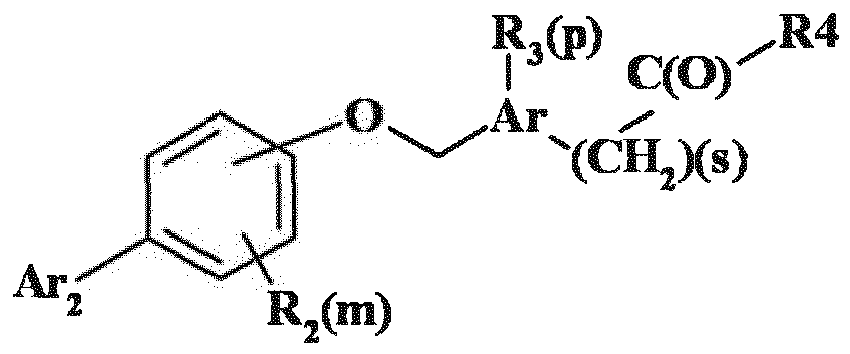
Description
- The present invention relates to a novel compound having a glycogen synthase-activating function, and to a pharmaceutical composition for treating diabetes, which contains the compound.
- Diabetes mellitus is an important disease for people nowadays, and the incidence of diabetes has been an upward trend in recent years. Many therapeutic drugs for diabetes have been developed on the basis of mechanisms of onset of diabetes, and have been actually used. For example, an insulin sensitivity enhancer, an α-glycosidase inhibitor, an insulin secretion promoter, insulin preparation, and the like have been used alone or in combination of two or more.
- Under such circumstances as described above, a technique has been under development, which is adopted to treat diabetes by activating glycogen synthase, which is a novel mechanism different from those of the aforementioned conventional therapeutic drugs for diabetes. Specifically, biaryloxymethylarenecarboxylic acids have been proposed as compounds capable of activating glycogen synthase (Patent Literatures 1 to 9).
- Meanwhile, novel, pharmaceutically active compounds are required to be safe, for example, to have no side effect, in addition to a predetermined effect (s) for the disease treatment. Examining peroxisome proliferator-activated receptors PPARs has been proposed as means for drug safety evaluation (Non Patent Literature 1). This is due to the facts that: in experimental animals such as rats, administering certain drugs leads to hepatomegaly and significantly induces intrahepatic enzymes, and the long-term administration of the drugs causes liver cancer. The changes are characterized by significant proliferation of peroxisomes, which are organelles in the liver. It has been revealed that a receptor PPAR, especially a subfamily PPARα, activated by a peroxisome proliferator (PP) is involved in the mechanism of drug-liver peroxisome proliferation-liver carcinogenesis. This phenomenon has drawn attention at the drug safety evaluation (particularly, carcinogenicity evaluation) in the pharmaceutical drug development stage.
-
- Patent Literature 1:
WO2005/000781 - Patent Literature 2:
WO2006/058648 - Patent Literature 3:
WO2011/057956 - Patent Literature 4:
WO2011/057959 - Patent Literature 5:
WO2011/057993 - Patent Literature 6:
WO2011/058122 - Patent Literature 7:
WO2011/058154 - Patent Literature 8:
WO2011/067174 - Patent Literature 9:
WO2011/067266 - Non Patent Literature 1: Journal of Clinical and Experimental Medicine (Igaku No Ayumi), Vol. 220, No. 1 (2007) pp. 75-80
- An object of the present invention is to provide a novel, highly safe compound, which has a glycogen-synthase activation ability but activates a receptor PPAR to a low degree.
- Another object of the present invention is to provide a pharmaceutical composition containing the compound.
- Another object of the present invention is to provide a pharmaceutical composition for treating diabetes, which contains the compound.
- Still another object of the present invention is to provide a glycogen synthase activator containing the compound.
- Focusing on biaryl rings of biaryloxymethylarenecarboxylic acid compounds described in Patent Literatures 1 to 9, the present invention has been made on the basis of the finding that the above objects can be efficiently achieved by the alteration and so forth to a fused heterocyclic ring, in which a 5-membered ring or a 6-membered ring containing an oxygen atom, a sulfur atom, a nitrogen atom, or the like as a ring-constituting atom is fused to a phenyl group located at an end.
- Specifically, the present invention provides a compound represented by the following general formula (I), or a pharmaceutically acceptable salt thereof:


- wherein Ar is an aromatic carbocyclic ring or a heterocyclic ring;
- Ar2 is represented by any one of the following rings


the substituent is selected from the group consisting of acetamido, aminocarbonyl, benzyl, benzyloxy, a halogen, hydroxyl-lower alkyl, lower alkyl, lower alkoxy-lower alkyl, phenoxy, phenyl, a formyl group, a cyano group, a cyanoalkyl group, a hydroxyiminomethyl group, a hydroxyamidino group, an amino group, an aminoalkyl group, an alkylaminoalkyl group, a dialkylaminoalkyl group, lower alkoxy, and trifluoro-methoxy; - R2 and R3 are independently selected from the group consisting of lower alkyl, lower alkoxy, trifluoromethyl, a halogen, hydroxy, a hydroxyl-lower alkyl group, amino, alkylamino, dialkylamino, cyano, and nitro;
- R4 is an amino acid residue bonded to C(O) through a nitrogen atom of the amino acid;
- R5 is a cyanoalkyl group or -CD3, or is represented by any one of the following substituents

- R6 is hydrogen, a lower alkyl group, a cyanoalkyl group, a hydroxyalkyl group, or an alkoxyalkyl group, or is represented by any one of the following substituents

- R7 and R8 are each a cyanoalkyl group, a formyl group, an alkoxycarbonyl group, or a hydroxyiminomethyl group;
- Rg is hydrogen or a lower alkyl group;
- m is 0, 1, 2, 3, or 4;
- p is 0, 1, or 2; and
- s is 0, 1, or 2.
- In a general formula (I), an aromatic carbocyclic ring includes aromatic carbocyclic rings such as a phenyl group and a naphthyl group. Meanwhile, a heterocyclic ring includes 5-membered to 8-membered heterocyclic rings containing, as a ring-constituting atom, at least one heteroatom selected from the group consisting of an oxygen atom, a nitrogen atom, and a sulfur atom. Among them, a furan group and a thiazole group are preferable.
- In the general formula (I), a lower alkyl group and a lower alkoxy group preferably have 1 to 6 carbon atoms, more preferably have 1 to 3 carbon atoms. These may be linear or branched. In addition, an alkyl group and an alkoxy group in a cyanoalkyl group, an aminoalkyl group, an alkylaminoalkyl group, a dialkylaminoalkyl group, an alkylamino group, a dialkylamino group, a hydroxyalkyl group, an alkoxyalkyl group, and an alkoxycarbonyl group preferably have 1 to 18 carbon atoms, more preferably have 1 to 6 carbon atoms, and most preferably have 1 to 3 carbon atoms.
- In the general formula (I), R2 and R3 are each preferably a hydrogen atom or a halogen, more preferably a hydrogen atom.
- In the general formula (I), R5 is preferably CH2CN, -CD3, -CH2CH=CH2, -CH2C≡CH, CH2C(O)CH3, or CH2CH(OH)CH3, while R6 is preferably a methyl group, a hydrogen atom, CH2C(O)CH3, CH2CH2OH, or CH2CN. Additionally, D in -CD3 as R5 represents deuterium.
- In the general formula (I), R7 and R8 are each preferably a cyanomethyl group, a methoxycarbonyl group, a hydroxyiminomethyl group, or a formyl group. R9 is preferably hydrogen.
- An amino acid serving as an amino acid residue in the general formula (I) includes proline, sarcosine, azetidine-2-carboxylic acid, N-methylalanine, 2,5-dihydro-1H-pyrrole-2-carboxylic acid, and 1,3-thiazolidine-4-carboxylic acid. Among them, proline and sarcosine are preferable.
- Here, Ar2 preferably has one, two, or three substituents, one or two of which are preferably a halogen(s).
- In the general formula (I), preferably m=0, p=0, and s=0.
- In the general formula (I), Ar2 is preferably represented by any one of the following rings which may have a substituent


- Of these, Ar2 is particularly preferably represented by any one of the following rings which may have a substituent


- Alternatively, Ar2 is preferably represented by any one of the following rings which may have a substituent

- Further, particularly, the substituent of the above rings is particularly preferably a halogen, hydroxy-lower alkyl, a lower alkoxy-lower alkyl group, a formyl group, a cyano group, a hydroxyiminomethyl group, a dialkylaminoalkyl group, or a lower alkyl group.
- A compound represented by the general formula (I) of the present invention and a pharmaceutically acceptable salt thereof can be synthesized according to the following synthesis scheme:

- Here, a phenol derivative (1) having a halogen at X1 is reacted with a benzoic acid ester derivative (2) having a halogen at X2, for example, in a solvent such as N,N-dimethylformamide (hereinafter, DMF) in the presence of a base such as potassium carbonate, so that an ester derivative (3) can be obtained. This is hydrolyzed to a carboxylic acid, for example, in a solvent such as methanol in the presence of a base such as sodium hydroxide. After conversion to an acid chloride using for example thionyl chloride or the like, the resultant can be reacted with various amino acids, for example, proline, for example, in a solvent such as dichloromethane in the presence of a base such as sodium hydroxide to thereby obtain an amide (4). The amide (4) is subjected to a coupling reaction, for example, in a solvent such as dioxane or water in the presence of a base such as sodium carbonate, using various boronic acid derivatives, and Pd or the like as a catalyst, so that a compound (5) can be obtained by.
- Alternatively, as shown in the following reaction equation, a phenol derivative (6) having a boronic acid derivative at X3 is reacted with a benzoic acid ester derivative (2) having a halogen at X2, for example, in a solvent such as DMF in the presence of a base such as potassium carbonate, so that an ester derivative (7) can be obtained. This is hydrolyzed to a carboxylic acid, for example, in a solvent such as methanol in the presence of a base such as sodium hydroxide. The resultant can be reacted with various amino acids, for example, proline, for example, in a solvent such as dichloromethane, using for example a condensation agent to thereby obtain an ester. The resultant can be hydrolyzed, for example, in a solvent such as methanol in the presence of a base such as sodium hydroxide to thereby obtain an amide (8). The amide (8) is subjected to a coupling reaction, for example, in a solvent such as dioxane or water in the presence of a base such as sodium carbonate using various halogen derivatives, and Pd or the like as a catalyst, so that the compound (5) can be obtained.

- In the present invention, in a case where the compound represented by the general formula (I) can be made in the form of a salt, it is only necessary that the salt be pharmaceutically acceptable. For example, in a case where an acidic group such as a carboxyl group is present in the formula, the pharmaceutically acceptable salt for such an acidic group includes an ammonium salt; salts with alkali metals such as sodium and potassium; salts with alkaline earth metals such as calcium and magnesium; aluminium salts; zinc salts; salts with organic amines such as triethylamine, ethanolamine, morpholine, piperidine, and dicyclohexylamine; and salts with basic amino acids such as arginine and lysine. Of these, sodium is preferably used.
- In a case where a basic group is present in the formula, the pharmaceutically acceptable salt for such a basic group includes salts with inorganic acids such as hydrochloric acid, sulfuric acid, phosphoric acid, nitric acid, hydrobromic acid; salts with organic carboxylic acids such as acetic acid, trifluoroacetic acid, citric acid, benzoic acid, maleic acid, fumaric acid, tartaric acid, succinic acid, tannic acid, butyric acid, hibenzic acid, pamoic acid, enanthic acid, decanoic acid, teoclic acid, salicylic acid, lactic acid, oxalic acid, mandelic acid, and malic acid; and salts with organic sulfonic acids such as methanesulfonic acid, benzenesulfonic acid, and p-toluenesulfonic acid. Of these, hydrochloric acid and trifluoroacetic acid are preferably used.
- As a method for forming the salt, the compound represented by the general formula (I) and a required acid or base may be mixed at an appropriate quantity ratio in a solvent or a dispersant, or the salt can be obtained from another salt form by cation exchange or anion exchange.
- The compound of the present invention also includes solvates, for example, hydrates, alcohol adducts, and the like of the compound represented by the general formula (I).
- The compound of the present invention may also be converted to a prodrug. In the present invention, a prodrug refers to a compound that is converted in vivo so that the compound of the present invention can be produced. For example, in a case where the active form contains a carboxyl group or a phosphate group, the prodrug includes esters of the carboxyl group or the phosphate group, amides thereof, and the like. Meanwhile, in a case where the active form contains an amino group, the prodrug includes amides of the amino group, carbamates thereof, and the like. In a case where the active form contains a hydroxyl group, the prodrug includes esters of the hydroxyl group, carbonates thereof, carbamates thereof, and the like. When the compound of the present invention is converted to a prodrug, the prodrug may be bonded to an amino acid or sugars.
- The present invention includes all isotopes of the compound represented by the general formula (I). The isotopes of the compound of the present invention each have at least one atom substituted with an atom having the same atomic number (proton number) but having a different mass number (sum of the numbers of protons and neutrons). Examples of the isotopes included in the compound of the present invention are: a hydrogen atom, a carbon atom, a nitrogen atom, an oxygen atom, a phosphorus atom, a sulfur atom, a fluorine atom, a chlorine atom, and the like, including 2H, 3H, 13C, 14C, 15N, 17O, 180, 31P, 32P, 35S, 18F, 36Cl, and the like. Particularly, unstable radioisotopes such as 3H and 14C that release radiation and emit neutrons are useful for a body tissue distribution test and the like to be conducted on a pharmaceutical drug or compound. A stable isotope does not decay, so that the abundance hardly changes and no radiation is released; accordingly, such a stable isotope can be used safely. The isotope of the compound of the present invention can be converted according to a conventional method by replacing a reagent used for synthesis with a reagent containing a corresponding isotope.
- A pharmaceutical composition of the present invention can be preferably used for treatment of diseases mediated by a decrease in the activity of glycogen synthase. Particularly, the pharmaceutical composition of the present invention can be preferably used for treatment of diabetes, especially, type 2 diabetes and impaired glucose tolerance.
- The pharmaceutical composition and a glycogen synthase activator of the present invention vary, depending on the administration target, the administration route, the target disease, the symptoms, and the like. Nevertheless, the pharmaceutical composition and the glycogen synthase activator of the present invention are preferably used for oral administration as the administration route. The dose in a single administration is preferably 1 mg to 1000 mg in terms of the active ingredient/person, more preferably 1 mg to 100 mg in terms of the active ingredient/ person. This dose is desirably administered one time to three times a day.
- The pharmaceutical composition and the glycogen synthase activator of the present invention contain the compound represented by the general formula (I) and/or the pharmaceutically acceptable salt thereof as the active ingredient, but may also contain various ingredients generally used in orally administered drugs, for example, a pharmaceutically or physiologically acceptable solid or liquid carrier, additive, and the like.
- Examples of the carrier include glucose, lactose, sucrose, starches, mannitol, dextrins, fatty acid glycerides, polyethylene glycol, hydroxymethyl starches, ethylene glycol, polyoxyethylene sorbitan fatty acid esters, gelatins, albumins, amino acids, water, salines, and the like. In addition, as necessary, commonly-used additives such as a stabilizer, a moisturizer, an emulsifier, a binder, and an isotonic agent can also be added as appropriate.
- The additives are not particularly limited, as long as they are used in accordance with their purposes and also generally used for the purposes. Specifically, examples thereof include flavors, sugars, sweeteners, food fiber, vitamins, amino acids such as monosodium glutamate (MSG), nucleic acids such as inosine monophosphate (IMP), inorganic salts such as sodium chloride, water, and the like.
- The pharmaceutical composition and the glycogen synthase activator of the present invention can be used in orally administrable forms, such as dry powder, paste, and solution, without limitation to physical properties.
- Examples of such an orally administrable form include tablets (including sugar coated tablets, film coated tablets, sublingual tablets, and orally disintegrating tablets), capsules (including soft capsules and microcapsules), granules, powders, troches, syrups, emulsions, suspensions, films (e.g., orally disintegrating films), lyophilized formulations, and the like.
- Alternatively, the pharmaceutical composition and the glycogen synthase activator of the present invention can also be used in the form of parenteral preparations such as injections (e.g., subcutaneous injections, intravenous injections, intramuscular injections, intraperitoneal injections, drips), external preparations (e.g., transdermal preparations, ointments), suppositories (e.g., rectal suppositories, vaginal suppositories), pellets, intranasal agents, transpulmonary agents (inhalants), and eye drops.
- Each of these can be safely administered orally or parenterally (e.g., locally, rectally, intravenously administered). These preparations may be controlled-release preparations such as immediate-release preparations or sustained-release preparations (e.g., sustained-release microcapsules). These preparations can be prepared by pharmaceutically common means.
- Additionally, the pharmaceutical composition and the glycogen synthase activator of the present invention can be used in combination with other antidiabetic drugs, drugs for diabetic complications, anti-hyperlipemia drugs, antihypertensives, and/or anti-obesity drugs (hereinafter, abbreviated as combination drugs). These combination drugs may be low in molecular weight, or may be high-molecular-weight proteins, polypeptides, antibodies, nucleic acids (including antisense nucleic acids, siRNAs, shRNAs), vaccines, or the like. These combination drugs may be used alone or in combination of two or more.
- The administration timing of the pharmaceutical composition and the glycogen synthase activator of the present invention or the combination drugs is not limited. These may be administered to the administration target simultaneously, or may be administered with an interval.
- Note that the antidiabetic drugs include insulin preparations (e.g., animal insulin preparations extracted from the pancreas of cattle or pigs; human insulin preparations synthesized by genetic engineering using Escherichia coli or yeast; insulin zinc; protamine insulin zinc; insulin fragments or derivatives (e.g., INS-1), oral insulin preparations), insulin resistance improvers (e.g., pioglitazone or salts thereof (preferably hydrochloride), rosiglitazone or salts thereof (preferably maleate), tesaglitazar), ragaglitazar, muraglitazar, edaglitazone, metaglidasen, naveglitazar, AMG-131, THR- 0921), α-glucosidase inhibitors (e.g., voglibose, acarbose, miglitol, emiglitate), biguanides (e.g., metformin, buformin, or salts thereof (e.g., hydrochloride, fumarate, succinate)), insulin secretion promoters [sulfonylureas (e.g., tolbutamide, glibenclamide, gliclazide, chlorpropamide, tolazamide, acetohexamide, glyclopyramide, glimepiride, glipizide, glybuzole), repaglinide, nateglinide, mitiglinide, or calcium salt hydrates thereof], dipeptidyl peptidase IV inhibitors (e.g., alogliptin, vildagliptin, sitagliptin, saxagliptin, T-6666, TS-021), β3 agonists (e.g., AJ-9677), GPR40 agonists, GPR120 agonists, GLP-1 receptor agonists [e.g., GLP-1, GLP-1MR agent, NN-2211, AC-2993 (exendin-4), BIM-51077, Aib(8,35)hGLP-1(7,37)NH2, CJC-1131], amylin agonists (e.g., pramlintide), phosphotyrosine phosphatase inhibitors (e.g., sodium vanadate), gluconeogenesis inhibitors (e.g., glycogen phosphorylase inhibitors, glucose-6-phosphatase inhibitors, glucagon antagonists), SGLT (sodium-glucose cotransporter) inhibitors (e.g., dapagliflozin, canagliflozin, ipragliflozin, BI-10773), 11β-hydroxysteroiddehydrogenase inhibitors (e.g., BVT-3498), adiponectin or agonists thereof, IKK inhibitors (e.g., AS-2868), leptin resistance improvers, somatostatin receptor agonists, glucokinase activators (e.g., Ro- 28-1675), GIP (glucose-dependent insulinotropic peptide), and the like.
- Further, the compound represented by the general formula (I) and/or the pharmaceutically acceptable salts thereof can be used in such forms used for a supplement or the like that they are enclosed in a granule, a tablet, a gelatin capsule, or the like.
- Next, the present invention will be specifically described by way of Examples.
- Hereinafter, the present invention will be described in more details by way of Examples. However, the present invention is not limited to these Examples.
-

- N,N-dimethylformamide (hereinafter, DMF) (100 mL), potassium carbonate (1.1 g, 7.8 mmol), and methyl 3-(bromomethyl)benzoate (1.2 g, 5.2 mmol) were added to 4-iodophenol (1.2g, 5. 5 mmol), and stirred at room temperature overnight. Ethyl acetate was used as an extraction solvent, and after washing with water, a 1 N sodium hydroxide aqueous solution, and saturated brine, the resultant was dried over magnesium sulfate. The solvent was distilled away under reduced pressure. To the resulting residue (1.9 g, 5.2 mmol), tetrahydrofuran (hereinafter, THF) (10 mL), methanol (10 mL), and a 1 N sodium hydroxide aqueous solution (20 mL) were added, and stirred at room temperature for 4 hours. Ethyl acetate was used as an extraction solvent, and after washing with a 1 N hydrochloric acid aqueous solution and saturated brine, the resultant was dried over magnesium sulfate. The solvent was distilled away under reduced pressure. To the resulting residue, thionyl chloride (20 mL) was added, and stirred at 40°C for 1 hour. After that, the solvent was distilled away under reduced pressure. To the resulting residue, dichloromethane (10 mL), a 1 N sodium hydroxide aqueous solution (15 mL), and L-proline (1.1 g, 9.2 mmol) were added, and stirred at room temperature overnight. The solvent was distilled away under reduced pressure. The resultant was washed with a 1 N hydrochloric acid aqueous solution and saturated brine, and then dried over magnesium sulfate. The solvent was distilled away under reduced pressure. The resulting residue was washed with a water-acetonitrile mixture solvent, and then dried to thus obtain the title compound.
Yield: 1.5 g (3.3 mmol), percentage yield: 64%
MS (ESI, m/z) 452 [M+H]+
1H NMR (DMSO-d6, 400MHz) δ 1.76-1.99 (m, 3H), 2.18-2.33 (m, 1H), 3.38-3.61 (m, 2H), 4.29-4.43 (m, 1H), 5.08-5.19 (m, 2H), 6.84-6.91 (m, 2H), 7.43-7.50 (m, 2H), 7.51-7.64 (m, 4H), 12.55 (br s, 1H). - DMF (50 mL), 1-bromo-2-chloroethane (1.0 mL), 12 mmol), and potassium carbonate (1.7 g, 12 mmol) were added to 2,6-dibromo-4-fluorophenol (3.0 g, 11 mmol), and stirred at 50°C overnight. Ethyl acetate was used as an extraction solvent, and after washing with water and saturated brine, and the resultant was dried over magnesium sulfate. The solvent was distilled away under reduced pressure. The resulting residue was purified by silica gel column chromatography to thus obtain the title compound.
Yield: 2.5 g (7.4 mmol), percentage yield: 56%
MS (ESI, m/z) 333 [M+H]+ - To the compound (2.5 g, 7.4 mmol) obtained in Step 1, THF (50 mL) was added. At -78°C, a 2.6 M n-butyllithium/n-hexane solution (2.9 mL, 7.5 mmol) was added thereto and stirred for 1 hour, and then stirred at room temperature overnight. The solvent was distilled away under reduced pressure. The resulting residue was subjected to reversed-phase HPLC using ODS as a filler, and eluted with a mixture solution of water and acetonitrile, which contained trifluoroacetic acid at 0.1% (v/v). The target fraction was lyophilized to thus obtain the title compound.
Yield: 300 mg (1.4 mmol), percentage yield: 19%
MS (ESI, m/z) 218 [M+H]+ - To the compound (300 mg, 1.4 mmol) obtained in Step 2, 4-hydroxyphenylboronic acid (230 mg, 1.7 mmol), sodium carbonate (292 mg, 2.8 mmol), tetrakis(triphenylphosphine)palladium(0) (hereinafter, Pd(PPh3)4) (catalytic amount), 1,4-dioxane (10 mL), water (3 mL) were added, and stirred at 90°C for 2 hours. The solvent was distilled away under reduced pressure. Ethyl acetate was used as an extraction solvent, and after washing with a 1 N hydrochloric acid aqueous solution and saturated brine, the resultant was dried over magnesium sulfate. The solvent was distilled away under reduced pressure. To the resulting residue, DMF (10 ml), potassium carbonate (280 mg, 2.8 mmol), and methyl 3-(bromomethyl)benzoate (470 mg, 2.1 mmol) were added, and stirred at 50°C overnight. Ethyl acetate was used as an extraction solvent, and after washing with water, a 1 N sodium hydroxide aqueous solution, and saturated brine, the resultant was dried over magnesium sulfate. The solvent was distilled away under reduced pressure. To the resulting residue, THF (5 mL), methanol (5 mL), and a 1 N sodium hydroxide aqueous solution (10 mL) were added, and stirred at room temperature for 4 hours. The solvent was distilled away under reduced pressure. Ethyl acetate was used as an extraction solvent, and after washing with a 1 N hydrochloric acid aqueous solution and saturated brine, the resultant was dried over magnesium sulfate. After the solvent was distilled away under reduced pressure, the resulting residue was washed with a water-acetonitrile mixture solvent, and then dried to thus obtain the title compound.
Yield: 150 mg (0.41 mmol), percentage yield: 29%
MS (ESI, m/z) 365 [M+H]+ - To the compound (30 mg, 0.082 mmol) obtained in Step 3, thionyl chloride (2 mL) was added, and stirred at 40°C for 1 hour. After that, the solvent was distilled away under reduced pressure. To the resulting residue, dichloromethane (4 mL), a 1 N sodium hydroxide aqueous solution (2 mL), and L-proline (30 mg, 0.26 mmol) were added, and stirred at room temperature overnight. The solvent was distilled away under reduced pressure. The resultant was washed with a 1 N hydrochloric acid aqueous solution and saturated brine, and then dried over magnesium sulfate. The solvent was distilled away under reduced pressure. The resulting residue was purified by reversed-phase HPLC in the same manner as in Step 2 to thus obtain the title compound.
Yield: 7 mg (0.015 mmol), percentage yield: 18%
MS (ESI, m/z) 462 [M+H]+ - An operation similar to that in Step 4 of Example 1 was performed using N-methylglycine in place of L-proline to thus obtain the title compound.
Yield: 7.5 mg (0.0172 mmol), percentage yield: 20%
MS (ESI, m/z) 436 [M+H]+ - To the intermediate 1 (32 mg, 0.0710 mmol), 4-fluorobenzofuran-7-boronic acid (15.3 mg, 0.0852 mmol), sodium carbonate (16.6 mg, 0.156 mmol), and [1,1'-bis(diphenylphosphino)ferrocene]dichloropalladium(II) (hereinafter, Pd(dppf)Cl2) (catalytic amount), 1,4-dioxane (0.75 mL), and water (0.25 mL) were added, and stirred at 105°C for 1 hour and a half. The insoluble material was filtered off, and the resultant was purified by reversed-phase HPLC in the same manner as in Step 2 of Example 1 to thus obtain the title compound.
Yield: 21.3 mg (0.0464 mmol), percentage yield: 65%
MS (ESI, m/z) 460 [M+H]+
1H NMR (DMSO-d6, 400MHz) δ 1.75-2.35 (m, 4H), 3.39-3.63 (m, 2H), 4.32-4.44 (m, 1H), 5.16-5.28 (m, 2H), 7.13-7.21 (m, 4H), 7.46-7.64 (m, 5H), 7.77 (d, J = 8.8 Hz, 2H), 8.12 (d, J = 2.2 Hz, 1H), 12.53 (br s, 1H). - An operation similar to that in Example 3 was performed using 2,3-methylenedioxyphenylboronic acid in place of 4-fluorobenzofuran-7-boronic acid to thus obtain the title compound.
Yield: 23.5 mg (0.0528 mmol), percentage yield: 66%
MS (ESI, m/z) 446 [M+H]+
1H NMR (DMSO-d6, 400MHz) δ 1.74-2.35 (m, 4H), 3.39-3.63 (m, 2H), 4.31-4.45 (m, 1H), 5.13-5.27 (m, 2H), 6.05 (s, 1H), 6.85-6.94 (m, 2H), 7.06-7.14 (m, 3H), 7. 31-7. 62 (m, 4H), 7. 68 (d, J = 8.8 Hz, 2H), 12.54 (br s, 1H). - An operation similar to that in Example 3 was performed using 2,3-dihydro-1-benzofuran-7-boronic acid in place of 4-fluorobenzofuran-7-boronic acid to thus obtain the title compound.
Yield: 29.9 mg (0.0674 mmol), percentage yield: 80%
MS (ESI, m/z) 444 [M+H]+
1H NMR (DMSO-d6, 400MHz) δ 1.73-2.32 (m, 4H), 3.22 (t, J = 8.7 Hz, 2H), 3.58 (s, 2H), 4.32-4.44 (m, 1H), 4.55 (t, J = 8.7 Hz, 2H), 5.11-5.25 (m, 2H), 6.89 (t, J = 7.5 Hz, 1H), 7.03-7.10 (m, 2H), 7.14-7.20 (m, 1H), 7.25 (d, J = 7.5 Hz, 1H), 7.30-7.52 (m, 2H), 7.54-7.66 (m, 4H). - An operation similar to that in Example 3 was performed using benzofuran-5-boronic acid in place of 4-fluorobenzofuran -7-boronic acid to thus obtain the title compound.
Yield: 16.4 mg (0.0371 mmol), percentage yield: 54%
MS (ESI, m/z) 442 [M+H]+
1H NMR (DMSO-d6, 400MHz) 5 1. 76-2. 00 (m, 3H), 2.20-2.33 (m, 1H), 3.40-3.62 (m, 2H), 4.32-4.44 (m, 1H), 5.15-5.26 (m, 2H), 6.96-7.00 (m, 1H), 7.09-7.14 (m, 2H), 7.31-7.66 (m, 8H), 7.85 (d, J = 1.6 Hz, 1H), 8.01 (d, J = 2.2 Hz, 1H), 12.57 (br s, 1H). - An operation similar to that in Example 3 was performed using benzofuran-7-boronic acid in place of 4-fluorobenzofuran -7-boronic acid to thus obtain the title compound.
Yield: 20.6 mg (0.0467 mmol), percentage yield: 68%
MS (ESI, m/z) 442 [M+H]+
1H NMR (DMSO-d6, 400MHz) δ 1.73-2.35 (m, 4H), 3. 42-3. 63 (m, 2H), 4.45-4.32 (m, 1H), 5.17-5.29 (m, 2H), 7.03 (d, J = 2.2 Hz, 1H), 7.13-7.23 (m, 2H), 7.25-7.70 (m, 7H), 7.75-7.89 (m, 2H), 8.05 (d, J = 2.2 Hz, 1H), 12.59 (br s, 1H). -

- DMF (10 ml), propargyl bromide (1.14 m, 15.1 mmol), and potassium carbonate (4.0 g, 29 mmol) were added to 2-bromophenol (2.5 g, 14.5 mmol), and stirred at room temperature overnight. Ethyl acetate was used as an extraction solvent, and after washing with water and saturated brine, the resultant was dried over magnesium sulfate. The solvent was distilled away under reduced pressure. To the resulting residue, N,N-dimethylaniline (5 mL) was added, and stirred at 250°C for 20 minutes. After that, cesium fluoride (690 mg, 3.6 mmol) was added thereto and stirred at 250°C for 4 hours. The resultant was returned to room temperature, ethyl acetate was used as an extraction solvent, and a 1 N hydrochloric acid aqueous solution was added. Thereafter, the insoluble material was filtered off with celite, and the resultant was washed with saturated brine, and then dried over magnesium sulfate. The solvent was distilled away under reduced pressure. Portions of the resulting residue were purified by reversed-phase HPLC in the same manner as in Step 2 of Example 1 to thus obtain the title compounds (A) and (B).
- To the compound (A) (220 mg, 1.0 mmol) obtained in Step 1, 4-hydroxyphenylboronic acid (172 mg, 1.3 mmol), sodium carbonate (220 mg, 2.1 mmol), Pd(PPh3)4 (catalytic amount), 1,4-dioxane (10 mL), and water (3 mL) were added, and stirred at 90°C for 2 hours. The solvent was distilled away under reduced pressure. Ethyl acetate was used as an extraction solvent, and after washing with a 1 N hydrochloric acid aqueous solution and saturated brine, the resultant was dried over magnesium sulfate. The solvent was distilled away under reduced pressure. The resulting residue was purified by reversed-phase HPLC in the same manner as in Step 2 of Example 1 to thus obtain the title compound.
Yield: 200 mg (0.89 mmol), percentage yield: 89%
MS (ESI, m/z) 225 [M+H]+
1H NMR (DMSO-d6, 400 MHz) 5 3.30 (s, 3H), 6.62 (s, 1H), 6.88 (d, 2H), 7.23 (dd, 1H), 7.31 (s, 1H), 7.42 (s, 1H), 7.71 (d, 2H), 9.52 (s, 1H). - To the compound (200 mg, 0.89 mmol) obtained in Step 2, DMF (10 ml), potassium carbonate (280 mg, 2.8 mmol), and methyl 3-(bromomethyl)benzoate (470 mg, 2.1 mmol) were added, and stirred at 50°C overnight. Ethyl acetate was used as an extraction solvent, and after washing with water, a 1 N sodium hydroxide aqueous solution, and saturated brine, the resultant was dried over magnesium sulfate. The solvent was distilled away under reduced pressure. To the resulting residue, methanol (4 mL) and a 1 N sodium hydroxide aqueous solution (2 mL) were added, and stirred at room temperature for 4 hours. The solvent was distilled away under reduced pressure. Ethyl acetate was used as an extraction solvent, and after washing with a 1 N hydrochloric acid aqueous solution and saturated brine, the resultant was dried over magnesium sulfate. After the solvent was distilled away under reduced pressure, the resulting residue was washed with a water-acetonitrile mixture solvent, and then dried. Thionyl chloride (2 mL) was added to 20 mg of the resulting residue, and stirred at 40°C for 1 hour. After that, the solvent was distilled away under reduced pressure. To the resulting residue, dichloromethane (4 mL), a 1 N sodium hydroxide aqueous solution (2 mL), and L-proline (30 mg, 0.26 mmol) were added, and stirred at room temperature overnight. The solvent was distilled away under reduced pressure. The resultant was washed with a 1 N hydrochloric acid aqueous solution and saturated brine, and then dried over magnesium sulfate. The solvent was distilled away under reduced pressure. The resulting residue was purified by reversed-phase HPLC in the same manner as in Step 2 of Example 1 to thus obtain the title compound.
Yield: 5 mg (0.010 mmol)
MS (ESI, m/z) 456 [M+H]+ - To the compound (B) (120 mg, 0.57 mmol) obtained in Step 1 of Example 8, 4-hydroxyphenylboronic acid (94 mg, 0.68 mmol), sodium carbonate (121 mg, 1.1 mmol), Pd(PPh3)4 (catalytic amount), 1,4-dioxane (10 mL), and water (3 mL) were added, and stirred at 90°C for 2 hours. The solvent was distilled away under reduced pressure. Ethyl acetate was used as an extraction solvent, and after washing with a 1 N hydrochloric acid aqueous solution and saturated brine, the resultant was dried over magnesium sulfate. The solvent was distilled away under reduced pressure. The resulting residue was purified by reversed-phase HPLC in the same manner as in Step 2 of Example 1 to thus obtain the title compound.
Yield: 90 mg (0.40 mmol), percentage yield: 70%
MS (ESI, m/z) 225 [M+H]+
1H NMR (DMSO-d6, 400 MHz) δ 4.72 (s, 2H), 5.91 (d, 1H), 6.58 (d, 1H), 6.77 (d, 2H), 6.92-7.23 (m, 2H), 7.23 (d, 2H), 9.42 (s, 1H). - To the compound (90 mg, 0.40 mmol) obtained in Step 1, DMF (10 ml), potassium carbonate (138 mg, 0.60 mmol), and methyl 3-(bromomethyl)benzoate (110 mg, 0.60 mmol) were added, and stirred at 50°C overnight. Ethyl acetate was used as an extraction solvent, and after washing with water, a 1 N sodium hydroxide aqueous solution, and saturated brine, the resultant was dried over magnesium sulfate. The solvent was distilled away under reduced pressure. To the resulting residue, methanol (4 mL) and a 1 N sodium hydroxide aqueous solution (2 mL) were added, and stirred at room temperature for 4 hours. The solvent was distilled away under reduced pressure. Ethyl acetate was used as an extraction solvent, and after washing with a 1 N hydrochloric acid aqueous solution and saturated brine, the resultant was dried over magnesium sulfate. After the solvent was distilled away under reduced pressure, the resulting residue was washed with a water-acetonitrile mixture solvent, and then dried. Thionyl chloride (2 mL) was added to 10 mg of the resulting residue, and stirred at 40°C for 1 hour. After that, the solvent was distilled away under reduced pressure. To the resulting residue, dichloromethane (4 mL), a 1 N sodium hydroxide aqueous solution (2 mL), and L-proline (30 mg, 0.26 mmol) were added, and stirred at room temperature overnight. The solvent was distilled away under reduced pressure. The resultant was washed with a 1 N hydrochloric acid aqueous solution and saturated brine, and then dried over magnesium sulfate. The solvent was distilled away under reduced pressure. The resulting residue was purified by reversed-phase HPLC in the same manner as in Step 2 of Example 1 to thus obtain the title compound.
Yield: 3 mg (0.007 mmol)
MS (ESI, m/z) 456 [M+H]+ - 1,4-Dioxane (12 mL) and water (4 mL) were added to 4-bromophenol (315 mg, 1.82 mmol), 4-fluorobenzofuran-7-boronic acid (360 mg, 2.00 mmol), sodium carbonate (405 mg, 3.82 mmol), and Pd(dppf)Cl2 (catalytic amount), and stirred at 100°C for 2 hours and a half. The reaction solution was concentrated under reduced pressure. To the residue, ethyl acetate and 1 N hydrochloric acid were added and stirred. After that, the insoluble material was filtered off, and extraction was performed with ethyl acetate. The organic phase was washed with a saturated aqueous sodium hydrogen carbonate solution and saturated brine, and then dried over anhydrous magnesium sulfate. The solvent was distilled away under reduced pressure. The resulting residue was purified by silica gel chromatography (hexane/ethyl acetate). To the resulting solid (352 mg, 1.54 mmol), ammonium acetate (59 mg, 0.770 mmol) was added. After dissolved in methanol (35 mL), the reaction was carried out using a continuous hydrogenation reaction apparatus (10% palladium-carbon, 50 bar, 50°C, 1 mL/minute, once). The reaction solution was concentrated under reduced pressure. The resulting residue was dissolved in ethanol (35 mL) and chloroform (1 mL), and reacted using a continuous hydrogenation reaction apparatus (10% palladium-carbon, 50 bar, 60°C, 1 mL/minute, 3 times). The reaction solution was concentrated under reduced pressure. The resulting residue was purified by reversed-phase HPLC in the same manner as in Step 2 of Example 1 to thus obtain the title compound.
Yield: 45 mg (0.195 mmol), percentage yield: 11%
1H NMR (CDCl3, 400MHz) δ 3.30 (t, J = 8.8 Hz, 2H), 4. 67 (t, J = 8.8 Hz, 2H), 6.63 (t, J = 8.4 Hz, 1H), 6.84-6.91 (m, 2H), 7.18 (dd, J = 8.6, 5.7 Hz, 1H), 7.48-7.55 (m, 2H). - To 45 mg (0.195 mmol) of the compound obtained in Step 1, methyl 3-(bromomethyl)benzoate (67 mg, 0.293 mmol), potassium carbonate (54 mg, 0.390 mmol), and DMF (2 mL) was added, and stirred at room temperature for 4.5 hours. The mixture was concentrated under reduced pressure. The resulting residue was diluted with ethyl acetate, washed with 1 N hydrochloric acid, a saturated aqueous sodium hydrogen carbonate solution, and saturated brine, and then dried over anhydrous magnesium sulfate. The solvent was distilled away under reduced pressure. The resulting residue was purified by silica gel chromatography (hexane/ethyl acetate) to thus obtain the title compound. Yield: 73.5 mg (0.194 mmol), percentage yield: quantitative 1H NMR (CDCl3, 400MHz) δ 3.30 (t, J = 8.8 Hz, 2H), 3. 93 (s, 3H), 4.67 (t, J = 8.8 Hz, 2H), 5.14 (s, 2H), 6.64 (t, J = 8.4 Hz, 1H), 6.99-7.05 (m, 2H), 7.16-7.21 (m, 1H), 7.47 (t, J = 7.7 Hz, 1H), 7.54-7.59 (m, 2H), 7.63-7.68 (m, 1H), 7.98-8.03 (m, 1H), 8.10-8.15 (m, 1H).
- To the compound (71.1 mg, 0.188 mmol) obtained in Step 2, methanol (1 mL and THF (1 mL) were added, and a 1 N lithium hydroxide aqueous solution (0.5 mL) was added thereto under ice-cooling. After the mixture was stirred at room temperature for 7 hours, 1 N hydrochloric acid (1 mL) was added thereto. The precipitated solid was collected by filtration and dried to thus obtain the title compound.
Yield: 61.9 mg (0.170 mmol), percentage yield: 90%
1H NMR (DMSO-d6, 400 MHz) δ 3.27 (t, J = 8.8 Hz, 2H), 4.65 (t, J = 8.8 Hz, 2H), 5.23 (s, 2H), 6.75 (t, J = 8.5 Hz, 1H), 7.04-7.10 (m, 2H), 7.30 (dd, J = 8.6, 5.8 Hz, 1H), 7.51-7.60 (m, 3H), 7.69-7.74 (m, 1H), 7.88-7.93 (m, 1H), 8.02-8.06 (m, 1H), 13.01 (br s, 1H). - To the compound (30.0mg, 0.0823 mmol) of Step 3, thionyl chloride (1 mL) and DMF (catalytic amount) were added, and stirred at 50°C for 30 minutes. The reaction solution was concentrated under reduced pressure. To the resulting residue, ethyl acetate was added to suspend the residue therein, and the suspension was concentrated under reduced pressure. The resulting residue was dissolved in dichloromethane (1 mL), and added dropwise under ice-cooling to a mixture solution of L-proline (28.4 mL, 0.247 mmol) in a dichloromethane (1 mL)-1 N sodium hydroxide aqueous solution (1 mL).
After the mixture was stirred at room temperature for 1 hour, 1 N hydrochloric acid (1 mL) was added thereto. The mixture was concentrated under reduced pressure. The resulting residue was purified by reversed-phase HPLC in the same manner as in Step 2 of Example 1 to thus obtain the title compound. Yield: 28.6 mg (0.0620 mmol), percentage yield: 75%
MS (ESI, m/z) 462 [M+H]+
1H NMR (DMSO-d6, 400 MHz) δ 1.75-1.97 (m, 3H), 2.19-2.34 (m, 1H), 3.27 (t, J = 8.7 Hz, 2H), 3.39-3.53 (m, 2H), 4.30-4.44 (m, 1H), 4.65 (t, J = 8.7 Hz, 2H), 5.11-5.25 (m, 2H), 6.75 (t, J = 8.5 Hz, 1H), 7.07 (d, J = 8.9 Hz, 2H), 7.26-7.52 (m, 4H), 7.54-7.62 (m, 3H). -

- DMF (125 mL) was added to 4-(4,4,5,5-tetramethyl -1,3,2-dioxaborolan-2-yl)phenol (8.46 g, 38 mmol), methyl 3-(bromomethyl)benzoate (8.8 g, 38 mmol), and potassium carbonate (10.6 g, 77 mmol), and stirred at room temperature overnight. The resultant was diluted with ethyl acetate, washed with water and saturated brine, and then dried over anhydrous magnesium sulfate. The solvent was distilled away under reduced pressure. To the resulting residue, methanol (150 mL), water (30 mL), and lithium hydroxide (4.8 g, 114 mmol) were added, and stirred at room temperature overnight. After the solvent was distilled away under reduced pressure, the resultant was diluted with ethyl acetate, then washed with 1 N hydrochloric acid and saturated brine, and dried over anhydrous magnesium sulfate. The solvent was distilled away under reduced pressure. To the resulting residue, dichloromethane (150 mL), 1-ethyl-3-(3-dimethylaminopropyl) -carbodiimide hydrochloride (hereinafter, WSC) (7.34 g, 38.2 mmol), tert-butyl L-prolinate (7.95 g, 38.2 mmol), and triethylamine (9.65 mL), 69.4 mmol) were added, and stirred at room temperature overnight. The resultant was washed with water, 1 N hydrochloric acid, 1 N sodium hydroxide, and saturated brine, and then dried over anhydrous magnesium sulfate. The solvent was distilled away under reduced pressure, and the residue was purified by silica gel chromatography (hexane/ethyl acetate). To the resulting compound, TFA (150 mL) was added, and stirred at room temperature for 3 hours. The solvent was distilled away under reduced pressure to thus obtain the title compound.
Yield: 15.1 g (33.5 mmol), percentage yield: 88%
MS (ESI, m/z) 452 [M+H]+ -

- An operation similar to that in the synthesis of the intermediate 1 was performed using L-proline-tert-butyl ester in place of L-proline to thus obtain the title compound.
Yield: 8.17 g (16.1 mmol), percentage yield: 46%
MS (ESI, m/z) 508 [M+H]+ - DMF (10 ml), propargyl bromide (0.83 ml, 11.0 mmol), and potassium carbonate (2.87 g, 20. 8 mmol) were added to 2-bromo-4-fluorophenol (1.16 mL, 10.4 mmol), and stirred at room temperature overnight. Ethyl acetate was used as an extraction solvent, and after washing with water and saturated brine, the resultant was dried over magnesium sulfate. The solvent was distilled away under reduced pressure. To the resulting residue, N,N-dimethylaniline (1 mL) was added, and stirred at 230°C for 20 minutes. After that, cesium fluoride (165 mg, 1.09 mmol) was added thereto and stirred at 230°C for 4 hours. The resultant was returned to room temperature, ethyl acetate was used as an extraction solvent, and a 1 N hydrochloric acid aqueous solution was added. Thereafter, the insoluble material was filtered off with celite, and the resultant was washed with saturated brine, and then dried over magnesium sulfate. The solvent was distilled away under reduced pressure. A portion of the resulting residue was purified by reversed-phase HPLC in the same manner as in Step 2 of Example 1. To the resulting compound (690 mg, 3.0 mmol), 4-hydroxyphenylboranic acid (500 mg, 3.6 mmol), sodium carbonate (640 mg, 6.0 mmol), Pd(PPh3)4 (catalytic amount), 1,4-dioxane (10 mL), and water (3 mL) were added, and stirred at 90°C for 2 hours. The solvent was distilled away under reduced pressure. Ethyl acetate was used as an extraction solvent, and after washing with a 1 N hydrochloric acid aqueous solution and saturated brine, the resultant was dried over magnesium sulfate. The solvent was distilled away under reduced pressure. To the resulting residue, DMF (10 ml), potassium carbonate (830 mg, 6.0 mmol), and methyl 3-(bromomethyl)benzoate (825 mg, 3.6 mmol) were added, and stirred at 50°C overnight. Ethyl acetate was used as an extraction solvent, and after washing with water, a 1 N sodium hydroxide aqueous solution, and saturated brine, the resultant was dried over magnesium sulfate. The solvent was distilled away under reduced pressure. To the resulting residue, methanol (4 mL) and a 1 N sodium hydroxide aqueous solution (2 mL) were added, and stirred at room temperature for 4 hours. The solvent was distilled away under reduced pressure. Ethyl acetate was used as an extraction solvent, and after washing with a 1 N hydrochloric acid aqueous solution and saturated brine, the resultant was dried over magnesium sulfate. After the solvent was distilled away under reduced pressure, the resulting residue was washed with a water-acetonitrile mixture solvent, and then dried. To the resulting residue, thionyl chloride (2 mL) was added, and stirred at 40°C for 1 hour. After that, the solvent was distilled away under reduced pressure. To the resulting residue, dichloromethane (4 mL), a 1 N sodium hydroxide aqueous solution (2 mL), and L-proline (30 mg, 0.26 mmol) were added, and stirred at room temperature overnight. The solvent was distilled away under reduced pressure. The resultant was washed with a 1 N hydrochloric acid aqueous solution and saturated brine, and then dried over magnesium sulfate. The solvent was distilled away under reduced pressure. The resulting residue was purified by reversed-phase HPLC in the same manner as in Step 2 of Example 1 to thus obtain the title compound.
Yield: 10 mg (0.021 mmol)
MS (ESI, m/z) 474 [M+H]+ - Bromoacetaldehyde dimethyl acetal (1.17 mL, 10.0 mmol) and a catalytic amount of sodium iodide were added to a solution (25 mL) of 2-bromo-4-fluorophenol (0.548 mL, 5.00 mmol) and potassium carbonate (1.38 g, 10.0 mmol) in DMF, and stirred at 80°C overnight. The solvent was distilled away under reduced pressure. The residue was diluted with ethyl acetate, washed with water and saturated brine, and then dried over anhydrous magnesium sulfate. The solvent was distilled away under reduced pressure. The resulting residue was purified by silica gel chromatography (hexane/ethyl acetate). The resulting compound (1.12 g, 4.01 mmol) was dissolved in chlorobenzene (5 mL), and added at 120°C to a solution (5 mL) of a polyphosphoric acid (1.5 g) in chlorobenzene. After the reaction solution was stirred at 120°C overnight, the solvent was distilled away under reduced pressure. To the residue, ethyl acetate and water were added. Under ice-cooling, this was poured into a 1 N sodium hydroxide aqueous solution, and stirred. After that, the insoluble material was filtered off, and extraction was performed with ethyl acetate. The organic phase was washed with saturated brine, and then dried over anhydrous magnesium sulfate. The solvent was distilled away under reduced pressure. The resulting residue was purified by silica gel chromatography (hexane) to thus obtain the title compound.
Yield: 215 mg (1.00 mmol), percentage yield: 20%
1H NMR (CDCl3, 400MHz) δ 6.80-6.84 (m, 1H), 7.20-7.25 (m, 2H), 7.71-7.74 (m, 1H). - To the compound (210 mg, 0.977 mmol) of Step 1, 4-hydroxyphenylboronic acid (162 mg, 1.17 mmol), sodium carbonate (228 mg, 2.15 mmol), and Pd(dppf)Cl2 (catalytic amount), 1,4-dioxane (1.2 mL) and water (0.4 mL) were added, and stirred at 100°C for 2 hours. The reaction solution was concentrated under reduced pressure. To the residue, ethyl acetate and 1 N hydrochloric acid were added and stirred. After that, the insoluble material was filtered off, and extraction was performed with ethyl acetate. The organic phase was washed with saturated brine, and then dried over anhydrous magnesium sulfate. The solvent was distilled away under reduced pressure. The resulting residue was purified by silica gel chromatography (hexane/ethyl acetate) to thus obtain the title compound.
Yield: 173 mg (0.758 mmol), percentage yield: 76%
1H NMR (CDCl3, 400MHz) δ 4.95 (s, 1H), 6.79 (d, J = 2.2 Hz, 1H), 6.94-7.00 (m, 2H), 7.12-7.21 (m, 2H), 7.71 (d, J = 2.2 Hz, 1H), 7.73-7.78 (m, 2H). - To the compound (170 mg, 0.745 mmol) of Step 2, methyl 3-(bromomethyl)benzoate (256 mg, 1.12 mmol), and potassium carbonate (206 mg, 1.49 mmol), DMF (4 mL) was added, and stirred overnight. The solvent was distilled away under reduced pressure, and after diluted with ethyl acetate, the resultant was washed with the water and saturated brine, and then dried over anhydrous magnesium sulfate. The solvent was distilled away under reduced pressure. The resulting residue was purified by silica gel chromatography (hexane/ethyl acetate). To the resulting compound (267 mg, 0.709 mmol), methanol (5 mL) and THF (5 mL) were added. A 1 N lithium hydroxide aqueous solution (1.5 mL) was added thereto under ice-cooling, and stirred at room temperature overnight. After a 1 N hydrochloric acid aqueous solution(2 mL) were added thereto under ice-cooling, the solid obtained by concentrating the solvent was collected by filtration to thus obtain the title compound.
Yield: 241 mg (0.665 mmol), percentage yield: 94%
1H NMR (DMSO-d6, 400 MHz) δ 5.29 (s, 2H), 7.03 (d, J = 2.2 Hz, 1H), 7.17-7.22 (m, 2H), 7.34-7.45 (m, 2H), 7.55 (t, J = 7.7 Hz, 1H), 7.74 (d, J = 7.9 Hz, 1H), 7.84-7.90 (m, 2H), 7.90-7.94 (m, 1H), 8.07 (s, 1H), 8.13 (d, J = 2.2 Hz, 1H), 13.05 (br s, 1H). - An operation similar to that in Step 4 of Example 10 was performed using the compound (35.1 mg, 0.0971 mmol) of Step 3 in place of 3-{[4-(4-fluoro-2,3-dihydro-1-benzofuran-7-yl) phenoxy]methyl}benzoic acid to thus obtain the title compound.
Yield: 26.8 mg (0.0583 mmol), percentage yield: 60%
MS (ESI, m/z) 460 [M+H]+
1H NMR (DMSO-d6, 400 MHz) δ 1.74-2.36 (m, 4H), 3.40-3.63 (m, 2H), 4.32-4.45 (m, 1H), 5.16-5.32 (m, 2H), 7. 03 (d, J = 2.2 Hz, 1H), 7.16-7.22 (m, 2H), 7.33-7.65 (m, 6H), 7.84-7.90 (m, 2H), 8.13 (d, J = 2.1 Hz, 1H). - An operation similar to that in Example 3 was performed using 4-fluoro-2,3-methylenedioxyphenylboronic acid (17.7 mg, 0.0960 mmol) in place of 4-fluorobenzofuran-7-boronic acid to thus obtain the title compound.
Yield: 22.9 mg (0.0494 mmol), percentage yield: 62%
MS (ESI, m/z) 464 [M+H]+
1H NMR (DMSO-d6, 400 MHz) δ 1.75-2.34 (m, 4H), 3.37-3.62 (m, 2H), 4.30-4.45 (m, 1H), 5.11-5.26 (m, 2H), 6.17 (s, 2H), 6.88-6.95 (m, 1H), 7.07-7.14 (m, 3H), 7.31-7.61 (m, 4H), 7.64 (d, J = 8.8 Hz, 2H). - An operation similar to that in Step 1 of Example 12 was performed using 4-bromo-2-fluorophenol (0.876 mL, 8.00 mmol) in place of 2-bromo-4-fluorophenol to thus obtain the title compound.
Yield: 242 mg (1.13 mmol), percentage yield: 14% - An operation similar to that in Step 2 of Example 12 was performed using the compound (242 mg, 1.13 mmol) of Step 1 in place of 7-bromo-5-fluoro-1-benzofuran to thus obtain the title compound.
Yield: 239 mg (1.05 mmol), percentage yield: 93%
1H NMR (CDCl3, 400MHz) δ 4.85 (s, 1H), 6.83 (dd, J = 2.9, 2.1 Hz, 1H), 6.89-6.94 (m, 2H), 7.22 (dd, J = 12.0, 1.4 Hz, 1H), 7.44-7.51 (m, 3H), 7.67 (d, J = 2.1 Hz, 1H). - An operation similar to that in Step 3 of Example 12 was performed using the compound (236 mg, 1.03 mmol) of Step 2 in place of 4-(5-fluoro-1-benzofuran-7-yl)phenol to thus obtain the title compound.
Yield: 333 mg (0.919 mmol), percentage yield: 89%
1H NMR (DMSO-d6, 400MHz) 5 5.26 (s, 2H), 7.08-7.16 (m, 3H), 7.47-7.57 (m, 2H), 7.64-7.69 (m, 2H), 7.70-7.75 (m, 2H), 7.89-7.94 (m, 1H), 8.06 (s, 1H), 8.12 (d, J = 2.1 Hz, 1H), 13. 04 (br s, 1H). - An operation similar to that in Step 4 of Example 10 was performed using the compound (36.2 mg, 0.100 mmol) of Step 3 in place of 3-{[4-(4-fluoro-2,3-dihydro-1-benzofuran-7-yl) phenoxy]methyl}benzoic acid to thus obtain the title compound.
Yield: 21.1 mg (0.0459 mmol), percentage yield: 46%
MS (ESI, m/z) 460 [M+H]+
1H NMR (DMSO-d6, 400 MHz) δ 1.73-2.31 (m, 5H), 3.42-3.65 (m, 2H), 4.30-4.46 (m, 1H), 5.14-5.29 (m, 2H), 7.06-7.16 (m, 3H), 7.31-7.54 (m, 4H), 7.59 (dd, J = 9.1, 4.2 Hz, 2H), 7.66 (d, J = 8.7 Hz, 2H), 7.72 (d, J = 1.5 Hz, 1H), 8.11 (d, J = 2.1 Hz, 1H), 12.59 (br s, 1H). - An operation similar to that in Step 1 of Example 12 was performed using 2-bromo-4,5-difluorophenol (2.51 g, 12.0 mmol) in place of 2-bromo-4-fluorophenol to thus obtain the title compound.
Yield: 572 mg (2.45 mmol), percentage yield: 20%
1H NMR (CDCl3, 400MHz) δ 6.98 (d, J = 2.2 Hz, 1H), 7.31-7.38 (m, 1H), 7.69 (d, J = 2.2 Hz, 1H). - To the intermediate 2 (36.1 mg, 0.0800 mmol), the compound (22.4 mg, 0.0960 mmol) of Step 1, sodium carbonate (18.7 mg, 0.176 mmol), and Pd(dppf)Cl2 (catalytic amount), 1,4-dioxane (0.75 mL) and water (0.25 mL) were added, and stirred at 100°C for 2 hours. After the insoluble material was filtered off, the resultant was purified by reversed-phase HPLC in the same manner as in Step 2 of Example 1 to thus obtain the title compound.
Yield: 21.1 mg (0.0459 mmol), percentage yield: 46%
MS (ESI, m/z) 460 [M+H]+
1H NMR (DMSO-d6, 400 MHz) δ 1.81-2.05 (m, 3H), 2.26-2.38 (m, 1H), 3.46-3.68 (m, 2H), 4.38-4.50 (m, 2H), 5.23-5.36 (m, 2H), 7.21-7.26 (m, 2H), 7.28 (d, J = 2.2 Hz, 1H), 7.38-7.70 (m, 5H), 7.85-7.91 (m, 2H), 8.24 (d, J = 2.2 Hz, 1H). - An operation similar to that in Step 1 of Example 12 was performed using 4-bromo-2,3-difluorophenol (2.09g, 10.0 mmol) in place of 2-bromo-4-fluorophenol to thus obtain the title compound.
Yield: 774 mg (3.32 mmol), percentage yield: 33%
1H NMR (CDCl3, 400MHz) δ 6.75 (dd, J = 2.8, 2.2 Hz, 1H), 7.54 (dd, J = 5.7, 2.0 Hz, 1H), 7.69 (d, J = 2.2 Hz, 1H). - An operation similar to that in Step 2 of Example 15 was performed using the compound (18.6 mg, 0.0800 mmol) of Step 1 in place of 7-bromo-4,5-difluoro-1-benzofuran to thus obtain the title compound.
Yield: 20.3 mg (0.0425 mmol), percentage yield: 53%
MS (ESI, m/z) 460 [M+H]+
1H NMR (DMSO-d6, 400 MHz) δ 1.73-2.36 (m, 4H), 3.39-3.66 (m, 2H), 4.32-4.45 (m, 1H), 5.16-5.28 (m, 2H), 7.06-7.12 (m, 1H), 7.16 (d, J = 8.8 Hz, 2H), 7.30-7.66 (m, 7H), 8.16 (d, J = 2.1 Hz, 1H), 12.55 (br s, 1H). - An operation similar to that in Step 1 of Example 12 was performed using 4-bromo-2,5-difluorophenol (2.09 g, 10.0 mmol) in place of 2-bromo-4-fluorophenol to thus obtain the title compound.
Yield: 1.48 g (6.35 mmol), percentage yield: 64%
1H NMR (CDCl3, 400MHz) δ 6.80 (dd, J = 3.4, 1.5 Hz, 1H), 7.27-7.33 (m, 1H), 7.71 (d, J = 2.1 Hz, 1H). - An operation similar to that in Step 2 of Example 15 was performed using the compound (18.6 mg, 0.0800 mmol) of Step 1 in place of 7-bromo-4,5-difluoro-1-benzofuran to thus obtain the title compound.
Yield: 24.8 mg (0.0519 mmol), percentage yield: 65%
MS (ESI, m/z) 478 [M+H]+
1H NMR (DMSO-d6, 400 MHz) δ 1.74-2.35 (m, 4H), 3.40-3.61 (m, 2H), 4.32-4.46 (m, 1H), 5.17-5.29 (m, 2H), 7.10-7.19 (m, 2H), 7.23 (t, J = 2.5 Hz, 1H), 7.31-7.65 (m, 7H), 8.19 (d, J = 2.2 Hz, 1H), 12.53 (br s, 1H). - 3-Bromoprpionic acid (2.0g, 13.2 mmol), sodium hydroxide (960 mg, 23.9 mmol), and water (20 mL) were added to 2-bromo-4,5-difluorophenol (2.5 g, 11.96 mmol), and stirred at 100°C for 1 hour. Ethyl acetate was used as an extraction solvent, and after washing with a 1 N hydrochloric acid aqueous solution and saturated brine, the resultant was dried over magnesium sulfate. The solvent was distilled away under reduced pressure. To the resulting residue, 5 g of polyphosphoric acid was added, and stirred at 100°C for 1 hour. After cooling, ethyl acetate was used as an extraction solvent, and the resultant was washed with a 1 N sodium hydroxide aqueous solution, and saturated brine, and then dried over magnesium sulfate. The solvent was distilled away under reduced pressure. Of the resulting residue, 200 mg was dissolved in methanol (20 mL), sodium borohydride (35 mg, 1.91 mmol) was added thereto, and stirred at room temperature for 1 hour. The solvent was distilled away under reduced pressure. Ethyl acetate was used as an extraction solvent, and after was washing with water and saturated brine, the resultant was dried over magnesium sulfate. The solvent was distilled away under reduced pressure. To the resulting residue, p-TsOH (catalytic amount) and toluene (20 mL) were added, and stirred at 90°C for 2 hours. Ethyl acetate was used as an extraction solvent, and after washing with water and saturated brine, the resultant was dried over magnesium sulfate. The solvent was distilled away under reduced pressure. An operation similar to that in Example 9 was performed on the resulting compound to thus obtain the title compound.
Yield: 1.4 mg (0.029 mmol)
MS (ESI, m/z) 492 [M+H]+ - An operation similar to that in Step 2 of Example 12 was performed using 7-bromo-4,5-difluoro-1-benzofuran (501 mg, 2.15 mmol) in place of 7-bromo-5-fluoro-1-benzofuran to thus obtain the title compound.
Yield: 568 mg (2.31 mmol), percentage yield: quantitative - The compound (568 mg, 2.31 mmol) of Step 1 was dissolved in acetic acid (25 mL), and a catalytic amount of 10% palladium-carbon was added thereto, and stirred in a hydrogen atmosphere of 4 atm overnight. The insoluble material was filtered off, and the solvent was distilled away under reduced pressure. The resulting residue was purified by reversed-phase HPLC in the same manner as in Step 2 of Example 1 to thus obtain the title compound.
Yield: 336 mg (1.35 mmol), percentage yield: 59%
1H NMR (CDCl3, 400 MHz) δ 3.32 (td, J = 8.8, 0.8 Hz, 2H), 4.67 (t, J = 8.8 Hz, 2H), 4.84 (br s, 1H), 6.85-6.91 (m, 2H), 7.04 (dd, J = 11.8, 8.0 Hz, 1H), 7.48-7.54 (m, 2H). - An operation similar to that in Step 3 of Example 12 was performed using the compound (333 mg, 1.34 mmol) of Step 2 in place of 4-(5-fluoro-1-benzofuran-7-yl)phenol to thus obtain the title compound.
Yield: 500 mg (1.31 mmol), percentage yield: 98%
1H NMR (DMSO-d6, 400MHz) δ 3.27-3.38 (m, 2H), 4.67 (t, J = 8.7 Hz, 2H), 5.23 (s, 2H), 7.05-7.11 (m, 2H), 7.37 (dd, J = 12.3, 8.2 Hz, 1H), 7.54 (t, J = 7.7 Hz, 1H), 7.60-7.66 (m, 2H), 7.71 (d, J = 7.7 Hz, 1H), 7.91 (d, J = 7.7 Hz, 1H), 8.04 (s, 1H), 13.03 (s, 1H). - An operation similar to that in Step 4 of Example 10 was performed using the compound (95.6 mg, 0.250 mmol) of Step 3 in place of 3-{[4-(4-fluoro-2,3-dihydro-1-benzofuran-7-yl) phenoxy]methyl}benzoic acid to thus obtain the title compound.
Yield: 78.8 mg (0.164 mmol), percentage yield: 66%
MS (ESI, m/z) 480 [M+H]+
1H NMR (DMSO-d6, 400 MHz) 5 1.75-2.33 (m, 4H), 3.33 (t, J = 8.7 Hz, 2H), 3. 37-3. 63 (m, 2H), 4.30-4.44 (m, 1H), 4.67 (t, J = 8.7 Hz, 2H), 5.11-5.25 (m, 2H), 7.04-7.12 (m, 2H), 7.29-7.69 (m, 7H), 12.62 (br s, 1H). - An operation similar to that in Step 1 of Example 12 was performed using 2-bromo-3,5-difluorophenol (915 mg, 4.38 mmol) in place of 2-bromo-4-fluorophenol to thus obtain the title compound.
Yield: 716 mg (3.07 mmol), percentage yield: 70%
1H NMR (CDCl3, 400MHz) δ 6.87 (t, J = 9.2 Hz, 1H), 6.92 (d, J = 2.2 Hz, 1H), 7.67 (d, J = 2.2 Hz, 1H). - An operation similar to that in Step 2 of Example 15 was performed using the compound (18.6 mg, 0.0800 mmol) of Step 1 in place of 7-bromo-4,5-difluoro-1-benzofuran to thus obtain the title compound.
Yield: 13.0 mg (0.0272 mmol), percentage yield: 34%
MS (ESI, m/z) 478 [M+H]+
1H NMR (DMSO-d6, 400 MHz) δ 1.74-2.33 (m, 4H), 3.40-3.60 (m, 2H), 4.29-4.44 (m, 1H), 5.23 (d, J = 27.8 Hz, 2H), 7.14 (d, J = 2.2 Hz, 1H), 7.16-7.21 (m, 2H), 7.27-7.64 (m, 7H), 8.10 (d, J = 2.2 Hz, 1H), 12.55 (br s, 1H). - An operation similar to that in Step 1 of Example 12 was performed using 2-bromo-4,5-difluorophenol (1.05 g, 5.00 mmol) in place of 2-bromo-4-fluorophenol, and bromoacetone (0.504 mL, 6.00 mmol) in place of bromoacetaldehyde dimethyl acetal to thus obtain the title compound.
Yield: 150 mg (0.607 mmol), percentage yield: 12%
1H NMR (CDCl3, 400MHz) δ 2.35 (d, J = 0.9 Hz, 3H), 7.27-7.32 (m, 1H), 7.43-7.40 (m, 1H). - An operation similar to that in Step 2 of Example 15 was performed using the compound (24.7 mg, 0.100 mmol) of Step 1 in place of 7-bromo-4,5-difluoro-1-benzofuran to thus obtain the title compound.
Yield: 31.2 mg (0.0635 mmol), percentage yield: 64%
MS (ESI, m/z) 492 [M+H]+
1H NMR (DMSO-d6, 400 MHz) δ 1.74-2.01 (m, 3H), 2.20-2.31 (m, 1H), 2.34 (s, 3H), 3.44-3.62 (m, 2H), 4.31-4.44 (m, 1H), 5.15-5.28 (m, 2H), 7.13-7.21 (m, 2H), 7.30-7.64 (m, 5H), 7.76-7.83 (m, 2H), 7.91 (s, 1H), 12.52 (br s, 1H). - Potassium carbonate (829 mg, 6.00 mmol) and 3-chloro-2-methyl-1-propene (0.591 mL, 6.00 mmol) were added to a solution (25 mL) of 2-bromo-4-fluorophenol (955 mg, 5.00 mmol) in DMF, and stirred at 60°C overnight. The solvent was distilled away under reduced pressure, and after diluted with ethyl acetate, the resultant was washed with water and saturated brine, and then dried over anhydrous magnesium sulfate. The solvent was distilled away, and the resulting residue was purified by silica gel chromatography (hexane/ethyl acetate) to thus obtain the title compound.
Yield: 1.17 g (4.76 mmol), percentage yield: 95%
1H NMR (CDCl3, 400MHz) δ 1.81-1.91 (m, 3H), 4.46 (s, 2H), 4.96-5.05 (m, 1H), 5.11-5.18 (m, 1H), 6.83 (dd, J = 9.1, 4.8 Hz, 1H), 6.92-6.99 (m, 1H), 7.28-7.33 (m, 1H). - A solution (1 mL) of the compound (560 mg, 2.28 mmol) of Step 1 in N-methyl-2-pyrrolidinone was irradiated with a microwave in a tightly-sealed container, and stirred at 200°C for 1 hour. To the reaction solution, ethyl acetate and hexane were added. After washing with water and saturated brine, the resultant was dried over anhydrous magnesium sulfate. The solvent was distilled away under reduced pressure. The residue was purified by silica gel chromatography. To the resulting compound (368 mg, 1.50 mmol), formic acid (2 mL) and water (0.2 mL) were added, and stirred at 100°C overnight. The reaction solution was diluted with ethyl acetate, and after washed with water and saturated brine, the resultant was dried over anhydrous magnesium sulfate. The solvent was distilled away under reduced pressure. The resulting residue was purified by silica gel chromatography (hexane/ethyl acetate) to thus obtain the title compound.
Yield: 315 mg (1.29 mmol), percentage yield: 57%
1H NMR (CDCl3, 400MHz) δ 1.51 (s, 6H), 3.08 (d, J = 0.9 Hz, 2H), 6.78-6.83 (m, 1H), 6.98-7.03 (m, 1H). - An operation similar to that in Step 2 of Example 15 was performed using the compound (24.5 mg, 0.100 mmol) of Step 2 in place of 7-bromo-4,5-difluoro-1-benzofuran to thus obtain the title compound.
Yield: 40.6 mg (0.0829 mmol), percentage yield: 83%
MS (ESI, m/z) 492 [M+H]+
1H NMR (DMSO-d6, 400 MHz) δ 1.43 (s, 6H), 1.72-2.02 (m, 3H), 2.17-2.35 (m, 1H), 3.04 (s, 2H), 3.41-3.63 (m, 2H), 4.31-4.45 (m, 1H), 5.10-5.28 (m, 2H), 6.96-7.01 (m, 1H), 7.05-7.11 (m, 3H), 7.31-7.62 (m, 4H), 7.63-7.70 (m, 2H), 12.55 (br s, 1H). - Potassium carbonate (1.38 g, 10.0 mmol) and propargyl bromide (0.414 mL, 5.50 mmol) were added to a solution (25 mL) of 2-bromo-4,5-difluorophenol (1.05 g, 5.00 mmol) in DMF, and stirred at room temperature overnight. The solvent was distilled away under reduced pressure, and after diluted with ethyl acetate, the resultant was washed with water and saturated brine, and dried over anhydrous magnesium sulfate. The solvent was distilled away, and the residue was purified by silica gel chromatography (hexane/ethyl acetate). To the resulting compound (1.18 g, 4.78 mmol), cesium fluoride (872 mg, 5.74 mmol) and dimethylaniline (7 mL) were added, and stirred at 170°C overnight. To the reaction solution, ethyl acetate and a 2 N hydrochloric acid aqueous solution were added and stirred. After the insoluble material was filtered off, extraction was performed with ethyl acetate. The organic phase was washed with a saturated aqueous sodium hydrogen carbonate solution and saturated brine, and then dried over anhydrous magnesium sulfate. The solvent was distilled away under reduced pressure. The resulting residue was purified by silica gel chromatography (hexane) to thus obtain the title compound.
Yield: 164 mg (0.664 mmol), percentage yield: 14%
1H NMR (CDCl3, 400MHz) δ 2.50 (d, J = 1.0 Hz, 3H), 6.57 (q, J = 1.0 Hz, 1H), 7.22 (dd, J = 10.2, 6.9 Hz, 1H). - An operation similar to that in Step 2 of Example 15 was performed using the compound (26.8 mg, 0.108 mmol) of Step 1 in place of 7-bromo-4,5-difluoro-1-benzofuran to thus obtain the title compound.
Yield: 42.9 mg (0.0873 mmol), percentage yield: 81%
MS (ESI, m/z) 492 [M+H]+
1H NMR (DMSO-d6, 400 MHz) δ 1.74-2.33 (m, 4H), 2.49 (s, 3H), 3.53-3.64 (m, 2H), 4.31-4.45 (m, 1H), 5.15-5.31 (m, 2H), 6.84 (d, J = 1.1 Hz, 1H), 7.15-7.20 (m, 2H), 7. 32-7. 64 (m, 5H), 7.78-7.83 (m, 2H), 12.60 (br s, 1H). - 7-Bromo-1H-indene (250 mg, 1.28 mmol), 4-hydroxyphenylboronic acid (212 mg, 1.54 mmol), sodium carbonate (270 mg, 2.56 mmol), Pd(PPh3)4 (catalytic amount), 1,4-dioxane (10 mL), and water (3 mL) were added, and stirred at 90 °C for 8 hours. The solvent was distilled away under reduced pressure. Ethyl acetate was used as an extraction solvent, and after washing with a 1 N hydrochloric acid aqueous solution and saturated brine, the resultant was dried over magnesium sulfate. The solvent was distilled away under reduced pressure. To half of the resulting residue, methanol (10 mL) and a catalytic amount of 10% palladium-carbon were added, and stirred in a hydrogen atmosphere at room temperature overnight. The insoluble material was filtered off, and the solvent was distilled away under reduced pressure. An operation similar to that in Step 2 of Example 9 was performed on the resulting residue to thus obtain the title compound.
Yield: 3.1 mg (0.007 mmol)
MS (ESI, m/z) 442 [M+H]+ - An operation similar to that in Step 1 of Example 12 was performed using 5-bromo-2-fluorophenol (0.561 mL, 5.00 mmol) in place of 2-bromo-4-fluorophenol to thus obtain the title compound.
Yield: 191 mg (0.888 mmol), percentage yield: 18%
1H NMR (CDCl3, 400MHz) δ 6.85 (dd, J = 2.7, 2.2 Hz, 1H), 6.95 (dd, J = 10.2, 8.6 Hz, 1H), 7.31 (dd, J = 8.6, 3.7 Hz, 1H), 7.70 (d, J = 2.2 Hz, 1H). - An operation similar to that in Step 2 of Example 12 was performed using the compound (182 mg, 0.846 mmol) of Step 1 in place of 7-bromo-5-fluoro-1-benzofuran to thus obtain the title compound.
Yield: 160 mg (0.701 mmol), percentage yield: 83%
1H NMR (CDCl3, 400MHz) δ 4.91 (s, 1H), 6. 92-6. 97 (m, 3H), 7.08 (dd, J = 10.4, 8.3 Hz, 1H), 7.17 (dd, J = 8.3, 4.2 Hz, 1H), 7.43-7.48 (m, 2H), 7.69 (d, J = 2.2 Hz, 1H). - An operation similar to that in Step 3 of Example 12 was performed using the compound (157 mg, 0.688 mmol) of Step 2 in place of 4-(5-fluoro-1-benzofuran-7-yl)phenol to thus obtain the title compound.
Yield: 223 mg (0.615 mmol), percentage yield: 89%
1H NMR (DMSO-d6, 400MHz) δ 5.27 (s, 2H), 7.12 (dd, J = 3.1, 2.2 Hz, 1H), 7.15-7.20 (m, 2H), 7.27-7.32 (m, 2H), 7.53-7.60 (m, 3H), 7.72-7.77 (m, 1H), 7.90-7.94 (m, 1H), 8.07 (s, 1H), 8.17 (d, J = 2.2 Hz, 1H), 13.05 (br s, 1H). - An operation similar to that in Step 4 of Example 10 was performed using the compound (35.2 mg, 0.0971 mmol) of Step 3 in place of 3-{[4-(4-fluoro-2,3-dihydro-1-benzofuran-7-yl) phenoxy]methyl}benzoic acid to thus obtain the title compound. Yield: 2.3 mg (0.00501 mmol), percentage yield: 5.2%
MS (ESI, m/z) 460 [M+H]+ - An operation similar to that in Example 3 was performed using indole-4-boronic acid pinacol ester (23.3 mg, 0.0960 mmol) in place of 4-fluorobenzofuran-7-boronic acid to thus obtain the title compound.
Yield: 16.8 mg (0.0381 mmol), percentage yield: 48%
MS (ESI, m/z) 441 [M+H]+
1H NMR (DMSO-d6, 400MHz) δ 1.75-2.02 (m, 3H), 2.19-2.35 (m, 1H), 3.40-3.64 (m, 2H), 4.32-4.45 (m, 1H), 5.14-5.30 (m, 2H), 6.52 (s, 1H), 7.03 (d, J = 7.2 Hz, 1H), 7.11-7.19 (m, 3H), 7. 31-7. 65 (m, 8H), 11.21 (s, 1H), 12.57 (br s, 1H). - A similar operation to that in Example 18 was performed using 2-fluoro-5-bromophenol (3.13 g, 16.39 mmol) in place of 2-bromo-4,5-difluorophenol (2.5 g, 11.96 mmol) to thus obtain the title compound.
Yield: 3.4 mg (0.007 mmol)
MS (ESI, m/z) 474 [M+H]+ - An operation similar to that in Example 3 was performed using1-benzothien-7-ylboronic acid (17.1 mg, 0.0960 mmol) in place of 4-fluorobenzofuran-7-boronic acid to thus obtain the title compound.
Yield: 12.8 mg (0.0280 mmol), percentage yield: 35%
MS (ESI, m/z) 458 [M+H]+
1H NMR (DMSO-d6, 400MHz) δ 1.76-2.35 (m, 4H), 3.41-3.63 (m, 2H), 4.33-4.45 (m, 1H), 5.18-5.31 (m, 2H), 7.16-7.23 (m, 2H), 7.33-7.70 (m, 9H), 7.79 (d, J = 5.5 Hz, 1H), 7.86 (dd, J = 7.9, 0.9 Hz, 1H), 12.66 (br s, 1H). - An operation similar to that in Step 2 of Example 15 was performed using 4-bromo-7-fluoro-1H-indole (26.7 mg, 0.125 mmol) in place of 7-bromo-4,5-difluoro-1-benzofuran to thus obtain the title compound.
Yield: 7.0 mg (0.0153 mmol), percentage yield: 12%
MS (ESI, m/z) 492 [M+H]+
1H NMR (DMSO-d6, 400 MHz) 5 1.74-2.37 (m, 4H), 3.42-3.63 (m, 2H), 4.32-4.45 (m, 1H), 5.14-5.28 (m, 2H), 6.55-6.63 (m, 1H), 6. 94-7. 01 (m, 2H), 7. 14 (d, J = 8.7 Hz, 2H), 7.31-7. 65 (m, 7H), 11.72 (s, 1H), 12.59 (br s, 1H). - An operation similar to that in Step 1 of Example 12 was performed using 5-bromo-2,3-difluorophenol (2.09g, 10.0 mmol) in place of 2-bromo-4-fluorophenol to thus obtain the title compound.
Yield: 1.48 g (6.35 mmol), percentage yield: 64%
1H NMR (CDCl3, 400MHz) δ 6.80 (dd, J = 3.4, 1.5 Hz, 1H), 7.27-7.33 (m, 1H), 7.71 (d, J = 2.1 Hz, 1H). - An operation similar to that in Step 2 of Example 15 was performed using the compound (18.6 mg, 0.0800 mmol) of Step 1 in place of 7-bromo-4,5-difluoro-1-benzofuran to thus obtain the title compound.
Yield: 17.9 mg (0.0375 mmol), percentage yield: 47%
MS (ESI, m/z) 478 [M+H]+
1H NMR (DMSO-d6, 400 MHz) δ 1.74-2.36 (m, 4H), 3.39-3.65 (m, 2H), 4.31-4.44 (m, 1H), 5.17-5.30 (m, 2H), 7.12-7.21 (m, 3H), 7. 32-7. 64 (m, 7H), 8.21 (d, J = 2.2 Hz, 1H), 12. 60 (br s, 1H). Example 31 1-(3-{[4-(7,8-difluoro-2H-chromen-5-yl)phenoxy] methyl}benzoyl)-L-proline - A similar operation to that in Example 18 was performed using 2,3-difluoro-5-bromophenol (2.65 g, 12.68 mmol) in place of 2-bromo-4,5-difluorophenol (2.5 g, 11.96 mmol) to thus obtain the title compound.
Yield: 2.7 mg (0.005 mmol)
MS (ESI, m/z) 492 [M+H]+ - 2-Amino-6-bromophenol (1.0 g, 5.32 mmol) was dissolved in DMF (20 mL), and potassium carbonate (1.6 g, 11.7 mmol) and chloroacetyl chloride (0.466 mL), 5.85 mmol) were added thereto, and stirred at room temperature overnight. After diluted with ethyl acetate, the resultant was washed with water and saturated brine, and dried over anhydrous magnesium sulfate. The solvent was distilled away, and the residue washed with an ethyl acetate -hexane mixture solvent to thus obtain the title compound.
Yield: 1.1 mg (4.85 mmol), percentage yield: 91%
MS (ESI, m/z) 228 [M+H]+ - An operation similar to that in Step 2 of Example 15 was performed using the compound (18 mg, 0.079 mmol) of Step 1 in place of 7-bromo-4,5-difluoro-1-benzofuran to thus obtain the title compound.
Yield: 4 mg (0.008 mmol), percentage yield: 10%
MS (ESI, m/z) 473 [M+H]+ - A solution (20 mL) of 5-Bromo-1,2-difluoro-3-nitrobenzene (1.19g, 5.00 mmol) in THF was cooled to -50°C. To this, a 1 M vinylmagnesium bromide/THF solution (15 mL) was added dropwise. After the mixture was stirred at -40°C for 4 hours, a saturated aqueous ammonium chloride solution was added thereto, and concentrated under reduced pressure. The reaction solution was diluted with ethyl acetate, and after washed with saturated brine, the resultant was dried over anhydrous magnesium sulfate. The resultant was concentrated under reduced pressure. The resulting residue was purified by silica gel chromatography (hexane) to thus obtain the title compound.
Yield: 145 mg (0.625 mmol), percentage yield: 12%
1H NMR (CDCl3, 400MHz) δ 6.58 (td, J = 3.2, 2.4 Hz, 1H), 7.17 (dd, J = 10. 4, 6.3 Hz, 1H), 7.28 (dd, J = 3.2, 2.4 Hz, 1H), 8. 50 (br s, 1H). - An operation similar to that in Step 2 of Example 15 was performed using the compound (28.2 mg, 0.121 mmol) of Step 1 in place of 7-bromo-4,5-difluoro-1-benzofuran to thus obtain the title compound.
Yield: 37.0 mg (0.0777 mmol), percentage yield: 64%
MS (ESI, m/z) 477 [M+H]+
1H NMR (DMSO-d6, 400 MHz) 5 1.76-2.32 (m, 4H), 3.40-3.52 (m, 2H), 4.32-4.45 (m, 1H), 5.16-5.29 (m, 2H), 6.54-6.62 (m, 1H), 7.06 (dd, J = 12.3, 6.8 Hz, 1H), 7.12-7.19 (m, 2H), 7.31-7.68 (m, 7H), 11.90 (s, 1H), 12.64 (br s, 1H). - To the intermediate 3 (1.6 g, 3.16 mmol), 2-hydroxy-4,5-difluorophenylboronic acid (576 mg, 3.31 mmol), sodium carbonate (680 mg, 2.15 mmol), and Pd(PPh3) 4 (catalytic amount), 1,4-dioxane (24 mL) and water (8 mL) were added, and stirred at 100°C for 2 hours. The reaction solution was concentrated under reduced pressure. To the residue, ethyl acetate and 1 N hydrochloric acid were added and stirred. After that, the insoluble material was filtered off, and extraction was performed with ethyl acetate. The organic phase was washed with saturated brine, and then dried over anhydrous magnesium sulfate. The solvent was distilled away under reduced pressure. The resulting residue was purified by reversed-phase HPLC in the same manner as in Step 2 of Example 1 to thus obtain the title compound.
Yield: 1.2 g (2.35 mmol), percentage yield: 74%
MS (ESI, m/z) 510 [M+H]+ - The compound (30 mg, 0.059 mmol) obtained in Step 1 was dissolved in DMF (2 mL), and potassium carbonate (12 mg, 0.088 mmol) and propargyl bromide (0.007 mL, 0.088 mmol) were added thereto, and stirred at room temperature overnight. After diluted with ethyl acetate, the resultant was washed with water and saturated brine, and dried over anhydrous magnesium sulfate. The solvent was distilled away, and to the residue, TFA (2 mL) was added, and stirred for 2 hours. The solvent was distilled away, and the resulting residue was purified by reversed-phase HPLC in the same manner as in Step 2 of Example 1 to thus obtain the title compound.
Yield: 5.3 mg (0.011 mmol), percentage yield: 19%
MS (ESI, m/z) 492 [M+H]+ - A similar operation to that in Step 2 of Example 34 was performed using bromoacetonitrile (0.006 mL, 0.088 mmol) in place of propargyl bromide to thus obtain the title compound.
Yield: 2.0 mg (0.004 mmol), percentage yield: 7%
MS (ESI, m/z) 493 [M+H]+ - A similar operation to that in Step 2 of Example 34 was performed using allyl bromide (0.006 mL, 0.088 mmol) in place of propargyl bromide to thus obtain the title compound.
Yield: 6.2 mg (0.013 mmol), percentage yield: 17%
MS (ESI, m/z) 494 [M+H]+ - A similar operation to that in Step 2 of Example 34 was performed using iodomethane-d3 (0.003 mL), 0.088 mmol) in place of propargyl bromide to thus obtain the title compound.
Yield: 5.3 mg (0.011 mmol), percentage yield: 15%
MS (ESI, m/z) 471 [M+H]+ - Potassium carbonate (310 mg, 2.22 mmol) and iodomethane (0.138 mL, 2.22 mmol) were added to a solution (10 mL) of 2-bromo-4,5-difluorothiophenol (400 mg, 1.78 mmol) in DMF, and stirred at room temperature overnight. After diluted with ethyl acetate, the resultant was washed with water and saturated brine, and then dried over anhydrous magnesium sulfate. The solvent was distilled away, and the resulting residue was purified by silica gel chromatography (hexane/ethyl acetate) to thus obtain the title compound.
Yield: 404 mg (1.69 mmol), percentage yield: 95%
1H NMR (CDCl3, 400MHz) δ 2.46 (s, 3H), 6.97 (dd, J = 10.9, 7.6 Hz, 1H), 7.39 (dd, J = 9.5, 7.6 Hz, 1H). - An operation similar to that in Step 2 of Example 15 was performed using the compound (180 mg, 0.753 mmol) of Step 1 in place of 7-bromo-4,5-difluoro-1-benzofuran to thus obtain the title compound.
Yield: 112 mg (0.232 mmol), percentage yield: 31%
MS (ESI, m/z) 484 [M+H]+
1H NMR (DMSO-d6, 400 MHz) δ 1.75-2.01 (m, 3H), 2.19-2.35 (m, 1H), 2.39 (s, 3H), 3.41-3.62 (m, 2H), 4.31-4.44 (m, 1H), 5.13-5.26 (m, 2H), 7.05-7.11 (m, 2H), 7.25-7.63 (m, 8H), 12.55 (br s, 1H). - An operation similar to that in Step 1 of Example 12 was performed using 2-bromo-4,5-difluorothiophenol (1.31 g, 5.83 mmol) in place of 2-bromo-4-fluorophenol to thus obtain the title compound.
Yield: 1.0 g (4.0 mmol), percentage yield: 69%
1H NMR (CDCl3, 400MHz) δ 7.40 (ddd, J = 9.6, 6.4, 0.5 Hz, 1H), 7.60-7.54 (m, 2H). - To the intermediate 2 (110 mg, 0.243 mmol), the compound (50.4 mg, 0.202 mmol) of Step 1, sodium carbonate (47.1 mg, 0.444 mmol), and Pd(dppf)Cl2 (catalytic amount), 1,4-dioxane (0.75 mL) and water (0.25 mL) were added, and stirred at 100°C for 2 hours. Further, the intermediate 2 (50.0 mg, 0.111 mmol) and Pd(dppf)Cl2 (14.8 mg, 0.0202 mmol) were added thereto. The mixture was irradiated with a microwave in a tightly-sealed container, and stirred at 130°C for 30 minutes. After the insoluble material was filtered off, the resultant was purified by reversed-phase HPLC in the same manner as in Step 2 of Example 1 to thus obtain the title compound.
Yield: 30.2 mg (0.0612 mmol), percentage yield: 30%
MS (ESI, m/z) 460 [M+H]+
1H NMR (DMSO-d6, 400 MHz) δ 1.76-2.02 (m, 3H), 2.21-2.36 (m, 1H), 3.53-3.67 (m, 2H), 4.33-4.45 (m, 1H), 5.18-5.32 (m, 2H), 7.17-7.24 (m, 2H), 7.33-7.70 (m, 8H), 8.00 (d, J = 5.6 Hz, 1H), 12.51 (s, 1H). - 2-Bromo-4,5-difluorothiophenol (280 mg, 1.24 mmol) was dissolved in dichloromethane (10 mL), and 2,4,6-trimethoxybenzyl alcohol (246 mg, 1.24 mmol) and trifluoroacetic acid (0.125 mL, 1.61 mmol) were added thereto, and stirred at room temperature for 1 hour. A saturated aqueous sodium hydrogen carbonate solution was added thereto. After diluted with ethyl acetate, the resultant was washed with water and saturated brine, and dried over anhydrous magnesium sulfate. The solvent was distilled away, and the residue was purified by silica gel chromatography (hexane/ethyl acetate). To the resulting compound (140 mg, 0.35 mmol), the intermediate 2 (180 mg, 0.39 mmol), sodium carbonate (200 mg, 1.89 mmol), Pd(dppf)Cl2 (catalytic amount), 1,4-dioxane (0.75 mL), and water (0.25 mL) were added, and stirred at 100°C for 2 hours. After the insoluble material was filtered off, the resultant was purified by reversed-phase HPLC in the same manner as in Step 2 of Example 1. To the resulting residue, trifluoroacetic acid (0.8 mL), triethylsilane (0.3 mL), and dichloromethane (8 mL) were added, and stirred at room temperature for 1 hour. The resultant was purified by reversed-phase HPLC in the same manner as in Step 2 of Example 1 to thus obtain the title compound.
Yield: 20 mg (0.043 mmol), percentage yield: 3.4%
MS (ESI, m/z) 470 [M+H]+ - An operation similar to that in Step 1 of Example 33 was performed using a 0.5 M isopropenylmagnesium bromide/THF solution (30 mL) in place of a 1 M vinylmagnesium bromide/THF solution to thus obtain the title compound.
Yield: 400 mg (1.63 mmol), percentage yield: 33%
1H NMR (CDCl3, 400MHz) 5 2.46 (s, 3H), 6.22-6.26 (m, 1H), 7.10 (dd, J = 10.5, 6.3 Hz, 1H), 8.20 (br s, 1H). - An operation similar to that in Step 2 of Example 15 was performed using the compound (61.3 mg, 0.249 mmol) of Step 1 in place of 7-bromo-4,5-difluoro-1-benzofuran to thus obtain the title compound.
Yield: 50.1 mg (0.102 mmol), percentage yield: 41%
MS (ESI, m/z) 491 [M+H]+
1H NMR (DMSO-d6, 400 MHz) δ 1.76-2.32 (m, 4H), 2.38 (s, 3H), 3.42-3.63 (m, 2H), 4.31-4.44 (m, 1H), 5.16-5.28 (m, 2H), 6.29 (s, 1H), 6.99 (dd, J = 12.4, 6.9 Hz, 1H), 7.09-7.17 (m, 2H), 7.31-7.64 (m, 6H), 11.66 (s, 1H), 12.55 (br s, 1H). - A solution (3 mL) of tert-butyl (5-bromo-2,3-difluorophenyl)carbamate (182 mg, 0.591 mmol) in DMF was added to a suspension of 60% sodium hydride-oil dispersion (31.2 mg) in DMF, and stirred at room temperature for 15 minutes. To the reaction solution, bromoacetonitrile (0.041 mL, 0.591 mmol) was added, and stirred at room temperature for 4 hours. After quenched with a saturated aqueous ammonium chloride solution under ice-cooling, extraction was performed with ethylacetate. The resulting organic phase was dried over anhydrous magnesium sulfate. The solvent was distilled away under reduced pressure. The resulting residue was purified by silica gel chromatography (hexane/ethyl acetate) to thus obtain the title compound.
Yield: 142 mg (0.409 mmol), percentage yield: 69%
MS (ESI, m/z) 348 [M+H]+
1H NMR (CDCl3, 400MHz) δ 1.45 (br s, 9H), 4.46 (br s, 2H), 7.28-7.33 (m, 1H), 7.33-7.39 (m, 1H). - An operation similar to that in Step 2 of Example 15 was performed using the compound (95.5 mg, 0.275 mmol) of Step 1 in place of 7-bromo-4,5-difluoro-1-benzofuran to thus obtain the title compound.
Yield: 109 mg (0.184 mmol), percentage yield: 67%
MS (ESI, m/z) 592 [M+H]+
1H NMR (DMSO-d6, 400 MHz) δ 1.40 (s, 9H), 1.75-2.32 (m, 4H), 3.41-3.62 (m, 2H), 4.31-4.45 (m, 1H), 4.69-4.83 (m, 2H), 5.15-5.30 (m, 2H), 7. 14 (d, J = 8.8 Hz, 2H), 7.31-7.63 (m, 5H), 7. 68 (d, J = 8.8 Hz, 2H), 7.73-7.81 (m, 1H), 12.55 (br s, 1H). - To a solution (2 mL) of the compound (90.5 mg, 0.153 mmol) of Step 2 in dichloromethane, trifluoroacetic acid (1 mL) was added, and stirred at room temperature for 1 hour. The solvent was distilled away under reduced pressure. The resulting residue was purified by reversed-phase HPLC in the same manner as in Step 2 of Example 1 to thus obtain the title compound. Yield: 32.8 mg (0.0542 mmol), percentage yield: 35%
MS (ESI, m/z) 492 [M+H]+
1H NMR (DMSO-d6, 400 MHz) δ 1.76-2.32 (m, 4H), 3.45-3.63 (m, 2H), 4.30-4.49 (m, 3H), 5.12-5.28 (m, 2H), 6.60 (br s, 1H), 6.93-7.03 (m, 2H), 7.12 (d, J = 8.8 Hz, 2H), 7.31-7.67 (m, 6H), 12.67 (br s, 1H). - An operation similar to that in Example 3 was performed using 4,5-difluoro-2-formylphenylboronic acid (97 mg, 0.52 mmol) in place of 4-fluorobenzofuran-7-boronic acid to thus obtain the title compound.
Yield: 90 mg (0.19 mmol), percentage yield: 46%
MS (ESI, m/z) 466 [M+H]+ - An operation similar to that in Example 3 was performed using methyl 4,5-difluoro-2-(4,4,5,5-tetramethyl -1,3,2-dioxaborolan-2-yl)benzoate (155mg, 0.52mmol) in place of 4-fluorobenzofuran-7-boronic acid to thus obtain the title compound.
Yield: 70 mg (0.14 mmol), percentage yield: 32%
MS (ESI, m/z) 496 [M+H]+ - To the compound (49.4 mg, 0.200 mmol) of Step 1 of Example 21, N-bromosuccinimide (hereinafter, NBS) (39.2 mg, 0.220 mmol), and a catalytic amount of benzoyl peroxide (hereinafter, BPO), carbon tetrachloride (2 mL) was added, and heated under reflux overnight. After the resultant was returned to room temperature, the insoluble material was filtered off. The solvent was distilled away under reduced pressure. The resulting residue was dissolved in methanol (2 mL), and a 25% sodium methoxide methanol solution (0.2 mL) was added thereto and heated under reflux for 3 hours. The resultant was returned to room temperature, and the solvent was distilled away under reduced pressure. To the resulting residue, 1 N hydrochloric acid (1 mL) and a saturated aqueous ammonium chloride solution were added, and extraction was performed with ethyl acetate. The organic phase was dried over anhydrous magnesium sulfate. The solvent was distilled away under reduced pressure. The resulting residue was purified by silica gel chromatography to thus obtain the title compound.
Yield: 22.9 mg (0.0826 mmol), percentage yield: 41%
1H NMR (CDCl3, 400MHz) δ 3.47 (s, 3H), 4.62 (d, J = 1.0 Hz, 2H), 7.30-7.38 (m, 1H), 7.63-7.68 (m, 1H). - An operation similar to that in Step 2 of Example 15 was performed using the compound (22.9 mg, 0.0826 mmol) of Step 1 in place of 7-bromo-4,5-difluoro-1-benzofuran to thus obtain the title compound.
Yield: 22.9 mg (0.0439 mmol), percentage yield: 53%
MS (ESI, m/z) 522 [M+H]+
1H NMR (DMSO-d6, 400 MHz) δ 1.76-2.32 (m, 4H), 3.32 (s, 3H), 3.42-3.63 (m, 2H), 4.32-4.45 (m, 1H), 4.54-4.63 (m, 2H), 5.18-5.31 (m, 2H), 7.15-7.22 (m, 2H), 7.40-7.66 (m, 5H), 7.78-7.84 (m, 2H), 8.16 (s, 1H), 12.55 (br s, 1H). - To the compound (98.8mg, 0.400 mmol) of Step 1 of Example 21, NBS (78.3 mg, 0.440 mmol), and a catalytic amount of BPO, carbon tetrachloride (4 mL) was added, and heated under reflux overnight. The resultant was returned to room temperature, and the solvent was distilled away under reduced pressure. The resulting residue was diluted with dichloromethane, washed with a saturated aqueous sodium hydrogen carbonate solution and saturated brine, and then dried over anhydrous magnesium sulfate. The solvent was distilled away under reduced pressure. The resulting residue was dissolved in acetonitrile (2 mL), and sodium cyanide (39.2 mg, 0.800 mmol) and water (0.2 mL) were added thereto, and stirred at 50°C for 30 minutes. To the reaction solution, a 1 N sodium hydroxide aqueous solution was added. After concentrated under reduced pressure, the resultant was diluted with ethyl acetate, washed with water and saturated brine, and then dried over anhydrous magnesium sulfate. The solvent was distilled away under reduced pressure. The resulting residue was purified by silica gel chromatography to thus obtain the title compound.
Yield: 38.8 mg (0.143 mmol), percentage yield: 36%
1H NMR (CDCl3, 400MHz) δ 3.89 (d, J = 1.4 Hz, 2H), 7.38-7.43 (m, 1H), 7.76 (s, 1H). - An operation similar to that in Step 2 of Example 15 was performed using the compound (37.0 mg, 0.136 mmol) of Step 1 in place of 7-bromo-4,5-difluoro-1-benzofuran to thus obtain the title compound.
Yield: 29.4 mg (0.0569 mmol), percentage yield: 42%
MS (ESI, m/z) 517 [M+H]+
1H NMR (DMSO-d6, 400 MHz) 5 1.77-2.32 (m, 4H), 3.40-3.63 (m, 2H), 4.18-4.26 (m, 2H), 4.32-4.46 (m, 1H), 5.18-5.30 (m, 2H), 7.15-7.22 (m, 2H), 7.40-7.97 (m, 7H), 8.15-8.25 (m, 1H), 12.54 (br s, 1H). - DMF (125 mL) was added to 4-(4,4,5,5-tetramethyl -1,3,2-dioxaborolan-2-yl)phenol (8.46 g, 38 mmol), methyl 3-(bromomethyl)benzoate (8.8 g, 38 mmol), and potassium carbonate (10.6 g, 77 mmol), and stirred at room temperature overnight. The resultant was diluted with ethyl acetate, washed with water and saturated brine, and then dried over anhydrous magnesium sulfate. The solvent was distilled away under reduced pressure. To the resulting residue, methanol (150 mL), water (30 mL), and lithium hydroxide (4.8 g, 114 mmol) were added, and stirred at room temperature overnight. After the solvent was distilled away under reduced pressure, the resultant was diluted with ethyl acetate, then washed with 1 N hydrochloric acid and saturated brine, and dried over anhydrous magnesium sulfate. The solvent was distilled away under reduced pressure. To the resulting residue, dichloromethane (150 mL), WSC (7.34 g, 38.2 mmol), tert-butyl L-prolinate (7.95 g, 38.2 mmol), and triethylamine (9.65 ml, 69.4 mmol) were added, and stirred at room temperature overnight. After washed with water, 1 N hydrochloric acid, 1 N sodium hydroxide, and saturated brine, the resultant was dried over anhydrous magnesium sulfate. The solvent was distilled away under reduced pressure, and the residue was purified by silica gel chromatography (hexane/ethyl acetate). To the resulting compound (451 mg, 1.0 mmol), 5-bromo-2,3-difluorophenol (230 mg, 1.1 mmol), sodium carbonate (160 mg, 1.5 mmol), and Pd(dppf)Cl2 (catalytic amount), 1,4-dioxane (12 mL) and water (4 mL) were added, and stirred at 100°C for 2 hours. The reaction solution was concentrated under reduced pressure. To the residue, ethyl acetate and 1 N hydrochloric acid were added and stirred. After that, the insoluble material was filtered off, and extraction was performed with ethyl acetate. The organic phase was washed with saturated brine, and then dried over anhydrous magnesium sulfate. After the solvent was distilled away under reduced pressure, the resulting residue was purified by reversed-phase HPLC in the same manner as in Step 2 of Example 1 to thus obtain the title compound.
Yield: 230 mg (0.45 mmol), percentage yield: 45%
MS (ESI, m/z) 510 [M+H]+ - An operation similar to that in Step 2 of Example 34 was performed using the compound (106 mg, 0.208 mmol) of Step 1 in place of tert-butyl 1-(3-{[(4',5'-difluoro-2'-hydroxybiphenyl-4-yl)oxy]methyl}benzoyl)-L-prolinate to thus obtain the title compound.
Yield: 75.9 mg (0.154 mmol), percentage yield: 74%
MS (ESI, m/z) 492 [M+H]+
1H NMR (DMSO-d6, 400 MHz) 5 1.75-2.33 (m, 4H), 3.43-3.62 (m, 2H), 3.67 (t, J = 2.4 Hz, 1H), 4.31-4.44 (m, 1H), 5.06 (d, J = 2.4 Hz, 2H), 5.16-5.28 (m, 2H), 7.09-7.15 (m, 2H), 7.28-7.36 (m, 2H), 7.40-7.62 (m, 4H), 7.62-7.68 (m, 2H), 12. 52 (br s, 1H). Example 48 1-[3-({[3'-(cyanomethoxy)-4',5'-difluorobiphenyl-4-yl]oxy}methyl)benzoyl]-L-proline - An operation similar to that in Example 35 was performed using the compound (81.7 mg, 0.160 mmol) obtained in Step 1 of Example 47 in place of tert-butyl 1-(3-{[(4',5'-difluoro-2'-hydroxybiphenyl-4-yl)oxy]methyl}benzoy 1)-L-prolinate to thus obtain the title compound.
Yield: 37.6 mg (0.0763 mmol), percentage yield: 48%
MS (ESI, m/z) 493 [M+H]+
1H NMR (DMSO-d6, 400 MHz) δ 1.74-2.34 (m, 4H), 3.55-3.65 (m, 2H), 4.29-4.46 (m, 1H), 5.15-5.31 (m, 2H), 5.42 (s, 2H), 7.11-7.17 (m, 2H), 7.31-7.63 (m, 6H), 7.66-7.71 (m, 2H), 12.63 (br s, 1H). - The compound (106 mg, 0.208 mmol) of Step 1 of Example 47 was dissolved in DMF (2 mL), and potassium carbonate (57.5 mg, 0.416 mmol) and bromoacetone (0.0192 mL, 0.229 mmol) were added thereto, and stirred at room temperature for 5 hours. The solvent was distilled away under reduced pressure. The resulting residue was diluted with ethyl acetate, washed with water and saturated brine, and then dried over anhydrous magnesium sulfate. The resultant was purified by silica gel chromatography to thus obtain the title compound.
Yield: 106 mg (0.187 mmol), percentage yield: 90%
MS (ESI, m/z) 566 [M+H]+ - To a solution of the compound (40.0 mg, 0.0707 mmol) of Step 1 in dichloromethane (2 mL), trifluoroacetic acid (1 mL) was added, and stirred at room temperature for 1 hour. The solvent was distilled away under reduced pressure. The resulting residue was purified by reversed-phase HPLC in the same manner as in Step 2 of Example 1 to thus obtain the title compound.
Yield: 26.8 mg (0.0526 mmol), percentage yield: 74%
MS (ESI, m/z) 510 [M+H]+
1H NMR (DMSO-d6, 400 MHz) 5 1.76-2.01 (m, 3H), 2.17 (s, 3H), 2.20-2.31 (m, 1H), 3.42-3.63 (m, 2H), 4.30-4.45 (m, 1H), 5.10 (s, 2H), 5.15-5.28 (m, 2H), 7.06-7.16 (m, 3H), 7.23-7.66 (m, 7H), 12.55 (br s, 1H). - To a solution (1.5 mL) of the compound (66.0 mg, 0.117 mmol) of Step 1 of Example 49 in methanol, sodium borohydride (5.3 mg, 0.14 mmol) was added, and stirred at room temperature for 1 hour. After a saturated aqueous ammonium chloride solution was added to the reaction solution, the mixture was concentrated under reduced pressure, and extracted with ethyl acetate. The organic phase was washed with a saturated aqueous sodium hydrogen carbonate solution and saturated brine, and dried over anhydrous magnesium sulfate. After that, the solvent was distilled away under reduced pressure. The resulting residue was dissolved in dichloromethane (2 mL), and trifluoroacetic acid (1 mL) was added thereto, and stirred at room temperature for 1 hour. The solvent was distilled away under reduced pressure. The resulting residue was purified by reversed-phase HPLC in the same manner as in Step 2 of Example 1, to thus obtain the title compound.
Yield: 34.9 mg (0.0682 mmol), percentage yield: 58%
MS (ESI, m/z) 512 [M+H]+
1H NMR (DMSO-d6, 400 MHz) 5 1.17 (d, J = 6.0 Hz, 3H), 1.76-2.32 (m, 4H), 3.40-3.61 (m, 2H), 3.95-4.08 (m, 4H), 4.31-4.44 (m, 1H), 5.15-5.27 (m, 2H), 7.10 (d, J = 8.8 Hz, 2H), 7.19-7.62 (m, 6H), 7.66 (d, J = 8.8 Hz, 2H), 12.62 (br s, 1H). - 2-Bromo-4,5-difluorobenzenethiol (900 mg, 4.00 mmol) and potassium carbonate (1.11 g, 8.00 mmol) were suspended in DMF (20 mL), and bromoacetone (0.403 mL, 4.80 mmol) was added thereto, and stirred at room temperature overnight. The reaction solution was concentrated under reduced pressure. After diluted with ethyl acetate, the resultant was washed with water and saturated brine, and dried over anhydrous magnesium sulfate. The solvent was distilled away under reduced pressure. The resulting residue was purified by silica gel chromatography (hexane/ethyl acetate) to thus obtain the title compound.
Yield: 804 mg (2.86 mmol), percentage yield: 71%
1H NMR (CDCl3, 400MHz) δ 2.32 (s, 3H), 3.69 (s, 2H), 7.19 (dd, J = 10.4, 7.8 Hz, 1H), 7.42 (dd, J = 9.4, 7.5 Hz, 1H). - An operation similar to that in Step 2 of Example 15 was performed using the compound (28.1 mg, 0.100 mmol) of Step 1 in place of 7-bromo-4,5-difluoro-1-benzofuran to thus obtain the title compound.
Yield: 9.7 mg (0.019 mmol), percentage yield: 18%
MS (ESI, m/z) 526 [M+H]+ - The compound (20 mg, 0.043 mmol) of Example 43 was dissolved in acetic acid (5 mL), and sodium acetate (45 mg, 0.56 mmol) and hydroxylamine hydrochloride (14 mg, 0.21 mmol) were added thereto, and stirred at 60°C for 2 hours. After that, acetic anhydride (0.026 mL, 0.28 mmol) was added thereto, and stirred at 100°C for 2 hours. After cooling, the solvent was distilled away, and the resulting residue was purified by reversed-phase HPLC in the same manner as in Step 2 of Example 1 to thus obtain the title compound.
Yield: 7 mg (0.015 mmol), percentage yield: 34%
MS (ESI, m/z) 481 [M+H]+ - the compound (2.6 g, 10.5 mmol) of Step 1 of Example 21, NBS (2.06 g, 11.58 mmol), BPO (catalytic amount), and carbon tetrachloride (120 mL) were added, and heated under reflux overnight. After cooling, the solvent was distilled away. After diluted with ethyl acetate, the resultant was washed with water and saturated brine, and then dried over anhydrous magnesium sulfate. The solvent was distilled away, and the resulting residue was purified by silica gel chromatography (hexane/ethyl acetate) to thus obtain the title compound.
Yield: 1.47 g (4.51 mmol), percentage yield: 43% - The compound (1.47 g, 4.51 mmol) obtained in Step 1 was dissolved in acetonitrile (50 mL), and potassium acetate (660 mg, 6.76 mmol) was added thereto, and stirred at 60°C for 3 hours. After cooling, the solvent was distilled away, and to the resulting residue, methanol (20 mL) and potassium carbonate (1.56 g, 11. 28 mmol) were added, and stirred at room temperature for 2 hours. The solvent was distilled away. After diluted with ethyl acetate, the resultant was washed with water and saturated brine, and then dried over anhydrous magnesium sulfate. The solvent was distilled away, and the resulting residue was purified by silica gel chromatography (hexane/ethyl acetate) to thus obtain the title compound.
Yield: 900 mg (3.42 mmol), percentage yield: 76% - The compound obtained in Step 2 (700 mg, 2.66 mmol) was dissolved in dichloromethane (50 mL), and manganese dioxide (1.4 g) was added thereto, and stirred at room temperature overnight. After filtration, the solvent was distilled away, and the resulting residue was purified by silica gel chromatography (hexane/ethyl acetate) to thus obtain the title compound.
Yield: 400 mg (1.53 mmol), percentage yield: 58% - The compound (360 mg, 1.38 mmol) obtained in Step 3 was dissolved in acetic acid (5 mL), and sodium acetate (450 mg, 5.5 mmol) and hydroxylamine hydrochloride (140 mg, 2.1 mmol) were added thereto, and stirred at 60°C for 2 hours. After that, acetic anhydride (0.26 mL, 2.75 mmol) was added thereto, and stirred at 100°C for 2 hours. After cooling, the solvent was distilled away, and the resulting residue was purified by silica gel chromatography (hexane/ethyl acetate) to thus obtain the title compound.
Yield: 290 mg (1.12 mmol), percentage yield: 81% - An operation similar to that in Step 2 of Example 15 was performed using the compound (290 mg, 1.12 mmol) obtained in Step 4 in place of 7-bromo-4,5-difluoro-1-benzofuran to thus obtain the title compound.
Yield: 70 mg (0.14 mmol), percentage yield: 12%
MS (ESI, m/z) 503 [M+H]+ - An operation similar to that in Step 1 of Example 53 was performed using the compound(2.6 g, 10.5 mmol) of Step 1 of Example 23 in place of the compound of Step 1 of Example 21 to thus obtain the title compound.
Yield: 3.43 g (10.5 mmol), percentage yield: 100%
1H NMR (CDCl3, 400MHz) δ 4.56 (s, 2H), 6.95 (s, 1H), 7.35 (dd, J = 10.1, 6.9 Hz, 1H). - An operation similar to that in Step 2 of Example 53 was performed using the compound (1.8 g, 5.52 mmol) obtained in Step 1 in place of the compound of Step 1 of Example 53 to thus obtain the title compound.
Yield: 1.08 g (4.1 mmol), percentage yield: 74%
1H NMR (CDCl3, 400MHz) δ 2.01-2.12 (m, 1H), 4.81 (s, 2H), 6.88 (t, J = 0.8 Hz, 1H), 7.31 (dd, J = 10.1, 6.9 Hz, 1H). - An operation similar to that in Step 3 of Example 53 was performed using the compound (1.08 g, 4.1 mmol) obtained in Step 2 in place of the compound of Step 2 of Example 53 to thus obtain the title compound.
Yield: 720 mg (2.76 mmol), percentage yield: 67% - An operation similar to that in Step 4 of Example 53 was performed using the compound (360 mg, 1.38 mmol) obtained in Step 3 in place of the compound of Step 3 of Example 53 to thus obtain the title compound.
Yield: 260 mg (1.01 mmol), percentage yield: 81% - An operation similar to that in Step 2 of Example 15 was performed using the compound (260 mg, 1.01 mmol) obtained in Step 4 in place of 7-bromo-4,5-difluoro-1-benzofuran to thus obtain the title compound.
Yield: 140 mg (0.28 mmol), percentage yield: 24%
MS (ESI, m/z) 503 [M+H]+ - A polyphosphoric acid (1.86 g) was suspended in chlorobenzene (8 mL), and a solution (8 mL) of the compound (730 mg, 2. 60 mmol) of Step 1 of Example 51 in chlorobenzene was added thereto at 120°C, and stirred at 140°C overnight. After further stirred at 155°C two nights, the resultant was returned to room temperature, and the reaction solution was concentrated under reduced pressure, and diluted with ethyl acetate. To the mixture liquid, a 1 N sodium hydroxide aqueous solution was added under ice-cooling for the neutralization, and the insoluble material was filtered off. The filtrate was extracted with ethyl acetate, washed with saturated brine, and then dried over anhydrous magnesium sulfate. The resultant was concentrated under reduced pressure. The resulting residue was purified by silica gel chromatography (hexane) to thus obtain the title compound.
Yield: 430 mg (1.63 mmol), percentage yield: 63%
1H NMR (CDCl3, 400MHz) δ 2.57 (dd, J = 2.5, 1.2 Hz, 3H), 7.11-7.13 (m, 1H), 7.32-7.38 (m, 1H). - An operation similar to that in Step 2 of Example 15 was performed using the compound (32.9 mg, 0.125 mmol) of Step 1 in place of 7-bromo-4,5-difluoro-1-benzofuran to thus obtain the title compound.
Yield: 33.4 mg (0.0658 mmol), percentage yield: 53%
MS (ESI, m/z) 508 [M+H]+
1H NMR (DMSO-d6, 400 MHz) δ 1.76-2.32 (m, 4H), 2.56 (d, J = 1.5 Hz, 3H), 3.43-3.63 (m, 2H), 4.32-4.46 (m, 1H), 5.16-5.31 (m, 2H), 7.16-7.21 (m, 2H), 7.32-7.66 (m, 8H), 12.62 (br s, 1H). Example 56 1-[3-({4-[4,5-difluoro-3-(hydroxymethyl)-1-benzofuran-7-yl]phenoxy}methyl)benzoyl]-L-proline - An operation similar to that in Step 2 of Example 15 was performed using the compound (39.5 mg, 0.150 mmol) of Step 2 of Example 53 in place of 7-bromo-4,5-difluoro-1-benzofuran to thus obtain the title compound.
Yield: 18.2 mg (0.0359 mmol), percentage yield: 24%
MS (ESI, m/z) 508 [M+H]+
1H NMR (DMSO-d6, 400 MHz) 5 1.76-2.32 (m, 4H), 3.39-3.61 (m, 2H), 4.32-4.44 (m, 1H), 4.62-4.72 (m, 2H), 5.16-5.31 (m, 2H), 7.14-7.21 (m, 2H), 7.40-7.64 (m, 5H), 7.77-7.84 (m, 2H), 8.02 (s, 1H), 12.71 (br s, 1H). - The compound (20 mg, 0. 04 mmol) of Example 54 was dissolved in ethanol (5 mL), and hydroxylamine hydrochloride (14 mg, 0.21 mmol) and triethylamine (0.058 mL, 0.42 mmol) were added thereto, and stirred at room temperature for 2 hours. After that, the solvent was distilled away, and the resulting residue was purified by reversed-phase HPLC in the same manner as in Step 2 of Example 1 to thus obtain the title compound.
Yield: 4.4 mg (0.008 mmol), percentage yield: 20%
MS (ESI, m/z) 536 [M+H]+ - The compound (20 mg, 0.04 mmol) of Example 54 was dissolved in acetic acid (5 mL), and sodium acetate (45 mg, 0.56 mmol) and hydroxylamine hydrochloride (14 mg, 0.21 mmol) were added thereto, and at 60°C for 2 hours and stirred. After that, acetic anhydride (0.026 mL, 0.28 mmol) were added to , at 100°C for 2 hours and stirred. After cooling, the solvent was distilled away, and the resulting residue was purified by reversed-phase HPLC in the same manner as in Step 2 of Example 1 to thus obtain the title compound.
Yield: 3 mg (0.006 mmol), percentage yield: 15%
MS (ESI, m/z) 521 [M+H]+ - DMF (125 mL) was added to 4-(4,4,5,5-tetramethyl -1,3,2-dioxaborolan-2-yl)phenol (8.46 g, 38 mmol), methyl 3-(bromomethyl)benzoate (8.8 g, 38 mmol), and potassium carbonate (10.6 g, 77 mmol), and stirred at room temperature overnight. The resultant was diluted with ethyl acetate, washed with water and saturated brine, and then dried over anhydrous magnesium sulfate. The solvent was distilled away under reduced pressure, and to the resulting residue, methanol (150 mL), water (30 mL), and lithium hydroxide (4.8 g, 114 mmol) were added, and stirred at room temperature overnight. After the solvent was distilled away under reduced pressure, the resultant was diluted with ethyl acetate, then washed with 1 N hydrochloric acid and saturated brine, and dried over anhydrous magnesium sulfate. After the solvent was distilled away under reduced pressure, the solid was collected by filtration.
Yield: 7.17 g (20.3 mmol), percentage yield: 53% - To the compound (1.67 g, 4.72 mmol) obtained in Step 1, 7-bromo-4,5-difluoro-1-benzofuran (1.1 g, 4.72 mmol), sodium carbonate (1.0 g, 9.44 mmol), and Pd(dppf)Cl2 (catalytic amount), 1,4-dioxane (24 mL) and water (8 mL) were added, and stirred at 100°C for 2 hours. The reaction solution was concentrated under reduced pressure. To the residue, ethyl acetate and 1 N hydrochloric acid were added and stirred. After that, the insoluble material was filtered off, and extraction was performed with ethyl acetate. The organic phase was washed with saturated brine, and then dried over anhydrous magnesium sulfate. The solvent was distilled away under reduced pressure, and the solid was collected by filtration.
Yield: 1.43 g (3.76 mmol), percentage yield: 79%
MS (ESI, m/z) 381 [M+H]+ - An operation similar to that in Step 4 of Example 10 was performed using the compound (38.0 mg, 0.100 mmol) of Step 2 in place of 3-{[4-(5-fluoro-2,3-dihydro-1-benzofuran-7-yl)phenoxy]methyl}benzoic acid, and (2S)-azetidine-2-carboxylic acid (30.3 mg, 0.300 mmol) in place of L-proline to thus obtain the title compound.
Yield: 7.75 mg (0.0167 mmol), percentage yield: 17%
MS (ESI, m/z) 464 [M+H]+
1H NMR (DMSO-d6, 400 MHz) δ 2.90-3.04 (m, 3H), 3.96 (s, 1H), 4.15 (s, 1H), 5.18-5.30 (m, 2H), 7.15-7.22 (m, 2H), 7.23 (d, J = 2.3 Hz, 1H), 7.35-7.65 (m, 5H), 7.80-7.86 (m, 2H), 8.19 (d, J = 2.2 Hz, 1H), 12.83 (br s, 1H). - 1,4-Dioxane (12 mL) and water (4 mL) were added to 2-fluoro-4-hydroxyphenylboronic acid (475 mg, 3.0 mmol), 7-bromo-4,5-difluoro-1-benzofuran (590 mg, 2.53 mmol), sodium carbonate (540 mg, 5.1 mmol), and Pd(dppf)Cl2 (catalytic amount), and stirred at 100°C for 2 hours. The reaction solution was concentrated under reduced pressure. To the residue, ethyl acetate and 1 N hydrochloric acid were added and stirred. After that, the insoluble material was filtered off, and extraction was performed with ethyl acetate. The organic phase was washed with saturated brine, and then dried over anhydrous magnesium sulfate. The solvent was distilled away under reduced pressure. Then, to the resulting residue, methyl 3-(bromomethyl)benzoate (595 mg, 2.6 mmol), potassium carbonate (414 mg, 3.0 mmol), and DMF (4 mL) were added, and stirred overnight. After diluted with ethyl acetate, the resultant was washed with water and saturated brine, and dried over anhydrous magnesium sulfate. The solvent was distilled away under reduced pressure. To the resulting residue, methanol (5 mL), water (2 mL), THF (5 mL), and lithium hydroxide (210 mg, 5.0 mmol) were added, and stirred at room temperature overnight. The reaction solution was concentrated under reduced pressure, and extraction was performed with ethyl acetate. The organic phase was washed with saturated brine, and then dried over anhydrous magnesium sulfate. After the solvent was distilled away under reduced pressure, the resulting solid was collected by filtration to thus obtain the title compound.
Yield: 241 mg (0.60 mmol), percentage yield: 24% - A similar operation similar to that in Step 4 of Example 10 was performed using the compound (40.0 mg, 0.100 mmol) of Step 1 in place of 3-{[4-(5-fluoro-2,3-dihydro-1-benzofuran-7-yl)phenoxy]methyl}benzoic acid to thus obtain the title compound.
Yield: 21.7 mg (0.0559 mmol), percentage yield: 55%
MS (ESI, m/z) 496 [M+H]+
1H NMR (DMSO-d6, 400 MHz) 5 1.74-2.02 (m, 3H), 2.21-2.35 (m, 1H), 3.49-3.54 (m, 2H), 4.33-4.46 (m, 1H), 5.26-5.38 (m, 2H), 7.25 (d, J = 2.2 Hz, 1H), 7.34-7.74 (m, 7H), 7.80 (dd, J = 12. 8, 2.1 Hz, 1H), 8.21 (d, J = 2.2 Hz, 1H), 12.57 (br s, 1H). - 2-Bromo-4,5-difluorophenylacetic acid (251 mg, 1.00 mmol) was dissolved in thionyl chloride (3 mL), and stirred at 50°C for 30 minutes. The resultant was concentrated under reduced pressure, and the residue was dissolved in dichloromethane (5 mL). After that, 28% ammonia water (1 mL) were added thereto under ice-cooling, and stirred at room temperature for 1 hour. To the reaction solution, ammonium carbonate (50 mg) was added, and further stirred at room temperature for 1 hour. Then, 1 N hydrochloric acid was added thereto until the resultant became acidic under ice-cooling. The reaction solution was extracted with ethyl acetate, and the organic phase was washed with a saturated aqueous sodium hydrogen carbonate solution and saturated brine, and then dried over anhydrous magnesium sulfate. The solvent was distilled awayunder reduced pressure to thus obtain the title compound without purification.
Yield: 186 mg (0.744 mmol), percentage yield: 74%
MS (ESI, m/z) 250 [M+H]+
1H NMR (DMSO-d6, 400 MHz) δ 3.56 (s, 2H), 7.24 (d, J = 174.2 Hz, 2H), 7.51 (dd, J = 11.7, 8.6 Hz, 1H), 7.80 (dd, J = 10.3, 7.8 Hz, 1H). - The compound (143 mg, 0.572 mmol) of Step 1 was dissolved in THF. Pyridine (0.138 mL, 1.71 mmol) was added thereto, trifluoroacetic anhydride (0.119 mL, 0.858 mmol) was added thereto at -5°C to 0°C, and stirred at room temperature for 1 hour. The reaction solution was concentrated under reduced pressure. After diluted with ethyl acetate, the resultant was washed with 1 N hydrochloric acid, a saturated aqueous sodium hydrogen carbonate solution, and saturated brine, and then dried over anhydrous magnesium sulfate. The solvent was distilled away under reduced pressure to thus obtain the title compound without purification.
Yield: 126 mg (0.543 mmol), percentage yield: 95%
1H NMR (CDCl3, 400MHz) δ 3.79 (s, 2H), 7.38-7.44 (m, 1H), 7.44-7.50 (m, 1H). - An operation similar to that in Step 2 of Example 15 was performed using the compound (34.3 mg, 0.148 mmol) of Step 2 in place of 7-bromo-4,5-difluoro-1-benzofuran to thus obtain the title compound.
Yield: 41.4 mg (0.0869 mmol), percentage yield: 59%
MS (ESI, m/z) 477 [M+H]+
1H NMR (DMSO-d6, 400 MHz) 5 1.77-2.33 (m, 4H), 3.43-3.63 (m, 2H), 3.88 (s, 2H), 4.30-4.46 (m, 1H), 5.14-5.26 (m, 2H), 7.14 (d, J = 8.6 Hz, 2H), 7.29-7.68 (m, 8H), 12.54 (br s, 1H). Example 62 1-(3-{[4-(4,5-difluoro-2-methyl-1-benzothien-7-yl)phenoxy]methyl}benzoyl)-L-proline - 2-Bromo-4,5-difluorothiophenol (4.68 g, 20.8 mmol), 2,3-dichloro-1-propene (2.1 mL, 22.9 mmol), potassium carbonate (3.45g, 24. 9 mmol), and acetone (100 mL) were added, and stirred at 60°C for 2 hours. The solvent was distilled away under reduced pressure, and after diluted with ethyl acetate, the resultant was washed with water and saturated brine, and then dried over anhydrous magnesium sulfate. The solvent was distilled away, and to the resulting residue, dimethylaniline (50 mL) was added, and stirred at 220°C overnight. After cooling, ethyl acetate and a 2 N hydrochloric acid aqueous solution were added to the reaction solution and stirred. After the insoluble material was filtered off, extraction was performed with ethyl acetate. The organic phase was washed with a saturated aqueous sodium hydrogen carbonate solution and saturated brine, and then dried over anhydrous magnesium sulfate. The solvent was distilled away under reduced pressure. The resulting residue was purified by silica gel chromatography (hexane) to thus obtain the title compound.
Yield: 4.12 g (15.66 mmol), percentage yield: 75%
1H NMR (CDCl3, 400MHz) 5 2.61 (d, J = 1.2 Hz, 3H), 7.18-7.21 (m, 1H), 7.27-7.31 (m, 1H). - An operation similar to that in Step 2 of Example 15 was performed using the compound (38.9 mg, 0.148 mmol) of Step 1 in place of 7-bromo-4,5-difluoro-1-benzofuran to thus obtain the title compound.
Yield: 36.9 mg (0.0727 mmol), percentage yield: 49%
MS (ESI, m/z) 508 [M+H]+
1H NMR (DMSO-d6, 400 MHz) δ 1.75-2.33 (m, 4H), 2.58 (s, 3H), 3.45-3.64 (m, 2H), 4.32-4.45 (m, 1H), 5.16-5.33 (m, 2H), 7.15-7.22 (m, 2H), 7.32-7.66 (m, 8H), 12.59 (s, 1H). Example 63 N-(3-{[4-(4,5-difluoro-1-benzofuran-7-yl) phenoxy]methyl}benzoyl)-N-methyl-L-alanine - An operation similar to that in Step 4 of Example 10 was performed using the compound (38.0 mg, 0.100 mmol) of Step 2 of Example 59 in place of 3-{[4-(5-fluoro-2,3-dihydro-1-benzofuran-7-yl)phenoxy]methyl}benzoic acid, and N-methyl-L-alanine (30.9 mg, 0.300 mmol) in place of L-proline to thus obtain the title compound.
Yield: 17.4 mg (0.0374 mmol), percentage yield: 37%
MS (ESI, m/z) 466 [M+H]+
1H NMR (DMSO-d6, 400 MHz) 5 1.29-1.47 (m, 3H), 2.81-2.91 (m, 3H), 4.23-4.99 (m, 1H), 5.25 (s, 2H), 7.15-7.21 (m, 2H), 7.23 (d, J = 2.3 Hz, 1H), 7.27-7.66 (m, 5H), 7.82 (d, J = 8.7 Hz, 2H), 8.18 (d, J = 2.2 Hz, 1H), 12. 98 (br s, 1H). - An operation similar to that in Step 4 of Example 10 was performed using the compound (38.0 mg, 0.100 mmol) of Step 2 of Example 59 in place of 3-{[4-(5-fluoro-2,3-dihydro-1-benzofuran-7-yl)phenoxy]methyl}benzoic acid, and (2S)-2,5-dihydro-1H-pyrrole-2-carboxylicacid (14.7mg, 0.130 mmol) in place of L-proline to thus obtain the title compound. Yield: 14.1 mg (0.0297 mmol), percentage yield: 30%
MS (ESI, m/z) 476 [M+H]+
1H NMR (DMSO-d6, 400 MHz) δ 4.10-4.20 (m, 1H), 4.31-4.41 (m, 1H), 5.16-5.32 (m, 3H), 5.84-5.97 (m, 1H), 6.00-6.19 (m, 1H), 7.15-7.22 (m, 2H), 7.23 (d, J = 2.3 Hz, 1H), 7.41-7.69 (m, 5H), 7.79-7.86 (m, 2H), 8.19 (d, J = 2.2 Hz, 1H), 12.98 (br s, 1H). Example 65 1-(3-{[4-(4,5-difluoro-2-formyl-1-benzothien-7-yl)phenoxy]methyl}benzoyl)-L-proline - An operation similar to that in Step 1 of Example 53 was performed using the compound (386 mg, 1.47 mmol) of Step 1 of Example 62 in place of the compound of Step 1 of Example 21 to thus obtain the title compound.
Yield: 500 mg (1.47 mmol), percentage yield: 99% - Operations similar to those in Steps 2 and 3 of Example 53 were performed using 500 mg (1.47 mmol) of the compound obtained in Step 1 in place of the compound of Step 1 of Example 53 to thus obtain the title compound.
Yield: 244 mg (0.87 mmol), percentage yield: 59% - An operation similar to that in Step 2 of Example 15 was performed using the compound (244 mg, 0.87 mmol) obtained in Step 2 in place of 7-bromo-4,5-difluoro-1-benzofuran to thus obtain the title compound.
Yield: 55 mg (0.11 mmol), percentage yield: 12%
MS (ESI, m/z) 522 [M+H]+ - The compound (12 mg, 0.022 mmol) of Example 65 was dissolved in methanol (2 mL), and sodium borohydride (2 mg, 0.045 mmol) was stirred at room temperature for 1 hour. The reaction solution was purified by reversed-phase HPLC in the same manner as in Step 2 of Example 1 to thus obtain the title compound.
Yield: 3 mg (0.006 mmol), percentage yield: 27%
MS (ESI, m/z) 520 [M+H]+ - The compound (75 mg, 0.14 mmol) of Example 65 was dissolved in acetic acid (5 mL), and sodium acetate (45 mg, 0.56 mmol) and hydroxylamine hydrochloride (14 mg, 0.21 mmol) were added thereto, and stirred at 60°C for 2 hours. After that, acetic anhydride (0.026 mL, 0.28 mmol) was added thereto, and stirred at 100°C for 2 hours. After cooling, the solvent was distilled away, and the resulting residue was purified by reversed-phase HPLC in the same manner as in Step 2 of Example 1 to thus obtain the title compound.
Yield: 13 mg (0.025 mmol), percentage yield: 18%
MS (ESI, m/z) 519 [M+H]+ - An operation similar to that in Step 4 of Example 10 was performed using the compound (38.0 mg, 0.100 mmol) of Step 2 of Example 59 in place of 3-{[4-(5-fluoro-2,3 -dihydro-1-benzofuran-7-yl)phenoxy]methyl}benzoic acid, and (4R)-1,3-thiazolidine-4-carboxylic acid (40.0 mg, 0.300 mmol) in place of L-proline to thus obtain the title compound. Yield: 1.41 mg (0.00285 mmol), percentage yield: 2.8%
MS (ESI, m/z) 496 [M+H]+
1H NMR (DMSO-d6, 400 MHz) δ 2.83-3.05 (m, 2H), 3.96-4.31 (m, 2H), 4. 30-5. 74 (m, 3H), 7.15-7.22 (m, 2H), 7.23 (d, J = 2.3 Hz, 1H), 7.45-7.67 (m, 5H), 7.79-7.85 (m, 2H), 8.19 (d, J = 2.2 Hz, 1H). - 2-Bromo-4,5-difluorothiophenol (438 mg, 1.95 mmol), ethylene carbonate (260 mg, 2.92 mmol), potassium carbonate (400 mg, 2.92 mmol), and DMF (10 ml) were added, and stirred at 100°C for 2 hours. After diluted with ethyl acetate, the resultant was washed with water and saturated brine, and then dried over anhydrous magnesium sulfate. The solvent was distilled away, and the resulting residue was purified by silica gel chromatography (hexane). After that, an operation similar to that in Step 2 of Example 15 was performed using the above-obtained compound (60 mg, 0.22 mmol) in place of 7-bromo-4,5-difluoro-1-benzofuran to thus obtain the title compound.
Yield: 5 mg (0.01 mmol), percentage yield: 4%
MS (ESI, m/z) 515 [M+H]+ - An operation similar to that in Step 2 of Example 15 was performed using the compound (44.7 mg, 0.170 mmol) of Step 2 of Example 53 in place of 7-bromo-4,5-difluoro-1-benzofuran to thus obtain the title compound.
Yield: 12.0 mg (0.0236 mmol), percentage yield: 14%
MS (ESI, m/z) 508 [M+H]+ - An operation similar to that in Step 1 of Example 38 was performed using bromoacetonitrile (0.167 mL, 2.40 mmol) in place of iodomethane to thus obtain the title compound. Yield: 500 mg (1.89 mmol), percentage yield: 95%
1H NMR (CDCl3, 400MHz) δ 3.65 (s, 2H), 7.56 - 7.49 (m, 2H). - An operation similar to that in Step 2 of Example 15 was performed using the compound (44.9 mg, 0.170 mmol) of Step 1 in place of 7-bromo-4,5-difluoro-1-benzofuran to thus obtain the title compound.
Yield: 21.4 mg (0.0421 mmol), percentage yield: 25%
MS (ESI, m/z) 509 [M+H]+
1H NMR (DMSO-d6, 400 MHz) δ 1.76-2.34 (m, 4H), 3.41-3.62 (m, 2H), 4.19 (s, 2H), 4.31-4.45 (m, 1H), 5.14-5.28 (m, 2H), 7.08-7.14 (m, 2H), 7.27-7.36 (m, 2H), 7.41-7.63 (m, 5H), 7.71 (dd, J = 11.4, 7.8 Hz, 1H), 12.64 (br s, 1H). - An operation similar to that in Step 1 of Example 38 was performed using 3-bromopropionitrile (0.196 mL, 2.40 mmol) in place of iodomethane to thus obtain the title compound.
Yield: 538 mg (1.89 mmol), percentage yield: 97%
1H NMR (CDCl3, 400MHz) δ 2.65 (t, J = 7.2 Hz, 1H), 3.16 (t, J = 7.2 Hz, 1H), 7.32 (dd, J = 10.0, 7.8 Hz, 1H), 7.49 (dd, J = 9.4, 7.5 Hz, 1H). - An operation similar to that in Step 2 of Example 15 was performed using the compound (47.3 mg, 0.170 mmol) of Step 1 in place of 7-bromo-4,5-difluoro-1-benzofuran to thus obtain the title compound.
Yield: 21.5 mg (0.0411 mmol), percentage yield: 24%
MS (ESI, m/z) 523 [M+H]+
1H NMR (DMSO-d6, 400 MHz) 5 1.75-2.32 (m, 4H), 2.76 (t, J= 6.9 Hz, 2H), 3.16 (t, J = 6.9 Hz, 2H), 3.42-3.61 (m, 2H), 4.32-4.45 (m, 1H), 5.13-5.26 (m, 2H), 7.06-7.13 (m, 2H), 7.28-7.54 (m, 5H), 7.56-7.68 (m, 3H), 12.54 (br s, 1H). - The compound (489 mg, 1.50 mmol) of Step 1 of Example 54 was dissolved in methanol (7 mL), and a 25% sodium methoxide methanol solution (1.5 mL) were added thereto, and heated under reflux for 3 hours. The resultant was returned to room temperature, and the solvent was distilled away under reduced pressure. The resulting residue was diluted with ethyl acetate, washed with water and saturated brine, and then dried over anhydrous magnesium sulfate. The solvent was distilled away under reduced pressure. The resulting residue was purified by silica gel chromatography (hexane/ethyl acetate) to thus obtain the title compound.
Yield: 334 mg (1.21 mmol), percentage yield: 80%
1H NMR (CDCl3, 400MHz) 5 3.48 (s, 3H), 4.57 (d, J = 0.5 Hz, 2H), 6.87-6.90 (m, 1H), 7.31 (dd, J = 10.1, 6.9 Hz, 1H). - An operation similar to that in Step 2 of Example 15 was performed using the compound (47.1 mg, 0.170 mmol) of Step 1 in place of 7-bromo-4,5-difluoro-1-benzofuran to thus obtain the title compound.
Yield: 56.5 mg (0.108 mmol), percentage yield: 64%
MS (ESI, m/z) 522 [M+H]+
1H NMR (DMSO-d6, 400 MHz) δ 1.75-2.35 (m, 4H), 3.33 (s, 3H), 3.40-3.62 (m, 2H), 4.31-4.44 (m, 1H), 4.58 (s, 2H), 5.18-5.30 (m, 2H), 7.16-7.22 (m, 3H), 7.32-7.64 (m, 5H), 7.79-7.84 (m, 2H), 12.54 (br s, 1H). - An operation similar to that in Step 1 of Example 73 was performed using the compound (121 mg, 0.354 mmol) of Step 1 of Example 65 in place of the compound of Step 1 of Example 54 to thus obtain the title compound without purification.
Yield: 102 mg (0.348 mmol), percentage yield: 98%
1H NMR (CDCl3, 400MHz) δ 3.46 (s, 3H), 4.71 (d, J = 0.9 Hz, 2H), 7.35 (dd, J = 9.7, 6.4 Hz, 1H), 7.40-7.43 (m, 1H). - An operation similar to that in Step 2 of Example 15 was performed using the compound (44.0 mg, 0.150 mmol) of Step 1 in place of 7-bromo-4,5-difluoro-1-benzofuran to thus obtain the title compound.
Yield: 38.5 mg (0.0716 mmol), percentage yield: 48%
MS (ESI, m/z) 538 [M+H]+
1H NMR (DMSO-d6, 400 MHz) δ 1.75-2.01 (m, 3H), 2.21-2.31 (m, 1H), 3.33 (s, 3H), 3.42-3.62 (m, 2H), 4.33-4.45 (m, 1H), 4.72 (s, 2H), 5.19-5.29 (m, 2H), 7.16-7.23 (m, 2H), 7.32-7.69 (m, 8H), 12.54 (br s, 1H). - Acetonitrile (1 mL) was added to a solution (0.5 mL) of 2.0 M dimethylamine in THF, and a solution (2 mL) of the compound (121 mg, 0.354 mmol) of Step 1 of Example 65 in acetonitrile was added dropwise under ice-cooling, and stirred at room temperature overnight. The solvent was distilled away under reduced pressure. The resulting residue was diluted with ethyl acetate, washed with a saturated aqueous sodium hydrogen carbonate solution, and then dried over anhydrous sodium sulfate. The solvent was distilled away under reduced pressure to thus obtain the title compound.
Yield: 109 mg (0.356 mmol), percentage yield: quantitative
MS (ESI, m/z) 307 [M+H]+
1H NMR (CDCl3, 400MHz) δ 2.35 (s, 6H), 3.72 (s, 2H), 7.30-7.36 (m, 2H). - An operation similar to that in Step 2 of Example 15 was performed using the compound (45.9 mg, 0.150 mmol) of Step 1 in place of 7-bromo-4,5-difluoro-1-benzofuran to thus obtain the title compound.
Yield: 41.2 mg (0.0620 mmol), percentage yield: 41%
MS (ESI, m/z) 551 [M+H]+
1H NMR (DMSO-d6, 400 MHz) δ 1.75-2.32 (m, 4H), 2.81 (s, 6H), 3.39-3.63 (m, 2H), 4.32-4.46 (m, 1H), 4.66 (s, 2H), 5.20-5.31 (m, 2H), 7.19-7.25 (m, 2H), 7.33-7.71 (m, 7H), 7.84 (s, 1H), 10.02 (br s, 1H), 12.53 (br s, 1H). - Tables 1-1 to 1-5 show structural formulas of the compounds obtained in Examples described above.
Tables 1-1 to 1-5 compound of Ex. 1 
compound of Ex. 9 
compound of Ex.2 
compound of Ex. 10 
compound of Ex. 3 
compound of Ex.11 
compound of Ex.4 
compound of Ex.12 
compound of Ex.5 
compound of Ex.13 
compound of Ex.6 
compound of Ex.14 
compound of Ex.7 
compound of Ex.15 
compound of Ex.8 
compound of Ex.16 
compound of Ex.17 
compound of Ex.25 
compound of Ex.18 
compound of Ex.26 
compound of Ex.19 
compound of Ex.27 
compound of Ex.20 
compound of Ex.28 
compound of Ex.21 
compound of Ex.29 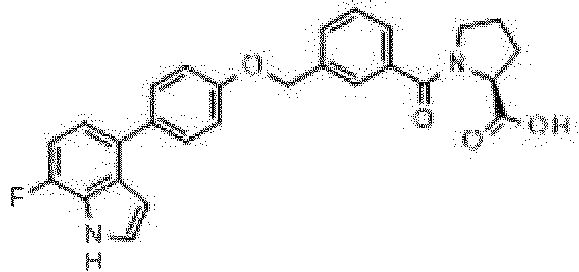
compound of Ex.22 
compound of Ex.30 
compound of Ex.23 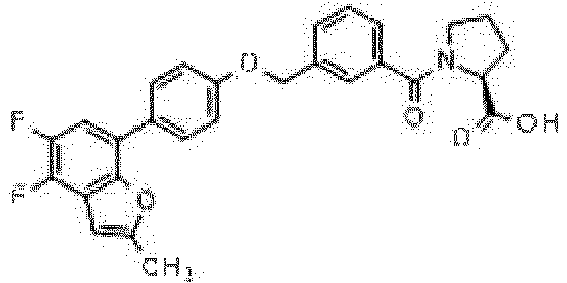
compound of Ex.31 
compound of Ex.24 
compound of Ex.32 
compound of Ex.33 
compound of Ex.41 
compound of Ex.34 
compound of Ex.42 
compound of Ex.35 
compound of Ex.43 
compound of Ex.36 
compound of Ex.44 
compound of Ex.37 
compound of Ex.45 
compound of Ex.38 
compound of Ex.46 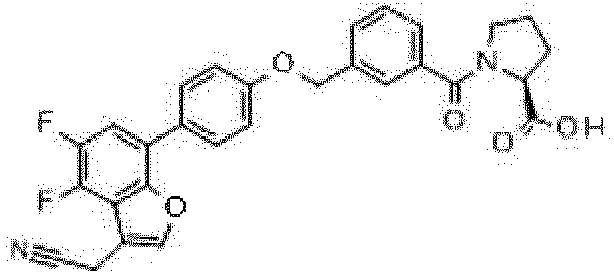
compound of Ex.39 
compound of Ex.47 
compound of Ex.40 
compound of Ex.48 
compound of Ex.49 
compound of Ex.57 
compound of Ex.50 
compound of Ex.58 
compound of Ex.51 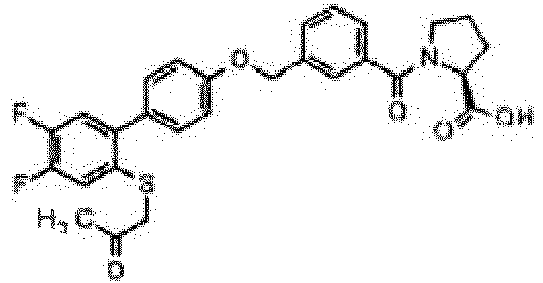
compound of Ex.59 
compound of Ex.52 
compound of Ex.60 
compound of Ex.53 
compound of Ex.61 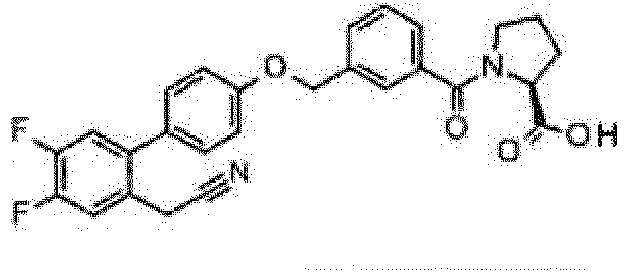
compound of Ex.54 
compound of Ex.62 
compound of Ex.55 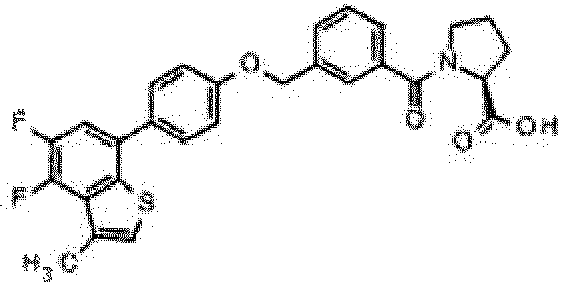
compound of Ex.63 
compound of Ex.56 
compound of Ex.64 
compound of Ex.65 
compound of Ex.71 
compound of Ex.66 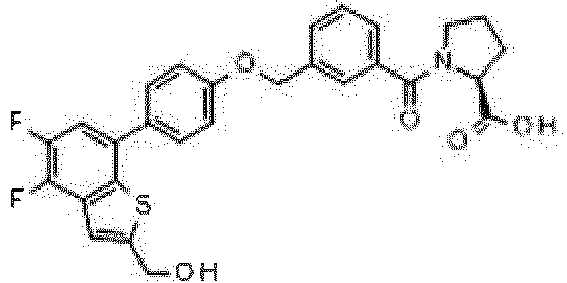
compound of Ex.72 
compound of Ex.67 
compound of Ex.73 
compound of Ex.68 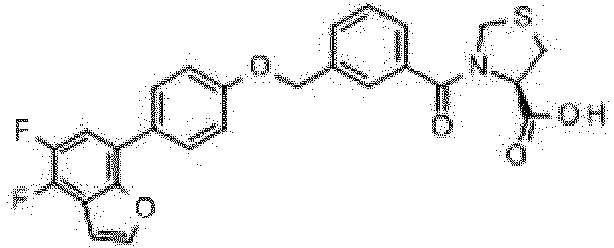
compound of Ex.74 
compound of Ex.69 
compound of Ex.75 
compound of Ex.70 
- A human GYS1 expression plasmid (pCDNA3.1(+)-hGYS1) was constructed by the following method. Using a human skeletal muscle cDNA of Human MTC Panel I (Takara Bio Inc., 636742) as a template, a human GYS1 gene was amplified by a PCR method using cloning primers (Forward Primer: ATGCCTTTAAACCGCAC, Reverse Primer: TTAGTTACGCTCCTCGC). Using the amplified human GYS1 sequence as a template, a restriction enzyme sequence was added by a PCR method using sub-cloning primers (Forward Primer: CCCTCGAGACCATGCCTTTAAACCGCACTT, Reverse Primer: GGTCTAGATTAGTTACGCTCCTCGCCCAG). Then, the human GYS1 gene was introduced between a Xho I site and a Xba I site of pCDNA3.1(+) (Invitrogen Corporation, V790-20).
- Glycogen synthase was prepared by the following method according to the published article (THE JOUNAL OF BIOLOGICAL CHEMISTRY Vol. 274, No. 51, : 36293-36299, 1999). Human kidney -derived HEK293T cells were seeded in a dish (Thermo Fisher Scientific Inc., 168381) using a 10% FBS-containing DMEM (Nacalai Tesque, Inc. , 0845874) medium, and cultured overnight. Then, using Lipofectamine LTX (Invitrogen Corporation, 15338-100), the human GYS1 expression vector was transfected according to the attached manual. After culturing under conditions of 37°C and 5% CO2 for 2 days, the resultant was dissolved in a lysis buffer (50 mM Tris-HCl (pH8.0), 10 mM EDTA, 2 mM EGTA, 100 mM NaF, 1 mM PMSF, 1 mM DTT, 1xComplete (Roche Diagnostics K. K., 1873580)), homogenized, and then centrifuged at 16000xg at 4°C for 15 minutes. To the precipitated fraction, a lysis buffer was added. Re-dissolved fractions were used as glycogen synthase for evaluation.
- The glycogen synthase activity was measured by the following method. To a polystyrene 96-well plate, a solution containing 30 mM glycylglycine (pH 7.3), 40 mM KCl, 20 mM MgCl2, 9.2% DMSO containing one of the test compounds at various concentrations, and 10 mM glucose-6-phosphate (Sigma-Aldrich Corporation, G7879) was added by 12 µL/well.
- Next, a substrate solution containing 30 mM glycylglycine (pH 7.3), 4.3 mg/mL of glycogen (Sigma-Aldrich Corporation, G8876), 21.6 mM UDP-glucose (Sigma-Aldrich Corporation, U4625), 21.6 mM phosphoenolpyruvic acid (Sigma-Aldrich Corporation, P0564), and4.05mMNADH (Sigma-Aldrich Corporation, N8129) was added by 18 µL/well.
- Further, an enzyme solution containing 50 mM Tris-HCl (pH 8.0), 27 mM DTT (Nacalai Tesque, Inc. , 14128-04), 0.2 mg/mL of bovine serum albumin, 0.17 mg/mL of the glycogen synthase, 1.5 µL of a pyruvate kinase/lactate dehydrogenase solution (Sigma-Aldrich Corporation, P0294) was added by 18 µL/well to prepare a reaction solution. After the reaction solution was incubated (at 30°C for 25 minutes for Examples 1 to 10, at 37°C for 20 minutes for Examples 11 to 75), the absorbance at 340 nm was measured using Benchmark Plus (Bio-Rad Laboratories, Inc.).
- The activities of the test compounds were calculated by the following method. The change in the absorbance (ΔA340) was calculated by subtracting the absorbance at 340 nm of the reaction solution containing the compound and DMSO from the absorbance at 340 nm of a reaction solution not containing the compound but containing only DMSO. The ΔA340 of the reaction solution containing the compound of Example 1 in
WO/2011/058154 at the final concentration of 10 µM was taken as 100% to calculate the relative activity (%) of the test compounds at various concentrations. EC50 representing the concentration of the compound which induces an increase in the relative activity to 50% was calculated using XLfit (idbs). Tables 2-1 and 2-2 show the result.Table 2-1 EC50 (µM) compound of Ex. 21 0.054 compound of Ex. 22 0.18 compound of Ex. 23 0.11 compound of Ex. 24 0.67 compound of Ex. 25 0.40 compound of Ex. 26 0.16 compound of Ex. 27 0.21 compound of Ex. 28 0.89 compound of Ex. 29 0.23 compound of Ex. 30 0.14 compound of Ex. 31 0.10 compound of Ex. 32 0.75 compound of Ex. 33 0.034 compound of Ex. 34 0.017 compound of Ex. 35 0.015 compound of Ex. 36 0.11 compound of Ex. 37 0.010 compound of Ex. 38 0.029 compound of Ex. 39 0.042 compound of Ex. 40 0.11 compound of Ex. 41 0.10 compound of Ex. 42 0.054 compound of Ex. 43 0.070 compound of Ex. 44 0.81 compound of Ex. 45 0.80 compound of Ex. 46 0.15 compound of Ex. 47 0.15 compound of Ex. 48 0.12 compound of Ex. 49 0.22 compound of Ex. 50 0.41 compound of Ex. 51 0.083 compound of Ex. 52 0.061 compound of Ex. 53 0.61 compound of Ex. 54 0.26 compound of Ex. 55 0.085 compound of Ex. 56 0.044 compound of Ex. 57 0.14 compound of Ex. 58 0.045 compound of Ex. 59 0.15 compound of Ex. 60 0.16 compound of Ex. 61 0.79 compound of Ex. 62 0.27 compound of Ex. 63 0.22 compound of Ex. 64 0.14 compound of Ex. 65 0.30 compound of Ex. 66 0.074 compound of Ex. 67 0.59 compound of Ex. 68 0.34 compound of Ex. 69 0.13 compound of Ex. 70 0.20 compound of Ex. 71 0.038 compound of Ex. 72 0.19 compound of Ex. 73 0.065 compound of Ex. 74 0.20 compound of Ex. 1 in WO/2011/058154 0.1∼0.25 - The PPAR-α activity was measured according to the published article (THE JOUNAL OF BIOLOGICAL CHEMISTRY Vol. 270, No. 22,: 12953-12956, 1995).
- Plasmids used for the PPAR-α activity measurement were constructed as follows. A luciferase expression plasmid (UASx5-TK-Luc) used was obtained by introducing a sequence, in which five yeast GAL4-binding sequences are linked in tandem, upstream of a thymidine kinase promoter of pTAL-Luc (Takara Bio Inc., 6252-1). A PPAR-α receptor expression plasmid (hGR-GAL4-hPPARα) used was obtained by introducing a human GR N-terminal region (1-76 aa), a yeast GAL4 DNA-binding region (1-147 aa), and a PPARα ligand-binding region (167-468 aa) between a Not I site and a Sal I site of pExchange-1 Core Vector (Invitrogen Corporation, 211176).
- A reporter assay was conducted by the following method using Cercopithecus aethiops kidney-derived CV-1 cells. The CV-1 cells were seeded in a 96-well plate (Thermo Fisher Scientific Inc., 4938) at 2×10⁴ cells /well using a 10% FBS-containing DMEM (Nacalai Tesque, Inc., 0845874) medium. After culturing under conditions of 37°C and 5% CO2 for 2 hours, the plasmids were transfected. Lipofectamine LTX (Invitrogen Corporation, 15338-100) was used for the transfection according to the attached manual. The plasmid solution was prepared by adding a mixture solution of the luciferase expression plasmid and the PPAR-α receptor expression plasmid to OPTI-MEM I (Invitrogen Corporation, 11058-021). After the transfection was conducted, the test compound was added, and cultured at 37°C in the presence of 5% CO2 for 18 to 20 hours. After the culturing was completed, the luciferase activity was measured with Luminescensor JNR (ATTO) using Bright-Glo (Promega Corporation, E2620).
- The fold induction of PPAR-α by the test compounds was calculated by the following method. For the compounds of Examples 1, 4, 5, 7, and 9, PPAR-α relative fold induction (%) was defined as 100 (A/B), where A represents the maximum value of PPAR-α activities with the test compound at 0.3 µM, 1 µM, 3 µM, 10 µM, 30 µM, and 100 µM, and B represents the PPAR-α activity with the compound in
WO/2011/058154 at 100 µM. For the compounds of Examples 11, 15, 19, 22, 26, and 32, PPAR-α relative fold induction (%) was defined as 100 (A/B), where A represents the maximum value of PPAR-α activities with the test compound at 3 µM, 10 µM, 30 µM, and 100 µM, and B represents the PPAR-α activity with the compound inWO/2011/058154 at 100 µM. Table 3 shows the result.Table 3 PPARα relative fold induction (%) compound of Ex. 1 10 compound of Ex. 4 17 compound of Ex. 5 10 compound of Ex. 7 17 compound of Ex. 9 11 compound of Ex. 11 18 compound of Ex. 15 20 compound of Ex. 19 12 compound of Ex. 22 15 compound of Ex. 26 13 compound of Ex. 32 3 compound of Ex. 40 10 compound of Ex. 42 13 compound of Ex. 43 11 compound of Ex. 44 10 Table 3 (continue) PPARα relative fold induction (%) compound of Ex. 49 17 compound of Ex. 50 15 compound of Ex. 51 15 compound of Ex. 52 18 compound of Ex. 53 15 compound of Ex. 56 6.4 compound of Ex. 58 19 compound of Ex. 61 10 compound of Ex. 65 11 compound of Ex. 66 18 compound of Ex. 69 8.6 compound of Ex. 70 7.9 compound of Ex. 71 8.6 compound of Ex. 72 15 compound of Ex. 1 in WO/2011/058154 100
Claims (14)
- A compound represented by the following general formula (I), or a pharmaceutically acceptable salt thereof:
 wherein Ar is an aromatic carbocyclic ring or a heterocyclic ring;Ar2 is represented by any one of the following rings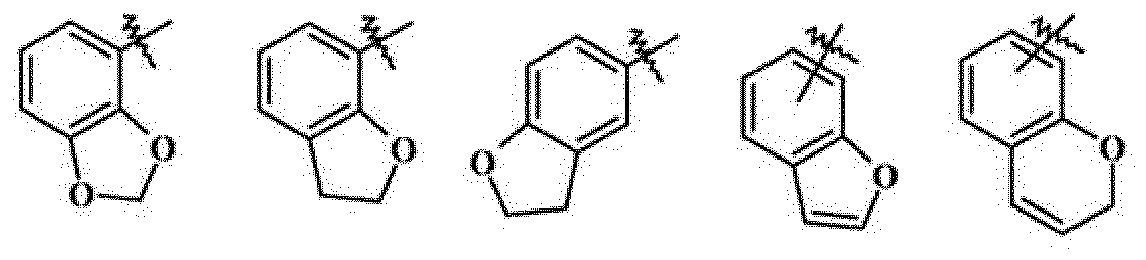


the substituent is selected from the group consisting of acetamido, aminocarbonyl, benzyl, benzyloxy, a halogen, hydroxyl-lower alkyl, lower alkyl, lower alkoxy-lower alkyl, phenoxy, phenyl, a formyl group, a cyano group, a cyanoalkyl group, a hydroxyiminomethyl group, ahydroxyamidino group, an amino group, an aminoalkyl group, an alkylaminoalkyl group, a dialkylaminoalkyl group, lower alkoxy, and trifluoro-methoxy;R2 and R3 are independently selected from the group consisting of lower alkyl, lower alkoxy, trifluoromethyl, a halogen, hydroxy, a hydroxyl-lower alkyl group, amino, alkylamino, dialkylamino, cyano, and nitro;R4 is an amino acid residue bonded to C(O) through a nitrogen atom of the amino acid;R5 is a cyanoalkyl group or -CD3, or is represented by any one of the following substituents R6 is hydrogen, a lower alkyl group, a cyanoalkyl group, a hydroxyalkyl group, or an alkoxyalkyl group, or is represented by any one of the following substituents
 R7 and R8 are each a cyanoalkyl group, a formyl group, an alkoxycarbonyl group, or a hydroxyiminomethyl group;Rg is hydrogen or a lower alkyl group;m is 0, 1, 2, 3, or 4;p is 0, 1, or 2; ands is 0, 1, or 2.
 - A compound represented by the following general formula (I), or a pharmaceutically acceptable salt thereof:
 wherein Ar is an aromatic carbocyclic ring or a heterocyclic ring;Ar2 is represented by any one of the following rings

the substituent is selected from the group consisting of acetamido, aminocarbonyl, benzyl, benzyloxy, a halogen, hydroxyl-lower alkyl, lower alkyl, lower alkoxy-lower alkyl, phenoxy, phenyl, lower alkoxy, and trifluoro-methoxy;R2 and R3 are independently selected from the group consisting of lower alkyl, lower alkoxy, trifluoromethyl, a halogen, hydroxy, amino, alkylamino, dialkylamino, cyano, and nitro;R4 is an amino acid residue bonded to C(O) through a nitrogen atom of the amino acid;R5 is -CH2CN or -CD3, or is represented by any one of the following substituents

- The compound or the pharmaceutically acceptable salt thereof according to claim 2, wherein Ar2 in the general formula (I) is represented by any one of the following rings


- The compound or the pharmaceutically acceptable salt thereof according to claim 2 or 3, wherein
in the general formula (I),Ar is a phenyl group, andR4 represents a proline residue bonded to C(O) through a nitrogen atom of the proline. - The compound or the pharmaceutically acceptable salt thereof according to claim 2, wherein
in the general formula (I),Ar is a phenyl group,R4 represents a proline residue bonded to C(O) through a nitrogen atom of the proline, andAr2 is represented by any one of the following rings which may have a substituent
- The compound or the pharmaceutically acceptable salt thereof according to claim 2, wherein
in the general formula (I),Ar is a phenyl group,R4 represents a proline residue bonded to C(O) through a nitrogen atom of the proline, andAr2 is represented by any one of the following rings
- The compound or the pharmaceutically acceptable salt thereof according to claim 5, wherein the substituent of Ar2 in the general formula (I) is a halogen.
- The compound or the pharmaceutically acceptable salt thereof according to claim 7, wherein, in the general formula (I), m=0, p=0, and s=0.
- A pharmaceutical composition comprising the compound or the pharmaceutically acceptable salt thereof according to claim 1.
- A pharmaceutical composition comprising the compound or the pharmaceutically acceptable salt thereof according to any one of claims 2 to 8.
- A pharmaceutical composition for treating diabetes, comprising the compound or the pharmaceutically acceptable salt thereof according to claim 1.
- A pharmaceutical composition for treating diabetes, comprising the compound or the pharmaceutically acceptable salt thereof according to any one of claims 2 to 9.
- A glycogen synthase activator comprising the compound or the pharmaceutically acceptable salt thereof according to claim 1.
- A glycogen synthase activator comprising the compound or the pharmaceutically acceptable salt thereof according to any one of claims 2 to 10.
Applications Claiming Priority (3)
| Application Number | Priority Date | Filing Date | Title |
|---|---|---|---|
| JP2011242363 | 2011-11-04 | ||
| JP2012159862 | 2012-07-18 | ||
| PCT/JP2012/078516 WO2013065835A1 (en) | 2011-11-04 | 2012-11-02 | Pharmaceutical composition for treating diabetes |
Publications (2)
| Publication Number | Publication Date |
|---|---|
| EP2774917A1 true EP2774917A1 (en) | 2014-09-10 |
| EP2774917A4 EP2774917A4 (en) | 2015-05-06 |
Family
ID=48192172
Family Applications (1)
| Application Number | Title | Priority Date | Filing Date |
|---|---|---|---|
| EP20120845716 Withdrawn EP2774917A4 (en) | 2011-11-04 | 2012-11-02 | Pharmaceutical composition for treating diabetes |
Country Status (4)
| Country | Link |
|---|---|
| US (2) | US9290487B2 (en) |
| EP (1) | EP2774917A4 (en) |
| JP (1) | JPWO2013065835A1 (en) |
| WO (1) | WO2013065835A1 (en) |
Families Citing this family (9)
| Publication number | Priority date | Publication date | Assignee | Title |
|---|---|---|---|---|
| JP2016130214A (en) * | 2013-05-01 | 2016-07-21 | 味の素株式会社 | Pharmaceutical composition for treatment of diabetes |
| JP2016130215A (en) * | 2013-05-01 | 2016-07-21 | 味の素株式会社 | Pharmaceutical composition for treatment of diabetes |
| US9725463B2 (en) | 2013-06-21 | 2017-08-08 | Lupin Limited | Substituted heterocyclic compounds as CRAC modulators |
| US9790231B2 (en) | 2013-06-24 | 2017-10-17 | Lupin Limited | Chromane and chromene derivatives and their use as CRAC modulators |
| WO2016002853A1 (en) * | 2014-07-01 | 2016-01-07 | 味の素株式会社 | Medicinal composition for treating diabetes |
| SG11202009438UA (en) | 2018-04-18 | 2020-11-27 | Constellation Pharmaceuticals Inc | Modulators of methyl modifying enzymes, compositions and uses thereof |
| CN112262143A (en) | 2018-05-21 | 2021-01-22 | 星座制药公司 | Modulators of methyl-modified enzymes, compositions and uses thereof |
| PH12022550188A1 (en) | 2019-07-24 | 2022-11-21 | Constellation Pharmaceuticals Inc | Crystalline forms of 7-chloro-2-(4-(3-methoxyazetidin-1-yl)cyclohexyl)-2,4-dimethyl-n-((6-methyl-4-(methylthio)-2-oxo-1,2-dihydropyridin-3-yl)methyl)benzo[d][1,3]dioxole-5-carboxamide |
| WO2022198196A1 (en) | 2021-03-15 | 2022-09-22 | Maze Therapeutics, Inc. | Inhibitors of glycogen synthase 1 (gys1) and methods of use thereof |
Family Cites Families (11)
| Publication number | Priority date | Publication date | Assignee | Title |
|---|---|---|---|---|
| US7355049B2 (en) * | 2003-06-24 | 2008-04-08 | Hoffmann-La Roche Inc. | Biaryloxymethylarenecarboxylic acids as glycogen synthase activator |
| US7524870B2 (en) | 2004-12-03 | 2009-04-28 | Hoffmann-La Roche Inc. | Biaryloxymethylarenecarboxylic acids as glycogen synthase activators |
| CN101146762A (en) * | 2005-03-21 | 2008-03-19 | 默克公司 | Substituted Aryl and Heteroaryl Derivatives |
| KR20100105802A (en) * | 2007-04-19 | 2010-09-29 | 콘서트 파마슈티컬즈, 인크. | Deuterated morpholinyl compound |
| US7947728B1 (en) | 2009-11-11 | 2011-05-24 | Hoffmann-La Roche Inc. | Indole and indazole analogs as glycogen synthase activators |
| US20110112158A1 (en) | 2009-11-11 | 2011-05-12 | David Robert Bolin | Benzisoxazole analogs as glycogen synthase activators |
| US20110112147A1 (en) | 2009-11-11 | 2011-05-12 | David Robert Bolin | Indazolone analogs as glycogen synthase activators |
| US8039495B2 (en) | 2009-11-16 | 2011-10-18 | Hoffman-La Roche Inc. | Biphenyl carboxylic acids and bioisosteres as glycogen synthase activators |
| US20110118314A1 (en) | 2009-11-16 | 2011-05-19 | Weiya Yun | Piperidine analogs as glycogen synthase activators |
| US7939569B1 (en) | 2009-12-01 | 2011-05-10 | Hoffmann-La Roche Inc. | Aniline analogs as glycogen synthase activators |
| US20110136792A1 (en) | 2009-12-04 | 2011-06-09 | David Robert Bolin | Novel carboxylic acid analogs as glycogen synthase activators |
-
2012
- 2012-11-02 WO PCT/JP2012/078516 patent/WO2013065835A1/en not_active Ceased
- 2012-11-02 JP JP2013541864A patent/JPWO2013065835A1/en not_active Abandoned
- 2012-11-02 EP EP20120845716 patent/EP2774917A4/en not_active Withdrawn
-
2014
- 2014-05-02 US US14/268,323 patent/US9290487B2/en not_active Expired - Fee Related
-
2016
- 2016-01-29 US US15/010,404 patent/US20160137633A1/en not_active Abandoned
Also Published As
| Publication number | Publication date |
|---|---|
| EP2774917A4 (en) | 2015-05-06 |
| WO2013065835A1 (en) | 2013-05-10 |
| US9290487B2 (en) | 2016-03-22 |
| US20140336376A1 (en) | 2014-11-13 |
| US20160137633A1 (en) | 2016-05-19 |
| JPWO2013065835A1 (en) | 2015-04-02 |
Similar Documents
| Publication | Publication Date | Title |
|---|---|---|
| US9290487B2 (en) | Pharmaceutical composition for treating diabetes | |
| EP2598486B1 (en) | Bicyclic acetyl-coa carboxylase inhibitors | |
| JP5657578B2 (en) | Novel fused ring compounds and uses thereof | |
| US7998968B2 (en) | Substituted pyrimidines and [1,2, 4] triazoles and the use thereof for treating prophylaxis, cardiovascular diseases, metabolic diseases and/or central nervous system diseases | |
| US20080207654A1 (en) | Heteromonocyclic compound and use thereof | |
| US10662170B2 (en) | Substituted benzothiophenyl derivatives as GPR40 agonists for the treatment of type II diabetes | |
| CN114258390A (en) | Glycolate oxidase inhibitors for disease treatment | |
| US10106553B2 (en) | Substituted benzothiophenyl derivatives as GPR40 agonists for the treatment of type II diabetes | |
| MX2014010272A (en) | Phenyl alkanoic acid derivatives as gpr agonists. | |
| WO2005012221A1 (en) | Diphenyl ether compound, process for producing the same, and use | |
| US10195178B2 (en) | GPR40 agonists in anti-diabetic drug combinations | |
| KR102342250B1 (en) | 1,2-Naphthoquinone-based Derivatives and Methods for Preparing them | |
| US20160009677A1 (en) | Tricyclic compound and use thereof | |
| KR20200020887A (en) | Heteroaryldihydropyrimidine Derivatives and Methods of Treating Hepatitis B Infection | |
| KR20210130753A (en) | Amide derivatives useful for the treatment of HBV infection or HBV-induced disease | |
| EP3010916A1 (en) | 1,3-diaminocyclopentane carboxamide derivatives | |
| US20240246908A1 (en) | Tead inhibitors | |
| JP2016130215A (en) | Pharmaceutical composition for treatment of diabetes | |
| KR20220148851A (en) | Novel macrocyclic compounds, methods for their preparation and pharmaceutical compositions containing them | |
| US20170247320A1 (en) | Novel amino-phenyl-sulfonyl-acetate derivatives and use thereof | |
| JP2018525353A (en) | N-hydroxyformamide compounds and compositions comprising them for use as inhibitors of BMP1, TLL1 and / or TLL2 | |
| JP2016130214A (en) | Pharmaceutical composition for treatment of diabetes | |
| CN113801087B (en) | Benzo-six-membered ring derivatives as DPP-4 inhibitors and uses thereof | |
| US11161837B2 (en) | Benzofuran derivatives for the treatment of hepatitis C | |
| WO2016002853A1 (en) | Medicinal composition for treating diabetes |
Legal Events
| Date | Code | Title | Description |
|---|---|---|---|
| PUAI | Public reference made under article 153(3) epc to a published international application that has entered the european phase |
Free format text: ORIGINAL CODE: 0009012 |
|
| 17P | Request for examination filed |
Effective date: 20140520 |
|
| AK | Designated contracting states |
Kind code of ref document: A1 Designated state(s): AL AT BE BG CH CY CZ DE DK EE ES FI FR GB GR HR HU IE IS IT LI LT LU LV MC MK MT NL NO PL PT RO RS SE SI SK SM TR |
|
| DAX | Request for extension of the european patent (deleted) | ||
| RA4 | Supplementary search report drawn up and despatched (corrected) |
Effective date: 20150409 |
|
| RIC1 | Information provided on ipc code assigned before grant |
Ipc: A61K 31/401 20060101ALI20150401BHEP Ipc: C07D 409/12 20060101ALI20150401BHEP Ipc: A61K 31/4025 20060101ALI20150401BHEP Ipc: C07D 207/16 20060101AFI20150401BHEP Ipc: A61P 3/10 20060101ALI20150401BHEP Ipc: A61K 31/404 20060101ALI20150401BHEP Ipc: C07D 413/12 20060101ALI20150401BHEP Ipc: C07D 307/79 20060101ALI20150401BHEP Ipc: C07D 405/12 20060101ALI20150401BHEP Ipc: C07D 403/12 20060101ALI20150401BHEP Ipc: A61K 31/536 20060101ALI20150401BHEP Ipc: A61K 31/427 20060101ALI20150401BHEP Ipc: A61P 43/00 20060101ALI20150401BHEP Ipc: A61K 31/343 20060101ALI20150401BHEP Ipc: C07D 307/80 20060101ALI20150401BHEP Ipc: A61K 31/397 20060101ALI20150401BHEP |
|
| 17Q | First examination report despatched |
Effective date: 20160421 |
|
| STAA | Information on the status of an ep patent application or granted ep patent |
Free format text: STATUS: THE APPLICATION IS DEEMED TO BE WITHDRAWN |
|
| 18D | Application deemed to be withdrawn |
Effective date: 20160902 |