EP2773062B1 - Mutual identity authentication method and system for wireless sensor network - Google Patents
Mutual identity authentication method and system for wireless sensor network Download PDFInfo
- Publication number
- EP2773062B1 EP2773062B1 EP12843783.7A EP12843783A EP2773062B1 EP 2773062 B1 EP2773062 B1 EP 2773062B1 EP 12843783 A EP12843783 A EP 12843783A EP 2773062 B1 EP2773062 B1 EP 2773062B1
- Authority
- EP
- European Patent Office
- Prior art keywords
- information
- matrix
- value
- identity
- password
- Prior art date
- Legal status (The legal status is an assumption and is not a legal conclusion. Google has not performed a legal analysis and makes no representation as to the accuracy of the status listed.)
- Active
Links
Images


Classifications
-
- H—ELECTRICITY
- H04—ELECTRIC COMMUNICATION TECHNIQUE
- H04L—TRANSMISSION OF DIGITAL INFORMATION, e.g. TELEGRAPHIC COMMUNICATION
- H04L9/00—Cryptographic mechanisms or cryptographic arrangements for secret or secure communications; Network security protocols
- H04L9/32—Cryptographic mechanisms or cryptographic arrangements for secret or secure communications; Network security protocols including means for verifying the identity or authority of a user of the system or for message authentication, e.g. authorization, entity authentication, data integrity or data verification, non-repudiation, key authentication or verification of credentials
- H04L9/3236—Cryptographic mechanisms or cryptographic arrangements for secret or secure communications; Network security protocols including means for verifying the identity or authority of a user of the system or for message authentication, e.g. authorization, entity authentication, data integrity or data verification, non-repudiation, key authentication or verification of credentials using cryptographic hash functions
- H04L9/3239—Cryptographic mechanisms or cryptographic arrangements for secret or secure communications; Network security protocols including means for verifying the identity or authority of a user of the system or for message authentication, e.g. authorization, entity authentication, data integrity or data verification, non-repudiation, key authentication or verification of credentials using cryptographic hash functions involving non-keyed hash functions, e.g. modification detection codes [MDCs], MD5, SHA or RIPEMD
-
- H—ELECTRICITY
- H04—ELECTRIC COMMUNICATION TECHNIQUE
- H04L—TRANSMISSION OF DIGITAL INFORMATION, e.g. TELEGRAPHIC COMMUNICATION
- H04L9/00—Cryptographic mechanisms or cryptographic arrangements for secret or secure communications; Network security protocols
- H04L9/32—Cryptographic mechanisms or cryptographic arrangements for secret or secure communications; Network security protocols including means for verifying the identity or authority of a user of the system or for message authentication, e.g. authorization, entity authentication, data integrity or data verification, non-repudiation, key authentication or verification of credentials
- H04L9/3271—Cryptographic mechanisms or cryptographic arrangements for secret or secure communications; Network security protocols including means for verifying the identity or authority of a user of the system or for message authentication, e.g. authorization, entity authentication, data integrity or data verification, non-repudiation, key authentication or verification of credentials using challenge-response
- H04L9/3273—Cryptographic mechanisms or cryptographic arrangements for secret or secure communications; Network security protocols including means for verifying the identity or authority of a user of the system or for message authentication, e.g. authorization, entity authentication, data integrity or data verification, non-repudiation, key authentication or verification of credentials using challenge-response for mutual authentication
-
- H—ELECTRICITY
- H04—ELECTRIC COMMUNICATION TECHNIQUE
- H04L—TRANSMISSION OF DIGITAL INFORMATION, e.g. TELEGRAPHIC COMMUNICATION
- H04L2209/00—Additional information or applications relating to cryptographic mechanisms or cryptographic arrangements for secret or secure communication H04L9/00
- H04L2209/80—Wireless
- H04L2209/805—Lightweight hardware, e.g. radio-frequency identification [RFID] or sensor
Definitions
- the present document relates to an identity authentication technology for a network node, and in particular, to a mutual identity authentication method and system for a wireless sensor network.
- Identity authentication is an important aspect of the network security technology.
- the identity authentication mechanism is used to prevent illegal users from accessing network resources, and can avoid illegal attacks such as counterfeiting, falsification, denial etc., thus the user's identity can be ensured, which is the foundation of other security mechanisms. If the identity authentication system is counterfeited or broken through, other security measures of the whole system become meaningless. Therefore, the identity authentication is very important to ensure the security of the wireless sensor system.
- Mutual identity authentication refers to that both communication parties need to authenticate the identity of the other party, so that it can more effectively prevent the situation in which the terminal node and the platform are counterfeited, so as to improve the overall safety performance of the system.
- the current mutual identity authentication method for a wireless sensor network further has the following three problems: Firstly, in view of the condition that the elements of the traditional mutual identity authentication are single, at present, some scholars put forward a concept of multi-element authentication, which simply is to increase the number of elements of the authentication, so as to improve the security of the identity authentication through elements with different properties. However, the multi-element authentication methods adopted currently need to perform verification many times on the elements with different properties, thus increasing time and communication burden of the authentication to a certain extent.
- Verification after performing hash transformation by concentrating multiple elements is difficult to avoid attacks such as collision effectively, and is an inadvisable identity authentication method. Therefore, in the mutual identity authentication for a wireless sensor network, there is a need for a method capable of authenticating by mutual participation of multiple elements and effectively avoiding attacks such as collision against hash functions.
- An aim of the embodiments of the present document is to provide a mutual identity authentication method and system for a wireless sensor network, so as to enhance the security in the identity authentication.
- a mutual identity authentication method for a wireless sensor network, a terminal node and a platform as defined in the independent claims.
- authentication elements used in the authentication are diversified, wherein, the embodiments of the present document increase the number of the authentication elements in the identity authentication to 5, comprising the node identity ID (or hardware verification/identification code), the matrix password number MX, the random number R returned by the platform, the administrator number AN and the administrator key AK.
- the node identity ID is a unique identity which can primarily be used to distinguish the node from other nodes;
- the matrix password number MX is a common matrix password element for searching for a corresponding administrator key according to the matrix identity returned by the platform;
- the random number R returned by the platform is a group of random numbers returned by the platform with a length longer than the number of digits of other elements;
- the administrator number AN and the administrator key AK are administrator login information preset in the node, and these elements are preset in the terminal node of the present system, thus facilitating manual operations and maintenance of nodes capable of human-computer interaction, and also provide space and convenience for extension of some nodes having potential functions.
- Embodiments of the present document provide a mutual identity authentication method for a wireless sensor network, and with reference to Fig. 1 , the method comprises the following steps.
- step S102 the terminal node calculates SHA 1( R T- 1 ⁇ AN ) information of the terminal according to authentication random number information R T- 1 of the T-1 th authentication phase and administrator number information AN stored by itself, if the SHA 1( R T- 1 ⁇ AN ) information of the terminal is different from the SHA 1( R T- 1 ⁇ AN ) information of the platform, a verification of identity fails; otherwise, matrix password value MX information is obtained according to the password matrix identity information received by the terminal node from the platform and password matrix Matrix information pre-stored in the terminal node, and at the same time the random number information R T transmitted by the platform is updated to a storage space of the terminal node.
- step S103 the terminal node performs SHA1 transformation on the obtained matrix password value MX information and random number information R T and pre-stored identity ID information, administrator number AN information and administrator key AK information respectively, and combines the transformation results into a first global matrix SHA matrix and then calculates a first variance value ⁇ 2 and a first energy value ⁇ N of the first global matrix SHA matrix , and transmits the first variance ⁇ 2 and the first energy value ⁇ N to the platform.
- step S104 the platform obtains matrix password value MX information of the platform according to the password matrix identity information stored by itself and the password matrix Matrix information of the terminal node, and performs SHA 1 transformation on the matrix password value MX information together with the identity ID information, the administrator number AN information, the administrator key AK information, and the random number information R T stored by the platform respectively, and combines the transformation results into a second global matrix SHA matrix and then calculates a second variance value ⁇ 2 and a second energy value ⁇ N of the second global matrix SHA matrix , and when the second variance value ⁇ 2 and the second energy value ⁇ N match the received first variance value ⁇ 2 and first energy value ⁇ N , the verification of the identity passes.
- the frequency of occurrence H static ( i ) of a distinct value for an invariable element is stored (on each terminal node and the platform) when the system is initialized, for being called later when the first variance value ⁇ 2 , the first energy value ⁇ N , the second variance value ⁇ 2 and the second energy value ⁇ N are calculated.
- the SHA1 transformation values of five elements i.e., the identity ID, the matrix password, the random number returned by the platform, the administrator number and administrator key are a, b, c, d, and e respectively.
- the variance and the mean value will not be processed separately, and after the mean value is optimized, it is equivalent to an indirect optimization of the calculation of the variance.
- the embodiments of the present document further provide a mutual identity authentication system for a wireless sensor network, and as shown in Fig. 2 , the system comprises a terminal node 10 and a platform 20, wherein, the terminal node 10 comprises a first information reception module 103, a first storage module 101, a first processing module 102 and a first information transmission module 104, wherein, the first information reception module 103 is configured to obtain random number information R T randomly generated in a T th authentication phase, password matrix identity information, SHA 1( R T- 1 ⁇ AN ) information of the platform and displacement identity n from the platform 20; the first storage module 101 is configured to store authentication random number information R T- 1 of the T-1 th authentication phase, administrator number information AN, password matrix Matrix information and administrator key AK information; the first processing module 102 is configured to calculate SHA 1( R T- 1 ⁇ AN ) information of the terminal according to random number information R T -1 of the T-1 th authentication phase and administrator number information AN stored by itself, and if
- the frequency of occurrence H static ( i ) of a distinct value for an invariable element is stored in the first storage module and the second storage module when the system is initialized, for being called later when the first variance value ⁇ 2 , the first energy value ⁇ N , the second variance value ⁇ 2 and the second energy value ⁇ N are calculated.
- the terminal node comprises a first information reception module 103, a first storage module 101, a first processing module 102 and a first information transmission module 104, wherein, the first information reception module 103 is configured to obtain random number information R T randomly generated in a T th authentication phase, password matrix identity information, SHA 1( R T- 1 ⁇ AN ) information of the platform and displacement identity n from the platform; the first storage module 101 is configured to store authentication random number information R T- 1 of the T-1 th authentication phase, administrator number information AN, password matrix Matrix information and administrator key AK information; the first processing module 102 is configured to calculate SHA 1( R T- 1 ⁇ AN ) information of the terminal according to random number information R T -1 of the T-1 th authentication phase and administrator number information AN stored by the terminal node itself, and if the SHA 1( R T- 1 ⁇ AN ) information of the terminal is different from the
- the frequency of occurrence H static ( i ) of a distinct value for an invariable element is stored in the first storage module when the system is initialized, for being called later when the first variance value ⁇ 2 and the first energy value ⁇ N are calculated.
- the platform 20 comprises a second information reception module 203, a second storage module 201, a second processing module 202 and a second information transmission module 204, wherein, the second information reception module 203 is configured to receive the first variance value ⁇ 2 and the first energy value ⁇ N from each terminal node; the second storage module 201 is configured to store the authentication random number information R T -1 of a T-1 th authentication phase, identity ID information, administrator number AN information, administrator key AK information, password matrix identity information and password matrix Matrix information of each terminal node; the second processing module 202 is configured to obtain matrix password value MX information of the platform according to the password matrix identity information stored by the platform itself and the password matrix Matrix information of the terminal node, and perform SHA1 transformation on the matrix password value MX information together with the identity ID information, the administrator number AN information, the administrator key AK information, and the random number information R T stored by the platform respectively, and combine the transformation
- the frequency of occurrence H static ( i ) of a distinct value for an invariable element is stored in the second storage module when the system is initialized, for being called later when the second variance value ⁇ 2 and the second energy value ⁇ N are calculated.
- authentication elements used in the authentication are diversified, wherein, the embodiments of the present document increase the number of the authentication elements in the identity authentication to 5, comprising the node identity ID (or hardware verification/identification code), the matrix password number MX, the random number R returned by the platform, the administrator number AN and the administrator key AK.
- the node identity ID is a unique identity which can primarily be used to distinguish the node from other nodes;
- the matrix password number MX is a common matrix password element for searching for a corresponding administrator key according to the matrix identity returned by the platform;
- the random number R returned by the platform is a group of random numbers returned by the platform with a length longer than the number of digits of other elements;
- the administrator number AN and the administrator key AK are administrator login information preset in the node, and these elements are preset in the terminal node of the present system, thus facilitating manual operations and maintenance of nodes capable of human-computer interaction, and also provide space and convenience for extension of some nodes having potential functions.
- the embodiments of the present document increase the number of the authentication elements in the identity authentication to 5, comprising the node identity ID (or hardware verification/identification code), the matrix password number MX, the random number R returned by the platform, the administrator number AN and the administrator key AK.
- the node identity ID is a unique identity which can primarily be used to distinguish the node from other nodes;
- the matrix password number MX is a common matrix password element for searching for a corresponding administrator key according to the matrix identity returned by the platform;
- the random number R returned by the platform is a group of random numbers returned by the platform with a length longer than the number of digits of other elements;
- the administrator number AN and the administrator key AK are administrator login information preset in the node, and these elements are preset in the terminal node of the present system, thus facilitating manual operations and maintenance of nodes capable of human-computer interaction, and also provide space and convenience for extension of some nodes having potential functions.
Landscapes
- Engineering & Computer Science (AREA)
- Computer Security & Cryptography (AREA)
- Computer Networks & Wireless Communication (AREA)
- Signal Processing (AREA)
- Mobile Radio Communication Systems (AREA)
- Telephonic Communication Services (AREA)
Description
- The present document relates to an identity authentication technology for a network node, and in particular, to a mutual identity authentication method and system for a wireless sensor network.
- With the rapid development of the wireless sensor network technology, applications thereof have been spread throughout various fields, and with the continuous popularization of the Internet of things technology in China, it also facilitates popularization and application of the wireless sensor network technology to a certain extent. Therefore, with the application of the technology, attack measures such as stealing, counterfeiting etc. for the identity of a terminal node and a platform are more and more accordingly.
- Identity authentication is an important aspect of the network security technology. The identity authentication mechanism is used to prevent illegal users from accessing network resources, and can avoid illegal attacks such as counterfeiting, falsification, denial etc., thus the user's identity can be ensured, which is the foundation of other security mechanisms. If the identity authentication system is counterfeited or broken through, other security measures of the whole system become meaningless. Therefore, the identity authentication is very important to ensure the security of the wireless sensor system.
- Mutual identity authentication refers to that both communication parties need to authenticate the identity of the other party, so that it can more effectively prevent the situation in which the terminal node and the platform are counterfeited, so as to improve the overall safety performance of the system.
- With the popularization of the application of the wireless sensor network, and at the same time as the hacker's attack measures become more diverse and aggressive, users make higher requirements on safety and reliability of the mutual identity authentication. Classic Needha, Schroeder protocols and the ECDSA protocol under the public key cryptosystems all have some security deficiencies, and these deficiencies are mainly embedded in singleness of the authentication elements and vulnerability of hash functions, and at the same time, they further involve the problems of current limited calculation capability of the terminal node.
- Specifically, the current mutual identity authentication method for a wireless sensor network further has the following three problems:
Firstly, in view of the condition that the elements of the traditional mutual identity authentication are single, at present, some scholars put forward a concept of multi-element authentication, which simply is to increase the number of elements of the authentication, so as to improve the security of the identity authentication through elements with different properties. However, the multi-element authentication methods adopted currently need to perform verification many times on the elements with different properties, thus increasing time and communication burden of the authentication to a certain extent. - Secondly, Verification after performing hash transformation by concentrating multiple elements is difficult to avoid attacks such as collision effectively, and is an inadvisable identity authentication method. Therefore, in the mutual identity authentication for a wireless sensor network, there is a need for a method capable of authenticating by mutual participation of multiple elements and effectively avoiding attacks such as collision against hash functions.
- Finally, the use of multi-element authentication has very large power consumption in the process of mutual identity authentication due to limited calculating and processing capabilities of the terminal node while enhancing the security of the system.
- The features of the preamble of the independent claims are known from "A novel mutual authentication scheme for Internet of Things" of GUANGLEI ZHAO ET AL, MODELLING, IDENTIFICATION AND CONTROL (ICMIC), PROCEEDINGS OF 2011 INTERNATIONAL CONFERENCE ON, IEEE, 26 June 2011 (2011-06-26), DOI: 10.1109/ ICMIC.2011.5973767.
- An aim of the embodiments of the present document is to provide a mutual identity authentication method and system for a wireless sensor network, so as to enhance the security in the identity authentication.
- According to the present invention there are provided a mutual identity authentication method, a mutual identity authentication system for a wireless sensor network, a terminal node and a platform as defined in the independent claims.
- It can be seen from the above technical solutions that in the embodiments of the present document, authentication elements used in the authentication are diversified, wherein, the embodiments of the present document increase the number of the authentication elements in the identity authentication to 5, comprising the node identity ID (or hardware verification/identification code), the matrix password number MX, the random number R returned by the platform, the administrator number AN and the administrator key AK. Wherein, the node identity ID is a unique identity which can primarily be used to distinguish the node from other nodes; the matrix password number MX is a common matrix password element for searching for a corresponding administrator key according to the matrix identity returned by the platform; the random number R returned by the platform is a group of random numbers returned by the platform with a length longer than the number of digits of other elements; and the administrator number AN and the administrator key AK are administrator login information preset in the node, and these elements are preset in the terminal node of the present system, thus facilitating manual operations and maintenance of nodes capable of human-computer interaction, and also provide space and convenience for extension of some nodes having potential functions. These five elements comprise an ID with uniqueness, an administrator number and an administrator key with security, and a matrix password and a random number with dynamics, which largely enhance the security relative to the previous solutions only having an authentication element of one aspect. On the other hand, the embodiments of the present document avoid using a private key element currently under the risk of many attack measures, and therefore can effectively prevent the system from being damaged by some targeted attacks.
- The accompanying drawings described herein are used to provide a further understanding of the present document and constitute a part of the present document, and the schematic embodiments of the present document and the descriptions thereof are used to explain the present document and do not constitute a improper limit on the present document. In the accompanying drawings:
-
Fig. 1 is a flowchart of a mutual identity authentication method for a wireless sensor network according to an embodiment of the present document; -
Fig. 2 is a structural diagram of a mutual identity authentication system for a wireless sensor network according to an embodiment of the present document; and -
Fig. 3 is a flowchart of element combination and feature abstraction according to an embodiment of the present document. - In order to make the technical problems to be solved by the present document, the technical solutions and beneficial effects more clear and apparent, the present document will further be described in detail below in conjunction with accompanying drawings and embodiments. It should be understood that the specific embodiments described herein are merely used to explain the present document instead of limiting the present document.
- Embodiments of the present document provide a mutual identity authentication method for a wireless sensor network, and with reference to
Fig. 1 , the method comprises the following steps. - In step S101, a platform broadcasts random number information RT randomly generated in a Tth authentication phase, password matrix identity information, SHA1(R T-1 ∥ AN) information of a platform, and displacement identity n to a terminal node, wherein, SHA1(R T-1 ∥ AN) = SHA1(R T-1⊕(AN << n)); R T-1 is authentication random number information in a T-1th authentication phase stored by the platform, and AN is administrator number information of a terminal node;
wherein, in SHA1(R T-1⊕(AN << n), ⊕ is a bitwise summation notation, AN << n represents left shifting n bits for a binary number of AN, and SHA1(R T-1 ∥ AN) represents a SHA1 transformation value of the authentication random number R T-1 and the administrator number AN. - In step S102, the terminal node calculates SHA1(R T-1 ∥ AN) information of the terminal according to authentication random number information R T-1 of the T-1th authentication phase and administrator number information AN stored by itself, if the SHA1(R T-1 ∥ AN) information of the terminal is different from the SHA1(R T-1 ∥ AN) information of the platform, a verification of identity fails; otherwise, matrix password value MX information is obtained according to the password matrix identity information received by the terminal node from the platform and password matrix Matrix information pre-stored in the terminal node, and at the same time the random number information RT transmitted by the platform is updated to a storage space of the terminal node.
- In step S103, the terminal node performs SHA1 transformation on the obtained matrix password value MX information and random number information RT and pre-stored identity ID information, administrator number AN information and administrator key AK information respectively, and combines the transformation results into a first global matrix SHAmatrix and then calculates a first variance value σ 2 and a first energy value µN of the first global matrix SHAmatrix, and transmits the first variance σ 2 and the first energy value µN to the platform.
- In step S104, the platform obtains matrix password value MX information of the platform according to the password matrix identity information stored by itself and the password matrix Matrix information of the terminal node, and performs SHA1 transformation on the matrix password value MX information together with the identity ID information, the administrator number AN information, the administrator key AK information, and the random number information RT stored by the platform respectively, and combines the transformation results into a second global matrix SHAmatrix and then calculates a second variance value σ 2 and a second energy value µN of the second global matrix SHAmatrix, and when the second variance value σ 2 and the second energy value µN match the received first variance value σ 2 and first energy value µN , the verification of the identity passes.
- Wherein, in the step S102, the calculation equation of the SHA1(R T-1 ∥ AN) information of the platform is

- In a preferred embodiment, before all of the steps S101-S104 are performed, the following steps may also be comprised:
- in step S1001, identity ID information, administrator number AN information, administrator key AK information, password matrix Matrix information and initial authentication random number information R 0 are preset for the terminal node, and the information is stored; and
- In step S1002, the platform obtains identity ID information, administrator number AN information, administrator key AK information, password matrix Matrix information and initial authentication random number information R 0 of each terminal node, and stores the obtained information.
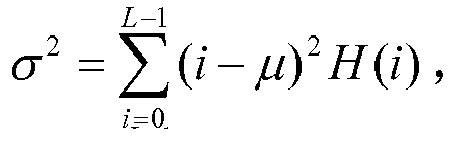
- In the step S103, the first variance value σ 2 and the first energy value µN are obtained according to the following equations:


- In the step S104, the second variance value σ 2 and the second energy value µN are obtained according to the following equations:


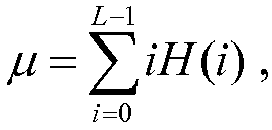
- The mean value µ is obtained according to the following equation:

- Wherein, since three of the five elements, i.e., the identity ID, administrator number, administrator key are directly stored on the terminal node and the platform and are not changed with the change of the times of authentication etc., when the terminal node and the platform are initialized, some temporal storage spaces are set for storing these intermediate quantities which are invariable, so as to achieve the purpose of simplifying calculation consumption as specifically described as follows.
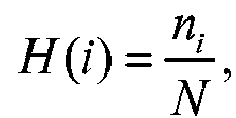
- Firstly, for the variance and energy, it needs to use frequencies of occurrences of different values. Assume that the SHA1 transformation values of five elements, i.e., the identity ID, the matrix password, the random number returned by the platform, the administrator number and administrator key are a, b, c, d, and e respectively. Then, the terminal node performs SHA1 transformation according to the identity ID information, matrix password value MX information, random number information RT, administrator number AN information and administrator key AK information respectively, and combines the transformation results (for example, a, b, c, d and e) into a first or second global matrix SHAmatrix, and then calculates the variance σ 2 and energy µN of the matrix SHAmatrix, wherein,





- Correspondingly, the calculation of the variance needs to use the following mean value:

- When the variance is calculated each time, as it relates to calculating the difference between the mean value and each value of the matrix, the variance and the mean value will not be processed separately, and after the mean value is optimized, it is equivalent to an indirect optimization of the calculation of the variance.
- The embodiments of the present document further provide a mutual identity authentication system for a wireless sensor network, and as shown in
Fig. 2 , the system comprises aterminal node 10 and aplatform 20, wherein, theterminal node 10 comprises a firstinformation reception module 103, afirst storage module 101, afirst processing module 102 and a firstinformation transmission module 104, wherein,
the firstinformation reception module 103 is configured to obtain random number information RT randomly generated in a Tth authentication phase, password matrix identity information, SHA1(R T-1 ∥ AN) information of the platform and displacement identity n from theplatform 20;
thefirst storage module 101 is configured to store authentication random number information R T-1 of the T-1th authentication phase, administrator number information AN, password matrix Matrix information and administrator key AK information;
thefirst processing module 102 is configured to calculate SHA1(R T-1 ∥ AN) information of the terminal according to random number information R T-1 of the T-1th authentication phase and administrator number information AN stored by itself, and if the SHA1(R T-1 ∥ AN) information of the terminal is different from the SHA1(R T-1 ∥ AN) information of the platform, determine that a verification of identity fails; otherwise, obtain matrix password value MX information according to the password matrix identity information received by the terminal node from the platform and password matrix Matrix information pre-stored in the terminal node, and at the same time update the random number information RT transmitted by the platform to a storage space of the terminal node; and perform SHA1 transformation on the obtained matrix password value MX information and random number information RT and pre-stored identity ID information, administrator number AN information and administrator key AK information respectively, and combine the transformation results into a first global matrix SHAmatrix and then calculate a first variance value σ 2 and a first energy value µN of the first global matrix SHAmatrix , and transmit the first variance σ 2 and the first energy value µN to the firstinformation transmission module 104;
the firstinformation transmission module 104 is configured to transmit the first variance value σ 2 and the first energy value µN to theplatform 20;
theplatform 20 comprises a secondinformation reception module 203, asecond storage module 201, asecond processing module 202 and a secondinformation transmission module 204, wherein,
the secondinformation reception module 203 is configured to receive the first variance value σ 2 and the first energy value µN from each terminal node;
thesecond storage module 201 is configured to store the authentication random number information R T-1 of a T-1th authentication phase, identity ID information, administrator number AN information, administrator key AK information, password matrix identity information and password matrix Matrix information of each terminal node;
thesecond processing module 202 is configured to obtain matrix password value MX information of the platform according to the password matrix identity information stored by itself and the password matrix Matrix information of the terminal node, and perform SHA1 transformation on the matrix password value MX information together with the identity ID information, the administrator number AN information, the administrator key AK information, and the random number information RT stored by the platform respectively, and combine the transformation results into a second global matrix SHAmatrix and then calculate a second variance value σ 2 and a second energy value µN of the second global matrix SHAmatrix, and when the second variance value σ 2 and the second energy value µN match the received first variance value σ 2 and first energy value µN , determine that the verification of the identity passes;
the secondinformation transmission module 204 is configured to broadcast random number information RT randomly generated in a Tth authentication phase, password matrix identity information, SHA1(R T-1 ∥ AN) information of the platform and displacement identity n to each terminal node. - The first variance value σ 2 and the first energy value µN are obtained according to the following equations:


- Similarly, the second variance value σ 2 and the second energy value µN are obtained according to the following equations:


- The mean value µ is obtained according to the following equation:

- The frequency of occurrence Hstatic (i) of a distinct value for an invariable element is stored in the first storage module and the second storage module when the system is initialized, for being called later when the first variance value σ 2, the first energy value µN , the second variance value σ 2 and the second energy value µN are calculated.
- The embodiments of the present document further provide a terminal node, and as shown in
Fig. 2 , the terminal node comprises a firstinformation reception module 103, afirst storage module 101, afirst processing module 102 and a firstinformation transmission module 104, wherein,
the firstinformation reception module 103 is configured to obtain random number information RT randomly generated in a Tth authentication phase, password matrix identity information, SHA1(R T-1 ∥ AN) information of the platform and displacement identity n from the platform;
thefirst storage module 101 is configured to store authentication random number information R T-1 of the T-1th authentication phase, administrator number information AN, password matrix Matrix information and administrator key AK information;
thefirst processing module 102 is configured to calculate SHA1(R T-1 ∥ AN) information of the terminal according to random number information R T-1 of the T-1th authentication phase and administrator number information AN stored by the terminal node itself, and if the SHA1(R T-1 ∥ AN) information of the terminal is different from the SHA1(R T-1 ∥ AN) information of the platform, determine that a verification of identity fails; otherwise, obtain matrix password value MX information according to the password matrix identity information received by the terminal node from the platform and password matrix Matrix information pre-stored in the terminal node, and at the same time update the random number information RT transmitted by the platform to a storage space of the terminal node; and perform SHA1 transformation on the obtained matrix password value MX information and random number information RT and pre-stored identity ID information, administrator number AN information and administrator key AK information respectively, and combine the transformation results into a first global matrix SHAmatrix and then calculate a first variance value σ 2 and a first energy value µN of the first global matrix SHAmatrix , and transmit the first variance σ 2 and the first energy value µN to the first information transmission module;
the firstinformation transmission module 104 is configured to transmit the first variance value σ 2 and the first energy value µN to the platform. - The first variance value σ 2 and the first energy value µN are obtained according to the following equations:


- The mean value µ is obtained according to the following equation:

- Alternatively the frequency of occurrence Hstatic (i) of a distinct value for an invariable element is stored in the first storage module when the system is initialized, for being called later when the first variance value σ 2 and the first energy value µN are calculated.
- The embodiments of the present document further provide a platform, and as shown in
Fig. 2 , theplatform 20 comprises a secondinformation reception module 203, asecond storage module 201, asecond processing module 202 and a secondinformation transmission module 204, wherein,
the secondinformation reception module 203 is configured to receive the first variance value σ 2 and the first energy value µN from each terminal node;
thesecond storage module 201 is configured to store the authentication random number information R T-1 of a T-1th authentication phase, identity ID information, administrator number AN information, administrator key AK information, password matrix identity information and password matrix Matrix information of each terminal node;
thesecond processing module 202 is configured to obtain matrix password value MX information of the platform according to the password matrix identity information stored by the platform itself and the password matrix Matrix information of the terminal node, and perform SHA1 transformation on the matrix password value MX information together with the identity ID information, the administrator number AN information, the administrator key AK information, and the random number information RT stored by the platform respectively, and combine the transformation results into a second global matrix SHAmatrix and then calculate a second variance value σ 2 and a second energy value µN of the second global matrix SHAmatrix, and when the second variance value σ 2 and the second energy value µN match the received first variance value σ 2 and first energy value µN , determine that a verification of the identity passes;
the secondinformation transmission module 204 is configured to broadcast random number information RT randomly generated in a Tth authentication phase, password matrix identity information, SHA1(R t-1 ∥ AN) information of the platform and displacement identity n to each terminal node. - The second variance value σ 2 and the second energy value µN are obtained according to the following equations:


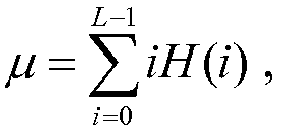

- The mean value µ is obtained according to the following equation:

- Alternatively, the frequency of occurrence Hstatic (i) of a distinct value for an invariable element is stored in the second storage module when the system is initialized, for being called later when the second variance value σ 2 and the second energy value µN are calculated.
- In the embodiments of the present document, authentication elements used in the authentication are diversified, wherein, the embodiments of the present document increase the number of the authentication elements in the identity authentication to 5, comprising the node identity ID (or hardware verification/identification code), the matrix password number MX, the random number R returned by the platform, the administrator number AN and the administrator key AK. Wherein, the node identity ID is a unique identity which can primarily be used to distinguish the node from other nodes; the matrix password number MX is a common matrix password element for searching for a corresponding administrator key according to the matrix identity returned by the platform; the random number R returned by the platform is a group of random numbers returned by the platform with a length longer than the number of digits of other elements; and the administrator number AN and the administrator key AK are administrator login information preset in the node, and these elements are preset in the terminal node of the present system, thus facilitating manual operations and maintenance of nodes capable of human-computer interaction, and also provide space and convenience for extension of some nodes having potential functions. These five elements comprise an ID with uniqueness, an administrator number and an administrator key with security, and a matrix password and a random number with dynamics, which largely enhance the security relative to the previous solutions only having an authentication element of one aspect. On the other hand, the embodiments of the present document avoid using a private key element currently under the risk of many attack measures, and therefore can effectively prevent the system from being damaged by some targeted attacks.
- The above description illustrates and describes a preferred embodiment of the present document. However, as described above, it should be understood that the present document is not limited to the form disclosed herein, and should not be considered as an exclusion of other embodiments, and the present document can be used for various other combinations, modifications and environments, and can be changed within the scope of the inventive concept according to the above teachings or technologies or knowledge in the related art. All changes and variations made by those skilled in the art should belong to the protection scope of the appended claims of the present document without departing from the scope of the claims.
- The embodiments of the present document increase the number of the authentication elements in the identity authentication to 5, comprising the node identity ID (or hardware verification/identification code), the matrix password number MX, the random number R returned by the platform, the administrator number AN and the administrator key AK. Wherein, the node identity ID is a unique identity which can primarily be used to distinguish the node from other nodes; the matrix password number MX is a common matrix password element for searching for a corresponding administrator key according to the matrix identity returned by the platform; the random number R returned by the platform is a group of random numbers returned by the platform with a length longer than the number of digits of other elements; and the administrator number AN and the administrator key AK are administrator login information preset in the node, and these elements are preset in the terminal node of the present system, thus facilitating manual operations and maintenance of nodes capable of human-computer interaction, and also provide space and convenience for extension of some nodes having potential functions. These five elements comprise an ID with uniqueness, an administrator number and an administrator key with security, and a matrix password and a random number with dynamics, which largely enhance the security relative to the previous solutions only having an authentication element of one aspect. On the other hand, the embodiments of the present document avoid using a private key element currently under the risk of many attack measures, and therefore can effectively prevent the system from being damaged by some targeted attacks. Therefore, the present document has powerful industrial applicability.
Claims (9)
- A mutual identity authentication method for a wireless sensor network, comprising the following steps:A. a platform broadcasting random number information RT randomly generated in a Tth authentication phase, password matrix identity information, SHA1(R T-1 ∥ AN) information of a platform and displacement identity n to a terminal node, wherein, SHA1(R T-1 ∥ AN) = SHA1(R T-1⊕(AN << n)); R T-1 is authentication random number information of a T-1th authentication phase stored by the platform, and AN is administrator number information of the terminal node;B. the terminal node calculating SHA1(R T-1 ∥ AN) information of the terminal according to the authentication random number information R T-1 of the T-1th authentication phase and administrator number information AN stored by the terminal node itself, if the SHA1(R T-1 ∥ AN) information of the terminal is different from the SHA1(R T-1 ∥ AN) information of the platform, determine that a verification of identity fails; otherwise, obtaining matrix password value MX information according to the password matrix identity information received by the terminal node from the platform and password matrix Matrix information pre-stored in the terminal node, and meanwhile, updating the random number information RT transmitted by the platform to a storage space of the terminal node;C. the terminal node performing SHA1 transformation on the obtained matrix password value MX information and random number information RT and pre-stored identity ID information, administrator number AN information and administrator key AK information respectively, and combining the transformation results into a first global matrix SHAmatrix and then calculating a first variance value σ 2 and a first energy value µN of the first global matrix SHAmatrix , and transmitting the first variance σ 2 and the first energy value µN to the platform; andD. the platform obtaining matrix password value MX information of the platform according to the password matrix identity information stored by the platform itself and the password matrix Matrix information of the terminal node, and performing SHA1 transformation on the matrix password value MX information together with the identity ID information, the administrator number AN information, the administrator key AK information, and the random number information RT stored by the platform respectively, and combining the transformation results into a second global matrix SHAmatrix and then calculating a second variance value σ 2 and a second energy value µN of the second global matrix SHAmatrix, and when the second variance value σ 2 and the second energy value µN match the received first variance value σ 2 and first energy value µN , determining that the verification of the identity passes;
wherein in the step C and D, the first variance value σ 2 and the second variance value σ 2 are obtained according to the following equations:


characterized in that,
the mean value µ is obtained according to the following equation:
- The method according to claim 1, further comprising:
before performing all steps according to claim 1, performing the following steps:presetting identity ID information, administrator number AN information, administrator key AK information, password matrix Matrix information and initial authentication random number information R 0 for the terminal node, and storing the information; andthe platform obtaining identity ID information, administrator number AN information, administrator key AK information, password matrix Matrix information and initial authentication random number information R 0 of each terminal node, and storing the obtained information. - The method according to claim 1, further comprising:
storing the frequency of occurrence Hstatic (i) of a distinct value for an invariable element when a system is initialized, for being called later when the first variance value σ 2, the first energy value µN , the second variance value σ 2 and the second energy value µN are calculated. - A mutual identity authentication system for a wireless sensor network, comprising a terminal node and a platform, wherein,
the terminal node comprises a first information reception module (103), a first storage module (101), a first processing module (102) and a first information transmission module (104), wherein,
the first information reception module (103) is configured to obtain random number information RT randomly generated in a Tth authentication phase, password matrix identity information, SHA1(R T-1 ∥ AN) information of the platform and displacement identity n from the platform;
the first storage module (101) is configured to store authentication random number information R T-1 of a T-1th authentication phase, administrator number information AN, password matrix Matrix information and administrator key AK information;
the first processing module (102) is configured to calculate SHA1(R T-1 ∥ AN) information of the terminal according to random number information R T-1 of the T-1th authentication phase and administrator number information AN stored by the terminal node itself, and if the SHA1(R T-1 ∥ AN) information of the terminal is different from the SHA1(R T-1 ∥ AN) information of the platform, determine that a verification of identity fails; otherwise, obtain matrix password value MX information according to the password matrix identity information received by the terminal node from the platform and password matrix Matrix information pre-stored in the terminal node, and meanwhile, update the random number information RT transmitted by the platform to a storage space of the terminal node; and perform SHA1 transformation on the obtained matrix password value MX information and random number information RT and pre-stored identity ID information, administrator number AN information and administrator key AK information respectively, and combine the transformation results into a first global matrix SHAmatrix and then calculate a first variance value σ 2 and a first energy value µN of the first global matrix SHAmatrix , and transmit the first variance σ 2 and the first energy value µN to the first information transmission module; and
the first information transmission module (104) is configured to transmit the first variance value σ 2 and the first energy value µN to the platform;
the platform comprises a second information reception module (203), a second storage module (201), a second processing module (202) and a second information transmission module (204), wherein,
the second information reception module (203) is configured to receive the first variance value σ 2 and the first energy value µN from each terminal node;
the second storage module (201) is configured to store the authentication random number information R T-1 of a T-1th authentication phase, identity ID information, administrator number AN information, administrator key AK information, password matrix identity information and password matrix Matrix information of each terminal node;
the second processing module (202) is configured to obtain matrix password value MX information of the platform according to the password matrix identity information stored by the platform itself and the password matrix Matrix information of the terminal node, and perform SHA1 transformation on the matrix password value MX information together with the identity ID information, the administrator number AN information, the administrator key AK information, and the random number information RT stored by the platform respectively, and combine the transformation results into a second global matrix SHAmatrix and then calculate a second variance value σ 2 and a second energy value µN of the second global matrix SHAmatrix , and when the second variance value σ 2 and the second energy value µN match the received first variance value σ 2 and first energy value µN , determine that the verification of the identity passes; and
the second information transmission module (204) is configured to broadcast random number information RT randomly generated in a Tth authentication phase, password matrix identity information, SHA1(R T-1 ∥ AN) information of the platform and displacement identity n to each terminal node;
wherein the first variance value σ 2 and the second variance value σ 2 are obtained according to the following equations:


characterized in that,
the mean value µ is obtained according to the following equation:
- The system according to claim 4, wherein, the frequency of occurrence Hstatic (i) of a distinct value for an invariable element is stored in the first storage module (101) and the second storage module (201) when the system is initialized, for being called later when the first variance value σ 2, the first energy value µN , the second variance value σ 2 and the second energy value µN are calculated.
- A terminal node, comprising a first information reception module, a first storage module, a first processing module and a first information transmission module, wherein,
the first information reception module (103) is configured to obtain random number information RT randomly generated in a Tth authentication phase, password matrix identity information, SHA1(R T-1 ∥ AN) information of a platform and displacement identity n from the platform;
the first storage module (101) is configured to store authentication random number information R T-1 of a T-1th authentication phase, administrator number information AN, password matrix Matrix information and administrator key AK information;
the first processing module (102) is configured to calculate SHA1(R T-1 ∥ AN) information of the terminal according to the random number information R T-1 of the T-1th authentication phase and the administrator number information AN stored by the terminal node itself, and if the SHA1(R T-1 ∥ AN) information of the terminal is different from the SHA1(R T-1 ∥ AN) information of the platform, determine that a verification of identity fails; otherwise, obtain matrix password value MX information according to the password matrix identity information received by the terminal node from the platform and password matrix Matrix information pre-stored in the terminal node, and meanwhile, update the random number information RT transmitted by the platform to a storage space of the terminal node; and perform SHA1 transformation on the obtained matrix password value MX information and random number information RT and pre-stored identity ID information, administrator number AN information and administrator key AK information respectively, and combine the transformation results into a first global matrix SHAmatrix and then calculate a first variance value σ 2 and a first energy value µN of the first global matrix SHAmatrix , and transmit the first variance σ 2 and the first energy value µN to the first information transmission module; and
the first information transmission module (104) is configured to transmit the first variance value σ 2 and the first energy value µN to the platform;
wherein, the first variance value σ 2 and the first energy value µN are obtained according to the following equations:


characterized in that, the mean value µ is obtained according to the following equation:
- A terminal node according to claim 6, wherein, the frequency of occurrence Hstatic (i) of a distinct value for an invariable element is stored in the first storage module (101) when a system is initialized, for being called later when the first variance value σ 2 and the first energy value µN are calculated.
- A platform, comprising a second information reception module, a second storage module, a second processing module and a second information transmission module, wherein,
the second information reception module (203) is configured to receive a first variance value σ 2 and a first energy value µN from each terminal node;
the second storage module (201) is configured to store authentication random number information R T-1 of a T-1th authentication phase, identity ID information, administrator number AN information, administrator key AK information, password matrix identity information and password matrix Matrix information of each terminal node;
the second processing module (202) is configured to obtain matrix password value MX information of the platform according to the password matrix identity information stored by the platform itself and the password matrix Matrix information of the terminal node, and perform SHA1 transformation on the matrix password value MX information together with the identity ID information, the administrator number AN information, the administrator key AK information, and the random number information RT stored by the platform respectively, and combine the transformation results into a second global matrix SHAmatrix and then calculate a second variance value σ 2 and a second energy value µN of the second global matrix SHAmatrix , and when the second variance value σ 2 and the second energy value µN match the received first variance value σ 2 and first energy value µN , determine that a verification of the identity passes; and
the second information transmission module (204) is configured to broadcast random number information RT randomly generated in a Tth authentication phase, password matrix identity information, SHA1(R T-1 ∥ AN) information of the platform and displacement identity n to each terminal node;
wherein the second variance value σ 2 and the second energy value µN are obtained according to the following equations:
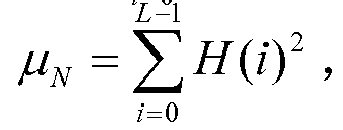


characterized in that,
the mean value µ is obtained according to the following equation:
- A platform according to claim 8, wherein, the frequency of occurrence Hstatic (i) of a distinct value for an invariable element is stored in the second storage module (201) when a system is initialized, for being called later when the second variance value σ 2 and the second energy value µN are calculated.
Applications Claiming Priority (2)
| Application Number | Priority Date | Filing Date | Title |
|---|---|---|---|
| CN201110329792.3A CN103079199B (en) | 2011-10-26 | 2011-10-26 | A kind of radio sensing network Bidirectional identity authentication method and system |
| PCT/CN2012/077841 WO2013060160A1 (en) | 2011-10-26 | 2012-06-29 | Mutual identity authentication method and system for wireless sensor network |
Publications (3)
| Publication Number | Publication Date |
|---|---|
| EP2773062A1 EP2773062A1 (en) | 2014-09-03 |
| EP2773062A4 EP2773062A4 (en) | 2015-05-27 |
| EP2773062B1 true EP2773062B1 (en) | 2018-10-24 |
Family
ID=48155583
Family Applications (1)
| Application Number | Title | Priority Date | Filing Date |
|---|---|---|---|
| EP12843783.7A Active EP2773062B1 (en) | 2011-10-26 | 2012-06-29 | Mutual identity authentication method and system for wireless sensor network |
Country Status (4)
| Country | Link |
|---|---|
| EP (1) | EP2773062B1 (en) |
| CN (1) | CN103079199B (en) |
| BR (1) | BR112014010132B1 (en) |
| WO (1) | WO2013060160A1 (en) |
Families Citing this family (5)
| Publication number | Priority date | Publication date | Assignee | Title |
|---|---|---|---|---|
| CN110876142B (en) * | 2018-09-02 | 2023-08-18 | 中城智慧科技有限公司 | Identification-based wifi authentication method |
| CN111935679B (en) * | 2020-09-28 | 2021-06-18 | 深圳市北扶生物医疗科技有限公司 | Method and system for initial communication between Internet of things terminal and wireless terminal small program |
| CN113573307B (en) * | 2021-07-28 | 2024-01-30 | 西安热工研究院有限公司 | Rapid authentication method based on extensible authentication protocol |
| CN116208320B (en) * | 2021-11-30 | 2026-05-01 | 成都忆芯科技有限公司 | Method for managing data encryption and decryption keys, method for processing commands and related products |
| CN115797034A (en) * | 2022-11-17 | 2023-03-14 | 中国银行股份有限公司 | Method and device for identity verification of bank outlets |
Family Cites Families (5)
| Publication number | Priority date | Publication date | Assignee | Title |
|---|---|---|---|---|
| WO2006035400A1 (en) * | 2004-09-30 | 2006-04-06 | Koninklijke Philips Electronics N.V. | Method of authentication based on polynomials |
| CN100558035C (en) * | 2006-08-03 | 2009-11-04 | 西安电子科技大学 | A two-way authentication method and system |
| US8042155B1 (en) * | 2006-09-29 | 2011-10-18 | Netapp, Inc. | System and method for generating a single use password based on a challenge/response protocol |
| CN101145913B (en) * | 2007-10-25 | 2010-06-16 | 东软集团股份有限公司 | A method and system for network security communication |
| JP5342818B2 (en) * | 2008-05-14 | 2013-11-13 | Kddi株式会社 | Management device, registered communication terminal, unregistered communication terminal, network system, management method, communication method, and computer program. |
-
2011
- 2011-10-26 CN CN201110329792.3A patent/CN103079199B/en not_active Expired - Fee Related
-
2012
- 2012-06-29 BR BR112014010132-9A patent/BR112014010132B1/en active IP Right Grant
- 2012-06-29 WO PCT/CN2012/077841 patent/WO2013060160A1/en not_active Ceased
- 2012-06-29 EP EP12843783.7A patent/EP2773062B1/en active Active
Non-Patent Citations (1)
| Title |
|---|
| None * |
Also Published As
| Publication number | Publication date |
|---|---|
| EP2773062A4 (en) | 2015-05-27 |
| EP2773062A1 (en) | 2014-09-03 |
| WO2013060160A1 (en) | 2013-05-02 |
| CN103079199A (en) | 2013-05-01 |
| BR112014010132B1 (en) | 2022-05-10 |
| BR112014010132A2 (en) | 2017-04-25 |
| CN103079199B (en) | 2017-08-25 |
Similar Documents
| Publication | Publication Date | Title |
|---|---|---|
| He et al. | Secure and efficient handover authentication based on bilinear pairing functions | |
| Qi et al. | A secure authentication with key agreement scheme using ECC for satellite communication systems | |
| He et al. | Analysis and improvement of a secure and efficient handover authentication for wireless networks | |
| Giri et al. | Efficient biometric and password based mutual authentication for consumer USB mass storage devices | |
| Rizomiliotis et al. | Security analysis of the Song-Mitchell authentication protocol for low-cost RFID tags | |
| Tsai et al. | Secure delegation-based authentication protocol for wireless roaming service | |
| CN109040060B (en) | Terminal matching method and system, computer equipment | |
| Alghamdi et al. | Routing-aware and malicious node detection in a concealed data aggregation for WSNs | |
| EP2773062A1 (en) | Mutual identity authentication method and system for wireless sensor network | |
| Ghosal et al. | A lightweight security scheme for query processing in clustered wireless sensor networks | |
| Mishra et al. | A pairing-free identity based authentication framework for cloud computing | |
| Ghani et al. | Enhancing security and trust using efficient privacy-preserving authentication in vehicular edge computing networks | |
| Castiglione et al. | An efficient and transparent one-time authentication protocol with non-interactive key scheduling and update | |
| Li et al. | Shared RFID ownership transfer protocols | |
| Nashwan | SE-H: Secure and efficient hash protocol for RFID system | |
| Bilal et al. | Ultra-lightweight mutual authentication protocols: Weaknesses and countermeasures | |
| Tseng | Cryptanalysis and improvement of key distribution system for VSAT satellite communications | |
| Zhu et al. | Privacy-preserving friendship establishment based on blind signature and bloom filter in mobile social networks | |
| Kakarla et al. | A secure and light-weighted group based authentication and key agreement protocol involving ecdh for machine type communications in 3GPP networks | |
| CN105141620A (en) | Small data distribution method enabling wireless sensor network security and denial of service attack defense | |
| Shiwei et al. | Anonymous Authentication Scheme Based on One-off Public Key in VANET | |
| CN115277074B (en) | Encryption and decryption method, device, equipment and storage medium | |
| Gope et al. | Energy efficient mutual authentication and key agreement scheme with strong anonymity support for secure ubiquitious roaming services | |
| Li et al. | Badge: Blockchain-assisted secure authenticated data transmission in mobile edge computing | |
| Wang et al. | An efficient delegation-based roaming payment protocol against denial of service attacks |
Legal Events
| Date | Code | Title | Description |
|---|---|---|---|
| PUAI | Public reference made under article 153(3) epc to a published international application that has entered the european phase |
Free format text: ORIGINAL CODE: 0009012 |
|
| 17P | Request for examination filed |
Effective date: 20140429 |
|
| AK | Designated contracting states |
Kind code of ref document: A1 Designated state(s): AL AT BE BG CH CY CZ DE DK EE ES FI FR GB GR HR HU IE IS IT LI LT LU LV MC MK MT NL NO PL PT RO RS SE SI SK SM TR |
|
| DAX | Request for extension of the european patent (deleted) | ||
| RA4 | Supplementary search report drawn up and despatched (corrected) |
Effective date: 20150428 |
|
| RIC1 | Information provided on ipc code assigned before grant |
Ipc: H04L 9/32 20060101AFI20150421BHEP Ipc: H04W 12/06 20090101ALI20150421BHEP |
|
| GRAP | Despatch of communication of intention to grant a patent |
Free format text: ORIGINAL CODE: EPIDOSNIGR1 |
|
| STAA | Information on the status of an ep patent application or granted ep patent |
Free format text: STATUS: GRANT OF PATENT IS INTENDED |
|
| INTG | Intention to grant announced |
Effective date: 20180518 |
|
| GRAS | Grant fee paid |
Free format text: ORIGINAL CODE: EPIDOSNIGR3 |
|
| GRAA | (expected) grant |
Free format text: ORIGINAL CODE: 0009210 |
|
| STAA | Information on the status of an ep patent application or granted ep patent |
Free format text: STATUS: THE PATENT HAS BEEN GRANTED |
|
| AK | Designated contracting states |
Kind code of ref document: B1 Designated state(s): AL AT BE BG CH CY CZ DE DK EE ES FI FR GB GR HR HU IE IS IT LI LT LU LV MC MK MT NL NO PL PT RO RS SE SI SK SM TR |
|
| REG | Reference to a national code |
Ref country code: CH Ref legal event code: EP |
|
| REG | Reference to a national code |
Ref country code: IE Ref legal event code: FG4D |
|
| REG | Reference to a national code |
Ref country code: AT Ref legal event code: REF Ref document number: 1057970 Country of ref document: AT Kind code of ref document: T Effective date: 20181115 |
|
| REG | Reference to a national code |
Ref country code: DE Ref legal event code: R096 Ref document number: 602012052714 Country of ref document: DE |
|
| REG | Reference to a national code |
Ref country code: NL Ref legal event code: MP Effective date: 20181024 |
|
| REG | Reference to a national code |
Ref country code: LT Ref legal event code: MG4D |
|
| REG | Reference to a national code |
Ref country code: AT Ref legal event code: MK05 Ref document number: 1057970 Country of ref document: AT Kind code of ref document: T Effective date: 20181024 |
|
| PG25 | Lapsed in a contracting state [announced via postgrant information from national office to epo] |
Ref country code: NL Free format text: LAPSE BECAUSE OF FAILURE TO SUBMIT A TRANSLATION OF THE DESCRIPTION OR TO PAY THE FEE WITHIN THE PRESCRIBED TIME-LIMIT Effective date: 20181024 |
|
| PG25 | Lapsed in a contracting state [announced via postgrant information from national office to epo] |
Ref country code: LV Free format text: LAPSE BECAUSE OF FAILURE TO SUBMIT A TRANSLATION OF THE DESCRIPTION OR TO PAY THE FEE WITHIN THE PRESCRIBED TIME-LIMIT Effective date: 20181024 Ref country code: AT Free format text: LAPSE BECAUSE OF FAILURE TO SUBMIT A TRANSLATION OF THE DESCRIPTION OR TO PAY THE FEE WITHIN THE PRESCRIBED TIME-LIMIT Effective date: 20181024 Ref country code: NO Free format text: LAPSE BECAUSE OF FAILURE TO SUBMIT A TRANSLATION OF THE DESCRIPTION OR TO PAY THE FEE WITHIN THE PRESCRIBED TIME-LIMIT Effective date: 20190124 Ref country code: FI Free format text: LAPSE BECAUSE OF FAILURE TO SUBMIT A TRANSLATION OF THE DESCRIPTION OR TO PAY THE FEE WITHIN THE PRESCRIBED TIME-LIMIT Effective date: 20181024 Ref country code: IS Free format text: LAPSE BECAUSE OF FAILURE TO SUBMIT A TRANSLATION OF THE DESCRIPTION OR TO PAY THE FEE WITHIN THE PRESCRIBED TIME-LIMIT Effective date: 20190224 Ref country code: PL Free format text: LAPSE BECAUSE OF FAILURE TO SUBMIT A TRANSLATION OF THE DESCRIPTION OR TO PAY THE FEE WITHIN THE PRESCRIBED TIME-LIMIT Effective date: 20181024 Ref country code: LT Free format text: LAPSE BECAUSE OF FAILURE TO SUBMIT A TRANSLATION OF THE DESCRIPTION OR TO PAY THE FEE WITHIN THE PRESCRIBED TIME-LIMIT Effective date: 20181024 Ref country code: HR Free format text: LAPSE BECAUSE OF FAILURE TO SUBMIT A TRANSLATION OF THE DESCRIPTION OR TO PAY THE FEE WITHIN THE PRESCRIBED TIME-LIMIT Effective date: 20181024 Ref country code: ES Free format text: LAPSE BECAUSE OF FAILURE TO SUBMIT A TRANSLATION OF THE DESCRIPTION OR TO PAY THE FEE WITHIN THE PRESCRIBED TIME-LIMIT Effective date: 20181024 Ref country code: BG Free format text: LAPSE BECAUSE OF FAILURE TO SUBMIT A TRANSLATION OF THE DESCRIPTION OR TO PAY THE FEE WITHIN THE PRESCRIBED TIME-LIMIT Effective date: 20190124 |
|
| PG25 | Lapsed in a contracting state [announced via postgrant information from national office to epo] |
Ref country code: GR Free format text: LAPSE BECAUSE OF FAILURE TO SUBMIT A TRANSLATION OF THE DESCRIPTION OR TO PAY THE FEE WITHIN THE PRESCRIBED TIME-LIMIT Effective date: 20190125 Ref country code: PT Free format text: LAPSE BECAUSE OF FAILURE TO SUBMIT A TRANSLATION OF THE DESCRIPTION OR TO PAY THE FEE WITHIN THE PRESCRIBED TIME-LIMIT Effective date: 20190224 Ref country code: AL Free format text: LAPSE BECAUSE OF FAILURE TO SUBMIT A TRANSLATION OF THE DESCRIPTION OR TO PAY THE FEE WITHIN THE PRESCRIBED TIME-LIMIT Effective date: 20181024 Ref country code: SE Free format text: LAPSE BECAUSE OF FAILURE TO SUBMIT A TRANSLATION OF THE DESCRIPTION OR TO PAY THE FEE WITHIN THE PRESCRIBED TIME-LIMIT Effective date: 20181024 Ref country code: RS Free format text: LAPSE BECAUSE OF FAILURE TO SUBMIT A TRANSLATION OF THE DESCRIPTION OR TO PAY THE FEE WITHIN THE PRESCRIBED TIME-LIMIT Effective date: 20181024 |
|
| REG | Reference to a national code |
Ref country code: DE Ref legal event code: R097 Ref document number: 602012052714 Country of ref document: DE |
|
| PG25 | Lapsed in a contracting state [announced via postgrant information from national office to epo] |
Ref country code: IT Free format text: LAPSE BECAUSE OF FAILURE TO SUBMIT A TRANSLATION OF THE DESCRIPTION OR TO PAY THE FEE WITHIN THE PRESCRIBED TIME-LIMIT Effective date: 20181024 Ref country code: CZ Free format text: LAPSE BECAUSE OF FAILURE TO SUBMIT A TRANSLATION OF THE DESCRIPTION OR TO PAY THE FEE WITHIN THE PRESCRIBED TIME-LIMIT Effective date: 20181024 Ref country code: DK Free format text: LAPSE BECAUSE OF FAILURE TO SUBMIT A TRANSLATION OF THE DESCRIPTION OR TO PAY THE FEE WITHIN THE PRESCRIBED TIME-LIMIT Effective date: 20181024 |
|
| PG25 | Lapsed in a contracting state [announced via postgrant information from national office to epo] |
Ref country code: SK Free format text: LAPSE BECAUSE OF FAILURE TO SUBMIT A TRANSLATION OF THE DESCRIPTION OR TO PAY THE FEE WITHIN THE PRESCRIBED TIME-LIMIT Effective date: 20181024 Ref country code: RO Free format text: LAPSE BECAUSE OF FAILURE TO SUBMIT A TRANSLATION OF THE DESCRIPTION OR TO PAY THE FEE WITHIN THE PRESCRIBED TIME-LIMIT Effective date: 20181024 Ref country code: SM Free format text: LAPSE BECAUSE OF FAILURE TO SUBMIT A TRANSLATION OF THE DESCRIPTION OR TO PAY THE FEE WITHIN THE PRESCRIBED TIME-LIMIT Effective date: 20181024 Ref country code: EE Free format text: LAPSE BECAUSE OF FAILURE TO SUBMIT A TRANSLATION OF THE DESCRIPTION OR TO PAY THE FEE WITHIN THE PRESCRIBED TIME-LIMIT Effective date: 20181024 |
|
| PLBE | No opposition filed within time limit |
Free format text: ORIGINAL CODE: 0009261 |
|
| STAA | Information on the status of an ep patent application or granted ep patent |
Free format text: STATUS: NO OPPOSITION FILED WITHIN TIME LIMIT |
|
| 26N | No opposition filed |
Effective date: 20190725 |
|
| PG25 | Lapsed in a contracting state [announced via postgrant information from national office to epo] |
Ref country code: SI Free format text: LAPSE BECAUSE OF FAILURE TO SUBMIT A TRANSLATION OF THE DESCRIPTION OR TO PAY THE FEE WITHIN THE PRESCRIBED TIME-LIMIT Effective date: 20181024 |
|
| REG | Reference to a national code |
Ref country code: DE Ref legal event code: R119 Ref document number: 602012052714 Country of ref document: DE |
|
| PG25 | Lapsed in a contracting state [announced via postgrant information from national office to epo] |
Ref country code: MC Free format text: LAPSE BECAUSE OF FAILURE TO SUBMIT A TRANSLATION OF THE DESCRIPTION OR TO PAY THE FEE WITHIN THE PRESCRIBED TIME-LIMIT Effective date: 20181024 |
|
| REG | Reference to a national code |
Ref country code: CH Ref legal event code: PL |
|
| GBPC | Gb: european patent ceased through non-payment of renewal fee |
Effective date: 20190629 |
|
| REG | Reference to a national code |
Ref country code: BE Ref legal event code: MM Effective date: 20190630 |
|
| PG25 | Lapsed in a contracting state [announced via postgrant information from national office to epo] |
Ref country code: TR Free format text: LAPSE BECAUSE OF FAILURE TO SUBMIT A TRANSLATION OF THE DESCRIPTION OR TO PAY THE FEE WITHIN THE PRESCRIBED TIME-LIMIT Effective date: 20181024 |
|
| PG25 | Lapsed in a contracting state [announced via postgrant information from national office to epo] |
Ref country code: GB Free format text: LAPSE BECAUSE OF NON-PAYMENT OF DUE FEES Effective date: 20190629 Ref country code: IE Free format text: LAPSE BECAUSE OF NON-PAYMENT OF DUE FEES Effective date: 20190629 Ref country code: DE Free format text: LAPSE BECAUSE OF NON-PAYMENT OF DUE FEES Effective date: 20200101 |
|
| PG25 | Lapsed in a contracting state [announced via postgrant information from national office to epo] |
Ref country code: LI Free format text: LAPSE BECAUSE OF NON-PAYMENT OF DUE FEES Effective date: 20190630 Ref country code: CH Free format text: LAPSE BECAUSE OF NON-PAYMENT OF DUE FEES Effective date: 20190630 Ref country code: BE Free format text: LAPSE BECAUSE OF NON-PAYMENT OF DUE FEES Effective date: 20190630 Ref country code: LU Free format text: LAPSE BECAUSE OF NON-PAYMENT OF DUE FEES Effective date: 20190629 |
|
| PG25 | Lapsed in a contracting state [announced via postgrant information from national office to epo] |
Ref country code: CY Free format text: LAPSE BECAUSE OF FAILURE TO SUBMIT A TRANSLATION OF THE DESCRIPTION OR TO PAY THE FEE WITHIN THE PRESCRIBED TIME-LIMIT Effective date: 20181024 |
|
| PG25 | Lapsed in a contracting state [announced via postgrant information from national office to epo] |
Ref country code: HU Free format text: LAPSE BECAUSE OF FAILURE TO SUBMIT A TRANSLATION OF THE DESCRIPTION OR TO PAY THE FEE WITHIN THE PRESCRIBED TIME-LIMIT; INVALID AB INITIO Effective date: 20120629 Ref country code: MT Free format text: LAPSE BECAUSE OF FAILURE TO SUBMIT A TRANSLATION OF THE DESCRIPTION OR TO PAY THE FEE WITHIN THE PRESCRIBED TIME-LIMIT Effective date: 20181024 |
|
| PG25 | Lapsed in a contracting state [announced via postgrant information from national office to epo] |
Ref country code: MK Free format text: LAPSE BECAUSE OF FAILURE TO SUBMIT A TRANSLATION OF THE DESCRIPTION OR TO PAY THE FEE WITHIN THE PRESCRIBED TIME-LIMIT Effective date: 20181024 |
|
| PGFP | Annual fee paid to national office [announced via postgrant information from national office to epo] |
Ref country code: FR Payment date: 20250508 Year of fee payment: 14 |