EP2772504A1 - Method for producing aliphatic polyester having increased molecular weight - Google Patents
Method for producing aliphatic polyester having increased molecular weight Download PDFInfo
- Publication number
- EP2772504A1 EP2772504A1 EP20120844471 EP12844471A EP2772504A1 EP 2772504 A1 EP2772504 A1 EP 2772504A1 EP 20120844471 EP20120844471 EP 20120844471 EP 12844471 A EP12844471 A EP 12844471A EP 2772504 A1 EP2772504 A1 EP 2772504A1
- Authority
- EP
- European Patent Office
- Prior art keywords
- aliphatic polyester
- molecular weight
- diisocyanate
- tank
- increased molecular
- Prior art date
- Legal status (The legal status is an assumption and is not a legal conclusion. Google has not performed a legal analysis and makes no representation as to the accuracy of the status listed.)
- Granted
Links
Images


Classifications
-
- C—CHEMISTRY; METALLURGY
- C08—ORGANIC MACROMOLECULAR COMPOUNDS; THEIR PREPARATION OR CHEMICAL WORKING-UP; COMPOSITIONS BASED THEREON
- C08G—MACROMOLECULAR COMPOUNDS OBTAINED OTHERWISE THAN BY REACTIONS ONLY INVOLVING UNSATURATED CARBON-TO-CARBON BONDS
- C08G18/00—Polymeric products of isocyanates or isothiocyanates
- C08G18/06—Polymeric products of isocyanates or isothiocyanates with compounds having active hydrogen
- C08G18/28—Polymeric products of isocyanates or isothiocyanates with compounds having active hydrogen characterised by the compounds used containing active hydrogen
- C08G18/40—High-molecular-weight compounds
- C08G18/42—Polycondensates having carboxylic or carbonic ester groups in the main chain
-
- C—CHEMISTRY; METALLURGY
- C08—ORGANIC MACROMOLECULAR COMPOUNDS; THEIR PREPARATION OR CHEMICAL WORKING-UP; COMPOSITIONS BASED THEREON
- C08G—MACROMOLECULAR COMPOUNDS OBTAINED OTHERWISE THAN BY REACTIONS ONLY INVOLVING UNSATURATED CARBON-TO-CARBON BONDS
- C08G18/00—Polymeric products of isocyanates or isothiocyanates
- C08G18/06—Polymeric products of isocyanates or isothiocyanates with compounds having active hydrogen
- C08G18/70—Polymeric products of isocyanates or isothiocyanates with compounds having active hydrogen characterised by the isocyanates or isothiocyanates used
- C08G18/72—Polyisocyanates or polyisothiocyanates
- C08G18/73—Polyisocyanates or polyisothiocyanates acyclic
-
- C—CHEMISTRY; METALLURGY
- C08—ORGANIC MACROMOLECULAR COMPOUNDS; THEIR PREPARATION OR CHEMICAL WORKING-UP; COMPOSITIONS BASED THEREON
- C08G—MACROMOLECULAR COMPOUNDS OBTAINED OTHERWISE THAN BY REACTIONS ONLY INVOLVING UNSATURATED CARBON-TO-CARBON BONDS
- C08G18/00—Polymeric products of isocyanates or isothiocyanates
- C08G18/06—Polymeric products of isocyanates or isothiocyanates with compounds having active hydrogen
- C08G18/28—Polymeric products of isocyanates or isothiocyanates with compounds having active hydrogen characterised by the compounds used containing active hydrogen
- C08G18/40—High-molecular-weight compounds
- C08G18/42—Polycondensates having carboxylic or carbonic ester groups in the main chain
- C08G18/4236—Polycondensates having carboxylic or carbonic ester groups in the main chain containing only aliphatic groups
- C08G18/4238—Polycondensates having carboxylic or carbonic ester groups in the main chain containing only aliphatic groups derived from dicarboxylic acids and dialcohols
-
- C—CHEMISTRY; METALLURGY
- C08—ORGANIC MACROMOLECULAR COMPOUNDS; THEIR PREPARATION OR CHEMICAL WORKING-UP; COMPOSITIONS BASED THEREON
- C08G—MACROMOLECULAR COMPOUNDS OBTAINED OTHERWISE THAN BY REACTIONS ONLY INVOLVING UNSATURATED CARBON-TO-CARBON BONDS
- C08G63/00—Macromolecular compounds obtained by reactions forming a carboxylic ester link in the main chain of the macromolecule
- C08G63/68—Polyesters containing atoms other than carbon, hydrogen and oxygen
- C08G63/685—Polyesters containing atoms other than carbon, hydrogen and oxygen containing nitrogen
- C08G63/6854—Polyesters containing atoms other than carbon, hydrogen and oxygen containing nitrogen derived from polycarboxylic acids and polyhydroxy compounds
- C08G63/6856—Dicarboxylic acids and dihydroxy compounds
-
- C—CHEMISTRY; METALLURGY
- C08—ORGANIC MACROMOLECULAR COMPOUNDS; THEIR PREPARATION OR CHEMICAL WORKING-UP; COMPOSITIONS BASED THEREON
- C08G—MACROMOLECULAR COMPOUNDS OBTAINED OTHERWISE THAN BY REACTIONS ONLY INVOLVING UNSATURATED CARBON-TO-CARBON BONDS
- C08G63/00—Macromolecular compounds obtained by reactions forming a carboxylic ester link in the main chain of the macromolecule
- C08G63/91—Polymers modified by chemical after-treatment
- C08G63/914—Polymers modified by chemical after-treatment derived from polycarboxylic acids and polyhydroxy compounds
- C08G63/916—Dicarboxylic acids and dihydroxy compounds
-
- C—CHEMISTRY; METALLURGY
- C08—ORGANIC MACROMOLECULAR COMPOUNDS; THEIR PREPARATION OR CHEMICAL WORKING-UP; COMPOSITIONS BASED THEREON
- C08G—MACROMOLECULAR COMPOUNDS OBTAINED OTHERWISE THAN BY REACTIONS ONLY INVOLVING UNSATURATED CARBON-TO-CARBON BONDS
- C08G2101/00—Manufacture of cellular products
-
- C—CHEMISTRY; METALLURGY
- C08—ORGANIC MACROMOLECULAR COMPOUNDS; THEIR PREPARATION OR CHEMICAL WORKING-UP; COMPOSITIONS BASED THEREON
- C08G—MACROMOLECULAR COMPOUNDS OBTAINED OTHERWISE THAN BY REACTIONS ONLY INVOLVING UNSATURATED CARBON-TO-CARBON BONDS
- C08G2230/00—Compositions for preparing biodegradable polymers
-
- C—CHEMISTRY; METALLURGY
- C08—ORGANIC MACROMOLECULAR COMPOUNDS; THEIR PREPARATION OR CHEMICAL WORKING-UP; COMPOSITIONS BASED THEREON
- C08G—MACROMOLECULAR COMPOUNDS OBTAINED OTHERWISE THAN BY REACTIONS ONLY INVOLVING UNSATURATED CARBON-TO-CARBON BONDS
- C08G2310/00—Agricultural use or equipment
Definitions
- the present invention relates to a method for continuously and effectively producing an aliphatic polyester having an increased molecular weight.
- the obtained polyester having an increased molecular weight is a high-quality resin.
- the high molecular weight polyesters used in films, sheets, fibers, and other molded articles were mostly aromatic polyesters such as polyethylene terephthalate and polybutylene terephthalate.
- Aliphatic polyesters generally regarded as being biodegradable have attracted attention in recent years from the point of environmental protection and the like.
- a method for producing the aliphatic polyesters a method comprising directly esterifying an aliphatic dicarboxylic acid with an aliphatic diol or a method comprising conducting transesterification of an alkyl ester of aliphatic dicarboxylic acid or an anhydride thereof with an aliphatic diol to obtain a glycol ester or a low polymer thereof and then stirring the same by heat under high vacuum for polycondensation has been known.
- Patent publication 1 discloses a method for producing an aliphatic polyester having an increased molecular weight comprising esterifying an aliphatic dicarboxylic acid with a glycol component and conducting a reaction to remove glycol from the formed polyester diol in the presence of a catalyst at a temperature of 180-230°C under high vacuum at 0.005-0.1 mmHg.
- Patent publication 2 proposes preparation of an aliphatic polyester having an increased molecular weight by adding a diisocyanate having an isocyanate group in an amount one tenth to two times equivalent to the amount of the hydroxyl groups to an aliphatic polyester prepolymer substantially having terminal hydroxyl groups in a molten state at a temperature not lower than the melting temperature thereof.
- Mw weight average molecular weight
- the inventors of this application have studied the reduction of accuracy in controlling molecular weight and formation of gelation and fish eyes and as a result, they found that when an isocyanate is added to a polymerization tank at a high temperature not lower than the melting point of the aliphatic polyester prepolymer so as to increase the molecular weight, the isocyanate evaporates due to the high temperature and not all of the amount of isocyanate added is used for the reaction and that the evaporated isocyanate adheres to the inner wall of the reaction tank vapor-phase portion.
- the object of the present invention is to provide a method for effectively producing an aliphatic polyester having an increased molecular weight which prevents evaporation of diisocyanate at the step of mixing the diisocyanate with the aliphatic polyester prepolymer which is melted at a temperature not lower than the melting point of the prepolymer to be in a liquid state and enables uniform mixing of the diisocyanate with the aliphatic polyester prepolymer.
- a high-quality aliphatic polyester having an increased molecular weight in which gelation or formation of fish eyes are reduced can be obtained by injecting a diisocyanate into an aliphatic polyester prepolymer, the prepolymer melted at a temperature not lower than the melting point thereof to be in a liquid state, sufficiently stirring and uniformly mixing same, and then subjecting same to a coupling reaction.
- the present invention is:
- a high-quality aliphatic polyester having an increased molecular weight with less occurrence of gelation and less formation of fish eyes can be produced in increasing the molecular weight of an aliphatic polyester.
- accuracy in controlling the melt-flow rate (MFR) of the obtained aliphatic polyester having an increased molecular weight is high.
- the present invention relates to a method for stably producing an aliphatic polyester having an increased molecular weight on an industrial scale comprising injecting a diisocyanate into an aliphatic polyester prepolymer which has a number average molecular weight of 5000 or higher and has terminal hydroxyl groups and in which at least one acid component is a succinic acid compound, wherein the prepolymer is melted at a temperature not lower than a melting point thereof and is in a liquid state, and wherein the diisocyanate comprises isocyanate groups in an amount equivalent to between one tenth and two times the amount of the hydroxyl groups in the aliphatic polyester prepolymer.
- the succinic acid compound used in the present invention is succinic acid or a derivative thereof (such as diesters, monoesters, and anhydride thereof). Specific examples thereof include succinic acid; succinic acid esters such as dimethyl succinate and diethyl succinate; and succinic anhydride. Among them, succinic acid, dimethyl succinate, and succinic anhydride are preferable. Succinic acid or derivatives thereof may be used alone or in combination of two or more thereof.
- Dicarboxylic acid compounds other than the succinic acid compound may be used as part of the acid components above.
- Specific examples thereof include dicarboxylic acids having a linear or branched alkylene group such as adipic acid, suberic acid, sebacic acid, azelaic acid, decane dicarboxylic acid, dodecane dicarboxylic acid, octadecane dicarboxylic acid, and dimer acid; esters of the dicarboxylic acids such as dimethyl adipate and dimethyl malonate; acid anhydrides such as maleic anhydride, itaconic anhydride, and adipic anhydride; and oxycarboxylic acids such as malic acid, tartaric acid, and citric acid.
- adipic acid or an adipic acid derivative such as dimethyl adipate is preferable.
- the amount of the dicarboxylic acid component other than the succinic acid compound above is about 0-35 mol%, preferably about 0-25 mol%, with respect to the total amount of dicarboxylic acids as the acid components.
- Glycol is used as a polyalcohol for producing the aliphatic polyester used in the production method of the present invention.
- examples thereof include aliphatic glycols having a linear or branched alkylene group such as ethylene glycol, 1,2-propanediol, 1,3-propanediol, 1,2-butanediol, 1,3-butanediol, 1,4-butanediol, 2,3-butanediol, 1,5-pentanediol, 1,2-pentanediol, 2,4-pentanediol, 1,6-hexanediol, 1,2-hexanediol, neopentyl glycol, and 2,2-diethyl-1,3-propanediol; epoxides corresponding to 1,2-glycol; alcohols having a valency of three or higher such as trimethylolpropane; and diepoxides
- the amount of the glycol component used is different, depending on the physical properties of the desired polyester, but in general, it is 1.02-1.5 mole, preferably 1.03-1.2 mole, with respect to one mole of the dicarboxylic acid component. If it is less than 1.02 mole, the content of the aliphatic polyester prepolymer having terminal hydroxyl groups becomes small.
- an aliphatic polyester prepolymer is produced in the presence of a catalyst.
- Catalysts may be used alone or in combination of two or more thereof.
- a wide range of catalysts used in transesterification reaction can be used.
- the catalysts include protonic acids such as sulfuric acid, p-toluenesulfonic acid, and phosphoric acid and derivatives thereof; metal compounds comprising a metal such as Li, Mg, Ca, Ba, La, Ce, Ti, Zr, Hf, V, Mn, Fe, Co, Ir, Ni, Zn, Ge, and Sn (for example, organic metal compounds comprising the metal such as organic acid salts, metal alkoxides and metal complexes (acetylacetonate and the like) and inorganic metal compounds comprising the metal such as metal oxides, metal hydroxides, carbonates, phosphates, sulfates, nitrates and chlorides.).
- titanium compounds especially, organic titanium compounds such as titanium alkoxides including titanium tetraethoxide titanium tetraisopropoxide, and titanium tetrabutoxide are preferable.
- the amount of these metal compound catalysts is about 0.005-1 mole, preferably about 0.01-0.3 mole, with respect to 100 moles of the total amount of the acid components.
- an organic or inorganic phosphorus compound may be used as a catalyst with the metal compound catalyst above (such as an organic titanium compound).
- the metal compound catalyst above such as an organic titanium compound.
- the organic or inorganic phosphorus compound is exemplified as below.
- the amount of the organic or inorganic phosphorus compound in using the metal compound catalyst in combination with the organic or inorganic phosphorus compound as catalysts is 1-100 moles, preferably 5-33 moles, with respect to 100 moles of the metal compound catalyst (such as an organic titanium compound).
- the type of diisocyanate used in the present invention is not particularly limited, but a commercially available product per se can be used.
- Examples thereof include 2,4-trilene diisocyanate, a mixture of 2,4-trilene diisocyanate and 2,6-trilene diisocyanate, diphenylmethane diisocyanate, P,P'-diphenyl diisocyanate, 1,6-naphthylene diisocyanate, xylylene diisocyanate, hydrogenated xylylene diisocyanate, isophorone diisocyanate, and hexamethylene diisocyanate.
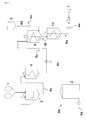
- FIG. 1 is an example of the scheme of the production method of the present invention.
- the invention conducting both steps (ii) and (iii) of the present invention in mixing tank 6 is shown.
- weighing hopper 1 for supplying the acid component comprising the succinic acid compound to esterification tank 3, glycol storage tank 2 from which the glycol component is supplied to esterification tank 3, esterification tank 3 in which the acid component and the glycol component are mixed and esterified, transesterification reaction tank 4 in which glycol is removed by transesterification reaction from the aliphatic polyester prepolymer formed in esterification tank 3, diisocyanate storage tank 5, mixing tank 6 equipped with an inlet for injecting diisocyanate for mixing the aliphatic polyester prepolymer with the diisocyanate, and pelletizer 7 for pelletizing the aliphatic polyester having an increased molecular weight obtained as a final product are used.
- Glycol storage tank 2 and esterification tank 3 are connected by pipe 8a.
- Esterification tank 3 and transesterification reaction tank 4 are connected by pipe 8b.
- Transesterification reaction tank 4 and mixing tank 6 are connected by pipe 8c.
- Diisocyanate storage tank 5 is connected to an inlet in mixing tank 6 via pipe 8d.
- Mixing tank 6 is connected to pelletizer 7 by pipe 8e.
- Fig. 2 shows an embodiment where step (ii) of the present invention is conducted in mixing tank 6 and step (iii) of the present invention is conducted in coupling reaction tank 10.
- mixing tank 6 is connected to coupling tank 10 by pipe 8f, and coupling reaction tank 10 is connected to pelletizer 7 by pipe 8g.
- the acid component comprising the succinic acid compound is supplied from weighing hopper 1 to esterification tank 3.
- a mixture previously prepared with the succinic acid compound may be supplied from weighing hopper 1 to esterification tank 3 or another weighing hopper may be used to supply the other acid component to esterification tank 3 separately from the succinic acid compound.
- a catalyst is added from a tank (not shown) for supplying the catalyst to esterification tank 3.
- the catalyst used at each step may be added to esterification tank 3 at the same time or a catalyst needed in transesterification reaction tank 4 may be added.
- Glycol is supplied through pipe 8a to esterification tank 3.
- Pipe 8a is provided with pump 9a and a weighing apparatus for weighing the amount of glycol supplied, so that the supply by the pump can be automatically stopped.
- the pump used herein includes centrifugal pumps, turbine pumps, propeller pumps, and the like.
- the temperature of pipe 8a is set to a temperature not lower than the melting point of glycol so as to prevent crystallization of the glycol.
- the temperature is different, depending on the kind of glycol, but in general, it is preferably set to from 30 to 50°C.
- Esterification tank 3 is preferably provided with a stirring blade.
- a vertical stirring tank equipped with a stirring blade having a vertical rotation shaft (such as a paddle blade and a turbine blade) is used.
- esterification reaction is conducted under a nitrogen gas atmosphere.
- the reaction temperature is from 140 to 250°C, preferably from 145 to 245°C. If the temperature is lower than 140°C, the reaction rate is slow and is not practical. If the temperature is higher than 250°C, the formed polymer may be thermally decomposed.
- the reaction pressure is normal pressure, but the pressure in the system may be reduced in the latter half of the reaction, for example, to from 5 to 100 mmHg (from 665 to 13300 Pa) so as to shorten the reaction time.
- the reaction time is not particularly limited, but is generally from 6 to 12 hours.
- the aliphatic polyester prepolymer obtained in esterification tank 3 has a number average molecular weight of from about 500 to 5,000.
- the aliphatic polyester prepolymer obtained in esterification tank 3 is rapidly delivered to transesterification reaction tank 4 through pipe 8b.
- a catalyst is added as necessary for conducting the transesterification reaction.
- the molecular weight of the formed aliphatic polyester prepolymer is increased mainly by transesterification reaction (condensation reaction by removing glycol) of the aliphatic polyester prepolymers.
- transesterification reaction condensation reaction by removing glycol
- the temperature in the transesterification reaction is from 200 to 250°C, preferably from 210 to 240°C. If the polymerization temperature is too low, the reaction time becomes longer and the production efficiency is lowered. If the polymerization temperature is too high, the polymer is colored and decomposed products are easily formed. In order to promote the condensation reaction by removing glycol, the pressure in the system should be reduced. The pressure finally reached at the time of completion of reaction is from 0.1 to 5.0 mmHg (from 13 to 666 Pa) and the reaction time is about 5 to 10 hours.
- esterification reaction and the transesterification reaction in the present invention are bulk polymerization without using solvents, solvents may be used as necessary.
- Polymerization apparatuses generally used in polyester prepolymer production such as esterification tank 3 above and coupling polymerization apparatuses can be used as transesterification tank 4.
- Examples of these polymerization apparatuses include vertical stirring tanks equipped with a stirring blade having a vertical rotation shaft (such as a double helical ribbon blade and a twisted lattice-shape blade) .
- the aliphatic polyester prepolymer having a number average molecular weight of 5, 000 or higher and having terminal hydroxyl groups is delivered to mixing tank 6 through pipe 8c.
- the number average molecular weight of the aliphatic polyester prepolymer generally obtained by transesterification reaction is from 5000 to 30,000, preferably from 10,000 to 20,000.
- Pipe 8c may be equipped with pump 9b so as to adjust the delivery rate of the aliphatic polyester prepolymer.
- the pump used herein is preferably a volume pump, a rotating pump that can be used for the prepolymer having a high viscosity.
- Specific examples of the rotating pump include gear pumps, screw pumps, and vane pumps. Among them, gear pumps which have high quantitativity and are the most suitable for delivering a fluid having a high viscosity are preferable.
- the quantitative pump is driven by a servomotor, whereby the flow rate can be controlled.
- mixing tank 6 is equipped with an inlet for injecting diisocyanate.
- This inlet is equipped at the bottom or the side wall of mixing tank 6.
- the inlet should be located below a position where the aliphatic polyester prepolymer is charged.
- the inlet is located at the bottom of the mixing tank or below the middle portion of the side wall of the mixing tank. The aliphatic polyester prepolymer needs to be charged above the position of the inlet when the diisocyanate is injected.
- the viscosity of the aliphatic polyester prepolymer is high, it is necessary to raise the temperature to turn it into a liquid state by melting it in mixing the aliphatic polyester prepolymer with the diisocyanate. If the aliphatic polyester prepolymer in a molten state is simply mixed with the diisocyanate, the diisocyanate evaporates to move to the head space of the mixing tank and cannot be mixed uniformly at the predetermined ratio. In addition, diisocyanate adheres to the inner wall surface of the mixing tank vapor-phase portion, and does not contribute to the reaction, so a prepolymer having a sufficiently increased molecular weight cannot be obtained.
- Diisocyanate is connected to the inlet provided in mixing tank 6 from diisocyanate storage tank 5 via pipe 8d.
- Pipe 8d is provided with quantitative pump 9c, which enables a quantitative and continuous supply of the diisocyanate to the aliphatic polyester prepolymer.
- the quantitative pump used is preferably a non-pulsating pump.
- a reciprocating pump suitable for delivering a small amount of a fluid having a low viscosity is preferably used. Examples thereof include diaphragm pumps, piston pumps, and plunger pumps. It is preferable to use plunger pumps connected in line so as to stabilize the flow rate and increase the accuracy.
- the quantitative pump may be driven by a servomotor to control the flow rate.
- the non-pulsating pump used herein means a pump comprising a plurality of pumps in line whose total volume is constant, namely which can pump flow volumes without pulsation.
- One is used in a wide range of applications.
- the diisocyanate in an amount equivalent to one tenth to two times the amount of the hydroxyl groups of the aliphatic polyester prepolymer is quantitatively injected.
- a pump is used to pressurize the diisocyanate in pipe 8d at from 0.5 to 1 MPa at room temperature.
- the diisocyanate and the aliphatic polyester prepolymer are mixed in mixing tank 6.
- Polymerization apparatuses that can be used for transesterification tank 4 above and coupling polymerization apparatuses can be used as the mixing tank.
- these polymerization apparatuses include vertical stirring tanks equipped with a stirring blade having a vertical rotation shaft (such as a double helical ribbon blade and a twisted lattice-shape blade) . It is preferable to sufficiently stir a mixutre of the diisocyanate and the aliphatic polyester prepolymer with the stirring means.
- the temperature in mixing tank 6 is set at a temperature not lower than the melting point of the aliphatic polyester prepolymer, which is adequate for mixing with diisocyanate.
- the temperature is generally from 130 to 210°C, depending on the molecular weight of aliphatic polyester prepolymer and the like.
- reaction for increasing the molecular weight is conducted in mixing tank 6( Fig.1 ).
- the reaction temperature herein is from 130 to 210°C, preferably from 160 to 200°C. If the reaction temperature is too low, as the prepolymer crystallizes and is not fluid, stirring cannot be achieved. If the temperature is too high, as the reaction rate becomes too fast, sufficient stirring cannot be achieved.
- reaction is carried out for from 2 to 10 hours, preferably from 3 to 8 hours under conditions at normal pressure and at a temperature within the above range.
- Nucleators, pigments, dyes, heat stabilizers, antioxidants, weather resistant agents, lubricants, antistatic agents, fillers, reinforcing agents, flame retardants, plasticizers, other polymers, and the like may be added after completion of the reaction, as necessary.
- the aliphatic polyester having an increased molecular weight produced by the above method is delivered to pelletizer 7 through pipe 8e, where it is cut into a desired shape (for example, pellets).
- pipe 8e is equipped with pump 9d.
- a pump similar to pump 9b may be used as pump 9d.
- the mixture is subject to a coupling reaction in coupling reaction tank 10 connected to mixing tank 6, where the reaction for increasing the molecular weight is conducted ( Fig.2 ).
- mixing tank 6 is equipped with an inlet for injecting diisocyanate in this embodiment.
- This inlet is equipped at the bottom or the side wall of mixing tank 6.
- Polymerization apparatuses above or a conventional vertical mixer having a stirring shaft equipped with stirring blades can be used as mixing tank 6.
- Stirring blades are categorized into propeller types, paddle types, turbine types, ribbon types, and special paddle types. These stirring members may be used in combinations of two or more thereof.
- a temperature in mixing tank 6 is set at the temperature not lower than the melting point of the aliphatic polyester prepolymer, which is adequate for mixing with diisocyanate.
- the temperature is set within the same range as that of the embodiment above.
- the aliphatic polyester prepolymer should be charged above a position where an inlet for injecting diisocyanate when injecting diisocyanate.
- the diisocyanate can be injected after an outlet in mixing tank 6 is closed and the aliphatic polyester prepolymer is charged above the position of the inlet.
- the aliphatic polyester prepolymer can pass through mixing tank 6 at a constant rate without closing the outlet.
- the polyester prepolymer should remain above a position of the inlet throughout injecting the diisocyanate by controlling a rate of charging the polyester prepolymer with pump 9d.
- the diisocyanate in an amount equivalent to one tenth to two times the amount of the hydroxyl groups of the aliphatic polyester prepolymer is injected.
- the pump above is used to pressurize the diisocyanate in pipe 8d at from 0.5 to 1 MPa at room temperature.
- the polyester prepolymer mixed with the diisocyanate may be stirred with the stirring blade above in mixing tank 6. However, stirring in mixing tank 6 is not essential, and stirring may be conducted in coupling reaction tank 10.
- the aliphatic polyester prepolymer mixed with diisocyanate is delivered to coupling reaction tank 10 through pipe 8f.
- a polymerization apparatus that may be used in transesterification reaction tank 4 or a high viscosity polymerization apparatus may be used as the coupling reaction tank.
- these polymerization apparatuses include vertical stirring tanks equipped with a stirring blade having a vertical rotation shaft (such as a double helical ribbon blade and a twisted lattice-shape blade). Ingredients can be reacted without stirring in coupling reaction tank 10. In that case, the stirring blades in the stirring tank are not rotated or a reaction tank without stirring blades may be used.
- the reaction temperature in coupling reaction tank 10 is from 130 to 210°C, preferably from 160 to 200°C. If the reaction temperature is too low, as the prepolymer crystallizes and is not fluid, stirring cannot be achieved. If the temperature is too high, as the reaction rate becomes too fast, sufficient stirring cannot be achieved. At this step, in general, reaction is carried out for from 2 to 10 hours, preferably from 3 to 8 hours under conditions at normal pressure and at a temperature within the above range.
- Nucleators, pigments, dyes, heat stabilizers, antioxidants, weather resistant agents, lubricants, antistatic agents, fillers, reinforcing agents, flame retardants, plasticizers, other polymers, and the like may be added after completion of the reaction, as necessary.
- the aliphatic polyester having an increased molecular weight produced by the above method is delivered to pelletizer 7 through pipe 8g, where it is cut into a desired shape (for example, pellets).
- pipe 8g is equipped with pump 9e.
- a pump similar to pump 9d may be used as pump 9e.
- the aliphatic polyesters having an increased molecular weight obtained by the production method of the present invention can be formed into films, sheets, fibers, foambodies, and other molded articles by conventional molding methods such as mold injection, hollow molding, extrusion, and the like.
- the aliphatic polyesters having an increased molecular weight obtained by the production method of the present invention are biodegradable, they are suitably used in garbage bags, agricultural films, cosmetic containers, detergents, and the like, fishing lines, fishnets, ropes, suture threads, food wrapping materials, medical containers, and the like.
- Gel and/or FE gelation and/or fish eyes were determined by the following steps.
- a film having a thickness of 30 ⁇ m was formed by inflation molding at a molding temperature of 180°C.
- the film was cut into 50 cm X 50 cm squares. Any Gel and/or FE (with a size of 0.2 mm or larger) in a 30 cm X 30 cm center space of the cut film were counted visually.
- Ten Gel and/or FE portions with a size of from 0.2 to 0.5 mm were evaluated as one Gel and/or FE portion with a size of 0.5 mm or larger. Samples were evaluated to be assigned with any of five grades determined based on the inequalities below.
- Ns N X 25 / T T: film thickness ( ⁇ m)
- N number of Gel and/or FE portion with a size of 0.5 mm or larger Evaluation
- substances such as black spots
- 200 g of resin pellets were confirmed visually and were evaluated to be assigned with any of grades A to E, depending on the size and number thereof.
- B 20 or less foreign substances with a size of 0.1 mm or less, 10 or less foreign substances with a size of more than 0.1 and less than 0.5 mm, 2 or less substances with a size of 0.5 mm or more
- the pressure in the tank was reduced to 60 mmHg (8000 Pa) and then was maintained for one hour to complete the esterification reaction.
- the reactant solution was delivered to a vertical stirring tank with a jacket equipped with ribbon blades (transesterification reaction tank 4). The delivered reactant solution was stirred at a temperature of 225 to 240°C. The pressure in the tank was finally reduced to 2 mmHg (267 Pa). After 10 hours, cooling was started. Reduction in pressure was stopped when the temperature reached 190°C and the inside of the tank was put under a nitrogen atmosphere.
- IRGANOX 1010 manufactured by BASF: hindered phenol-based antioxidant
- BASF hindered phenol-based antioxidant
- phosphorous acid was added to conduct glycol removal reaction (transesterification reaction).
- the average molecular weight of the product determined by GPC analysis was 10,600.
- the aliphatic polyester prepolymer obtained at the transesterification reaction step above was delivered into mixing tank 6 (delivery rate: 3,000 kg/hr, total amount: 6500 kg). After completion of delivery, the predetermined amount (70.3 kg) of hexamethylene diisocyanate was injected from the lower portion (a liquid phase) of the tank. The ingredients were agitated and stirred by helical ribbon blades (Mixing step). They were maintained at 180°C for 8 hours, and then were pelletized by pelletizer 7 to obtain an aliphatic polyester having an increased molecular weight.
- Example 1 the esterification reaction step and the transesterification reaction were completed as in Example 1.
- the obtained aliphatic polyester prepolymer was delivered into mixing tank 6 (delivery rate: 3, 000 kg/hr, total amount: 6500 kg) in accordance with the flow chart shown in Fig. 3 .
- the predetermined amount (70.3 kg) of hexamethylene diisocyanate was injected from the upper portion (vapor phase) of the mixing tank.
- the ingredients were agitated and stirred by helical ribbon blades, were maintained at 180°C for 8 hours, and then were pelletized by pelletizer 7 to obtain an aliphatic polyester having an increased molecular weight.
- the diisocyanate measured was charged into diisocyanate storage tank 5 and was delivered while being pressurized with nitrogen. (As it could be delivered by adjusting the pressure of nitrogen, the diisocyanate could be quantitatively delivered without using a pump.)
- the desired value of MFR is 1g/10 min.
- the level of distribution of values was less and the average value of 10 batches was relatively close to the desired value in the example, while the level of distribution was significant and the average value was remarkably different from the desired value in the Comparative example.
- the evaluation grades on Gel, FE, and foreign substance there is a tendency for the evaluation grades on Gel, FE, and foreign substance to become poorer as the batch number increased. This indicates that it was difficult to maintain the quality of the polymer when produced continuously.
- 1 Weighing hopper; 2: glycol storage tank, 3: esterification tank, 4: transesterification reaction tank, 5: diisocyanate storage tank, 6: mixing tank, 7: pelletizer, 8a-g: pipes, 9a-e: pumps, 10: coupling reaction tank
Landscapes
- Chemical & Material Sciences (AREA)
- Health & Medical Sciences (AREA)
- Chemical Kinetics & Catalysis (AREA)
- Medicinal Chemistry (AREA)
- Polymers & Plastics (AREA)
- Organic Chemistry (AREA)
- General Chemical & Material Sciences (AREA)
- Polyesters Or Polycarbonates (AREA)
- Polyurethanes Or Polyureas (AREA)
Description
- The present invention relates to a method for continuously and effectively producing an aliphatic polyester having an increased molecular weight. The obtained polyester having an increased molecular weight is a high-quality resin.
- Conventionally, the high molecular weight polyesters used in films, sheets, fibers, and other molded articles were mostly aromatic polyesters such as polyethylene terephthalate and polybutylene terephthalate.
- Aliphatic polyesters generally regarded as being biodegradable have attracted attention in recent years from the point of environmental protection and the like. As a method for producing the aliphatic polyesters, a method comprising directly esterifying an aliphatic dicarboxylic acid with an aliphatic diol or a method comprising conducting transesterification of an alkyl ester of aliphatic dicarboxylic acid or an anhydride thereof with an aliphatic diol to obtain a glycol ester or a low polymer thereof and then stirring the same by heat under high vacuum for polycondensation has been known.
- Polymerization proceeds by removing a released component outside the system in the polycondensation reaction as above. It is generally conducted by distilling the released component from the system conditioned at a high temperature and under high vacuum. For example,
Patent publication 1 discloses a method for producing an aliphatic polyester having an increased molecular weight comprising esterifying an aliphatic dicarboxylic acid with a glycol component and conducting a reaction to remove glycol from the formed polyester diol in the presence of a catalyst at a temperature of 180-230°C under high vacuum at 0.005-0.1 mmHg. - However, it is not sufficient to put the system under high vacuum, but it is necessary to make the surface area of the reactants for polycondensation sufficiently large and effectively renewed. This is because the released component present on the surface of the reactants can be removed more easily. In particular, as the viscosity of the reactants is increased and it is difficult for the released component to diffuse from the reactants in the latter half of the polycondensation reaction, it is necessary to make the surface area of the reactants larger by mechanical stirring so as to effectively renew the surface. As the desired surface area and effective surface renewal cannot be achieved in using a conventional polymerization apparatus equipped with conventional stirring blades, problems where the reaction does not proceed sufficiently and an aliphatic polyester having an increased molecular weight cannot be obtained occur. Formation of a film or sheet using a polyester having a low molecular weight is difficult.
- In addition, as there is a limit to the direct polymerization described above,
Patent publication 2 proposes preparation of an aliphatic polyester having an increased molecular weight by adding a diisocyanate having an isocyanate group in an amount one tenth to two times equivalent to the amount of the hydroxyl groups to an aliphatic polyester prepolymer substantially having terminal hydroxyl groups in a molten state at a temperature not lower than the melting temperature thereof. It has been known that the aliphatic polyester having an increased molecular weight obtained by this method has a weight average molecular weight (Mw) of 200, 000 or higher that cannot be achieved by a conventional direct polymerization method and that formability and physical properties of films thereof are excellent. However, by this method, reduction of accuracy in controlling molecular weight and formation of gelation and fish eyes sometimes occurred when adding the isocyanate to a polymerization tank as in the conventional method. -
- Patent publication 1: Japanese Patent Laid-Open No.
5-310898 - Patent publication 2: Japanese Patent No.
2825969 - The inventors of this application have studied the reduction of accuracy in controlling molecular weight and formation of gelation and fish eyes and as a result, they found that when an isocyanate is added to a polymerization tank at a high temperature not lower than the melting point of the aliphatic polyester prepolymer so as to increase the molecular weight, the isocyanate evaporates due to the high temperature and not all of the amount of isocyanate added is used for the reaction and that the evaporated isocyanate adheres to the inner wall of the reaction tank vapor-phase portion.
- Accordingly, the object of the present invention is to provide a method for effectively producing an aliphatic polyester having an increased molecular weight which prevents evaporation of diisocyanate at the step of mixing the diisocyanate with the aliphatic polyester prepolymer which is melted at a temperature not lower than the melting point of the prepolymer to be in a liquid state and enables uniform mixing of the diisocyanate with the aliphatic polyester prepolymer.
- The inventors of this application keenly studied to achieve the above object, and as a result, found that a high-quality aliphatic polyester having an increased molecular weight in which gelation or formation of fish eyes are reduced can be obtained by injecting a diisocyanate into an aliphatic polyester prepolymer, the prepolymer melted at a temperature not lower than the melting point thereof to be in a liquid state, sufficiently stirring and uniformly mixing same, and then subjecting same to a coupling reaction.
- Namely, the present invention is:
- (1) a method for producing an aliphatic polyester having an increased molecular weight comprising the steps of:
- (i) introducing into a mixing tank equipped with an inlet for injecting a diisocyanate an aliphatic polyester prepolymer which has a number average molecular weight of 5000 or higher and has terminal hydroxyl groups and in which at least one acid component is a succinic acid compound, wherein the aliphatic polyester prepolymer is introduced above the position of the inlet and wherein the aliphatic polyester prepolymer is melted at a temperature not lower than a melting point of the prepolymer and is in a liquid state,
- (ii)injecting a diisocyanate into the aliphatic polyester prepolymer, wherein the amount of diisocyanate is equivalent to between one tenth and two times the amount of the hydroxyl groups in the aliphatic polyester prepolymer; and (iii) reacting the aliphatic polyester prepolymer with the diisocyanate;
- (2) a method for producing an aliphatic polyester having an increased molecular weight according to (1), wherein step (ii) above further comprises mixing the aliphatic polyester prepolymer and the diisocyanate;
- (3) a method for producing an aliphatic polyester having an increased molecular weight according to (1) or (2), wherein Step (iii) is conducted in a mixing tank;
- (4) a method for producing an aliphatic polyester having an increased molecular weight according to (1) or (2), wherein a coupling reaction tank connected to the mixing tank is provided and step (iii) above is conducted in the coupling reaction tank;
- (5) a method for producing an aliphatic polyester having an increased molecular weight according to any one of (1)-(4), wherein the reaction at step (iii) above is conducted under stirring;
- (6) a method for producing an aliphatic polyester having an increased molecular weight according to (5), wherein the reaction at step (iii) above is conducted under stirring by a helical ribbon blade or a twisted lattice-shape blade;
- (7) a method for producing an aliphatic polyester having an increased molecular weight according to any one of (1)-(6), wherein at least one polyalcohol component in the aliphatic polyester is ethylene glycol; and
- (8) a method for producing an aliphatic polyester having an increased molecular weight according to any one of (1)-(6), wherein at least one polyalcohol component in the aliphatic polyester is 1,4-butanediol.
- According to the method of the present invention, a high-quality aliphatic polyester having an increased molecular weight with less occurrence of gelation and less formation of fish eyes can be produced in increasing the molecular weight of an aliphatic polyester. In addition, according to the production method of the present invention, accuracy in controlling the melt-flow rate (MFR) of the obtained aliphatic polyester having an increased molecular weight is high.
-
- [
Fig. 1 ] is a schematic drawing of the production method of the present invention. - [
Fig. 2 ] is a schematic drawing of the production method of the present invention. - [
Fig. 3 ] is a schematic drawing of the production method corresponding to a comparative example. - The present invention relates to a method for stably producing an aliphatic polyester having an increased molecular weight on an industrial scale comprising injecting a diisocyanate into an aliphatic polyester prepolymer which has a number average molecular weight of 5000 or higher and has terminal hydroxyl groups and in which at least one acid component is a succinic acid compound, wherein the prepolymer is melted at a temperature not lower than a melting point thereof and is in a liquid state, and wherein the diisocyanate comprises isocyanate groups in an amount equivalent to between one tenth and two times the amount of the hydroxyl groups in the aliphatic polyester prepolymer.
- The succinic acid compound used in the present invention is succinic acid or a derivative thereof (such as diesters, monoesters, and anhydride thereof). Specific examples thereof include succinic acid; succinic acid esters such as dimethyl succinate and diethyl succinate; and succinic anhydride. Among them, succinic acid, dimethyl succinate, and succinic anhydride are preferable. Succinic acid or derivatives thereof may be used alone or in combination of two or more thereof.
- Dicarboxylic acid compounds other than the succinic acid compound may be used as part of the acid components above. Specific examples thereof include dicarboxylic acids having a linear or branched alkylene group such as adipic acid, suberic acid, sebacic acid, azelaic acid, decane dicarboxylic acid, dodecane dicarboxylic acid, octadecane dicarboxylic acid, and dimer acid; esters of the dicarboxylic acids such as dimethyl adipate and dimethyl malonate; acid anhydrides such as maleic anhydride, itaconic anhydride, and adipic anhydride; and oxycarboxylic acids such as malic acid, tartaric acid, and citric acid. Among them, adipic acid or an adipic acid derivative such as dimethyl adipate is preferable.
- The amount of the dicarboxylic acid component other than the succinic acid compound above is about 0-35 mol%, preferably about 0-25 mol%, with respect to the total amount of dicarboxylic acids as the acid components.
- Glycol is used as a polyalcohol for producing the aliphatic polyester used in the production method of the present invention. Examples thereof include aliphatic glycols having a linear or branched alkylene group such as ethylene glycol, 1,2-propanediol, 1,3-propanediol, 1,2-butanediol, 1,3-butanediol, 1,4-butanediol, 2,3-butanediol, 1,5-pentanediol, 1,2-pentanediol, 2,4-pentanediol, 1,6-hexanediol, 1,2-hexanediol, neopentyl glycol, and 2,2-diethyl-1,3-propanediol; epoxides corresponding to 1,2-glycol; alcohols having a valency of three or higher such as trimethylolpropane; and diepoxides. Among them, ethylene glycol and 1,4-butanediol are preferable. 1,4-butanediol is more preferable.
- The amount of the glycol component used is different, depending on the physical properties of the desired polyester, but in general, it is 1.02-1.5 mole, preferably 1.03-1.2 mole, with respect to one mole of the dicarboxylic acid component. If it is less than 1.02 mole, the content of the aliphatic polyester prepolymer having terminal hydroxyl groups becomes small.
- In general, an aliphatic polyester prepolymer is produced in the presence of a catalyst. Catalysts may be used alone or in combination of two or more thereof. A wide range of catalysts used in transesterification reaction can be used. Examples of the catalysts include protonic acids such as sulfuric acid, p-toluenesulfonic acid, and phosphoric acid and derivatives thereof; metal compounds comprising a metal such as Li, Mg, Ca, Ba, La, Ce, Ti, Zr, Hf, V, Mn, Fe, Co, Ir, Ni, Zn, Ge, and Sn (for example, organic metal compounds comprising the metal such as organic acid salts, metal alkoxides and metal complexes (acetylacetonate and the like) and inorganic metal compounds comprising the metal such as metal oxides, metal hydroxides, carbonates, phosphates, sulfates, nitrates and chlorides.). Among these metal compound catalysts, titanium compounds, especially, organic titanium compounds such as titanium alkoxides including titanium tetraethoxide titanium tetraisopropoxide, and titanium tetrabutoxide are preferable. The amount of these metal compound catalysts is about 0.005-1 mole, preferably about 0.01-0.3 mole, with respect to 100 moles of the total amount of the acid components.
- In the method of the present invention, an organic or inorganic phosphorus compound may be used as a catalyst with the metal compound catalyst above (such as an organic titanium compound). A polymer having an increased molecular weight can be obtained in a short polymerization time by using the metal compound above in combination with the organic or inorganic phosphorus compound.
- The organic or inorganic phosphorus compound is exemplified as below.
- (a) Phosphoric acid and organic esters thereof: commercially available products thereof include phosphoric acid, alkyl or aryl acidic phosphates (in which the alkyl or aryl group is methyl, isopropyl, butyl, octyl, phenyl, and naphthyl group), and the like.
- (b) Phosphonic acid and organic esters thereof: commercially available products thereof include methyl phosphonate, ethyl phosphonate, aryl phosphonates such as phenyl phosphonate and naphthyl phosphonate, dibutyl butyl phosphonate, and the like. Substituents such as alkyl groups (C1-4 alkyl groups and the like such as methyl group), halogen atoms (fluorine atom, chlorine atom, and the like), alkoxy groups (C1-4 alkoxy groups and the like such as methoxy group), nitro group, and the like may be bonded to the aromatic rings of the aryl phosphonates above.
- (c) Phosphorous acid and organic esters thereof: examples thereof include dibutyl hydrogen phosphite, triphenyl phosphite, diphenyl isodecyl phosphite, and tris isodecyl phosphite.
- The amount of the organic or inorganic phosphorus compound in using the metal compound catalyst in combination with the organic or inorganic phosphorus compound as catalysts is 1-100 moles, preferably 5-33 moles, with respect to 100 moles of the metal compound catalyst (such as an organic titanium compound).
- The type of diisocyanate used in the present invention is not particularly limited, but a commercially available product per se can be used.
- Examples thereof include 2,4-trilene diisocyanate, a mixture of 2,4-trilene diisocyanate and 2,6-trilene diisocyanate, diphenylmethane diisocyanate, P,P'-diphenyl diisocyanate, 1,6-naphthylene diisocyanate, xylylene diisocyanate, hydrogenated xylylene diisocyanate, isophorone diisocyanate, and hexamethylene diisocyanate.
- Next, embodiments of the present invention will be explained with reference to
Fig. 1. Fig. 1 is an example of the scheme of the production method of the present invention. In this embodiment, the invention conducting both steps (ii) and (iii) of the present invention in mixingtank 6 is shown. - In the specification of this application, the descriptions, i.e., weighing
hopper 1 for supplying the acid component comprising the succinic acid compound toesterification tank 3,glycol storage tank 2 from which the glycol component is supplied toesterification tank 3,esterification tank 3 in which the acid component and the glycol component are mixed and esterified,transesterification reaction tank 4 in which glycol is removed by transesterification reaction from the aliphatic polyester prepolymer formed inesterification tank 3,diisocyanate storage tank 5, mixingtank 6 equipped with an inlet for injecting diisocyanate for mixing the aliphatic polyester prepolymer with the diisocyanate, andpelletizer 7 for pelletizing the aliphatic polyester having an increased molecular weight obtained as a final product are used. -
Glycol storage tank 2 andesterification tank 3 are connected bypipe 8a.Esterification tank 3 andtransesterification reaction tank 4 are connected bypipe 8b.Transesterification reaction tank 4 andmixing tank 6 are connected bypipe 8c.Diisocyanate storage tank 5 is connected to an inlet in mixingtank 6 viapipe 8d.Mixing tank 6 is connected topelletizer 7 bypipe 8e. -
Fig. 2 shows an embodiment where step (ii) of the present invention is conducted in mixingtank 6 and step (iii) of the present invention is conducted incoupling reaction tank 10. - In this embodiment, along with the embodiment shown in
Fig. 1 , mixingtank 6 is connected tocoupling tank 10 bypipe 8f, andcoupling reaction tank 10 is connected topelletizer 7 bypipe 8g. - The acid component comprising the succinic acid compound is supplied from weighing
hopper 1 toesterification tank 3. When an acid component other than the succinic acid compound is used, a mixture previously prepared with the succinic acid compound may be supplied from weighinghopper 1 toesterification tank 3 or another weighing hopper may be used to supply the other acid component toesterification tank 3 separately from the succinic acid compound. - A catalyst is added from a tank (not shown) for supplying the catalyst to
esterification tank 3. The catalyst used at each step may be added toesterification tank 3 at the same time or a catalyst needed intransesterification reaction tank 4 may be added. - Glycol is supplied through
pipe 8a toesterification tank 3.Pipe 8a is provided withpump 9a and a weighing apparatus for weighing the amount of glycol supplied, so that the supply by the pump can be automatically stopped. The pump used herein includes centrifugal pumps, turbine pumps, propeller pumps, and the like. - In addition, the temperature of
pipe 8a is set to a temperature not lower than the melting point of glycol so as to prevent crystallization of the glycol. The temperature is different, depending on the kind of glycol, but in general, it is preferably set to from 30 to 50°C. - Ingredients are preferably reacted under stirring in
esterification tank 3 for promoting the reaction efficiently.Esterification tank 3 is preferably provided with a stirring blade. For example, a vertical stirring tank equipped with a stirring blade having a vertical rotation shaft (such as a paddle blade and a turbine blade) is used. - After the predetermined amounts of the acid component, the glycol component, and the catalyst are supplied to
esterification tank 3, esterification reaction is conducted under a nitrogen gas atmosphere. In general, the reaction temperature is from 140 to 250°C, preferably from 145 to 245°C. If the temperature is lower than 140°C, the reaction rate is slow and is not practical. If the temperature is higher than 250°C, the formed polymer may be thermally decomposed. In general, the reaction pressure is normal pressure, but the pressure in the system may be reduced in the latter half of the reaction, for example, to from 5 to 100 mmHg (from 665 to 13300 Pa) so as to shorten the reaction time. The reaction time is not particularly limited, but is generally from 6 to 12 hours. - The aliphatic polyester prepolymer obtained in
esterification tank 3 has a number average molecular weight of from about 500 to 5,000. - The aliphatic polyester prepolymer obtained in
esterification tank 3 is rapidly delivered totransesterification reaction tank 4 throughpipe 8b. A catalyst is added as necessary for conducting the transesterification reaction. At this step, the molecular weight of the formed aliphatic polyester prepolymer is increased mainly by transesterification reaction (condensation reaction by removing glycol) of the aliphatic polyester prepolymers. When the number average molecular weight becomes 5,000 or higher, an aliphatic polyester prepolymer having terminal hydroxyl groups is formed. - The temperature in the transesterification reaction is from 200 to 250°C, preferably from 210 to 240°C. If the polymerization temperature is too low, the reaction time becomes longer and the production efficiency is lowered. If the polymerization temperature is too high, the polymer is colored and decomposed products are easily formed. In order to promote the condensation reaction by removing glycol, the pressure in the system should be reduced. The pressure finally reached at the time of completion of reaction is from 0.1 to 5.0 mmHg (from 13 to 666 Pa) and the reaction time is about 5 to 10 hours.
- Although the esterification reaction and the transesterification reaction in the present invention are bulk polymerization without using solvents, solvents may be used as necessary.
- Polymerization apparatuses generally used in polyester prepolymer production such as
esterification tank 3 above and coupling polymerization apparatuses can be used astransesterification tank 4. Examples of these polymerization apparatuses include vertical stirring tanks equipped with a stirring blade having a vertical rotation shaft (such as a double helical ribbon blade and a twisted lattice-shape blade) . - The aliphatic polyester prepolymer having a number average molecular weight of 5, 000 or higher and having terminal hydroxyl groups is delivered to mixing
tank 6 throughpipe 8c. The number average molecular weight of the aliphatic polyester prepolymer generally obtained by transesterification reaction is from 5000 to 30,000, preferably from 10,000 to 20,000. -
Pipe 8c may be equipped withpump 9b so as to adjust the delivery rate of the aliphatic polyester prepolymer. The pump used herein is preferably a volume pump, a rotating pump that can be used for the prepolymer having a high viscosity. Specific examples of the rotating pump include gear pumps, screw pumps, and vane pumps. Among them, gear pumps which have high quantitativity and are the most suitable for delivering a fluid having a high viscosity are preferable. - In order to increase the quantitativity, the quantitative pump is driven by a servomotor, whereby the flow rate can be controlled.
- In the present invention, mixing
tank 6 is equipped with an inlet for injecting diisocyanate. This inlet is equipped at the bottom or the side wall of mixingtank 6. In addition, the inlet should be located below a position where the aliphatic polyester prepolymer is charged. Preferably, the inlet is located at the bottom of the mixing tank or below the middle portion of the side wall of the mixing tank. The aliphatic polyester prepolymer needs to be charged above the position of the inlet when the diisocyanate is injected. - As the viscosity of the aliphatic polyester prepolymer is high, it is necessary to raise the temperature to turn it into a liquid state by melting it in mixing the aliphatic polyester prepolymer with the diisocyanate. If the aliphatic polyester prepolymer in a molten state is simply mixed with the diisocyanate, the diisocyanate evaporates to move to the head space of the mixing tank and cannot be mixed uniformly at the predetermined ratio. In addition, diisocyanate adheres to the inner wall surface of the mixing tank vapor-phase portion, and does not contribute to the reaction, so a prepolymer having a sufficiently increased molecular weight cannot be obtained.
- Therefore, according to the present invention, it is possible to prevent diisocyanate from evaporating by equipping
mixing tank 6 with an inlet for injecting diisocyanate and directly injecting the diisocyanate through the inlet into the aliphatic polyester prepolymer charged above the position of the inlet without having the diisocyanate pass through the vapor-phase portion. - Diisocyanate is connected to the inlet provided in
mixing tank 6 fromdiisocyanate storage tank 5 viapipe 8d.Pipe 8d is provided withquantitative pump 9c, which enables a quantitative and continuous supply of the diisocyanate to the aliphatic polyester prepolymer. The quantitative pump used is preferably a non-pulsating pump. In this case, a reciprocating pump suitable for delivering a small amount of a fluid having a low viscosity is preferably used. Examples thereof include diaphragm pumps, piston pumps, and plunger pumps. It is preferable to use plunger pumps connected in line so as to stabilize the flow rate and increase the accuracy. In order to further increase the quantitativity, the quantitative pump may be driven by a servomotor to control the flow rate. - The non-pulsating pump used herein means a pump comprising a plurality of pumps in line whose total volume is constant, namely which can pump flow volumes without pulsation. One is used in a wide range of applications.
- The diisocyanate in an amount equivalent to one tenth to two times the amount of the hydroxyl groups of the aliphatic polyester prepolymer is quantitatively injected. A pump is used to pressurize the diisocyanate in
pipe 8d at from 0.5 to 1 MPa at room temperature. - The diisocyanate and the aliphatic polyester prepolymer are mixed in mixing
tank 6. Polymerization apparatuses that can be used fortransesterification tank 4 above and coupling polymerization apparatuses can be used as the mixing tank. Examples of these polymerization apparatuses include vertical stirring tanks equipped with a stirring blade having a vertical rotation shaft (such as a double helical ribbon blade and a twisted lattice-shape blade) . It is preferable to sufficiently stir a mixutre of the diisocyanate and the aliphatic polyester prepolymer with the stirring means. - It is necessary that the aliphatic polyester prepolymer is in a liquid state in mixing
tank 6. For this purpose, the temperature in mixingtank 6 is set at a temperature not lower than the melting point of the aliphatic polyester prepolymer, which is adequate for mixing with diisocyanate. The temperature is generally from 130 to 210°C, depending on the molecular weight of aliphatic polyester prepolymer and the like. - After the aliphatic polyester prepolymer and the diisocyanate are mixed, a reaction for increasing the molecular weight is conducted. In one embodiment of the present invention, the reaction for increasing the molecular weight is conducted in mixing tank 6(
Fig.1 ). The reaction temperature herein is from 130 to 210°C, preferably from 160 to 200°C. If the reaction temperature is too low, as the prepolymer crystallizes and is not fluid, stirring cannot be achieved. If the temperature is too high, as the reaction rate becomes too fast, sufficient stirring cannot be achieved. At this step, in general, reaction is carried out for from 2 to 10 hours, preferably from 3 to 8 hours under conditions at normal pressure and at a temperature within the above range. - Nucleators, pigments, dyes, heat stabilizers, antioxidants, weather resistant agents, lubricants, antistatic agents, fillers, reinforcing agents, flame retardants, plasticizers, other polymers, and the like may be added after completion of the reaction, as necessary.
- The aliphatic polyester having an increased molecular weight produced by the above method is delivered to
pelletizer 7 throughpipe 8e, where it is cut into a desired shape (for example, pellets). - As the aliphatic polyester having an increased molecular weight has a high viscosity,
pipe 8e is equipped withpump 9d. A pump similar to pump 9b may be used aspump 9d. - In another embodiment of the present invention, after the aliphatic polyester prepolymer and the diisocyanate are mixed in mixing
tank 6, the mixture is subject to a coupling reaction incoupling reaction tank 10 connected to mixingtank 6, where the reaction for increasing the molecular weight is conducted (Fig.2 ). - In this case, up to the point of a process that the produced aliphatic polyester prepolymer is delivered to mixing
tank 6 through 8c, the conditions are the same as those in the embodiment above. - Similar to the embodiment above, mixing
tank 6 is equipped with an inlet for injecting diisocyanate in this embodiment. This inlet is equipped at the bottom or the side wall of mixingtank 6. Polymerization apparatuses above or a conventional vertical mixer having a stirring shaft equipped with stirring blades can be used as mixingtank 6. Stirring blades are categorized into propeller types, paddle types, turbine types, ribbon types, and special paddle types. These stirring members may be used in combinations of two or more thereof. - Similar to the embodiment above, it is necessary for the aliphatic polyester prepolymer to be in a liquid state in a
mixing tank 6. For this purpose, a temperature in mixingtank 6 is set at the temperature not lower than the melting point of the aliphatic polyester prepolymer, which is adequate for mixing with diisocyanate. The temperature is set within the same range as that of the embodiment above. - The aliphatic polyester prepolymer should be charged above a position where an inlet for injecting diisocyanate when injecting diisocyanate. In this instance, where the aliphatic polyester prepolymer is introduced into
mixing tank 6, the diisocyanate can be injected after an outlet in mixingtank 6 is closed and the aliphatic polyester prepolymer is charged above the position of the inlet. - Alternatively, in another embodiment, the aliphatic polyester prepolymer can pass through mixing
tank 6 at a constant rate without closing the outlet. However, in this case, the polyester prepolymer should remain above a position of the inlet throughout injecting the diisocyanate by controlling a rate of charging the polyester prepolymer withpump 9d. - Similar to the embodiment above, the diisocyanate in an amount equivalent to one tenth to two times the amount of the hydroxyl groups of the aliphatic polyester prepolymer is injected. The pump above is used to pressurize the diisocyanate in
pipe 8d at from 0.5 to 1 MPa at room temperature. - The polyester prepolymer mixed with the diisocyanate may be stirred with the stirring blade above in mixing
tank 6. However, stirring in mixingtank 6 is not essential, and stirring may be conducted incoupling reaction tank 10. - The aliphatic polyester prepolymer mixed with diisocyanate is delivered to
coupling reaction tank 10 throughpipe 8f. A polymerization apparatus that may be used intransesterification reaction tank 4 or a high viscosity polymerization apparatus may be used as the coupling reaction tank. Examples of these polymerization apparatuses include vertical stirring tanks equipped with a stirring blade having a vertical rotation shaft (such as a double helical ribbon blade and a twisted lattice-shape blade). Ingredients can be reacted without stirring incoupling reaction tank 10. In that case, the stirring blades in the stirring tank are not rotated or a reaction tank without stirring blades may be used. - The reaction temperature in
coupling reaction tank 10 is from 130 to 210°C, preferably from 160 to 200°C. If the reaction temperature is too low, as the prepolymer crystallizes and is not fluid, stirring cannot be achieved. If the temperature is too high, as the reaction rate becomes too fast, sufficient stirring cannot be achieved. At this step, in general, reaction is carried out for from 2 to 10 hours, preferably from 3 to 8 hours under conditions at normal pressure and at a temperature within the above range. - Nucleators, pigments, dyes, heat stabilizers, antioxidants, weather resistant agents, lubricants, antistatic agents, fillers, reinforcing agents, flame retardants, plasticizers, other polymers, and the like may be added after completion of the reaction, as necessary.
- The aliphatic polyester having an increased molecular weight produced by the above method is delivered to
pelletizer 7 throughpipe 8g, where it is cut into a desired shape (for example, pellets). - As the aliphatic polyester having an increased molecular weight has a high viscosity,
pipe 8g is equipped withpump 9e. A pump similar to pump 9d may be used aspump 9e. - The aliphatic polyesters having an increased molecular weight obtained by the production method of the present invention can be formed into films, sheets, fibers, foambodies, and other molded articles by conventional molding methods such as mold injection, hollow molding, extrusion, and the like. In addition, as the aliphatic polyesters having an increased molecular weight obtained by the production method of the present invention are biodegradable, they are suitably used in garbage bags, agricultural films, cosmetic containers, detergents, and the like, fishing lines, fishnets, ropes, suture threads, food wrapping materials, medical containers, and the like.
- The present invention will be explained in more detail below with reference to examples, but it is not limited thereto.
- Molecular weight determination is carried out by the GPC analysis below.
- Shodex GPC SYSTEM-11 (manufactured by SHOWA DENKO K.K.)
- Eluent: CF3COONa 5 mM/HFIP (hexafluoroisopropanol)
- Sample column: HFIP-800P and HFIP-80M x two sets
- Reference column: HFIP-800R x two sets
- Polymer solution: 0.1 wt% HFIP sol., 200 µl
- Column temperature: 40°C, flow rate: 1.0 ml/min, pressure: 30kg/cm2
- Detector: Shodex RI
- Molecular weight standard: PMMA (Shodex STANFARD M-75)
- MFR (melt flow rate) determination was carried out, in accordance with JIS-K-7210, at a temperature of 190°C under a load of 2.16 kg.
- Gel and/or FE (gelation and/or fish eyes) were determined by the following steps. A film having a thickness of 30 µm was formed by inflation molding at a molding temperature of 180°C. The film was cut into 50 cm X 50 cm squares. Any Gel and/or FE (with a size of 0.2 mm or larger) in a 30 cm X 30 cm center space of the cut film were counted visually. Ten Gel and/or FE portions with a size of from 0.2 to 0.5 mm were evaluated as one Gel and/or FE portion with a size of 0.5 mm or larger. Samples were evaluated to be assigned with any of five grades determined based on the inequalities below.

T: film thickness (µm), N: number of Gel and/or FE portion with a size of 0.5 mm or larger
Evaluation - 1: Ns<1
- 2: 1≤Ns<3
- 3: 3<Ns<10
- 4: 10<Ns<20
- 5: 20≤Ns
- Regarding the determination of foreign substances, substances (such as black spots) in 200 g of resin pellets were confirmed visually and were evaluated to be assigned with any of grades A to E, depending on the size and number thereof.
- A: 10 or less foreign substances with a size of 0.1 mm or less, 5 or less foreign substances with a size of more than 0.1 and less than 0.5 mm, 1 or less foreign substances with a size of 0.5 mm or more
- B: 20 or less foreign substances with a size of 0.1 mm or less, 10 or less foreign substances with a size of more than 0.1 and less than 0.5 mm, 2 or less substances with a size of 0.5 mm or more
- C: 30 or less foreign substances with a size of 0.1 mm or less, 20 or less foreign substances with a size of more than 0.1 and less than 0.5 mm, 3 or less foreign substances with a size of 0.5 mm or more
- D: 31 or more foreign substances with a size of 0.1 mm or less, 50 or less foreign substances with a size of more than 0.1 and less than 0.5 mm, 3 or less foreign substances with a size of 0.5 mm or more
- E: 31 or more foreign substances with a size of 0.1 mm or less, 51 or more foreign substances with a size of more than 0.1 and less than 0.5 mm, 4 or more foreign substances with a size of 0.5 mm or more
- An aliphatic polyester was produced, in accordance with the production flow chart shown in
Fig. 1 . - All the ingredients, i.e., 3589 kg of 1,4-butanediol (39.8 X 10³ mol: glycol excess ratio of 104.4%) supplied from
glycol storage tank 2 using a centrifugal pump, 4500 kg of succinic acid (38.1 X 10³ mol) from weighinghopper 1, and 810 g of titanium tetraisopropoxide from a catalyst supply tank (not shown) were charged into a vertical stirring tank with a jacket equipped with paddle blades (esterification tank 3) under a nitrogen atmosphere. The ingredients were stirred at a temperature of 145 to 225°C at normal pressure for carrying out the esterification reaction. Water formed in the esterification reaction was distilled. When the amount of distilled water was greater than 1390 kg, the pressure in the tank was reduced to 60 mmHg (8000 Pa) and then was maintained for one hour to complete the esterification reaction. The reactant solution was delivered to a vertical stirring tank with a jacket equipped with ribbon blades (transesterification reaction tank 4). The delivered reactant solution was stirred at a temperature of 225 to 240°C. The pressure in the tank was finally reduced to 2 mmHg (267 Pa). After 10 hours, cooling was started. Reduction in pressure was stopped when the temperature reached 190°C and the inside of the tank was put under a nitrogen atmosphere. Then, 3.28 kg of IRGANOX 1010 (manufactured by BASF: hindered phenol-based antioxidant) was added, the ingredients were cooled to 180°C, and 1.05 kg of phosphorous acid was added to conduct glycol removal reaction (transesterification reaction). The average molecular weight of the product determined by GPC analysis was 10,600. - The aliphatic polyester prepolymer obtained at the transesterification reaction step above was delivered into mixing tank 6 (delivery rate: 3,000 kg/hr, total amount: 6500 kg). After completion of delivery, the predetermined amount (70.3 kg) of hexamethylene diisocyanate was injected from the lower portion (a liquid phase) of the tank. The ingredients were agitated and stirred by helical ribbon blades (Mixing step). They were maintained at 180°C for 8 hours, and then were pelletized by
pelletizer 7 to obtain an aliphatic polyester having an increased molecular weight. - MFR, Gel, and FE values obtained after a series of polymerization steps was repeated ten times without disassembling and cleaning of the reaction apparatus are shown in Table 1.
- In Comparative example 1, the esterification reaction step and the transesterification reaction were completed as in Example 1. The obtained aliphatic polyester prepolymer was delivered into mixing tank 6 (delivery rate: 3, 000 kg/hr, total amount: 6500 kg) in accordance with the flow chart shown in
Fig. 3 . After completion of delivery, the predetermined amount (70.3 kg) of hexamethylene diisocyanate was injected from the upper portion (vapor phase) of the mixing tank. The ingredients were agitated and stirred by helical ribbon blades, were maintained at 180°C for 8 hours, and then were pelletized bypelletizer 7 to obtain an aliphatic polyester having an increased molecular weight. - The diisocyanate measured was charged into
diisocyanate storage tank 5 and was delivered while being pressurized with nitrogen. (As it could be delivered by adjusting the pressure of nitrogen, the diisocyanate could be quantitatively delivered without using a pump.) - MFR, Gelation, and FE values obtained after a series of the polymerization steps was repeated ten times are shown in Table 1.
[Table 1] Example 1 Comparative Example 1 Batch No. MFR (g/10 min) Gel. FE Foreign matter MFR (g/10 min) Gel. FE Foreign matter 1 1.5 1 A 3 1 A 2 0.8 1 A 2.2 1 A 3 1.6 1 A 2.8 1 A 4 0.9 2 B 0.5 2 B 5 1.6 2 B 1.8 2 A 6 1.3 1 A 2.5 3 C 7 1.5 1 A 2.8 5 C 8 0.9 2 B 1.6 5 D 9 0.8 2 B 3.1 5 C 10 1.5 2 B 1.9 5 D - The desired value of MFR is 1g/10 min. The level of distribution of values was less and the average value of 10 batches was relatively close to the desired value in the example, while the level of distribution was significant and the average value was remarkably different from the desired value in the Comparative example. Further, in the comparative example, there is a tendency for the evaluation grades on Gel, FE, and foreign substance to become poorer as the batch number increased. This indicates that it was difficult to maintain the quality of the polymer when produced continuously.
- 1: Weighing hopper; 2: glycol storage tank, 3: esterification tank, 4: transesterification reaction tank, 5: diisocyanate storage tank, 6: mixing tank, 7: pelletizer, 8a-g: pipes, 9a-e: pumps, 10: coupling reaction tank
Claims (8)
- A method for producing an aliphatic polyester having an increased molecular weight comprising the steps of:(i) introducing into a mixing tank equipped with an inlet for injecting a diisocyanate an aliphatic polyester prepolymer which has a number average molecular weight of 5000 or higher and has terminal hydroxyl groups and in which at least one acid component is a succinic acid compound, wherein the aliphatic polyester prepolymer is introduced above the position of the inlet and wherein the aliphatic polyester prepolymer is melted at a temperature not lower than a melting point of the prepolymer and is in a liquid state,(ii)injecting a diisocyanate into the aliphatic polyester prepolymer, wherein the amount of diisocyanate is equivalent to between one tenth and two times the amount of the hydroxyl groups in the aliphatic polyester prepolymer; and (iii) reacting the aliphatic polyester prepolymer with the diisocyanate.
- The method for producing an aliphatic polyester having an increased molecular weight according to claim 1, wherein step (ii) above further comprises mixing the aliphatic polyester prepolymer and the diisocyanate.
- The method for producing an aliphatic polyester having an increased molecular weight according to claim 1 or 2, wherein step (iii) above is conducted in a mixing tank.
- The method for producing an aliphatic polyester having an increased molecular weight according to claim 1 or 2, wherein a coupling reaction tank connected to the mixing tank is provided and step (iii) above is conducted in the coupling reaction tank.
- The method for producing an aliphatic polyester having an increased molecular weight according to any one of claims 1-4, wherein the reaction at step (iii) above is conducted under stirring.
- The method for producing an aliphatic polyester having an increased molecular weight according to claim 5, wherein the reaction at step (iii) above is conducted under stirring by a helical ribbon blade or a twisted lattice-shape blade.
- The method for producing an aliphatic polyester having an increased molecular weight according to any one of claims 1-6, wherein at least one polyalcohol component in the aliphatic polyester is ethylene glycol.
- The method for producing an aliphatic polyester having an increased molecular weight according to any one of claims 1-6, wherein at least one polyalcohol component in the aliphatic polyester is 1,4-butanediol.
Applications Claiming Priority (2)
| Application Number | Priority Date | Filing Date | Title |
|---|---|---|---|
| JP2011232703 | 2011-10-24 | ||
| PCT/JP2012/076786 WO2013061834A1 (en) | 2011-10-24 | 2012-10-17 | Method for producing aliphatic polyester having increased molecular weight |
Publications (3)
| Publication Number | Publication Date |
|---|---|
| EP2772504A1 true EP2772504A1 (en) | 2014-09-03 |
| EP2772504A4 EP2772504A4 (en) | 2015-06-24 |
| EP2772504B1 EP2772504B1 (en) | 2016-06-22 |
Family
ID=48167667
Family Applications (1)
| Application Number | Title | Priority Date | Filing Date |
|---|---|---|---|
| EP12844471.8A Not-in-force EP2772504B1 (en) | 2011-10-24 | 2012-10-17 | Method for producing aliphatic polyester having increased molecular weight |
Country Status (7)
| Country | Link |
|---|---|
| US (1) | US9175127B2 (en) |
| EP (1) | EP2772504B1 (en) |
| JP (1) | JP5948339B2 (en) |
| KR (1) | KR101529446B1 (en) |
| CN (1) | CN103890033B (en) |
| TW (1) | TWI568761B (en) |
| WO (1) | WO2013061834A1 (en) |
Family Cites Families (15)
| Publication number | Priority date | Publication date | Assignee | Title |
|---|---|---|---|---|
| JP2825969B2 (en) * | 1990-11-26 | 1998-11-18 | 昭和高分子株式会社 | Method for producing aliphatic polyester |
| JP3242697B2 (en) * | 1991-06-19 | 2001-12-25 | 三井化学株式会社 | Urethane reaction method |
| DE4202973A1 (en) * | 1992-02-03 | 1993-08-05 | Bayer Ag | METHOD FOR THE CONTINUOUS PRODUCTION OF POLYURETHANE AND POLYURETHANE URBAN ELASTOMERS |
| DE4202972A1 (en) * | 1992-02-03 | 1993-08-05 | Bayer Ag | METHOD FOR THE CONTINUOUS PRODUCTION OF POLYURETHANE AND POLYURETHANE UREA PRE-POLYMERS |
| JPH05214062A (en) * | 1992-02-05 | 1993-08-24 | Toyobo Co Ltd | Production of thermoplastic polyurethane |
| JP3179177B2 (en) * | 1992-04-10 | 2001-06-25 | 昭和高分子株式会社 | Aliphatic polyesters containing urethane bonds |
| JPH05310898A (en) | 1992-05-14 | 1993-11-22 | Showa Highpolymer Co Ltd | High-molecular-weight aliphatic polyester |
| EP0598283B1 (en) * | 1992-11-16 | 1997-10-29 | Bayer Ag | Continuous process for the conversion control of polyurethane prepolymers by partially mixing the prepolymers with monomers |
| JP2882756B2 (en) | 1994-10-12 | 1999-04-12 | 昭和高分子株式会社 | Stretched hollow molded article comprising an aliphatic polyester composition |
| US5616681A (en) * | 1994-11-01 | 1997-04-01 | Nippon Shokubai Co., Ltd. | Process for producing aliphatic polyester |
| JP3905896B2 (en) * | 2003-05-07 | 2007-04-18 | ダイセル化学工業株式会社 | Biodegradable film with improved water vapor barrier property and method for controlling water vapor barrier property |
| JP2005002165A (en) * | 2003-06-10 | 2005-01-06 | Daicel Chem Ind Ltd | Biodegradable resin composition, agricultural multi-film, and method for suppressing biodegradability |
| EP2223950B1 (en) * | 2007-12-12 | 2018-03-07 | Mitsubishi Chemical Corporation | Aliphatic polyester resin and method for producing the same |
| RU2533828C1 (en) | 2010-12-24 | 2014-11-20 | Сова Денко К.К. | Method of obtaining aliphatic polyester, possessing increased molecular weight |
| KR101541635B1 (en) | 2011-04-07 | 2015-08-03 | 쇼와 덴코 가부시키가이샤 | Process for producing aliphatic polyester having enhanced molecular weight |
-
2012
- 2012-10-17 JP JP2013540736A patent/JP5948339B2/en not_active Expired - Fee Related
- 2012-10-17 WO PCT/JP2012/076786 patent/WO2013061834A1/en not_active Ceased
- 2012-10-17 EP EP12844471.8A patent/EP2772504B1/en not_active Not-in-force
- 2012-10-17 KR KR1020147008930A patent/KR101529446B1/en not_active Expired - Fee Related
- 2012-10-17 CN CN201280052152.5A patent/CN103890033B/en not_active Expired - Fee Related
- 2012-10-17 US US14/353,647 patent/US9175127B2/en active Active
- 2012-10-24 TW TW101139252A patent/TWI568761B/en not_active IP Right Cessation
Also Published As
| Publication number | Publication date |
|---|---|
| KR20140071414A (en) | 2014-06-11 |
| CN103890033B (en) | 2015-08-05 |
| US9175127B2 (en) | 2015-11-03 |
| CN103890033A (en) | 2014-06-25 |
| WO2013061834A1 (en) | 2013-05-02 |
| TW201335209A (en) | 2013-09-01 |
| US20140275437A1 (en) | 2014-09-18 |
| TWI568761B (en) | 2017-02-01 |
| EP2772504B1 (en) | 2016-06-22 |
| JPWO2013061834A1 (en) | 2015-04-02 |
| KR101529446B1 (en) | 2015-06-16 |
| JP5948339B2 (en) | 2016-07-06 |
| EP2772504A4 (en) | 2015-06-24 |
Similar Documents
| Publication | Publication Date | Title |
|---|---|---|
| US9376530B2 (en) | Method for the production of aliphatic polyesters | |
| CN101885838A (en) | A kind of biodegradable polyester and preparation method thereof | |
| EP2812371A1 (en) | Single-pot process for the production of polyester-co-carbonate polyols | |
| EP2657269B1 (en) | Method for producing aliphatic polyester having increased molecular weight | |
| JPH10259295A (en) | Ester-based polymer polyol composition and method for producing the same | |
| EP2676985B1 (en) | Process for producing aliphatic polyester having enhanced molecular weight | |
| WO2005085328A1 (en) | Polybutylene terephthalate pellet, compound product and molded article thereof, and processes for producing these | |
| TWI891850B (en) | Aliphatic-aromatic polyester resin and its molded products | |
| EP2772504B1 (en) | Method for producing aliphatic polyester having increased molecular weight | |
| TW201925264A (en) | Aging-resistant TPU | |
| JP2003128767A (en) | Polyurethane foam | |
| JP2968466B2 (en) | Method for producing aliphatic polyester | |
| TWI921259B (en) | Preparation method of carbonate plasticizer | |
| JP2002105184A (en) | Method for continuous production of high molecular weight polybutylene succinate | |
| JP6834631B2 (en) | Polyester manufacturing method |
Legal Events
| Date | Code | Title | Description |
|---|---|---|---|
| PUAI | Public reference made under article 153(3) epc to a published international application that has entered the european phase |
Free format text: ORIGINAL CODE: 0009012 |
|
| 17P | Request for examination filed |
Effective date: 20140502 |
|
| AK | Designated contracting states |
Kind code of ref document: A1 Designated state(s): AL AT BE BG CH CY CZ DE DK EE ES FI FR GB GR HR HU IE IS IT LI LT LU LV MC MK MT NL NO PL PT RO RS SE SI SK SM TR |
|
| DAX | Request for extension of the european patent (deleted) | ||
| RA4 | Supplementary search report drawn up and despatched (corrected) |
Effective date: 20150527 |
|
| RIC1 | Information provided on ipc code assigned before grant |
Ipc: C08G 18/00 20060101ALI20150520BHEP Ipc: C08G 63/685 20060101ALI20150520BHEP Ipc: C08G 18/73 20060101ALI20150520BHEP Ipc: C08G 63/16 20060101ALI20150520BHEP Ipc: C08G 18/42 20060101AFI20150520BHEP Ipc: C08G 101/00 20060101ALN20150520BHEP Ipc: C08G 63/91 20060101ALI20150520BHEP |
|
| GRAP | Despatch of communication of intention to grant a patent |
Free format text: ORIGINAL CODE: EPIDOSNIGR1 |
|
| INTG | Intention to grant announced |
Effective date: 20160129 |
|
| RIC1 | Information provided on ipc code assigned before grant |
Ipc: C08G 18/73 20060101ALI20160115BHEP Ipc: C08G 18/42 20060101AFI20160115BHEP Ipc: C08G 63/91 20060101ALI20160115BHEP Ipc: C08G 101/00 20060101ALN20160115BHEP Ipc: C08G 63/16 20060101ALI20160115BHEP Ipc: C08G 63/685 20060101ALI20160115BHEP Ipc: C08G 18/00 20060101ALI20160115BHEP |
|
| GRAS | Grant fee paid |
Free format text: ORIGINAL CODE: EPIDOSNIGR3 |
|
| GRAA | (expected) grant |
Free format text: ORIGINAL CODE: 0009210 |
|
| AK | Designated contracting states |
Kind code of ref document: B1 Designated state(s): AL AT BE BG CH CY CZ DE DK EE ES FI FR GB GR HR HU IE IS IT LI LT LU LV MC MK MT NL NO PL PT RO RS SE SI SK SM TR |
|
| REG | Reference to a national code |
Ref country code: GB Ref legal event code: FG4D |
|
| REG | Reference to a national code |
Ref country code: CH Ref legal event code: EP |
|
| REG | Reference to a national code |
Ref country code: IE Ref legal event code: FG4D |
|
| REG | Reference to a national code |
Ref country code: AT Ref legal event code: REF Ref document number: 807639 Country of ref document: AT Kind code of ref document: T Effective date: 20160715 |
|
| REG | Reference to a national code |
Ref country code: DE Ref legal event code: R096 Ref document number: 602012019856 Country of ref document: DE |
|
| REG | Reference to a national code |
Ref country code: FR Ref legal event code: PLFP Year of fee payment: 5 |
|
| REG | Reference to a national code |
Ref country code: LT Ref legal event code: MG4D |
|
| REG | Reference to a national code |
Ref country code: NL Ref legal event code: MP Effective date: 20160622 |
|
| PG25 | Lapsed in a contracting state [announced via postgrant information from national office to epo] |
Ref country code: LT Free format text: LAPSE BECAUSE OF FAILURE TO SUBMIT A TRANSLATION OF THE DESCRIPTION OR TO PAY THE FEE WITHIN THE PRESCRIBED TIME-LIMIT Effective date: 20160622 Ref country code: FI Free format text: LAPSE BECAUSE OF FAILURE TO SUBMIT A TRANSLATION OF THE DESCRIPTION OR TO PAY THE FEE WITHIN THE PRESCRIBED TIME-LIMIT Effective date: 20160622 Ref country code: NO Free format text: LAPSE BECAUSE OF FAILURE TO SUBMIT A TRANSLATION OF THE DESCRIPTION OR TO PAY THE FEE WITHIN THE PRESCRIBED TIME-LIMIT Effective date: 20160922 |
|
| REG | Reference to a national code |
Ref country code: AT Ref legal event code: MK05 Ref document number: 807639 Country of ref document: AT Kind code of ref document: T Effective date: 20160622 |
|
| PG25 | Lapsed in a contracting state [announced via postgrant information from national office to epo] |
Ref country code: RS Free format text: LAPSE BECAUSE OF FAILURE TO SUBMIT A TRANSLATION OF THE DESCRIPTION OR TO PAY THE FEE WITHIN THE PRESCRIBED TIME-LIMIT Effective date: 20160622 Ref country code: HR Free format text: LAPSE BECAUSE OF FAILURE TO SUBMIT A TRANSLATION OF THE DESCRIPTION OR TO PAY THE FEE WITHIN THE PRESCRIBED TIME-LIMIT Effective date: 20160622 Ref country code: LV Free format text: LAPSE BECAUSE OF FAILURE TO SUBMIT A TRANSLATION OF THE DESCRIPTION OR TO PAY THE FEE WITHIN THE PRESCRIBED TIME-LIMIT Effective date: 20160622 Ref country code: NL Free format text: LAPSE BECAUSE OF FAILURE TO SUBMIT A TRANSLATION OF THE DESCRIPTION OR TO PAY THE FEE WITHIN THE PRESCRIBED TIME-LIMIT Effective date: 20160622 Ref country code: SE Free format text: LAPSE BECAUSE OF FAILURE TO SUBMIT A TRANSLATION OF THE DESCRIPTION OR TO PAY THE FEE WITHIN THE PRESCRIBED TIME-LIMIT Effective date: 20160622 Ref country code: GR Free format text: LAPSE BECAUSE OF FAILURE TO SUBMIT A TRANSLATION OF THE DESCRIPTION OR TO PAY THE FEE WITHIN THE PRESCRIBED TIME-LIMIT Effective date: 20160923 |
|
| PG25 | Lapsed in a contracting state [announced via postgrant information from national office to epo] |
Ref country code: SK Free format text: LAPSE BECAUSE OF FAILURE TO SUBMIT A TRANSLATION OF THE DESCRIPTION OR TO PAY THE FEE WITHIN THE PRESCRIBED TIME-LIMIT Effective date: 20160622 Ref country code: RO Free format text: LAPSE BECAUSE OF FAILURE TO SUBMIT A TRANSLATION OF THE DESCRIPTION OR TO PAY THE FEE WITHIN THE PRESCRIBED TIME-LIMIT Effective date: 20160622 Ref country code: EE Free format text: LAPSE BECAUSE OF FAILURE TO SUBMIT A TRANSLATION OF THE DESCRIPTION OR TO PAY THE FEE WITHIN THE PRESCRIBED TIME-LIMIT Effective date: 20160622 Ref country code: CZ Free format text: LAPSE BECAUSE OF FAILURE TO SUBMIT A TRANSLATION OF THE DESCRIPTION OR TO PAY THE FEE WITHIN THE PRESCRIBED TIME-LIMIT Effective date: 20160622 Ref country code: IS Free format text: LAPSE BECAUSE OF FAILURE TO SUBMIT A TRANSLATION OF THE DESCRIPTION OR TO PAY THE FEE WITHIN THE PRESCRIBED TIME-LIMIT Effective date: 20161022 |
|
| PG25 | Lapsed in a contracting state [announced via postgrant information from national office to epo] |
Ref country code: BE Free format text: LAPSE BECAUSE OF NON-PAYMENT OF DUE FEES Effective date: 20160622 Ref country code: PT Free format text: LAPSE BECAUSE OF FAILURE TO SUBMIT A TRANSLATION OF THE DESCRIPTION OR TO PAY THE FEE WITHIN THE PRESCRIBED TIME-LIMIT Effective date: 20161024 Ref country code: ES Free format text: LAPSE BECAUSE OF FAILURE TO SUBMIT A TRANSLATION OF THE DESCRIPTION OR TO PAY THE FEE WITHIN THE PRESCRIBED TIME-LIMIT Effective date: 20160622 Ref country code: SM Free format text: LAPSE BECAUSE OF FAILURE TO SUBMIT A TRANSLATION OF THE DESCRIPTION OR TO PAY THE FEE WITHIN THE PRESCRIBED TIME-LIMIT Effective date: 20160622 Ref country code: AT Free format text: LAPSE BECAUSE OF FAILURE TO SUBMIT A TRANSLATION OF THE DESCRIPTION OR TO PAY THE FEE WITHIN THE PRESCRIBED TIME-LIMIT Effective date: 20160622 Ref country code: PL Free format text: LAPSE BECAUSE OF FAILURE TO SUBMIT A TRANSLATION OF THE DESCRIPTION OR TO PAY THE FEE WITHIN THE PRESCRIBED TIME-LIMIT Effective date: 20160622 |
|
| REG | Reference to a national code |
Ref country code: DE Ref legal event code: R097 Ref document number: 602012019856 Country of ref document: DE |
|
| PLBE | No opposition filed within time limit |
Free format text: ORIGINAL CODE: 0009261 |
|
| STAA | Information on the status of an ep patent application or granted ep patent |
Free format text: STATUS: NO OPPOSITION FILED WITHIN TIME LIMIT |
|
| 26N | No opposition filed |
Effective date: 20170323 |
|
| PG25 | Lapsed in a contracting state [announced via postgrant information from national office to epo] |
Ref country code: DK Free format text: LAPSE BECAUSE OF FAILURE TO SUBMIT A TRANSLATION OF THE DESCRIPTION OR TO PAY THE FEE WITHIN THE PRESCRIBED TIME-LIMIT Effective date: 20160622 |
|
| REG | Reference to a national code |
Ref country code: CH Ref legal event code: PL |
|
| REG | Reference to a national code |
Ref country code: IE Ref legal event code: MM4A |
|
| PG25 | Lapsed in a contracting state [announced via postgrant information from national office to epo] |
Ref country code: LI Free format text: LAPSE BECAUSE OF NON-PAYMENT OF DUE FEES Effective date: 20161031 Ref country code: CH Free format text: LAPSE BECAUSE OF NON-PAYMENT OF DUE FEES Effective date: 20161031 |
|
| PG25 | Lapsed in a contracting state [announced via postgrant information from national office to epo] |
Ref country code: SI Free format text: LAPSE BECAUSE OF FAILURE TO SUBMIT A TRANSLATION OF THE DESCRIPTION OR TO PAY THE FEE WITHIN THE PRESCRIBED TIME-LIMIT Effective date: 20160622 Ref country code: LU Free format text: LAPSE BECAUSE OF NON-PAYMENT OF DUE FEES Effective date: 20161017 |
|
| REG | Reference to a national code |
Ref country code: FR Ref legal event code: PLFP Year of fee payment: 6 |
|
| PG25 | Lapsed in a contracting state [announced via postgrant information from national office to epo] |
Ref country code: IE Free format text: LAPSE BECAUSE OF NON-PAYMENT OF DUE FEES Effective date: 20161017 |
|
| PG25 | Lapsed in a contracting state [announced via postgrant information from national office to epo] |
Ref country code: HU Free format text: LAPSE BECAUSE OF FAILURE TO SUBMIT A TRANSLATION OF THE DESCRIPTION OR TO PAY THE FEE WITHIN THE PRESCRIBED TIME-LIMIT; INVALID AB INITIO Effective date: 20121017 |
|
| PG25 | Lapsed in a contracting state [announced via postgrant information from national office to epo] |
Ref country code: MC Free format text: LAPSE BECAUSE OF FAILURE TO SUBMIT A TRANSLATION OF THE DESCRIPTION OR TO PAY THE FEE WITHIN THE PRESCRIBED TIME-LIMIT Effective date: 20160622 Ref country code: CY Free format text: LAPSE BECAUSE OF FAILURE TO SUBMIT A TRANSLATION OF THE DESCRIPTION OR TO PAY THE FEE WITHIN THE PRESCRIBED TIME-LIMIT Effective date: 20160622 Ref country code: MT Free format text: LAPSE BECAUSE OF NON-PAYMENT OF DUE FEES Effective date: 20161031 Ref country code: MK Free format text: LAPSE BECAUSE OF FAILURE TO SUBMIT A TRANSLATION OF THE DESCRIPTION OR TO PAY THE FEE WITHIN THE PRESCRIBED TIME-LIMIT Effective date: 20160622 |
|
| PG25 | Lapsed in a contracting state [announced via postgrant information from national office to epo] |
Ref country code: BG Free format text: LAPSE BECAUSE OF FAILURE TO SUBMIT A TRANSLATION OF THE DESCRIPTION OR TO PAY THE FEE WITHIN THE PRESCRIBED TIME-LIMIT Effective date: 20160622 |
|
| REG | Reference to a national code |
Ref country code: FR Ref legal event code: PLFP Year of fee payment: 7 |
|
| PG25 | Lapsed in a contracting state [announced via postgrant information from national office to epo] |
Ref country code: TR Free format text: LAPSE BECAUSE OF FAILURE TO SUBMIT A TRANSLATION OF THE DESCRIPTION OR TO PAY THE FEE WITHIN THE PRESCRIBED TIME-LIMIT Effective date: 20160622 Ref country code: AL Free format text: LAPSE BECAUSE OF FAILURE TO SUBMIT A TRANSLATION OF THE DESCRIPTION OR TO PAY THE FEE WITHIN THE PRESCRIBED TIME-LIMIT Effective date: 20160622 |
|
| REG | Reference to a national code |
Ref country code: DE Ref legal event code: R082 Ref document number: 602012019856 Country of ref document: DE Ref country code: DE Ref legal event code: R082 Ref document number: 602012019856 Country of ref document: DE Representative=s name: LANGPATENT ANWALTSKANZLEI IP LAW FIRM, DE |
|
| REG | Reference to a national code |
Ref country code: GB Ref legal event code: 732E Free format text: REGISTERED BETWEEN 20200102 AND 20200108 |
|
| REG | Reference to a national code |
Ref country code: DE Ref legal event code: R081 Ref document number: 602012019856 Country of ref document: DE Owner name: CHANG CHUN PLASTICS CO., LTD., TW Free format text: FORMER OWNER: SHOWA DENKO K.K., TOKIO/TOKYO, JP Ref country code: DE Ref legal event code: R082 Ref document number: 602012019856 Country of ref document: DE Representative=s name: LANGPATENT ANWALTSKANZLEI IP LAW FIRM, DE |
|
| PGFP | Annual fee paid to national office [announced via postgrant information from national office to epo] |
Ref country code: GB Payment date: 20231001 Year of fee payment: 12 |
|
| PGFP | Annual fee paid to national office [announced via postgrant information from national office to epo] |
Ref country code: IT Payment date: 20231018 Year of fee payment: 12 Ref country code: FR Payment date: 20231013 Year of fee payment: 12 Ref country code: DE Payment date: 20231006 Year of fee payment: 12 |
|
| REG | Reference to a national code |
Ref country code: DE Ref legal event code: R119 Ref document number: 602012019856 Country of ref document: DE |
|
| GBPC | Gb: european patent ceased through non-payment of renewal fee |
Effective date: 20241017 |
|
| PG25 | Lapsed in a contracting state [announced via postgrant information from national office to epo] |
Ref country code: DE Free format text: LAPSE BECAUSE OF NON-PAYMENT OF DUE FEES Effective date: 20250501 |
|
| PG25 | Lapsed in a contracting state [announced via postgrant information from national office to epo] |
Ref country code: GB Free format text: LAPSE BECAUSE OF NON-PAYMENT OF DUE FEES Effective date: 20241017 |
|
| PG25 | Lapsed in a contracting state [announced via postgrant information from national office to epo] |
Ref country code: FR Free format text: LAPSE BECAUSE OF NON-PAYMENT OF DUE FEES Effective date: 20241031 |
|
| PG25 | Lapsed in a contracting state [announced via postgrant information from national office to epo] |
Ref country code: IT Free format text: LAPSE BECAUSE OF NON-PAYMENT OF DUE FEES Effective date: 20241017 |