EP2770325A1 - Mutations of DEPDC5 for diagnosing epilepsic diseases, disorders or conditions - Google Patents
Mutations of DEPDC5 for diagnosing epilepsic diseases, disorders or conditions Download PDFInfo
- Publication number
- EP2770325A1 EP2770325A1 EP13158940.0A EP13158940A EP2770325A1 EP 2770325 A1 EP2770325 A1 EP 2770325A1 EP 13158940 A EP13158940 A EP 13158940A EP 2770325 A1 EP2770325 A1 EP 2770325A1
- Authority
- EP
- European Patent Office
- Prior art keywords
- epilepsy
- subject
- depdc5
- disorder
- condition
- Prior art date
- Legal status (The legal status is an assumption and is not a legal conclusion. Google has not performed a legal analysis and makes no representation as to the accuracy of the status listed.)
- Withdrawn
Links
- 208000037265 diseases, disorders, signs and symptoms Diseases 0.000 title claims abstract description 148
- 201000010099 disease Diseases 0.000 title claims abstract description 76
- 208000035475 disorder Diseases 0.000 title claims abstract description 72
- 230000035772 mutation Effects 0.000 title claims description 83
- 102100022688 GATOR complex protein DEPDC5 Human genes 0.000 title claims description 76
- 101001044724 Homo sapiens GATOR complex protein DEPDC5 Proteins 0.000 title claims description 76
- 230000001037 epileptic effect Effects 0.000 claims abstract description 74
- 101150043317 DEPDC5 gene Proteins 0.000 claims abstract description 49
- 101100442984 Homo sapiens DEPDC5 gene Proteins 0.000 claims abstract description 49
- 238000000034 method Methods 0.000 claims abstract description 49
- 108090000623 proteins and genes Proteins 0.000 claims description 40
- 208000026437 Familial focal epilepsy with variable foci Diseases 0.000 claims description 35
- 201000008914 temporal lobe epilepsy Diseases 0.000 claims description 31
- 206010015037 epilepsy Diseases 0.000 claims description 25
- 208000033497 Familial temporal lobe epilepsy Diseases 0.000 claims description 24
- 208000008233 autosomal dominant nocturnal frontal lobe epilepsy Diseases 0.000 claims description 22
- 206010010904 Convulsion Diseases 0.000 claims description 20
- 102000004169 proteins and genes Human genes 0.000 claims description 19
- 210000001124 body fluid Anatomy 0.000 claims description 14
- 239000010839 body fluid Substances 0.000 claims description 14
- 108020004485 Nonsense Codon Proteins 0.000 claims description 13
- 208000002091 Febrile Seizures Diseases 0.000 claims description 12
- 208000003554 absence epilepsy Diseases 0.000 claims description 12
- 108091032973 (ribonucleotides)n+m Proteins 0.000 claims description 11
- 208000037158 Partial Epilepsies Diseases 0.000 claims description 11
- 230000037433 frameshift Effects 0.000 claims description 10
- 208000017785 Autosomal dominant epilepsy with auditory features Diseases 0.000 claims description 9
- 201000009028 early myoclonic encephalopathy Diseases 0.000 claims description 9
- 206010071081 Idiopathic generalised epilepsy Diseases 0.000 claims description 8
- 206010071082 Juvenile myoclonic epilepsy Diseases 0.000 claims description 8
- 201000001379 familial temporal lobe epilepsy 3 Diseases 0.000 claims description 8
- 231100000221 frame shift mutation induction Toxicity 0.000 claims description 8
- 201000008186 generalized epilepsy with febrile seizures plus Diseases 0.000 claims description 8
- 201000001993 idiopathic generalized epilepsy Diseases 0.000 claims description 8
- 208000034287 idiopathic generalized susceptibility to 7 epilepsy Diseases 0.000 claims description 8
- 230000037434 nonsense mutation Effects 0.000 claims description 7
- 206010052075 Acquired epileptic aphasia Diseases 0.000 claims description 6
- 208000008882 Benign Neonatal Epilepsy Diseases 0.000 claims description 6
- 201000001913 Childhood absence epilepsy Diseases 0.000 claims description 6
- 201000008189 Juvenile absence epilepsy Diseases 0.000 claims description 6
- 201000005802 Landau-Kleffner Syndrome Diseases 0.000 claims description 6
- 208000036572 Myoclonic epilepsy Diseases 0.000 claims description 6
- 208000033063 Progressive myoclonic epilepsy Diseases 0.000 claims description 6
- 208000004974 Rolandic Epilepsy Diseases 0.000 claims description 6
- 201000008916 benign epilepsy with centrotemporal spikes Diseases 0.000 claims description 6
- 201000003452 benign familial neonatal epilepsy Diseases 0.000 claims description 6
- 201000010295 benign neonatal seizures Diseases 0.000 claims description 6
- 208000033205 childhood epilepsy with centrotemporal spikes Diseases 0.000 claims description 6
- 210000004369 blood Anatomy 0.000 claims description 5
- 239000008280 blood Substances 0.000 claims description 5
- 206010028980 Neoplasm Diseases 0.000 claims description 4
- 208000029529 familial partial epilepsy Diseases 0.000 claims description 4
- 208000030169 Benign childhood occipital epilepsy, Panayiotopoulos type Diseases 0.000 claims description 3
- 208000014644 Brain disease Diseases 0.000 claims description 3
- 201000007547 Dravet syndrome Diseases 0.000 claims description 3
- 201000008009 Early infantile epileptic encephalopathy Diseases 0.000 claims description 3
- 206010071545 Early infantile epileptic encephalopathy with burst-suppression Diseases 0.000 claims description 3
- 208000032274 Encephalopathy Diseases 0.000 claims description 3
- 208000016132 Epilepsy with myoclonic absences Diseases 0.000 claims description 3
- 206010019468 Hemiplegia Diseases 0.000 claims description 3
- 206010021750 Infantile Spasms Diseases 0.000 claims description 3
- 208000035899 Infantile spasms syndrome Diseases 0.000 claims description 3
- 201000006792 Lennox-Gastaut syndrome Diseases 0.000 claims description 3
- 208000000676 Malformations of Cortical Development Diseases 0.000 claims description 3
- 208000035051 Malignant migrating focal seizures of infancy Diseases 0.000 claims description 3
- 208000016115 Mesial temporal lobe epilepsy with hippocampal sclerosis Diseases 0.000 claims description 3
- 208000037004 Myoclonic-astatic epilepsy Diseases 0.000 claims description 3
- 208000032461 Panayiotopoulos type benign childhood occipital epilepsy Diseases 0.000 claims description 3
- 206010071141 Rasmussen encephalitis Diseases 0.000 claims description 3
- 208000004160 Rasmussen subacute encephalitis Diseases 0.000 claims description 3
- 206010073677 Severe myoclonic epilepsy of infancy Diseases 0.000 claims description 3
- 208000026911 Tuberous sclerosis complex Diseases 0.000 claims description 3
- 201000006791 West syndrome Diseases 0.000 claims description 3
- 201000008181 benign familial infantile epilepsy Diseases 0.000 claims description 3
- 208000015134 congenital hypothalamic hamartoma syndrome Diseases 0.000 claims description 3
- 208000013257 developmental and epileptic encephalopathy Diseases 0.000 claims description 3
- 206010014599 encephalitis Diseases 0.000 claims description 3
- 208000013575 epilepsy of infancy with migrating focal seizures Diseases 0.000 claims description 3
- 201000002933 epilepsy with generalized tonic-clonic seizures Diseases 0.000 claims description 3
- 208000015181 infectious disease Diseases 0.000 claims description 3
- 208000014674 injury Diseases 0.000 claims description 3
- 208000013522 myoclonic encephalopathy in non-progressive disease Diseases 0.000 claims description 3
- 208000016313 myoclonic-astastic epilepsy Diseases 0.000 claims description 3
- 208000022145 neurocutaneous syndrome Diseases 0.000 claims description 3
- 230000008707 rearrangement Effects 0.000 claims description 3
- 201000005070 reflex epilepsy Diseases 0.000 claims description 3
- 230000008733 trauma Effects 0.000 claims description 3
- 230000002441 reversible effect Effects 0.000 description 56
- 239000000523 sample Substances 0.000 description 18
- 238000012163 sequencing technique Methods 0.000 description 10
- 239000012530 fluid Substances 0.000 description 9
- 210000004556 brain Anatomy 0.000 description 8
- 108700024394 Exon Proteins 0.000 description 7
- 150000001413 amino acids Chemical class 0.000 description 7
- 210000000349 chromosome Anatomy 0.000 description 7
- 108020004414 DNA Proteins 0.000 description 6
- 238000012217 deletion Methods 0.000 description 6
- 230000037430 deletion Effects 0.000 description 6
- 238000001514 detection method Methods 0.000 description 6
- 210000002381 plasma Anatomy 0.000 description 6
- 238000012175 pyrosequencing Methods 0.000 description 6
- 102200062246 rs886039278 Human genes 0.000 description 6
- 210000003296 saliva Anatomy 0.000 description 6
- 210000002966 serum Anatomy 0.000 description 6
- 238000007482 whole exome sequencing Methods 0.000 description 6
- 108010029485 Protein Isoforms Proteins 0.000 description 5
- 102000001708 Protein Isoforms Human genes 0.000 description 5
- 238000011529 RT qPCR Methods 0.000 description 5
- 238000004458 analytical method Methods 0.000 description 5
- 229930024421 Adenine Natural products 0.000 description 4
- 206010061334 Partial seizures Diseases 0.000 description 4
- 229960000643 adenine Drugs 0.000 description 4
- GFFGJBXGBJISGV-UHFFFAOYSA-N adenyl group Chemical group N1=CN=C2N=CNC2=C1N GFFGJBXGBJISGV-UHFFFAOYSA-N 0.000 description 4
- 239000002299 complementary DNA Substances 0.000 description 4
- UYTPUPDQBNUYGX-UHFFFAOYSA-N guanine Chemical compound O=C1NC(N)=NC2=C1N=CN2 UYTPUPDQBNUYGX-UHFFFAOYSA-N 0.000 description 4
- 238000007480 sanger sequencing Methods 0.000 description 4
- 238000012360 testing method Methods 0.000 description 4
- ODKSFYDXXFIFQN-UHFFFAOYSA-N Arginine Chemical compound OC(=O)C(N)CCCNC(N)=N ODKSFYDXXFIFQN-UHFFFAOYSA-N 0.000 description 3
- MBYXEBXZARTUSS-QLWBXOBMSA-N Emetamine Natural products O(C)c1c(OC)cc2c(c(C[C@@H]3[C@H](CC)CN4[C@H](c5c(cc(OC)c(OC)c5)CC4)C3)ncc2)c1 MBYXEBXZARTUSS-QLWBXOBMSA-N 0.000 description 3
- 208000002877 Epileptic Syndromes Diseases 0.000 description 3
- 102000004310 Ion Channels Human genes 0.000 description 3
- 108090000862 Ion Channels Proteins 0.000 description 3
- 241001465754 Metazoa Species 0.000 description 3
- 208000005228 Pericardial Effusion Diseases 0.000 description 3
- 206010036790 Productive cough Diseases 0.000 description 3
- AUVVAXYIELKVAI-UHFFFAOYSA-N SJ000285215 Natural products N1CCC2=CC(OC)=C(OC)C=C2C1CC1CC2C3=CC(OC)=C(OC)C=C3CCN2CC1CC AUVVAXYIELKVAI-UHFFFAOYSA-N 0.000 description 3
- 210000001132 alveolar macrophage Anatomy 0.000 description 3
- 210000004381 amniotic fluid Anatomy 0.000 description 3
- 210000003567 ascitic fluid Anatomy 0.000 description 3
- 210000000941 bile Anatomy 0.000 description 3
- 239000000969 carrier Substances 0.000 description 3
- 230000015556 catabolic process Effects 0.000 description 3
- 230000001364 causal effect Effects 0.000 description 3
- 210000004027 cell Anatomy 0.000 description 3
- 210000001175 cerebrospinal fluid Anatomy 0.000 description 3
- 210000004252 chorionic villi Anatomy 0.000 description 3
- 238000006731 degradation reaction Methods 0.000 description 3
- AUVVAXYIELKVAI-CKBKHPSWSA-N emetine Chemical compound N1CCC2=CC(OC)=C(OC)C=C2[C@H]1C[C@H]1C[C@H]2C3=CC(OC)=C(OC)C=C3CCN2C[C@@H]1CC AUVVAXYIELKVAI-CKBKHPSWSA-N 0.000 description 3
- 229960002694 emetine Drugs 0.000 description 3
- AUVVAXYIELKVAI-UWBTVBNJSA-N emetine Natural products N1CCC2=CC(OC)=C(OC)C=C2[C@H]1C[C@H]1C[C@H]2C3=CC(OC)=C(OC)C=C3CCN2C[C@H]1CC AUVVAXYIELKVAI-UWBTVBNJSA-N 0.000 description 3
- 210000000416 exudates and transudate Anatomy 0.000 description 3
- 230000002068 genetic effect Effects 0.000 description 3
- 102000054766 genetic haplotypes Human genes 0.000 description 3
- 238000009396 hybridization Methods 0.000 description 3
- 210000002751 lymph Anatomy 0.000 description 3
- 230000001404 mediated effect Effects 0.000 description 3
- 238000002493 microarray Methods 0.000 description 3
- 210000002445 nipple Anatomy 0.000 description 3
- 210000004912 pericardial fluid Anatomy 0.000 description 3
- 210000004910 pleural fluid Anatomy 0.000 description 3
- 238000005204 segregation Methods 0.000 description 3
- 210000000582 semen Anatomy 0.000 description 3
- 210000003802 sputum Anatomy 0.000 description 3
- 208000024794 sputum Diseases 0.000 description 3
- 210000004243 sweat Anatomy 0.000 description 3
- 210000001179 synovial fluid Anatomy 0.000 description 3
- 210000002700 urine Anatomy 0.000 description 3
- 239000004475 Arginine Substances 0.000 description 2
- 102000011087 DEP domains Human genes 0.000 description 2
- 108050001299 DEP domains Proteins 0.000 description 2
- 238000002965 ELISA Methods 0.000 description 2
- 241000233866 Fungi Species 0.000 description 2
- 108091006027 G proteins Proteins 0.000 description 2
- 102000030782 GTP binding Human genes 0.000 description 2
- 108091000058 GTP-Binding Proteins 0.000 description 2
- DHMQDGOQFOQNFH-UHFFFAOYSA-N Glycine Chemical compound NCC(O)=O DHMQDGOQFOQNFH-UHFFFAOYSA-N 0.000 description 2
- 101000745167 Homo sapiens Neuronal acetylcholine receptor subunit alpha-4 Proteins 0.000 description 2
- 101000726901 Homo sapiens Neuronal acetylcholine receptor subunit beta-2 Proteins 0.000 description 2
- 101000631760 Homo sapiens Sodium channel protein type 1 subunit alpha Proteins 0.000 description 2
- 102100039909 Neuronal acetylcholine receptor subunit alpha-4 Human genes 0.000 description 2
- 125000003275 alpha amino acid group Chemical group 0.000 description 2
- VREFGVBLTWBCJP-UHFFFAOYSA-N alprazolam Chemical compound C12=CC(Cl)=CC=C2N2C(C)=NN=C2CN=C1C1=CC=CC=C1 VREFGVBLTWBCJP-UHFFFAOYSA-N 0.000 description 2
- 125000000637 arginyl group Chemical group N[C@@H](CCCNC(N)=N)C(=O)* 0.000 description 2
- 230000006399 behavior Effects 0.000 description 2
- 238000003766 bioinformatics method Methods 0.000 description 2
- 230000008859 change Effects 0.000 description 2
- 201000007186 focal epilepsy Diseases 0.000 description 2
- 239000012634 fragment Substances 0.000 description 2
- 230000006870 function Effects 0.000 description 2
- 238000005259 measurement Methods 0.000 description 2
- 230000001537 neural effect Effects 0.000 description 2
- 238000007481 next generation sequencing Methods 0.000 description 2
- 238000003127 radioimmunoassay Methods 0.000 description 2
- 230000000306 recurrent effect Effects 0.000 description 2
- 230000009467 reduction Effects 0.000 description 2
- 239000013074 reference sample Substances 0.000 description 2
- 238000003757 reverse transcription PCR Methods 0.000 description 2
- 238000012216 screening Methods 0.000 description 2
- 208000032720 sleep-related hypermotor epilepsy Diseases 0.000 description 2
- 230000002269 spontaneous effect Effects 0.000 description 2
- 238000006467 substitution reaction Methods 0.000 description 2
- 208000024891 symptom Diseases 0.000 description 2
- 210000003478 temporal lobe Anatomy 0.000 description 2
- 108700028369 Alleles Proteins 0.000 description 1
- 108091093088 Amplicon Proteins 0.000 description 1
- 101100011364 Caenorhabditis elegans egl-10 gene Proteins 0.000 description 1
- 108091026890 Coding region Proteins 0.000 description 1
- 108020004705 Codon Proteins 0.000 description 1
- 241000252212 Danio rerio Species 0.000 description 1
- 102000017944 Dishevelled Human genes 0.000 description 1
- 108050007016 Dishevelled Proteins 0.000 description 1
- 102100029060 EF-hand domain-containing protein 1 Human genes 0.000 description 1
- 101710118904 EF-hand domain-containing protein 1 Proteins 0.000 description 1
- 102000004190 Enzymes Human genes 0.000 description 1
- 108090000790 Enzymes Proteins 0.000 description 1
- 208000024658 Epilepsy syndrome Diseases 0.000 description 1
- 238000000729 Fisher's exact test Methods 0.000 description 1
- 108010005551 GABA Receptors Proteins 0.000 description 1
- 102000005915 GABA Receptors Human genes 0.000 description 1
- 102000017706 GABRD Human genes 0.000 description 1
- 101000840938 Homo sapiens EF-hand domain-containing protein 1 Proteins 0.000 description 1
- 101001073587 Homo sapiens Gamma-aminobutyric acid receptor subunit delta Proteins 0.000 description 1
- 101000926813 Homo sapiens Gamma-aminobutyric acid receptor subunit gamma-2 Proteins 0.000 description 1
- 101000620451 Homo sapiens Leucine-rich glioma-inactivated protein 1 Proteins 0.000 description 1
- 101000684826 Homo sapiens Sodium channel protein type 2 subunit alpha Proteins 0.000 description 1
- 101000684820 Homo sapiens Sodium channel protein type 3 subunit alpha Proteins 0.000 description 1
- 101150000378 IML1 gene Proteins 0.000 description 1
- 101150046522 KCNT1 gene Proteins 0.000 description 1
- 101150019736 LGI1 gene Proteins 0.000 description 1
- 102100022275 Leucine-rich glioma-inactivated protein 1 Human genes 0.000 description 1
- 241000124008 Mammalia Species 0.000 description 1
- 238000007476 Maximum Likelihood Methods 0.000 description 1
- 208000007101 Muscle Cramp Diseases 0.000 description 1
- 208000012902 Nervous system disease Diseases 0.000 description 1
- 102100030912 Neuronal acetylcholine receptor subunit beta-2 Human genes 0.000 description 1
- 102000019315 Nicotinic acetylcholine receptors Human genes 0.000 description 1
- 108050006807 Nicotinic acetylcholine receptors Proteins 0.000 description 1
- 238000000636 Northern blotting Methods 0.000 description 1
- 108091034117 Oligonucleotide Proteins 0.000 description 1
- 108020005187 Oligonucleotide Probes Proteins 0.000 description 1
- 238000012408 PCR amplification Methods 0.000 description 1
- 102100030264 Pleckstrin Human genes 0.000 description 1
- 208000020584 Polyploidy Diseases 0.000 description 1
- 102000004257 Potassium Channel Human genes 0.000 description 1
- 102000004245 Proteasome Endopeptidase Complex Human genes 0.000 description 1
- 108090000708 Proteasome Endopeptidase Complex Proteins 0.000 description 1
- 238000003559 RNA-seq method Methods 0.000 description 1
- 238000011530 RNeasy Mini Kit Methods 0.000 description 1
- 240000004808 Saccharomyces cerevisiae Species 0.000 description 1
- 238000012300 Sequence Analysis Methods 0.000 description 1
- 108010052164 Sodium Channels Proteins 0.000 description 1
- 102000018674 Sodium Channels Human genes 0.000 description 1
- 102100028910 Sodium channel protein type 1 subunit alpha Human genes 0.000 description 1
- 102100023150 Sodium channel protein type 2 subunit alpha Human genes 0.000 description 1
- 102100023720 Sodium channel protein type 3 subunit alpha Human genes 0.000 description 1
- 238000002105 Southern blotting Methods 0.000 description 1
- 208000005392 Spasm Diseases 0.000 description 1
- 208000003443 Unconsciousness Diseases 0.000 description 1
- 108091023045 Untranslated Region Proteins 0.000 description 1
- 108010053752 Voltage-Gated Sodium Channels Proteins 0.000 description 1
- 102000016913 Voltage-Gated Sodium Channels Human genes 0.000 description 1
- JLCPHMBAVCMARE-UHFFFAOYSA-N [3-[[3-[[3-[[3-[[3-[[3-[[3-[[3-[[3-[[3-[[3-[[5-(2-amino-6-oxo-1H-purin-9-yl)-3-[[3-[[3-[[3-[[3-[[3-[[5-(2-amino-6-oxo-1H-purin-9-yl)-3-[[5-(2-amino-6-oxo-1H-purin-9-yl)-3-hydroxyoxolan-2-yl]methoxy-hydroxyphosphoryl]oxyoxolan-2-yl]methoxy-hydroxyphosphoryl]oxy-5-(5-methyl-2,4-dioxopyrimidin-1-yl)oxolan-2-yl]methoxy-hydroxyphosphoryl]oxy-5-(6-aminopurin-9-yl)oxolan-2-yl]methoxy-hydroxyphosphoryl]oxy-5-(6-aminopurin-9-yl)oxolan-2-yl]methoxy-hydroxyphosphoryl]oxy-5-(6-aminopurin-9-yl)oxolan-2-yl]methoxy-hydroxyphosphoryl]oxy-5-(6-aminopurin-9-yl)oxolan-2-yl]methoxy-hydroxyphosphoryl]oxyoxolan-2-yl]methoxy-hydroxyphosphoryl]oxy-5-(5-methyl-2,4-dioxopyrimidin-1-yl)oxolan-2-yl]methoxy-hydroxyphosphoryl]oxy-5-(4-amino-2-oxopyrimidin-1-yl)oxolan-2-yl]methoxy-hydroxyphosphoryl]oxy-5-(5-methyl-2,4-dioxopyrimidin-1-yl)oxolan-2-yl]methoxy-hydroxyphosphoryl]oxy-5-(5-methyl-2,4-dioxopyrimidin-1-yl)oxolan-2-yl]methoxy-hydroxyphosphoryl]oxy-5-(6-aminopurin-9-yl)oxolan-2-yl]methoxy-hydroxyphosphoryl]oxy-5-(6-aminopurin-9-yl)oxolan-2-yl]methoxy-hydroxyphosphoryl]oxy-5-(4-amino-2-oxopyrimidin-1-yl)oxolan-2-yl]methoxy-hydroxyphosphoryl]oxy-5-(4-amino-2-oxopyrimidin-1-yl)oxolan-2-yl]methoxy-hydroxyphosphoryl]oxy-5-(4-amino-2-oxopyrimidin-1-yl)oxolan-2-yl]methoxy-hydroxyphosphoryl]oxy-5-(6-aminopurin-9-yl)oxolan-2-yl]methoxy-hydroxyphosphoryl]oxy-5-(4-amino-2-oxopyrimidin-1-yl)oxolan-2-yl]methyl [5-(6-aminopurin-9-yl)-2-(hydroxymethyl)oxolan-3-yl] hydrogen phosphate Polymers Cc1cn(C2CC(OP(O)(=O)OCC3OC(CC3OP(O)(=O)OCC3OC(CC3O)n3cnc4c3nc(N)[nH]c4=O)n3cnc4c3nc(N)[nH]c4=O)C(COP(O)(=O)OC3CC(OC3COP(O)(=O)OC3CC(OC3COP(O)(=O)OC3CC(OC3COP(O)(=O)OC3CC(OC3COP(O)(=O)OC3CC(OC3COP(O)(=O)OC3CC(OC3COP(O)(=O)OC3CC(OC3COP(O)(=O)OC3CC(OC3COP(O)(=O)OC3CC(OC3COP(O)(=O)OC3CC(OC3COP(O)(=O)OC3CC(OC3COP(O)(=O)OC3CC(OC3COP(O)(=O)OC3CC(OC3COP(O)(=O)OC3CC(OC3COP(O)(=O)OC3CC(OC3COP(O)(=O)OC3CC(OC3COP(O)(=O)OC3CC(OC3CO)n3cnc4c(N)ncnc34)n3ccc(N)nc3=O)n3cnc4c(N)ncnc34)n3ccc(N)nc3=O)n3ccc(N)nc3=O)n3ccc(N)nc3=O)n3cnc4c(N)ncnc34)n3cnc4c(N)ncnc34)n3cc(C)c(=O)[nH]c3=O)n3cc(C)c(=O)[nH]c3=O)n3ccc(N)nc3=O)n3cc(C)c(=O)[nH]c3=O)n3cnc4c3nc(N)[nH]c4=O)n3cnc4c(N)ncnc34)n3cnc4c(N)ncnc34)n3cnc4c(N)ncnc34)n3cnc4c(N)ncnc34)O2)c(=O)[nH]c1=O JLCPHMBAVCMARE-UHFFFAOYSA-N 0.000 description 1
- 230000002159 abnormal effect Effects 0.000 description 1
- 230000004075 alteration Effects 0.000 description 1
- 230000003321 amplification Effects 0.000 description 1
- 238000013459 approach Methods 0.000 description 1
- 238000003556 assay Methods 0.000 description 1
- 210000004899 c-terminal region Anatomy 0.000 description 1
- 201000011510 cancer Diseases 0.000 description 1
- 238000004113 cell culture Methods 0.000 description 1
- 210000003169 central nervous system Anatomy 0.000 description 1
- 210000003710 cerebral cortex Anatomy 0.000 description 1
- 238000012512 characterization method Methods 0.000 description 1
- 230000001149 cognitive effect Effects 0.000 description 1
- 239000013068 control sample Substances 0.000 description 1
- 238000003745 diagnosis Methods 0.000 description 1
- 230000000694 effects Effects 0.000 description 1
- 201000008028 electroclinical syndrome Diseases 0.000 description 1
- 238000010828 elution Methods 0.000 description 1
- 239000000839 emulsion Substances 0.000 description 1
- 238000005516 engineering process Methods 0.000 description 1
- 230000007613 environmental effect Effects 0.000 description 1
- 230000001973 epigenetic effect Effects 0.000 description 1
- 208000028329 epileptic seizure Diseases 0.000 description 1
- 230000001667 episodic effect Effects 0.000 description 1
- 230000001747 exhibiting effect Effects 0.000 description 1
- 238000002474 experimental method Methods 0.000 description 1
- 238000010304 firing Methods 0.000 description 1
- 230000007614 genetic variation Effects 0.000 description 1
- 238000003205 genotyping method Methods 0.000 description 1
- 208000005017 glioblastoma Diseases 0.000 description 1
- 102000034238 globular proteins Human genes 0.000 description 1
- 108091005896 globular proteins Proteins 0.000 description 1
- ZDXPYRJPNDTMRX-UHFFFAOYSA-N glutamine Natural products OC(=O)C(N)CCC(N)=O ZDXPYRJPNDTMRX-UHFFFAOYSA-N 0.000 description 1
- 125000000404 glutamine group Chemical group N[C@@H](CCC(N)=O)C(=O)* 0.000 description 1
- 206010073071 hepatocellular carcinoma Diseases 0.000 description 1
- 231100000844 hepatocellular carcinoma Toxicity 0.000 description 1
- 238000010191 image analysis Methods 0.000 description 1
- 238000003018 immunoassay Methods 0.000 description 1
- 239000003547 immunosorbent Substances 0.000 description 1
- 239000003112 inhibitor Substances 0.000 description 1
- 230000037431 insertion Effects 0.000 description 1
- 238000003780 insertion Methods 0.000 description 1
- 230000002452 interceptive effect Effects 0.000 description 1
- 230000004807 localization Effects 0.000 description 1
- 230000004777 loss-of-function mutation Effects 0.000 description 1
- 239000011159 matrix material Substances 0.000 description 1
- 230000008172 membrane trafficking Effects 0.000 description 1
- 108020004999 messenger RNA Proteins 0.000 description 1
- 230000002503 metabolic effect Effects 0.000 description 1
- 238000005065 mining Methods 0.000 description 1
- 108091005763 multidomain proteins Proteins 0.000 description 1
- 210000003205 muscle Anatomy 0.000 description 1
- 230000004118 muscle contraction Effects 0.000 description 1
- 238000002610 neuroimaging Methods 0.000 description 1
- 210000002569 neuron Anatomy 0.000 description 1
- 238000003199 nucleic acid amplification method Methods 0.000 description 1
- 239000002751 oligonucleotide probe Substances 0.000 description 1
- 230000007170 pathology Effects 0.000 description 1
- 230000008447 perception Effects 0.000 description 1
- 108010026735 platelet protein P47 Proteins 0.000 description 1
- 102000054765 polymorphisms of proteins Human genes 0.000 description 1
- 108020001213 potassium channel Proteins 0.000 description 1
- 230000002028 premature Effects 0.000 description 1
- 238000002360 preparation method Methods 0.000 description 1
- 230000004853 protein function Effects 0.000 description 1
- 230000017854 proteolysis Effects 0.000 description 1
- 238000003762 quantitative reverse transcription PCR Methods 0.000 description 1
- 238000003753 real-time PCR Methods 0.000 description 1
- 238000010223 real-time analysis Methods 0.000 description 1
- 102000005962 receptors Human genes 0.000 description 1
- 108020003175 receptors Proteins 0.000 description 1
- 102210009679 rs1012068 Human genes 0.000 description 1
- 102220018578 rs587776976 Human genes 0.000 description 1
- 102220018579 rs587776977 Human genes 0.000 description 1
- 102220058428 rs797044546 Human genes 0.000 description 1
- 102220018577 rs879255234 Human genes 0.000 description 1
- 102220114917 rs886039259 Human genes 0.000 description 1
- 238000003118 sandwich ELISA Methods 0.000 description 1
- 230000001953 sensory effect Effects 0.000 description 1
- 230000019491 signal transduction Effects 0.000 description 1
- 210000002460 smooth muscle Anatomy 0.000 description 1
- 238000000527 sonication Methods 0.000 description 1
- 241000894007 species Species 0.000 description 1
- 239000000758 substrate Substances 0.000 description 1
- 238000013518 transcription Methods 0.000 description 1
- 230000035897 transcription Effects 0.000 description 1
- 238000010200 validation analysis Methods 0.000 description 1
- 238000011179 visual inspection Methods 0.000 description 1
- 238000005406 washing Methods 0.000 description 1
- 238000001262 western blot Methods 0.000 description 1
Images
Classifications
-
- C—CHEMISTRY; METALLURGY
- C12—BIOCHEMISTRY; BEER; SPIRITS; WINE; VINEGAR; MICROBIOLOGY; ENZYMOLOGY; MUTATION OR GENETIC ENGINEERING
- C12Q—MEASURING OR TESTING PROCESSES INVOLVING ENZYMES, NUCLEIC ACIDS OR MICROORGANISMS; COMPOSITIONS OR TEST PAPERS THEREFOR; PROCESSES OF PREPARING SUCH COMPOSITIONS; CONDITION-RESPONSIVE CONTROL IN MICROBIOLOGICAL OR ENZYMOLOGICAL PROCESSES
- C12Q1/00—Measuring or testing processes involving enzymes, nucleic acids or microorganisms; Compositions therefor; Processes of preparing such compositions
- C12Q1/68—Measuring or testing processes involving enzymes, nucleic acids or microorganisms; Compositions therefor; Processes of preparing such compositions involving nucleic acids
- C12Q1/6876—Nucleic acid products used in the analysis of nucleic acids, e.g. primers or probes
- C12Q1/6883—Nucleic acid products used in the analysis of nucleic acids, e.g. primers or probes for diseases caused by alterations of genetic material
-
- G—PHYSICS
- G01—MEASURING; TESTING
- G01N—INVESTIGATING OR ANALYSING MATERIALS BY DETERMINING THEIR CHEMICAL OR PHYSICAL PROPERTIES
- G01N33/00—Investigating or analysing materials by specific methods not covered by groups G01N1/00 - G01N31/00
- G01N33/48—Biological material, e.g. blood, urine; Haemocytometers
- G01N33/50—Chemical analysis of biological material, e.g. blood, urine; Testing involving biospecific ligand binding methods; Immunological testing
- G01N33/68—Chemical analysis of biological material, e.g. blood, urine; Testing involving biospecific ligand binding methods; Immunological testing involving proteins, peptides or amino acids
- G01N33/6893—Chemical analysis of biological material, e.g. blood, urine; Testing involving biospecific ligand binding methods; Immunological testing involving proteins, peptides or amino acids related to diseases not provided for elsewhere
- G01N33/6896—Neurological disorders, e.g. Alzheimer's disease
-
- C—CHEMISTRY; METALLURGY
- C12—BIOCHEMISTRY; BEER; SPIRITS; WINE; VINEGAR; MICROBIOLOGY; ENZYMOLOGY; MUTATION OR GENETIC ENGINEERING
- C12Q—MEASURING OR TESTING PROCESSES INVOLVING ENZYMES, NUCLEIC ACIDS OR MICROORGANISMS; COMPOSITIONS OR TEST PAPERS THEREFOR; PROCESSES OF PREPARING SUCH COMPOSITIONS; CONDITION-RESPONSIVE CONTROL IN MICROBIOLOGICAL OR ENZYMOLOGICAL PROCESSES
- C12Q2600/00—Oligonucleotides characterized by their use
- C12Q2600/156—Polymorphic or mutational markers
-
- C—CHEMISTRY; METALLURGY
- C12—BIOCHEMISTRY; BEER; SPIRITS; WINE; VINEGAR; MICROBIOLOGY; ENZYMOLOGY; MUTATION OR GENETIC ENGINEERING
- C12Q—MEASURING OR TESTING PROCESSES INVOLVING ENZYMES, NUCLEIC ACIDS OR MICROORGANISMS; COMPOSITIONS OR TEST PAPERS THEREFOR; PROCESSES OF PREPARING SUCH COMPOSITIONS; CONDITION-RESPONSIVE CONTROL IN MICROBIOLOGICAL OR ENZYMOLOGICAL PROCESSES
- C12Q2600/00—Oligonucleotides characterized by their use
- C12Q2600/158—Expression markers
-
- G—PHYSICS
- G01—MEASURING; TESTING
- G01N—INVESTIGATING OR ANALYSING MATERIALS BY DETERMINING THEIR CHEMICAL OR PHYSICAL PROPERTIES
- G01N2800/00—Detection or diagnosis of diseases
- G01N2800/28—Neurological disorders
- G01N2800/2857—Seizure disorders; Epilepsy
Definitions
- the present invention relates to the diagnosis of epileptic diseases, disorders or conditions. More specifically, the present invention relates to a method for diagnosing epileptic diseases, disorders or conditions in a subject in need thereof, said method comprising determining the status of the DEPDC5 gene of the subject.
- Epilepsy is a frequent neurological disorder characterized by spontaneous, recurrent seizures. Epilepsies affect about 3% of the population at some time in their lives, representing about 50 million people worldwide. Epilepsy becomes more common as people age, and onset of new cases occurs most frequently in infants and the elderly.
- WO01/098486 describes mutations in genes GABRG2 and GABRD encoding subunits of the GABA receptor
- WO02/50096 describes mutations in the SCN1A gene, encoding the alphal-subunit of the brain voltage-gated sodium channel associated with epilepsy, in particular with generalized epilepsy with febrile seizures plus (GEFS+)
- US2010/136623 describes mutations of the CHRNA4 and CHRNB2 genes, encoding subunits of the neuronal nicotinic acetylcholine receptor in patients with ADNFLE
- US7,528,093 describes mutations in the SCN1A, SCN2A and SCN3A loci, encoding proteins for the alpha subunit isoforms of the neuronal sodium channel Type I in patients with idiopathic generalized epilepsy (IGE); and Heron et al describes a mutation in the KC
- the present invention thus relates to a method for diagnosing an epileptic disease, disorder or condition in a subject, or determining a predisposition of a subject to an epileptic disease, disorder or condition or determining an increased risk of a subject of developing an epileptic disease, disorder or condition, wherein said method comprises determining the status of the DEPDC5 gene of the subject.
- the method comprises detecting at least one mutation in the DEDPC5 gene sequence in a sample from the subject.
- the at least one mutation is a frameshift mutation, preferably a frameshift mutation introducing a premature stop codon within the sequence of the DEPDC5 gene; a missense mutation, a nonsense mutation or a gene rearrangement.
- the method of the invention comprises detecting at least one mutation listed in Table 2 in a sample from the subject.
- the method comprises assessing the expression level of DEPDC5 in a sample from the subject, and comparing said expression level with a reference expression value.
- the expression level of DEPDC5 is measured at the protein level.
- the expression level of DEPDC5 is measured at the RNA level.
- a reduced expression of DEPDC5 in the sample from the subject is indicative of the affection of the subject with an epileptic disease, disorder or condition; and/or of the presence of an epileptic disease, disorder or condition in the subject; and/or of an increased risk of the subject to develop an epileptic disease, disorder or condition; and/or of a predisposition of the subject with an epileptic disease, disorder or condition.
- the reference expression value is measured in a reference population, preferably a reference population comprising substantially healthy subjects.
- the sample is a body fluid sample, preferably a blood sample.
- the subject presents a familial history of an epileptic disease, disorder or condition.
- an onset of an epileptic disease, disorder or condition has been diagnosed in the subject.
- no onset of an epileptic disease, disorder or condition has been diagnosed in the subject.
- the epileptic disease, disorder or condition is selected from the list comprising benign familial neonatal epilepsy (BFNE), early myoclonic encephalopathy (EME), Ohtahara syndrome, epilepsy of infancy with migrating focal seizures, West syndrome, Myoclonic epilepsy in infancy (MEI), benign infantile epilepsy, benign familial infantile epilepsy, Dravet syndrome, myoclonic encephalopathy in non-progressive disorders, febrile seizures plus (FS+), Panayiotopoulos syndrome, epilepsy with myoclonic atonic seizures, benign epilepsy with centrotemporal spikes (BECTS), autosomal-dominant nocturnal frontal lobe epilepsy (ADNFLE), late onset childhood occipital epilepsy, epilepsy with myoclonic absences, Lennox-Gastaut syndrome, epileptic encephalopathy with continuous spike-and-wave during sleep (CSWS), Landau-Kleffner syndrome
- the epileptic disease, disorder or condition is selected from the group comprising autosomal-dominant nocturnal frontal lobe epilepsy (ADNFLE), familial temporal lobe epilepsy (FTLE) and familial focal epilepsy with variable foci (FFEVF).
- ADNFLE autosomal-dominant nocturnal frontal lobe epilepsy
- FTLE familial temporal lobe epilepsy
- FEVF familial focal epilepsy with variable foci
- the present invention thus relates to a non-invasive method for diagnosing an epileptic disease, disorder or condition in a subject, or for identifying a subject predisposed to an epileptic disease, disorder or condition, wherein said method comprises determining the status of the DEPDC5 gene of the subject.
- the present invention also relates to a method for classifying a subject as having an epileptic disease, disorder or condition or a predisposition of developing an epileptic disease, disorder or condition or as being at risk of developing an epileptic disease, disorder or condition, wherein said method comprises determining the status of the DEPDC5 gene of the subject.
- the present invention also relates to a method for determining the risk of a subject of developing an epileptic disease, disorder or condition, or for determining the risk of an epileptic disease, disorder or condition onset, wherein said method comprises determining the status of the DEPDC5 gene of the subject.
- said subject presents a familial history of an epileptic disease, disorder or condition or belongs to a kindred wherein at least one member carries a DEPDC5 mutation.
- determining the status of the DEPDC5 gene corresponds to detecting the presence of mutations within the DEPDC5 gene sequence.
- the presence of at least one mutation within the DEPDC5 gene of the subject is indicative of the affection of the subject with an epileptic disease, disorder or condition; and/or of the presence of an epileptic disease, disorder or condition in the subject; and/or of an increased risk of the subject to develop an epileptic disease, disorder or condition; and/or of a predisposition of the subject with an epileptic disease, disorder or condition.
- said mutation is a homozygote mutation. In another embodiment, said mutation is a heterozygote mutation.
- determining the status of the DEPDC5 gene corresponds to detecting the presence of at least one frameshift mutation within the DEPDC5 gene sequence, preferably at least one frameshift mutation introducing a premature stop codon within the sequence of the DEPDC5 gene.
- frameshift mutations include, but are not limited to, a mutation deleting an Adenine in position 32200188 of chromosome 22, leading to the deletion of an Adenine in position 1122 of the DEPDC5 transcript, leading, in the protein, to a premature stop codon 29 amino acids further (mutation Leu374fs*30).
- determining the status of the DEPDC5 gene corresponds to detecting the presence of at least one nonsense mutation within the DEPDC5 gene sequence, leading to the introduction of a codon stop within the sequence of the DEPDC5 gene.
- nonsense mutations include, but are not limited to, mutations presented in the Table 1 below.
- determining the status of the DEPDC5 gene corresponds to detecting the presence of at least one missense mutation within the DEPDC5 gene sequence.
- missense mutations include, but are not limited to, a mutation replacing Guanine by Adenine in position 32210986 of chromosome 22, leading to the replacement of the Guanine in position 1454 by a Adenine in the DEPDC5 transcript, leading, in the protein, to the replacement of the Arginin of position 485 by a Glycin.
- determining the status of the DEPDC5 gene corresponds to detecting the presence of at least one mutation in the DEPDC5 gene.
- mutations include, but are not limited to, the mutations presented in the Table 2 below.
- Methods for detecting mutations within the DEPDC5 gene sequence are well known from the skilled artisan. Examples of said methods include, but are not limited to, PCR, qPCR, hybridization techniques such as, for example, use of microarrays, Southern Blot or sequencing, such as, for example, exome sequencing, pyrosequencing or Sanger sequencing.
- the detection of the mutations of DEPDC5 is performed on a sample from the subject, preferably a body fluid sample from the subject.
- body fluids include, but are not limited to, blood, plasma, serum, saliva, lymph, ascetic fluid, cystic fluid, urine, bile, nipple exudate, synovial fluid, bronchoalveolar lavage fluid, sputum, amniotic fluid, chorionic villi, peritoneal fluid, cerebrospinal fluid, pleural fluid, pericardial fluid, semen, saliva, sweat and alveolar macrophages.
- said body fluid is plasma or serum.
- the method of the invention comprises assessing the expression level of DEPDC5 in the subject. Indeed, the Inventors have shown (see Examples), that DEPDC5 haploinsufficiency may cause an epileptic disease, disorder or condition in a subject. In one embodiment, the expression level of DEPDC5 in the subject is compared with the expression level of DEPDC5 in a reference sample.
- determining the status of the DEPDC5 gene thus corresponds to assessing the expression level of DEPDC5, preferably detecting DEPDC5 haploinsufficiency in the subject.
- a haploinsufficiency of DEPDC5 may be the consequence of a missense mutation or of a frameshift mutation introducing a premature stop codon within the DEPDC5 sequence.
- a haploinsufficiency of DEPDC5 may be the consequence of a mutation within the DEPDC5 gene, wherein the mutated DEPDC5 protein resulting from the expression of the mutated DEPDC5 gene is addressed to a protein degradation system, such as, for example, proteasome and the like.
- a haploinsufficiency of DEPDC5 may be the consequence of a mutation within the DEPDC5 gene, wherein the mutated DEPDC5 transcript resulting from the transcription of the mutated DEPDC5 gene is addressed to a transcript degradation system, such as, for example, the nonsense mediated decay (NMD).
- a transcript degradation system such as, for example, the nonsense mediated decay (NMD).
- the detection of DEPDC5 haploinsufficiency is performed at the protein level. In another embodiment of the invention, the detection of DEPDC5 haploinsufficiency is performed at the RNA level.
- the detection of DEPDC5 haploinsufficiency comprises measuring the expression level of DEPDC5 (either at the protein or at the RNA level), and comparing said expression level of DEPDC5 with a reference expression value.
- the method of the invention comprises measuring the protein level of the DEPDC5 protein in a sample from the subject, and comparing said protein level with a reference protein level value.
- said sample from the subject is a body fluid sample from the subject.
- body fluids include, but are not limited to, blood, plasma, serum, saliva, lymph, ascetic fluid, cystic fluid, urine, bile, nipple exudate, synovial fluid, bronchoalveolar lavage fluid, sputum, amniotic fluid, chorionic villi, peritoneal fluid, cerebrospinal fluid, pleural fluid, pericardial fluid, semen, saliva, sweat and alveolar macrophages.
- said body fluid is plasma or serum.
- Methods for determining a protein level in a body fluid are well-known in the art. Examples of such methods include, but are not limited to, Multiplex methods (Luminex), western blot, enzyme-linked immunosorbent assay (ELISA), sandwich ELISA, fluorescent-linked immunosorbent assay (FLISA), enzyme immunoassay (EIA), radioimmunoassay (RIA) and the like.
- Luminex enzyme-linked immunosorbent assay
- FLISA fluorescent-linked immunosorbent assay
- EIA enzyme immunoassay
- RIA radioimmunoassay
- Examples of antibody anti-DEPDC5 are DEPDC5 (D-19): sc-86116 and DEPDC5 (C-12): sc-86115 (Santa Cruz Biotechnolgy Inc) and DEPD5 Antibody (C-term) (Abgent).
- the method of the invention comprises measuring the RNA level of the DEPDC5 transcript in a sample from the subject, and comparing said RNA level with a reference RNA level value.
- said sample from the subject is a body fluid sample from the subject.
- body fluids include, but are not limited to, blood, plasma, serum, saliva, lymph, ascetic fluid, cystic fluid, urine, bile, nipple exudate, synovial fluid, bronchoalveolar lavage fluid, sputum, amniotic fluid, chorionic villi, peritoneal fluid, cerebrospinal fluid, pleural fluid, pericardial fluid, semen, saliva, sweat and alveolar macrophages.
- said body fluid is plasma or serum.
- RNA level in a body fluid are well-known in the art. Examples of such methods include, but are not limited to, RT-PCR, RT-qPCR (wherein qPCR stands for quantitative PCR), Northern Blot, hybridization techniques such as, for example, use of microarrays, sequencing such as, for example, next-generation DNA sequencing (NGS) or RNA-seq (also known as "Whole Transcriptome Shotgun Sequencing") and the like.
- NGS next-generation DNA sequencing
- RNA-seq also known as "Whole Transcriptome Shotgun Sequencing
- PCR or qPCR primers that may be used for assessing the DEPDC5 RNA expression include, but are not limited to, the pairs of primers of the Table 4 below.
- Table 4 Primer Sequence SEQ ID 14 forward primer TCTGACATTCCAACCTTTTCG SEQ ID NO : 27 reverse primer ACACCAGAACCTCAGCCAAC SEQ ID NO : 28 15 forward primer CTGATGGGGTTGTGAGGAAC SEQ ID NO : 29 reverse primer GCCTTGGACATCATTTGGAA SEQ ID NO : 30 16 forward primer ACAGAATGGCCAGAGTGACC SEQ ID NO : 31 reverse primer TTACTTGCCCTCATCCCTTG SEQ ID NO : 32 17 forward primer CGTGTCAGATGATCAATTGTGTT SEQ ID NO : 33 reverse primer AGGAAGGGTGCTTATTCCAAA SEQ ID NO : 34 18 forward primer GTGTGGCAAAGTAATGTCAGAGA SEQ ID NO : 35 reverse primer GGAAGAACACAGAAGACGTTGA SEQ ID NO :
- the status of the DEPDC5 gene of the subject is compared with the status of the DEPDC5 gene of a reference population.
- the reference value (which may correspond to a reference expression value, a reference protein level value or a reference RNA level value as hereinabove described) corresponds to a value measured in a reference population.
- a reference value can be relative to an expression value derived from population studies, including without limitation, such subjects having similar age range, subjects in the same or similar ethnic group, similar epileptic disease, disorder or condition history and the like.
- the reference value is constructed using algorithms and other methods of statistical and structural classification.
- the reference value is derived from the measurement of the expression value in a control sample derived from one or more substantially healthy subjects.
- the reference value is derived from the measurement of the expression value of the DEPDC5 gene in a reference sample, preferably a reference body fluid sample, derived from a reference population.
- the reference population comprises substantially healthy subjects, preferably at least 100, more preferably at least 250, more preferably at least 500 substantially healthy subjects.
- the reference population comprises subjects diagnosed with an epileptic disease, disorder or condition, preferably at least 100, more preferably at least 250, more preferably at least 500 subjects diagnosed with an epileptic disease, disorder or condition.
- the reference population comprises subjects carrying out a mutation of the DEPDC5 gene, preferably at least 100, more preferably at least 250, more preferably at least 500 subjects carrying out a mutation of the DEPDC5 gene.
- the reference value corresponds to the mean expression value of the DEPDC5 gene measured in the reference population. In one embodiment of the invention, the reference value corresponds to the median expression value of the DEPDC5 gene measured in the reference population.
- a reduced expression of the DEPDC5 gene as compared to a reference expression value is indicative of the affection of the subject with an epileptic disease, disorder or condition. In one embodiment of the invention, a reduced expression of the DEPDC5 gene as compared to a reference expression value is indicative of the presence of an epileptic disease, disorder or condition in the subject. In one embodiment of the invention, a reduced expression of the DEPDC5 gene as compared to a reference expression value is indicative of an increased risk of the subject to develop an epileptic disease, disorder or condition. In one embodiment of the invention, a reduced expression of the DEPDC5 gene as compared to a reference expression value is indicative of a predisposition of the subject with an epileptic disease, disorder or condition.
- a reduced expression corresponds to a percent reduction of about 5% compared to the reference value, preferably a percent reduction of about 10%, 15%, 20%, 25%, 30%, 40%, 50% or more.
- the reference expression value was measured in a reference population comprising substantially healthy subjects.
- a reduced expression of DEPDC5 is indicative of a DEPDC5 haploinsufficiency in the subject.
- the ILAE International League against Epilepsy
- epileptic diseases, disorders or conditions may be classified according to the seizure type (generalized seizures, focal seizures, or spasms), etiology (genetic
- epileptic diseases, disorders or conditions include, but are not limited to, benign familial neonatal epilepsy (BFNE), early myoclonic encephalopathy (EME), Ohtahara syndrome, epilepsy of infancy with migrating focal seizures, West syndrome, Myoclonic epilepsy in infancy (MEI), benign infantile epilepsy, benign familial infantile epilepsy, Dravet syndrome, myoclonic encephalopathy in non-progressive disorders, febrile seizures plus (FS+), Panayiotopoulos syndrome, epilepsy with myoclonic atonic seizures, benign epilepsy with centrotemporal spikes (BECTS), autosomal-dominant nocturnal frontal lobe epilepsy (ADNFLE), late onset childhood occipital epilepsy, epilepsy with myoclonic absences, Lennox-Gastaut syndrome, epileptic encephalopathy with continuous spike-and-wave during sleep (CSWS), Landau-Kleffner syndrome (LK
- the epileptic disease, disorder or condition is a focal epilepsy.
- the epileptic disease, disorder or condition is a genetic or familial epilepsy.
- the epileptic disease, disorder or condition is a familial focal epilepsy.
- familial focal epilepsies include, but are not limited to, autosomal-dominant nocturnal frontal lobe epilepsy (ADNFLE), familial temporal lobe epilepsy (FTLE), familial mesial temporal lobe epilepsy (FMTLE), familial lateral temporal lobe epilepsy (FLTLE), familial partial epilepsy with variable foci (FPEVF) and benign familial partial epilepsies of childhood.
- ADNFLE autosomal-dominant nocturnal frontal lobe epilepsy
- FTLE familial temporal lobe epilepsy
- FMTLE familial mesial temporal lobe epilepsy
- FLTLE familial lateral temporal lobe epilepsy
- FEVF familial partial epilepsy with variable foci
- the epileptic disease, disorder or condition is selected from the group comprising autosomal-dominant nocturnal frontal lobe epilepsy (ADNFLE), familial temporal lobe epilepsy (FTLE) and familial focal epilepsy with variable foci (FFEVF).
- ADNFLE autosomal-dominant nocturnal frontal lobe epilepsy
- FTLE familial temporal lobe epilepsy
- FEVF familial focal epilepsy with variable foci
- the subject is an animal, preferably a mammal, more preferably a human.
- the subject presents a familial history of an epileptic disease, disorder or condition.
- the subject does not present any familial history of an epileptic disease, disorder or condition.
- the subject is substantially healthy.
- the subject is diagnosed with an epileptic disease, disorder or condition.
- the subject is at risk of developing an epileptic disease, disorder or condition.
- risk factors for developing an epileptic disease, disorder or condition include, but are not limited to, familial history of epileptic diseases, disorders or conditions, or belonging to a kindred wherein at least one member carries a mutation of the DEPDC5 gene.
- the assessment of the status of the DEPDC5 gene of a subject is performed before the onset of the epileptic disease, disorder or condition or of symptoms thereof. In another embodiment, the assessment of the status of the DEPDC5 gene of a subject is performed after the onset of the epileptic disease, disorder or condition or of symptoms thereof.
- an onset of an epileptic disease, disorder or condition has been diagnosed in the subject. In another embodiment, no onset of an epileptic disease, disorder or condition has been diagnosed in the subject.
- the method further comprises performing clinical tests for diagnosing an epileptic disease, disorder or condition in the subject.
- the clinical tests are performed previously, simultaneously or following the assessment of the status of the DEPDC5 gene of the subject.
- Examples of clinical tests that may be used for diagnosing an epileptic disease, disorder or condition in a subject include, but are not limited to, electroencephalogram (EEG), video-EEG of the seizures, neuroimaging methods, sleep tests, and the like.
- EEG electroencephalogram
- video-EEG of the seizures include, but are not limited to, video-EEG of the seizures, neuroimaging methods, sleep tests, and the like.
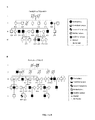
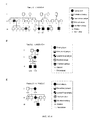
- Figure 1 is a combination of pedigrees of families with segregation of DEPDC5 mutations: c.1122delA (p.Leu374fs*30) in family N ( A ), c.715C>T (p.Arg239*) in family S ( B ), c.1454G>A (p.Arg485Gln) in family O ( C ), c.982C>T (p.Arg328*) in family L ( D ), c.1114C>T (p.Gln372*) in family Q ( E ), c.4567C>T (p.Gln1523*) in family B ( F ).
- Individual N-IV:4 showed frontal spikes at the EEG, but no clinical seizure; indicates individuals born in the 1870s, with doubtful epilepsy histories. Diagonal lines indicate deceased individuals.
- Figure 2 is a combination of illustrations and sequence chromatogram.
- A Illustration of the exon-intron structure of DEPDC5 gene with the position of the mutations based on the human genomic sequence (RefSeq NM_001242896) and protein.
- DEPDC5 is a multidomain protein carrying an N-terminal domain of unknown function termed DUF3608 and a DEP domain at the C-terminal. Mutations p.Arg239*, p.Arg328*, p.Gln372*, p.Leu374fs*30 are clustered in the DUF3608 domain.
- B Sequence chromatograms of all DEPDC5 mutations.
- Figure 3 is a phylogenic tree revealing a highly conserved DEPDC5 protein present in metazoa and fungi.
- a genome-wide screen was performed on family N and S with Affymetrix 10K panel microarrays (IntegraGen, Evry, France). LOD scores were calculated with MERLIN software assuming an autosomal dominant trait with 70% penetrance, a disease frequency of 0.0001 and 0% phenocopy. Haplotypes were reconstructed according to hg19 annotations.
- Exome sequencing was carried out in patients III-4 and III-6 of family N. Targeted exome sequencing, library preparation, capture, sequencing, and variant detection and annotation, were performed by IntegraGen (Evry, France). Exons of genomic DNA samples were captured using Agilent in-solution enrichment methodology with a biotinylated oligonucleotide probes library, followed by paired-end 75 bases massively parallel sequencing on Illumina HiSEQ2000. Sequence capture was performed according to the manufacturer's instructions (Human All exon kit V4+UTRs, 70 Mb, Agilent). Briefly, 3 ⁇ g of each genomic DNA were fragmented by sonication and purified to yield fragments of 150-200 bp.
- Paired-end adaptor oligonucleotides from Illumina were ligated on repaired A-tailed fragments, then purified and enriched by 6 PCR cycles.
- Purified libraries 500 ng were hybridized to the SureSelect oligo probe capture library for 24 hr. After hybridization, washing, and elution, the eluted fraction was PCR-amplified with 10 to 12 cycles, purified and quantified by qPCR to obtain sufficient DNA template for downstream applications.
- Each eluted-enriched DNA sample was then sequenced on an IlluminaHiSEQ2000 as paired-end 75 bases reads. Image analysis and base calling were performed using Illumina Real Time Analysis Pipeline version 1.14 with default parameters.
- Bioinformatics analysis of sequencing data was based on the Illumina pipeline (CASAVA 1.8).
- CASAVA aligns reads to the human reference genome (hg19) with the alignment algorithm ELANDv2 (performs multiseed and gapped alignments), then calls the SNPs based on the allele calls and read depth, and detects variants (SNPs & Indels). Only positions included in the bait coordinates were conserved.
- Genetic variation was annotated with the IntegraGen in-house pipeline, consisting of gene annotation (RefSeq), detection of known polymorphisms (dbSNP135, 1000 Genomes Project database) and characterization of mutations as exonic, intronic, silent or nonsense.
- Lymphoblastic cells from three mutation carriers (S-III:10, S-IV:7, S-IV:9) and one spouse (S-III:11) from Family S were treated (or not) overnight with 10 mg/ml emetine to inhibit nonsense-mediated decay (NMD).
- Total RNA was extracted with the QIAGEN RNeasy Mini kit and reverse-transcribed with the ThermoScriptTM RT-PCR System (Invitrogen).
- DEPDC5 cDNA was amplified and sequenced using specific primers located in exons 12 and 15.
- Massively parallel pyrosequencing screening of all 43 coding exons and splice regions of DEPDC5 revealed four further nonsense mutations (p.Arg239*/family S, p.Arg328*/family L, p.Gln372*/family Q, p.Gln1523*/family B) and one missense mutation (p.Arg485Gln/family O) in 5 families ( Figures 2A-B , Table 5 ).
- NMD nonsense mediated decay
- DEPDC5 mutations were not limited to families with familial focal epilepsy with variable foci (FFEVF) phenotype but were also found in a family with two patients exhibiting a typical nocturnal frontal lobe epilepsy (family B) ( Thomas, P. et al. Rev Neurol (Paris) 154, 228-35 (1998 )) and another family including four patients with temporal lobe seizures (family L).
- FEVF familial focal epilepsy with variable foci
- a phenotype of FFEVF was attributed to family N because frontal seizures have been diagnosed in one patient (N-IV:5) and frontal electrical seizures in another (N-IV:4) while seizures in other family members originate in the temporal lobe.
- Penetrance was incomplete in families N, S and O, in agreement with reports of low penetrance of 62 % ( Scheffer, I.E. et al. Ann Neurol 44, 890-9 (1998 )) or 50 % ( Klein, K.M. et al. Epilepsia 53, e151-5 (2012 )) in families with FFEVF.
- DEPDC5 transcript was first identified in human brain cDNA libraries ( Ishikawa, K. et al. DNA Res 5, 169-76 (1998 )). It is strongly expressed at rather constant levels in both developing and adult human brain (Human Brain Transcriptome project), consistent with a role in epilepsy. We attempted to obtain clues from sequence analysis and database mining.
- the Reference Sequence (RefSeq) collection reports five putative isoforms of DEPDC5, of lengths 1572, 559, 1594, 1603 and 1503 amino acids.
- One of the mutations lies within an exon absent from isoform 2, suggesting this isoform is not involved in the pathology.
- Alignment with orthologs, using reciprocal best BLASTP hits, and phylogeny revealed a highly conserved protein present in metazoa and fungi (but absent from plant) ( Figure 3 ), indicating a core role for this ancient eukaryotic gene.
- DEPDC5, and orthologs occur as single gene copies even within genomes known to be ancient polyploids, such as D.
- DEPDC5 ortholog in yeast Yjr138p (also known as SEA1 ) is part of an evolutionary conserved multi-protein SEA complex involved in membrane trafficking ( Dokudovskaya, S. et al. Mol Cell Proteomics 10, M110 006478 (2011 )).
- DEPDC5 may also be involved in oncology: i) it was reported to be deleted in two glioblastomas ( Seng, T.J. et al. Genes Chromosomes Cancer 43, 181-93 (2005 )), ii) an intronic SNP (rs1012068) in the DEPDC5 locus has been associated with hepatocellular carcinoma risk ( Miki, D. et al. Nat Genet 43, 797-800 (2011 )).
- DEPDC5 loss-of-function mutations of DEPDC5 are a major cause in a broad spectrum of autosomal dominant focal epilepsies. It shows that a single gene, DEPDC5, is a common genetic actor for epileptic syndromes with different brain localization and electro-clinical expression, including nocturnal frontal lobe epilepsy (ADNFLE), familial temporal lobe epilepsy (FTLE) and familial focal epilepsy with variable foci (FFEVF).
- ADNFLE nocturnal frontal lobe epilepsy
- FTLE familial temporal lobe epilepsy
- FEVF familial focal epilepsy with variable foci
Landscapes
- Life Sciences & Earth Sciences (AREA)
- Health & Medical Sciences (AREA)
- Chemical & Material Sciences (AREA)
- Engineering & Computer Science (AREA)
- Proteomics, Peptides & Aminoacids (AREA)
- Immunology (AREA)
- Biomedical Technology (AREA)
- Organic Chemistry (AREA)
- Analytical Chemistry (AREA)
- Molecular Biology (AREA)
- Biotechnology (AREA)
- Pathology (AREA)
- Hematology (AREA)
- Urology & Nephrology (AREA)
- Zoology (AREA)
- Wood Science & Technology (AREA)
- Microbiology (AREA)
- Physics & Mathematics (AREA)
- Genetics & Genomics (AREA)
- Biochemistry (AREA)
- General Health & Medical Sciences (AREA)
- Medicinal Chemistry (AREA)
- General Physics & Mathematics (AREA)
- Neurosurgery (AREA)
- Biophysics (AREA)
- Neurology (AREA)
- Food Science & Technology (AREA)
- Cell Biology (AREA)
- Bioinformatics & Cheminformatics (AREA)
- General Engineering & Computer Science (AREA)
- Measuring Or Testing Involving Enzymes Or Micro-Organisms (AREA)
Abstract
The present invention relates to a method for diagnosing an epileptic disease, disorder or condition in a subject, or determining a predisposition of a subject to an epileptic disease, disorder or condition or determining an increased risk of a subject of developing an epileptic disease, disorder or condition, wherein said method comprises determining the status of the DEPDC5 gene of the subject.
Description
- The present invention relates to the diagnosis of epileptic diseases, disorders or conditions. More specifically, the present invention relates to a method for diagnosing epileptic diseases, disorders or conditions in a subject in need thereof, said method comprising determining the status of the DEPDC5 gene of the subject.
- Epilepsy is a frequent neurological disorder characterized by spontaneous, recurrent seizures. Epilepsies affect about 3% of the population at some time in their lives, representing about 50 million people worldwide. Epilepsy becomes more common as people age, and onset of new cases occurs most frequently in infants and the elderly.
- Focal epileptic seizures are thought to originate within networks limited to one hemisphere. Several autosomal dominant, non-lesional, focal epilepsies have been described as specific age-related and electro-clinical syndromes: autosomal dominant nocturnal frontal lobe epilepsy (ADNFLE), familial temporal lobe epilepsy (FTLE), including mesial and lateral forms (also termed autosomal dominant epilepsy with auditory features (ADEAF)), and familial focal epilepsy with variable foci (FFEVF), characterized by focal seizures that are initiated in distinct cortical regions in different family members.
- Some mutations have been previously identified in familial forms of epilepsies, especially mutations in ion channels:
describes mutations in genes GABRG2 and GABRD encoding subunits of the GABA receptor;WO01/098486 describes mutations in the SCN1A gene, encoding the alphal-subunit of the brain voltage-gated sodium channel associated with epilepsy, in particular with generalized epilepsy with febrile seizures plus (GEFS+);WO02/50096 US2010/136623 describes mutations of the CHRNA4 and CHRNB2 genes, encoding subunits of the neuronal nicotinic acetylcholine receptor in patients with ADNFLE;US7,528,093 describes mutations in the SCN1A, SCN2A and SCN3A loci, encoding proteins for the alpha subunit isoforms of the neuronal sodium channel Type I in patients with idiopathic generalized epilepsy (IGE); and Heron et al describes a mutation in the KCNT1 gene, encoding a sodium-gated potassium channel subunit in patients with ADNFLE (Heron et al, Nat Genet, 2012, 44:1188-90). - Moreover, some mutations in genes not encoding ion channel or transmitter receptor subunits were identified. For example,
US2011/287418 describes the genes EFHC1 (encoding myoclonin 1) and EFHC1α (encoding myoclonin 2) as diagnostic markers for juvenile myoclonic epilepsy (JME). Furthermore, Kalachikov et al describes mutations in the LGI1 gene in ADEAF patients (Kalachikov et al, Nat Genet, 2002, 30(3):335-341). - However, to the Applicant's knowledge, no causal genes have been identified yet for familial focal epilepsy with variable foci (FFEVF). Searching such a causal gene, the Applicant herein identified mutations in the DEPDC5 gene, and provided clear evidence that mutations of the DEPDC5 gene are a major cause in a broad spectrum of autosomal dominant focal epilepsies, including ADNFLE, FTLE and FFEVF.
- The present invention thus relates to a method for diagnosing an epileptic disease, disorder or condition in a subject, or determining a predisposition of a subject to an epileptic disease, disorder or condition or determining an increased risk of a subject of developing an epileptic disease, disorder or condition, wherein said method comprises determining the status of the DEPDC5 gene of the subject.
- In one embodiment, the method comprises detecting at least one mutation in the DEDPC5 gene sequence in a sample from the subject. In one embodiment, the at least one mutation is a frameshift mutation, preferably a frameshift mutation introducing a premature stop codon within the sequence of the DEPDC5 gene; a missense mutation, a nonsense mutation or a gene rearrangement. In one embodiment, the method of the invention comprises detecting at least one mutation listed in Table 2 in a sample from the subject.
- In one embodiment, the method comprises assessing the expression level of DEPDC5 in a sample from the subject, and comparing said expression level with a reference expression value. In one embodiment, the expression level of DEPDC5 is measured at the protein level. In another embodiment, the expression level of DEPDC5 is measured at the RNA level. In one embodiment, a reduced expression of DEPDC5 in the sample from the subject is indicative of the affection of the subject with an epileptic disease, disorder or condition; and/or of the presence of an epileptic disease, disorder or condition in the subject; and/or of an increased risk of the subject to develop an epileptic disease, disorder or condition; and/or of a predisposition of the subject with an epileptic disease, disorder or condition. In one embodiment, the reference expression value is measured in a reference population, preferably a reference population comprising substantially healthy subjects.
- In one embodiment of the invention, the sample is a body fluid sample, preferably a blood sample.
- In one embodiment, the subject presents a familial history of an epileptic disease, disorder or condition. In one embodiment, an onset of an epileptic disease, disorder or condition has been diagnosed in the subject. In another embodiment, no onset of an epileptic disease, disorder or condition has been diagnosed in the subject.
- In one embodiment, the epileptic disease, disorder or condition is selected from the list comprising benign familial neonatal epilepsy (BFNE), early myoclonic encephalopathy (EME), Ohtahara syndrome, epilepsy of infancy with migrating focal seizures, West syndrome, Myoclonic epilepsy in infancy (MEI), benign infantile epilepsy, benign familial infantile epilepsy, Dravet syndrome, myoclonic encephalopathy in non-progressive disorders, febrile seizures plus (FS+), Panayiotopoulos syndrome, epilepsy with myoclonic atonic seizures, benign epilepsy with centrotemporal spikes (BECTS), autosomal-dominant nocturnal frontal lobe epilepsy (ADNFLE), late onset childhood occipital epilepsy, epilepsy with myoclonic absences, Lennox-Gastaut syndrome, epileptic encephalopathy with continuous spike-and-wave during sleep (CSWS), Landau-Kleffner syndrome (LKS), childhood absence epilepsy (CAE), juvenile absence epilepsy (JAE), juvenile myoclonic epilepsy (JME), epilepsy with generalized tonic-clonic seizures alone, progressive myoclonus epilepsies (PME), autosomal dominant epilepsy with auditory features (ADEAF), other familial temporal lobe epilepsies (FTLE) (such as, for example, mesial form of FTLE, familial mesial temporal lobe epilepsy (FMTLE) or familial lateral temporal lobe epilepsy (FLTLE)), familial focal epilepsy with variable foci (FFEVF, childhood to adult), familial partial epilepsy with variable foci (FPEVF), benign familial partial epilepsies of childhood, reflex epilepsies, mesial temporal lobe epilepsy with hippocampal sclerosis (MTLE with HS), temporal lobe epilepsy, idiopathic generalized epilepsy (IGE), Rasmussen syndrome, gelastic seizures with hypothalamic hamartoma, hemiconvulsion-hemiplegia-epilepsy, neurocutaneous syndromes (tuberous sclerosis complex, Sturge-Weber and the like), epilepsies attributed to malformations of cortical development, tumor, infection or trauma, benign neonatal seizures (BNS), febrile seizures (FS) and generalized epilepsy with febrile seizures plus (GEFS+).
- In one embodiment, the epileptic disease, disorder or condition is selected from the group comprising autosomal-dominant nocturnal frontal lobe epilepsy (ADNFLE), familial temporal lobe epilepsy (FTLE) and familial focal epilepsy with variable foci (FFEVF).
- In the present invention, the following terms have the following meanings:
- "Epileptic disease, disorder or condition" (which may also be referred as an "epileptic syndrome") refers to a disease, disorder or condition characterized by the occurrence of epileptic seizures, preferably of spontaneous and/or recurrent seizures. An epileptic seizure may be defined as an episodic change in the behavior caused by the disordered firing of populations of neurons of the central nervous system, resulting in varying degrees of involuntary muscle contraction, of abnormal perceptions or behaviours, and often an alteration or a loss of consciousness.
- "DEPDC5" (also known as KIAA0645) refers to a human gene on chromosome 22 having the following accession number: NC_000022.10. Five transcript variants of the DEPDC5 gene were identified, encoding five putative isoforms of DEPDC5 of length 1572 (NM_014662.3), 559 (NM_001007188.2), 1594 (NM_001136029.2), 1603 (NM_001242896.1) and 1503 (NM_001242897.1) amino acids. In the present patent application, all reference to a position within the DEPDC5 transcript or within the DEPDC5 protein refers to the transcript encoding the 1603 amino acid protein.
- "Mutation": refers to a stable change in the genomic sequence. Examples of mutation include, but are not limited to, point mutations, insertions, inversions, deletions within exons or flanking sequences, or gene rearrangements such as deletions, inversion or duplications of exons.
- A "Substantially healthy subject" refers to a subject who has not been previously diagnosed or identified as having or suffering from an epileptic disease, disorder or condition.
- "About" preceding a figure means plus or less 10% of the value of said figure
- The present invention thus relates to a non-invasive method for diagnosing an epileptic disease, disorder or condition in a subject, or for identifying a subject predisposed to an epileptic disease, disorder or condition, wherein said method comprises determining the status of the DEPDC5 gene of the subject.
- The present invention also relates to a method for classifying a subject as having an epileptic disease, disorder or condition or a predisposition of developing an epileptic disease, disorder or condition or as being at risk of developing an epileptic disease, disorder or condition, wherein said method comprises determining the status of the DEPDC5 gene of the subject.
- The present invention also relates to a method for determining the risk of a subject of developing an epileptic disease, disorder or condition, or for determining the risk of an epileptic disease, disorder or condition onset, wherein said method comprises determining the status of the DEPDC5 gene of the subject. In one embodiment, said subject presents a familial history of an epileptic disease, disorder or condition or belongs to a kindred wherein at least one member carries a DEPDC5 mutation.
- In one embodiment, determining the status of the DEPDC5 gene corresponds to detecting the presence of mutations within the DEPDC5 gene sequence.
- In one embodiment of the invention, the presence of at least one mutation within the DEPDC5 gene of the subject is indicative of the affection of the subject with an epileptic disease, disorder or condition; and/or of the presence of an epileptic disease, disorder or condition in the subject; and/or of an increased risk of the subject to develop an epileptic disease, disorder or condition; and/or of a predisposition of the subject with an epileptic disease, disorder or condition.
- In one embodiment, said mutation is a homozygote mutation. In another embodiment, said mutation is a heterozygote mutation.
- In one embodiment of the invention, determining the status of the DEPDC5 gene corresponds to detecting the presence of at least one frameshift mutation within the DEPDC5 gene sequence, preferably at least one frameshift mutation introducing a premature stop codon within the sequence of the DEPDC5 gene. Examples of frameshift mutations include, but are not limited to, a mutation deleting an Adenine in position 32200188 of chromosome 22, leading to the deletion of an Adenine in position 1122 of the DEPDC5 transcript, leading, in the protein, to a premature stop codon 29 amino acids further (mutation Leu374fs*30).
- In one embodiment of the invention, determining the status of the DEPDC5 gene corresponds to detecting the presence of at least one nonsense mutation within the DEPDC5 gene sequence, leading to the introduction of a codon stop within the sequence of the DEPDC5 gene. Examples of nonsense mutations include, but are not limited to, mutations presented in the Table 1 below.
Table 1 Mutation in DEPDC5 gene (position on chromosome 22) Mutation in DEPDC5 transcript Mutation in DEPDC5 protein 32188751 C → T 715 C → T Arg239* 32198725 C → T 982 C → T Arg328* 32200180 C → T 1114 C → T Gln372* 32210991 C → T 1459 C → T p.Arg487* 32253534 C → T 3259 C → T p.Arg1087* 32302238 C → T 4567 C → T Gln1523* - In one embodiment of the invention, determining the status of the DEPDC5 gene corresponds to detecting the presence of at least one missense mutation within the DEPDC5 gene sequence. Examples of missense mutations include, but are not limited to, a mutation replacing Guanine by Adenine in position 32210986 of chromosome 22, leading to the replacement of the Guanine in position 1454 by a Adenine in the DEPDC5 transcript, leading, in the protein, to the replacement of the Arginin of position 485 by a Glycin.
- In one embodiment of the invention, determining the status of the DEPDC5 gene corresponds to detecting the presence of at least one mutation in the DEPDC5 gene. Examples of mutations include, but are not limited to, the mutations presented in the Table 2 below.
Table 2 Mutation in DEPDC5 gene (position on chromosome 22) Mutation in DEPDC5 transcript Mutation in DEPDC5 protein 32200188: deletion of A 1122: deletion of A Leu374frameshift*30 32188751 C → T 715 C → T Arg239* 32198725 C → T 982 C → T Arg328* 32200180 C → T 1114 C → T Gln372* 32210991 C → T 1459 C → T p.Arg487* 32253534 C → T 3259 C → T p.Arg1087* 32302238 C → T 4567 C → T Gln1523* 32210986 G → A 1454 G → A Arg485Gln - Methods for detecting mutations within the DEPDC5 gene sequence are well known from the skilled artisan. Examples of said methods include, but are not limited to, PCR, qPCR, hybridization techniques such as, for example, use of microarrays, Southern Blot or sequencing, such as, for example, exome sequencing, pyrosequencing or Sanger sequencing.
- In one embodiment of the invention, the detection of the mutations of DEPDC5 is performed on a sample from the subject, preferably a body fluid sample from the subject. Examples of body fluids include, but are not limited to, blood, plasma, serum, saliva, lymph, ascetic fluid, cystic fluid, urine, bile, nipple exudate, synovial fluid, bronchoalveolar lavage fluid, sputum, amniotic fluid, chorionic villi, peritoneal fluid, cerebrospinal fluid, pleural fluid, pericardial fluid, semen, saliva, sweat and alveolar macrophages. Preferably, said body fluid is plasma or serum.
- Examples of primers that may be used for sequencing the DEDPC5 gene sequence include, but are not limited to, the pairs of primers of Table 3 below:
Primer Sequence SEQ ID 1 forward primer GGGAGGCAAGATGACTTCTC SEQ ID NO : 1 reverse primer TCACCCAGAAGGTGGAGTTT SEQ ID NO : 2 2 forward primer GGGATATGTGGCGACTAAAG SEQ ID NO: 3 reverse primer CAAAGTGGTGGTGCAGAATG SEQ ID NO : 4 3 forward primer GAGCCTCAATTCGACAGGAT SEQ ID NO : 5 reverse primer CTCGTCTGGGCGATGACTAT SEQ ID NO : 6 4 forward primer CGTTACATGCTGTCCCATTG SEQ ID NO: 7 reverse primer ACTGAGGAAGTGAGGAGCCA SEQ ID NO : 8 5 forward primer CCAGCTCCTGTGATGTTTCA SEQ ID NO : 9 reverse primer TCCAACTCACTCCTCTGCAG SEQ ID NO : 10 6 forward primer CCAGACCCGACAGAATATGG SEQ ID NO : 11 reverse primer GATGACAGCCCAGCAGGTAT SEQ ID NO : 12 7 forward primer CAGAAGCAGACATCGACAGG SEQ ID NO : 13 reverse primer GAACGGCTGGAGGAGTACAA SEQ ID NO : 14 8 forward primer CCTCTGTCCTTCCCACTCAG SEQ ID NO : 15 reverse primer GGAAGAAGGGAACCTCAGCT SEQ ID NO : 16 9 forward primer CACGCATTCTCTGGAGTCAA SEQ ID NO : 17 reverse primer GCAAGCTCCTTGACCTCATC SEQ ID NO : 18 10 forward primer CAGGGCTACTCCTCCACAAA SEQ ID NO: 19 reverse primer ACAGCAGGAGTGGACGACTT SEQ ID NO : 20 11 forward primer ACAAAGAGCCCGACCGAGT SEQ ID NO : 21 reverse primer CTCTTCGAGATGGTCCAAGG SEQ ID NO : 22 12 forward primer ATCAAGCTGCACTGGATGG SEQ ID NO : 23 reverse primer CCTACTCCAAGCGCAAGTTC SEQ ID NO : 24 13 forward primer CTTCCCTGCTGAGAACAAGC SEQ ID NO : 25 reverse primer AGGATTCCAGGCAGGCTCTA SEQ ID NO : 26 - In one embodiment of the invention, the method of the invention comprises assessing the expression level of DEPDC5 in the subject. Indeed, the Inventors have shown (see Examples), that DEPDC5 haploinsufficiency may cause an epileptic disease, disorder or condition in a subject. In one embodiment, the expression level of DEPDC5 in the subject is compared with the expression level of DEPDC5 in a reference sample.
- In one embodiment of the invention, determining the status of the DEPDC5 gene thus corresponds to assessing the expression level of DEPDC5, preferably detecting DEPDC5 haploinsufficiency in the subject. In one embodiment, a haploinsufficiency of DEPDC5 may be the consequence of a missense mutation or of a frameshift mutation introducing a premature stop codon within the DEPDC5 sequence. In another embodiment, a haploinsufficiency of DEPDC5 may be the consequence of a mutation within the DEPDC5 gene, wherein the mutated DEPDC5 protein resulting from the expression of the mutated DEPDC5 gene is addressed to a protein degradation system, such as, for example, proteasome and the like. In another embodiment, a haploinsufficiency of DEPDC5 may be the consequence of a mutation within the DEPDC5 gene, wherein the mutated DEPDC5 transcript resulting from the transcription of the mutated DEPDC5 gene is addressed to a transcript degradation system, such as, for example, the nonsense mediated decay (NMD).
- In one embodiment of the invention, the detection of DEPDC5 haploinsufficiency is performed at the protein level. In another embodiment of the invention, the detection of DEPDC5 haploinsufficiency is performed at the RNA level.
- In one embodiment of the invention, the detection of DEPDC5 haploinsufficiency comprises measuring the expression level of DEPDC5 (either at the protein or at the RNA level), and comparing said expression level of DEPDC5 with a reference expression value.
- In one embodiment of the invention, the method of the invention comprises measuring the protein level of the DEPDC5 protein in a sample from the subject, and comparing said protein level with a reference protein level value.
- In one embodiment, said sample from the subject is a body fluid sample from the subject. Examples of body fluids include, but are not limited to, blood, plasma, serum, saliva, lymph, ascetic fluid, cystic fluid, urine, bile, nipple exudate, synovial fluid, bronchoalveolar lavage fluid, sputum, amniotic fluid, chorionic villi, peritoneal fluid, cerebrospinal fluid, pleural fluid, pericardial fluid, semen, saliva, sweat and alveolar macrophages. Preferably, said body fluid is plasma or serum.
- Methods for determining a protein level in a body fluid are well-known in the art. Examples of such methods include, but are not limited to, Multiplex methods (Luminex), western blot, enzyme-linked immunosorbent assay (ELISA), sandwich ELISA, fluorescent-linked immunosorbent assay (FLISA), enzyme immunoassay (EIA), radioimmunoassay (RIA) and the like. Examples of antibody anti-DEPDC5 are DEPDC5 (D-19): sc-86116 and DEPDC5 (C-12): sc-86115 (Santa Cruz Biotechnolgy Inc) and DEPD5 Antibody (C-term) (Abgent).
- In one embodiment of the invention, the method of the invention comprises measuring the RNA level of the DEPDC5 transcript in a sample from the subject, and comparing said RNA level with a reference RNA level value.
- In one embodiment, said sample from the subject is a body fluid sample from the subject. Examples of body fluids include, but are not limited to, blood, plasma, serum, saliva, lymph, ascetic fluid, cystic fluid, urine, bile, nipple exudate, synovial fluid, bronchoalveolar lavage fluid, sputum, amniotic fluid, chorionic villi, peritoneal fluid, cerebrospinal fluid, pleural fluid, pericardial fluid, semen, saliva, sweat and alveolar macrophages. Preferably, said body fluid is plasma or serum.
- Methods for determining a RNA level in a body fluid are well-known in the art. Examples of such methods include, but are not limited to, RT-PCR, RT-qPCR (wherein qPCR stands for quantitative PCR), Northern Blot, hybridization techniques such as, for example, use of microarrays, sequencing such as, for example, next-generation DNA sequencing (NGS) or RNA-seq (also known as "Whole Transcriptome Shotgun Sequencing") and the like.
- Examples of PCR or qPCR primers that may be used for assessing the DEPDC5 RNA expression include, but are not limited to, the pairs of primers of the Table 4 below.
Table 4 Primer Sequence SEQ ID 14 forward primer TCTGACATTCCAACCTTTTCG SEQ ID NO : 27 reverse primer ACACCAGAACCTCAGCCAAC SEQ ID NO : 28 15 forward primer CTGATGGGGTTGTGAGGAAC SEQ ID NO : 29 reverse primer GCCTTGGACATCATTTGGAA SEQ ID NO : 30 16 forward primer ACAGAATGGCCAGAGTGACC SEQ ID NO : 31 reverse primer TTACTTGCCCTCATCCCTTG SEQ ID NO : 32 17 forward primer CGTGTCAGATGATCAATTGTGTT SEQ ID NO : 33 reverse primer AGGAAGGGTGCTTATTCCAAA SEQ ID NO : 34 18 forward primer GTGTGGCAAAGTAATGTCAGAGA SEQ ID NO : 35 reverse primer GGAAGAACACAGAAGACGTTGA SEQ ID NO : 36 19 forward primer TCCCTCCCTCCCTCTCTCTA SEQ ID NO : 37 reverse primer GACATCCATACGCCTCCACT SEQ ID NO : 38 20 forward primer GCTATTGCACCAGGCATGTA SEQ ID NO : 39 reverse primer CAGGTGGGTCTCTCCATGTT SEQ ID NO : 40 21 forward primer TGAAACTGTATATGGCATTGCTT SEQ ID NO : 41 reverse primer GCATTTGCAGTTCCAGAAAA SEQ ID NO : 42 22 forward primer CGTTCTACGTCGGCTATGGT SEQ ID NO : 43 reverse primer CGAGAAAACACTCTAACCTCCAA SEQ ID NO : 44 23 forward primer TGCATGCAGTCTGCTTCATAG SEQ ID NO: 45 reverse primer GGAAAAGTGCAACGAGGAAA SEQ ID NO : 46 24 forward primer CTTCTTTTTGGTCCCCTTTCTT SEQ ID NO : 47 reverse primer CAGTGGCAAAAGCAAGCATA SEQ ID NO : 48 25 forward primer AGGGGACACAGAGCCAAAC SEQ ID NO : 49 reverse primer CCCAGACCCCTCCTACACTT SEQ ID NO : 50 26 forward primer AGATTGTGCTGCTCCACTCC SEQ ID NO : 51 reverse primer TAGGCAAGATGCTGGCTCAT SEQ ID NO : 52 27 forward primer TGTGACAGGGTTCTGAAAAGC SEQ ID NO : 53 reverse primer AGGGGAAATCAGGCTAGGAA SEQ ID NO : 54 28 forward primer CCCTCCCCACAATTCTTTTT SEQ ID NO : 55 reverse primer AGCGCCTGGAATTTTTCTCT SEQ ID NO : 56 29 forward primer TGCTCTCATTTTTCTCCTTGC SEQ ID NO : 57 reverse primer GAAAAATGGCAAGGAAGCTG SEQ ID NO : 58 30 forward primer GGGCTGATCCATGCCTAGT SEQ ID NO : 59 reverse primer GGCTGAAACAGGAGGACTGA SEQ ID NO : 60 31 forward primer GCTCCTGCCTTTCTGTCAGT SEQ ID NO : 61 reverse primer GCTGGGATTATAGGCGTGAG SEQ ID NO : 62 32 forward primer TCAGCTCTCAGGCATGTGTT SEQ ID NO : 63 reverse primer TATATGCACCCCCAAGTGAA SEQ ID NO : 64 33 forward primer TCCCTCGCTTGATGGTAACT SEQ ID NO : 65 reverse primer ATGTCCCTGGCTCTGTCTGT SEQ ID NO : 66 34 forward primer GCTCTGGTTTCACTGTGGTTC SEQ ID NO : 67 reverse primer CAAGGCTCTCTCTTAAGCAACC SEQ ID NO : 68 35 forward primer GGGAATGATGCTCAGTGGTT SEQ ID NO : 69 reverse primer CTGGGTGCTGGAGAGTGTTC SEQ ID NO : 70 36 forward primer CGGGATATAGGTGAGCAGGA SEQ ID NO : 71 reverse primer TTCTGGCCCTTGTGTCATTT SEQ ID NO : 72 37 forward primer GCTCCAGTTTGCCTTTTTCA SEQ ID NO : 73 reverse primer CTCCCTGTCTACCCCTTTCC SEQ ID NO : 74 38 forward primer TTTTCCCCCTGTTACGTGAG SEQ ID NO : 75 reverse primer GCCAAGTGCCTTTTTCTCTG SEQ ID NO : 76 39 forward primer TGAGCAATCATCTGTTGTTTTCA SEQ ID NO : 77 reverse primer TGAAAACCCACTTCCACATACA SEQ ID NO : 78 40 forward primer GAGCTTCAAACAGATGGAGGA SEQ ID NO : 79 reverse primer GTGGCCATAATTCAGGACAAT SEQ ID NO : 80 41 forward primer GGGACCTGCCCTTTATTTTG SEQ ID NO : 81 reverse primer ATCCAAAGCCCACTCTCTGA SEQ ID NO : 82 42 forward primer ACCACCCTGTGTTTTCCTTG SEQ ID NO : 83 reverse primer AGGCCCTGCATCTCACAC SEQ ID NO : 84 43 forward primer TGATGGCCTTGTCTCCTCTT SEQ ID NO : 85 reverse primer GGGGACAAGTCAGTCTTCCA SEQ ID NO : 86 44 forward primer TCTGAGCAAGCTGCTGTCAT SEQ ID NO : 87 reverse primer GCGATCTGTTTTACCCTCCA SEQ ID NO : 88 45 forward primer TGCTTCCTCCTCCTGTGACT SEQ ID NO : 89 reverse primer CTTAGTTGCAGCCCAATTCC SEQ ID NO : 90 46 forward primer AGTACAGCTTATTTACTGTGTTTTCCT SEQ ID NO : 91 reverse primer AGCTTTGGACTTCAGCCTC SEQ ID NO : 92 47 forward primer TTGCTTTGCTGACCTGACAC SEQ ID NO : 93 reverse primer ACTTGCCCAAGCTCTCAAAA SEQ ID NO : 94 48 forward primer TGGGAGTCCCTTCTTTTTCA SEQ ID NO : 95 reverse primer GCCCCTCTTGCTGTCTCA SEQ ID NO : 96 49 forward primer CCTGTCACTCCCTTGTCTCC SEQ ID NO : 97 reverse primer GAAAAACACTTGCCCCTGTG SEQ ID NO : 98 50 forward primer TCCTTCTCTCCCCTCCACTT SEQ ID NO : 99 reverse primer ACCTTGTCTGGGTTGAGCAT SEQ ID NO : 100 51 forward primer CCCTCCTGTGTGCTGACATA SEQ ID NO : 101 reverse primer GAGCCAAAGGCCTGACAA SEQ ID NO : 102 52 forward primer GGGTTTTCTCCTTGGGAAGTA SEQ ID NO : 103 reverse primer CGGGGTCTTACTGGTTGAGA SEQ ID NO : 104 53 forward primer ACAGAAGACTGGCCCAGAGA SEQ ID NO : 105 reverse primer TTCCCACTCTTCACACTTGCT SEQ ID NO : 106 54 forward primer GCATGTCTTCCTGTCCTTCC SEQ ID NO : 107 reverse primer AGGTGGTTCTGCAGCCATAG SEQ ID NO : 108 55 forward primer CGCTCCCCTTTCTCTTCAG SEQ ID NO : 109 reverse primer CACCTTCCCCCAGCACAG SEQ ID NO : 110 56 forward primer AGTAGGCGCTTCAGGCTTAGG SEQ ID NO : 111 reverse primer GATTCCAGGCAGGCTCTAGGA SEQ ID NO : 112 - In one embodiment, the status of the DEPDC5 gene of the subject is compared with the status of the DEPDC5 gene of a reference population.
- In one embodiment, the reference value (which may correspond to a reference expression value, a reference protein level value or a reference RNA level value as hereinabove described) corresponds to a value measured in a reference population.
- A reference value can be relative to an expression value derived from population studies, including without limitation, such subjects having similar age range, subjects in the same or similar ethnic group, similar epileptic disease, disorder or condition history and the like.
- In one embodiment, the reference value is constructed using algorithms and other methods of statistical and structural classification.
- In one embodiment of the invention, the reference value is derived from the measurement of the expression value in a control sample derived from one or more substantially healthy subjects.
- In another embodiment of the invention, the reference value is derived from the measurement of the expression value of the DEPDC5 gene in a reference sample, preferably a reference body fluid sample, derived from a reference population.
- In one embodiment, the reference population comprises substantially healthy subjects, preferably at least 100, more preferably at least 250, more preferably at least 500 substantially healthy subjects.
- In another embodiment, the reference population comprises subjects diagnosed with an epileptic disease, disorder or condition, preferably at least 100, more preferably at least 250, more preferably at least 500 subjects diagnosed with an epileptic disease, disorder or condition.
- In another embodiment, the reference population comprises subjects carrying out a mutation of the DEPDC5 gene, preferably at least 100, more preferably at least 250, more preferably at least 500 subjects carrying out a mutation of the DEPDC5 gene.
- In one embodiment, the reference value corresponds to the mean expression value of the DEPDC5 gene measured in the reference population. In one embodiment of the invention, the reference value corresponds to the median expression value of the DEPDC5 gene measured in the reference population.
- In one embodiment of the invention, a reduced expression of the DEPDC5 gene as compared to a reference expression value is indicative of the affection of the subject with an epileptic disease, disorder or condition. In one embodiment of the invention, a reduced expression of the DEPDC5 gene as compared to a reference expression value is indicative of the presence of an epileptic disease, disorder or condition in the subject. In one embodiment of the invention, a reduced expression of the DEPDC5 gene as compared to a reference expression value is indicative of an increased risk of the subject to develop an epileptic disease, disorder or condition. In one embodiment of the invention, a reduced expression of the DEPDC5 gene as compared to a reference expression value is indicative of a predisposition of the subject with an epileptic disease, disorder or condition.
- In one embodiment, a reduced expression corresponds to a percent reduction of about 5% compared to the reference value, preferably a percent reduction of about 10%, 15%, 20%, 25%, 30%, 40%, 50% or more. Preferably, the reference expression value was measured in a reference population comprising substantially healthy subjects.
- In one embodiment of the invention, a reduced expression of DEPDC5 is indicative of a DEPDC5 haploinsufficiency in the subject.
- The ILAE (International League Against Epilepsy) has published in 2010 a revised classification of epileptic diseases, disorders or conditions (Berg et al, Epilepsia, 51(4):676-685, which is herein incorporated by reference). According to said classification, epileptic diseases, disorders or conditions may be classified according to the seizure type (generalized seizures, focal seizures, or spasms), etiology (genetic
- [including idiopathic], structural/metabolic [or symptomatic], or unknown cause [or cryptogenic]), age at onset, cognitive and developmental antecedents and consequences, motor and sensory examinations, EEG features, provoking or triggering factors, and/or patterns of seizure occurrence with respect to sleep.
- Examples of epileptic diseases, disorders or conditions include, but are not limited to, benign familial neonatal epilepsy (BFNE), early myoclonic encephalopathy (EME), Ohtahara syndrome, epilepsy of infancy with migrating focal seizures, West syndrome, Myoclonic epilepsy in infancy (MEI), benign infantile epilepsy, benign familial infantile epilepsy, Dravet syndrome, myoclonic encephalopathy in non-progressive disorders, febrile seizures plus (FS+), Panayiotopoulos syndrome, epilepsy with myoclonic atonic seizures, benign epilepsy with centrotemporal spikes (BECTS), autosomal-dominant nocturnal frontal lobe epilepsy (ADNFLE), late onset childhood occipital epilepsy, epilepsy with myoclonic absences, Lennox-Gastaut syndrome, epileptic encephalopathy with continuous spike-and-wave during sleep (CSWS), Landau-Kleffner syndrome (LKS), childhood absence epilepsy (CAE), juvenile absence epilepsy (JAE), juvenile myoclonic epilepsy (JME), epilepsy with generalized tonic-clonic seizures alone, progressive myoclonus epilepsies (PME), autosomal dominant epilepsy with auditory features (ADEAF), other familial temporal lobe epilepsies (FTLE) (such as, for example, mesial form of FTLE, familial mesial temporal lobe epilepsy (FMTLE) or familial lateral temporal lobe epilepsy (FLTLE)), familial focal epilepsy with variable foci (FFEVF, childhood to adult), familial partial epilepsy with variable foci (FPEVF), benign familial partial epilepsies of childhood, reflex epilepsies, mesial temporal lobe epilepsy with hippocampal sclerosis (MTLE with HS), temporal lobe epilepsy, idiopathic generalized epilepsy (IGE), Rasmussen syndrome, gelastic seizures with hypothalamic hamartoma, hemiconvulsion-hemiplegia-epilepsy, neurocutaneous syndromes (tuberous sclerosis complex, Sturge-Weber and the like), epilepsies attributed to malformations of cortical development, tumor, infection or trauma, benign neonatal seizures (BNS), febrile seizures (FS) and generalized epilepsy with febrile seizures plus (GEFS+).
- In one embodiment of the invention, the epileptic disease, disorder or condition is a focal epilepsy.
- In one embodiment, the epileptic disease, disorder or condition is a genetic or familial epilepsy.
- In one embodiment, the epileptic disease, disorder or condition is a familial focal epilepsy. Examples of familial focal epilepsies include, but are not limited to, autosomal-dominant nocturnal frontal lobe epilepsy (ADNFLE), familial temporal lobe epilepsy (FTLE), familial mesial temporal lobe epilepsy (FMTLE), familial lateral temporal lobe epilepsy (FLTLE), familial partial epilepsy with variable foci (FPEVF) and benign familial partial epilepsies of childhood. Preferably, the epileptic disease, disorder or condition is selected from the group comprising autosomal-dominant nocturnal frontal lobe epilepsy (ADNFLE), familial temporal lobe epilepsy (FTLE) and familial focal epilepsy with variable foci (FFEVF).
- In one embodiment, the subject is an animal, preferably a mammal, more preferably a human.
- In one embodiment, the subject presents a familial history of an epileptic disease, disorder or condition.
- In another embodiment, the subject does not present any familial history of an epileptic disease, disorder or condition.
- In one embodiment, the subject is substantially healthy.
- In one embodiment, the subject is diagnosed with an epileptic disease, disorder or condition.
- In one embodiment, the subject is at risk of developing an epileptic disease, disorder or condition. Examples of risk factors for developing an epileptic disease, disorder or condition include, but are not limited to, familial history of epileptic diseases, disorders or conditions, or belonging to a kindred wherein at least one member carries a mutation of the DEPDC5 gene.
- In one embodiment, the assessment of the status of the DEPDC5 gene of a subject is performed before the onset of the epileptic disease, disorder or condition or of symptoms thereof. In another embodiment, the assessment of the status of the DEPDC5 gene of a subject is performed after the onset of the epileptic disease, disorder or condition or of symptoms thereof.
- In one embodiment of the invention, an onset of an epileptic disease, disorder or condition has been diagnosed in the subject. In another embodiment, no onset of an epileptic disease, disorder or condition has been diagnosed in the subject.
- In one embodiment of the invention, the method further comprises performing clinical tests for diagnosing an epileptic disease, disorder or condition in the subject. In one embodiment, the clinical tests are performed previously, simultaneously or following the assessment of the status of the DEPDC5 gene of the subject.
- Examples of clinical tests that may be used for diagnosing an epileptic disease, disorder or condition in a subject include, but are not limited to, electroencephalogram (EEG), video-EEG of the seizures, neuroimaging methods, sleep tests, and the like.
-
Figure 1 is a combination of pedigrees of families with segregation of DEPDC5 mutations: c.1122delA (p.Leu374fs*30) in family N (A), c.715C>T (p.Arg239*) in family S (B), c.1454G>A (p.Arg485Gln) in family O (C), c.982C>T (p.Arg328*) in family L (D), c.1114C>T (p.Gln372*) in family Q (E), c.4567C>T (p.Gln1523*) in family B (F). Individual N-IV:4 showed frontal spikes at the EEG, but no clinical seizure; indicates individuals born in the 1870s, with doubtful epilepsy histories. Diagonal lines indicate deceased individuals. -
Figure 2 is a combination of illustrations and sequence chromatogram. (A) Illustration of the exon-intron structure of DEPDC5 gene with the position of the mutations based on the human genomic sequence (RefSeq NM_001242896) and protein. DEPDC5 is a multidomain protein carrying an N-terminal domain of unknown function termed DUF3608 and a DEP domain at the C-terminal. Mutations p.Arg239*, p.Arg328*, p.Gln372*, p.Leu374fs*30 are clustered in the DUF3608 domain. (B) Sequence chromatograms of all DEPDC5 mutations. (C) Multiple protein alignment showing conservation of the arginine residue in position 485 in orthologs of DEPDC5 across species. (D) Sequence chromatograms of one affected (S-IV:9) and one unaffected (S-III:11) member of family S, showing the presence of p.Arg239* mutation in DEPDC5 cDNA of S-IV:9 lymphoblasts pretreated with emetine, but not in untreated cells. -
Figure 3 is a phylogenic tree revealing a highly conserved DEPDC5 protein present in metazoa and fungi. - The present invention is further illustrated by the following examples.
- Sixteen unrelated families from Western Europe with non-lesional focal epilepsies were studied (Picard, F. et al. Brain 123 (6), 1247-62 (2000)). Mutations in CHRNA4, CHRNB2 and LGI1 have been excluded in all families. Local ethics committee (CCPPRB of Pitié-Salpêtrière Hospital, Paris, No. 69-03, 25/9/2003) approved this study. Informed consent was obtained from all participants or parents.
- A genome-wide screen was performed on family N and S with Affymetrix 10K panel microarrays (IntegraGen, Evry, France). LOD scores were calculated with MERLIN software assuming an autosomal dominant trait with 70% penetrance, a disease frequency of 0.0001 and 0% phenocopy. Haplotypes were reconstructed according to hg19 annotations.
- Exome sequencing was carried out in patients III-4 and III-6 of family N. Targeted exome sequencing, library preparation, capture, sequencing, and variant detection and annotation, were performed by IntegraGen (Evry, France). Exons of genomic DNA samples were captured using Agilent in-solution enrichment methodology with a biotinylated oligonucleotide probes library, followed by paired-end 75 bases massively parallel sequencing on Illumina HiSEQ2000. Sequence capture was performed according to the manufacturer's instructions (Human All exon kit V4+UTRs, 70 Mb, Agilent). Briefly, 3 µg of each genomic DNA were fragmented by sonication and purified to yield fragments of 150-200 bp. Paired-end adaptor oligonucleotides from Illumina were ligated on repaired A-tailed fragments, then purified and enriched by 6 PCR cycles. Purified libraries (500 ng) were hybridized to the SureSelect oligo probe capture library for 24 hr. After hybridization, washing, and elution, the eluted fraction was PCR-amplified with 10 to 12 cycles, purified and quantified by qPCR to obtain sufficient DNA template for downstream applications. Each eluted-enriched DNA sample was then sequenced on an IlluminaHiSEQ2000 as paired-end 75 bases reads. Image analysis and base calling were performed using Illumina Real Time Analysis Pipeline version 1.14 with default parameters.
- Bioinformatics analysis of sequencing data was based on the Illumina pipeline (CASAVA 1.8). CASAVA aligns reads to the human reference genome (hg19) with the alignment algorithm ELANDv2 (performs multiseed and gapped alignments), then calls the SNPs based on the allele calls and read depth, and detects variants (SNPs & Indels). Only positions included in the bait coordinates were conserved. Genetic variation was annotated with the IntegraGen in-house pipeline, consisting of gene annotation (RefSeq), detection of known polymorphisms (dbSNP135, 1000 Genomes Project database) and characterization of mutations as exonic, intronic, silent or nonsense.
- All 43 exons and intron-exon junctions of DEPDC5 (except
exon 2 screened by Sanger sequencing) were analyzed by Universal tailed amplicon sequencing (454 Sequencing Technology, Roche). This approach used the 454 GS Junior system and involved an initial PCR amplification with primer sets designed to amplify exons of accession number NM_001242896, a second PCR aiming to incorporate multiplex identifier and 454 adaptors and finally an emulsion PCR step done according to the emPCR Amplification Method Manual. - Mutations found with exome and pyrosequencing were validated by Sanger sequencing using the Big-Dye® Terminator kit on an ABI Prism 3730 DNA Analyzer (Applied Biosystems). Segregation analysis of within-family variants was done using the same primers as for pyrosequencing. Mutations interpretation was assessed with Alamut version 2.2 (Interactive Biosoftware, France). The effects of amino acid substitutions on protein function were predicted using Mutation Taster, SIFT and Polyphen2.
- Lymphoblastic cells from three mutation carriers (S-III:10, S-IV:7, S-IV:9) and one spouse (S-III:11) from Family S were treated (or not) overnight with 10 mg/ml emetine to inhibit nonsense-mediated decay (NMD). Total RNA was extracted with the QIAGEN RNeasy Mini kit and reverse-transcribed with the ThermoScript™ RT-PCR System (Invitrogen). DEPDC5 cDNA was amplified and sequenced using specific primers located in
12 and 15.exons - All amino acid sequences of orthologous genes were retrieved from NCBI and aligned using MUSCLE. Visual inspection of the alignment with SEAVIEW shows that a homology dispersed across several regions of the protein. Protein alignment was trimmed to 454 homologous sites using GBLOCK. The tree reconstruction was performed by maximum likelihood using the software PHYML with an LG matrix.
- We have previously described the electro-clinical characteristics of 19 families with autosomal dominant focal epilepsies, subdivided into ADNFLE, FTLE and FFEVF (Picard, F. et al. Brain 123 (6), 1247-62 (2000)). Pedigrees of 6 of these families are shown in
Figure 1 . - Two large multiplex French families (N and S) with diagnosed FFEVF were selected for linkage analysis using a high-density genome-wide scan with 10,000 SNPs. Both families mapped to the FFEVF locus on chromosome 22q12, with a maximum LOD score of 2.08 (family N) and 1.81 (family S). Haplotype reconstruction confirmed the segregation of a disease haplotype in each family.
- We then sequenced the entire exome of patients N-III:4 and N-III:6 and sought rare coding variants in the 22q12 candidate region. In both patients we found the same single base deletion, c.1122de1A, in
exon 16 of the DEPDC5 (also known as KIAA0645) gene. This variant caused a frameshift, p.Leu374fs*30, introducing a premature stop codon 29 amino acids further. The c.1122de1A variant fully segregated within the family (Figure 1A ). - We next sought DEPDC5 mutations in 15 additional probands of these families with autosomal dominant focal epilepsies (ADNFLE= 7, FTLE= 4, FFEVF= 4; Picard et al, 2000), including family S linked to the 22q12 locus. Massively parallel pyrosequencing screening of all 43 coding exons and splice regions of DEPDC5 revealed four further nonsense mutations (p.Arg239*/family S, p.Arg328*/family L, p.Gln372*/family Q, p.Gln1523*/family B) and one missense mutation (p.Arg485Gln/family O) in 5 families (
Figures 2A-B , Table 5). - All mutations were shown to segregate within the families, except for p.Gln1523* in family B, where additional family members were unavailable for analysis (
Figure 1 ). In family O, the father (O-II:8) may have transmitted the p.Arg485Gln mutation since it was not inherited from the mother (O-II:7). The arginine at position 485 is a highly conserved amino acid (Figure 2C ). Different prediction software tools - Mutation Taster, SIFT and Polyphen2 - predict that the arginine to glutamine at position 485 is disease causing, tolerated and possibly damaging, respectively. This substitution, p.Arg485Gln, was not detected in a cohort of 450 ethnically matched controls. None of the six DEPDC5 variants was present in the dbSNP135, 1000 Genomes Project database or the 6,503 exomes for which variants are currently listed in the NHLBI exome variant server (EVS) database. One nonsense (1/11,813) and one frameshift (1/11,775) mutation have been identified in the 6,503 exomes listed in the EVS database and no copy number variations disrupting the DEPDC5 coding sequence have been reported in the database of genomic variants. These mutations occurred significantly more often in our group of patients (5/32; P = 5.10-12 Fisher exact test). - Four out of six mutations (p.Arg239*, p.Arg328*, p.Gln372*, p.Leu374fs*30) are predicted to be degraded by the nonsense mediated decay (NMD) system, while the nonsense mutation p.Gln1523*, located in the last exon of the gene, is not likely to be targeted by the NMD system. To confirm that the p.Arg239* mutation leads to NMD degradation, we treated cultured lymphoblasts from 3 mutation carriers (S-III:10, S-IV:7 and S-IV:9) and one spouse (S-III:11) with emetine, a NMD inhibitor. Sequencing of DEPDC5 cDNA revealed that the p.Arg239* mutation is only detected when NMD is inhibited (
Figure 2D ), demonstrating that this nonsense mutation specifically leads to transcript degradation. DEPDC5 haploinsufficiency is likely to be the cause of the disease. - We identified mutations in one third of the families in our cohort (6/16, 37%) and, overall, 20 patients with epilepsy carried a DEPDC5 mutation. The age of onset ranged from 0 to 39 years (mean: 12.9 ±10.9 s.d.). DEPDC5 mutations were not limited to families with familial focal epilepsy with variable foci (FFEVF) phenotype but were also found in a family with two patients exhibiting a typical nocturnal frontal lobe epilepsy (family B) (Thomas, P. et al. Rev Neurol (Paris) 154, 228-35 (1998)) and another family including four patients with temporal lobe seizures (family L). A phenotype of FFEVF was attributed to family N because frontal seizures have been diagnosed in one patient (N-IV:5) and frontal electrical seizures in another (N-IV:4) while seizures in other family members originate in the temporal lobe. Penetrance was incomplete in families N, S and O, in agreement with reports of low penetrance of 62 % (Scheffer, I.E. et al. Ann Neurol 44, 890-9 (1998)) or 50 % (Klein, K.M. et al. Epilepsia 53, e151-5 (2012)) in families with FFEVF. Seven asymptomatic obligate carriers (N-II:2, S-II:5, S-III:4, S-III:7, S-III:10, S-IV:5, O-II:8) and four asymptomatic at-risk individuals aged 8-42 (N-111:5, N-IV:7, S-IV:7, S-V:2) carried the mutations. Our data strongly support the causal role of DEPDC5 in a subset of our families with focal epilepsies. However, the observed reduced penetrance and variable expressivity (age at onset, seizure focus in various brain areas) suggest that other gene(s) or epigenetic and environmental factors modulate the phenotype.
- Since five out of the six mutations introduce a premature stop mutation, a loss-of-function of DEPDC5 presumably causes the epileptic phenotype. It will now be crucial to determine the function of DEPDC5 and how its loss causes epilepsy. DEPDC5 transcript was first identified in human brain cDNA libraries (Ishikawa, K. et al. )). It is strongly expressed at rather constant levels in both developing and adult human brain (Human Brain Transcriptome project), consistent with a role in epilepsy. We attempted to obtain clues from sequence analysis and database mining. The Reference Sequence (RefSeq) collection reports five putative isoforms of DEPDC5, of lengths 1572, 559, 1594, 1603 and 1503 amino acids. One of the mutations (p.Gln1523*) lies within an exon absent from
isoform 2, suggesting this isoform is not involved in the pathology. Alignment with orthologs, using reciprocal best BLASTP hits, and phylogeny revealed a highly conserved protein present in metazoa and fungi (but absent from plant) (Figure 3 ), indicating a core role for this ancient eukaryotic gene. We note also that DEPDC5, and orthologs, occur as single gene copies even within genomes known to be ancient polyploids, such as D. rerio and S. cerevisiae. This, together with the dominance of epilepsy-causing mutations, suggests that gene dosage may be critical. Transmembrane prediction using Hidden Markov Models (TMHMM) analysis also shows that DEPDC5 has no transmembrane domain and no homology with known ion channels. The presence of a DEP domain (Dishevelled, Egl-10 and Pleckstrin domain), a globular protein motif of about 80 amino acids present in many proteins of G-protein signaling pathways, suggests this gene may be a G-protein substrate. DEPDC5 ortholog in yeast Yjr138p (also known as SEA1) is part of an evolutionary conserved multi-protein SEA complex involved in membrane trafficking (Dokudovskaya, S. et al. Mol )). DEPDC5 may also be involved in oncology: i) it was reported to be deleted in two glioblastomas (Seng, T.J. et al. Genes Chromosomes Cancer 43, 181-93 (2005)), ii) an intronic SNP (rs1012068) in the DEPDC5 locus has been associated with hepatocellular carcinoma risk (Miki, D. et al. Nat Genet 43, 797-800 (2011)). - In conclusion, this work provides clear evidence that loss-of-function mutations of DEPDC5 are a major cause in a broad spectrum of autosomal dominant focal epilepsies. It shows that a single gene, DEPDC5, is a common genetic actor for epileptic syndromes with different brain localization and electro-clinical expression, including nocturnal frontal lobe epilepsy (ADNFLE), familial temporal lobe epilepsy (FTLE) and familial focal epilepsy with variable foci (FFEVF).
Claims (15)
- A method for diagnosing an epileptic disease, disorder or condition in a subject, or determining a predisposition of a subject to an epileptic disease, disorder or condition or determining an increased risk of a subject of developing an epileptic disease, disorder or condition, wherein said method comprises determining the status of the DEPDC5 gene of the subject.
- The method according to claim 1, comprising detecting at least one mutation in the DEDPC5 gene sequence in a sample from the subject.
- The method according to claim 2, wherein the at least one mutation is a frameshift mutation, preferably a frameshift mutation introducing a premature stop codon within the sequence of the DEPDC5 gene; a missense mutation or a nonsense mutation or a gene rearrangement.
- The method according to anyone of claims 1 to 3, comprising detecting at least one mutation listed in Table 2 in a sample from the subject.
- The method according to claim 1, comprising assessing the expression level of DEPDC5 in a sample from the subject, and comparing said expression level with a reference expression value.
- The method according to claim 5, wherein the expression level of DEPDC5 is measured at the protein level.
- The method according to claim 5, wherein the expression level of DEPDC5 is measured at the RNA level.
- The method according to anyone of claims 5 to 7, wherein a reduced expression of DEPDC5 in the sample from the subject is indicative of the affection of the subject with an epileptic disease, disorder or condition; and/or of the presence of an epileptic disease, disorder or condition in the subject; and/or of an increased risk of the subject to develop an epileptic disease, disorder or condition; and/or of a predisposition of the subject with an epileptic disease, disorder or condition.
- The method according to anyone of claims 5 to 8, wherein the reference expression value is measured in a reference population, preferably a reference population comprising substantially healthy subjects.
- The method according to anyone of claims 1 to 9, wherein the sample is a body fluid sample, preferably blood sample.
- The method according to anyone of claims 1 to 10, wherein the subject presents a familial history of an epileptic disease, disorder or condition.
- The method according to anyone of claims 1 to 11, wherein an onset of an epileptic disease, disorder or condition has been diagnosed in the subject.
- The method according to anyone of claims 1 to 11, wherein no onset of an epileptic disease, disorder or condition has been diagnosed in the subject.
- The method according to anyone of claims 1 to 13, wherein the epileptic disease, disorder or condition is selected from the list comprising benign familial neonatal epilepsy (BFNE), early myoclonic encephalopathy (EME), Ohtahara syndrome, epilepsy of infancy with migrating focal seizures, West syndrome, Myoclonic epilepsy in infancy (MEI), benign infantile epilepsy, benign familial infantile epilepsy, Dravet syndrome, myoclonic encephalopathy in non-progressive disorders, febrile seizures plus (FS+), Panayiotopoulos syndrome, epilepsy with myoclonic atonic seizures, benign epilepsy with centrotemporal spikes (BECTS), autosomal-dominant nocturnal frontal lobe epilepsy (ADNFLE), late onset childhood occipital epilepsy, epilepsy with myoclonic absences, Lennox-Gastaut syndrome, epileptic encephalopathy with continuous spike-and-wave during sleep (CSWS), Landau-Kleffner syndrome (LKS), childhood absence epilepsy (CAE), juvenile absence epilepsy (JAE), juvenile myoclonic epilepsy (JME), epilepsy with generalized tonic-clonic seizures alone, progressive myoclonus epilepsies (PME), autosomal dominant epilepsy with auditory features (ADEAF), other familial temporal lobe epilepsies (FTLE) (such as, for example, mesial form of FTLE, familial mesial temporal lobe epilepsy (FMTLE) or familial lateral temporal lobe epilepsy (FLTLE)), familial focal epilepsy with variable foci (FFEVF, childhood to adult), familial partial epilepsy with variable foci (FPEVF), benign familial partial epilepsies of childhood, reflex epilepsies, mesial temporal lobe epilepsy with hippocampal sclerosis (MTLE with HS), temporal lobe epilepsy, idiopathic generalized epilepsy (IGE), Rasmussen syndrome, gelastic seizures with hypothalamic hamartoma, hemiconvulsion-hemiplegia-epilepsy, neurocutaneous syndromes (tuberous sclerosis complex, Sturge-Weber and the like), epilepsies attributed to malformations of cortical development, tumor, infection or trauma, benign neonatal seizures (BNS), febrile seizures (FS) and generalized epilepsy with febrile seizures plus (GEFS+).
- The method according to anyone of claims 1 to 14, wherein the epileptic disease, disorder or condition is selected from the group comprising autosomal-dominant nocturnal frontal lobe epilepsy (ADNFLE), familial temporal lobe epilepsy (FTLE) and familial focal epilepsy with variable foci (FFEVF).
Priority Applications (1)
| Application Number | Priority Date | Filing Date | Title |
|---|---|---|---|
| PCT/EP2013/066655 WO2014131468A1 (en) | 2013-02-26 | 2013-08-08 | Mutations of depdc5 for diagnosing epileptic diseases |
Applications Claiming Priority (1)
| Application Number | Priority Date | Filing Date | Title |
|---|---|---|---|
| US201361769345P | 2013-02-26 | 2013-02-26 |
Publications (1)
| Publication Number | Publication Date |
|---|---|
| EP2770325A1 true EP2770325A1 (en) | 2014-08-27 |
Family
ID=47845845
Family Applications (1)
| Application Number | Title | Priority Date | Filing Date |
|---|---|---|---|
| EP13158940.0A Withdrawn EP2770325A1 (en) | 2013-02-26 | 2013-03-13 | Mutations of DEPDC5 for diagnosing epilepsic diseases, disorders or conditions |
Country Status (2)
| Country | Link |
|---|---|
| EP (1) | EP2770325A1 (en) |
| WO (1) | WO2014131468A1 (en) |
Cited By (2)
| Publication number | Priority date | Publication date | Assignee | Title |
|---|---|---|---|---|
| WO2020143424A1 (en) * | 2019-01-08 | 2020-07-16 | 中国科学院上海营养与健康研究所 | Gastrointestinal stromal tumor target depdc5 and application thereof in diagnosis and treatment |
| CN118389526A (en) * | 2024-05-22 | 2024-07-26 | 青岛市妇女儿童医院(青岛市妇幼保健院、青岛市残疾儿童医疗康复中心、青岛市新生儿疾病筛查中心) | Gene mutant and application thereof |
Families Citing this family (6)
| Publication number | Priority date | Publication date | Assignee | Title |
|---|---|---|---|---|
| AU2017306558B2 (en) | 2016-08-03 | 2024-09-19 | University Of South Florida | Reelin compositions for treatment of neurological disorders |
| PL440700A1 (en) * | 2022-03-21 | 2023-09-25 | Warszawski Uniwersytet Medyczny | Panel of predictive markers, method for predicting the occurrence of drug-resistant epilepsy in girls aged up to 24 months with tuberous sclerosis and use of a panel of markers in this method |
| PL440701A1 (en) * | 2022-03-21 | 2023-09-25 | Warszawski Uniwersytet Medyczny | Panel of markers for predicting the occurrence of epilepsy relapses in patients with tuberous sclerosis, in vitro method for predicting the occurrence of epilepsy recurrence in patients with tuberous sclerosis and use of a panel of markers in this method |
| CN117106886A (en) * | 2022-12-15 | 2023-11-24 | 湖南家辉生物技术有限公司 | Application and detection reagent and application of a pathogenic gene CASK mutation that causes pontocerebellar dysplasia |
| CN116694756A (en) * | 2023-06-28 | 2023-09-05 | 复旦大学附属华山医院 | Diagnostic marker for familial adult myoclonus epilepsy and application |
| CN117487904B (en) * | 2023-12-28 | 2024-05-31 | 湖南家辉生物技术有限公司 | GABRB3 gene mutant, mutant protein, reagent, kit and application |
Citations (5)
| Publication number | Priority date | Publication date | Assignee | Title |
|---|---|---|---|---|
| WO2002050096A1 (en) | 2000-12-20 | 2002-06-27 | Bionomics Limited | Sodium-channel alpha1-subunit and their polypeptides and their treatment of generalised epilepsy with febrile seizures plus |
| US7528093B2 (en) | 1999-11-26 | 2009-05-05 | Univ Mcgill | SCN3A locus for idiopathic generalized epilepsy, mutations thereof and method using same |
| US20100136623A1 (en) | 2001-07-18 | 2010-06-03 | John Charles Mulley | Mutations in ion channels |
| US20110287418A1 (en) | 2004-07-16 | 2011-11-24 | Delgado-Escueta Antonio V | Compositions and Methods for Diagnosis and Treatment of Epilepsy |
| WO2012018258A1 (en) * | 2010-08-05 | 2012-02-09 | Umc Utrecht Holding B.V. | Markers of febrile seizures and temporal lobe epilepsy |
-
2013
- 2013-03-13 EP EP13158940.0A patent/EP2770325A1/en not_active Withdrawn
- 2013-08-08 WO PCT/EP2013/066655 patent/WO2014131468A1/en not_active Ceased
Patent Citations (5)
| Publication number | Priority date | Publication date | Assignee | Title |
|---|---|---|---|---|
| US7528093B2 (en) | 1999-11-26 | 2009-05-05 | Univ Mcgill | SCN3A locus for idiopathic generalized epilepsy, mutations thereof and method using same |
| WO2002050096A1 (en) | 2000-12-20 | 2002-06-27 | Bionomics Limited | Sodium-channel alpha1-subunit and their polypeptides and their treatment of generalised epilepsy with febrile seizures plus |
| US20100136623A1 (en) | 2001-07-18 | 2010-06-03 | John Charles Mulley | Mutations in ion channels |
| US20110287418A1 (en) | 2004-07-16 | 2011-11-24 | Delgado-Escueta Antonio V | Compositions and Methods for Diagnosis and Treatment of Epilepsy |
| WO2012018258A1 (en) * | 2010-08-05 | 2012-02-09 | Umc Utrecht Holding B.V. | Markers of febrile seizures and temporal lobe epilepsy |
Non-Patent Citations (14)
| Title |
|---|
| BERG ET AL., EPILEPSIA, vol. 51, no. 4, pages 676 - 685 |
| DIBBENS LEANNE M ET AL: "Mutations in DEPDC5 cause familial focal epilepsy with variable foci.", NATURE GENETICS 26 APR 2013, vol. 45, no. 5, 26 April 2013 (2013-04-26), pages 546 - 551, XP002696764, ISSN: 1546-1718 * |
| DOKUDOVSKAYA, S. ET AL., MOL CELL PROTEOMICS, vol. 10, 2011 |
| HERON ET AL., NAT GENET, vol. 44, 2012, pages 1188 - 90 |
| ISHIDA SAEKO ET AL: "Mutations of DEPDC5 cause autosomal dominant focal epilepsies.", NATURE GENETICS 26 APR 2013, vol. 45, no. 5, 26 April 2013 (2013-04-26), pages 552 - 555, XP002696763, ISSN: 1546-1718 * |
| ISHIKAWA, K. ET AL., DNA RES, vol. 5, 1998, pages 169 - 76 |
| KALACHIKOV ET AL., NAT GENET, vol. 30, no. 3, 2002, pages 335 - 341 |
| KLEIN, K.M. ET AL., EPILEPSIA, vol. 53, 2012, pages E151 - 5 |
| MIKI, D. ET AL., NAT GENET, vol. 43, 2011, pages 797 - 800 |
| PICARD, F. ET AL., BRAIN, vol. 123, no. 6, 2000, pages 1247 - 62 |
| PICARD, F., BRAIN, vol. 123, no. 6, 2000, pages 1247 - 62 |
| SCHEFFER, I.E. ET AL., ANN NEUROL, vol. 44, 1998, pages 890 - 9 |
| SENG, T.J. ET AL., GENES CHROMOSOMES CANCER, vol. 43, 2005, pages 181 - 93 |
| THOMAS, P. ET AL., REV NEUROL, vol. 154, 1998, pages 228 - 35 |
Cited By (2)
| Publication number | Priority date | Publication date | Assignee | Title |
|---|---|---|---|---|
| WO2020143424A1 (en) * | 2019-01-08 | 2020-07-16 | 中国科学院上海营养与健康研究所 | Gastrointestinal stromal tumor target depdc5 and application thereof in diagnosis and treatment |
| CN118389526A (en) * | 2024-05-22 | 2024-07-26 | 青岛市妇女儿童医院(青岛市妇幼保健院、青岛市残疾儿童医疗康复中心、青岛市新生儿疾病筛查中心) | Gene mutant and application thereof |
Also Published As
| Publication number | Publication date |
|---|---|
| WO2014131468A1 (en) | 2014-09-04 |
Similar Documents
| Publication | Publication Date | Title |
|---|---|---|
| EP2770325A1 (en) | Mutations of DEPDC5 for diagnosing epilepsic diseases, disorders or conditions | |
| Souren et al. | DNA methylation signatures of monozygotic twins clinically discordant for multiple sclerosis | |
| Ishida et al. | Mutations of DEPDC5 cause autosomal dominant focal epilepsies | |
| US9896729B2 (en) | Method for diagnosing a neurodegenerative disease | |
| Zhu et al. | Epigenetic dysregulation of SHANK3 in brain tissues from individuals with autism spectrum disorders | |
| Littink et al. | Homozygosity mapping in patients with cone–rod dystrophy: novel mutations and clinical characterizations | |
| Mackay et al. | Exome sequencing identifies a missense variant in EFEMP1 co-segregating in a family with autosomal dominant primary open-angle glaucoma | |
| Kalay et al. | Mutations in the lipoma HMGIC fusion partner‐like 5 (LHFPL5) gene cause autosomal recessive nonsyndromic hearing loss | |
| CA2682839A1 (en) | Fto gene polymorphisms associated to obesity and/or type ii diabetes | |
| WO2010067381A1 (en) | Genetic variants as markers for use in diagnosis, prognosis and treatment of eosinophilia, asthma, and myocardial infarction | |
| Aldhorae et al. | Nonsyndromic cleft lip with or without cleft palate in arab populations: Genetic analysis of 15 risk loci in a novel case–control sample recruited in Yemen | |
| Sproule et al. | Molecular identification of collagen 17a1 as a major genetic modifier of laminin gamma 2 mutation-induced junctional epidermolysis bullosa in mice | |
| Lim et al. | Exome sequencing identifies KIAA1377 and C5orf42 as susceptibility genes for monomelic amyotrophy | |
| Liu et al. | Interleukin-23 receptor polymorphisms are associated with Alzheimer's disease in Han Chinese | |
| KR20220072459A (en) | SNP marker for predicting a risk of developing Alzheimer's disease and use thereof | |
| Diez-Fairen et al. | Exome-wide rare variant analysis in familial essential tremor | |
| Achkar et al. | The expanding universe of inflammatory bowel disease genetics | |
| Clark et al. | Current status of genetic studies of exocrine pancreatic insufficiency in dogs | |
| Zhang et al. | Homozygosity mapping and whole exome sequencing reveal a novel ERCC8 mutation in a Chinese consanguineous family with unique cerebellar ataxia | |
| Owen et al. | Common mutation causes cystinosis in the majority of black South African patients | |
| JP2016525876A (en) | Anticipation of response to treatment with anti-TNFα in patients with rheumatoid arthritis | |
| Chioza et al. | Genome wide high density SNP-based linkage analysis of childhood absence epilepsy identifies a susceptibility locus on chromosome 3p23-p14 | |
| Wang et al. | Allelic variants in HOX genes in cryptorchidism | |
| Qu et al. | Detecting novel genetic mutations in Chinese Usher syndrome families using next-generation sequencing technology | |
| US20130035240A1 (en) | Markers for Obesity and Methods of Use Thereof |
Legal Events
| Date | Code | Title | Description |
|---|---|---|---|
| PUAI | Public reference made under article 153(3) epc to a published international application that has entered the european phase |
Free format text: ORIGINAL CODE: 0009012 |
|
| 17P | Request for examination filed |
Effective date: 20130313 |
|
| AK | Designated contracting states |
Kind code of ref document: A1 Designated state(s): AL AT BE BG CH CY CZ DE DK EE ES FI FR GB GR HR HU IE IS IT LI LT LU LV MC MK MT NL NO PL PT RO RS SE SI SK SM TR |
|
| AX | Request for extension of the european patent |
Extension state: BA ME |
|
| STAA | Information on the status of an ep patent application or granted ep patent |
Free format text: STATUS: THE APPLICATION IS DEEMED TO BE WITHDRAWN |
|
| 18D | Application deemed to be withdrawn |
Effective date: 20150228 |