EP2770184A2 - Systems and methods for use in adapting the operation of a gas turbine - Google Patents
Systems and methods for use in adapting the operation of a gas turbine Download PDFInfo
- Publication number
- EP2770184A2 EP2770184A2 EP14154329.8A EP14154329A EP2770184A2 EP 2770184 A2 EP2770184 A2 EP 2770184A2 EP 14154329 A EP14154329 A EP 14154329A EP 2770184 A2 EP2770184 A2 EP 2770184A2
- Authority
- EP
- European Patent Office
- Prior art keywords
- frequency
- control system
- operating setting
- gas turbine
- processor
- Prior art date
- Legal status (The legal status is an assumption and is not a legal conclusion. Google has not performed a legal analysis and makes no representation as to the accuracy of the status listed.)
- Withdrawn
Links
Images


Classifications
-
- G—PHYSICS
- G06—COMPUTING OR CALCULATING; COUNTING
- G06F—ELECTRIC DIGITAL DATA PROCESSING
- G06F1/00—Details not covered by groups G06F3/00 - G06F13/00 and G06F21/00
- G06F1/26—Power supply means, e.g. regulation thereof
-
- F—MECHANICAL ENGINEERING; LIGHTING; HEATING; WEAPONS; BLASTING
- F02—COMBUSTION ENGINES; HOT-GAS OR COMBUSTION-PRODUCT ENGINE PLANTS
- F02C—GAS-TURBINE PLANTS; AIR INTAKES FOR JET-PROPULSION PLANTS; CONTROLLING FUEL SUPPLY IN AIR-BREATHING JET-PROPULSION PLANTS
- F02C9/00—Controlling gas-turbine plants; Controlling fuel supply in air- breathing jet-propulsion plants
Definitions
- the field of the invention relates generally to gas turbines, and more particularly to systems and methods for use in adapting the operation of gas turbines during power grid under-frequency events.
- Grid code regulations require that power production equipment have the capability to maintain load during under-frequency events.
- Various regions around the world have different requirements that must be satisfied before power equipment to be coupled to the grid is considered compliant.
- gas turbine generators satisfy the code requirements by increasing firing temperature, such that power output is increased.
- Increases in firing temperature increase power output at a given pressure ratio, which works when the gas turbine does not approach any operating limits, such as a pressure ratio limit or an inlet guide vane ("IGV") position limit.
- a firing temperature increase is typically achieved by increasing the fuel flow supplied to a combustor in the gas turbine. The increased fuel flow creates a higher pressure at a turbine inlet, which in turn induces a higher back pressure on a compressor upstream from the turbine.
- increasing the fuel flow results in reaching an operating limit of the compressor, such as the compressor pressure ratio limit, beyond which the compressor experiences a surge.
- under-frequency events are typically abnormal, rare, and time-limited
- gas turbine control limits (“schedules") that represent operational boundaries of the gas turbine, are relaxed to enable regulation-imposed power outputs during under-frequency events to be achieved.
- the schedules are prepared in view of the capabilities of a gas turbine when it is initially manufactured, and typically do not take into account unit specific hardware variation and/or degradation of gas turbine components over time. Causing a gas turbine to operate in excess of the boundaries may cause increased degradation, may raise the risk of undesired gas turbine events, and may shorten the useful life of the turbine assembly.
- a control system for use in adapting the operation of a gas turbine.
- the control system is configured to be coupled to at least one component of the gas turbine.
- the gas turbine is coupled to a power grid having a standardized frequency.
- the control system includes a processor and a memory coupled to the processor.
- the memory includes processor-executable instructions that, when executed by the processor, cause the control system to store a status of the at least one component of the gas turbine and generate and store a first operating setting for the at least one component.
- the first operating setting corresponds to a first frequency of the power grid that is less than the standardized frequency.
- a method for adapting the operation of a gas turbine is provided.
- the method is performed by a control system including a processor and a memory coupled to the processor.
- the control system is coupled to at least one component of a gas turbine.
- the gas turbine is coupled to a power grid having a standardized frequency.
- the method includes the steps of storing a status of the at least one component of the gas turbine and generating and storing a first operating setting for the at least one component.
- the first operating setting corresponds to a first frequency of the power grid that is less than the standardized frequency.
- combustor section 106 includes a plurality of combustor assemblies (i.e., combustors 116) that are each coupled in flow communication with compressor section 104.
- Combustor section 106 also includes at least one fuel nozzle assembly 118.
- Each combustor 116 is in flow communication with at least one fuel nozzle assembly 118.
- turbine section 108 and compressor section 104 are rotatably coupled to electrical generator 120 via drive shaft 114.
- Electrical generator 120 is coupled to power grid 121.
- compressor section 104 includes at least one compressor blade assembly 122, (i.e., blade 122) and at least one circumferentially-adjacent inlet guide vane assembly 123.
- turbine section 108 includes at least one turbine blade assembly, (i.e., bucket 125) and at least one circumferentially-adjacent stationary nozzle assembly 124.
- Each compressor blade assembly 122 and each turbine bucket 125 is coupled to rotor assembly 112, or more specifically, to compressor drive shaft 114 and turbine drive shaft 115.
- FIG. 2 is a block diagram of an exemplary control system 200 that may be used in the operation of gas turbine 100.
- control system 200 receives, as inputs, information from fuel nozzle assembly sensors 160 and compressor sensor 162, relating to operation of one or more components, for example fuel nozzle assemblies 118 and compressor section 104, of gas turbine 100. More specifically, control system 200 receives information from one or more sensors pertaining to, for example, pressure ratios (e.g., pressure from compressor section 104 versus back pressure induced in combustor section 106) and/or fuel flow data through fuel nozzle assemblies 118 into combustor section 106. Further, control system 200 determines or estimates additional data based on information provided from sensors, for example sensors 160 and 162.
- pressure ratios e.g., pressure from compressor section 104 versus back pressure induced in combustor section 106
- control system 200 determines or estimates additional data based on information provided from sensors, for example sensors 160 and 162.
- control system 200 may determine a firing temperature within combustor section 106 based on fuel flow through fuel nozzle assemblies 118. Additionally, control system 200 receives, as input, load requirements and information about the frequency of power grid 121. Control system 200 may also receive instructions or other inputs from an operator or manager ("user"), through a user input interface 235, as is described in more detail below. Using inputs such as those described above, control system 200 controls the operation of gas turbine 100 to generate a power output that matches the load requirements of power grid 121.
- user operator or manager
- control system 200 includes at least one memory device 210 and a processor 215 that is coupled to memory device 210 for executing instructions.
- executable instructions are stored in memory device 210.
- control system 200 performs one or more operations by executing the executable instructions with processor 215.
- processor 215 may execute instructions that determine a firing temperature in combustor section 106, detect that power grid 121 has a frequency that is less than the standardized frequency (e.g., 60 Hertz in the United States), and/or that cause one or more fuel nozzles 118 to increase an amount of fuel flow into combustor section 106 to facilitate increasing the firing temperature, and thus to generate more power.
- Processor 215 may include one or more processing units (e.g., in a multi-core configuration). Further, processor 215 may be implemented using one or more heterogeneous processor systems in which a main processor is present with secondary processors on a single chip. As another illustrative example, processor 215 may be a symmetric multi-processor system containing multiple processors of the same type. Further, processor 215 may be implemented using any suitable programmable circuit including one or more systems and microcontrollers, microprocessors, reduced instruction set circuits (RISC), application specific integrated circuits (ASIC), programmable logic circuits, field programmable gate arrays (FPGA), and any other circuit capable of executing the functions described herein. Processor 215 controls the display of the one or more procedures on control system 200, as described in detail herein.
- RISC reduced instruction set circuits
- ASIC application specific integrated circuits
- FPGA field programmable gate arrays
- memory device 210 is one or more devices that enable information such as executable instructions and/or other data to be stored and retrieved.
- Memory device 210 may include one or more computer readable media, such as, without limitation, dynamic random access memory (DRAM), static random access memory (SRAM), a solid state disk, and/or a hard disk.
- DRAM dynamic random access memory
- SRAM static random access memory
- Solid state disk solid state disk
- hard disk solid state disk
- Memory device 210 may be configured to store, without limitation, source code, object code, configuration data, execution events and/or any other type of data.
- control system 200 includes a presentation interface 220 that is coupled to processor 215.
- Presentation interface 220 presents information pertaining to the operation of gas turbine 100 to a user 225.
- Presentation interface 220 may include, for example, a display adapter (not shown) that may be coupled to a display device, such as a cathode ray tube (CRT), a liquid crystal display (LCD), an organic LED (OLED) display, and/or an "electronic ink" display.
- presentation interface 220 includes one or more display devices.
- control system 200 includes a communication interface 240 coupled to processor 215.
- Communication interface 240 communicates with one or more devices, for example gas turbine 100, electrical generator 120, and/or power grid 121.
- communication interface 240 may include, for example, a wired network adapter, a wireless network adapter, and/or a mobile telecommunications adapter.
- control system 200 is at least partially incorporated within gas turbine 100, whereas in other embodiments, control system 200 is external or remote to gas turbine 100.
- memory device 210 includes a preprogrammed control limit schedule that is based, for example, on estimated capabilities of components of gas turbine 100 when gas turbine 100 was initially manufactured or installed, or during a scheduled maintenance period.
- the preprogrammed control limit schedule details operational settings for components of gas turbine 100 that exceed the operational settings used during time period 304. That is, the operational settings of the control limit schedule exceed the intrinsic capabilities of components of gas turbine 100 such that, when temporarily used to control the components, gas turbine 100 generates an increased output power while, in turn, stressing and degrading at least one component more than that component would be stressed or degraded during time period 304.
- the control limit schedule is preprogrammed and is not based on current actual capabilities (e.g., age, efficiency, and degradation) of the components of gas turbine 100.
- control system 200 which includes a model of the components of gas turbine 100, including their capabilities (e.g., age, efficiency, and degradation), repeatedly generates an adapted control limit schedule for a possible under-frequency event of power grid 121. That is, control system 200 generates offsets or adjustment factors (e.g., multipliers or percentages), and applies such offsets to the preprogrammed control limit schedule to create an adapted control limit schedule.
- the offsets or adjustment factors are based on received information about the efficiency, age, and degradation of the components of gas turbine 100.
- Curve 406 represents a control limit schedule that takes into account the current capabilities (e.g., age, efficiency, and degradation) of components of gas turbine 100. That is, curve 406 corresponds with the adapted control limit schedule discussed above, with reference to Figure 3 .
- Curve 406 includes five points, 408, 410, 412, 414, and 416. Each of points 408, 410, 412, 414, and 416 is calculated sequentially by control system 200 as discussed in more detail herein.
- Figure 5 is a functional block diagram of an exemplary additive feature to control system 200 for adapting the operation of gas turbine 100.
- Block 502 represents a control effector scheduling function of control system 200.
- one or more operating settings for gas turbine 100 is changed by control system 200 to compensate for an under-frequency event in power grid 121.
- control system 200 may change a position of inlet vane assembly 123 to adjust an amount of power output from gas turbine 100.
- a technical effect of systems and methods described herein includes at least one of: (a) storing a status of at least one component of a gas turbine; and (b) generating and storing a first operating setting for the at least one component, the first operating setting corresponding to a first frequency of a power grid that is less than a standardized frequency.
- the systems and methods described herein enable a gas turbine control system to continuously generate operating settings for an under-frequency event, taking into account the current status of one or more components of the gas turbine. Accordingly, gas turbines operated in accordance with the systems and methods described herein may operate with increased reliability during under-frequency events.
Landscapes
- Engineering & Computer Science (AREA)
- Chemical & Material Sciences (AREA)
- Combustion & Propulsion (AREA)
- General Engineering & Computer Science (AREA)
- Theoretical Computer Science (AREA)
- Mechanical Engineering (AREA)
- Physics & Mathematics (AREA)
- General Physics & Mathematics (AREA)
- Control Of Eletrric Generators (AREA)
- Control Of Turbines (AREA)
Abstract
A control system (200) for use in adapting the operation of a gas turbine is provided. The control system (200) is configured to be coupled to at least one component of the gas turbine. The gas turbine is coupled to a power grid having a standardized frequency. The control system (200) includes a processor (215) and a memory (210) coupled to the processor (215). The memory (210) includes processor-executable instructions that, when executed by the processor (215), cause the control system (200) to store a status of the at least one component of the gas turbine and generate and store a first operating setting for the at least one component. The first operating setting corresponds to a first frequency of the power grid that is less than the standardized frequency.
Description
- The field of the invention relates generally to gas turbines, and more particularly to systems and methods for use in adapting the operation of gas turbines during power grid under-frequency events.
- Large increases in electrical power demand placed upon an electrical power distribution grid ("power grid") may reduce the electrical operational frequency of the power grid and may cause an "under-frequency" event. In conventional electrical power generation systems that use one or more heavy-duty industrial gas turbines to supply electrical power to the grid, each turbine supplying power to the grid is synchronized to the electrical frequency of the power grid. As the operational speed of a gas turbine decreases, with other parameters being equal, the power output of the gas turbine generally decreases correspondingly. Consequently, during an under-frequency event, at least one gas turbine coupled to the grid may output a lower power.
- Grid code regulations require that power production equipment have the capability to maintain load during under-frequency events. Various regions around the world have different requirements that must be satisfied before power equipment to be coupled to the grid is considered compliant. Typically, gas turbine generators satisfy the code requirements by increasing firing temperature, such that power output is increased. Increases in firing temperature increase power output at a given pressure ratio, which works when the gas turbine does not approach any operating limits, such as a pressure ratio limit or an inlet guide vane ("IGV") position limit. A firing temperature increase is typically achieved by increasing the fuel flow supplied to a combustor in the gas turbine. The increased fuel flow creates a higher pressure at a turbine inlet, which in turn induces a higher back pressure on a compressor upstream from the turbine. Eventually, increasing the fuel flow results in reaching an operating limit of the compressor, such as the compressor pressure ratio limit, beyond which the compressor experiences a surge.
- Generally, because under-frequency events are typically abnormal, rare, and time-limited, gas turbine control limits ("schedules") that represent operational boundaries of the gas turbine, are relaxed to enable regulation-imposed power outputs during under-frequency events to be achieved. Often, the schedules are prepared in view of the capabilities of a gas turbine when it is initially manufactured, and typically do not take into account unit specific hardware variation and/or degradation of gas turbine components over time. Causing a gas turbine to operate in excess of the boundaries may cause increased degradation, may raise the risk of undesired gas turbine events, and may shorten the useful life of the turbine assembly.
- In one aspect, a control system for use in adapting the operation of a gas turbine is provided. The control system is configured to be coupled to at least one component of the gas turbine. The gas turbine is coupled to a power grid having a standardized frequency. The control system includes a processor and a memory coupled to the processor. The memory includes processor-executable instructions that, when executed by the processor, cause the control system to store a status of the at least one component of the gas turbine and generate and store a first operating setting for the at least one component. The first operating setting corresponds to a first frequency of the power grid that is less than the standardized frequency.
- In another aspect, a method for adapting the operation of a gas turbine is provided. The method is performed by a control system including a processor and a memory coupled to the processor. The control system is coupled to at least one component of a gas turbine. The gas turbine is coupled to a power grid having a standardized frequency. The method includes the steps of storing a status of the at least one component of the gas turbine and generating and storing a first operating setting for the at least one component. The first operating setting corresponds to a first frequency of the power grid that is less than the standardized frequency.
-
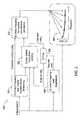
Figure 1 is a schematic diagram of an exemplary gas turbine coupled to an electrical generator and to a power grid. -
Figure 2 is a block diagram of an exemplary control system that may be used in operation of the gas turbine shown inFigure 1 . -
Figure 3 is an exemplary plot of gas turbine load as a function of time. -
Figure 4 is an exemplary plot of limits on gas turbine operating settings versus frequency of a power grid. -
Figure 5 is a functional block diagram of an exemplary additive feature to the control system shown inFigure 2 for adapting the operation of the gas turbine shown inFigure 1 . -
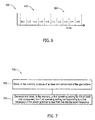
Figure 6 is a diagram of an exemplary data point sequencing process which may be implemented using the control system shown inFigure 2 . -
Figure 7 is a flow chart of an exemplary process for adapting under-frequency control limit schedules which may be implemented using the control system shown inFigure 2 . -
Figure 1 is a schematic view of anexemplary gas turbine 100 coupled to anelectrical generator 120 and to apower grid 121. In the exemplary embodiment,gas turbine 100 includes anair intake section 102, and acompressor section 104 that is downstream from, and in flow communication with,intake section 102.Compressor section 104 is enclosed within acompressor casing 105. Acombustor section 106 is downstream from, and in flow communication with,compressor section 104, and aturbine section 108 is downstream from, and in flow communication with,combustor section 106.Gas turbine 100 is enclosed within aturbine casing 109 and includes anexhaust section 110 that is downstream fromturbine section 108. Moreover, in the exemplary embodiment,turbine section 108 is coupled tocompressor section 104 via arotor assembly 112 that includes, without limitation, a compressor rotor, ordrive shaft 114 and a turbine rotor, ordrive shaft 115. - In the exemplary embodiment,
combustor section 106 includes a plurality of combustor assemblies (i.e., combustors 116) that are each coupled in flow communication withcompressor section 104.Combustor section 106 also includes at least onefuel nozzle assembly 118. Eachcombustor 116 is in flow communication with at least onefuel nozzle assembly 118. Moreover, in the exemplary embodiment,turbine section 108 andcompressor section 104 are rotatably coupled toelectrical generator 120 viadrive shaft 114.Electrical generator 120 is coupled topower grid 121. In the exemplary embodiment,compressor section 104 includes at least onecompressor blade assembly 122, (i.e., blade 122) and at least one circumferentially-adjacent inletguide vane assembly 123. - Also, in the exemplary embodiment,
turbine section 108 includes at least one turbine blade assembly, (i.e., bucket 125) and at least one circumferentially-adjacentstationary nozzle assembly 124. Eachcompressor blade assembly 122 and eachturbine bucket 125 is coupled torotor assembly 112, or more specifically, tocompressor drive shaft 114 andturbine drive shaft 115. - In operation,
air intake section 102channels air 150 towardscompressor section 104.Compressor section 104 compresses inletair 150 to higher pressures and temperatures prior to dischargingcompressed air 152 towardscombustor section 106. Compressedair 152 is channeled towardsfuel nozzle assembly 118, mixed with fuel (not shown), and burned within eachcombustor 116 to generatecombustion gases 154 that are channeled downstream towardsturbine section 108.Combustion gases 154 generated withincombustors 116 are channeled downstream towardsturbine section 108. After impingingturbine buckets 125, thermal energy is converted to mechanical rotational energy that is used to driverotor assembly 112.Turbine section 108 drivescompressor section 104 and/orelectrical generator 120 viadrive shafts exhaust gases 156 are discharged throughexhaust section 110 to ambient atmosphere. -
Figure 2 is a block diagram of anexemplary control system 200 that may be used in the operation ofgas turbine 100. As described in detail below,control system 200 receives, as inputs, information from fuelnozzle assembly sensors 160 andcompressor sensor 162, relating to operation of one or more components, for examplefuel nozzle assemblies 118 andcompressor section 104, ofgas turbine 100. More specifically,control system 200 receives information from one or more sensors pertaining to, for example, pressure ratios (e.g., pressure fromcompressor section 104 versus back pressure induced in combustor section 106) and/or fuel flow data through fuel nozzle assemblies 118 intocombustor section 106. Further,control system 200 determines or estimates additional data based on information provided from sensors, forexample sensors control system 200 may determine a firing temperature withincombustor section 106 based on fuel flow throughfuel nozzle assemblies 118. Additionally,control system 200 receives, as input, load requirements and information about the frequency ofpower grid 121.Control system 200 may also receive instructions or other inputs from an operator or manager ("user"), through auser input interface 235, as is described in more detail below. Using inputs such as those described above,control system 200 controls the operation ofgas turbine 100 to generate a power output that matches the load requirements ofpower grid 121. - In the example embodiment,
control system 200 includes at least onememory device 210 and aprocessor 215 that is coupled tomemory device 210 for executing instructions. In some implementations, executable instructions are stored inmemory device 210. In the exemplary implementation,control system 200 performs one or more operations by executing the executable instructions withprocessor 215. For example,processor 215 may execute instructions that determine a firing temperature incombustor section 106, detect thatpower grid 121 has a frequency that is less than the standardized frequency (e.g., 60 Hertz in the United States), and/or that cause one ormore fuel nozzles 118 to increase an amount of fuel flow intocombustor section 106 to facilitate increasing the firing temperature, and thus to generate more power. -
Processor 215 may include one or more processing units (e.g., in a multi-core configuration). Further,processor 215 may be implemented using one or more heterogeneous processor systems in which a main processor is present with secondary processors on a single chip. As another illustrative example,processor 215 may be a symmetric multi-processor system containing multiple processors of the same type. Further,processor 215 may be implemented using any suitable programmable circuit including one or more systems and microcontrollers, microprocessors, reduced instruction set circuits (RISC), application specific integrated circuits (ASIC), programmable logic circuits, field programmable gate arrays (FPGA), and any other circuit capable of executing the functions described herein.Processor 215 controls the display of the one or more procedures oncontrol system 200, as described in detail herein. - In the exemplary implementation,
memory device 210 is one or more devices that enable information such as executable instructions and/or other data to be stored and retrieved.Memory device 210 may include one or more computer readable media, such as, without limitation, dynamic random access memory (DRAM), static random access memory (SRAM), a solid state disk, and/or a hard disk.Memory device 210 may be configured to store, without limitation, source code, object code, configuration data, execution events and/or any other type of data. - In the exemplary implementation,
control system 200 includes apresentation interface 220 that is coupled toprocessor 215.Presentation interface 220 presents information pertaining to the operation ofgas turbine 100 to auser 225.Presentation interface 220 may include, for example, a display adapter (not shown) that may be coupled to a display device, such as a cathode ray tube (CRT), a liquid crystal display (LCD), an organic LED (OLED) display, and/or an "electronic ink" display. In some implementations,presentation interface 220 includes one or more display devices. - In the exemplary embodiment,
control system 200 includes auser input interface 235 that is coupled toprocessor 215 to receive input fromuser 225.User input interface 235 may include, for example, a keyboard, a pointing device, a mouse, a stylus, a touch sensitive panel (e.g., a touch pad or a touch screen), a gyroscope, an accelerometer, a position detector, and/or an audio user input interface. A single component, such as a touch screen, may function as both a display device ofpresentation interface 220 anduser input interface 235. - In the exemplary implementation,
control system 200 includes acommunication interface 240 coupled toprocessor 215.Communication interface 240 communicates with one or more devices, forexample gas turbine 100,electrical generator 120, and/orpower grid 121. To communicate with such devices,communication interface 240 may include, for example, a wired network adapter, a wireless network adapter, and/or a mobile telecommunications adapter. In some embodiments,control system 200 is at least partially incorporated withingas turbine 100, whereas in other embodiments,control system 200 is external or remote togas turbine 100. -
Figure 3 is anexemplary plot 300 of gas turbine load as a function of time. More specifically,Figure 3 illustrates a percentage of base load as a function of time. As explained above,gas turbine 100 is coupled toelectrical generator 120 which is coupled topower grid 121. Duringtime periods Figure 1 ) generates mechanical power that is converted into electrical power byelectrical generator 120. In turn, the electrical power is transmitted topower grid 121.Time period 302 pertains to a part load operation ofgas turbine 100. Duringtime period 302,gas turbine 100 is synchronized topower grid 121 and is operating normally.Time period 304 pertains to a base load operation ofgas turbine 100. Typically, the grid regulations for under-frequency events are specific to base load operation. In the exemplary embodiment, duringtime period 304,control system 200 adapts the relevant under-frequency control schedules to the current state ofgas turbine 100. The frequency ofpower grid 121 duringtime period 304 is equal to the standardized frequency forpower grid 121 andgas turbine 100 has a "base load". That is, duringtime period 304, if in the United States, for example,power grid 121 has a frequency of 60 Hertz and power demands frompower grid 121 do not exceed an intrinsic limit, based on capabilities of the components ofgas turbine 100. - In some embodiments,
memory device 210 includes a preprogrammed control limit schedule that is based, for example, on estimated capabilities of components ofgas turbine 100 whengas turbine 100 was initially manufactured or installed, or during a scheduled maintenance period. The preprogrammed control limit schedule details operational settings for components ofgas turbine 100 that exceed the operational settings used duringtime period 304. That is, the operational settings of the control limit schedule exceed the intrinsic capabilities of components ofgas turbine 100 such that, when temporarily used to control the components,gas turbine 100 generates an increased output power while, in turn, stressing and degrading at least one component more than that component would be stressed or degraded duringtime period 304. In such embodiments, the control limit schedule is preprogrammed and is not based on current actual capabilities (e.g., age, efficiency, and degradation) of the components ofgas turbine 100. - Information about the current capabilities (e.g., age, efficiency, and degradation) of the components of
gas turbine 100 is stored inmemory device 210 and is constantly updated bycontrol system 200. Duringtime period 304, control system 200 (Figure 2 ), which includes a model of the components ofgas turbine 100, including their capabilities (e.g., age, efficiency, and degradation), repeatedly generates an adapted control limit schedule for a possible under-frequency event ofpower grid 121. That is,control system 200 generates offsets or adjustment factors (e.g., multipliers or percentages), and applies such offsets to the preprogrammed control limit schedule to create an adapted control limit schedule. The offsets or adjustment factors are based on received information about the efficiency, age, and degradation of the components ofgas turbine 100. For example,control system 200 may generate an offset with a numerical value and subtract it to from a target firing temperature associated with a frequency ofpower grid 121 in the preprogrammed control limit schedule to arrive at an adapted target firing temperature for the adapted control limit schedule. In other embodiments, other operating settings such as a pressure, a surge limit, an inlet guide vane position, and/or a fuel flow may be calculated for the adapted control limit schedule. - During
time period 306, in the exemplary embodiment, the frequency ofpower grid 121 decreases. In other words, in the exemplary embodiment,time period 306 represents an under-frequency event ofpower grid 121. During an under-frequency event 306,control system 200 applies the adapted control limit schedule to increase the power output ofgas turbine 100.Time period 308 represents an amount of time that elapses aftercontrol system 200 applies the adapted control limit schedule. By applying the adapted control limit schedule, the frequency ofpower grid 121 is prevented from decreasing further. - In some embodiments, no preprogrammed control limit schedule exists in
memory 210. In such embodiments,control system 200 generates an adapted control limit schedule not by applying adjustments or offsets to a preprogrammed control limit schedule, but rather by generating an adapted control limit schedule directly from the information about the capabilities of components ofgas turbine 100 stored inmemory 210 by the model incontrol system 200. -
Figure 4 is anexemplary plot 400 of limits on gas turbine operating settings versus frequency ofpower grid 121. Inplot 400, frequency ofpower grid 121 increases to the right.Line 402 represents an intrinsic limit ofgas turbine 100. That is, by causing one or more components to operate pursuant to an operatingsetting exceeding line 402, a risk of increased degradation of components ofgas turbine 100 arises.Curve 404 represents settings for operation ofgas turbine 100 to compensate for an under-frequency event. For lower frequencies, greater operating settings apply. Settings associated withcurve 404 correspond with the preprogrammed control limit schedule discussed with reference toFigure 3 . That is, operating settings associated withcurve 404 do not take into account a current status (e.g., including information about current capabilities associated with age, efficiency, and degradation) of components ofgas turbine 100 and is akin to the above-described preprogrammed control limit schedule.Curve 406 represents a control limit schedule that takes into account the current capabilities (e.g., age, efficiency, and degradation) of components ofgas turbine 100. That is,curve 406 corresponds with the adapted control limit schedule discussed above, with reference toFigure 3 .Curve 406 includes five points, 408, 410, 412, 414, and 416. Each ofpoints control system 200 as discussed in more detail herein. In some embodiments,control system 200 may perform interpolation or curve-fitting calculations to determine operating settings between any ofpoints control system 200 may calculate settings for more or less than five points alongcurve 406. -
Figure 5 is a functional block diagram of an exemplary additive feature to controlsystem 200 for adapting the operation ofgas turbine 100.Block 502 represents a control effector scheduling function ofcontrol system 200. As discussed above, one or more operating settings forgas turbine 100 is changed bycontrol system 200 to compensate for an under-frequency event inpower grid 121. For example,control system 200 may change a position ofinlet vane assembly 123 to adjust an amount of power output fromgas turbine 100. -
Block 504 represents functionality ofcontrol system 200 for identifying an under-frequency load requirement. That is, rules for power output ofgas turbine 100 for a given under-frequency event are identified by the functionality ofblock 504. More specifically, a jurisdiction in whichgas turbine 100 is located generally has defined a set of rules, specified, for example, in terms of a percentage of nominal output, thatgas turbine 100 must generate for a given frequency ofpower grid 121. Such rules are stored inmemory device 210 and accessed byprocessor 215 to determine a required power output ofgas turbine 100. In other instances where the jurisdiction does not have a defined set of rules for power output in under-frequency events, a default set of rules are stored inmemory device 210. -
Block 506 is a model that generates information about a current state, operation, and capabilities ofgas turbine 100, including tracking an age, efficiency, and degradation of components ofgas turbine 100. The model may be based on linear and/or nonlinear system identification, neural networks, and/or combinations of the above. The model takes available information, calculates load, and calculates any additional estimated parameters needed for the generation of adapted under-frequency control limit schedules.Block 506 receives information from sensors, forexample sensors block 502, information pertaining to the current frequency ofpower grid 121, and output fromblock 508, described below. Based on information input intoblock 506, block 506 may estimate conditions that might not be measured directly, such as a firing temperature withincombustor 116. Likewise, in an exemplary embodiment, block 506 calculates an estimated load ofgas turbine 100. -
Block 508 represents a filter, for example a proportional-integral ("PI") controller. Other types of filters may be used to provide the functionality described herein.Block 508 receives a load requirement fromblock 504 and an estimated load ofgas turbine 100 fromblock 506.Block 508 adjusts target operating settings ofgas turbine 100 to match the estimated load output fromblock 506 with the load requirement output fromblock 504. For example, the model represented byblock 506 may include fuel flow information for operation ofgas turbine 100 whenpower grid 121 has a frequency of, for example, 60 Hertz. Based on the aforementioned output ofblocks block 508 is directed back intoblock 506. -
Block 510 receives the output ofblocks 502 and 506 (i.e., control effector positions and model information, including component age, degradation, and efficiency) and calculates adjustment factors or offsets to be applied to a preprogrammed control limit schedule to generate an adapted control limit schedule, as discussed with reference toFigures 3 and 4 . In other embodiments, block 510 does not apply adjustments to a preprogrammed control limit schedule but rather generates an adapted control limit schedule directly from the stored information about current capabilities (e.g., age, degradation, and efficiency) of components ofgas turbine 100, generated by the model (block 506). The adapted control limit schedule, corresponding tocurve 406 and includingpoints Figure 4 ), is continuously revised or regenerated, such that as conditions withingas turbine 100 change, the adapted control limit schedule changes as well. However, in some embodiments,control system 200 stops regenerating the adapted control limit schedule when an under-frequency event actually occurs, and resumes regeneration of the adapted control limit schedule when the under-frequency event ends. As discussed above,control system 200 applies, to one or more components ofgas turbine 100, operating settings generated for the adapted control limit schedule when an under-frequency event occurs. -
Figure 6 is a diagram of an exemplary datapoint sequencing scheme 600 which may be implemented by control system 200 (Figure 2 ). Afirst time period 602 and asubsequent time period 604 are each divided into five time slots. In each time slot, i, an operating setting corresponding to apoint Figure 4 ) oncurve 406 is calculated. That is, in each time slot, i,control system 200 calculates an operating setting corresponding to a given frequency forpower grid 121. It should be understood that the frequency corresponding to eachpoint power grid 121, but rather is a potential frequency ofpower grid 121. Accordingly,control system 200 generates operating settings for a possible future under-frequency event. After generating a fifth operating setting, corresponding to point 416 oncurve 406,control system 200 loops back to generating a first operating setting intime period 604. As explained above,curve 406 and points 408, 410, 412, 414, and 416 represent the adapted control limit schedule forgas turbine 100. In other embodiments, rather than calculating five operating settings,control system 200 calculates a different number of operating settings. -
Figure 7 is a flow chart of anexemplary process 700 for adapting under-frequency control limit schedules which may be implemented by control system 200 (Figure 2 ). Atstep 702,control system 200 stores, inmemory device 210, a status (e.g., the capabilities) of at least one component ofgas turbine 100. Atstep 704,control system 200 generates, inmemory device 210, a first operating setting for the component. The first operating setting corresponds to a first frequency ofpower grid 121 that is less than the standardized frequency (e.g., 60 Hertz). For example, in generating the adapted control limit schedule discussed above and represented bycurve 406,control system 200 may calculate atpoint 410, corresponding to 58 Hertz, that a firing temperature incombustor 116 must be 100 degrees hotter than the firing temperature when the power grid is operating at 60 Hertz. In other words, the firing temperature must be, for example, 3100 degrees Fahrenheit rather than 3000 degrees Fahrenheit, whenpower grid 121 is at 58 Hertz. Accordingly,control system 200 generates and stores the corresponding operating setting inmemory 210. The operating setting may be, for example, the 3100 degree Fahrenheit temperature, a fuel flow, a pressure, a surge limit, and/or other operating settings that will causegas turbine 100 to increase the firing temperature to meet the load requirements associated with a 58 Hertz power grid frequency. - A technical effect of systems and methods described herein includes at least one of: (a) storing a status of at least one component of a gas turbine; and (b) generating and storing a first operating setting for the at least one component, the first operating setting corresponding to a first frequency of a power grid that is less than a standardized frequency.
- As compared to known systems and methods for adapting the operation of a gas turbine, the systems and methods described herein enable a gas turbine control system to continuously generate operating settings for an under-frequency event, taking into account the current status of one or more components of the gas turbine. Accordingly, gas turbines operated in accordance with the systems and methods described herein may operate with increased reliability during under-frequency events.
- Exemplary embodiments of systems and methods for adapting the operation of a gas turbine are described above in detail. The systems and methods described herein are not limited to the specific embodiments described herein, but rather, components of the systems and/or steps of the methods may be utilized independently and separately from other components and/or steps described herein.
- This written description uses examples to disclose the invention, including the best mode, and also to enable any person skilled in the art to practice the invention, including making and using any devices or systems and performing any incorporated methods. The patentable scope of the invention is defined by the claims, and may include other examples that occur to those skilled in the art. Such other examples are intended to be within the scope of the claims if they have structural elements that do not differ from the literal language of the claims, or if they include equivalent structural elements with insubstantial differences from the literal languages of the claims.
- Various aspects and embodiments of the present invention are defined by the following numbered clauses:
- 1. A control system configured to be coupled to at least one component of a gas turbine for using in adapting an operation of the gas turbine, the gas turbine is coupled to a power grid having a standardized frequency, said control system comprises a processor and a memory coupled to said processor, said memory includes processor-executable instructions that, when executed by said processor, cause said control system to:
- store a status of the at least one component of the gas turbine; and
- generate and store a first operating setting for the at least one component, the first operating setting corresponding to a first frequency of the power grid that is less than the standardized frequency.
- 2. The control system of
clause 1, wherein said memory further includes processor-executable instructions that, when executed by said processor, cause said control system to generate a second operating setting for the at least one component, wherein the second operating setting corresponds to a second frequency that is less than the first frequency. - 3. The control system of any preceding clause, wherein said memory further includes processor-executable instructions that, when executed by said processor, cause said control system to iteratively repeat the steps.
- 4. The control system of any preceding clause, wherein said memory further includes processor-executable instructions such that storing a status of the at least one component includes storing information pertaining to an age of the at least one component.
- 5. The control system of any preceding clause, wherein the first operating setting includes an inlet guide vane position or a firing temperature.
- 6. The control system of any preceding clause, wherein the first operating setting includes a surge limit or a pressure.
- 7. The control system of any preceding clause, wherein the first operating setting includes a percentage of an operating setting corresponding to the standardized frequency.
- 8. The control system of any preceding clause, wherein the first operating setting includes a multiplier of an operating setting corresponding to the standardized frequency.
- 9. The control system of any preceding clause, wherein the first operating setting includes an offset to an operating setting corresponding to the standardized frequency.
- 10. The control system of any preceding clause, wherein said memory further includes processor-executable instructions that, when executed by said processor, cause said system to:
- detect that the power grid has the first frequency; and
- upon detecting that the power grid has the first frequency, control the at least one component with the first operating setting.
- 11. A method for adapting an operation of a gas turbine, said method is performed by a control system including a processor and a memory coupled to the processor, the control system is coupled to at least one component of a gas turbine, the gas turbine is coupled to a power grid having a standardized frequency, said method comprising the steps of:
- storing a status of said at least one component of said gas turbine; and
- generating and storing a first operating setting for said at least one component, the first operating setting corresponding to a first frequency of the power grid that is less than the standardized frequency.
- 12. The method of any preceding clause, further comprising generating a second operating setting for the at least one component, wherein the second operating setting corresponds to a second frequency that is less than the first frequency.
- 13. The method of any preceding clause, further comprising iteratively repeating the steps.
- 14. The method of any preceding clause, wherein storing a status of the at least one component includes storing information pertaining to an age of the at least one component.
- 15. The method of any preceding clause, wherein generating a first operating setting includes generating a first operating setting pertaining to an inlet guide vane position or a firing temperature.
- 16. The method of any preceding clause, wherein generating a first operating setting includes generating a first operating setting pertaining to a surge limit or a pressure.
- 17. The method of any preceding clause, wherein generating a first operating setting includes generating a first operating setting including a percentage of an operating setting corresponding to the standardized frequency.
- 18. The method of any preceding clause, wherein generating a first operating setting includes generating a first operating setting including a multiplier of an operating setting corresponding to the standardized frequency.
- 19. The method of any preceding clause, wherein generating a first operating setting includes generating a first operating setting including an offset to an operating setting corresponding to the standardized frequency.
- 20. The method of any preceding clause, further comprising:
- detecting that the power grid has the first frequency; and
- upon detecting that the power grid has the first frequency, controlling the at least one component with the first operating setting.
Claims (17)
1. A control system (200) configured to be coupled to at least one component of a gas turbine (100) for using in adapting an operation of the gas turbine (100), the gas turbine (100) is coupled to a power grid (121) having a standardized frequency, said control system (200) comprises a processor (215) and a memory (210) coupled to said processor (215), said memory (210) includes processor-executable instructions that, when executed by said processor (215), cause said control system (200) to:
store a status of the at least one component of the gas turbine (100); and
generate and store a first operating setting for the at least one component, the first operating setting corresponding to a first frequency of the power grid (121) that is less than the standardized frequency.
2. The control system of Claim 1, wherein said memory (210) further includes processor-executable instructions that, when executed by said processor (215), cause said control system (200) to generate a second operating setting for the at least one component, wherein the second operating setting corresponds to a second frequency that is less than the first frequency.
3. The control system of Claim 1 or Claim 2, wherein said memory (210) further includes processor-executable instructions that, when executed by said processor (215), cause said control system (200) to iteratively repeat the steps.
4. The control system of Claim 1, 2 or 3, wherein said memory (210) further includes processor-executable instructions such that storing a status of the at least one component includes storing information pertaining to an age of the at least one component.
5. The control system of any preceding Claim, wherein the first operating setting includes an inlet guide vane position or a firing temperature.
6. The control system of any preceding Claim, wherein the first operating setting includes a surge limit or a pressure.
7. The control system of any preceding Claim, wherein the first operating setting includes a percentage of an operating setting corresponding to the standardized frequency.
8. The control system of any preceding Claim, wherein the first operating setting includes a multiplier of an operating setting corresponding to the standardized frequency.
9. The control system of any preceding Claim, wherein the first operating setting includes an offset to an operating setting corresponding to the standardized frequency.
10. The control system of any preceding Claim, wherein said memory (210) further includes processor-executable instructions that, when executed by said processor (215), cause said control system (200) to:
detect that the power grid (121) has the first frequency; and
upon detecting that the power grid (121) has the first frequency, control the at least one component with the first operating setting.
10. The control system of any preceding clause, wherein said memory further includes processor-executable instructions that, when executed by said processor, cause said system to:
detect that the power grid has the first frequency; and
upon detecting that the power grid has the first frequency, control the at least one component with the first operating setting.
11. A method (700) for adapting an operation of a gas turbine, said method is performed by a control system including a processor and a memory coupled to the processor, the control system is coupled to at least one component of a gas turbine, the gas turbine is coupled to a power grid having a standardized frequency, said method comprising the steps of:
storing (702) a status of said at least one component of said gas turbine; and
generating and storing (704) a first operating setting for said at least one component, the first operating setting corresponding to a first frequency of the power grid that is less than the standardized frequency.
12. The method of Claim 11, further comprising generating a second operating setting for the at least one component, wherein the second operating setting corresponds to a second frequency that is less than the first frequency.
13. The method of Claim 11 or Claim 12, further comprising iteratively repeating the steps.
14. The method of Claim 11, 12 or 13, wherein storing (702) a status of the at least one component includes storing information pertaining to an age of the at least one component.
15. The method of any one of Claims 11 to 14, wherein generating a first operating setting includes one or more of:
generating a first operating setting pertaining to an inlet guide vane position or a firing temperature;
generating a first operating setting pertaining to a surge limit or a pressure;
generating a first operating setting including a percentage of an operating setting corresponding to the standardized frequency;
generating a first operating setting including a multiplier of an operating setting corresponding to the standardized frequency, and
generating a first operating setting including an offset to an operating setting corresponding to the standardized frequency.
16. The method of anyone of Claims 11 to 15, further comprising:
detecting that the power grid has the first frequency; and
upon detecting that the power grid has the first frequency, controlling the at least one component with the first operating setting.
Applications Claiming Priority (1)
| Application Number | Priority Date | Filing Date | Title |
|---|---|---|---|
| US13/776,088 US9459671B2 (en) | 2013-02-25 | 2013-02-25 | Systems and methods for use in adapting the operation of a gas turbine |
Publications (1)
| Publication Number | Publication Date |
|---|---|
| EP2770184A2 true EP2770184A2 (en) | 2014-08-27 |
Family
ID=50071461
Family Applications (1)
| Application Number | Title | Priority Date | Filing Date |
|---|---|---|---|
| EP14154329.8A Withdrawn EP2770184A2 (en) | 2013-02-25 | 2014-02-07 | Systems and methods for use in adapting the operation of a gas turbine |
Country Status (4)
| Country | Link |
|---|---|
| US (1) | US9459671B2 (en) |
| EP (1) | EP2770184A2 (en) |
| JP (1) | JP2014163384A (en) |
| CN (1) | CN104005854A (en) |
Families Citing this family (20)
| Publication number | Priority date | Publication date | Assignee | Title |
|---|---|---|---|---|
| US9803561B2 (en) * | 2014-11-18 | 2017-10-31 | General Electric Company | Power output and emissions based degraded gas turbine tuning and control systems, computer program products and related methods |
| US9771875B2 (en) * | 2014-11-18 | 2017-09-26 | General Electric Company | Application of probabilistic control in gas turbine tuning, related control systems, computer program products and methods |
| US9771876B2 (en) | 2014-11-18 | 2017-09-26 | General Electric Compnay | Application of probabilistic control in gas turbine tuning with measurement error, related control systems, computer program products and methods |
| US9784183B2 (en) | 2014-11-18 | 2017-10-10 | General Electric Company | Power outlet, emissions, fuel flow and water flow based probabilistic control in liquid-fueled gas turbine tuning, related control systems, computer program products and methods |
| US9771874B2 (en) | 2014-11-18 | 2017-09-26 | General Electric Company | Power output and fuel flow based probabilistic control in gas turbine tuning, related control systems, computer program products and methods |
| US9771877B2 (en) | 2014-11-18 | 2017-09-26 | General Electric Company | Power output and fuel flow based probabilistic control in part load gas turbine tuning, related control systems, computer program products and methods |
| US9909507B2 (en) | 2015-01-27 | 2018-03-06 | General Electric Company | Control system for can-to-can variation in combustor system and related method |
| US9822705B2 (en) | 2015-07-13 | 2017-11-21 | General Elecric Company | Power augmentation system for a gas turbine |
| US10267231B2 (en) | 2015-08-06 | 2019-04-23 | General Electric Company | Systems and methods for augmenting gas turbine power output with a pressurized air tank and/or an external compressor |
| US9856796B2 (en) | 2015-12-07 | 2018-01-02 | General Electric Company | Application of probabilistic control in gas turbine tuning for power output-emissions parameters with scaling factor, related control systems, computer program products and methods |
| US9879613B2 (en) | 2015-12-16 | 2018-01-30 | General Electric Company | Application of combined probabilistic control in gas turbine tuning for power output-emissions parameters with scaling factor, related control systems, computer program products and methods |
| US9790865B2 (en) | 2015-12-16 | 2017-10-17 | General Electric Company | Modelling probabilistic control in gas turbine tuning for power output-emissions parameters, related control systems, computer program products and methods |
| US9797315B2 (en) | 2015-12-16 | 2017-10-24 | General Electric Company | Probabilistic control in gas turbine tuning for power output-emissions parameters, related control systems, computer program products and methods |
| US9879614B2 (en) | 2015-12-16 | 2018-01-30 | General Electric Company | Machine-specific combined probabilistic control in gas turbine tuning for power output-emissions parameters with scaling factor, related control systems, computer program products and methods |
| US9879615B2 (en) | 2015-12-16 | 2018-01-30 | General Electric Company | Machine-specific probabilistic control in gas turbine tuning for power output-emissions parameters, related control systems, computer program products and methods |
| US9856797B2 (en) | 2015-12-16 | 2018-01-02 | General Electric Company | Application of combined probabilistic control in gas turbine tuning for power output-emissions parameters with scaling factor, related control systems, computer program products and methods |
| US9879612B2 (en) | 2015-12-16 | 2018-01-30 | General Electric Company | Combined probabilistic control in gas turbine tuning for power output-emissions parameters with scaling factor, related control systems, computer program products and methods |
| US9882454B2 (en) | 2015-12-16 | 2018-01-30 | General Electric Company | Application of combined probabilistic control in gas turbine tuning for power output-emissions parameters with scaling factor, related control systems, computer program products and methods |
| US10358983B2 (en) * | 2016-04-19 | 2019-07-23 | General Electric Company | Asset degradation model baselinening system and method |
| US9996078B1 (en) * | 2017-04-07 | 2018-06-12 | Pratt & Whitney Canada Corp. | Pre-emptive fault detection through advanced signal analysis |
Family Cites Families (18)
| Publication number | Priority date | Publication date | Assignee | Title |
|---|---|---|---|---|
| DE19651882A1 (en) * | 1996-12-13 | 1998-06-18 | Asea Brown Boveri | Method for frequency support when operating a power plant |
| DE69720950T2 (en) * | 1997-02-07 | 2004-03-11 | Alstom (Switzerland) Ltd. | Method for controlling a power plant |
| JP3250147B2 (en) * | 1997-10-22 | 2002-01-28 | 株式会社日立製作所 | Method and apparatus for estimating frequency characteristics of power system |
| WO2003044353A1 (en) | 2001-11-15 | 2003-05-30 | Goodrich Pump & Engine Control Systems, Inc. | Method and apparatus for adaptive acceleration schedules in gas turbine engine control systems |
| US20040024559A1 (en) | 2002-08-01 | 2004-02-05 | Down John Harry | Method, system and computer product for building calibration lookup tables from sparse data |
| US7333918B2 (en) * | 2002-09-05 | 2008-02-19 | Strategic Power Systems, Inc. | System and method for calculating part life |
| US8019485B2 (en) * | 2004-06-22 | 2011-09-13 | Siemens Energy, Inc. | System and method for controlling the performance of a power generating system |
| JP4699130B2 (en) * | 2005-08-03 | 2011-06-08 | 三菱重工業株式会社 | Gas turbine inlet guide vane control device |
| US7571057B2 (en) * | 2005-09-16 | 2009-08-04 | General Electric Company | System and method for monitoring degradation |
| US8479523B2 (en) | 2006-05-26 | 2013-07-09 | General Electric Company | Method for gas turbine operation during under-frequency operation through use of air extraction |
| US7681401B2 (en) | 2006-08-24 | 2010-03-23 | General Electric Company | Methods and systems for operating a gas turbine |
| US7853392B2 (en) | 2007-01-26 | 2010-12-14 | General Electric Company | Systems and methods for initializing dynamic model states using a Kalman filter |
| JP5010502B2 (en) * | 2008-02-28 | 2012-08-29 | 三菱重工業株式会社 | Gas turbine control method and apparatus |
| CN105587351B (en) * | 2008-03-25 | 2018-12-21 | 通用电器技术有限公司 | Power station plant and its operation method |
| US20100138070A1 (en) * | 2009-02-26 | 2010-06-03 | Ronald Beaudoin | System and method for improving power grid stability |
| US8463451B2 (en) * | 2010-04-19 | 2013-06-11 | General Electric Company | Automatic primary frequency response contribution monitoring system and method |
| US8768529B2 (en) * | 2010-07-20 | 2014-07-01 | General Electric Company | Grid frequency rate limiting system |
| ES2642670T3 (en) * | 2011-01-20 | 2017-11-17 | Vestas Wind Systems A/S | A method for diagnostic monitoring of a wind turbine generator system |
-
2013
- 2013-02-25 US US13/776,088 patent/US9459671B2/en active Active
-
2014
- 2014-02-07 EP EP14154329.8A patent/EP2770184A2/en not_active Withdrawn
- 2014-02-21 JP JP2014031183A patent/JP2014163384A/en active Pending
- 2014-02-25 CN CN201410064811.8A patent/CN104005854A/en active Pending
Non-Patent Citations (1)
| Title |
|---|
| None |
Also Published As
| Publication number | Publication date |
|---|---|
| JP2014163384A (en) | 2014-09-08 |
| US20140244055A1 (en) | 2014-08-28 |
| US9459671B2 (en) | 2016-10-04 |
| CN104005854A (en) | 2014-08-27 |
Similar Documents
| Publication | Publication Date | Title |
|---|---|---|
| US9459671B2 (en) | Systems and methods for use in adapting the operation of a gas turbine | |
| EP2492453A2 (en) | Turbo-machine temperature control | |
| US10437241B2 (en) | Systems and methods for generating maintenance packages | |
| JP6538312B2 (en) | System and method for controlling a gas turbine | |
| US9317249B2 (en) | Operations support systems and methods for calculating and evaluating turbine temperatures and health | |
| US10458342B2 (en) | System and method for controlling operation of a gas turbine based power plant | |
| RU2608802C2 (en) | System and method for auto configuration of fuel combustion system of gas turbine | |
| EP3392469B1 (en) | Compressor water-wash advisory | |
| EP2423489A2 (en) | Methods for controlling fuel splits to a gas turbine combustor | |
| US10706189B2 (en) | Systems and method for dynamic combustion tests | |
| CN106802643A (en) | failure prediction system and method | |
| US20120078567A1 (en) | Combustion reference temperature estimation | |
| CN106950926B (en) | System and method for controlling and monitoring a power generation facility | |
| US8381507B2 (en) | Systems and methods for optimized gas turbine shutdown | |
| EP3249770B1 (en) | Systems and methods for adjusting operations of a gas turbine following a transient event | |
| EP2843212A1 (en) | Systems and methods for controlling gas turbines | |
| US9500136B2 (en) | Systems and methods for generating variable ramp rates for turbomachinery | |
| US8567175B2 (en) | Emissions prediction system for power generation system | |
| EP3330615B1 (en) | Model-less combustion dynamics autotune | |
| DiCampli et al. | Grid stability: Gas turbines for primary reserve | |
| US20180291820A1 (en) | Malfunction determination for gas turbine enclosure | |
| US20180187574A1 (en) | Method to diagnose power plant degradation using efficiency models | |
| EP2584421A2 (en) | Gas turbine monitoring system | |
| EP2395215A2 (en) | Combustion reference temperature estimation | |
| JP2012149551A (en) | Gas turbine control device, and gas turbine control method |
Legal Events
| Date | Code | Title | Description |
|---|---|---|---|
| PUAI | Public reference made under article 153(3) epc to a published international application that has entered the european phase |
Free format text: ORIGINAL CODE: 0009012 |
|
| 17P | Request for examination filed |
Effective date: 20140207 |
|
| AK | Designated contracting states |
Kind code of ref document: A2 Designated state(s): AL AT BE BG CH CY CZ DE DK EE ES FI FR GB GR HR HU IE IS IT LI LT LU LV MC MK MT NL NO PL PT RO RS SE SI SK SM TR |
|
| AX | Request for extension of the european patent |
Extension state: BA ME |
|
| STAA | Information on the status of an ep patent application or granted ep patent |
Free format text: STATUS: THE APPLICATION IS DEEMED TO BE WITHDRAWN |
|
| 18D | Application deemed to be withdrawn |
Effective date: 20160901 |