EP2768966B1 - Bacteria and method for synthesizing fatty acids - Google Patents
Bacteria and method for synthesizing fatty acids Download PDFInfo
- Publication number
- EP2768966B1 EP2768966B1 EP12842369.6A EP12842369A EP2768966B1 EP 2768966 B1 EP2768966 B1 EP 2768966B1 EP 12842369 A EP12842369 A EP 12842369A EP 2768966 B1 EP2768966 B1 EP 2768966B1
- Authority
- EP
- European Patent Office
- Prior art keywords
- acyl
- fabz
- bacteria
- fatty acids
- acp thioesterase
- Prior art date
- Legal status (The legal status is an assumption and is not a legal conclusion. Google has not performed a legal analysis and makes no representation as to the accuracy of the status listed.)
- Active
Links
Images

Classifications
-
- C—CHEMISTRY; METALLURGY
- C12—BIOCHEMISTRY; BEER; SPIRITS; WINE; VINEGAR; MICROBIOLOGY; ENZYMOLOGY; MUTATION OR GENETIC ENGINEERING
- C12N—MICROORGANISMS OR ENZYMES; COMPOSITIONS THEREOF; PROPAGATING, PRESERVING, OR MAINTAINING MICROORGANISMS; MUTATION OR GENETIC ENGINEERING; CULTURE MEDIA
- C12N15/00—Mutation or genetic engineering; DNA or RNA concerning genetic engineering, vectors, e.g. plasmids, or their isolation, preparation or purification; Use of hosts therefor
- C12N15/09—Recombinant DNA-technology
- C12N15/63—Introduction of foreign genetic material using vectors; Vectors; Use of hosts therefor; Regulation of expression
- C12N15/70—Vectors or expression systems specially adapted for E. coli
-
- C—CHEMISTRY; METALLURGY
- C07—ORGANIC CHEMISTRY
- C07K—PEPTIDES
- C07K14/00—Peptides having more than 20 amino acids; Gastrins; Somatostatins; Melanotropins; Derivatives thereof
- C07K14/195—Peptides having more than 20 amino acids; Gastrins; Somatostatins; Melanotropins; Derivatives thereof from bacteria
- C07K14/24—Peptides having more than 20 amino acids; Gastrins; Somatostatins; Melanotropins; Derivatives thereof from bacteria from Enterobacteriaceae (F), e.g. Citrobacter, Serratia, Proteus, Providencia, Morganella, Yersinia
-
- C—CHEMISTRY; METALLURGY
- C12—BIOCHEMISTRY; BEER; SPIRITS; WINE; VINEGAR; MICROBIOLOGY; ENZYMOLOGY; MUTATION OR GENETIC ENGINEERING
- C12N—MICROORGANISMS OR ENZYMES; COMPOSITIONS THEREOF; PROPAGATING, PRESERVING, OR MAINTAINING MICROORGANISMS; MUTATION OR GENETIC ENGINEERING; CULTURE MEDIA
- C12N15/00—Mutation or genetic engineering; DNA or RNA concerning genetic engineering, vectors, e.g. plasmids, or their isolation, preparation or purification; Use of hosts therefor
- C12N15/09—Recombinant DNA-technology
- C12N15/11—DNA or RNA fragments; Modified forms thereof; Non-coding nucleic acids having a biological activity
- C12N15/52—Genes encoding for enzymes or proenzymes
-
- C—CHEMISTRY; METALLURGY
- C12—BIOCHEMISTRY; BEER; SPIRITS; WINE; VINEGAR; MICROBIOLOGY; ENZYMOLOGY; MUTATION OR GENETIC ENGINEERING
- C12N—MICROORGANISMS OR ENZYMES; COMPOSITIONS THEREOF; PROPAGATING, PRESERVING, OR MAINTAINING MICROORGANISMS; MUTATION OR GENETIC ENGINEERING; CULTURE MEDIA
- C12N9/00—Enzymes; Proenzymes; Compositions thereof; Processes for preparing, activating, inhibiting, separating or purifying enzymes
- C12N9/14—Hydrolases (3)
- C12N9/16—Hydrolases (3) acting on ester bonds (3.1)
-
- C—CHEMISTRY; METALLURGY
- C12—BIOCHEMISTRY; BEER; SPIRITS; WINE; VINEGAR; MICROBIOLOGY; ENZYMOLOGY; MUTATION OR GENETIC ENGINEERING
- C12P—FERMENTATION OR ENZYME-USING PROCESSES TO SYNTHESISE A DESIRED CHEMICAL COMPOUND OR COMPOSITION OR TO SEPARATE OPTICAL ISOMERS FROM A RACEMIC MIXTURE
- C12P7/00—Preparation of oxygen-containing organic compounds
- C12P7/64—Fats; Fatty oils; Ester-type waxes; Higher fatty acids, i.e. having at least seven carbon atoms in an unbroken chain bound to a carboxyl group; Oxidised oils or fats
- C12P7/6409—Fatty acids
-
- C—CHEMISTRY; METALLURGY
- C12—BIOCHEMISTRY; BEER; SPIRITS; WINE; VINEGAR; MICROBIOLOGY; ENZYMOLOGY; MUTATION OR GENETIC ENGINEERING
- C12Y—ENZYMES
- C12Y301/00—Hydrolases acting on ester bonds (3.1)
- C12Y301/02—Thioester hydrolases (3.1.2)
- C12Y301/02014—Oleoyl-[acyl-carrier-protein] hydrolase (3.1.2.14), i.e. ACP-thioesterase
-
- Y—GENERAL TAGGING OF NEW TECHNOLOGICAL DEVELOPMENTS; GENERAL TAGGING OF CROSS-SECTIONAL TECHNOLOGIES SPANNING OVER SEVERAL SECTIONS OF THE IPC; TECHNICAL SUBJECTS COVERED BY FORMER USPC CROSS-REFERENCE ART COLLECTIONS [XRACs] AND DIGESTS
- Y02—TECHNOLOGIES OR APPLICATIONS FOR MITIGATION OR ADAPTATION AGAINST CLIMATE CHANGE
- Y02E—REDUCTION OF GREENHOUSE GAS [GHG] EMISSIONS, RELATED TO ENERGY GENERATION, TRANSMISSION OR DISTRIBUTION
- Y02E50/00—Technologies for the production of fuel of non-fossil origin
- Y02E50/10—Biofuels, e.g. bio-diesel
-
- Y—GENERAL TAGGING OF NEW TECHNOLOGICAL DEVELOPMENTS; GENERAL TAGGING OF CROSS-SECTIONAL TECHNOLOGIES SPANNING OVER SEVERAL SECTIONS OF THE IPC; TECHNICAL SUBJECTS COVERED BY FORMER USPC CROSS-REFERENCE ART COLLECTIONS [XRACs] AND DIGESTS
- Y02—TECHNOLOGIES OR APPLICATIONS FOR MITIGATION OR ADAPTATION AGAINST CLIMATE CHANGE
- Y02P—CLIMATE CHANGE MITIGATION TECHNOLOGIES IN THE PRODUCTION OR PROCESSING OF GOODS
- Y02P20/00—Technologies relating to chemical industry
- Y02P20/50—Improvements relating to the production of bulk chemicals
- Y02P20/52—Improvements relating to the production of bulk chemicals using catalysts, e.g. selective catalysts
Definitions
- the invention relates to a method of increasing the production of fatty acids by using genetically engineered microorganisms.
- Fatty acids are composed of long alkyl chains and represent nature's "petroleum,” being a primary metabolite used by cells for both chemical and energy storage functions.
- These energy-rich molecules are today isolated from plant and animal oils for a diverse set of products ranging from fuels to oleochemicals.
- biodiesel methylesters of fatty acids
- biodiesel is the major long chain product produced biologically, and it is almost exclusively derived from plant oils today.
- slow cycle times for engineering oil seed metabolism and the excessive accumulation of glycerol as a byproduct are two major drawbacks of deriving biodiesel from plants.
- most bacteria do produce fatty acids as cell envelope precursors, the biosynthesis of fatty acids is tightly regulated at multiple levels and large quantities are not made. Thus, the production of fatty acids from bacteria has not yet reached the point where it is cost effective.
- fatty acids can be converted to chemicals such as hydrocarbons, fatty alcohols, hydroxyl fatty acids, dicarboxylic acids etc.
- the omega-end of the molecules can be modified by changing the starting precursors in the initial step of the fatty acid biosynthesis pathway (marked by white block arrows).
- chain length of these molecules can be changed by using appropriate acyl-ACP thioesterases specific to a particular chain length, such as C8, C10, C12 or C14.
- various molecules can also be tapped out at different points during the fatty acid elongation cycle.
- US7759094 discloses a method for the production of L-amino acids by fermentation of genetically engineered microorganisms, in which fadR is overexpressed and sucC is also overexpressed.
- fadR is overexpressed
- sucC is also overexpressed.
- US7553645 discloses a process for preparing L-amino acids using a genetically engineered or transformed microorganism, in which sucC is overexpressed. However, there is no teaching with regard to the production of fatty acid in this patent.
- US7211415 also discloses a process for producing L-amino acids by fermentation of genetically engineered microorganisms of the Enterobacteriaceae family, in which sucC is overexpressed.
- sucC is overexpressed
- US20110195505 discloses a genetically engineered lactobacillus for butanol production, in which deletion at fabZ1 results in 10% increase in total cell membrane saturated fatty acids. However, there is no teaching regarding the effect of fabZ overexpression on the production of fatty acids.
- US20080160585 and US20080038787 disclose a method of increasing the production of lysine from a microorganism, in which sucC is deregulated.
- sucC sucC
- US20060046288 discloses a mutant E. coli strain with increased succinic acid production, in which it has reduced activity of fadR gene. However, no detail regarding the fadR gene or the regulation/mutation thereof is specifically disclosed.
- WO2011116279 discloses hybrid ACP thioesterases, which can be combined with deletions in native fadD , and sucC. They also teach acidifying the medium to increase production of fatty acids.
- US2011165637 discloses a genetically engineered bacteria for producing fatty acids comprising an overexpressed acyl-ACP thioesterase and an overexpressed FabZ + .
- WO2011059745 mentions the possibility of combining an overexpressed thioesterase with FabZ or fadD but fails to exemplify such combinations.
- the invention relates to the production of fatty acid by genetically engineered microorganisms, in particular to engineered microorganisms that produce large amounts of free fatty acids by virtue of the addition of, for example, a plant acyl-ACP thioesterase and manipulation of the transcription factor(s) involved in the fatty acid biosynthesis and/or degradation pathways; a combination of these transcription factor(s) together with one or more of selected gene(s) in the fatty acid synthesis pathway, fatty acid degradation pathway or the central metabolic pathway.
- This invention will allow the production of free fatty acid with yield close to the maximum theoretical yield. As such, this invention will provide the necessary framework to produce many other products sharing or branching out from the fatty acid synthesis pathway economically. These products include hydrocarbons, fatty alcohols, hydroxy fatty acids, dicarboxylic acids etc.
- the invention is one or more of the following: A genetically engineered bacteria for producing fatty acids, said bacteria comprising:
- a genetically engineered bacteria of genotype comprising i) ⁇ sucC FabZ + TE + ; ii) ⁇ sucC ⁇ fabR FabZ + TE + ; iii) FabZ + TE + ; iv) ⁇ fabR FadR + TE + ; or v) ⁇ sucC ⁇ fabR FadR + TE + ; or ⁇ sucC FabZ + TE + ; or ⁇ fadD ⁇ sucC FabZ + TE + .
- a genetically engineered bacteria comprising a genotype selected from the group consisting of:
- any one of the herein described bacteria which produce at least 14% more fatty acid than having a control microorganism having ⁇ fadD plus TE+.
- said bacteria produces at least 45% more fatty acid, or at least 65% more fatty acid and most preferred, at least 80% more fatty acid than having a control microorganism having ⁇ fadD plus TE+.
- the bacteria may be a genetically engineered Enterobacteriaceae or Enterobacter comprising ⁇ fadD ⁇ sucC FabZ + TE + ; or ⁇ fadD ⁇ sucC ⁇ fabR FabZ + TE + ; or ⁇ fadD FabZ + TE + ; or ⁇ sucC FabZ + TE + or ⁇ sucC ⁇ fabR FabZ + TE + ; or FabZ + TE + , or any of the herein described bacteria.
- bacteria with an equivalent gene set include e.g., Firmicutes, Actinobacteria, Spirochetes, Proteobacteria, Bacillus, Streptococcus, Lactobaccillus, Lactococcus, Citrobacter, Haemophilus, Actinomycetes, Cyanobacteria, Staphylococcus, Neisseria, Micrococcus, Aspergillus, Psuedomonas , and the like. Since there are hundreds of completely sequenced bacterial genomes readily available (see en.wikipedia.org/wiki/List_of_sequenced_bacterial_genomes), a person of ordinary skill in the art can easily confirm homologous gene sets by comparison, esp. using protein sequences, which diverge less than gene sequences in the prokaryotes.
- Methods of producing fatty acids comprising culturing any genetically engineered bacteria as described herein in a culture medium under conditions effective for the production of fatty acids; and harvesting said fatty acids from said bacteria and/or the culture medium.
- Another embodiment comprises adding acetic acid to said culture medium and harvesting the fatty acids from said culture medium.
- Another method of producing fatty acids comprising culturing a genetically engineered bacteria in a culture medium under conditions effective for the production of fatty acids; and harvesting said fatty acids from the microorganism and/or the culture medium, wherein the bacteria and the desired fatty acid profile are selected from the group consisting of: Fatty acid distribution (Percentage of total) Strain Name Relevant genotype C14 C16:1 C16 C18:1 MLK211_18Z ⁇ fadD ⁇ fabR fabZ + acyl-ACP thioesterase + 45.62 25.51 74.41 2.83 MLK212_18Z ⁇ fadD ⁇ sucC ⁇ fabR fabZ + acyl-ACP thioesterase + 40.24 16.46 42.59 0.71 MLK163_18Z ⁇ fadD ⁇ sucCfabZ + acyl-ACP thioesterase + 53.25 10.55 36.20 ND Alternatively, the bacteria and the fatty acids
- Acyl-acyl carrier protein (ACP) thioesterase (herein known as "TE") is an enzyme that terminates the intraplastidial fatty acid synthesis by hydrolyzing the acyl-ACP intermediates and releasing free fatty acids to be incorporated into glycerolipids.
- these enzymes are classified in two families, FatA and FatB, which differ in amino acid sequence and substrate specificity.
- FatA and FatB which differ in amino acid sequence and substrate specificity.
- the N terminal (aa 1-98) of any acyl-ACP thioesterases controls the substrate specificity of the enzyme, and it is known how to change substrate specificity by swapping amino terminal domains.
- acyl-ACP thioesterase proteins that can be used (e.g., FadM, TesA, TesB). These can be used as is, or up regulated or otherwise made to be overexpressed.
- FadM acyl-ACP thioesterase proteins
- TesA TesB
- TesB native acyl-ACP thioesterase proteins
- any acyl-ACP thioesterase can also be added to the bacteria, and this is especially beneficial where one wants to generate a specific distribution of fatty acids, since the various enzymes have different substrate preferences, some producing longer fats and others short fats.
- acyl-ACP thioesterase proteins are known and can be added to bacteria (e.g., CAA52070, YP_003274948, ACY23055, AAB71729, BAB33929, to name a few of the thousands of such proteins available), although we have used plasmids encoding plant genes herein. Such genes can be added by plasmid or other vector, or can be cloned directly into the genome. In certain species it may also be possible to genetically engineer the endogenous protein to be overexpressed by changing the regulatory sequences or removing repressors. However, overexpressing the gene by inclusion on selectable plasmids that exist in hundreds of copies in the cell may be preferred due to its simplicity, although permanent modifications to the genome may be preferred in the long term for genetic stability.
- acyl ACP thioesterases include Umbellularia californica fatty acyl-ACP thioesterase (AAC49001), Cinnamomum camphora fatty acyl-ACP thioesterase (Q39473), Umbellularia californica fatty acyl-ACP thioesterase (Q41635), Myristica fragrans fatty acyl-ACP thioesterase (AAB71729), Myristica fragrans fatty acyl-ACP thioesterase (AAB71730), Elaeis guineensis fatty acyl-ACP thioesterase (ABD83939), Elaeis guineensis fatty acyl-ACP thioesterase (AAD42220), Populus tomentosa fatty acyl-ACP thioesterase (ABC47311), Arabidopsis thaliana fatty acyl-ACP thioeste
- mesostemon fatty acyl-ACP thioesterase (ABB71581), Cuphea lanceolata fatty acyl-ACP thioesterase (CAC19933), Elaeis guineensis fatty acyl-ACP thioesterase (AAL15645), Cuphea hookeriana fatty acyl-ACP thioesterase (Q39513), Gossypium hirsutum fatty acyl-ACP thioesterase (AAD01982), Vitis vinifera fatty acyl-ACP thioesterase (CAN81819), Garcinia mangostana fatty acyl-ACP thioesterase (AAB51525), Brassica juncea fatty acyl-ACP thioesterase (ABI18986), Madhuca longifolia fatty acyl-ACP thioesterase (AAX51637), Brassica napus fatty acyl-ACP thio
- At least one acyl-ACP thioesterase gene may be from a plant, for example overexpressed acyl-ACP thioesterase gene from Ricinus communis (XP_002515564.1), Jatropha curcas (ABU96744.1), Diploknema butyracea (AAX51636.1), Cuphea palustris (AAC49180.1), or Gossypium hirsutum (AAF02215.1 or AF076535.1), or an overexpressed hybrid acyl-ACP thioesterase comprising different thioesterase domains operably fused together (see WO2011116279 , sequences expressly incorporated by reference herein).
- the hybrid thioesterase may include an amino terminal region ( ⁇ aa 1-98 controls substrate specificity) of the acyl-ACP thioesterase from Ricinus communis or a 70, 80, 90 or 95% homolog thereto, or any TE with the desired substrate specificity, operably coupled to the remaining portion of the thioesterase from another species. In such manner, enzyme specificity can be tailored for the use in question.
- the microorganism can comprise an overexpressed hybrid acyl-ACP thioesterase comprising the amino terminal region of the thioesterase from Ricinus communis operably coupled to the carboxyl region of the thioesterase from another species.
- Such microorganisms can be combined with each of the other knock-out and overexpressions described herein.
- enhanced amount means > 29% improvement in yield of fatty acids comparing to yield of fatty acids of the mutant strain ML103_18, which has inactivated fadD and overexpressed acyl-ACP thioesterase.
- the calculation of yield is determined by the ratio of grams of fatty acids produced to grams of glucose used.
- >30, 35, 40, 45, 50, 60, 70 or 80% improvement is observed.
- fatty acids means any saturated or unsaturated aliphatic acids having the common formulae of C n H 2n ⁇ x COOH, wherein x ⁇ n, which contains a single carboxyl group.
- reduced activity is defined herein to be at least a 75% reduction in protein activity, as compared with an appropriate control species. Preferably, at least 80, 85, 90, 95% reduction in activity is attained, and in the most preferred embodiment, the activity is eliminated (100%). Proteins can be inactivated with inhibitors, by mutation, or by suppression of expression or translation, by knock-out, by adding stop codons, by frame shift mutation, and the like.
- a gene can be completely (100%) reduced by knockout or removal of part or all of the gene sequence.
- Use of a frame shift mutation, early stop codon, point mutations of critical residues, or deletions or insertions, and the like, can also completely inactivate (100%) gene product by completely preventing transcription and/or translation of active protein. All knockout mutants herein are signified by ⁇ gene where the gene name is identified above in Table A.
- overexpression or “overexpressed” is defined herein to be at least 150% increase of protein activity as compared with an appropriate control species. Preferably, the activity is increased 200-500%. Overexpression can be achieved by mutating the protein to produce a more active form or a form that is resistant to inhibition, by removing inhibitors, or adding activators, and the like. Overexpression can also be achieved by removing repressors, adding multiple copies of the gene to the cell, or up-regulating the endogenous gene, and the like. All overexpressed genes or proteins are signified herein by " + ".
- accession numbers are to GenBank unless indicated otherwise.
- Exemplary gene or protein species are provided herein. However, gene and enzyme nomenclature varies widely, thus any protein (or gene encoding same) that catalyzes the same reaction can be substituted for a named protein herein. Further, while exemplary protein sequence accession numbers are provided herein, each is linked to the corresponding DNA sequence, and to related sequences. Further, related sequences can be identified easily by homology search and requisite activities confirmed as by enzyme assay, as is shown in the art.
- E. coli gene and protein names can be ascertained through ecoliwiki.net/ and enzymes can be searched through brenda-enzymes.info/. ecoliwiki.net/ in particular provides a list of alternate nomenclature for each enzyme/gene.
- Many similar databases are available including UNIPROTKB, PROSITE; 5 EC2PDB; ExplorEnz; PRIAM; KEGG Ligand; IUBMB Enzyme Nomenclature; IntEnz; MEDLINE; and MetaCyc, to name a few.
- fadD is the gene encoding FadD or acyl-CoA synthetase.
- a protein name as an overexpressed protein (e.g, FabH+) signifies that protein expression can occur in ways other than by adding a vector encoding same, since the protein can be upregulated in other ways.
- the use of FadD - signifies that the protein can be downregulated in similar way, whereas the use of ⁇ fadD means that the gene has been directly downregulated.
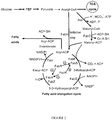
- FIG 2 shows a simplified central aerobic metabolic pathway of Escherichia coli using glucose, for example, as a carbon source. Also included in Figure 1 are the fatty acid biosynthesis pathways. Note that each fatty acid elongation cycle will increase the carbon chain length of the fatty acid by two. Free fatty acids can be produced by introducing an acyl-thioesterase gene. The presence of the thioesterase will break the fatty acid elongation cycle and release free fatty acids (Davis et al., 1993; Lu et al., 2008; Zhang et al., 2011).
- FIG. 1 Also shown in Figure 1 are the two transcription factors involved in the fatty acid biosynthesis and degradation pathways.
- the transcription factor FabR has shown to have negative effect on FabA and FabB; but the transcription factor FadR has the opposite effect on FabA and FabB (Fujita et al., 2007).
- Metabolically engineered strains were constructed based on the manipulation of the transcription factor(s) involved in the fatty acid biosynthesis and/or degradation pathways; a combination of these transcription factor(s) together with one or more of selected gene(s) in the fatty acid synthesis pathway, fatty acid degradation pathway or the central metabolic pathway.
- the wild type E. coli strain was MG 1655 ( F - lambda - ilvG - rfb - rph - ATCC 47076).
- An fadD knockout was introduced to make ML103 (MG1655 ( ⁇ fadD ) (Zhang 2011).
- the plasmid for overexpression was pTrc99a, a cloning vector from AMERSHAM PHARMACIA®, but any suitable vector could be used.
- acyl ACP thioesterase from castor bean, added by plasmid per our prior work. See Zhang 2011 (pXZ18-pTrc99a carries an acyl-ACP thioesterase from Ricinus communis (castor bean) (XM002515518).
- any suitable enzyme can be used, and many are available in suitable expression plasmids already.
- Another vector, pXZ18R is the same gene in the plasmid pXZ18 but with the addition of a fadR gene from E . coli.
- strains studied herein are created based on a fadD knock-out mutant strain ML103_18, where the 18 is a particular clone number.
- ML103_18 a fadD knock-out mutant strain
- the mutational set includes knockouts of one or more of FadR, SucC, FabR, FadD together with wild type or overexpressed acyl-ACP thioesterase together with overexpressed FabZ and FadR.
- the gene set should not include overexpressed FabA.
- Knockout mutations Wild type or Overexpression Overexpression BUT Excluding Zero, one or more of ⁇ fadR, ⁇ sucC, ⁇ fabR, ⁇ fadD, ⁇ ptsG TE + from any species one or more of fabZ + , fadR + , or fabH +
- FabA + ** ⁇ fadD ⁇ sucC acyl-ACP thioesterase+ bacteria with no further mutations ** FabA is known to have negative effect when used with the full complement of mutations, but may be beneficial with certain subsets, and this is being tested.
- knockout mutations can be replaced with reduced activity mutations.
- the metabolically engineered strains were studied in shake flasks.
- the strains were grown in 250 ml flasks, with 40 ml Luria-Bertani (LB) broth medium supplemented with 15 g/L of glucose, 1 mM IPTG, and appropriate amount of ampicillin.
- the cultures were grown in a rotary shaker at 250 rpm.
- ML163 from WO2011116279 is very similar to MLK163_18 (bold font in Table 1) and has the same genetic construction of ⁇ fadD, ⁇ sucC and acyl-ACP thioesterase + , though the MLK variant has a kanamycin marker.
- ML103_18 (bold font) was chosen as the base or control strain in this work, although a bacteria wild type for the gene set in question would also be a suitable control, and the improvement in fatty acids levels would be even higher.
- Some constructs do not give a yield higher than ML163_18 (underlined in Table 1), a strain taught in earlier work. However, such strains may have other desirable properties, such as different fatty acid distribution and/or percentage excreted to the medium. Thus, such strains are included herein even though they may produce less fatty acid than strain ML163_18. Further, such strains when compared against wild type bacteria probably have some level of improved production.
- Inactivation of the transcription factor FabR improves fatty acid production and yield for both the parent strain and the sucC mutant strain (MLK211 vs ML103_18 and MLK212 vs MLK163_18).
- FadR improves fatty acid production and yield for the parent strain (ML103_18fadR vs ML103_18).
- MLK211(pXZ18R) and MLK212(pXZ18R) - which are ⁇ fadD ⁇ fabR FadR + acyl-ACP thioesterase + and ⁇ fadD ⁇ sucC ⁇ fabR FadR + acyl-ACP thioesterase + .
- Our invention also indicates that the long belief of the carboxylation of acetyl-CoA to malonyl-CoA is the limiting step of fatty acid biosynthesis may not necessarily be the case since we have constructed strains that can achieve high yield (close to maximum theoretical yield), high titer and high production rate of free fatty acids.
- the genetic manipulations demonstrated herein also have significant effect on the distribution of the free fatty acids (Table 2). As such, this invention also will allow the manipulation or tailoring of the type of fatty acids to be produced. For example, while the engineered strain ML103_18A can produce more than 88% of C16, the other engineered strains MLK225_18 and MLK225_18Z can produce about 60% of C14, and MLK211_18 can produce about 60% of C16:1.
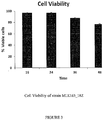
- the super-producer strain MLK163_18Z ( ⁇ fadD ⁇ sucC fabZ + acyl-ACP thioesterase + ) was analyzed further by measuring the total cell dry weight. Samples were taken at 16, 24 36 and 48 hours after inoculation and tested for cell viability using propidium iodide staining of DNA and flow cytometry. The results are shown in Fig. 3 .
- the strain ML190_88_fabH s about 19% improvement in fatty acids production over the control strain ML190_88, as shown in Table 3.
- Table 3 Free fatty acid (C8 straight chain fatty acid)
- Strain name Relevant genotype Free FA (C8) (g/l) % improvement* fabH + overexpression of FabH by plasmid, plus wild type enzyme present ML190_88 ⁇ fadD ⁇ ptsG acyl-ACP thioesterase + 1.08 - ML190_88_fabH ⁇ fadD ⁇ ptsG fabH + acyl-ACP thioesterase + 1.28 19
- manipulating repressor levels along with overexpression of certain fatty acid biosynthesis enzymes and overexpressed acyl ACP thioesterases can significantly increase fatty acid production, to level heretofore not thought possible.
- the distribution of fatty acids can be manipulated by introducing different combinations of mutations.
- overexpression of fabH can result in improvement of fatty acids production, at least in C-8 fatty acids.
Landscapes
- Chemical & Material Sciences (AREA)
- Health & Medical Sciences (AREA)
- Life Sciences & Earth Sciences (AREA)
- Genetics & Genomics (AREA)
- Organic Chemistry (AREA)
- Engineering & Computer Science (AREA)
- Zoology (AREA)
- Wood Science & Technology (AREA)
- Bioinformatics & Cheminformatics (AREA)
- General Engineering & Computer Science (AREA)
- Biochemistry (AREA)
- General Health & Medical Sciences (AREA)
- Biotechnology (AREA)
- Biomedical Technology (AREA)
- Molecular Biology (AREA)
- Microbiology (AREA)
- Biophysics (AREA)
- Medicinal Chemistry (AREA)
- Physics & Mathematics (AREA)
- Plant Pathology (AREA)
- Oil, Petroleum & Natural Gas (AREA)
- Chemical Kinetics & Catalysis (AREA)
- General Chemical & Material Sciences (AREA)
- Gastroenterology & Hepatology (AREA)
- Proteomics, Peptides & Aminoacids (AREA)
- Micro-Organisms Or Cultivation Processes Thereof (AREA)
- Preparation Of Compounds By Using Micro-Organisms (AREA)
Description
- This application claims priority to
61/548,005, filed October 17, 2011 61/548,399, filed October 18, 2011 - This invention was made with government support under Grant No: EEC-0813570 awarded by the National Science Foundation. The government has certain rights in the invention.
- The invention relates to a method of increasing the production of fatty acids by using genetically engineered microorganisms.
- Increasing energy costs and environmental concerns have emphasized the need to produce sustainable renewable fuels and chemicals. Fatty acids are composed of long alkyl chains and represent nature's "petroleum," being a primary metabolite used by cells for both chemical and energy storage functions. These energy-rich molecules are today isolated from plant and animal oils for a diverse set of products ranging from fuels to oleochemicals.
- Whereas microbial fermentation processes for producing ethanol and related alcohol biofuels are well established, biodiesel (methylesters of fatty acids) is the major long chain product produced biologically, and it is almost exclusively derived from plant oils today. However, slow cycle times for engineering oil seed metabolism and the excessive accumulation of glycerol as a byproduct are two major drawbacks of deriving biodiesel from plants. Although most bacteria do produce fatty acids as cell envelope precursors, the biosynthesis of fatty acids is tightly regulated at multiple levels and large quantities are not made. Thus, the production of fatty acids from bacteria has not yet reached the point where it is cost effective.
- The ability to produce free fatty acid at high yields and high rates by the metabolically engineered strains would provide an efficient framework to produce a large class of other derived products (chemicals and biofuels) either biologically or chemically. For example, as shown in
FIG. 1 , by introducing additional appropriate pathways, fatty acids can be converted to chemicals such as hydrocarbons, fatty alcohols, hydroxyl fatty acids, dicarboxylic acids etc. Likewise, the omega-end of the molecules can be modified by changing the starting precursors in the initial step of the fatty acid biosynthesis pathway (marked by white block arrows). Furthermore, the chain length of these molecules can be changed by using appropriate acyl-ACP thioesterases specific to a particular chain length, such as C8, C10, C12 or C14. In addition, various molecules can also be tapped out at different points during the fatty acid elongation cycle. -
US7759094 discloses a method for the production of L-amino acids by fermentation of genetically engineered microorganisms, in which fadR is overexpressed and sucC is also overexpressed. However, there is no teaching with regard to the production of fatty acid in this patent. -
US7553645 discloses a process for preparing L-amino acids using a genetically engineered or transformed microorganism, in which sucC is overexpressed. However, there is no teaching with regard to the production of fatty acid in this patent. -
US7211415 also discloses a process for producing L-amino acids by fermentation of genetically engineered microorganisms of the Enterobacteriaceae family, in which sucC is overexpressed. However, there is no teaching with regard to the production of fatty acid in this patent. -
US20110195505 discloses a genetically engineered lactobacillus for butanol production, in which deletion at fabZ1 results in 10% increase in total cell membrane saturated fatty acids. However, there is no teaching regarding the effect of fabZ overexpression on the production of fatty acids. -
US20080160585 andUS20080038787 disclose a method of increasing the production of lysine from a microorganism, in which sucC is deregulated. However, no detail was disclosed as to what extent of deregulation is involved, such as overexpressed, reduced or inactivated, nor on how to achieve the deregulation. -
US20060046288 discloses a mutant E. coli strain with increased succinic acid production, in which it has reduced activity of fadR gene. However, no detail regarding the fadR gene or the regulation/mutation thereof is specifically disclosed. -
WO2011116279 discloses hybrid ACP thioesterases, which can be combined with deletions in native fadD, and sucC. They also teach acidifying the medium to increase production of fatty acids. - Therefore, there is a need in the art for a biological system of producing fatty acids that is more efficient and cost effective than heretofore realized.
-
US2011165637 discloses a genetically engineered bacteria for producing fatty acids comprising an overexpressed acyl-ACP thioesterase and an overexpressed FabZ+. -
WO2011059745 mentions the possibility of combining an overexpressed thioesterase with FabZ or fadD but fails to exemplify such combinations. - The invention relates to the production of fatty acid by genetically engineered microorganisms, in particular to engineered microorganisms that produce large amounts of free fatty acids by virtue of the addition of, for example, a plant acyl-ACP thioesterase and manipulation of the transcription factor(s) involved in the fatty acid biosynthesis and/or degradation pathways; a combination of these transcription factor(s) together with one or more of selected gene(s) in the fatty acid synthesis pathway, fatty acid degradation pathway or the central metabolic pathway.
- This invention will allow the production of free fatty acid with yield close to the maximum theoretical yield. As such, this invention will provide the necessary framework to produce many other products sharing or branching out from the fatty acid synthesis pathway economically. These products include hydrocarbons, fatty alcohols, hydroxy fatty acids, dicarboxylic acids etc.
- In more detail, the invention is one or more of the following:
A genetically engineered bacteria for producing fatty acids, said bacteria comprising: - a) an overexpressed acyl-ACP thioesterase (TE+) protein by the inclusion of the acyl-ACP thioesterase gene on a vector; and wherein the engineered bacteria have one of the following genotypes:
- ΔfadD ΔfabR fabZ + acyl-ACP TE +
- ΔfadD ΔfadR fabZ + acyl-ACP TE+
- ΔfadD ΔsucC ΔfabR fabZ + acyl-ACP TE+
- ΔfadD ΔsucC fabZ + acyl-ACP TE + .
- i) an overexpressed acyl ACP thioesterase (TE+);
- ii) one or more of overexpressed FabZ+, FadR+, or FabH+;
- iii) zero, one or more of ΔfadR, ΔsucC, ΔfabR, ΔfadD, ΔptsG;
- A genetically engineered bacteria of genotype comprising i) ΔsucC FabZ+ TE+ ; ii) ΔsucC ΔfabR FabZ+ TE+; iii) FabZ+ TE+; iv) ΔfabR FadR+ TE+ ; or v) ΔsucC ΔfabR FadR+ TE+; or ΔsucC FabZ+ TE+; or ΔfadD ΔsucC FabZ+ TE+.
- A genetically engineered bacteria comprising a genotype selected from the group consisting of:
- 1) ΔfadD ΔfabR acyl-ACP thioesterase +
- 2) ΔfadD ΔfabR fabZ + acyl-ACP thioesterase +
- 3) ΔfadD ΔfadR acyl-ACP thioesterase +
- 4) ΔfadD ΔfadR fabZ + acyl-ACP thioesterase +
- 5) ΔfadD ΔfadR ΔfabR acyl-ACP thioesterase +
- 6) ΔfadD fabZ + acyl-ACP thioesterase +
- 7) ΔfadD fadR + acyl-ACP thioesterase +
- 8) ΔfadD ΔsucC ΔfabR acyl-ACP thioesterase +
- 9) ΔfadD ΔsucC ΔfabR fabZ + acyl-ACP thioesterase+
- 10) ΔfadD ΔsucC ΔfadR acyl-ACP thioesterase +
- 11) ΔfadD ΔsucC ΔfadR fabZ + acyl-ACP thioesterase+
- 12) ΔfadD ΔsucC ΔfabR ΔfadR acyl-ACP thioesterase +
- 13) ΔfadD ΔsucC fabZ + acyl-ACP thioesterase +
- 14) ΔfadD ΔsucC fadR + acyl-ACP thioesterase +
- 15) ΔfabR acyl-ACP thioesterase +
- 16) ΔfabR fabZ + acyl-ACP thioesterase +
- 17) ΔfadR acyl-ACP thioesterase +
- 18) ΔfadR fabZ + acyl-ACP thioesterase +
- 19) ΔfadR ΔfabR acyl-ACP thioesterase +
- 20) fabZ + acyl-ACP thioesterase +
- 21) fadR + acyl-ACP thioesterase +
- Any one of the herein described bacteria, which produce at least 14% more fatty acid than having a control microorganism having ΔfadD plus TE+. Preferably, said bacteria produces at least 45% more fatty acid, or at least 65% more fatty acid and most preferred, at least 80% more fatty acid than having a control microorganism having ΔfadD plus TE+.
- The bacteria may be a genetically engineered Enterobacteriaceae or Enterobacter comprising ΔfadD ΔsucC FabZ+ TE+; or ΔfadD ΔsucC ΔfabR FabZ+ TE+; or ΔfadD FabZ+ TE+; or ΔsucC FabZ+ TE+ or ΔsucC ΔfabR FabZ+ TE+; or FabZ+ TE+, or any of the herein described bacteria. Other bacteria with an equivalent gene set, include e.g., Firmicutes, Actinobacteria, Spirochetes, Proteobacteria, Bacillus, Streptococcus, Lactobaccillus, Lactococcus, Citrobacter, Haemophilus, Actinomycetes, Cyanobacteria, Staphylococcus, Neisseria, Micrococcus, Aspergillus, Psuedomonas, and the like. Since there are hundreds of completely sequenced bacterial genomes readily available (see en.wikipedia.org/wiki/List_of_sequenced_bacterial_genomes), a person of ordinary skill in the art can easily confirm homologous gene sets by comparison, esp. using protein sequences, which diverge less than gene sequences in the prokaryotes.
- Methods of producing fatty acids are also provided, comprising culturing any genetically engineered bacteria as described herein in a culture medium under conditions effective for the production of fatty acids; and harvesting said fatty acids from said bacteria and/or the culture medium. Another embodiment comprises adding acetic acid to said culture medium and harvesting the fatty acids from said culture medium.
- Another method of producing fatty acids is provided, comprising culturing a genetically engineered bacteria in a culture medium under conditions effective for the production of fatty acids; and harvesting said fatty acids from the microorganism and/or the culture medium, wherein the bacteria and the desired fatty acid profile are selected from the group consisting of:
Fatty acid distribution (Percentage of total) Strain Name Relevant genotype C14 C16:1 C16 C18:1 MLK211_18Z ΔfadD ΔfabR fabZ + acyl-ACP thioesterase + 45.62 25.51 74.41 2.83 MLK212_18Z ΔfadD ΔsucC Δ fabR fabZ + acyl-ACP thioesterase+ 40.24 16.46 42.59 0.71 MLK163_18Z ΔfadD ΔsucCfabZ + acyl-ACP thioesterase+ 53.25 10.55 36.20 ND Bacteria: Fatty Acid Profile: ΔfadD ΔfadR FabZ+ TE+ about 60% C14 - Acyl-acyl carrier protein (ACP) thioesterase (herein known as "TE") is an enzyme that terminates the intraplastidial fatty acid synthesis by hydrolyzing the acyl-ACP intermediates and releasing free fatty acids to be incorporated into glycerolipids. In plants, these enzymes are classified in two families, FatA and FatB, which differ in amino acid sequence and substrate specificity. Generally speaking, the N terminal (aa 1-98) of any acyl-ACP thioesterases controls the substrate specificity of the enzyme, and it is known how to change substrate specificity by swapping amino terminal domains.
- Bacteria already have native acyl-ACP thioesterase proteins that can be used (e.g., FadM, TesA, TesB). These can be used as is, or up regulated or otherwise made to be overexpressed. However, any acyl-ACP thioesterase can also be added to the bacteria, and this is especially beneficial where one wants to generate a specific distribution of fatty acids, since the various enzymes have different substrate preferences, some producing longer fats and others short fats.
- Many acyl-ACP thioesterase proteins are known and can be added to bacteria (e.g., CAA52070, YP_003274948, ACY23055, AAB71729, BAB33929, to name a few of the thousands of such proteins available), although we have used plasmids encoding plant genes herein. Such genes can be added by plasmid or other vector, or can be cloned directly into the genome. In certain species it may also be possible to genetically engineer the endogenous protein to be overexpressed by changing the regulatory sequences or removing repressors. However, overexpressing the gene by inclusion on selectable plasmids that exist in hundreds of copies in the cell may be preferred due to its simplicity, although permanent modifications to the genome may be preferred in the long term for genetic stability.
- Other acyl ACP thioesterases include Umbellularia californica fatty acyl-ACP thioesterase (AAC49001), Cinnamomum camphora fatty acyl-ACP thioesterase (Q39473), Umbellularia californica fatty acyl-ACP thioesterase (Q41635), Myristica fragrans fatty acyl-ACP thioesterase (AAB71729), Myristica fragrans fatty acyl-ACP thioesterase (AAB71730), Elaeis guineensis fatty acyl-ACP thioesterase (ABD83939), Elaeis guineensis fatty acyl-ACP thioesterase (AAD42220), Populus tomentosa fatty acyl-ACP thioesterase (ABC47311), Arabidopsis thaliana fatty acyl-ACP thioesterase (NP_172327), Arabidopsis thaliana fatty acyl-ACP thioesterase (CAA85387), Arabidopsis thaliana fatty acyl-ACP thioesterase (CAA85388), Gossypium hirsutum fatty acyl-ACP thioesterase (Q9SQI3), Cuphea lanceolata fatty acyl-ACP thioesterase (CAA54060), Cuphea hookeriana fatty acyl-ACP thioesterase (AAC72882), Cuphea calophylla subsp. mesostemon fatty acyl-ACP thioesterase (ABB71581), Cuphea lanceolata fatty acyl-ACP thioesterase (CAC19933), Elaeis guineensis fatty acyl-ACP thioesterase (AAL15645), Cuphea hookeriana fatty acyl-ACP thioesterase (Q39513), Gossypium hirsutum fatty acyl-ACP thioesterase (AAD01982), Vitis vinifera fatty acyl-ACP thioesterase (CAN81819), Garcinia mangostana fatty acyl-ACP thioesterase (AAB51525), Brassica juncea fatty acyl-ACP thioesterase (ABI18986), Madhuca longifolia fatty acyl-ACP thioesterase (AAX51637), Brassica napus fatty acyl-ACP thioesterase (ABH11710), Oryza sativa (indica cultivar-group) fatty acyl-ACP thioesterase (EAY86877), Oryza sativa (japonica cultivar-group) fatty acyl-ACP thioesterase (NP-001068400), Oryza sativa (indica cultivar-group) fatty acyl-ACP thioesterase (EAY99617), and Cuphea hookeriana fatty acyl-ACP thioesterase (AAC49269).
- At least one acyl-ACP thioesterase gene may be from a plant, for example overexpressed acyl-ACP thioesterase gene from Ricinus communis (XP_002515564.1), Jatropha curcas (ABU96744.1), Diploknema butyracea (AAX51636.1), Cuphea palustris (AAC49180.1), or Gossypium hirsutum (AAF02215.1 or AF076535.1), or an overexpressed hybrid acyl-ACP thioesterase comprising different thioesterase domains operably fused together (see
WO2011116279 , sequences expressly incorporated by reference herein). The hybrid thioesterase may include an amino terminal region (∼aa 1-98 controls substrate specificity) of the acyl-ACP thioesterase from Ricinus communis or a 70, 80, 90 or 95% homolog thereto, or any TE with the desired substrate specificity, operably coupled to the remaining portion of the thioesterase from another species. In such manner, enzyme specificity can be tailored for the use in question. - In particular, the microorganism can comprise an overexpressed hybrid acyl-ACP thioesterase comprising the amino terminal region of the thioesterase from Ricinus communis operably coupled to the carboxyl region of the thioesterase from another species. Such microorganisms can be combined with each of the other knock-out and overexpressions described herein.
- As used herein, "enhanced amount" means > 29% improvement in yield of fatty acids comparing to yield of fatty acids of the mutant strain ML103_18, which has inactivated fadD and overexpressed acyl-ACP thioesterase. Here the calculation of yield is determined by the ratio of grams of fatty acids produced to grams of glucose used. Preferably, >30, 35, 40, 45, 50, 60, 70 or 80% improvement is observed.
- Although certain strains have a reduced total amount of fatty acids, they may still be valuable as producing a particular distribution of fats, and thus even such strains are claimed herein.
- As used herein, "fatty acids" means any saturated or unsaturated aliphatic acids having the common formulae of CnH2n±xCOOH, wherein x≤n, which contains a single carboxyl group.
- As used herein, "reduced activity" is defined herein to be at least a 75% reduction in protein activity, as compared with an appropriate control species. Preferably, at least 80, 85, 90, 95% reduction in activity is attained, and in the most preferred embodiment, the activity is eliminated (100%). Proteins can be inactivated with inhibitors, by mutation, or by suppression of expression or translation, by knock-out, by adding stop codons, by frame shift mutation, and the like.
- By "knockout" or "null" mutant what is meant is that the mutation produces almost undetectable amounts of protein activity. A gene can be completely (100%) reduced by knockout or removal of part or all of the gene sequence. Use of a frame shift mutation, early stop codon, point mutations of critical residues, or deletions or insertions, and the like, can also completely inactivate (100%) gene product by completely preventing transcription and/or translation of active protein. All knockout mutants herein are signified by Δgene where the gene name is identified above in Table A.
- As used herein, "overexpression" or "overexpressed" is defined herein to be at least 150% increase of protein activity as compared with an appropriate control species. Preferably, the activity is increased 200-500%. Overexpression can be achieved by mutating the protein to produce a more active form or a form that is resistant to inhibition, by removing inhibitors, or adding activators, and the like. Overexpression can also be achieved by removing repressors, adding multiple copies of the gene to the cell, or up-regulating the endogenous gene, and the like. All overexpressed genes or proteins are signified herein by "+".
- As used herein, all accession numbers are to GenBank unless indicated otherwise.
- Exemplary gene or protein species are provided herein. However, gene and enzyme nomenclature varies widely, thus any protein (or gene encoding same) that catalyzes the same reaction can be substituted for a named protein herein. Further, while exemplary protein sequence accession numbers are provided herein, each is linked to the corresponding DNA sequence, and to related sequences. Further, related sequences can be identified easily by homology search and requisite activities confirmed as by enzyme assay, as is shown in the art.
- E. coli gene and protein names (where they have been assigned) can be ascertained through ecoliwiki.net/ and enzymes can be searched through brenda-enzymes.info/. ecoliwiki.net/ in particular provides a list of alternate nomenclature for each enzyme/gene. Many similar databases are available including UNIPROTKB, PROSITE; 5 EC2PDB; ExplorEnz; PRIAM; KEGG Ligand; IUBMB Enzyme Nomenclature; IntEnz; MEDLINE; and MetaCyc, to name a few.
- By convention, genes are written in italic, and corresponding proteins in regular font. E.g., fadD is the gene encoding FadD or acyl-CoA synthetase.
- Generally speaking, we have used the gene name and protein names interchangeably herein, based on the protein name as provided in ecoliwiki.net. The use of a protein name as an overexpressed protein (e.g, FabH+) signifies that protein expression can occur in ways other than by adding a vector encoding same, since the protein can be upregulated in other ways. The use of FadD- signifies that the protein can be downregulated in similar way, whereas the use of ΔfadD means that the gene has been directly downregulated.
- The use of the word "a" or "an" when used in conjunction with the term "comprising" in the claims or the specification means one or more than one, unless the context dictates otherwise.
- The term "about" means the stated value plus or minus the margin of error of measurement or plus or minus 10% if no method of measurement is indicated.
- The use of the term "or" in the claims is used to mean "and/or" unless explicitly indicated to refer to alternatives only or if the alternatives are mutually exclusive.
- The terms "comprise", "have", "include" and "contain" (and their variants) are open-ended linking verbs and allow the addition of other elements when used in a claim.
- The phrase "consisting of" is closed, and excludes all additional elements.
- The phrase "consisting essentially of" excludes additional material elements, but allows the inclusions of non-material elements that do not substantially change the nature of the invention.
- The following abbreviations are used herein:
TABLE A: Abbreviations and Definitions gene name Definition (Protein name) Exemplary UNIPROTKB Acc. No. fabA Gene that encodes beta-hydroxydecanoyl thioester dehydrase (protein = FabA) P0A6Q3 fabB Gene that encodes 3-oxoacyl-[acyl-carrier-protein] synthase (protein = FabB) P0A953 fabH Gene that encodes 3-oxoacyl-[acyl-carrier-protein] synthase III (protein = FabH) P0A6R0 fabR Gene that encodes DNA-binding transcription repressor (protein = FabR) P0ACU5 fabZ Gene that encodes a component of the complex 3R-hydroxymuristoyl acyl carrier protein (ACP) dehydratase (protein = FabZ) P0A6Q6 fadD Gene that encodes acyl-CoA synthetase (protein = FadD) P69451 fadR Gene that encodes DNA-binding transcriptional dual regulator of fatty acid metabolism (protein = FadR) P0A8V6 sucC Gene that encodes succinyl-CoA synthetase, beta subunit (protein = SucC) P0A836 ptsG Gene that encodes component of EIIGlc; enzyme II glc; Glucose phophotransferase enzyme IIBC(Glc); glucose permease (PtsG) P69786 TE Any gene encoding an acyl ACP thioesterase (TE), not an assigned gene name, but used herein. See throughout. -
-
FIG. 1 . Proposed metabolic map in which the introduction of additional appropriate pathways, the fatty acids can be converted to chemicals. -
FIG. 2 . Simplified metabolic map showing the fatty acid synthesis pathway. The transcription factor FabR has shown to have negative effect on FabA and FabB; but the transcription factor FadR has the opposite effect on FabA and FabB (Fujita et al., 2007). Free fatty acids are formed in the presence of an acyl-ACP thioesterase, which breaks the fatty acid elongation cycle. -
FIG. 3 . Cell viability of strain MLK163_18Z, in which at least 75% of the cells are still viable after 48 hours growth. -
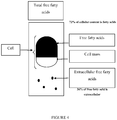
FIG 4 . Graphic illustrating that over 70% of the cellular content of the mutant strains are fatty acids. -
Figure 2 shows a simplified central aerobic metabolic pathway of Escherichia coli using glucose, for example, as a carbon source. Also included inFigure 1 are the fatty acid biosynthesis pathways. Note that each fatty acid elongation cycle will increase the carbon chain length of the fatty acid by two. Free fatty acids can be produced by introducing an acyl-thioesterase gene. The presence of the thioesterase will break the fatty acid elongation cycle and release free fatty acids (Davis et al., 1993; Lu et al., 2008; Zhang et al., 2011). - Also shown in
Figure 1 are the two transcription factors involved in the fatty acid biosynthesis and degradation pathways. The transcription factor FabR has shown to have negative effect on FabA and FabB; but the transcription factor FadR has the opposite effect on FabA and FabB (Fujita et al., 2007). - Metabolically engineered strains were constructed based on the manipulation of the transcription factor(s) involved in the fatty acid biosynthesis and/or degradation pathways; a combination of these transcription factor(s) together with one or more of selected gene(s) in the fatty acid synthesis pathway, fatty acid degradation pathway or the central metabolic pathway.
- The wild type E. coli strain was MG 1655 (F- lambda- ilvG- rfb- rph- ATCC 47076). An fadD knockout was introduced to make ML103 (MG1655 (ΔfadD) (Zhang 2011). The plasmid for overexpression was pTrc99a, a cloning vector from AMERSHAM PHARMACIA®, but any suitable vector could be used.
- In this work, we used acyl ACP thioesterase from castor bean, added by plasmid per our prior work. See Zhang 2011 (pXZ18-pTrc99a carries an acyl-ACP thioesterase from Ricinus communis (castor bean) (XM002515518). However, any suitable enzyme can be used, and many are available in suitable expression plasmids already. Another vector, pXZ18R, is the same gene in the plasmid pXZ18 but with the addition of a fadR gene from E. coli.
- The strains studied herein are created based on a fadD knock-out mutant strain ML103_18, where the 18 is a particular clone number. We used the fadD mutant strain as a base strain because it is often used in the literature and easily available. However, deleting this gene is completely optional, and it is not considered a critical component of the genetic background.
- The mutational set includes knockouts of one or more of FadR, SucC, FabR, FadD together with wild type or overexpressed acyl-ACP thioesterase together with overexpressed FabZ and FadR. The gene set should not include overexpressed FabA.
Knockout mutations Wild type or Overexpression Overexpression BUT Excluding Zero, one or more of ΔfadR, ΔsucC, ΔfabR, ΔfadD, ΔptsG TE + from any species one or more of fabZ + , fadR + , or fabH + Optionally FabA + ** ΔfadD ΔsucC acyl-ACP thioesterase+ bacteria with no further mutations ** FabA is known to have negative effect when used with the full complement of mutations, but may be beneficial with certain subsets, and this is being tested. - While our overexpression constructs were made by adding plasmid to a wild type background, this is not the only way to generate overexpression, and if desired the wild type gene can be completely replaced, other vectors could be used, and or the wild type gene could be upregulated. Further, while our gene sets included knockout mutations for simplicity and ease of interpreting results, knockout mutations can be replaced with reduced activity mutations.
- The metabolically engineered strains were studied in shake flasks. The strains were grown in 250 ml flasks, with 40 ml Luria-Bertani (LB) broth medium supplemented with 15 g/L of glucose, 1 mM IPTG, and appropriate amount of ampicillin. The cultures were grown in a rotary shaker at 250 rpm.
- Samples of the media were taken at 24 and 48 hrs after inoculation. The fatty acids were analyzed and quantified by GC/MS and GC/FID after extraction. Odd number saturated straight chain fatty acids, such as C13, C15 and/or C17, were used as the internal standard. The results shown in the table are the sum of all major free fatty acids in the sample. The data shown are means for triplicate experiments at 48 hrs.
- ML163 from
WO2011116279 is very similar to MLK163_18 (bold font in Table 1) and has the same genetic construction of ΔfadD, ΔsucC and acyl-ACP thioesterase+, though the MLK variant has a kanamycin marker. - ML103_18 (bold font) was chosen as the base or control strain in this work, although a bacteria wild type for the gene set in question would also be a suitable control, and the improvement in fatty acids levels would be even higher. Some constructs do not give a yield higher than ML163_18 (underlined in Table 1), a strain taught in earlier work. However, such strains may have other desirable properties, such as different fatty acid distribution and/or percentage excreted to the medium. Thus, such strains are included herein even though they may produce less fatty acid than strain ML163_18. Further, such strains when compared against wild type bacteria probably have some level of improved production.
- From the results shown below in Table 1, positive effects were observed in the strains shaded grey, and the best producers are indicated with an arrow.

- Inactivation of the transcription factor FabR improves fatty acid production and yield for both the parent strain and the sucC mutant strain (MLK211 vs ML103_18 and MLK212 vs MLK163_18).
- Overexpression of FabZ improves fatty acid production and yield for both the parent strain and the sucC mutant strain (ML103_18Z vs ML103_18 and MLK163_18Z vs MLK163_18). In fact, a combination of sucC inactivation and FabZ overexpression yield the best strain with a very high titer of 5.65 and a yield of 0.38 g/g (which is 81% improvement over the base strain ML103_18). The yield of 0.38 g/g is very close to the maximum theoretical value (The maximum theoretical yields of C14 and C16 straight chain fatty acids are 0.3629 and 0.3561 g/g, respectively).
- Overexpression of FadR improves fatty acid production and yield for the parent strain (ML103_18fadR vs ML103_18).
- Order of improvements: ΔsucC fabZ + > ΔsucCΔfabR fabZ + > fabZ + > fadR + > ΔsucC > ΔsucCΔfabR > ΔfabR or ΔfadR fabZ + > ΔfabR fabZ + . By extracting only those with positive results in Table 1, we have the following Table 1.1, wherein the bolded strain MLK163-18 is similar to strain ML 163.
Table 1.1: Free fatty acid and yield of positive strains Strain name Relevant genotype Free FA (g/l) % improvement* Yield (g/g) % improvement MLK163_18Z ΔfadD ΔsucC fabZ + acyl-ACP thioesterase+ 5.65 81 0.38 81 MLK212_18Z ΔfadD ΔsucC ΔfabR fabZ + acyl-ACP thioesterase+ 5.15 65 0.34 62 ML103_18Z ΔfadD fabZ + acyl-ACP thioesterase + 4.61 48 0.31 48 ML103_18fadR ΔfadD fadR + acyl-ACP thioesterase + 4.19 34 0.27 29 MLK163_18 ΔfadD ΔsucC acyl-ACP thioesterase + 3.96 27 0.27 29 MLK212_18 ΔfadD ΔsucC ΔfabR acyl-ACP thioesterase + 3.83 23 0.26 24 MLK211_18 ΔfadD ΔfabR acyl-ACP thioesterase+ 3.73 20 0.25 19 MLK225_18Z ΔfadD ΔfadR fabZ + acyl-ACP thioesterase + 3.71 19 0.25 19 MLK211_18Z ΔfadD ΔfabR fabZ + acyl-ACP thioesterase + 3.62 16 0.24 14 - Additionally, some negative effects have been observed in the following strains:
- Overexpression of FabA significantly decreases fatty acid production and yield for both the parent strain and the ΔsucC mutant strain (ML103_18A vs MLK103_18 and MLK163_18A vs ML163_18).
- Simultaneous deactivation of FadR and FabR also decreases fatty acid production and yield for the (MLK227_18 vs MLK103_18).
- Additional strains we have tested and gave very good results are MLK211(pXZ18R) and MLK212(pXZ18R) - which are ΔfadD ΔfabR FadR+ acyl-ACP thioesterase+ and ΔfadD ΔsucC ΔfabR FadR+ acyl-ACP thioesterase+. We are planning to test ΔfadD ΔfabR acyl-ACP thioesterase+ FadR+ FabZ+ and ΔfadD ΔsucC ΔfabR acyl-ACP thioesterase+ FadR+ FabZ+ , which we expect to give even better results.
- As a result, it is clear that random overexpression or deletion of transcription factors and/or with genes in the fatty acid synthesis and central metabolic pathway may not necessarily lead to positive results. Our data demonstrated that a selected single or selected combination of these manipulations is required to increase the yield and titer as shown in Table 2.
- Our invention also indicates that the long belief of the carboxylation of acetyl-CoA to malonyl-CoA is the limiting step of fatty acid biosynthesis may not necessarily be the case since we have constructed strains that can achieve high yield (close to maximum theoretical yield), high titer and high production rate of free fatty acids.
- The genetic manipulations demonstrated herein also have significant effect on the distribution of the free fatty acids (Table 2). As such, this invention also will allow the manipulation or tailoring of the type of fatty acids to be produced. For example, while the engineered strain ML103_18A can produce more than 88% of C16, the other engineered strains MLK225_18 and MLK225_18Z can produce about 60% of C14, and MLK211_18 can produce about 60% of C16:1.
- This indicates that the exact genetic combination has a significant effect on the fatty acid composition, even one uses the same acyl-ACP thioesterase.
Table 2: Fatty acid distribution (Percentage of total) Strain name Relevant genotype C14 C16:1 C16 C18:1 ML103_18 ΔfadD acyl-ACP thioesterase + 47.27 38.33 12.96 1.45 MLK163_18 ΔfadD, ΔsucC acyl-ACP thioesterase + 37.30 31.74 28.06 2.91 MLK211_18 ΔfadD ΔfabR acyl-ACP thioesterase + 19.14 59.12 17.50 4.24 MLK211_18A ΔfadD ΔfabR fabA + acyl-ACP thioesterase + 16.28 15.45 64.40 3.88 MLK211_18Z ΔfadD ΔfabR fabZ + acyl-ACP thioesterase + 45.62 25.51 74.41 2.83 MLK225_18 ΔfadD ΔfadR acyl-ACP thioesterase+ 59.63 23.36 14.02 ND MLK225_18Z ΔfadD ΔfadR fabZ + acyl-ACP thioesterase + 58.56 3.05 38.40 ND MLK227_18 ΔfadD ΔfadR ΔfabR acyl-ACP thioesterase + 48.40 34.39 17.09 0.13 ML103_18A ΔfadD fabA + acyl-ACP thioesterase + 10.92 0.00 89.08 ND ML103_18Z ΔfadD fabZ + acyl-ACP thioesterase + 57.91 8.16 33.92 ND ML103_18fadR ΔfadD fadR + acyl-ACP thioesterase+ 18.29 48.09 26.85 6.77 MLK212_18 ΔfadD ΔsucC ΔfabR acyl-ACP thioesterase + 18.52 57.59 18.50 5.40 MLK212_18A ΔfadD ΔsucC ΔfabR fabA + acyl-ACP thioesterase + 11.91 10.33 76.32 1.44 MLK212_18Z ΔfadD ΔsucC Δ fabR fabZ + acyl-ACP thioesterase + 40.24 16.46 42.59 0.71 MLK213_18 ΔfadD ΔsucC ΔfadR acyl-ACP thioesterase + 55.95 27.05 16.31 0.69 MLK213_18Z ΔfadD ΔsucC ΔfadR fabZ + acyl-ACP thioesterase + 44.58 3.51 43.74 ND MLK228_18 ΔfadD ΔsucC ΔfabR ΔfadR acyl-ACP thioesterase + 38.26 38.13 22.78 0.83 MLK163_18A ΔfadD ΔsucC fabA + acyl-ACP thioesterase + 20.95 7.50 71.55 ND MLK163_18Z ΔfadD ΔsucC fabZ + acyl-ACP thioesterase + 53.25 10.55 36.20 ND MLK163_18fadR ΔfadD ΔsucC fadR + acyl-ACP thioesterase + 14.24 38.39 35.78 11.59 ND: Not detected - The super-producer strain MLK163_18Z (ΔfadD ΔsucC fabZ + acyl-ACP thioesterase +) was analyzed further by measuring the total cell dry weight. Samples were taken at 16, 24 36 and 48 hours after inoculation and tested for cell viability using propidium iodide staining of DNA and flow cytometry. The results are shown in
Fig. 3 . - It was found that at least more than 75% of the cells remained viable after 48 hrs. The dry weight of the sample at 48 hours was also determined and used to estimate the fraction of free fatty acid inside the cells. As explained in
FIG. 4 , certain amounts of free fatty acids are released from the cell, whereas a greater amount of free fatty acids are still located within the cells. It was found that free fatty acid accounts for more than 70% of the cellular contents. - It has been reported that FabH is involved in the initiation of fatty acid biosynthesis, and we propose that overexpression of FabH may also contribute to the production of fatty acids. To study the impact of the initiation step in the fatty acids synthesis pathway, another engineered strain ML190_88-fabH (ΔfadD ΔptsG FabH+) carrying a modified acyl-ACP thioesterase from C. palustris (Acc. No. Q39554) specific to shorter chain length and with FabH from E. coli (UNIPROTKB Acc. No. P0A6R0) overexpression was constructed and tested in Super Broth (SB) medium with 30 g/L of glucose. The strain ML190_88_fabH s about 19% improvement in fatty acids production over the control strain ML190_88, as shown in Table 3.
Table 3: Free fatty acid (C8 straight chain fatty acid) Strain name Relevant genotype Free FA (C8) (g/l) % improvement* fabH+ = overexpression of FabH by plasmid, plus wild type enzyme present ML190_88 ΔfadD ΔptsG acyl-ACP thioesterase + 1.08 - ML190_88_fabH ΔfadD ΔptsG fabH + acyl-ACP thioesterase+ 1.28 19 - This result shows that with the same genetic background, overexpression of FabH improves fatty acid production. We will also plan to add FabH to the strains of Table 1.1, beginning with the best producers, such as ΔfadD ΔsucC FabZ+ TE+; ΔfadD ΔsucC ΔfabR FabZ+ TE+; and ΔfadD FabZ+ TE+. Although not yet available, it is predicted that the combination with further improve fatty acid production levels, although the effect on distribution of fats is not yet known.
- As demonstrated herein, manipulating repressor levels along with overexpression of certain fatty acid biosynthesis enzymes and overexpressed acyl ACP thioesterases can significantly increase fatty acid production, to level heretofore not thought possible. Further, the distribution of fatty acids can be manipulated by introducing different combinations of mutations. In addition, overexpression of fabH can result in improvement of fatty acids production, at least in C-8 fatty acids.
- Davies, H.M., et al., 1993. Fatty acid synthesis genes: Engineering the production of medium-chain fatty acids. p. 176-181. In: J. Janick and J.E. Simon (eds.), New crops. Wiley, New York.
- Fujita Y, et al., Regulation of fatty acid metabolism in bacteria. Mol Microbiol. 2007 Nov;66(4):829-39.
- Lu, X., et al., 2008. Overproduction of free fatty acids in E. coli: Implications for biodiesel production. Metabolic Engineering. 10: 333-339.
- Zhang X, et al. 2011. Efficient free fatty acid production in Escherichia coli using plant acyl-ACP thioesterases Metabolic Engineering, Metab Eng. 2011 Nov; 13(6):713-22.
-
-
-
-
-
-
-
-
- Campbell JW, Cronan JE Jr. 2001. Escherichia coli FadR positively regulates transcription of the fabB fatty acid biosynthetic gene. J Bacteriol. 183(20):5982-90.
Claims (10)
- A genetically engineered bacteria for producing fatty acids, said bacteria comprising:an overexpressed acyl-ACP thioesterase (TE+) protein by the inclusion of the acyl-ACP thioesterase gene on a vector; and wherein the engineered bacteria have one of having the following genotypes:ΔfadD ΔfabR fabZ + acyl-ACP TE +ΔfadD ΔfadR fabZ + acyl-ACP TE+ΔfadD ΔsucC ΔfabR fabZ + acyl-ACP TE +ΔfadD ΔsucC fabZ + acyl-ACP TE + .
- The genetically engineered bacteria of claim 1, wherein said bacteria produces at least 14% more fatty acid than having a control microorganism having ΔfadD plus TE+.
- The genetically engineered bacteria of claim 1, wherein said bacteria produces at least 45% more fatty acid than having a control microorganism having ΔfadD plus TE+.
- The genetically engineered bacteria of claim 1, wherein said bacteria produces at least 65% more fatty acid than having a control microorganism having ΔfadD plus TE+.
- The genetically engineered bacteria of claim 1, wherein said bacteria produces at least 80% more fatty acid than having a control microorganism having ΔfadD plus TE+.
- The genetically engineered bacteria of claim 1, wherein the bacteria is Enterobacteriaceae comprising ΔfadD ΔsucC FabZ+ TE+ or ΔfadD ΔsucC ΔfabR FabZ+ TE+.
- A method of producing fatty acids, comprising culturing a genetically engineered bacteria of any of claim 1-6 in a culture medium under conditions effective for the production of fatty acids; and harvesting said fatty acids from said bacteria and/or the culture medium.
- The method of producing fatty acids of claim 7, comprising adding acetic acid to said culture medium and harvesting the fatty acids from said culture medium.
- A method of producing fatty acids, comprising culturing a genetically engineered bacteria in a culture medium under conditions effective for the production of fatty acids; and harvesting said fatty acids from the microorganism and/or the culture medium, wherein the bacteria and the fatty acid profile are selected from the group consisting of:
Fatty acid distribution (Percentage of total) Strain Name Relevant genotype C14 C16:1 C16 C18:1 MLK211_18Z ΔfadD ΔfabR fabZ + acyl-ACP thioesterase+ 45.62 25.51 74.41 2.83 MLK212_18Z ΔfadD ΔsucC Δ fabR fabZ + acyl-ACP thioesterase + 40.24 16.46 42.59 0.71 MLK163_18Z ΔfadD ΔsucC fabZ + acyl-ACP thioesterase+ 53.25 10.55 36.20 ND - A method of producing fatty acids, comprising culturing a genetically engineered bacteria in a culture medium under conditions effective for the production of fatty acids; and harvesting said fatty acids from the microorganism and/or the culture medium wherein the bacteria and the fatty acid profile are selected from the group consisting of:
Bacteria: Fatty Acid Profile: ΔfadD ΔfadR FabZ+ TE+ about 60% C14
Applications Claiming Priority (3)
| Application Number | Priority Date | Filing Date | Title |
|---|---|---|---|
| US201161548005P | 2011-10-17 | 2011-10-17 | |
| US201161548399P | 2011-10-18 | 2011-10-18 | |
| PCT/US2012/060471 WO2013059218A1 (en) | 2011-10-17 | 2012-10-16 | Bacteria and method for synthesizing fatty acids |
Publications (3)
| Publication Number | Publication Date |
|---|---|
| EP2768966A1 EP2768966A1 (en) | 2014-08-27 |
| EP2768966A4 EP2768966A4 (en) | 2015-08-05 |
| EP2768966B1 true EP2768966B1 (en) | 2019-04-17 |
Family
ID=48141283
Family Applications (1)
| Application Number | Title | Priority Date | Filing Date |
|---|---|---|---|
| EP12842369.6A Active EP2768966B1 (en) | 2011-10-17 | 2012-10-16 | Bacteria and method for synthesizing fatty acids |
Country Status (6)
| Country | Link |
|---|---|
| US (1) | US9598696B2 (en) |
| EP (1) | EP2768966B1 (en) |
| KR (1) | KR20140084202A (en) |
| CN (1) | CN103998616A (en) |
| CA (1) | CA2854279C (en) |
| WO (1) | WO2013059218A1 (en) |
Families Citing this family (8)
| Publication number | Priority date | Publication date | Assignee | Title |
|---|---|---|---|---|
| SI2906587T1 (en) * | 2011-04-01 | 2020-12-31 | Genomatica, Inc. | Methods and compositions for improved production of fatty acids and derivatives thereof |
| CN103998616A (en) | 2011-10-17 | 2014-08-20 | 威廉马什莱斯大学 | Bacteria and methods for synthesizing fatty acids |
| WO2015054138A1 (en) | 2013-10-10 | 2015-04-16 | William Marsh Rice University | Improved fatty acid productivity |
| BR112017001105A2 (en) | 2014-07-18 | 2018-07-24 | REG Life Sciences, LLC | microbial production of fatty diols |
| WO2016137897A1 (en) | 2015-02-24 | 2016-09-01 | William Marsh Rice University | Kasiii-free fa synthesis |
| US11174468B2 (en) | 2016-04-08 | 2021-11-16 | William Marsh Rice University | Galactose utilization |
| WO2017192925A1 (en) | 2016-05-05 | 2017-11-09 | William Marsh Rice University | Improved microbial production of fats |
| CN110564757A (en) * | 2019-09-27 | 2019-12-13 | 华东理工大学 | Construction method and application of metabolic engineering Escherichia coli strain using acetic acid or its salt to produce 3-hydroxypropionic acid |
Family Cites Families (18)
| Publication number | Priority date | Publication date | Assignee | Title |
|---|---|---|---|---|
| DE102005020537A1 (en) | 2005-05-03 | 2006-11-09 | Degussa Ag | Process for the preparation of L-amino acids using improved strains of the family Enterobacteriaceae |
| US20040199941A1 (en) | 2003-03-24 | 2004-10-07 | Rice University | Increased bacterial CoA and acetyl-CoA pools |
| DE10316109A1 (en) | 2003-04-09 | 2004-10-21 | Degussa Ag | Process for the fermentative production of L-amino acids using strains of the family Enterobacteriaceae |
| US7326557B2 (en) | 2003-11-14 | 2008-02-05 | Rice University | Increasing intracellular NADPH availability in E. coli |
| EP1939296A3 (en) | 2003-12-18 | 2010-08-25 | Basf Se | Methods for the preparation of a fine chemical by fermentation |
| KR20070026354A (en) | 2003-12-18 | 2007-03-08 | 바스프 악티엔게젤샤프트 | Method of manufacturing fine chemicals by fermentation |
| DE102004037572A1 (en) | 2004-08-03 | 2006-02-23 | Degussa Ag | Process for the preparation of L-amino acids using strains of the family Enterobacteriaceae |
| JP4771437B2 (en) | 2004-08-27 | 2011-09-14 | ライス ユニバーシティー | Mutant E. with increased succinic acid production E. coli strain |
| WO2009006430A1 (en) | 2007-06-29 | 2009-01-08 | The Regents Of The University Of California | Host cells and methods for producing fatty acid derived compounds |
| US8183028B2 (en) * | 2007-12-21 | 2012-05-22 | Ls9, Inc. | Methods and compositions for producing olefins |
| US20110195505A1 (en) | 2009-10-08 | 2011-08-11 | Butamax(Tm) Advanced Biofuels Llc | Bacterial strains for butanol production |
| WO2011059745A1 (en) | 2009-10-28 | 2011-05-19 | The Arizona Board Of Regents For And On Behalf Of Arizona State University | Bacterium for production of fatty acids |
| US20110124063A1 (en) * | 2009-11-20 | 2011-05-26 | Opx Biotechnologies, Inc. | Methods, Systems, and Compositions for Microbial Bio-Production of Biomolecules Using Syngas Components, or Sugars, as Feedstocks |
| US8617856B2 (en) * | 2010-01-07 | 2013-12-31 | Wisconsin Alumni Research Foundation | Fatty acid-producing hosts |
| US9309543B2 (en) | 2010-03-18 | 2016-04-12 | William Marsh Rice University | Bacteria and method for synthesizing fatty acids |
| US8795991B2 (en) | 2010-05-07 | 2014-08-05 | William Marsh Rice University | Increasing bacterial succinate productivity |
| WO2011153166A1 (en) | 2010-06-01 | 2011-12-08 | William Marsh Rice University | Native nad-dependent gapdh replaced with nadp-dependent gapdh plus nadk |
| CN103998616A (en) | 2011-10-17 | 2014-08-20 | 威廉马什莱斯大学 | Bacteria and methods for synthesizing fatty acids |
-
2012
- 2012-10-16 CN CN201280062238.6A patent/CN103998616A/en active Pending
- 2012-10-16 EP EP12842369.6A patent/EP2768966B1/en active Active
- 2012-10-16 US US14/350,544 patent/US9598696B2/en active Active
- 2012-10-16 KR KR1020147013215A patent/KR20140084202A/en not_active Withdrawn
- 2012-10-16 CA CA2854279A patent/CA2854279C/en active Active
- 2012-10-16 WO PCT/US2012/060471 patent/WO2013059218A1/en not_active Ceased
Non-Patent Citations (1)
| Title |
|---|
| XUEFENG LU ET AL: "Overproduction of free fatty acids in E. coli: Implications for biodiesel production", METABOLIC ENGINEERING, vol. 10, no. 6, 1 November 2008 (2008-11-01), pages 333 - 339, XP055100754, ISSN: 1096-7176, DOI: 10.1016/j.ymben.2008.08.006 * |
Also Published As
| Publication number | Publication date |
|---|---|
| CA2854279C (en) | 2023-02-28 |
| KR20140084202A (en) | 2014-07-04 |
| CA2854279A1 (en) | 2013-04-25 |
| EP2768966A1 (en) | 2014-08-27 |
| EP2768966A4 (en) | 2015-08-05 |
| WO2013059218A1 (en) | 2013-04-25 |
| US9598696B2 (en) | 2017-03-21 |
| US20140273114A1 (en) | 2014-09-18 |
| CN103998616A (en) | 2014-08-20 |
Similar Documents
| Publication | Publication Date | Title |
|---|---|---|
| US9598696B2 (en) | Bacteria and method for synthesizing fatty acids | |
| Lennen et al. | Membrane stresses induced by overproduction of free fatty acids in Escherichia coli | |
| US9388434B2 (en) | Synthesis of short chain fatty acids from bacteria | |
| US10465212B2 (en) | Bacteria and method for synthesizing fatty acids | |
| US20140193867A1 (en) | Microbial odd chain fatty acids | |
| US20150329868A1 (en) | Modified photosynthetic microorganisms for continuous production of carbon-containing compounds | |
| Menendez-Bravo et al. | Identification of FadAB complexes involved in fatty acid β-oxidation in Streptomyces coelicolor and construction of a triacylglycerol overproducing strain | |
| Liu et al. | Production of acrylic acid and propionic acid by constructing a portion of the 3-hydroxypropionate/4-hydroxybutyrate cycle from Metallosphaera sedula in Escherichia coli | |
| US20140073022A1 (en) | Production of polyhydroxyalkanoates with a defined composition from an unrelated carbon source | |
| US20250059524A1 (en) | Thioesterase variants having improved activity for the production of medium-chain fatty acid derivatives | |
| Wu et al. | Engineering Escherichia coli for odd straight medium chain free fatty acid production | |
| US10011854B2 (en) | Fatty acid productivity | |
| Voshol et al. | GTP-binding protein Era: a novel gene target for biofuel production | |
| Jeon et al. | Development of Escherichia coli MG1655 strains to produce long chain fatty acids by engineering fatty acid synthesis (FAS) metabolism | |
| US20140335578A1 (en) | Integrated biodiesel process | |
| US20210087571A1 (en) | Acetyl-coa-derived biosynthesis | |
| US10774349B2 (en) | Alpha omega bifunctional fatty acids | |
| San et al. | Bacteria and method for synthesizing fatty acids | |
| US20230183759A1 (en) | Cells and methods for producing methyl ketones | |
| US9487804B2 (en) | Hydroxy- and dicarboxylic-fat synthsis by microbes | |
| San et al. | Fatty acid productivity | |
| US20240117392A1 (en) | Engineered bacteria and methods of producing triacylglycerides | |
| Hambalko et al. | Comparative Expression of Diacylglycerol Acyltransferases for Enhanced Accumulation of Punicic Acid-Enriched Triacylglycerols in Yarrowia lipolytica | |
| San et al. | Hydroxy-and dicarboxylic-fat synthsis by microbes | |
| San et al. | Synthesis of short chain fatty acids from bacteria |
Legal Events
| Date | Code | Title | Description |
|---|---|---|---|
| PUAI | Public reference made under article 153(3) epc to a published international application that has entered the european phase |
Free format text: ORIGINAL CODE: 0009012 |
|
| 17P | Request for examination filed |
Effective date: 20140502 |
|
| AK | Designated contracting states |
Kind code of ref document: A1 Designated state(s): AL AT BE BG CH CY CZ DE DK EE ES FI FR GB GR HR HU IE IS IT LI LT LU LV MC MK MT NL NO PL PT RO RS SE SI SK SM TR |
|
| DAX | Request for extension of the european patent (deleted) | ||
| RIC1 | Information provided on ipc code assigned before grant |
Ipc: C12P 7/64 20060101AFI20150310BHEP Ipc: C12N 9/16 20060101ALI20150310BHEP |
|
| RA4 | Supplementary search report drawn up and despatched (corrected) |
Effective date: 20150703 |
|
| RIC1 | Information provided on ipc code assigned before grant |
Ipc: C12P 7/64 20060101AFI20150629BHEP Ipc: C12N 9/16 20060101ALI20150629BHEP |
|
| 17Q | First examination report despatched |
Effective date: 20160701 |
|
| STAA | Information on the status of an ep patent application or granted ep patent |
Free format text: STATUS: EXAMINATION IS IN PROGRESS |
|
| REG | Reference to a national code |
Ref country code: DE Ref legal event code: R079 Ref document number: 602012059180 Country of ref document: DE Free format text: PREVIOUS MAIN CLASS: C12P0007640000 Ipc: C07K0014240000 |
|
| RIC1 | Information provided on ipc code assigned before grant |
Ipc: C12N 15/52 20060101ALI20180927BHEP Ipc: C12P 7/64 20060101ALI20180927BHEP Ipc: C12N 9/16 20060101ALI20180927BHEP Ipc: C12N 15/70 20060101ALI20180927BHEP Ipc: C07K 14/24 20060101AFI20180927BHEP |
|
| GRAP | Despatch of communication of intention to grant a patent |
Free format text: ORIGINAL CODE: EPIDOSNIGR1 |
|
| STAA | Information on the status of an ep patent application or granted ep patent |
Free format text: STATUS: GRANT OF PATENT IS INTENDED |
|
| INTG | Intention to grant announced |
Effective date: 20181102 |
|
| GRAS | Grant fee paid |
Free format text: ORIGINAL CODE: EPIDOSNIGR3 |
|
| GRAA | (expected) grant |
Free format text: ORIGINAL CODE: 0009210 |
|
| STAA | Information on the status of an ep patent application or granted ep patent |
Free format text: STATUS: THE PATENT HAS BEEN GRANTED |
|
| AK | Designated contracting states |
Kind code of ref document: B1 Designated state(s): AL AT BE BG CH CY CZ DE DK EE ES FI FR GB GR HR HU IE IS IT LI LT LU LV MC MK MT NL NO PL PT RO RS SE SI SK SM TR |
|
| REG | Reference to a national code |
Ref country code: GB Ref legal event code: FG4D |
|
| REG | Reference to a national code |
Ref country code: CH Ref legal event code: EP |
|
| REG | Reference to a national code |
Ref country code: DE Ref legal event code: R096 Ref document number: 602012059180 Country of ref document: DE |
|
| REG | Reference to a national code |
Ref country code: AT Ref legal event code: REF Ref document number: 1121443 Country of ref document: AT Kind code of ref document: T Effective date: 20190515 Ref country code: IE Ref legal event code: FG4D |
|
| REG | Reference to a national code |
Ref country code: NL Ref legal event code: MP Effective date: 20190417 |
|
| REG | Reference to a national code |
Ref country code: LT Ref legal event code: MG4D |
|
| PG25 | Lapsed in a contracting state [announced via postgrant information from national office to epo] |
Ref country code: NL Free format text: LAPSE BECAUSE OF FAILURE TO SUBMIT A TRANSLATION OF THE DESCRIPTION OR TO PAY THE FEE WITHIN THE PRESCRIBED TIME-LIMIT Effective date: 20190417 |
|
| PG25 | Lapsed in a contracting state [announced via postgrant information from national office to epo] |
Ref country code: HR Free format text: LAPSE BECAUSE OF FAILURE TO SUBMIT A TRANSLATION OF THE DESCRIPTION OR TO PAY THE FEE WITHIN THE PRESCRIBED TIME-LIMIT Effective date: 20190417 Ref country code: LT Free format text: LAPSE BECAUSE OF FAILURE TO SUBMIT A TRANSLATION OF THE DESCRIPTION OR TO PAY THE FEE WITHIN THE PRESCRIBED TIME-LIMIT Effective date: 20190417 Ref country code: AL Free format text: LAPSE BECAUSE OF FAILURE TO SUBMIT A TRANSLATION OF THE DESCRIPTION OR TO PAY THE FEE WITHIN THE PRESCRIBED TIME-LIMIT Effective date: 20190417 Ref country code: FI Free format text: LAPSE BECAUSE OF FAILURE TO SUBMIT A TRANSLATION OF THE DESCRIPTION OR TO PAY THE FEE WITHIN THE PRESCRIBED TIME-LIMIT Effective date: 20190417 Ref country code: NO Free format text: LAPSE BECAUSE OF FAILURE TO SUBMIT A TRANSLATION OF THE DESCRIPTION OR TO PAY THE FEE WITHIN THE PRESCRIBED TIME-LIMIT Effective date: 20190717 Ref country code: PT Free format text: LAPSE BECAUSE OF FAILURE TO SUBMIT A TRANSLATION OF THE DESCRIPTION OR TO PAY THE FEE WITHIN THE PRESCRIBED TIME-LIMIT Effective date: 20190817 Ref country code: SE Free format text: LAPSE BECAUSE OF FAILURE TO SUBMIT A TRANSLATION OF THE DESCRIPTION OR TO PAY THE FEE WITHIN THE PRESCRIBED TIME-LIMIT Effective date: 20190417 Ref country code: ES Free format text: LAPSE BECAUSE OF FAILURE TO SUBMIT A TRANSLATION OF THE DESCRIPTION OR TO PAY THE FEE WITHIN THE PRESCRIBED TIME-LIMIT Effective date: 20190417 |
|
| PG25 | Lapsed in a contracting state [announced via postgrant information from national office to epo] |
Ref country code: GR Free format text: LAPSE BECAUSE OF FAILURE TO SUBMIT A TRANSLATION OF THE DESCRIPTION OR TO PAY THE FEE WITHIN THE PRESCRIBED TIME-LIMIT Effective date: 20190718 Ref country code: BG Free format text: LAPSE BECAUSE OF FAILURE TO SUBMIT A TRANSLATION OF THE DESCRIPTION OR TO PAY THE FEE WITHIN THE PRESCRIBED TIME-LIMIT Effective date: 20190717 Ref country code: RS Free format text: LAPSE BECAUSE OF FAILURE TO SUBMIT A TRANSLATION OF THE DESCRIPTION OR TO PAY THE FEE WITHIN THE PRESCRIBED TIME-LIMIT Effective date: 20190417 Ref country code: LV Free format text: LAPSE BECAUSE OF FAILURE TO SUBMIT A TRANSLATION OF THE DESCRIPTION OR TO PAY THE FEE WITHIN THE PRESCRIBED TIME-LIMIT Effective date: 20190417 Ref country code: PL Free format text: LAPSE BECAUSE OF FAILURE TO SUBMIT A TRANSLATION OF THE DESCRIPTION OR TO PAY THE FEE WITHIN THE PRESCRIBED TIME-LIMIT Effective date: 20190417 |
|
| REG | Reference to a national code |
Ref country code: AT Ref legal event code: MK05 Ref document number: 1121443 Country of ref document: AT Kind code of ref document: T Effective date: 20190417 |
|
| PG25 | Lapsed in a contracting state [announced via postgrant information from national office to epo] |
Ref country code: IS Free format text: LAPSE BECAUSE OF FAILURE TO SUBMIT A TRANSLATION OF THE DESCRIPTION OR TO PAY THE FEE WITHIN THE PRESCRIBED TIME-LIMIT Effective date: 20190817 |
|
| REG | Reference to a national code |
Ref country code: DE Ref legal event code: R097 Ref document number: 602012059180 Country of ref document: DE |
|
| PG25 | Lapsed in a contracting state [announced via postgrant information from national office to epo] |
Ref country code: AT Free format text: LAPSE BECAUSE OF FAILURE TO SUBMIT A TRANSLATION OF THE DESCRIPTION OR TO PAY THE FEE WITHIN THE PRESCRIBED TIME-LIMIT Effective date: 20190417 Ref country code: EE Free format text: LAPSE BECAUSE OF FAILURE TO SUBMIT A TRANSLATION OF THE DESCRIPTION OR TO PAY THE FEE WITHIN THE PRESCRIBED TIME-LIMIT Effective date: 20190417 Ref country code: DK Free format text: LAPSE BECAUSE OF FAILURE TO SUBMIT A TRANSLATION OF THE DESCRIPTION OR TO PAY THE FEE WITHIN THE PRESCRIBED TIME-LIMIT Effective date: 20190417 Ref country code: CZ Free format text: LAPSE BECAUSE OF FAILURE TO SUBMIT A TRANSLATION OF THE DESCRIPTION OR TO PAY THE FEE WITHIN THE PRESCRIBED TIME-LIMIT Effective date: 20190417 Ref country code: RO Free format text: LAPSE BECAUSE OF FAILURE TO SUBMIT A TRANSLATION OF THE DESCRIPTION OR TO PAY THE FEE WITHIN THE PRESCRIBED TIME-LIMIT Effective date: 20190417 Ref country code: SK Free format text: LAPSE BECAUSE OF FAILURE TO SUBMIT A TRANSLATION OF THE DESCRIPTION OR TO PAY THE FEE WITHIN THE PRESCRIBED TIME-LIMIT Effective date: 20190417 |
|
| PLBE | No opposition filed within time limit |
Free format text: ORIGINAL CODE: 0009261 |
|
| STAA | Information on the status of an ep patent application or granted ep patent |
Free format text: STATUS: NO OPPOSITION FILED WITHIN TIME LIMIT |
|
| PG25 | Lapsed in a contracting state [announced via postgrant information from national office to epo] |
Ref country code: SM Free format text: LAPSE BECAUSE OF FAILURE TO SUBMIT A TRANSLATION OF THE DESCRIPTION OR TO PAY THE FEE WITHIN THE PRESCRIBED TIME-LIMIT Effective date: 20190417 Ref country code: IT Free format text: LAPSE BECAUSE OF FAILURE TO SUBMIT A TRANSLATION OF THE DESCRIPTION OR TO PAY THE FEE WITHIN THE PRESCRIBED TIME-LIMIT Effective date: 20190417 |
|
| 26N | No opposition filed |
Effective date: 20200120 |
|
| PG25 | Lapsed in a contracting state [announced via postgrant information from national office to epo] |
Ref country code: TR Free format text: LAPSE BECAUSE OF FAILURE TO SUBMIT A TRANSLATION OF THE DESCRIPTION OR TO PAY THE FEE WITHIN THE PRESCRIBED TIME-LIMIT Effective date: 20190417 |
|
| PG25 | Lapsed in a contracting state [announced via postgrant information from national office to epo] |
Ref country code: SI Free format text: LAPSE BECAUSE OF FAILURE TO SUBMIT A TRANSLATION OF THE DESCRIPTION OR TO PAY THE FEE WITHIN THE PRESCRIBED TIME-LIMIT Effective date: 20190417 Ref country code: MC Free format text: LAPSE BECAUSE OF FAILURE TO SUBMIT A TRANSLATION OF THE DESCRIPTION OR TO PAY THE FEE WITHIN THE PRESCRIBED TIME-LIMIT Effective date: 20190417 |
|
| REG | Reference to a national code |
Ref country code: CH Ref legal event code: PL |
|
| PG25 | Lapsed in a contracting state [announced via postgrant information from national office to epo] |
Ref country code: CH Free format text: LAPSE BECAUSE OF NON-PAYMENT OF DUE FEES Effective date: 20191031 Ref country code: LU Free format text: LAPSE BECAUSE OF NON-PAYMENT OF DUE FEES Effective date: 20191016 Ref country code: LI Free format text: LAPSE BECAUSE OF NON-PAYMENT OF DUE FEES Effective date: 20191031 |
|
| REG | Reference to a national code |
Ref country code: BE Ref legal event code: MM Effective date: 20191031 |
|
| PG25 | Lapsed in a contracting state [announced via postgrant information from national office to epo] |
Ref country code: BE Free format text: LAPSE BECAUSE OF NON-PAYMENT OF DUE FEES Effective date: 20191031 |
|
| PG25 | Lapsed in a contracting state [announced via postgrant information from national office to epo] |
Ref country code: IE Free format text: LAPSE BECAUSE OF NON-PAYMENT OF DUE FEES Effective date: 20191016 |
|
| PG25 | Lapsed in a contracting state [announced via postgrant information from national office to epo] |
Ref country code: CY Free format text: LAPSE BECAUSE OF FAILURE TO SUBMIT A TRANSLATION OF THE DESCRIPTION OR TO PAY THE FEE WITHIN THE PRESCRIBED TIME-LIMIT Effective date: 20190417 |
|
| PG25 | Lapsed in a contracting state [announced via postgrant information from national office to epo] |
Ref country code: HU Free format text: LAPSE BECAUSE OF FAILURE TO SUBMIT A TRANSLATION OF THE DESCRIPTION OR TO PAY THE FEE WITHIN THE PRESCRIBED TIME-LIMIT; INVALID AB INITIO Effective date: 20121016 Ref country code: MT Free format text: LAPSE BECAUSE OF FAILURE TO SUBMIT A TRANSLATION OF THE DESCRIPTION OR TO PAY THE FEE WITHIN THE PRESCRIBED TIME-LIMIT Effective date: 20190417 |
|
| PG25 | Lapsed in a contracting state [announced via postgrant information from national office to epo] |
Ref country code: MK Free format text: LAPSE BECAUSE OF FAILURE TO SUBMIT A TRANSLATION OF THE DESCRIPTION OR TO PAY THE FEE WITHIN THE PRESCRIBED TIME-LIMIT Effective date: 20190417 |
|
| PGFP | Annual fee paid to national office [announced via postgrant information from national office to epo] |
Ref country code: DE Payment date: 20251029 Year of fee payment: 14 |
|
| PGFP | Annual fee paid to national office [announced via postgrant information from national office to epo] |
Ref country code: GB Payment date: 20251027 Year of fee payment: 14 |
|
| PGFP | Annual fee paid to national office [announced via postgrant information from national office to epo] |
Ref country code: FR Payment date: 20251027 Year of fee payment: 14 |