EP2768177A1 - Cryptographic devices and methods for generating and verifying commitments from linearly homomorphic signatures - Google Patents

Cryptographic devices and methods for generating and verifying commitments from linearly homomorphic signatures Download PDF

Info

Publication number
EP2768177A1
EP2768177A1 EP14154497.3A EP14154497A EP2768177A1 EP 2768177 A1 EP2768177 A1 EP 2768177A1 EP 14154497 A EP14154497 A EP 14154497A EP 2768177 A1 EP2768177 A1 EP 2768177A1
Authority
EP
European Patent Office
Prior art keywords
commitment
vector
tag
commitments
signature
Prior art date
Legal status (The legal status is an assumption and is not a legal conclusion. Google has not performed a legal analysis and makes no representation as to the accuracy of the status listed.)
Withdrawn
Application number
EP14154497.3A
Other languages
German (de)
French (fr)
Inventor
Marc Joye
Benoît Libert
Current Assignee (The listed assignees may be inaccurate. Google has not performed a legal analysis and makes no representation or warranty as to the accuracy of the list.)
Thomson Licensing SAS
Original Assignee
Thomson Licensing SAS
Priority date (The priority date is an assumption and is not a legal conclusion. Google has not performed a legal analysis and makes no representation as to the accuracy of the date listed.)
Filing date
Publication date
Priority claimed from EP13305452.8A external-priority patent/EP2790349A1/en
Application filed by Thomson Licensing SAS filed Critical Thomson Licensing SAS
Priority to EP14154497.3A priority Critical patent/EP2768177A1/en
Publication of EP2768177A1 publication Critical patent/EP2768177A1/en
Withdrawn legal-status Critical Current

Links

Images

Classifications

    • HELECTRICITY
    • H04ELECTRIC COMMUNICATION TECHNIQUE
    • H04LTRANSMISSION OF DIGITAL INFORMATION, e.g. TELEGRAPHIC COMMUNICATION
    • H04L9/00Cryptographic mechanisms or cryptographic arrangements for secret or secure communications; Network security protocols
    • H04L9/32Cryptographic mechanisms or cryptographic arrangements for secret or secure communications; Network security protocols including means for verifying the identity or authority of a user of the system or for message authentication, e.g. authorization, entity authentication, data integrity or data verification, non-repudiation, key authentication or verification of credentials
    • H04L9/3247Cryptographic mechanisms or cryptographic arrangements for secret or secure communications; Network security protocols including means for verifying the identity or authority of a user of the system or for message authentication, e.g. authorization, entity authentication, data integrity or data verification, non-repudiation, key authentication or verification of credentials involving digital signatures
    • HELECTRICITY
    • H04ELECTRIC COMMUNICATION TECHNIQUE
    • H04LTRANSMISSION OF DIGITAL INFORMATION, e.g. TELEGRAPHIC COMMUNICATION
    • H04L9/00Cryptographic mechanisms or cryptographic arrangements for secret or secure communications; Network security protocols
    • HELECTRICITY
    • H04ELECTRIC COMMUNICATION TECHNIQUE
    • H04LTRANSMISSION OF DIGITAL INFORMATION, e.g. TELEGRAPHIC COMMUNICATION
    • H04L9/00Cryptographic mechanisms or cryptographic arrangements for secret or secure communications; Network security protocols
    • H04L9/32Cryptographic mechanisms or cryptographic arrangements for secret or secure communications; Network security protocols including means for verifying the identity or authority of a user of the system or for message authentication, e.g. authorization, entity authentication, data integrity or data verification, non-repudiation, key authentication or verification of credentials

Definitions

  • the present invention relates generally to cryptography, and in particular to non-malleable commitments from linearly homomorphic signatures.
  • a so-called commitment scheme can be said to be the digital equivalent of a sealed envelope: whatever is in the envelope remains secret until the envelope is opened. At the same time, the sender cannot change his mind about the content once the envelope has been closed. The goal of the commitment scheme is thus to force a sender to define a message that cannot be changed until it is revealed at some time in the future.
  • Commitment schemes can be non-interactive, which means that the so-called commitment phase and the opening phase both consist of a single message from the sender to the receiver. Put another way, the receiver does not have to interact with the sender in any way other than to receive messages.
  • a trapdoor commitment is a perfectly hiding commitment (i.e. where the hiding property holds even against an unbounded adversary) for which a trapdoor tk makes it possible to break the binding property and open a commitment to an arbitrary value. However, this should remain infeasible without the trapdoor.
  • a trapdoor commitment uses two additional algorithms called FakeCom and FakeOpen.
  • Another desirable property of a commitment scheme is that an adversary cannot commit to messages that are correlated to those of honest players.
  • the notion of independence with respect to opening captures that the messages to which the adversary can open its commitment should be independent of the way honest senders' commitments are opened. See G. Di Crescenzo, Y. Ishai, R. Ostrovsky. Non-Interactive and Non-Malleable Commitment. In STOC'98, pages 141-150, 1998 . and R. Gennaro and S. Micali. Independent Zero-Knowledge Sets. In ICALP'06, Lecture Notes in Computer Science, vol. 4052, pages 34-45, 2006 .
  • the prior art comprises several constructions of non-interactive non-malleable commitments that are not re-usable in that the adversary is only given one honestly generated commitment before outputting a commitment of its own. See for example:
  • Re-usable non-malleable commitments can be constructed from simulation-sound trapdoor commitments [see J. Garay, P. MacKenzie, K. Yang. Strengthening Zero-Knowledge Protocols Using Signatures. In Eurocrypt'03, Lecture Notes in Computer Science, vol. 2656, pp. 177-194, 2003 . and P. MacKenzie, K. Yang. On Simulation-Sound Trapdoor Commitments. In Eurocrypt'04, Lecture Notes in Computer Science, vol.
  • the commitment is given by the first message a of the ⁇ protocol transcript ( a,m,z ), which is obtained by simulating a proof of knowledge of a valid signature ⁇ on the message tag.
  • the commitment is subsequently opened by revealing z.
  • Non-interactive commitments to group elements were described in for example:
  • the messages to be committed to should consist of vectors M 1 ... M n ⁇ G n of group elements, where G is a group over which a bilinear map e : G ⁇ G ⁇ G T is efficiently computable.
  • the commitment scheme should preferably also be designed so that the commitment string com has constant size, no matter how many group elements ( M 1 , ..., M n ) are committed to at once.
  • openings should preferably also consist of elements in G, which will make it possible to generate efficient non-interactive proofs (using the techniques of [ J. Groth, A. Sahai. Efficient non-interactive proof systems for bilinear groups. In Eurocrypt'08, Lecture Notes in Computer Science, vol. 4965, pp. 415-432, 2008 .]) that committed group elements satisfy certain properties.
  • the present invention provides such a commitment scheme.
  • the invention is directed to a method of generating a non-malleable cryptographic commitment.
  • a processor of a device receives a vector, a public verification key of a homomorphic signature scheme associated with a space where signatures live, and a tag; chooses an element in the space where signatures live; generates a commitment using the vector, the public verification key, the tag and the element; and outputs the commitment.
  • the commitment is generated by running the verification algorithm of the homomorphic signature scheme on the vector, the public verification key, the tag and the element.
  • the size of the commitment is independent of the size of the vector.
  • the vector comprises elements of a group G over which a bilinear map G ⁇ G ⁇ G T is efficiently computable.
  • the dimension of the vector is greater than or equal to 2.
  • the commitment allows to prove knowledge of an opening using zero-knowledge proof.
  • the commitment is generated as intermediate values resulting from the verification algorithm.
  • the invention is directed to a device for generating a non-malleable cryptographic commitment.
  • the device comprises at least one interface configured to: receive a vector, a public verification key of a homomorphic signature scheme associated with a space where signatures live, and a tag; and output a commitment.
  • the device further comprises a processor configured to: choose an element in the space where signatures live; an generate the commitment using the vector, the public verification key, the tag and the element.
  • the processor is configured to generate the commitment by running the verification algorithm of the homomorphic signature scheme on the vector, the public verification key, the tag and the element.
  • the size of the commitment is independent of the size of the vector.
  • the vector comprises elements of a group G over which a bilinear map G ⁇ G ⁇ G T is efficiently computable.
  • the dimension of the vector is greater than or equal to 2.
  • the commitment allows to prove knowledge of an opening using zero-knowledge proof.
  • the commitment is generated as intermediate values resulting from the verification algorithm.
  • the invention is directed to a non-transitory computer program product storing instructions that, when executed by a processor, perform the method of any embodiment of the first aspect.
  • a main idea of the present invention is based on that, under a certain mild condition, linearly homomorphic structure-preserving signatures imply length-reducing non-malleable structure-preserving commitments to vectors of group elements.
  • the invention provides a length-reducing non-malleable structure-preserving trapdoor commitment.
  • the scheme is not strictly structure-preserving (which is to say that the commitment string does not live in the same group as the message, according to the terminology of M. Abe, K. Haralambiev, M. Ohkubo. Group to Group Commitments Do Not Shrink. In Eurocrypt'12, Lecture Notes in Computer Science, vol. 7237, pp. 301-317, 2012 .).
  • the scheme is structure-preserving in the non-strict sense as the commitment string lives in rather than G (but, as shown in the paper, strictly structure- preserving commitments cannot be length-reducing). Still, openings only consist of elements in G, which makes it possible to generate efficient non-interactive proofs that committed group elements satisfy certain properties.
  • the schemes of the present invention are obtained by first constructing simulation-sound trapdoor commitments (SSTC) to group elements (see J. Garay, P. MacKenzie, K. Yang Strengthening Zero-Knowledge Protocols Using Signatures. In Eurocrypt'03, Lecture Notes in Computer Science, vol. 2656, pp. 177-194, 2003 and P. MacKenzie, K. Yang. On Simulation-Sound Trapdoor Commitments. In Eurocrypt'04, Lecture Notes in Computer Science, vol. 3027, pp. 382-400, 2004 ).
  • SSTC simulation-sound trapdoor commitments
  • any constant-size linearly homomorphic structure-preserving signature necessarily complies with the following template.
  • a linearly homomorphic structure-preserving signature is 'regular' if, for each file identifier (i.e. 'tag'), any non-trivial vector M 1 ... M n ⁇ 1 G ... 1 G has a valid signature.
  • Figure 1 illustrates a cryptographic device 100 for generating commitments and a cryptographic device 200 for verification of commitments according to a preferred embodiment of the invention.
  • the devices 100, 200 each comprise at least one interface unit 110, 210 configured for communication, at least one processor (“processor") 120, 220 and at least one memory 130, 230 configured for storing data, such as accumulators and intermediary calculation results.
  • Figure 1 also shows a first and a second computer program product (non-transitory storage medium) 140, 240 such as a CD-ROM or a DVD comprises stored instructions that, when executed by the processor 120, 220, respectively generate and verify a commitment according to the present invention.
  • ⁇ SPS (Keygen,Sign,SignDerive,Verify) is a linearly homomorphic structure-preserving signature (SPS), then a structure-preserving simulation-sound trapdoor commitment (SSTC) may be constructed as follows:
  • this template only captures schemes in groups of public order, so that constructions based on the Strong RSA assumption are not covered. The reason is that, when working over the integers, messages and signature components may increase at each homomorphic operation, which makes it harder to render fake openings indistinguishable from original de-commitments.
  • a particularly advantageous embodiment is obtained by applying the Construction of Structure-Preserving Simulation-Sound Trapdoor Commitments to the linearly homomorphic signature described hereinafter.
  • the security of the resulting SSTC (which is structure-preserving) relies on the hardness of the Simultaneous Double Pairing (SDP) problem.
  • SDP Simultaneous Double Pairing
  • the schemes of the present invention which works on vectors, also works on scalars (for which the dimension n equals 1).
  • the dimension n can be any positive integer: 1, 2, 3...

Landscapes

  • Engineering & Computer Science (AREA)
  • Computer Security & Cryptography (AREA)
  • Computer Networks & Wireless Communication (AREA)
  • Signal Processing (AREA)
  • Complex Calculations (AREA)

Abstract

A processor (120) of a device (100) generates a cryptographic commitment by receiving a vector m , a public verification key of a homomorphic signature scheme, and a tag; choosing a signature σ in the signature space; generating a commitment c by running the verification algorithm of the homomorphic signature scheme; and outputting the commitment c as intermediate values resulting from the verification algorithm.

Description

    TECHNICAL FIELD
  • The present invention relates generally to cryptography, and in particular to non-malleable commitments from linearly homomorphic signatures.
  • BACKGROUND
  • This section is intended to introduce the reader to various aspects of art, which may be related to various aspects of the present invention that are described and/or claimed below. This discussion is believed to be helpful in providing the reader with background information to facilitate a better understanding of the various aspects of the present invention. Accordingly, it should be understood that these statements are to be read in this light, and not as admissions of prior art.
  • A so-called commitment scheme can be said to be the digital equivalent of a sealed envelope: whatever is in the envelope remains secret until the envelope is opened. At the same time, the sender cannot change his mind about the content once the envelope has been closed. The goal of the commitment scheme is thus to force a sender to define a message that cannot be changed until it is revealed at some time in the future.
  • Commitment schemes can be non-interactive, which means that the so-called commitment phase and the opening phase both consist of a single message from the sender to the receiver. Put another way, the receiver does not have to interact with the sender in any way other than to receive messages.
  • A trapdoor commitment is a perfectly hiding commitment (i.e. where the hiding property holds even against an unbounded adversary) for which a trapdoor tk makes it possible to break the binding property and open a commitment to an arbitrary value. However, this should remain infeasible without the trapdoor. As will be seen during the description of the invention, a trapdoor commitment uses two additional algorithms called FakeCom and FakeOpen.
  • In a simulation-sound trapdoor commitment (SSTC), each commitment is labeled with a tag. A definition is given in P. MacKenzie, K. Yang. On Simulation-Sound Trapdoor Commitments. In Eurocrypt'04, Lecture Notes in Computer Science, vol. 3027, pages 382-400, 2004. This definition requires that even if the adversary is allowed to see equivocations of commitments to possibly distinct messages for several tags tag 1 , ..., tagq, it will not be able to break the binding property for a new tag ∉ {tag 1 ...,tagq }.
  • Another desirable property of a commitment scheme is that an adversary cannot commit to messages that are correlated to those of honest players. The notion of independence with respect to opening captures that the messages to which the adversary can open its commitment should be independent of the way honest senders' commitments are opened. See G. Di Crescenzo, Y. Ishai, R. Ostrovsky. Non-Interactive and Non-Malleable Commitment. In STOC'98, pages 141-150, 1998. and R. Gennaro and S. Micali. Independent Zero-Knowledge Sets. In ICALP'06, Lecture Notes in Computer Science, vol. 4052, pages 34-45, 2006.
  • For the commitments, groups
    Figure imgb0001
    of prime order p > 2 λ are considered, where λ is a security parameter, over which the discrete logarithm problem is presumed hard. Moreover an efficiently computable bilinear map (a.k.a. pairing) is assumed; e : G × G G T .
    Figure imgb0002
    Namely, for any g , h G
    Figure imgb0003
    and any a , b , Z , e g a h b = e g h ab .
    Figure imgb0004
    Moreover, e g h 1 G T
    Figure imgb0005
    if and only if g 1 G
    Figure imgb0006
    and h 1 G .
    Figure imgb0007
  • In these groups, it is possible to rely on the following hardness assumptions:
    • the Computational Diffie-Hellman Problem (CDH);
    • the Decision Linear Problem (DLIN) - see D. Boneh, X. Boyen, H. Shacham. Short Group Signatures. In Crypto'04, Lecture Notes in Computer Science, vol. 3152, pages 41-55, Springer, 2004; and
    • the Simultaneous Double Pairing problem (SDP). This assumption is implied by the DLIN assumption in the group G - see M. Abe, K. Haralambiev, M. Ohkubo. Signing on Elements in Bilinear Groups for Modular Protocol Design. Cryptology ePrint Archive: Report 2010/133, 2010.
  • The prior art comprises several constructions of non-interactive non-malleable commitments that are not re-usable in that the adversary is only given one honestly generated commitment before outputting a commitment of its own. See for example:
    • G. Di Crescenzo, Y. Ishai, R. Ostrovsky. Non-Interactive and Non-Malleable Commitment. In STOC'98, pp. 141-150, 1998.
    • US 6301664 (G. Di Crescenzo, Y. Ishai, R. Ostrovsky. Method and System for Non-Malleable and Non-Interactive Cryptographic Commitment in a Network. 2001.)
    • G. Di Crescenzo, J. Katz, R. Ostrovsky, A. Smith. Efficient and Non-interactive Non-malleable Commitment. In Eurocrypt'01, Lecture Notes in Computer Science, vol. 2045, pp. 40-59, 2001.
  • The notion of re-usable non-malleable commitments was proposed by Damgård and Groth [I. Damgård, J. Groth. Non-interactive and reusable non-malleable commitment schemes. In STOC'03, pages 426-437, 2003.]. Re-usable non-malleable commitments can be constructed from simulation-sound trapdoor commitments [see J. Garay, P. MacKenzie, K. Yang. Strengthening Zero-Knowledge Protocols Using Signatures. In Eurocrypt'03, Lecture Notes in Computer Science, vol. 2656, pp. 177-194, 2003. and P. MacKenzie, K. Yang. On Simulation-Sound Trapdoor Commitments. In Eurocrypt'04, Lecture Notes in Computer Science, vol. 3027, pp. 382-400, 2004.] and multi-trapdoor commitments [R. Gennaro. Multi-Trapdoor Commitments and Their Applications to Proofs of Knowledge Secure Under Concurrent Man-in-the-Middle Attacks. In Crypto'04, Lecture Notes in Computer Science, vol. 3152, pp. 220-236, 2004].
  • In their paper, MacKenzie and Yang gave constructions of SSTCs from signature schemes admitting efficient Σ protocols. As is known in the art, a Σ protocol is a three move interactive protocol between a prover and a verifier. In fact, as noted by Fujisaki [E. Fujisaki. New Constructions of Efficient Simulation-Sound Commitments Using Encryption and Their Applications. In CT-RSA'12, Lecture Notes in Computer Science, vol. 7178, pp. 136-155, 2012.], all known constructions of noninteractive simulation-sound or multi-trapdoor [see the paper by Gennaro] commitments build on signature schemes for which an efficient Σ protocol allows proving knowledge of a signature.
  • The idea is to commit to a message m by using m as the challenge of a Σ protocol for proving knowledge of a signature σ = Sig(sk, tag) on the tag. The commitment is given by the first message a of the Σ protocol transcript (a,m,z), which is obtained by simulating a proof of knowledge of a valid signature σ on the message tag. The commitment is subsequently opened by revealing z. By the special soundness of the Σ protocol, unless the sender actually knows a valid signature on tag, it can only open a given commitment a to one message m.
  • While simple, the above construction does not readily extend to commit to vectors if we want the sender to remain able to efficiently prove statements about individual coordinates of the committed vector. Moreover, the method based on Σ protocol does not make it possible to commit to vectors of group elements: to this end, we would need a Σ protocol where challenges are vectors of group elements. In the previously mentioned paper, Fujisaki gave an alternative construction of SSTC system based on encryption schemes. However, this construction is interactive as several rounds of interaction are needed between the sender and the receiver during the commitment phase.
  • Non-interactive commitments to group elements were described in for example:
    • J. Groth. Simulation-Sound NIZK Proofs for a Practical Language and Constant Size Group Signatures. In Asiacrypt'06, Lecture Notes in Computer Science, vol. 4284, pp. 444-459, Springer, 2006.
    • J. Groth, A. Sahai. Efficient non-interactive proof systems for bilinear groups. In Eurocrypt'08, Lecture Notes in Computer Science, vol. 4965, pp. 415-432, 2008.
    • J. Cathalo, B. Libert, M. Yung. Group Encryption: Non-Interactive Realization in the Standard Model. In Asiacrypt'09, Lecture Notes in Computer Science, vol. 5912, pp. 179-196, 2009.
    • J. Groth. Homomorphic trapdoor commitments to group elements. Cryptology ePrint Archive: Report 2009/007, 2009.
  • However, these schemes are all homomorphic and thus malleable. To date, the only known non-interactive non-malleable commitment schemes whose messages and openings only consist of group elements were described by Fischlin et al. [see M. Fischlin, B. Libert, M. Manulis. Non-interactive and Re-usable Universally Composable String Commitments with Adaptive Security. In Asiacrypt'11, Lecture Notes in Computer Science, vol. 7073, pp. 468-485, 2011.]. However, these constructions cannot be length-reducing (i.e., the commitment cannot be shorter than the message) as they achieve universal composability [see R. Canetti. Universally Composable Security: A New Paradigm for Cryptographic Protocols. In FOCS'01 pp. 136-145, 2001. and R. Canetti, M. Fischlin. Universally Composable Commitments. In Crypto'01, Lecture Notes in Computer Science, vol. 2139, pp. 19-40, 2001] and it is known that universally composable commitments must be extractable (namely, a trapdoor information should make it possible to recover the message contained in the commitment).
  • It will thus be appreciated that it is desired to have a commitment scheme that provides a modular construction of non-interactive non-malleable trapdoor commitment to vectors m = (m 1 , ..., mn) while retaining the ability of efficiently proving properties about individual vector coordinates m i i = 1 n .
    Figure imgb0008
    This precludes the trivial solution consisting in committing to a hash value of the vector m. It is also desired that the scheme enables to commit to group elements without knowing their discrete logarithms. In other words, the messages to be committed to should consist of vectors M 1 M n G n
    Figure imgb0009
    of group elements, where G is a group over which a bilinear map e : G × G
    Figure imgb0010
    G T
    Figure imgb0011
    is efficiently computable. The commitment scheme should preferably also be designed so that the commitment string com has constant size, no matter how many group elements (M 1, ..., Mn ) are committed to at once. Finally, openings should preferably also consist of elements in G, which will make it possible to generate efficient non-interactive proofs (using the techniques of [J. Groth, A. Sahai. Efficient non-interactive proof systems for bilinear groups. In Eurocrypt'08, Lecture Notes in Computer Science, vol. 4965, pp. 415-432, 2008.]) that committed group elements satisfy certain properties. The present invention provides such a commitment scheme.
  • SUMMARY OF INVENTION
  • In a first aspect, the invention is directed to a method of generating a non-malleable cryptographic commitment. A processor of a device receives a vector, a public verification key of a homomorphic signature scheme associated with a space where signatures live, and a tag; chooses an element in the space where signatures live; generates a commitment using the vector, the public verification key, the tag and the element; and outputs the commitment. The commitment is generated by running the verification algorithm of the homomorphic signature scheme on the vector, the public verification key, the tag and the element.
  • In a first embodiment, the size of the commitment is independent of the size of the vector.
  • In a second embodiment, wherein the vector comprises elements of a group G over which a bilinear map G × G G T
    Figure imgb0012
    is efficiently computable.
  • In a third embodiment, the dimension of the vector is greater than or equal to 2.
  • In a fourth embodiment, the commitment allows to prove knowledge of an opening using zero-knowledge proof.
  • In a fifth embodiment, the commitment is generated as intermediate values resulting from the verification algorithm.
  • In a second aspect, the invention is directed to a device for generating a non-malleable cryptographic commitment. The device comprises at least one interface configured to: receive a vector, a public verification key of a homomorphic signature scheme associated with a space where signatures live, and a tag; and output a commitment. The device further comprises a processor configured to: choose an element in the space where signatures live; an generate the commitment using the vector, the public verification key, the tag and the element. The processor is configured to generate the commitment by running the verification algorithm of the homomorphic signature scheme on the vector, the public verification key, the tag and the element.
  • In a first embodiment, the size of the commitment is independent of the size of the vector.
  • In a second embodiment, wherein the vector comprises elements of a group G over which a bilinear map G × G G T
    Figure imgb0013
    is efficiently computable.
  • In a second embodiment, the dimension of the vector is greater than or equal to 2.
  • In a third embodiment, the commitment allows to prove knowledge of an opening using zero-knowledge proof.
  • In a fourth embodiment, the commitment is generated as intermediate values resulting from the verification algorithm.
  • In a third aspect, the invention is directed to a non-transitory computer program product storing instructions that, when executed by a processor, perform the method of any embodiment of the first aspect.
  • BRIEF DESCRIPTION OF DRAWINGS
  • Preferred features of the present invention will now be described, by way of non-limiting example, with reference to the accompanying drawings, in which:
    • Figure 1 illustrates a cryptographic device for generating commitments and a cryptographic device for verification of commitments according to a preferred embodiment of the invention; and
    • Figure 2 illustrates a method for generating a commitment and for verifying the opening of a commitment according to a preferred embodiment of the invention.
    DESCRIPTION OF EMBODIMENTS
  • A main idea of the present invention is based on that, under a certain mild condition, linearly homomorphic structure-preserving signatures imply length-reducing non-malleable structure-preserving commitments to vectors of group elements. As a result, the invention provides a length-reducing non-malleable structure-preserving trapdoor commitment. It will be noted that the scheme is not strictly structure-preserving (which is to say that the commitment string does not live in the same group as the message, according to the terminology of M. Abe, K. Haralambiev, M. Ohkubo. Group to Group Commitments Do Not Shrink. In Eurocrypt'12, Lecture Notes in Computer Science, vol. 7237, pp. 301-317, 2012.). Rather, the scheme is structure-preserving in the non-strict sense as the commitment string lives in
    Figure imgb0014
    rather than G (but, as shown in the paper, strictly structure- preserving commitments cannot be length-reducing). Still, openings only consist of elements in G, which makes it possible to generate efficient non-interactive proofs that committed group elements satisfy certain properties.
  • The schemes of the present invention are obtained by first constructing simulation-sound trapdoor commitments (SSTC) to group elements (see J. Garay, P. MacKenzie, K. Yang Strengthening Zero-Knowledge Protocols Using Signatures. In Eurocrypt'03, Lecture Notes in Computer Science, vol. 2656, pp. 177-194, 2003 and P. MacKenzie, K. Yang. On Simulation-Sound Trapdoor Commitments. In Eurocrypt'04, Lecture Notes in Computer Science, vol. 3027, pp. 382-400, 2004).
  • SSTC schemes were first suggested in the paper by Garay, MacKenzie and Yang as a tool for constructing universally composable zero-knowledge proofs (see R. Canetti. Universally Composable Security: A New Paradigm for Cryptographic Protocols. In FOCS'01, pp. 136-145, 2001.) MacKenzie and Yang subsequently gave a simplified security definition that suffices to provide non-malleability with respect to opening in the sense of the definition of re-usable non-malleable commitments (see I. Damgård, J. Groth. Non-interactive and reusable non-malleable commitment schemes. In STOC'03, pages 426-437, 2003.).
  • It is first noted that any constant-size linearly homomorphic structure-preserving signature necessarily complies with the following template.
    • Keygen(pp, n): given public parameters pp, which contain the description of groups
      Figure imgb0015
      with a bilinear map, and the dimension n N
      Figure imgb0016
      of the subspace to be signed, choose constants n z , n v , m N .
      Figure imgb0017
      Of these, nz and nv determine the signature length while m is the number of equations in the verification algorithm. Then choose elements F j , μ j 1 m , μ 1 n z , G ji i 1 n , j 1 m
      Figure imgb0018
      in the group G. The public key is pk = F j , μ j 1 m , μ 1 n z G ji i 1 n , j 1 m
      Figure imgb0019
      and the private key comprises information related to the representation of public key elements with regard to specific bases.
    • Sign(sk, τ, (M 1 , ..., Mn )): outputs a tuple σ = Z 1 Z n z V 1 V n v G n z + n v .
      Figure imgb0020
    • SignDerive pk τ ω i σ i i = 1 :
      Figure imgb0021
      parses each signature σ(i) as (Z1 (i),...,Z nz (i), V 1 (i),...,Vnv (i)) for i = 1 to ℓ:, and then computes Z μ = i = 1 Z μ i ω i V v = i = 1 V v i ω i μ 1 n z , v 1 , n v
      Figure imgb0022
      and outputs, possibly after a re-randomization step, σ = (Z1, ..., Znz , V 1, ...., Vnv ).
    • Verify(pk,σ,τ,(M 1, ..., Mn )): given a signature σ = Z 1 Z n z V 1 V n v
      Figure imgb0023
      G n z + n v ,
      Figure imgb0024
      a vector (M 1 , ..., Mn ) and a tag τ, return 0 if M 1 , M n = 1 G 1 G .
      Figure imgb0025
      Otherwise:
      • 1. For each j∈{1,...,m} and v∈{1,...,nv }, compute one-to-one encodings T j , v G
        Figure imgb0026
        of the tag τ as a group element. (It is possible to relax this condition to have collision-resistant deterministic encodings. Here, injectivity is assumed for simplicity.)
      • 1. For j = 1 to m, compute c j = μ = 1 n z e F j , μ Z μ v = 1 n v e T j , v V v i = 1 n e G j , i M i
        Figure imgb0027
      • 2. Return 1 if and only if c j = 1 G T
        Figure imgb0028
        for each j ∈ {1, ..., m}.
  • In the following description, a linearly homomorphic structure-preserving signature is 'regular' if, for each file identifier (i.e. 'tag'), any non-trivial vector M 1 M n 1 G 1 G
    Figure imgb0029
    has a valid signature.
  • Figure 1 illustrates a cryptographic device 100 for generating commitments and a cryptographic device 200 for verification of commitments according to a preferred embodiment of the invention. The devices 100, 200 each comprise at least one interface unit 110, 210 configured for communication, at least one processor ("processor") 120, 220 and at least one memory 130, 230 configured for storing data, such as accumulators and intermediary calculation results. Figure 1 also shows a first and a second computer program product (non-transitory storage medium) 140, 240 such as a CD-ROM or a DVD comprises stored instructions that, when executed by the processor 120, 220, respectively generate and verify a commitment according to the present invention.
  • Construction of Structure-Preserving Simulation-Sound Trapdoor Commitments
  • If ΠSPS = (Keygen,Sign,SignDerive,Verify) is a linearly homomorphic structure-preserving signature (SPS), then a structure-preserving simulation-sound trapdoor commitment (SSTC) may be constructed as follows:
    • SSTC.Setup(λ, n): given the desired dimension n ∈ N of commited vectors, choose public parameters pp for the linearly homomorphic SPS scheme. Then run ΠSPS. Keygen(pp, n) to obtain pk = F j , μ j 1 m , μ 1 n z G ji i 1 n , j 1 m
      Figure imgb0030
      for some constants nz,nv,m and a secret key sk. The commitment key is pk = pk and the trapdoor tk consists of sk. It is to be noted that the public key defines a signature space
      Figure imgb0031
      for constants nz and nv .
    • SSTC.Com(pk, tag, (M 1 , ..., Mn )): to commit to a vector M 1 M n G n
      Figure imgb0032
      with respect to the tag tag = τ, choose Z 1 Z n z V 1 V n v R G n z + n v
      Figure imgb0033
      in the signature space. Then run steps 1 and 2 of Verify(pk,σ,τ,(M 1,...,Mn )), i.e. compute c j = μ = 1 n z e F j , μ Z μ v = 1 n v e T j , v V v i = 1 n e G j , i M i j 1 m
      Figure imgb0034
      where {Tj,v}j,v form an injective encoding of tag = τ as a set of group elements. The commitment string is given by com = (c 1, ..., cm ) whereas the de-commitment consists of dec = (Z 1,...,Z n z ,V 1,...,Vnv ).
    • SSTC.FakeCom(pk, tk, tag): proceeds like SSTC.Com with ( 1,...,n ) R G n .
      Figure imgb0035
      If com ^ dec ^
      Figure imgb0036
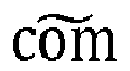
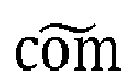
      denotes the resulting pair, the algorithm ouputs com ˜ =
      Figure imgb0037
      com ^
      Figure imgb0038
      and aux, which consists of the pair aux = M ^ 1 M ^ n dec ^
      Figure imgb0039
      for tag = τ.
    • SSTC . FakeOpen aux tk tag com ˜ M 1 M n :
      Figure imgb0040
      parses com ˜
      Figure imgb0041
      as ( 1, ..., m) and aux as (( 1,...,n ),( 1,..., nz , 1,..., nv )). It first generates a linearly homomorphic signature on (M 1/ 1 ,...,Mn /n ) for the tag = τ. Namely, using the trapdoor tk = sk, compute σʹ = 1 n z 1 n v SPS . Sign sk τ M 1 / M ^ 1 , , M n / M ^ n .
      Figure imgb0042
  • Since (σ' is a valid signature and aux = (( 1,...,n ),( 1,..., nz , 1,..., nv )) satisfies c ˜ j = μ = 1 n z e F j , μ Z ^ μ v = 1 n v e T j , v V ^ v i = 1 n e G j , i M ^ i j 1 m
    Figure imgb0043
    the fake opening algorithm can run Z ˜ 1 Z ˜ n z V ˜ 1 V ˜ n v Sign . Derive pk τ 1 σʹ 1 σ ^ ,
    Figure imgb0044
    where σ̂ = ( 1,..., nz , 1,...,nv ). By construction, dec ^ = Z ˜ 1 Z ˜ n z V ˜ 1 V ˜ n v
    Figure imgb0045
    is a valid de-commitment to the vector (M 1,..., Mn ) with respect to tag = τ.
    • SSTC.Verify(pk,tag,(M1,...,Mn ),com,dec): parses the commitment as c 1 c m G T m
      Figure imgb0046
      and the opening dec as Z 1 Z n z V 1 V n v G n z + n v .
      Figure imgb0047
      If these do not parse properly, it returns 0. Then it computes a one-to-one encoding {Tj,v } j,v of tag = τ. Return 1 if c j = μ = 1 n z e F j , μ Z μ v = 1 n v e T j , v V v i = 1 n e G j , i M i j 1 m
      Figure imgb0048
      holds and 0 otherwise.
    SSTC from linearly homomorphic signatures
  • This section provides a generalization of the previous structure-preserving construction. The goal is to construct simulation-sound (thus non-malleable) commitments to vectors from linearly homomorphic signatures. It is to be noted that the prior art schemes for constructing SSTCs do not directly allow committing to vectors while preserving the feasibility of efficiently proving knowledge of the committed vector. The method is illustrated in Figure 2.
  • Let Π = (Keygen,Sign,SignDerive,Verify) is a linearly homomorphic signature over
    Figure imgb0049
    for some large prime p > 2 λ . It is assumed that Π uses groups
    Figure imgb0050
    and
    Figure imgb0051
    of public orders pk and p, respectively, for some k N .
    Figure imgb0052
    It is also assumed that each signature σ lives in
    Figure imgb0053
    The verification algorithm takes as input a purported signature σ G 1 ,
    Figure imgb0054
    a file identifier τ and a vector m. It returns 1 if and only if F σ m pk τ = 1 G 2 ,
    Figure imgb0055
    where F is a function ranging over the group
    Figure imgb0056
    and satisfying certain linearity properties. Namely, for each pk produced by Keygen and each τ, it is required that F ( σ 1 σ 2 , m 1 +
    Figure imgb0057
    m 2 , pk , τ ) = F σ 1 m 1 pk τ F σ 2 m 2 pk τ
    Figure imgb0058
    for any vectors m 1 , m 2 Z p n
    Figure imgb0059
    and any σ 1 , σ 2 G 1 .
    Figure imgb0060
    As a consequence F σ m pk τ ω = F σ ω , ω , m , pk , τ
    Figure imgb0061
    for any ω Z p
    Figure imgb0062
    and any σ G 1 .
    Figure imgb0063
  • It is to be noted that this template only captures schemes in groups of public order, so that constructions based on the Strong RSA assumption are not covered. The reason is that, when working over the integers, messages and signature components may increase at each homomorphic operation, which makes it harder to render fake openings indistinguishable from original de-commitments.
    • SSTC.Setup(λ, n): given the desired dimension n ∈ N of commited vectors, choose public parameters pp for the linearly homomorphic signature. Then run key generation algorithm ΠSPS.Keygen(pp,n) to obtain a public key pk and a private key sk. The commitment key is pk = pk and the trapdoor tk consists of sk.
    • SSTC.Com(pk,tag, m ): to commit to a vector m Z p n
      Figure imgb0064
      with respect to the tag, choose S1 an element σ R G 1
      Figure imgb0065
      in the signature space. Compute S2 and output S3 c = F(σ,m ,pk, tag) by evaluating F as the left-hand member of the verification equation F σ m pk τ = 1 G 2 .
      Figure imgb0066
      The commitment string is com = c whereas the de-commitment is dec = σ.
    • SSTC.FakeCom(pk,tk, tag): proceeds like SSTC.Com but using a randomly chosen vector m fake R Z p n .
      Figure imgb0067
      If com ^ dec ^
      Figure imgb0068
      denotes the resulting commitment/decommitment pair, the algorithm sets com ˜ = com ^
      Figure imgb0069
      and aux = m fake dec ^ .
      Figure imgb0070
    • SSTC . FakeOpen aux tk tag com ˜ m :
      Figure imgb0071
      parses com ˜
      Figure imgb0072
      as c ˜ G 2
      Figure imgb0073
      and aux as m fake dec ^ ,
      Figure imgb0074
      where dec ^ = σ ^ G 1 .
      Figure imgb0075
      It first generates a linearly homomorphic signature on the coordinate-wise difference m - m fake Z p n
      Figure imgb0076
      for the tag = τ. Namely, using the trapdoor tk = sk, it computes σʹ Π . Sign ( sk , τ , m -
      Figure imgb0077
      m fake ) .
      Figure imgb0078
      Finally, it computes σ ˜ = σ ^ σʹ G 1
      Figure imgb0079
      and returns dec ˜ = σ ˜ .
      Figure imgb0080
    • SSTC.Verify(pt,tag,m,com,dec): parses S4 the commitment com as c G 2
      Figure imgb0081
      and the opening dec as σ G 1 .
      Figure imgb0082
      If these do not parse properly, it returns S5 0. Otherwise, it returns S6 1 if c = F(σ,m,pk,tag) and 0 otherwise.
  • The linearly homomorphic scheme of Attrapadung et al. (see N. Attrapadung, B. Libert, T. Peters. Computing on Authenticated Data: New Privacy Definitions and Constructions. In Asiacrypt'12, in Lecture Notes in Computer Science vol. 7658, pp. 367-385, 2012.) can be seen as a specific instantiation of the template where the group
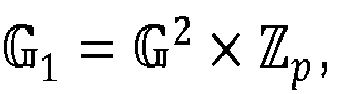
    Figure imgb0083
    is a product G 1 = G 2 × Z p ,
    Figure imgb0084
    which is a group for the operation (·,·, +), and G 2 = G T .
    Figure imgb0085
    In the scheme,
    Figure imgb0086
    and
    Figure imgb0087
    thus have order p 3 and p, respectively. As for the linear function F, it can be instantiated as F σ 1 σ 2 s m pk τ : = e σ 1 g - 1 e H G τ , σ 2 e g 1 m 1 g n m n v s , g α
    Figure imgb0088
  • As a result, a new non-interactive simulation-sound trapdoor commitment to vectors based on the Computational Diffie-Hellman (CDH) assumption is obtained.
  • It is noted that this scheme can be optimized by removing the terms vs and s so as to have σ 1 σ 2 = i = 1 n g i m i α H G τ r , g r
    Figure imgb0089
    and F σ 1 σ 2 m pk τ : = e σ 1 g - 1 e H G τ , σ 2 e g 1 m 1 g n m n , g α
    Figure imgb0090
  • Indeed, although the terms v s s G × Z p
    Figure imgb0091
    are necessary in the underlying signature scheme, they can be eliminated in the resulting commitment.
  • The optimization gives rise to the following SSTC scheme which relies on the CDH assumption and which allows committing to vectors. It is to be noted that the prior art non-malleable commitments based on the CDH assumption were - implicitly or explicitly - described in two papers but it was not clear how to extend them to commit to vectors in a modular way (see Y. Dodis, V. Shoup, S. Walfish. Efficient Constructions of Composable Commitments and Zero-Knowledge Proofs. In Crypto'08, Lecture Notes in Computer Science, vol. 5157, pp. 21-38, 2008. and R. Nishimaki, E. Fujisaki, K. Tanaka. A Multi-trapdoor Commitment Scheme from the RSA Assumption. In ACISP 2010, Lecture Notes in Computer Science, vol. 6168, pp. 182-199, 2010.)
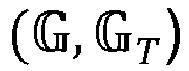
    • SSTC.Setup(λ, n): given the desired dimension n ∈ N of commited vectors, choose bilinear groups
      Figure imgb0092
      of prime order p > 2 λ . Choose α R Z p , g R G
      Figure imgb0093
      and u 0 , , u L R G
      Figure imgb0094
      for some L ∈ poly(λ). These elements u 0 , , u L G L + 1
      Figure imgb0095
      are used to implement a number-theoretic hash function H G : 0 1 L G
      Figure imgb0096
      such that any L-bit string τ = τ[1]...τ[L]∈{0,1} L is mapped to the hash value H G τ = u 0 i = 1 L u i τ i .
      Figure imgb0097
      Then g i R G
      Figure imgb0098
      are chosen for i = 1 to n and the identifier space T := {0,1} L is defined. The trapdoor is tk = α and the public key consists of pk = G G T g g α g i i = 1 n u i i = 0 L .
      Figure imgb0099
    • SSTC.Com(pk,tag, m ): to commit to a vector m = m 1 , m n Z p n
      Figure imgb0100
      with respect to the tag, choose elements σ 1 , σ 2 R G
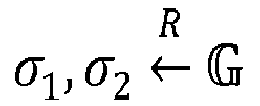
      Figure imgb0101
      in the signature space and compute c = e g 1 m 1 g n m n , g α e g - 1 σ 1 e H G tag , σ 2 .
      Figure imgb0102
  • Return the commitment string com = c G T
    Figure imgb0103
    and the de-commitment dec = σ 1 σ 2 G 2 .
    Figure imgb0104
    • SSTC.FakeCom(pk,tk,tag): proceeds like SSTC.Com but using a randomly chosen vector m fake R Z p n .
      Figure imgb0105
      If com ^ dec ^
      Figure imgb0106
      denotes the resulting commitment/decommitment pair, the algorithm sets com ˜ = com ^
      Figure imgb0107
      and aux = m fake dec ^ .
      Figure imgb0108
    • SSTC . FakeOpen aux tk tag com ˜ m :
      Figure imgb0109
      parses com ˜
      Figure imgb0110
      as c ˜ G T
      Figure imgb0111
      and aux as m fake dec ^ ,
      Figure imgb0112
      where dec ^ = σ 1 σ 2 G 2 .
      Figure imgb0113
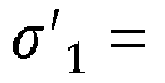
      It first generates a linearly homomorphic signature σʹ 1 σʹ 2 G 2
      Figure imgb0114
      on the difference m 1 ʹ , , m n ʹ = m -
      Figure imgb0115
      m fake Z p n
      Figure imgb0116
      for the tag tag. Namely, using tk = α, it computes σʹ 1 =
      Figure imgb0117
      g 1 1 g n n α H G tag r
      Figure imgb0118
      and σ'2 = gr which satisfies 1 G T = e g 1 1 g n n , g α e g - 1 σʹ 1 e H G tag , σʹ 2 .
      Figure imgb0119
    • Finally, it computes σ ˜ 1 σ ˜ 2 = σ ^ 1 σʹ 1 , σ ^ 2 σʹ 2 G 2
      Figure imgb0120
      and returns dec ˜ =
      Figure imgb0121
      σ ˜ 1 σ ˜ 2 .
      Figure imgb0122
    • SSTC.Verify(pk,tag,m ,com,dec): parses the commitment com as c G T
      Figure imgb0123
      and the opening dec as σ 1 σ 2 G 2 .
      Figure imgb0124
      If these do not parse properly, it returns 0. Otherwise, it returns 1 if (σ 1,σ 2) satisfies c = e g 1 m 1 g n m n , g α
      Figure imgb0125
      e g - 1 σ 1 e H G tag , σ 2
      Figure imgb0126
      and 0 otherwise.
    • Before the presentation of a further SSTC scheme, there follows a description of its underlying linearly homomorphic structure-preserving signature scheme.
    • Keygen(pp, n): given a security parameter λ and the dimension n N
      Figure imgb0127
      of the subspace to be signed, choose bilinear groups
      Figure imgb0128
      of prime order p > 2 λ perform the following steps:
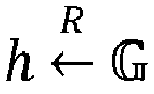
      1. 1. Choose h R G
        Figure imgb0129
        and α z , α r , β z R Z p .
        Figure imgb0130
        Define g z = h α z , g r = h α r
        Figure imgb0131
        and hz = h βz .
      2. 2. For each i ∈ {1,...,n}, pick χ i , γ i , δ i R Z p
        Figure imgb0132
        and compute g i = g z χ i g r γ i ,
        Figure imgb0133
        h i = h z χ i h δ i .
        Figure imgb0134
      3. 3. Choose a random vector w = w 0 w 1 w L R G L + 1
        Figure imgb0135
        that defines a hash function H G : 0 1 L G
        Figure imgb0136
        which maps τ = τ[1]...τ[L]∈{0,1} L to H G τ = w 0 k = 1 L w k τ k .
        Figure imgb0137
      The public key consists of pk = g z g r h z h g i h i i = 1 n w G 2 n + 4 × G L + 1
      Figure imgb0138
      while the private key is sk = h z α r χ i γ i δ i i = 1 n .
      Figure imgb0139
    • Sign(sk,τ,(M 1 ,...,Mn )): to sign a vector M 1 M n G n
      Figure imgb0140
      with regard to the file identifier τ using sk = h z α r χ i γ i δ i i = 1 n ,
      Figure imgb0141
      choose θ , ρ R Z p
      Figure imgb0142
      and compute z = g r θ i = 1 n M i - χ i , r = g z - θ i = 1 n M i - γ i , u = h z α r - θ i = 1 n M i - δ i H G τ - ρ , v = h ρ
      Figure imgb0143
      The signature comprises σ = zruv G 4 .
      Figure imgb0144
    • SignDerive pk τ ω i σ i i = 1 :
      Figure imgb0145
      given pk, a file identifier τ and ℓ tuples (ωi (i)), parse each signature σ (i) as σ i = z i r i u i v i G 4
      Figure imgb0146
      for i = 1 to ℓ. Then choose ρʹ R Z p
      Figure imgb0147
      and compute z = i = 1 z i ω i r = i = 1 r i ω i u = i = 1 u i ω i H G τ - ρʹ v = i = 1 v i ω i h ρʹ
      Figure imgb0148
      and return σ = (z, r, u, v).
    • Verify(pk,σ,τ, (M 1 ,...,Mn )): given a signature σ = zruv G 4 ,
      Figure imgb0149
      a file identifier τ and a vector (M 1,...,Mn ), return 1 if and only if (M 1, ..., M n) ≠ (
      Figure imgb0150
      and (z,r,u,v) satisfy the equalities 1 G T = e g z z e g r r i = 1 n e g i M i ,
      Figure imgb0151
      1 G T = e h z z e h u e H G τ , v i = 1 n e h i M i .
      Figure imgb0152
    SSTC from linearly homomorphic structure-preserving signatures
  • A particularly advantageous embodiment is obtained by applying the Construction of Structure-Preserving Simulation-Sound Trapdoor Commitments to the linearly homomorphic signature described hereinafter.
  • Like the underlying homomorphic signature, the security of the resulting SSTC (which is structure-preserving) relies on the hardness of the Simultaneous Double Pairing (SDP) problem.
    • SSTC.Setup(λ, n): given the desired dimension n N
      Figure imgb0153
      of commited vectors, choose bilinear groups
      Figure imgb0154
      of prime order p > 2 λ . Then: R R
      1. 1. Choose h R G
        Figure imgb0155
        and α z , α r , β z R Z p .
        Figure imgb0156
      2. 2. Define gz = h αz , gr = h αz and hz = h βz .
      3. 3. For each i ∈ {1, ..., n}, pick χ i , γ i , δ i R Z p
        Figure imgb0157
        and compute g i = g z χ i g r γ i ,
        Figure imgb0158
        h i = h z χ i h δ i .
        Figure imgb0159
      4. 4. Choose a random vector w = w 0 w L R G L + 1
        Figure imgb0160
        that defines a hash function H G : 0 1 L G
        Figure imgb0161
        which maps τ = τ[1] ... τ[L] ∈ [0,1] L to H G τ =
        Figure imgb0162
        w 0 k = 1 L w k τ k .
        Figure imgb0163
        The public key consists of pk = g z g r h z h g i h i i = 1 n w G 2 n + 4 × G L + 1
        Figure imgb0164
        while the trapdoor is tk = h z α r χ i γ i δ i i = 1 n .
        Figure imgb0165
    • SSTC.Com(pk, tag, (M 1 ,...,Mn )): to commit to a vector M 1 M n G n ,
      Figure imgb0166
      choose z , r , u , v R G
      Figure imgb0167
      and compute c 1 = e g z z e g r r i = 1 n e g i M i ,
      Figure imgb0168
      c 2 = e h z z e h u e H G tag , v i = 1 n e h i M i .
      Figure imgb0169
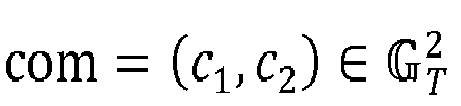
      Then return com = c 1 c 2 G T 2
      Figure imgb0170
      and dec = zruv G 4 .
      Figure imgb0171
    • SSTC.FakeCom(pk,tk,tag): choose M ^ 1 , , M ^ n R G
      Figure imgb0172
      and z , r , u , v R G
      Figure imgb0173
      and compute c 1 = e g z z e g r r i = 1 n e g i M ^ i ,
      Figure imgb0174
      c 2 = e h z z e h u e H G tag , v i = 1 n e h i M ^ i .
      Figure imgb0175
      Then return com = c 1 c 2 G T 2
      Figure imgb0176
      and aux = M ^ 1 M ^ n zruv .
      Figure imgb0177
    • SSTC . FakeOpen aux tk tag com ˜ M 1 M n :
      Figure imgb0178
      generate a linearly homomorphic signature (z',r',u',v') on the vector (M 1/ 1,...,Mn /n ) using the underlying linearly homomorphic SPS described hereinafter. Then compute (z̃,r̃,ũ,ṽ) = (z·z',r·r',u·u',v·v'). Return dec = (z̃,r̃,ũ,ṽ), which satisfies c 1 = e g z z ˜ e g r r ˜ i = 1 n e g i M i ,
      Figure imgb0179
      c 2 = e h z z ˜ e h u ˜ e H G tag , v ˜ i = 1 n e h i M i .
      Figure imgb0180
    • SSTC.Verify(pk , tag,(M 1 ,...,Mn ),com,dec): parses the commitment com as c 1 c 2 G T 2
      Figure imgb0181
      and the opening dec as zruv G 4 .
      Figure imgb0182
      If these do not parse properly, it returns 0. Otherwise, it returns 1 if (z, r, u, v) c 1 = e g z z e g r r i = 1 n e g i M i ,
      Figure imgb0183
      c 2 = e h z z e h u e H G tag , v i = 1 n e h i M i .
      Figure imgb0184
      and 0 otherwise.
  • The skilled person will appreciate that the schemes of the present invention, which works on vectors, also works on scalars (for which the dimension n equals 1). Thus, the dimension n can be any positive integer: 1, 2, 3...
  • It will be appreciated that the schemes of the present invention can provide a commitment scheme with the desired features.
  • Each feature disclosed in the description and (where appropriate) the claims and drawings may be provided independently or in any appropriate combination. Features described as being implemented in hardware may also be implemented in software, and vice versa. Reference numerals appearing in the claims are by way of illustration only and shall have no limiting effect on the scope of the claims.

Claims (13)

  1. A method of generating a non-malleable cryptographic commitment, the method comprising the steps in a processor (120) of a device (100), of:
    - receiving a vector m , a public verification key of a homomorphic signature scheme associated with a space where signatures live, and a tag;
    - choosing an element σ in the space where signatures live;
    - generating a commitment c using the vector m , the public verification key, the tag and the element σ; and
    - outputting the commitment c;
    wherein the commitment c is generated by running the verification algorithm of the homomorphic signature scheme on the vector m , the public verification key, the tag and the element σ.
  2. The method of claim 1, wherein the size of the commitment c is independent of the size of the vector m .
  3. The method of claim 1, wherein the vector m comprises elements of a group G over which a bilinear map G × G G T
    Figure imgb0185
    is efficiently computable.
  4. The method of claim 1, wherein the dimension of the vector m is greater than or equal to 2.
  5. The method of claim 1, wherein the commitment c allows to prove knowledge of an opening using zero-knowledge proof.
  6. The method of claim 1, wherein the commitment c is generated as intermediate values resulting from the verification algorithm.
  7. A device (100) for generating a non-malleable cryptographic commitment, the device (100) comprising:
    - at least one interface (110) configured to:
    - receive a vector m , a public verification key of a homomorphic signature scheme associated with a space where signatures live, and a tag; and
    - output a commitment c; and
    - a processor (120) configured to:
    - choose an element σ in the space where signatures live; and
    - generate the commitment c using the vector m , the public verification key, the tag and the element σ;
    wherein the processor is configured to generate the commitment c by running the verification algorithm of the homomorphic signature scheme on the vector m , the public verification key, the tag and the element σ.
  8. The device of claim 7, wherein the size of the commitment c is independent of the size of the vector m .
  9. The device of claim 7, wherein the vector m comprises elements of a group G over which a bilinear map G × G G T
    Figure imgb0186
    is efficiently computable.
  10. The device of claim 7, wherein the dimension of the vector m is greater than or equal to 2.
  11. The device of claim 7, wherein the commitment c allows to prove knowledge of an opening using zero-knowledge proof.
  12. The device of claim 7, wherein the commitment c is generated as intermediate values resulting from the verification algorithm.
  13. A non-transitory computer program product (140) storing instructions that, when executed by a processor, perform the method of any one of claims 1-6.
EP14154497.3A 2013-02-15 2014-02-10 Cryptographic devices and methods for generating and verifying commitments from linearly homomorphic signatures Withdrawn EP2768177A1 (en)

Priority Applications (1)

Application Number Priority Date Filing Date Title
EP14154497.3A EP2768177A1 (en) 2013-02-15 2014-02-10 Cryptographic devices and methods for generating and verifying commitments from linearly homomorphic signatures

Applications Claiming Priority (3)

Application Number Priority Date Filing Date Title
EP13305177 2013-02-15
EP13305452.8A EP2790349A1 (en) 2013-04-08 2013-04-08 Cryptographic devices and methods for generating and verifying commitments from linearly homomorphic signatures
EP14154497.3A EP2768177A1 (en) 2013-02-15 2014-02-10 Cryptographic devices and methods for generating and verifying commitments from linearly homomorphic signatures

Publications (1)

Publication Number Publication Date
EP2768177A1 true EP2768177A1 (en) 2014-08-20

Family

ID=50070438

Family Applications (1)

Application Number Title Priority Date Filing Date
EP14154497.3A Withdrawn EP2768177A1 (en) 2013-02-15 2014-02-10 Cryptographic devices and methods for generating and verifying commitments from linearly homomorphic signatures

Country Status (5)

Country Link
US (1) US20140237253A1 (en)
EP (1) EP2768177A1 (en)
JP (1) JP2014158265A (en)
KR (1) KR20140103079A (en)
CN (1) CN103997407A (en)

Families Citing this family (9)

* Cited by examiner, † Cited by third party
Publication number Priority date Publication date Assignee Title
US10277395B2 (en) * 2017-05-19 2019-04-30 International Business Machines Corporation Cryptographic key-generation with application to data deduplication
CN107359982B (en) * 2017-08-16 2019-09-20 西安科技大学 A Homomorphic Signature Method Against Intra-Generation/Inter-Generation Attacks
CN111919416B (en) * 2018-04-09 2021-11-19 华为技术有限公司 Method and system for zero knowledge range attestation with reversible commitments
US11764940B2 (en) 2019-01-10 2023-09-19 Duality Technologies, Inc. Secure search of secret data in a semi-trusted environment using homomorphic encryption
EP3758279A1 (en) 2019-06-27 2020-12-30 Koninklijke Philips N.V. Selective disclosure of attributes and data entries of a record
US12099997B1 (en) 2020-01-31 2024-09-24 Steven Mark Hoffberg Tokenized fungible liabilities
CN113569294B (en) * 2021-09-22 2022-01-07 浙江大学 Zero knowledge proving method and device, electronic equipment and storage medium
CN114202812B (en) * 2021-12-16 2023-10-10 福州大学 Anonymous payment system for Internet of Vehicles based on updateable anonymous credentials
CN118282773B (en) * 2024-05-29 2024-08-16 杭州海康威视数字技术股份有限公司 Data privacy publishing and access control method, device and equipment

Family Cites Families (5)

* Cited by examiner, † Cited by third party
Publication number Priority date Publication date Assignee Title
EP1843511A4 (en) * 2005-01-21 2010-11-03 Nec Corp Group signature system
US8281131B2 (en) * 2008-08-28 2012-10-02 International Business Machines Corporation Attributes in cryptographic credentials
US8825555B2 (en) * 2010-06-30 2014-09-02 International Business Machines Corporation Privacy-sensitive sample analysis
US8667292B2 (en) * 2011-05-19 2014-03-04 Microsoft Corporation Privacy-preserving metering with low overhead
US9722776B2 (en) * 2012-06-21 2017-08-01 Microsoft Technology Licensing, Llc Homomorphic signatures and network coding signatures

Non-Patent Citations (3)

* Cited by examiner, † Cited by third party
Title
JUAN A GARAY ET AL: "Strengthening Zero-Knowledge Protocols using Signatures", INTERNATIONAL ASSOCIATION FOR CRYPTOLOGIC RESEARCH,, vol. 20030815:163543, 15 August 2003 (2003-08-15), pages 1 - 32, XP061000748 *
MASAYUKI ABE ET AL: "Group to Group Commitments Do Not Shrink", 15 April 2012, ADVANCES IN CRYPTOLOGY EUROCRYPT 2012, SPRINGER BERLIN HEIDELBERG, BERLIN, HEIDELBERG, PAGE(S) 301 - 317, ISBN: 978-3-642-29010-7, XP019175400 *
NUTTAPONG ATTRAPADUNG ET AL: "Computing on Authenticated Data: New Privacy Definitions and Constructions", 2 December 2012, ADVANCES IN CRYPTOLOGY ASIACRYPT 2012, SPRINGER BERLIN HEIDELBERG, BERLIN, HEIDELBERG, PAGE(S) 367 - 385, ISBN: 978-3-642-34960-7, XP047011248 *

Also Published As

Publication number Publication date
KR20140103079A (en) 2014-08-25
CN103997407A (en) 2014-08-20
US20140237253A1 (en) 2014-08-21
JP2014158265A (en) 2014-08-28

Similar Documents

Publication Publication Date Title
US20140237253A1 (en) Cryptographic devices and methods for generating and verifying commitments from linearly homomorphic signatures
Abe et al. Tagged one-time signatures: Tight security and optimal tag size
Libert et al. Linearly homomorphic structure-preserving signatures and their applications
Lyubashevsky et al. One-shot verifiable encryption from lattices
Blazy et al. Signatures on randomizable ciphertexts
EP2860905A1 (en) Method for ciphering a message via a keyed homomorphic encryption function, corresponding electronic device and computer program product
Groth Efficient fully structure-preserving signatures for large messages
Libert et al. Compactly hiding linear spans: Tightly secure constant-size simulation-sound QA-NIZK proofs and applications
EP2860904A1 (en) Method for signing a set of binary elements, and updating such signature, corresponding electronic device and computer program product
EP2846492A1 (en) Cryptographic group signature methods and devices
Chase et al. Succinct malleable NIZKs and an application to compact shuffles
US9356783B2 (en) Method for ciphering and deciphering, corresponding electronic device and computer program product
Abe et al. Fully structure-preserving signatures and shrinking commitments
EP2961095A1 (en) Threshold cryptosystem, corresponding electronic devices and computer program products
EP2768179A1 (en) Cryptographic devices and methods for generating and verifying linearly homomorphic structure-preserving signatures
US20160105287A1 (en) Device and method for traceable group encryption
JPWO2006077700A1 (en) Group signature method
Chase et al. A new hash-and-sign approach and structure-preserving signatures from DLIN
Zhu et al. The Algebraic One-More MISIS Problem and Applications to Threshold Signatures
Sepahi et al. Lattice-based certificateless public-key encryption in the standard model
EP2790349A9 (en) Cryptographic devices and methods for generating and verifying commitments from linearly homomorphic signatures
Wang et al. Generic transformations for existentially unforgeable signature schemes in the bounded leakage model
Yuen et al. Exponent-inversion signatures and IBE under static assumptions
Derler et al. Practical Witness Encryption for Algebraic Languages And How to Reply an Unknown Whistleblower.
Mechler et al. Universally Composable (Non-Interactive) Two-Party Computation from Untrusted Reusable Hardware Tokens.

Legal Events

Date Code Title Description
PUAI Public reference made under article 153(3) epc to a published international application that has entered the european phase

Free format text: ORIGINAL CODE: 0009012

17P Request for examination filed

Effective date: 20140210

AK Designated contracting states

Kind code of ref document: A1

Designated state(s): AL AT BE BG CH CY CZ DE DK EE ES FI FR GB GR HR HU IE IS IT LI LT LU LV MC MK MT NL NO PL PT RO RS SE SI SK SM TR

AX Request for extension of the european patent

Extension state: BA ME

R17P Request for examination filed (corrected)

Effective date: 20150216

RBV Designated contracting states (corrected)

Designated state(s): AL AT BE BG CH CY CZ DE DK EE ES FI FR GB GR HR HU IE IS IT LI LT LU LV MC MK MT NL NO PL PT RO RS SE SI SK SM TR

STAA Information on the status of an ep patent application or granted ep patent

Free format text: STATUS: THE APPLICATION HAS BEEN WITHDRAWN

18W Application withdrawn

Effective date: 20170119