EP2767915A2 - A communication method and a mobile telecommunication device for controlling a server of a telecommunication system - Google Patents
A communication method and a mobile telecommunication device for controlling a server of a telecommunication system Download PDFInfo
- Publication number
- EP2767915A2 EP2767915A2 EP14155090.5A EP14155090A EP2767915A2 EP 2767915 A2 EP2767915 A2 EP 2767915A2 EP 14155090 A EP14155090 A EP 14155090A EP 2767915 A2 EP2767915 A2 EP 2767915A2
- Authority
- EP
- European Patent Office
- Prior art keywords
- server
- operation parameters
- values
- query
- receiving
- Prior art date
- Legal status (The legal status is an assumption and is not a legal conclusion. Google has not performed a legal analysis and makes no representation as to the accuracy of the status listed.)
- Granted
Links
Images





Classifications
-
- G—PHYSICS
- G06—COMPUTING OR CALCULATING; COUNTING
- G06F—ELECTRIC DIGITAL DATA PROCESSING
- G06F16/00—Information retrieval; Database structures therefor; File system structures therefor
- G06F16/20—Information retrieval; Database structures therefor; File system structures therefor of structured data, e.g. relational data
- G06F16/28—Databases characterised by their database models, e.g. relational or object models
- G06F16/283—Multi-dimensional databases or data warehouses, e.g. MOLAP or ROLAP
-
- G—PHYSICS
- G06—COMPUTING OR CALCULATING; COUNTING
- G06F—ELECTRIC DIGITAL DATA PROCESSING
- G06F16/00—Information retrieval; Database structures therefor; File system structures therefor
- G06F16/20—Information retrieval; Database structures therefor; File system structures therefor of structured data, e.g. relational data
- G06F16/24—Querying
- G06F16/242—Query formulation
- G06F16/2428—Query predicate definition using graphical user interfaces, including menus and forms
-
- G—PHYSICS
- G06—COMPUTING OR CALCULATING; COUNTING
- G06F—ELECTRIC DIGITAL DATA PROCESSING
- G06F16/00—Information retrieval; Database structures therefor; File system structures therefor
- G06F16/20—Information retrieval; Database structures therefor; File system structures therefor of structured data, e.g. relational data
- G06F16/26—Visual data mining; Browsing structured data
-
- H—ELECTRICITY
- H04—ELECTRIC COMMUNICATION TECHNIQUE
- H04W—WIRELESS COMMUNICATION NETWORKS
- H04W52/00—Power management, e.g. Transmission Power Control [TPC] or power classes
- H04W52/02—Power saving arrangements
- H04W52/0209—Power saving arrangements in terminal devices
- H04W52/0261—Power saving arrangements in terminal devices managing power supply demand, e.g. depending on battery level
- H04W52/0267—Power saving arrangements in terminal devices managing power supply demand, e.g. depending on battery level by controlling user interface components
- H04W52/027—Power saving arrangements in terminal devices managing power supply demand, e.g. depending on battery level by controlling user interface components by controlling a display operation or backlight unit
-
- Y—GENERAL TAGGING OF NEW TECHNOLOGICAL DEVELOPMENTS; GENERAL TAGGING OF CROSS-SECTIONAL TECHNOLOGIES SPANNING OVER SEVERAL SECTIONS OF THE IPC; TECHNICAL SUBJECTS COVERED BY FORMER USPC CROSS-REFERENCE ART COLLECTIONS [XRACs] AND DIGESTS
- Y02—TECHNOLOGIES OR APPLICATIONS FOR MITIGATION OR ADAPTATION AGAINST CLIMATE CHANGE
- Y02D—CLIMATE CHANGE MITIGATION TECHNOLOGIES IN INFORMATION AND COMMUNICATION TECHNOLOGIES [ICT], I.E. INFORMATION AND COMMUNICATION TECHNOLOGIES AIMING AT THE REDUCTION OF THEIR OWN ENERGY USE
- Y02D30/00—Reducing energy consumption in communication networks
- Y02D30/70—Reducing energy consumption in communication networks in wireless communication networks
Definitions
- Mobile telecommunication devices such as smartphones, tablets, and smart TVs, have become mainstream computing devices. It is expected that several hundreds of millions of mobile devices will be sold in the next years. Therefore, there is a continuous need to improve the performance of the mobile telecommunication devices.
- the invention relates to a communication method for controlling a server of a telecommunication system, the telecommunication system comprising a mobile telecommunication device being connected to the server via a digital telecommunication network, the mobile telecommunication device comprising a receiving unit, a control unit and an analysis unit, the communication method comprising:
- These features may be advantageous as they may save resources in the mobile telecommunication device that would otherwise be required for retrieving and/or storing all data describing the plurality of the operation parameters that are stored in the server. This is particularly important in case of servers used in large sized companies; such servers are characterized or operated using a sheer amount of operation parameters.
- the present method may provide an efficient data processing of the plurality of parameters by splitting the processing tasks between the server and the mobile telecommunication device. This may also fasten the data processing since the tasks that require more resources are executed at the server e.g. running on all the data, since the servers are commonly known to have more resources than a mobile device.
- the present method may provide an efficient data storage in the mobile telecommunication device by storing only final data to be analyzed for controlling the operation of the server. In other terms, not all measured values of the plurality of parameters are transmitted and stored but only the part of the measured data relevant for the controlling of the server.
- the storage device may be part of the server. Alternatively, the server and the storage device may be implemented in separate machines.
- the operation of the server comprises generating data to be transmitted to the mobile telecommunication device, wherein controlling the server to operate in accordance with the subset of values of the distinct values of each of the multiple operation parameters comprises dynamically generating a second query referencing the subset of values of the distinct values of each of the multiple operation parameters; sending the second query to the server; receiving measured data of the subset of values of the distinct values of each the multiple operation parameters.
- Measured data comprises at least part of the collected data.
- Measured data may be for example the number of occurrence of a given value of the subset of values.
- the operation parameter may be the operating system that runs on each of the mobile phones.
- the distinct values of the operating system may be for example iOS6, iOS7, Android3 etc.
- a user may select as the subset of values of the distinct values of the operation parameter, the operating system iOS7.
- the server may be controlled to generate the measured data only of the iOS7.
- the measured data may comprise the number of mobile phones using the iOS7 and/or the average battery lifetime of each of the mobile phones that runs the iOS7 etc.
- the multiple operation parameters comprise a power consumption level, wherein distinct values of the power consumption level comprise power consumption levels of respective distinct components of the server, wherein controlling the server to operate in accordance with the subset of values of the distinct values of each of the multiple operation parameters comprises: dynamically generating a second query referencing the subset of values of the distinct values of each of the multiple operation parameters; sending the second query to the server; receiving measured data of the subset of values of the distinct values of each the multiple operation parameters, adjusting each of the subset of values using the measured data; controlling the server to operate in accordance with the adjusted subset of values.
- the distinct values may comprise the power consumption level of the display of the server and the power consumption level of the storage of the server which may be due for example to the amount of write and read requests to the storage.
- a user may select the power consumption level of the display as the subset of values of the distinct values of the parameter: power consumption level.
- the power consumption level of the display may be adjusted.
- the received measured data may be the average power consumption level of the display for a predefined time period and/or the maximum power consumption level of the display for the predefined time period.
- the power consumption level of the display may be adjusted e.g. by decreasing the maximum allowed power consumption level of the display.
- the server may be thus controlled to operate in accordance with the new maximum allowed power consumption level of the display, by for example, reducing the brightness of the display of the server during the predefined time period.
- the receiving unit comprises a voice channel interface, wherein the request to access the collected data is received as a first voice message via the voice channel interface, wherein a second voice message is generated by the control unit using the first voice message, the second voice message indicating the control information of the control signal, wherein the voice channel interface is configured to establish a voice channel with the server and to transmit control signal as the second voice message, the sending of the control signal comprises establishing a voice channel with the server for transmitting data via the voice channel; and sending the second voice message via the established voice channel.
- Steganography as an information security technique may be used to hide the control information within the voice or audio message, such that the control information does not attract attention to itself as an object of scrutiny. This is in contrast to the text encryption practice or to other transmissions different from the voice message transmission.
- the second voice message may comprise the first voice message.
- the voice channel may be a transmission channel with a given bandwidth for transmitting voice message from the mobile telecommunication device to the server.
- the transmission of a voice message may be a transmission of analogue audio signals from a sender to a receiver using IP packets.
- the voice channel may be a cellular voice channel that is a channel used for transmission of voice messages to the server either directly, or via a base station of the cellular telecommunication system.
- the mobile telecommunication device may have a voice interpretation that converts the first voice message into a text message that can be interpreted by the mobile telecommunication device.
- the server may also have a voice interpretation that converts the second voice message into text message wherein the text message may comprise for example instructions reflecting the control information for controlling the server.
- the mobile telecommunication device and the server may share the same knowledge of the used information security technique e.g. Steganography that is used to generate the second voice message.
- the mobile telecommunication device operating in a default security mode, wherein the sending of the control signal and/or sending of the query comprises switching the mobile telecommunication device to operate in an enhanced security mode thereby sending the control signal and/or the query as a voice message to the server.
- the query and the control information may be sent in the voice message.
- the default security mode refers to a mode with which the mobile telecommunication device is operating before applying the enhanced security mode.
- the default security mode is different from the enhanced security mode.
- the telecommunication system comprises a cellular telecommunication system that includes one or more base stations, wherein the control signal is sent via a base station of the one or more base stations.
- the storage device comprises a volatile memory, wherein the one or more tables are row-based tables; the method further comprising: storing in a column based table the received measured data and displaying the column based table.
- row-based table stores data in a sequence of rows.
- Column-based table stores data in a sequence of columns, by for example, serializing all of the values of a column of a (corresponding) row-based table then the values of the next column, and so on.
- providing the distinct values of each of the multiple operation parameters comprises displaying the multiple operation parameters in a user interface of the receiving unit.
- the dynamically generated second query comprises multiple iterative join clauses as a function of the selected subset values.
- the dynamically generated query comprises multiple iterative join clauses as a function of the selected multiple operation parameters.
- the mobile telecommunication device comprises a touch screen device having a touch sensitive display screen.
- the invention in another aspect relates to a mobile telecommunication device for controlling a server of a telecommunication system, the mobile telecommunication device being connected to the server via a digital telecommunication network of the , the server being configured to collect data indicative of a plurality of operation parameters of the server, wherein the operation parameters are used to control the operation of the server; the plurality of operation parameters being split into one or more set of operation parameters; wherein the server stores in a storage device the collected data in one or more tables associated with the one or more set of operation parameters, the mobile telecommunication device comprises:
- the invention in another aspect, relates to a method comprising receiving a selection of multiple dimensions of information from a database to be used for data analysis; receiving a selection for a type of report; and dynamically generating a query statement based on the selection of the multiple dimensions.
- the method further comprises executing the query statement against an in-memory database; and displaying columns of information obtained from execution of the query statement.
- the columns of information displayed are selected as a function of the type of report selected.
- the columns of information displayed are selected as a function of the dimensions selected.
- the columns of information displayed are selected as a function of the type of report selected and the dimensions selected.
- the dimensions are selected from a list of characteristics.
- the dynamically generated query statement comprises multiple iterative join clauses as a function of the selected dimensions.
- the invention in another aspect, relates to a system, comprising at least one processor programmed to receive a selection of multiple dimensions of information from a database to be used for data analysis; wherein the at least one processor is further programmed to receive a selection for a type of report; and wherein the at least one processor is further programmed to generate dynamically a query statement based on the selection of the multiple dimensions.
- the system further comprises the at least one processor programmed to execute the query statement against an in-memory database; wherein the at least one processor is further programmed to execute the query statement to obtain columns of information; and wherein the at least one processor causes the columns of information to be displayed.
- the columns of information displayed are selected by the at least one processor as a function of the type of report.
- the columns of information displayed are selected by the at least one processor as a function of the dimensions selected.
- the columns of information displayed are selected by the at least one processor as a function of the type of report selected and the dimensions selected.
- the dynamically generated query statement comprises multiple iterative join clauses as a function of the selected dimensions.
- the type of report is selected from a list of reports.
- the invention in another aspect relates to a computer-readable medium comprising a plurality of instructions that, in response to being executed on a computing device, cause the computing device to: receive a selection of multiple dimensions of information from a database to be used for data analysis; receive a selection for a type of report; and dynamically generate a query statement based on the selection of the multiple dimensions.
- the plurality of instructions when executed on the computing device, causes the computing device to: execute the query statement against an in-memory database; and display columns of information obtained from execution of the query statement.
- BI Traditional Business Intelligence
- a semantic layer object e.g., Universe in business object (BOBJ) parlance
- a BI data store object e.g., a table in a Relational Database Management System (RDMS) or a "cube” in an online analytical processing system
- RDMS Relational Database Management System
- a “cube” in an online analytical processing system can be created that contains predefined dimensions, such as material, customer, country, etc.
- the Universe can then be used as the basis for a report that provides the ability to analyze a data set along the predefined dimensions.
- traditional BI tools and modeling techniques do not adequately handle analysis of data sets where the dimensions are very dynamic and flexible and can only be defined at run time of the report/query.
- BI tools provide capabilities to analyze data sets where the dimensions are stored as separate individual columns in a RDMS table or multi-dimension cube.
- these tools do not provide the capability to analyze a dataset where the dimensions are stored as separate rows in an online transaction processing (OLTP) table, where the only linkage between the dimensions is via a common key stored with each row.
- OTP online transaction processing
- a data store object e.g., an RDMS table
- OLAP online analytical processing
- Another limitation of current data modeling techniques is that creating additional data store objects precludes the ability to do real-time analysis against the transactional OLTP tables/data because a static query or pre-defined cube must be updated to reflect a new data store object before analysis of that data store object is possible.
- the data store object or multidimensional cube in an OLAP system would contain all the predefined dimensions that may be required in the query analysis.
- the dimensions would be data fields in a data structure.
- a "Pump” data store object may have dimensions such as "Model,” “Type,” “Rotation Direction,” “Housing Color,” etc.
- a “Car” data store object may have dimensions “Engine,” “Exterior Color,” “Model,” “Year,” “Seat Type,” etc.
- the dimensions are predefined in the structure of the data store object (e.g., the dimensions are data fields in the data store object), and therefore, static.
- a new dimension needs to be added to or removed from a data store object, the structure of the data store object must be changed, along with any other database item (e.g., data store object, query, etc.) that depends on the modified data store object.
- a separate data store object must be created. Once the new data store object has been created, the data contained in the new data store object must be extracted, transformed, and loaded into a data warehouse before it can be analyzed.
- the data to be analyzed may be stored in native OLTP tables.
- the dimensions of a data store object may be stored as separate rows in an OLTP table.
- the link between different dimensions of the same data store object may be via a common key stored with or within each row.
- the dimensions for all data store objects may be stored in one OLTP table, and the dimension values for those dimensions may be stored in another OLTP table.
- the dimension table and the dimension value table may be joined in an SQL query.
- a graphical user interface may be presented to a user.
- the user may use the GUI to determine the available dimensions that can be used for data analysis, as well as to select specific dimensions to include in analysis reports.
- the functions or algorithms described herein are implemented in hardware, software or a combination of software and hardware in one embodiment.
- the software comprises computer executable instructions stored on computer readable media such as memory or other type of storage devices. Further, described functions may correspond to modules, which may be software, hardware, firmware, or any combination thereof. Multiple functions are performed in one or more modules as desired, and the embodiments described are merely examples.
- the software is executed on a digital signal processor, ASIC, microprocessor, or other type of processor operating on a system, such as a personal computer, server, a router, or other device capable of processing data including network interconnection devices.
- Some embodiments implement the functions in two or more specific interconnected hardware modules or devices with related control and data signals communicated between and through the modules, or as portions of an application-specific integrated circuit.
- the exemplary process flow is applicable to software, firmware, and hardware implementations.
- a database that performs analysis of datasets without predefined dimensions may be an in-memory database.
- An in-memory database is a database that resides entirely in random-access memory of one or more computers, rather than the traditional paradigm of having some modules of the database platform reside in random-access memory and other modules of the database platform reside on secondary storage, such as a hard drive.
- an application server may be used to generate the user interface components displayed to the user.
- the application server may be integrated with or embedded within the database, or may be a separate component from the database.
- FIG. 1 illustrates an architecture of a system 100 supporting analysis of datasets without predefined dimensions, in accordance with some embodiments.
- the database 104 may contain an application-oriented module 106 and a data-oriented module 108.
- the application-oriented module 106 may contain application logic specific to one or more applications.
- the data-oriented module 108 may contain data-oriented application logic, as well as SQL queries, views, stored procedures, etc.
- the UI rendering module 102 may generate data for rendering a user interface (UI) to a user of the system 100.
- UI user interface
- the UI rendering module 102 is a web browser, such as Internet Explorer ® , Firefox ® , ChromeTM, Safari ® , OperaTM, etc.
- the database 104 is an in-memory database, such as SAP HANA.
- the application-oriented module 106 may be SAP HANA Extended Application Services (a.k.a., "XS" or "XS Engine.")
- the database 104 and the UI rendering module 102 may communicate 110 with each other via a publicly available protocol or via a proprietary protocol.
- publicly available protocols are Hypertext Transfer Protocol (HTTP), Hypertext Transfer Protocol Secure (HTTPS), Transmission Control Protocol (TCP), and Transmission Control Protocol over Internet Protocol (TCP/IP), or any other suitable communications protocol.
- HTTP Hypertext Transfer Protocol
- HTTPS Hypertext Transfer Protocol Secure
- TCP Transmission Control Protocol
- TCP/IP Transmission Control Protocol over Internet Protocol
- the application-oriented module 106 and the data-oriented module 108 may communicate 112 with each other via one or more methods of inter-process communication, such as files, signals, sockets, message queues, pipes, named pipes, semaphores, shared memory, message passing, memory-mapped files, etc.
- FIG. 2 illustrates a graphical user interface 200 for analyzing datasets without predefined dimensions, in accordance with some embodiments.
- the user may begin the data analysis by selecting a characteristic selection type 202.
- the database dynamically generates a SQL query. The purpose of this query is to retrieve data for populating an object selection list 204.
- the database dynamically generates the following SQL query:
- the resulting data returned by the database executing this SQL query may be the following list of classes available in the database, set forth in TABLE 1: TABLE 1: Result Set of "CLASS" SQL Query CLASS KSCHL EHS_0101_001 Material Safety Data Sheet Shipping EHS_1022_024 Dangerous Goods Regulations EHS_1022_029 Additional Data for Transport EHS_1023_024 Poisonous by Inhalation (US) EHS_1022_035 More Information About Classes ...
- EHS_1022_040 Activity Limits (Class 7) EHS_1022_041 Limits of Radioactivity EHS_1022_044 Activity Limits of Radionuclide EHS_1025_001 Full UN Packaging Code EHS_1025_003 Packaging Groups EHS_1025_005 Single/Outer Packaging EHS_1023_057 Registration (Company-Specific) EHS_1024_057 REACH EHS_1025_057 Substance Volume Tracking
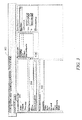
- FIG. 3 illustrates another aspect of a graphical user interface 200 for analyzing datasets without predefined dimensions, in accordance with some embodiments.
- the GUI 200 may then populate an object selection list 204 with the names of the classes returned in the result set.
- the user may then continue the data analysis by selecting a class listed in the list of class names in object selection list 204.
- the database dynamically generates a SQL query. The purpose of this query is to populate a selection list 302 of the available characteristics for the selected class.
- the database dynamically generates the following SQL query:
- the resulting data returned by the database executing this SQL query may be the following list of characteristics in the database for "Class for HD GLAD BOY," set forth in TABLE 2: TABLE 2: Result Set of "Class for HD GLAD BOY” Query ATINN ATBEZ 0000000113 Country 0000000114 Engine 0000000115 Color 0000000116 Rear wheel 0000000117 Seat 0000000118 Options 0000000124 Antitheft device 0000000991 Exhaust
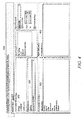
- FIG. 4 illustrates another aspect of a graphical user interface 200 for analyzing datasets without predefined dimensions, in accordance with some embodiments.
- the GUI 200 may populate the list of characteristics for analysis 302 with the names of the characteristics available for the class selected in object selection list 204.
- the user may then continue the data analysis by selecting one or more characteristics listed in the list of characteristics for analysis 302.
- the database dynamically generates a SQL query.
- the purpose of this query is to populate a selection list of the available characteristic values 402 for the selected characteristic(s).
- the database dynamically generates the following SQL query:
- the resulting data returned by the database executing this SQL query may be the following list of characteristic values in the database for characteristics "Country” and "Color” of "Class for HD GLAD BOY,” set forth in TABLE 3: TABLE 3: Result Set of "Country & Color for Class for HD GLAD BOY” Query ATBEZ ATINN ATZHL ATWTB Country 0000000113 0003 49 States Color 0000000115 0002 Black Country 0000000113 0002 California Country 0000000113 0001 International Color 0000000115 0003 Red Color 0000000115 0001 Silver
- FIG. 5 illustrates another aspect of a graphical user interface 200 for analyzing datasets without predefined dimensions, in accordance with some embodiments.
- the GUI 200 may then populate a characteristic values selection list 402 with the names of the characteristic values available for the selected characteristic(s) in the list of characteristics for analysis 302.
- the user may then continue the data analysis by selecting one or more characteristic values 502, 504 listed in the list of characteristic values 402 available for the selected characteristic(s), as well as selecting the type of document 506 to retrieve.
- a SQL query is dynamically created.
- This query is to perform the analysis specified in the document type selected on the characteristic value(s) 502, 504 selected.
- the database dynamically generates the following SQL query:
- the SQL query generated may include multiple iterative join and/or selection clauses against the same table or view, depending upon the number of characteristics selected by the user in the previous selection steps.
- Each characteristic selected for analysis may be included in at least one join iteration for that characteristic. For example, if a user selects eight different characteristics in the previous steps, then eight join iterations may be generated in the SQL query.
- the user selected two characteristics ("Country” and "Color”) for analysis; thus, one selection via the view (“_SYS_BiC”.”i010195/CA_MATNR_CHARVAL_SOLD") with characteristic "Country” and another selection against the same view with characteristic "Color” were generated.
- the resulting data returned by the database executing this SQL query may be the following data, set forth in TABLE 4: TABLE 4: Result Set of Sales Order query Country Color Quantity California Black 20 California Red 20
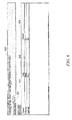
- FIG. 6 illustrates a result report generated from analyzing datasets without predefined dimensions, in accordance with some embodiments.
- the GUI 200 may then populate a results report 602, which may display as a grid the data returned from execution of the "Sales Order” query.
- Each selected characteristic may be displayed in its own column.
- the user selected the characteristics "Country” and "Color” for analysis; thus, the grid contains a Country column 604 and a Color column 606.
- the grid also contains a Quantity column 608, which was included in the dynamically generated SQL query because of the selected document type 506.
- FIG. 7 illustrates a method 700 of analyzing datasets without predefined dimensions, in accordance with some embodiments.
- a selection of multiple dimensions of information from a database to be used for data analysis is received 702.
- a selection for a type of report is then received 704.
- a query statement comprising multiple iterative join clauses as a function of the selected dimensions is then dynamically generated 706.
- the dynamically generated query statement is then executed against an in-memory database 708.
- the columns of information obtained from execution of the dynamically generated query statement are then displayed 710.
- FIG. 8 illustrates a functional block diagram of an example machine 800, in accordance with some embodiments, upon which any one or more of the techniques (e.g., methodologies) discussed herein can perform.
- the machine 800 can operate as a standalone device or can be connected (e.g., networked) to other machines.
- the machine 800 can operate in the capacity of a server machine, a client machine, or both in server-client network environments.
- the machine 800 can act as a peer machine in peer-to-peer (P2P) (or other distributed) network environment.
- P2P peer-to-peer
- the machine 800 can be a personal computer (PC), a tablet PC, a set-top box (STB), a Personal Digital Assistant (PDA), a mobile telephone, a web appliance, a network router, switch or bridge, or any machine capable of executing instructions (sequential or otherwise) that specify actions to be taken by that machine.
- PC personal computer
- PDA Personal Digital Assistant
- STB set-top box
- PDA Personal Digital Assistant
- mobile telephone a web appliance
- network router, switch or bridge or any machine capable of executing instructions (sequential or otherwise) that specify actions to be taken by that machine.
- machine shall also be taken to include any collection of machines that individually or jointly execute a set (or multiple sets) of instructions to perform any one or more of the methodologies discussed herein, such as cloud computing, software as a service (SaaS), other computer cluster configurations.
- SaaS software as a service
- Examples, as described herein, can include, or can operate on, logic or a number of components, modules, or mechanisms.
- Modules are tangible entities capable of performing specified operations and can be configured or arranged in a certain manner.
- circuits can be arranged (e.g., internally or with respect to external entities such as other circuits) in a specified manner as a module.
- the whole or part of one or more computer systems (e.g., a standalone, client or server computer system) or one or more hardware processors can be configured by firmware or software (e.g., instructions, an application portion, or an application) as a module that operates to perform specified operations.
- the software can reside (1) on a non-transitory machine-readable medium or (2) in a transmission signal.
- the software when executed by the underlying hardware of the module, causes the hardware to perform the specified operations.
- module is understood to encompass a tangible entity, be that an entity that is physically constructed, specifically configured (e.g., hardwired), or temporarily (e.g., transitorily) configured (e.g., programmed) to operate in a specified manner or to perform part or all of any operation described herein.
- each of the modules need not be instantiated at any one moment in time.
- the modules comprise a general-purpose hardware processor configured using software
- the general-purpose hardware processor can be configured as respective different modules at different times.
- Software can accordingly configure a hardware processor, for example, to constitute a particular module at one instance of time and to constitute a different module at a different instance of time.
- Machine 800 can include a hardware processor 802 (e.g., a central processing unit (CPU), a graphics processing unit (GPU), a hardware processor core, or any combination thereof), a main memory 804 and a static memory 806, some or all of which can communicate with each other via a bus 808.
- the machine 800 can further include a display unit 810, an alphanumeric input device 812 (e.g., a keyboard), and a user interface (UI) navigation device 814 (e.g., a mouse).
- the display unit 810, input device 812 and UI navigation device 814 can be a touch screen display.
- the machine 800 can additionally include a storage device (e.g., drive unit) 816, a signal generation device 818 (e.g., a speaker), a network interface device 820, and one or more sensors 821, such as a global positioning system (GPS) sensor, compass, accelerometer, or other sensor.
- the machine 800 can include an output controller 828, such as a serial (e.g., universal serial bus (USB), parallel, or other wired or wireless (e.g., infrared (IR)) connection to communicate or control one or more peripheral devices (e.g., a printer, card reader, etc.).
- a serial e.g., universal serial bus (USB), parallel, or other wired or wireless (e.g., infrared (IR)) connection to communicate or control one or more peripheral devices (e.g., a printer, card reader, etc.).
- USB universal serial bus
- IR infrared
- the storage device 816 can include a machine-readable medium 822 on which is stored one or more sets of data structures or instructions 824 (e.g., software) embodying or utilized by any one or more of the techniques or functions described herein.
- the instructions 824 can also reside, completely or at least partially, within the main memory 804, within static memory 806, or within the hardware processor 802 during execution thereof by the machine 800.
- one or any combination of the hardware processor 802, the main memory 804, the static memory 806, or the storage device 816 can constitute machine-readable media.
- machine-readable medium 822 is illustrated as a single medium, the term “machine-readable medium” can include a single medium or multiple media (e.g., a centralized or distributed database, and/or associated caches and servers) that configured to store the one or more instructions 824.
- machine-readable medium can include a single medium or multiple media (e.g., a centralized or distributed database, and/or associated caches and servers) that configured to store the one or more instructions 824.
- machine-readable medium can include any tangible medium that is capable of storing, encoding, or carrying instructions for execution by the machine 800 and that cause the machine 800 to perform any one or more of the techniques of the present disclosure, or that is capable of storing, encoding or carrying data structures used by or associated with such instructions.
- Non-limiting machine-readable medium examples can include solid-state memories, and optical and magnetic media.
- machine-readable media can include nonvolatile memory, such as semiconductor memory devices (e.g., Electrically Programmable Read-Only Memory (EPROM), Electrically Erasable Programmable Read-Only Memory (EEPROM)) and flash memory devices; magnetic disks, such as internal hard disks and removable disks; magneto-optical disks; and CD-ROM and DVD-ROM disks.
- semiconductor memory devices e.g., Electrically Programmable Read-Only Memory (EPROM), Electrically Erasable Programmable Read-Only Memory (EEPROM)
- flash memory devices e.g., Electrically Programmable Read-Only Memory (EPROM), Electrically Erasable Programmable Read-Only Memory (EEPROM)
- EPROM Electrically Programmable Read-Only Memory
- EEPROM Electrically Erasable Programmable Read-Only Memory
- flash memory devices e.g., Electrically Erasable Programmable Read-Only Memory (EEPROM)
- flash memory devices e.g., Electrically Erasable Programmable Read
- the instructions 824 can further be transmitted or received over a communications network 826 using a transmission medium via the network interface device 820 utilizing any one of a number of transfer protocols (e.g., frame relay, internet protocol (IP), transmission control protocol (TCP), user datagram protocol (UDP), hypertext transfer protocol (HTTP), etc.).
- transfer protocols e.g., frame relay, internet protocol (IP), transmission control protocol (TCP), user datagram protocol (UDP), hypertext transfer protocol (HTTP), etc.
- Example communication networks can include a local area network (LAN), a wide area network (WAN), a packet data network (e.g., the Internet), mobile telephone networks (e.g., cellular networks), Plain Old Telephone (POTS) networks, and wireless data networks (e.g., Institute of Electrical and Electronics Engineers (IEEE) 802.11 family of standards known as Wi-Fi ® , IEEE 802.16 family of standards known as WiMax ® ), peer-to-peer (P2P) networks, among others.
- the network interface device 820 can include one or more physical jacks (e.g., Ethernet, coaxial, or phone jacks) or one or more antennas to connect to the communications network 826.
- the network interface device 820 can include a plurality of antennas to communicate wirelessly using at least one of single-input multiple-output (SIMO), multiple-input multiple-output (MIMO), or multiple-input single-output (MISO) techniques.
- SIMO single-input multiple-output
- MIMO multiple-input multiple-output
- MISO multiple-input single-output
- transmission medium shall be taken to include any intangible medium that is capable of storing, encoding or carrying instructions for execution by the machine 800, and includes digital or analog communications signals or other intangible medium to facilitate communication of such software.
- example machine 800 is illustrated as having several separate functional elements, one or more of the functional elements may be combined and may be implemented by combinations of software-configured elements, such as processing elements including digital signal processors (DSPs), and/or other hardware elements.
- processing elements including digital signal processors (DSPs), and/or other hardware elements.
- DSPs digital signal processors
- some elements may comprise one or more microprocessors, DSPs, application specific integrated circuits (ASICs), radio-frequency integrated circuits (RFICs) and combinations of various hardware and logic circuitry for performing at least the functions described herein.
- the functional elements of system 800 may refer to one or more processes operating on one or more processing elements.
- Embodiments may be implemented in one or a combination of hardware, firmware and software. Embodiments may also be implemented as instructions stored on a computer-readable storage device, which may be read and executed by at least one processor to perform the operations described herein.
- a computer-readable storage device may include any non-transitory mechanism for storing information in a form readable by a machine (e.g., a computer).
- a computer-readable storage device may include read-only memory (ROM), random-access memory (RAM), magnetic disk storage media, optical storage media, flash-memory devices, and other storage devices and media.
- system 800 may include one or more processors and may be configured with instructions stored on a computer-readable storage device.
- Example 1 may include subject matter (such as an apparatus, a system, a method, a means for performing acts, or a machine readable medium including instructions that, when performed by a machine cause the machine to performs acts) comprising receiving a selection of multiple dimensions of information from a database to be used for data analysis; receiving a selection for a type of report; and dynamically generating a query statement based on the selection of the multiple dimensions.
- subject matter such as an apparatus, a system, a method, a means for performing acts, or a machine readable medium including instructions that, when performed by a machine cause the machine to performs acts
- Example 2 the subject matter of Example 1 may optionally include executing the query statement against an in-memory database; and displaying columns of information obtained from execution of the query statement.
- Example 3 the subject matter of either Example 1 or Example 2, may optionally include the columns of information displayed selected as a function of the type of report selected.
- Example 4 the subject matter of one or any of Examples 1-3 may optionally include the columns of information displayed selected as a function of the dimensions selected.
- Example 5 the subject matter of one or any of Examples 1-4 may optionally include the columns of information displayed selected as a function of the type of report selected and the dimensions selected.
- Example 6 the subject matter of one or any of Examples 1-5 may optionally include the dimensions selected from a list of characteristics.
- Example 7 the subject matter of one or any of Examples 1-6 may optionally include the dynamically generated query statement comprising multiple iterative join clauses as a function of the selected dimensions.
- Example 8 may include, or may optionally be combined with the subject matter of one or any of Examples 1-7 to include, subject matter (such as an apparatus, a system, a method, a means for performing acts, or a machine readable medium including instructions that, when performed by a machine cause the machine to performs acts) comprising at least one processor programmed to receive a selection of multiple dimensions of information from a database to be used for data analysis; wherein the at least one processor is further programmed to receive a selection for a type of report; and wherein the at least one processor is further programmed to generate dynamically a query statement based on the selection of the multiple dimensions.
- subject matter such as an apparatus, a system, a method, a means for performing acts, or a machine readable medium including instructions that, when performed by a machine cause the machine to performs acts
- at least one processor programmed to receive a selection of multiple dimensions of information from a database to be used for data analysis
- the at least one processor is further programmed to receive a selection for a type of report
- Example 9 the subject matter of one or any of Examples 1-8 may optionally include the at least one processor programmed to execute the query statement against an in-memory database; wherein the at least one processor is further programmed to execute the query statement to obtain columns of information; and wherein the at least one processor causes the columns of information to be displayed.
- Example 10 the subject matter of one or any of Examples 1-9 may optionally include the columns of information displayed selected by the at least one processor as a function of the type of report.
- Example 11 the subject matter of one or any of Examples 1-10 may optionally include the columns of information displayed selected by the at least one processor as a function of the dimensions selected.
- Example 12 the subject matter of one or any of Examples 1-11 may optionally include the columns of information displayed selected by the at least one processor as a function of the type of report selected and the dimensions selected.
- Example 13 the subject matter of one or any of Examples 1-12 may optionally include the dynamically generated query statement comprising multiple iterative join clauses as a function of the selected dimensions.
- Example 14 the subject matter of one or any of Examples 1-13 may optionally include the type of report selected from a list of reports.
- Example 15 may include, or may optionally be combined with the subject matter of one or any of Examples 1-14 to include, subject matter (such as an apparatus, a system, a method, a means for performing acts, or a machine readable medium including instructions that, when performed by a machine cause the machine to performs acts) comprising a plurality of instructions that, in response to being executed on a computing device, cause the computing device to receive a selection of multiple dimensions of information from a database to be used for data analysis; receive a selection for a type of report; and dynamically generate a query statement based on the selection of the multiple dimensions.
- subject matter such as an apparatus, a system, a method, a means for performing acts, or a machine readable medium including instructions that, when performed by a machine cause the machine to performs acts
- Example 16 the subject matter of one or any of Examples 1-15 may optionally include the plurality of instructions, when executed on the computing device, causes the computing device to execute the query statement against an in-memory database and to display columns of information obtained from execution of the query statement.
- Example 17 the subject matter of one or any of Examples 1-16 may optionally include the columns of information displayed selected as a function of the type of report selected.
- Example 18 the subject matter of one or any of Examples 1-17 may optionally include the columns of information displayed selected as a function of the dimensions selected.
- Example 19 the subject matter of one or any of Examples 1-18 may optionally include the columns of information displayed selected as a function of the type of report selected and the dimensions selected.
- Example 20 the subject matter of one or any of Examples 1-19 may optionally include the dynamically generated query statement comprising multiple iterative join clauses as a function of the selected dimensions.
- each block in the flowchart or block diagrams may represent a module, segment, or portion of code, which comprises one or more executable instructions for implementing the specified logical function(s).
- the functions noted in the block may occur out of the order noted in the figures. For example, two blocks shown in succession may, in fact, be executed substantially concurrently, or the blocks may sometimes be executed in the reverse order, depending upon the functionality involved.
- Fig. 9 shows an exemplary mobile telecommunication device 900 in a telecommunication system 99.
- the telecommunication system may comprise for example a cellular telecommunication system.
- the mobile telecommunication device 900 may comprise a processor 903, a transceiver 905, a memory 907 each capable of communicating with one or more components of the mobile telecommunication device 900. For example, all components are coupled to a bidirectional system bus 909.
- the processor 903 may be a microprocessor, a single core processor, a multicore processor or the like.
- the processor 903 may control the operation of the mobile telecommunication device 900.
- the transceiver 905 can be implemented as a transmitting and receiving component of the mobile telecommunication device 900.
- the mobile telecommunication device 900 may further comprise a display device 925 which displays characters and images and the like.
- the display device 925 may be a touch sensitive display screen.
- the mobile telecommunication device 900 may be connected to a server 911 through a network 913 such as a cellular digital system telecommunication network.
- a network 913 such as a cellular digital system telecommunication network.
- the mobile telecommunication device 900 may be directly connected to the server 911 or connected to the server 911 via a base station (not shown) of the telecommunication system being a cellular telecommunication system.
- the transceiver 905 the mobile telecommunication device 900 may exchange data with the server 911 via the network 913 e.g. being the mobile cellular digital telecommunications network.
- Memory 907 is configured to store a plurality of applications that are executable on the processor 903. Memory 907 is further configured to store a receiving unit 933, a control unit 935 and an analysis unit 937.
- the server 911 may be controlled to collect data indicative of a plurality of operation parameters of the server, wherein the operation parameters are used to control the operation of the server.
- the collection of data may comprise receiving the data from a user of the server 911 and/or receiving data from an electrical device that is controlled by the server 911 to acquire the data.
- the electrical device may be for example a measurement instrument for measuring e.g. the temperature, speed of cars etc.
- the collection of data may comprise, the server 911 providing data indicative of the plurality of operation parameters such as for example IP-address of the server, port, protocol data communication, Server Software running on the server, Maximum Message Size for messaging, and the like.
- the operation of the server 911 comprises generating data to be transmitted to the mobile telecommunication device.
- controlling the operation of the server 911 may comprise, for example, determining which data to be generated by the server 911 and/or which data to be transmitted to the mobile telecommunication device 900.
- the operation parameters may comprise for example multiple descriptive data or attributes that characterize user data stored in the server 911.
- “Pump” may be described by operation parameters such as "Model,” “Type,” “Rotation Direction,” “Housing Color,” etc.
- a “Car” may be described by operation parameters such as “Engine,” “Exterior Color,” “Model,” “Year,” “Seat Type,” etc.
- information i.e. measured data
- information i.e. measured data
- the number of defect cars or the average amount of petrol consumption
- the operation parameters may comprise a power consumption level.
- the power consumption level may be the power consumption level of components of the server 911 e.g. a power consumption level of a display of the server 911, or a power consumption level related to a storage of the server 911.
- the power consumption level related to the storage of the server may be the power consumption level related to I/O activities to the storage of the server 911 e.g. for transmitting and receiving data from the mobile telecommunication device.
- the plurality of operation parameters may be split into one or more set of operation parameters.
- the server 911 may store in a storage device the collected data in one or more tables associated with the one or more set of operation parameters.
- the storage device may be a volatile memory of the server 911 (e.g. main memory of the server 911). This may fasten the data processing.
- the one or more tables may be row-based tables.
- the split of parameters may depend for example on how frequent the data associated with a given parameter is used. For example, a table is created for the most frequently used parameters and another table may be created for the less frequently used parameters.
- the usage frequency may be compared to a predefined frequency threshold value to the determine if a parameter is most frequently or less frequently used.
- This splitting may be advantageous as it may provide a flexibility for storing the tables such that for example storing the most frequently used table in a fast accessed storage e.g. a volatile memory and storing the less frequently used table in a normal hard disk storage. This may further increase the speed of the overall process of the present method.
- the receiving unit 933 may receive (e.g. from a user of the mobile telecommunication device) a request to access the collected data.
- This request may be received as a first voice message (or in the first voice message) via a voice channel interface of the receiving unit 933.
- the request may be received via an input of data via a user interface of the receiving unit.
- the voice channel interface and/or the user interface may be generated when of the receiving unit is executed (or invoked).
- the control unit 935 may thus send a control signal comprising control information via the digital telecommunication network to the server 911 for controlling the server 911 to process the one or more tables and generate a list of the plurality of operation parameters.
- the sending of the control signal may comprise sending a second voice message (as the control signal) via a voice channel.
- the voice channel is established with the server 911 by the voice channel interface for transmitting voice data.
- the second voice message is generated by the control unit 935 using the first voice message.
- the second voice message indicates the control information of the control signal.
- the receiving unit 933 In response to receiving by the receiving unit 933 the list of operation parameters from the server 911, the receiving unit 933 provides the list of operation parameters e.g. by displaying them on the user interface.
- the receiving unit 933 may receive a selection (e.g. from the user of the mobile telecommunication device) of multiple operation parameters of the list of operation parameters.
- a query referencing the multiple operation parameters is dynamically generated by the control unit 935 for obtaining distinct values of each of the multiple operation parameters, and the query is sent to the server 911 for querying the storage device using the query.
- distinct values may be red and black as the color of a car (i.e. although there are multiple red cars used only one value is returned that characterizes the red as a distinct color).
- the distinct values may comprise the power consumption level of the display (i.e. not all measured values of the power consumption but just the descriptive information that indicates that power consumption level of a display is a distinct value of the parameter: power consumption level.)
- the dynamically generated query comprises multiple iterative join clauses (as shown above with the SQL query statement described with reference to Fig. 4 where operation parameters "color” and “country” are selected) as a function of the selected multiple operation parameters.
- the receiving unit 933 may receive the distinct values of each of the multiple operation parameters from the server 911 and provide the distinct values of each of the multiple operation parameters, e.g. by displaying them on the user interface.
- the receiving unit 933 may receive (e.g. form the user of the mobile telecommunication device) a selection of a subset of values of the distinct values of each of the multiple operation parameters. For example, only red cars may be selected for controlling the server 911 to provide data associated with the red cars. In another example, only the power consumption level of the display of the server 911 may be selected for controlling the server 911.
- the analysis unit 935 may control the server 911 to operate in accordance with the subset of values of the distinct values of each of the multiple operation parameters.
- the controlling may be done by generating a second query referencing the subset of values of the distinct values of each the multiple operation parameters; sending the second query to the server; receiving measured data of the subset of values of the distinct values of each of the multiple operation parameters, adjusting each of the subset of values using the measured data, controlling the server to operate in accordance with the adjusted subset of values e.g. adjusting the selected power consumption level of the display device e.g. requiring that the power consumption level of the display does not exceeds a predefined threshold value.
- the server 911 may be controlled by using less power consuming colors in the display and/or lowering brightness level of the display.
- the controlling may comprise dynamically generating a second query referencing the subset of values of the distinct values of each the multiple operation parameters; sending the second query to the server; receiving measured data of the subset of values of the distinct values of each of the multiple operation parameters.
- the second query as shown above with the SQL query statement described with reference to Fig. 5 where the subset values red and black of the distinct values of the parameter "color” and the subset value "California" of the distinct values of the parameter "country” are selected.
- a user may select more than the two operational parameters (e.g. color and country). For example, if the user selects 50 parameters then the resulting query SELECT statement would contain 50 interactive joins).
Landscapes
- Engineering & Computer Science (AREA)
- Databases & Information Systems (AREA)
- Theoretical Computer Science (AREA)
- Physics & Mathematics (AREA)
- General Engineering & Computer Science (AREA)
- General Physics & Mathematics (AREA)
- Data Mining & Analysis (AREA)
- Human Computer Interaction (AREA)
- Mathematical Physics (AREA)
- Computational Linguistics (AREA)
- Computer Networks & Wireless Communication (AREA)
- Signal Processing (AREA)
- Information Retrieval, Db Structures And Fs Structures Therefor (AREA)
- Mobile Radio Communication Systems (AREA)
- User Interface Of Digital Computer (AREA)
Abstract
Description
- Mobile telecommunication devices such as smartphones, tablets, and smart TVs, have become mainstream computing devices. It is expected that several hundreds of millions of mobile devices will be sold in the next years. Therefore, there is a continuous need to improve the performance of the mobile telecommunication devices.
- It is an objective of embodiments of the invention to provide for a mobile telecommunication device, and a communication method. Said objective is solved by the subject matter of the independent claims. Advantageous embodiments are described in the dependent claims.
- In one aspect, the invention relates to a communication method for controlling a server of a telecommunication system, the telecommunication system comprising a mobile telecommunication device being connected to the server via a digital telecommunication network, the mobile telecommunication device comprising a receiving unit, a control unit and an analysis unit, the communication method comprising:
- controlling the server to collect data indicative of a plurality of operation parameters of the server, wherein the operation parameters are used to control the operation of the server;
- splitting the plurality of operation parameters into one or more set of operation parameters;
- storing by the server in a storage device the collected data in one or more tables associated with the one or more set of operation parameters;
- receiving by the receiving unit a request to access the collected data;
- sending by the control unit a control signal comprising control information via the digital telecommunication network to the server for controlling the server to process the one or more tables and generate a list of the plurality of operation parameters;
- in response to receiving by the receiving unit the list of operation parameters from the server providing by the receiving unit the list of operation parameters;
- receiving by the receiving unit a selection of multiple operation parameters of the list of operation parameters;
- dynamically generating, by the control unit, a query referencing the multiple operation parameters for obtaining distinct values of each of the multiple operation parameters;
- sending, by the control unit, the query to the server for querying the storage device using the query;
- receiving by the receiving unit the distinct values of each of the multiple operation parameters from the server;
- providing by the receiving unit the distinct values of each of the multiple operation parameters;
- receiving by the receiving unit a selection of a subset of values of the distinct values of each of the multiple operation parameters;
- controlling, by the analysis unit, the server to operate in accordance with the subset of values of the distinct values of each of the multiple operation parameters.
- These features may be advantageous as they may save resources in the mobile telecommunication device that would otherwise be required for retrieving and/or storing all data describing the plurality of the operation parameters that are stored in the server. This is particularly important in case of servers used in large sized companies; such servers are characterized or operated using a sheer amount of operation parameters.
- Further, the present method may provide an efficient data processing of the plurality of parameters by splitting the processing tasks between the server and the mobile telecommunication device. This may also fasten the data processing since the tasks that require more resources are executed at the server e.g. running on all the data, since the servers are commonly known to have more resources than a mobile device.
- Another advantage may reside in the fact that the present method may provide an efficient data storage in the mobile telecommunication device by storing only final data to be analyzed for controlling the operation of the server. In other terms, not all measured values of the plurality of parameters are transmitted and stored but only the part of the measured data relevant for the controlling of the server.
- These features may also enhance the security and the protection of the collected data as they don't provide direct access to the collected data. Only part of the collected data is transmitted and stored in the mobile telecommunication device e.g. for direct access by a user of the mobile telecommunication device.
- The storage device may be part of the server. Alternatively, the server and the storage device may be implemented in separate machines.
- According to one embodiment, the operation of the server comprises generating data to be transmitted to the mobile telecommunication device, wherein controlling the server to operate in accordance with the subset of values of the distinct values of each of the multiple operation parameters comprises dynamically generating a second query referencing the subset of values of the distinct values of each of the multiple operation parameters; sending the second query to the server; receiving measured data of the subset of values of the distinct values of each the multiple operation parameters.
- Measured data comprises at least part of the collected data. Measured data may be for example the number of occurrence of a given value of the subset of values. For example, in case of data related to mobile phones used by members of a given company. The operation parameter may be the operating system that runs on each of the mobile phones. The distinct values of the operating system may be for example iOS6, iOS7, Android3 etc. A user may select as the subset of values of the distinct values of the operation parameter, the operating system iOS7. In this case, the server may be controlled to generate the measured data only of the iOS7. For example, the measured data may comprise the number of mobile phones using the iOS7 and/or the average battery lifetime of each of the mobile phones that runs the iOS7 etc.
- According to one embodiment, the multiple operation parameters comprise a power consumption level, wherein distinct values of the power consumption level comprise power consumption levels of respective distinct components of the server, wherein controlling the server to operate in accordance with the subset of values of the distinct values of each of the multiple operation parameters comprises: dynamically generating a second query referencing the subset of values of the distinct values of each of the multiple operation parameters; sending the second query to the server; receiving measured data of the subset of values of the distinct values of each the multiple operation parameters, adjusting each of the subset of values using the measured data; controlling the server to operate in accordance with the adjusted subset of values.
- For example, the distinct values may comprise the power consumption level of the display of the server and the power consumption level of the storage of the server which may be due for example to the amount of write and read requests to the storage. A user may select the power consumption level of the display as the subset of values of the distinct values of the parameter: power consumption level. The power consumption level of the display may be adjusted. In this case, the received measured data may be the average power consumption level of the display for a predefined time period and/or the maximum power consumption level of the display for the predefined time period. The power consumption level of the display may be adjusted e.g. by decreasing the maximum allowed power consumption level of the display. The server may be thus controlled to operate in accordance with the new maximum allowed power consumption level of the display, by for example, reducing the brightness of the display of the server during the predefined time period.
- According to one embodiment, the receiving unit comprises a voice channel interface, wherein the request to access the collected data is received as a first voice message via the voice channel interface, wherein a second voice message is generated by the control unit using the first voice message, the second voice message indicating the control information of the control signal, wherein the voice channel interface is configured to establish a voice channel with the server and to transmit control signal as the second voice message, the sending of the control signal comprises establishing a voice channel with the server for transmitting data via the voice channel; and sending the second voice message via the established voice channel.
- This may be advantageous as it may further enhance the security aspect of the present invention as a voice message may be less attractive to scrutiny and/or intrusion compared to text messages. For example, Steganography as an information security technique may be used to hide the control information within the voice or audio message, such that the control information does not attract attention to itself as an object of scrutiny. This is in contrast to the text encryption practice or to other transmissions different from the voice message transmission.
- For example, the second voice message may comprise the first voice message.
- The voice channel may be a transmission channel with a given bandwidth for transmitting voice message from the mobile telecommunication device to the server.
- For example, the transmission of a voice message may be a transmission of analogue audio signals from a sender to a receiver using IP packets.
- In case of the telecommunication system being a cellular telecommunication system, the voice channel may be a cellular voice channel that is a channel used for transmission of voice messages to the server either directly, or via a base station of the cellular telecommunication system.
- For example, the mobile telecommunication device may have a voice interpretation that converts the first voice message into a text message that can be interpreted by the mobile telecommunication device. The server may also have a voice interpretation that converts the second voice message into text message wherein the text message may comprise for example instructions reflecting the control information for controlling the server. For example, the mobile telecommunication device and the server may share the same knowledge of the used information security technique e.g. Steganography that is used to generate the second voice message.
- According to one embodiment, the mobile telecommunication device operating in a default security mode, wherein the sending of the control signal and/or sending of the query comprises switching the mobile telecommunication device to operate in an enhanced security mode thereby sending the control signal and/or the query as a voice message to the server.
- The query and the control information may be sent in the voice message.
- The default security mode refers to a mode with which the mobile telecommunication device is operating before applying the enhanced security mode. The default security mode is different from the enhanced security mode.
- According to one embodiment, the telecommunication system comprises a cellular telecommunication system that includes one or more base stations, wherein the control signal is sent via a base station of the one or more base stations.
- According to one embodiment, the storage device comprises a volatile memory, wherein the one or more tables are row-based tables; the method further comprising: storing in a column based table the received measured data and displaying the column based table.
- The difference between row-based and column-based table is how the data is stored: a row-based table stores data in a sequence of rows. Column-based table stores data in a sequence of columns, by for example, serializing all of the values of a column of a (corresponding) row-based table then the values of the next column, and so on.
- According to one embodiment, providing the distinct values of each of the multiple operation parameters comprises displaying the multiple operation parameters in a user interface of the receiving unit.
- According to one embodiment, the dynamically generated second query comprises multiple iterative join clauses as a function of the selected subset values.
- According to one embodiment, the dynamically generated query comprises multiple iterative join clauses as a function of the selected multiple operation parameters.
- According to one embodiment, the mobile telecommunication device comprises a touch screen device having a touch sensitive display screen.
- In another aspect the invention relates to a mobile telecommunication device for controlling a server of a telecommunication system, the mobile telecommunication device being connected to the server via a digital telecommunication network of the , the server being configured to collect data indicative of a plurality of operation parameters of the server, wherein the operation parameters are used to control the operation of the server; the plurality of operation parameters being split into one or more set of operation parameters; wherein the server stores in a storage device the collected data in one or more tables associated with the one or more set of operation parameters, the mobile telecommunication device comprises:
- a receiving unit for receiving a request to access the collected data;
- a control unit for sending a control signal comprising control information via the digital telecommunication network to the server for controlling the server to process the one or more tables and generate a list of the plurality of operation parameters; the receiving unit providing the list of operation parameters in response to receiving the list of operation parameters from the server; the receiving unit receiving a selection of multiple operation parameters of the list of operation parameters; the control unit dynamically generating a query referencing the multiple operation parameters for obtaining distinct values of each of the multiple operation parameters; the control unit sending the query to the server for querying the storage device using the query; the receiving unit receiving the distinct values of each of the multiple operation parameters from the server; the receiving unit providing the distinct values of each of the multiple operation parameters; the receiving unit receiving a selection of a subset of values of the distinct values of each of the multiple operation parameters; and
- an analysis unit for controlling the server to operate in accordance with the subset of values of the distinct values of each of the multiple operation parameters.
- In another aspect, the invention relates to a method comprising receiving a selection of multiple dimensions of information from a database to be used for data analysis;
receiving a selection for a type of report; and dynamically generating a query statement based on the selection of the multiple dimensions. - According to one embodiment, the method further comprises executing the query statement against an in-memory database; and displaying columns of information obtained from execution of the query statement.
- According to one embodiment, the columns of information displayed are selected as a function of the type of report selected.
- According to one embodiment, the columns of information displayed are selected as a function of the dimensions selected.
- According to one embodiment, the columns of information displayed are selected as a function of the type of report selected and the dimensions selected.
- According to one embodiment, the dimensions are selected from a list of characteristics.
- According to one embodiment, the dynamically generated query statement comprises multiple iterative join clauses as a function of the selected dimensions.
- In another aspect, the invention relates to a system, comprising at least one processor programmed to receive a selection of multiple dimensions of information from a database to be used for data analysis; wherein the at least one processor is further programmed to receive a selection for a type of report; and
wherein the at least one processor is further programmed to generate dynamically a query statement based on the selection of the multiple dimensions. - According to one embodiment, the system further comprises the at least one processor programmed to execute the query statement against an in-memory database; wherein the at least one processor is further programmed to execute the query statement to obtain columns of information; and wherein the at least one processor causes the columns of information to be displayed.
- According to one embodiment, the columns of information displayed are selected by the at least one processor as a function of the type of report.
- According to one embodiment, the columns of information displayed are selected by the at least one processor as a function of the dimensions selected.
- According to one embodiment, the columns of information displayed are selected by the at least one processor as a function of the type of report selected and the dimensions selected.
- According to one embodiment, the dynamically generated query statement comprises multiple iterative join clauses as a function of the selected dimensions.
- According to one embodiment, the type of report is selected from a list of reports.
- In another aspect the invention relates to a computer-readable medium comprising a plurality of instructions that, in response to being executed on a computing device, cause the computing device to: receive a selection of multiple dimensions of information from a database to be used for data analysis;
receive a selection for a type of report; and dynamically generate a query statement based on the selection of the multiple dimensions. - According to one embodiment, the plurality of instructions, when executed on the computing device, causes the computing device to: execute the query statement against an in-memory database; and display columns of information obtained from execution of the query statement.
-
-
FIG. 1 illustrates an architecture of a system supporting analysis of datasets without predefined dimensions, in accordance with some embodiments; -
FIG. 2 illustrates a graphical user interface for analyzing datasets without predefined dimensions, in accordance with some embodiments; -
FIG. 3 illustrates another aspect of a graphical user interface for analyzing datasets without predefined dimensions, in accordance with some embodiments; -
FIG. 4 illustrates another aspect of a graphical user interface for analyzing datasets without predefined dimensions, in accordance with some embodiments; -
FIG. 5 illustrates another aspect of a graphical user interface for analyzing datasets without predefined dimensions, in accordance with some embodiments; -
FIG. 6 illustrates a result report generated from analyzing datasets without predefined dimensions, in accordance with some embodiments; -
FIG. 7 illustrates a method of analyzing datasets without predefined dimensions, in accordance with some embodiments; and -
FIG. 8 illustrates a functional block diagram of an example machine for analyzing datasets without predefined dimensions, in accordance with some embodiments. - Traditional Business Intelligence (a.k.a., "BI") tools provide capabilities to analyze data sets where the dimensions (a.k.a., "characteristics") are static and can be defined during the data modeling and report creation process (as opposed to query run time). For example, a semantic layer object (e.g., Universe in business object (BOBJ) parlance) and/or a BI data store object (e.g., a table in a Relational Database Management System (RDMS) or a "cube" in an online analytical processing system) can be created that contains predefined dimensions, such as material, customer, country, etc. The Universe can then be used as the basis for a report that provides the ability to analyze a data set along the predefined dimensions. However, traditional BI tools and modeling techniques do not adequately handle analysis of data sets where the dimensions are very dynamic and flexible and can only be defined at run time of the report/query.
- In addition, traditional BI tools provide capabilities to analyze data sets where the dimensions are stored as separate individual columns in a RDMS table or multi-dimension cube. However, these tools do not provide the capability to analyze a dataset where the dimensions are stored as separate rows in an online transaction processing (OLTP) table, where the only linkage between the dimensions is via a common key stored with each row.
- Current data modeling techniques have several significant limitations. For example, to be able to analyze data quickly, a data store object (e.g., an RDMS table) or online analytical processing (OLAP) cube must be created for the superset of all possible dimensions that may be analyzed, or multiple data store objects must be created for the dimensions that will likely be used during the analysis. Either of these approaches involves replicating data, which requires additional memory for storage.
- Another limitation of current data modeling techniques is that a static data store object (along with any downstream data store objects, queries, and reports) must be adjusted and maintained when a new dimension is added or removed from the analysis. This increases the maintenance effort and cost associated with the analysis.
- Another limitation of current data modeling techniques is that creating additional data store objects precludes the ability to do real-time analysis against the transactional OLTP tables/data because a static query or pre-defined cube must be updated to reflect a new data store object before analysis of that data store object is possible.
- With existing database modeling techniques, the data store object or multidimensional cube in an OLAP system would contain all the predefined dimensions that may be required in the query analysis. The dimensions would be data fields in a data structure. For example, if a database contained information about products, a "Pump" data store object may have dimensions such as "Model," "Type," "Rotation Direction," "Housing Color," etc. A "Car" data store object may have dimensions "Engine," "Exterior Color," "Model," "Year," "Seat Type," etc. The dimensions are predefined in the structure of the data store object (e.g., the dimensions are data fields in the data store object), and therefore, static. If a new dimension needs to be added to or removed from a data store object, the structure of the data store object must be changed, along with any other database item (e.g., data store object, query, etc.) that depends on the modified data store object. In addition, if analysis is required on another data store object with different dimensions, a separate data store object must be created. Once the new data store object has been created, the data contained in the new data store object must be extracted, transformed, and loaded into a data warehouse before it can be analyzed.
- In some embodiments, the data to be analyzed may be stored in native OLTP tables. Rather than storing the dimensions of a data store object as columns of a table associated with that data store object, the dimensions of a data store object may be stored as separate rows in an OLTP table. The link between different dimensions of the same data store object may be via a common key stored with or within each row. The dimensions for all data store objects may be stored in one OLTP table, and the dimension values for those dimensions may be stored in another OLTP table. To associate a dimension with a value for that dimension, the dimension table and the dimension value table may be joined in an SQL query.
- In some embodiments, a graphical user interface may be presented to a user. The user may use the GUI to determine the available dimensions that can be used for data analysis, as well as to select specific dimensions to include in analysis reports.
- In the following detailed description, reference is made to the accompanying drawings that form a part hereof, and in which is shown by way of illustration specific embodiments in which the inventive subject matter may be practiced. These embodiments are described in sufficient detail to enable those skilled in the art to practice them, and it is to be understood that other embodiments may be utilized and that structural, logical, and electrical changes may be made without departing from the scope of the inventive subject matter. Such embodiments of the inventive subject matter may be referred to, individually and/or collectively, herein by the term "invention" merely for convenience and without intending to limit voluntarily the scope of this application to any single invention or inventive concept if more than one is in fact disclosed.
- The following description is, therefore, not to be taken in a limited sense, and the scope of the inventive subject matter is defined by the appended claims.
- The functions or algorithms described herein are implemented in hardware, software or a combination of software and hardware in one embodiment. The software comprises computer executable instructions stored on computer readable media such as memory or other type of storage devices. Further, described functions may correspond to modules, which may be software, hardware, firmware, or any combination thereof. Multiple functions are performed in one or more modules as desired, and the embodiments described are merely examples. The software is executed on a digital signal processor, ASIC, microprocessor, or other type of processor operating on a system, such as a personal computer, server, a router, or other device capable of processing data including network interconnection devices.
- Some embodiments implement the functions in two or more specific interconnected hardware modules or devices with related control and data signals communicated between and through the modules, or as portions of an application-specific integrated circuit. Thus, the exemplary process flow is applicable to software, firmware, and hardware implementations.
- In some embodiments, a database that performs analysis of datasets without predefined dimensions may be an in-memory database. An in-memory database is a database that resides entirely in random-access memory of one or more computers, rather than the traditional paradigm of having some modules of the database platform reside in random-access memory and other modules of the database platform reside on secondary storage, such as a hard drive.
- In some embodiments, an application server may be used to generate the user interface components displayed to the user. The application server may be integrated with or embedded within the database, or may be a separate component from the database.
- Referring now to the figures,
FIG. 1 illustrates an architecture of asystem 100 supporting analysis of datasets without predefined dimensions, in accordance with some embodiments. Thedatabase 104 may contain an application-orientedmodule 106 and a data-orientedmodule 108. The application-orientedmodule 106 may contain application logic specific to one or more applications. The data-orientedmodule 108 may contain data-oriented application logic, as well as SQL queries, views, stored procedures, etc. TheUI rendering module 102 may generate data for rendering a user interface (UI) to a user of thesystem 100. - In some embodiments, the
UI rendering module 102 is a web browser, such as Internet Explorer®, Firefox®, Chrome™, Safari®, Opera™, etc. In some embodiments, thedatabase 104 is an in-memory database, such as SAP HANA. In some embodiments, where thedatabase 104 is an SAP HANA database, the application-orientedmodule 106 may be SAP HANA Extended Application Services (a.k.a., "XS" or "XS Engine.") - The
database 104 and theUI rendering module 102 may communicate 110 with each other via a publicly available protocol or via a proprietary protocol. Examples of publicly available protocols are Hypertext Transfer Protocol (HTTP), Hypertext Transfer Protocol Secure (HTTPS), Transmission Control Protocol (TCP), and Transmission Control Protocol over Internet Protocol (TCP/IP), or any other suitable communications protocol. - In embodiments where the
database 104 is an in-memory database, the application-orientedmodule 106 and the data-orientedmodule 108 may communicate 112 with each other via one or more methods of inter-process communication, such as files, signals, sockets, message queues, pipes, named pipes, semaphores, shared memory, message passing, memory-mapped files, etc. -
FIG. 2 illustrates agraphical user interface 200 for analyzing datasets without predefined dimensions, in accordance with some embodiments. The user may begin the data analysis by selecting acharacteristic selection type 202. Based on thecharacteristic selection type 202 selected by the user, the database dynamically generates a SQL query. The purpose of this query is to retrieve data for populating anobject selection list 204. In an example embodiment, if a user selects the "Class"characteristic selection type 202, the database dynamically generates the following SQL query: - SELECT DISTINCT CLASS, KSCHL FROM "_SYS_BIC"."i010195/QCLASS_CHAR_VALUE"
- The resulting data returned by the database executing this SQL query may be the following list of classes available in the database, set forth in TABLE 1:
TABLE 1: Result Set of "CLASS" SQL Query CLASS KSCHL EHS_0101_001 Material Safety Data Sheet Shipping EHS_1022_024 Dangerous Goods Regulations EHS_1022_029 Additional Data for Transport EHS_1023_024 Poisonous by Inhalation (US) EHS_1022_035 More Information About Classes ... EHS_1022_040 Activity Limits (Class 7) EHS_1022_041 Limits of Radioactivity EHS_1022_044 Activity Limits of Radionuclide EHS_1025_001 Full UN Packaging Code EHS_1025_003 Packaging Groups EHS_1025_005 Single/Outer Packaging EHS_1023_057 Registration (Company-Specific) EHS_1024_057 REACH EHS_1025_057 Substance Volume Tracking -
FIG. 3 illustrates another aspect of agraphical user interface 200 for analyzing datasets without predefined dimensions, in accordance with some embodiments. After receiving the data resulting from the "CLASS" SQL query, theGUI 200 may then populate anobject selection list 204 with the names of the classes returned in the result set. The user may then continue the data analysis by selecting a class listed in the list of class names inobject selection list 204. Based on the class selected by the user, the database dynamically generates a SQL query. The purpose of this query is to populate aselection list 302 of the available characteristics for the selected class. In the example embodiment, if a user selects "Class for HD GLAD BOY," which has an ID of "HD-000" as the class inobject selection list 204, the database dynamically generates the following SQL query: - SELECT DISTINCT ATINN, ATBEZ FROM "_SYS_BIC"."i010195/QCLASS_CHAR_VALUE" WHERE CLASS ='HD-000'
- The resulting data returned by the database executing this SQL query may be the following list of characteristics in the database for "Class for HD GLAD BOY," set forth in TABLE 2:
TABLE 2: Result Set of "Class for HD GLAD BOY" Query ATINN ATBEZ 0000000113 Country 0000000114 Engine 0000000115 Color 0000000116 Rear wheel 0000000117 Seat 0000000118 Options 0000000124 Antitheft device 0000000991 Exhaust -
FIG. 4 illustrates another aspect of agraphical user interface 200 for analyzing datasets without predefined dimensions, in accordance with some embodiments. After receiving the data resulting from the "Class for HD GLAD BOY" query, theGUI 200 may populate the list of characteristics foranalysis 302 with the names of the characteristics available for the class selected inobject selection list 204. The user may then continue the data analysis by selecting one or more characteristics listed in the list of characteristics foranalysis 302. Based on the characteristic(s) selected by the user, the database dynamically generates a SQL query. The purpose of this query is to populate a selection list of the availablecharacteristic values 402 for the selected characteristic(s). In the example embodiment, if a user selects the characteristics "Country" and "Color," which have keys "0000000113" and "0000000115" respectively, the database dynamically generates the following SQL query: - SELECT DISTINCT "ATBEZ", "ATINN", "ATZHL", "ATWTB" FROM "_SYS_BIC"."i010195/QCLASS_CHAR_VALUE_SOLD_UNSOLD" WHERE "ATINN" IN ('0000000113','0000000115')
- The resulting data returned by the database executing this SQL query may be the following list of characteristic values in the database for characteristics "Country" and "Color" of "Class for HD GLAD BOY," set forth in TABLE 3:
TABLE 3: Result Set of "Country & Color for Class for HD GLAD BOY" Query ATBEZ ATINN ATZHL ATWTB Country 0000000113 0003 49 States Color 0000000115 0002 Black Country 0000000113 0002 California Country 0000000113 0001 International Color 0000000115 0003 Red Color 0000000115 0001 Silver -
FIG. 5 illustrates another aspect of agraphical user interface 200 for analyzing datasets without predefined dimensions, in accordance with some embodiments. After receiving the data resulting from the "Country & Color for Class for HD GLAD BOY" query, theGUI 200 may then populate a characteristicvalues selection list 402 with the names of the characteristic values available for the selected characteristic(s) in the list of characteristics foranalysis 302. The user may then continue the data analysis by selecting one or morecharacteristic values characteristic values 402 available for the selected characteristic(s), as well as selecting the type ofdocument 506 to retrieve. Based on the characteristic value(s) 502, 504 selected by the user and the type of document selected by the user, a SQL query is dynamically created. The purpose of this query is to perform the analysis specified in the document type selected on the characteristic value(s) 502, 504 selected. In the example embodiment, if a user selects the characteristic value "California" for characteristic "Country," characteristic values "Black" and "Red" for characteristic "Color," and "Sales Order" as the type of document, the database dynamically generates the following SQL query: - SELECT A.ATWTB AS "Country", B.ATWTB AS "Color", SUM(A.KWMENG) AS "Quantity"
- FROM "_SYS_BIC"."i010195/CA_MATNR_CHARVAL_SOLD" AS A, "_SYS_BIC"."i0101951CA_MATNR_CHARVAL_SOLD" AS B
- WHERE A.VBELN =B.VBELN
- AND A.ATINN ='0000000113' AND A.ATZHL IN(0002)
- AND B.ATINN ='0000000115' AND B.ATZHL IN(0002,0003)
- GROUP BY A.ATWTB, B.ATWTB
- The SQL query generated may include multiple iterative join and/or selection clauses against the same table or view, depending upon the number of characteristics selected by the user in the previous selection steps. Each characteristic selected for analysis may be included in at least one join iteration for that characteristic. For example, if a user selects eight different characteristics in the previous steps, then eight join iterations may be generated in the SQL query. In the example embodiment, the user selected two characteristics ("Country" and "Color") for analysis; thus, one selection via the view ("_SYS_BiC"."i010195/CA_MATNR_CHARVAL_SOLD") with characteristic "Country" and another selection against the same view with characteristic "Color" were generated.
- The resulting data returned by the database executing this SQL query may be the following data, set forth in TABLE 4:
TABLE 4: Result Set of Sales Order query Country Color Quantity California Black 20 California Red 20 - This result shows that 20 Black HD Glad Boy motorcycles were sold in California, and 20 Red HD Glad Boy motorcycles were sold in California. The characteristics/columns (both the number of resulting characteristics/columns and the characteristic name itself) included in this output are dependent upon the characteristics selected by the user in the previous steps.
-
FIG. 6 illustrates a result report generated from analyzing datasets without predefined dimensions, in accordance with some embodiments. After receiving the data resulting from the "Sales Order" query, theGUI 200 may then populate aresults report 602, which may display as a grid the data returned from execution of the "Sales Order" query. Each selected characteristic may be displayed in its own column. In the example embodiment, the user selected the characteristics "Country" and "Color" for analysis; thus, the grid contains aCountry column 604 and aColor column 606. The grid also contains aQuantity column 608, which was included in the dynamically generated SQL query because of the selecteddocument type 506. -
FIG. 7 illustrates amethod 700 of analyzing datasets without predefined dimensions, in accordance with some embodiments. In some embodiments, a selection of multiple dimensions of information from a database to be used for data analysis is received 702. In some embodiments, a selection for a type of report is then received 704. In some embodiments, a query statement comprising multiple iterative join clauses as a function of the selected dimensions is then dynamically generated 706. In some embodiments, the dynamically generated query statement is then executed against an in-memory database 708. In some embodiments, the columns of information obtained from execution of the dynamically generated query statement are then displayed 710. -
Figure 8 illustrates a functional block diagram of anexample machine 800, in accordance with some embodiments, upon which any one or more of the techniques (e.g., methodologies) discussed herein can perform. In alternative embodiments, themachine 800 can operate as a standalone device or can be connected (e.g., networked) to other machines. In a networked deployment, themachine 800 can operate in the capacity of a server machine, a client machine, or both in server-client network environments. In an example, themachine 800 can act as a peer machine in peer-to-peer (P2P) (or other distributed) network environment. Themachine 800 can be a personal computer (PC), a tablet PC, a set-top box (STB), a Personal Digital Assistant (PDA), a mobile telephone, a web appliance, a network router, switch or bridge, or any machine capable of executing instructions (sequential or otherwise) that specify actions to be taken by that machine. Further, while only a single machine is illustrated, the term "machine" shall also be taken to include any collection of machines that individually or jointly execute a set (or multiple sets) of instructions to perform any one or more of the methodologies discussed herein, such as cloud computing, software as a service (SaaS), other computer cluster configurations. - Examples, as described herein, can include, or can operate on, logic or a number of components, modules, or mechanisms. Modules are tangible entities capable of performing specified operations and can be configured or arranged in a certain manner. In an example, circuits can be arranged (e.g., internally or with respect to external entities such as other circuits) in a specified manner as a module. In an example, the whole or part of one or more computer systems (e.g., a standalone, client or server computer system) or one or more hardware processors can be configured by firmware or software (e.g., instructions, an application portion, or an application) as a module that operates to perform specified operations. In an example, the software can reside (1) on a non-transitory machine-readable medium or (2) in a transmission signal. In an example, the software, when executed by the underlying hardware of the module, causes the hardware to perform the specified operations.
- Accordingly, the term "module" is understood to encompass a tangible entity, be that an entity that is physically constructed, specifically configured (e.g., hardwired), or temporarily (e.g., transitorily) configured (e.g., programmed) to operate in a specified manner or to perform part or all of any operation described herein. Considering examples in which modules are temporarily configured, each of the modules need not be instantiated at any one moment in time. For example, where the modules comprise a general-purpose hardware processor configured using software, the general-purpose hardware processor can be configured as respective different modules at different times. Software can accordingly configure a hardware processor, for example, to constitute a particular module at one instance of time and to constitute a different module at a different instance of time.
- Machine (e.g., computer system) 800 can include a hardware processor 802 (e.g., a central processing unit (CPU), a graphics processing unit (GPU), a hardware processor core, or any combination thereof), a
main memory 804 and astatic memory 806, some or all of which can communicate with each other via abus 808. Themachine 800 can further include adisplay unit 810, an alphanumeric input device 812 (e.g., a keyboard), and a user interface (UI) navigation device 814 (e.g., a mouse). In an example, thedisplay unit 810,input device 812 andUI navigation device 814 can be a touch screen display. Themachine 800 can additionally include a storage device (e.g., drive unit) 816, a signal generation device 818 (e.g., a speaker), anetwork interface device 820, and one ormore sensors 821, such as a global positioning system (GPS) sensor, compass, accelerometer, or other sensor. Themachine 800 can include anoutput controller 828, such as a serial (e.g., universal serial bus (USB), parallel, or other wired or wireless (e.g., infrared (IR)) connection to communicate or control one or more peripheral devices (e.g., a printer, card reader, etc.). - The
storage device 816 can include a machine-readable medium 822 on which is stored one or more sets of data structures or instructions 824 (e.g., software) embodying or utilized by any one or more of the techniques or functions described herein. Theinstructions 824 can also reside, completely or at least partially, within themain memory 804, withinstatic memory 806, or within thehardware processor 802 during execution thereof by themachine 800. In an example, one or any combination of thehardware processor 802, themain memory 804, thestatic memory 806, or thestorage device 816 can constitute machine-readable media. - While the machine-
readable medium 822 is illustrated as a single medium, the term "machine-readable medium" can include a single medium or multiple media (e.g., a centralized or distributed database, and/or associated caches and servers) that configured to store the one ormore instructions 824. - The term "machine-readable medium" can include any tangible medium that is capable of storing, encoding, or carrying instructions for execution by the
machine 800 and that cause themachine 800 to perform any one or more of the techniques of the present disclosure, or that is capable of storing, encoding or carrying data structures used by or associated with such instructions. Non-limiting machine-readable medium examples can include solid-state memories, and optical and magnetic media. Specific examples of machine-readable media can include nonvolatile memory, such as semiconductor memory devices (e.g., Electrically Programmable Read-Only Memory (EPROM), Electrically Erasable Programmable Read-Only Memory (EEPROM)) and flash memory devices; magnetic disks, such as internal hard disks and removable disks; magneto-optical disks; and CD-ROM and DVD-ROM disks. - The
instructions 824 can further be transmitted or received over acommunications network 826 using a transmission medium via thenetwork interface device 820 utilizing any one of a number of transfer protocols (e.g., frame relay, internet protocol (IP), transmission control protocol (TCP), user datagram protocol (UDP), hypertext transfer protocol (HTTP), etc.). Example communication networks can include a local area network (LAN), a wide area network (WAN), a packet data network (e.g., the Internet), mobile telephone networks (e.g., cellular networks), Plain Old Telephone (POTS) networks, and wireless data networks (e.g., Institute of Electrical and Electronics Engineers (IEEE) 802.11 family of standards known as Wi-Fi®, IEEE 802.16 family of standards known as WiMax®), peer-to-peer (P2P) networks, among others. In an example, thenetwork interface device 820 can include one or more physical jacks (e.g., Ethernet, coaxial, or phone jacks) or one or more antennas to connect to thecommunications network 826. In an example, thenetwork interface device 820 can include a plurality of antennas to communicate wirelessly using at least one of single-input multiple-output (SIMO), multiple-input multiple-output (MIMO), or multiple-input single-output (MISO) techniques. The term "transmission medium" shall be taken to include any intangible medium that is capable of storing, encoding or carrying instructions for execution by themachine 800, and includes digital or analog communications signals or other intangible medium to facilitate communication of such software. - Although
example machine 800 is illustrated as having several separate functional elements, one or more of the functional elements may be combined and may be implemented by combinations of software-configured elements, such as processing elements including digital signal processors (DSPs), and/or other hardware elements. For example, some elements may comprise one or more microprocessors, DSPs, application specific integrated circuits (ASICs), radio-frequency integrated circuits (RFICs) and combinations of various hardware and logic circuitry for performing at least the functions described herein. In some embodiments, the functional elements ofsystem 800 may refer to one or more processes operating on one or more processing elements. - Embodiments may be implemented in one or a combination of hardware, firmware and software. Embodiments may also be implemented as instructions stored on a computer-readable storage device, which may be read and executed by at least one processor to perform the operations described herein. A computer-readable storage device may include any non-transitory mechanism for storing information in a form readable by a machine (e.g., a computer). For example, a computer-readable storage device may include read-only memory (ROM), random-access memory (RAM), magnetic disk storage media, optical storage media, flash-memory devices, and other storage devices and media. In some embodiments,
system 800 may include one or more processors and may be configured with instructions stored on a computer-readable storage device. - Example 1 may include subject matter (such as an apparatus, a system, a method, a means for performing acts, or a machine readable medium including instructions that, when performed by a machine cause the machine to performs acts) comprising receiving a selection of multiple dimensions of information from a database to be used for data analysis; receiving a selection for a type of report; and dynamically generating a query statement based on the selection of the multiple dimensions.
- In Example 2, the subject matter of Example 1 may optionally include executing the query statement against an in-memory database; and displaying columns of information obtained from execution of the query statement.
- In Example 3, the subject matter of either Example 1 or Example 2, may optionally include the columns of information displayed selected as a function of the type of report selected.
- In Example 4, the subject matter of one or any of Examples 1-3 may optionally include the columns of information displayed selected as a function of the dimensions selected.
- In Example 5, the subject matter of one or any of Examples 1-4 may optionally include the columns of information displayed selected as a function of the type of report selected and the dimensions selected.
- In Example 6, the subject matter of one or any of Examples 1-5 may optionally include the dimensions selected from a list of characteristics.
- In Example 7, the subject matter of one or any of Examples 1-6 may optionally include the dynamically generated query statement comprising multiple iterative join clauses as a function of the selected dimensions.
- Example 8 may include, or may optionally be combined with the subject matter of one or any of Examples 1-7 to include, subject matter (such as an apparatus, a system, a method, a means for performing acts, or a machine readable medium including instructions that, when performed by a machine cause the machine to performs acts) comprising at least one processor programmed to receive a selection of multiple dimensions of information from a database to be used for data analysis; wherein the at least one processor is further programmed to receive a selection for a type of report; and wherein the at least one processor is further programmed to generate dynamically a query statement based on the selection of the multiple dimensions.
- In Example 9, the subject matter of one or any of Examples 1-8 may optionally include the at least one processor programmed to execute the query statement against an in-memory database; wherein the at least one processor is further programmed to execute the query statement to obtain columns of information; and wherein the at least one processor causes the columns of information to be displayed.
- In Example 10, the subject matter of one or any of Examples 1-9 may optionally include the columns of information displayed selected by the at least one processor as a function of the type of report.
- In Example 11, the subject matter of one or any of Examples 1-10 may optionally include the columns of information displayed selected by the at least one processor as a function of the dimensions selected.
- In Example 12, the subject matter of one or any of Examples 1-11 may optionally include the columns of information displayed selected by the at least one processor as a function of the type of report selected and the dimensions selected.
- In Example 13, the subject matter of one or any of Examples 1-12 may optionally include the dynamically generated query statement comprising multiple iterative join clauses as a function of the selected dimensions.
- In Example 14, the subject matter of one or any of Examples 1-13 may optionally include the type of report selected from a list of reports.
- Example 15 may include, or may optionally be combined with the subject matter of one or any of Examples 1-14 to include, subject matter (such as an apparatus, a system, a method, a means for performing acts, or a machine readable medium including instructions that, when performed by a machine cause the machine to performs acts) comprising a plurality of instructions that, in response to being executed on a computing device, cause the computing device to receive a selection of multiple dimensions of information from a database to be used for data analysis; receive a selection for a type of report; and dynamically generate a query statement based on the selection of the multiple dimensions.
- In Example 16, the subject matter of one or any of Examples 1-15 may optionally include the plurality of instructions, when executed on the computing device, causes the computing device to execute the query statement against an in-memory database and to display columns of information obtained from execution of the query statement.
- In Example 17, the subject matter of one or any of Examples 1-16 may optionally include the columns of information displayed selected as a function of the type of report selected.
- In Example 18, the subject matter of one or any of Examples 1-17 may optionally include the columns of information displayed selected as a function of the dimensions selected.
- In Example 19, the subject matter of one or any of Examples 1-18 may optionally include the columns of information displayed selected as a function of the type of report selected and the dimensions selected.
- In Example 20, the subject matter of one or any of Examples 1-19 may optionally include the dynamically generated query statement comprising multiple iterative join clauses as a function of the selected dimensions.
- The flowchart and block diagrams in the Figures illustrate the architecture, functionality, and operation of possible implementations of systems, methods and computer program products according to various aspects of the present disclosure. In this regard, each block in the flowchart or block diagrams may represent a module, segment, or portion of code, which comprises one or more executable instructions for implementing the specified logical function(s). It should also be noted that, in some alternative implementations, the functions noted in the block may occur out of the order noted in the figures. For example, two blocks shown in succession may, in fact, be executed substantially concurrently, or the blocks may sometimes be executed in the reverse order, depending upon the functionality involved. It will also be noted that each block of the block diagrams and/or flowchart illustration, and combinations of blocks in the block diagrams and/or flowchart illustration, can be implemented by special purpose hardware-based systems that perform the specified functions or acts, or combinations of special purpose hardware and computer instructions.
- The terminology used herein is for the purpose of describing particular aspects only and is not intended to be limiting of the disclosure. As used herein, the singular forms "a", "an" and "the" are intended to include the plural forms as well, unless the context clearly indicates otherwise. It will be further understood that the terms "comprises" and/or "comprising," when used in this specification, specify the presence of stated features, integers, steps, operations, elements, and/or components, but do not preclude the presence or addition of one or more other features, integers, steps, operations, elements, components, and/or groups thereof.
- The corresponding structures, materials, acts, and equivalents of any means or step plus function elements in the claims below are intended to include any disclosed structure, material, or act for performing the function in combination with other claimed elements as specifically claimed. The description of the present disclosure has been presented for purposes of illustration and description, but is not intended to be exhaustive or limited to the disclosure in the form disclosed. Many modifications and variations will be apparent to those of ordinary skill in the art without departing from the scope and spirit of the disclosure. The aspects of the disclosure herein were chosen and described in order to best explain the principles of the disclosure and the practical application, and to enable others of ordinary skill in the art to understand the disclosure with various modifications as are suited to the particular use contemplated.
- It will be readily understood to those skilled in the art that various other changes in the details, material, and arrangements of the parts and method stages which have been described and illustrated in order to explain the nature of the inventive subject matter may be made without departing from the principles and scope of the inventive subject matter as expressed in the subjoined claims.
-
Fig. 9 shows an exemplarymobile telecommunication device 900 in atelecommunication system 99. The telecommunication system may comprise for example a cellular telecommunication system. Themobile telecommunication device 900 may comprise aprocessor 903, atransceiver 905, amemory 907 each capable of communicating with one or more components of themobile telecommunication device 900. For example, all components are coupled to abidirectional system bus 909. - The
processor 903 may be a microprocessor, a single core processor, a multicore processor or the like. Theprocessor 903 may control the operation of themobile telecommunication device 900. Thetransceiver 905 can be implemented as a transmitting and receiving component of themobile telecommunication device 900. - The
mobile telecommunication device 900 may further comprise adisplay device 925 which displays characters and images and the like. For example, thedisplay device 925 may be a touch sensitive display screen. - The
mobile telecommunication device 900 may be connected to aserver 911 through anetwork 913 such as a cellular digital system telecommunication network. For example, themobile telecommunication device 900 may be directly connected to theserver 911 or connected to theserver 911 via a base station (not shown) of the telecommunication system being a cellular telecommunication system. For example, using thetransceiver 905, themobile telecommunication device 900 may exchange data with theserver 911 via thenetwork 913 e.g. being the mobile cellular digital telecommunications network. -
Memory 907 is configured to store a plurality of applications that are executable on theprocessor 903.Memory 907 is further configured to store a receiving unit 933, acontrol unit 935 and ananalysis unit 937. - The
server 911 may be controlled to collect data indicative of a plurality of operation parameters of the server, wherein the operation parameters are used to control the operation of the server. The collection of data may comprise receiving the data from a user of theserver 911 and/or receiving data from an electrical device that is controlled by theserver 911 to acquire the data. The electrical device may be for example a measurement instrument for measuring e.g. the temperature, speed of cars etc. The collection of data may comprise, theserver 911 providing data indicative of the plurality of operation parameters such as for example IP-address of the server, port, protocol data communication, Server Software running on the server, Maximum Message Size for messaging, and the like. - In one example, the operation of the
server 911 comprises generating data to be transmitted to the mobile telecommunication device. Thus, controlling the operation of theserver 911 may comprise, for example, determining which data to be generated by theserver 911 and/or which data to be transmitted to themobile telecommunication device 900. The operation parameters (e.g. dimensions or characteristics as described above) may comprise for example multiple descriptive data or attributes that characterize user data stored in theserver 911. For example, as described above "Pump" may be described by operation parameters such as "Model," "Type," "Rotation Direction," "Housing Color," etc. A "Car" may be described by operation parameters such as "Engine," "Exterior Color," "Model," "Year," "Seat Type," etc. For example, by selecting the "model" and "year" operation parameters, information (i.e. measured data) such as the number of defect cars (or the average amount of petrol consumption) may be requested for a given model of the car used between 2010 and 2012. - In another example, the operation parameters may comprise a power consumption level. The power consumption level may be the power consumption level of components of the
server 911 e.g. a power consumption level of a display of theserver 911, or a power consumption level related to a storage of theserver 911. The power consumption level related to the storage of the server may be the power consumption level related to I/O activities to the storage of theserver 911 e.g. for transmitting and receiving data from the mobile telecommunication device. - The plurality of operation parameters may be split into one or more set of operation parameters. The
server 911 may store in a storage device the collected data in one or more tables associated with the one or more set of operation parameters. The storage device may be a volatile memory of the server 911 (e.g. main memory of the server 911). This may fasten the data processing. The one or more tables may be row-based tables. The split of parameters may depend for example on how frequent the data associated with a given parameter is used. For example, a table is created for the most frequently used parameters and another table may be created for the less frequently used parameters. The usage frequency may be compared to a predefined frequency threshold value to the determine if a parameter is most frequently or less frequently used. This splitting may be advantageous as it may provide a flexibility for storing the tables such that for example storing the most frequently used table in a fast accessed storage e.g. a volatile memory and storing the less frequently used table in a normal hard disk storage. This may further increase the speed of the overall process of the present method. - The receiving unit 933 may receive (e.g. from a user of the mobile telecommunication device) a request to access the collected data. This request may be received as a first voice message (or in the first voice message) via a voice channel interface of the receiving unit 933. In another example, the request may be received via an input of data via a user interface of the receiving unit. The voice channel interface and/or the user interface may be generated when of the receiving unit is executed (or invoked).
- The
control unit 935 may thus send a control signal comprising control information via the digital telecommunication network to theserver 911 for controlling theserver 911 to process the one or more tables and generate a list of the plurality of operation parameters. For example, the sending of the control signal may comprise sending a second voice message (as the control signal) via a voice channel. The voice channel is established with theserver 911 by the voice channel interface for transmitting voice data. The second voice message is generated by thecontrol unit 935 using the first voice message. The second voice message indicates the control information of the control signal. - In response to receiving by the receiving unit 933 the list of operation parameters from the
server 911, the receiving unit 933 provides the list of operation parameters e.g. by displaying them on the user interface. - The receiving unit 933 may receive a selection (e.g. from the user of the mobile telecommunication device) of multiple operation parameters of the list of operation parameters. Thus, a query referencing the multiple operation parameters is dynamically generated by the
control unit 935 for obtaining distinct values of each of the multiple operation parameters, and the query is sent to theserver 911 for querying the storage device using the query. For example, distinct values may be red and black as the color of a car (i.e. although there are multiple red cars used only one value is returned that characterizes the red as a distinct color). In another example, the distinct values may comprise the power consumption level of the display (i.e. not all measured values of the power consumption but just the descriptive information that indicates that power consumption level of a display is a distinct value of the parameter: power consumption level.) - The dynamically generated query comprises multiple iterative join clauses (as shown above with the SQL query statement described with reference to
Fig. 4 where operation parameters "color" and "country" are selected) as a function of the selected multiple operation parameters. - The receiving unit 933 may receive the distinct values of each of the multiple operation parameters from the
server 911 and provide the distinct values of each of the multiple operation parameters, e.g. by displaying them on the user interface. - The receiving unit 933 may receive (e.g. form the user of the mobile telecommunication device) a selection of a subset of values of the distinct values of each of the multiple operation parameters. For example, only red cars may be selected for controlling the
server 911 to provide data associated with the red cars. In another example, only the power consumption level of the display of theserver 911 may be selected for controlling theserver 911. - The
analysis unit 935 may control theserver 911 to operate in accordance with the subset of values of the distinct values of each of the multiple operation parameters. - For example, the controlling may be done by generating a second query referencing the subset of values of the distinct values of each the multiple operation parameters; sending the second query to the server; receiving measured data of the subset of values of the distinct values of each of the multiple operation parameters, adjusting each of the subset of values using the measured data, controlling the server to operate in accordance with the adjusted subset of values e.g. adjusting the selected power consumption level of the display device e.g. requiring that the power consumption level of the display does not exceeds a predefined threshold value. In this example, the
server 911 may be controlled by using less power consuming colors in the display and/or lowering brightness level of the display. - In another example, the controlling may comprise dynamically generating a second query referencing the subset of values of the distinct values of each the multiple operation parameters; sending the second query to the server; receiving measured data of the subset of values of the distinct values of each of the multiple operation parameters. The second query as shown above with the SQL query statement described with reference to
Fig. 5 where the subset values red and black of the distinct values of the parameter "color" and the subset value "California" of the distinct values of the parameter "country" are selected. (It has to be noted that a user may select more than the two operational parameters (e.g. color and country). For example, if the user selects 50 parameters then the resulting query SELECT statement would contain 50 interactive joins).
Claims (15)
- A communication method for controlling a server (911) of a telecommunication system (99), the telecommunication system (99) comprising a mobile telecommunication device (900) being connected to the server (911) via a digital telecommunication network (913), the mobile telecommunication device (900) comprising a receiving unit (933), a control unit (935) and an analysis unit (937), the communication method comprising:- controlling the server to collect data indicative of a plurality of operation parameters of the server, wherein the operation parameters are used to control the operation of the server;- splitting the plurality of operation parameters into one or more set of operation parameters;- storing by the server in a storage device the collected data in one or more tables associated with the one or more set of operation parameters;- receiving by the receiving unit a request to access the collected data;- sending by the control unit a control signal comprising control information via the digital telecommunication network to the server for controlling the server to process the one or more tables and generate a list of the plurality of operation parameters;- in response to receiving by the receiving unit the list of operation parameters from the server providing by the receiving unit the list of operation parameters;- receiving by the receiving unit a selection of multiple operation parameters of the list of operation parameters;- dynamically generating, by the control unit, a query referencing the multiple operation parameters for obtaining distinct values of each of the multiple operation parameters;- sending, by the control unit, the query to the server for querying the storage device using the query;- receiving by the receiving unit the distinct values of each of the multiple operation parameters from the server;- providing by the receiving unit the distinct values of each of the multiple operation parameters;- receiving by the receiving unit a selection of a subset of values of the distinct values of each of the multiple operation parameters;- controlling, by the analysis unit, the server to operate in accordance with the subset of values of the distinct values of each of the multiple operation parameters.
- The method of claim 1, wherein the operation of the server comprises generating data to be transmitted to the mobile telecommunication device, wherein controlling the server to operate in accordance with the subset of values of the distinct values of each of the multiple operation parameters comprises dynamically generating a second query referencing the subset of values of the distinct values of each of the multiple operation parameters; sending the second query to the server; receiving measured data of the subset of values of the distinct values of each the multiple operation parameters.
- The method of claim 1, wherein the multiple operation parameters comprise a power consumption level, wherein distinct values of the power consumption level comprise power consumption levels of respective distinct components of the server, wherein controlling the server to operate in accordance with the subset of values of the distinct values of each of the multiple operation parameters comprises: dynamically generating a second query referencing the subset of values of the distinct values of each of the multiple operation parameters; sending the second query to the server; receiving measured data of the subset of values of the distinct values of each the multiple operation parameters, adjusting each of the subset of values using the measured data; controlling the server to operate in accordance with the adjusted subset of values.
- The method of any of previous claims, wherein the receiving unit comprises a voice channel interface, wherein the request to access the collected data is received as a first voice message via the voice channel interface, wherein a second voice message is generated by the control unit using the first voice message, the second voice message indicating the control information of the control signal, wherein the voice channel interface is configured to establish a voice channel with the server, the sending of the control signal comprises sending the second voice message via the established voice channel.
- The method of any of previous claims, wherein the telecommunication system comprises a cellular telecommunication system that includes one or more base stations, wherein the control signal is sent via a base station of the one or more base stations.
- The method of any of previous claims 2-5, wherein the storage device comprises a volatile memory, wherein the one or more tables are row-based tables; the method further comprising: storing in a column based table the received measured data and displaying the column based table.
- The method of any of previous claims, wherein providing the distinct values of each of the multiple operation parameters comprises displaying the multiple operation parameters in a user interface of the receiving unit.
- The method of any of previous claims 2-7, wherein the dynamically generated second query comprises multiple iterative join clauses as a function of the selected subset values.
- The method of any of previous claims, wherein the dynamically generated query comprises multiple iterative join clauses as a function of the selected multiple operation parameters.
- The method of any or previous claims, wherein the mobile telecommunication device comprises a touch screen device having a touch sensitive display screen.
- the method of claim 1, the mobile telecommunication device operating in a default security mode, wherein the sending of the control signal and/or sending of the query comprises switching the mobile telecommunication device to operate in an enhanced security mode thereby sending the control signal and/or the query as a voice message to the server.
- A mobile telecommunication device for controlling a server of a telecommunication system, the mobile telecommunication device being connected to the server via a digital telecommunication network of the , the server being configured to collect data indicative of a plurality of operation parameters of the server, wherein the operation parameters are used to control the operation of the server; the plurality of operation parameters being split into one or more set of operation parameters; wherein the server stores in a storage device the collected data in one or more tables associated with the one or more set of operation parameters, the mobile telecommunication device comprises:- a receiving unit for receiving a request to access the collected data;- a control unit for sending a control signal comprising control information via the digital telecommunication network to the server for controlling the server to process the one or more tables and generate a list of the plurality of operation parameters; the receiving unit providing the list of operation parameters in response to receiving the list of operation parameters from the server; the receiving unit receiving a selection of multiple operation parameters of the list of operation parameters; the control unit dynamically generating a query referencing the multiple operation parameters for obtaining distinct values of each of the multiple operation parameters; the control unit sending the query to the server for querying the storage device using the query; the receiving unit receiving the distinct values of each of the multiple operation parameters from the server; the receiving unit providing the distinct values of each of the multiple operation parameters; the receiving unit receiving a selection of a subset of values of the distinct values of each of the multiple operation parameters; and- an analysis unit for controlling the server to operate in accordance with the subset of values of the distinct values of each of the multiple operation parameters.
- A method comprising: receiving a selection of multiple dimensions of information from a database to be used for data analysis; receiving a selection for a type of report; and dynamically generating a query statement based on the selection of the multiple dimensions.
- The method of claim 12, further comprising executing the query statement against an in-memory database; and displaying columns of information obtained from execution of the query statement.
- The method of claim 13, wherein the columns of information displayed are selected as a function of the type of report selected.
Applications Claiming Priority (1)
| Application Number | Priority Date | Filing Date | Title |
|---|---|---|---|
| US13/768,952 US20140236884A1 (en) | 2013-02-15 | 2013-02-15 | Analysis of datasets without predefined dimensions |
Publications (3)
| Publication Number | Publication Date |
|---|---|
| EP2767915A2 true EP2767915A2 (en) | 2014-08-20 |
| EP2767915A3 EP2767915A3 (en) | 2016-01-27 |
| EP2767915B1 EP2767915B1 (en) | 2021-08-18 |
Family
ID=50184727
Family Applications (1)
| Application Number | Title | Priority Date | Filing Date |
|---|---|---|---|
| EP14155090.5A Active EP2767915B1 (en) | 2013-02-15 | 2014-02-13 | A communication method and a mobile telecommunication device for controlling a server of a telecommunication system |
Country Status (2)
| Country | Link |
|---|---|
| US (1) | US20140236884A1 (en) |
| EP (1) | EP2767915B1 (en) |
Families Citing this family (8)
| Publication number | Priority date | Publication date | Assignee | Title |
|---|---|---|---|---|
| US10296618B1 (en) * | 2013-05-20 | 2019-05-21 | EMC IP Holding Company LLC | Storage system query mechanism and techniques |
| US10467218B2 (en) * | 2016-09-20 | 2019-11-05 | FinancialForce.com, Inc. | In-memory multi-dimensional dataset with interrogation mechanism for salesforce platform |
| US10616402B2 (en) | 2017-12-22 | 2020-04-07 | FinancialForce.com, Inc. | Using call data to log activities and generate activity records |
| US11256860B2 (en) | 2018-09-13 | 2022-02-22 | FinancialForce.com, Inc. | Service provider server-based architecture for server-suggested data |
| US12406287B2 (en) | 2019-04-17 | 2025-09-02 | Certinia Inc. | Object model for proration calculations |
| CN110543349B (en) * | 2019-09-09 | 2023-02-28 | Oppo(重庆)智能科技有限公司 | Application starting acceleration method and device and computer readable storage medium |
| CN114356965B (en) * | 2022-03-18 | 2022-06-14 | 杭州湖畔网络技术有限公司 | Method, system, server and storage medium for generating dynamic form |
| US12229599B2 (en) | 2022-03-29 | 2025-02-18 | Certinia Inc. | Algorithmically optimized determination of resource assignments in machine request analyses |
Family Cites Families (18)
| Publication number | Priority date | Publication date | Assignee | Title |
|---|---|---|---|---|
| US6189004B1 (en) * | 1998-05-06 | 2001-02-13 | E. Piphany, Inc. | Method and apparatus for creating a datamart and for creating a query structure for the datamart |
| US7493308B1 (en) * | 2000-10-03 | 2009-02-17 | A9.Com, Inc. | Searching documents using a dimensional database |
| US7246327B2 (en) * | 2001-08-09 | 2007-07-17 | Bellsouth Intellectual Property Corporation | Interactive, menu-driven interface to database |
| US7493309B2 (en) * | 2003-01-16 | 2009-02-17 | International Business Machines Corporation | Framework for dynamic analysis of varying structured data using multiple analysis techniques |
| US7814093B2 (en) * | 2003-07-25 | 2010-10-12 | Microsoft Corporation | Method and system for building a report for execution against a data store |
| US7529728B2 (en) * | 2003-09-23 | 2009-05-05 | Salesforce.Com, Inc. | Query optimization in a multi-tenant database system |
| US20050160102A1 (en) * | 2004-01-15 | 2005-07-21 | International Business Machines Corporation | Look-ahead predicate generation for join costing and optimization |
| US8131748B2 (en) * | 2006-05-12 | 2012-03-06 | Sap Ag | Search query formulation |
| US7899837B2 (en) * | 2006-09-29 | 2011-03-01 | Business Objects Software Ltd. | Apparatus and method for generating queries and reports |
| US8204895B2 (en) * | 2006-09-29 | 2012-06-19 | Business Objects Software Ltd. | Apparatus and method for receiving a report |
| US8126887B2 (en) * | 2006-09-29 | 2012-02-28 | Business Objects Software Ltd. | Apparatus and method for searching reports |
| US7921092B2 (en) * | 2006-12-04 | 2011-04-05 | Yahoo! Inc. | Topic-focused search result summaries |
| US9563657B2 (en) * | 2008-01-08 | 2017-02-07 | International Business Machines Corporation | Generating data queries using a graphical selection tree |
| US8214323B2 (en) * | 2008-09-16 | 2012-07-03 | Beckman Coulter, Inc. | Extensible data warehouse for flow cytometry data |
| US20100100562A1 (en) * | 2008-10-01 | 2010-04-22 | Jerry Millsap | Fully Parameterized Structured Query Language |
| US20110060615A1 (en) * | 2009-09-09 | 2011-03-10 | Computer Associates Think, Inc. | System and Method for Managing Assessments for an Organization |
| US20110087708A1 (en) * | 2009-10-12 | 2011-04-14 | Jan Teichmann | Business object based operational reporting and analysis |
| US8650150B2 (en) * | 2011-03-14 | 2014-02-11 | Sap Ag | System and method of relating data and generating reports |
-
2013
- 2013-02-15 US US13/768,952 patent/US20140236884A1/en not_active Abandoned
-
2014
- 2014-02-13 EP EP14155090.5A patent/EP2767915B1/en active Active
Non-Patent Citations (1)
| Title |
|---|
| None |
Also Published As
| Publication number | Publication date |
|---|---|
| EP2767915A3 (en) | 2016-01-27 |
| US20140236884A1 (en) | 2014-08-21 |
| EP2767915B1 (en) | 2021-08-18 |
Similar Documents
| Publication | Publication Date | Title |
|---|---|---|
| EP2767915B1 (en) | A communication method and a mobile telecommunication device for controlling a server of a telecommunication system | |
| US20220294850A1 (en) | Cloud storage methods and systems | |
| US8996693B2 (en) | Method and apparatus for providing dynamic stream processing of data based on static analytics | |
| US10360257B2 (en) | System and method for image annotation | |
| EP3400540B1 (en) | Database operation using metadata of data sources | |
| US10169433B2 (en) | Systems and methods for an SQL-driven distributed operating system | |
| WO2022143045A1 (en) | Method and apparatus for determining data blood relationship, and storage medium and electronic apparatus | |
| CN106649630A (en) | Data query method and device | |
| EP3449369B1 (en) | Methods for enabling data analytics service at service layer | |
| US11062224B2 (en) | Prediction using fusion of heterogeneous unstructured data | |
| RU2653302C2 (en) | Business process workflow system | |
| US10223397B1 (en) | Social graph based co-location of network users | |
| US12197410B2 (en) | Computerized system and method for electronically generating a dynamically visualized hierarchical representation of electronic information | |
| US12255956B2 (en) | Cross-device data distribution with modular architecture | |
| EP3973481A1 (en) | System for offline processing of organizational networks | |
| US12056113B2 (en) | Computerized system and method for performing parameterization of columns in a virtual semantic layer | |
| US11899664B2 (en) | Computerized system and method for optimizing queries in a templated virtual semantic layer | |
| CN115203223B (en) | Global configuration data automatic monitoring method, system, equipment and medium | |
| US20180357588A1 (en) | Skill detection and determination | |
| US20230099484A1 (en) | Application data exchange system | |
| US9536199B1 (en) | Recommendations based on device usage | |
| CN120910101B (en) | Information inquiry method, information inquiry device, electronic device and storage medium | |
| Meneghello et al. | Towards social media as a data source for opportunistic sensor networking | |
| WO2025059496A1 (en) | Database retrieval and reporting system | |
| HK40032050B (en) | User behavior real-time multi-dimensional analysis method and device and storage medium |
Legal Events
| Date | Code | Title | Description |
|---|---|---|---|
| PUAI | Public reference made under article 153(3) epc to a published international application that has entered the european phase |
Free format text: ORIGINAL CODE: 0009012 |
|
| 17P | Request for examination filed |
Effective date: 20140213 |
|
| AK | Designated contracting states |
Kind code of ref document: A2 Designated state(s): AL AT BE BG CH CY CZ DE DK EE ES FI FR GB GR HR HU IE IS IT LI LT LU LV MC MK MT NL NO PL PT RO RS SE SI SK SM TR |
|
| AX | Request for extension of the european patent |
Extension state: BA ME |
|
| RAP1 | Party data changed (applicant data changed or rights of an application transferred) |
Owner name: SAP SE |
|
| RIN1 | Information on inventor provided before grant (corrected) |
Inventor name: CLARK, MITCHELL Inventor name: OGANDO, JULIAN Inventor name: DA SILVEIRA, CELSO |
|
| RIN1 | Information on inventor provided before grant (corrected) |
Inventor name: CLARK, MITCHELL Inventor name: DA SILVEIRA, CELSO Inventor name: OGANDO, JULIAN |
|
| PUAL | Search report despatched |
Free format text: ORIGINAL CODE: 0009013 |
|
| AK | Designated contracting states |
Kind code of ref document: A3 Designated state(s): AL AT BE BG CH CY CZ DE DK EE ES FI FR GB GR HR HU IE IS IT LI LT LU LV MC MK MT NL NO PL PT RO RS SE SI SK SM TR |
|
| AX | Request for extension of the european patent |
Extension state: BA ME |
|
| RIC1 | Information provided on ipc code assigned before grant |
Ipc: H04W 52/02 20090101ALI20151223BHEP Ipc: G06F 17/30 20060101AFI20151223BHEP |
|
| R17P | Request for examination filed (corrected) |
Effective date: 20160406 |
|
| RBV | Designated contracting states (corrected) |
Designated state(s): AL AT BE BG CH CY CZ DE DK EE ES FI FR GB GR HR HU IE IS IT LI LT LU LV MC MK MT NL NO PL PT RO RS SE SI SK SM TR |
|
| STAA | Information on the status of an ep patent application or granted ep patent |
Free format text: STATUS: EXAMINATION IS IN PROGRESS |
|
| 17Q | First examination report despatched |
Effective date: 20170601 |
|
| REG | Reference to a national code |
Ref country code: DE Ref legal event code: R079 Ref document number: 602014079483 Country of ref document: DE Free format text: PREVIOUS MAIN CLASS: G06F0017300000 Ipc: H04W0052020000 |
|
| GRAP | Despatch of communication of intention to grant a patent |
Free format text: ORIGINAL CODE: EPIDOSNIGR1 |
|
| STAA | Information on the status of an ep patent application or granted ep patent |
Free format text: STATUS: GRANT OF PATENT IS INTENDED |
|
| RIC1 | Information provided on ipc code assigned before grant |
Ipc: G06F 16/242 20190101ALI20210331BHEP Ipc: H04W 52/02 20090101AFI20210331BHEP |
|
| INTG | Intention to grant announced |
Effective date: 20210503 |
|
| GRAS | Grant fee paid |
Free format text: ORIGINAL CODE: EPIDOSNIGR3 |
|
| GRAA | (expected) grant |
Free format text: ORIGINAL CODE: 0009210 |
|
| STAA | Information on the status of an ep patent application or granted ep patent |
Free format text: STATUS: THE PATENT HAS BEEN GRANTED |
|
| AK | Designated contracting states |
Kind code of ref document: B1 Designated state(s): AL AT BE BG CH CY CZ DE DK EE ES FI FR GB GR HR HU IE IS IT LI LT LU LV MC MK MT NL NO PL PT RO RS SE SI SK SM TR |
|
| REG | Reference to a national code |
Ref country code: GB Ref legal event code: FG4D |
|
| REG | Reference to a national code |
Ref country code: CH Ref legal event code: EP |
|
| REG | Reference to a national code |
Ref country code: DE Ref legal event code: R096 Ref document number: 602014079483 Country of ref document: DE |
|
| REG | Reference to a national code |
Ref country code: IE Ref legal event code: FG4D Ref country code: AT Ref legal event code: REF Ref document number: 1422771 Country of ref document: AT Kind code of ref document: T Effective date: 20210915 |
|
| REG | Reference to a national code |
Ref country code: LT Ref legal event code: MG9D |
|
| REG | Reference to a national code |
Ref country code: NL Ref legal event code: MP Effective date: 20210818 |
|
| REG | Reference to a national code |
Ref country code: AT Ref legal event code: MK05 Ref document number: 1422771 Country of ref document: AT Kind code of ref document: T Effective date: 20210818 |
|
| PG25 | Lapsed in a contracting state [announced via postgrant information from national office to epo] |
Ref country code: PT Free format text: LAPSE BECAUSE OF FAILURE TO SUBMIT A TRANSLATION OF THE DESCRIPTION OR TO PAY THE FEE WITHIN THE PRESCRIBED TIME-LIMIT Effective date: 20211220 Ref country code: NO Free format text: LAPSE BECAUSE OF FAILURE TO SUBMIT A TRANSLATION OF THE DESCRIPTION OR TO PAY THE FEE WITHIN THE PRESCRIBED TIME-LIMIT Effective date: 20211118 Ref country code: ES Free format text: LAPSE BECAUSE OF FAILURE TO SUBMIT A TRANSLATION OF THE DESCRIPTION OR TO PAY THE FEE WITHIN THE PRESCRIBED TIME-LIMIT Effective date: 20210818 Ref country code: FI Free format text: LAPSE BECAUSE OF FAILURE TO SUBMIT A TRANSLATION OF THE DESCRIPTION OR TO PAY THE FEE WITHIN THE PRESCRIBED TIME-LIMIT Effective date: 20210818 Ref country code: BG Free format text: LAPSE BECAUSE OF FAILURE TO SUBMIT A TRANSLATION OF THE DESCRIPTION OR TO PAY THE FEE WITHIN THE PRESCRIBED TIME-LIMIT Effective date: 20211118 Ref country code: AT Free format text: LAPSE BECAUSE OF FAILURE TO SUBMIT A TRANSLATION OF THE DESCRIPTION OR TO PAY THE FEE WITHIN THE PRESCRIBED TIME-LIMIT Effective date: 20210818 Ref country code: LT Free format text: LAPSE BECAUSE OF FAILURE TO SUBMIT A TRANSLATION OF THE DESCRIPTION OR TO PAY THE FEE WITHIN THE PRESCRIBED TIME-LIMIT Effective date: 20210818 Ref country code: SE Free format text: LAPSE BECAUSE OF FAILURE TO SUBMIT A TRANSLATION OF THE DESCRIPTION OR TO PAY THE FEE WITHIN THE PRESCRIBED TIME-LIMIT Effective date: 20210818 Ref country code: RS Free format text: LAPSE BECAUSE OF FAILURE TO SUBMIT A TRANSLATION OF THE DESCRIPTION OR TO PAY THE FEE WITHIN THE PRESCRIBED TIME-LIMIT Effective date: 20210818 Ref country code: HR Free format text: LAPSE BECAUSE OF FAILURE TO SUBMIT A TRANSLATION OF THE DESCRIPTION OR TO PAY THE FEE WITHIN THE PRESCRIBED TIME-LIMIT Effective date: 20210818 |
|
| PG25 | Lapsed in a contracting state [announced via postgrant information from national office to epo] |
Ref country code: PL Free format text: LAPSE BECAUSE OF FAILURE TO SUBMIT A TRANSLATION OF THE DESCRIPTION OR TO PAY THE FEE WITHIN THE PRESCRIBED TIME-LIMIT Effective date: 20210818 Ref country code: LV Free format text: LAPSE BECAUSE OF FAILURE TO SUBMIT A TRANSLATION OF THE DESCRIPTION OR TO PAY THE FEE WITHIN THE PRESCRIBED TIME-LIMIT Effective date: 20210818 Ref country code: GR Free format text: LAPSE BECAUSE OF FAILURE TO SUBMIT A TRANSLATION OF THE DESCRIPTION OR TO PAY THE FEE WITHIN THE PRESCRIBED TIME-LIMIT Effective date: 20211119 |
|
| PG25 | Lapsed in a contracting state [announced via postgrant information from national office to epo] |
Ref country code: NL Free format text: LAPSE BECAUSE OF FAILURE TO SUBMIT A TRANSLATION OF THE DESCRIPTION OR TO PAY THE FEE WITHIN THE PRESCRIBED TIME-LIMIT Effective date: 20210818 |
|
| PG25 | Lapsed in a contracting state [announced via postgrant information from national office to epo] |
Ref country code: DK Free format text: LAPSE BECAUSE OF FAILURE TO SUBMIT A TRANSLATION OF THE DESCRIPTION OR TO PAY THE FEE WITHIN THE PRESCRIBED TIME-LIMIT Effective date: 20210818 |
|
| REG | Reference to a national code |
Ref country code: DE Ref legal event code: R097 Ref document number: 602014079483 Country of ref document: DE |
|
| PG25 | Lapsed in a contracting state [announced via postgrant information from national office to epo] |
Ref country code: SM Free format text: LAPSE BECAUSE OF FAILURE TO SUBMIT A TRANSLATION OF THE DESCRIPTION OR TO PAY THE FEE WITHIN THE PRESCRIBED TIME-LIMIT Effective date: 20210818 Ref country code: SK Free format text: LAPSE BECAUSE OF FAILURE TO SUBMIT A TRANSLATION OF THE DESCRIPTION OR TO PAY THE FEE WITHIN THE PRESCRIBED TIME-LIMIT Effective date: 20210818 Ref country code: RO Free format text: LAPSE BECAUSE OF FAILURE TO SUBMIT A TRANSLATION OF THE DESCRIPTION OR TO PAY THE FEE WITHIN THE PRESCRIBED TIME-LIMIT Effective date: 20210818 Ref country code: EE Free format text: LAPSE BECAUSE OF FAILURE TO SUBMIT A TRANSLATION OF THE DESCRIPTION OR TO PAY THE FEE WITHIN THE PRESCRIBED TIME-LIMIT Effective date: 20210818 Ref country code: CZ Free format text: LAPSE BECAUSE OF FAILURE TO SUBMIT A TRANSLATION OF THE DESCRIPTION OR TO PAY THE FEE WITHIN THE PRESCRIBED TIME-LIMIT Effective date: 20210818 Ref country code: AL Free format text: LAPSE BECAUSE OF FAILURE TO SUBMIT A TRANSLATION OF THE DESCRIPTION OR TO PAY THE FEE WITHIN THE PRESCRIBED TIME-LIMIT Effective date: 20210818 |
|
| PLBE | No opposition filed within time limit |
Free format text: ORIGINAL CODE: 0009261 |
|
| STAA | Information on the status of an ep patent application or granted ep patent |
Free format text: STATUS: NO OPPOSITION FILED WITHIN TIME LIMIT |
|
| 26N | No opposition filed |
Effective date: 20220519 |
|
| PG25 | Lapsed in a contracting state [announced via postgrant information from national office to epo] |
Ref country code: IT Free format text: LAPSE BECAUSE OF FAILURE TO SUBMIT A TRANSLATION OF THE DESCRIPTION OR TO PAY THE FEE WITHIN THE PRESCRIBED TIME-LIMIT Effective date: 20210818 |
|
| PG25 | Lapsed in a contracting state [announced via postgrant information from national office to epo] |
Ref country code: SI Free format text: LAPSE BECAUSE OF FAILURE TO SUBMIT A TRANSLATION OF THE DESCRIPTION OR TO PAY THE FEE WITHIN THE PRESCRIBED TIME-LIMIT Effective date: 20210818 |
|
| PG25 | Lapsed in a contracting state [announced via postgrant information from national office to epo] |
Ref country code: MC Free format text: LAPSE BECAUSE OF FAILURE TO SUBMIT A TRANSLATION OF THE DESCRIPTION OR TO PAY THE FEE WITHIN THE PRESCRIBED TIME-LIMIT Effective date: 20210818 |
|
| REG | Reference to a national code |
Ref country code: CH Ref legal event code: PL |
|
| REG | Reference to a national code |
Ref country code: BE Ref legal event code: MM Effective date: 20220228 |
|
| PG25 | Lapsed in a contracting state [announced via postgrant information from national office to epo] |
Ref country code: LU Free format text: LAPSE BECAUSE OF NON-PAYMENT OF DUE FEES Effective date: 20220213 |
|
| PG25 | Lapsed in a contracting state [announced via postgrant information from national office to epo] |
Ref country code: LI Free format text: LAPSE BECAUSE OF NON-PAYMENT OF DUE FEES Effective date: 20220228 Ref country code: IE Free format text: LAPSE BECAUSE OF NON-PAYMENT OF DUE FEES Effective date: 20220213 Ref country code: CH Free format text: LAPSE BECAUSE OF NON-PAYMENT OF DUE FEES Effective date: 20220228 |
|
| PG25 | Lapsed in a contracting state [announced via postgrant information from national office to epo] |
Ref country code: BE Free format text: LAPSE BECAUSE OF NON-PAYMENT OF DUE FEES Effective date: 20220228 |
|
| PG25 | Lapsed in a contracting state [announced via postgrant information from national office to epo] |
Ref country code: HU Free format text: LAPSE BECAUSE OF FAILURE TO SUBMIT A TRANSLATION OF THE DESCRIPTION OR TO PAY THE FEE WITHIN THE PRESCRIBED TIME-LIMIT; INVALID AB INITIO Effective date: 20140213 |
|
| PG25 | Lapsed in a contracting state [announced via postgrant information from national office to epo] |
Ref country code: MK Free format text: LAPSE BECAUSE OF FAILURE TO SUBMIT A TRANSLATION OF THE DESCRIPTION OR TO PAY THE FEE WITHIN THE PRESCRIBED TIME-LIMIT Effective date: 20210818 Ref country code: CY Free format text: LAPSE BECAUSE OF FAILURE TO SUBMIT A TRANSLATION OF THE DESCRIPTION OR TO PAY THE FEE WITHIN THE PRESCRIBED TIME-LIMIT Effective date: 20210818 |
|
| PG25 | Lapsed in a contracting state [announced via postgrant information from national office to epo] |
Ref country code: TR Free format text: LAPSE BECAUSE OF FAILURE TO SUBMIT A TRANSLATION OF THE DESCRIPTION OR TO PAY THE FEE WITHIN THE PRESCRIBED TIME-LIMIT Effective date: 20210818 |
|
| PG25 | Lapsed in a contracting state [announced via postgrant information from national office to epo] |
Ref country code: MT Free format text: LAPSE BECAUSE OF FAILURE TO SUBMIT A TRANSLATION OF THE DESCRIPTION OR TO PAY THE FEE WITHIN THE PRESCRIBED TIME-LIMIT Effective date: 20210818 |
|
| PGFP | Annual fee paid to national office [announced via postgrant information from national office to epo] |
Ref country code: GB Payment date: 20260219 Year of fee payment: 13 |
|
| PGFP | Annual fee paid to national office [announced via postgrant information from national office to epo] |
Ref country code: DE Payment date: 20260218 Year of fee payment: 13 |
|
| PGFP | Annual fee paid to national office [announced via postgrant information from national office to epo] |
Ref country code: FR Payment date: 20260218 Year of fee payment: 13 |