EP2767228B1 - Device and method for improving identification accuracy of fetal heart rate deceleration - Google Patents
Device and method for improving identification accuracy of fetal heart rate deceleration Download PDFInfo
- Publication number
- EP2767228B1 EP2767228B1 EP12839654.6A EP12839654A EP2767228B1 EP 2767228 B1 EP2767228 B1 EP 2767228B1 EP 12839654 A EP12839654 A EP 12839654A EP 2767228 B1 EP2767228 B1 EP 2767228B1
- Authority
- EP
- European Patent Office
- Prior art keywords
- heart rate
- fetal heart
- deceleration
- rate data
- sequence
- Prior art date
- Legal status (The legal status is an assumption and is not a legal conclusion. Google has not performed a legal analysis and makes no representation as to the accuracy of the status listed.)
- Active
Links
Images



Classifications
-
- A—HUMAN NECESSITIES
- A61—MEDICAL OR VETERINARY SCIENCE; HYGIENE
- A61B—DIAGNOSIS; SURGERY; IDENTIFICATION
- A61B8/00—Diagnosis using ultrasonic, sonic or infrasonic waves
- A61B8/52—Devices using data or image processing specially adapted for diagnosis using ultrasonic, sonic or infrasonic waves
- A61B8/5207—Devices using data or image processing specially adapted for diagnosis using ultrasonic, sonic or infrasonic waves involving processing of raw data to produce diagnostic data, e.g. for generating an image
-
- A—HUMAN NECESSITIES
- A61—MEDICAL OR VETERINARY SCIENCE; HYGIENE
- A61B—DIAGNOSIS; SURGERY; IDENTIFICATION
- A61B5/00—Measuring for diagnostic purposes; Identification of persons
- A61B5/02—Detecting, measuring or recording for evaluating the cardiovascular system, e.g. pulse, heart rate, blood pressure or blood flow
- A61B5/024—Measuring pulse rate or heart rate
- A61B5/02411—Measuring pulse rate or heart rate of foetuses
-
- A—HUMAN NECESSITIES
- A61—MEDICAL OR VETERINARY SCIENCE; HYGIENE
- A61B—DIAGNOSIS; SURGERY; IDENTIFICATION
- A61B5/00—Measuring for diagnostic purposes; Identification of persons
- A61B5/24—Detecting, measuring or recording bioelectric or biomagnetic signals of the body or parts thereof
- A61B5/316—Modalities, i.e. specific diagnostic methods
- A61B5/318—Heart-related electrical modalities, e.g. electrocardiography [ECG]
- A61B5/344—Foetal cardiography
-
- A—HUMAN NECESSITIES
- A61—MEDICAL OR VETERINARY SCIENCE; HYGIENE
- A61B—DIAGNOSIS; SURGERY; IDENTIFICATION
- A61B8/00—Diagnosis using ultrasonic, sonic or infrasonic waves
- A61B8/02—Measuring pulse or heart rate
-
- A—HUMAN NECESSITIES
- A61—MEDICAL OR VETERINARY SCIENCE; HYGIENE
- A61B—DIAGNOSIS; SURGERY; IDENTIFICATION
- A61B8/00—Diagnosis using ultrasonic, sonic or infrasonic waves
- A61B8/08—Clinical applications
- A61B8/0866—Clinical applications involving foetal diagnosis; pre-natal or peri-natal diagnosis of the baby
-
- A—HUMAN NECESSITIES
- A61—MEDICAL OR VETERINARY SCIENCE; HYGIENE
- A61B—DIAGNOSIS; SURGERY; IDENTIFICATION
- A61B8/00—Diagnosis using ultrasonic, sonic or infrasonic waves
- A61B8/48—Diagnostic techniques
- A61B8/488—Diagnostic techniques involving Doppler signals
-
- A—HUMAN NECESSITIES
- A61—MEDICAL OR VETERINARY SCIENCE; HYGIENE
- A61B—DIAGNOSIS; SURGERY; IDENTIFICATION
- A61B8/00—Diagnosis using ultrasonic, sonic or infrasonic waves
- A61B8/52—Devices using data or image processing specially adapted for diagnosis using ultrasonic, sonic or infrasonic waves
- A61B8/5215—Devices using data or image processing specially adapted for diagnosis using ultrasonic, sonic or infrasonic waves involving processing of medical diagnostic data
- A61B8/5223—Devices using data or image processing specially adapted for diagnosis using ultrasonic, sonic or infrasonic waves involving processing of medical diagnostic data for extracting a diagnostic or physiological parameter from medical diagnostic data
-
- G—PHYSICS
- G16—INFORMATION AND COMMUNICATION TECHNOLOGY [ICT] SPECIALLY ADAPTED FOR SPECIFIC APPLICATION FIELDS
- G16H—HEALTHCARE INFORMATICS, i.e. INFORMATION AND COMMUNICATION TECHNOLOGY [ICT] SPECIALLY ADAPTED FOR THE HANDLING OR PROCESSING OF MEDICAL OR HEALTHCARE DATA
- G16H50/00—ICT specially adapted for medical diagnosis, medical simulation or medical data mining; ICT specially adapted for detecting, monitoring or modelling epidemics or pandemics
- G16H50/30—ICT specially adapted for medical diagnosis, medical simulation or medical data mining; ICT specially adapted for detecting, monitoring or modelling epidemics or pandemics for calculating health indices; for individual health risk assessment
Definitions
- the invention relates to the field of biomedical signal processing and specifically to a device for improving the identification accuracy of fetal heart rate deceleration and a realizing method thereof.
- the fetal heart rate deceleration is the most simple and effective method which provides reference and analysis for judging whether the fetal is safe during delivery period. During the whole delivery course, about 50% to 70% of delivery cases have the fetal heart rate deceleration. Their representative cases are early deceleration, late deceleration and variable deceleration. The early deceleration is generally caused because the fetal head is compressed, which is generally regarded as reference and has little relation with fetal hypoxia. However, if the early deceleration occurs during the early phase of the delivery course, umbilical cord is compressed and the fetal may have hypoxia.
- the late deceleration is generally caused because the lack of oxygen causes the vagus nerve to have hyperactivity and / or myocardium is inhibited, which is generally regarded as reference. It mainly occurs during the uterus - placental blood flow reduction and fetal hypoxia caused by placental dysfunction.
- the variation deceleration is mainly caused because the umbilical cord is compressed. When the severe variation deceleration or atypical variation deceleration occurs, they prompt that the fetal is distressed, which is generally regarded as a reference.
- a fetal monitoring module firstly collects the fetal heart rate, identifies the fetal heart rate baseline, and then calculates the number of the deceleration and the duration, amplitude, types and so on under the baseline, according to the standard set by the clinical deceleration experiential parameters.
- such method for identifying the deceleration with the experiential parameters in the clinical application has the following disadvantages: firstly, as there are various deceleration types in the clinical environment; the experiential parameters are not necessarily accurate and may not cover all cases, thus facilitating the deceleration identification data to have large errors; Secondly, the method may not identify the continuous deceleration and not eliminate the baseline variation part, thus resulting in the number of the identified deceleration data being lower than the actual number and resulting in counting the baseline variation part into the deceleration; thirdly, there may be the mixing of many deceleration types during the delivery; The method only may identify one type of one deceleration datum and may not identify the composite deceleration data.
- the experiential parameters may not meet the requirements of automatic identification deceleration.
- the objective of the invention is to overcome the following disadvantages: the deceleration errors identified according to the fetal heart rate deceleration automatic identification method in the prior art are large; the continuous deceleration may not be identified; the baseline variation may not be eliminated; and the composite deceleration may not be identified.
- the invention with a dynamic threshold area algorithm, a continuous peak inspection algorithm and a composite deceleration inspection algorithm, may effectively eliminate the baseline variation part and accurately identify each deceleration and the type thereof.
- the objective of the invention is to propose a device and method for improving the identification accuracy of the fetal heart rate data deceleration.
- the fetal heart rate data deceleration identification module also comprises:
- the output module also comprises:
- a method for improving the identification accuracy of a fetal heart rate data deceleration comprising:
- the method further comprises: collecting and processing a fetal heart signal, transforming it and obtaining the fetal heart rate data.
- Step 4 also comprises:
- the method also comprises: judging the signal loss situation of each the deceleration data segment and validating whether each the deceleration sequence segment is in real deceleration, according to the deceleration data segment.
- Step 6 further comprises: displaying and / or printing and / or storing and / or identifying the deceleration data segment and the calculation results of the attribute values.
- the preset deceleration judgment standard in Step 4 also comprises:
- the invention with a dynamic threshold area algorithm, a continuous peak inspection algorithm and a composite deceleration inspection algorithm, may effectively eliminate the baseline variation part, accurately identify each deceleration and the type thereof, and avoid the following disadvantages: the deceleration identification in the prior art is easily caused to have large errors; the continuous deceleration may not be identified; the baseline variation may not be eliminated; and the composite deceleration may not be identified.
- the proposal is adapted for not only the deceleration separately occurring (typical deceleration situation) but also the continuous deceleration and composite deceleration situations.
- the technical proposal for automatically identifying the fetal heart rate deceleration is realized mainly through an upper computer and a lower computer, wherein the lower computer collects a fetal heart rate signal mainly through an ultrasound probe and then calculates the fetal heart rate through a hardware filtered process and autocorrelation algorithm.
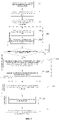
- the upper computer is mainly used for receiving the data from the lower computer and then displaying and storing the fetal heart rate data, depicting the fetal heart rate curve, as well as analyzing, displaying and printing the fetal heart rate data (comprising the identification of the fetal heart rate), wherein the main processing method is shown in Figure 1 :
- sequence segment meeting the conditions, is judged according to the preprocessed judgment standard. And according to the sequence segment and the corresponding baseline sequence segment thereof, deceleration and baseline variation sequence segments in the sequence segment are inspected and distinguished, and the number of continuous deceleration of the deceleration sequence segment is analyzed.
- the example preferably displays and / or prints and / or stores the identified deceleration data segment and the calculated results.
- Figure 2 shows the flow chart of a method for improving the identification accuracy of the fetal heart rate data deceleration in the following: 100.
- Collecting and processing the fetal heart signals and transforming them into the fetal heart rate data After the fetal heart signal received by an ultrasound probe in the lower computer is filtered by a hardware and calculates the fetal heart rate according to the autocorrelation algorithm, it is uploaded to the upper computer.
- the processing of the upper computer comprises: displaying, storing and depicting the fetal heart rate data into a fetal heart rate curve and processing the related data, etc.
- the hardware filtering is used for removing the frequency interference of the collected signals
- the autocorrelation algorithm is characterized in that it may strengthen a periodic signal and weaken stochastic noise, which are the general techniques for calculating the fetal heart rate data.
- the upper computer collects n-minute fetal heart rate data and obtains the fetal heart rate data sequence H(n), wherein in the example, at least ten minutes of data shall be needed to be collected. According " Fetal Electronic Monitoring ", generally, at least ten minutes of data are needed to determine the fetal heart rate baseline.
- the fetal heart rate baseline B(n) is identified with the adoption of the low-pass filtered method. Comparing to the fetal heart rate data, the baseline belongs to the low frequency signal.
- a low-pass filter is characterized in that low-frequency signals may be passed through the filter while high-frequency signals may not be passed through the filter, thus extracting the low frequency signals of the fetal heart rate baseline.
- the data in the sequence H(n) may also be firstly processed.
- the fetal heart rate baseline is indentified according to the data.
- Figure 5 shows collected fetal heart rate data and an identified fetal heart rate baseline.
- there are many methods for identifying the fetal heart rate data baseline for example, an averaging method generally adopted in the industry, etc.
- Processing the incorrect data in the sequence H(n) and obtains the sequence V(n) The incorrect data in the sequence H(n) are processed to obtain the effective fetal heart rate data sequence V(n). This step may effectively filter out the invalid and incorrect data in the fetal heart sequence generated because of poor quality of the fetal heart signals, and the rest are valid data.
- FIG. 1032 Processing the sequence V(n) with interpolation and obtaining the sequence C(n):
- the invalid data in the sequence V(n) are fitted with the linear interpolation method and obtains the sequence C(n).
- the linear interpolation method is a simple interpolation method in which other points in a straight line are obtained with a principle of forming a straight line through connecting two points.
- Figure 6 is an effect diagram of a preprocessed fetal heart rate data sequence.
- the fetal heart rate curve part in a square frame in the Figure is just the curve section obtained after the incorrect data are processed with the interpolation.
- Steps 1031 and 1032 the collected fetal heart rate data are preprocessed.
- the fetal heart rate data preprocessing step is not limited to the above steps. It can also adopt the following methods informed in the industry: the fetal heart rate value with bpm (beats per min) as the unit is divided with incorrect data and / or moving average and / or interpolation fitting, etc.
- the deceleration judgment standards which are preferably preset in the example are as follows: As to one section of the fetal heart rate curve, it may be determined to be in deceleration only when it meets all of the following conditions:
- sequences C(n) and B(n) are input into the deceleration judgment standard, thus obtaining the set C i S i E i 1 N of each sequence segment meeting the deceleration standard in the sequence C(n) and the corresponding baseline sequence segment set B i S i E i 1 N thereof. If there is not the sequence segment meeting the deceleration standard, it means that there is not deceleration in the fetal heart rate curve. At this time, the identification of the fetal heart rate deceleration may be ended, and the fetal heart rate data are collected once again.
- each sequence segment C i S i E i C i S i E i and B i S i E i are differenced to obtain the sequence segment D i S i E i .
- the continuous sequence segment which is not more than threshold R 0 , is sought in the sequence segment D i S i E i . If there is not the sequence segment in the sequence D i S i E i meeting the condition, the sequence segment C i S i E i consists of one deceleration group or continuous deceleration groups. The number of decelerations is analyzed with the continuous peak inspection algorithm method in the next step.
- the sequence segment at the corresponding place and in the C i S i E i is judged as the baseline variation part which is recorded as C j ′ S j ′ E j ′ 1 M , wherein C j ′ S j ′ E j ′ ⁇ C i S i E i .
- the baseline variation part divides the C i S i E i into a plurality of segments which are recorded as C ⁇ k ′ S ⁇ k ′ E k ′ 1 N 2 , wherein C ⁇ k ′ S ⁇ k ′ E k ′ ⁇ C i S i E i .
- C ⁇ k ′ S ⁇ k ′ E k ′ meets the deceleration standard. If it meets the deceleration standard, C ⁇ k ′ S ⁇ k ′ E k ′ is one deceleration group or continuous deceleration groups, and the number of the decelerations is analyzed with the continuous peak inspection algorithm in the next step. If it does not meet the deceleration standard, C ⁇ k ′ S ⁇ k ′ E k ′ is the baseline variation part. With this step, the deceleration part and the baseline variation part may be distinguished.
- each the fetal heart rate sequence segment (here, it may be C i S i E i or C ⁇ k ′ S ⁇ k ′ E k ′ ) to be analyzed, there is C ⁇ k ′ S ⁇ k ′ E k ′ ⁇ C i S i E i .
- the process analyzed with the continuous peak inspection algorithm is as follows: the continuous sequence segment, of which the deviation value of the corresponding baseline is not more than the threshold R1, is sought in the segment.
- the C ⁇ k ′ S ⁇ k ′ E k ′ is one deceleration. If there is the sequence segment meeting such condition, recording as the C ⁇ " k S ⁇ " 1 k E ' 1 k 1 M 2 , wherein C ⁇ " k S ⁇ " k E " k ⁇ C ⁇ k ′ S ⁇ k ′ E k ′ . And it is then analyzed whether each the segment C ⁇ " k S ⁇ " k E " k separately meets the deceleration standard.
- FIG. 7 is an effective diagram of deceleration identification.
- the fetal heart rate curve part in the square frame in the figure is the baseline variation part.
- the curve segment part designated with the Arrow is the identified fetal heart rate deceleration curve segment.
- Steps 1041, 1042 and 1043 are used for performing deceleration identification of the processed and collected fetal heart rate data. So far, this step has completed the identification for the deceleration data segment of the invention.
- Steps 105 and 106 may be directly entered into to calculate the attribute values and output the results, or Step 106 is directly entered into to output the calculated results.
- the example also may preferably adopt the following deceleration validation steps prior to the steps of calculation and result output.
- each deceleration sequence segment is real deceleration, according to the signal loss situation of each deceleration: If the deceleration of the above steps is obtained according to the interpolated sequence, it means that the deceleration is obtained without the consideration of the situation of signal loss. In this step, the deceleration shall be validated and the signal loss in each pre-deceleration shall be analyzed, thus determining whether each pre-deceleration is retained and split, and finally obtaining the real deceleration.
- the step also comprises the following processed processes:
- the indentified deceleration data segments are respectively input into a displaying module, a printing module and a storage module. Each deceleration data segment and the attribute values thereof are also identified and displayed in the fetal monitoring drawing. Its attribute values may be stored and printed.
- a fetal heart rate data collecting module 301 A fetal heart rate data collecting module 301:
- a fetal heart rate data deceleration attribute calculation module 305 The module 305 is connected with the fetal heart rate data deceleration identification module 304 and used for receiving the deceleration data segment transmitted by the fetal heart rate data deceleration identification module 304 and calculating the duration, amplitude and other deceleration attributes of each the deceleration data segment.
- An output module 306 The output module 306 is connected with the fetal heart rate data deceleration attribute calculation module 305 and used for receiving the deceleration data segment and the deceleration attribute calculation results thereof transmitted by the fetal heart rate data deceleration attribute calculation module 305, and outputting them.
- a device for improving identification accuracy of fetal heart rate deceleration also comprises: A fetal heart signal collecting, processing and transforming module 300: The module 300 is connected with the fetal heart rate data collecting module 301, is an ultrasound probe device realizing the collection, process and transformation of the signals, as well as is used for collecting the fetal heart signals, transforming them into the fetal heart rate data and transmitting the fetal heart rate data to the fetal heart rate data collecting module 301.
- a fetal heart rate data deceleration validation module 312 The module 312 is connected with the fetal heart rate data deceleration identification module 304 and the fetal heart rate data deceleration attribute calculation module 305 and is used for receiving the deceleration data segment transmitted by the fetal heart rate data deceleration identification module 304, validating whether each deceleration sequence segment is real deceleration according to the signal lossd situation of each deceleration, and transmitting the validated results to the fetal heart rate data deceleration attribute calculation module 305.
- a fetal heart rate data deceleration standard judgment setting module 313 The module 313 is connected with the fetal heart rate data deceleration identification module 304 and used for setting the fetal heart rate data deceleration judgment standard in advance and transmitting the standard to the fetal heart rate data deceleration module 304.
- a fetal heart rate data deceleration type judgment module 314 The module 314 is connected with the fetal heart rate data deceleration attribute calculation module 305 and used for judging the deceleration type under the conditions of collecting the uterine contraction data, and transmitting the judged results to the fetal heart rate data deceleration attribute calculation module 305.
- a collecting duration setting and judgment module 319 The module 319 is connected with the fetal heart rate data collecting module 301 and used for setting the collecting duration of the fetal heart rate data, and judging whether the collected data time exceeds the set duration. If it exceeds the set duration, a timeout signal is transmitted to the fetal heart rate data collecting module 301.
- the fetal heart rate data preprocessing module 303 further comprises:
Landscapes
- Health & Medical Sciences (AREA)
- Life Sciences & Earth Sciences (AREA)
- Engineering & Computer Science (AREA)
- Medical Informatics (AREA)
- Public Health (AREA)
- General Health & Medical Sciences (AREA)
- Biomedical Technology (AREA)
- Pathology (AREA)
- Biophysics (AREA)
- Veterinary Medicine (AREA)
- Heart & Thoracic Surgery (AREA)
- Physics & Mathematics (AREA)
- Molecular Biology (AREA)
- Surgery (AREA)
- Animal Behavior & Ethology (AREA)
- Cardiology (AREA)
- Radiology & Medical Imaging (AREA)
- Nuclear Medicine, Radiotherapy & Molecular Imaging (AREA)
- Computer Vision & Pattern Recognition (AREA)
- Physiology (AREA)
- Gynecology & Obstetrics (AREA)
- Pregnancy & Childbirth (AREA)
- Data Mining & Analysis (AREA)
- Databases & Information Systems (AREA)
- Epidemiology (AREA)
- Primary Health Care (AREA)
- Measuring Pulse, Heart Rate, Blood Pressure Or Blood Flow (AREA)
- Ultra Sonic Daignosis Equipment (AREA)
- Measurement And Recording Of Electrical Phenomena And Electrical Characteristics Of The Living Body (AREA)
Description
- The invention relates to the field of biomedical signal processing and specifically to a device for improving the identification accuracy of fetal heart rate deceleration and a realizing method thereof.
- The fetal heart rate deceleration is the most simple and effective method which provides reference and analysis for judging whether the fetal is safe during delivery period. During the whole delivery course, about 50% to 70% of delivery cases have the fetal heart rate deceleration. Their representative cases are early deceleration, late deceleration and variable deceleration. The early deceleration is generally caused because the fetal head is compressed, which is generally regarded as reference and has little relation with fetal hypoxia. However, if the early deceleration occurs during the early phase of the delivery course, umbilical cord is compressed and the fetal may have hypoxia. The late deceleration is generally caused because the lack of oxygen causes the vagus nerve to have hyperactivity and / or myocardium is inhibited, which is generally regarded as reference. It mainly occurs during the uterus - placental blood flow reduction and fetal hypoxia caused by placental dysfunction. The variation deceleration is mainly caused because the umbilical cord is compressed. When the severe variation deceleration or atypical variation deceleration occurs, they prompt that the fetal is distressed, which is generally regarded as a reference.
- Currently, there are no uniform quantitative criteria clinically judging the fetal heart rate deceleration and the type thereof. Therefore, the method for clinically and automatically identifying the fetal heart rate deceleration data are calculated mainly according to the deceleration standard set by the duration, decrease amplitude and other experiential parameters. That is, a fetal monitoring module firstly collects the fetal heart rate, identifies the fetal heart rate baseline, and then calculates the number of the deceleration and the duration, amplitude, types and so on under the baseline, according to the standard set by the clinical deceleration experiential parameters. However, such method for identifying the deceleration with the experiential parameters in the clinical application has the following disadvantages: firstly, as there are various deceleration types in the clinical environment; the experiential parameters are not necessarily accurate and may not cover all cases, thus facilitating the deceleration identification data to have large errors; Secondly, the method may not identify the continuous deceleration and not eliminate the baseline variation part, thus resulting in the number of the identified deceleration data being lower than the actual number and resulting in counting the baseline variation part into the deceleration; thirdly, there may be the mixing of many deceleration types during the delivery; The method only may identify one type of one deceleration datum and may not identify the composite deceleration data.
- The experiential parameters may not meet the requirements of automatic identification deceleration. The objective of the invention is to overcome the following disadvantages: the deceleration errors identified according to the fetal heart rate deceleration automatic identification method in the prior art are large; the continuous deceleration may not be identified; the baseline variation may not be eliminated; and the composite deceleration may not be identified. The invention, with a dynamic threshold area algorithm, a continuous peak inspection algorithm and a composite deceleration inspection algorithm, may effectively eliminate the baseline variation part and accurately identify each deceleration and the type thereof.
- Mantel et al, International Journal of Bio-Medical Computing, 25(4), 1990, pages 261-272, describes a method for baseline determination in antepartum fetal heart rate.
- Mantel et al, International Journal of Bio-Medical Computing, 25(4), 1990, pages 273-286, refers to the above mentioned article on baseline determination as providing a solid base for the subsequent determination of accelerations or decelerations and describes a method for the detection of accelerations and decelerations in antepartum fetal heart rate.
- US Patent Application Publication No.
US 2009/0054797 (published 26 February 2009 ) describes a fetal monitoring system and method. - In order to overcome the abovementioned disadvantages, the objective of the invention is to propose a device and method for improving the identification accuracy of the fetal heart rate data deceleration.
- The objective is realized through the following technical proposals:
- A device for improving identification accuracy of fetal heart rate deceleration, wherein the device comprises a fetal heart rate data collecting module, a fetal heart rate data baseline identification module, a fetal heart rate data preprocessing module, a fetal heart rate data deceleration identification module, an output module, a fetal heart rate signal collecting, processing and transforming module, a fetal heart rate data deceleration validation module, a fetal heart rate data deceleration judgment standard setting module, a fetal heart rate data deceleration type judgment module, a collecting duration setting and judgment module and a fetal heart rate data deceleration attribute calculation module;
- the fetal heart rate data collecting module is adapted to be used for collecting the fetal heart data of preset duration to obtain a fetal heart rate data sequence H(n);
- the fetal heart rate data baseline identification module is connected with the fetal heart rate data collecting module and is adapted to be used for receiving the fetal heart rate data sequence H(n) transmitted by the fetal heart rate data collecting module and identifying a fetal heart rate baseline sequence B(n);
- the fetal heart rate data preprocessing module is connected with the fetal heart rate data collecting module and is adapted to be used for receiving the fetal heart rate data sequence H(n) transmitted by the fetal heart rate data collecting module and preprocessing the sequence H(n) to obtain a fetal heart rate data sequence V(n);
- the fetal heart rate data deceleration identification module is connected with the fetal heart rate data baseline identification module and the fetal heart rate data preprocessing module and is adapted to be used for receiving the fetal heart rate baseline sequence B(n) transmitted by the fetal heart rate data baseline identification module and the preprocessed sequence C(n) transmitted by the fetal heart rate data preprocessing module; and performing deceleration identification for the preprocessed C(n) to obtain a decelerated data segment, according to preset deceleration judgment standards and the fetal heart rate data baseline sequence B(n);
- the output module is connected with the fetal heart rate data deceleration identification module and is adapted to be used for receiving the decelerated data segment transmitted by the fetal heart rate data deceleration identification module and output the decelerated data segment and the calculated values;
- the fetal heart rate signal collecting, processing and transforming module is connected with the fetal heart rate data collecting module and is adapted to be used for collecting a fetal heart signal, transforming the signal into fetal heart rate data and transmitting the fetal heart rate data to the fetal heart rate data collecting module;
- the fetal heart rate deceleration validation module is connected with the fetal heart rate data deceleration identification module and the fetal heart rate data deceleration attribute calculation module and is adapted to be used for receiving the decelerated data segment transmitted by the fetal heart rate data deceleration identification module; and the fetal heart rate data deceleration validation module is adapted to validate, according to a loss condition of each decelerated signal, whether each decelerated sequence segment is retained, and to transmit a validation result to the fetal heart rate data deceleration attribute calculation module, wherein validating, according to a loss condition of each decelerated signal, whether each decelerated sequence segment is retained comprises:
- comparing the sequences V(n) and C(n) and marking an interpolation place to obtain a marked sequence M(n);
- as to each the deceleration, adjusting original and destination points according to the sequence M(n) and facilitating the original and destination points not to be the interpolation points and to be most close to the interpolation point; and
- calculating an adjusted signal loss degree L, wherein the signal loss degree L is a proportion of a number of the interpolation points of the fetal heart rate data, when the the signal loss degree L does not exceed a threshold
L , the decelerated sequence segment is retained;
- the fetal heart rate data judgment standard setting module is connected with the fetal heart rate deceleration identification module and is adapted to be used for setting the fetal heart rate data deceleration judgment standards in advance and transmitting the judgment standards to the fetal heart rate data deceleration identification module;
- the fetal heart rate data deceleration type judgment module is connected with the fetal heart rate data deceleration attribute calculation module and is adapted to be used for judging the deceleration type under the conditions of collecting uterine contraction data and transmitting the judgment result to the fetal heart rate data deceleration attribute calculation module;
- the collecting duration setting and judgment module is connected with the fetal heart rate data collecting module and is adapted to be used for setting the fetal heart rate collecting duration and judging whether the collecting data time exceeds the set duration; and the collecting duration setting and judgment module is adapted to transmit a timeout signal to the fetal heart rate data collecting module if the collecting data time exceeds the set duration; and
- the fetal heart rate data deceleration attribute calculation module is connected with the fetal heart rate data deceleration identification module and the output module and is adapted to be used for receiving the deceleration data segment transmitted by the fetal heart rate data deceleration identification module, calculating a deceleration attribute value of the each deceleration data segment, wherein the deceleration attribute value comprises a duration and an amplitude, and transmitting calculated values to the output module; and
- the output module is connected with the fetal heart rate data deceleration identification module and is adapted to be used for receiving the decelerated data segment transmitted by the fetal heart rate data deceleration identification module and output the decelerated data segment and the calculated values;
- wherein the fetal heart rate data preprocessing module further comprises:
- an incorrect data processing unit adapted to be used for processing the incorrect data of the fetal heart rate data sequence H(n) and obtaining the effective fetal heart rate data sequence V(n); and
- an interpolation processing unit adapted to be used for fitting an invalid data part in the effective fetal heart rate data sequence V(n) with a linear interpolation method to obtain the fetal heart rate data sequence C(n).
- As a further technical proposal of the invention, the fetal heart rate data deceleration identification module also comprises:
- a standard comparison unit used for judging whether there is a sequence segment meeting a preset deceleration judgment standard in the feta heart rate data sequence C(n);
- a deceleration and variation unit used for inspecting and distinguishing deceleration and baseline variation sequence segments in the sequence C(n)meeting the standard, according to the fetal heart data sequence C(n) meeting the judgment standard and the corresponding baseline sequence B(n) thereof; and
- a deceleration number analysis unit used for analyzing the continuous deceleration number of a deceleration sequence in the sequence C(n) meeting the standard.
- As a further technical proposal of the invention, the output module also comprises:
- a display unit used for displaying an identified deceleration data segment and an attribute value thereof;
- a printing unit used for printing and outputting the identified deceleration data segment and the attribute value thereof;
- a storage unit used for storing the identified deceleration data segment and the attribute value thereof;
- an identification unit used for identifying the identified deceleration data segment and the attribute value thereof.
- A method for improving the identification accuracy of a fetal heart rate data deceleration, wherein, the method comprises:
-
Step 1, collecting the fetal heart rate data within preset duration to obtain a fetal heart rate data sequence H(n); - Step 2, performing baseline identification on the fetal heart rate data sequence H(n) to obtain a fetal heart rate baseline data sequence B(n);
- Step 3, preprocessing the fetal heart rate data sequence H(n) to obtain a preprocessed fetal heart rate data sequence C(n);
- Step 4, performing deceleration identification on the preprocessed fetal heart rate sequence C(n) to obtain a decelerated data segment, according to a preset deceleration judgment standard and the fetal heart rate data baseline sequence B(n);
- Step 5, judging a signal loss situation of each the deceleration data segment and validating whether each the deceleration sequence segment is retained, according to the deceleration data segment; and
- Step 6, outputting each decelerated data segment and calculation results of a deceleration attribute value thereof;
- wherein Step 3 further comprises:
- Step 3-1, processing the incorrect data of the fetal heart rate data sequence H(n) to obtain a sequence V(n); and
- Step 3-2, processing the interpolation of the sequence V(n) to obtain the preprocessed fetal heart rate data sequence C(n);
- wherein Step 5 comprises:
- comparing the sequences V(n) and C(n) and marking an interpolation place to obtain a marked sequence M(n);
- as to each the deceleration, adjusting original and destination points according to the sequence M(n) and facilitating the original and destination points not to be the interpolation points and to be most close to the interpolation point; and
- calculating an adjusted signal loss degree L, wherein the signal loss degree L is a proportion of a number of the interpolation points of the fetal heart rate data, when the the signal loss degree L does not exceed a threshold
L , the decelerated sequence segment is retained.
- wherein Step 3 further comprises:
- As a further technical proposal in the invention, before
Step 1, the method further comprises: collecting and processing a fetal heart signal, transforming it and obtaining the fetal heart rate data. - As a further technical proposal of the invention, Step 4 also comprises:
- Step 41, the sequences C(n) and B(n) are input into the preset deceleration judgment standard, thus obtaining the set


Step 1 and collect the fetal heart rate data again; - Step 42,


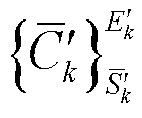
- Step 43, the continuous sequence segment, which deviates its corresponding baseline and of which the value exceeds threshold R1, is sought in the deceleration segment


- As the further technical proposal of the invention, after Step 4, the method also comprises: judging the signal loss situation of each the deceleration data segment and validating whether each the deceleration sequence segment is in real deceleration, according to the deceleration data segment.
- As a further technical proposal of the invention, Step 6 further comprises: displaying and / or printing and / or storing and / or identifying the deceleration data segment and the calculation results of the attribute values.
- As a further technical proposal of the invention, the preset deceleration judgment standard in Step 4 also comprises:
- Firstly: The fetal heart rate curves of the segment shall all be under the fetal heart rate baseline;
- Secondly, the duration T under the fetal heart rate baseline shall be more than the threshold T 0 ; and
- Thirdly, The maximum amplitude A deviating the baseline shall be more than the threshold A 0 .
- Fourthly, the fetal heart rate curve of the segment and the corresponding baseline segment thereof are set as


- The invention, with a dynamic threshold area algorithm, a continuous peak inspection algorithm and a composite deceleration inspection algorithm, may effectively eliminate the baseline variation part, accurately identify each deceleration and the type thereof, and avoid the following disadvantages: the deceleration identification in the prior art is easily caused to have large errors; the continuous deceleration may not be identified; the baseline variation may not be eliminated; and the composite deceleration may not be identified. The proposal is adapted for not only the deceleration separately occurring (typical deceleration situation) but also the continuous deceleration and composite deceleration situations.
- For easy description, the invention is described with the following preferred examples and drawings.
-
Figure 1 is an example flow chart of a method for improving the identification accuracy of a fetal heart rate data according to the invention; -
Figure 2 is an another example flow chart of a method for improving the identification accuracy of a fetal heart rate data according to the invention; -
Figure 3 is an example site structure of a device for improving the identification accuracy of a fetal heart rate data according to the invention; -
Figure 4 is an another example site structure of a device for improving the identification accuracy of a fetal heart rate data according to the invention; -
Figure 5 is a schematic diagram of collected fetal heart rate data and an identified fetal heart rate baseline; -
Figure 6 is an effect diagram of a preprocessed fetal heart rate data sequence; -
Figure 7 is an effect diagram of the deceleration identification of a fetal heart rate data sequence; -
Figure 8 is an effect diagram of the deceleration validation of a fetal heart rate data sequence; and -
Figure 9 is an effect diagram of the identification of the deceleration type of a fetal heart rate data sequence when there are uterine contraction data. - In order that the objective, technical proposal and advantages of the invention are better described, the invention is further described in details with the combination of drawings and embodiments in the following: It shall be understood that the embodiments described herein are merely used for explaining the invention and not used for limiting the invention.
- The technical proposal for automatically identifying the fetal heart rate deceleration is realized mainly through an upper computer and a lower computer, wherein the lower computer collects a fetal heart rate signal mainly through an ultrasound probe and then calculates the fetal heart rate through a hardware filtered process and autocorrelation algorithm. The upper computer is mainly used for receiving the data from the lower computer and then displaying and storing the fetal heart rate data, depicting the fetal heart rate curve, as well as analyzing, displaying and printing the fetal heart rate data (comprising the identification of the fetal heart rate), wherein the main processing method is shown in
Figure 1 : - 101. Collecting the fetal heart rate data:
The upper computer collects n-minute fetal heart rate data and obtains the fetal heart rate data sequence H(n), wherein In the example, at least ten minutes of data shall be needed to be collected. According "Fetal Electronic Monitor", generally, at least ten minutes of data are needed to determine the fetal heart rate baseline. - 102. Identifying the baseline of the collected fetal heart rate data:
According to the sequence H(n), the fetal heart rate baseline data sequence B(n) is identified with the adoption of a low-pass filtered method. Comparing to the fetal heart rate data, the baseline belongs to the low frequency signal. A low-pass filter is characterized in that low-frequency signals may be passed through the filter while high-frequency signals may not be passed through the filter, thus extracting the low frequency signals of the fetal heart rate baseline. In addition, in this step, the data in the sequence H(n) may also be firstly processed. After the data are processed with an incorrect data processing method, an average filtering method and a linear interpolation method, the fetal heart rate baseline is indentified according to the data.Figure 5 shows collected fetal heart rate data and an identified fetal heart rate baseline; - 103. Preprocessing the collected fetal heart rate data:
The sequence H(n) is processed with the incorrect data processing method and the linear interpolation method in sequence and then obtains the fetal heart rate data sequence corresponding to different preprocessing processes. - 104. Performing deceleration identification on the preprocessed fetal heart rate data according to the deceleration judgment standard and the fetal heart rate baseline to obtain the deceleration data segment.
- The sequence segment, meeting the conditions, is judged according to the preprocessed judgment standard. And according to the sequence segment and the corresponding baseline sequence segment thereof, deceleration and baseline variation sequence segments in the sequence segment are inspected and distinguished, and the number of continuous deceleration of the deceleration sequence segment is analyzed.
- 105. Calculating the deceleration attribute values of each deceleration data segment:
According to the original point, destination point and duration of each deceleration, the maximum amplitude value deviating the baseline in the deceleration is calculated. - 106. Outputting the deceleration data segment and the calculation results:
The example preferably displays and / or prints and / or stores the identified deceleration data segment and the calculated results. - In order to better understand the invention, as another example of the invention,
Figure 2 shows the flow chart of a method for improving the identification accuracy of the fetal heart rate data deceleration in the following:
100. Collecting and processing the fetal heart signals and transforming them into the fetal heart rate data:
After the fetal heart signal received by an ultrasound probe in the lower computer is filtered by a hardware and calculates the fetal heart rate according to the autocorrelation algorithm, it is uploaded to the upper computer. The processing of the upper computer comprises: displaying, storing and depicting the fetal heart rate data into a fetal heart rate curve and processing the related data, etc. wherein, the hardware filtering is used for removing the frequency interference of the collected signals, and the autocorrelation algorithm is characterized in that it may strengthen a periodic signal and weaken stochastic noise, which are the general techniques for calculating the fetal heart rate data. - 101. Collecting the fetal heart rate data and obtains the fetal heart rate data sequence H(n):
The upper computer collects n-minute fetal heart rate data and obtains the fetal heart rate data sequence H(n), wherein in the example, at least ten minutes of data shall be needed to be collected. According "Fetal Electronic Monitoring", generally, at least ten minutes of data are needed to determine the fetal heart rate baseline. - 102. Identifying the fetal heart rate baseline in the sequence H(n) and obtaining the sequence B(n);
According to the sequence H(n), the fetal heart rate baseline B(n) is identified with the adoption of the low-pass filtered method. Comparing to the fetal heart rate data, the baseline belongs to the low frequency signal. A low-pass filter is characterized in that low-frequency signals may be passed through the filter while high-frequency signals may not be passed through the filter, thus extracting the low frequency signals of the fetal heart rate baseline. In addition, in this step, the data in the sequence H(n) may also be firstly processed. After the data are processed with an incorrect data processing method, an average filtering method and a linear interpolation method, the fetal heart rate baseline is indentified according to the data.Figure 5 shows collected fetal heart rate data and an identified fetal heart rate baseline. In addition, there are many methods for identifying the fetal heart rate data baseline, for example, an averaging method generally adopted in the industry, etc. - 1031. Processing the incorrect data in the sequence H(n) and obtains the sequence V(n):
The incorrect data in the sequence H(n) are processed to obtain the effective fetal heart rate data sequence V(n). This step may effectively filter out the invalid and incorrect data in the fetal heart sequence generated because of poor quality of the fetal heart signals, and the rest are valid data. - 1032. Processing the sequence V(n) with interpolation and obtaining the sequence C(n):
The invalid data in the sequence V(n) are fitted with the linear interpolation method and obtains the sequence C(n). The linear interpolation method is a simple interpolation method in which other points in a straight line are obtained with a principle of forming a straight line through connecting two points.Figure 6 is an effect diagram of a preprocessed fetal heart rate data sequence. The fetal heart rate curve part in a square frame in the Figure is just the curve section obtained after the incorrect data are processed with the interpolation. - In
Steps - 1041. It is judged whether there is a sequence segment in the sequence C(n) meeting the preset deceleration judgment standard:
The deceleration judgment standards which are preferably preset in the example are as follows:
As to one section of the fetal heart rate curve, it may be determined to be in deceleration only when it meets all of the following conditions: - Firstly, the section of the fetal heart rate curve of the segment shall all be under the fetal heart rate baseline;
- Secondly, the duration T under the fetal heart rate baseline shall be more than or equal to the threshold T 0 ; and
- Thirdly, the maximum amplitude A deviating the baseline shall be more than or equal to the threshold A 0 .
- Fourthly, the area S is obtained from the fetal heart rate curve according to complexification value integration principle. Its process is as follows: the fetal heart rate curve of the segment and the corresponding baseline segment thereof are set as


- The sequences C(n) and B(n) are input into the deceleration judgment standard, thus obtaining the set
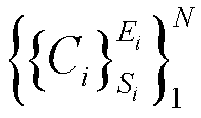

- 1042. According to the sequence C(n) meeting the standard and the corresponding baseline sequence B(n) thereof, deceleration and baseline variation sequence segments in the sequence C(n) meeting the standard are inspected and distinguished.
- As to each sequence segment


- 1043. Analyzing the number of the continuous decelerations of the deceleration sequence segment:
As to each the fetal heart rate sequence segment (here, it may be


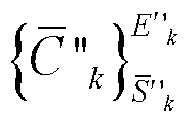


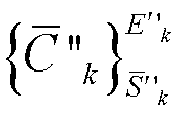
Figure 7 is an effective diagram of deceleration identification. The fetal heart rate curve part in the square frame in the figure is the baseline variation part. The curve segment part designated with the Arrowis the identified fetal heart rate deceleration curve segment.
- The
abovementioned Steps Steps Step 106 is directly entered into to output the calculated results. In order to facilitate the results to be more accurate, the example also may preferably adopt the following deceleration validation steps prior to the steps of calculation and result output. - 107. It is validated whether each deceleration sequence segment is real deceleration, according to the signal loss situation of each deceleration:
If the deceleration of the above steps is obtained according to the interpolated sequence, it means that the deceleration is obtained without the consideration of the situation of signal loss. In this step, the deceleration shall be validated and the signal loss in each pre-deceleration shall be analyzed, thus determining whether each pre-deceleration is retained and split, and finally obtaining the real deceleration. The step also comprises the following processed processes: - The first step: comparing the sequences V(n) and C(n) and marking the interpolation place to obtain a marked sequence M(n);
- The second step: as to each the deceleration, adjusting the places of original and destination points according to the sequence M(n) and facilitating the original and destination points not to be the interpolation points and to be most close to the interpolation point; and
- The third step: the adjusted signal lossd degree L is calculated. The signal lossd degree is the number (being equal to the number of the interpolation points) of the invalidated values in the fetal heart rate deceleration curve data and the proportion of the invalidated values against the whole part. If the L exceeds the threshold
L , the qualification of the deceleration shall be cancelled. Otherwise, the qualification of the deceleration is retained.Figure 8 is an effective diagram of deceleration validation. The arrow icon in the figure indicates the deceleration. - 105. Calculating the duration, amplitude and / or type of each deceleration:
- Calculating the duration DS according to the original point DE and the destination point DT of each deceleration, calculating the maximum amplitude DA deviating the baseline in the deceleration and recording the place DP of the point (peak point);
- In addition, if the type of the deceleration may be judged while the uterine contraction data are collected, then if the uterine contraction data are not collected, the final deceleration displaying effective diagram is in line with
Figure 8 . If the uterine contraction data are collected, the process that the type of the deceleration is determined with the adoption of composite deceleration inspection algorithm is as follows: Judgment conditions 1: DS is subtracted by DP and obtains DPS which is larger than or equal to thethreshold 


threshold 


threshold 


threshold 
threshold 

threshold 
judgment conditions 1, the deceleration data are judged to be early deceleration. If they meet the judgment conditions 2, they are judged as the late deceleration. If they meet the judgment conditions 3, they are judged as the variable deceleration. If they meet the judgment conditions 4, they are judged as the prolonged deceleration. Each the deceleration datum is input into the four judgment conditions. If only one judgment condition is met, the deceleration is judged to be a typical deceleration, that is, a single-type deceleration. If many judgment conditions are met, the deceleration is judged to be an atypical deceleration, that is, a composite-type deceleration. Meanwhile, the deceleration is determined to be what type composite deceleration according to the conditions met by the deceleration.Figure 9 is an effective diagram of the identification of deceleration type when there are uterine contraction data. In the figure,indicates the early deceleration; indicates the variable deceleration;
 indicates the composite of the early deceleration and the variable deceleration; and
 indicates the composite of the late deceleration and the variable deceleration.
- 106. Displaying and / or printing and / or storing and / or identifying the deceleration data segment and the attribute values:
The indentified deceleration data segments are respectively input into a displaying module, a printing module and a storage module. Each deceleration data segment and the attribute values thereof are also identified and displayed in the fetal monitoring drawing. Its attribute values may be stored and printed. - In order to better explain the invention, an example site structure of a device for improving the identification accuracy of a fetal heart rate data is provided, which is shown in
Figure 3 :
A fetal heart rate data collecting module 301: - The
module 301 is used for collecting the fetal heart rate data with preset duration and obtaining the fetal heart rate data sequence H(n); - A fetal heart rate data baseline identification module 302:
Themodule 302 is connected with the fetal heart ratedata collecting module 301 and used for receiving the fetal heart rate data sequence H(n) transmitted by the fetal heart ratedata collecting module 301 and identifying the fetal heart rate baseline sequence B(n); - A fetal heart rate data preprocessing module 303:
Themodule 303 is connected with the fetal heart ratedata collecting module 301 and used for receiving the fetal heart rate data sequence H(n) transmitted by the fetal heart ratedata collecting module 301, and preprocessing the sequence H(n) to obtain the fetal heart rate data sequence V(n); - A fetal heart rate data deceleration identification module 304:
Themodule 304 is connected with the fetal heart rate databaseline identification module 302 and the fetal heart ratedata preprocessing module 303 and used for receiving the fetal heart rate data baseline sequence B(n) transmitted by the fetal heart rate databaseline identification module 302 and the preprocessed sequence V(n) transmitted by the fetal heart ratedata preprocessing module 303. The deceleration identification for the preprocessed fetal heart rate data sequence V(n) is performed to obtain a decelerated data segment, according to the preset deceleration judgment standards and the fetal heart rate data baseline sequence B(n). - A fetal heart rate data deceleration attribute calculation module 305:
Themodule 305 is connected with the fetal heart rate datadeceleration identification module 304 and used for receiving the deceleration data segment transmitted by the fetal heart rate datadeceleration identification module 304 and calculating the duration, amplitude and other deceleration attributes of each the deceleration data segment. - An output module 306:
Theoutput module 306 is connected with the fetal heart rate data decelerationattribute calculation module 305 and used for receiving the deceleration data segment and the deceleration attribute calculation results thereof transmitted by the fetal heart rate data decelerationattribute calculation module 305, and outputting them. - In order to better explain the invention, another example site structure of a device for improving the identification accuracy of a fetal heart rate data is provided, which is shown in
Figure 4 :
A device for improving identification accuracy of fetal heart rate deceleration also comprises:
A fetal heart signal collecting, processing and transforming module 300:
Themodule 300 is connected with the fetal heart ratedata collecting module 301, is an ultrasound probe device realizing the collection, process and transformation of the signals, as well as is used for collecting the fetal heart signals, transforming them into the fetal heart rate data and transmitting the fetal heart rate data to the fetal heart ratedata collecting module 301. - A fetal heart rate data deceleration validation module 312:
Themodule 312 is connected with the fetal heart rate datadeceleration identification module 304 and the fetal heart rate data decelerationattribute calculation module 305 and is used for receiving the deceleration data segment transmitted by the fetal heart rate datadeceleration identification module 304, validating whether each deceleration sequence segment is real deceleration according to the signal lossd situation of each deceleration, and transmitting the validated results to the fetal heart rate data decelerationattribute calculation module 305. - A fetal heart rate data deceleration standard judgment setting module 313:
Themodule 313 is connected with the fetal heart rate datadeceleration identification module 304 and used for setting the fetal heart rate data deceleration judgment standard in advance and transmitting the standard to the fetal heart ratedata deceleration module 304. - A fetal heart rate data deceleration type judgment module 314:
Themodule 314 is connected with the fetal heart rate data decelerationattribute calculation module 305 and used for judging the deceleration type under the conditions of collecting the uterine contraction data, and transmitting the judged results to the fetal heart rate data decelerationattribute calculation module 305. - A collecting duration setting and judgment module 319:
Themodule 319 is connected with the fetal heart ratedata collecting module 301 and used for setting the collecting duration of the fetal heart rate data, and judging whether the collected data time exceeds the set duration. If it exceeds the set duration, a timeout signal is transmitted to the fetal heart ratedata collecting module 301. - In addition, the fetal heart rate
data preprocessing module 303 further comprises: - an incorrect
data processing unit 307 used for processing the incorrect data of the fetal heart rate data sequence H(n) and obtaining the effective fetal heart rate data sequence V(n); - an
interpolation processing unit 308 used for fitting an invalid data part in the effective fetal heart rate data sequence V(n) with a linear interpolation method to obtain the fetal heart rate data sequence C(n). - the fetal heart rate data
deceleration identification module 304 further comprises:- a
standard comparison unit 309 used for judging whether there is a sequence segment meeting a preset deceleration judgment standard in the feta heart rate data sequence C(n); - a deceleration and
variation distinguishing unit 310 used for inspecting and distinguishing deceleration and baseline variation sequence segments in the sequence C(n) meeting the standard, according to the fetal heart data sequence C(n) meeting the judgment standard and the corresponding baseline sequence B(n) thereof; and - a deceleration
number analysis unit 311 used for analyzing the continuous deceleration number of a deceleration sequence in the sequence C(n) meeting the standard. - the
output module 306 further comprises:- a
display unit 315 used for displaying an identified deceleration data segment and an attribute value thereof; - a printing unit 316 used for printing and outputting the identified deceleration data segment and the attribute value thereof;
- a
storage unit 317 used for storing the identified deceleration data segment and the attribute value thereof; and - an
identification unit 318 used for identifying the identified deceleration data segment and the attribute value thereof.
- a
- a
- The abovementioned examples are only the preferred examples of the invention and do not limit the invention which is defined by the appended claims.
Claims (8)
- A device for improving identification accuracy of fetal heart rate deceleration, wherein the device comprises a fetal heart rate data collecting module (301), a fetal heart rate data baseline identification module (302), a fetal heart rate data preprocessing module (303), a fetal heart rate data deceleration identification module (304), an output module (306), a fetal heart rate signal collecting, processing and transforming module (300), a fetal heart rate data deceleration validation module (312), a fetal heart rate data deceleration judgment standard setting module (313), a fetal heart rate data deceleration type judgment module (314), a collecting duration setting and judgment module (319) and a fetal heart rate data deceleration attribute calculation module (305);the fetal heart rate data collecting module (301) is adapted to be used for collecting the fetal heart data of preset duration to obtain a fetal heart rate data sequence H(n);the fetal heart rate data baseline identification module (302) is connected with the fetal heart rate data collecting module (301) and is adapted to be used for receiving the fetal heart rate data sequence H(n) transmitted by the fetal heart rate data collecting module and identifying a fetal heart rate baseline sequence B(n);the fetal heart rate data preprocessing module (303) is connected with the fetal heart rate data collecting module (301) and is adapted to be used for receiving the fetal heart rate data sequence H(n) transmitted by the fetal heart rate data collecting module and preprocessing the sequence H(n) to obtain a fetal heart rate data sequence V(n);the fetal heart rate data deceleration identification module (304) is connected with the fetal heart rate data baseline identification module (302) and the fetal heart rate data preprocessing module (303) and is adapted to be used for receiving the fetal heart rate baseline sequence B(n) transmitted by the fetal heart rate data baseline identification module and the preprocessed sequence C(n) transmitted by the fetal heart rate data preprocessing module; and performing deceleration identification for the preprocessed C(n) to obtain a decelerated data segment, according to preset deceleration judgment standards and the fetal heart rate data baseline sequence B(n);the output module (306) is connected with the fetal heart rate data deceleration identification module (304) and is adapted to be used for receiving the decelerated data segment transmitted by the fetal heart rate data deceleration identification module and output the decelerated data segment and the calculated values;the fetal heart rate signal collecting, processing and transforming module (300) is connected with the fetal heart rate data collecting module (301) and is adapted to be used for collecting a fetal heart signal, transforming the signal into fetal heart rate data and transmitting the fetal heart rate data to the fetal heart rate data collecting module;the fetal heart rate deceleration validation module (312) is connected with the fetal heart rate data deceleration identification module (304) and the fetal heart rate data deceleration attribute calculation module (305) and is adapted to be used for receiving the decelerated data segment transmitted by the fetal heart rate data deceleration identification module (304); and the fetal heart rate data deceleration validation module (312) is adapted to validate, according to a loss condition of each decelerated signal, whether each decelerated sequence segment is retained, and to transmit a validation result to the fetal heart rate data deceleration attribute calculation module (305), wherein validating, according to a loss condition of each decelerated signal, whether each decelerated sequence segment is retained comprises:comparing the sequences V(n) and C(n) and marking an interpolation place to obtain a marked sequence M(n);for each deceleration, adjusting original and destination points according to the sequence M(n) and facilitating the original and destination points not to be the interpolation points and to be most close to the interpolation point; and calculating an adjusted signal loss degree L , wherein the signal loss degree L is a proportion of a number of the interpolation points of the fetal heart rate data, when the the signal loss degree L does not exceed a threshold
L , the decelerated sequence segment is retained;the fetal heart rate data judgment standard setting module (313) is connected with the fetal heart rate deceleration identification module (304) and is adapted to be used for setting the fetal heart rate data deceleration judgment standards in advance and transmitting the judgment standards to the fetal heart rate data deceleration identification module;the fetal heart rate data deceleration type judgment module (314) is connected with the fetal heart rate data deceleration attribute calculation module (305) and is adapted to be used for judging the deceleration type under the conditions of collecting uterine contraction data and transmitting the judgment result to the fetal heart rate data deceleration attribute calculation module;the collecting duration setting and judgment module (319) is connected with the fetal heart rate data collecting module (301) and is adapted to be used for setting the fetal heart rate collecting duration and judging whether the collecting data time exceeds the set duration; and the collecting duration setting and judgment module is adapted to transmit a timeout signal to the fetal heart rate data collecting module if the collecting data time exceeds the set duration; andthe fetal heart rate data deceleration attribute calculation module (305) is connected with the fetal heart rate data deceleration identification module (304) and the output module (306) and is adapted to be used for receiving the deceleration data segment transmitted by the fetal heart rate data deceleration identification module (304), calculating a deceleration attribute value of the each deceleration data segment, wherein the deceleration attribute value comprises a duration and an amplitude, and transmitting calculated values to the output module (306);wherein the fetal heart rate data preprocessing module (303) further comprises:an incorrect data processing unit (307) adapted to be used for processing the incorrect data of the fetal heart rate data sequence H(n) and obtaining the effective fetal heart rate data sequence V(n); andan interpolation processing unit (308) adapted to be used for fitting an invalid data part in the effective fetal heart rate data sequence V(n) with a linear interpolation method to obtain the fetal heart rate data sequence C(n). - The device for improving the identification accuracy of the fetal heart rate data deceleration according to claim 1, wherein the fetal heart rate data deceleration identification module further comprises:a standard comparison unit (309) adapted to be used for judging whether there is a sequence segment meeting a preset deceleration judgment standard in the feta heart rate data sequence C(n);a deceleration and variation distinguishing unit (310) adapted to be used for inspecting and distinguishing deceleration and baseline variation sequence segments in the sequence C(n) meeting the standard, according to the fetal heart data sequence C(n) meeting the judgment standard and the corresponding baseline sequence B(n) thereof; anda deceleration number analysis unit (311) adapted to be used for analyzing the continuous deceleration number of a deceleration sequence in the sequence C(n) meeting the standard.
- The device for improving the identification accuracy of the fetal heart rate data deceleration according to claim 1, wherein the output module further comprises:a display unit (315) adapted to be used for displaying the identified deceleration data segment and the attribute value thereof;a printing unit (316) adapted to be used for printing and outputting the identified deceleration data segment and the attribute value thereof;a storage unit (317) adapted to be used for storing the identified deceleration data segment and the attribute value thereof; andan identification unit (318) adapted to be used for identifying the identified deceleration data segment and the attribute value thereof.
- A method for improving the identification accuracy of a fetal heart rate data deceleration, wherein, the method comprises:Step 1, collecting the fetal heart rate data within preset duration to obtain a fetal heart rate data sequence H(n);Step 2, performing baseline identification on the fetal heart rate data sequence H(n) to obtain a fetal heart rate baseline data sequence B(n);Step 3, preprocessing the fetal heart rate data sequence H(n) to obtain a preprocessed fetal heart rate data sequence C(n);Step 4, performing deceleration identification on the preprocessed fetal heart rate sequence C(n) to obtain a decelerated data segment, according to a preset deceleration judgment standard and the fetal heart rate data baseline sequence B(n);Step 5, judging a signal loss situation of each the deceleration data segment and validating whether each the deceleration sequence segment is retained, according to the deceleration data segment; andStep 6, outputting each decelerated data segment and calculation results of a deceleration attribute value thereof;wherein Step 3 further comprises:Step 3-1, processing the incorrect data of the fetal heart rate data sequence H(n) to obtain a sequence V(n); andStep 3-2, processing the interpolation of the sequence V(n) to obtain the preprocessed fetal heart rate data sequence C(n);wherein Step 5 comprises:comparing the sequences V(n) and C(n) and marking an interpolation place to obtain a marked sequence M(n);as to each the deceleration, adjusting original and destination points according to the sequence M(n) and facilitating the original and destination points not to be the interpolation points and to be most close to the interpolation point; andcalculating an adjusted signal loss degree L , wherein the signal loss degree L is a proportion of a number of the interpolation points of the fetal heart rate data, when the the signal loss degree L does not exceed a threshold
L , the decelerated sequence segment is retained. - The method for improving the identification accuracy of the fetal heart rate data deceleration according to claim 4, wherein before Step 1, the method further comprises: collecting and processing a fetal heart signal, transforming it and obtaining a fetal heart rate data.
- The method for improving the identification accuracy of the fetal heart rate data deceleration according to claim 4, wherein Step 4 further comprises ;Step 4-1, the sequences C(n) and B(n) are input into the preset deceleration judgment standard, thus obtaining the set

 Step 4-2,


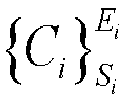


 Step 4-3, the continuous sequence segment, which deviates its corresponding baseline and of which the value exceeds threshold R1, is sought in the deceleration segment


- The method for improving the identification accuracy of the fetal heart rate data deceleration according to claim 4, wherein Step 6 further comprises: displaying and / or printing and / or storing and / or identifying the deceleration data segment and the calculation results of the attribute values.
- The method for improving the identification accuracy of the fetal heart rate data deceleration according to claim 4, wherein the preset judgment standard in Step 4 further comprises:Firstly, the fetal heart rate curves of the segment shall all be under the fetal heart rate baseline;Secondly, the duration T under the fetal heart rate baseline shall be more than or equal to the threshold T 0 ; andThirdly, the maximum amplitude A deviating the baseline shall be more than or equal to the threshold A 0 .Fourthly, the fetal heart rate curve of the segment and the corresponding baseline segment thereof are set as


 if all of the above conditions are met, the fetal heart rate segment to be analyzed is the deceleration data segment, wherein A0, T0, β and α are the parameters set in advance.
Applications Claiming Priority (2)
| Application Number | Priority Date | Filing Date | Title |
|---|---|---|---|
| CN2011103096799A CN102319064B (en) | 2011-10-13 | 2011-10-13 | Device and method for improving accuracy of recognizing deceleration of fetal heart rate data |
| PCT/CN2012/082019 WO2013053290A1 (en) | 2011-10-13 | 2012-09-26 | Device and method for improving identification accuracy of fetal heart rate deceleration |
Publications (3)
| Publication Number | Publication Date |
|---|---|
| EP2767228A1 EP2767228A1 (en) | 2014-08-20 |
| EP2767228A4 EP2767228A4 (en) | 2015-06-17 |
| EP2767228B1 true EP2767228B1 (en) | 2022-08-03 |
Family
ID=45447001
Family Applications (1)
| Application Number | Title | Priority Date | Filing Date |
|---|---|---|---|
| EP12839654.6A Active EP2767228B1 (en) | 2011-10-13 | 2012-09-26 | Device and method for improving identification accuracy of fetal heart rate deceleration |
Country Status (4)
| Country | Link |
|---|---|
| US (1) | US9364197B2 (en) |
| EP (1) | EP2767228B1 (en) |
| CN (1) | CN102319064B (en) |
| WO (1) | WO2013053290A1 (en) |
Families Citing this family (23)
| Publication number | Priority date | Publication date | Assignee | Title |
|---|---|---|---|---|
| CN102940485B (en) * | 2012-10-10 | 2015-04-08 | 广州三瑞医疗器械有限公司 | Algorithm for automatically recognizing fetal heart rate baseline |
| CN103565433B (en) * | 2013-10-30 | 2015-02-25 | 深圳市理邦精密仪器股份有限公司 | Method and device for improving fetal monitoring efficiency |
| CN103784130B (en) * | 2014-01-24 | 2016-10-05 | 深圳市理邦精密仪器股份有限公司 | A kind of method and system improving fetal heart rate curve efficiency |
| CN104586378A (en) * | 2015-01-21 | 2015-05-06 | 深圳市理邦精密仪器股份有限公司 | Method and device for outputting fetal heart rate curve |
| CN104586379B (en) * | 2015-01-21 | 2017-05-24 | 深圳市理邦精密仪器股份有限公司 | Method and device for outputting parameters of fetal heart rate curve |
| CN105193451B (en) * | 2015-10-21 | 2018-02-27 | 北京工业大学 | A kind of recognition methods of fetal heart frequency curve baseline |
| EP3189776A1 (en) * | 2016-01-08 | 2017-07-12 | Koninklijke Philips N.V. | An apparatus and method for generating fetal heart rate data |
| CN105866011B (en) * | 2016-03-31 | 2018-10-26 | 艾康生物技术(杭州)有限公司 | The particle counting methods of pulse base value calculating method and blood cell analysis machine |
| CN107865673A (en) * | 2016-09-23 | 2018-04-03 | 深圳市理邦精密仪器股份有限公司 | The acquisition device and method of Fetal Heart Rate, fetal rhythm monitoring device |
| US10589109B2 (en) * | 2017-04-10 | 2020-03-17 | West Affum Holdings Corp. | Wearable cardioverter defibrillator (WCD) system computing patient heart rate by multiplying ECG signals from different channels |
| CN108261176B (en) * | 2017-12-28 | 2021-06-04 | 深圳京柏医疗科技股份有限公司 | Fetal heart monitoring data processing method, device, system, storage medium and computer equipment |
| CN108742599A (en) * | 2018-03-20 | 2018-11-06 | 深圳大学 | A kind of foetus health early warning system and method |
| CN108903930A (en) * | 2018-04-26 | 2018-11-30 | 李坚强 | A kind of fetal heart rate curve categorizing system, method and device |
| CN109567868A (en) * | 2018-10-15 | 2019-04-05 | 广东宝莱特医用科技股份有限公司 | A kind of CTG fetal rhythm methods of marking and system |
| CN110432884B (en) * | 2019-07-08 | 2022-07-01 | 暨南大学 | Fetal condition evaluation method and system based on fetal heart rate deceleration area |
| CN112971752B (en) * | 2019-12-13 | 2024-07-05 | 深圳市理邦精密仪器股份有限公司 | Fetal heart rate deceleration type correction method and device and fetal monitoring equipment |
| CN112971753B (en) * | 2019-12-13 | 2024-09-10 | 深圳市理邦精密仪器股份有限公司 | Fetal heart rate deceleration type identification method and device and fetal monitoring equipment |
| CN114159040A (en) * | 2021-12-30 | 2022-03-11 | 徐智策 | Fetal heart monitor with early warning function and monitoring method |
| WO2023144627A2 (en) * | 2022-01-28 | 2023-08-03 | Nuvo Group Ltd. | Systems, devices, and methods utilizing bio-potential data obtained by a plurality of bio-potential sensors for prenatal tracking |
| CN114767126B (en) * | 2022-04-29 | 2025-04-11 | 广东粤港澳大湾区国家纳米科技创新研究院 | A fetal electrocardiogram monitoring method and system based on marker interference signal |
| CN116172535B (en) * | 2023-03-08 | 2026-02-10 | 抖音视界有限公司 | Fetal heart rate monitoring methods, devices, electronic equipment, and storage media |
| CN119074055B (en) * | 2024-11-06 | 2025-01-24 | 大连清东科技有限公司 | A method for intelligent nursing monitoring of pregnant women before childbirth |
| CN121512571B (en) * | 2026-01-15 | 2026-03-31 | 中国人民解放军西部战区总医院 | Uterine contraction identification method, system, terminal and storage medium based on ultrasonic image |
Family Cites Families (11)
| Publication number | Priority date | Publication date | Assignee | Title |
|---|---|---|---|---|
| KR20010105460A (en) * | 2000-05-09 | 2001-11-29 | 권기철 | Telemedicine system for fetal care |
| CA2447861A1 (en) | 2002-11-01 | 2004-05-01 | Lms Medical Systems Ltd. | Method and apparatus for identifying heart rate feature events |
| EP1568316A1 (en) | 2004-02-24 | 2005-08-31 | Neoventa medical AB | Assessment of fetal reactivity by fetal heart rate analysis |
| US20060229518A1 (en) * | 2005-03-31 | 2006-10-12 | Physical Logic Ag | Method for continuous, non-invasive, non-radiating detection of fetal heart arrhythmia |
| US8396540B2 (en) * | 2007-06-13 | 2013-03-12 | Clinical Computer Systems Incorporated | Electronic fetal monitoring assessment system and method |
| GB2471667B (en) | 2009-07-06 | 2011-11-09 | Monica Healthcare Ltd | Monitoring uterine activity |
| CN102048534B (en) | 2010-12-17 | 2012-12-19 | 深圳市理邦精密仪器股份有限公司 | A monitoring method and device capable of playing back fetal heart rate Doppler audio signals |
| CN102090883B (en) * | 2010-12-30 | 2012-11-07 | 深圳市理邦精密仪器股份有限公司 | Automatic identification method and device for fetal movement |
| CN102048558B (en) * | 2011-01-28 | 2012-05-23 | 深圳市理邦精密仪器股份有限公司 | Fetal heart rate signal processing method and device |
| CN102210586A (en) | 2011-06-03 | 2011-10-12 | 泰安市迈迪医疗电子有限公司 | Automatic analysis method for fetus monitoring device |
| CN102319063B (en) * | 2011-07-26 | 2013-10-16 | 深圳市理邦精密仪器股份有限公司 | Device and method for improving acceleration identification accuracy of fetal heart rate data |
-
2011
- 2011-10-13 CN CN2011103096799A patent/CN102319064B/en active Active
-
2012
- 2012-09-26 US US14/349,326 patent/US9364197B2/en active Active
- 2012-09-26 WO PCT/CN2012/082019 patent/WO2013053290A1/en not_active Ceased
- 2012-09-26 EP EP12839654.6A patent/EP2767228B1/en active Active
Also Published As
| Publication number | Publication date |
|---|---|
| CN102319064A (en) | 2012-01-18 |
| CN102319064B (en) | 2013-08-14 |
| EP2767228A1 (en) | 2014-08-20 |
| US9364197B2 (en) | 2016-06-14 |
| WO2013053290A1 (en) | 2013-04-18 |
| EP2767228A4 (en) | 2015-06-17 |
| US20140243674A1 (en) | 2014-08-28 |
Similar Documents
| Publication | Publication Date | Title |
|---|---|---|
| US9364197B2 (en) | Device and method for improving identification accuracy of fetal heart rate deceleration | |
| EP2737848B1 (en) | Method for enhancing accuracy of recognizing fetus heart rate acceleration data | |
| US9042973B2 (en) | Apparatus and method for measuring physiological signal quality | |
| US9232901B2 (en) | Apparatus and method for automatically identifying fetal heart rate baseline | |
| KR100954817B1 (en) | System and method for testing blood vessel's health and stress through signal analysis of pluse wave | |
| WO2021248962A1 (en) | Non-destructive testing method and device for testing and distinguishing internal and external defects of steel wire rope | |
| Jezewski et al. | A novel technique for fetal heart rate estimation from Doppler ultrasound signal | |
| CN103565433B (en) | Method and device for improving fetal monitoring efficiency | |
| EP3692902A1 (en) | Method for assessing electrocardiogram signal quality | |
| CN111598868B (en) | Lung ultrasonic image identification method and system | |
| CN111031927B (en) | Detection, Presentation and Reporting of B-lines in Lung Ultrasound | |
| CN101856225A (en) | A method for detecting R wave peak of electrocardiographic signal | |
| KR101504487B1 (en) | Real Time System for Measuring Fetal Heart Rate | |
| US11298065B2 (en) | Fetal heart rate extraction within a processor constrained environment | |
| CN110547768B (en) | A quality control method and control system for near-infrared brain functional imaging | |
| CN119924852B (en) | Spike wave detection system, epilepsy detection equipment | |
| JPWO2016139802A1 (en) | Shunt sound analysis device, shunt sound analysis method, computer program, and recording medium | |
| CN119991851B (en) | A fetal heart ultrasound sound signal graphic imaging method based on artificial intelligence | |
| CN117805896A (en) | A method and system for processing data of advanced geological prediction using seismic wave reflection method | |
| US20140114200A1 (en) | Composite manual and automated fetal analysis systems and methods | |
| CN121059189A (en) | Method for detecting target waveform and epilepsy detection system | |
| TH2501004653A (en) | Methods for evaluating cardiac test results, related systems and equipment, and data storage media. | |
| CN120951877A (en) | Blood Flow Dynamic Simulation System Based on Brain Oxygen Entropy | |
| CN120581183A (en) | Intelligent analysis method and system of health big data for key populations | |
| Roj et al. | Improving the periodicity measurement in fetal heart activity signal |
Legal Events
| Date | Code | Title | Description |
|---|---|---|---|
| PUAI | Public reference made under article 153(3) epc to a published international application that has entered the european phase |
Free format text: ORIGINAL CODE: 0009012 |
|
| 17P | Request for examination filed |
Effective date: 20140326 |
|
| AK | Designated contracting states |
Kind code of ref document: A1 Designated state(s): AL AT BE BG CH CY CZ DE DK EE ES FI FR GB GR HR HU IE IS IT LI LT LU LV MC MK MT NL NO PL PT RO RS SE SI SK SM TR |
|
| DAX | Request for extension of the european patent (deleted) | ||
| RA4 | Supplementary search report drawn up and despatched (corrected) |
Effective date: 20150520 |
|
| RIC1 | Information provided on ipc code assigned before grant |
Ipc: A61B 5/02 20060101ALI20150513BHEP Ipc: A61B 5/024 20060101AFI20150513BHEP Ipc: A61B 5/0444 20060101ALI20150513BHEP |
|
| STAA | Information on the status of an ep patent application or granted ep patent |
Free format text: STATUS: EXAMINATION IS IN PROGRESS |
|
| 17Q | First examination report despatched |
Effective date: 20200804 |
|
| GRAP | Despatch of communication of intention to grant a patent |
Free format text: ORIGINAL CODE: EPIDOSNIGR1 |
|
| STAA | Information on the status of an ep patent application or granted ep patent |
Free format text: STATUS: GRANT OF PATENT IS INTENDED |
|
| RIC1 | Information provided on ipc code assigned before grant |
Ipc: A61B 5/344 20210101ALI20220406BHEP Ipc: G16H 50/30 20180101ALI20220406BHEP Ipc: A61B 8/08 20060101ALI20220406BHEP Ipc: A61B 8/02 20060101ALI20220406BHEP Ipc: A61B 5/024 20060101AFI20220406BHEP |
|
| INTG | Intention to grant announced |
Effective date: 20220511 |
|
| GRAS | Grant fee paid |
Free format text: ORIGINAL CODE: EPIDOSNIGR3 |
|
| GRAA | (expected) grant |
Free format text: ORIGINAL CODE: 0009210 |
|
| STAA | Information on the status of an ep patent application or granted ep patent |
Free format text: STATUS: THE PATENT HAS BEEN GRANTED |
|
| AK | Designated contracting states |
Kind code of ref document: B1 Designated state(s): AL AT BE BG CH CY CZ DE DK EE ES FI FR GB GR HR HU IE IS IT LI LT LU LV MC MK MT NL NO PL PT RO RS SE SI SK SM TR |
|
| REG | Reference to a national code |
Ref country code: AT Ref legal event code: REF Ref document number: 1508100 Country of ref document: AT Kind code of ref document: T Effective date: 20220815 Ref country code: CH Ref legal event code: EP |
|
| REG | Reference to a national code |
Ref country code: DE Ref legal event code: R096 Ref document number: 602012078565 Country of ref document: DE |
|
| REG | Reference to a national code |
Ref country code: IE Ref legal event code: FG4D |
|
| REG | Reference to a national code |
Ref country code: LT Ref legal event code: MG9D |
|
| REG | Reference to a national code |
Ref country code: NL Ref legal event code: MP Effective date: 20220803 |
|
| PG25 | Lapsed in a contracting state [announced via postgrant information from national office to epo] |
Ref country code: SE Free format text: LAPSE BECAUSE OF FAILURE TO SUBMIT A TRANSLATION OF THE DESCRIPTION OR TO PAY THE FEE WITHIN THE PRESCRIBED TIME-LIMIT Effective date: 20220803 Ref country code: RS Free format text: LAPSE BECAUSE OF FAILURE TO SUBMIT A TRANSLATION OF THE DESCRIPTION OR TO PAY THE FEE WITHIN THE PRESCRIBED TIME-LIMIT Effective date: 20220803 Ref country code: PT Free format text: LAPSE BECAUSE OF FAILURE TO SUBMIT A TRANSLATION OF THE DESCRIPTION OR TO PAY THE FEE WITHIN THE PRESCRIBED TIME-LIMIT Effective date: 20221205 Ref country code: NO Free format text: LAPSE BECAUSE OF FAILURE TO SUBMIT A TRANSLATION OF THE DESCRIPTION OR TO PAY THE FEE WITHIN THE PRESCRIBED TIME-LIMIT Effective date: 20221103 Ref country code: NL Free format text: LAPSE BECAUSE OF FAILURE TO SUBMIT A TRANSLATION OF THE DESCRIPTION OR TO PAY THE FEE WITHIN THE PRESCRIBED TIME-LIMIT Effective date: 20220803 Ref country code: LV Free format text: LAPSE BECAUSE OF FAILURE TO SUBMIT A TRANSLATION OF THE DESCRIPTION OR TO PAY THE FEE WITHIN THE PRESCRIBED TIME-LIMIT Effective date: 20220803 Ref country code: LT Free format text: LAPSE BECAUSE OF FAILURE TO SUBMIT A TRANSLATION OF THE DESCRIPTION OR TO PAY THE FEE WITHIN THE PRESCRIBED TIME-LIMIT Effective date: 20220803 Ref country code: FI Free format text: LAPSE BECAUSE OF FAILURE TO SUBMIT A TRANSLATION OF THE DESCRIPTION OR TO PAY THE FEE WITHIN THE PRESCRIBED TIME-LIMIT Effective date: 20220803 Ref country code: ES Free format text: LAPSE BECAUSE OF FAILURE TO SUBMIT A TRANSLATION OF THE DESCRIPTION OR TO PAY THE FEE WITHIN THE PRESCRIBED TIME-LIMIT Effective date: 20220803 |
|
| REG | Reference to a national code |
Ref country code: AT Ref legal event code: MK05 Ref document number: 1508100 Country of ref document: AT Kind code of ref document: T Effective date: 20220803 |
|
| PG25 | Lapsed in a contracting state [announced via postgrant information from national office to epo] |
Ref country code: PL Free format text: LAPSE BECAUSE OF FAILURE TO SUBMIT A TRANSLATION OF THE DESCRIPTION OR TO PAY THE FEE WITHIN THE PRESCRIBED TIME-LIMIT Effective date: 20220803 Ref country code: IS Free format text: LAPSE BECAUSE OF FAILURE TO SUBMIT A TRANSLATION OF THE DESCRIPTION OR TO PAY THE FEE WITHIN THE PRESCRIBED TIME-LIMIT Effective date: 20221203 Ref country code: HR Free format text: LAPSE BECAUSE OF FAILURE TO SUBMIT A TRANSLATION OF THE DESCRIPTION OR TO PAY THE FEE WITHIN THE PRESCRIBED TIME-LIMIT Effective date: 20220803 Ref country code: GR Free format text: LAPSE BECAUSE OF FAILURE TO SUBMIT A TRANSLATION OF THE DESCRIPTION OR TO PAY THE FEE WITHIN THE PRESCRIBED TIME-LIMIT Effective date: 20221104 |
|
| PG25 | Lapsed in a contracting state [announced via postgrant information from national office to epo] |
Ref country code: SM Free format text: LAPSE BECAUSE OF FAILURE TO SUBMIT A TRANSLATION OF THE DESCRIPTION OR TO PAY THE FEE WITHIN THE PRESCRIBED TIME-LIMIT Effective date: 20220803 Ref country code: RO Free format text: LAPSE BECAUSE OF FAILURE TO SUBMIT A TRANSLATION OF THE DESCRIPTION OR TO PAY THE FEE WITHIN THE PRESCRIBED TIME-LIMIT Effective date: 20220803 Ref country code: DK Free format text: LAPSE BECAUSE OF FAILURE TO SUBMIT A TRANSLATION OF THE DESCRIPTION OR TO PAY THE FEE WITHIN THE PRESCRIBED TIME-LIMIT Effective date: 20220803 Ref country code: CZ Free format text: LAPSE BECAUSE OF FAILURE TO SUBMIT A TRANSLATION OF THE DESCRIPTION OR TO PAY THE FEE WITHIN THE PRESCRIBED TIME-LIMIT Effective date: 20220803 Ref country code: AT Free format text: LAPSE BECAUSE OF FAILURE TO SUBMIT A TRANSLATION OF THE DESCRIPTION OR TO PAY THE FEE WITHIN THE PRESCRIBED TIME-LIMIT Effective date: 20220803 |
|
| REG | Reference to a national code |
Ref country code: CH Ref legal event code: PL |
|
| REG | Reference to a national code |
Ref country code: DE Ref legal event code: R097 Ref document number: 602012078565 Country of ref document: DE |
|
| REG | Reference to a national code |
Ref country code: BE Ref legal event code: MM Effective date: 20220930 |
|
| PG25 | Lapsed in a contracting state [announced via postgrant information from national office to epo] |
Ref country code: SK Free format text: LAPSE BECAUSE OF FAILURE TO SUBMIT A TRANSLATION OF THE DESCRIPTION OR TO PAY THE FEE WITHIN THE PRESCRIBED TIME-LIMIT Effective date: 20220803 Ref country code: MC Free format text: LAPSE BECAUSE OF FAILURE TO SUBMIT A TRANSLATION OF THE DESCRIPTION OR TO PAY THE FEE WITHIN THE PRESCRIBED TIME-LIMIT Effective date: 20220803 Ref country code: EE Free format text: LAPSE BECAUSE OF FAILURE TO SUBMIT A TRANSLATION OF THE DESCRIPTION OR TO PAY THE FEE WITHIN THE PRESCRIBED TIME-LIMIT Effective date: 20220803 |
|
| PLBE | No opposition filed within time limit |
Free format text: ORIGINAL CODE: 0009261 |
|
| STAA | Information on the status of an ep patent application or granted ep patent |
Free format text: STATUS: NO OPPOSITION FILED WITHIN TIME LIMIT |
|
| PG25 | Lapsed in a contracting state [announced via postgrant information from national office to epo] |
Ref country code: LU Free format text: LAPSE BECAUSE OF NON-PAYMENT OF DUE FEES Effective date: 20220926 Ref country code: AL Free format text: LAPSE BECAUSE OF FAILURE TO SUBMIT A TRANSLATION OF THE DESCRIPTION OR TO PAY THE FEE WITHIN THE PRESCRIBED TIME-LIMIT Effective date: 20220803 |
|
| 26N | No opposition filed |
Effective date: 20230504 |
|
| GBPC | Gb: european patent ceased through non-payment of renewal fee |
Effective date: 20221103 |
|
| PG25 | Lapsed in a contracting state [announced via postgrant information from national office to epo] |
Ref country code: LI Free format text: LAPSE BECAUSE OF NON-PAYMENT OF DUE FEES Effective date: 20220930 Ref country code: IE Free format text: LAPSE BECAUSE OF NON-PAYMENT OF DUE FEES Effective date: 20220926 Ref country code: CH Free format text: LAPSE BECAUSE OF NON-PAYMENT OF DUE FEES Effective date: 20220930 |
|
| PG25 | Lapsed in a contracting state [announced via postgrant information from national office to epo] |
Ref country code: SI Free format text: LAPSE BECAUSE OF FAILURE TO SUBMIT A TRANSLATION OF THE DESCRIPTION OR TO PAY THE FEE WITHIN THE PRESCRIBED TIME-LIMIT Effective date: 20220803 |
|
| PG25 | Lapsed in a contracting state [announced via postgrant information from national office to epo] |
Ref country code: BE Free format text: LAPSE BECAUSE OF NON-PAYMENT OF DUE FEES Effective date: 20220930 |
|
| PG25 | Lapsed in a contracting state [announced via postgrant information from national office to epo] |
Ref country code: GB Free format text: LAPSE BECAUSE OF NON-PAYMENT OF DUE FEES Effective date: 20221103 |
|
| PG25 | Lapsed in a contracting state [announced via postgrant information from national office to epo] |
Ref country code: HU Free format text: LAPSE BECAUSE OF FAILURE TO SUBMIT A TRANSLATION OF THE DESCRIPTION OR TO PAY THE FEE WITHIN THE PRESCRIBED TIME-LIMIT; INVALID AB INITIO Effective date: 20120926 |
|
| PG25 | Lapsed in a contracting state [announced via postgrant information from national office to epo] |
Ref country code: CY Free format text: LAPSE BECAUSE OF FAILURE TO SUBMIT A TRANSLATION OF THE DESCRIPTION OR TO PAY THE FEE WITHIN THE PRESCRIBED TIME-LIMIT Effective date: 20220803 |
|
| PG25 | Lapsed in a contracting state [announced via postgrant information from national office to epo] |
Ref country code: MK Free format text: LAPSE BECAUSE OF FAILURE TO SUBMIT A TRANSLATION OF THE DESCRIPTION OR TO PAY THE FEE WITHIN THE PRESCRIBED TIME-LIMIT Effective date: 20220803 Ref country code: IT Free format text: LAPSE BECAUSE OF FAILURE TO SUBMIT A TRANSLATION OF THE DESCRIPTION OR TO PAY THE FEE WITHIN THE PRESCRIBED TIME-LIMIT Effective date: 20220803 |
|
| PG25 | Lapsed in a contracting state [announced via postgrant information from national office to epo] |
Ref country code: TR Free format text: LAPSE BECAUSE OF FAILURE TO SUBMIT A TRANSLATION OF THE DESCRIPTION OR TO PAY THE FEE WITHIN THE PRESCRIBED TIME-LIMIT Effective date: 20220803 |
|
| PG25 | Lapsed in a contracting state [announced via postgrant information from national office to epo] |
Ref country code: BG Free format text: LAPSE BECAUSE OF FAILURE TO SUBMIT A TRANSLATION OF THE DESCRIPTION OR TO PAY THE FEE WITHIN THE PRESCRIBED TIME-LIMIT Effective date: 20220803 |
|
| PG25 | Lapsed in a contracting state [announced via postgrant information from national office to epo] |
Ref country code: MT Free format text: LAPSE BECAUSE OF FAILURE TO SUBMIT A TRANSLATION OF THE DESCRIPTION OR TO PAY THE FEE WITHIN THE PRESCRIBED TIME-LIMIT Effective date: 20220803 |
|
| PGFP | Annual fee paid to national office [announced via postgrant information from national office to epo] |
Ref country code: DE Payment date: 20250916 Year of fee payment: 14 |
|
| PGFP | Annual fee paid to national office [announced via postgrant information from national office to epo] |
Ref country code: FR Payment date: 20250929 Year of fee payment: 14 |