EP2762577B1 - Preparation method of steel product having different strengths using laser heat treatment - Google Patents
Preparation method of steel product having different strengths using laser heat treatment Download PDFInfo
- Publication number
- EP2762577B1 EP2762577B1 EP11873399.7A EP11873399A EP2762577B1 EP 2762577 B1 EP2762577 B1 EP 2762577B1 EP 11873399 A EP11873399 A EP 11873399A EP 2762577 B1 EP2762577 B1 EP 2762577B1
- Authority
- EP
- European Patent Office
- Prior art keywords
- laser
- heat treatment
- high strength
- less
- steel
- Prior art date
- Legal status (The legal status is an assumption and is not a legal conclusion. Google has not performed a legal analysis and makes no representation as to the accuracy of the status listed.)
- Active
Links
Images

Classifications
-
- C—CHEMISTRY; METALLURGY
- C21—METALLURGY OF IRON
- C21D—MODIFYING THE PHYSICAL STRUCTURE OF FERROUS METALS; GENERAL DEVICES FOR HEAT TREATMENT OF FERROUS OR NON-FERROUS METALS OR ALLOYS; MAKING METAL MALLEABLE, e.g. BY DECARBURISATION OR TEMPERING
- C21D9/00—Heat treatment, e.g. annealing, hardening, quenching or tempering, adapted for particular articles; Furnaces therefor
- C21D9/0068—Heat treatment, e.g. annealing, hardening, quenching or tempering, adapted for particular articles; Furnaces therefor for particular articles not mentioned below
-
- C—CHEMISTRY; METALLURGY
- C21—METALLURGY OF IRON
- C21D—MODIFYING THE PHYSICAL STRUCTURE OF FERROUS METALS; GENERAL DEVICES FOR HEAT TREATMENT OF FERROUS OR NON-FERROUS METALS OR ALLOYS; MAKING METAL MALLEABLE, e.g. BY DECARBURISATION OR TEMPERING
- C21D1/00—General methods or devices for heat treatment, e.g. annealing, hardening, quenching or tempering
- C21D1/06—Surface hardening
- C21D1/09—Surface hardening by direct application of electrical or wave energy; by particle radiation
-
- C—CHEMISTRY; METALLURGY
- C21—METALLURGY OF IRON
- C21D—MODIFYING THE PHYSICAL STRUCTURE OF FERROUS METALS; GENERAL DEVICES FOR HEAT TREATMENT OF FERROUS OR NON-FERROUS METALS OR ALLOYS; MAKING METAL MALLEABLE, e.g. BY DECARBURISATION OR TEMPERING
- C21D1/00—General methods or devices for heat treatment, e.g. annealing, hardening, quenching or tempering
- C21D1/34—Methods of heating
-
- C—CHEMISTRY; METALLURGY
- C22—METALLURGY; FERROUS OR NON-FERROUS ALLOYS; TREATMENT OF ALLOYS OR NON-FERROUS METALS
- C22C—ALLOYS
- C22C38/00—Ferrous alloys, e.g. steel alloys
- C22C38/02—Ferrous alloys, e.g. steel alloys containing silicon
-
- C—CHEMISTRY; METALLURGY
- C22—METALLURGY; FERROUS OR NON-FERROUS ALLOYS; TREATMENT OF ALLOYS OR NON-FERROUS METALS
- C22C—ALLOYS
- C22C38/00—Ferrous alloys, e.g. steel alloys
- C22C38/04—Ferrous alloys, e.g. steel alloys containing manganese
-
- C—CHEMISTRY; METALLURGY
- C22—METALLURGY; FERROUS OR NON-FERROUS ALLOYS; TREATMENT OF ALLOYS OR NON-FERROUS METALS
- C22C—ALLOYS
- C22C38/00—Ferrous alloys, e.g. steel alloys
- C22C38/06—Ferrous alloys, e.g. steel alloys containing aluminium
-
- C—CHEMISTRY; METALLURGY
- C22—METALLURGY; FERROUS OR NON-FERROUS ALLOYS; TREATMENT OF ALLOYS OR NON-FERROUS METALS
- C22C—ALLOYS
- C22C38/00—Ferrous alloys, e.g. steel alloys
- C22C38/18—Ferrous alloys, e.g. steel alloys containing chromium
- C22C38/28—Ferrous alloys, e.g. steel alloys containing chromium with titanium or zirconium
-
- C—CHEMISTRY; METALLURGY
- C22—METALLURGY; FERROUS OR NON-FERROUS ALLOYS; TREATMENT OF ALLOYS OR NON-FERROUS METALS
- C22C—ALLOYS
- C22C38/00—Ferrous alloys, e.g. steel alloys
- C22C38/18—Ferrous alloys, e.g. steel alloys containing chromium
- C22C38/32—Ferrous alloys, e.g. steel alloys containing chromium with boron
-
- C—CHEMISTRY; METALLURGY
- C22—METALLURGY; FERROUS OR NON-FERROUS ALLOYS; TREATMENT OF ALLOYS OR NON-FERROUS METALS
- C22C—ALLOYS
- C22C38/00—Ferrous alloys, e.g. steel alloys
- C22C38/18—Ferrous alloys, e.g. steel alloys containing chromium
- C22C38/38—Ferrous alloys, e.g. steel alloys containing chromium with more than 1.5% by weight of manganese
-
- C—CHEMISTRY; METALLURGY
- C23—COATING METALLIC MATERIAL; COATING MATERIAL WITH METALLIC MATERIAL; CHEMICAL SURFACE TREATMENT; DIFFUSION TREATMENT OF METALLIC MATERIAL; COATING BY VACUUM EVAPORATION, BY SPUTTERING, BY ION IMPLANTATION OR BY CHEMICAL VAPOUR DEPOSITION, IN GENERAL; INHIBITING CORROSION OF METALLIC MATERIAL OR INCRUSTATION IN GENERAL
- C23C—COATING METALLIC MATERIAL; COATING MATERIAL WITH METALLIC MATERIAL; SURFACE TREATMENT OF METALLIC MATERIAL BY DIFFUSION INTO THE SURFACE, BY CHEMICAL CONVERSION OR SUBSTITUTION; COATING BY VACUUM EVAPORATION, BY SPUTTERING, BY ION IMPLANTATION OR BY CHEMICAL VAPOUR DEPOSITION, IN GENERAL
- C23C2/00—Hot-dipping or immersion processes for applying the coating material in the molten state without affecting the shape; Apparatus therefor
- C23C2/04—Hot-dipping or immersion processes for applying the coating material in the molten state without affecting the shape; Apparatus therefor characterised by the coating material
-
- C—CHEMISTRY; METALLURGY
- C21—METALLURGY OF IRON
- C21D—MODIFYING THE PHYSICAL STRUCTURE OF FERROUS METALS; GENERAL DEVICES FOR HEAT TREATMENT OF FERROUS OR NON-FERROUS METALS OR ALLOYS; MAKING METAL MALLEABLE, e.g. BY DECARBURISATION OR TEMPERING
- C21D2221/00—Treating localised areas of an article
-
- Y—GENERAL TAGGING OF NEW TECHNOLOGICAL DEVELOPMENTS; GENERAL TAGGING OF CROSS-SECTIONAL TECHNOLOGIES SPANNING OVER SEVERAL SECTIONS OF THE IPC; TECHNICAL SUBJECTS COVERED BY FORMER USPC CROSS-REFERENCE ART COLLECTIONS [XRACs] AND DIGESTS
- Y10—TECHNICAL SUBJECTS COVERED BY FORMER USPC
- Y10T—TECHNICAL SUBJECTS COVERED BY FORMER US CLASSIFICATION
- Y10T428/00—Stock material or miscellaneous articles
- Y10T428/12—All metal or with adjacent metals
- Y10T428/12493—Composite; i.e., plural, adjacent, spatially distinct metal components [e.g., layers, joint, etc.]
- Y10T428/12674—Ge- or Si-base component
-
- Y—GENERAL TAGGING OF NEW TECHNOLOGICAL DEVELOPMENTS; GENERAL TAGGING OF CROSS-SECTIONAL TECHNOLOGIES SPANNING OVER SEVERAL SECTIONS OF THE IPC; TECHNICAL SUBJECTS COVERED BY FORMER USPC CROSS-REFERENCE ART COLLECTIONS [XRACs] AND DIGESTS
- Y10—TECHNICAL SUBJECTS COVERED BY FORMER USPC
- Y10T—TECHNICAL SUBJECTS COVERED BY FORMER US CLASSIFICATION
- Y10T428/00—Stock material or miscellaneous articles
- Y10T428/12—All metal or with adjacent metals
- Y10T428/12493—Composite; i.e., plural, adjacent, spatially distinct metal components [e.g., layers, joint, etc.]
- Y10T428/12736—Al-base component
- Y10T428/1275—Next to Group VIII or IB metal-base component
- Y10T428/12757—Fe
-
- Y—GENERAL TAGGING OF NEW TECHNOLOGICAL DEVELOPMENTS; GENERAL TAGGING OF CROSS-SECTIONAL TECHNOLOGIES SPANNING OVER SEVERAL SECTIONS OF THE IPC; TECHNICAL SUBJECTS COVERED BY FORMER USPC CROSS-REFERENCE ART COLLECTIONS [XRACs] AND DIGESTS
- Y10—TECHNICAL SUBJECTS COVERED BY FORMER USPC
- Y10T—TECHNICAL SUBJECTS COVERED BY FORMER US CLASSIFICATION
- Y10T428/00—Stock material or miscellaneous articles
- Y10T428/12—All metal or with adjacent metals
- Y10T428/12493—Composite; i.e., plural, adjacent, spatially distinct metal components [e.g., layers, joint, etc.]
- Y10T428/12771—Transition metal-base component
- Y10T428/12785—Group IIB metal-base component
- Y10T428/12792—Zn-base component
- Y10T428/12799—Next to Fe-base component [e.g., galvanized]
-
- Y—GENERAL TAGGING OF NEW TECHNOLOGICAL DEVELOPMENTS; GENERAL TAGGING OF CROSS-SECTIONAL TECHNOLOGIES SPANNING OVER SEVERAL SECTIONS OF THE IPC; TECHNICAL SUBJECTS COVERED BY FORMER USPC CROSS-REFERENCE ART COLLECTIONS [XRACs] AND DIGESTS
- Y10—TECHNICAL SUBJECTS COVERED BY FORMER USPC
- Y10T—TECHNICAL SUBJECTS COVERED BY FORMER US CLASSIFICATION
- Y10T428/00—Stock material or miscellaneous articles
- Y10T428/12—All metal or with adjacent metals
- Y10T428/12493—Composite; i.e., plural, adjacent, spatially distinct metal components [e.g., layers, joint, etc.]
- Y10T428/12771—Transition metal-base component
- Y10T428/12861—Group VIII or IB metal-base component
- Y10T428/12937—Co- or Ni-base component next to Fe-base component
-
- Y—GENERAL TAGGING OF NEW TECHNOLOGICAL DEVELOPMENTS; GENERAL TAGGING OF CROSS-SECTIONAL TECHNOLOGIES SPANNING OVER SEVERAL SECTIONS OF THE IPC; TECHNICAL SUBJECTS COVERED BY FORMER USPC CROSS-REFERENCE ART COLLECTIONS [XRACs] AND DIGESTS
- Y10—TECHNICAL SUBJECTS COVERED BY FORMER USPC
- Y10T—TECHNICAL SUBJECTS COVERED BY FORMER US CLASSIFICATION
- Y10T428/00—Stock material or miscellaneous articles
- Y10T428/31504—Composite [nonstructural laminate]
- Y10T428/31678—Of metal
Definitions
- the present invention relates to a method for manufacturing a steel product such as seat frames and bumper back beams for automobiles, and more particularly a method for manufacturing a steel product with different strengths using laser heat treatment.
- lighter and stronger components are realized through process such as alloying constituent of materials, heat treatment, etc.
- Hot stamping technology is a technology that can produce high strength components with tensile strength of over 1000 MPa by heating a material with a tensile strength of about 500 MPa to about 900 °C and forming into a desired shape and at the same time cooled rapidly to form martensite in micro-structures.
- Korean Patent Laid-open Publication No. 10-2009-0086970 (published on August 14, 2009 )
- Korean Patent No. 10-0765723 (published on October 11, 2007 ) applies the hot stamping technology.
- hot stamping technology is used only for strengthening an entire material, and is difficult to apply to partial strengthening.
- Korean Patent Laid-open Publication No. 10-2011-0062428 (published on June 10, 2011 ) mentions partial strengthening hot stamping. But, to partial strengthen using hot stamping method, issues such as going through a pre process such as applying insulation to parts where partial strengthening is not performed, etc. before hot stamping exist.
- a laser induced hardening of martensite hardenable steel for local strengthening of car components is known from Axel Jahn et al., "Local Laser Strengthening of Steel Sheets for Load Adapted Component Design in Car Body Structures", PHYSICS PROCEDIA, vol. 12, pages 431 - 441, (2011 ), and a locally strengthening of seat structural components by different methods including the use of a laser beam is disclosed in WO 2011/056923 A1 .
- An aspect of the present invention is to provide a method for manufacturing a steel product with different strengths using a single material without a separate pre-process.
- a method for manufacturing a steel product comprising : (a) preparing a material comprising: by weight %, 0.1 ⁇ 0.5% of carbon (C) ; 0.1 ⁇ 0.5% of silicon (Si); 0.5 ⁇ 3.0% of manganese (Mn); 0.1% or less of phosphorus (P); 0.05% or less of sulfur (S); 0.01 ⁇ 1.0% of chromium (Cr); 0.1% or less of aluminum (Al); 0.2% or less of titanium (Ti); 0.0005 ⁇ 0.08% of boron (B); and the balance of Fe and unavoidable impurities; (b) producing a formed body by forming the material into a predetermined shape; and (c) performing laser heat treatment to a part requiring high strength (high strength part) in the formed body, and locally strengthening the high strength part by irradiating a laser on the high strength part and heating the high strength part to a temperature higher than Ac3, and then cooling to
- a method for manufacturing a steel product in accordance with the present invention a local strengthening of a single material without a pre-process is possible by using laser heat treatment. Therefore, production method for steel products in accordance with the present invention may be applied for producing seat frames, bumper back beams, etc. for automobiles that require tensile strength.
- the method for manufacturing a steel product in accordance with the present invention may pursue weight reduction because higher strength is possible through laser heat treatment and reinforcement may be omitted.
- FIG. 1 is a flow chart showing an outline of a method for manufacturing a steel product according to an embodiment of the present invention.
- a method for manufacturing a steel product comprises preparing material (S110), producing a formed body (S120), and laser heat treatment (S130).
- a material comprising: by weight %, 0.1 ⁇ 0.5% of carbon (C) ; 0.1 ⁇ 0.5% of silicon (Si); 0.5 ⁇ 3.0% of manganese (Mn); 0.1% or less of phosphorus (P); 0.05% or less of sulfur (S); 0.01 ⁇ 1.0% of chromium (Cr); 0.1% or less of aluminum (Al); 0.2% or less of titanium (Ti); 0.0005 ⁇ 0.08% of boron (B); and the balance of Fe and unavoidable impurities are prepared in the preparing material step.
- the material may be in a blank shape, and hot rolled steel or cold rolled steel may be used.
- a layer selected from Al plating layer, Al-Si plating layer, Zn-Ni plating layer, Zn plating layer, Zn-Al plating layer and high-temperature oxidation-resistant resin coating layer may be formed on the surface of the material to prevent surface oxidization or decarbonization during laser heat treatment process.
- heat treated hardened steel which has a certain level of strength, has an excellent formability, and may have super high strength through heat treatment is preferable.
- a tensile strength of 400 ⁇ 990MPa and an elongation of 10 ⁇ 40% is obtainable through slab reheating, hot rolling higher than Ar3 and a normal hot rolling process applying a coiling temperature of about 500 ⁇ 600°C applied or a normal cold rolling process applying a annealing temperature of about 600 ⁇ 900°C.
- heat treated hardened steel with the composition has boron (B) added. Therefore, heat treated hardened steel with the composition may have a tensile strength of 1200 ⁇ 1900MPa and an elongation of 1 ⁇ 13% through heat treatment.
- Carbon (C) is added to obtain the strength of the steel. Also, carbon plays a role of stabilizing austenite according to an amount of austenite concentration. Carbon is added with 0.1 ⁇ 0.5 wt% based on the total weight of the steel. When amount of carbon is less than 0.1 wt%, it is difficult to obtain sufficient strength. On the contrary, when amount of carbon is greater than 0.5 wt%, strength is increased but weldability may greatly decline.
- Silicon acts as a deoxidizer, and contributes to improving the strength of steel through solution strengthening. Silicon is added with 0.1 ⁇ 0.5 wt% based on the total weight of the steel. When amount of silicon is less than 0.1 wt%, the effect of addition is insufficient. On the contrary, when amount of silicon is greater than 0.5 wt%, weldability and plating characteristics may greatly decline.
- Manganese (Mn) contributes to improving strength through austenite stabilization.
- Manganese is added with 0.5 ⁇ 3.0 wt% based on the total weight of the steel. When amount of manganes is less than 0.5 wt%, the effect of addition is insufficient. On the contrary, when amount of manganese is greater than 3.0 wt%, problems of weldability declining and toughness degradation occur.
- Phosphorus (P) contributes to improving strength, but when added excessively, quality of material is degraded through segregation and weldability may decline. As such, content of phosphorus is limited to 0.1wt% or less based on the total weight of the steel.
- sulfur (S) contributes partially to improving machinability, but when added excessively, problem of excessive formation of MnS inclusion occurs. Therefore, content of sulfur is limited to 0.05 wt% or less based on the total weight of the steel.
- Chromium (Cr) improves elongation by stabilizing ferrite grain, and contributes to improving strength through stabilizing austenite by improving the carbon in austenite concentration.
- Chromium is added with 0.01 ⁇ 1.0 wt% based on the total weight of the steel.
- amount of chromium is less than 0.01 wt%, the effect of addition is insufficient.
- amount of chromium is greater than 1.0 wt%, problem of plating characteristics declining may occur.
- Aluminum (Al) acts as preventing hydrogen embrittlement, and is effective for improving ductility and coatability. But, when aluminum is added greater than 0.1 wt%, excessive inclusion is formed and ductility and toughness of steel may be hindered.
- aluminum is added with 0.1 wt% or less based on the total weight of the steel.
- Titanium (Ti) is a carbonitride forming element, and contributes to improving strength. But, when titanium is added greater than 0.2 wt%, toughness may be hindered.
- titanium is added with 0.2 wt% or less based on the total weight of the steel.
- Boron (B) is a strong hardening property element, and contributes to super hardening of steel after heat treatment by only adding 0.0005 wt%.
- Boron is added with 0.0005 ⁇ 0.08 wt% based on the total weight of the steel.
- amount of boron is less than 0.0005 wt%, the effect of addition is insufficient.
- amount of boron is greater than 0.08 wt%, problem of toughness being greatly hindered due to excessive increase in hardening property occur.
- a formed body is produced by forming the material in a predetermined shape in the producing a formed body shape (S120).
- Cold forming, etc. may be used for forming.
- laser heat treatment is performed to a part requiring high strength (high strength part) in the formed body, and the high strength part is locally strengthened.
- high strength part may be a part where stress is concentrated such as a center part of a back beam of a bumper for automobiles, a part where stress is concentrated such as a rail, base, recliner, or arm applied to seat frames, etc.
- Laser heat treatment is carried out by irradiating a laser such as a diode laser on a high strength part and locally heating the high strength part to a temperature higher than Ac3, about Ac3 + 200 °C, and then cooling to a temperature lower than Ms, about Ms ⁇ Ms - 200°C.
- a laser such as a diode laser
- Cooling is performed at a cooling rate of 5 ⁇ 300°C/sec.
- cooling rate is slower than 5 °C/sec, obtaining sufficient strength is difficult.
- cooling rate is faster than 300 °C/sec, obtaining sufficient toughness and ductility is difficult.
- laser irradiating time and laser strength is adjusted for tensile strength of a high strength part is 1200 ⁇ 1900MPa.
- laser irradiating time may be increased or laser strength may be increased for tensile strength of a high strength part to be about 1900 MPa.
- laser irradiating time may be relatively decreased or laser strength may be relatively decreased for tensile strength of a high strength part to be about 1200 MPa.
- laser irradiating time and laser strength in laser heat treatment may differ according to target strength of a high strength part. Also, laser irradiating time and laser strength may differ according to the laser irradiating device used for laser heat treatment.
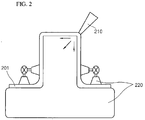
- FIG. 2 is a view showing an example of a laser heat treatment applied to the present invention.
- laser irradiation for laser heat treatment is performed by irradiating a laser beam 210 to a high strength part of a formed body 201 fastened to a fixed jig 220. Heat is conducted from a part where a laser beam directly irradiates to an adjacent part and a certain part is heated to a high temperature.
- production method for steel components according to the present invention may be applied to steel components requiring different strengths such as bumper back beams for automobiles. Accordingly, using a separate reinforcement may be omitted, and may contribute to weight reduction. Also, since partial strengthening is possible by using only laser heat treatment, a separate pre-process for providing different strengths to a single material is not required.
Landscapes
- Chemical & Material Sciences (AREA)
- Engineering & Computer Science (AREA)
- Materials Engineering (AREA)
- Mechanical Engineering (AREA)
- Metallurgy (AREA)
- Organic Chemistry (AREA)
- Thermal Sciences (AREA)
- Crystallography & Structural Chemistry (AREA)
- Physics & Mathematics (AREA)
- Chemical Kinetics & Catalysis (AREA)
- Heat Treatment Of Articles (AREA)
- Other Surface Treatments For Metallic Materials (AREA)
- Heat Treatment Of Sheet Steel (AREA)
Description
- The present invention relates to a method for manufacturing a steel product such as seat frames and bumper back beams for automobiles, and more particularly a method for manufacturing a steel product with different strengths using laser heat treatment.
- Recently, components for automobiles are becoming lighter and stronger for improving fuel efficiency. The lighter and stronger components are realized through process such as alloying constituent of materials, heat treatment, etc.
- Recently, hot stamping technology was developed in accordance with the growth of production technology for automobile components. Hot stamping technology is a technology that can produce high strength components with tensile strength of over 1000 MPa by heating a material with a tensile strength of about 500 MPa to about 900 °C and forming into a desired shape and at the same time cooled rapidly to form martensite in micro-structures.
- Korean Patent Laid-open Publication No.
10-2009-0086970 (published on August 14, 2009 10-0765723 (published on October 11, 2007 - But, as described in the publications above, hot stamping technology is used only for strengthening an entire material, and is difficult to apply to partial strengthening.
- Meanwhile, Korean Patent Laid-open Publication No.
10-2011-0062428 (published on June 10, 2011 - A laser induced hardening of martensite hardenable steel for local strengthening of car components is known from Axel Jahn et al., "Local Laser Strengthening of Steel Sheets for Load Adapted Component Design in Car Body Structures", PHYSICS PROCEDIA, vol. 12, pages 431 - 441, (2011), and a locally strengthening of seat structural components by different methods including the use of a laser beam is disclosed in
WO 2011/056923 A1 . - An aspect of the present invention is to provide a method for manufacturing a steel product with different strengths using a single material without a separate pre-process.
- In accordance with an embodiment of the present invention to achieve the technical problem, a method for manufacturing a steel product comprising : (a) preparing a material comprising: by weight %, 0.1 ~ 0.5% of carbon (C) ; 0.1 ~ 0.5% of silicon (Si); 0.5 ~ 3.0% of manganese (Mn); 0.1% or less of phosphorus (P); 0.05% or less of sulfur (S); 0.01 ~ 1.0% of chromium (Cr); 0.1% or less of aluminum (Al); 0.2% or less of titanium (Ti); 0.0005 ~ 0.08% of boron (B); and the balance of Fe and unavoidable impurities; (b) producing a formed body by forming the material into a predetermined shape; and (c) performing laser heat treatment to a part requiring high strength (high strength part) in the formed body, and locally strengthening the high strength part by irradiating a laser on the high strength part and heating the high strength part to a temperature higher than Ac3, and then cooling to a temperature lower than Ms at a cooling rate of 5 ~ 300°C/sec.
- According to a method for manufacturing a steel product in accordance with the present invention, a local strengthening of a single material without a pre-process is possible by using laser heat treatment. Therefore, production method for steel products in accordance with the present invention may be applied for producing seat frames, bumper back beams, etc. for automobiles that require tensile strength.
- Also, the method for manufacturing a steel product in accordance with the present invention may pursue weight reduction because higher strength is possible through laser heat treatment and reinforcement may be omitted.
-
-
Figure 1 is a flow chart showing an outline of a method for manufacturing a steel product according to an embodiment of the present invention. -
Figure 2 is a view showing an example of a laser heat treatment applied to the present invention. - Advantages, features, and methods to achieve them will be apparent with reference to the exemplary embodiments and drawings that follow. It should be understood that the present invention is not limited to the following embodiments and may be embodied in different ways, and that the embodiments are given to provide complete disclosure of the invention and to provide thorough understanding of the invention to those skilled in the art. The scope of the invention is limited only by the accompanying claims and equivalents thereof.
- Hereinafter, a method for manufacturing a steel product with different strengths using laser heat treatment and heat treated hardened steel used therein in accordance with the present invention will now be described in detail.
-
FIG. 1 is a flow chart showing an outline of a method for manufacturing a steel product according to an embodiment of the present invention. - Referring to
FIG. 1 , a method for manufacturing a steel product comprises preparing material (S110), producing a formed body (S120), and laser heat treatment (S130). - A material comprising: by weight %, 0.1 ~ 0.5% of carbon (C) ; 0.1 ~ 0.5% of silicon (Si); 0.5 ~ 3.0% of manganese (Mn); 0.1% or less of phosphorus (P); 0.05% or less of sulfur (S); 0.01 ~ 1.0% of chromium (Cr); 0.1% or less of aluminum (Al); 0.2% or less of titanium (Ti); 0.0005 ~ 0.08% of boron (B); and the balance of Fe and unavoidable impurities are prepared in the preparing material step.
- Also, the material may be in a blank shape, and hot rolled steel or cold rolled steel may be used.
- Also, a layer selected from Al plating layer, Al-Si plating layer, Zn-Ni plating layer, Zn plating layer, Zn-Al plating layer and high-temperature oxidation-resistant resin coating layer may be formed on the surface of the material to prevent surface oxidization or decarbonization during laser heat treatment process.
- Meanwhile, preparing heat treated hardened steel, which has a certain level of strength, has an excellent formability, and may have super high strength through heat treatment is preferable.
- For a heat treated hardened steel with the proposed composition, a tensile strength of 400 ~ 990MPa and an elongation of 10 ~ 40% is obtainable through slab reheating, hot rolling higher than Ar3 and a normal hot rolling process applying a coiling temperature of about 500 ~ 600°C applied or a normal cold rolling process applying a annealing temperature of about 600 ~ 900°C.
- Also, heat treated hardened steel with the composition has boron (B) added. Therefore, heat treated hardened steel with the composition may have a tensile strength of 1200 ~ 1900MPa and an elongation of 1 ~ 13% through heat treatment.
- Hereinafter, contents of each component and reason for addition is described for the heat treated hardened steel in accordance with the present invention.
- Carbon (C) is added to obtain the strength of the steel. Also, carbon plays a role of stabilizing austenite according to an amount of austenite concentration. Carbon is added with 0.1 ~ 0.5 wt% based on the total weight of the steel. When amount of carbon is less than 0.1 wt%, it is difficult to obtain sufficient strength. On the contrary, when amount of carbon is greater than 0.5 wt%, strength is increased but weldability may greatly decline.
- Silicon acts as a deoxidizer, and contributes to improving the strength of steel through solution strengthening. Silicon is added with 0.1 ~ 0.5 wt% based on the total weight of the steel. When amount of silicon is less than 0.1 wt%, the effect of addition is insufficient. On the contrary, when amount of silicon is greater than 0.5 wt%, weldability and plating characteristics may greatly decline.
- Manganese (Mn) contributes to improving strength through austenite stabilization.
- Manganese is added with 0.5 ~ 3.0 wt% based on the total weight of the steel. When amount of manganes is less than 0.5 wt%, the effect of addition is insufficient. On the contrary, when amount of manganese is greater than 3.0 wt%, problems of weldability declining and toughness degradation occur.
- Phosphorus (P) contributes to improving strength, but when added excessively, quality of material is degraded through segregation and weldability may decline. As such, content of phosphorus is limited to 0.1wt% or less based on the total weight of the steel.
- Also, sulfur (S) contributes partially to improving machinability, but when added excessively, problem of excessive formation of MnS inclusion occurs. Therefore, content of sulfur is limited to 0.05 wt% or less based on the total weight of the steel.
- Chromium (Cr) improves elongation by stabilizing ferrite grain, and contributes to improving strength through stabilizing austenite by improving the carbon in austenite concentration.
- Chromium is added with 0.01 ~ 1.0 wt% based on the total weight of the steel. When amount of chromium is less than 0.01 wt%, the effect of addition is insufficient. On the contrary, when amount of chromium is greater than 1.0 wt%, problem of plating characteristics declining may occur.
- Aluminum (Al) acts as preventing hydrogen embrittlement, and is effective for improving ductility and coatability. But, when aluminum is added greater than 0.1 wt%, excessive inclusion is formed and ductility and toughness of steel may be hindered.
- Therefore, aluminum is added with 0.1 wt% or less based on the total weight of the steel.
- Titanium (Ti) is a carbonitride forming element, and contributes to improving strength. But, when titanium is added greater than 0.2 wt%, toughness may be hindered.
- Therefore, titanium is added with 0.2 wt% or less based on the total weight of the steel.
- Boron (B) is a strong hardening property element, and contributes to super hardening of steel after heat treatment by only adding 0.0005 wt%.
- Boron is added with 0.0005 ~ 0.08 wt% based on the total weight of the steel. When amount of boron is less than 0.0005 wt%, the effect of addition is insufficient. On the contrary, when amount of boron is greater than 0.08 wt%, problem of toughness being greatly hindered due to excessive increase in hardening property occur.
- Next, a formed body is produced by forming the material in a predetermined shape in the producing a formed body shape (S120).
- Cold forming, etc. may be used for forming.
- Meanwhile, all of the forming need not be done in this step (S120), and a protion of forming such as trimming, piercing, etc. may be done after laser heat treatment.
- Next, laser heat treatment is performed to a part requiring high strength (high strength part) in the formed body, and the high strength part is locally strengthened.
- Here, high strength part may be a part where stress is concentrated such as a center part of a back beam of a bumper for automobiles, a part where stress is concentrated such as a rail, base, recliner, or arm applied to seat frames, etc.
- Laser heat treatment is carried out by irradiating a laser such as a diode laser on a high strength part and locally heating the high strength part to a temperature higher than Ac3, about Ac3 + 200 °C, and then cooling to a temperature lower than Ms, about Ms ~ Ms - 200°C.
- Cooling is performed at a cooling rate of 5 ~ 300°C/sec. When cooling rate is slower than 5 °C/sec, obtaining sufficient strength is difficult. On the contrary, when cooling rate is faster than 300 °C/sec, obtaining sufficient toughness and ductility is difficult.
- In laser heat treatment, laser irradiating time and laser strength is adjusted for tensile strength of a high strength part is 1200 ~ 1900MPa. For example, laser irradiating time may be increased or laser strength may be increased for tensile strength of a high strength part to be about 1900 MPa. On the contrary, laser irradiating time may be relatively decreased or laser strength may be relatively decreased for tensile strength of a high strength part to be about 1200 MPa.
- That is, laser irradiating time and laser strength in laser heat treatment may differ according to target strength of a high strength part. Also, laser irradiating time and laser strength may differ according to the laser irradiating device used for laser heat treatment.
-
FIG. 2 is a view showing an example of a laser heat treatment applied to the present invention. - Referring to
FIG. 2 , laser irradiation for laser heat treatment is performed by irradiating alaser beam 210 to a high strength part of a formedbody 201 fastened to a fixedjig 220. Heat is conducted from a part where a laser beam directly irradiates to an adjacent part and a certain part is heated to a high temperature. - Hereinafter, the composition and effects of the invention will be explained in more detail by means of a description of a possible embodiment according to the invention. It should be understood that the embodiments are presented as a preferred example and the present invention is not limited to the following embodiments.
- Descriptions of details apparent to those skilled in the art will be omitted for clarity.
- Cold rolled specimens, which have compositions shown in Table 1 and was annealing treated in a temperature shown in Table2, are prepared. Then, laser heat treatment is performed for specimens 1 ~ 10. For laser heat treatment, diode laser device (Produced by Eurovision) is used so that the temperature of the center of each specimen becomes 950°C, and then is cooled to 100°C at a cooling rate of 50°C/sec.
[Table 1] (Unit: wt %) No. C Si Mn P S Cr Al Ti B 1 0.22 0.23 1.23 0.0015 0.0001 0.17 0.04 0.018 0.003 2 0.21 0.26 1.33 0.0020 0.0008 0.20 0.05 0.022 0.003 3 0.20 0.19 1.13 0.0115 0.0021 0.22 0.07 0.024 0.003 4 0.23 0.26 1.51 0.0098 0.0001 0.09 0.04 0.011 0.003 5 0.19 0.22 1.61 0.0110 0.0021 0.03 0.08 0.084 0.003 6 0.23 0.26 1.51 0.0098 0.0001 0.09 0.04 0.011 0.003 7 0.17 0.13 1.12 0.0021 0.0001 0.32 0.08 0.008 0.021 8 0.35 0.11 1.81 0.0032 0.003 0.18 0.003 0.121 0.007 9 0.38 0.41 2.21 0.08 0.020 0.82 0.012 0.17 0.062 10 0.43 0.44 0.71 0.001 0.0002 0.92 0.09 0.18 0.001 - For specimens 1 ~ 10, mechanical properties (B) of the center of specimens after laser heat treatment, mechanical properties (A) of the center of specimens before laser heat treatment, and mechanical properties (C) of the edge of specimens where laser heat treatment is not performed are measured.
- A Tensile strength (TS) and an elongation (El) are measured, and the results are shown in Table 2.
[Table 2] No. ANNEALING TEMPERATURE (°C) A B C TS(MPa) El(%) TS(MPa) Et(%) TS(MPa) El(%) 1 730 559 29 1600 7 559 29 2 820 782 19 1532 7 782 19 3 860 830 12 1512 7 831 12 4 710 519 30 1612 8 519 30 5 710 519 30 1612 8 520 30 6 820 778 22 1482 9 778 22 7 640 452 35 1289 11 453 35 8 710 855 13 1816 4 856 13 9 800 982 11 1805 2 982 11 10 710 820 12 1724 4 822 12 - Referring to Table2, for specimens 1 ∼ 10 after laser heat treatment, tensile strength became super high strength at 1200 ~ 1900MPa for parts laser heat treatment is performed, and tensile strength was 400 ~ 990MPa and elongation was 10 ~ 40%, same properties as before heat treatment, for parts where laser heat treatment was not performed.
- Therefore, production method for steel components according to the present invention may be applied to steel components requiring different strengths such as bumper back beams for automobiles. Accordingly, using a separate reinforcement may be omitted, and may contribute to weight reduction. Also, since partial strengthening is possible by using only laser heat treatment, a separate pre-process for providing different strengths to a single material is not required.
- Although some exemplary embodiments have been described herein, it should be understood by those skilled in the art that these embodiments are given by way of illustration only, and that various modifications, variations and alterations can be made without departing from the spirit and scope of the invention. The scope of the present invention should be defined by the appended claims.
Claims (4)
- A method for manufacturing a steel product, comprising:(a) preparing a material comprising: by weight %, 0.1 ~ 0.5% of carbon (C) ; 0.1 ~ 0.5% of silicon (Si); 0.5 ~ 3.0% of manganese (Mn); 0.1% or less of phosphorus (P); 0.05% or less of sulfur (S); 0.01 ~ 1.0% of chromium (Cr); 0.1% or less of aluminum (Al); 0.2% or less of titanium (Ti); 0.0005 ~ 0.08% of boron (B); and the balance of Fe and unavoidable impurities;(b) producing a formed body by forming the material into a predetermined shape; and(c) performing laser heat treatment to a part requiring high strength (high strength part) in the formed body, and locally strengthening the high strength part by irradiating a laser on the high strength part and heating the high strength part to a temperature higher than Ac3, and then cooling to a temperature lower than Ms at a cooling rate of 5 ~ 300°C/sec.
- The method according to claim 1, wherein, in step (a), a layer selected from Al plating layer, Al-Si plating layer, Zn-Ni plating layer, Zn plating layer, Zn-Al plating layer and high-temperature oxidation-resistant resin coating layer is formed on the surface of the material.
- The method according to claim 1, wherein, in step (a), the material has a tensile strength of 400 ~ 990MPa and an elongation of 10 ~ 40%.
- The method according to claim 3, wherein, in step (c), laser irradiating time and laser strength is adjusted for the tensile strength of the high strength part is 1200 ~ 1900MPa in the laser heat treatment.
Applications Claiming Priority (2)
| Application Number | Priority Date | Filing Date | Title |
|---|---|---|---|
| KR1020110100174A KR101119173B1 (en) | 2011-09-30 | 2011-09-30 | Method for manufacturing steel products having different strength using laser heat treatment and heat treated hardened steel used therein |
| PCT/KR2011/007703 WO2013047939A1 (en) | 2011-09-30 | 2011-10-17 | Preparation method of steel product having different strengths using laser heat treatment, and heat hardened steel used therein |
Publications (3)
| Publication Number | Publication Date |
|---|---|
| EP2762577A1 EP2762577A1 (en) | 2014-08-06 |
| EP2762577A4 EP2762577A4 (en) | 2014-09-24 |
| EP2762577B1 true EP2762577B1 (en) | 2016-04-27 |
Family
ID=45840592
Family Applications (1)
| Application Number | Title | Priority Date | Filing Date |
|---|---|---|---|
| EP11873399.7A Active EP2762577B1 (en) | 2011-09-30 | 2011-10-17 | Preparation method of steel product having different strengths using laser heat treatment |
Country Status (6)
| Country | Link |
|---|---|
| US (2) | US20140227553A1 (en) |
| EP (1) | EP2762577B1 (en) |
| JP (1) | JP5898772B2 (en) |
| KR (1) | KR101119173B1 (en) |
| CN (1) | CN103842527A (en) |
| WO (1) | WO2013047939A1 (en) |
Families Citing this family (12)
| Publication number | Priority date | Publication date | Assignee | Title |
|---|---|---|---|---|
| KR101505244B1 (en) | 2012-07-30 | 2015-03-23 | 현대제철 주식회사 | Method of heat treating steel component and methof of manufacturing track link using the same |
| MX2016006485A (en) | 2013-11-25 | 2016-08-05 | Magna Int Inc | Structural component including a tempered transition zone. |
| TWI488925B (en) * | 2014-09-16 | 2015-06-21 | China Steel Corp | Anti - high temperature oxidation coating steel plate and its hot stamping method |
| CN104946987A (en) * | 2015-05-28 | 2015-09-30 | 武汉钢铁(集团)公司 | High-strength finish rolled steel bar and production method thereof |
| JP2018526220A (en) * | 2015-08-04 | 2018-09-13 | オートテック・エンジニアリング・アグルパシオン・デ・インテレス・エコノミコAutotech Engineering A.I.E. | Reinforced structural parts |
| KR101758517B1 (en) * | 2015-12-23 | 2017-07-14 | 주식회사 포스코 | Heat treatment apparatus and method for steel strip |
| US10294552B2 (en) | 2016-01-27 | 2019-05-21 | GM Global Technology Operations LLC | Rapidly solidified high-temperature aluminum iron silicon alloys |
| US10260131B2 (en) | 2016-08-09 | 2019-04-16 | GM Global Technology Operations LLC | Forming high-strength, lightweight alloys |
| DE102016219278A1 (en) * | 2016-10-05 | 2018-04-05 | Bayerische Motoren Werke Aktiengesellschaft | Process for producing a high-strength tube part |
| KR20190078233A (en) * | 2017-12-26 | 2019-07-04 | 주식회사 포스코 | Laser hardening low carbon steel sheet and manufacturing the same |
| CN111733314A (en) * | 2019-03-25 | 2020-10-02 | 长城汽车股份有限公司 | Reinforcing method for vehicle door outer panel |
| KR20230074980A (en) | 2021-11-22 | 2023-05-31 | 주식회사 포스코 | Steel sheet having multi-strength and manufacturing method the same |
Family Cites Families (21)
| Publication number | Priority date | Publication date | Assignee | Title |
|---|---|---|---|---|
| JPS60245730A (en) * | 1984-05-18 | 1985-12-05 | Nippon Steel Corp | Manufacture of partially hardened steel sheet |
| EP0585843A3 (en) * | 1992-08-28 | 1996-06-26 | Toyota Motor Co Ltd | High-formability steel plate with a great potential for strength enhancement by high-density energy treatment |
| JPH07173528A (en) * | 1993-12-16 | 1995-07-11 | Nippon Steel Corp | High-strength press-molded product manufacturing method |
| KR0146799B1 (en) * | 1995-05-18 | 1998-11-02 | 김만제 | Manufacturing method of high strength steel pipe stabilizer with excellent corrosion resistance |
| JPH1060522A (en) * | 1996-08-13 | 1998-03-03 | Kobe Steel Ltd | High workability steel sheet with high strength characteristics by high density energy irradiation |
| JPH1060523A (en) * | 1996-08-13 | 1998-03-03 | Kobe Steel Ltd | Method of strengthening steel by irradiation of high density energy |
| KR20020031709A (en) * | 2000-10-23 | 2002-05-03 | 이계안 | A composition for manufacturing steel sheets having ultra high strength by local hardening |
| FR2825375B1 (en) * | 2001-05-31 | 2004-04-09 | Renault | METHOD AND DEVICE FOR LOCALIZED REINFORCEMENT OF A STRUCTURAL SHEET |
| JP2004114912A (en) * | 2002-09-27 | 2004-04-15 | Sumitomo Metal Ind Ltd | Molded members with excellent axial crush resistance |
| JP4845000B2 (en) * | 2004-05-26 | 2011-12-28 | 株式会社ジーテクト | Quenching article quenching device and quenching article quenching method |
| JP2005342776A (en) * | 2004-06-07 | 2005-12-15 | Nippon Steel Corp | Manufacturing method of high-strength parts and high-strength parts |
| KR100765723B1 (en) | 2006-06-07 | 2007-10-11 | 현대하이스코 주식회사 | Manufacturing method of high strength reinforcement for automobile using hot stamping |
| HUE036195T2 (en) | 2006-10-30 | 2018-06-28 | Arcelormittal | Coated steel strips, processes for their preparation, processes for their application, blank pieces thereof, extruded products therefor, and finished products containing such extruded products |
| KR101010971B1 (en) * | 2008-03-24 | 2011-01-26 | 주식회사 포스코 | Molded steel sheet having low temperature heat treatment characteristics, a method of manufacturing the same, a method of manufacturing a component using the same and the manufactured parts |
| US20090242086A1 (en) * | 2008-03-31 | 2009-10-01 | Honda Motor Co., Ltd. | Microstructural optimization of automotive structures |
| JP5119475B2 (en) * | 2008-05-14 | 2013-01-16 | 新日鐵住金株式会社 | Center pillar reinforcing member and manufacturing method thereof |
| KR101008820B1 (en) * | 2008-06-26 | 2011-01-14 | 현대제철 주식회사 | Heat-treated hardened steel sheet with excellent low temperature impact toughness and manufacturing method |
| KR20100107771A (en) * | 2009-03-26 | 2010-10-06 | 현대제철 주식회사 | Lower arm of car and manufacturing method thereof |
| US9279166B2 (en) * | 2009-11-06 | 2016-03-08 | Johnson Controls Technology Company | Seat structural component tailored for strength |
| KR101125387B1 (en) | 2009-12-03 | 2012-03-27 | 현대자동차주식회사 | Partial-strengthening hot-stamping method for improving impact resistance of vehicle parts |
| KR101033767B1 (en) * | 2010-11-03 | 2011-05-09 | 현대하이스코 주식회사 | Method for manufacturing automotive parts with locally dissimilar strength using heat-treated hardened steel sheet |
-
2011
- 2011-09-30 KR KR1020110100174A patent/KR101119173B1/en active Active
- 2011-10-17 CN CN201180073901.8A patent/CN103842527A/en active Pending
- 2011-10-17 EP EP11873399.7A patent/EP2762577B1/en active Active
- 2011-10-17 WO PCT/KR2011/007703 patent/WO2013047939A1/en not_active Ceased
- 2011-10-17 US US14/343,955 patent/US20140227553A1/en not_active Abandoned
- 2011-10-17 JP JP2014533173A patent/JP5898772B2/en active Active
-
2015
- 2015-04-10 US US14/683,933 patent/US20150211086A1/en not_active Abandoned
Non-Patent Citations (2)
| Title |
|---|
| ANONYMOUS: "Boron steel 22MnB5", 1 January 2015 (2015-01-01), XP055187388, Retrieved from the Internet <URL:http://www.ruukki.com/Steel/Cold-rolled-steels/Hardenable-steels/Boron-steel-22MnB5> [retrieved on 20150505] * |
| NADERI M ET AL: "The effects of non-isothermal deformation on martensitic transformation in 22MnB5 steel", MATERIALS SCIENCE AND ENGINEERING A: STRUCTURAL MATERIALS:PROPERTIES, MICROSTRUCTURE & PROCESSING, LAUSANNE, CH, vol. 487, no. 1-2, 25 July 2008 (2008-07-25), pages 445 - 455, XP022668093, ISSN: 0921-5093, [retrieved on 20071104], DOI: 10.1016/J.MSEA.2007.10.057 * |
Also Published As
| Publication number | Publication date |
|---|---|
| EP2762577A4 (en) | 2014-09-24 |
| KR101119173B1 (en) | 2012-02-22 |
| JP5898772B2 (en) | 2016-04-06 |
| WO2013047939A1 (en) | 2013-04-04 |
| CN103842527A (en) | 2014-06-04 |
| JP2014534334A (en) | 2014-12-18 |
| EP2762577A1 (en) | 2014-08-06 |
| US20150211086A1 (en) | 2015-07-30 |
| US20140227553A1 (en) | 2014-08-14 |
Similar Documents
| Publication | Publication Date | Title |
|---|---|---|
| EP2762577A1 (en) | Preparation method of steel product having different strengths using laser heat treatment, and heat hardened steel used therein | |
| EP2995696B1 (en) | Hot stamping product with enhanced toughness and method for manufacturing same | |
| EP2762581B1 (en) | Hot-rolled steel sheet and method for producing same | |
| EP3221476B1 (en) | Method for manufacturing a high strength steel product and steel product thereby obtained | |
| EP2627790B1 (en) | Method of hot forming a steel blank and the hot formed part | |
| US8888934B2 (en) | Method for producing a formed steel part having a predominantly ferritic-bainitic structure | |
| ES2524352T3 (en) | Steel, flat steel product, steel construction element and process for manufacturing a steel construction element | |
| JP5756774B2 (en) | Steel sheet for hot pressing, press-formed product, and method for producing press-formed product | |
| EP2821517B1 (en) | High-strength steel sheet with excellent warm formability and process for manufacturing same | |
| EP2728027B1 (en) | Heat-hardened steel with excellent crashworthiness and method for manufacturing heat-hardenable parts using same | |
| KR102020407B1 (en) | High-strength steel sheet having high yield ratio and method for manufacturing thereof | |
| EP2762580A1 (en) | Hot-dip galvanized steel sheet and method for producing same | |
| KR101716624B1 (en) | Method for manufacturing press-molded article, and press-molded article | |
| KR102490312B1 (en) | High-strength hot-dip galvanized steel sheet with high ductility and excellent formability | |
| WO2013133166A1 (en) | Steel sheet for hot pressing use, press-molded article, and method for producing press-molded article | |
| US11584971B2 (en) | High-strength, hot-rolled flat steel product with high edge cracking resistance and, at the same time, high bake-hardening potential, and method for producing such a flat steel product | |
| KR102469278B1 (en) | Steel material for hot press forming, hot pressed member and manufacturing method theerof | |
| KR101677398B1 (en) | Steels for hot forming and method of manufacturion component using thereof | |
| KR20130111402A (en) | High-yield-ratio high-strength steel sheet having excellent workability | |
| KR102468051B1 (en) | Ultra high strength steel sheet having excellent ductility and method for manufacturing thereof | |
| EP2215280B1 (en) | High tensile steel for deep drawing and manufacturing method thereof | |
| KR101353634B1 (en) | Low alloy cold rolled steel sheet having excellent weldability and strength and method for manufacturing the same | |
| JP3993703B2 (en) | Manufacturing method of thin steel sheet for processing | |
| KR101406561B1 (en) | High strength hot rolled steel sheet having excellent impact toughness and method for manufacturing the same | |
| KR20230094234A (en) | High-strength steel sheet having excellent ductility and hole expandability, and method for manufacturing thereof |
Legal Events
| Date | Code | Title | Description |
|---|---|---|---|
| PUAI | Public reference made under article 153(3) epc to a published international application that has entered the european phase |
Free format text: ORIGINAL CODE: 0009012 |
|
| 17P | Request for examination filed |
Effective date: 20140327 |
|
| AK | Designated contracting states |
Kind code of ref document: A1 Designated state(s): AL AT BE BG CH CY CZ DE DK EE ES FI FR GB GR HR HU IE IS IT LI LT LU LV MC MK MT NL NO PL PT RO RS SE SI SK SM TR |
|
| A4 | Supplementary search report drawn up and despatched |
Effective date: 20140826 |
|
| RIC1 | Information provided on ipc code assigned before grant |
Ipc: C23C 2/04 20060101ALI20140820BHEP Ipc: C21D 1/09 20060101AFI20140820BHEP Ipc: C22C 38/38 20060101ALI20140820BHEP |
|
| DAX | Request for extension of the european patent (deleted) | ||
| 17Q | First examination report despatched |
Effective date: 20150515 |
|
| GRAP | Despatch of communication of intention to grant a patent |
Free format text: ORIGINAL CODE: EPIDOSNIGR1 |
|
| INTG | Intention to grant announced |
Effective date: 20151023 |
|
| RAP1 | Party data changed (applicant data changed or rights of an application transferred) |
Owner name: HYUNDAI STEEL COMPANY |
|
| RAP1 | Party data changed (applicant data changed or rights of an application transferred) |
Owner name: HYUNDAI STEEL COMPANY |
|
| RAP1 | Party data changed (applicant data changed or rights of an application transferred) |
Owner name: HYUNDAI STEEL COMPANY |
|
| GRAS | Grant fee paid |
Free format text: ORIGINAL CODE: EPIDOSNIGR3 |
|
| GRAA | (expected) grant |
Free format text: ORIGINAL CODE: 0009210 |
|
| AK | Designated contracting states |
Kind code of ref document: B1 Designated state(s): AL AT BE BG CH CY CZ DE DK EE ES FI FR GB GR HR HU IE IS IT LI LT LU LV MC MK MT NL NO PL PT RO RS SE SI SK SM TR |
|
| REG | Reference to a national code |
Ref country code: GB Ref legal event code: FG4D |
|
| REG | Reference to a national code |
Ref country code: CH Ref legal event code: EP |
|
| REG | Reference to a national code |
Ref country code: AT Ref legal event code: REF Ref document number: 794896 Country of ref document: AT Kind code of ref document: T Effective date: 20160515 |
|
| REG | Reference to a national code |
Ref country code: IE Ref legal event code: FG4D |
|
| REG | Reference to a national code |
Ref country code: DE Ref legal event code: R096 Ref document number: 602011026065 Country of ref document: DE |
|
| REG | Reference to a national code |
Ref country code: LT Ref legal event code: MG4D |
|
| REG | Reference to a national code |
Ref country code: NL Ref legal event code: MP Effective date: 20160427 |
|
| REG | Reference to a national code |
Ref country code: AT Ref legal event code: MK05 Ref document number: 794896 Country of ref document: AT Kind code of ref document: T Effective date: 20160427 |
|
| PG25 | Lapsed in a contracting state [announced via postgrant information from national office to epo] |
Ref country code: NL Free format text: LAPSE BECAUSE OF FAILURE TO SUBMIT A TRANSLATION OF THE DESCRIPTION OR TO PAY THE FEE WITHIN THE PRESCRIBED TIME-LIMIT Effective date: 20160427 |
|
| REG | Reference to a national code |
Ref country code: FR Ref legal event code: PLFP Year of fee payment: 6 |
|
| PG25 | Lapsed in a contracting state [announced via postgrant information from national office to epo] |
Ref country code: FI Free format text: LAPSE BECAUSE OF FAILURE TO SUBMIT A TRANSLATION OF THE DESCRIPTION OR TO PAY THE FEE WITHIN THE PRESCRIBED TIME-LIMIT Effective date: 20160427 Ref country code: LT Free format text: LAPSE BECAUSE OF FAILURE TO SUBMIT A TRANSLATION OF THE DESCRIPTION OR TO PAY THE FEE WITHIN THE PRESCRIBED TIME-LIMIT Effective date: 20160427 Ref country code: NO Free format text: LAPSE BECAUSE OF FAILURE TO SUBMIT A TRANSLATION OF THE DESCRIPTION OR TO PAY THE FEE WITHIN THE PRESCRIBED TIME-LIMIT Effective date: 20160727 Ref country code: PL Free format text: LAPSE BECAUSE OF FAILURE TO SUBMIT A TRANSLATION OF THE DESCRIPTION OR TO PAY THE FEE WITHIN THE PRESCRIBED TIME-LIMIT Effective date: 20160427 |
|
| PG25 | Lapsed in a contracting state [announced via postgrant information from national office to epo] |
Ref country code: LV Free format text: LAPSE BECAUSE OF FAILURE TO SUBMIT A TRANSLATION OF THE DESCRIPTION OR TO PAY THE FEE WITHIN THE PRESCRIBED TIME-LIMIT Effective date: 20160427 Ref country code: AT Free format text: LAPSE BECAUSE OF FAILURE TO SUBMIT A TRANSLATION OF THE DESCRIPTION OR TO PAY THE FEE WITHIN THE PRESCRIBED TIME-LIMIT Effective date: 20160427 Ref country code: GR Free format text: LAPSE BECAUSE OF FAILURE TO SUBMIT A TRANSLATION OF THE DESCRIPTION OR TO PAY THE FEE WITHIN THE PRESCRIBED TIME-LIMIT Effective date: 20160728 Ref country code: RS Free format text: LAPSE BECAUSE OF FAILURE TO SUBMIT A TRANSLATION OF THE DESCRIPTION OR TO PAY THE FEE WITHIN THE PRESCRIBED TIME-LIMIT Effective date: 20160427 Ref country code: HR Free format text: LAPSE BECAUSE OF FAILURE TO SUBMIT A TRANSLATION OF THE DESCRIPTION OR TO PAY THE FEE WITHIN THE PRESCRIBED TIME-LIMIT Effective date: 20160427 Ref country code: ES Free format text: LAPSE BECAUSE OF FAILURE TO SUBMIT A TRANSLATION OF THE DESCRIPTION OR TO PAY THE FEE WITHIN THE PRESCRIBED TIME-LIMIT Effective date: 20160427 Ref country code: PT Free format text: LAPSE BECAUSE OF FAILURE TO SUBMIT A TRANSLATION OF THE DESCRIPTION OR TO PAY THE FEE WITHIN THE PRESCRIBED TIME-LIMIT Effective date: 20160829 Ref country code: SE Free format text: LAPSE BECAUSE OF FAILURE TO SUBMIT A TRANSLATION OF THE DESCRIPTION OR TO PAY THE FEE WITHIN THE PRESCRIBED TIME-LIMIT Effective date: 20160427 |
|
| PG25 | Lapsed in a contracting state [announced via postgrant information from national office to epo] |
Ref country code: BE Free format text: LAPSE BECAUSE OF FAILURE TO SUBMIT A TRANSLATION OF THE DESCRIPTION OR TO PAY THE FEE WITHIN THE PRESCRIBED TIME-LIMIT Effective date: 20160427 Ref country code: IT Free format text: LAPSE BECAUSE OF FAILURE TO SUBMIT A TRANSLATION OF THE DESCRIPTION OR TO PAY THE FEE WITHIN THE PRESCRIBED TIME-LIMIT Effective date: 20160427 |
|
| REG | Reference to a national code |
Ref country code: DE Ref legal event code: R097 Ref document number: 602011026065 Country of ref document: DE |
|
| PG25 | Lapsed in a contracting state [announced via postgrant information from national office to epo] |
Ref country code: EE Free format text: LAPSE BECAUSE OF FAILURE TO SUBMIT A TRANSLATION OF THE DESCRIPTION OR TO PAY THE FEE WITHIN THE PRESCRIBED TIME-LIMIT Effective date: 20160427 Ref country code: DK Free format text: LAPSE BECAUSE OF FAILURE TO SUBMIT A TRANSLATION OF THE DESCRIPTION OR TO PAY THE FEE WITHIN THE PRESCRIBED TIME-LIMIT Effective date: 20160427 Ref country code: SK Free format text: LAPSE BECAUSE OF FAILURE TO SUBMIT A TRANSLATION OF THE DESCRIPTION OR TO PAY THE FEE WITHIN THE PRESCRIBED TIME-LIMIT Effective date: 20160427 Ref country code: RO Free format text: LAPSE BECAUSE OF FAILURE TO SUBMIT A TRANSLATION OF THE DESCRIPTION OR TO PAY THE FEE WITHIN THE PRESCRIBED TIME-LIMIT Effective date: 20160427 Ref country code: CZ Free format text: LAPSE BECAUSE OF FAILURE TO SUBMIT A TRANSLATION OF THE DESCRIPTION OR TO PAY THE FEE WITHIN THE PRESCRIBED TIME-LIMIT Effective date: 20160427 |
|
| PG25 | Lapsed in a contracting state [announced via postgrant information from national office to epo] |
Ref country code: SM Free format text: LAPSE BECAUSE OF FAILURE TO SUBMIT A TRANSLATION OF THE DESCRIPTION OR TO PAY THE FEE WITHIN THE PRESCRIBED TIME-LIMIT Effective date: 20160427 |
|
| PLBE | No opposition filed within time limit |
Free format text: ORIGINAL CODE: 0009261 |
|
| STAA | Information on the status of an ep patent application or granted ep patent |
Free format text: STATUS: NO OPPOSITION FILED WITHIN TIME LIMIT |
|
| 26N | No opposition filed |
Effective date: 20170130 |
|
| PG25 | Lapsed in a contracting state [announced via postgrant information from national office to epo] |
Ref country code: SI Free format text: LAPSE BECAUSE OF FAILURE TO SUBMIT A TRANSLATION OF THE DESCRIPTION OR TO PAY THE FEE WITHIN THE PRESCRIBED TIME-LIMIT Effective date: 20160427 |
|
| REG | Reference to a national code |
Ref country code: CH Ref legal event code: PL |
|
| GBPC | Gb: european patent ceased through non-payment of renewal fee |
Effective date: 20161017 |
|
| REG | Reference to a national code |
Ref country code: IE Ref legal event code: MM4A |
|
| PG25 | Lapsed in a contracting state [announced via postgrant information from national office to epo] |
Ref country code: CH Free format text: LAPSE BECAUSE OF NON-PAYMENT OF DUE FEES Effective date: 20161031 Ref country code: LI Free format text: LAPSE BECAUSE OF NON-PAYMENT OF DUE FEES Effective date: 20161031 Ref country code: GB Free format text: LAPSE BECAUSE OF NON-PAYMENT OF DUE FEES Effective date: 20161017 |
|
| PG25 | Lapsed in a contracting state [announced via postgrant information from national office to epo] |
Ref country code: LU Free format text: LAPSE BECAUSE OF NON-PAYMENT OF DUE FEES Effective date: 20161017 |
|
| REG | Reference to a national code |
Ref country code: FR Ref legal event code: PLFP Year of fee payment: 7 |
|
| PG25 | Lapsed in a contracting state [announced via postgrant information from national office to epo] |
Ref country code: IE Free format text: LAPSE BECAUSE OF NON-PAYMENT OF DUE FEES Effective date: 20161017 |
|
| PG25 | Lapsed in a contracting state [announced via postgrant information from national office to epo] |
Ref country code: HU Free format text: LAPSE BECAUSE OF FAILURE TO SUBMIT A TRANSLATION OF THE DESCRIPTION OR TO PAY THE FEE WITHIN THE PRESCRIBED TIME-LIMIT; INVALID AB INITIO Effective date: 20111017 |
|
| PG25 | Lapsed in a contracting state [announced via postgrant information from national office to epo] |
Ref country code: MC Free format text: LAPSE BECAUSE OF FAILURE TO SUBMIT A TRANSLATION OF THE DESCRIPTION OR TO PAY THE FEE WITHIN THE PRESCRIBED TIME-LIMIT Effective date: 20160427 Ref country code: MT Free format text: LAPSE BECAUSE OF NON-PAYMENT OF DUE FEES Effective date: 20161031 Ref country code: MK Free format text: LAPSE BECAUSE OF FAILURE TO SUBMIT A TRANSLATION OF THE DESCRIPTION OR TO PAY THE FEE WITHIN THE PRESCRIBED TIME-LIMIT Effective date: 20160427 Ref country code: IS Free format text: LAPSE BECAUSE OF FAILURE TO SUBMIT A TRANSLATION OF THE DESCRIPTION OR TO PAY THE FEE WITHIN THE PRESCRIBED TIME-LIMIT Effective date: 20160427 Ref country code: CY Free format text: LAPSE BECAUSE OF FAILURE TO SUBMIT A TRANSLATION OF THE DESCRIPTION OR TO PAY THE FEE WITHIN THE PRESCRIBED TIME-LIMIT Effective date: 20160427 |
|
| PG25 | Lapsed in a contracting state [announced via postgrant information from national office to epo] |
Ref country code: BG Free format text: LAPSE BECAUSE OF FAILURE TO SUBMIT A TRANSLATION OF THE DESCRIPTION OR TO PAY THE FEE WITHIN THE PRESCRIBED TIME-LIMIT Effective date: 20160427 |
|
| REG | Reference to a national code |
Ref country code: FR Ref legal event code: PLFP Year of fee payment: 8 |
|
| PG25 | Lapsed in a contracting state [announced via postgrant information from national office to epo] |
Ref country code: AL Free format text: LAPSE BECAUSE OF FAILURE TO SUBMIT A TRANSLATION OF THE DESCRIPTION OR TO PAY THE FEE WITHIN THE PRESCRIBED TIME-LIMIT Effective date: 20160427 Ref country code: TR Free format text: LAPSE BECAUSE OF FAILURE TO SUBMIT A TRANSLATION OF THE DESCRIPTION OR TO PAY THE FEE WITHIN THE PRESCRIBED TIME-LIMIT Effective date: 20160427 |
|
| PGFP | Annual fee paid to national office [announced via postgrant information from national office to epo] |
Ref country code: DE Payment date: 20250922 Year of fee payment: 15 |
|
| PGFP | Annual fee paid to national office [announced via postgrant information from national office to epo] |
Ref country code: FR Payment date: 20251022 Year of fee payment: 15 |