EP2762442A1 - Process for reforming higher hydrocarbons - Google Patents
Process for reforming higher hydrocarbons Download PDFInfo
- Publication number
- EP2762442A1 EP2762442A1 EP14165707.2A EP14165707A EP2762442A1 EP 2762442 A1 EP2762442 A1 EP 2762442A1 EP 14165707 A EP14165707 A EP 14165707A EP 2762442 A1 EP2762442 A1 EP 2762442A1
- Authority
- EP
- European Patent Office
- Prior art keywords
- reactor
- mixture
- steam
- mole
- hydrocarbons
- Prior art date
- Legal status (The legal status is an assumption and is not a legal conclusion. Google has not performed a legal analysis and makes no representation as to the accuracy of the status listed.)
- Withdrawn
Links
Images

Classifications
-
- C—CHEMISTRY; METALLURGY
- C01—INORGANIC CHEMISTRY
- C01B—NON-METALLIC ELEMENTS; COMPOUNDS THEREOF; METALLOIDS OR COMPOUNDS THEREOF NOT COVERED BY SUBCLASS C01C
- C01B3/00—Hydrogen; Gaseous mixtures containing hydrogen; Separation of hydrogen from mixtures containing it; Purification of hydrogen; Reversible storage of hydrogen
- C01B3/02—Production of hydrogen; Production of gaseous mixtures containing hydrogen
- C01B3/32—Production of hydrogen; Production of gaseous mixtures containing hydrogen by reaction of gaseous or liquid organic compounds with gasifying agents, e.g. water, carbon dioxide or air
- C01B3/34—Production of hydrogen; Production of gaseous mixtures containing hydrogen by reaction of gaseous or liquid organic compounds with gasifying agents, e.g. water, carbon dioxide or air by reaction of hydrocarbons with gasifying agents
- C01B3/38—Production of hydrogen; Production of gaseous mixtures containing hydrogen by reaction of gaseous or liquid organic compounds with gasifying agents, e.g. water, carbon dioxide or air by reaction of hydrocarbons with gasifying agents using catalysts
- C01B3/382—Processes with two or more reaction steps, of which at least one is catalytic, e.g. steam reforming and partial oxidation
-
- C—CHEMISTRY; METALLURGY
- C01—INORGANIC CHEMISTRY
- C01B—NON-METALLIC ELEMENTS; COMPOUNDS THEREOF; METALLOIDS OR COMPOUNDS THEREOF NOT COVERED BY SUBCLASS C01C
- C01B2203/00—Integrated processes for the production of hydrogen or synthesis gas
- C01B2203/02—Processes for making hydrogen or synthesis gas
- C01B2203/0205—Processes for making hydrogen or synthesis gas containing a reforming step
- C01B2203/0227—Processes for making hydrogen or synthesis gas containing a reforming step containing a catalytic reforming step
- C01B2203/0233—Processes for making hydrogen or synthesis gas containing a reforming step containing a catalytic reforming step the reforming step being a steam reforming step
-
- C—CHEMISTRY; METALLURGY
- C01—INORGANIC CHEMISTRY
- C01B—NON-METALLIC ELEMENTS; COMPOUNDS THEREOF; METALLOIDS OR COMPOUNDS THEREOF NOT COVERED BY SUBCLASS C01C
- C01B2203/00—Integrated processes for the production of hydrogen or synthesis gas
- C01B2203/04—Integrated processes for the production of hydrogen or synthesis gas containing a purification step for the hydrogen or the synthesis gas
- C01B2203/042—Purification by adsorption on solids
- C01B2203/043—Regenerative adsorption process in two or more beds, one for adsorption, the other for regeneration
-
- C—CHEMISTRY; METALLURGY
- C01—INORGANIC CHEMISTRY
- C01B—NON-METALLIC ELEMENTS; COMPOUNDS THEREOF; METALLOIDS OR COMPOUNDS THEREOF NOT COVERED BY SUBCLASS C01C
- C01B2203/00—Integrated processes for the production of hydrogen or synthesis gas
- C01B2203/08—Methods of heating or cooling
- C01B2203/0805—Methods of heating the process for making hydrogen or synthesis gas
- C01B2203/0811—Methods of heating the process for making hydrogen or synthesis gas by combustion of fuel
-
- C—CHEMISTRY; METALLURGY
- C01—INORGANIC CHEMISTRY
- C01B—NON-METALLIC ELEMENTS; COMPOUNDS THEREOF; METALLOIDS OR COMPOUNDS THEREOF NOT COVERED BY SUBCLASS C01C
- C01B2203/00—Integrated processes for the production of hydrogen or synthesis gas
- C01B2203/08—Methods of heating or cooling
- C01B2203/0805—Methods of heating the process for making hydrogen or synthesis gas
- C01B2203/0811—Methods of heating the process for making hydrogen or synthesis gas by combustion of fuel
- C01B2203/0816—Heating by flames
-
- C—CHEMISTRY; METALLURGY
- C01—INORGANIC CHEMISTRY
- C01B—NON-METALLIC ELEMENTS; COMPOUNDS THEREOF; METALLOIDS OR COMPOUNDS THEREOF NOT COVERED BY SUBCLASS C01C
- C01B2203/00—Integrated processes for the production of hydrogen or synthesis gas
- C01B2203/14—Details of the flowsheet
- C01B2203/142—At least two reforming, decomposition or partial oxidation steps in series
-
- C—CHEMISTRY; METALLURGY
- C01—INORGANIC CHEMISTRY
- C01B—NON-METALLIC ELEMENTS; COMPOUNDS THEREOF; METALLOIDS OR COMPOUNDS THEREOF NOT COVERED BY SUBCLASS C01C
- C01B2203/00—Integrated processes for the production of hydrogen or synthesis gas
- C01B2203/14—Details of the flowsheet
- C01B2203/148—Details of the flowsheet involving a recycle stream to the feed of the process for making hydrogen or synthesis gas
-
- Y—GENERAL TAGGING OF NEW TECHNOLOGICAL DEVELOPMENTS; GENERAL TAGGING OF CROSS-SECTIONAL TECHNOLOGIES SPANNING OVER SEVERAL SECTIONS OF THE IPC; TECHNICAL SUBJECTS COVERED BY FORMER USPC CROSS-REFERENCE ART COLLECTIONS [XRACs] AND DIGESTS
- Y02—TECHNOLOGIES OR APPLICATIONS FOR MITIGATION OR ADAPTATION AGAINST CLIMATE CHANGE
- Y02P—CLIMATE CHANGE MITIGATION TECHNOLOGIES IN THE PRODUCTION OR PROCESSING OF GOODS
- Y02P20/00—Technologies relating to chemical industry
- Y02P20/10—Process efficiency
- Y02P20/129—Energy recovery, e.g. by cogeneration, H2recovery or pressure recovery turbines
Definitions
- the present invention relates to a process for reforming higher hydrocarbons to produce a synthesis gas (syngas) product and/or a hydrogen product.
- a synthesis gas product is a product comprising primarily CO and H 2 .
- Synthesis gas may be further reacted in one or more shift reactors to form additional H 2 in the process stream and separated in a separation unit, such as a pressure swing adsorption unit, to form a H 2 product.
- Synthesis gas is conventionally used to produce synthesis gas products such as synthetic crude, or further upgraded to form intermediate or end products, for example lubricant basestock, lubricants, greases, middle distillate fuels, diesel, linear alkylbenzenes aviation and jet fuels, gasoline, and other chemicals, i.e. normal- and isoparaffinic solvents.
- the synthesis gas may also be used to produce one or more oxygenates, for example, ethers and/or alcohols.
- Synthesis gas can be produced from methane-containing feedstocks by any number of primary synthesis gas generation reactors.
- synthesis can be produced in a steam methane reformer (SMR), an endothermic reactor carried out either in heat exchange reactors, or by other means where substantial heat may be transferred to the reacting fluid, such as in the case of autothermal reforming (ATR), where a portion of the feedstock is combusted inside the reactor to provide heat for steam reforming either subsequently or in the same location as the combustion.
- SMR steam methane reformer
- ATR autothermal reforming
- Synthesis gas can also be produced from methane-containing feedstocks by CO 2 ("dry") reforming, catalytic or thermal partial oxidation (CPOx or POx, respectively) and other processes known in the art.
- the feedstock contains higher hydrocarbons than methane, that is, hydrocarbons having 2 or more carbon atoms are used in the reforming process, the risk for catalyst deactivation by carbon deposition in the synthesis gas generation reactor is increased.
- hydrogen and synthesis gas production processes typically employ at least one catalytic reactor prior to the synthesis gas generation reactor where the catalytic reactor is operated at conditions less prone to hydrocarbon cracking than the primary synthesis gas generation reactor.
- These reactors positioned before the primary synthesis gas generation reactors are referred to as pre-reformers.
- Pre-reformers can be operated adiabatically or convectively heated by indirect heat transfer with combustion products gases from the primary synthesis gas generation reactor.
- the hydrocarbon feedstock is mixed with 1 to 5 % hydrogen by volume and subsequently subjected to a hydrodesulphurization (HDS) pretreatment to remove sulphur.
- the hydrocarbon feedstock may also be treated to remove olefins in a hydrogenation reactor.
- the feedstock after pretreating, is combined with superheated steam to form "mixed feed" having a prescribed steam-to-carbon molar ratio.
- the steam-to-carbon molar ratio, S/C is the ratio of the molar flow rate of steam in the mixed feed to the molar flow rate of hydrocarbon-based carbon in the mixed feed.
- the "steam-to-carbon molar ratio" is a conventional term used in the art.
- the steam-to-carbon molar ratio for steam methane reforming of natural gas typically ranges from 2 to 5.
- the steam-to-carbon molar ratio is generally higher for steam methane reforming of feedstock containing a greater amount of higher hydrocarbons, for example, propane, butane, propane/butane mixtures, and naphtha.
- US 8,591,861 discloses a synthesis gas production process using a prereformer.
- the hydrocarbon feed stream comprises a mixture of H 2 and more than 5% of at least one component selected from the group consisting of hydrocarbons having two or more carbon atoms and alcohols having two or more carbon atoms.
- the hydrogen stoichiometric ratio, A, for the feed stream ranges from 0.1 to 1.5.
- the hydrogen stoichiometric ratio is defined in US 8,591,861 in a somewhat unconventional way.
- the steam-to-carbon molar ratio ranges from 3 to 4.
- the hydrocarbon feed stream comprises a mixture of H 2 and more than 20% of at least one component selected from the group consisting of hydrocarbons having two or more carbon atoms and alcohols having two or more carbon atoms.
- the hydrogen stoichiometric ratio, A, for the feed stream ranges from 0.25 to 1.0.
- the steam-to-carbon molar ratio ranges from 3 to 4.
- EP 1586535 discloses a process for prereforming and reforming natural gas containing higher hydrocarbons.
- EP 1586535 discloses to operate with a steam-to-carbon molar ratio of from about 1.5 to about 3.0.
- EP 1586535 discloses that typically, the concentration of methane in natural gas can vary from about 85% to about 99%, where the total concentration of higher hydrocarbons typically varies from about less than 1% to about 15%.
- EP 1586535 discloses that the concentration of ethane in natural gas typically varies from about 0.1% to about 10%, the concentration of propane varies from about 0.1 % to 5%, and that of butane from about 0.1 % to about 2%.
- EP 1586535 discloses that for the hydrodesulphurization step, up to 5% hydrogen is added to the natural gas to keep the desulfurization catalyst in a reduced and active form and to desulphurize the the natural gas and that in some cases the amount of hydrogen added to the feed stream can be higher than 5%. It is typical to have a recycle ratio of hydrogen to the feed stream of 1% to 5% on a molar basis. The amount of hydrogen reacted in the hydrodesulphurization unit is very small since sulfur is present at ppm concentrations.
- the hydrogen stoichiometric ratio in EP 1586535 can be calculated from the hydrogen recycle ratio and typical natural gas compositions.
- the North American Combustion Handbook Vol. 1, 3rd Edition, 1986 , provides a compositional analysis of typical gaseous fuels in table 2.12a.
- Pittsburgh PA natural gas is disclosed to have 83.4 mole % methane, 15.8 mole % ethane and 0.8 mole % N 2 .
- Birmingham, AL natural gas is disclosed to have 90.0 mole % methane, 5 mole % ethane, and 5 mole % N 2 .
- the hydrogen stoichiometric ratio defined in the conventional way, is the molar quantity of hydrogen supplied divided by the molar quantity required to convert the higher hydrocarbons to methane.
- the molar flow rate of ethane in Pittsburgh natural gas is 15.8 moles/h and the molar flow rate of H 2 needed to convert the ethane to methane is 15.8 moles/h of H 2 , since 1 mole of H 2 is need for every mole of ethane.
- the hydrogen recycle ratio is 1% (i.e. 1 mole of H 2 for every 100 moles of natural gas feed)
- the hydrogen recycle ratio is 5% (i.e. 5 moles of H 2 for every 100 moles of natural gas feed)
- the molar flow rate of ethane in Birmingham natural gas is 5.0 moles/h and the molar flow rate of H 2 needed to convert the ethane to methane is 5.0 moles/h of H 2 , since 1 mole of H 2 is need for every mole of ethane.
- the hydrogen recycle ratio is 1 %
- the hydrogen recycle ratio is 5%
- the hydrogen stoichiometric ratio for natural gas having 5% to 15.8% ethane can range from about 0.063 to about 1.0.
- the sole figure shows a process flow diagram for the process.
- the phrase "at least a portion” means "a portion or all.”
- the at least a portion of a stream may have the same composition with the same concentration of each of the species as the stream from which it is derived.
- the at least a portion of a stream may have a different composition to that of the stream from which it is derived.
- the at least a portion of a stream may include specific components of the stream from which it is derived.
- first,” “second,” “third,” etc. are used to distinguish from among a plurality of steps and/or features, and is not indicative of the total number, or relative position in time and/or space unless expressly stated as such.
- the present invention relates to a steam-hydrocarbon reforming process. More specifically, the present invention relates to a steam-hydrocarbon reforming process for reforming feedstock having a higher hydrocarbon concentration greater than found in natural gas.
- the process comprises introducing a feed stream 21 comprising a mixture of hydrocarbons, H 2 , and steam into a first reactor 100.
- the mixture comprises greater than 20 mole % C2+ hydrocarbons on a dry basis.
- C2+ hydrocarbons are hydrocarbons having 2 or more carbon atoms, e.g. ethane, ethene, propane, propene, butane, butene, etc.
- concentration of the C2+ hydrocarbons on a "dry basis" means that the concentration of steam is not included in the determination of the concentration, as is known in the art.
- the mixture may comprise greater than 50 mole % or greater than 80 mole % C2+ hydrocarbons on a dry basis.
- the mixture may comprise greater than 35 mole % propane on a dry basis.
- the mixture may comprise greater than 35 mole % butane on a dry basis.
- the feed stream 21 may be formed at least in part from at least one of naphtha, refinery off-gas, and refinery fuel gas.
- the feedstock 10 for forming the feed stream 21 may be pretreated prior to being introduced into the first reactor 100. As shown in the figure, the feedstock may be pretreated in a hydrogenation unit 200 to convert olefins to their alkane counterparts and/or a hydrodesulphurization unit 210 to remove sulfur.
- hydrogen 15 may be mixed with the feedstock prior to introducing the feedstock 10 into the hydrogenation unit or the hydrodesulphurization unit.
- Hydrogen 15 is needed in the case of olefins in the hydrocarbon feedstock for reaction in the hydrogenation unit 200 to convert olefins to alkanes.
- Hydrogen 15 is needed in the case of sulfur in the hydrocarbon feedstock for reaction in the hydrodesulphurization unit 210 to form H 2 S, which is typically removed by reaction with Zn in the hydrodesulphurization unit 210.
- Hydrogen 15 may be supplied from any available source. As shown in the figure, hydrogen 15 may be conveniently supplied from a portion of a H 2 product stream from pressure swing adsorber 180.
- the process may comprise recycling a portion of the product stream 40 to the feed stream 21 thereby providing at least a portion of the H 2 in the mixture.
- feed stream 21 is mixed with the feedstock after optional pretreatment to form feed stream 21, which is typically called "mixed feed.”
- the feed stream 21 may be heated by indirect heat transfer with combustion product gases from second reactor 110, for example in the convection section of steam methane reformer.
- the process further comprises reacting the mixture in the first reactor 100 in the presence of a catalyst 105 under reaction conditions sufficient to produce a first product mixture 30 comprising CH 4 formed by the reaction of the C2+ hydrocarbons with the H 2 .
- the first reactor 100 may be a so-called prereformer.
- the first reactor 100 may be operated adiabatically.
- heat may be provided to the mixture in the first reactor 100 by indirect heat transfer with combustion product gases from the second reactor 110, i.e. a so-called convective prereformer.
- the catalyst 105 in the first reactor 100 may be a nickel-based catalyst. Any suitable catalyst known in the art for reforming or prereforming may be used.
- the reaction conditions in the first reactor 100 may include a temperature ranging from 425°C to 730°C and a pressure ranging from 0.2 MPa (2 atm.) to 5.6 MPa (55 atm.).
- the process further comprises introducing the first product mixture 30 into a second reactor.
- the second reactor may be any synthesis gas generation reactor known for producing synthesis gas.
- the second reactor 110 may be a steam methane reformer. Steam methane reformers and their operation are well-known in the art.
- the second reactor may be a mixed conducting membrane reactor as disclosed, for example, in U.S. 6,110,979 , incorporated herein by reference.
- the process further comprises reacting the first product mixture 30 in the second reactor 110 in the presence of a reforming catalyst 117 under reaction conditions sufficient to produce a product stream 40 comprising H 2 and CO (i.e. synthesis gas).
- a reforming catalyst 117 under reaction conditions sufficient to produce a product stream 40 comprising H 2 and CO (i.e. synthesis gas).
- the reforming catalyst 117 may be any suitable reforming catalyst known in the art.
- the reaction conditions in the second reactor may include a temperature ranging from 500°C to 1000°C and a pressure ranging from 0.2 MPa (2 atm.) to 5.6 MPa (55 atm.).
- the mixture has H 2 present in an amount to provide a hydrogen stoichiometric ratio, A, ranging from 0.01 to 1 or ranging from 0.1 to 1.
- the hydrogen stoichiometric ratio is defined herein as the ratio of the H 2 molar flow rate to the stoichiometric H 2 molar flow rate required to convert all the C2+ hydrocarbons in the mixture to methane.
- the hydrogen stoichiometric ratio is defined herein in the conventional manner, and is different than the definition in U.S. 8,591,861 .
- the hydrogen stoichiometric ratio is calculated for an exemplary stream containing 50 mole % methane, 30 mole % ethane, 15 mole % propane, and 5 mole % hydrogen. A basis molar flow rate of 100 moles/h is used.
- the molar flow rate of ethane is 30 moles/h. 1 mole of H 2 is required for each mole of ethane to convert the ethane to methane. Then, 30 moles/h of H 2 are required to convert the ethane in the stream to methane.
- the molar flow rate of propane is 15 moles/h. 2 moles of H 2 are required for each mole of propane to convert the propane to methane. Then 30 moles/h of H 2 are required to convert the propane to methane.
- the total molar flow rate of H 2 required to convert the C2+ hydrocarbons (i.e. ethane and propane) to methane is 60 mole/h. This is the stoichiometric amount of H 2 needed.
- the H 2 molar flow rate is 5 moles/h.
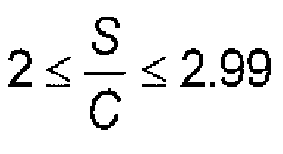
- the mixture has steam present in an amount to provide a steam-to-carbon molar ratio, S/C, ranging from 1.5 to 2.99 or ranging from 2 to 2.99.
- the molar flow rate of hydrocarbon-based carbon is 155 moles C/h (50 moles C/h for methane, 60 moles C/h for ethane, and 45 moles C/h for propane).
- the mixture has H 2 present in an amount to provide a hydrogen stoichiometric ratio, A, ranging from 0.01 to 0.095.
- the mixture has steam present in an amount to provide a steam-to-carbon molar ratio, S/C, ranging from 1.5 to 5 or ranging from 2 to 4.
- the product stream 40 may be used to generate steam in a waste heat boiler 140 by indirect heat transfer. At least a portion of the steam generated in the waste heat boiler 140 may be used as steam 20 in the process feed.
- the product stream 40 may be further processed in one or more shift reactors 150 if desired.
- the product stream 40 may be cooled in a heat exchanger 160 to condense water from the product stream 40.
- Water 175 may be removed from the product stream 40 in a knock-out drum 170.
- Carbon dioxide may be removed from product stream in a CO 2 stripper (not shown), if desired.
- the process may further comprise passing at least a portion of the product stream 40 to a separation unit 180 to form a hydrogen product stream 175 and a tail gas stream 187.
- the separation unit 180 may be a pressure swing adsorber.
- a portion 95 of the hydrogen product stream 185 may be exported from the process.
- Another portion 15 may be recycled to the first reactor 100 in feed stream 21.
- the H 2 may be recycled to the first reactor 100 by way of the hydrodesulphurization unit 200 and/or the hydrogenation unit 210.
- the tail gas stream 187 may be used as a fuel in the second reactor 110.
- the tail gas may be blended with make up fuel 189 and passed to burners 55 where the tail gas and make up fuel are combusted with an oxygen-containing gas 57 external to a plurality of catalyst-containing tubes 115.
- the process may further comprise passing at least a portion of the product stream (40) from the second reactor (110) to a cryogenic separation unit to form at least one of a CO product stream, a H 2 product stream, and an oxogas product.
- An oxogas is a mixture of CO and H 2 having a desired CO:H 2 molar ratio.
- a portion (15) of the H 2 product stream may be passed to the first reactor (100) thereby providing at least a portion of the H 2 in the mixture.
Landscapes
- Chemical & Material Sciences (AREA)
- Chemical Kinetics & Catalysis (AREA)
- Organic Chemistry (AREA)
- Health & Medical Sciences (AREA)
- General Health & Medical Sciences (AREA)
- Engineering & Computer Science (AREA)
- Combustion & Propulsion (AREA)
- Inorganic Chemistry (AREA)
- Hydrogen, Water And Hydrids (AREA)
- Organic Low-Molecular-Weight Compounds And Preparation Thereof (AREA)
Abstract
A hydrocarbon reforming process for reforming higher hydrocarbons using a prereformer and a primary reformer where the steam-to-carbon molar ratio ranges from 1.5 to 2.99 and the hydrogen stoichiometric ratio ranges from 0.01 to 1 or where the steam-to-carbon molar ratio ranges from 1.5 to 5 and the hydrogen stoichiometric ratio ranges from 0.01 to 0.095.
Description
- The present invention relates to a process for reforming higher hydrocarbons to produce a synthesis gas (syngas) product and/or a hydrogen product. A synthesis gas product is a product comprising primarily CO and H2. Synthesis gas may be further reacted in one or more shift reactors to form additional H2 in the process stream and separated in a separation unit, such as a pressure swing adsorption unit, to form a H2 product.
- Synthesis gas is conventionally used to produce synthesis gas products such as synthetic crude, or further upgraded to form intermediate or end products, for example lubricant basestock, lubricants, greases, middle distillate fuels, diesel, linear alkylbenzenes aviation and jet fuels, gasoline, and other chemicals, i.e. normal- and isoparaffinic solvents. The synthesis gas may also be used to produce one or more oxygenates, for example, ethers and/or alcohols.
- Synthesis gas (including hydrogen) can be produced from methane-containing feedstocks by any number of primary synthesis gas generation reactors. For example, synthesis can be produced in a steam methane reformer (SMR), an endothermic reactor carried out either in heat exchange reactors, or by other means where substantial heat may be transferred to the reacting fluid, such as in the case of autothermal reforming (ATR), where a portion of the feedstock is combusted inside the reactor to provide heat for steam reforming either subsequently or in the same location as the combustion.
- Synthesis gas can also be produced from methane-containing feedstocks by CO2 ("dry") reforming, catalytic or thermal partial oxidation (CPOx or POx, respectively) and other processes known in the art.
- If the feedstock contains higher hydrocarbons than methane, that is, hydrocarbons having 2 or more carbon atoms are used in the reforming process, the risk for catalyst deactivation by carbon deposition in the synthesis gas generation reactor is increased.
- In order to reduce the risk of carbon deposition, hydrogen and synthesis gas production processes typically employ at least one catalytic reactor prior to the synthesis gas generation reactor where the catalytic reactor is operated at conditions less prone to hydrocarbon cracking than the primary synthesis gas generation reactor. These reactors positioned before the primary synthesis gas generation reactors are referred to as pre-reformers. Pre-reformers can be operated adiabatically or convectively heated by indirect heat transfer with combustion products gases from the primary synthesis gas generation reactor.
- In hydrogen and synthesis gas production processes employing pre-reformers and steam methane reformers, the hydrocarbon feedstock is mixed with 1 to 5 % hydrogen by volume and subsequently subjected to a hydrodesulphurization (HDS) pretreatment to remove sulphur. The hydrocarbon feedstock may also be treated to remove olefins in a hydrogenation reactor.
- The feedstock, after pretreating, is combined with superheated steam to form "mixed feed" having a prescribed steam-to-carbon molar ratio. The steam-to-carbon molar ratio, S/C, is the ratio of the molar flow rate of steam in the mixed feed to the molar flow rate of hydrocarbon-based carbon in the mixed feed. The "steam-to-carbon molar ratio" is a conventional term used in the art.
- The steam-to-carbon molar ratio for steam methane reforming of natural gas typically ranges from 2 to 5. The steam-to-carbon molar ratio is generally higher for steam methane reforming of feedstock containing a greater amount of higher hydrocarbons, for example, propane, butane, propane/butane mixtures, and naphtha.
- Higher steam flow rates are used to suppress carbon formation and enhance the steam reforming reaction. However, higher steam-to-carbon molar ratios disadvantageously decrease the energy efficiency of the reforming process.
-
US 8,591,861 discloses a synthesis gas production process using a prereformer. In one embodiment the hydrocarbon feed stream comprises a mixture of H2 and more than 5% of at least one component selected from the group consisting of hydrocarbons having two or more carbon atoms and alcohols having two or more carbon atoms. The hydrogen stoichiometric ratio, A, for the feed stream ranges from 0.1 to 1.5. The hydrogen stoichiometric ratio is defined inUS 8,591,861 in a somewhat unconventional way. The steam-to-carbon molar ratio ranges from 3 to 4. - In another embodiment of
US 8,591,861 , the hydrocarbon feed stream comprises a mixture of H2 and more than 20% of at least one component selected from the group consisting of hydrocarbons having two or more carbon atoms and alcohols having two or more carbon atoms. The hydrogen stoichiometric ratio, A, for the feed stream ranges from 0.25 to 1.0. The steam-to-carbon molar ratio ranges from 3 to 4. -
EP 1586535 discloses a process for prereforming and reforming natural gas containing higher hydrocarbons.EP 1586535 discloses to operate with a steam-to-carbon molar ratio of from about 1.5 to about 3.0.EP 1586535 discloses that typically, the concentration of methane in natural gas can vary from about 85% to about 99%, where the total concentration of higher hydrocarbons typically varies from about less than 1% to about 15%.EP 1586535 discloses that the concentration of ethane in natural gas typically varies from about 0.1% to about 10%, the concentration of propane varies from about 0.1 % to 5%, and that of butane from about 0.1 % to about 2%. -
EP 1586535 discloses that for the hydrodesulphurization step, up to 5% hydrogen is added to the natural gas to keep the desulfurization catalyst in a reduced and active form and to desulphurize the the natural gas and that in some cases the amount of hydrogen added to the feed stream can be higher than 5%. It is typical to have a recycle ratio of hydrogen to the feed stream of 1% to 5% on a molar basis. The amount of hydrogen reacted in the hydrodesulphurization unit is very small since sulfur is present at ppm concentrations. - The hydrogen stoichiometric ratio in
EP 1586535 can be calculated from the hydrogen recycle ratio and typical natural gas compositions. For example, the North American Combustion Handbook, Vol. 1, 3rd Edition, 1986, provides a compositional analysis of typical gaseous fuels in table 2.12a. Pittsburgh, PA natural gas is disclosed to have 83.4 mole % methane, 15.8 mole % ethane and 0.8 mole % N2. Birmingham, AL natural gas is disclosed to have 90.0 mole % methane, 5 mole % ethane, and 5 mole % N2. - The hydrogen stoichiometric ratio, defined in the conventional way, is the molar quantity of hydrogen supplied divided by the molar quantity required to convert the higher hydrocarbons to methane.
- Using a basis molar flow rate of 100 moles/h of natural gas, the molar flow rate of ethane in Pittsburgh natural gas is 15.8 moles/h and the molar flow rate of H2 needed to convert the ethane to methane is 15.8 moles/h of H2, since 1 mole of H2 is need for every mole of ethane. For the case where the hydrogen recycle ratio is 1% (i.e. 1 mole of H2 for every 100 moles of natural gas feed), the hydrogen stoichiometric ratio is 1/15.8 = 0.063. For the case where the hydrogen recycle ratio is 5% (i.e. 5 moles of H2 for every 100 moles of natural gas feed), the hydrogen stoichiometric ratio is 5/15.8 = 0.316.
- Likewise, using a basis molar flow rate of 100 moles/h of natural gas, the molar flow rate of ethane in Birmingham natural gas is 5.0 moles/h and the molar flow rate of H2 needed to convert the ethane to methane is 5.0 moles/h of H2, since 1 mole of H2 is need for every mole of ethane. For the case where the hydrogen recycle ratio is 1 %, the hydrogen stoichiometric ratio is 1/5.0 = 0.2. For the case where the hydrogen recycle ratio is 5%, the hydrogen stoichiometric ratio is 5/5.0 = 1.
- Then it can be deduced from
EP 1586535 that the hydrogen stoichiometric ratio for natural gas having 5% to 15.8% ethane, can range from about 0.063 to about 1.0. - Industry desires steam reforming processes that produce synthesis gas and/or hydrogen from higher hydrocarbons with improved efficiency and with little or no carbon formation in the reactors.
- There are several aspects of the process as outlined below. In the following, specific aspects of the process will be outlined. The reference numbers and expressions set in parentheses are referring to an example embodiment explained further below with reference to the figure. The reference numbers and expressions are, however, only illustrative and do not limit the aspect to any specific component or feature of the example embodiment. The aspects can be formulated as claims in which the reference numbers and expressions set in parentheses are omitted or replaced by others as appropriate.
-
Aspect 1. A hydrocarbon reforming process comprising:- introducing a feed stream (21) comprising a mixture of hydrocarbons, H2, and steam into a first reactor (100) wherein the mixture comprises greater than 20 mole % C2+ hydrocarbons having 2 or more carbon atoms on a dry basis;
- reacting the mixture in the first reactor (100) in the presence of a catalyst (105) under reaction conditions sufficient to produce a first product mixture (30) comprising CH4 formed by the reaction of the C2+ hydrocarbons with the H2;
- introducing the first product mixture (30) into a second reactor (110); and
- reacting the first product mixture (30) in the second reactor in the presence of a reforming catalyst (117) under reaction conditions sufficient to produce a product stream (40) comprising H2 and CO;
- characterized by:
- (i) the mixture having H2 present in an amount to provide a hydrogen stoichiometric ratio, A, where 0.01≤λ≤1, wherein the hydrogen stoichiometric ratio is defined as the ratio of the H2 molar flow rate to the stoichiometric H2 molar flow rate required to convert all the C2+ hydrocarbons in the mixture to methane; and
- (ii) the mixture having steam present in an amount to provide a steam-to-carbon molar ratio, S/C, where


- Aspect 2. The process of
aspect 1 where
- Aspect 3. The process of
aspect 1 or aspect 2 where 0.1≤λ≤1. - Aspect 4. A hydrocarbon reforming process comprising:
- introducing a feed stream (21) comprising a mixture of hydrocarbons, H2, and steam into a first reactor (100) wherein the mixture comprises greater than 20 mole % C2+ hydrocarbons having 2 or more carbon atoms on a dry basis;
- reacting the mixture in the first reactor (100) in the presence of a catalyst (105) under reaction conditions sufficient to produce a first product mixture (30) comprising CH4 formed by the reaction of the C2+ hydrocarbons with the H2;
- introducing the first product mixture (30) into a second reactor (110); and
- reacting the first product mixture (30) in the second reactor in the presence of a reforming catalyst (117) under reaction conditions sufficient to produce a product stream (40) comprising H2 and CO;
- characterized by:
- (i) the mixture having H2 present in an amount to provide a hydrogen stoichiometric ratio, λ, where 0.01≤λ≤0.095, wherein the hydrogen stoichiometric ratio is defined as the ratio of the H2 molar flow rate to the stoichiometric H2 molar flow rate required to convert all the C2+ hydrocarbons in the mixture to methane; and
- (ii) the mixture having steam present in an amount to provide a steam-to-carbon molar ratio, S/C, where


- Aspect 5. The process of the preceding aspect where λ ≤ 0.09 or λ ≤ 0.08.
- Aspect 6. The process of the preceding aspect where λ ≤ 0.06 or λ ≤ 0.05.
- Aspect 7. The process of any one of aspects 4 to 6 where S/C > 3.
- Aspect 8. The process of the preceding aspect where S/C > 4.
- Aspect 9. The process of any one of the preceding aspects wherein the mixture comprises greater than 30 mole % C2+ hydrocarbons on a dry basis.
-
Aspect 10. The process of any one of the preceding aspects wherein the mixture comprises greater than 50 mole % C2+ hydrocarbons on a dry basis. - Aspect 11. The process of any one of the preceding aspects wherein the mixture comprises greater than 80 mole% C2+ hydrocarbons on a dry basis.
- Aspect 12. The process of any one of the preceding aspects wherein the mixture comprises at least 30 mole % ethane on a dry basis or at least 50 mole % ethane on a dry basis.
- Aspect 13. The process of any one of the preceding aspects wherein the mixture comprises greater than 35 mole % propane on a dry basis or greater than 50 mole % on a dry basis.
- Aspect 14. The process of any one of the preceding aspects wherein the mixture comprises greater than 35 mole % butane on a dry basis or greater than 50 mole % on a dry basis.
-
Aspect 15. The process of any one of the preceding aspects wherein the feed stream (21) is formed at least in part from at least one of naphtha, refinery off-gas, and refinery fuel gas. - Aspect 16. The process of any one of the preceding aspects wherein a portion of the product stream (40) is recycled to the feed stream (21) thereby providing at least a portion of the H2 in the mixture.
- Aspect 17. The process of any one of the preceding aspects wherein the first reactor (100) is a prereformer.
- Aspect 18. The process of any one of the preceding aspects wherein the first reactor (100) is operated adiabatically.
- Aspect 19. The process of any one of
aspects 1 to 11 wherein heat is provided to the mixture in the first reactor (100) by indirect heat transfer with combustion product gases (254) from the second reactor (110). -
Aspect 20. The process of any one of the preceding aspects wherein the catalyst (105) in the first reactor (100) is a nickel-based catalyst. - Aspect 21. The process of any one of the preceding aspects wherein the second reactor (110) is a steam methane reformer.
- Aspect 22. The process of any one of
aspects 1 to 14 wherein the second reactor (110) is a mixed conducting membrane reactor. - Aspect 23. The process of any one of the preceding aspects further comprising:
- passing at least a portion of the product stream (40) from the second reactor (110) to a pressure swing adsorption unit (180) to form a H2 product stream (185) and a tail gas stream (187); and
- passing a portion (15) of the H2 product stream (185) to the first reactor (100) thereby providing at least a portion of the H2 in the mixture.
- Aspect 24. The process of any one of
aspects 1 to 22 further comprising:- passing at least a portion of the product stream (40) from the second reactor (110) to a cryogenic separation unit to form at least one of a CO product stream, a H2 product stream, and an oxogas product (CO/H2 mixture); and
- passing a portion (15) of the H2 product stream to the first reactor (100) thereby providing at least a portion of the H2 in the mixture.
- The sole figure shows a process flow diagram for the process.
- The ensuing detailed description provides preferred exemplary embodiments only, and is not intended to limit the scope, applicability, or configuration of the invention. Rather, the ensuing detailed description of the preferred exemplary embodiments will provide those skilled in the art with an enabling description for implementing the preferred exemplary embodiments of the invention, it being understood that various changes may be made in the function and arrangement of elements without departing from scope of the invention as defined by the claims.
- The articles "a" and "an" as used herein mean one or more when applied to any feature in embodiments of the present invention described in the specification and claims. The use of "a" and "an" does not limit the meaning to a single feature unless such a limit is specifically stated. The article "the" preceding singular or plural nouns or noun phrases denotes a particular specified feature or particular specified features and may have a singular or plural connotation depending upon the context in which it is used. The adjective "any" means one, some, or all indiscriminately of whatever quantity. The term "and/or" placed between a first entity and a second entity means one of (1) the first entity, (2) the second entity, and (3) the first entity and the second entity. The term "and/or" placed between the last two entities of a list of 3 or more entities means at least one of the entities in the list including any specific combination of entities in this list.
- The phrase "at least a portion" means "a portion or all." The at least a portion of a stream may have the same composition with the same concentration of each of the species as the stream from which it is derived. The at least a portion of a stream may have a different composition to that of the stream from which it is derived. The at least a portion of a stream may include specific components of the stream from which it is derived.
- As used herein, "first," "second," "third," etc. are used to distinguish from among a plurality of steps and/or features, and is not indicative of the total number, or relative position in time and/or space unless expressly stated as such.
- The present invention relates to a steam-hydrocarbon reforming process. More specifically, the present invention relates to a steam-hydrocarbon reforming process for reforming feedstock having a higher hydrocarbon concentration greater than found in natural gas.
- The process is described with reference to the sole FIGURE.
- The process comprises introducing a feed stream 21 comprising a mixture of hydrocarbons, H2, and steam into a
first reactor 100. The mixture comprises greater than 20 mole % C2+ hydrocarbons on a dry basis. C2+ hydrocarbons are hydrocarbons having 2 or more carbon atoms, e.g. ethane, ethene, propane, propene, butane, butene, etc. The concentration of the C2+ hydrocarbons on a "dry basis" means that the concentration of steam is not included in the determination of the concentration, as is known in the art. - The mixture may comprise greater than 50 mole % or greater than 80 mole % C2+ hydrocarbons on a dry basis.
- The mixture may comprise greater than 35 mole % propane on a dry basis.
- The mixture may comprise greater than 35 mole % butane on a dry basis.
- The feed stream 21 may be formed at least in part from at least one of naphtha, refinery off-gas, and refinery fuel gas.
- The
feedstock 10 for forming the feed stream 21 may be pretreated prior to being introduced into thefirst reactor 100. As shown in the figure, the feedstock may be pretreated in ahydrogenation unit 200 to convert olefins to their alkane counterparts and/or ahydrodesulphurization unit 210 to remove sulfur. - As shown in the figure,
hydrogen 15 may be mixed with the feedstock prior to introducing thefeedstock 10 into the hydrogenation unit or the hydrodesulphurization unit.Hydrogen 15 is needed in the case of olefins in the hydrocarbon feedstock for reaction in thehydrogenation unit 200 to convert olefins to alkanes.Hydrogen 15 is needed in the case of sulfur in the hydrocarbon feedstock for reaction in thehydrodesulphurization unit 210 to form H2S, which is typically removed by reaction with Zn in thehydrodesulphurization unit 210. -
Hydrogen 15 may be supplied from any available source. As shown in the figure,hydrogen 15 may be conveniently supplied from a portion of a H2 product stream frompressure swing adsorber 180. - The process may comprise recycling a portion of the
product stream 40 to the feed stream 21 thereby providing at least a portion of the H2 in the mixture. -
Steam 20 is mixed with the feedstock after optional pretreatment to form feed stream 21, which is typically called "mixed feed." The feed stream 21 may be heated by indirect heat transfer with combustion product gases fromsecond reactor 110, for example in the convection section of steam methane reformer. - The process further comprises reacting the mixture in the
first reactor 100 in the presence of acatalyst 105 under reaction conditions sufficient to produce afirst product mixture 30 comprising CH4 formed by the reaction of the C2+ hydrocarbons with the H2. - The
first reactor 100 may be a so-called prereformer. - The
first reactor 100 may be operated adiabatically. - Alternatively, heat may be provided to the mixture in the
first reactor 100 by indirect heat transfer with combustion product gases from thesecond reactor 110, i.e. a so-called convective prereformer. - The
catalyst 105 in thefirst reactor 100 may be a nickel-based catalyst. Any suitable catalyst known in the art for reforming or prereforming may be used. - The reaction conditions in the
first reactor 100 may include a temperature ranging from 425°C to 730°C and a pressure ranging from 0.2 MPa (2 atm.) to 5.6 MPa (55 atm.). - The process further comprises introducing the
first product mixture 30 into a second reactor. The second reactor may be any synthesis gas generation reactor known for producing synthesis gas. - The
second reactor 110 may be a steam methane reformer. Steam methane reformers and their operation are well-known in the art. - The second reactor may be a mixed conducting membrane reactor as disclosed, for example, in
U.S. 6,110,979 , incorporated herein by reference. - The process further comprises reacting the
first product mixture 30 in thesecond reactor 110 in the presence of a reformingcatalyst 117 under reaction conditions sufficient to produce aproduct stream 40 comprising H2 and CO (i.e. synthesis gas). - The reforming
catalyst 117 may be any suitable reforming catalyst known in the art. - The reaction conditions in the second reactor may include a temperature ranging from 500°C to 1000°C and a pressure ranging from 0.2 MPa (2 atm.) to 5.6 MPa (55 atm.).
- In a first embodiment of the process, the mixture has H2 present in an amount to provide a hydrogen stoichiometric ratio, A, ranging from 0.01 to 1 or ranging from 0.1 to 1. The hydrogen stoichiometric ratio is defined herein as the ratio of the H2 molar flow rate to the stoichiometric H2 molar flow rate required to convert all the C2+ hydrocarbons in the mixture to methane. The hydrogen stoichiometric ratio is defined herein in the conventional manner, and is different than the definition in
U.S. 8,591,861 . - An exemplary calculation of the hydrogen stoichiometric ratio is provided below.
- The hydrogen stoichiometric ratio is calculated for an exemplary stream containing 50 mole % methane, 30 mole % ethane, 15 mole % propane, and 5 mole % hydrogen. A basis molar flow rate of 100 moles/h is used.
- The molar flow rate of ethane is 30 moles/h. 1 mole of H2 is required for each mole of ethane to convert the ethane to methane. Then, 30 moles/h of H2 are required to convert the ethane in the stream to methane.
- The molar flow rate of propane is 15 moles/h. 2 moles of H2 are required for each mole of propane to convert the propane to methane. Then 30 moles/h of H2 are required to convert the propane to methane.
- The total molar flow rate of H2 required to convert the C2+ hydrocarbons (i.e. ethane and propane) to methane is 60 mole/h. This is the stoichiometric amount of H2 needed.
- The H2 molar flow rate is 5 moles/h.
- Then the hydrogen stoichiometric ratio for this exemplary calculation is 5/60 = 0.083.
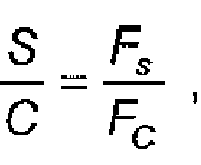
- In the first embodiment, the mixture has steam present in an amount to provide a steam-to-carbon molar ratio, S/C, ranging from 1.5 to 2.99 or ranging from 2 to 2.99. The steam-to-carbon ratio, S/C, is ratio of the molar flow rate of steam in the feed stream, Fs , to the molar flow rate of hydrocarbon-based carbon in the feed stream, Fc ,

- For the exemplary stream with a basis molar flow rate of 100 moles/h, the molar flow rate of hydrocarbon-based carbon is 155 moles C/h (50 moles C/h for methane, 60 moles C/h for ethane, and 45 moles C/h for propane).
- For a steam-to-carbon ratio of 2.0, 310 moles/h of steam are required.
- It has been discovered that lower steam-to-carbon ratios may be used in the first reactor even when reforming feedstock with greater quantities of higher hydrocarbons, thereby improving the process efficiency.
- In a second embodiment of the process, the mixture has H2 present in an amount to provide a hydrogen stoichiometric ratio, A, ranging from 0.01 to 0.095.
- In the second embodiment, the mixture has steam present in an amount to provide a steam-to-carbon molar ratio, S/C, ranging from 1.5 to 5 or ranging from 2 to 4.
- It has been discovered that much less hydrogen needs to be recycled to the first reactor since hydrogen is generated in-situ within the first reactor. Since less hydrogen is recycle, more hydrogen is available for export.
- The
product stream 40 may be used to generate steam in awaste heat boiler 140 by indirect heat transfer. At least a portion of the steam generated in thewaste heat boiler 140 may be used assteam 20 in the process feed. - The
product stream 40 may be further processed in one ormore shift reactors 150 if desired. - The
product stream 40 may be cooled in aheat exchanger 160 to condense water from theproduct stream 40.Water 175 may be removed from theproduct stream 40 in a knock-out drum 170. - Carbon dioxide may be removed from product stream in a CO2 stripper (not shown), if desired.
- The process may further comprise passing at least a portion of the
product stream 40 to aseparation unit 180 to form ahydrogen product stream 175 and atail gas stream 187. Theseparation unit 180 may be a pressure swing adsorber. Aportion 95 of thehydrogen product stream 185 may be exported from the process. Anotherportion 15 may be recycled to thefirst reactor 100 in feed stream 21. The H2 may be recycled to thefirst reactor 100 by way of thehydrodesulphurization unit 200 and/or thehydrogenation unit 210. - The
tail gas stream 187 may be used as a fuel in thesecond reactor 110. The tail gas may be blended with make upfuel 189 and passed toburners 55 where the tail gas and make up fuel are combusted with an oxygen-containinggas 57 external to a plurality of catalyst-containingtubes 115. - The process may further comprise passing at least a portion of the product stream (40) from the second reactor (110) to a cryogenic separation unit to form at least one of a CO product stream, a H2 product stream, and an oxogas product. An oxogas is a mixture of CO and H2 having a desired CO:H2 molar ratio. A portion (15) of the H2 product stream may be passed to the first reactor (100) thereby providing at least a portion of the H2 in the mixture.
Claims (15)
- A hydrocarbon reforming process comprising:introducing a feed stream (21) comprising a mixture of hydrocarbons, H2, and steam into a first reactor (100) wherein the mixture comprises greater than 20 mole % C2+ hydrocarbons having 2 or more carbon atoms on a dry basis;reacting the mixture in the first reactor (100) in the presence of a catalyst (105) under reaction conditions sufficient to produce a first product mixture (30) comprising CH4 formed by the reaction of the C2+ hydrocarbons with the H2;introducing the first product mixture (30) into a second reactor (110);reacting the first product mixture (30) in the second reactor in the presence of a reforming catalyst (117) under reaction conditions sufficient to produce a product stream (40) comprising H2 and CO;the mixture having H2 present in an amount to provide a hydrogen stoichiometric ratio, A, wherein the hydrogen stoichiometric ratio is defined as the ratio of the H2 molar flow rate to the stoichiometric H2 molar flow rate required to convert all the C2+ hydrocarbons in the mixture to methane; andthe mixture having steam present in an amount to provide a steam-to-carbon molar ratio, wherein
 characterized by:(i) 0.01 ≤ λ ≤ 1 and
or(ii) 0.01 ≤ λ ≤ 0.095 and
- The process of claim 1 (i) where
- The process of claim 1 (ii) wherein λ ≤ 0.09, preferably λ ≤ 0.08, and/or S/C > 3, preferably S/C > 4.
- The process of any one of the preceding claims wherein the mixture comprises greater than 50 mole % C2+ hydrocarbons on a dry basis or greater than 80 mole% C2+ hydrocarbons on a dry basis.
- The process of any one of the preceding claims wherein the mixture comprises at least 30 mole % ethane on a dry basis.
- The process of any one of the preceding claims wherein the mixture comprises greater than 35 mole % propane on a dry basis.
- The process of any one of the preceding claims wherein the mixture comprises greater than 35 mole % butane on a dry basis.
- The process of any one of the preceding claims wherein the feed stream (21) is formed at least in part from at least one of naphtha, refinery off-gas, and refinery fuel gas.
- The process of any one of the preceding claims wherein a portion of the product stream (40) is recycled to the feed stream (21) thereby providing at least a portion of the H2 in the mixture.
- The process of any one of the preceding claims wherein the first reactor (100) is a prereformer.
- The process of any one of the preceding claims wherein the first reactor (100) is operated adiabatically.
- The process of any one of claims 1 to 10 wherein heat is provided to the mixture in the first reactor (100) by indirect heat transfer with combustion product gases (254) from the second reactor (110).
- The process of any one of the preceding claims wherein the second reactor (110) is a steam methane reformer.
- The process of any one of claims 1 to 12 wherein the second reactor (110) is a mixed conducting membrane reactor.
- The process of any one of the preceding claims further comprising:passing at least a portion of the product stream (40) from the second reactor (110) to a pressure swing adsorption unit (180) to form a H2 product stream (185) and a tail gas stream (187); andpassing a portion (15) of the H2 product stream (185) to the first reactor (100) thereby providing at least a portion of the H2 in the mixture.
Priority Applications (1)
| Application Number | Priority Date | Filing Date | Title |
|---|---|---|---|
| EP14165707.2A EP2762442A1 (en) | 2014-04-23 | 2014-04-23 | Process for reforming higher hydrocarbons |
Applications Claiming Priority (1)
| Application Number | Priority Date | Filing Date | Title |
|---|---|---|---|
| EP14165707.2A EP2762442A1 (en) | 2014-04-23 | 2014-04-23 | Process for reforming higher hydrocarbons |
Publications (1)
| Publication Number | Publication Date |
|---|---|
| EP2762442A1 true EP2762442A1 (en) | 2014-08-06 |
Family
ID=50513805
Family Applications (1)
| Application Number | Title | Priority Date | Filing Date |
|---|---|---|---|
| EP14165707.2A Withdrawn EP2762442A1 (en) | 2014-04-23 | 2014-04-23 | Process for reforming higher hydrocarbons |
Country Status (1)
| Country | Link |
|---|---|
| EP (1) | EP2762442A1 (en) |
Cited By (1)
| Publication number | Priority date | Publication date | Assignee | Title |
|---|---|---|---|---|
| EP3098197A1 (en) | 2015-05-27 | 2016-11-30 | Air Products And Chemicals, Inc. | Process for the production of hydrogen |
Citations (5)
| Publication number | Priority date | Publication date | Assignee | Title |
|---|---|---|---|---|
| US6110979A (en) | 1997-12-23 | 2000-08-29 | Air Products And Chemicals, Inc. | Utilization of synthesis gas produced by mixed conducting membranes |
| EP1586535A2 (en) | 2004-03-19 | 2005-10-19 | Air Products And Chemicals, Inc. | Process for prereforming and reforming of natural gas containing higher hydrocarbons |
| US20090230359A1 (en) * | 2008-03-17 | 2009-09-17 | Air Products And Chemicals, Inc. | Steam-Hydrocarbon Reforming Method with Limited Steam Export |
| WO2013015687A1 (en) * | 2011-07-26 | 2013-01-31 | Stamicarbon B.V. Acting Under The Name Of Mt Innovation Center | Method and system for production of hydrogen rich gas mixtures |
| US8591861B2 (en) | 2007-04-18 | 2013-11-26 | Schlumberger Technology Corporation | Hydrogenating pre-reformer in synthesis gas production processes |
-
2014
- 2014-04-23 EP EP14165707.2A patent/EP2762442A1/en not_active Withdrawn
Patent Citations (5)
| Publication number | Priority date | Publication date | Assignee | Title |
|---|---|---|---|---|
| US6110979A (en) | 1997-12-23 | 2000-08-29 | Air Products And Chemicals, Inc. | Utilization of synthesis gas produced by mixed conducting membranes |
| EP1586535A2 (en) | 2004-03-19 | 2005-10-19 | Air Products And Chemicals, Inc. | Process for prereforming and reforming of natural gas containing higher hydrocarbons |
| US8591861B2 (en) | 2007-04-18 | 2013-11-26 | Schlumberger Technology Corporation | Hydrogenating pre-reformer in synthesis gas production processes |
| US20090230359A1 (en) * | 2008-03-17 | 2009-09-17 | Air Products And Chemicals, Inc. | Steam-Hydrocarbon Reforming Method with Limited Steam Export |
| WO2013015687A1 (en) * | 2011-07-26 | 2013-01-31 | Stamicarbon B.V. Acting Under The Name Of Mt Innovation Center | Method and system for production of hydrogen rich gas mixtures |
Non-Patent Citations (1)
| Title |
|---|
| "North American Combustion Handbook", vol. 1, 1986 |
Cited By (1)
| Publication number | Priority date | Publication date | Assignee | Title |
|---|---|---|---|---|
| EP3098197A1 (en) | 2015-05-27 | 2016-11-30 | Air Products And Chemicals, Inc. | Process for the production of hydrogen |
Similar Documents
| Publication | Publication Date | Title |
|---|---|---|
| EP0989094B1 (en) | Process for the autothermal reforming of a hydrocarbon feedstock containing higher hydrocarbons | |
| EP3018095B1 (en) | Steam-hydrocarbon reforming process | |
| AU2020272084B2 (en) | Chemical synthesis plant | |
| JP4227026B2 (en) | Reduction of carbon dioxide emissions from Fischer-Tropsch GTL facilities through aromatic production | |
| CA2933420C (en) | Process for reforming synthesis gas from hydrocarbon feedstock | |
| US9156689B2 (en) | Process for reforming hydrocarbons | |
| US8591861B2 (en) | Hydrogenating pre-reformer in synthesis gas production processes | |
| CN106957674B (en) | The method of reforming hydrocarbon | |
| WO2014154691A1 (en) | Process for producing hydrocarbons | |
| JP2013501700A (en) | Combined reforming process for methanol production | |
| US9409773B2 (en) | Steam-hydrocarbon reforming process | |
| US6846404B2 (en) | Reducing CO2 levels in CO2-rich natural gases converted into liquid fuels | |
| CA2938779C (en) | Process for producing synthesis gas by catalytic steam reforming of hydrocarbon feedstock | |
| AU2004295296B2 (en) | Gas-to-liquid CO2 reduction by use of H2 as a fuel | |
| EP1098838B1 (en) | Process for autothermal reforming of a hydrocarbon feedstock | |
| CA3203985A1 (en) | Reduced metal dusting in bayonet reformer | |
| AU2015261575B2 (en) | Process for reforming hydrocarbons | |
| Mahintheran | A Comparative Study of Reforming Technologies: Steam Methane Reforming (SMR), Partial Oxidation (POX) and Auto Thermal Reforming (ATR) | |
| ITMI20120418A1 (en) | CATALYTIC PROCEDURE TO PRODUCE SYNTHESIS AND HYDROGEN GAS |
Legal Events
| Date | Code | Title | Description |
|---|---|---|---|
| PUAI | Public reference made under article 153(3) epc to a published international application that has entered the european phase |
Free format text: ORIGINAL CODE: 0009012 |
|
| 17P | Request for examination filed |
Effective date: 20140423 |
|
| AK | Designated contracting states |
Kind code of ref document: A1 Designated state(s): AL AT BE BG CH CY CZ DE DK EE ES FI FR GB GR HR HU IE IS IT LI LT LU LV MC MK MT NL NO PL PT RO RS SE SI SK SM TR |
|
| AX | Request for extension of the european patent |
Extension state: BA ME |
|
| STAA | Information on the status of an ep patent application or granted ep patent |
Free format text: STATUS: THE APPLICATION IS DEEMED TO BE WITHDRAWN |
|
| 18D | Application deemed to be withdrawn |
Effective date: 20150207 |