EP2759953B1 - System and method for genomic data processing with an in-memory database system and real-time analysis - Google Patents
System and method for genomic data processing with an in-memory database system and real-time analysis Download PDFInfo
- Publication number
- EP2759953B1 EP2759953B1 EP13152861.4A EP13152861A EP2759953B1 EP 2759953 B1 EP2759953 B1 EP 2759953B1 EP 13152861 A EP13152861 A EP 13152861A EP 2759953 B1 EP2759953 B1 EP 2759953B1
- Authority
- EP
- European Patent Office
- Prior art keywords
- alignment
- processing
- imdb
- memory database
- data
- Prior art date
- Legal status (The legal status is an assumption and is not a legal conclusion. Google has not performed a legal analysis and makes no representation as to the accuracy of the status listed.)
- Active
Links
Images







Classifications
-
- G—PHYSICS
- G16—INFORMATION AND COMMUNICATION TECHNOLOGY [ICT] SPECIALLY ADAPTED FOR SPECIFIC APPLICATION FIELDS
- G16B—BIOINFORMATICS, i.e. INFORMATION AND COMMUNICATION TECHNOLOGY [ICT] SPECIALLY ADAPTED FOR GENETIC OR PROTEIN-RELATED DATA PROCESSING IN COMPUTATIONAL MOLECULAR BIOLOGY
- G16B50/00—ICT programming tools or database systems specially adapted for bioinformatics
-
- G—PHYSICS
- G16—INFORMATION AND COMMUNICATION TECHNOLOGY [ICT] SPECIALLY ADAPTED FOR SPECIFIC APPLICATION FIELDS
- G16B—BIOINFORMATICS, i.e. INFORMATION AND COMMUNICATION TECHNOLOGY [ICT] SPECIALLY ADAPTED FOR GENETIC OR PROTEIN-RELATED DATA PROCESSING IN COMPUTATIONAL MOLECULAR BIOLOGY
- G16B50/00—ICT programming tools or database systems specially adapted for bioinformatics
- G16B50/30—Data warehousing; Computing architectures
-
- G—PHYSICS
- G16—INFORMATION AND COMMUNICATION TECHNOLOGY [ICT] SPECIALLY ADAPTED FOR SPECIFIC APPLICATION FIELDS
- G16B—BIOINFORMATICS, i.e. INFORMATION AND COMMUNICATION TECHNOLOGY [ICT] SPECIALLY ADAPTED FOR GENETIC OR PROTEIN-RELATED DATA PROCESSING IN COMPUTATIONAL MOLECULAR BIOLOGY
- G16B30/00—ICT specially adapted for sequence analysis involving nucleotides or amino acids
- G16B30/10—Sequence alignment; Homology search
-
- G—PHYSICS
- G16—INFORMATION AND COMMUNICATION TECHNOLOGY [ICT] SPECIALLY ADAPTED FOR SPECIFIC APPLICATION FIELDS
- G16B—BIOINFORMATICS, i.e. INFORMATION AND COMMUNICATION TECHNOLOGY [ICT] SPECIALLY ADAPTED FOR GENETIC OR PROTEIN-RELATED DATA PROCESSING IN COMPUTATIONAL MOLECULAR BIOLOGY
- G16B50/00—ICT programming tools or database systems specially adapted for bioinformatics
- G16B50/10—Ontologies; Annotations
-
- G—PHYSICS
- G16—INFORMATION AND COMMUNICATION TECHNOLOGY [ICT] SPECIALLY ADAPTED FOR SPECIFIC APPLICATION FIELDS
- G16B—BIOINFORMATICS, i.e. INFORMATION AND COMMUNICATION TECHNOLOGY [ICT] SPECIALLY ADAPTED FOR GENETIC OR PROTEIN-RELATED DATA PROCESSING IN COMPUTATIONAL MOLECULAR BIOLOGY
- G16B30/00—ICT specially adapted for sequence analysis involving nucleotides or amino acids
Definitions
- the invention relates to a computer-based system with an in-memory database for processing nucleotide sequence data and a method implementing a computer program.
- NGS next-generation sequencing
- NGS technologies have demonstrated the capacity to sequence DNA at unprecedented speed, thereby enabling previously unimaginable scientific achievements and novel biological and medical applications, such as personalized medicine.
- the massive data produced by NGS also presents a significant challenge for data storage, analyses, and data processing.
- genomic data a typical workflow of computer-implemented processing steps has been established, also called genome data processing pipeline.
- genome data processing pipeline For the sake of accuracy and in order to quickly provide high quality results it is essential to remove false positives from the (alignment) result. Further, it is essential to integrate further processing tools in the pipeline for inter alia filtering duplicates or removing invalid entries or for realigning subsets of NGS data.
- TREAT a bioinformatics tool for variant annotations and visualizations in targeted and exome sequencing data
- Asmann et al, in Bioinformatics, Vol. 28, No. 2, 2012, p. 277-278 discloses a tool for navigation and mining of variants from both targeted resequencing and whole exome sequencing. This document also shows deficiencies from a computer processing perspective.
- SIMPLEX Cloud-Enabled Pipeline for the Comprehensive Analysis of Exome Sequencing Data
- M. Fischer et al. in PLOS One, 2012, Vol. 7, Issue 8 discloses a computational pipeline which comprises the complete analysis workflow, including alignment to a reference genome, SNP and DIP detection, functional annotation of variants using different approaches and report generation. This document also shows drawbacks from a computer processing perspective.
- EP 2 040 180 A1 of the Applicant discloses the concept of an in-memory database, which uses the main memory of a computer in a computing cluster, describing OLTP and OLAP transactions. This document does not relate to genome sequencing and does not provide automatic algorithmic processing of genome data.
- the present invention relates to a computer-based system for processing nucleotide sequence data, which are provided as reads, wherein the system has an interface for importing the nucleotide sequence data from a sequencer machine, the system further comprising:
- the system further comprises an alignment coordinator, which is adapted to provide the in-memory database system with a modified alignment functionality.
- the nucleotide sequence data may be human or non-human and may be DNA sequence data or RNA sequence data.
- the system may also be configured to process other genomic sequence data, like for example sequences of amino acids.
- the genomic sequence mainly refers to a sequence which may be mapped to the alphabet comprising the letters C, G, A, T, and U, respectively, because the primary nucleobases are cytosine, guanine, adenine (DNA and RNA), thymine (DNA) and uracil (RNA), abbreviated as C, G, A, T, and U, respectively. In the following they are usually simply called bases (according to usual use in genetics).
- the sequencer machine is a laboratory device which is adapted to automatically determine the precise order of nucleotides within a DNA molecule. Preferably it is a next-generation sequencing (NGS) device.
- NGS next-generation sequencing
- the sequencing machine provides reads which are imported into the system.
- the NGS machine typically is not part of the system. It includes any method or technology that is used to determine the order of the four bases-adenine, guanine, cytosine, and thymine-in a strand of DNA.
- DNA sequencing may be used to determine the sequence of individual genes, larger genetic regions (i.e.
- Cancer genome sequencing is the whole genome sequencing of a single, homogeneous or heterogeneous group of cancer cells. It is a biochemical laboratory method for the characterization and identification of the DNA or RNA sequences of cancer cell(s).
- cancer genome sequencing involves direct sequencing of primary tumor tissue, adjacent or distal normal tissue, the tumor micro environment such as fibroblast/stromal cells, or metastatic tumor sites. Similar to whole genome sequencing, the information generated from this technique include: identification of nucleotide bases (DNA or RNA), copy number and sequence variants, mutation status, and structural changes such as chromosomal translocations and fusion genes. Cancer genome sequencing is not limited to WG sequencing and can also include exome, transcriptome, and micronome sequencing. These methods can be used to quantify gene expression, miRNA expression, and identify alternative splicing events in addition to sequence data.
- the input data to be processed according to the invention may be provided as a FASTQ formatted file.
- modified alignment functionality is to be construed as at least one of a plurality of different alignment algorithms being integrated into the in-memory database, so that a specific alignment algorithm - ideally including an additional pipeline configuration for that - can be applied.
- modified alignment functionality refers to the fact that the alignment algorithms are adapted to be optimized for in-memory database use. In contrast to traditional algorithms, which access input and output files in the file system, modified alignment algorithms may also make use of the data stored or to be stored directly in the in-memory database system. As a result, media breaks are reduced, throughput is increased, and analytical queries can be performed on top of all data stored in the in-memory database without the need for extraction, transformation, and loading into a dedicated OLAP system as of today.
- CPU refers to a central processing unit of a computer or a cluster of computers.
- a computer can have more than one CPU.
- the computing system is called multiprocessing.
- Some microprocessors can contain multiple CPUs on a single chip, which are called multi-core processors. It is also possible to provide a distributed interconnected set of processors.
- the platform layer refers to a computer-based architecture for integrating processing of genome sequencing data into the in-memory database. It has to be pointed out that according to the present invention all processing results and intermediate results are no longer stored as files in a file system, but are instead provided in the in-memory database system. Thus, all operations, for example sort, merge etc., which are performed by dedicated tools on files, are replaced by native in-memory database transactions by means of operational (OLTP systems) and analytical (OLAP systems) transactions.
- OTP systems operational
- OLAP systems analytical
- the in-memory database is based on utilization of main memory technology in combination with a column-oriented data structure, so that combined column and row store can work on the set of data. This in-memory technology is thus no longer based on disk storage mechanisms. Analytical as well as transactional systems are integrated and combined. According to an aspect of present invention OLTP queries can be performed on incoming data. Incoming data may comprise, in particular, sequencing data, (provided by the NGS machine) and annotation data (provided by the updater framework, which are integrated from all external registered distributed annotation sources or data bases), as well as other genomic data.
- the processing results according to the present invention, comprising intermediate and final results may be stored in either row- or column-oriented database format in the in-memory database system.
- the columnar database format supports OLAP queries so that OLAP operations benefit from an interactive response time behavior.
- Data stored in column-oriented database format may be updated on regular basis by both incoming data and results, this being combined with the advantage that the in-memory database enables performance of OLAP queries on column-oriented data formats without any latency (i.e., in real time).
- EP 2 040 180 describing details of an in-memory database.
- the worker framework interacts with the in-memory database (in the following abbreviated as IMDB) and is an intermediate actor between different applications (application layer) and data (data layer). It specifies for incoming sequencing request required tasks and subtasks and its order comparable to a map reduce approach, known in the art. It also dispatches these tasks to computing resources, such as computing nodes, observes their status, and combines partial result sets to obtain the final result set.
- IMDB in-memory database
- the updater framework also interacts with the in-memory database and is an intermediate means between different applications (application layer) and data (data layer). It is the basis for combining international research results. It regularly checks Internet sources, such as public FTP servers or web pages, for updated and newly added annotations, e.g., database exports or characteristic file formats, such as CSV, TSV, VCF, etc. New data is automatically downloaded and imported in the IMDB to extend the knowledge base. It also parses related literature sources, such as PubMed, and updates references in the database. Once new data was imported, it is available for real-time analysis of genome data without any latency.
- Internet sources such as public FTP servers or web pages
- database exports or characteristic file formats such as CSV, TSV, VCF, etc.
- PubMed PubMed
- selected research databases that are processed by the updater framework are: National Center for Biotechnology Information (NCBI), Sanger, University of California, Santa Cruz (UCSC), etc.
- NCBI National Center for Biotechnology Information
- UCSC Santa Cruz
- the processing pipeline will not be programmed in a fixed manner, but according to an aspect of the present invention will be graphically modeled, e.g., using common notations such as Business Process Model and Notation (BPMN).
- BPMN Business Process Model and Notation
- different pipelines may be configured, for example implementing different alignment algorithms. These pipelines may be processed in parallel. This is a major performance enhancement due to parallel data processing.
- individual pipeline configurations guarantee comparability of results obtained by different research groups.
- Another basic aspect is to be seen in major improvements achieved by the present invention in view of collecting and aggregating annotation results from different and distributed annotation sources. Due to provision of the updater framework, it is possible to provide the latest research results in the IMDB and use the same for real-time analysis. The provided analysis may be instantly generated. Although, under existing systems, meta search engines for annotations are provided, e.g., by the NCBI, they suffer from performance bottlenecks during peak hours, require regular tool or manual runs, and are non-transparent for use in individual applications for answering specific research questions.
- a processing layer may be provided as web service.
- This web service is the boundary between Internet and Intranet. It enables users to align FASQ-files, show the results, browse genes and display information on mutations on different end devices, and especially mobile devices.
- the web application framework is based on ruby on rails. Most data displayed in the browser is loaded dynamically with AJAX requests. As a result, all cloud applications can be configured to be accessed via various user interfaces (Uls), such as web browsers application or iPad and Android devices as mobile application. Thus, accessing results or performing specific analysis is no longer limited to a single location, e.g., the desktop computer in the office of the physician. All application operations can be accessed from any device configured to have Internet access, which enhances productivity of its users.
- the web service also handles user-specific data providing login functionality. Since the web service handles private sensitive data, building on using transparent security extensions will be required. As the system has to integrate into a complex project and also take a part of the calculation, the system itself is very complex. To manage this complexity, the whole system is based on a Model-View-Controller Architecture Pattern (MVC). Within the web service, the Views on the User Interface (Ul) are provided with data from the Model (which is known to be the database). In this connection, the web service provides functionality that the database would not be able to. For instance, the user session and user specific data could not be exactly differed by the database so the web service does extend the database's functionality. Moreover, the web service is responsible for file uploads of new FASTQ files.
- MVC Model-View-Controller Architecture Pattern
- the web service provides the user with additional data for the found mutations and generates links to web sites with further knowledge about the found phenomena. All this information cannot be static and have therefore to be loaded dynamically. All these tasks are handled by the web service.
- the Alignment Results Controller loads the detailed view of a chosen task from the alignment results table.
- the Tasks Controller displays running progresses and loads finished tasks.
- the FASTQ files Controller provides the functionality for uploading new and loading existing files for the user who is currently logged in.
- the Browser Request Controller provides functions that refer to the "second tab" inside the Web site and are required to handle the Browsers requests.
- the Cell Line Meta Data controller handles data about aligned patient's strands.
- the User Session Controller provides functions to create, access and destroy user sessions.
- the User Controller provides functionality to create, show and edit users. In case of reloading the page, the web service calls several functions to display the user specific information like available FASQ files for processing and running tasks as well as completed tasks.
- a computer-implemented method for processing nucleotide sequence data with an in-memory database, comprising the method steps of:
- the alignment result and/or the variant calling result may also be provided by external systems. These results may be received by an input interface of the system and are stored in the in-memory system.
- the variant calling is also executed for items of the alignment result on the plurality of nodes in parallel. After all variant calling procedures have been finished a final result may also be stored in the in-memory database. Also, the intermediate partial results of the variant calling are stored in the in-memory database. This has the technical advantage, that processing of sequence data may be executed (finalized and displayed) as soon as possible and even if other partial (variant calling) processes are still running.
- a plurality of annotation sources is automatically checked for updates, which then are automatically imported in the in-memory database for being processed by the updater framework. Preferably, as much as possible different annotation sources are considered. If a link to a specific source is available, then, this source is deemed to be a "registered" source and is accessed by means of the updater framework.
- a key aspect is to be seen in the flexibility to model pipeline configurations dynamically instead of having a predefined set of static pipeline configurations. For example, single or multiple alignment algorithms may be selected from a set of alignment algorithms and combined to improve accuracy of results, especially for rarely known genomic differences. Further, specific pipeline configurations may be selected and applied, for example, to provide a basis for comparing different genomic data sets on a homogenous foundation.
- the invention may be practiced in network computing environments with many types of computer system configurations, including personal computers, hand-held devices, multi-processor systems, microprocessor-based or programmable consumer electronics, network PCs, minicomputers, mainframe computers, and the like.
- the invention may also be practiced in distributed computing environments where tasks are performed by local and remote processing devices that are linked (either by hardwired links, wireless links, or by a combination of hardwired or wireless links) through a communications network.
- program modules may be located in both local and remote memory storage devices.
- NGS Next Generation Sequencing
- IMDB In-Memory Database
- HOG High-performance In-memory Genome
- Fig.1 depicts the data, platform, and applications layers of the system architecture with the IMDB as the hearth piece enabling real-time analysis modeled as a Fundamental Modeling Concepts (FMC) block diagram.
- FMC Fundamental Modeling Concepts
- the IMDB combines data from international research databases and exposes real-time analysis capabilities to the cloud applications.
- the present application makes it possible to integrate even more tools in the genome-processing pipeline to improve accuracy of results in future. As a result, the invention stresses on the smooth integration of multiple tools for genome data processing.
- An essential step in the genome-processing pipeline is the annotation of the obtained results with latest research results.
- public annotation databases individual genetic dispositions can be interpreted.
- Many annotation databases provide their content via Internet search engines and specific web services. Linking this data requires manual integration in the data processing pipeline. Furthermore, the quality of the provided web services directly influence the overall throughput of the pipeline, e.g. if network congestion reduces response time of annotation databases, the processing throughput of the query is directly affected.
- private annotation databases can be integrated and shared. Means are provided to limit and control access rights and their intellectual property is protected by specific access control mechanisms, e.g. history-based access control.
- an updater framework which regularly checks for updated dumps of the annotation databases. Once a new database version is detected, newly detected annotation database contents and updates are synchronized with the local system.
- the knowledge database provides reliable quality of service for annotations while reducing network load. It regularly checks different (all registered) Internet sources for updated and newly added annotations. New data is automatically downloaded and imported in the IMDB to extend the knowledge base. Once new data was imported, it is available for real-time analysis of genome data without any latency.
- the application also focuses on eliminating time-consuming media breaks and manual steps, e.g. searches for specific modifications. For example, the genome browser as described below automatically links relevant data from the local knowledge base when investigating a certain mutation.
- this application comprises architectural layers: data, platform, and application. In the following, all layers are described in detail.
- the data layer holds genomic reference data, such as human reference genomes and annotations. These data is the base for analysis of specific genomic findings. Additionally, it holds the patient-specific genomic data, which was generated by NGS devices. The latter needs to be analyzed in the course of personalized medicine and will be processed by the platform layer and combined by the applications of the application layer.
- the platform layer preferably holds the complete process logic and the IMDB system for enabling real-time analysis of genomic data.
- Fig.1 on the right the application extensions of the platform layer, the worker and updater framework, are exemplarily depicted.
- the worker framework specifies for incoming sequencing request required tasks and subtasks and its order. It also dispatches these tasks to computing resource, such as computing nodes, observes their status, and combines partial result sets to obtain the final result set.
- the updater framework as described above, is the basis for automatically combining distributed datasets, i.e. international research results.
- the application layer may consist of special purpose applications to answer medical and research questions instead of generic purpose applications. Although these applications(for example relating to medical and research questions) can only be used for a limited use-case, they are highly optimized for solving these very specific tasks. All applications communicate e.g. via asynchronous Ajax calls and JavaScript Object Notation as data exchange format via a web service interface with the database layer. As a major advantage, all cloud applications can be configured to be accessed via various user interfaces (Uls), such as web browsers application or iPad and Android devices as mobile application.
- User interfaces such as web browsers application or iPad and Android devices as mobile application.
- the present application discloses selected cloud applications and how they are combined to implement an end-to-end process for personalized medicine are outlined. It starts with getting the output of a NGS device, such as Illumina, Roche, Life Technology, etc., as FASTQ format and includes the identification of relevant information about genetic mutations and sources of concrete diseases.
- a NGS device such as Illumina, Roche, Life Technology, etc.
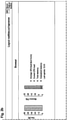
- the alignment coordinator as depicted in Fig. 2 is used to issue new, supervise existing, and retrieve the results of completed runs of genome data processing.
- the input is a FASTQ file, a selected pipeline configuration consisting of specific alignment algorithms and variant calling steps, and the reference genome to use, as well as, pipeline specific parameters.
- parameters for data processing may be configured. A status for recent tasks may be found on the left. Further, it is possible to investigate result sets of a selected task on the right.
- the Alignment Coordinator may be integrated into the worker framework.
- a single alignment task gets divided into several subtasks during upload of the file that should be aligned. From there on every step in the pipeline gets divided into subtasks which are randomly taken and processed by the workers or processing devices.
- Attributes of the results table can be configured individually, e.g. associated diseases, affected genes, or similar cases, can be included in the table. By clicking on a certain mutation, the specific chromosome location is displayed in detail using the genome browser application.
- the final result shown in the genome browser comprises additional information, which may be compared directly.
- Additional information refers to such as reference versus concrete base pairs of one or multiple cell lines, genes, alternative splicing variants, aliases for gene names, and available annotations for the selected locus (incl. gene, SNP, indel annotations) and others. Additional information also refers to direct integration of annotation database content on the fly.
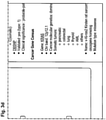
- Fig. 3 depicts a screenshot of the genome browser. It is a specific application, which enables analysis of specific mutation of certain cell lines or patient genomes with each other. Base pairs, amino acids, gene splicing variants, etc., of a certain cell line and the reference genome can be compared in detail. Thus, the cellular impact of mutations can be investigated and the excerpt of the DNA can be compared between various patients. Mutations are highlighted by automatically combining worldwide annotation databases. Furthermore, relevant details and links to existing database, such as dbSNP, DGV, Sanger, etc., are displayed when a certain mutation is selected.
- the User Interface is divided into two sections: the Analysis and Browser page.
- the main usage of this whole interface is selecting instructions for DNA alignment (analysis page, depicted in Fig. 2 on the left hand side) and to display, compare and analyze results of the alignment (browser page, depicted in Fig. 2 on the right hand side).
- An important feature of this user interface UI is to show different levels of detail of a selected genome which presents on-demand information about specific parts.
- the user interface is built on HTML5.
- the Browser page depicts an extract of the concerned genome with specific mutations by giving a global view of the current genome. Users can view a section of base pairs, amino acids and genes. Already aligned cell lines can be compared to the original genome. Changes due to mutations in both bases and amino acid sequences are highlighted. By clicking the mutated base, more information such as clinical significance and validation status are queried and displayed. The gene and its splicing variants are shown as well.
- This Browser page can be entered through the analysis page or directly by filling information about genome, chromosome and start/end position.
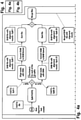
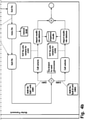
- Fig. 4 depicts a typical genome-processing pipeline as of today modeled as Business Process Modeling and Notation (BPMN).
- BPMN Business Process Modeling and Notation
- Fig. 4 shows a genome data processing pipeline as integrated in this research prototype modeled in BPMN.
- the input FASTQ file is split in up to 25 chunks for parallel data processing on a 1,000 core cluster.
- the specific alignment algorithm is called in parallel, here BWA, and conversion steps are performed until a combined BAM files is created.
- BWA specific alignment algorithm
- the BAM file is split into individual chunks, one per chromosome, and variant calling is processed in parallel.
- the results are imported into the IMDB to enable real-time analysis of the results.
- DNA sequencing spans the biological preparation of samples, e.g. blood or tissue, and its sequencing using a NGS device.
- the analysis of genome data is an IT-driven step processing FASTQ files from NGS devices, which includes alignment, variant calling, and the analysis of the results.
- Alignment is the reconstruction of the specific full genome by combining the acquired read sequences with a selected reference genome.
- Variant calling detects anomalies in the reconstructed genome and checks whether these are possible variants, e.g. manifestation of certain alleles.
- the last and most time-intensive step is the analysis of all results from the variant calling and its interpretation using worldwide annotation databases.
- the genome browser of the present application addresses the ad-hoc analysis of the results without the need for time-consuming manual Internet searches.
- This application discloses a dedicated data processing framework in Python providing a set of workers.
- Each computing node is equipped with a dedicated worker. They process complex tasks, i.e. tasks that either consist of multiple jobs or long-running, non-interactive batch processes, such as the sequence alignment of reads for a whole genome.
- Non-complex, interactive tasks are directly executed by the web service and do not involve the worker framework.
- Complex tasks are split in atomic portion of work by the worker framework for parallel data processing. Atomic jobs can be executed in a distributed manner. Once a worker is available, it fetches the next job from the job queue and executes it automatically.
- the synchronization of jobs and worker is performed via a job database table, which contains new, currently processed, and finished jobs as well as their status, e.g. new, in progress, finished, failed, etc. All workers directly access the jobs table via their local database instance and self-assign the next appropriate task. Concurrency control may be guaranteed by the IMDB, e.g. primary keys on the attributes TASK-ID, JOB-ID, and STATUS guarantee that only a single worker can change the task's STATUS attribute from NEW to IN PROGRES. Just after the updated status is confirmed by the database system, the worker starts the job processing.
- the job execution can be handled via modular Python scripts, which are loaded on demand by the worker framework.
- the worker module selects unassigned jobs from the queue. Job dependencies and synchronization of a specific subset of jobs is self-coordinated by dedicated jobs evaluating the content of the job database table.
- Python job modules inherit from the super module Job, which provides generic methods, such as status updates or logging of errors.
- the code executed by a job is located within the respective job module, e.g. alignment of raw DNA reads or imports of CSV files into the database.
- This application enables the use of individual tools and scripts per job. As a result, it is possible to integrate existing tools, e.g. samtools, bcftools, vcftools, as well as highly optimized in-memory specific tools into the pipeline.
- the application successfully integrated a variety of defacto standard alignment algorithms in the pipelines, such as Burrows-Wheeler Aligner (BWA), Bowtie, Bowtie2, SNAP, etc..
- the inputs for alignment tasks are FASTQ files containing thousands or millions of raw DNA reads or snippets.
- FASTQ files are generated by the NGS device in a time-intensive process. Instead of waiting for a single huge FASTQ file, the start will processing as soon as possible, i.e. once FASTQ chunks, e.g. with a file size of 256MB, are generated by the NGS device. As a result, the data processing already starts while the sequencing run is still in progress.
- the results of the variant calling are stored in a task specific database table compatible to the Variant Calling Format (VCF).
- VCF Variant Calling Format
- the incorporated IMDB is extended by genomic-specific procedures stored procedures written in the languages L, SQL script, or C++. These procedures are executed directly on the data stored within the database, i.e. there is no need for data transfer.
- the application implemented a stored procedure
- TRIPLETS_IN_RANGE to derive associated amino acids from a given DNA locus.
- the relevant genome is reconstructed from the corresponding VCF table.
- the stored procedure uses the interval within the genome as input, derives triplets, and joins each triplet with the corresponding content of the AMINOACIDS database table.
- Fig. 5 depicts the benchmark results comparing conventional data processing pipeline with various media breaks and the optimized pipeline incorporating the IMDB as integration platform.
- the throughput of the pipeline optimized for IMDB is about eight-times better than the throughput of the conventional pipeline. The latter shows stagnation at about 0.5 Mbp/s.
- the pipeline optimized for IMDB shows a constant scaling factor of approx. 1.04-1.10 for doubled input file sizes, i.e. the processing saturation for the benchmarked files was never reached.
- the benchmarks show that the IMDB optimized pipeline is able to process high-coverage FASTQ files in some minutes. For example, the largest input file with approx. 11 k Mbp was sequenced in approx. 45 minutes. For comparison, the conventional data processing pipeline took more than five hours to process the same file.
- Benchmarks have been executed on a cluster with 1,000 physical cores formed by 25 identical computing nodes. Each node is equipped with four Intel Xeon CPU E7-4870 Central Processing Units (CPUs) running at a clock speed of 2.40GHz providing a Quick Path Interconnect (QPI) speed of 6.4 GT/s. Each CPU is equipped 30MB of Intel's smart cache, ten cores, and 20 threads.
- CPUs Central Processing Units
- QPI Quick Path Interconnect
- Alignment and variant calling have been executed as outlined above on selected files from the 1,000 genome project.
- the end-to-end processing time was measured starting with the raw FASTQ file until the variant calling was completed and the throughput rate was measured as processed base pairs per second.
- the present application compared the throughput rate of the conventional and the optimized pipeline for IMDB.
- the intermediate process steps of the conventional pipeline are very similar: each step receives an input file, process the data, and generate another output file in the shared Network File System (NFS).
- NFS Network File System
- the FASTQ input file is aligned using the BWA algorithm and a SAM output file is generated, which is transformed to a BAM file, etc.
- the pipeline optimized for IMDB uses databases support where applicable, e.g. during merge, sort of files.
- Fig. 5 illustrates a comparison of throughput of data processing pipeline consisting of whole genome alignment and variant calling.
- the optimized version for IMDB technology improves the throughput approx. by a factor of 9 compared to the conventional pipeline configuration, which stores intermediate results in files.
- FIG. 6 once more illustrates the overall in memory based architecture, consisting of OLAP- and OLTP-transactions in order to provide genomic data processing.
- a nucleotide sequence is provided by a sequencer machine M, which is depicted in Fig. 6 on the left hand side.
- a set of reads is provided. Each read is segmented in a configurable amount of chunks, particularly in 25 chunks, wherein each of the chunks is associated or allocated to a worker of the node cluster.
- Fig. 6 a nucleotide sequence is provided by a sequencer machine M, which is depicted in Fig. 6 on the left hand side.
- a set of reads is provided. Each read is segmented in a configurable amount of chunks, particularly in 25 chunks, wherein each of the chunks is associated or allocated to a worker of the node cluster.
- each of the workers provides a partial alignment AR1 , AR2 , ...ARn result by executing a configurable alignment algorithm, which each is stored in the IMDB database.
- a configurable alignment algorithm which each is stored in the IMDB database.
- each of the chunks may be processed with different alignment algorithms (if the user wishes to do so). Accordingly, it is also possible to use different alignment algorithms for different reads.
- a major aspect is also to be seen in that alignment starts while sequencing is still computed or processed. Thus this method may be implemented as soon as the first sequence result is available.
- the partial result ARi as well as the overall aggregates result is stored in the IMDB database.
- FIG. 7 illustrates the distributed in-memory database landscape HANA IMDB. As may be seen in Fig. 7 at least a worker is implemented on a processing node, which interacts with a HANA instance.
- FIG. 8 once more depicts the processing pipeline; FASTQ files (read) serve as input. Further, processing parameters may be configured by the user (selecting the algorithm, selecting a reference genome etc., not shown in Fig. 8 ). As may be seen in the figures, the aligning and the variant calling are executed on a plurality of worker nodes in parallel in order to save processing time. Necessary operations (merge, sort, index etc.) are directly executed as database transactions.
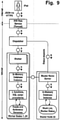
- FIG. 9 A schematic overview of the system architecture is given in FIG. 9 . Here, the distinction between Internet and Intranet is shown. User interacts by HIG web service (Tomcat).
- HIG web service Tomcat
- the dispatcher is responsible for load balancing, failure handling, task creation and the supervision of running tasks. As a result, the dispatcher divides complex tasks, e.g. sequence alignments, into atomic ones and distributes them to workers for parallel execution. Simple requests, such as returning a subsequence of a chromosome, are not handled but directly executed as SQL statements by the Web Service.
- This component knows about the different pipelines for each alignment algorithm and all other tasks, e.g. updating data sources.
- jobs atomic tasks
- the dispatcher is responsible to create the subsequent job and assign it to the next worker. If a job requires synchronization, i.e. a job can only be executed after particular other jobs have been finished before, the dispatcher takes care that these conditions will be met. In case there occurred an error during a job's execution, the dispatcher has to handle it by rescheduling or stopping the task execution and reporting the error to the Alignment Coordinator.
- the dispatcher can assign it directly to a particular worker of leave it unspecified so that a random worker autonomously assigns itself to this job.
- the dispatcher has to keep track of the workers' current workload and computation capacities to decide who gets the job. If several workers are idle, it is the responsibility of the dispatcher to distribute new jobs among them in a fashion that the workload is optimally balanced among the workers, i.e. that no job is waiting for execution by a busy worker whilst another worker is idle.
- the dispatcher monitors all workers regarding their accessibility. In case a worker fails, the dispatcher has to react and, if necessary, reschedule the job execution. To achieve this failure tolerance, the dispatcher has to check periodically whether all workers are still available, e.g. by pinging all workers every minute and waiting for response. If a worker does not answer, the dispatcher knows it has failed and will not be available for future jobs to assign. In addition to that, the dispatcher also has to check whether this worker had been working on a job when it failed. If this is the case, the job has to be rolled back. This includes deleting possible interim or final results, but also reassigning the job to another worker.
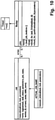
- FIG. 10 illustrates the worker processes running on each node of the cluster and the jobs which are executed by them.
- the job scheduling has to be coordinated so that no two workers are executing the same job.
- the synchronization is realized via a task table stored in the database. This table contains all existing jobs and maintains the current status of each job: not assigned yet, a worker is currently working on it, it has been completed successfully or failed. All workers concurrently access this table to randomly pick a job from the set of unassigned jobs and update its status.
- the job execution is handled via modules that are imported on demand by the workers.
- the Worker module is responsible for selecting an unassigned task from the task table. This currently also includes handling job dependencies and synchronization, e.g. to check whether a particular amount of a specific job has been finished before the current job can be executed. The actual job execution happens in the respective job modules.
- Job contains implementations relevant for all jobs, e.g. logging a job's status.
- the actual implementation of a job e.g. aligning a sequence or importing a csv file into the database, is located in the respective job module.
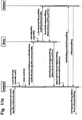
- FIG. 11 is a uml sequence diagram for a pipeline interaction between the user, an application, the web service, the dispatcher, the worker and the IMDB database. The first part of the interactions are shown in Fig. 11 a and the subsequent part are shown in Fig. 11b
- the genome browser displays amino acids for a given sequence of bases both for the reference genome and an aligned sequence.
- the Web Service calls SQL script procedures on the database.
- the simple case, displaying the amino acids of the reference sequence is computed in the function "Triplets_in_Range". It receives as input parameters the base start and stop positions of the reference sequence and the reference genome. It then computes the base sequence from the given positions and splits it up into base triplets. For each of these triplets, the procedure looks up in the encoded amino acids in the Aminosonne table. For calculating the amino acid sequence of a mutated base sequence, a more complex function called “Triplets_in_Range2" is needed. Since for each alignment only the mutation information and not the actual base sequence is given, it is necessary to manually reconstruct it from the base sequence of the reference genome and the given mutation information before it is possible to build base triplets as in the above procedure. So, in addition to the base start and end positions and the reference genome, the function also receives a task id as input. With the help of this task id, it can be found out what mutations are on the searched base sequence and reconstruct the original base sequence.
- the pipeline optimized for IMDB stores intermediate results in the IMDB instead in files in the file system.
- the IMDB also fulfills specific process steps directly and eliminates the need for specific tools. For example, samtools require merging, sorting, and indexing of intermediate results when data is processed in a distributed manner.
- the pipeline optimized for IMDB performs these steps as native IMDB operations instead.
- merging is achieved by inserting intermediate results from all nodes into a single database table. This result table is distributed across all nodes, which reduces data transfer latency.
- the native SQL "ORDER BY" statement achieves sorting and indexing is automatically performed by the IMDB during insertion of new values.
- the application is able to reduce time for certain intermediate process steps.
- the pipeline for IMDB optimizes the integration of existing alignment and variant calling tools. As a result, it eliminates delays by reading/writing intermediate result files from/to the local file system or NFS.
- This invention addresses various specific aspects of genome data processing. It has been shown that a tight integration of open-source tools for alignment and variant calling improves the overall throughput of the genome-processing pipeline. However, this integration requires a specific technology platform. This application discloses the IMDB technology as platform for integration of genome processing tools.
- this application shared a detailed insight in the research prototype architecture, which provides the platform for integration of genome and international annotations.
- This application extended the IMDB technology to automatically update the knowledge database with latest international annotation databases. As a result, the latest world-wide research results are automatically considered during interpretation of specific mutations, which support treatment decisions in the course of personalized medicine ⁇ .
- any of the aforementioned methods may be embodied in the form of a program.
- the program may be stored on a computer readable media and is adapted to perform any one of the aforementioned methods when run on a computer device (a device including a processor).
- a computer device a device including a processor
- the storage medium or computer readable medium is adapted to store information and is adapted to interact with a data processing facility or computer device to perform the method of any of the above mentioned embodiments
Landscapes
- Physics & Mathematics (AREA)
- Life Sciences & Earth Sciences (AREA)
- Engineering & Computer Science (AREA)
- Health & Medical Sciences (AREA)
- Theoretical Computer Science (AREA)
- Medical Informatics (AREA)
- Biophysics (AREA)
- Bioinformatics & Cheminformatics (AREA)
- Bioinformatics & Computational Biology (AREA)
- Biotechnology (AREA)
- Evolutionary Biology (AREA)
- General Health & Medical Sciences (AREA)
- Spectroscopy & Molecular Physics (AREA)
- Databases & Information Systems (AREA)
- Bioethics (AREA)
- Chemical & Material Sciences (AREA)
- Analytical Chemistry (AREA)
- Proteomics, Peptides & Aminoacids (AREA)
- Information Retrieval, Db Structures And Fs Structures Therefor (AREA)
Description
- The invention relates to a computer-based system with an in-memory database for processing nucleotide sequence data and a method implementing a computer program.
- Present invention deals with next-generation sequencing (NGS) technologies on genomics, with particular reference to currently available and possible future platforms and bioinformatics. NGS technologies have demonstrated the capacity to sequence DNA at unprecedented speed, thereby enabling previously unimaginable scientific achievements and novel biological and medical applications, such as personalized medicine. But, the massive data produced by NGS also presents a significant challenge for data storage, analyses, and data processing. In order to process the genomic data a typical workflow of computer-implemented processing steps has been established, also called genome data processing pipeline. For the sake of accuracy and in order to quickly provide high quality results it is essential to remove false positives from the (alignment) result. Further, it is essential to integrate further processing tools in the pipeline for inter alia filtering duplicates or removing invalid entries or for realigning subsets of NGS data.
- However, based on known approaches it is difficult to add further tools and processing steps to the pipeline, because this will significantly increase processing time. Another problem is that quality of the result strongly depends on the extent to which annotations are considered, wherein annotations generally are based on latest research results and are stored in a distributed manner in many different databases throughout the world. Certain annotation databases have to be accessed separately in order to collect as much as annotation information as possible. This, however, in turn negatively influences processing time of the overall result.
- The paper "Detecting and annotating genetic variations using the HugeSeq pipeline", Lam Hugo et al. in Nature Biotechnology, Vol. 30, discloses methods and a computational pipeline to fully automate the process of variant detection form alignment to detection and annotation of genetic variations. This pipeline still shows drawbacks from a computer processing perspective.
- The document "TREAT: a bioinformatics tool for variant annotations and visualizations in targeted and exome sequencing data", Asmann et al, in Bioinformatics, Vol. 28, No. 2, 2012, p. 277-278 discloses a tool for navigation and mining of variants from both targeted resequencing and whole exome sequencing. This document also shows deficiencies from a computer processing perspective.
- The document "SIMPLEX: Cloud-Enabled Pipeline for the Comprehensive Analysis of Exome Sequencing Data", M. Fischer et al. in PLOS One, 2012, Vol. 7, Issue 8, discloses a computational pipeline which comprises the complete analysis workflow, including alignment to a reference genome, SNP and DIP detection, functional annotation of variants using different approaches and report generation. This document also shows drawbacks from a computer processing perspective.
-
EP 2 040 180 A1 - Therefore, it is an object of present invention to provide a high-quality result as fast as possible and to further automatically consolidate the query results of different annotation databases.
- This object is solved by the accompanying independent claims, particularly of a computer-based system and a method for processing genomic sequence data by means of an in-memory database system.
- According to a first aspect the present invention relates to a computer-based system for processing nucleotide sequence data, which are provided as reads, wherein the system has an interface for importing the nucleotide sequence data from a sequencer machine, the system further comprising:
- A platform layer for holding process logic and an in-memory database system for processing nucleotide sequence data,
- wherein all processing steps for sequence alignment and variant calling, in particular for sort, merge, and indexing are directly executed in the in-memory database, consisting of OLAP- and OLTP transactions;
- wherein the platform layer comprises:
- a worker framework with a plurality of worker modules, wherein the worker modules are part of the in-memory database for executing data processing by means of data base operations and wherein each worker module is processing configurable and possible different alignment algorithms and is running on a computing node of a cluster and wherein the worker modules are processing in parallel and are adapted for providing partial alignment results and wherein the worker modules are adapted for providing partial results of variant calling, wherein all results and partial results are stored in the in-memory database,
- an updater framework for automatically downloading and importing annotation updates from external databases into the in-memory database;
- an alignment coordinator, which is adapted to provide the in-memory database with a modified alignment functionality, wherein the worker modules are adapted for alignment processing, so that at least one of a plurality of different alignment algorithms are integrated into the in-memory database, so that a specific alignment algorithm can be applied and wherein the alignment algorithms are adapted to be optimized for in-memory database use and
- According to a preferred embodiment the system further comprises of:
- A user interface with at least a genome browser, which comprises
- a section for displaying a comparison of the nucleotide sequence and multiple referenced cell lines / genomes and/or a reference sequence and
- a section for displaying combined analysis information from multiple external databases and
- a section for selecting instructions for data processing, for particular pipeline configurations particularly for alignment of the genomic sequence data.
- According to the invention the system further comprises an alignment coordinator, which is adapted to provide the in-memory database system with a modified alignment functionality.
- In the following there is given a short definition of terms used within this application.
- The nucleotide sequence data may be human or non-human and may be DNA sequence data or RNA sequence data. In another embodiment of present invention, the system may also be configured to process other genomic sequence data, like for example sequences of amino acids. The genomic sequence, however, mainly refers to a sequence which may be mapped to the alphabet comprising the letters C, G, A, T, and U, respectively, because the primary nucleobases are cytosine, guanine, adenine (DNA and RNA), thymine (DNA) and uracil (RNA), abbreviated as C, G, A, T, and U, respectively. In the following they are usually simply called bases (according to usual use in genetics).
- The sequencer machine is a laboratory device which is adapted to automatically determine the precise order of nucleotides within a DNA molecule. Preferably it is a next-generation sequencing (NGS) device. The sequencing machine provides reads which are imported into the system. The NGS machine typically is not part of the system. It includes any method or technology that is used to determine the order of the four bases-adenine, guanine, cytosine, and thymine-in a strand of DNA. Generally, DNA sequencing may be used to determine the sequence of individual genes, larger genetic regions (i.e. clusters of genes or so called operons, as a functioning unit of genomic DNA containing a cluster of genes under the control of a single regulatory signal or promoter), full chromosomes or entire genomes. The resulting sequences may be used by researchers in molecular biology or genetics to further scientific progress or may be used for personalized medicine. For example, Cancer genome sequencing is the whole genome sequencing of a single, homogeneous or heterogeneous group of cancer cells. It is a biochemical laboratory method for the characterization and identification of the DNA or RNA sequences of cancer cell(s). Unlike whole genome (WG) sequencing which is typically from blood cells, saliva, epithelial cells or bone, cancer genome sequencing involves direct sequencing of primary tumor tissue, adjacent or distal normal tissue, the tumor micro environment such as fibroblast/stromal cells, or metastatic tumor sites. Similar to whole genome sequencing, the information generated from this technique include: identification of nucleotide bases (DNA or RNA), copy number and sequence variants, mutation status, and structural changes such as chromosomal translocations and fusion genes. Cancer genome sequencing is not limited to WG sequencing and can also include exome, transcriptome, and micronome sequencing. These methods can be used to quantify gene expression, miRNA expression, and identify alternative splicing events in addition to sequence data. The input data to be processed according to the invention may be provided as a FASTQ formatted file.
- The term "modified alignment functionality" is to be construed as at least one of a plurality of different alignment algorithms being integrated into the in-memory database, so that a specific alignment algorithm - ideally including an additional pipeline configuration for that - can be applied. Another aspect of the "modified alignment functionality" refers to the fact that the alignment algorithms are adapted to be optimized for in-memory database use. In contrast to traditional algorithms, which access input and output files in the file system, modified alignment algorithms may also make use of the data stored or to be stored directly in the in-memory database system. As a result, media breaks are reduced, throughput is increased, and analytical queries can be performed on top of all data stored in the in-memory database without the need for extraction, transformation, and loading into a dedicated OLAP system as of today.
- The term "CPU" refers to a central processing unit of a computer or a cluster of computers. Generally, a computer can have more than one CPU. In this case the computing system is called multiprocessing. Some microprocessors can contain multiple CPUs on a single chip, which are called multi-core processors. It is also possible to provide a distributed interconnected set of processors.
- The platform layer refers to a computer-based architecture for integrating processing of genome sequencing data into the in-memory database. It has to be pointed out that according to the present invention all processing results and intermediate results are no longer stored as files in a file system, but are instead provided in the in-memory database system. Thus, all operations, for example sort, merge etc., which are performed by dedicated tools on files, are replaced by native in-memory database transactions by means of operational (OLTP systems) and analytical (OLAP systems) transactions.
- The in-memory database is based on utilization of main memory technology in combination with a column-oriented data structure, so that combined column and row store can work on the set of data. This in-memory technology is thus no longer based on disk storage mechanisms. Analytical as well as transactional systems are integrated and combined. According to an aspect of present invention OLTP queries can be performed on incoming data. Incoming data may comprise, in particular, sequencing data, (provided by the NGS machine) and annotation data (provided by the updater framework, which are integrated from all external registered distributed annotation sources or data bases), as well as other genomic data. The processing results according to the present invention, comprising intermediate and final results may be stored in either row- or column-oriented database format in the in-memory database system. The columnar database format supports OLAP queries so that OLAP operations benefit from an interactive response time behavior. Data stored in column-oriented database format may be updated on regular basis by both incoming data and results, this being combined with the advantage that the in-memory database enables performance of OLAP queries on column-oriented data formats without any latency (i.e., in real time). As to the features and advantages of an in-memory database underlying the present invention, it is referred to
patent application EP 2 040 180 , describing details of an in-memory database. - The worker framework interacts with the in-memory database (in the following abbreviated as IMDB) and is an intermediate actor between different applications (application layer) and data (data layer). It specifies for incoming sequencing request required tasks and subtasks and its order comparable to a map reduce approach, known in the art. It also dispatches these tasks to computing resources, such as computing nodes, observes their status, and combines partial result sets to obtain the final result set.
- The updater framework also interacts with the in-memory database and is an intermediate means between different applications (application layer) and data (data layer). It is the basis for combining international research results. It regularly checks Internet sources, such as public FTP servers or web pages, for updated and newly added annotations, e.g., database exports or characteristic file formats, such as CSV, TSV, VCF, etc. New data is automatically downloaded and imported in the IMDB to extend the knowledge base. It also parses related literature sources, such as PubMed, and updates references in the database. Once new data was imported, it is available for real-time analysis of genome data without any latency. For example, selected research databases that are processed by the updater framework are: National Center for Biotechnology Information (NCBI), Sanger, University of California, Santa Cruz (UCSC), etc. Preferably, there might be implemented a selection process in order to select relevant research literature for the specific use case (for example special databases might be included and others might be neglected).
- The processing pipeline will not be programmed in a fixed manner, but according to an aspect of the present invention will be graphically modeled, e.g., using common notations such as Business Process Model and Notation (BPMN). Thus, also different pipelines may be configured, for example implementing different alignment algorithms. These pipelines may be processed in parallel. This is a major performance enhancement due to parallel data processing. Furthermore, individual pipeline configurations guarantee comparability of results obtained by different research groups.
- Another basic aspect is to be seen in major improvements achieved by the present invention in view of collecting and aggregating annotation results from different and distributed annotation sources. Due to provision of the updater framework, it is possible to provide the latest research results in the IMDB and use the same for real-time analysis. The provided analysis may be instantly generated. Although, under existing systems, meta search engines for annotations are provided, e.g., by the NCBI, they suffer from performance bottlenecks during peak hours, require regular tool or manual runs, and are non-transparent for use in individual applications for answering specific research questions.
- Another key aspect is to be seen in that a processing layer may be provided as web service. This web service is the boundary between Internet and Intranet. It enables users to align FASQ-files, show the results, browse genes and display information on mutations on different end devices, and especially mobile devices.
- According to an example the web application framework is based on ruby on rails. Most data displayed in the browser is loaded dynamically with AJAX requests. As a result, all cloud applications can be configured to be accessed via various user interfaces (Uls), such as web browsers application or iPad and Android devices as mobile application. Thus, accessing results or performing specific analysis is no longer limited to a single location, e.g., the desktop computer in the office of the physician. All application operations can be accessed from any device configured to have Internet access, which enhances productivity of its users.
- The web service also handles user-specific data providing login functionality. Since the web service handles private sensitive data, building on using transparent security extensions will be required. As the system has to integrate into a complex project and also take a part of the calculation, the system itself is very complex. To manage this complexity, the whole system is based on a Model-View-Controller Architecture Pattern (MVC). Within the web service, the Views on the User Interface (Ul) are provided with data from the Model (which is known to be the database). In this connection, the web service provides functionality that the database would not be able to. For instance, the user session and user specific data could not be exactly differed by the database so the web service does extend the database's functionality. Moreover, the web service is responsible for file uploads of new FASTQ files. Those files have a huge size and have to be uploaded parallel or one after another without blocking the whole interface. Last but not least, the web service provides the user with additional data for the found mutations and generates links to web sites with further knowledge about the found phenomena. All this information cannot be static and have therefore to be loaded dynamically. All these tasks are handled by the web service.
- To acquire the tasks above, the following controllers are used: The Alignment Results Controller loads the detailed view of a chosen task from the alignment results table. The Tasks Controller displays running progresses and loads finished tasks. The FASTQ files Controller provides the functionality for uploading new and loading existing files for the user who is currently logged in. The Browser Request Controller provides functions that refer to the "second tab" inside the Web site and are required to handle the Browsers requests. The Cell Line Meta Data controller handles data about aligned patient's strands. The User Session Controller provides functions to create, access and destroy user sessions. The User Controller provides functionality to create, show and edit users. In case of reloading the page, the web service calls several functions to display the user specific information like available FASQ files for processing and running tasks as well as completed tasks.
- According to a second aspect of the present invention, a computer-implemented method is provided for processing nucleotide sequence data with an in-memory database, comprising the method steps of:
- Providing an alignment coordinator, which is adapted to provide the in-memory database with a modified alignment functionality, wherein worker modules are adapted for alignment processing, so that at least one of a plurality of different alignment algorithms are integrated into the in-memory database, so that a specific alignment algorithm can be applied and wherein the alignment algorithms are adapted to be optimized for in-memory database use.
- Providing a cluster with a set of computing nodes with multiple CPU cores, each implementing a worker module for parallel data processing;
- Providing nucleotide sequence data as reads in the in-memory database and concurrently to sequencing:
- processing data, wherein data processing comprises:
- Evenly segmenting the read into a configurable amount of chunks;
- Allocating each of the chunks to a selected worker module of the computer core cluster for aligning the respective chunk to a reference sequence by providing the partial alignment result in parallel and storing all partial alignment results in the in-memory database;
- Aggregating partial alignment results of all selected worker modules to an overall alignment result or receiving an alignment result from a computer-based instance and storing the alignment result in the in-memory database system;
- Executing a variant calling algorithm in parallel on the set of computing nodes on the basis of the alignment result and aggregating partial variant calling results to an overall variant calling result or receiving a variant calling result from a computer-based instance to be stored in the in-memory database system and
- Analyzing the variant calling result by combining it with a plurality of different external annotation databases, which are regularly and automatically checked for updates, which are automatically downloaded and imported into the in-memory database by an updater framework for generating and displaying a final result and
- wherein data exchange is based on web services and all applications are cloud-based and thus also may be accessed via mobile devices and
- wherein a model view controller architecture pattern is used and wherein the steps aligning chunks, executing the variant calling algorithm and analyzing the variant calling result constitute a processing pipeline, said processing pipeline is modeled so that also different processing pipelines may be configured dynamically and/or may be executed in parallel for a specific use case.
- processing data, wherein data processing comprises:
- In another embodiment the alignment result and/or the variant calling result may also be provided by external systems. These results may be received by an input interface of the system and are stored in the in-memory system.
- According to a preferred embodiment the variant calling is also executed for items of the alignment result on the plurality of nodes in parallel. After all variant calling procedures have been finished a final result may also be stored in the in-memory database. Also, the intermediate partial results of the variant calling are stored in the in-memory database. This has the technical advantage, that processing of sequence data may be executed (finalized and displayed) as soon as possible and even if other partial (variant calling) processes are still running.
- A plurality of annotation sources is automatically checked for updates, which then are automatically imported in the in-memory database for being processed by the updater framework. Preferably, as much as possible different annotation sources are considered. If a link to a specific source is available, then, this source is deemed to be a "registered" source and is accessed by means of the updater framework.
- A key aspect is to be seen in the flexibility to model pipeline configurations dynamically instead of having a predefined set of static pipeline configurations. For example, single or multiple alignment algorithms may be selected from a set of alignment algorithms and combined to improve accuracy of results, especially for rarely known genomic differences. Further, specific pipeline configurations may be selected and applied, for example, to provide a basis for comparing different genomic data sets on a homogenous foundation.
- Preferred embodiments of the method and the system according to present invention are defined in the dependent claims. In this respect it has to be noted that, generally, the invention also might be implemented in hardware or in hardware modules combined with software modules. The hardware modules are then adapted to perform the functionality of the steps of the method, described above. Accordingly, it is also possible to have a combination of hardware and software modules. The modules are preferably integrated into an existing bio-technological or medical environment, for example a sequencing environment. The features, alternative embodiments and advantages which will be or have been described with respect to the method may also be applied for system as well by means of hardware modules, which are adapted with the functionality of the respective method step and vice versa.
- For a more complete understanding of present invention reference is made to the following detailed description, which is to be taken in combination with the accompanying drawings:
-
FIG. 1 - shows a schematic overview of the system architecture according to a preferred embodiment of present invention;
-
FIG. 2 - is an exemplary illustration of a user interface for the alignment coordinator;
-
FIG. 3 - is an exemplary illustration of a user interface for the genome browser;
-
FIG.4 - is a genome data processing pipeline integrated into an in-memory database according to a preferred embodiment of present invention;
-
FIG. 5 - illustrates a comparison of throughput of data processing pipeline consisting of whole genome alignment and variant calling.
-
FIG.6 - is another overview of the pipeline according to a preferred embodiment of present invention;
-
FIG. 7 - is an overview illustration of an in-memory database in combination with nodes;
-
FIG. 8 - is another illustration of the processing pipeline according to a preferred embodiment of present invention;
-
FIG. 9 - illustrates the workers within the general architecture;
-
FIG. 10 - illustrates an architecture of a worker in more detail and
-
FIG. 11 - illustrates a flowchart of a method according to a preferred embodiment of present invention, wherein
Fig. 11 a depicts the first part of the diagram andFig. 11 b the last part.
- illustrates a flowchart of a method according to a preferred embodiment of present invention, wherein
- Those skilled in the art will appreciate that the invention may be practiced in network computing environments with many types of computer system configurations, including personal computers, hand-held devices, multi-processor systems, microprocessor-based or programmable consumer electronics, network PCs, minicomputers, mainframe computers, and the like. The invention may also be practiced in distributed computing environments where tasks are performed by local and remote processing devices that are linked (either by hardwired links, wireless links, or by a combination of hardwired or wireless links) through a communications network. In a distributed computing environment, program modules may be located in both local and remote memory storage devices.
- The Human Genome (HG) project was officially kicked off in 1990 and took more than a decade to sequence and decode the full HG involving hundreds of institutes in supporting this fundamental research. With improved processing speed and reduced costs so-called Next Generation Sequencing (NGS) devices process whole genomes within hours today. Nowadays, NGS devices are used in research and clinical environments to support treatment of specific diseases, such as cancer. Personalized medicine aims at treating patients specifically based on individual dispositions, e.g. genetic or environmental factors. However, this requires tool support to identify relevant data out of the increasing amount of diagnostic data.
- The In-Memory Database (IMDB) technology was initially researched for the analysis of big enterprise data. Present application discloses findings of applying IMDB technology to enable real-time analysis of genome data in course of the research project High-performance In-memory Genome (HIG) project. Based on the feedback of physicians and researchers, this application discloses a specific research prototype that combines processing and analysis of genomic data as a holistic process within the course of personalized medicine of cancer patients.
-
Fig.1 depicts the data, platform, and applications layers of the system architecture with the IMDB as the hearth piece enabling real-time analysis modeled as a Fundamental Modeling Concepts (FMC) block diagram. In the platform layer the IMDB combines data from international research databases and exposes real-time analysis capabilities to the cloud applications. - Related work in the field of genome data processing pipelines focuses on the accuracy of results and the removal of false positives from NGS results set. These approaches result in an increased complexity of the pipeline since additional tools and processing steps are added, e.g. to preprocess data, filter duplicates, remove invalid entries, or realign subsets of NGS data.
- The present application makes it possible to integrate even more tools in the genome-processing pipeline to improve accuracy of results in future. As a result, the invention stresses on the smooth integration of multiple tools for genome data processing.
- An essential step in the genome-processing pipeline is the annotation of the obtained results with latest research results. With the help of public annotation databases individual genetic dispositions can be interpreted. Many annotation databases provide their content via Internet search engines and specific web services. Linking this data requires manual integration in the data processing pipeline. Furthermore, the quality of the provided web services directly influence the overall throughput of the pipeline, e.g. if network congestion reduces response time of annotation databases, the processing throughput of the query is directly affected. But also private annotation databases can be integrated and shared. Means are provided to limit and control access rights and their intellectual property is protected by specific access control mechanisms, e.g. history-based access control.
- According to the present application an updater framework is disclosed, which regularly checks for updated dumps of the annotation databases. Once a new database version is detected, newly detected annotation database contents and updates are synchronized with the local system. Thus, the knowledge database provides reliable quality of service for annotations while reducing network load. It regularly checks different (all registered) Internet sources for updated and newly added annotations. New data is automatically downloaded and imported in the IMDB to extend the knowledge base. Once new data was imported, it is available for real-time analysis of genome data without any latency. The application also focuses on eliminating time-consuming media breaks and manual steps, e.g. searches for specific modifications. For example, the genome browser as described below automatically links relevant data from the local knowledge base when investigating a certain mutation.
- A major advantage over prior art systems, which are based on a file storage system, is that is possible to improve processing performance by enabling parallel data processing and to make use of these techniques for alignment and variant calling. Details about the IMDB and its specific database functions are outlined below.
- From an IT perspective, this application comprises architectural layers: data, platform, and application. In the following, all layers are described in detail.
- The data layer holds genomic reference data, such as human reference genomes and annotations. These data is the base for analysis of specific genomic findings. Additionally, it holds the patient-specific genomic data, which was generated by NGS devices. The latter needs to be analyzed in the course of personalized medicine and will be processed by the platform layer and combined by the applications of the application layer.
- The platform layer preferably holds the complete process logic and the IMDB system for enabling real-time analysis of genomic data. In
Fig.1 on the right, the application extensions of the platform layer, the worker and updater framework, are exemplarily depicted. - The worker framework specifies for incoming sequencing request required tasks and subtasks and its order. It also dispatches these tasks to computing resource, such as computing nodes, observes their status, and combines partial result sets to obtain the final result set.
- The updater framework, as described above, is the basis for automatically combining distributed datasets, i.e. international research results.
- The application layer may consist of special purpose applications to answer medical and research questions instead of generic purpose applications. Although these applications(for example relating to medical and research questions) can only be used for a limited use-case, they are highly optimized for solving these very specific tasks. All applications communicate e.g. via asynchronous Ajax calls and JavaScript Object Notation as data exchange format via a web service interface with the database layer. As a major advantage, all cloud applications can be configured to be accessed via various user interfaces (Uls), such as web browsers application or iPad and Android devices as mobile application.
- In the following, the present application discloses selected cloud applications and how they are combined to implement an end-to-end process for personalized medicine are outlined. It starts with getting the output of a NGS device, such as Illumina, Roche, Life Technology, etc., as FASTQ format and includes the identification of relevant information about genetic mutations and sources of concrete diseases.
- The alignment coordinator as depicted in
Fig. 2 is used to issue new, supervise existing, and retrieve the results of completed runs of genome data processing. The input is a FASTQ file, a selected pipeline configuration consisting of specific alignment algorithms and variant calling steps, and the reference genome to use, as well as, pipeline specific parameters. InFig. 2 form top to bottom, parameters for data processing may be configured. A status for recent tasks may be found on the left. Further, it is possible to investigate result sets of a selected task on the right. - The Alignment Coordinator may be integrated into the worker framework. A single alignment task gets divided into several subtasks during upload of the file that should be aligned. From there on every step in the pipeline gets divided into subtasks which are randomly taken and processed by the workers or processing devices.
- Selecting an entry from the tasks lists on the left displays the results of the variant calling in a table on the right. Attributes of the results table can be configured individually, e.g. associated diseases, affected genes, or similar cases, can be included in the table. By clicking on a certain mutation, the specific chromosome location is displayed in detail using the genome browser application.
- According to a preferred embodiment the final result shown in the genome browser comprises additional information, which may be compared directly. Additional information refers to such as reference versus concrete base pairs of one or multiple cell lines, genes, alternative splicing variants, aliases for gene names, and available annotations for the selected locus (incl. gene, SNP, indel annotations) and others. Additional information also refers to direct integration of annotation database content on the fly.
-
Fig. 3 depicts a screenshot of the genome browser. It is a specific application, which enables analysis of specific mutation of certain cell lines or patient genomes with each other. Base pairs, amino acids, gene splicing variants, etc., of a certain cell line and the reference genome can be compared in detail. Thus, the cellular impact of mutations can be investigated and the excerpt of the DNA can be compared between various patients. Mutations are highlighted by automatically combining worldwide annotation databases. Furthermore, relevant details and links to existing database, such as dbSNP, DGV, Sanger, etc., are displayed when a certain mutation is selected. - The User Interface is divided into two sections: the Analysis and Browser page. The main usage of this whole interface is selecting instructions for DNA alignment (analysis page, depicted in
Fig. 2 on the left hand side) and to display, compare and analyze results of the alignment (browser page, depicted inFig. 2 on the right hand side). An important feature of this user interface UI is to show different levels of detail of a selected genome which presents on-demand information about specific parts. In a preferred embodiment of present invention, the user interface is built on HTML5. - On the analysis page, users are able to upload FASTQ files and to run an alignment of reads against a suited algorithm and reference genome (e.g BWA). After the request is sent the user can observe the alignment progress with the alignment task table. Moreover, completed task time and the amount of results are indicated in this table. Thus, the user can watch the developments of processing online and also intermediate results are displayed. Selecting a specific task will lead to the result task table. This table provides information about the location of mutations and the resulting diseases of the founded mutations. By choosing one mutation the website switches to the Brower page giving more information about it. A chart showing CPU load and consumed memory is also given.
- The Browser page depicts an extract of the concerned genome with specific mutations by giving a global view of the current genome. Users can view a section of base pairs, amino acids and genes. Already aligned cell lines can be compared to the original genome. Changes due to mutations in both bases and amino acid sequences are highlighted. By clicking the mutated base, more information such as clinical significance and validation status are queried and displayed. The gene and its splicing variants are shown as well.
- This Browser page can be entered through the analysis page or directly by filling information about genome, chromosome and start/end position.
-
Fig. 4 depicts a typical genome-processing pipeline as of today modeled as Business Process Modeling and Notation (BPMN).Fig. 4 shows a genome data processing pipeline as integrated in this research prototype modeled in BPMN. The input FASTQ file is split in up to 25 chunks for parallel data processing on a 1,000 core cluster. Firstly, the specific alignment algorithm is called in parallel, here BWA, and conversion steps are performed until a combined BAM files is created. Secondly, the BAM file is split into individual chunks, one per chromosome, and variant calling is processed in parallel. The results are imported into the IMDB to enable real-time analysis of the results. - The integration of DNA in course of personalized medicine consists of the two major steps DNA sequencing and analysis of genome data. DNA sequencing spans the biological preparation of samples, e.g. blood or tissue, and its sequencing using a NGS device. The analysis of genome data is an IT-driven step processing FASTQ files from NGS devices, which includes alignment, variant calling, and the analysis of the results.
- Alignment is the reconstruction of the specific full genome by combining the acquired read sequences with a selected reference genome.
- Variant calling detects anomalies in the reconstructed genome and checks whether these are possible variants, e.g. manifestation of certain alleles. The last and most time-intensive step is the analysis of all results from the variant calling and its interpretation using worldwide annotation databases. The genome browser of the present application addresses the ad-hoc analysis of the results without the need for time-consuming manual Internet searches.
- This application discloses a dedicated data processing framework in Python providing a set of workers. Each computing node is equipped with a dedicated worker. They process complex tasks, i.e. tasks that either consist of multiple jobs or long-running, non-interactive batch processes, such as the sequence alignment of reads for a whole genome. Non-complex, interactive tasks are directly executed by the web service and do not involve the worker framework. Complex tasks are split in atomic portion of work by the worker framework for parallel data processing. Atomic jobs can be executed in a distributed manner. Once a worker is available, it fetches the next job from the job queue and executes it automatically.
- The synchronization of jobs and worker is performed via a job database table, which contains new, currently processed, and finished jobs as well as their status, e.g. new, in progress, finished, failed, etc. All workers directly access the jobs table via their local database instance and self-assign the next appropriate task. Concurrency control may be guaranteed by the IMDB, e.g. primary keys on the attributes TASK-ID, JOB-ID, and STATUS guarantee that only a single worker can change the task's STATUS attribute from NEW to IN PROGRES. Just after the updated status is confirmed by the database system, the worker starts the job processing.
- The job execution can be handled via modular Python scripts, which are loaded on demand by the worker framework. The worker module selects unassigned jobs from the queue. Job dependencies and synchronization of a specific subset of jobs is self-coordinated by dedicated jobs evaluating the content of the job database table.
- All Python job modules inherit from the super module Job, which provides generic methods, such as status updates or logging of errors. The code executed by a job is located within the respective job module, e.g. alignment of raw DNA reads or imports of CSV files into the database.
- This application enables the use of individual tools and scripts per job. As a result, it is possible to integrate existing tools, e.g. samtools, bcftools, vcftools, as well as highly optimized in-memory specific tools into the pipeline. The application successfully integrated a variety of defacto standard alignment algorithms in the pipelines, such as Burrows-Wheeler Aligner (BWA), Bowtie, Bowtie2, SNAP, etc..
- The inputs for alignment tasks are FASTQ files containing thousands or millions of raw DNA reads or snippets. FASTQ files are generated by the NGS device in a time-intensive process. Instead of waiting for a single huge FASTQ file, the start will processing as soon as possible, i.e. once FASTQ chunks, e.g. with a file size of 256MB, are generated by the NGS device. As a result, the data processing already starts while the sequencing run is still in progress. The results of the variant calling are stored in a task specific database table compatible to the Variant Calling Format (VCF).
- Although pipeline processing steps have a similar overall functionality as state of the art pipelines, all processing steps and tools are transferred to IMDB. Thus, all intermediate results are stored in the database and selected operations are replaced by native database operations of the IMDB. The present system, thus, refers to an integration platform for existing tools and pipelines and a development platform for highly optimized algorithms, e.g. HANA Alignment. An FMC diagram (Fundamental Modeling Concepts -FMC)) in
Fig. 4 and the following steps cited below show the general procedure for a sequence alignment. Steps 2 - 4 take place for all splits of the FASTQ file on several nodes. Steps 5 - 8 can only be performed on one node, whilst after the splitting, steps 9 - 10 again are executed on at most 24 different nodes: - 1. FASTQ files are split in multiple chunks to enable parallel processing on several nodes,
- 2. Specific alignment algorithm reconstructs genome in SAM format. The alignment algorithm may be selected or chosen (BWA; Bowtie etc.)
- 3. SAM file is converted to a binary representation, i.e. BAM format, for subsequent variant calling;
- 4. BAM file is sorted as a preparing step for step 5 (for merging);
- 5. BAM files are merged into a single BAM file;
- 6. Cumulated BAM file is sorted for indexing;
- 7. BAM file is indexed;
- 8. BAM file is split into individual chunks per chromosome (24 splits) for parallel processing;
- 9. Variant calling is performed, e.g. samtools, and VCF files are created, and
- 10. VCF files are merged and the cumulated result set is imported into the database IMDB for real-time analysis.
- In the pipeline optimized for the IMDB technology the processing steps for sort, merge, and indexing are not performed by specific tools. These steps are directly executed by the IMDB without the need to create intermediate files in the filesystem.
- In the following, it is outlined, how specific database extensions are implemented and extend plain SQL capabilities.
- The incorporated IMDB is extended by genomic-specific procedures stored procedures written in the languages L, SQL script, or C++. These procedures are executed directly on the data stored within the database, i.e. there is no need for data transfer.
- TRIPLETS_IN_RANGE to derive associated amino acids from a given DNA locus. For calculating the amino acid sequence of a specific cell line, the relevant genome is reconstructed from the corresponding VCF table. The stored procedure uses the interval within the genome as input, derives triplets, and joins each triplet with the corresponding content of the AMINOACIDS database table.
-
Fig. 5 depicts the benchmark results comparing conventional data processing pipeline with various media breaks and the optimized pipeline incorporating the IMDB as integration platform. The throughput of the pipeline optimized for IMDB is about eight-times better than the throughput of the conventional pipeline. The latter shows stagnation at about 0.5 Mbp/s. - In contrast, the pipeline optimized for IMDB shows a constant scaling factor of approx. 1.04-1.10 for doubled input file sizes, i.e. the processing saturation for the benchmarked files was never reached. Furthermore, the benchmarks show that the IMDB optimized pipeline is able to process high-coverage FASTQ files in some minutes. For example, the largest input file with approx. 11 k Mbp was sequenced in approx. 45 minutes. For comparison, the conventional data processing pipeline took more than five hours to process the same file.
- Benchmarks have been executed on a cluster with 1,000 physical cores formed by 25 identical computing nodes. Each node is equipped with four Intel Xeon CPU E7-4870 Central Processing Units (CPUs) running at a clock speed of 2.40GHz providing a Quick Path Interconnect (QPI) speed of 6.4 GT/s. Each CPU is equipped 30MB of Intel's smart cache, ten cores, and 20 threads.
- Alignment and variant calling have been executed as outlined above on selected files from the 1,000 genome project. The end-to-end processing time was measured starting with the raw FASTQ file until the variant calling was completed and the throughput rate was measured as processed base pairs per second. The present application compared the throughput rate of the conventional and the optimized pipeline for IMDB. The intermediate process steps of the conventional pipeline are very similar: each step receives an input file, process the data, and generate another output file in the shared Network File System (NFS). For example, the FASTQ input file is aligned using the BWA algorithm and a SAM output file is generated, which is transformed to a BAM file, etc. The pipeline optimized for IMDB uses databases support where applicable, e.g. during merge, sort of files.
-
Fig. 5 illustrates a comparison of throughput of data processing pipeline consisting of whole genome alignment and variant calling. The optimized version for IMDB technology improves the throughput approx. by a factor of 9 compared to the conventional pipeline configuration, which stores intermediate results in files. -
FIG. 6 once more illustrates the overall in memory based architecture, consisting of OLAP- and OLTP-transactions in order to provide genomic data processing. As can be seen inFig. 6 , a nucleotide sequence is provided by a sequencer machine M, which is depicted inFig. 6 on the left hand side. According to the pipeline a set of reads is provided. Each read is segmented in a configurable amount of chunks, particularly in 25 chunks, wherein each of the chunks is associated or allocated to a worker of the node cluster. As can be seen inFig. 6 the allocation of workers as processing devices to chunks is also dynamically configurable, so that in the example here,chunk 1 is assigned toworker 2 andchunk 2 toworker 1, possibly becausechunk 1 is most demanding in processing power andworker 2 has at this moment most degree of spare resources. Each of the workers then provides a partial alignment AR1 , AR2 , ...ARn result by executing a configurable alignment algorithm, which each is stored in the IMDB database. It has to be noted that each of the chunks may be processed with different alignment algorithms (if the user wishes to do so). Accordingly, it is also possible to use different alignment algorithms for different reads. A major aspect is also to be seen in that alignment starts while sequencing is still computed or processed. Thus this method may be implemented as soon as the first sequence result is available. After all partial alignment results ARi are aggregated, the partial result ARi as well as the overall aggregates result is stored in the IMDB database. - After this several database transactions are to be executed and an overall alignment result is provided, which then is also split into items for parallel processing, by means of variant calling algorithms which again might be configured for the respective use case for the pipeline. Each worker provides an intermediate result of the variant calling VCR1 , VCR2 , ...VCRn . These partial results VCRi are stored in the IMDB database and are aggregated to build an overall result which is also stored in the IMDB database. Concurrently, the result may be displayed on the user interface UI.
-
FIG. 7 illustrates the distributed in-memory database landscape HANA IMDB. As may be seen inFig. 7 at least a worker is implemented on a processing node, which interacts with a HANA instance. -
FIG. 8 once more depicts the processing pipeline; FASTQ files (read) serve as input. Further, processing parameters may be configured by the user (selecting the algorithm, selecting a reference genome etc., not shown inFig. 8 ). As may be seen in the figures, the aligning and the variant calling are executed on a plurality of worker nodes in parallel in order to save processing time. Necessary operations (merge, sort, index etc.) are directly executed as database transactions. - A schematic overview of the system architecture is given in
FIG. 9 . Here, the distinction between Internet and Intranet is shown. User interacts by HIG web service (Tomcat). - The dispatcher is responsible for load balancing, failure handling, task creation and the supervision of running tasks. As a result, the dispatcher divides complex tasks, e.g. sequence alignments, into atomic ones and distributes them to workers for parallel execution. Simple requests, such as returning a subsequence of a chromosome, are not handled but directly executed as SQL statements by the Web Service.
- All complex tasks to process will be split up into atomic tasks (= jobs) by the dispatcher. This component knows about the different pipelines for each alignment algorithm and all other tasks, e.g. updating data sources. When a worker signals that it has finished a job, the dispatcher is responsible to create the subsequent job and assign it to the next worker. If a job requires synchronization, i.e. a job can only be executed after particular other jobs have been finished before, the dispatcher takes care that these conditions will be met. In case there occurred an error during a job's execution, the dispatcher has to handle it by rescheduling or stopping the task execution and reporting the error to the Alignment Coordinator.
- When creating a new job, the dispatcher can assign it directly to a particular worker of leave it unspecified so that a random worker autonomously assigns itself to this job. When assigning a job, the dispatcher has to keep track of the workers' current workload and computation capacities to decide who gets the job. If several workers are idle, it is the responsibility of the dispatcher to distribute new jobs among them in a fashion that the workload is optimally balanced among the workers, i.e. that no job is waiting for execution by a busy worker whilst another worker is idle.
- The dispatcher monitors all workers regarding their accessibility. In case a worker fails, the dispatcher has to react and, if necessary, reschedule the job execution. To achieve this failure tolerance, the dispatcher has to check periodically whether all workers are still available, e.g. by pinging all workers every minute and waiting for response. If a worker does not answer, the dispatcher knows it has failed and will not be available for future jobs to assign. In addition to that, the dispatcher also has to check whether this worker had been working on a job when it failed. If this is the case, the job has to be rolled back. This includes deleting possible interim or final results, but also reassigning the job to another worker.
-
FIG. 10 illustrates the worker processes running on each node of the cluster and the jobs which are executed by them. Workers are processes running on each node of the cluster (=25 worker processes). Together they build a framework for processing complex tasks that are created by the web service. Complex tasks are those tasks that can be broken down into several smaller subtasks and take longer in their overall computation time, such as sequence alignment. More simple tasks, such as the execution of an SQL statement, are directly executed by the web service and do not require the worker framework for computation. For processing complex tasks in the worker framework, they are split up into smaller, atomic tasks that are distributed to several workers and executed in parallel. These atomic tasks are called jobs, which are schematically depicted inFig. 10 on the left hand side, having an actual job instance. The responsibility of a worker is to autonomously execute jobs as soon as they are available. - Since all workers are processing in parallel, the job scheduling has to be coordinated so that no two workers are executing the same job. For that, the synchronization is realized via a task table stored in the database. This table contains all existing jobs and maintains the current status of each job: not assigned yet, a worker is currently working on it, it has been completed successfully or failed. All workers concurrently access this table to randomly pick a job from the set of unassigned jobs and update its status.
- The job execution is handled via modules that are imported on demand by the workers. The Worker module is responsible for selecting an unassigned task from the task table. This currently also includes handling job dependencies and synchronization, e.g. to check whether a particular amount of a specific job has been finished before the current job can be executed. The actual job execution happens in the respective job modules.
- These modules all inherit from the super module called Job. This module contains implementations relevant for all jobs, e.g. logging a job's status. The actual implementation of a job, e.g. aligning a sequence or importing a csv file into the database, is located in the respective job module.
-
FIG. 11 is a uml sequence diagram for a pipeline interaction between the user, an application, the web service, the dispatcher, the worker and the IMDB database. The first part of the interactions are shown inFig. 11 a and the subsequent part are shown inFig. 11b - The following operations are executed:
- The user selects parameters (i.a. reference genome, patient ID etc.)
- The Application requests the http address.
- The web service starts the alignment.
- The dispatcher resolves the read table, creates a worklist, starts alignment on the worker.
- The worker selects the alignment, accesses the IMDB and stores the result in the IMDB database.
- In turn, the worker collects partial results AR and fetches the reference genome form the IMDB database.
- The dispatcher provides the alignment result to the web service.
- The web service lists the alignment result and visualizes the result to the application and in turn to the user.
- According to a preferred embodiment the IMDB database uses the following In-Memory Key Concepts:
- Bulk Load
- Partitioning
- Multicore and Parallelization
- Lightweight Compression
- Dynamic Multithreading within Nodes
- Combined Row and Column Store
- Insert Only
- Reduction of Layers.
- The genome browser displays amino acids for a given sequence of bases both for the reference genome and an aligned sequence. For that, the Web Service calls SQL script procedures on the database. Although the result is the same, the two cases (showing amino acids for the reference and an alignment) require two different procedures for computation.
- The simple case, displaying the amino acids of the reference sequence, is computed in the function "Triplets_in_Range". It receives as input parameters the base start and stop positions of the reference sequence and the reference genome. It then computes the base sequence from the given positions and splits it up into base triplets. For each of these triplets, the procedure looks up in the encoded amino acids in the Aminosonne table. For calculating the amino acid sequence of a mutated base sequence, a more complex function called "Triplets_in_Range2" is needed. Since for each alignment only the mutation information and not the actual base sequence is given, it is necessary to manually reconstruct it from the base sequence of the reference genome and the given mutation information before it is possible to build base triplets as in the above procedure. So, in addition to the base start and end positions and the reference genome, the function also receives a task id as input. With the help of this task id, it can be found out what mutations are on the searched base sequence and reconstruct the original base sequence.
- The pipeline optimized for IMDB stores intermediate results in the IMDB instead in files in the file system. The IMDB also fulfills specific process steps directly and eliminates the need for specific tools. For example, samtools require merging, sorting, and indexing of intermediate results when data is processed in a distributed manner. The pipeline optimized for IMDB performs these steps as native IMDB operations instead.
- For example, merging is achieved by inserting intermediate results from all nodes into a single database table. This result table is distributed across all nodes, which reduces data transfer latency. The native SQL "ORDER BY" statement achieves sorting and indexing is automatically performed by the IMDB during insertion of new values. Thus, the application is able to reduce time for certain intermediate process steps.
- This present application discloses that the throughput of the complete pipeline can be improved significantly. The pipeline for IMDB optimizes the integration of existing alignment and variant calling tools. As a result, it eliminates delays by reading/writing intermediate result files from/to the local file system or NFS.
- This invention addresses various specific aspects of genome data processing. It has been shown that a tight integration of open-source tools for alignment and variant calling improves the overall throughput of the genome-processing pipeline. However, this integration requires a specific technology platform. This application discloses the IMDB technology as platform for integration of genome processing tools.
- Furthermore, this application shared a detailed insight in the research prototype architecture, which provides the platform for integration of genome and international annotations. This application extended the IMDB technology to automatically update the knowledge database with latest international annotation databases. As a result, the latest world-wide research results are automatically considered during interpretation of specific mutations, which support treatment decisions in the course of personalized medicine}.
- Ultimately, it has been depicted how applications for answering specific research questions are built on top of the platform. For example, the coordination of alignment tasks and the real-time analysis of specific mutations with the help of the genome browser can be accessed via any Internet browser. Thus, all applications can run either in a private or a public cloud, which also enables laboratories without bioinformatics experts to implement personalized medicine and to perform real-time analysis of genome data by themselves.
- Future works will further improve the throughput of the processing pipeline by integrating tools into the IMDB technology, e.g. alignment or prediction mutation effects. As a result, the application expects that the overall throughput of the genome data processing pipeline will improve further with these adaptions.
- Finally, it should be pointed out that the description of the example embodiments are, in principle, not to be understood as restrictive in terms of a particular physical implementation of the invention. In particular, it is obvious to a person skilled in the relevant art that embodiments of the invention can be implemented partially or completely in software and in a form distributed over a plurality of physical products - particularly including computer program products.
- Further, any of the aforementioned methods may be embodied in the form of a program. The program may be stored on a computer readable media and is adapted to perform any one of the aforementioned methods when run on a computer device (a device including a processor). Thus, the storage medium or computer readable medium, is adapted to store information and is adapted to interact with a data processing facility or computer device to perform the method of any of the above mentioned embodiments
-
- IMDB
- In memory database
- M
- sequencing machine
- ARi
- i-th partial alignment result
- VCRi
- i-th partial variant calling result
Claims (7)
- A computer-based system for processing nucleotide sequence data, which are provided as reads, wherein the system has an interface for importing the nucleotide sequence data from a sequencer machine (M), the system further comprising:- A platform layer for holding process logic and an in-memory database system (IMDB) for processing nucleotide sequence data,wherein all processing steps for sequence alignment and variant calling, in particular for sort, merge, and indexing are directly executed in the in-memory database (IMDB), consisting of OLAP- and OLTP transactions;wherein the platform layer comprises:- a worker framework with a plurality of worker modules, wherein the worker modules are part of the in-memory database (IMDB) for executing data processing by means of data base operations and wherein each worker module is processing configurable and possible different alignment algorithms and is running on a computing node of a cluster and wherein the worker modules are processing in parallel and are adapted for providing partial alignment results (ARi) and wherein the worker modules are adapted for providing partial results of variant calling (VCRi), wherein all results and partial results are stored in the in-memory database (IMDB),- an updater framework for automatically downloading and importing annotation updates from external databases into the in-memory database (IMDB).- an alignment coordinator, which is adapted to provide the in-memory database (IMDB) with a modified alignment functionality, wherein the worker modules are adapted for alignment processing, so that at least one of a plurality of different alignment algorithms are integrated into the in-memory database, so that a specific alignment algorithm can be applied and wherein the alignment algorithms are adapted to be optimized for in-memory database use, andwherein the in-memory system (IMDB) is data storage for a web service, for all partial results of the method steps, for the nucleotide sequence to be aligned and for a reference sequence and
wherein the system is based on a model view controller architecture pattern (MVC). - The system according to claim 1, wherein the system further comprises:- A user interface (Ul) with at least a genome browser, which comprises- a section for displaying a comparison of the nucleotide sequence data and a reference sequence, and which enables analysis of specific mutation of certain cell lines or patient genomes with each other; and- a section for displaying combined analysis information from multiple external databases; and- a section for selecting instructions for data processing, for specific pipeline configurations particularly for alignment of the genomic sequence data.
- A computer-implemented method for processing nucleotide sequence data with an in-memory database (IMDB), comprising the method steps of:- Providing an alignment coordinator, which is adapted to provide the in-memory database (IMDB) with a modified alignment functionality, wherein worker modules are adapted for alignment processing, so that at least one of a plurality of different alignment algorithms are integrated into the in-memory database, so that a specific alignment algorithm can be applied and wherein the alignment algorithms are adapted to be optimized for in-memory database use.- Providing a cluster with a set of computing nodes with multiple CPU cores, each implementing a worker module for parallel data processing;- Providing nucleotide sequence data as reads in the in-memory database (IMDB) and concurrently to sequencing:
processing data, wherein data processing comprises:- Evenly segmenting the read into a configurable amount of chunks;- Allocating each of the chunks to a selected worker module of the computer core cluster for aligning the respective chunk to a reference sequence by providing the partial alignment result (ARI) in parallel and storing all partial alignment results (ARI) in the in-memory database (IMDB);- Aggregating partial alignment results (ARi) of all selected worker modules to an overall alignment result or receiving an alignment result from a computer-based instance and storing the alignment result in the in-memory database system (IMDB);- Executing a variant calling algorithm in parallel on the set of computing nodes on the basis of the alignment result and aggregating partial variant calling results (VCRi) to an overall variant calling result or receiving a variant calling result from a computer-based instance to be stored in the in-memory database system (IMDB) and- Analyzing the variant calling result by combining it with a plurality of different external annotation databases, which are regularly and automatically checked for updates, which are automatically downloaded and imported into the in-memory database (IMDB) by an updater framework for generating and displaying a final result and
wherein data exchange is based on web services and all applications are cloud-based and thus also may be accessed via mobile devices and wherein a model view controller architecture pattern (MVC) is used and wherein the steps aligning chunks, executing the variant calling algorithm and analyzing the variant calling result constitute a processing pipeline, said processing pipeline is modeled so that also different processing pipelines may be configured dynamically and/or may be executed in parallel for a specific use case. - The method according to claim 3, wherein aligning is executed via aligning algorithms, wherein the aligning is based on dynamic programming and may be selected for each pipeline configuration and inter alia comprise: Burrows-Wheeler Aligner (BWA), Bowtie, Bowtie2, SNAP and/or TMAP1-4.
- The method according to any of the claims 3 or 4, wherein for variant calling the alignment result is split into items of configurable amount, one per chromosome, wherein the items are allocated to computing nodes for parallel execution of variant calling algorithms on each of the items for providing partial variant calling results (VCRi).
- The method according to any of the claims 3 to 5, wherein the final result to be displayed comprises amino acids for a given sequence of bases for the aligned sequence and/or for the reference sequence and additional information on the fly.
- The method according to any of the claims 3 to 6, wherein updating of the updater framework is executed asynchronously on a configurable basis and/or not connected to a specific pipeline run.
Priority Applications (2)
| Application Number | Priority Date | Filing Date | Title |
|---|---|---|---|
| EP13152861.4A EP2759953B1 (en) | 2013-01-28 | 2013-01-28 | System and method for genomic data processing with an in-memory database system and real-time analysis |
| JP2014008608A JP2014146318A (en) | 2013-01-28 | 2014-01-21 | System and method of genome data processing using in-memory database system and real-time analysis |
Applications Claiming Priority (1)
| Application Number | Priority Date | Filing Date | Title |
|---|---|---|---|
| EP13152861.4A EP2759953B1 (en) | 2013-01-28 | 2013-01-28 | System and method for genomic data processing with an in-memory database system and real-time analysis |
Publications (2)
| Publication Number | Publication Date |
|---|---|
| EP2759953A1 EP2759953A1 (en) | 2014-07-30 |
| EP2759953B1 true EP2759953B1 (en) | 2022-03-02 |
Family
ID=47603469
Family Applications (1)
| Application Number | Title | Priority Date | Filing Date |
|---|---|---|---|
| EP13152861.4A Active EP2759953B1 (en) | 2013-01-28 | 2013-01-28 | System and method for genomic data processing with an in-memory database system and real-time analysis |
Country Status (2)
| Country | Link |
|---|---|
| EP (1) | EP2759953B1 (en) |
| JP (1) | JP2014146318A (en) |
Families Citing this family (17)
| Publication number | Priority date | Publication date | Assignee | Title |
|---|---|---|---|---|
| US9679104B2 (en) | 2013-01-17 | 2017-06-13 | Edico Genome, Corp. | Bioinformatics systems, apparatuses, and methods executed on an integrated circuit processing platform |
| US10847251B2 (en) | 2013-01-17 | 2020-11-24 | Illumina, Inc. | Genomic infrastructure for on-site or cloud-based DNA and RNA processing and analysis |
| EP3221695B1 (en) | 2014-11-21 | 2023-09-27 | The Research Institute at Nationwide Children's Hospital | Parallel-processing systems and methods for highly scalable analysis of biological sequence data |
| US9811391B1 (en) * | 2016-03-04 | 2017-11-07 | Color Genomics, Inc. | Load balancing and conflict processing in workflow with task dependencies |
| US10853130B1 (en) | 2015-12-02 | 2020-12-01 | Color Genomics, Inc. | Load balancing and conflict processing in workflow with task dependencies |
| US20170270245A1 (en) | 2016-01-11 | 2017-09-21 | Edico Genome, Corp. | Bioinformatics systems, apparatuses, and methods for performing secondary and/or tertiary processing |
| RU2761066C2 (en) * | 2016-01-11 | 2021-12-02 | Эдико Геном, Корп. | Genomic infrastructure for local and cloud processing and analysis of dna and rna |
| KR20260012812A (en) * | 2016-06-07 | 2026-01-27 | 일루미나, 인코포레이티드 | Bioinformatics systems, apparatus, and methods for performing secondary and/or tertiary processing |
| WO2018004044A1 (en) * | 2016-07-01 | 2018-01-04 | 주식회사 마이지놈박스 | Genome information analysis module and system comprising same |
| CN107346372A (en) * | 2017-06-19 | 2017-11-14 | 苏州班凯基因科技有限公司 | A kind of database and its construction method understood applied to gene mutation |
| JP6906434B2 (en) * | 2017-11-28 | 2021-07-21 | キオクシア株式会社 | Electronic devices and file management methods |
| US20210074381A1 (en) | 2019-09-11 | 2021-03-11 | Enancio | Method for the compression of genome sequence data |
| CN111326216B (en) * | 2020-02-27 | 2023-07-21 | 中国科学院计算技术研究所 | A fast partitioning method for big data gene sequencing files |
| US12006539B2 (en) * | 2020-03-17 | 2024-06-11 | Western Digital Technologies, Inc. | Reference-guided genome sequencing |
| CN112259168B (en) * | 2020-10-22 | 2023-03-28 | 深圳华大基因科技服务有限公司 | Gene sequencing data processing method and gene sequencing data processing device |
| CN118715566A (en) | 2022-03-08 | 2024-09-27 | 因美纳有限公司 | Multi-channel software accelerates genome read mapping engine |
| CN118486364A (en) * | 2024-04-03 | 2024-08-13 | 阿里巴巴(中国)有限公司 | Data processing method, data processing system, computing device and storage medium |
Family Cites Families (10)
| Publication number | Priority date | Publication date | Assignee | Title |
|---|---|---|---|---|
| JPH08272824A (en) * | 1995-03-31 | 1996-10-18 | Hitachi Software Eng Co Ltd | Gene sequence data automatic search method |
| US7856317B2 (en) * | 2002-06-14 | 2010-12-21 | Genomatica, Inc. | Systems and methods for constructing genomic-based phenotypic models |
| JP2004234580A (en) * | 2003-01-31 | 2004-08-19 | Fujitsu Ltd | Genome information analysis support method, genome information analysis support program, and genome information analysis support device |
| JP2006113786A (en) * | 2004-10-14 | 2006-04-27 | Mitsubishi Space Software Kk | Sequence information extraction apparatus, sequence information extraction method, and sequence information extraction program |
| JP2009054039A (en) * | 2007-08-28 | 2009-03-12 | Hitachi Software Eng Co Ltd | Genome sequence compilation method capable of automatically changing annotation in synchronization with sequence compilation |
| EP2040180B1 (en) * | 2007-09-24 | 2019-01-16 | Hasso-Plattner-Institut für Digital Engineering gGmbH | ETL-less zero-redundancy system and method for reporting OLTP data |
| JP5453613B2 (en) * | 2008-09-30 | 2014-03-26 | 独立行政法人農業生物資源研究所 | Gene clustering apparatus and program |
| JP5930266B2 (en) * | 2010-08-26 | 2016-06-08 | 国立研究開発法人医薬基盤・健康・栄養研究所 | Gene narrowing device, gene narrowing method, and computer program |
| JP5760350B2 (en) * | 2010-09-03 | 2015-08-12 | 日本電気株式会社 | Information processing system |
| KR101325736B1 (en) * | 2010-10-27 | 2013-11-08 | 삼성에스디에스 주식회사 | Apparatus and method for extracting bio markers |
-
2013
- 2013-01-28 EP EP13152861.4A patent/EP2759953B1/en active Active
-
2014
- 2014-01-21 JP JP2014008608A patent/JP2014146318A/en active Pending
Also Published As
| Publication number | Publication date |
|---|---|
| EP2759953A1 (en) | 2014-07-30 |
| JP2014146318A (en) | 2014-08-14 |
Similar Documents
| Publication | Publication Date | Title |
|---|---|---|
| US11031097B2 (en) | System for genomic data processing with an in-memory database system and real-time analysis | |
| EP2759953A1 (en) | System and method for genomic data processing with an in-memory database system and real-time analysis | |
| US10381106B2 (en) | Efficient genomic read alignment in an in-memory database | |
| US9552458B2 (en) | Comprehensive analysis pipeline for discovery of human genetic variation | |
| EP2759952B1 (en) | Efficient genomic read alignment in an in-memory database | |
| RU2761066C2 (en) | Genomic infrastructure for local and cloud processing and analysis of dna and rna | |
| JP2021525927A (en) | Methods and systems for sparse vector-based matrix transformations | |
| Agapito et al. | Parallel extraction of association rules from genomics data | |
| Ocaña et al. | Parallel computing in genomic research: advances and applications | |
| Yang | Cloud computing for storing and analyzing petabytes of genomic data | |
| CN102521529A (en) | Distributed gene sequence alignment method based on Basic Local Alignment Search Tool (BLAST) | |
| Deng et al. | HiGene: A high-performance platform for genomic data analysis | |
| Nazipova et al. | Big Data in bioinformatics | |
| Hung et al. | Local alignment tool based on Hadoop framework and GPU architecture | |
| Schapranow et al. | HIG—An in-memory database platform enabling real-time analyses of genome data | |
| Cuccuru et al. | An automated infrastructure to support high-throughput bioinformatics | |
| Vijayakumar et al. | Optimizing sequence alignment in cloud using hadoop and mpp database | |
| Schapranow et al. | High-performance in-memory genome project: a platform for integrated real-time genome data analysis | |
| Kovatch et al. | Big omics data experience | |
| Cao et al. | Minimap2 parallelization method based on distributed computing | |
| Thrasher et al. | Shifting the bioinformatics computing paradigm: A case study in parallelizing genome annotation using maker and work queue | |
| Ceccaroni et al. | A scalable distributed workflow for accelerating long reads self-correction | |
| Shah | An Intelligent Metadata-Oriented Architecture for Automated, Scalable, and FAIR High-Performance Genomic Data Management | |
| Hua et al. | Hadoop-MCC: Efficient multiple compound comparison algorithm using hadoop | |
| Puttakul et al. | Massively Parallel Burrows-Wheeler Alignment for Microbiome Analysis over Plant Genomic Data |
Legal Events
| Date | Code | Title | Description |
|---|---|---|---|
| PUAI | Public reference made under article 153(3) epc to a published international application that has entered the european phase |
Free format text: ORIGINAL CODE: 0009012 |
|
| 17P | Request for examination filed |
Effective date: 20130128 |
|
| AK | Designated contracting states |
Kind code of ref document: A1 Designated state(s): AL AT BE BG CH CY CZ DE DK EE ES FI FR GB GR HR HU IE IS IT LI LT LU LV MC MK MT NL NO PL PT RO RS SE SI SK SM TR |
|
| AX | Request for extension of the european patent |
Extension state: BA ME |
|
| R17P | Request for examination filed (corrected) |
Effective date: 20150128 |
|
| RBV | Designated contracting states (corrected) |
Designated state(s): AL AT BE BG CH CY CZ DE DK EE ES FI FR GB GR HR HU IE IS IT LI LT LU LV MC MK MT NL NO PL PT RO RS SE SI SK SM TR |
|
| 17Q | First examination report despatched |
Effective date: 20160212 |
|
| STAA | Information on the status of an ep patent application or granted ep patent |
Free format text: STATUS: EXAMINATION IS IN PROGRESS |
|
| REG | Reference to a national code |
Ref country code: DE Ref legal event code: R079 Ref document number: 602013081007 Country of ref document: DE Free format text: PREVIOUS MAIN CLASS: G06F0019280000 Ipc: G16B0050000000 |
|
| GRAP | Despatch of communication of intention to grant a patent |
Free format text: ORIGINAL CODE: EPIDOSNIGR1 |
|
| STAA | Information on the status of an ep patent application or granted ep patent |
Free format text: STATUS: GRANT OF PATENT IS INTENDED |
|
| RIC1 | Information provided on ipc code assigned before grant |
Ipc: G16B 30/00 20190101ALI20210831BHEP Ipc: G16B 50/00 20190101AFI20210831BHEP |
|
| INTG | Intention to grant announced |
Effective date: 20211005 |
|
| GRAS | Grant fee paid |
Free format text: ORIGINAL CODE: EPIDOSNIGR3 |
|
| GRAA | (expected) grant |
Free format text: ORIGINAL CODE: 0009210 |
|
| STAA | Information on the status of an ep patent application or granted ep patent |
Free format text: STATUS: THE PATENT HAS BEEN GRANTED |
|
| AK | Designated contracting states |
Kind code of ref document: B1 Designated state(s): AL AT BE BG CH CY CZ DE DK EE ES FI FR GB GR HR HU IE IS IT LI LT LU LV MC MK MT NL NO PL PT RO RS SE SI SK SM TR |
|
| REG | Reference to a national code |
Ref country code: GB Ref legal event code: FG4D |
|
| REG | Reference to a national code |
Ref country code: CH Ref legal event code: EP Ref country code: AT Ref legal event code: REF Ref document number: 1472907 Country of ref document: AT Kind code of ref document: T Effective date: 20220315 |
|
| REG | Reference to a national code |
Ref country code: DE Ref legal event code: R096 Ref document number: 602013081007 Country of ref document: DE |
|
| REG | Reference to a national code |
Ref country code: IE Ref legal event code: FG4D |
|
| REG | Reference to a national code |
Ref country code: LT Ref legal event code: MG9D |
|
| REG | Reference to a national code |
Ref country code: NL Ref legal event code: MP Effective date: 20220302 |
|
| PG25 | Lapsed in a contracting state [announced via postgrant information from national office to epo] |
Ref country code: SE Free format text: LAPSE BECAUSE OF FAILURE TO SUBMIT A TRANSLATION OF THE DESCRIPTION OR TO PAY THE FEE WITHIN THE PRESCRIBED TIME-LIMIT Effective date: 20220302 Ref country code: RS Free format text: LAPSE BECAUSE OF FAILURE TO SUBMIT A TRANSLATION OF THE DESCRIPTION OR TO PAY THE FEE WITHIN THE PRESCRIBED TIME-LIMIT Effective date: 20220302 Ref country code: NO Free format text: LAPSE BECAUSE OF FAILURE TO SUBMIT A TRANSLATION OF THE DESCRIPTION OR TO PAY THE FEE WITHIN THE PRESCRIBED TIME-LIMIT Effective date: 20220602 Ref country code: LT Free format text: LAPSE BECAUSE OF FAILURE TO SUBMIT A TRANSLATION OF THE DESCRIPTION OR TO PAY THE FEE WITHIN THE PRESCRIBED TIME-LIMIT Effective date: 20220302 Ref country code: HR Free format text: LAPSE BECAUSE OF FAILURE TO SUBMIT A TRANSLATION OF THE DESCRIPTION OR TO PAY THE FEE WITHIN THE PRESCRIBED TIME-LIMIT Effective date: 20220302 Ref country code: ES Free format text: LAPSE BECAUSE OF FAILURE TO SUBMIT A TRANSLATION OF THE DESCRIPTION OR TO PAY THE FEE WITHIN THE PRESCRIBED TIME-LIMIT Effective date: 20220302 Ref country code: BG Free format text: LAPSE BECAUSE OF FAILURE TO SUBMIT A TRANSLATION OF THE DESCRIPTION OR TO PAY THE FEE WITHIN THE PRESCRIBED TIME-LIMIT Effective date: 20220602 |
|
| REG | Reference to a national code |
Ref country code: AT Ref legal event code: MK05 Ref document number: 1472907 Country of ref document: AT Kind code of ref document: T Effective date: 20220302 |
|
| PG25 | Lapsed in a contracting state [announced via postgrant information from national office to epo] |
Ref country code: PL Free format text: LAPSE BECAUSE OF FAILURE TO SUBMIT A TRANSLATION OF THE DESCRIPTION OR TO PAY THE FEE WITHIN THE PRESCRIBED TIME-LIMIT Effective date: 20220302 Ref country code: LV Free format text: LAPSE BECAUSE OF FAILURE TO SUBMIT A TRANSLATION OF THE DESCRIPTION OR TO PAY THE FEE WITHIN THE PRESCRIBED TIME-LIMIT Effective date: 20220302 Ref country code: GR Free format text: LAPSE BECAUSE OF FAILURE TO SUBMIT A TRANSLATION OF THE DESCRIPTION OR TO PAY THE FEE WITHIN THE PRESCRIBED TIME-LIMIT Effective date: 20220603 Ref country code: FI Free format text: LAPSE BECAUSE OF FAILURE TO SUBMIT A TRANSLATION OF THE DESCRIPTION OR TO PAY THE FEE WITHIN THE PRESCRIBED TIME-LIMIT Effective date: 20220302 |
|
| PG25 | Lapsed in a contracting state [announced via postgrant information from national office to epo] |
Ref country code: NL Free format text: LAPSE BECAUSE OF FAILURE TO SUBMIT A TRANSLATION OF THE DESCRIPTION OR TO PAY THE FEE WITHIN THE PRESCRIBED TIME-LIMIT Effective date: 20220302 |
|
| PG25 | Lapsed in a contracting state [announced via postgrant information from national office to epo] |
Ref country code: SM Free format text: LAPSE BECAUSE OF FAILURE TO SUBMIT A TRANSLATION OF THE DESCRIPTION OR TO PAY THE FEE WITHIN THE PRESCRIBED TIME-LIMIT Effective date: 20220302 Ref country code: SK Free format text: LAPSE BECAUSE OF FAILURE TO SUBMIT A TRANSLATION OF THE DESCRIPTION OR TO PAY THE FEE WITHIN THE PRESCRIBED TIME-LIMIT Effective date: 20220302 Ref country code: RO Free format text: LAPSE BECAUSE OF FAILURE TO SUBMIT A TRANSLATION OF THE DESCRIPTION OR TO PAY THE FEE WITHIN THE PRESCRIBED TIME-LIMIT Effective date: 20220302 Ref country code: PT Free format text: LAPSE BECAUSE OF FAILURE TO SUBMIT A TRANSLATION OF THE DESCRIPTION OR TO PAY THE FEE WITHIN THE PRESCRIBED TIME-LIMIT Effective date: 20220704 Ref country code: EE Free format text: LAPSE BECAUSE OF FAILURE TO SUBMIT A TRANSLATION OF THE DESCRIPTION OR TO PAY THE FEE WITHIN THE PRESCRIBED TIME-LIMIT Effective date: 20220302 Ref country code: CZ Free format text: LAPSE BECAUSE OF FAILURE TO SUBMIT A TRANSLATION OF THE DESCRIPTION OR TO PAY THE FEE WITHIN THE PRESCRIBED TIME-LIMIT Effective date: 20220302 Ref country code: AT Free format text: LAPSE BECAUSE OF FAILURE TO SUBMIT A TRANSLATION OF THE DESCRIPTION OR TO PAY THE FEE WITHIN THE PRESCRIBED TIME-LIMIT Effective date: 20220302 |
|
| PG25 | Lapsed in a contracting state [announced via postgrant information from national office to epo] |
Ref country code: IS Free format text: LAPSE BECAUSE OF FAILURE TO SUBMIT A TRANSLATION OF THE DESCRIPTION OR TO PAY THE FEE WITHIN THE PRESCRIBED TIME-LIMIT Effective date: 20220702 Ref country code: AL Free format text: LAPSE BECAUSE OF FAILURE TO SUBMIT A TRANSLATION OF THE DESCRIPTION OR TO PAY THE FEE WITHIN THE PRESCRIBED TIME-LIMIT Effective date: 20220302 |
|
| REG | Reference to a national code |
Ref country code: DE Ref legal event code: R097 Ref document number: 602013081007 Country of ref document: DE |
|
| PLBE | No opposition filed within time limit |
Free format text: ORIGINAL CODE: 0009261 |
|
| STAA | Information on the status of an ep patent application or granted ep patent |
Free format text: STATUS: NO OPPOSITION FILED WITHIN TIME LIMIT |
|
| PG25 | Lapsed in a contracting state [announced via postgrant information from national office to epo] |
Ref country code: DK Free format text: LAPSE BECAUSE OF FAILURE TO SUBMIT A TRANSLATION OF THE DESCRIPTION OR TO PAY THE FEE WITHIN THE PRESCRIBED TIME-LIMIT Effective date: 20220302 |
|
| 26N | No opposition filed |
Effective date: 20221205 |
|
| PG25 | Lapsed in a contracting state [announced via postgrant information from national office to epo] |
Ref country code: SI Free format text: LAPSE BECAUSE OF FAILURE TO SUBMIT A TRANSLATION OF THE DESCRIPTION OR TO PAY THE FEE WITHIN THE PRESCRIBED TIME-LIMIT Effective date: 20220302 |
|
| PG25 | Lapsed in a contracting state [announced via postgrant information from national office to epo] |
Ref country code: IT Free format text: LAPSE BECAUSE OF FAILURE TO SUBMIT A TRANSLATION OF THE DESCRIPTION OR TO PAY THE FEE WITHIN THE PRESCRIBED TIME-LIMIT Effective date: 20220302 |
|
| REG | Reference to a national code |
Ref country code: CH Ref legal event code: PL |
|
| PG25 | Lapsed in a contracting state [announced via postgrant information from national office to epo] |
Ref country code: LU Free format text: LAPSE BECAUSE OF NON-PAYMENT OF DUE FEES Effective date: 20230128 |
|
| REG | Reference to a national code |
Ref country code: BE Ref legal event code: MM Effective date: 20230131 |
|
| PG25 | Lapsed in a contracting state [announced via postgrant information from national office to epo] |
Ref country code: LI Free format text: LAPSE BECAUSE OF NON-PAYMENT OF DUE FEES Effective date: 20230131 Ref country code: CH Free format text: LAPSE BECAUSE OF NON-PAYMENT OF DUE FEES Effective date: 20230131 |
|
| PG25 | Lapsed in a contracting state [announced via postgrant information from national office to epo] |
Ref country code: BE Free format text: LAPSE BECAUSE OF NON-PAYMENT OF DUE FEES Effective date: 20230131 |
|
| PG25 | Lapsed in a contracting state [announced via postgrant information from national office to epo] |
Ref country code: IE Free format text: LAPSE BECAUSE OF NON-PAYMENT OF DUE FEES Effective date: 20230128 |
|
| PG25 | Lapsed in a contracting state [announced via postgrant information from national office to epo] |
Ref country code: MC Free format text: LAPSE BECAUSE OF FAILURE TO SUBMIT A TRANSLATION OF THE DESCRIPTION OR TO PAY THE FEE WITHIN THE PRESCRIBED TIME-LIMIT Effective date: 20220302 |
|
| PG25 | Lapsed in a contracting state [announced via postgrant information from national office to epo] |
Ref country code: MC Free format text: LAPSE BECAUSE OF FAILURE TO SUBMIT A TRANSLATION OF THE DESCRIPTION OR TO PAY THE FEE WITHIN THE PRESCRIBED TIME-LIMIT Effective date: 20220302 |
|
| PG25 | Lapsed in a contracting state [announced via postgrant information from national office to epo] |
Ref country code: CY Free format text: LAPSE BECAUSE OF FAILURE TO SUBMIT A TRANSLATION OF THE DESCRIPTION OR TO PAY THE FEE WITHIN THE PRESCRIBED TIME-LIMIT; INVALID AB INITIO Effective date: 20130128 |
|
| PG25 | Lapsed in a contracting state [announced via postgrant information from national office to epo] |
Ref country code: HU Free format text: LAPSE BECAUSE OF FAILURE TO SUBMIT A TRANSLATION OF THE DESCRIPTION OR TO PAY THE FEE WITHIN THE PRESCRIBED TIME-LIMIT; INVALID AB INITIO Effective date: 20130128 |
|
| PG25 | Lapsed in a contracting state [announced via postgrant information from national office to epo] |
Ref country code: TR Free format text: LAPSE BECAUSE OF FAILURE TO SUBMIT A TRANSLATION OF THE DESCRIPTION OR TO PAY THE FEE WITHIN THE PRESCRIBED TIME-LIMIT Effective date: 20220302 |
|
| PGFP | Annual fee paid to national office [announced via postgrant information from national office to epo] |
Ref country code: GB Payment date: 20260130 Year of fee payment: 14 |
|
| PGFP | Annual fee paid to national office [announced via postgrant information from national office to epo] |
Ref country code: DE Payment date: 20260205 Year of fee payment: 14 |
|
| PGFP | Annual fee paid to national office [announced via postgrant information from national office to epo] |
Ref country code: FR Payment date: 20260130 Year of fee payment: 14 |